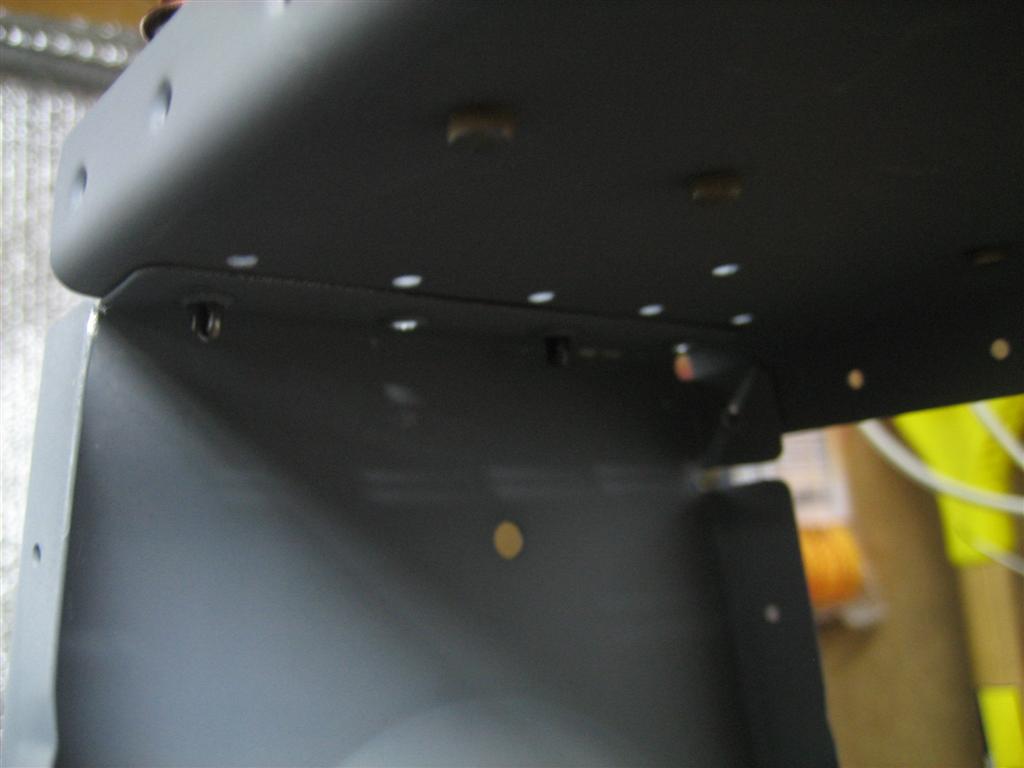
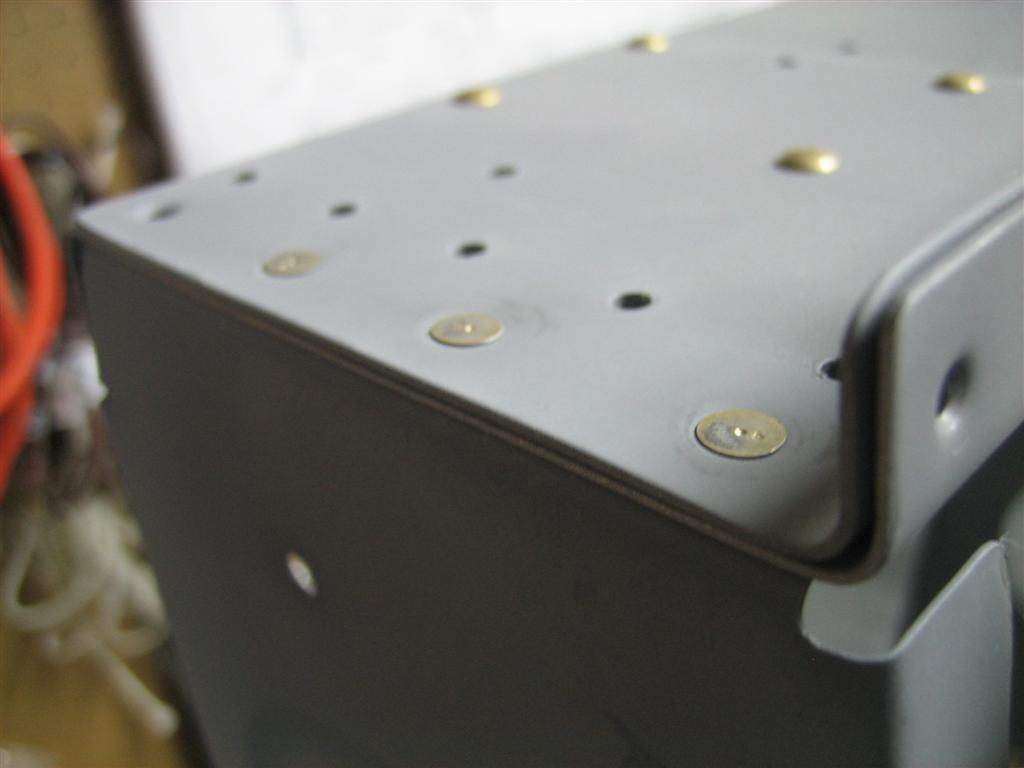
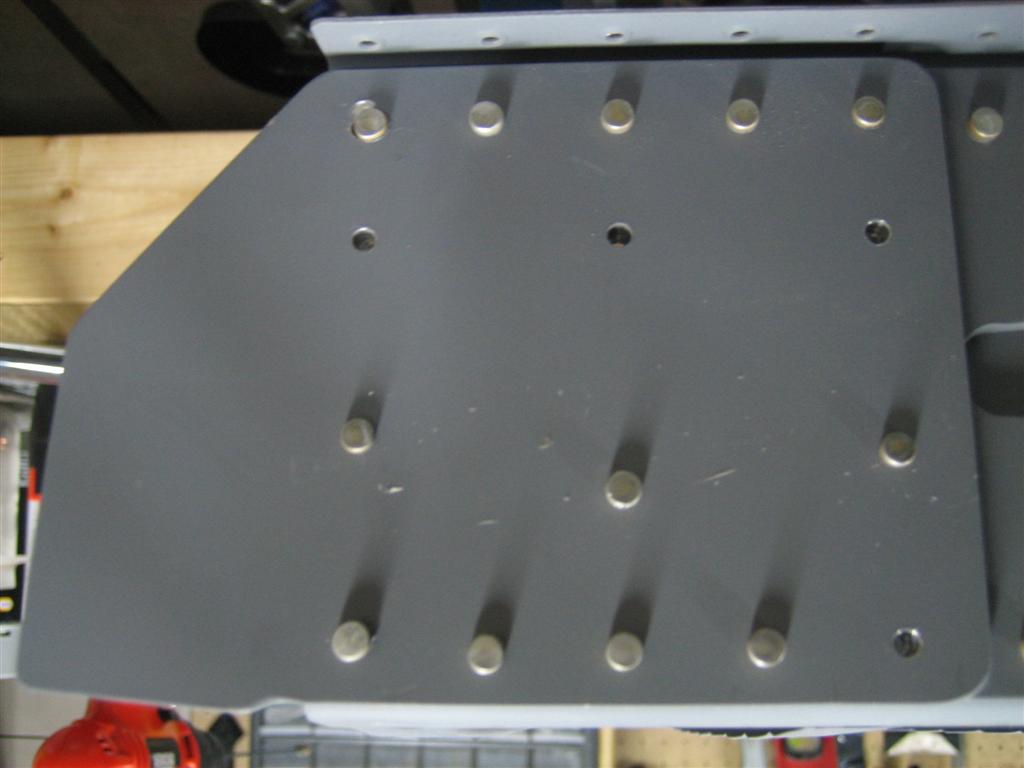
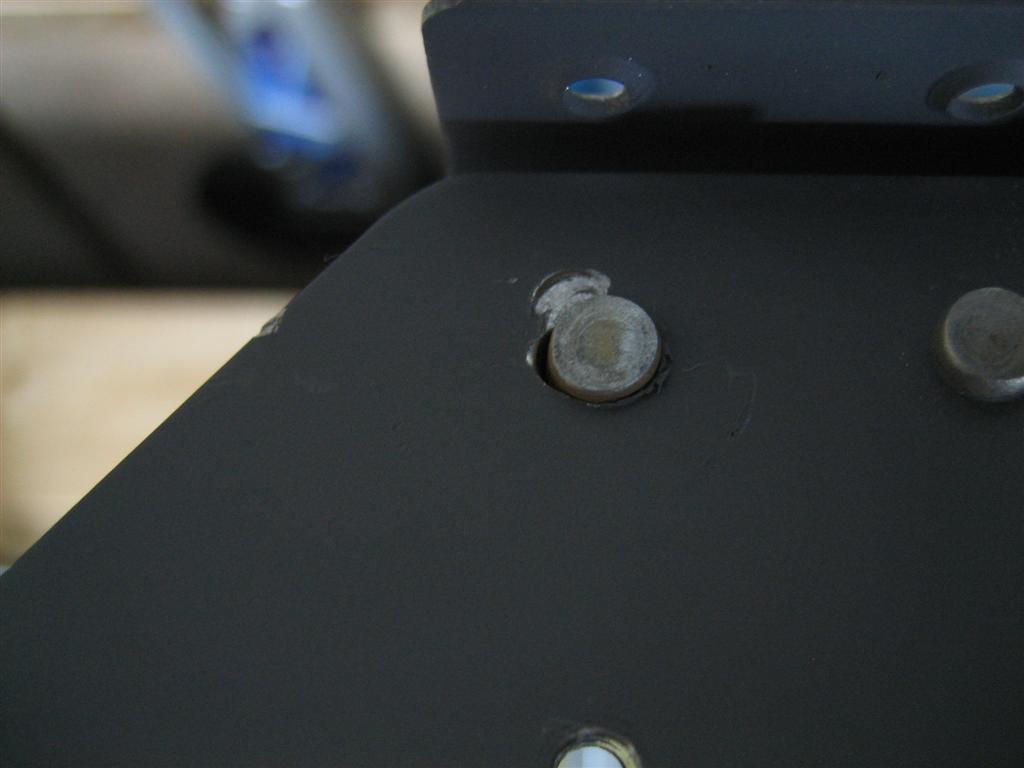
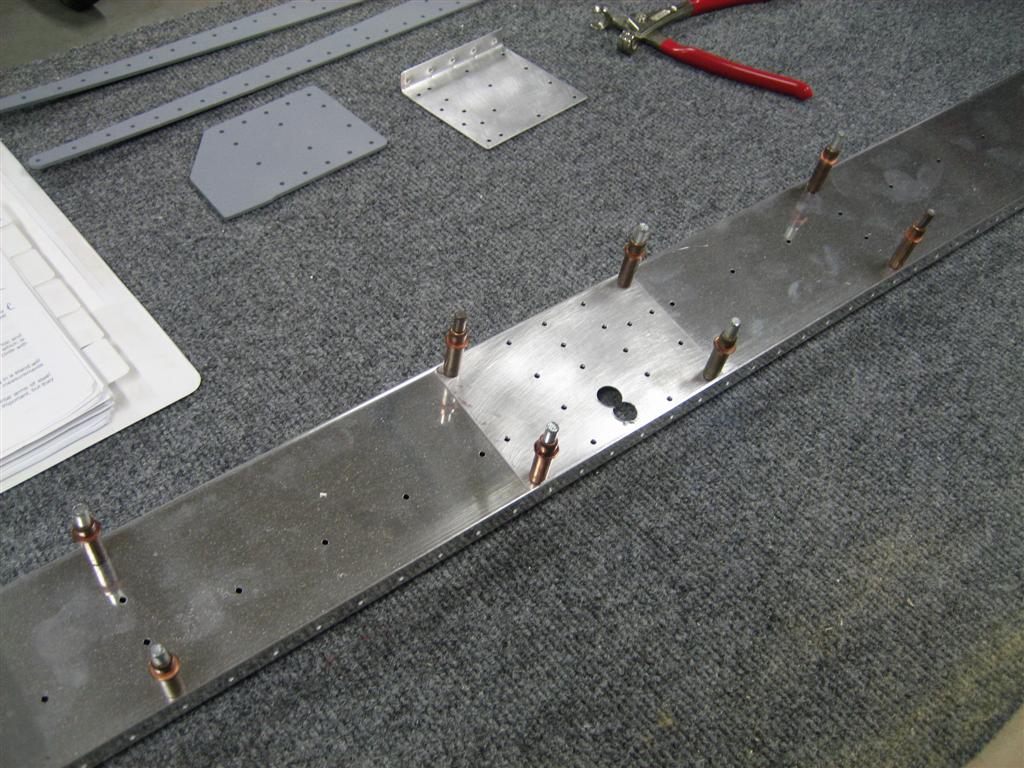
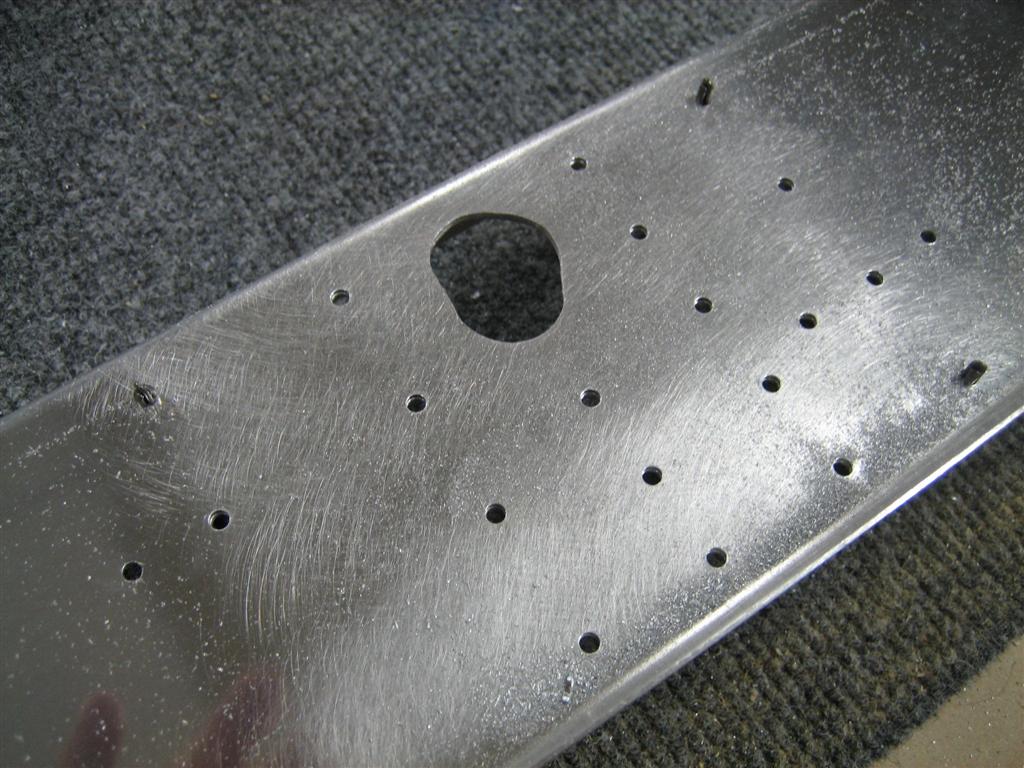
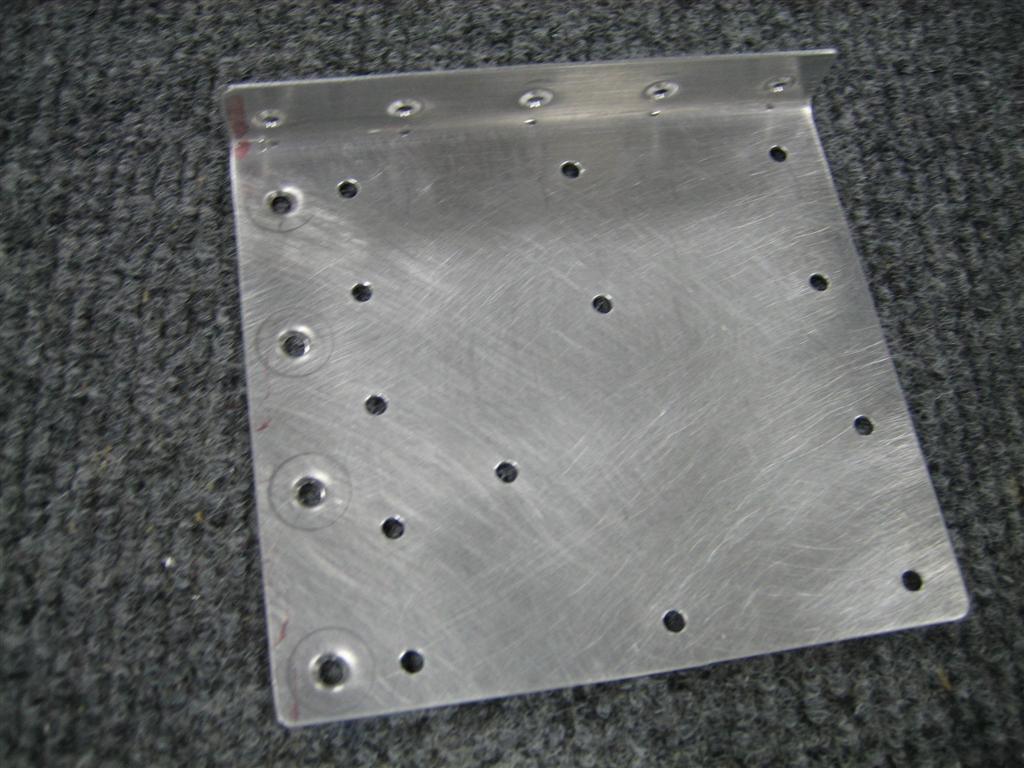
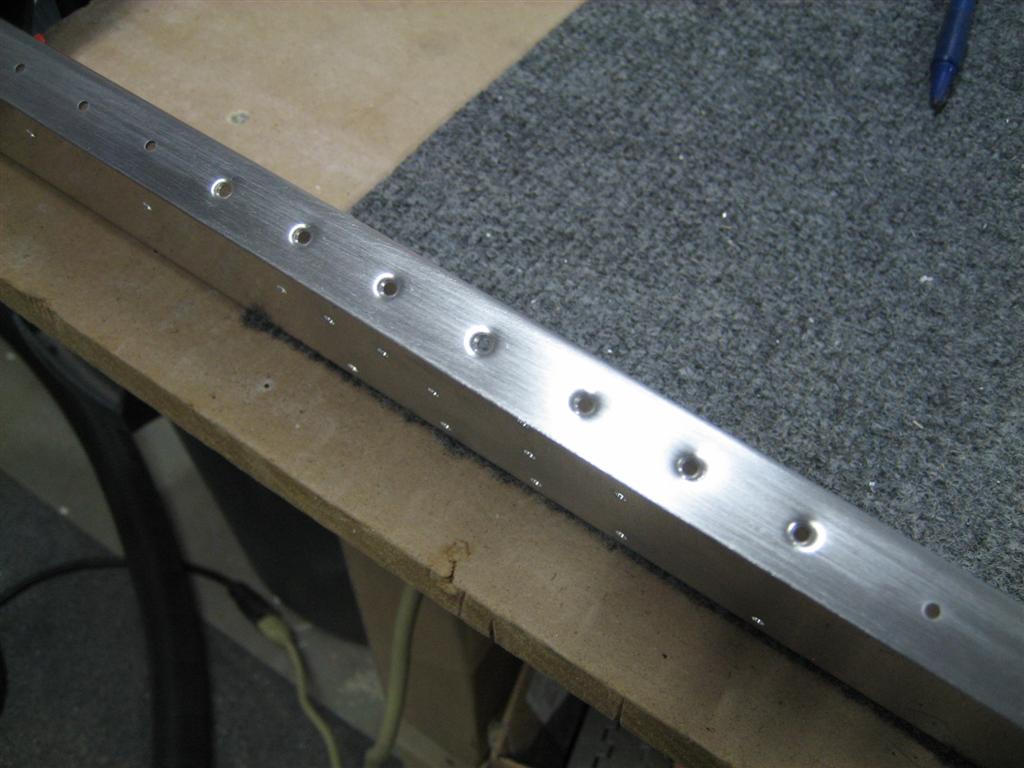
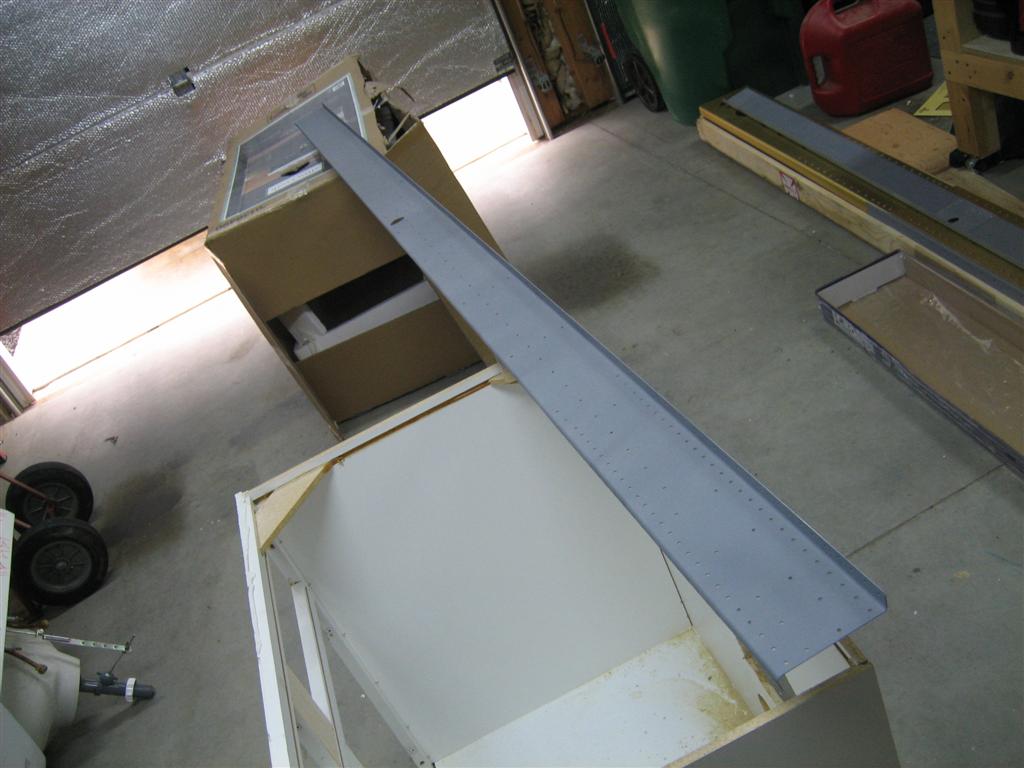
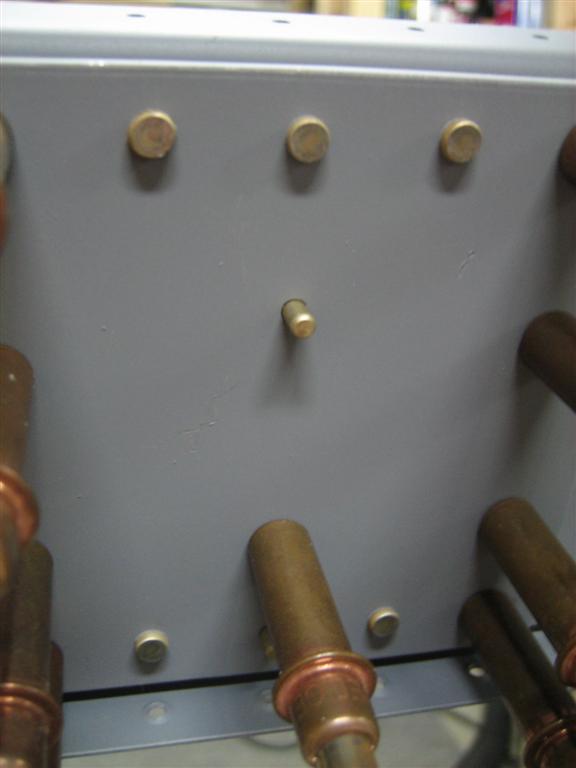
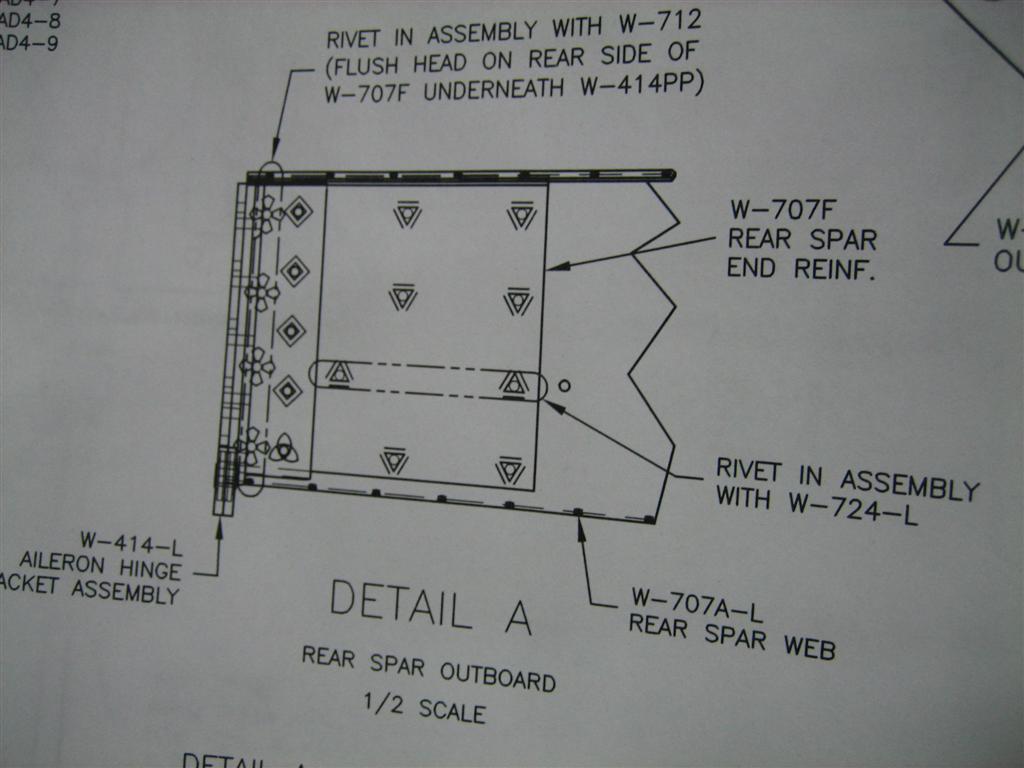
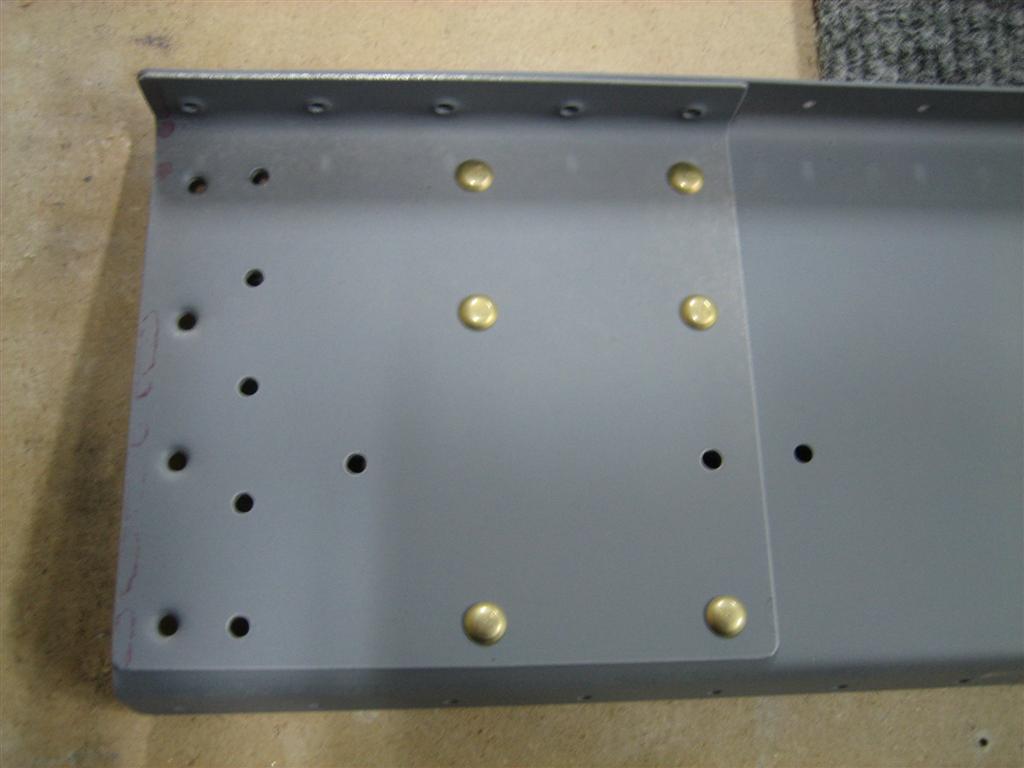
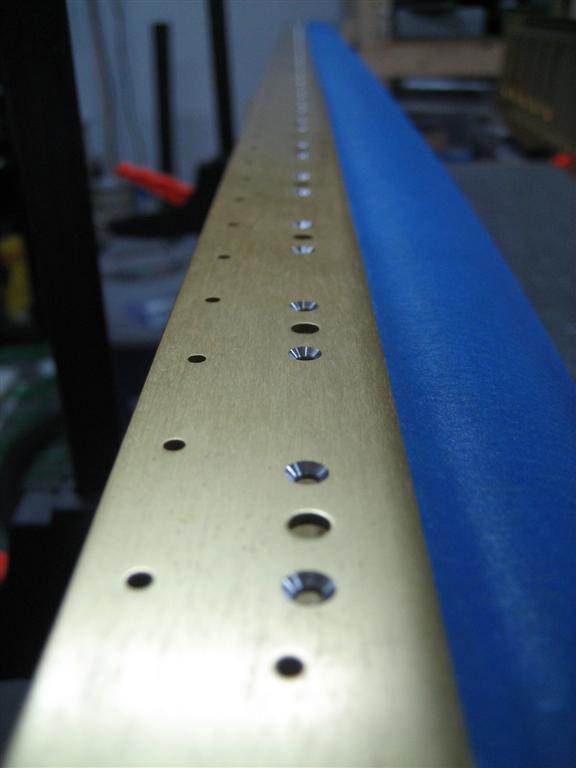
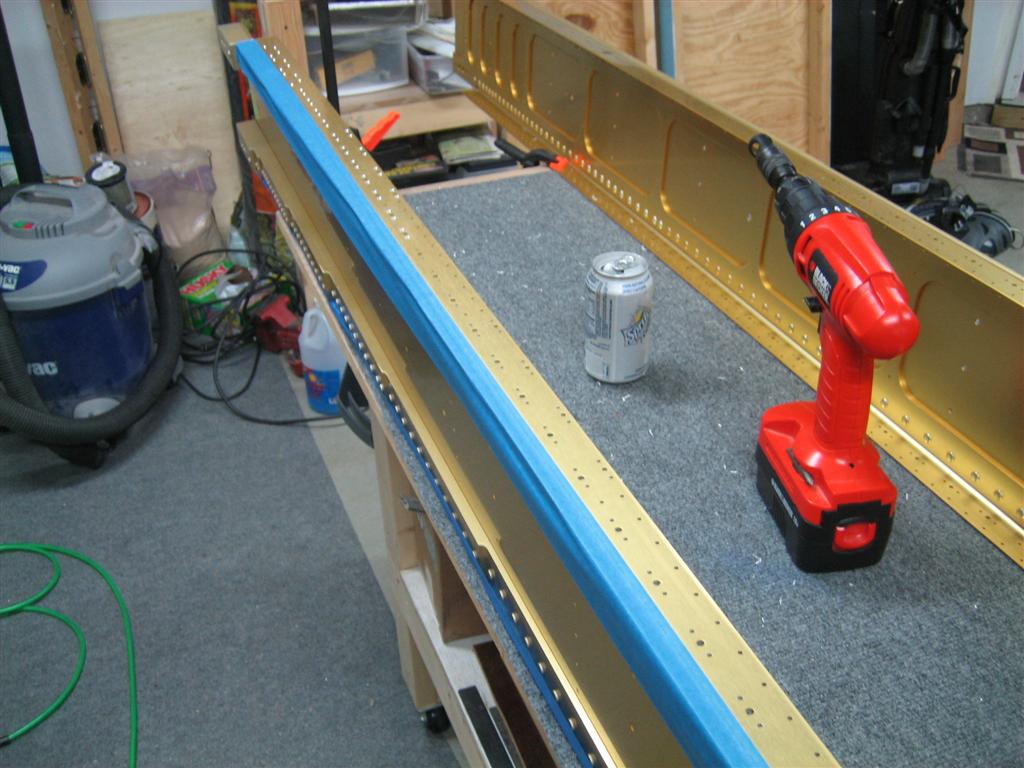
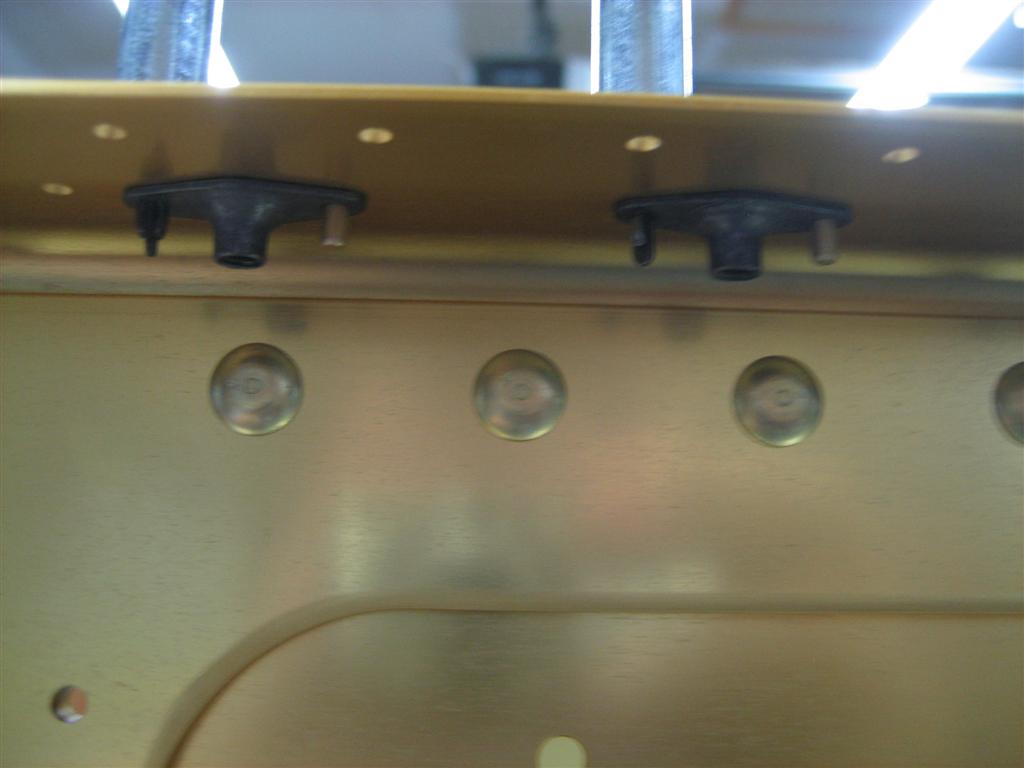
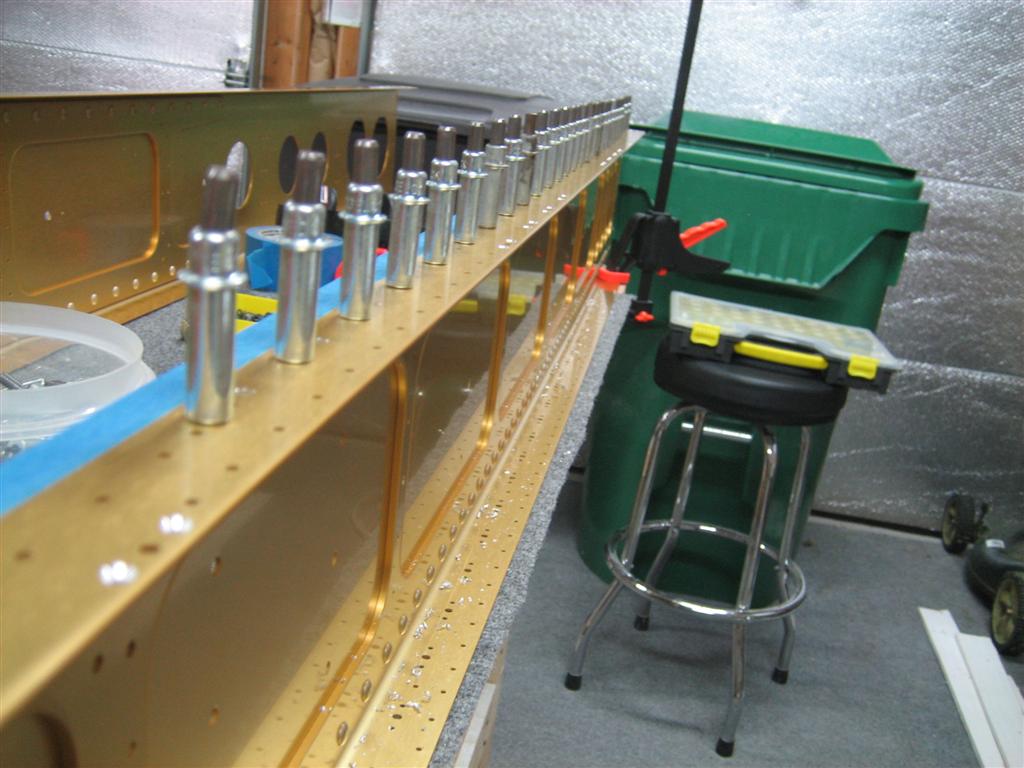
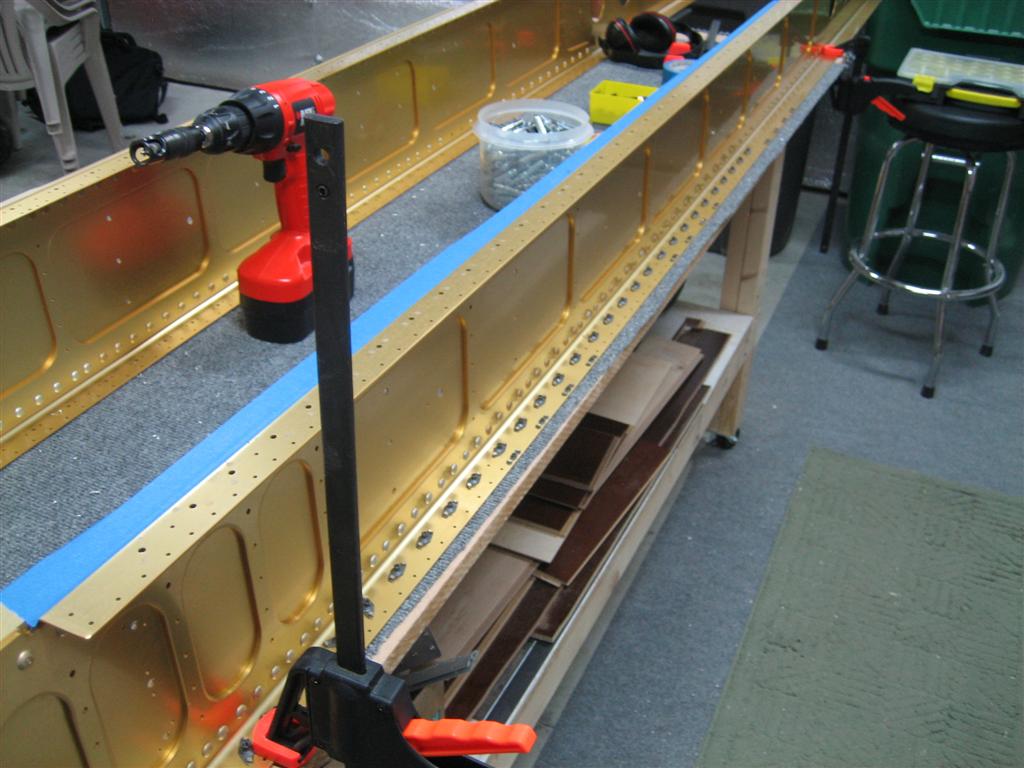
Rivet Encapsulation on Right Tank Ribs

June 29, 2011

Prev | Next

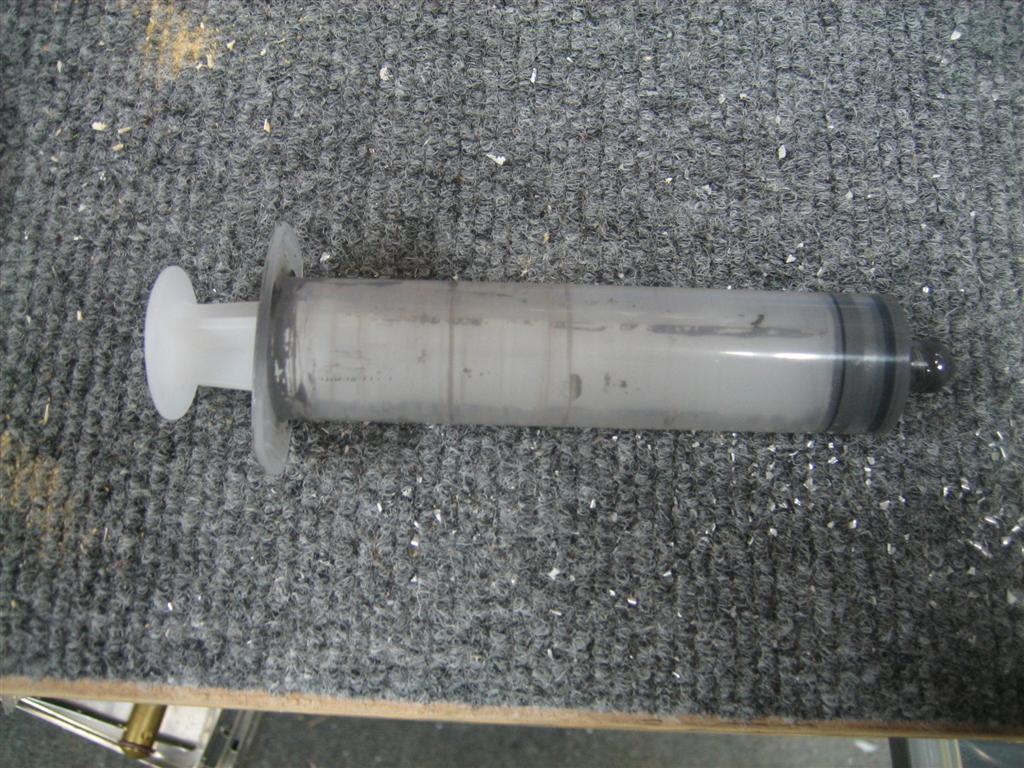
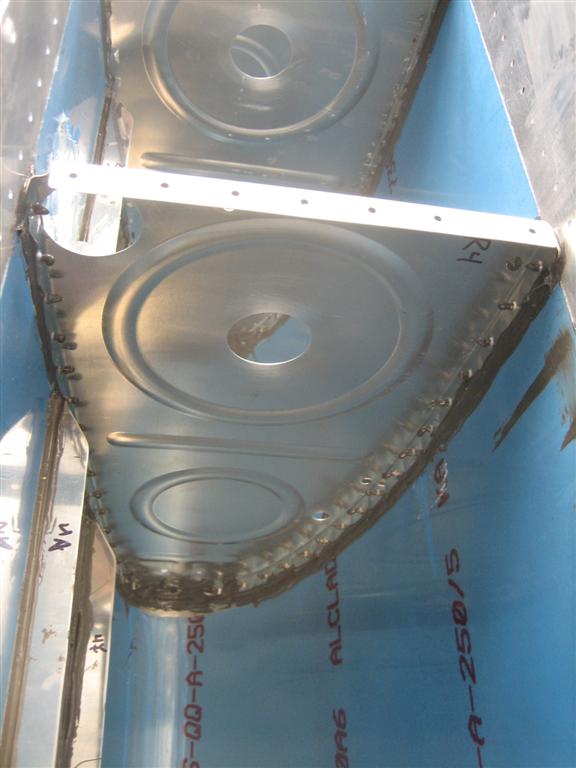
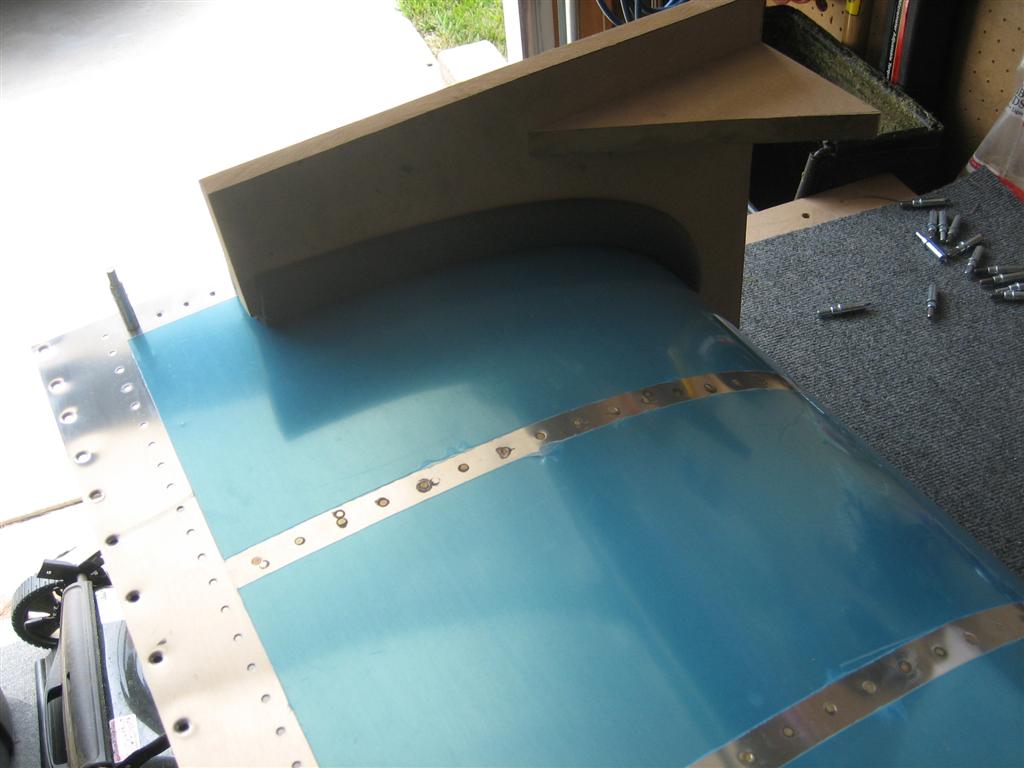
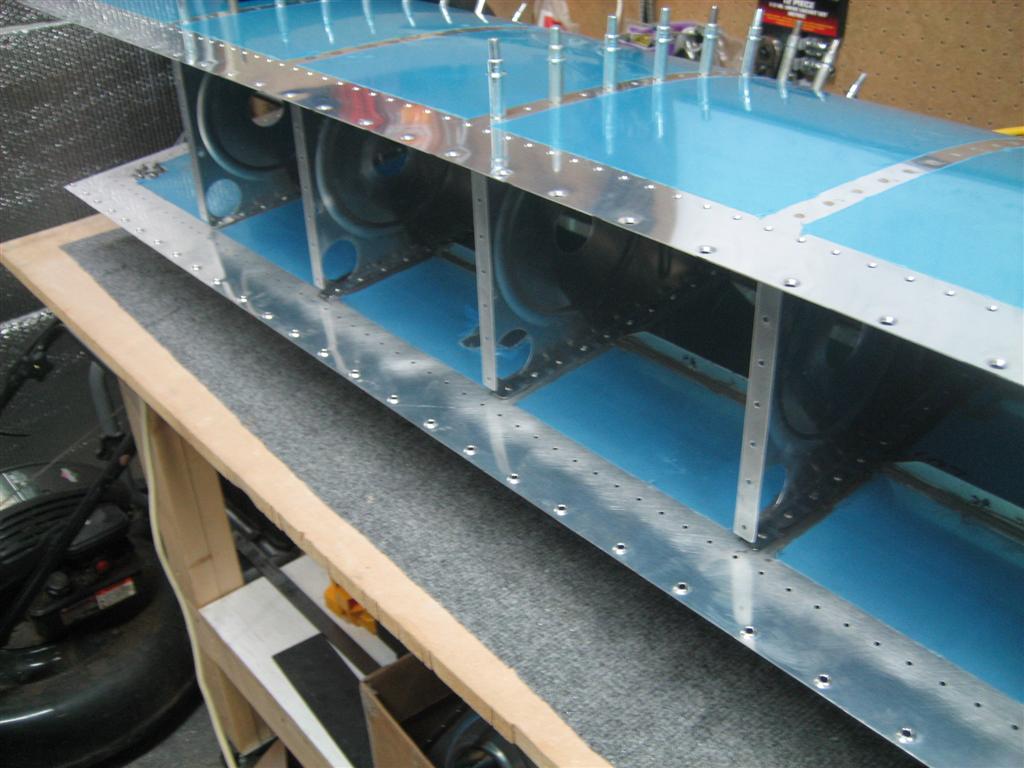
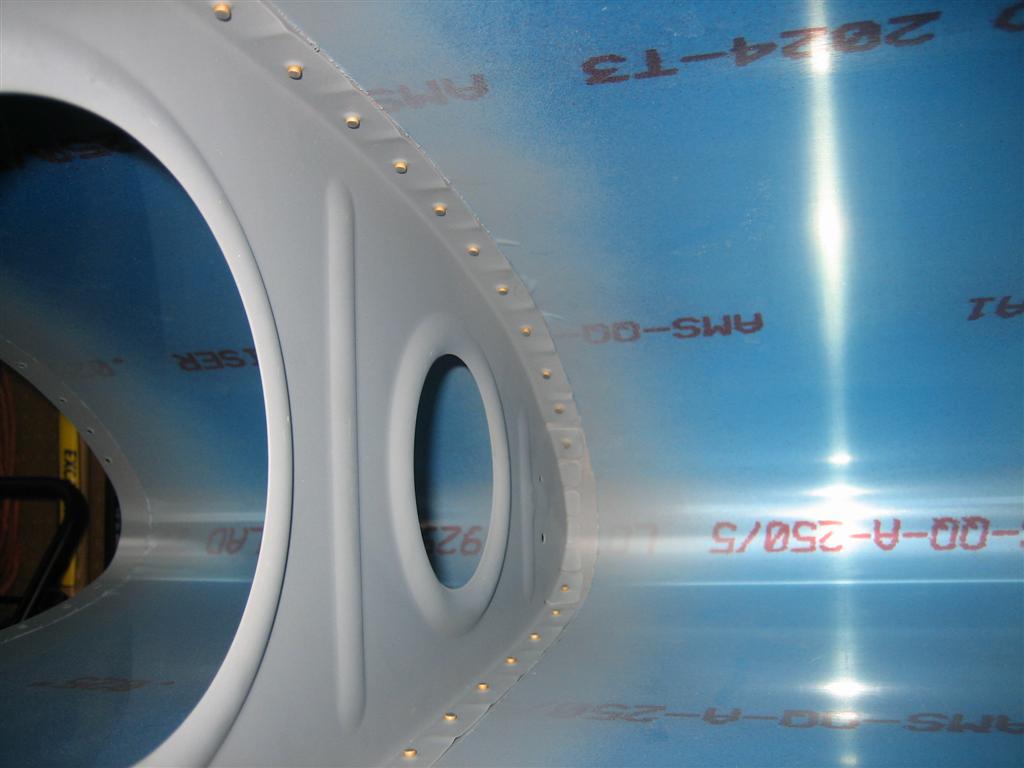
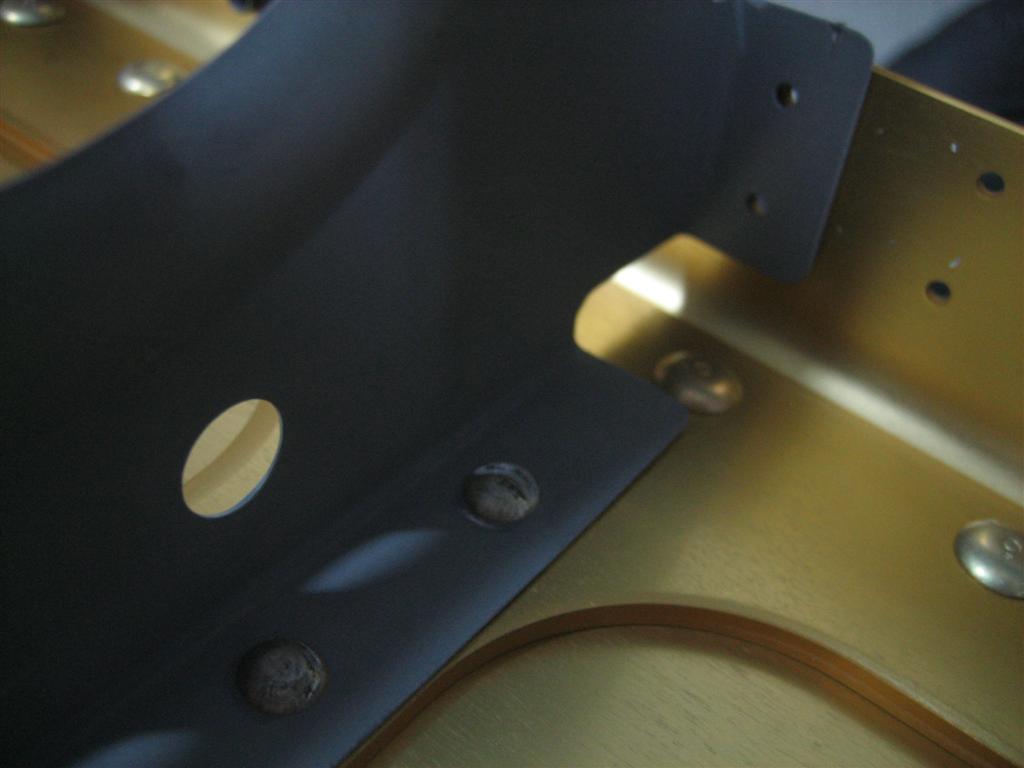
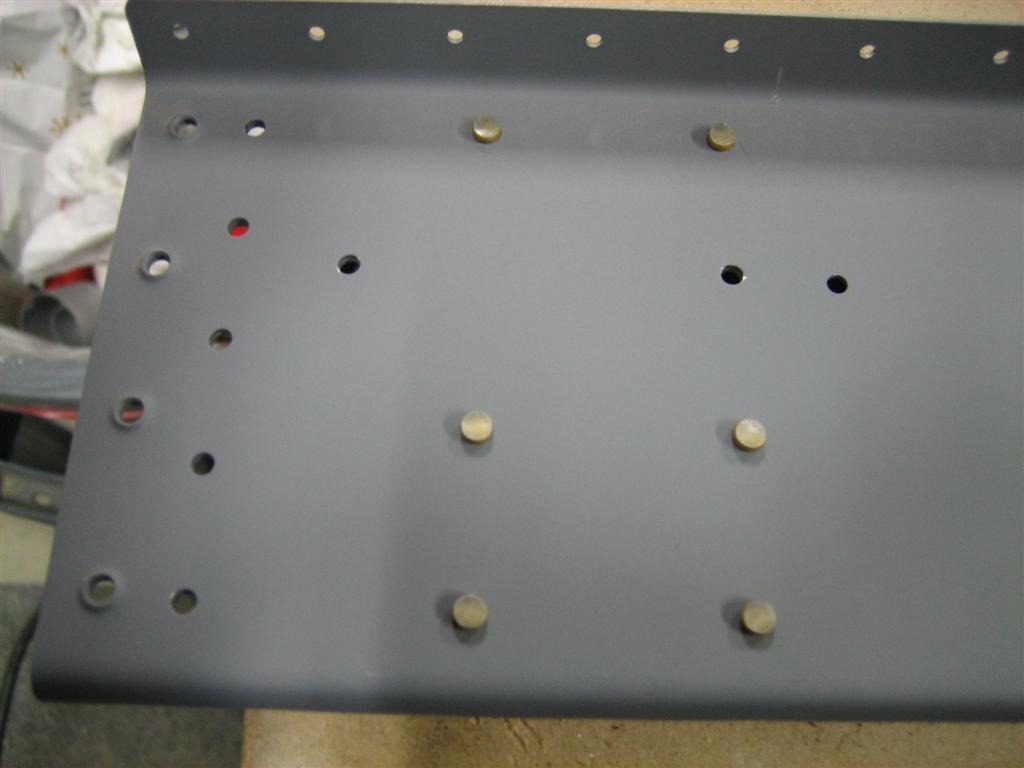
Well, not much tonight. I mixed a pretty big batch (55g) of sealant and stuffed it into one of the 30 cc syringes I bought from amazon.

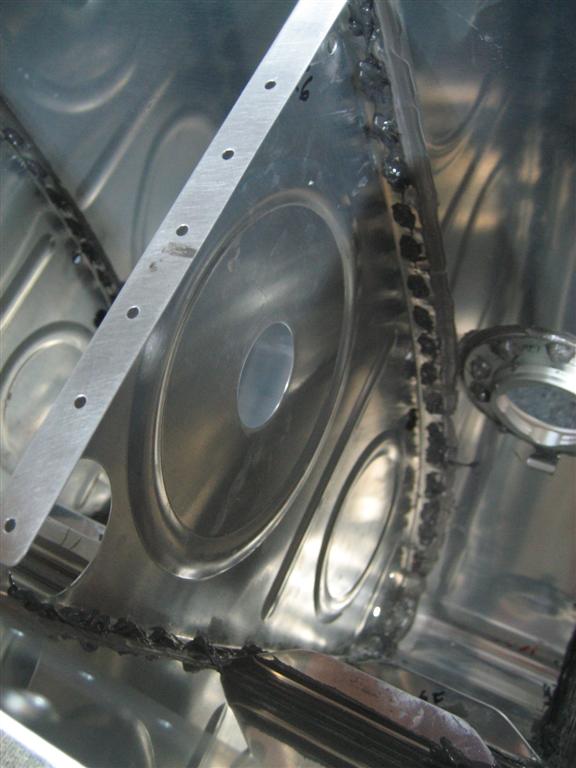
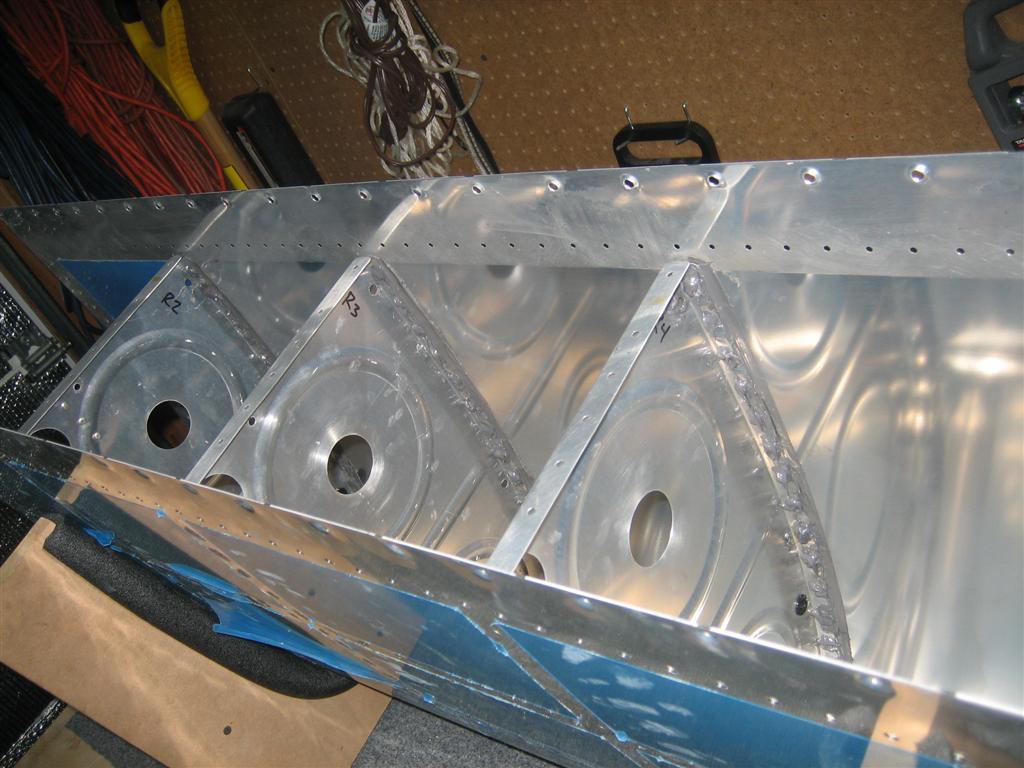
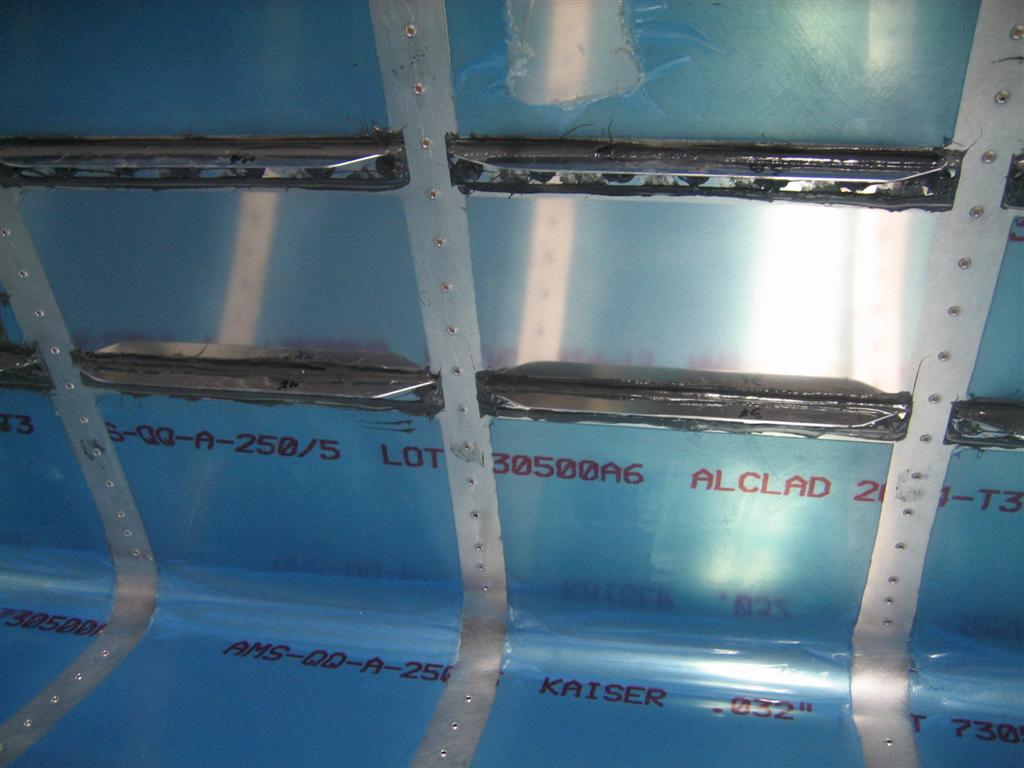
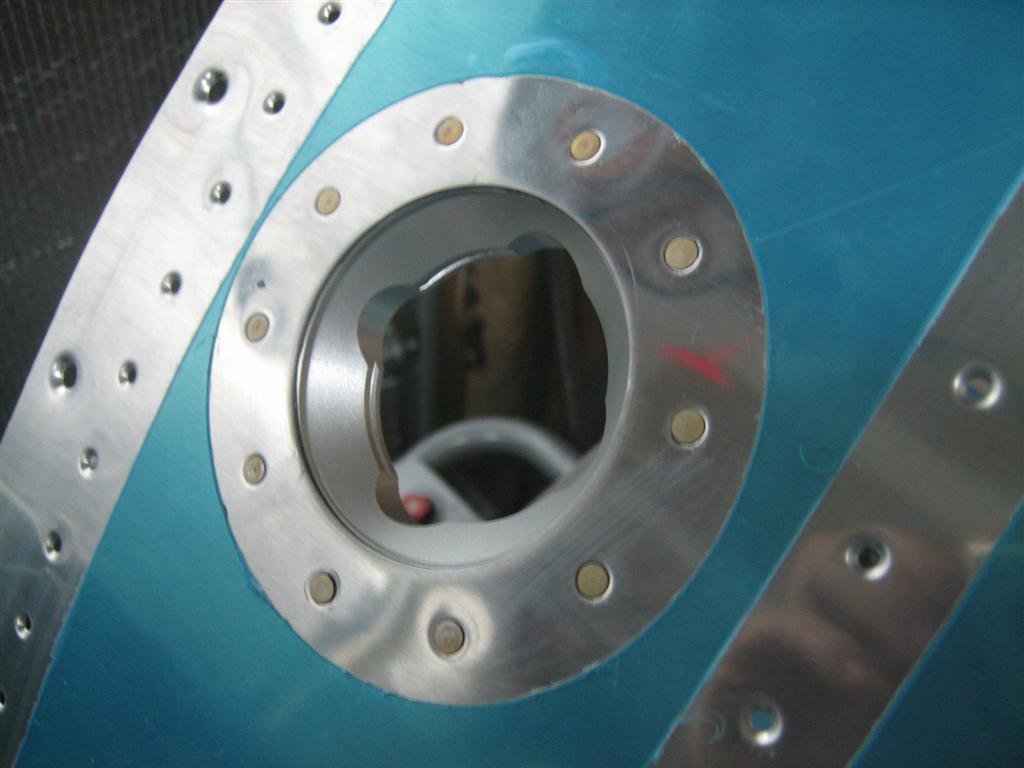
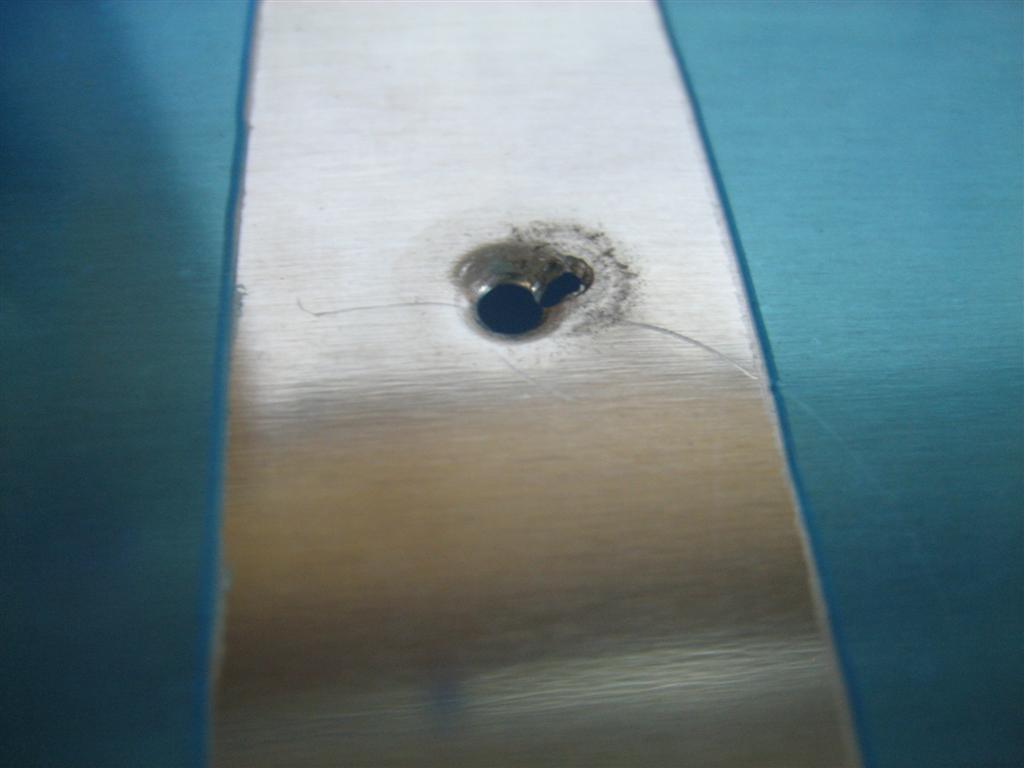
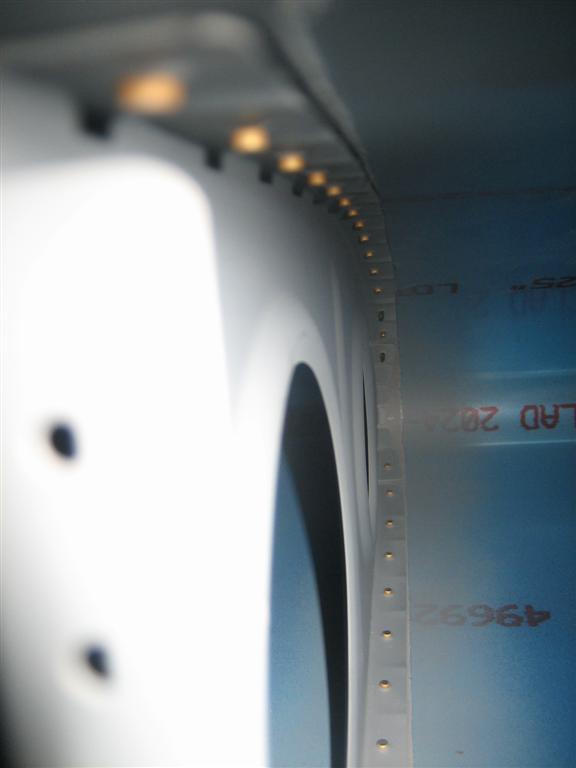
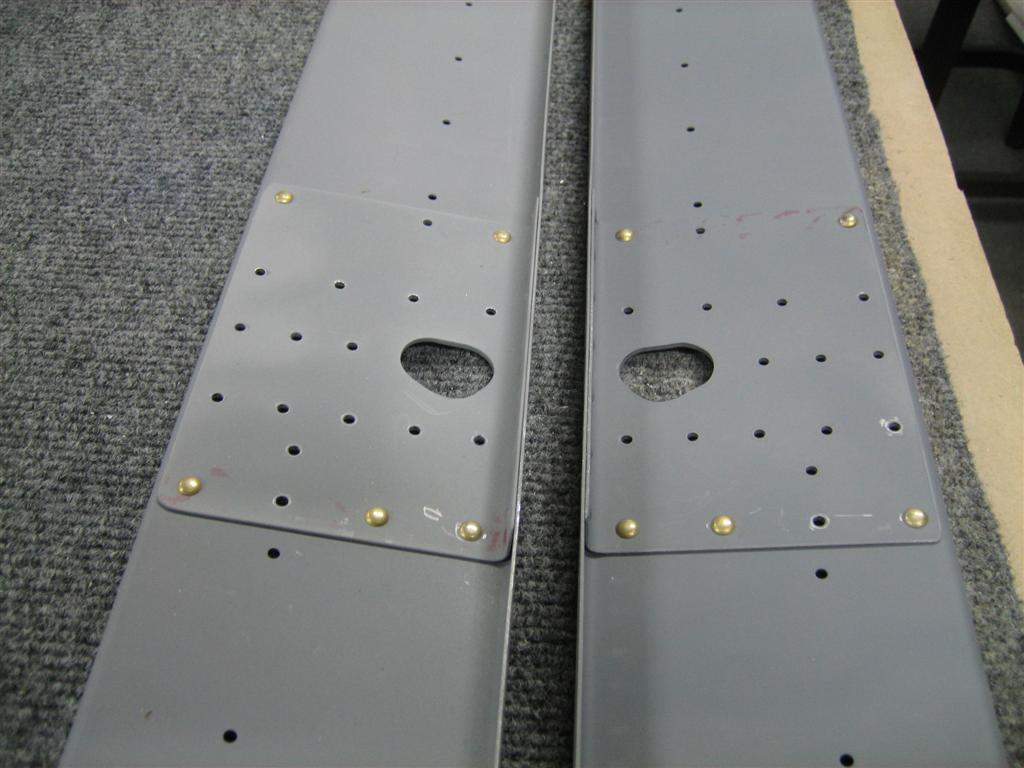
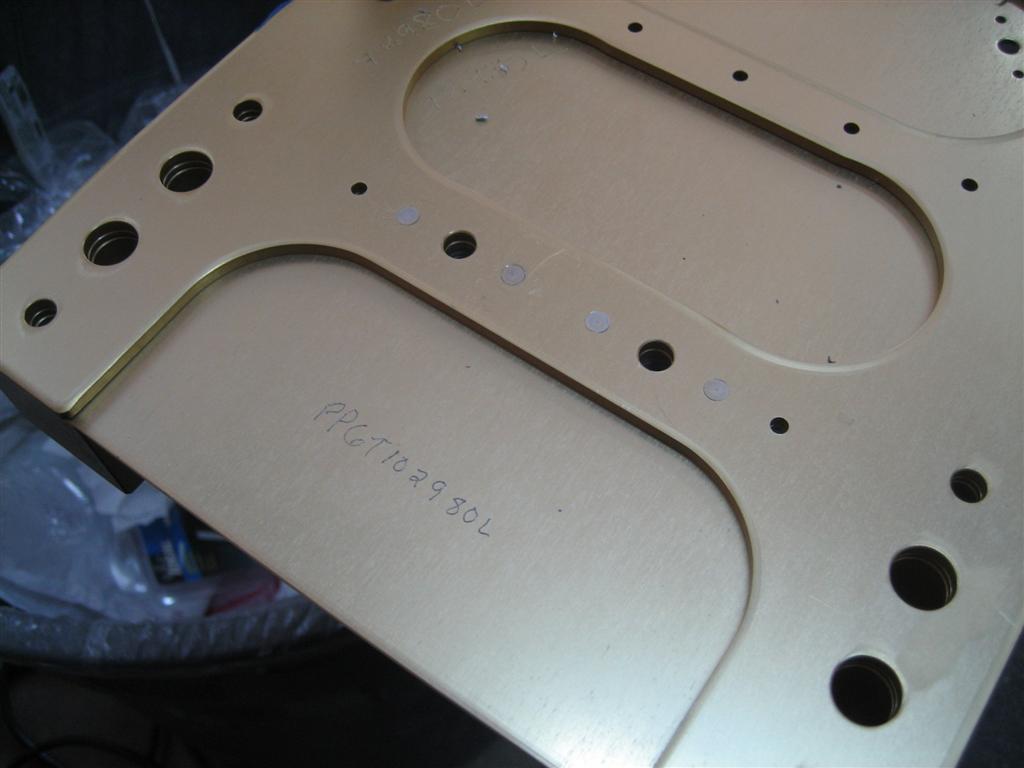
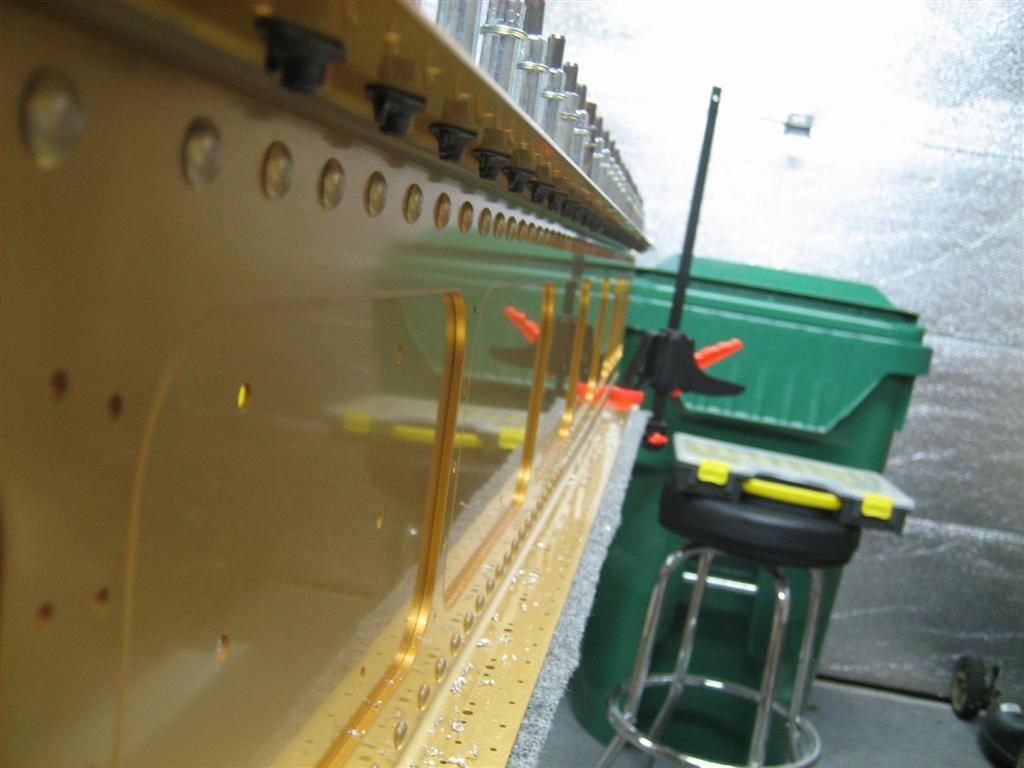
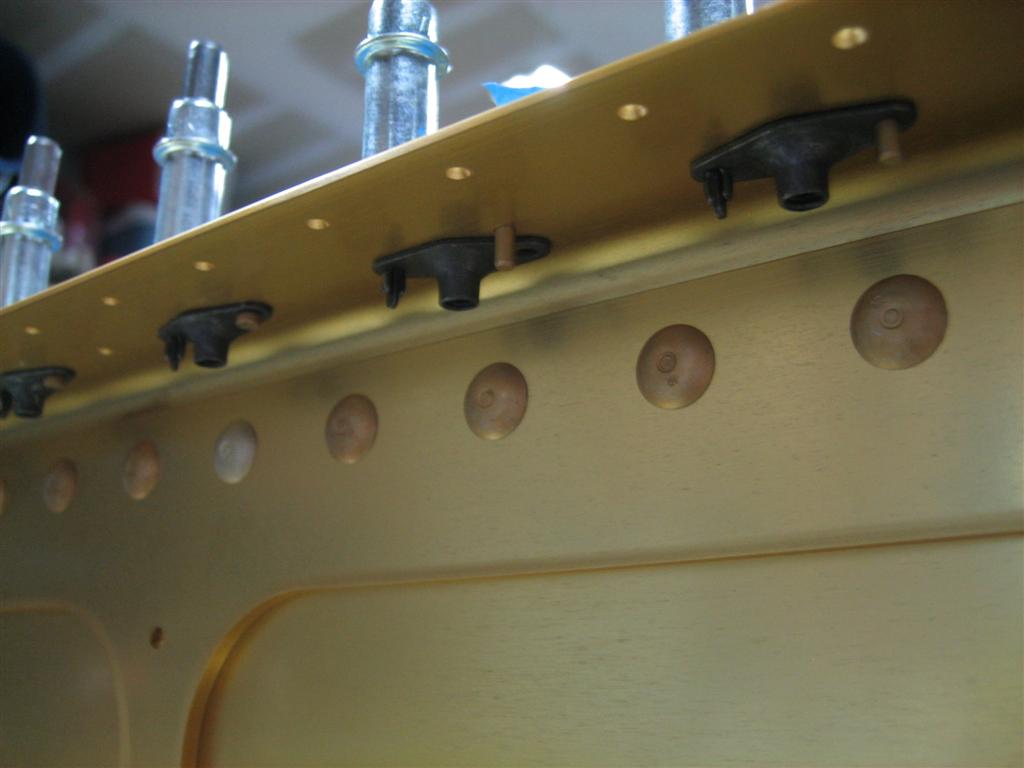
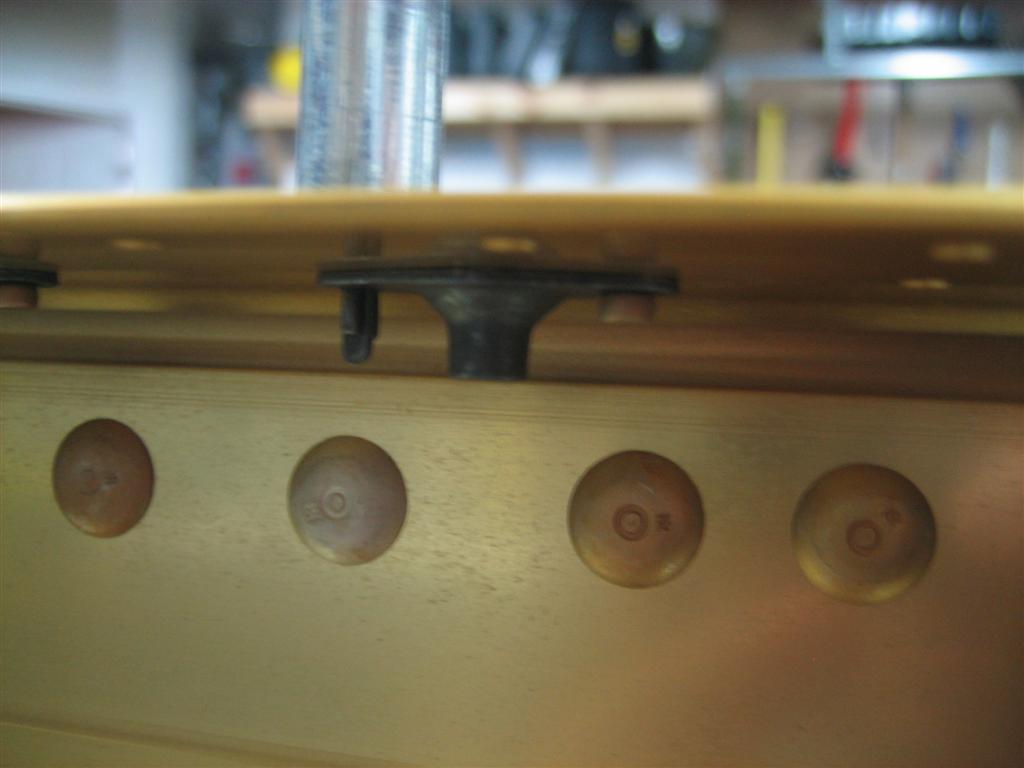
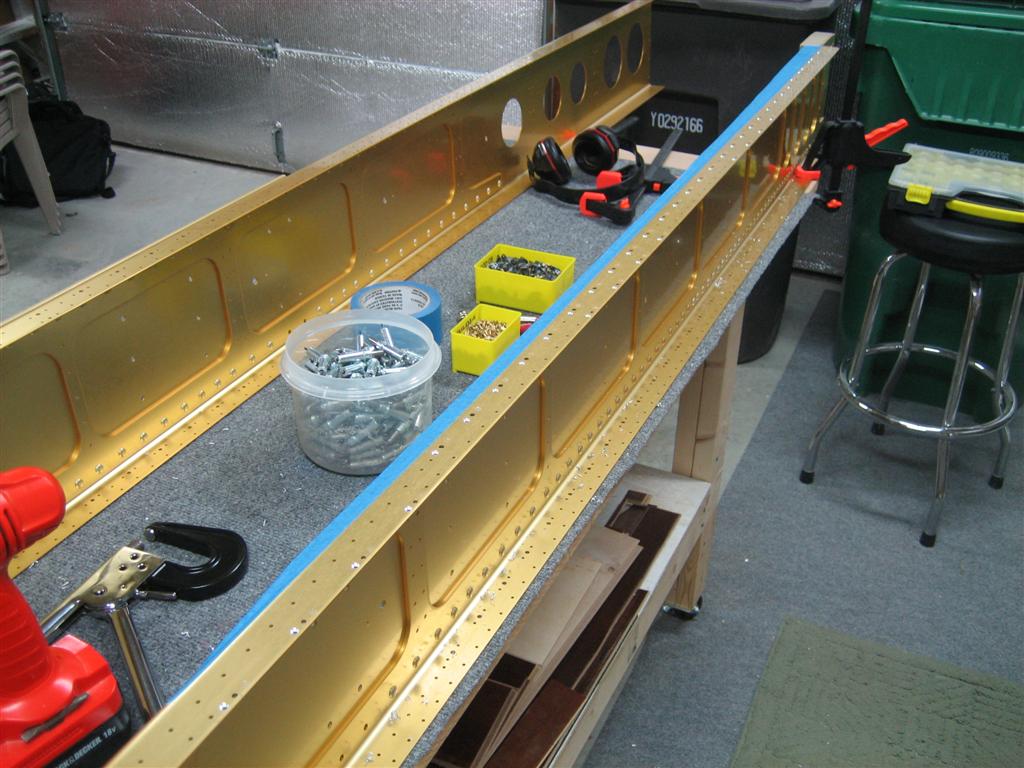
After an hour of painfully reaching into the tank to do some rivet encapsulation, I ended up with all rivets encapsulated. (Well, except for the inboard rib…haven’t even riveted that one in place yet.

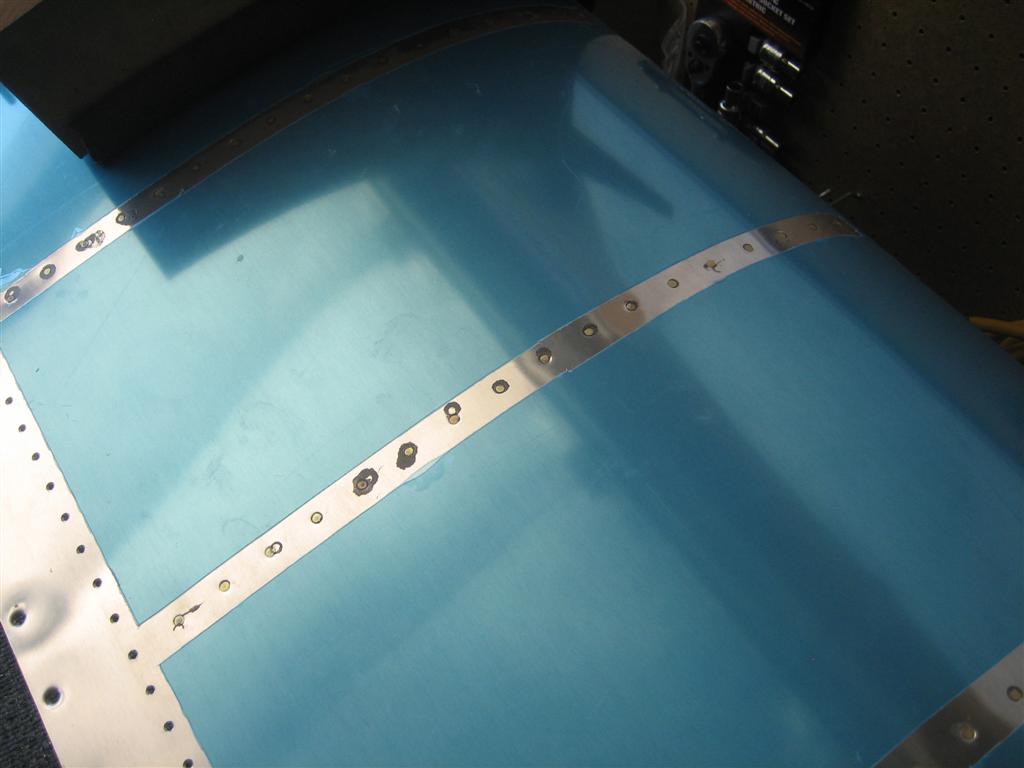
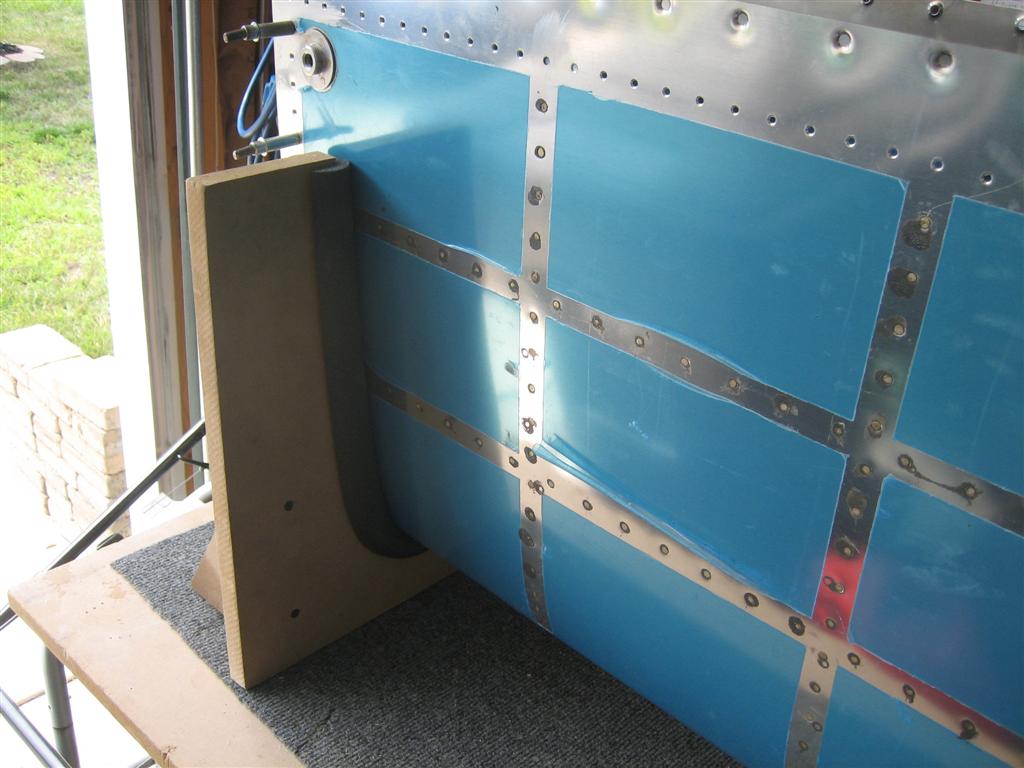
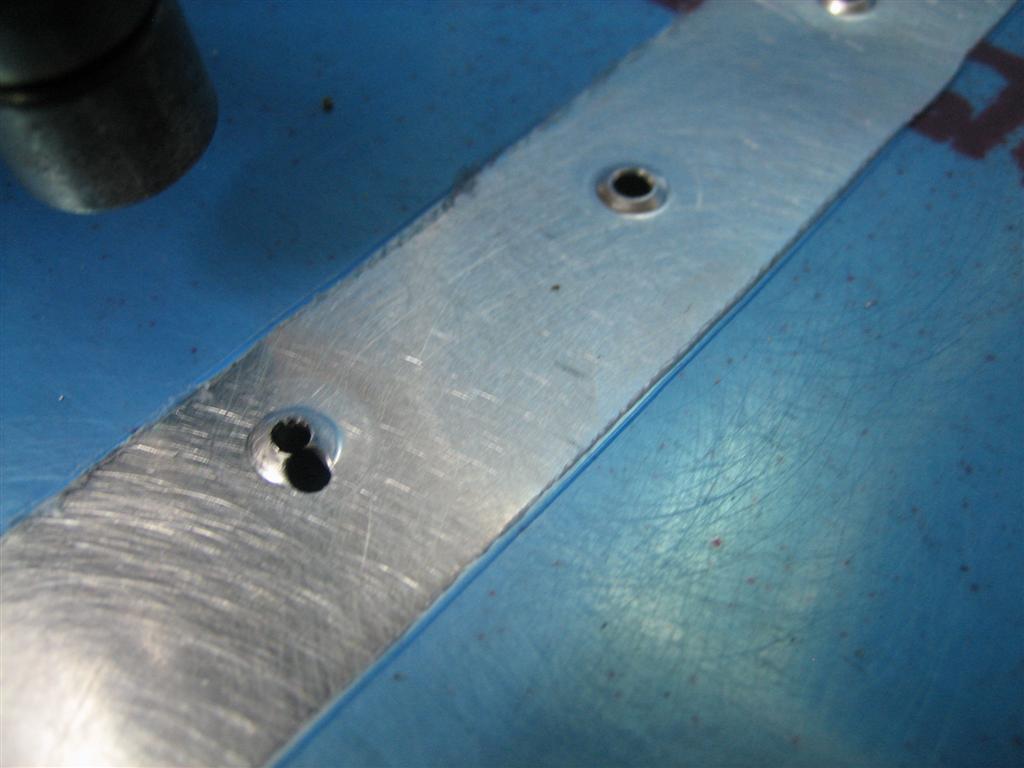
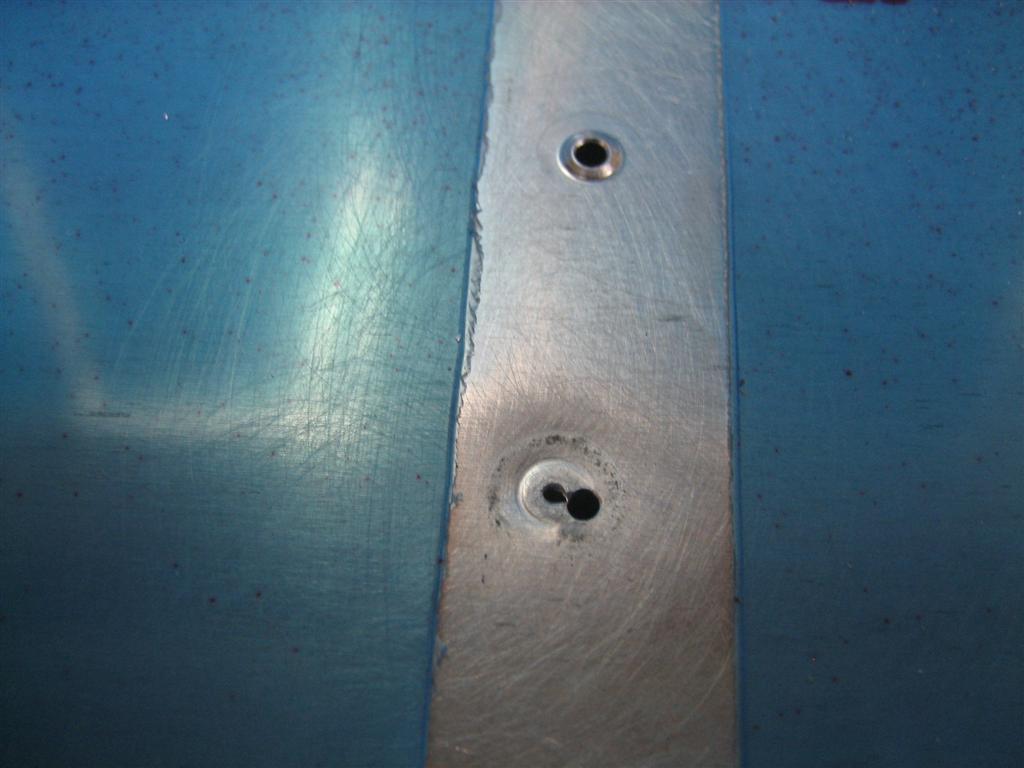
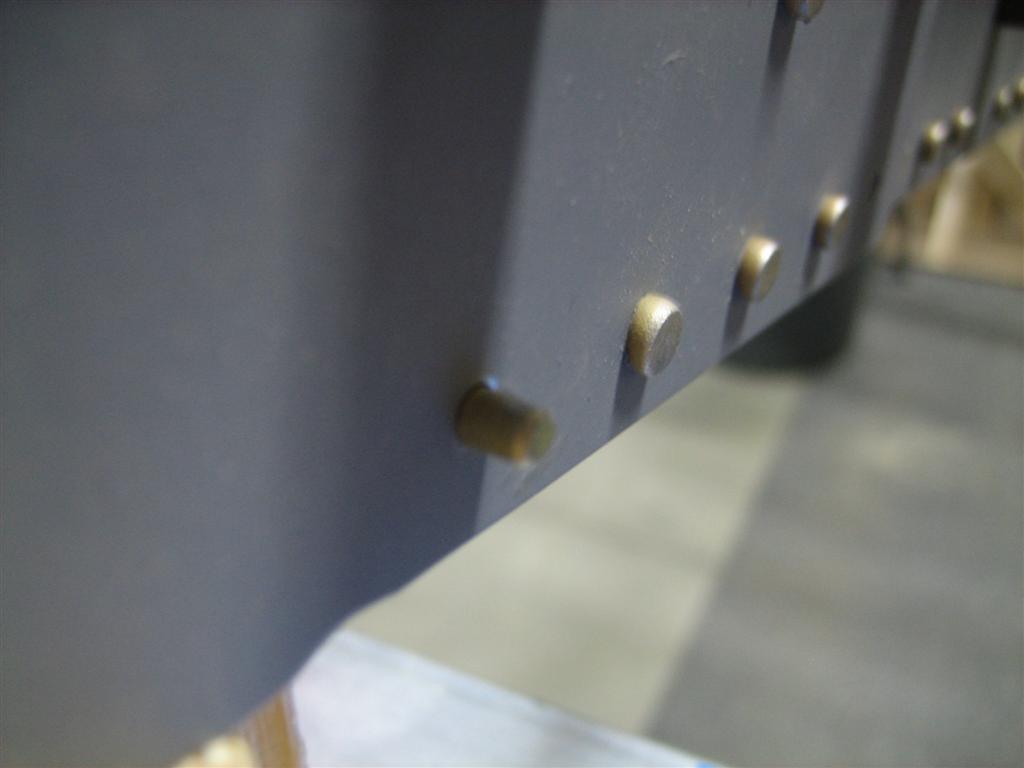
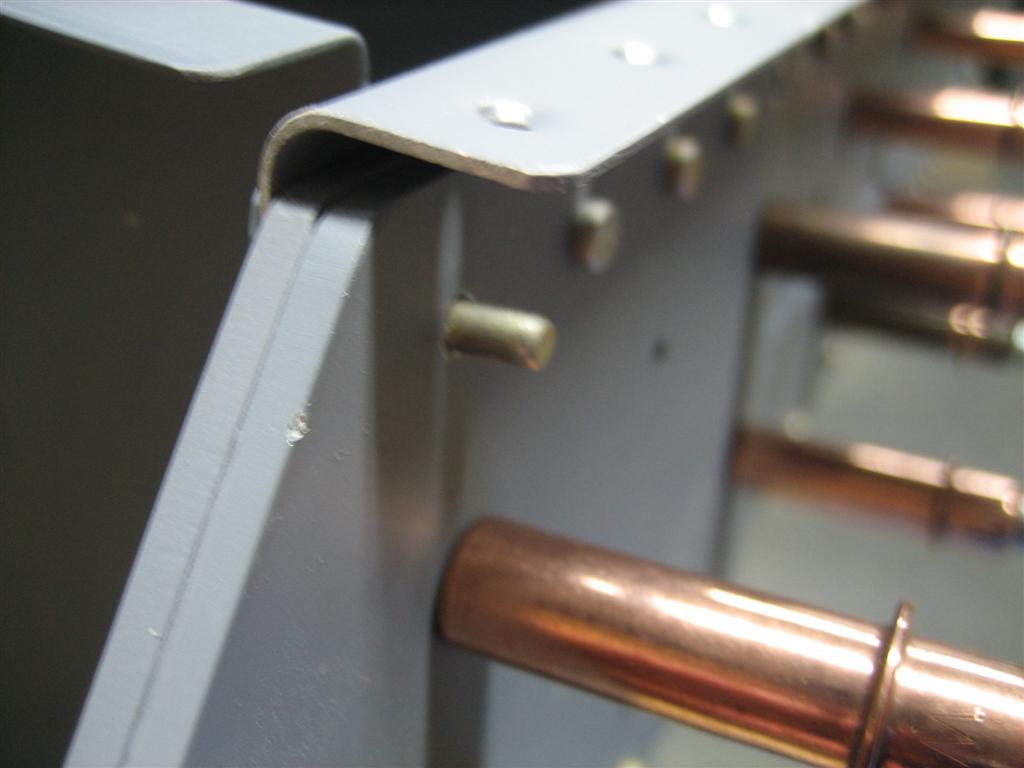
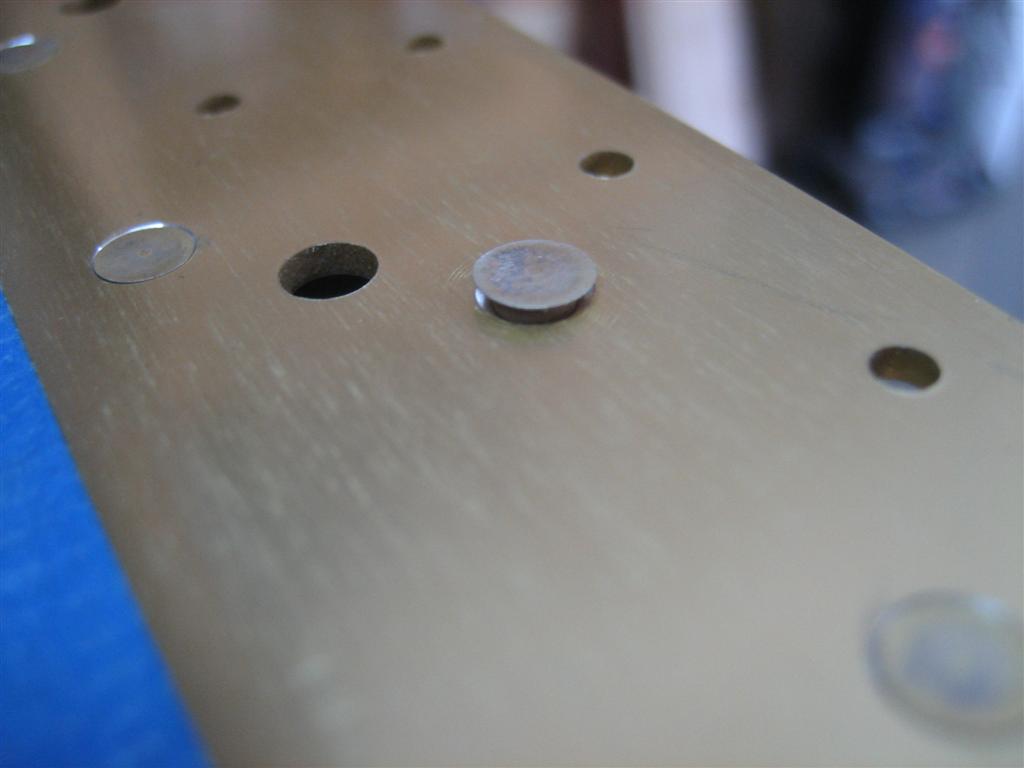
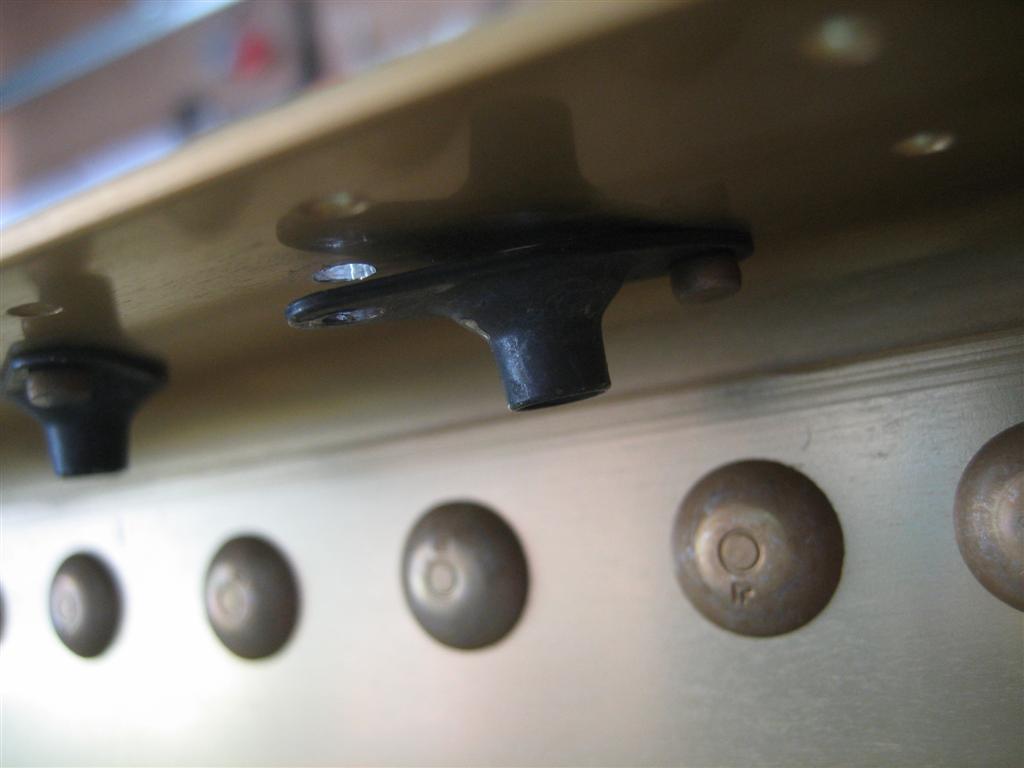
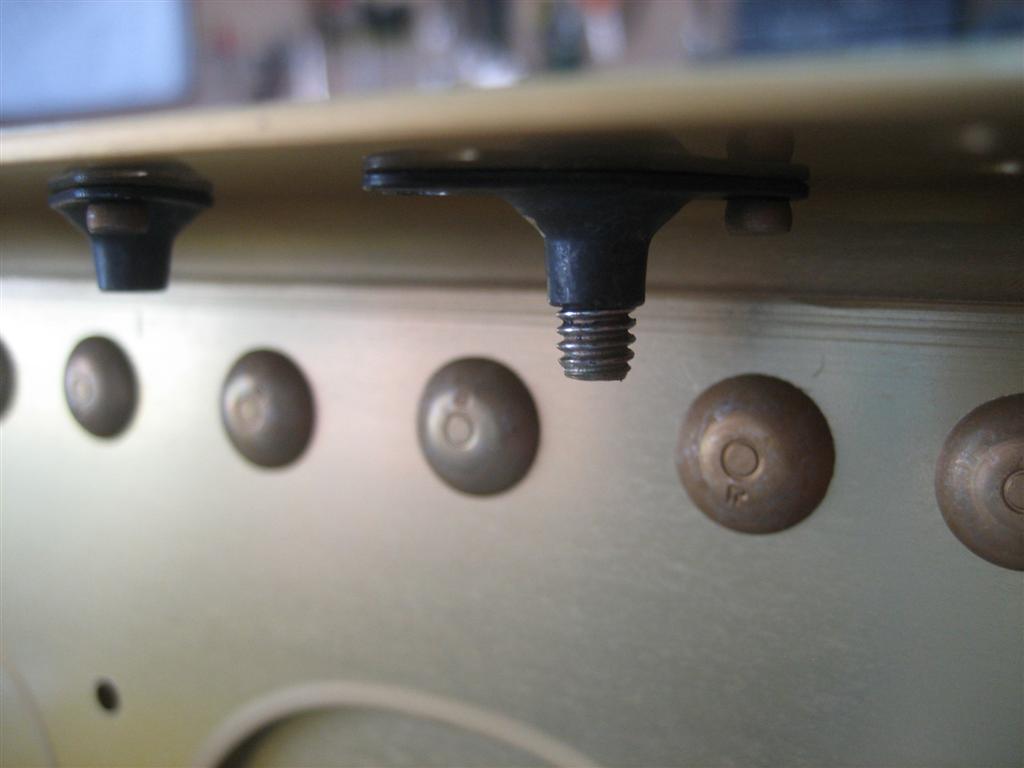
Some of these aren’t the prettiest, roundest globs, but I made sure I didn’t have any (obvious) paths to the rivet.

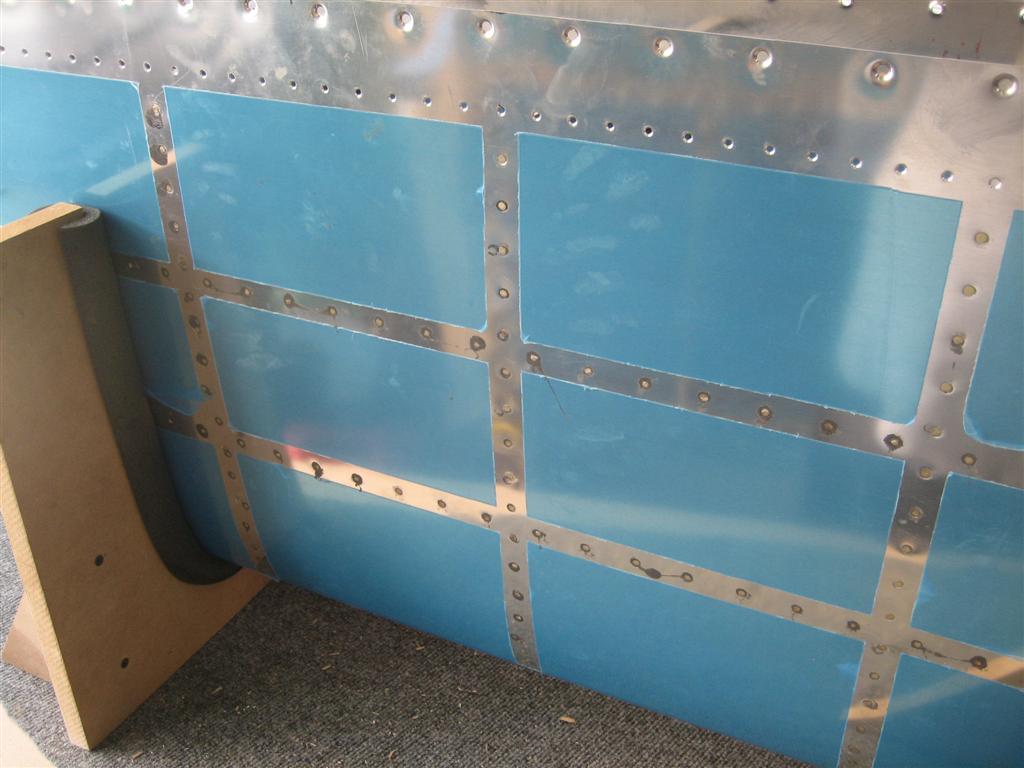
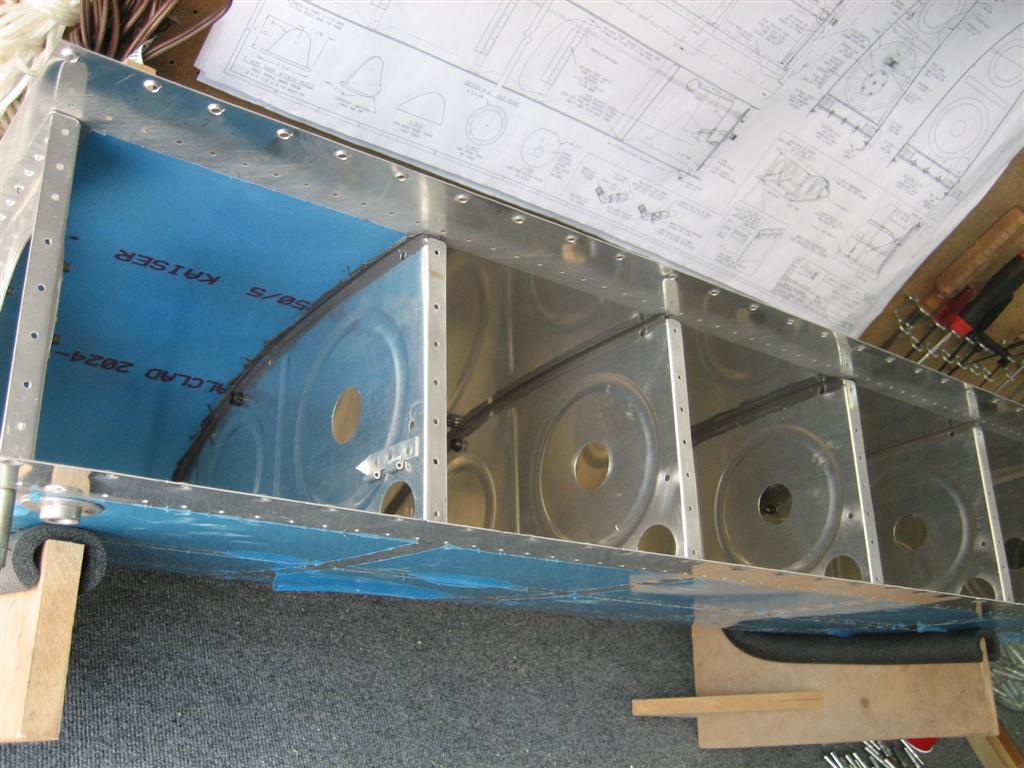
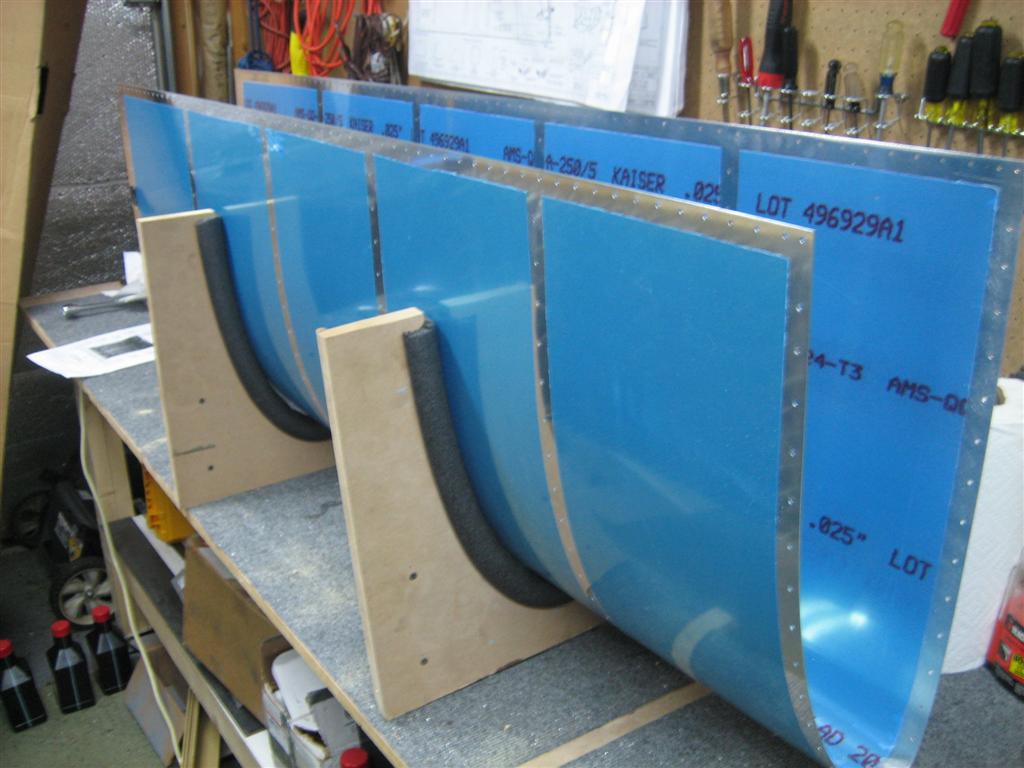
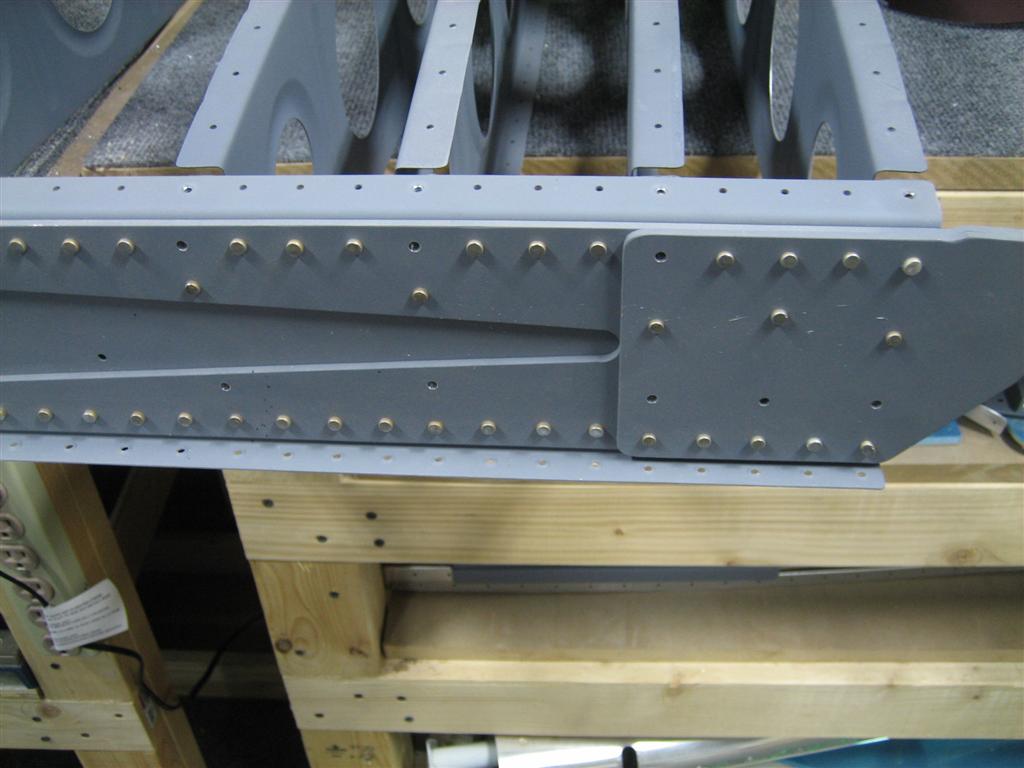
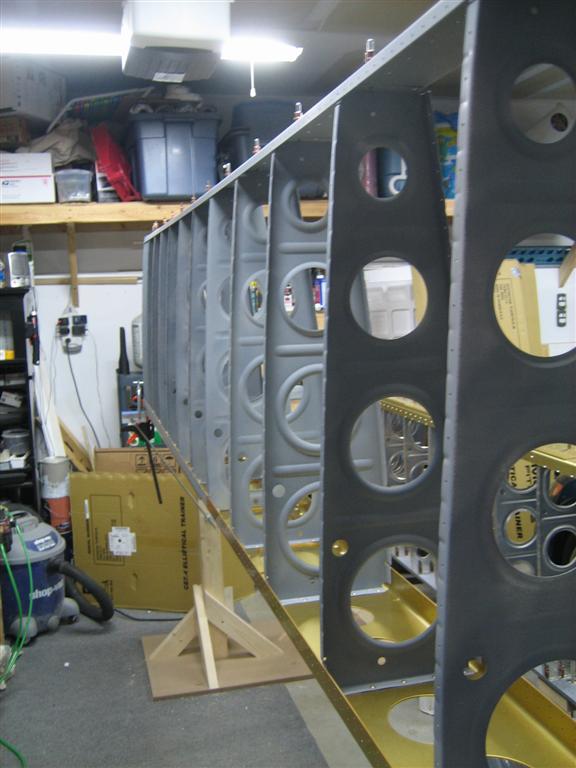
Another shot. I apparently took this one to prove to you that I did more than one rib.

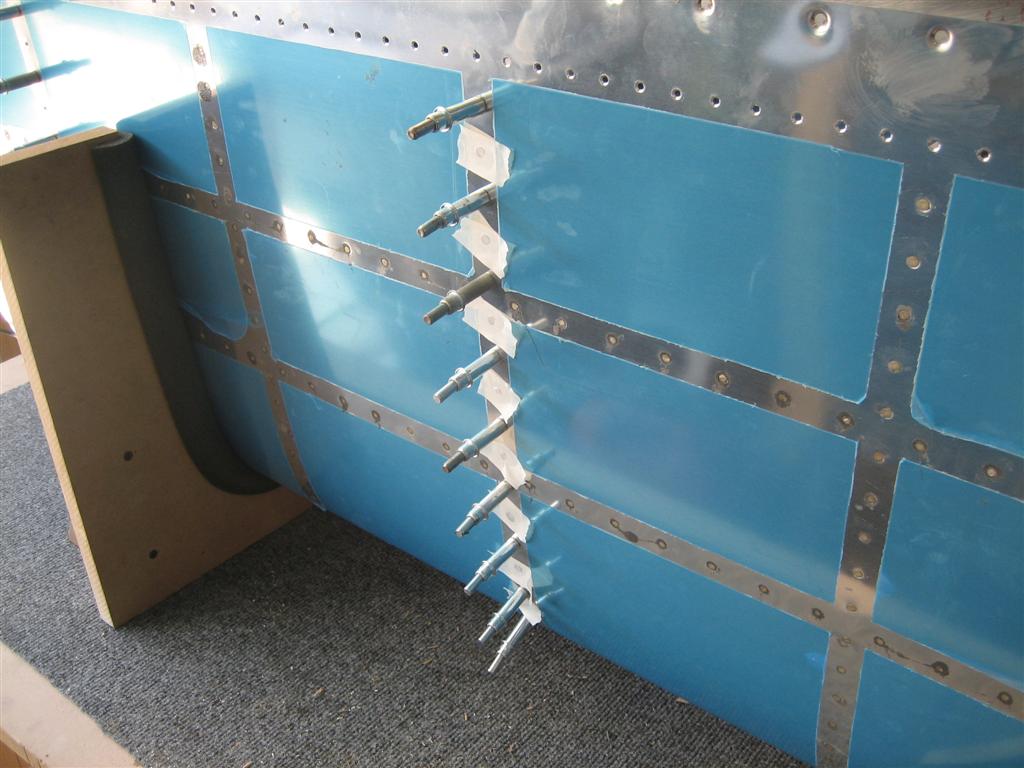
I normally try not to use the flash.

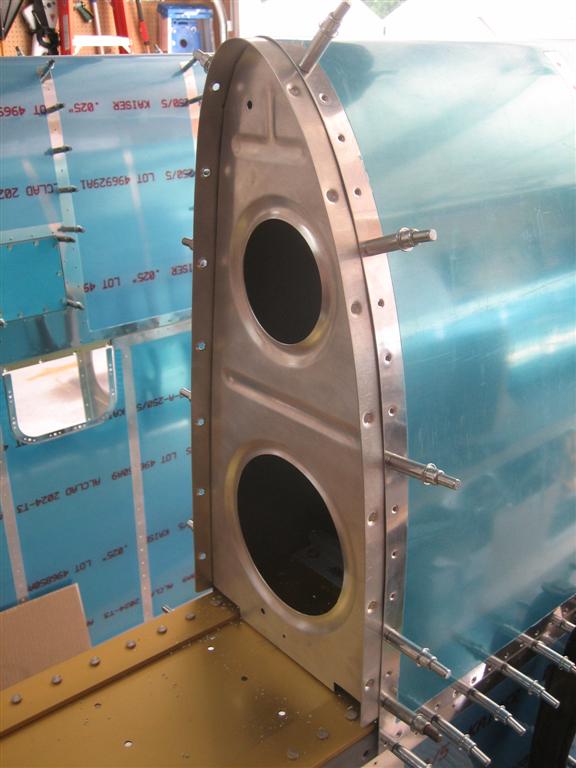
The 55g of sealant in the 30 cc syringe did 6 of the 7 ribs in the tank.

There was a little bit left in my cup, but I’m calling it 55g for 30cc for 6 ribs.

1.0 boring hour.

Prev | Next


Last of the Interior Right Tank Ribs

June 26, 2011

Prev | Next

Well, between a puppy run, mowing the lawn, and a run to Lowe’s to get some house-related stuff, I managed to fit in a good three hours on the right tank.

First up, I unfurled some of the -4 tubing that’s provided (the tape said the roll from Vans was 19’) and tried to bend it as straight as I could. I notice in other’s pictures, it looks perfectly straight, but I couldn’t get mine that good. When you actually see a picture of it, let me know if you think it’s straigh.

Anyway, slid it in the installed ribs (after putting in some snap bushings), and cut it about an inch too long. Right before I install the last rib for good, I’ll final cut this, and flare appropriately.

Today’s goal, though, was to get ribs #2 and #4 done.

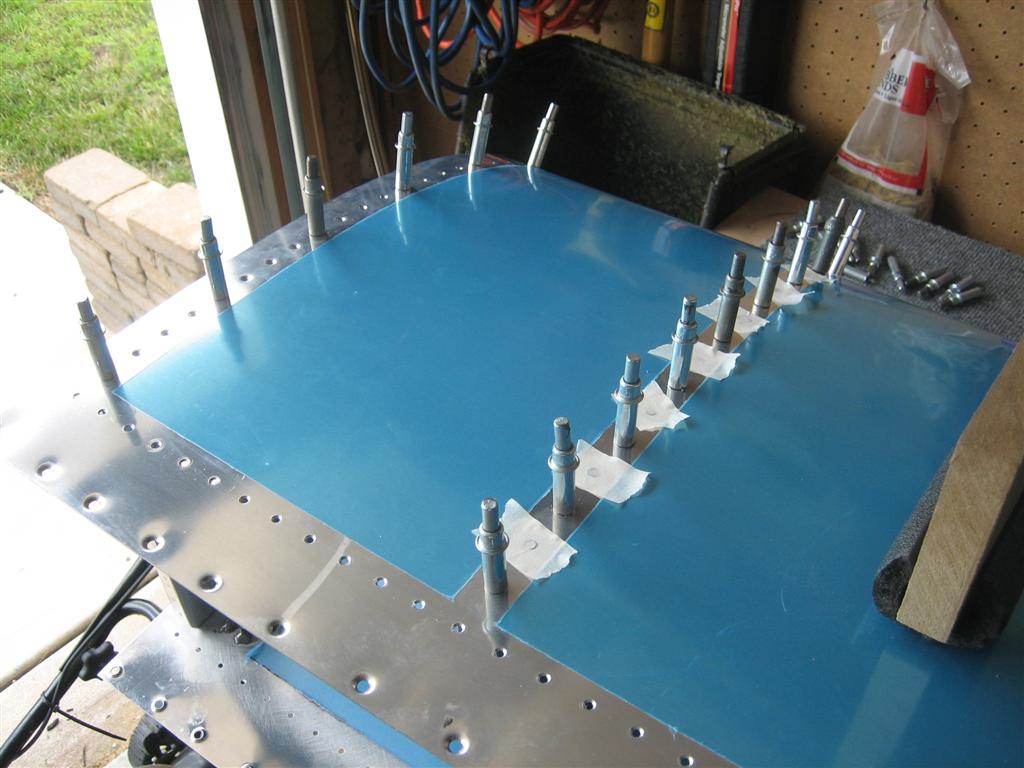
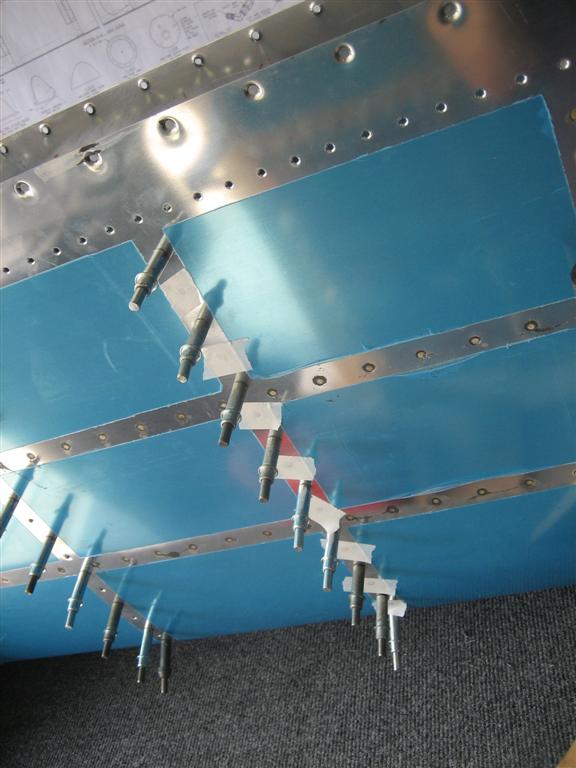
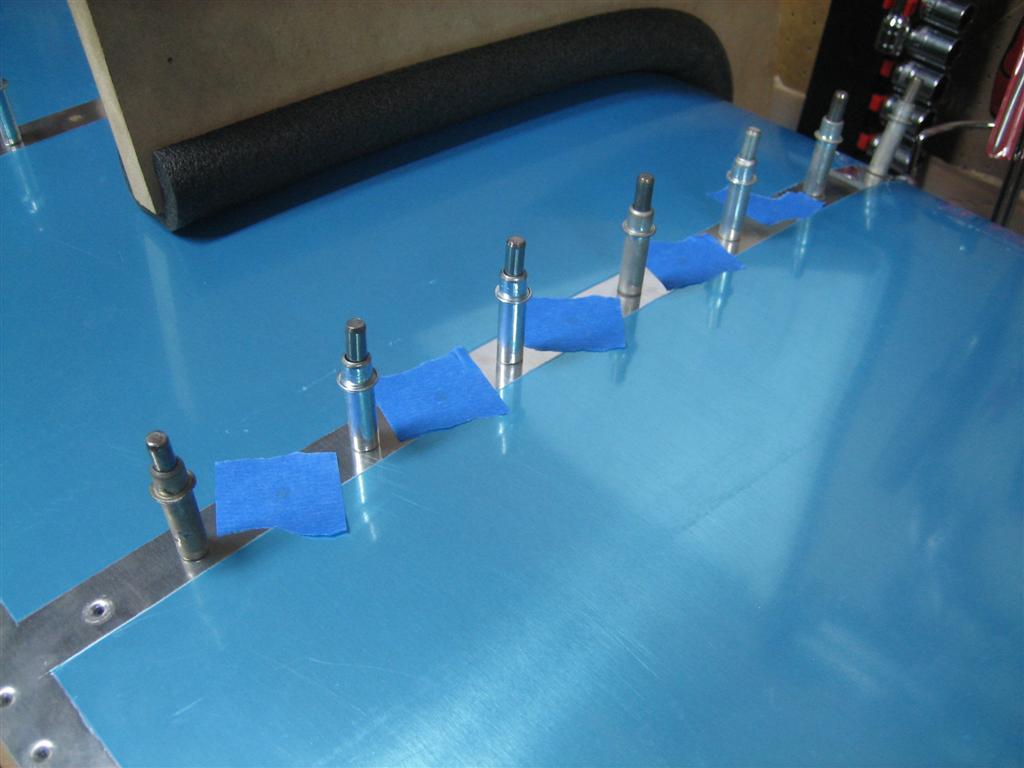
Here is rib #4 after being lathered in proseal, clecoed in, rivets inserted and taped over.

I like this part, because it means I’m about to set some rivets.

Here’s a shot from the other side showing some fillets. On this rib, I did the fillets before I set any rivets. Hopefully, getting those done now will prevent some of the proseal from getting on my bucking bar.

Nice fillets.

After banging away for a little, here are the rivets on the top of the skin.

Oh man, I hope it’s easy to clean off that proseal later.

…and the bottom of rib #4.

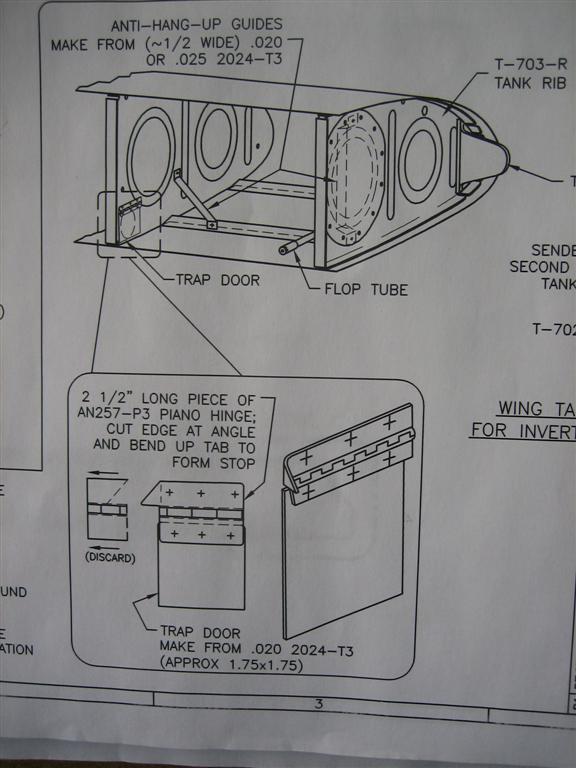
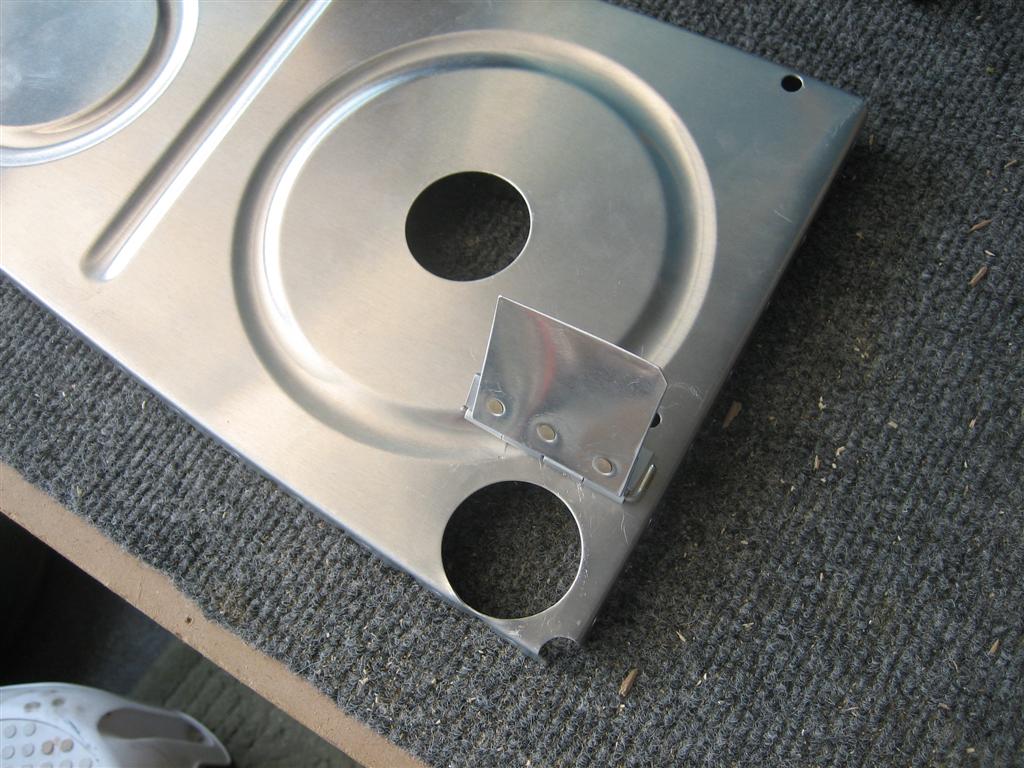
Before starting in on rib #2, I need to fabricate a little trap door. Basically, it will all fuel to flow from outboard to inboard, but when I roll one way or the other, the door will close and not allow fuel back outboard. (Fuel will still trickle out through some of the smaller holes, but enough should stay in the first bay to prevent fuel starvation for the short time it will take me to roll back upright.

The anti-hangup strips can be added later, but the trap door would be hard to do later.

I’m making the door from the bottom of the picture.

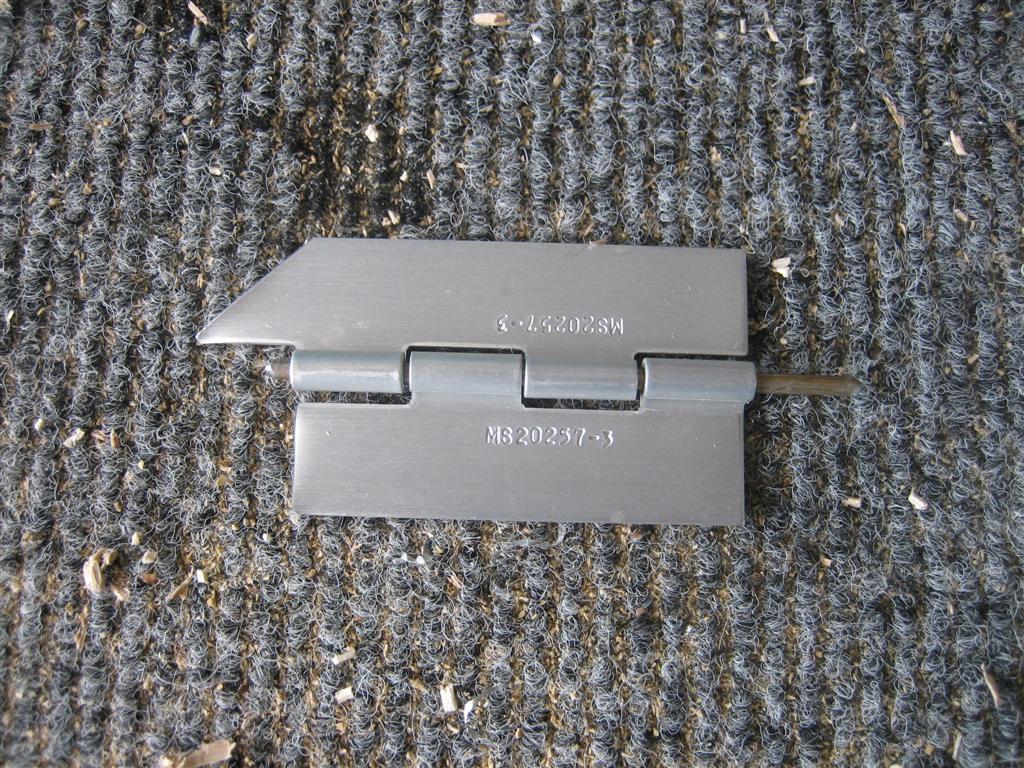
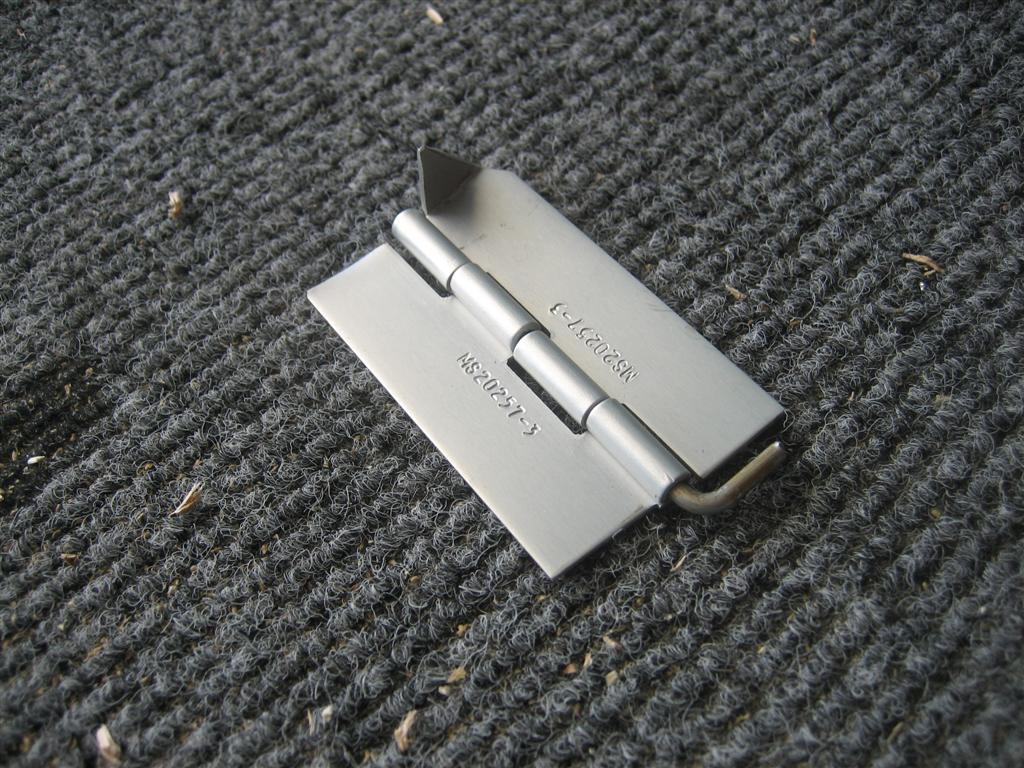
So, I found some extra hinge stock laying around, and cut it to make it look like the plans.

Hinge stock.

Then, I bent the hinge pin and triangle piece (which stops the door from opening all the way).

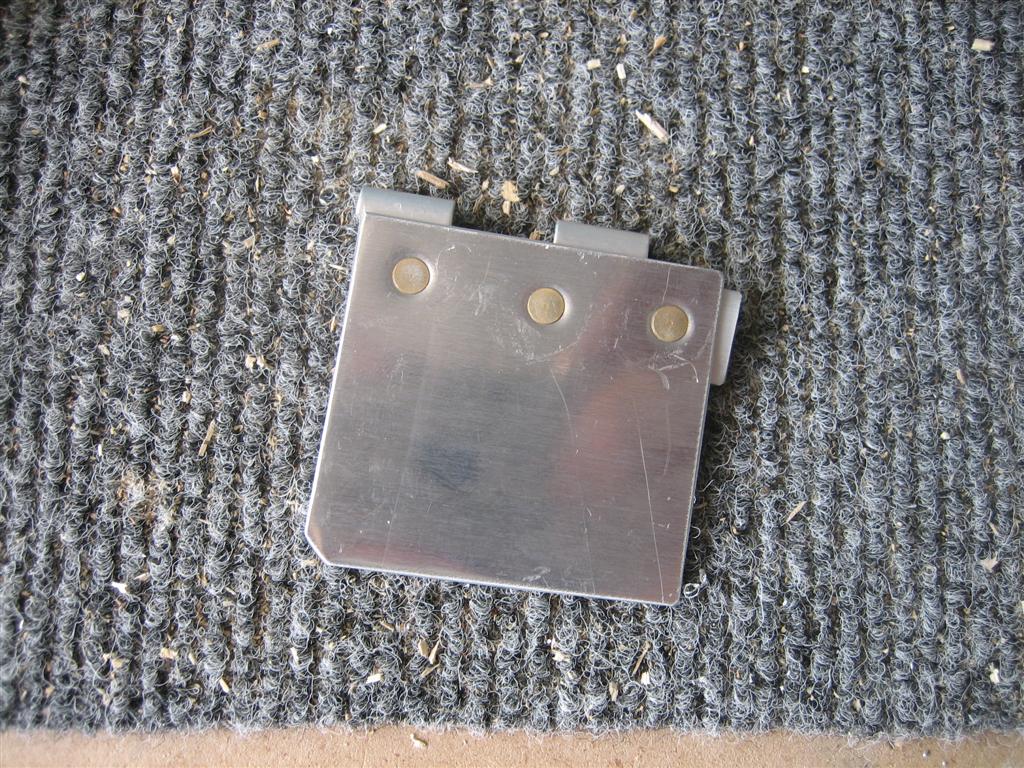
After some drilling, deburring, and dimpling, I set some flush rivets (so the door would close) in the bottom half.

3 rivets here.

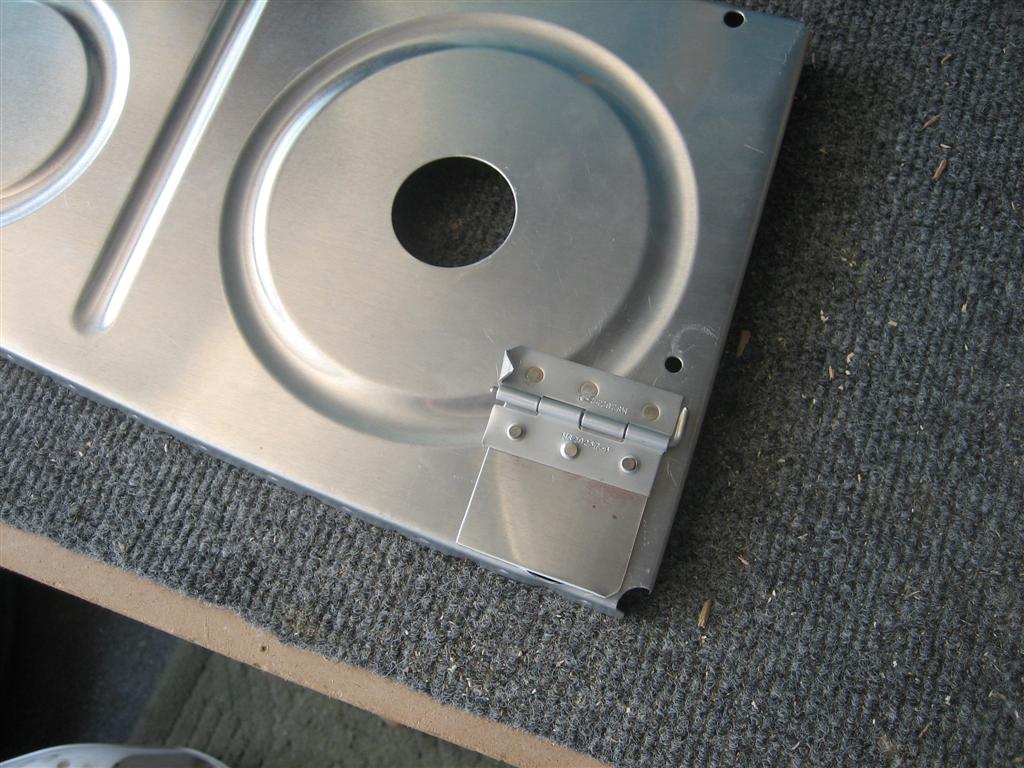
Since I didn’t want to up the rivet size just so I could use a universal head rivet, I drilled the upper half of the hinge along with the rib to #40, then deburred and dimpled both.

3 more here. Trap door closed…

…trap door open.

Then, after having a HECK of a time getting the inboard rib clecoed in place (because you want to have the rib on either side of the one you are working on installed to firm everything up while you are riveting), I realized I was trying to cleco a dimpled skin into an undimpled rib.

Dumb.

So, deburred, dimpled, then tried again.

Much better. Here’s a shot after getting rib #2 cleaned, lathered up, clecoed, rivets inserted, and ready to rivet.

It actually wasn’t too hot out today. Having the garage door open was nice, although I’m pretty sure the neighbors think I’m crazy with the hearing protection, respirator, and gloves.

Speaking of gloves. This is the last one.

Don’t mess up, you only get one shot at this one.

Okay, half the rivets set, insert new (cleaned) rivets, move the tape…

The grass on the other side of the driveway is nice healthy grass, I promise.

All done on the top of #2.

Bottom is done, too.

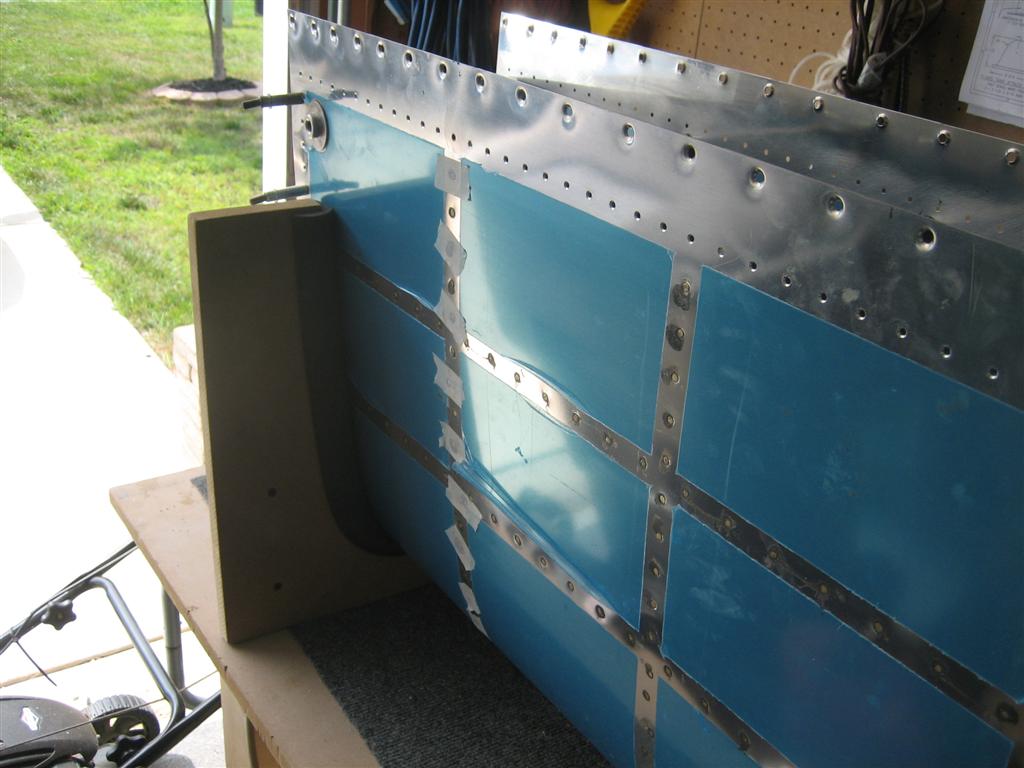
After taking a short break (to breathe fresh, instead of respirated, air), I pulled off the blue vinyl from inside the tank. This worked perfectly for me, even though some guys on VAF were skeptical and insisted everyone use electrical tape.

Baloney! (Is that how you spell that? I’m not talking about the meat “bologna,” I’m talking about the “you’re full of it” exclamation.)

Well, I didn’t pull the first bay’s vinyl off yet. I’ll wait till the inboard rib is attached.

3.0 hours. 34 rivets on each of the ribs, plus 6 rivets for the trap door. None drilled out. I am a riveting all-star. (Only one rivet drilled out in the last 8 building sessions. Nice.)

Prev | Next


Two More Right Tank Ribs Sealed

June 18, 2011

Prev | Next

Today was a busy day! Even though I’m logging all the time today as on the fuel tanks, I did spend just a couple minutes on the leading edge.

First thing, I deburred and dimpled the inboard leading edge rib, then fit it back in place on the leading edge, this time WITH the joint plate.

Looking good.

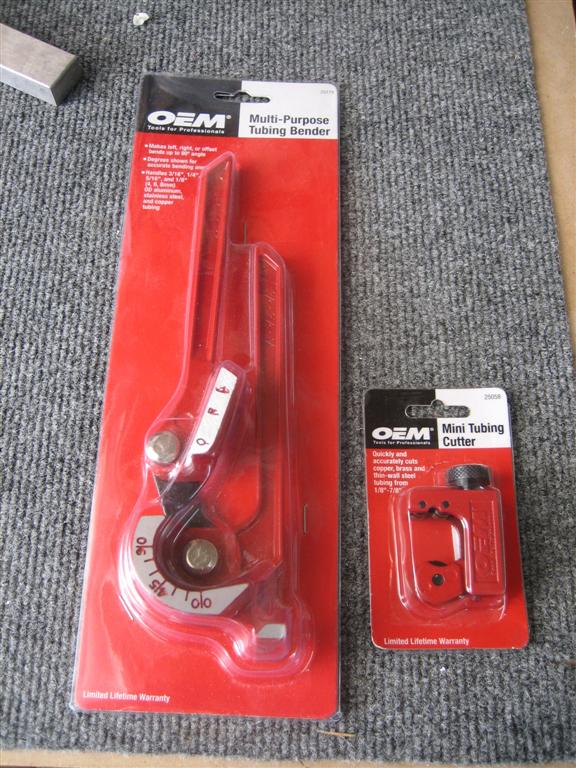
Oh, while I was in autozone today, I grabbed a tubing bender and mini tubing cutter.

These should work.

After much reading, deliberating, gnashing of teeth, and hand wringing, I decided to bite the bullet and add a fuel return line.

Not very many fuel injection systems require it, and if I got with the ECI injection (which is supposedly very nice), they say you can just add a bulkhead fitting to the inboard bay, but I think I’m going to run a -6 line to the second bay.

As of a week ago, I had decided I was not going to add any injection system that required return lines, so we’ll see how I feel in another week.

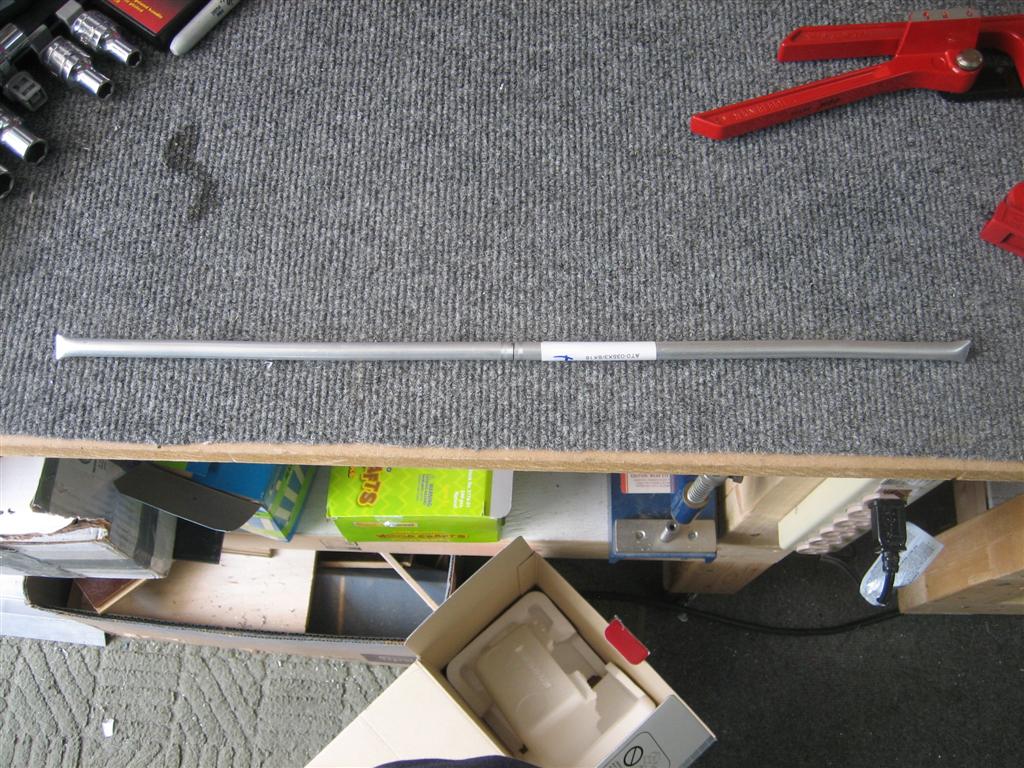
Anyway, I was milling about the parts under my workbench when I came accross the standard rigid pickup tube that Van’s provides. Since I’m using flop tubes, this is scrap, so I held it up against the tank, and figured out it would just make it over to the second bay. Wuhoo!

I guess with the normal pickup, they crimp the end and you make saw cuts in the side of the tube as the actual pickup.

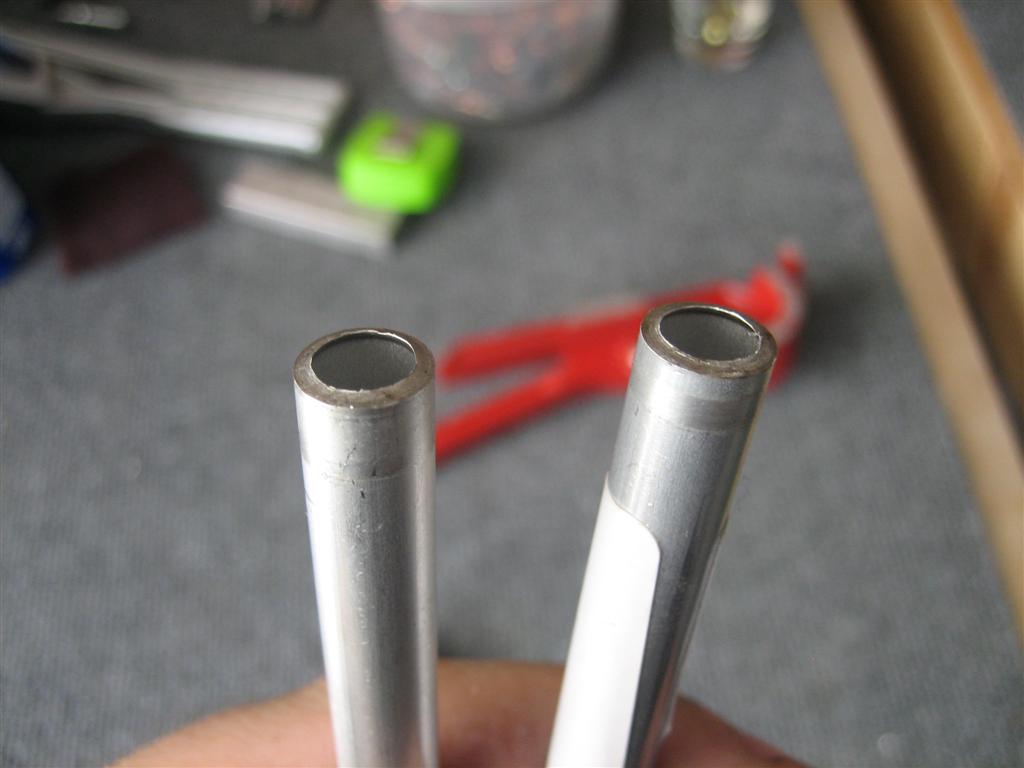
First, let’s get this thing cut in half.

Not bad. Needs deburring, though.

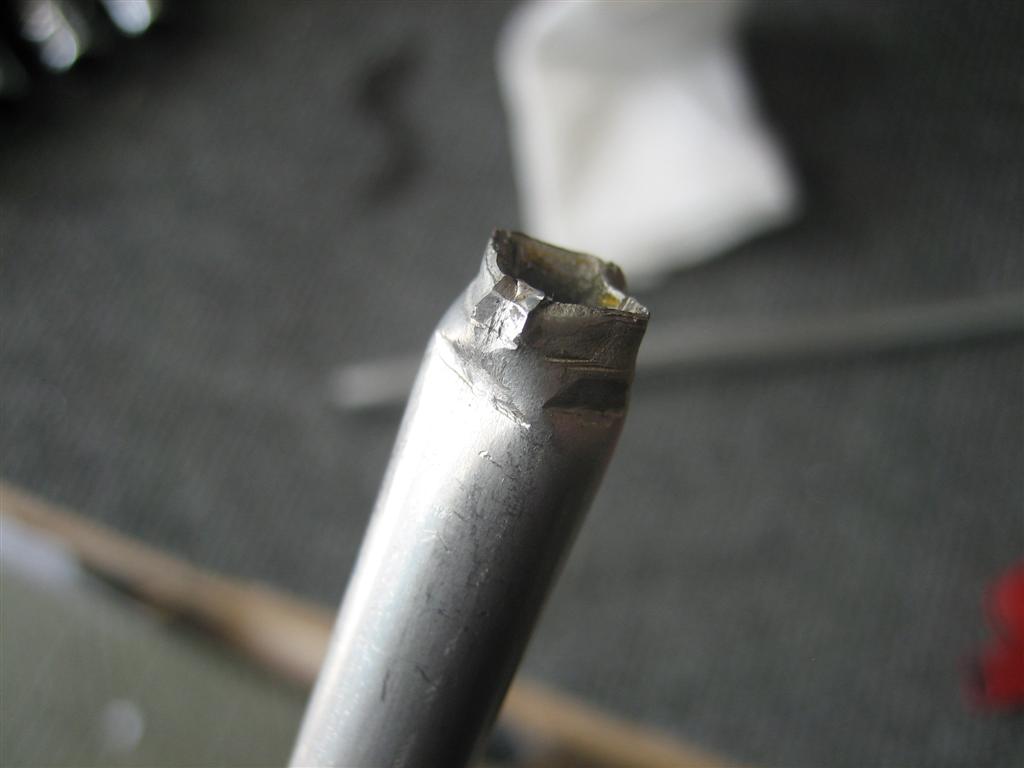
Then, let’s uncrimp the other side so the thing will fit into the cutter (I want a fresh cut on both ends).

Yikes.

Of course, I made a fresh cut on this end too, then deburred both sides, and promptly put the tubes away before taking any more pictures. Sorry.

On to some tank ribs.

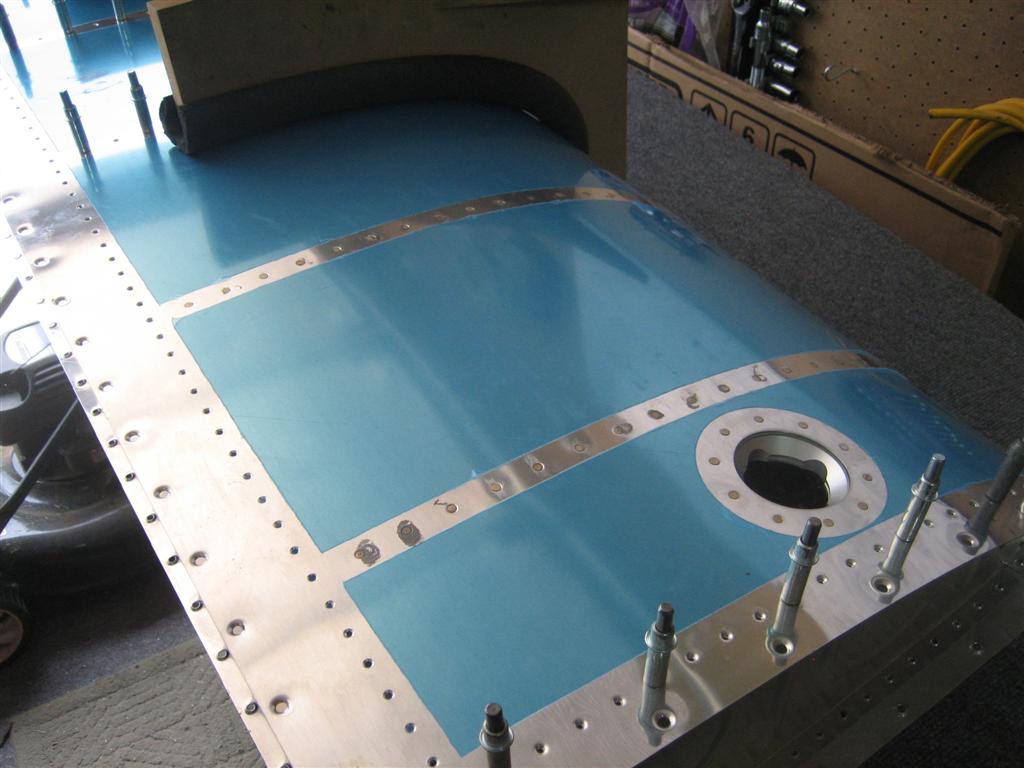
After the usual cleaning and preparations, I buttered up rib #5 and clecoed it in place. Here are some undriven rivets with tape on the heads, ready to be set.

Ready for riveting.

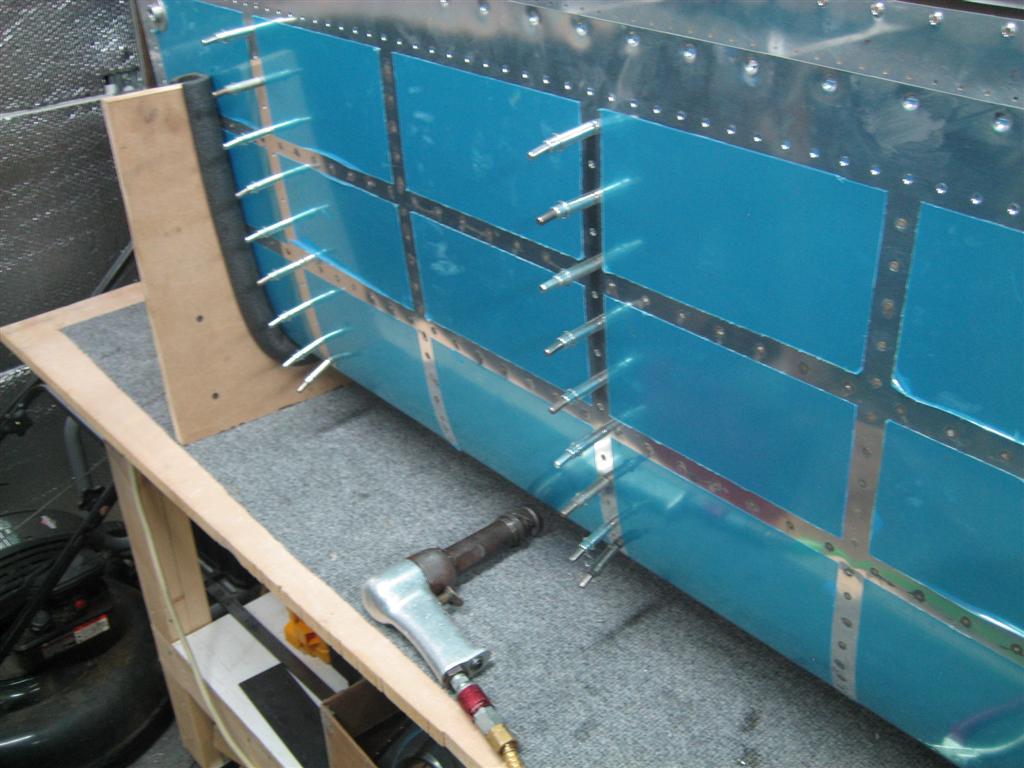
I went light on the pictures today, sorry. Here’s rib #5 and #6.

I still don't like the proseal on the outside of the skins, but I'm trying not to have any leaks. I hope the razor blade trick works.

Then, I repeated the whole process for rib #3.

...and my trusty rivet gun.

A picture of the top side.

Nice, except for the very last rivet I shot, which is on the lower right corner. Ding city.

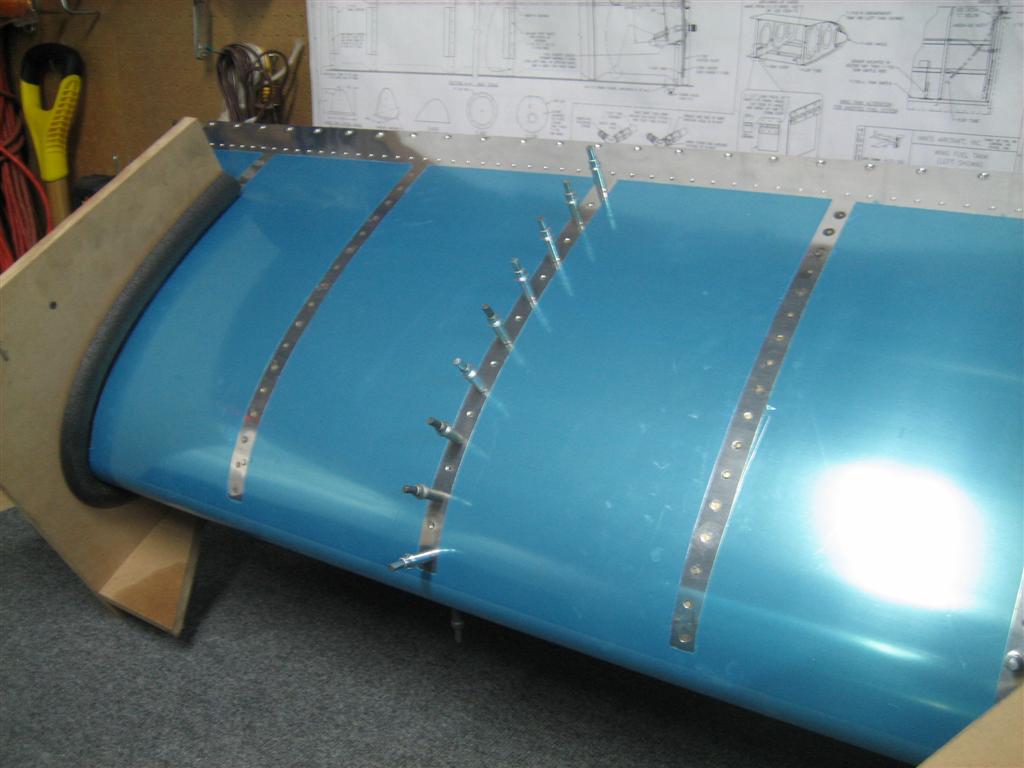
Starting from the (invisible) rib all the way to the left, I did ribs 2 and 5 today.

Still need some rivet encapsulation, but overall, a really good day. 34 rivets times 2, none drilled out.

Oh, and 3 hours. (It really only took me one hour per rib, but I was messing around with the leading edge and the fuel tube stuff.

Prev | Next


Fixed Right Vent Clip Omission

June 11, 2011

Prev | Next

By the title, you can tell that I totally forgot the vent clip on the right tank’s fuel cap flange.

I spent a week preparing myself, reading everyone’s posts on VAF and their build logs, all of which said, “don’t forget the vent clip.”

Of course, I forgot the vent clip.

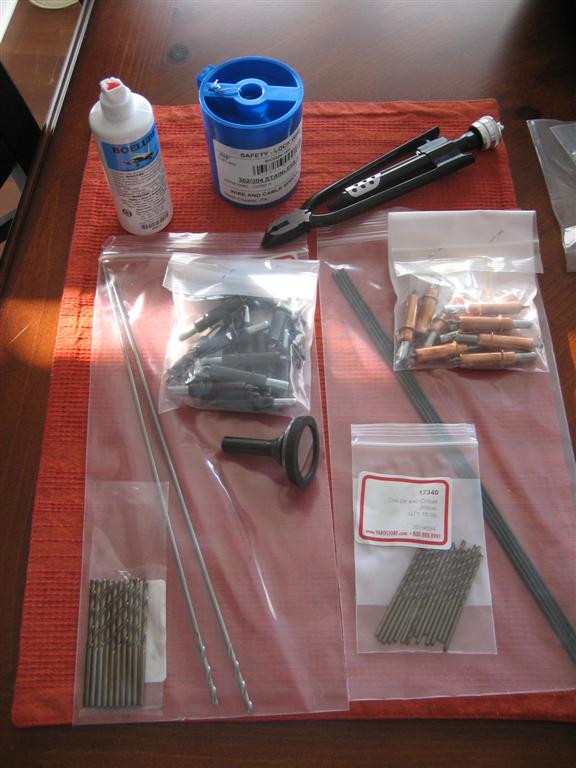
Before we get into the proseal again, I got a tool order in from the Yard.

Boelube, safety wire (0.032″), safety wire pliers, a few clecos, a new flush set, and a whole bunch of drill bits.

New toys!

Here’s my old flush set and the new one. I”m a little nervous to try it out, so I’ll probably do some practice rivets first.

It's much bigger, and has a nice rubber ring to it.

Okay, let’s get to fixing that forgotten vent clip.

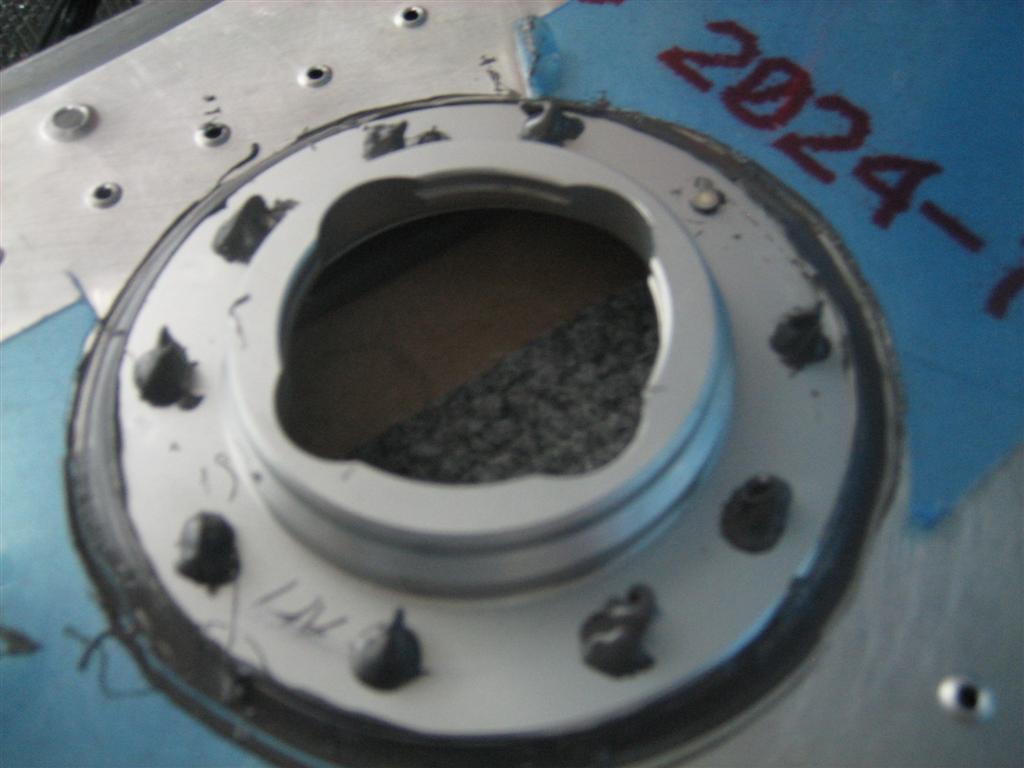
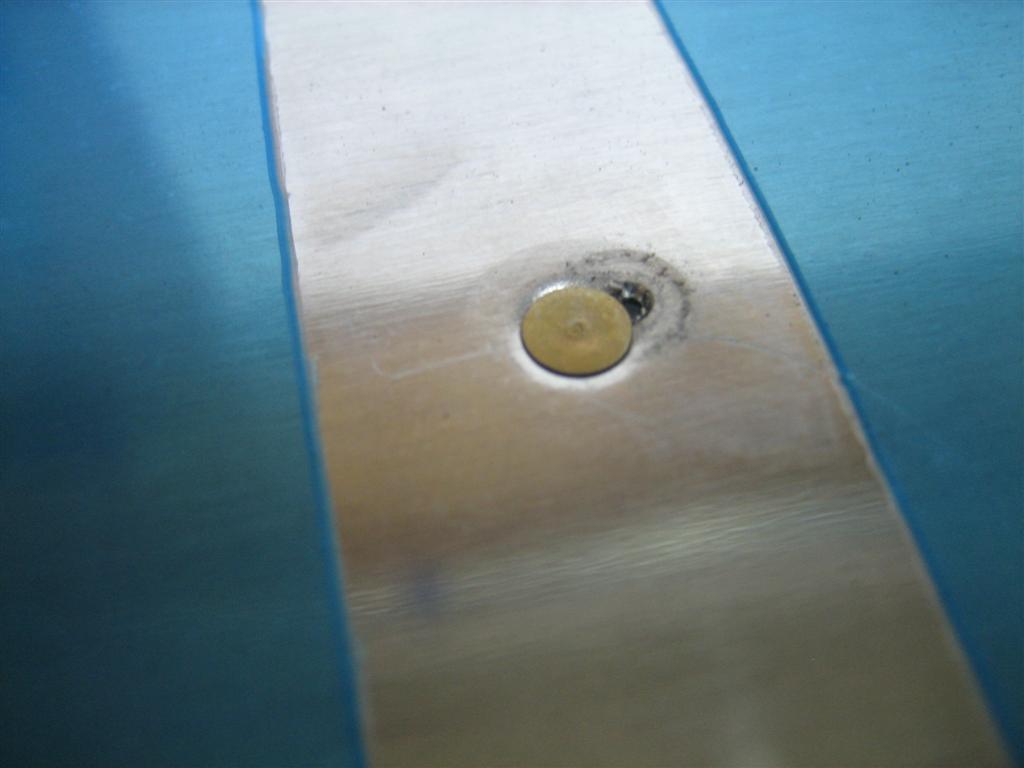
Surprisingly, after a day or so, it was pretty easy to just pull off the proseal dab I had on the rivet.

The uncovered rivet is on the upper right.

Oh, someone mentioned on VAF that I shouldn’t use the blue stuff as electrical tape. I pulled off a few sections to see how it went, and I actually like the way it works. I’ll stick with the blue stuff.

Worked okay for me.

Okay, this paragraph represents the 3 times I had to drill out and reinstall the rivet.

Here’s the first try. When it set, it was a little proud, and I just couldn’t stand for that.

The rivet in question is the lower left one.

After trying two more times, I ended up with this one.

It’s pretty great, except for the fact that it’s differently colored. (I think that particular rivet came with the practice kit.

I can live with that (barely).

Here’s the vent clip side. After reading more, some people who forget this just leave it off, as the next inboard rib is so close.

I figured that Van put it there for a reason.

My clip is a little tall (which means it will be lower), but everyone just bends the very tip up anyway.

The rivet in question is the bottom one. If I still decide to polish the airplane, the rivets will all turn to the same polished color. I just need to remember to get rid of that tiny sliver of proseal sticking out from beneath the head.

Overall, today was a REALLY frustrating day. Didn’t set any new rivets, but drilled 3 times.

I guess I have to have days like this so that the other days can be good ones. Onwards and upwards.

Prev | Next


Started Banging Rivets on the Right Leading Edge

April 22, 2011

Prev | Next

OH MY GOSH!

ANDREW’S

BUILDING AGAIN!

Well, even though my last post said I was getting back into the mood of airplane building, it’s been almost a MONTH since I spent time on the project.

Yikes.

Anyway, I had a day off today, and I managed to spend a couple hours in the airplane factory.

Let’s see if I remember how to take and post picture.

After a little garage cleanup, I got the right leading edge out and got back to deburring all of the holes. I think deburring took about 30 minutes.

My hand hurt after deburring all of these. I need to deburr more often.

Once done, I took the cradles off the skin and opened her up to do some scuffing.

I haven't totally finished the leading edge light installation, but I can do that after the ribs are installed.

Then, I broke out the c-frame and started dimpling. This actually takes awhile, because you have to be careful not to punch any extra holes in the skin.

Even though I can reach these dimples with my squeezer, I think you get better, crisper dimples from the c-frame.

Here's me doing the forward-most hole in the top of the leading edge skin.

AHHHHHHHH!

THE DREADED

FIGURE-8!

Well, after 242 hours, and thousands of dimpled holes, I finally joined the club.

To tell you the truth, it’s really not that noticeable, except for the fact that it is on the top of the wing (AND YOU’LL ALL NOTICE IT)!

Anyway, I used some flat sets and pounded it flat, then filed it down a little, and dimpled the primary hole.

Here's the extra dimple pounded flat.

And the orginal hole dimpled. still needs a little filing here.

I could throw a fit and order a new leading edge from Van’s, or I could just build on, and cover this with filler and paint.

(I don’t think I can polish the wings anymore.)

Well, in the interest of building on, I decided to do a little riveting today. I had a couple ribs prepped (my legend: R2 and R3), so I got them prepped, primed, and clecoed in place. (Making sure to cleco one rib on either side of those so the leading edge was perfectly straight.

Here are the ribs clecoed in place.

Of course, I use my normal tape-over-each-rivet-head trick to minimize scratches, dings, and marring.

I shot and bucked every other one (no mistakes) and then replaced the clecoes with rivets, moved the tape over, and finished the row.

(Needless to say, I started with the bottom of the leading edge, so any mistakes due to out-of-practice riveting wouldn’t be so obvious.)

Gratuitous shop head shot on the lower surface of the first rib.

Gratuitous shop head shot on the lower surface of the second rib.

Wash. Rinse. Repeat. (Crap, I meant flip, cleco, rivet, repeat.)

Gratuitous shop head shot on the upper surface of the first rib.

Gratuitous shop head shot on the upper surface of the second rib.

Umm, did we not have enough shop head shots today?

Andrew, STOP TAKING PICTURE OF SHOP HEADS.

Here’s the “club” rivet. I think I’m going to leave it like this, and just watch it for cracks, but someone will probably tell me I need to drill this out and replace it with some other solution. We’ll see.

(big. depressed. sigh.)

Seriously, I need to control myself with this camera.

Oh, and I was having trouble counting rivets today, which was weird.

So I just started writing them down. Can you guys check my math?

3 hours, 58 rivets, 1 figure-8. Boo.

Prev | Next


Riveted the Right Rear Spar to the Main Ribs

January 23, 2011

Prev | Next

Well, today was a crappy day. I had mucho problems with riveting the right rear spar to the main ribs.

I’ll walk you through what happened.

I started with the inboard side of the spar. The plans call for an AN470AD4-8 rivet. As you can see below, this is a little for a good shop head.

...AD4-8.

Here's an ...AD4-9 rivet. This looks better.

After some gymnastics with my good squeezer, which only has a 4″ no-hole yoke on it, I realized that I needed the holed yoke, and therefore needed to use my economy squeezer. Bummer.

(Back in the empennage, I stopped squeezing AD4 rivets altogether because I kept messing them up; the economy squeezer just didn’t have enough oompf.)

Anyway, I managed the wingwalk rivets with the smaller squeezer. Here’s 9 rivets squeezed.

I couldn't reach the top-most rivet in 3 of the 4 wingwalk ribs. (The other open hole in each of the rib attach points needs to wait for the flap brace.)

I moved my way outboard from there, two rivets in each rib.

Halfway there, I bent over both of the rivets in the aileron pushtube doubler area, and drilled both of those rivets out. Then, the aileron gap seal switches “open” rivets (compared to the flap brace) so of course I set a two rivets there that had to be drilled out.

When I got to the end, I noticed things weren’t lining up very well.

Duh. Forgot to dimple the aft side of the outboard rib.

That's better.

I still couldn’t reach the one rivet (shown on the left here), but I got the other 3 set properly.

The apparent gap between the two flanges isn't really a gap, its just the shadow.

Let me bring you back to the very first rivet I set. The camera is upside down here (so the part is right side up).

The upper, leftmost rivet bent over (it was the first one I set with the economy squeezer). After drilling out, the hole was englarged.

With only slightly enlarged holes, sometimes you can just squeeze another rivet (a little longer this time) and it will expand to fill the hole nicely.

This is after setting another rivet.

This one did not properly expand, and by the time the shop head was formed, it kind of formed in the hole.

Hmm. I know this is a critical piece, so I’m going to have to call Van’s and ask them what the best course of action here is.

I’m hoping I can step up to a AN470AD5-9 rivets, but I’ll need to drill the rivet and hole out to 5/32″ and I’m worried about edge-distance in the up direction.

We’ll see what the guys at Van’s have to say.

January 31st update: Ken S at Van’s wrote back.

A 5 rivet should work ok. If you can fill the hole with the original rivet, that’s ok too –even with
a slightly undersize head. Just be sure that the rivet engages the entire circumference of the
hole.

Alright. I’ll have to add AN470AD5- rivets to my next order from Van’s or Aircraft Spruce. In the meantime, I’m going to keep working on other stuff.

U-G-L-Y, you don't have no alibi, you ugly! {clap, clap} You ugly!

1.5 hours and 28 stupid rivets set (my arms are tired from the economy squeezer); 8 of those drilled out.

I’m going to have to buy a new yoke ($$$) and probably do some surgery on the offending rivet in the last picture.

I’m stopping this post and starting another one (click next below) because I moved on to the skins. I really needed to end on a good note today, and the skins actually did the trick.

Prev | Next


Finished Riveting Right Wing Main Ribs to the Main Spar

January 21, 2011

Prev | Next

Well, after a quick workout, I manage to get a few rivets set in the main spar.

I quickly got 6 of the 7 remaining right main ribs riveted to the main spar (the outboard rib doesn’t get riveted to the main spar because it shares rivets with the leading edge outboard rib…the rest of them are slightly offset from their leading edge rib neighbors.)

Anyway, after 30 rivets set, I decided that 6 of them needed to be drilled out. Here’s a good example.

Those are called "smileys."

I know exactly why it happens. It’s because I am watching the bucking bar and shop head form. When the shop head is set appropriately, I’m subconsciously lifting the bucking bar away from the shop head before letting go of the rivet gun trigger. The rivet set bounces on the head and creates the smiley.

Of course, when I concentrate on letting go of the trigger first, all goes well.

Anyway, I’ve been trying a new technique with drilling out these AD4- rivets. I’m actually drilling them out from the shop head side. Assuming the shop head is centered over the hole, it is easier to center-locate the drill bit on the flat shop head than the rounded manufactured head. Here are a few pictures of my good results.

I didn't get any oversized holes at all.

Here either.

Here’s what the drilled out rivet looks like.

I started from the shop head side (left here) and finished just prior to hitting the manufactured head. This worked great for me.

After re-setting those 6 rivets, I snagged a picture of all (except for the outboard) ribs riveted to the right main spar.

Wuhoo! Big pieces permanently together!

I flipped the spar over on the stand and clecoed on the rear spar.

One cleco in the rear spar for each rib.

I may get to riveting the rear spar tomorrow…we’ll see.

1.0 hours. 30 rivets set, 6 of them drilled out and re-set.

Prev | Next


Finished Left Rear Spar

December 12, 2010

Prev | Next

Well, I know I’ve been bombarding you with new posts lately (not!), but I did get a fair amount done today. As you can tell from the title of the post, I finished the left rear spar.

More importantly, I made an investment to my health this week.

I present to you…(triumphant music)…a heater.

Ta-da!

This is a pretty sweet heater. It’s small, only cost $20, and by no means will it heat the garage, BUT, the garage is no longer (literally) freezing, and I can work in front of the workbench comfortably for a whole day. It will provide me with two heat settings and has a little fan in it. I set it in the corner of the workbench (as pictured above), and after about 5 minutes, I have to turn it down to the low setting. After about ten minutes, it is pretty comfortable where I’m standing in front of my workbench. And, now that I think about it, it does take the chill off the rest of the garage. Even for the one day I’ve really used it while I was finishing the floors, it has totally earned its cost back.

Okay, back to the airplane. I finally found my stepdrill, and made a couple holes in my W-707E.

Step-drill to the rescue. Had I planned this a little better, I would have done three smaller holes.

I clecoed W-707E back onto the rear spar and flipped it over to use the dremel to clean out the rest of the aileron pushrod hole.

I'm about to flip the spar over and use the dremel to clean up the hole.

I'm not totally done here, but you get the idea.

After that, I moved on to dimpling the reinforcement plates where I won’t be able to dimple them later.

4 #30 dimples along the left (outboard) edge, and #40 dimples along the top flange.

I also dimpled the flange of the rear spar where the reinforcement plates will go.

Then, after a little more scuffing and cleaning, I shot primer on the spar.

I love this color. Makes me happy.

And the left W-707E and W-707F.

After a couple hours inside while the primer dried, I came back out and studied the rivet callouts.

Looks like I can set 7 rivets here right now. All size "square," which is AN470AD4-8.

5 of the 7 set. Nice shop heads, huh?

I moved along the reinforcement fork, using clecos as indicators not to rivet certain holes yet.

I chose to put the shop heads on the aft side of the rivet (these are manufactured heads). I like shop heads, and it makes inspection easier.

Moving outboard, I studied the same callout for the middle reinforcement plate, or W-707E.

Looks like I can set five here, of size "upside down triangle," which are AN470AD4-4.

Manufactured heads

Shop heads.

And repeat with the outboard reinforcement plate.

6 here, I think. More upside-down triangles.

Manufactured heads.

Shop heads.

Then, I couldn’t help but grab the right spar and put them both up on the workbench.

It feels good to have both rear spars done.

Look at the difference in paint color. Left spar (just finished) is on the right.

More difference in paint color.

Anyway, all the rivets were symmetrical from right side to left side, which doesn’t mean I’m correct, it just means that if I did make any mistakes, I made them twice!

Now, all that’s left on the spars is to finish up the left tiedown. Then, I really need to make some wing stands and finish up some rib deburring.

Tonight was a good night. 56 rivets, and it feels really good to get something big put together.

Prev | Next

Onward and upward!


Tank Attach Nutplates, Left Upper Spar Flange

October 23, 2010

Prev | Next

After getting a ton of housework done, I managed a quick half hour in the garage to finish up the nutplates on the left spar.

I took some pictures, but they are just like the ones from the previous post, so I’ll be short with the descriptions.


Countersinking.


I found it a little quicker (and less tiring on the drilling arm) to do 4 at a time. I’d countersink four sets of holes for the nutplate attach rivets, then cleco one side of a K1100-08 nutplate in, squeeze the rivet, and then take out the cleco and rivet the other side in. Then move on to the next four.

I’m sure it didn’t actually save me any time, but for some reason it seemed quicker.


Just squeezed the first four rivets on this flange.


Nice looking shop heads, if I do say so myself.


Another angle, I guess?


Remove the cleco.


Put in the other rivet (man, I was really camera happy today...)


Everything was going great until the VERY LAST RIVET.

[sigh]


For some reason I lifted up the squeezer as I set the rivet.


Another angle (except it's the same angle). Sorry.


After successfully drilling the rivet out. I was left with a crooked nutplate. Hmm.


Problem solving time!


I didn’t have a clamp small enough to hold the nutplate in place while I reset the rivet, so I grabbed one of the #8 screws (forgot the part number, sorry), and screwed it in gently.


Wuhoo! I think this is going to work!


asdf


(Screwed in gently) because I hadn't countersunk yet. This worked great.


See, I told you it worked great.


Last, but not least, I squeezed the AN426AD3-6 rivets for the K1000-4 nutplates near the spar root.


Flush side...


Nutplate side.


64 Rivets, ONE drilled out  in 0.5 hours.

Oh, and then I went for a run with the pups. (And by run, I mean rollerblade.)

Prev | Next


Right Spar Countersinking and Nutplates

August 22, 2010

Prev | Next

Well, today was the first official wing construction day. While Van’s is trying to figure out what to do with my damaged left spar, I figured I should get started on the right spar.

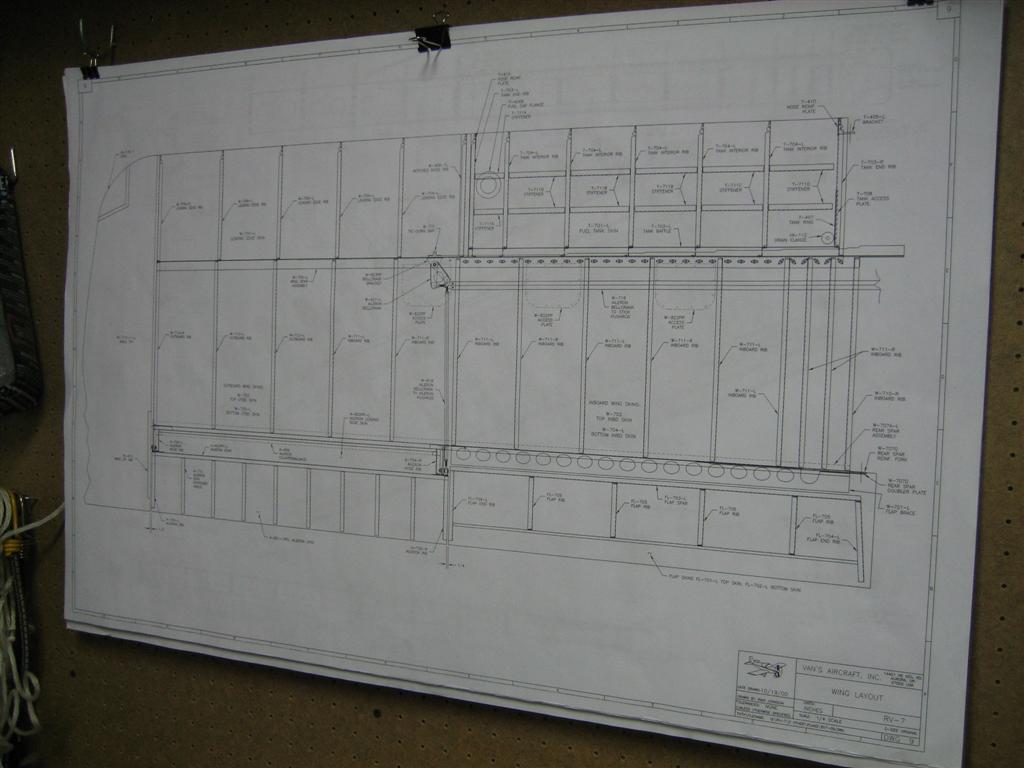
First thing…yup…a plans change picture!

The plans for the wing are a little different. There are about 4 separate sheets of different views for the wing. You guys get to see just the general layout one.
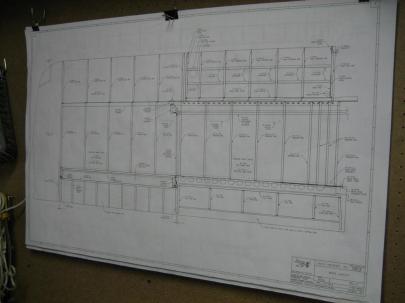
Wuhoo! A wing!

Now, let’s get to work. First thing, I very carefully put my beautiful right spar on the edge of the workbench and clamped the flange down very lightly. The spar will tip over onto the table (away from the camera) if the clamps let go, so I’m not too worried about clamping them down too much.

Every builder that has a website makes a comment here about how the construction manual really holds your hand and steps you through the process on the empennage, but then kind of just makes general statements for the wing. For example, the only real construction step on the first page of the wing section says:

“To begin wing construction, rivet the tank skin attach platenuts to the spar as show in DWG 16A, Detail A. Machine countersink the platenut attach holes in the W-706A spar flange.”

Wait. What? That is like 1000 steps, condensed into one statement. It ended up taking me 3.5 hours to do that one step (I admit, I also delved a little into a step a few steps down):

“Attach the K1000-06 platenuts for the W-822 access plate to the W-706A flange. See DWG 12.”

Fine. I see how it’s going to be.

Let’s get started.
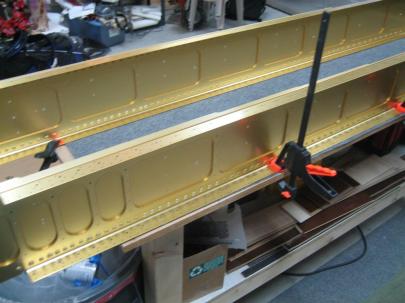
Where is my countersink?

A lot of builders start out thinking they should make a nutplate jig and countersink the screw holes before riveting the nutplates (sorry Van, I call them nutplates) on so they can use the jig as a guide for the c/s pilot to avoid chatter. Van’s suggests using the installed nutplates as the pilot guide. After those builders spend some time making those jigs, they eventually abandon the idea and fall back to the Van’s method. I’m going to do something I don’t normally do and FOLLOW THE INSTRUCTIONS. Sometimes, I try to get cute with extra ideas and fancy engineering solutions, when really I should just do things by the book.

So I grabbed my countersink with a #40 c/s bit, tested in some scrap, and positioned the countersink cage over one of the nutplate  attach holes.

The c/s pilot didn’t fit. What?!

You mean I am going to have to drill all of these holes out to #40 first? Ugh!

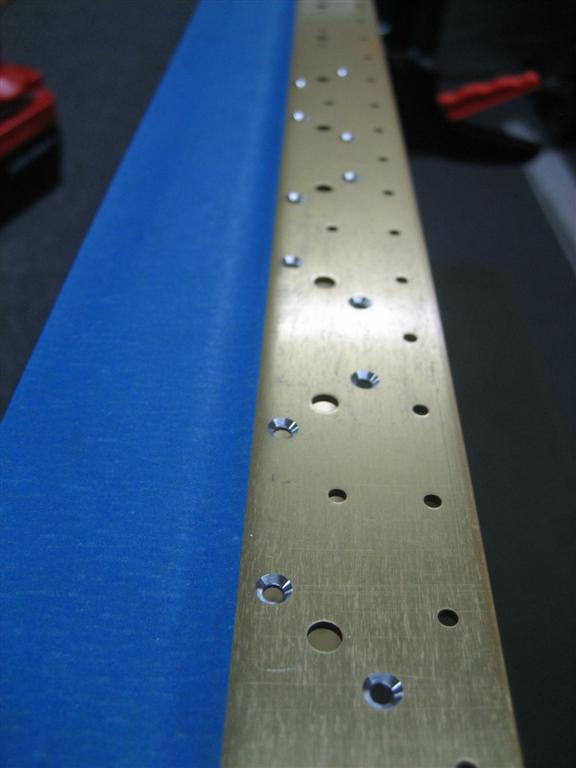
After drilling every one of the attach holes out to #40, I finally got the countersink and cage loaded back into my cordless drill (slower and more trigger feathering ability than the air-drill) and got to it. Here are my first 10 countersinks.
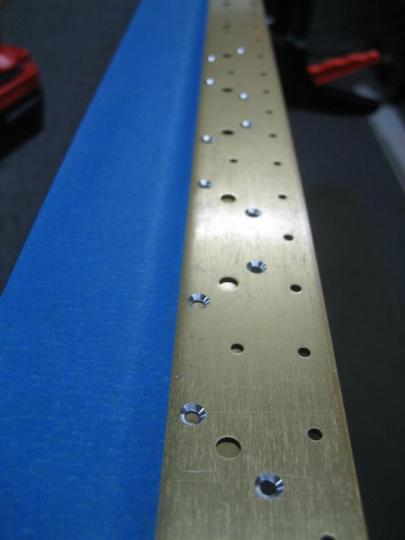
The blue tape is to prevent metal shavings from getting lodged in between the spar cap bars and the spar web.

Anyway, I continued down the row, being very careful to slow myself down and not to fall into too much of a routine. I could feel this was going to be one of those areas where I would be going through the motions and mess something up. (I did make a mistake while drilling out all the holes to #40. I accidentally drilled out a skin attach hole, too. No biggie, but a perfect example of moving too quickly in a habitual way.)

I stopped about every 6 countersinks and retested my countersink depth using a AN426AD3-4 rivet. They are all perfect. Here is the end of the row, looking back toward the “diagonal” wing-walk attach holes.
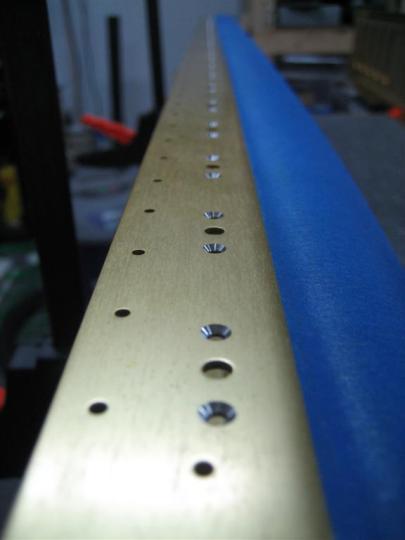
Pretty, pretty.

Then, I flipped the spar over and did the bottom flange. Also, there are some access panel nutplate that get attached now, too. I went ahead and countersunk for those attach rivets, also.)
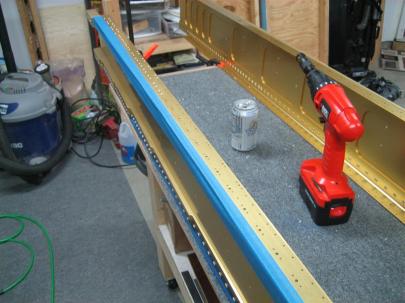
Bottom flange, sobriety-maintaining Sprite-zero, and the girlfriend's cordless drill I'm borrowing (pronounced "you can have it back when you pry it from my cold, dead hands"). Thanks girlfriend!

Phew, that was a lot of countersinking. (I think I counted 144 total countersinks for just the nutplate attach holes. There’s another 72 for the screw holes (in the middle of each set of three holes) I’ll have to do later.)

Next, I grabbed some K1100-08 nutplates, some silver 3/32″ clecos, and some AN426AD3-4 rivets and started getting ready. My plan is to cleco the nutplate to the spar, insert one rivet, then after riveting that one, take the cleco out and rivet the other side.
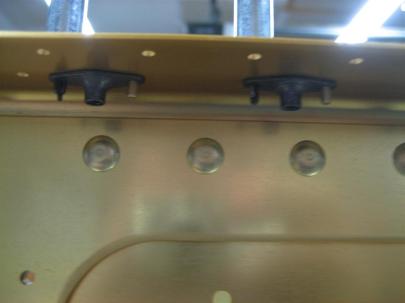
Cleco in one side, unset rivet in the other.
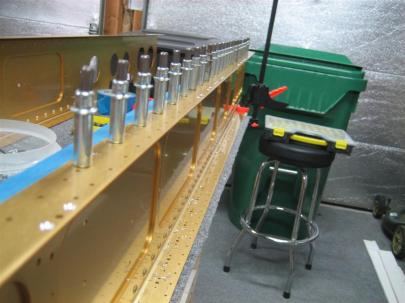
Down the line, everything ready to rivet.
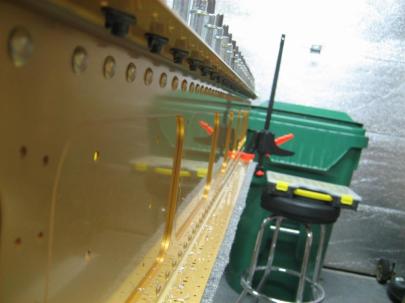
Redundant picture.

Ahh, this slower, more thoughtful approach is paying off. Can you see the error that I almost made?
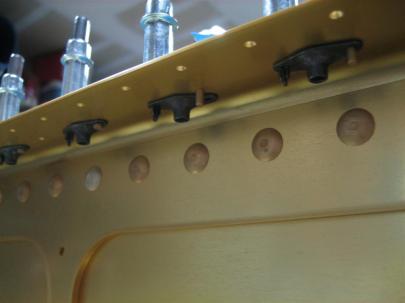
Which one of these is not like the other?
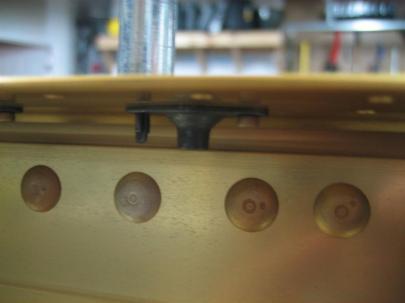
Here's an example nutplate before I take the cleco out and put the other rivet in.

I can’t remember why I took this picture. I think I just took out all the clecos, and I thought it looked cool.
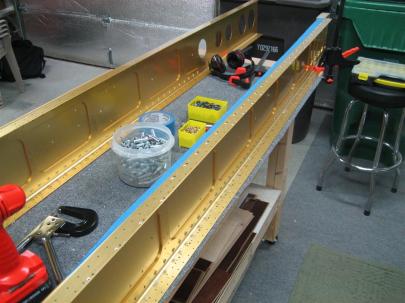
Ready to set the second half of the rivets.

No pictures of the second rivets, but here’s one of the other (now top) flange.
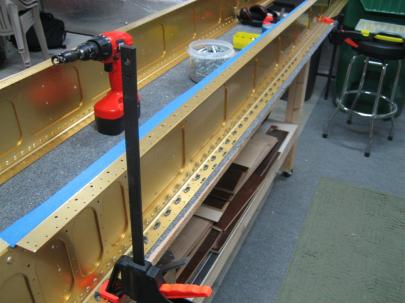
You can see all of the nutplates on the lower flange.

Anyway, I set all the nutplate attach rivets on the upper flange, and then called it a day. So I got to cross off the two statements in the construction manual I highlighted above, and next up is to use the installed nutplates as c/s pilot guides for countersinking the screw holes.
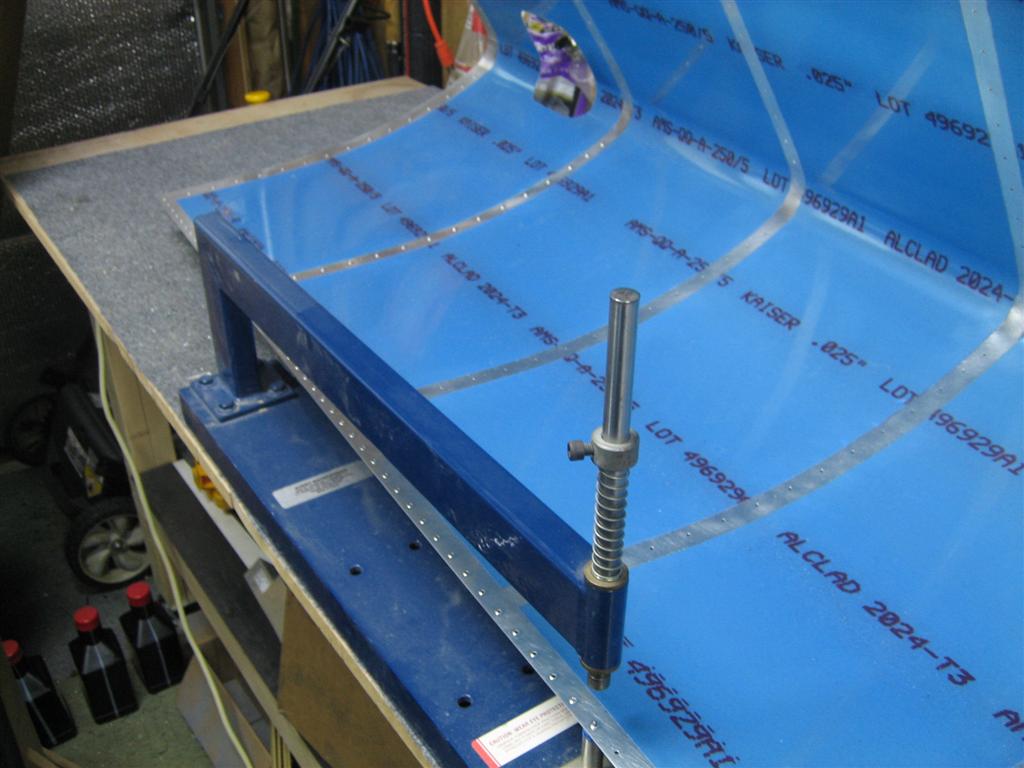
Oh, and then I get to repeat on the other spar.

3.5 hours of countersinking and riveting today. 144 rivets, 1 drilled out (the rivet split in two!). Good times.

Prev | Next