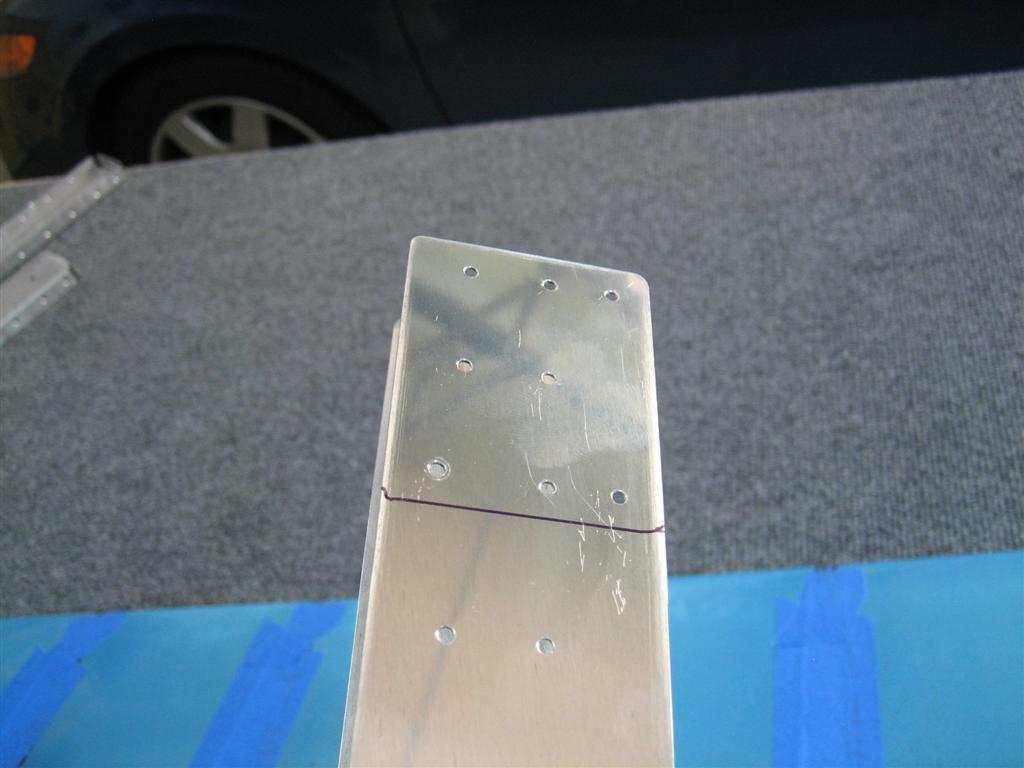
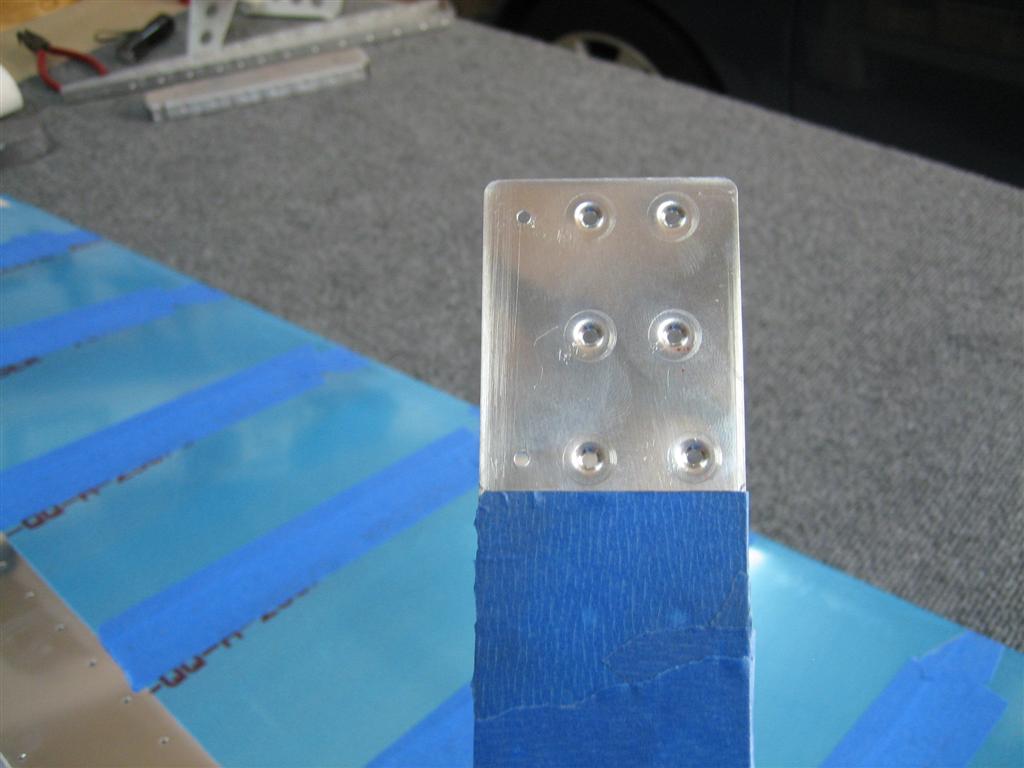
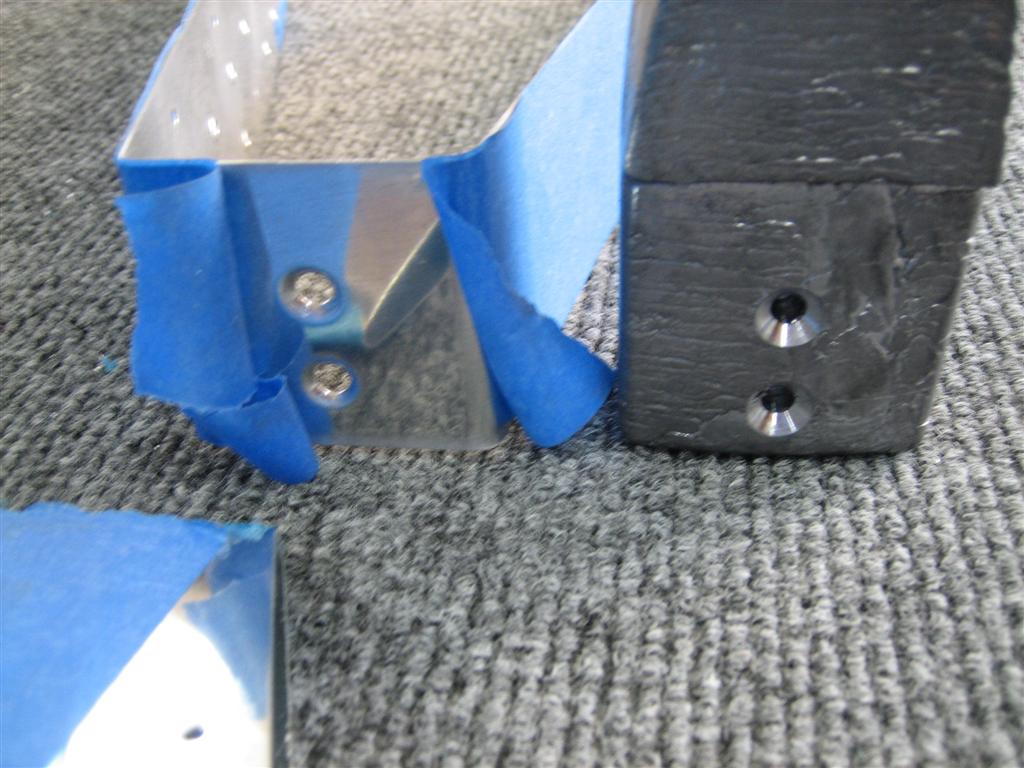
Left Elevator Stiffeners, Part Uno

May 26, 2010

Prev | Next

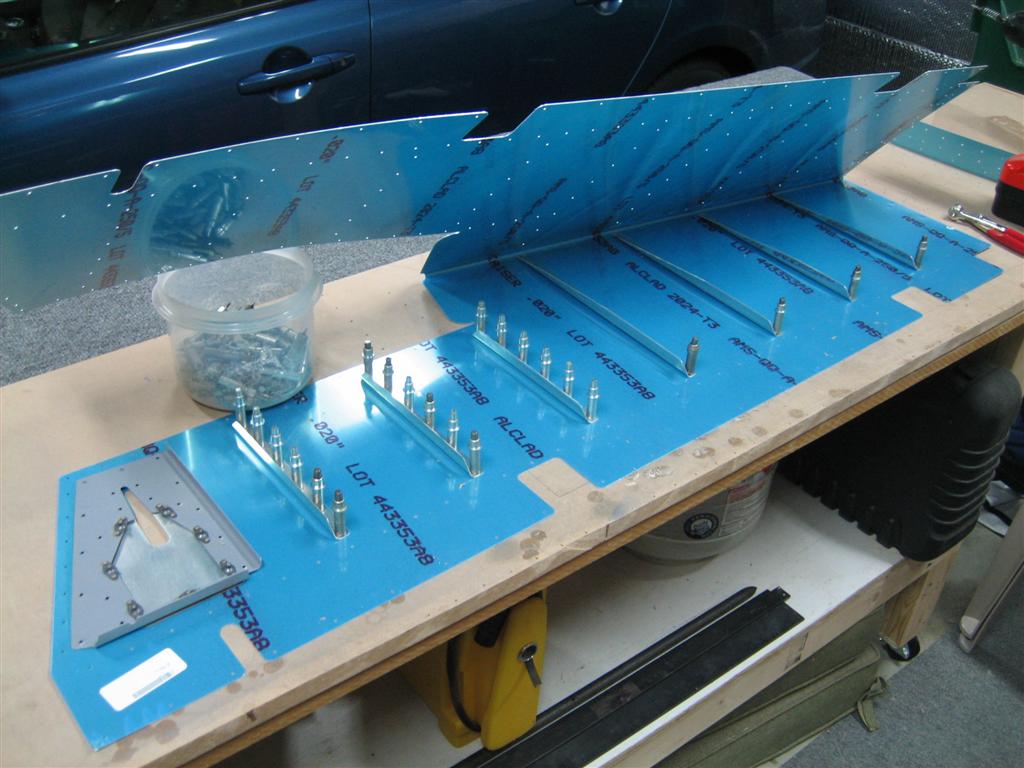
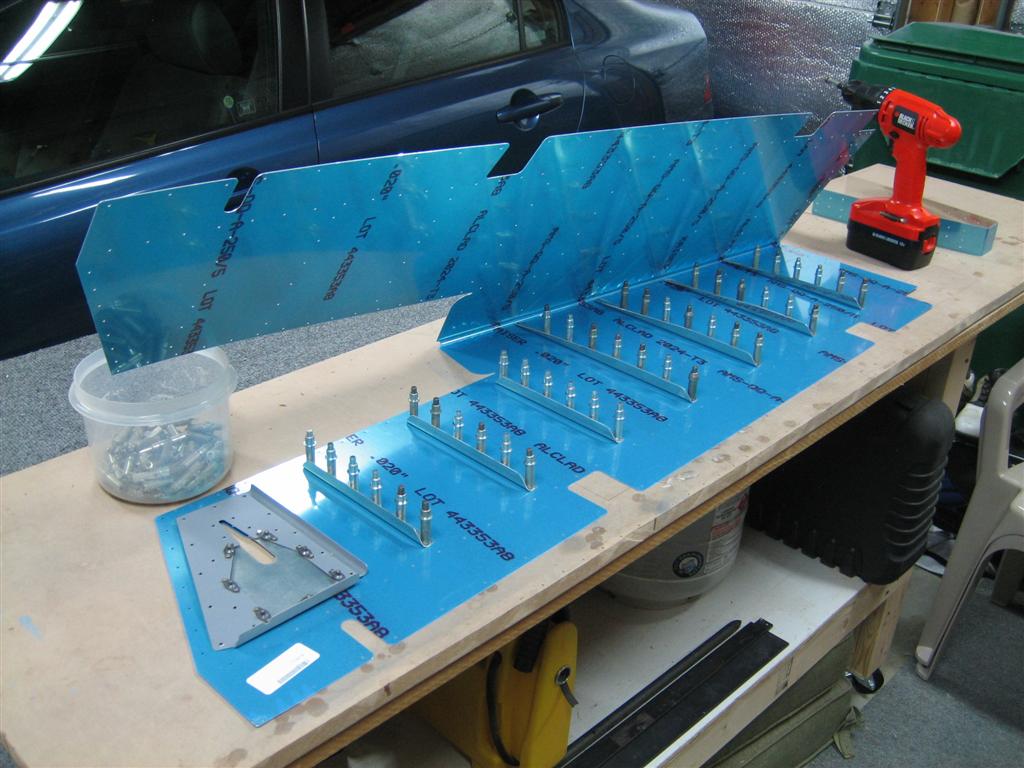
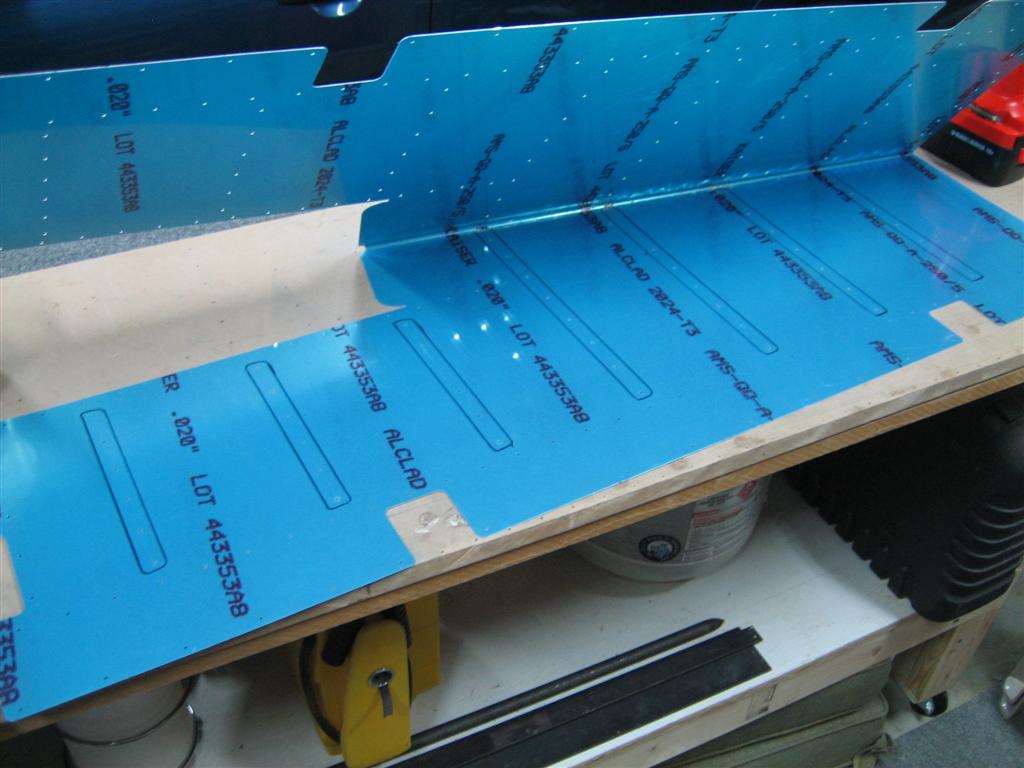
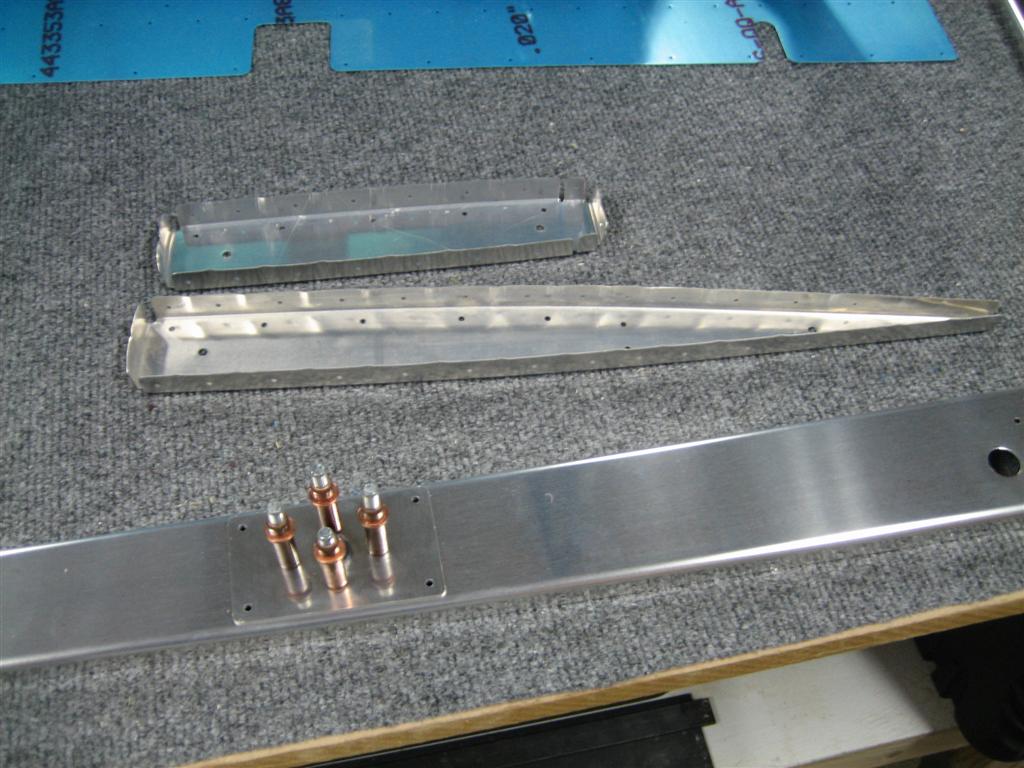
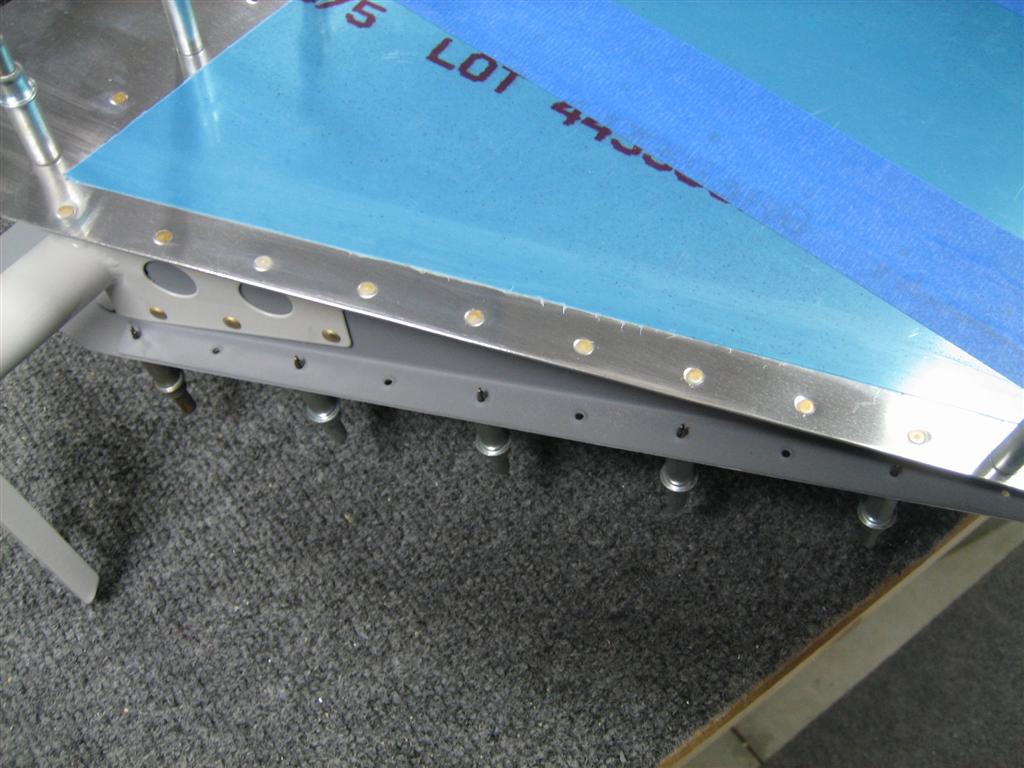
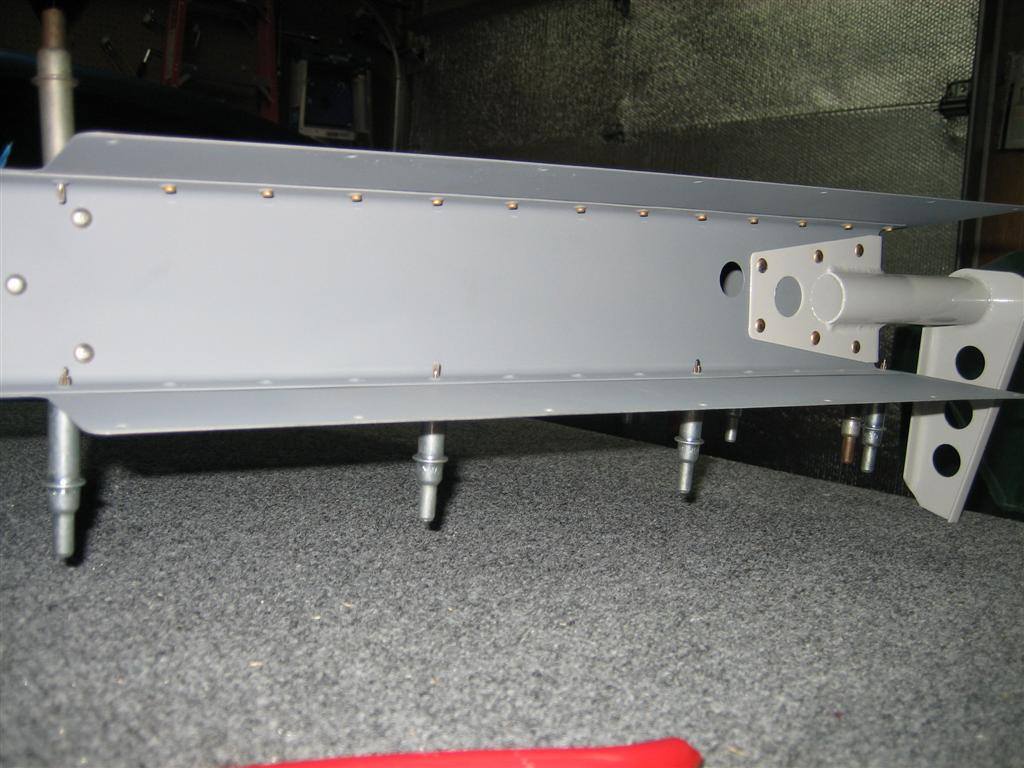
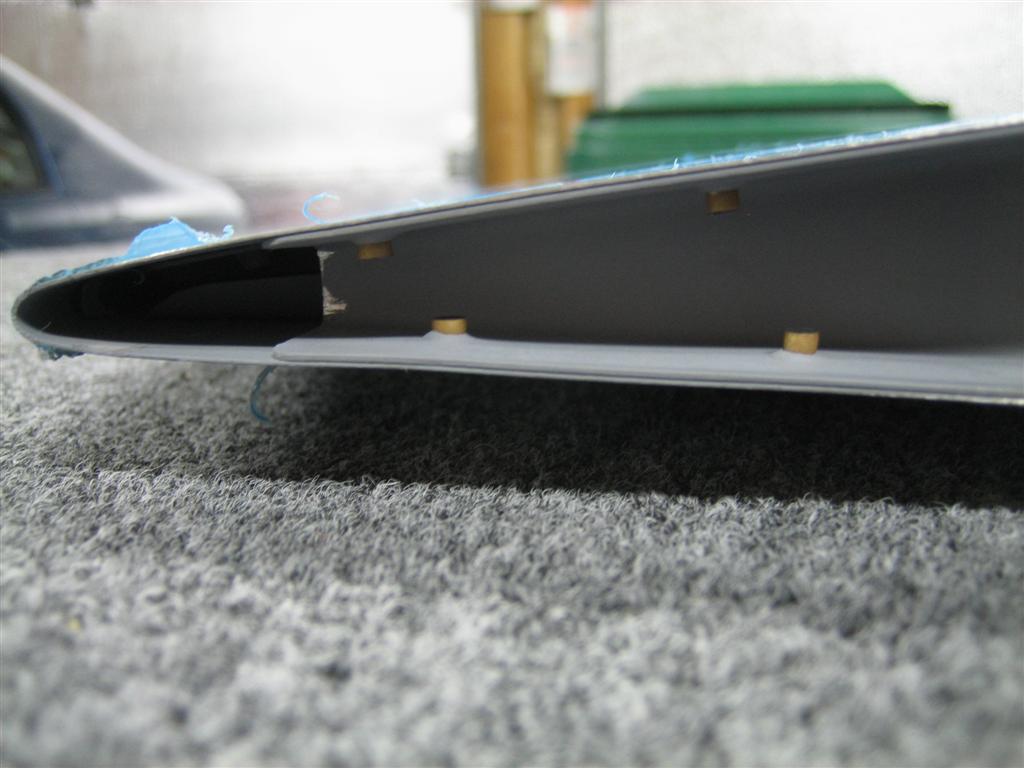
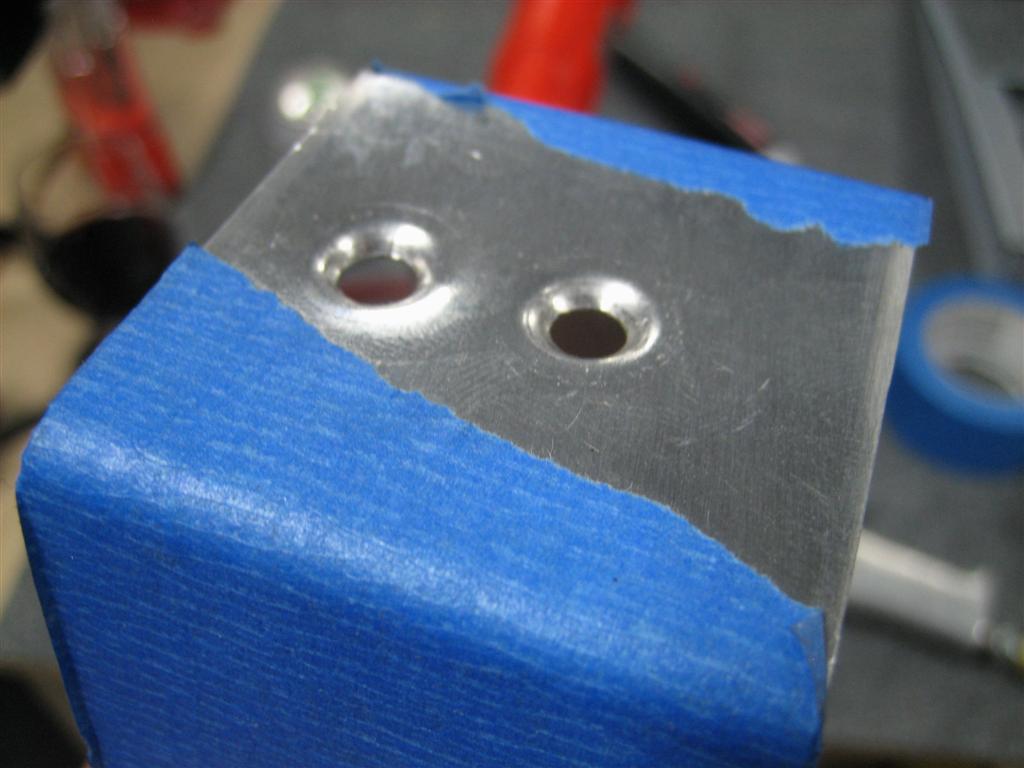
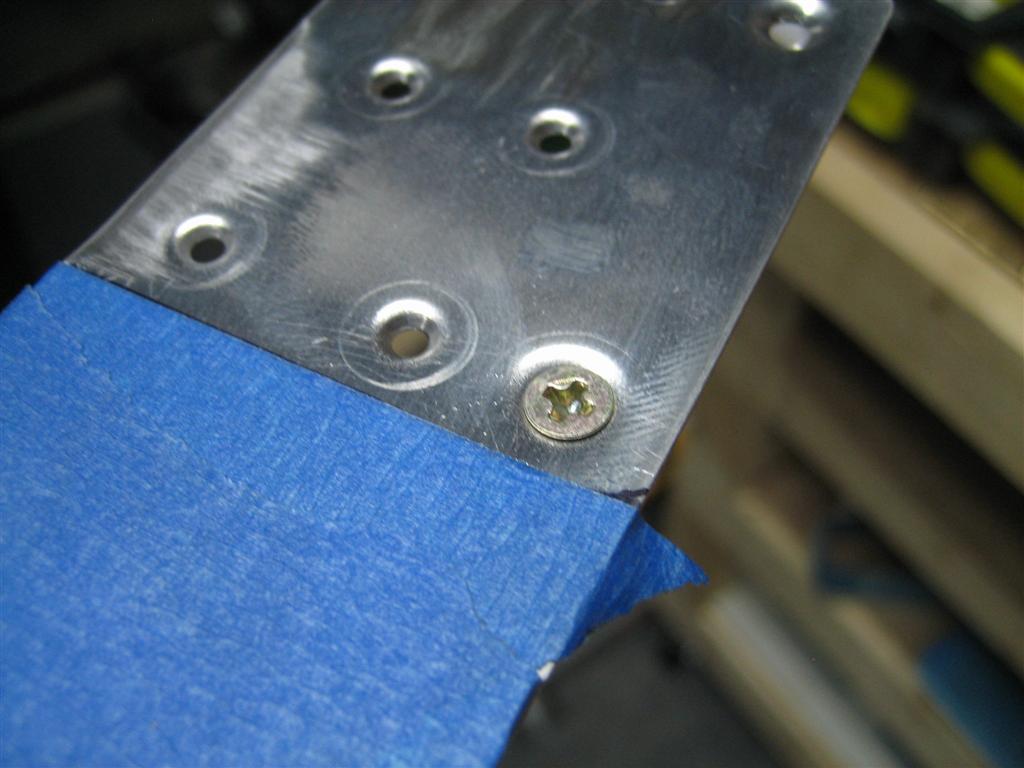
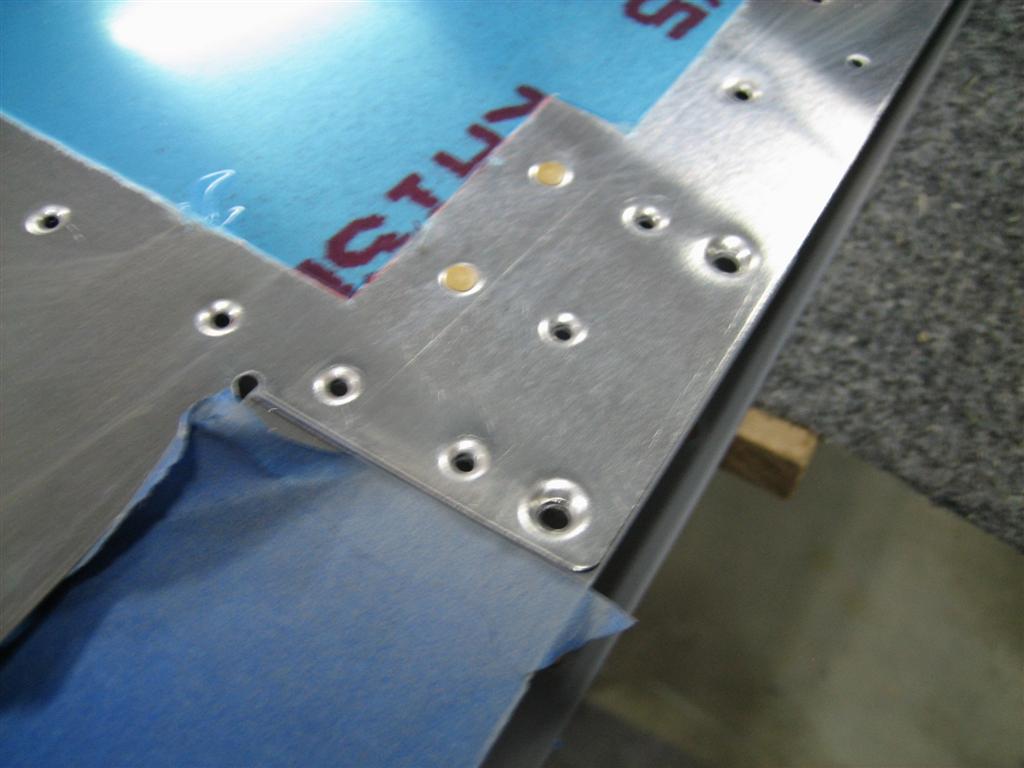
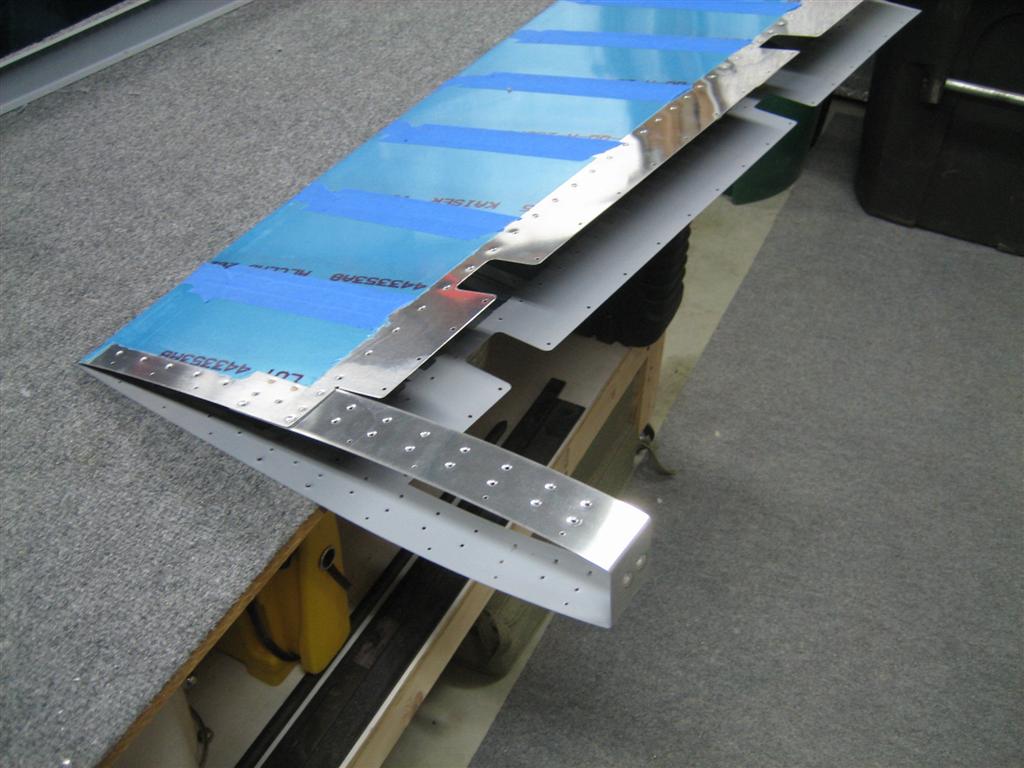
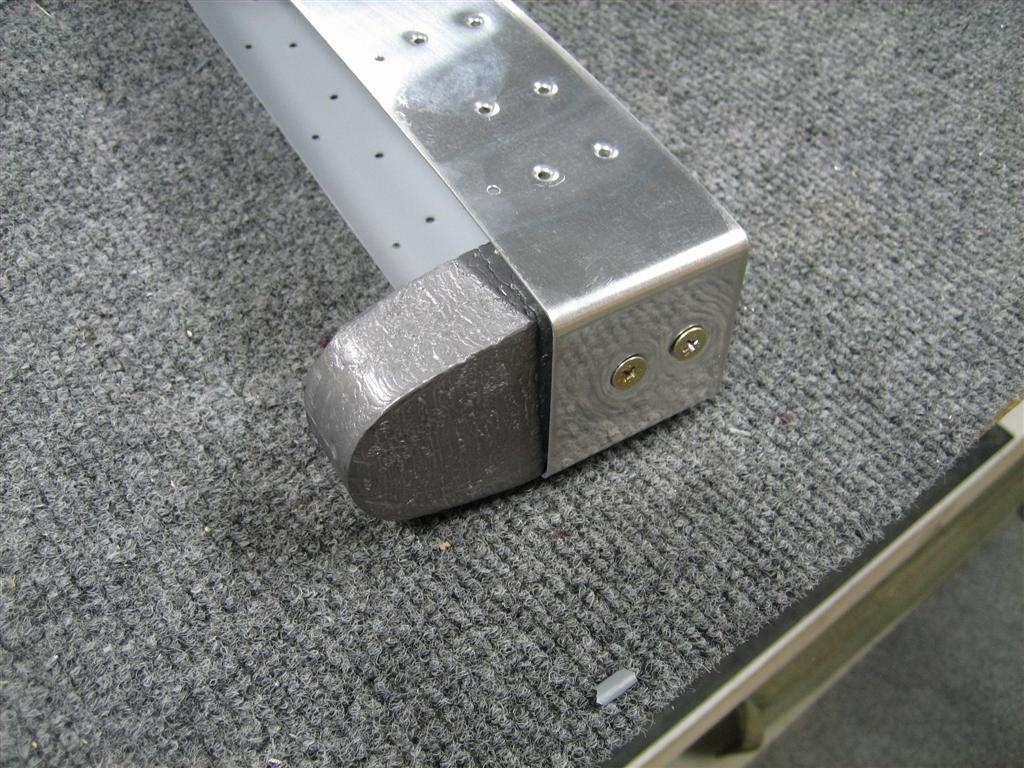
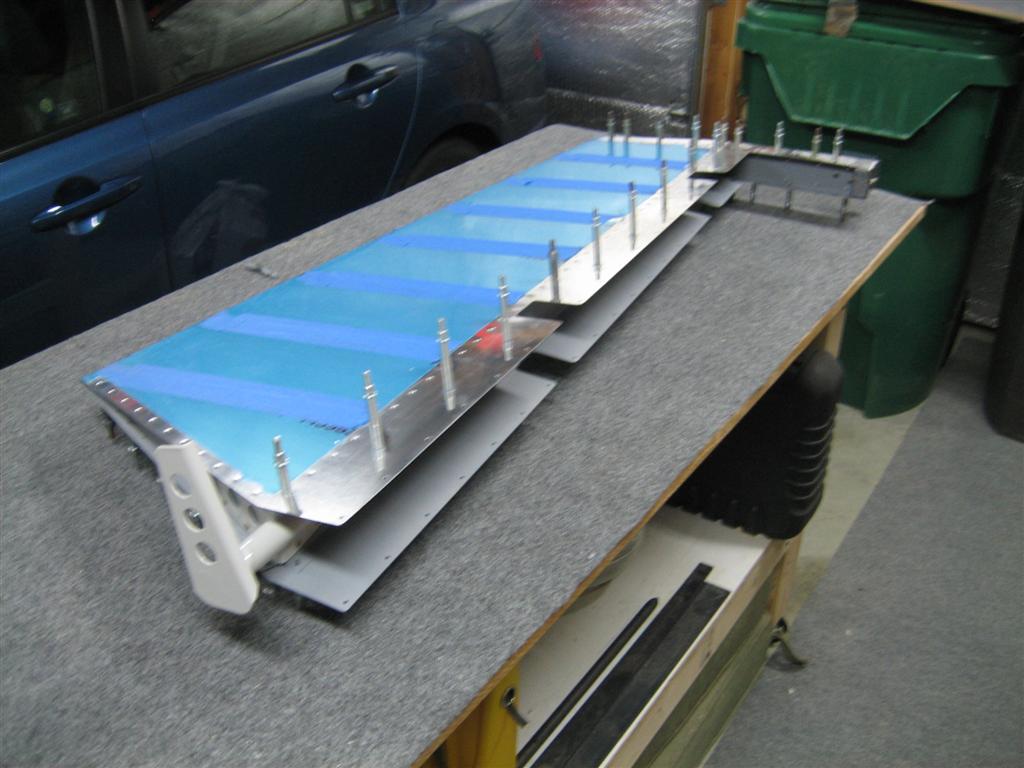
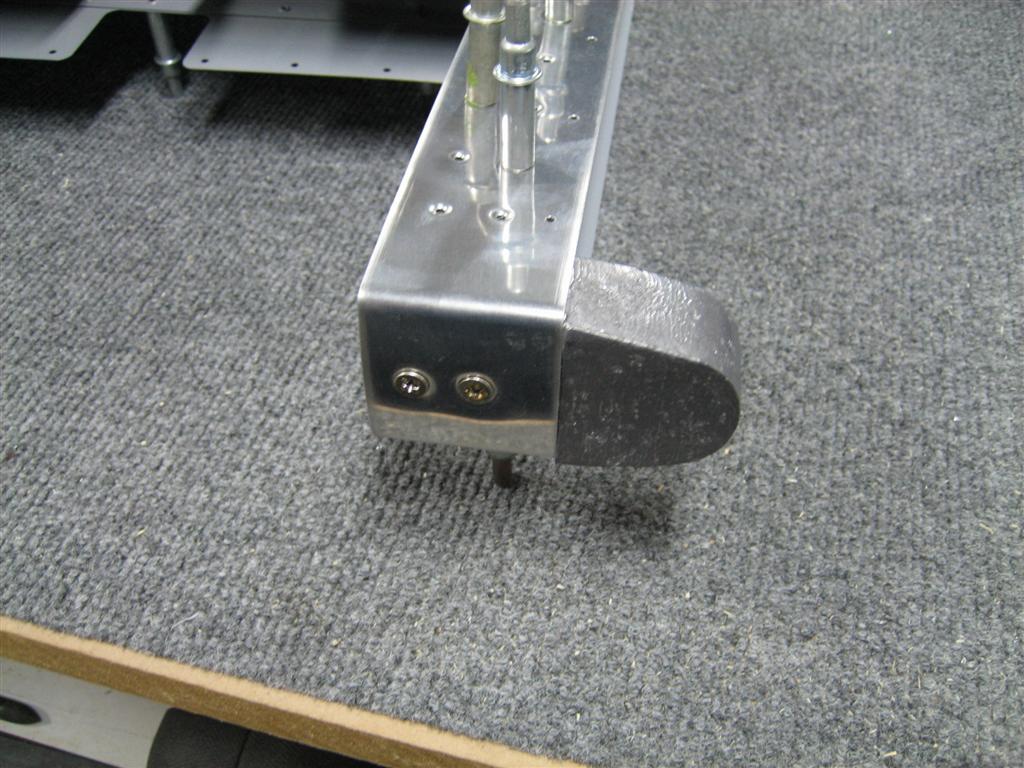
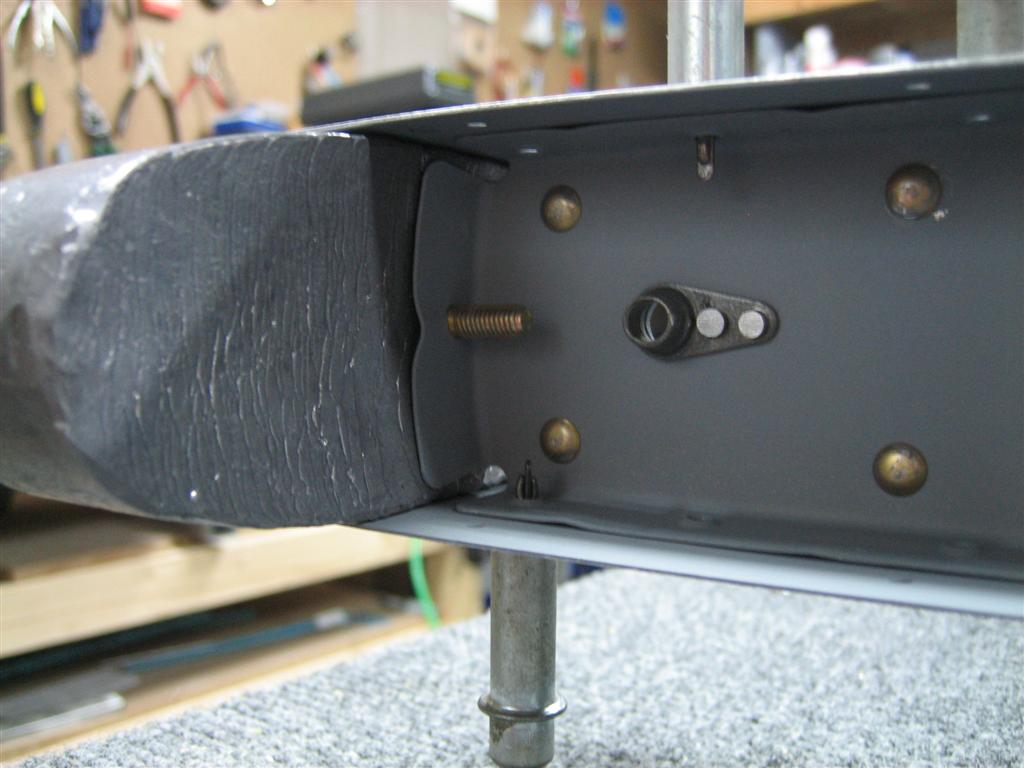
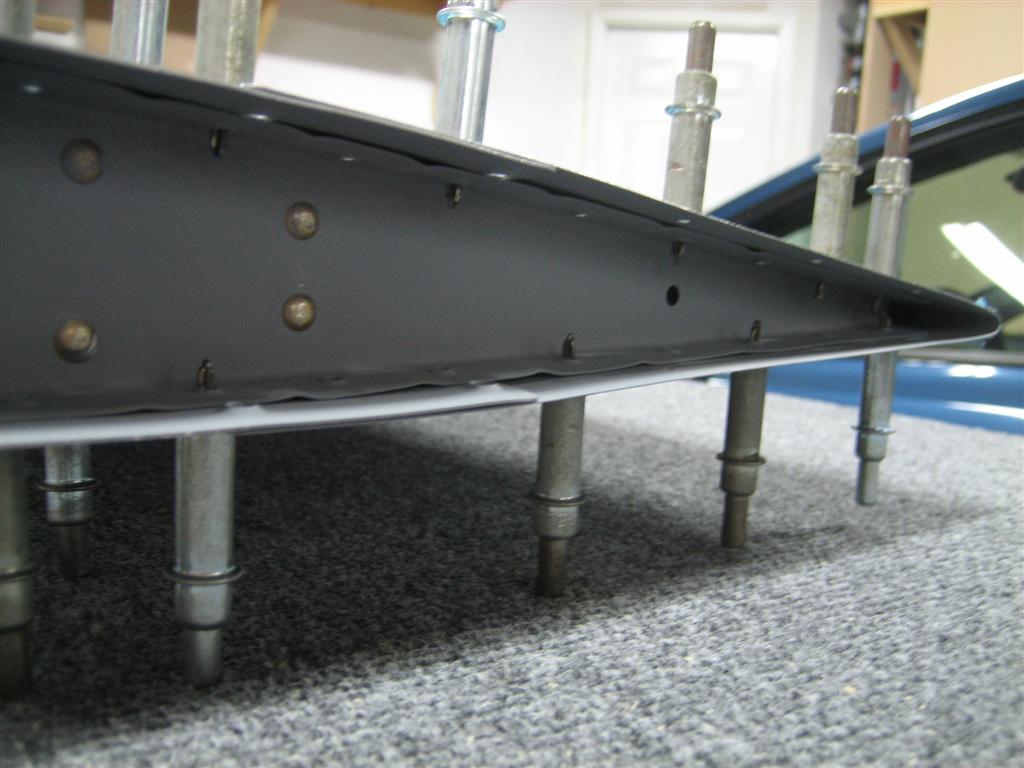
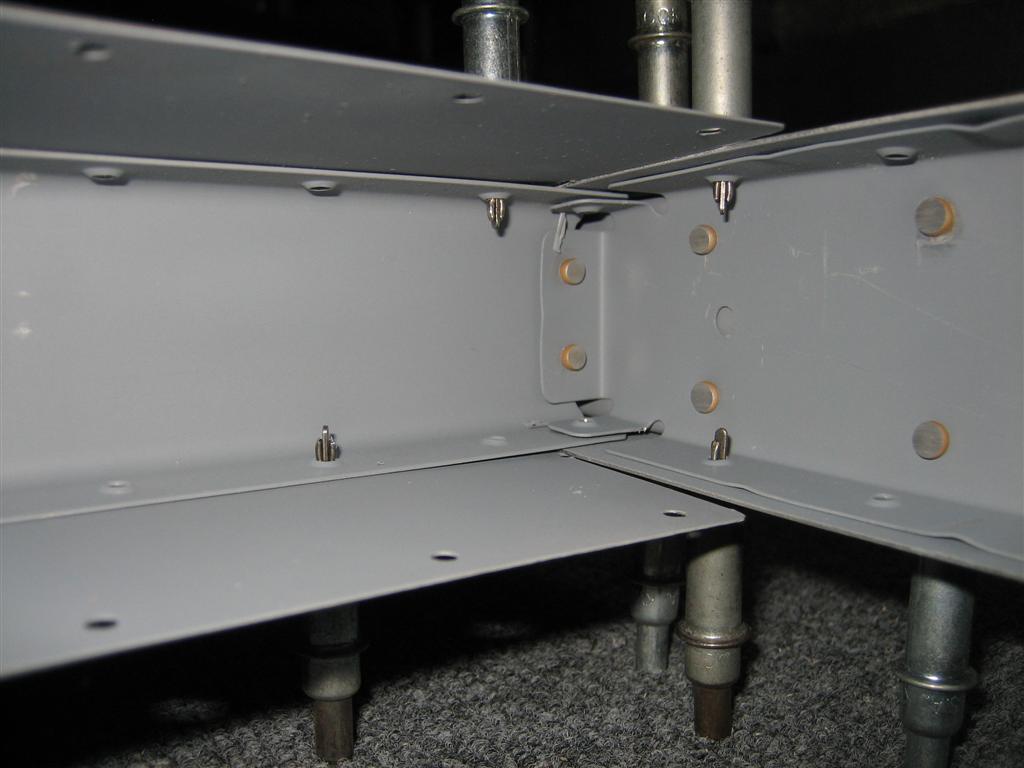
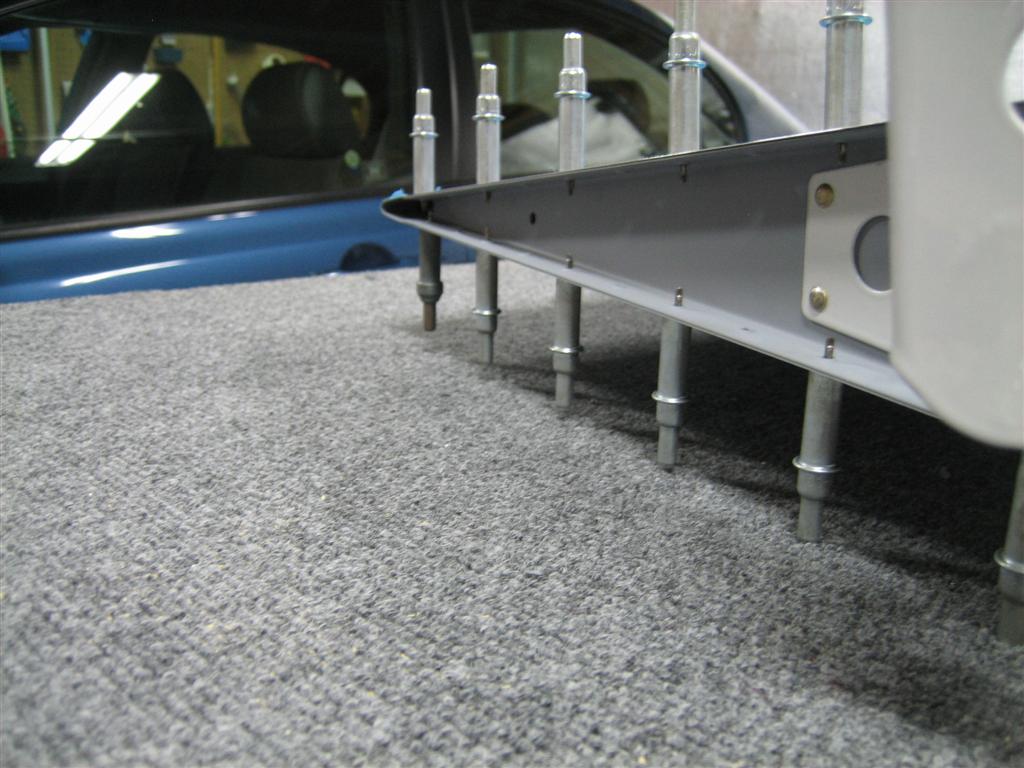
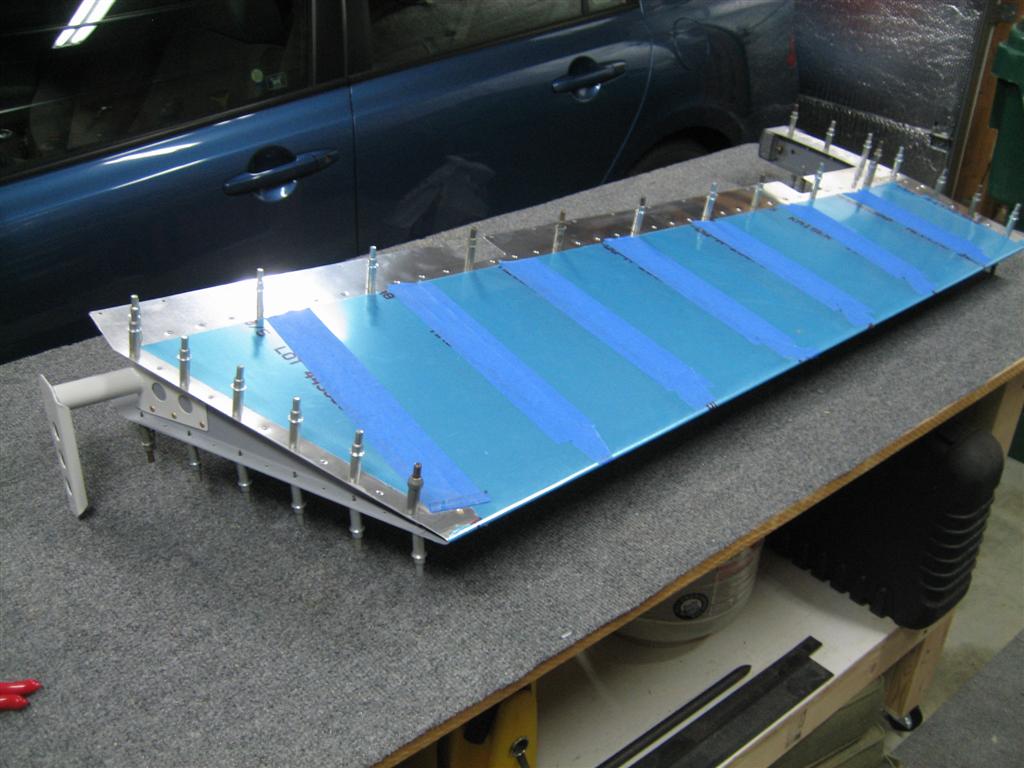
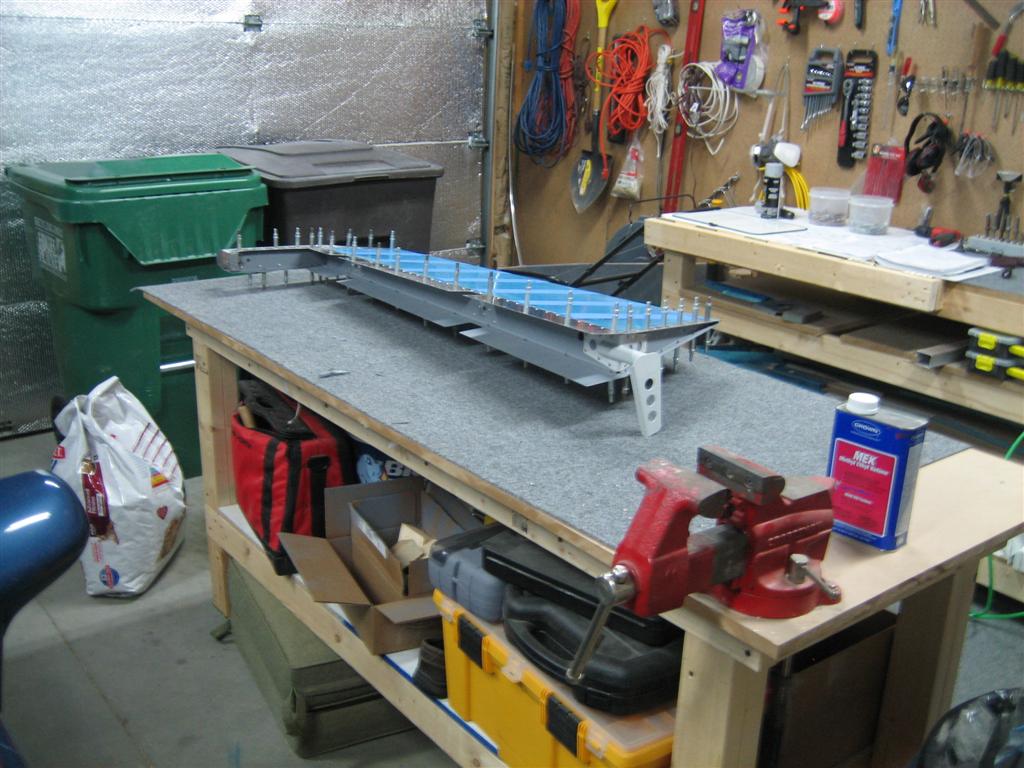
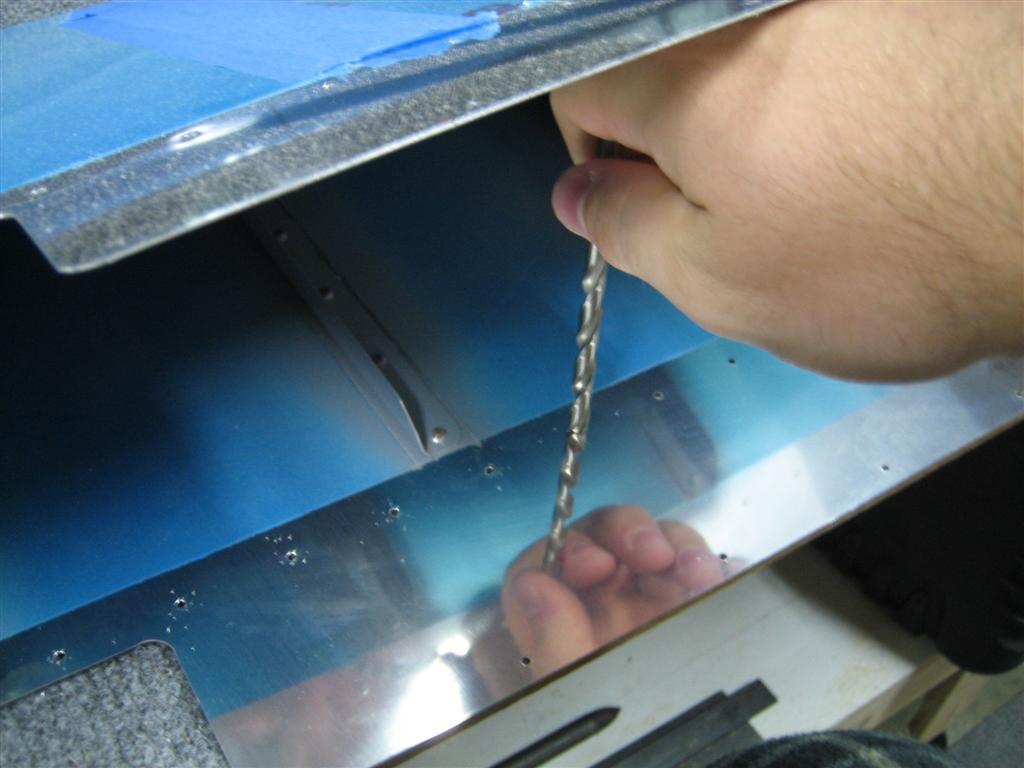
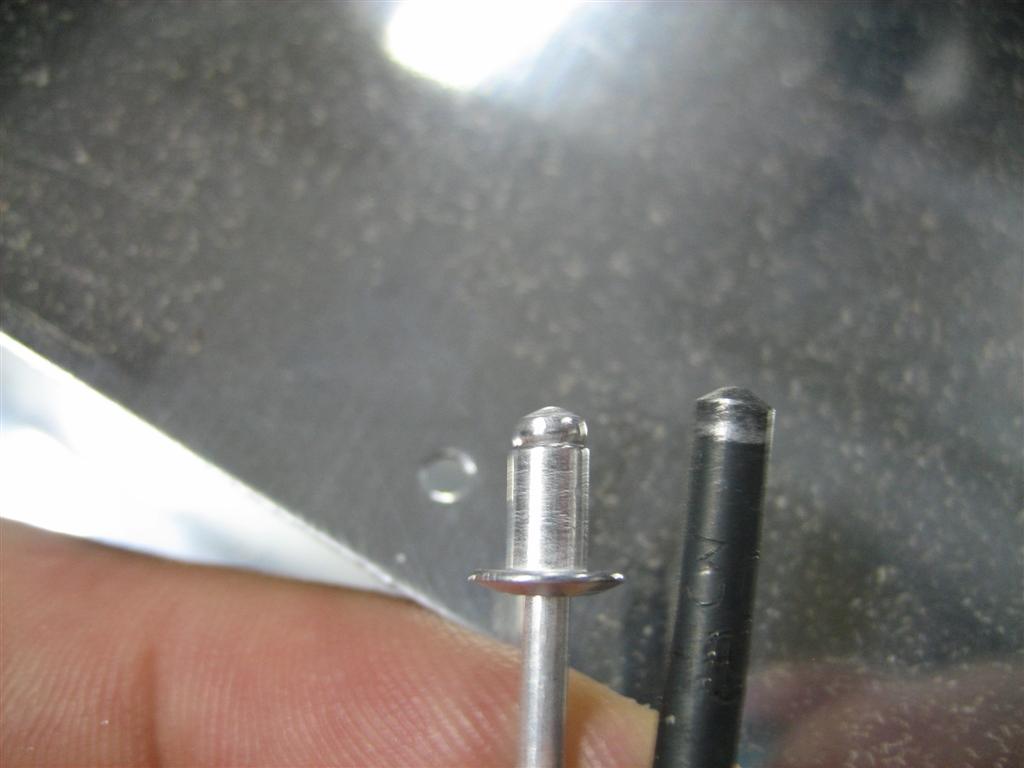
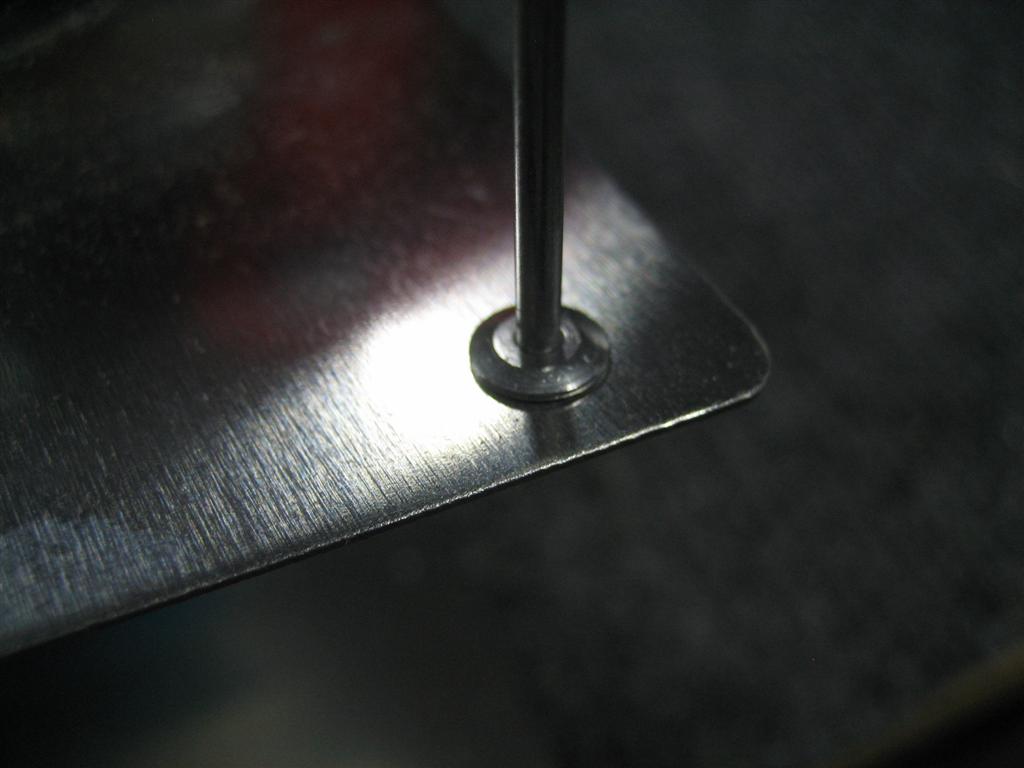
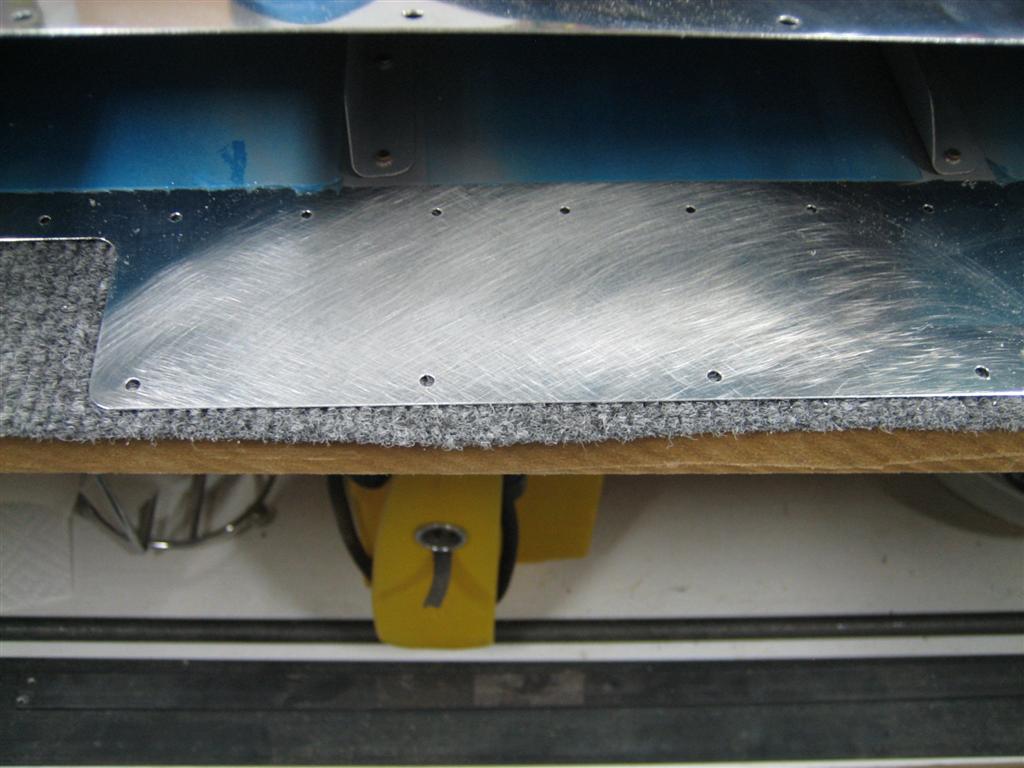
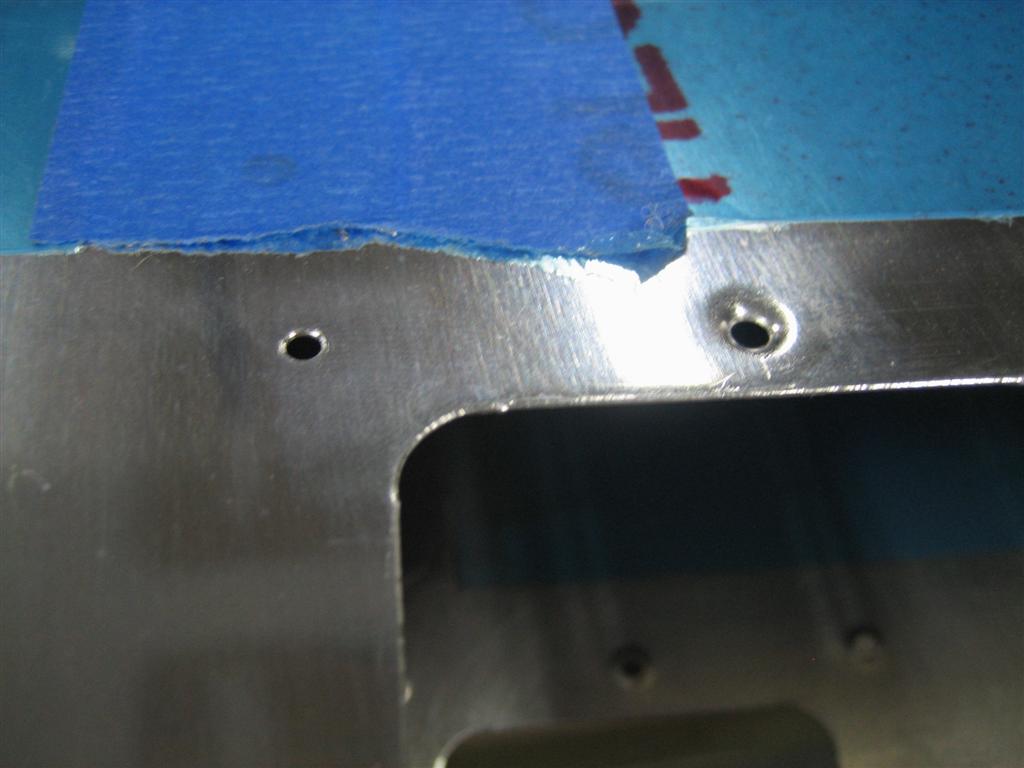
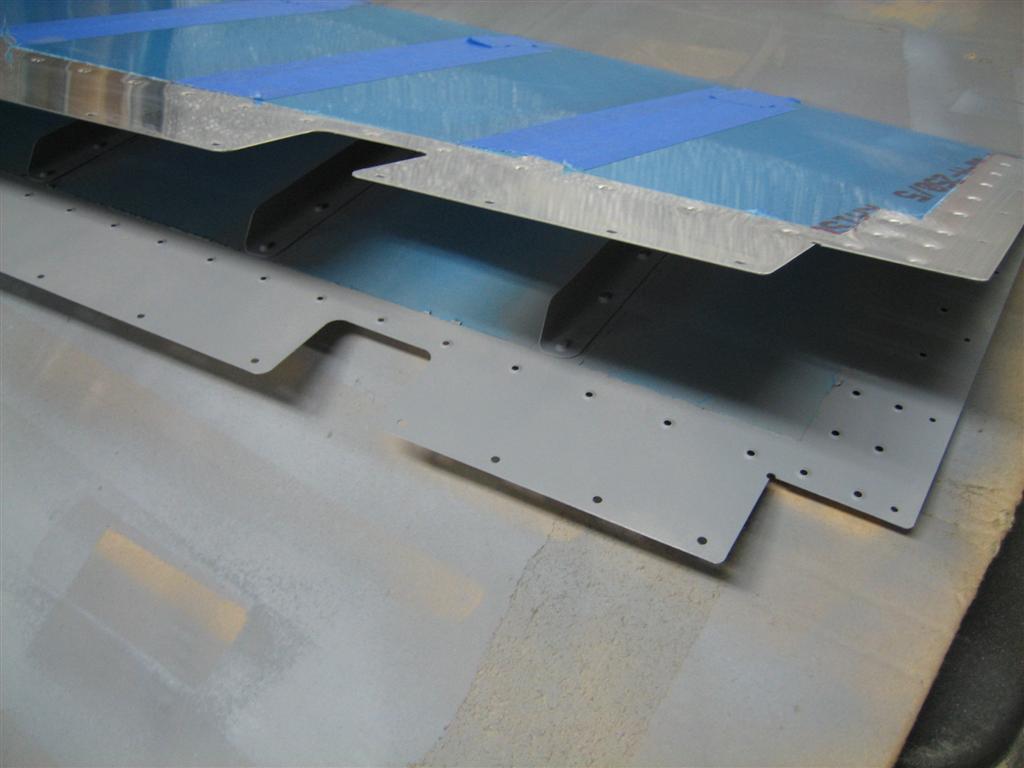
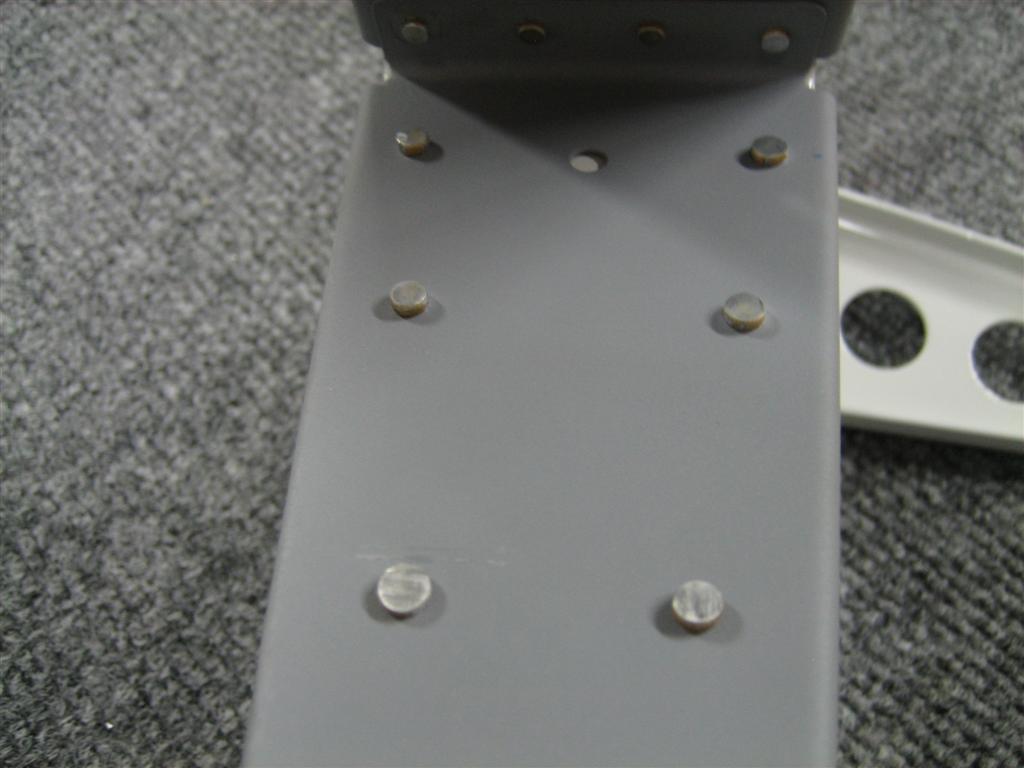
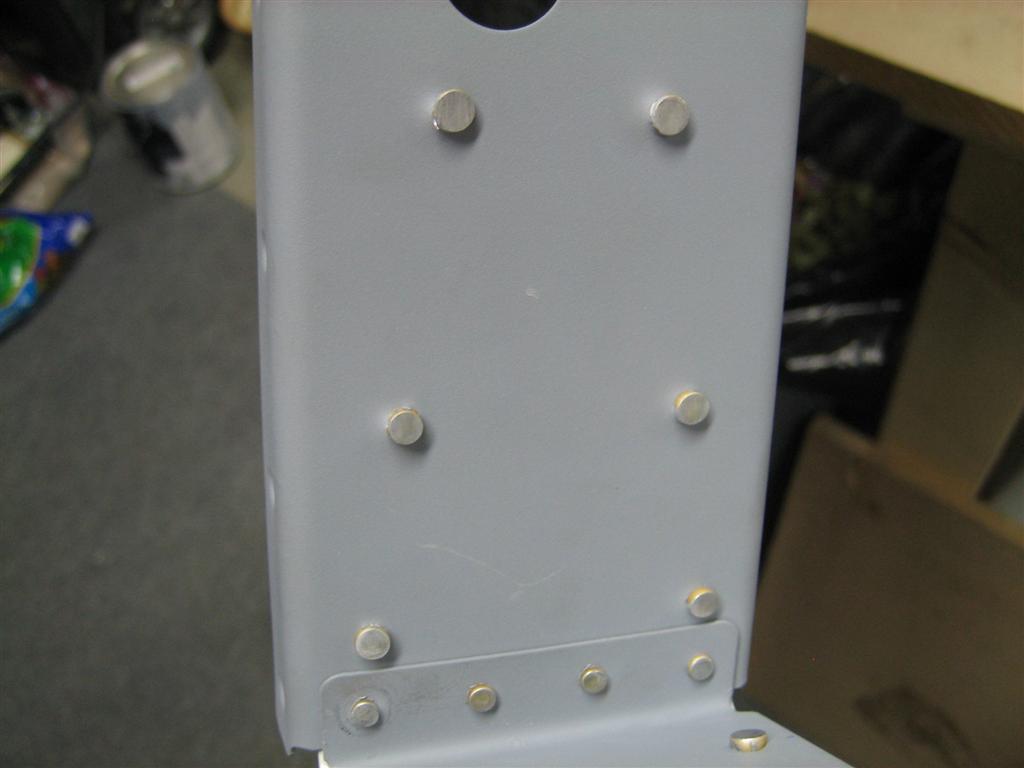
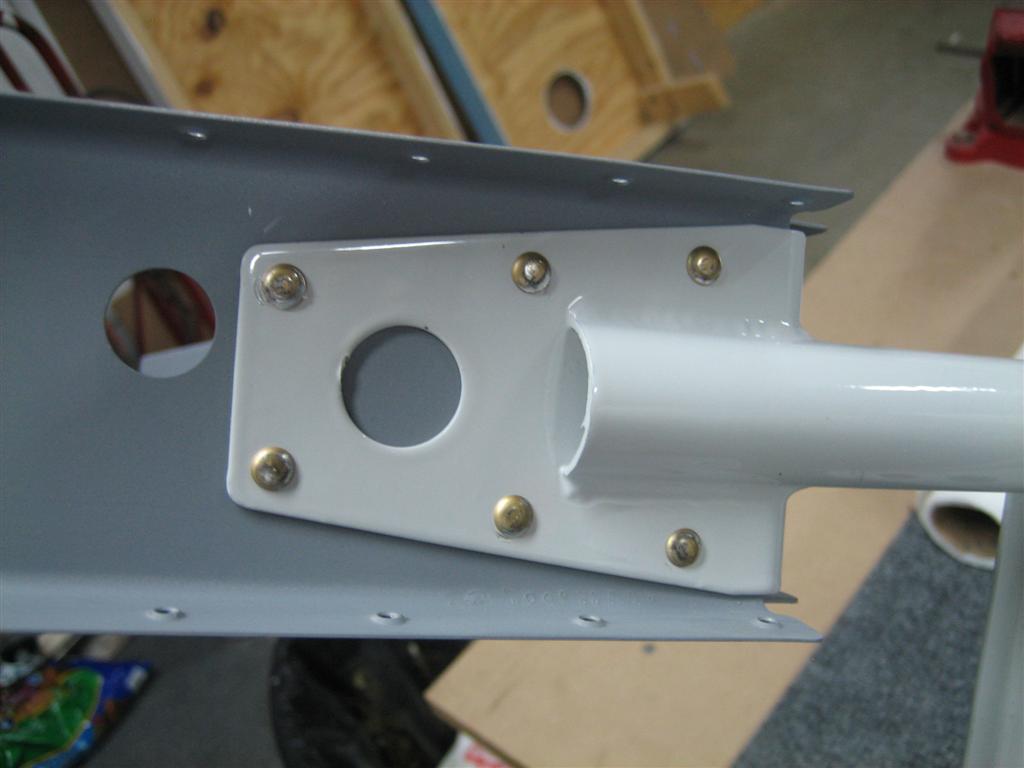
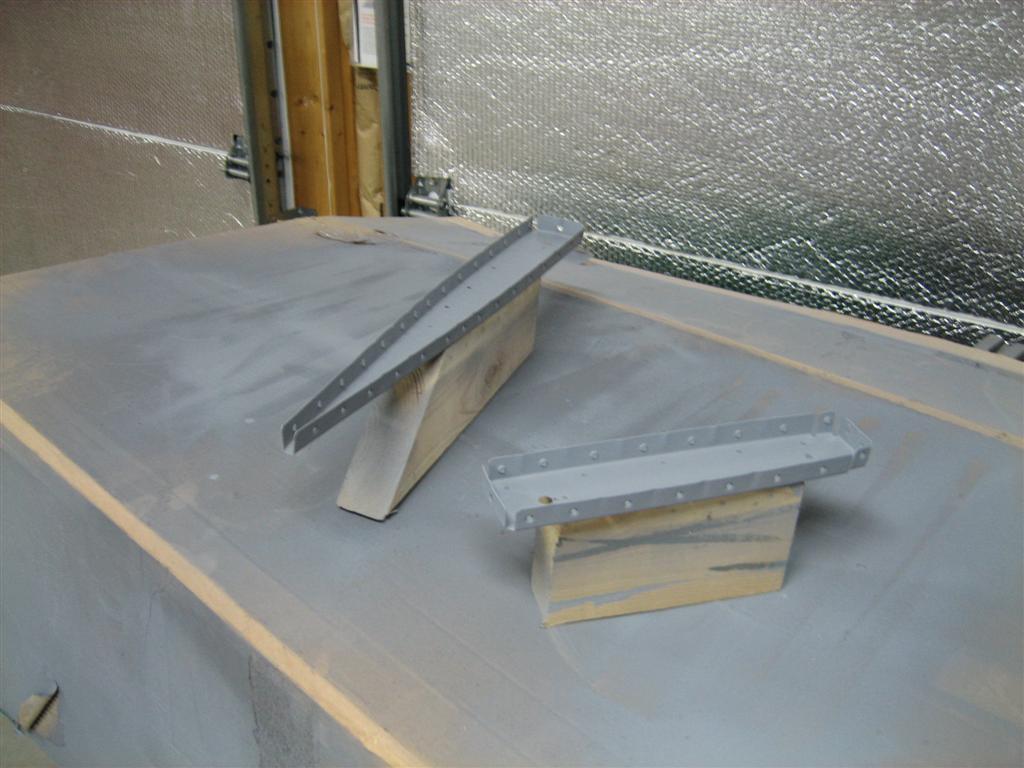
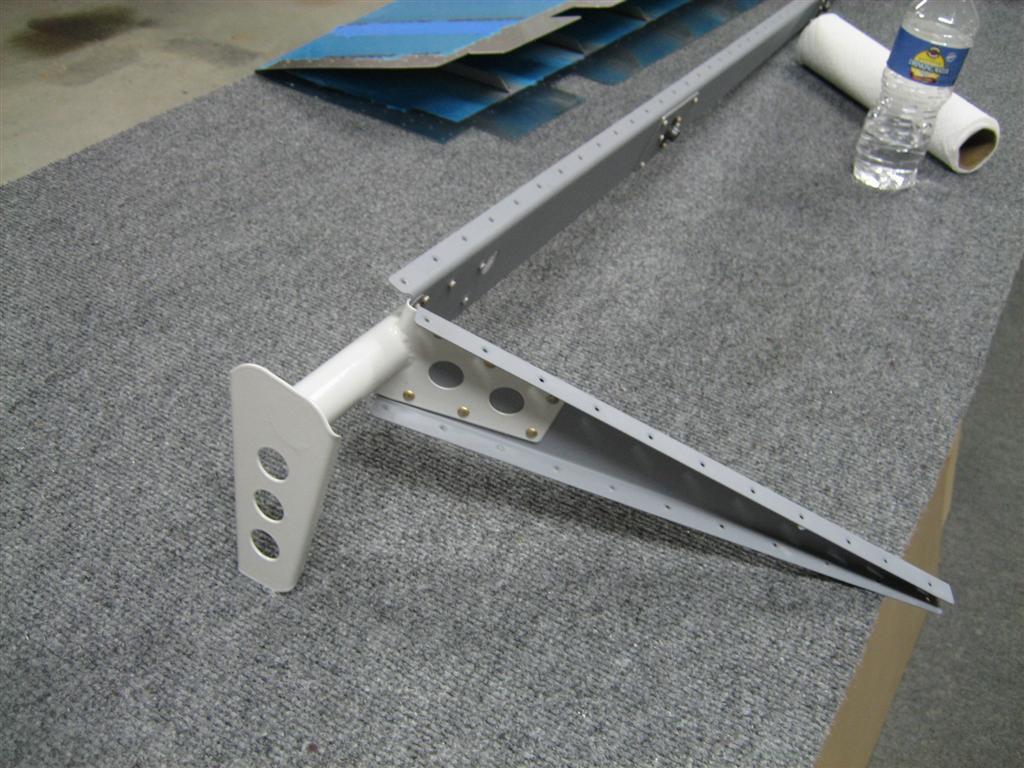
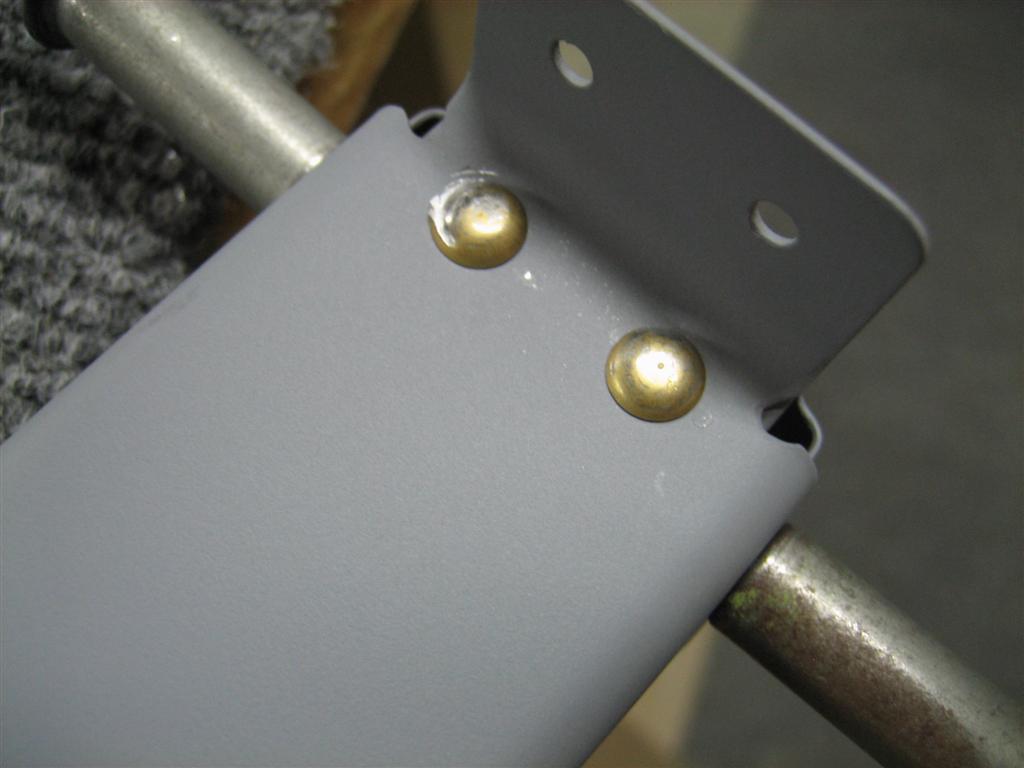
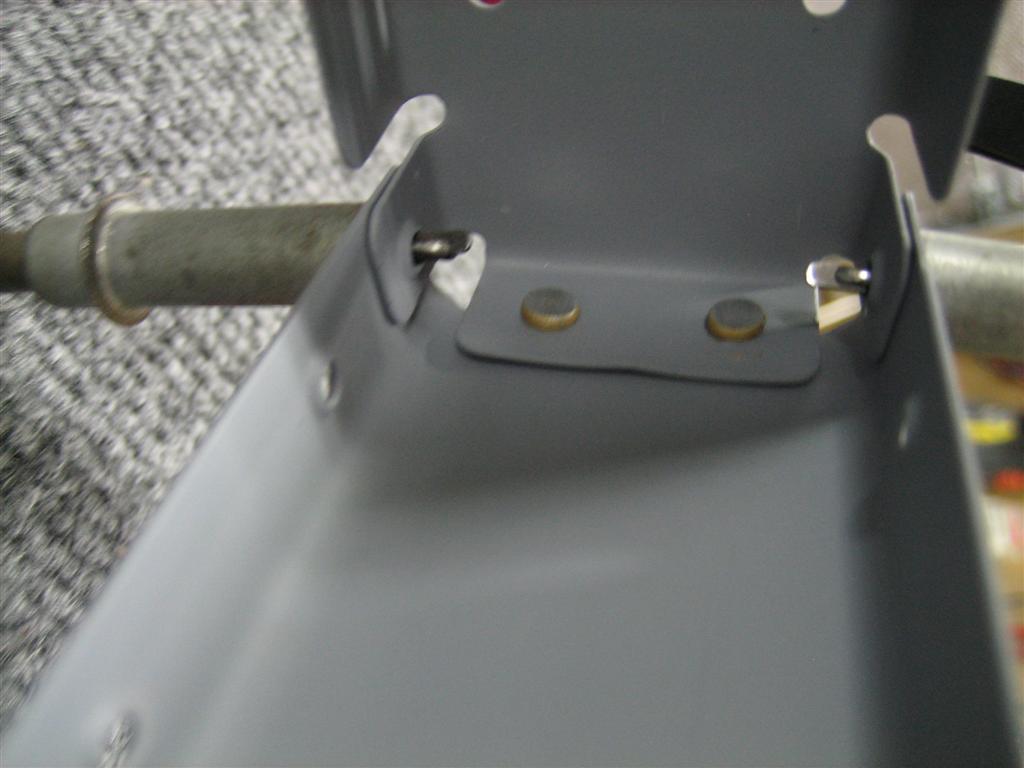
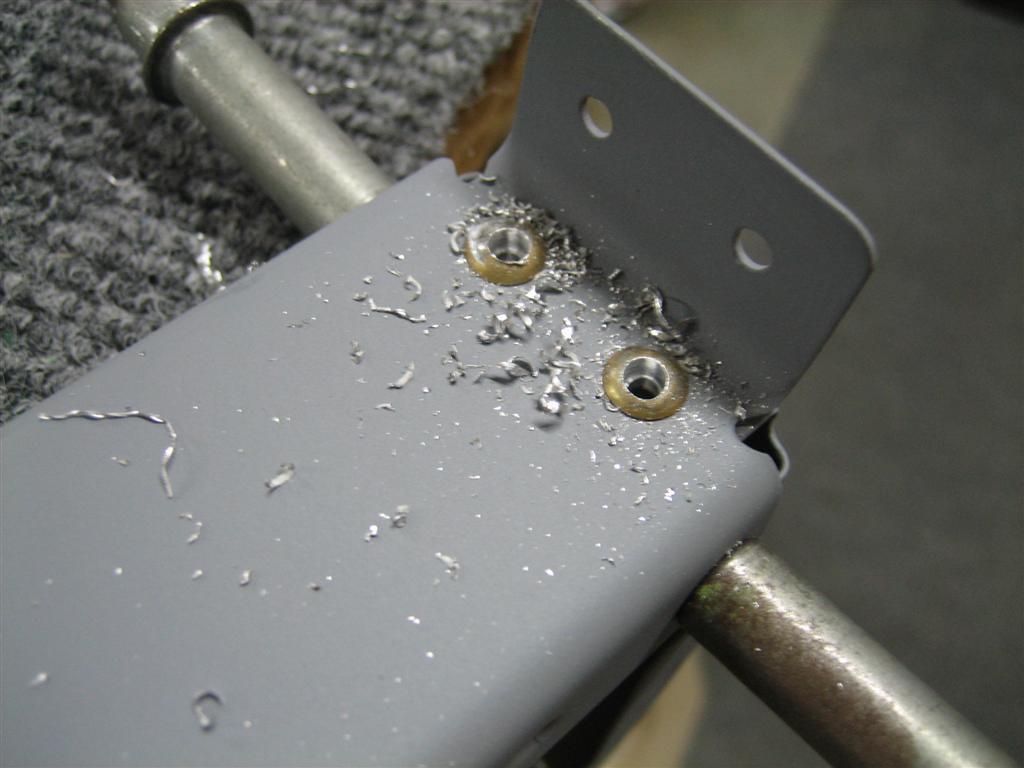
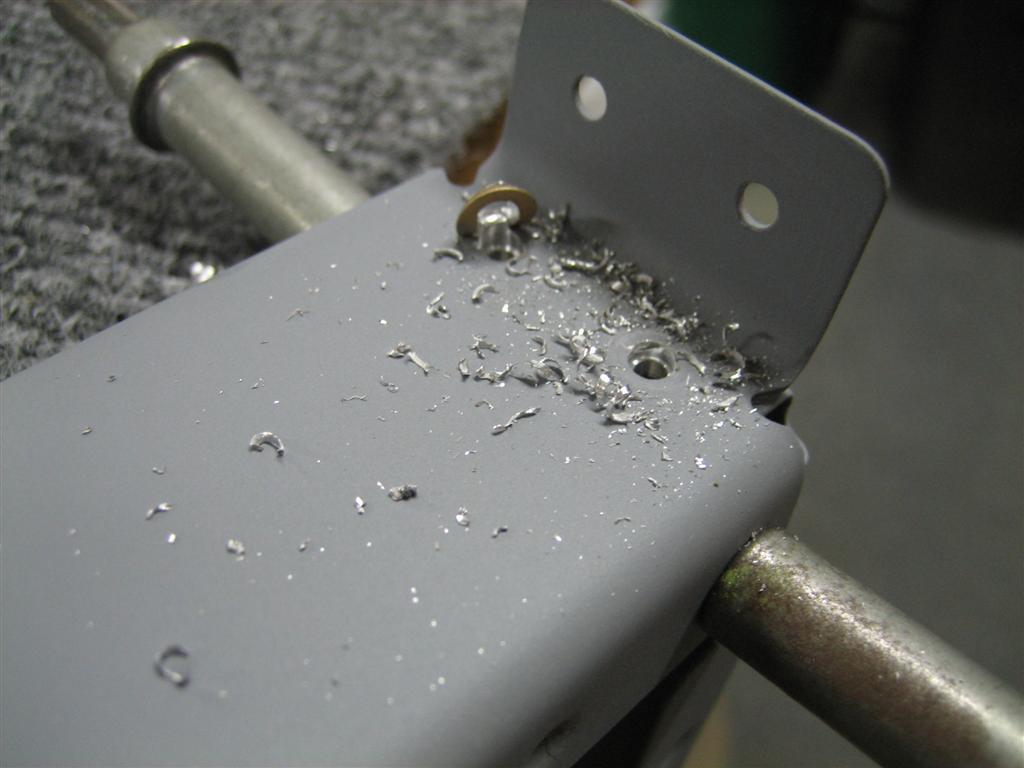
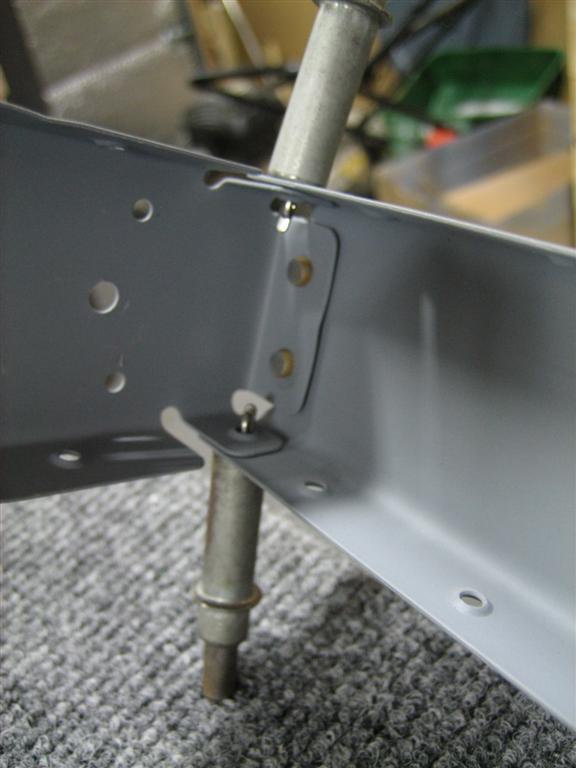
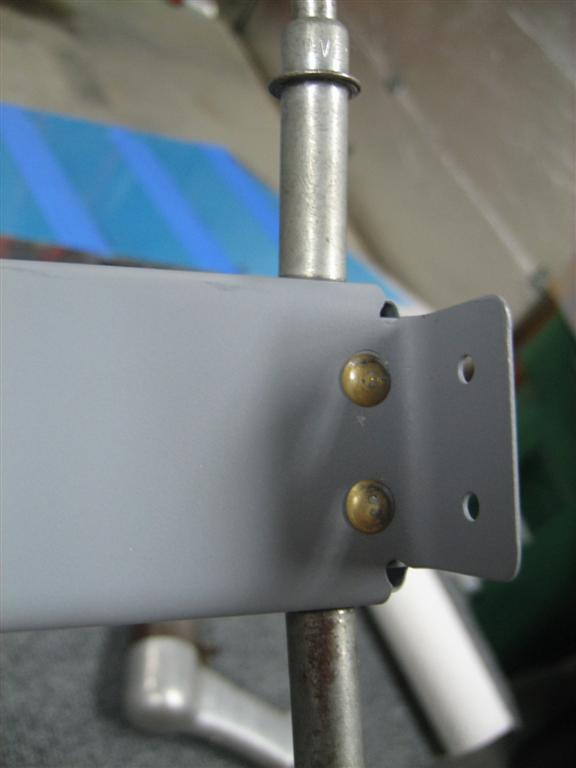
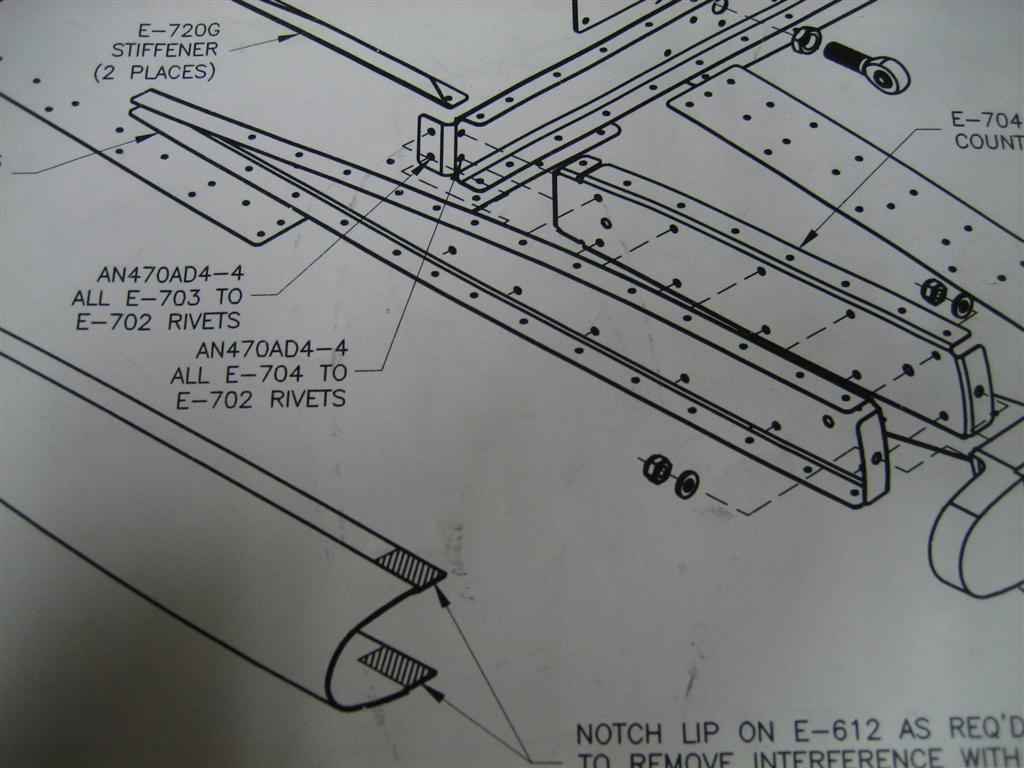
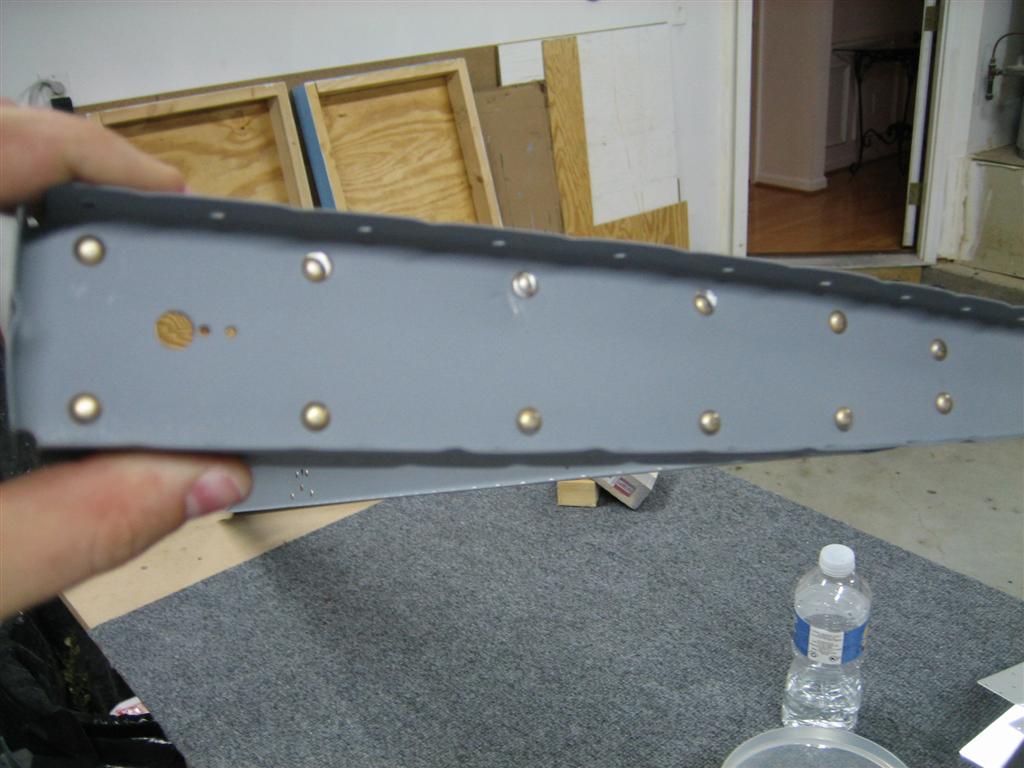
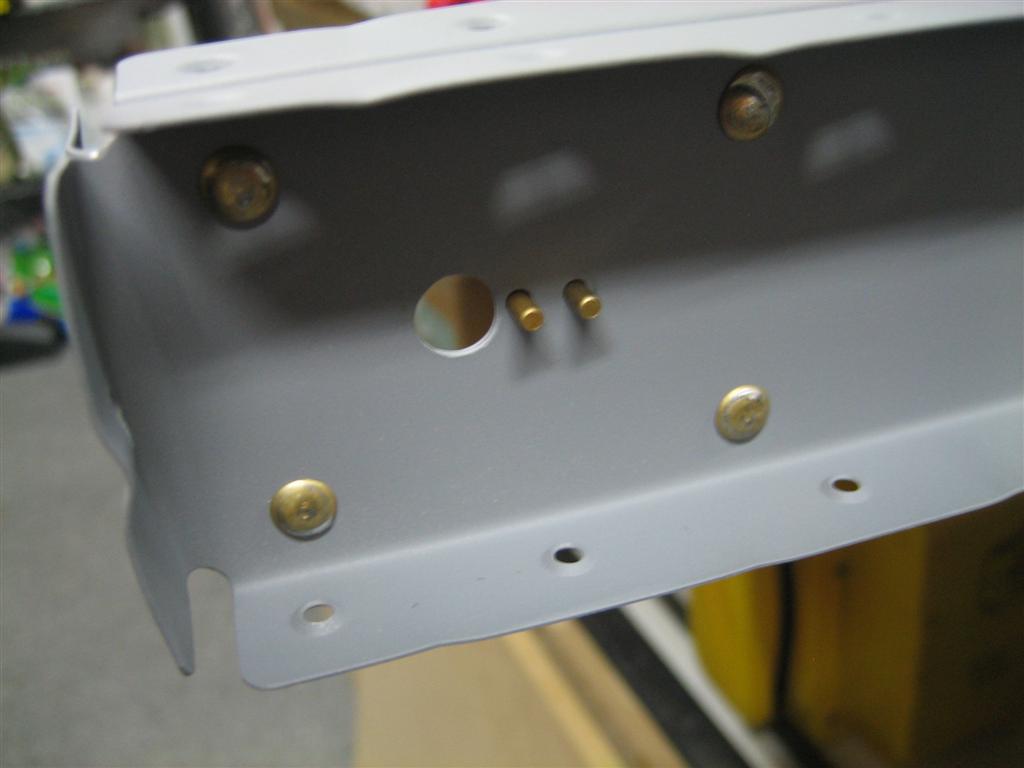
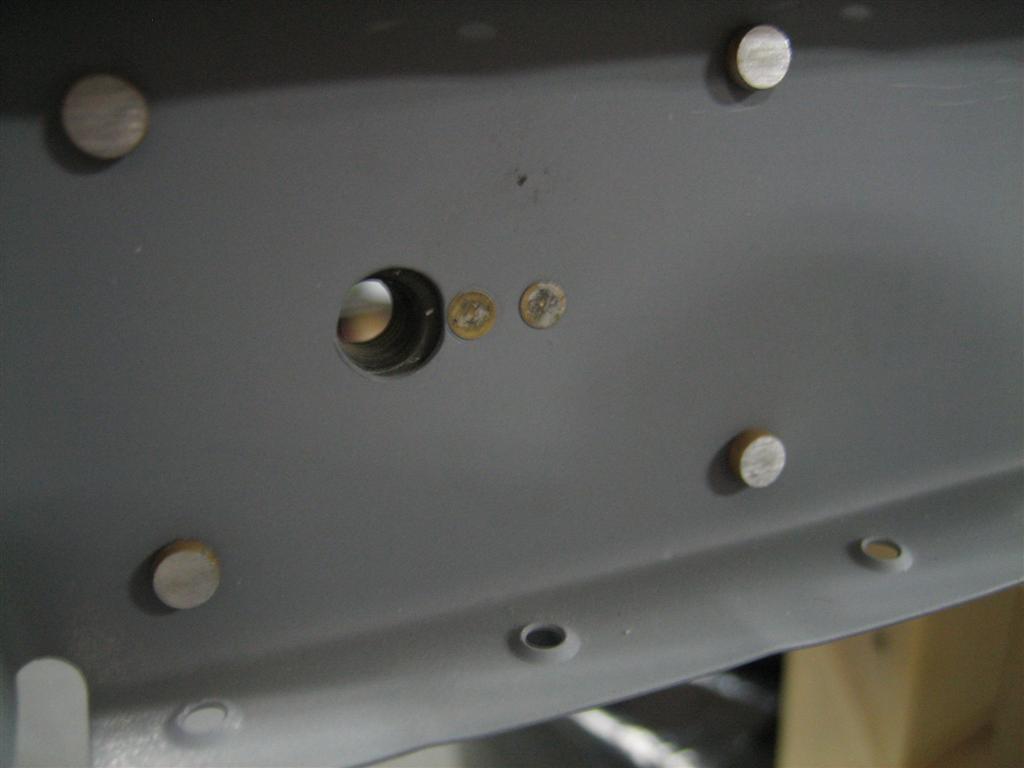
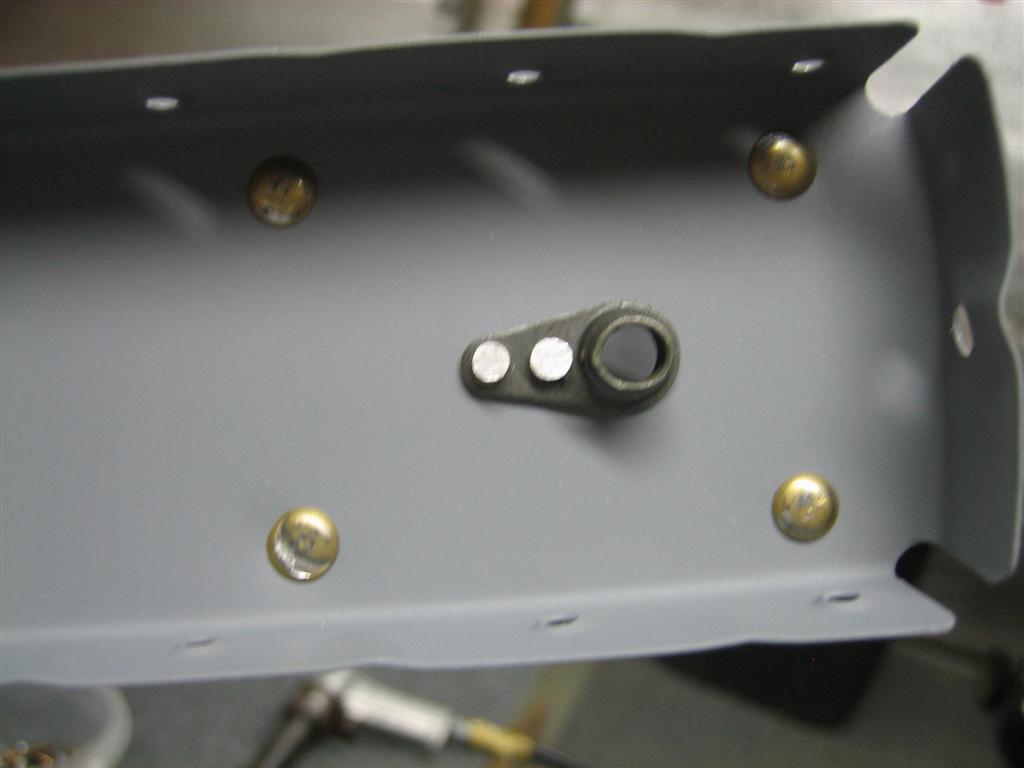
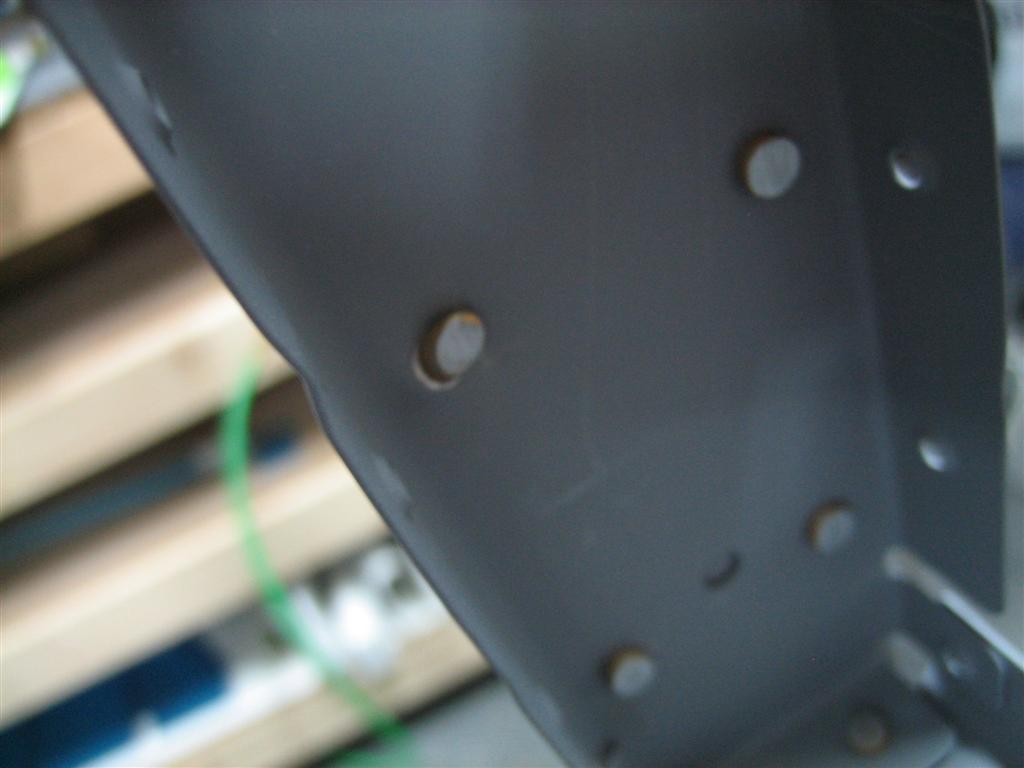
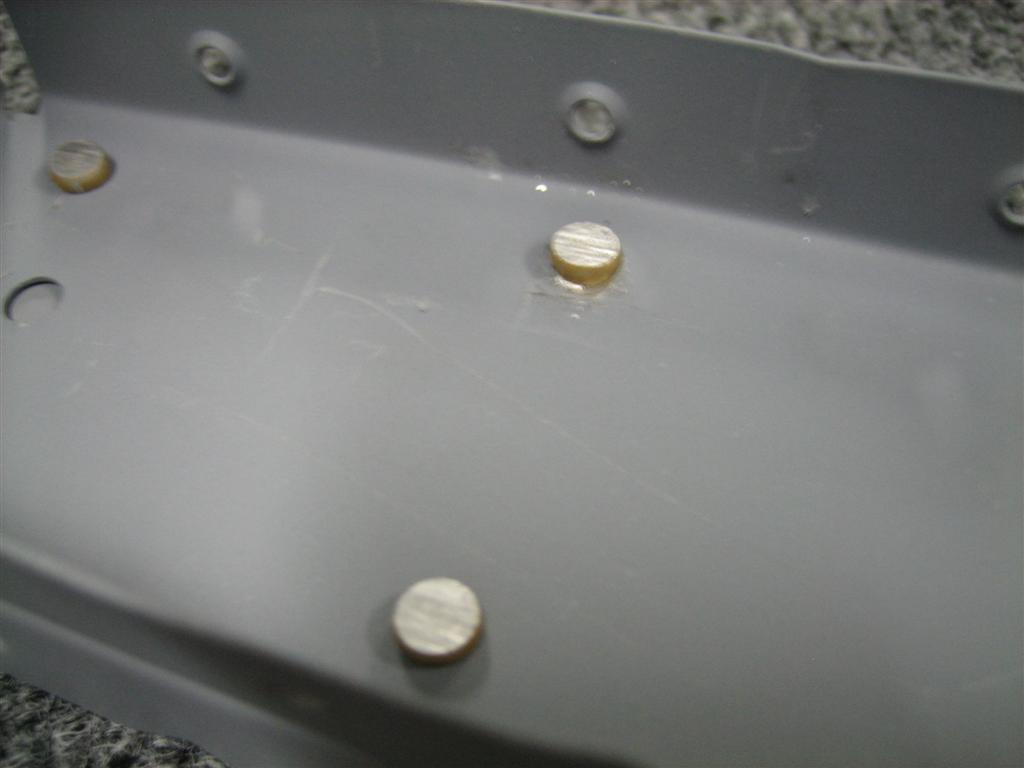
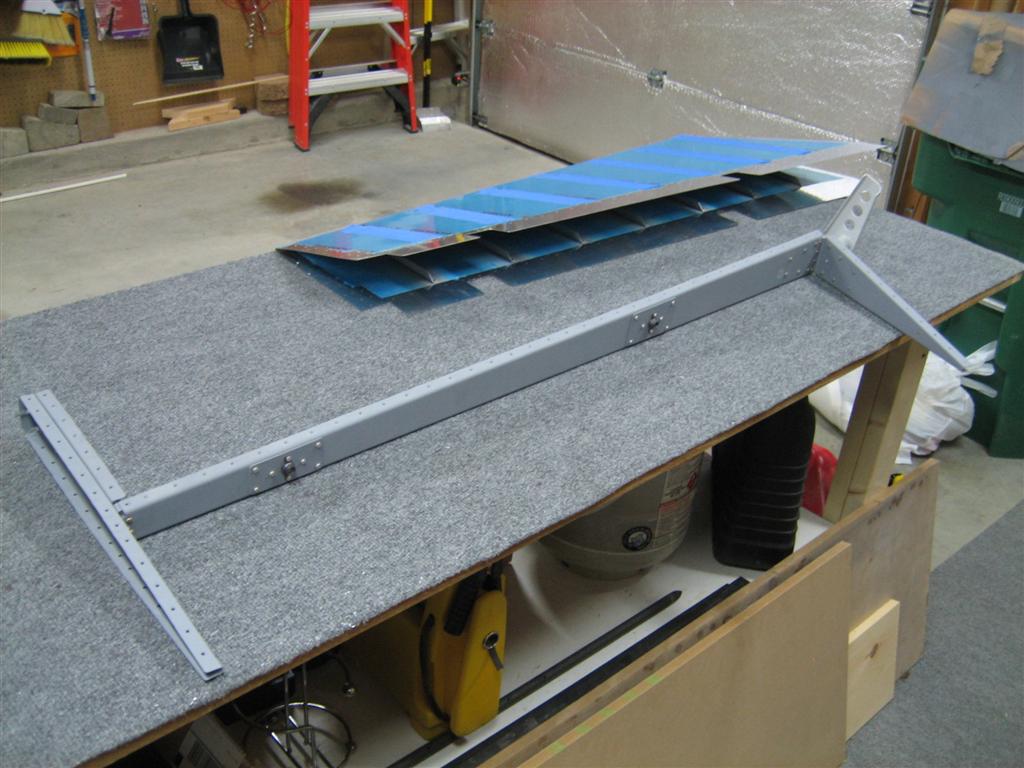
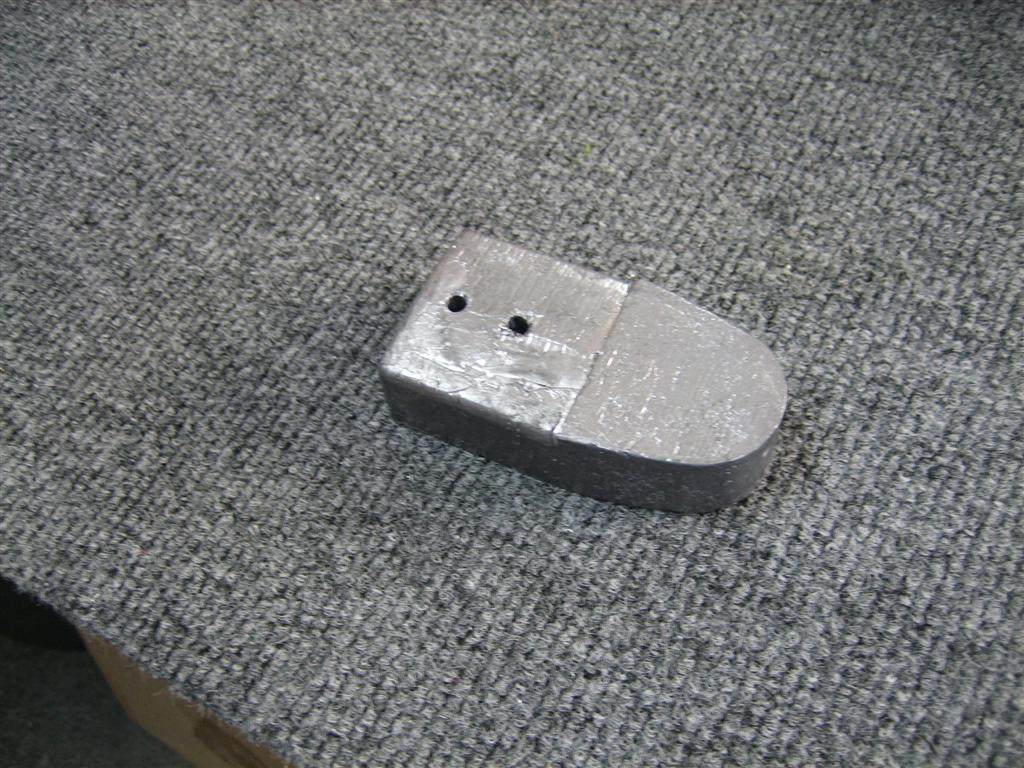
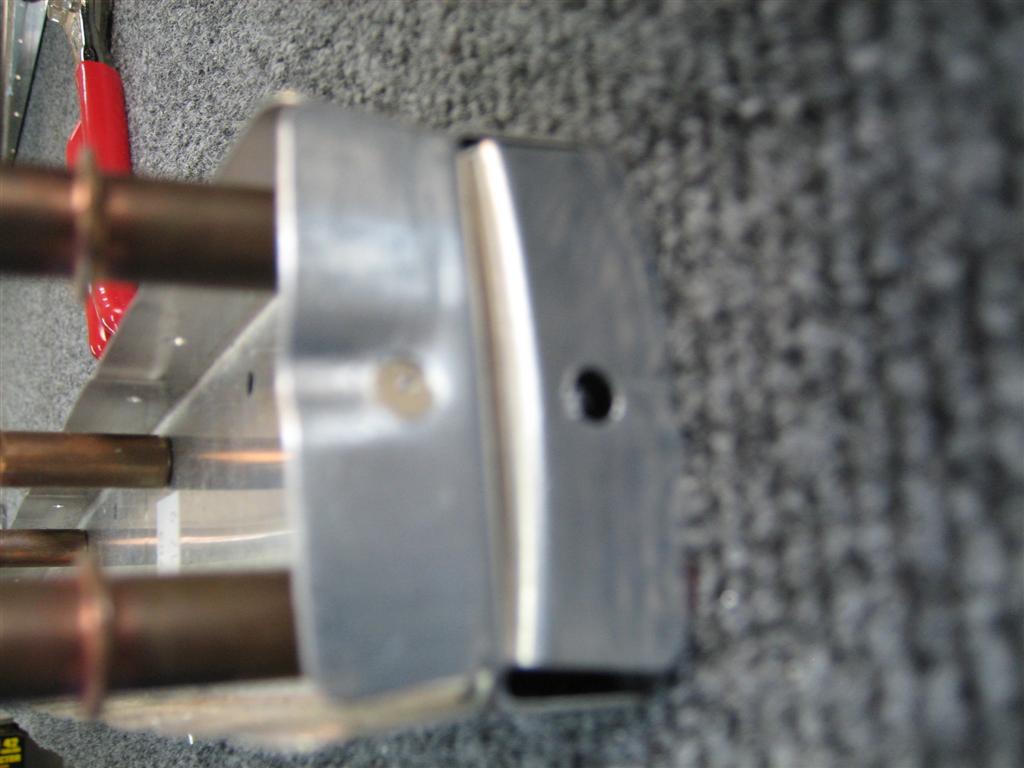
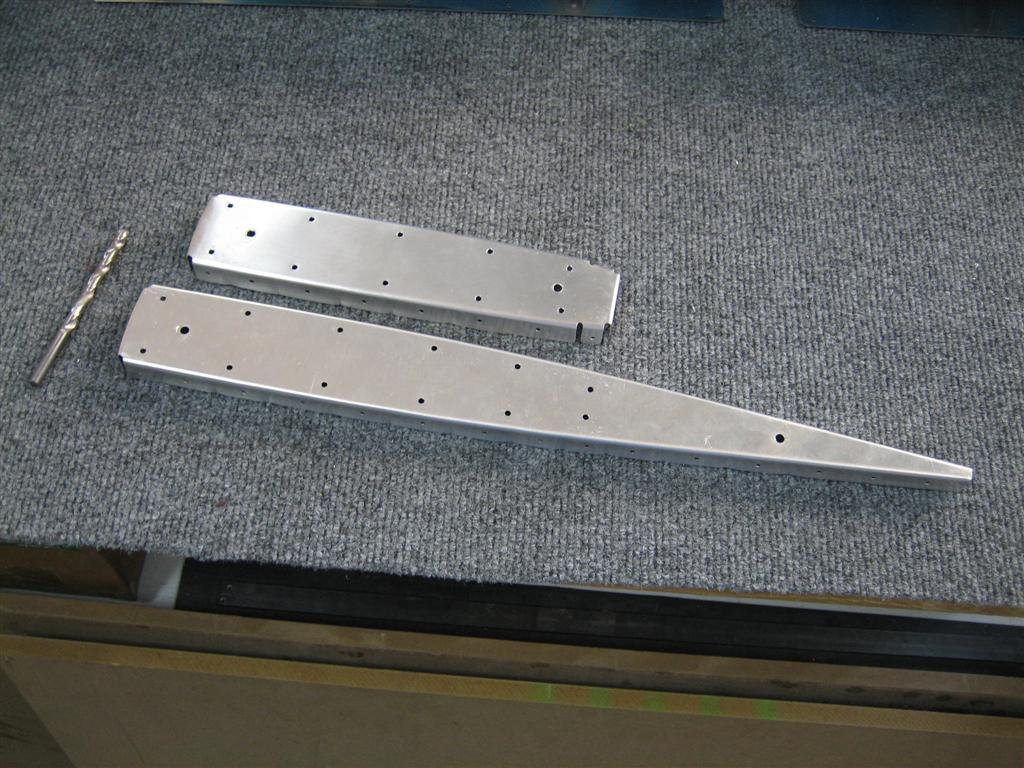
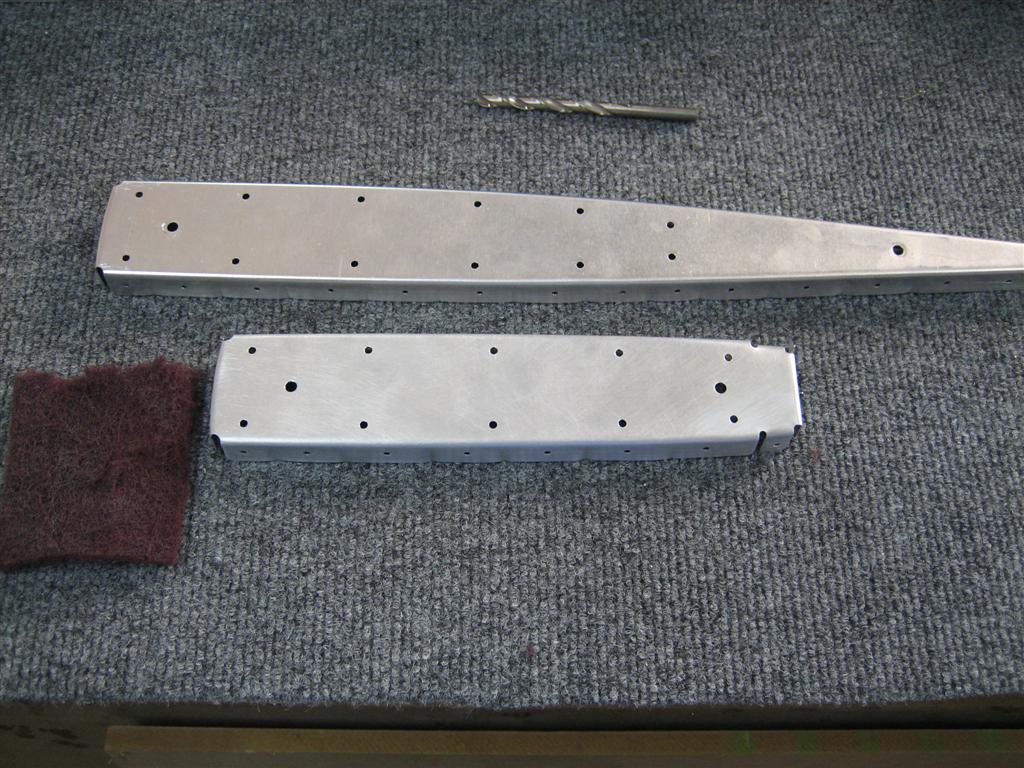
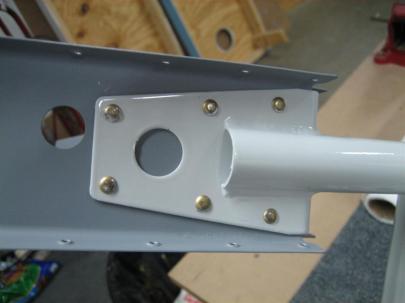
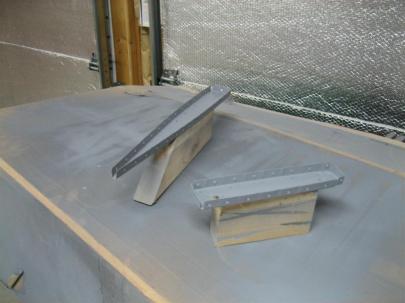
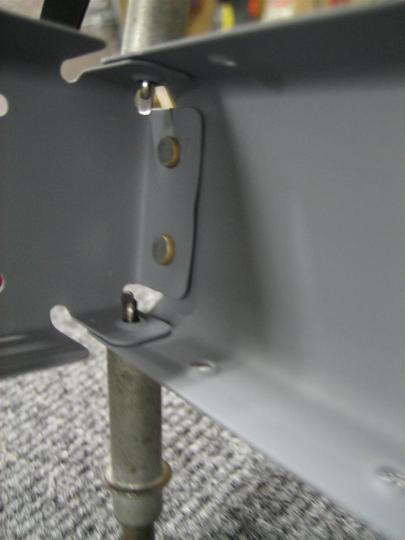
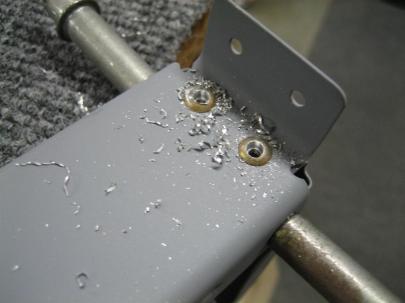
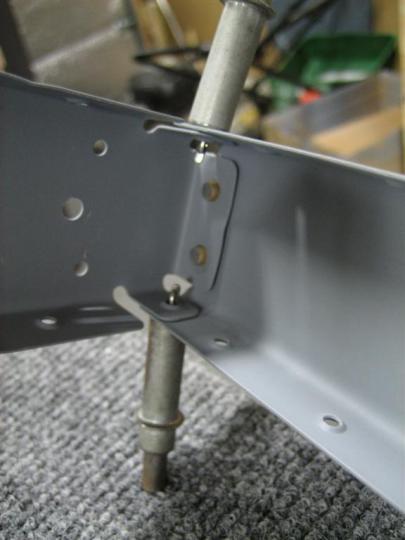
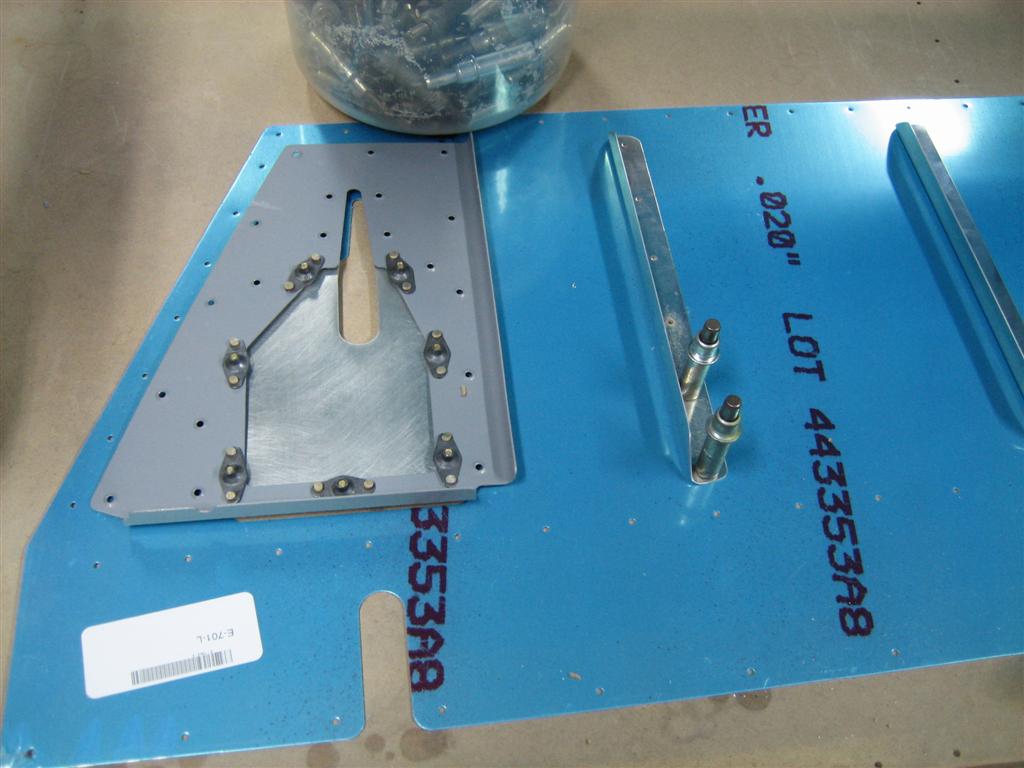
Another quick night in the shop. First thing, I fired up my 6″ grinder (with a scotchbrite wheel attached) and edge-finished half of the stiffeners. After that (about 45 minutes of the total 1 hour in the shop), I started the stiffener to skin drilling dance.) In this first picture, I’ve just placed the elevator trim backing plate in plate for the effect. On the right, my first two holes drilled (into a sacrificial piece of MDF) on the bottom of the left elevator.

Bottom of the left elevator, working from inboard to outboard.

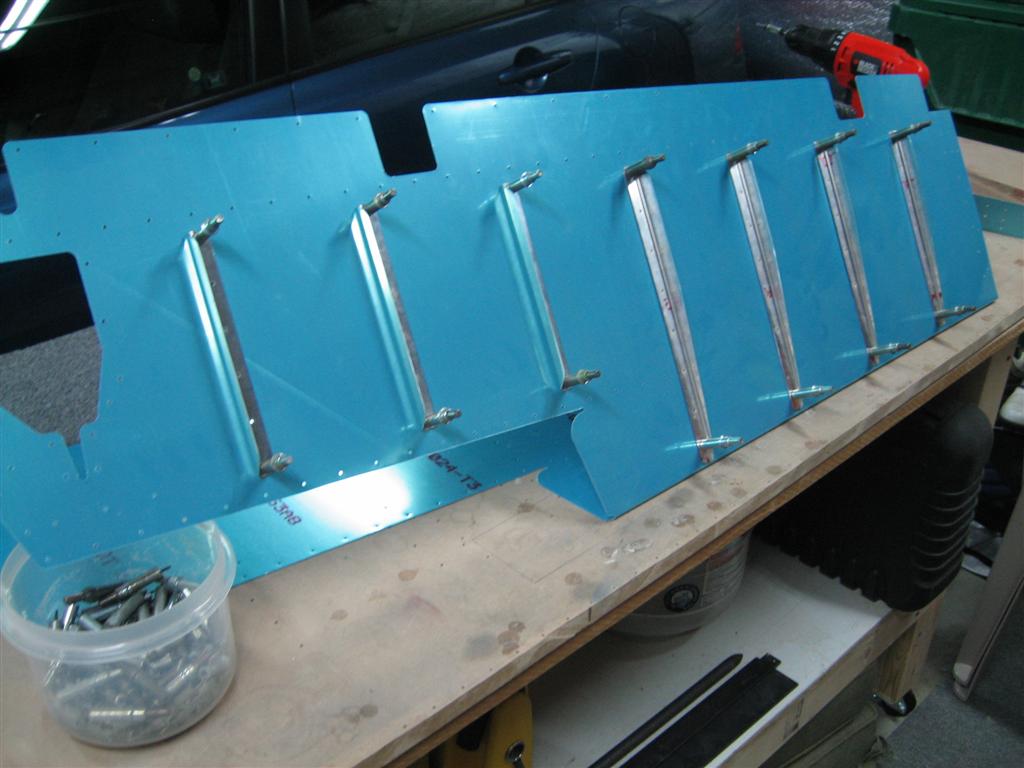
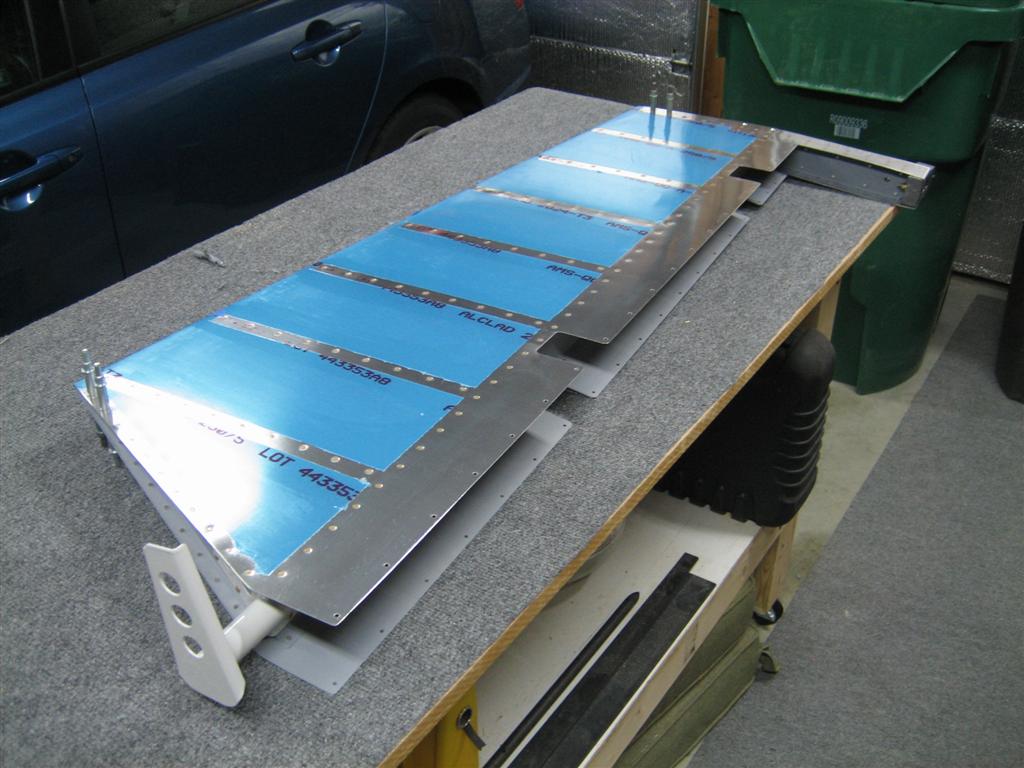
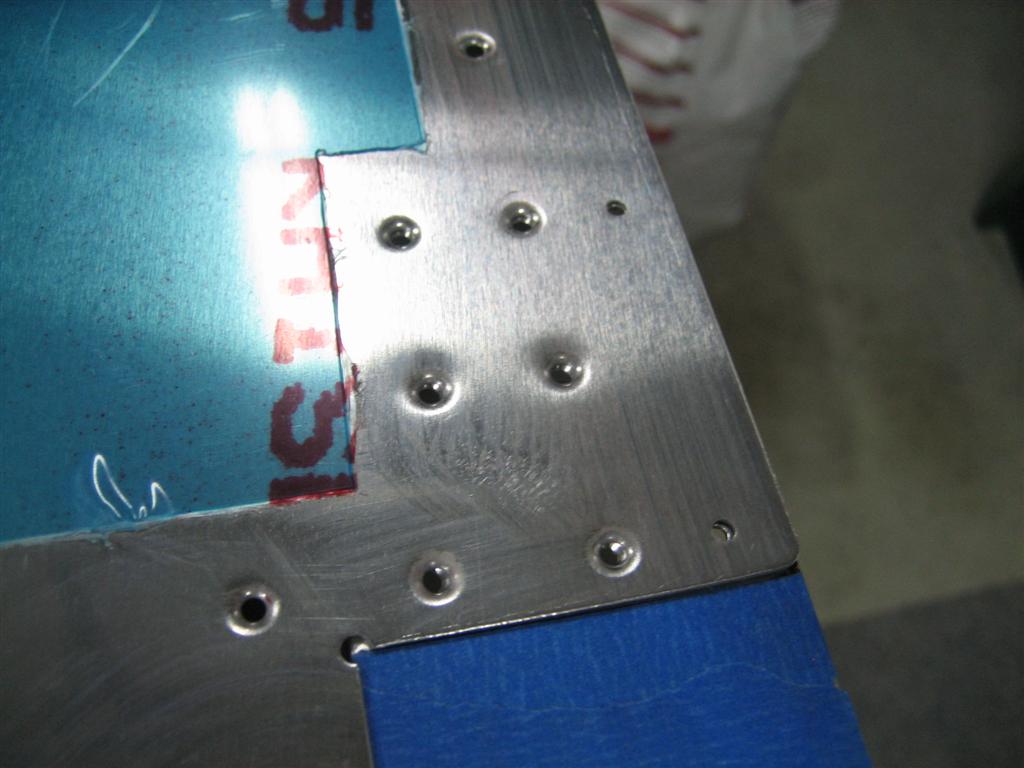
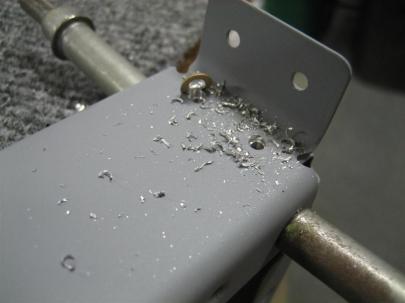
Here are three of the shorter stiffeners drilled, and the forward most hole on the last four drilled.

3 done, 4 to go.

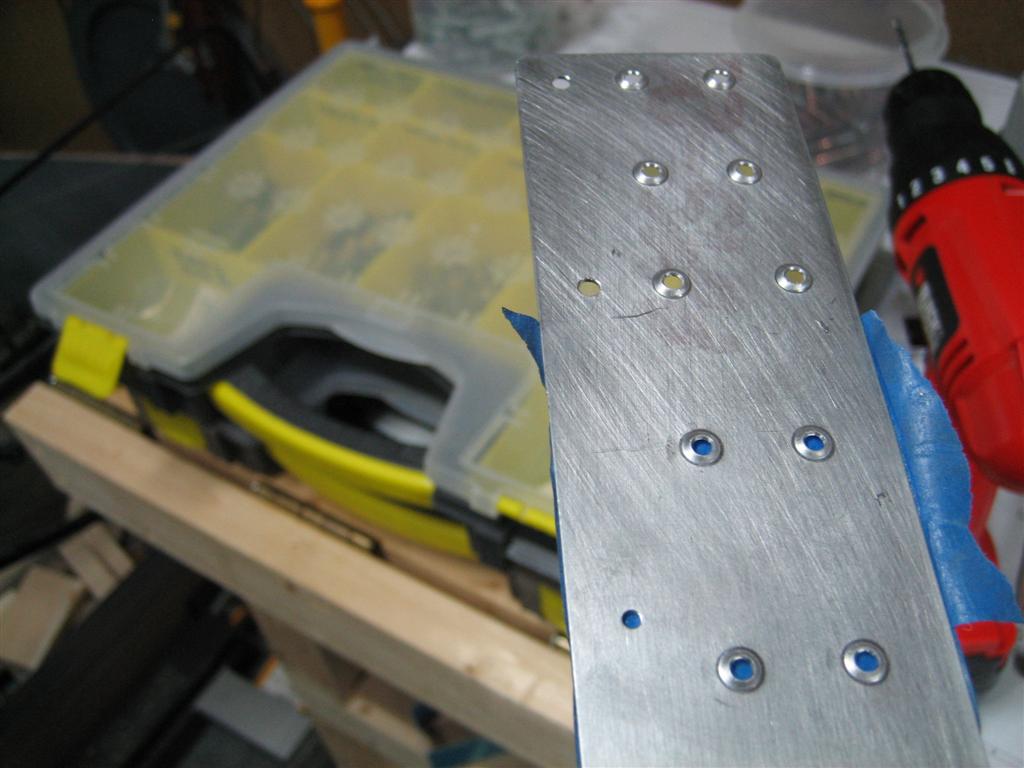
All of them drilled.

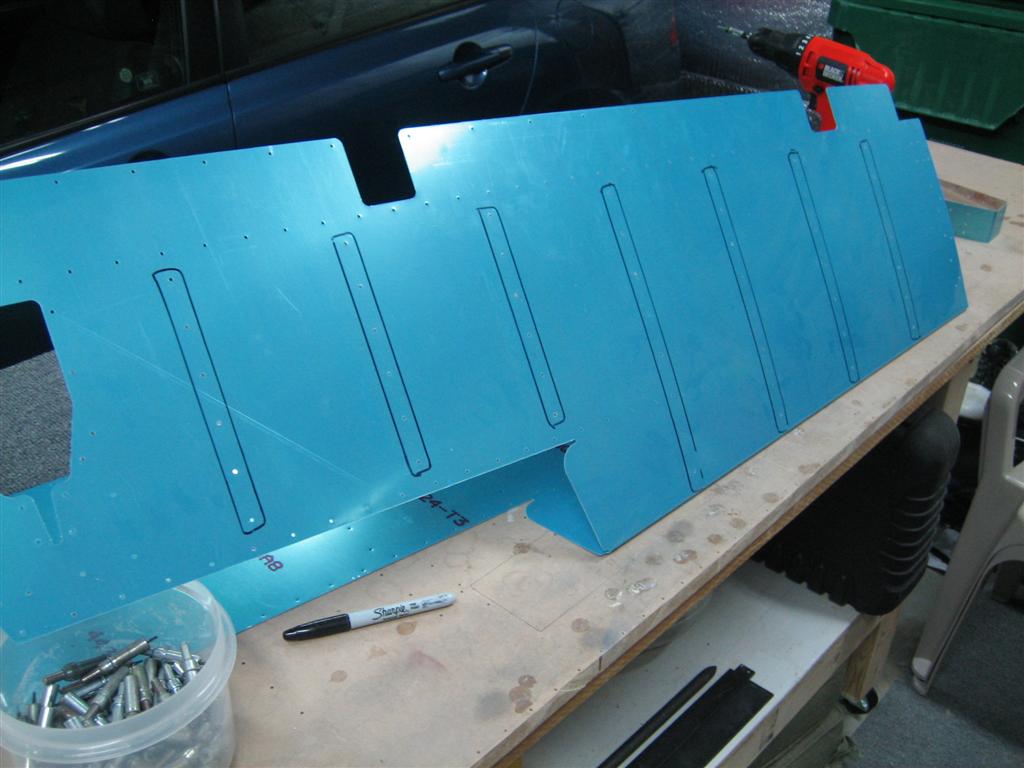
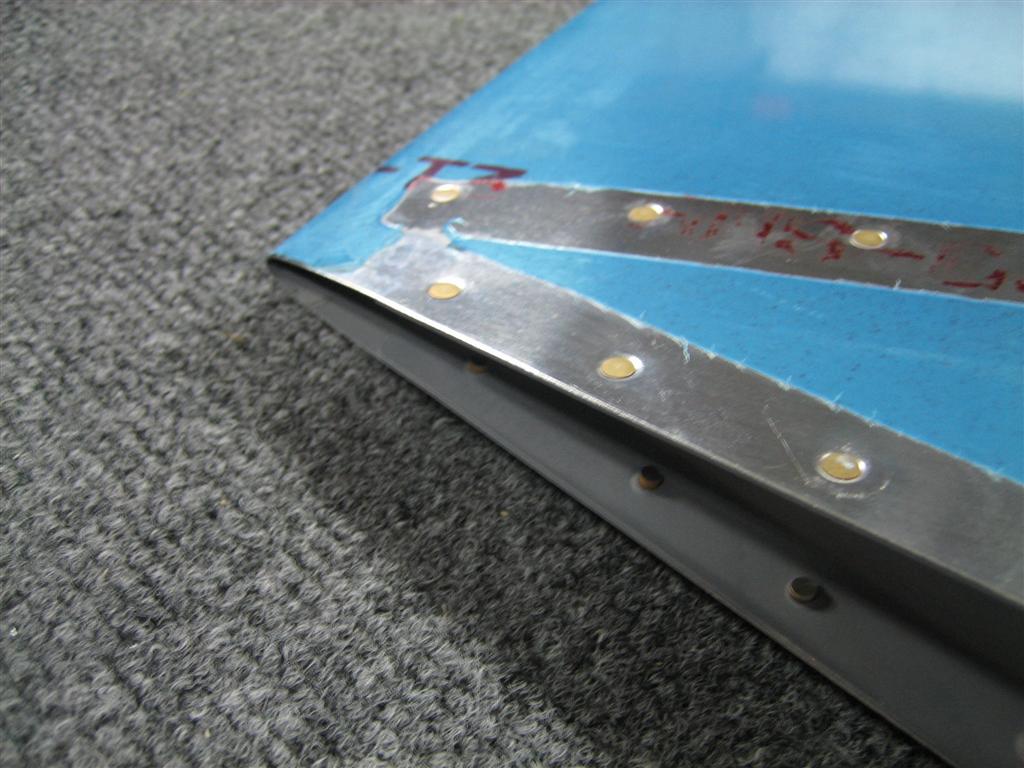
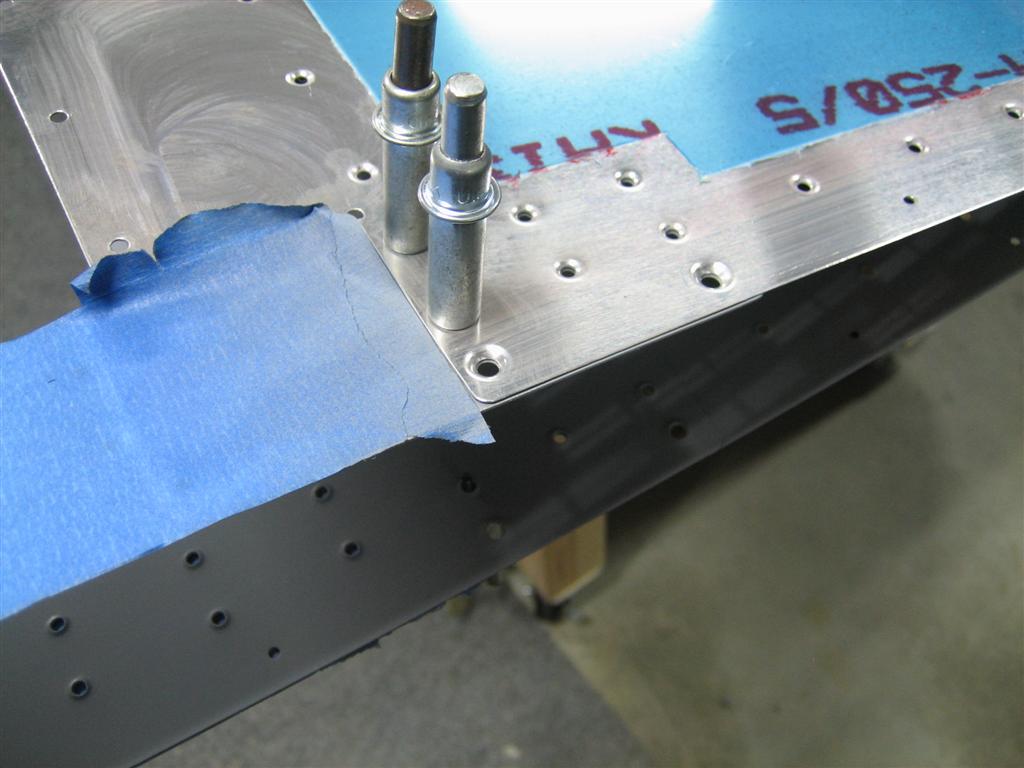
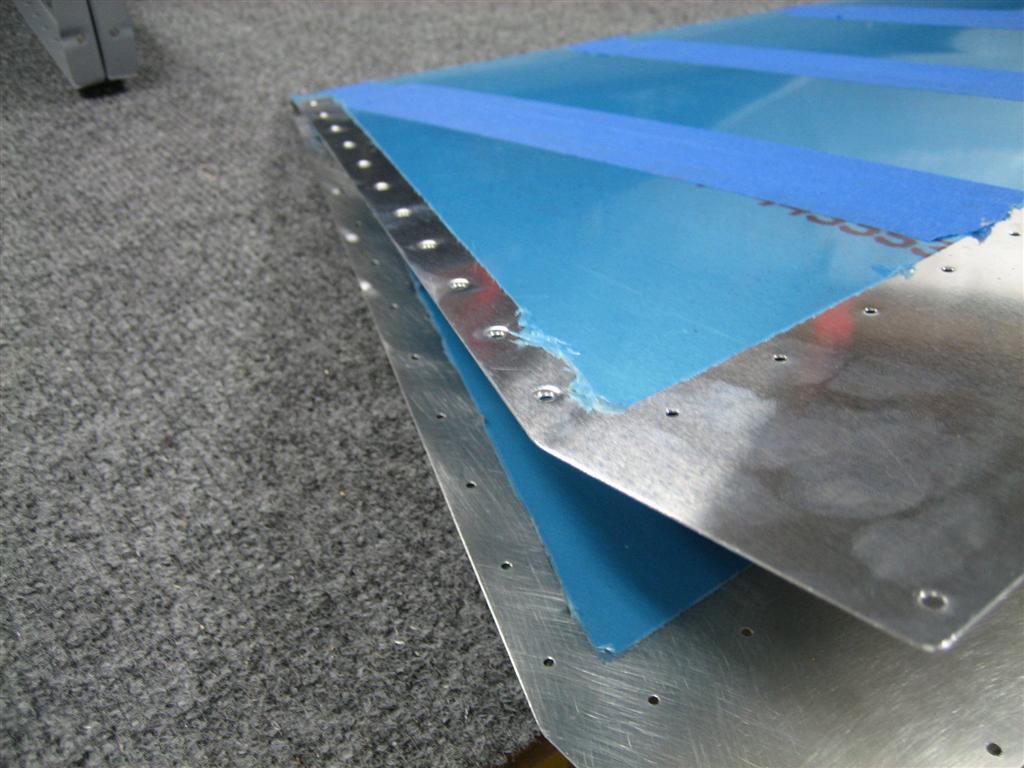
Next, I uncleco the assembly from the table, and recleco just the front and back holes of the stiffener so I can flip the skin over to match-drill the last hole (it’s prepunched in the skin, but not the stiffener on a couple of the stiffeners). Then, I traced around the stiffeners with a sharpie, then pulled them off and clecoed them to the outside of the skin, again, to trace them with a sharpie. This will help me figure out where to remove the blue vinyl later instead of just guessing (like I did with the right elevator.

Of course, the stiffeners don't go on the outside of the skins, I am using them to mark the outside of the skin for devinyling.

See? All traced.

The inside, too.

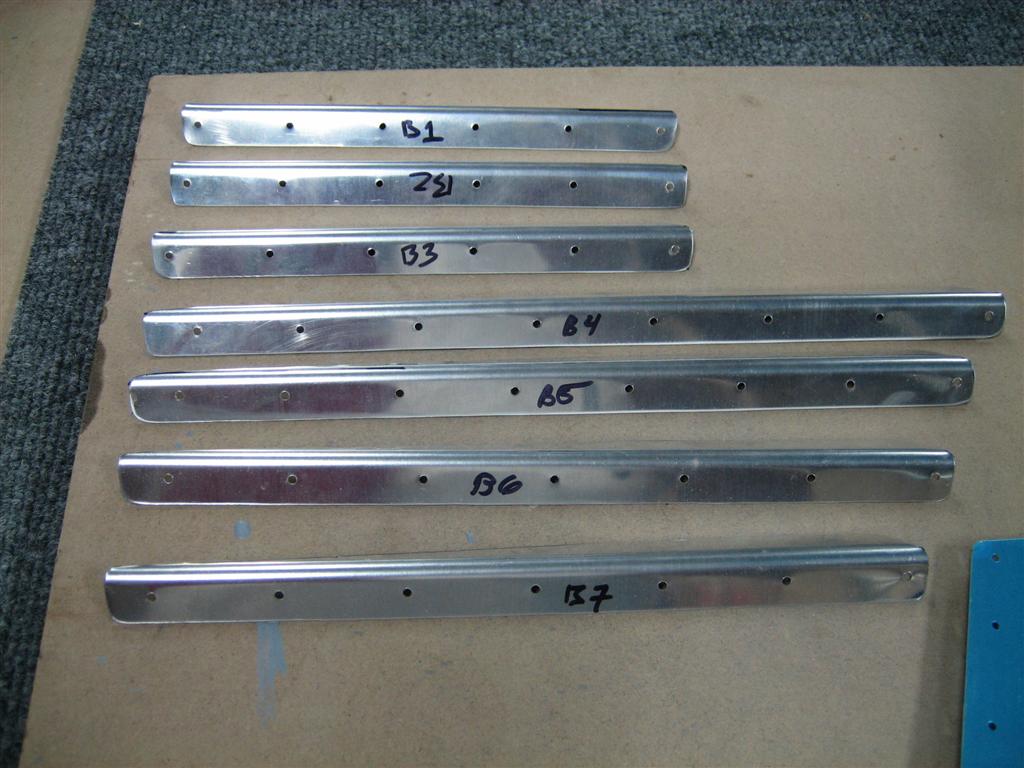
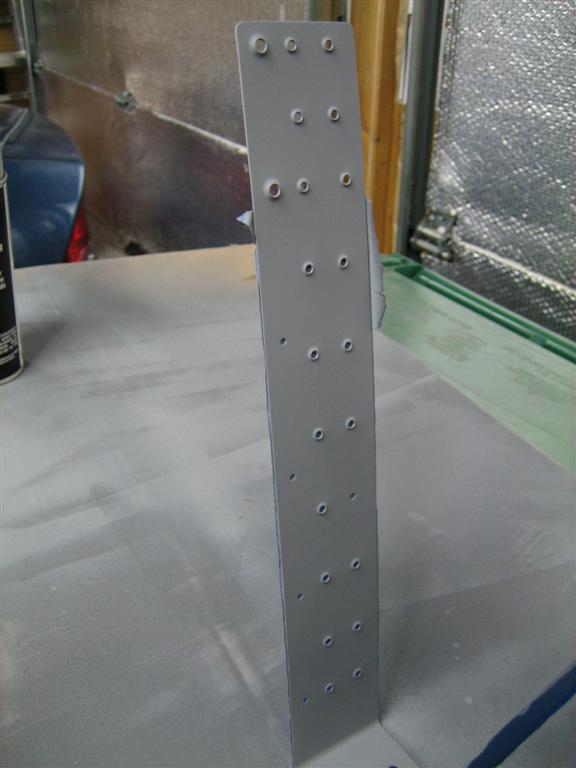
lastly, I removed the stiffeners and marked them before prep for priming.

B2 is upside labelled upside-down. Maybe I should remake the stiffener. /sarcasm off.

One boring hour today.

Prev | Next


Started Left Elevator

May 24, 2010

Prev | Next

Well, it’s monday. And even though I have a couple things remaining on the right elevator, I am going to follow the flow of the directions and move on to the left elevator before coming back to finish both of them.

In addition to the items they want you to do to both at the same time (roll leading edges, install rod-end bearings, etc.), I’ll have to come back to do three things on the right elevator:

  1. Fix a few over-driven rivets (and a couple that bent over that I didn’t catch at the time.)
  2. Figure out how to add RTV to the trailing edges after the fact (anyone have any ideas?)
  3. Trim down the counterbalance. I elected not to do this on purpose.

Anyway, on to the left elevator. Here’s the obligatory changing-of-the-plans shot.

On to the left elevator (and trim tab).

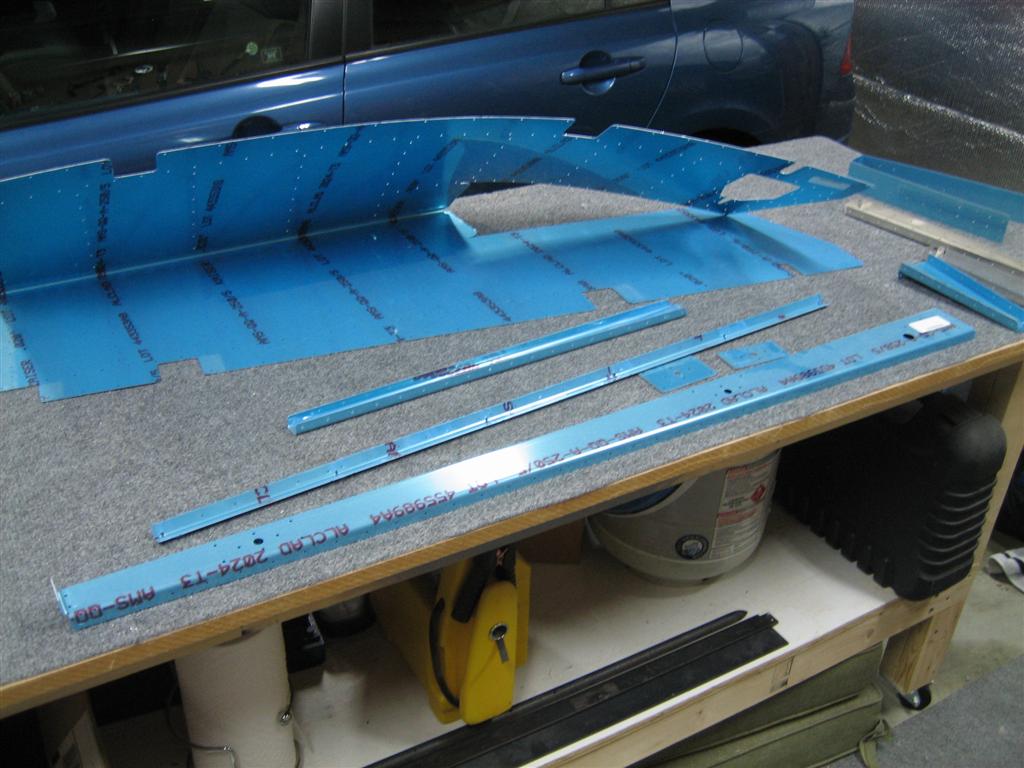
As I only have about a half an hour tonight, my plan was to just cover the basics. First, lay out all of the left elevator parts.

It doesn't look like a lot of work...

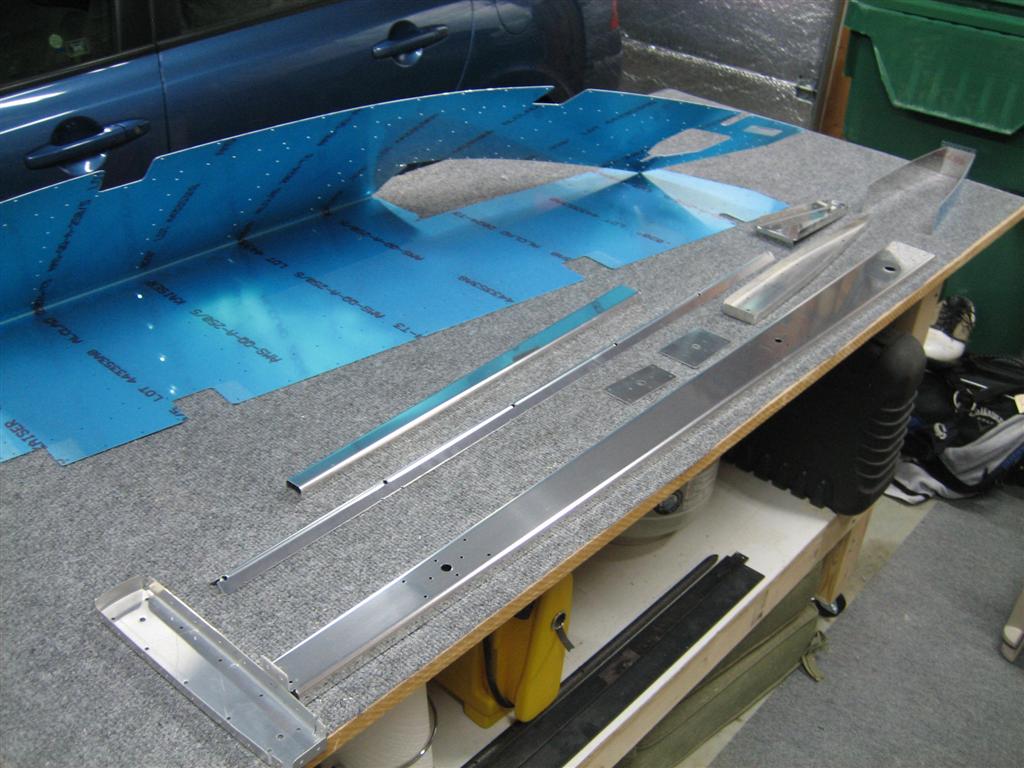
Devinyl the skeleton parts.

This picture is almost identical to the one before it, except for the missing blue vinyl on the skeleton parts.

Then, on to real work…kind of. The manual wants me to attach the hinge reinforcing plates to the spar, then move to the outer ribs.

Here you can see the two outer ribs fluted. I haven't straightened out the rib flanges yet, will get to that soon.

Blah blah blah, assemble the skeleton. For now, I didn’t do any match-drilling. I do that hole-by-hole as I take the thing apart.

This one will be more interesting due to the trim spar.

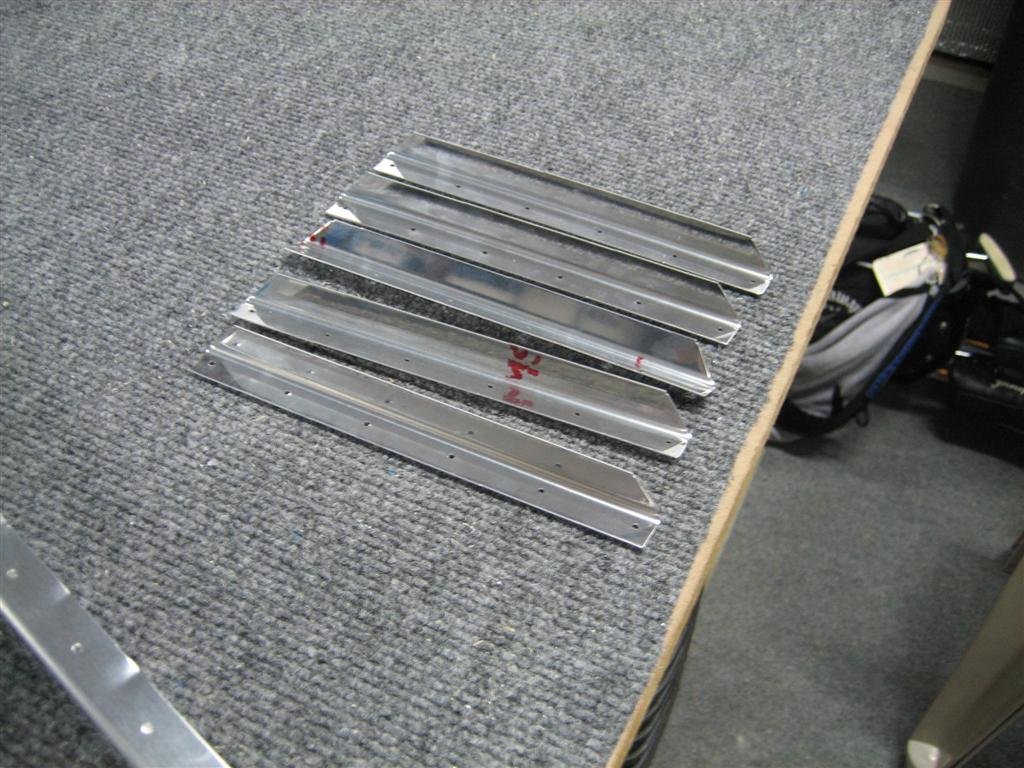
Finally, I found one more of the stiffener angles. I got that devinyled and then cut from hole to hole to form some of the smaller stiffeners.

More small stiffeners. These go between the main spar and the trim spar (ahead of the trim tab).

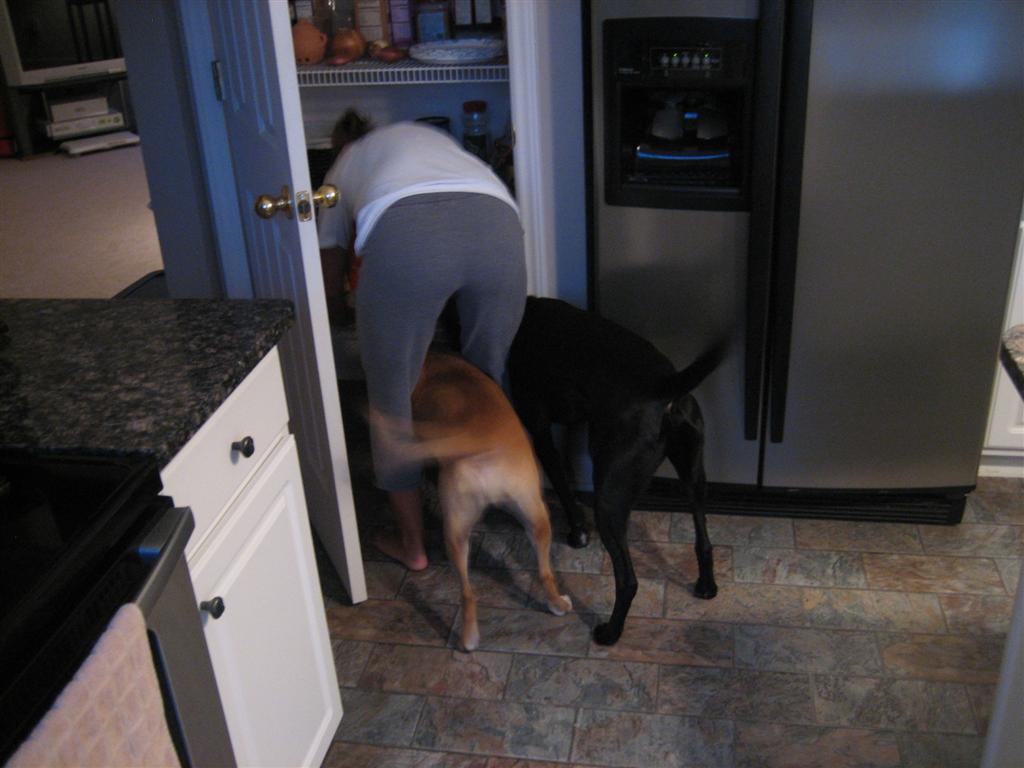
With that stuff done, I headed inside and caught someone with their hands in the cookie (doggie-treat) jar.

That bottom shelf has the doggie-treats on it. (We have really patient dogs. /sarcasm off)

Lucky you, I got some video.

Anyway, a short half hour of left elevator prep.
Prev | Next


Riveted Right Elevator

May 22, 2010

Prev | Next

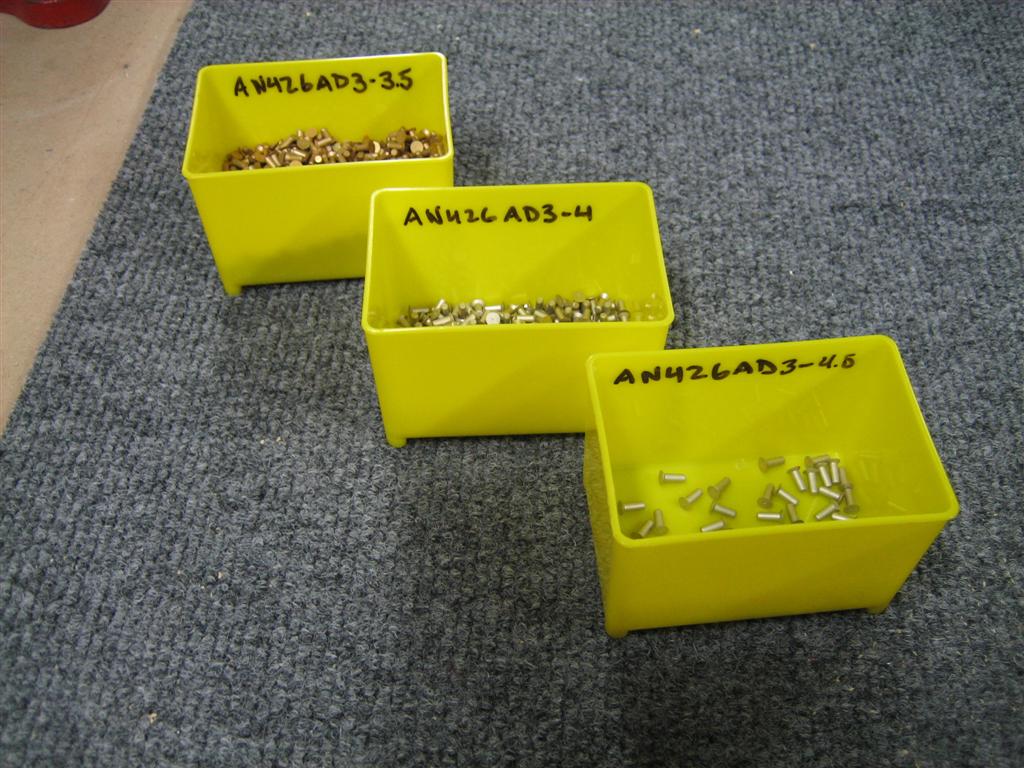
Day’s like these are my favorite days. Lot’s of riveting. After a few minutes of reviewing the plans and construction manual, I grabbed the needed rivets from my hardware box.

-3.5s, -4s, and -4.5s.

I know this stuff can be boring, but my basic plan was to cleco every other hole, put a rivet in the other holes, tape, rivet, then uncleco, put rivets in the empty holes, move the tape over, then rivet.

Some rivets set, about to set the ones under the tape.

The first 8 rivets looked great.

Moving on to the leading edge area. Same dance. (Rivets about to be taped.)

Taped.

WHOA! I bet you didn't think you were going to get an action shot today!

Here's a nice row of rivets on the top of the right elevator. All the little blue dots on the rivets are from where the tape stuck after it was pulled off.

Of course, for anyone who is interested, some shop heads. (A few of those need another little squeeze.)

So I keep using the tape over and over to protect the skins from scratching from the flush squeezer sets. After about 7 rivets, I replace the tape.

I need a new piece of tape.

Everyone seems to have this picture. It’s a complicated intersection, but everything looks good here.

That rivet on the top is not set yet, and it looks a little short. I'll go one length taller.

I was humming along doing great on the counterbalance skin when I noticed this.

An undimpled hole! Luckily, the skeleton underneath was dimpled with tank dies (a little deeper), so I got the dimple dies out and just dimpled it as it sits now. (Forgot to take a picture, but it worked great.)

Okay, let’s move on to “permanently” mounting the counterbalance.

This screw is a little long. I better get out a washer or two.

This one should do.

No matter how hard I try, I always seem to mar the nuts.

The outboard screw torqued.

And the inboard hole torqued. (The nutplate in the hole on the left is for any future need for more weight.)

There were four rivets on the aft end of each side that I couldn’t reach with the squeezer. I think the girlfriend might be sleeping, and it’s in my best interest not to make any loud noises with the rivet gun.

I also pulled the blue tape I had on the stiffener rivets off. It looks wonderful now.

From the back. The right elevator, almost completed.

After a few errands and a couple hours passed, I snuck (ha, the rivet gun kind of gives away my location) back out to the garage to finish up. I have a pretty crazy setup of a few thin steel plates wedged against eachother with a blade screwdriver (something like this) to buck in tight places.

Worked like a charm again.

I did scratch the primer a little. I'll touch this up later. (And set the lower right rivet a little more.)

Last two rivets on the other side.

All I have to do now is roll the leading edges.

Oh. And figure out what to do about FORGETTING TO USE RTV ON THE AFT END OF THE STIFFENERS BEFORE FINAL ASSEMBLY. DOH!

2 hours

Prev | Next

72 rivets set per side, so 144 total. Good progress.


Final Prep for Right Elevator

May 20, 2010

Prev | Next

Well, after deciding not to work out tonight (in favor of wine), I made it out to the garage pretty late for some final prep work before riveting the right elevator.

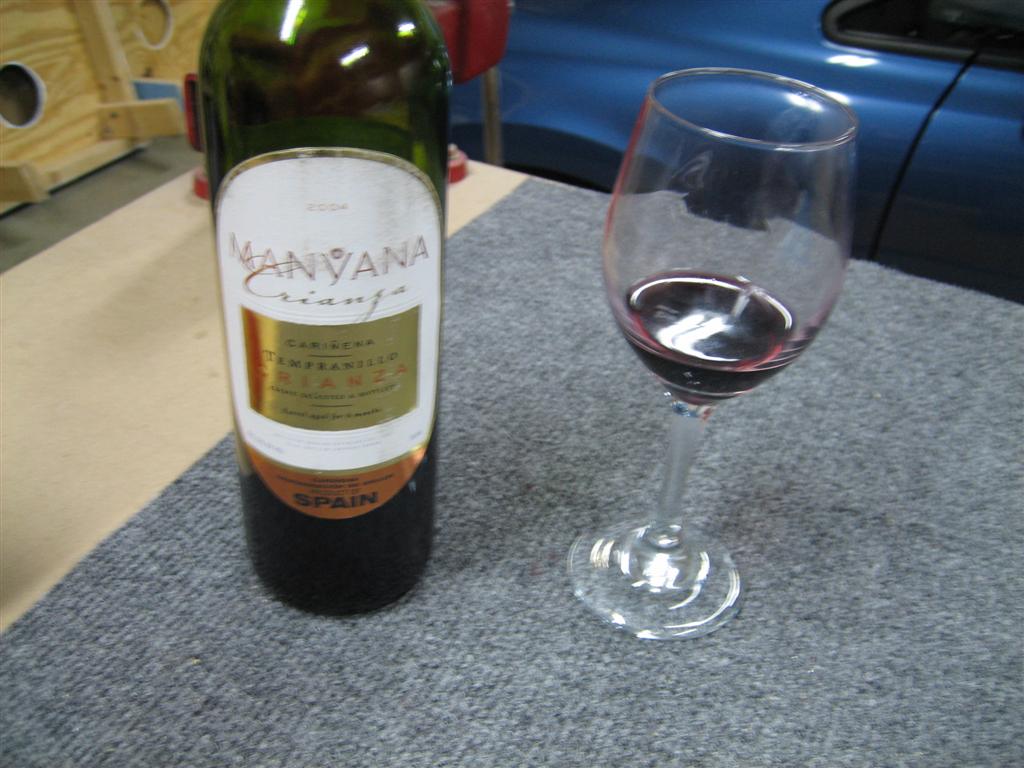
Tonight's build partner, 2004 Manyana (play on words) Crianza. A delicious tempranillo from Spain.

On with the building, you say? Fine.

One of the last real fabrication items I have left on the right elevator was enlarging the counterbalance skin dimples. To make a long story short, I don’t have #10 dimple dies, so I dimpled with #8, and then planned on using the AN507 screw head and a nut tightened down to enlarge the dimple enough for the screw to sit flush.

This did not work.

Okay, instead of waiting for a week for a $40 dimple die to arrive, let’s be creative.

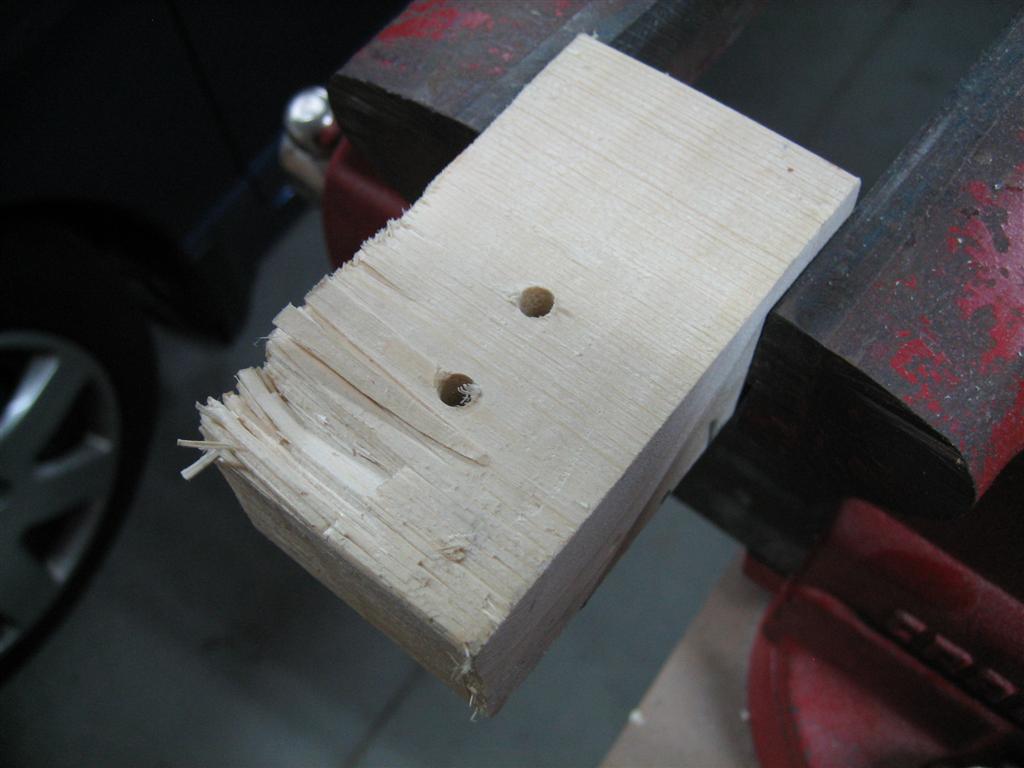
Plan: matchdrill two holes in a block of wood, countersink the holes, then use a flush set to enlarge the dimples.

Here's my block of wood, later to be countersunk.

Well, I don’t really have any good pictures of my attempt, because that didn’t work either, and I was getting frustrated.

Finally, I told the girlfriend to come out and listen to me explain the problem. (I knew this would help me come up with a solution.)

Without even flinching. “Why don’t you use a bigger screw to make your dimple?”

my face = <deer in the headlights>

Of course! (Except I didn’t have a bigger countersunk crew, but it set me down the right path.)

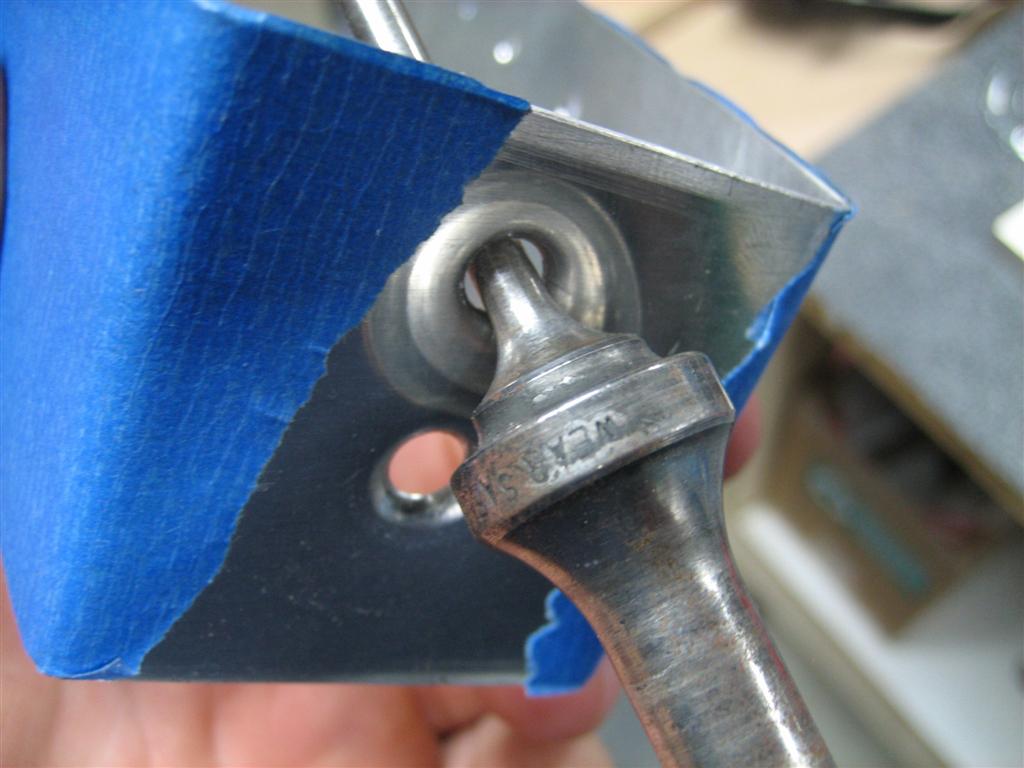
This should work. (It's my punch set that came with my rivet gun.)

Setup recreated (I had a piece of tape on the skin to prevent marring.)

The hole on the left has been "enlarged." This worked great!

Okay, let’s move on. Next up, I needed to locally bevel the edges where the spar and tip rib are underneath the counterbalance rib (so the top skin doesn’t show the transition bulges. So I marked those, and also started thinking about how to attach these empennage tips. See the two undimpled holes to the right? Those are two (well, 4, two on top and two on bottom) tip attach points that will eventually be drilled, deburred, and dimpled. Might as well do it now so I don’t have to worry about deburring between riveted sheets.

Lining things up to wrap my head around this interface.

I flipped the pieces over and drilled them to #30.

The top two holes have been drilled and deburred, ready for dimpling.

After dimpling…this #6 screw fits pretty well. (Editorial note: I’m pretty locked in to attaching the elevator tips with screws. I know there is really no reason to take the tips off, but right now, I don’t want to commit to blind rivets.)

That #6 screw looks like it will fit pretty well.

Once the other side was done, I primed the interior (and taped off exterior) side of the counterbalance skin.

Priming. You can see the two #6 dimples at the top of the left side of the skin. (I'll do the rest later...the rest are all accessible in the future.)

While that dries…let’s devinyl!

Hooray for devinyling!

All done. (After using compressed air to blow the flaked primer off.)

Back to emp tip attachment, here are the #6 holes in the skin, dimpled the same way as the counterbalance skin.

Nice big dimples. (Whoa, I forgot to deburr that relief hole on the left there. Fixed after picture taken.)

Let’s get this thing clecoed together.

Those big dimples sit nicely in each other. Here you can see those two holes are the only holes that overlap.

Next, the manual has you rivet the following two holes (not accessible once the spar and tip ribs are in place).

Protected with tape, this rivets were set beautifully.

Without clecos, it's starting to look like an elevator.

Next, “loosely place” the counterbalance in the counterbalance skin and “partially” insert the screws.

The untrimmed (on purpose) counterweight in the counterbalance skin.

last, but not least, they have you insert the skeleton in the skin and cleco together.

Wuhoo! It really does look like an elevator!

Those screw heads are pretty flush. (They are not tight yet, so they'll sit a little better once I get them tightened down.)

A couple pictures of some of the interfaces.

Just behind the counterweight.

Trailing edge of the tip.

Inside corner of the counterbalance rib. (What's that stuff hanging from the top edge? I'll have to investigate later.)

Finally, the trailing edge of the inboard rib.

Ready to rivet!

One more shot.

1.5 hours, 4 flush rivets set.

Prev | Next


Primed Right Elevator Skin

May 19, 2010

Prev | Next

Well, it was a short night in the shop tonight, but after almost a week without building, it was a productive hour.

All that’s remaining before riveting the right elevator together is to finish up deburring, dimpling, and priming the right elevator skin, and doing the same (as well as getting a big enough dimple for the counterbalance attach screws) in the counterbalance skin.

First thing, I grabbed an oversize drill bit and started deburring.

I still can't bring myself to buy a deburring tool. Maybe I'm being stupid. (Who got sawdust all over my right elevator skin?!)

Then, I realized that the holes on the very front edge of the skin (for the pop rivets after you bend the leading edges together) will be very difficult to deburr if I wait until after bending to matchdrill them. I decided, like on the rudder, to drill and deburr them now.

Just making sure the #30 bit is the right bit.

After drilling, this looks like it will fit the bill when I am ready to start riveting the leading edges together.

After getting all of the holes deburred, I grabbed my scotchbrite pad and got to work scuffing. I grabbed an intermediate shot so you can see what I am doing.

Scuffity-scuff scuff.

After scuffing, I cleaned everything up with MEK (because it’s harder to clean well with the dimples) and started dimpling. Here is the inboard edge of the right elevator (which is upside-down on the table) after dimpling with #40 dimple dies.

I love dimpling. Don't know why... (Whose palm prints are all over my elevator skin!?)

A before and after shot of dimpling.

Please no comments on the lack of edge finishing here. I did all the edge finishing after this step.

Like I said, after edge finishing and another wipe-down with MEK (and the requisite drying time), I put the skin up on my garbage bins and shot some primer on the interior surfaces. If you look closely, you can see where I have left the blue vinyl on the inside of the skins. That is where I don’t want any primer (weight savings) after I am done. When the skin is dry and ready for riveting, I’ll pull the vinyl out and be left with nice shiny, untouched aluminum.

I cant wait to rivet this stuff together. I am proud of this elevator.

One little hour, but good prep work for riveting soon!

Prev | Next


First of Many New Garage Shelves

May 16, 2010

Prev | Next

So.

The front wall of my garage is a little chaotic. I have an old armoire (whoa, I had to go to wikipedia to figure out how to spell this) out there holding some airplane things, and then a set of collapsible shelves that basically hold small things that don’t hang on the walls (pegboard) easily.

I need to get a little more organized, but I’m limited because of the 45° support holding up my overhead shelves.

Workbench Construction 010

This was an early picture, without the other shelving unit.

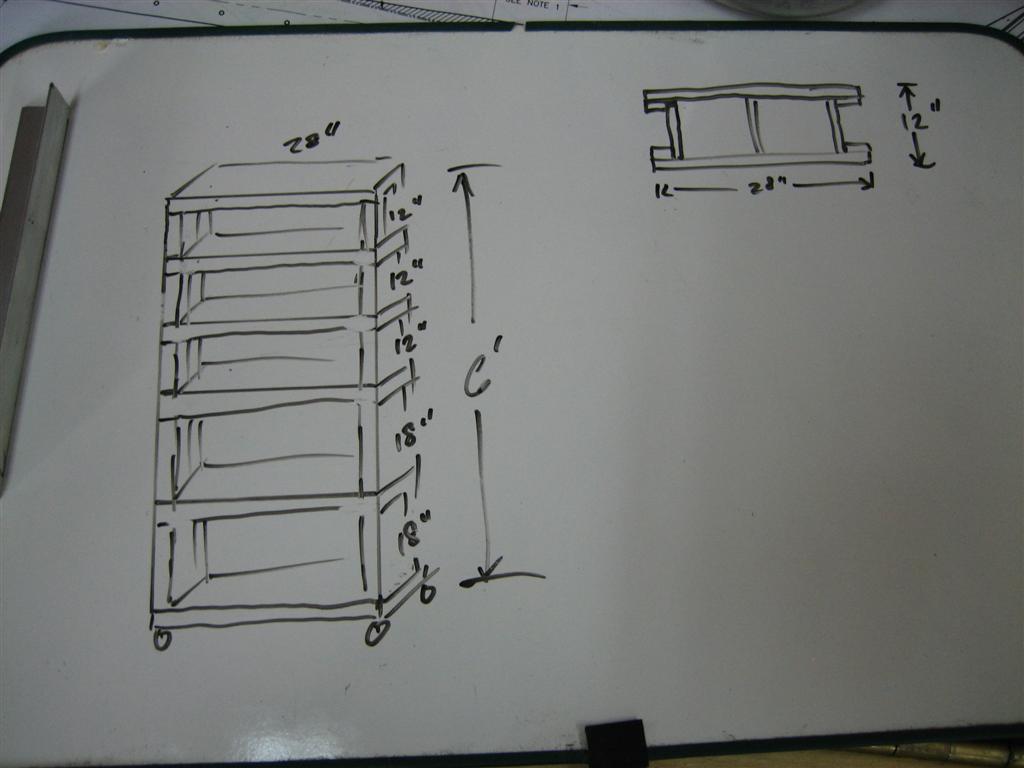
Anyway, I want to push any newly-constructed shelves back against the wall, so unless I want to limit myself to 5 feet tall (no!), I need to limit the width to about 28 inches.

I’m going to use the same construction technique as the two workbenches (here and here) I built. Here’s the plan:

Here's the concept. 6 feet tall, 28 inches wide. Various heights for the shelves.

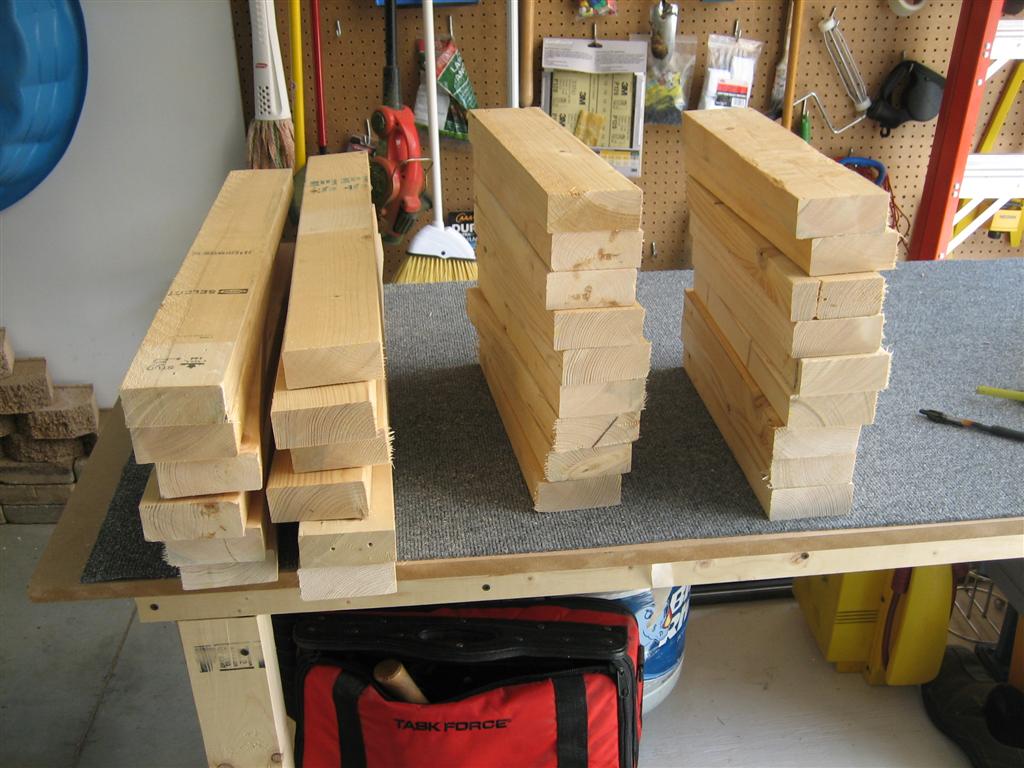
First up, cut some wood!

The ones on the left are the left-to-right supports, the shorter ones on the left are the forward-and-aft supports.

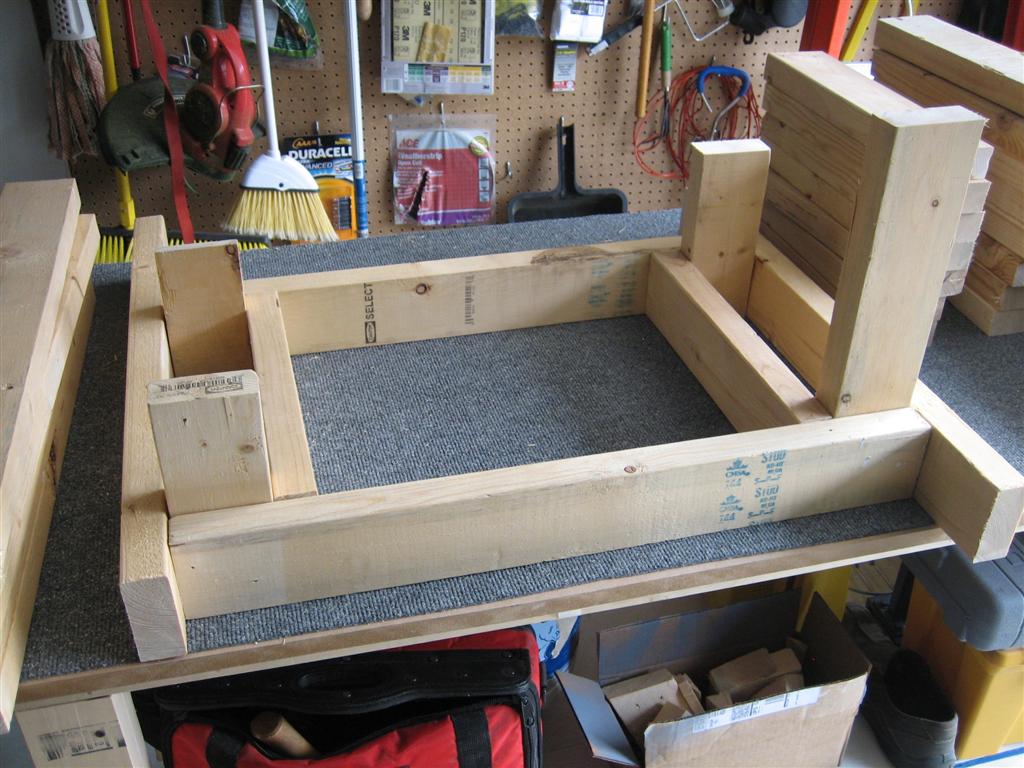
Then, I took the long ones and the short ones and mocked them up in this little jig (for squareness) before drilling.

My drilling and assembly jig.

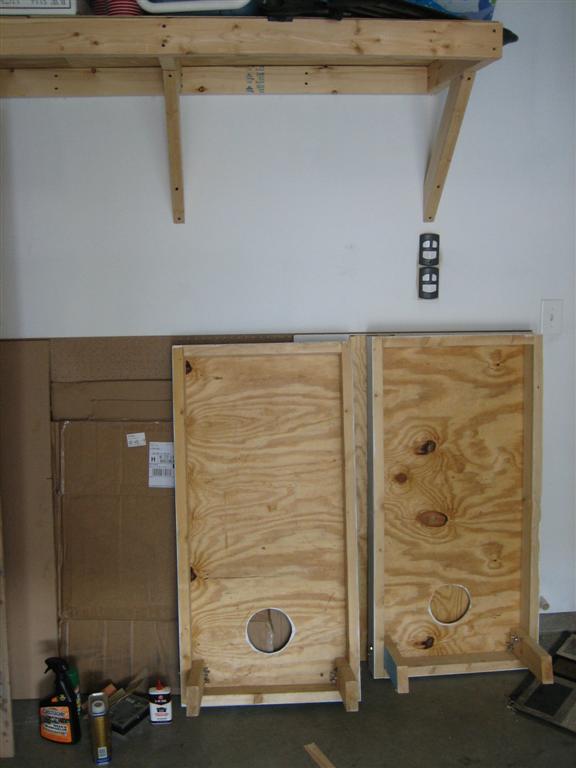
Then, for some reason, I took a picture of the wall.

The wall. No more description needed.

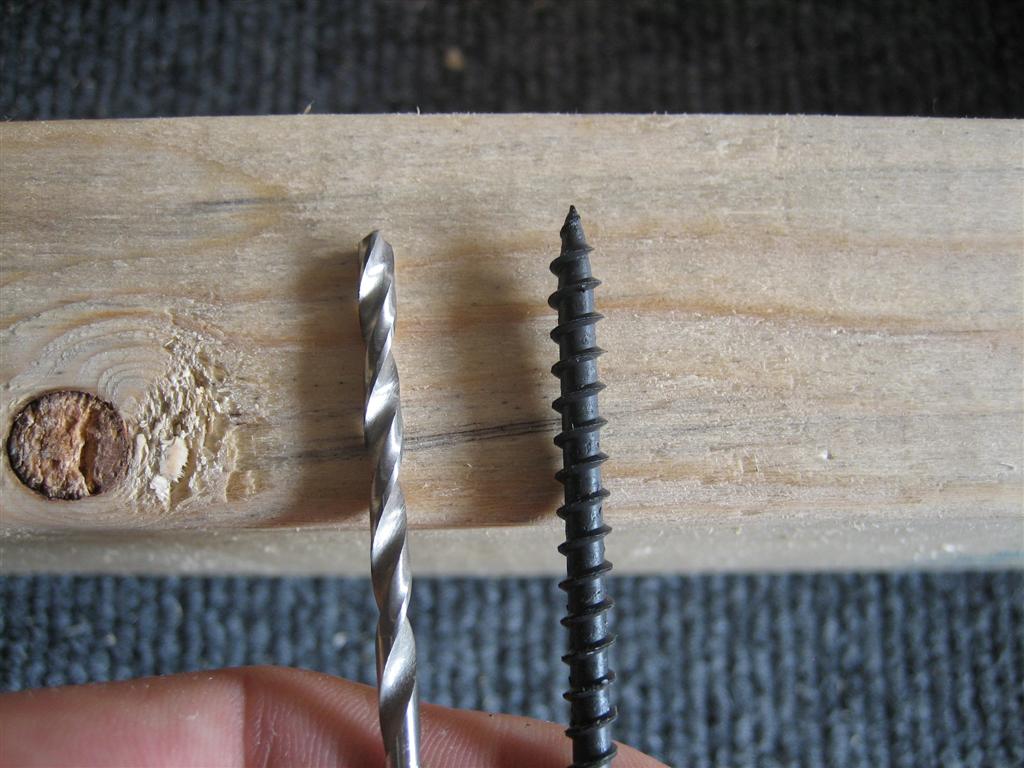
Then, like the airplane, I decided to drill pilot holes first.

I believe the drill bit on the left is 1/8".

Then, I started assembly.

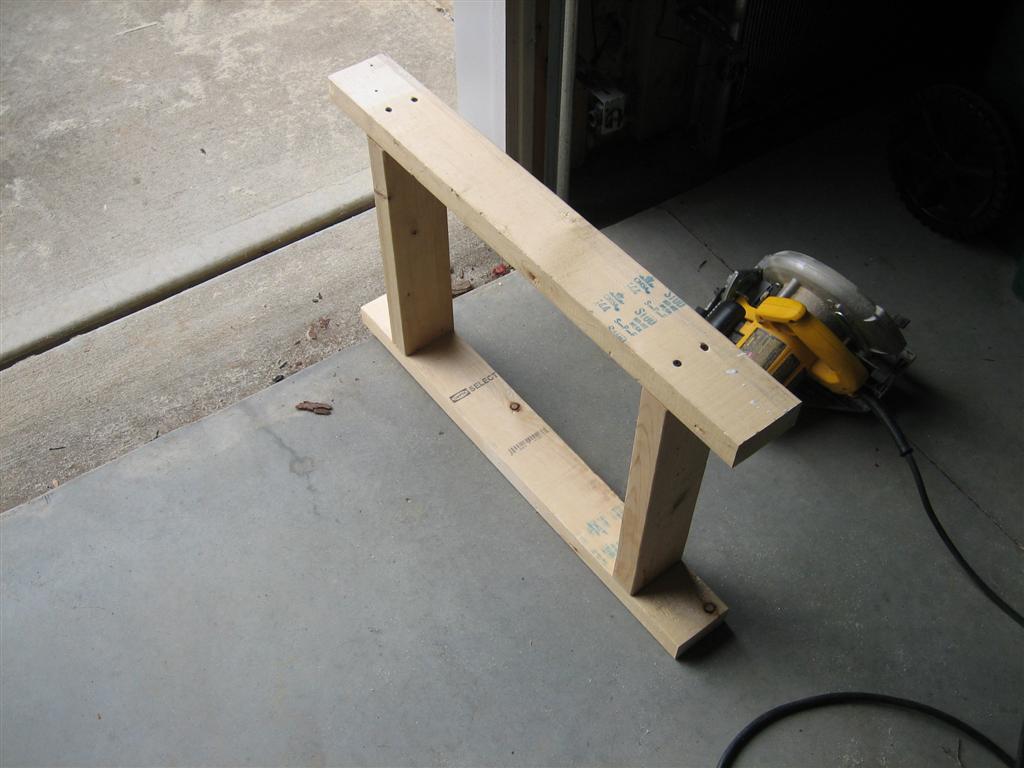
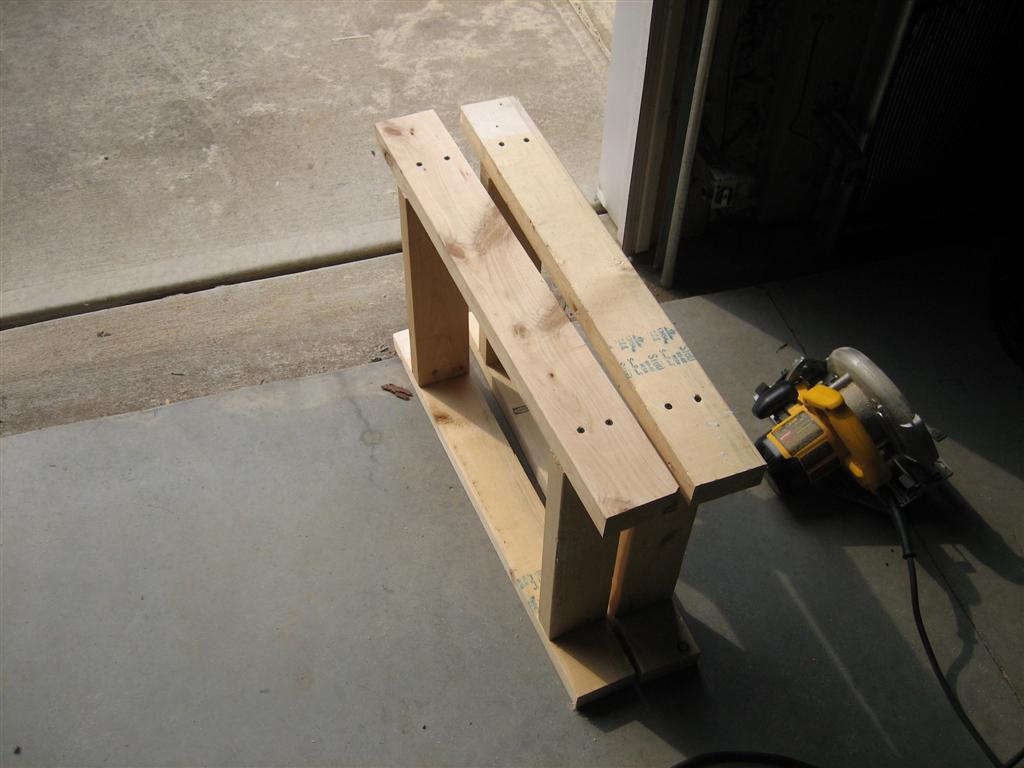
Here's the first shelf complete. (And my Dewalt circular saw.)

Two of six.

Oops, I stopped taking pictures of the assembly.

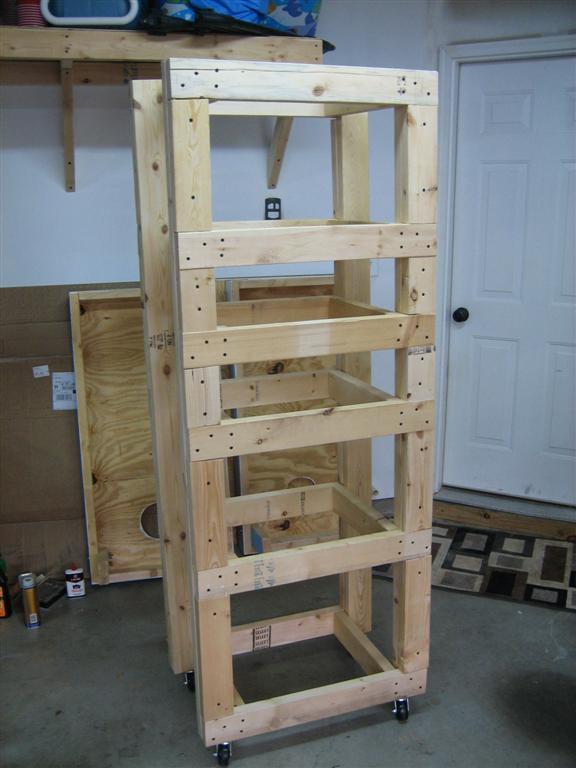
After the frame was complete, I attached some non-locking wheels to the bottom.

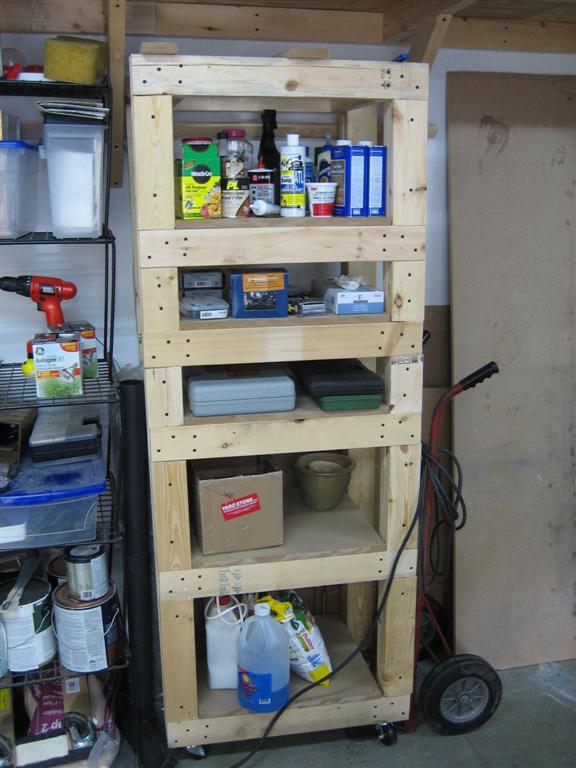
Finally a couple days later, I started loading the thing up (will be organized and labelled later) and snapped this picture.

It looks crooked in the picture, but it really isn't. And yes, that is (expensive) MDF for shelves. It just seemed like the right thing to do.

I went with (from top to bottom) a 12″ inch shelf, then two 6″ shelves, then another 12″ shelf, then an 18″ shelf.

The idea is that I build 5 more of these (for each of the areas between those 45° supports to vastly increase my storage space in the garage. Also, they are not attached to anything, so I am going to wheel them onto the moving truck in a few years if I decide to move.

What do you guys think?

Prev | Next


Tap and Die Kit, Roloc kit

May 15, 2010

Prev | Next

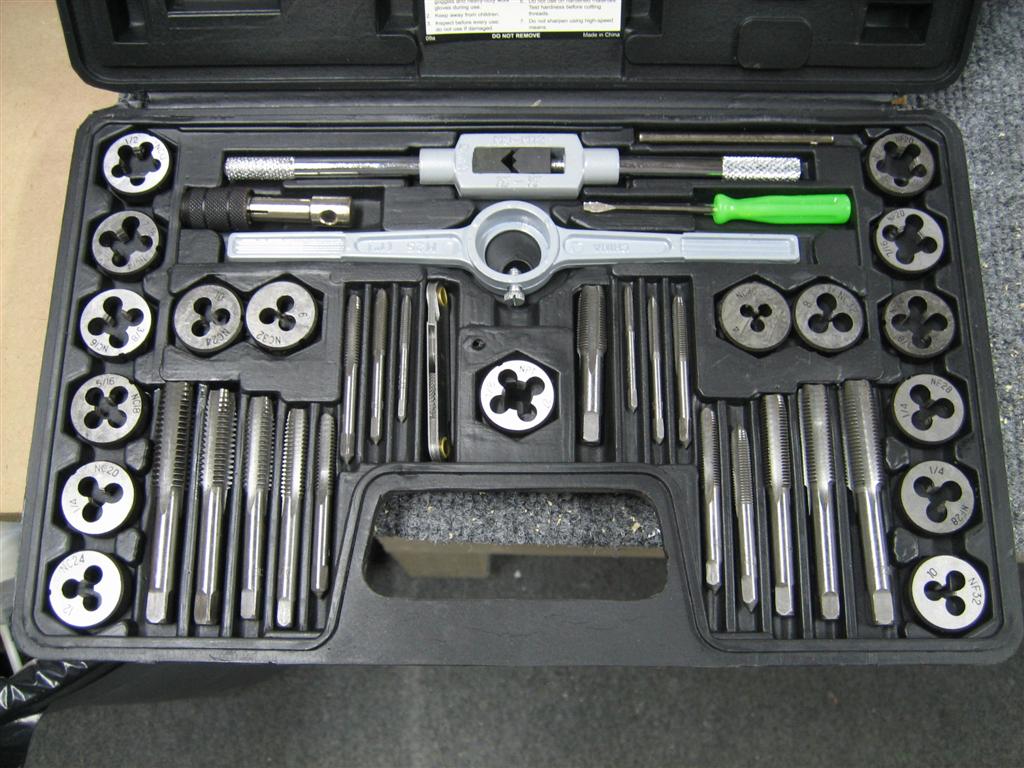
Nothing special today, I just stopped by Harbor Freight and used a coupon I had gotten in the mail for the Carbon Steel Tap and Die Set. The coupon was for $7.99, instead of $15. Not bad. I’ll need a tap and die set to tap the wing tiedowns, and who doesn’t want to save money?

(I also picked up a 1 inch diameter roloc kit that included some surface conditioning discs. I’m thinking the maroon is pretty close to maroon scotchbrite, and I want to figure out a good way to deburr wing ribs).

It isn't the highest quality set, but it'll do for the tiedown attach brackets.

It's pretty thorough. I grabbed the SAE version (they also had metric).

Subtotal for the Roloc kit, tap and die kit, and roll of blue tape was $19.97. Not bad.

Prev | Next


Ordered Wing Kit

May 14, 2010

Prev | Next

Well, I did it.

At 10:35am PST this morning, I sent in my wing kit order.

”]

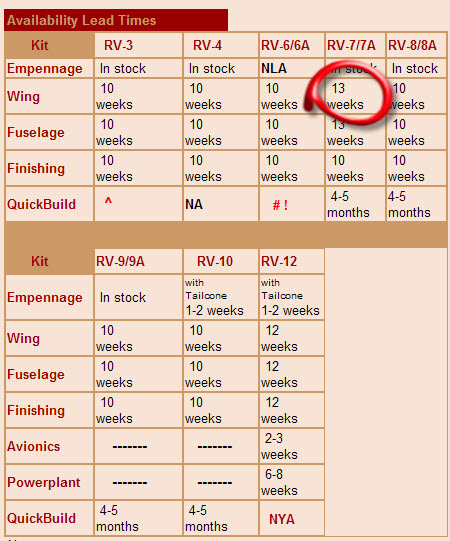
Given the 13 week lead time, it should arrive sometime in…(counting)…August.

Don’t worry, I still need to do a few things before it arrives:

  • finish up the right elevator
  • start and finish the left elevator
  • install the empennage tips
  • clean up some edges
  • build wing jigs (not jigs…”stands”)
  • paint garage ceiling
  • epoxy garage floor (maybe)
  • build garage shelves in the same manner as workbenches
  • buy and install wood floors on first floor (1000 sq ft.)

I think I can keep busy for a couple months.

Later Friday night, I heard back from Barb.

Andrew, you’ll have about 8 weeks to decide how to ship your kit, but you
will need to let me know before your ship date if you want to us any other
method other than by my normal freight company.  Thanks for the order.

Then on Monday morning:

Andrew, it will cost about $359 to ship the wing kit to your door by ABF.

Now I need to contact Tony Partain to get an estimate through him.

June update:

Apparently, if you order the deluxe locking fuel caps, Van’s will credit you for the caps they normally send with the kit. That turns $210 deluxe locking fuel caps into $150 deluxe locking fuel caps. Wuhoo!

Prev | Next


Riveted Right Elevator Skeleton

May 13, 2010

Prev | Next

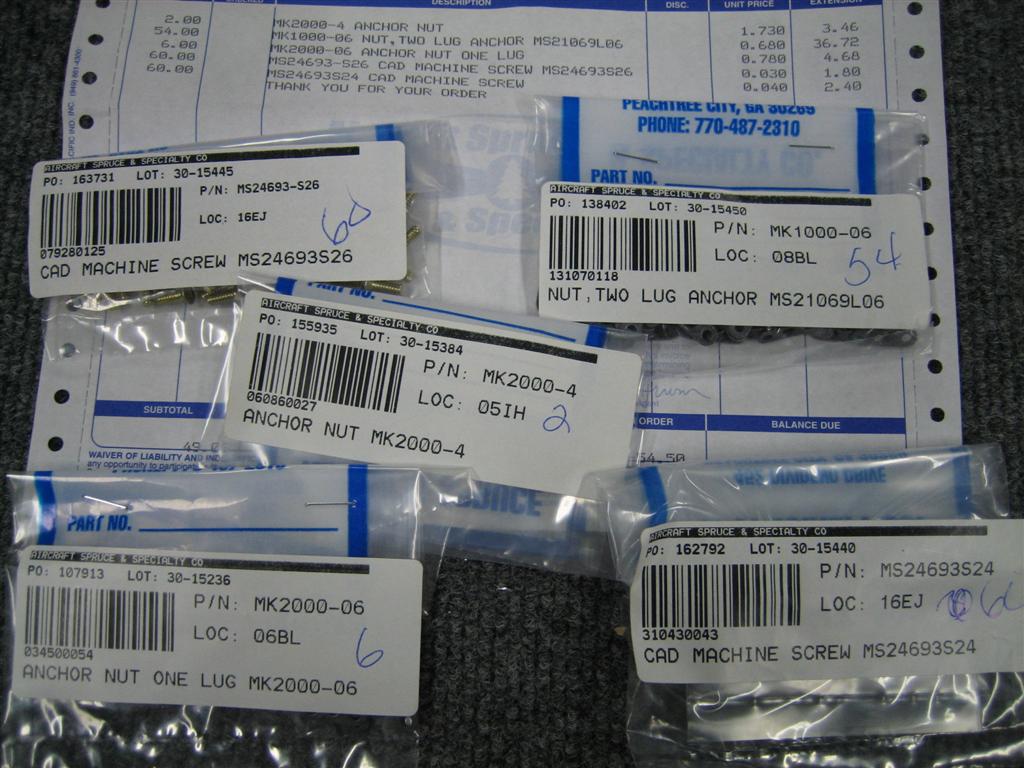
Well, I’d been waiting for a couple days for an order from Aircraft Spruce to come in. I ordered a whole bunch (~60) #6 screws and nutplates to use to attach the emp tips, and added a couple 1/4″ nutplates to attach to the elevator counterbalance spars so I can add more weight later for fine elevator balancing.

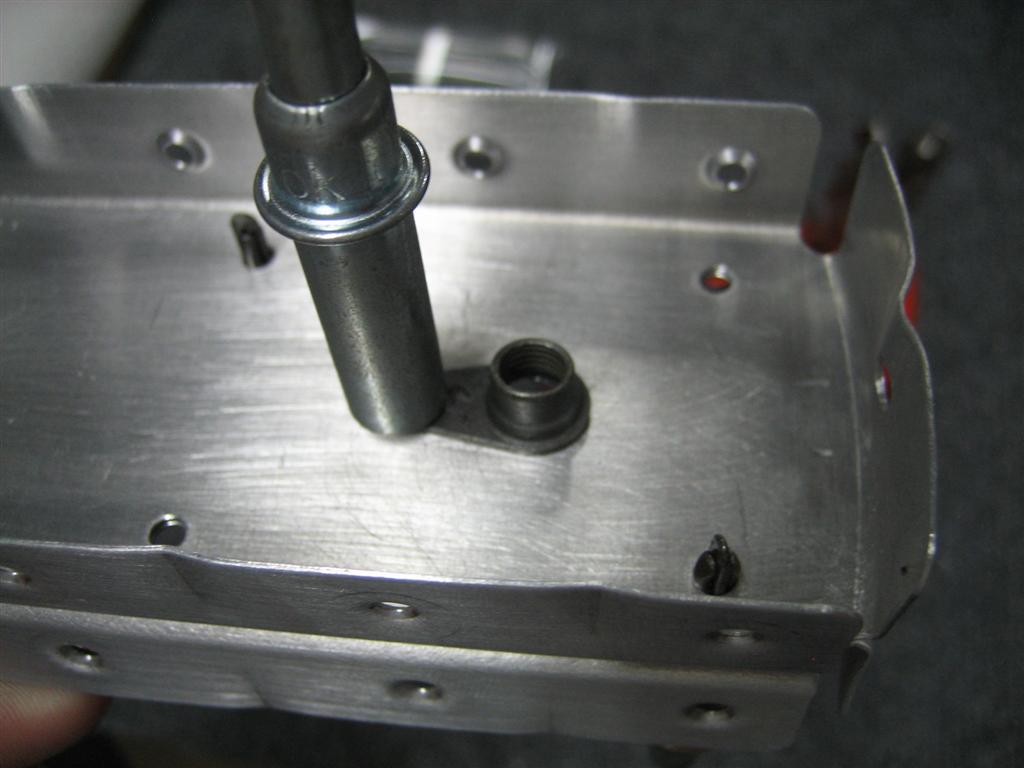
Here’s the deal. When you initially balance the control surfaces (without paint), you can either leave them a little heavy (which some do), or balance them exactly. Given that I might leave my empennage polished, I thought I would go ahead and balance them perfectly for first flight, then rebalance (pronounced “add weight”) after paint. While the forward tooling hole in the counterbalance ribs would work for a straight up bolt and nut, I’d prefer a nutplate. Also, since the two counterbalance ribs are butted against eachother, I’d prefer to drill for the nutplate now, so I can deburr both sides of both surfaces.

(I wonder how people deburr holes drilled through two permanently attached skins. Maybe just the inside and outside of the two skins and not the middle two surfaces?)

Anyway, here’s the order.
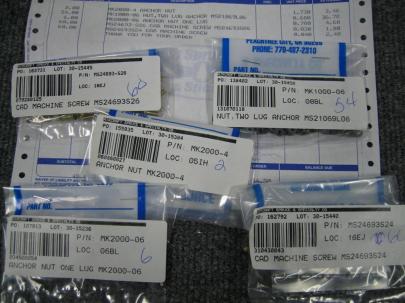
screws and nutplates.

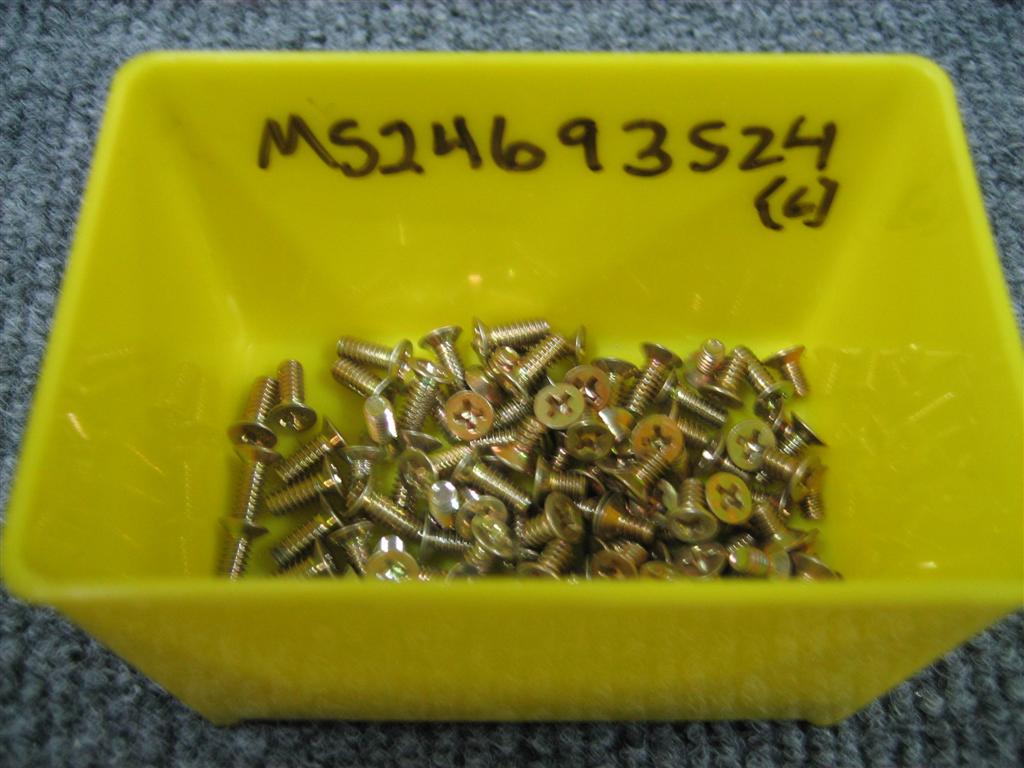
Both size #6 screws in their new home.
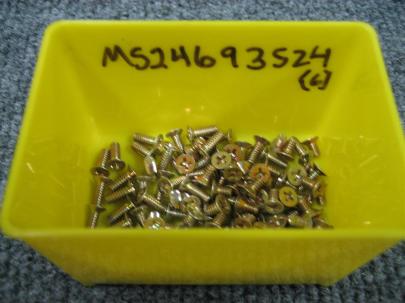
I'll definitely be able to tell the difference between the two sizes.

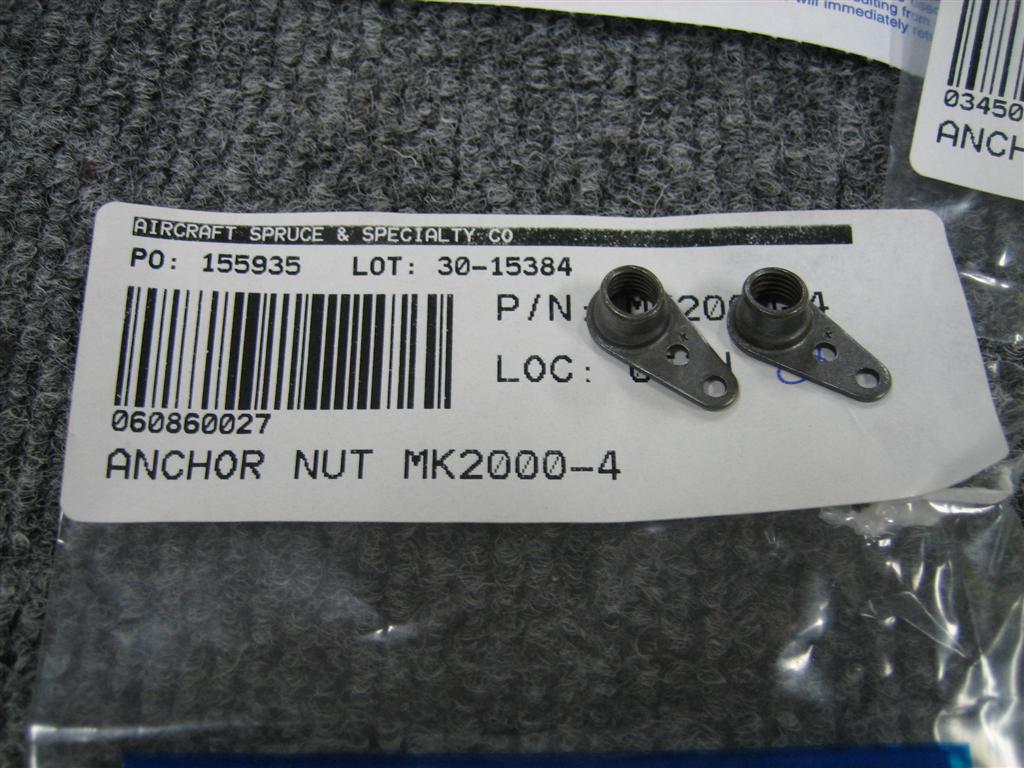
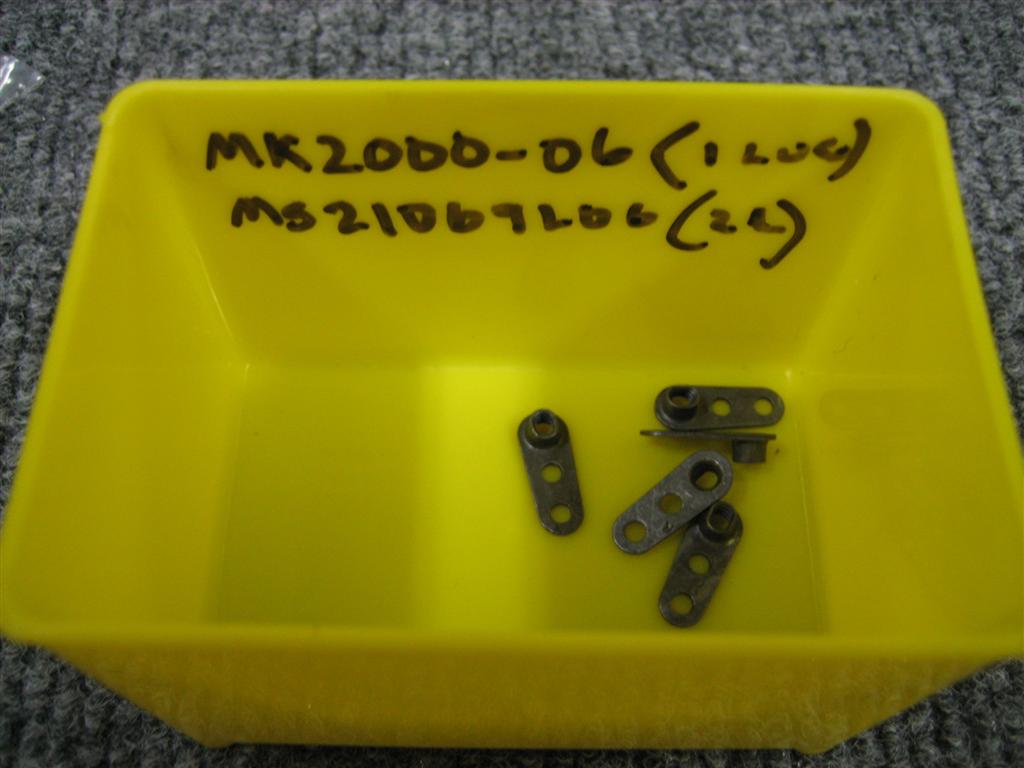
Here are the 1/4″ nutplates. I bought one-lug because I thought the second lug might interfere with the An509 screw and nut used to attach the elevator counterweight. I’ll point it out again later.
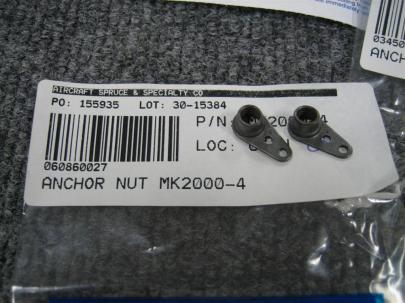
MK2000-4 nuplates.

Then, some of the smaller MK2000-06 nutplates. I bought these for some of the tight locations on the emp tips.
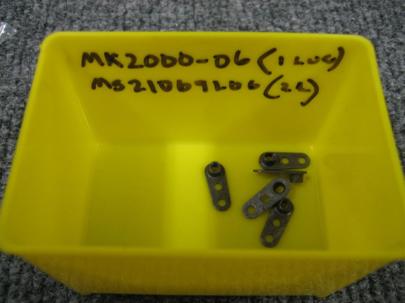
I forgot to take a picture of the 60-odd 2 leg nutplates.

Okay, now on to real work. Here I am trying to figure out how to get this thing in a place where I can drill it. I don’t have any 1/4″ clecos, so I had to just eyeball it. That was a bad idea.
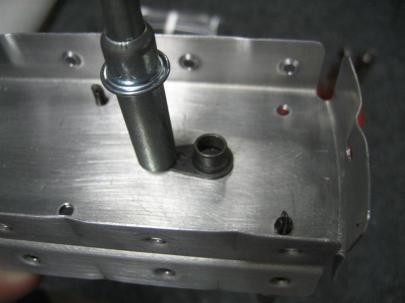
After one of the #40 holes drilled.
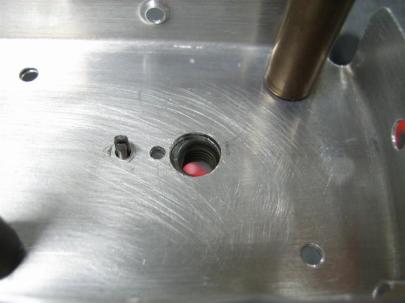
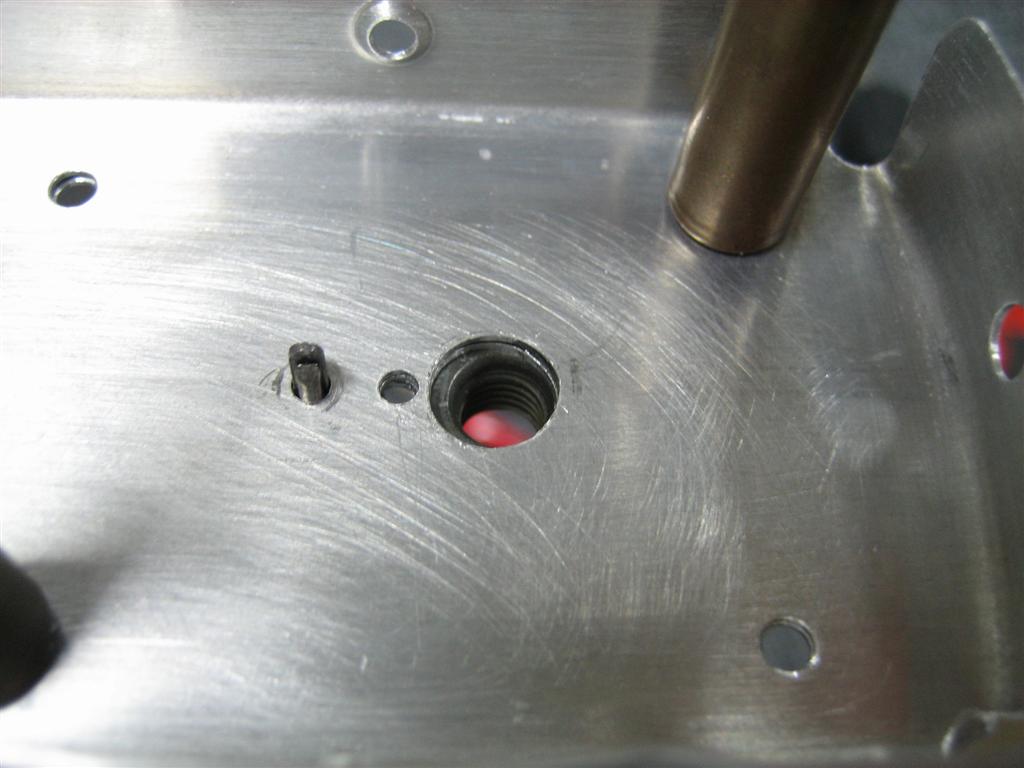
Here's the second hole drilled. You can see I had to enlarge the tooling hole to much bigger than 1/4" because I am lame and didn't have a 1/4" cleco to located the two attach holes. Lame me.

After taking those apart and deburring the holes, I scuffed everything up, leaving only the four rear-most holes on the E-703 End Rib. Again, I use the rivet in the hole into the countersunk steel bar trick.
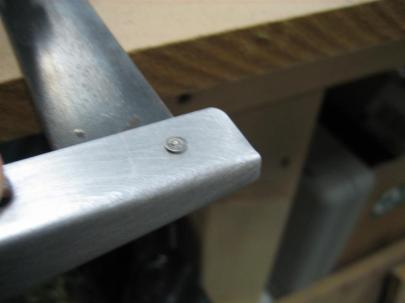
Ready to flush rivet to form this dimple.
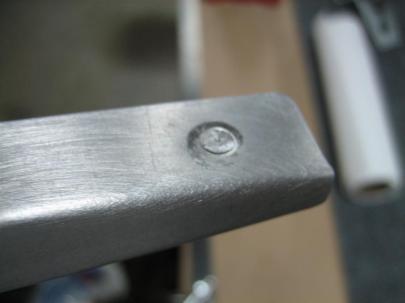
I have a 5/8" flush set, which comes in handy in some places.
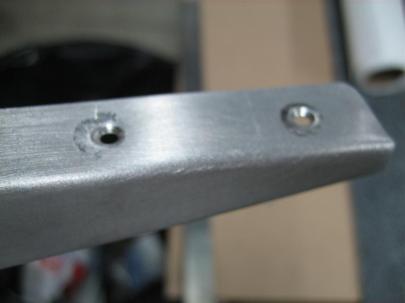
Both done.

After cleaning those two ribs, I set them aside to dry before priming. Then, I moved on to the WD-605-R-1 Elevator Horn.
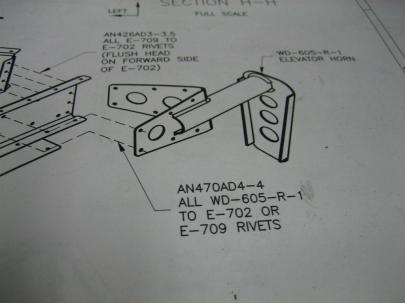
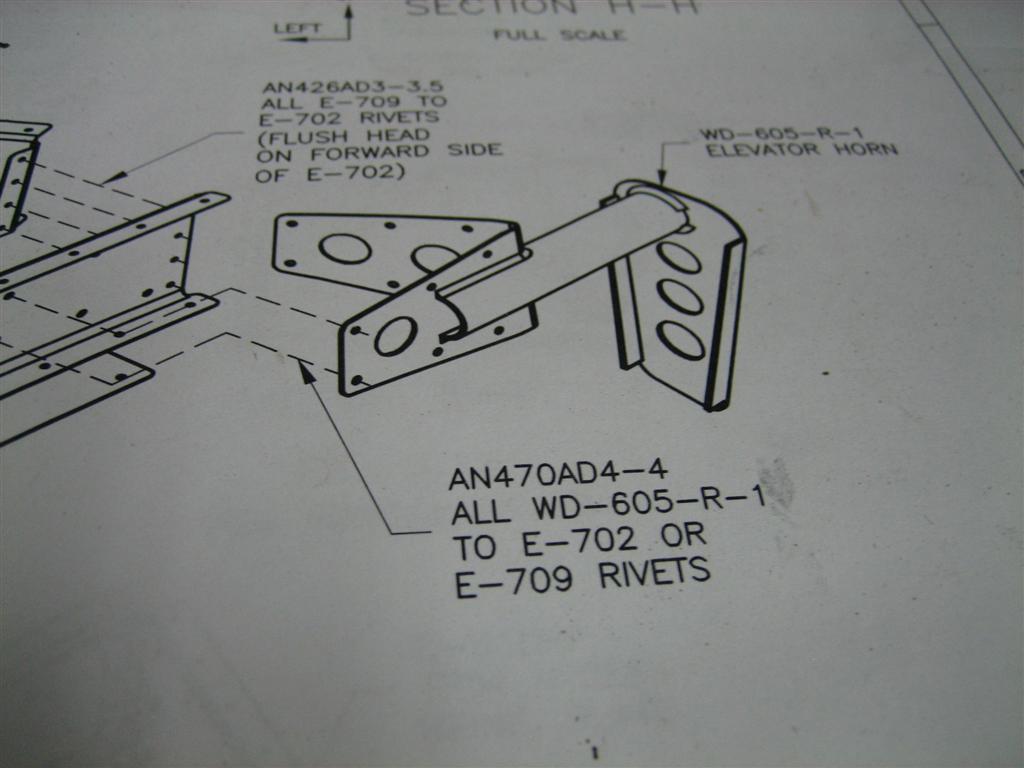
Let's see. AN470AD4-4 rivets. I might have some of those.

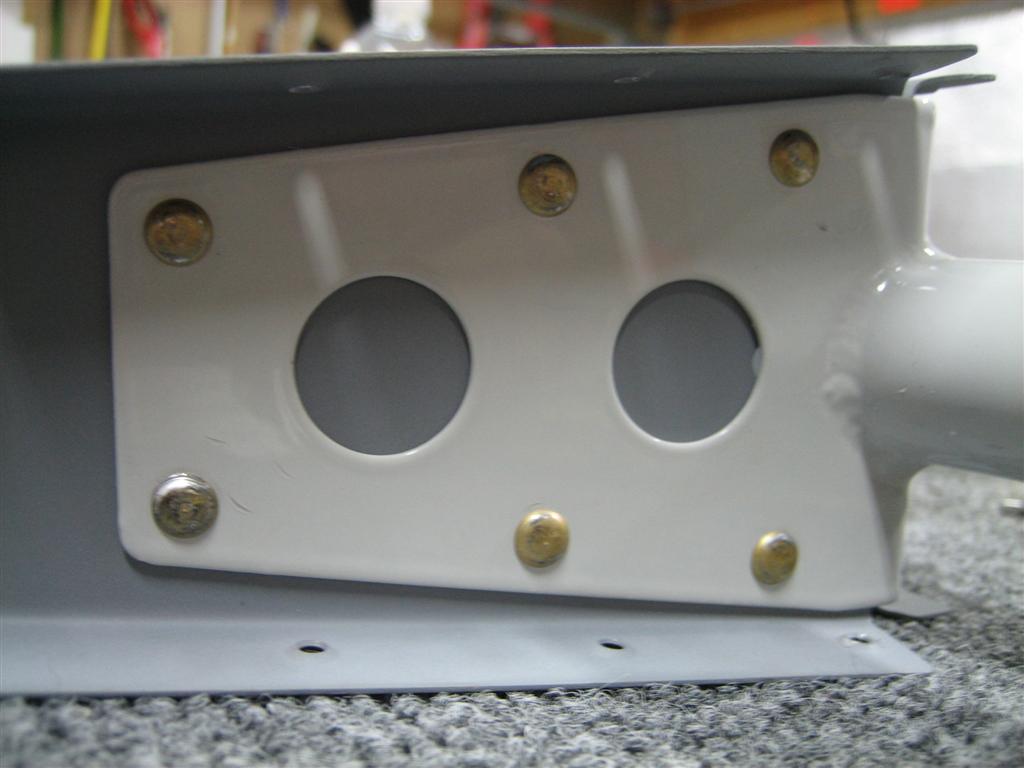
A small smiley on the lower left rivet, but according to the diagrams, it is okay.
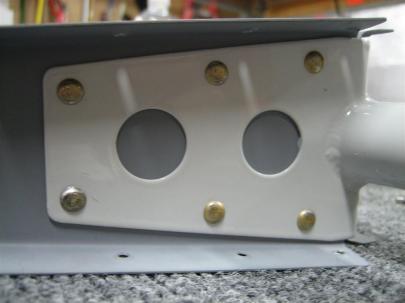
6 nice rivets. The shop heads are very nice.
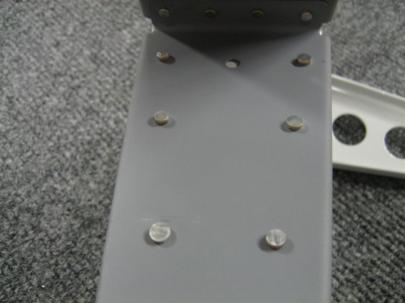
See? Told you.

Then I shot the six on the other side of the horn.
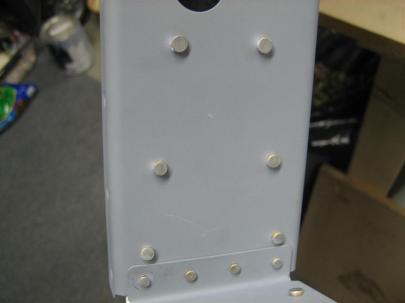
I love this new tungsten bucking bar.
6 more down.

Back to the paint booth.
E-703 End Rib and E-704 Counterbalance Rib being primed.

And now, a big pictures shot of the elevator horn on the skeleton.
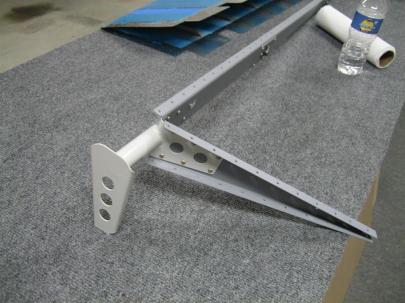
It's starting to look like an airplane.

Then, I deviated from the plans (like many builders here.) It is easier to attach the E-704 Counterbalance rib to the spar if you don’t rivet it to the E-703 End rib first. I managed to massacre the left head, and the flange on E-704 didn’t sit flat against the skin on the other side.
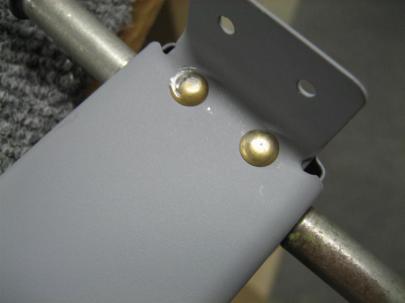
Whoa. Take it easy, Andrew.
I don't like how the flange isn't flush with the spar web here.

Time to get the drill out.
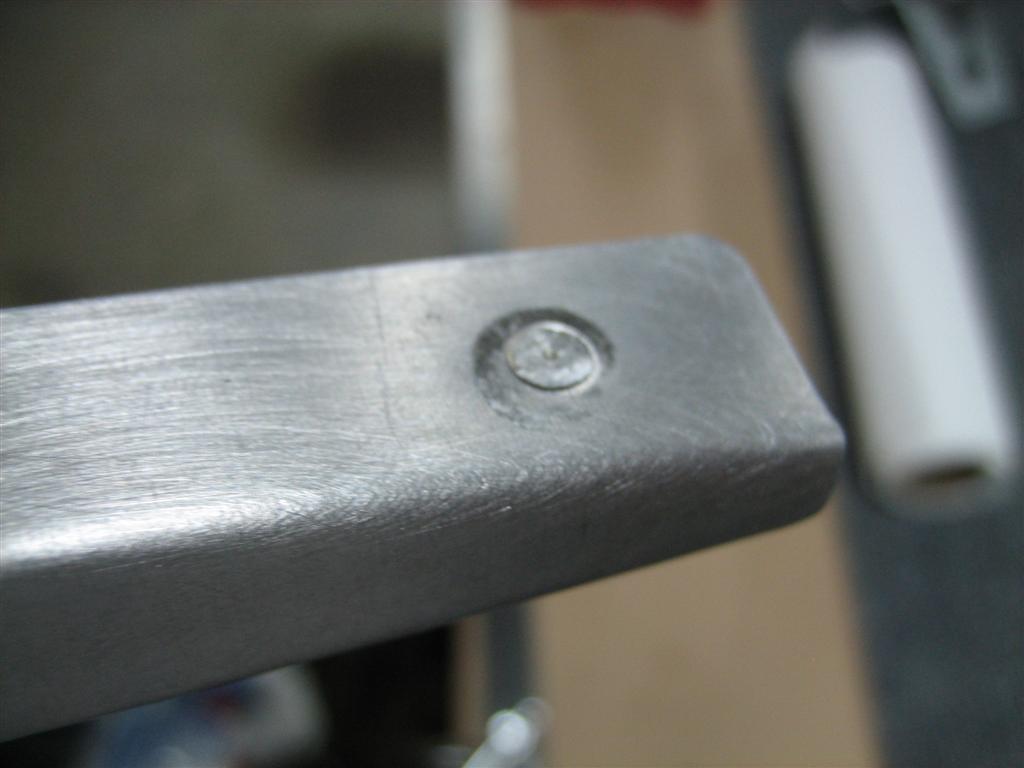
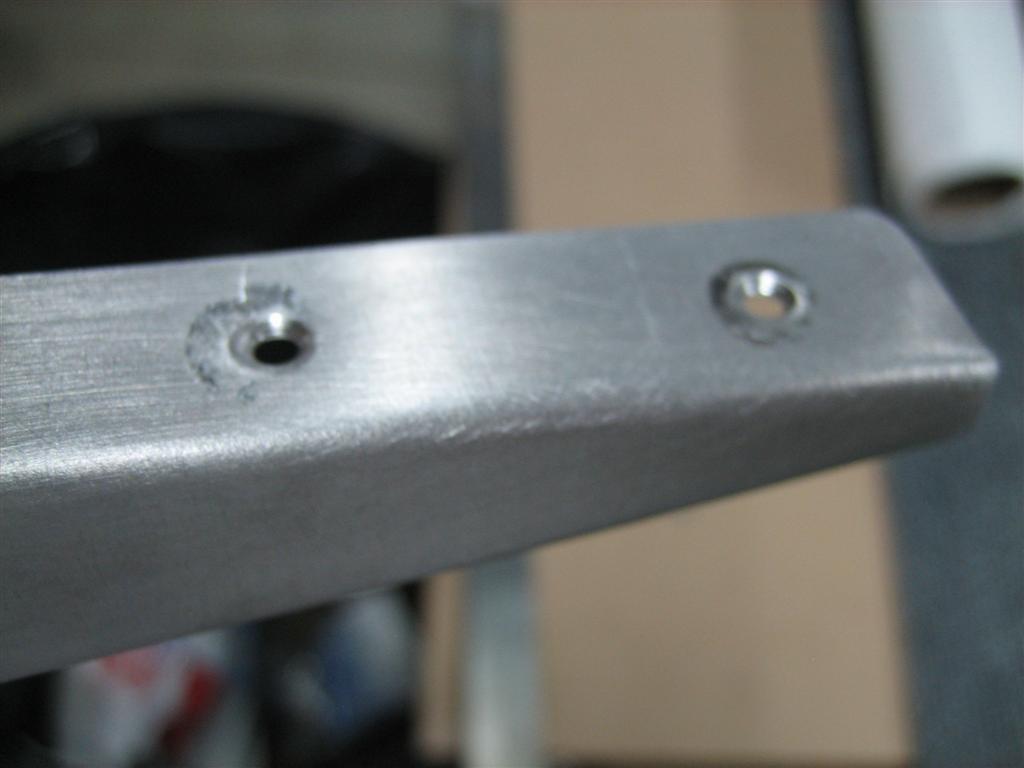
Drilled first with #40, then #30 through the head only.
Pop the heads off.

Then re-set. This is a little better.
But not perfect. I think it's going to be good enough. I'd rather see them sitting perfectly flat, but the area around the rivet is sitting where it should be. It's just around the edges of the flange that are standing off a little.

Here are the new manufactured heads. Much better.
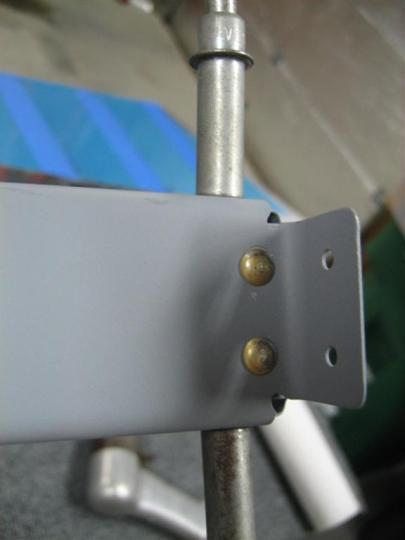
There we go. What's next?

Okay, now I need to attach the E-704 to E-703. Wait a minute! There is no rivet callout for these.
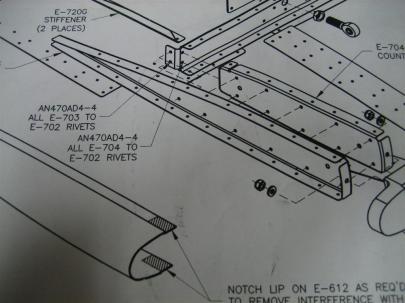
I see one for E-703 to E-702 and for E-704 to E-702. Where is the E-704 to E-703 callout? Well, I guess I'll just use AN470AD4-4 rivets.

Yikes.
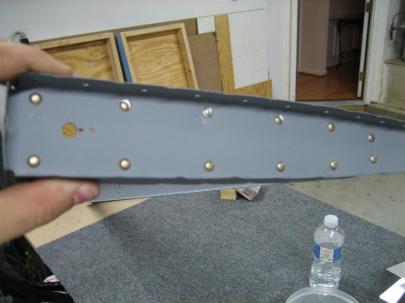
The three upper middle rivets are all horrible. I can't figure out why the gun is jumping around so much.

Anyway, before drilling those out, I wanted to get that nutplate riveted on. Same deal here, though. I couldn’t figure out how to cleco it on for riveting.
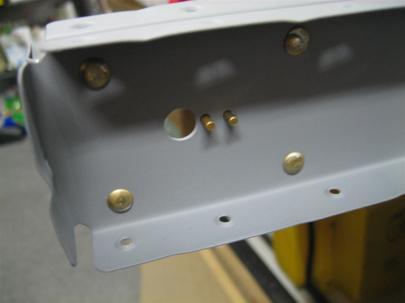
Here are the two NAS1097 rivets ready to go.

I ended up shooting both of these at once. (How cool is that?)
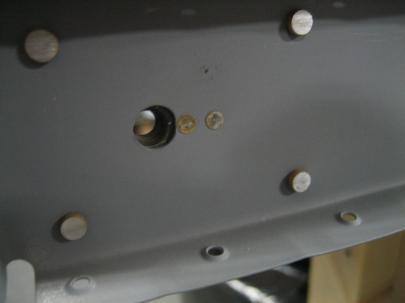
NAS1097-4 (I think they are -4s)

I held the bucking bar on the other side and used my finger to hold the nutplate firmly against the web of the rib.
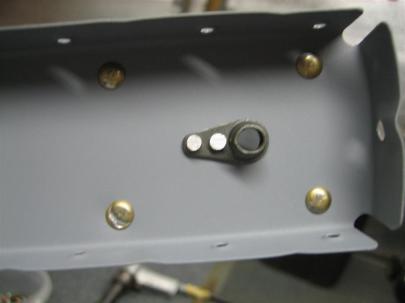
Is this a good method? No. Did it work? Yes.

Anyway, in the above picture, you can see one of the three rivets that I botched. After drilling all three out, I reset 2 successfully, but messed up this one again.
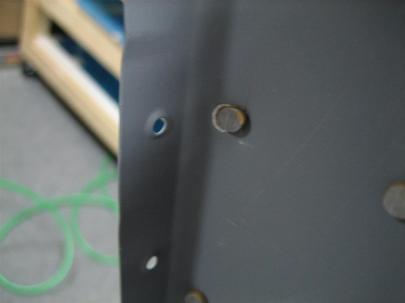
Grrr. It didn't really bend over, but it kind of shifted to one side.

Drilled it out, then did the exact same thing. This is the third time I’ve drilled out a rivet on this hole.
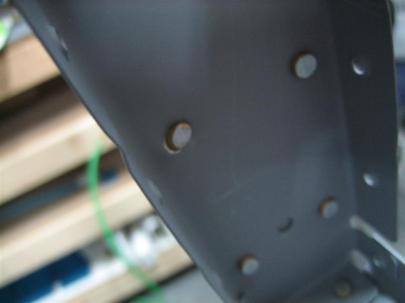
Grrr.

I figured out that during the first try, I had bent the rib web a little, so the rivet was pre-inclined to lean. I took my tungsten bucking bar and my 5/8″ flush set (without a rivet) and got everything flattened out again. Next try, the rivet set well.
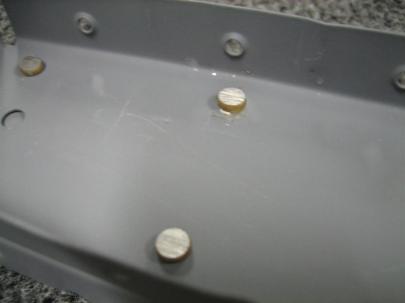
Top middle rivet. Much better.

Finally, an upside down picture of the right elevator skeleton.
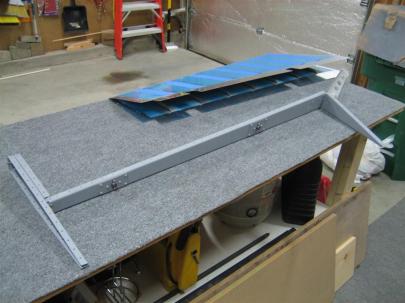
Tomorrow, I'll get back to work on the skin. Maybe this weekend I'll have an elevator!

2 hours, 26 rivets. 5 drilled out (3 of those was one hole!)

Prev | Next

More Drilling, Deburring, Scuffing and Dimpling

May 9, 2010

Prev | Next

After we got back from my first Pilots N Paws rescue, I was excited to keep working on the airplane.

I needed to start on the tip rib and counterbalance rib, so I needed to get the holes in the counterbalance to final size (#12, for a An509 screw).

I had some trouble awhile back with drilling the counterbalance holes to final size, and I don’t have any boelube, but i figured any lubrication would work better than none, so I poured some air tool oil into the holes and tried again.

This time, it worked much better. (I still got stuck a few times, but I didn’t come to a grinding halt like I did last time.)
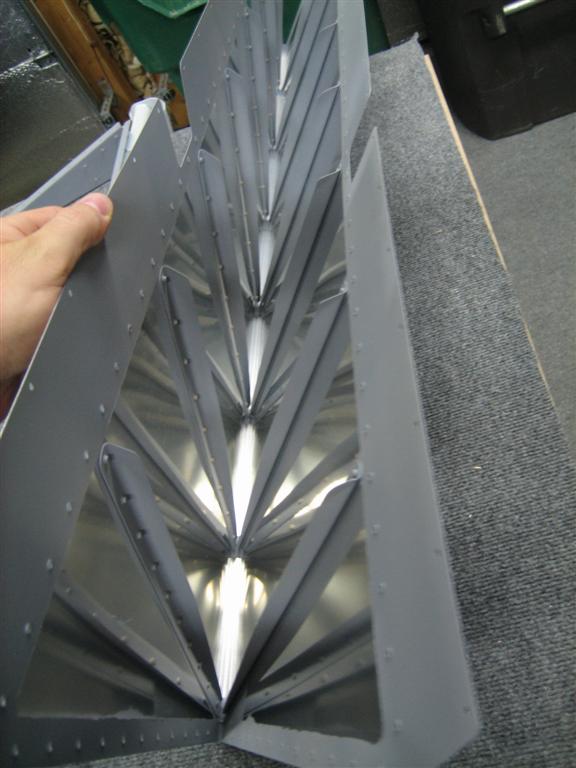
Here's the counterbalance after drilling to #12.

I clecoed the counterbalance skin back onto these two ribs, inserted the counterbalance, and matchdrilled through those to make these holes in the ribs.

Nice job with the blurry picture, right?

Next up, deburring.

There's my trusty deburring bit.

Then scuffing.

Bottom rib (counterbalance rib) is scuffed.

After deburring and scuffing the tip rib, I dimpled all but the last 2 holes on the top and bottom of the rib.

The two non-dimpled holes are not shown here. I'll have to get the countersunk steel plate out to get those.

Next, I clecoed the counterbalance skin on the right elevator skin and marked with a permanent marker where I wanted to scuff and prime. Some of the edges here have to be broken to make the skins seam from spar to coutnerbalance skin a little smoother. More in a later post.

Above this line, the right elevator skin overlaps, and will need a coat of primer.

Then, out with the trusty blue tape.

Taped and ready for scuffing.

Then, I pulled out my #8 dimple dies (don’t have #10 dies, which are the correct dies for a #12 hole and AN509 screw) and dimpled the counterbalance skin. The countersinks on the right are the correct size. I need to figure out how to dimple the skin on the left a little more.
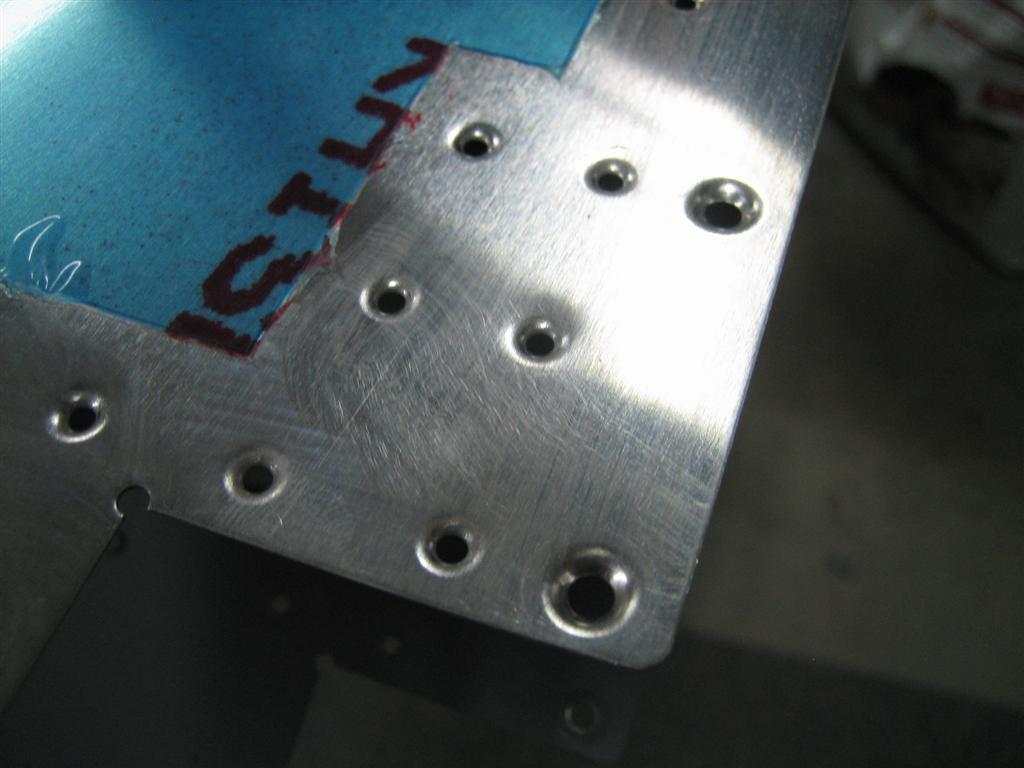
After this shot was taken, I screwed the correct screws into the assembly and tried to tighten them down to dimple more, but I didn't want to strip anything, and it wasn't really going to work.

I’m going to research how people did this without #10 dies later.
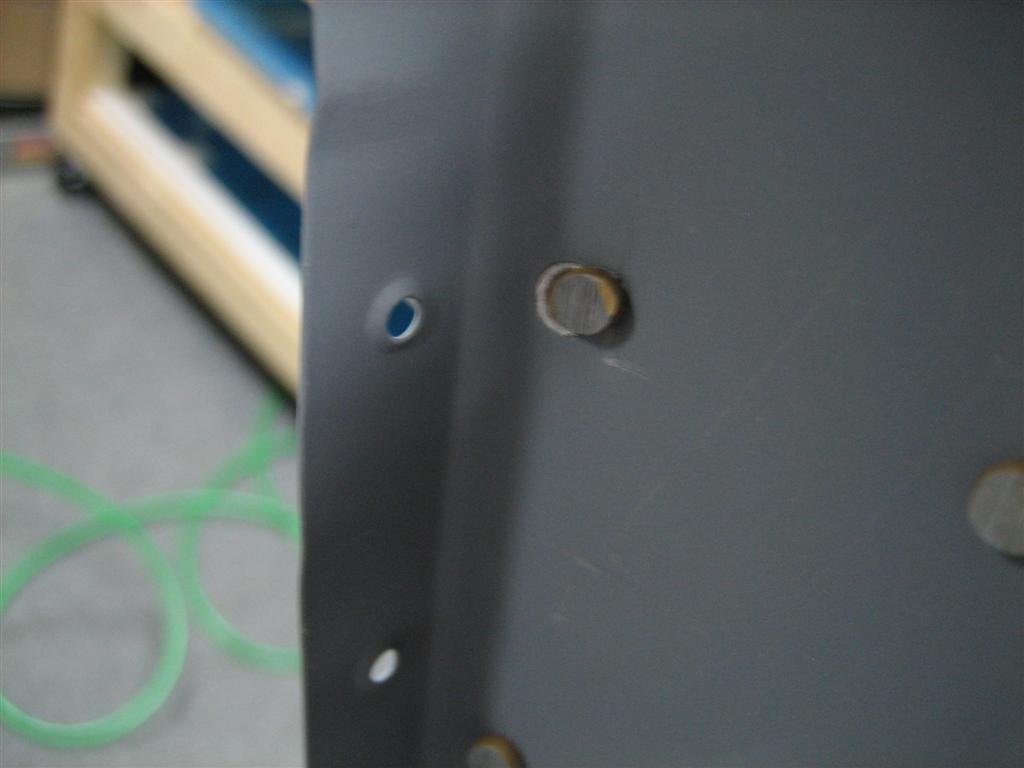
No rivets set, but a good hour on the plane.

Prev | Next