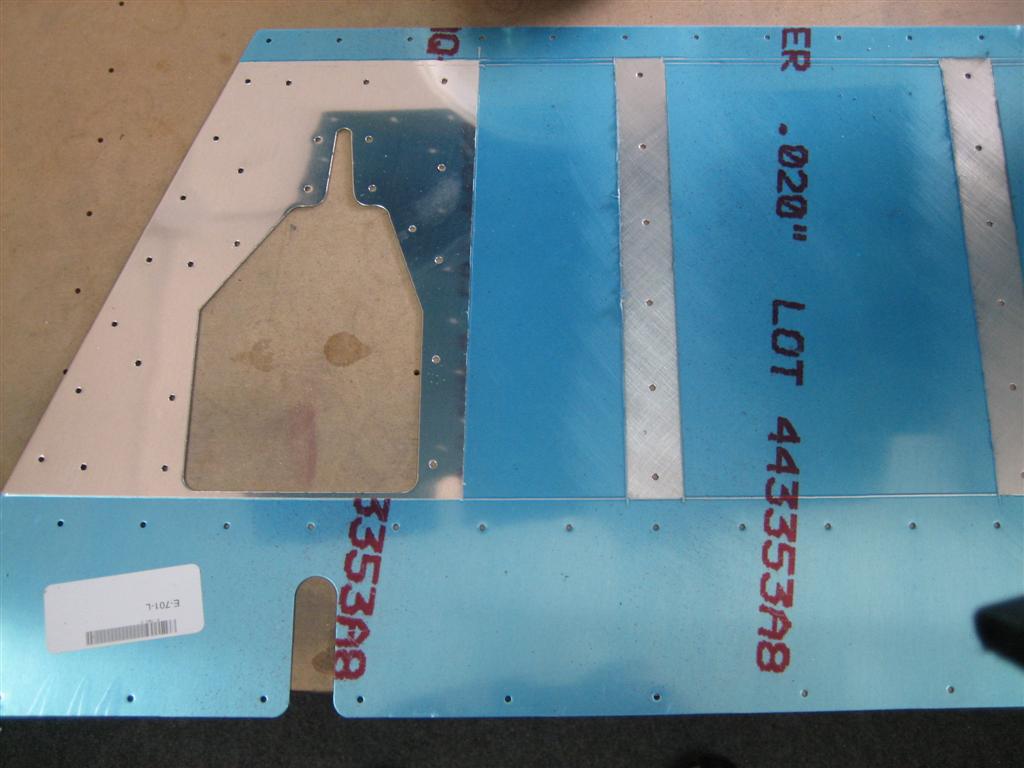
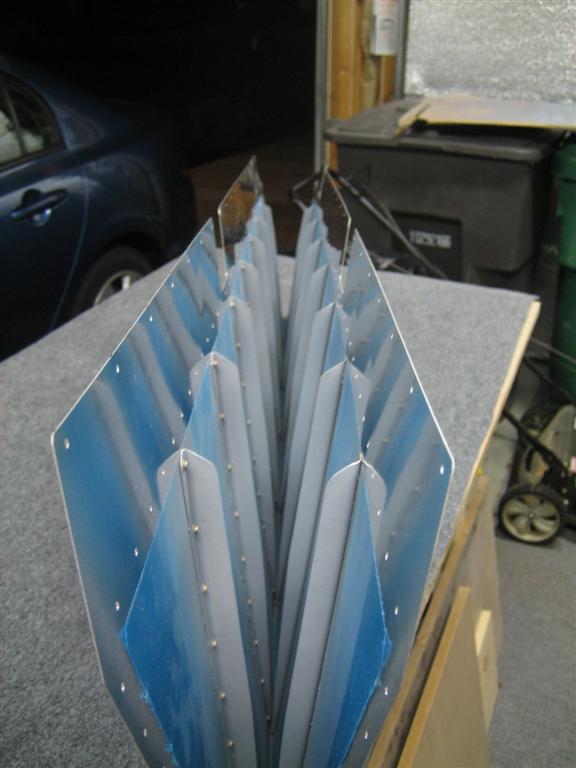
Started Prepping Left Elevator Skeleton

July 2, 2010

Prev | Next

Even though it was my day off, I spent the day trying not to get stung by bees (mowing the forest behind my fence) and meeting the girlfriend for food. After that, I managed to waste an hour or so installing a fan in the garage. Recently, it’s been brutal in the garage, so this morning, while I was walking around Lowe’s, I saw a small ceiling fan for $17. I couldn’t say no. It was harder to install than our nicer fans inside (no little quick-disconnect fan blades or anything), but in the end, it makes me cooler in the garage (double meaning intended).
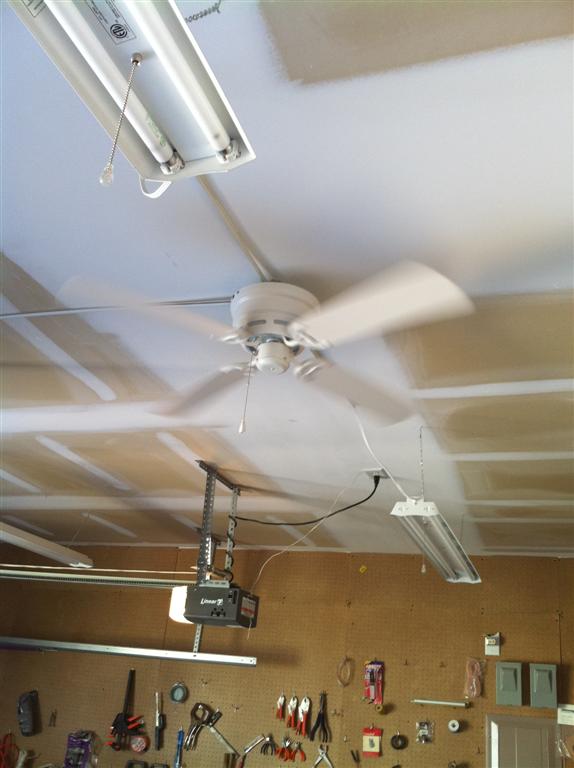
Huzzah!

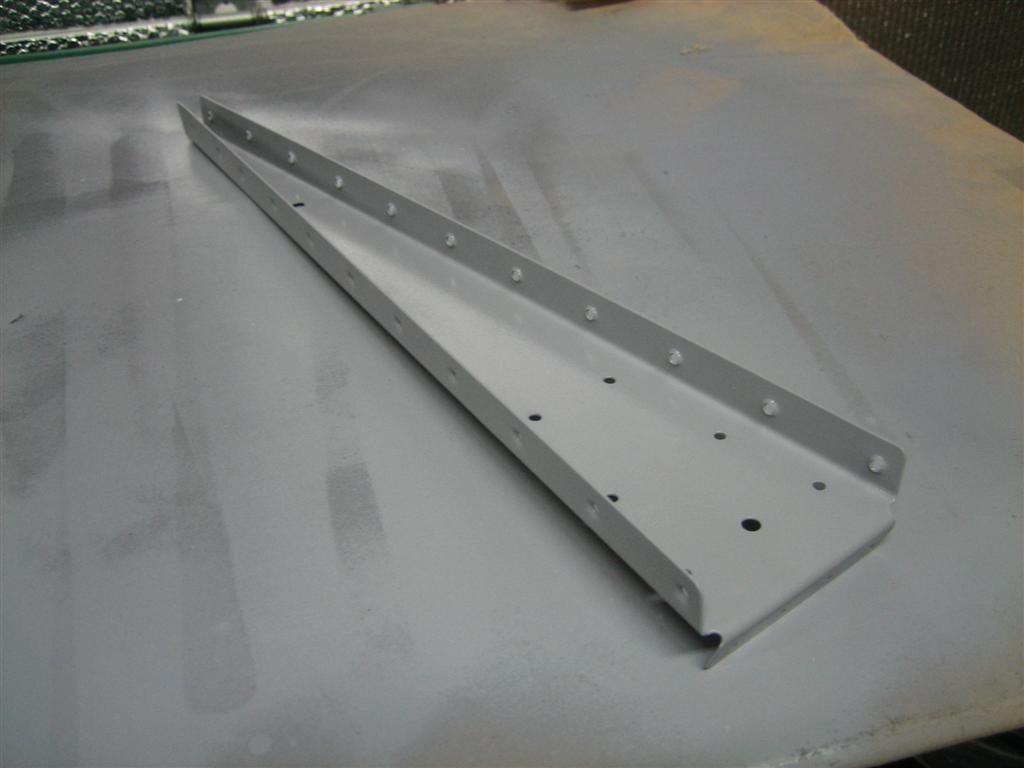
Okay, back to work. I think you guys might have seen this picture yesterday, but here it is again…the little riblet I made after drilling.
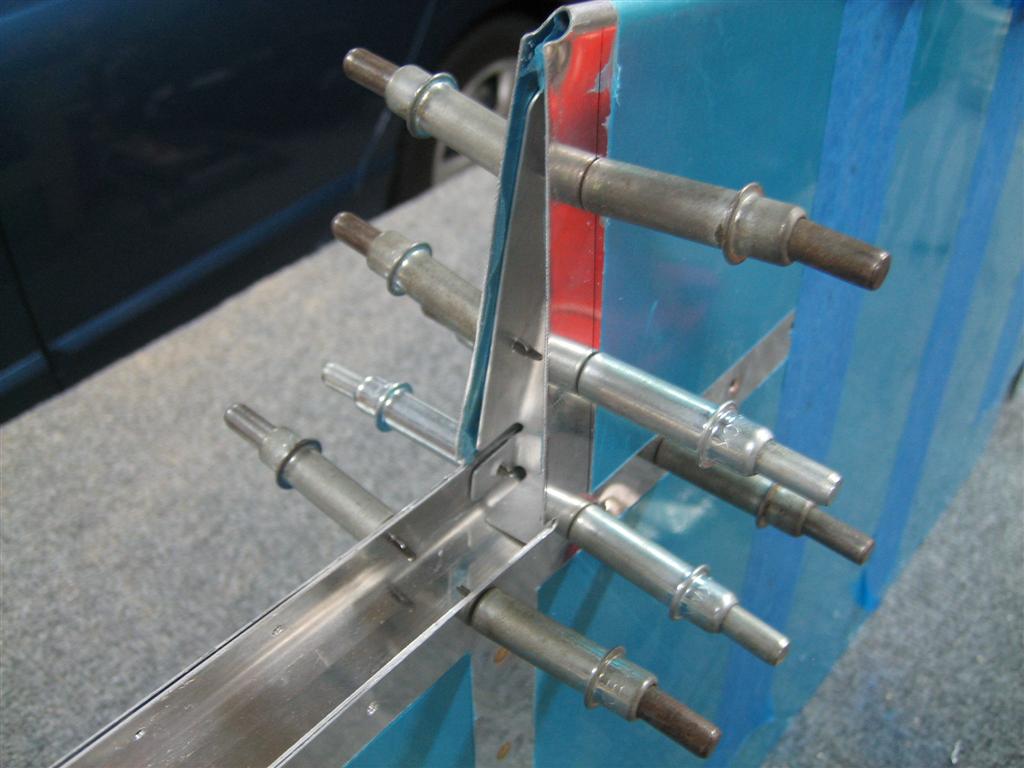
Looks good. I am proud of this little guy.

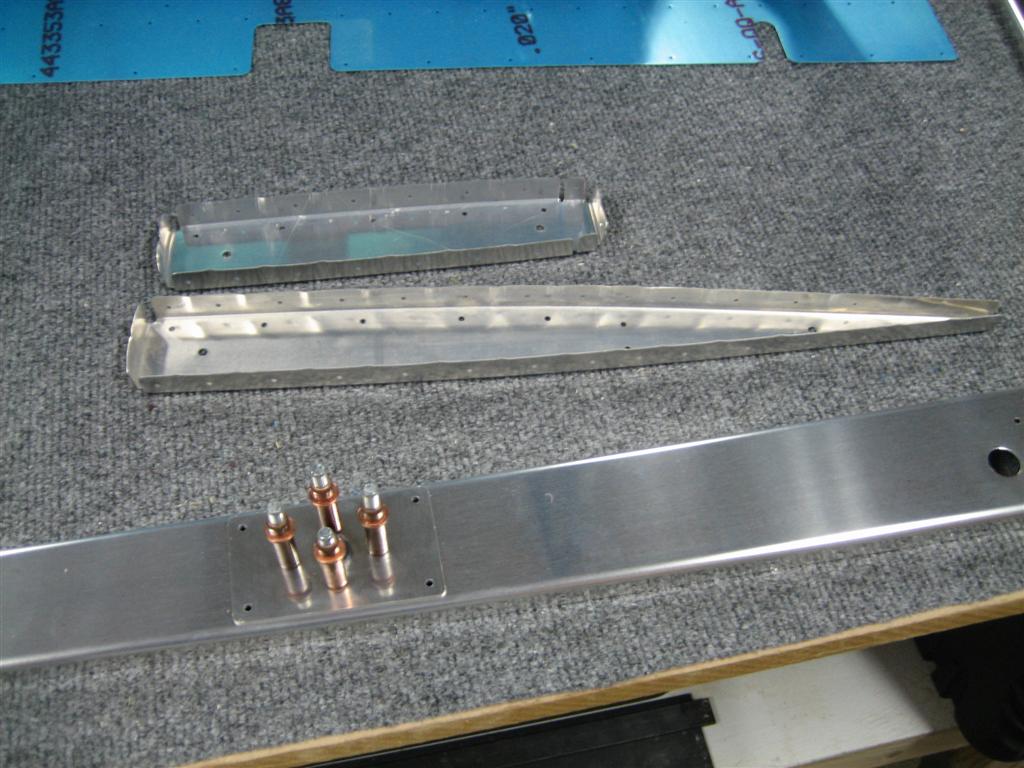
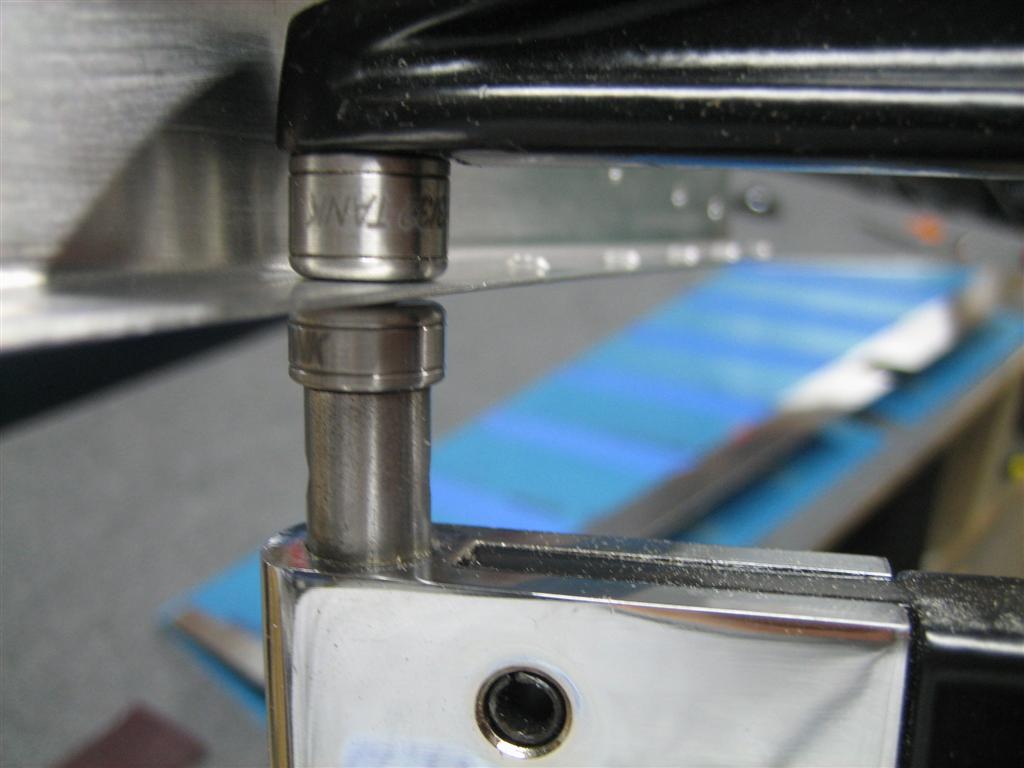
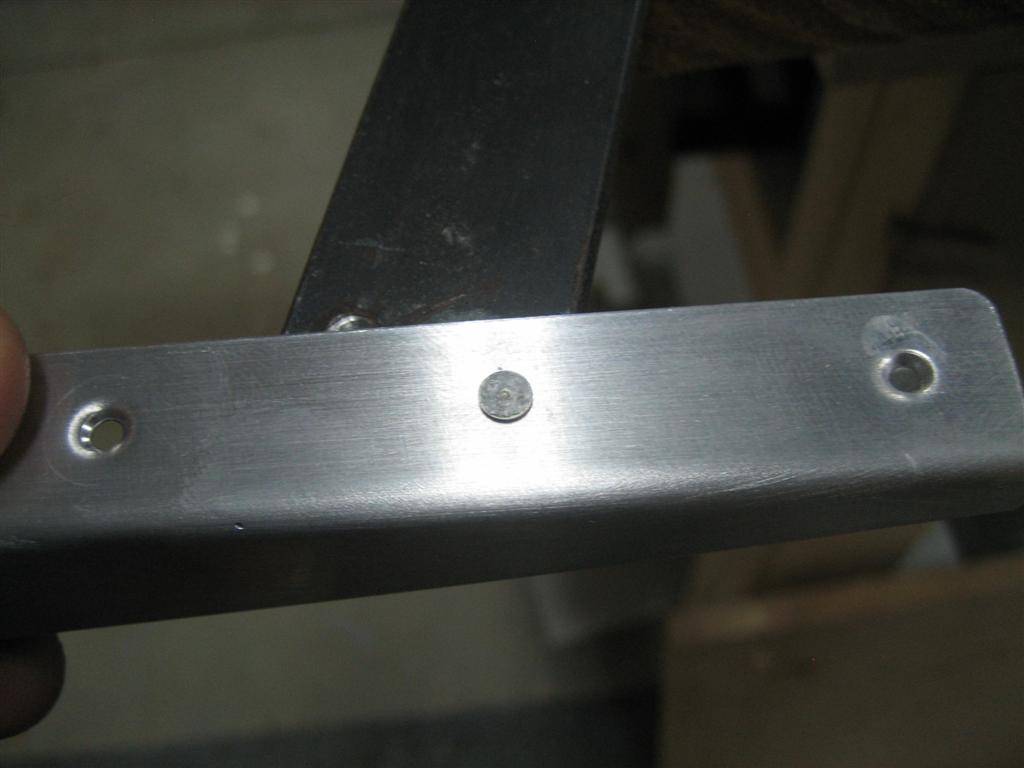
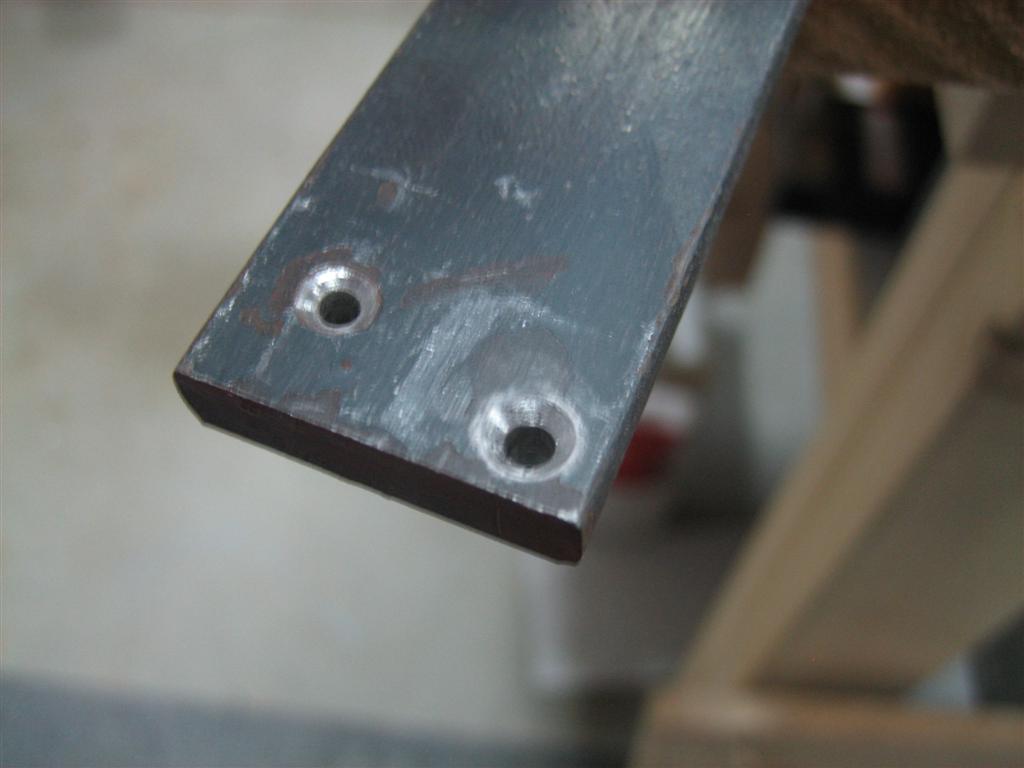
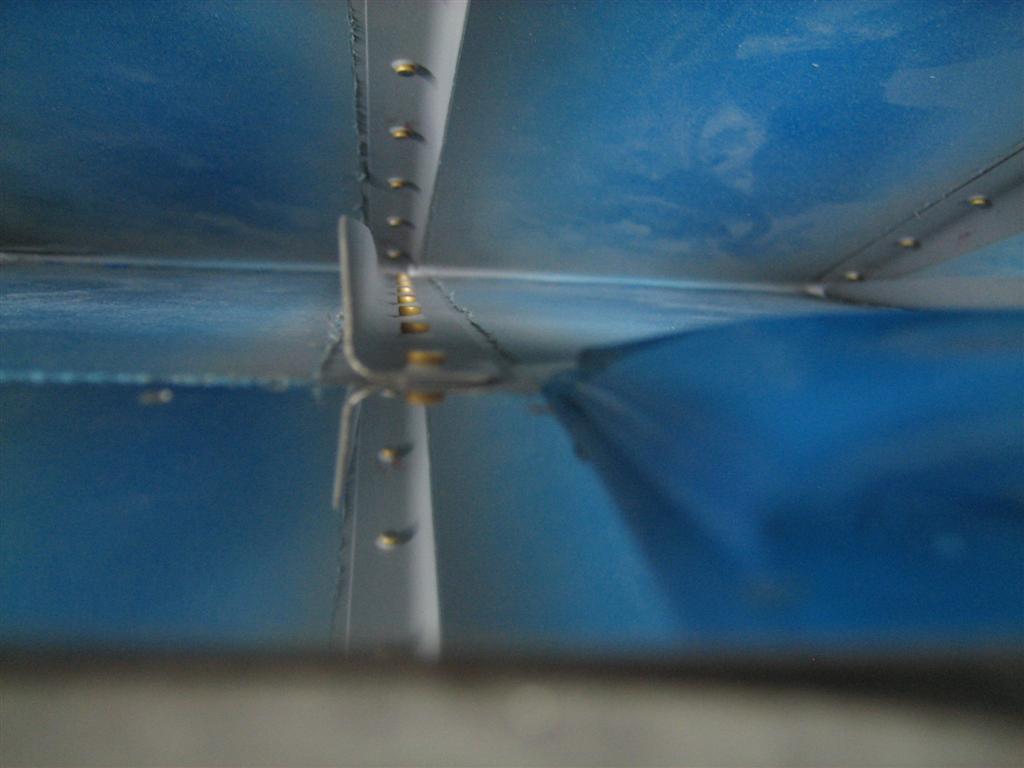
Then, I moved over to the spar. These four holes get countersunk because they attach E-705, but the elevator horn has to sit over the rivets but still flush against the forward face of the web.
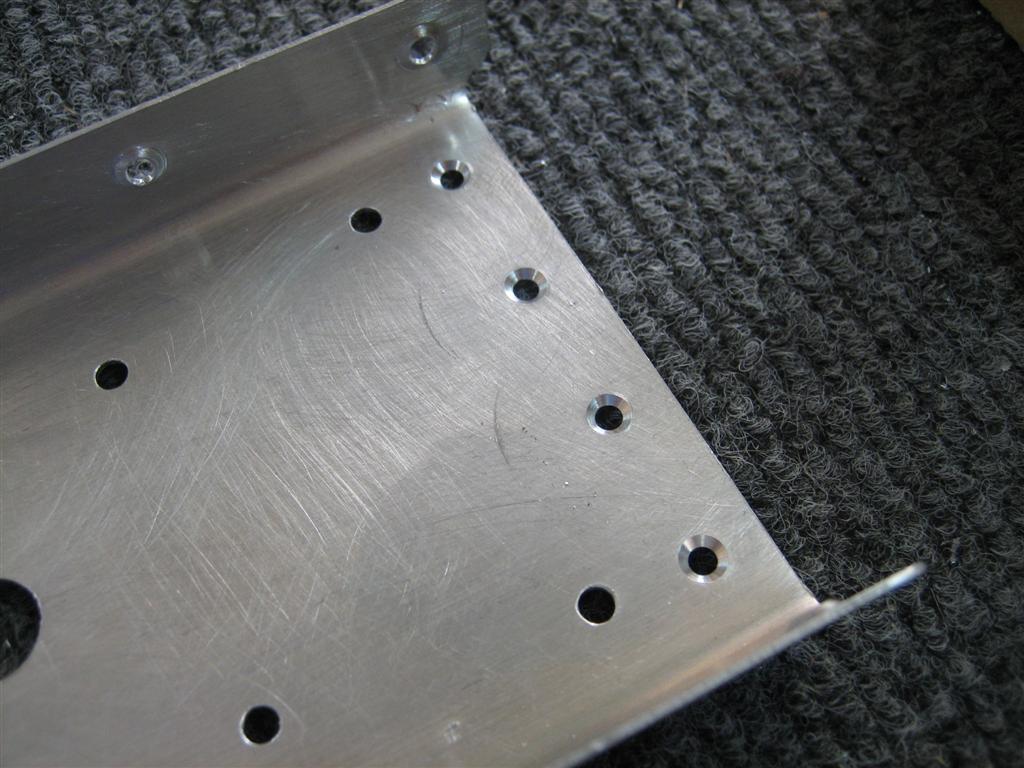
Beautiful countersinks.

While I had the countersink cage set up, I pulled the trim tab spar out of the elevator and started on it.
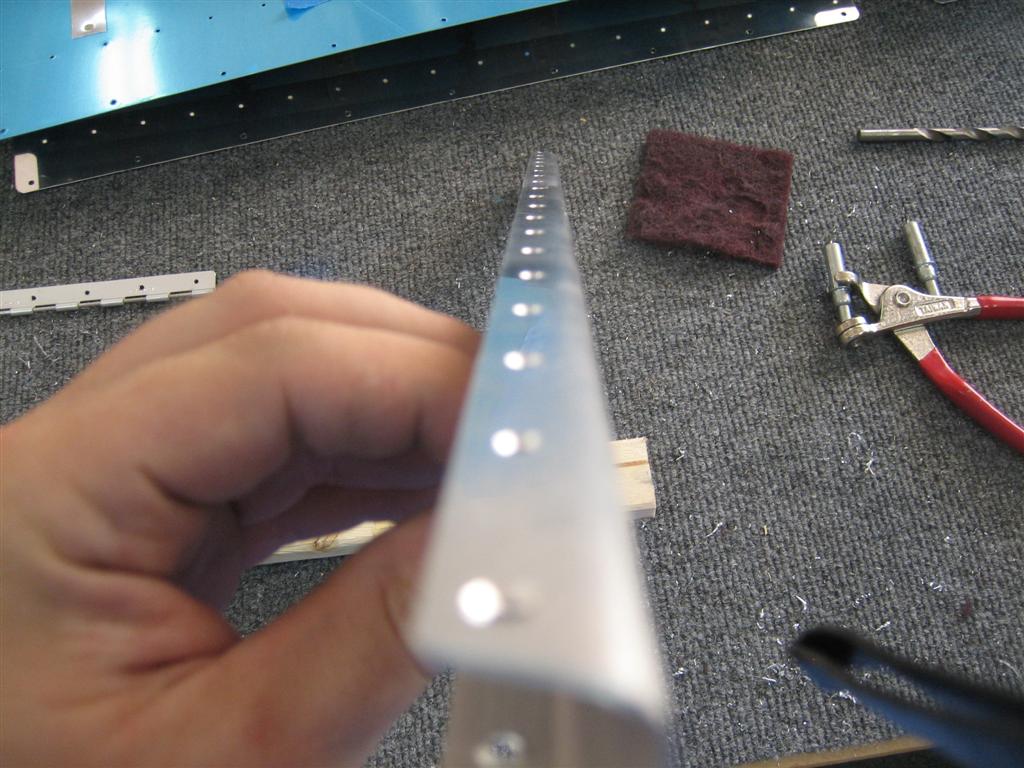
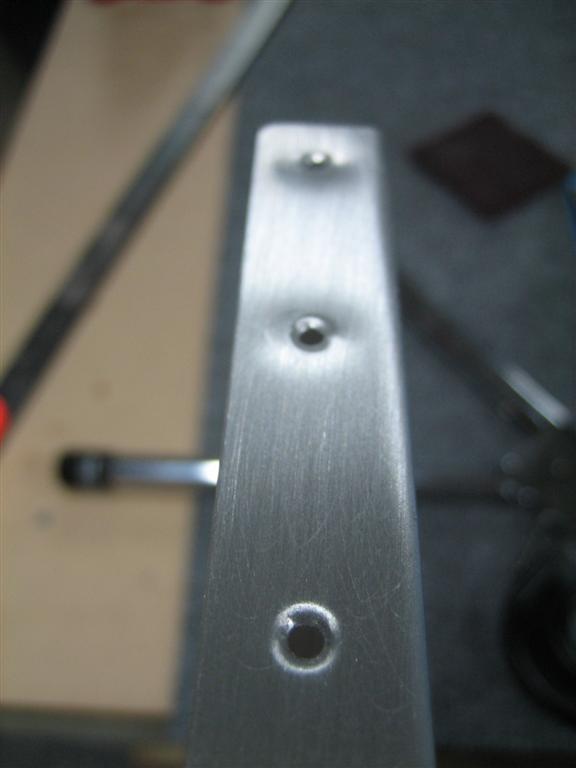
Countersink the top flange, dimple the bottom flange.
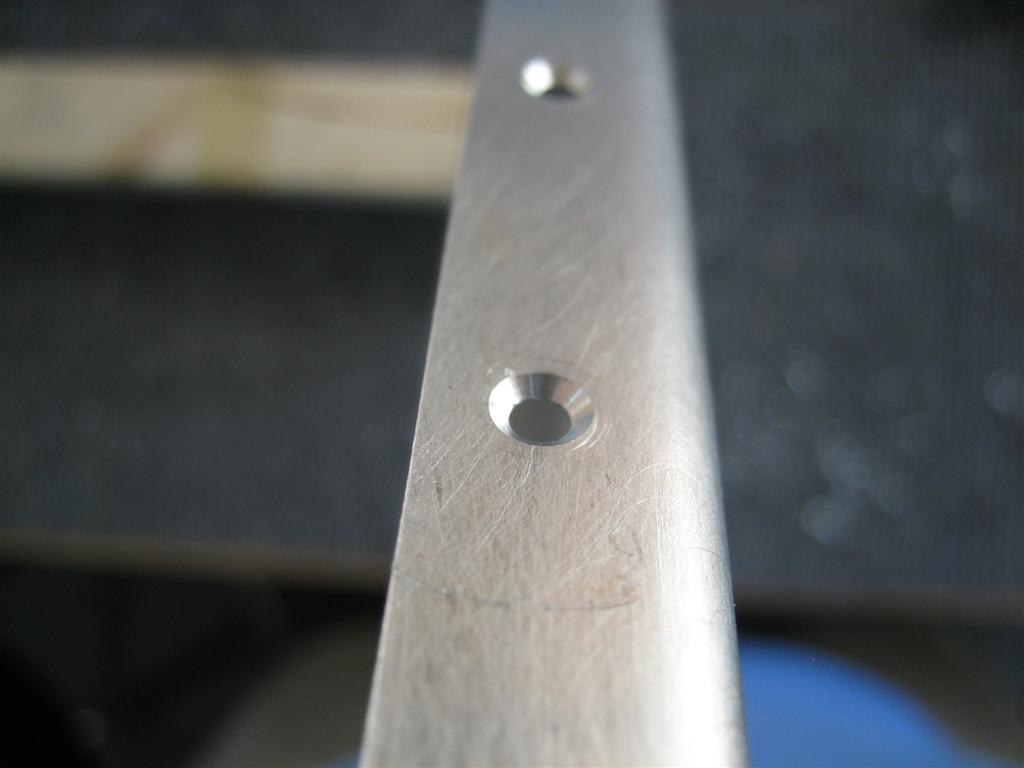
Aren't these countersinks nice?

After countersinking, both the tab spar and the left elevator main spar were scuffed (more), edge-finished, and then got a trip inside to the sink for a quick rinse before coming back outside to eventually get a coat of primer.
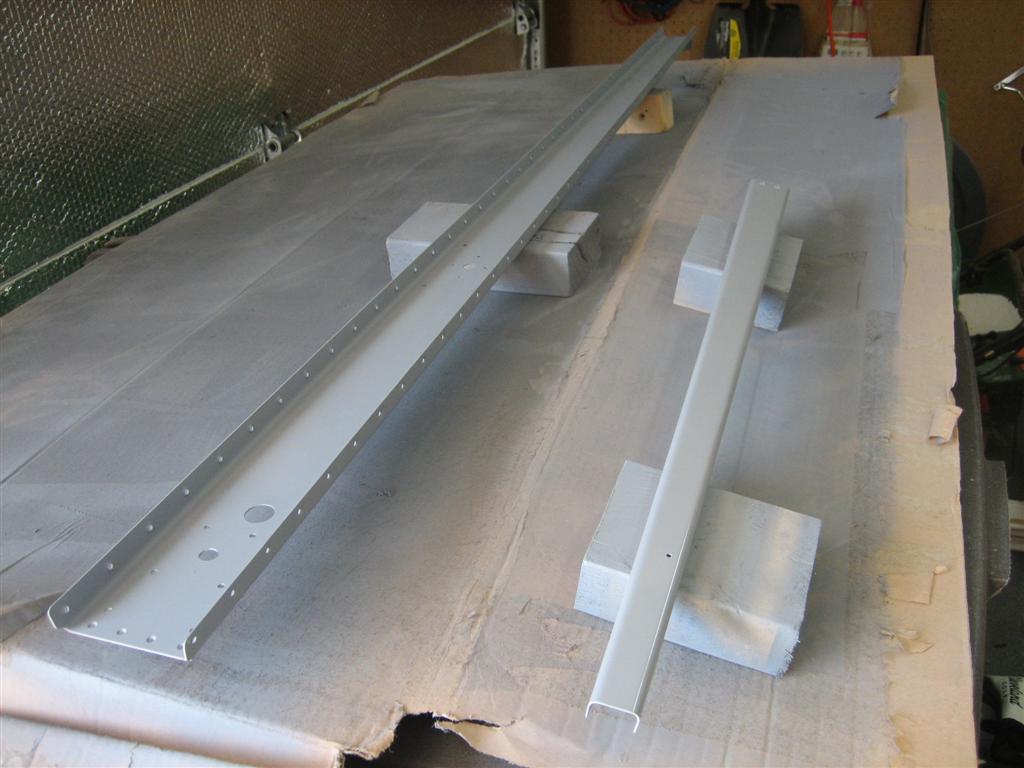
I'm getting close to riveting something, watch out!

Anyway, two very productive hours, and I think I can rivet some reinforcement plates tomorrow if I want. Wuhoo!

Prev | Next


Primed Some Left Elevator Stiffeners

May 29, 2010

Prev | Next

Not too much today. I got the lower left elevator stiffeners deburred, dimpled and primed.

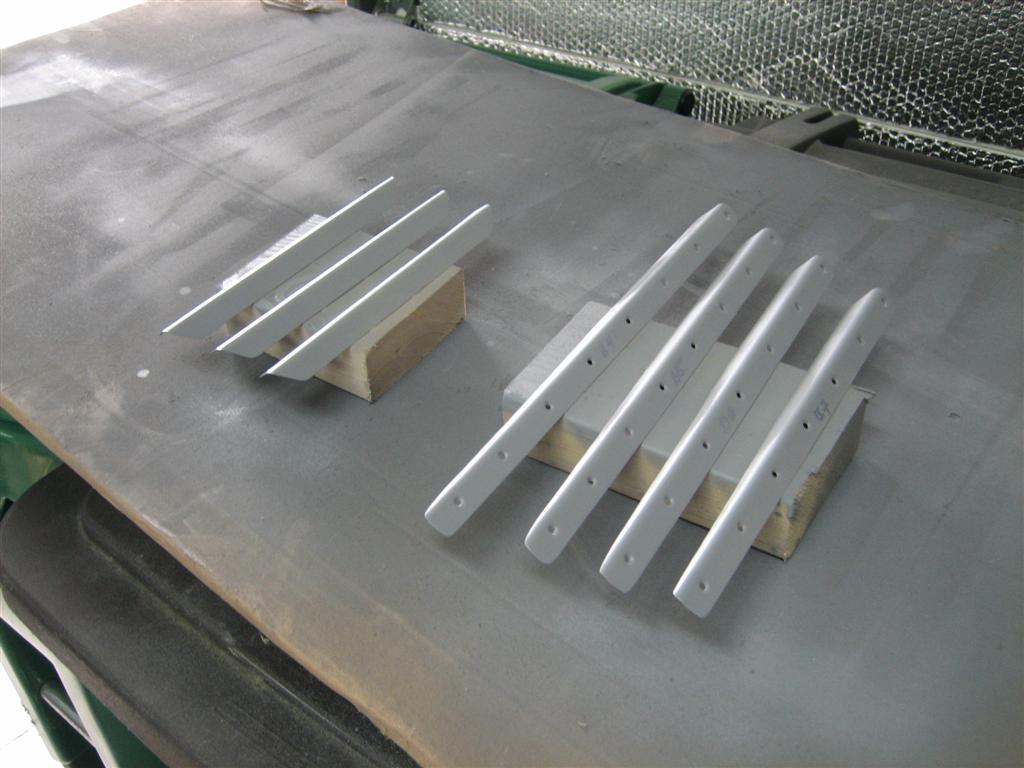
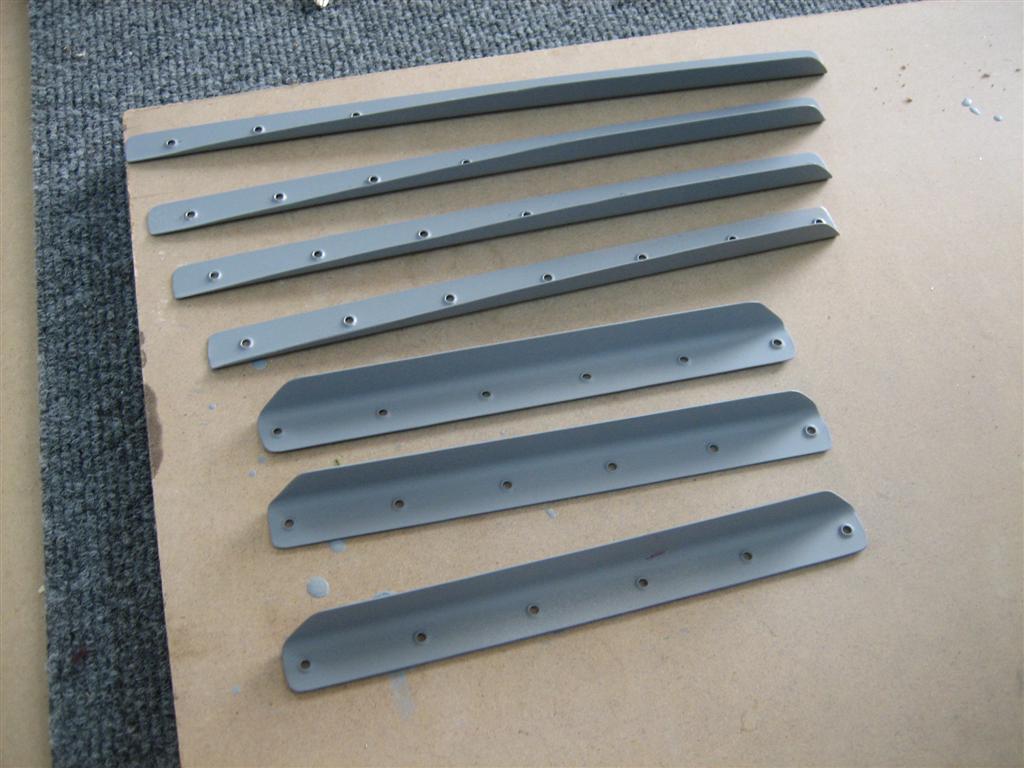
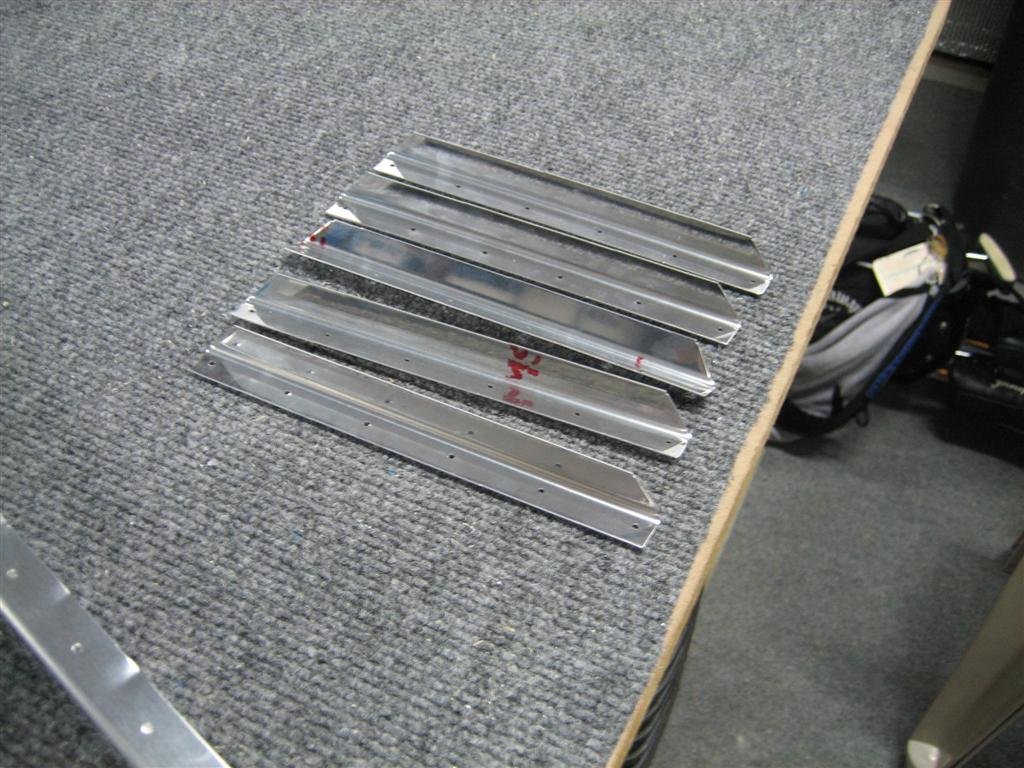
Here are some of the stiffeners on the priming table.

Then, I turned my attention back to the skin to start devinyling.

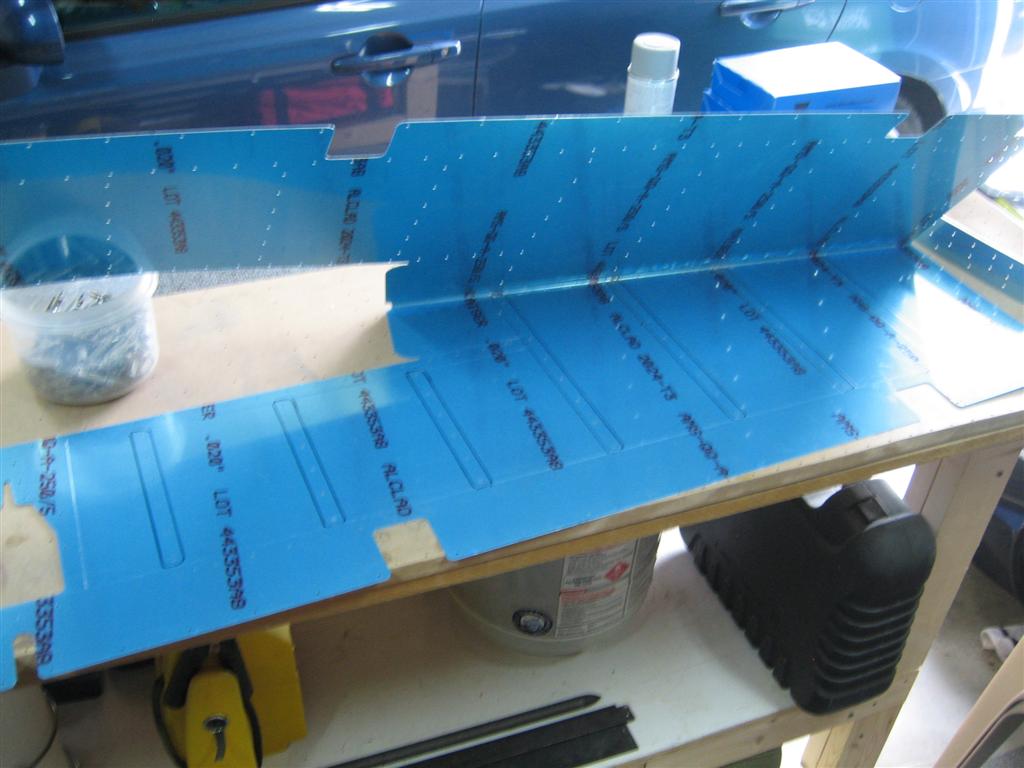
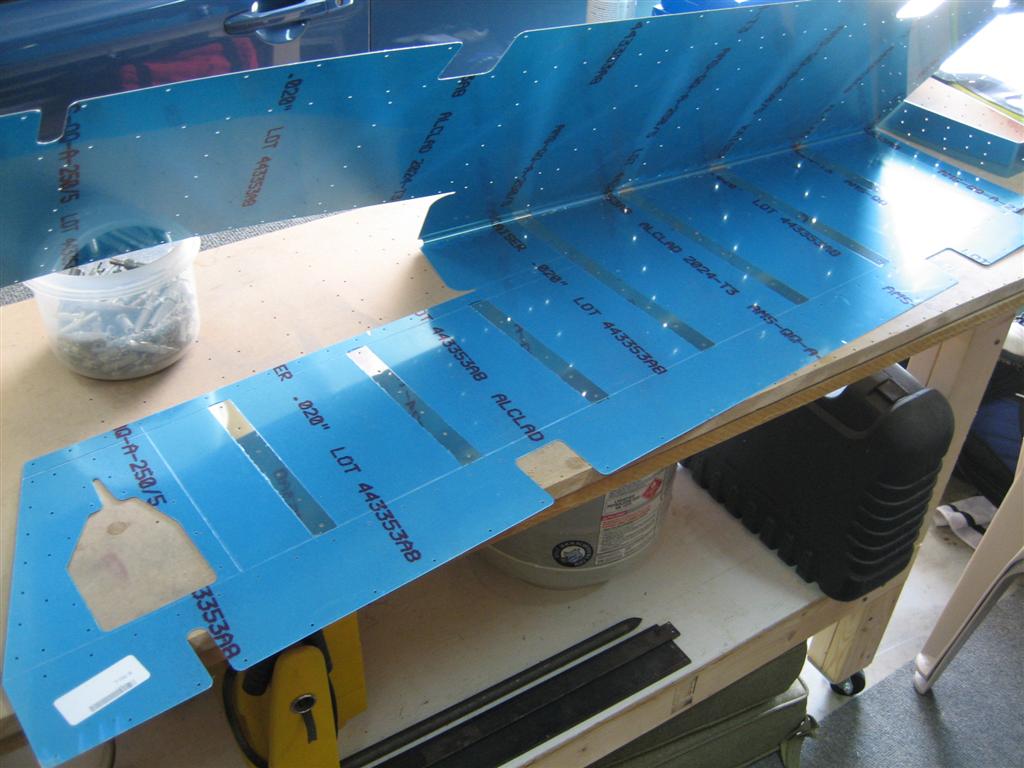
Left elevator, ready to be devinyled.

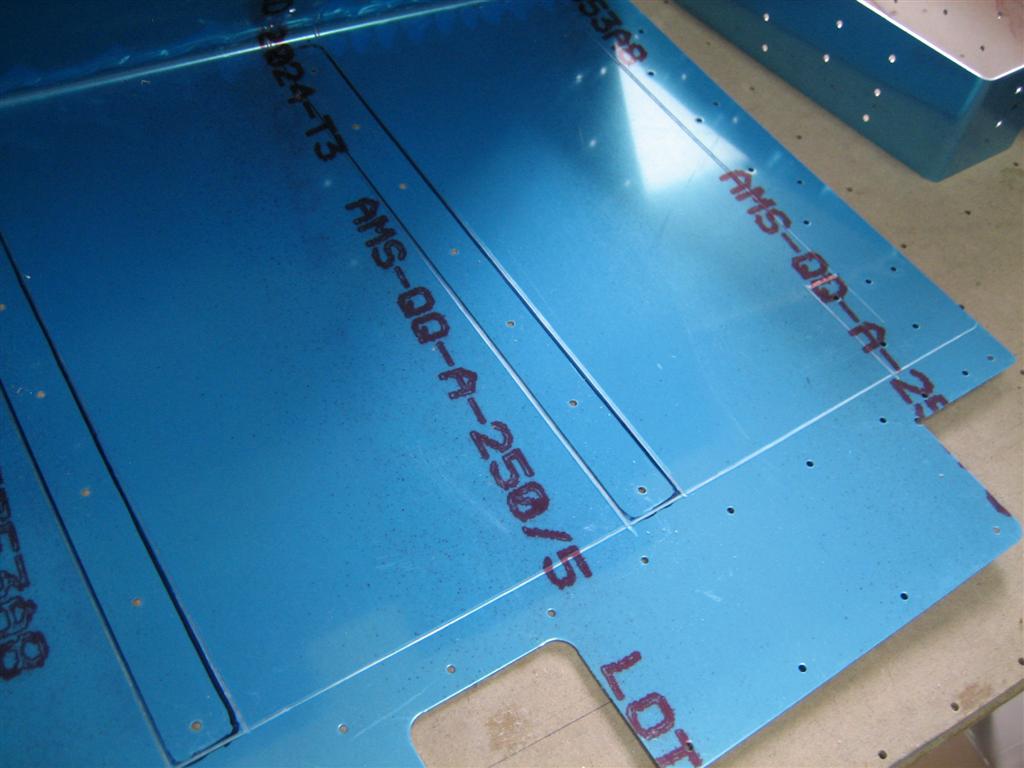
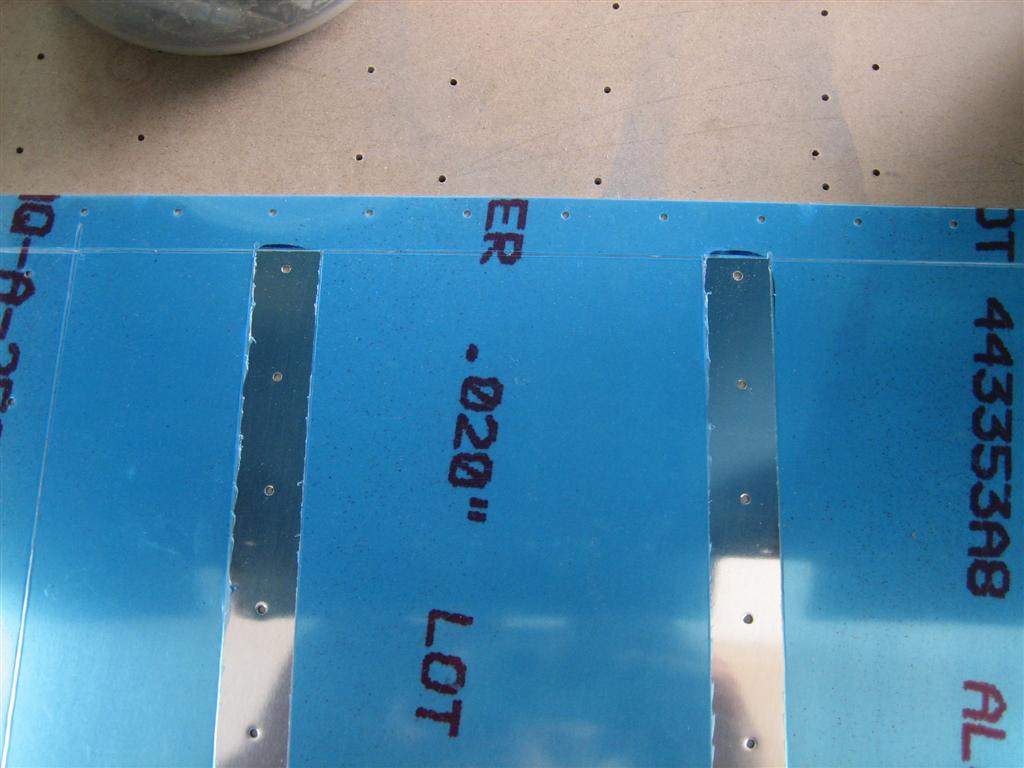
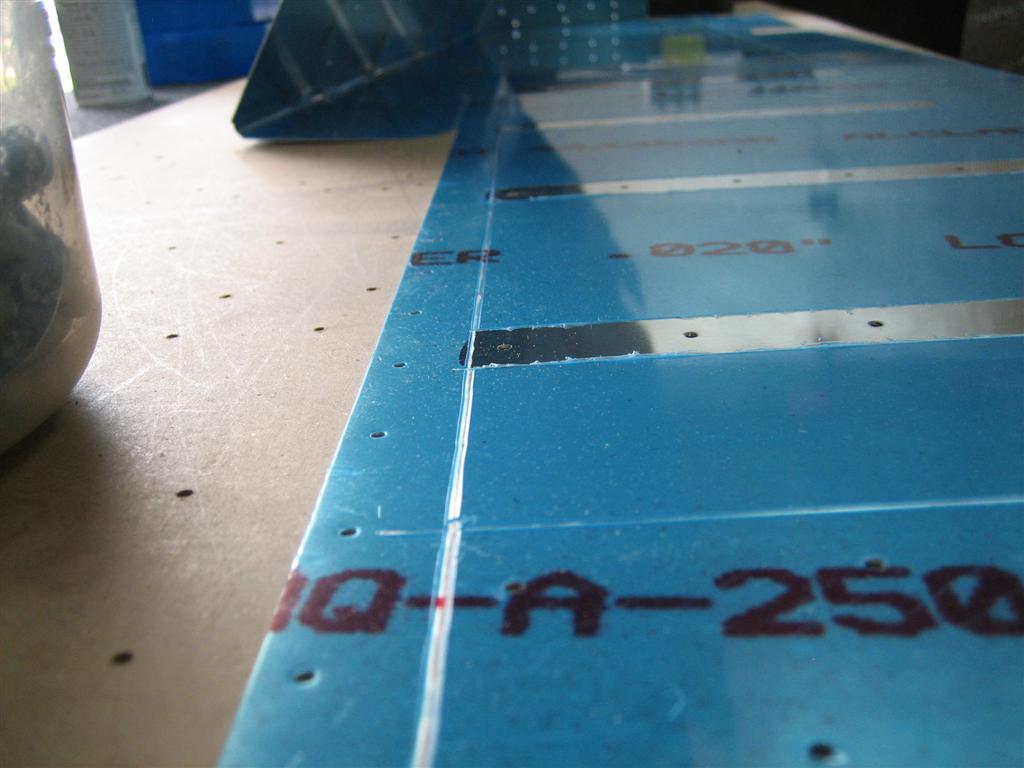
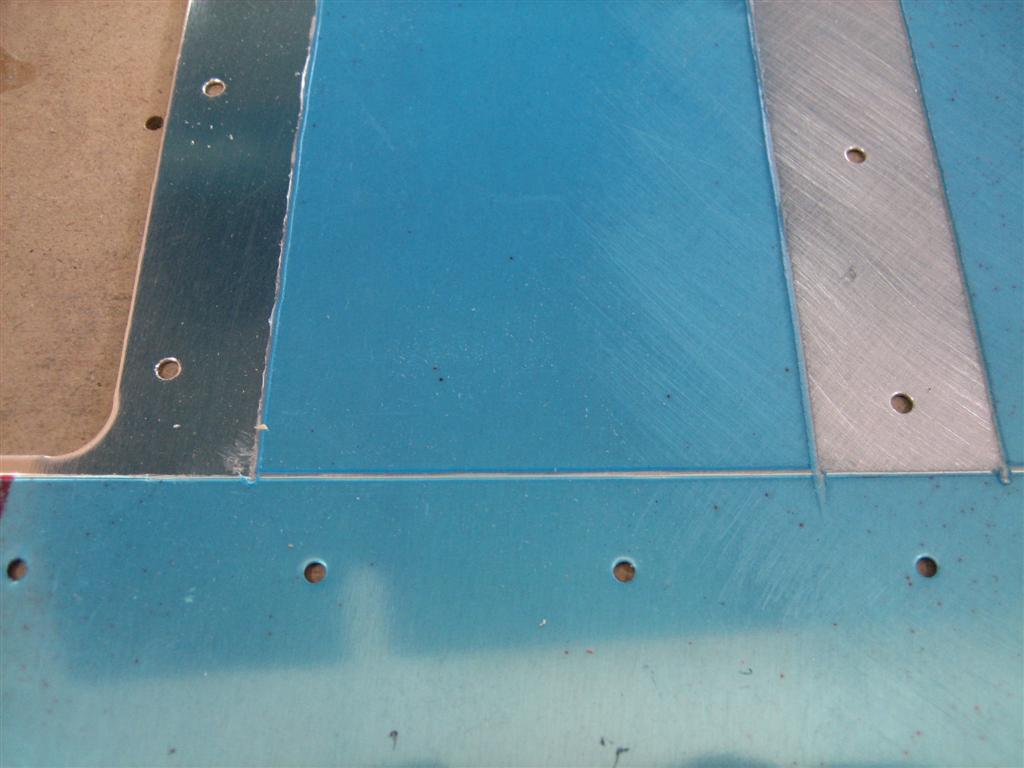
Here are a couple lines showing my devinlying process. These are made with a soldering gun held against a wooden straight-edge.

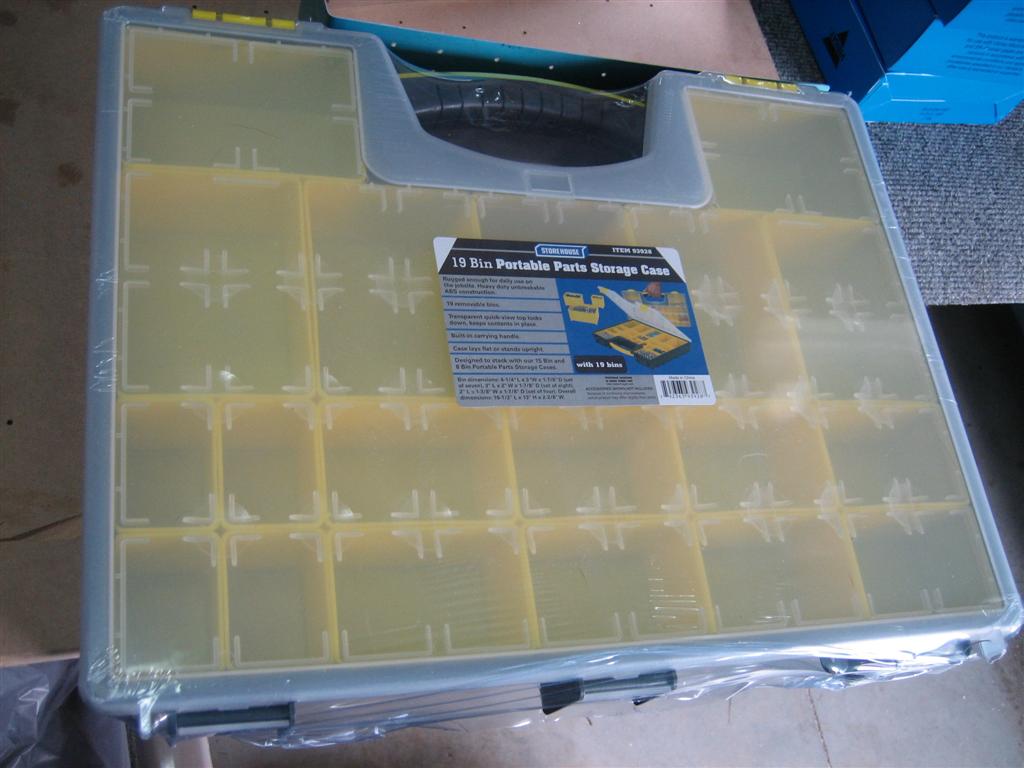
Oh yeah, almost forgot. I stumbled across another Harbor Freight coupon. I bought this ~$10 storage container for wing hardware.

I have two already, one for rivets, and one for Empennage hardware. I assume I'll need a third for wing hardware (I'll combine the rivets from wing and emp if need be).

Okay, back to the project. I’ve pulled off some of the vinly strips.

Pulled off some of the vinyl strips.

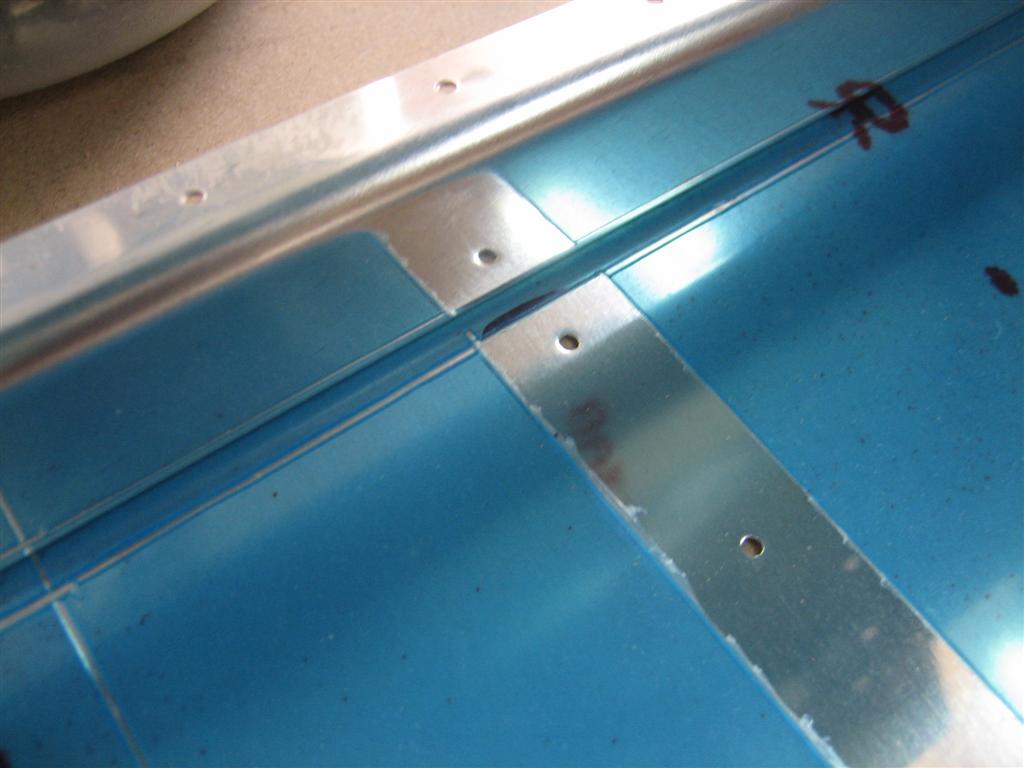
Here, my devinyl line overlaps the tracing a little.

Another angle here.

So I put the trim spar in position, and realized I could move the line back a little, so that's what I did.

Next, I deburred and scuffed the skin in preparation for dimpling. (It’s easier to scuff before dimpling.)

The lines to the right have been scuffed, the trim spar reinforcement area has not.

A closeup of scuffed versus not-scuffed.

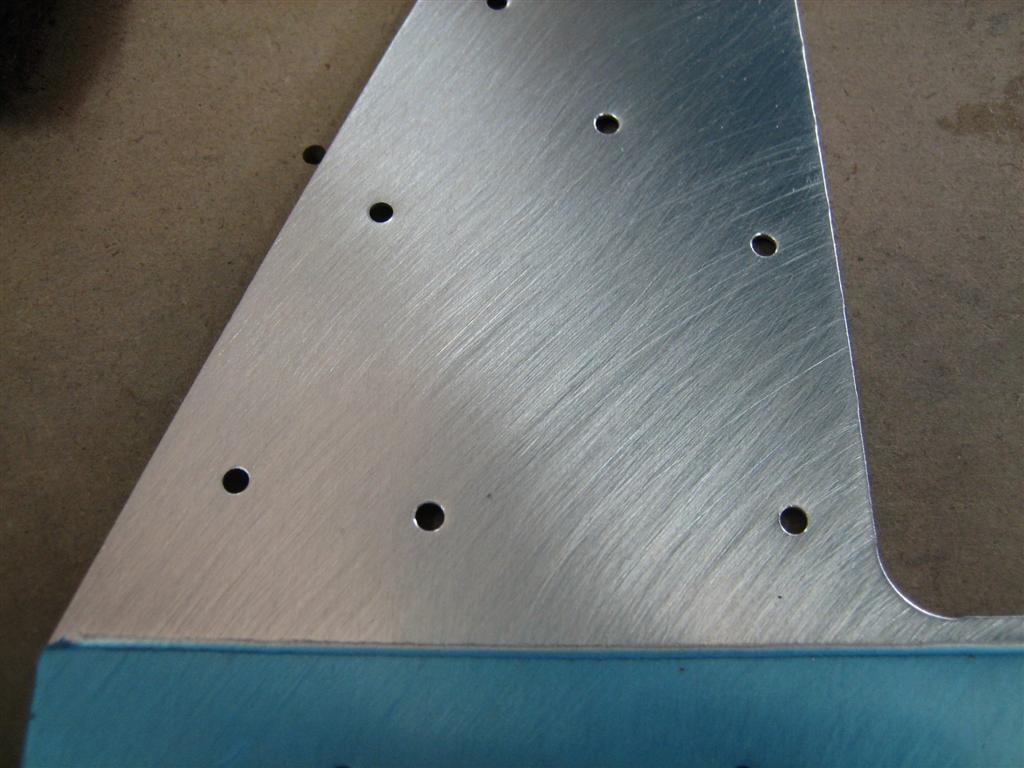
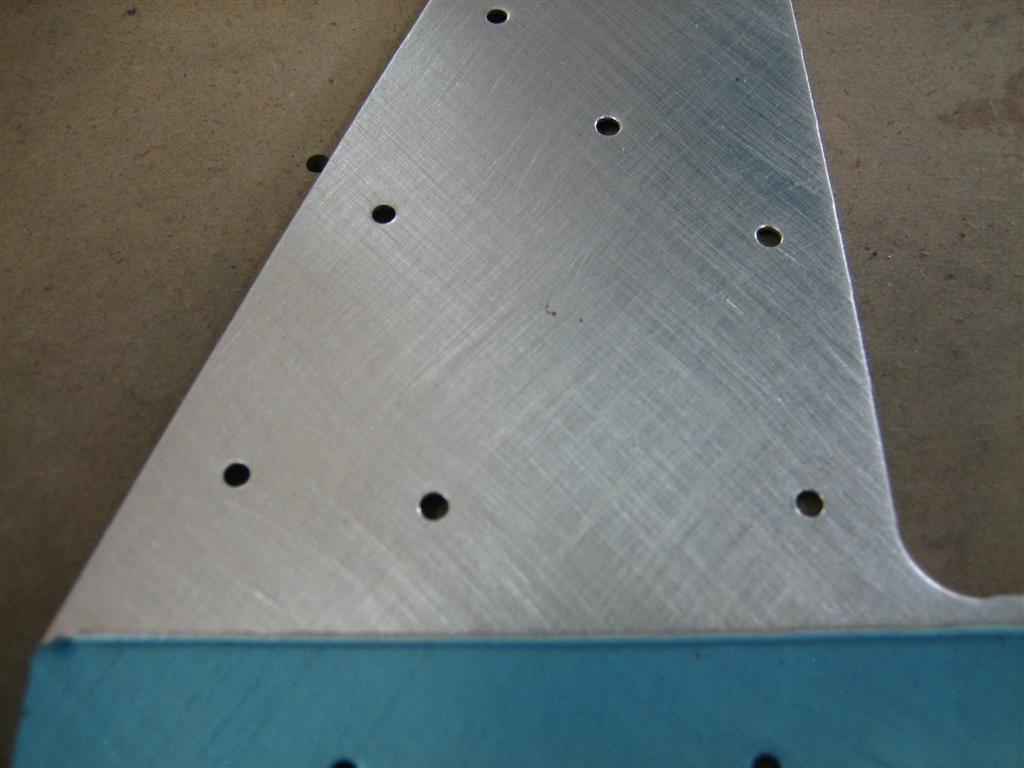
To scuff an area (in preparation for priming), I scuff in one 45° direction…

45° to the right.

Then, 90° from that.

All done. You can sort of see the two directions.

Finally, some dry stiffeners, ready to be backriveted to the skins.

Pretty stiffeners.

I always like to take a big picture shot at the end of the day.

Left skin, ready for dimpling.

Tomorrow, maybe a little skin dimpling, priming, and backriveting stiffeners.

One hour.

Prev | Next


Started Left Elevator

May 24, 2010

Prev | Next

Well, it’s monday. And even though I have a couple things remaining on the right elevator, I am going to follow the flow of the directions and move on to the left elevator before coming back to finish both of them.

In addition to the items they want you to do to both at the same time (roll leading edges, install rod-end bearings, etc.), I’ll have to come back to do three things on the right elevator:

  1. Fix a few over-driven rivets (and a couple that bent over that I didn’t catch at the time.)
  2. Figure out how to add RTV to the trailing edges after the fact (anyone have any ideas?)
  3. Trim down the counterbalance. I elected not to do this on purpose.

Anyway, on to the left elevator. Here’s the obligatory changing-of-the-plans shot.

On to the left elevator (and trim tab).

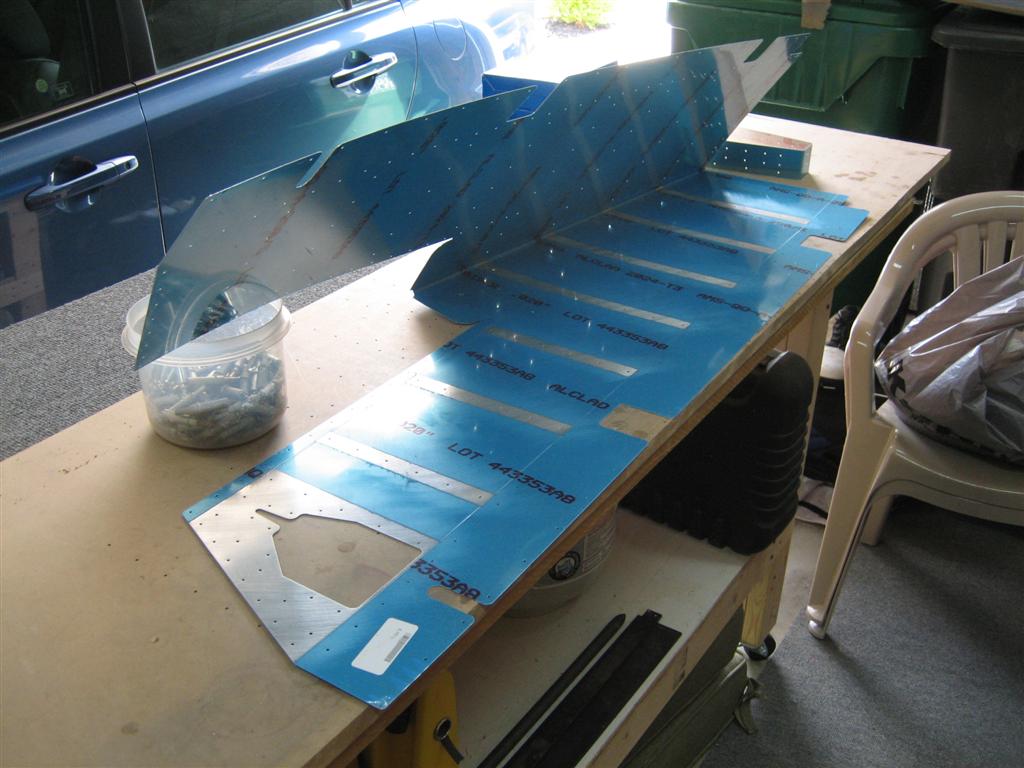
As I only have about a half an hour tonight, my plan was to just cover the basics. First, lay out all of the left elevator parts.

It doesn't look like a lot of work...

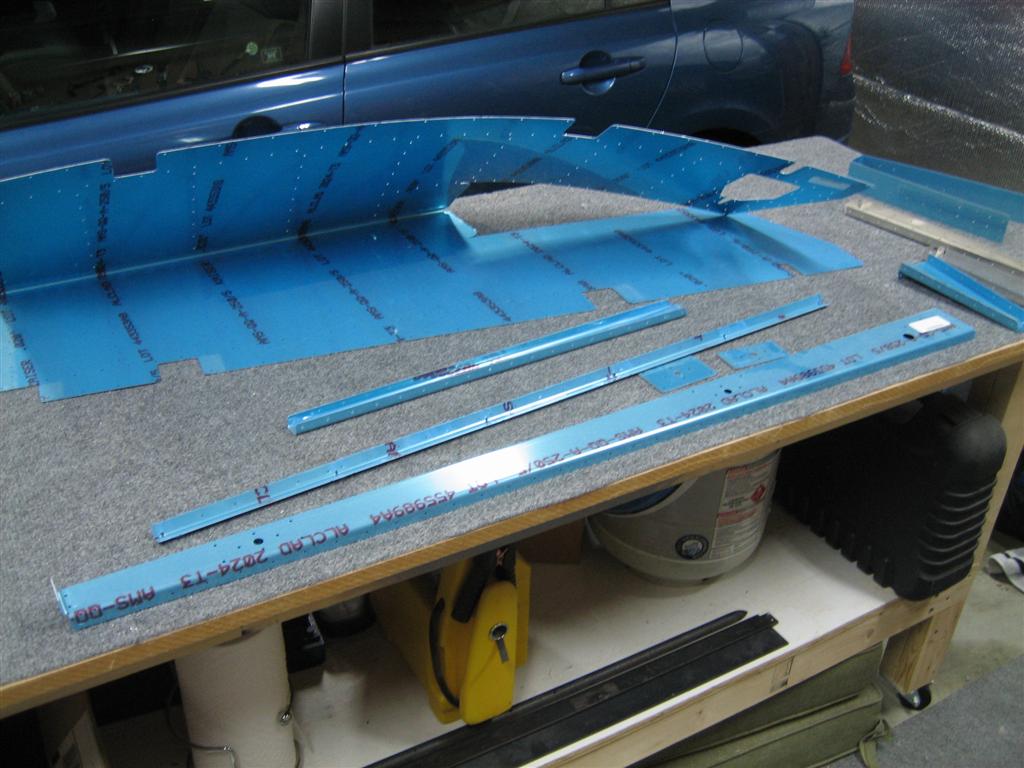
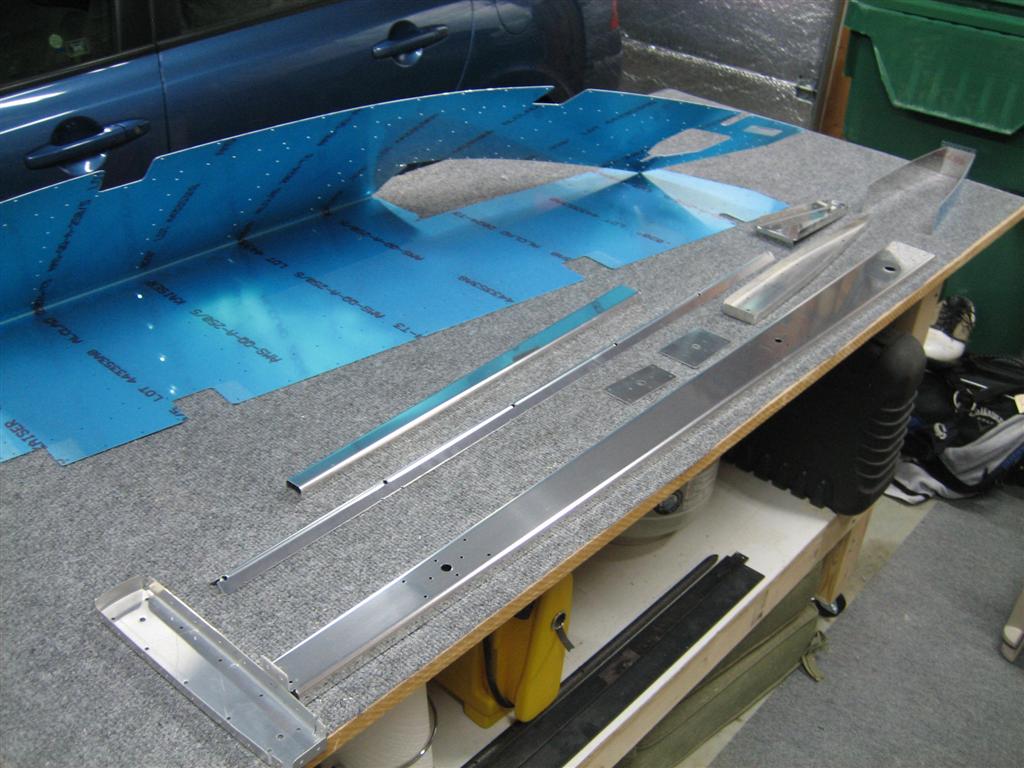
Devinyl the skeleton parts.

This picture is almost identical to the one before it, except for the missing blue vinyl on the skeleton parts.

Then, on to real work…kind of. The manual wants me to attach the hinge reinforcing plates to the spar, then move to the outer ribs.

Here you can see the two outer ribs fluted. I haven't straightened out the rib flanges yet, will get to that soon.

Blah blah blah, assemble the skeleton. For now, I didn’t do any match-drilling. I do that hole-by-hole as I take the thing apart.

This one will be more interesting due to the trim spar.

Finally, I found one more of the stiffener angles. I got that devinyled and then cut from hole to hole to form some of the smaller stiffeners.

More small stiffeners. These go between the main spar and the trim spar (ahead of the trim tab).

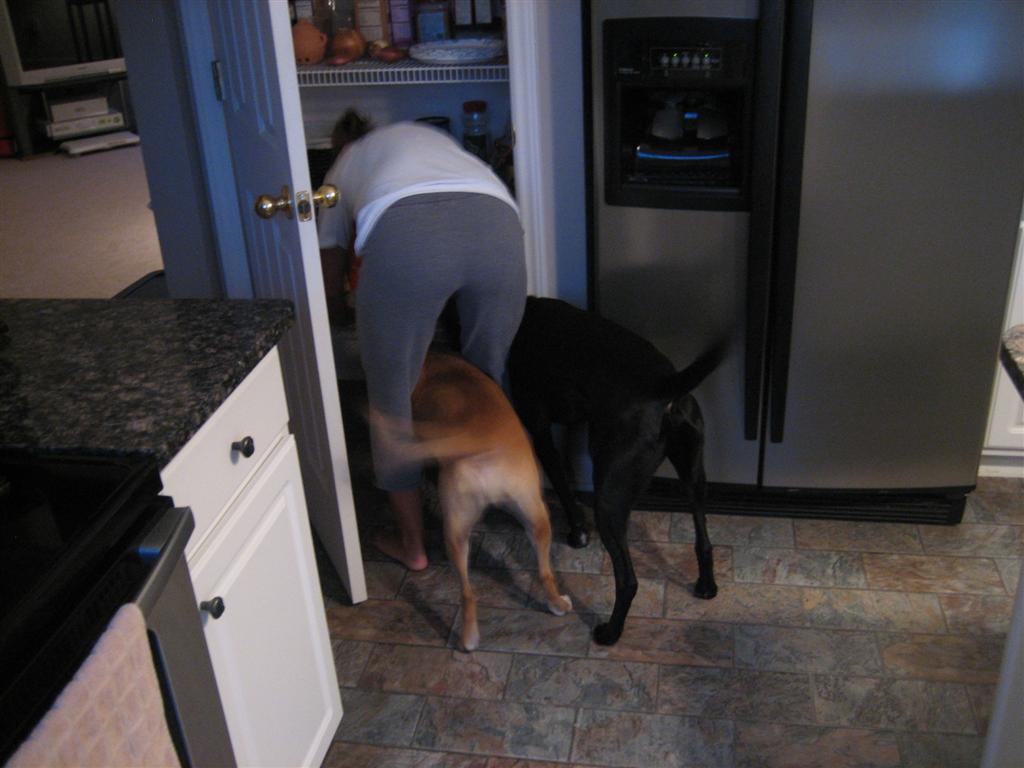
With that stuff done, I headed inside and caught someone with their hands in the cookie (doggie-treat) jar.

That bottom shelf has the doggie-treats on it. (We have really patient dogs. /sarcasm off)

Lucky you, I got some video.

Anyway, a short half hour of left elevator prep.
Prev | Next


Primed E-709 Root Rib Right

May 3, 2010

Prev | Next

Well, after a few days of no work, then a few more of yardwork, and a few more of more no work, I made it into the garage tonight for an hour of work. Now that summer is approaching, the garage is getting a little humid. I’m going to start thinking about buying a portable air conditioner.

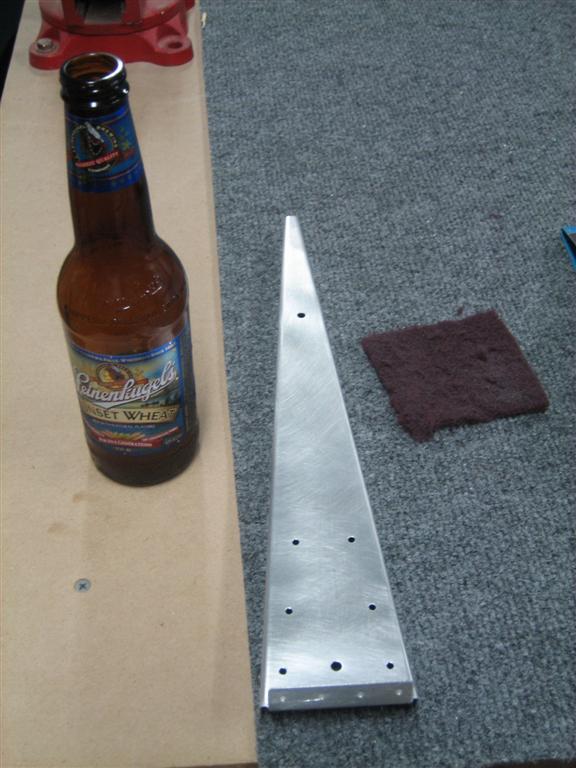
Tonight’s main task was to get any piece of the right elevator ready for assembly. E-709 (Root rib right) seemed to be a good candidate.

On the right, my trusty scotchbrite pad. In the middle, E-709 (Root Rib right). On the left. Well. You may call that beer. I call it "delicious."

Anyway, after deburring and scuffing, I broke out the #40 tank dies (understructure, so I want the dimples slightly deeper) and did all but the aft two holes on top and bottom.

Dimpling.

For my hard to reach places, I use a steel bar with a countersunk hole in it, put the hole of interest on top, and put in a sacrificial rivet to use as a male dimple die. Then, I grab a flush set, and push the rivet into the hole in the steel.

Getting ready to ghetto-dimple.

Here’s a closeup of my steel bar for you to admire. The hole on the right is what I use for these tasks.

The hole on the left is useless, since I drilled it too far away from the edge of the bar. Dumb me.

Anyway, here’s a shot of one side of the E-709 after using this technique.

The bottom dimple is from the tank dies, the top two are with the rivet trick. Not perfect, but not bad for the hard-to-reach area. Based on my experiences on the rudder, the skin will sit just fine in these dimples.

Off to the paint-shop. And by paint-shop, I mean “a piece of cardboard on my trash and recycling bins.”

Up with the garage door for ventilation and on with the respirator before shooting the first coat.

While that dried, I snapped an action shot of me devinyling the inside of the skins. I also deburred all of the exterior sides of the recently drilled holes, but didn’t get to the insides, I’ll do that as soon as I get back into the shop.

Oh man, those stiffeners and rivets look nice.

Here are both interior sides done. (And by “done” I mean “done devinyling with just the parts I’m going to deburr, scuff, dimple, and prime.”) The rest of the vinyl will come off just before riveting, and will reveal nice untouched (and unprimed) alclad.

Pretty pretty.

Crap, I forgot to take a picture of me shooting primer on the other side of E-709, which is the entire basis for the title of today’s post. If you feel shortchanged, feel free to complain.

One hour.

Prev | Next