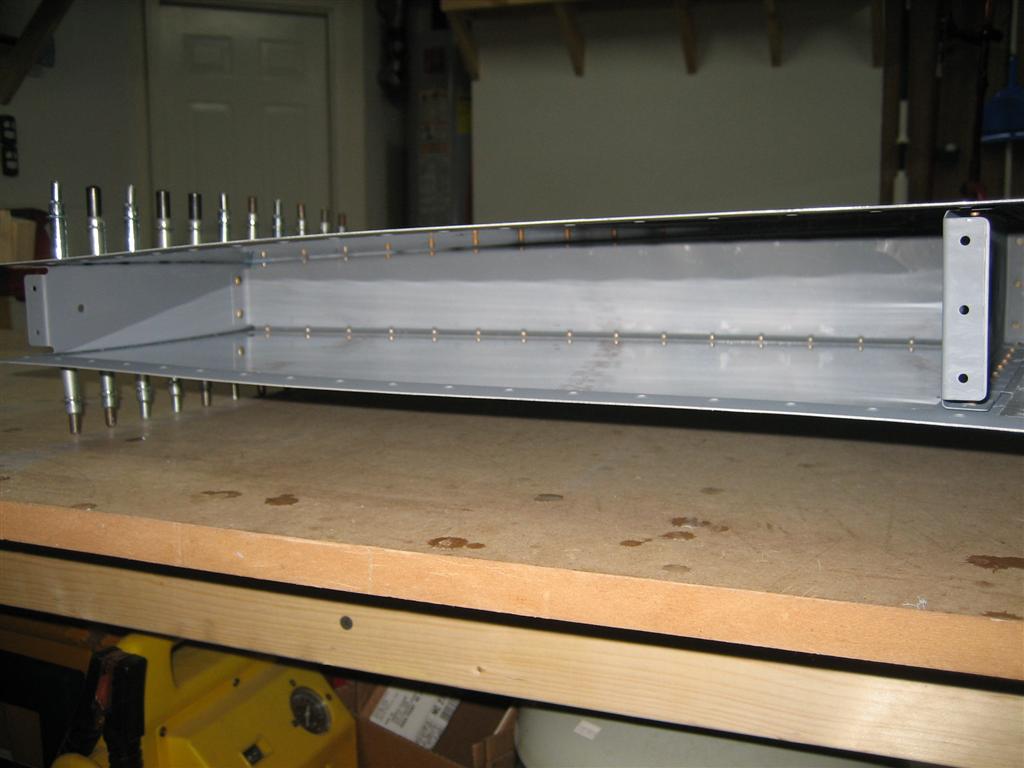
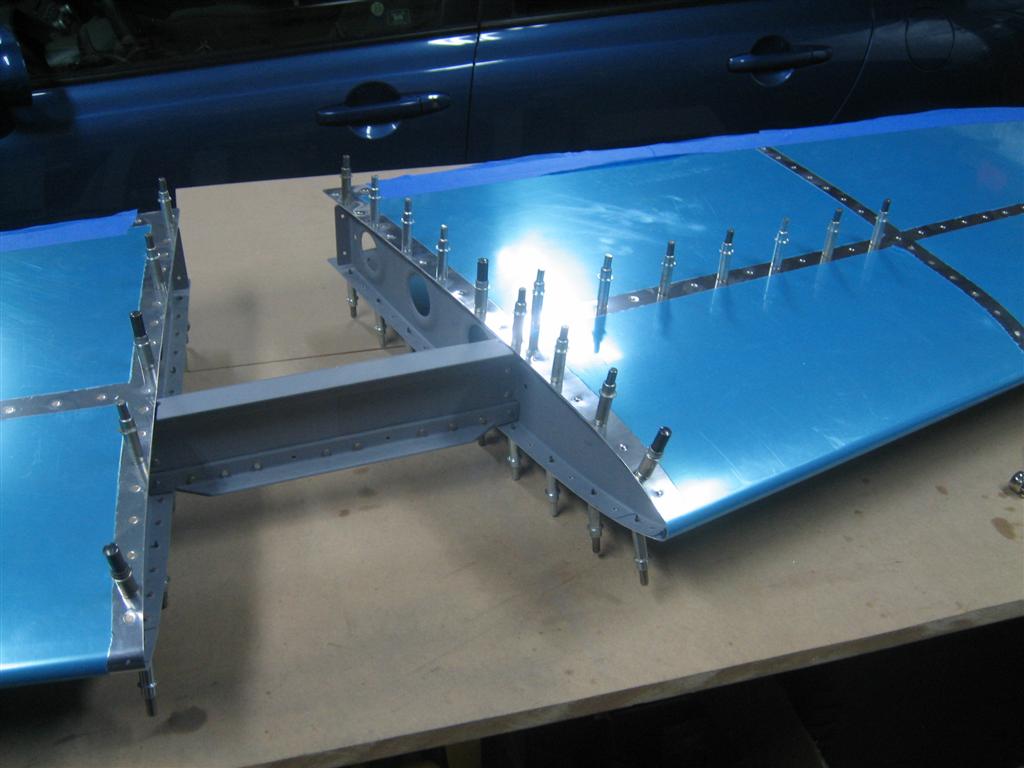
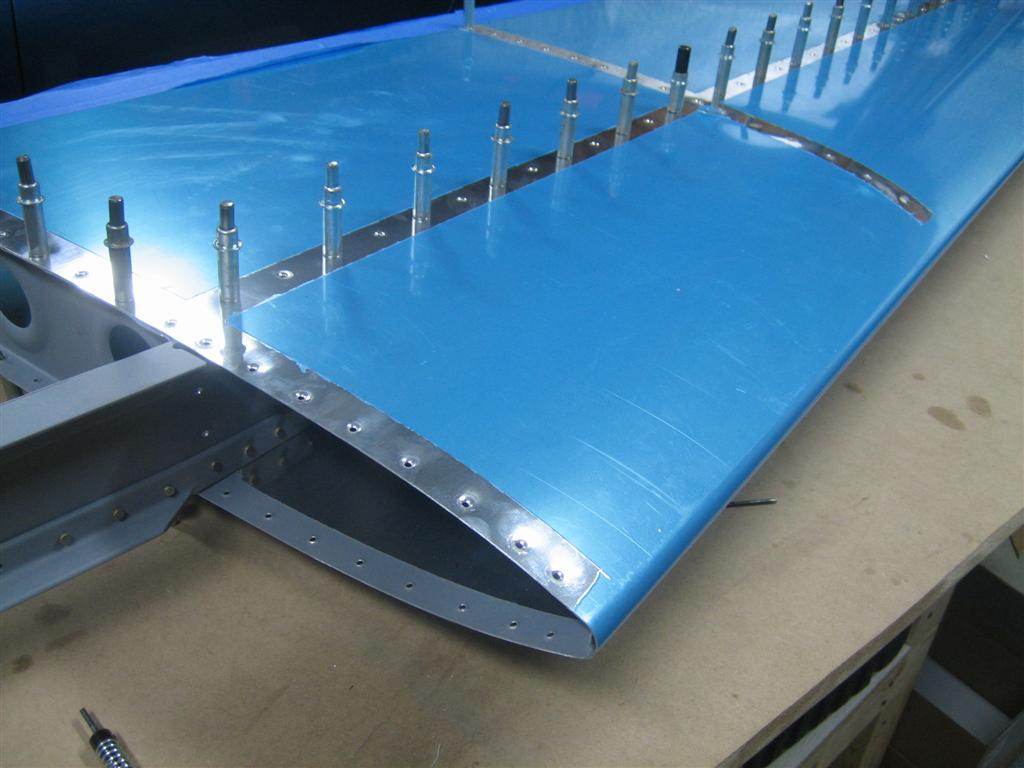
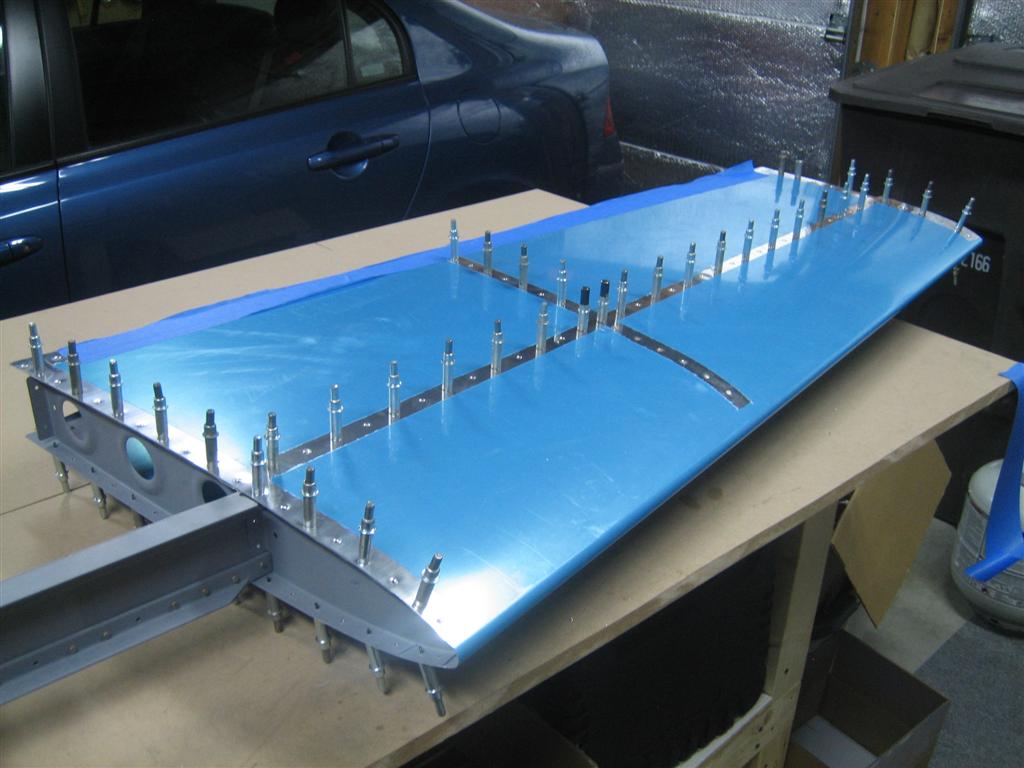
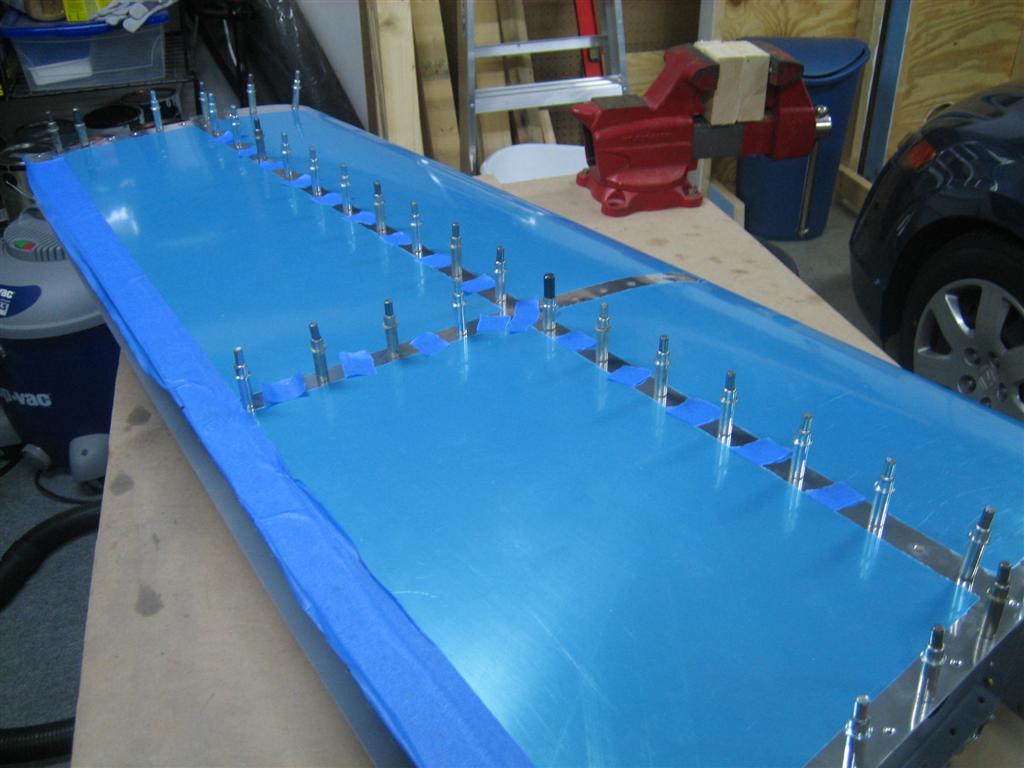
More Small Rudder Parts Priming and Devinyling

March 15, 2010

Prev | Next

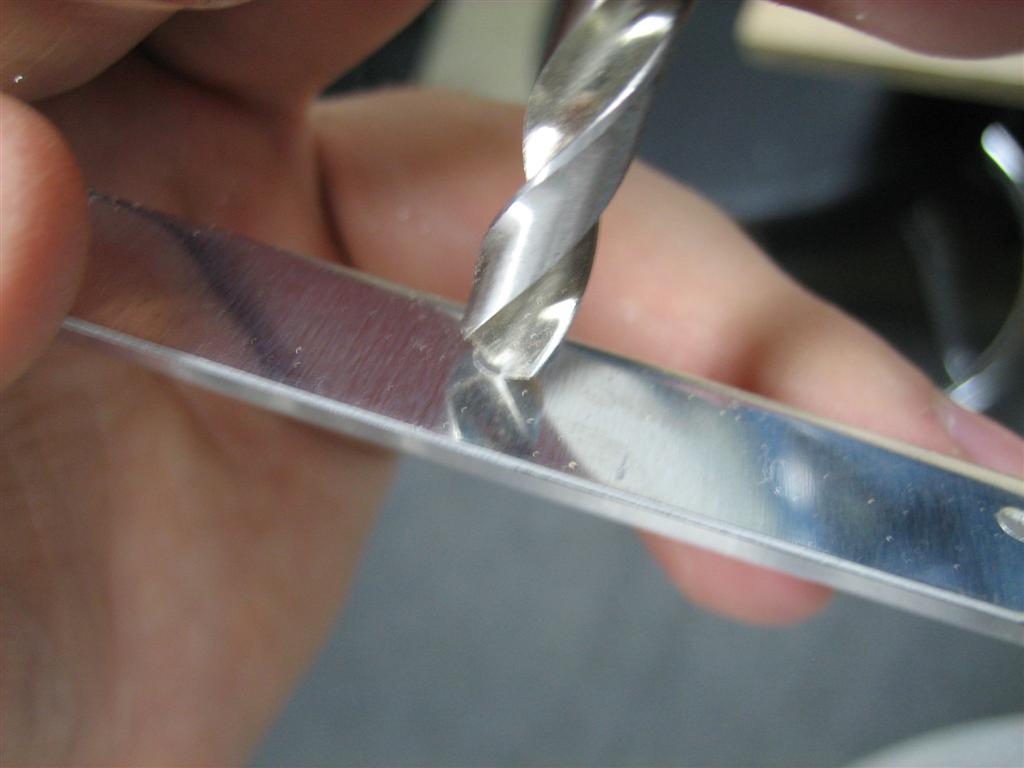
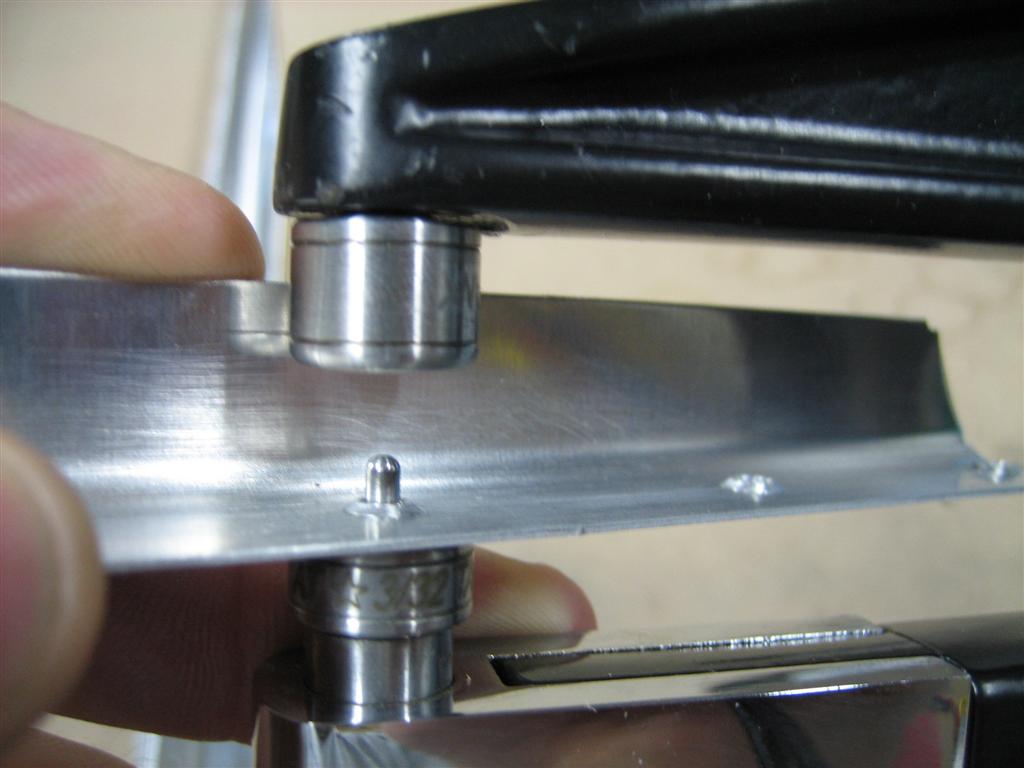
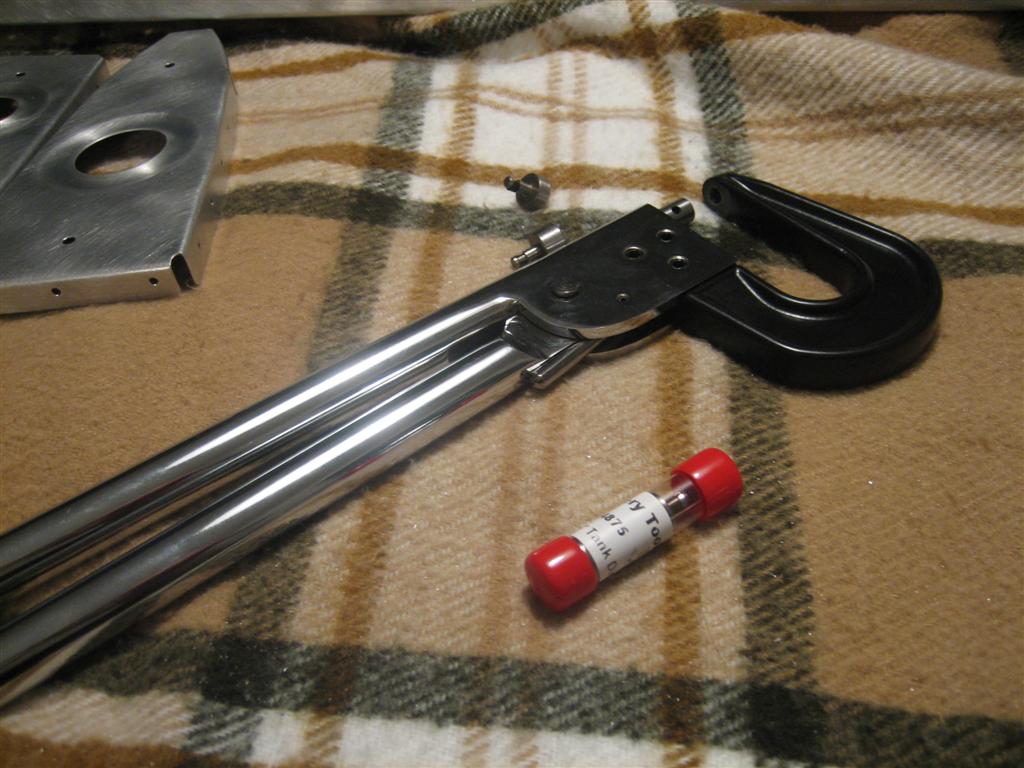
First thing after today’s realization that I had forgotten to dimple before priming, I rushed home and grabbed the tank dies to prime the #40 holes.
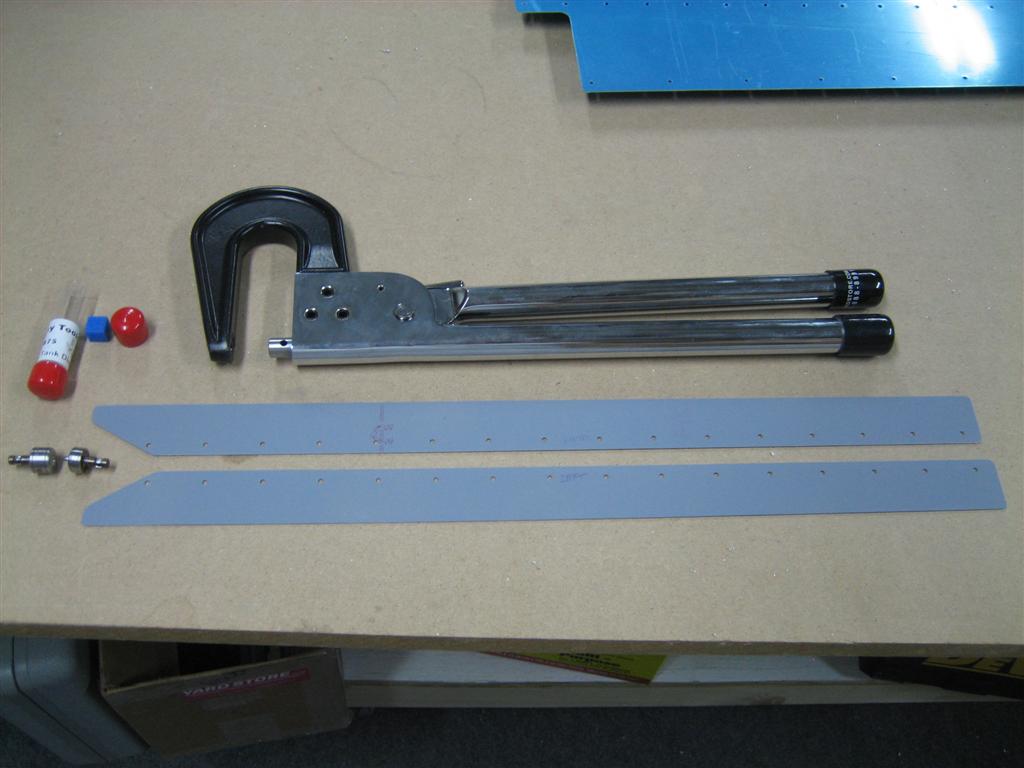
Let's get ready to dimple...

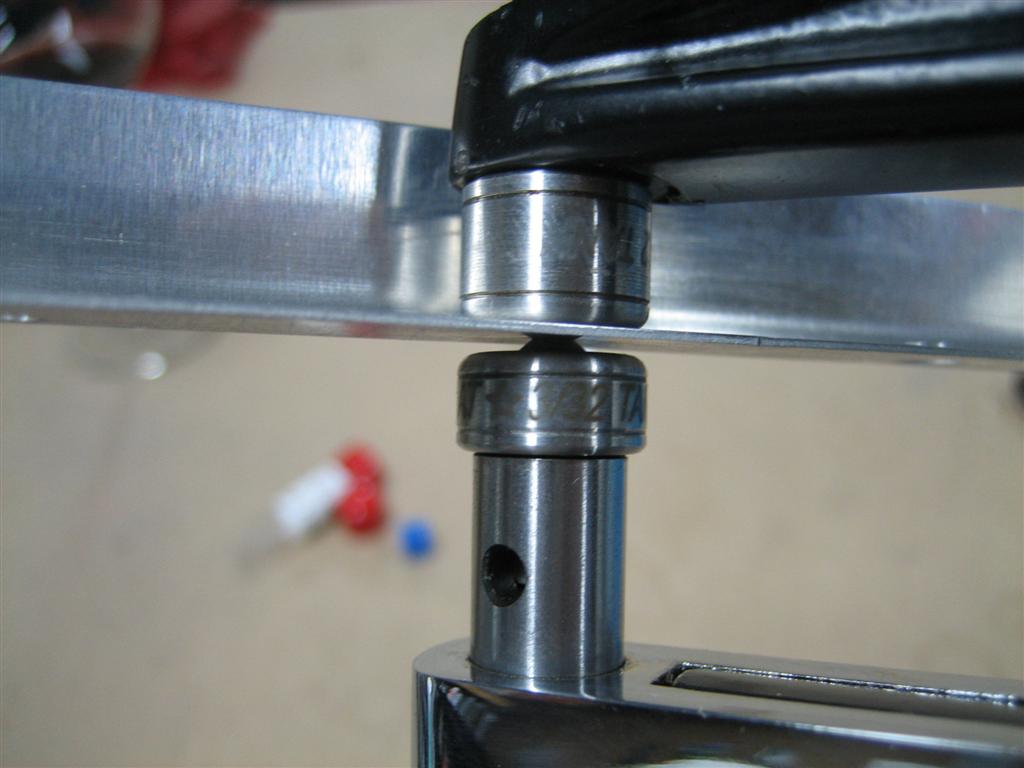
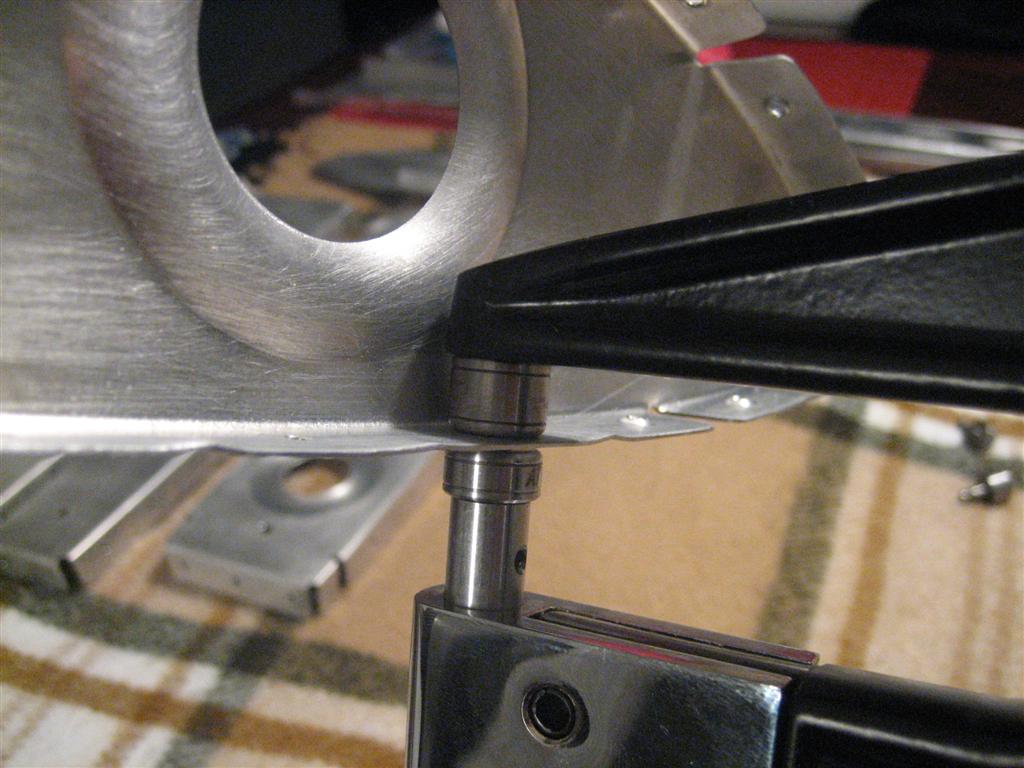
No problem to dimple after priming. (There was a little bit of twist after dimpling, but no big deal, the rivets will hold this thing together.)
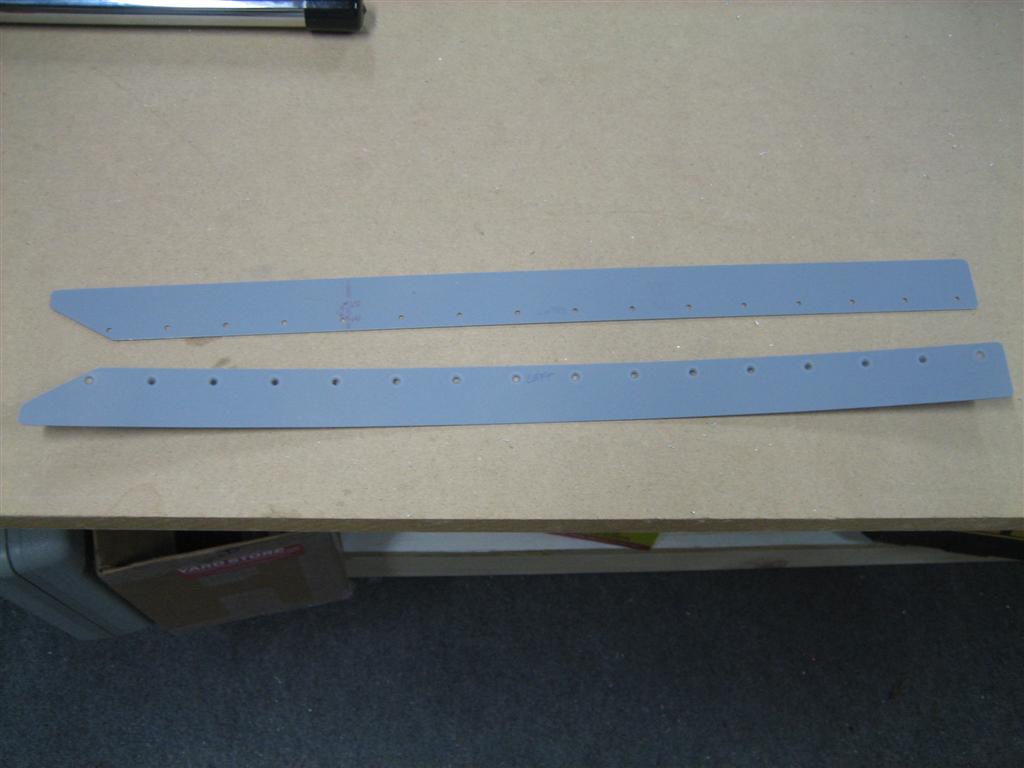
Slight twisting after dimpling.

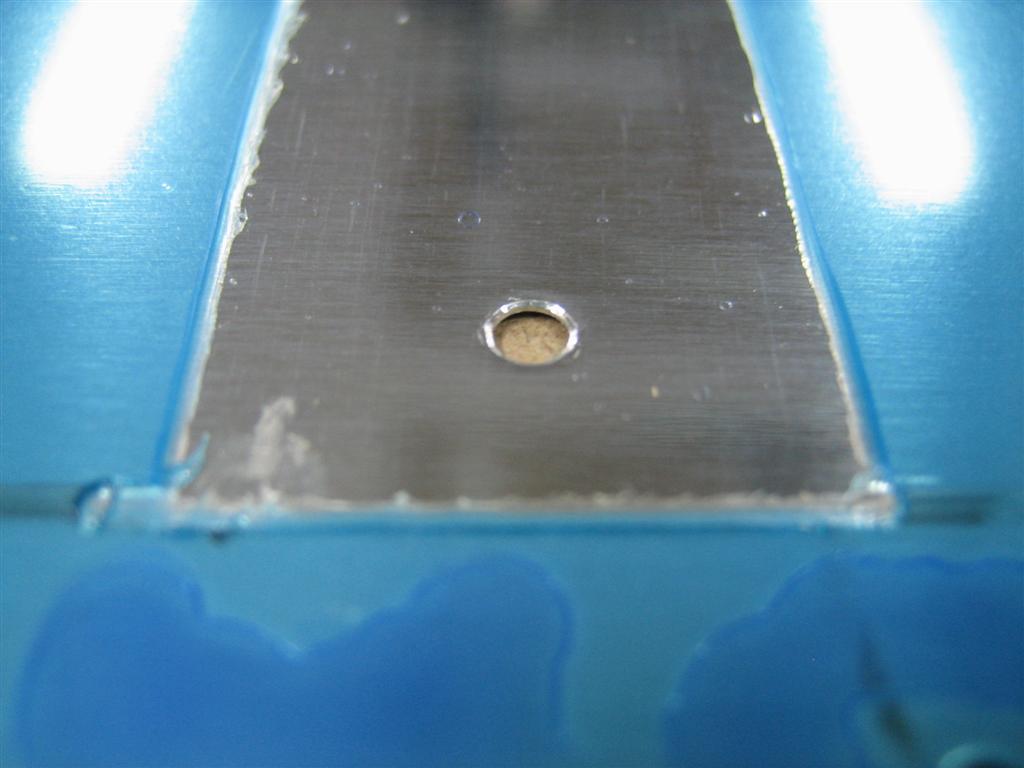
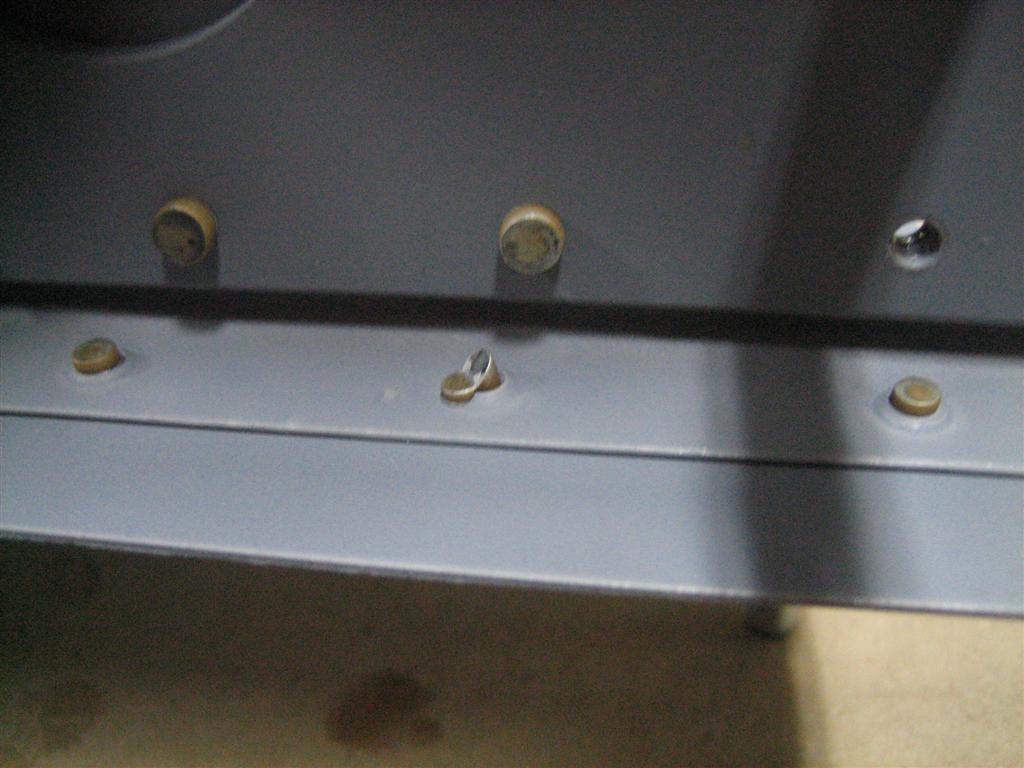
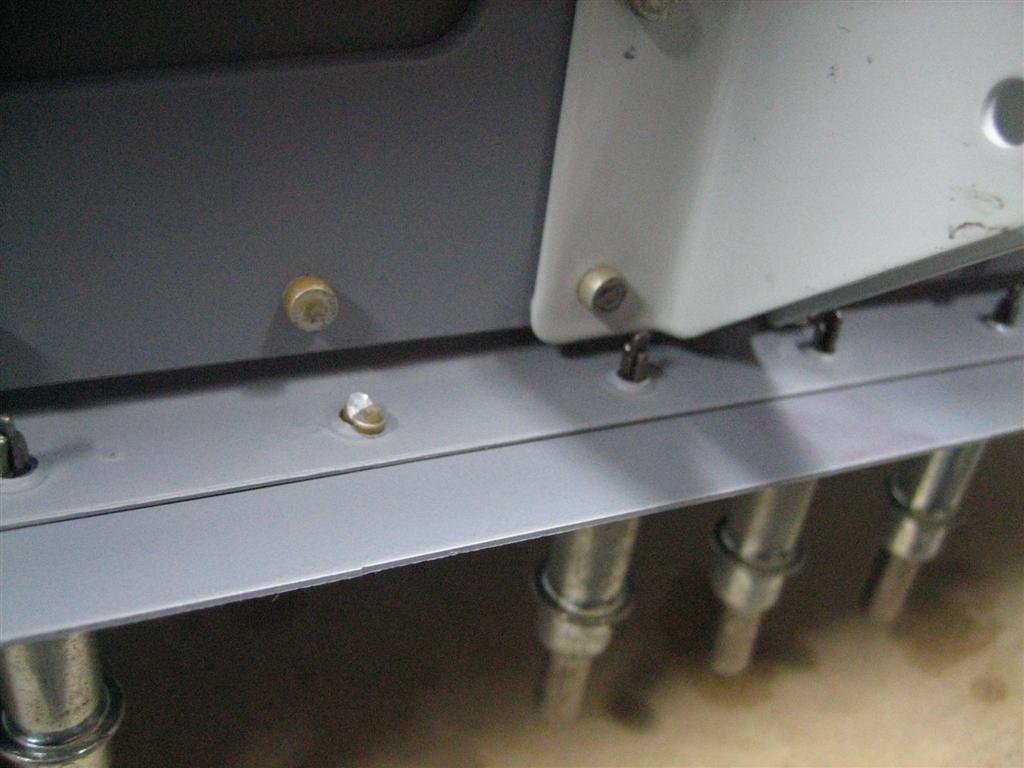
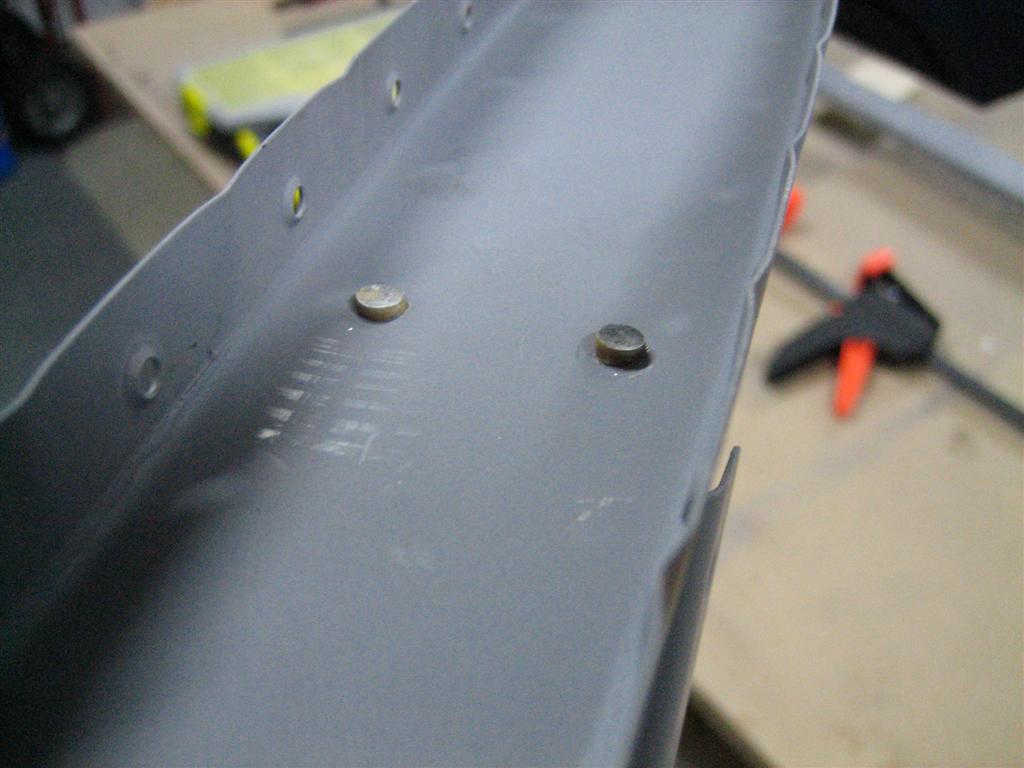
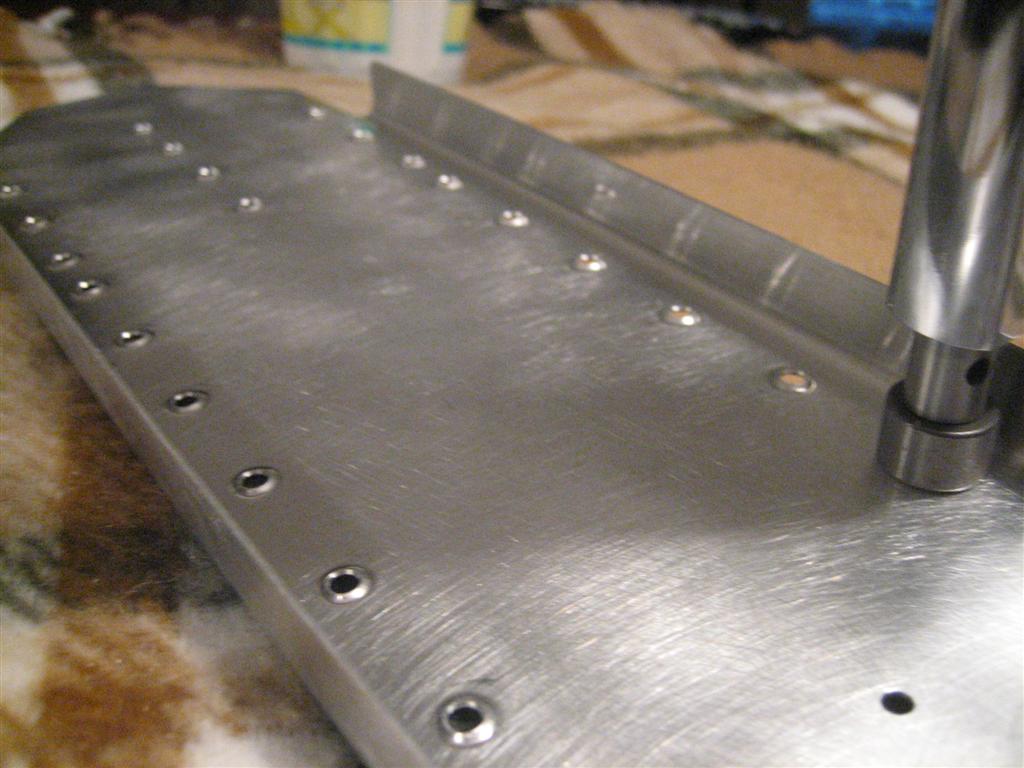
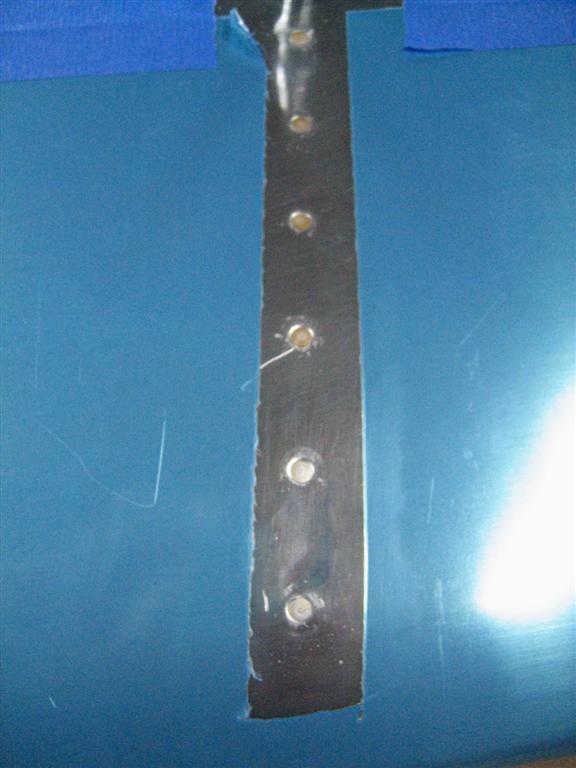
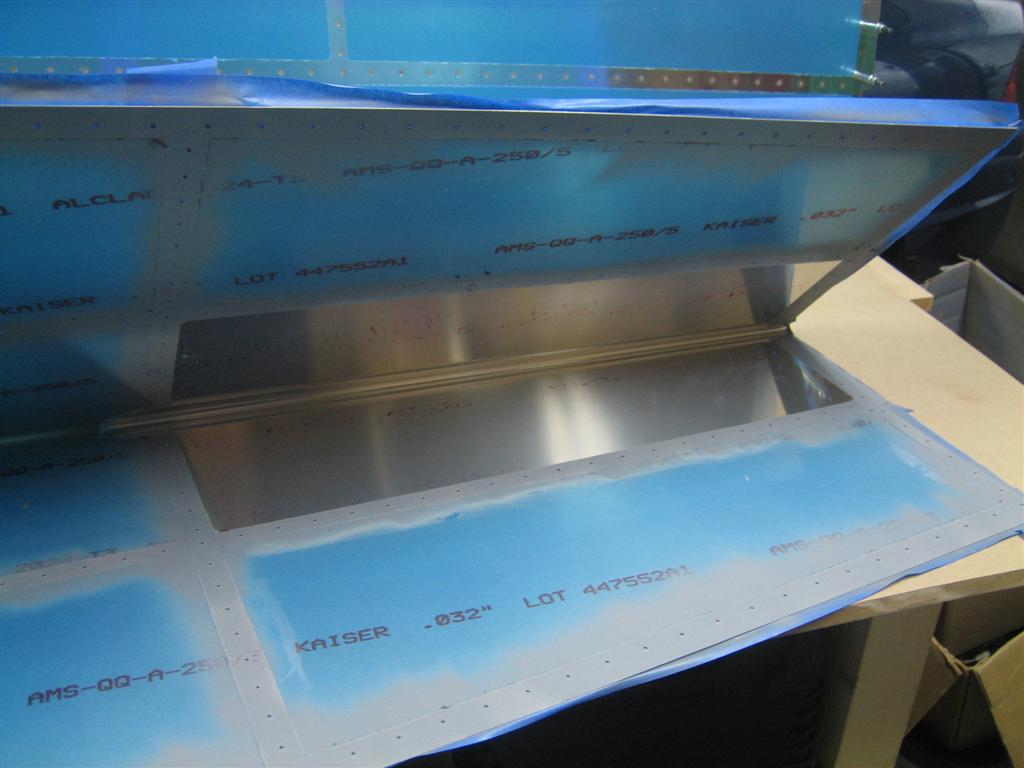
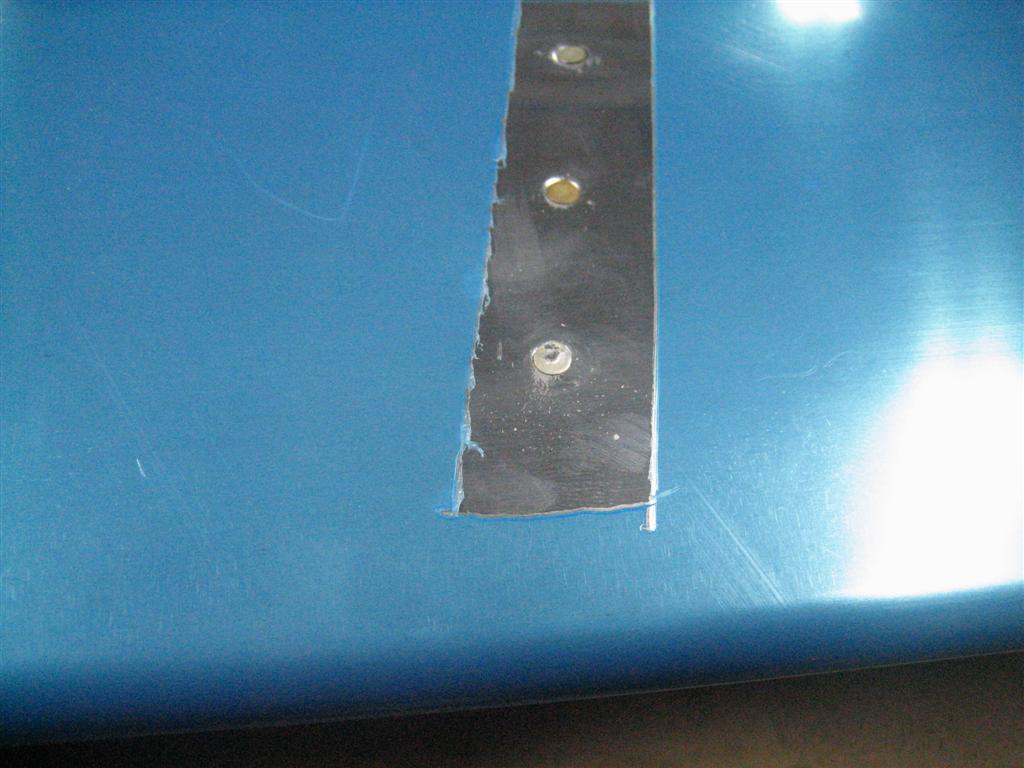
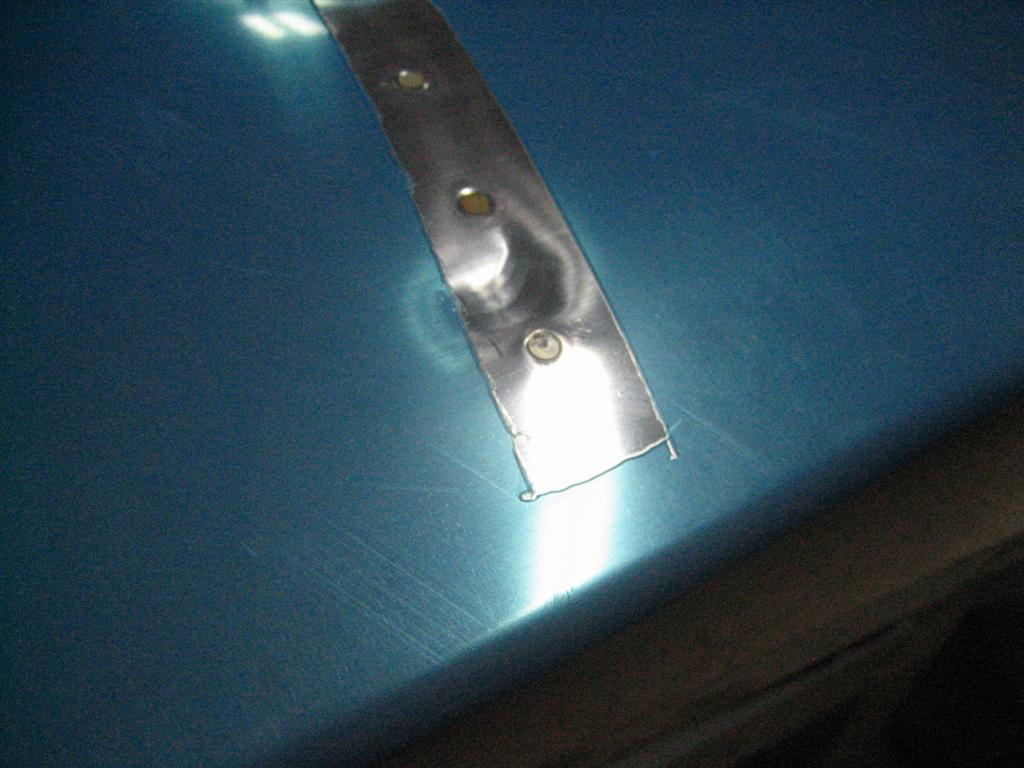
The only way you can tell I dimpled after priming is that the dreaded dimple circle is visible, because the outer edge of the dies mars, (maybe polishes?) the primer a little. You can see it in the pictures.
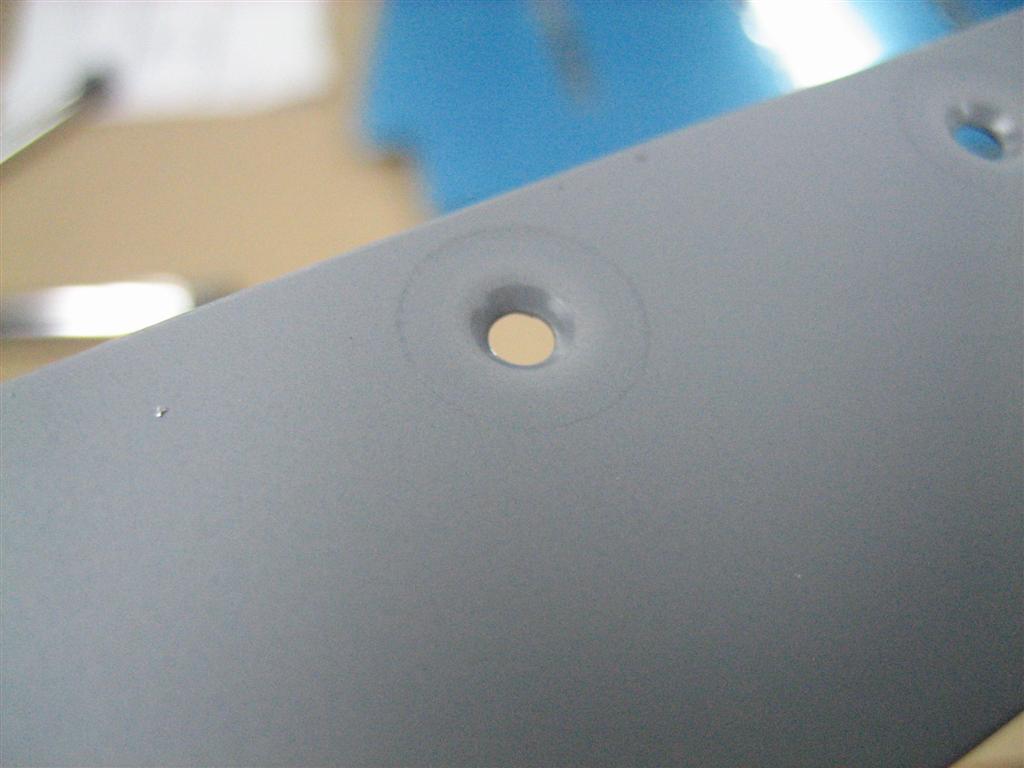
Dimpling after priming worked fine. See the circle marks?

Here’s the other side.
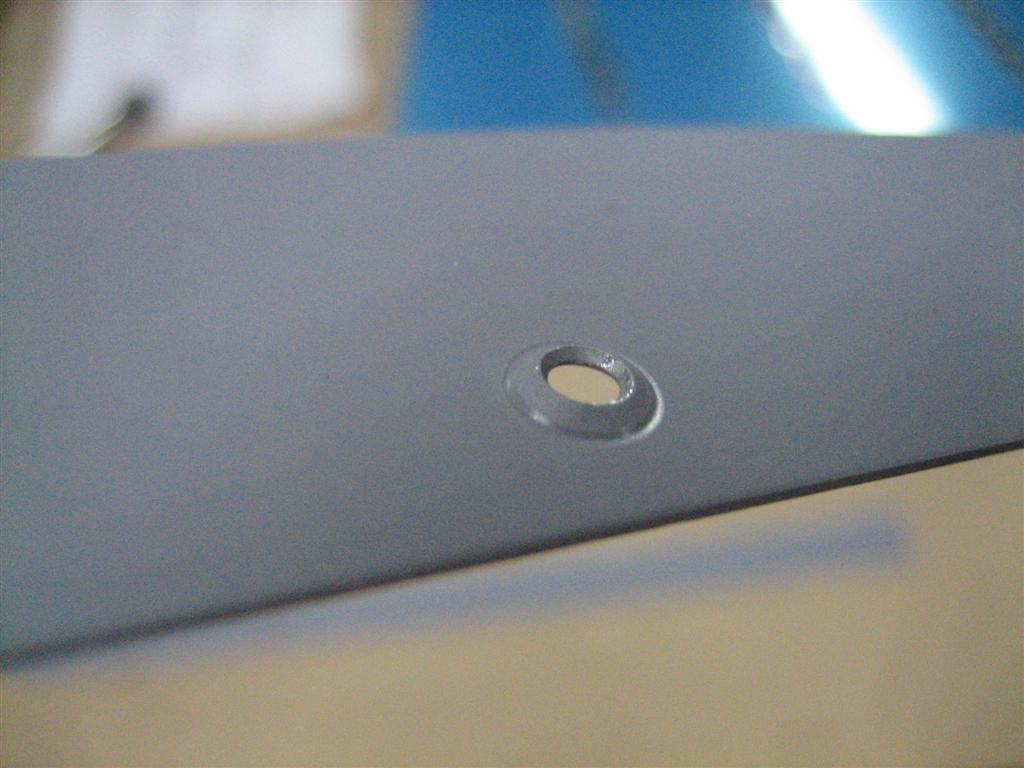
Looks good to me.

After I finished both, here they are on the table. Crisis averted. (Not really, I would have just re-primed them.)
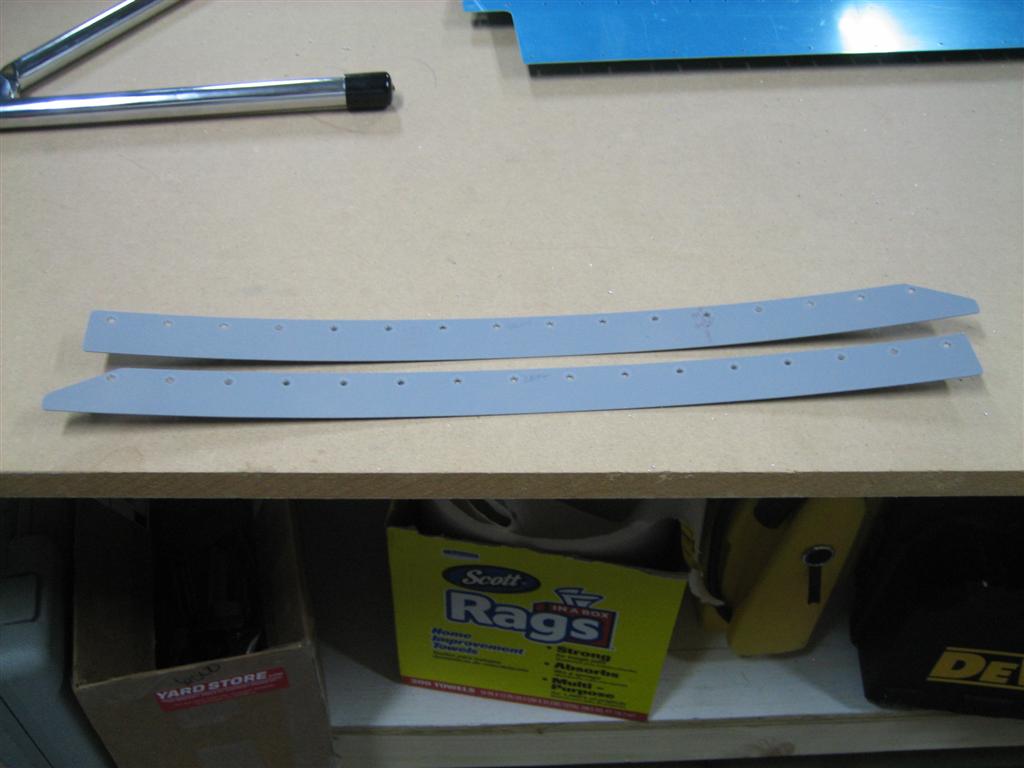
These will do.

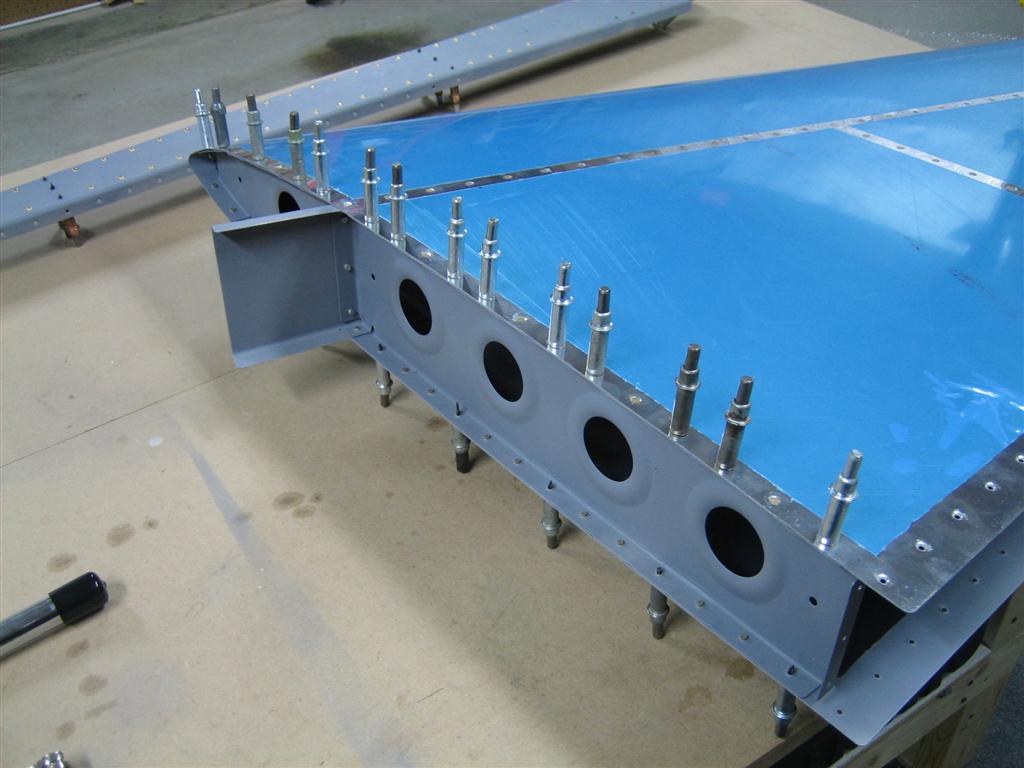
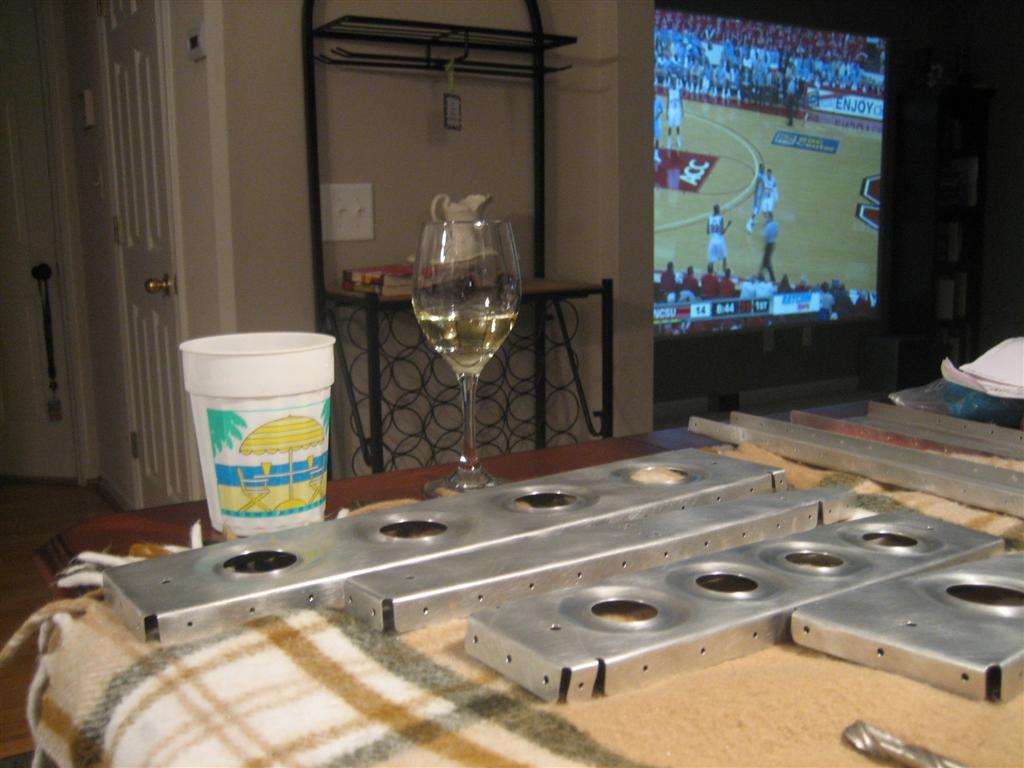
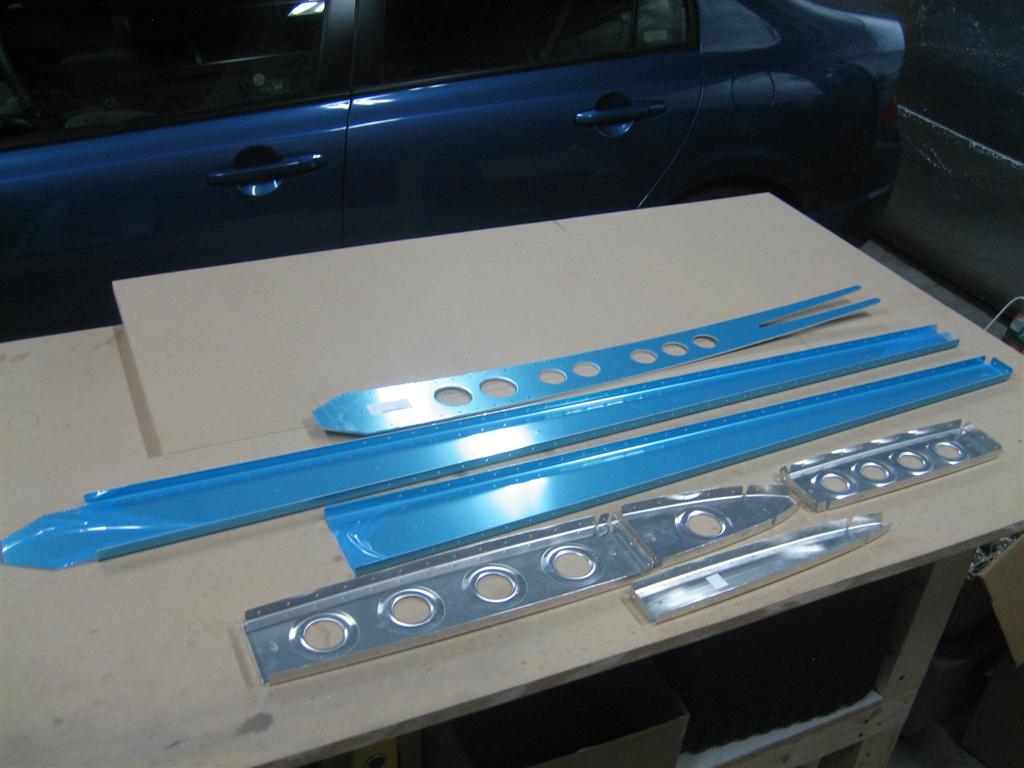
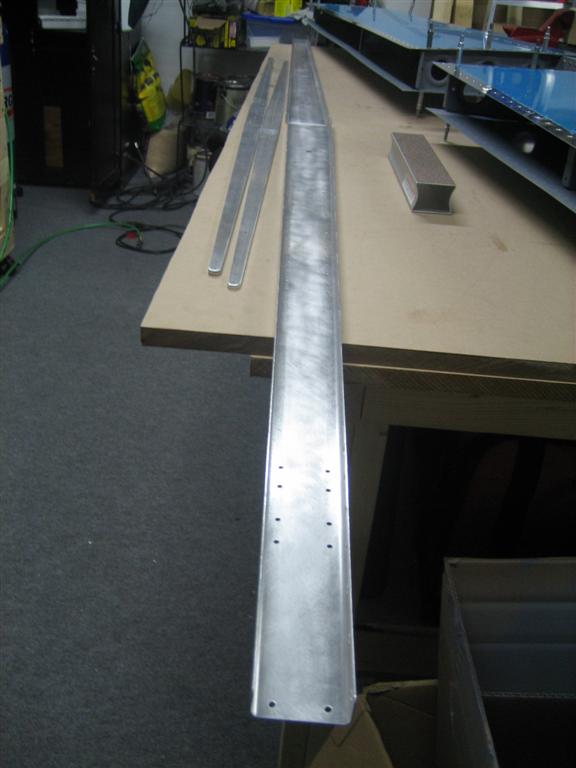
Then, inside to grill some dinner, then back out to do more edge finishing, cleaning, and priming. I grabbed R-606PP and R-607PP  (lower and middle spar reinforcements) along with R-617 (shim) and finished the edges with the scotchbrite wheel.  Once complete. I took them inside, cleaned them with dawn detergent, and brought them back out to dry and prime. Here’s a priming shot.
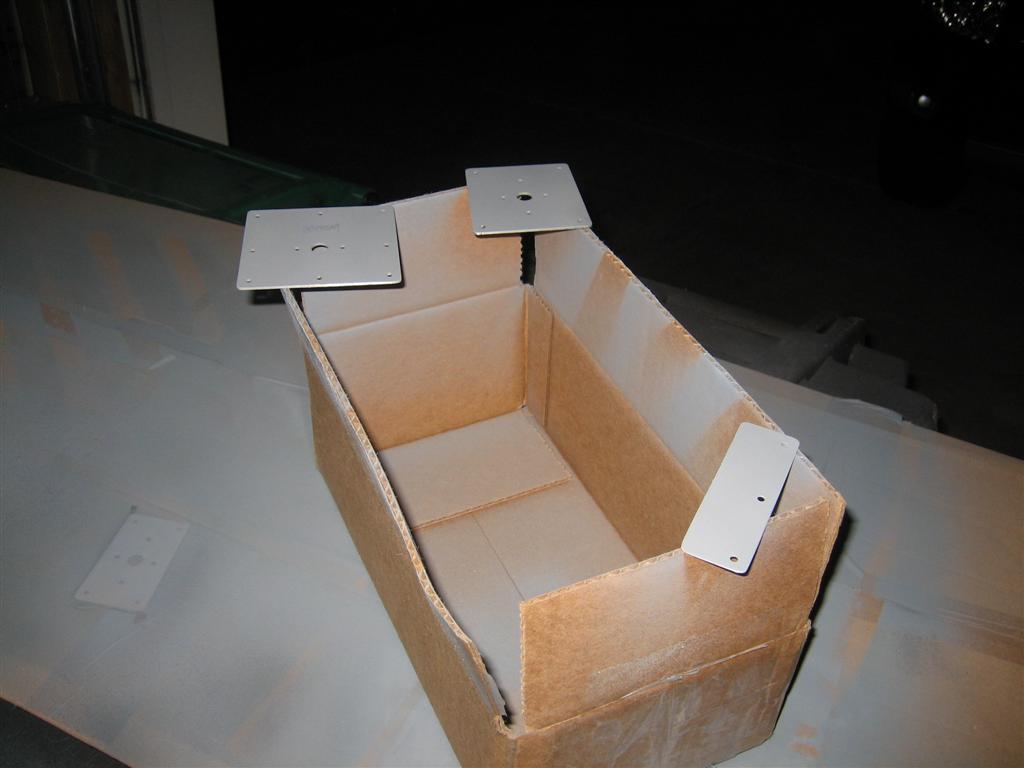
From left to right: R-606PP, R-607PP, and R-617.

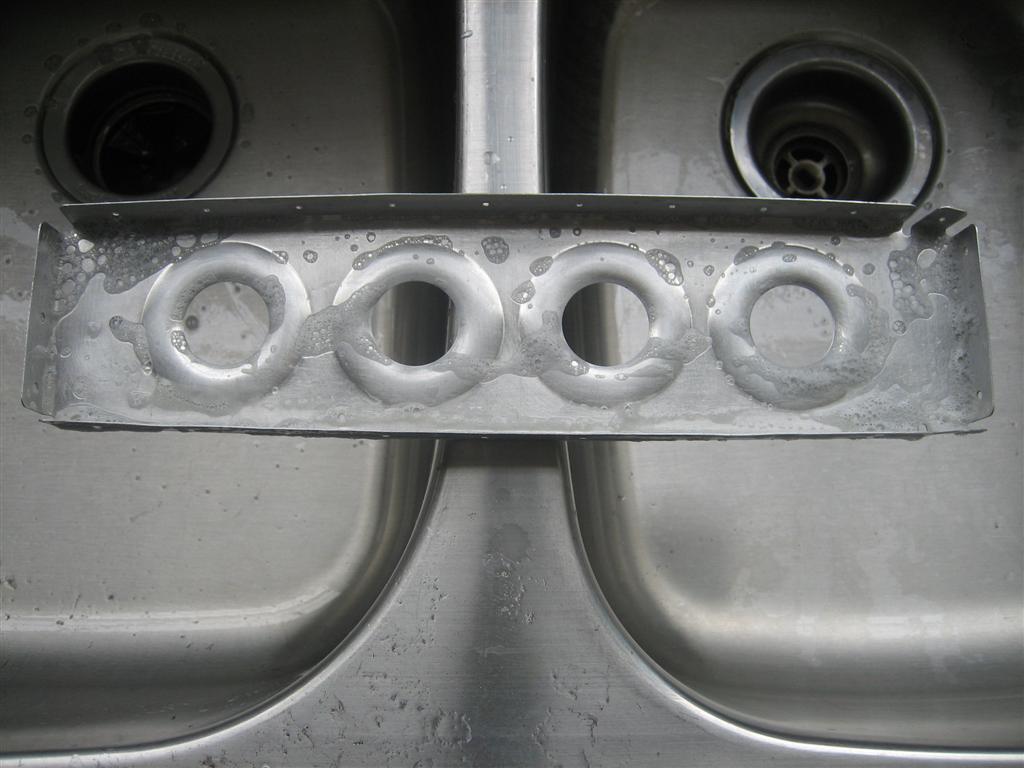
Next, I looked around and grabbed the R-912 counterbalance rib and did some edge finishing and dimpling. Here’s a dimpling shot.
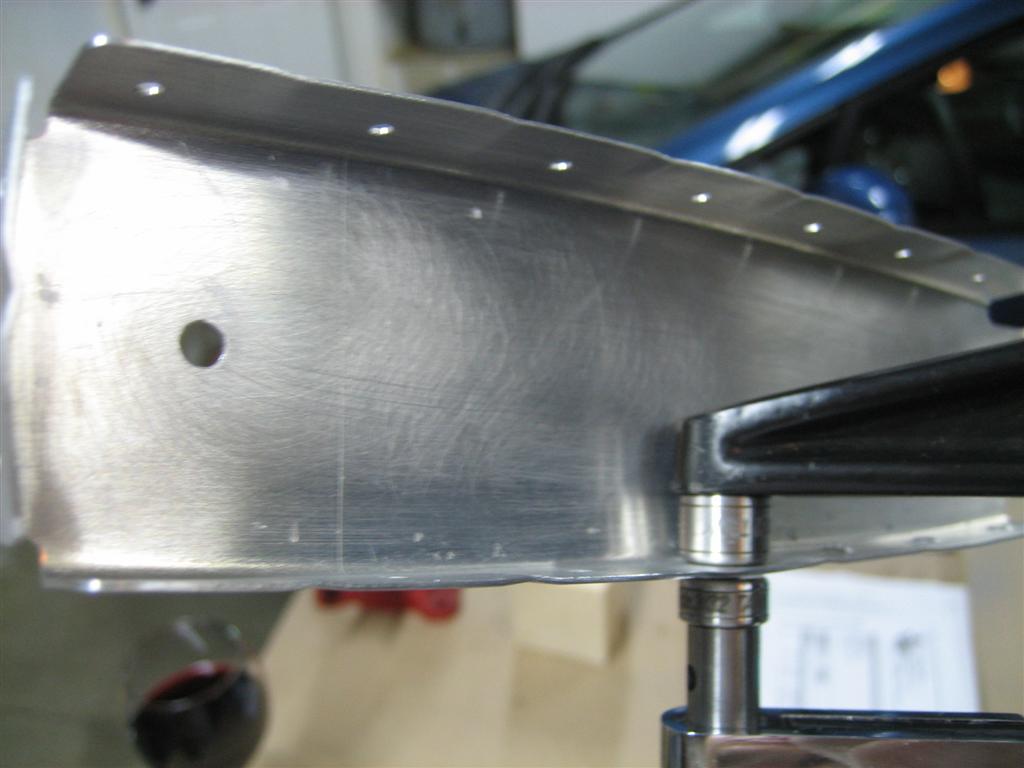
Dimples!

Same deal with with the R-903 tip rib and the R-710 horn brace. Here’s the horn brace.
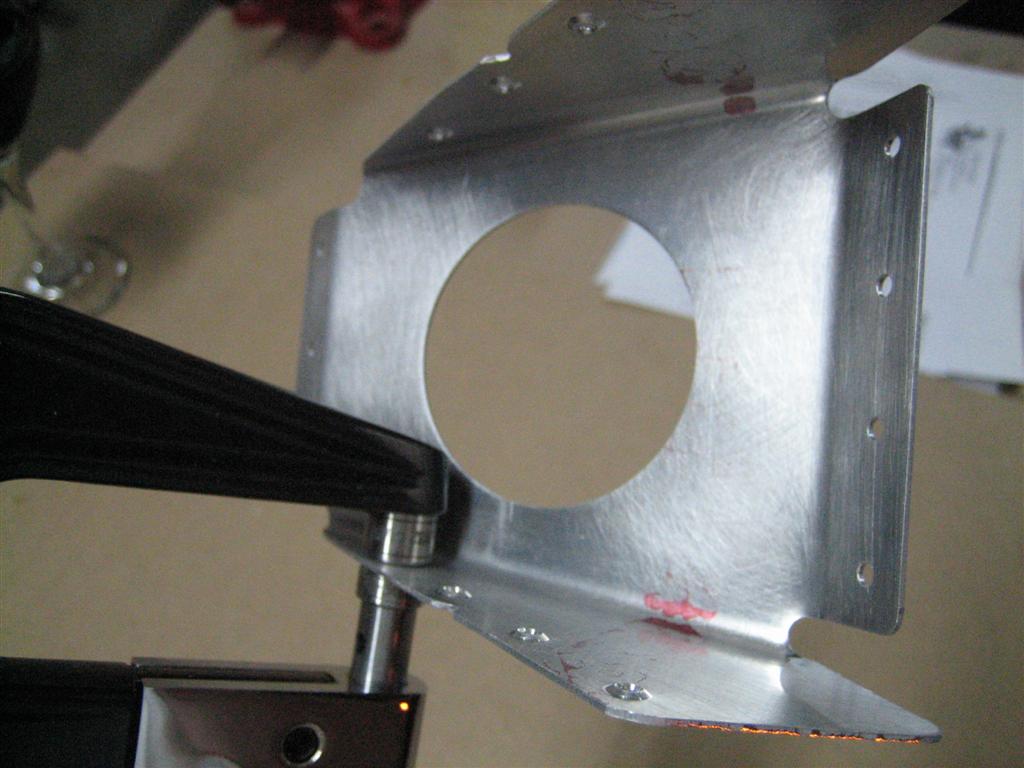
More dimples.

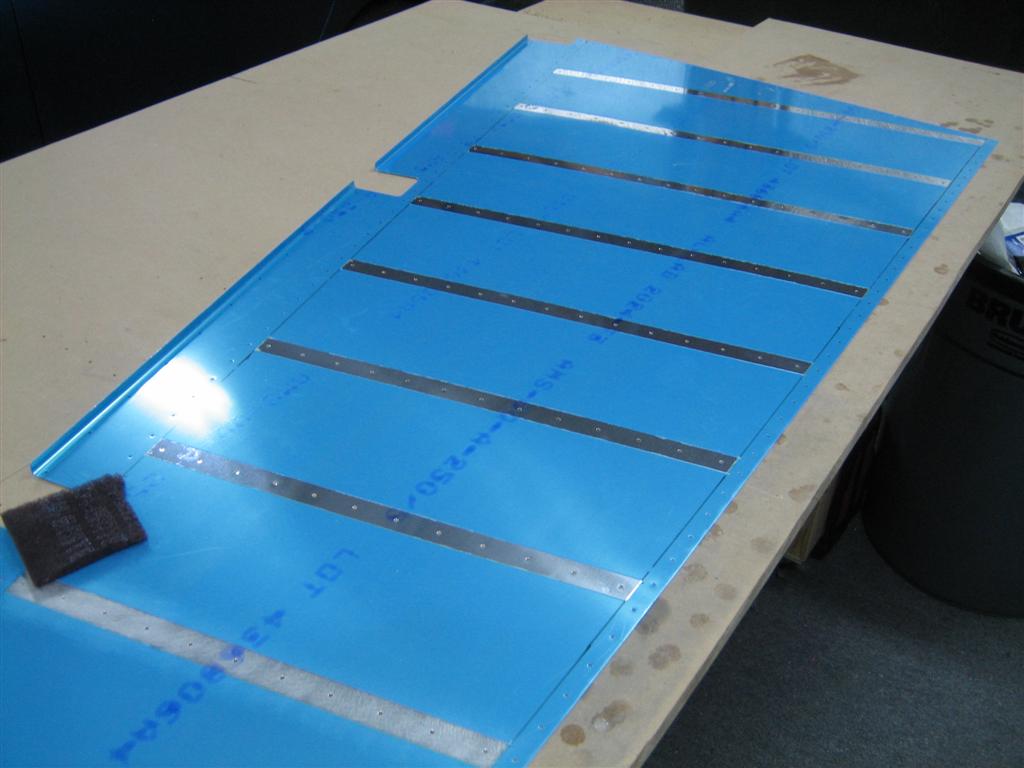
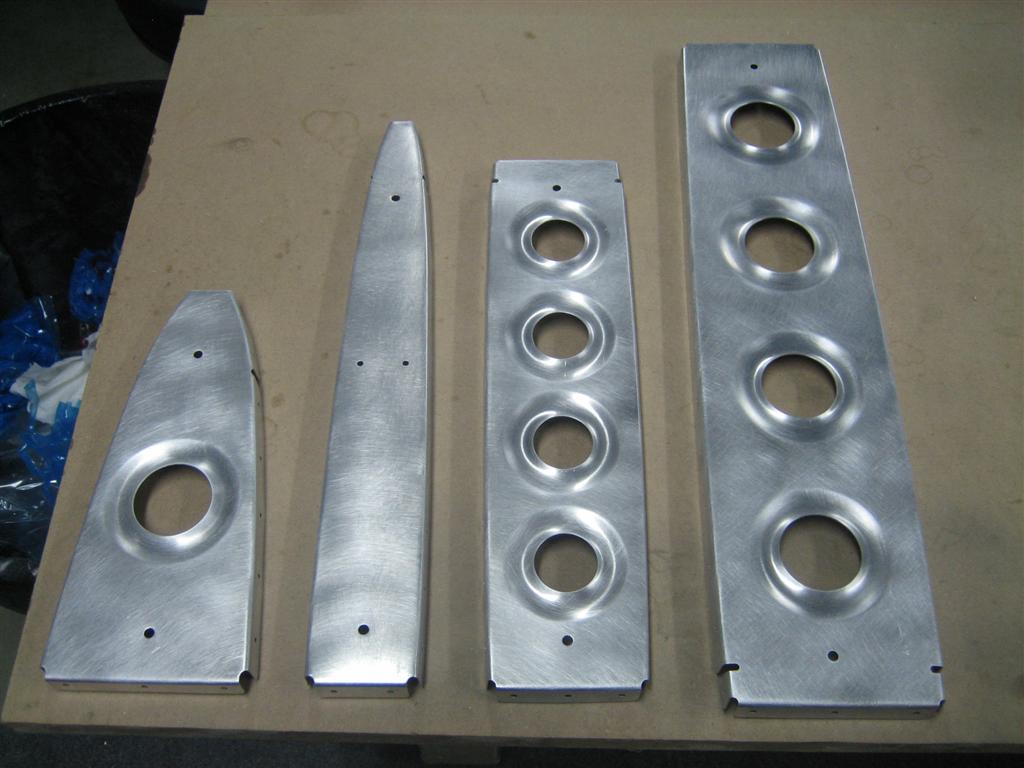
After the primer dried on the three pieces I primed tonight, I put them back on the table and examined my progress. Still a long way to go.
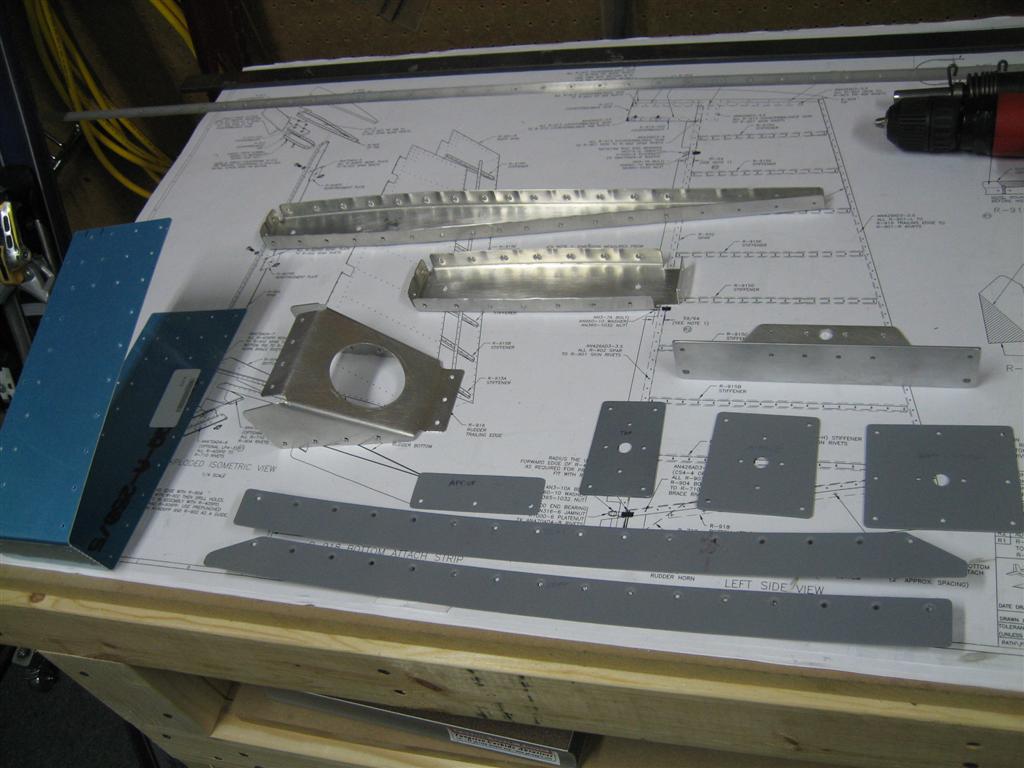
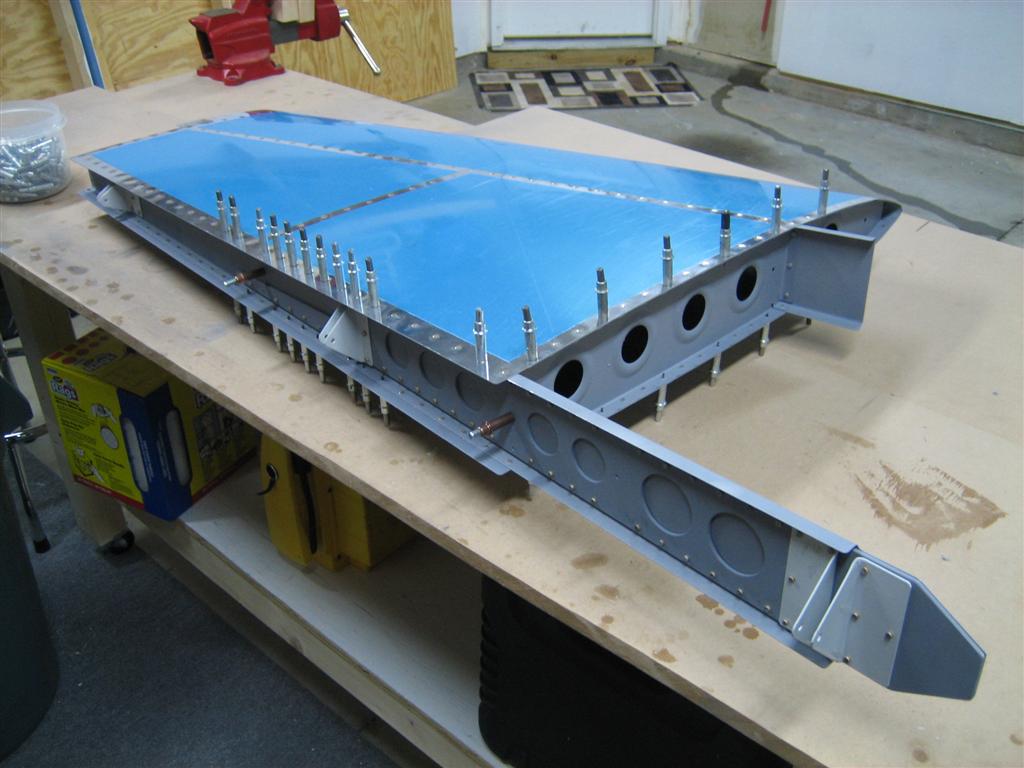
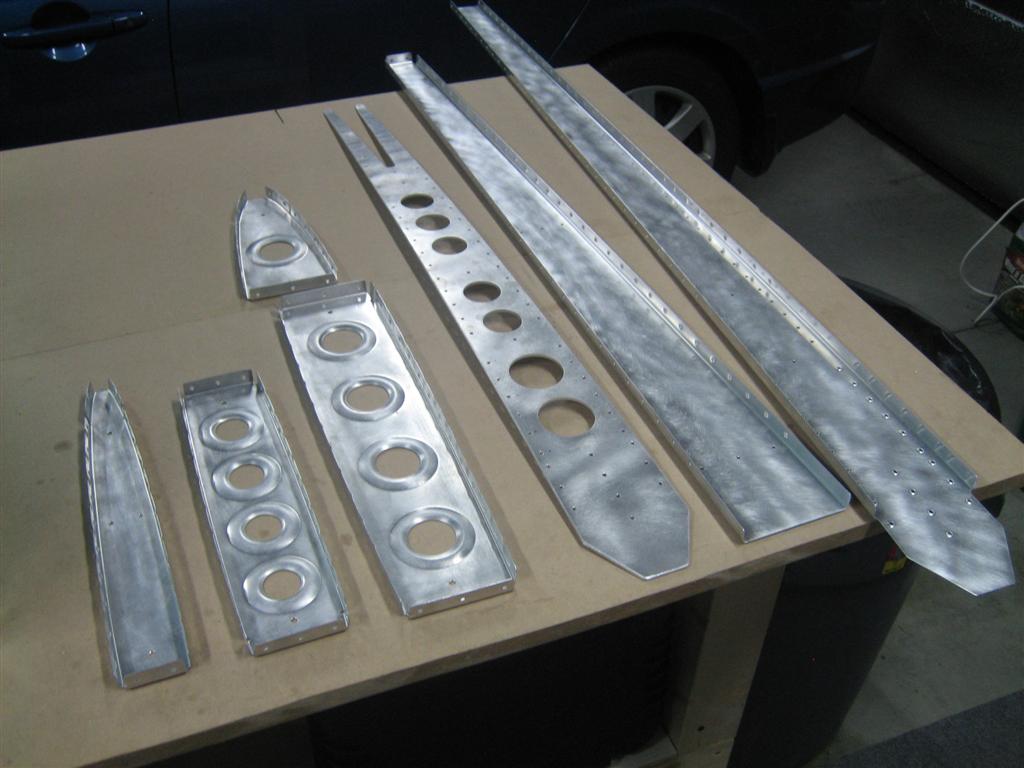
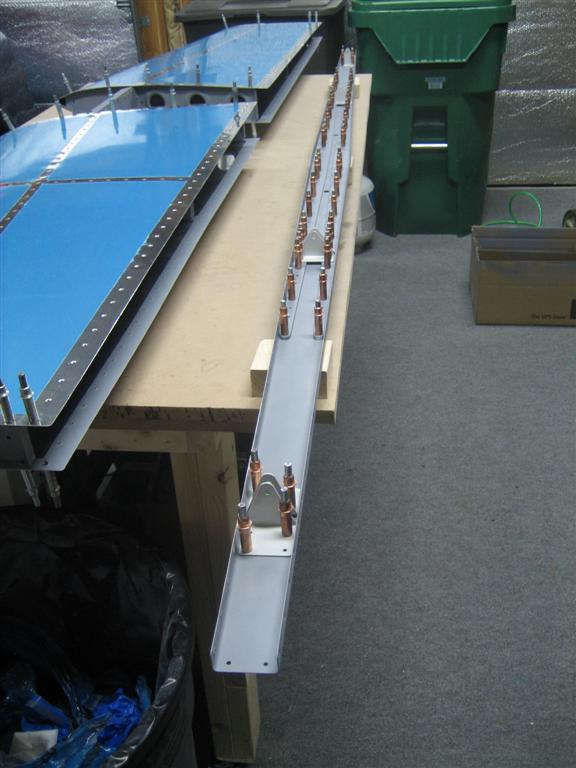
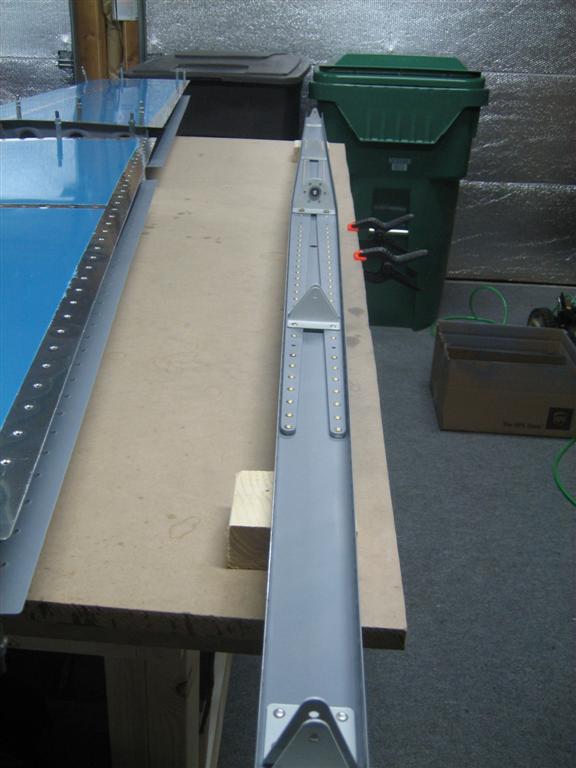
A shot of the "table of small rudder parts."

Enough work outside for the night. I grabbed the soldering gun, my wooden straightedge, and the R-913 counterbalance skin and headed inside to devinyl.
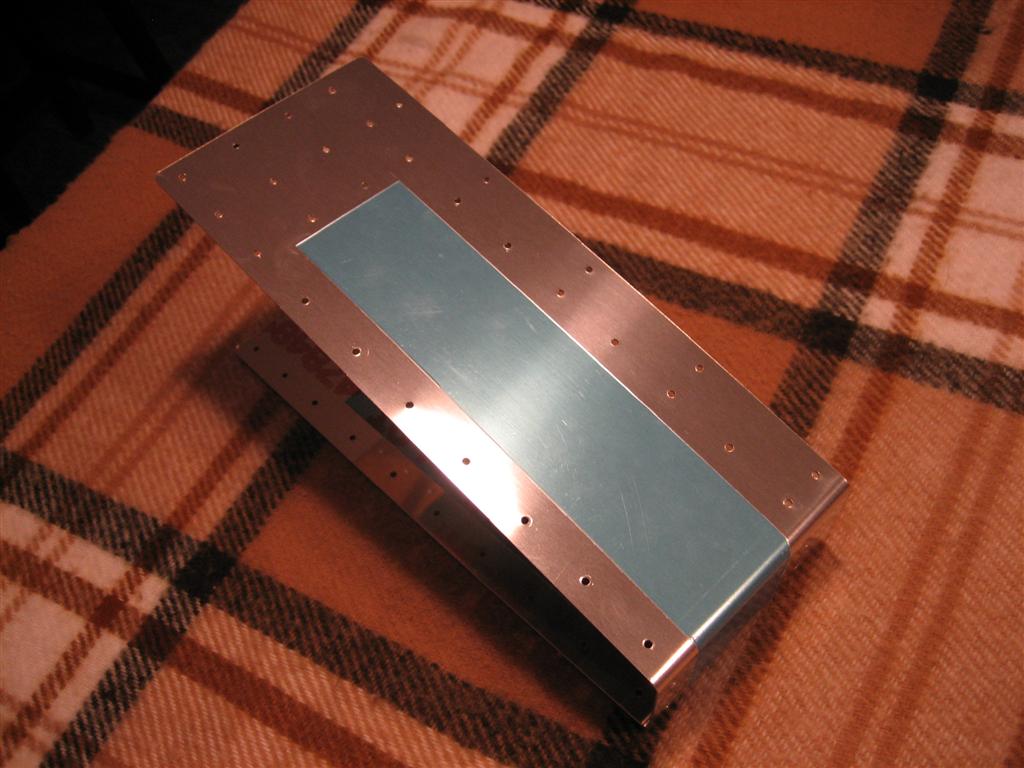
Pretty, but maybe overkill.

I decided to leave some of the vinyl on here to save on primer on the inside and protect the finish on the outside. I think the amount of primer weight I am going to save by masking with the vinyl is minuscule compared to the parts I will inevitably need to re-prime. But, if I pulled off all the vinyl, and primed the entire interior surface, I would always know I was carrying around more primer than I needed to be. (It’s all about figuring out what you can sleep with at night.) While I am sure I will add more than plenty of unnecessary weight in other areas (all of the nutplates I am going to add), not doing this would make me feel lazy.
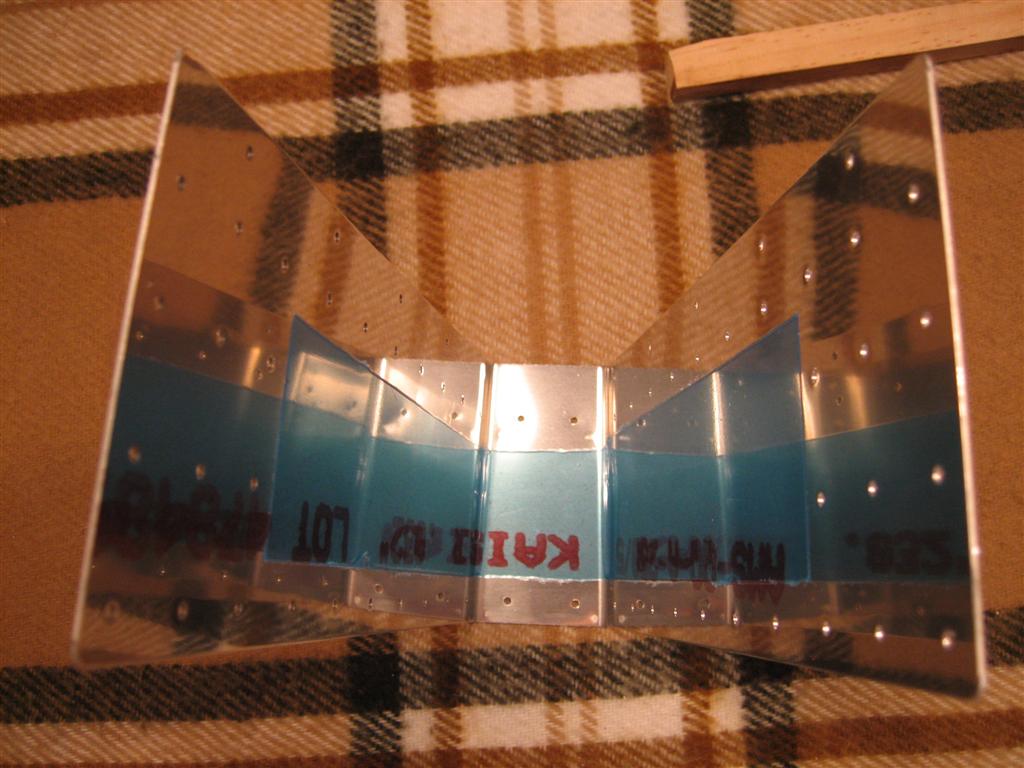
R-913 Counterbalance skin interior.

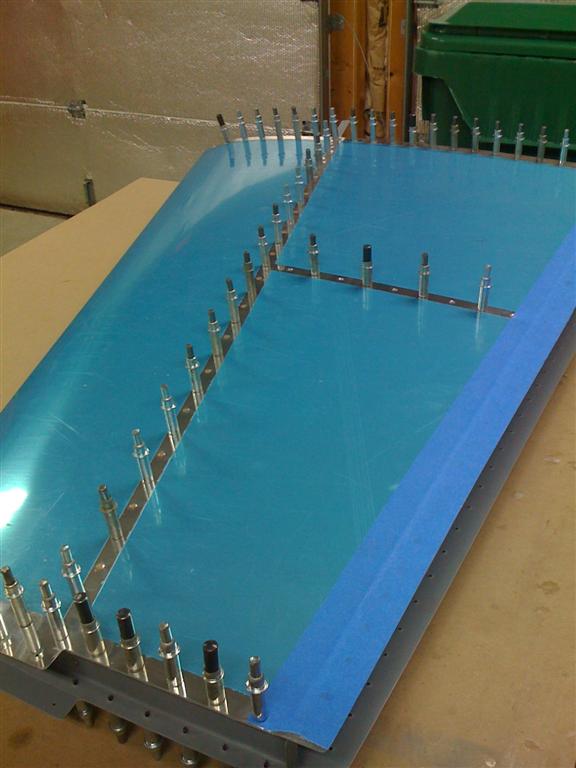
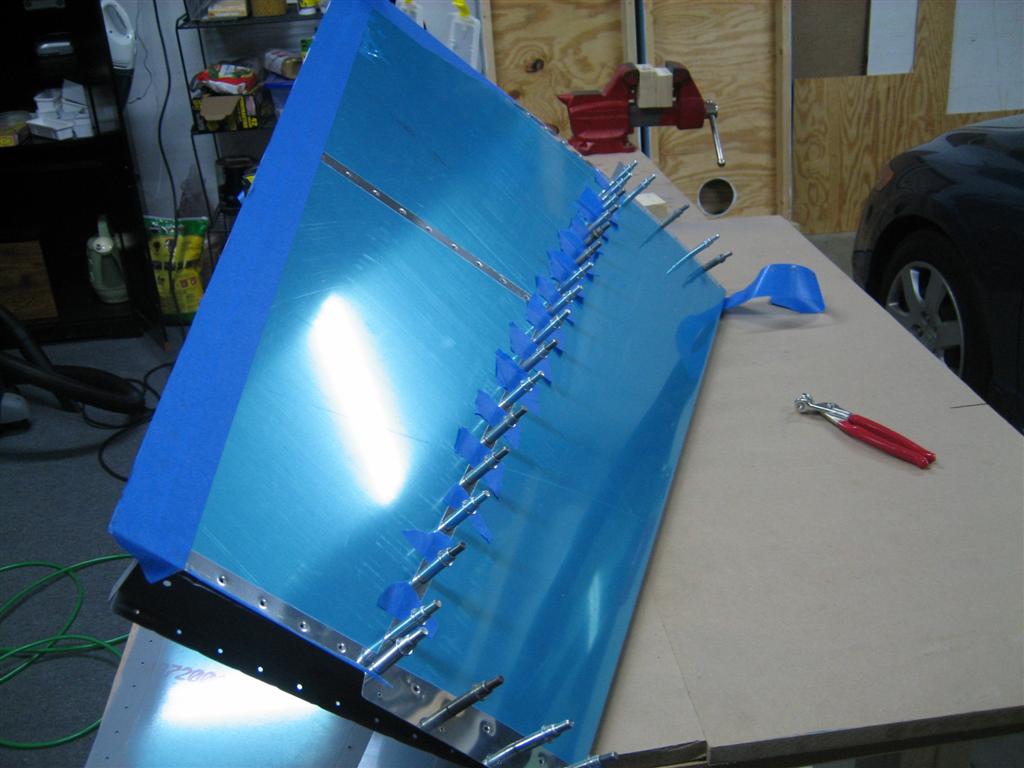
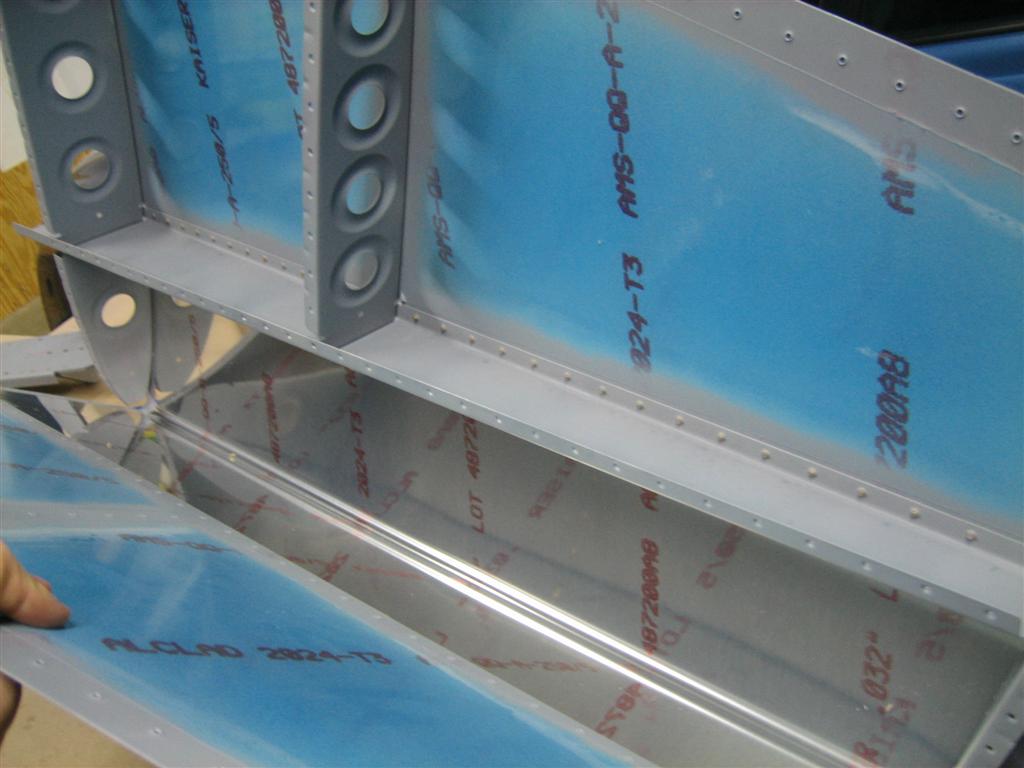
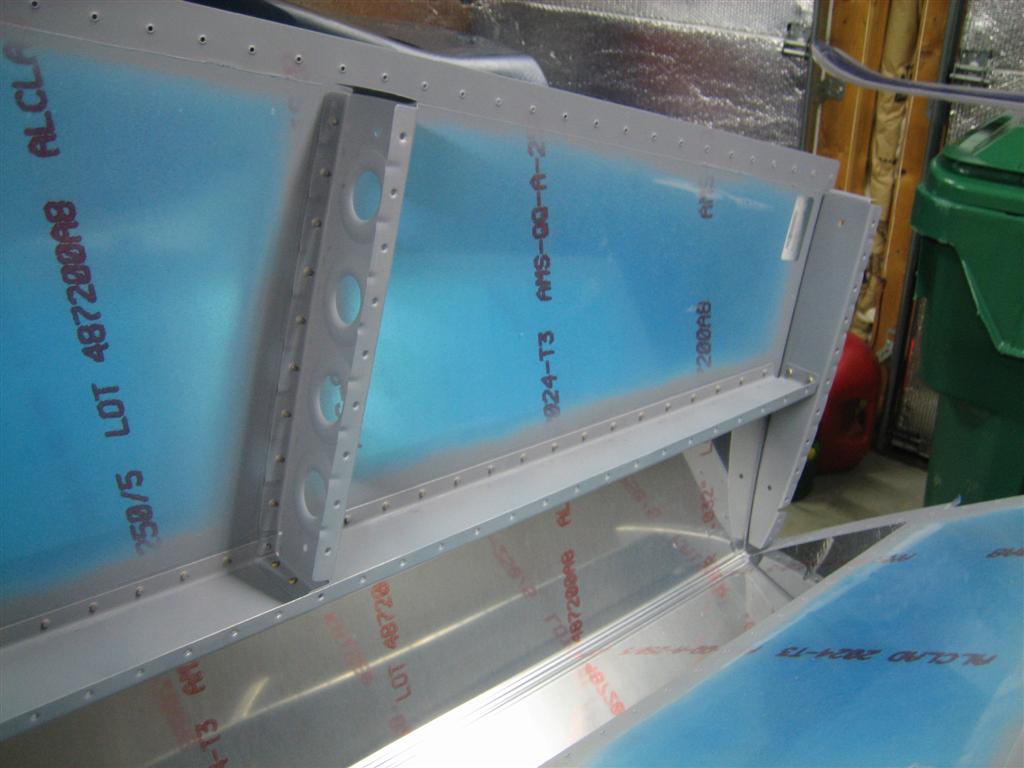
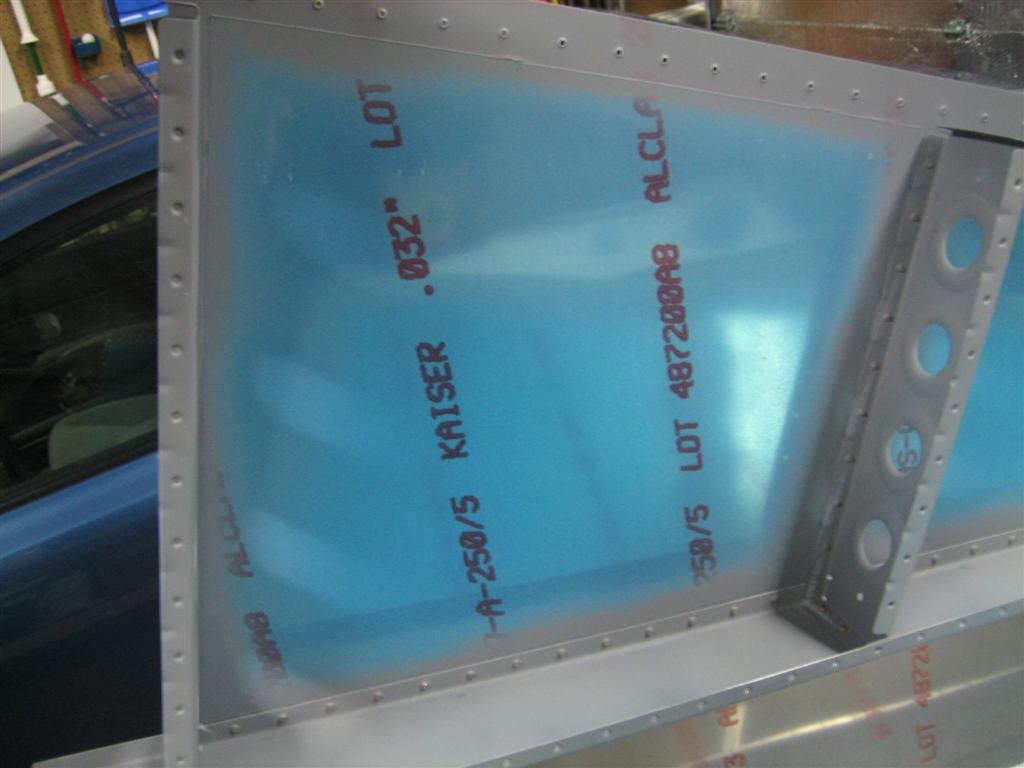
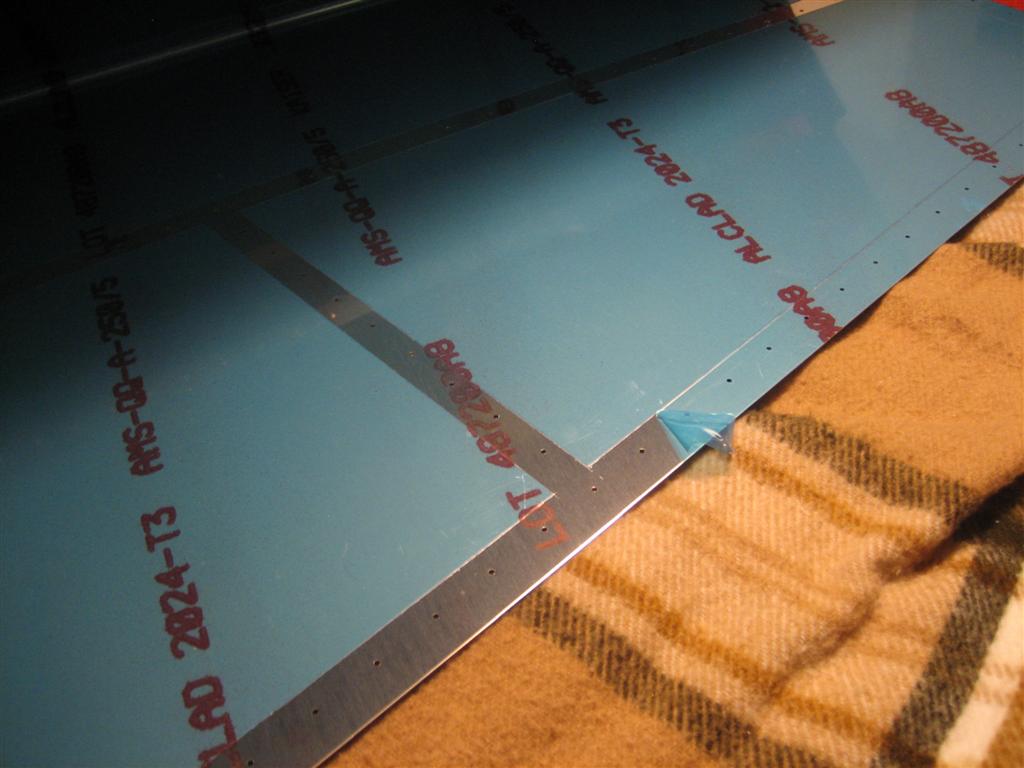
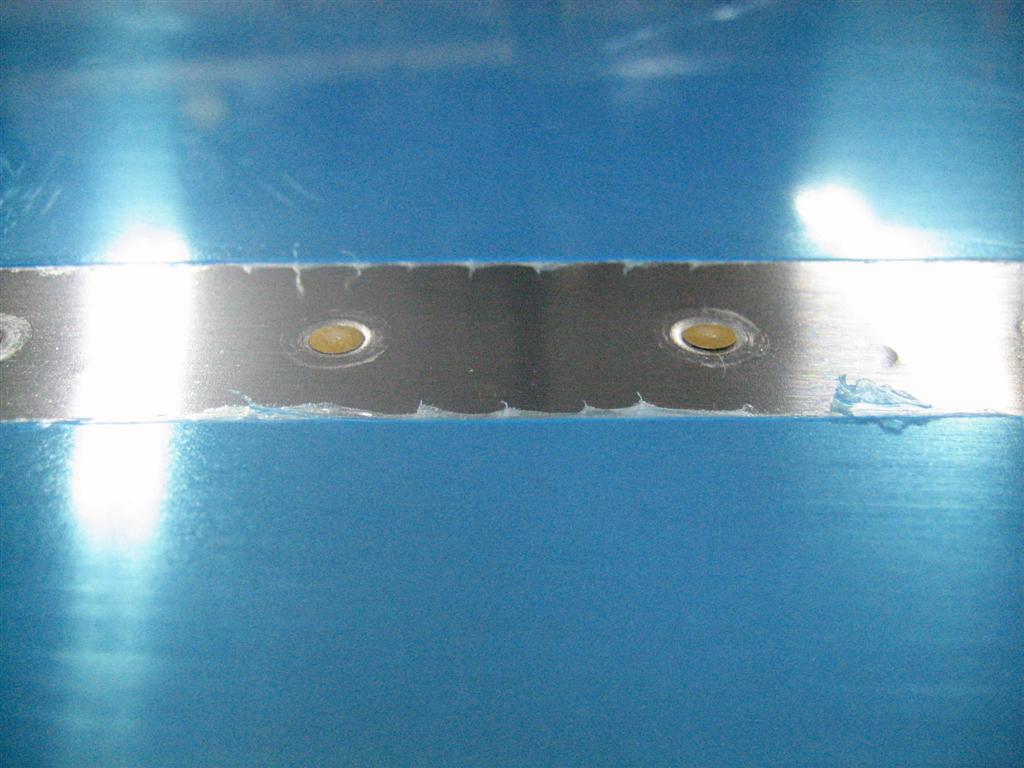
Next, I grabbed the R-901-R (right rudder skin)0 and pulled it inside to devinyl. Notice on the left that I made the cuts on the trailing edge (rudder is upside down in this picture) but haven’t pulled off the vinyl? I am going to leave the vinyl on while I prime the rest of the bare metal areas, then remove the trailing edge vinyl. This area doesn’t need to be primed, as it will get scuffed up with a scotchbrite before using Pro-seal to glue the two skin trailing edges and trailing edge wedge together.
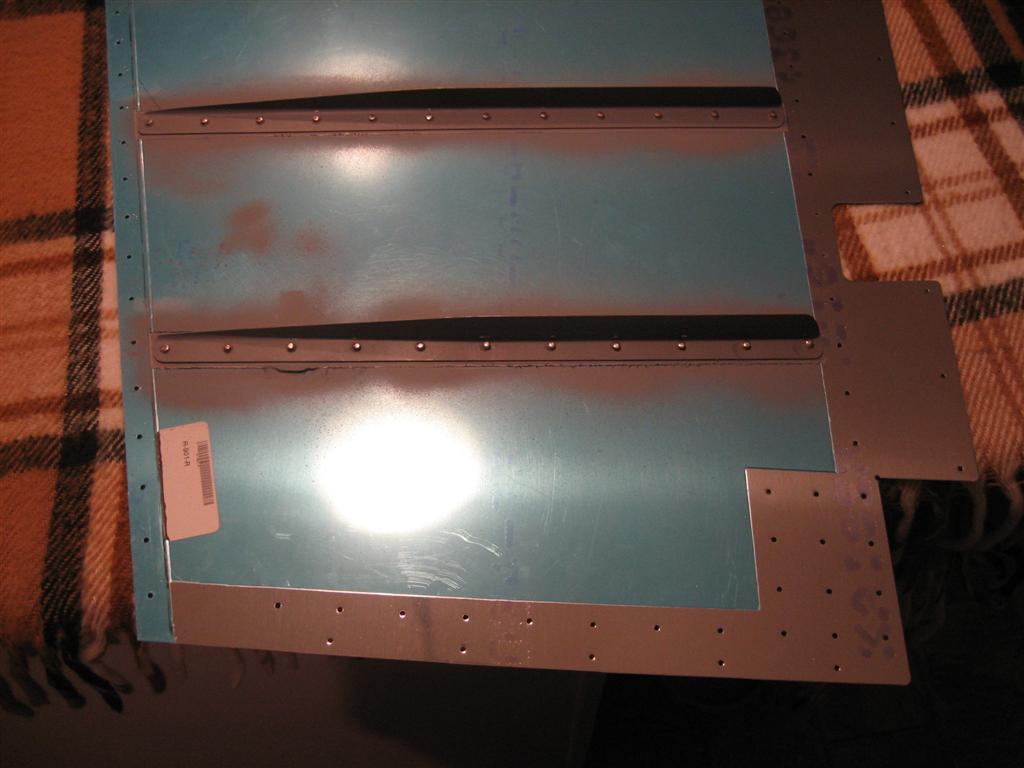
Look at me, I've thought ahead!
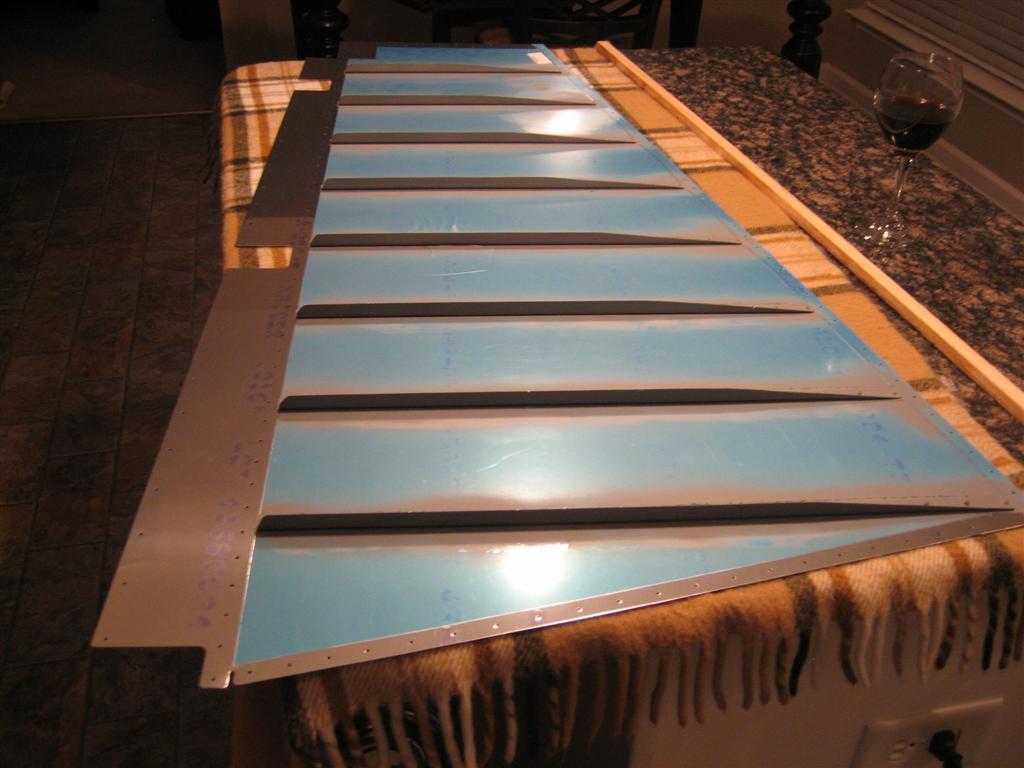
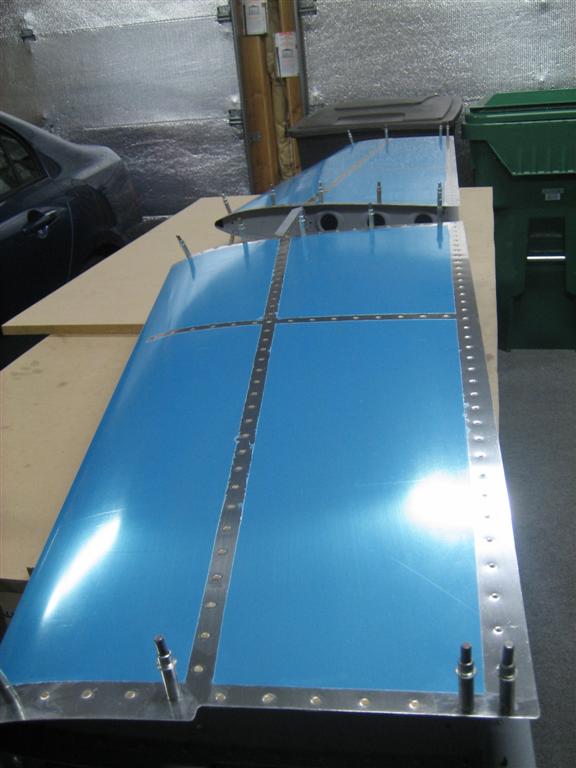
Another shot of the right rudder skin, this time right-side-up. (Also, my fancy-pants wooden straight edge and a glass of 7 Deadly Zins Zinfandel.)

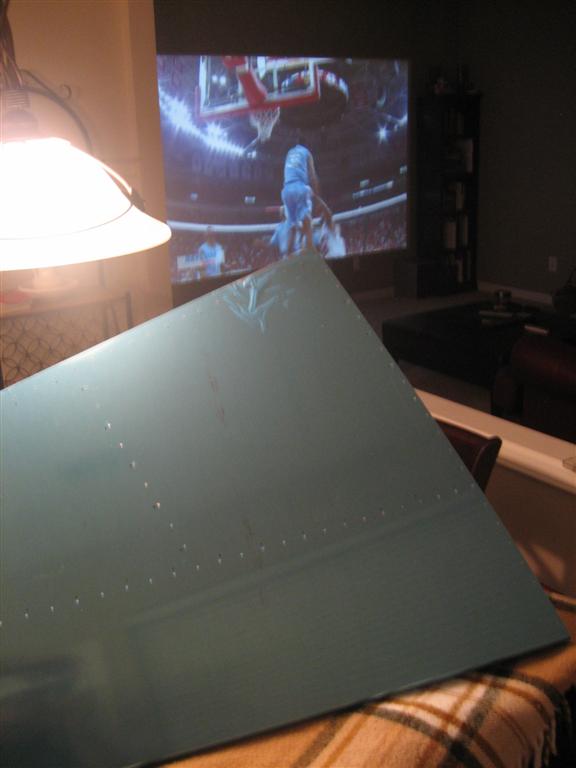
Next, I flipped that bad boy over and did the exterior. Here’s a shot before I’ve pulled some of the vinyl off.
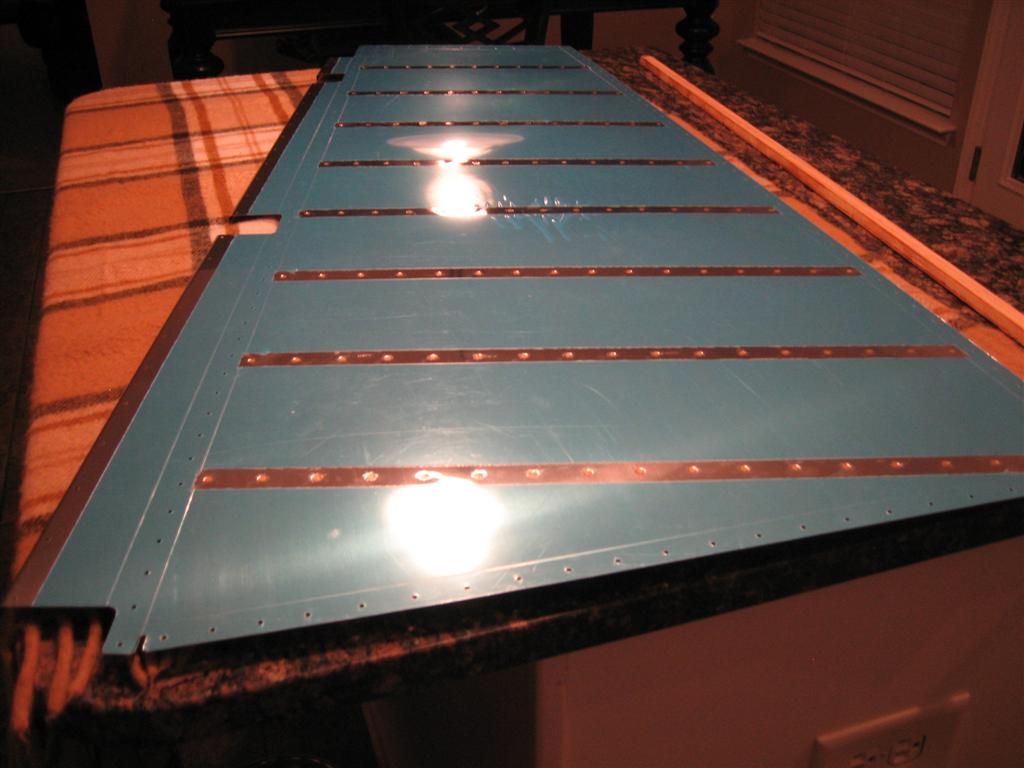
I probably should have pulled more of the vinyl off of the leading edge, but it was just two more lines, and now I have a little protection on the leading edge while I am rolling and assembling.

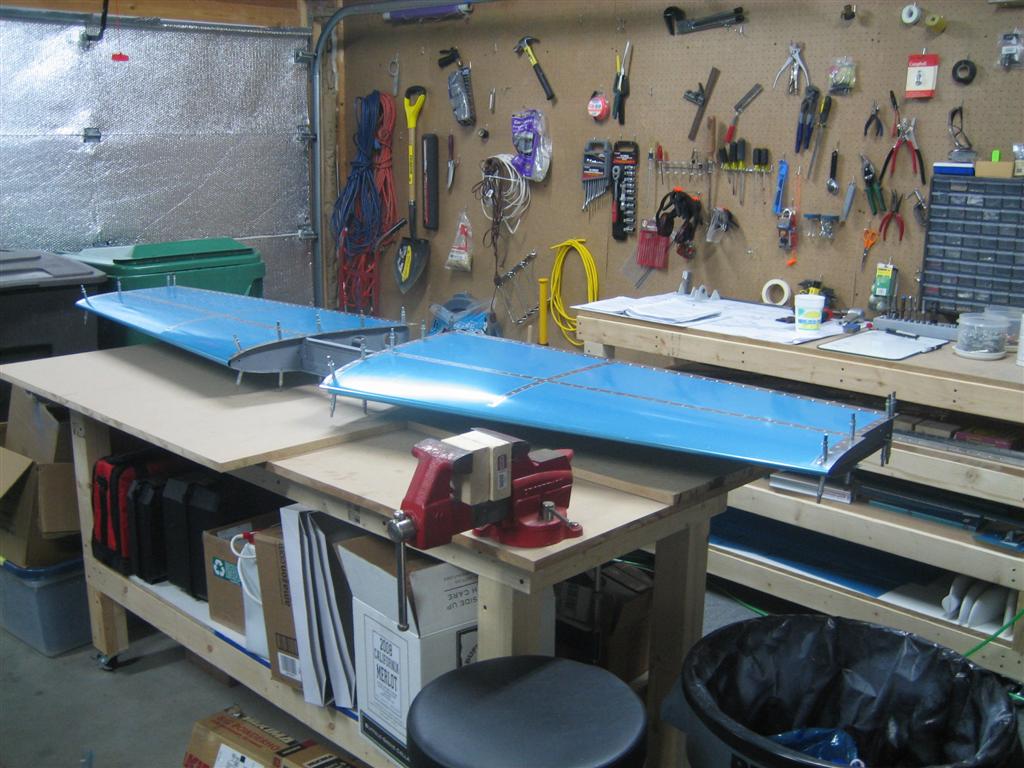
Repeat for the left skin, and then I took both back outside and stored the left skin on the top shelf of my second toolbench.
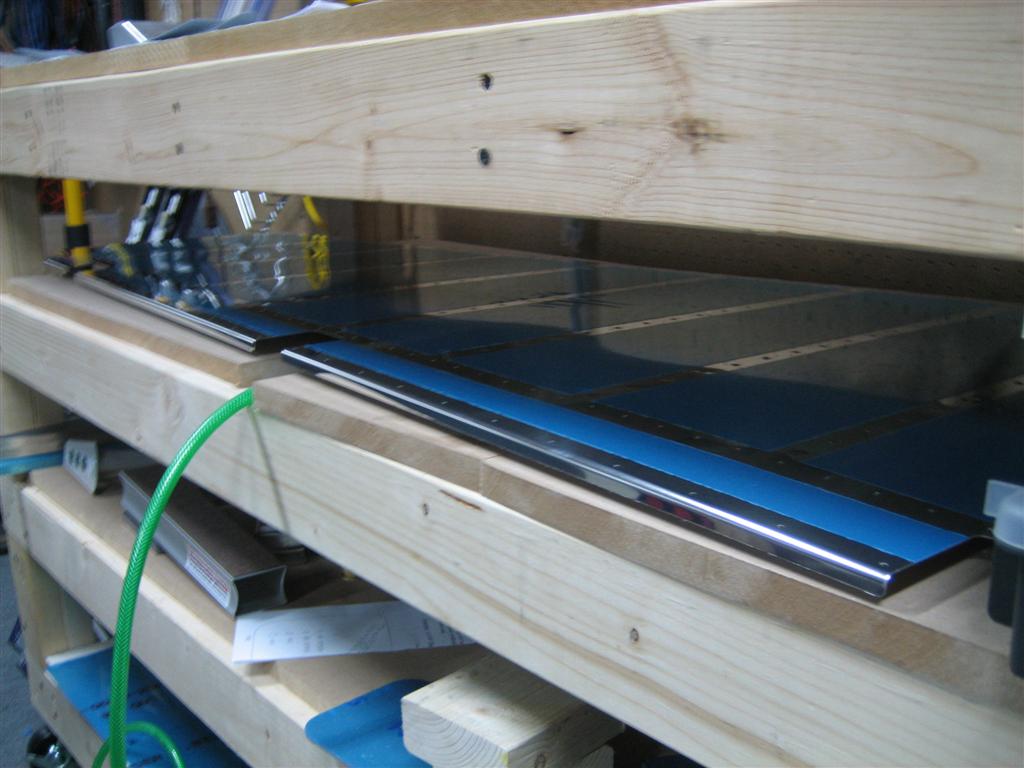
I'm embarrassed that I don't have a one-piece shelf for the top shelf of my workbench. Don't judge me.

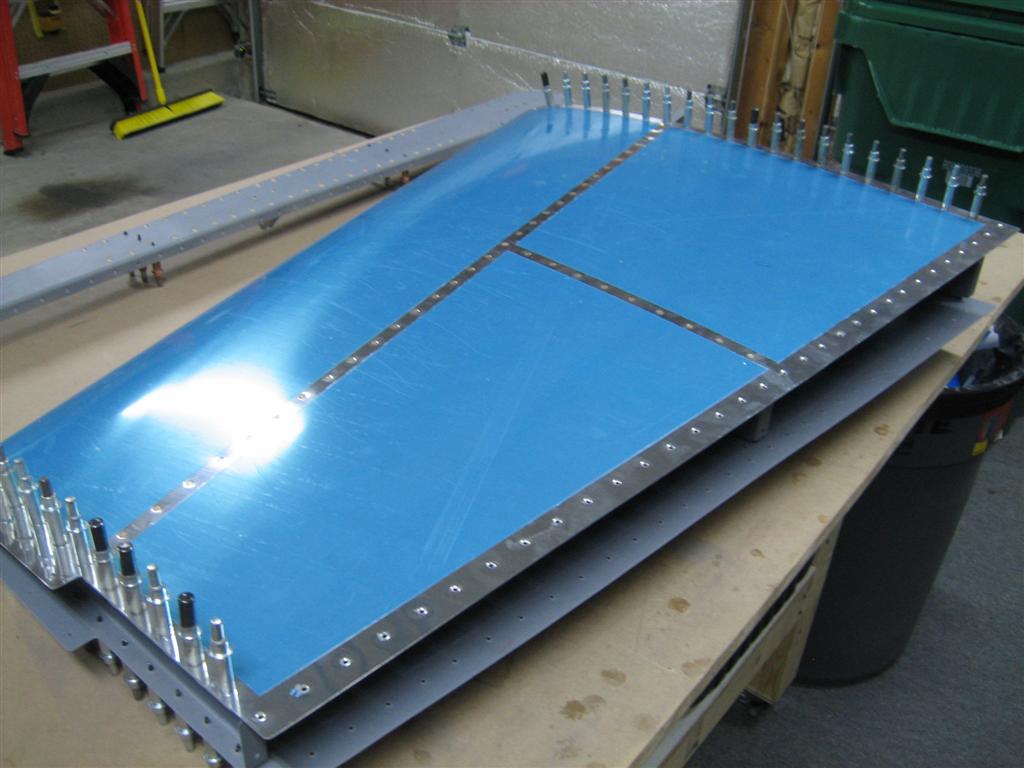
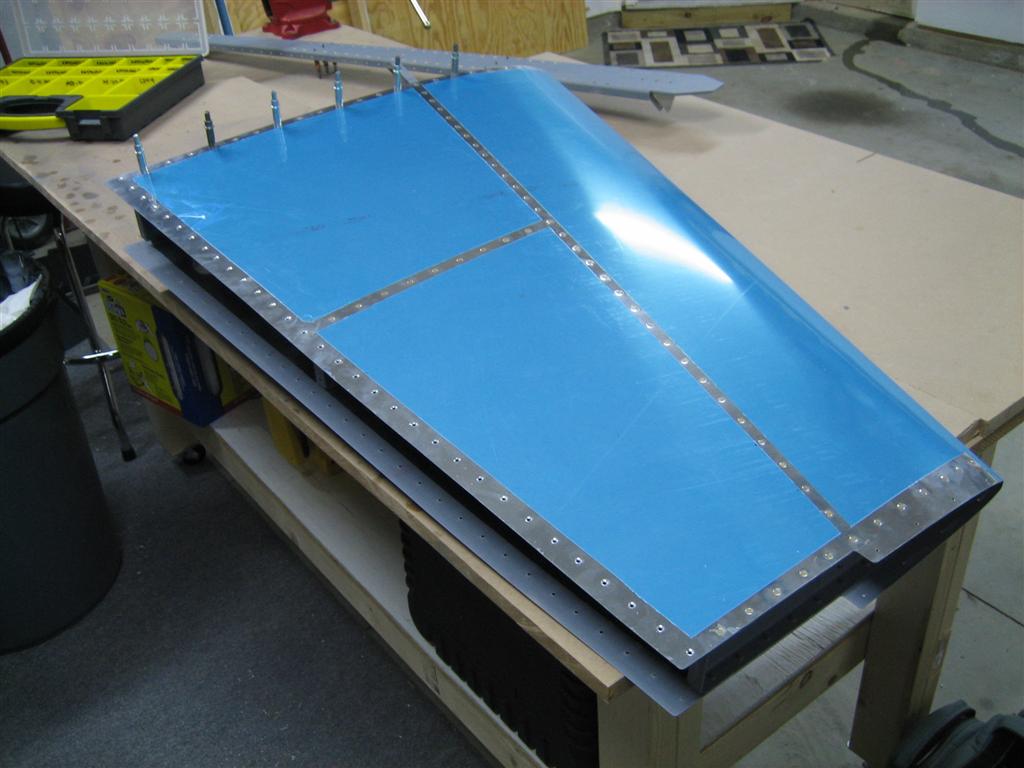
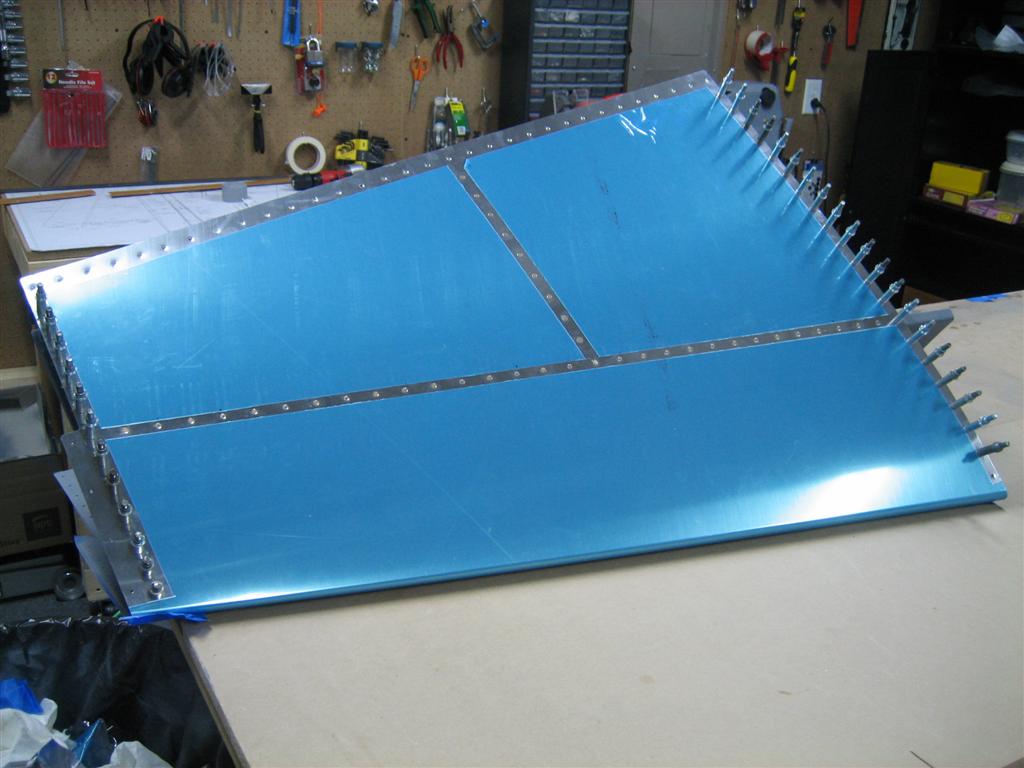
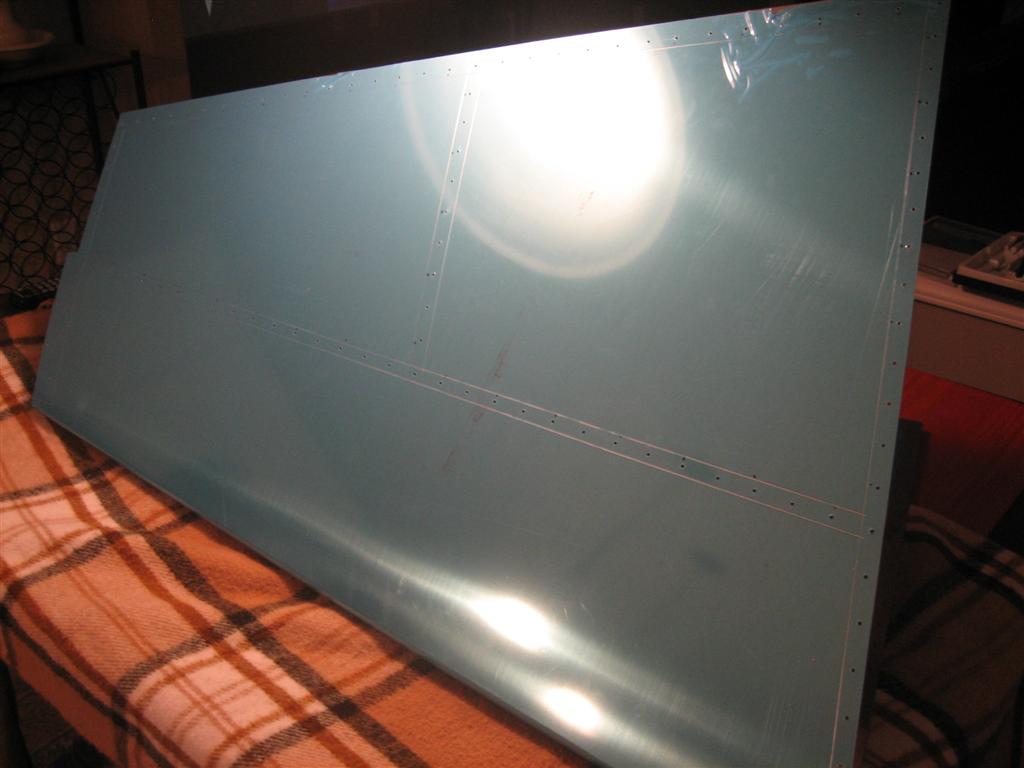
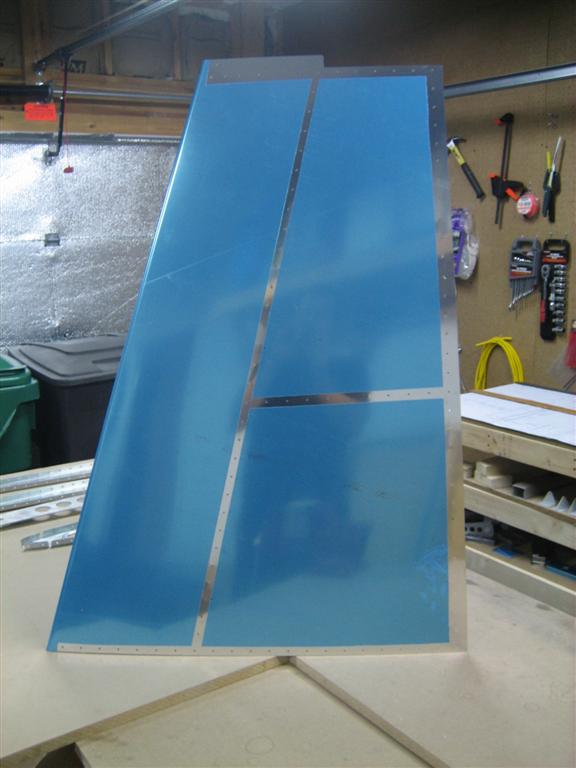
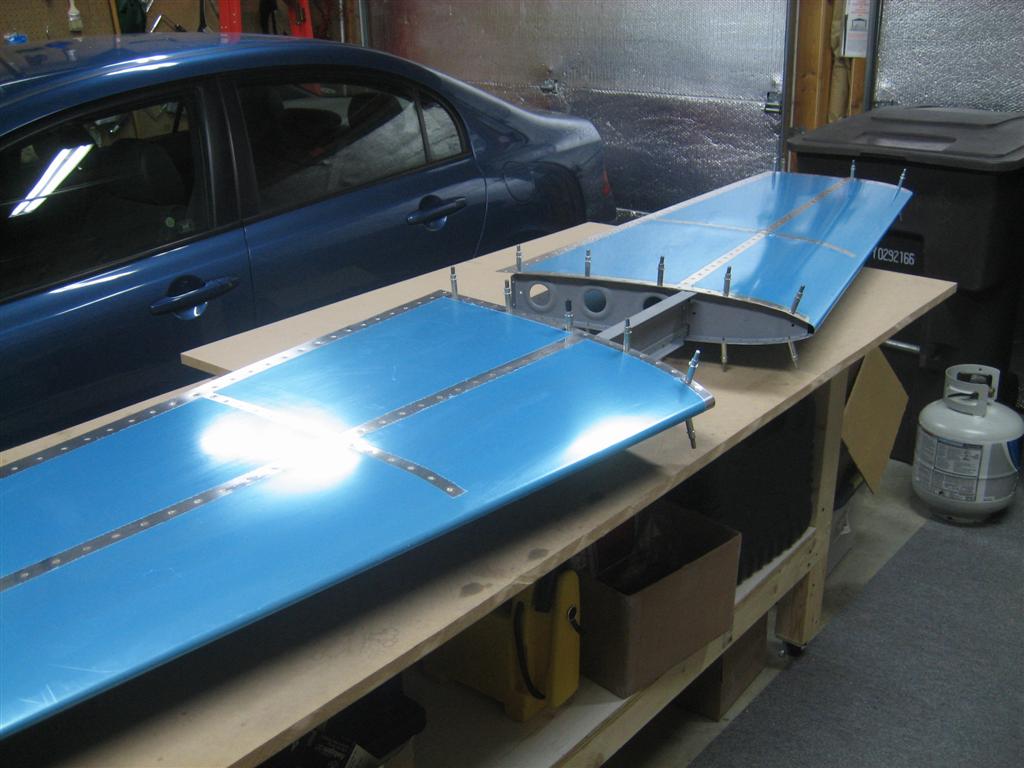
And a finished shot of the right skin, back out on the workbench.
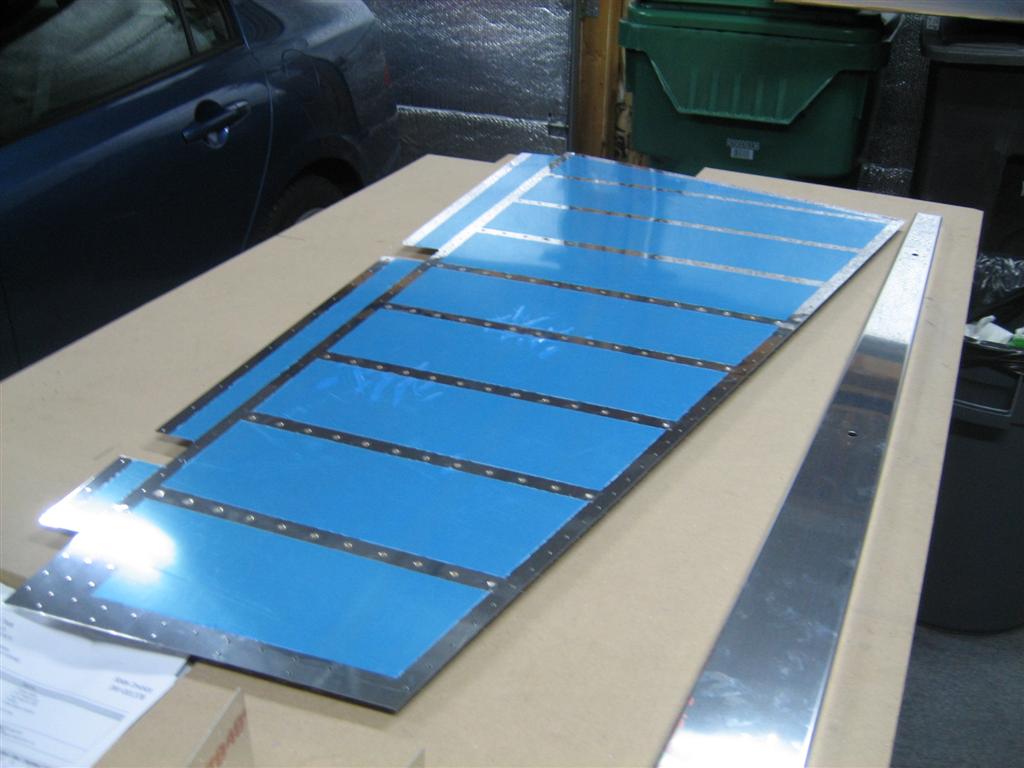
I like these devinyled pieces. Can't explain it, but I like them.

I was using the clock in the kitchen to mark my progress, and decided I was going to stop at 9:30pm to head to bead…except (yeah, you know where this is going)…I forgot to reset that clock after the time change. It was actually 10:30pm and I had put in 2.5 hours. Great for airplane progress, bad for my sleep debt. I’m not going to put in any time tomorrow, need to catch up on sleep. See you in a couple days.

Prev | Next


Skin Devinyling, Stiffener Dimpling

February 21, 2010

Prev | Next

We got a ton of work done on the house this weekend (paint, patio furniture), and a little work done on the airplane.

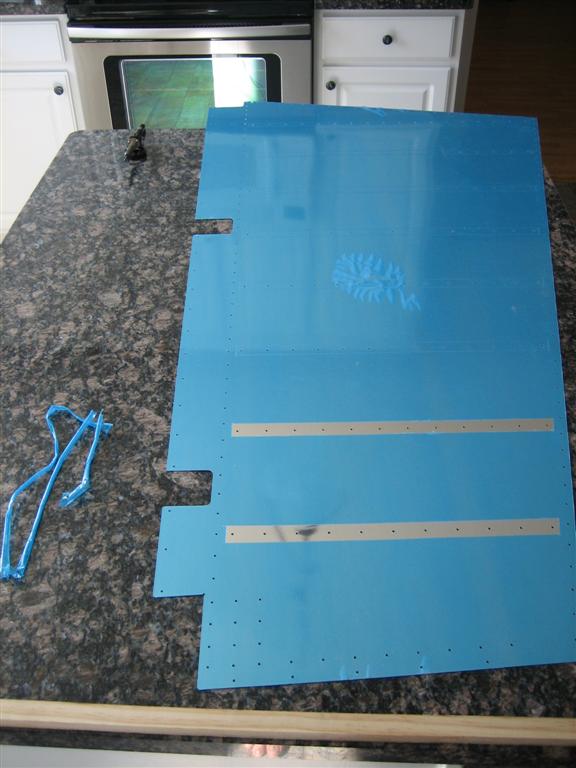
Yesterday morning over coffee, I brought the right rudder skin into the kitchen and started devinyling. After giving it a lot of thought, I am only going to remove the vinyl (and then scuff and prime) the rudder stiffener locations right now. Later, after matchrilling the skins to the skeletons, I’ll devinyl, scuff, and prime those mating surfaces.

A couple strips done.

After finishing up the exterior side of the skin, I flipped that bad boy over and started on the interior side. I was more careful about tracing lines here, because this is where the primer will go. (Although no one will ever see the inside of the rudder skin once I have it assembled.)

Here's my wooden stick I use to devinyl in a straight line.

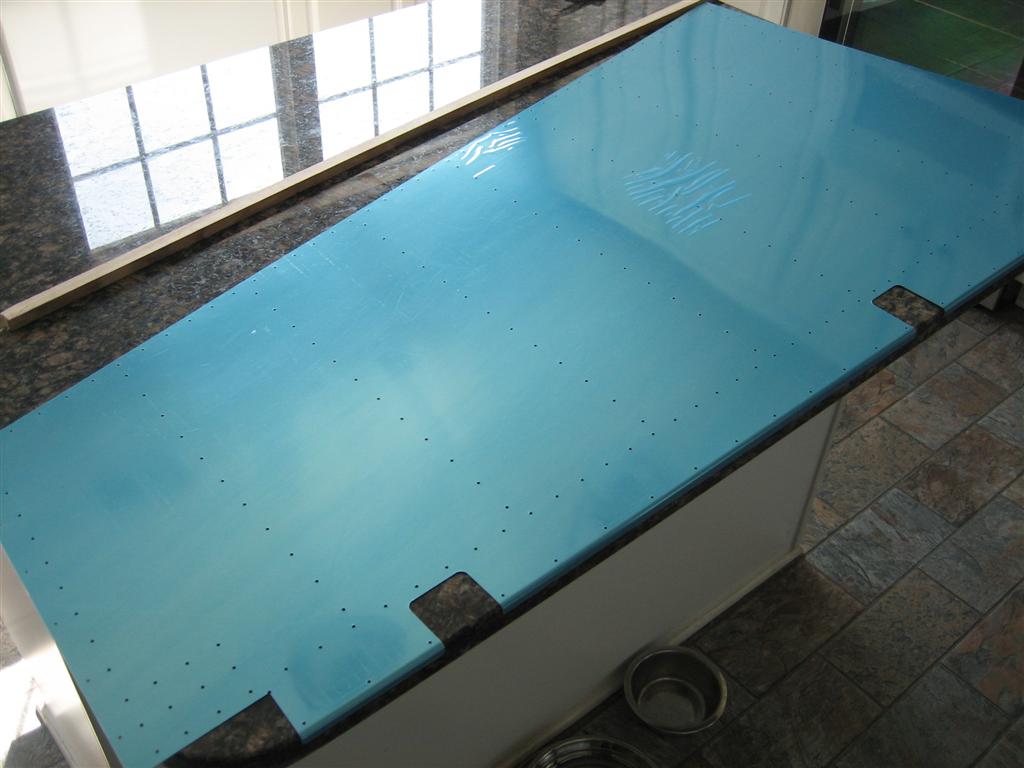
After finishing the right skin, I brought in the left.

Here we go. Hmm. Dog bowls are empty, I think the pups must be hungry.

Here is the interior side of the left rudder skin.

Pretty devinyled strips. I think the exterior of the skin is done, too.

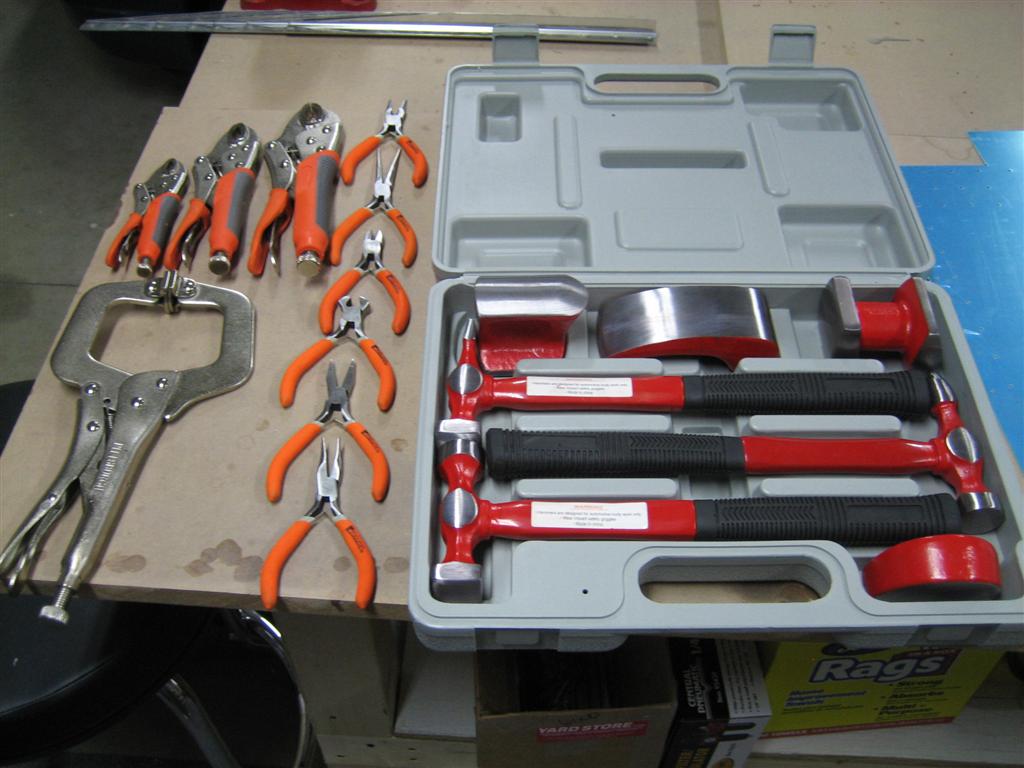
Then it was off to do some errands, one of which was a stop by Harbor Freight. I got a mailing the other day, and they had some fantastic deals on some things I wanted.

7-Piece Body Repair Kit. First, the “body repair kit” was $19.99. Look at the 4 bucking bars in there! I don’t really care about the hammers, but my small bucking bar was not really cutting it for some of the rivets I needed to buck. The best improvement with these new bars…hand holds. They have little cutouts in the side for your fingers so you can get a great hold on the bar. I’m happy.

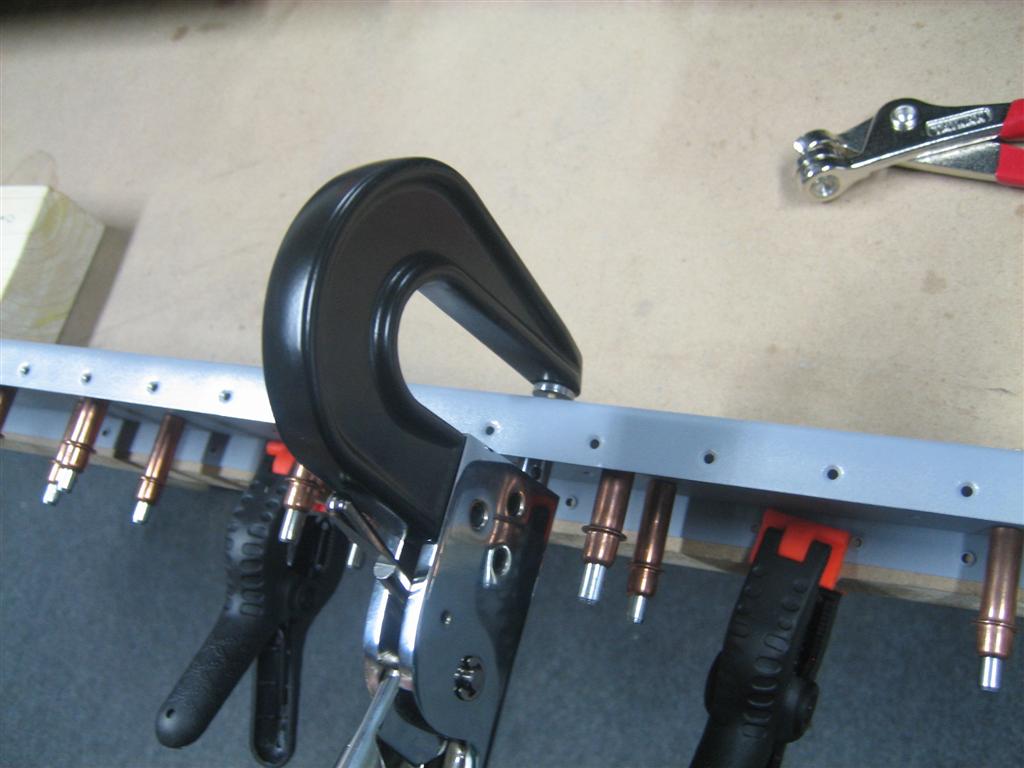
11″ Locking C-clamp. These come in handy for clamping things around flanges. I needed one of these, and ended up walking away from Harbor Freight for about $6.

3-piece locking pliers. I have a small set of needle-nose locking pliers and love them, I figured for $4.99 for 3, I couldn’t go wrong. The quality isn’t the best (the screw mechanism is a little sticky), but they should work.

6-piece presicion pliers. I have a couple of these from various places and I love them. 4 pliers, and 2 cutters. I’m most looking forward to the extra long pliers second from the top. Those will help me overcome my huge sausage fingers.

Hooray shopping.

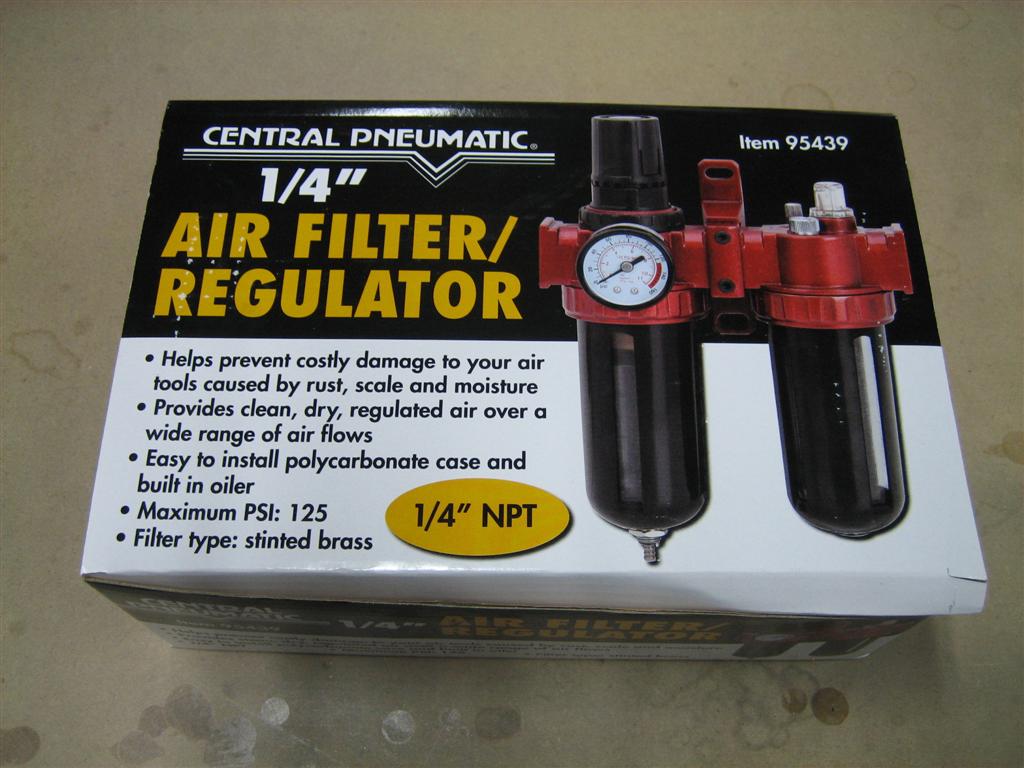
Also, I grabbed this $19.99 air filter/regulator. I wanted a better regulator/filter/oiler, and this one looks like it will fit the bill. I hope the quality is high enough to not disappoint me.

Air filer/regulator. Should work well, and will relieve me from having to oil my tools every day.

Next, I spent a ton of time deburring the skins. I think it is something like 119 holes per skin, times two sides, times two skins. Yes, my fingers hurt. Here I am scuffing the inside of the skins after deburring.

Deburring and scuffing.

I was getting fancy with the camera, so here’s a closeup of one of the strips after deburring and scuffing.

Deburred and scuffed strip on the interior side of the skin.

And another picture of a strip before scuffing. This hole has been deburred, though. i should have taken a picture of an un-deburred hole for you. Sorry.

Deburred, but not scuffed.

While Mike Bullock has his Natty Boh, I have my Blue Moon (well, Rising Moon, their seasonal).

The moon!

Scuffing the left skin.

More scuffing.

All done!Finally, I finished scuffing the interior of the skins. After I get these all cleaned up (it will be harder to clean after dimpling) , I can get these dimpled and primed.

All done!

Here’s a nice closeup of me deburring the stiffeners.

Deburring the stiffeners.

After finishing deburring all of the stiffeners (which is two more deburr operations for each of the holes from the skins), I pulled out the squeezer and tank dies (for the skeletons, which I’m considering understructure).

I like playing with these.

I decided to go ahead and scuff and dimple the stiffeners now, while I can’t make any loud noises (post 10pm). I should have edge finished the stiffeners first, but I’ll still be able to use the scotchbrite wheel on them after they are dimpled. To save time, I’ll edge finish these while I am priming the interior of the skins later this week. Anyway, here are some dimpling shots.

Getting ready to dimple.

Squeezing.

The end result.

A few minutes of this, and the right stiffeners are done (still not edge finished, though).

Right side stiffeners done.

Wash, rinse, repeat for the left side.

Both sets of stiffeners done. Time for bed.

2.5 hours today. Boring, tedious work, but still the most fun a man can have with his clothes on.

Prev | Next


Started Rudder – Stiffeners

February 16, 2010

Prev | Next

Well, with the vertical stabilizer safely in the airplane storage room, it’s time to get started on another part. Next up, the (infamous) rudder. There are a lot of steps on the rudder that give a lot of builders a lot of trouble. I am confident, but will continue to use other sites on a daily basis before doing any work that evening. That’s worked out well for me so far, so I’m going to keep at it.

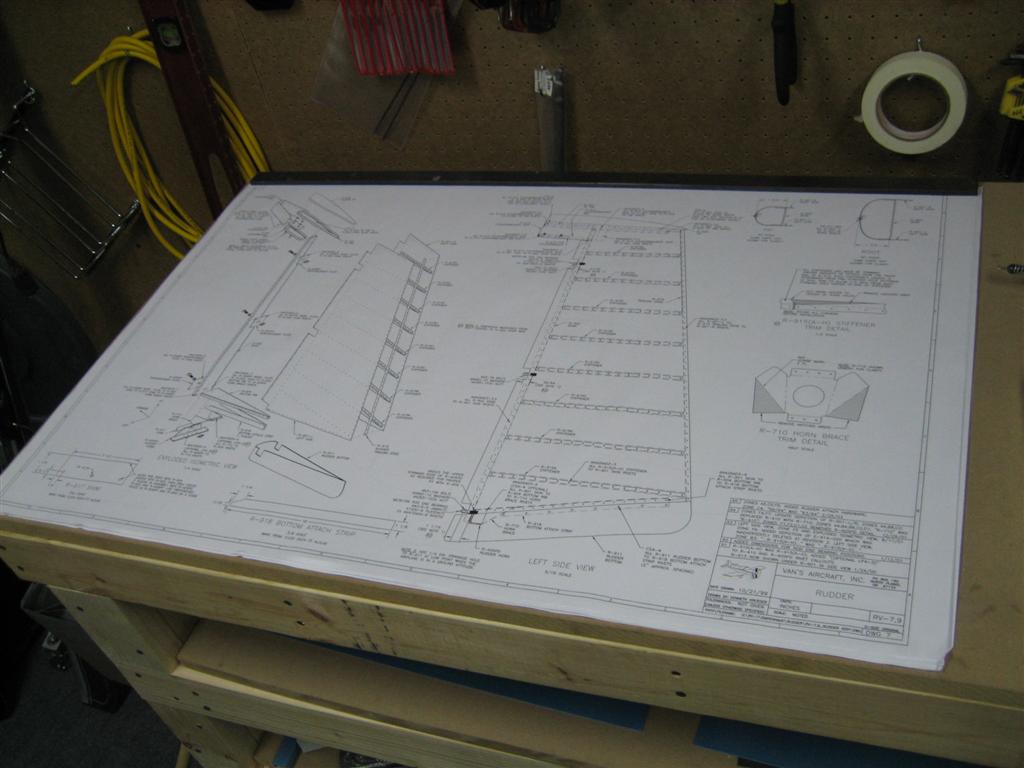
First thing’s first, the ceremonial plans change. I still keep the plans on my second workbench. Maybe someday I’ll find a place to actually hang them up.

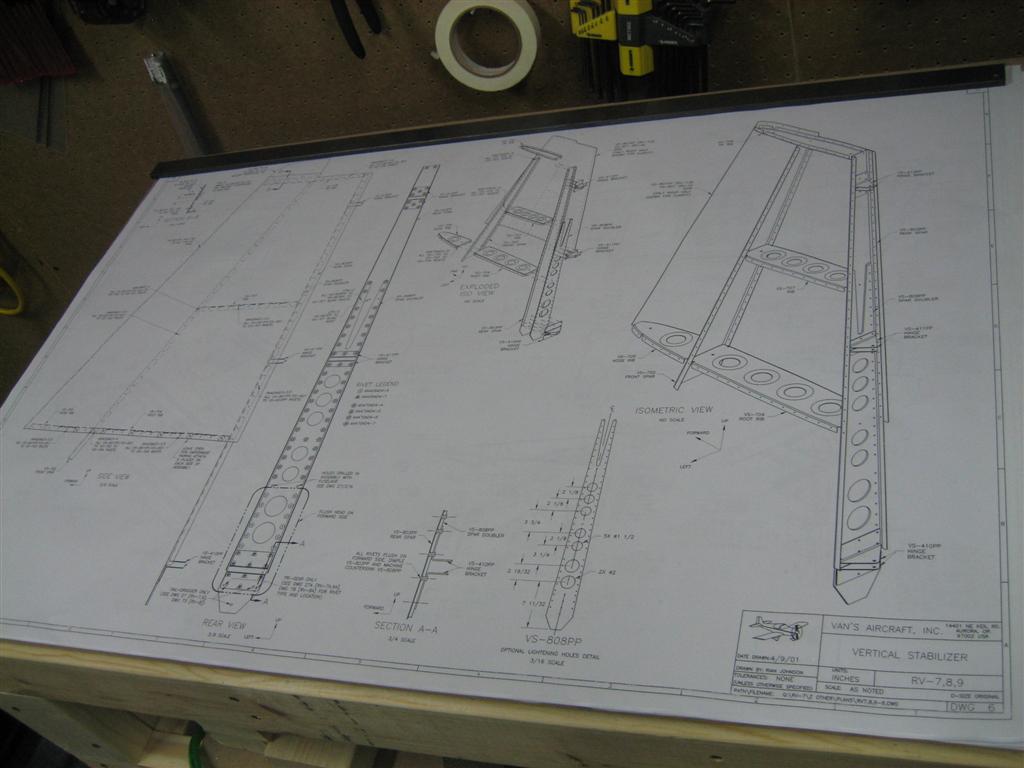
Drawing 7. The Rudder. (Cue dramatic music.)

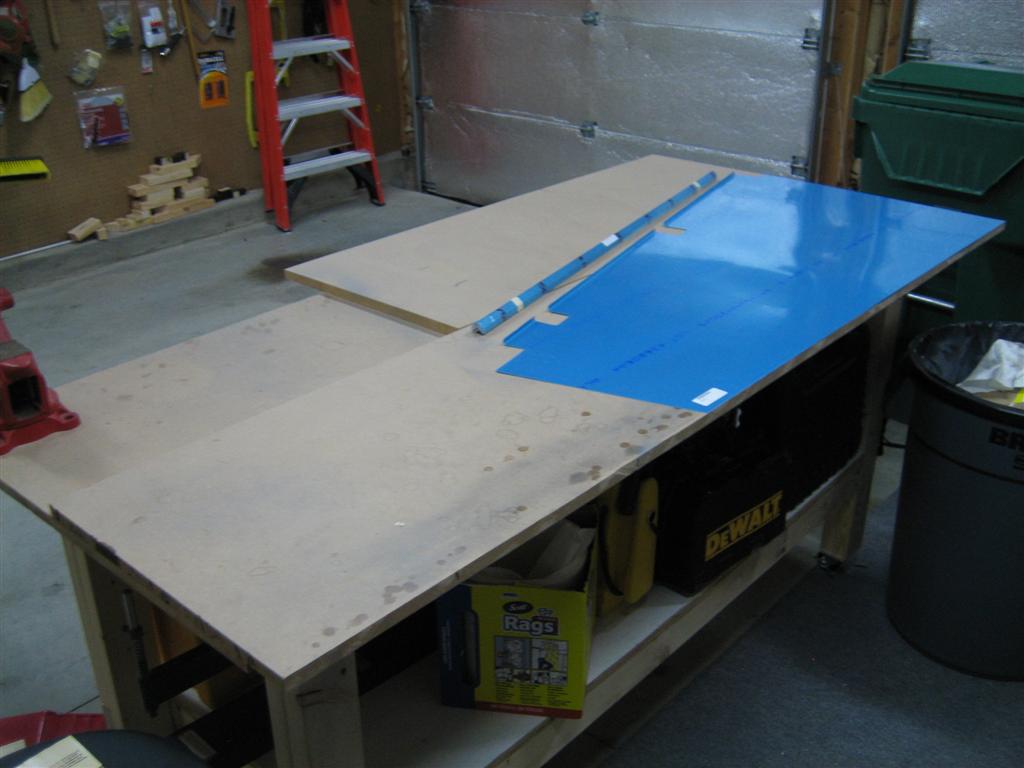
I spent a little time trying to figure out whether I will do the stiffener-to-skin dance on both sides at once, or just one side. You can see below that if I had another longer piece of MDF and maybe took my vise off the bench, I could set the skins on opposite corners and maybe do them at once, but I think I’ll just do one at a time, making sure I can reuse the holes I plan to drill into the table. (Drilling, and then clecoing, the stiffeners to the skins all the way into the table will allow me to keep everything very steady. Sounds like a good plan to me, and is pretty much standard given that Van’s suggests doing so in the construction manual.)

I'll have to do one skin at a time. I don't want to get too crowded, and I am not overly concerned with building efficiency.

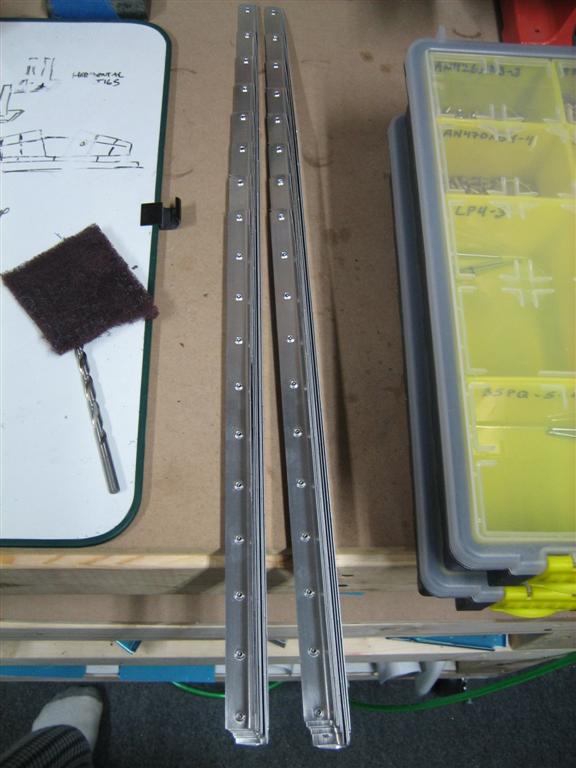
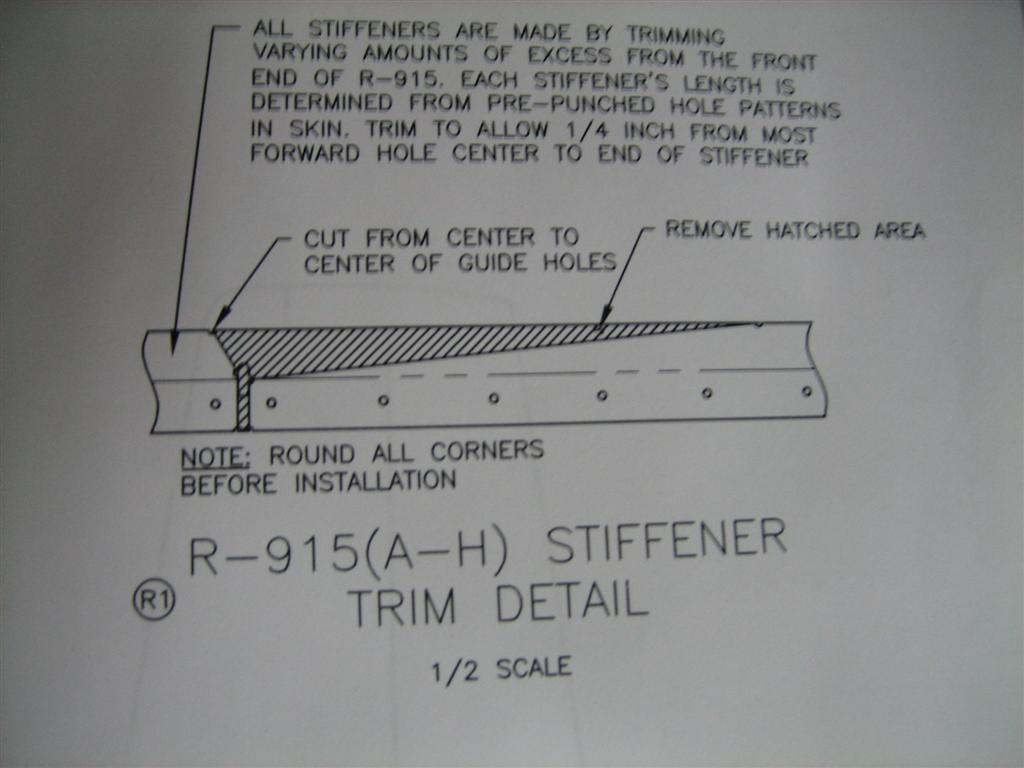
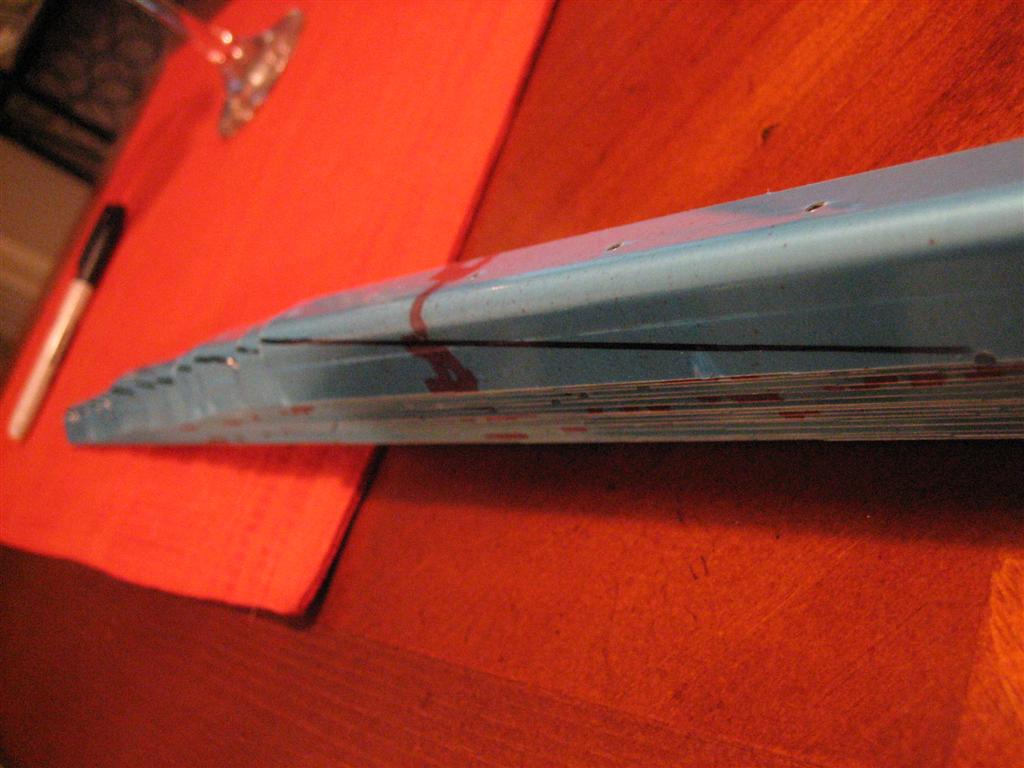
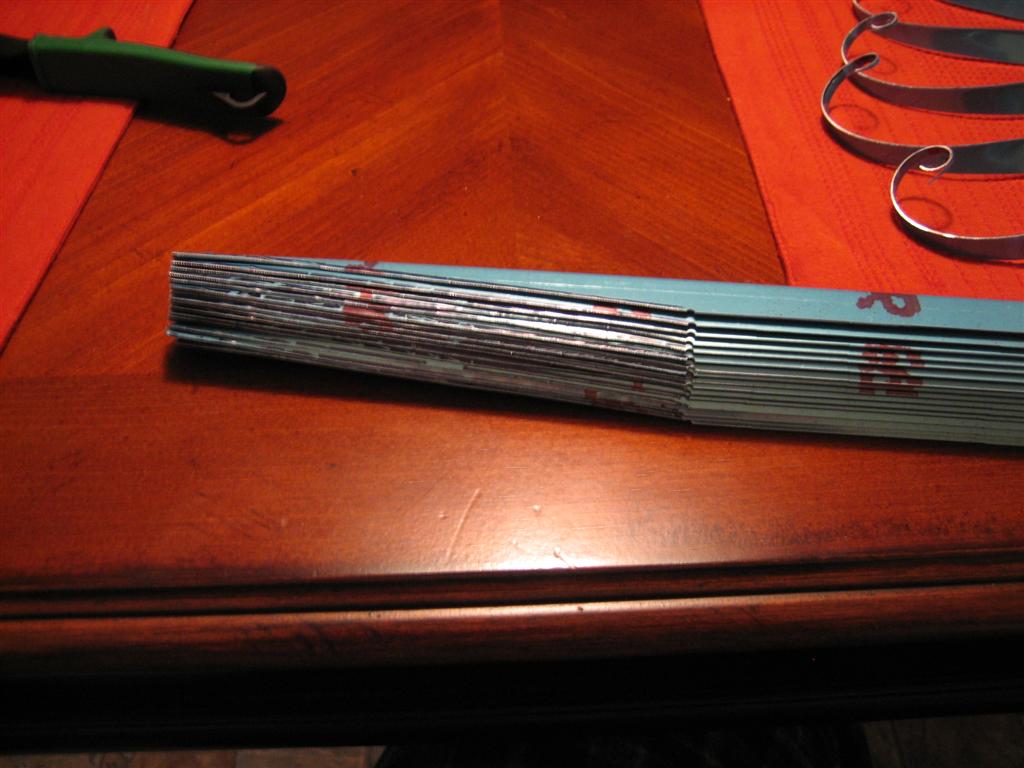
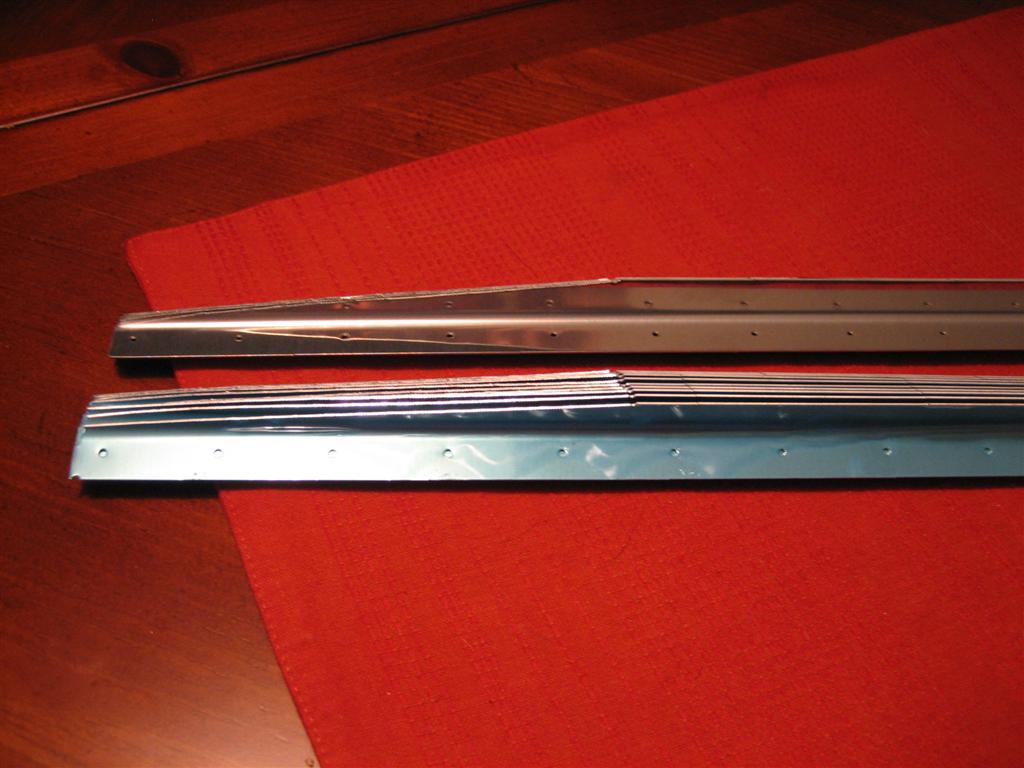
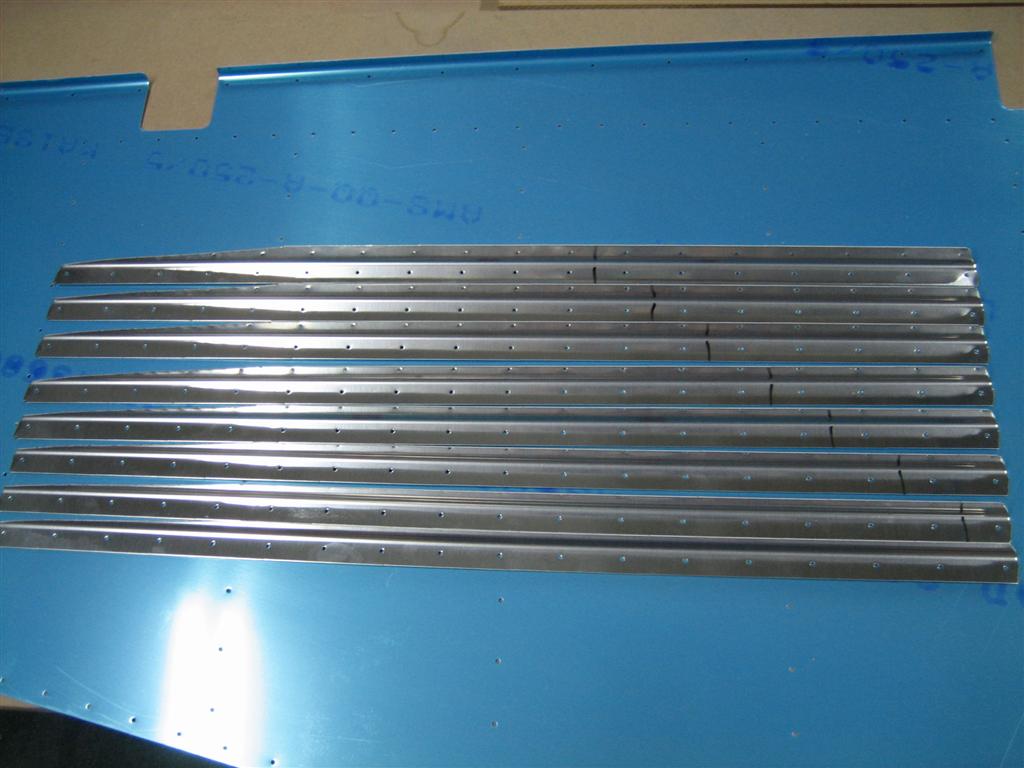
First step in the manual is to start on the stiffeners. I fished out the bundle of stiffeners (there are two bundles, one set for the rudder, and one set for the elevator) and studied the plans.  For the back side of the stiffeners (with the shallow angle on the right side of the picture below), these are the final cuts, so I need to be careful. For the front side (you can see a little of the front of a stiffener on the left in this picture), only 2 of the 16 stiffeners will be to full length, so the other 14 can be rough cut until I can mark them to final size per the note at the tot of this picture.

Stiffener Trim detail, drawing 7.

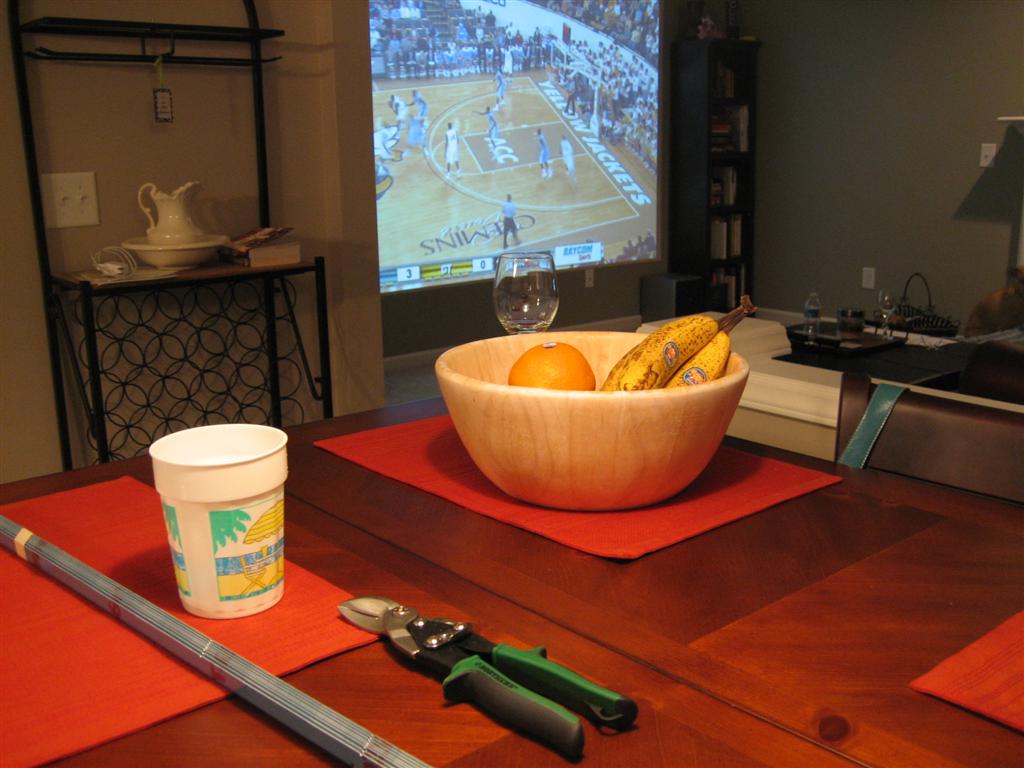
Next, I headed inside to sit myself down at the table so I could watch the UNC vs. GT game. I know some of you are panicking right now, but please calm yourselves. While it appears that my winerack is empty (OH MY GOD, NOOOOO!), that is really our third winerack. Rest assured that our two primary wineracks are stocked satisfactorily.

Is that an empty winerack? Don't worry, the hooch is stored in another rack.

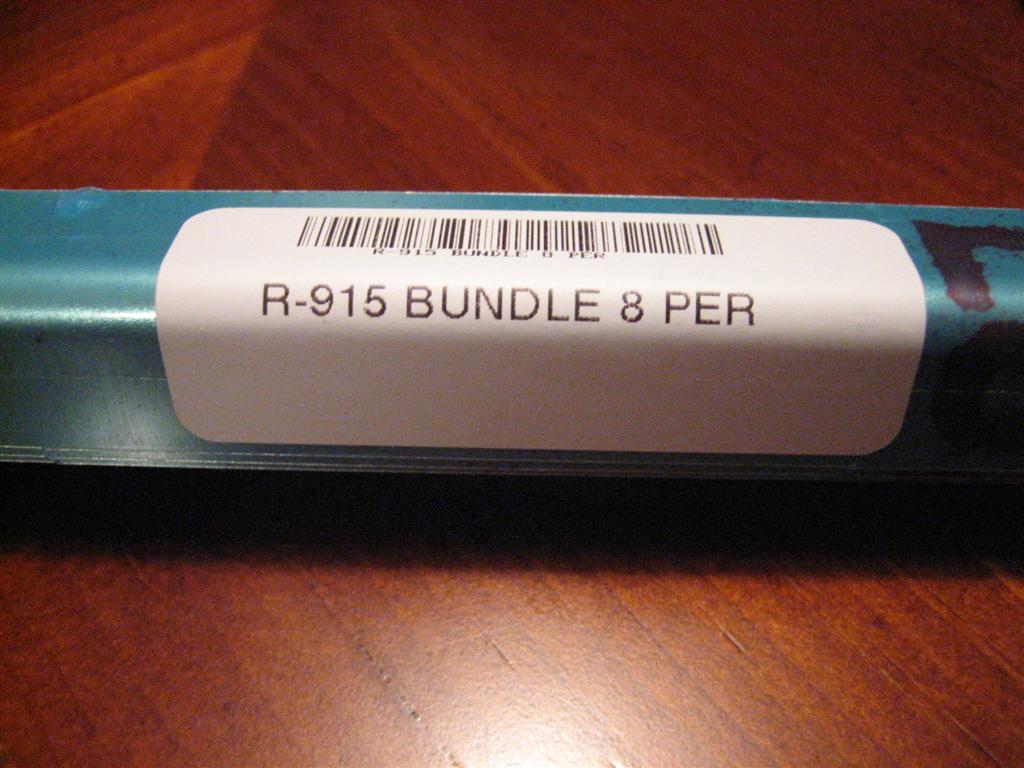
Anyway, here’s the stiffener bundle I’m about to break open.

R-915. (I can't think of a funny caption this morning, so all you get is the part number.)

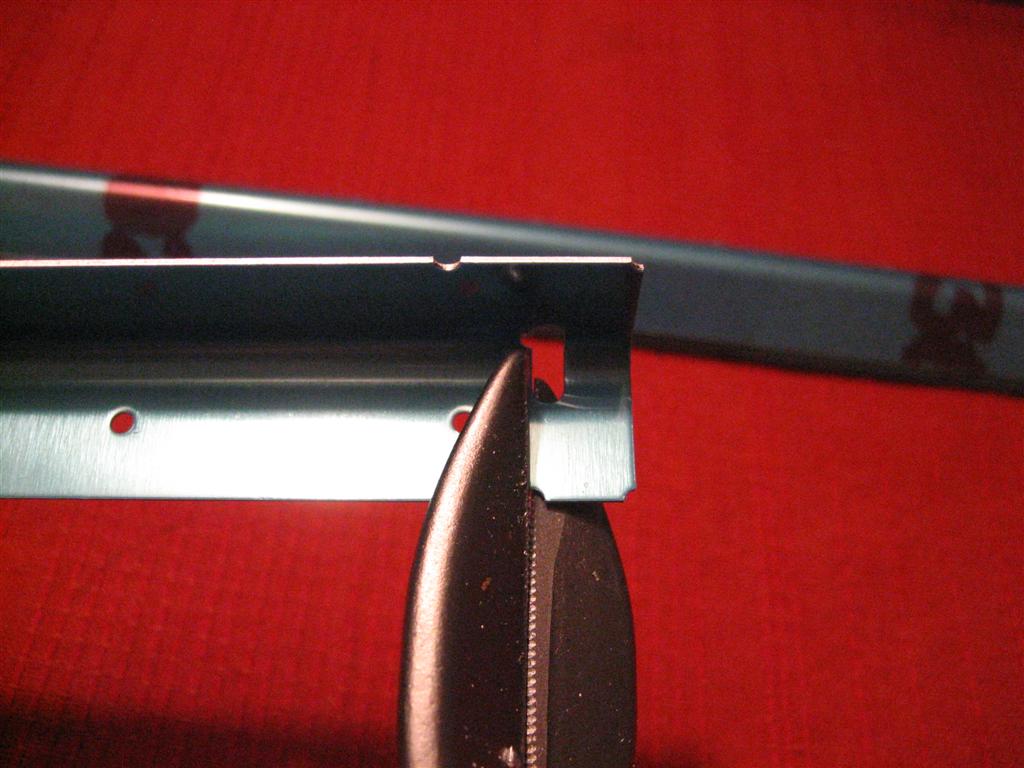
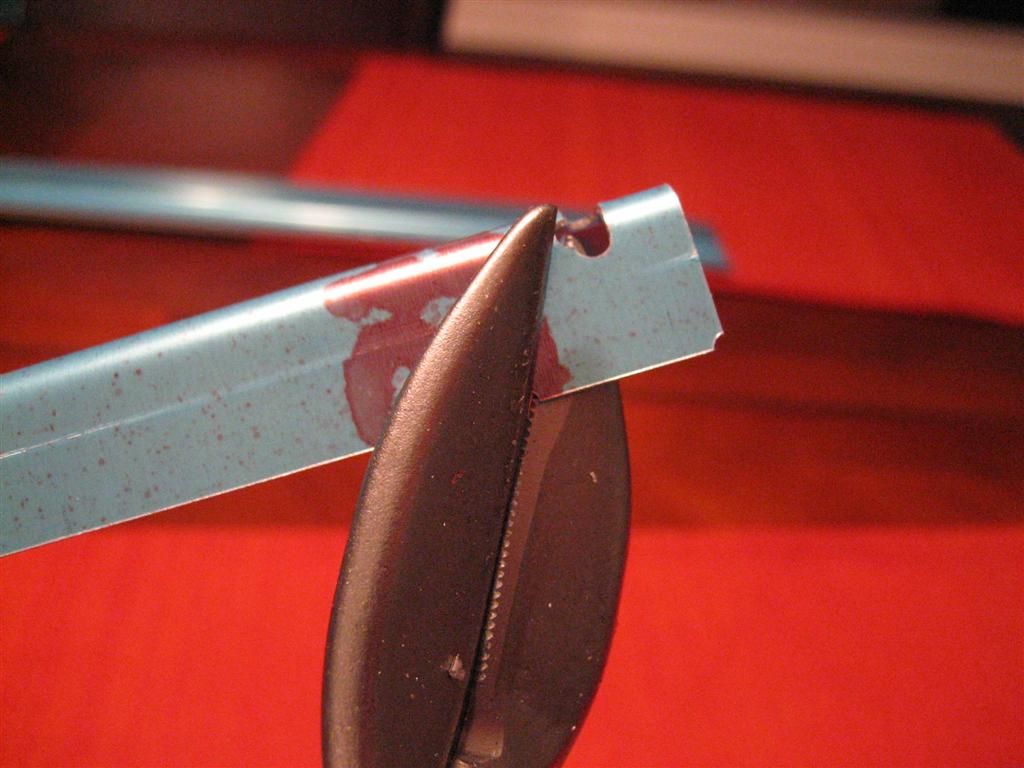
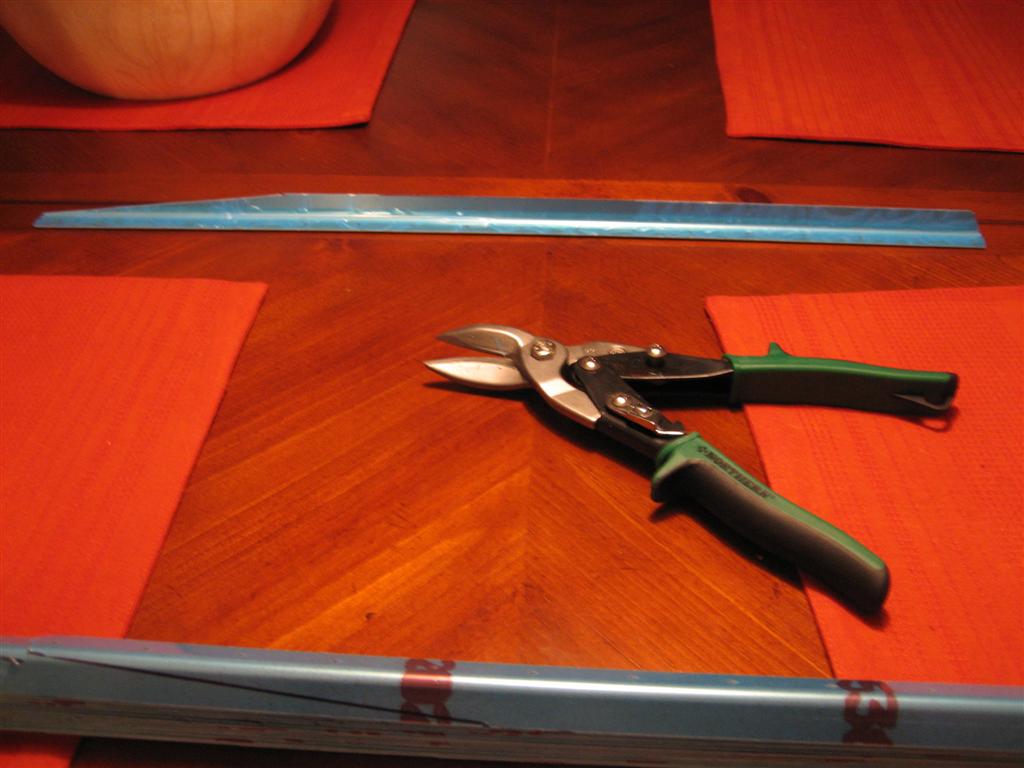
I broke open the bundle and started snipping from center hole to center hole. After a few stiffeners, I started biasing the cuts to the sides of the holes, but only where I was sure that I was going to have to remove more metal later.  Here you can see that on the top part of the cut, I’m lined up with the left side of the slot.

Snip snip.

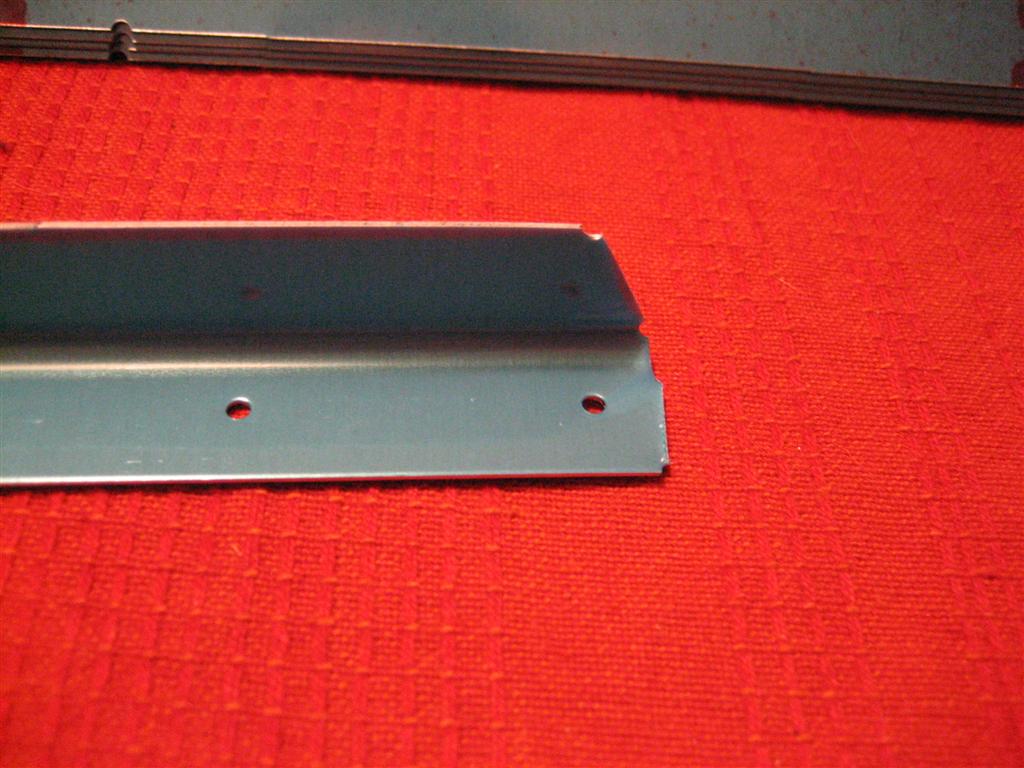
I included another picture of the angle cut for the front end of the stiffener. Remember, only two of these cuts are for real, as the next step is to chop off varying lengths of stiffener from the front to match up with the pre-drilled holes in the skin.

Snippity Snip snip.

Here’s a rough cut for the front end. See how I am going to have to remove more metal because of the notches. Might as well get closer on the first cut. That’s why I started biasing the cuts to one side after the first few.

The front end of the first stiffener.

First 8 front ends done.

Yikes, those are going to need some edge finishing.

All 16 stiffeners’ front ends done.

That's a spicy stiffener.

Next, I used an admittedly fat sharpie to draw the required cut lines on the aft ends of each of the stiffeners.

Lines drawn, back to snipping.

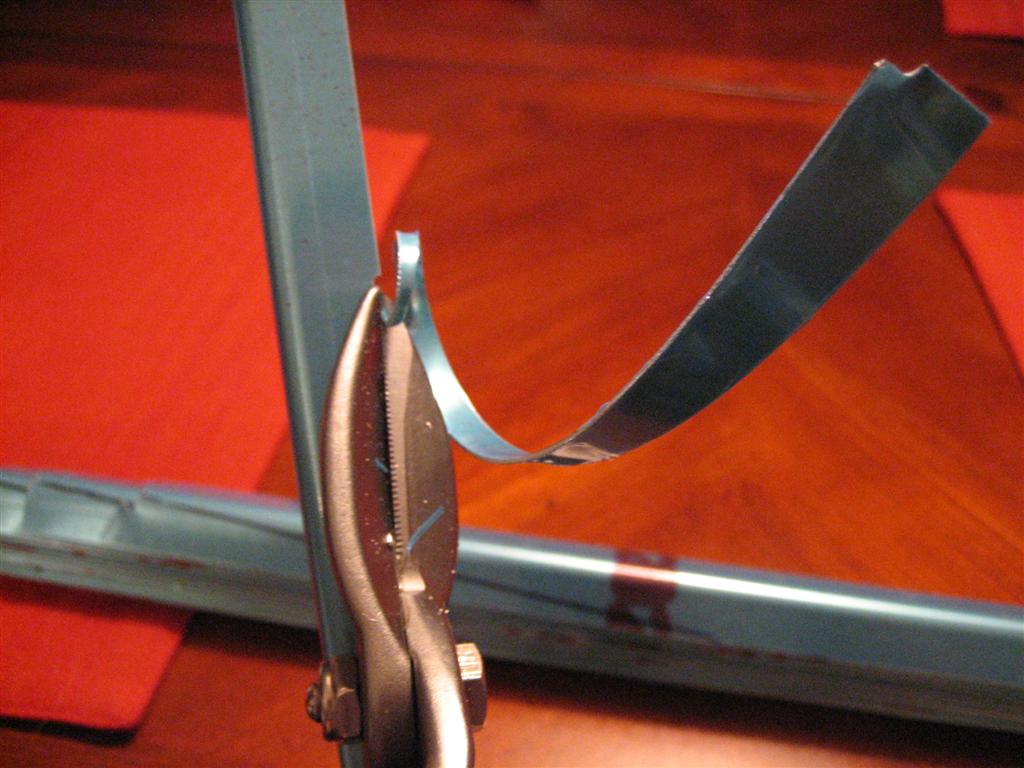
And here I am using the snips to cut that longer line. Snips aren’t perfect for this task, since they bend the metal, but if you work them correctly, they will only bend the piece you are cutting off. There is kind of a rocking motion you have to feel with each cut. You’ll get it when you try.

Snipping the aft end.

Here’s the first one, done.

I'm a little camera happy today, don't you think?

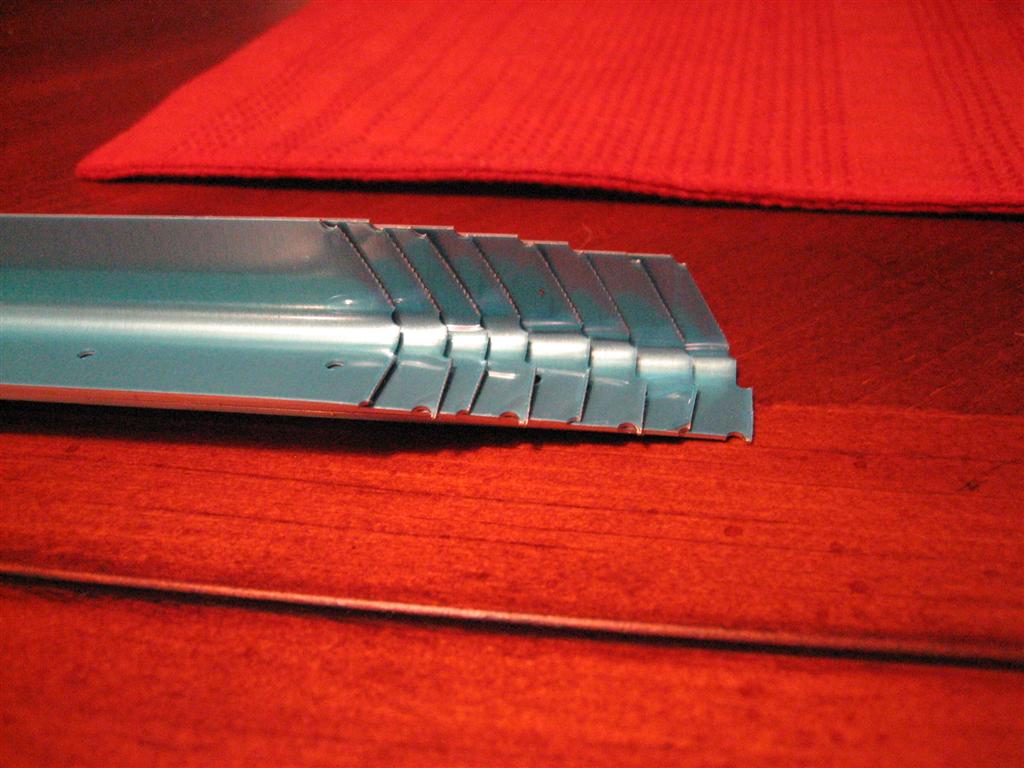
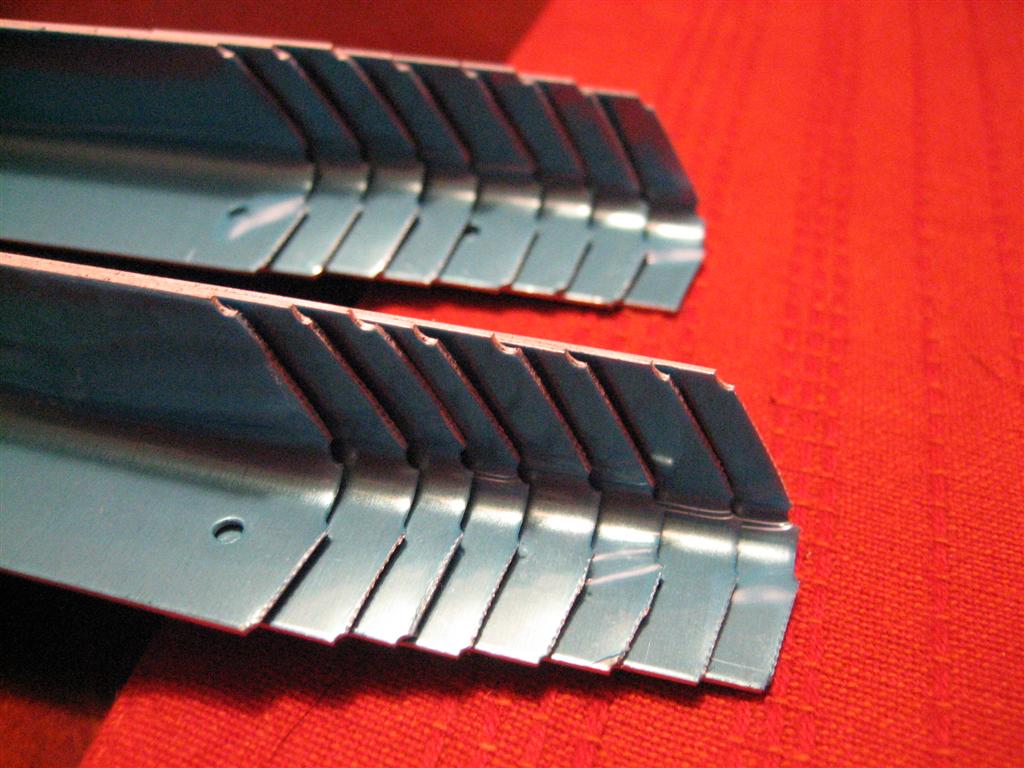
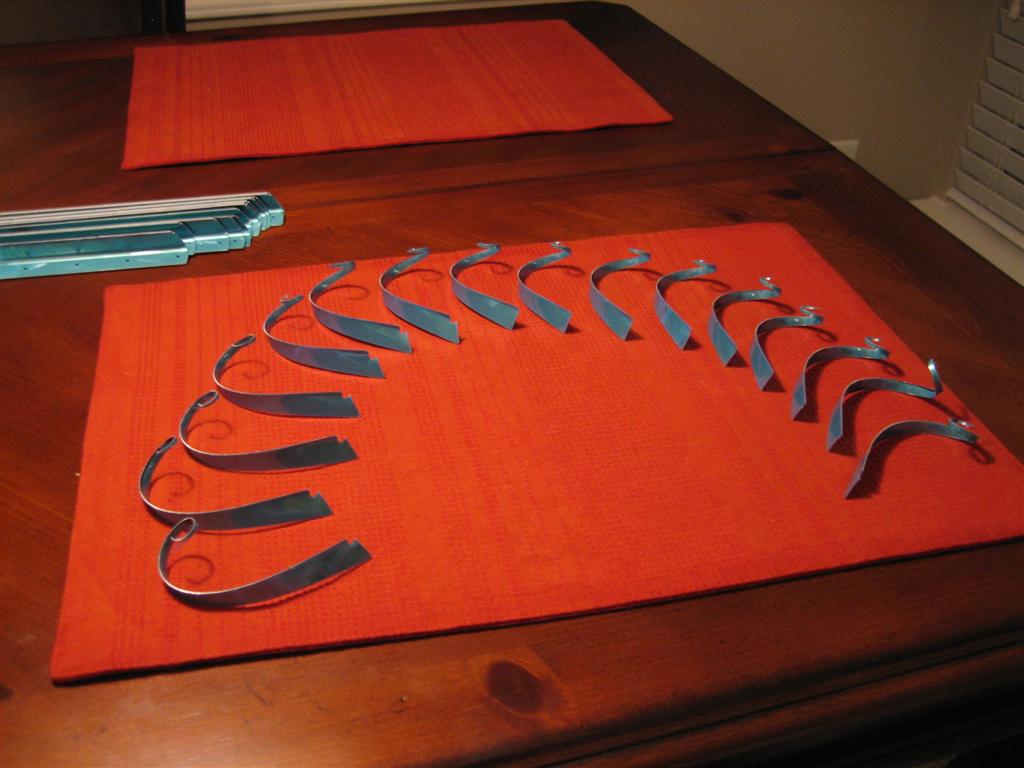
Then, I finished up the other 15, and was left with these scraps. If I had even the slightest hint of an artistic bone in my body, I would make some comment about how these resulting spirals are king of cool. But I don’t, so I won’t.

Scrap from the latest cuts.

All 16, ready to be devinyled.

Done with those cuts.

Starting to devinyl…

This is going to take forever.

I’m glad I did the devinyling inside. When the vinyl is warm, it comes right off.

Holy crap that's a lot of blue v-......WHOSE TOES ARE THOSE AND HOW DID THEY GET IN THE PICTURE!?

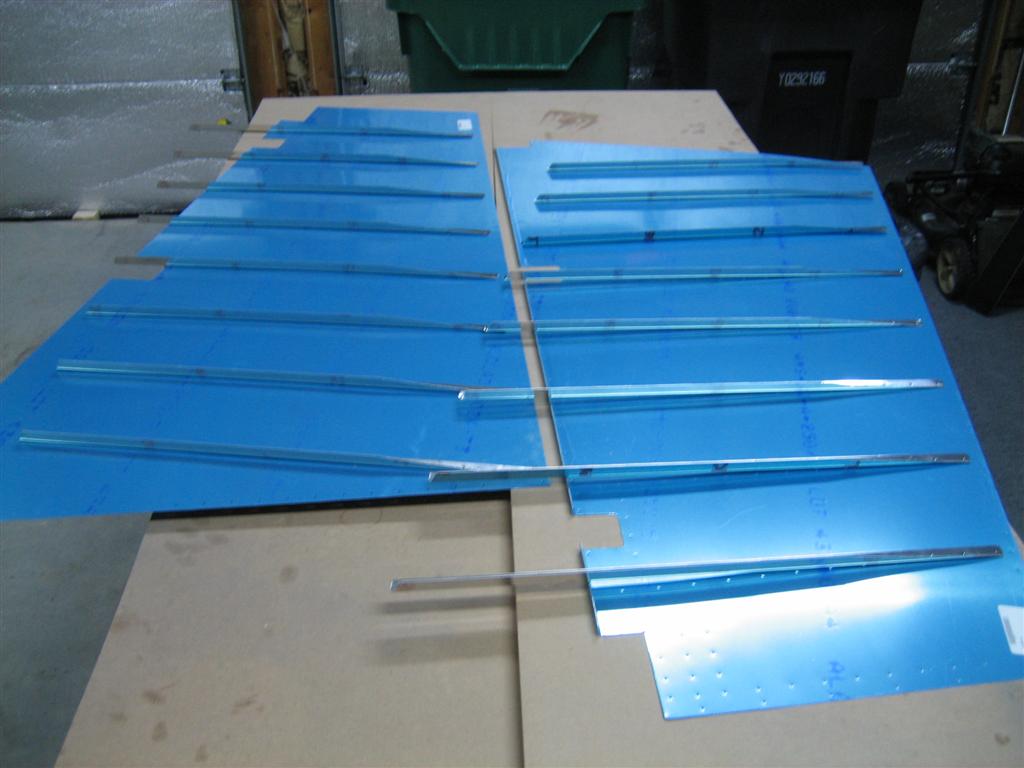
Next, I headed outside to put everything away, but couldn’t resist setting the stiffeners out on the skins.

I'll need to trim some of these, don't you think?

For now, I just drew a thick marker line along the front spar holes. If I cut along these lines, they will still be too long, but at least now I can figure out which hole will be the most forward hole and then use the plans-suggested 1/4″ measurement to draw a nicer cut line.
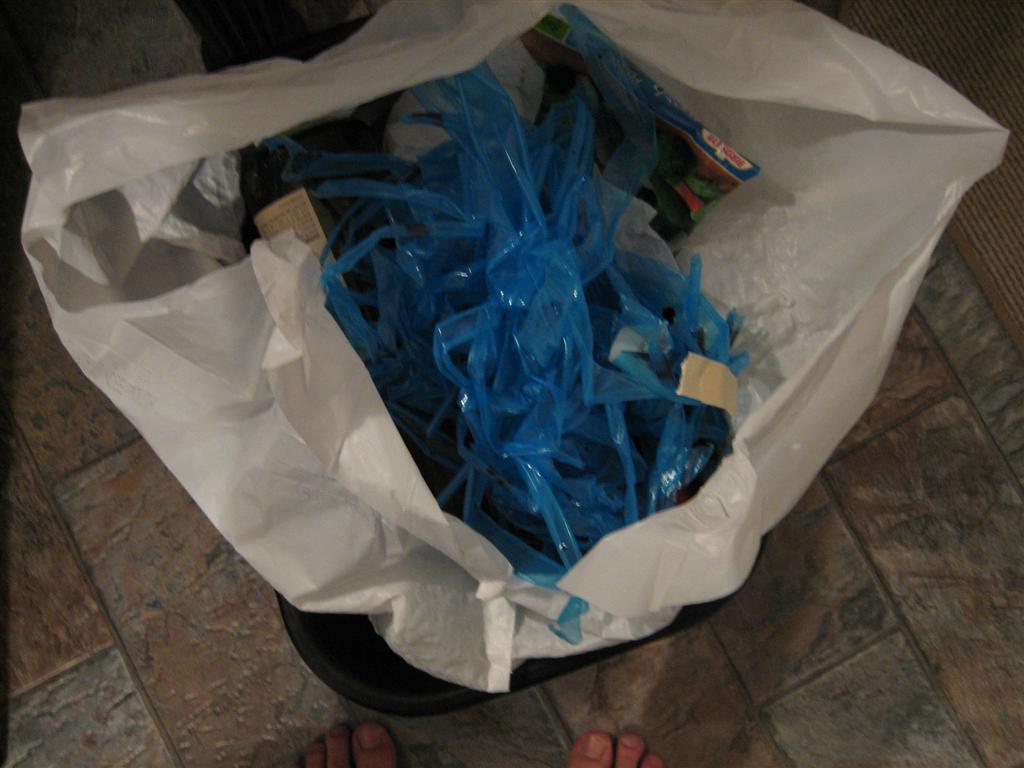
8 of the 16 stiffeners, ready for final cutting.

One hour of camera-happy warm environment work tonight. Sorry about your bandwidth.

Prev | Next


VS Skin Riveting, Part Deux

February 12, 2010

Prev | Next

I’m writing this on Monday for Friday night’s work, so we’ll see how much I can remember.

After a couple minutes of clecoing on the right side of the VS skin, I got started riveting. First, I set every other rivet along the VS-702 front spar and the VS-707 middle rib.

Left skin on the bottom, right skin on the top. That crazy long cleco keeps sneaking into the pictures.

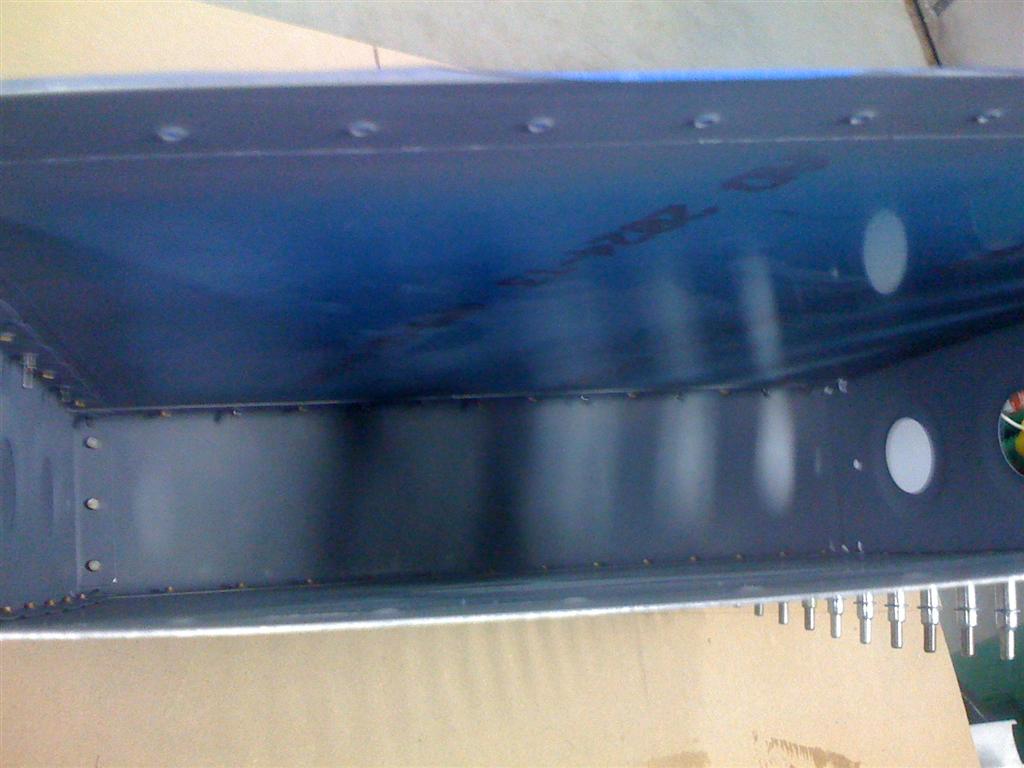
After rivting the front spar and ribs to the skin, here’s an interior picture.

Lower interior of the vertical stabilizer.

Here’s a picture of my “every-other-rivet” style. It works well.

Ready for the remaining rivets.

There are 39 rivets (not counting the tip and root ribs) for the front spar and middle ribs. After setting these 39, I’m ready to pull off the blue vinyl from the interior.

Starting to look pretty. So is your face.

Another rivet picture. (I’m not sure I got these in the correct order…Hmm.)

VS shop heads.

More rivets.

More shop heads.

<sigh>

<yawn>

Had enough yet?

Even more shop heads.

Alright, now I get to start removing the blue vinyl. This is where the gravy is. After all that prep work and riveting, you get to remove the vinyl to reveal a beautiful shine on the inside. I can’t wait to do this on the exterior skin (just before polishing). Flash on for visibility.

Starting to remove the blue vinyl.

I left the flash on for this one so you could see inside.

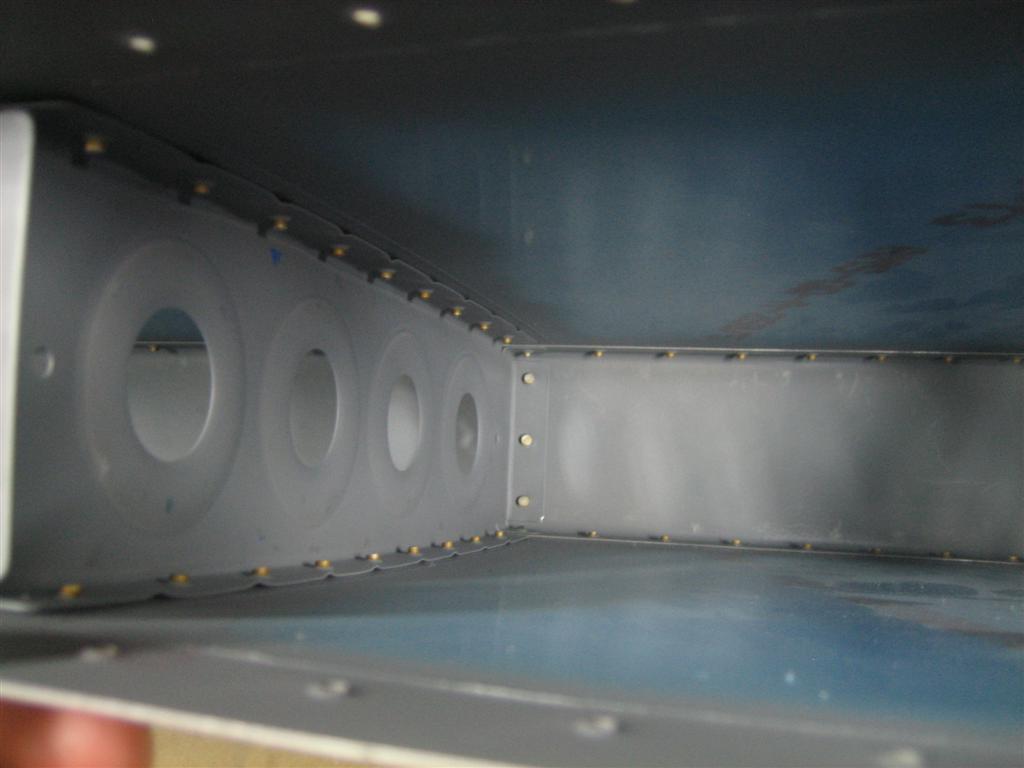
Inside the lower bay of the VS.

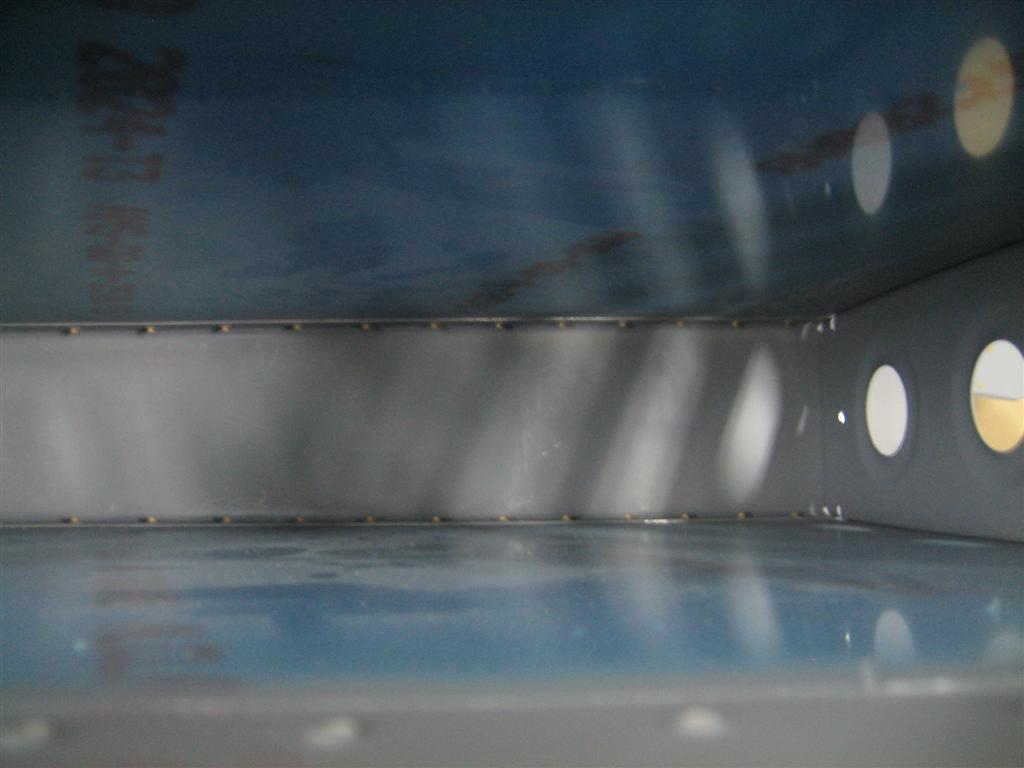
And the upper bay.

Upper bay of the VS.

After removing all of the vinyl, I moved on to riveting the tip (VS-706) and root ribs (VS-704 and VS-705) to the skin. All was going well, until I got the front of the root rib.

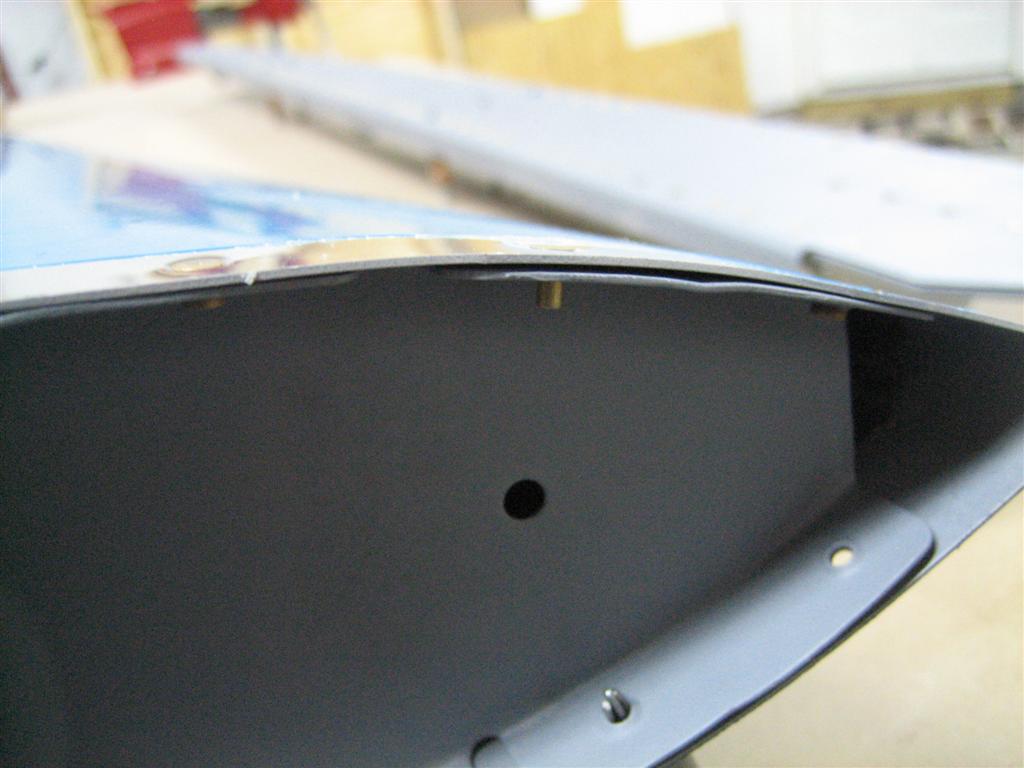
Anyway, for some reason the skin wasn’t sitting well on the rib. I later determined it wasn’t interference, just the natural curve of the rib.

The lower right side of the VS skin wasn't sitting very well on the root rib.

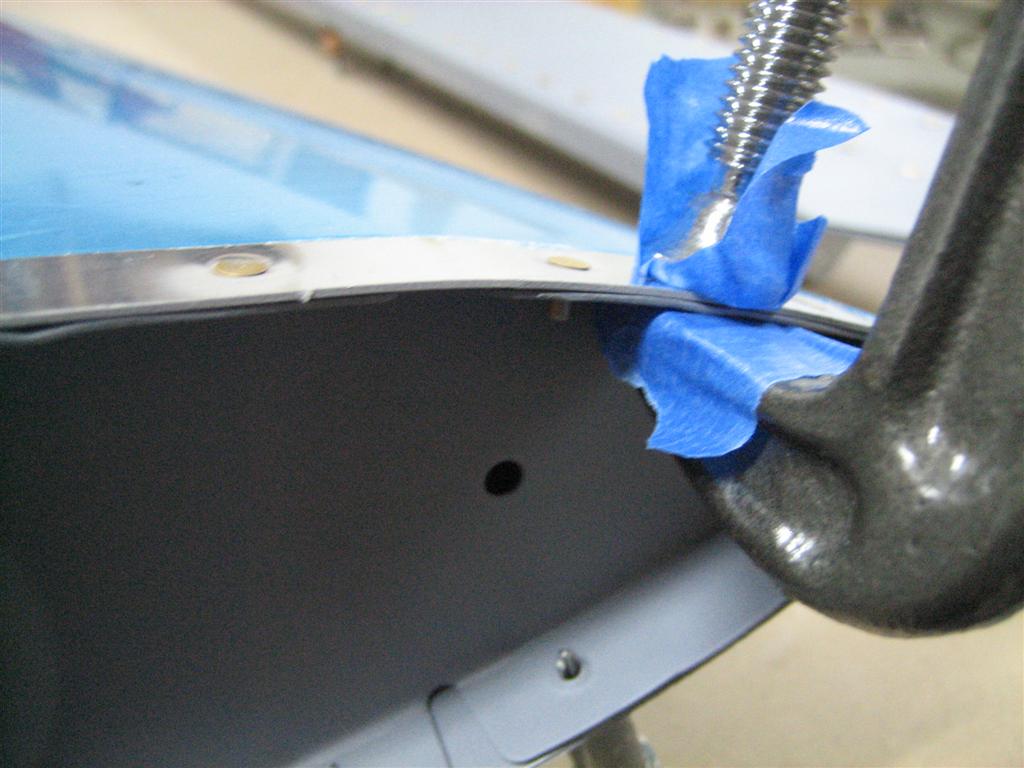
My solution? Use a tape-covered clamp to squeeze them together.

Alright, let's set this rivet.

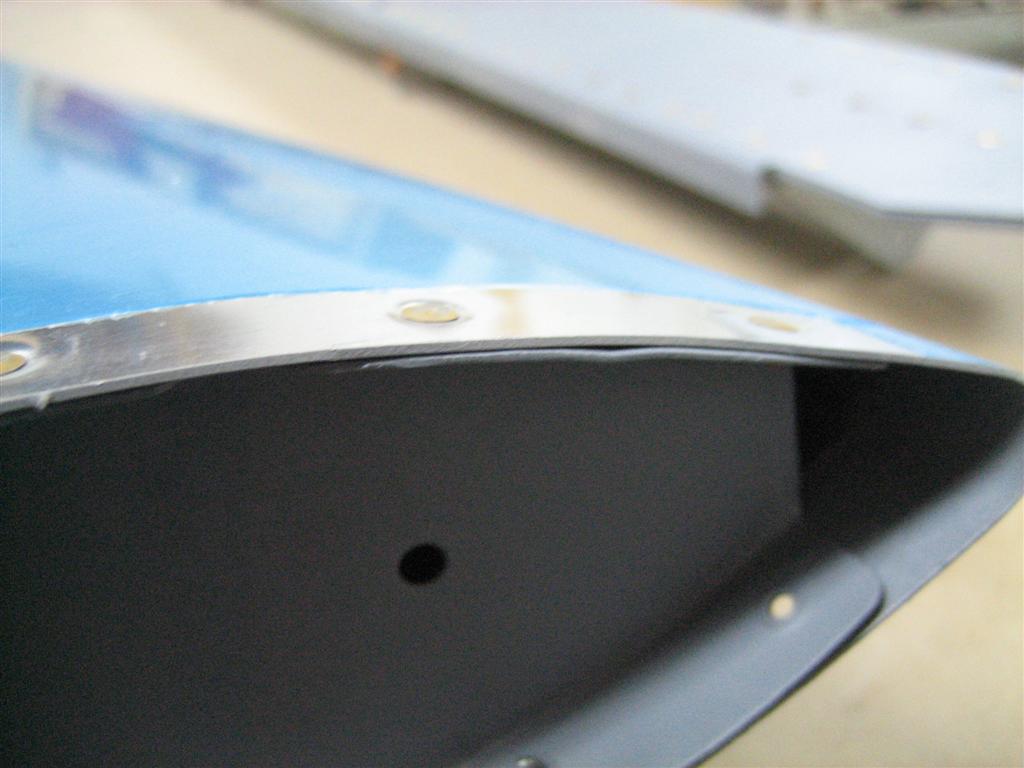
That did the trick. Who’s next?

Looks perfect now.

Here I am riveting some of the rest of the root rib. I was very careful to not rivet the 6 holes on each side the instructions tell you to leave open for the empennage fairing. I probably won’t use all 6, but I can always squeeze these later, so why close any metaphorical doors?

In the middle of squeezing the root rib.

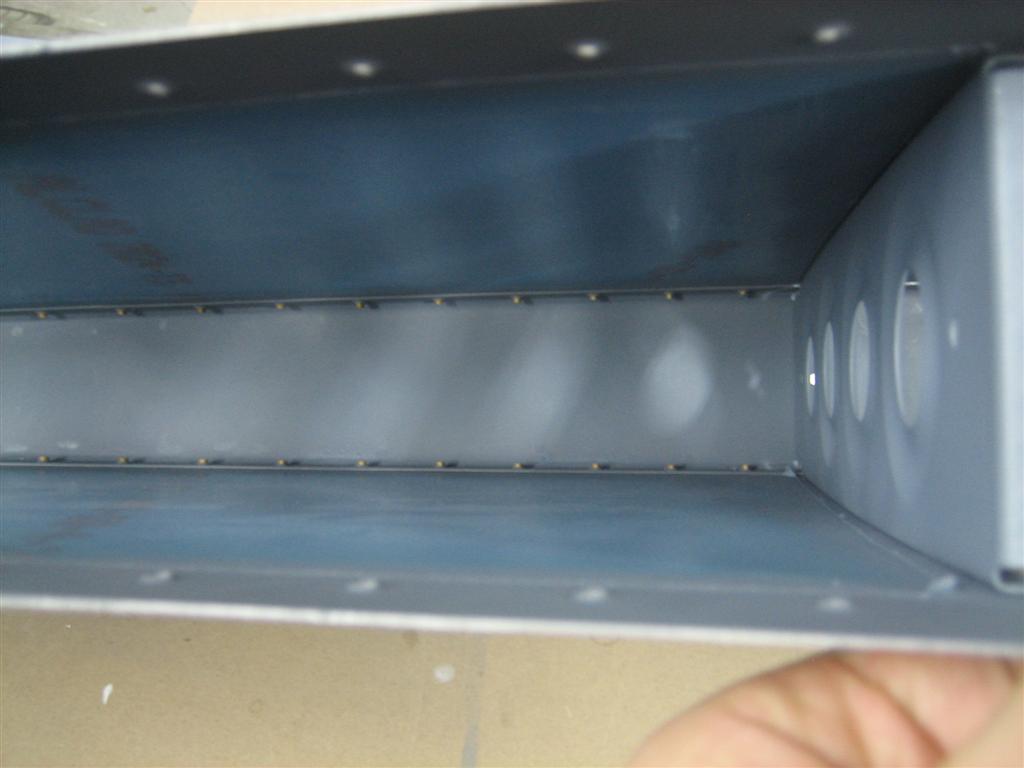
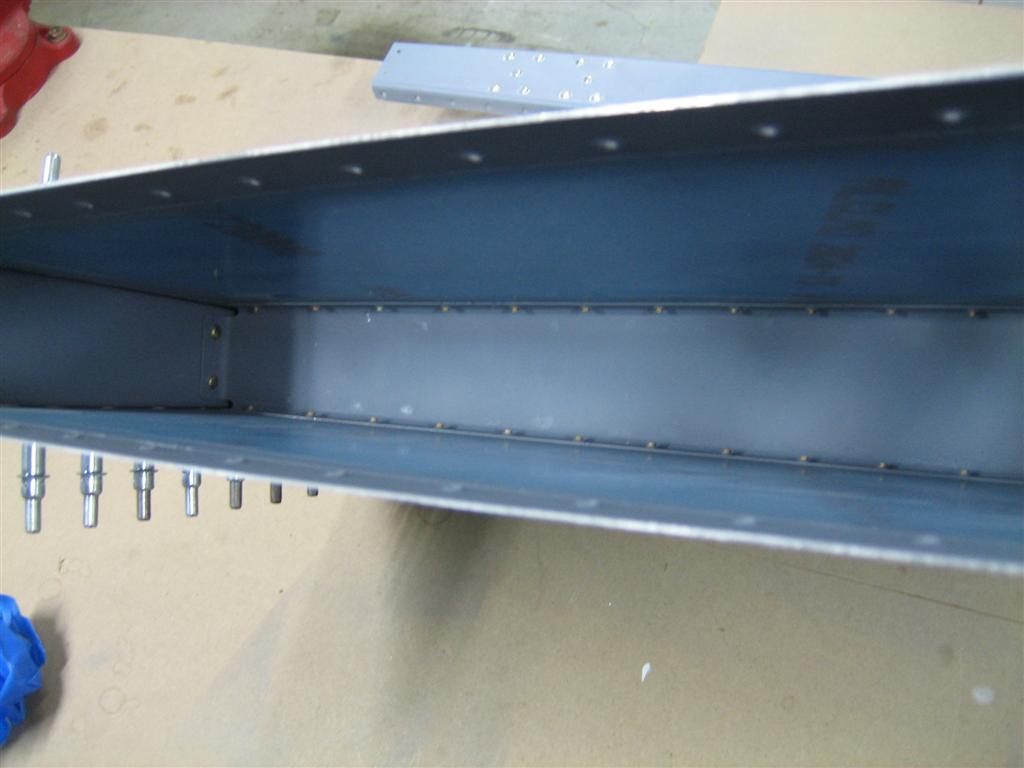
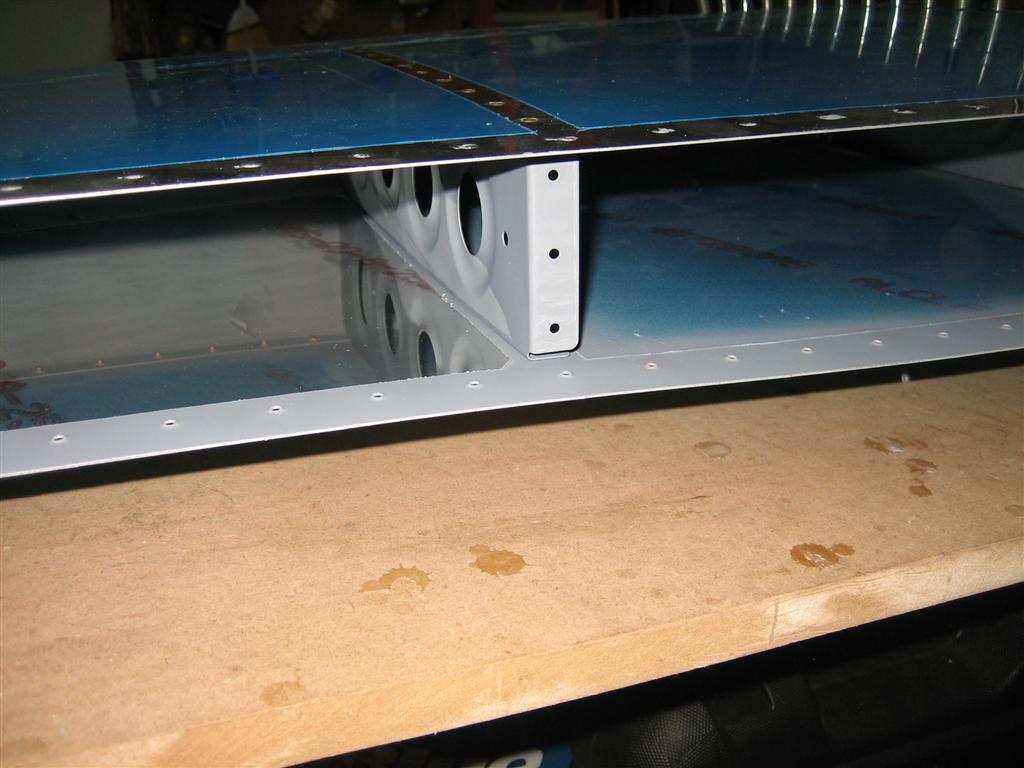
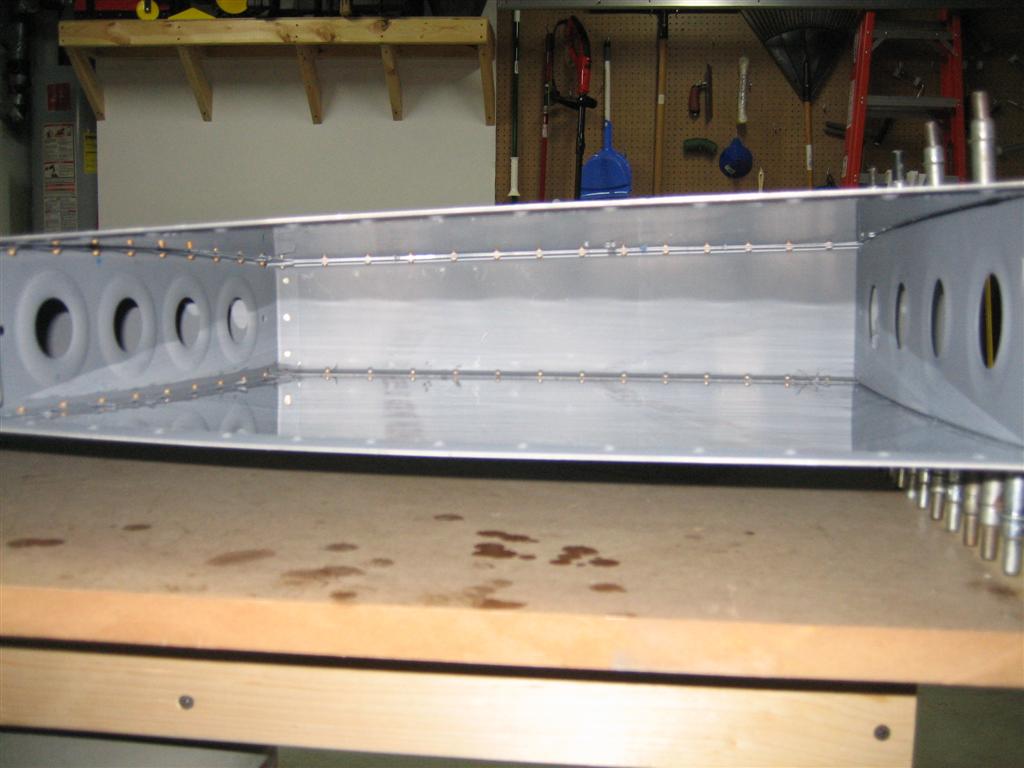
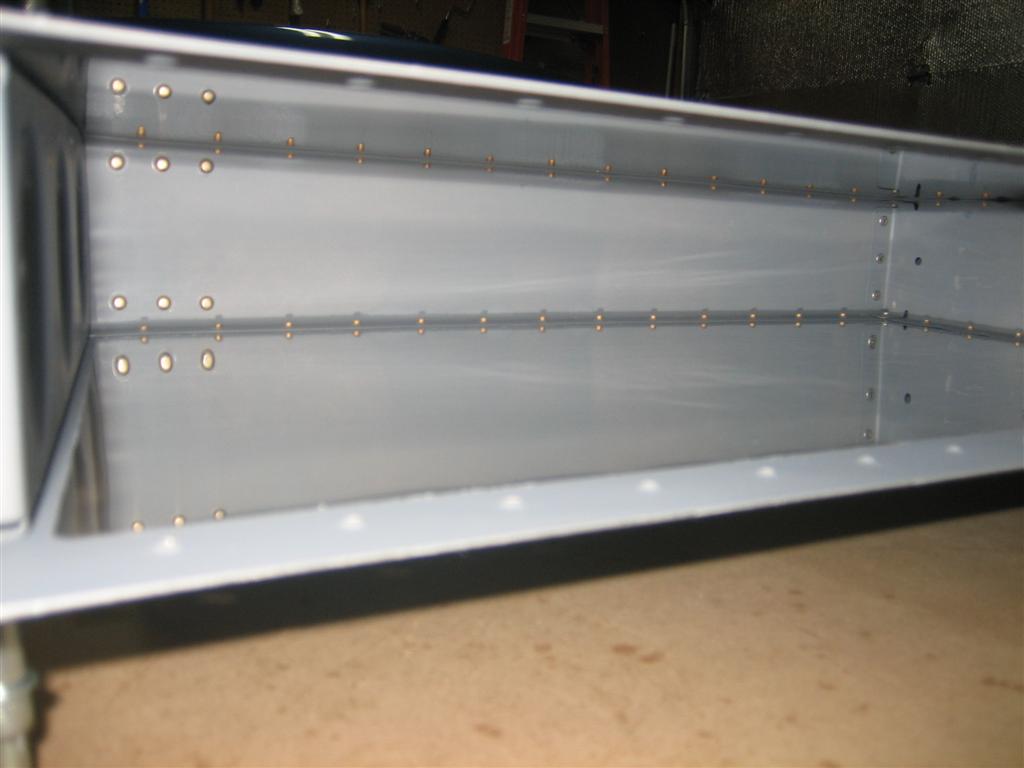
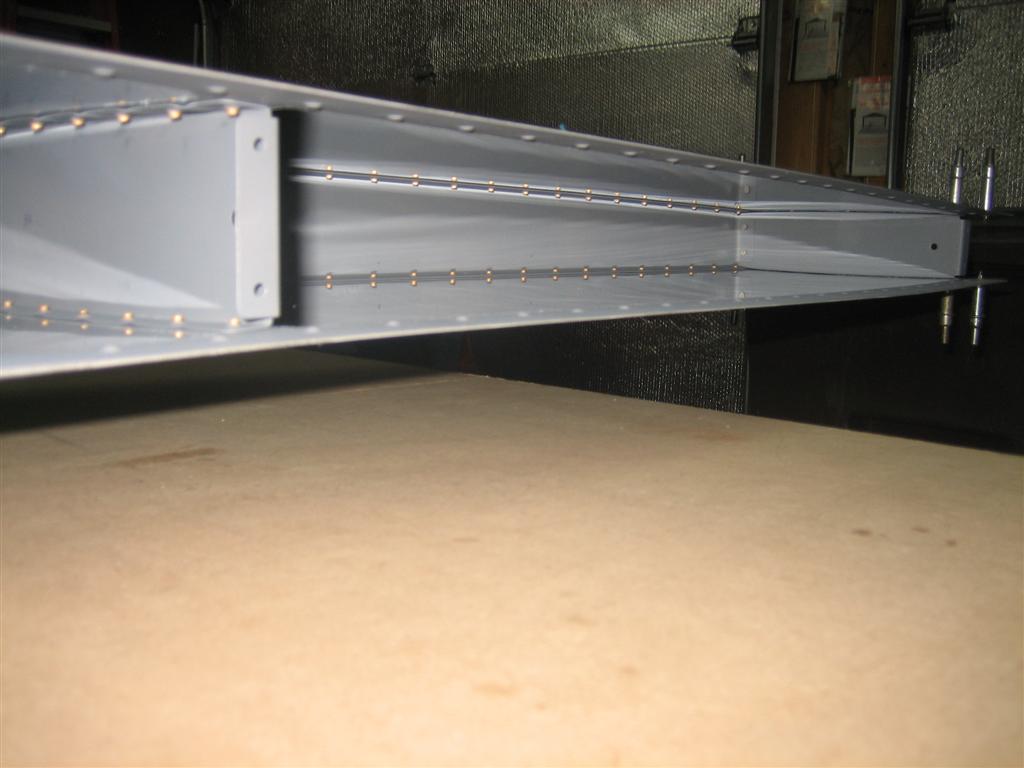
Here’s the VS (except the rear spar) all riveted together. Notice the 6 clecos in the holes to leave open.

Where's that rear spar?

I inserted the rear spar and started setting rivets. All was going perfectly, until I realized that most of the rivets couldn’t be set because of conflicting shop heads on the rear spar. I had tried two rivets that were close to having enough clearance, and I messed both of the shop heads up. Here’s one.

Bad rivet shop head there in the middle. Obviously.

And here’s the other.

Another bad shop head there on the left. See the cleco in the middle of the picture. The rivet that will go in that hole doesn't have a lot of room to be bucked.

I gave up on any other rivets that would be close with the squeezer. I’ve been doing so well recently with the gun and bucking bar, that I’ll just wait till I can make loud noises and set them with the gun.

Where I left off for today. I'll figure out how to set the remaining rear spar to skin rivets sometime next week.

One and a half hours today. 135 rivets set; some shot, some squeezed. Only a few will have to be drilled out later. Good night tonight. Hopefully next week, the dogs will get some directional stability.
Prev | Next


VS Skin Riveting

February 10, 2010

Prev | Next

After 9 days of not working on the airplane, I finally made it out to the garage. In all fairness, though, I spent all last week working out hard, and preparing for a bachelor party at Snowshoe. West Virginia, right? Yup. It was actually pretty cool there. It was in the midst of the big blizzard that bent the east coast over last week, so Showshoe got somewhere around 20 inches of snow. Legend…wait for it…dary.

Anyway, I had previously drilled out the front spar(VS-702) to tip rib (VS-706) rivets, so here are the replacements. The one on the left doesn’t look all that good, but this is my third try, and I think I am going to leave good enough alone.

Front spar to tip rib rivets. Left one sucks, but I'm not going to make it any worse.

Then, I reset the VS-704 root rib to front spar rivets. I set the middle one fine, then messed up the outer two. Drill out, and reset them just fine on the second try.

Looking good from this side.

Here’s a shot of the shop heads for those three rivets.

Here are the shop heads for those three. Not too bad.

Next, the instructions tell you to cleco on the skin and start riveting. Here’s a shot of me getting ready to rivet.

Start from the middle of the front spar and work outboard, then back to the start and work inboard. Then, rivet along the middle rib aft.

Here’s a shot of some shop heads. You’ll have to click on the picture to see them.

Nice looking shop heads. You can also see my interior skin masking practice. Looks good, doesn't it?

More shop heads.

Another shot of the shop heads for VS-702 front spar and VS-707 middle rib.

And one more…

Once I get the other side of the skin riveted, I can take off the blue vinyl from the inside of the skins.

After riveting one side of the skin, I had to head inside to watch UNC play Dook. (Yes, that is how you spell Dook.)
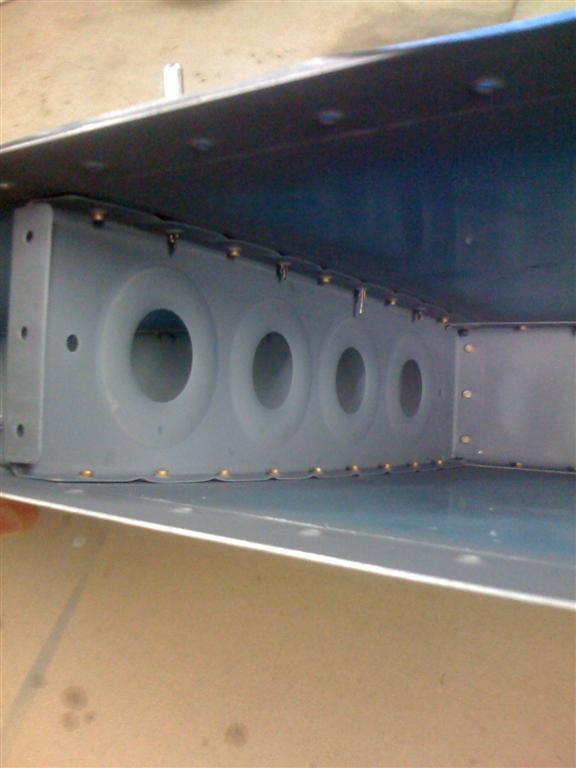
Starting to look like something that could fly.

One hour today. I drilled out 3 rivets , set 5 rivets on the skeleton and 39 on the left VS skin. 44 total. Booyah.

Prev | Next


More VS work

January 26, 2010

Prev | Next

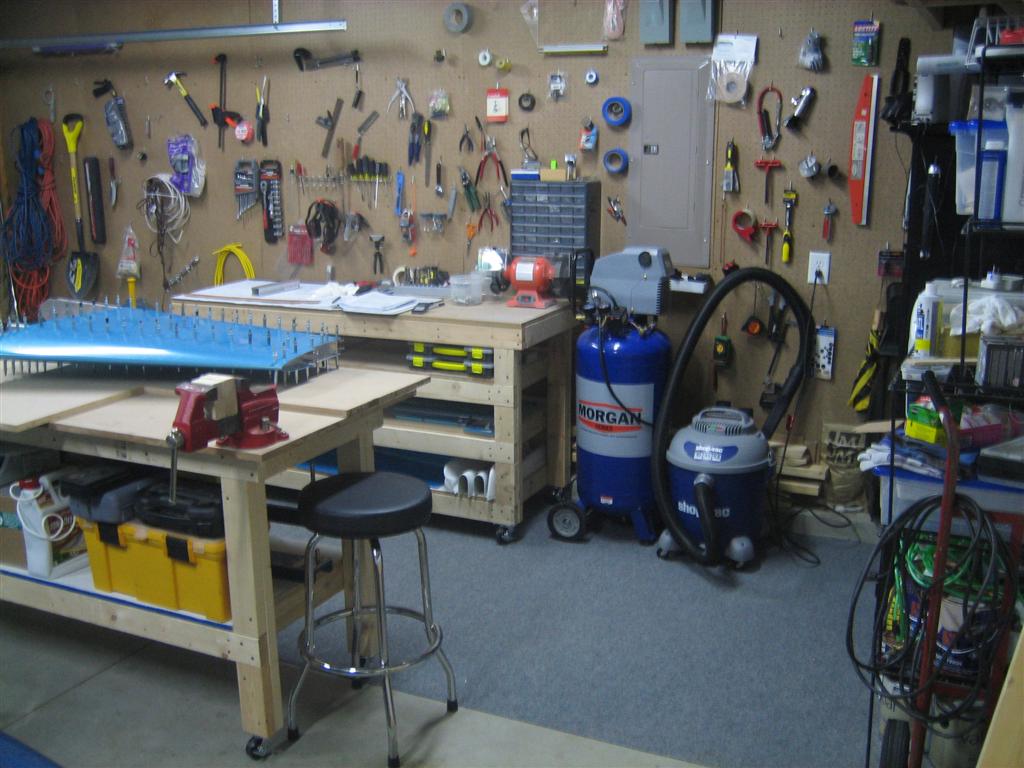
Last night I spent a little bit of time rearrange (cleaning) out the workshop. Now, I’ve got a little more room to maneuver. (Mostly, I just moved my second workbench a little left, and moved the shop vac over by the compressor, now the walkway to get into my workshop area is a little more open.)


Slightly different layout for the workshop. I like this.

Tonight, I started by disassembling the vertical to start the deburring, dimpling, countersinking, cleaning, priming, and then reassembly dance. Here I am set up in front of the UNC game for some deburring.

Ready to deburr some holes. Don't judge me for drinking white. We had red snapper for dinner.

After what seemed like a thousand holes to deburr, I broke out the 3/32″ tank dimple dies and the 1/8″ regular dimple dies (for the rear spar) and got ready to dimple. Dimpling is much easier than deburring, and fun, too. I know deburring is important, but I feel like I’ve made progress after dimpling.

Ready to dimple.

Then, I started dimpling the ribs and spars. Here are the 3/32″ tank dies in action.

3/32" tank dies in action.

Here I am using the 1/8″ regular (shallower) dimple dies on the rear spar. I had to triple check both the holes and the direction before proceeding. This is correct, I think. (Flush rivets on the forward side of the spar.)

1/8" dimples on the rear spar. These are my first 1/8" dimples.

After finishing dimpling, I grabbed the skin and brought it inside to devinyl. Devinyling is a lot easier indoors, where the vinyl is room temperature. I tried pulling off the horizontal stabilizer vinyl in the garage when it was near freezing, and it kept tearing and was very stiff.

Waiting for the soldering iron to heat up.

After using the soldering iron and a wooden straight edge (the metal straight edge carries heat away too quickly, and you don’t get a melt line), I got to pull off the vinyl. For some odd reason, I find devinyling very cathartic. I love pulling off the blue to see the shiny aluminum underneath.

Pulling off the vinyl on the inside of the skin.

Ready to pull off the blue vinyl on the exterior of the skin.

Ready to devinyl the outside of the skin.

And finally, the vertical stabilizer skin devinyled (and everything carried back out into the garage).

Pretty skin. Also, that's me in the reflection.

Here are the ribs and spars all deburred and dimpled. (I still have to countersink the front side of the VS-803PP.)

Ribs and spars deburred and dimpled.

Next up, countersinking the rear spar reinforcement then deburring, dimpling, and scuffing the skin. Then priming, then I get to put this sucker together.

I can’t believe how much faster the vertical is than the horizontal. Part of it is the learning curve, but I think they should have you start with the vertical. Much easier, in my opinion.

Prev | Next


Edge and Surface prep for VS Skeleton

January 23, 2010

Prev | Next

Time to get started on the vertical. Drawing 6.

Time to start on the vertical stabilizer.

After finishing the Empennage Hardware Inventory today, I got started on edge and surface prep on the VS ribs and spars. Here are the components for the VS skeleton. I like to scuff up the surfaces and finish the edges before initial assembly. This prevents scratching, and frankly makes the parts look better in the pictures.

VS skeleton components.

After removing the blue vinyl on the rear spar, front spar, and reinforcement piece, I used my Permagrit block to remove all of the burrs from the spars and ribs. Then, I used my edge deburring tool and a scothbrite pad to finish the edges on the spars.

After that, I took the 4 VS ribs into the kitchen and used a soapy scotchbrite pad to scuff them up. Here’s one before rinsing.

So fresh and so clean, clean.

Here are all four after edge finishing and scuffing.

Scuffed up and looking ready to assemble for match-drilling.

Next up, fluting the ribs and scotchbriting the spars and reinforcement piece before assembling for match-drilling.

An hour and a half. Not bad.

Prev | Next


Rear Spar work

January 19, 2010

Prev | Next

I didn’t mean to spend a lot of time in the garage tonight, but I ended up spending about 2.5 hours.

The only thing left I have to do on the HS before getting the rear spar on is…finishing the rear spar. First thing, finish edge prep, then some more scotchbriting and finally cleaning in the kitchen (“get that airplane part out of the kitchen!”). Here are the parts ready to go inside for some cleaning. You can see the PermaGrit block I’ve been using to edge-finish.

Nice and scotchbrited.

While I was waiting for those to dry before priming, I pulled off the vinyl off one of the right HS interior bays where I had forgotten it from the other day.

Clean interior!

Then, I scurried outside in the cold to prime the rear spar components (HS-603PPs and HS-609PPs), and came back inside to finish devinyling the other interior bay.

More clean interior!

Then, after quick two-hour break for dinner and a couple TV shows, I went back outside after normal bedtime once I knew the rear spar parts had dried. Here they are clecoed together with the elevator center bearing (VA-146) and the hinge brackets.
Rear spar clecoed together, ready for riveting.

Then I broke out the squeezer to squeeze some rivets. Why not?

My first action shot!

This took most of the build time tonight. Here are some shop heads for your enjoyment. Not perfect, but they all pass the rivet gage test.

Shop heads.

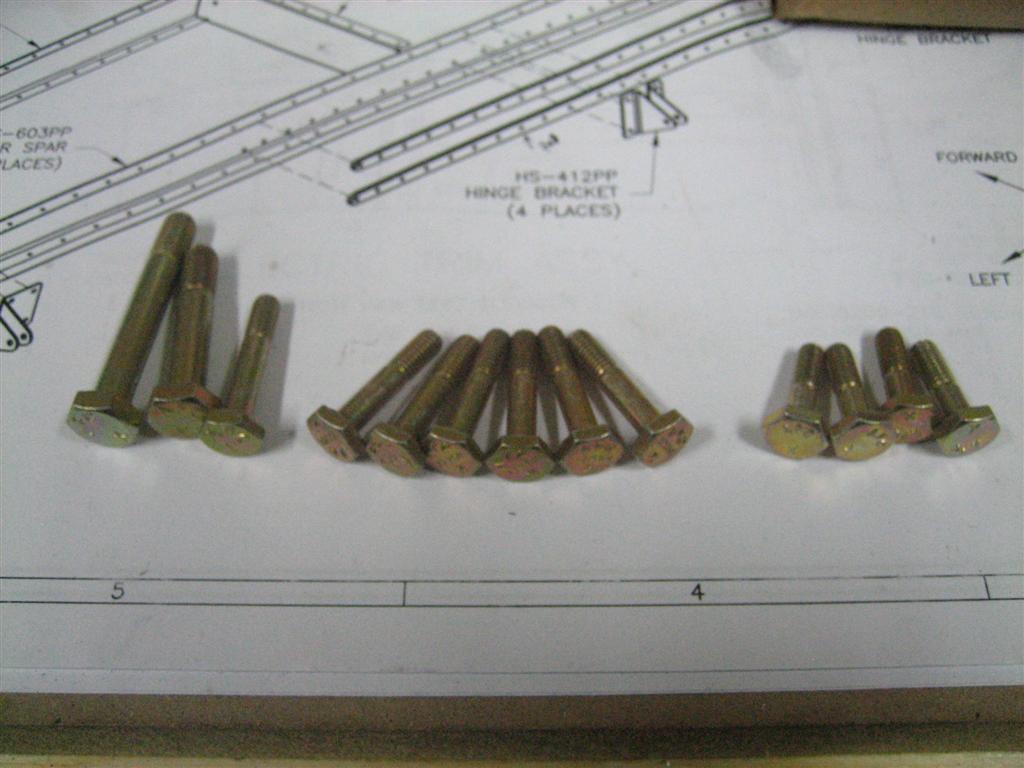
Then, I needed to bolt on the VA-146 center bearing. Time to go find some hardware. After a short search, I found the bolts (the correct ones are the short ones on the right).

4 bolts for the elevator center bearing bracket on the right.

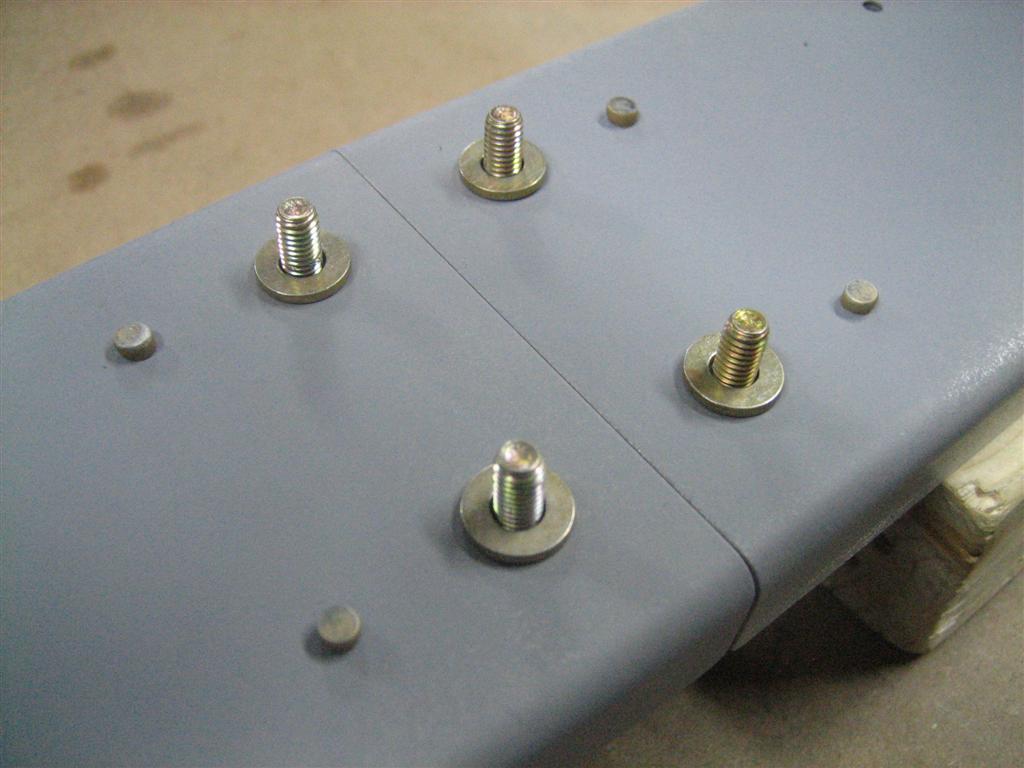
Then I found the washers (the ones you are looking for are the thick ones). There were 24 of them in the bag. (Stop judging me for not putting all of my hardware in separate trays. Using the inventory sheet and the bags has worked well for me so far.)

Washers installed.

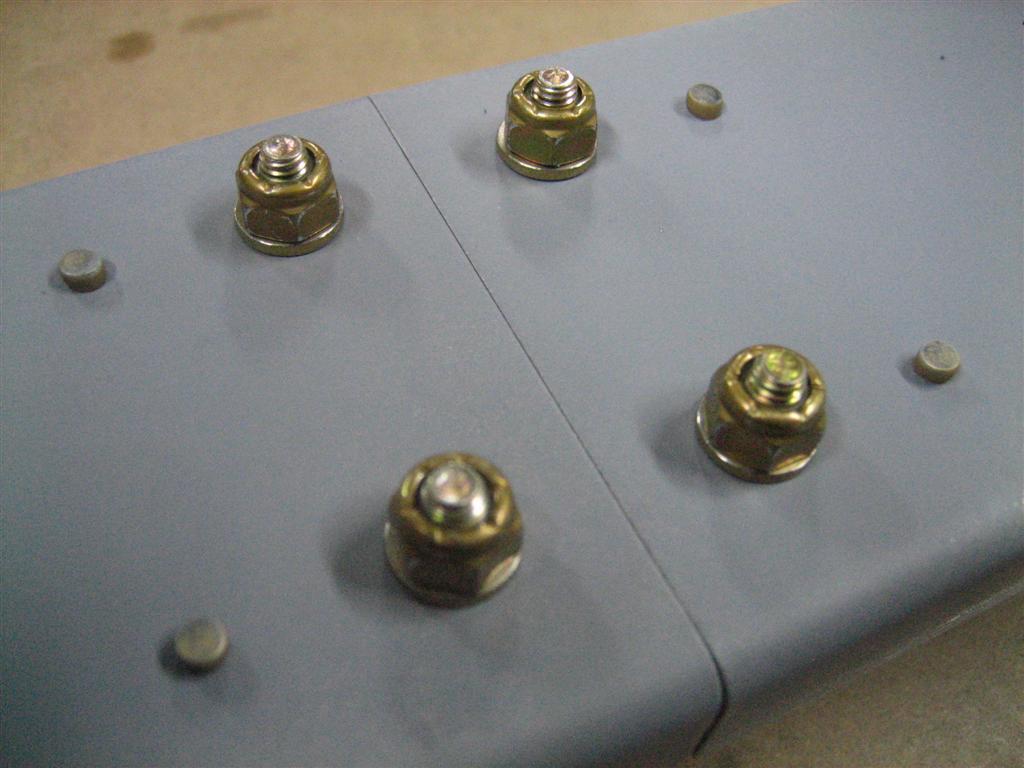
Then I found the nuts. I didn’t torque anything down yet, just finger tight. Need to get some torque seal soon.

Nuts!

Alright, time to go inside, it’s getting late. Here are a few pictures of the final product tonight.
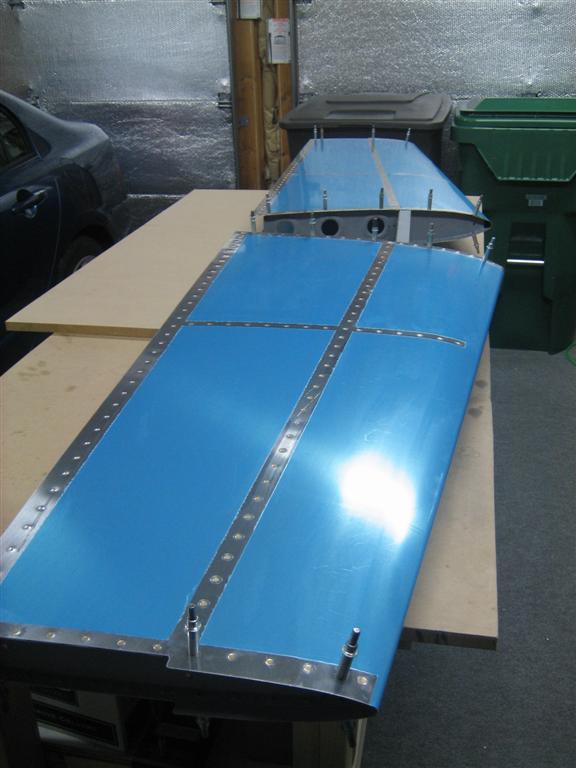
Nice and riveted rear spar. For those of who who don't have the plans in front of you, there are a couple sets of empty holes. They get riveted to the HS skeleton. I didn't forget anything, I promise.

A more artsy shot showing beautiful machined heads. I love the look of the rivets on the grey primer.

So pretty.

And one more shot, just because I can.

Rear spar, ready to be installed into the HS.

120 rivets set today. I’ll have to drill out a couple of the AN470AD4-5 rivets they have you set in the outboard hinge brackets. The instructions insist the rivet callouts on the plans is correct, but they seemed a little long. In a few cases, the shop heads cracked on a diagonal (I’ll try to get a picture of this tomorrow) so I’ll have to drill them out and replace them. Not bad, though. My riveting drill-out batting average decreased from 10% to 7.3% today. Good day!

For future reference, I finished up my second can of self-etching primer. I did prime the whole practice kit, but still, that is a lot of self-etching primer. I think on the next can, i am going to weigh the full can, then weigh the empty can. Then maybe I can make a rudimentary guess at the weight of primer I’ve used. (Ignoring the weight of the compressed gas in the container.)

Prev | Next


More Right HS Riveting

January 17, 2010

Prev | Next

After a nice day off (had to work), I got back in the garage this morning for some good progress.

I started off by assessing the damage from the other day’s skin denting fiasco. I contemplated removing HS-707 entirely (from the top skin, too) so I could really get in there and smooth this sucker out. I even got everything mocked up in the c-frame again to look at the feasibility of getting rid of this dent. Then I decided I would have probably caused more harm than good, and that it looked a lot better today than it did the other day. After re-clecoing HS-708 into the skin with HS-707 and re-riveting the bottom skin to HS-707, I took this picture. The dented area is between the bottom two rivets in the picture. It’s really not that bad.

The denting between the bottom two rivets is really not that bad. And, it's on the bottom of the right HS. No one will look there. Unless you are reading this, and come to see my airplane, and want to see the dent on the bottom of the right HS. Damn you.

Anyway, with that done and behind me, I clecoed in the front spar assembly from Friday.

Upside-down HS assembly after starting to cleco the front spar (already riveted to the left HS skin) into the right HS skin.

CRAP! I forgot to remove the blue vinyl from the inboard bay before clecoing everything together. Okay, let’s un-cleco, remove, the vinyl, and recleco. Great. After inspecting (admiring, really) the assembly, I noticed a loose rivet (as opposed to a prude rivet. Hehe.). It was one of the two forward HS-707 rivets (by the denting). Grrr. Okay, should I un-cleco everything, and risk scratching everything in the process, or drill out two small rivets in the HS-404 to get my arm in there. I decided to go with drilling, since apparently I am really good at drilling rivets out. Without any issue, I got HS-404 removed and reached in to replace the offending rivet (second from the right in the picture).

HS-404 removed so I could reach in to replace the loose rivet.

Then, I reinstalled HS-404. (But took this picture before I actually riveted it to HS-702 (front spar) and HS-405 (aft root rib) behind the spar. Just pretend there are perfectly driven rivets there.

HS-404 reinstalled and the rest of the skin clecoed together.

Time to skin rivet. I like this part. Here is my technique. I stick the appropriate sized rivet in the hole, cover with blue tape, then reach in with the bucking bar, and shoot with my flush set, which is also covered in blue tape. Then, I remove the rest of the clecos, put rivets in again, and move all this little pieces of blue tape over one. (Then I figured out that on the second round, I could remove all the blue pieces of tape and run a whole line of tape along the line. I just had to make sure verify which rivets I had the bucking bar behind by pushing up on it a little. you can then see the rivet pushing up behind the tape. Bucking bar in place, I can set the gun down on the rivet and shoot.)

If you were counting, you noticed there are now two pieces of blue tape between the flush set and the rivet (and my fragile HS skin). This worked well for me, prevented further damage, and gave me some friction to help keep the set in place.

Rivets ready to set, covered with blue tape.

So, I knocked out all of the rivets needing to be bucked (I think it was 42 per side) before inspecting all my work for any issues. I think I found 5 skin rivets I wanted to replace. Here is a good example. The shop heads of all of these look great, but I want those rivets perfectly flush. I didn’t take an after picture (sorry), but I assure you, the one on the right now looks like the one on the left.

Bad rivet on the right. Replace.

After bucking all of those, I moved the now very big HS assembly to the floor while I cleaned off my workbench. Nice and clean again.

Clean workbench!

Then, I brought the HS back up on the table to squeeze the rivets that could be squeezed on the HS-601PP (skin) to HS-404 (inboard tip rib), HS-405 (inboard aft rib), and HS-706 (tip rib). The instructions have you leave 5 holes open on the inboard lines for the empennage fairing attach holes on the top only, but I decided to leave the same holes empty on the bottom for now, just to have clecos there on both sides to hold the HS off the table.  I also left some clecos in both sides of the tip ribs (although I left less on the right than I had on the left the other day, so I squeezed a few more on the left. ) Anyway, the HS is upside-down here. Left side is in the foreground.

Oooh, pretty.

Another shot. Still need to get that rear spar done. Look in upper right side of the picture. The dented area (I really shouldn’t call it dented anymore) is in the middle of the leading edge there. (I know the picture is from a distance, but the point is it’s not that noticeable.)

More pretty!

And after I flipped the HS right side up.

Shiny and clean.

After a hard day’s work, I stood back and admired the almost finished product.

I need a bigger workbench.

Good 3.5 hour day today. 146 rivets set, 14 drilled out.

Next up:

1) Remove rest of blue vinyl from inside of HS.
2) Rear spar work.
3) Finish riveting holes in HS.
4) Figure out what is going to “fly” when I finish the HS.
5) Hang HS for storage

I also decided that I am going to keep a separate page for tips. I keep learning these little tricks along the way. I should write them down.

Prev | Next


Started riveting right HS

January 15, 2010

Prev | Next

I managed a couple hours in the shop today, even though I was as sick as a dog. In between frantically running to the bathroom to pray to the porcelain god, I did get a couple things done. I planned to get some of the right HS done today, which needed more prep on the skin, and then some riveting.

First, I cleaned and primed right HS skin interior.

Right HS skin all primed and such. Well, on one side, at least.

After flipping, priming the other side, and letting it dry, I decided to fix some of the bad rivets from the other day. They look better now.

HS-710/HS-712 to HS-702 rivets fixed.

Then, I grabbed the right HS ribs and front spar and clecoed some of them to the left HS. I

Right spar clecoed to the left HS assembly. This thing is getting big.

I started by riveting the front spar to HS-710 and HS-714. This time, I was following the directions a little more closely. All of the rivets today turned out great. I had switched from my offset cupped set to a straight set, and they were all perfect. (Don’t mind the two empty holes on the far left, I remembered them later and shot those rivets, too.)

Great rivets if I do say so myself.

Then I riveted HS-405 and HS-404 to front spar. Again, no mistakes. Then, I turned back to the skin once it was dry. On the left side, I waiting until riveting HS-707 and HS-706 to the skin before I devinyled this area. On this skin, I figured that I wouldn’t be holding a bucking bar (that I could drop and scratch the skin) in this area, so why not take the blue off before making it hard on myself. Much easier this way, but I could only do it here. (I have to admit, those nice straight primer lines make me happy.)

Back to the skin. Devinyling the easy way.

The directions have you cleco in HS-707, rivet to the bottom skin, then cleco in HS-706 and HS-708 (to help the skin take shape and sit tight against the aft holes of HS-707), and then rivet HS-707 to the top skin. Just like the left side, I needed AN426AD3-4 rivets where they sometimes call out an AN426AD3-3.5.

The, I let this happen.

Uh oh...

What? Don’t see anything? Try this angle.

AAAAAAAHHHHHHHHHHHHHH!

NO!!!!!!!!!!!!!!!!!

:-(

It was completely my fault. I was getting confident, and was holding the rivet gun with my left hand. I had the pressure set near 50psi (I usually use 40psi for the AD3- rivets) and the gun got away from me.

I stared at it for about 5 minutes, realizing that it was probably okay, but would essentially force me to bondo and paint the tail, which would not have been the end of the world, except I still might want to polish the airplane.

I decided to drill out the 4 rivets I had set in the bottom skin to see if I could help it any with a flush set from the back side. I managed to get my backrivet set in there a little, and it helped, but I came inside as I was getting chilled and frustrated.

Later, I realized that I have a c-frame, and with two flush sets in there, I may be able to very gently hammer it back into shape (or at least get it close). I’ll have to re-dimple, too, because I flattened out the dimple while trying to fix the dents.)

…so…mad…

Maybe this weekend I can fix it up a little and keep going.

Prev | Next