Finished the first assembly in the Practice Kit

September 29, 2009

Prev | Next

Tonight, I finished the first assembly in the practice kit. Only a few notes, and some lessons learned.

Big lessons learned:

  1. The soldering iron leaves a mark if you aren’t careful, be gentle, and go slow enough that it melts the vinyl.
  2. Deburring holes was very easy, even with just an oversize drill bit.
  3. Buy a nice countersink. I faked it with a drill bit, and the results will not be acceptable on the real project.
  4. Less scratches tonight, but still a lot. I need to get some scotchbrite pads and self-etching primer to rehearse the prep and priming phases.
  5. I want to experiment with priming before dimpling. I’ve heard people have had good results (said another way, no bad results due to priming a weirdly angled surface in the dimple.)
I got out the soldering gun and tried my hand at removing the vinyl covering in a straight line.

I got out the soldering gun and tried my hand at removing the vinyl covering in a straight line.

MY FIRST RIVET. It is so beautiful.

MY FIRST RIVET. AN426AD3-3. It is so beautiful.
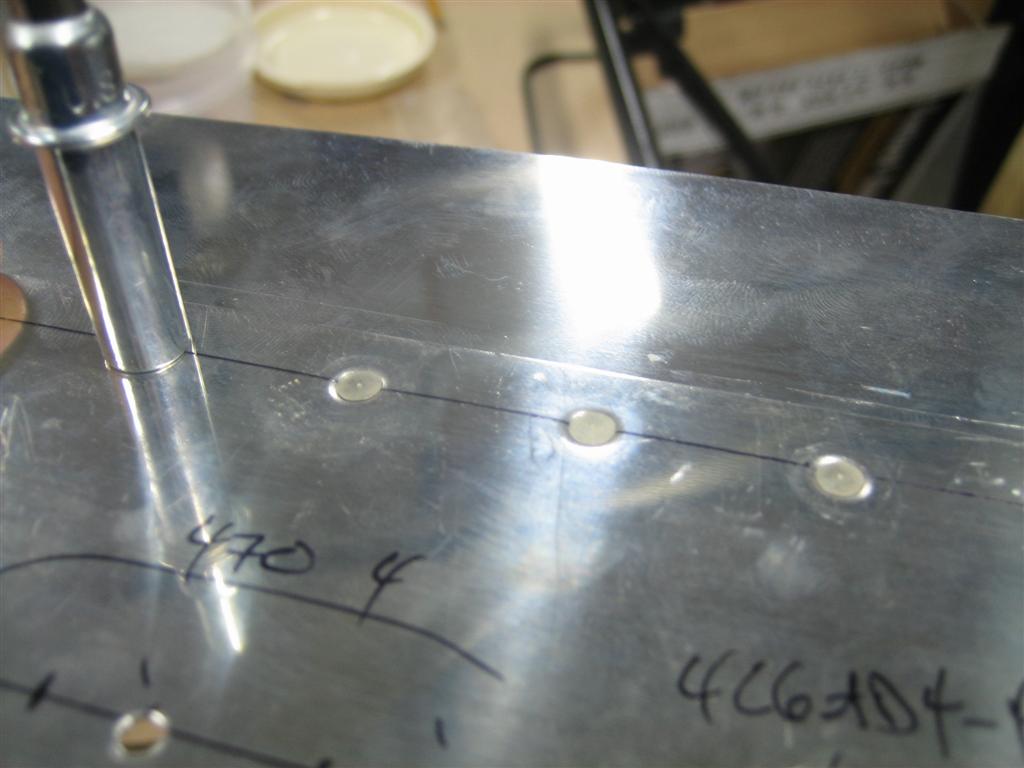
Three more rivets. I squeezed and bucked with flush and cupped sets. I am using a 4X gun, which means I had the pressure all the way down to 20 psig. It worked really well for the AD3s, but I might need more pressure for the AD4-4s.

Three more rivets. I squeezed and bucked with flush and cupped sets. I am using a 4X gun, which means I had the pressure all the way down to 20 psig. It worked really well for the AD3s, but I might need more pressure for the AD4-4s.

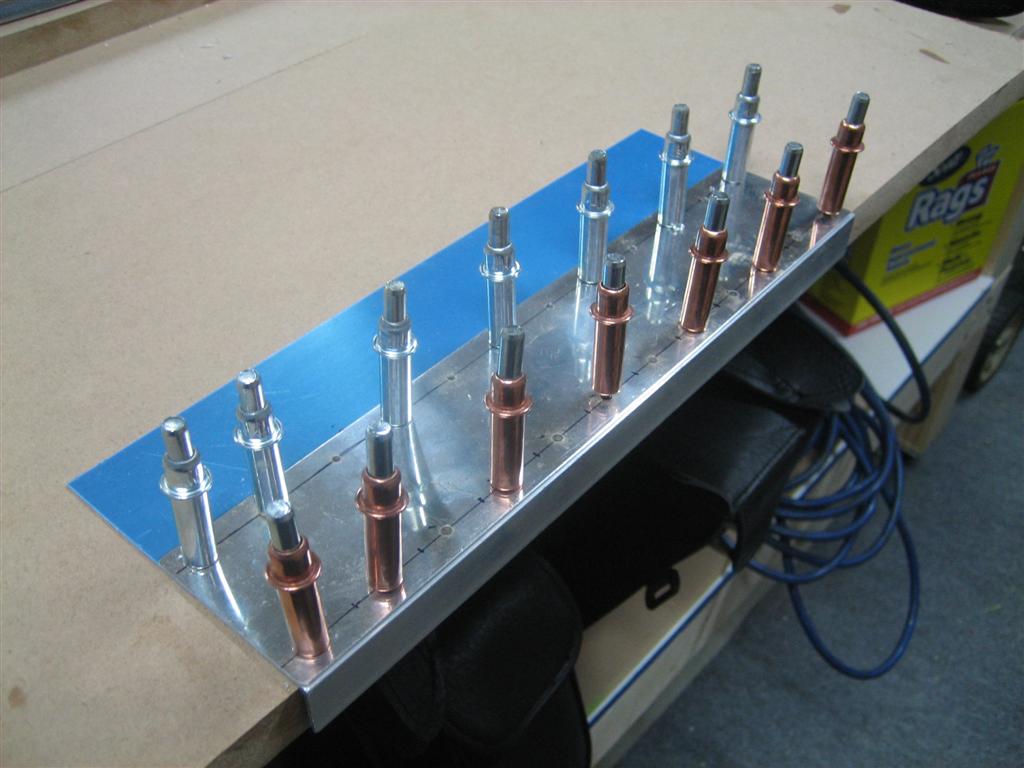
The final (and blurry) product. It's probably for the best that you can't see the fingerprints and scratches on it.

The final (and blurry) product. It's probably for the best that you can't see the fingerprints and scratches on it.

I am very happy that I did this part of the practice kit first. Now I know how to proceed on the real kit, and nothing with drilling, deburring, dimpling, countersinking, or riveting will be new to me, even on the practice kit. (I plan on displaying the practice kit prominently, so it better look good.)

Prev | Next


Started on the Practice Kit

September 28, 2009

Prev | Next

Today, I started on the practice kit. The directions point back to (and the kit actually includes) sections 3 and 5 of the construction manual. I threw my extra copies away, I’m going to just keep the ones from the Preview Plans I have.

The kit tells you to make some useful tools before starting. I found 3: A wooden hand seamer, a stand for your practice kit (basically a place to clamp the front spar so the skins stand up vertically) and an assembly with an 11 inch long piece of angle riveted (with various rivets) to two more pieces of 2.25″ x 11″ aluminum sheet. I’m not sure if this is a useful tool or just something to rivet before starting the pretend control surface. Hmm… I’ll make it nonetheless for the practice. I’m going to pass on the hand seamer, but get started on the other two.

Interesting note, the directions tell you that if you don’t have dents, scratches, and mistakes on your practice kit, you aren’t doing it right. Apparently, they want me to get out all of the mistakes now before I start on the real airplane. Right…

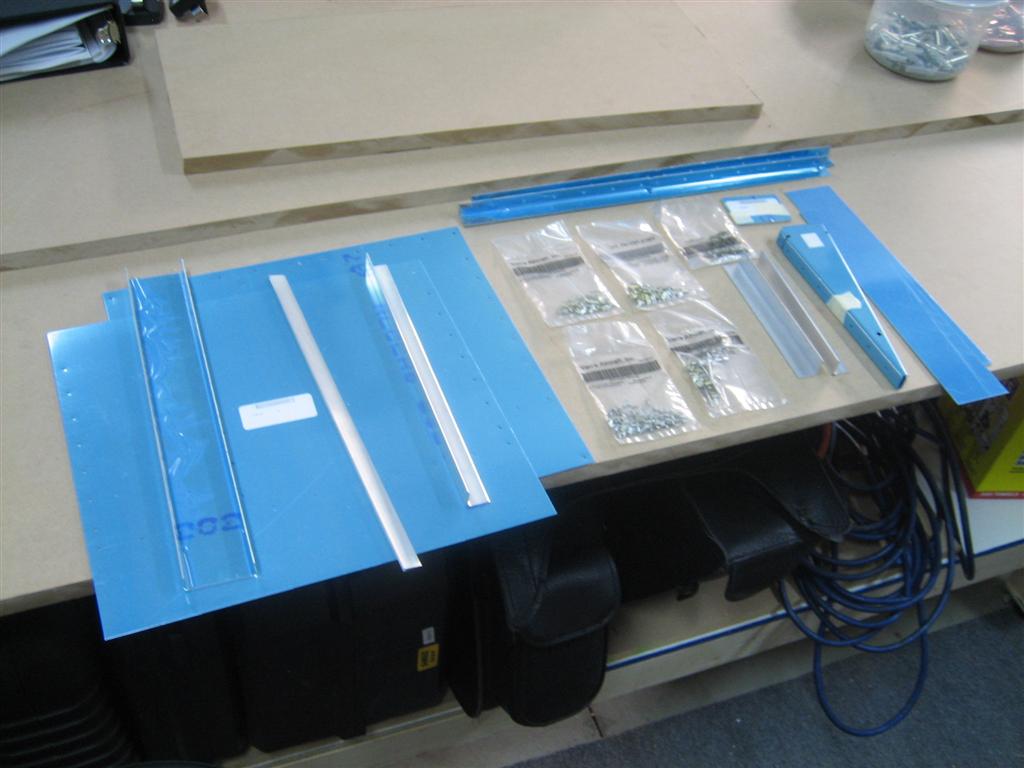
Here’s a picture of everything that comes in the kit.

Everything that comes in the kit.

Everything that comes in the kit.

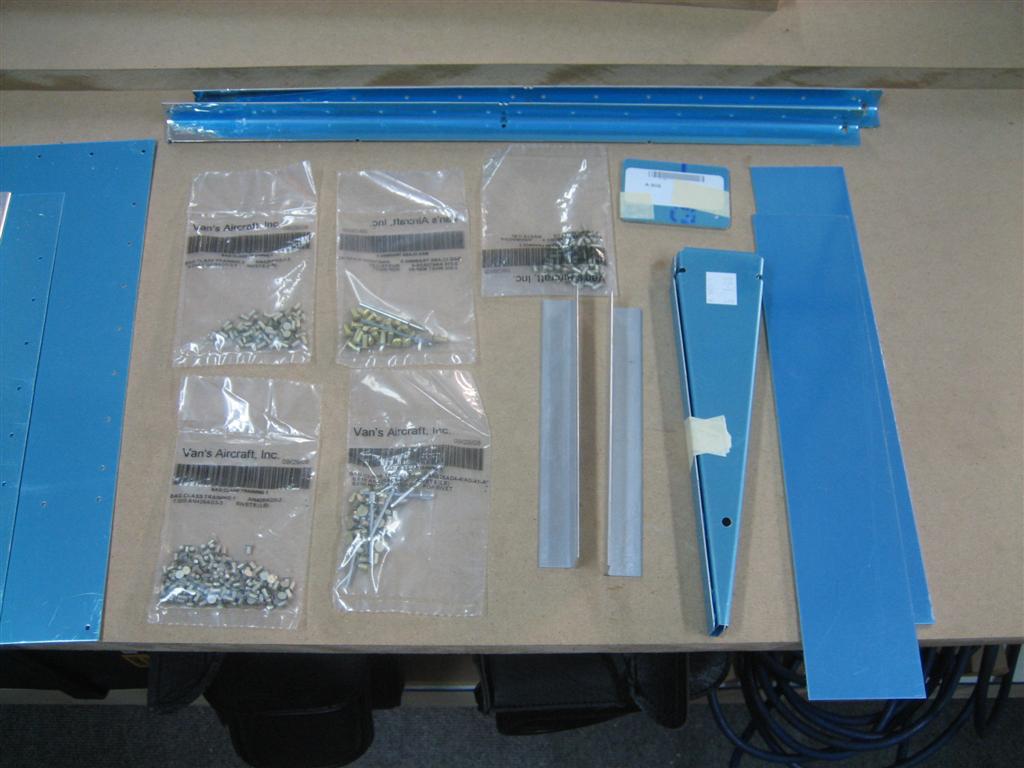
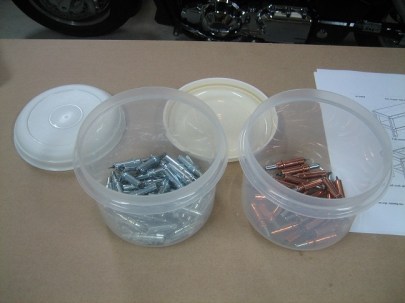
Closeup of the Hardware

Closeup of the Hardware

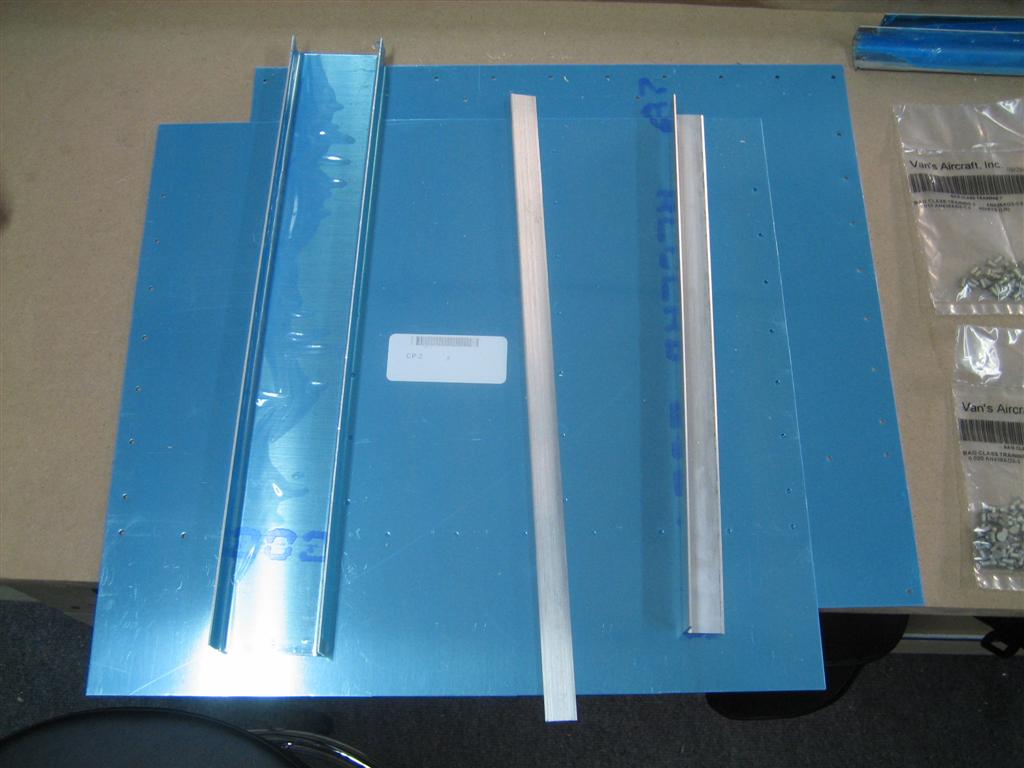
Closeup of the skins.

Closeup of the skins.

I didn’t get very far on the practice kit. I made it through step one, which is to drill the weird angle assembly in 24 places for the appropriate flush and blind rivets of various sizes. Even the practice kit is going to be slow going. I did learn a ton, though.

  1. Everything is so tiny. I’ve been staring at picture on all the build sites, thinking things were bigger. The -3-3 rivets are TINY! The skins are a lot thinner than I thought they would be.
  2. Don’t take the blue off the skins if you don’t want to scratch the skins. I thought my workbench was clean, but after deburring one of the small sheets, there were small pieces of aluminum everywhere. I slid one of the sheets on the table and scratched the hell out of it.
  3. My cheap clamps are nice, but not perfect. I’ll need to get some higher quality ones. Also, I need to use the duct tape on the clamp face trick. They scratched the hell out of the sheet, too.
  4. I had to measure, mark, and drill the holes. No big deal, but I just noted that they really have you jump right in. I drilled into a spare piece of MDF I had laying around, but I didn’t drill far enough, so the clecos don’t have a fantastic grip. Oh well.
  5. I played around with pressure on the bit while drilling. I learned as a kid that when you have the spiral piece of metal coming off in one piece as you drill, that is the right pressure (which wasn’t that much more than the air drill itself). Anyone have any other advice?
  6. I learned that building is not going to be a piece of cake, but is going to be a lot of fun. That’s kind of a fluffy statement, but it’s true.

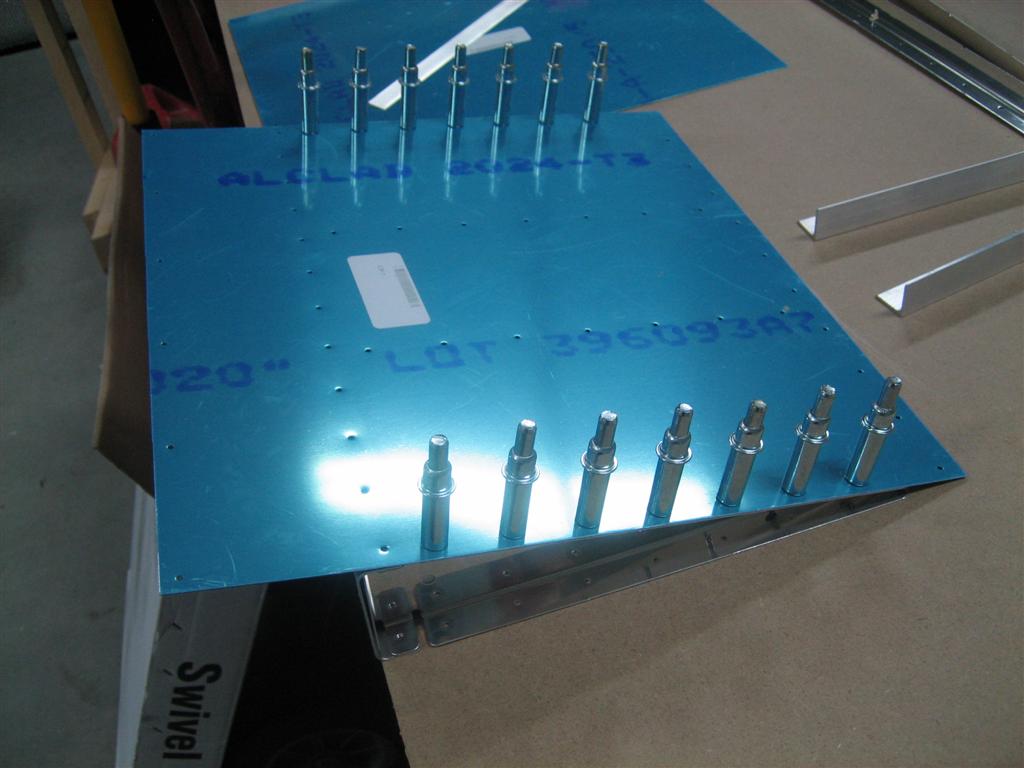
Here’s the picture of what I got done last night.

Step one. Drill appropriate holes.

Step one. Drill appropriate holes. Don't make fun of my erroneous markings. The instructions said I have to make mistakes on this practice kit, and not the real airplane, so I made sure there were some errors.

Also, I had to cleco the skin to the end ribs. I don’t know why, but I wanted to do it. I promise not to skip steps in the future.

Top skin cleco'd to the end ribs.

Top skin cleco'd to the end ribs.

Prev | Next


Purchased Practice Kit from GBI

September 27, 2009

Prev | Next

I am a lucky guy. I live about an hour away from George and Becki Orndorff of GeoBeck, Inc. See their website at fly-gbi.com. Last night, after a wonderful day of flying a Cessna 310H to Gilliam McConnell and having lunch at the Pik-N-Pig, I drove down to see George and Becki and purchase a practice kit. After graciously forgiving me for bothering them on a Sunday evening, George showed me their RV-7A (N289GB). It was immaculate. I asked George about a few things, the answers to most of which were expected. Example: Why shouldn’t I build? (“You should!”) Do you love it? (“Absolutely!”) Everyone I ask has nothing but wonderful things to say about their RV. Sounds like I need to go ahead start!

Two of his answers were more interesting. I asked him about tip-up versus slider, noting that everyone seems to like what they have. His simple response: “I’ve built both, and the slider is better. I won’t build another tip-up.” I was sold, but I pushed to find out why. Basically, he explained that the slider was more sturdy, cooler (both hero-pilot style and temperature style) and easier to build. Easier to build? That’s contrary to what I’ve heard, but George is obviously trustworthy in the RV expertise area, so I’ll take is word for it.

The other answer was to “What modifications should I do to the RV-7?”

He told me to put the RV-8 rudder on the RV-7 (instead of the RV-7/9, larger “uglier” rudder). I haven’t seen pictures side-by-side (to determine if I agree with the ugly part), but George said the larger rudder on the 7/9 is for spin recovery. I’ll need to think about this some more. I am not too concerned about spin recovery (he said it only improved the recovery from 1.5 turns to 1 turn), so I think the choice will come down to aesthetics, and the fact that the trailing edge of the 8 rudder is bent, while the 7/9 rudder is double-flush riveted.

Anyway, I got home with the kit, and had to join the girlfriend for dinner, so all I did was unpack the kit, and lay it out nicely so I can take pictures tomorrow before I get started.

Most importantly, the kit is a Van’s kit (some other builders were wondering what the difference was), but also comes with GBI’s sheet metal tools DVD. $55, which, with some subtraction skills, puts the DVD at $20. I watched the DVD last night, it runs about 60 minutes, and was really helpful with introducing me to some of the tools and techniques I am going to become intimately familiar with over the course of the project. He also walks through the actual construction of the practice kit. It’s worth the $20. I also bought the pre-punched empennage kit videos. Those should come in handy soon enough.

Prev | Next


Built Another Workbench

September 20, 2009

Prev | Next

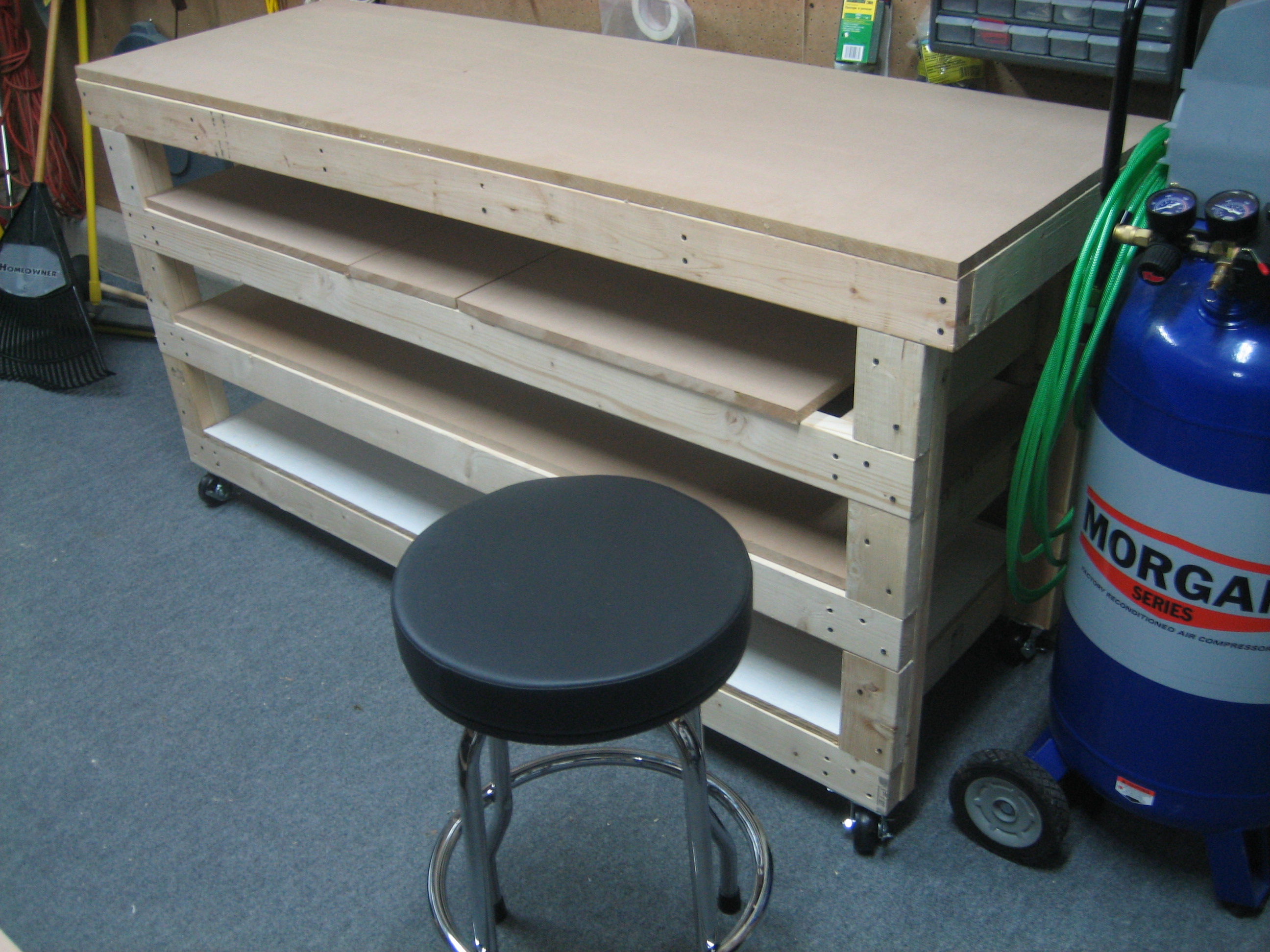
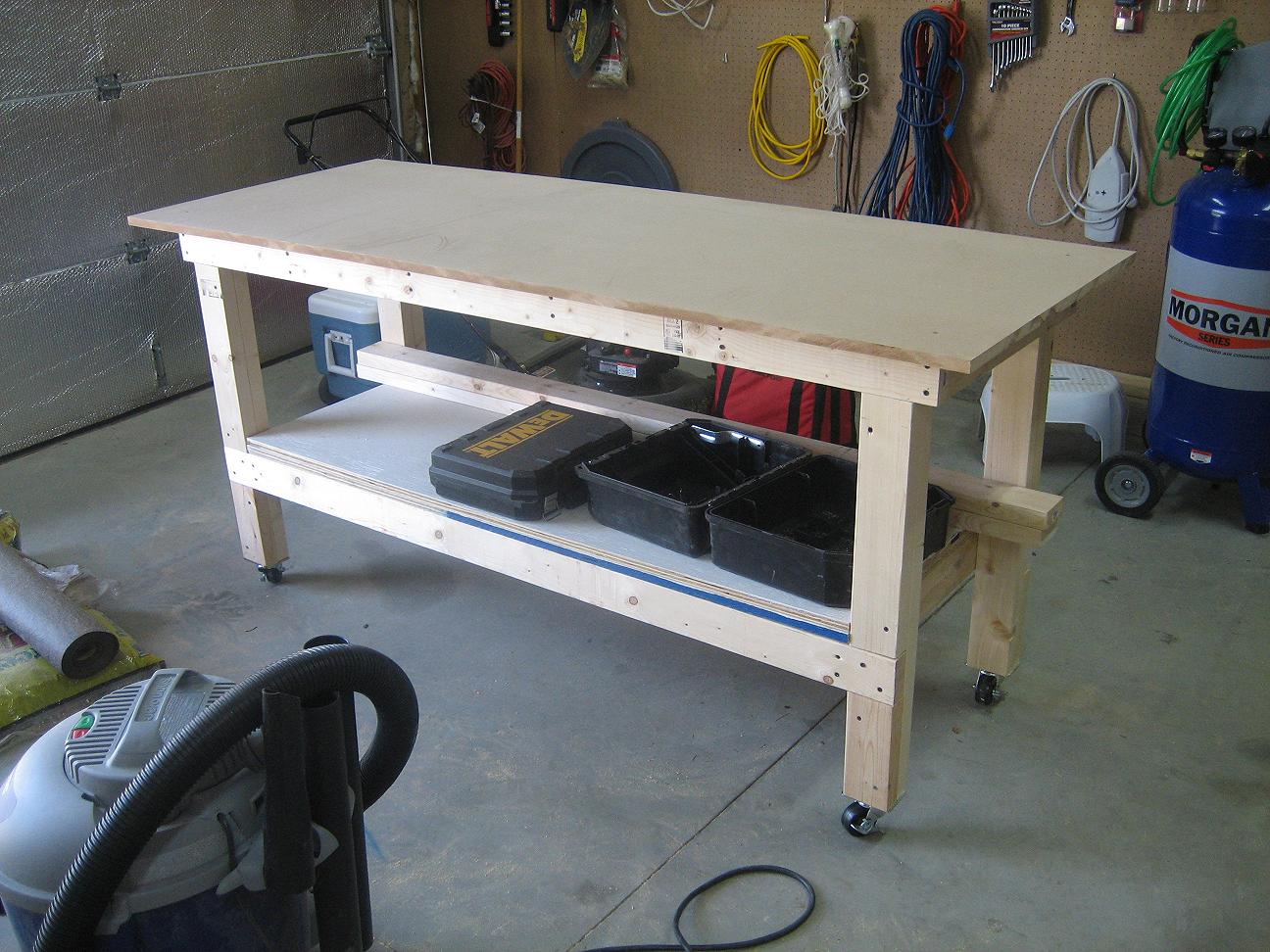
I was bored this weekend, and thinking more about shop layout. I am very happy so far with the first EAA workbench I built, but I want another one against the wall in my garage, to have some space for a bench grinder, bandsaw, and drill press.  As you can see from the pictures, I added 2 additional shelves (for a total of three). The top two are spaced at 6 inches (5.25 after adding 3/4″ plywood/MDF) and the bottom one was fitted so the 2×4 crossbrace is on the floor (even with the bottom of the main support leg, a couple inches off the floor after adding casters.)

See the nice workbench in the background? That's the new one.

See the nice workbench in the background? That's the new one.

Here's a closeup. Notice the two extra shelves? That should be nice to store some airplane parts. Also, take note of the $20 swivel stool purchased from Northern Tool. I couldn't resist. Sorry. Also, please forgive the top shelf. I ran out of MDF, so I had to put the scrap pieces there for the sake of the picture. Again, please accept my apologies.

Here's a closeup. Notice the two extra shelves? That should be nice to store some airplane parts. Also, take note of the $20 swivel stool purchased from Northern Tool. I couldn't resist. Sorry. Also, please forgive the top shelf. I ran out of MDF, so I had to put the scrap pieces there for the sake of the picture. Again, please accept my apologies.

Prev | Next


Ordered some more tools. Again.

September 15, 2009

Prev | Next

Ordered some more tools today. I’ll update the post when they come in. I’ve been ordering from The Yard, given the price advantage. Until I run into bad quality, I’ll probably just continue along that route. I’m sure some of you may have some comments about that.

Here’s the list. So far, project costs is $596 dollars. I have a spreadsheet I keep with estimated cost for each tool, then my actual costs, including shipping (free if order is over $100 with the yard). Then I calculate how much I save for each tool or item. I’m estimating I’ve saved about $678 by shopping around vigorously.

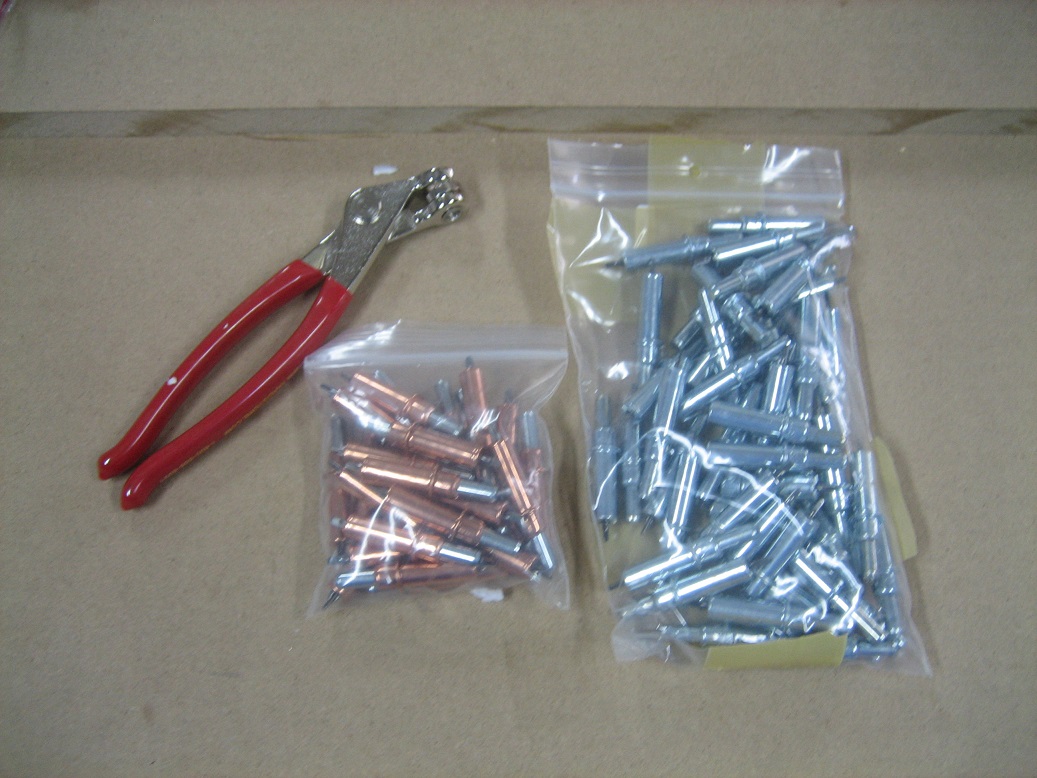
K Series Spring Cleco 3/32″ (0-1/4″)
K Series Spring Cleco 1/8″ (0-1/4″)
Cleco Pliers with Grip
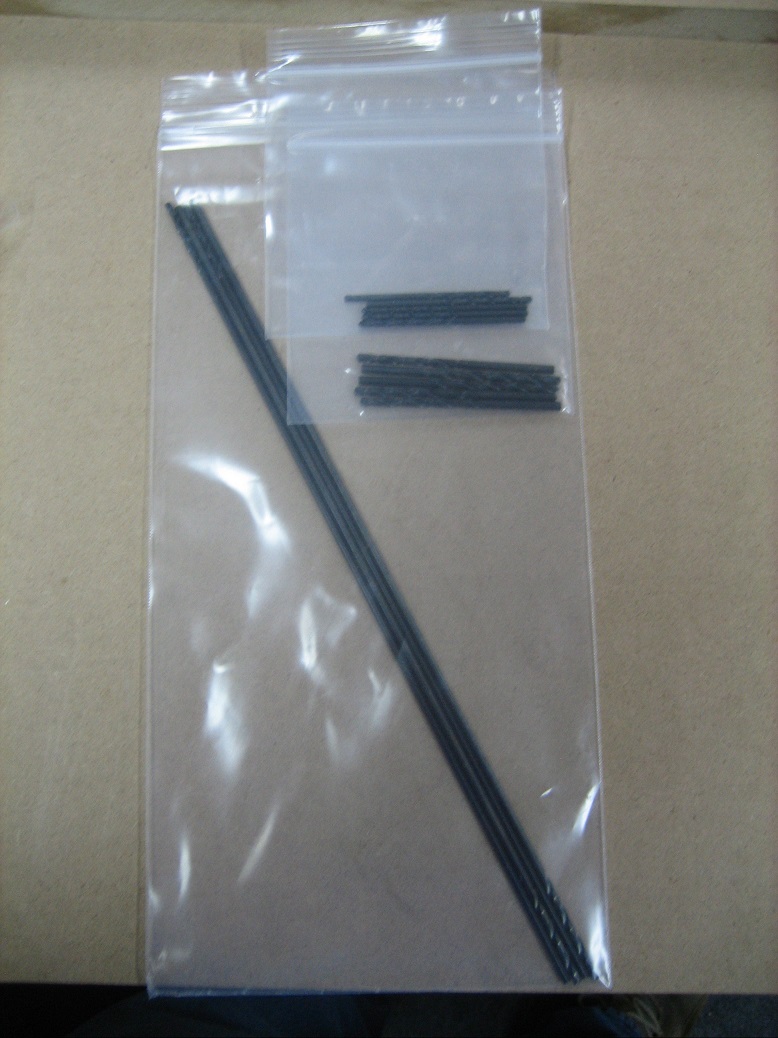
#30 High-Speed Jobber Bit – 135 degee Split Point
#40 High-Speed Jobber Bit – 135 degee Split Point
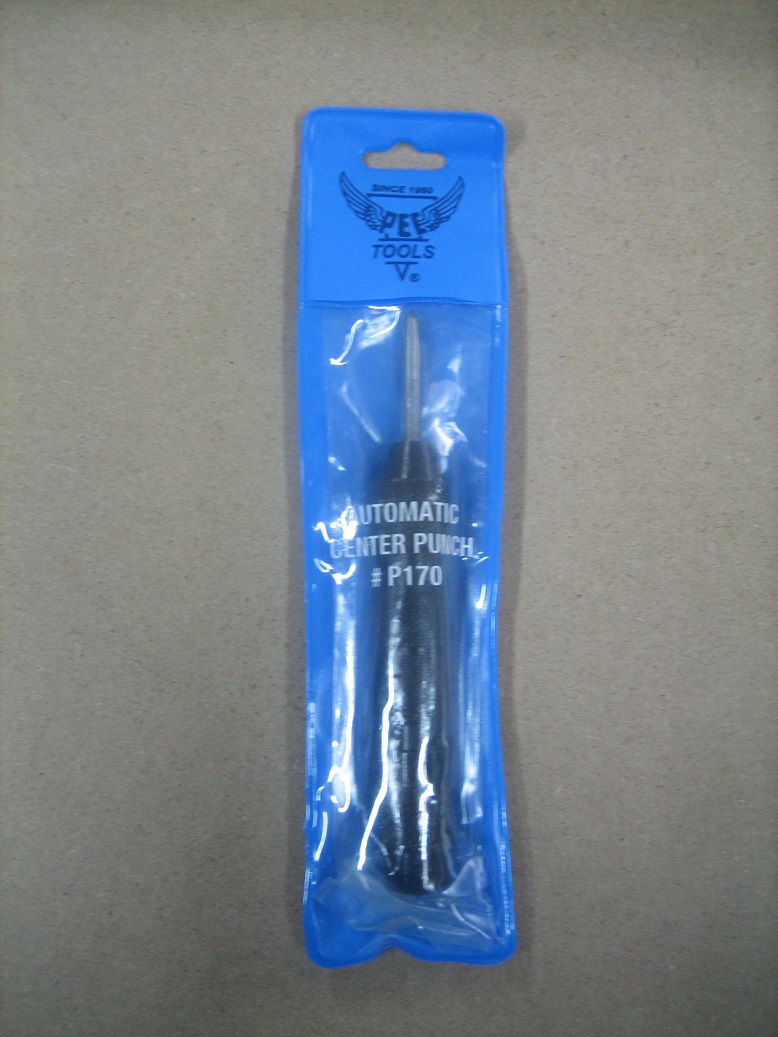
Auto Center Punch Large
Safety Glasses Clear
Plastic Spring Clamp Small
Plastic Spring Clamp Medium
12″ Drill Bit High Speed #30 AED
12″ Drill Bit High Speed #40 AED
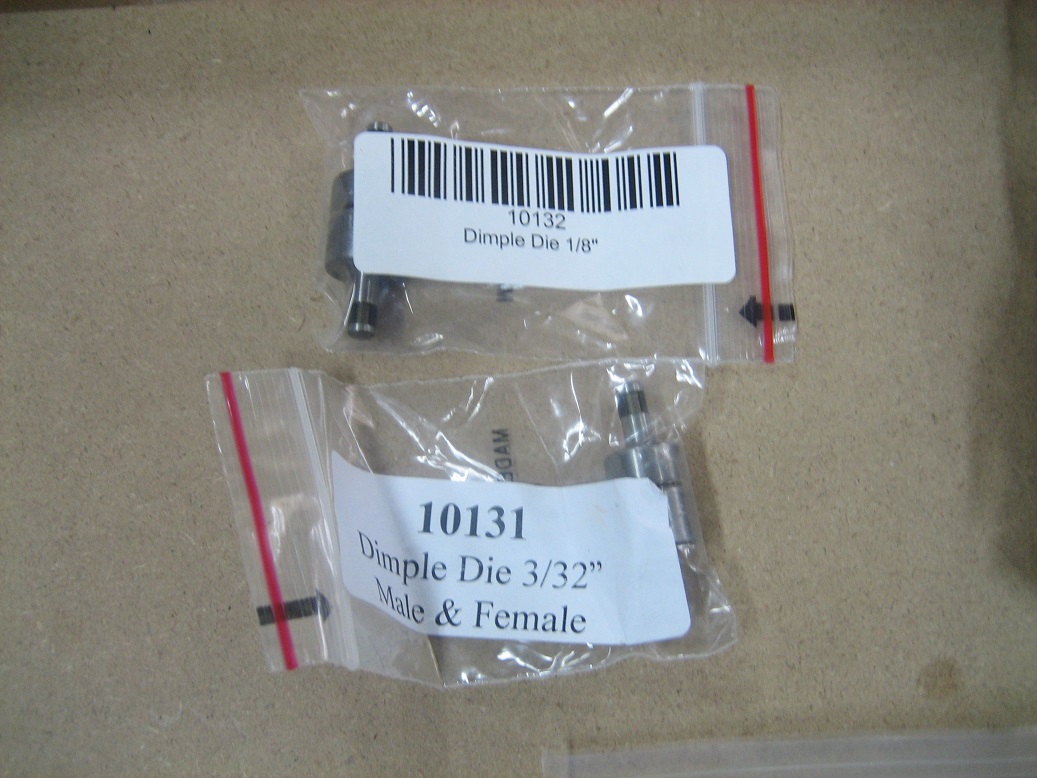
Dimple Die Set 3/32″ Male/Female
Dimple Die Set 1/8″ Male/Female

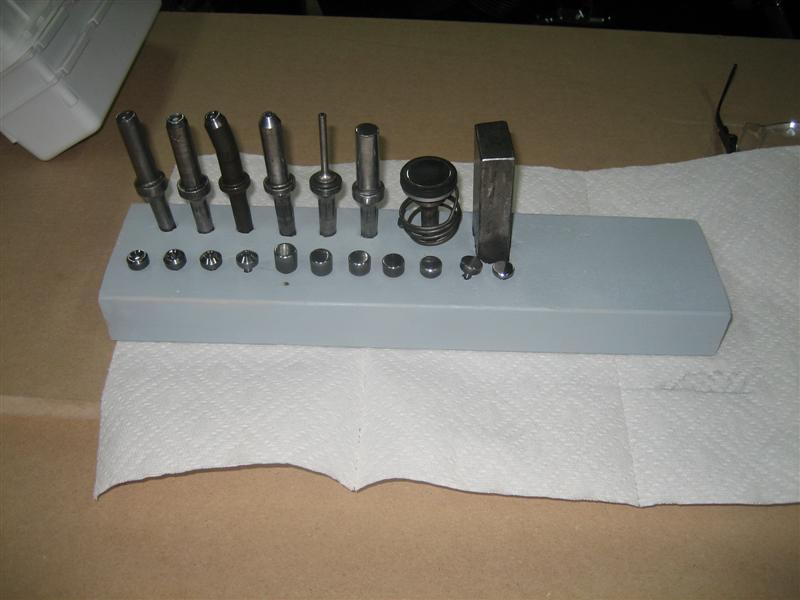
9/18/09 Update: The above ordered tools arrived, and I am again happy with their quality. I added some more spaces to the right of my rivet/squeezer/dimple set tool holder of sorts. Here are a few pics of the tools and their new home.

A closeup of the first of many clecos.

A closeup of the first of many clecos.


Clecos and Pliers. I sprung for the pliers with handles. High class, huh?

Clecos and Pliers. I sprung for the pliers with handles. High class, huh?

DRILL BITS!

DRILL BITS!

Dimple Dies.

Dimple Dies.

Everything in the order.

Everything in the order.

And a punch.

And a punch.

Prev | Next


More tools arrive

September 5, 2009

Prev | Next

A few days ago I ordered some more tools from the Yard. Aquisitions include:

A Hand Squeezer
11 Piece Squeezer set
Edge deburring tool
Air gun (not RV related, but for the shop anyway).

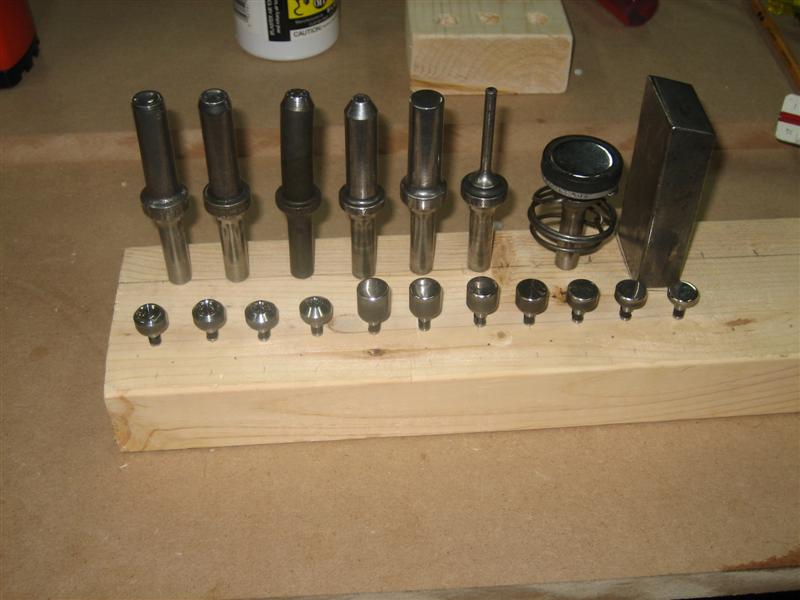
Today, I think I’m going to build a small storage rack (2×4 with some holes drilled into it) for my rivet and squeezer sets. I built one the other night that I wasn’t happy with, so I’m going to try again. Here are a few pictures from the effort. Basically I laid out all the things that I thought could roll off the workbend when I needed them (plus the bucking bar, that won’t roll). Then I drilled the 2×4 to correct size, making sure to be sloppy with the drill (I want there to be some play for a loose fit).

Pictures from Saturday Sep 5 017 (Medium)

Here they are laid out.

Pictures from Saturday Sep 5 022 (Medium)

After sanding, priming, and putting the sets into my holder, here is the final product. The space to the right is reserved for drill bits and dimple die sets. (I originally stole the idea from someone talking about drill bits. They said they always grabbed the wrong one, lost them, etc.) This is my version of the solution.

I think I’ll put 3 or 4 of the most commonly used bits to the right along with some dimple die sets. I like it so far. We’ll see if I just leave it on the workbench or actually mount it somewhere. Maybe somehwere attached to the workbench, or maybe on the wall by the compressor. I’ll think about it.

Prev | Next


EAA Workbench Completed

August 30, 2009

Prev | Next

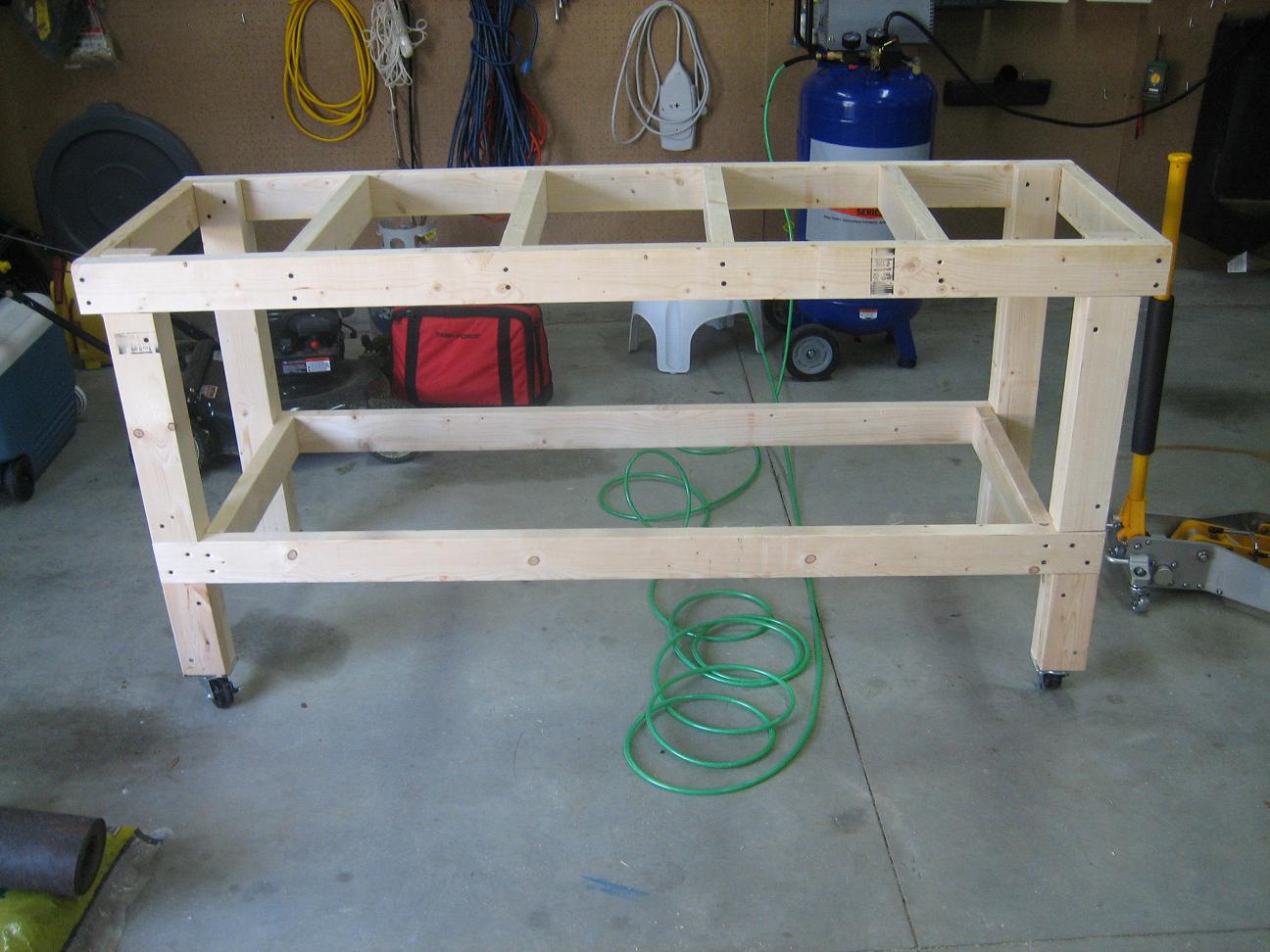
After some planning about space and layout in the garage, I decided to dive into the construction of a workbench. I’ve heard (and seen on some builder’s sites) some of the EAA 1000 Workbenches, and I thought that would be a good first workbench. I’ll use that one for awhile before building a second one, hopefully with some improvements.

UPDATE: I built a second one. See the other post for pictures of the second one.

EAA Chapter 1000 Standard workbench plans.
EAA Chapter 1000 Standard workbench instructions.

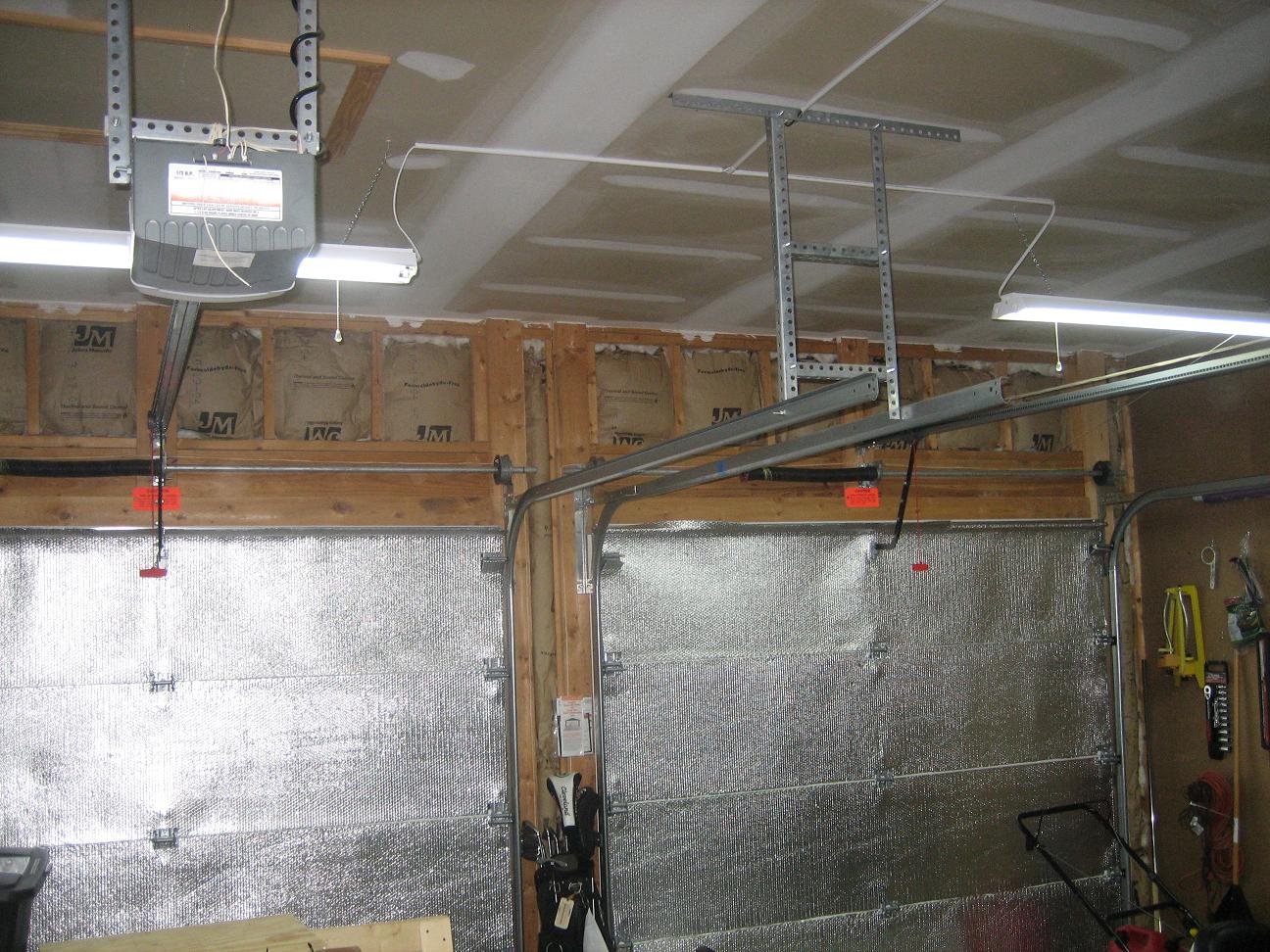
Here’s a couple before pictures of my garage.

Workbench Construction 008

I love the lighting. There was a single incandescent bulb in the gargage before. Also, I lined the garage doors with some double sided bubble foil I bought off eBay. I would say adding that decreased the temperature in my garage in the middle of the summer by 10 degrees. Good investment.

Workbench Construction 009

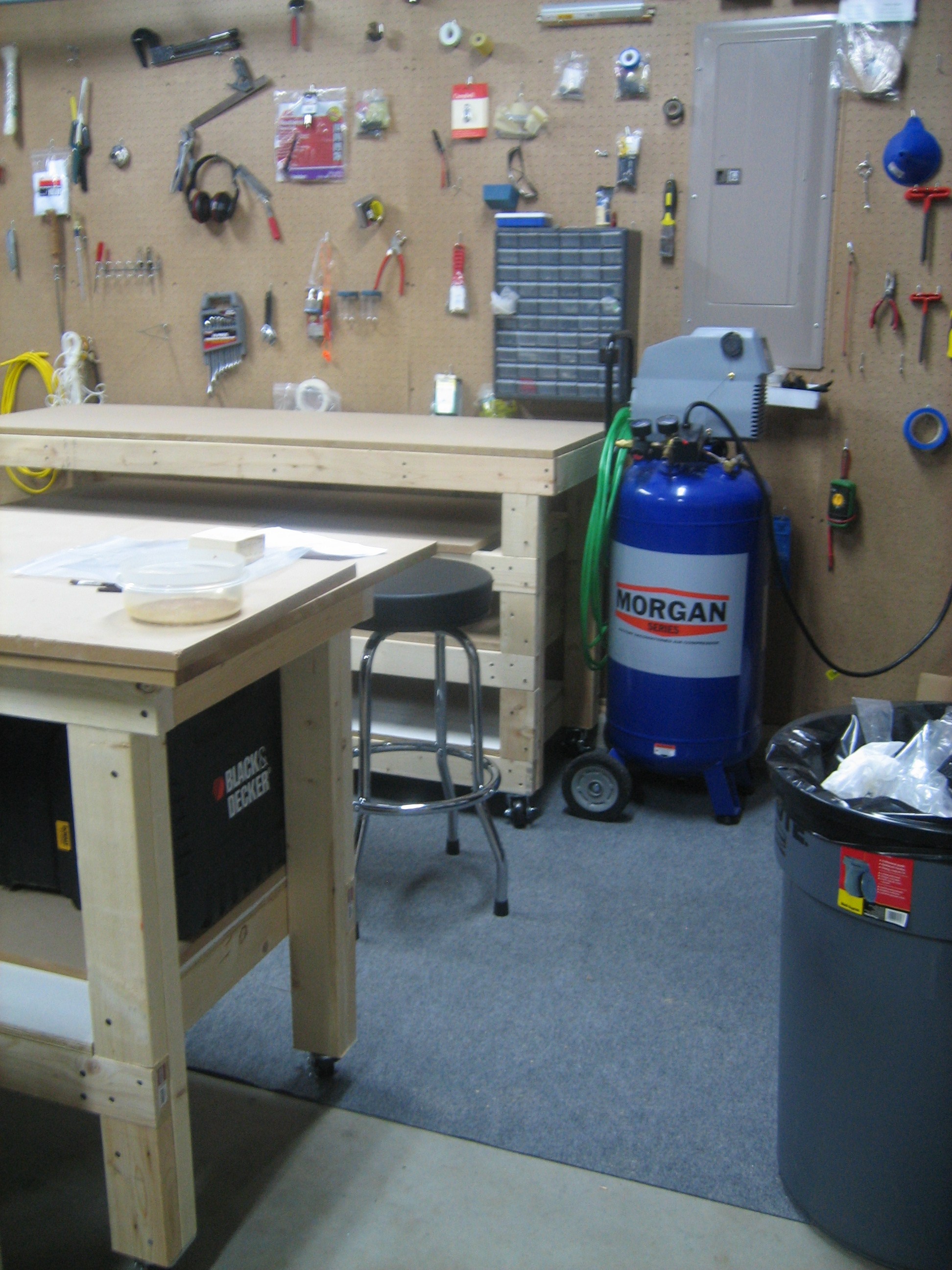
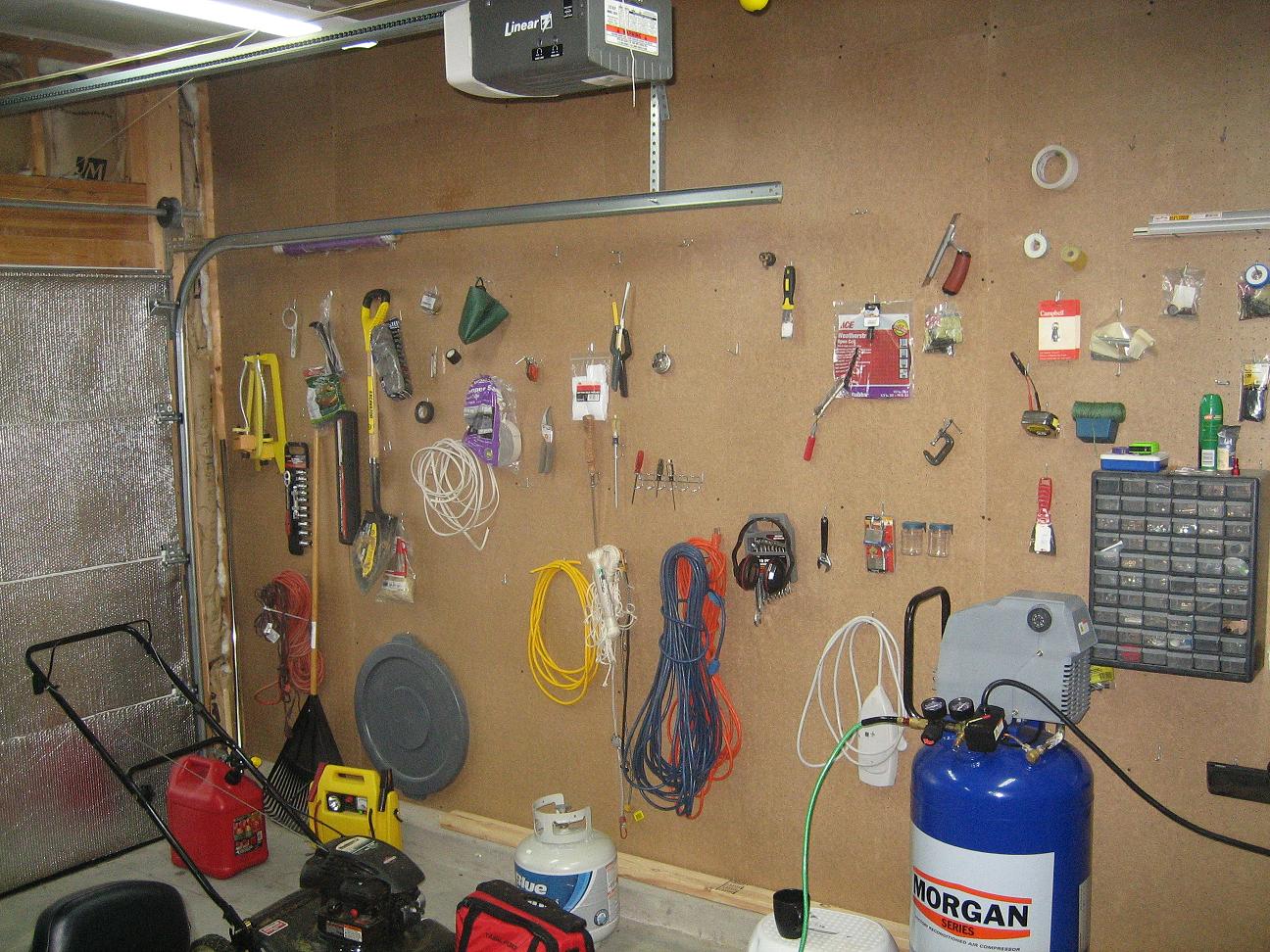
I also installed pegboard along the entire NW wall and on the half of the SE wall that wasn't finished. The tools are just thrown up on the wall for now; I promise to get organized before I purchase the empennage kit.

Workbench Construction 010

Some shelves I built early after moving in for more space. Look closely, and you can see my cornhole boards supporting some old laptop speakers. When hooked up to my iPhone, they are loud enough to hear through my hearing protection (which I use religiously with power tools).

Workbench Construction 011

Smaller shelves on the SE wall (and more pegboard). Good for tools.

Workbench Construction 013

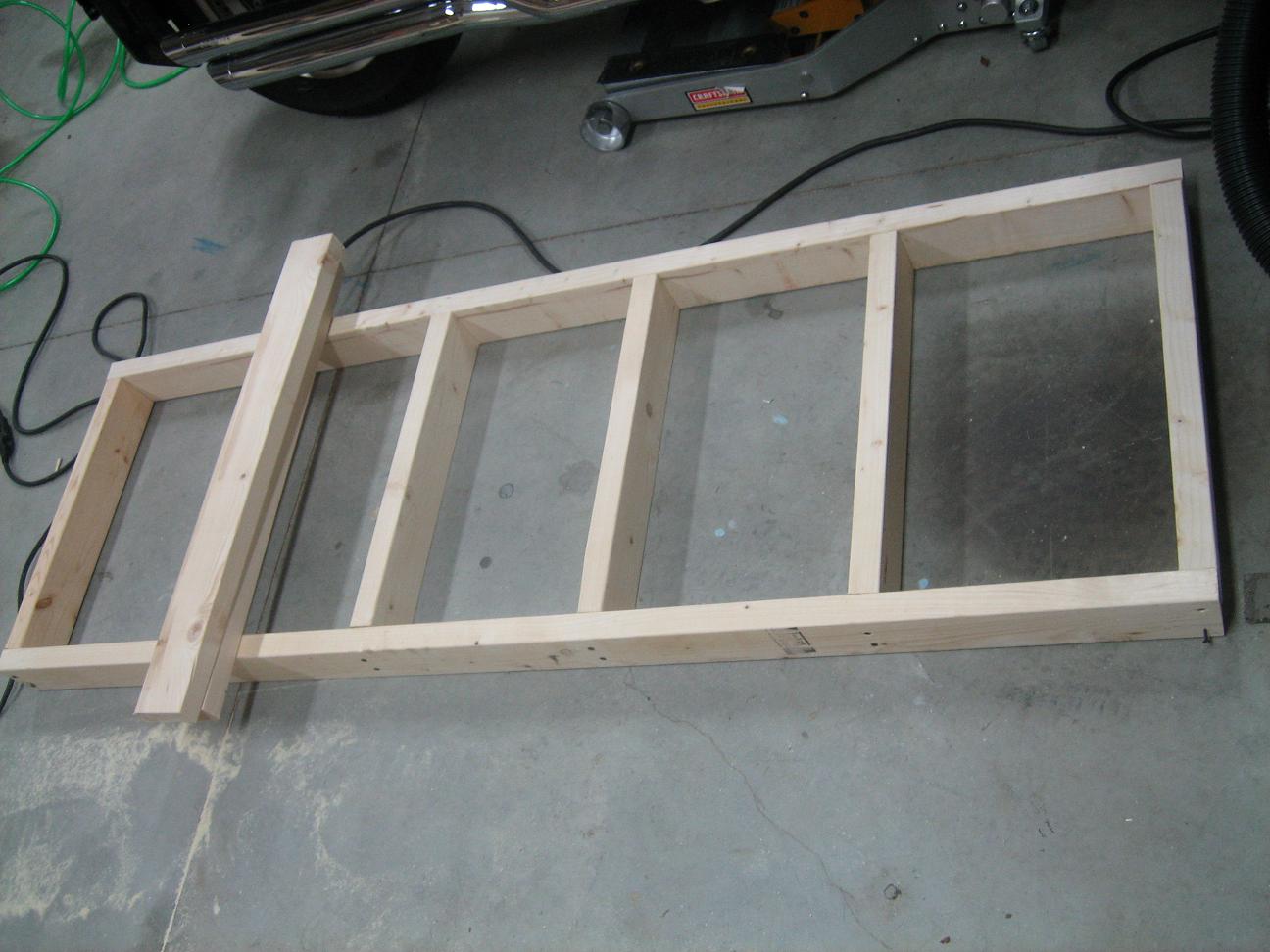
Here's the top of the workbench (you build from the top down). Instead of 5 feet (60"), I decided to do 6 feet (72"). I added another rib (airplane talk!) which makes the spacing 14.1" on center (Instead of the ~15" mentioned in the EAA plans).

Workbench Construction 015

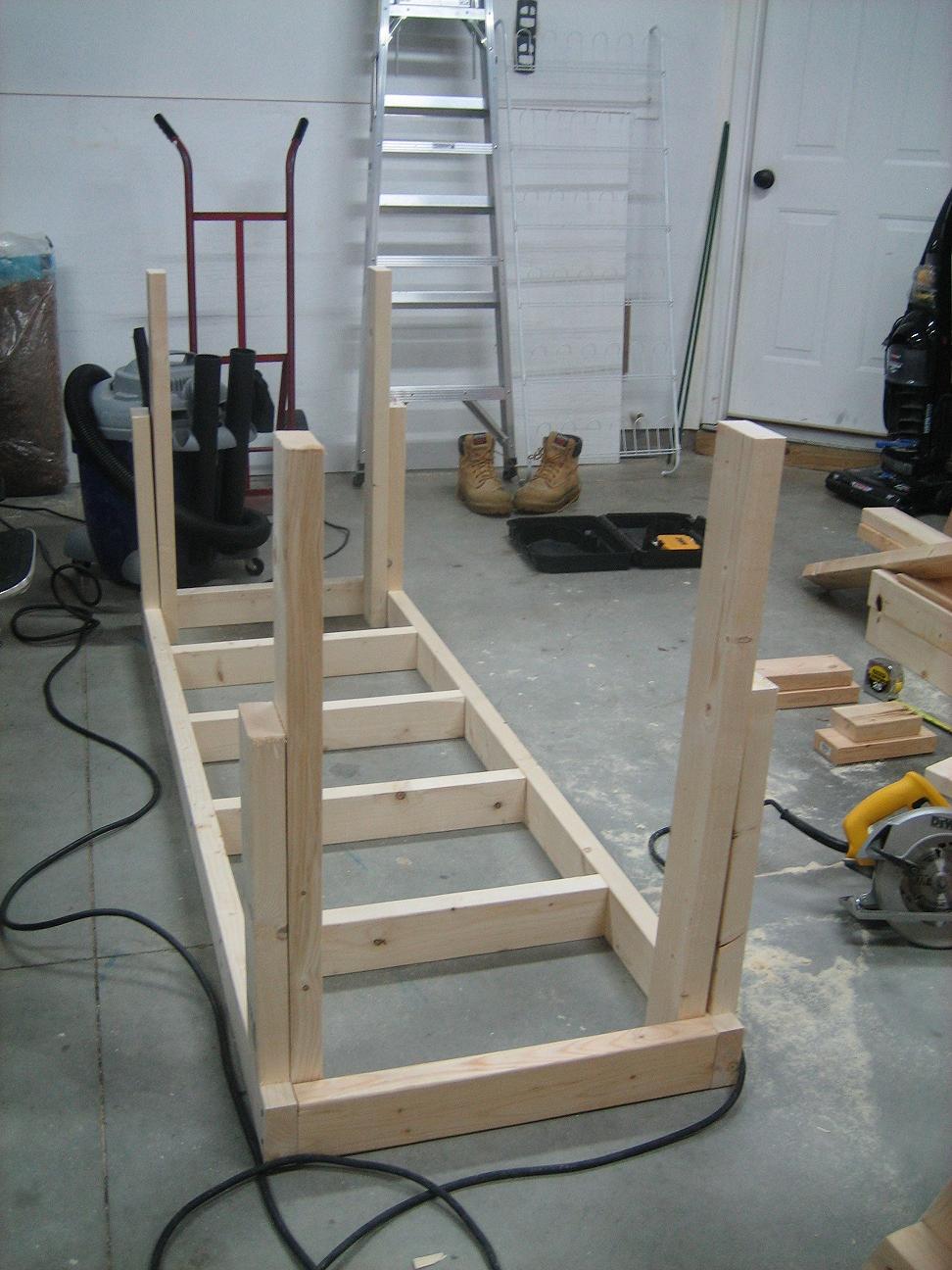
The legs and leg doublers got cut and mocked up. And no, I am not working barefoot.

Workbench Construction 016

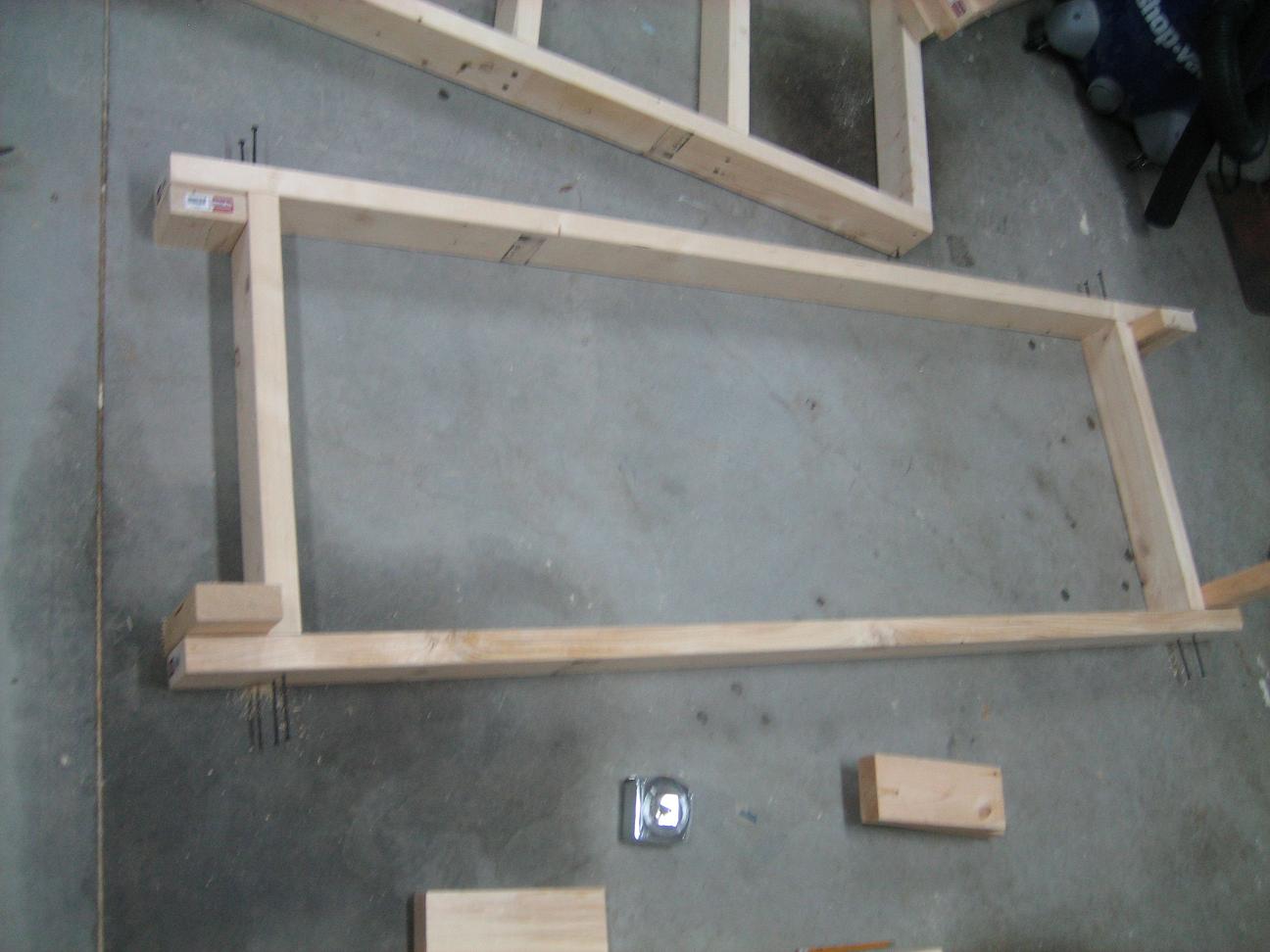
Then I built the lower shelf unit (using scrap wood for spacing).

Workbench Construction 017

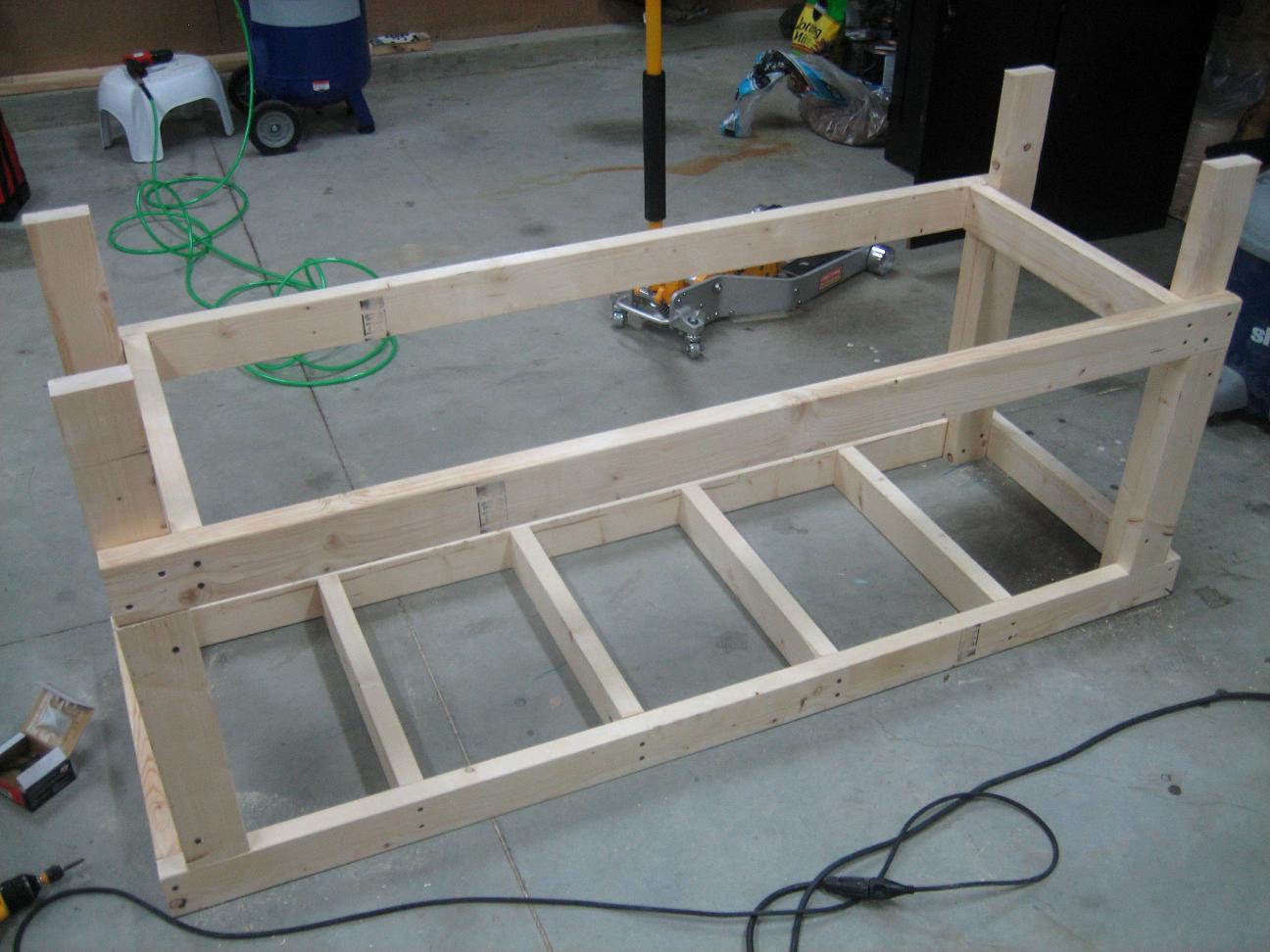
It's actually starting to look like a workbench.

Workbench Construction 018

After adding the other leg doublers, I fastened some 200 lb locking casters on the bottom. I stuck to the plans on height (33") because I knew the casters would add a few inches. My sawhorses were built to 36", and I am happy with that height. The finished work bench is pretty close to 36".

Workbench Construction 021

Flipped and looking like a workbench.

Then I cut some Medium Density Fiberboard (MDF) for the benchtop, overhanging each side by about 3". I've been told to do this so I can clamp airplane parts to the bench more easily. Figuring I'd be replacing the top a few times during the project, I secured it down with some countersunk screws. Hopefully I'll get the vise bolted down in the next few days.

Then I cut some Medium Density Fiberboard (MDF) for the benchtop, overhanging each side by about 3". I've been told to do this so I can clamp airplane parts to the bench more easily. Figuring I'd be replacing the top a few times during the project, I secured it down with some countersunk screws. Hopefully I'll get the vise bolted down in the next few days.

Is this where I say, “Ta Daaaa…”?

Prev | Next


Rivet Gun Purchased

August 27, 2009

Prev | Next

Against some advice, I opted for the eBay purchase of a Rivet gun:

CP4X

Chicago Pneumatic 4X Rivet Gun

Chicago Pneumatic 4x Rivet Gun Riveter
Model: CP4444 RUTAB
Comes with AN470 3/32″, 1/8″, 5/32″ & 3/16″ Rivet Sets
3 Flush Sets
2 Rivet Set Retaining Springs
1 Conavair Aircraft Bucking Bar

August 31 update:

The rivet gun showed up, was in great shape, and after a few tries against the bucking bar, I believe I have determined that it works. How long it will last, however, is another story. I am happy for now that I have a gun that works and that it didn’t break the bank.

Prev | Next


Preview Plans arrived

August 27, 2009

Prev | Next

Last night, the preview plans arrived. They include some welcome pages, an RVator sample, a Van’s accessories catalog, the construction manual, and all the plans from the project printed on 11″ x 17″ paper. They come in a big grey binder.

I sat the binder on the table and stood back and looked at it thinking, “I bet this binder really doesn’t convey the enormity of what I am getting myself into.” After staring for a few minutes, I decided to dive in. I made it through the introductory pages and contruction techniques sections before heading to bed. I’ll start reading the actual construction manual this week and next.

Here’s the plan: the first time through, I just want an overview. The second time through, I am planning on outlining what tools, supplies, etc. I need and when I need them by adding a sheet behind appropriate pages and keeping a list. We’ll see how that goes. I’m trying not to buy tools needed only for the finish kit before building the empennage. More later…

Prev | Next


Started buying some tools…

August 22, 2009

Prev | Next

I saw a factory refurbished air compressor today for $119 from Northern Tool & equipment. It’s a Morgan Series Reconditioned Portable Vertical Air Compressor — 26 Gallon, 1.5 HP 4 CFM, Model# F226R.

Morgan Series Reconditioned Portable Vertical Air Compressor — 26 Gallon, 1.5 HP 4 CFM, Model# F226R

The quality looks good, and it only took about 2 minutes to pressurize all the way up to 150 psi.

I know a few of you will not be excited about the reconditioned part (or the oil-free part), but given that I’m not ready to drop $400 on an air compressor right now, I’m calling the $119 a huge savings. And, I’ll be able to fill my own tires, have some air tools for other projects, and provide the power needed to replace the hardwood floors in a few years. If the thing breaks in a year, I’ll replace it with a better unit, and call the $119 a good price for an intro level compressor. I believe the 4.0 CFM will suffice, but we’ll see when I actually get started.

To test function, I had to buy an Air drill (Northern Industrial Air Drill — 3/8in. Chuck, 1800 RPM, 4 CFM, Reversible, Keyless) for $49, a lightweight air hose (Northern Industrial Air Hose — 1/4in. x 35ft., Clear, Urethane) for $15, and air tool lubrication. Then I got home and realized I didn’t have the quick change fitting to plug into the compressor. Maybe tonight I’ll stop by to get some quick change fittings.

Northern Industrial Air Drill — 3/8in. Chuck, 1800 RPM, 4 CFM, Reversible, Keyless

Northern Industrial Air Hose — 1/4in. x 35ft., Clear, Urethane

I also grabbed some of the color coded air couplers from Northern Tool and Equipment. I couldn’t find them on the internet, but they are red Type D couplers. No one in the store could tell me what the different types were for, but they assured me they would work.

I got home, hooked everything up, put some lube in the air drill per the first time operating instructions, and fired it up.

What a sweet sound.

Prev | Next