More Right HS Riveting

January 17, 2010

Prev | Next

After a nice day off (had to work), I got back in the garage this morning for some good progress.

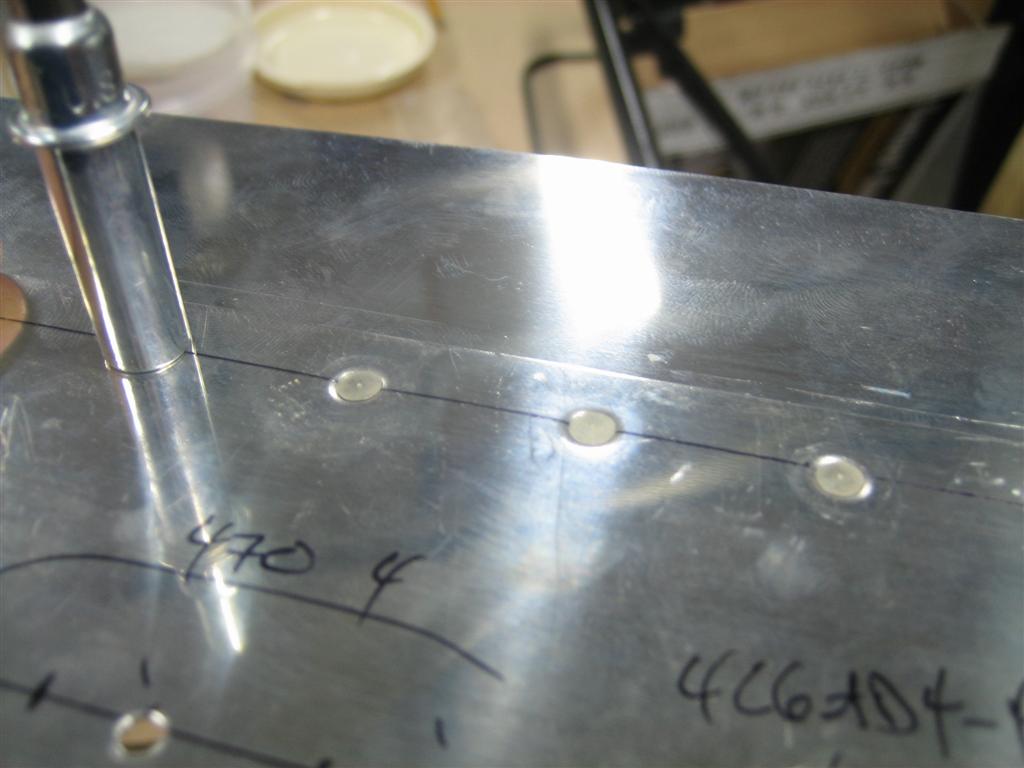
I started off by assessing the damage from the other day’s skin denting fiasco. I contemplated removing HS-707 entirely (from the top skin, too) so I could really get in there and smooth this sucker out. I even got everything mocked up in the c-frame again to look at the feasibility of getting rid of this dent. Then I decided I would have probably caused more harm than good, and that it looked a lot better today than it did the other day. After re-clecoing HS-708 into the skin with HS-707 and re-riveting the bottom skin to HS-707, I took this picture. The dented area is between the bottom two rivets in the picture. It’s really not that bad.
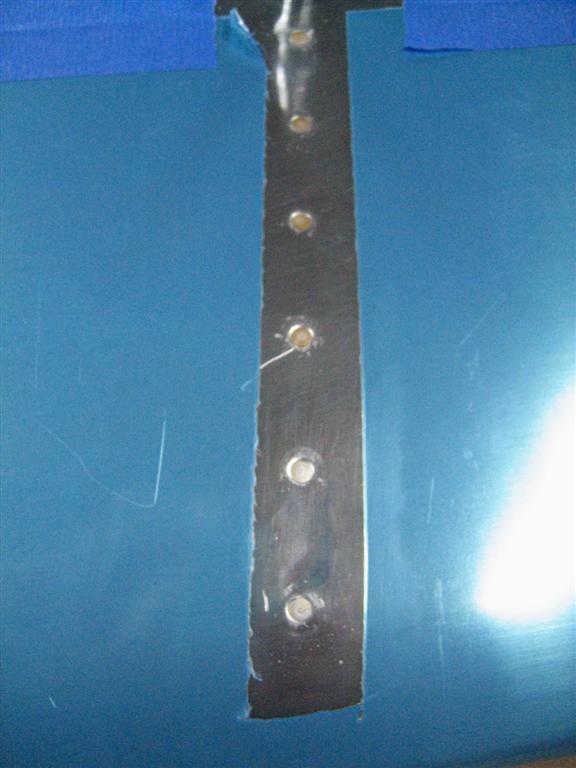
The denting between the bottom two rivets is really not that bad. And, it's on the bottom of the right HS. No one will look there. Unless you are reading this, and come to see my airplane, and want to see the dent on the bottom of the right HS. Damn you.

Anyway, with that done and behind me, I clecoed in the front spar assembly from Friday.
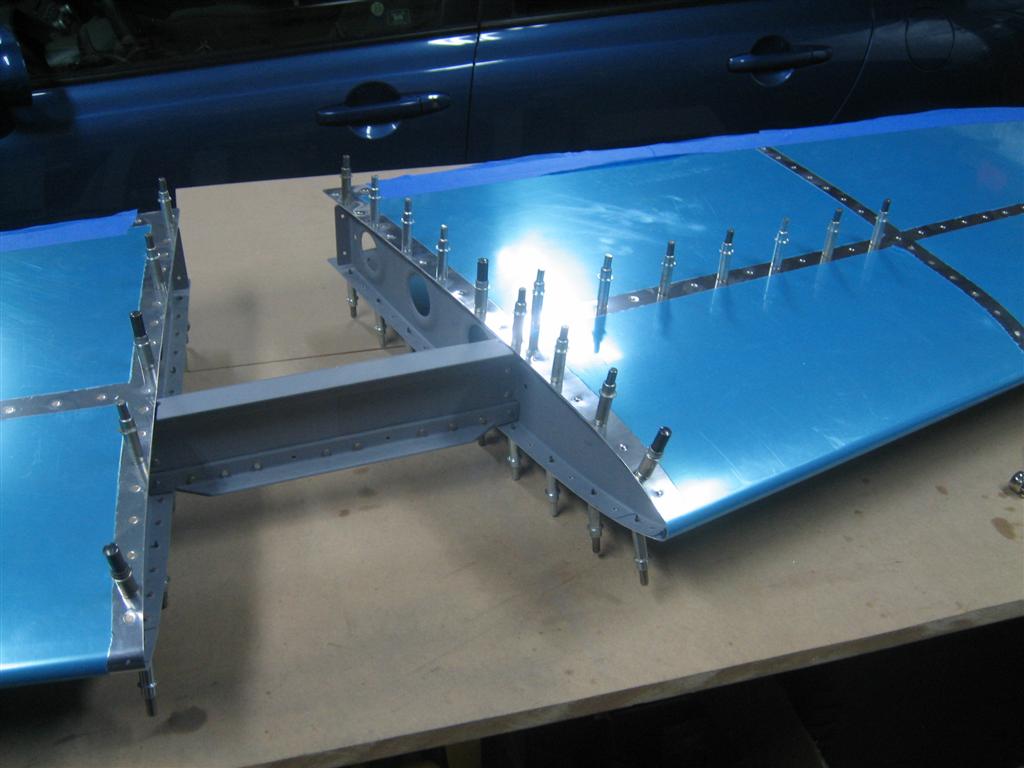
Upside-down HS assembly after starting to cleco the front spar (already riveted to the left HS skin) into the right HS skin.

CRAP! I forgot to remove the blue vinyl from the inboard bay before clecoing everything together. Okay, let’s un-cleco, remove, the vinyl, and recleco. Great. After inspecting (admiring, really) the assembly, I noticed a loose rivet (as opposed to a prude rivet. Hehe.). It was one of the two forward HS-707 rivets (by the denting). Grrr. Okay, should I un-cleco everything, and risk scratching everything in the process, or drill out two small rivets in the HS-404 to get my arm in there. I decided to go with drilling, since apparently I am really good at drilling rivets out. Without any issue, I got HS-404 removed and reached in to replace the offending rivet (second from the right in the picture).
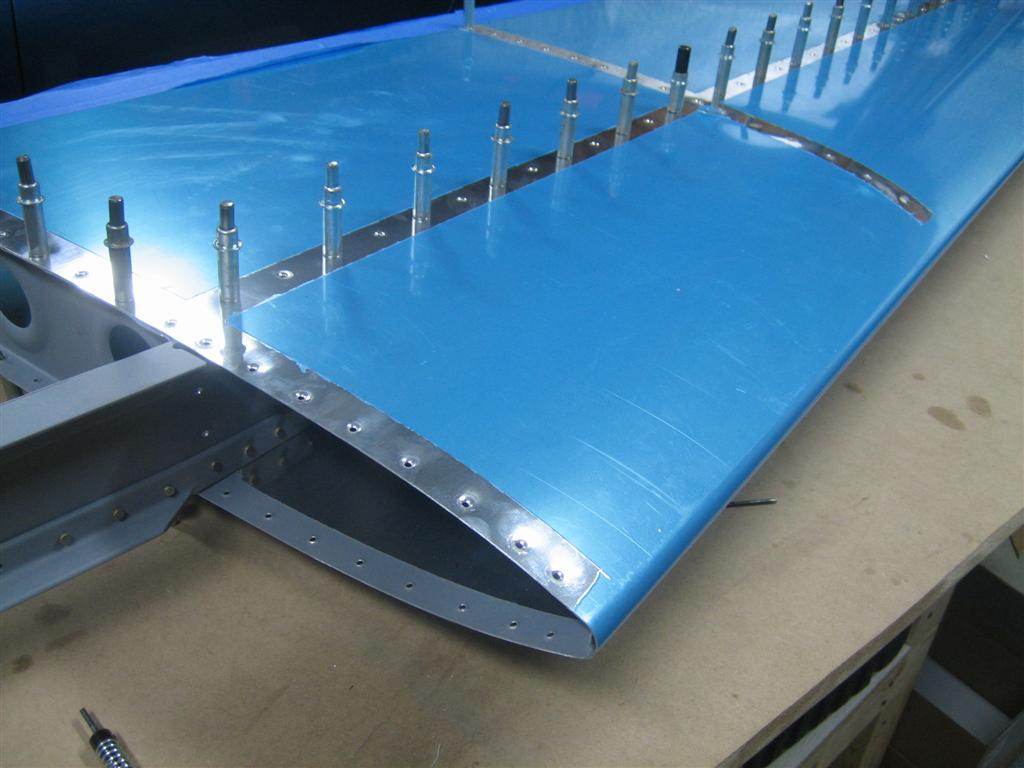
HS-404 removed so I could reach in to replace the loose rivet.

Then, I reinstalled HS-404. (But took this picture before I actually riveted it to HS-702 (front spar) and HS-405 (aft root rib) behind the spar. Just pretend there are perfectly driven rivets there.
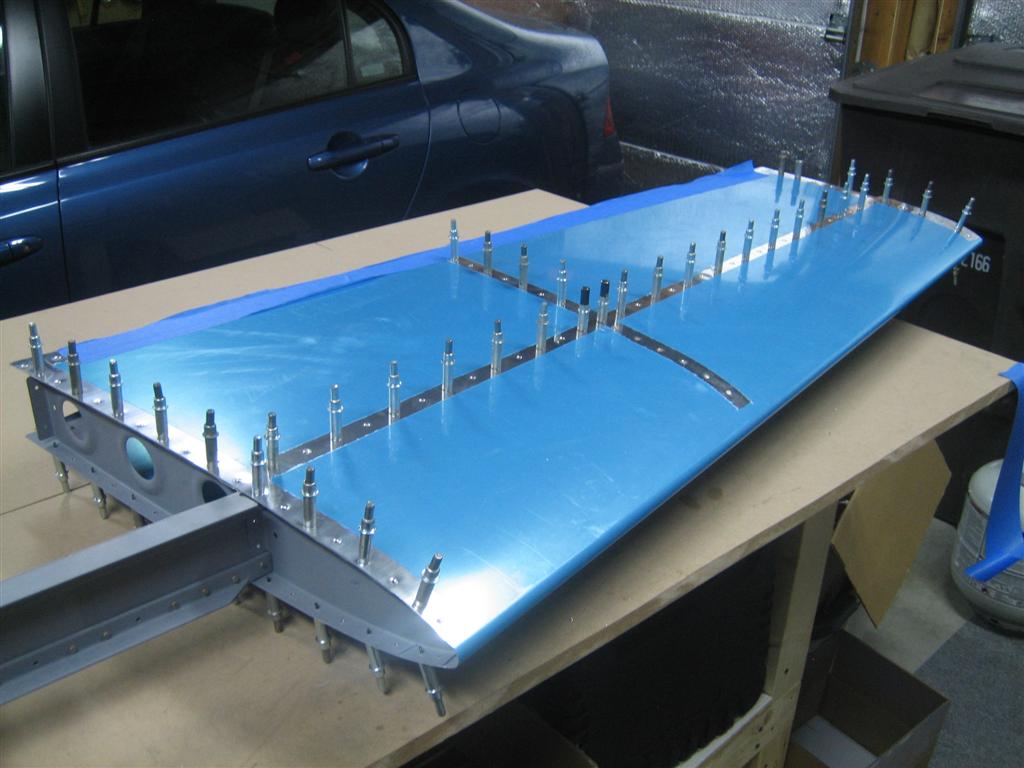
HS-404 reinstalled and the rest of the skin clecoed together.

Time to skin rivet. I like this part. Here is my technique. I stick the appropriate sized rivet in the hole, cover with blue tape, then reach in with the bucking bar, and shoot with my flush set, which is also covered in blue tape. Then, I remove the rest of the clecos, put rivets in again, and move all this little pieces of blue tape over one. (Then I figured out that on the second round, I could remove all the blue pieces of tape and run a whole line of tape along the line. I just had to make sure verify which rivets I had the bucking bar behind by pushing up on it a little. you can then see the rivet pushing up behind the tape. Bucking bar in place, I can set the gun down on the rivet and shoot.)

If you were counting, you noticed there are now two pieces of blue tape between the flush set and the rivet (and my fragile HS skin). This worked well for me, prevented further damage, and gave me some friction to help keep the set in place.
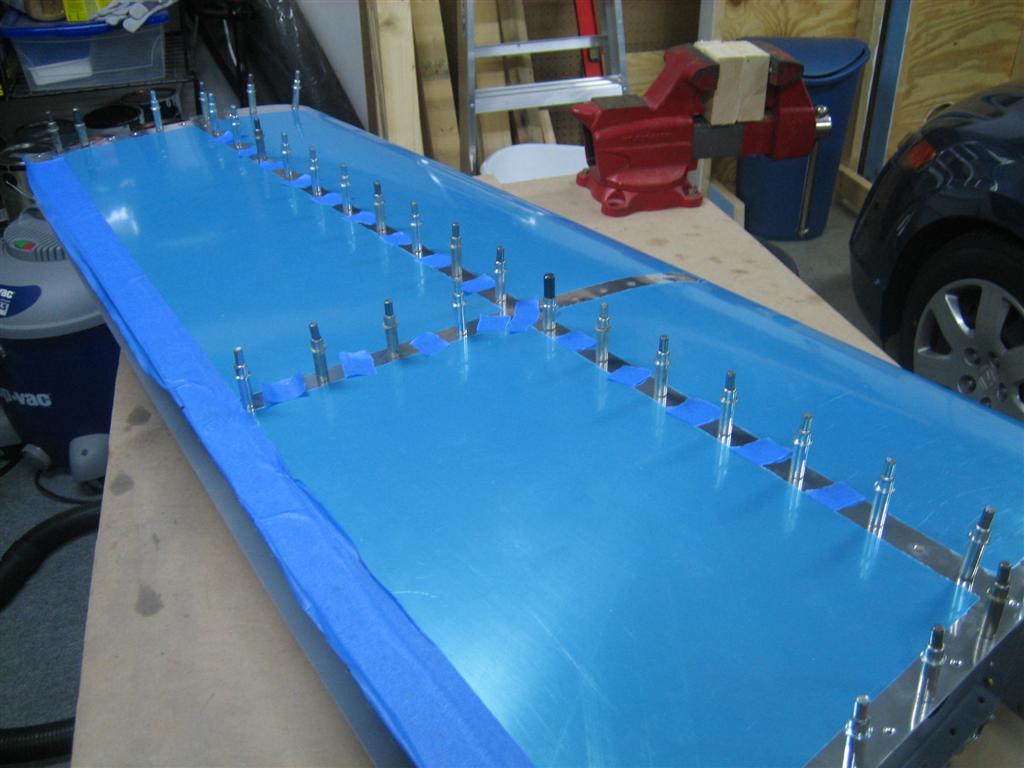
Rivets ready to set, covered with blue tape.

So, I knocked out all of the rivets needing to be bucked (I think it was 42 per side) before inspecting all my work for any issues. I think I found 5 skin rivets I wanted to replace. Here is a good example. The shop heads of all of these look great, but I want those rivets perfectly flush. I didn’t take an after picture (sorry), but I assure you, the one on the right now looks like the one on the left.
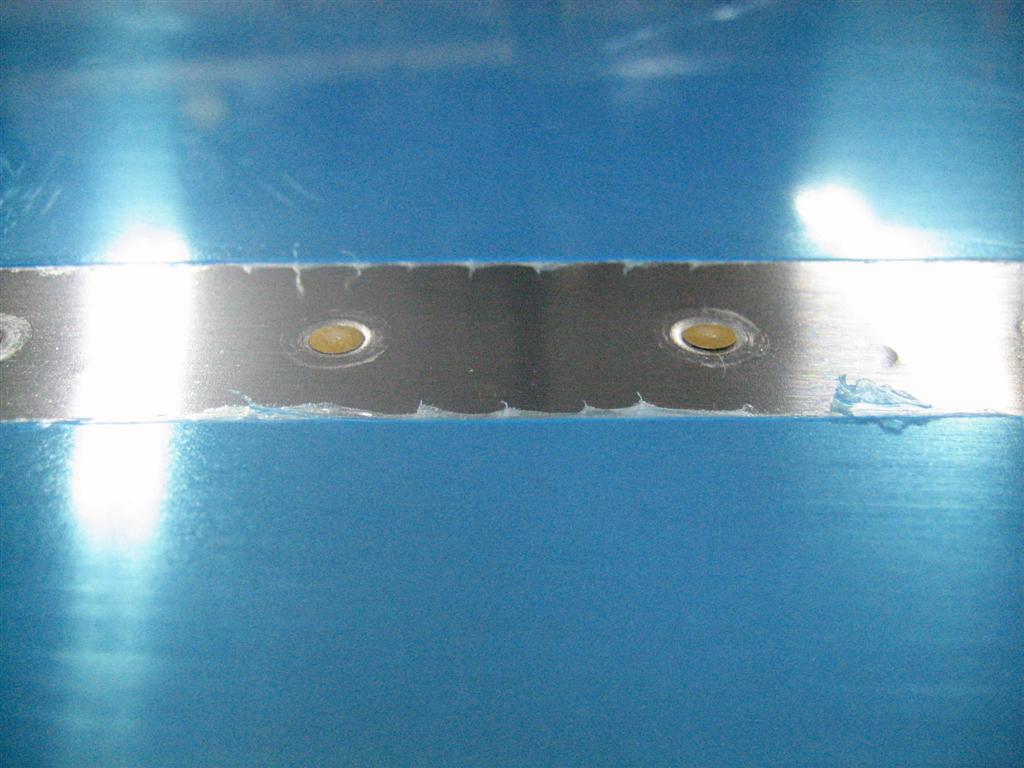
Bad rivet on the right. Replace.

After bucking all of those, I moved the now very big HS assembly to the floor while I cleaned off my workbench. Nice and clean again.
Clean workbench!

Then, I brought the HS back up on the table to squeeze the rivets that could be squeezed on the HS-601PP (skin) to HS-404 (inboard tip rib), HS-405 (inboard aft rib), and HS-706 (tip rib). The instructions have you leave 5 holes open on the inboard lines for the empennage fairing attach holes on the top only, but I decided to leave the same holes empty on the bottom for now, just to have clecos there on both sides to hold the HS off the table.  I also left some clecos in both sides of the tip ribs (although I left less on the right than I had on the left the other day, so I squeezed a few more on the left. ) Anyway, the HS is upside-down here. Left side is in the foreground.
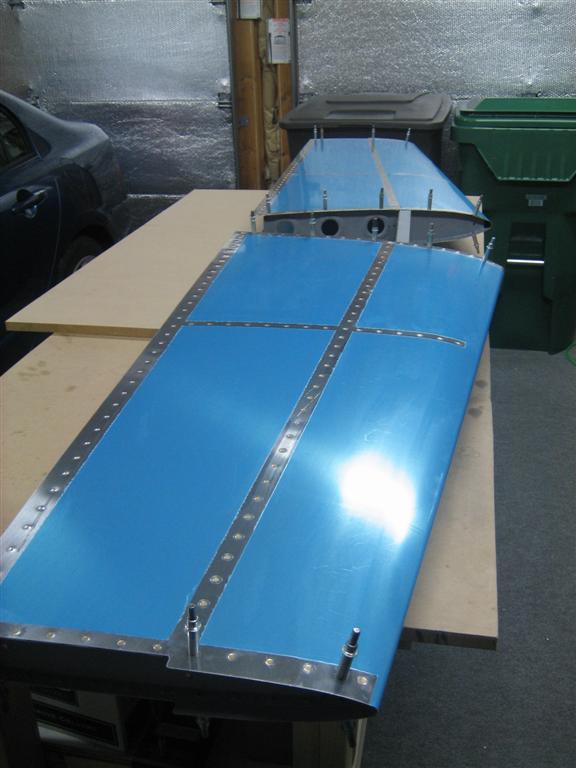
Oooh, pretty.

Another shot. Still need to get that rear spar done. Look in upper right side of the picture. The dented area (I really shouldn’t call it dented anymore) is in the middle of the leading edge there. (I know the picture is from a distance, but the point is it’s not that noticeable.)
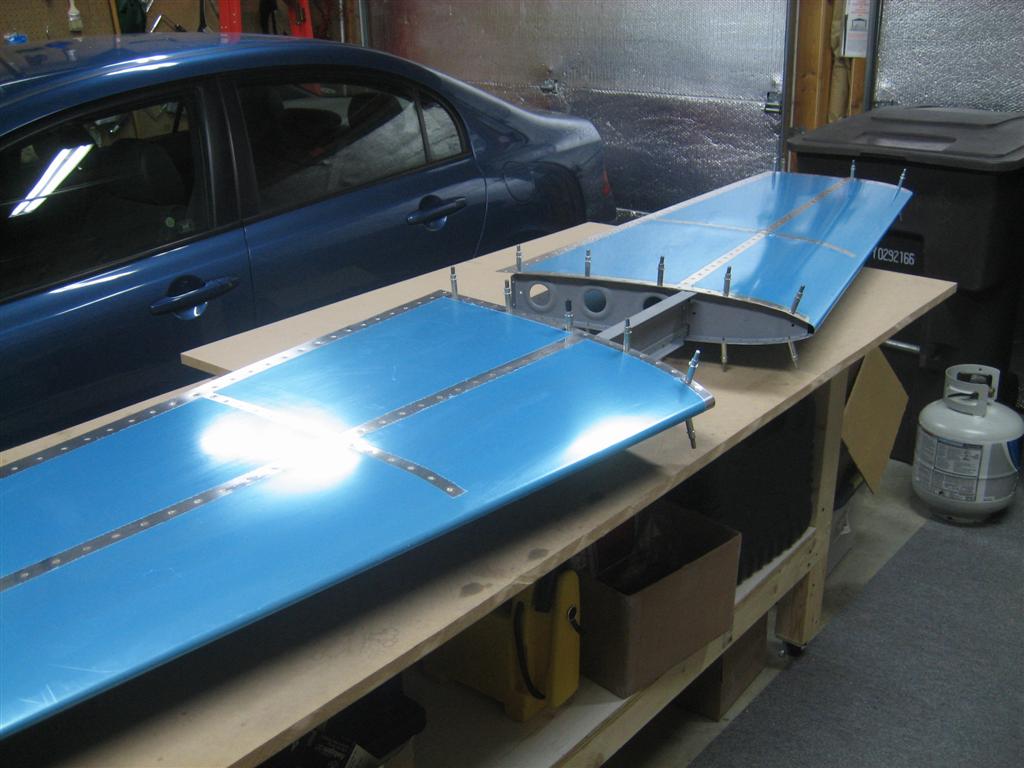
More pretty!

And after I flipped the HS right side up.
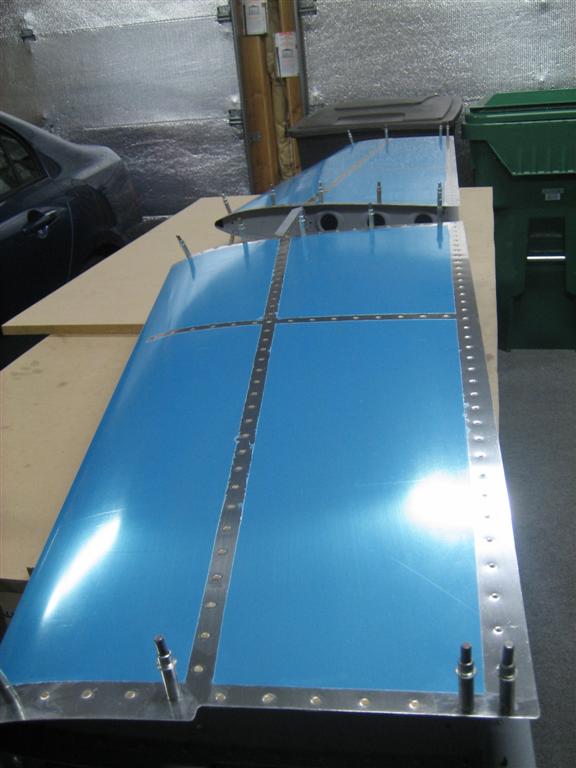
Shiny and clean.

After a hard day’s work, I stood back and admired the almost finished product.
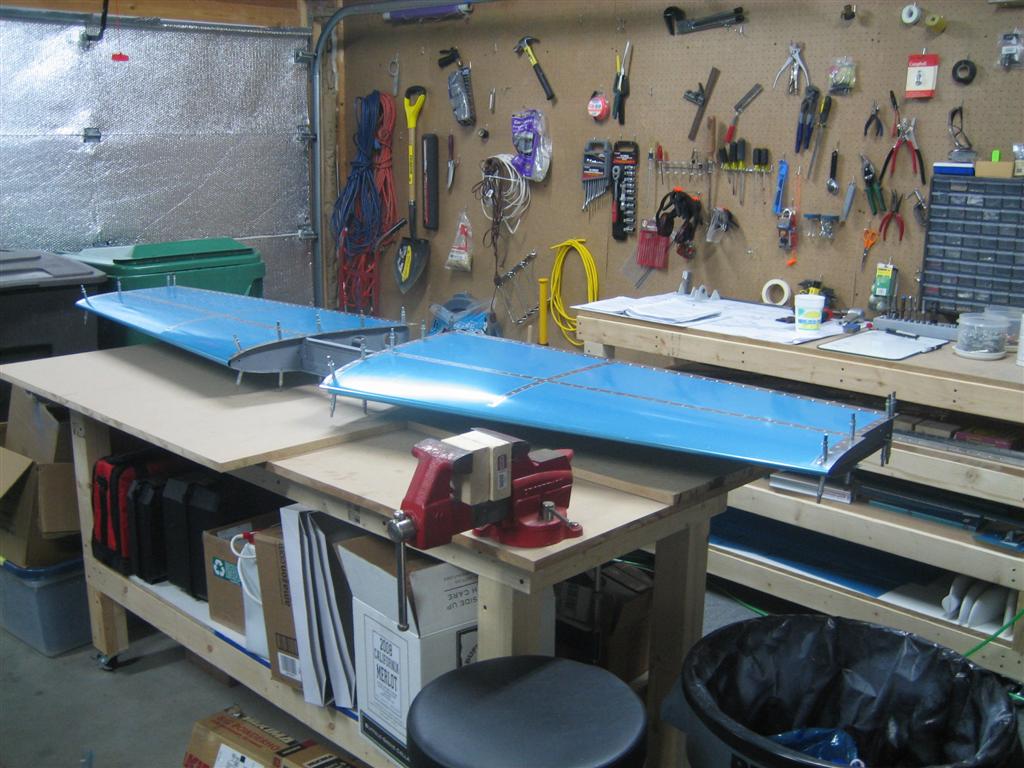
I need a bigger workbench.

Good 3.5 hour day today. 146 rivets set, 14 drilled out.

Next up:

1) Remove rest of blue vinyl from inside of HS.
2) Rear spar work.
3) Finish riveting holes in HS.
4) Figure out what is going to “fly” when I finish the HS.
5) Hang HS for storage

I also decided that I am going to keep a separate page for tips. I keep learning these little tricks along the way. I should write them down.

Prev | Next


Practice Kit – Finished

October 4, 2009

Prev | Next

Sunday morning, I managed to finish off the practice kit. Here are the pictures.

Here are the skins riveted to the spar. Notice how I didn't make the jig to hold it to the table.

Here are the skins riveted to the spar. Notice how I didn't make the jig to hold it to the table.

Another shot of the skins riveted to the spar.

Another shot of the skins riveted to the spar.

After the skins were riveted to the ribs and the trailing edge wedge, I rolled the leading edge and clecloed it together. I haven't edge formed the top skin yet, hence the ripples.

After the skins were riveted to the ribs and the trailing edge wedge, I rolled the leading edge and clecloed it together. I haven't edge formed the top skin yet, hence the ripples.

The finished product.

The finished product.

Overall, I am happy with the results. I don’t think they are airplane worthy (I don’t know if I will ever be happy with the final product), but I feel like I am ready to start on the real kit. All of the riveting came out nice, but some of the other aspects (dimpling, countersinking, edge rolling) are still not up to par.

Biggest lesson so far:

1) Go slow, take your time, read the plans, and be careful.
2) The skins don’t look too bad, but I have a feeling there will be too many scratches to polish the final airplane. I’m planning on paint anyway, so I should be okay.
3) Other things, I want to acquire some of the tank dimple dies for the understructure. Some of the skin to rib seams didn’t sit as nicely as I wanted, and I think the slightly deeper dimples in the ribs will accept the dimple in the skin better.
4) Buy a bigger backriveting plate. I just have a 1 x1/2 x 36 inch steel stock. I had to be really careful to keep the rivets lined up. With a wider plate, I wouldn’t’ have had to move the skin around, which caused…
5) …scratches in the skin. Next time I removed the vinyl from the skin, I am going to immediately replace it with painters tape. All of the scratches on the skin are where I removed the vinyl. This can be prevented.
6) Priming. Using the self-etching primer is so easy, I think I may do all of the interior skin next time ( I only primed the rivet lines, where two pieces of metal would meet this time).
7) I need a no-hole yoke for the rivets near the rear of the trailing edge. I managed with a thin bucking bar, but I didn’t like the results. A no-hole would make this a non-issue.

Prev | Next


Practice Kit – Priming

October 1, 2009

Prev | Next

I decided to prep and prime the practice kit to smooth out the process before starting on the airplane. i don’t know if this is the final process, but it was I did for the practice kit.

First, I scrubbed all of the surfaces to be primed with a soapy red scotchbrite pad. Then clean with acetone and let dry, then prime with a medium gray self-etching primer. I’ll continue tomorrow.

One of the skins, primed and de-blued.

One of the skins, primed and de-blued. Stiffeners, doublers, trailing edge wedge, spar, and ribs ready to rivet.

Stiffeners, doublers, trailing edge wedge, spar, and ribs ready to rivet.

Stiffeners, doublers, trailing edge wedge, spar, and ribs ready to rivet.

Prev | Next


Practice Kit – Stiffeners and Skins

September 30, 2009

Prev | Next

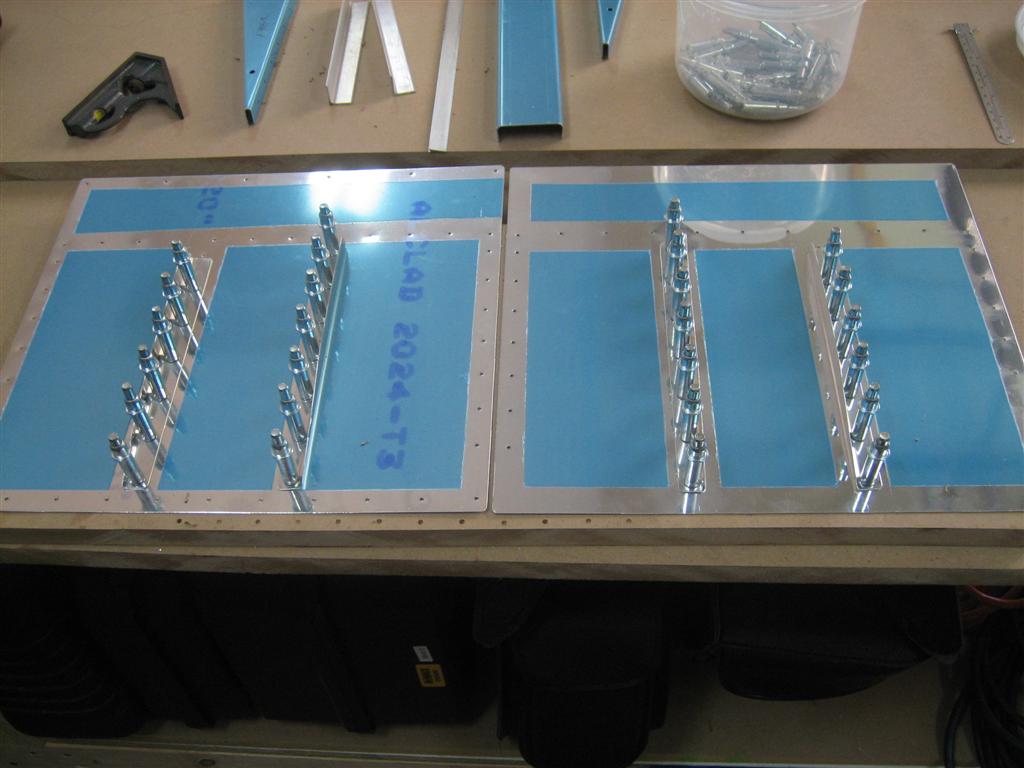
I started on the real practice kit today. First, you have to make the stiffeners. Easy as pie, except the stock I got in my kit was cut short by about 1/2″ in each case. I got two shorter sections, the kit shows it comes as one long piece. Maybe George gave me some extra that was laying around. No biggie, but that’s why in the pictures below the stiffeners are different lengths. Then I edge prepped the stiffeners, ribs, spar, and skins. I also practiced using the soldering iron some more, with pretty decent results. Here’s a shot of the stiffeners and skins ready to match-drill.

Skins and stiffeners ready for match drilling.

Skins and stiffeners ready for match-drilling.

And the stiffeners match-drilled to the skins…

Match-drilled and cleco'ed.

Match-drilled and cleco'ed.

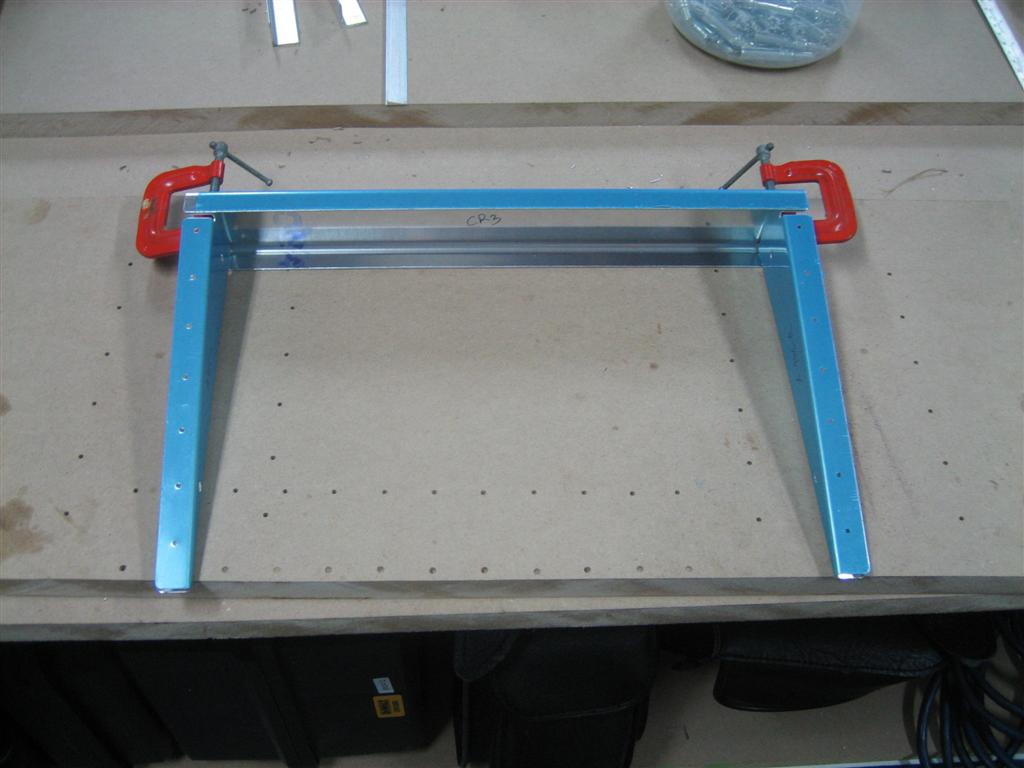
After this, I assembled the skeleton, matchrilled both skins to the ribs, spar, and trailing edge wedge, then disassembled everything. It got late, so I stopped after getting all the holes deburred. Here’s a shot of the skeleton clamped together, ready for drilling.

Skeleton Clamped

Skeleton Clamped

Next step is to figure out a priming process and test it out before dimpling and riveting.

Prev | Next


Finished the first assembly in the Practice Kit

September 29, 2009

Prev | Next

Tonight, I finished the first assembly in the practice kit. Only a few notes, and some lessons learned.

Big lessons learned:

  1. The soldering iron leaves a mark if you aren’t careful, be gentle, and go slow enough that it melts the vinyl.
  2. Deburring holes was very easy, even with just an oversize drill bit.
  3. Buy a nice countersink. I faked it with a drill bit, and the results will not be acceptable on the real project.
  4. Less scratches tonight, but still a lot. I need to get some scotchbrite pads and self-etching primer to rehearse the prep and priming phases.
  5. I want to experiment with priming before dimpling. I’ve heard people have had good results (said another way, no bad results due to priming a weirdly angled surface in the dimple.)
I got out the soldering gun and tried my hand at removing the vinyl covering in a straight line.

I got out the soldering gun and tried my hand at removing the vinyl covering in a straight line.

MY FIRST RIVET. It is so beautiful.

MY FIRST RIVET. AN426AD3-3. It is so beautiful.

Three more rivets. I squeezed and bucked with flush and cupped sets. I am using a 4X gun, which means I had the pressure all the way down to 20 psig. It worked really well for the AD3s, but I might need more pressure for the AD4-4s.

Three more rivets. I squeezed and bucked with flush and cupped sets. I am using a 4X gun, which means I had the pressure all the way down to 20 psig. It worked really well for the AD3s, but I might need more pressure for the AD4-4s.

The final (and blurry) product. It's probably for the best that you can't see the fingerprints and scratches on it.

The final (and blurry) product. It's probably for the best that you can't see the fingerprints and scratches on it.

I am very happy that I did this part of the practice kit first. Now I know how to proceed on the real kit, and nothing with drilling, deburring, dimpling, countersinking, or riveting will be new to me, even on the practice kit. (I plan on displaying the practice kit prominently, so it better look good.)

Prev | Next