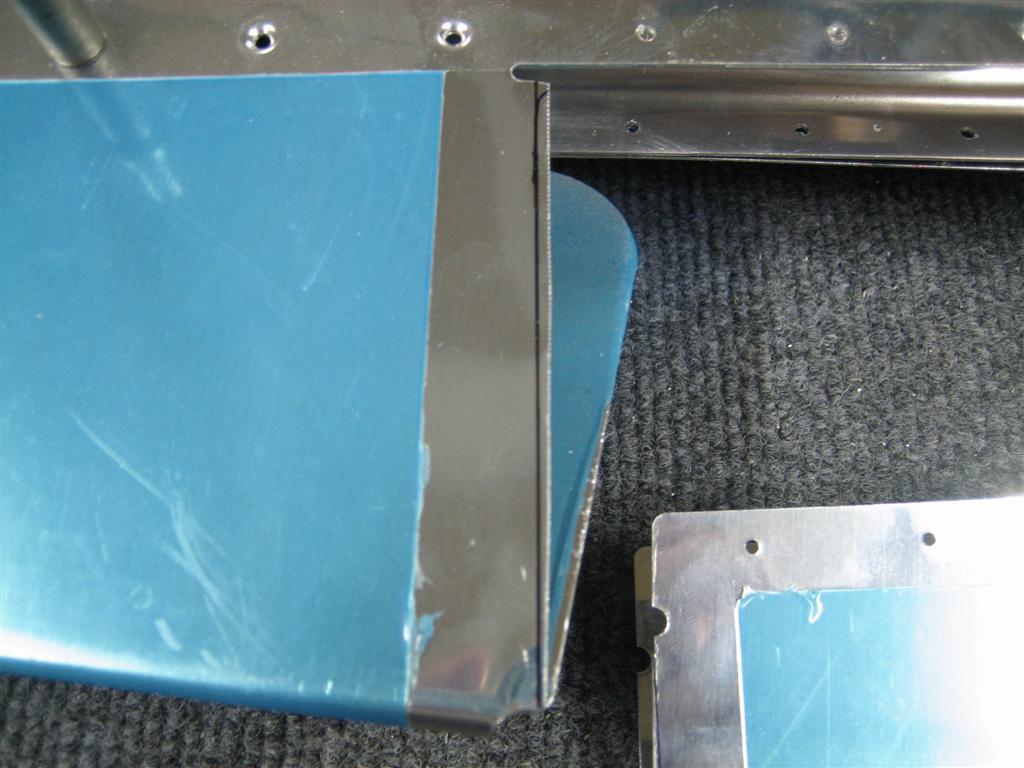
Started Prepping Right Leading Edge

March 25, 2011

Prev | Next

Jeesh, I can’t seem to get a minute away from our third puppy to head outside and do any work on the airplane.

Tonight, finally, during halftime (go UNC!) and just after the game (wuhoo UNC!), I managed to go outside and do a couple things.

I didn’t want to do anything major; I really just wanted to go out there and get back up to speed. I’m kind of in the middle of rib prep on the leading edge, so I disassembled a few of the leading edge ribs and worked on what I labelled R3, or the third rib from the inboard side.

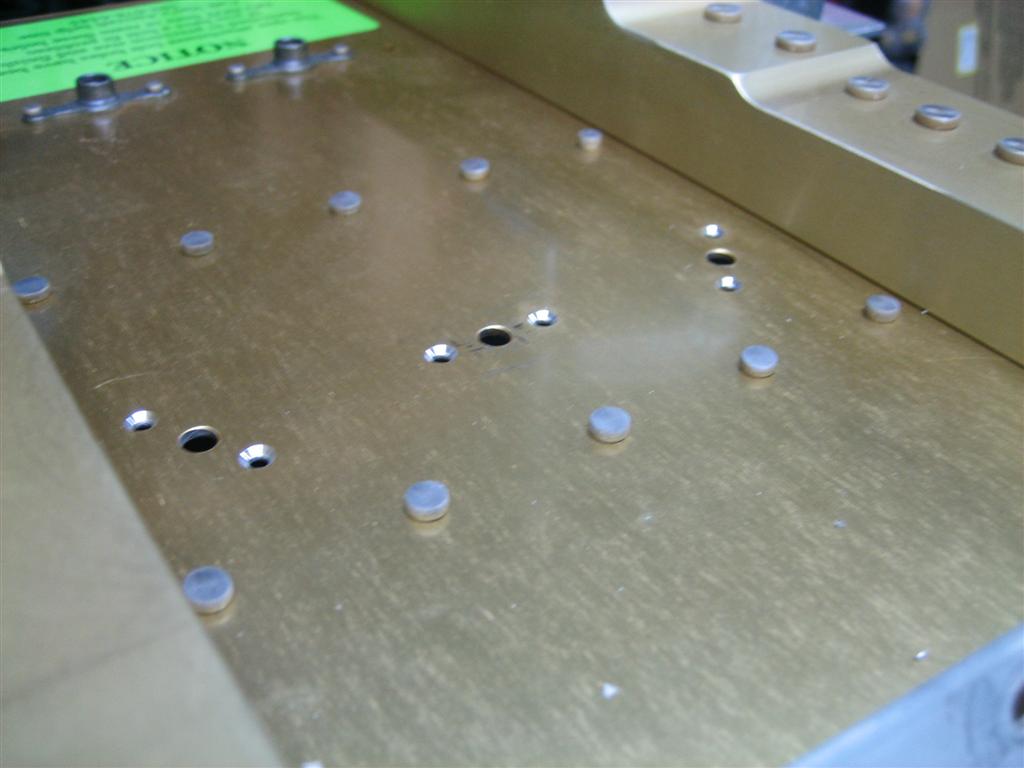
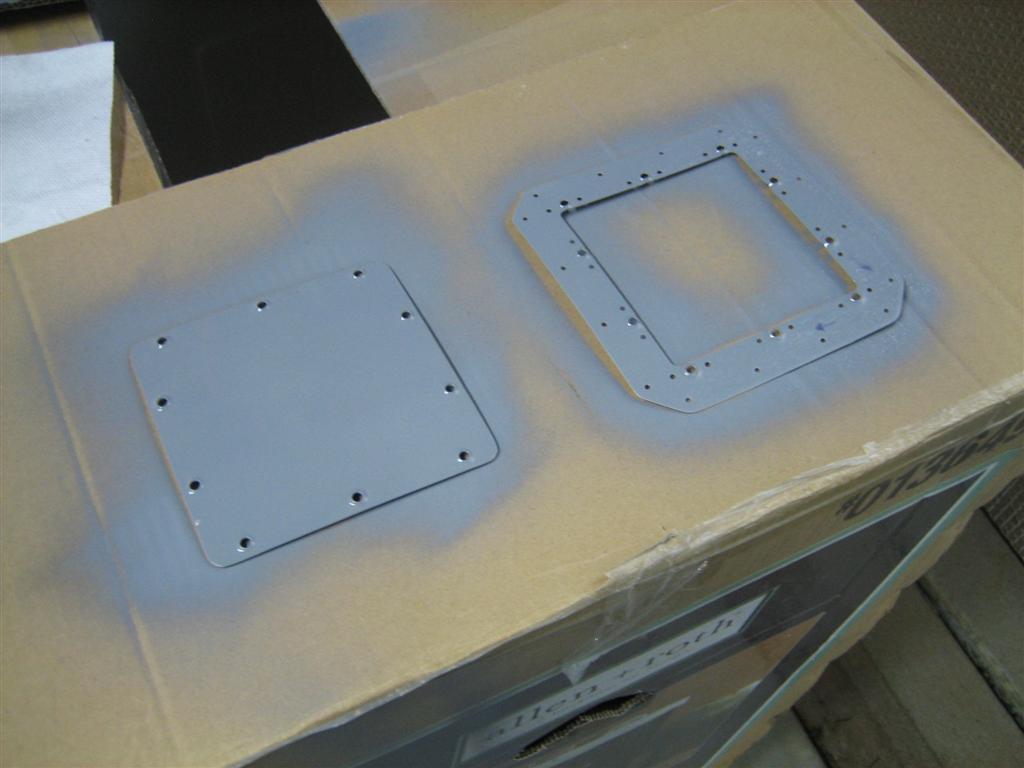
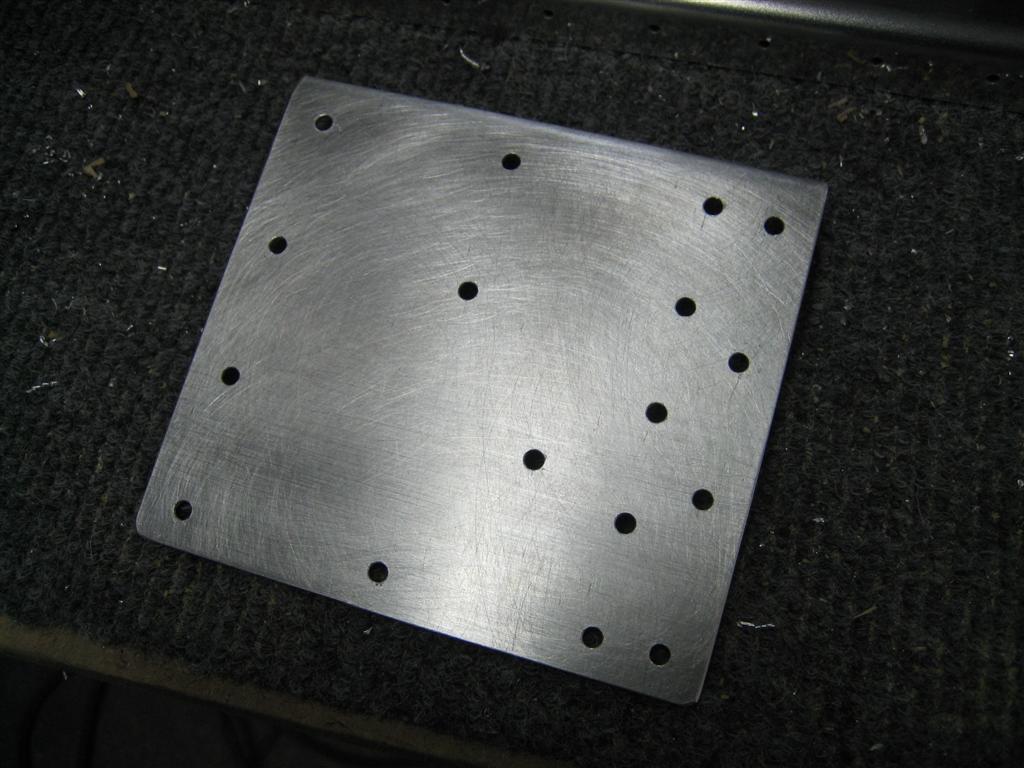
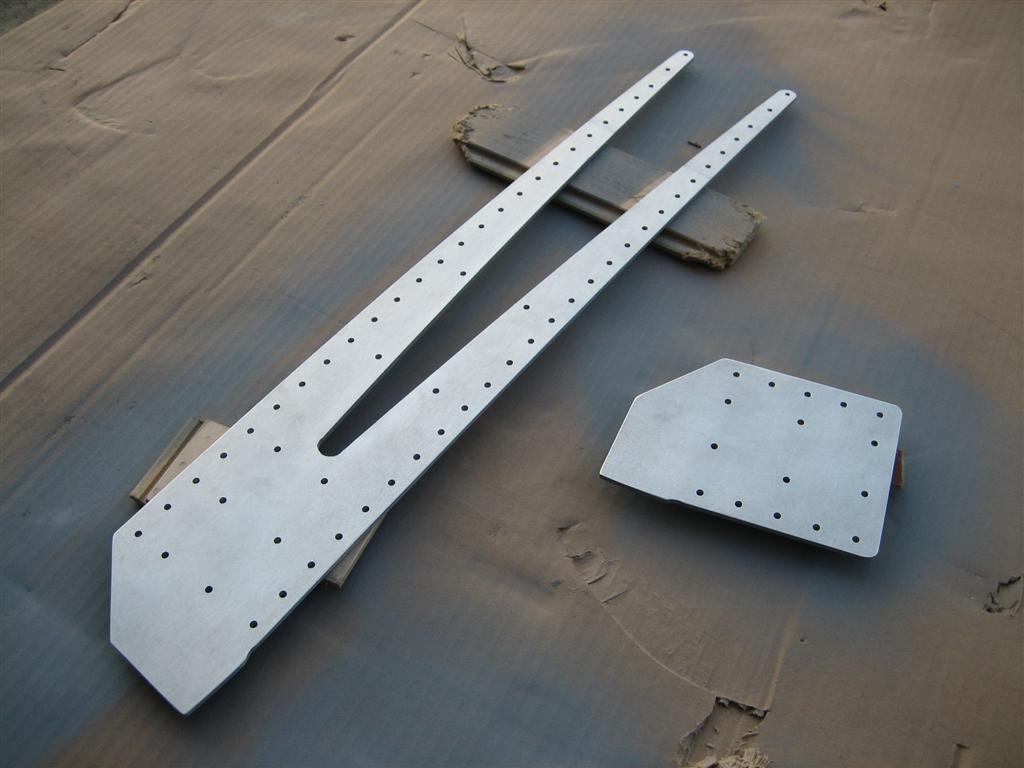
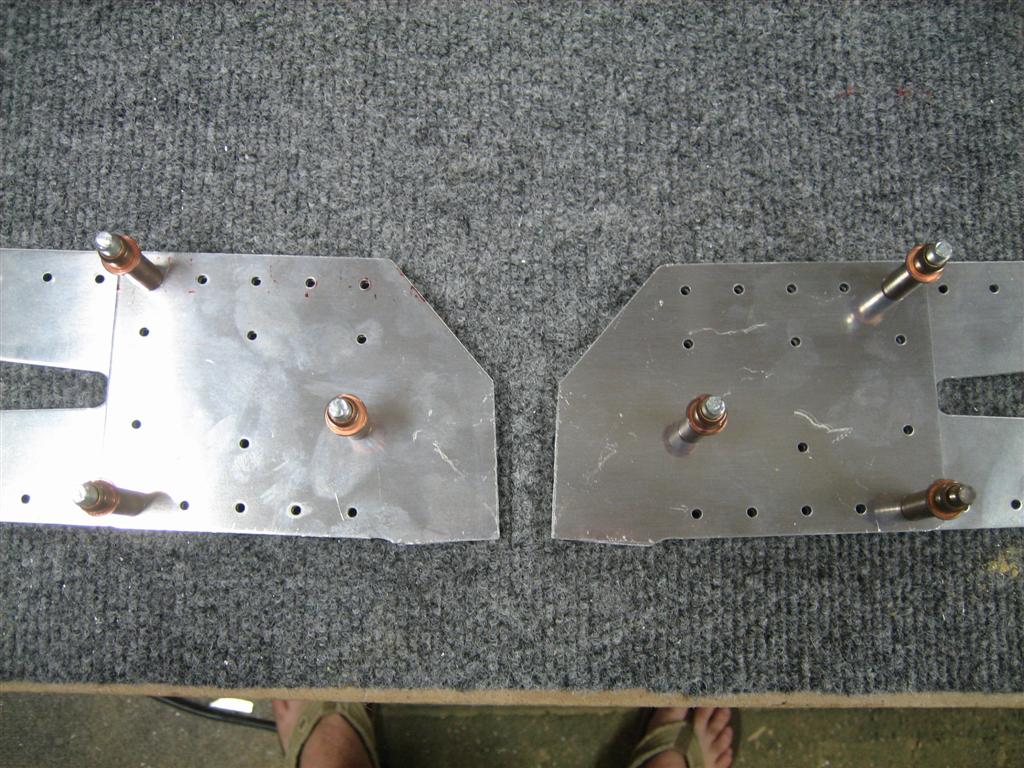
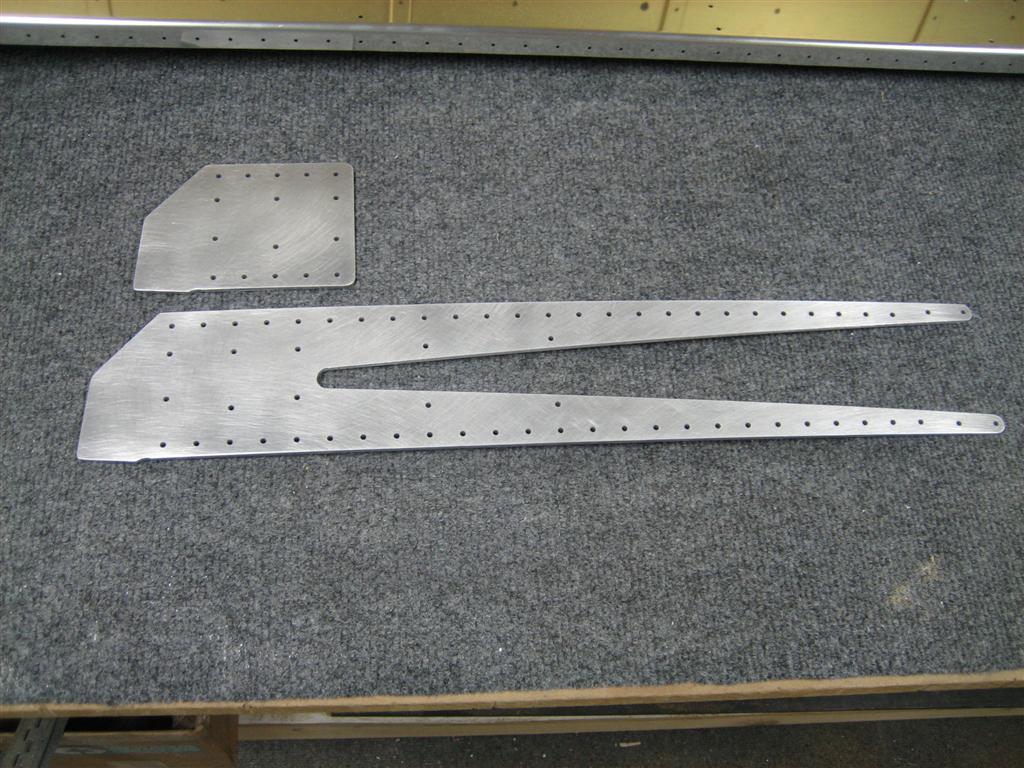
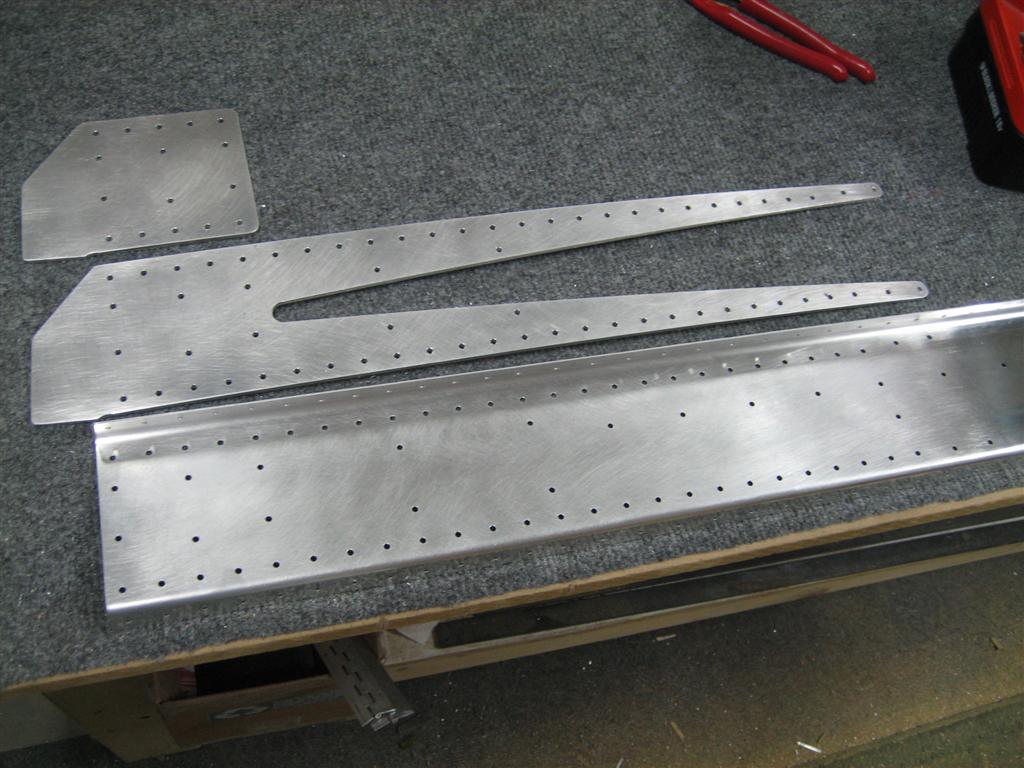
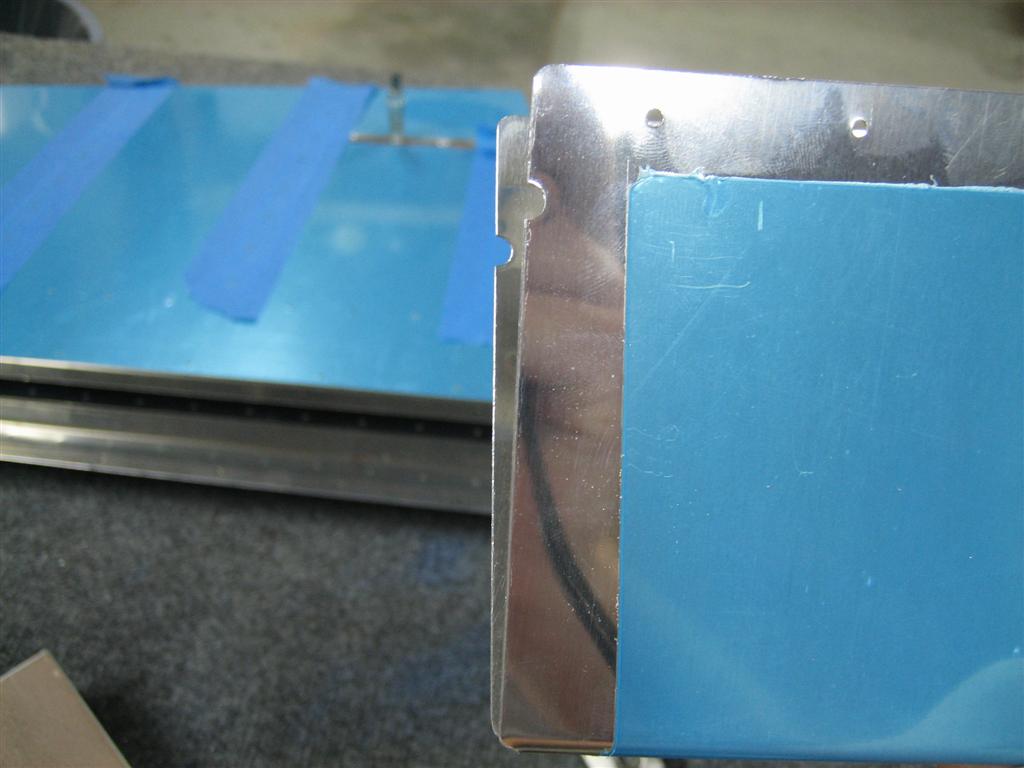
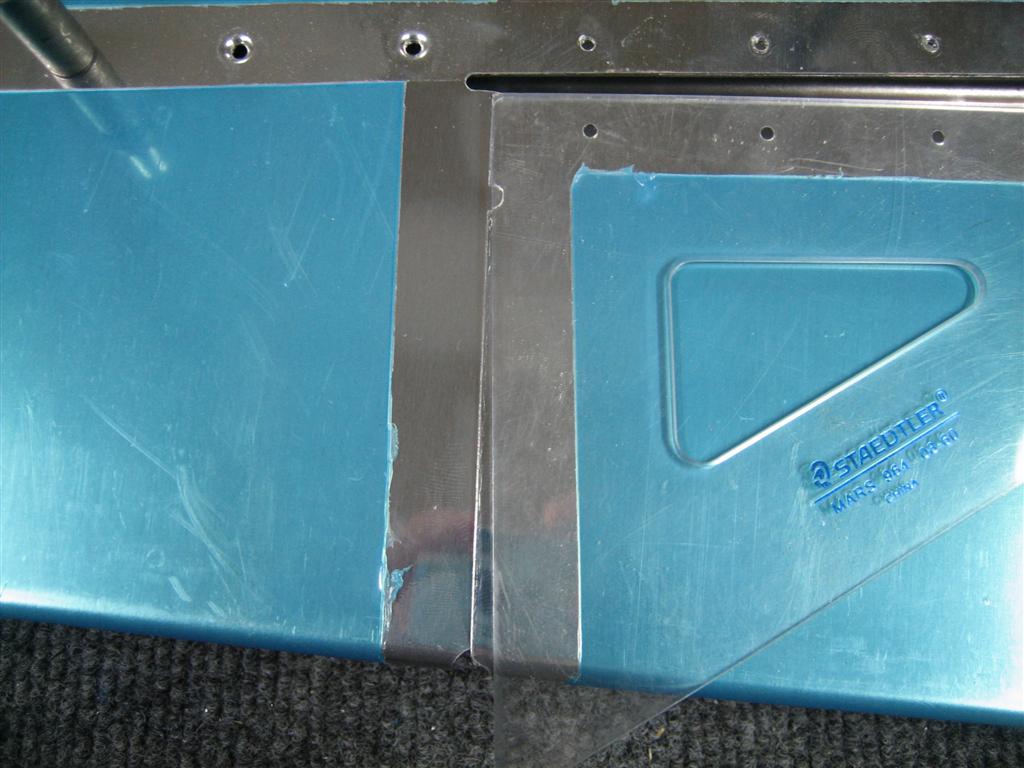
After deburring (back up, looks like I forgot to matchdrill some of the holes….sigh). Okay, after drilling, deburring, edge finishing, and scuffing, I now I have two right leading edge ribs ready for primer.
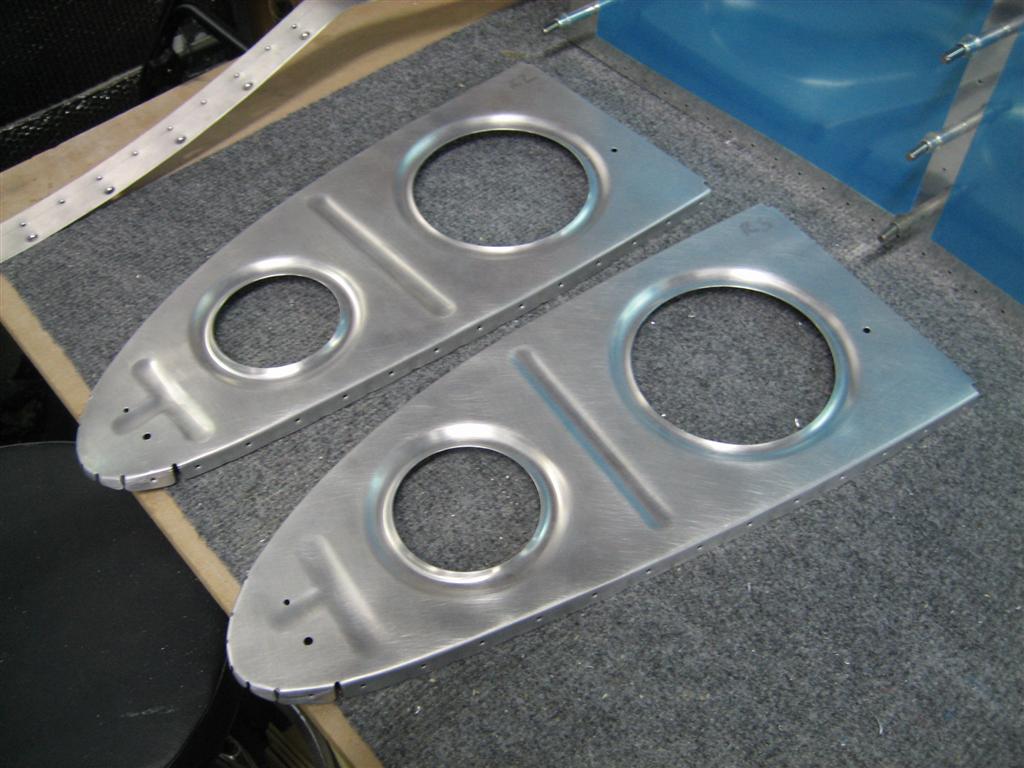
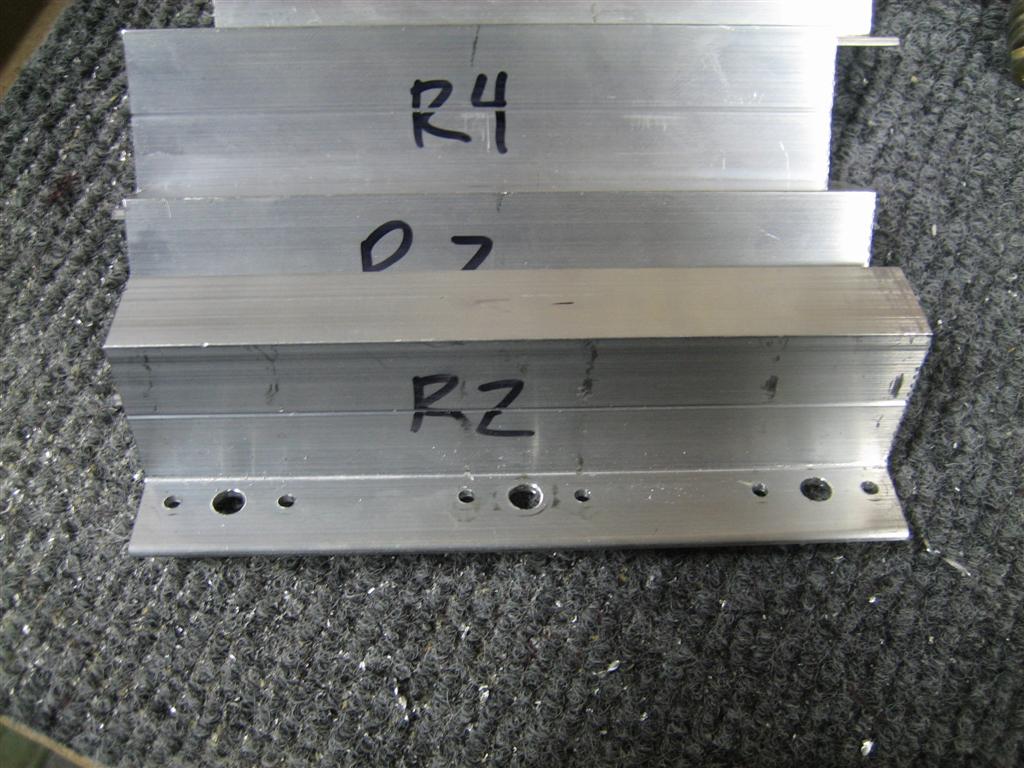
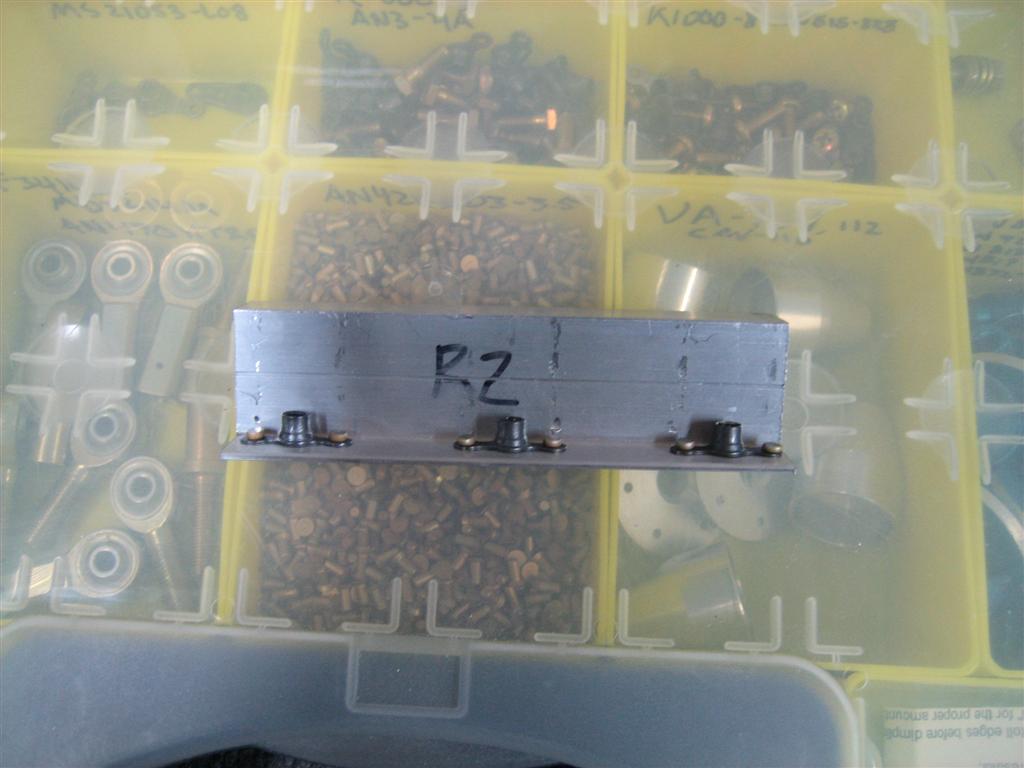
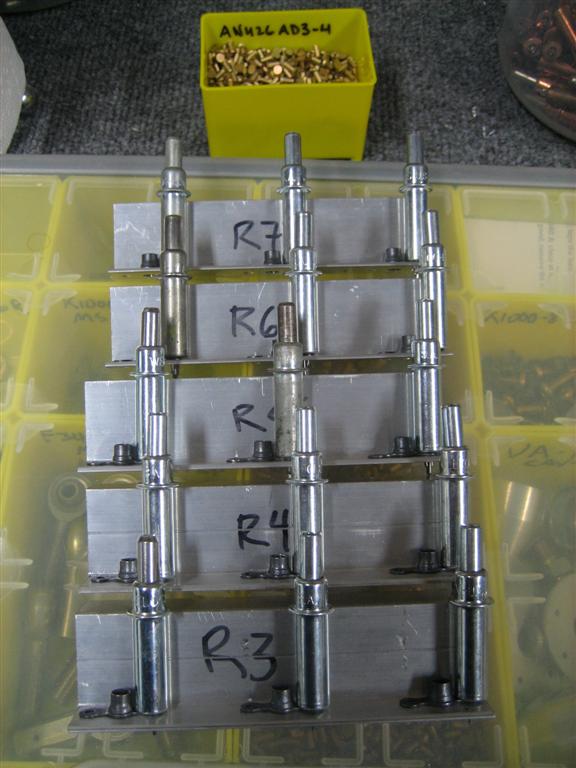
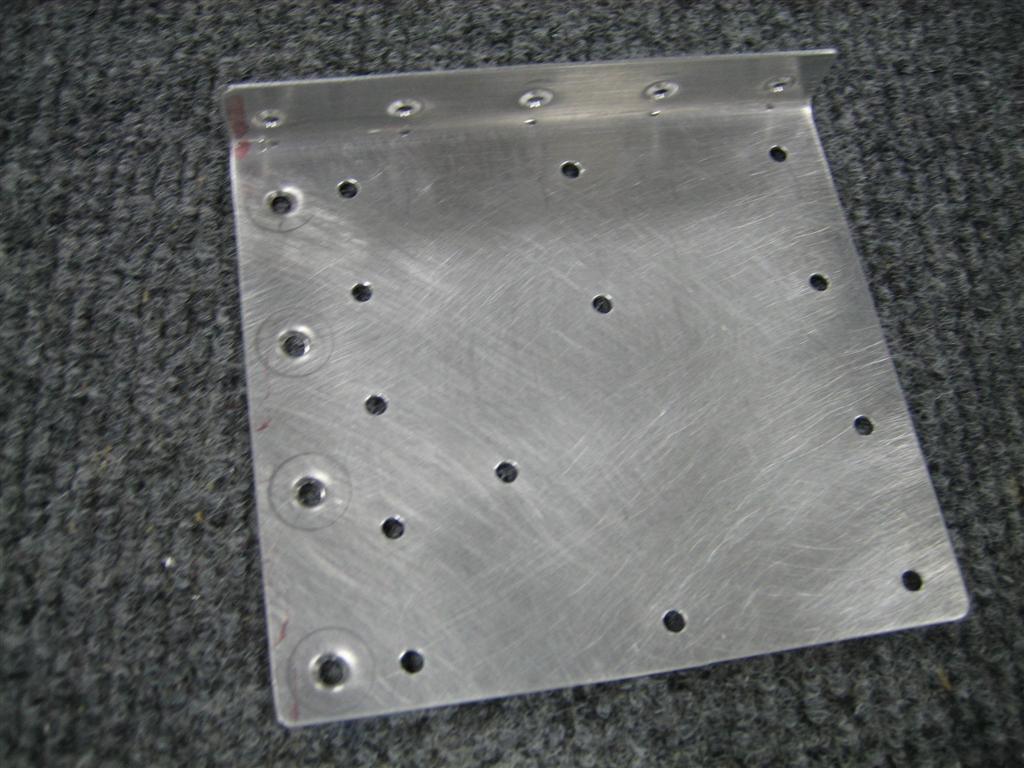
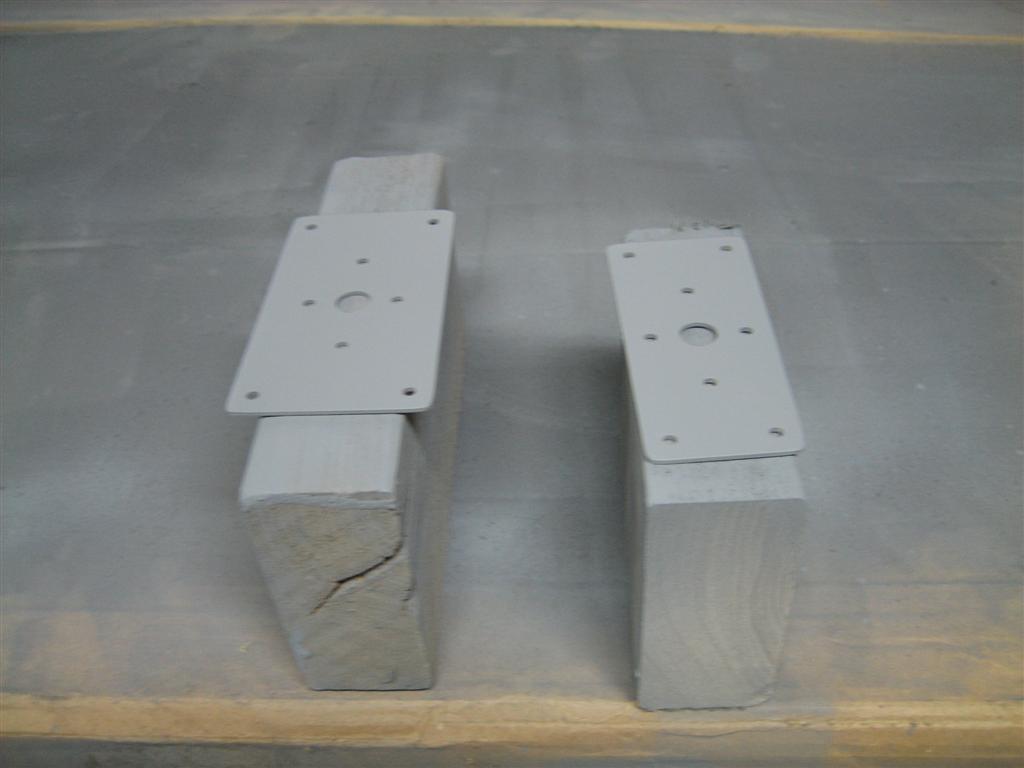
R2 and R3 (my numbering) ready for primer.

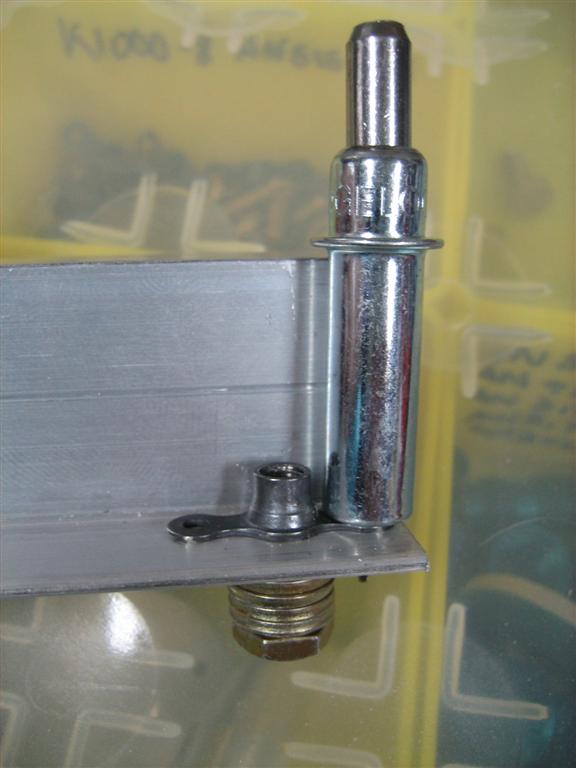
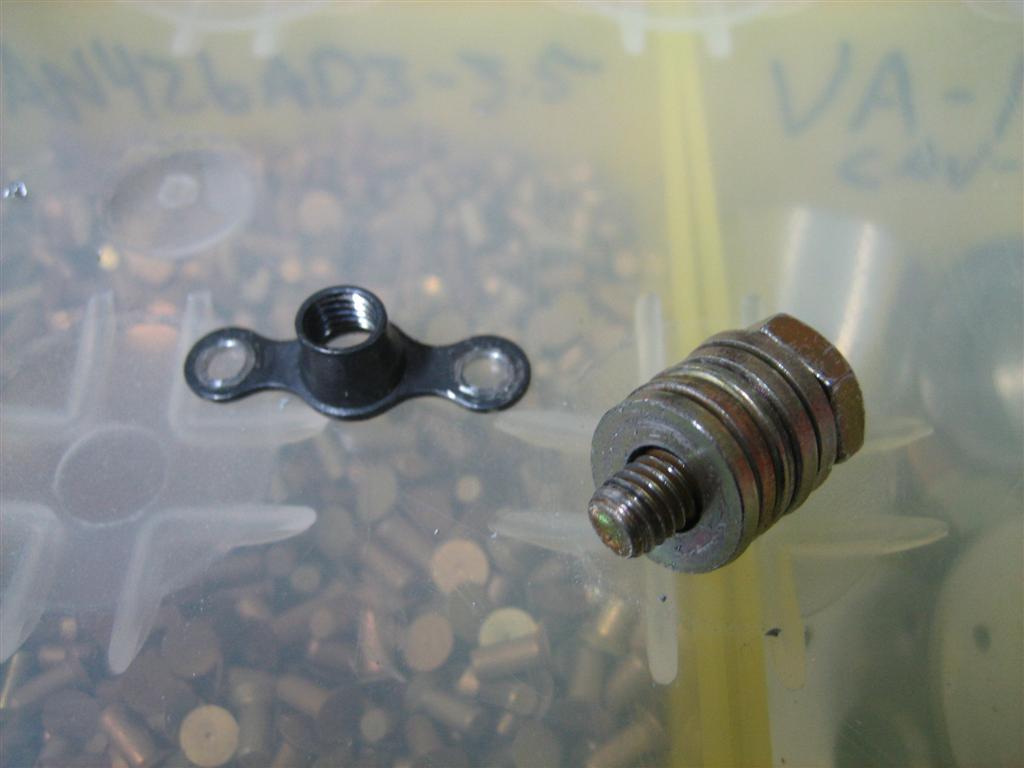
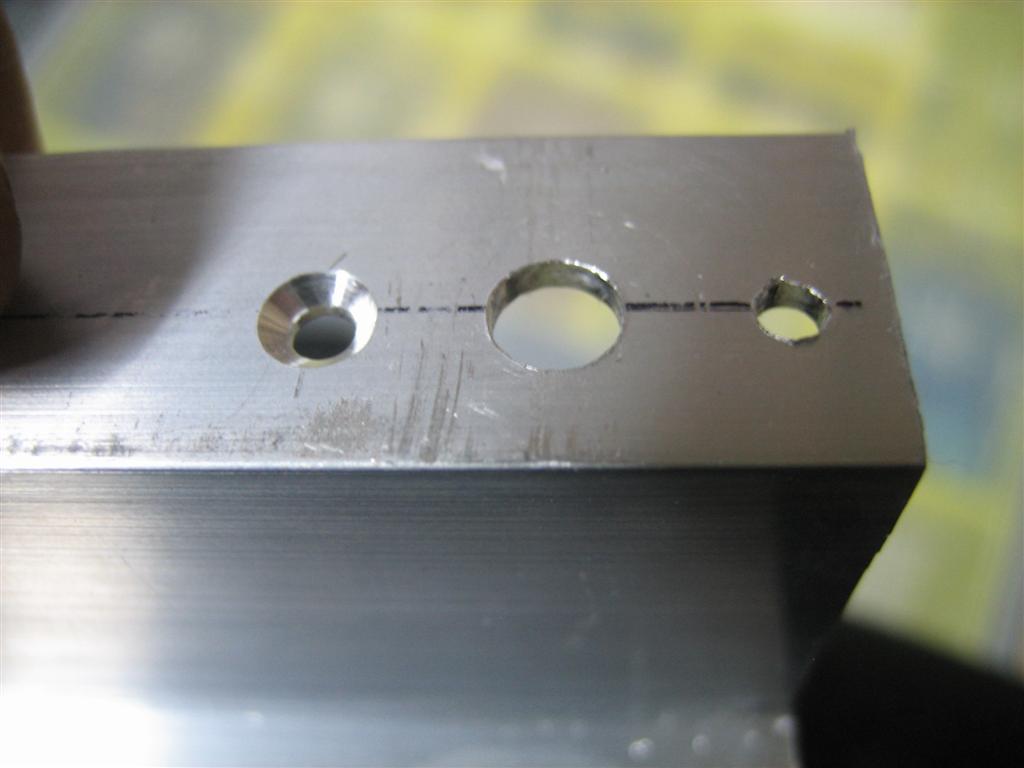
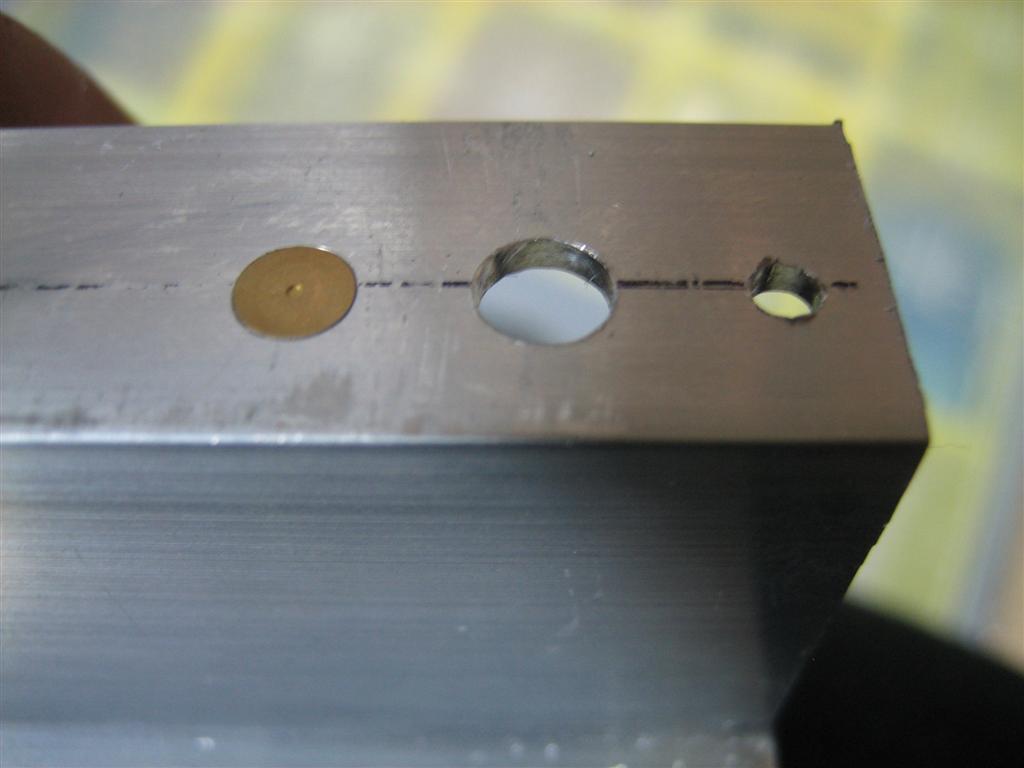
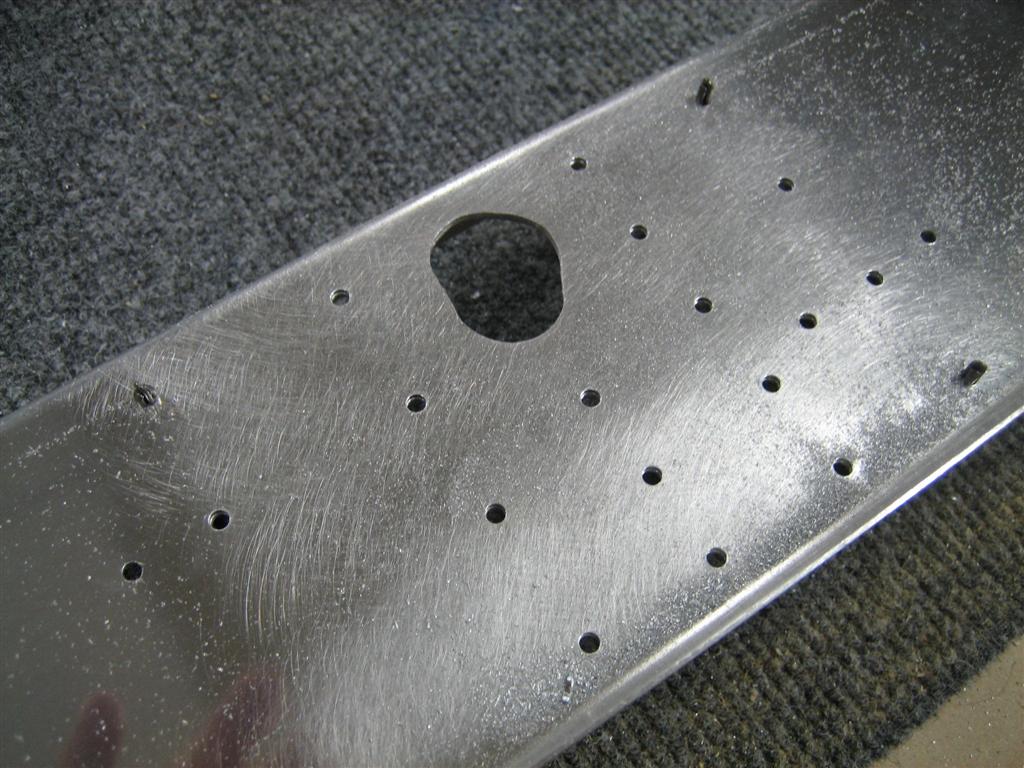
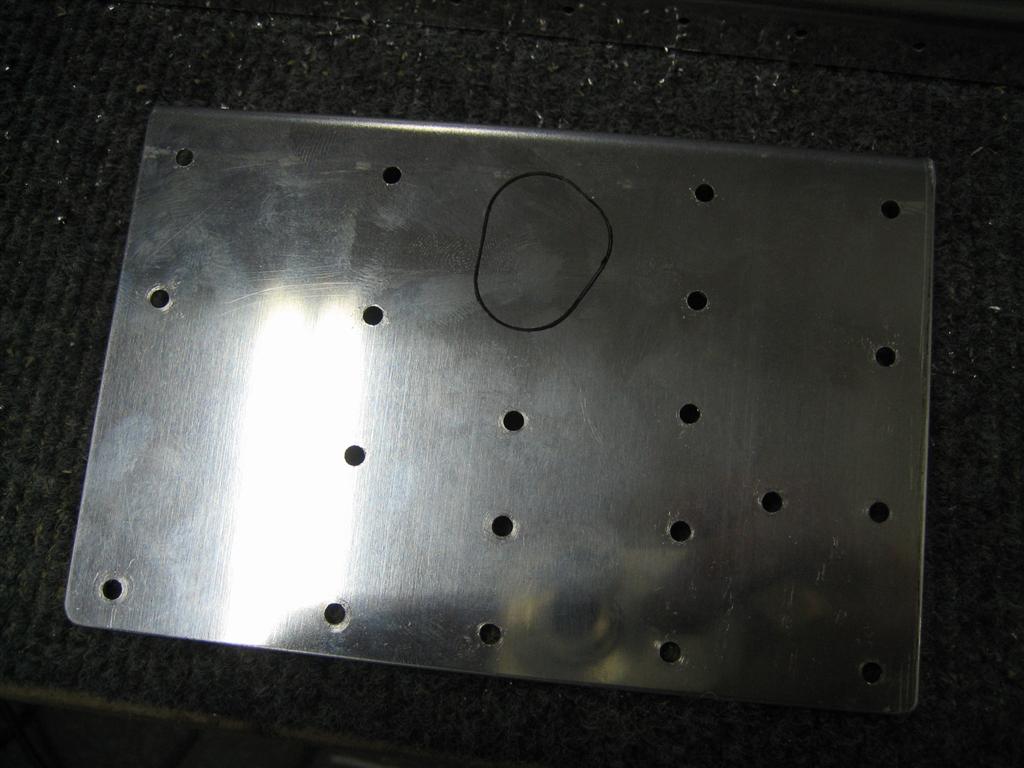
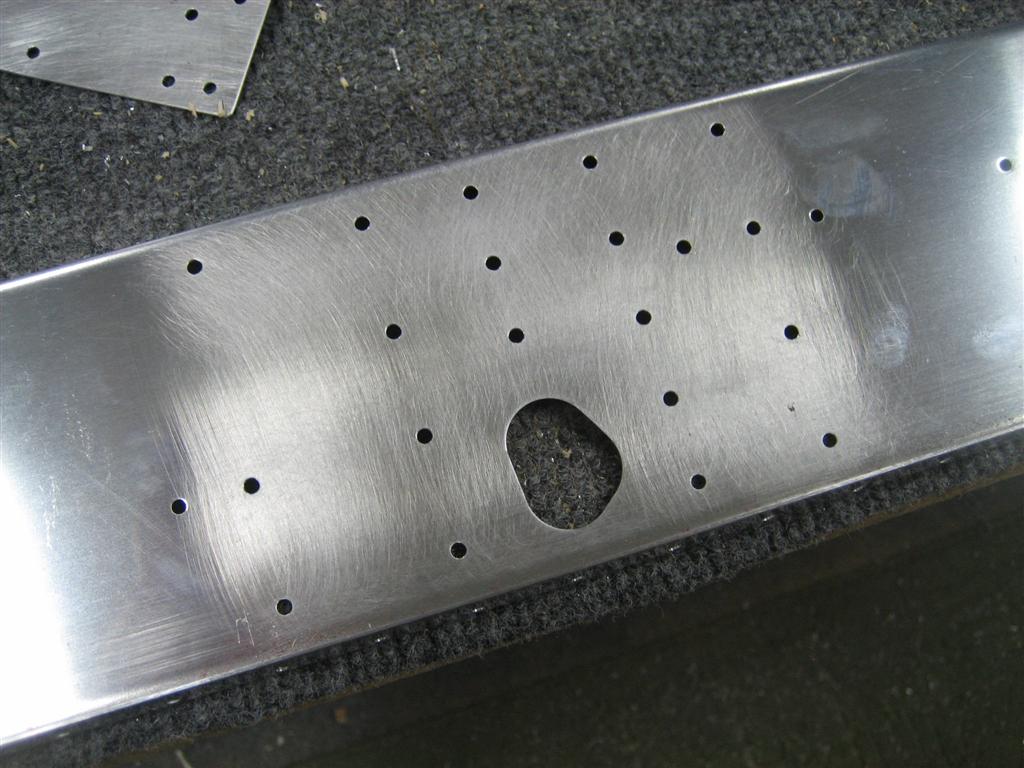
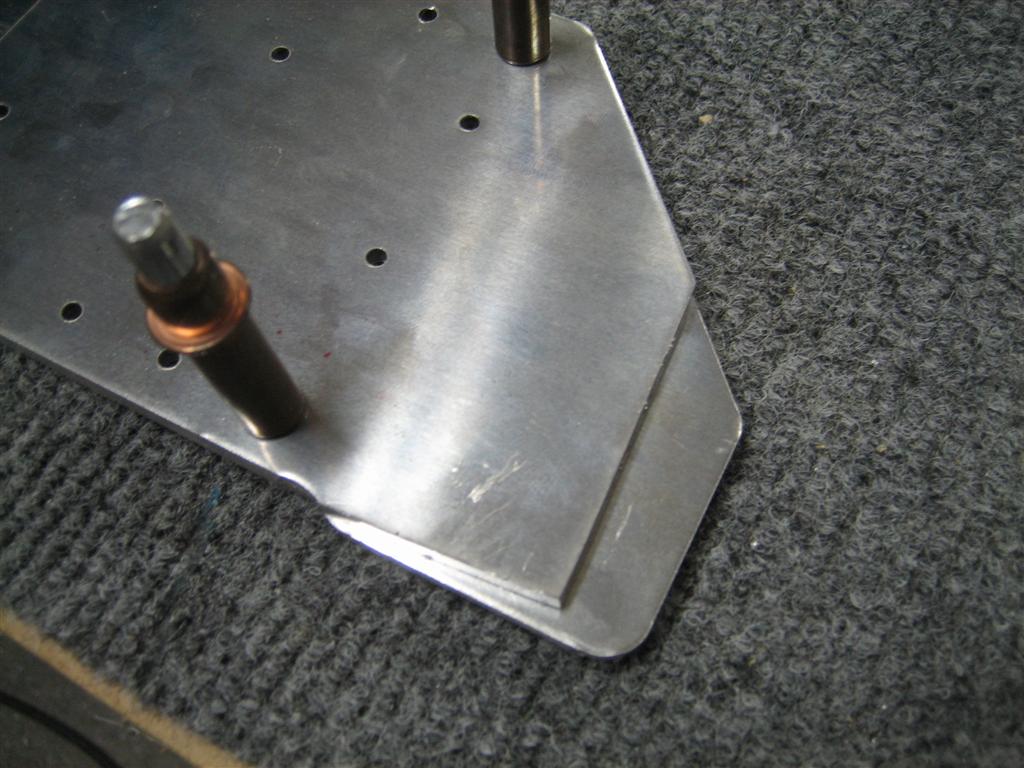
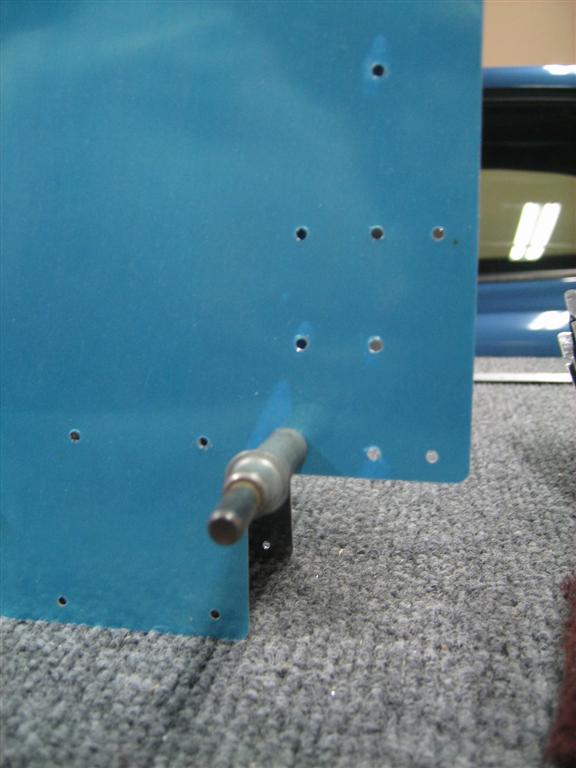
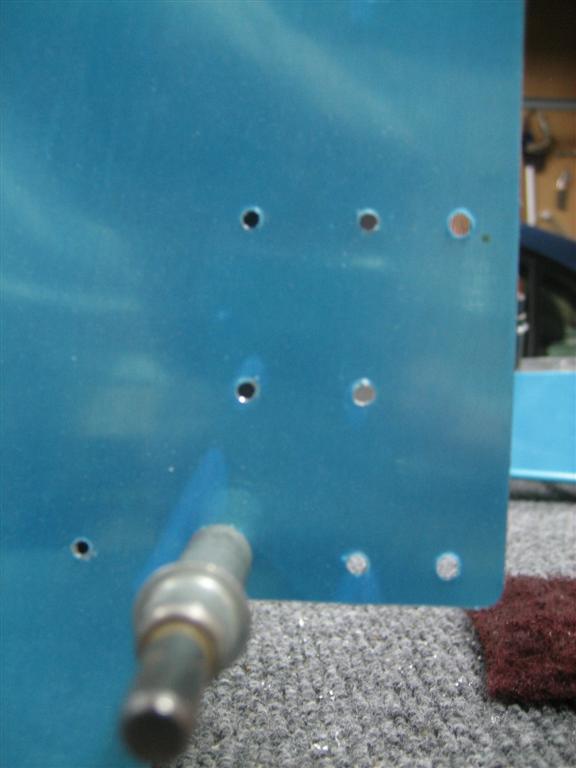
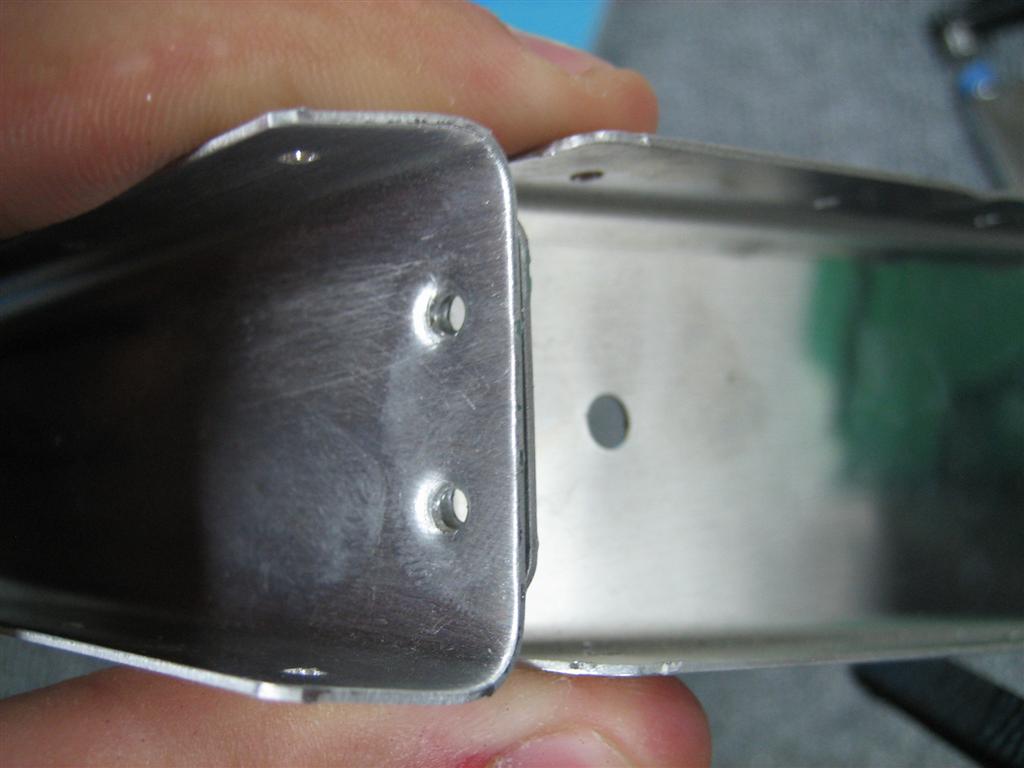
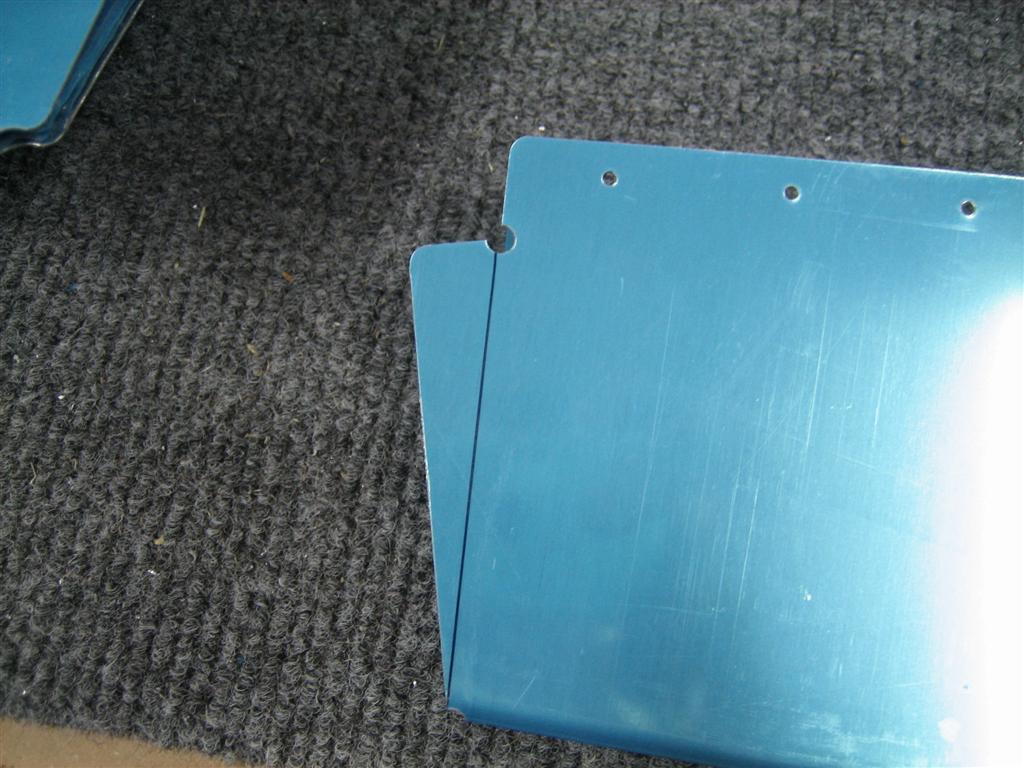
After pulling out the rest of the ribs (including the two outboard-ish ribs shown below), I went ahead and drilled pilot holes for the nutplate holes that are needed for the leading edge landing light installations. I had previously marked these while they were assembled with the leading edge using the provided template.
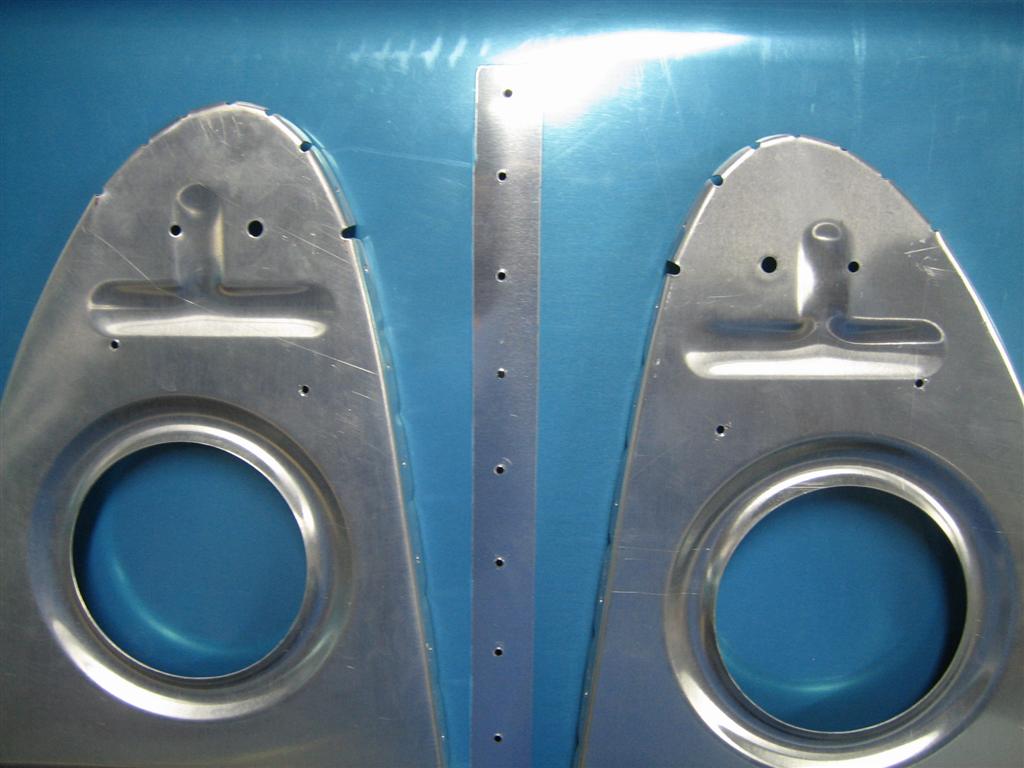
The two outboard ribs, now with pilot holes drilled for the bracket (the two small holes just above the lightening hole).

So here’s my thought. I really hate rib prep, so I’m basically going to do one at a time, then get it installed in the leading edge. To do that, I’ll need to prep (deburr, dimple) and prime the appropriate parts of the leading edge, and prep one additional rib. Generally, you want the surrounding structure in place for whatever you are riveting. Hence the need for the “next” rib to be clecoed in place while you are riveting a particular rib. If you don’t have the next one in place (have everything perfectly aligned), then the final structure may not be aligned. Make sense? No? Oh well.

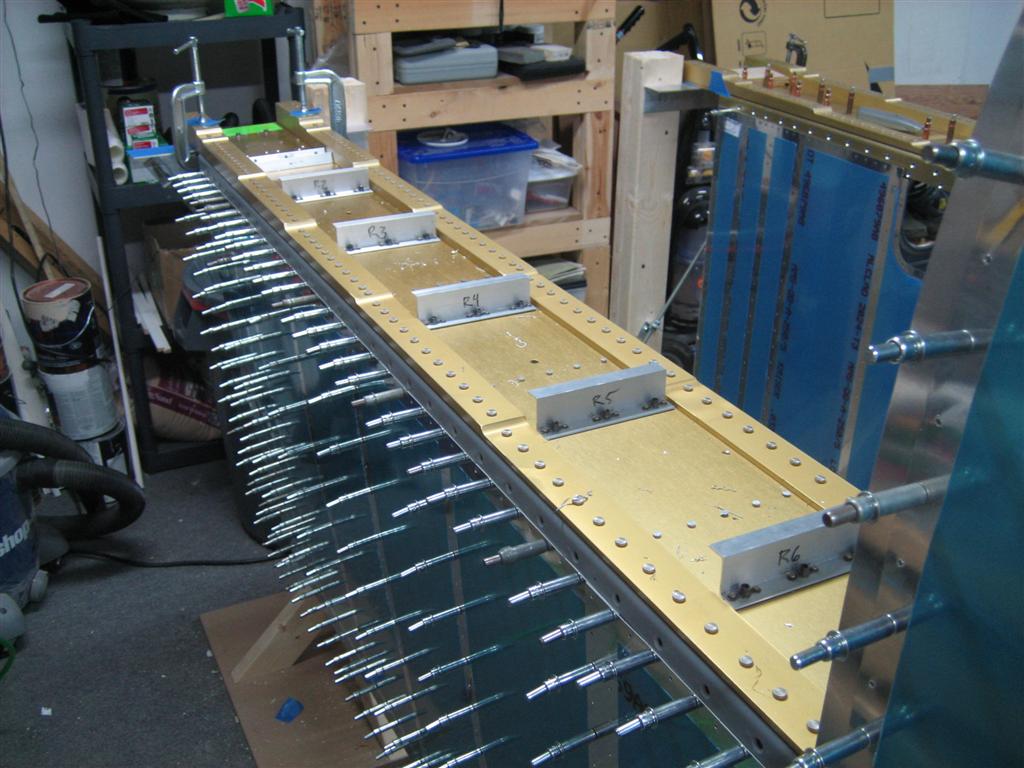
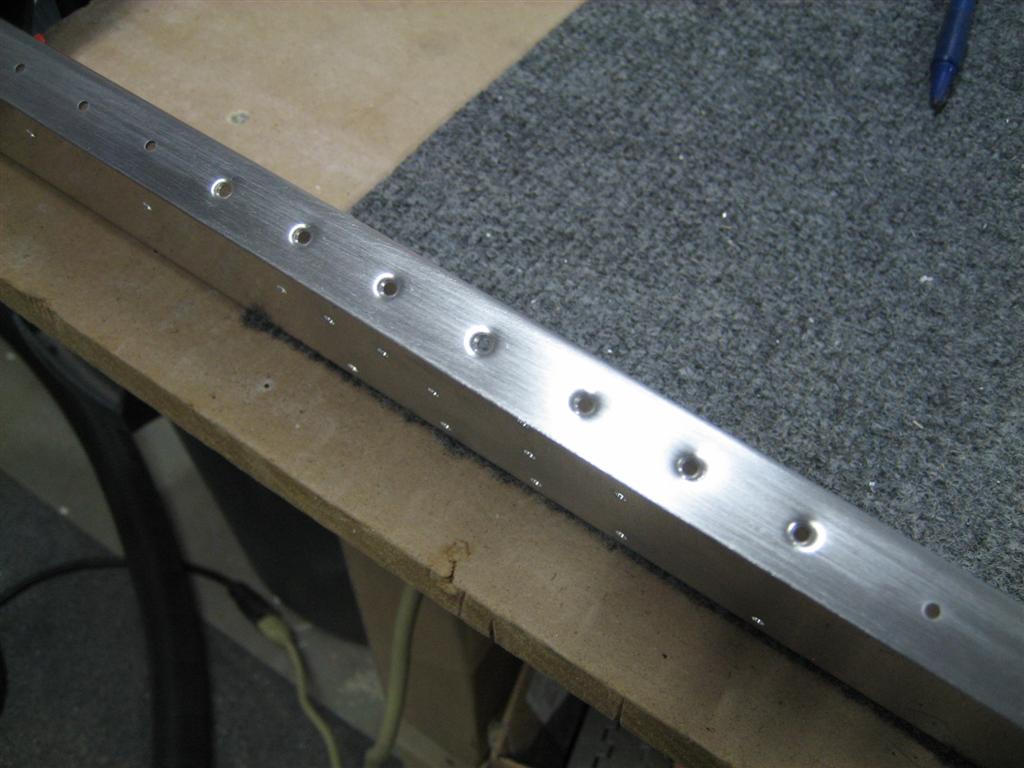
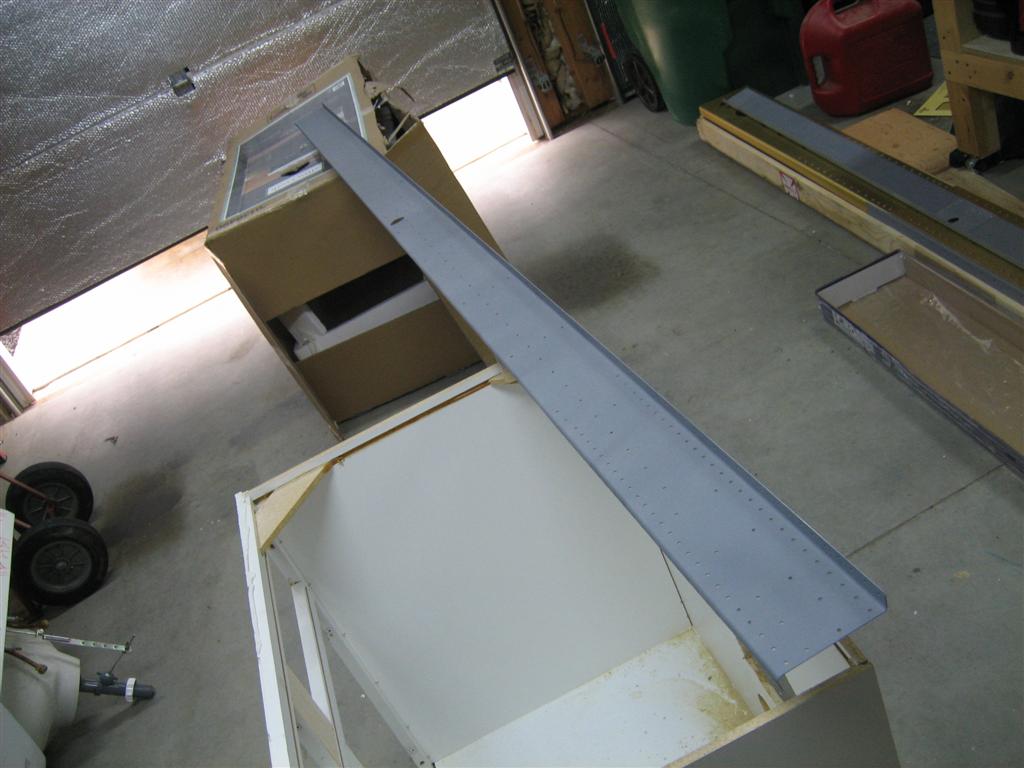
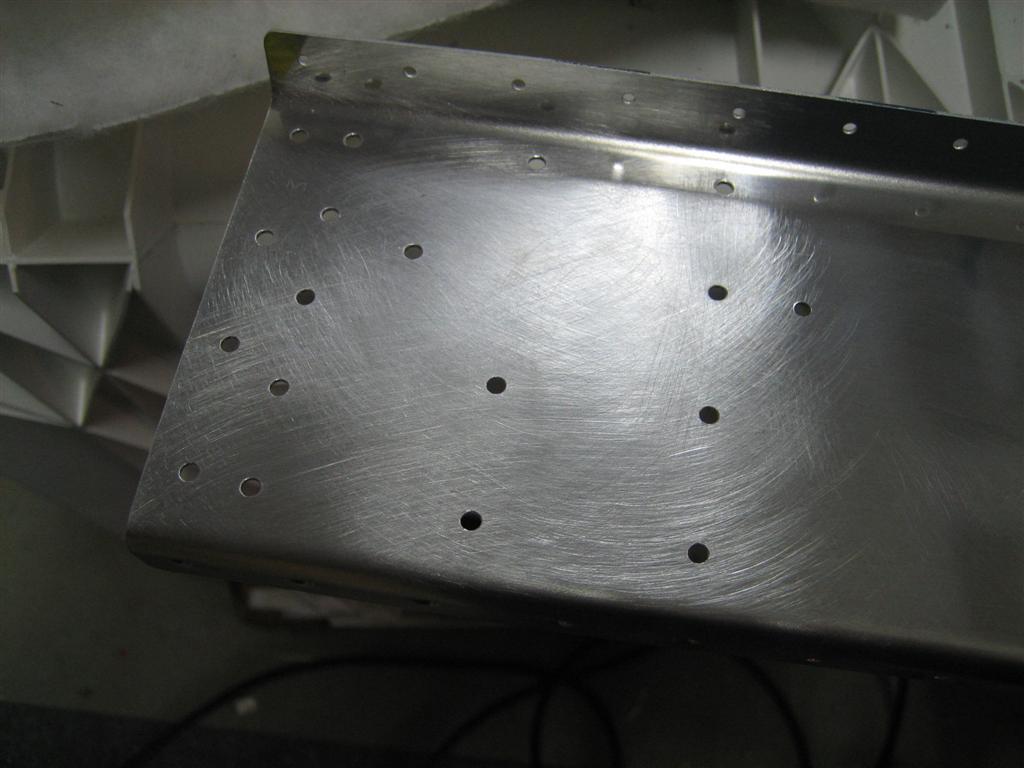
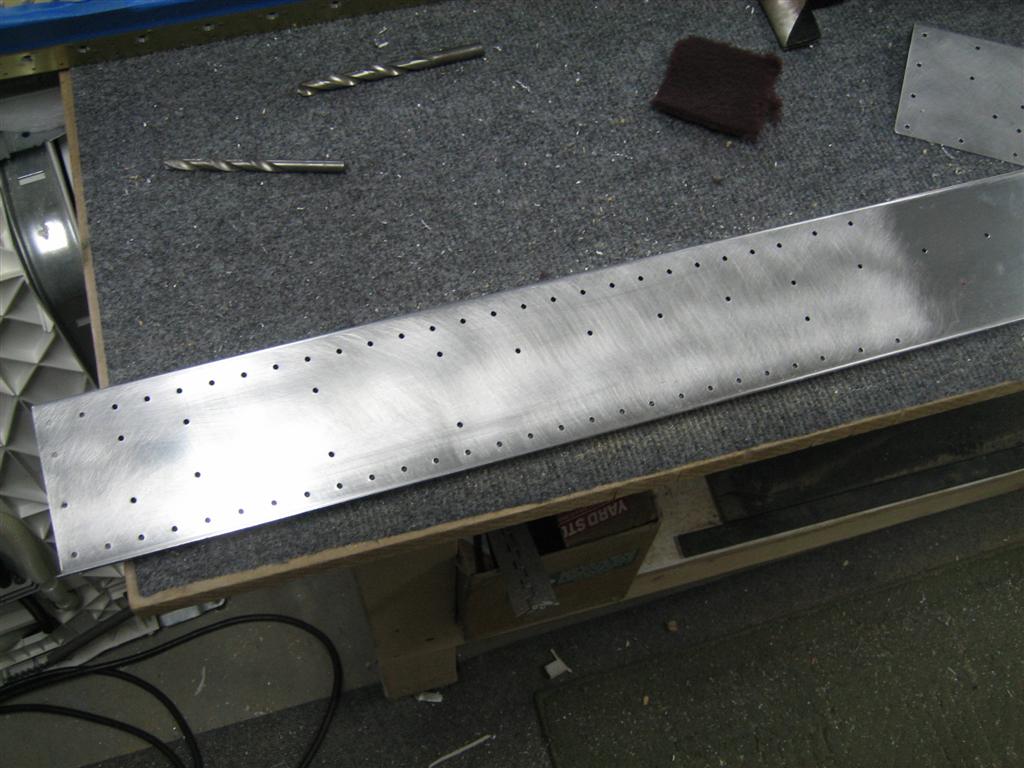
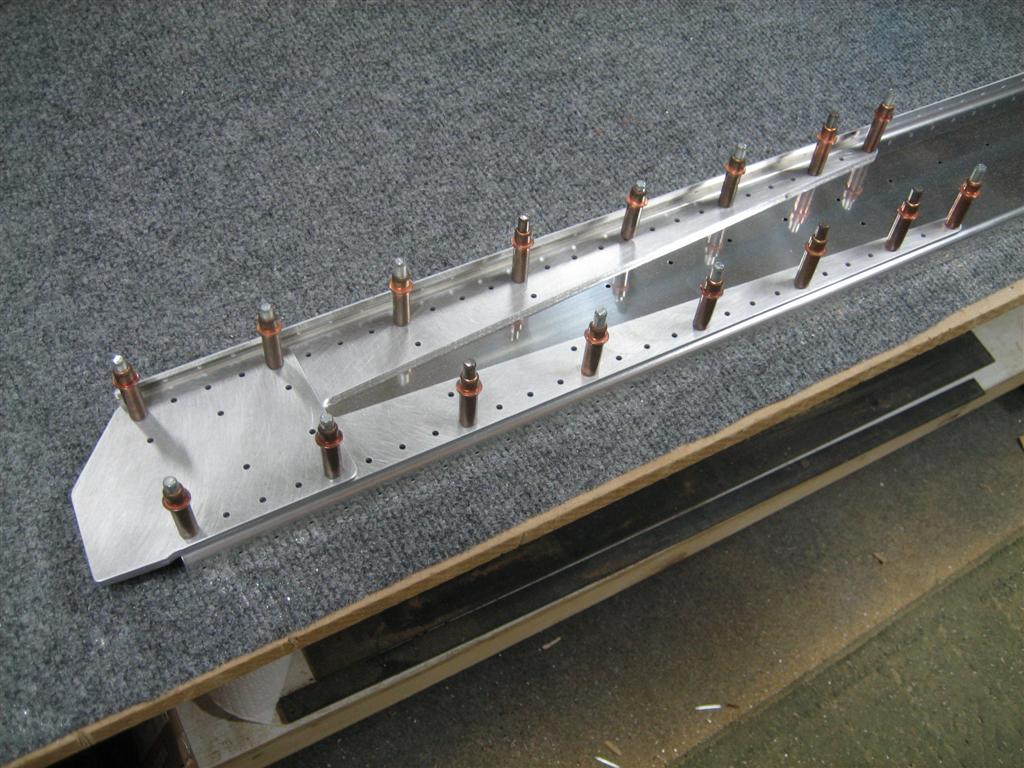
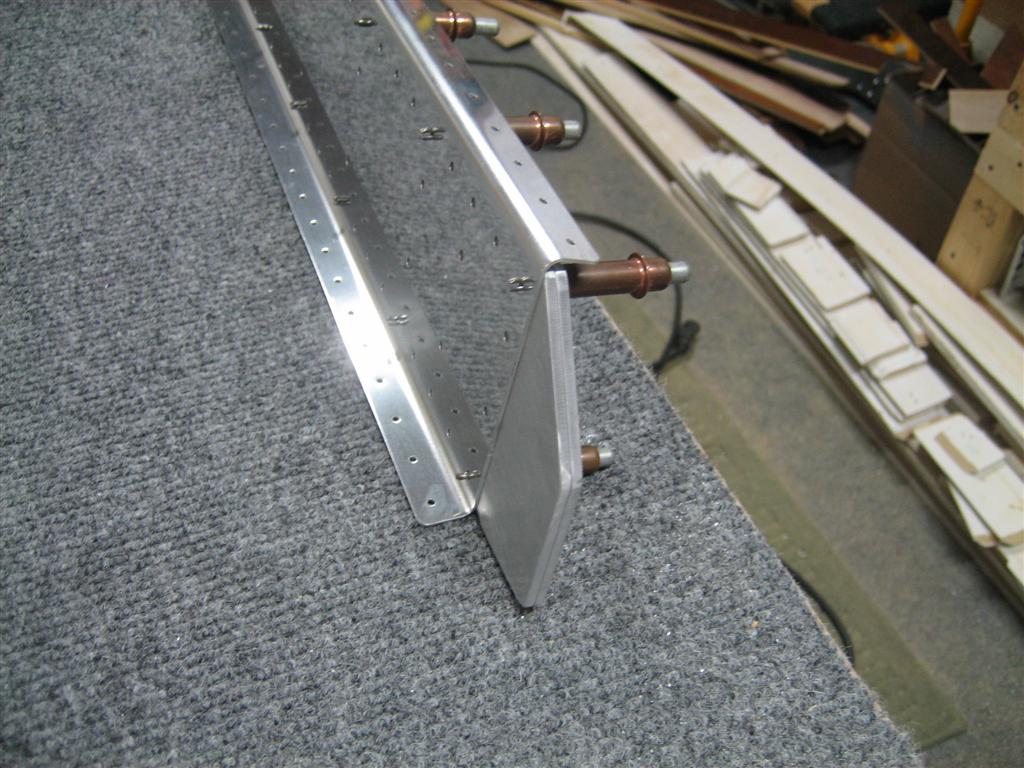
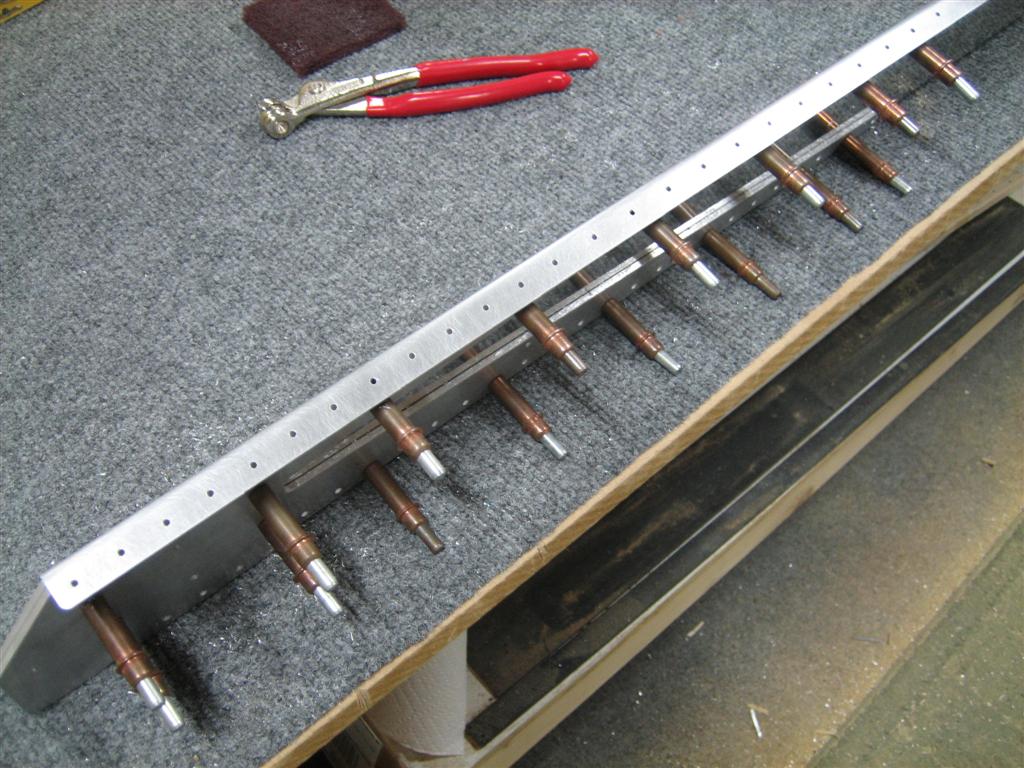
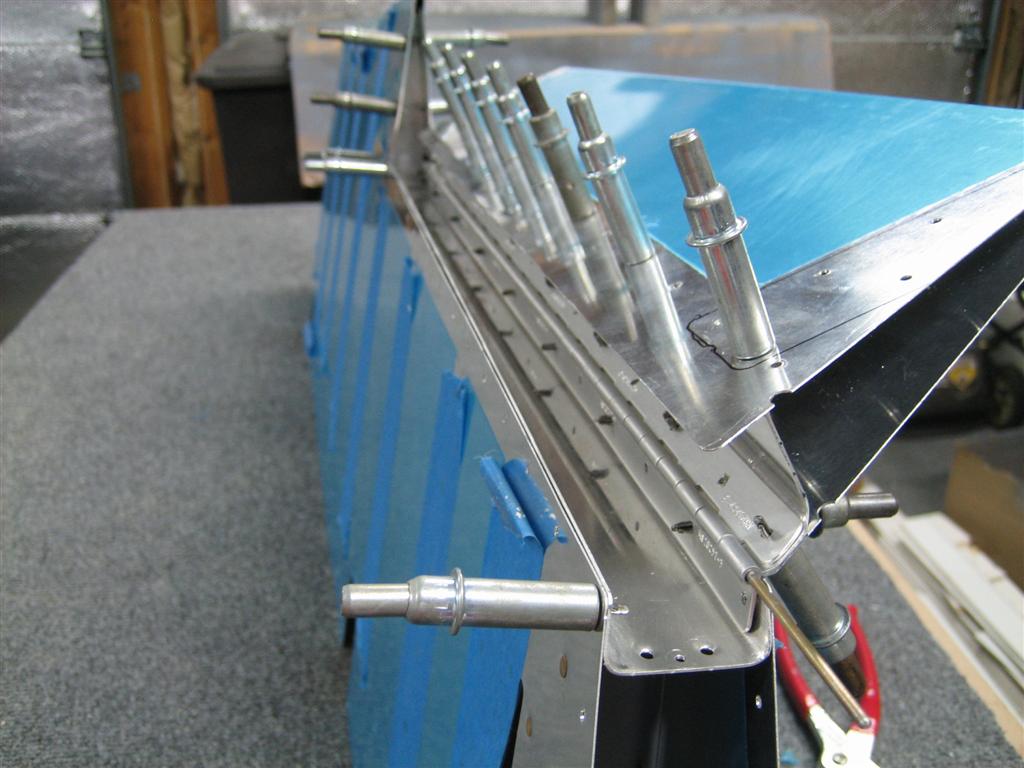
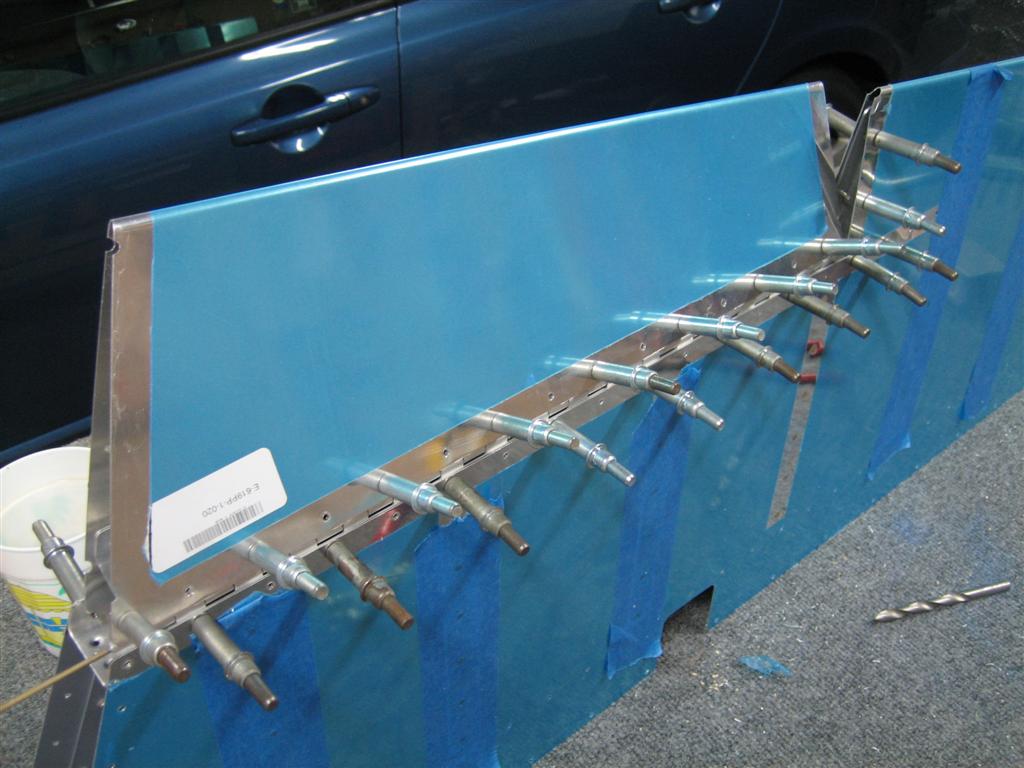
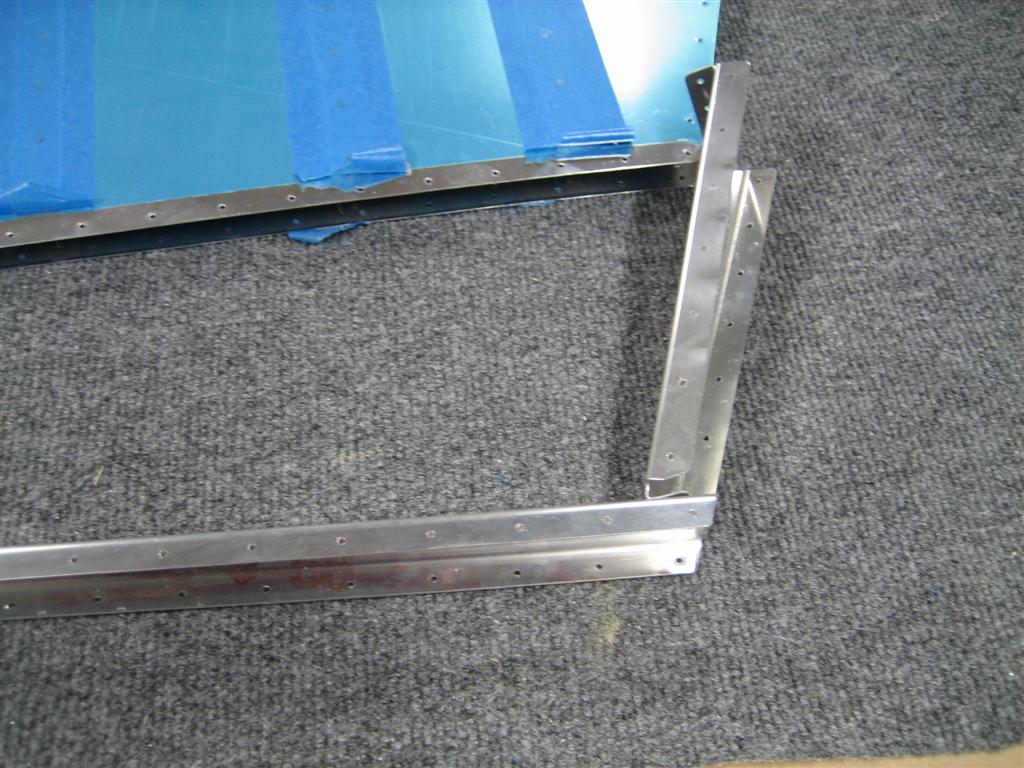
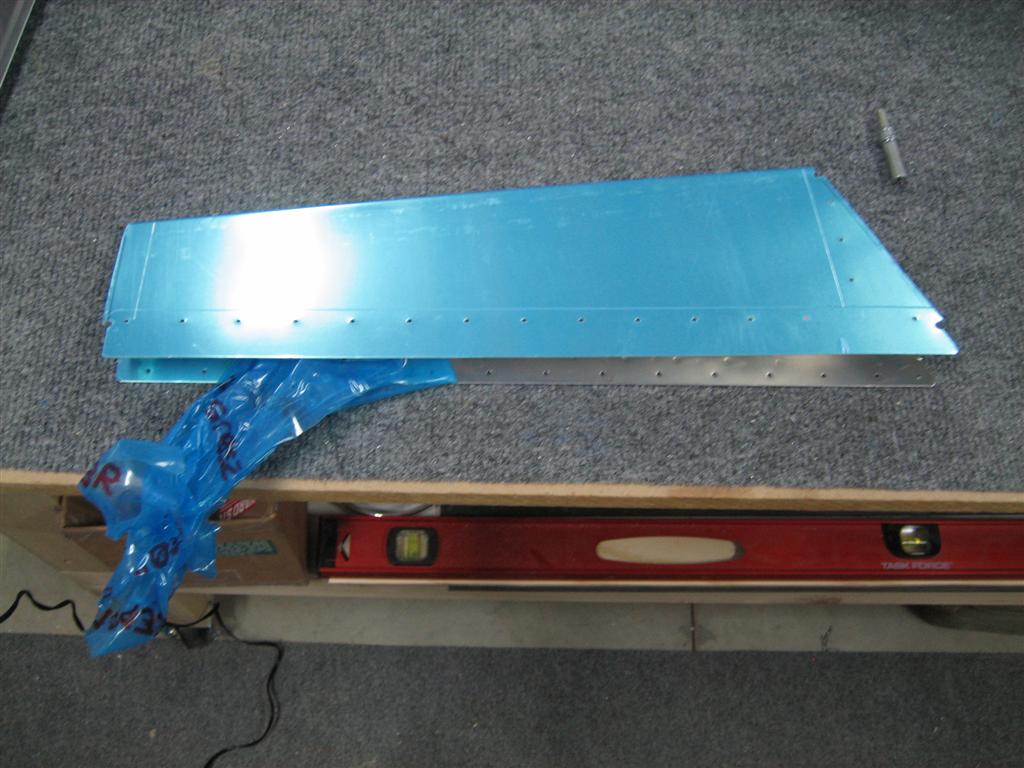
So, I put the leading edge in my cradles and got to work with deburring. I got all the exterior holes deburred, did some edge-finishing with my permagrit block and my edge deburring tool and a scotchbrite pad, then started deburring the interior before my hand got tired.
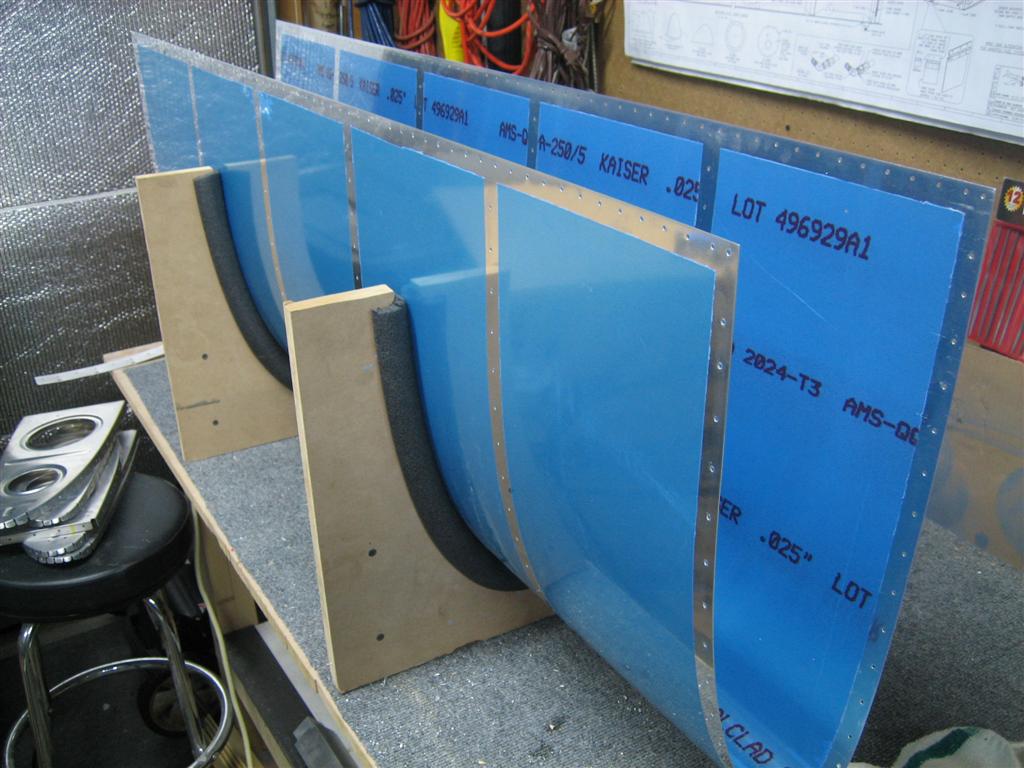
Leading edge during some prep.

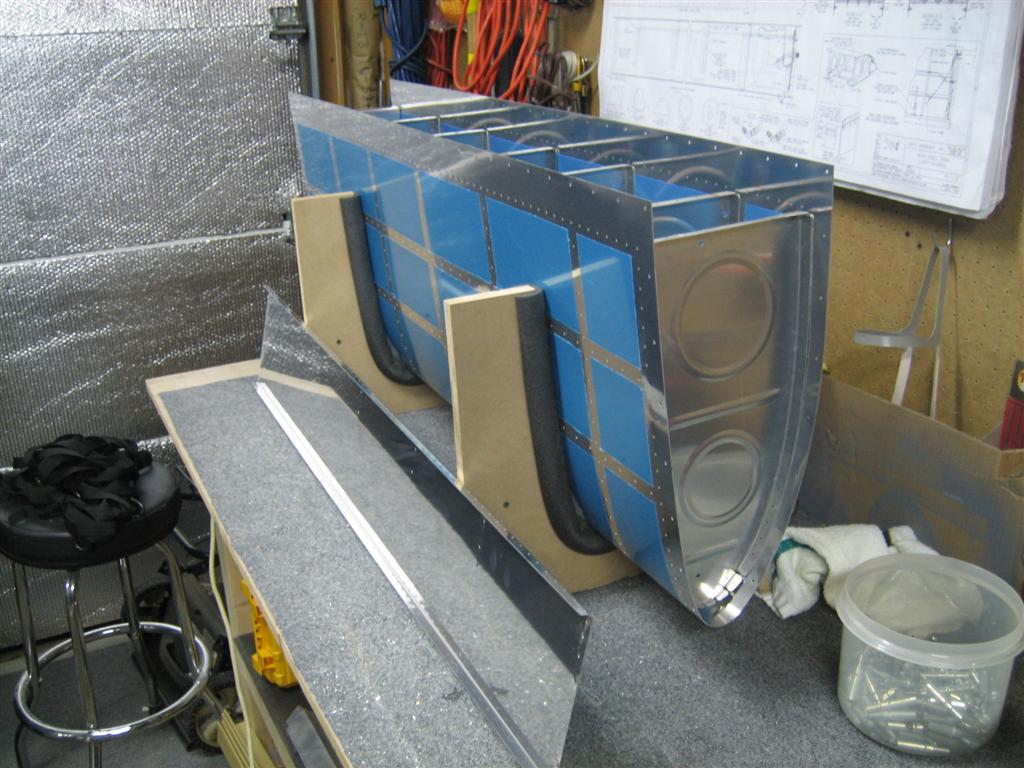
Oh, and out of laziness, I screwed the right tank loosely into position instead of taking it back upstairs. I think it’s going to be awhile before I get back to working on it.
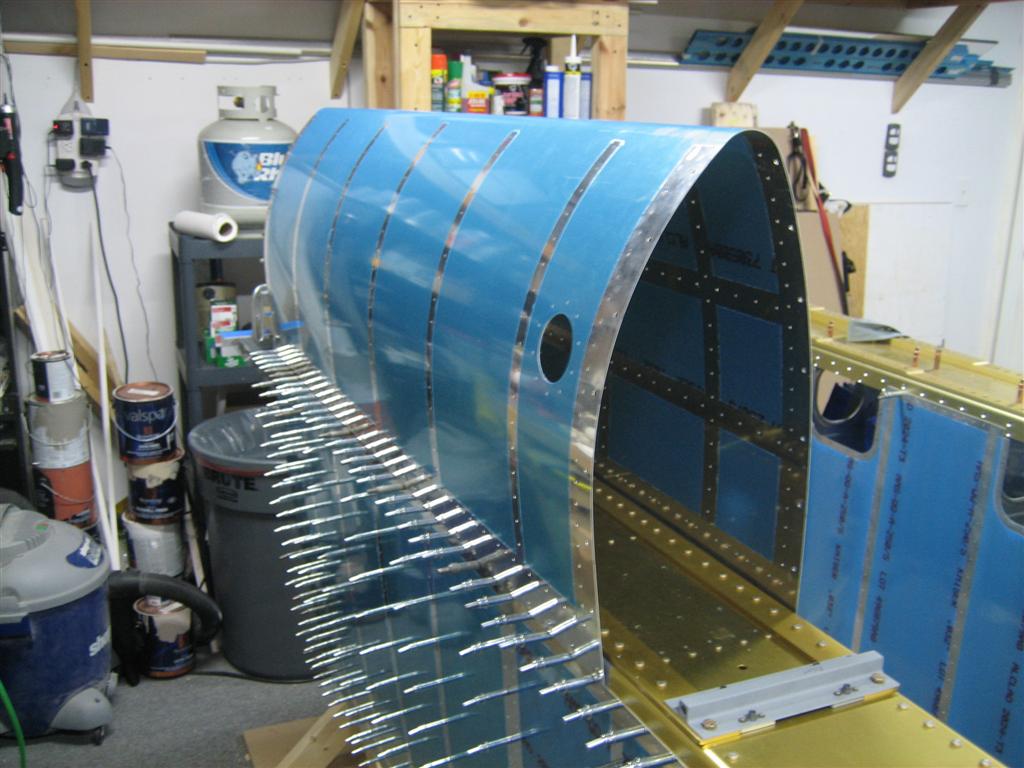
It kind of has a funny shape with no ribs in it.

It was a short night, but got me back into the mood, so I’ll call it a success.

1 hour.

Prev | Next


Some Right Leading Edge Work

March 13, 2011

Prev | Next

Wow, I can’t believe it’s been two weeks since my last work on the airplane.

Taking care of this little puppy (trying to find him a home) has taken its toll on our schedules and ability to sleep at night. Also, I’ve been busy at work logging time in something a little bigger than an RV.

Anyway, back to building.

I spent a few minutes taking some time to get reoriented. I couldn’t decide whether to work on the leading edge light or start working on ribs. The plan is to get the right leading edge assembled, then get back to prep on the left wing to catch it up.

I spent some time deburring, dimpling, and scuffing the joint plate, then focused on the inboard leading edge rib.

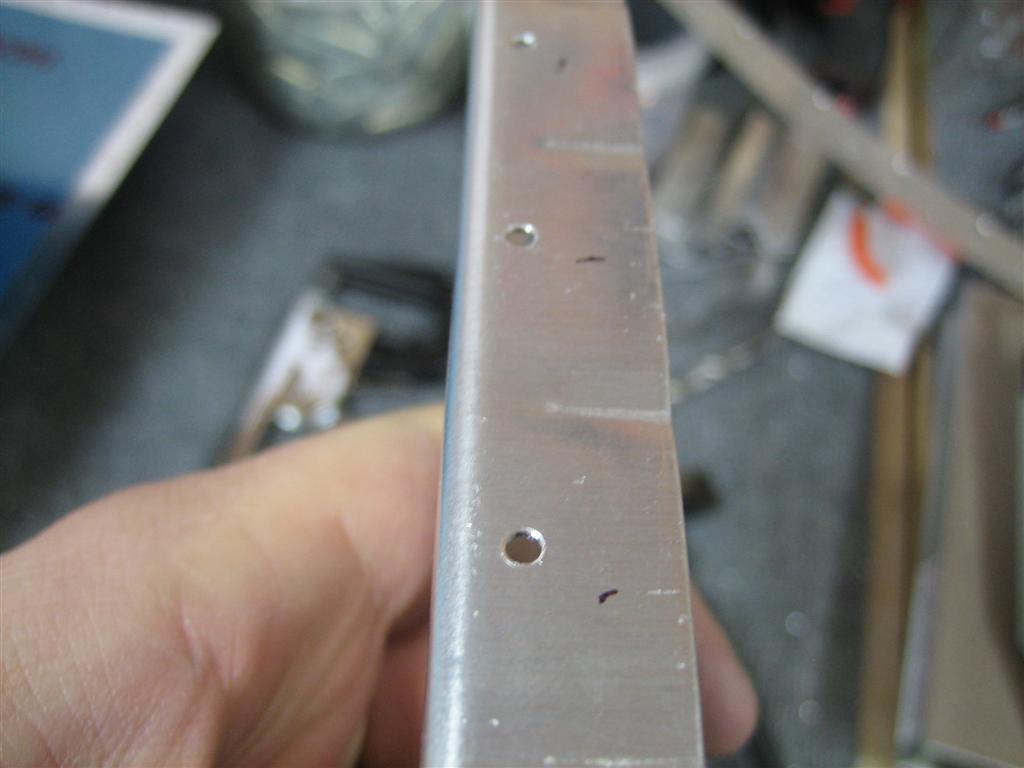
Crap. These holes are too close to the web.

Crap, I didn’t have it positioned properly when drilling.

There's no way I'm going to be able to dimple these holes.

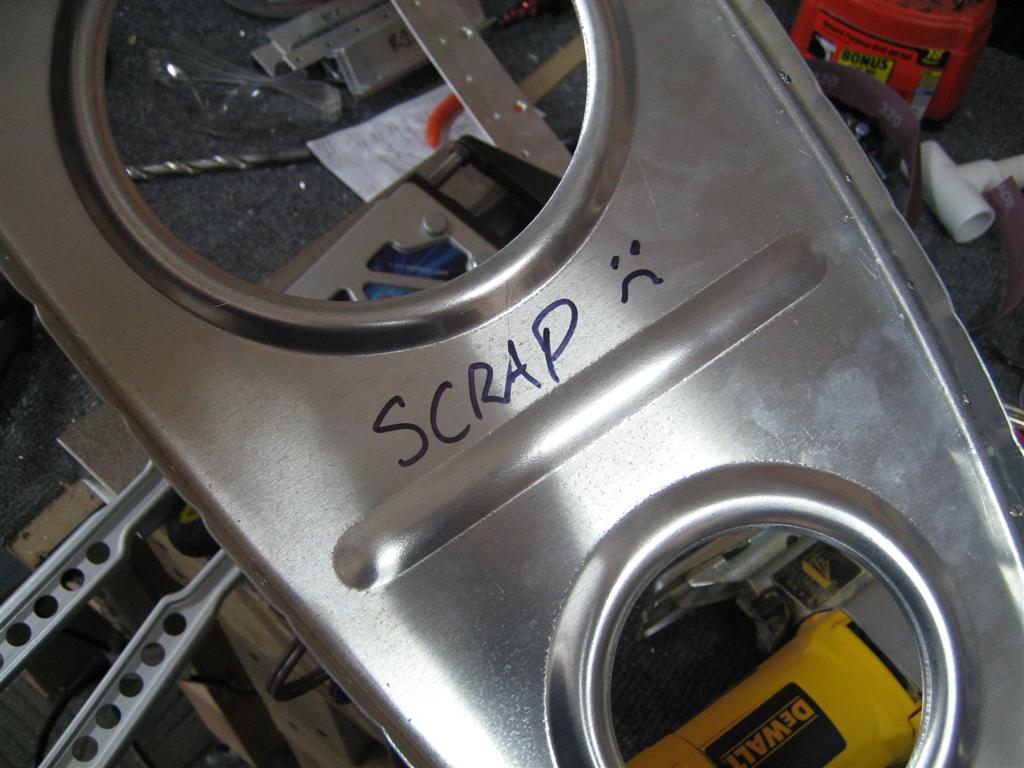
The most important part of this picture is the sad face.

Time to order another part (along with rudder skins, maybe.)

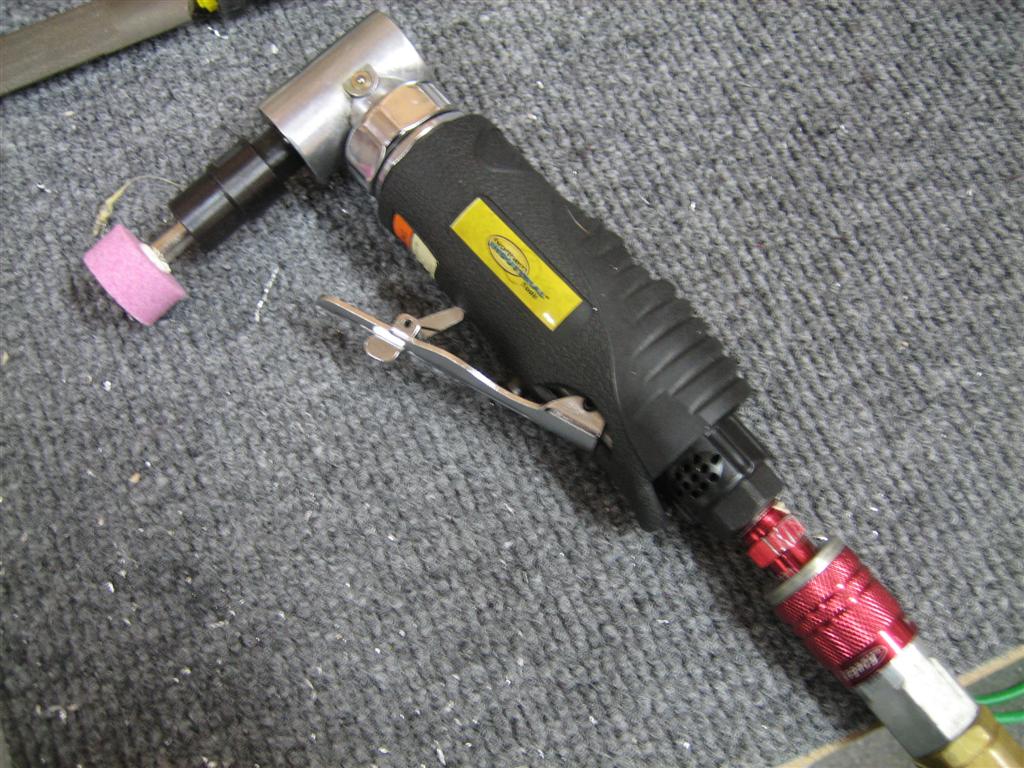
After wiping the tears off of my cheeks, I moved on to the leading edge light hole. I knew over the last few weeks I needed to figure out a way to clean up the leading edge landing light holes, so I went to Northern Tool and bought a $25 angle die-grinder and a few accoutrements to go with it.

Tools!

Looks fancy.

I plugged it in and gave it a go, and was very happy with the die grinder, but it wasn’t what I was looking for for the leading edge holes.

I broke out the jigsaw (gasp!) and put a fine tooth metal cutting blade in.

Carefully, I enlarged the leading edge hole right on the line, and spent a few minutes cleaning up the cut. It needs some more work, but it’s okay for now. This was a lot faster than trying to do it with a file.

Right leading edge after cleaning up my jigsaw enlargement.

Finally, I pulled out one of the other leading edge ribs and prepped it (deburr holes and edges, dimple, scuff, etc.)

For the dimpling step, the nose of my economy squeezer sticks out a little further than the female die, so I used the regular grinder side of my bench grinder and ground it down a little.

Now it won't scratch the web of the ribs as I dimple.

Here's one leading edge rib prepped.

I still have a few (a lot!) more to do (including some nutplate attachments for the outboard two ribs for the light bracket), but then I’ll get the leading edge prepped and maybe get one of the big pieces put together. That will make me happy.

I’m going to work over the next few weeks to put in some more regular airplane hours. I need to keep moving if I’m ever going to get it done.

Prev | Next


Deburred Right Fuel Tank Ribs, Bottom Wing Skins

February 27, 2011

Prev | Next

Well, not much today, but I got all the right tanks ribs edge finished and then made sure to run the leading edges of each of the ribs over the scotchbrite wheel to remove any lumpy areas (so as not to create any bulges in the tank skin when the ribs are clecoed in).

Then, in the morning, I brought the right lower inboard skin in the kitchen and started the deburring dance.

One of eight skins done.

Then, later at night, I brought in the right lower outboard skin.

I went ahead and scuffed the interior side of the skin while I was at it.

So, some tedious work today, but work nonetheless.

0.5 on the tanks, and 1.0 on the wings.

Prev | Next


Riveted Nutplates On Right Wing Z-Brackets

February 22, 2011

Prev | Next

Well, nothing too exciting, except I got to bang* on some rivets.

* By “bang” I mean “squeeze.”

After the other night, I have 7 z-brackets that are matchdrilled to the spar. Six of those seven need nutplates on them.

I grabbed a cleco, a (sacrifical) nutplate, an AN3-4A bolt, and a handful of washers (so I don’t engage the locking portion of the nutplate).

Bolt with washers goes in the hole, nutplate on top, hand tighten in a reasonably aligned orientation, and drill one of the holes for the nutplate ears through the angle.

Then, add a cleco and drill the other side.

Easy as PIE.

See? Easy!

After completing the first three sets, I snapped this picture.

3 down, many to go.

I think it was…[thinking]…6 angles, three bolts each, 2 holes for each bolt…36 holes?.

After all was said and done, the sacrifical nutplate had been thoroughly abused.

I almost threw it away, but then decided to keep him in his own little container. I can't just throw away a nutplate that has served me that well!

I deburred the holes that won’t be countersunk, and moved on to countersinking. I thought about using oops rivets, but since this material is so thick, I went ahead and countersunk for a full-depth AN426AD3-4 rivet.

Guess what I found when I picked up my countersink cage?

IT WAS ALREADY SET FOR THE PROPER DEPTH! WUHOOOOO!

(It’s the little things in life that really matter.)

Anyway, here’s one hole done.

Looks okay here...let's try a rivet.

Perfect depth.

While I was countersinking, I went ahead and did the FRONT side of the spar, too. (The nutplates go on the back of the spar, the bolts for the inboard z-brackets are fed in from the front.)

The countersink on the far left isn't perfect, I need to revisit this before riveting. The cage prevented me from getting a good angle on it.

Then, back to the z-brackets for some riveting.

First one done.

Then, onto the rest. All clecoed up, ready for rivets (in the background).

R3-R7 read to go.

Then, after setting 36 rivets, I set them all back up on the spar. No bolts yet, though. I’ll save that for tomorrow.

You can see R1 (which fell over) through R6 here. R7 is hiding behind the leading edge.

It’s late, and I need to get inside to bed.

But first, I grabbed all the tank parts for the right tank and quickly mocked them up with no clecos in my cradles. That’s the baffle leaning up against the cradles in the foreground.

I'm actually looking forward to the tank. Kind of.

It was just over an hour, but not quite an hour and a half. I think I rounded down last time, so this time, I’m going to call it an hour and a half.

Oh, and I almost forgot, I had to drill one rivet out. Just plain old messed it up.

Until next time…

Prev | Next


Stall Warning Access Panel Work

January 4, 2011

Prev | Next

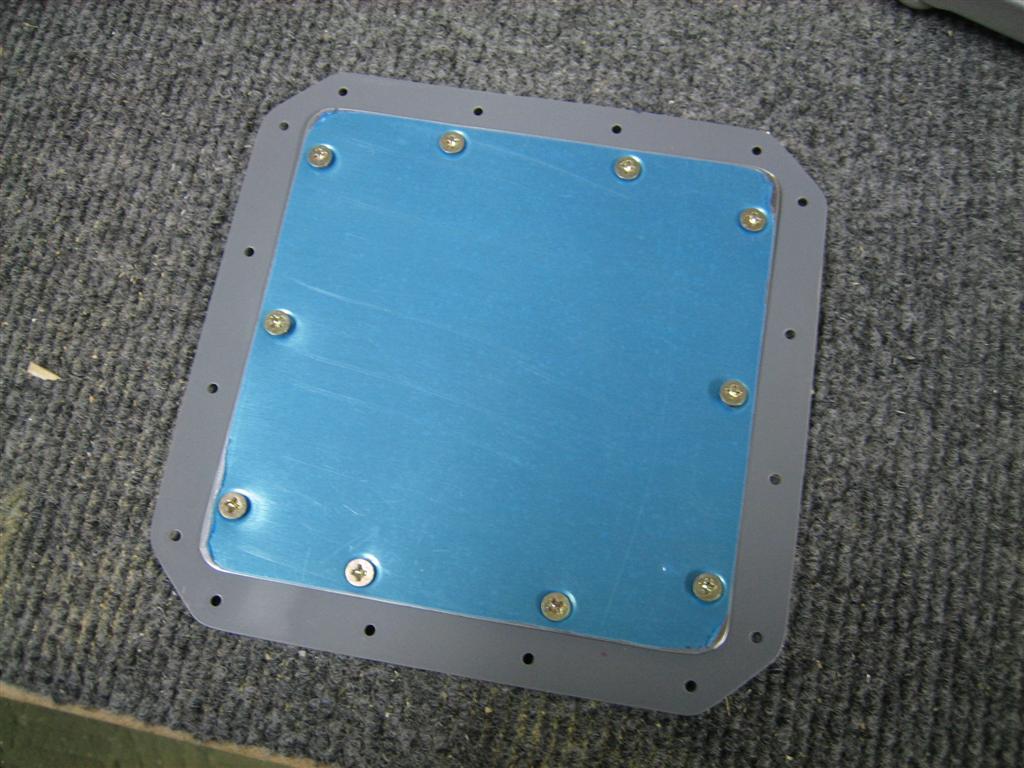
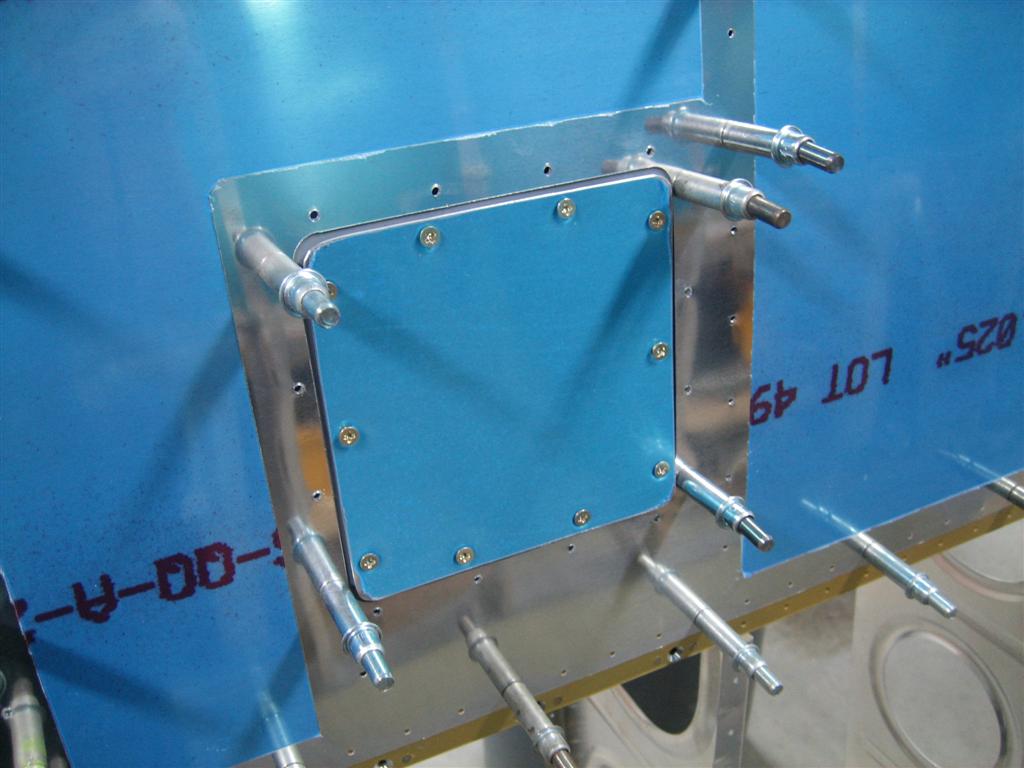
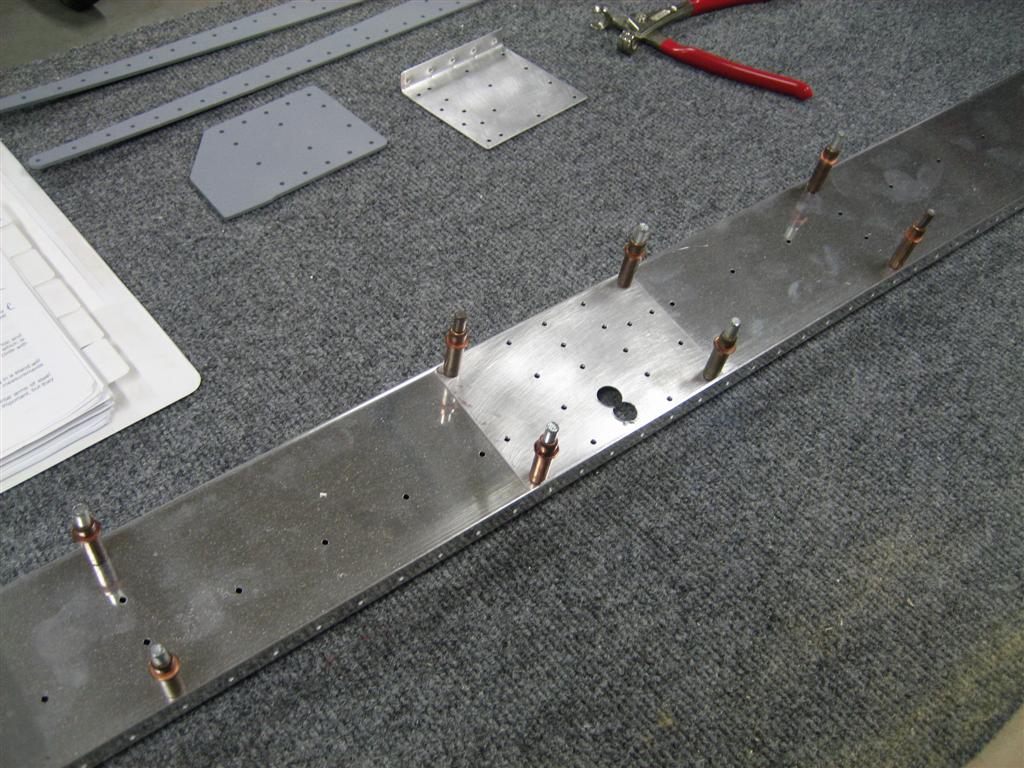
Well, I was able to spend a short half hour in the garage tonight. Last time, I ended up working on the access panel for the stall warning vane. I figured getting that prepped, primed, and nutplated would be a nice short task completion.

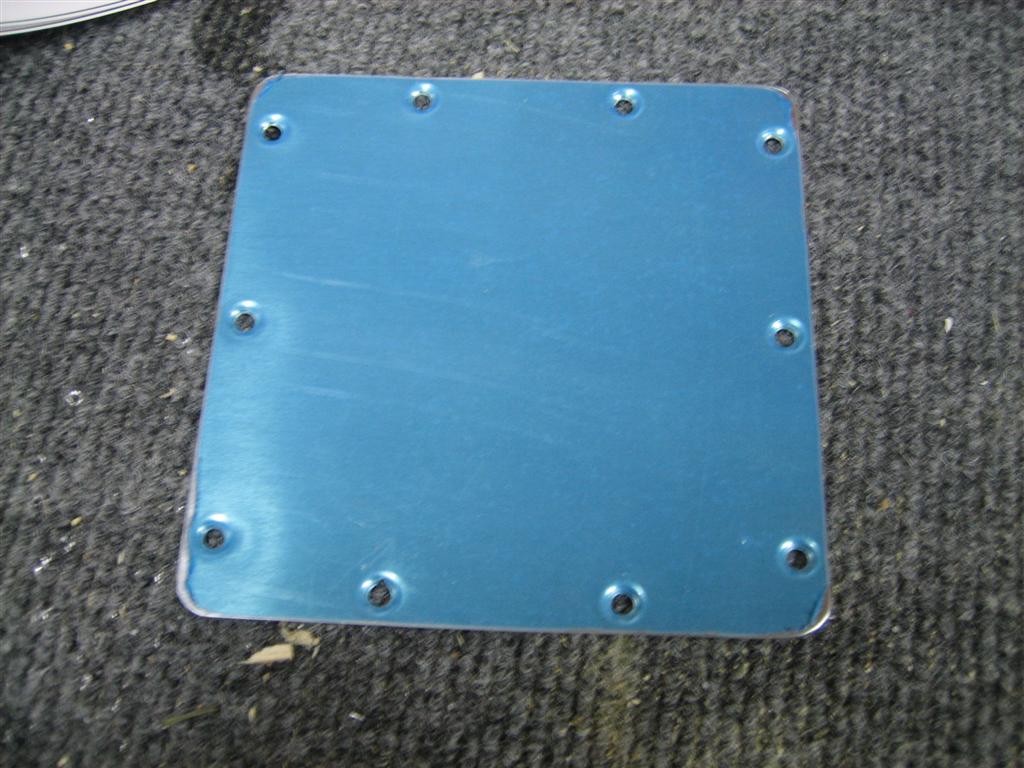
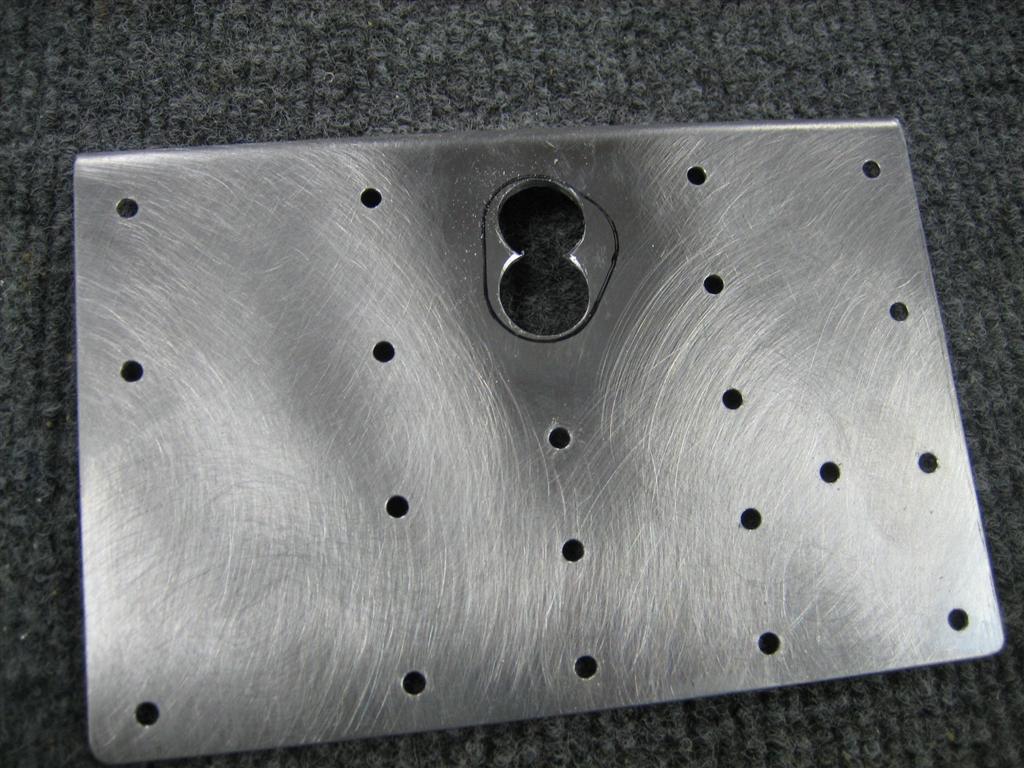
Here's the doubler, dimpled (for #6 screws) and scuffed after running the edges through the scotchbrite wheel.

I finished the edges of the cover, too, and dimpled for the #6 screws. The other side of this plate is devinyled and scuffed, but I’m leaving the vinyl on this (the potentially polishable) side.

Ready for priming.

See, I told you the other side was scuffed.

Primed!

While the primer was drying, I did a little edge finishing of the stall warning vane mini-rib.

Scuffed, but I still need to edge finish in all those crevices.

After the primer dried on the doubler, I set some NAS (oops) rivets with some dimpled nutplates.

20 rivets.

I didn't tighten these down at all, just threaded them into place.

Of course, I had to cleco tonight's work back into the leading edge.

A half hour, 20 rivets.

Prev | Next


Finished Left Rear Spar

December 12, 2010

Prev | Next

Well, I know I’ve been bombarding you with new posts lately (not!), but I did get a fair amount done today. As you can tell from the title of the post, I finished the left rear spar.

More importantly, I made an investment to my health this week.

I present to you…(triumphant music)…a heater.

Ta-da!

This is a pretty sweet heater. It’s small, only cost $20, and by no means will it heat the garage, BUT, the garage is no longer (literally) freezing, and I can work in front of the workbench comfortably for a whole day. It will provide me with two heat settings and has a little fan in it. I set it in the corner of the workbench (as pictured above), and after about 5 minutes, I have to turn it down to the low setting. After about ten minutes, it is pretty comfortable where I’m standing in front of my workbench. And, now that I think about it, it does take the chill off the rest of the garage. Even for the one day I’ve really used it while I was finishing the floors, it has totally earned its cost back.

Okay, back to the airplane. I finally found my stepdrill, and made a couple holes in my W-707E.

Step-drill to the rescue. Had I planned this a little better, I would have done three smaller holes.

I clecoed W-707E back onto the rear spar and flipped it over to use the dremel to clean out the rest of the aileron pushrod hole.

I'm about to flip the spar over and use the dremel to clean up the hole.

I'm not totally done here, but you get the idea.

After that, I moved on to dimpling the reinforcement plates where I won’t be able to dimple them later.

4 #30 dimples along the left (outboard) edge, and #40 dimples along the top flange.

I also dimpled the flange of the rear spar where the reinforcement plates will go.

Then, after a little more scuffing and cleaning, I shot primer on the spar.

I love this color. Makes me happy.

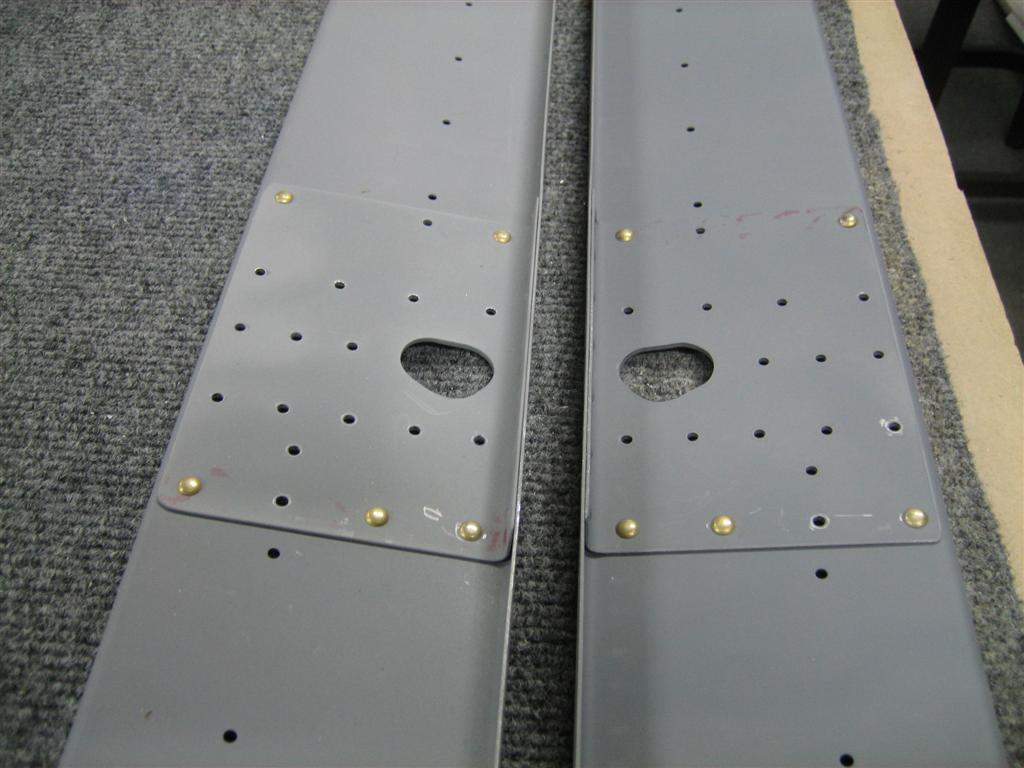
And the left W-707E and W-707F.

After a couple hours inside while the primer dried, I came back out and studied the rivet callouts.

Looks like I can set 7 rivets here right now. All size "square," which is AN470AD4-8.

5 of the 7 set. Nice shop heads, huh?

I moved along the reinforcement fork, using clecos as indicators not to rivet certain holes yet.

I chose to put the shop heads on the aft side of the rivet (these are manufactured heads). I like shop heads, and it makes inspection easier.

Moving outboard, I studied the same callout for the middle reinforcement plate, or W-707E.

Looks like I can set five here, of size "upside down triangle," which are AN470AD4-4.

Manufactured heads

Shop heads.

And repeat with the outboard reinforcement plate.

6 here, I think. More upside-down triangles.

Manufactured heads.

Shop heads.

Then, I couldn’t help but grab the right spar and put them both up on the workbench.

It feels good to have both rear spars done.

Look at the difference in paint color. Left spar (just finished) is on the right.

More difference in paint color.

Anyway, all the rivets were symmetrical from right side to left side, which doesn’t mean I’m correct, it just means that if I did make any mistakes, I made them twice!

Now, all that’s left on the spars is to finish up the left tiedown. Then, I really need to make some wing stands and finish up some rib deburring.

Tonight was a good night. 56 rivets, and it feels really good to get something big put together.

Prev | Next

Onward and upward!


Prepping and Priming Some Rear Spar Components

November 20, 2010

Prev | Next

Oh man, I’m furious. I just spent some time doing a huge writeup for this post, and when I clicked, “Post”, it deleted all of my text.

Grrr.

I’ll try to rewrite it, but it is going to have a little bit of an annoying tone.

Anyway, I managed to get out in the shop today for a little. I had previously gotten all of the doubler plates and reinforcement forks matchdrilled to the spar, so today was all about prepping and priming.

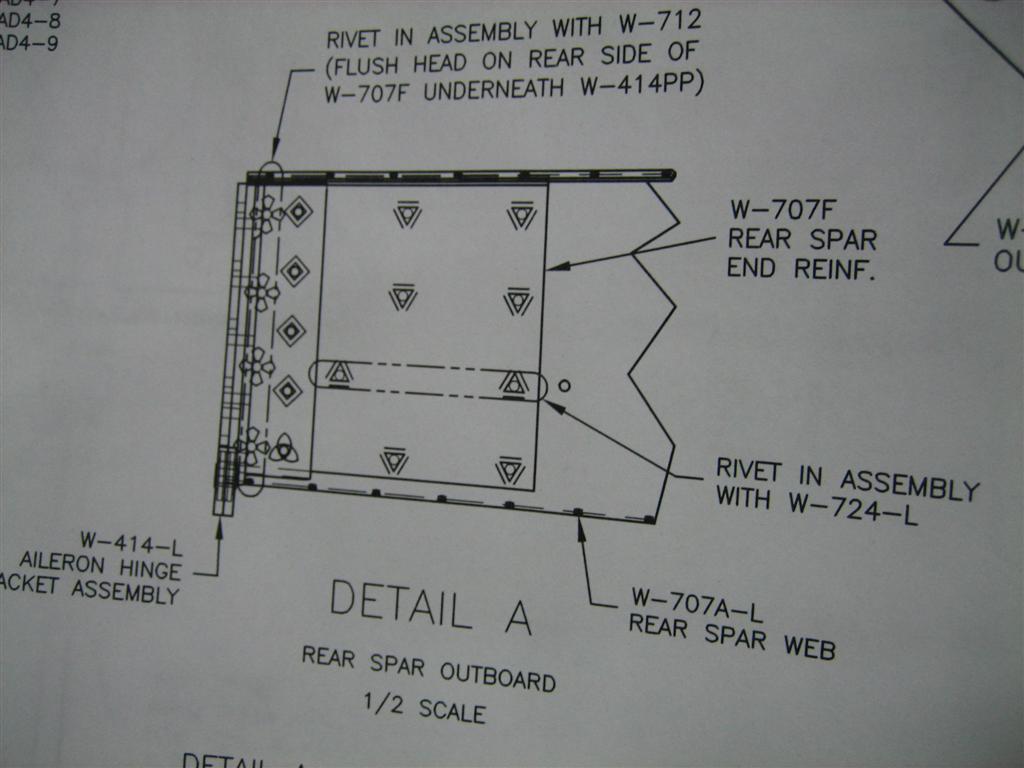
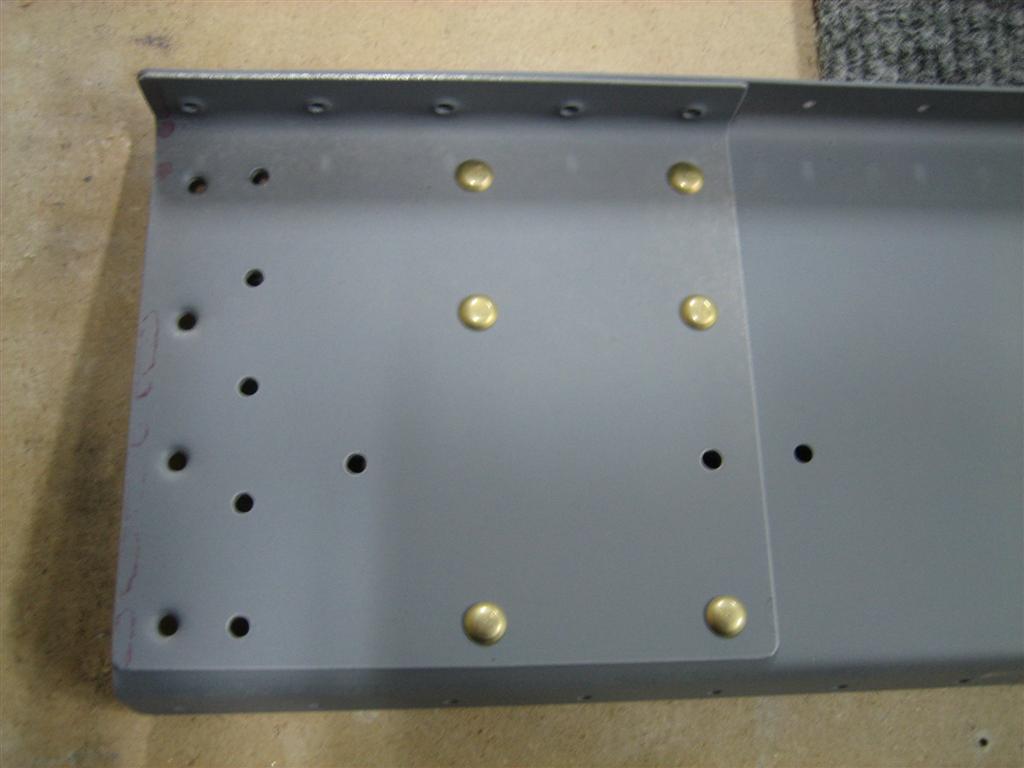
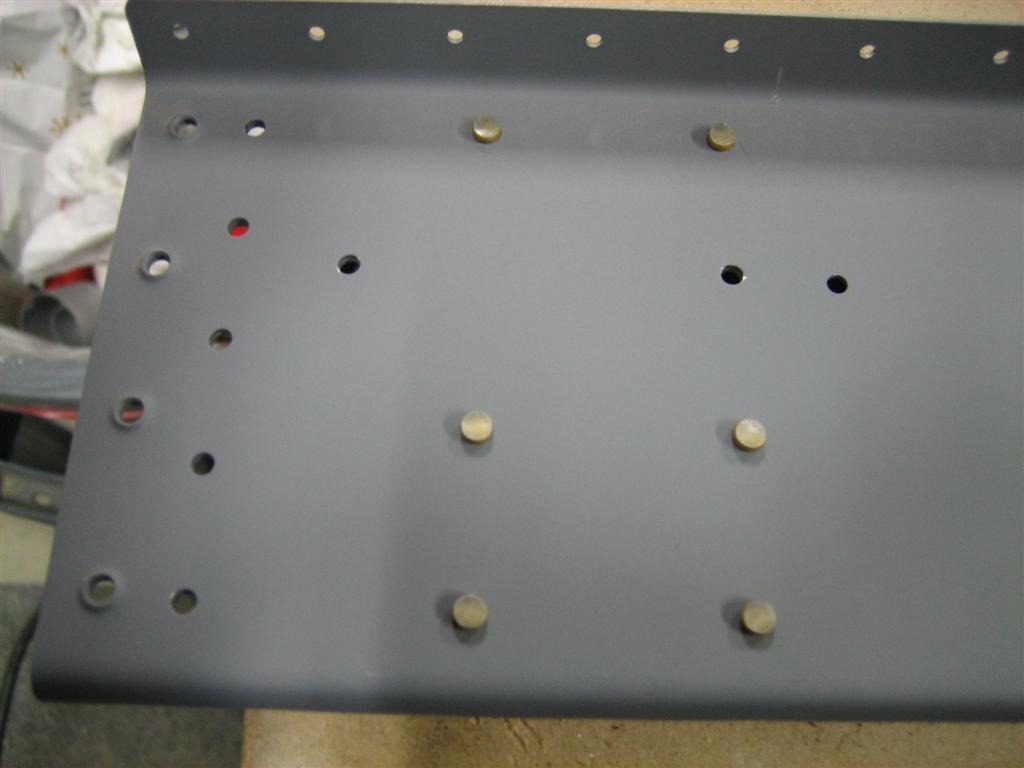
Here’s W-707F, which sits on the back side of the left spar. I’ve deburred and scuffed it; all I need to do now is dimpled the outboard holes in preparation for attaching it to the spar and outboardmost rib.

I love scuffed parts. They hide my fingerprints.

Here’s W-707E, which is the doubler plate that sits on the aft side of the rear spar, right in the middle. I’ve marked the cutout for the aileron push tube. Where’s that step drill?

Yup, here you can see my fingerprints.

I started looking around for my stepdrill. I spent good money on that stepdrill, but I couldn’t find it anywhere. On the workbench, under the workbench, on the floor, in some other shelves. I thought maybe I put it in some other tool’s case, so I got out the dremel tool, multifunction tool, jig saw, circular saw, etc. Nothing.

I even accused the girlfriend of selling it on the black market to fund an bottle of Opus One. She insisted that while she thought about it, she didn’t.

I remember putting it in this old small cabinet of drawers (that my dad gave me when I graduated college…thanks, dad!). I spent about 30 minutes just pulling out each one of these drawers, looking for my step-drill. Grrr.

After continuing to work on the airplane (angrily) for another 30 minutes, I finally found it when I came back to the drawers and opened them with my other hand. Apparently my sausage fingers (they’re not, I promise…I’m just mad) blocked my view of the stepdrill, which was right behind the lip of the VERY FIRST DRAWER.

Ugh.

Anyway. Back to the rear spar. This is the forward side of the left spar, outboard end. I’ve deburred the edges of the whole spar, and now I’m deburring all of the holes I drilled.

I always scuff the areas where there are holes I've drilled and deburred. Helps me keep the "did I do this already" time to a minimum.

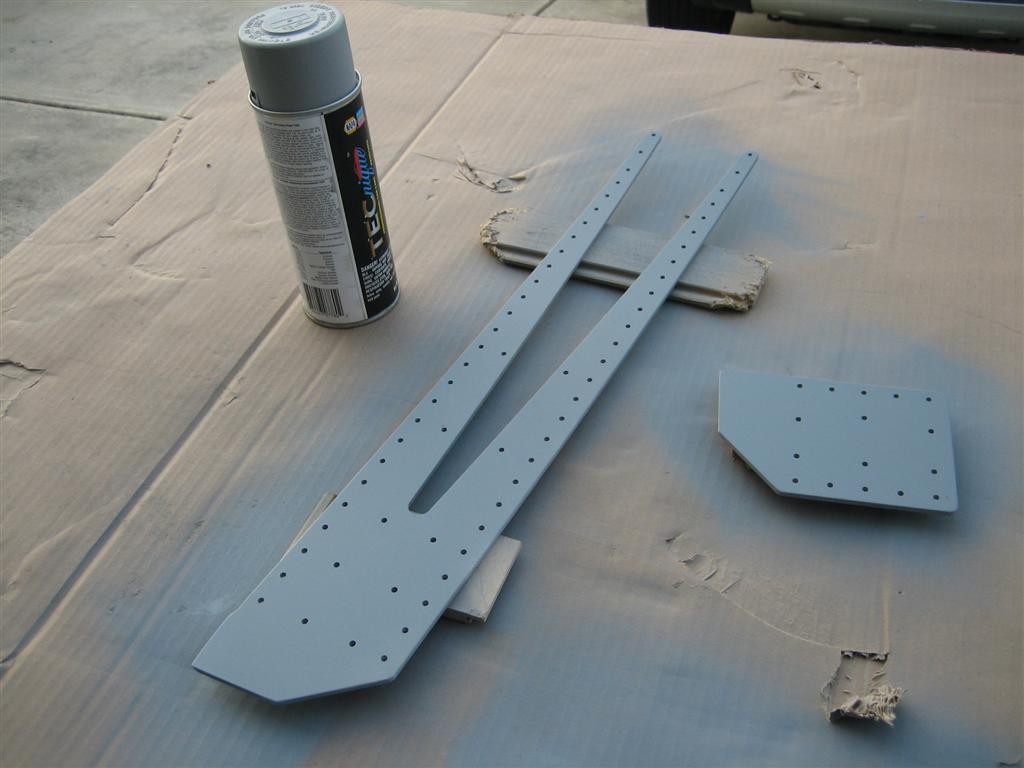
Oh yeah, I managed to get a couple parts primed today. Like riveting, I always feel like it is a productive day if I can prime some things.

You can also see my primer of choice, Napa 7220.

Here’s the other side of those pieces (after plenty of drying time).

I like priming.

Back to the spar, more deburring holes and scuffing.

I'll finish scuffing the whole spar when I get closer to priming.

This is the middle of the rear spar, around the aileron pushtube hole. More deburring and scuffing.

Jeesh, there are fingerprints everywhere.

Finally, I brought the two primed parts back inside.

Primed parts on the workbench always means we're getting close to riveting. Wuhoo!

After this was about when I finally found my step-drill. I was too angry at myself to keep going, so I headed inside to some grilled chicken, jasmine rice, and creamed corn. Mmmm.

1.5 hours

Prev | Next


Right Rear Spar Doubler and Reinforcement Fork

September 8, 2010

Prev | Next

The next step on the rear spars is to trip the W-707D and W-707G Rear Spar Doubler and Reinforcement Fork to size.

These parts are shared between the RV-7 and RV-8 (and maybe more, I’m not sure), and must be trimmed if you are building the -7.

This is a tricky trim job, though, because many people have future troubles with drilling the rear spar to the fuselage and maintaining the required edge distance for the hole in THESE PIECES.

It would be best not to overtrim, and leave even less margin than what is already there.

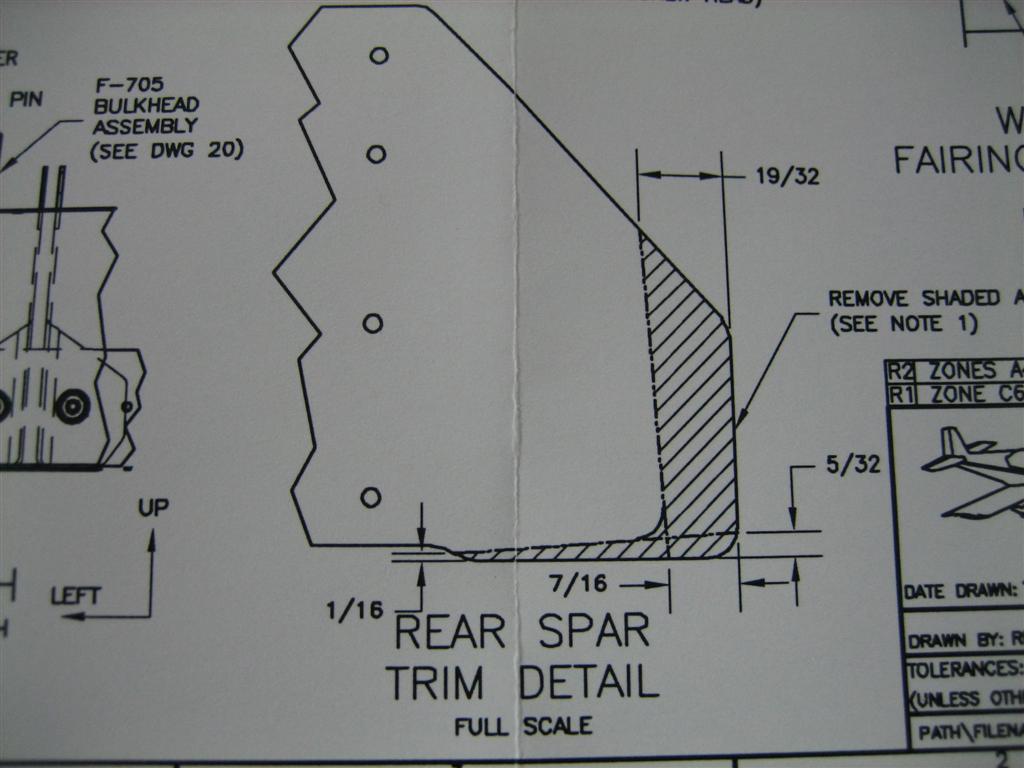
The plans and construction manual both point to Dwg 38, which is of course not included as a full-scale sheet in the wing kit, so I got out my preview plans and started staring.

Even though I’m only working on the right side for now (will bring the left wing up to the right side’s progress when I get the replacement spar from vans), I’m going to do both sides of this now while I’m all mind-prepped to do it.

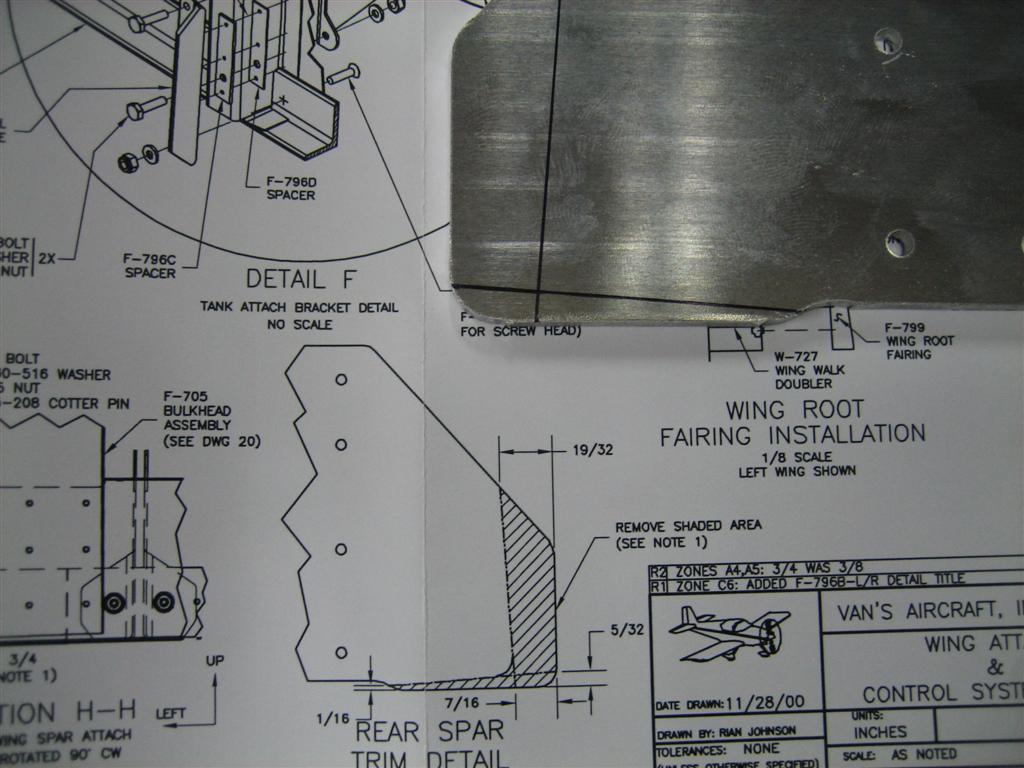
A snapshot of the applicable portion of Dwg 38. Looks like I should start measuring and marking. (No cutting yet, though!)

Keep in mind here that you measure from the edge you are about to start cutting away, so once you start cutting there is no double-checking your measurements.

Of course, I'm being dumb by doing the right side first (left is shown in the drawing above.)

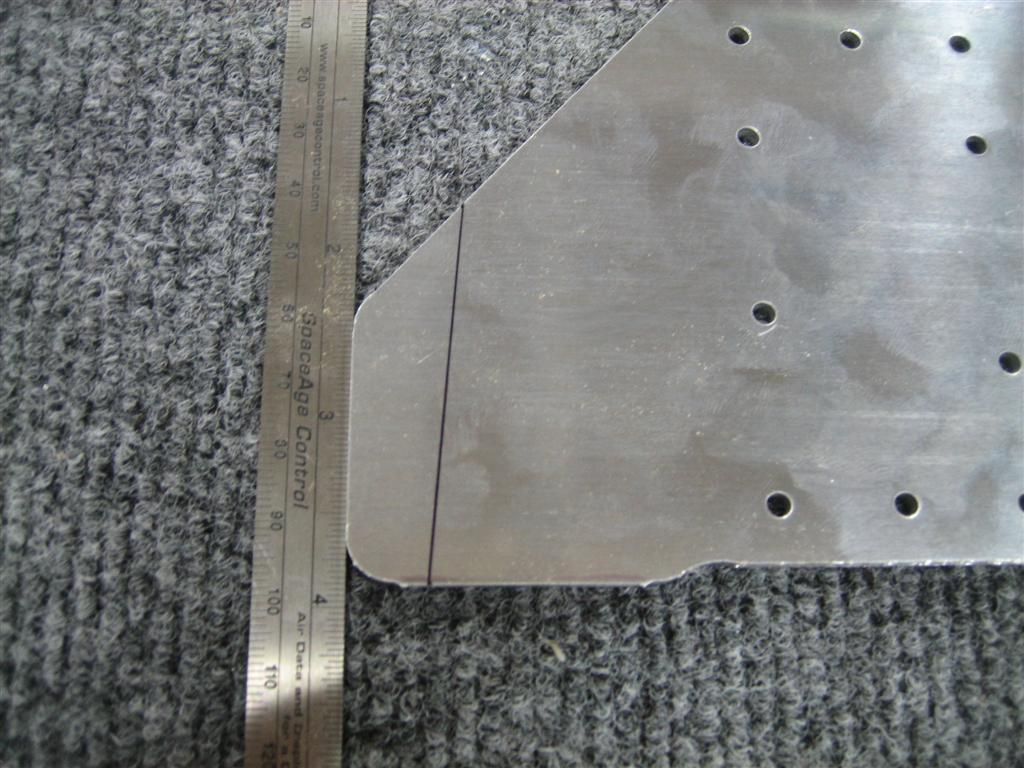
Here are both lines drawn, measured, double-checked etc. It's still all making sense, so that is a good thing.

The bottom cut off. (For you OCD types, I realize I should have made the other cut first, which would have been a little less cutting overall, but oh well).

I decided to cleco the two smaller pieces together first, then transfer the lines to the bigger forks, and do those separately.

Ready to transfer the lines.

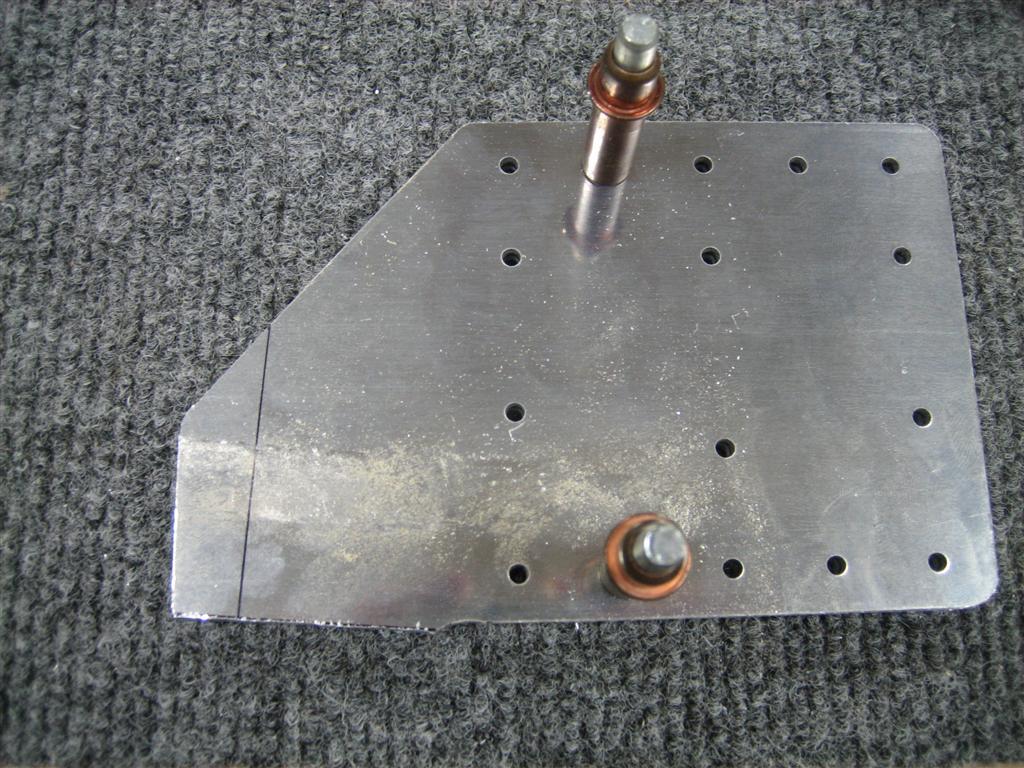
Of course, I didn’t get any in-progress shots of the fork cutting, but it went well. I then clecoed the left and right assemblies together and grabbed this shot after a few passes on the scotchbrite wheel.

At the end of this project, I am going to go back and count how many toes ended up in all the pictures. Here's...{counting}...6 more.

After some time on the scotchbrite wheel, I have two ready-to-cleco parts.

Nice and scuffed.

Then, I clecoed the doubler plate and reinforcement fork to the right rear spar and started matchdrilling.

Matchdrilling.

I had a hard time deciding if I should enlarge some of the rib attachment holes in the fork and doubler plate to final size, and I decided I would. I couldn’t find anyone who said it would be a bad idea, and now I’ll get to deburr and prime all of the rear spar components.

I did leave the majority of the rear spar “future” holes alone, though. I guess per the directions (indirectly, just in step order), I’ll drill those after priming the rear spar.

Here's a picture from the backside (actually, front side) of the spar.

Of course, I was careful to mark and enlarge to #40 the flange holes that need to be dimpled now (the reinforcement fork prevents the female side of the dimple die from getting behind these holes).

I didn't actually dimple, though. I need to leave something for tomorrow.

After taking everything apart and deburring holes, I have a few pieces ready for priming, and a rear spar with some remaining deburring before priming.

I scuffed the rear spar where I had already drilled and deburred to help remind myself what I have left to deburr.

Today’s hour was a good one; a few things ready to prime, and just one deburring and priming session away from being able to rivet the rear spar assembly together.

I need to go buy some more Napa 7220 Self-Etching Primer.

Prev | Next


Trim Tab Fitting

July 1, 2010

Prev | Next

Okay. Today was a pretty productive day. I had taken everything apart, then realized I still had some more fitting to do on the tab, so I put it all back together again. Before that, though, I thought and thought about what to do about the two holes on the right side of the picture. These are for the fiberglass tips, and they are supposed to be matchdrilled later, after the counterbalance skin is installed as a lap joint underneath. How can I deburr parts that are riveted together if I drill through both? Maybe it’s not a big deal, but I decided to drill them to #30 now (for #6 screws).

Two holes the right before drilling...

...and after.

Then, I was thinking ahead about the safety wire trick you have to do with the hinge pin. Why not drill that now, so I can deburr before priming?

I drilled this just larger than 0.060, which is one of the biggest safety wire sizes.

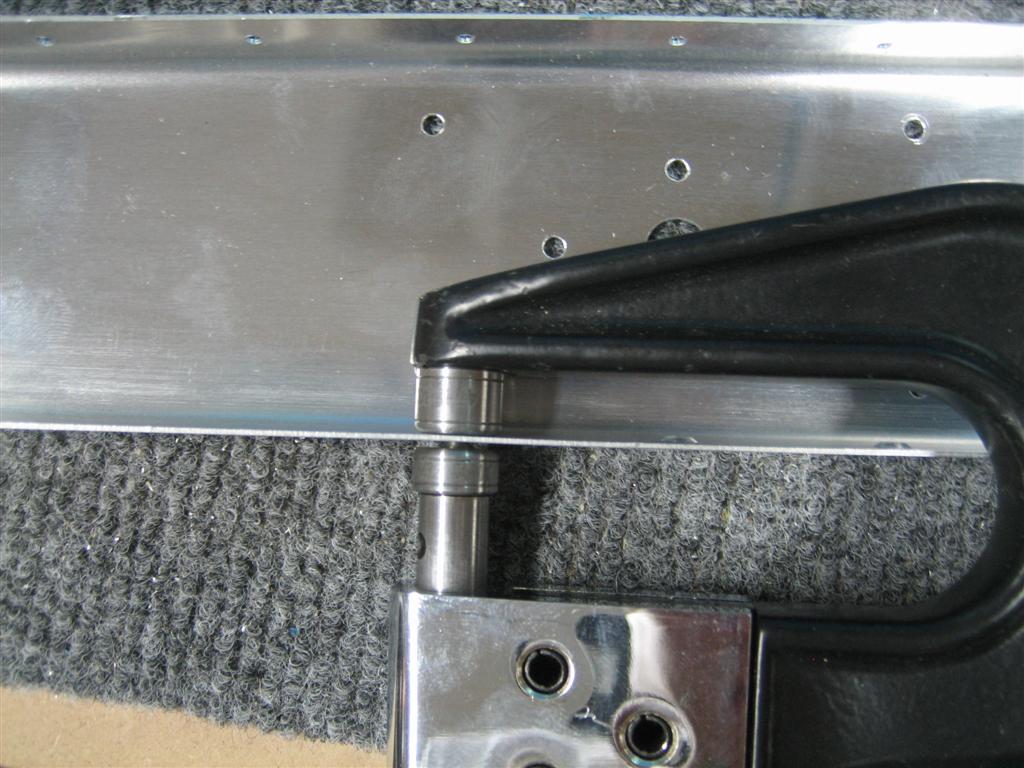
Next, time to deburr and dimple the left elevator spar.

Me dimpling.

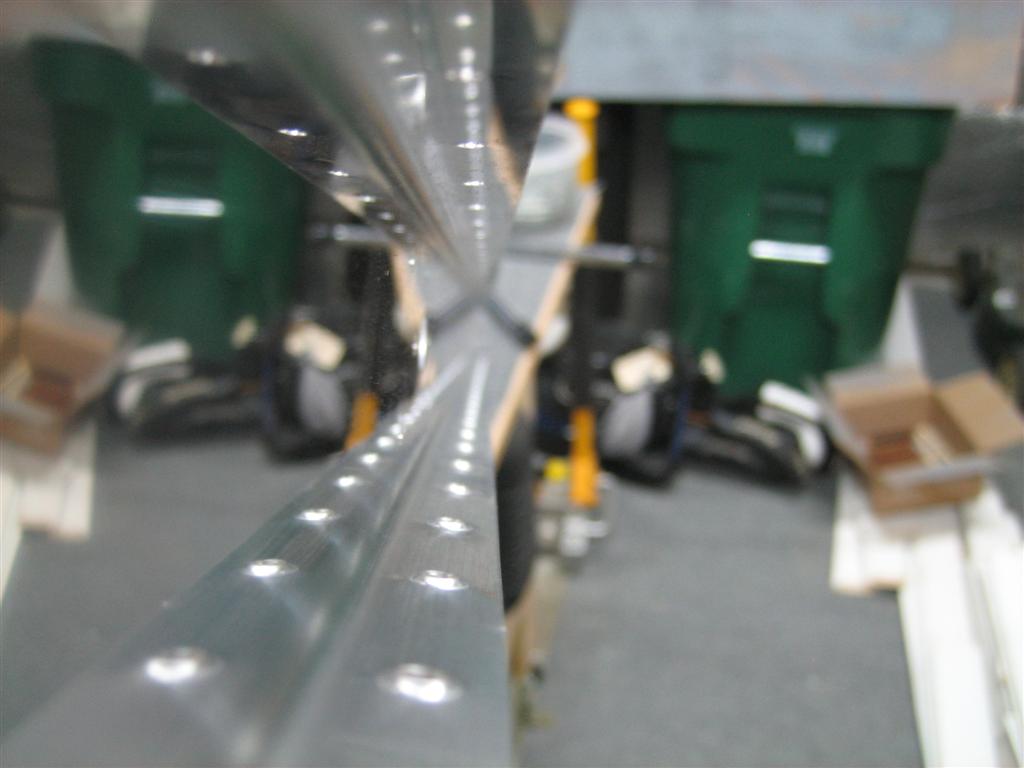
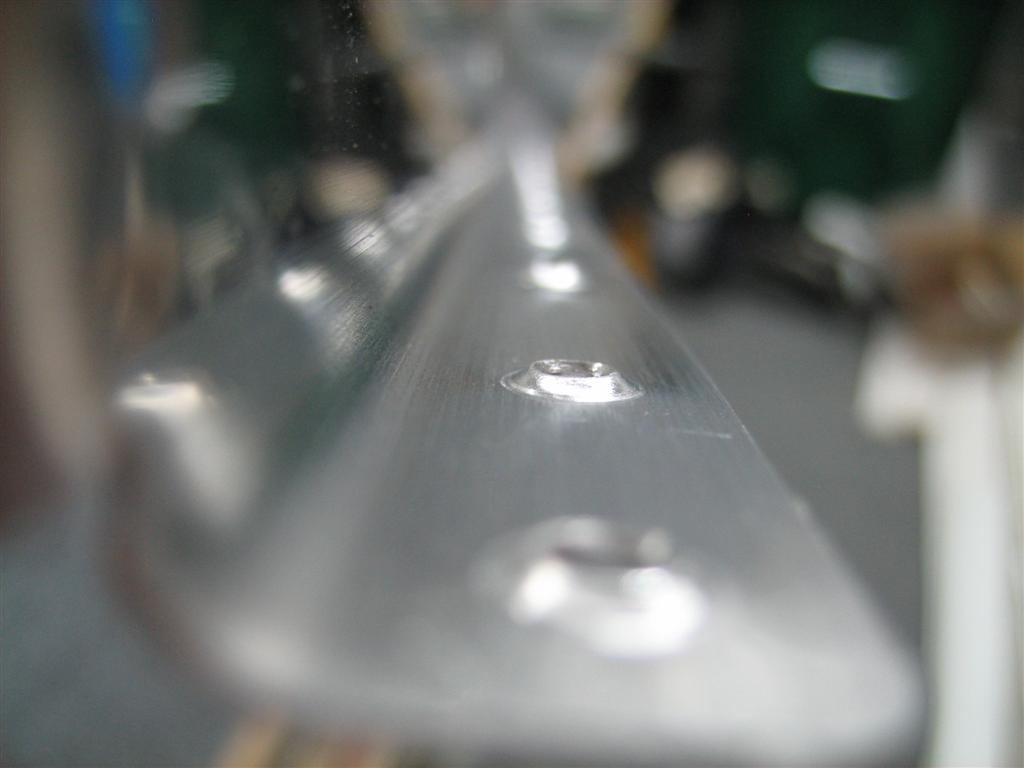
And after everything was dimpled, a nice picture down the spar of my blurry recycling bin, golf clubs, and motorcycle jack. (No motorcycle anymore, but the jack comes in handy to lift the corner of a car when a tire needs to be taken off for one reason or another.)

Spar! (I'm tired, so we are down to one word captions for the day.)

Another shot of the same.

Dimple! (Wouldn't it be annoying if I everything I wrote ended in an exclamation mark?!)

After edge finishing the two hinge reinforcement plates, I shot them with primer.

Primed!

Then, my attention turned back to the tab.  I’ve clecoed the elevator half of the tab hinge back in, and on the right you can see my drilled riblet!

Drilled riblet! (Okay, I've had enough of the exclamation points.....!)

Here’s a better picture. I basically drew a line perpendicular to the hinge line up from one of the holes along the trim spar, then spaced them at 1.5 and 3 inches. That spaced everything evenly, and gave me plenty of edge distance all around.

Don't look at my edges, they aren't finished yet, but you get the idea.

Then, I stuck the tab on and inserted the hinge.

As some would say, "Easy Peasy."

Other direction, just for kicks (not as much deflection due to cleco interference, but again, you get the idea).

Because I bought a longer section of hinge to replace my bad first attempt, my hinge pin was long enough to actually fit (Van’s says they will send you the real one (because it needs to be longer than 18″) in the finish kit.

I got to bending.

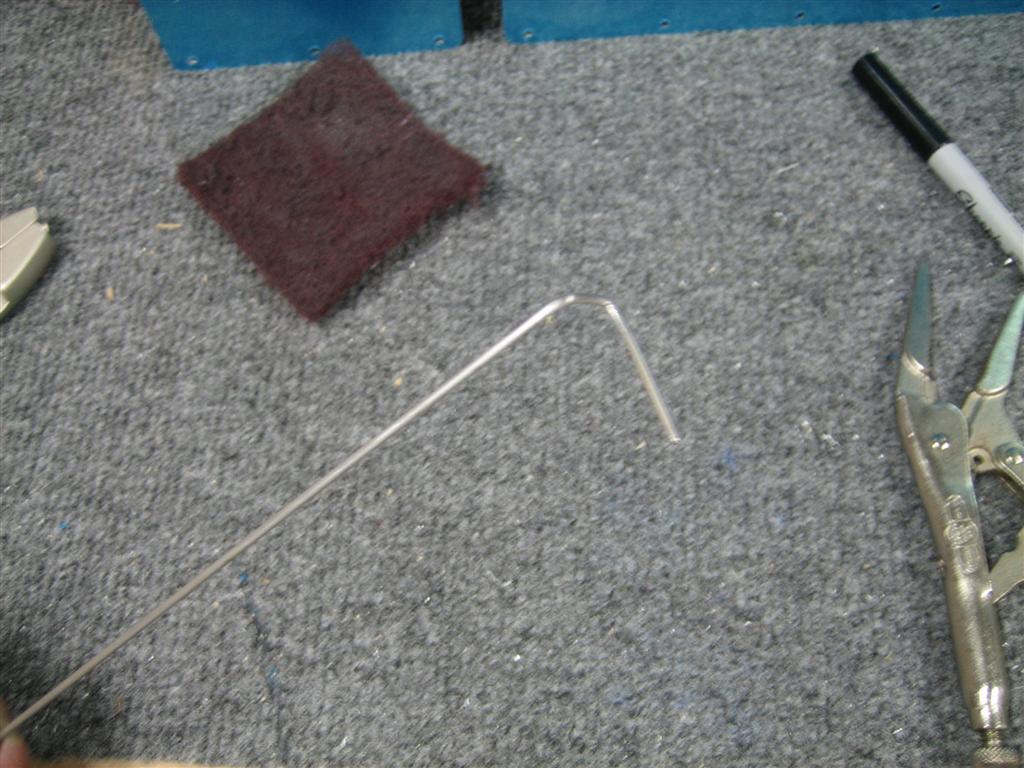
After more bending, I ended up with something like this.

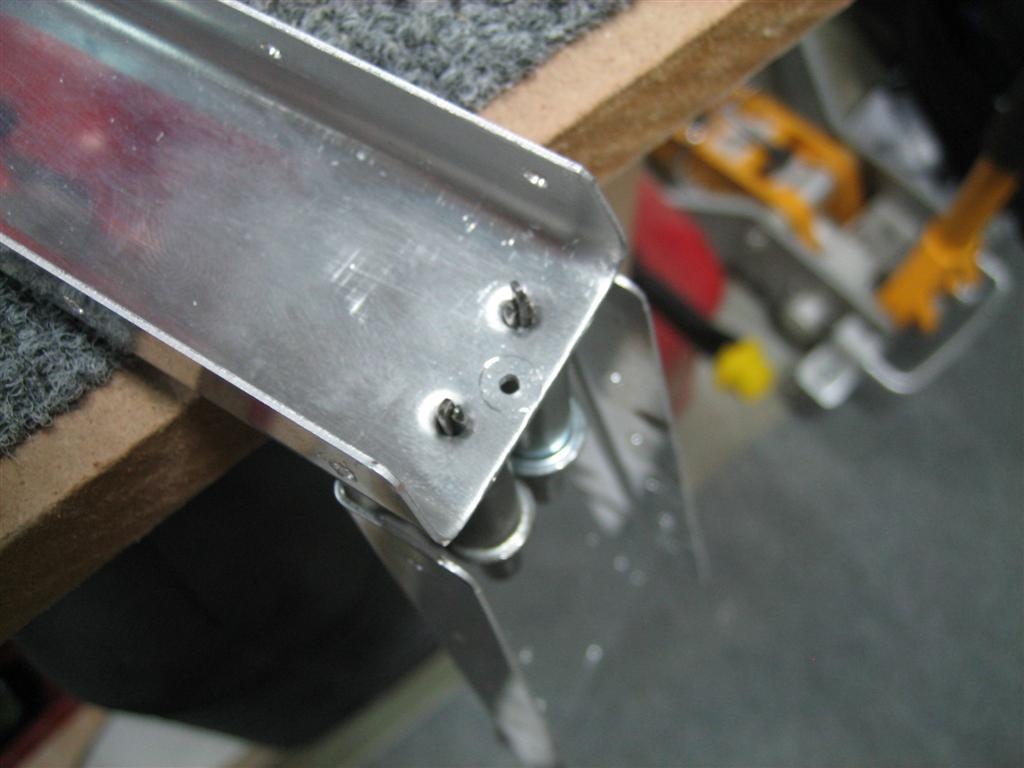
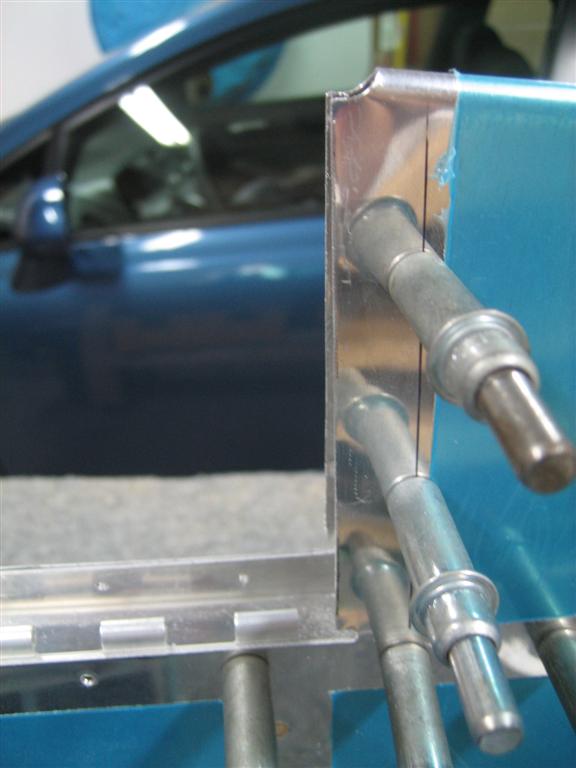
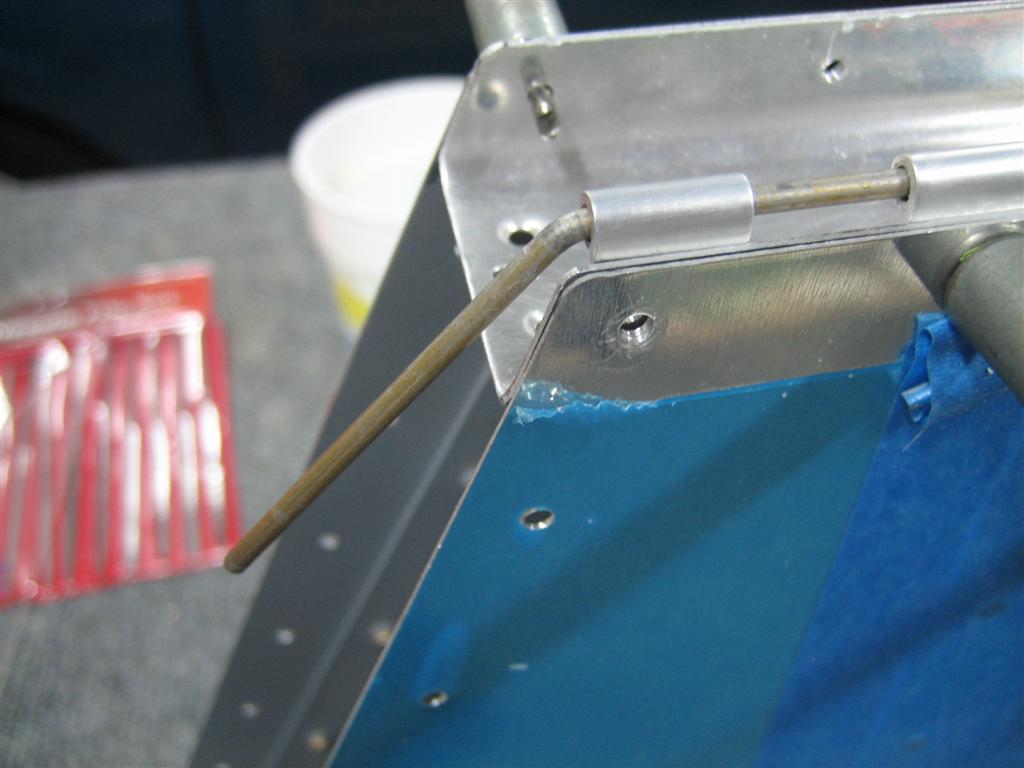
Ooh, isn't that pretty! The safety wire hole I drilled earlier is in the middle there, and will allow me to safety wire this hinge pin to the spar so it won't COME OUT IN FLIGHT!

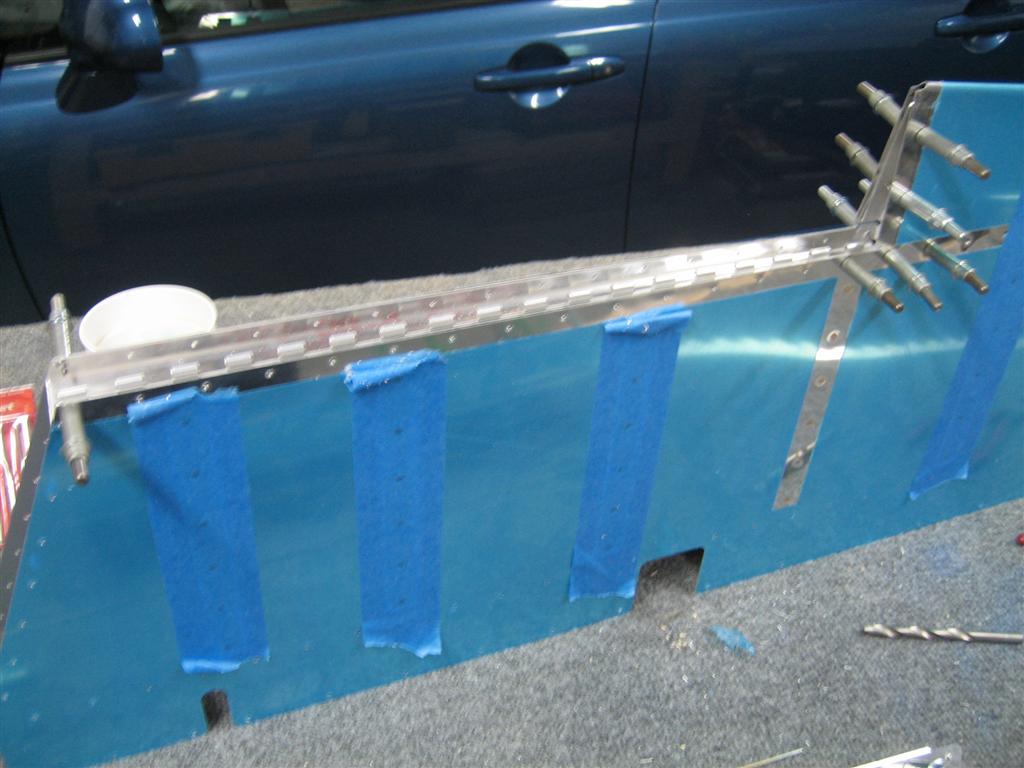
Then, I figured out how to do video. They speak for themselves, but keep in mind that while my gap is intentionally small, I still need to edge finish, which will open them up.

Another video, this time a little closer. You can see I am pushing and pulling left and right to make sure there is no interference even with the small amount of play in the hinge. I think I am okay, but this will probably open up a little after edge-finishing.

Two hours of late-night-hinge-pin-bending bliss.

Prev | Next


Started working on the Elevator Tab

June 20, 2010

Prev | Next

After some more days of not doing anything, I managed to make it out to the Pilots N Paws fly-in today. It was good motivation for working on the airplane.

Anyway, I’ve drilled the left elevator skin to the skeleton, and the next step is really to take everything apart, deburr, dimple, countersink, prep, prime and assemble…

BUT…

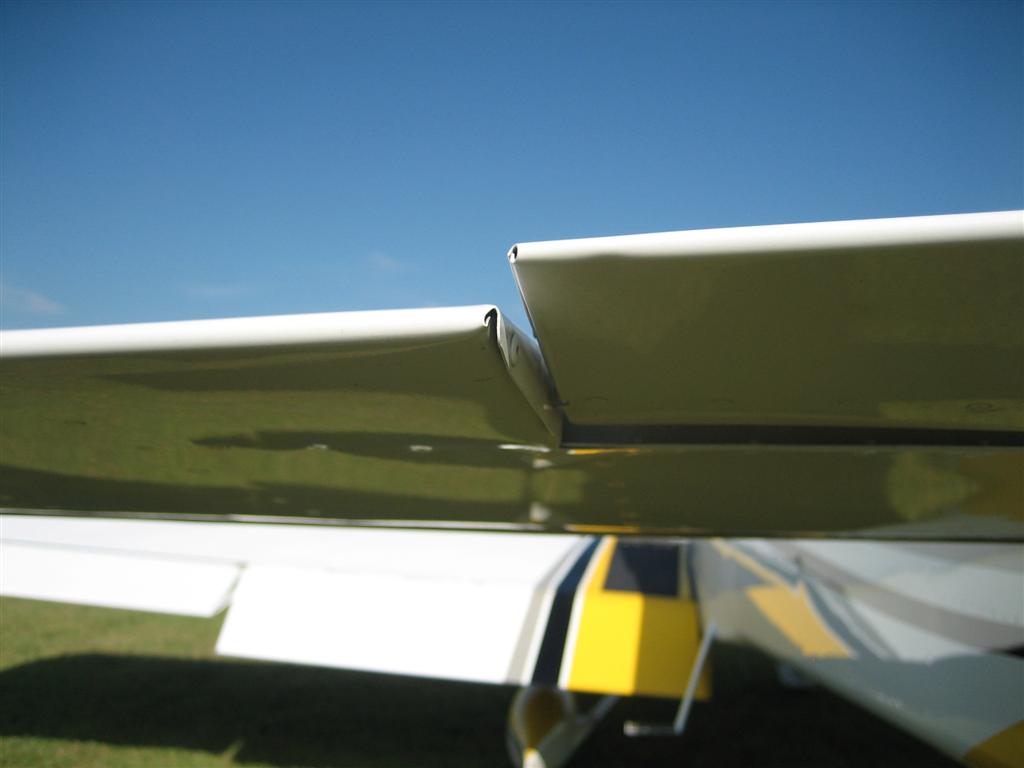
I have some things that need to be done first. Mostly, the directions want you to bend the elevator tab “ears.” Well, I don’t think I want to go the bent route. Here’s what I am worried about. I don’t think anyone would really notice, but I don’t love the way this looks.

Bent trim tab ears. I think I'm going to cut mine off and make little ribs.

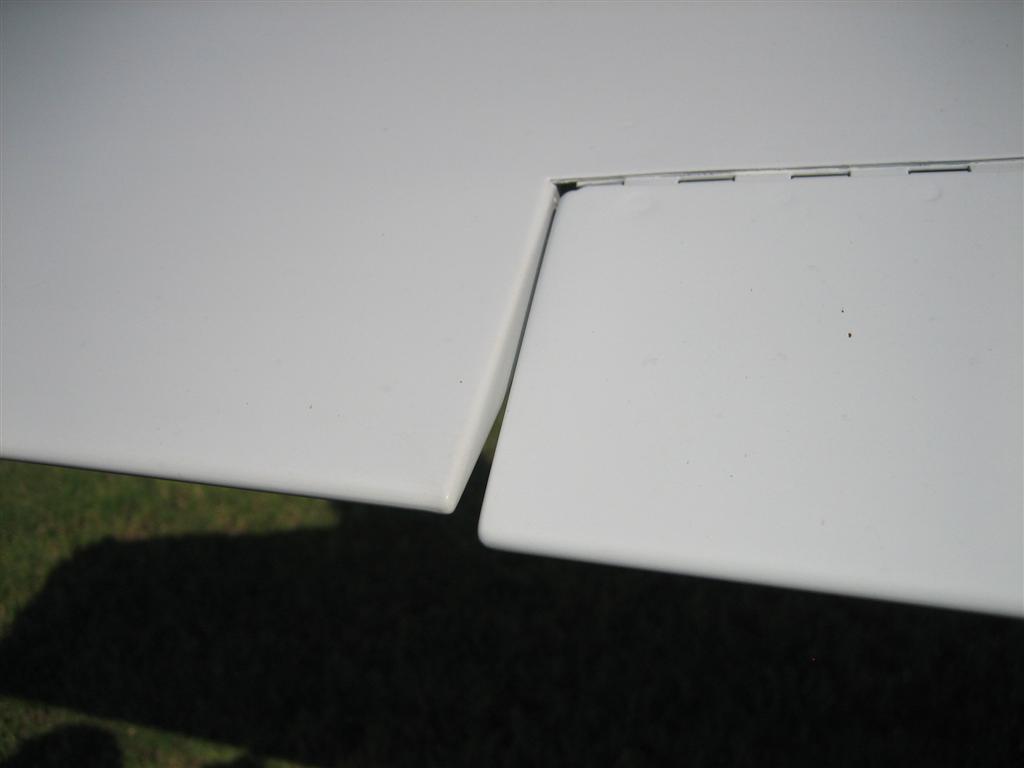
I think with some work, I could make them look like this, but given how finished these surfaces are, I don’t know if they started as bent ears or riblets.

WHOA! This is awesome. This guy really finished this joint up nicely. Everybody be jealous.

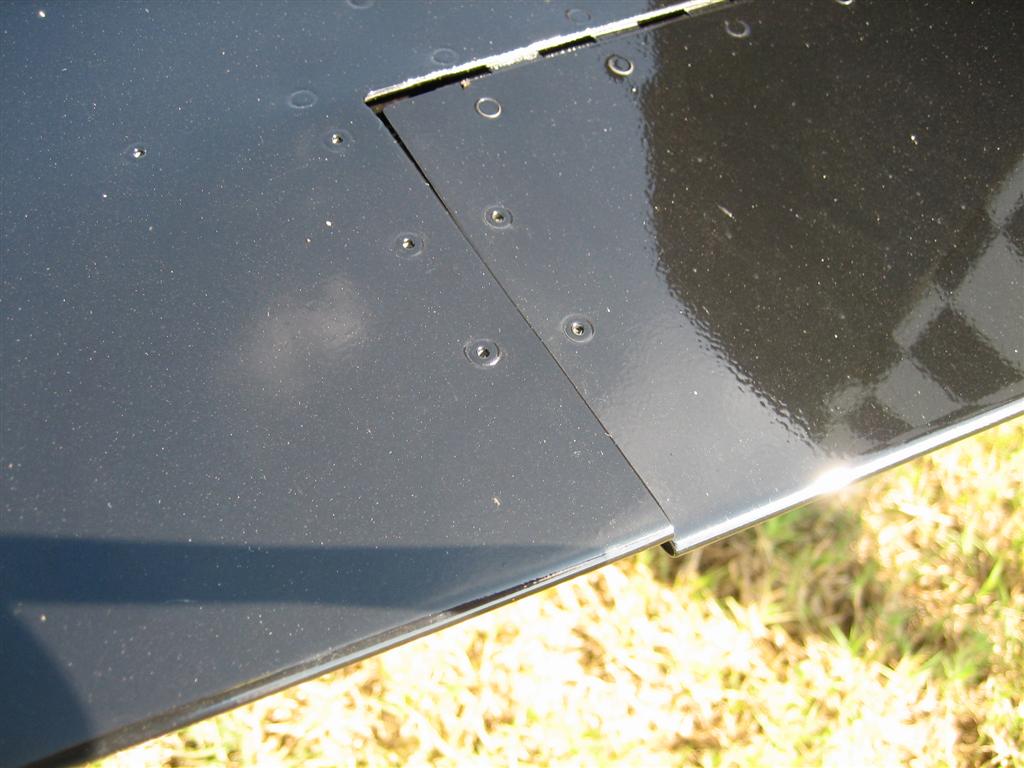
Finally, I found a really nice riblets version. I like this, and this is what I am going to be aiming for (although I am going to try to use solid rivets.

Great finish on the cut-instead-of-bend tab ears. I'm going to strive to make mine like this.

Anyway, I also think cutting the ears off (not bent down in the way) will allow me to use solid rivets in the blind-rivet locations on the top and bottom of the elevator (outboard trim spar rivets). We’ll see.

First step is to get the skeleton re-clecoed in the skin.

The trim spar and the inboard rib.

Van’s wants you to countersink either piece for flush rivets (not for any real flush reason…I think they need to be #40 size holes, and they don’t give you any universal head AN470AD3 rivets). Anyway, per standard practice, I dimpled both.

Dimpled instead of countersunk.

After clecoing together the skin, I am ready to start the headscratching with the tab. Let’s find the tab spar.

There it is.

Let’s go ahead and cut off these tabs. After careful measuring and marking, I’m ready to put blade to metal.

Inboard side. I'm nervous about chopping these off.

Outboard. (see how I lined up the line parallel to the flat portion near the top and to the left of the relief hole near the bottom? This doesn't work. Read on to find out why.

After a quick snip (not too close to my final line) I removed the vinyl from the interior of the skin in preparation for using a file and scotchbrite pad to clean everything up.

Devinling before finishing those cuts.

After working carefully with a file and edge finisher…

Looks good.

Before I really finalize things, I’d like to get my tab placement set up. First, I tried using this extra piece of rudder stiffener.

It worked okay, but I later switched to something a little longer.

After some moving around and fiddling, I re-read the directions, which tell you to bend the elevator ears down along a bend line that is perpendicular to the hinge line. Well, that means that the cut lines should be perpendicular, too. Of course, like I mentioned before, my original outboard line wasn’t perpendicular. All that file work for nothing.

I drew new lines (one on top of the other, ignoring the needed clearance).
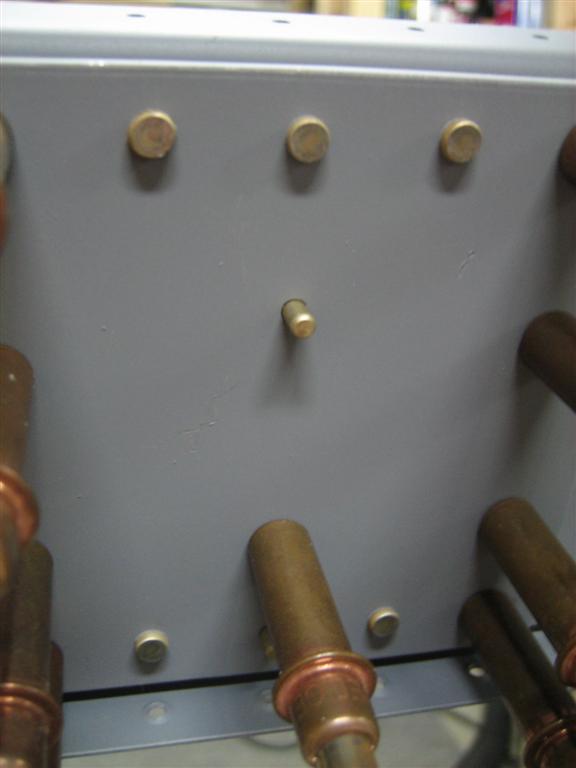
Drawing new, perpendicular lines.

Then, I made a “pretty close” cut with the snips. I’ll need to really clean this up, as well as move the line to the left for clearance purposes (I’ll wait until the hinges are drilled to really see what I need. (The instructions call for 3/32″, but that is for the blind rivet head clearance that I won’t have to worry about.)

Pretty close, but still needs trimming and finishing.

Next, I moved back to the tab. Here’s my new line.

I'm bummed because the upper part of the tab, factory provided, is not perpendicular to the hinge line. That means there will be a slight angle there. Bummer.

After getting those refinished, I got the tab mocked up. I kind of worked backward. I want to use the inboard edge and the trailing edge to get placement, then verify I have adequate clearance on the outboard edge and between the tab and elevator for the hinge (there are some hinge dimensions on the plans). I think I’ll have plenty of room.

This looks good, but I'll have to keep trimming that outboard edge.

Here's a closeup. You can see the edge near the top of the tab is angled a little left. This is how it comes from the factory. The marker line and aft portion of the tab are both perfectly perpendicular to the hinge line (line through the center of the rivet holes).

Later this week, I’ll work on getting this perfect, then tackling the riblets that need to be constructed before doing any more work with finishing the skin.

Prev | Next