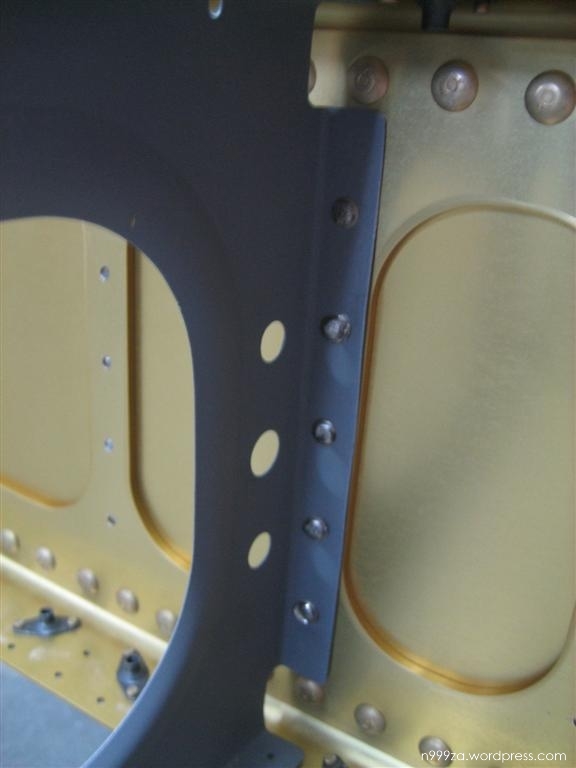
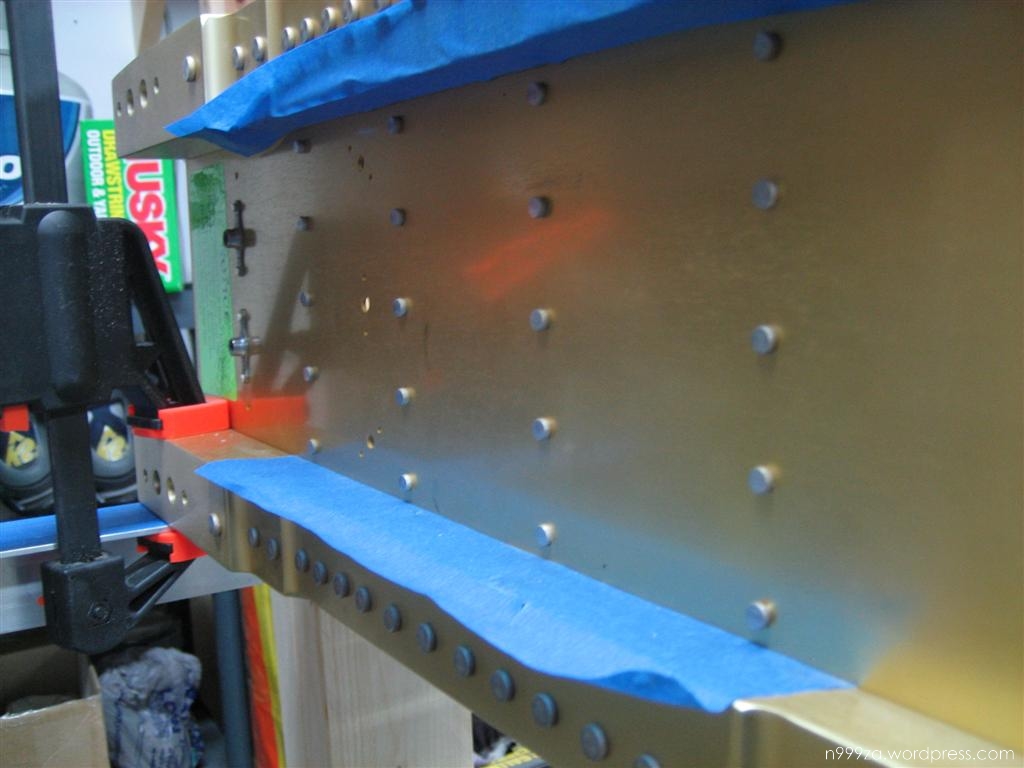
Right Wing Top Skins Clecoed to Skeleton

January 23, 2011

Prev | Next

Alright, I was having a bad day with the rear spar, so after I got most of it riveted on, I moved on to the skins.

I jumped the gun a little and clecoed on the top outboard skin (jumped the gun because the spar wasn’t re-leveled and the inboard skin outboard edge actually underlaps the outboard top skin.

Anyway, with just two clecos in the skin, I was able to thread some string around a cleco on either end of the spar to jack up the center of the rear spar.

The string is supposed to line up with the top of the smaller holes on the right.

After some jacking, the spar is now perfectly straight.

Nice and straight.

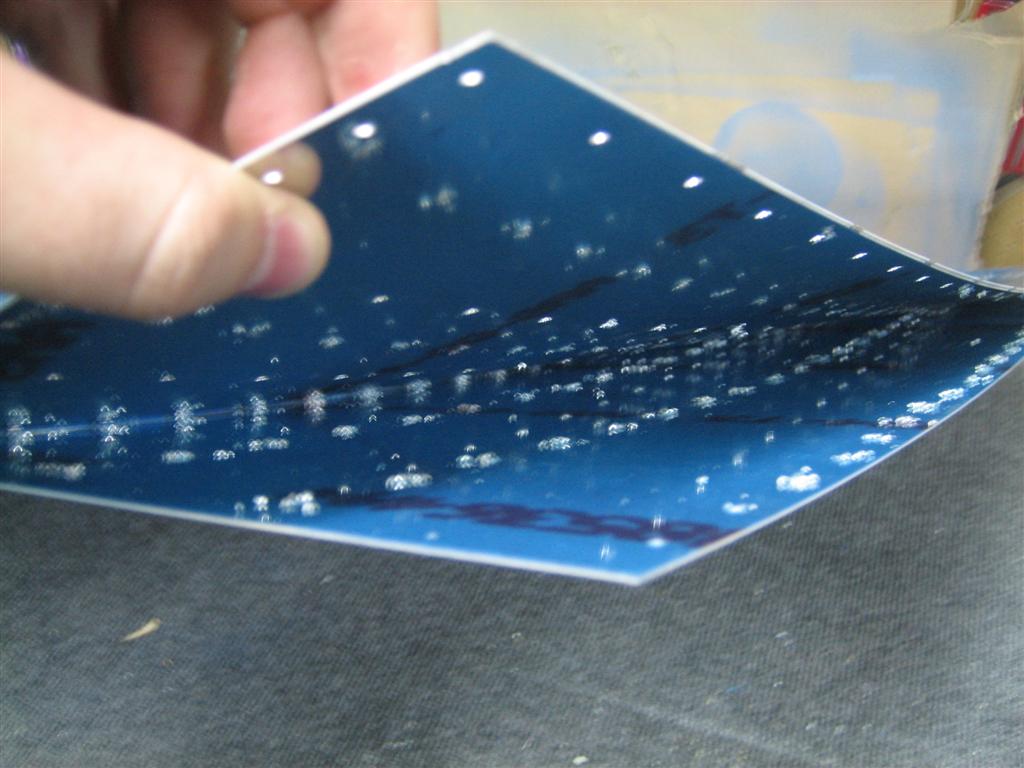
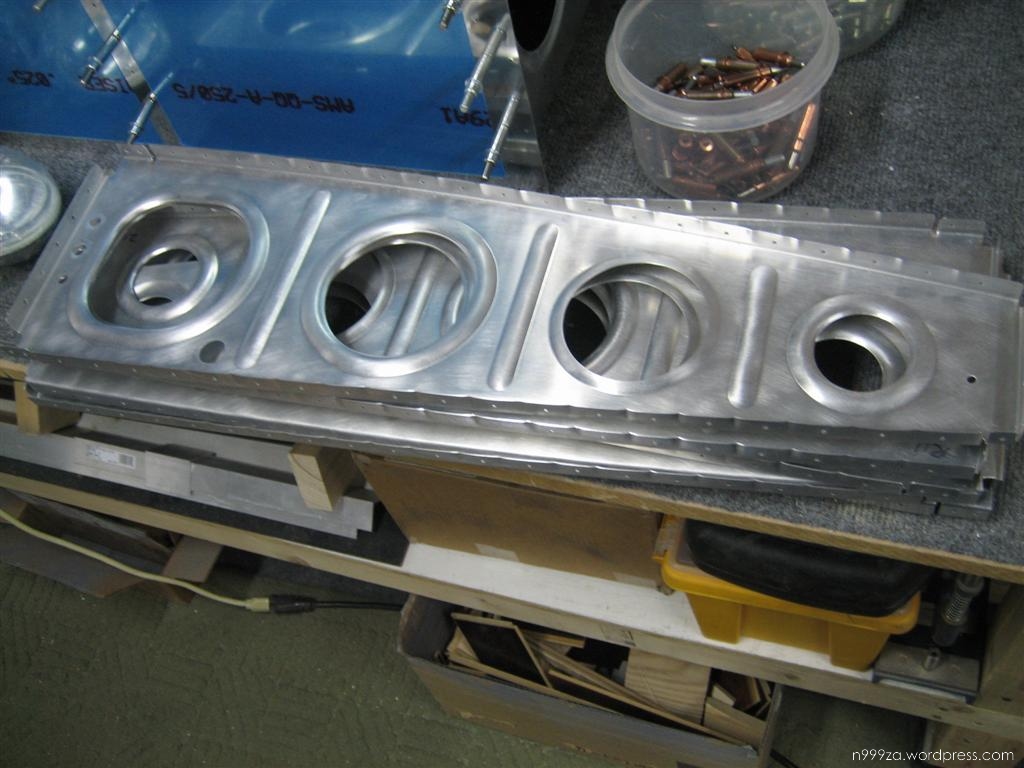
Next,  I pulled out the top outboard skin. This is the right version (they are actually the same from Van’s, but I had pulled off the vinyl on the side I intended to be the interior side for the wing walk doubler.

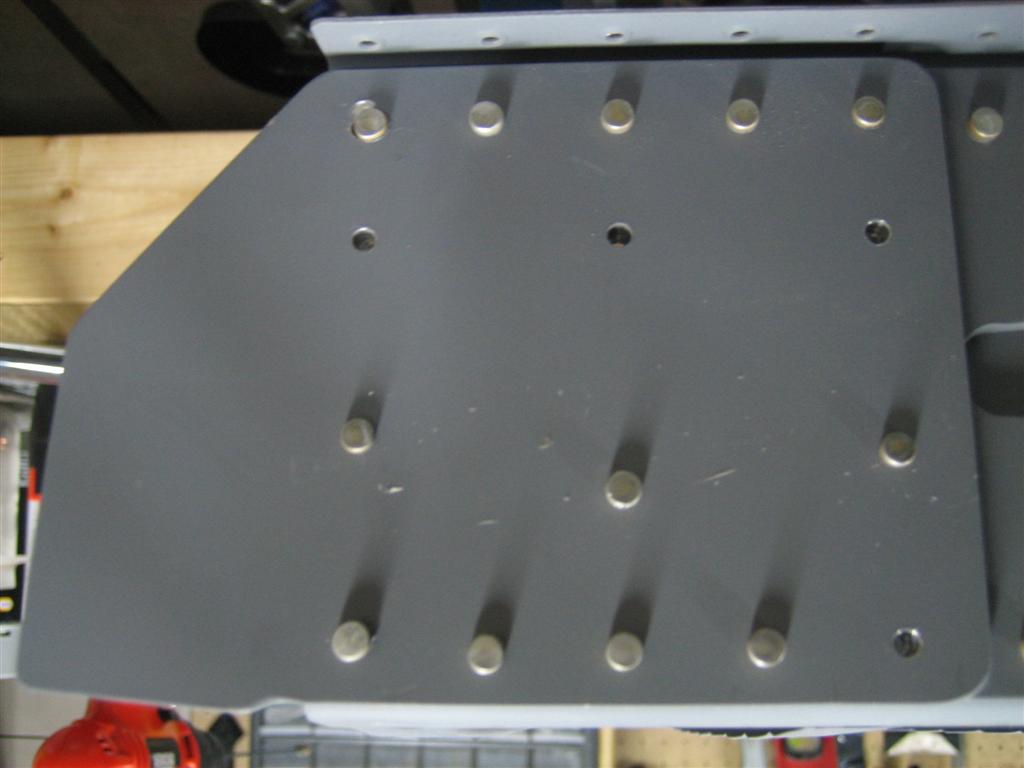
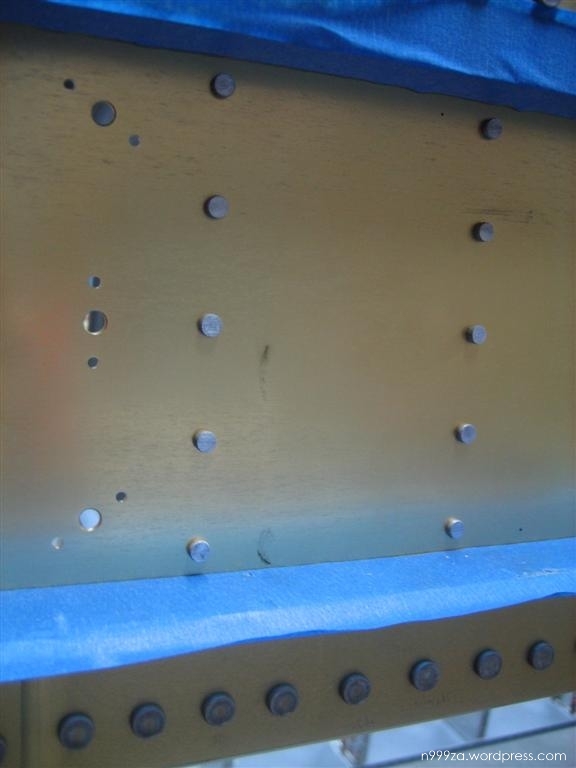
The devinyled part in the foreground is where the wingwalk doubler will sit.

Many builders before me have complained that Van’s wants you to trim the provided doubler from 10″ to 9 3/8″.

Many builders have left it at 10″, then matchdrilled to the skin, then found out there is a matchdrilled hole that violates edge distance.

It would probably be okay, but why include that extra 5/8″ strip of 26″ long aluminum if you don’t have to?

IT’S WEIGHT SAVINGS!!!

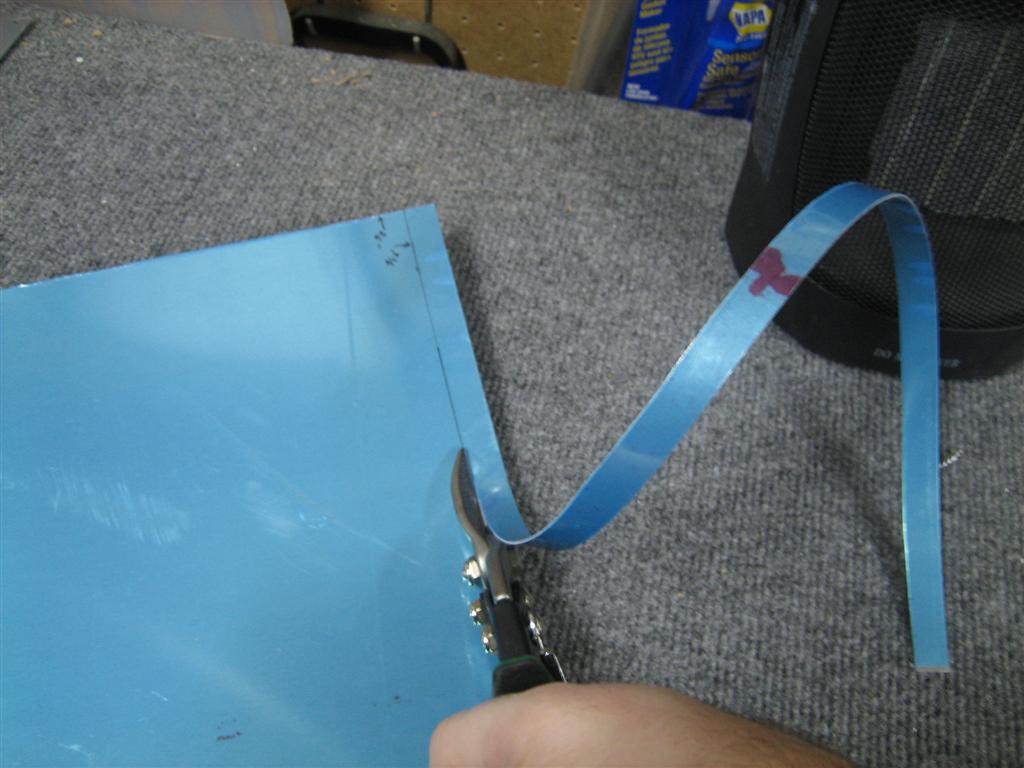
Anyway, my snips do a great job with this aluminum, so I got to it and started edge finishing.

”]Then, you line up the forward edge of the doubler 9/16″ from the forward edge of the top skin.


See my little sharpie mark?

Then, tape that bad boy up, assuring that the inboard edges are flush.

Taped!

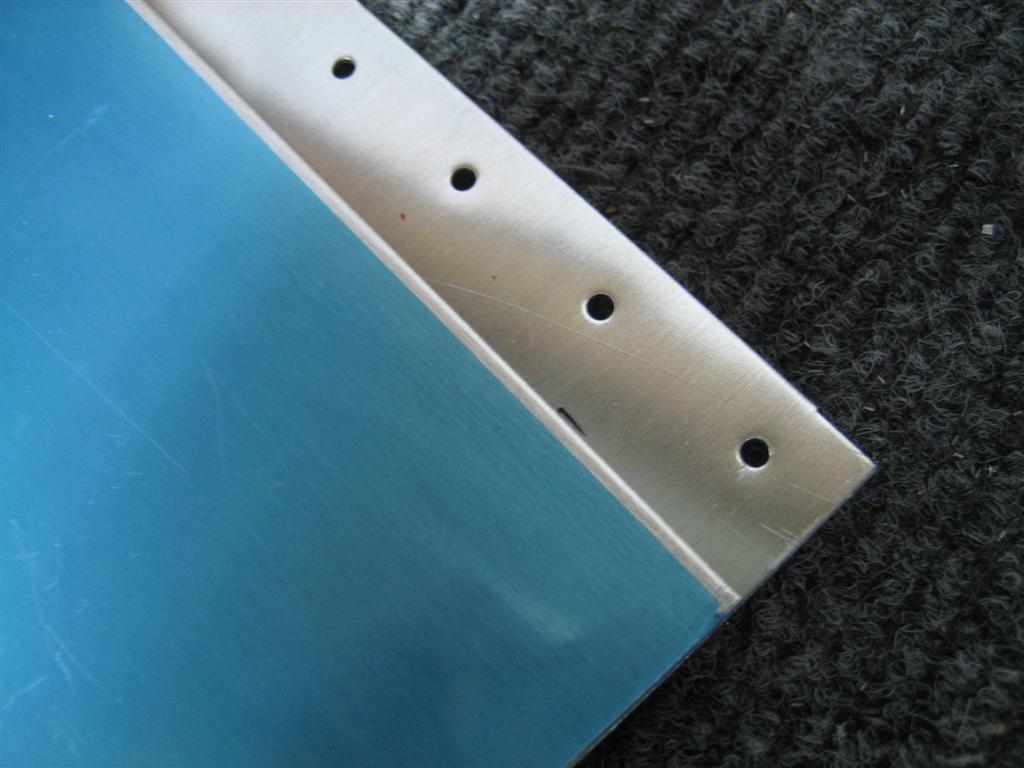
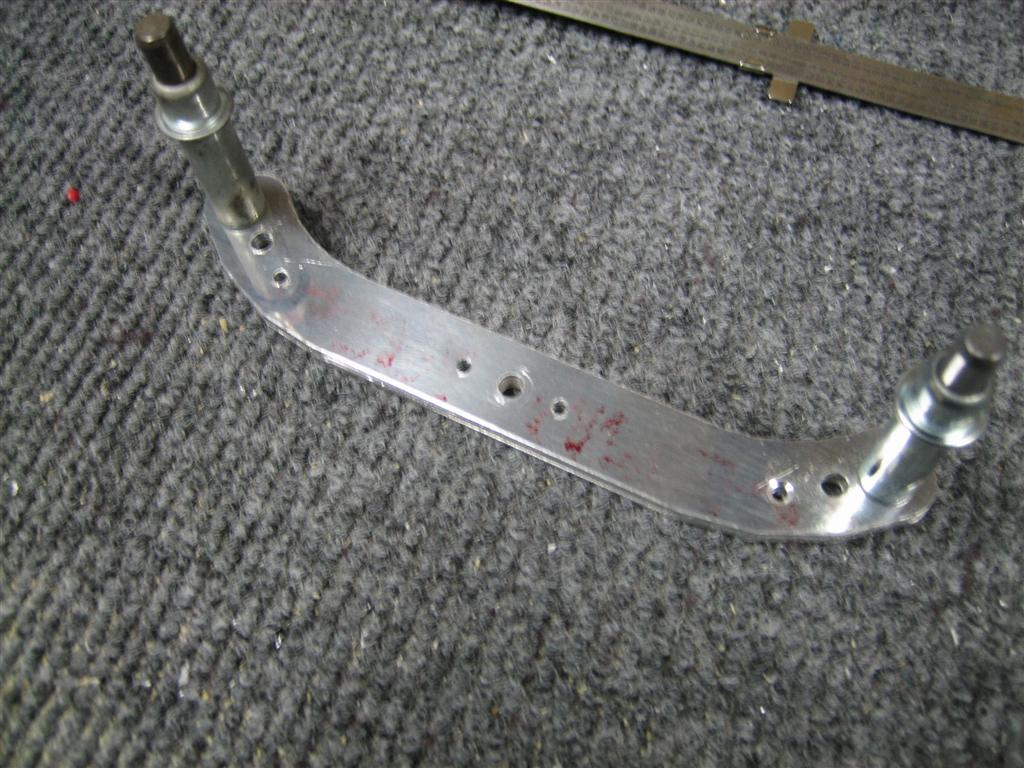
Then, you flip the skin over and start matchdrilling. I used clecos every so often to hold everything together nicely.

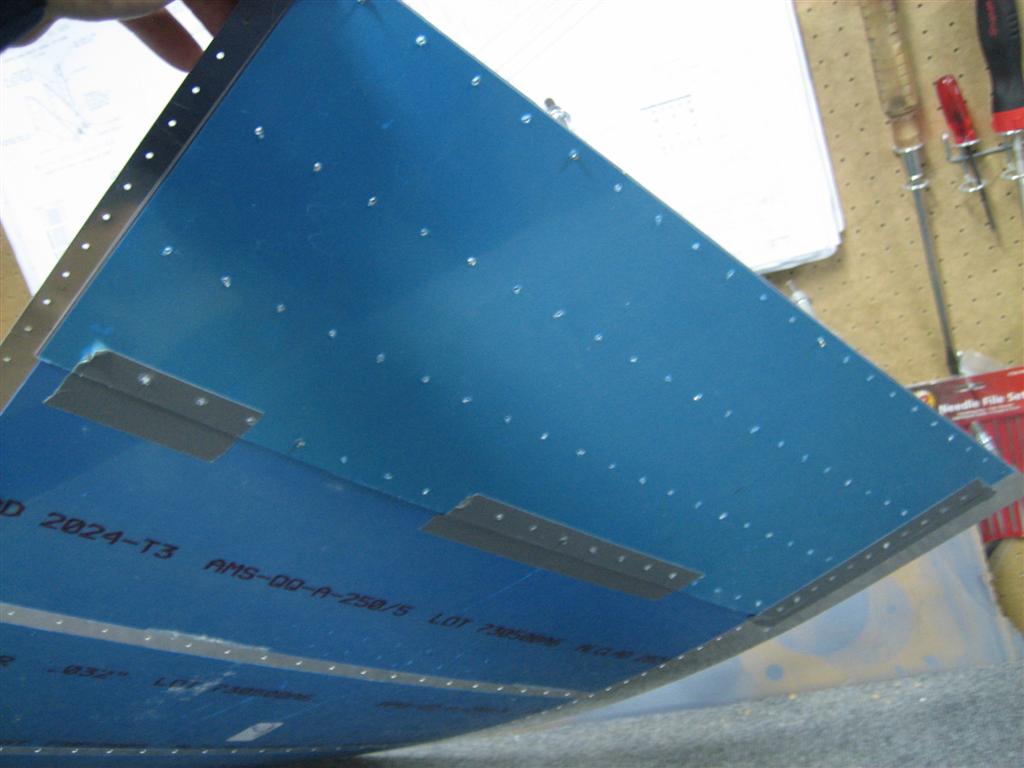
About halfway through, I lifted up the assembly to check on progress.

Looking good.

After more drilling…

Done!

I pulled apart the skins to clean everything up. Lot’s of aluminum shavings everywhere.

Sorry for the blurry picture.

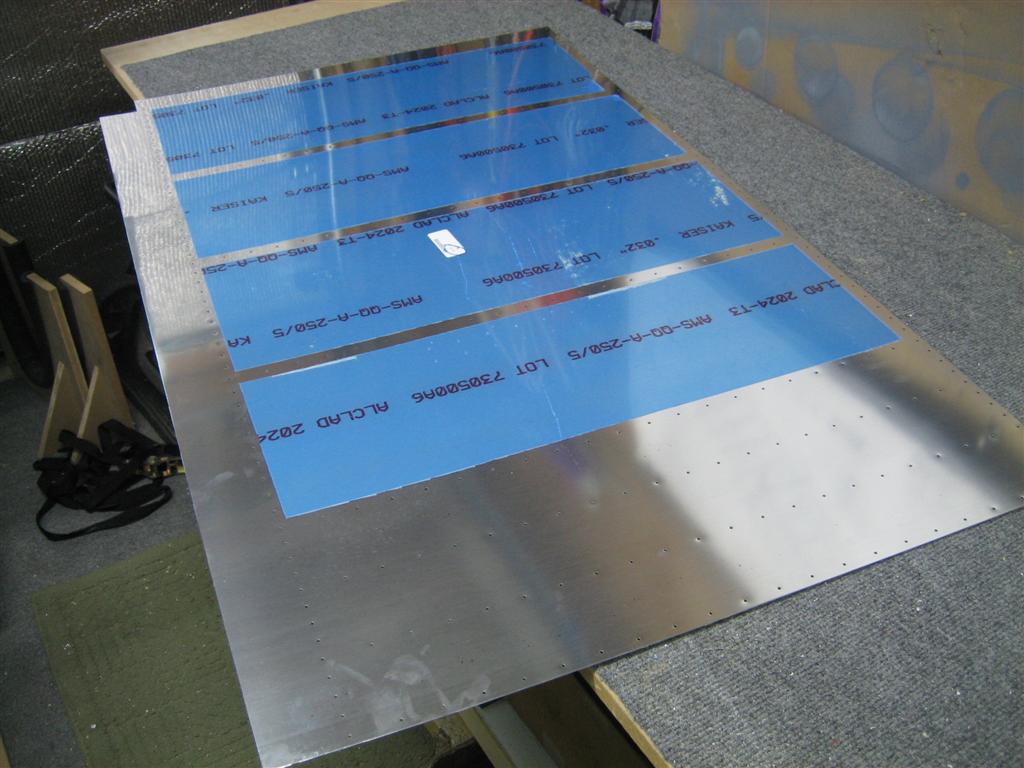
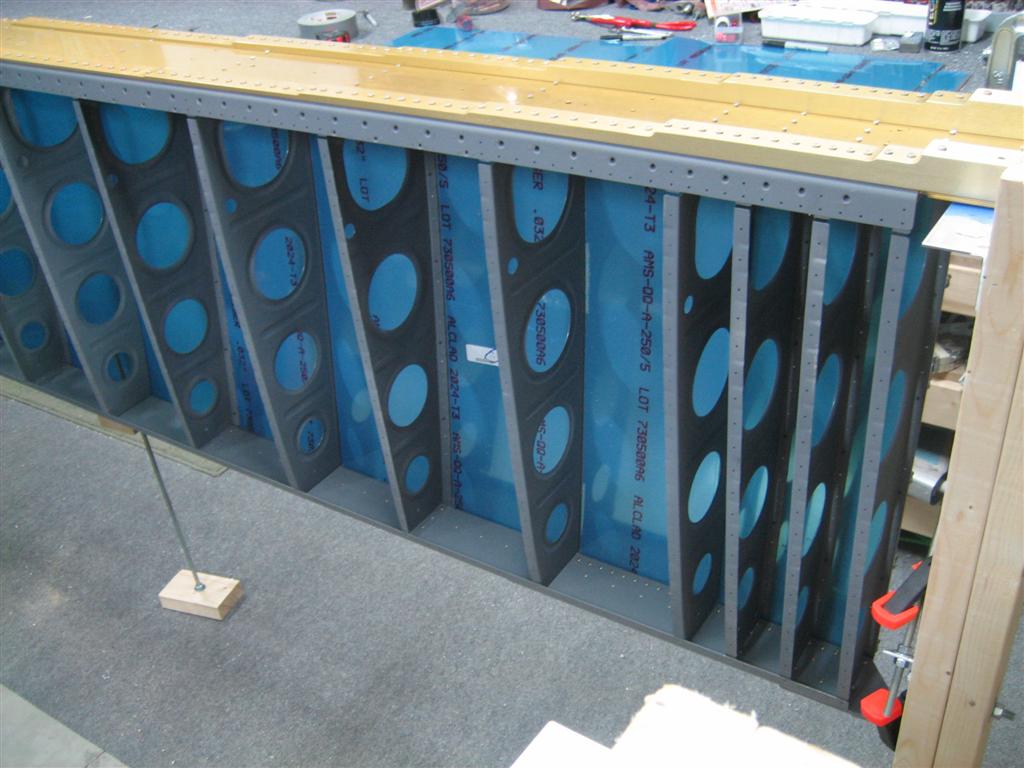
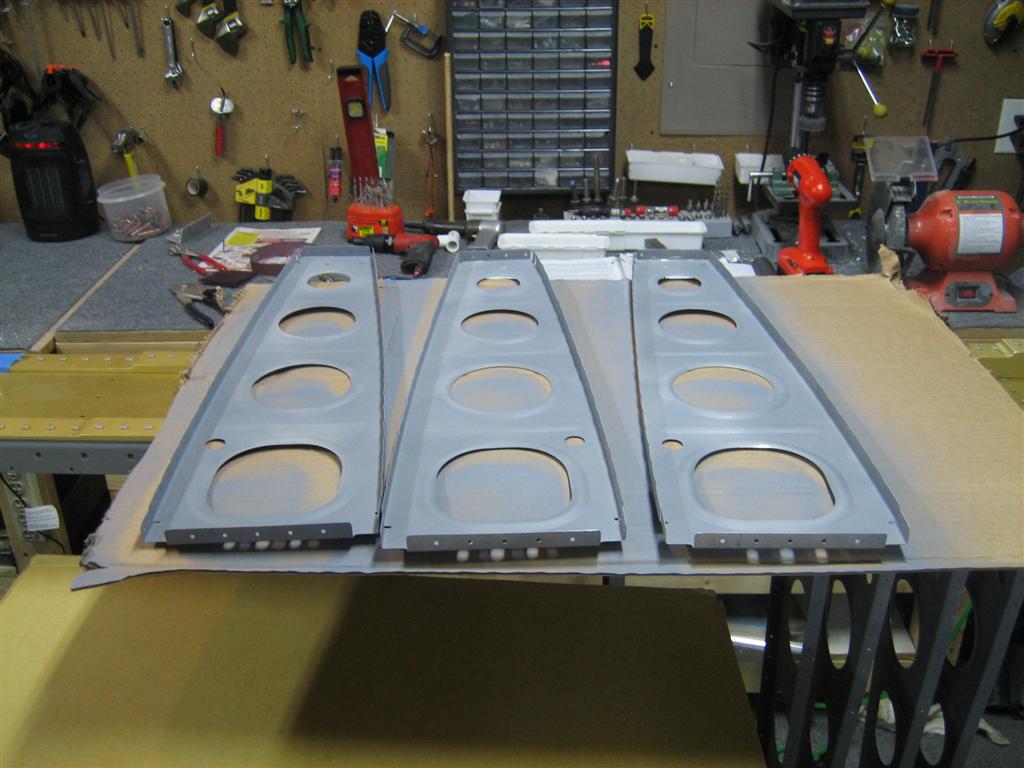
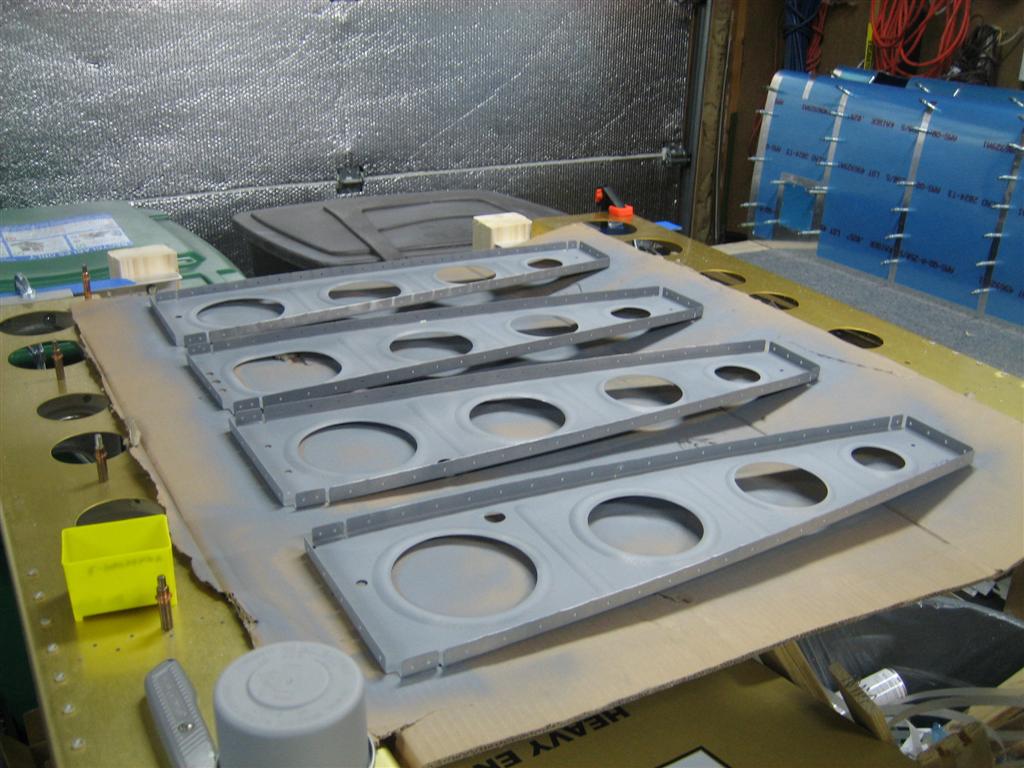
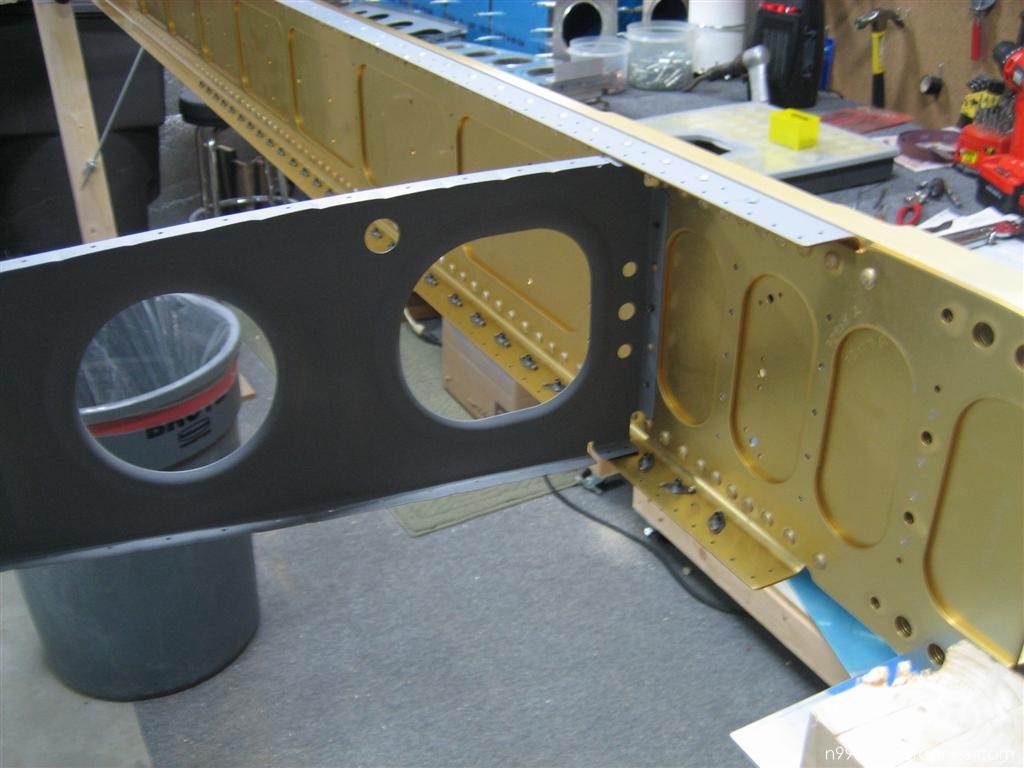
Then, I spent a few minutes getting the top skins clecoed on.

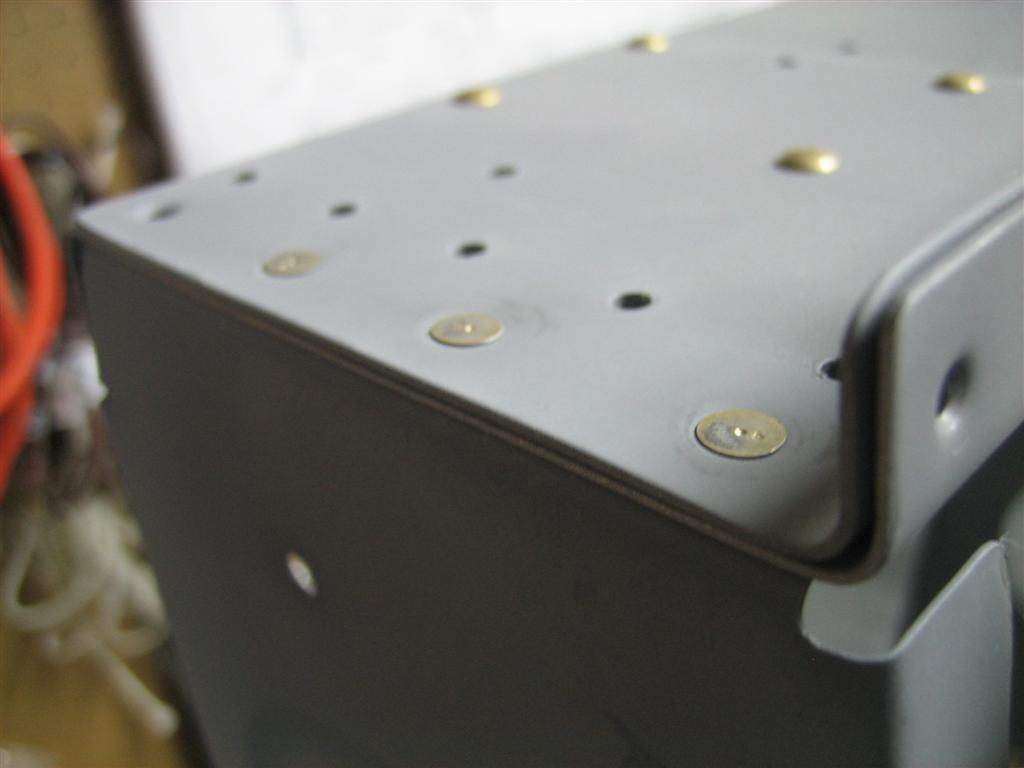
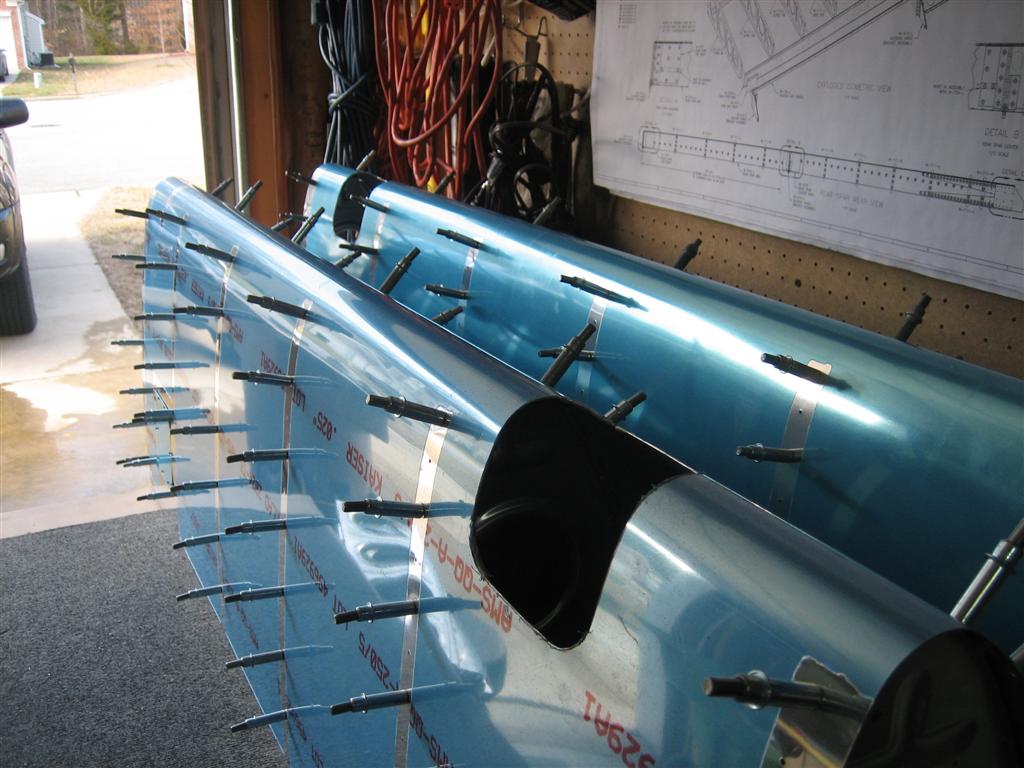
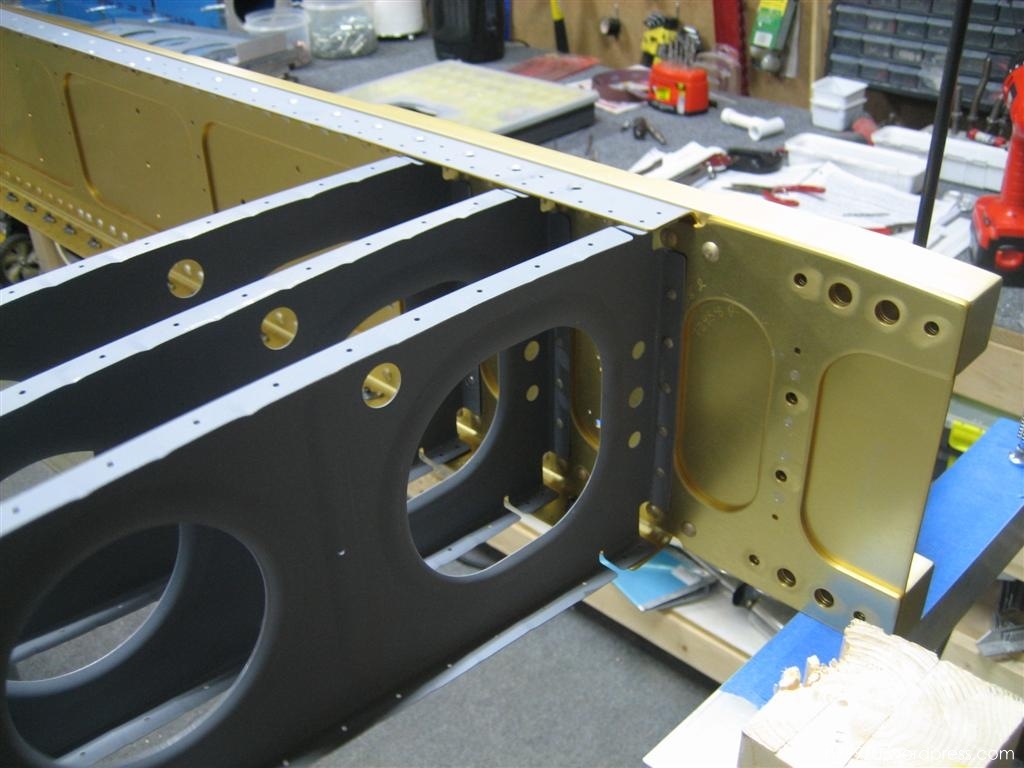
Wuhoo! it's starting to look like a wing!

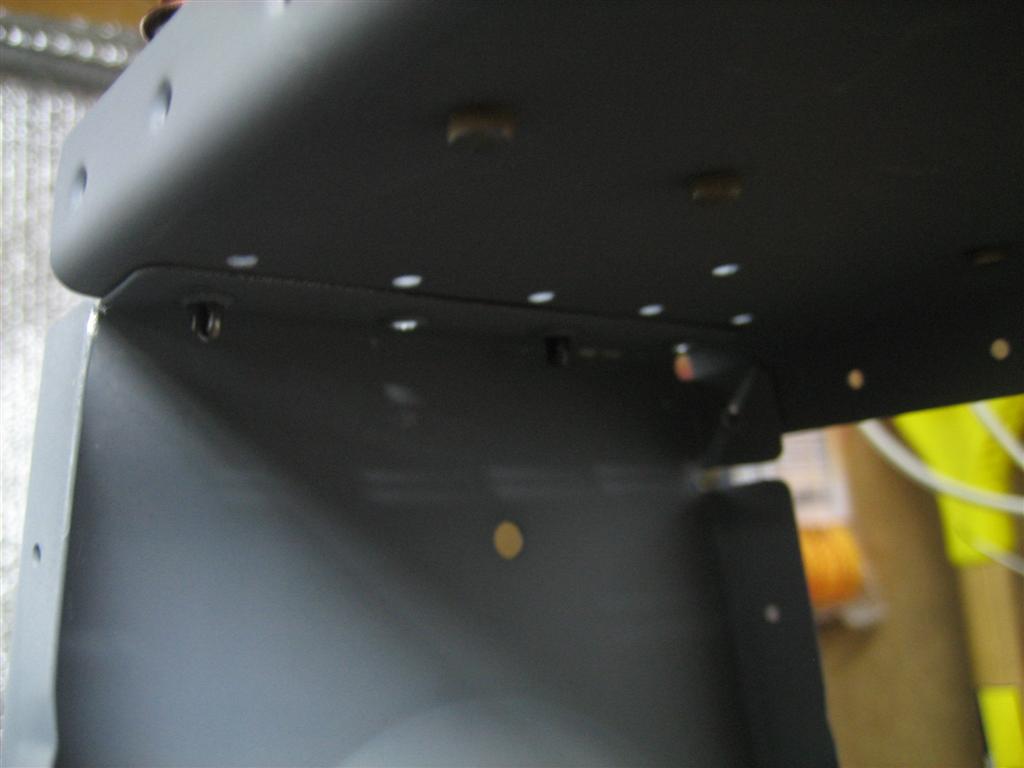
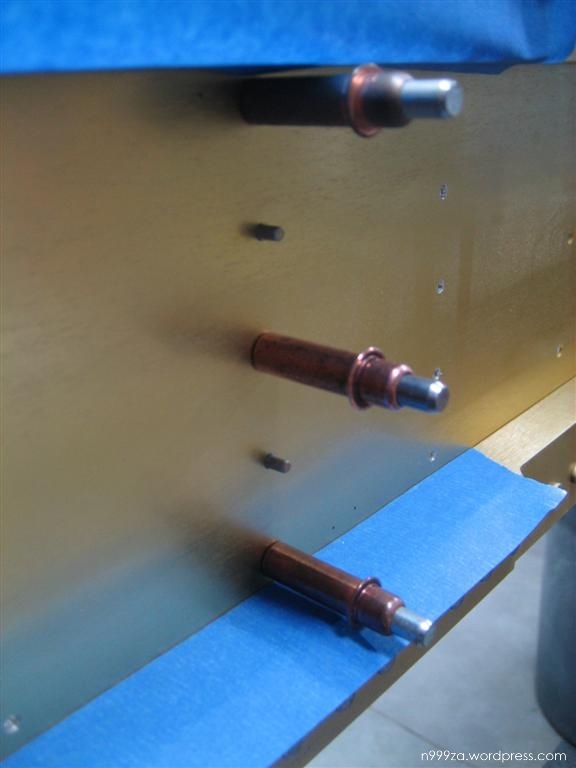
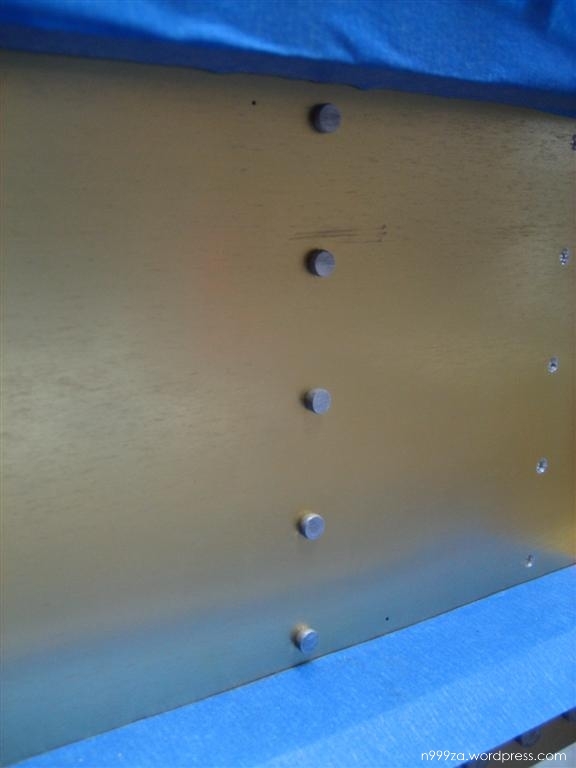
This is the less exciting under side.

This was a nice positive finish to counteract my riveting blunders earlier. I’ll talk to Van’s about the rear spar.

I hope I don’t have to replace it.

0.5 hours of clecoing fun.

Prev | Next


Riveted the Right Rear Spar to the Main Ribs

January 23, 2011

Prev | Next

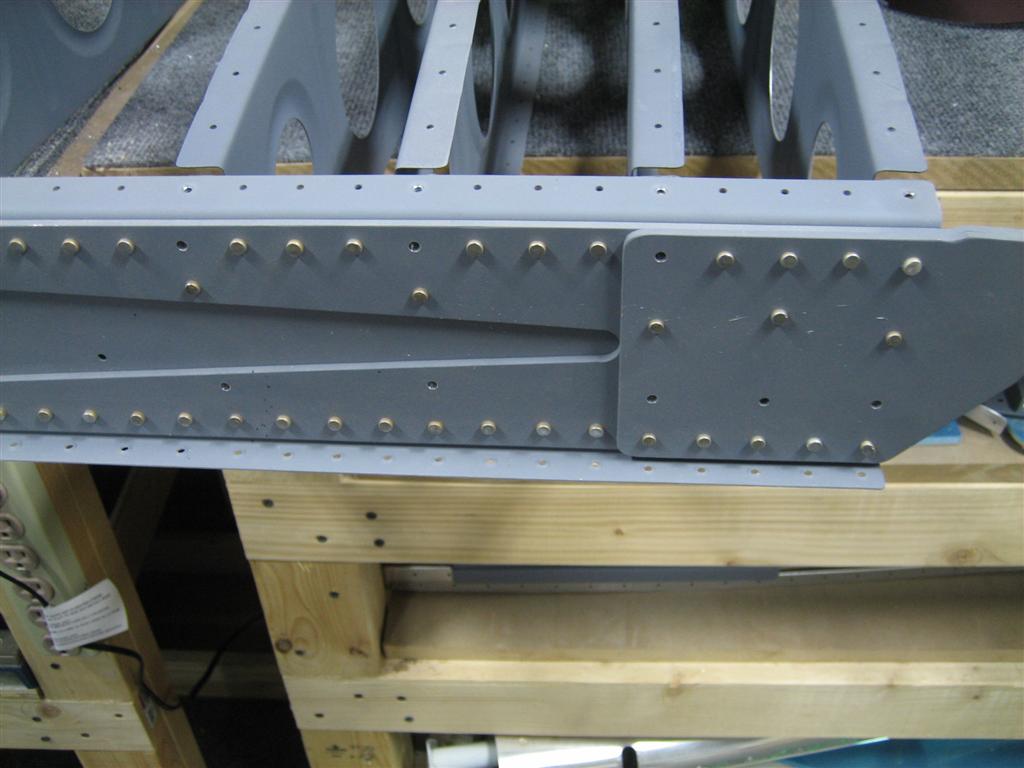
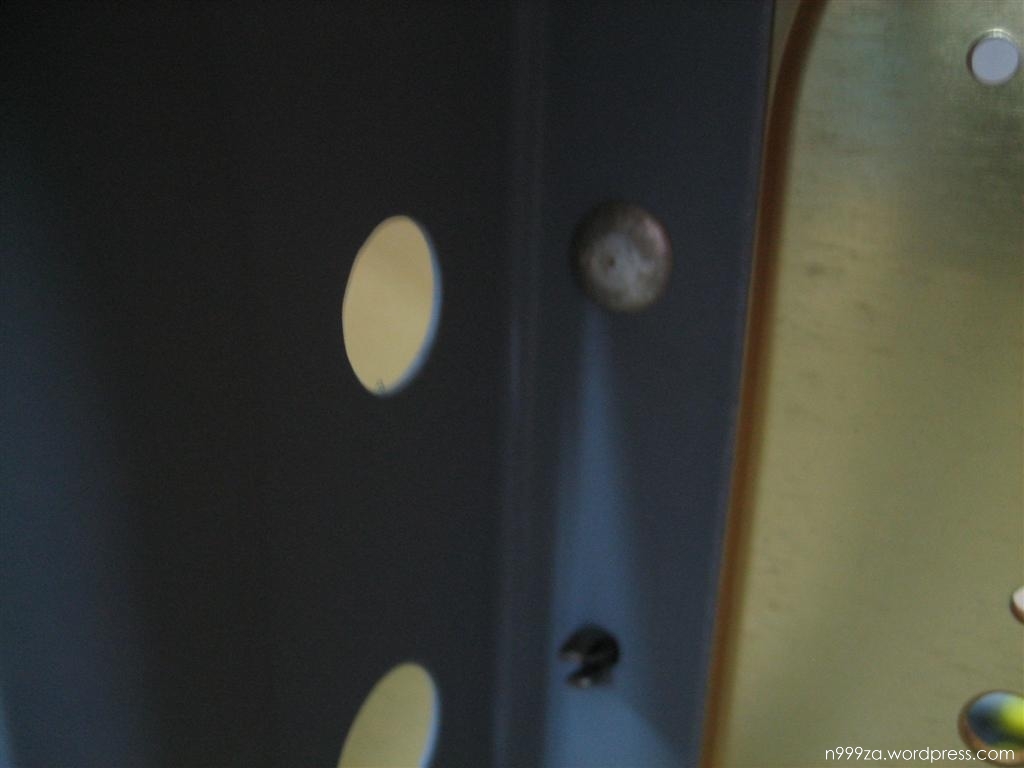
Well, today was a crappy day. I had mucho problems with riveting the right rear spar to the main ribs.

I’ll walk you through what happened.

I started with the inboard side of the spar. The plans call for an AN470AD4-8 rivet. As you can see below, this is a little for a good shop head.

...AD4-8.

Here's an ...AD4-9 rivet. This looks better.

After some gymnastics with my good squeezer, which only has a 4″ no-hole yoke on it, I realized that I needed the holed yoke, and therefore needed to use my economy squeezer. Bummer.

(Back in the empennage, I stopped squeezing AD4 rivets altogether because I kept messing them up; the economy squeezer just didn’t have enough oompf.)

Anyway, I managed the wingwalk rivets with the smaller squeezer. Here’s 9 rivets squeezed.

I couldn't reach the top-most rivet in 3 of the 4 wingwalk ribs. (The other open hole in each of the rib attach points needs to wait for the flap brace.)

I moved my way outboard from there, two rivets in each rib.

Halfway there, I bent over both of the rivets in the aileron pushtube doubler area, and drilled both of those rivets out. Then, the aileron gap seal switches “open” rivets (compared to the flap brace) so of course I set a two rivets there that had to be drilled out.

When I got to the end, I noticed things weren’t lining up very well.

Duh. Forgot to dimple the aft side of the outboard rib.

That's better.

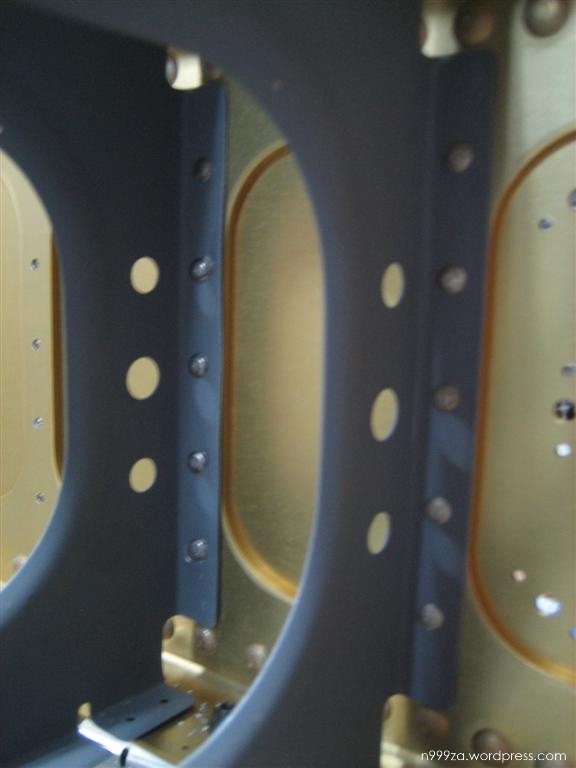
I still couldn’t reach the one rivet (shown on the left here), but I got the other 3 set properly.

The apparent gap between the two flanges isn't really a gap, its just the shadow.

Let me bring you back to the very first rivet I set. The camera is upside down here (so the part is right side up).

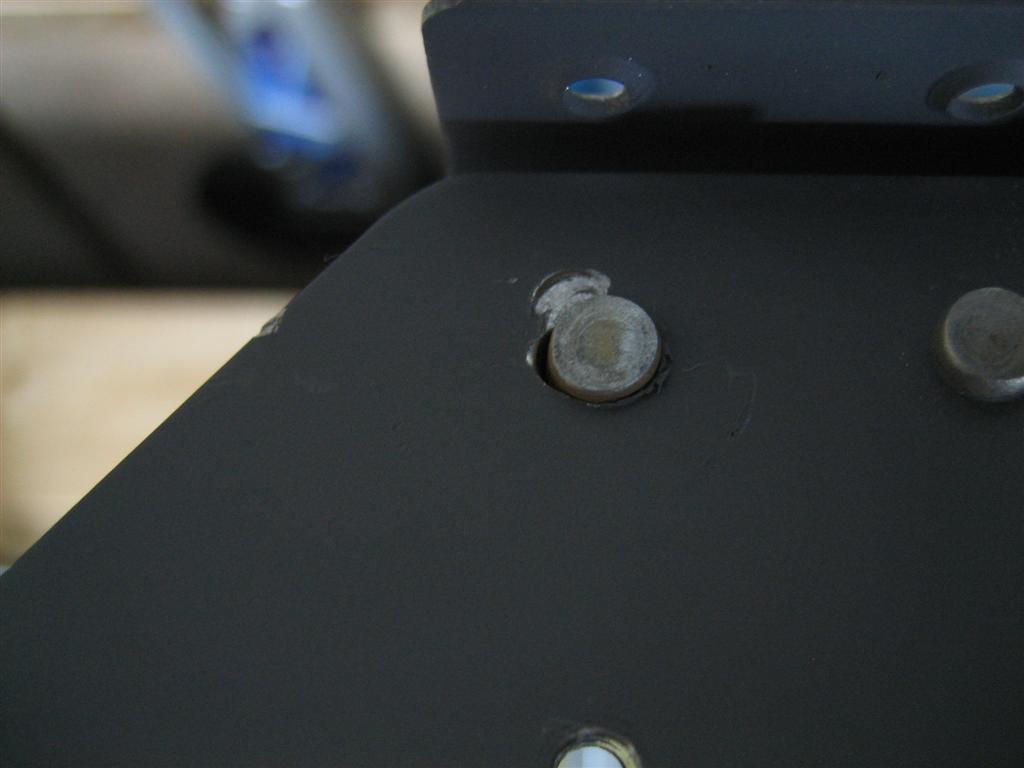
The upper, leftmost rivet bent over (it was the first one I set with the economy squeezer). After drilling out, the hole was englarged.

With only slightly enlarged holes, sometimes you can just squeeze another rivet (a little longer this time) and it will expand to fill the hole nicely.

This is after setting another rivet.

This one did not properly expand, and by the time the shop head was formed, it kind of formed in the hole.

Hmm. I know this is a critical piece, so I’m going to have to call Van’s and ask them what the best course of action here is.

I’m hoping I can step up to a AN470AD5-9 rivets, but I’ll need to drill the rivet and hole out to 5/32″ and I’m worried about edge-distance in the up direction.

We’ll see what the guys at Van’s have to say.

January 31st update: Ken S at Van’s wrote back.

A 5 rivet should work ok. If you can fill the hole with the original rivet, that’s ok too –even with
a slightly undersize head. Just be sure that the rivet engages the entire circumference of the
hole.

Alright. I’ll have to add AN470AD5- rivets to my next order from Van’s or Aircraft Spruce. In the meantime, I’m going to keep working on other stuff.

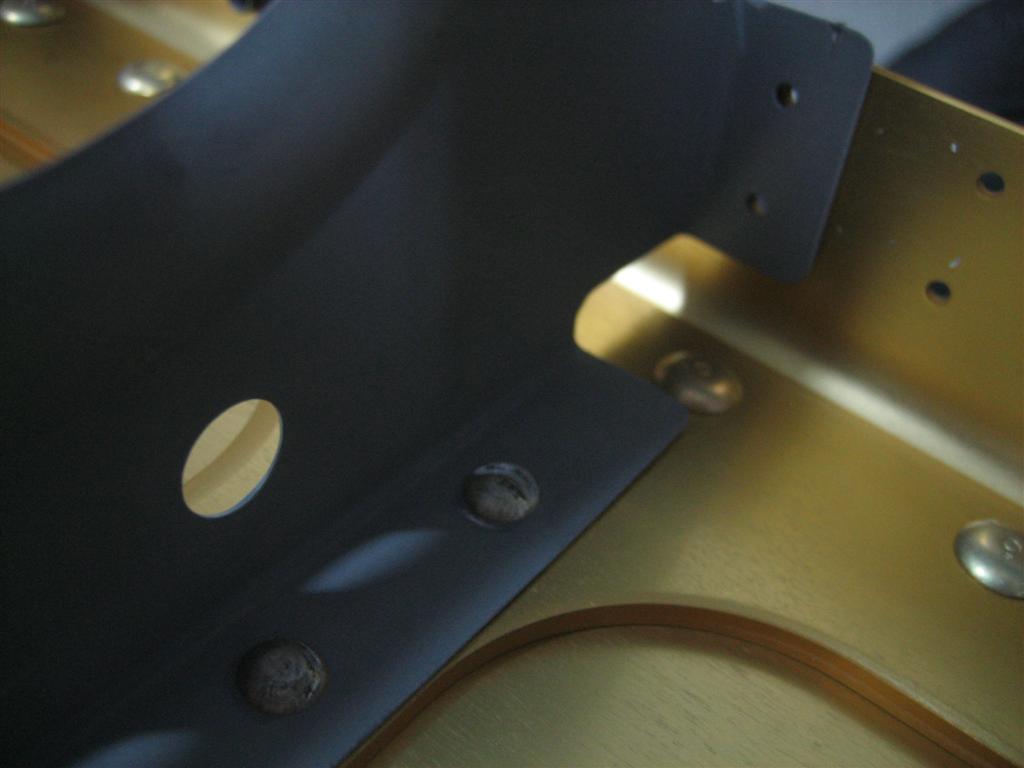
U-G-L-Y, you don't have no alibi, you ugly! {clap, clap} You ugly!

1.5 hours and 28 stupid rivets set (my arms are tired from the economy squeezer); 8 of those drilled out.

I’m going to have to buy a new yoke ($$$) and probably do some surgery on the offending rivet in the last picture.

I’m stopping this post and starting another one (click next below) because I moved on to the skins. I really needed to end on a good note today, and the skins actually did the trick.

Prev | Next


Finished Riveting Right Wing Main Ribs to the Main Spar

January 21, 2011

Prev | Next

Well, after a quick workout, I manage to get a few rivets set in the main spar.

I quickly got 6 of the 7 remaining right main ribs riveted to the main spar (the outboard rib doesn’t get riveted to the main spar because it shares rivets with the leading edge outboard rib…the rest of them are slightly offset from their leading edge rib neighbors.)

Anyway, after 30 rivets set, I decided that 6 of them needed to be drilled out. Here’s a good example.

Those are called "smileys."

I know exactly why it happens. It’s because I am watching the bucking bar and shop head form. When the shop head is set appropriately, I’m subconsciously lifting the bucking bar away from the shop head before letting go of the rivet gun trigger. The rivet set bounces on the head and creates the smiley.

Of course, when I concentrate on letting go of the trigger first, all goes well.

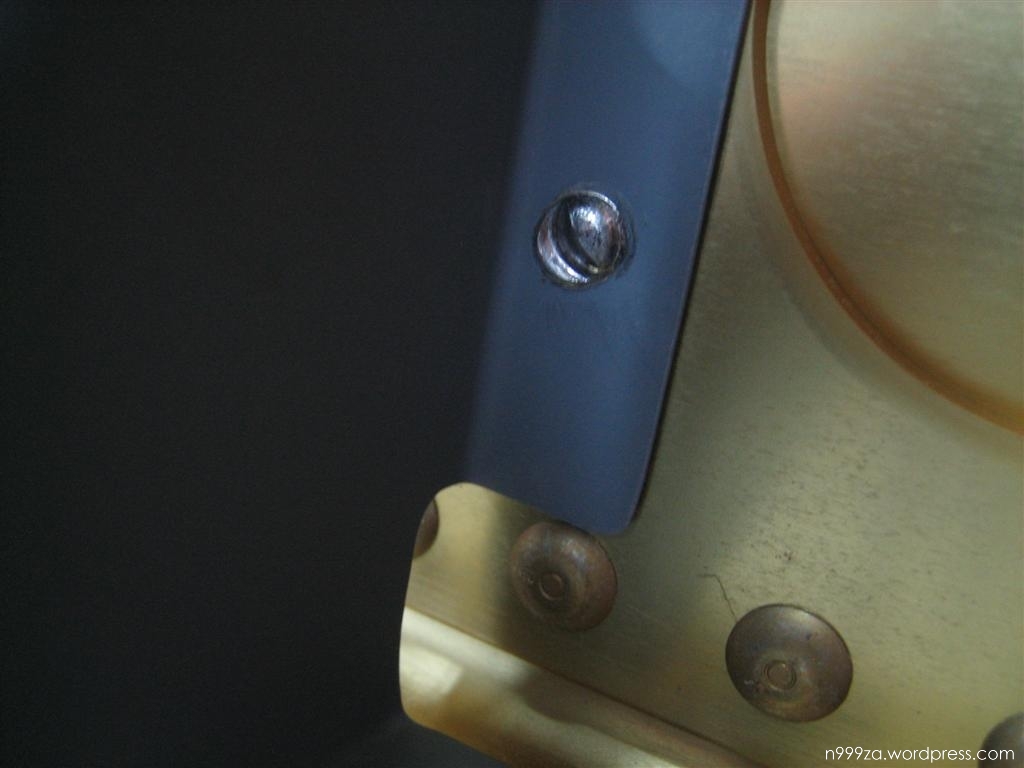
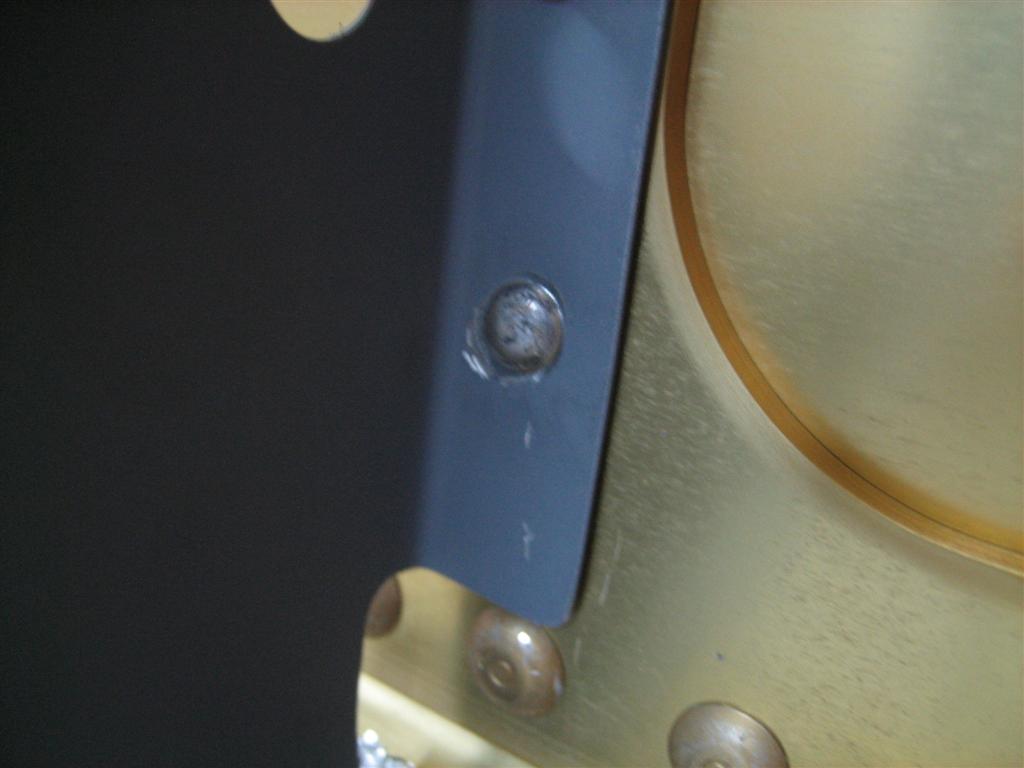
Anyway, I’ve been trying a new technique with drilling out these AD4- rivets. I’m actually drilling them out from the shop head side. Assuming the shop head is centered over the hole, it is easier to center-locate the drill bit on the flat shop head than the rounded manufactured head. Here are a few pictures of my good results.

I didn't get any oversized holes at all.

Here either.

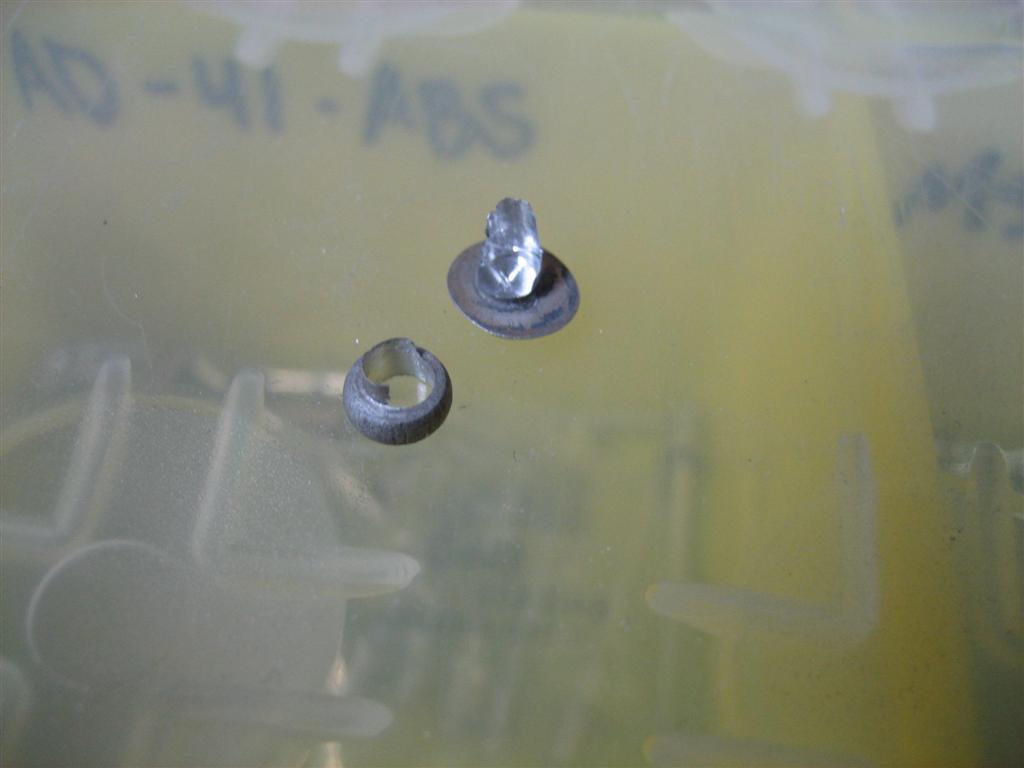
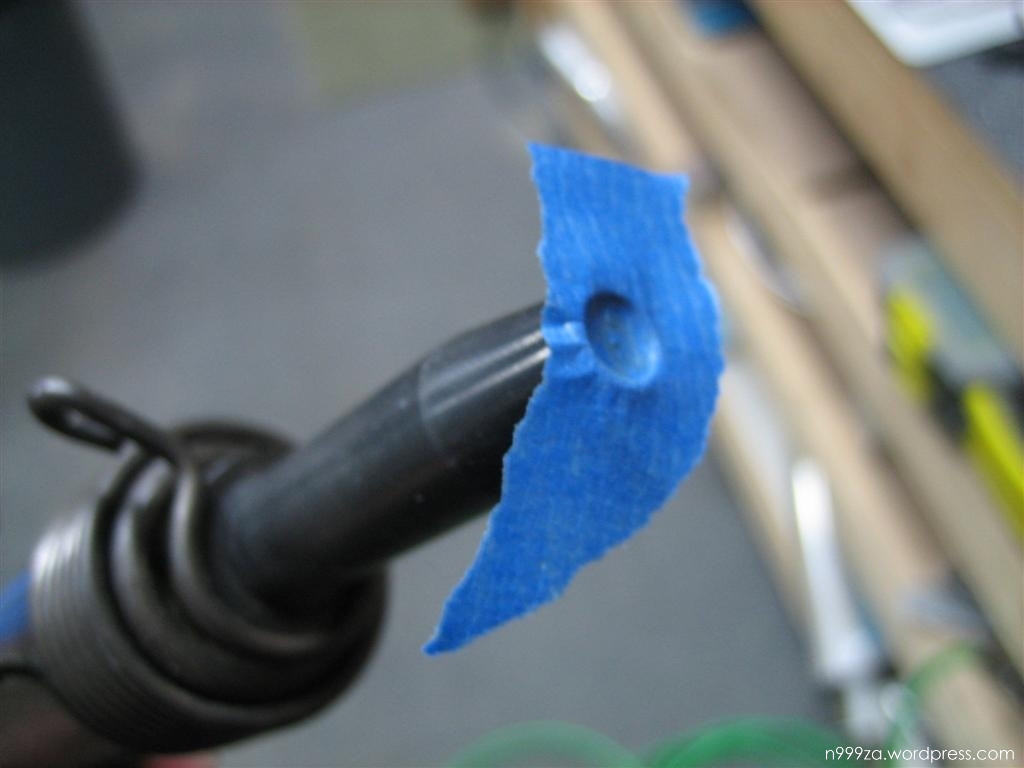
Here’s what the drilled out rivet looks like.

I started from the shop head side (left here) and finished just prior to hitting the manufactured head. This worked great for me.

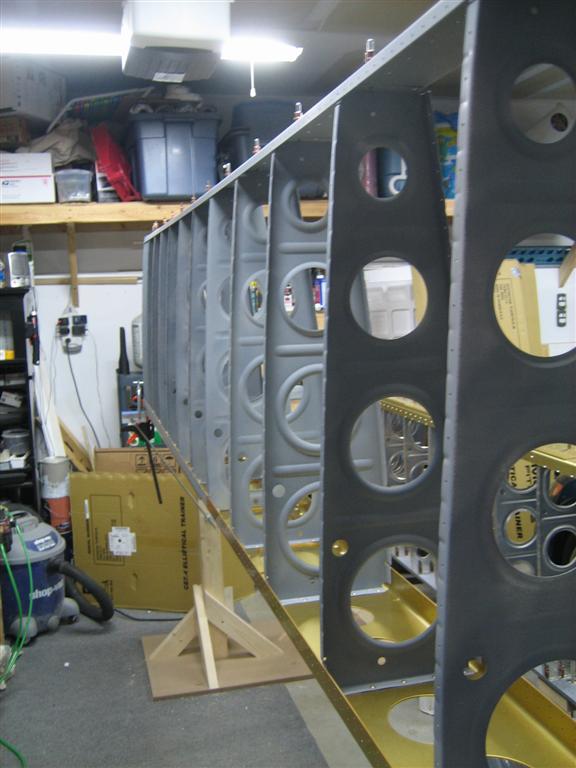
After re-setting those 6 rivets, I snagged a picture of all (except for the outboard) ribs riveted to the right main spar.

Wuhoo! Big pieces permanently together!

I flipped the spar over on the stand and clecoed on the rear spar.

One cleco in the rear spar for each rib.

I may get to riveting the rear spar tomorrow…we’ll see.

1.0 hours. 30 rivets set, 6 of them drilled out and re-set.

Prev | Next


HID Landing Lights…First Look

January 20, 2011

Prev | Next

Well, I got a couple fun things on the doorstep today.

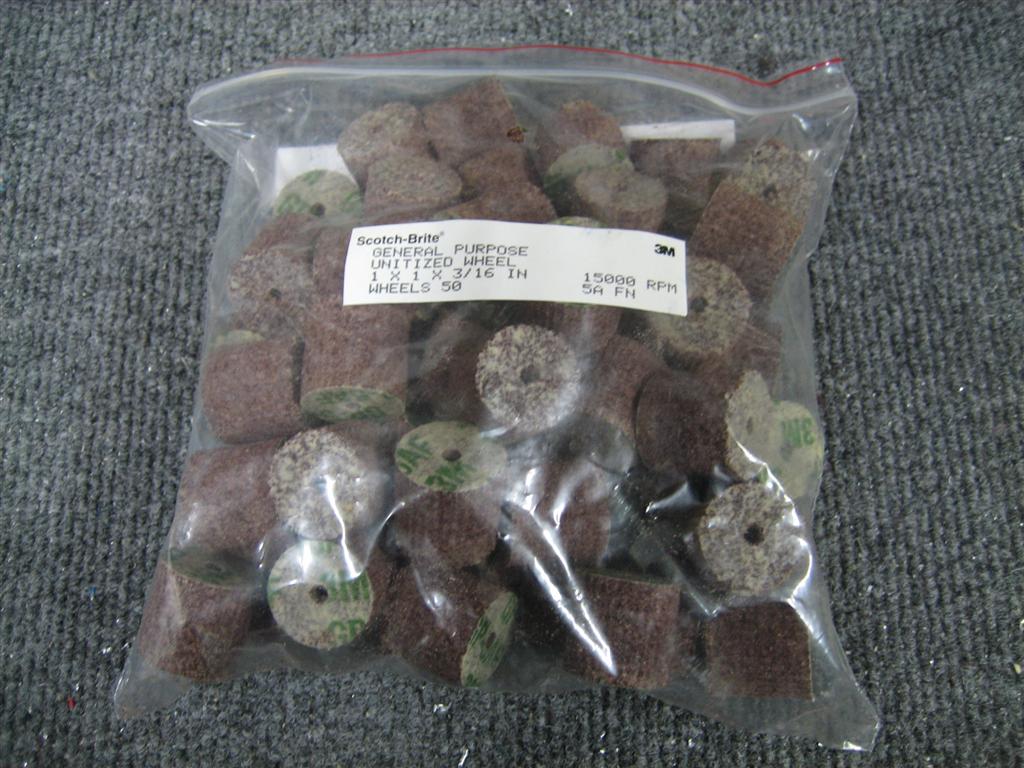
First, a bag of fifty 1″ scotchbrite wheels from Surplus Sales of Nebraska. $15 for the whole bag (instead of $6 per wheel from somewhere like Avery…) I have to credit Bruce Swayze with the find, though. Thanks Bruce.

Full disclosure, these are 5AF wheels, so they are a little softer than the 7AM wheels that most of us have from the aircraft tool suppliers.

50 Scotchbrite wheels. Good buy.

Then, I have a more mysterious box.

I figure it’s my new DDM Tuning HID raptor kit.

After a ton of reading (and especially after seeing a couple videos), I’ve decide that the leading edge light is really the way to go. Now, I think I am going to put a single HID (PAR 36 style enclosure, ordered from Duckworks) in each leading edge for landing lights. These won’t wig-wag. I went ahead and ordered a Raptor HID kit from DDM Tuning.

They had a whole bunch of bulb type options, and a $10 upgrade to 55W (from the $30 35W version.) You can also choose your bulb temperature. I chose 5000k based on the graphic they have.

To summarize, I ordered 55W, 5000K, H3 style bulbs. For $40, it’s worth trying these inexpensive HID lights instead of the $250+ lights from “aviation” companies.

Here’s Don Hall’s video (from this post)…fast forward to 1:15 into the video for the same light setup I’m looking for:

Anyway. Here’s the box.

Kind of discreet. I don't see a packing slip or any directions. Hmm.

Oh, then I took the rest of my primed right ribs and hung them up on my right wing spar.

Just to get them out of the way.

Crap, I didn’t take any good pictures of the lights, but here is one light after fitting it into the H3 enclosure from Duckworks.

Looks good here.

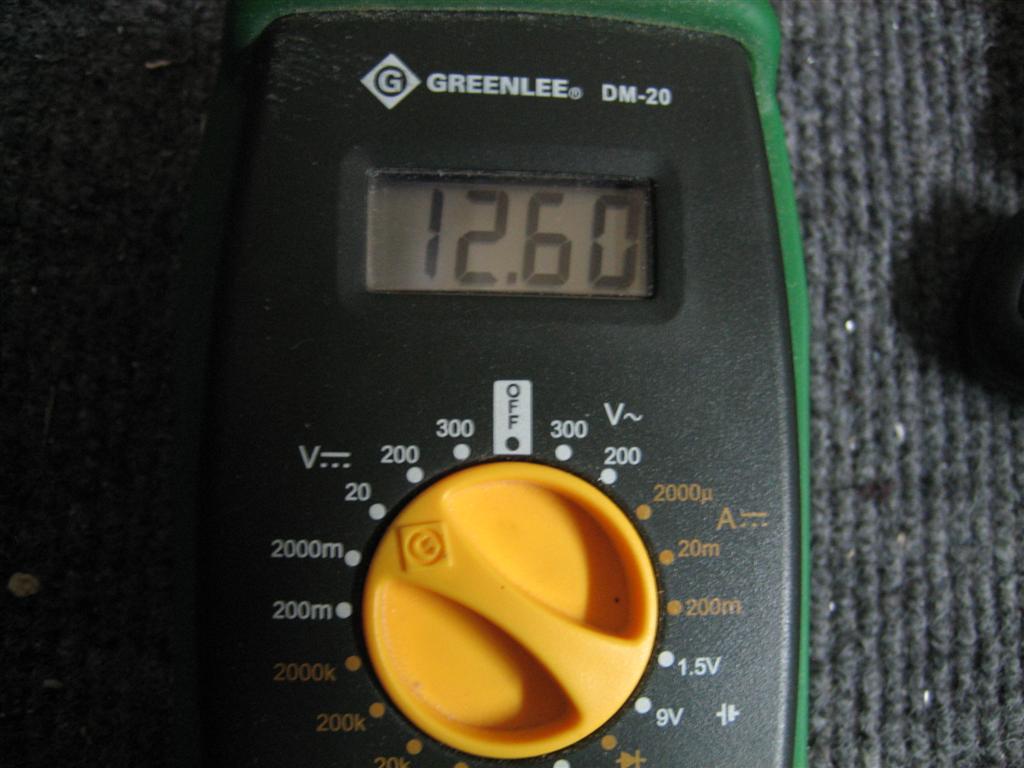
I hooked up my truck’s battery and noted 12.6V.

12.6 VDC

Then, I stuck the lamp in the mount from duckworks and propped it up on the table.

I originally had the blue and black wires switched. Apparently black is positive and blue is negative.

Here it is all fired up. You remember how bright my garage is, right?

Wow.

Then, after letting them cool, I took some video. I let it cool so you could see the warm up speed.

It’s a bad video, and poorly set up, but you’ll get the idea. When I get a multimeter that can measure more than 20 miliohms, I’ll set it up in series and capture loads.

At first, I have the light pointed too high, and you can’t tell how bright it is. After a second, I move it around, and you can see how well it is lighting up the yard accross the street (sorry, neighbors!). I’ll try to do a better setup next time, maybe with two lights, and maybe next to my trucks low and high beams for a comparison.

Off the bat, though, I am super happy about going with the two leading edge lights.

0.5 hours tonight. Not really build time, but I’m going to count it. (Hey, I put 7 clecos (with the ribs) into the right spar.)

Prev | Next


Finished Prepping and Priming Right Wing Main Ribs

January 18, 2011

Prev | Next

Well, not much tonight, other than me getting the rest of the right wing main ribs prepped and primed. Oh, and the Tar Heels pulled out a win against Clemson. Good game.

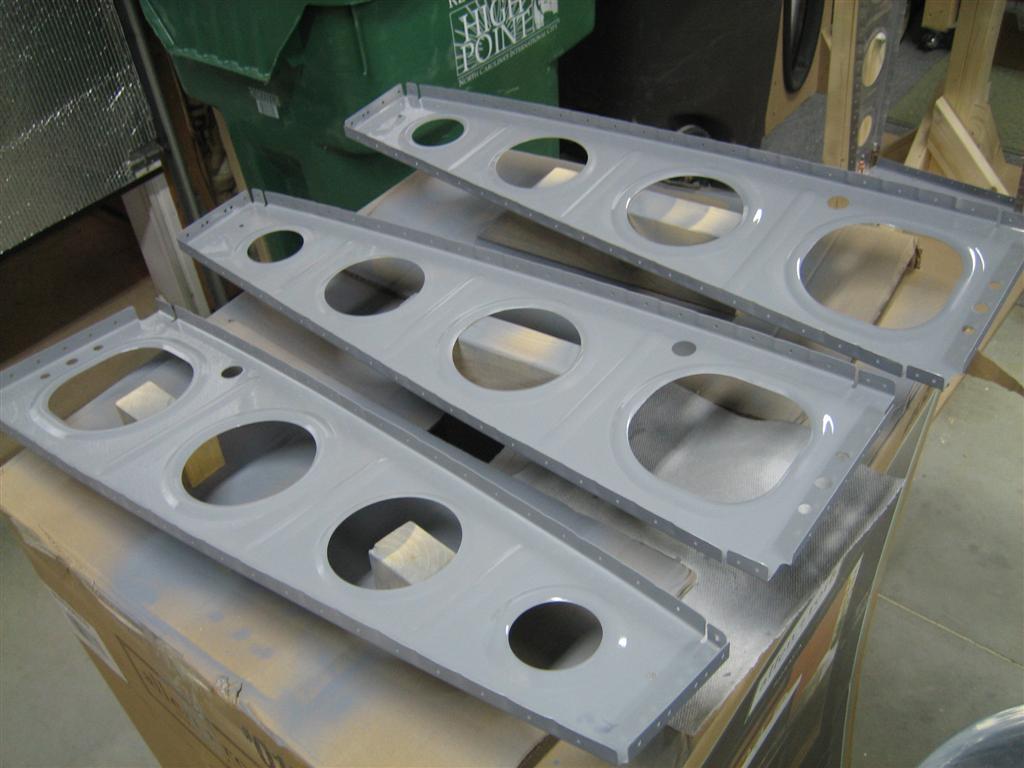
3 of the 7 that were left.

The other 4 of 7.

1.5 hours. I think with the right main ribs done, I may get them riveted to the spars and start working on some skins before returning to the hell that is rib prep for the left main ribs.

We’ll see.

Prev | Next


Started Leading Edge Landing Lights

January 16, 2011

Prev | Next

Well, after receiving my “install only” leading edge landing light kits from Duckworks, I was kind of eager to start fiddling with something other than rib preparation.

Today, I opened up the kits and started in on adding the leading edge landing lights.

This is from my design page, where I’ve been collecting ideas for stuff (I was originally planning 2 small MR16 (2″ sized) lights in each wingtip, one taxi, and one landing):

After reading a little more, I’ve found that people who do the two lights in each wingtip dance aren’t happy with the amount of light they are getting from their landing/taxi lights. Then, I figure out they are talking about the regular halogen bulbs provided with Van’s wingtip light kit.
The people who are using the HID wingtip lights are generally very happy with the light output.

November 2010 update: After even more reading, I’ve decide that the leading edge light is really the way to go.

Now, I think I am going to put a single HID (PAR 36 style) in each leading edge for landing lights. These won’t wig-wag.

Then, I’ll use the wingtip lights for taxi/recognition, with wig-wag. I can use the smaller MR16s in the wing, and point one set wide, and one set toward the centerline. If I use regular halogen bulbs in these, I won’t have to use a warm up circuit, which is good, considering that when up at cruise and ATC calls with a traffic alert, I’ll be able to immediately start wig-wagging them for recognition. That gets rid of my need for an automatic warm up circuit (won’t be using HIDs for wig-wagging).

I’ll figure out the mechanics of the wingtips taxi lights later (single light in each wing? 2 MR16 halogens in each wing?)

Anyway, I made the decision to go with the dual landing lights in the leading edges. I plan on flying at night, and I want the most light possible.

From Duckworks, I ordered two of the round install kits, and two H3 enclosures (spot, instead of flood). I could have ordered one spot (for landing) and one flood (for taxi), but since I’m going to do something in the tips for taxi, I want both of my leading edge lights for landing.

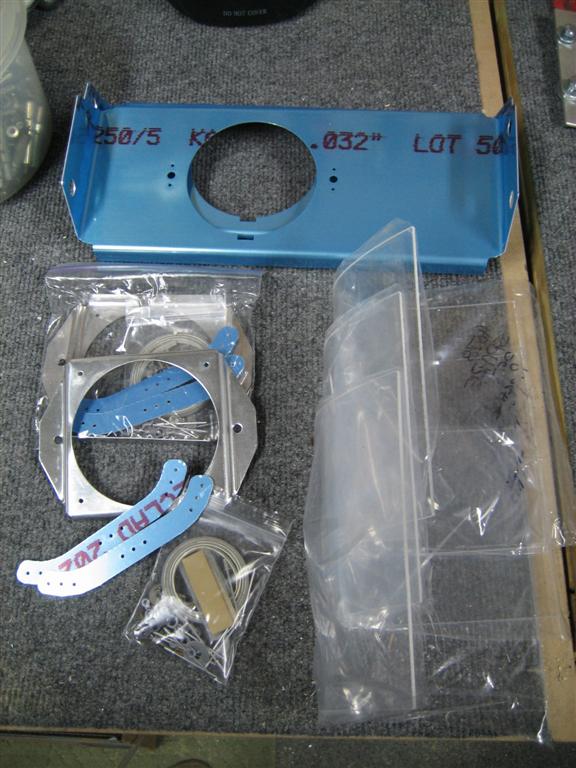
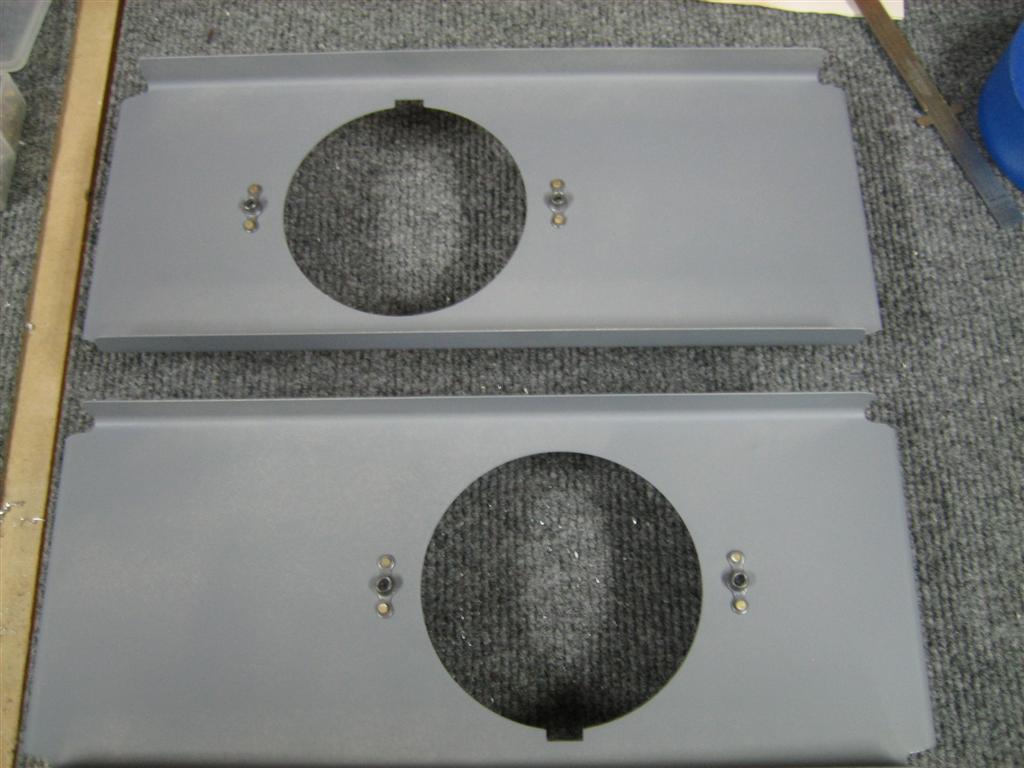
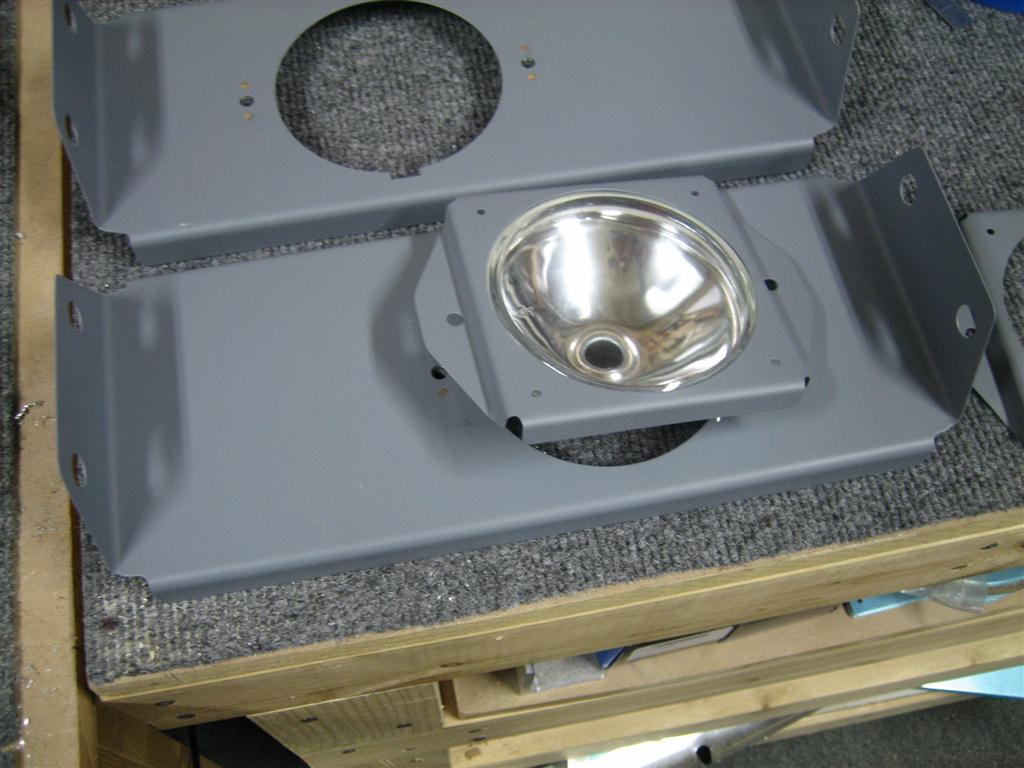
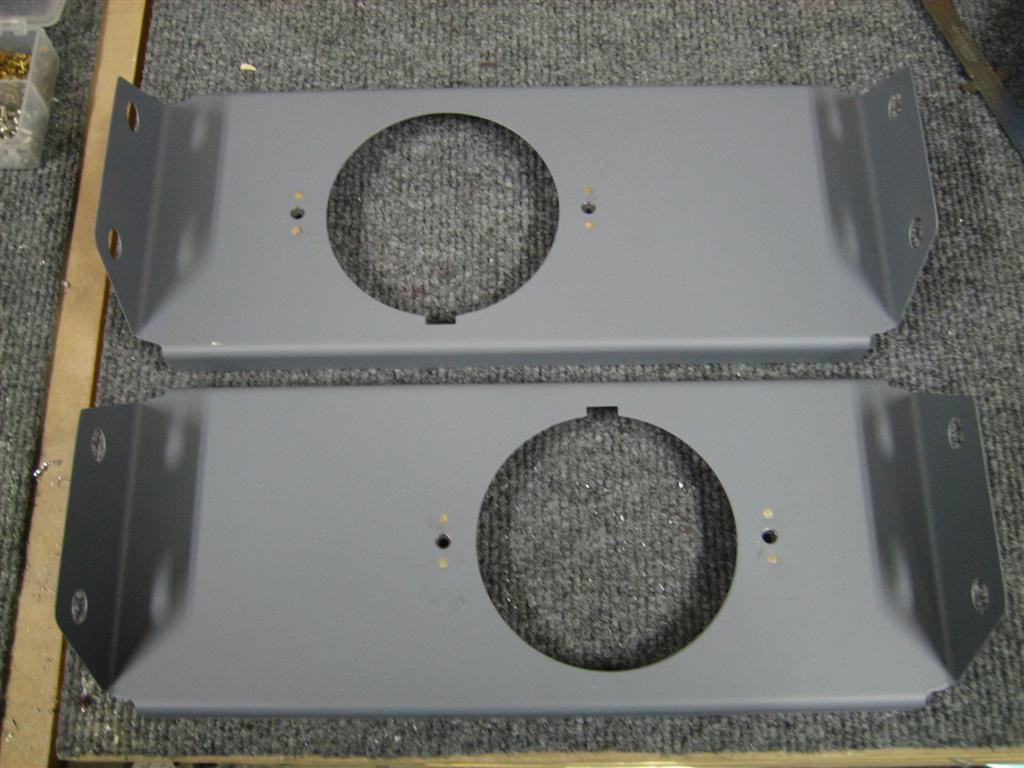
Anyway, here are the two kits. Very obvious are the two mounting plates, the bulb retainer, the lens retainers, a bag of hardware, and the leading edge lenses.
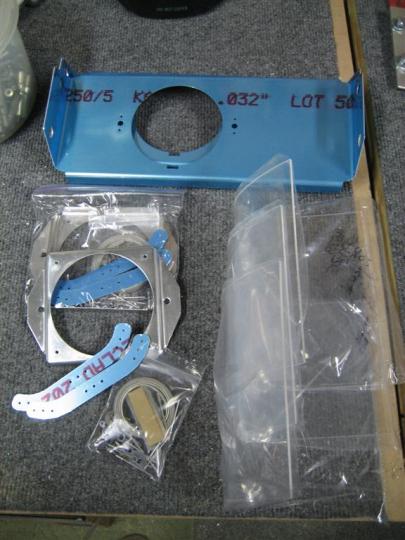
Duckworks was kind enough to send me a spare lens. Much appreciated.

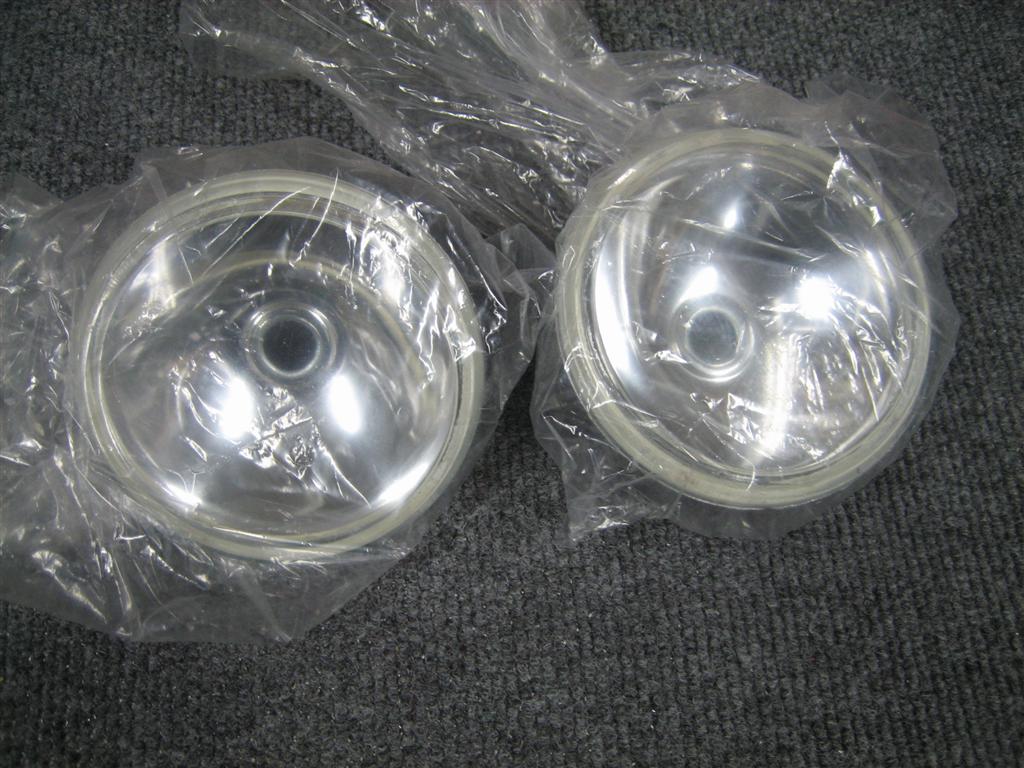
Here are the two PAR 36 style, spot enclosures for an H3 bulb. My soon-to-arrive HID kit should have H3 bulbs that will fit nicely in here. I’ll do a separate write-up for those.
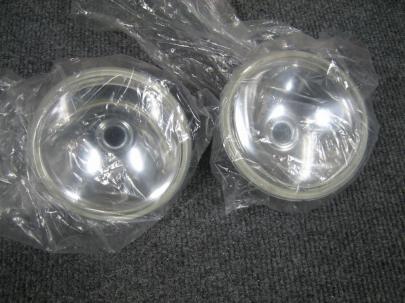
I left the bag on them to prevent getting any skin oils on them.
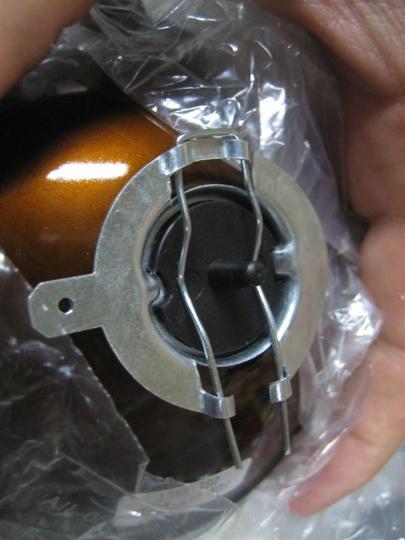
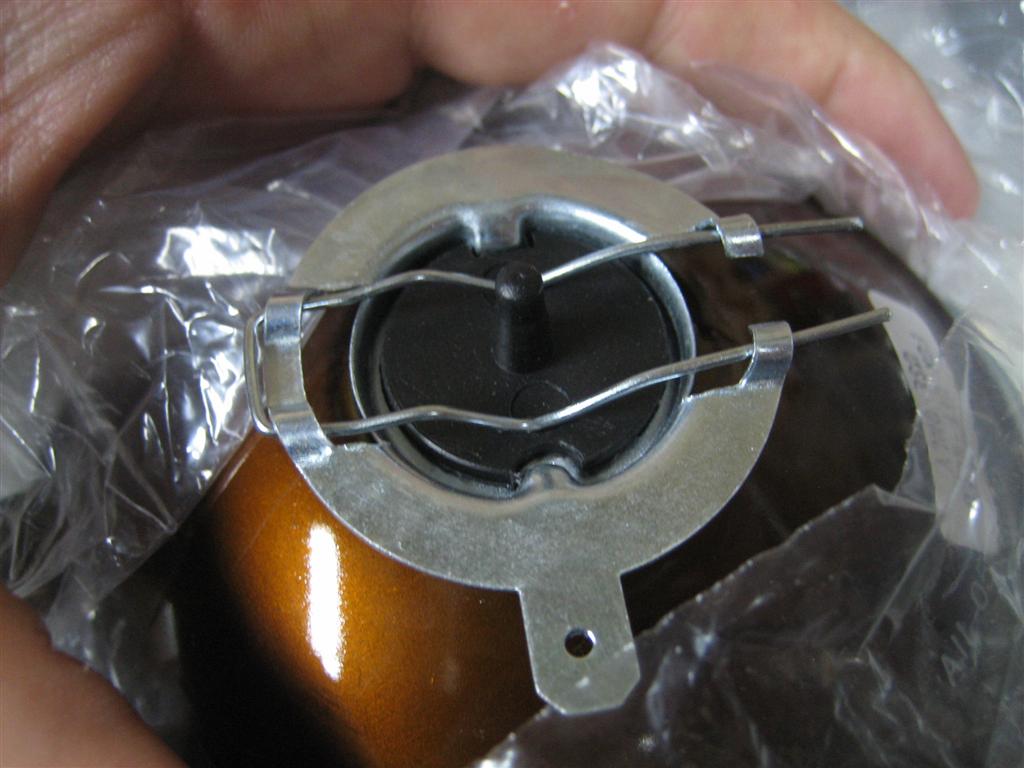
A closeup of the H3 part of the enclosure. I had never seen one before, so this was a learning experience for me.

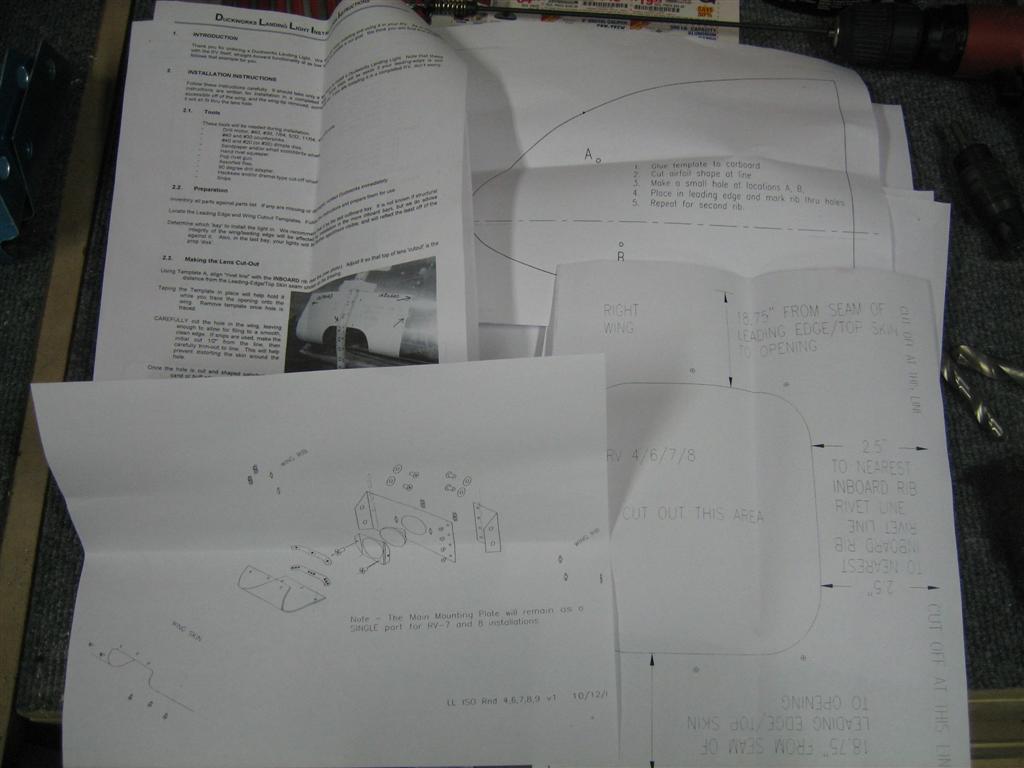
Also included in the kit are the instructions, an exploded view, and the templates for the cutting and drilling.
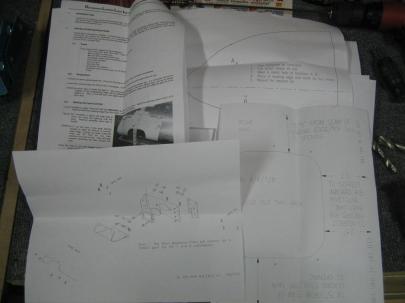
Good documentation. Well done.

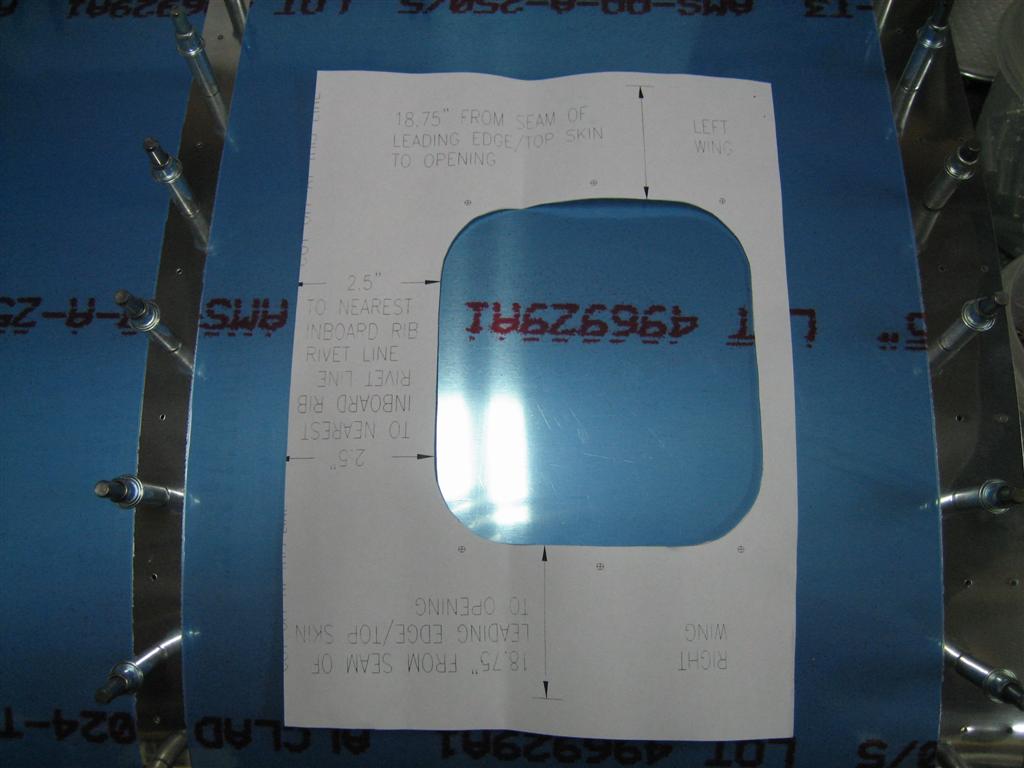
Anyway, I decided to just bite the bullet and cut into the leading edges. Here is the template with the middle cut out.
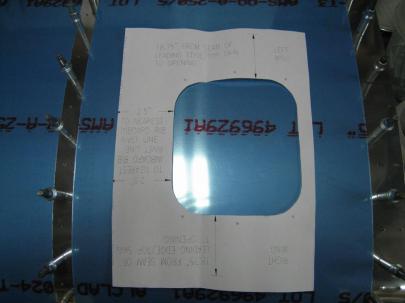
Template, ready to go.

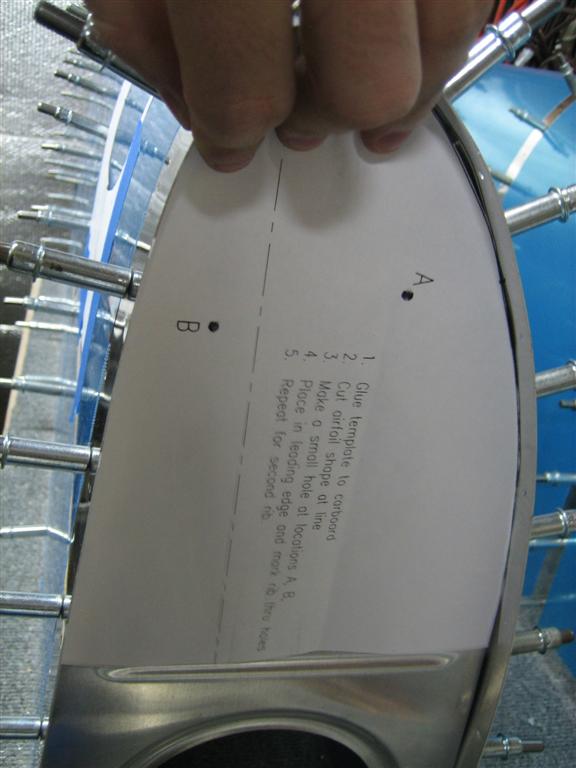
First, I cut out the rib template and used a sharpie to mark the hole locations.
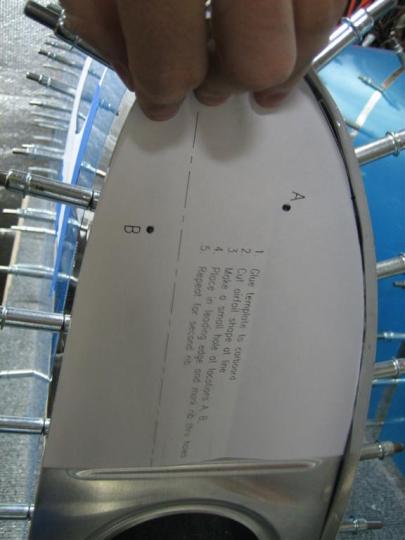
Exact positioning here isn't too important because the holes in the mounting plate are huge, and you can adjust these a fair amount.

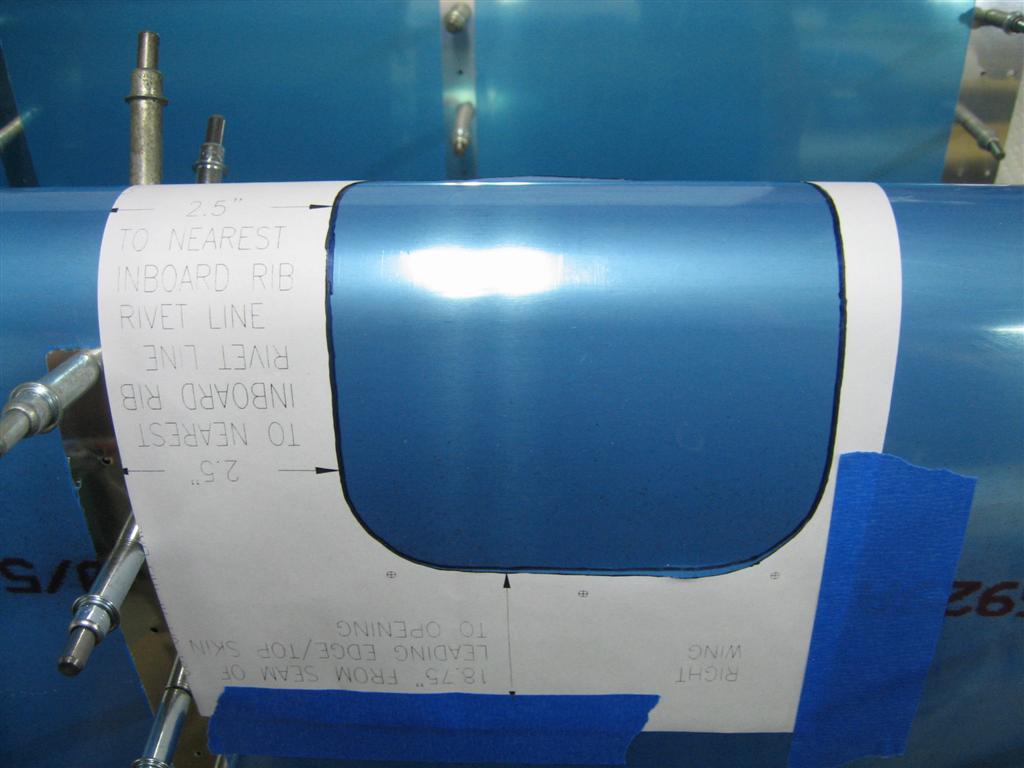
Back to the cutout, I measured the 2.5″ from the edge of the cutout to the row of rivet lines.

Special note here, I cut the paper off on the left edge of the following picture so I could leave the ribs clecoed in. This just meant I had to measure from the cutout instead of using arrows on the side.

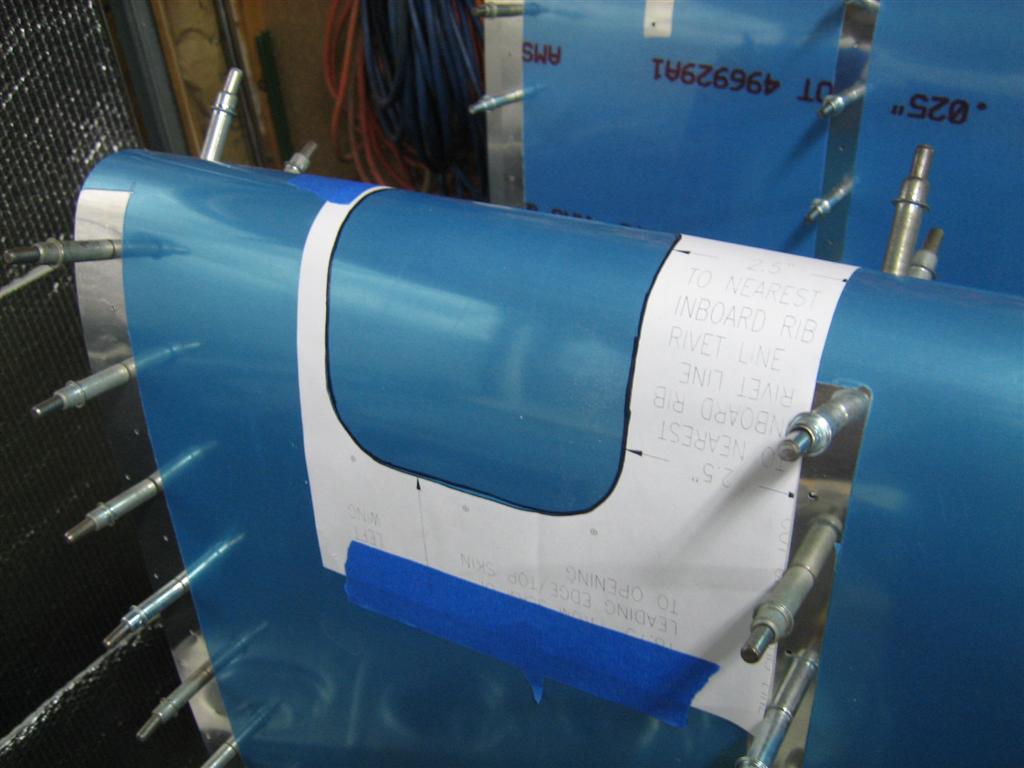
I also measured per the plans (18.75″ from the aft edge of the top of the leading edge skin to the top part of the opening here) and taped everything in place.
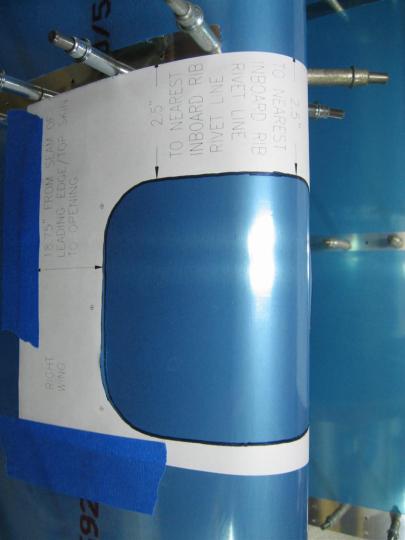
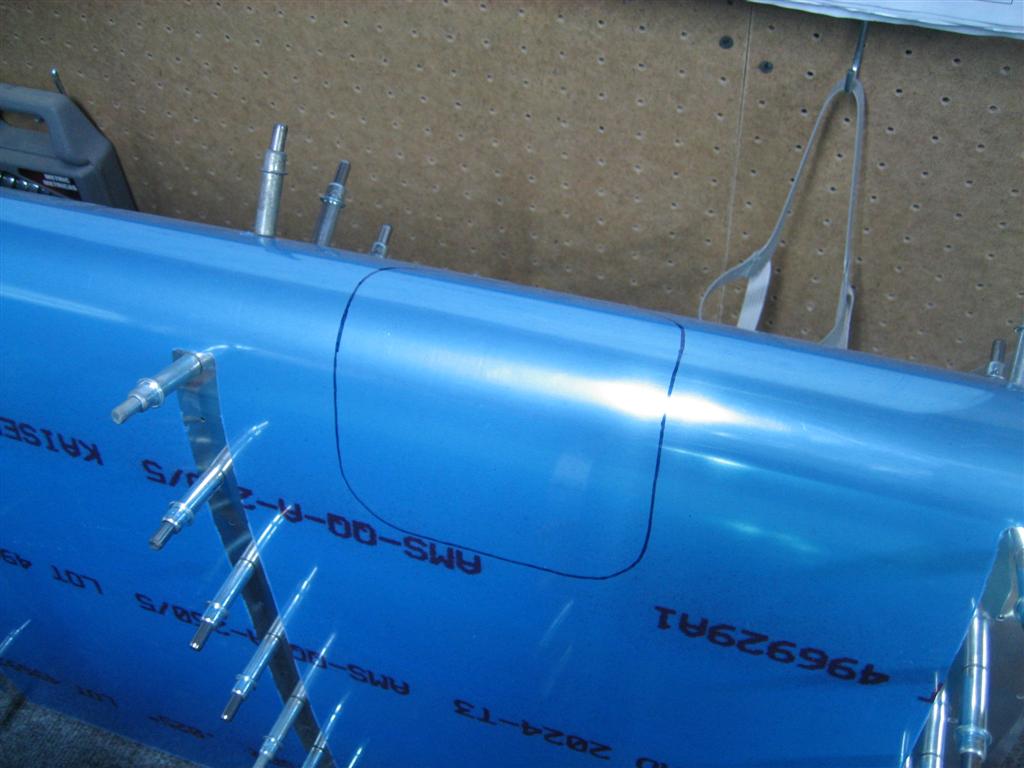
Tracing with a sharpie.
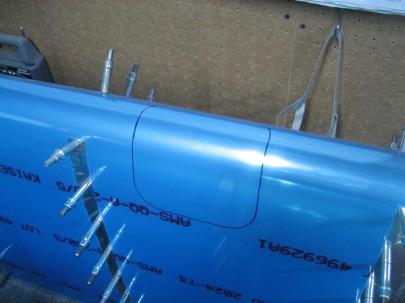
Same trace, no paper.
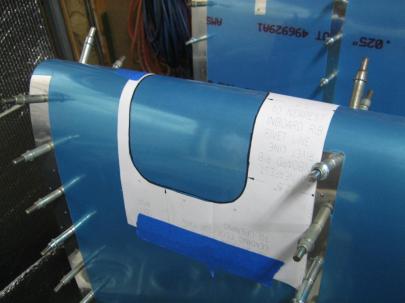
Other wing.

Before jumping into the actual cutting, I moved on to some of the metal preparation for the other stuff. I wanted to be able to cut the leading edge openings while the primer was drying for some of these smaller parts.

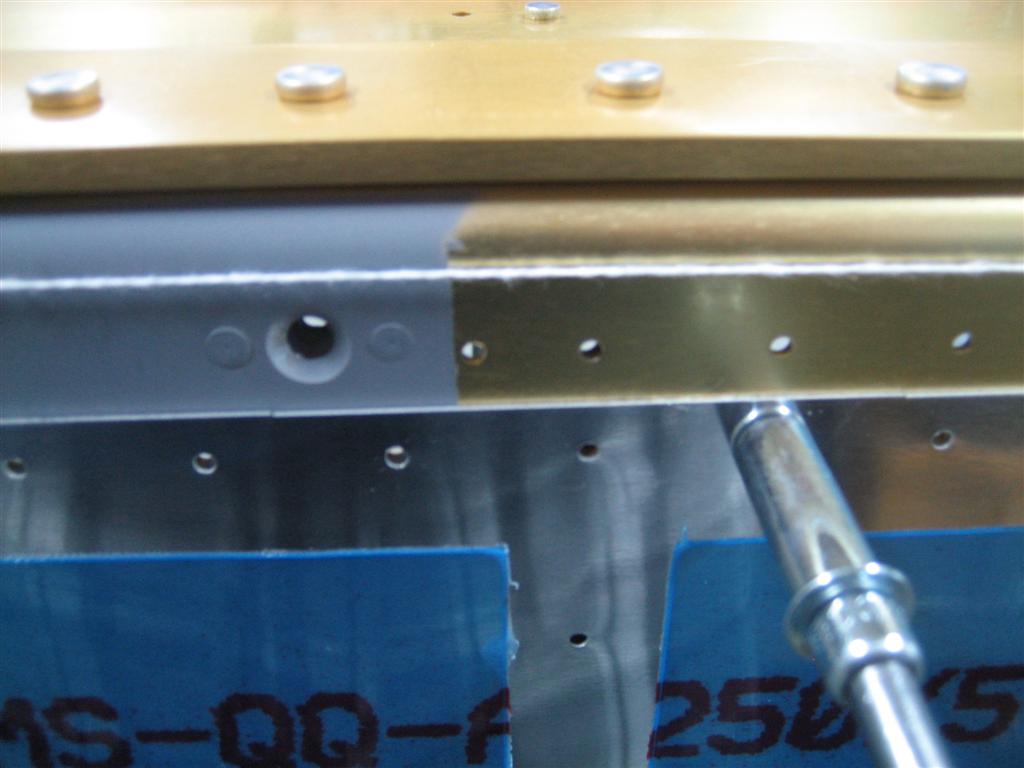
Here, I’ve run a #40 bit through all of the nutplate attach holes and enlarged the middle holes to 5/32″ per the instructions.

Then, I clecoed all 4 pieces together to countersink the nutplate attach holes for regular AN426 rivets. I could have used “oops” rivets here, but the lens retainers are thick enough that it wasn’t necessary.
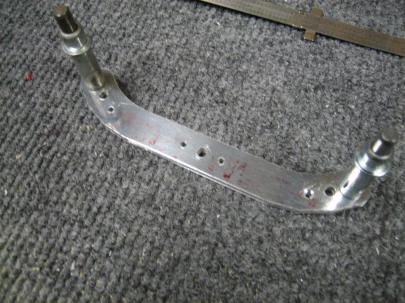
4 lens retainers, clecoed together to give the countersink guide a good path.

I forgot to take any pictures of the rest of the prep for the lens retainers, lamp retainers, and the mounting plates. Anyway, they got prepped, cleaned, dried, and taken outside to prime.

I headed back in and got out a variety of dremel tools to cut out these openings.

There’s no turning back now.

I started near the bottom (least visible) and very far away from my line. As I gained confidence, I moved closer to my line (less finishing later).
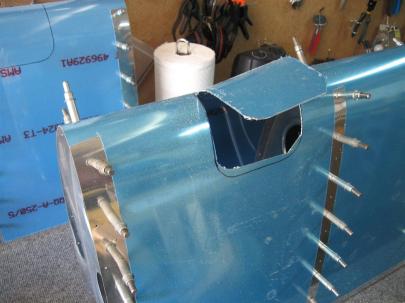
Yikes, that's not a pretty cut.
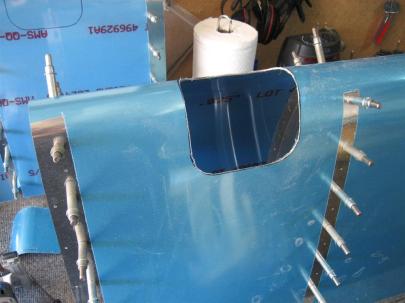
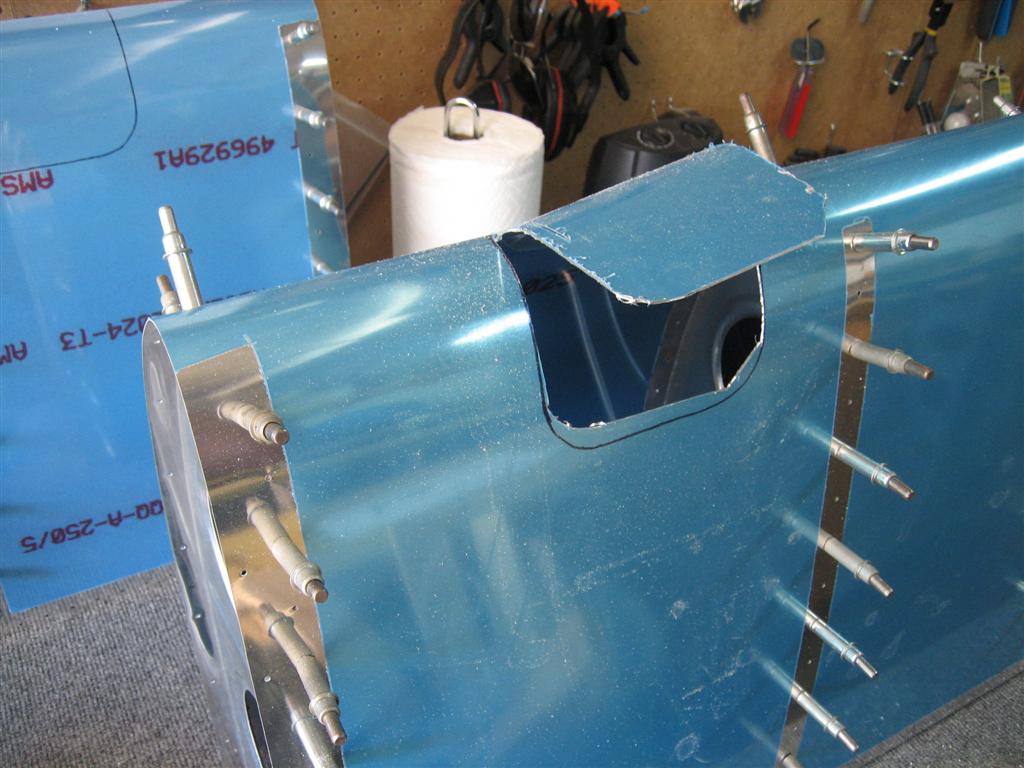
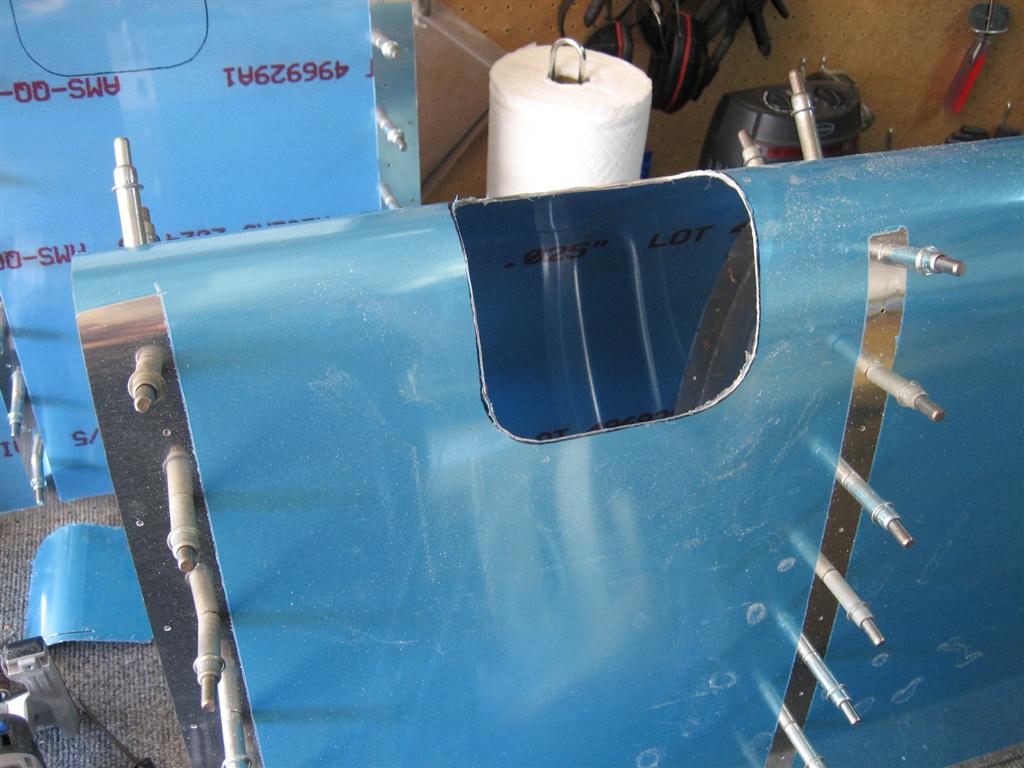
After a little cleanup, they look a little better. Still need to do some final cleaning.

I didn’t take a picture of the other cutout, but it turned out equally as well. A lot of people really stress out about cutting these holes.

I can see where they are coming from, but I think the leading edges are great with these light openings in them. (I’m going to look like a 747 coming down final, which is exactly what I want (visibility and recognition).)
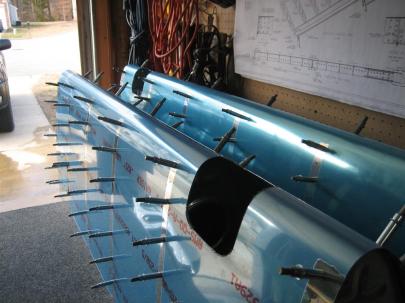
Pretty leading edges. (Oh, and this was the first time in a long time I've been able to work with the garage open. It was almost 40°F today!)

Okay, back to the primed parts. I had the urge to set some rivets today, and I nailed all of them. I finally feel like I’m starting to get into a groove (although squeezing really isn’t that hard.)

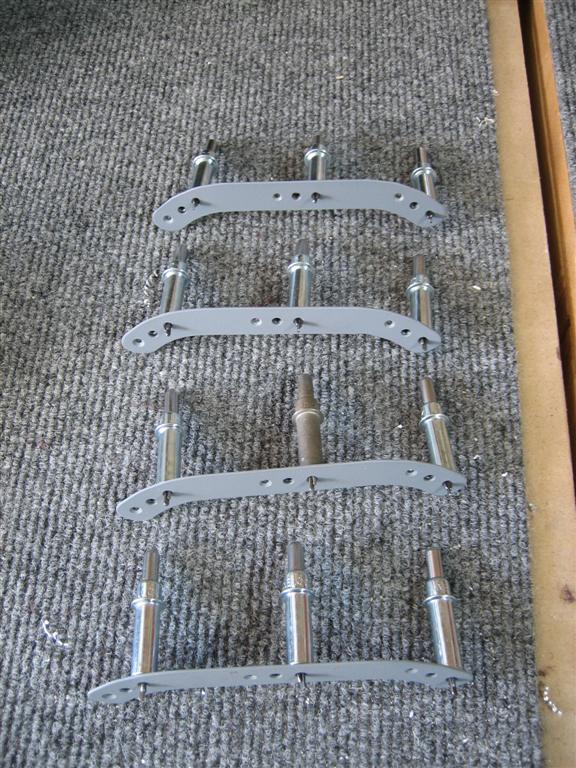
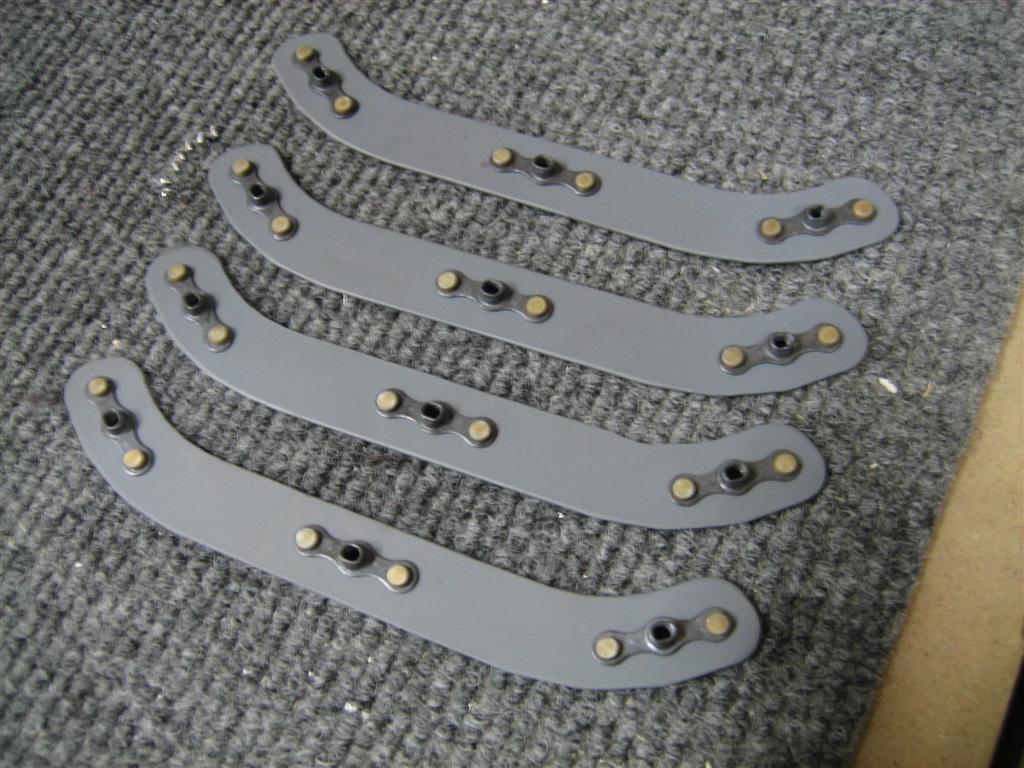
Here, I’ve clecoed the provided nutplates to the lens retainers.
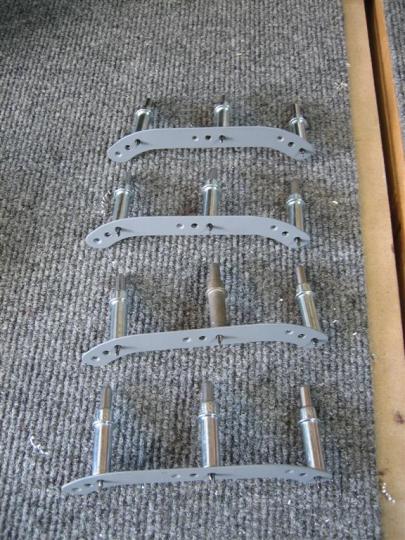
Ready to start some riveting.
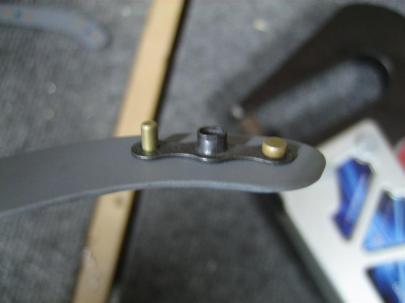
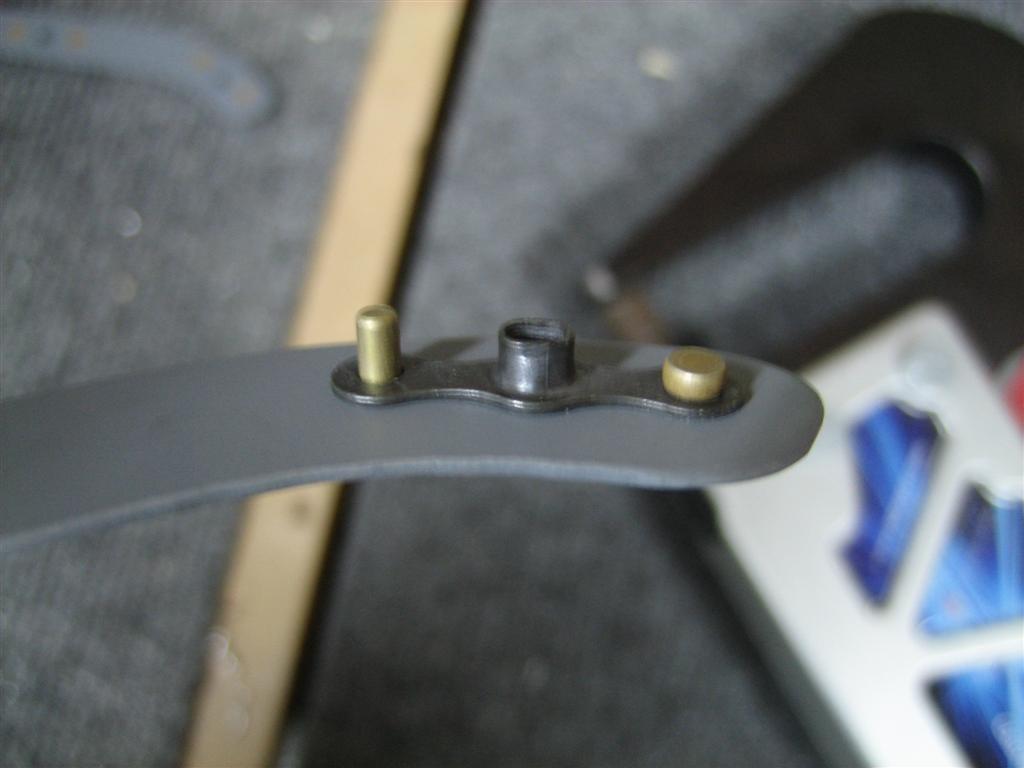
A closeup of some AN426AD3-3.5 rivets.
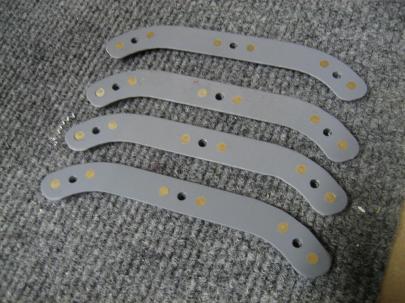
24 rivets set (beautifully).
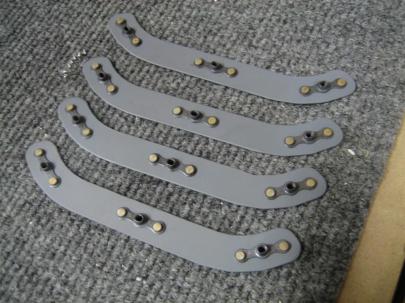
Equally beautiful shop heads.
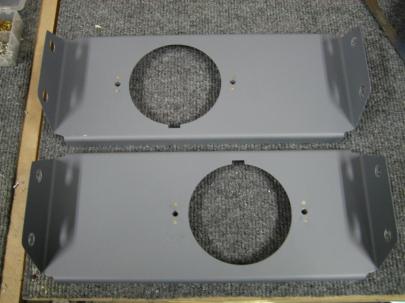
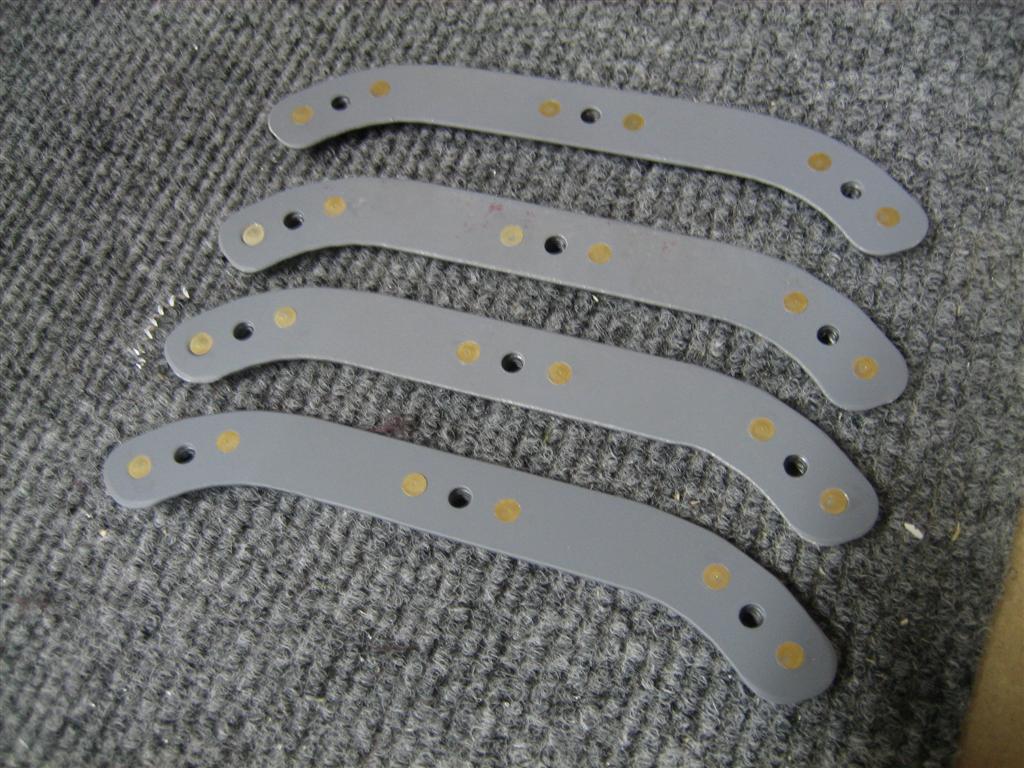
8 more rivets set (I did use "oops" rivets here).
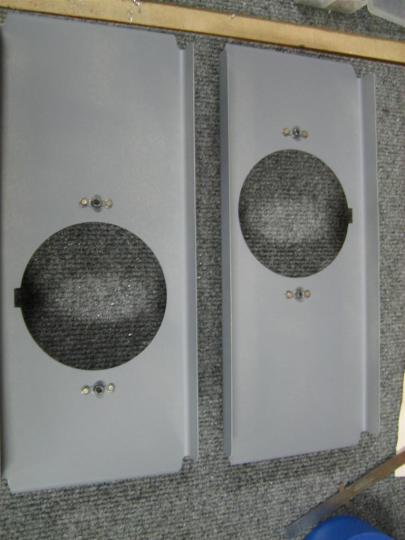
More shop heads.

I got out one of the bulbs and just placed it in the mount just for kicks.
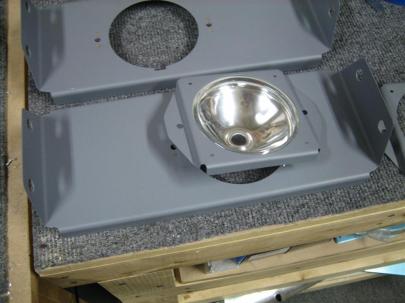
Looks like it will fit.
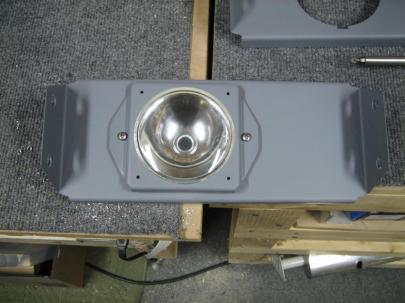
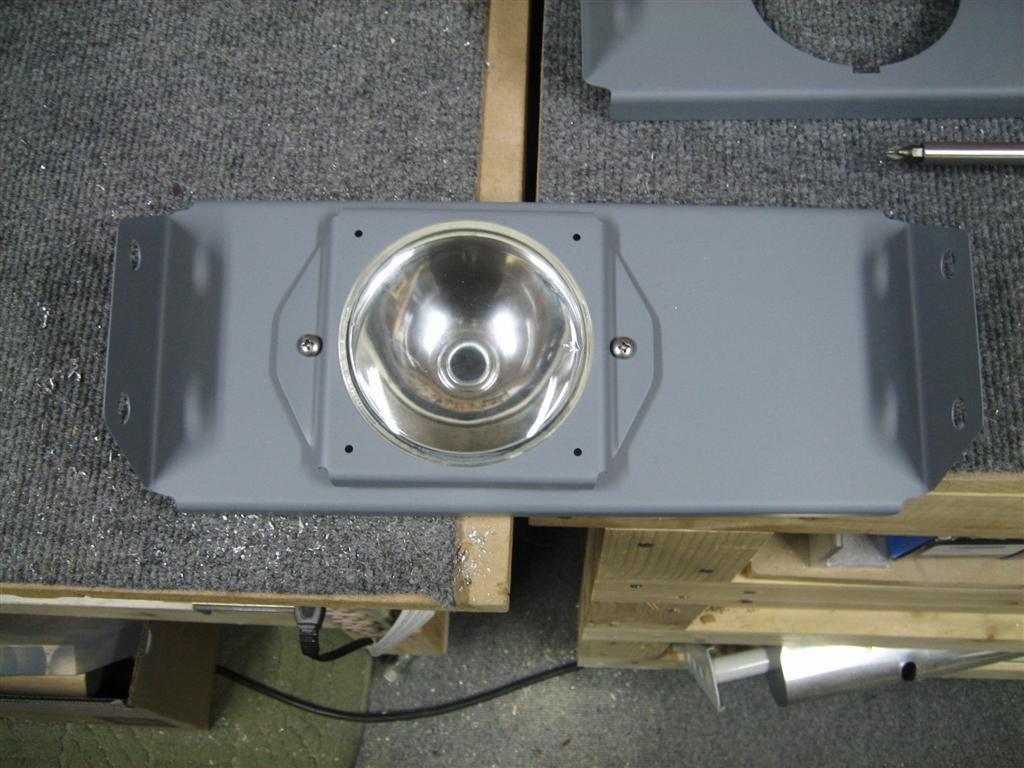
Found the screws and actually screwed them in. These things are going to look awesome.

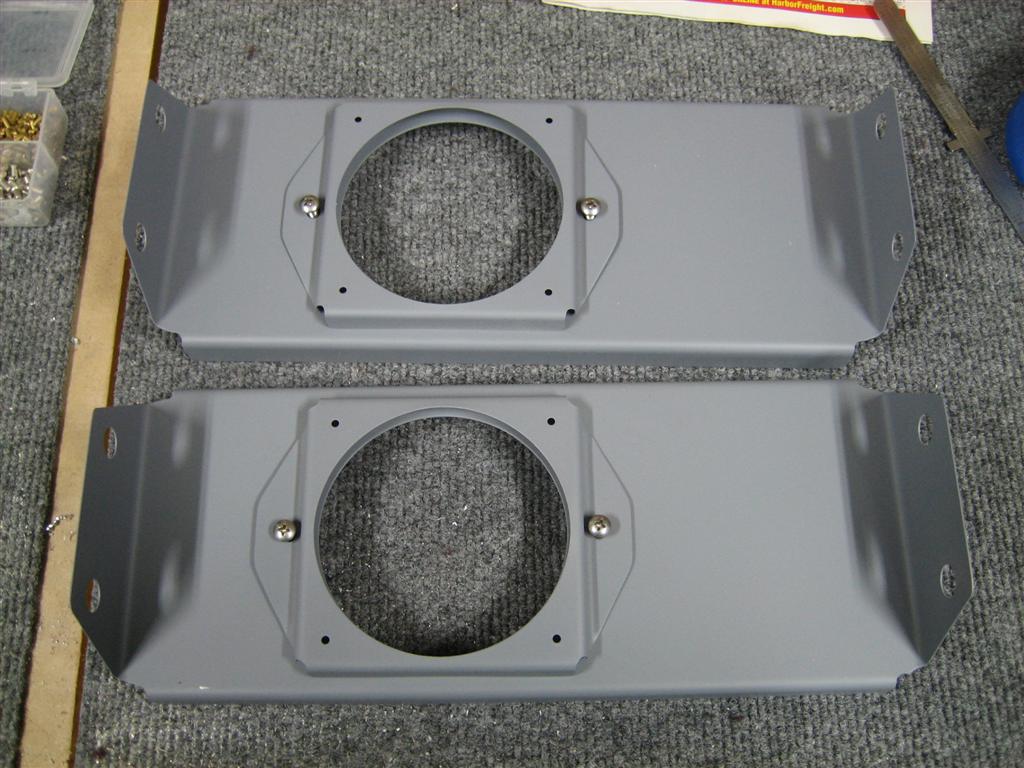
Finally, I found all the pan-head screws and lightly screwed them in place.
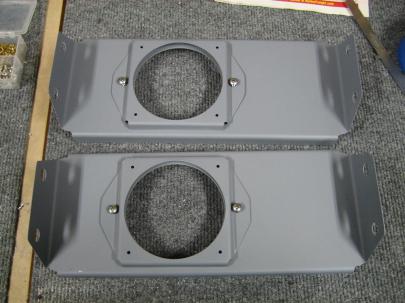
Sweet.

I don’t think I’ll do any further painting of these. I like the primer grey.

I’ll do some more on the landing lights soon, but for now, I need to get back to rib prep. Hopefully this week I’ll have a writeup of the HID kit that arrives.

3.5 hours, 32 rivets. Wuhoo!

Prev | Next

More Right Wing Main Rib Preparation

January 13, 2011

Prev | Next

Not much today, just more right wing main rib preparation. I thought I was going to be able to finish all the prep on the right main ribs, but I got distracted and only got a few of them prepped (and not even all the way to priming).
First, I opened up my two new packages of maroon scotchbrite pads.
I think it was about $10 for both at Napa.

I cut one of the packages into my usual ~3″ squares.

I can get 6 squares from one layer...that makes 18 squares. per package.

I don’t know if you can tell, but I usually try to find a little package of work that leaves me heading back inside with a nice sense of accomplishment. It worked really well last week to do three ribs in an hour, all the way to primed and ready to install.

Today, I was working on 7 ribs, and got all 7 deburred (holes only), and about 4 of them scotchbrited.

Stupid ribs. Taking up all of my build time.

Next session, finishing up the scotchbriting and then deburring the crevices, then hopefully priming.

Then, lucky me, I get to start on the left wing main ribs…

1.5 boring hours today.

Prev | Next


Riveted Half of Main Ribs to Right Main Spar

January 9, 2011

Prev | Next

Well, I needed a break from all of that rib preparation, so I took the seven ribs I had done for the inboard half of the right wing and got started riveting them to the main rib (Most people start with the main rib, because you can bend the ribs a little out of the way of the rivet gun while you shoot and buck.)

Here are the first two rivets in place, ready for shooting.

Per the general builder consensus, you should start with the 3rd rib. (3rd, 2nd, and 1st rib flanges all point inboard, so having the 2nd and 1st in the way would not be fun. If you start with the third, you can easily reach the forward flange.)

The right spar here is upside down.

After the first five rivets…

(That mark above the 2nd from the top is a tape mark.)

Whoa, that bottom rivet head doesn't look to good.

Let’s get a little closer…

Crap. This was the first one, too. Bummer.

After drilling out and re-setting, the rivet is now great. (I scratched the primer off the flange a little. I'll clean that up with a scotchbrite and re-shoot it with primer.)

Of course, it wasn’t until the second rib that I remembered my tape trick to keep from marring the manufactured heads too much.

This works great to keep everything looking nice.

See, this head looks a lot cleaner after shooting.

Here's two done.

Shop heads...

Three ribs down.

More shop heads.

Then, I did the 4th, 6th, then 5th, and finally, the 7th.

The first 7 ribs attached to the right main spar.

1.0 very fun and rewarding hour. It’s nice to see something big take  shape for the last time in the garage.

5 rivets times 7 ribs equals 35 rivets, two of which were drilled out and replaced. (The first rivet, and the last rivet. Boo.)

Prev | Next

Now, back to rib prep.


Primed 3 More Main Ribs, Now 7 Done

January 8, 2011

Prev | Next

Today, I worked on ribs R5, R6, and R7. (Remember, this isn’t Vans’ number scheme, this is mine.)

First, I negotiated a larger cleco holder from the girlfriend.  I used to have two containers the size of the left one. Now, I have plenty of room for my clecos. (Until, of course, I have to order 200 more…)

I could fill the one on the right up if I didn't have all my clecoes in the leading edges.

Okay, back to the ribs.

The extra two on the right side needed a little touch-up from some water contamination prior to the first round of priming. Gotta let those suckers dry before spraying.

One hour to prep and prime those 3 ribs. I’m halfway done with the ribs on the right wing. I think I may start riveting the ribs to the main spar as I go to break up the monotony. We’ll see.

Prev | Next


Primed 3 More Main Ribs

January 7, 2011

Prev | Next

Warning: Boring post alert!!

I prepped and primed 3 more ribs tonight. I had prepped R1 yesterday (I numbered R or L then from 1 to 14 starting at the inboard rib). Today, I got ribs R2-R4 done. So…

I HAVE ALL OF THE RIGHT WINGWALK AREA RIBS DONE, WUHOO!!!

(There are still 24 more main ribs to do, then 12 more leading edge ribs and probably 12 more tank ribs.)

[sigh]

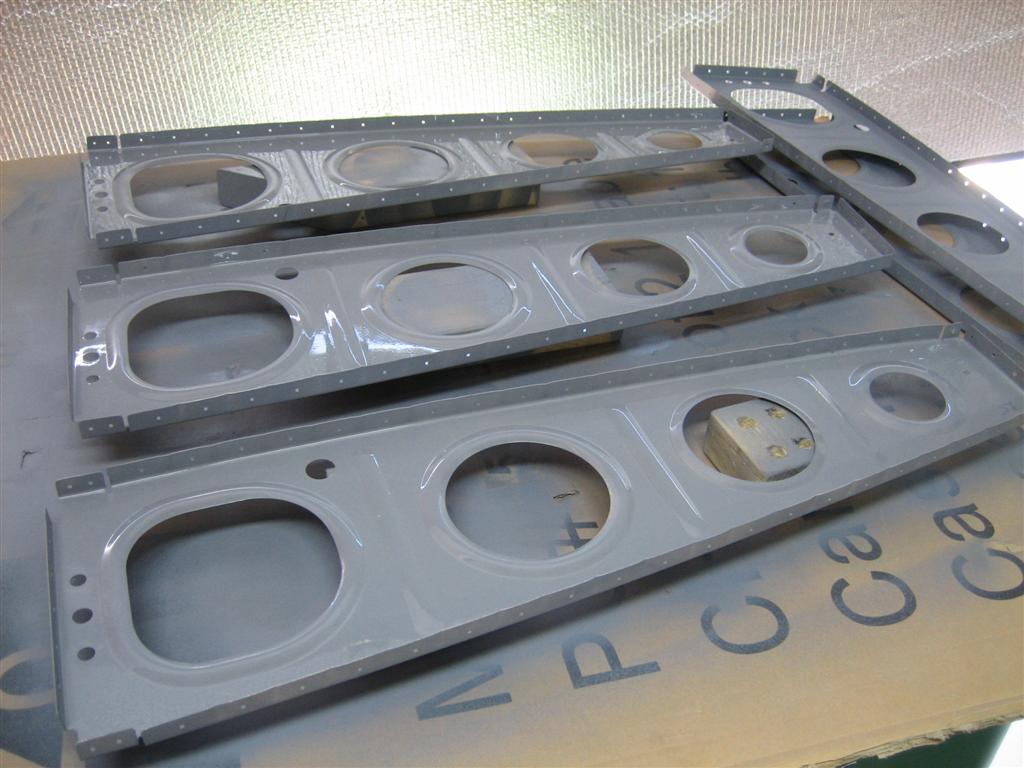
R2, R3, and R4 just after being shot with some self-etching primer.

Anyway, yesterday’s rib took me an hour.

Today’s 3 ribs took me an hour.

(At this overall rate…4 ribs in two hours, I’ve got 10 hours of rib prep left. At the rate of 3 ribs per hour, I have 6.6 hours left.)

At least I’m getting faster. (I’m not sure how many more ribs I can do in an hour, I was pretty efficient yesterday.)

Prev | Next