Rear Spar, Front Spar

December 30, 2009

Prev | Next

Well, I finally started today. First thing I did was break the corners of the HS-609PP. I used my grinder, which did a good job, but got clogged with aluminum pretty quickly. I think my next big investment will be a bandsaw.

The requisite shot of before and after rounding edges.

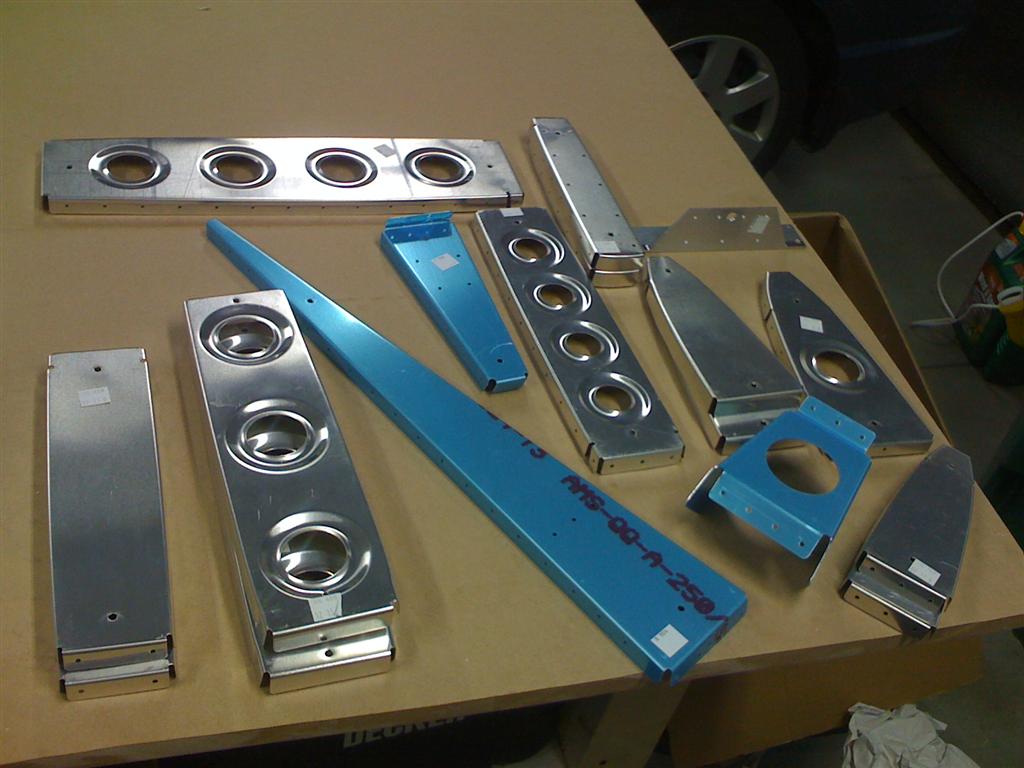
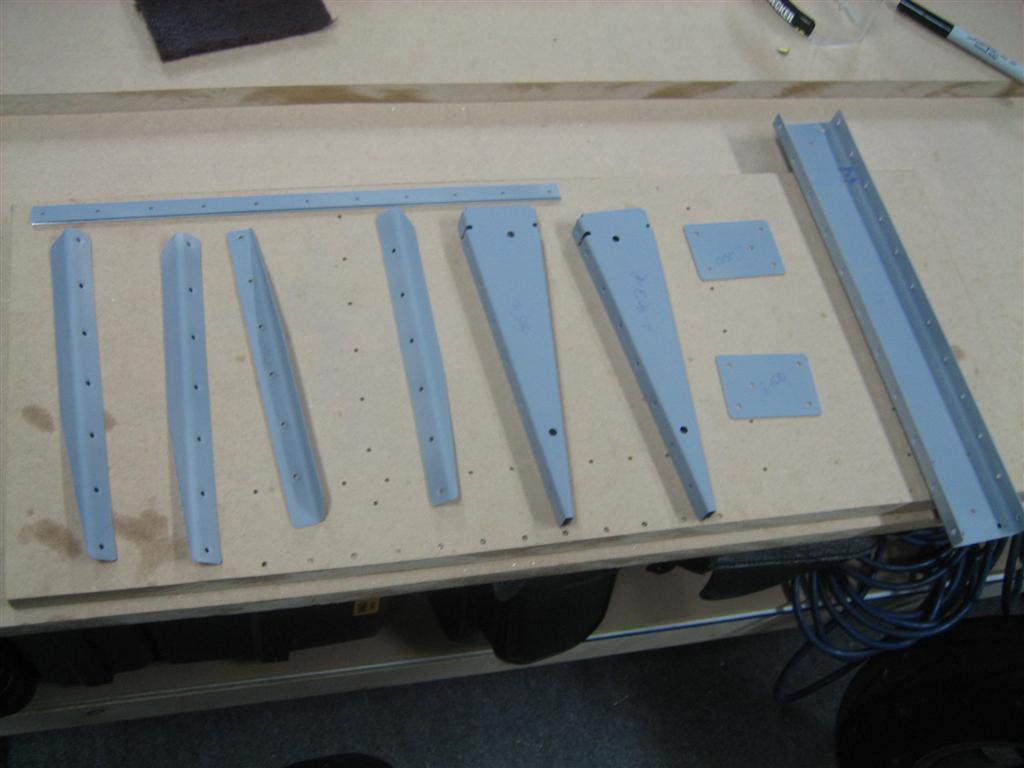
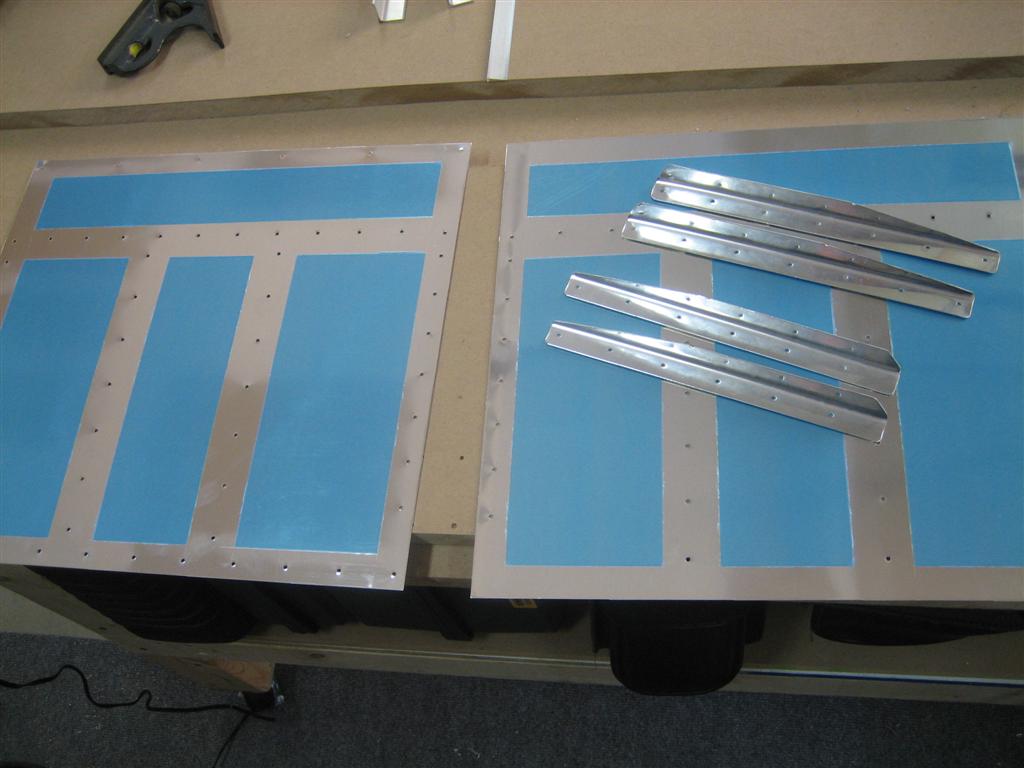
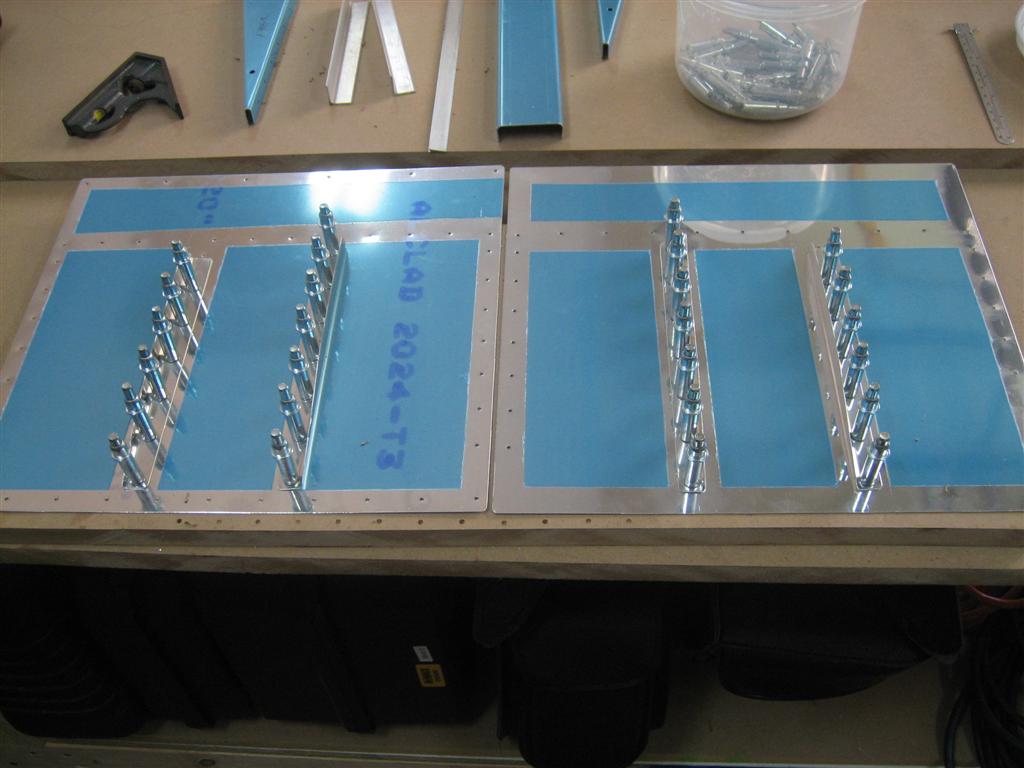
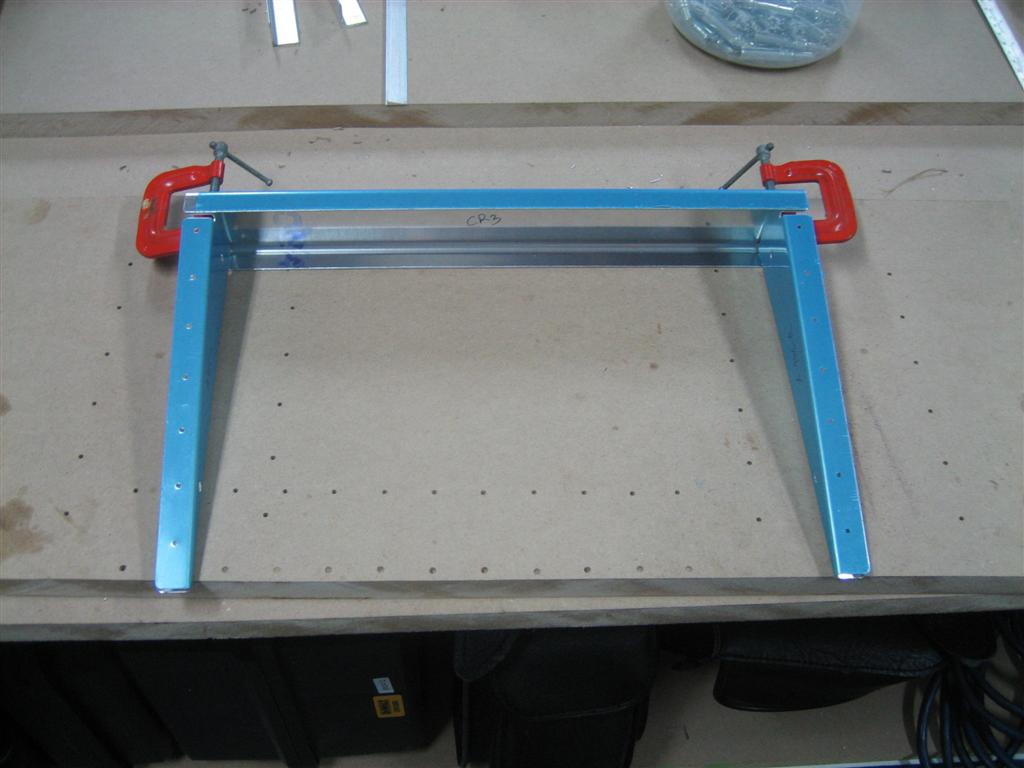
Then I removed the blue vinyl from the rear spars (HS-603PP) and clecoed the 609s to the 603s. To do this, I needed to increase the radius of the 609s that rests against the web/flange intersection of the 603s. No big deal. Once I did this, they fit great. I didn’t finish the edge prep on the 609s, I’ll do this prior to priming everything. Then, I match-drilled all the holes, including enlarging the HS-708/HS-603PP (inboard rib attachment) holes to #21.
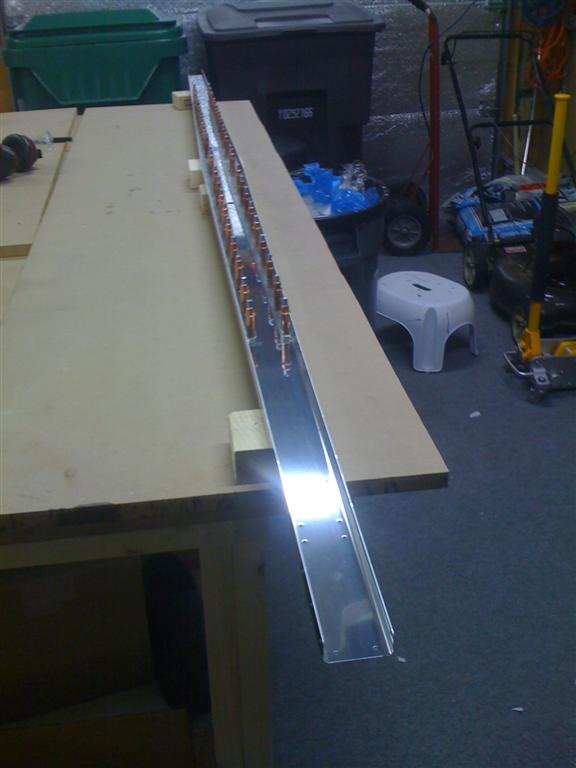
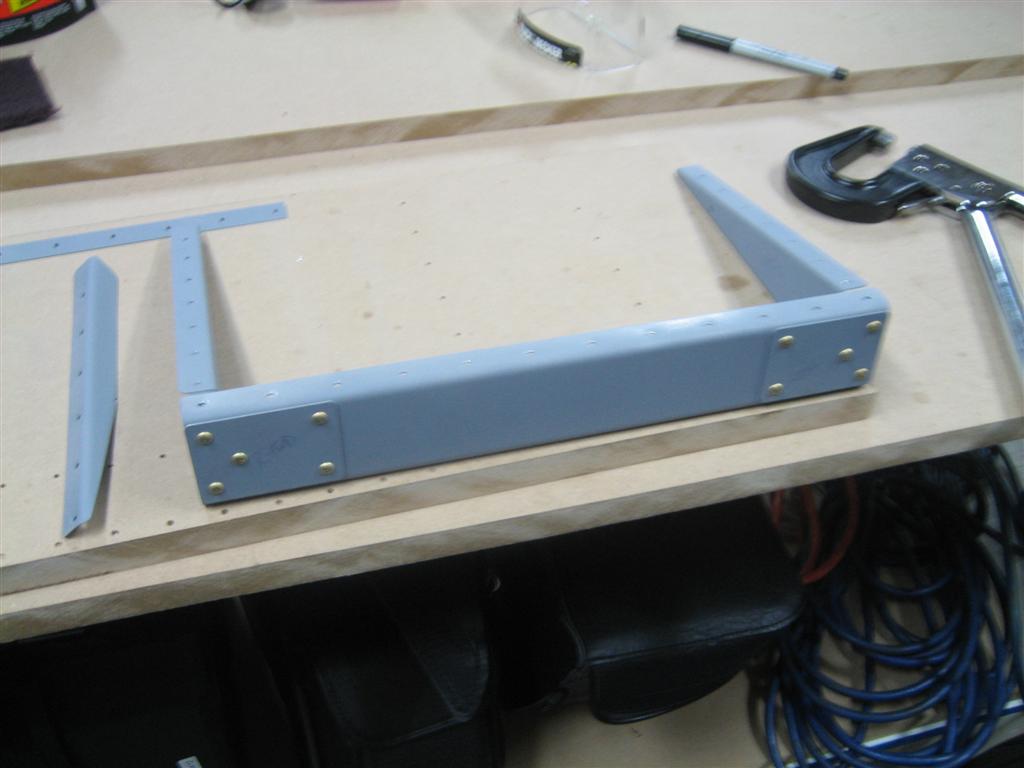
Rear spar reinforcements clecoed to Rear spar channels. It's starting to look like an airplane? Ha.

Next, the directions have you attach the elevator hinge brackets. After match-drilling all of the outboard brackets, they have you sandwich the VA-146 bearing in between HS-411APP to HS-411BPP.

Clecoing the center bearing supports in.

One one side is pre-punced, so you clamp, drill 4 holes, cleco, remove from the spar, and drill the rest of the holes.

Getting ready to drill.

Then I masked off special parts of the VA-146 to prep for priming.

Taped off the important stuff.

And then shoot some primer. (I’m using the rattle can self-etching primer.)
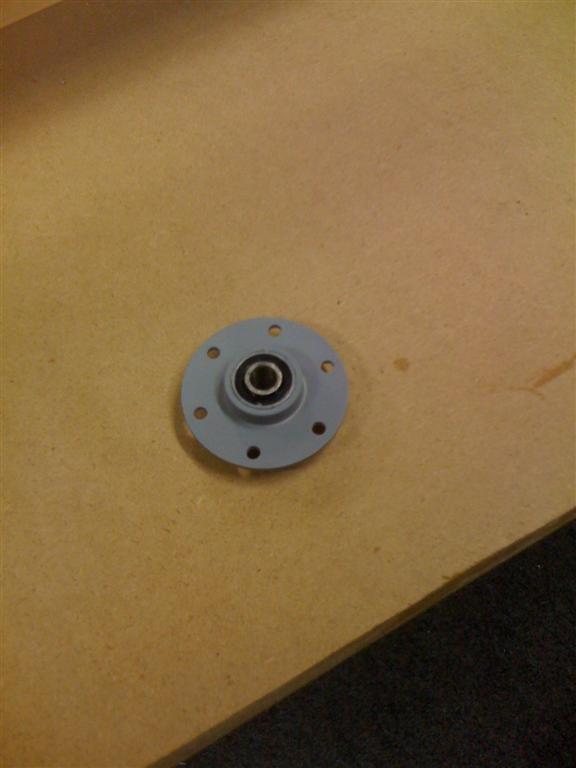
Scotchbrited, cleaned, and primed the center bearing.

Then reassemble and rivet. I found (contrary to some other builders) that the rivets called out in the plans made a great shop head. I think other builders went up a size.  I’m definitely happy with my first six rivets.
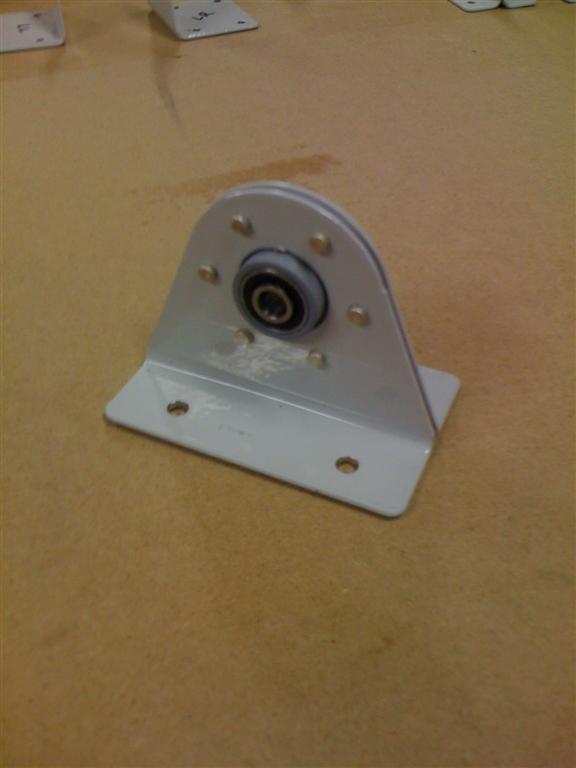
The first six rivets.

Here’s everything on the rear spar clecoed back together.

All the hinge brackets clecoed in place.

Then, per the plans, I marked the taper and radius locations for the HS-710 and HS-714 reinforcement angles.

Marked the tapers on HS-710 and HS-714 per the plans.

It was a little late to be running the power tools, so instead, I marked the bend lines on the HS-702 front spar channels. This takes some careful measurement and marking, so take your time.
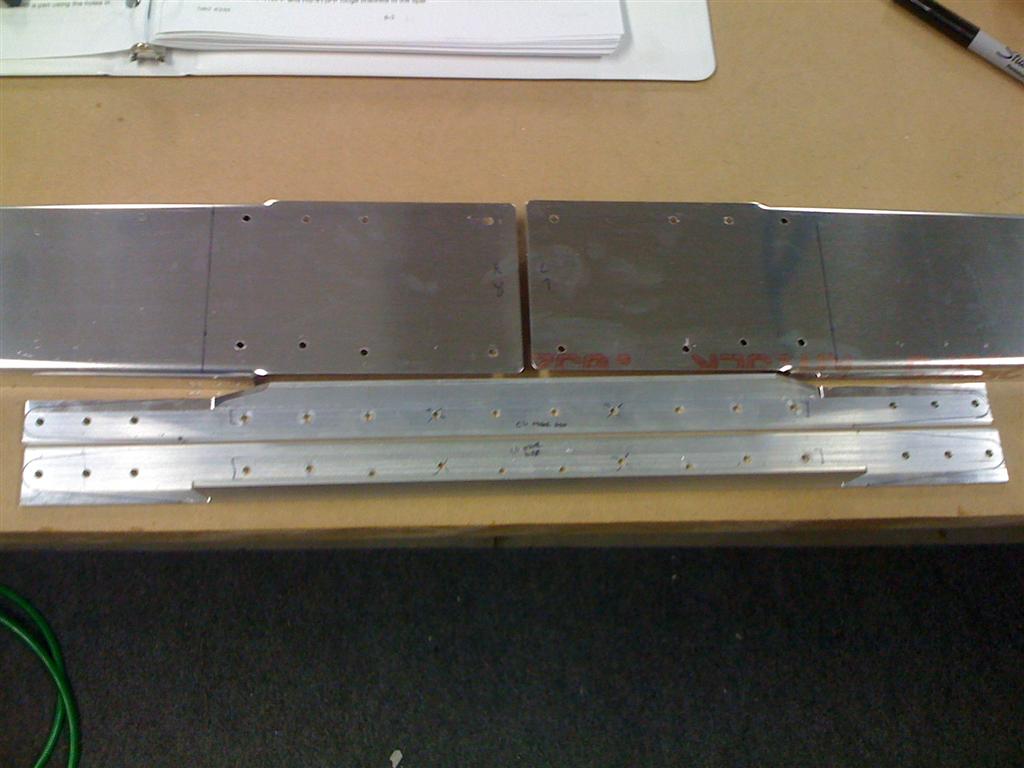
I also marked the bend lines on the front spar channels. (HS-702)

Then, I strayed from the plans a little. They have you use a 1/8″ bit to create a notch relief hole, then enlarge to 1/4″ using a unibit. I used snips and then a file. The second one turned out better than the first (which I hear is pretty common on everything in the project), and I had some trouble making them look perfect. (I know, things don’t have to be perfect, but it bugs me, anyway.) Biggest lesson learned: cut the flange in the correct place first, then unbend the flange to give you more material to work with. You can see in the top one in the picture below that I didn’t do this, and had to taper into the bend relief notch. (The bottom one below is better, nice straight line back to the relief notch.)
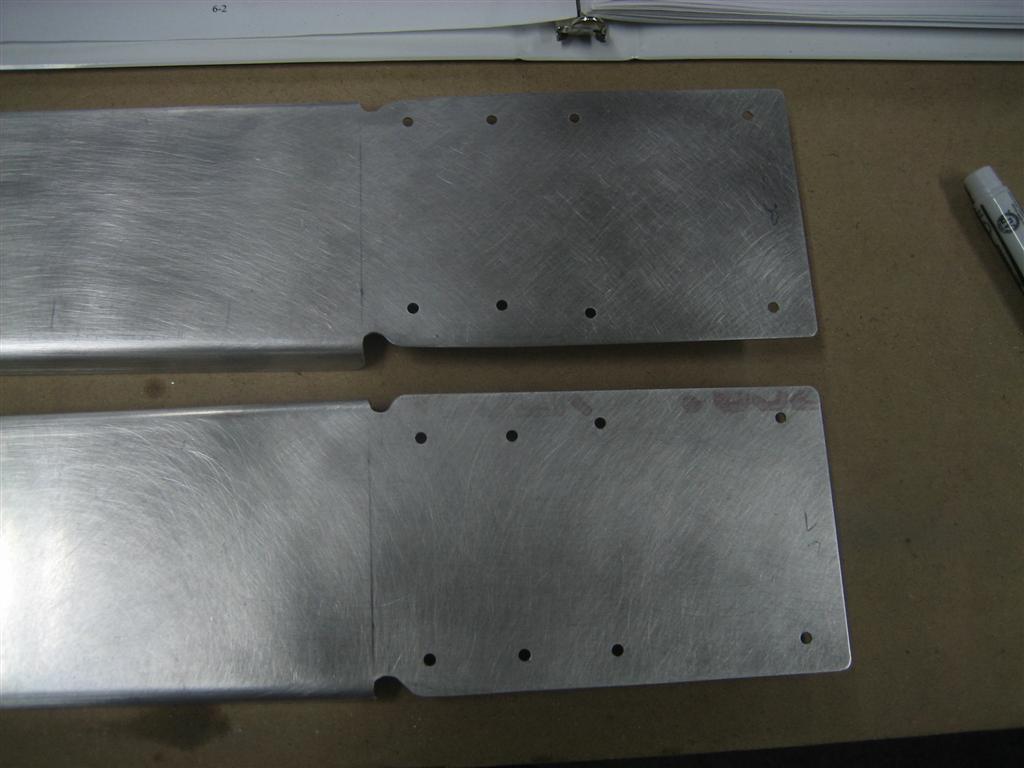
Finished HS-702 shaping with bend relief notches.

Then I bent HS-710, HS-714, and both HS-702s. I created a cardboard template using trigonometry. I took the tangent of 6 degrees. Which is a little over 0.1. (This means fromthe bend line, for every inch you go laterally, the angle will be just over 0.1 inches up.) That’s a little hard to measure, so I took the inverse (to figure out how many inches laterally I need to go for 1 inch up), and got just over 9.5 inches. I have a calibrated 6 inch ruler, so I divided by two, and ended up with mike’s numbers; 4.75″ over, and 0.5″ up.

Now that I have my template for six degrees, let’s get bending.

After trying a few methods in the vise, I ended up just lining up my bend line with the edge if the table, holding a wooden block over the piece, and putting a little pressure on it. If you go slowly, you can get 6 degrees pretty dead nuts on. I laid everything on top of eachother, and it all lined up very nicely.

Lastly, I finished the front spar section by dimpling the HS-702s, and countersinking (first ever countersink!) the HS-710 and HS-714 for the center two holes only. Remember, flush rivets go on the aft side here, so the countersink and the male dimple die go from back to front.

Countersunk HS-710 and HS-714, dimpled HS-702.

A solid 5.5 hours today.

Prev | Next


Picked up empennage, inventoried

December 29, 2009

Prev | Next

Well, I’m officially a homebuilder.

After checking FedEx’s tracking website, I saw that they tried to deliver the boxes on Christmas Eve, then again on the 28th and today, the 29th. I arrived home yesterday from the Keys around 5pm, so while enroute, I called fedex to have hen hold the packages at the local facility.

When I got to FedEx, they found the smaller package, but insisted it was the only one. “Hmm, usually they ship them together. Guy said, “if there were two, there would be a ‘1 of 2’ on the label.”

“You sure? Van’s charged me for shipping both packages.” (Although, you may remember that the tracking number online indicated only one package.)

“Positive.”

Huh.

When I got home, I checked the fedex exception slip on the door and sure enough, the driver indicated there were two packages. I drove back out to the FedEx place and pointed this out.

“Oh yeah, we saw another (bigger) package with ‘high dollar aircraft parts” on it, is that yours?”

Grrr.

He continued. “You should have said something when you were here before.”

Grrr.

I can’t complain too much, they tried to get me my tail kit on Christmas eve, so thank you to FedEx. Also, I’ll give Van’s some credit for beating their estimate.

Anyway, I got them home. Because I was gone for the last week, we did Christmas tonight. (Girlfriend, Jack (black lab/Italian greyhound), and Ginger (German shephard/American staffordshire terrier) all exchanged gifts.)

I slapped a bow on each kit, and Jack gave me one, and Ginger gave me the other. Thanks, pups, for the gifts. (How did you guys wrap those boxes without any thumbs? “It was ruff,” Jack said. Ha. Dog joke.) I managed to get away with this because the girlfriend got a trip to a Central American country from Ginger, so the airplane was not a big deal.

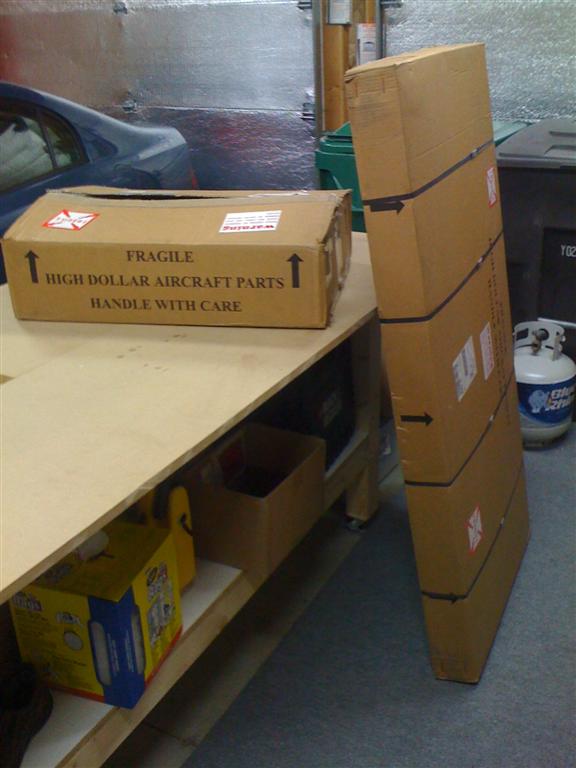
Here are the two boxes on my workbench.

Boxes on the workbench.

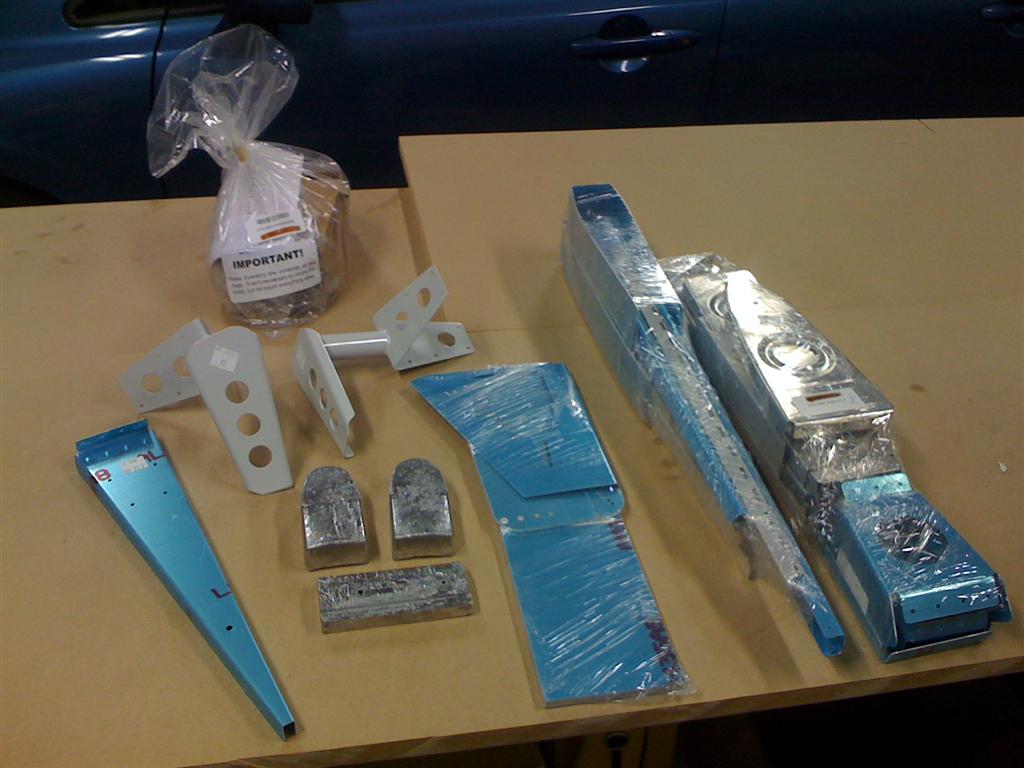
Starting to unwrap everything. Not surprisingly, (from other builders sites), everyhing was well wrapped and packaged. Van’s delivers the tail kit in subkits, so you have to take out the subkits, unwrap those, then inventory.

Here are the first few subkits.

First few subkits

Here’s the stuff from the 1st subkit.

1st subkit unpacked

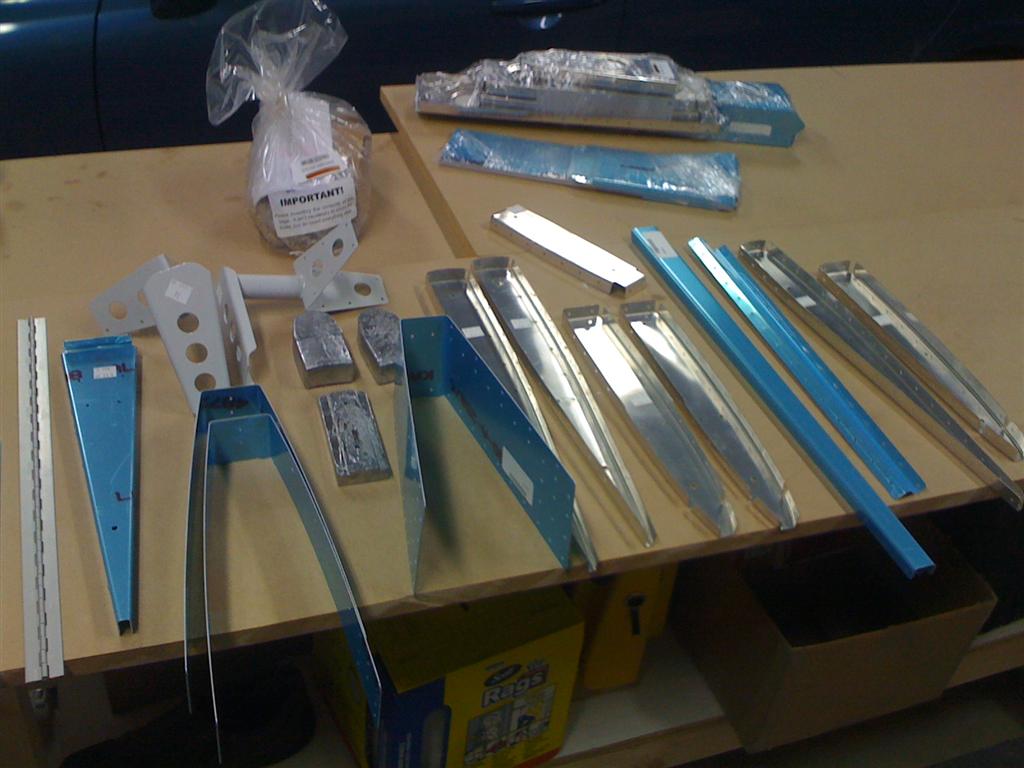
And the second subkit.

Second subkit

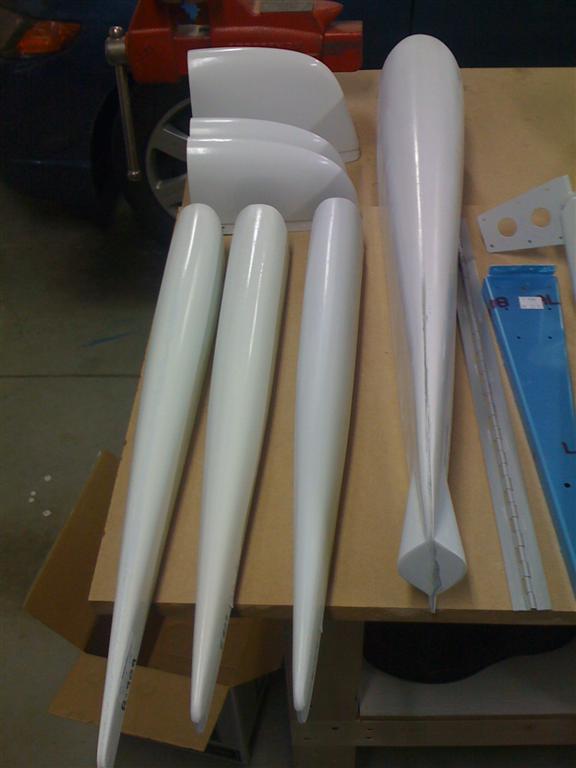
Here are the fiberglass tips (I can’t remember if this is the third subkit or not.)

Fiberglass empennage tips.

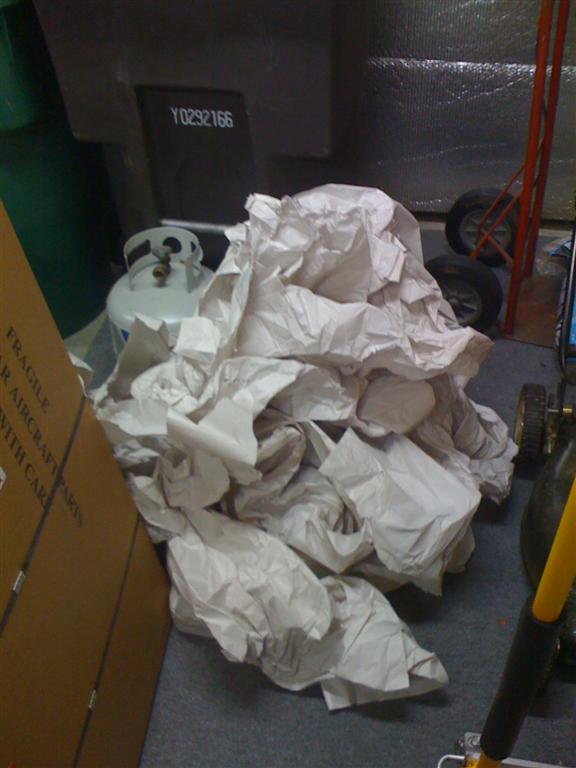
And all the paper from the small box alone…

Paper from just the small box.

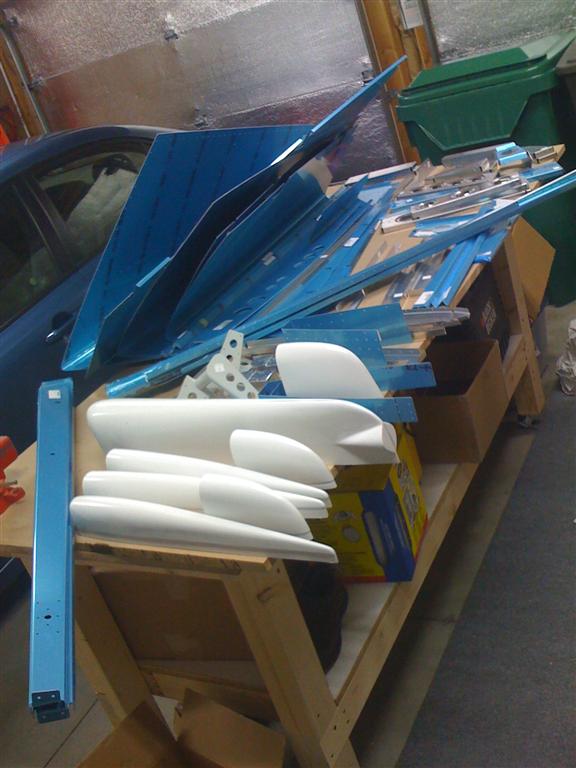
Then my iphone died, so I kept unpacking and inventorying (verb?) until I could snap this picture of everything in the kit except the hardware.

Everything upacked, except hardware.

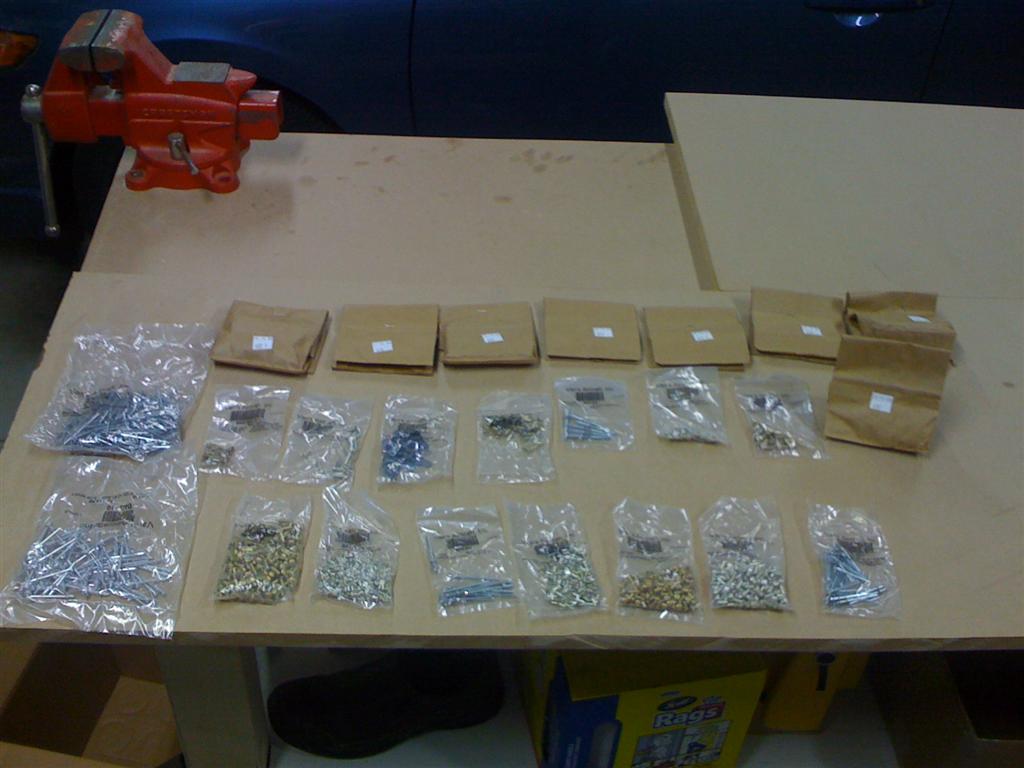
Here’s a picture of the hardware.

Here are the hardware bags.

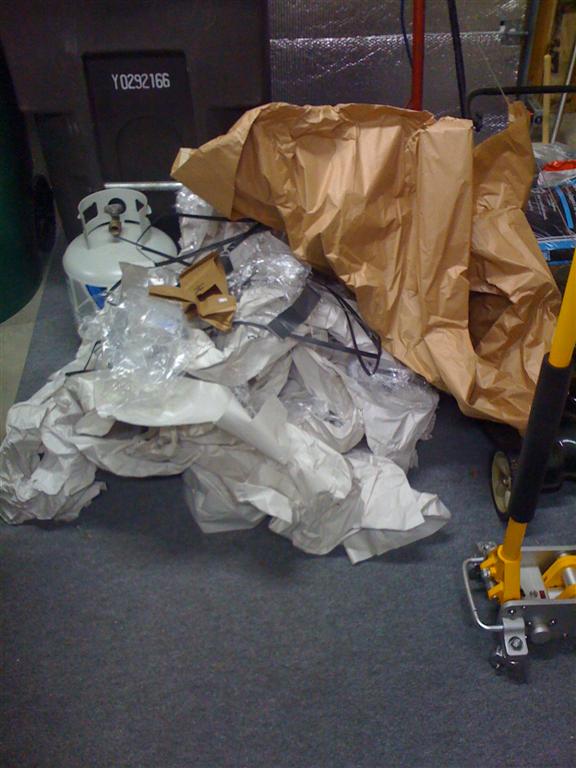
And then all the paper from the whole kit. (I left the boxes out of the picture.)

That's a lot of paper.

Then I put everything away user my second workbench. Top shelf was horizontal parts on front, vertical parts on back. Middle shelf is elevator parts on front and rudder parts in back. Bottom shelf is skins. I left the hardware in bags for now, I need to stop by harbor freight tomorrow and pick up another storage bin.

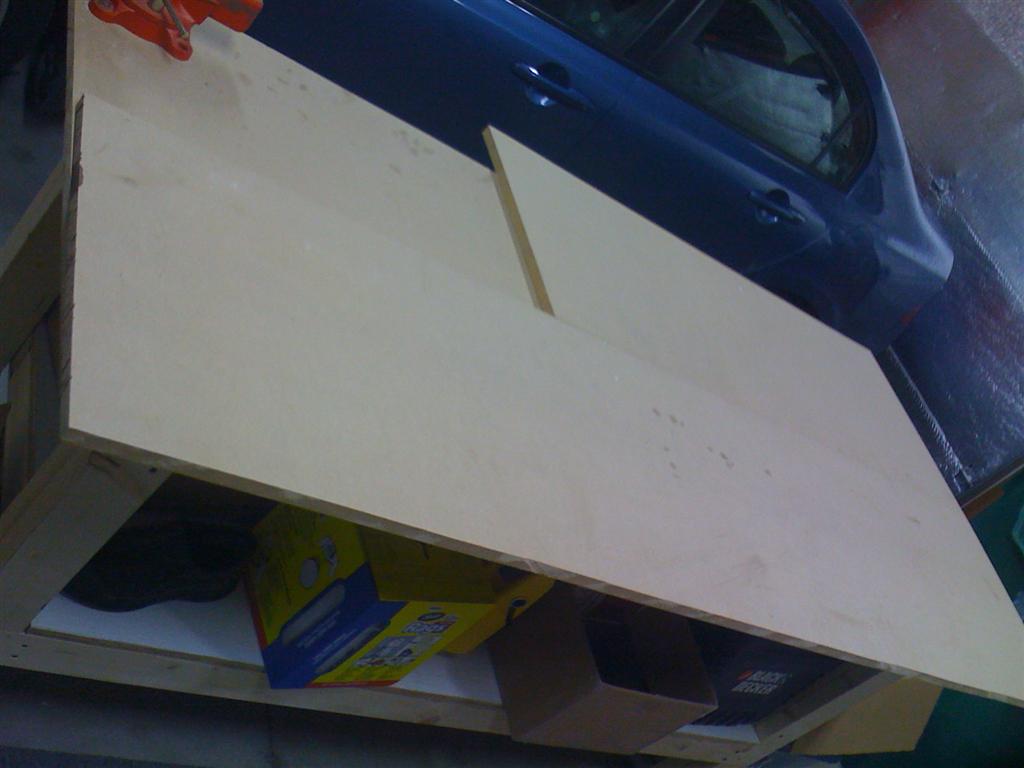
Here’s my empty workbench, ready for the real start tomorrow. And here’s a picture of my second bench, with all the airplane parts in it.

Ready to go for tomorrow. Sorry about the weird angle.

I’m counting the inventory hours as build hours, because of the organization and learning part. Some people don’t count them, but I think it is an important part of the process. 1.5 hours.

Prev | Next


First Avery tool order

December 25, 2009

Prev | Next

Dec 25, 2009

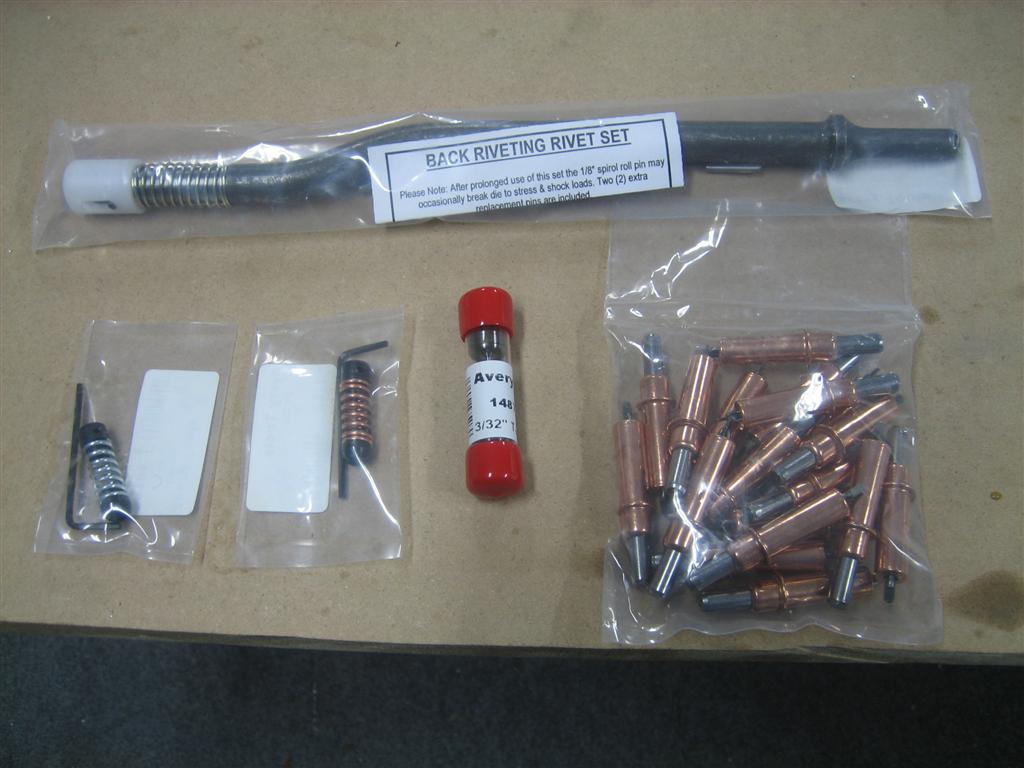
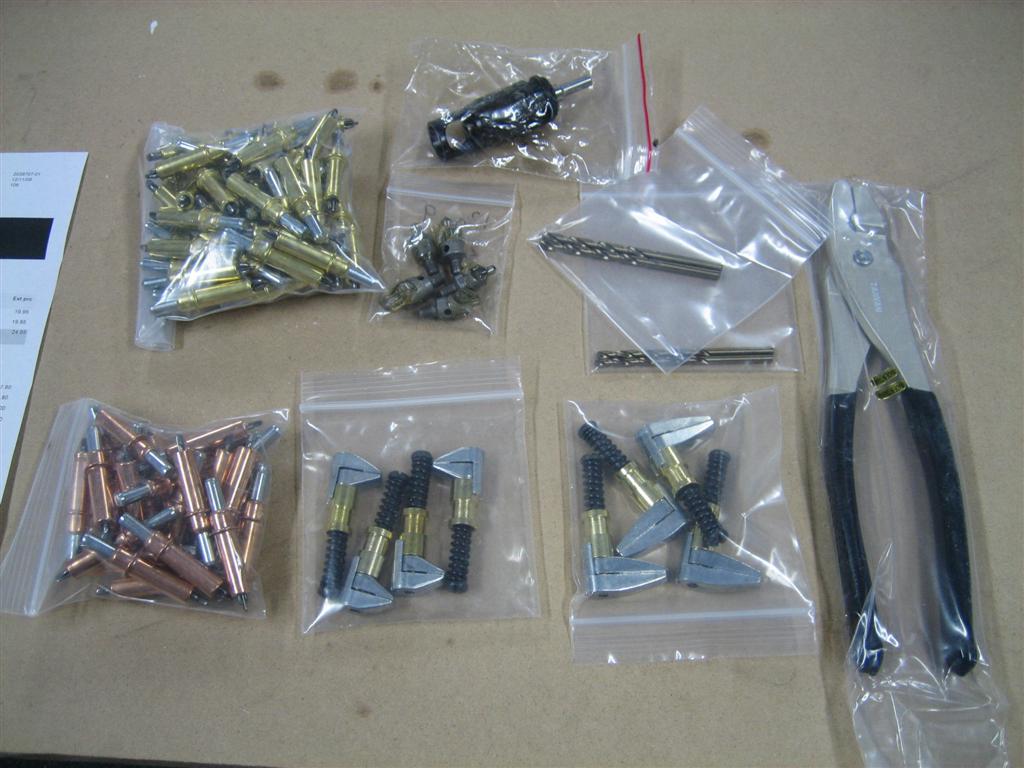
I made another tool order last night. This time from Avery. I’ve heard really good things about them, but they tend to be more expensive for some things. Merry Christmas to me (and all of you…).

POP RIVET DIMPLERS – 3/32″ – These dimple dies are for hard to reach places in the aft end of ribs. You can also use them on the skins, if you don’t really want to buy a c-frame, (or are planning on borrowing one, and haven’t gotten around to it.) I know a few people on the forums who have done all of their skins with pop-rivet dies. I definitely need them for the ribs, so if they work out, I’ll try them on the skins. Otherwise, I’ll get the c-frame.

3/32″ TANK DIES – This is for dimpling the understructure (ribs, etc.) with a slightly larger dimple (dies were made for dimpling the fuel tanks, where the pro-seal required to seal the tanks prevents the rivet head from sitting flush). I’ve decided, after reading Brad Oliver’s post on the tank dies here, and then confirming that many builders have gone this route, that this will be a good idea.

EXTRA LONG DOUBLE OFFSET BACK RIVET SET – I need a backrivet set anyway, so instead of ordering the cheap (pronounced “great value”) one from the Yard, I decided to just get one…one that will work when I need to backrivet something (in the wings?) with a double offset. People rave about backriveting the wing skins, and while I am a long way from those steps, at least now I’ll only need one backrivet set instead of two.

DRILL STOPS – #40 Drill Stop – I tried to make my own drill stops out of tubing, but it didn’t work. I hope these are nice.

DRILL STOPS – #30 Drill Stop – Needed the #30 size, too.

MONOGRAM AIRCRAFT SHEET METAL FASTENERS (CLECOS) – 1/8″ CLECO – Ha. I bought 18 of these to bring my subtotal to $100.02. Free shipping over $100! I’m so clever.

Avery tool order that came in. Wuhoo! Apparently I had already put away the pop rivet dimplers. Sorry. They come in a little plastic baggy about the size of the drill stop bags with about 6 extra nails in it.

Prev | Next


Automatic Compressor Drain Kit

December 13, 2009

Prev | Next

This afternoon (after a lot of research), I stopped by Harbor Freight and bought the Automatic Compressor drain kit.

Automatic Compressor Drain Kit

Automatic Compressor Drain Kit

I had come across this product on Mike Bullock’s site, and in particular, on his useful docs page (direct link to the .pdf here.)

Compressor pre-project

Close-up of the unloader line.

The parts that came with the Harbor Freight kit.

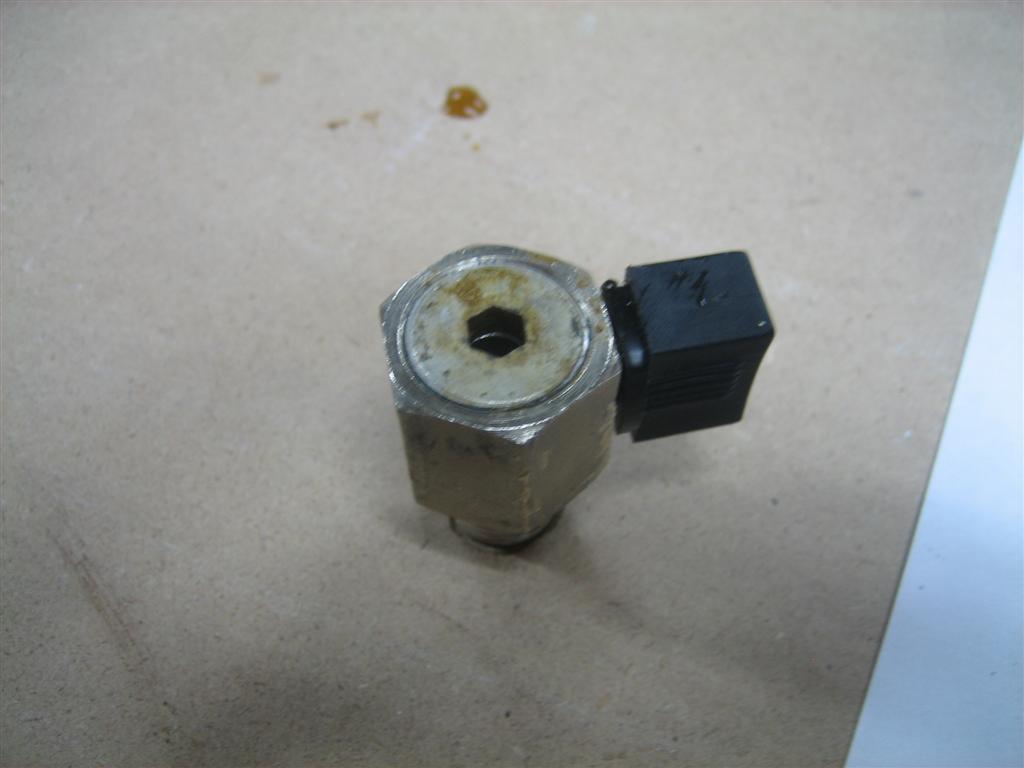
The assembly on the left goes underneath the compressor, (the auto-drain, towards the top in the picture), tees off from the manual drain (towards the bottom right of the assembly). The tee at the top of the picture gets installed in the unloader line, which provides pressure at compressor start-up and shut-down to the end of the auto-drain. That pressure moves a little diaphragm and valve that then opens a small hole in the auto-drain. You’ll see the final connections later.

Printout of Mike's Guide (it looks like it may actually be copyrighted by someone else. See Mike's page for more info.)

I’m ready to start.

The existing petcock (has a nice handle on it).

First, I removed the existing petcock.

The old petcock removed.

Needs a little cleaning, if you ask me.

Other side of the old petcock.

Here’s the new auto-drain (and tee) installed in the bottom of the compressor.

Tee and auto drain attached to the compressor.

The petcock that come with the autodrain was not as nice my original one, so I installed my original one to the tee. I had to be careful to make sure I had enough clearance when the compressor sits upright. I have about 1/16″.

Old petcock attached to the new drain tee.

Then I started running the plastic tubing from the auto-drain.

Plastic tubing attached to the auto-drain. (I haven't tightened down the nut, yet.)

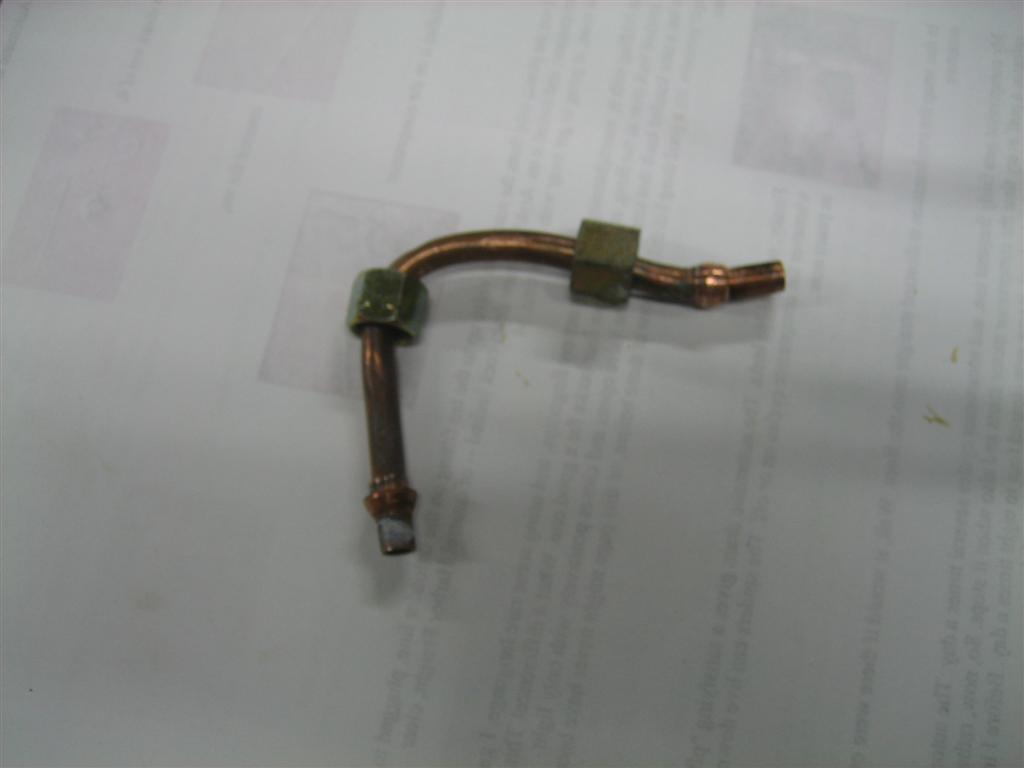
Then, I stumbled across the part in the directions (both the Harbor Freight directions and the .pdf I had printed out) that mentioned that the kit I had just purchased included the unloader line tee meant for plastic unloader lines. Crap, mine’s copper. I’ll have to run to Lowe’s tomorrow to get a standard compression tee, then finish up. The .pdf notes that if you put the tee too close to the tank fitting, heat can make the plastic tubing get soft. I’m going to lengthen this connection to give me a little more room to work with when installing the tee.

The unloader line removed.

Sorry I didn’t finish. I got called inside to fix a crazy washer. (Wouldn’t drain or spin…grrr.)

January 1 update: I managed to fix the washer, but then had to go on vacation (feel sorry for me?). When I started the tail kit on Dec 30th, I powered up the compressor (still having not connected the plastic unloader line) and the automatic drain assembly leaked. Upon closer inspection, there was a HUGE CRACK in the side of the fitting. I packed it up and exchanged it for a new one at Harbor Freight. The new one should work, once I have some time to install it.

Prev | Next


More tools before starting

December 11, 2009

Prev | Next

Ordered some more tools today.  The Yard has graciously offered to send me the following after taking some of my money:

  • Fluting Pliers
  • Microstop New
  • 5-Piece Set 100 degree Countersinks
  • 4  Side-Grip Clecos Clamps 1/2″
  • 4    Side-Grip Clecos Clamps 1″
  • 25   K Series Spring Cleco 1/8″
  • 50   K Series Spring Cleco 3/16″
  • 2    #21 Cobalt Jobber Bit – 135 degree
  • 2    #12 Cobalt Jobber Bit – 135 degree

They should arrive sometime next week. I’ll update the post when the come in with some pictures.

Tools arrived!

Dec 25th update:

I bet some of you noticed I ordered 3/16″ clecos instead of 3/32″ When the box arrived, I was sure that the Yard had made a mistake, but I quickly realized the mistake was mine. After some research, I figured out I won’t need that many 3/16″ clecos, so it owuld be best if I could exchange them. Luckily, I was headed to Wichita the very next day for a wedding, and the Yard is conveniently located in Wichita.

Note: It is possible to bring a bag of 50 3/16″ clecos in a carry-on through airport security. Be prepared: the TSA will ask you why you are trying to bring bullets on the airplane. Ask me how I know.

When I was able to sneak away from the wedding festivities and make it to the Yard, the guy behind the counter didn’t have any problem with me exchanging for the right size. He even pointed out that I might want to go with used. Skeptically, I inspected a bag of 100 used 3/32″ clecos, and was satisfied with their quality. (Only saw a few with pro-seal on them.) at $0.25 a piece, I saved a bunch of money. Ha.

January update: Later, I saw that some of the clecos are stubby clecos, and some are unusable. I’ve gone through every one and thrown out about 10% of them.  I will probably stick with new clecos from now on. If nothing else, they look better in the pictures for you guys.

Anyway, let me get back to my Christmas. Oh, and Merry Christmas.

Prev | Next


Ordered Empennage

November 30, 2009

Prev | Next

Well, it’s official. Today at 2:08 pm EST, I emailed Barb my order form. I didn’t buy the electric trim yet, but I am planning on installing electric trim by the time I finish the kit. (Didn’t want to spend the $300 to have the trim motor sit for months on a shelf.)

Then I got the confirmation:

Andrew, I was able to print your form with no problem. Thanks much. We will process your order and ship as soon as we can.

Update on Dec 7th…

Andrew, although your order has been put to crating, it has not shipped yet. We normally ship with Fed Ex on a 3 day service, and you will get an email with the tracking once it leaves our door. Thanks for your order and have fun building once you do get you kit.

But then a couple hours later…

Andrew, I was told this afternoon that we are totally out of parts for the RV-7,8, and 9 kits. We should have some hopefully by next week and will ship
your order as soon as we can once the parts have come in from production.

I’m pretty upset that the lady on the phone told me they were in stock and it was a whole week (and an email inquiry) after my order was placed that I find this out. I think this means the kit will arrive sometime around the 19th… Grrrr…

Update on Dec 14th…

Anna from Van’s called. She said they are still working on catching up, and that she thinks my kit will be ready a week and a half from from today…which is actually a blessing. That puts it on the FedEx truck on the 23rd, which puts it on my doorstep a little after Christmas, which will line up nicely with some holiday time off from work so I can get started. Hopefully I’ll be able to put in some 8 hours days on the project early on.

I’m impressed that they called. Van’s did not impress me by ignoring me for a week. Besides, even if they had shipped the tail kit today, I wouldn’t have been able to start until after Christmas anyway.

I’ll update the later tool post when my tools come in. (Or after Christmas if my dog, Jack, decides that would be a good gift for me.) He has a hard time ordering things off the internet with no thumbs, so I helped him out.

Update Dec 22nd:

Hooray!

After a short stint in Wichita for a wedding (shudder, and yes, I am entitled to a shudder… I put in two years there as a young, single male) and the beginning of a christmas vacation in the keys, I got an email from Van’s for the first emp box (29 lbs) tracking number.
It should arrive just in time for the few days I have off while at home before returning to work. This ended up working out pretty well. I wonder where that second box is…

Prev | Next


Practice Kit – Finished

October 4, 2009

Prev | Next

Sunday morning, I managed to finish off the practice kit. Here are the pictures.

Here are the skins riveted to the spar. Notice how I didn't make the jig to hold it to the table.

Here are the skins riveted to the spar. Notice how I didn't make the jig to hold it to the table.

Another shot of the skins riveted to the spar.

Another shot of the skins riveted to the spar.

After the skins were riveted to the ribs and the trailing edge wedge, I rolled the leading edge and clecloed it together. I haven't edge formed the top skin yet, hence the ripples.

After the skins were riveted to the ribs and the trailing edge wedge, I rolled the leading edge and clecloed it together. I haven't edge formed the top skin yet, hence the ripples.

The finished product.

The finished product.

Overall, I am happy with the results. I don’t think they are airplane worthy (I don’t know if I will ever be happy with the final product), but I feel like I am ready to start on the real kit. All of the riveting came out nice, but some of the other aspects (dimpling, countersinking, edge rolling) are still not up to par.

Biggest lesson so far:

1) Go slow, take your time, read the plans, and be careful.
2) The skins don’t look too bad, but I have a feeling there will be too many scratches to polish the final airplane. I’m planning on paint anyway, so I should be okay.
3) Other things, I want to acquire some of the tank dimple dies for the understructure. Some of the skin to rib seams didn’t sit as nicely as I wanted, and I think the slightly deeper dimples in the ribs will accept the dimple in the skin better.
4) Buy a bigger backriveting plate. I just have a 1 x1/2 x 36 inch steel stock. I had to be really careful to keep the rivets lined up. With a wider plate, I wouldn’t’ have had to move the skin around, which caused…
5) …scratches in the skin. Next time I removed the vinyl from the skin, I am going to immediately replace it with painters tape. All of the scratches on the skin are where I removed the vinyl. This can be prevented.
6) Priming. Using the self-etching primer is so easy, I think I may do all of the interior skin next time ( I only primed the rivet lines, where two pieces of metal would meet this time).
7) I need a no-hole yoke for the rivets near the rear of the trailing edge. I managed with a thin bucking bar, but I didn’t like the results. A no-hole would make this a non-issue.

Prev | Next


Practice Kit – Riveting

October 2, 2009

Prev | Next

I started riveting today. I got the skeleton riveted together and back-riveted then stiffeners to the skins.

Skeleton riveted together.
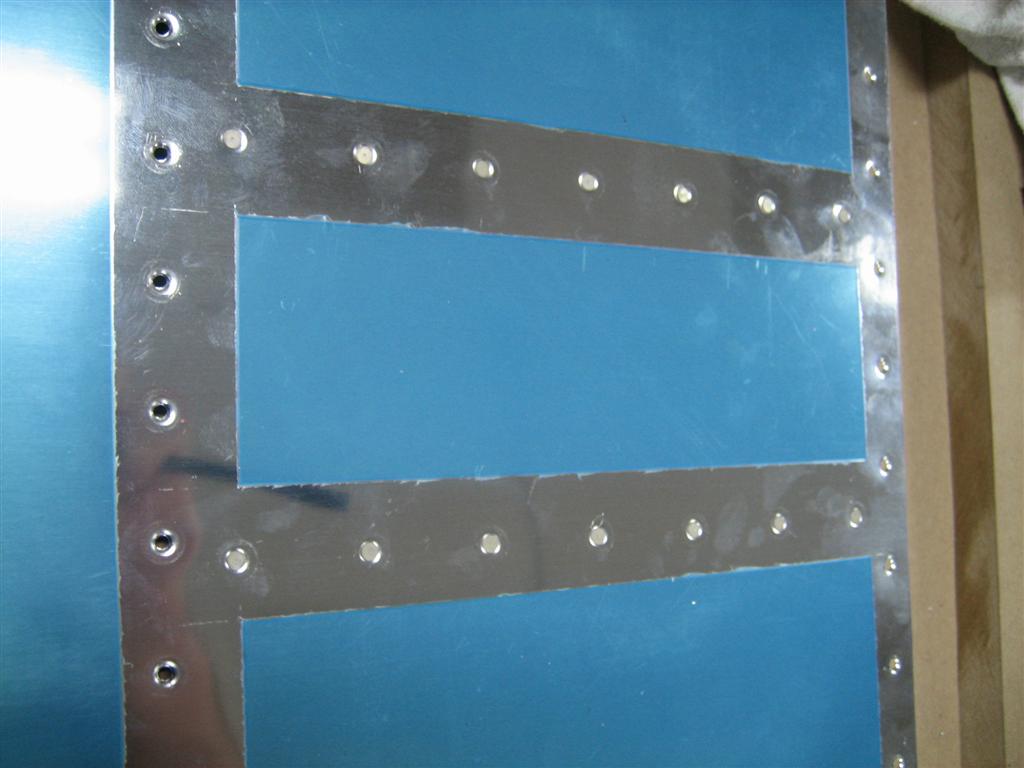
Skins back-riveted. Nice, huh?

I’ll try to finish up tonight, but I need to figure out a way to dimple the ribs near the trailing edges. I should probably follow the directions and fabricate the special dimpling tool described in the plans. Off to the hardware store for some steel…

Prev | Next


Practice Kit – Priming

October 1, 2009

Prev | Next

I decided to prep and prime the practice kit to smooth out the process before starting on the airplane. i don’t know if this is the final process, but it was I did for the practice kit.

First, I scrubbed all of the surfaces to be primed with a soapy red scotchbrite pad. Then clean with acetone and let dry, then prime with a medium gray self-etching primer. I’ll continue tomorrow.

One of the skins, primed and de-blued.

One of the skins, primed and de-blued. Stiffeners, doublers, trailing edge wedge, spar, and ribs ready to rivet.

Stiffeners, doublers, trailing edge wedge, spar, and ribs ready to rivet.

Stiffeners, doublers, trailing edge wedge, spar, and ribs ready to rivet.

Prev | Next


Practice Kit – Stiffeners and Skins

September 30, 2009

Prev | Next

I started on the real practice kit today. First, you have to make the stiffeners. Easy as pie, except the stock I got in my kit was cut short by about 1/2″ in each case. I got two shorter sections, the kit shows it comes as one long piece. Maybe George gave me some extra that was laying around. No biggie, but that’s why in the pictures below the stiffeners are different lengths. Then I edge prepped the stiffeners, ribs, spar, and skins. I also practiced using the soldering iron some more, with pretty decent results. Here’s a shot of the stiffeners and skins ready to match-drill.

Skins and stiffeners ready for match drilling.

Skins and stiffeners ready for match-drilling.

And the stiffeners match-drilled to the skins…

Match-drilled and cleco'ed.

Match-drilled and cleco'ed.

After this, I assembled the skeleton, matchrilled both skins to the ribs, spar, and trailing edge wedge, then disassembled everything. It got late, so I stopped after getting all the holes deburred. Here’s a shot of the skeleton clamped together, ready for drilling.

Skeleton Clamped

Skeleton Clamped

Next step is to figure out a priming process and test it out before dimpling and riveting.

Prev | Next