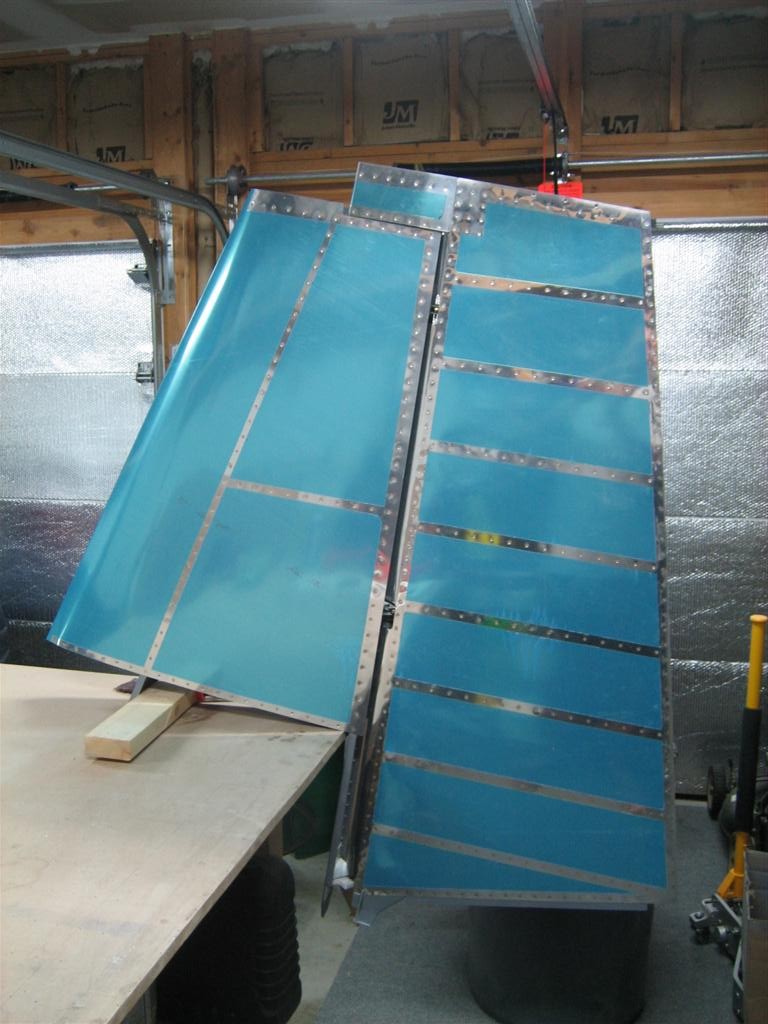
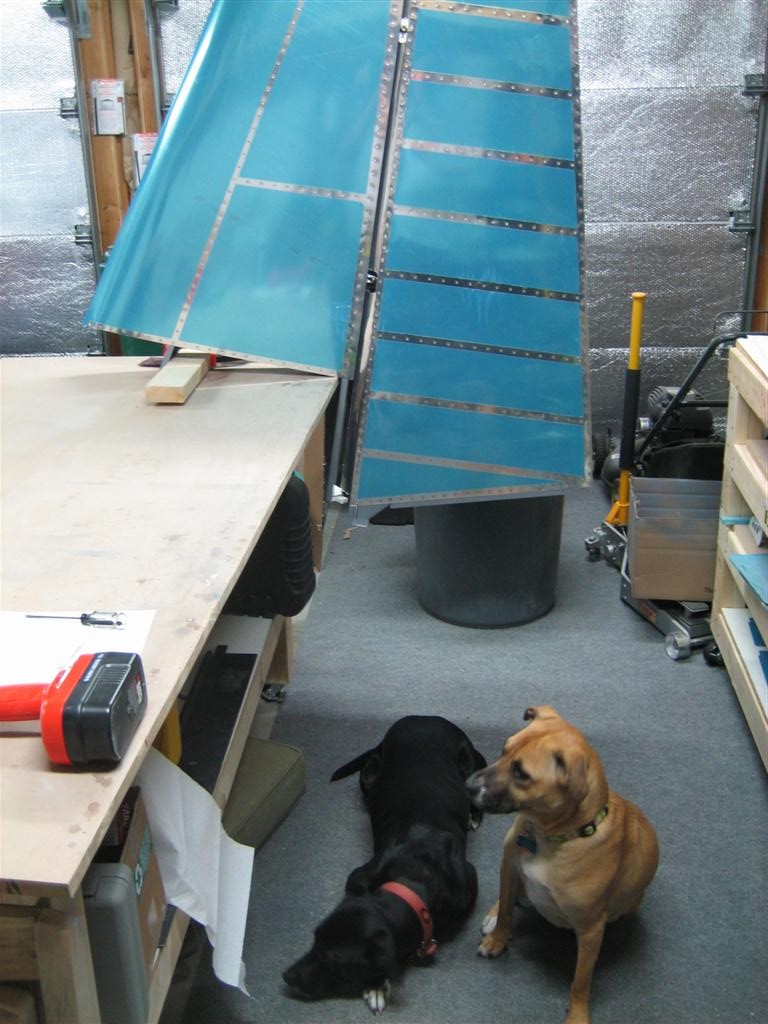
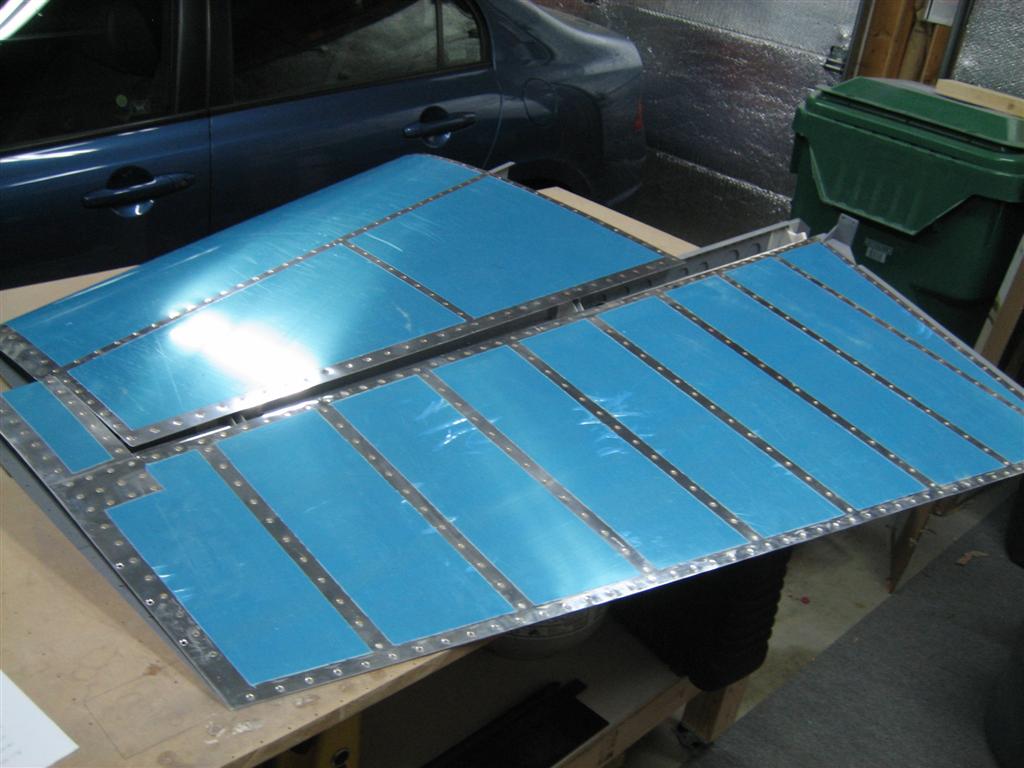
Fixed Right Elevator Trailing Edge

April 24, 2010

Prev | Next

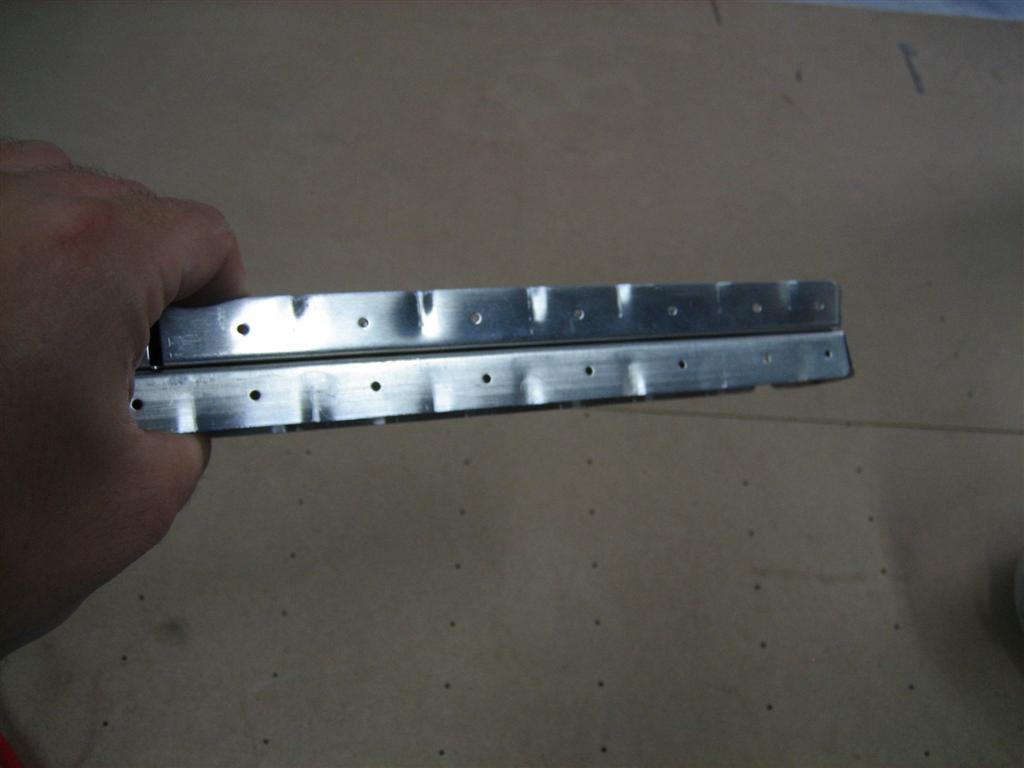
I’ve been lacking in motivation recently due to some badly dimpled holes along the trailing edge of the right elevator. All last week, my error had been hanging over my head, and I was having trouble even motivating myself to fix them.

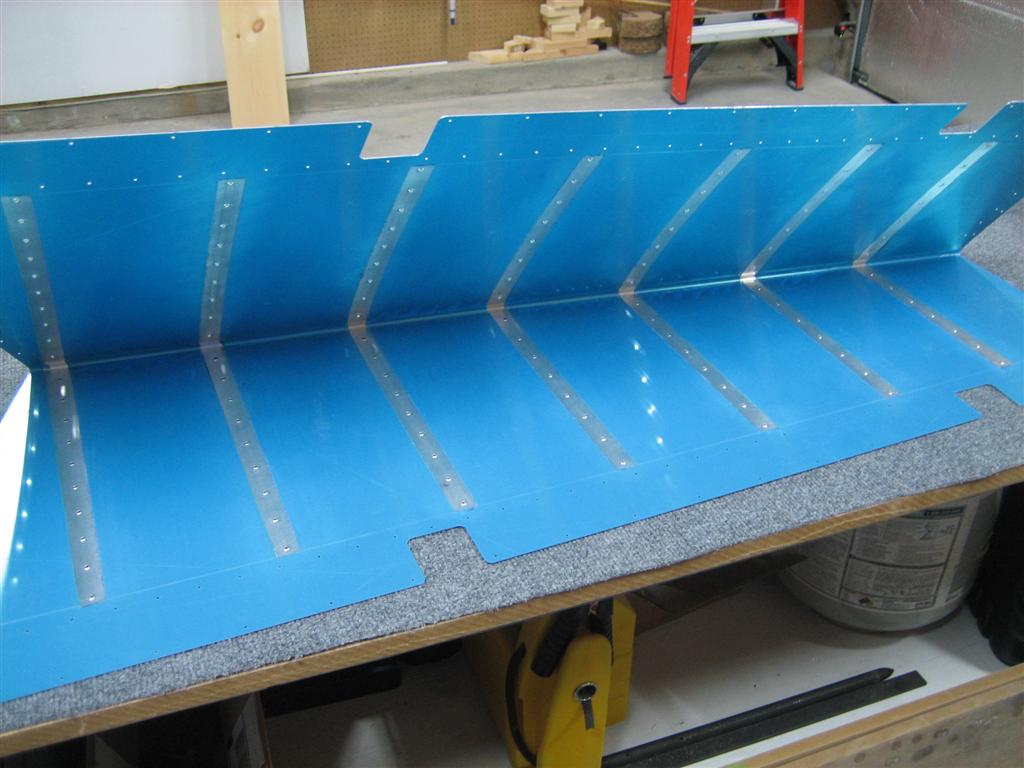
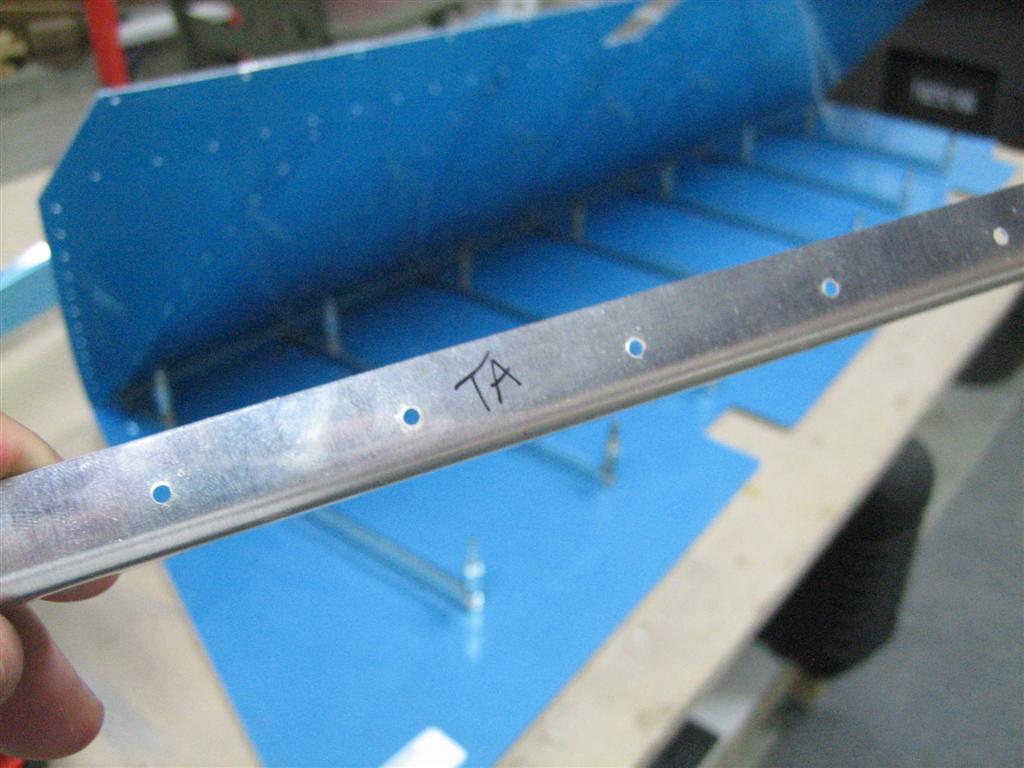
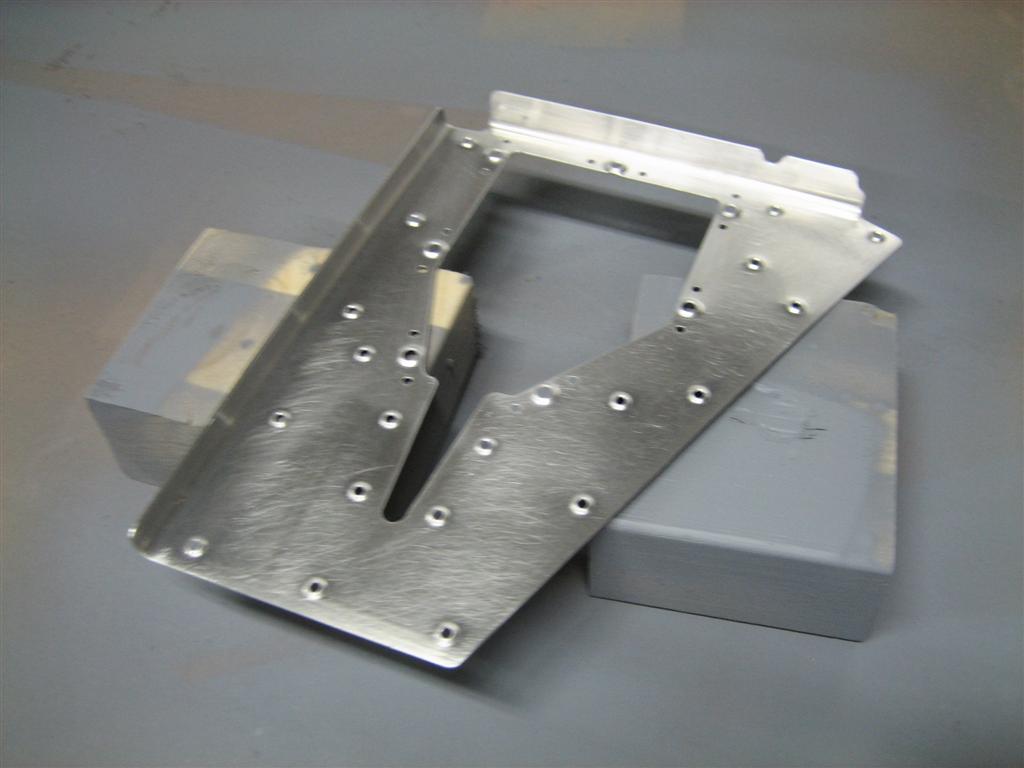
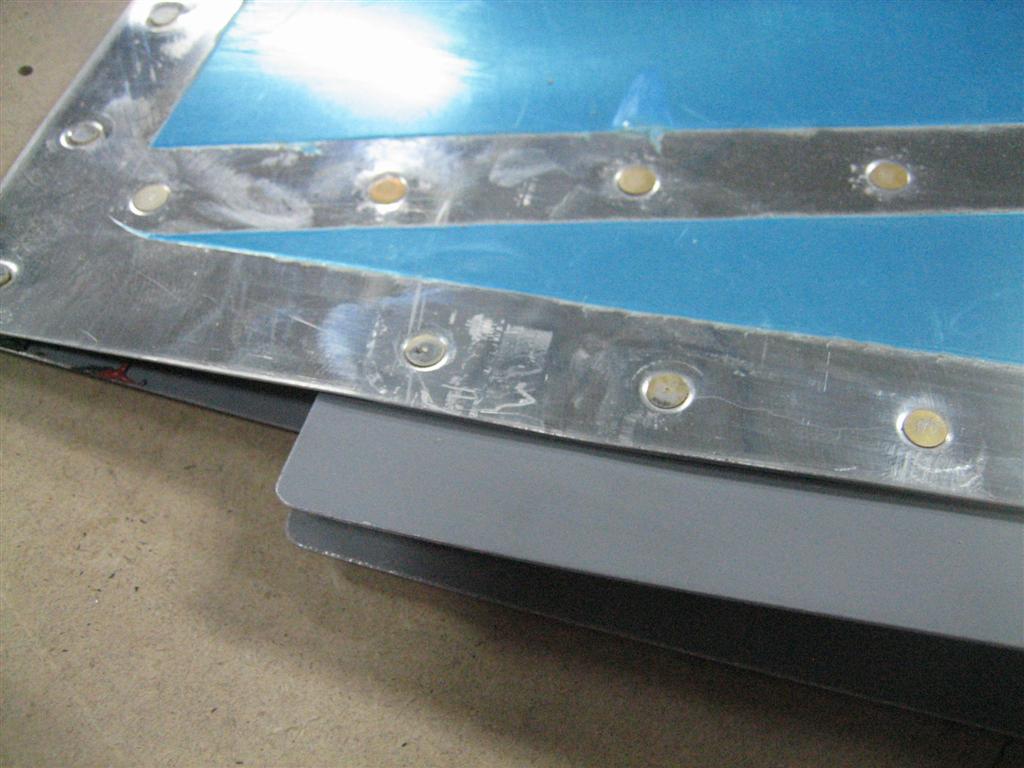
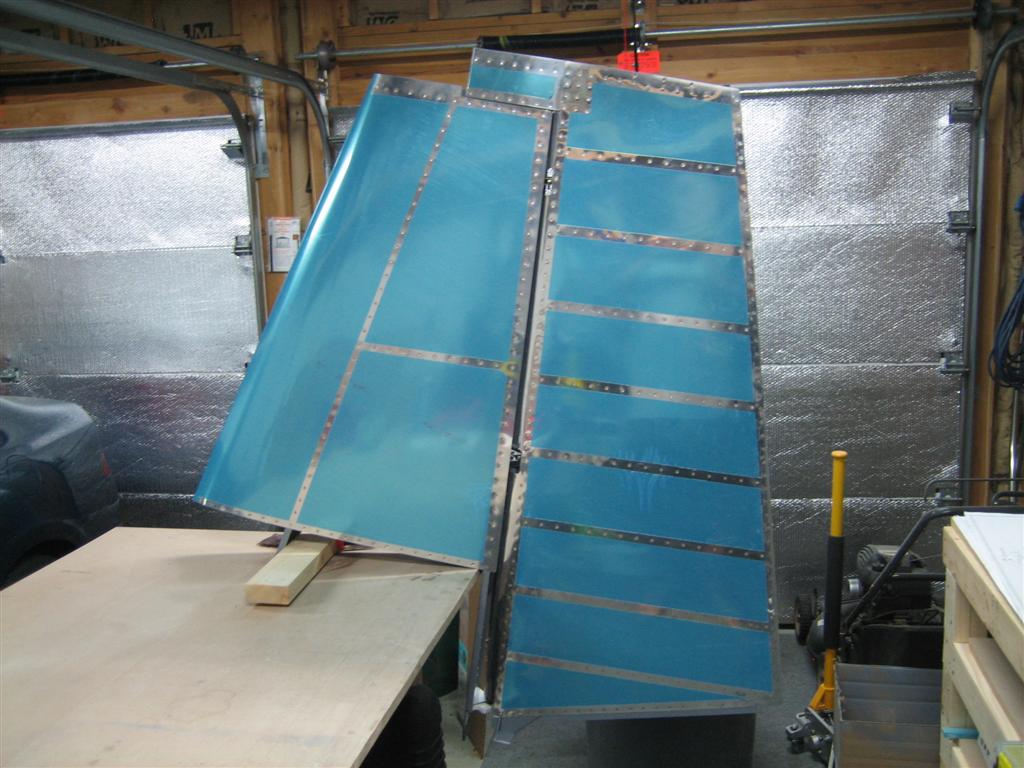
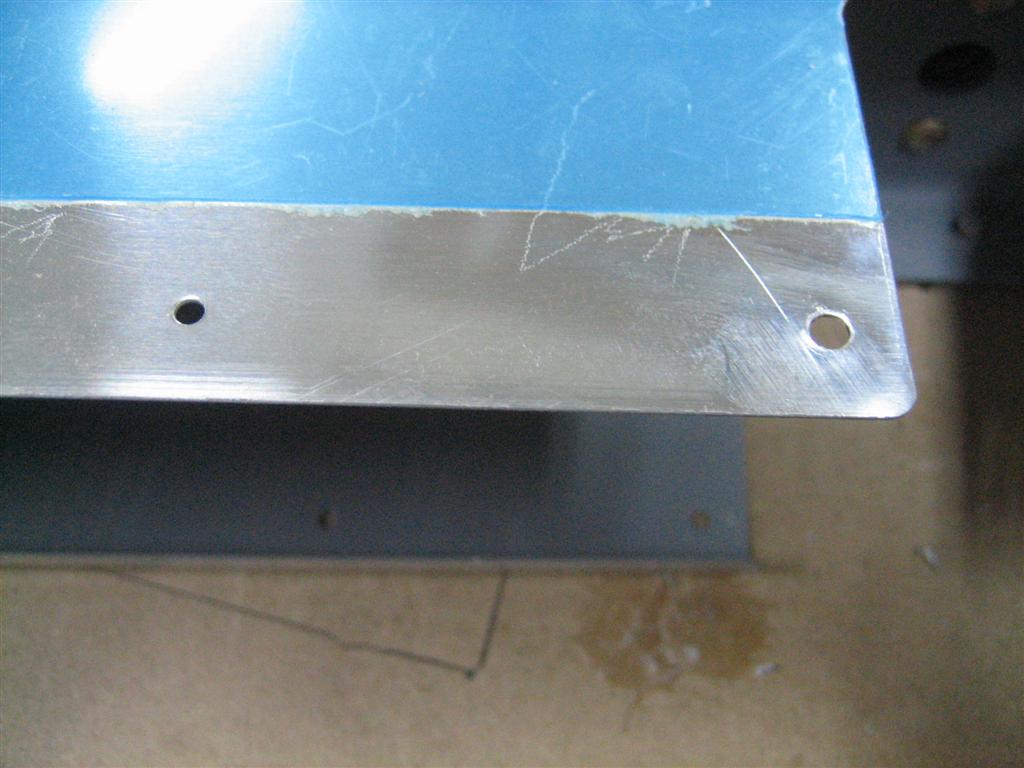
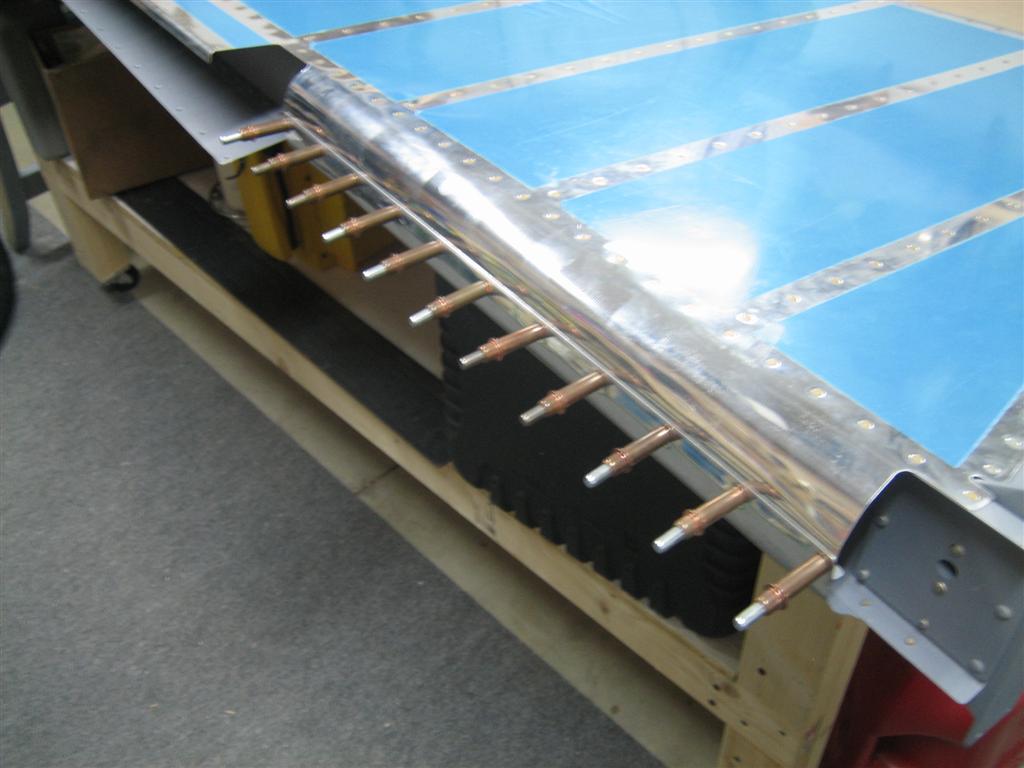
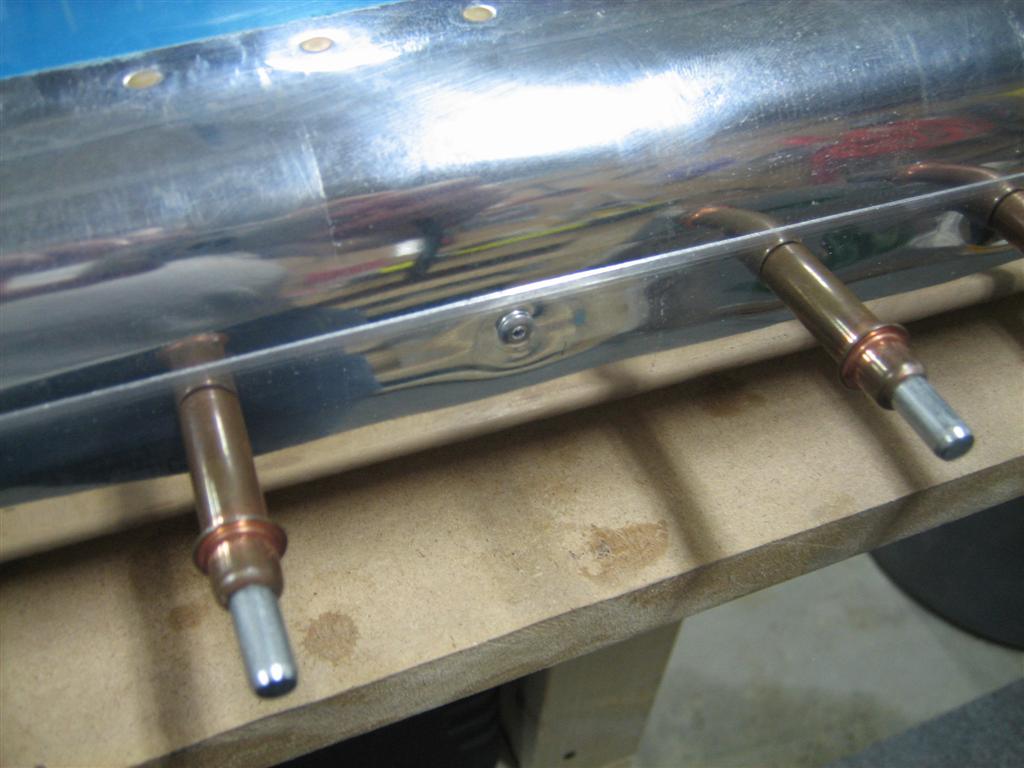
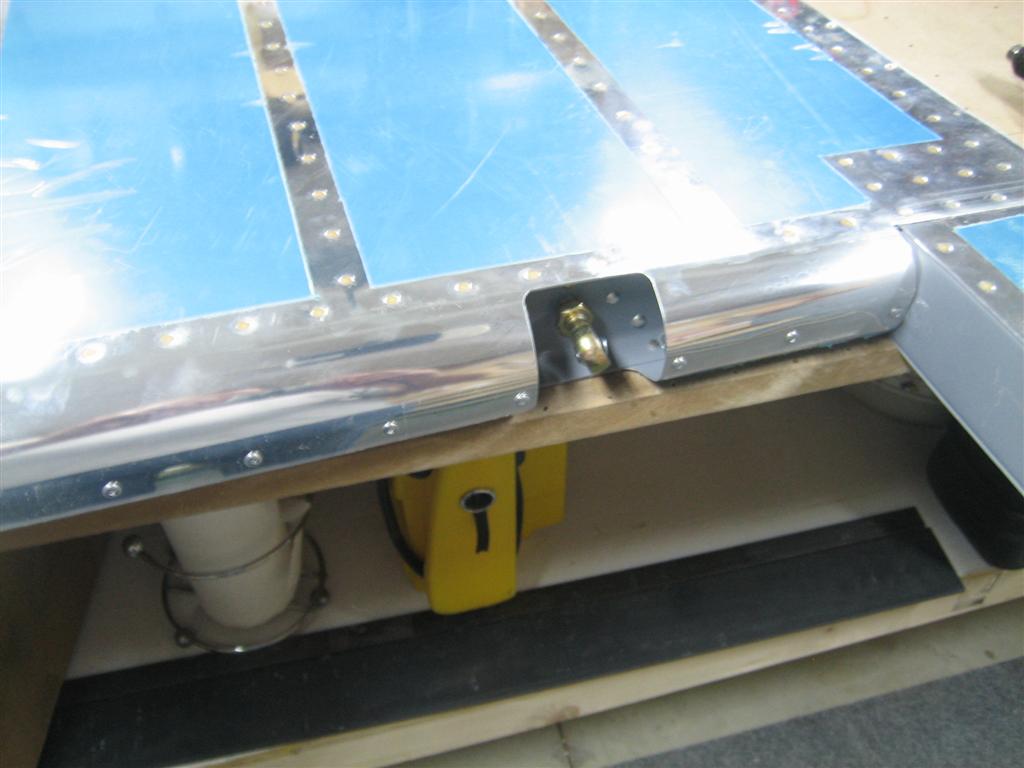
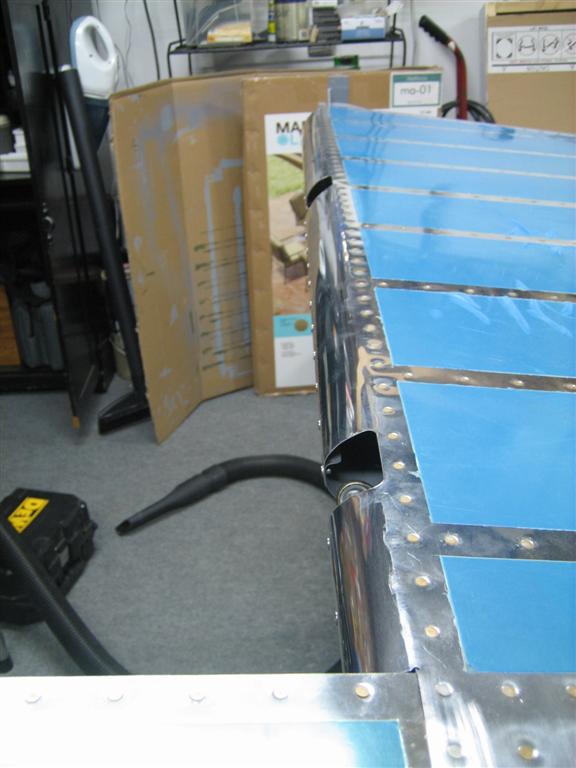
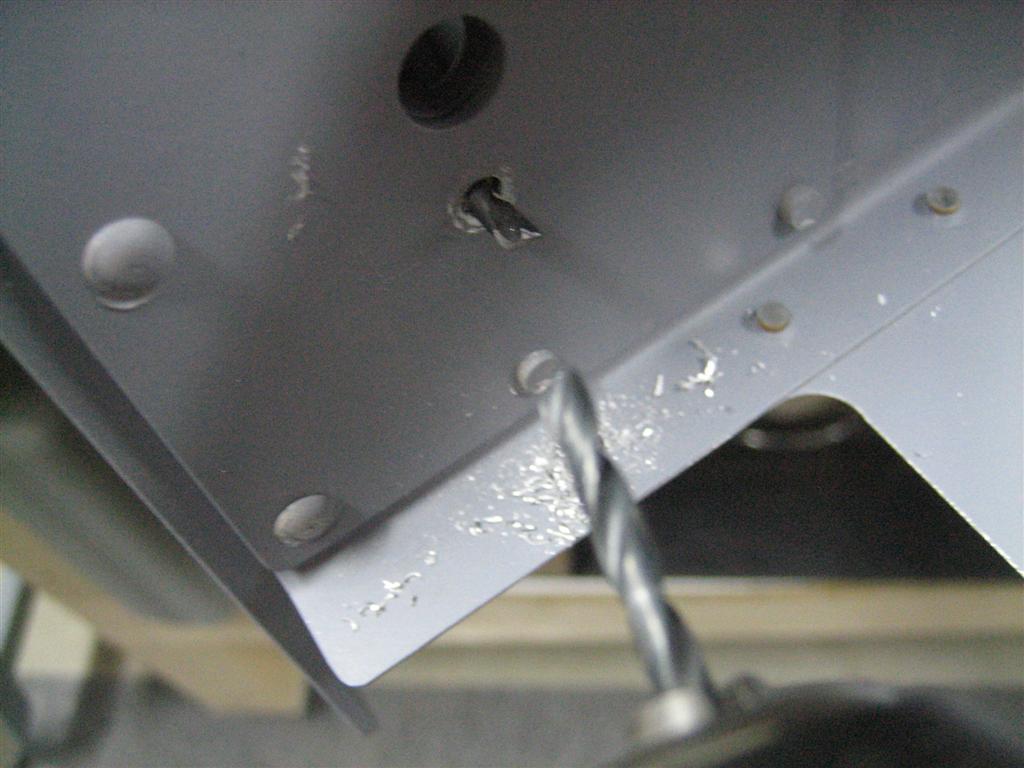
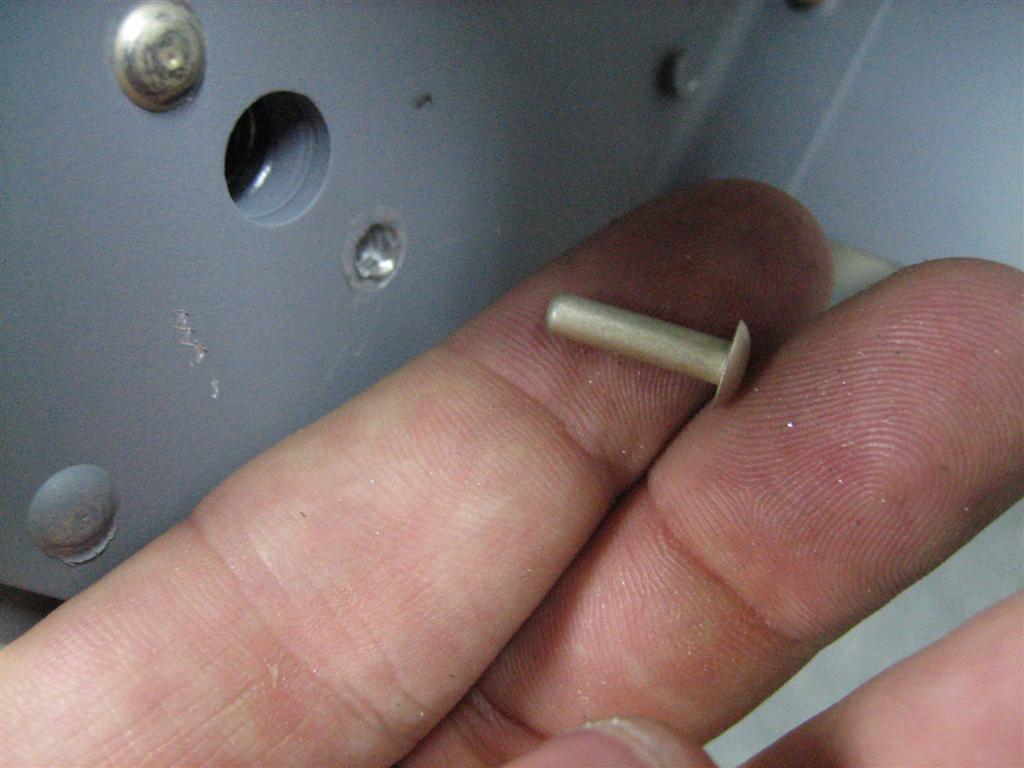
Saturday afternoon (writing this later) I mustered up some courage and drilled out 13 of the 14 trailing edge rivets on the right elevator. They are really not trailing edge rivets, but the aft-most rivets of each of the 14 stiffeners (7 on the upper skin, and 7 on the lower skin).
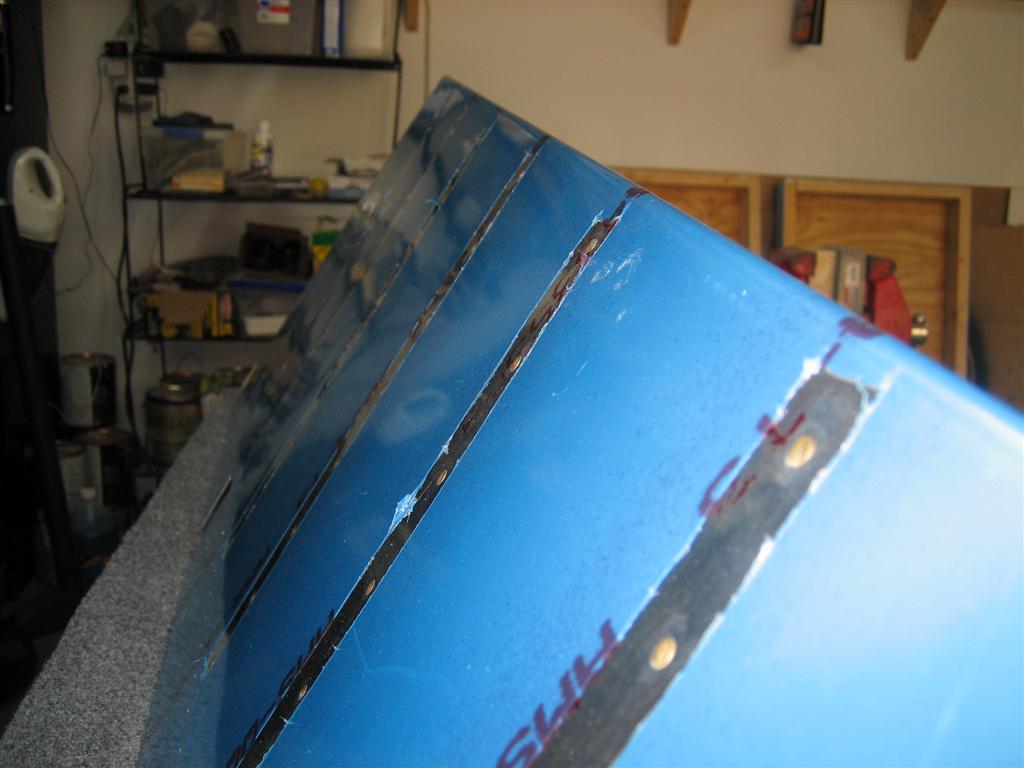
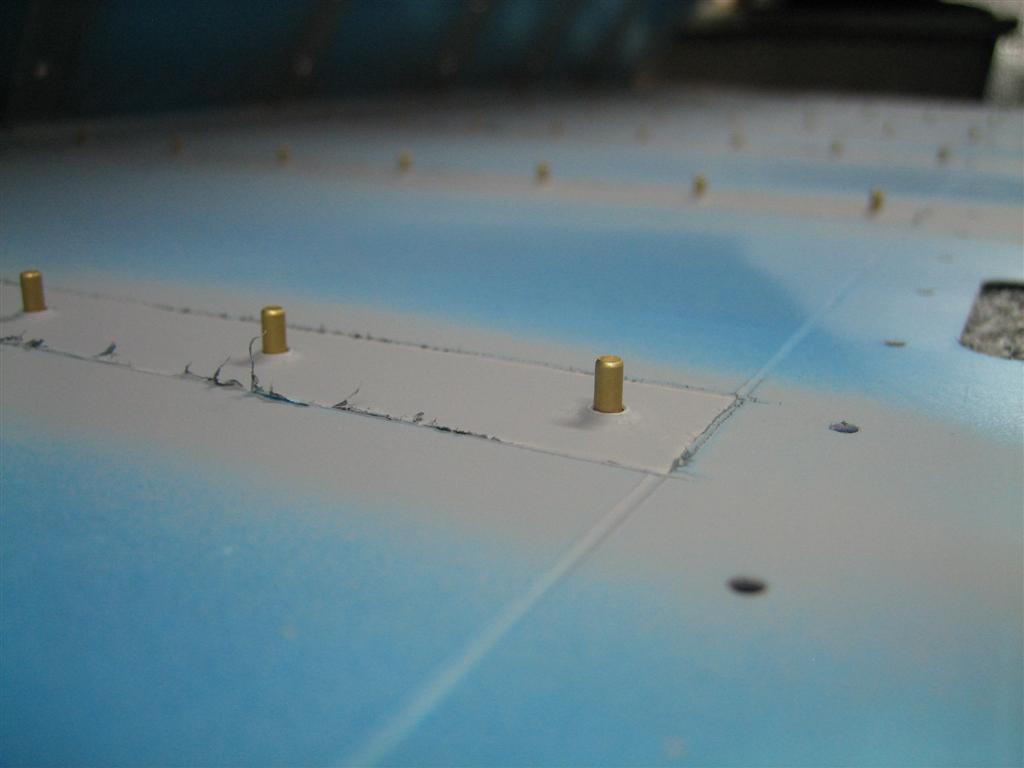
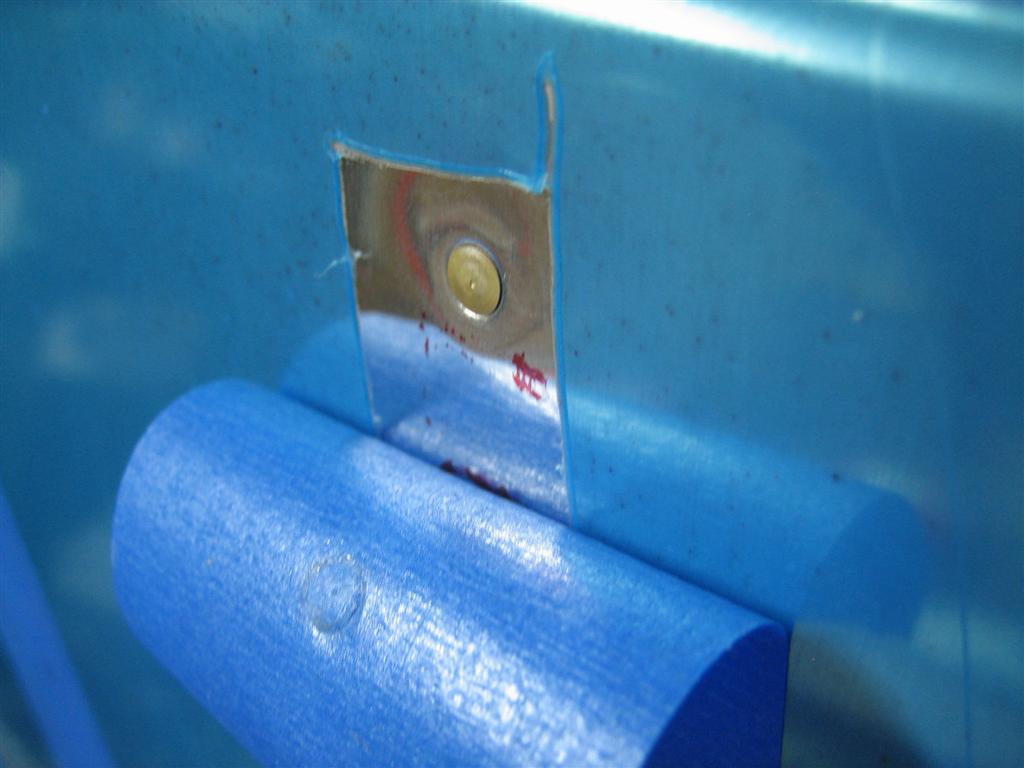
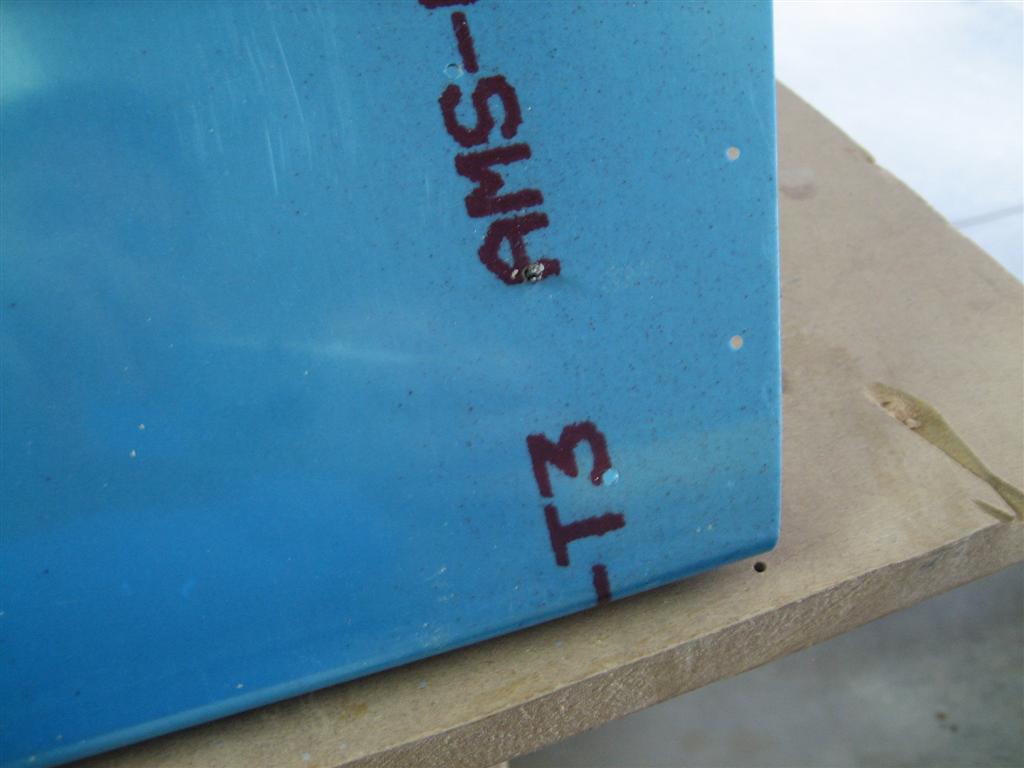
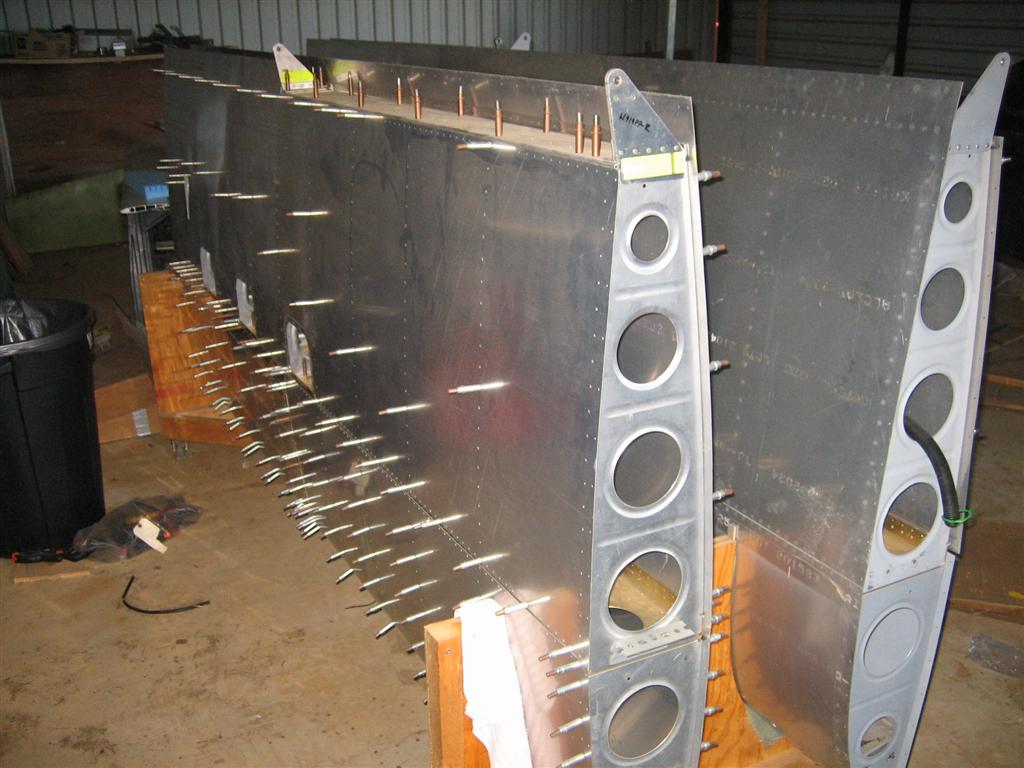
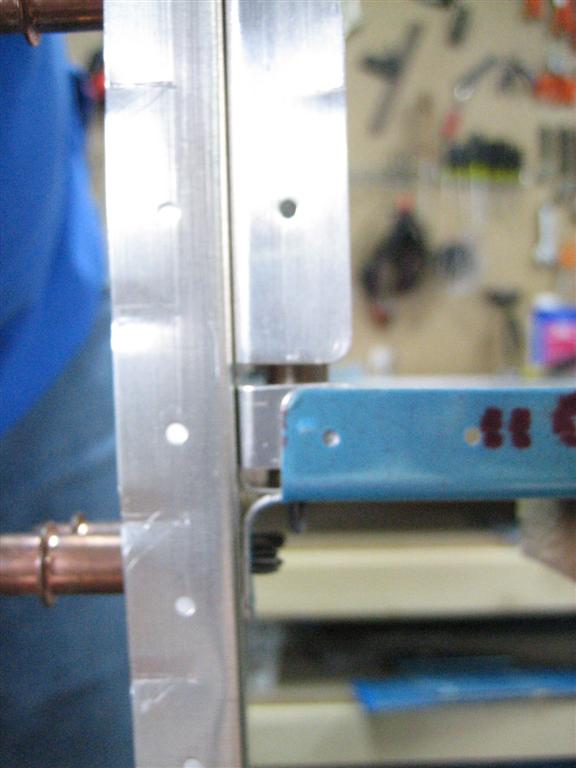
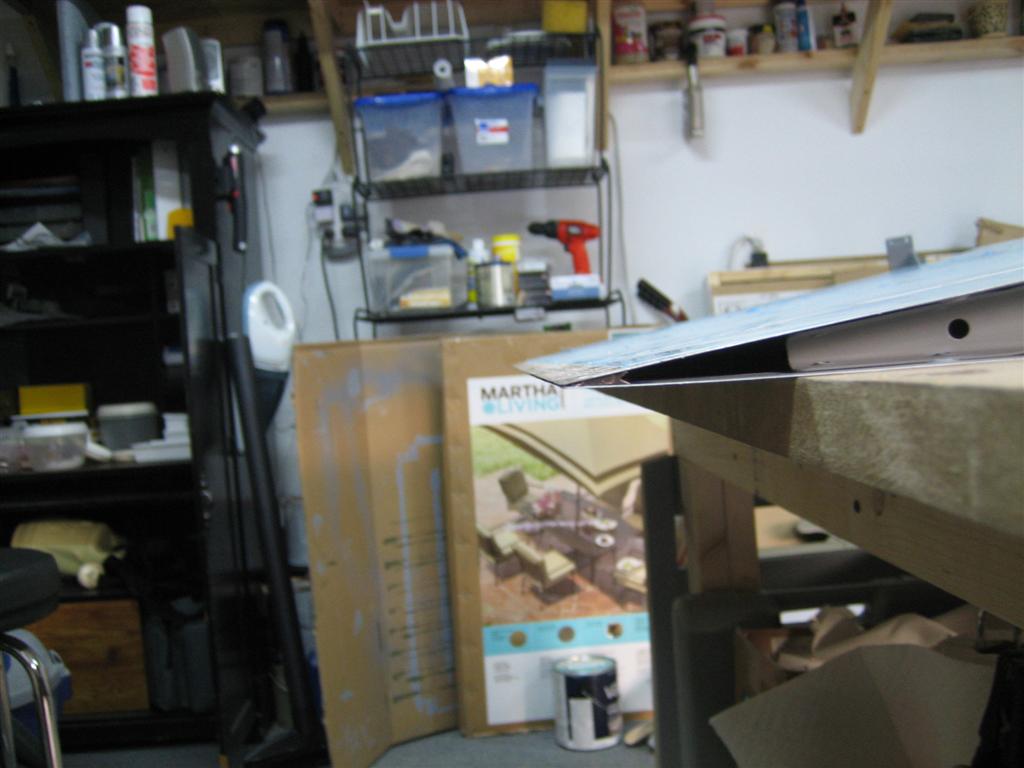
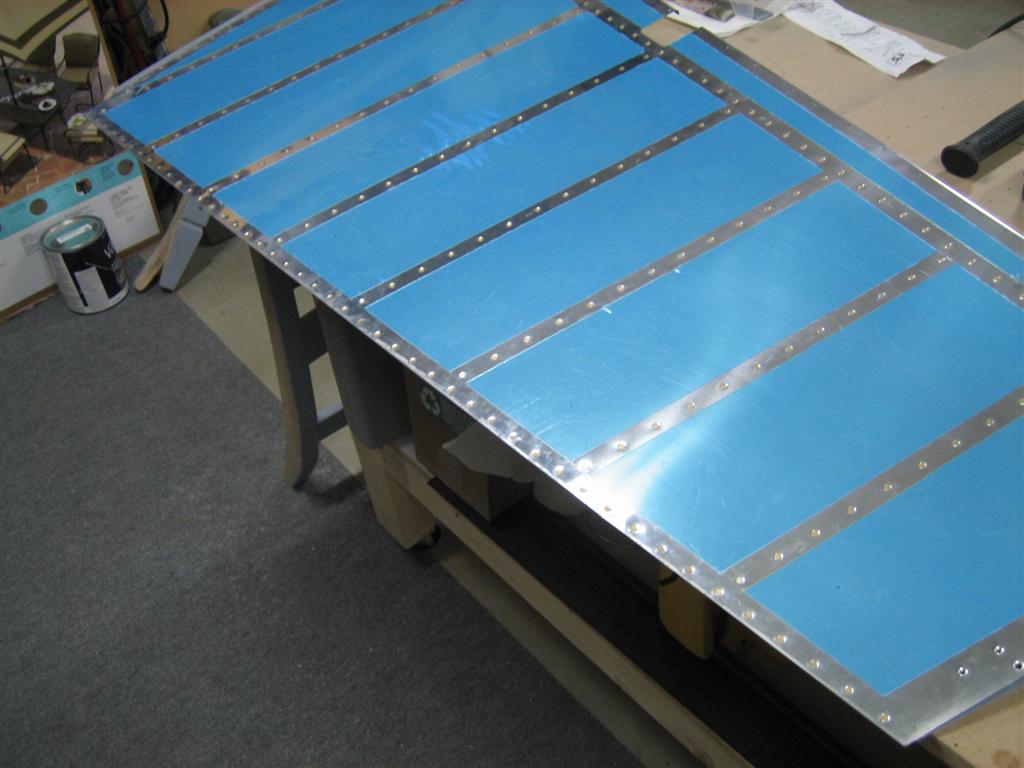
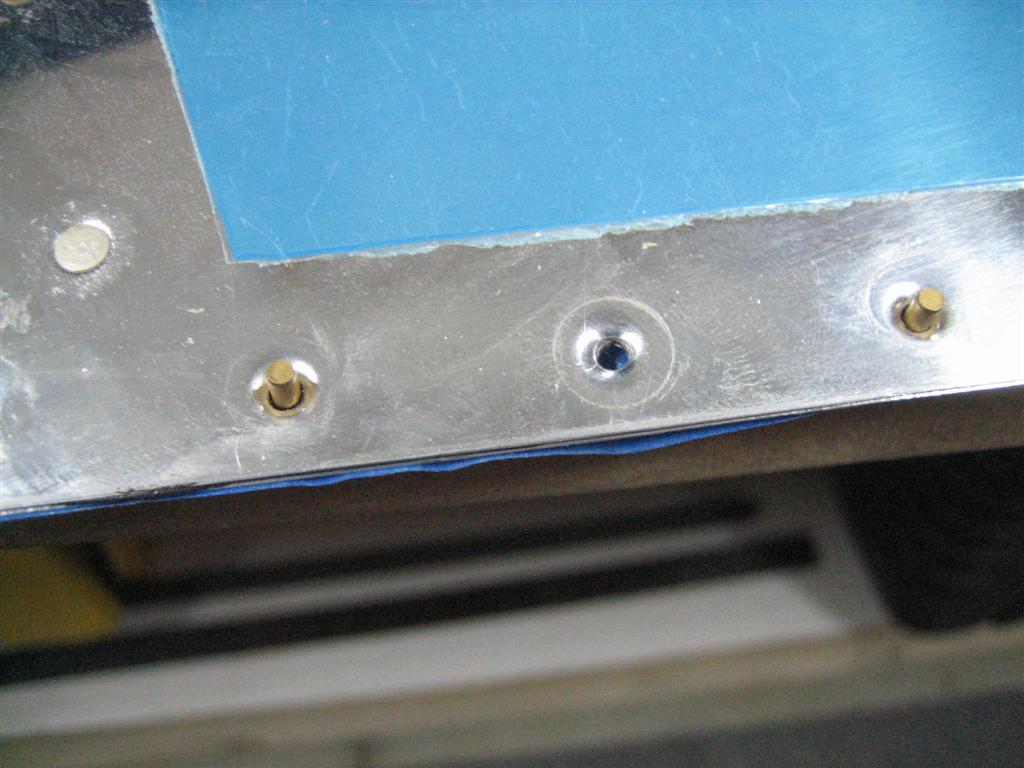
You can't even really see the damage in this picture...

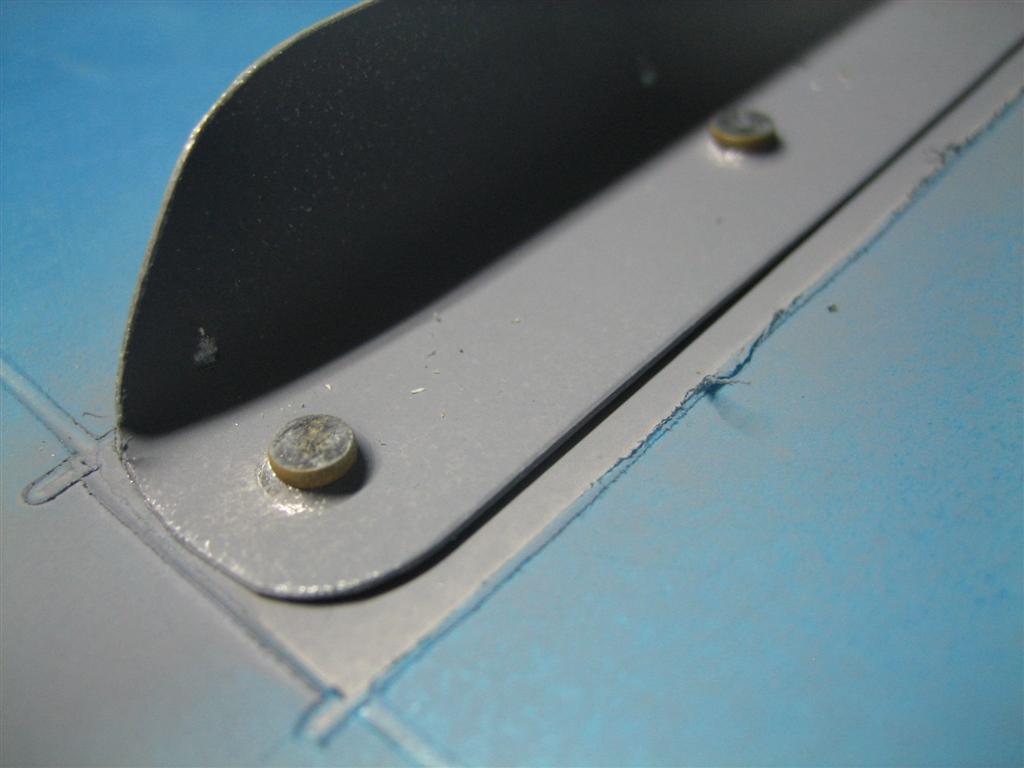
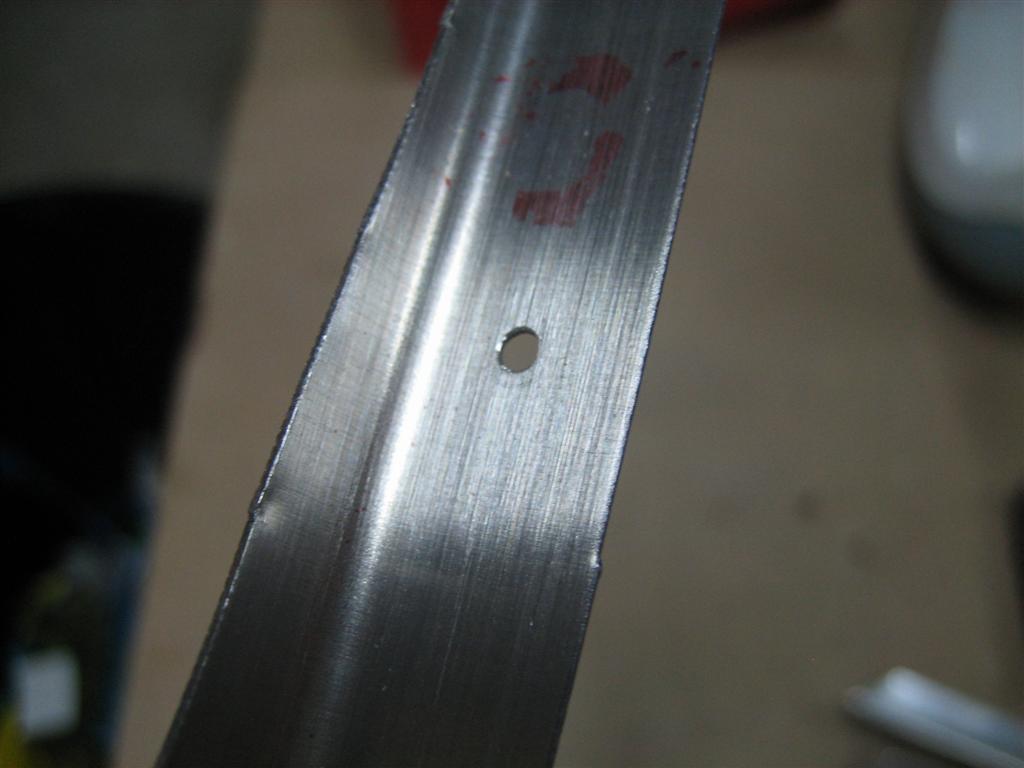
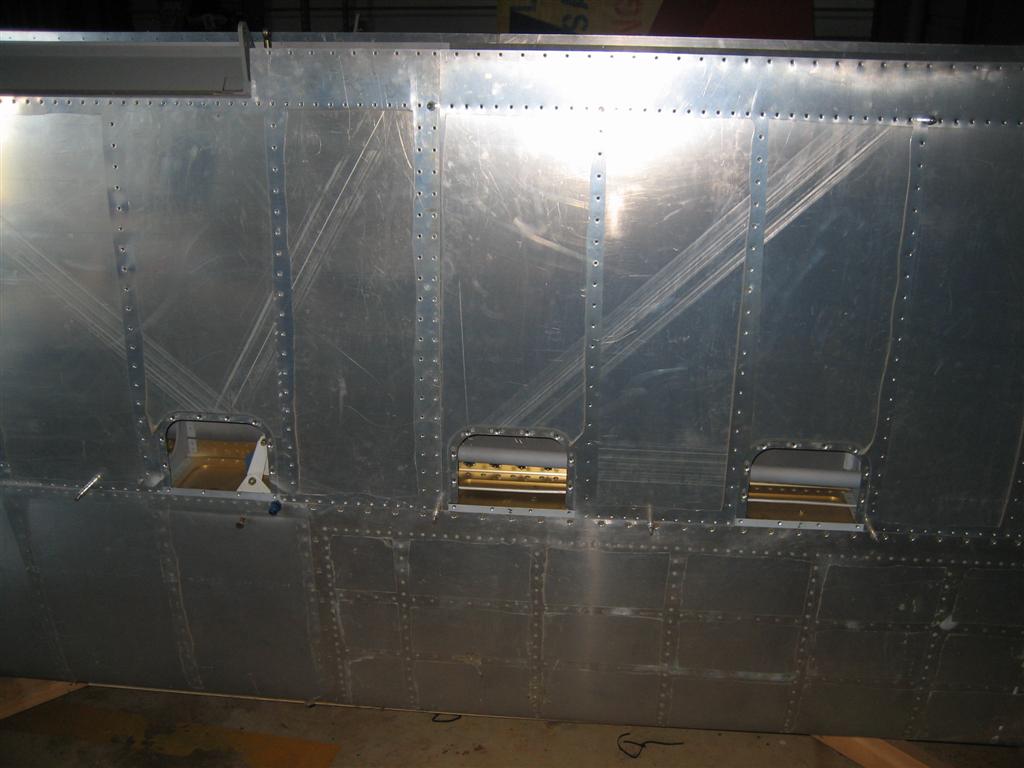
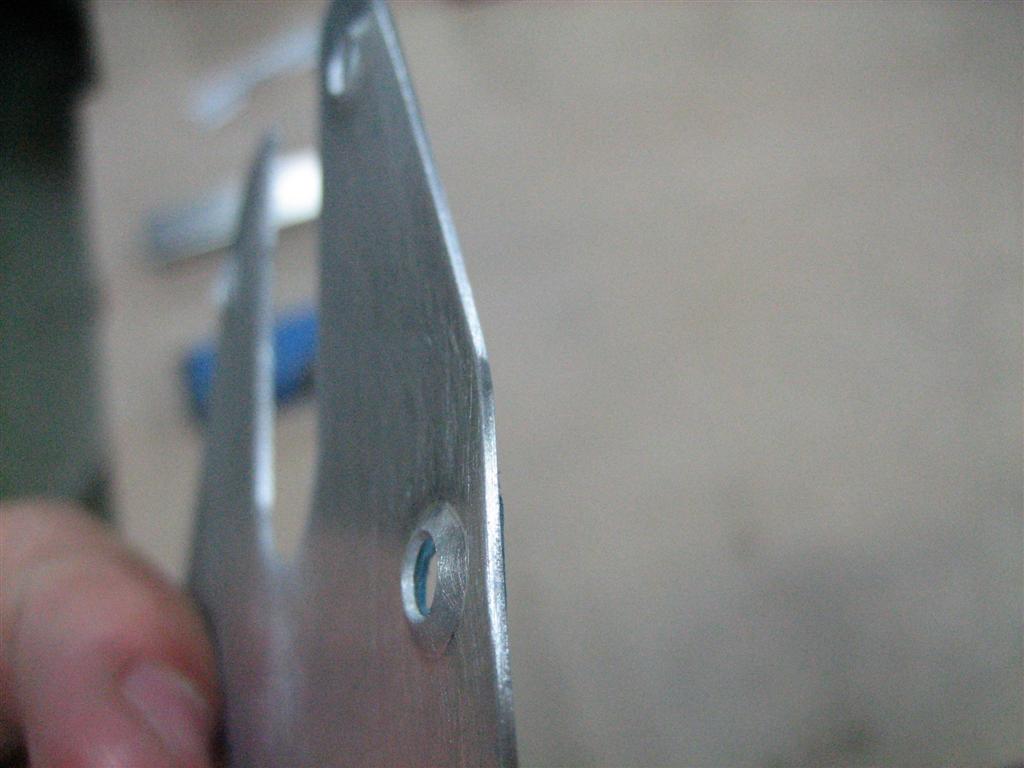
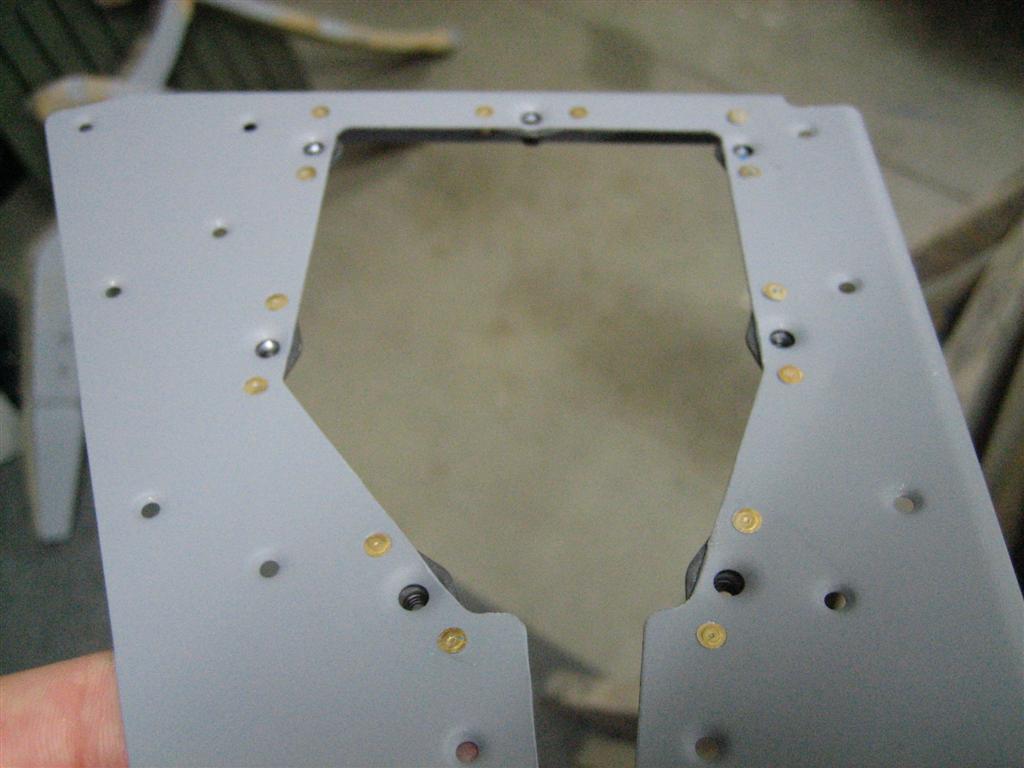
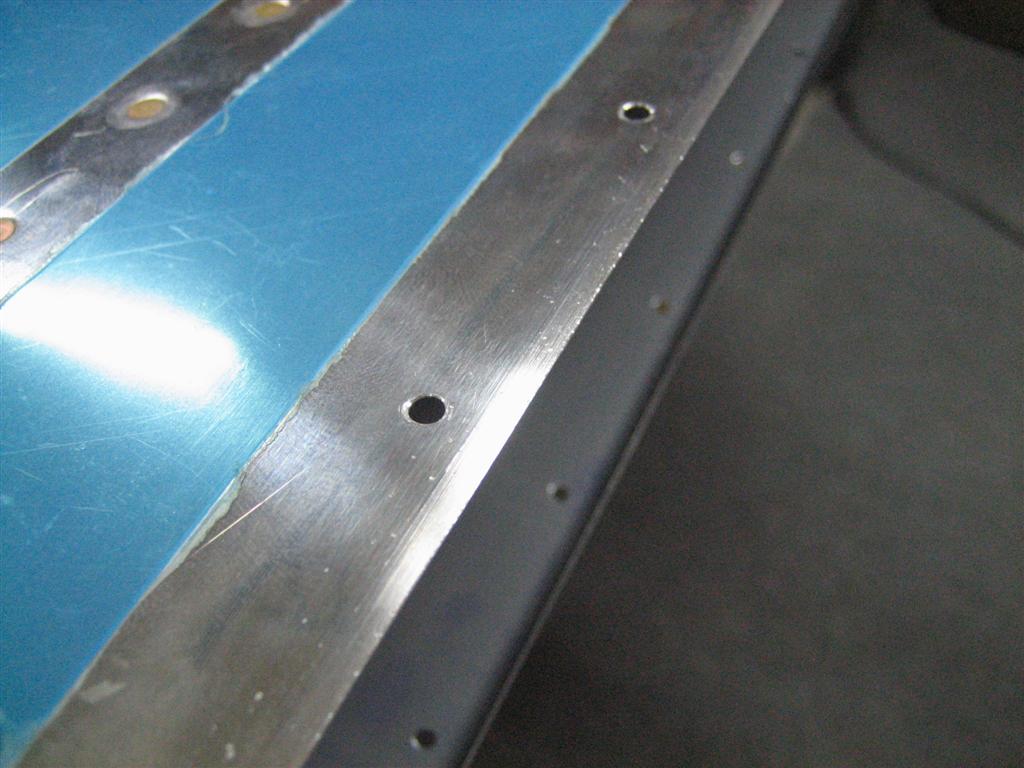
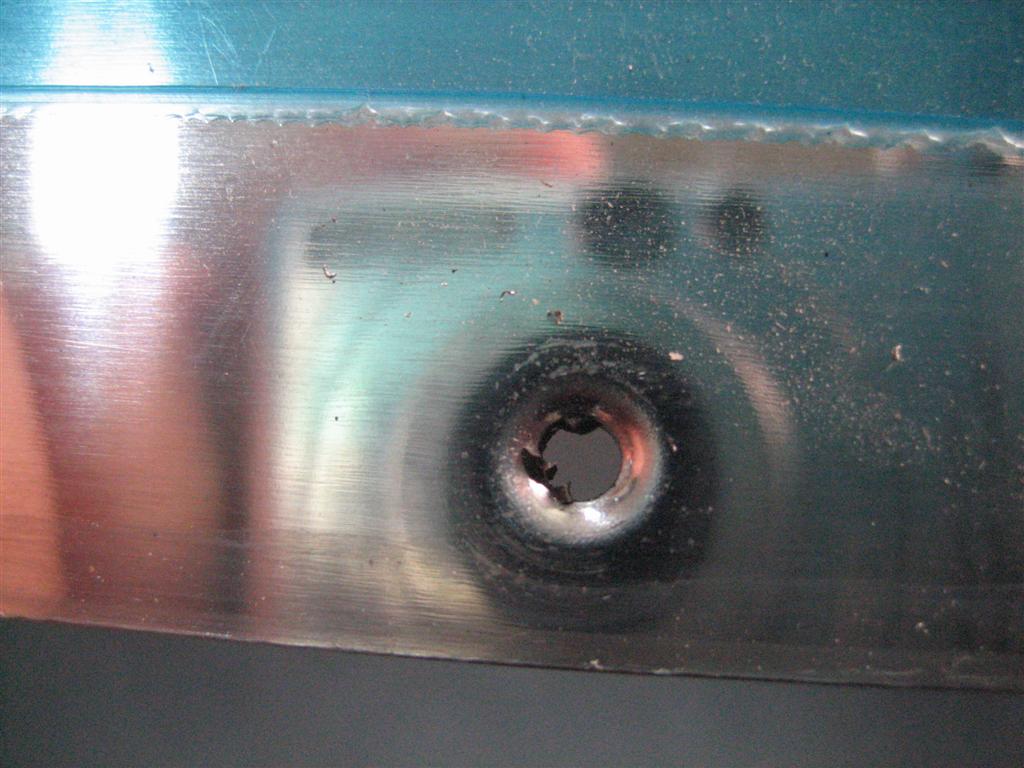
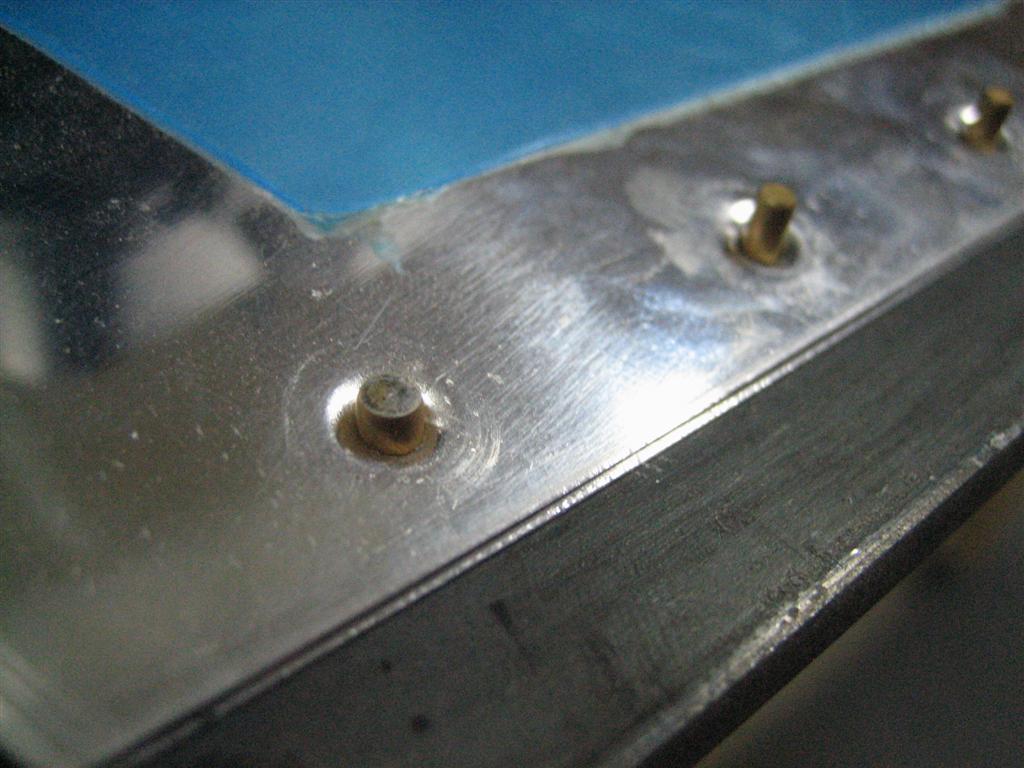
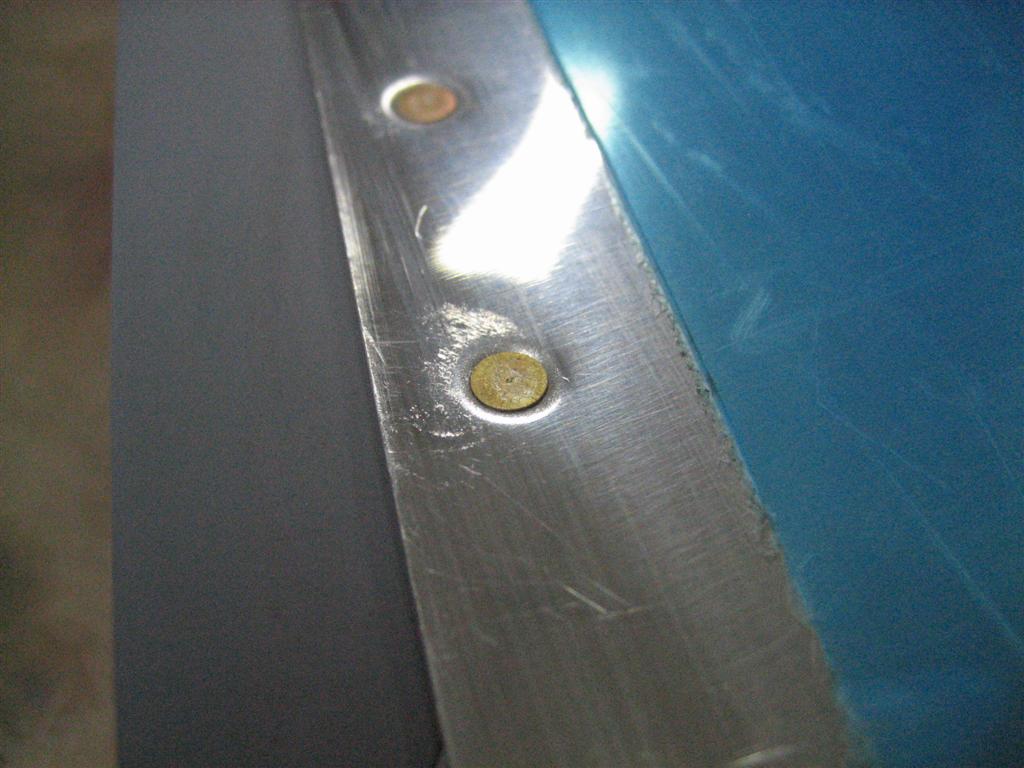
Here’s a couple pictures of the damage.
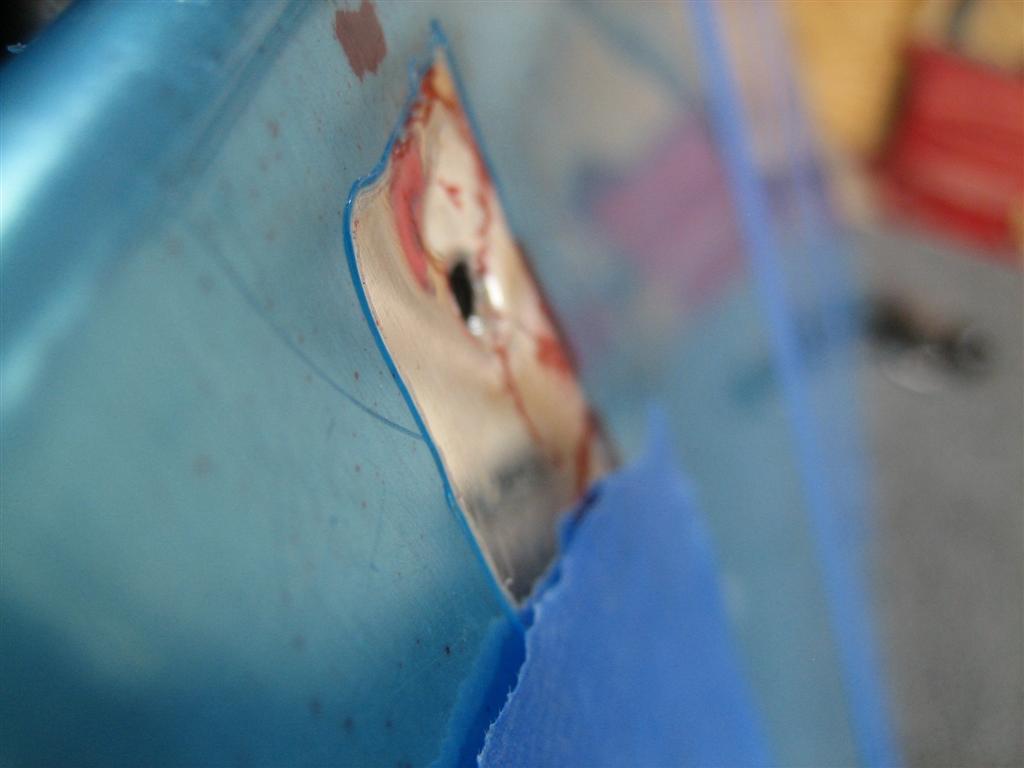
You can see how the dimple kind of tweaked the skin. Boo damaged skin.

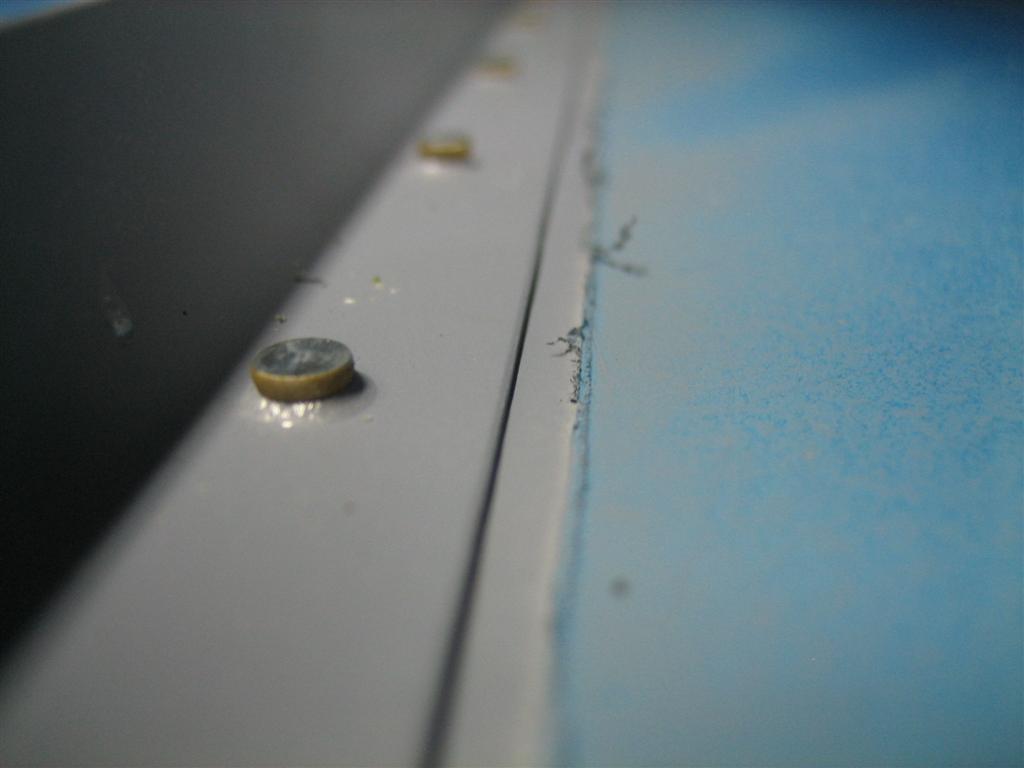
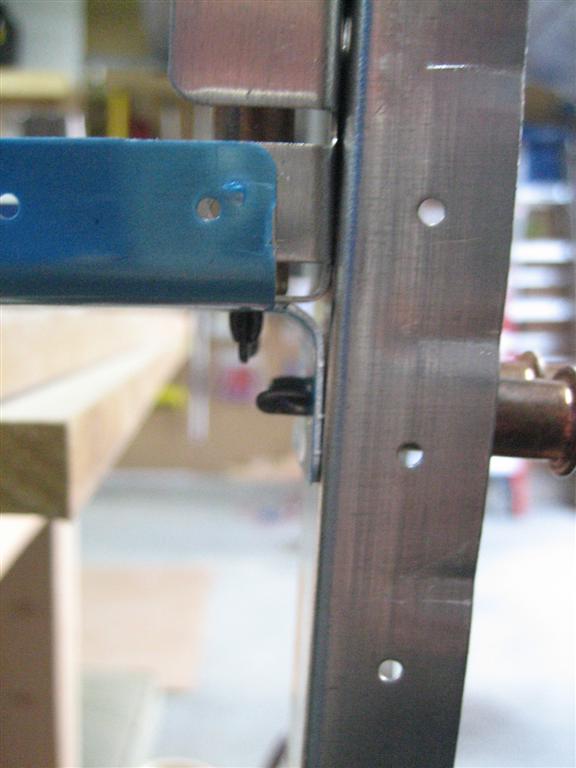
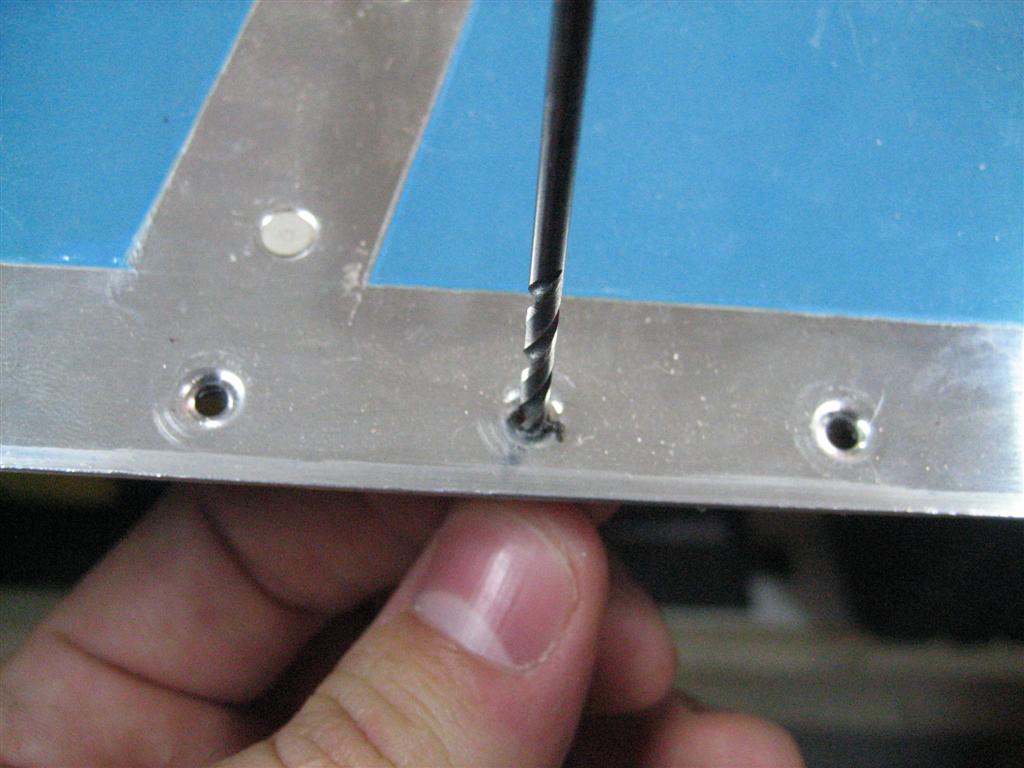
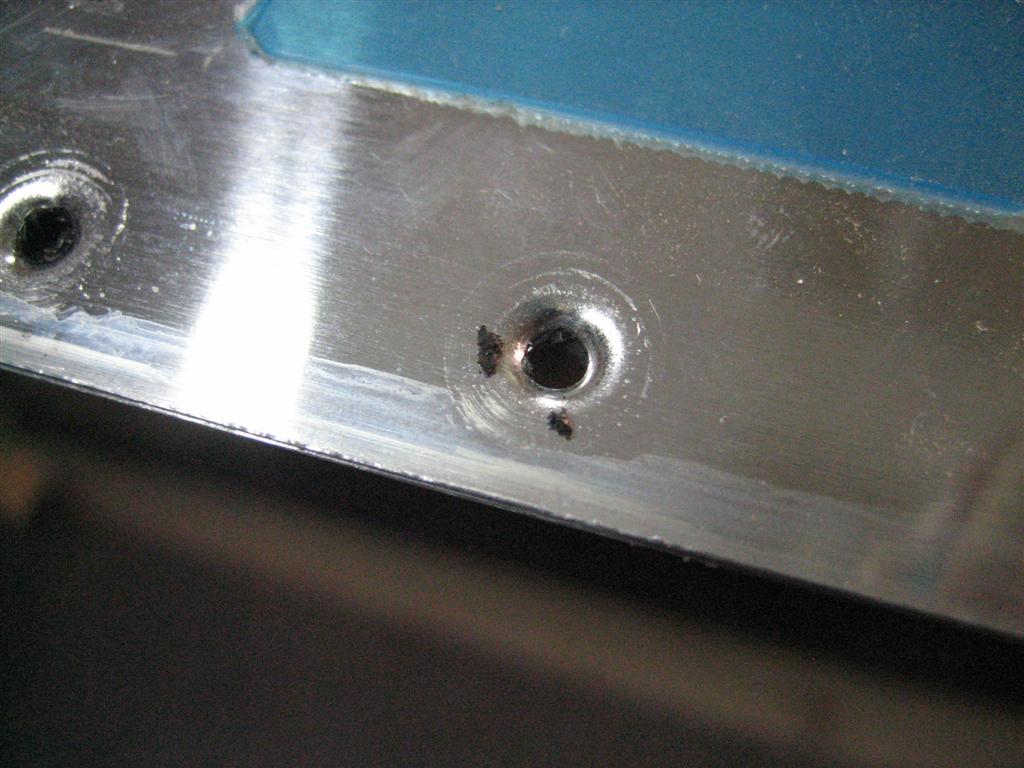
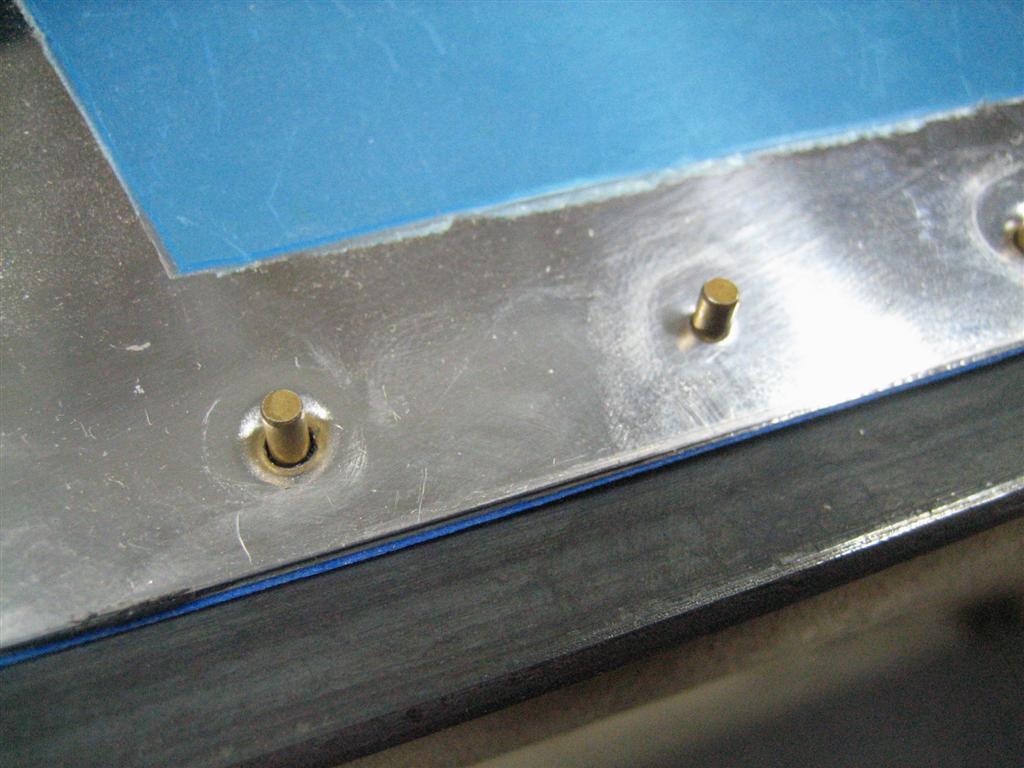
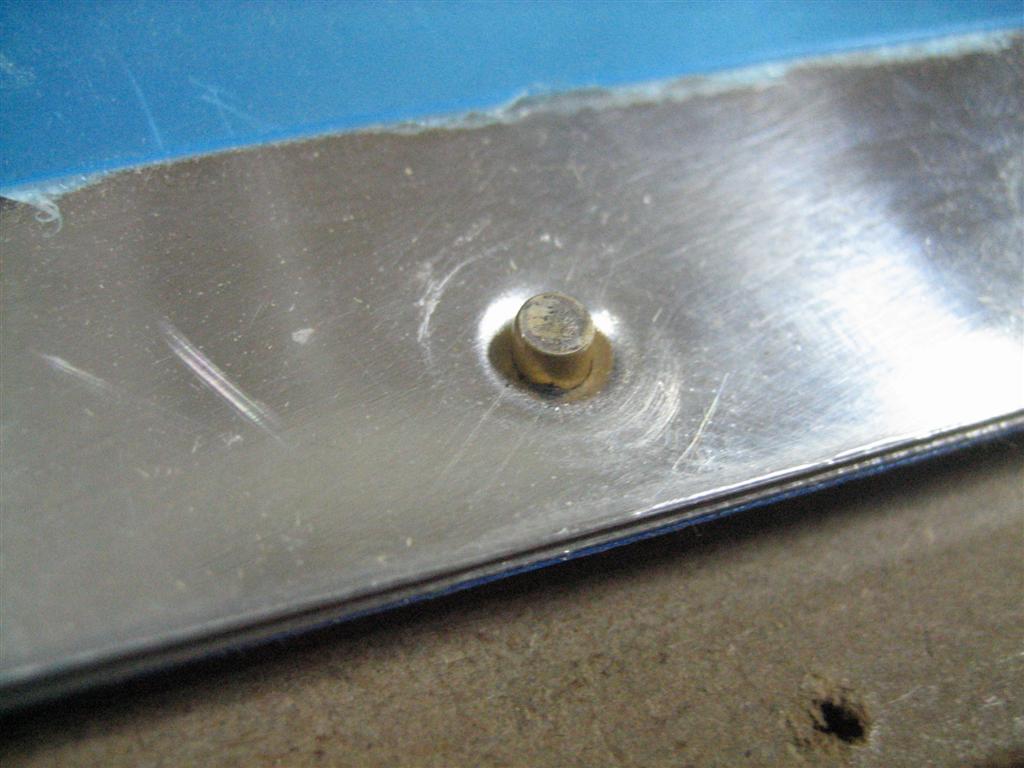
The above pictures was the worst one. This one was more typical.
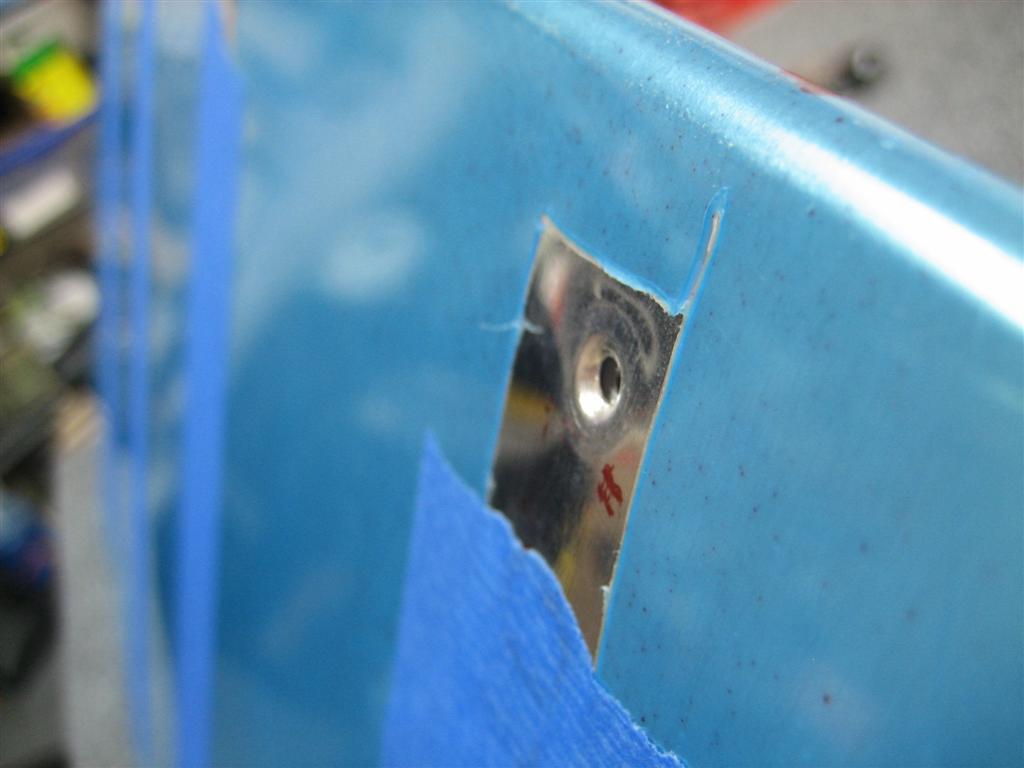
A small ridge below the hole (in the picture) and a small dent above the hole (in the picture).

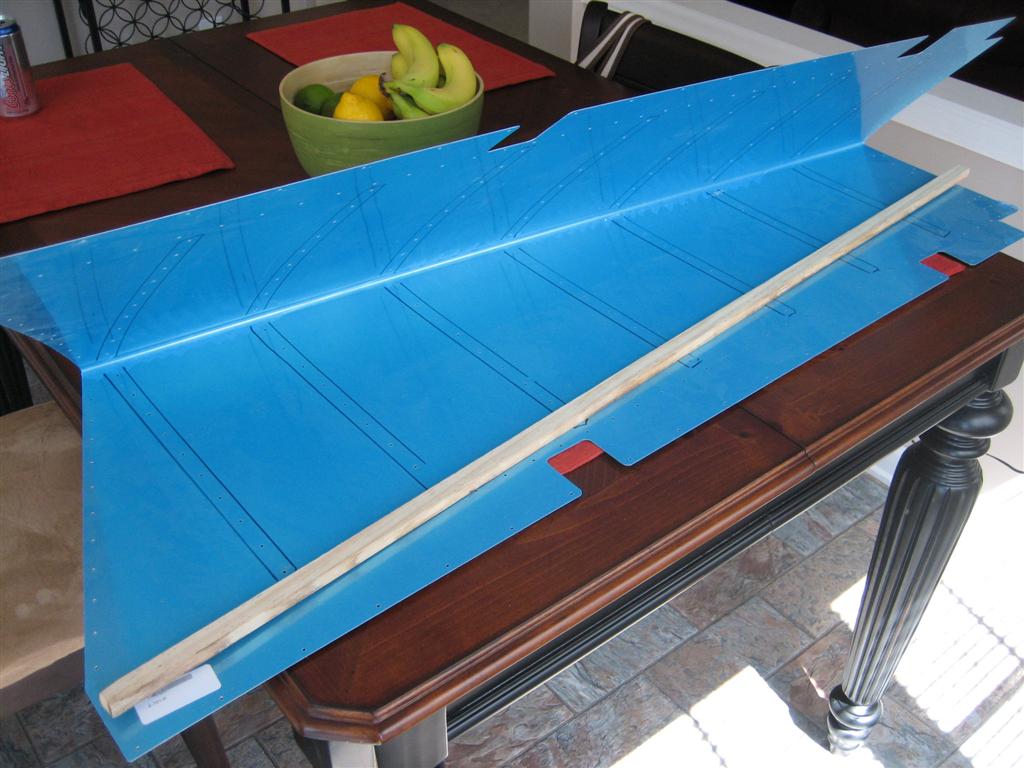
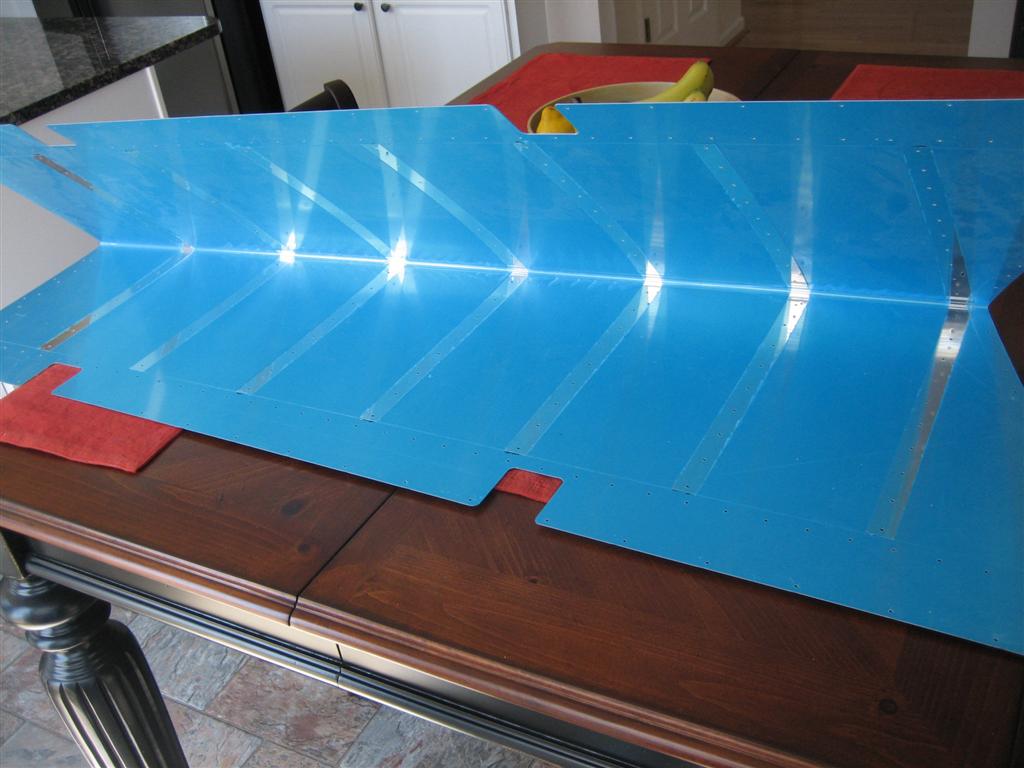
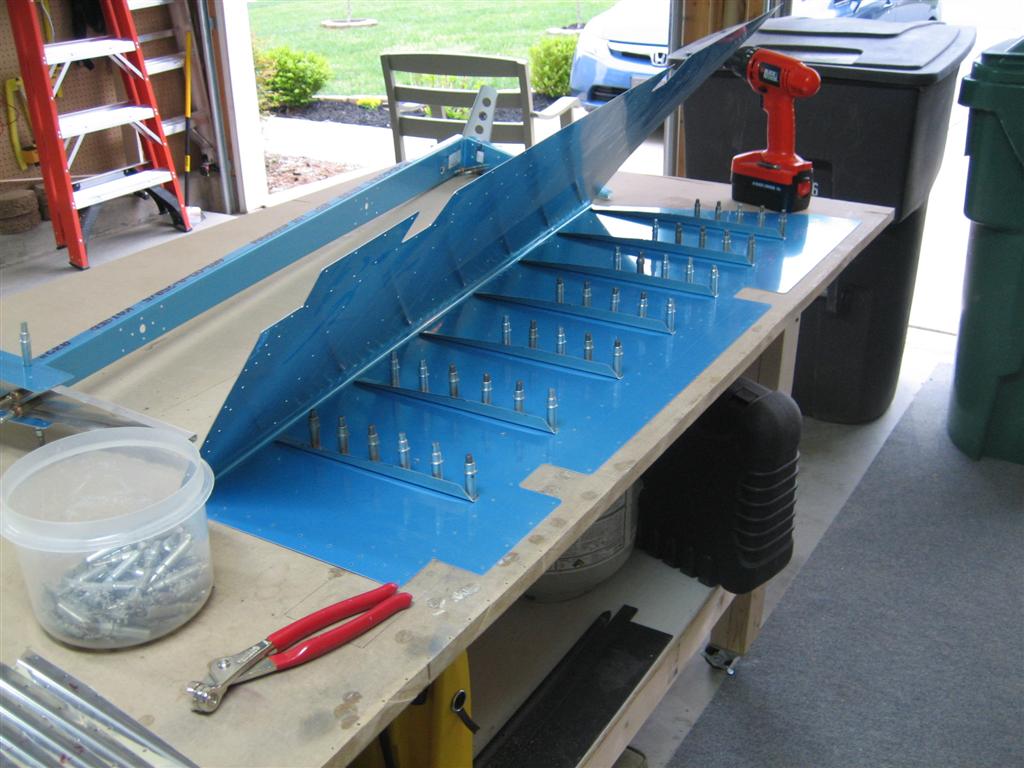
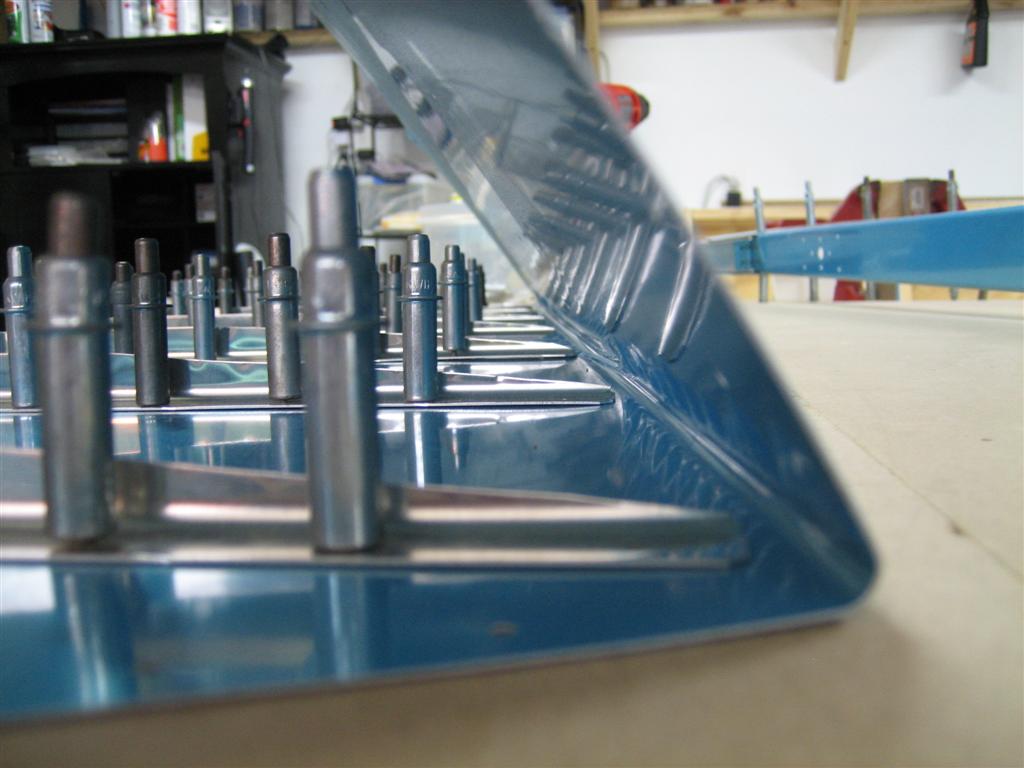
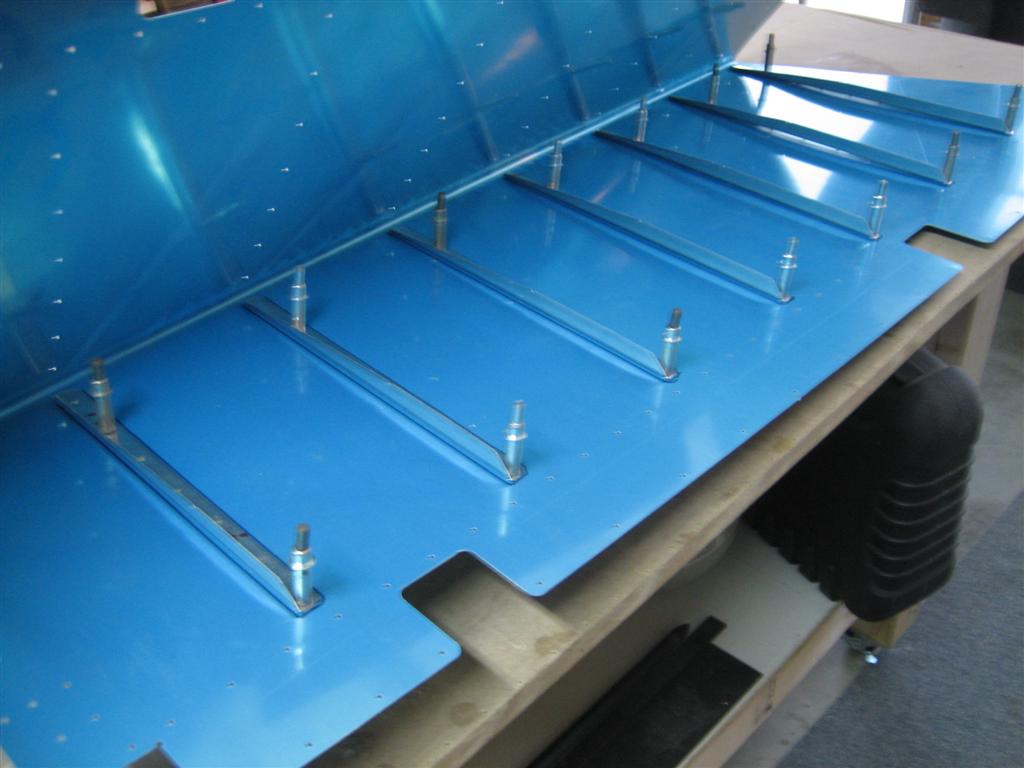
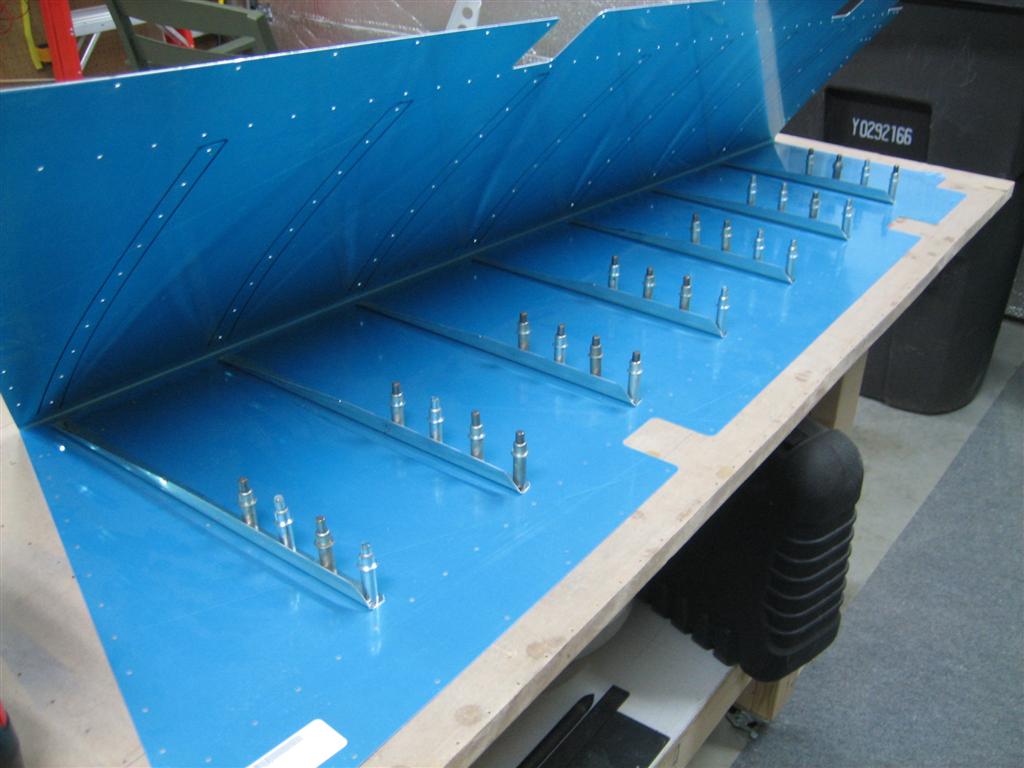
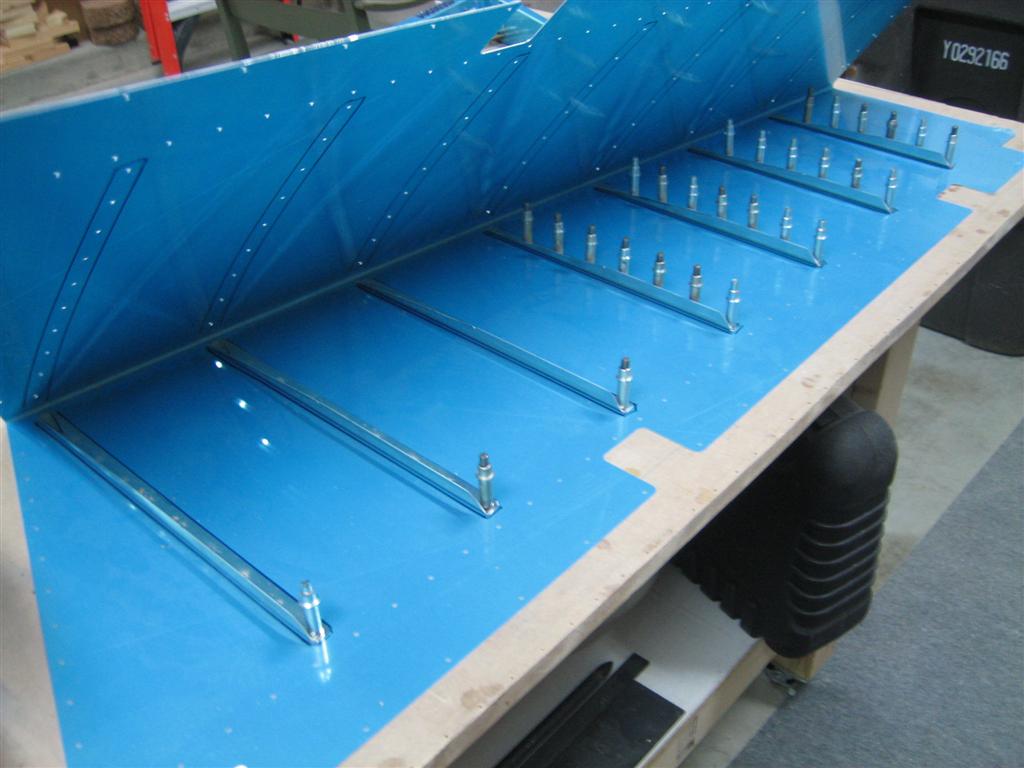
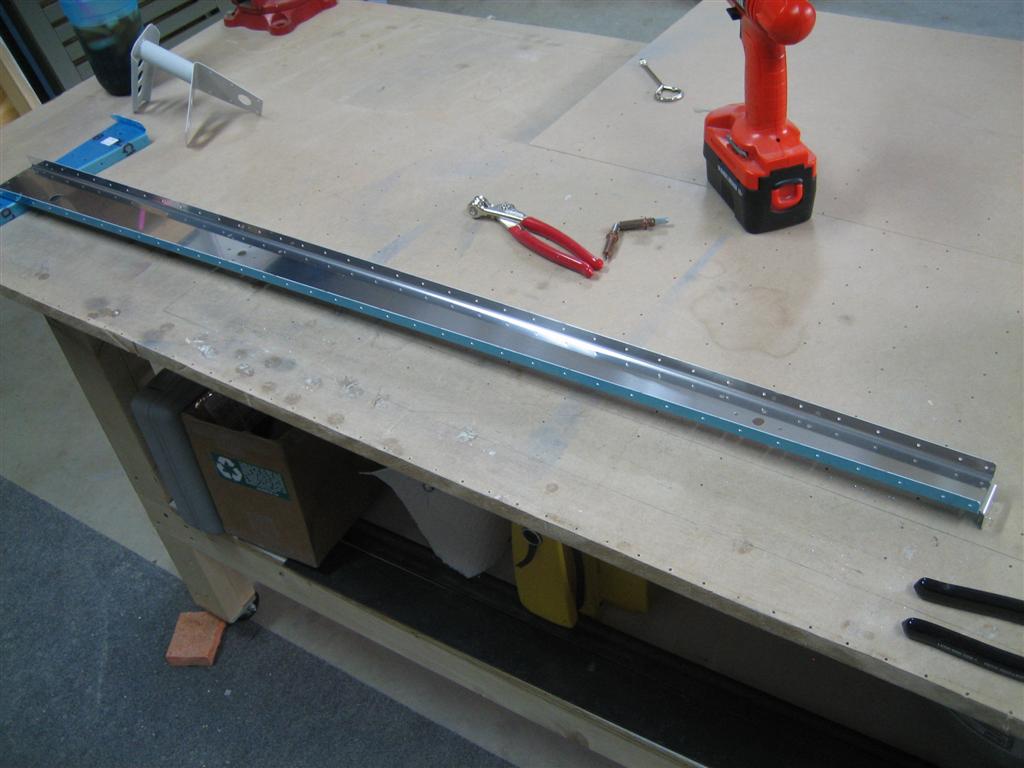
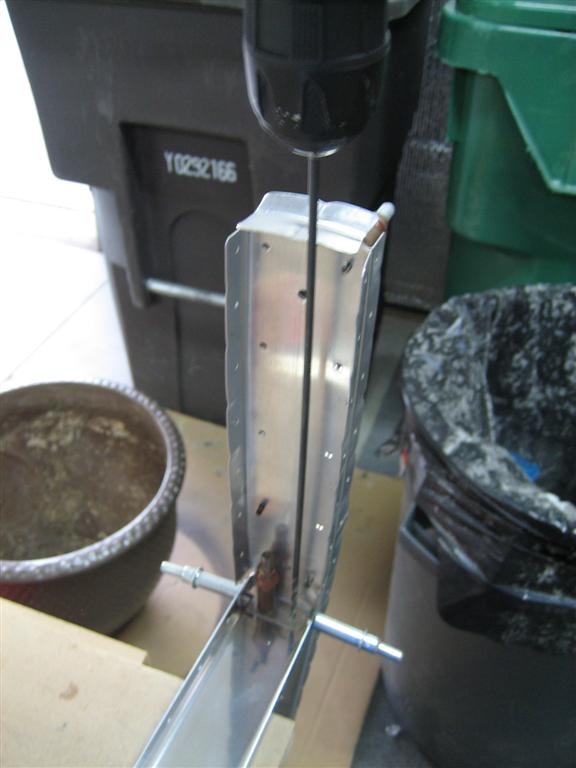
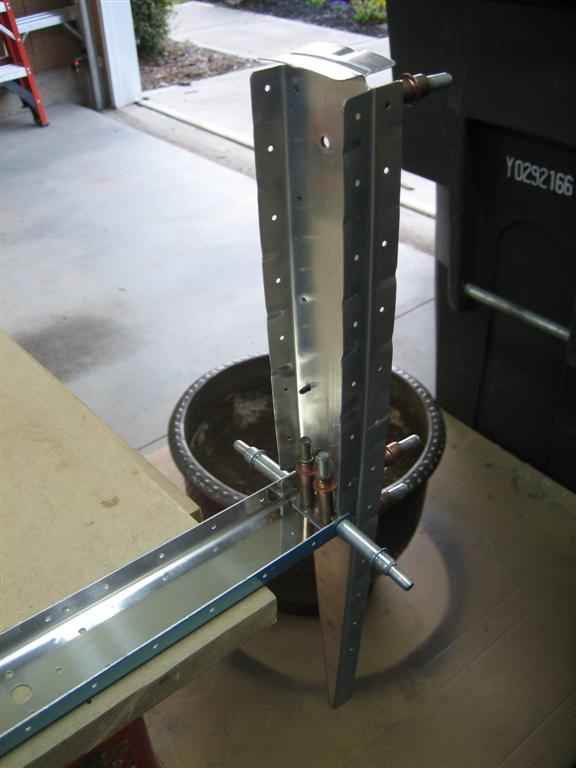
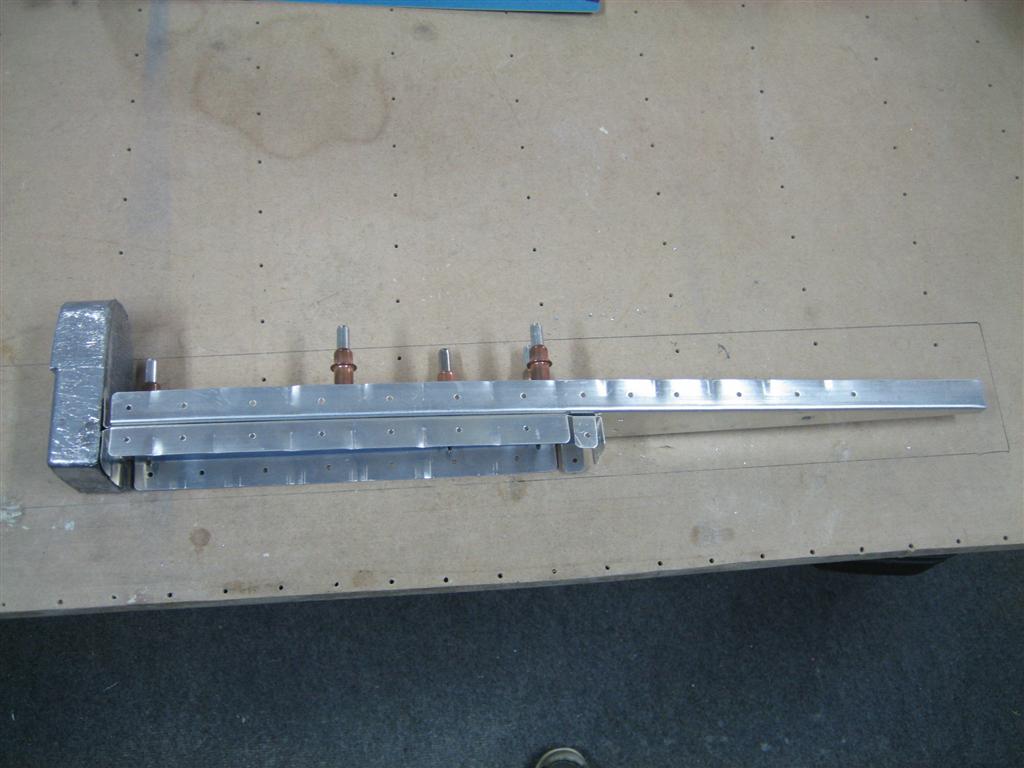
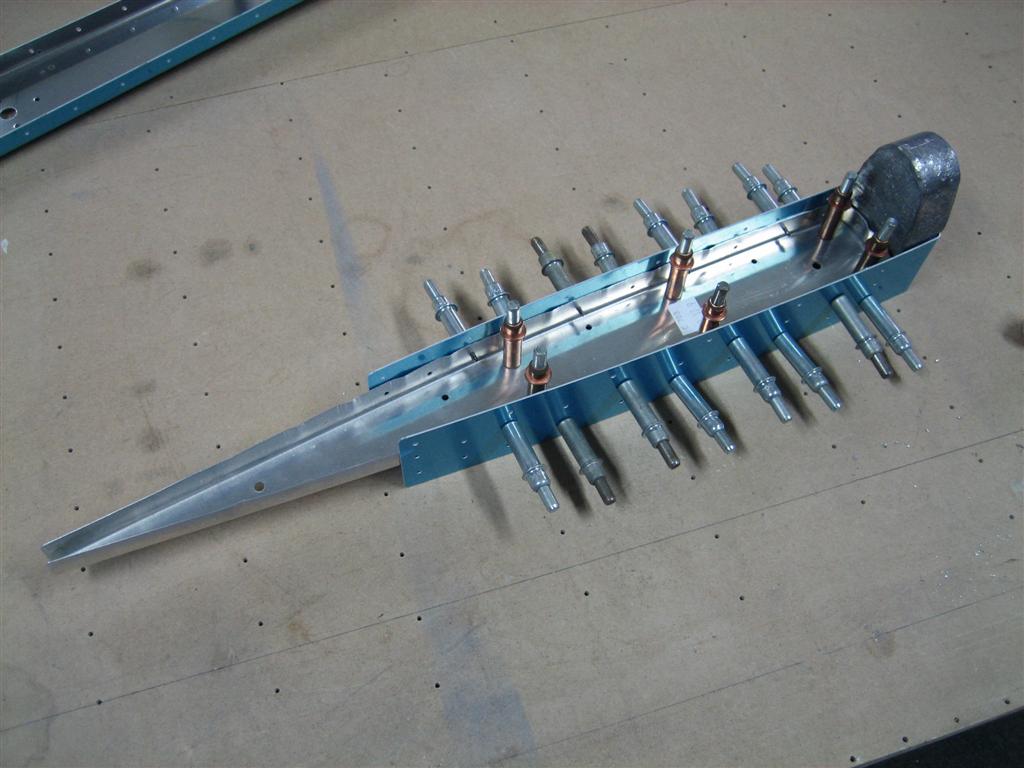
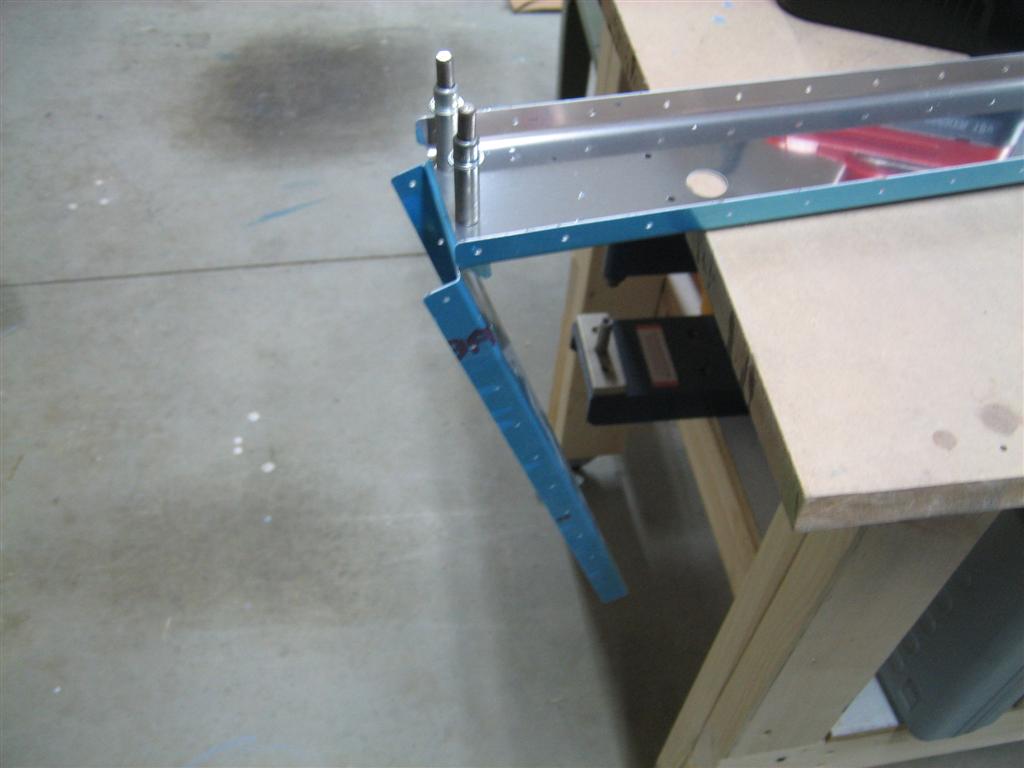
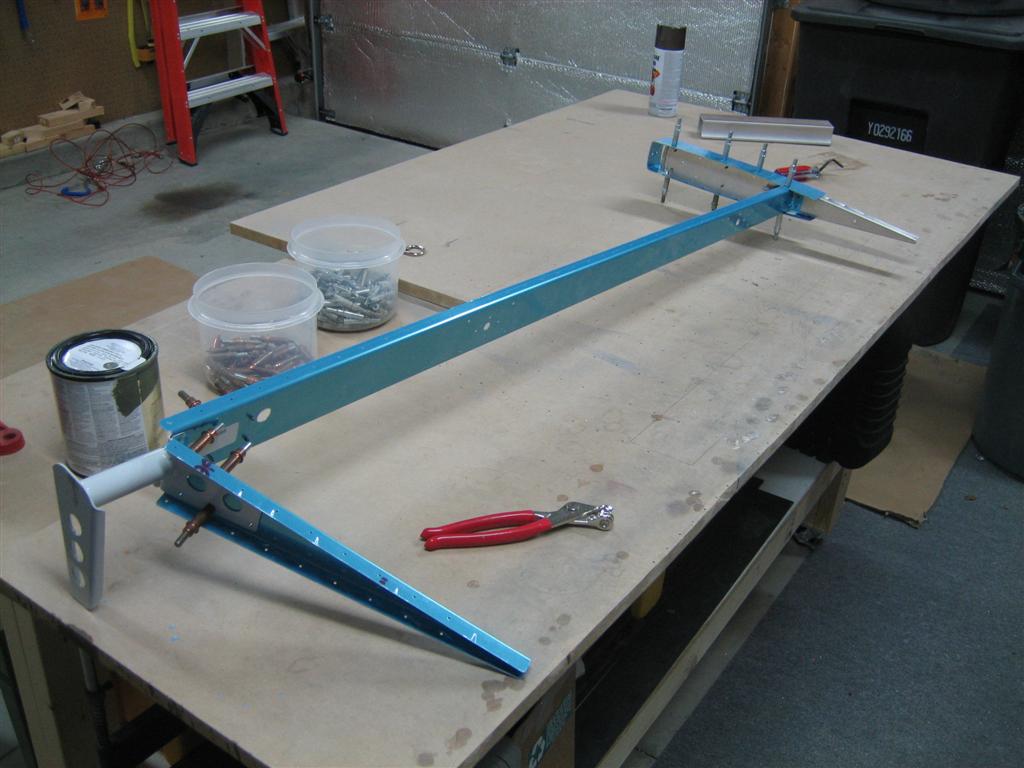
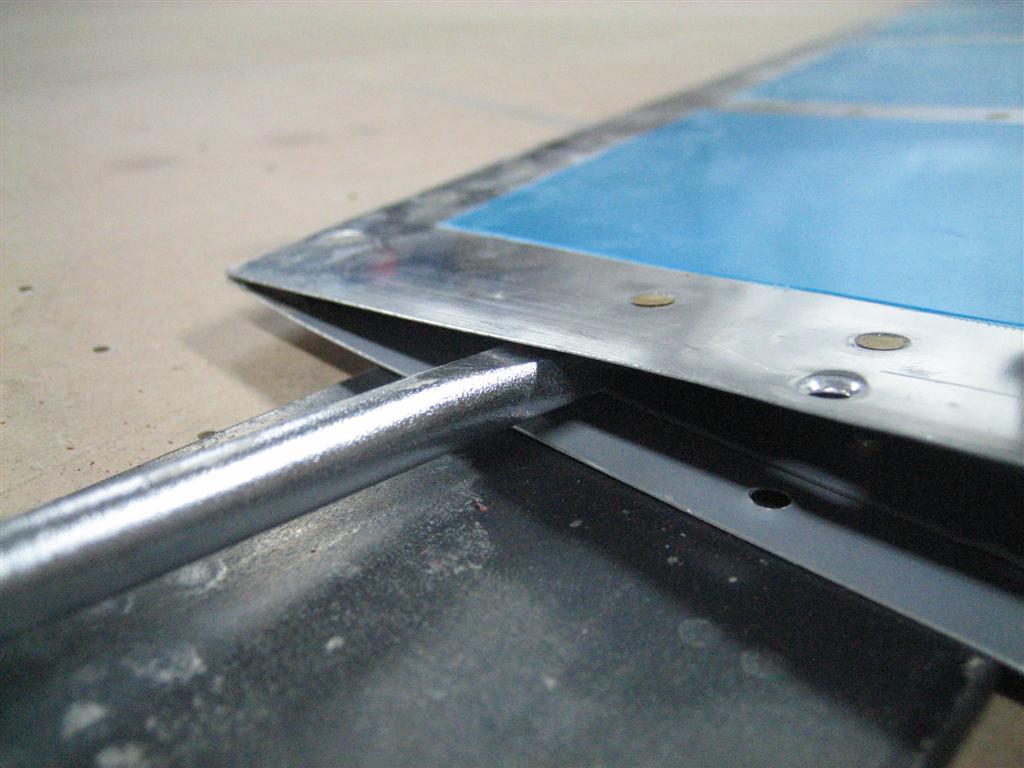
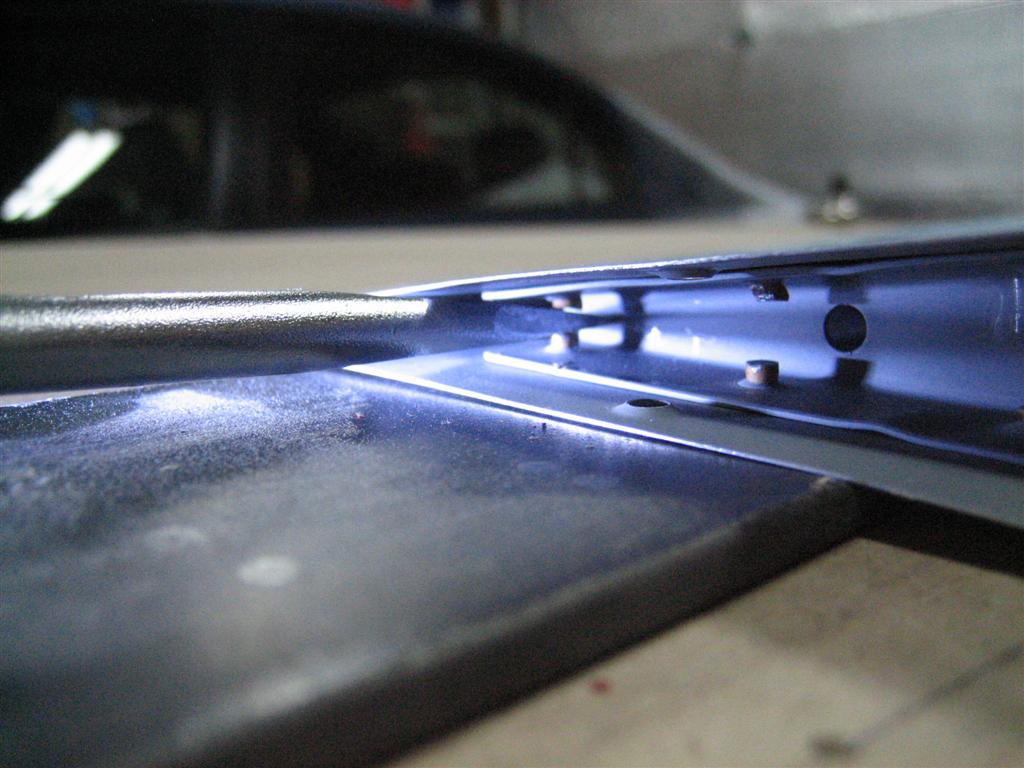
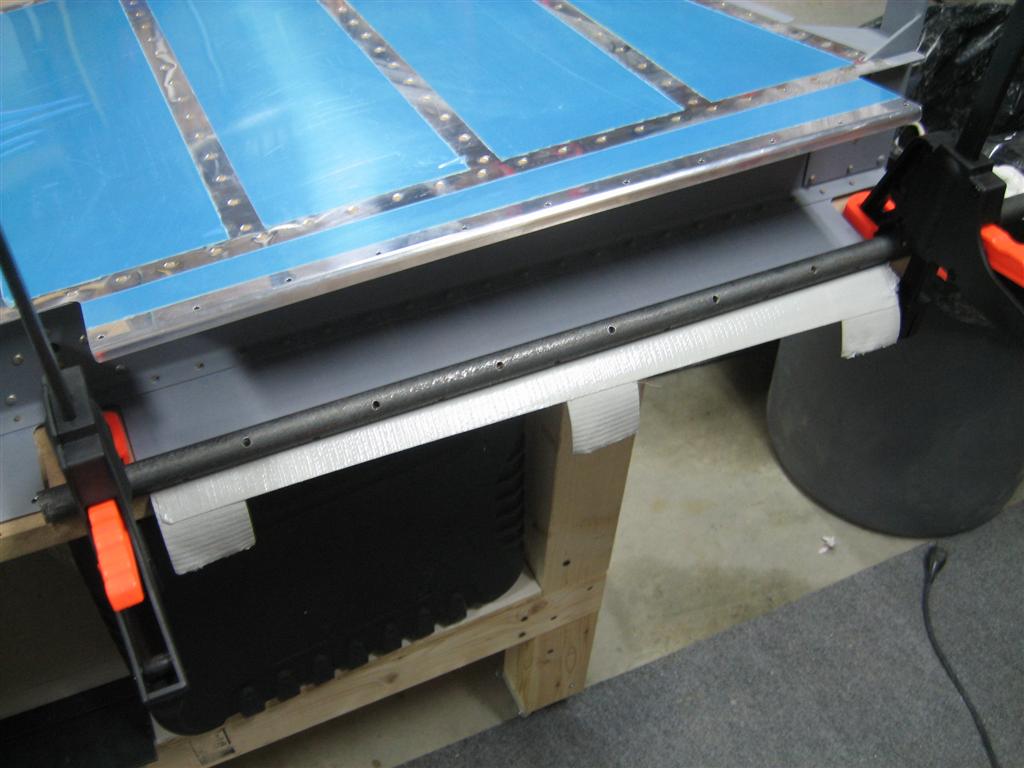
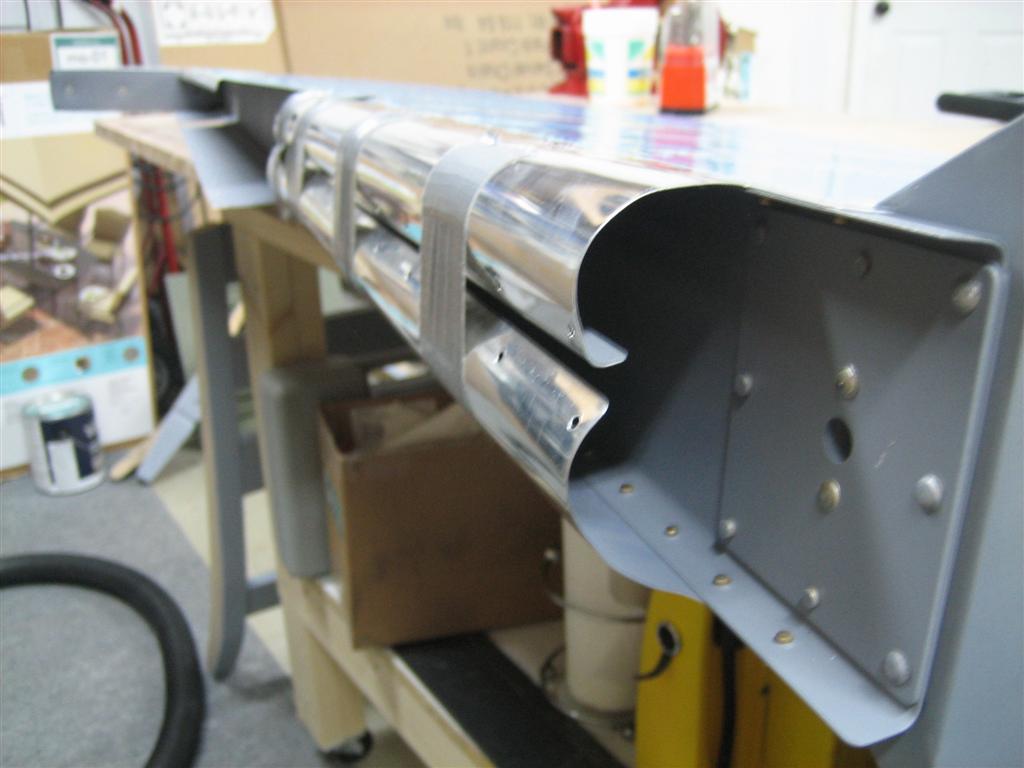
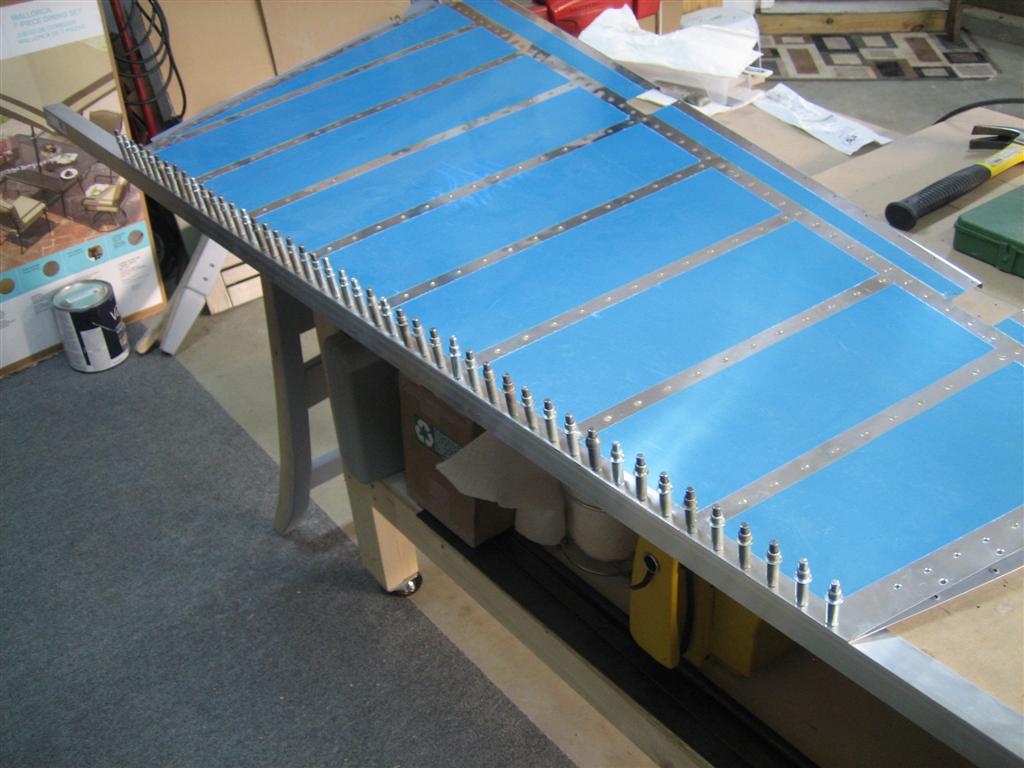
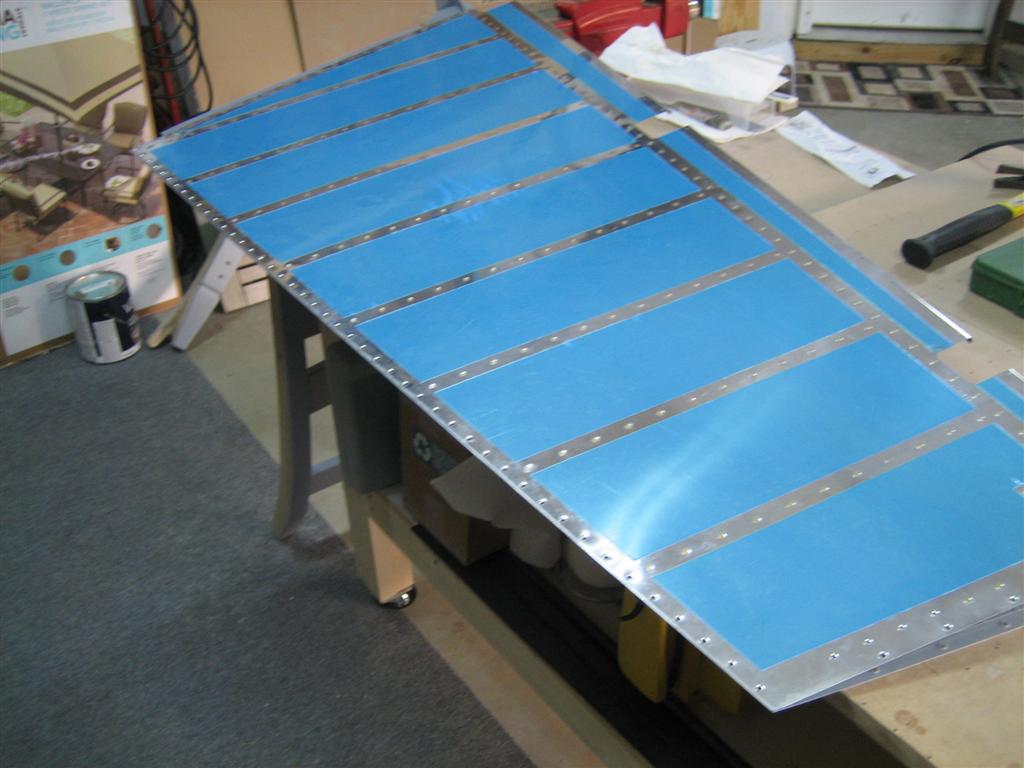
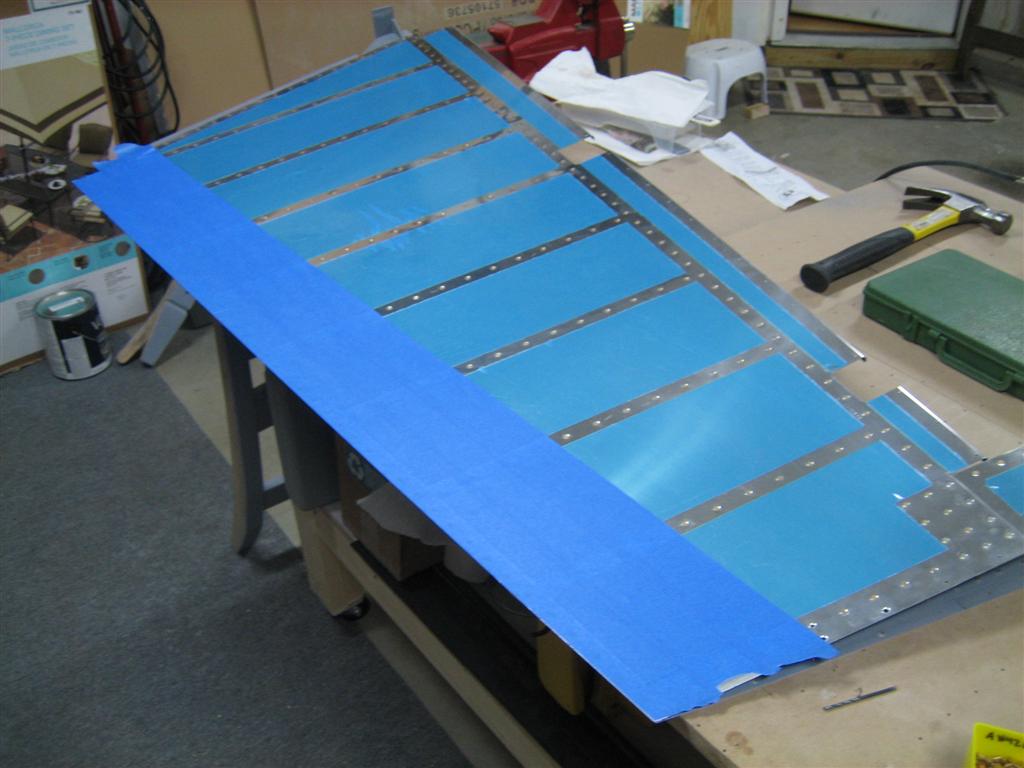
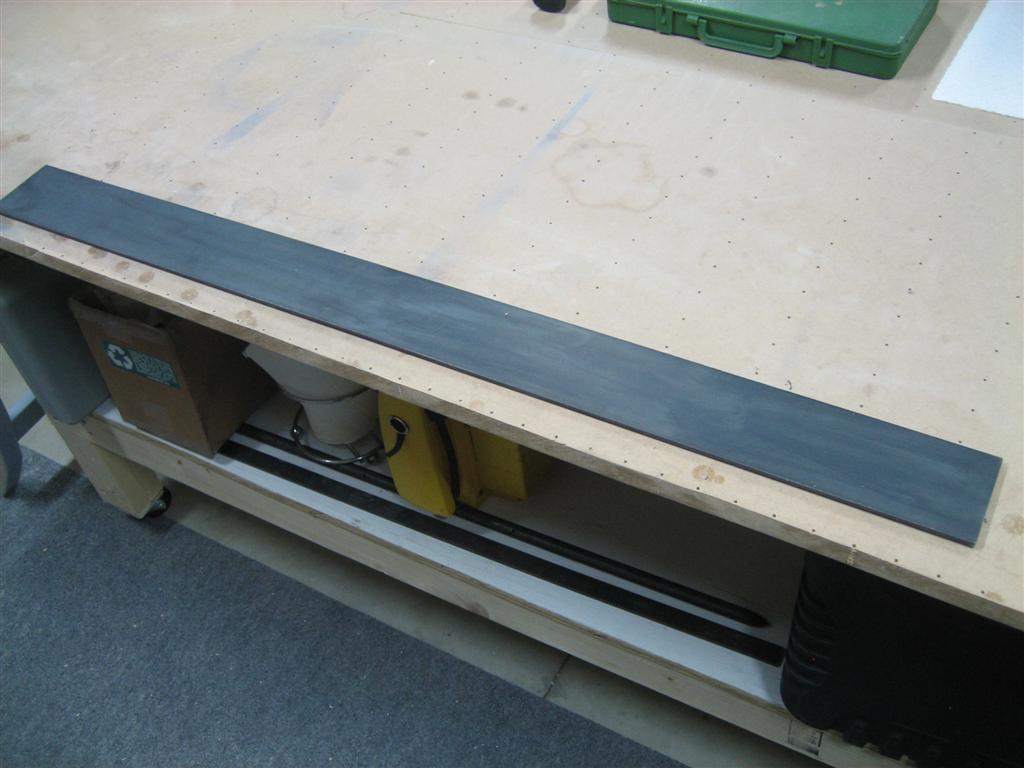
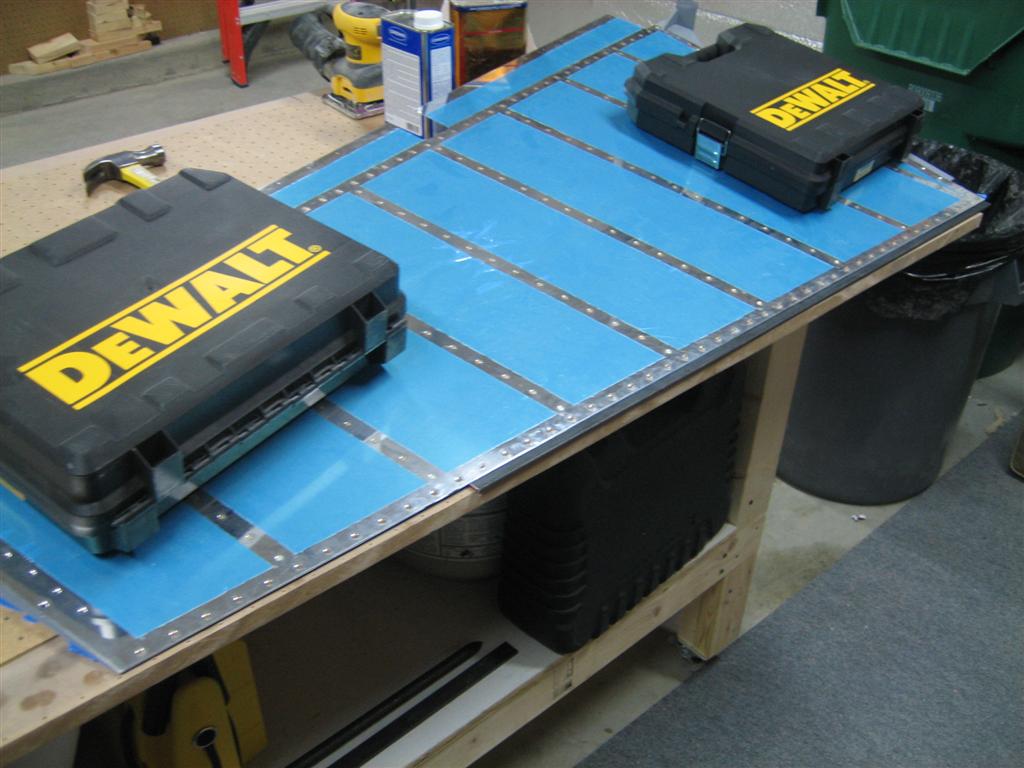
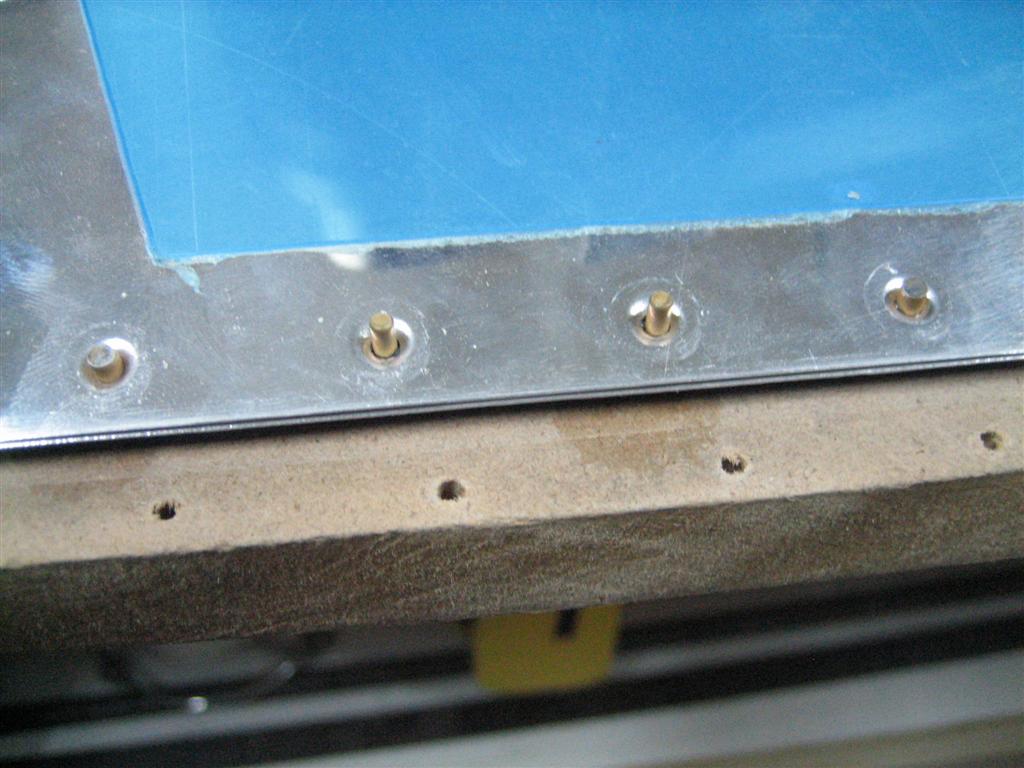
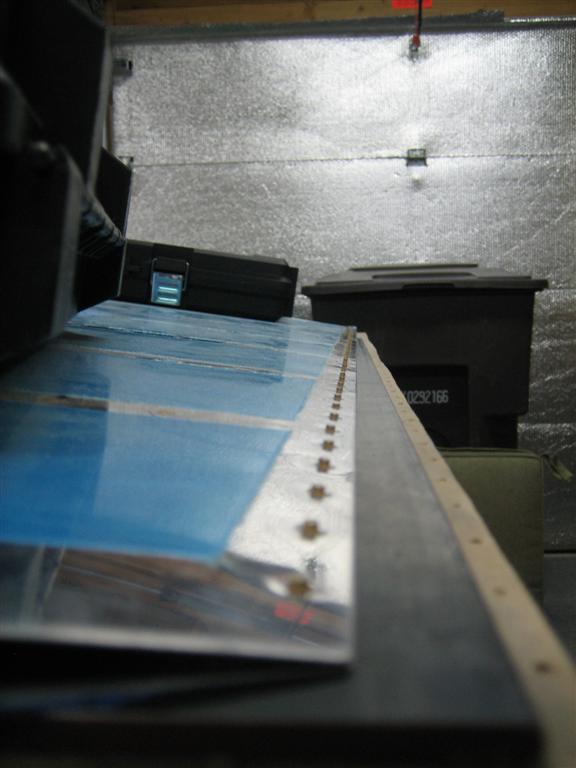
After getting them all drilled out (13 of them, one of them was good enough to leave alone), I set up the skin with a long backriveting plate underneath the offending holes and used a 2×4 laid spanwise on the stiffeners with some clamps to keep the skin surface flat. Then, I used 4 or 5 long pieces of tape to pull the upper skin back to allow plenty of room to work.
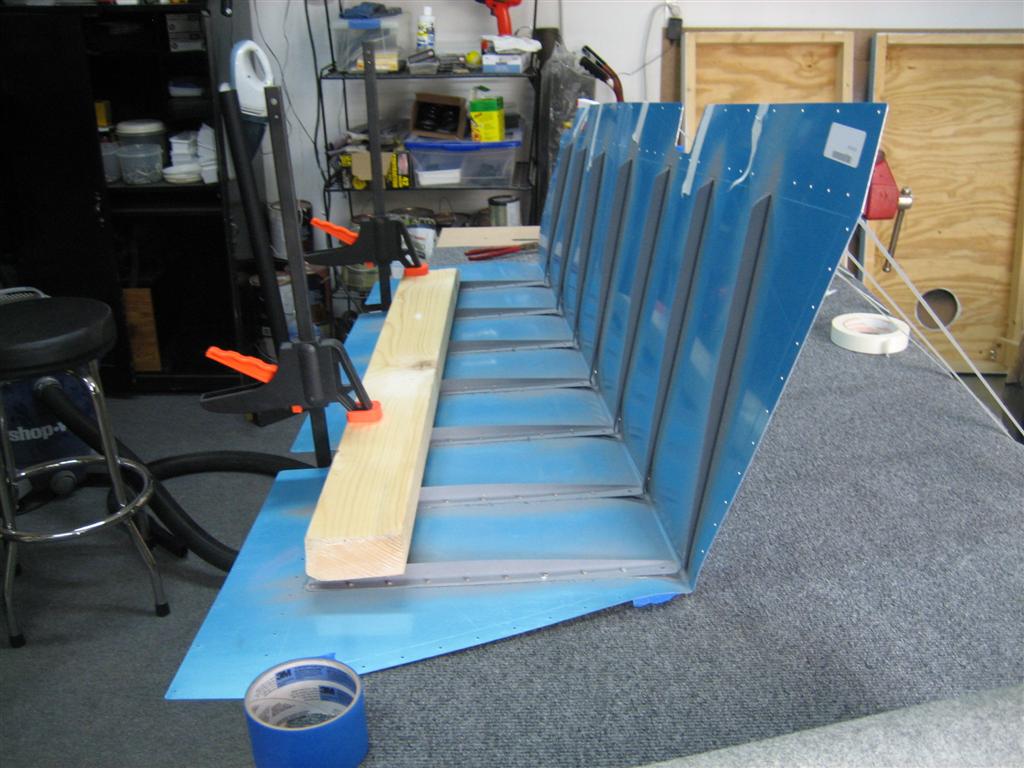
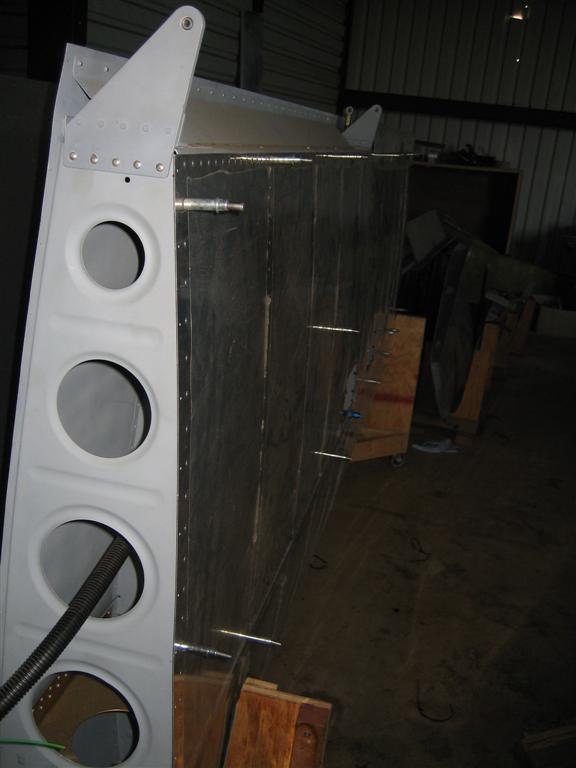
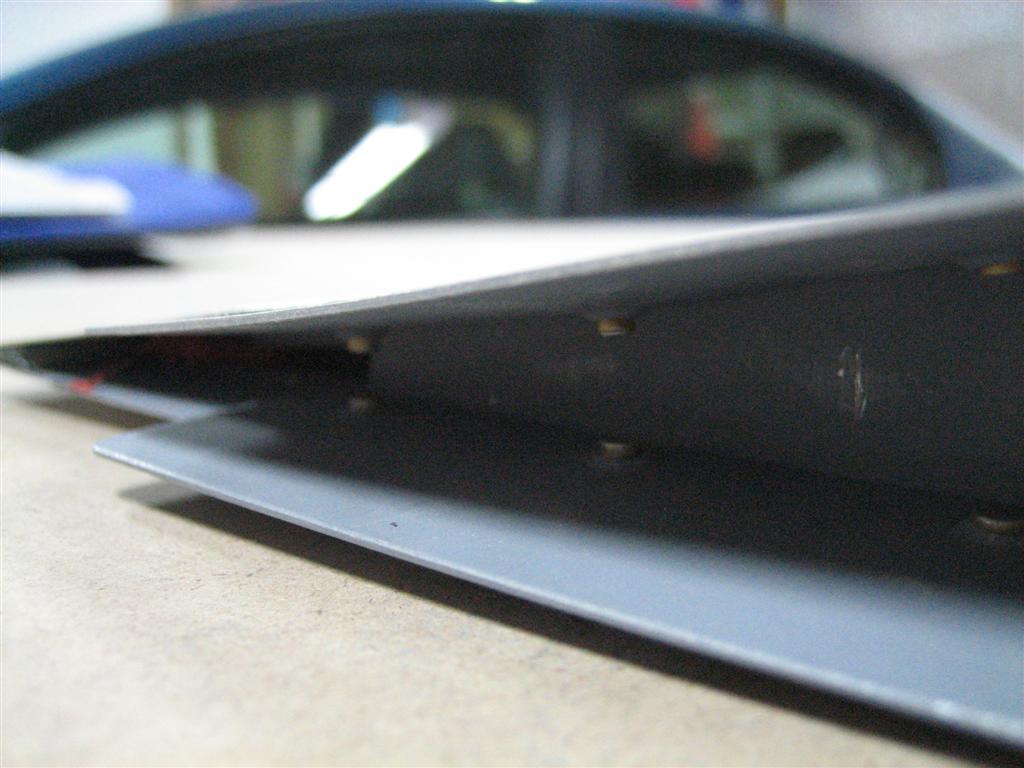
You can still see where the very trailing edge is starting to bend down. This is why I had the problem in the first place.

With no rivets in the holes, I used a small flush set (about 3/8″ diameter) and my rivet gun turned way down to flatten the dents (I’ll call them dents for dramatic purposes, but they were really just small impressions) and ridges (again, really just small high spots) flat. I put the flush set on either side of the existing dimple (which was okay, it was the area just outside of the dimple, where the edges of the dimple die set had tweaked the skin a little, where I was having my problem) and gave it a few taps.

After finishing one side, I took off the protective tape I was using and inspected. It ended up okay. I think if I were going to polish the empennage, it would bug me, but my latest paint scheme idea has me painting the elevators.

I did the other side, and then cleaned everything up, put some rivets back in the holes, and set up each side again with my fancy setup to actually backrivet the last hole of the stiffeners in place. It went perfectly, and I was really careful to hold everything very flat against the backriveting plate.

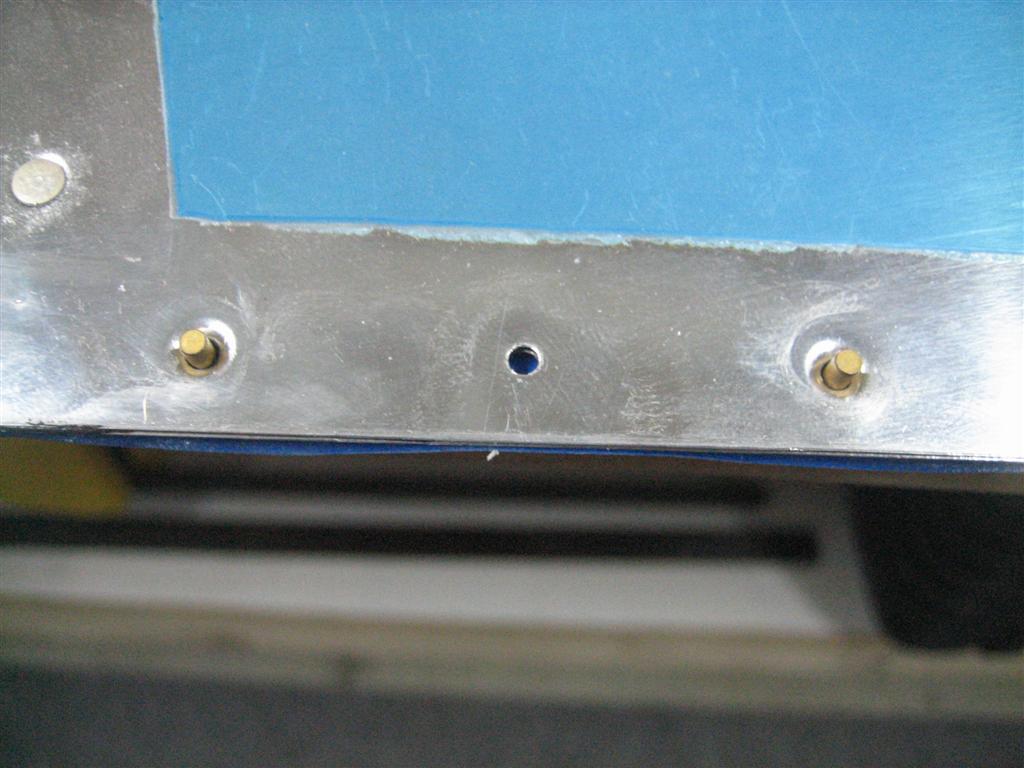
(By “perfectly,” I really mean “I messed up one of the holes, had to drill it out to #30 and use an oops rivet.” ) I’ll point it out.

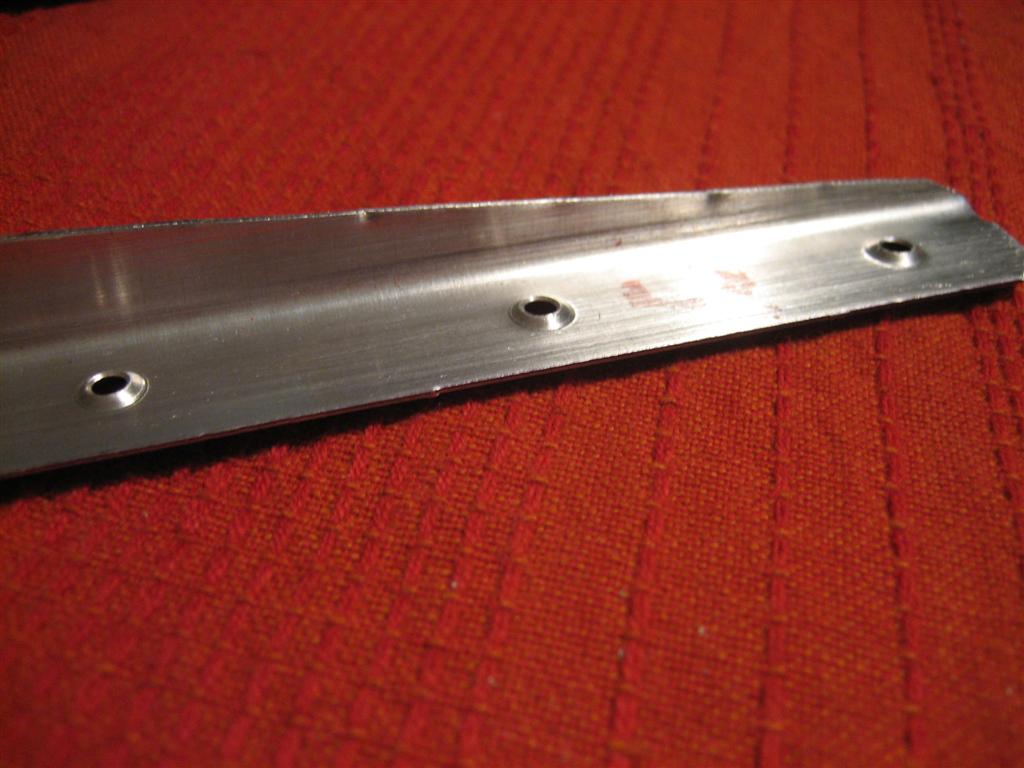
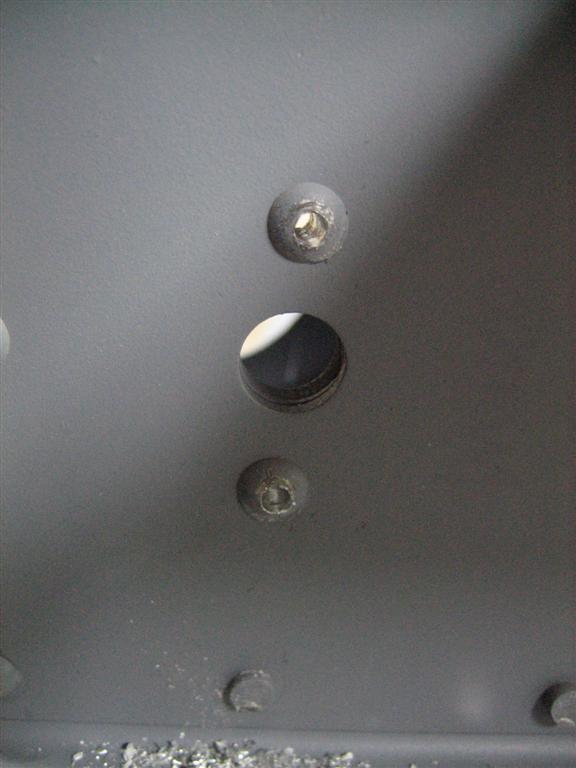
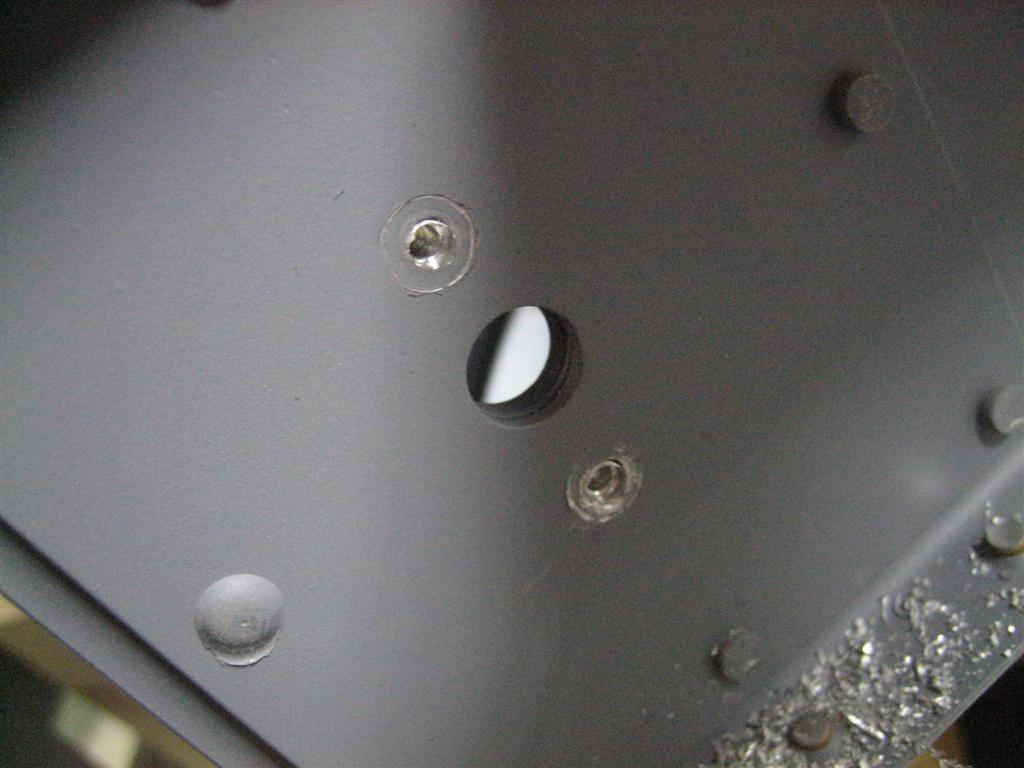
Here are some examples of the replaced finished rivets.
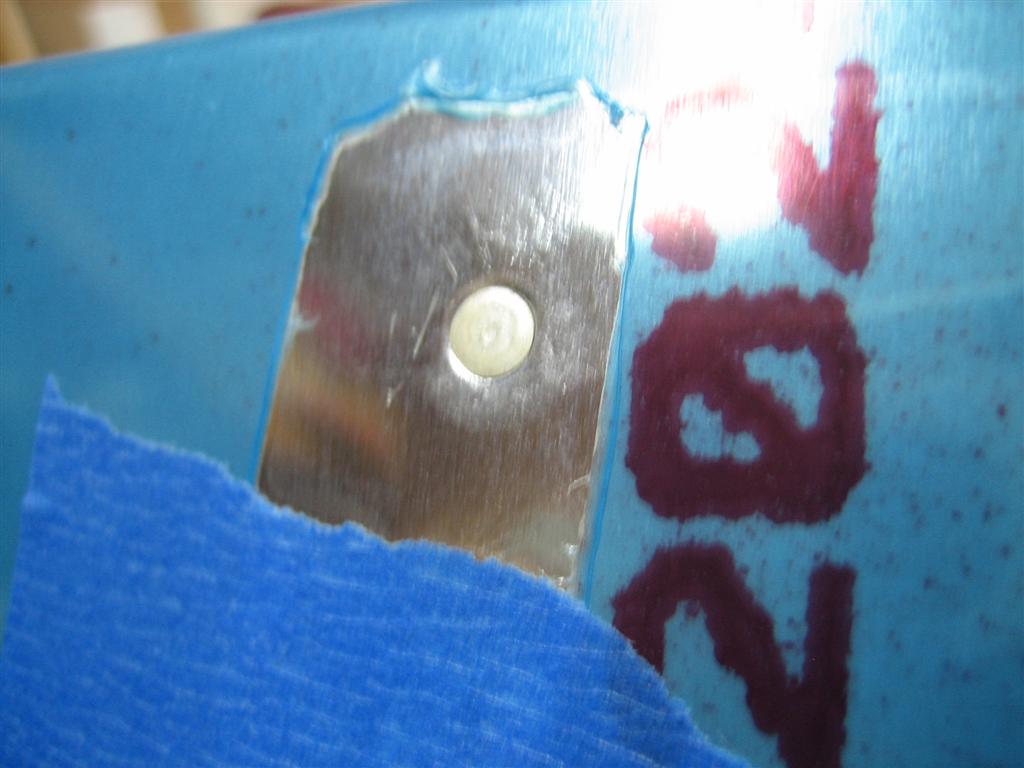
This one looks great!
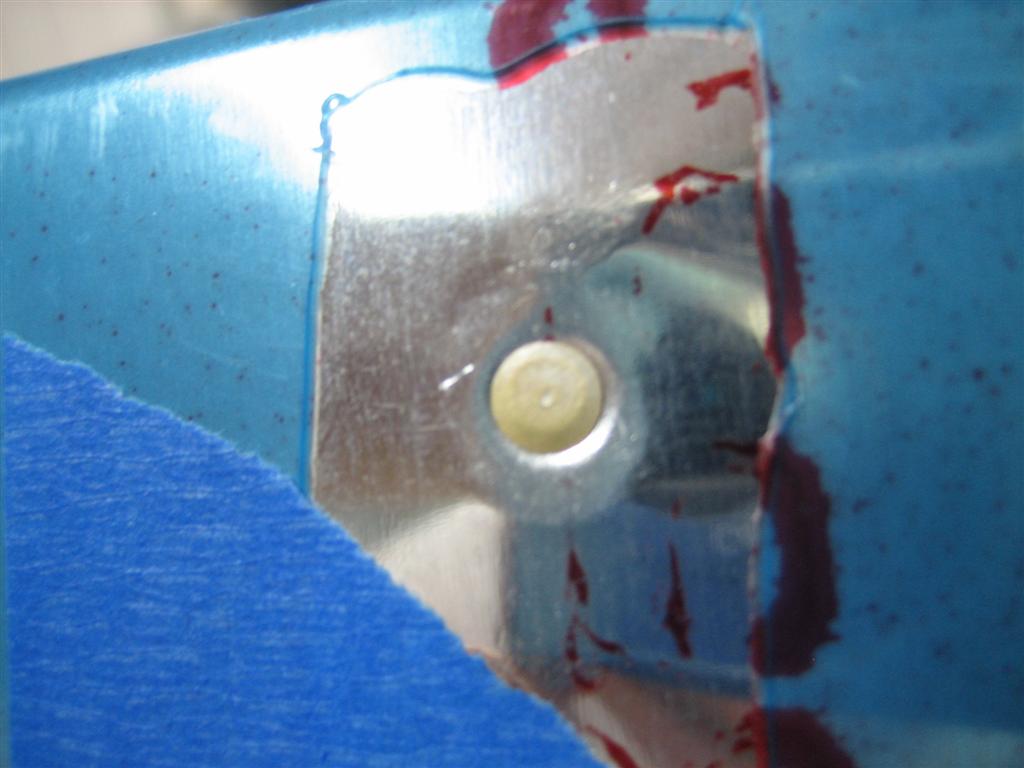
Pretty good. You can still kind of see where the damage was.
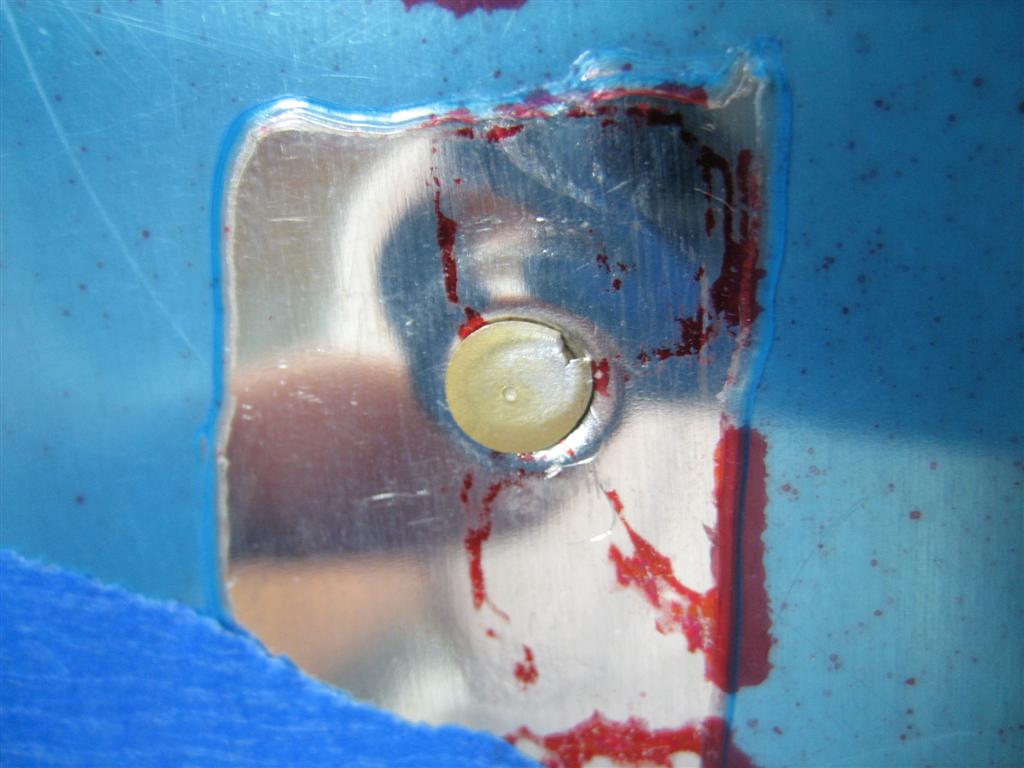
Holy crap, how did I do that to the rivet? This is the one that got drilled out again and replaced.
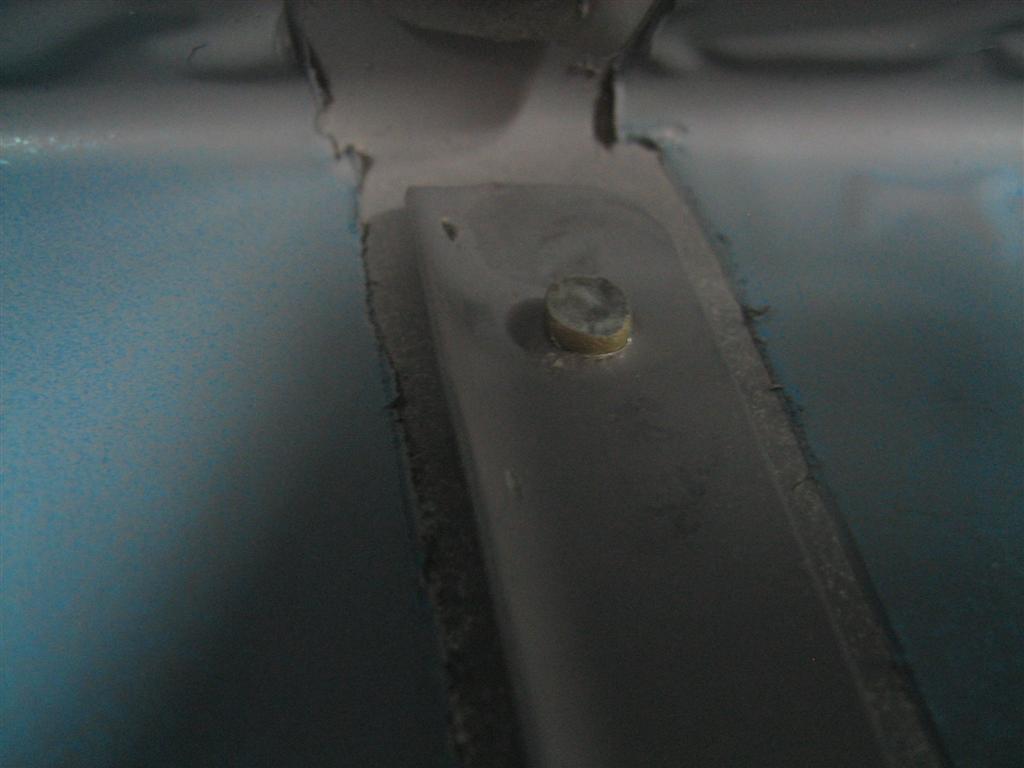
Here's the shop head for the oops rivet. This was my first real oops rivet. Not bad.
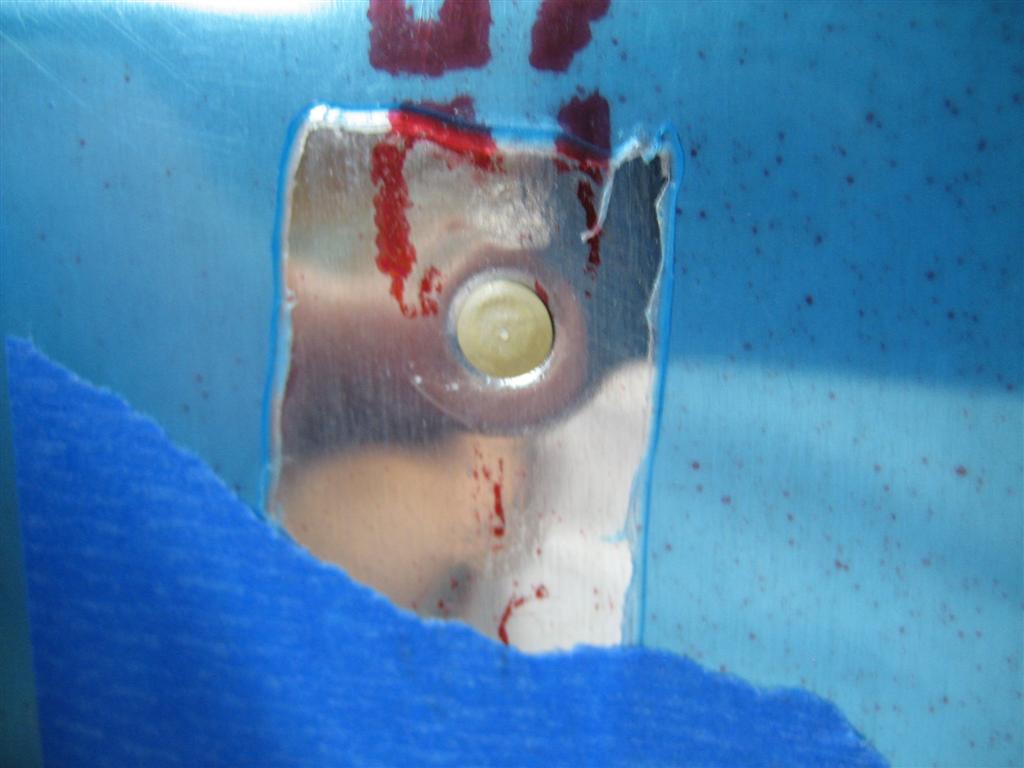
This one is okay.
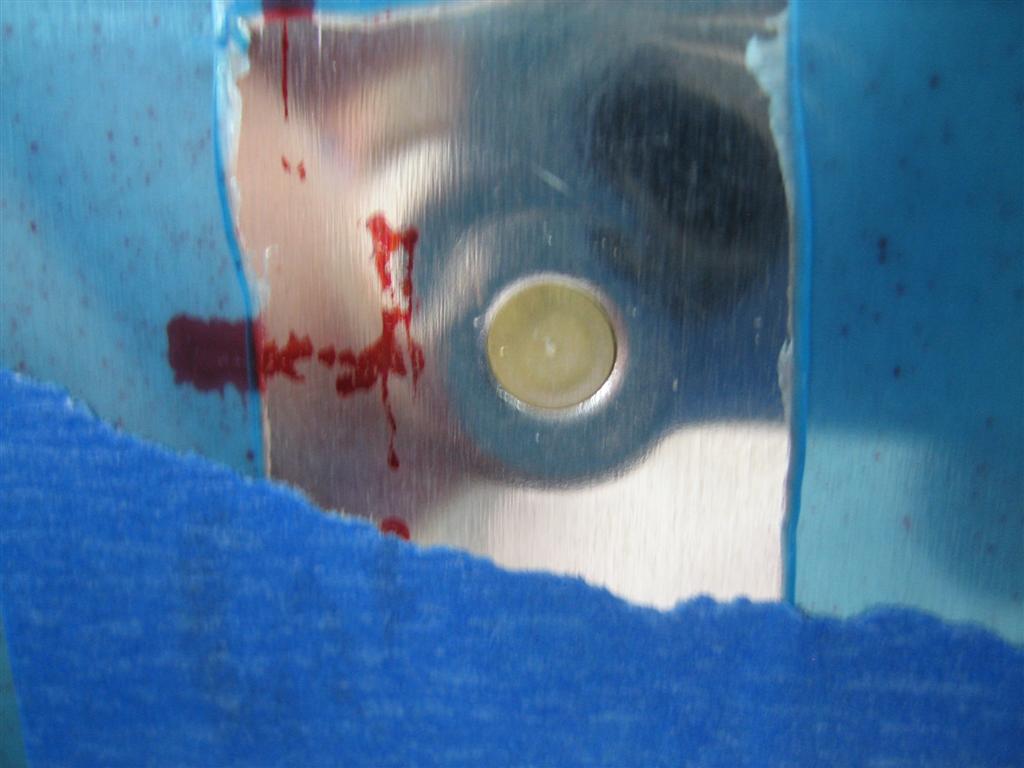
Another very nice one.
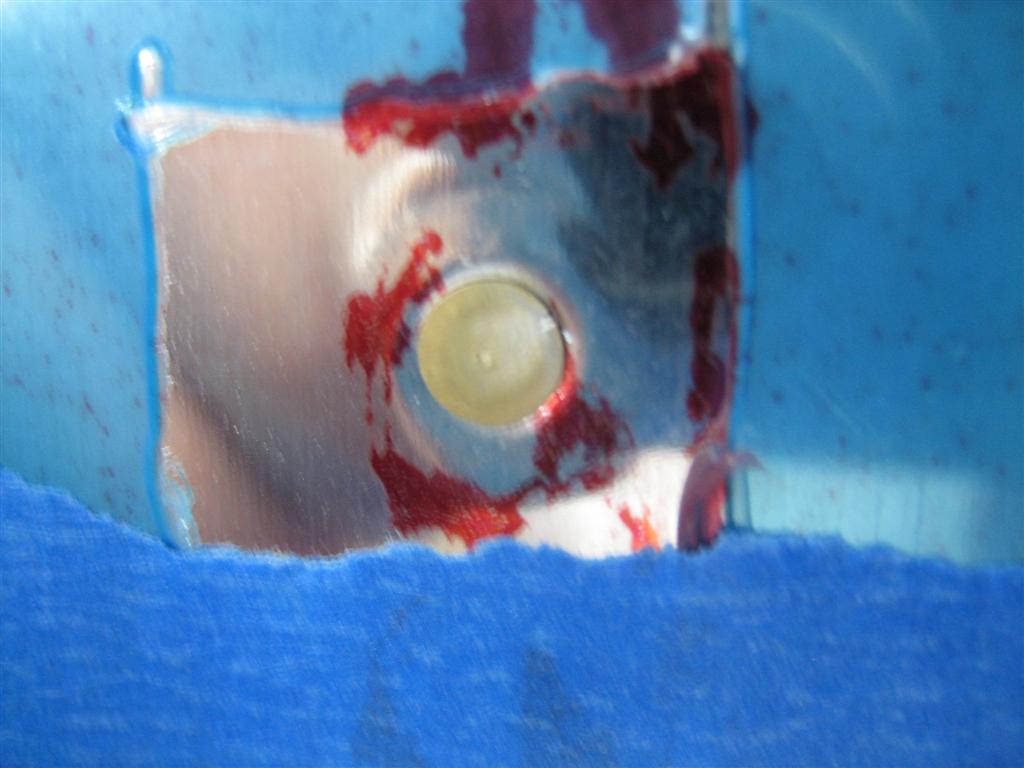
It's not blurry in real life, I promise.
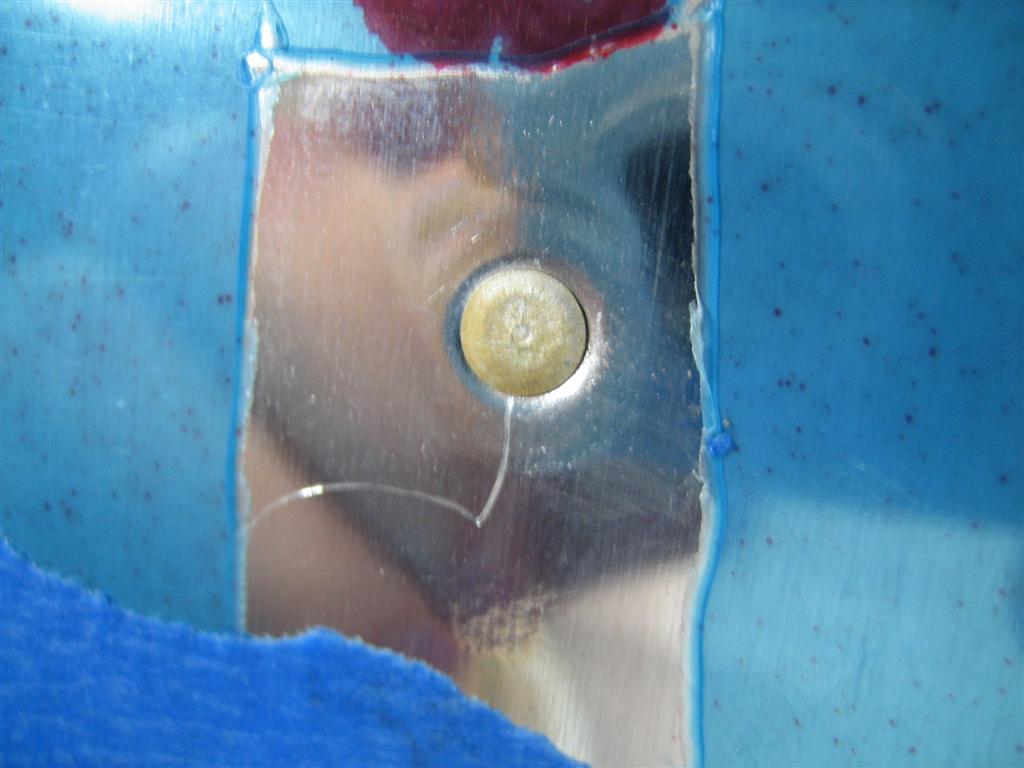
Whoa, who scratched my skin? It was probably the male part of the dimple die. That will hopefully polish out, (or it will get cleaned up and painted).
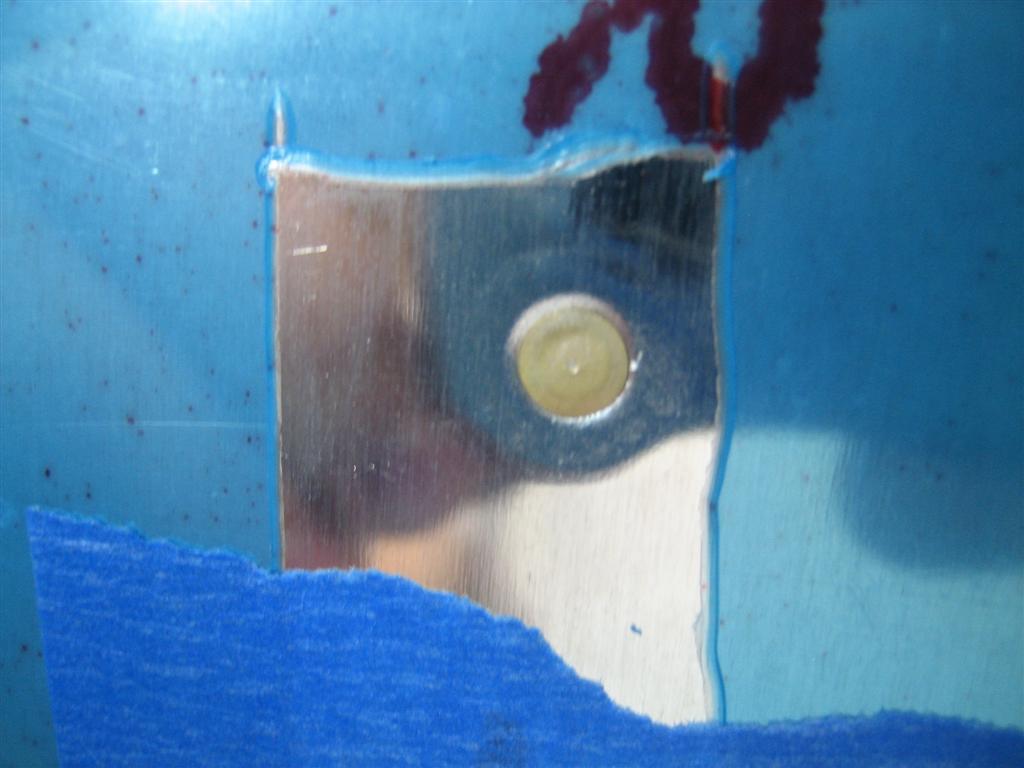
Another good one. In all of these, you can kind of see the larger diameter area that was dimpled.
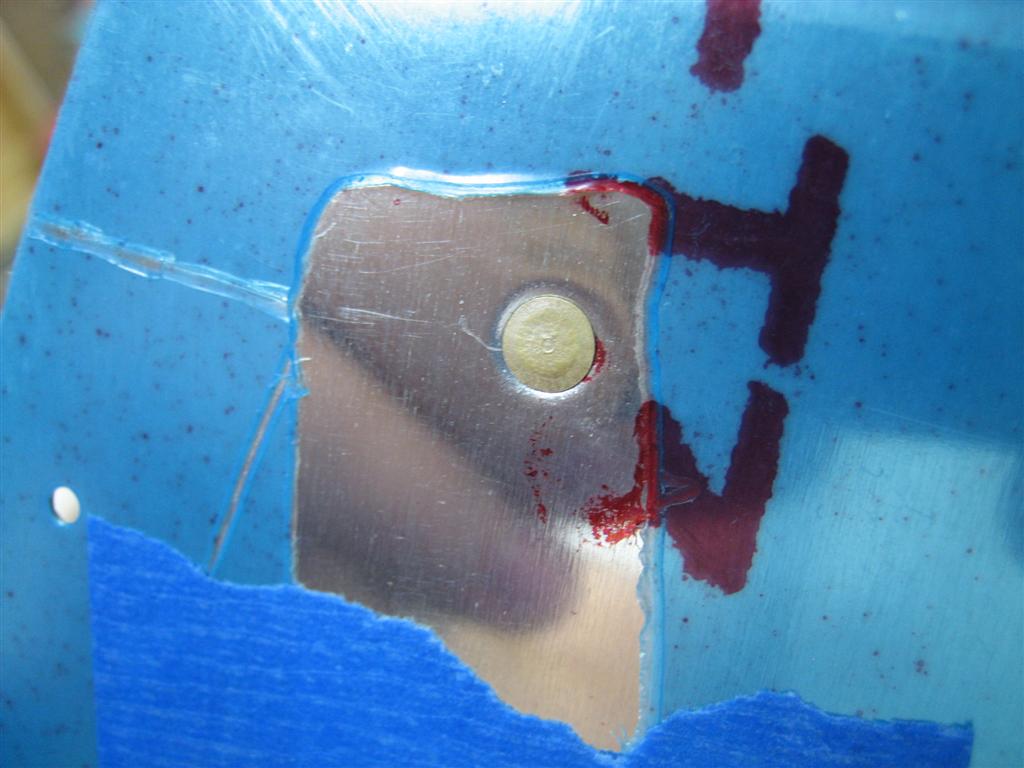
This one is on the very end, as you can see the devinyling lines.

It looks the same as all the rest, of course, so you’ll never know, and I’ve already forgotten which side (top or bottom) it’s on.

Anyway, I drilled out 13 of the 14 original rivets, then had to redo one of those, so 14 rivets drilled out and reset successfully in an hour today. Not bad. I’ll add pictures when I can get them uploaded. Sorry for the lack of work recently.

Prev | Next


Right Elevator Stiffener Riveting

April 18, 2010

Prev | Next

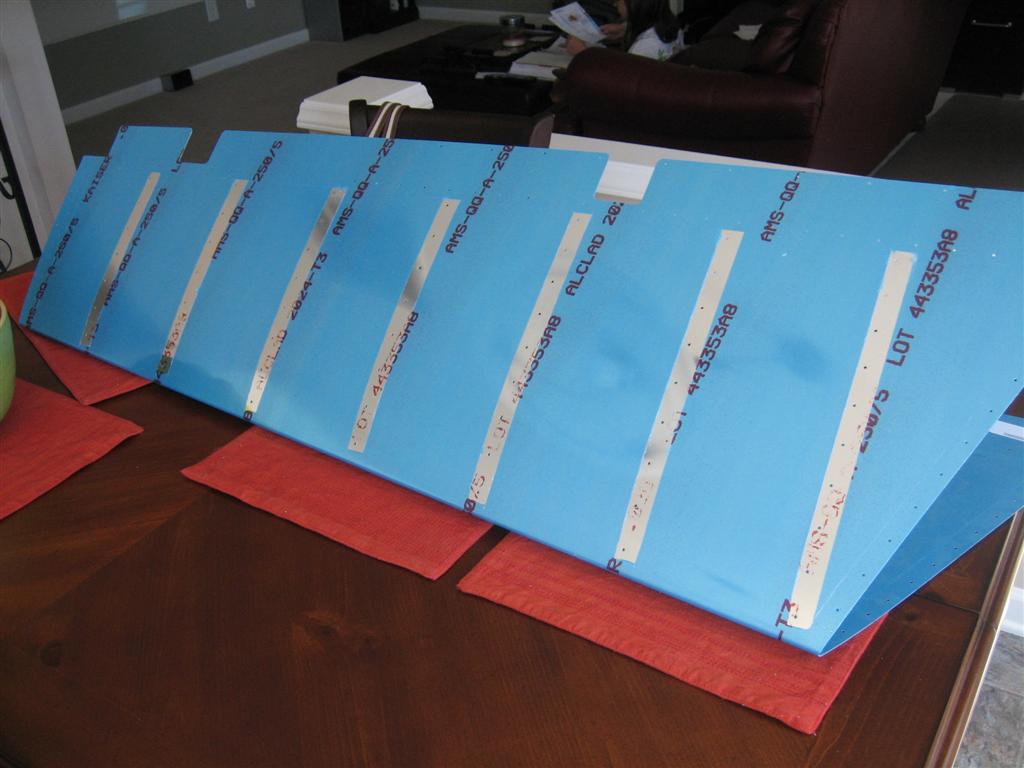
A few days ago I got a little time in on the project. I’ll see if I can remember what happened. 3 hours, 116 rivets…2 of them drilled out and reset. Here we go. First thing, in preparation for stiffener riveting was to get the skin devinyled. Here’s my devinyling table, wooden stick (won’t dissapate heat) and permanent marker.

Ready to use the soldering iron to devinyl.

After devinyling the inside of the right elevator skin.

For some reason I like devinyling. Don't ask me why.

Here’s the outside of the skin after devinyling. This actually takes a long time to do.

I just devinyled the stiffener holes. I'll devinyl the rest after drilling to the skeleton.

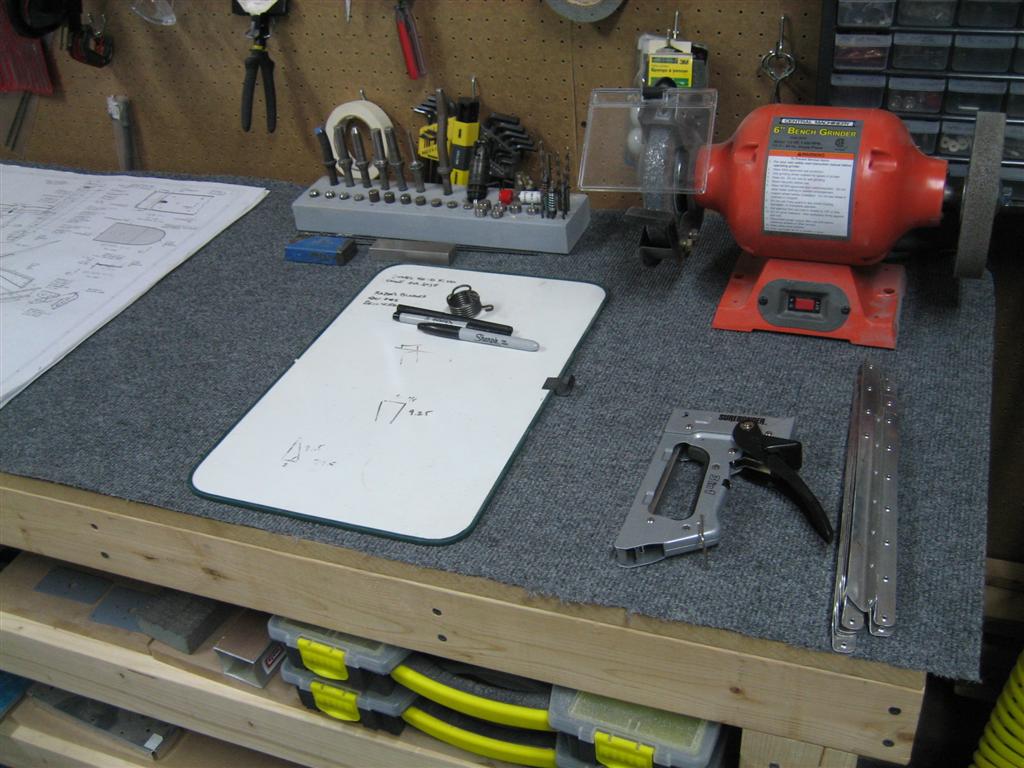
At some point last weekend (can’t remember which day), I was sent to Home Depot (maybe Lowe’s…it was a busy day) to grab some gardening supplies. I took the opportunity to grab some indoor/outdoor carpet for the workbenches.

Here's what I call my toolbench with a new carpet surface.

You should be able to see the “workbench”‘ with carpet on it in future pictures. Anyway, I grabbed the skin and did some deburring (interior and exterior) and some scuffing (interior only, for priming).

Scuffed strip on the left, non-scuffed on the right.

After a few more minutes, I dimpled the skin (no pictures, sorry), and then decided they were ready for priming.

Where is that self-etching primer?

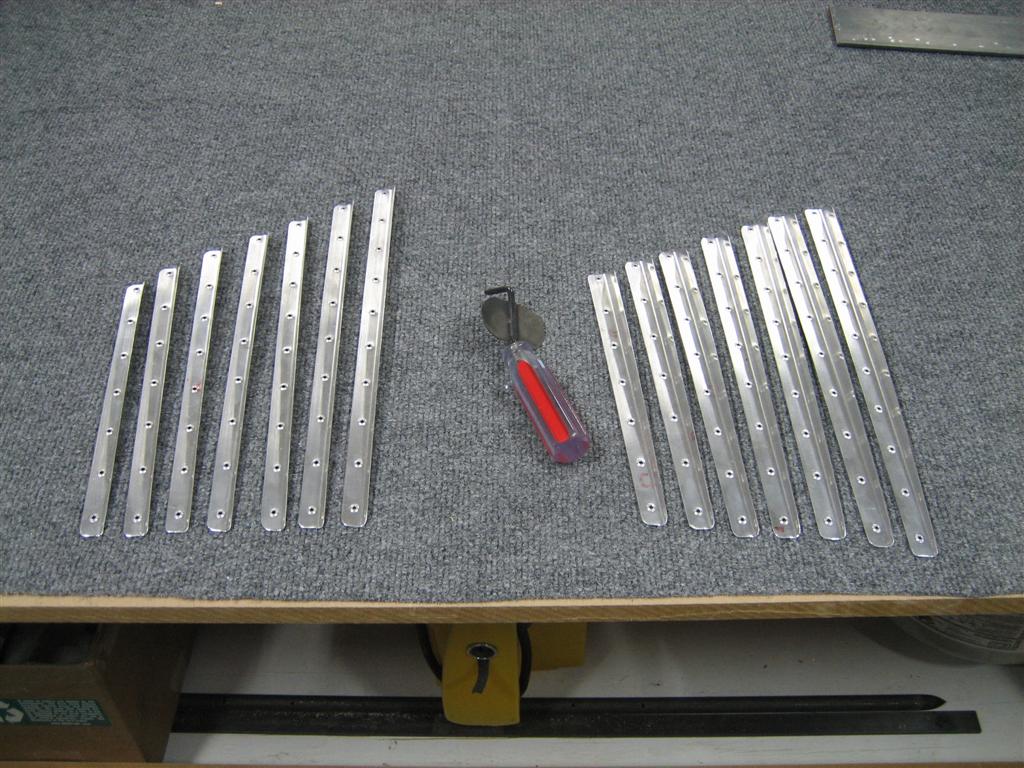
i got the picture order backwards, so you’ll see the skin primed later, but here I am getting ready (or just finishing) stiffener edge prep. I usually use my Permagit block to knock down any ridges, edge deburring tool (pictured below)  to chamfer both edges, and then a scotchbrite pad to smooth everything out.

Right elevator stiffeners and my edge deburring tool.

Here’s the picture of my primed skin.

It looks sloppy now, but wait until I get the vinyl off. Then the primed lines will look nice.

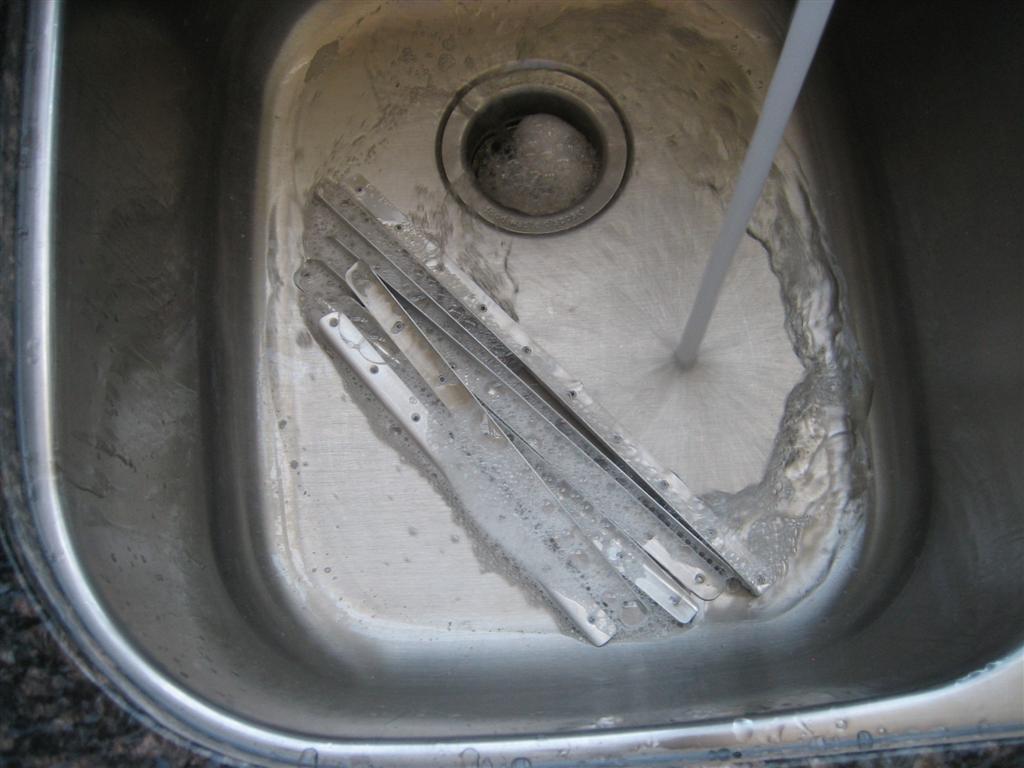
After the stiffener edge prep, the stiffeners got taken inside to be washed with dawn detergent.

Here are half of the stiffeners, being cleansed of their oily fingerprints and aluminum dust.

I decided to take a picture of how much detergent I use. Nothing really important, just camera-happy, I guess.

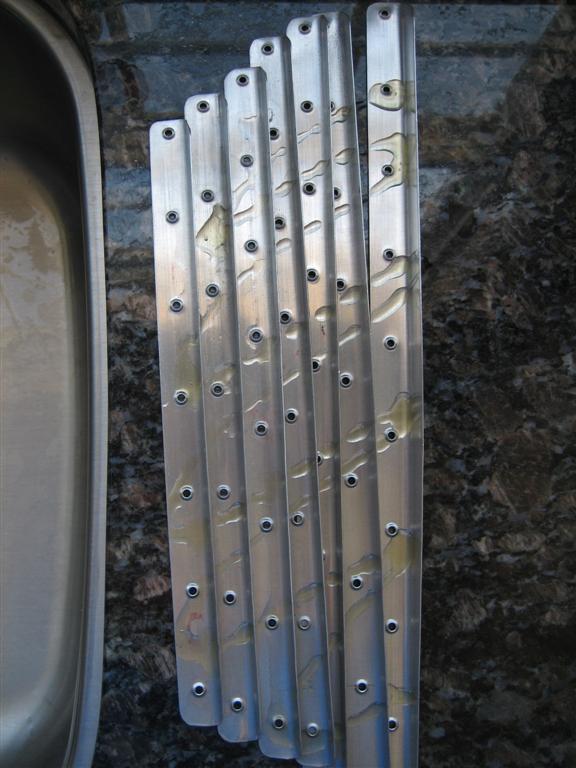
Dirty stiffeners need to be cleansed of their aluminum dust and fingerprints.

After cleaning, they go back outside for priming.

Boo-yeah, primed stiffeners.

While those were drying (and then flipped and sprayed on the other side), I placed rivets in the dimpled holes and taped them in place.

Rivets just asking to be beaten into submission.

I started to backrivet, and everything was going very smoothly.

Beautiful shop heads.

More beautiful shop heads.

God, I love backriveting.

But anyway, I got through all 116 rivets, then flipped everything over and saw these!

Ahh! Worst rivet ever!

This one is not so bad...

I figured out why this happened, and it falls squarely on me.

While I was dimpling, I didn’t pull the other half of the skin back well enough, so the skin side that was being dimpled was not sitting parallel to the faces of the dimple dies. One side of the die dented each of the last stiffener rivet holes on one side. The rivet in the second to last picture was flush against the backriveting plate, but the skin was dented, or above the backriveting plate.

I’m going to drill out all of the bad rivets on the trailing edge (of course, the worse of the bunch is on the top of the elevator, right where all of you are going to come look at my elevators), and then  try to smooth out the skin by backriveting it with a flush set from the inside out.

It might ruin the skins, which will be expensive. I’ll be sure to take some pictures of the process. Maybe it will save one of you some time and frustration…

Prev | Next


Right Elevator Stiffener Drilling and Dimpling

April 14, 2010

Prev | Next

Another fairly boring night with right elevator stiffeners, but the end is near (end of right elevator stiffeners, not the whole airplane), so I’ll keep plugging away.

My setup for drilling stiffeners. I used the cordless today so I wasn't making too much noise. I'm almost done with this side.

I matchdrilled every hole except for the last hole (closest to the trailing edge.) Some of these last holes are both pre-punched, and just need to be matchdrilled to final size, and some are missing the holes in the stiffeners. You have to use the skin to matchdrill the stiffener.

Down the right elevator.

I unclecoed most of the stiffeners and then re-clecoed the stiffeners (just at the ends) with the elevator off of the table so I can roll it over to drill.

Ready to flip over and matchdrill those last stiffener holes.

One picture of the last hole.

The hole at the end of the "3" is the one I need to matchdrill.

After that, I used a thick sharpie to trace the stiffeners to help with future devinyling. Then, I flipped the whole thing over to start on the other side. Same process, though.

About halfway done with this side.

Then, uncleco from the table to flip over and get the last hole.

Unclecoing from the last hole.

No big deal for you, but I marked all of the stiffeners correctly. The right elevator in the background is sitting upside-down (I just typed right-side-up, and had to change it. See, I’m still confused). Anyway, the ones on the table are on the top surface of the elevator, but the one in the foreground is marked the top (“Top, A”), but is actually the longest bottom stiffener.

This should be "BA" for "Bottom, A."

After finishing all of the stiffener drilling, I took them inside to deburr. After all of the deburring, I grabbed this shot of the placemat on the kitchen table. (Don’t tell the girlfriend. I got it cleaned up.)

Aluminum shavings galore after deburring. This is kind of a stupid picture, but I already uploaded it, so I'm not going to hold back.

After deburring, I rubbed down the surface that needed to be dimpled, (not the perpendicular surface, and I definitely didn’t do any edge-finishing).

Deburred and scuffed, ready for dimpling.

And I would like to draw your attention to the following three dimples. Don’t they look lovely?

Looks like a professional dimpled these holes.

It was the girlfriend!

Girlfriend dimpling. (She kept giggling after each one. And after each time I said "dimple." There may or may not have been red wine involved.)

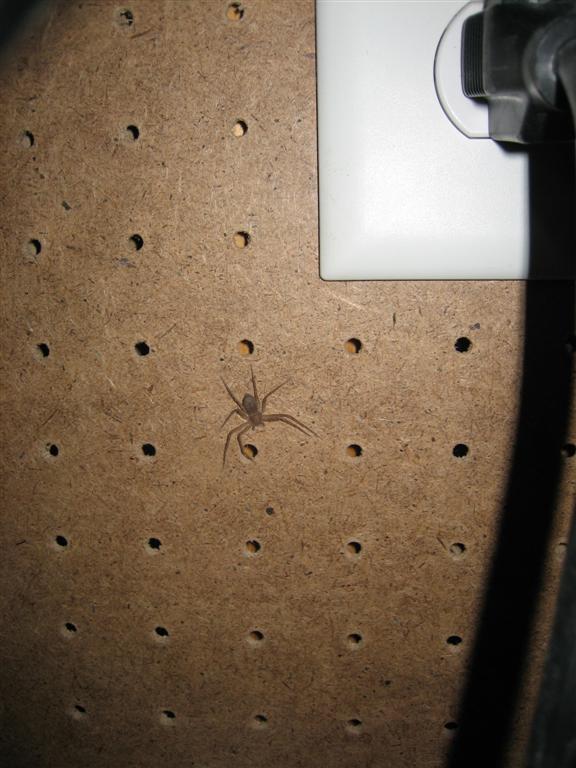
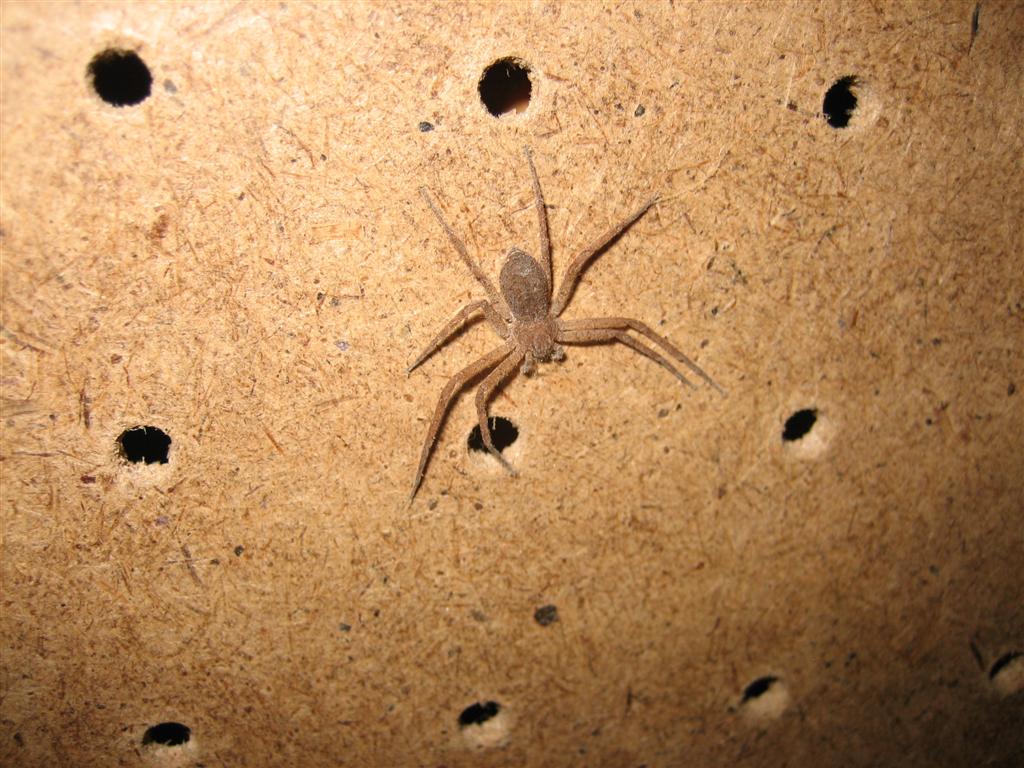
Anyway, she made it about 8 dimples before getting “bored” (I think her hands hurt, too). Back outside, I found this little guy.

he's pretty small, but looks kind of scary.

No real identifying marks, but I’m sure someone will be able to help out.

Anyone have any ideas?

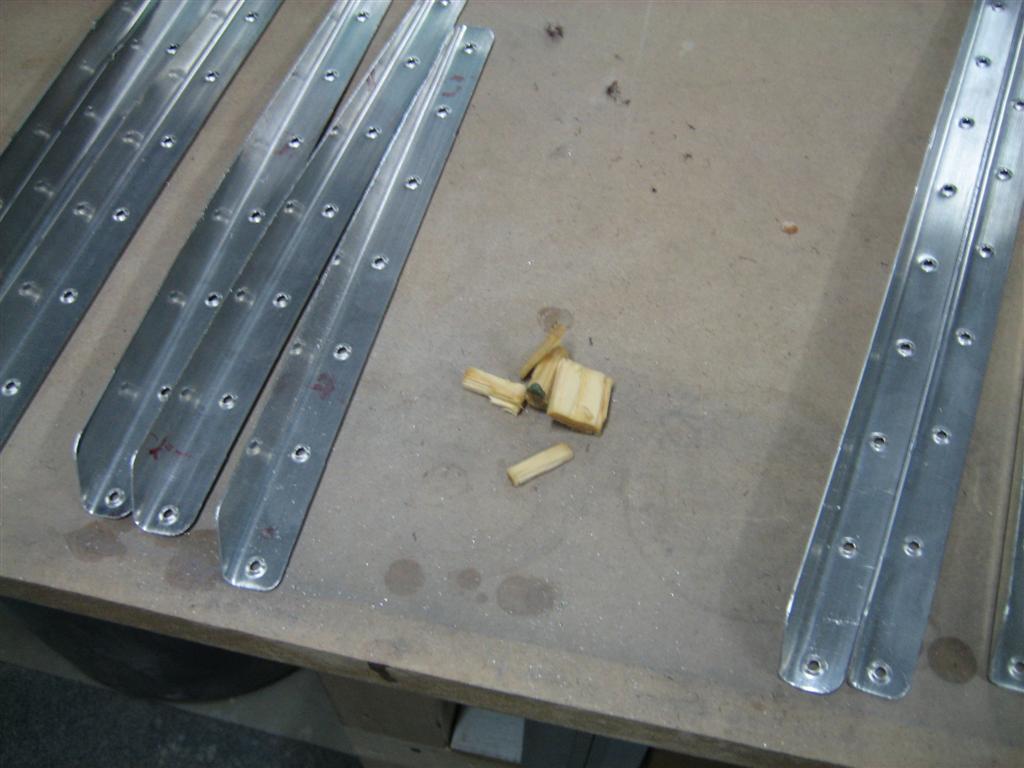
As if I hadn’t had enough drama for the night, Ginger came out, grabbed some wood, and took it inside to chew up all over our staircase landing. Here are some of the remnants.

It's better than her eating the window sills. Or the banister. Or our patio chairs. Or my soul.

Anyway, I spent a few more minutes with the Permagrit block rounding the edges of the stiffeners. Next up, edge-finishing with the scotchbrite wheel, scuffing, cleaning, and priming. Then, same dance with the skin and the backriveting!

An hour and a half. Boom shakalaka.

Prev | Next


Right Elevator Stiffeners and Priming

April 12, 2010

Prev | Next

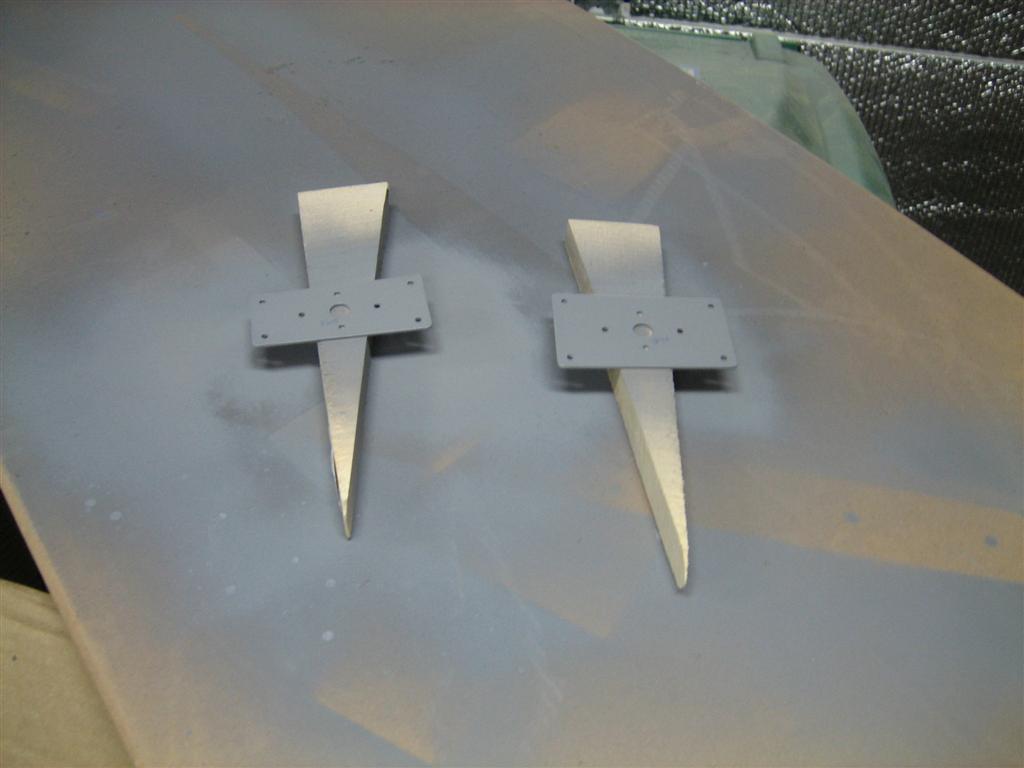
Today was pretty boring. All I did was trim the aft end of right elevator’s stiffeners and prime the two spar reinforcement plates.

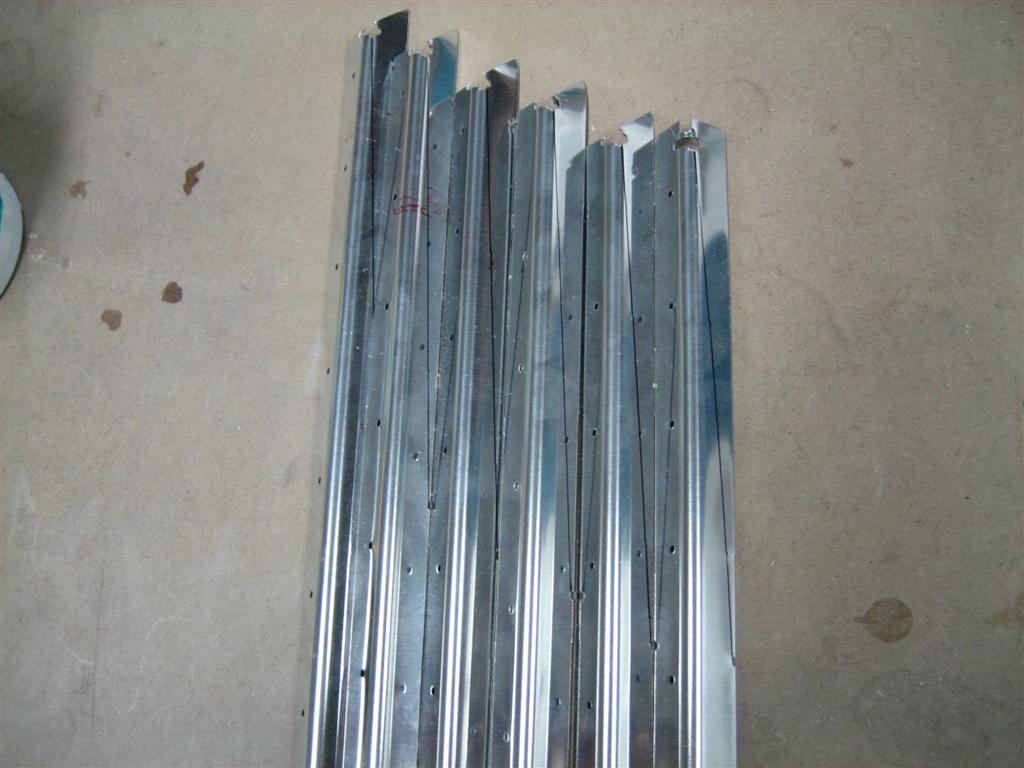
Here's half of my right elevator stiffeners.

Of course, I finished deburring, edge finishing, and cleaning the two right elevator spar reinforcements. I even got the girlfriend involved. She took the parts inside and scrubbed them down with dawn. Now it really is “our” airplane.

Two spar reinforcements, primed on one side.

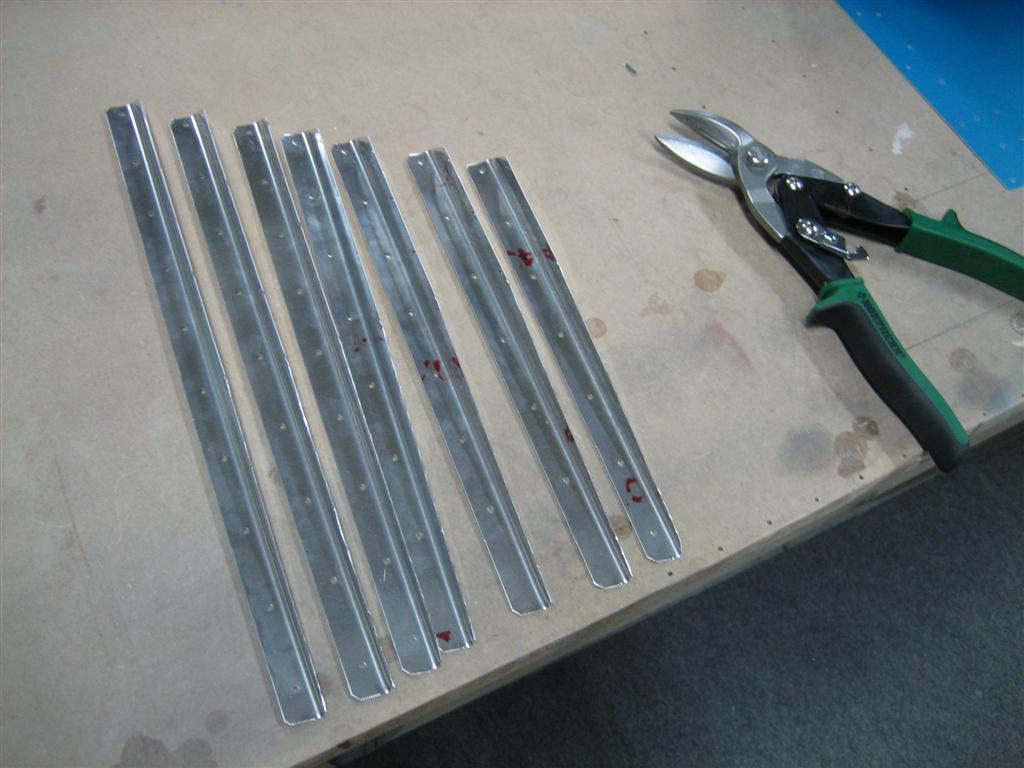
While that one side was drying, I finished up with the stiffener trimming. Here’s a shot of my weapon of choice.

Stiffeners and snips.

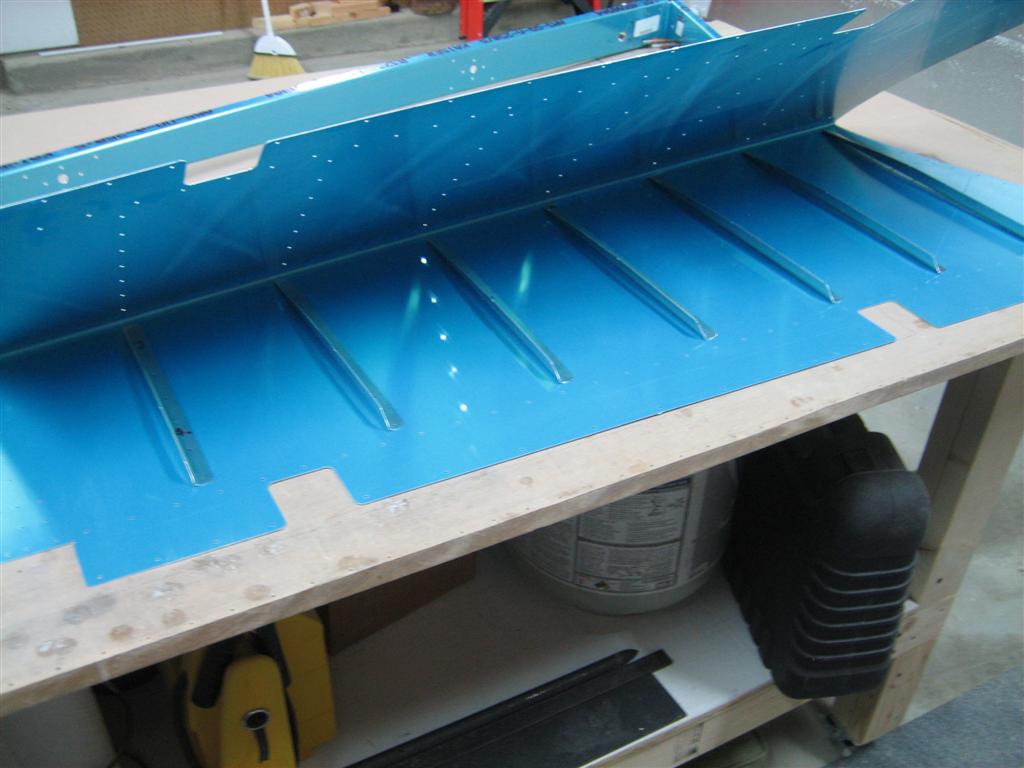
After I finished my first 7 stiffeners, I laid them into the skin, just for kicks.

Stiffener work is boring, but it means that there is backriveting coming soon, and I love backriveting.

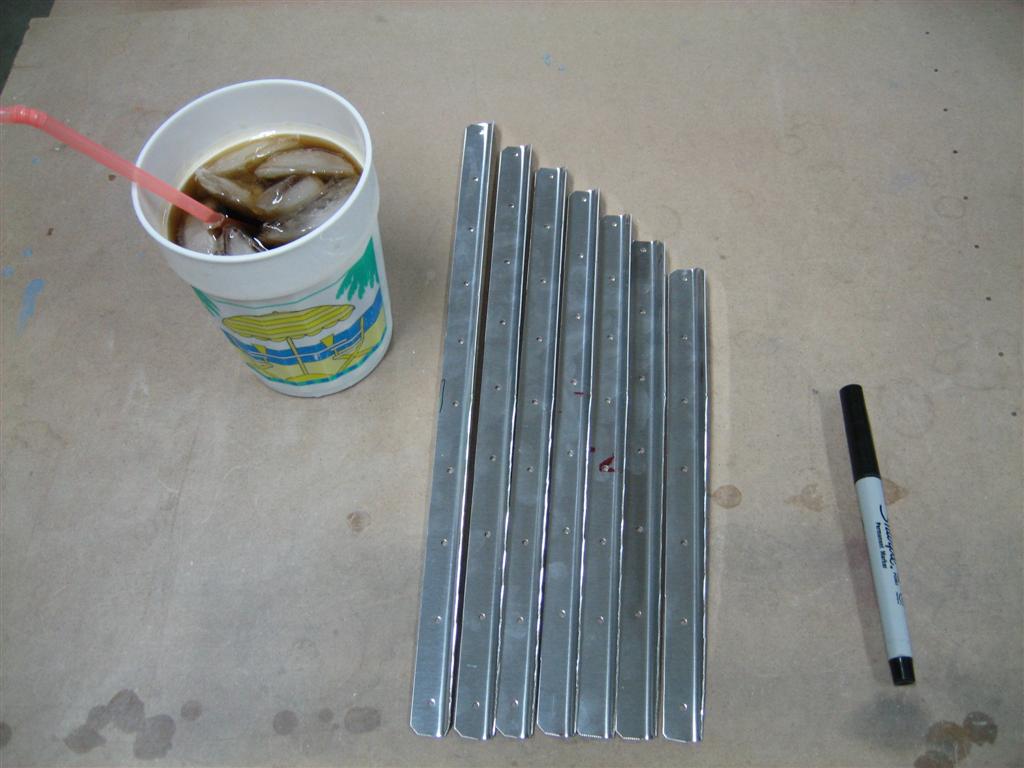
Drink of choice tonight (only during piddly stuff, never during “real” construction): Rum and Coke. Mmm. Rum.

Rum. Coke. Stiffeners. Sharpie. And a damn dirty workbench. (Those splotches are ski-wax drippings.)

Anyway, I think it was an hour tonight, including the 5 minutes of double duty with the girlfriend’s help. I’m gonna get her to help more.

Prev | Next


EAA 1426 Fly-in Drive-in

April 10, 2010

Prev | Next

So I’m writing this almost a week later, but I’ll try to capture my experience last Saturday.

I woke up Friday afternoon set on having some contact with airplanes, so with a quick search of the EAA calendar, I had a fly-in-drive-in to attend. One of my buddies who owns a C182 was busy and said he wouldn’t make it, so it looked like I would be driving.

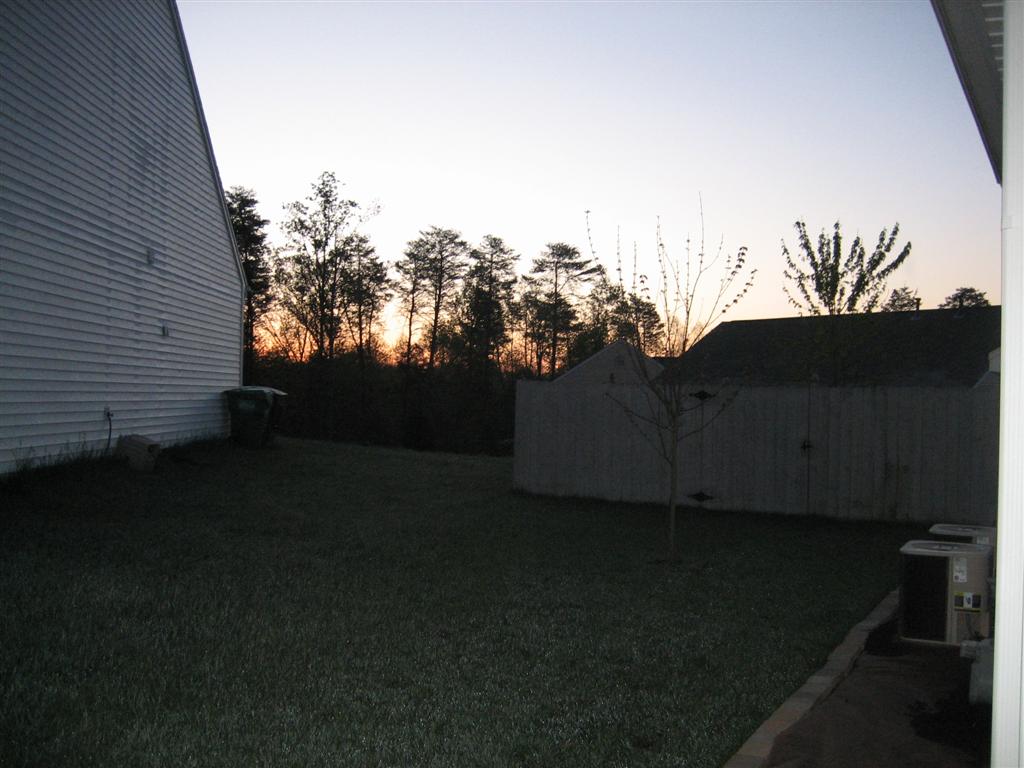
Here's 7am in NC looking around my garage corner. Not too bad, although the fence needs painting. Maybe next year.

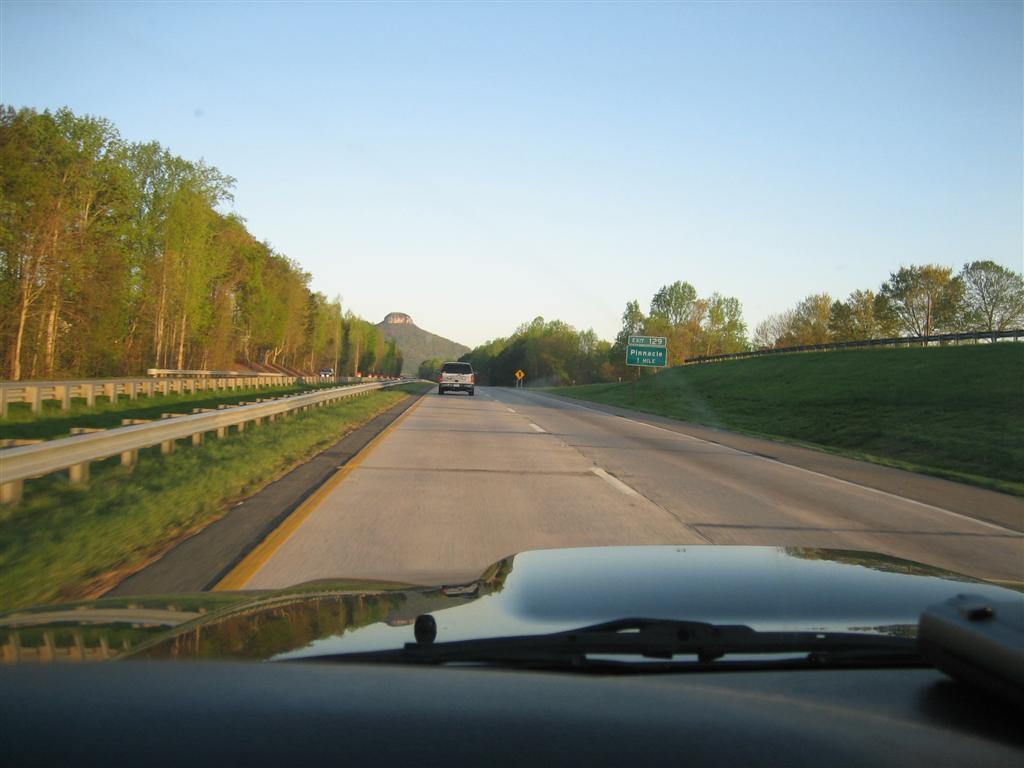
A half an hour (and Chik-Fil-A biscuit) later, heading north on 77 toward Pilot Mountain.

Look closely at the vehicle in front of me. Crap, a State Trooper. no speeding today.

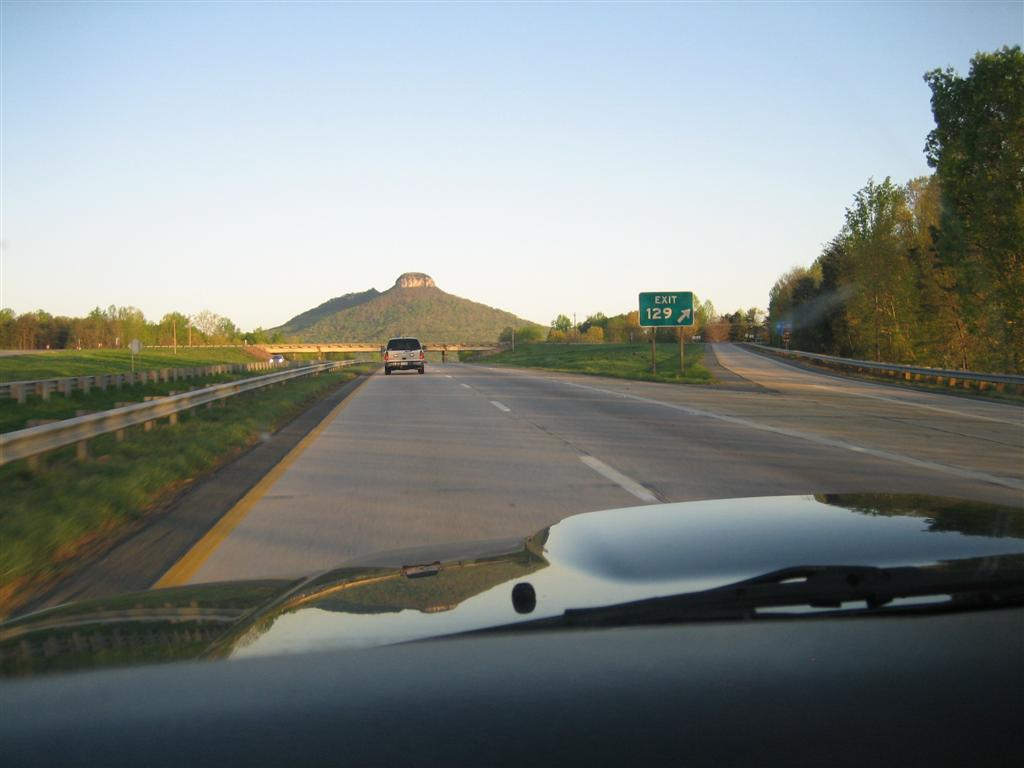
Another shot of pilot mountain.

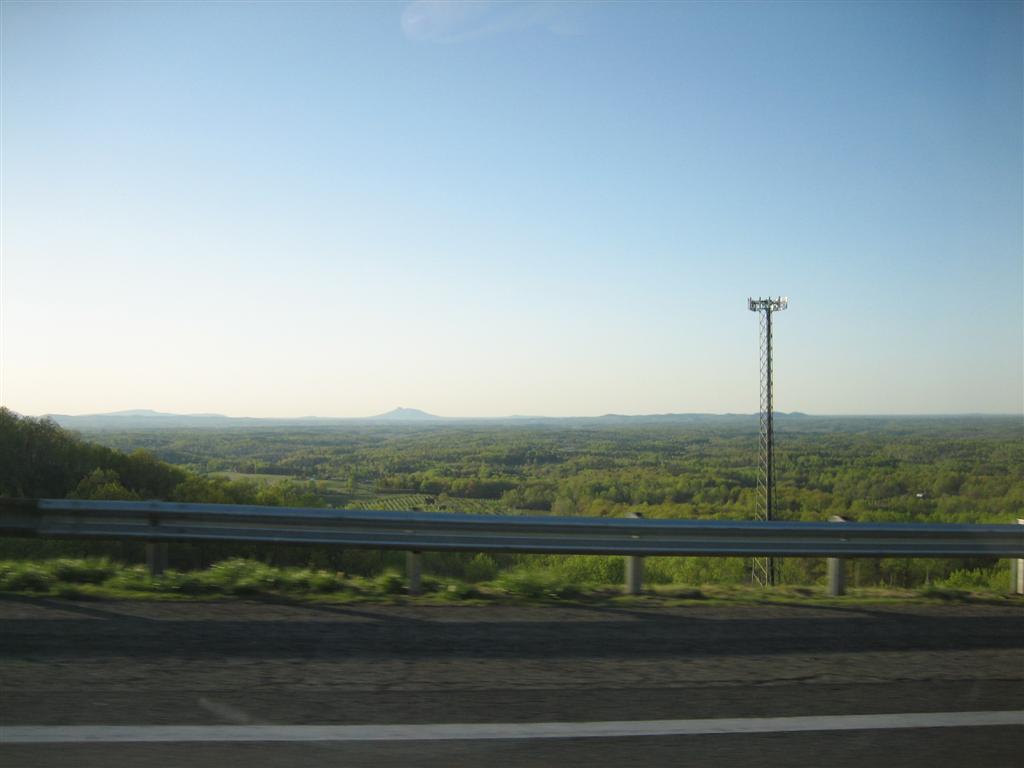
Once in mountains, there are a couple nice vistas looking back toward the south and southeast.

77 looking south on the way up the mountains.

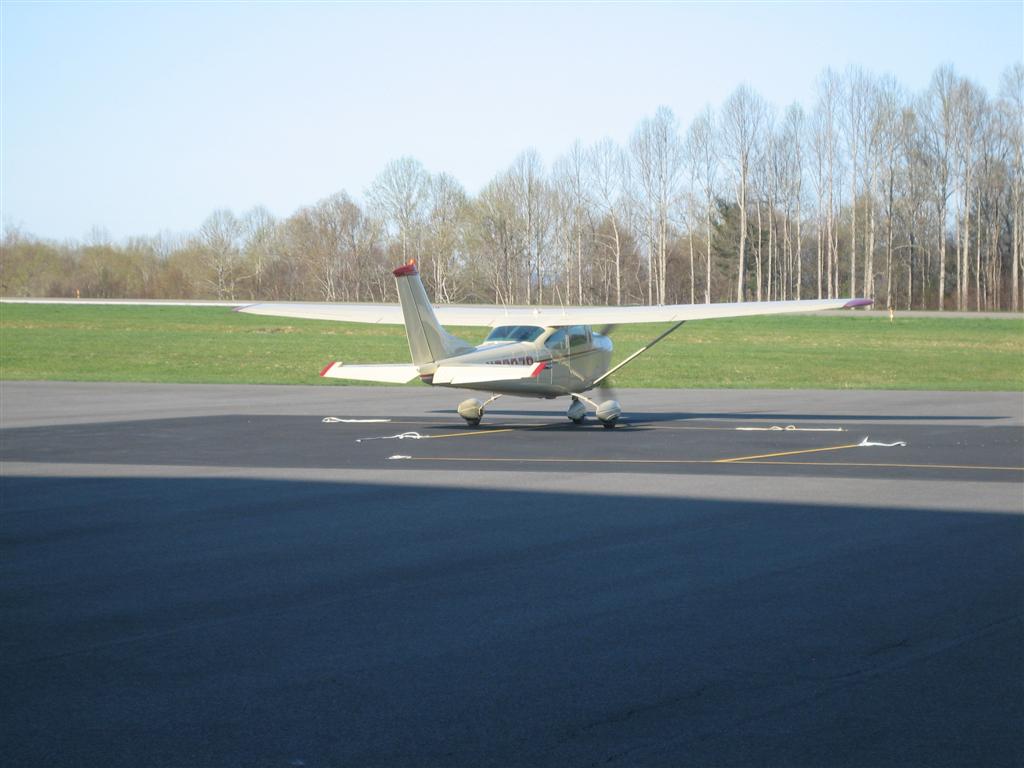
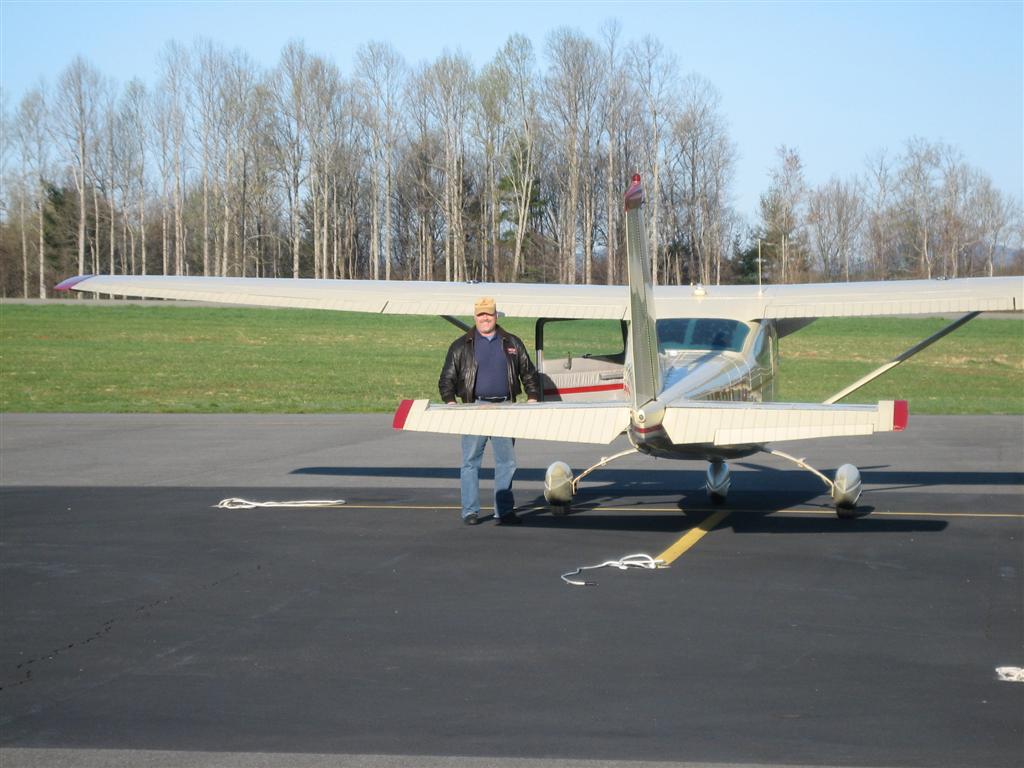
Once I pulled into  the airport (Twin County, HLX), I met a couple people standing on the ramp and up pulls a beige 182 with a 3-bladed prop. Wait a minute, my buddy Jon has a beige C182 with a 3-bladed prop.

That plane looks familiar.

I wonder who is going to get out.

It's Jon!

(Had to get a picture of him standing straight up.)

Anyway, while I’m a member at EAA 1114, their meeting isn’t until next weekend, and the EAA 1426 chapter fly-in promised pancakes. After some talking with Jon, we stumbled across this piece of machinery.

I’m going to try to capture the jokes about it. I take credit for none of them.

UFO (Unidentified Frying Object.)

So the joke goes that there was a retired Air Force officer who, as part of chapter 1426’s winter activity list, designed and constructed this beast to contend with some of the other pancake cookers out there.

Someone made a pretty funny joke about it being a disc-shaped metal object seen near the airport, and that it was a UFO (Unidentified Frying Object.) I actually spilled a little coffee out my nose at this.

Somebody then pointed out that it must be an advanced design project from the Air Force.

The the Air Force guy piped up and said…

"Nope, it's leaking oil. Must be from the Navy."

Much giggling ensued. No offense to the Navy, or any armed services branch.

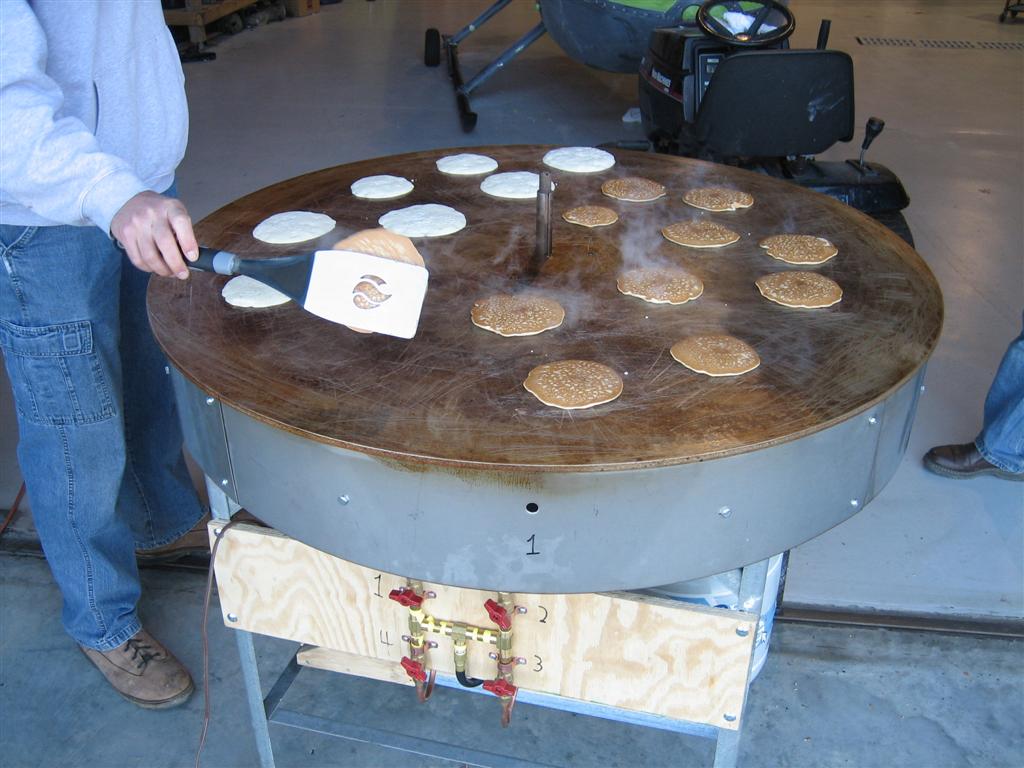
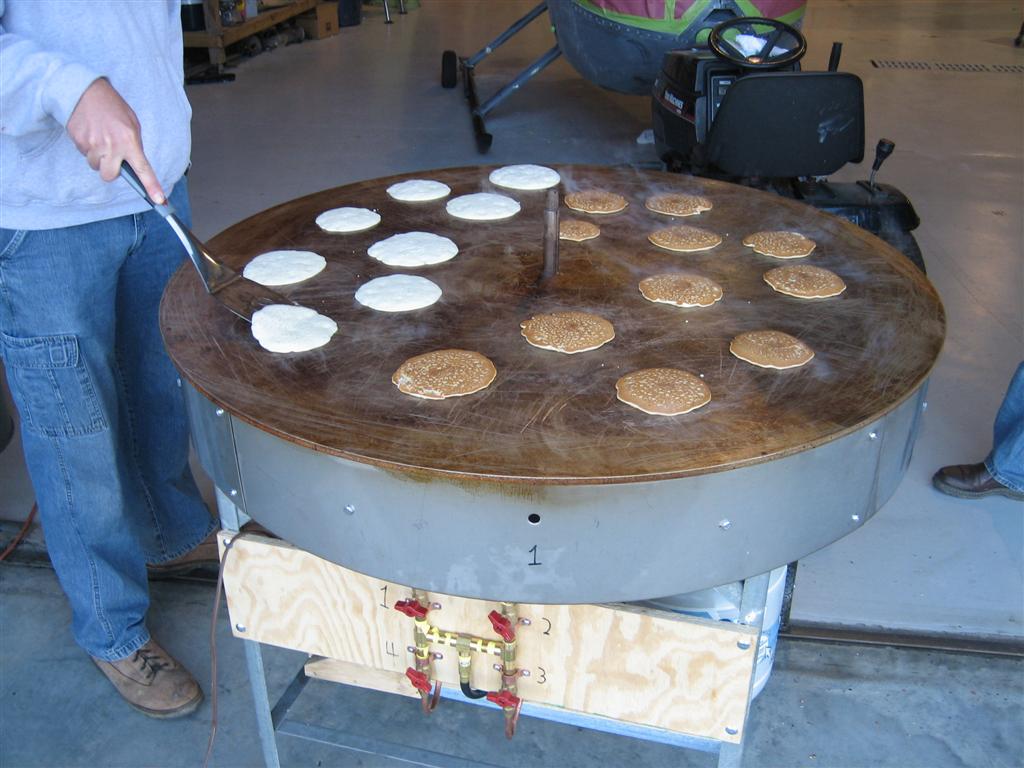
Anyway, I got a couple action shots. The cooking surface is a 3/8″ aluminum disc (not aviation grade, the health department won’t approve that as a cooking surface because of some anti-corrosion additives or something). I was interested in that, but couldn’t find any more details. Anyway, th disc spins about 1 RPM, which, with 4 burners (note the manifold in the lower part of the next picture) at 90° from eachother, yields <counting>…18…19…20 pancakes every 3 minutes.

Two times around on the first side, then flip and one more time around.

Action shot! (That's a nice spatula, too.)

Look at how perfectly they are cooked.

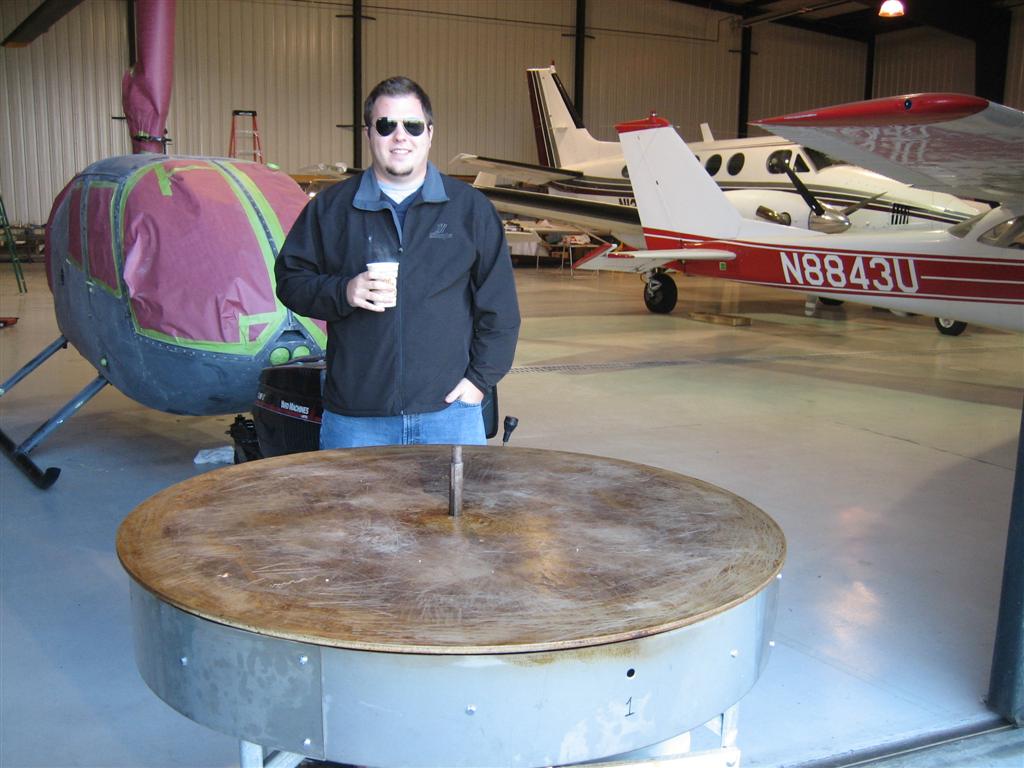
Anyway,  I had to get a picture in front of it. Here I am, for only the second time in the blog. Sorry I didn’t comb my hair.

Who, other than me, would say, "Hey Jon, take a picture of me with the pancake cooker!"

Then, they showed me a partially completed RV-7 kit. They inherited it from someone, and are thinking about selling it. (I think they are more interested in completing it within the chapter, but they were interested me in at least taking a look.) If anyone reading this wants the contact info for them, let me know, I can put you in touch.

RV-7 horizontal and elevators.

An aquajet (ride for kids).

The wings.

More wing pictures.

Even more.

The vertical, rudder, flaps and ailerons.

These look like the older style wingtips to me.

Oops, forgot to rotate the picture.

Then we walked back to the main hangar, and I grabbed some pictures of the various projects there.

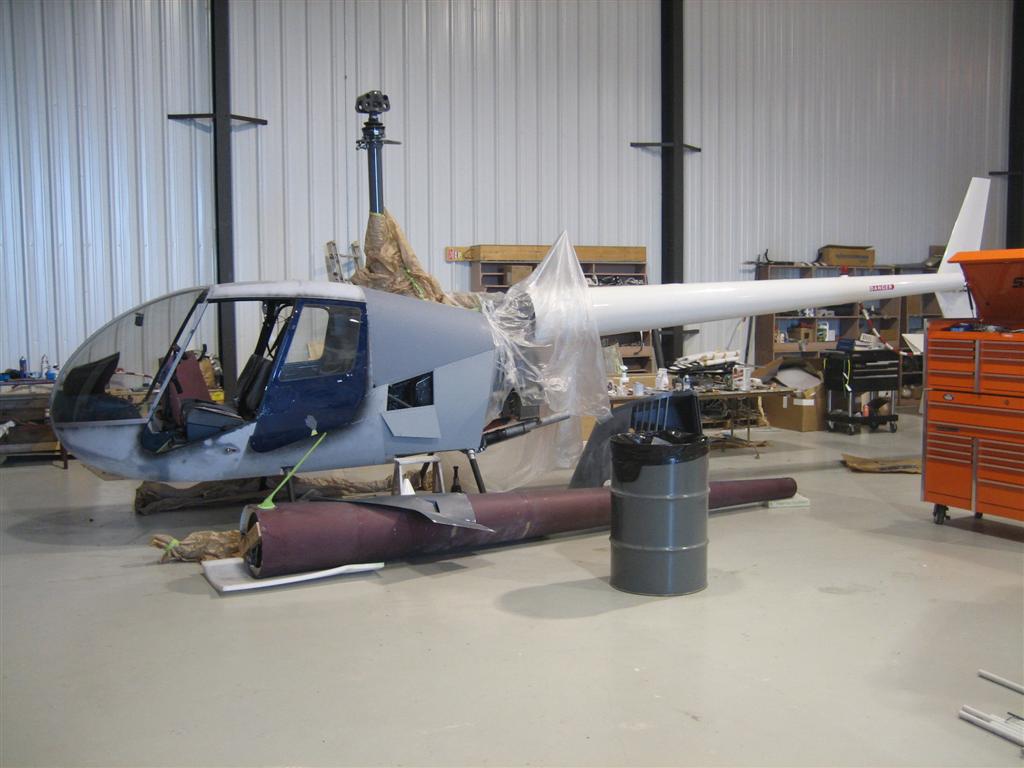
One of two helicopter projects in work.

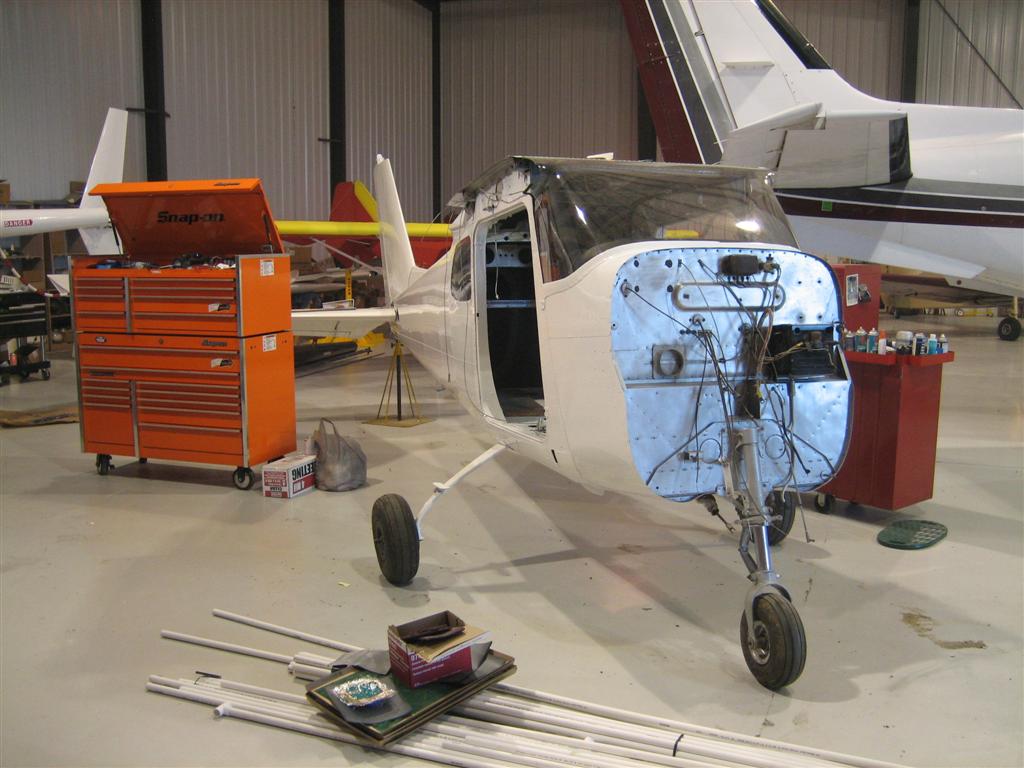
This is "one of the first non-straight-tal 172s." Even though I used to work for Cessna (I was on the jet side of things), I can't remember what date that would have been early 60s?

I don't remember what I was trying to take a picture of here. Maybe the hangar doors and a 172...and half a ladder. Here are some hangar doors and a 172...and half a ladder!

Ooh, a King Air.

Looking back outside. The pancake cooker is in front of the helicopter being prepped for paint.

Here's the inside of that 172. No priming. No corrosion. Hmm.

A closeup of one of the helicopters.

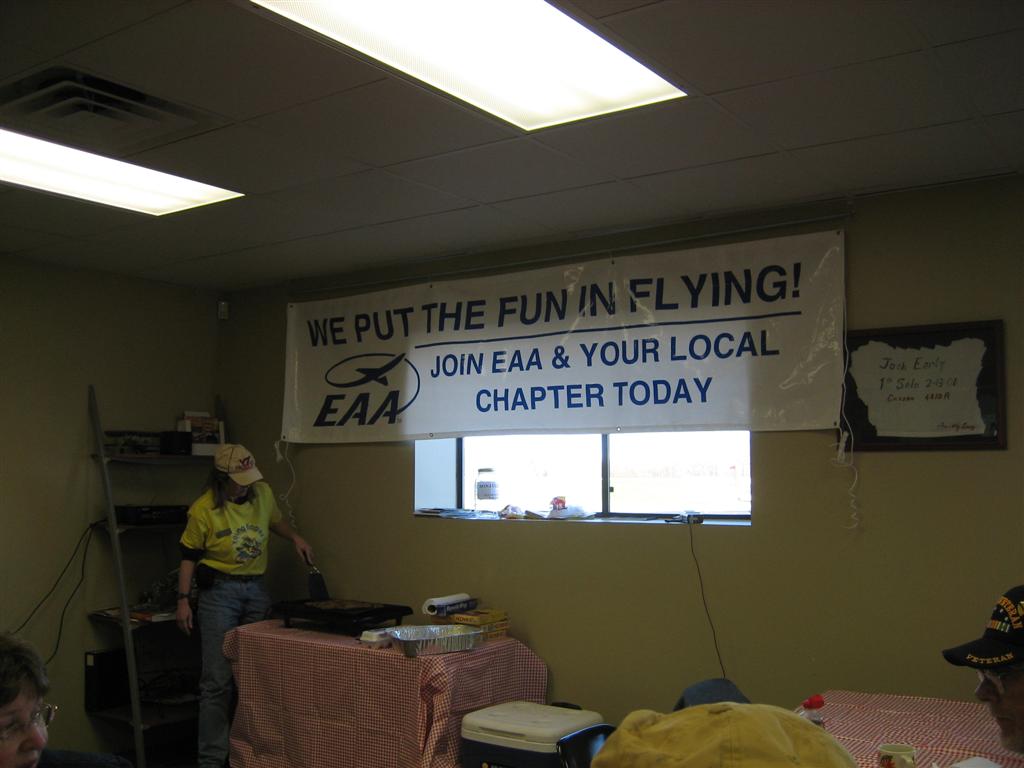
Inside for breakfast, I got a picture of the sausage and egg chef and the EAA banner they hang up for meetings.

I'm hungry.

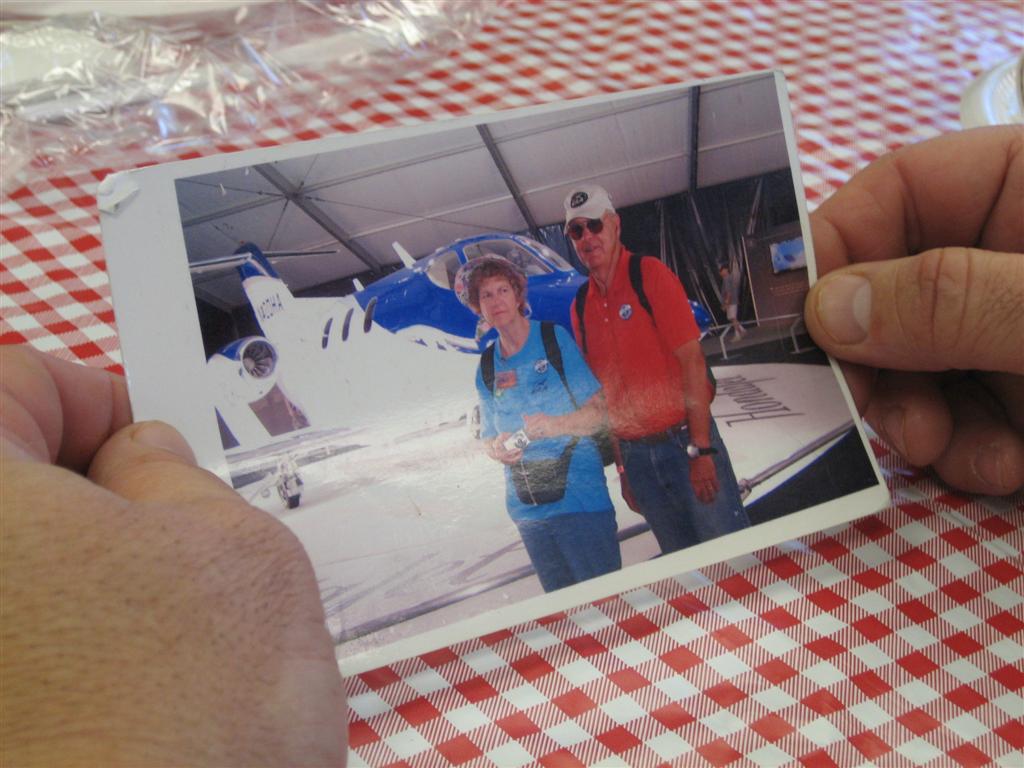
One of the very nice ladies there helping with breakfast came to Oshkosh in 2008 and got a picture in front of the Honda Aircraft Company’s HondaJet (HA-420). That’s our proof of concept aircraft.

A picture of a picture of the Model 420 HondaJet.

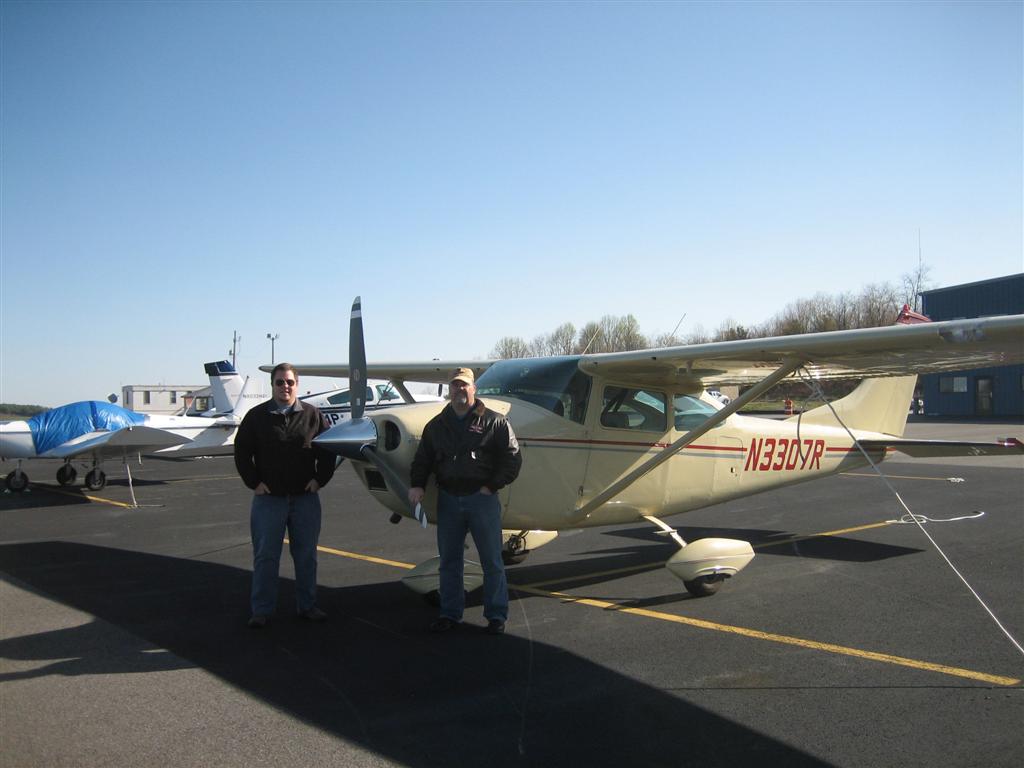
Then, Jon had to head out, so we grabbed a couple pictures in front of his plane.

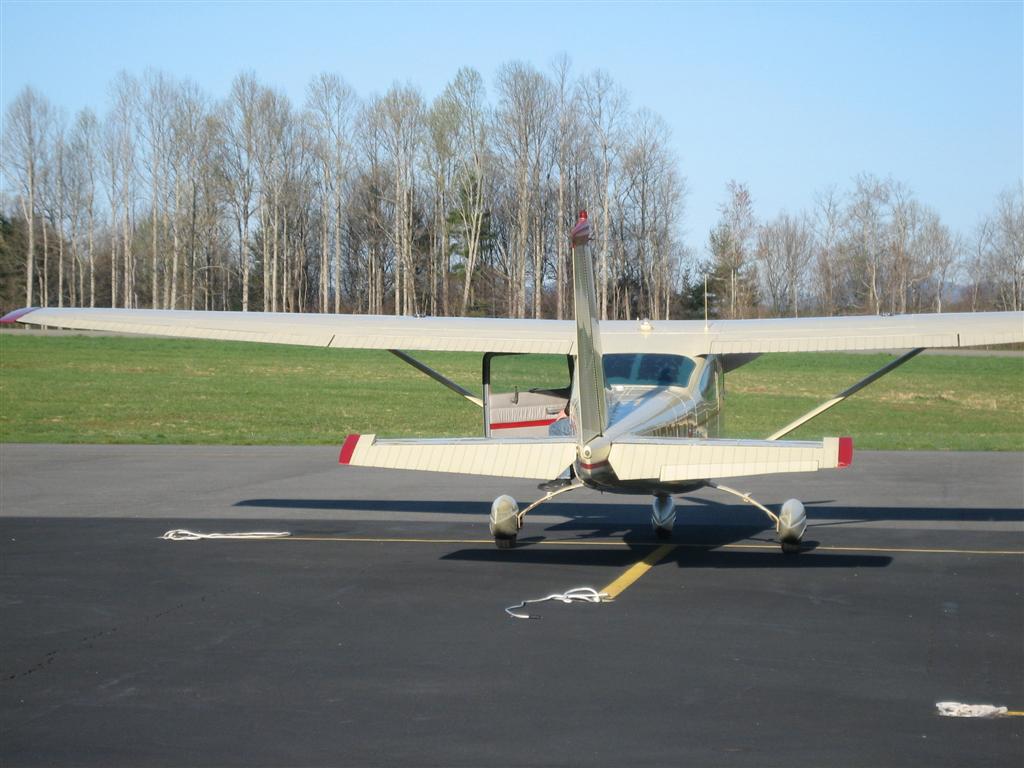
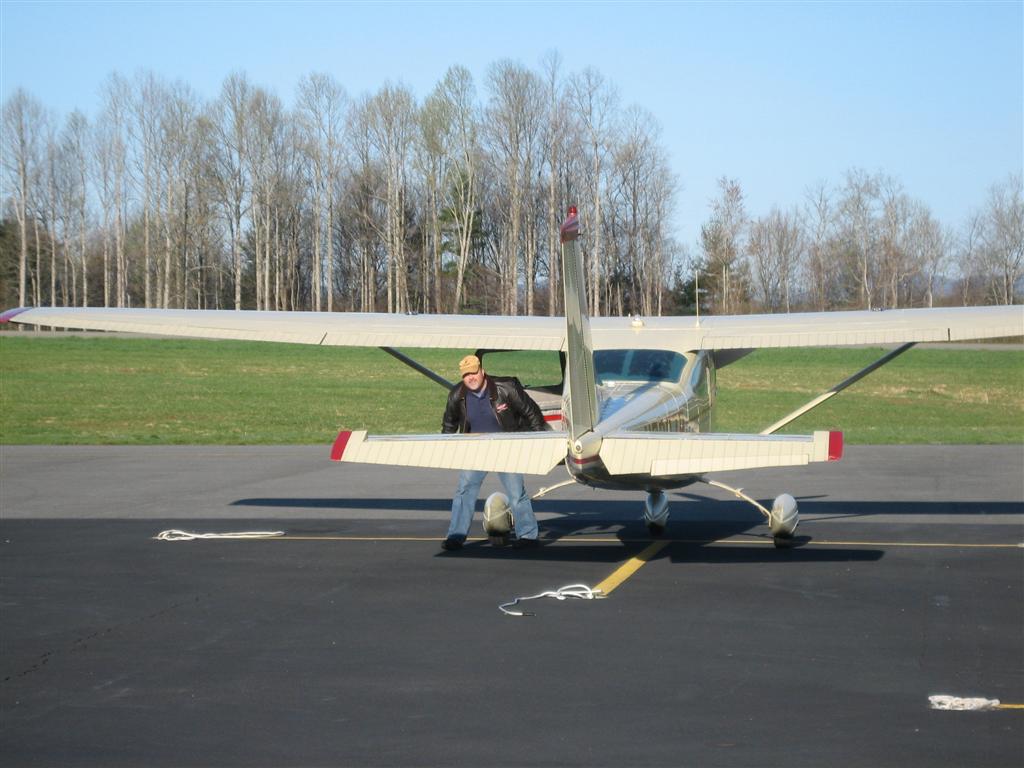
We're bad at the whole lighting thing. Maybe we should try the back of the aircraft.

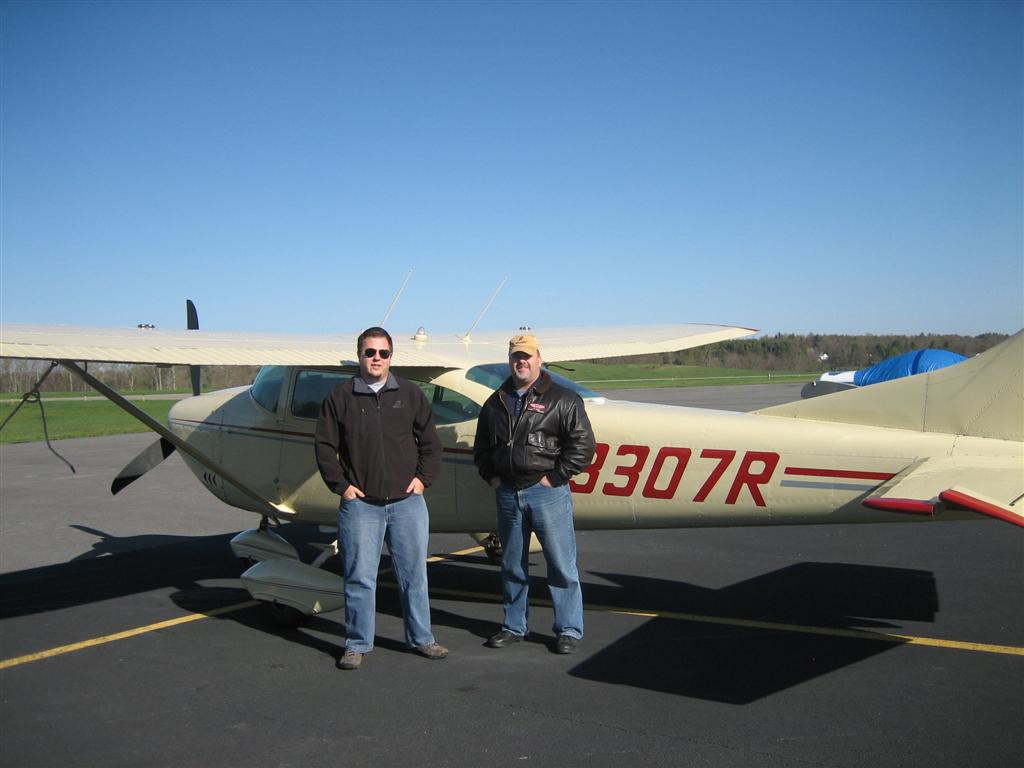
Much better. Jon told me it was okay for you guys to see his tail number. If you say so, Jon.

Then, I snapped some pictures of Jon’s departure.

Vroom.

Vroom.

Vroom.

Vroom.

Vroom.

Quiet vroom.

Then…I left, too. (How anti-climactic.)

On the way home.

That’s all. Now back to work on the airplane!

Prev | Next


Right Elevator Skeleton and Stiffeners

April 9, 2010

Prev | Next

Sorry for the tardiness on the commentary. Here it is.

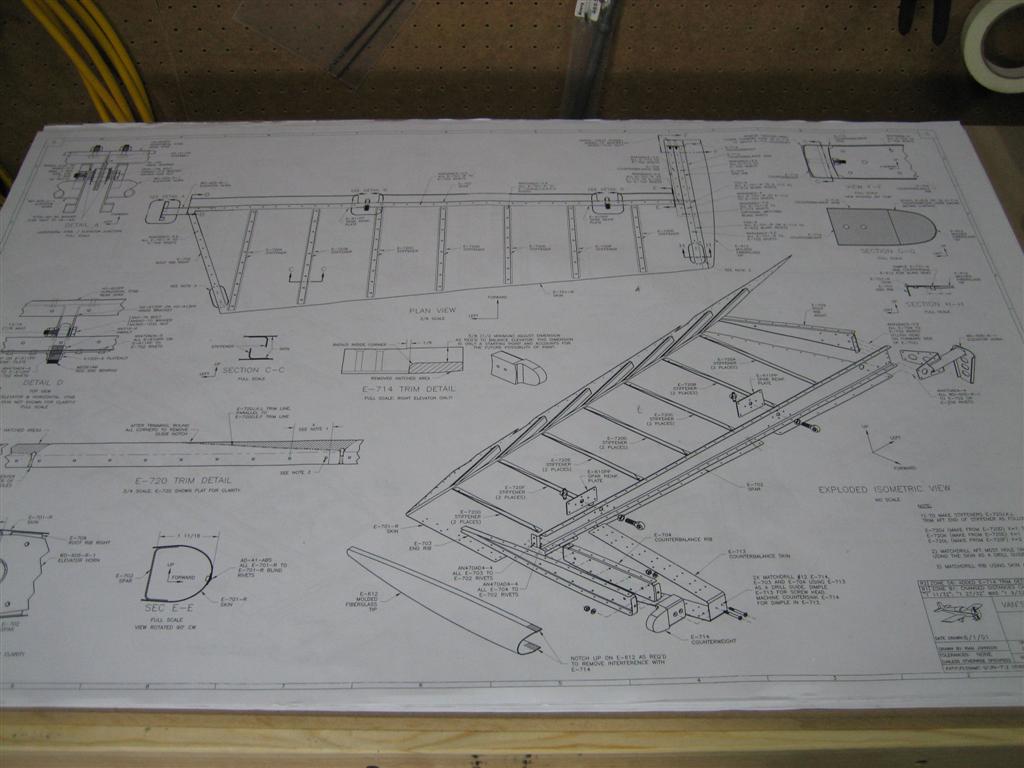
I decided after riveting the trim reinforcement plate that I will stick with the right elevator for now. Of course, here is the obligatory plans picture.

On to the right elevator.

Instead of following the directions to start in on the stiffeners, I sorted through my lower workbench shelves and pulled out the parts for the right elevator skeleton. I just laid them on the (very dirty) workbench and grabbed this picture.

Right elevator skeleton, ready to rivet. Just kidding.

First up, prepare the two end ribs (edge finish, then flute).

Here they are (E-703 and E-704), sitting nice and flat with each other.

I can’t remember why I took this picture. Maybe after I removed the blue vinyl?

right elevator spar.

Then, it’s time to match-drill the two end ribs together.

The two end ribs clecoed together for match-drilling.

After that, they want you to cleco the two end ribs onto the rear spar. You can see some misalignment here.

See the spar flange hole and how it doesn't line up with the counterbalance rib?

Here's the other side, still not aligned very well.

After some manipulation via fluting and flange straightening, I managed to get everything lined up and match-drilled.

Here's my 12" bit, doing what it does best.

Here’s the outboard assembly after match-drilling.

Ready for disassembly.

Next, they want you to cleco in the counterbalance skin with the counterweight.

There's the right elevator counterweight.

I read on some other builders’ sites that it was difficult to cleco the counterbalance skin on the rib assembly. I didn’t have too much trouble, but it was definitely easier to work front to back.

Counterweight clecoed in.

Next (before going back to the counterweight for drilling), I clecoed on the inboard rib. These are matchrileld to #40, then dimpled and set with flush rivets on the front web of the spar. The reason? The elevator horn must sit flush on this surface. You’ll see later.

E-709 Root rib clecoed on.

Now back to the counterweight. Van’s wants you to matchdrill these to #12. I started with a #40 and worked my way up, blatantly ignoring the advice to use drill lubrication. Of course, I broke 3 bits before I subdued my own stubbornness and moved on to something else.

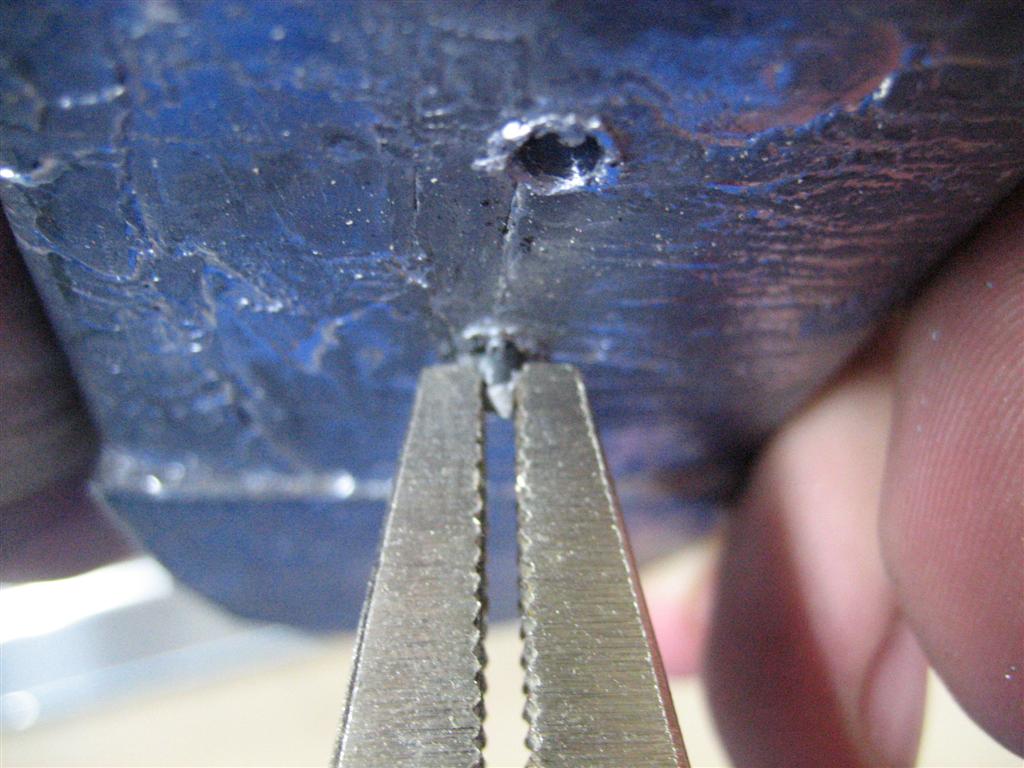
Broken bit, I need to get some Boelube.

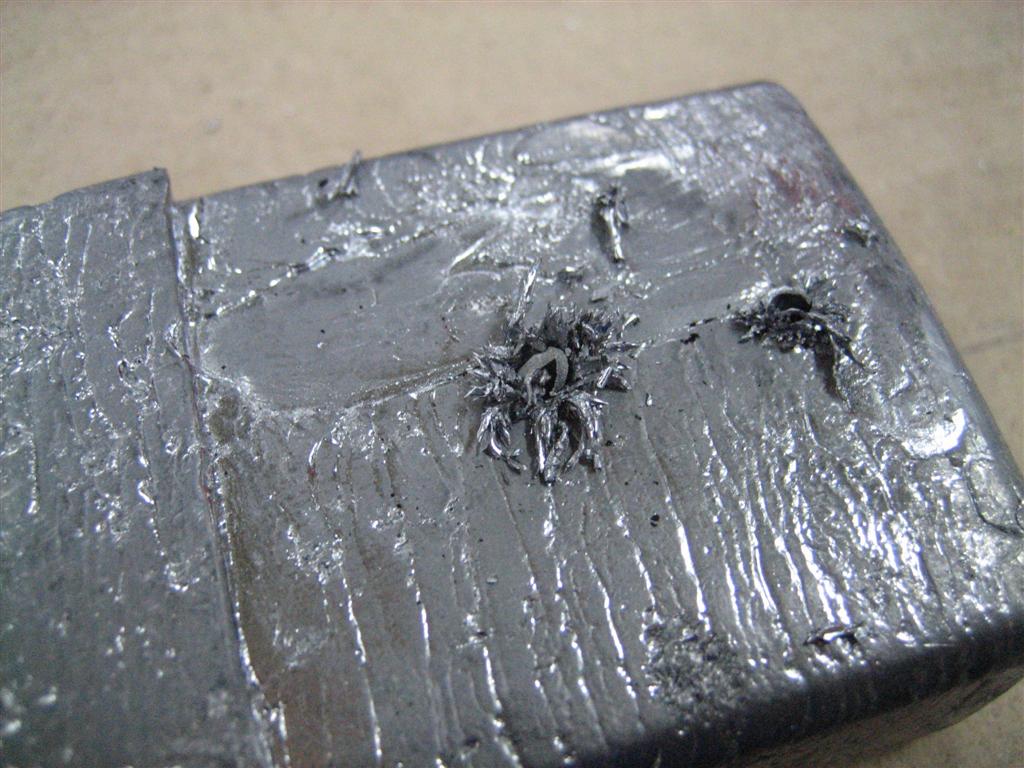
I managed to get some locking needle-nose pliers around the bit and back it out slowly.

Anyway. I moved on to the skeleton.

Here's the skeleton clecoed together and match-drilled. You can see where the elevator horn will sit flush on the spar web necessitating the flush rivets between the spar and the root rib.

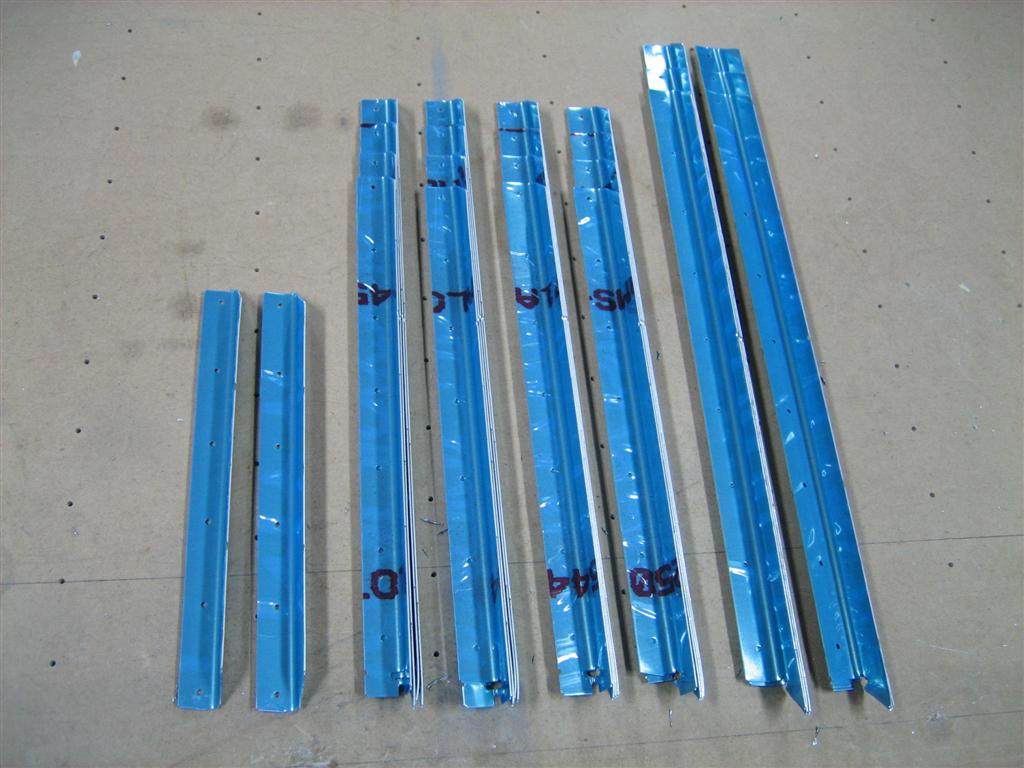
Then, I spent a little time inside on the stiffeners. I just rough cut them with snips to the general size.

These are for both elevators, some of these will be cut down further for the smaller required stiffeners between the trim spar and main spar on the left elevator.

2.0 hours today.

Prev | Next


Riveted E-615PP Trim Reinforcement Plate

April 6, 2010

Prev | Next

WUHOO, tool order arrived!

3 things in the order, $154.90. Ouch.

Also included was this AWESOME sticker.

Where should I put this?

Here?

Here?

Here?

On the airplane? no.

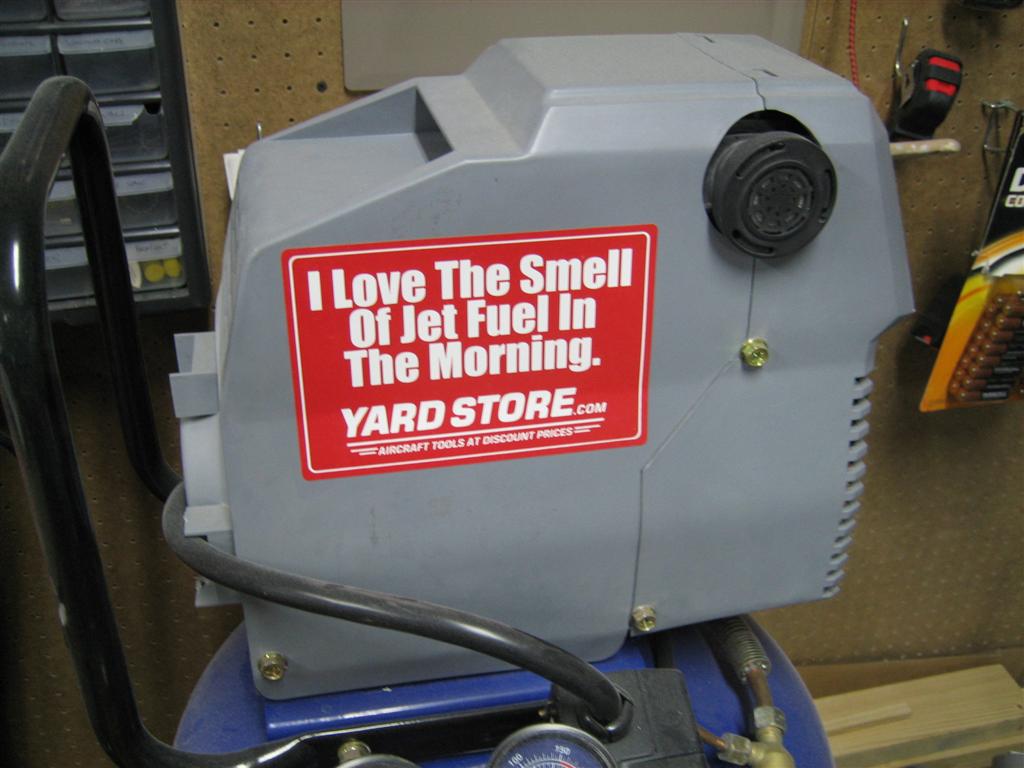
Finally, the air compressor won.

Decorated air compressor.

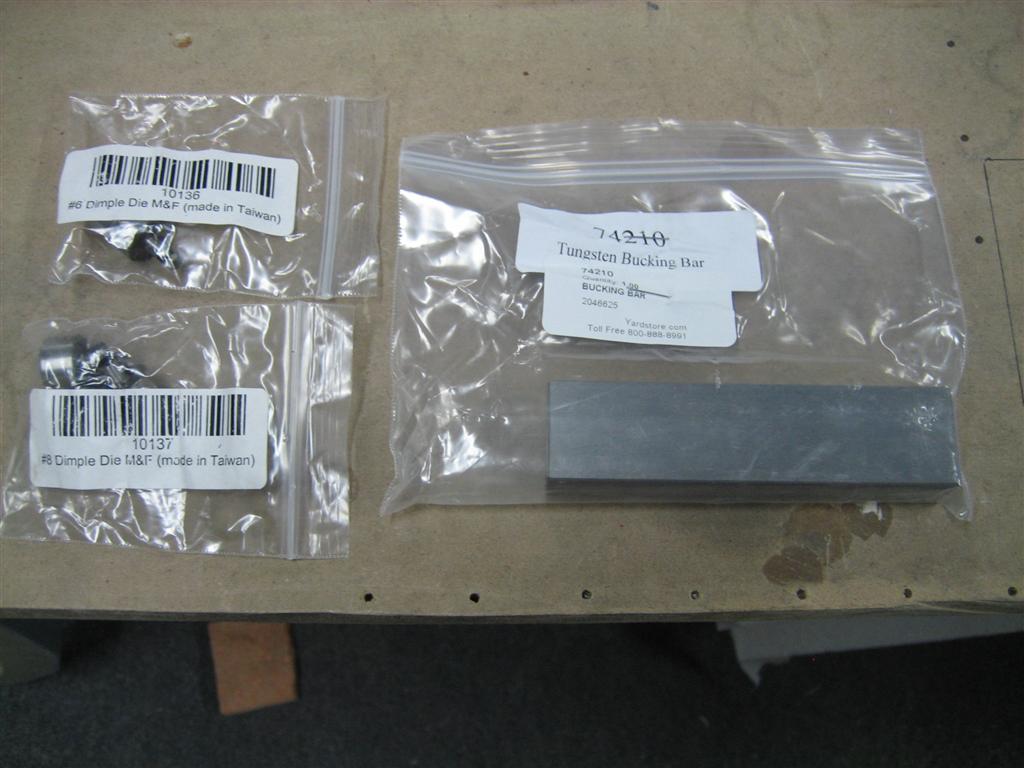
Look at that beautiful tungsten bucking bar.

Old and new.

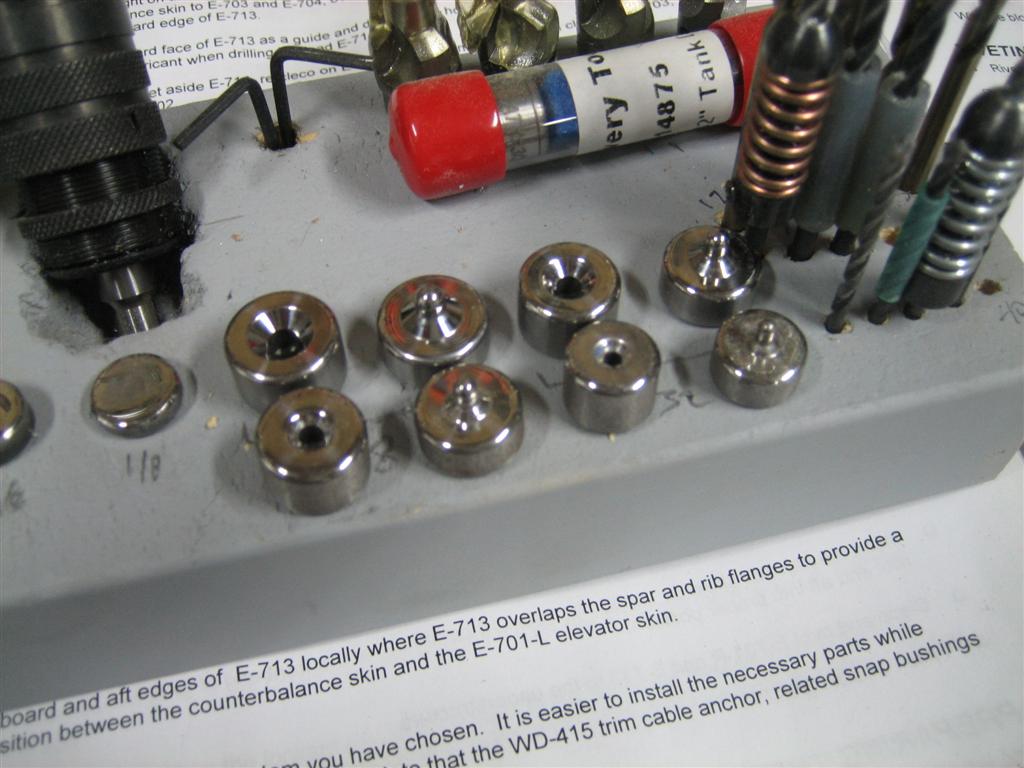
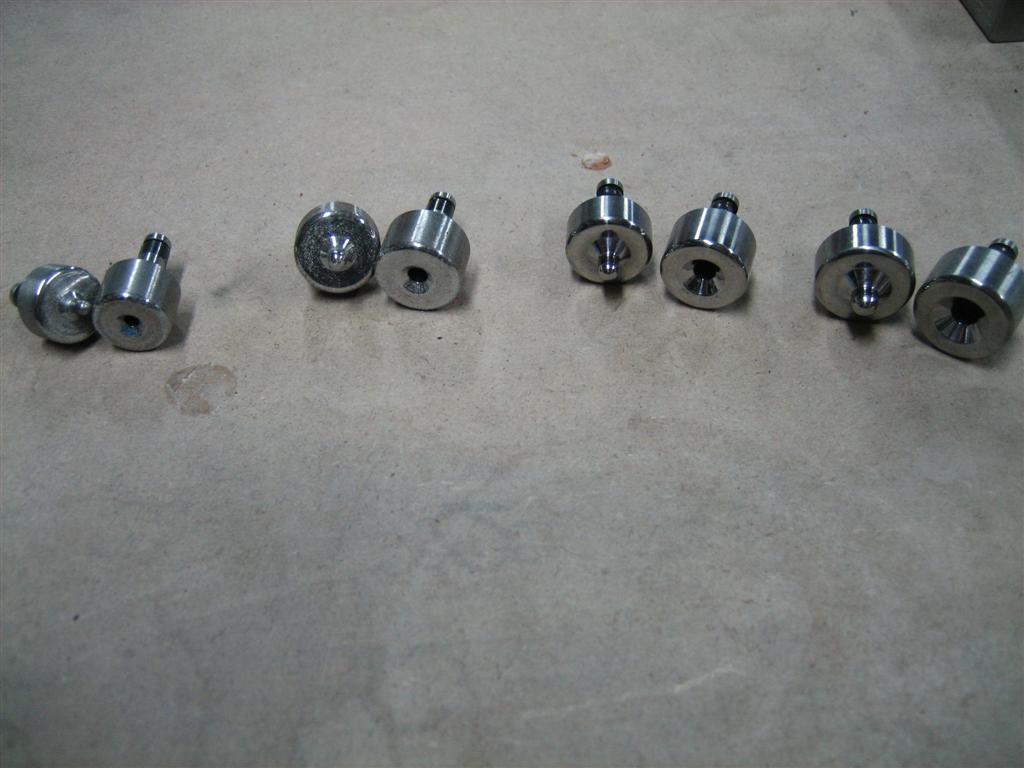
Also, I got two more dimple die sets. #6 and #8, on the right.

Just for comparison. #40, #30, #6, #8. Still need a #10.

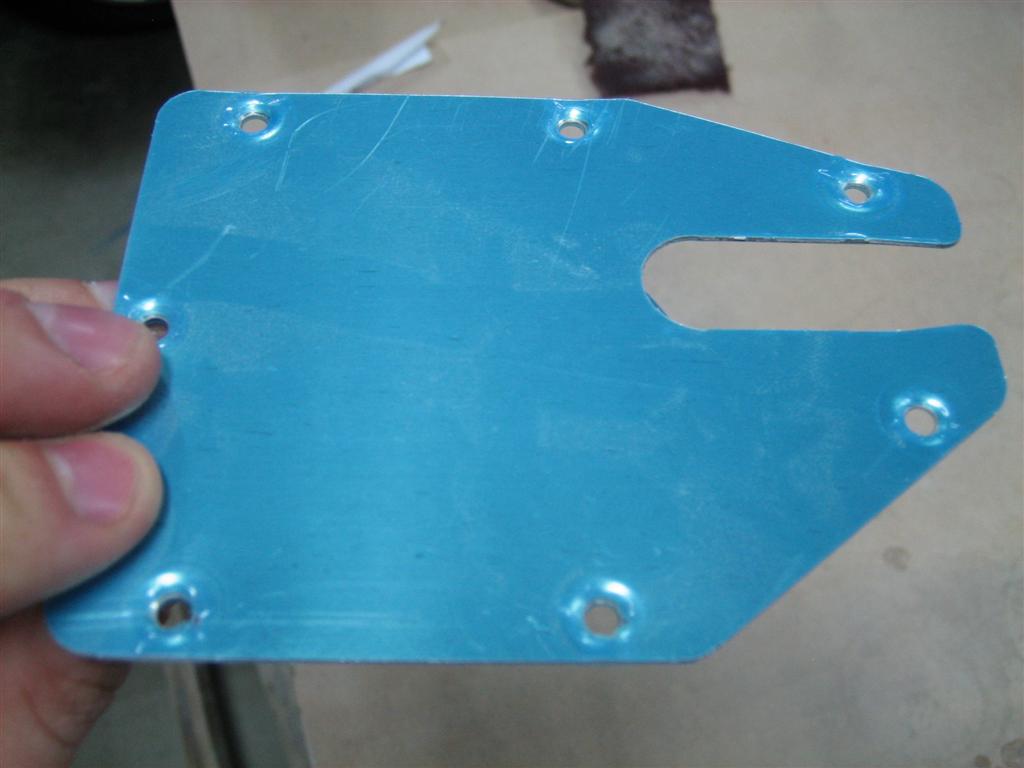
Alright, back to work. First up, using the #6 dimple dies on the E-616PP Trim Cover Plate.

Nicely dimpled. I don't think it matters that you take off the blue vinyl. Maybe that was a bad idea.

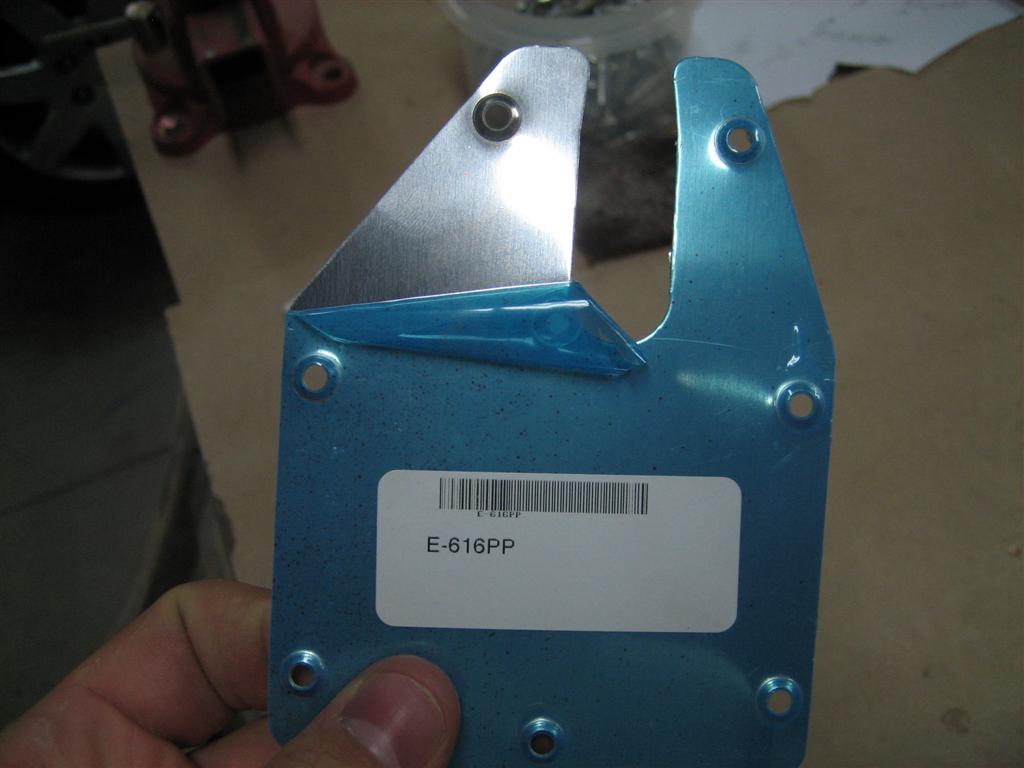
Here’s the bottom side (top side when mounted on the bottom of the elevator on the airplane).

Peeling off the blue vinyl.

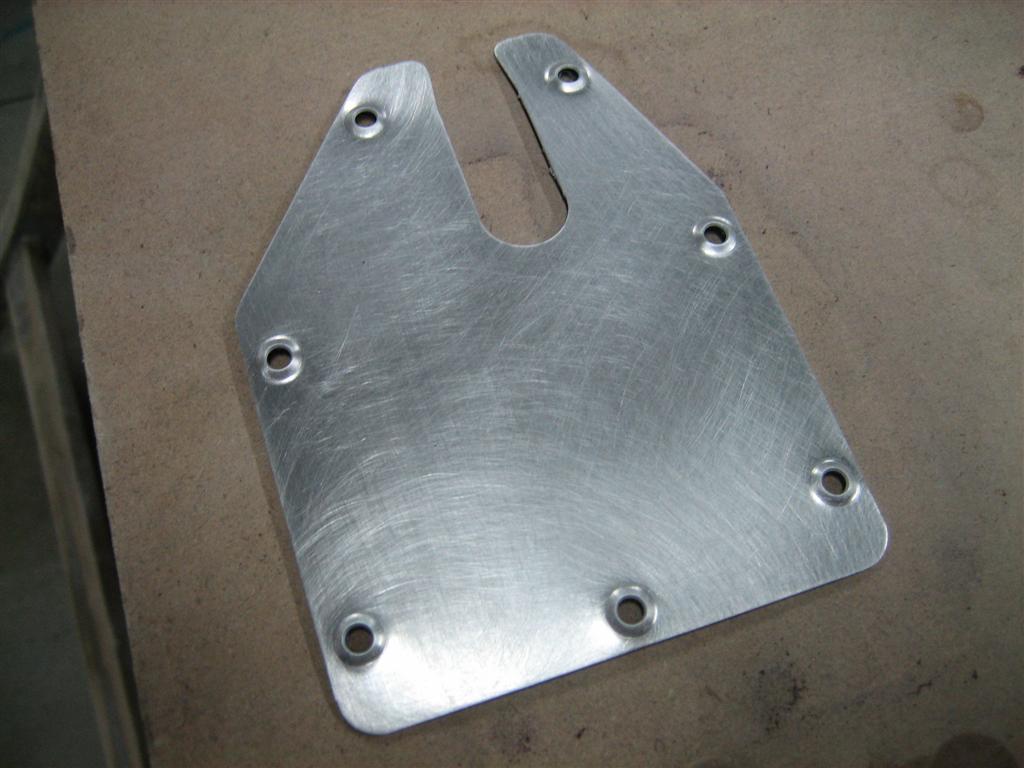
Then, edge finished and scuffed for priming. I’m going to wait to prime this until I can actually by the electric trim motor since you have to drill more holes. Just thinking ahead: can I countersink and use NAS rivets for the trim motor mounting brackets? Nope. These are pretty structural (hold the motor, and therefore the trim tab, in place.) I’m sure those directions will confirm the need to dimple. I’ll need to dimple E-616PP and the brackets that are used to attach the trim motor.

Ready for priming, except for all of the extra holes I have to drill, deburr, dimple, and rivet.

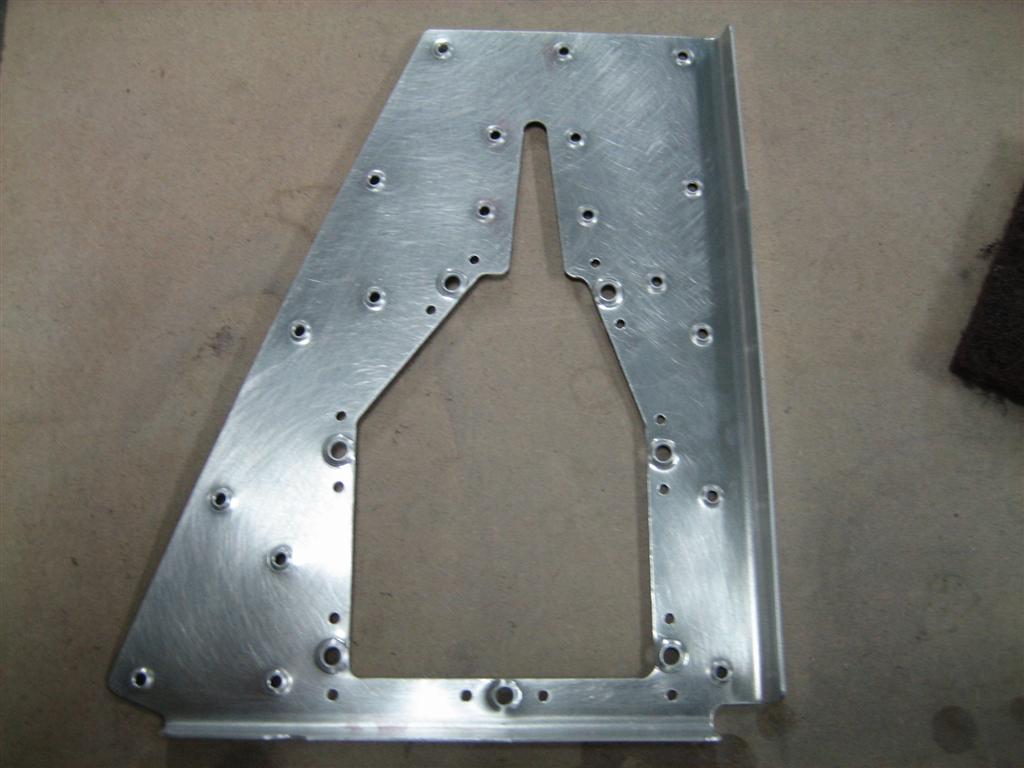
Same deal on E-615PP.

Ready for priming.

On the fancy priming stand.

After shooting primer to one side of E-615PP, I decided to add 4 holes for each of my new dimple die halves.

4 holes drilled.

Tada.

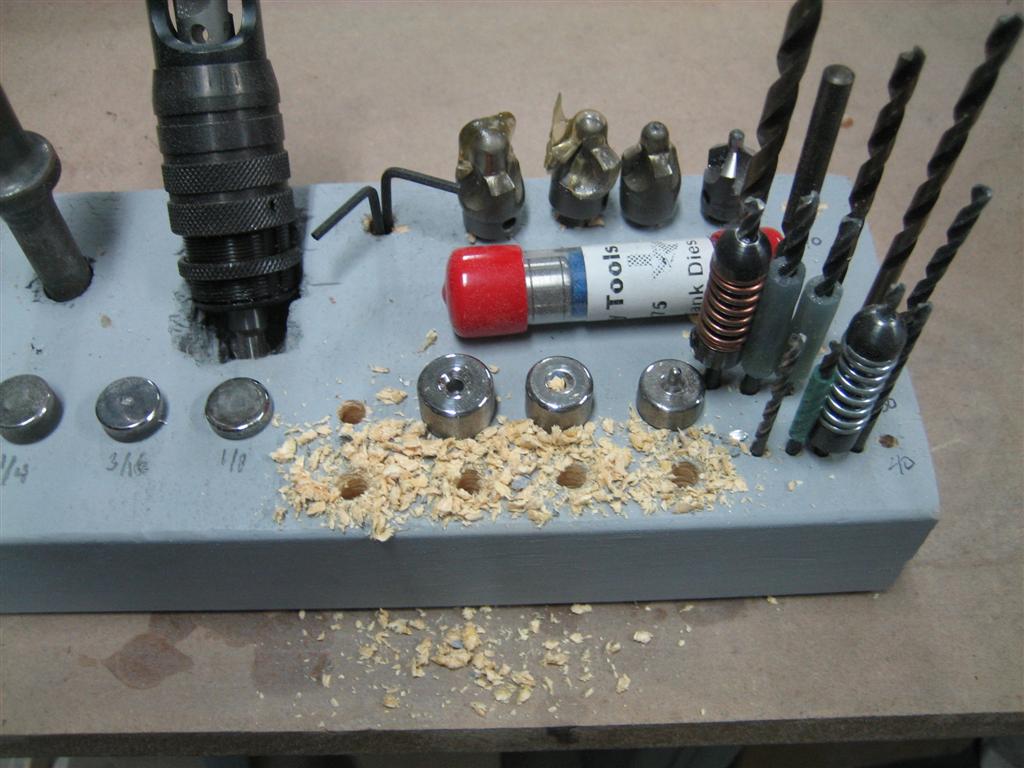
7/32″ seems to work well for holes in a home-made dimple die holder stand.

7/32" is a good size hole for these.

Then, I shot primer on the other side of E-615PP. While I waited for that side to dry, I edge finished E-616PP.

Look at that nice edge. I love the scotchbrite wheel.

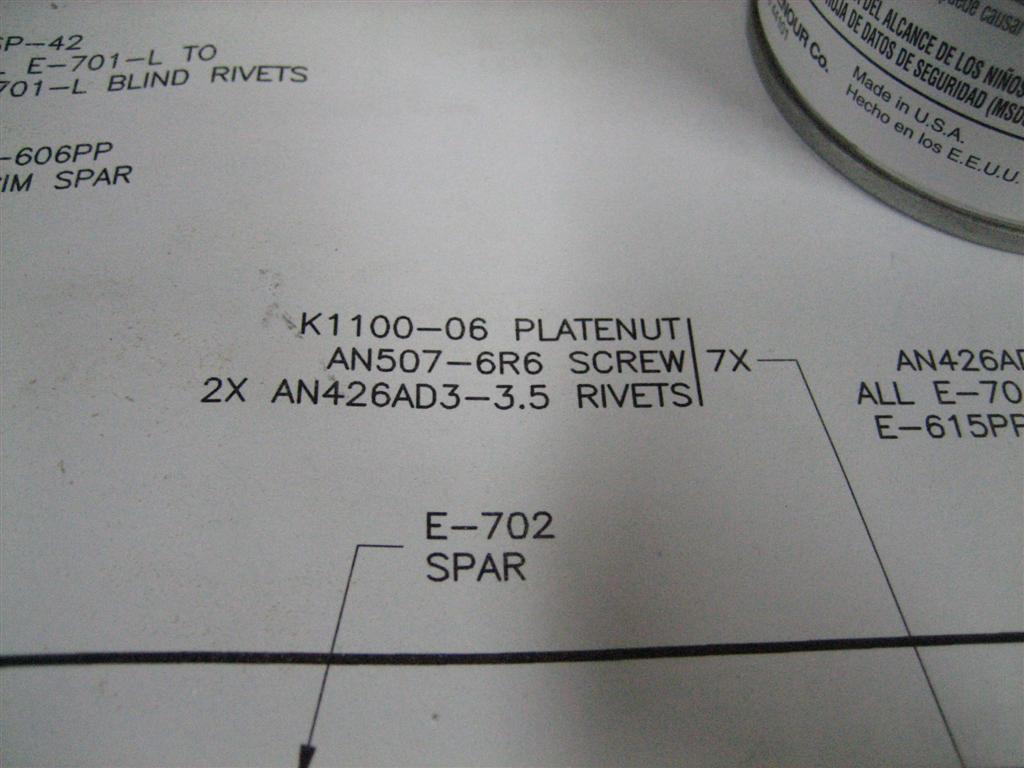
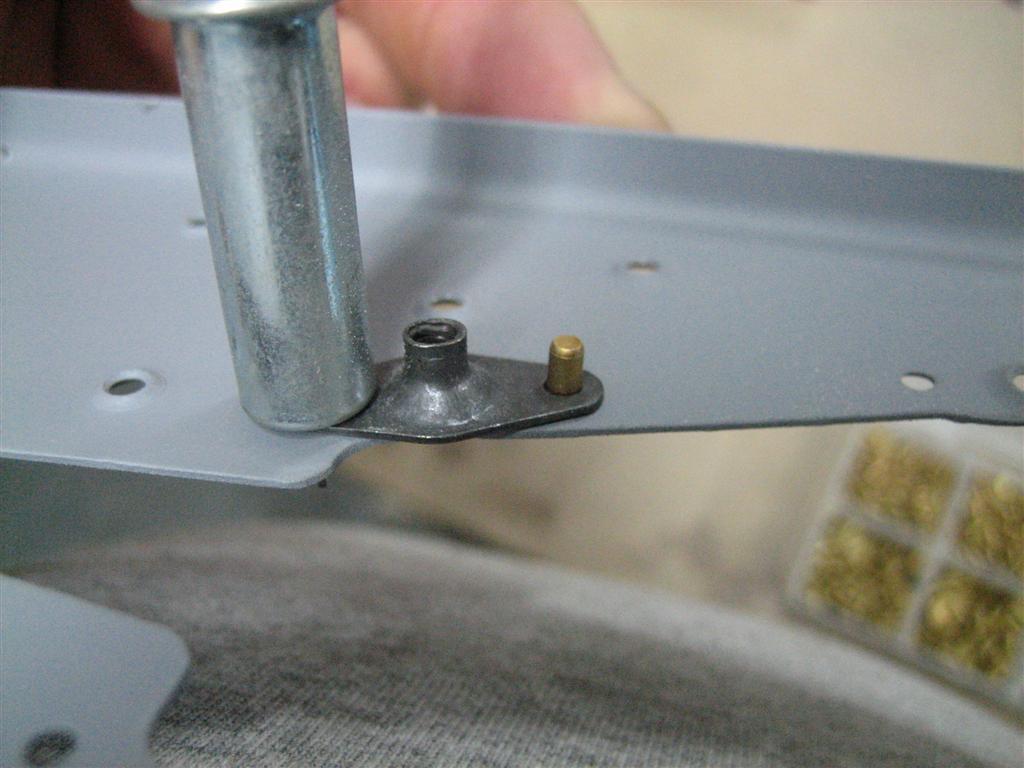
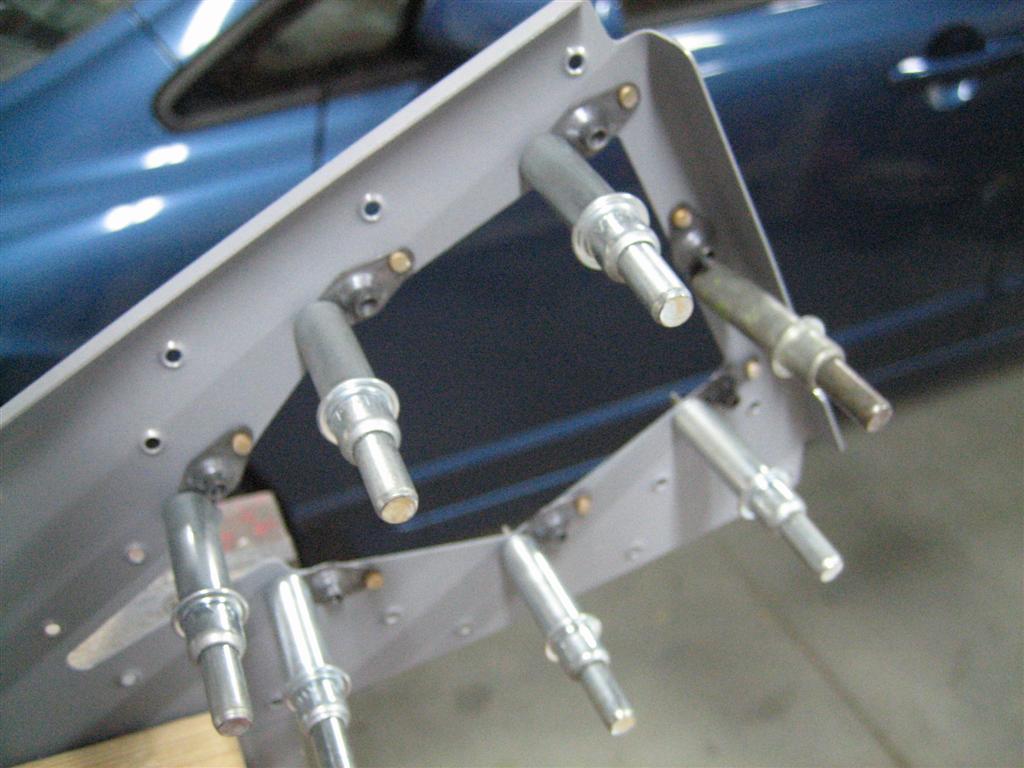
Now that E-615PP is dry, let’s do some riveting! I grabbed the K1100-06 nutplates (or platenuts as Van calls them) and the 14 required rivets. Remember from March 28th, I am using NAS1097 rivets here.

I am going to be using NAS1097 rivets here (smaller head than AN426 rivets) so I can countersink (instead of dimple) the holes here. That saves me from having to dimple the nutplate ears, which will save me a lot of hassle.

I finally found the rivet callouts.

I thought that because I countersank (verb tense?) the reinforcement plate that the 3.5 would be way too long, but the -3 was definitely too short. I grabbed 14 NAS1097AD3-3.5 rivets.

-3.5 (length) should work here.

I put all of the nutplates in with a single cleco and a single rivet, taped into place before starting to squeeze them. I hindsight, I should have backriveted these. So dumb.

Half of them done.

Then I did the other half.

Nice and flush. There is one that is almost proud, but doesn't affect the cover plate, so I may not try to muck it up further by drilling it out. We'll see if I can sleep tonight.

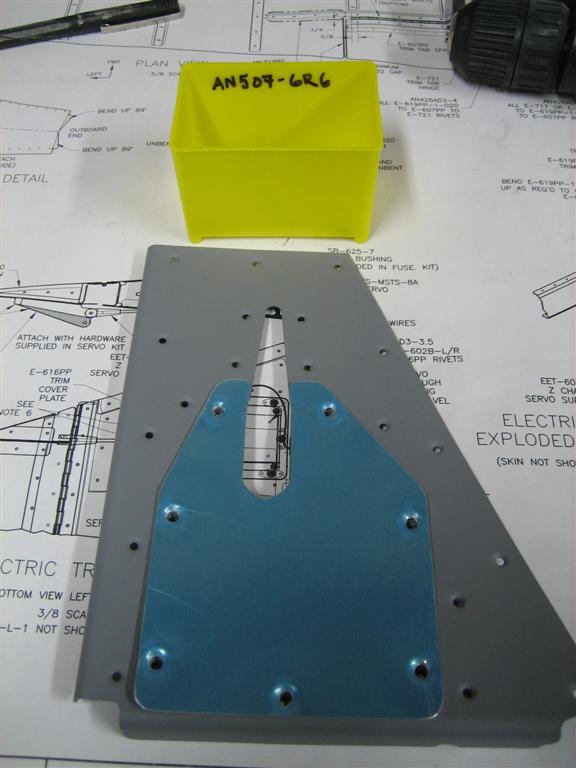
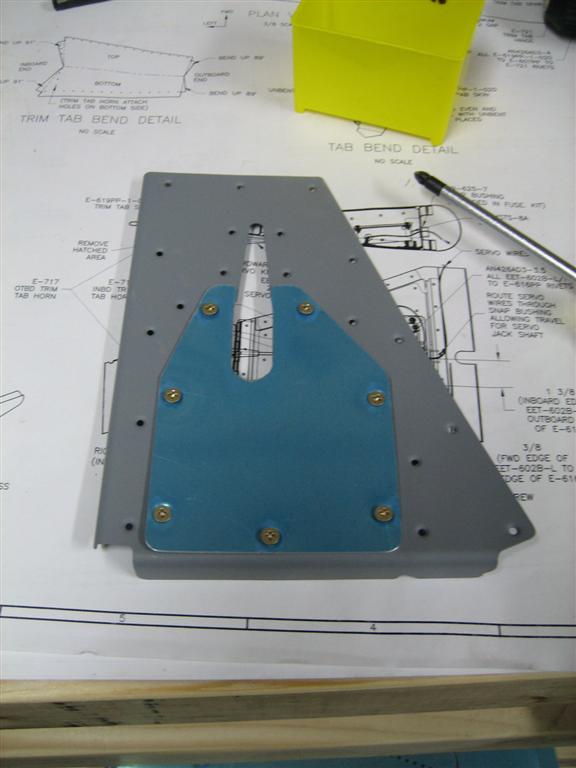
Once I got those 14 set, I grabbed the An507-6R6 screws and got the cover plate screwed on.

Ready to screw down. see in the lower left where the shadow under E-616PP is a little bigger? The dimpling kind of warped the plate. I'll have to try to coax this flat again.
I couldn't get the screws in all the way without a lot of effort. Is this normal for nutplates?

Anyway, 14 rivets set in just under an hour. I’m going to mark an hour today (a little long), then short myself on a post in the near future.

Prev | Next


Rudder 99 Percent Complete

April 5, 2010

Prev | Next

All I had left to do after rolling and riveting the leading edge was finish up a few rivets in hard-to-reach places and then finish screwing in the rod-end bearings.
The hard-to-reach rivets in this picture are the top two. For the other side, my squeezer actually fit in here when the opposite side rivets weren’t installed. The shop heads prevented me from cleanly setting these, though, so I had to use a thin steel plate as a bucking bar. Worked well.

Two hard to reach rivets bucked.

Here they are from the right lower side of the rudder skins. (I haven’t been using blue tape on the rudder as much and this is a mistake. I know it would have been a lot of blue tape, but it makes the skins look so much nicer. I will be using tape again after riveting to protect the skins.) I don’t think the rudder is going to end up polished, but I just hate the way those scratches look.
Nice and flush.

For the tip rivets (there were four that were hard to reach), I used a thin steel plate as a bucking bar for three of them, but then only had about 3/32″ clearance between the unset rivet and the shop head from the set rivet on the other side. I improvised by using a backriveting plate, the right rudder skin, then the already set shop head, then a screwdriver, then the unset rivet, then the left skin and finally a flush set. This worked out really well.

My setup for riveting the last (aft) rivets on the rudder top.

Here’s another shot with a flashlight assisting the digital macro setting on the camera. The point of the picture is the screwdriver, but it looks like I am going to have to replace that upper rivet on the right.

This worked well, but YIKES, look at that rivet on the right...also, the lower shop head doesn't look big enough. I'll get out the rivet set gage and test it.

Then, I turned the rod end bearings into the rudder by hand (I haven’t made the rod-end bearing tool yet), and with about 30 seconds of trouble, I figured out a great way to slip the AN3 bolts into the hinges of the vertical stabilizer with the rudder attached.

Sweet. This is an awesome step in the project. My first assembly. And it moves!

The bearings aren’t adjusted yet, and there are no fiberglass tips, but I’m so excited. More pictures!

A vertical picture. So nice...

I’m not sure if you can see it, but I have the internal rudder stop in there, too. (Although I don’t think it goes on the bottom hinge. I need to read up on it.)

And the requisite picture with Jack and Ginger.

Jack is a little skittish about being in the garage (where I usually shoo them back inside.) Ginger clearly didn’t like being out here either, so she was slowly scooting her butt up toward me trying to inch away from the airplane discreetly. Cute, Ginger. Cute.

Jittery dogs. They would rather be in on the couch watching TV.

Okay, dogs, you can go back inside.

Finally, I laid the assembly back down on the workbench for night night time. I'll take these apart and store them again in a few days.
And at the end of the night, I looked down and had spent an hour on the project. Look at that, I’m at exactly 100 hours! Two big accomplishments in one night. (Also, ten rivets. Don’t want to belittle them by being more excited about the hours.)

To do:

  • Clean up a few rivets
  • clean and re-prime some bucking bar scuffing of the ribs
  • Mount the fiberglass tips
  • Figure out how the internal rudder stop works.
  • Clean up some trailing edge dings.
  • Do a couple more once-overs to clean up any edge issues throughout the empannage.
  • Move on to the elevators.

Prev | Next


Rolled Rudder Leading Edge

April 1, 2010

Prev | Next

All I came out to the shop today for was to roll the leading edge and set the 25 measly little blind rivets. This should be simple, right?

WRONG.

This was by far my worst building night so far in the project (although any night building is better than a night not building). So frustrating. There was a point where I thought I had mangled the skins so badly that I was going to have to build a new rudder.  Read on.

First thing, I’ve read to go ahead and drill all of the holes to #30 and deburr now, because if you wait until after rolling, you may enlarge the holes and/or have a very hard time deburring the holes you’ve matchdrilled.

An example of the original holes on the left, and the #30 drilled hole on the right.

More holes after drilling.

I had to play with the angle a little here to capture the edge rolling. You can see the bright section of the skin just right of the hole. The reflection is catching the overhead light above me and to the right. I used hand-seamers here with great success.

Then, I decided to try a method I found somewhere (although I can’t find it again today) to bend the skins. Here, I’ve got my steel rod ready to be taped to the left skin’s lower leading.You basically clamp around the steel pole to the table so that as you roll, the whole rudder slides toward you, but the steel rod stays close to the table and you don’t end up with a crease.

This would have worked, but my clamps were too big, and I only got to roll a half inch or so before they caught on the skin and prevented further rolling.

My setup. Later, I added longer pieces of tape along the whole length of the spar to minimize different tensions on the very edge of the leading edge.

Then, I put my camera down for almost an hour. I was so frustrated. Apparently, the 3/4″ pipe works great for the areas where the spar flanges is closer together, but not down here.

OMG OMG OMG OMG. I thought at this point that I was going to be building a new rudder. The bends aren’t really that good, and there is no way I’m going to be able to salvage this. You can see the skin rolled nicely near the tip, and then not as much near the spar. It should be the other way around.

After extensive (read: time consuming, careful, dirty-sailor-mouth-filled) working with my hand and duct tape, I finally got it clecoed together.

With the duct tape, I had a piece from the right to left side in between each hole. I would squeeze the skins together, and then use the other hand to go down the line and tighten all of the duct tape straps. back and forth about 10 times, and it finally started to look okay. Phew.

Okay, it’s not so bad now.

Here’s the first rivet (AD-41-ABS) going in. Once you set the rivet, you can see that it squeezed the area around it a little. I’m  okay with that. notice, though, that the edge rolling made the seam look really good. I am happy with that part.

After more blind riveting, I temporarily stuck the lower rod-end bearing in the lower hole. It’s starting to look like a rudder.

Lower rod-end bearing.

Then I finished up the other two sections of the rudder (with equal frustration) and got the rod end bearing in the middle hole.

Middle rod-end bearing.

Finally, I got the whole leading edge rolled and riveted.

Upper rod-end bearing temporarily installed.

It actually doesn’t look that bad.

Not too bad. There is some slight creasing just forward of the spar rivets in a couple places, but it’s nothing I can’t live with. 

Be warned about this part. It sucks, and I don’t want to have to do it again. (Can’t wait for the elevators!)

1.5 hours. 25 of the most difficult rivets I’ve set on the project. I’m looking forward to finishing off the last few missing rivets on the rudder and moving on to the elevators. Not before I bring down the VS and mock them up together. I’m thinking of even upgrading the site to accept videos and putting videos of the mock-up on here. We’ll see.

Prev | Next


Riveted Rudder Trailing Edge

March 31, 2010

Prev | Next

Well, it’s been 3 days since I prosealed the trailing edge, so I mentally prepared myself for the dreaded riveting of the trailing edge.

Here's the trailing edge. Hopefully, the pro-seal is dry.

Next, I pulled out all of the clecos and admired how straight it looks.

Looks straight. Let's take a closer look.

Straight as an arrow. (Before riveting.)

The clecos were easy to pull out, not a lot of pro-seal on them, and there was very little remaining in the holes. The usual step here, however, is to clean them up. Here’s a before picture.

There's a little goop in there, but not much.

Here I am using a #40 in my fingers to scrape some of the pro-seal out.

This was tedious, but I want the rivets to sit nice and flush.

Here about how much came out of most of the holes.

Next up, put the rivets in the holes to prepare for backriveting.

Rivet in, ready to go.

Then tape to protect the skins.

And here’s my new backriveting plate. I wanted a nice long piece. It’s not quite as long as the trailing edge, but I didn’t have to move it around very much.

New 36" backriveting plate.

And my setup. The power tools are holding the skin flat against the table and backriveting plate.

Ready to go.

Let’s re-read the directions. HOly crap, the pro-seal gets everywhere.

I thought it was funny how I got sealant on the sealant step.

Alright, let’s start riveting. First thing, set every tenth rivet about halfway.

Okay... every tenth rivet.

Everything was going smoothly until I got to this rivet. Can you see what I missed here?

How come there is no dimple for the rivet on the right. Uh oh.

I pulled the rivet out, put my male dimple die in the hole, and gave it a good whack with the hammer.

Rivet is out, where is my #40 male dimple die?

There it is. Not bad for forgetting to dimple.

With the rivet back in. This is the shop head side, so you won't even notice. In fact, I dare you to try to find this hole when the plane is done.

Back to riveting. I followed the directions and kept riveting every tenth, then fifth, then third, etc., until they were all halfway set.

A nice halfway set shop head.

Down the line...

Verifying that things are still straight.

Yup. Straight. Although I know why the picture is blurry. Apparently I left the cap off of the MEK. Oops.

So then I flipped the rudder over, and finished up, per the directions. Except a few things started going wrong (which is why I don’t have any pictures.)

First, I must not have had the rudder down perfectly against the backriveting plate. A few of the manufactured heads were protruding from the skins. Luckily, they rivets were only half set, so most of them were able to be pushed back into their dimples and set further after flipping the rudder back to the original side and backriveting a little more.

Next, my rivet gun pressure was set too low (I thought this meant I was being careful). The gun wasn’t getting the job done before it jumped around a little and cause a couple very minute dings. A lot of my other dings have been pretty small, and these are even smaller. I doubt you would notice if I didn’t mention it, but I’m trying to capture my experiences here, so I offer it up as a lesson learned.

Finally, when they tell you to flip the rudder over to finish the half-set backriveted shop heads, I’m not sure how this is supposed to work. With the long backriveting plate, the rudder is being supported by all of the proud shop heads, so if you rivet the manufactured head side, you’ll be adding a local bow to the trailing edge. I didn’t buy this, so I stuck with the first side and got the shop heads pretty well flush. Once that was done, I finally flipped it over to make sure they were backriveted flush.

I have some pictures of the trailing edge at the end, but after I finished, I drilled out and reset the four rivets I had previously marked.

A nicely reset flush rivet. The skin got a little scuffed here. I hope this polishes out. (Although I am now thinking paint for the rudder.)

Here’s me drilling out  the lower nutplate mounting rivets. Notice the missing nutplate.

First, a #40 through the middle.

Then pop the heads off with the back of the drill bit.

Then, use a #30 to finish drilling out.

AH! I broke a drill bit. At least I was wearing safety glasses.

I must have been adding a little force of my own.

Okay, now I can install the nutplate.

Here it is clecoed from the outside.

I had read people say “the -7 rivets were too short here, I had to move up to a -8.” The warning bells were going off when I originally set these; I was thinking, “these -7s fit just fine, I don’t know what all the fuss was about.”

Of course, I tried the -7 with the nutplates installed, and yes, they were too short. I had to move to a -8, too.

These are long rivets.

A very bad picture of the nutplate installed.

Nutplate installed.

Okay, back to the trailing edge. I really didn’t get a great picture of how straight it was, but it is straight. There are a couple local areas where there is some slight  back and forth, but it is within a 1/32″ and it’s over the course of 4 or 5 inches. You won’t see it unless you scope down the edge, which I’m probably not going to let you do if you come near my plane. Just kidding.

Trailing edge picture.

All in all, an hour and a half today. 56 rivets on the trailing edge. 4 rivets drilled out elsewhere (but already counted in the final rivet count, so I won’t recount those). I’ll try to get a better picture of the trailing edge later and post it here. (The trailing edge picture at the beginning of this post is a good angle and focal length, I’ll try that one again.)

Prev | Next