Finished Trim Tab

August 20, 2010

Prev | Next

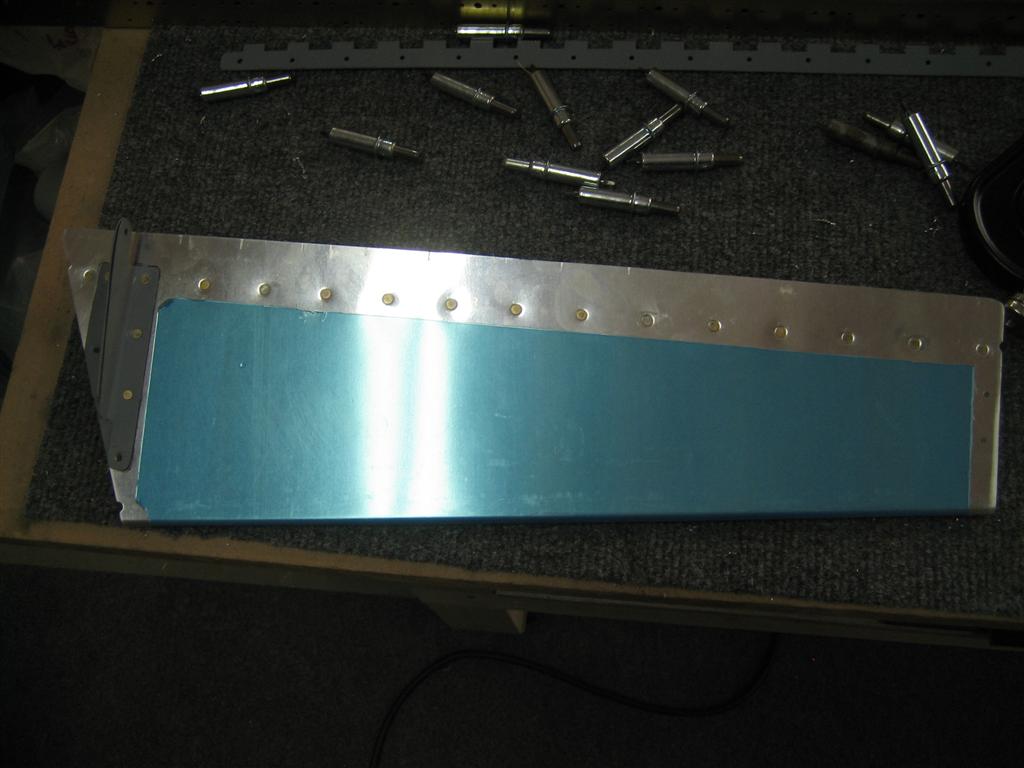
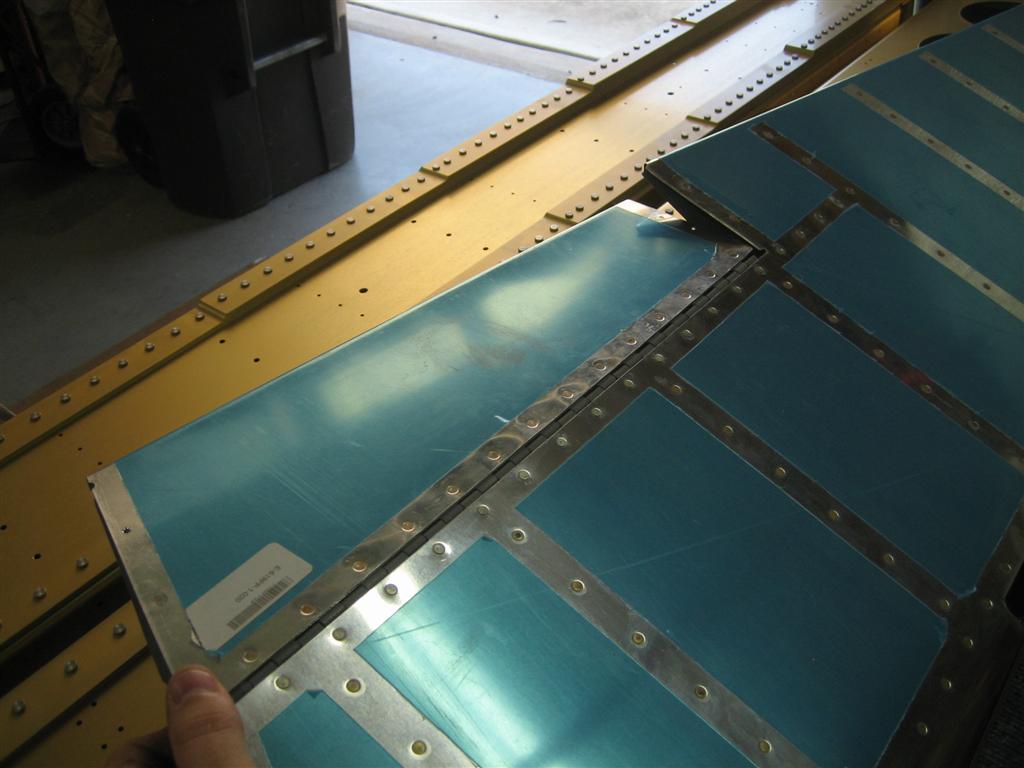
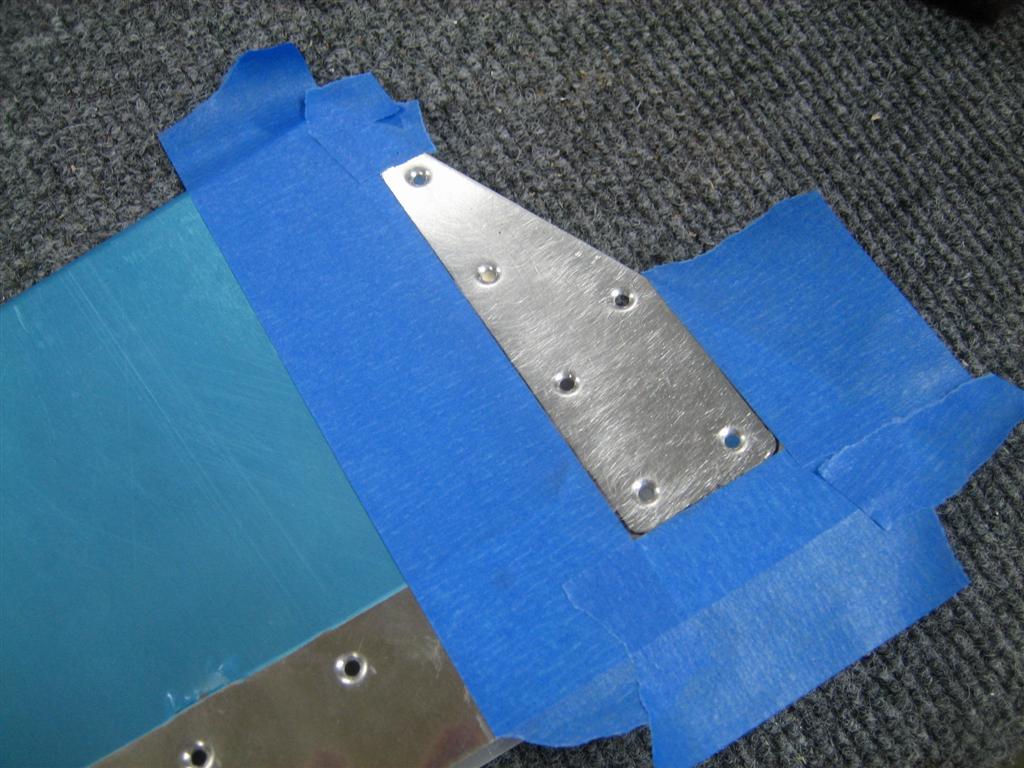
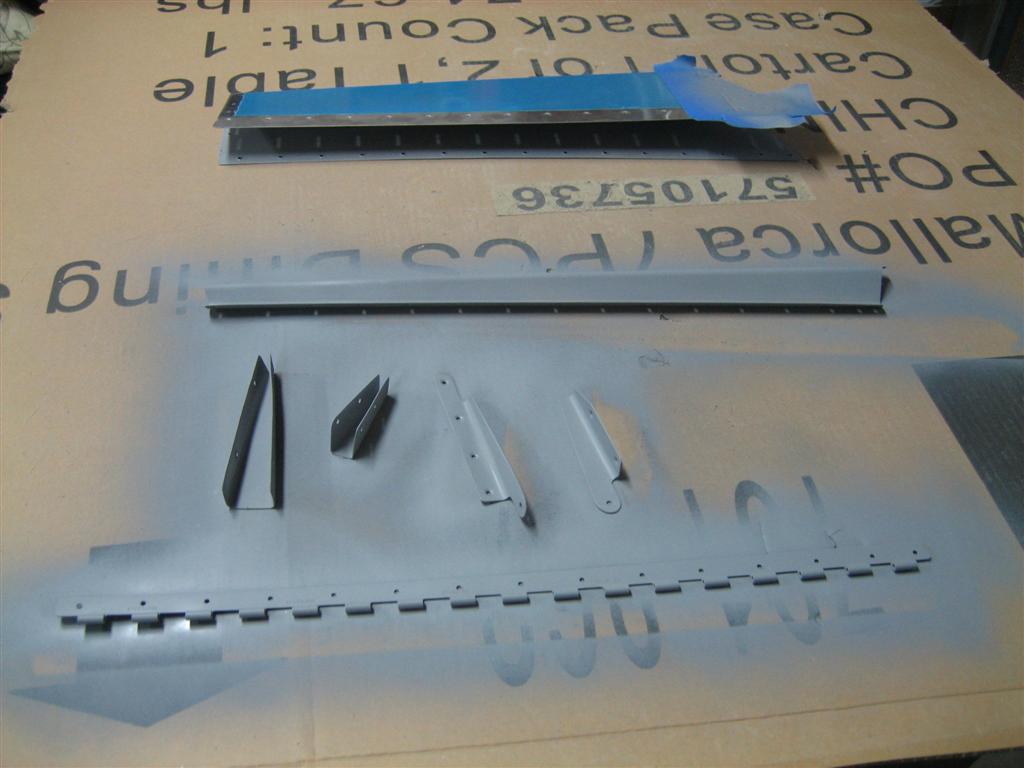
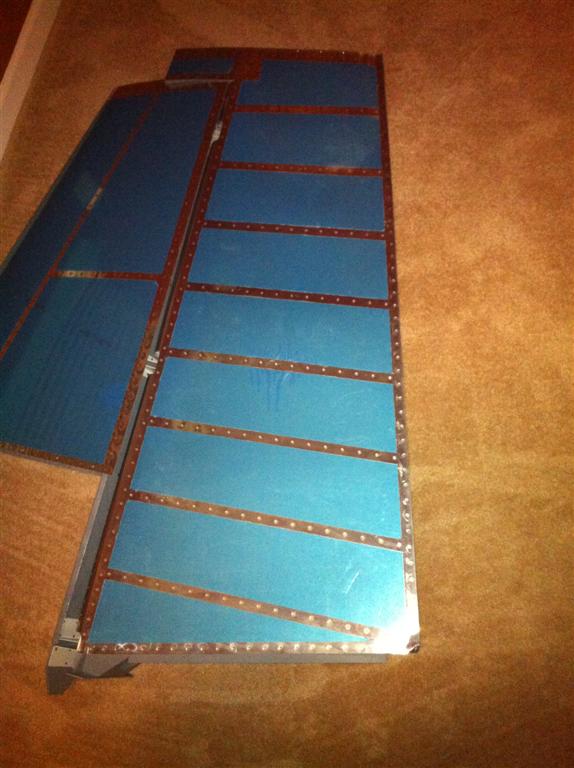
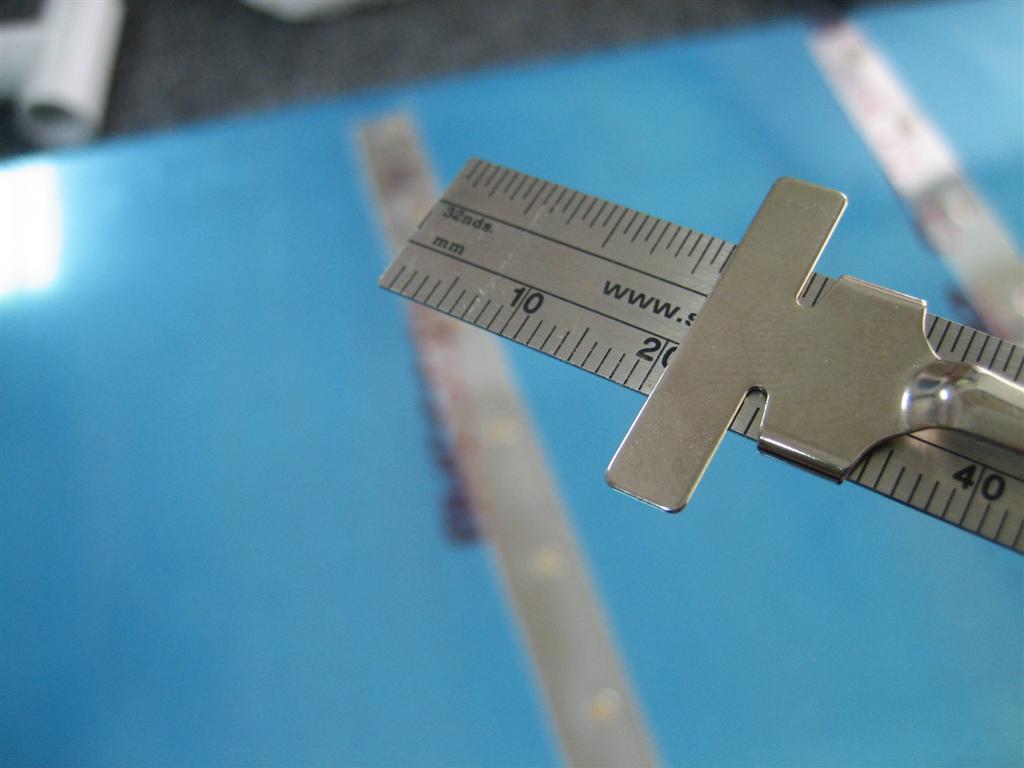
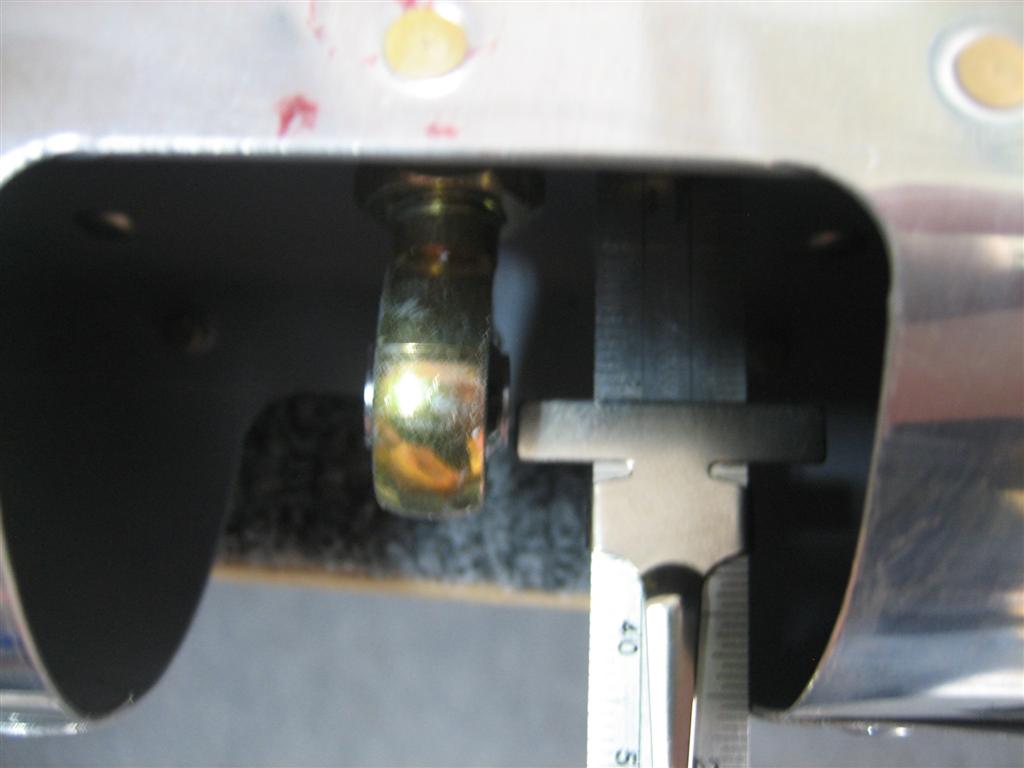
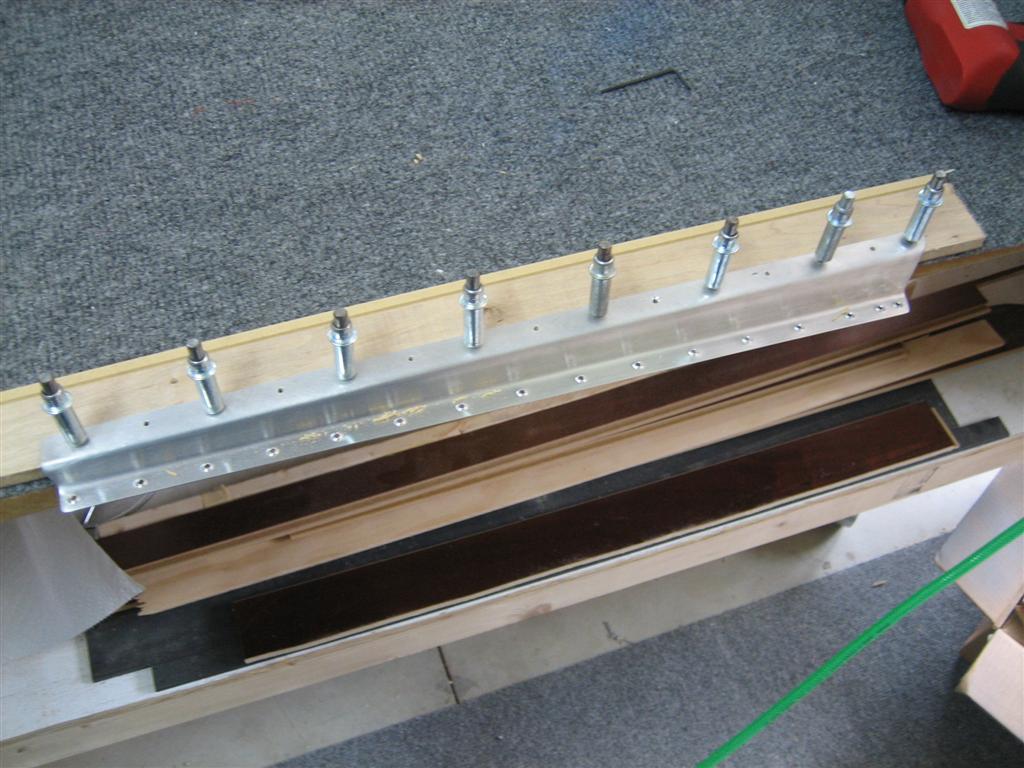
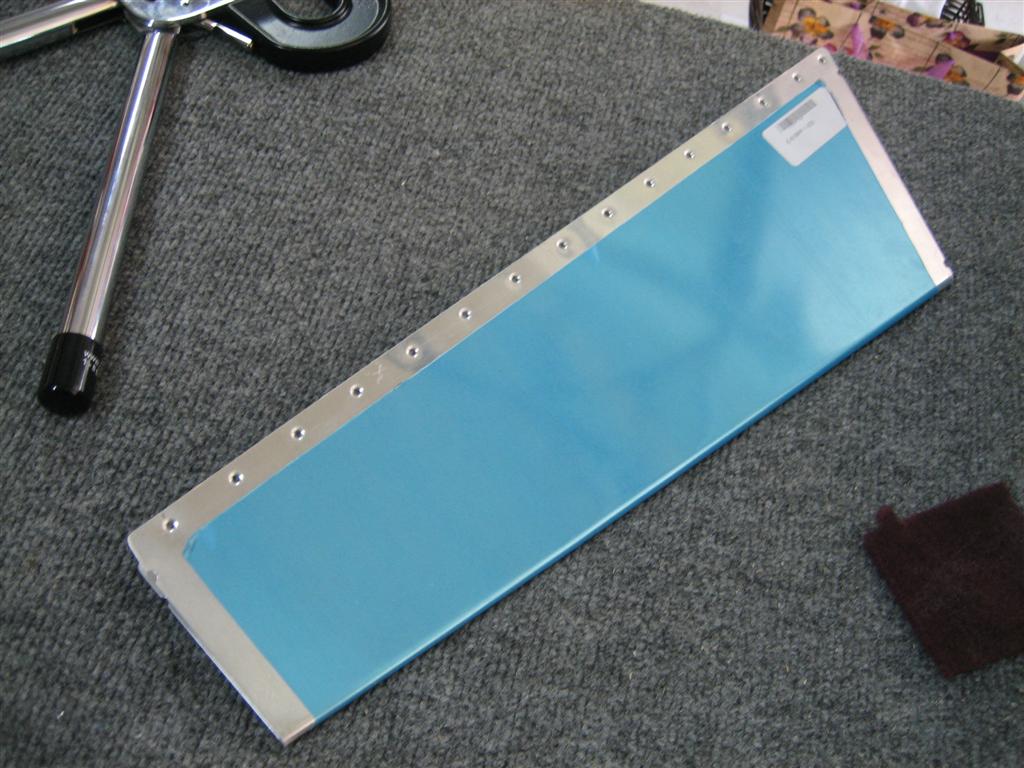
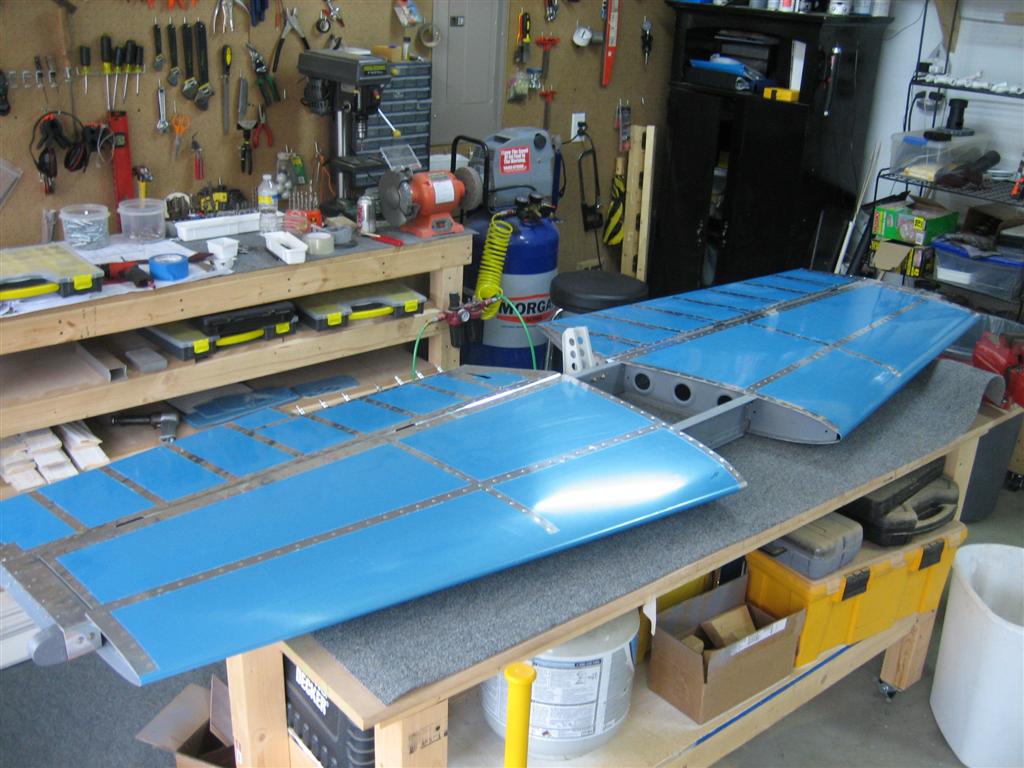
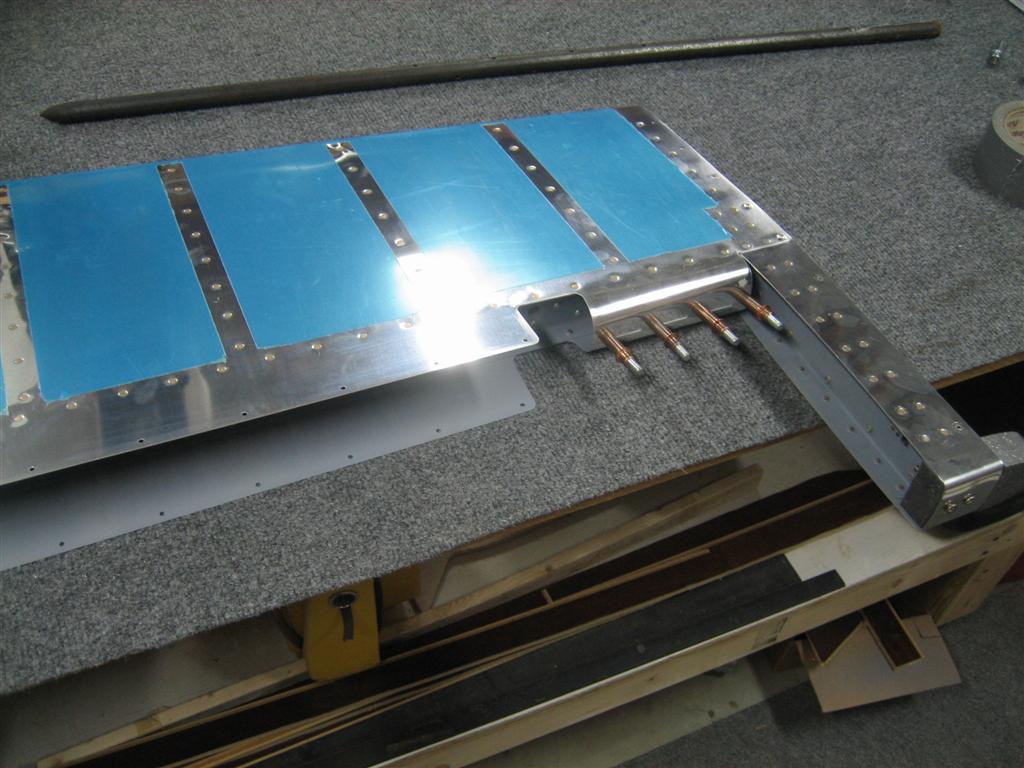
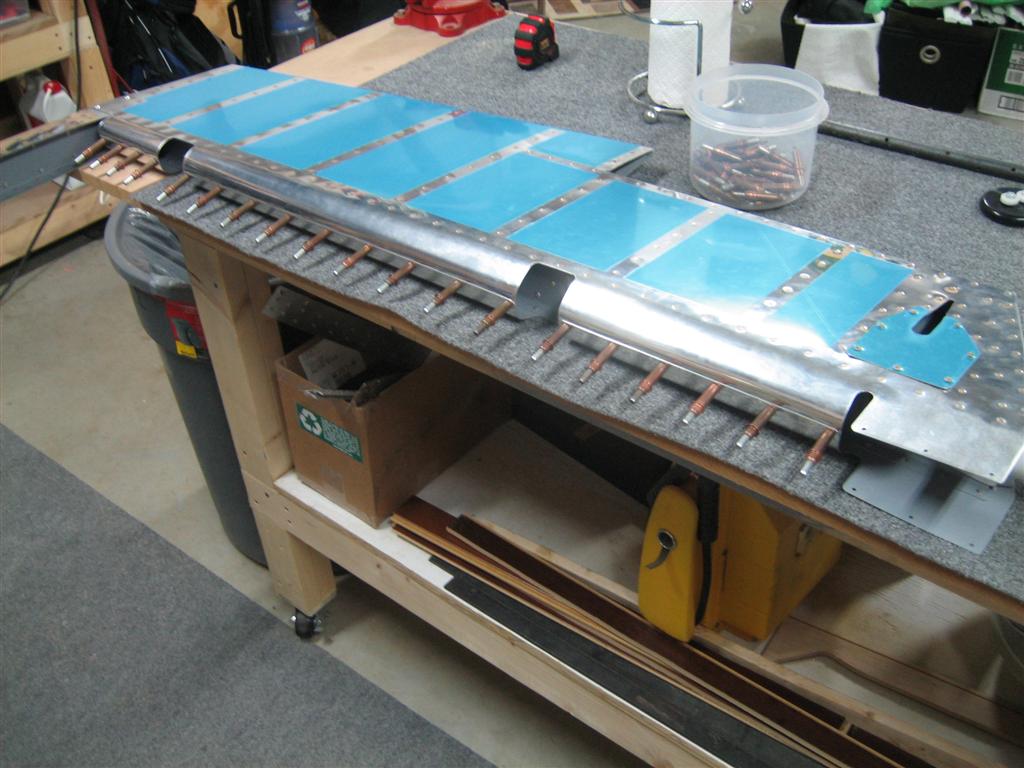
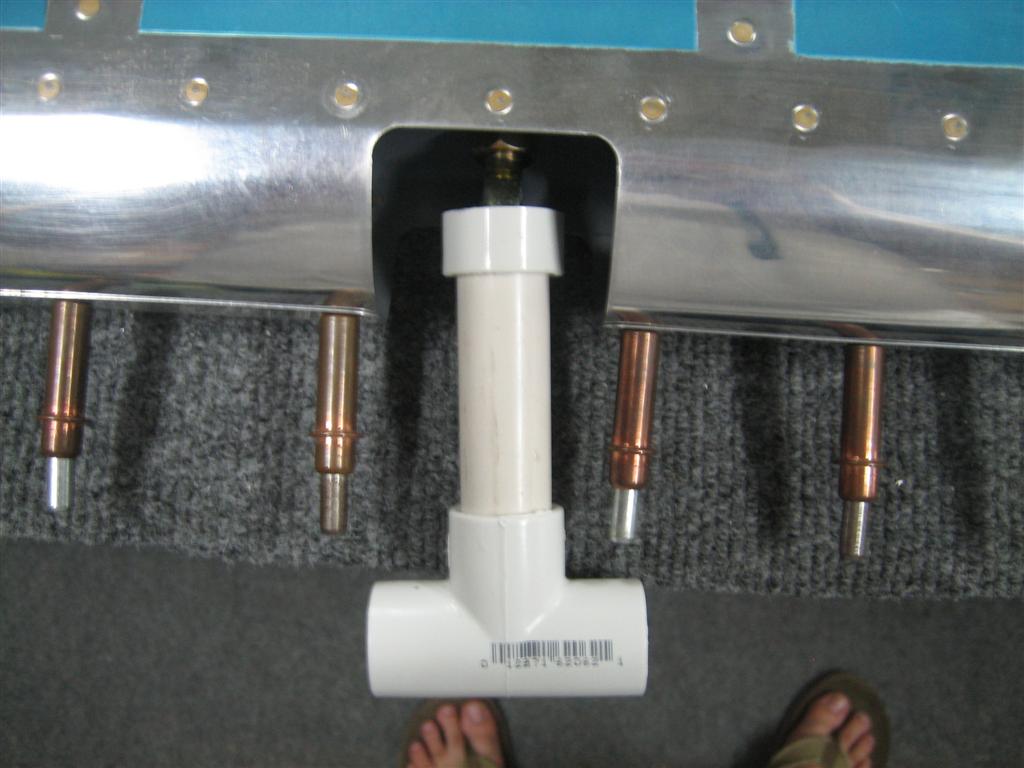
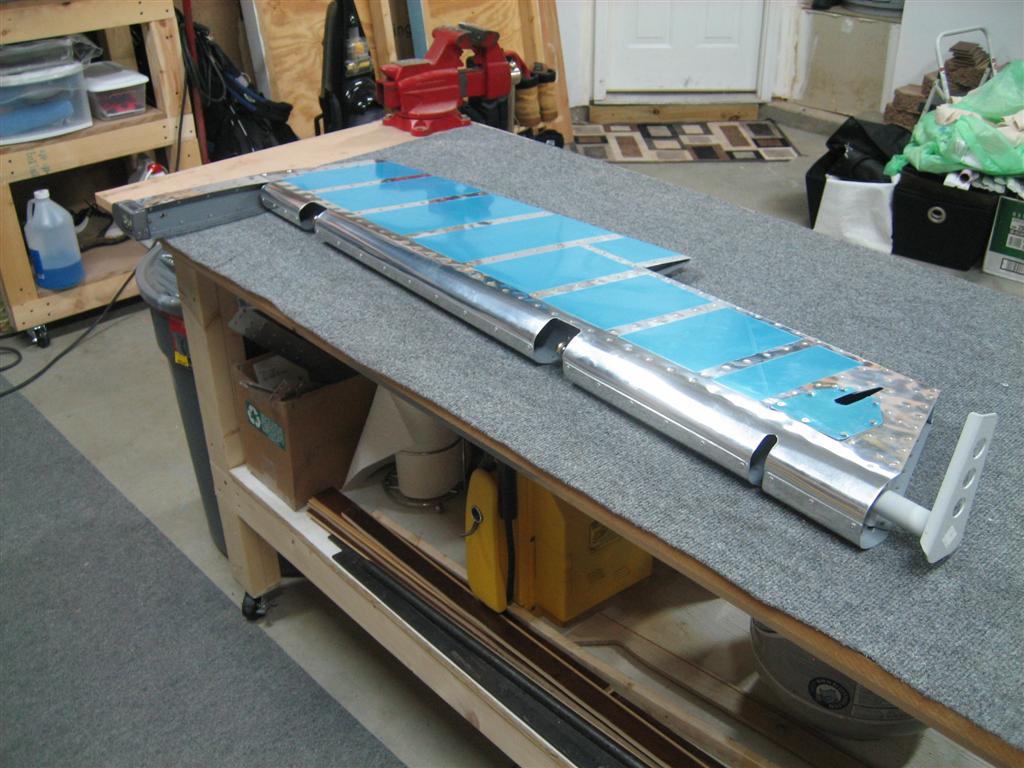
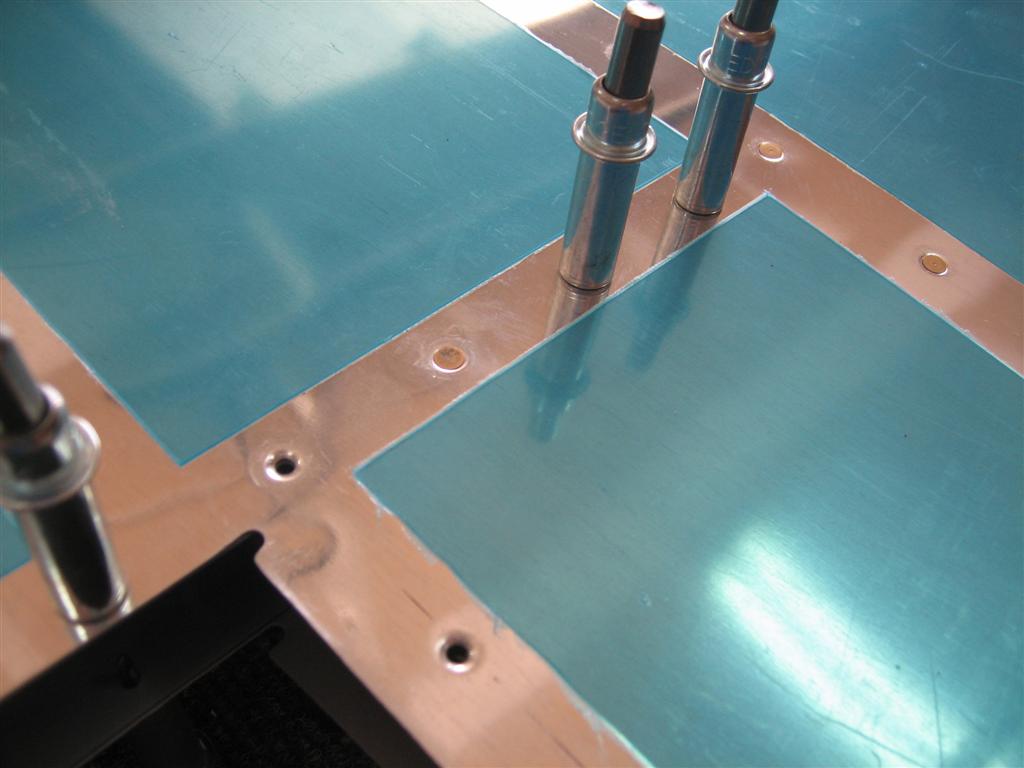
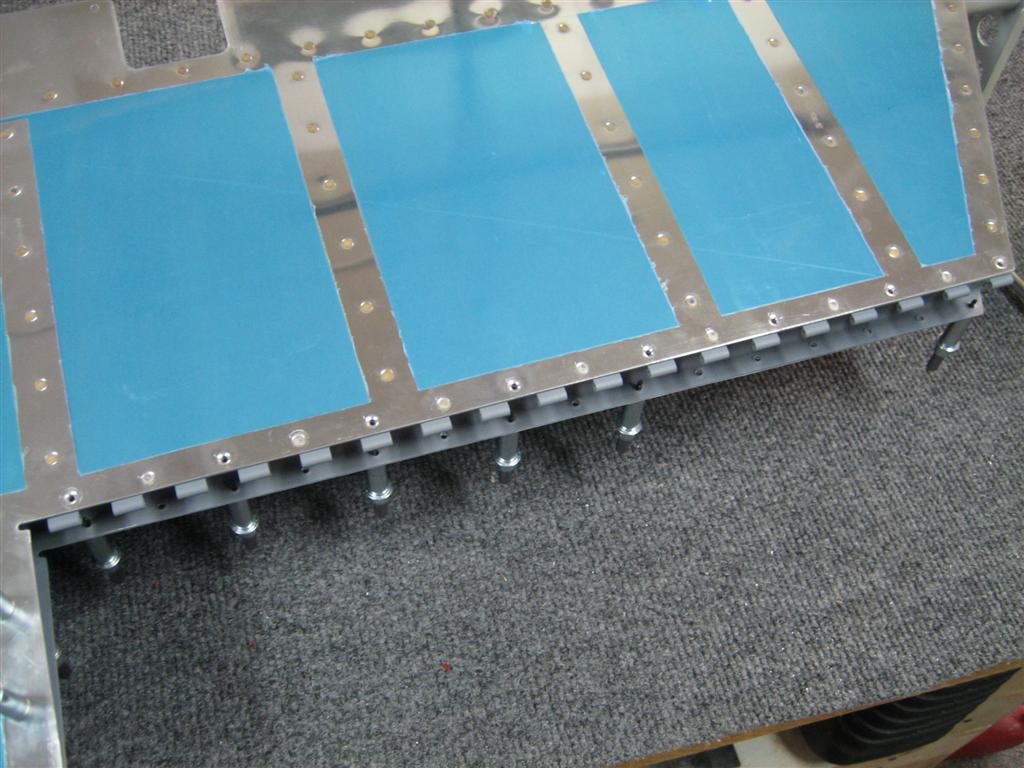
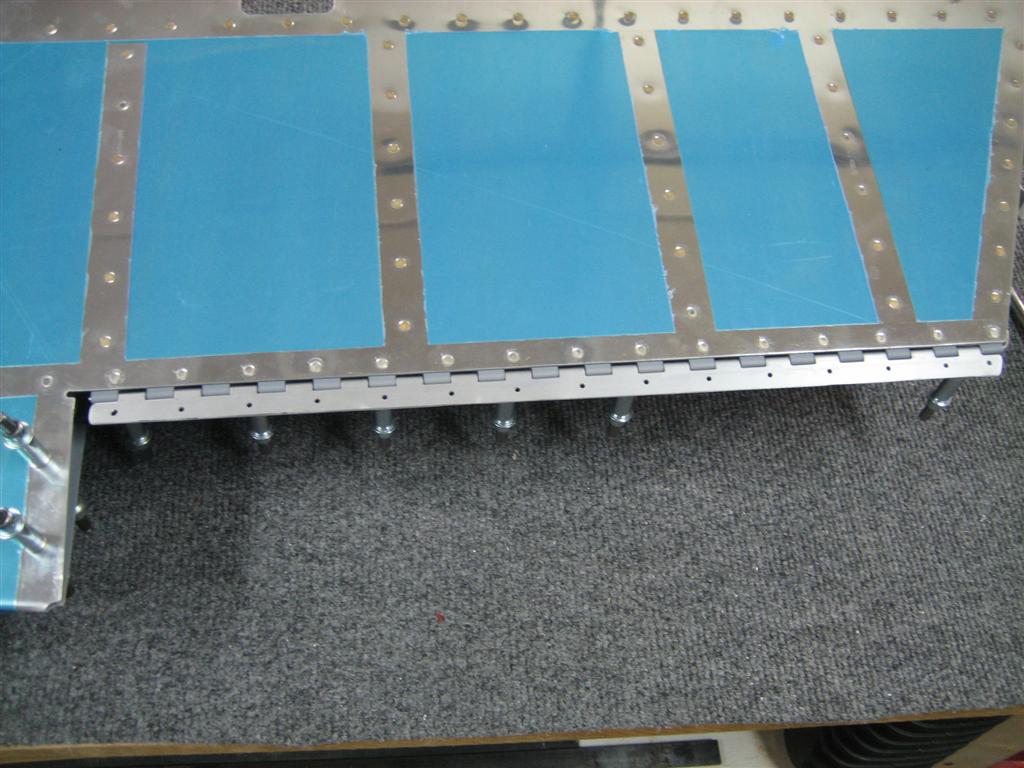
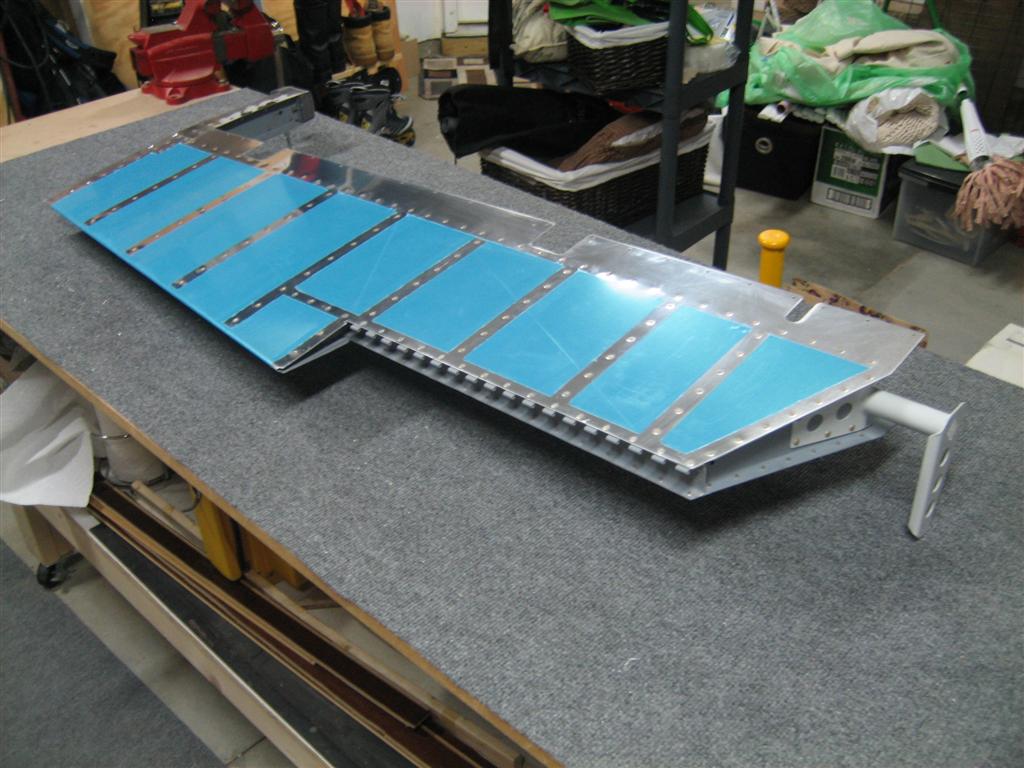
Well, I snuck home over lunch today to make some loud noises (rivet gun) and I got the trim tab pretty much finished. I have one or two more “hard to reach” rivets to set, but for now, I’m going to call it done and focus my attention on the floors and the wings.

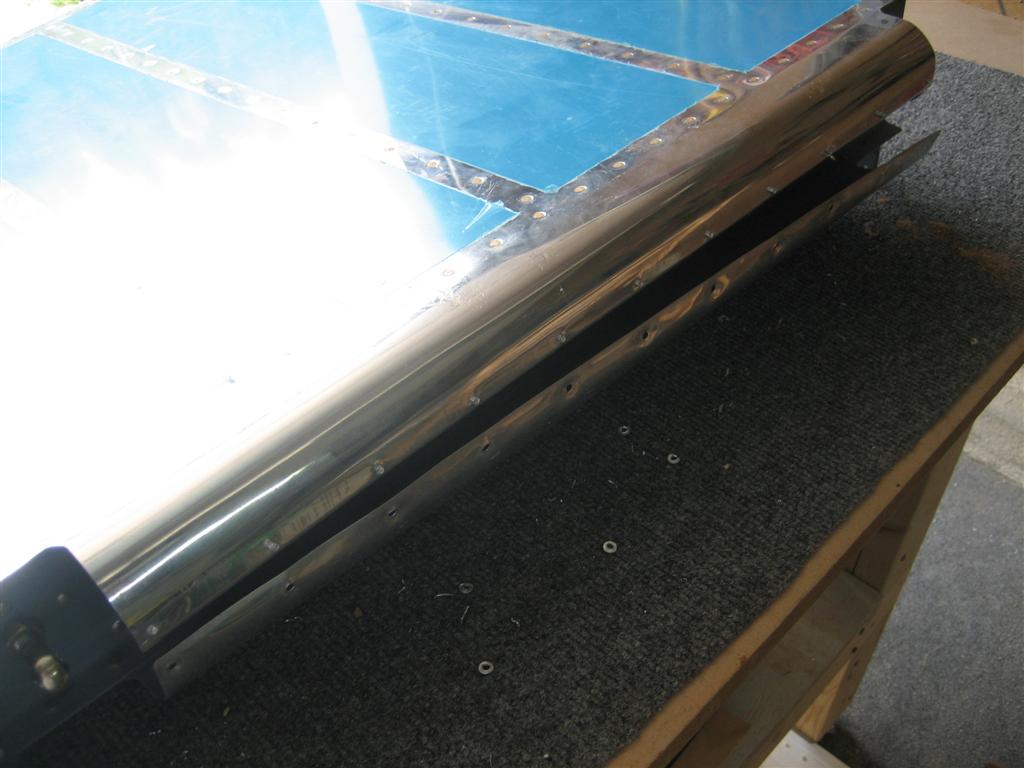
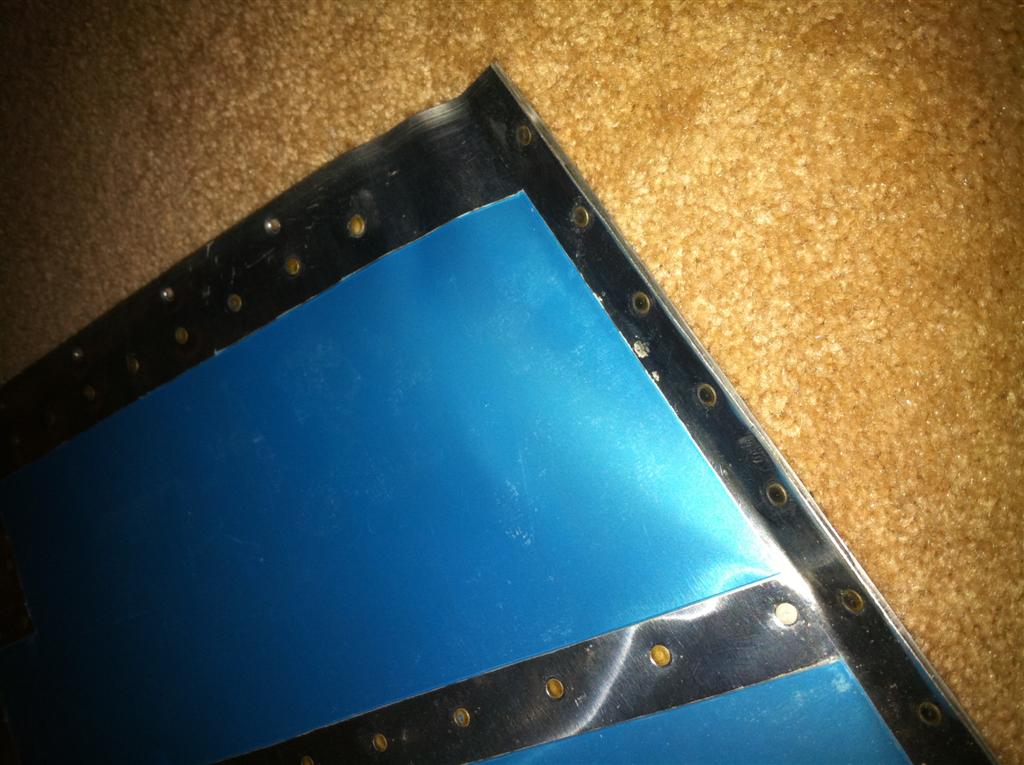
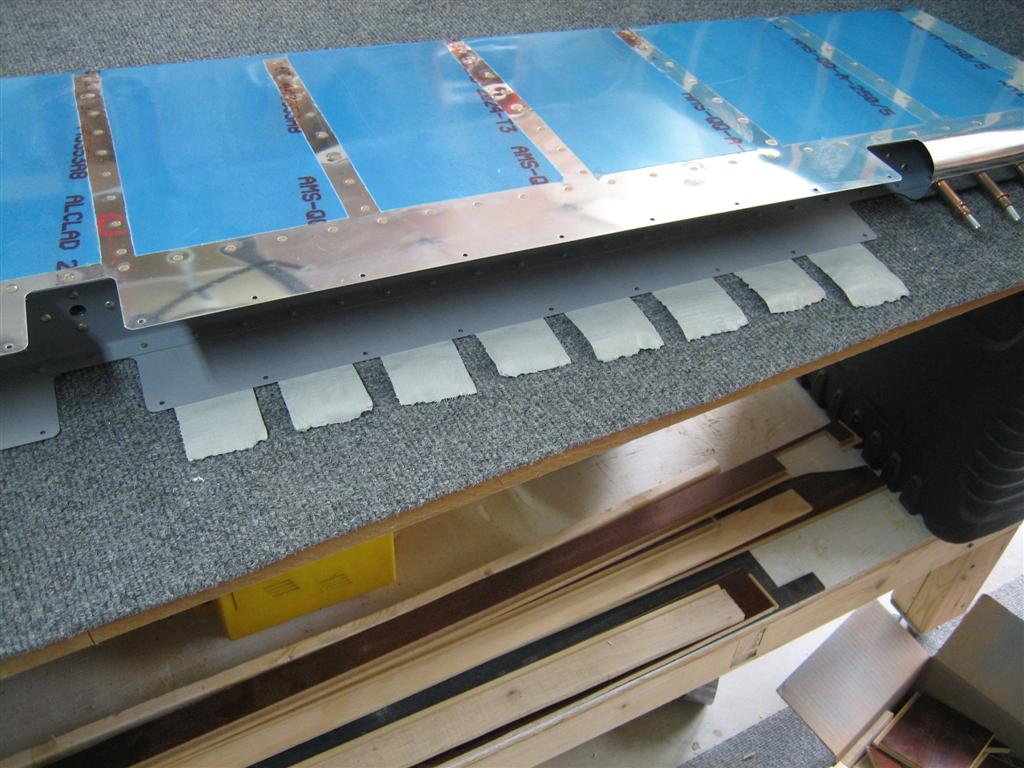
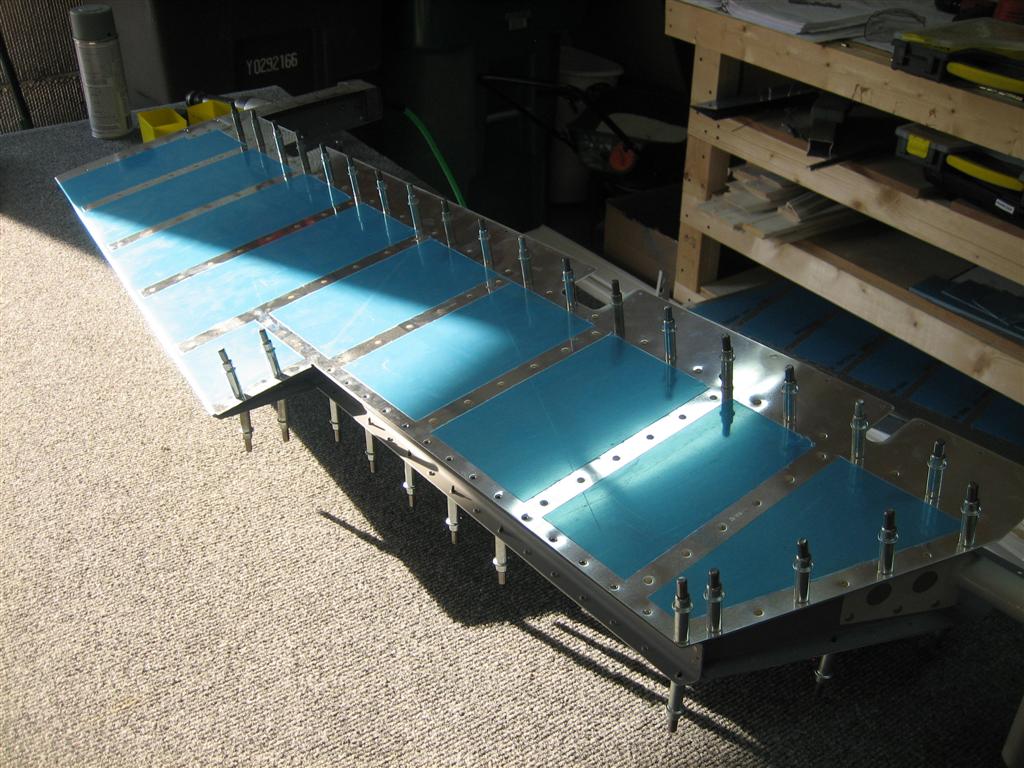
The tabs bottom rivets.

Here's the bottom of the tab.

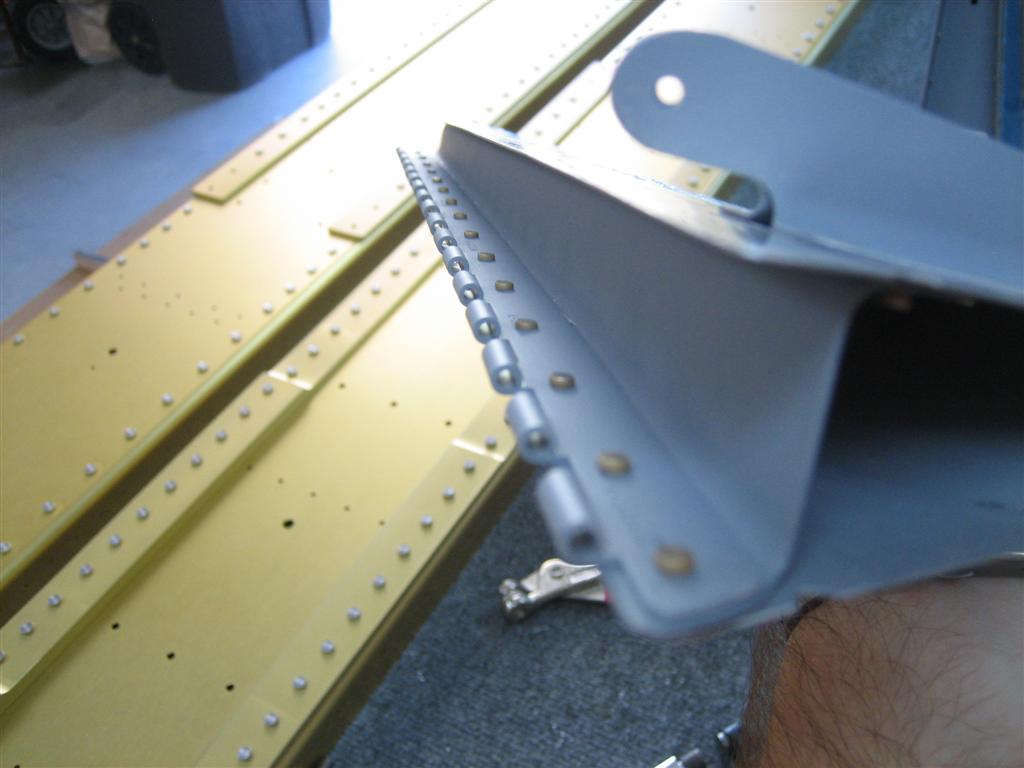
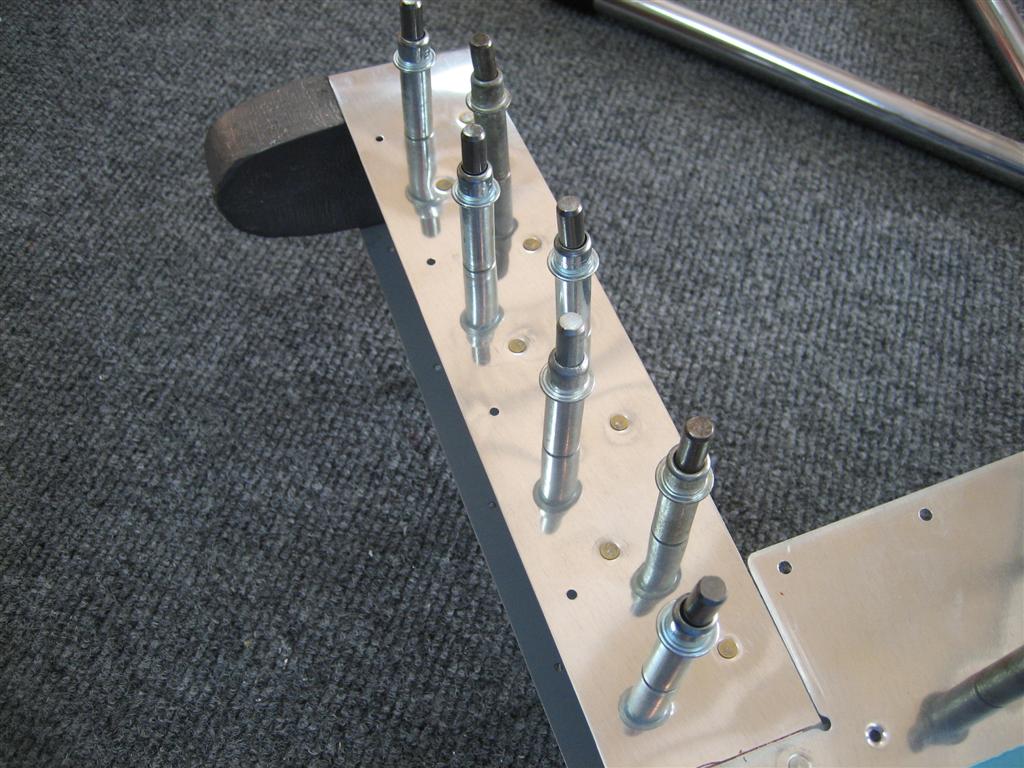
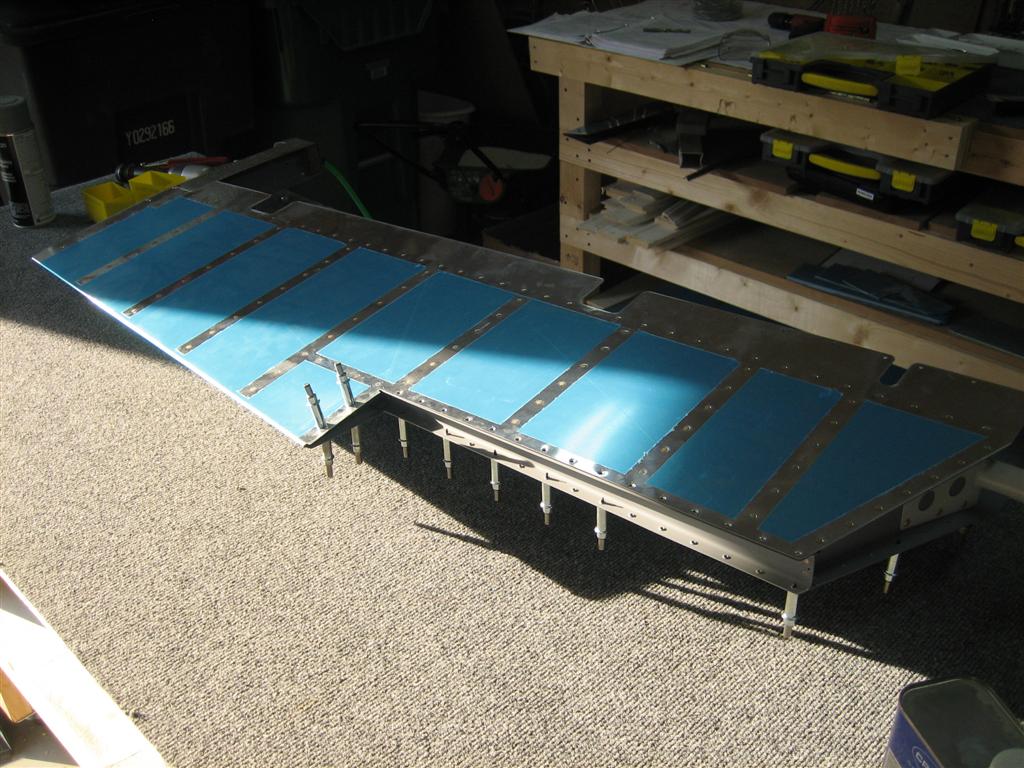
Then, making sure to include the hinge (other builders have forgotten when the time comes to rivet), I got the top of the tab completed.

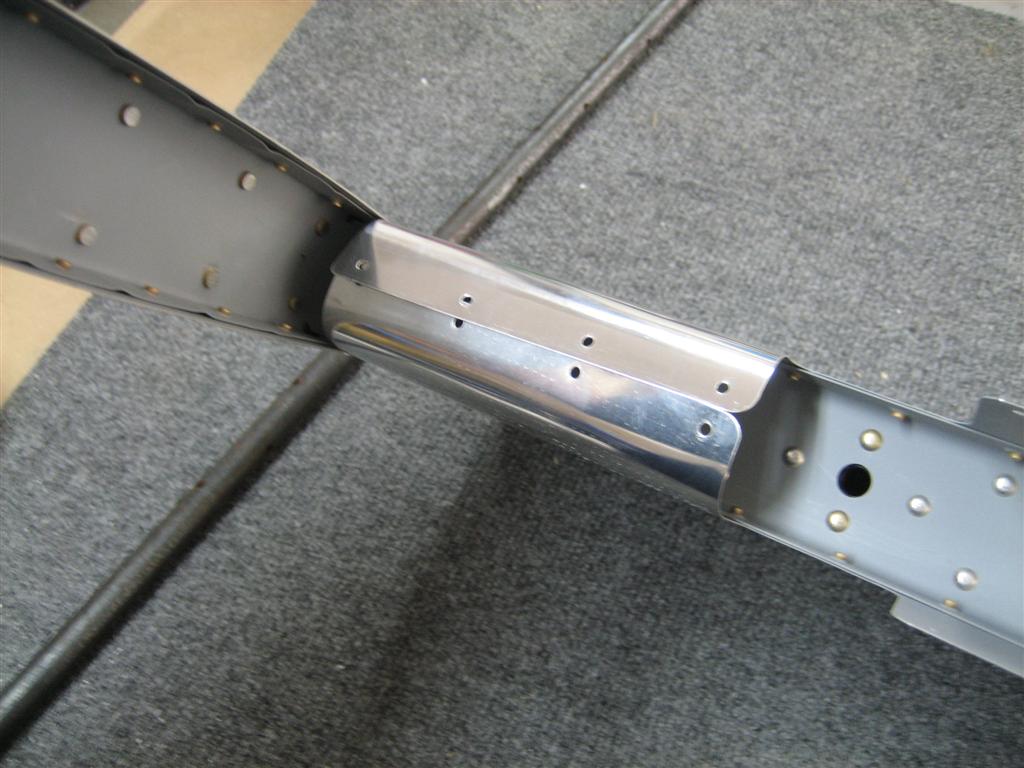
I do love those gold spars in the background.

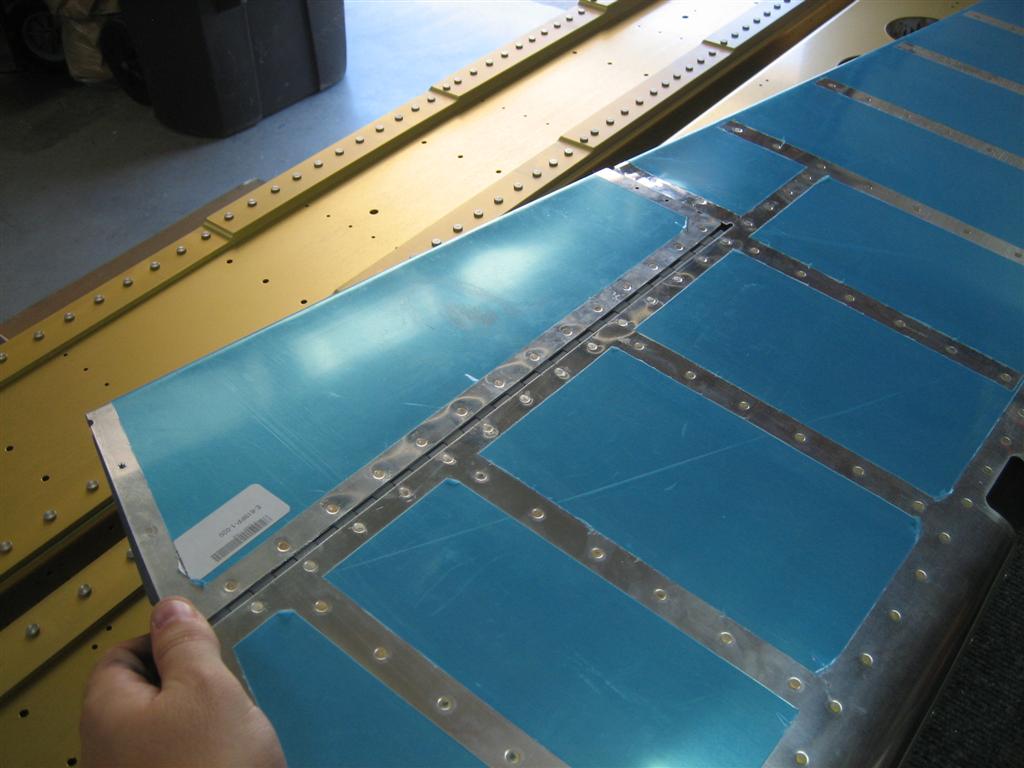
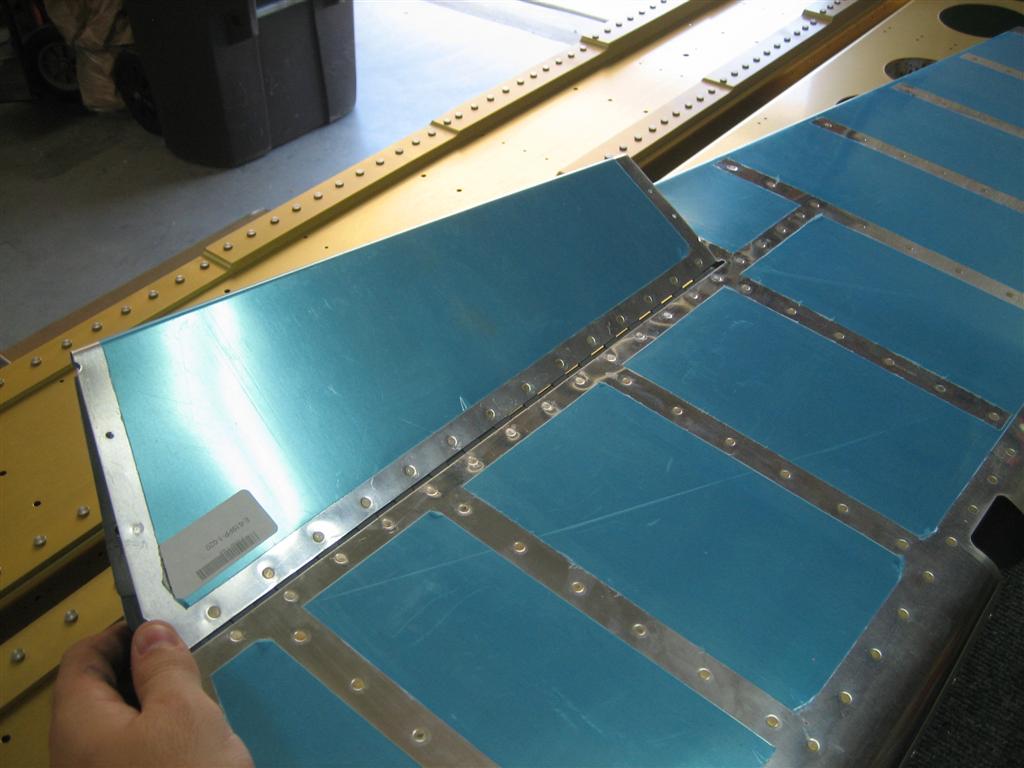
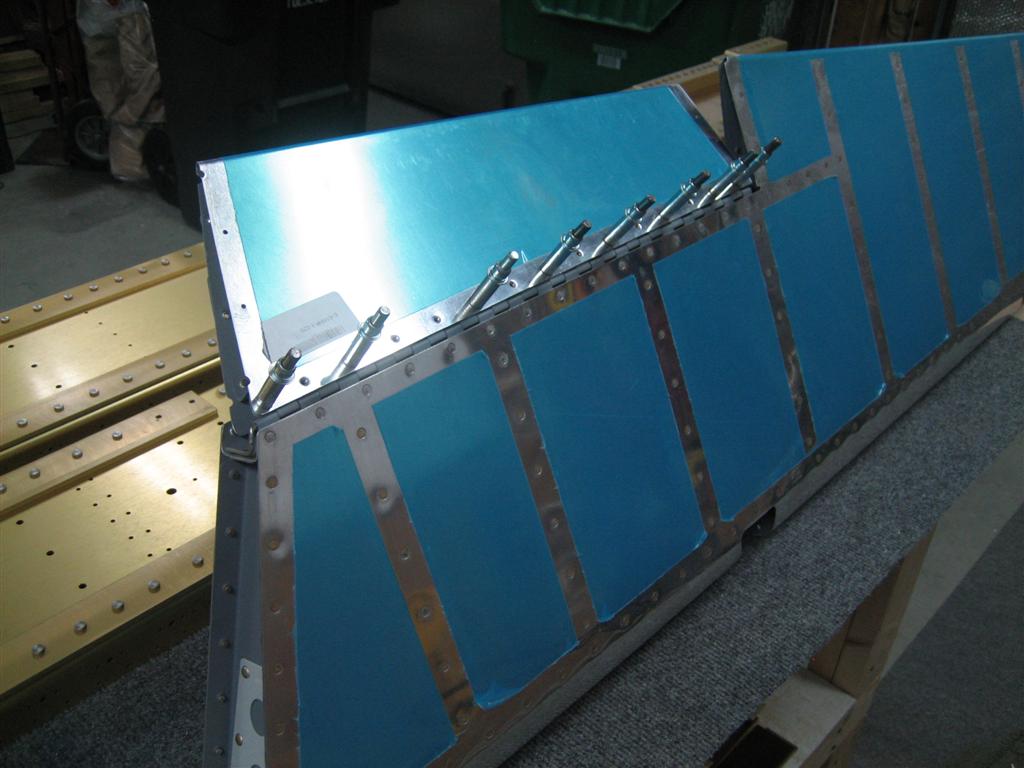
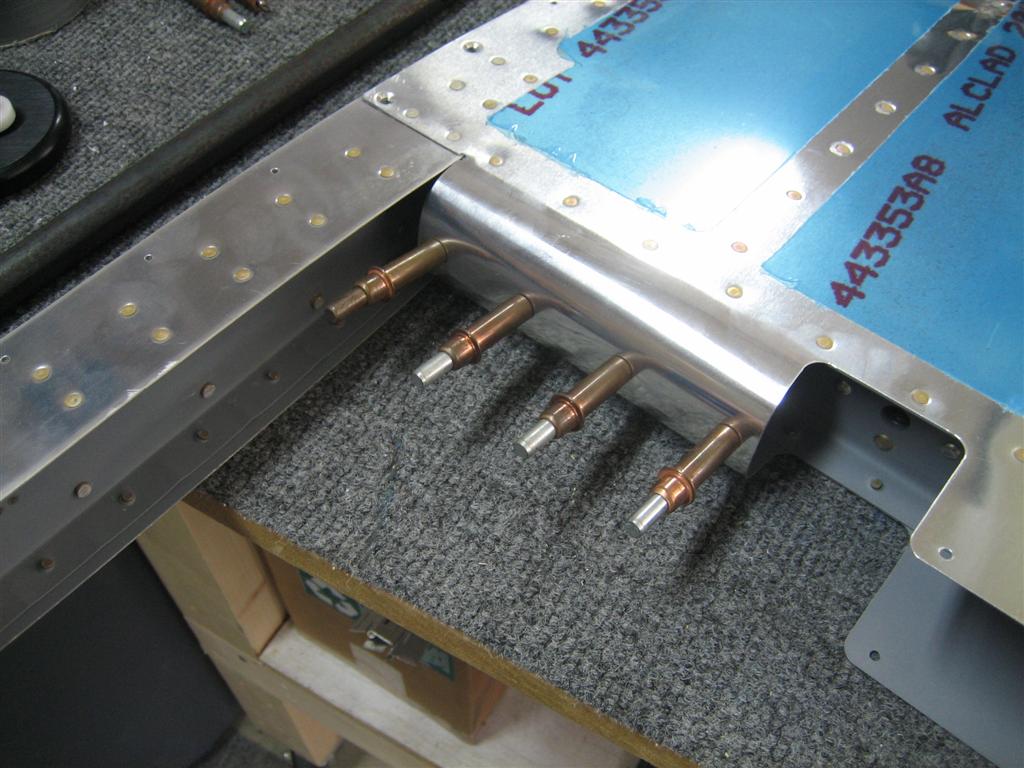
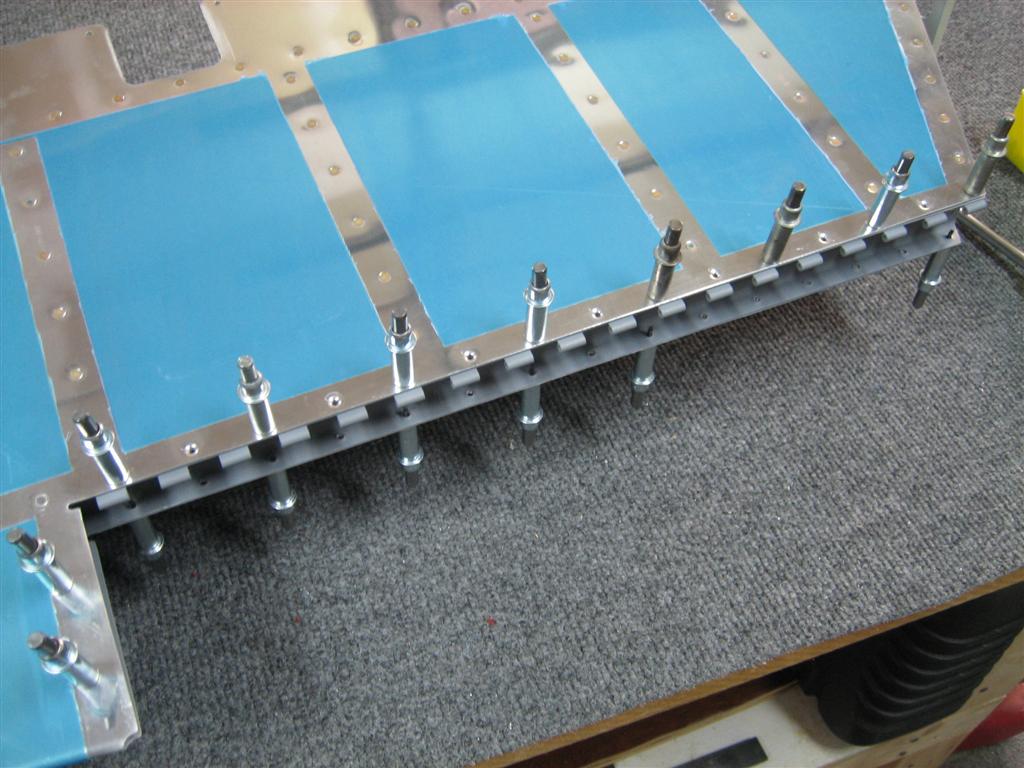
Okay, so I’m a dork, and I had to get the hinge pin out and get the thing assembled.

Tab in trail...

Up tab (down elevator trim).

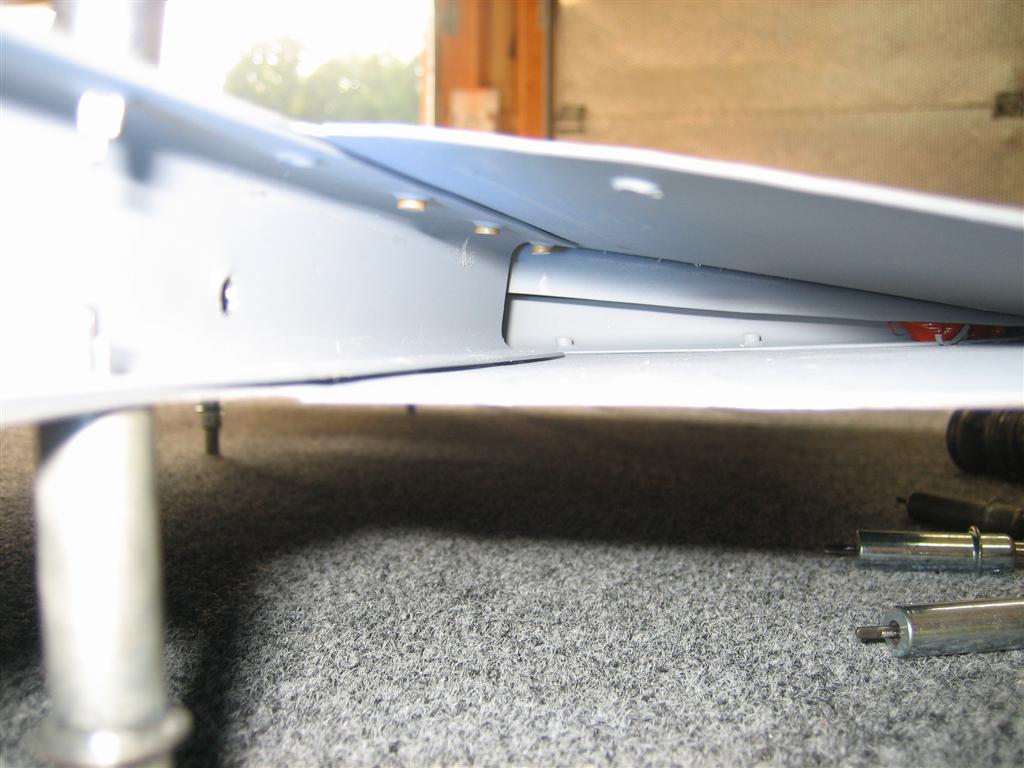
Down tab (up elevator trim). I still have some interference here from the shop heads of the bottom elevator rivets, but I'm going to wait until I'm rigging to sort this out any further.

A quick hour over lunch. 34 rivets set, 2 drilled out.

Prev | Next


Primed Elevator Trim Tab

August 19, 2010

Prev | Next

Well, I got a few more things done on the tab tonight.

First thing was to prime the outside of the elevator tab where the surface mates with the tab horns.

Here's the mating surface, ready to be primed.

After reexamining my countersinks in the trim tab spar, I decided to re-countersink them. This time (after reading the guidance in the construction manual about how to do this on the flap), I used the trim hinge as a countersink guide. This worked much better than the piece of wood.

Nice countersink on the left. The old (wobbly) countersink on the right.

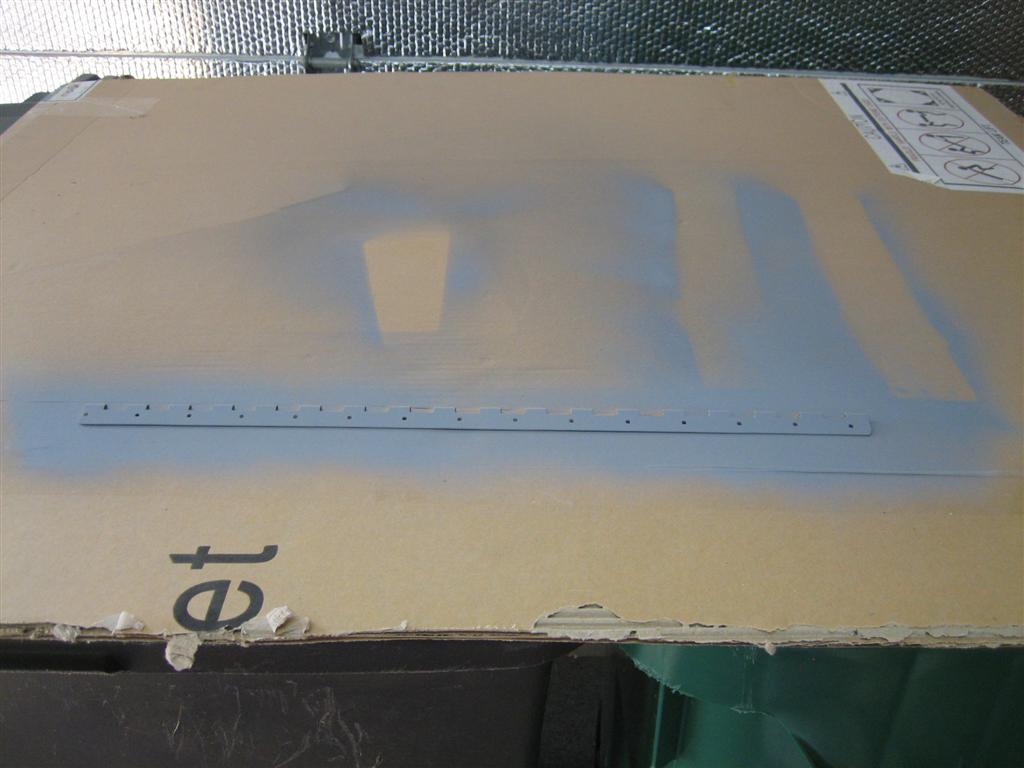
Then, everything was put up on the cardboard piece for priming.

Priming.

After the parts dried, I started in on riveting per the plans.

Everything was fine after 7 rivets, until I paused to re-fit the tab on the elevator.

4 of the first 7.

I was getting a little bowing (top skin concave, bottom skin convex) in the tab skin due to what appeared to be distortion of the tab spar. I drilled out the 7 rivets I had set and spent a little time re-tweaking the spar.

A fit check. You can't see any of the bowing very well, but it is definitely not satisfactory.

After re-tweaking (adjusting the spar flanges on the tab) and refitting a few times, I had things lined up much better. It’s not perfect yet (maybe more work on this tomorrow will get it right), but it is definitely improvable.

1 hour today.

Prev | Next


More Trim Tab Work

August 17, 2010

Prev | Next

Well, before I can dive into the wing, I need to finish up the trim tab. All that’s left is to fabricate two riblets, get everything prepped and primed, and then rivet the tab together.

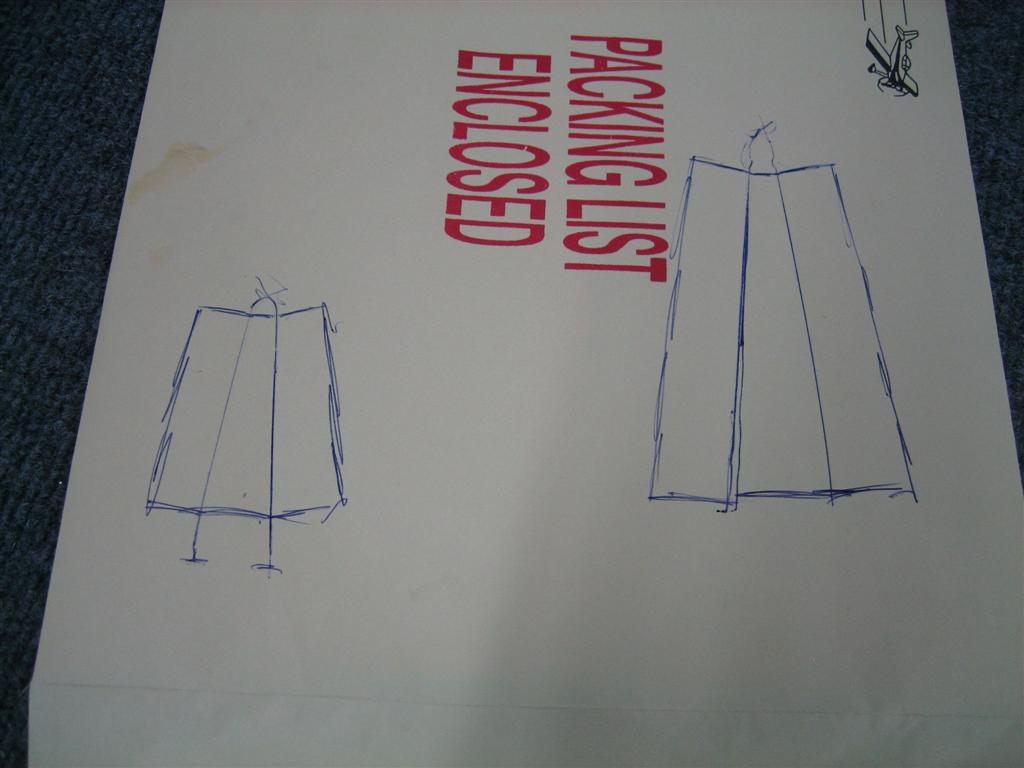
First, let’s get some riblets made up. Just like the elevator riblet, I started with some thick paper.

I used the packing list envelope from the wings, because it was literally right in front of me when I started.

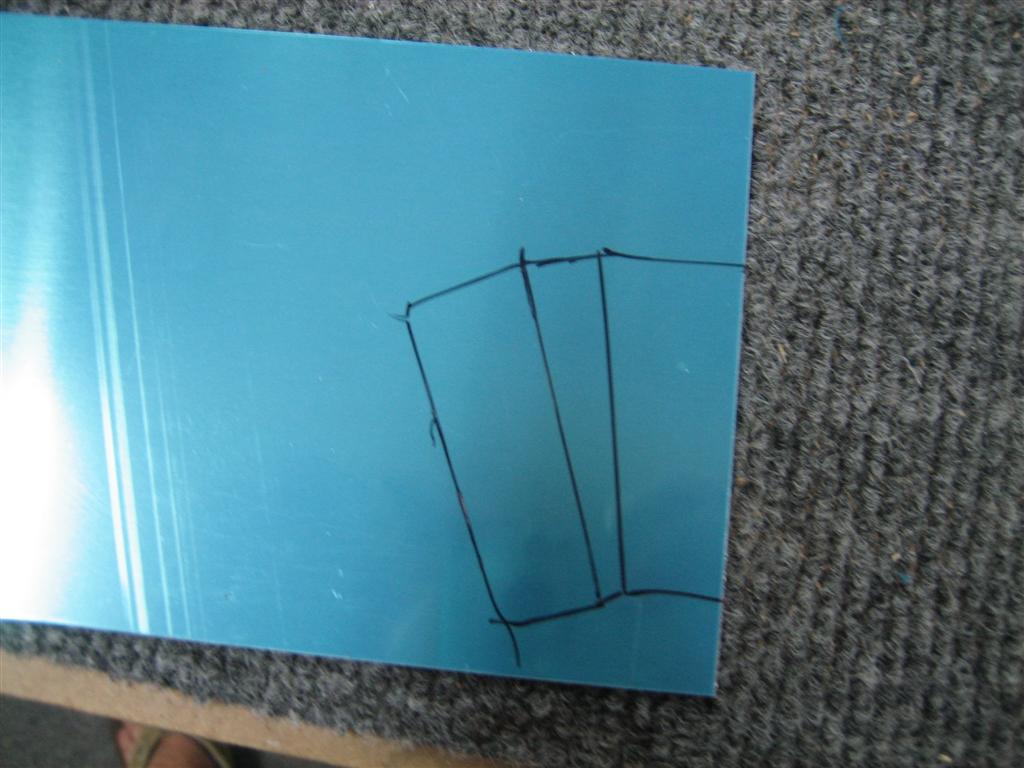
I got the larger one cut out of 0.025″ aluminum sheet pretty easily, and the first try fit like a champ. I moved on to the smaller one, hoping for similar luck.Fast forward a couple minutes (many minutes!)…

Can you say "third time is a charm?"

Nope. Third one wasn’t good either.

Let's try again (fourth time). I just couldn't get the bends right.

That one worked. And of course I forgot to take a picture.

I drilled a couple holes in each riblet through the skin.

Finally, fourth time is a charm.

Wuhoo, let's get this tab finished.

But, it was getting late, and there were a couple of puppies somewhere that needed attention. (Turned out, they were asleep when I went inside, and I got growled at. Thanks, puppies.) Before I headed inside, I disassembled the tab and pulled out the wing spars to inspect.

Tab components, ready for cleaning and priming.

After looking the spars over, I found many places where the spars had been “polished” with a scotchbrite bad to work out small scratches. It seems that everyone has these, and is no cause for alarm.

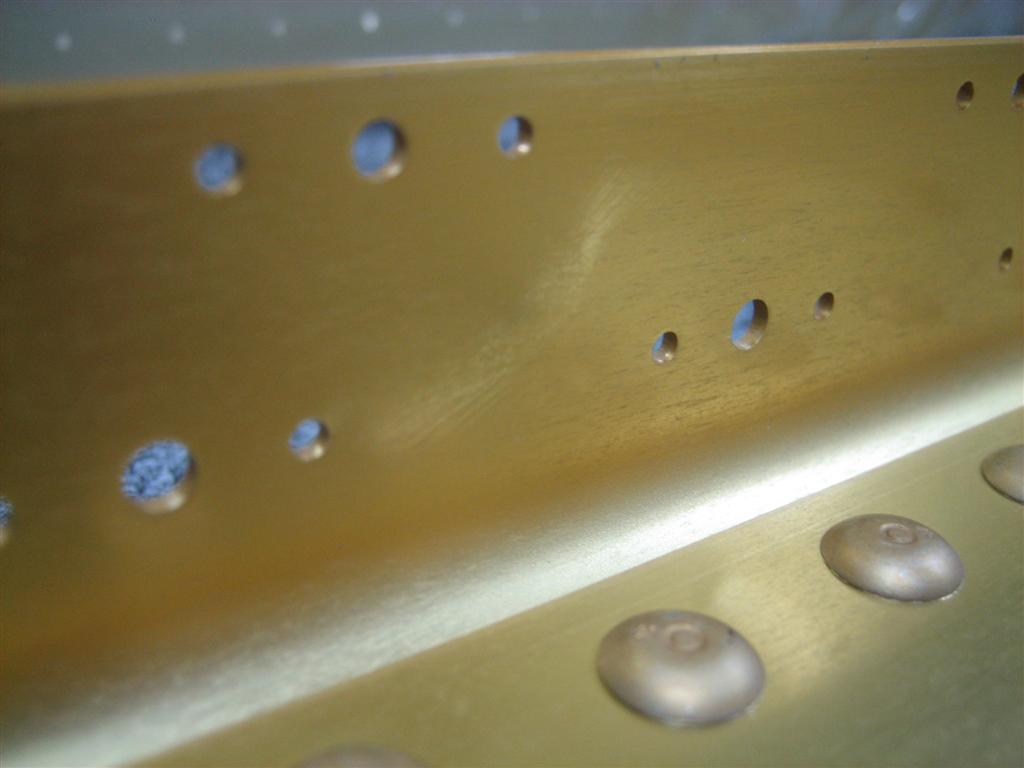
On the other hand, I found some bad juju. This is a closeup of a couple dings that look like something bounced on the spar. Keep in mind, that hole is a #40 (3/32″), so these are really small.

Still, that's not good.

Whoa. What. Is. That!?

Holy frijoles, Batman! That is a huge dent in my spar flange!

Here's a closeup of the dent with a straightedge held over it.

Another angle.

I took a couple pictures of the underside of the flange. I tried to use the light to demonstrate the distortion.

That curved white streak is actually the light reflecting off of some spider cracks in the anodizing.

Here's another angle.

Not really related, I just snapped a picture of the spars laying on the table.

At least they look pretty.

1.5 hours on the trim tab today. I’ll email Van’s first thing in the morning about the spars and then post what they say.

I’m pretty disappointed though. Nothing could create that dent without making a big noise, maybe something being dropped or falling over. Which means someone probably knew it happened and didn’t say anything, or the inspection process didn’t catch it. Either way, I’m not super excited. I’m guessing it wasn’t Vans’ fault, but hopefully they will make it right.

Prev | Next


Christmas in August (Wing Kit Arrived)

August 16, 2010

Prev | Next

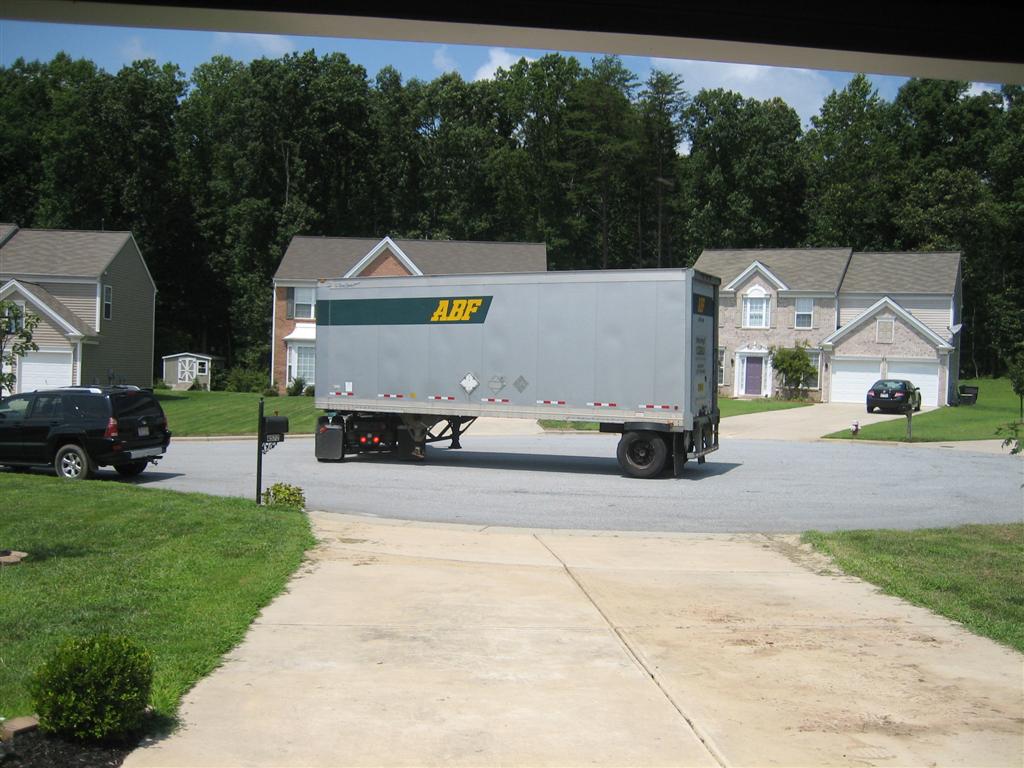
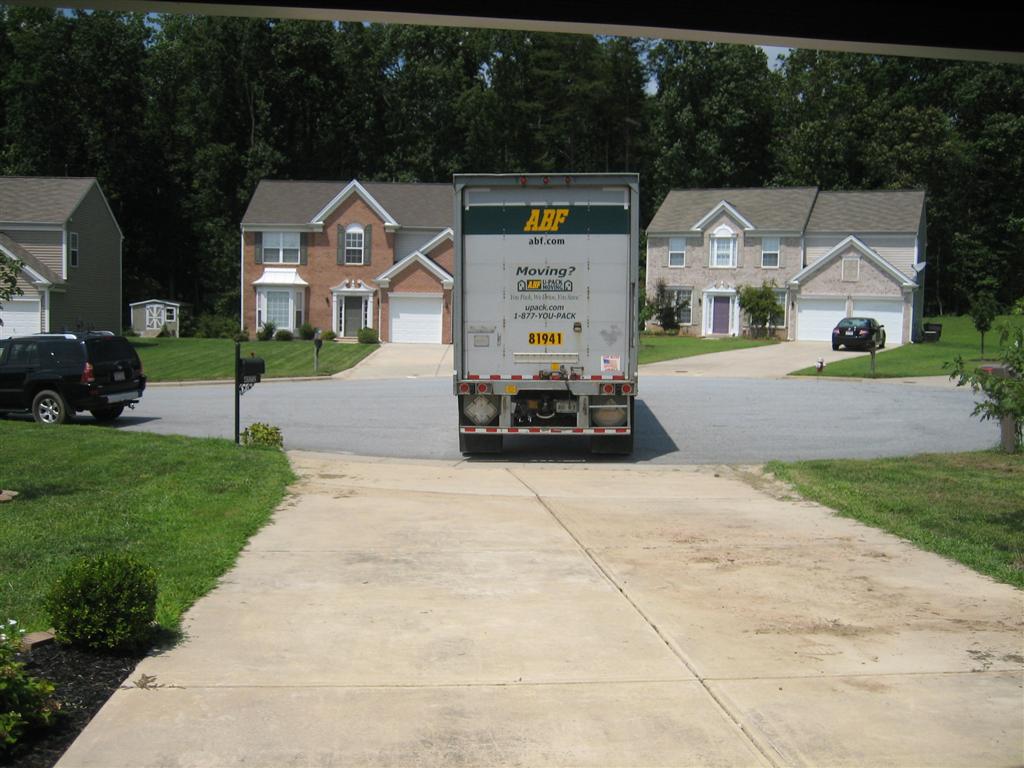
OH MY GOD OH MY GOD OH MY GOD….IT’S HERE!!!!!

Oh man, I really need to edge the driveway.

Judge how excited I am by counting the number of truck pictures I took.
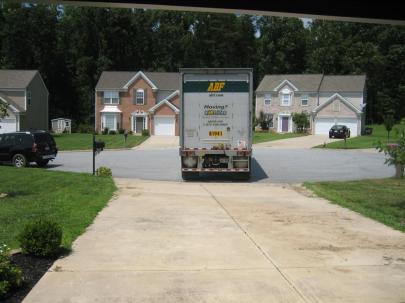
This is number three!

asdf

Whoa. Full load today? (Those boxes look so little!)

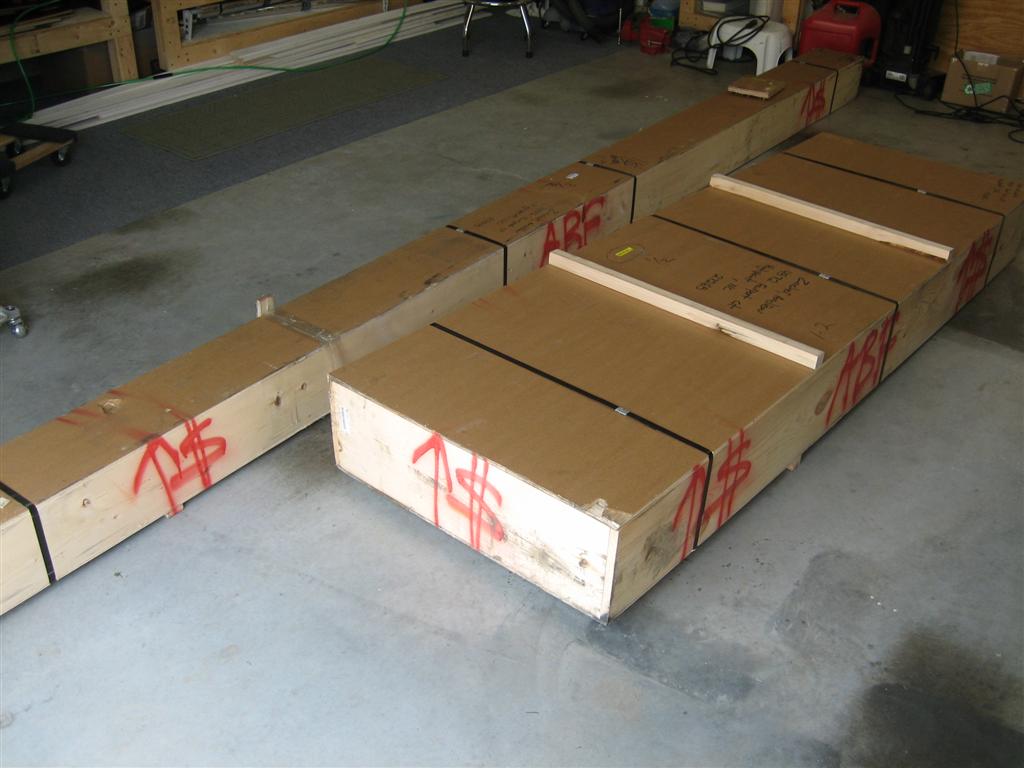
So we picked up the larger (wider) box, and it was (I’m guessing, here) about 150 lb. No problem for the driver and I to bring it into the garage.

Then, we picked up the small (but long) box, and it was (probably exaggerating) about 300 lb. I felt stupid grunting and groaning trying to lift this box. It was deceivingly heavy.

Finally home.

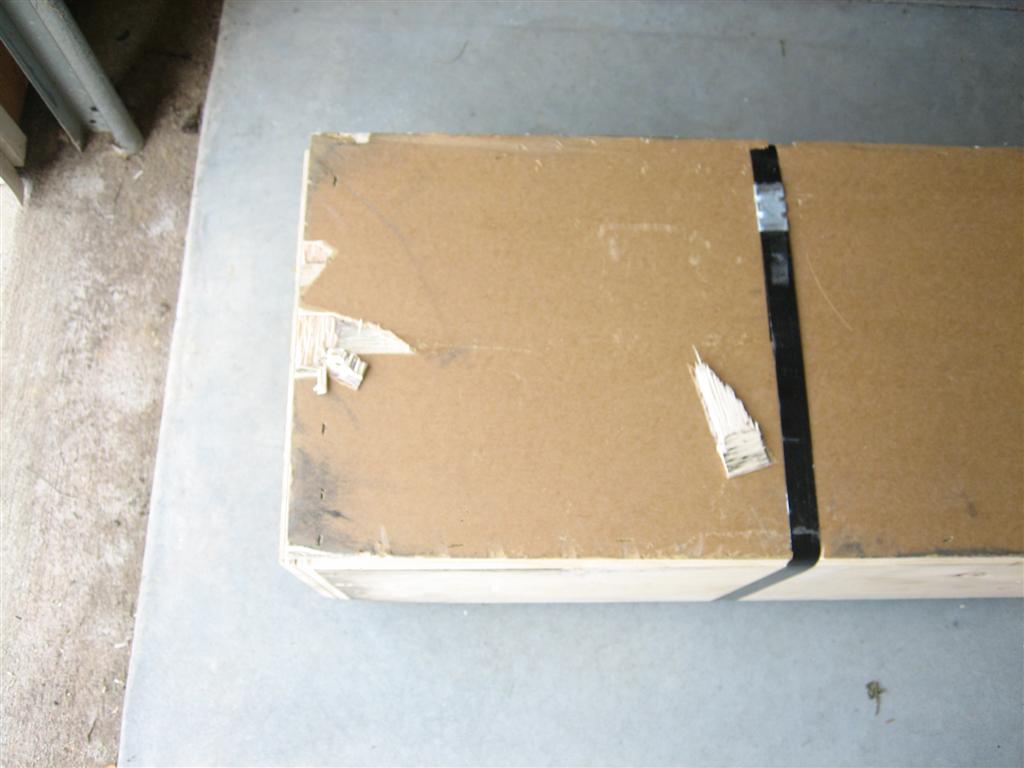
Time to document some of the damage. Scroll quickly through these pictures. They are just for recordkeeping.

Some edge damage.

Whoa! What rhino tried to poke their horn through my spar box!?
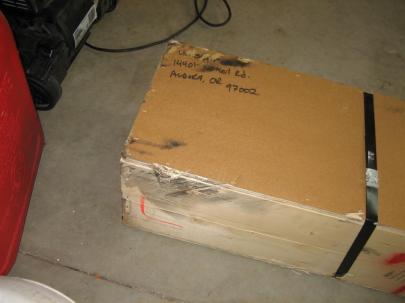
Some scrapage and edge damage.
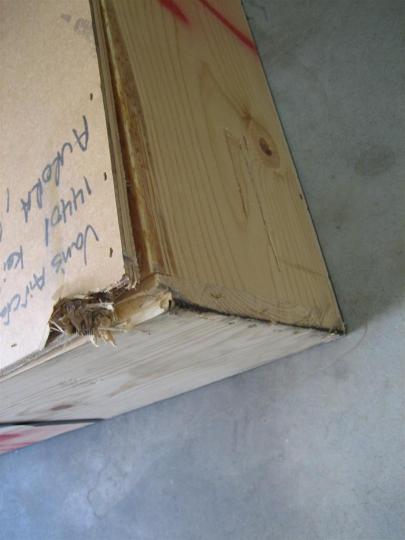
Yikes. I'm glad these boxes are well made.

Some more corner damage.

Okay, slow down the scrolling now.

Luckily, all the parts were completely undamaged. That rhino-poke through the spar box when right into a big block of paper separating the center section pieces from the main spars. I am a lucky son-of-a-gun.

Tops off, time to start unpacking.
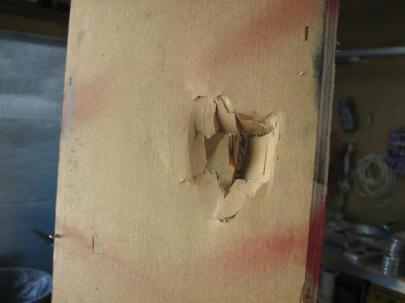
Here's another rhino-poke picture.
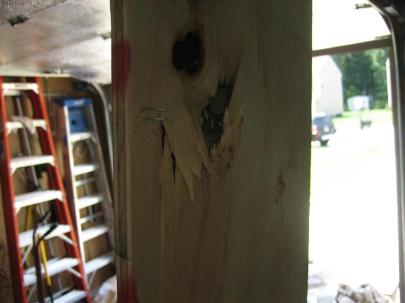
The backside.
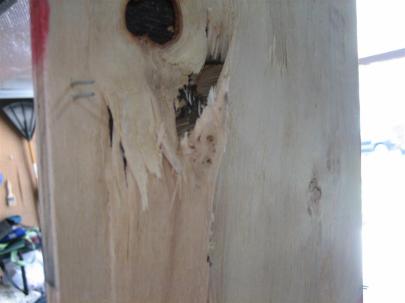
Redundant, but better light.

First thing, I got everything out of the boxes and onto the carpeted floor and workbench. That is a lot of paper. As Brad Oliver put it:

“there is $100 worth of aluminum and $5000 worth of paper in these boxes”

I couldn’t agree more.

Whoa. Paper!
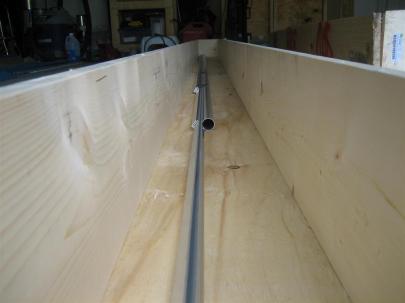
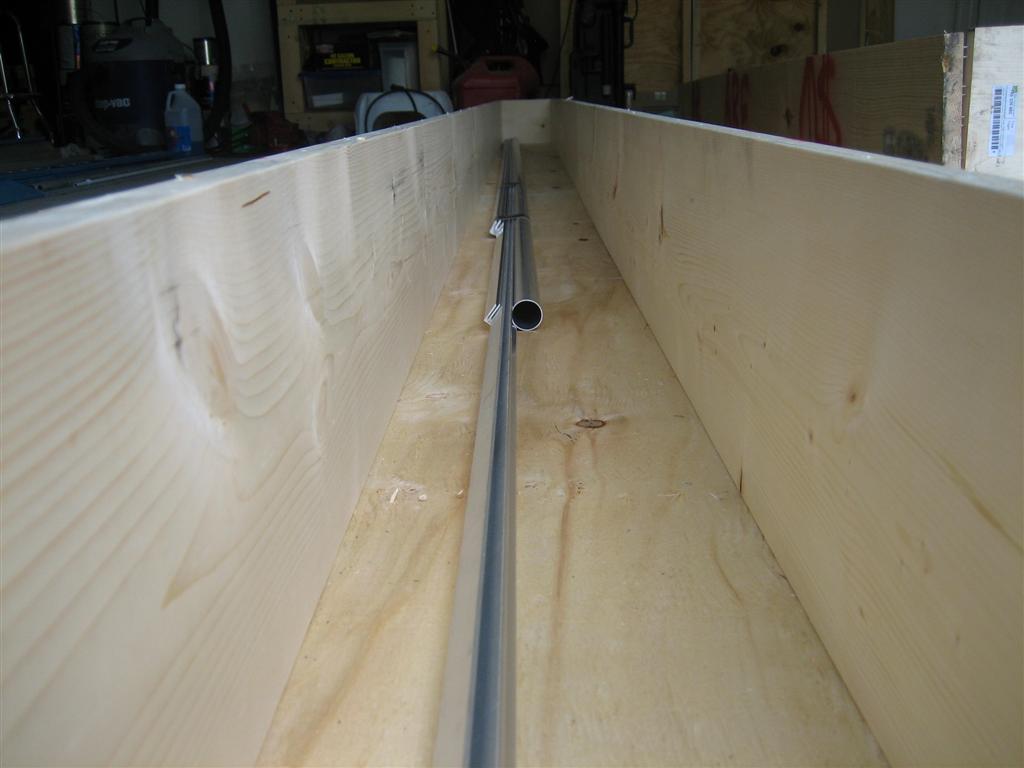
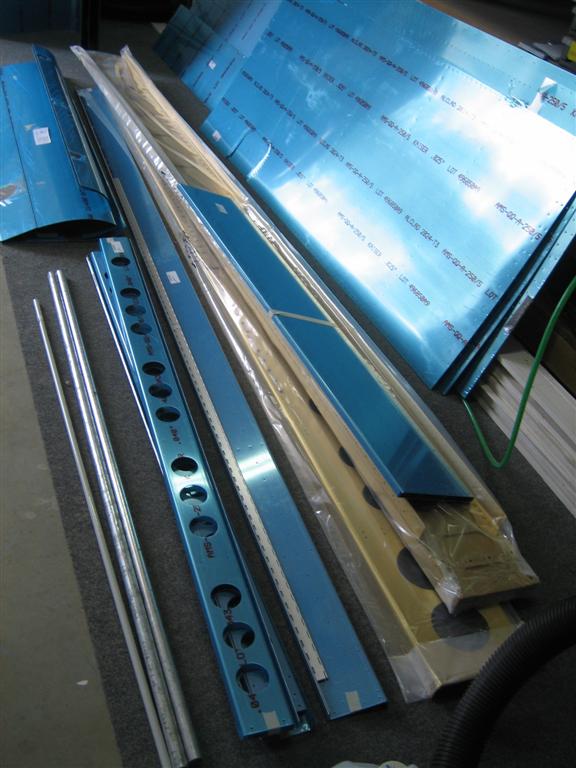
The fuselage longerons, some "water pipe" (presumably for the aileron pushrods) and a few random lengths of angle.

After getting everything out and onto the carpet…
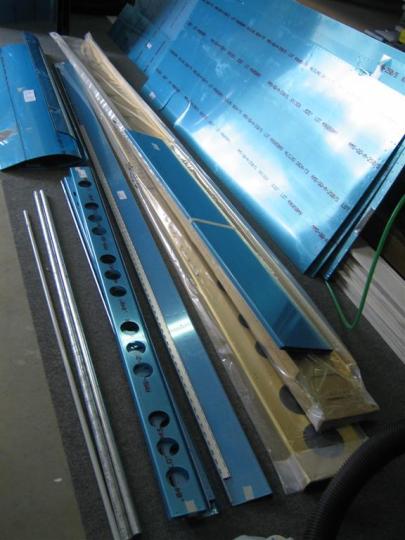
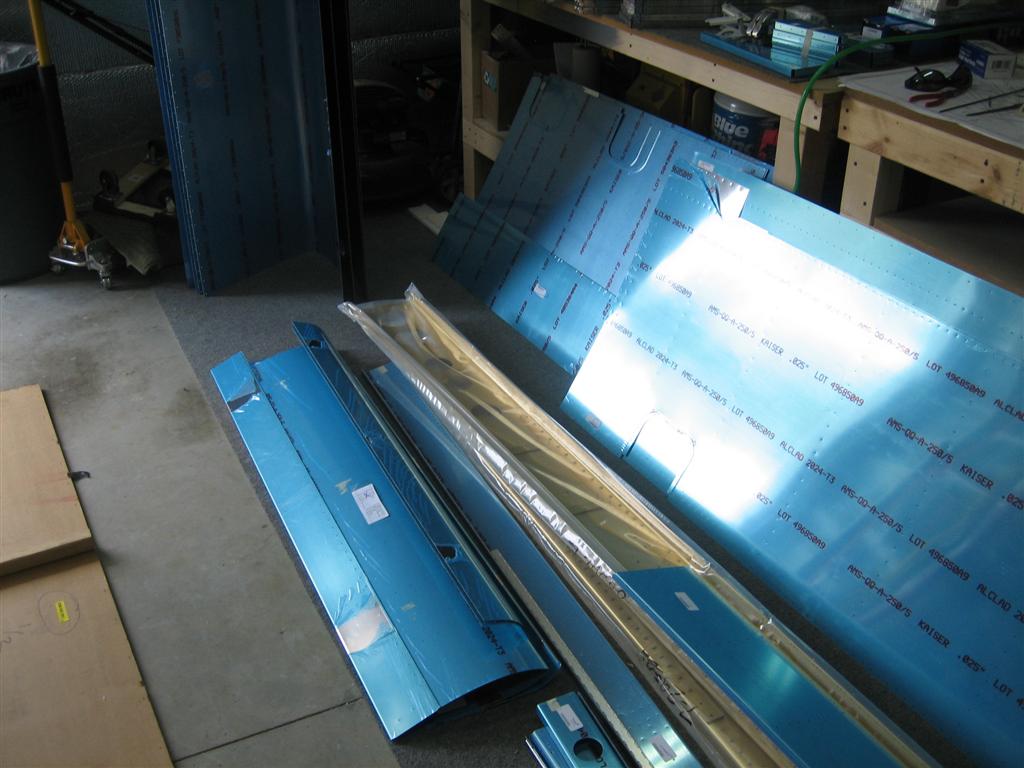
That's a lot of parts.

More parts.
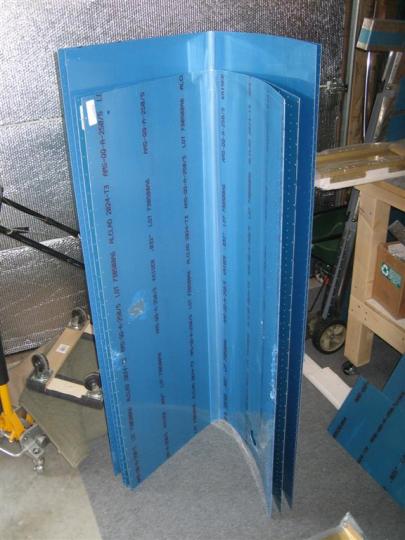
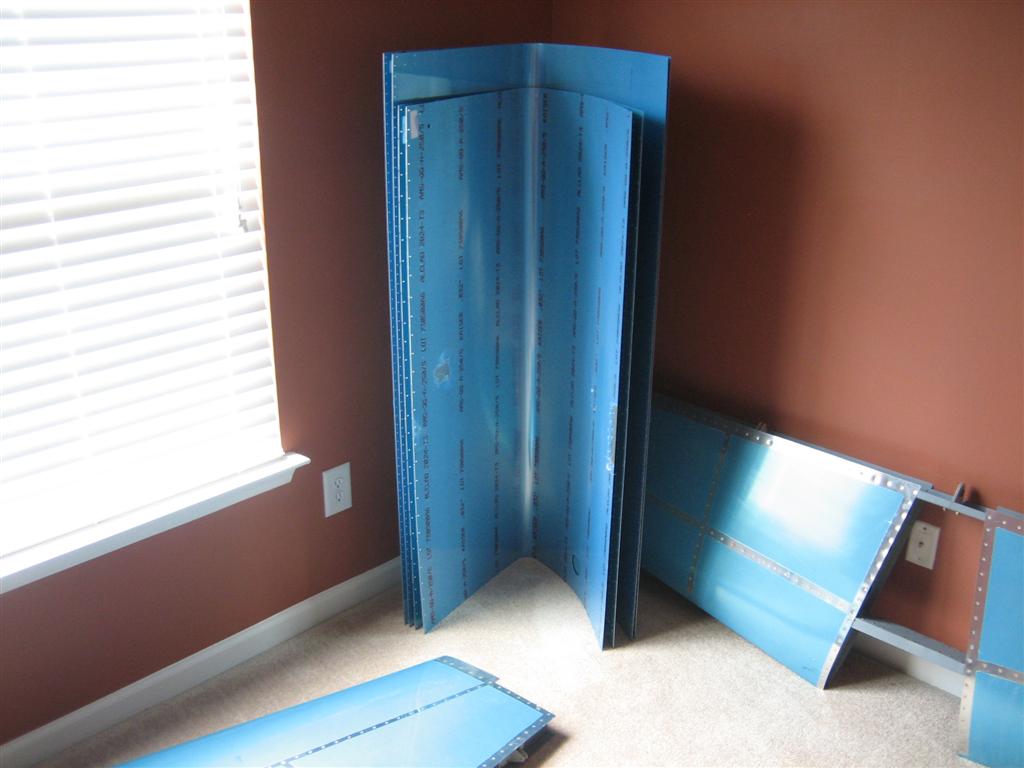
Tank and leading edge skins.

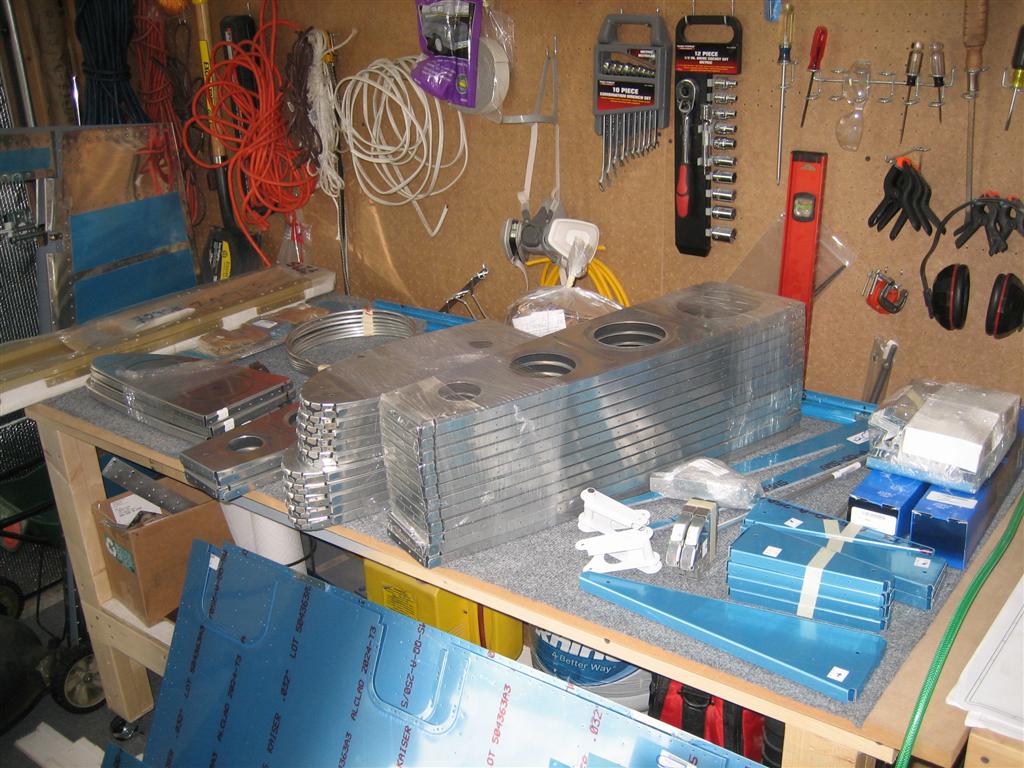
One of my workbenches with wing parts piled on.

I managed to stick the longerons against the (very messy) back wall of my garage.

Upstairs, I have an extra room devoted to airplane storage (and working out, and music).
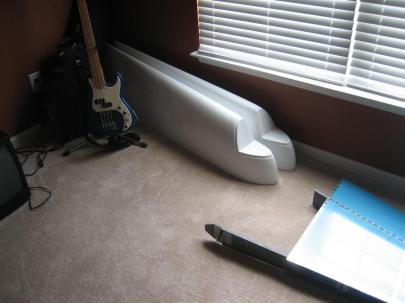
The wingtips are HUGE!
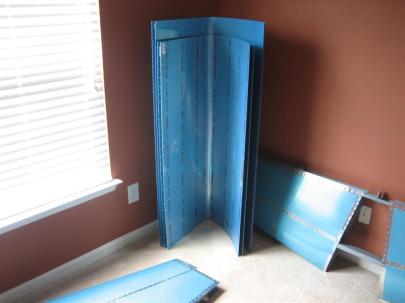
Tank and leading edges upstairs.

I also took these upstairs. These go with the fuselage, but they are matchdrilled at the factory with the spars, so they ship them all at once. Good thinking.

This is normal, but just wanted to note a few places where they used a scotchbrite pad to buff out some scratches.

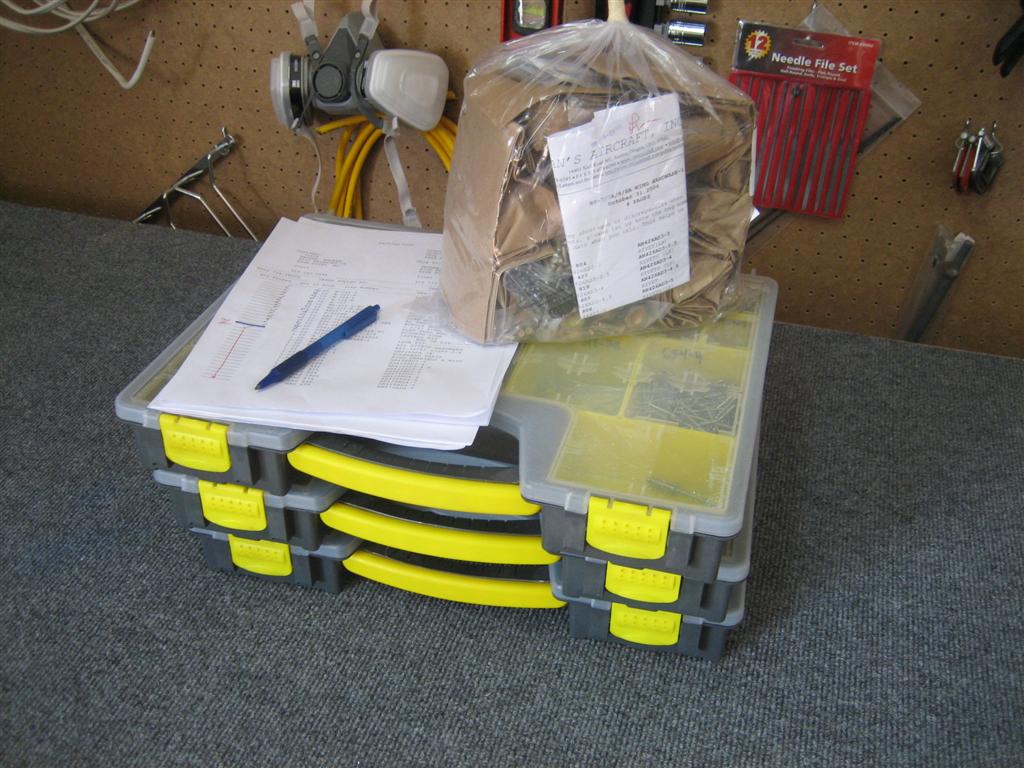
Time to start the inventory. 5 pages of inventory sheets for the main kit, then 5 more for the hardware, and a few more here and there for the aileron mounting kit, and the stall warning kit.
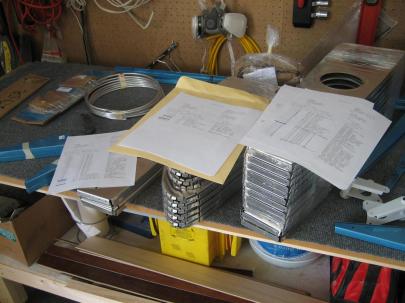
{sigh} This is going to take forever.

Looks like the only problem was that I got 5 W-712-L ribs and 1 W-712-R rib instead of 3 of each.

Most of the ribs in the kit were sandwiched L and R ribs, but some of these sets were sandwiched L and L ribs.
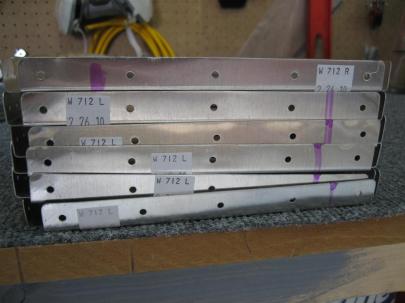
Too many lefts, and not enough rights!

Drumroll please! {drumroll sound}
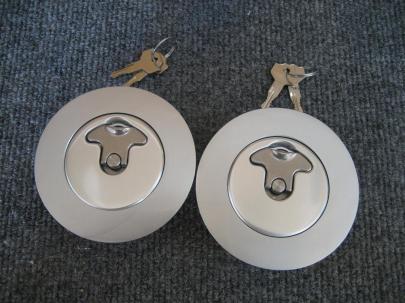
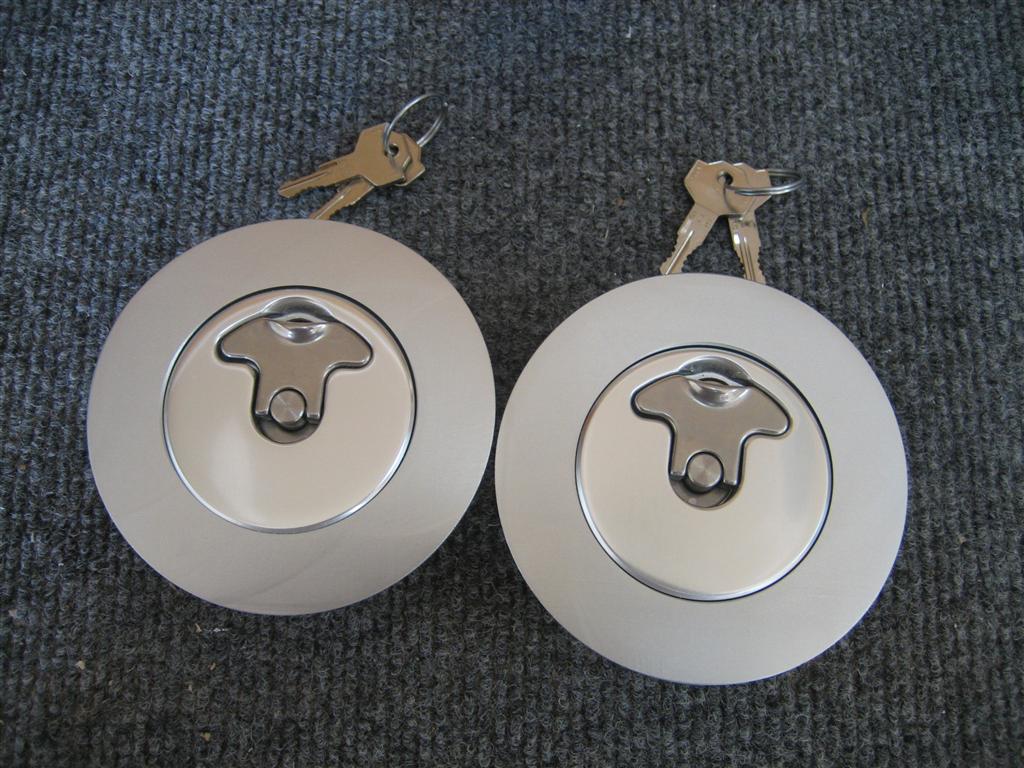
Tada! The beautiful (and expensive) deluxe locking fuel caps. With four keys, of course.

I decided to go with the tried and true float senders, mostly because I didn’t want trouble with the capacitive senders (which work well only with 100LL gas. If you ever change types of fuel, they won’t work correctly.)
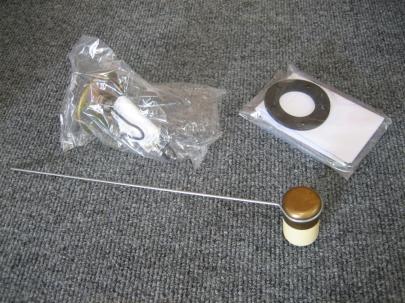
I'm sure these are fine, but they are a little "cheesy" (as a coworker who also has them put it).

After about 3.5 hours of work, most of the parts have new homes under my workbenches or upstairs in the airplane room.

Tightly packed parts.

Next up, time to inventory the hardware.
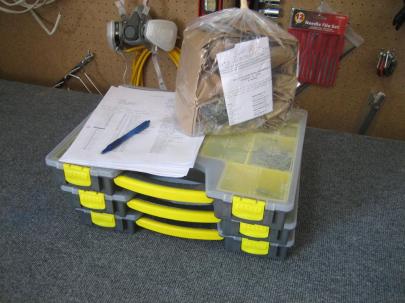
I hope it all fits.

But first, time for some dinner.
It's Monday. Why not have steak, grilled corn on the cob, and a homemade caprese salad? (Look at those Bobby Flay grill marks!)

Okay, after dinner, I sat myself down in front of the TV and worked more on the hardware inventory. The only thing that didn’t really fit well into my sorting scheme was the AN426AD3-3.5 rivets. There were way too many in the wing kit for my smaller sized container.

In the background, you can see one of the 5 (?) hardware inventory pages.

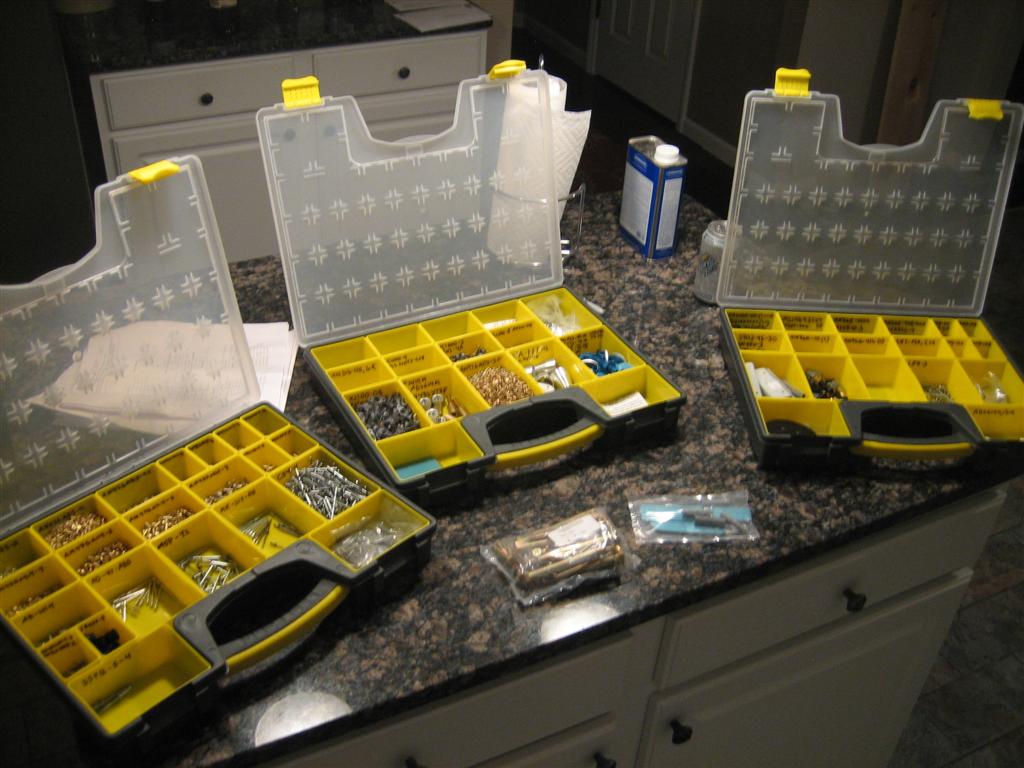
After another hour and a half, almost all of the hardware now has a home in my fancy hardware cases.

The close tolerance bolts didn't fit, so I'm going to leave them in the bag for now.

Finally, I took a picture of all of the inventory sheets. I have horrible handwriting, but you get the idea.

Those all say "page done."

3.5 hours to most of the bigger parts inventoried, and 1.5 more hours to do the hardware. 5 hours total. Feels great to have the wing put away safely.

Prev | Next

Started Drilling Out Rudder

August 14, 2010

Prev | Next

Well, after much hand-wrenching and a few sleepless nights, I’ve decided to dive into taking the rudder apart to assess the damage.
I’m guessing there are a few hundred rivets I need to drill out, which is going to ruin my drilling out average, but that’s okay. I want the rudder to be perfect. The pictures aren’t really that exciting, but here they are anyway.
About the first 25 after they've been drilled out.

I started drilling out the leading edge blind rivets. They ended up not being that bad, but not something I ever really want to do in the future.

Started drilling out leading edge rivets.

I ended up using a #40 drill bit for the blind rivets, even though they are really #30 sized holes. #40 allowed me to pry the heads off really easily. (You can see the heads of the blind rivets on the table.)

67 rivets drilled out, and I'm now dripping sweat on the rudder. Time to go inside.

But just for kicks, I took a picture of the rudder skin after pulling off one of the blue vinyl sections.

It's going to look really good when I take the vinyl off of the whole airplane. (You can see the outline, though, which means I'll still need to do a little polishing before first flight.)

It was about 30 minutes in the garage for just this part. I’m trying to figure out if I want to keep going on this or start in on the wing kit. For sure, I’ll need to finish the elevator trim tab before moving on to the wing. Maybe I’ll put the rudder away for awhile and move on.

Prev | Next


Made a Decision on the Rudder

August 12, 2010

Prev | Next

Disclaimer: My favorite tag for today’s post is “Boo Boo boom boom airplane go fly.” Read on.

Well, after much soul searching, and some really helpful advice from VAF (thread here), I’m going to drill out the skins, inspect for any internal damage and rebuild the larger rudder.

Favorite quotes from the thread:

  1. I did the SAME EXACT THING as you did
  2. I dropped a completed fuel tank while moving it from one storage location to another.
  3. My two year old daughter says “Boo Boo boom boom airplane go fly” while looking at your rudder. I am so proud!
  4. I forgot the fiberglass tips were on and unsecured. He picked up one end and –crash!
  5. I banged up my rudder too.
  6. Don’t feel bad – I had to build a whole second set of ailerons when I built them both backwards, at the same time (DOH!)
  7. Your new rudder will be better than the old one.

Although I got my hands on a set of RV-8  rudder preview plans, and a lot of the parts are common, I just don’t want to mess with doing a large flight test spin program just for aesthetics. It just doesn’t seem like the right thing to do.

While I could probably say I’m not going to intentionally spin the airplane, I probably will want to at some point, and I’m really worried about having a botched aerobatic maneuver (too slow during a hammerhead turn), and falling off into a spin from which I’ll have a hard time recovering. In that case,  I’ll want the bigger rudder.

Also, I would feel guilty ever selling the airplane, especially if (god-forbid) anything ever happened to a later owner.

So, rebuilding the larger rudder it is. And besides, my trailing edge is going to be perfect this time.

But, in the meantime, I want to set the new standard in “finished empennage pictures.” Maybe this new standard will keep someone else from damaging their airplane for the sake of a stupid picture.

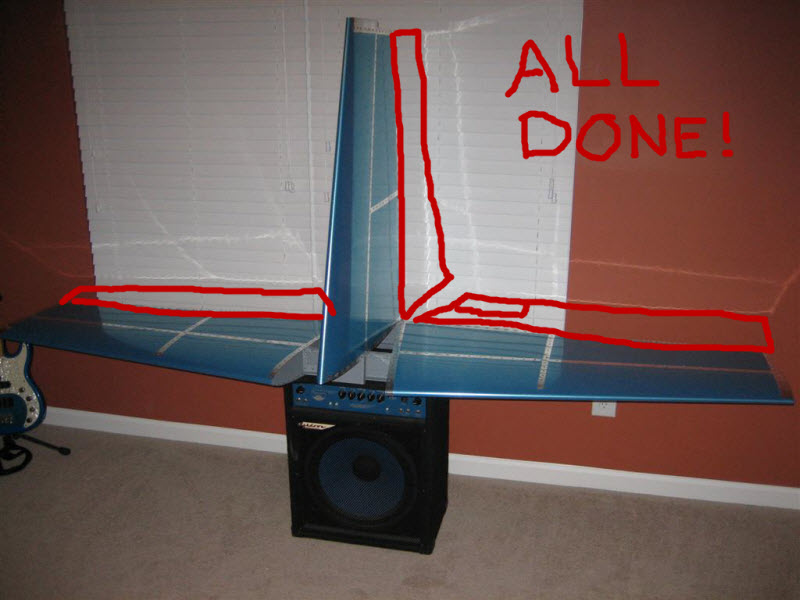
Done with the empennage!

Now where is that wing kit?

Prev | Next


Low point of the build

August 10, 2010

Prev | Next

Well, today was the low point in the build so far.

I was fiddling around with the empennage, trying to set it up to look like a tail for the “completed empennage” picture everyone posts, and I dropped the rudder.

[horrified silence]

It hit on the bottom aft edge, bounced a little, and then hit in the top rear edge.

Oh god, oh god, oh god.

I was (am) devastated.

First bounce.

Second, and worse bounce.

Top of the rudder, aft, looking forward. Yikes.

After staring at it for a good ten minutes, and flashing through all of the days and hours I put in on the rudder, I finally figured out o could probably drill out all the skin rivets and replace just the skins.

But.

I’ve also always wanted to put the smaller RV-8 rudder back on the airplane, which should save weight and bring the CG a little further forward. I’m going to find a copy of the RV-8 preview plans tomorrow and see how hard it will be to build the RV-8 rudder from what I have.

Here’s the thing that really stings. While I was messing around with the vertical stabilizer and rudder, I was even thinking about how much effort this was for a stupid picture, and that a second pair of hands would be helpful.

The good news I that the wing arrives this week and I can busy myself with the inventory while i think about what to do.

In the mean time, I need a happy picture. How does this one do?

Ginger (some call her "princess"...I wonder why) and Jack, taking over the bed.

Prev | Next


Rolled Right Elevator Leading Edge

July 31, 2010

Prev | Next

How exciting! I get to roll the right elevator leading edge today!

Okay, if you couldn’t sense the sarcasm there, I’ll lay it out for you. I hate rolling leading edges.

This first section actually turned out nice after the roll. It was pretty easy to squeeze these together and rivet.

See? EasY!

Then, I took a picture of how I tape, which I have since ammended.

Now, I put tape along the entire edge, overlapping once piece with another.

Of course, since things started going badly, I forgot to take more pictures, but rest assured, I have some unintentional puckering between rivets on one of my rolled sections. The crappy thing is that once you roll and remove the pipe and tape, it is really hard to go back and re-roll.

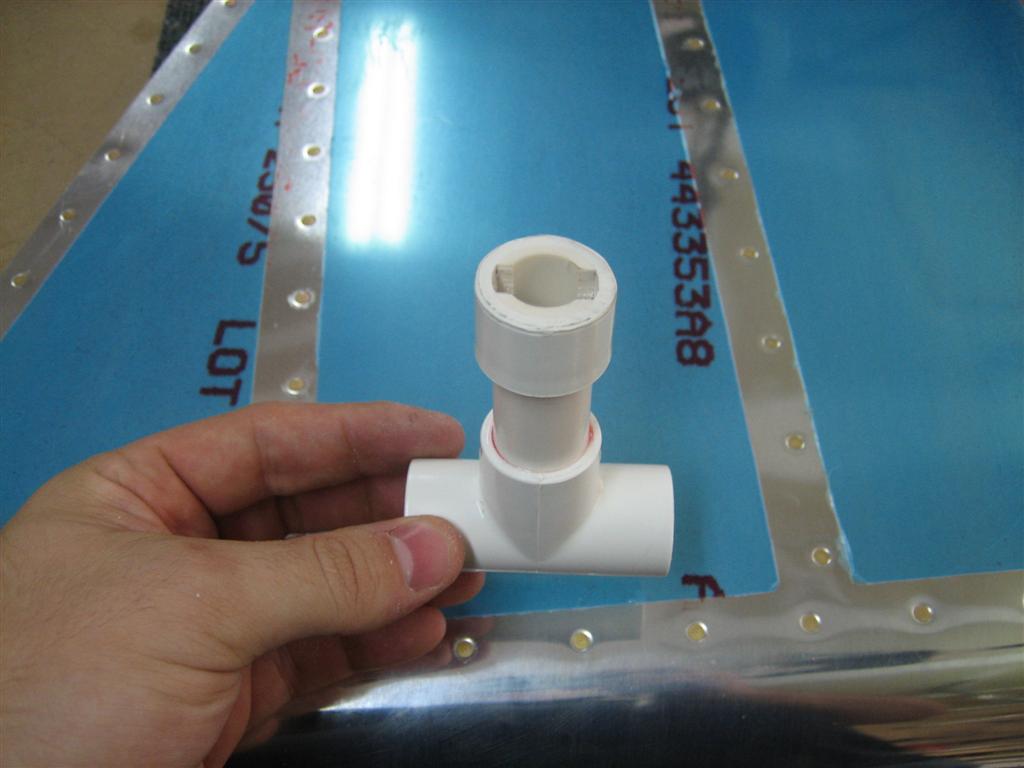
Anyway, I moved on to installing the rod-end bearings.

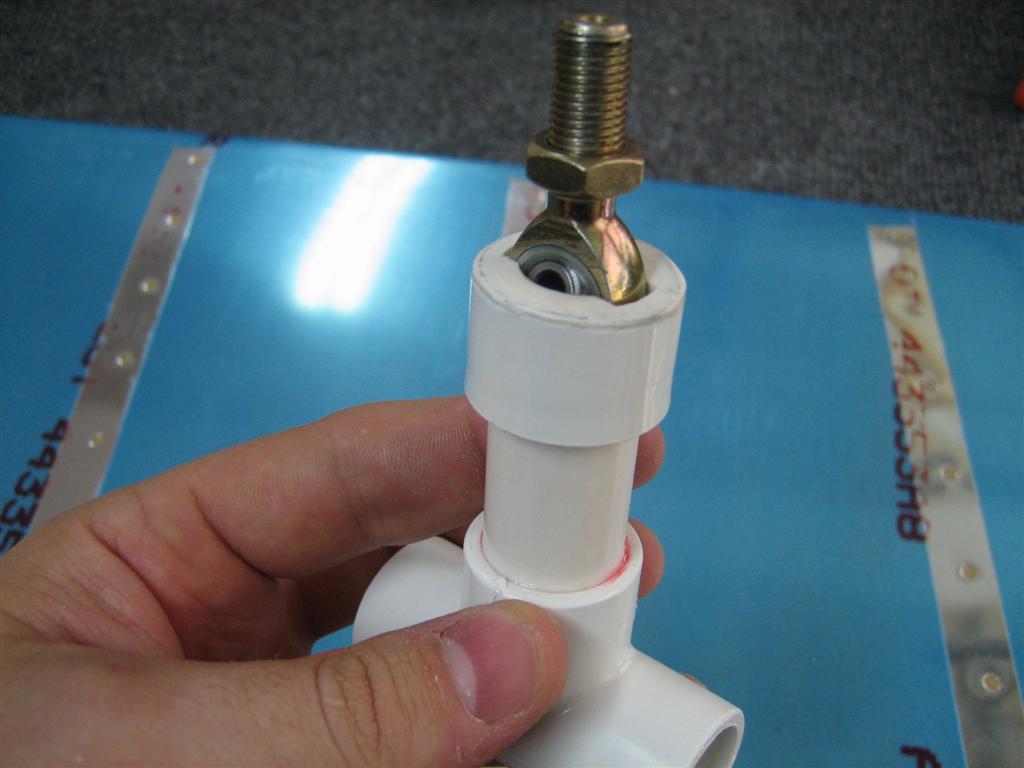
Here is my rod-end bearing tool.

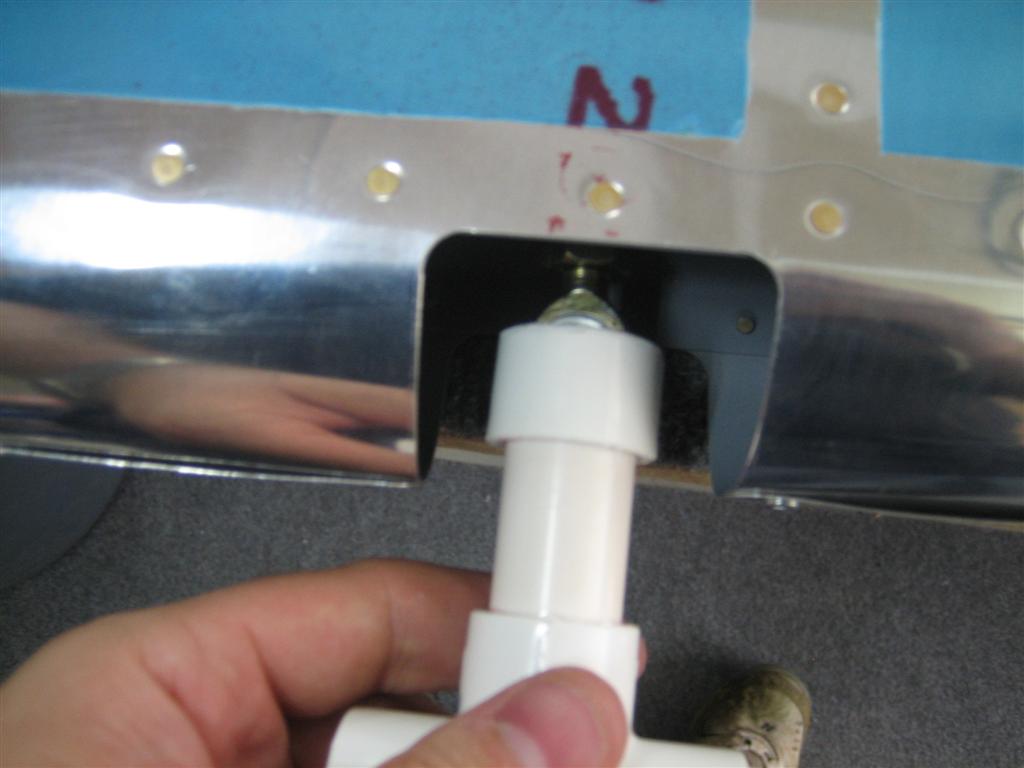
You can see how the rod-end just fits right in there. (The purpose of the tool is to help turn the rod-end in the nutplate without putting any pressure on the actual round bearing in the center.)

Tightening.

They want you to install the elevator rod-ends to 13/16″.

That's 13/16".

Right on the money.

After getting those in, I set the elevators aside and moved back to the trim tab. Here, I’m using wood backing (so the pilot of the countersink cutter has a good guide) and countersinking the holes on the top of the spar only (you can’t dimple the top, because the hinge sits just underneath the spar flange).

I'mi using a scrap piece of wood flooring here.

Then, it was time to dimple the skin. I only got the tab to a place where I can cleco it back together. I still have to fabricate some trim tab riblets.

Dimpled tab skin.

Then, I dragged the horizontal stabilizer out of the storage room and installed the elevators. Once I realized I had to drill out the hinge brackets to #12, the bolts went right in.

It looks like an airplane. And it's huge.

I’ll take more pictures of it for you sometime, but for now, I’m just going to leave this assembly on the workbench for a few days and admire it.

3 hours today.  22 more rivets.

Prev | Next


Rolled Left Elevator Leading Edge

July 24, 2010

Prev | Next

Well, today was just a barrel of rainbows and puppy dogs. Lucky me, I got to mangle the project per the directions.

It’s funny. The directions say “roll and rivet the leading edges.”

Hmm.

Sounds easy.

If I were writing the directions, it would go something more like this:

“1. After spending 50 man-hours carefully protecting all of the aircraft-grade aluminum from dents, scratches, and general mistreatment, duct-tape a steel rod to the inside of the leading edges and use ALL OF YOUR MIGHT to roll that sucker around. You won’t be able to make the roll anywhere close to acceptable the first time around, so be prepared to curse and fight your way by hand squeezing the two edges together to get clecos into the holes that have been so generously provided for you.  Then, rivet the two surfaces together, but only after realizing that the clamping force of the clecoes was helping everything line up, so pray that as you set the blind rivet, it will pull everything back to alignment.

2. After riveting, stand back and realize that on one of the sections, you forgot to edge-roll one edge, so there is a slight puckering between two of the rivets, but don’t worry yourself about it too much, because although it will keep you up at night, no one else will see it once the elevators are mounted to the horizontal stabilizer.

3. Stab yourself in the eye with a cleco, and then try not to bleed into the adult beverage of choice that you have now earned.”

There. Wasn’t that fun?

The outboard-most section, rolled and clecoed.

Middle section rolled. You can see how bad my roll is on the rightmost edge. (You can also see how I tape the skin to the steel bar.)

3 of 4 sections clecoed.

I took a break from rolling and installed my rod-end bearings. This tool works great. (I could have made it a lot shorter, though.)

Finally, all the leading edge rivets installed. Time for a drink.

2 stinking hours for this? 22 rivets, one (actually painless) blind rivet needed to be drilled out.

Prev | Next


Left Elevator Skin Riveting

July 23, 2010

Prev | Next

I wasn’t very good with the pictures today, but I did get a significant amount of work done today. I basically did a lot of skin riveting, and all went well, with a few exceptions.

First up, try to use solid rivets on the outboard part of the trim spar where they instructions say you can use blind rivets.

"Blind rivets? We don't need no stinking blind rivets."

The top row (actually the bottom of the elevator) turned out well.

These aren't the prettiest or most perfect shop heads, but they are within spec, and will do the job.

Then, I flipped the elevator over and did the top (which was harder, but actually turned out better than the bottom). I forgot to take pictures though.

I moved on to the counterbalance skin and set have the rivets, then removed the clecos and set the other half.

Here's every other one set.

Wait a minute! I’m going to need that trim tab hinge (forward half) primed so I can rivet it on the elevator.

Up on the priming table for some self-etching primer.

Moving on to the rest of the skin, here are half of the rivets set in the leading edge and inboard edge.

Halfway done with one side.

Then I removed the clecoes and finished up the first side (except for the trim tab area).

After the hinge dried, I clecoed that in place and got to it.

Clecoed in place...

Half the rivets set, clecoes removed...

All done, with the tab half of the hinge installed to make sure I don't have any binding.

Then, I flipped that bad boy over and finished the other side.

IT LOOKS LIKE AN AIRPLANE PART!

Wow, big day today. 172 rivets, four of them drilled out. (Notice how I just glossed over the riveting of my trim riblet? That’s because it was about an hour of my two hours outside. What a pain in my aft.)

Prev | Next