Fluting and Straightening Left Wing Ribs

January 1, 2011

Prev | Next

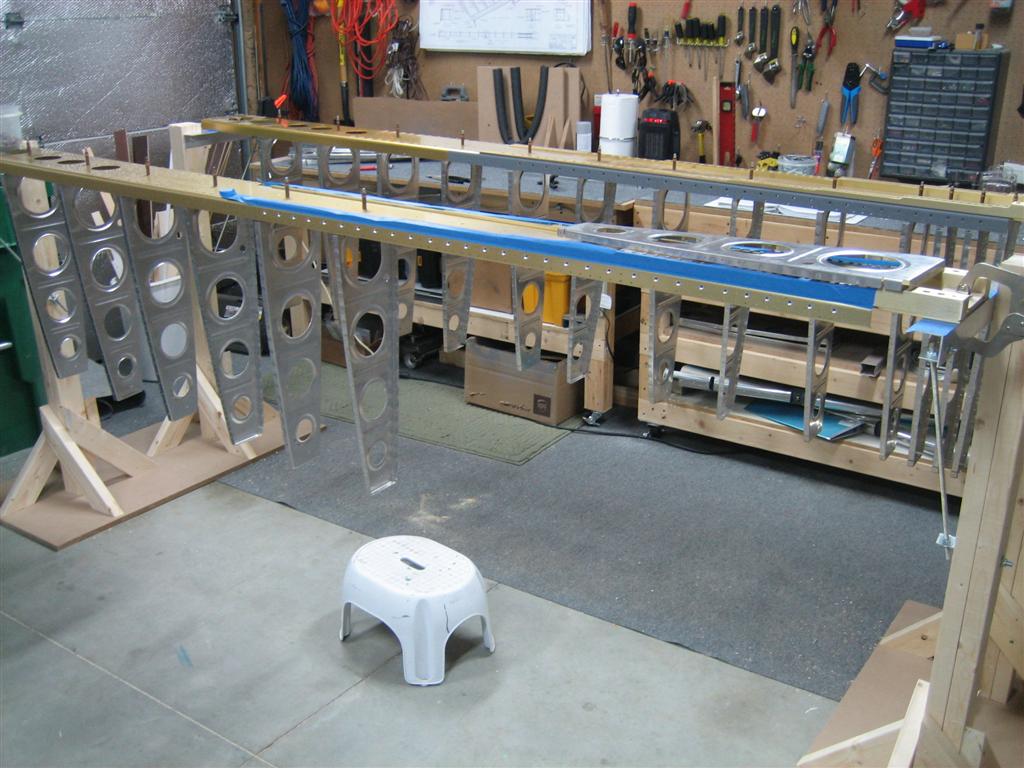
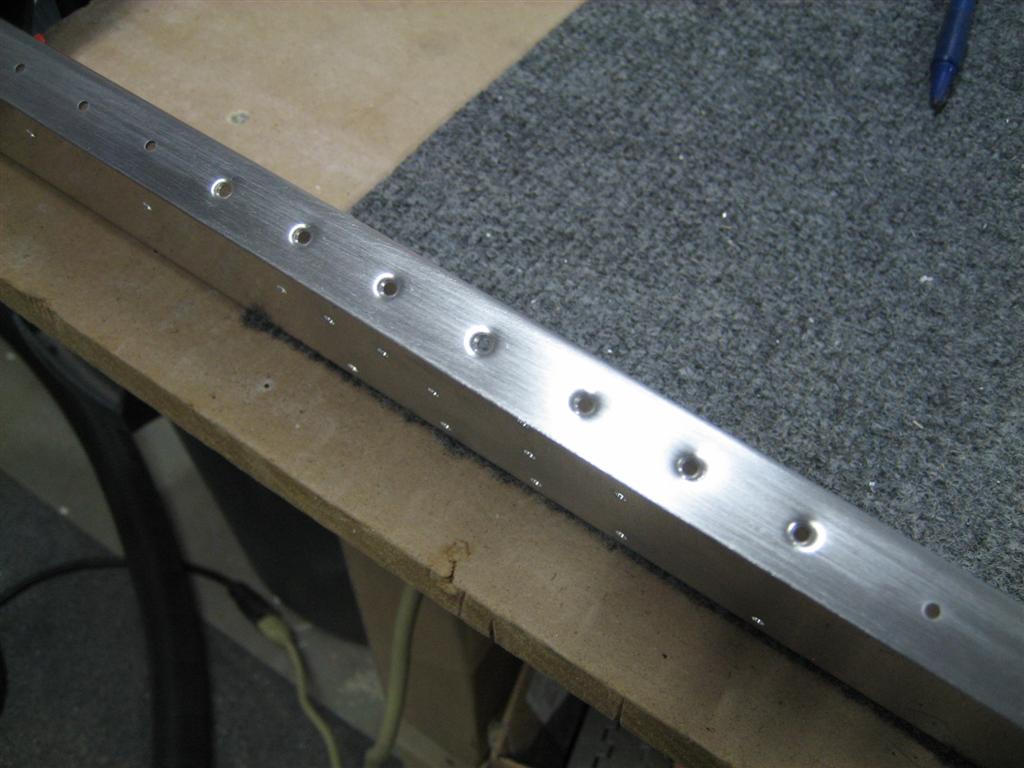
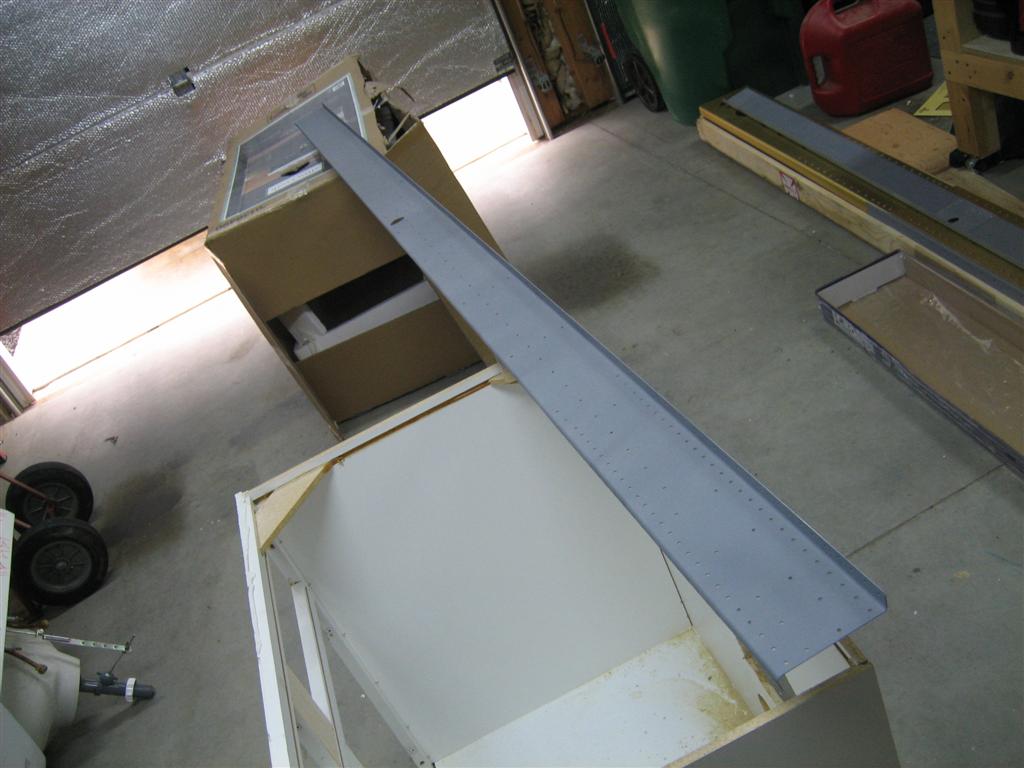
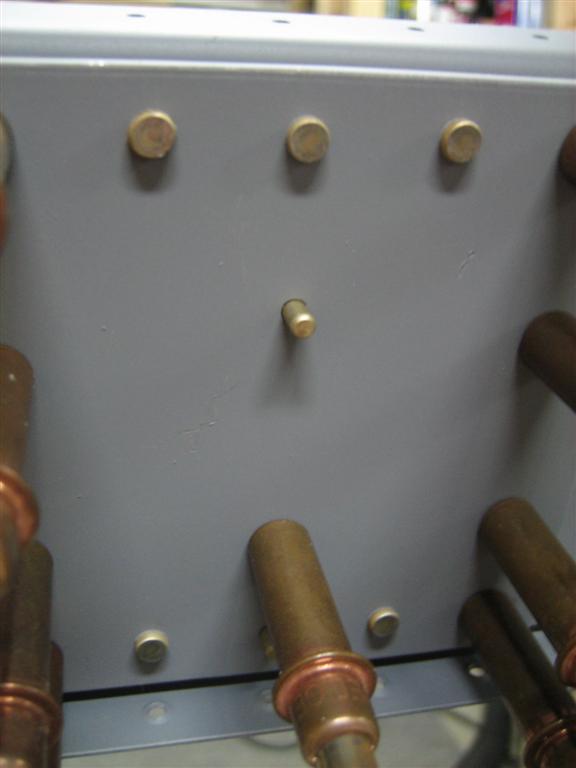
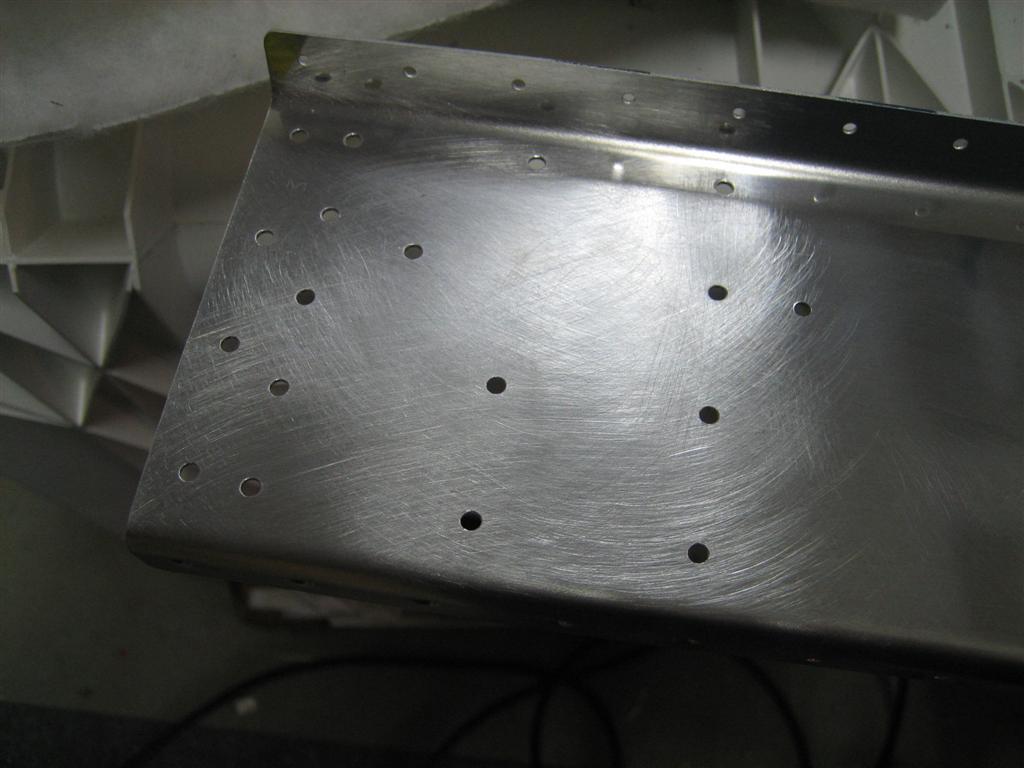
Well, today was kind of boring. Between installing the toilet back into the powder room and sitting on my butt watching football, I managed to motivate enough to go do some fluting and flange-straightening on the left wing ribs.

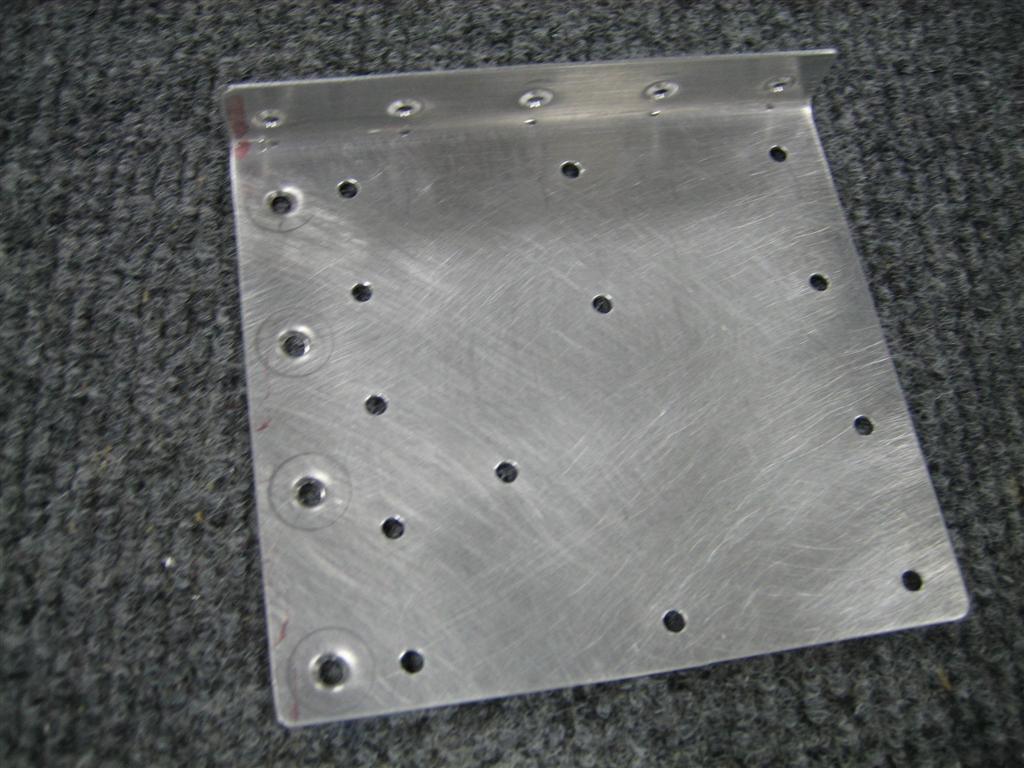
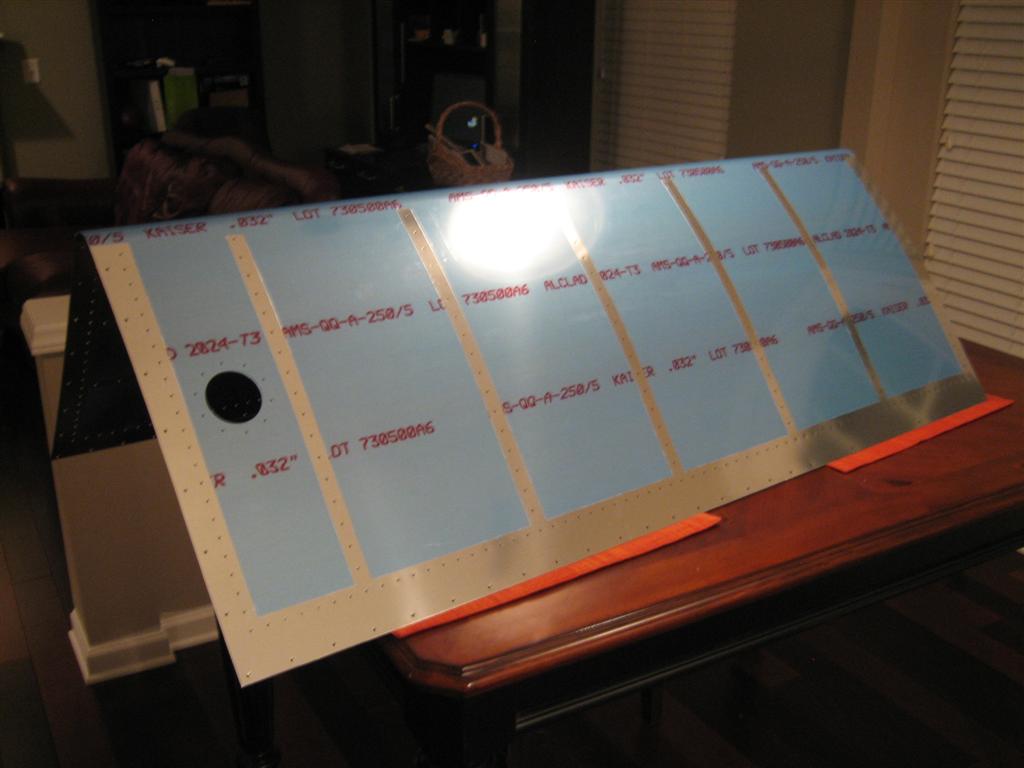
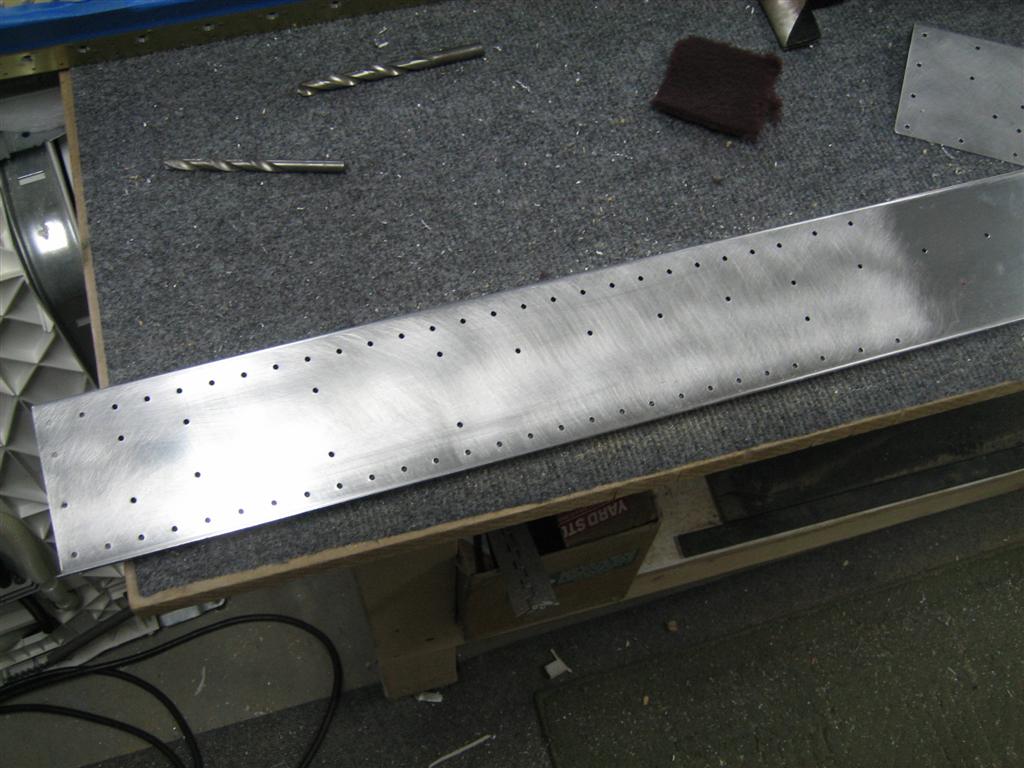
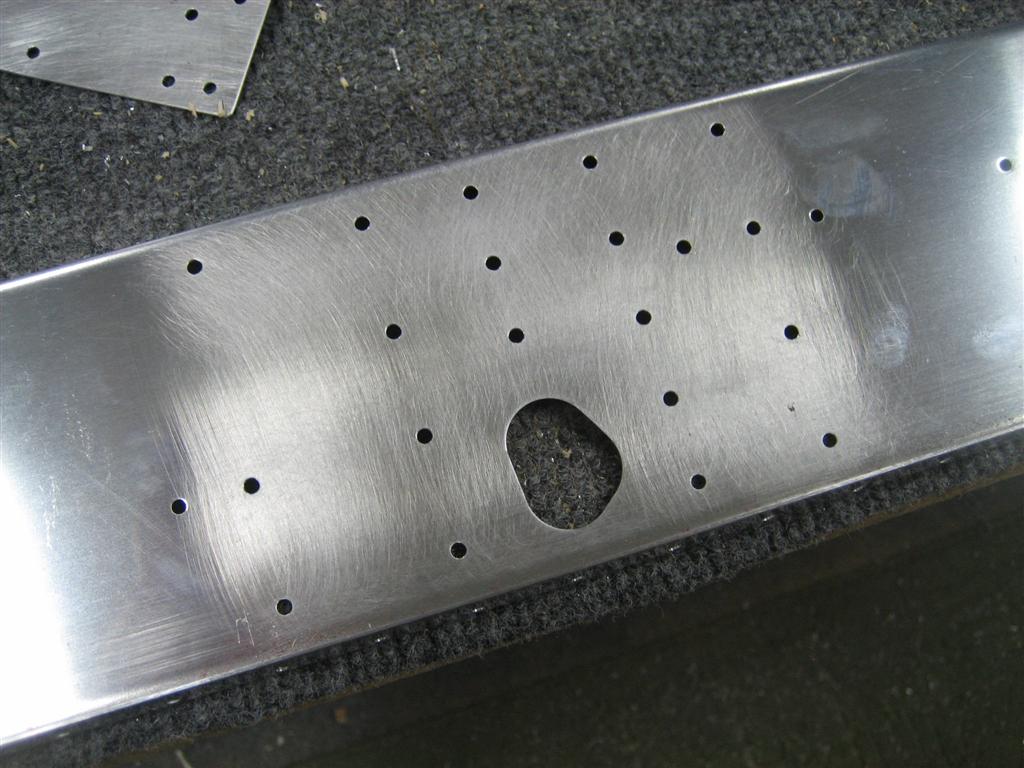
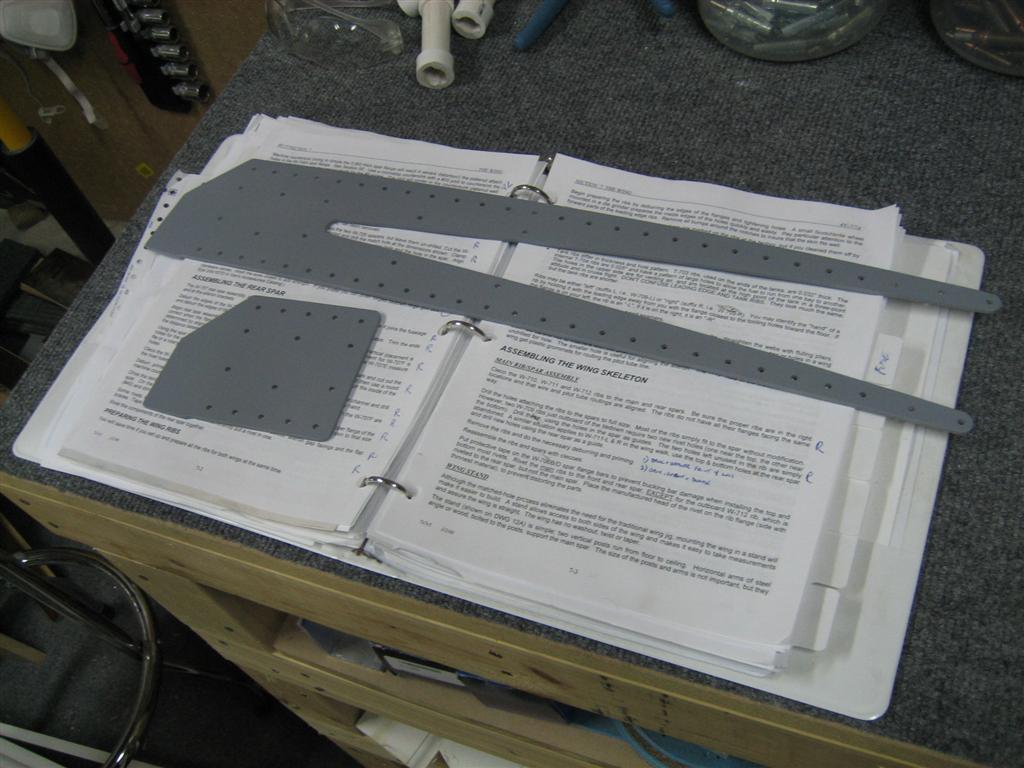
I didn’t hang the outboard rib yet (still have to attach a 5″ piece of angle to help support the outboard edge), but here are the first 4 (of 14) ribs done.

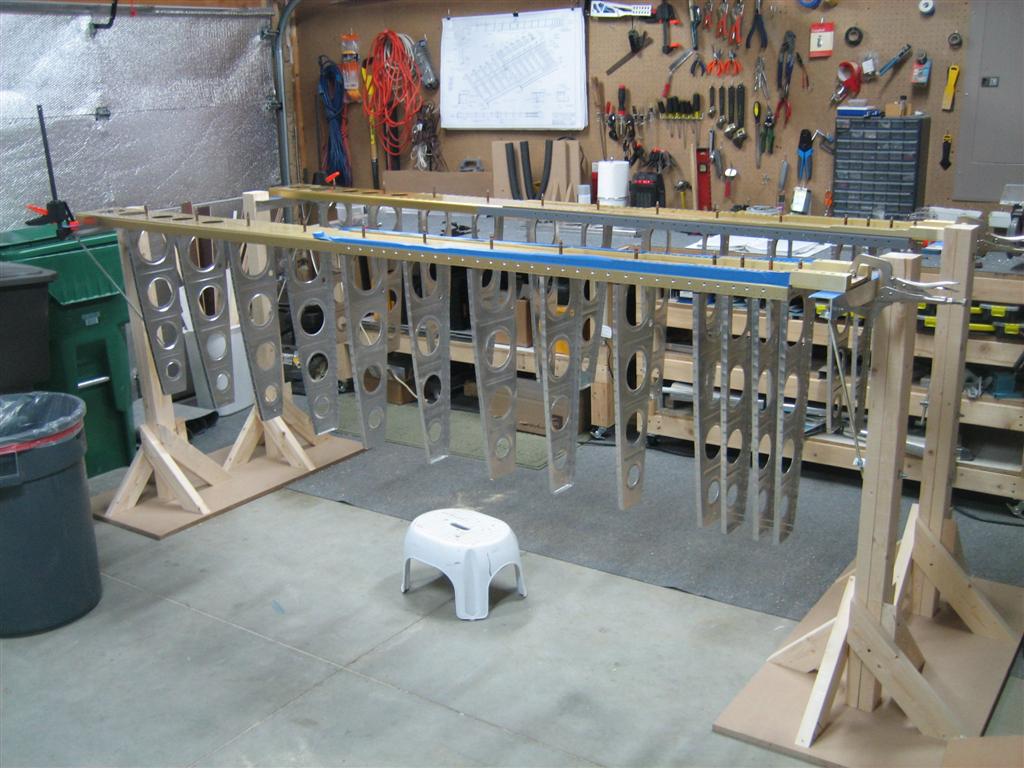
I'm really liking this stand.

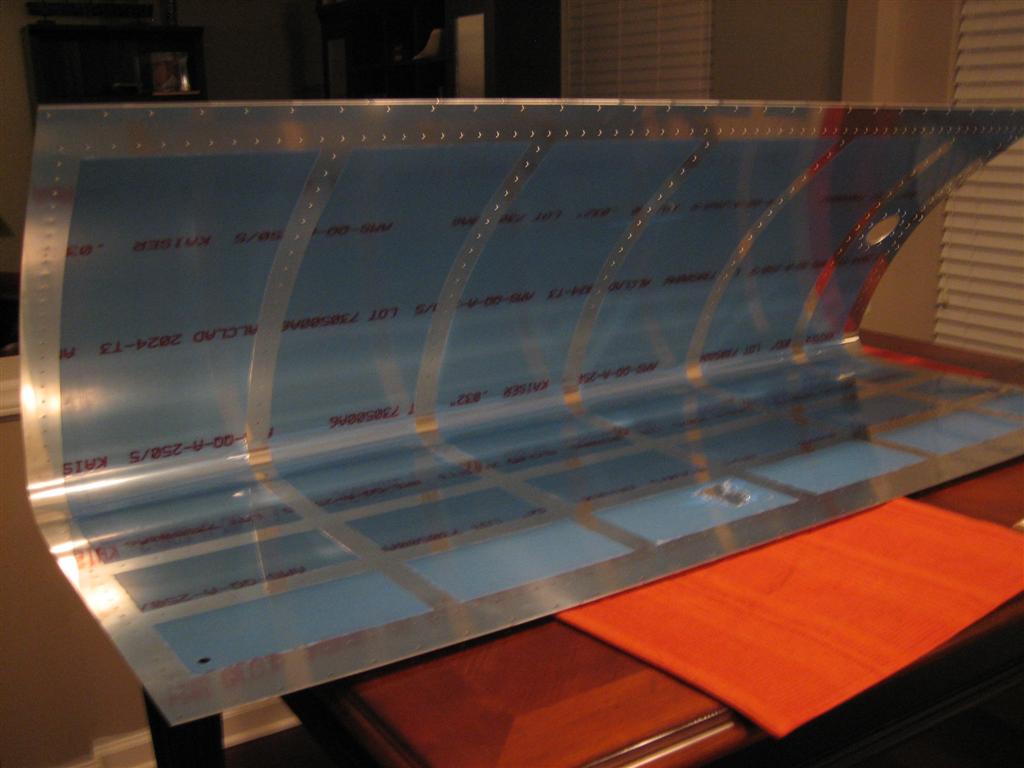
7 of 14 ribs done and hung.

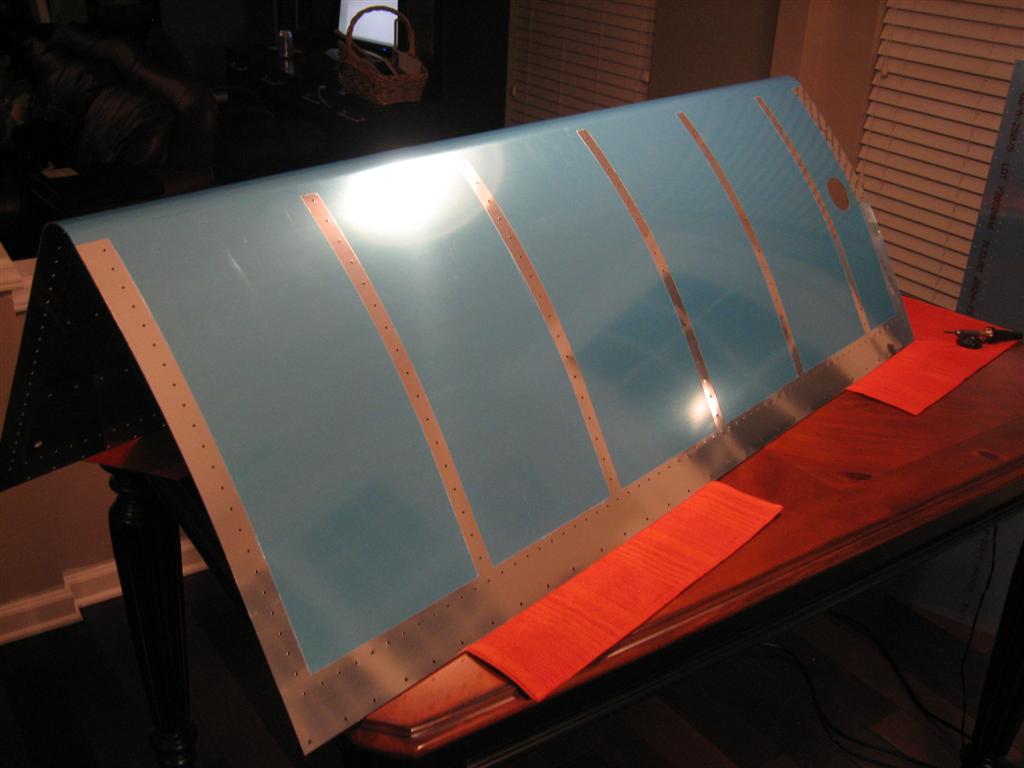
All done.

Next up is matchdrilling the main ribs, then getting the leading edge ribs prepped, assembled on the spars, and matchdrilled. Then (because I’m working a little out of order), I’ll take all the ribs off and prep them for priming before starting to rivet the skeleton together.

A boring, but important hour of work today.

Prev | Next


Finished Building Wing Stands

December 30, 2010

Prev | Next

After some work on the house this morning (trim up in family room, prepping the powder room for paint), the girlfriend and I had lunch and then I spent the afternoon in the garage. I could have kept working on the house, but I really wanted to get the wing stands finished.

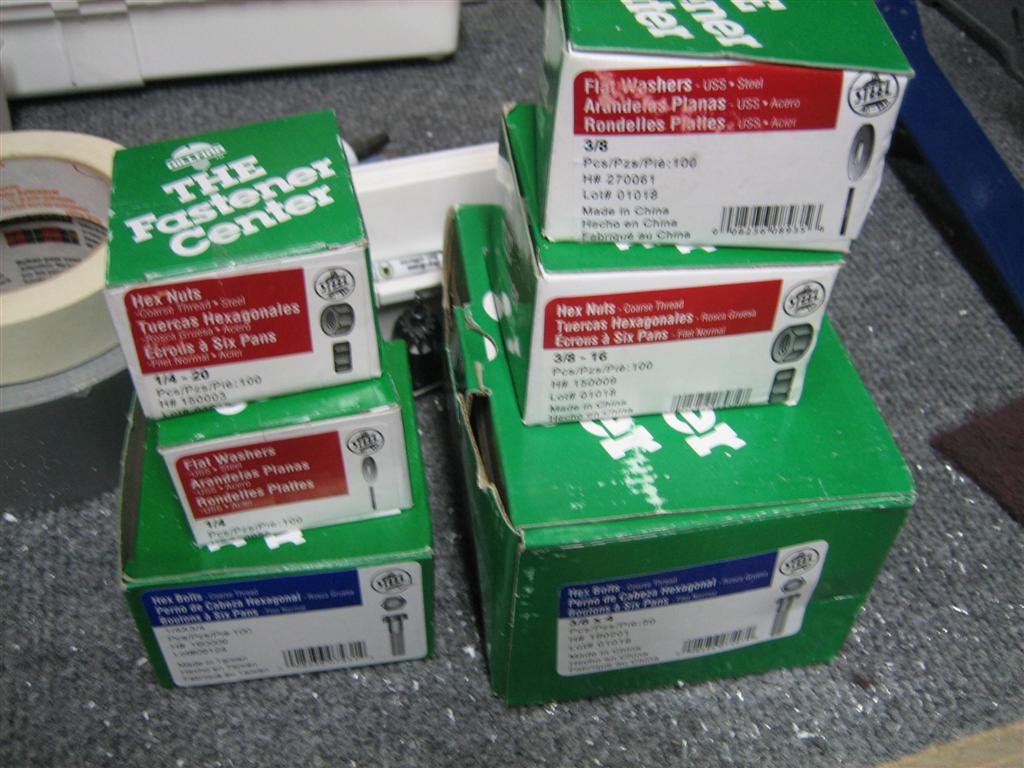
First thing, I reorganized the garage to make room for the wing stands. Then, I started gathering all of the necessary hardware. Yesterday, I went to the hardware store and started counting out individual pieces that I would need. I quickly realized that I could always use a good inventory of 1/4″ and 3/8″ nuts, bolts, and washers, so I bought the contractor packs.

After all was said and done, I hardly used any of these packs, but I'll have good inventory for the future.

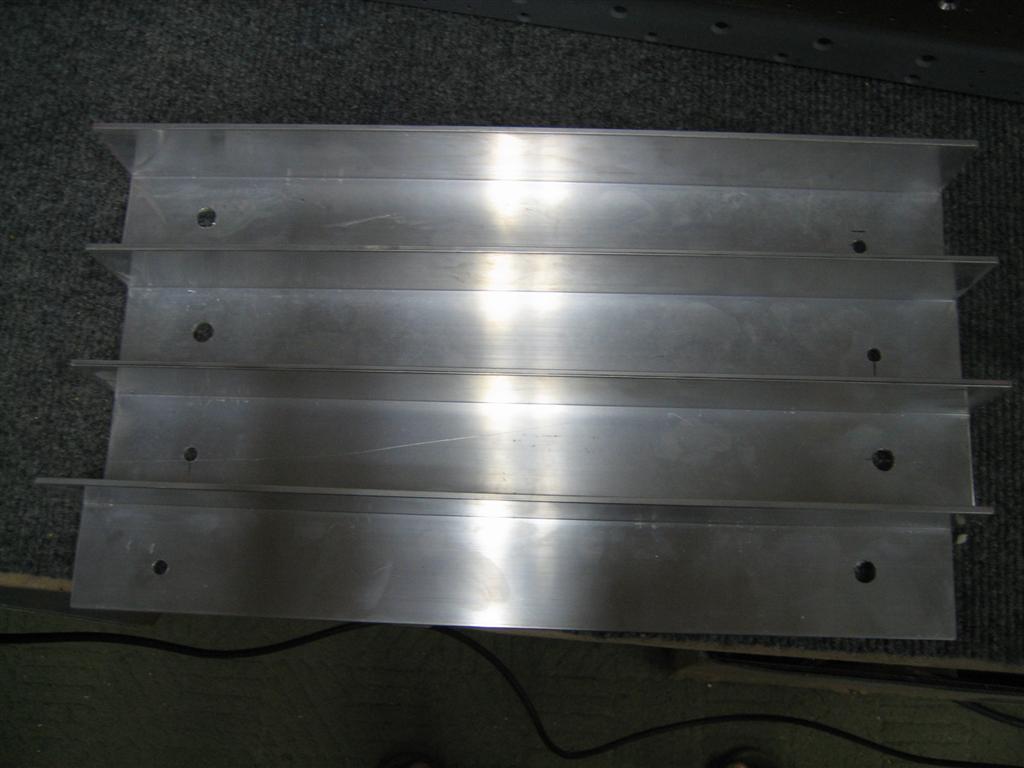
I also bought two 4′ lengths of 1/8″ aluminum angle (2″x2″) as well as a 3′ pieces of 1/8″ aluminum angle (1.5″x1.5″). I did this because I’m going to have 4 main supports for the front spars (2″x2″ angle), some supports for the rear spars (2″x2″ angle), and some smaller angle (1.5″x1.5″) to make the truss system I’m going to use.

(Sidebar: The whole time I was working today I was replaying the mechanical engineering class I took in college about linkages. Read a quick one-page summary of the class at http://en.wikipedia.org/wiki/Linkage_(mechanical). Pretty interesting stuff.)

I know a lot of people have made a lot of different kinds of wing stands, but I saw Ethan’s and decided I wasn’t going to re-invent the wheel. It’s a good, adjustable system. You can find a couple pictures of his stands here and here.

Okay, let’s start making some aluminum shavings…

My 4 main supports, and my 8 small brackets.

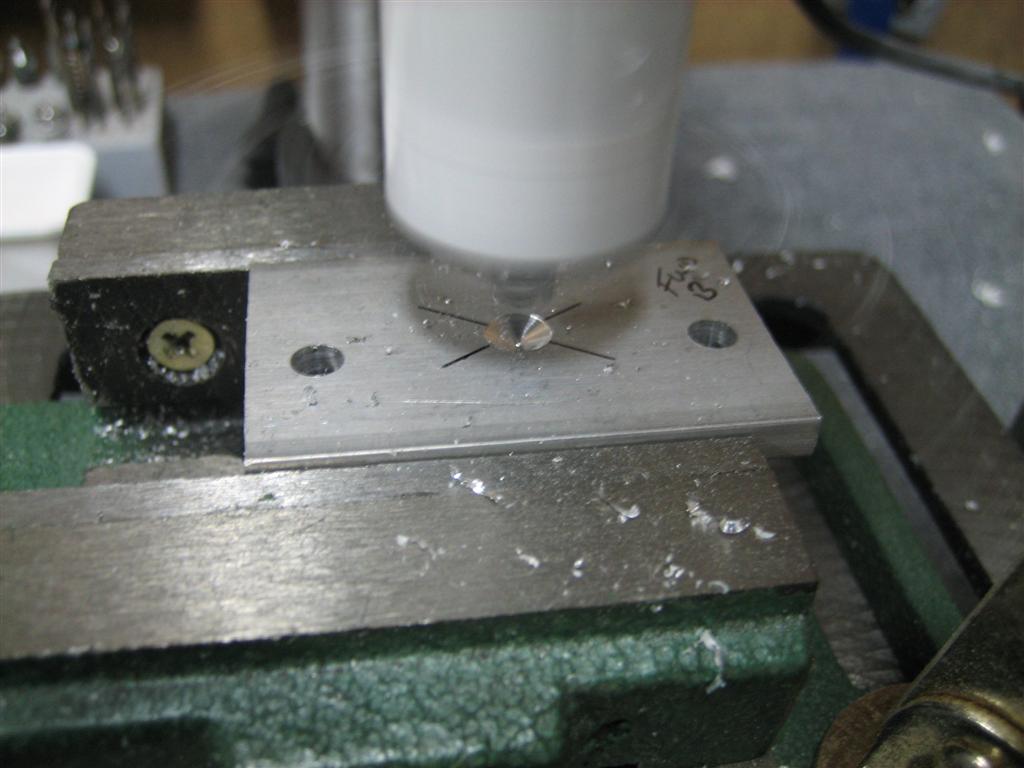
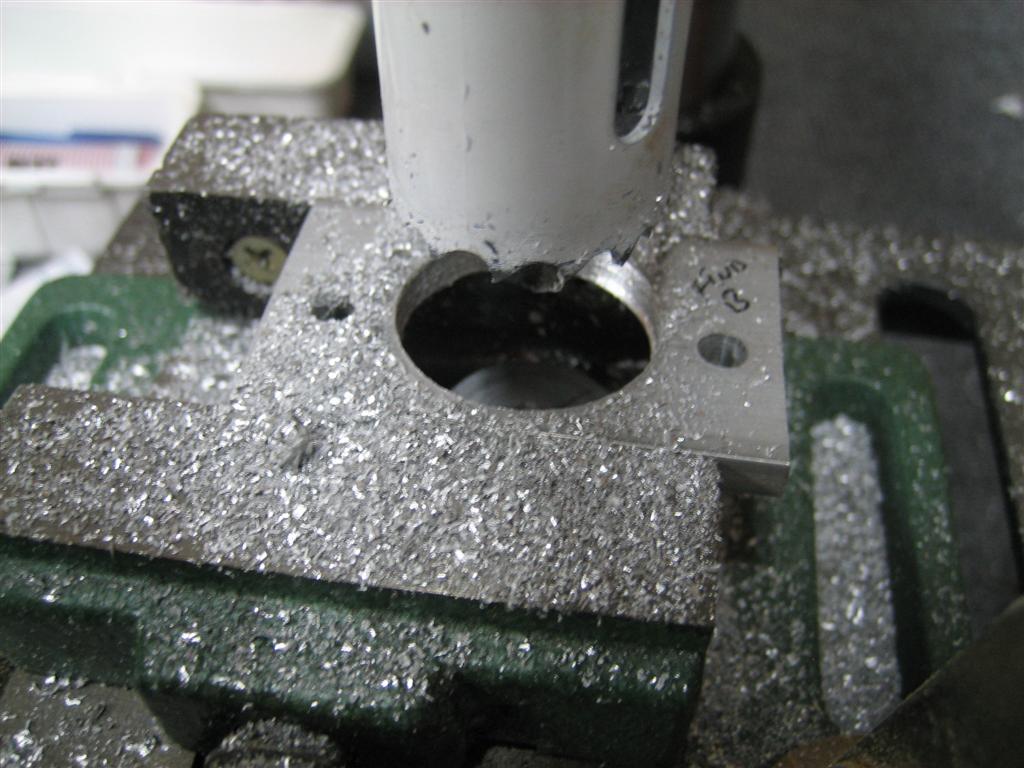
I then drilled the holes in the brackets. I’m using 3/8″ threaded rod, which is probably overkill, but I stood in the hardware store with the 1/4″ stuff and it took a considerable force to make it bend (buckling). I picked up the 3/8″ rod and it was rock solid. I figured for a few more cents per rod, I’d rather overdo it. Anyway, the brackets on the right will get the 3/8″ threaded rod and a 3/8″ bolt through the main stand post. The brackets on the left will get the 3/8″ threaded rod and a 1/4″ bolt that will go through the 2″x2″ angle (the smaller bolt for the smaller head so I won’t have any interference). You’ll see.

Holes drilled in the brackets.

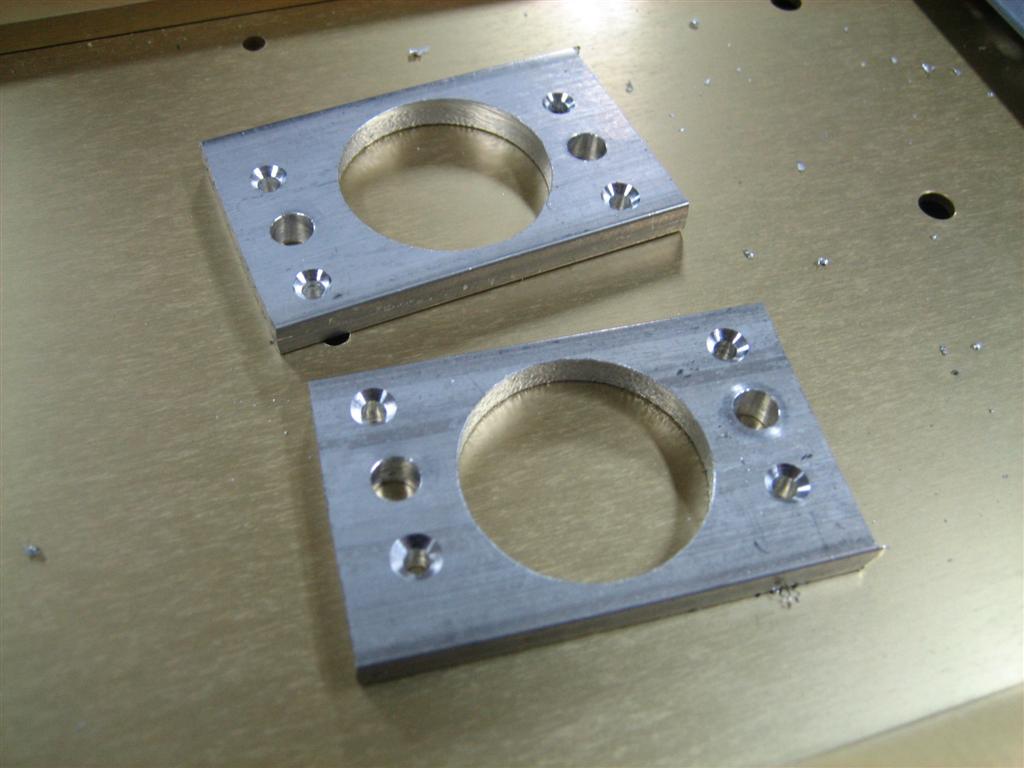
Then, I made matching pairs of left and right supports.
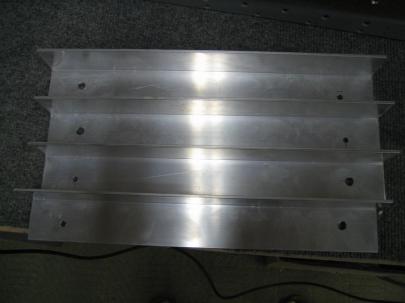
(The bigger hole goes through the main post, the smaller hole is for the bolt that will hold the bracket on).

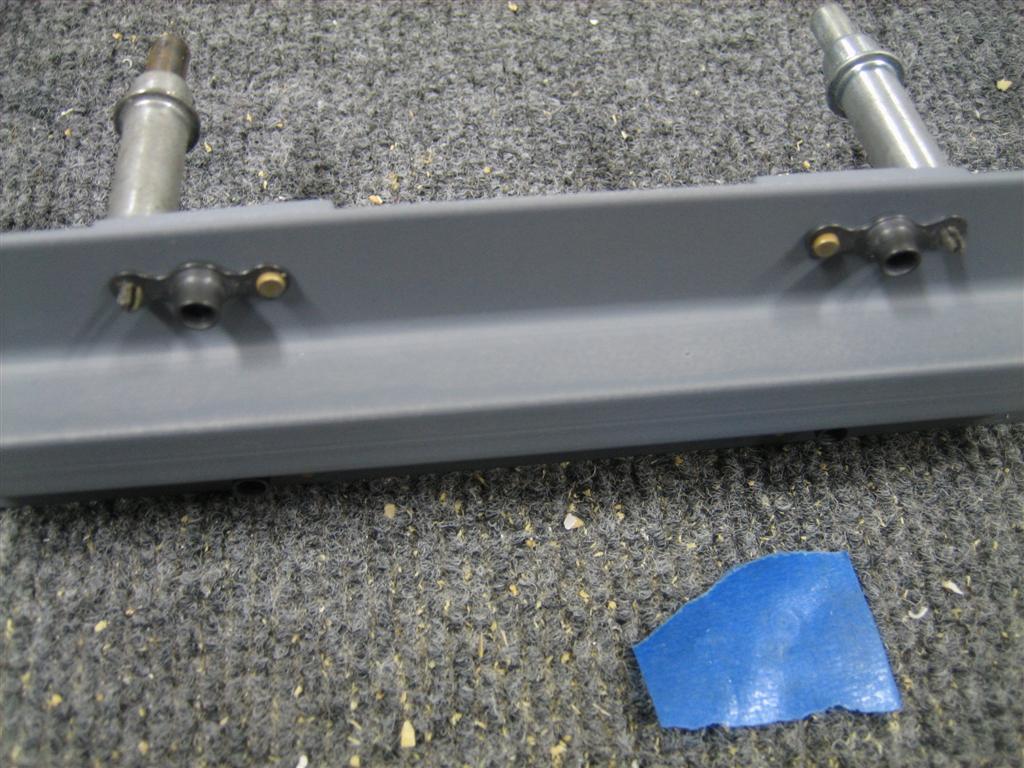
Here are the brackets attached.

Then, I threaded in the 3/8" rod.

Before I can go any further, I need to make sure the spar will be level when they are hung.  Since the garage is sloped, I can’t just drill holes 2 inches from the top of each post. (For the record, I think I could build it that way, because the real issue is wing twist, which could still be fixed if the spar wasn’t level, but I would rather have the wing level.)

Me using the laser-level.

This thing is awesome (it’s my girlfriend’s). I held it up against one support and moved it up or down until the level line across the garage was right on the top edge of the post (the picture below shows me about 1/2″ too low). When the level line was even with the very top edge, I marked a line under the laser leveler (it has a little hole for marking), and then I measured down from that line (and the top of the other post) 2 inches to mark a spot for drilling.
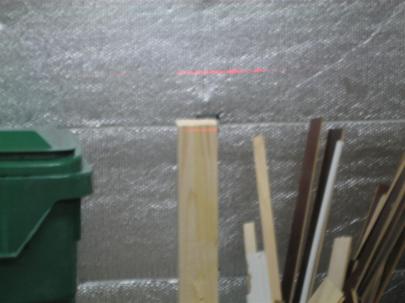
Using the laser leveler.

After that, I drilled a 3/8″ hole and measured down 18″ for the bracket hole and drilled another 4 holes.

Then, I assembled all the hardware and…

TADA!!!

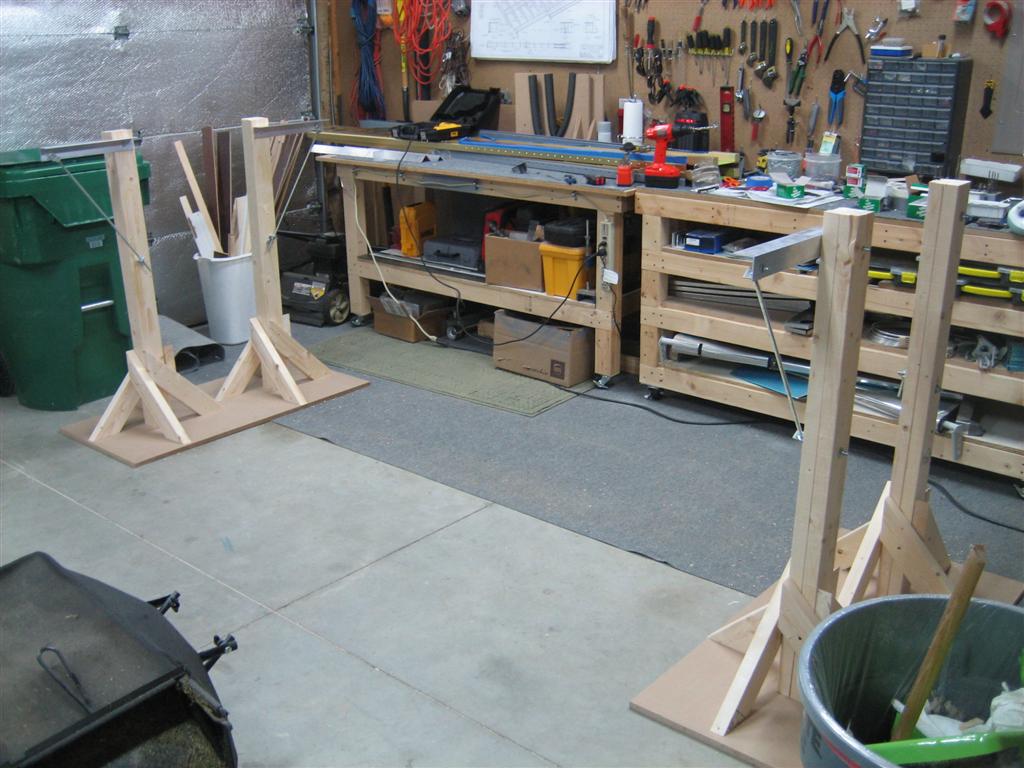
Wing stands!!

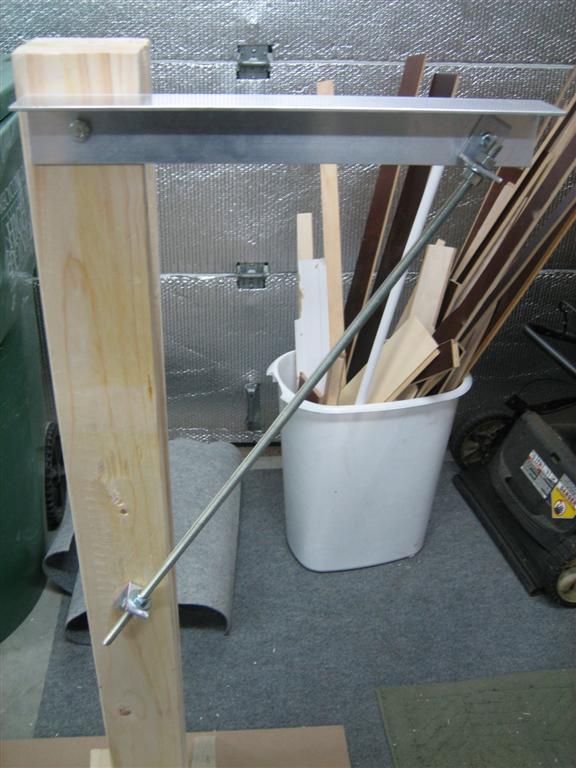
Here's a closeup of one set.
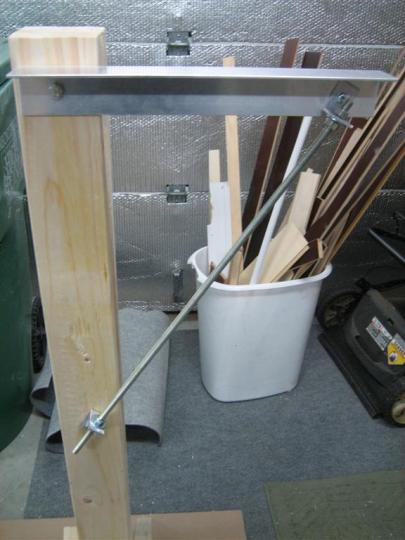
And an even bigger close-up of the mechanism. Since most of the force will be down, I kept the threaded rod long and mounted the post bracket 18" below the main bracket.

Here's the upper adjustment mechanism.
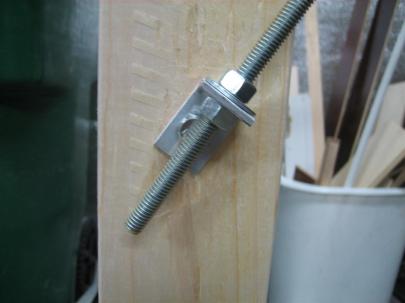
And the lower adjustment mechanism. Thank you Ethan.

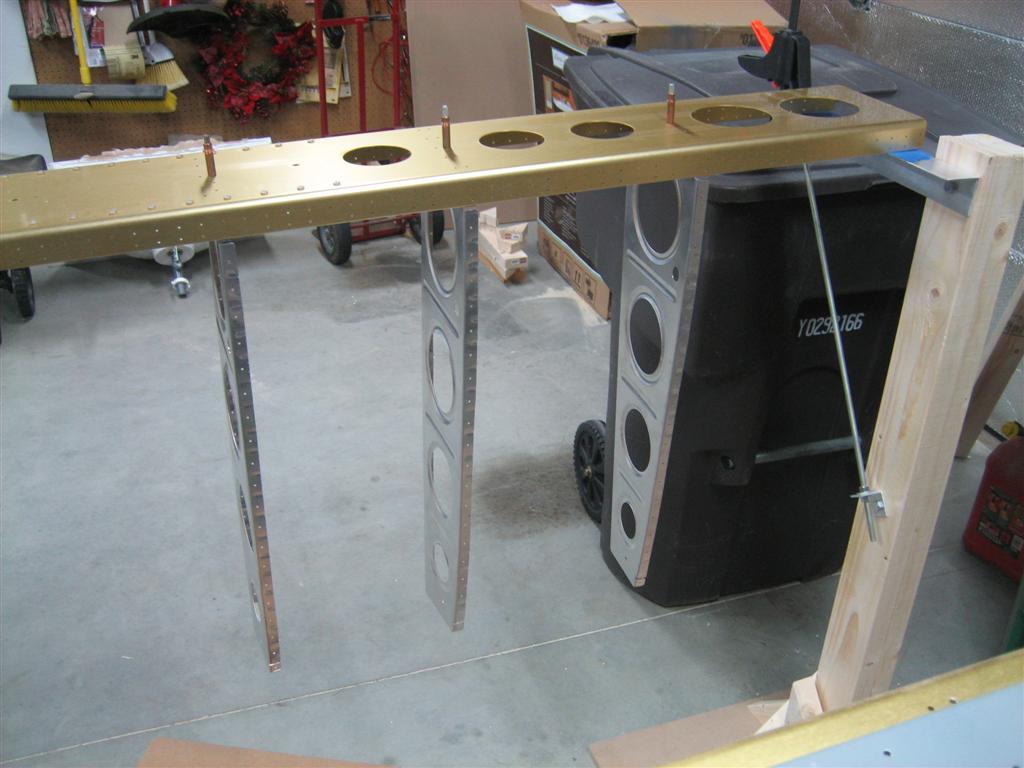
Then, I had to put the spars on the stands. (Making sure to carefully clamp each side.)

Wuhoo! Wing stands.

I need to add some screws into the 45° wooden supports, and tighten up all the hardware. I’ll also probably cut the carpet out from under the stand bases and use some construction adhesive to glue those bases down once I know their final locations.

Still a very good day in the shop, and now the shop is clean and organized for the wing activities that will hopefully take me through summer 2011.

All in all, I think I worked about 3.5 hours on the stands today. Not bad.

Prev | Next

Started Building Wing Stands

December 29, 2010

Prev | Next

I realized today that tonight is the anniversary of N999ZA. Yup, it was exactly one year ago today that I picked up the empennage kit from the FedEx facility here in town.

After today’s work, I have 199.0 hours on the kit, having set 2639 rivets and drilled out 205 rivets. (Only two parts re-ordered, but I haven’t reordered my “dropped rudder” stuff yet, so that number is going to go up.) I thought I would have more hours on the kit and be a little further (I assumed 6 months for emp, 1 year for wing, 1 year for fuse, 1 year for finish, and 1 year for avionics, engine), but I’m okay with where I am given all the other stuff I’ve been working on (first floor project, HA420).

At ~200 hours per year, and assuming it will take 1500-2000 hours, that leaves me about 6.5 -9 more years of work. (The girlfriend was not happy with this simple calculation, so I quickly explained that 200 hours per year was only for this year, and would only be true if I had an entire first floor worth of wood flooring to lay every year.) We both agreed it would be okay to speed up a little for the remaining (hopefully) 3 to 4 years.

Anyway, enough with the sentimental stuff.

Well, after finishing the left tiedown this morning, I needed to move onto another big step.I thought this afternoon would be a good day to start building my wing stands.

After a lot of thought and research, I decided I didn’t want the floor-to-ceiling kind. I wanted very sturdy floor stands. So, I started building.

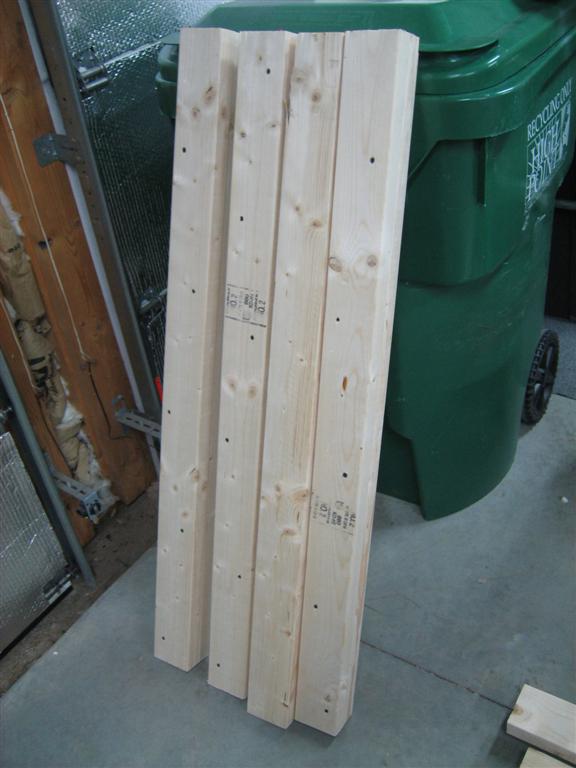
Instead of the 4x4s,  I went with matched 2×4, turned around to cancel out any bow (although these are the “select” 2x4s, and they are damn-straight).

After screwing them together and cutting them into 4-foot lengths, here’s where I am.

Nice and straight.

I also decided that I wanted to be able to work on both wings at once. I bought a piece of MDF from Lowe’s and had them cut it unto 4 equal 2′ by 4′ pieces.

I’ll put my two posts about 2 feet apart (so when the spar-supporting angles head out from there, I’ll have plenty of space to walk between the wings). This also gives me the right wing-to-wing spacing to fit everything on one side of the garage.

I really have everything in the garage, even the kitchen sink. (Ha.)

Oh, come on, that was funny.

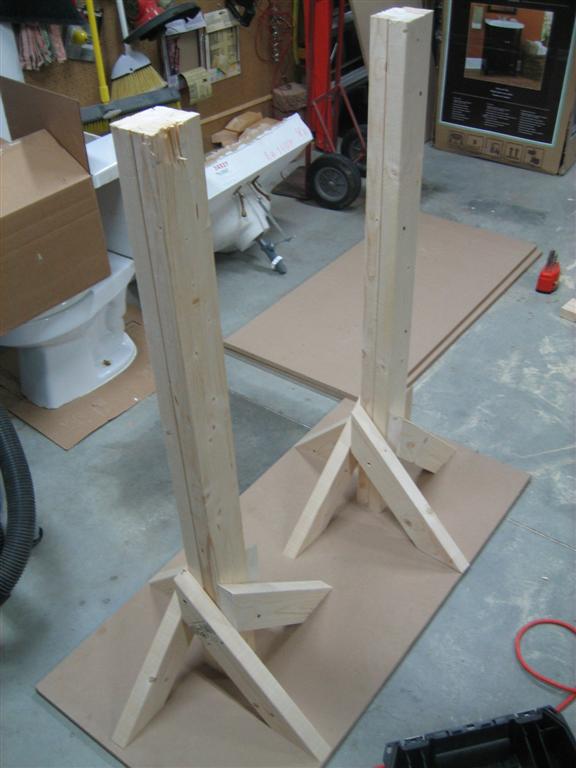
So next I spend some time cutting some 19-inch supports. I used some trigonometry (wuhoo) to figure out that to fit on the 2-foot-wide MDF planks, I needed 19-inch support cut on the 45°.

Here are the planks after being drilled for screws.

asdf

I'm not totally done securing the supports, but you get the idea. They are secured from the bottom (flush) and then into the posts. Plenty stable.

After another hour or so, I had the other set pretty much done.

Again, I'll set each of these sets a wing-span apart.

More tomorrow.

Prev | Next


Finished Left Tiedown

December 29, 2010

Prev | Next

Well, with a full week at home this week to work on the airplane, of course it was Wednesday by the time I actually got out to the garage. Too many other things going on.

I was determined, however, to make some real progress, and I think I did okay.

I scoured around for my right tiedown and then pulled out the raw parts for the left side.

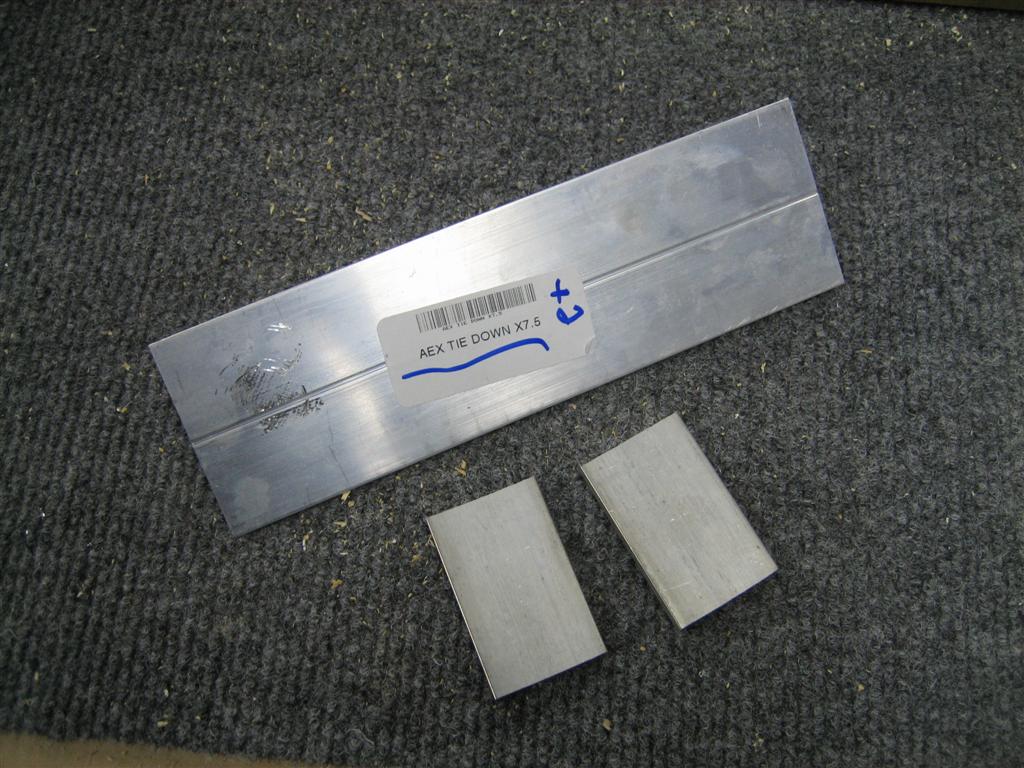
Here's the left tiedown stock and the two spacers that I cut while I was working on the right side.

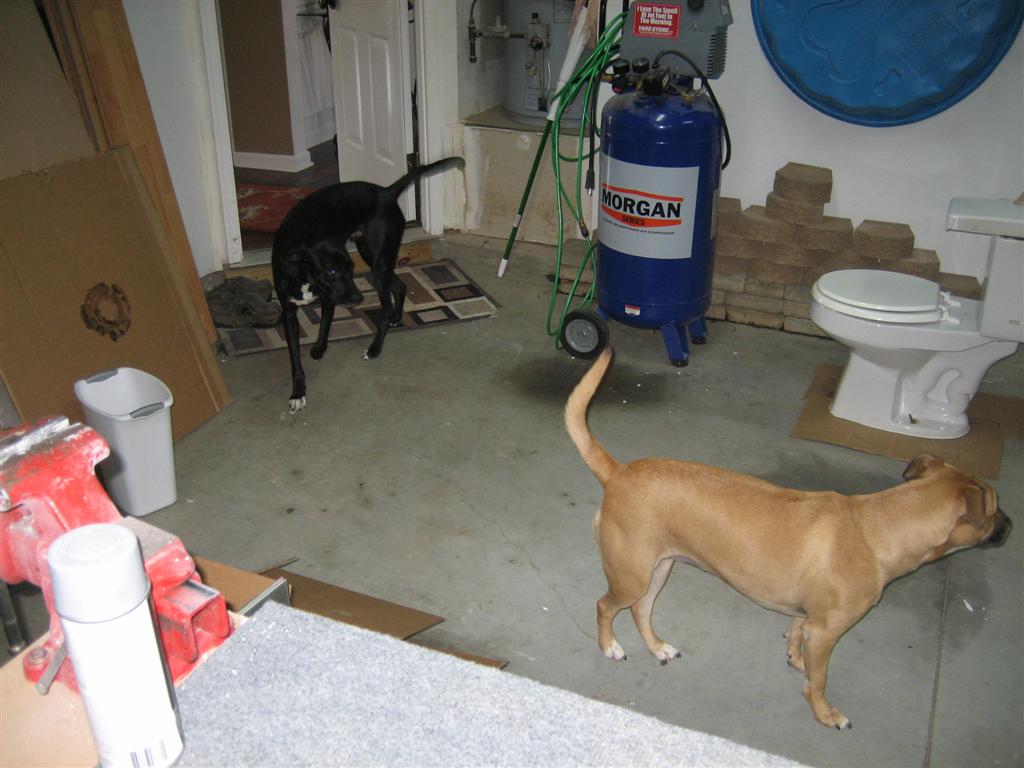
Visit from the puppies (no, the toilet isn't hooked up...but how cool would that be?!).

After getting everything set and lining up the tiedown per the plans (oh man, I used to be so good at documenting these little steps), I started match-drilling.

The plans say to drill these to 3/16″, but I went ahead and drilled them to #12, which I think is a little bigger, but the AN3-_ bolts don’t fit in the 3/16″ holes, and they fit perfectly in the #12.

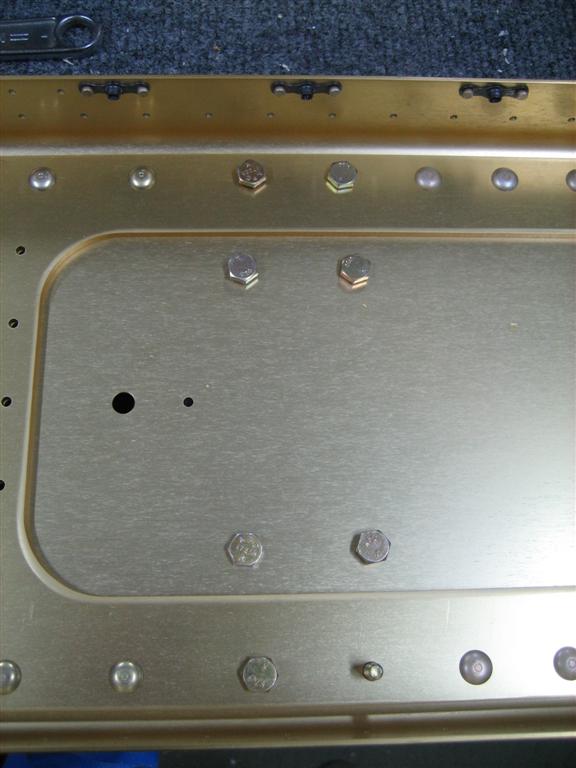
The bolt in the lower right hole is the one from the single (of 8) holes they tell you to drill in advance. You use a bolt to line up that hole and then picot the whole assembly around that point to 90° of the spar. Then matchdrill.

After all 8 holes are drilled to size…

Which one of these is not like the other?

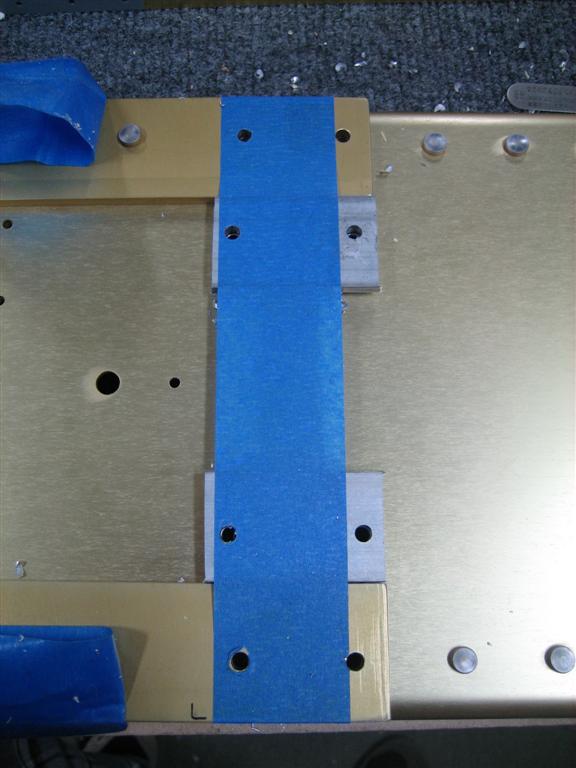
Flipping the spar over, you can see I didn’t do to badly with the edge distances on the spacers.

It looks a little weird with the tape offset, but I did that to allow for the first bolt.

On the right tiedown, I drilled the lightening holes first. Here, I figured I’d do them in the other order.

Ready for lightening holes...just marking the center.

1-inch hole saw....looks pretty centered to me.

This time, I didn't use any lubrication, and it seemed to do a lot better. Hmm.

After countersinking the nutplate holes for the flush rivets.

And finally, to priming before assembly.

I think the is the second side.

I started putting everything back together and got the squeezer out.

(I like getting the squeezer out.)

The one on the right is the left tiedown.

8 beautiful rivets.

Prev | Next


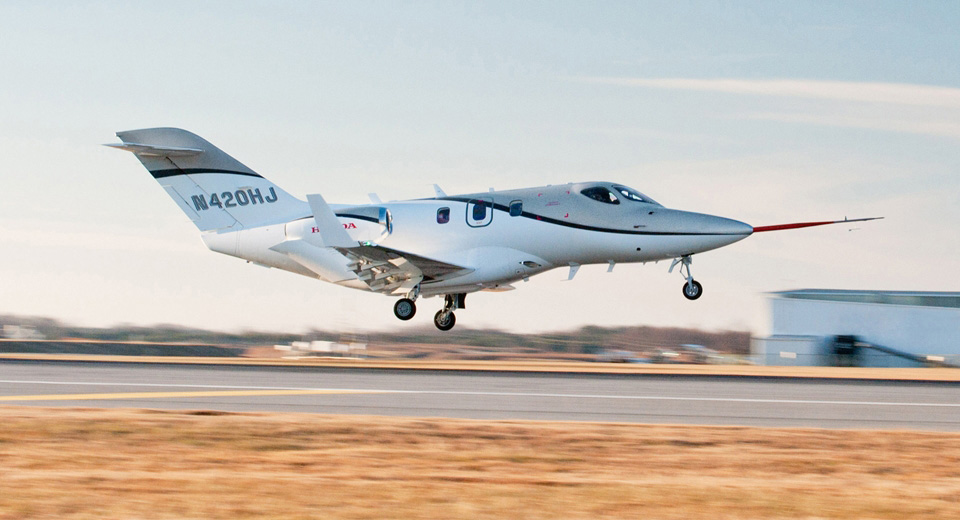
HondaJet Model 420 First Flight

December 21, 2010

Prev | Next

I suppose you want to know why I haven’t been working on the airplane very much recently.

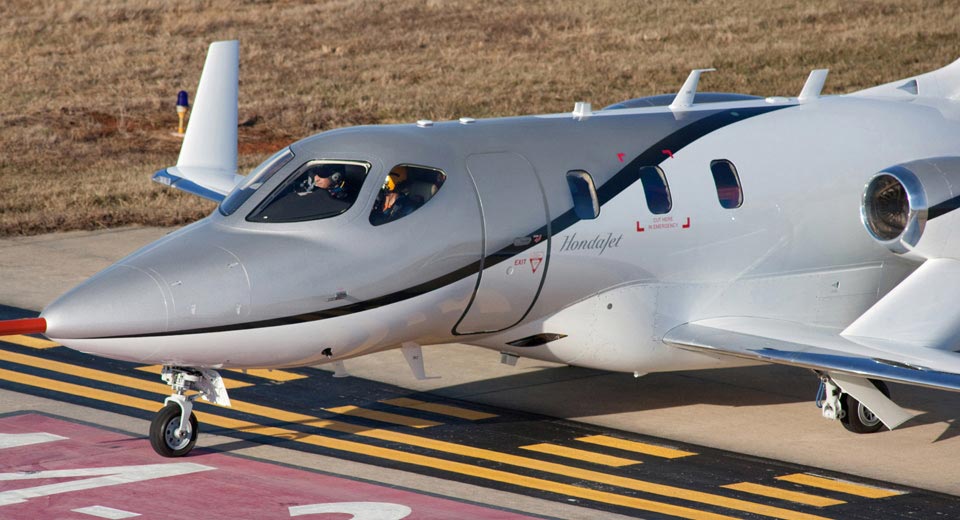
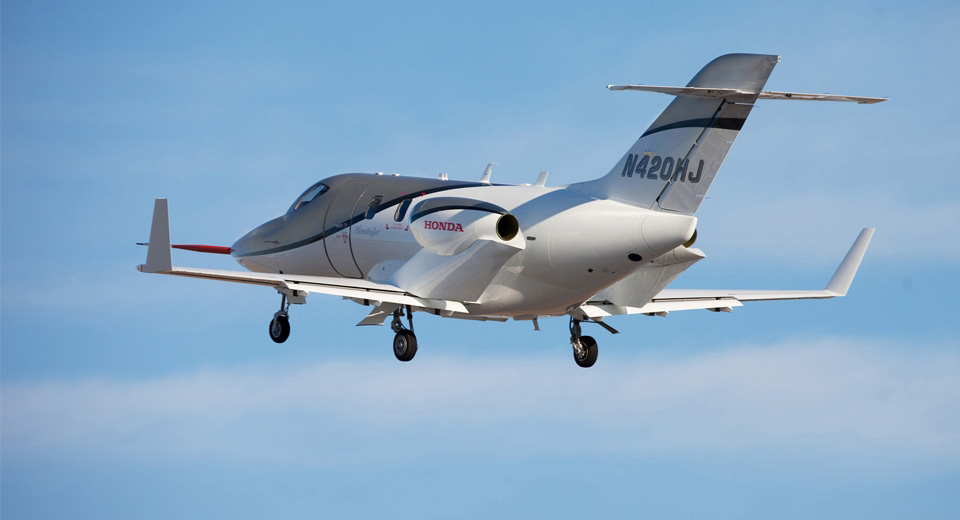
Well, yesterday, we had the first flight of our first test airplane. You can find the pictures, and a link to the story at the two following links, but let’s just move ahead to the (officially released) pictures, shall we?

Pictures (video coming soon):  http://hondajet.honda.com/news/landing.aspx

Press Release: http://hondajet.honda.com/news/article.aspx?ArticleType=pressrelease&CatType=news_detail_97.xml

Prev | Next


Finished Left Rear Spar

December 12, 2010

Prev | Next

Well, I know I’ve been bombarding you with new posts lately (not!), but I did get a fair amount done today. As you can tell from the title of the post, I finished the left rear spar.

More importantly, I made an investment to my health this week.

I present to you…(triumphant music)…a heater.

Ta-da!

This is a pretty sweet heater. It’s small, only cost $20, and by no means will it heat the garage, BUT, the garage is no longer (literally) freezing, and I can work in front of the workbench comfortably for a whole day. It will provide me with two heat settings and has a little fan in it. I set it in the corner of the workbench (as pictured above), and after about 5 minutes, I have to turn it down to the low setting. After about ten minutes, it is pretty comfortable where I’m standing in front of my workbench. And, now that I think about it, it does take the chill off the rest of the garage. Even for the one day I’ve really used it while I was finishing the floors, it has totally earned its cost back.

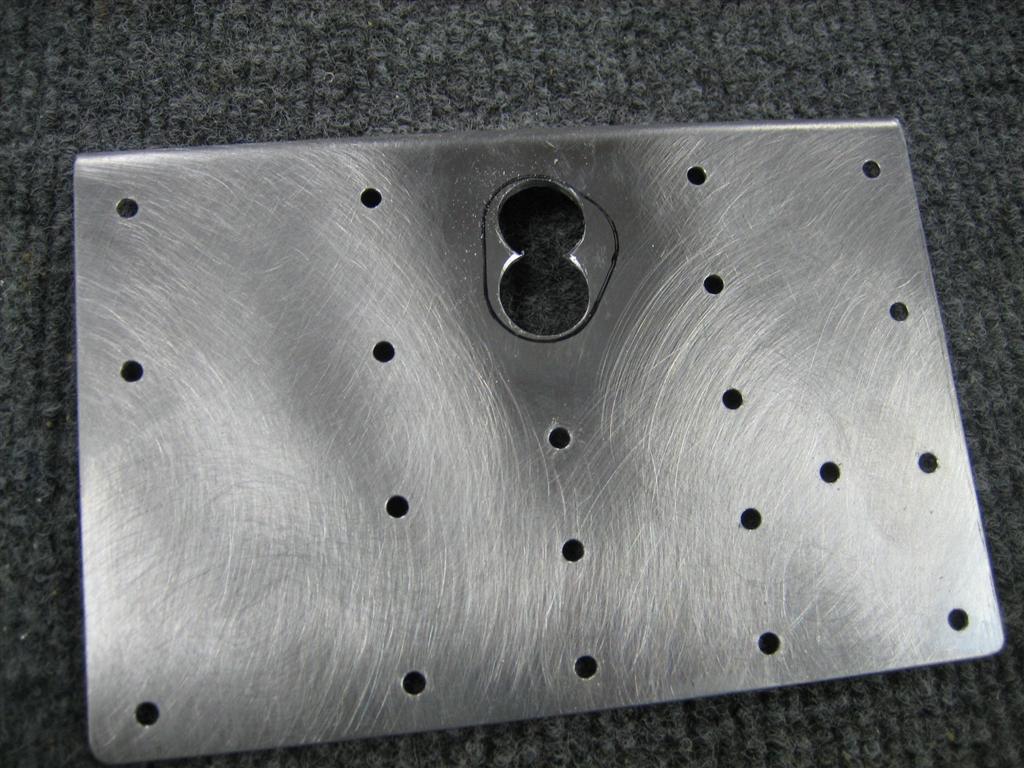
Okay, back to the airplane. I finally found my stepdrill, and made a couple holes in my W-707E.

Step-drill to the rescue. Had I planned this a little better, I would have done three smaller holes.

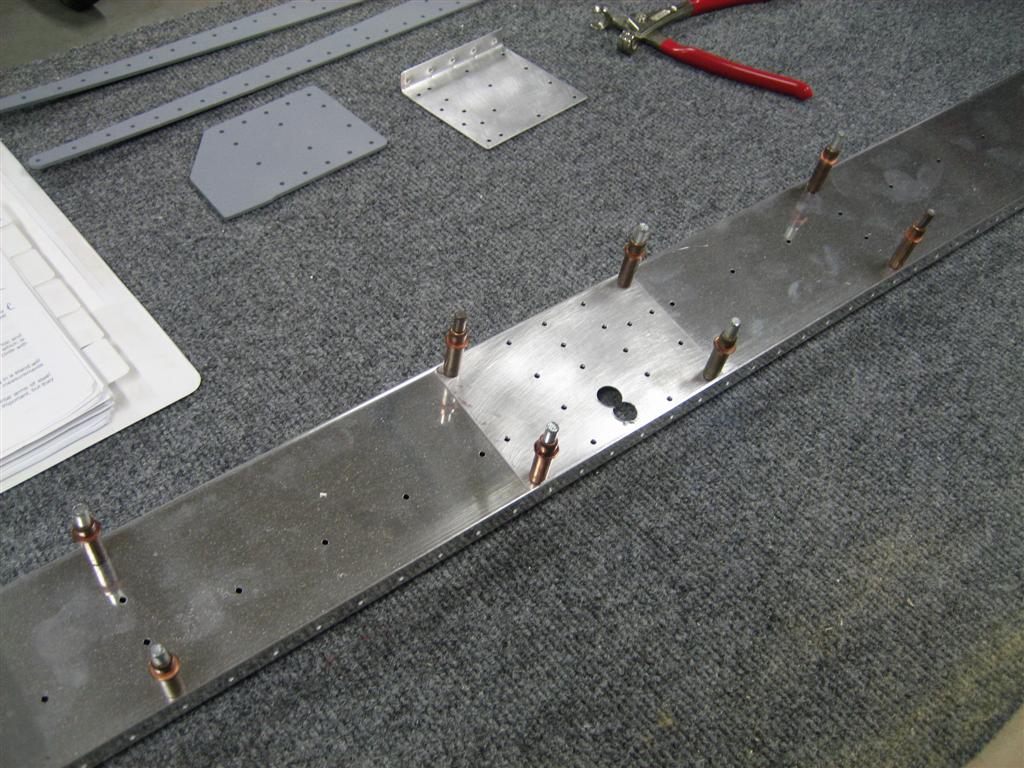
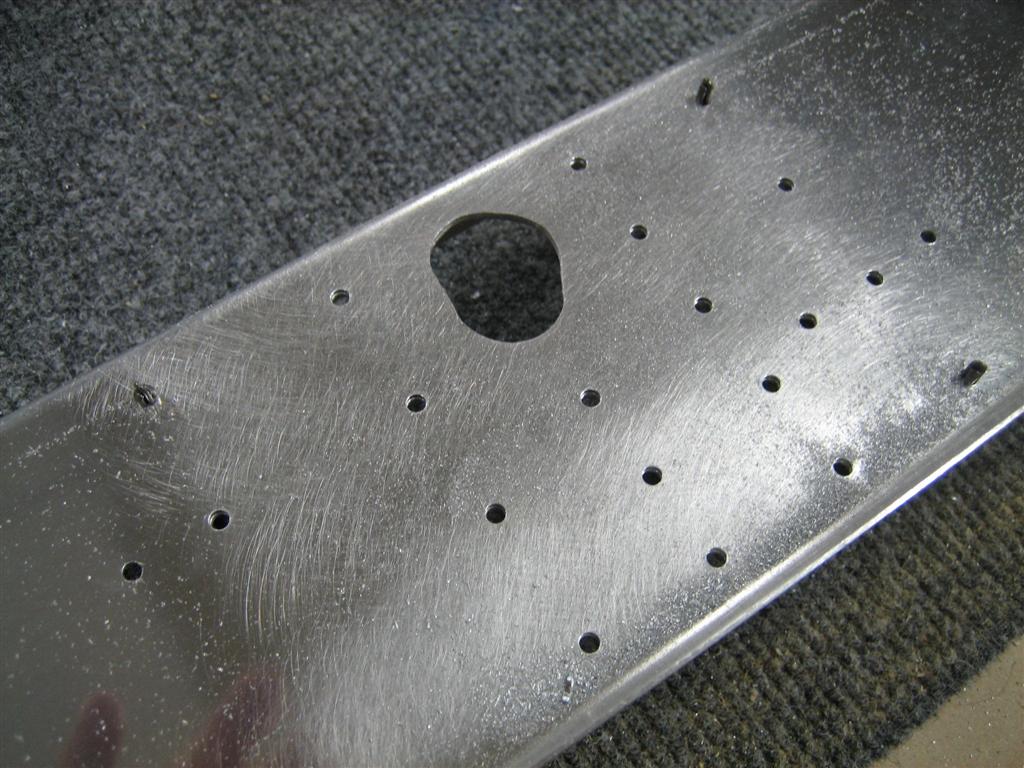
I clecoed W-707E back onto the rear spar and flipped it over to use the dremel to clean out the rest of the aileron pushrod hole.

I'm about to flip the spar over and use the dremel to clean up the hole.

I'm not totally done here, but you get the idea.

After that, I moved on to dimpling the reinforcement plates where I won’t be able to dimple them later.

4 #30 dimples along the left (outboard) edge, and #40 dimples along the top flange.

I also dimpled the flange of the rear spar where the reinforcement plates will go.

Then, after a little more scuffing and cleaning, I shot primer on the spar.

I love this color. Makes me happy.

And the left W-707E and W-707F.

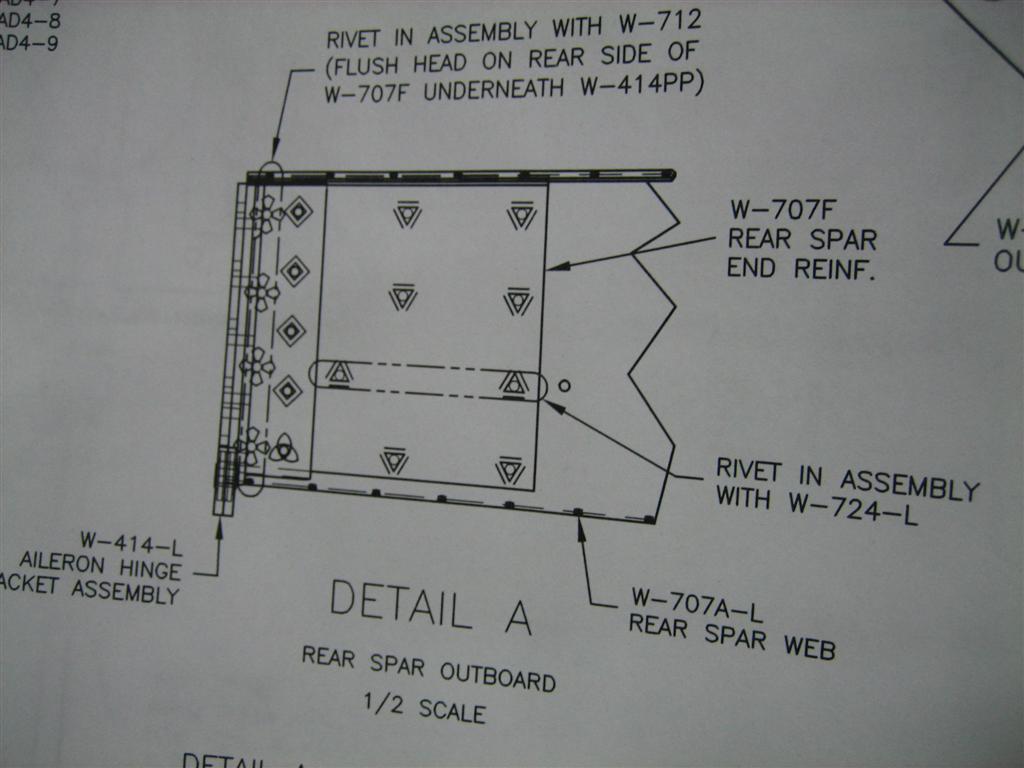
After a couple hours inside while the primer dried, I came back out and studied the rivet callouts.

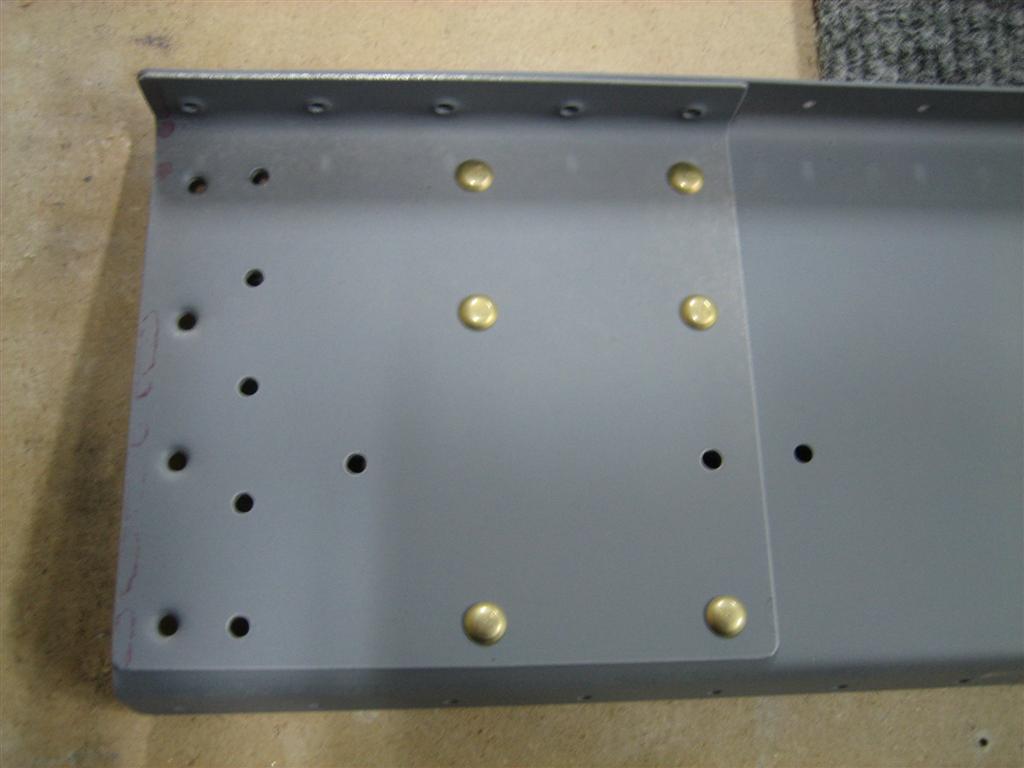
Looks like I can set 7 rivets here right now. All size "square," which is AN470AD4-8.

5 of the 7 set. Nice shop heads, huh?

I moved along the reinforcement fork, using clecos as indicators not to rivet certain holes yet.

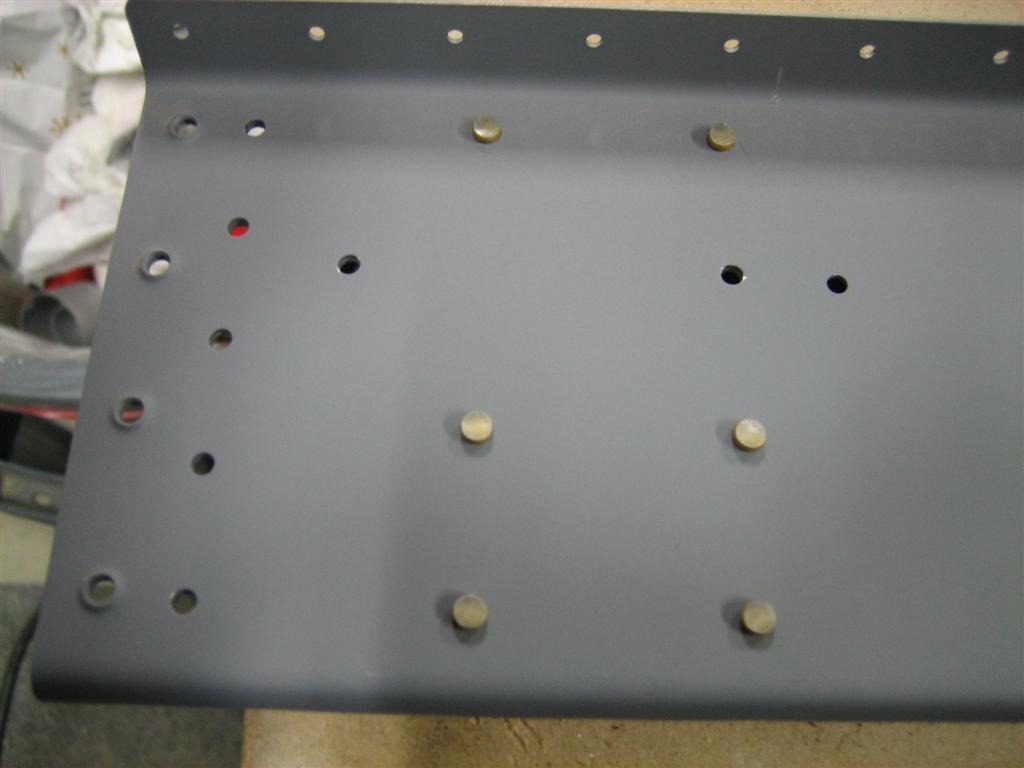
I chose to put the shop heads on the aft side of the rivet (these are manufactured heads). I like shop heads, and it makes inspection easier.

Moving outboard, I studied the same callout for the middle reinforcement plate, or W-707E.

Looks like I can set five here, of size "upside down triangle," which are AN470AD4-4.

Manufactured heads

Shop heads.

And repeat with the outboard reinforcement plate.

6 here, I think. More upside-down triangles.

Manufactured heads.

Shop heads.

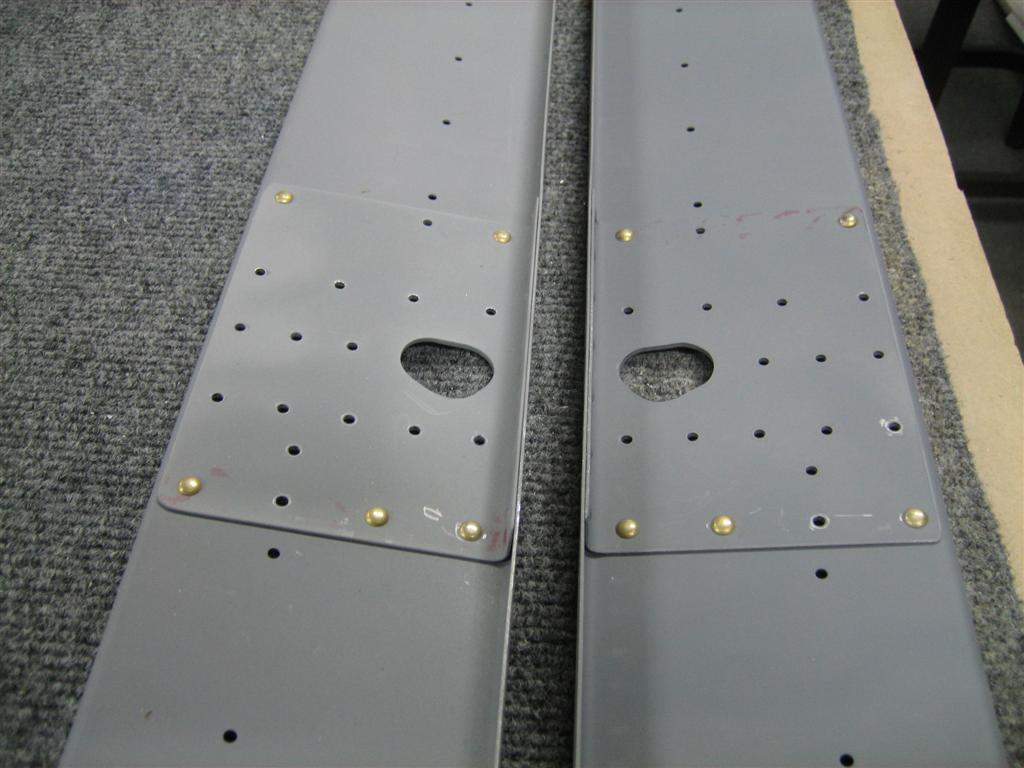
Then, I couldn’t help but grab the right spar and put them both up on the workbench.

It feels good to have both rear spars done.

Look at the difference in paint color. Left spar (just finished) is on the right.

More difference in paint color.

Anyway, all the rivets were symmetrical from right side to left side, which doesn’t mean I’m correct, it just means that if I did make any mistakes, I made them twice!

Now, all that’s left on the spars is to finish up the left tiedown. Then, I really need to make some wing stands and finish up some rib deburring.

Tonight was a good night. 56 rivets, and it feels really good to get something big put together.

Prev | Next

Onward and upward!


Devinyled Aileron Skins

December 4, 2010

Prev | Next

Okay. Prepare yourself for the BEST, MOST LONGEST POST EVER.

Not. (P.S. I’m bringing back “not.”)

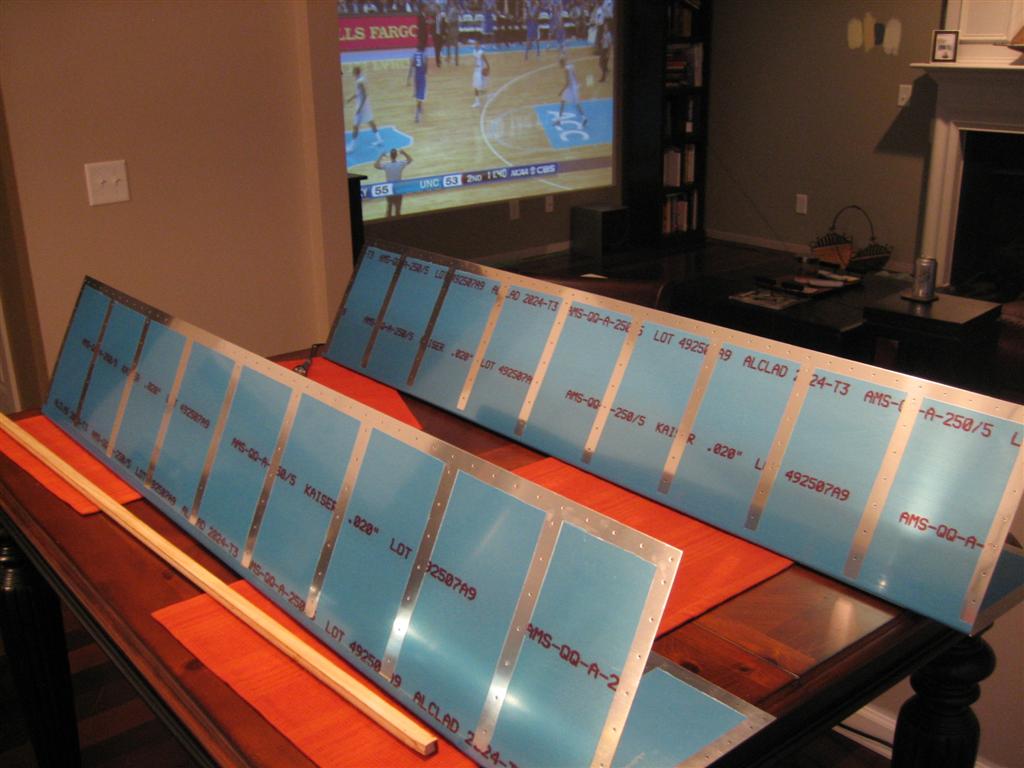
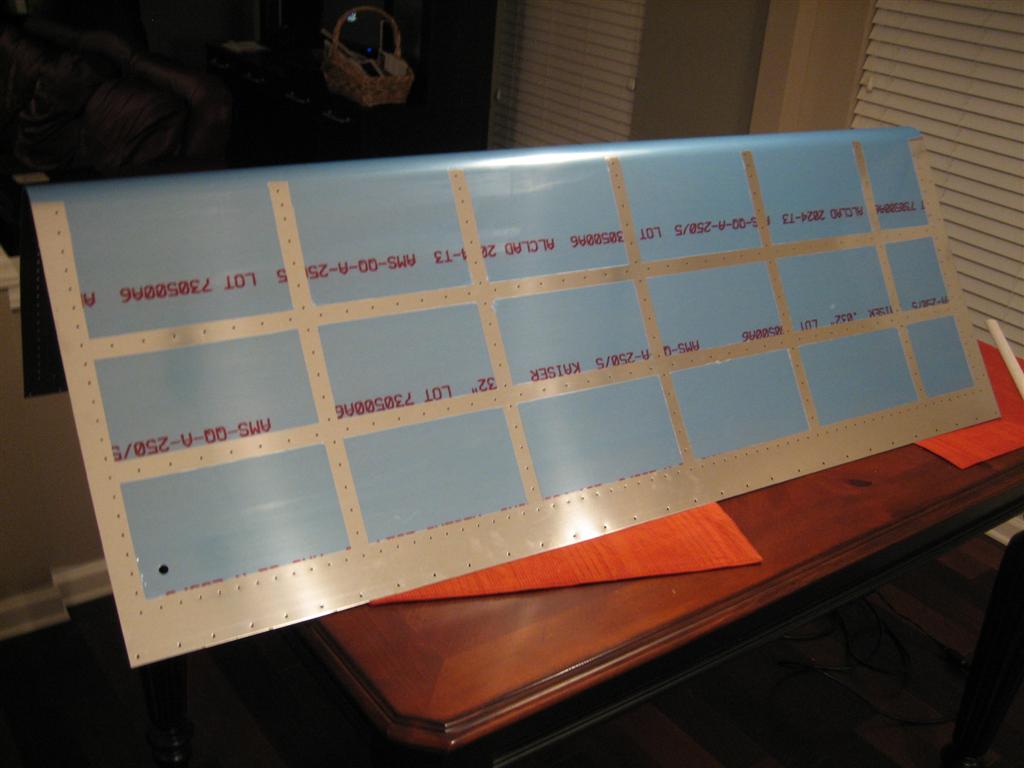
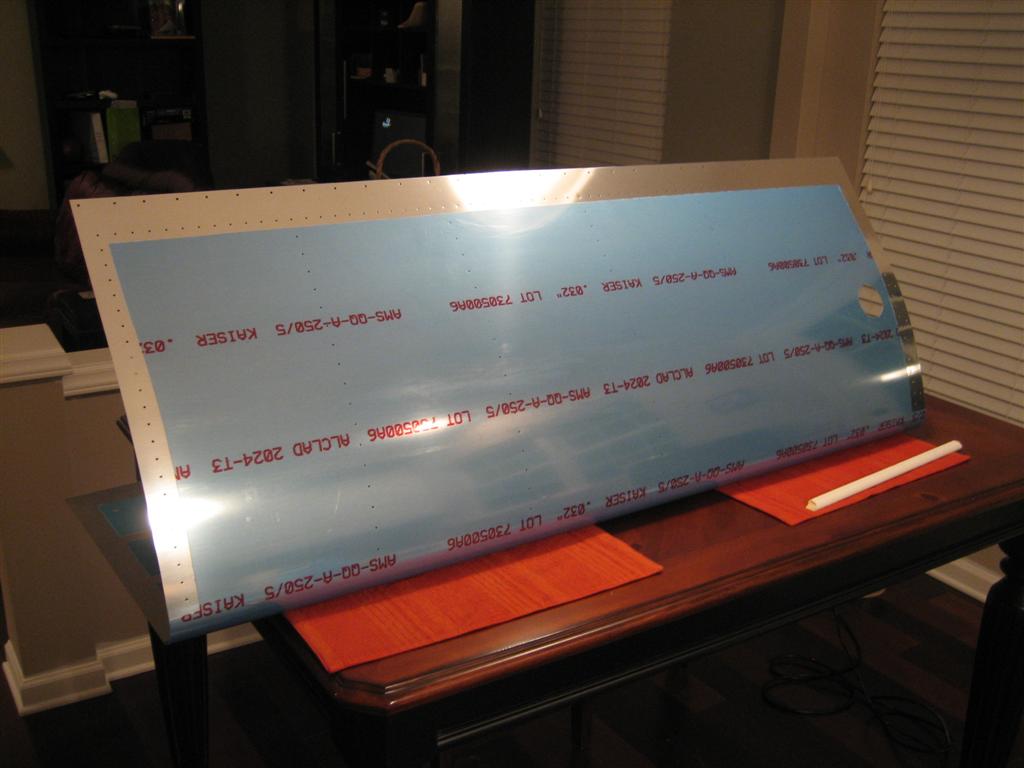
Devinlying the aileron skins while watching UNC.

One hour today (we were fast-forwarding through the game).

Prev | Next


Devinyled Left Tank

November 30, 2010

Prev | Next

Well, I was kind of on a roll with the whole devinyling thing, and I needed some more mindless airplane work.

I got to work on the left tank’s skin today.

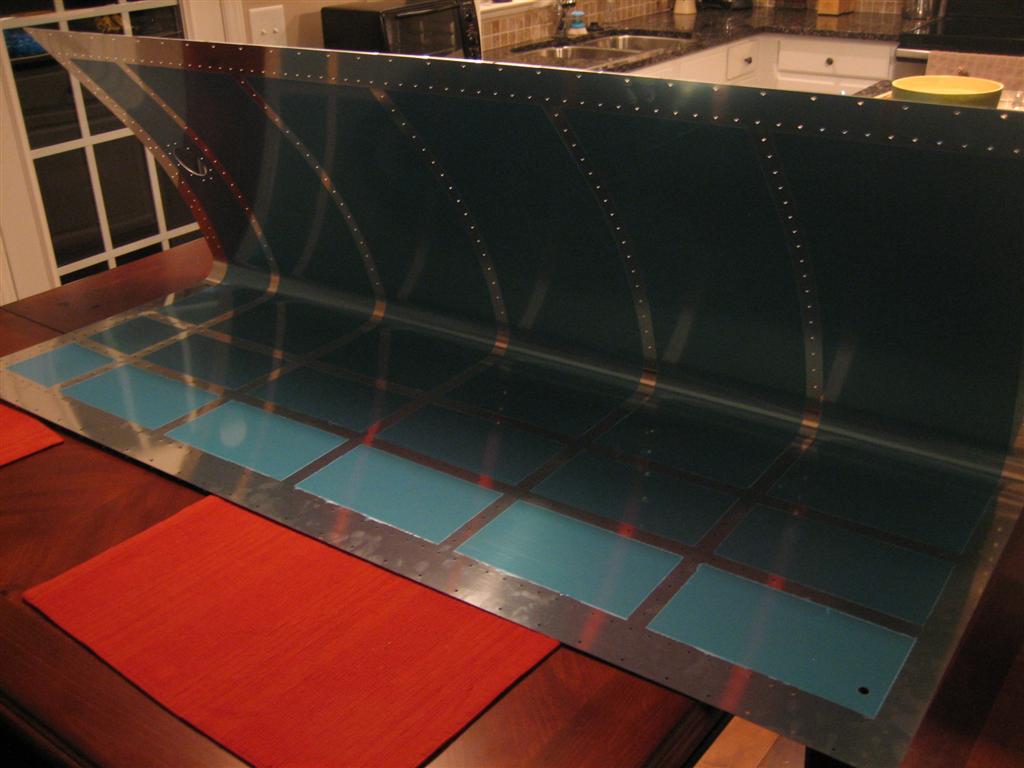
Here's the bottom of the left tank after devinyling.

Here's an in-progress shot of the top side.

The inside, devinyled.

Finally, the top of the left tank, completed.

One more hour of devinyling fun.

Prev | Next


Devinyled Right Tank

November 28, 2010

Prev | Next

Well, after spending 10 or so hours in and out of the (very cold) garage finishing the wood floors today, I felt like working on the airplane, but I felt like being WARM, so I thought some devinyling was in order.

I grabbed the next big part in the airplane parts room, and got to work on the kitchen table (sorry girlfriend!).

Because of all the rivet and screw holes and all the cris-crossing patterns, it took me an hour for this whole skin (not the usual 30 minutes per wing skin…those were easy).
Also, I know that the instructions say to just pull out all the vinyl from the insides of the tank, but I figure I’ll let the vinyl act as tape lines for the proseal I’ll be using to seal the ribs to the skin on the inside.

Here's the inside of the right tank after devinyling.

The top side.

And the bottom.

1.0 hour of devinyling fun tonight.

Prev | Next


Prepping and Priming Some Rear Spar Components

November 20, 2010

Prev | Next

Oh man, I’m furious. I just spent some time doing a huge writeup for this post, and when I clicked, “Post”, it deleted all of my text.

Grrr.

I’ll try to rewrite it, but it is going to have a little bit of an annoying tone.

Anyway, I managed to get out in the shop today for a little. I had previously gotten all of the doubler plates and reinforcement forks matchdrilled to the spar, so today was all about prepping and priming.

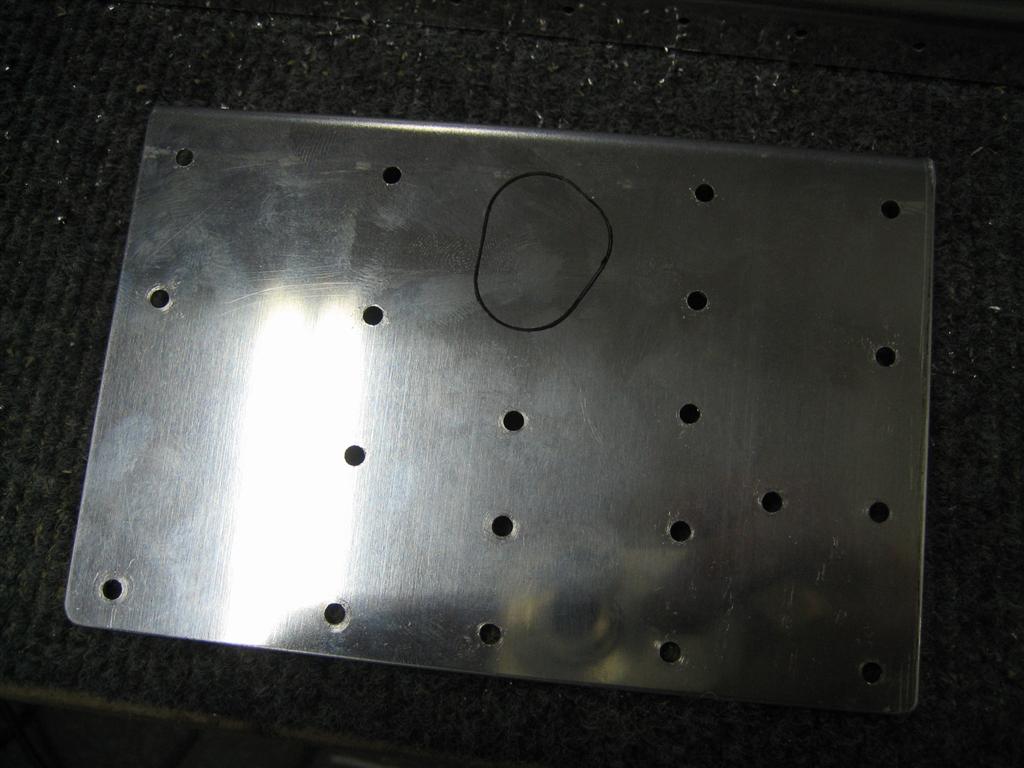
Here’s W-707F, which sits on the back side of the left spar. I’ve deburred and scuffed it; all I need to do now is dimpled the outboard holes in preparation for attaching it to the spar and outboardmost rib.

I love scuffed parts. They hide my fingerprints.

Here’s W-707E, which is the doubler plate that sits on the aft side of the rear spar, right in the middle. I’ve marked the cutout for the aileron push tube. Where’s that step drill?

Yup, here you can see my fingerprints.

I started looking around for my stepdrill. I spent good money on that stepdrill, but I couldn’t find it anywhere. On the workbench, under the workbench, on the floor, in some other shelves. I thought maybe I put it in some other tool’s case, so I got out the dremel tool, multifunction tool, jig saw, circular saw, etc. Nothing.

I even accused the girlfriend of selling it on the black market to fund an bottle of Opus One. She insisted that while she thought about it, she didn’t.

I remember putting it in this old small cabinet of drawers (that my dad gave me when I graduated college…thanks, dad!). I spent about 30 minutes just pulling out each one of these drawers, looking for my step-drill. Grrr.

After continuing to work on the airplane (angrily) for another 30 minutes, I finally found it when I came back to the drawers and opened them with my other hand. Apparently my sausage fingers (they’re not, I promise…I’m just mad) blocked my view of the stepdrill, which was right behind the lip of the VERY FIRST DRAWER.

Ugh.

Anyway. Back to the rear spar. This is the forward side of the left spar, outboard end. I’ve deburred the edges of the whole spar, and now I’m deburring all of the holes I drilled.
I always scuff the areas where there are holes I've drilled and deburred. Helps me keep the "did I do this already" time to a minimum.

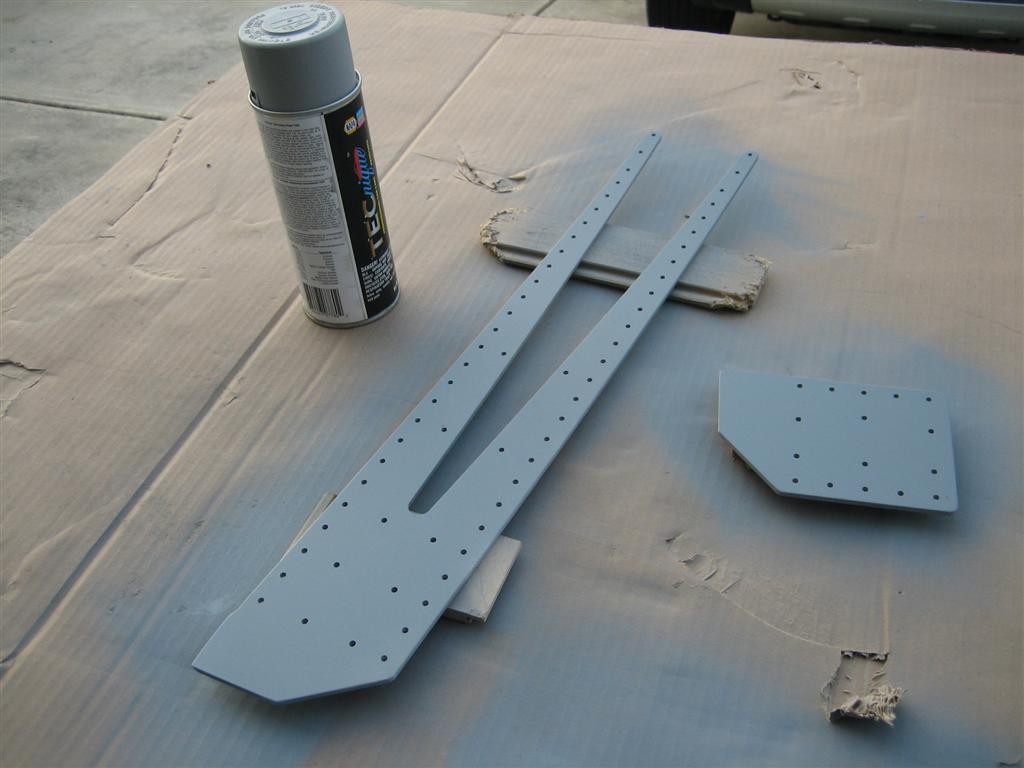
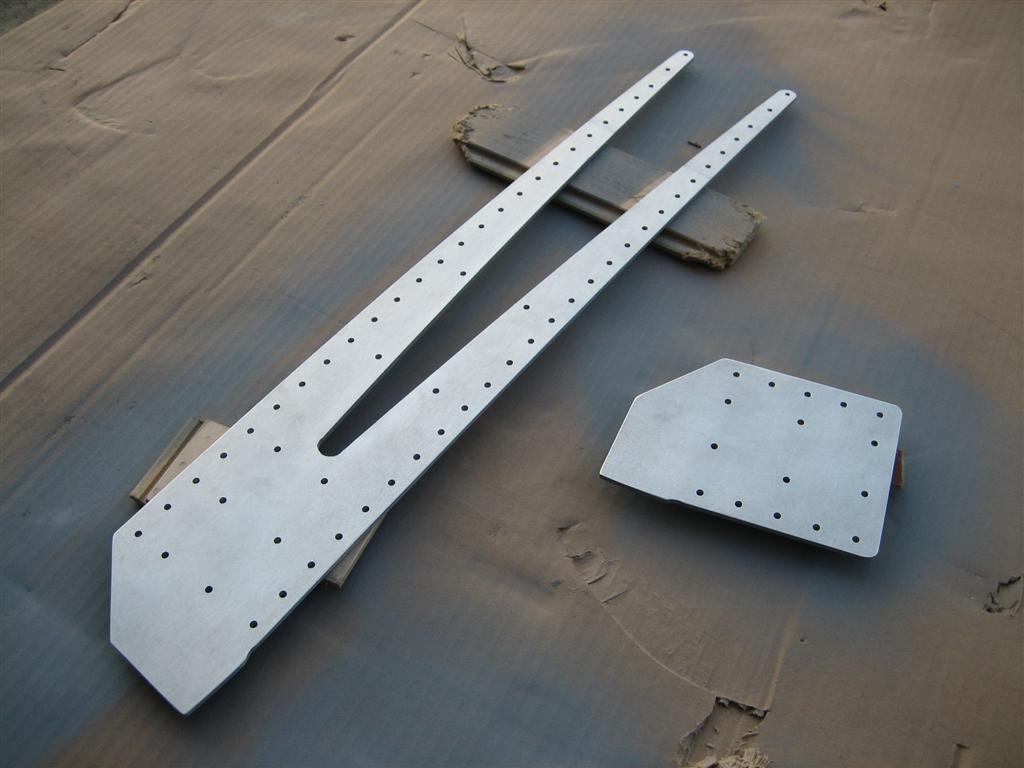
Oh yeah, I managed to get a couple parts primed today. Like riveting, I always feel like it is a productive day if I can prime some things.

You can also see my primer of choice, Napa 7220.

Here’s the other side of those pieces (after plenty of drying time).

I like priming.

Back to the spar, more deburring holes and scuffing.

I'll finish scuffing the whole spar when I get closer to priming.

This is the middle of the rear spar, around the aileron pushtube hole. More deburring and scuffing.

Jeesh, there are fingerprints everywhere.

Finally, I brought the two primed parts back inside.

Primed parts on the workbench always means we're getting close to riveting. Wuhoo!

After this was about when I finally found my step-drill. I was too angry at myself to keep going, so I headed inside to some grilled chicken, jasmine rice, and creamed corn. Mmmm.

1.5 hours

Prev | Next