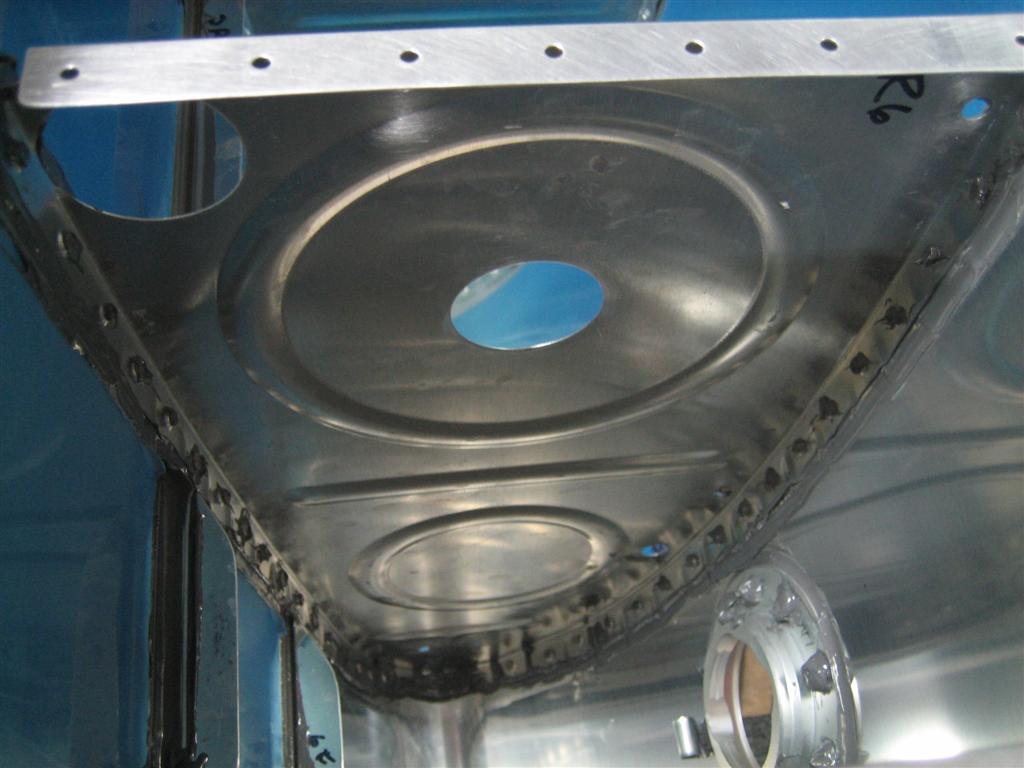
Sealed Right Tank’s Inboard Rib

July 4, 2011

Prev | Next

HAPPY 4TH OF JULY!!!!

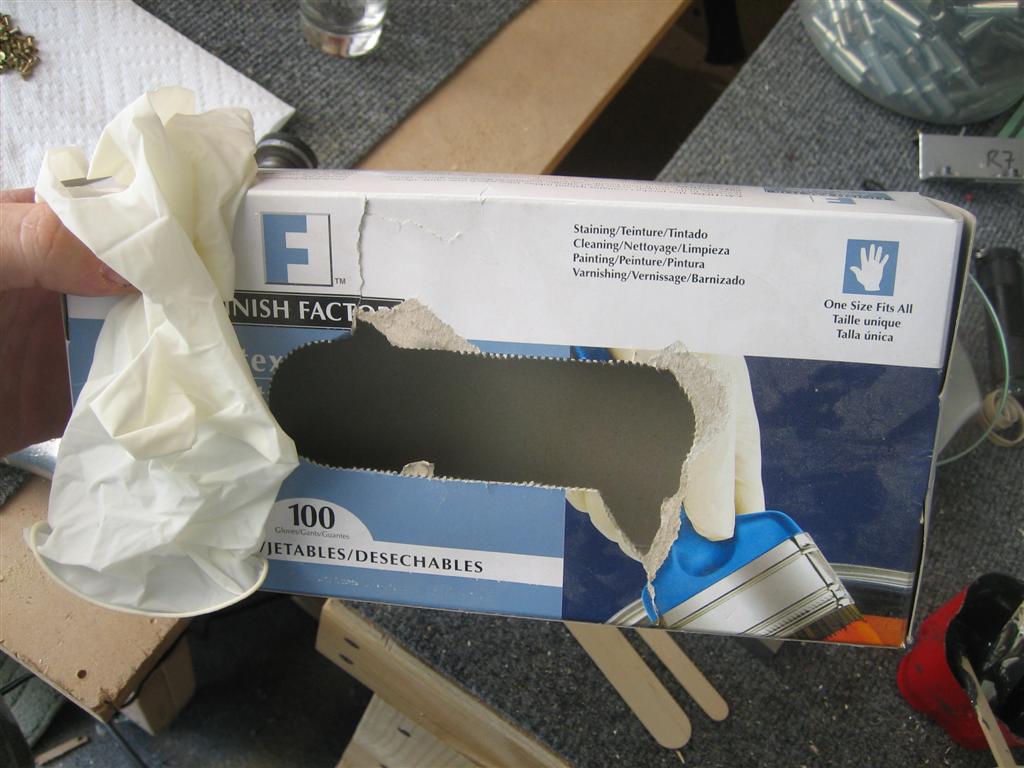
Well, after stopping by Lowe’s today to pick up some latex gloves (I picked up latex instead of nitrile…I like the latext better), I got to work on sealing the inboard rib in.

For this rib, things were a little different. First, I can squeeze all of the skin to rib rivets (which is nice). Second, I have to pay attention to the reinforcement plates that need to go in place, and third, I have some fittings that can be installed once the rib is in place.

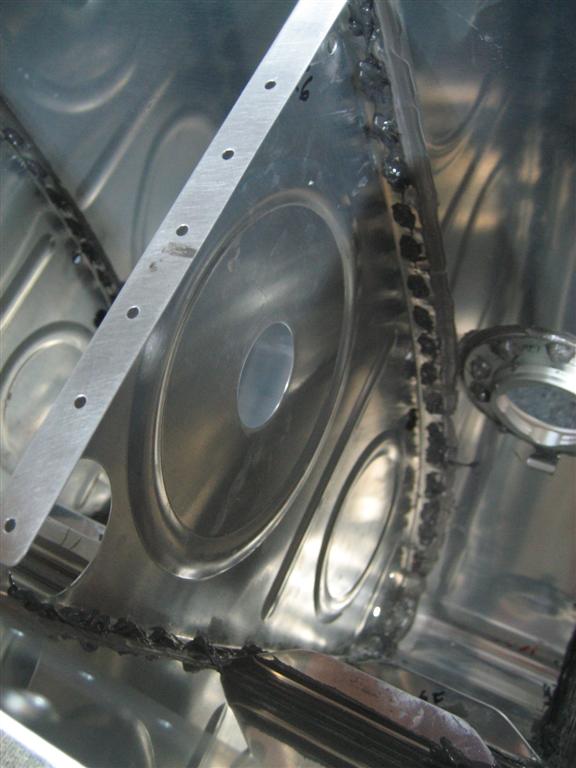
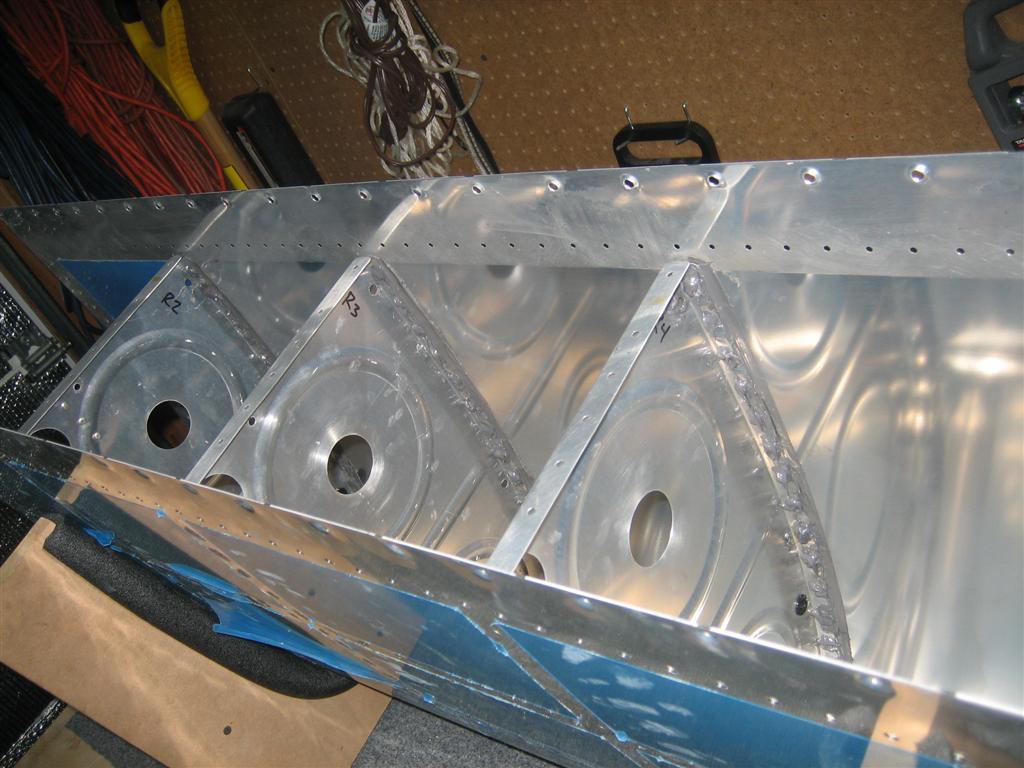
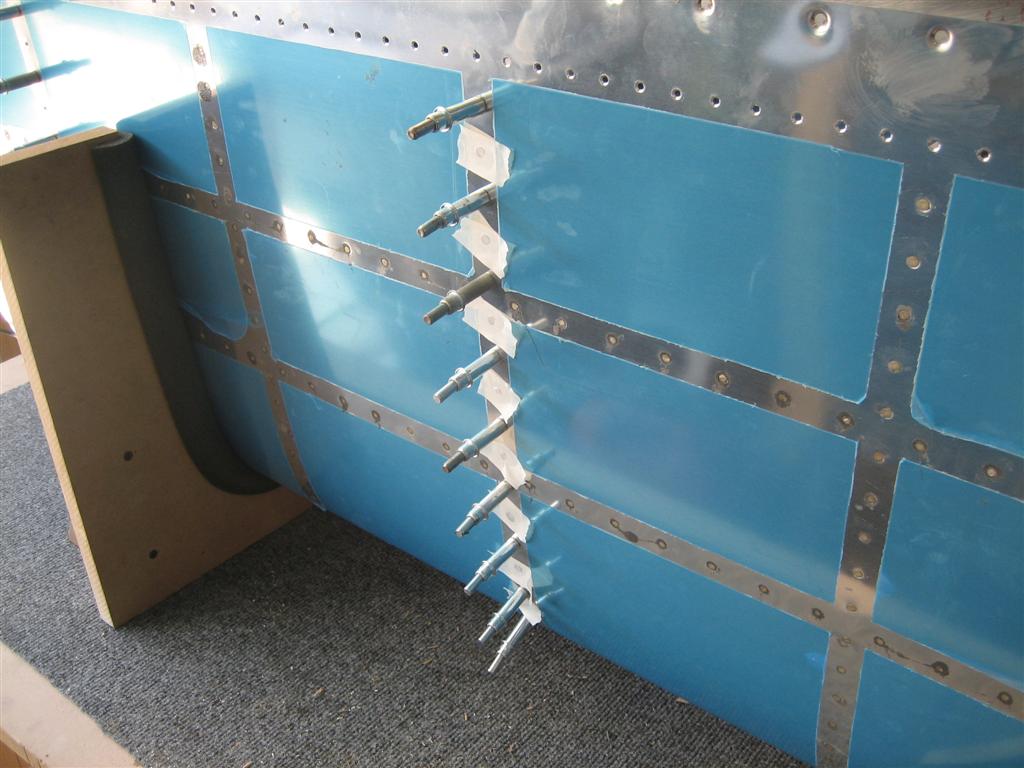
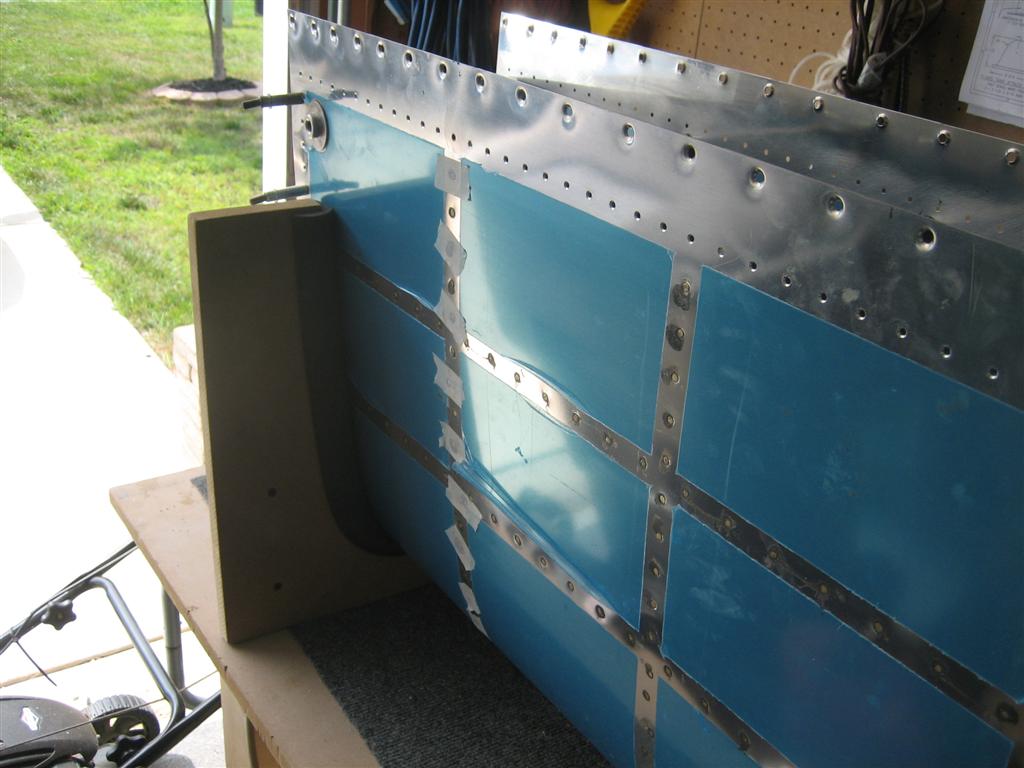
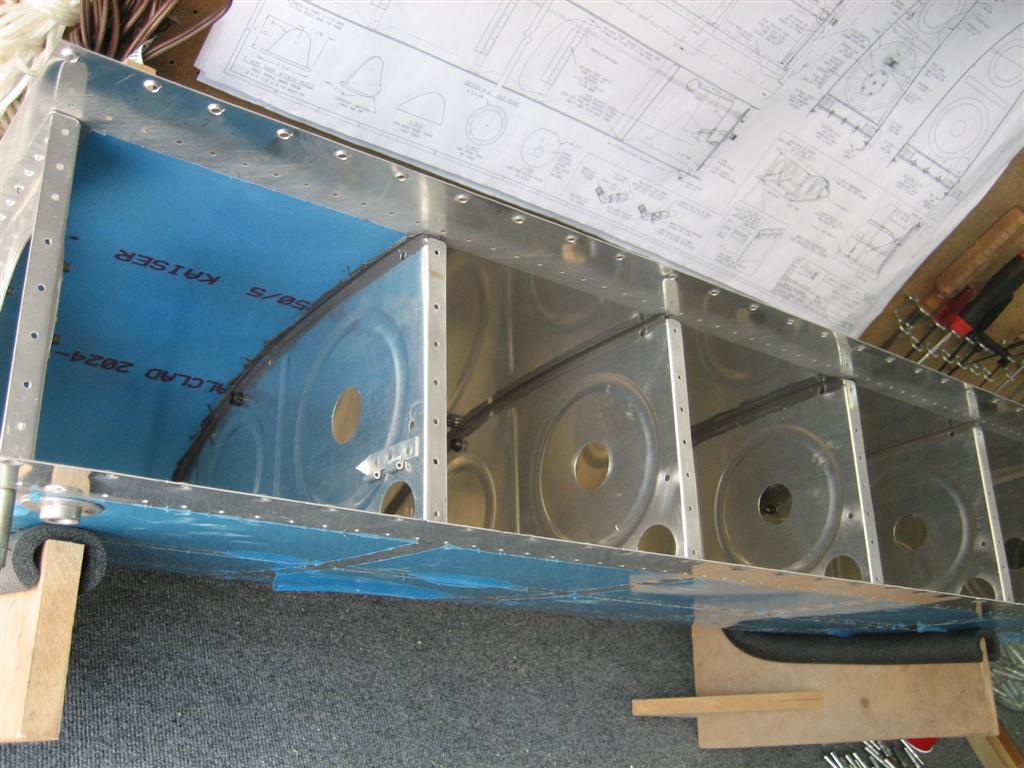
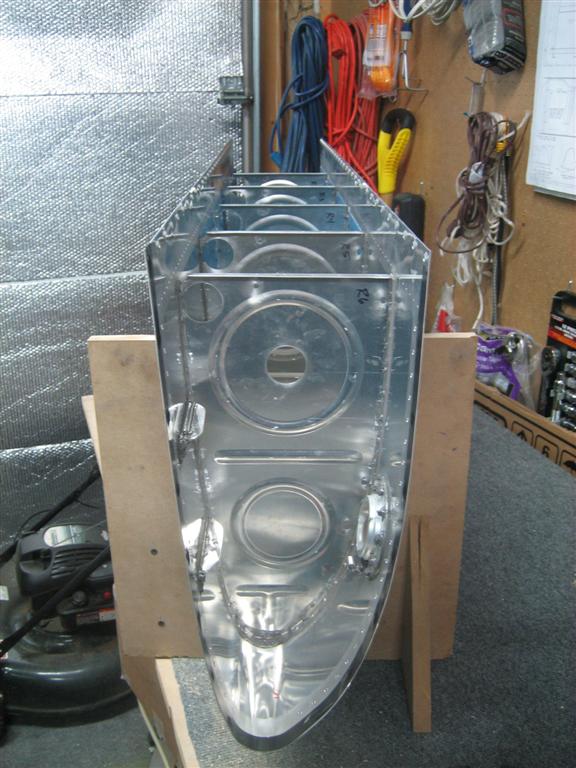
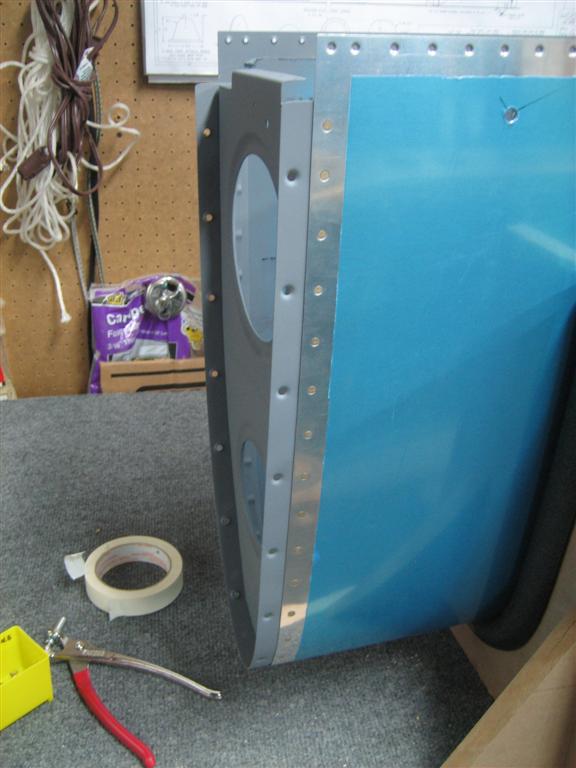
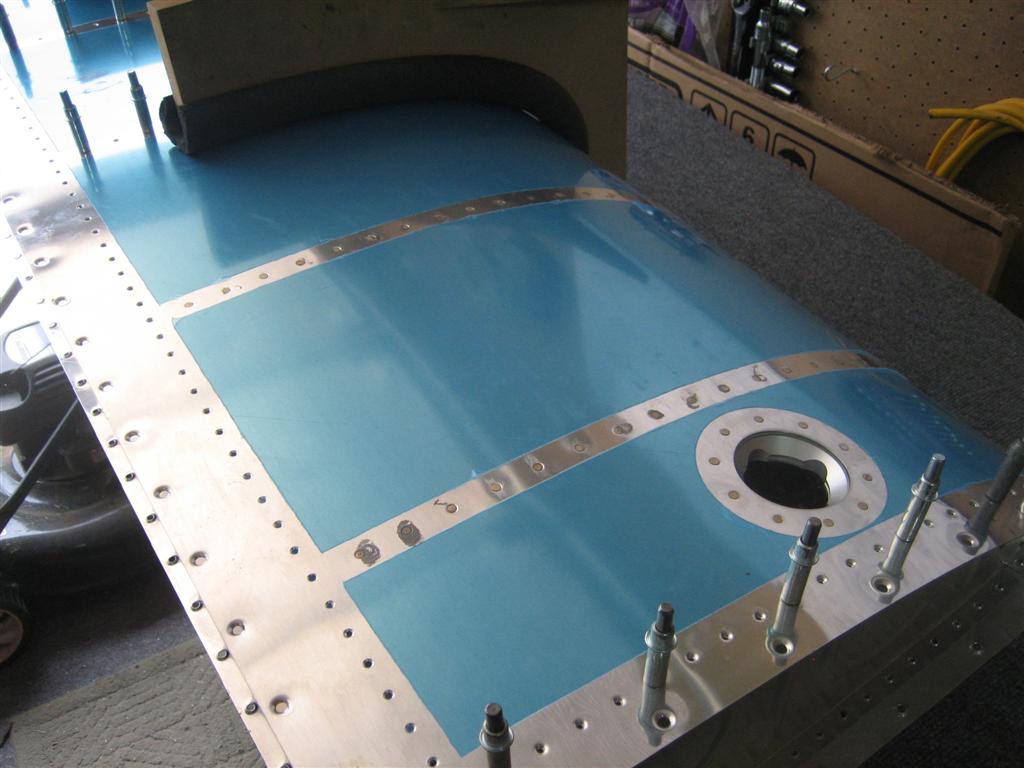
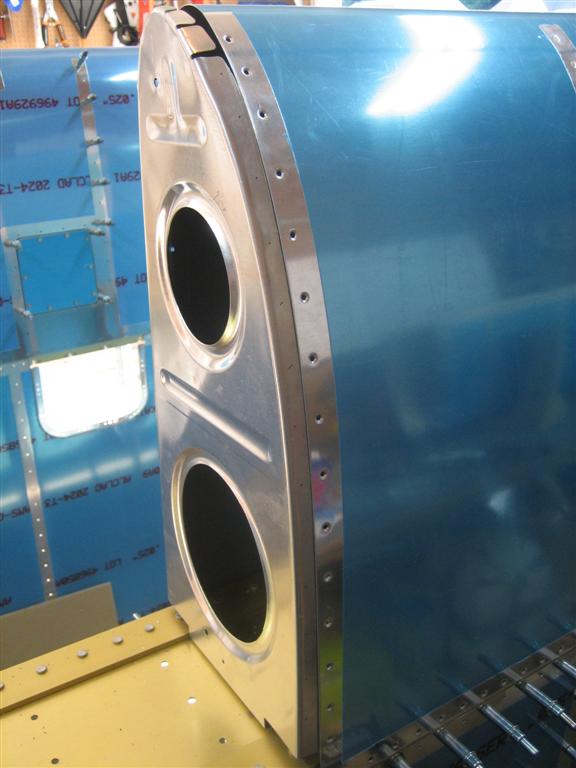
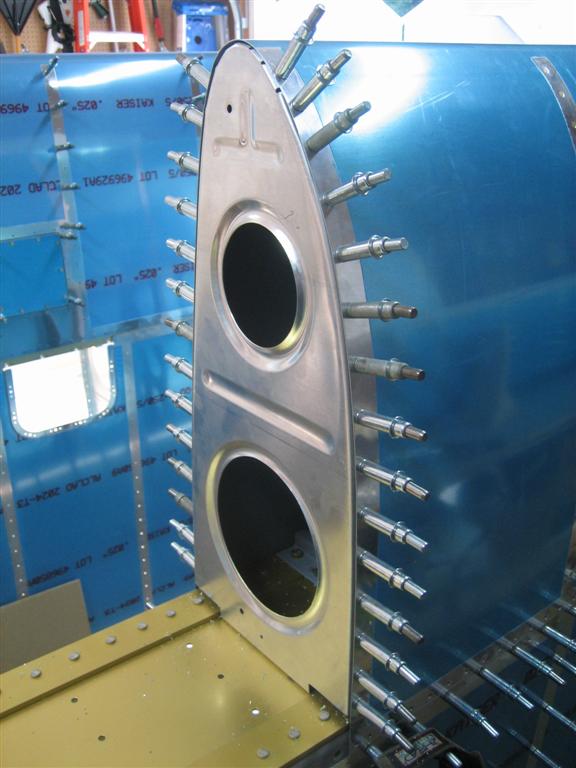
After buttering up the rib and riveting the 43 inboard AN426AD3-3.5 rivets, I ended up with this.
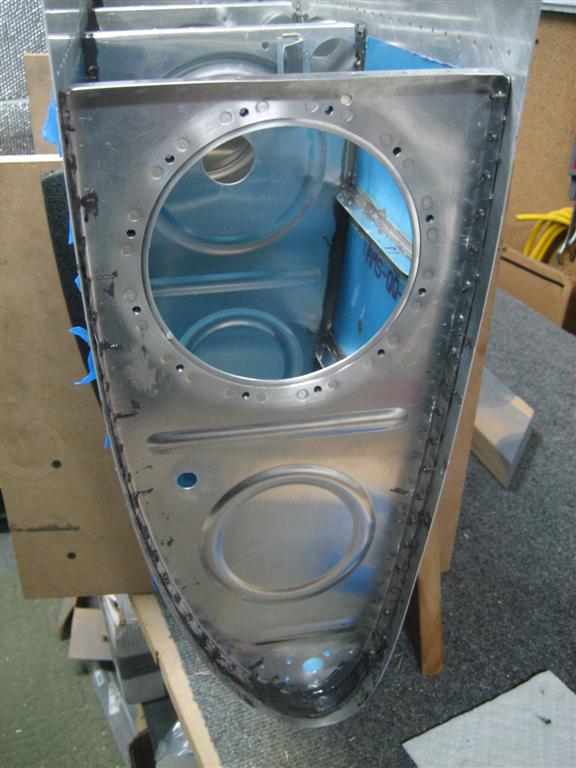
The clever readers will see the uppermost rivet on the right side is NOT SET. I caught it when I ran back outside later to count how many rivets I had set. (I knew counting rivets was a good idea.)

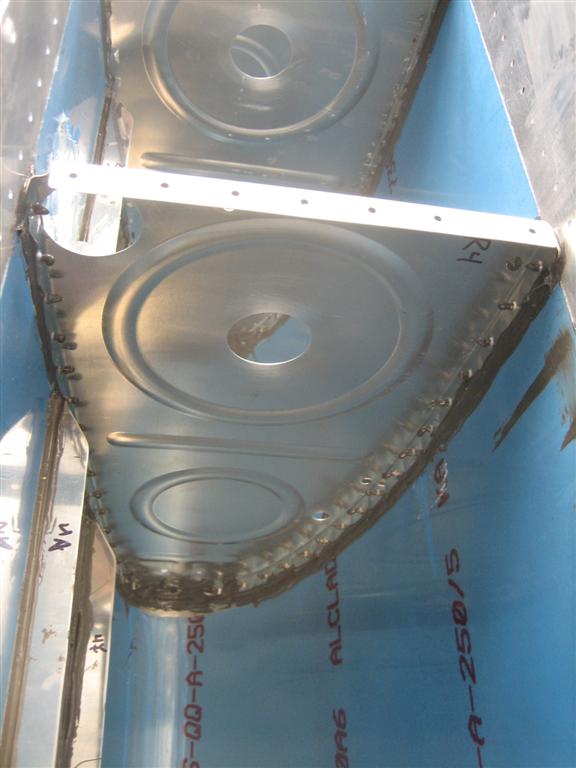
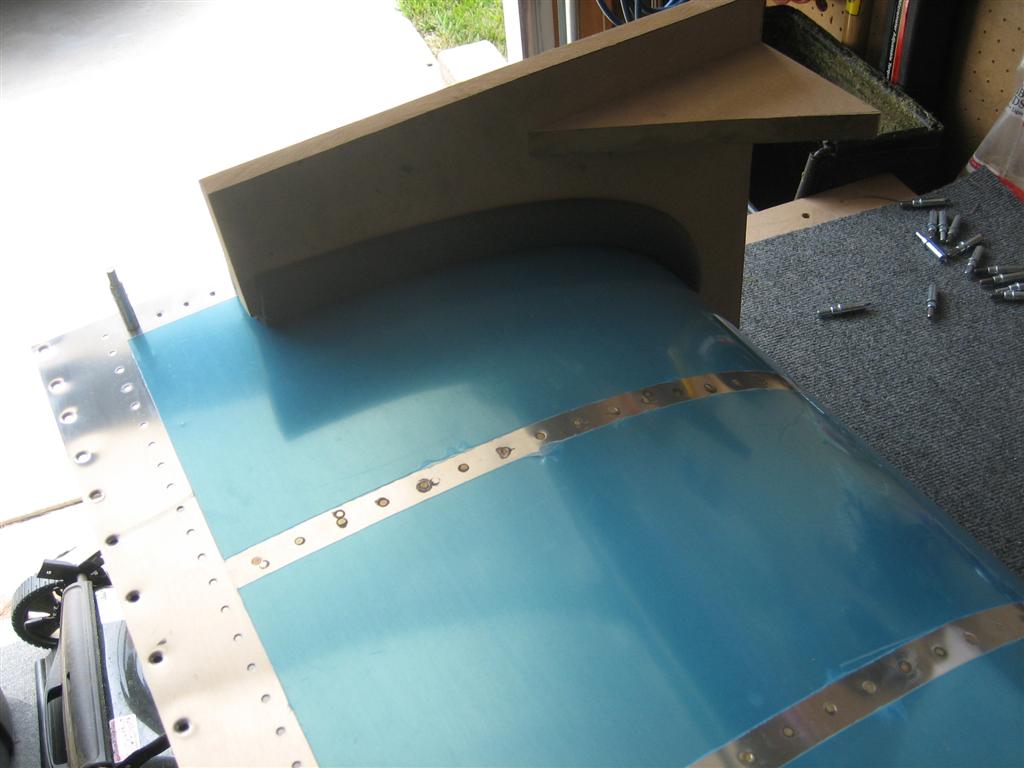
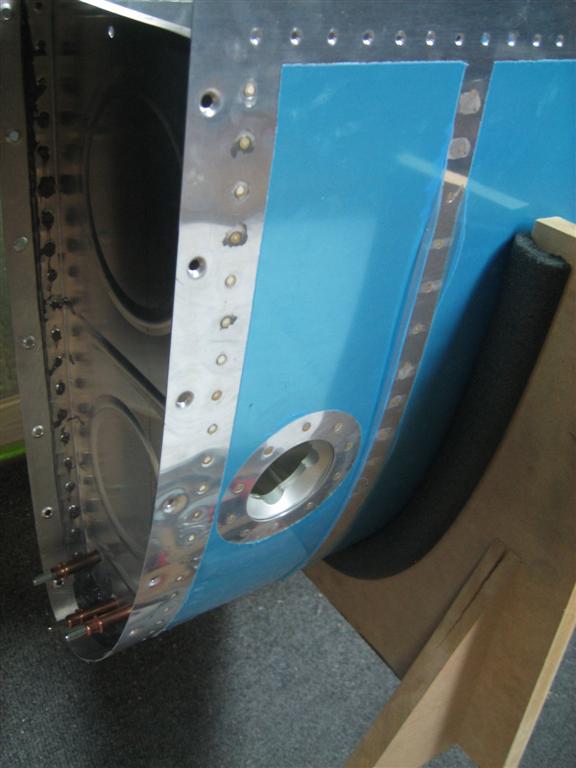
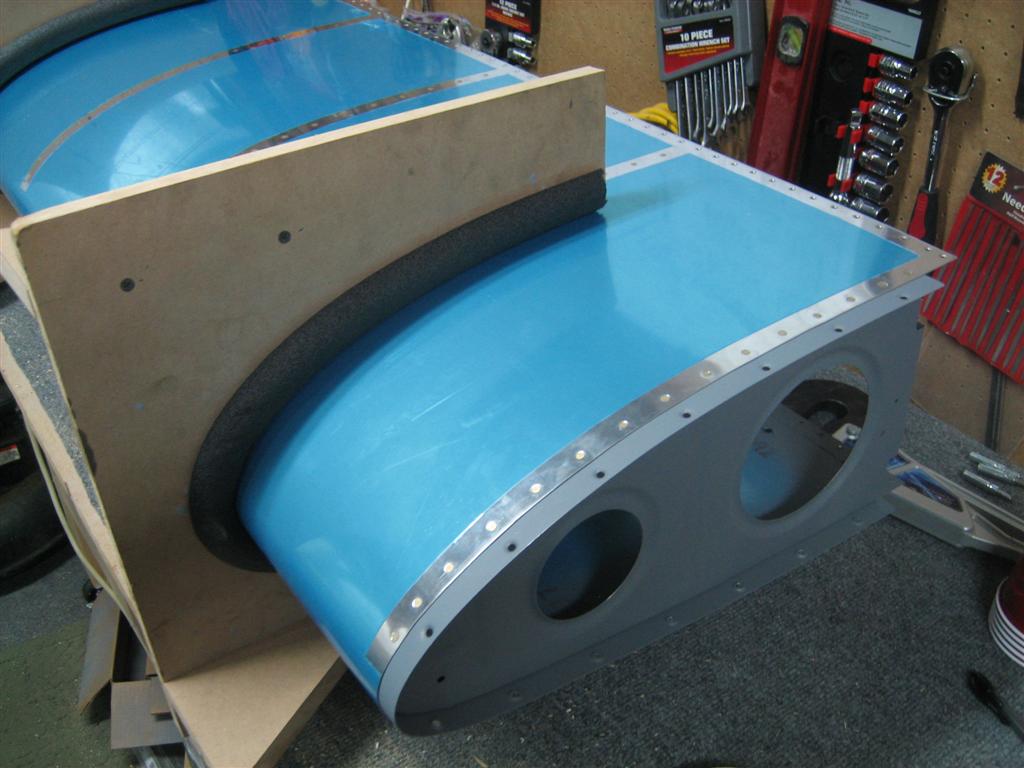
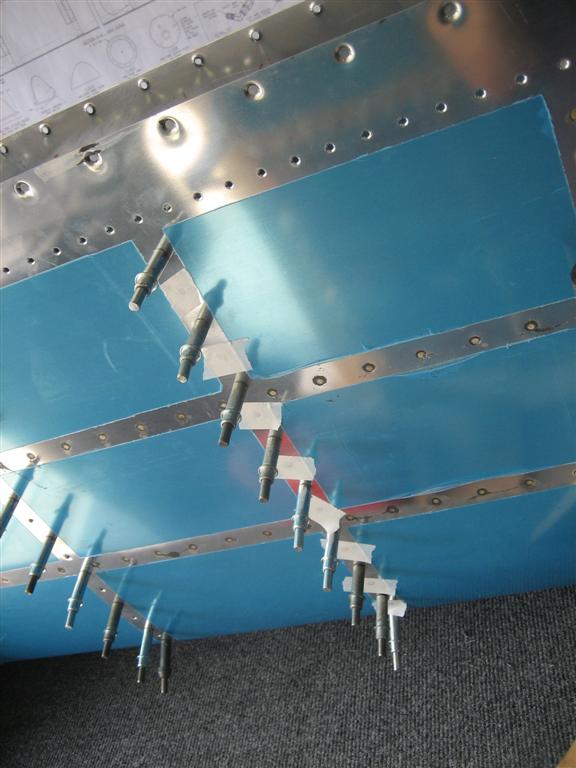
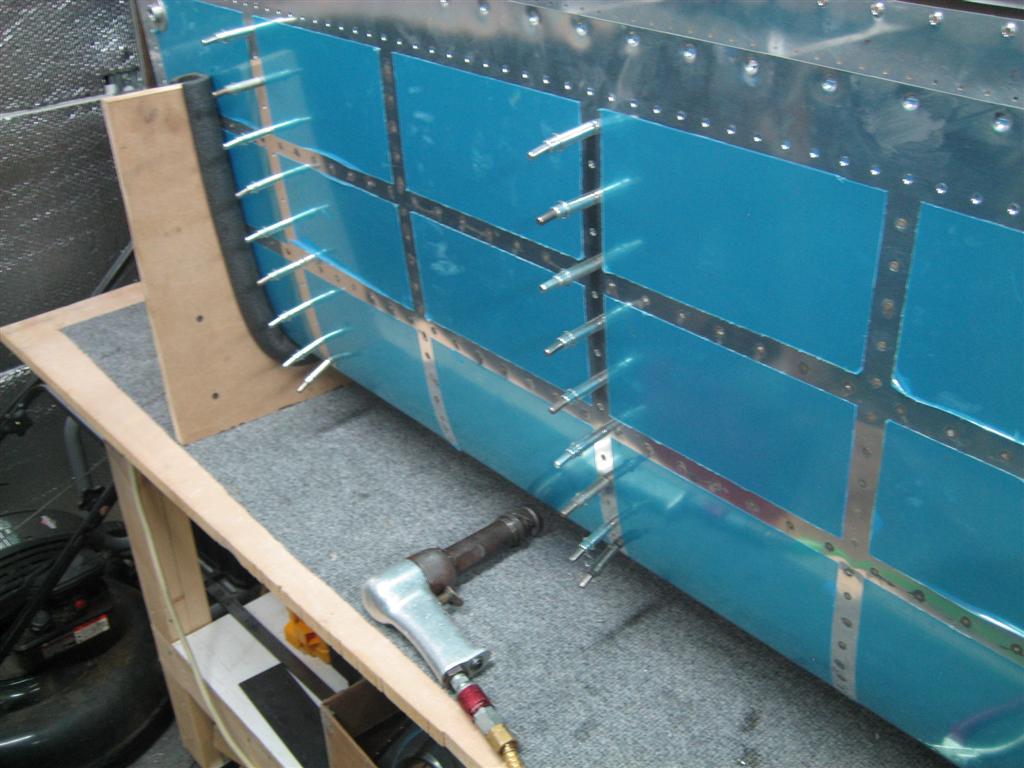
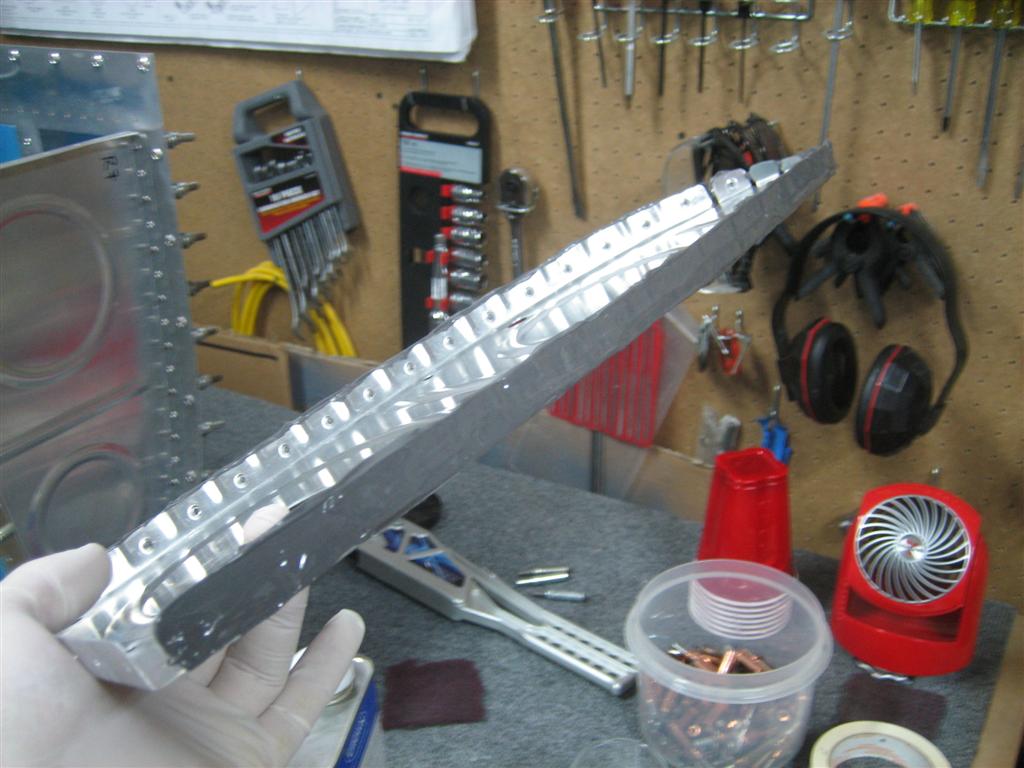
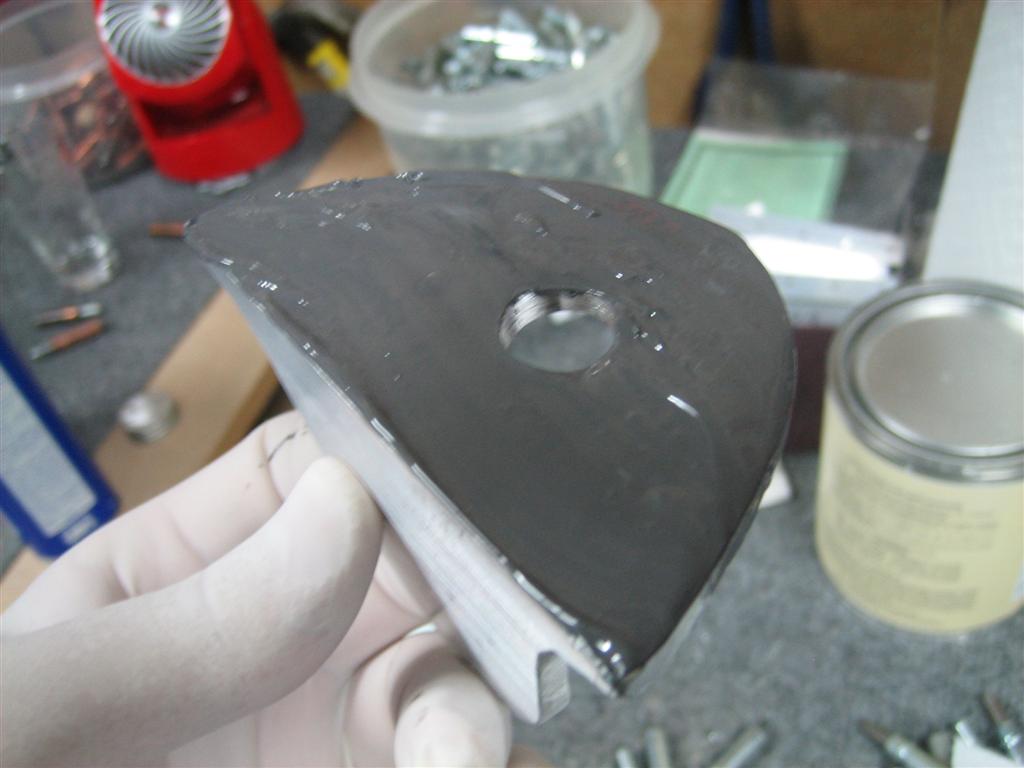
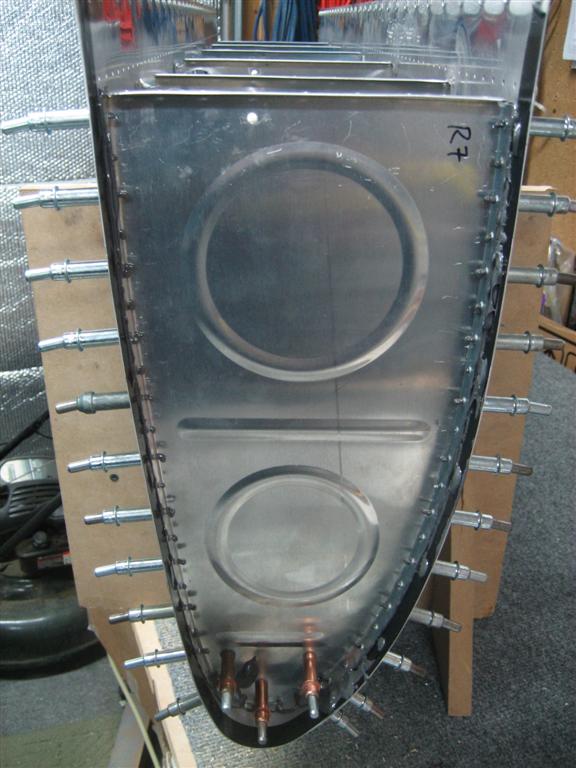
After getting the rib riveted in, I can now slide the reinforcement plates into place. (Like it says in the instructions, if you install these first, you won’t have room to squeeze the skin to rib rivets in the nose.) There’s a thick angle on the outside of the rib (shown below) and a thin .032 plate on the inside.

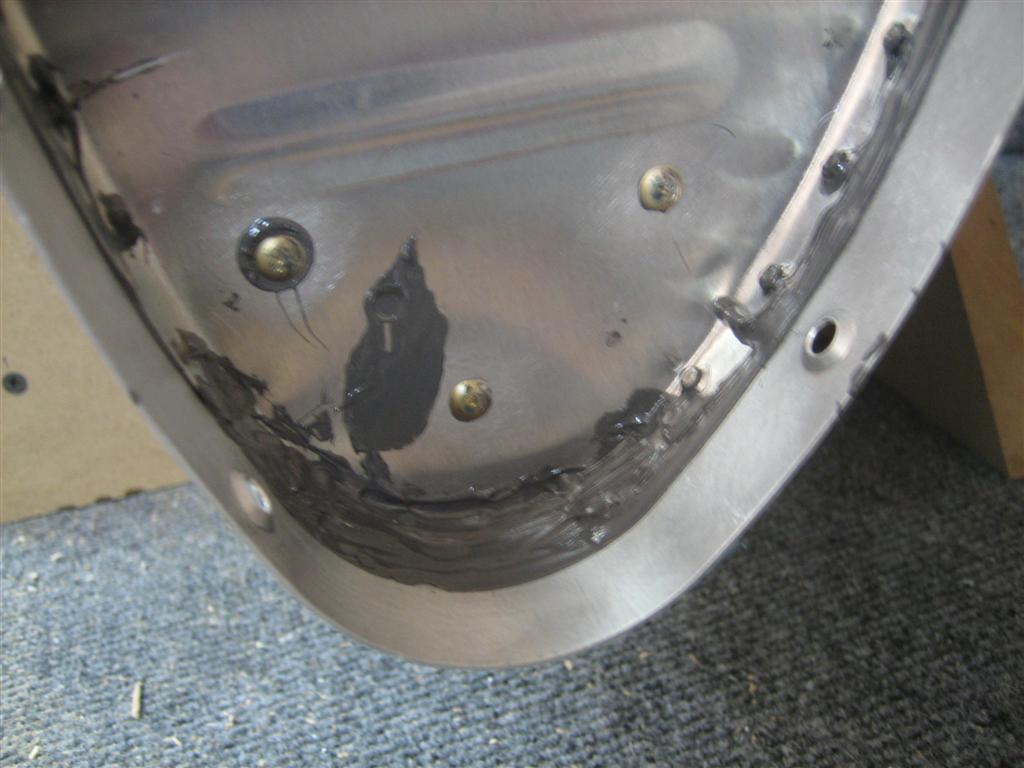
After lathering that guy with some pro-seal, I snapped this picture and got it installed.
That fan I bought a few weeks back is worth its weight in gold. It was 95°F today.

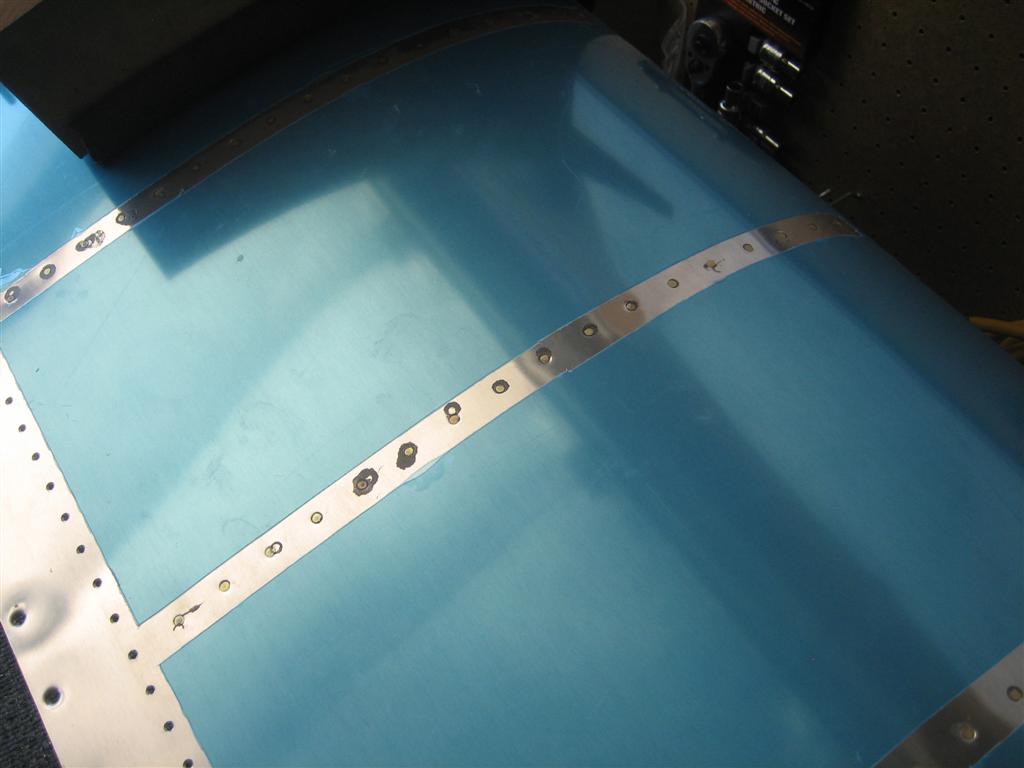
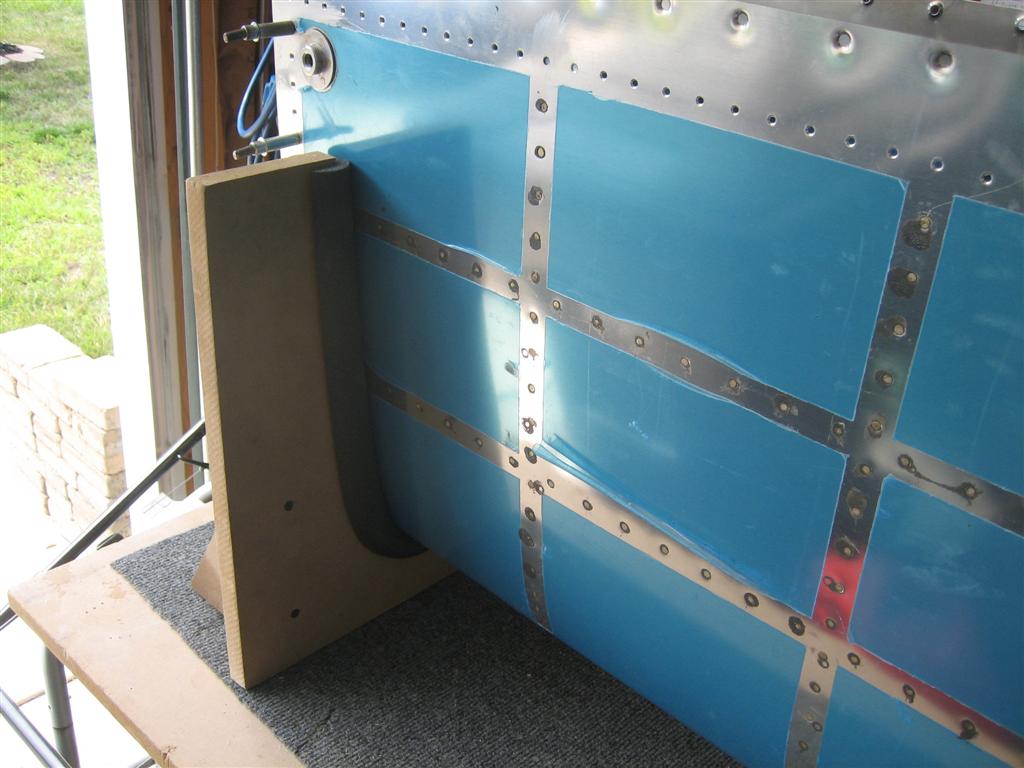
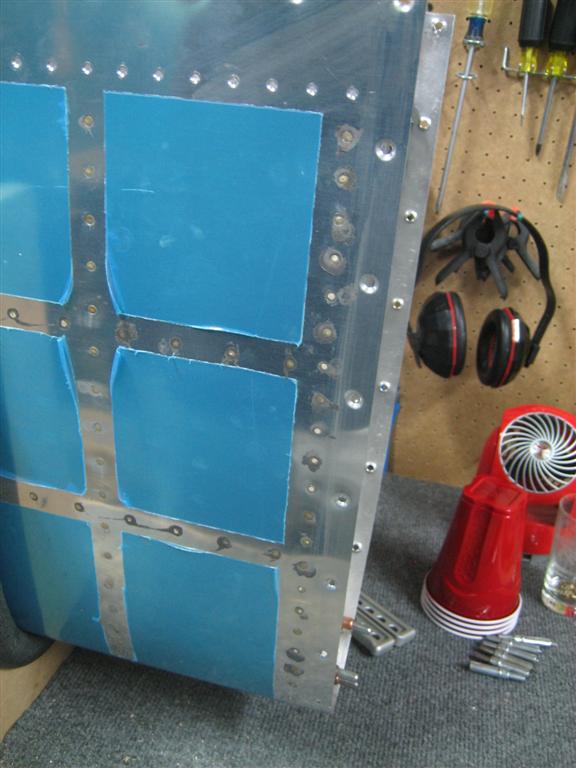
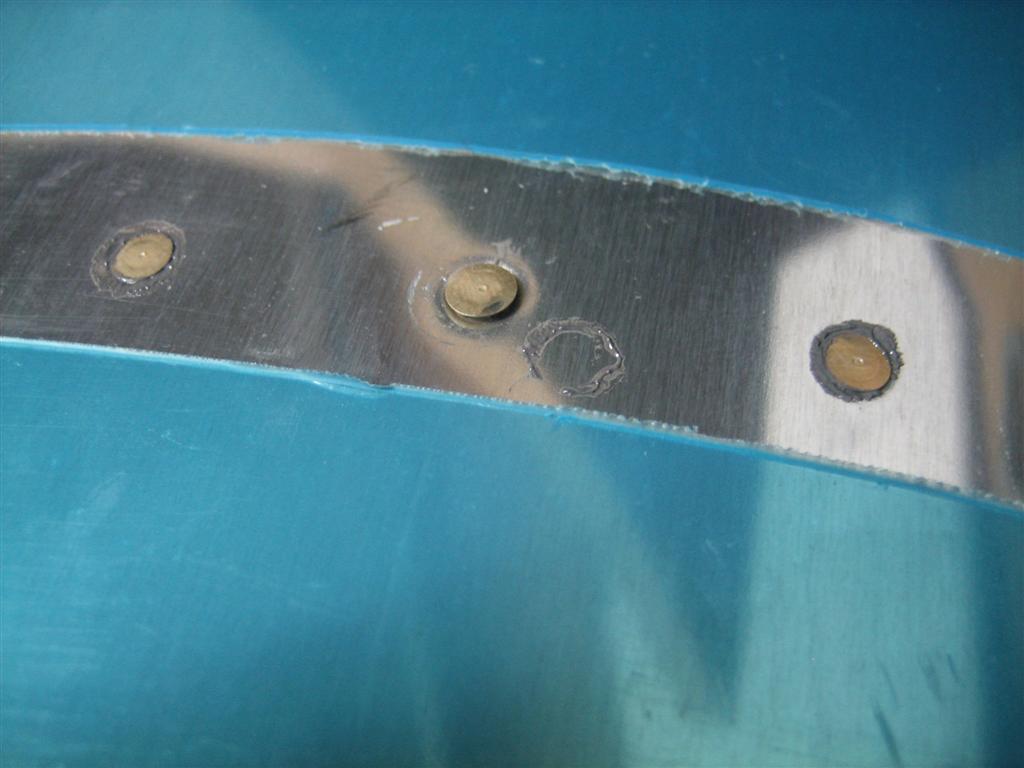
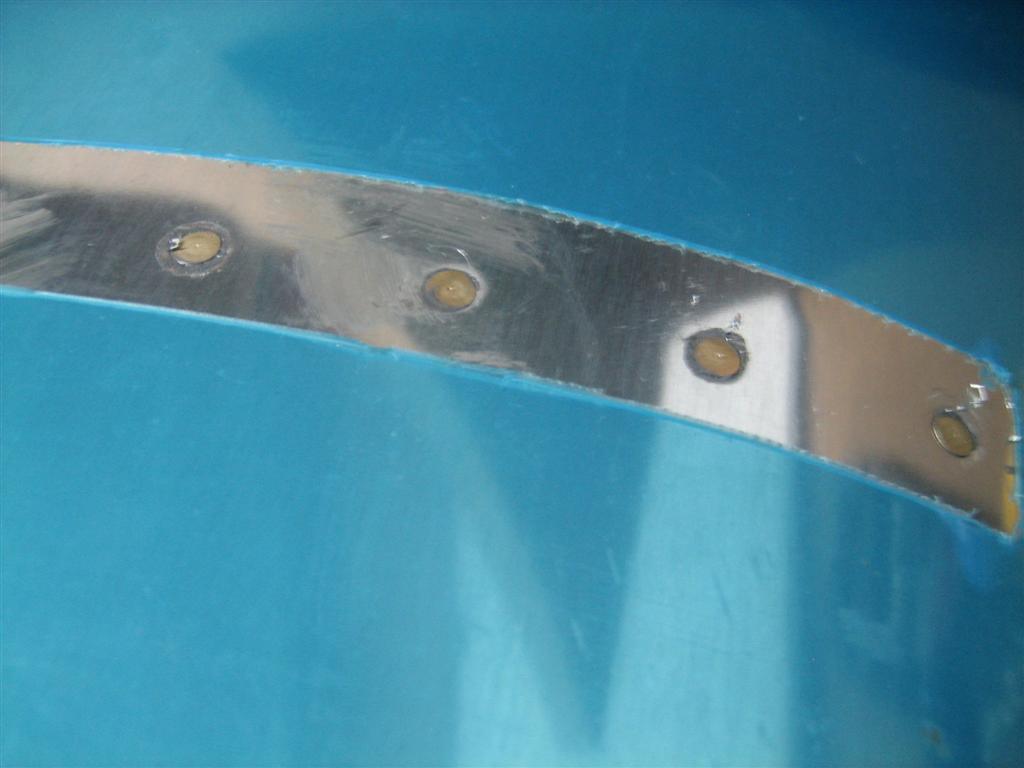
Fast forward a few minutes and some loud noises, and I had 6 AN470AD4-8 rivets set in the nose reinforcement area.
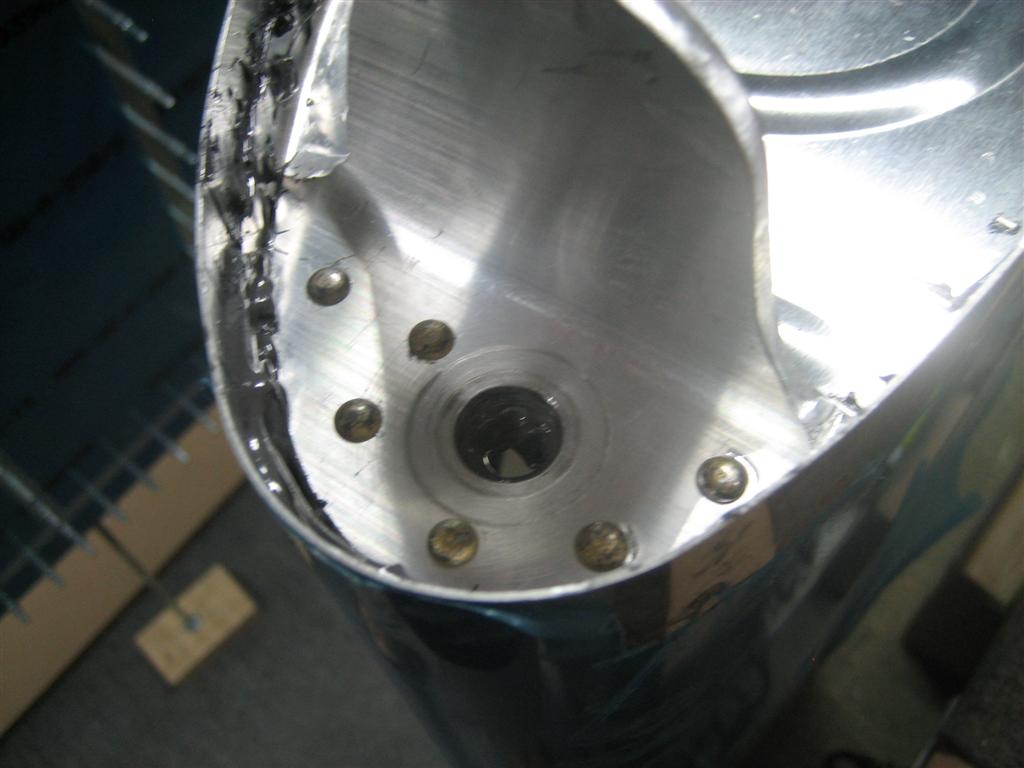
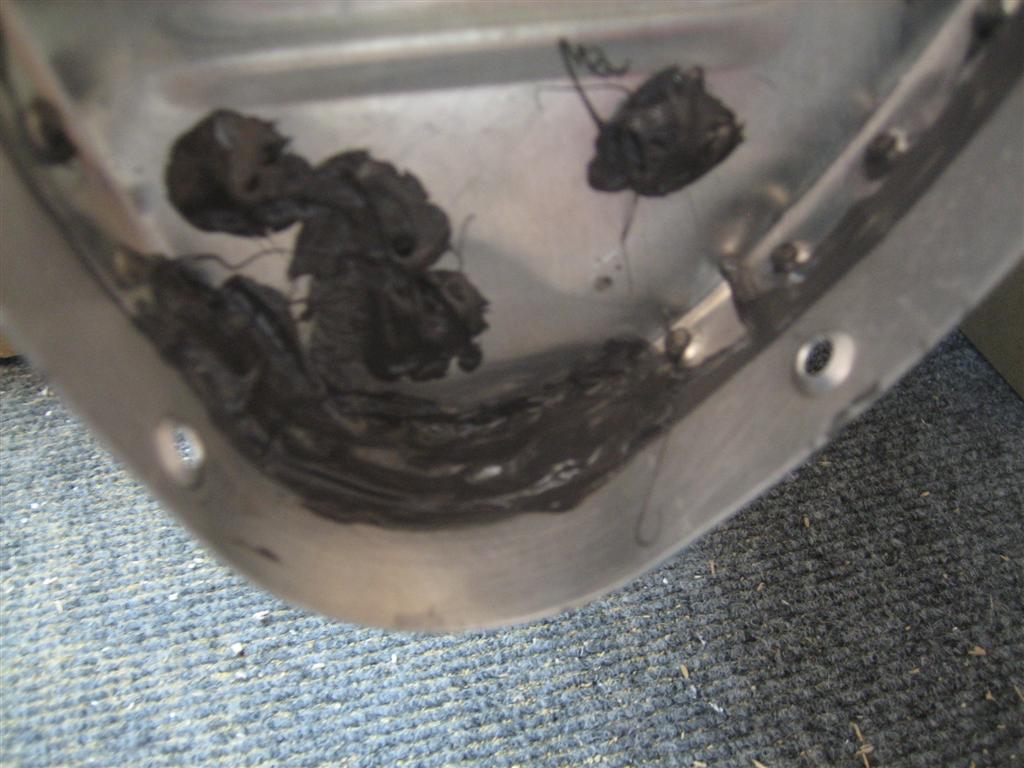
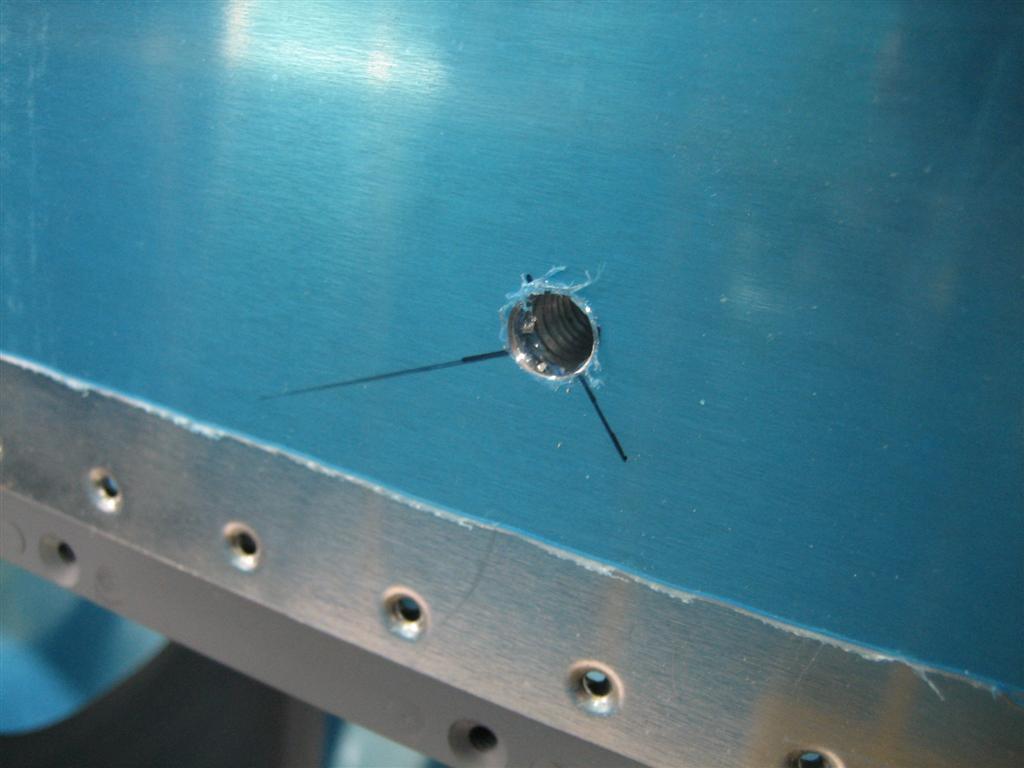
Perfect. (Well. Not perfect, but once I cover those smileys with proseal, you will never know.)

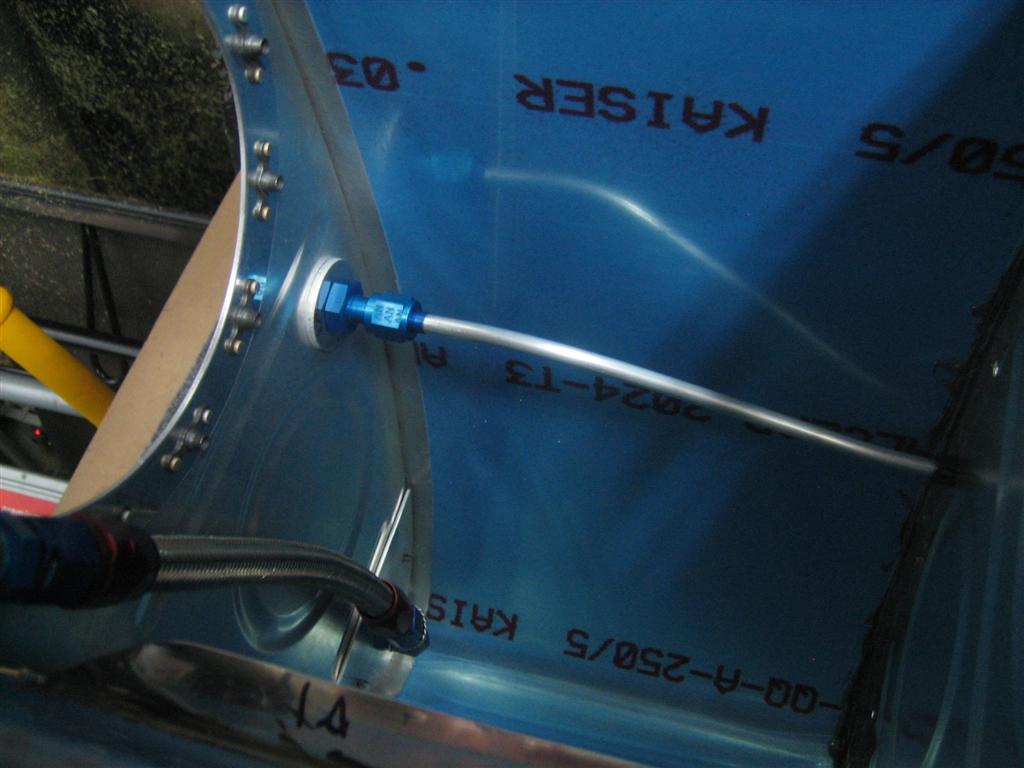
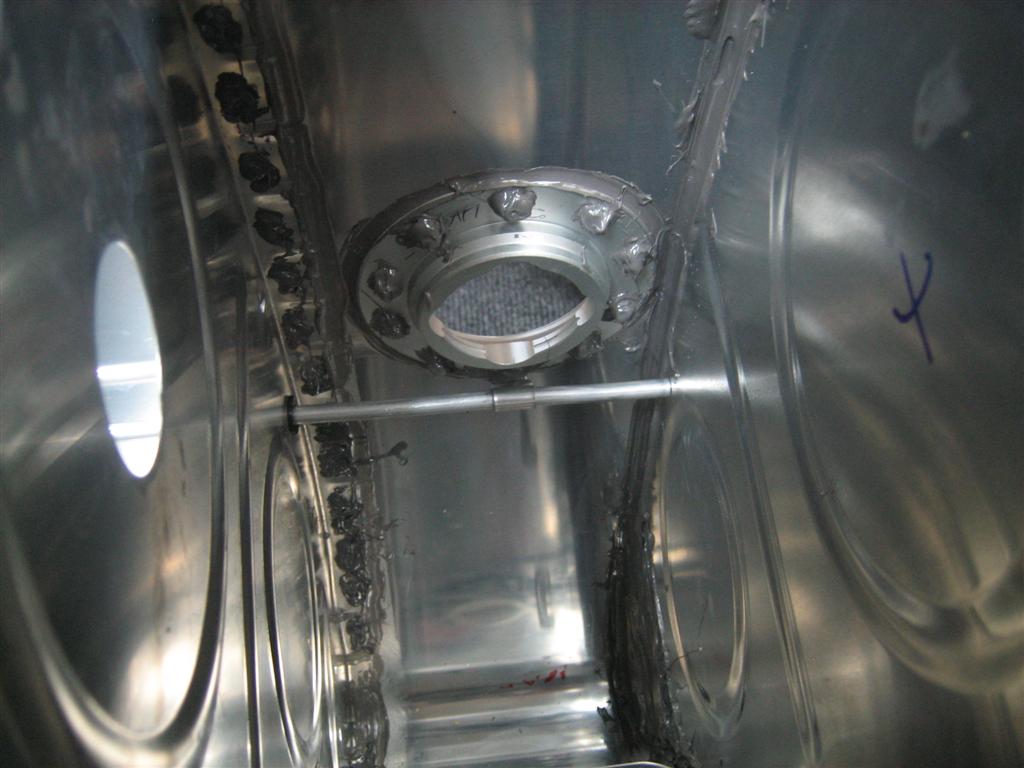
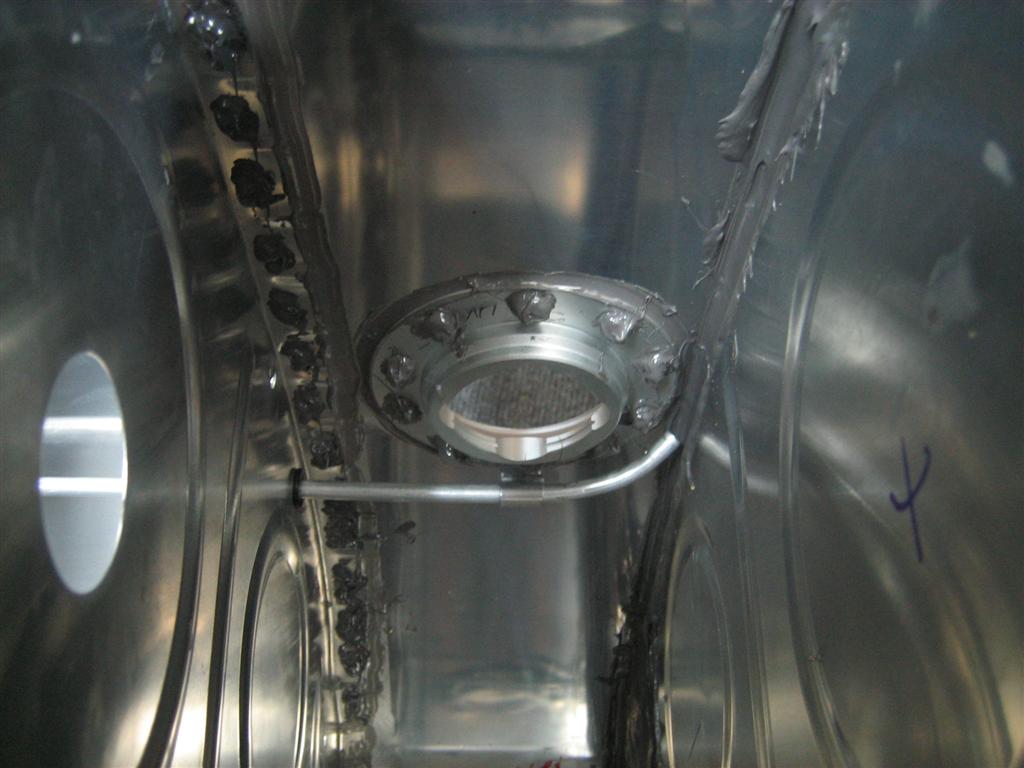
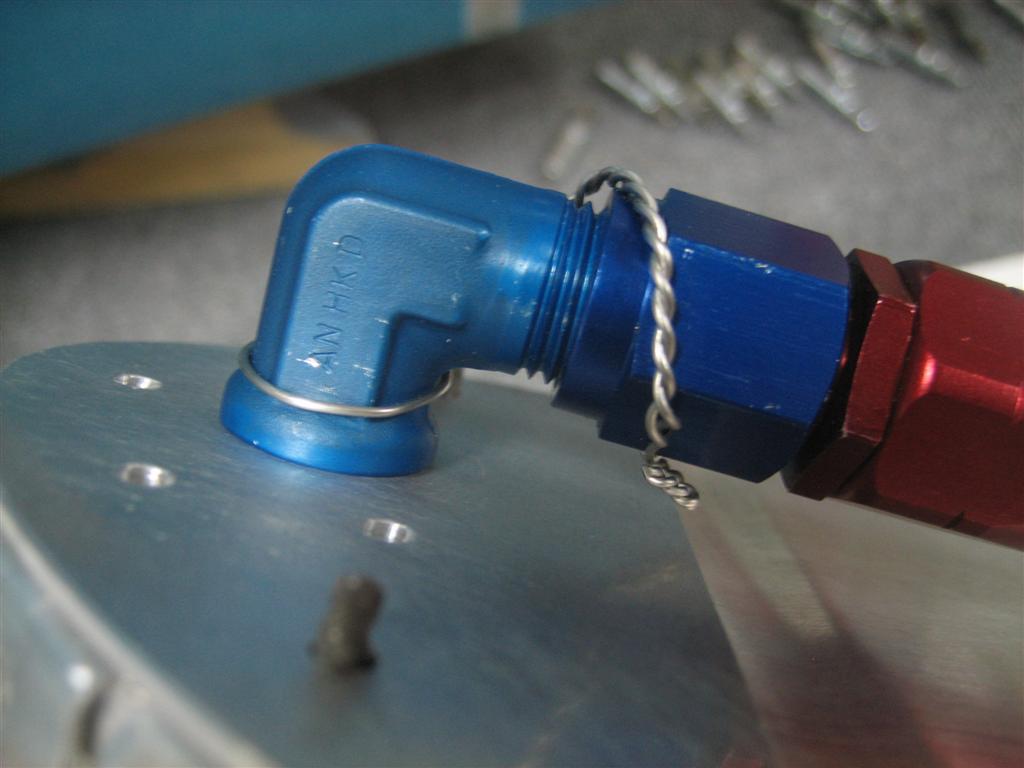
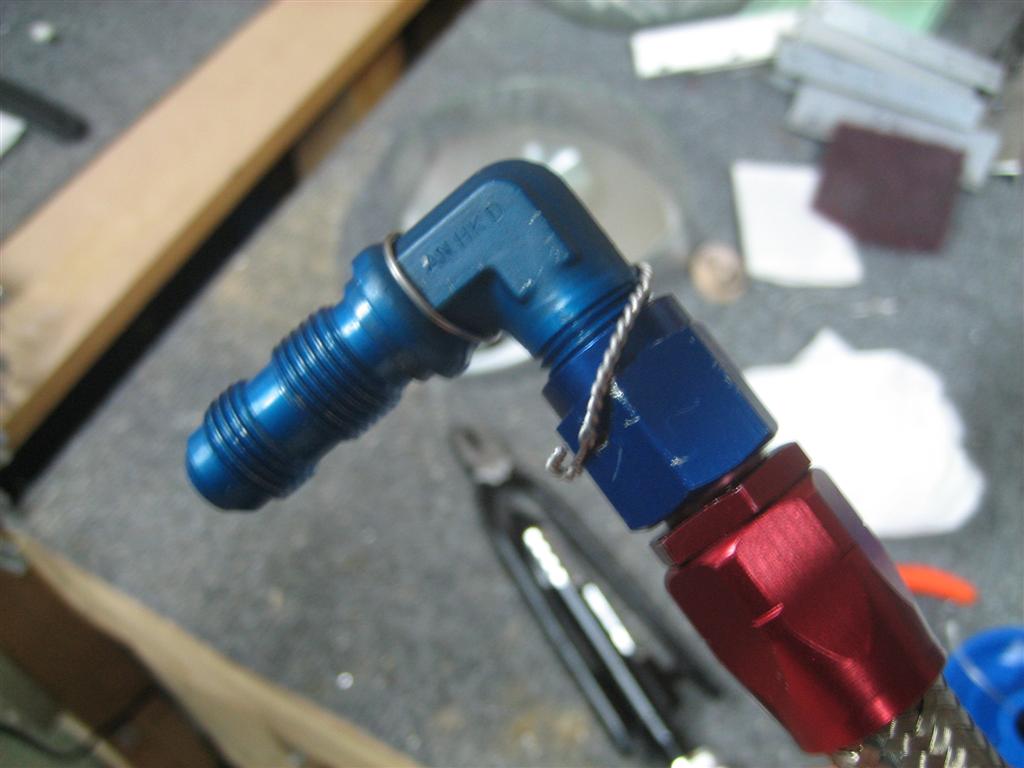
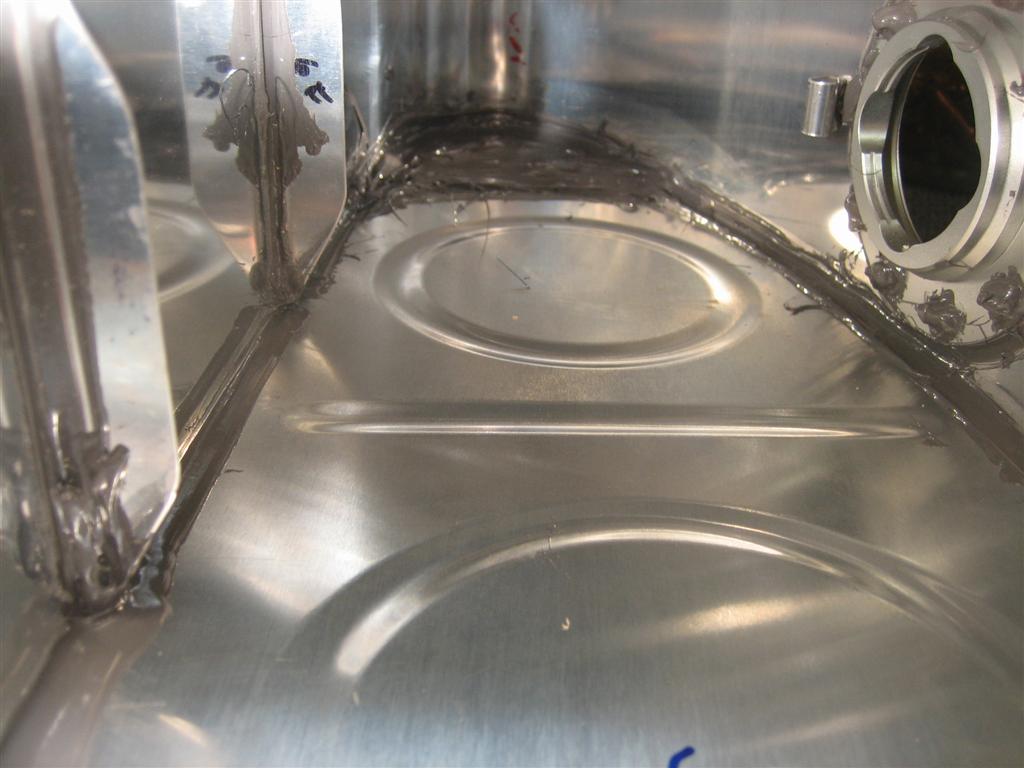
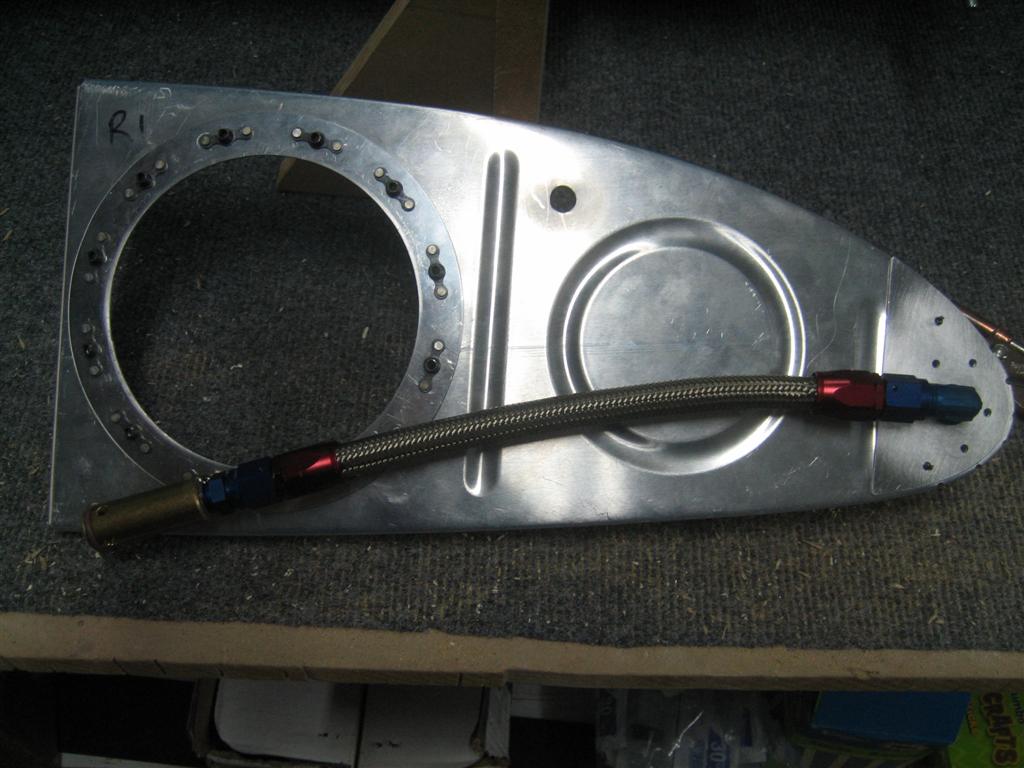
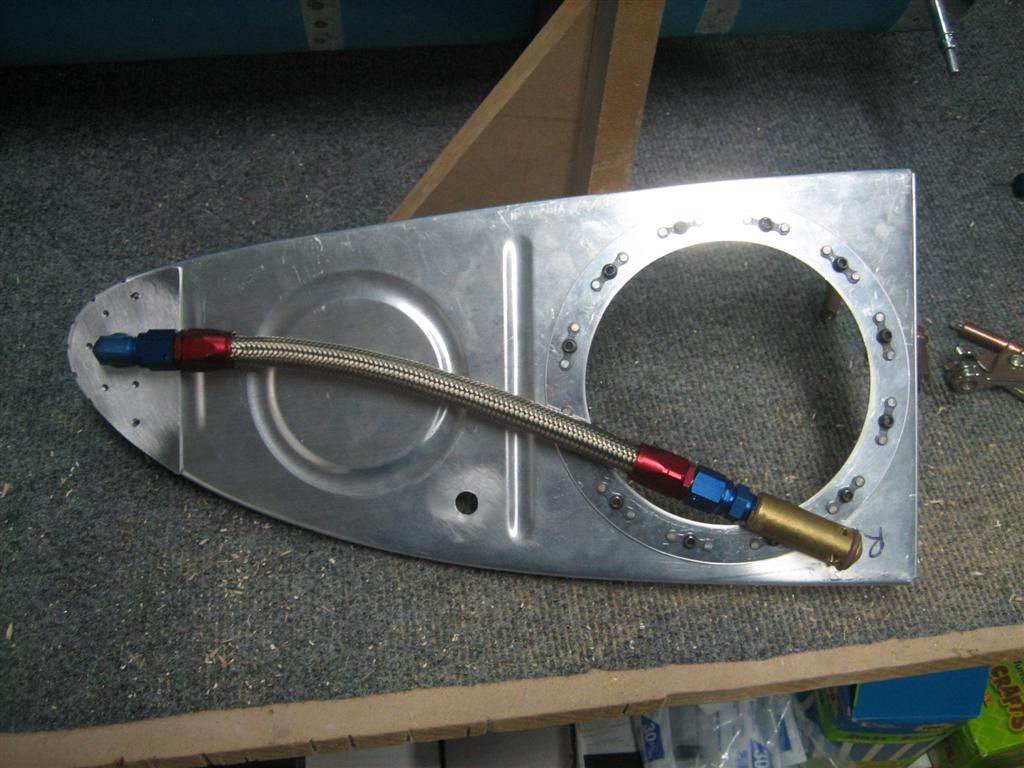
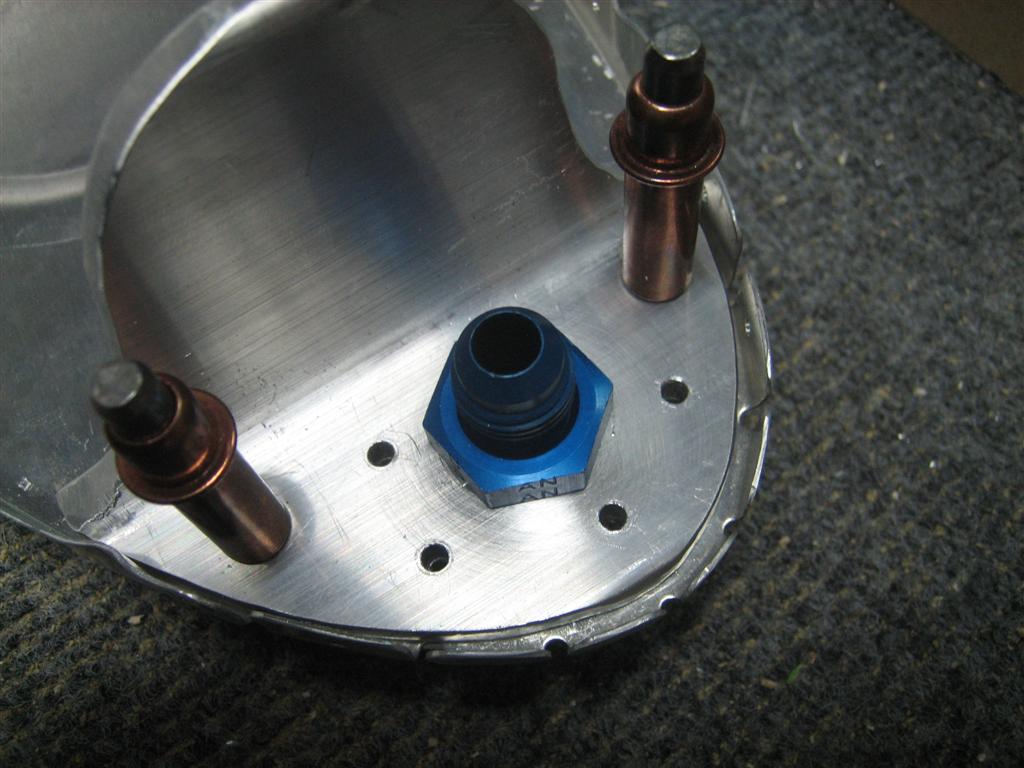
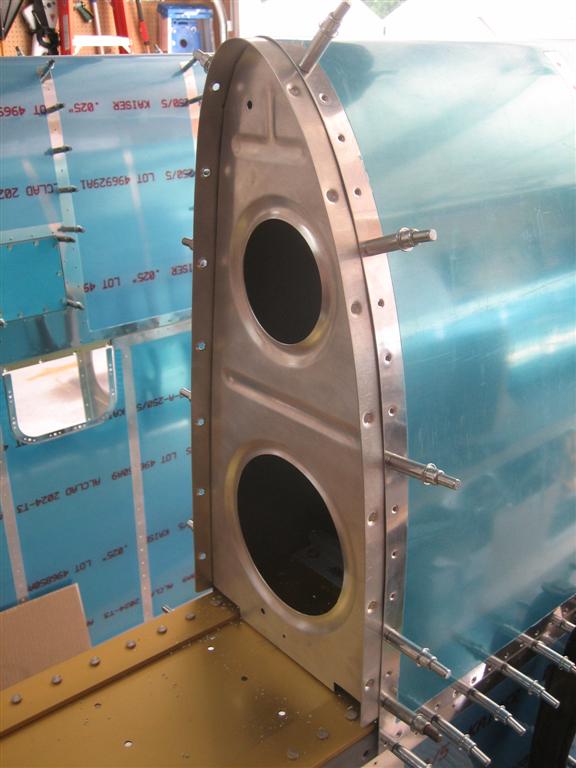
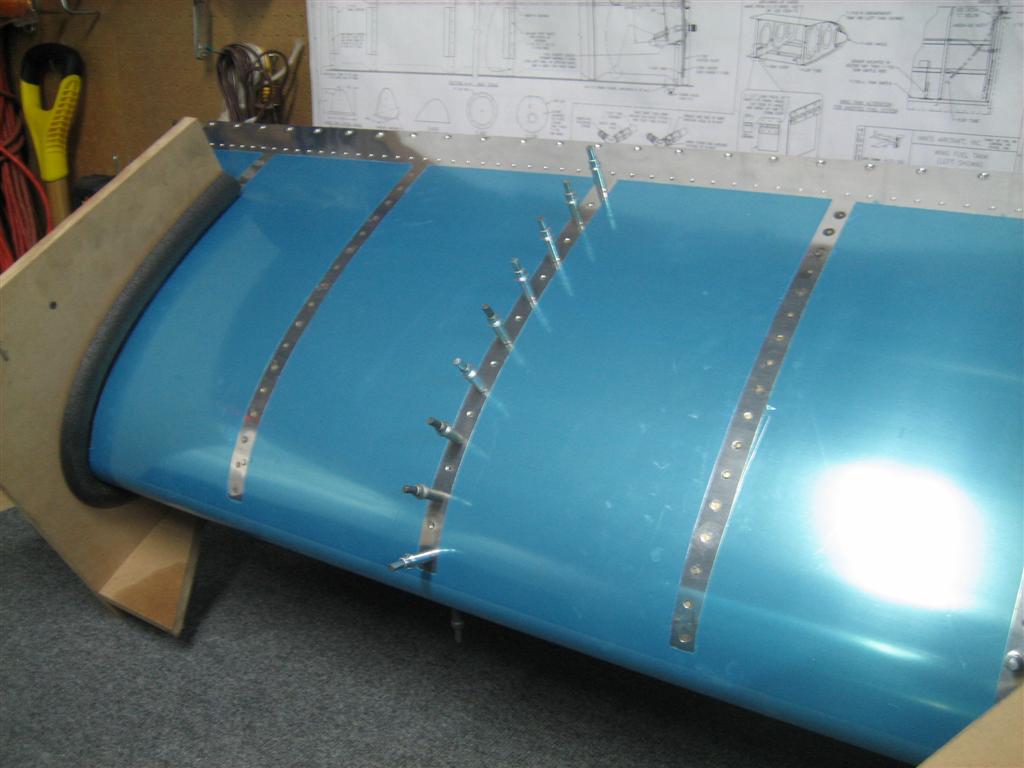
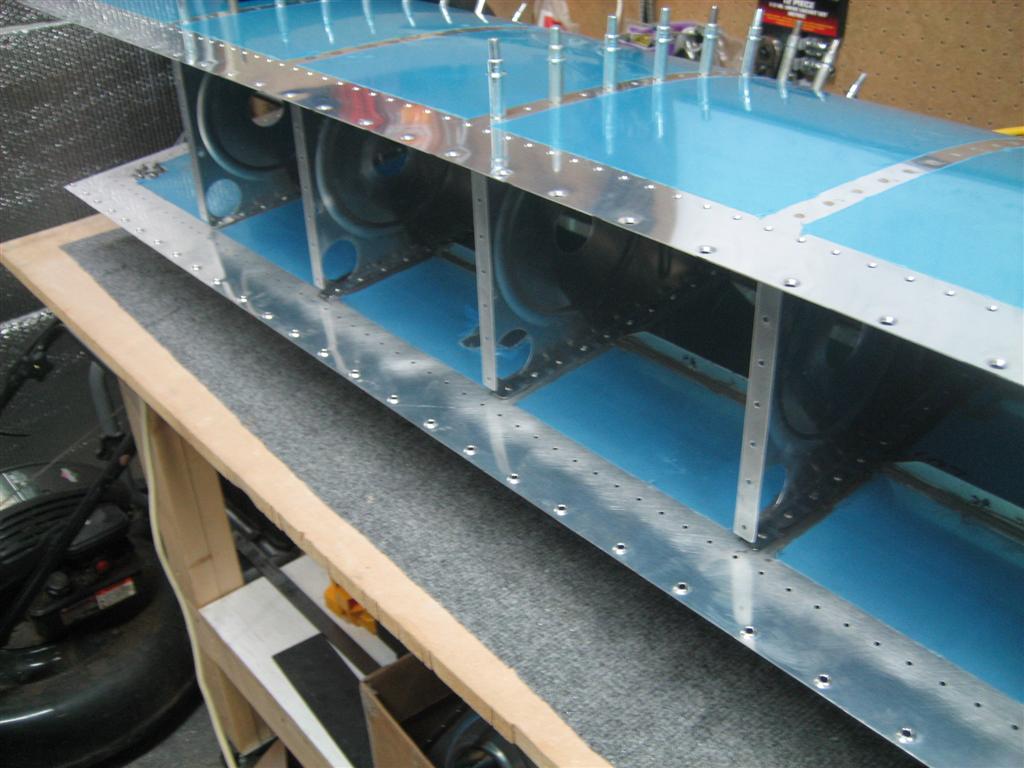
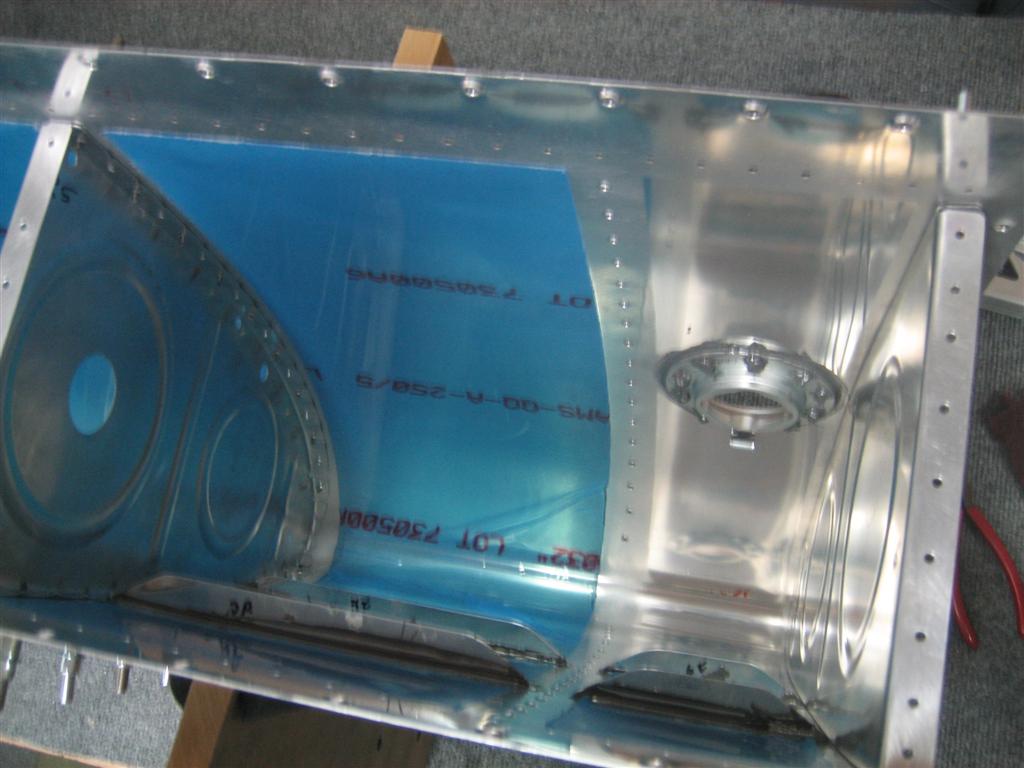
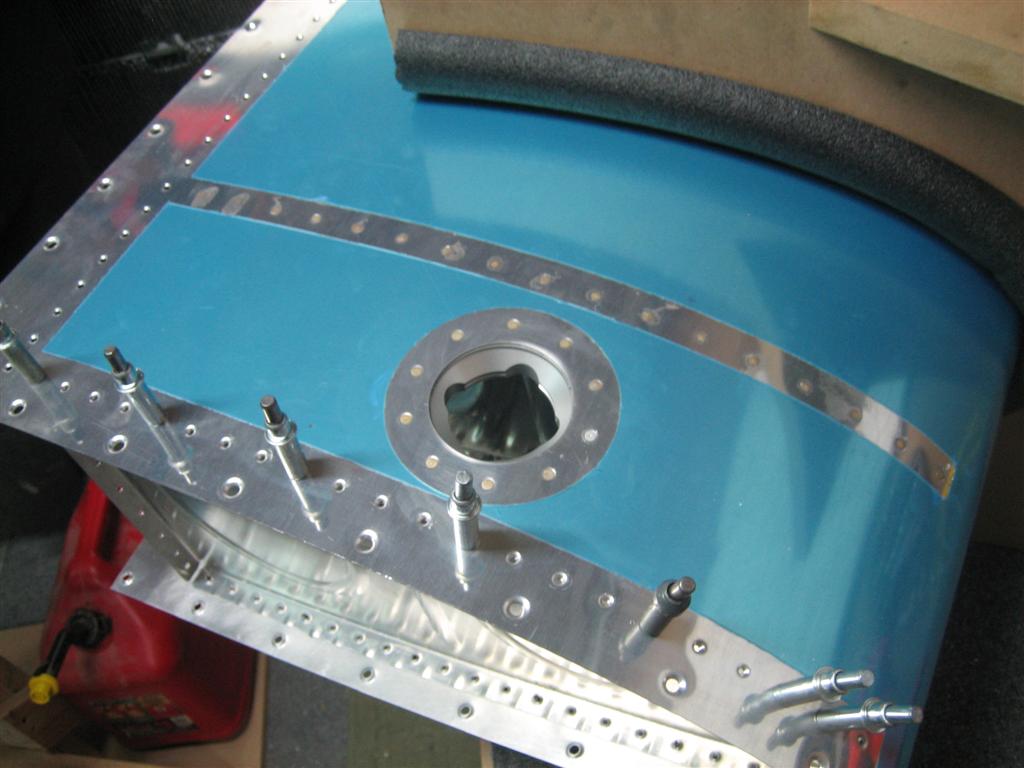
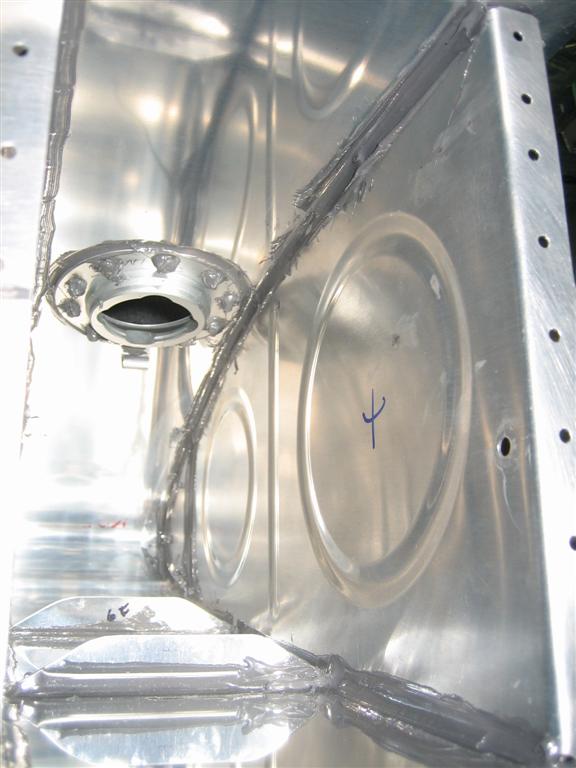
Fast forward another few minutes, and I got the flop tube installed with the -6 fitting on the inside and the nut on the outside, then I installed the vent tube (just flared) to the -4 fitting on the outside, you can see the aluminum washer and nut on the inside here. I made sure everything had a good bead of proseal around it before torquing everything down.
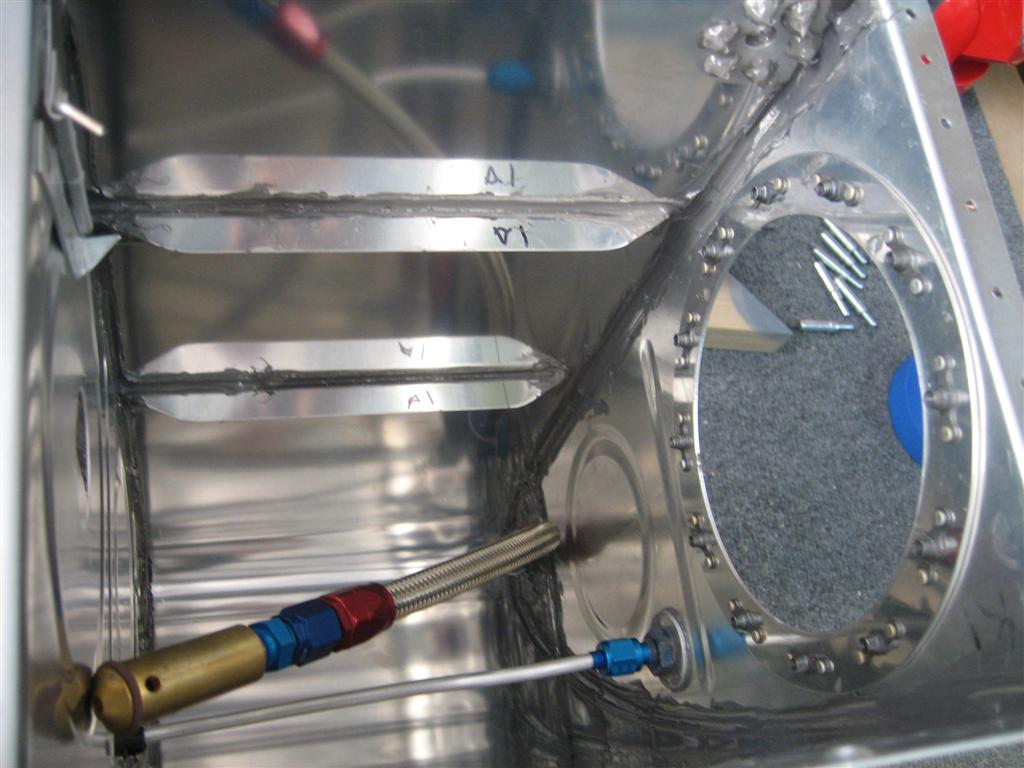
Nice.

All that’s left to do on the right tank is installed the anti-hangup brackets, rivet a An470AD6- rivet in the tooling hole of the outboard rib, and then close that bad boy up.

Oh, and fit the access plate with some stainless cap screws, instead of machine screws. More on that later.

2.0 hours. 43 rivets on the inboard rib. 6 rivets for the reinforcement plates. 1 drilled out (Easy as PIE!) Hope everyone had a good fourth. (It’s storming here. Boo.)

Prev | Next


Right Tank Plumbing

June 30, 2011

Prev | Next

Okay, so a little of my work this evening was actually done AT WORK today. (Don’t tell my boss.)

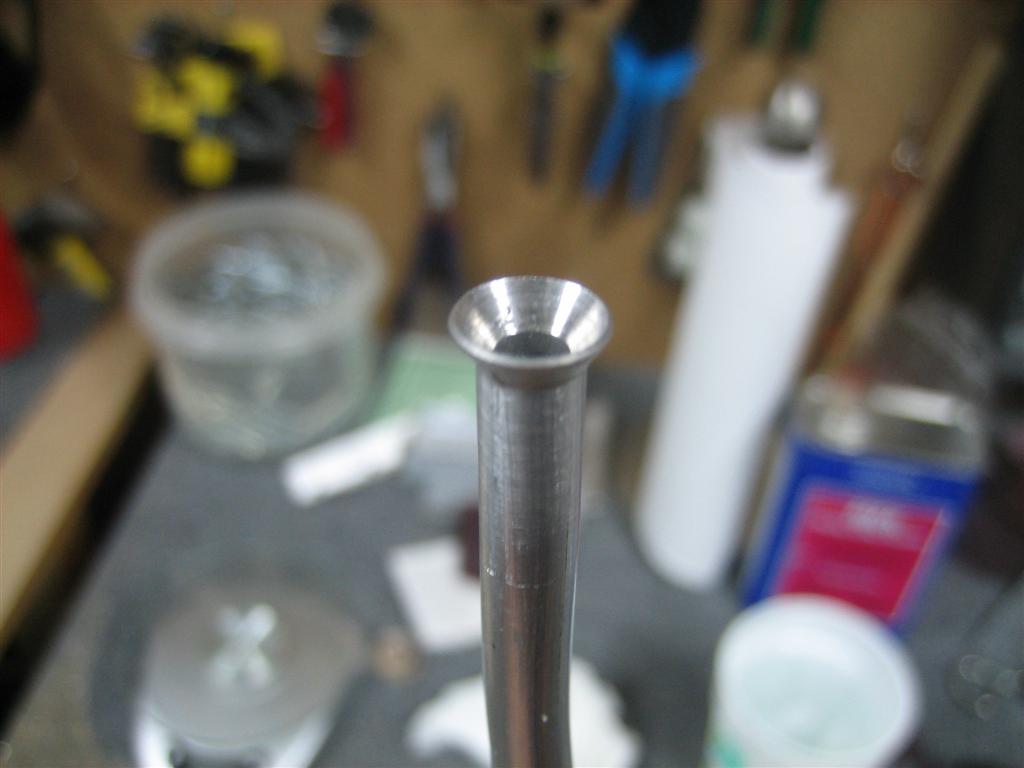
Since I don’t have a Parker Rolo-Flair (shouldn’t it be “flare”?), but we have a few at work, I asked one of my RV buddies from work to show me how he does it. So, I brought my prebent -4 tube into him, and he, well, showed me how to do it.

(I was going to buy a rolo-flair tool, but at $80, I don’t want to buy one until I really need one. I need this flare (see?) now, the one for the left tank in a month or so (more like 3 or 4), and then I won’t need one until working on the fuse and running fuel, brake, and vent lines. I don’t want an $80 tool gathering dust until then.)

Anyway, he showed me how to do it, with a little cutting oil on the flaring (see!?) cone.

Back home, this is what I ended up with.

(He also showed me how to roll the straight portion of the vent line, which I was having a heck of a time getting perfectly straight, on a countertop or flat piece of door. You roll it like a roller between your fingers and the countertop. I was inside doing it on the granite countertop while the girlfriend was making dinner. She said “Get your fuel line off my counter!”)

No, she didn’t. But it would have been funny if she did, right?

FLARE!

Next, I fed the vent line through all the snap bushings and slid the inboard rib with the -4 bulkhead fitting in place.

Looks good here.

How perfect were my measurements! Now I just have to bent the end up a little to get to the highest portion of the tank.

I copied Mike Bullock here, and used a wrench and another lever to bend it slowly upward.

Nice trick, Mike.

After repositioning the inboard rib, this sucker is at the very highest point.

Oh, I also did a little safety wiring. Then, thinking that I could unscrew the nut, and re-clock it to have a shorter, more sturdy safety wire run, I figured out that the nut only has one “entrance” for the threads, so the clocking is as shown only.
First try, which was perfectly acceptable.

Second try, after reciting the famous quote ‘perfect is the enemy of good enough.’

Alright, Andrew, stop messing with it.

0.5 hours. Time to start thinking about closing this bad boy up.

Prev | Next


Rivet Encapsulation on Right Tank Ribs

June 29, 2011

Prev | Next

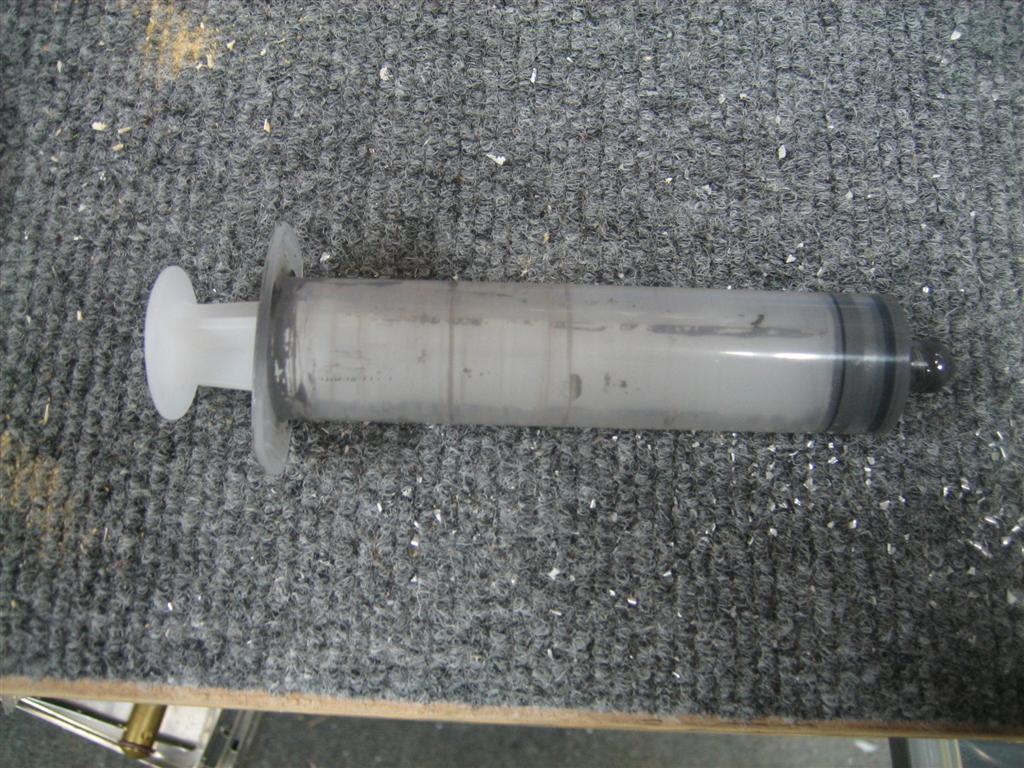
Well, not much tonight. I mixed a pretty big batch (55g) of sealant and stuffed it into one of the 30 cc syringes I bought from amazon.

After an hour of painfully reaching into the tank to do some rivet encapsulation, I ended up with all rivets encapsulated. (Well, except for the inboard rib…haven’t even riveted that one in place yet.

Some of these aren’t the prettiest, roundest globs, but I made sure I didn’t have any (obvious) paths to the rivet.

Another shot. I apparently took this one to prove to you that I did more than one rib.

I normally try not to use the flash.

The 55g of sealant in the 30 cc syringe did 6 of the 7 ribs in the tank.

There was a little bit left in my cup, but I’m calling it 55g for 30cc for 6 ribs.

1.0 boring hour.

Prev | Next


Last of the Interior Right Tank Ribs

June 26, 2011

Prev | Next

Well, between a puppy run, mowing the lawn, and a run to Lowe’s to get some house-related stuff, I managed to fit in a good three hours on the right tank.

First up, I unfurled some of the -4 tubing that’s provided (the tape said the roll from Vans was 19’) and tried to bend it as straight as I could. I notice in other’s pictures, it looks perfectly straight, but I couldn’t get mine that good. When you actually see a picture of it, let me know if you think it’s straigh.

Anyway, slid it in the installed ribs (after putting in some snap bushings), and cut it about an inch too long. Right before I install the last rib for good, I’ll final cut this, and flare appropriately.

Today’s goal, though, was to get ribs #2 and #4 done.

Here is rib #4 after being lathered in proseal, clecoed in, rivets inserted and taped over.

I like this part, because it means I’m about to set some rivets.

Here’s a shot from the other side showing some fillets. On this rib, I did the fillets before I set any rivets. Hopefully, getting those done now will prevent some of the proseal from getting on my bucking bar.

Nice fillets.

After banging away for a little, here are the rivets on the top of the skin.

Oh man, I hope it’s easy to clean off that proseal later.

…and the bottom of rib #4.

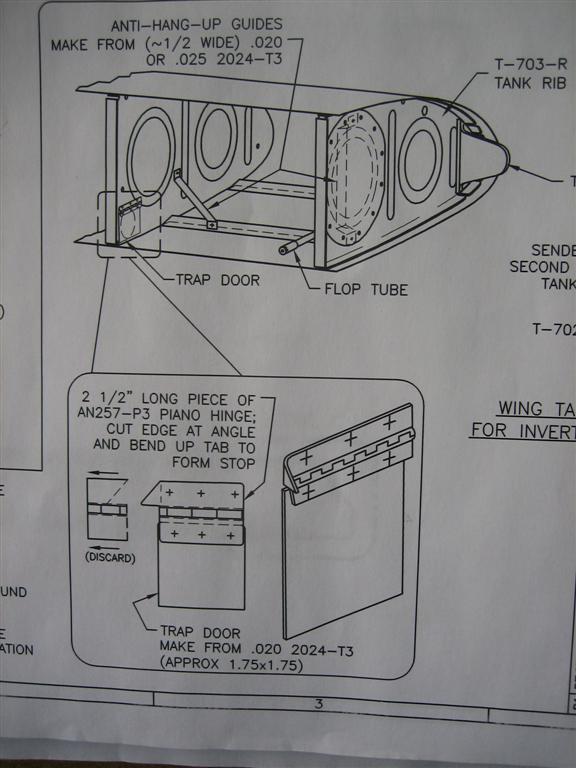
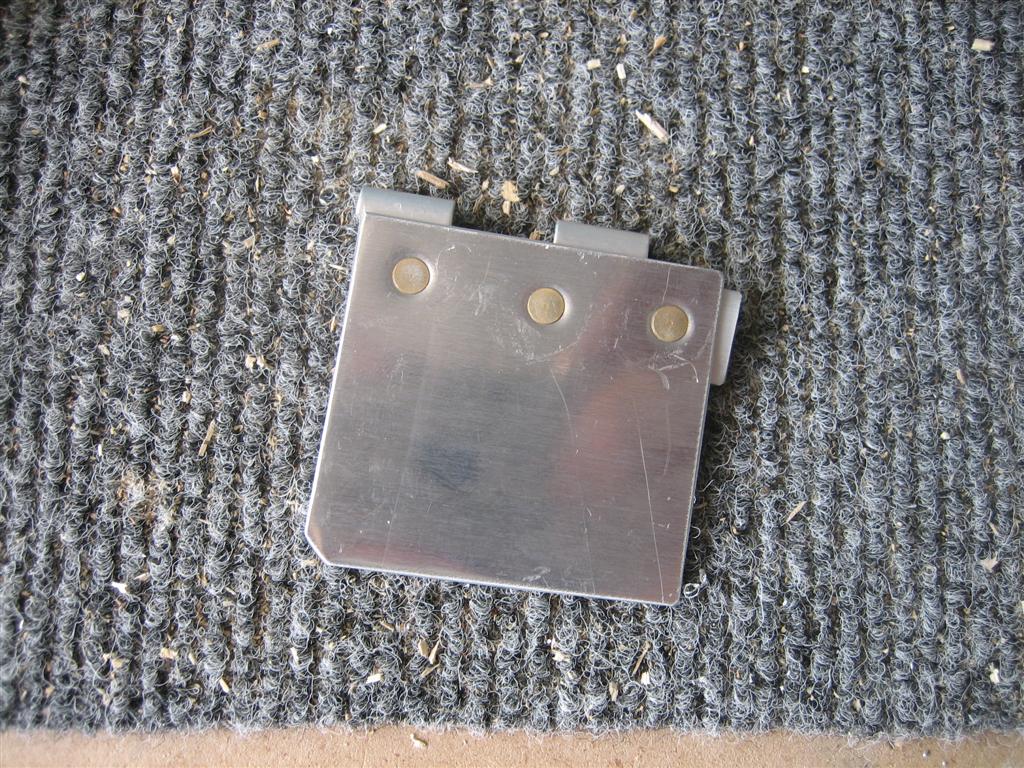
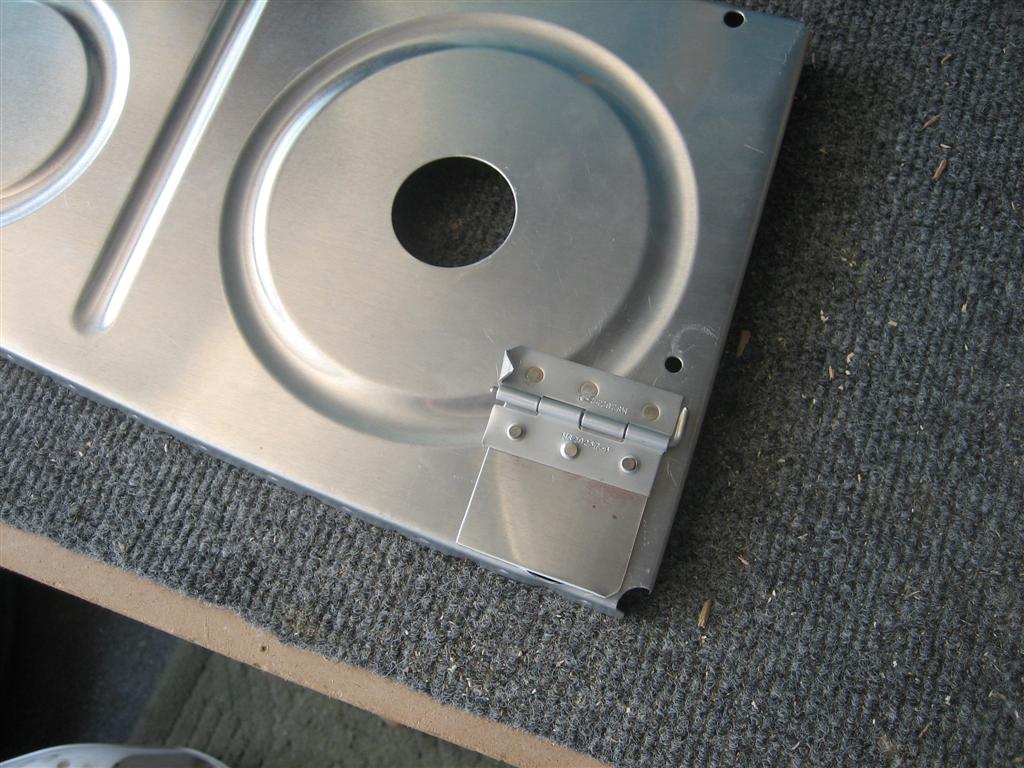
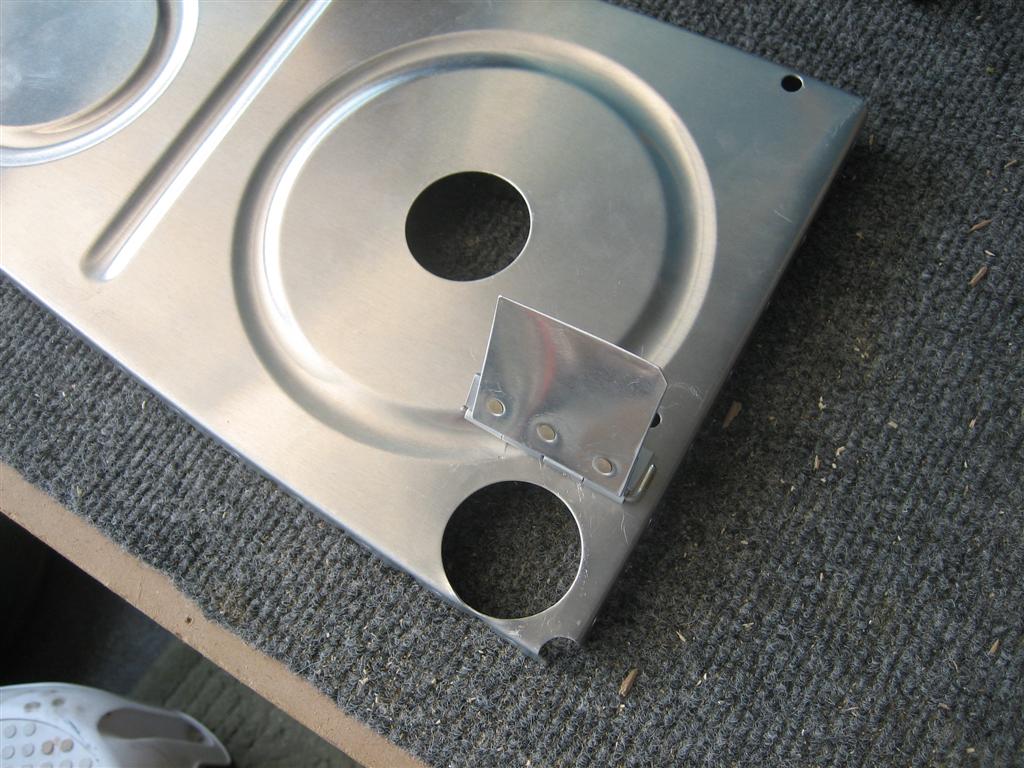
Before starting in on rib #2, I need to fabricate a little trap door. Basically, it will all fuel to flow from outboard to inboard, but when I roll one way or the other, the door will close and not allow fuel back outboard. (Fuel will still trickle out through some of the smaller holes, but enough should stay in the first bay to prevent fuel starvation for the short time it will take me to roll back upright.

The anti-hangup strips can be added later, but the trap door would be hard to do later.

I’m making the door from the bottom of the picture.

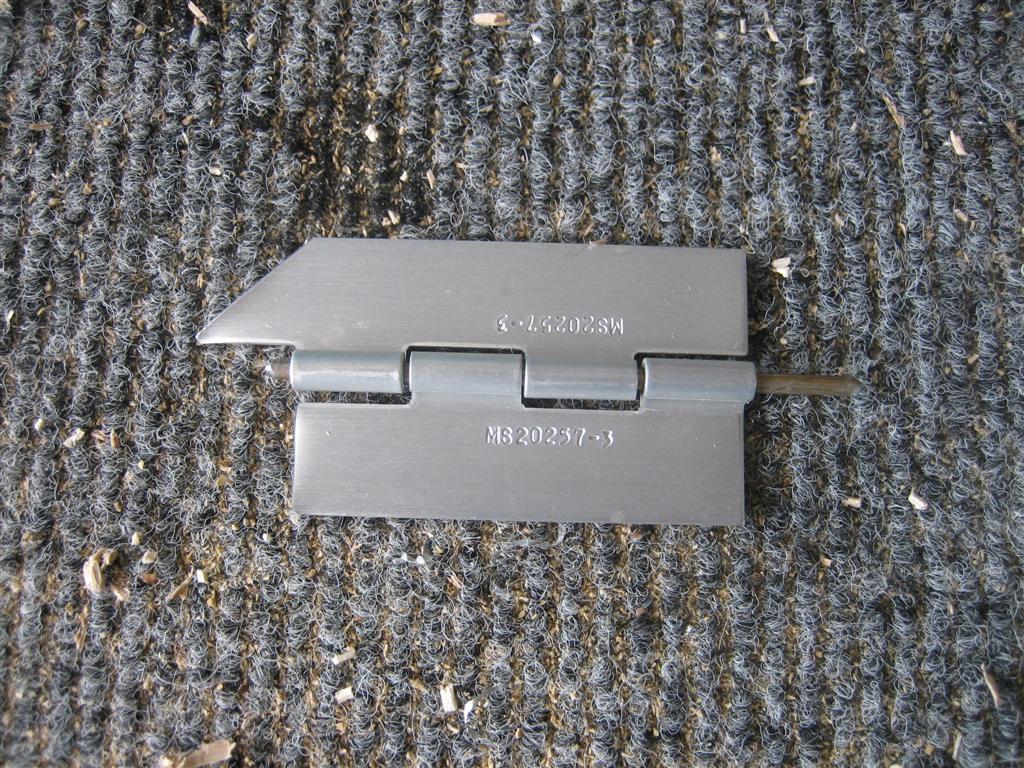
So, I found some extra hinge stock laying around, and cut it to make it look like the plans.

Hinge stock.

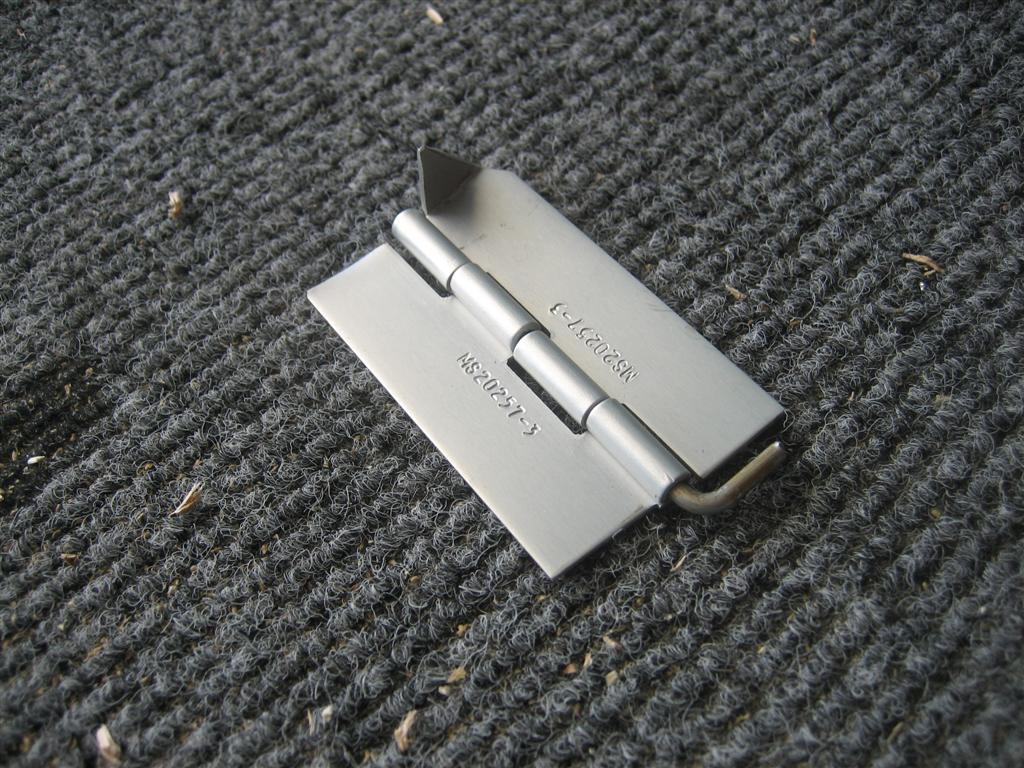
Then, I bent the hinge pin and triangle piece (which stops the door from opening all the way).

After some drilling, deburring, and dimpling, I set some flush rivets (so the door would close) in the bottom half.

3 rivets here.

Since I didn’t want to up the rivet size just so I could use a universal head rivet, I drilled the upper half of the hinge along with the rib to #40, then deburred and dimpled both.

3 more here. Trap door closed…

…trap door open.

Then, after having a HECK of a time getting the inboard rib clecoed in place (because you want to have the rib on either side of the one you are working on installed to firm everything up while you are riveting), I realized I was trying to cleco a dimpled skin into an undimpled rib.

Dumb.

So, deburred, dimpled, then tried again.

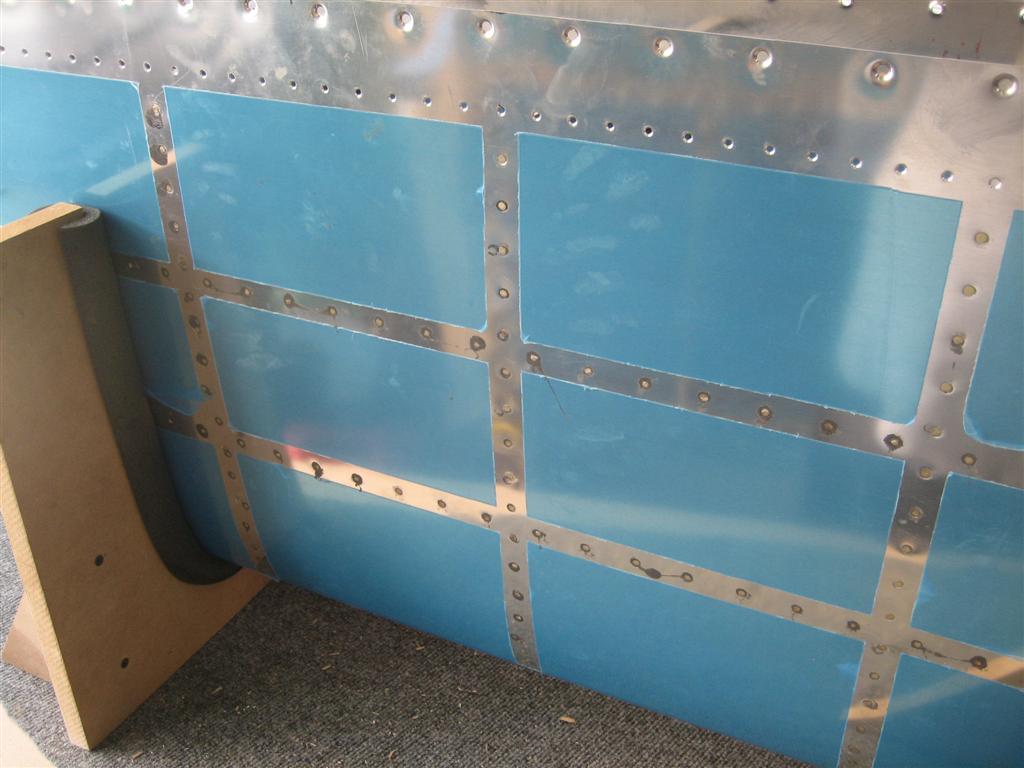
Much better. Here’s a shot after getting rib #2 cleaned, lathered up, clecoed, rivets inserted, and ready to rivet.

It actually wasn’t too hot out today. Having the garage door open was nice, although I’m pretty sure the neighbors think I’m crazy with the hearing protection, respirator, and gloves.

Speaking of gloves. This is the last one.

Don’t mess up, you only get one shot at this one.

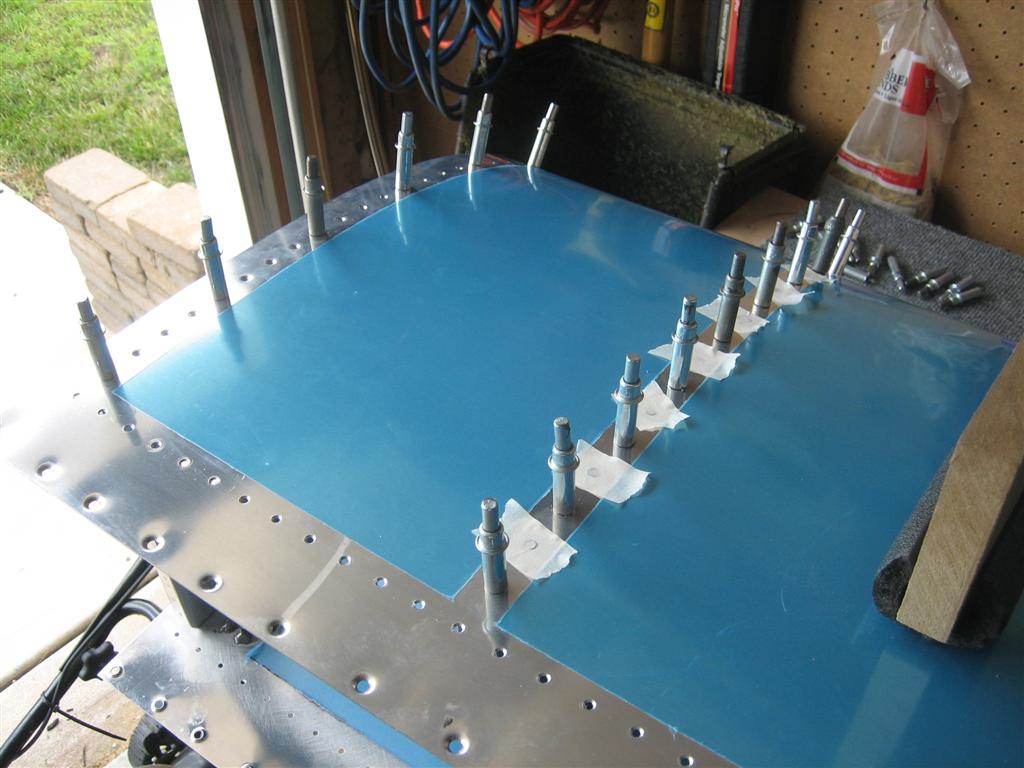
Okay, half the rivets set, insert new (cleaned) rivets, move the tape…
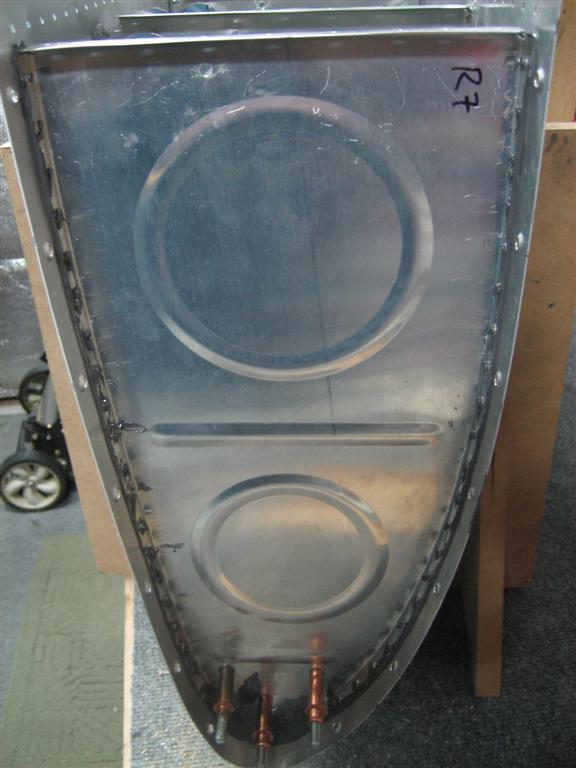
The grass on the other side of the driveway is nice healthy grass, I promise.

All done on the top of #2.

Bottom is done, too.

After taking a short break (to breathe fresh, instead of respirated, air), I pulled off the blue vinyl from inside the tank. This worked perfectly for me, even though some guys on VAF were skeptical and insisted everyone use electrical tape.

Baloney! (Is that how you spell that? I’m not talking about the meat “bologna,” I’m talking about the “you’re full of it” exclamation.)
Well, I didn’t pull the first bay’s vinyl off yet. I’ll wait till the inboard rib is attached.

3.0 hours. 34 rivets on each of the ribs, plus 6 rivets for the trap door. None drilled out. I am a riveting all-star. (Only one rivet drilled out in the last 8 building sessions. Nice.)

Prev | Next


Right Tank Outboard Rib Reinforcement Rivets

June 22, 2011

Prev | Next

Nothing special tonight. Just set these three rivets.

Uno. Dos. Tres.

Oh, then I started making sure I had a nice fillet of proseal on the interior side of the rib, and it just kept getting messier and messier, so I finally just buttered up the whole surface of the reinforcement plate.

The reinforcement plate is under all of that proseal.

Yikes. I came back to the exterior side and put dollaps on each of the rivet heads.

Messy. I need to stick with the syringe for rivet encapsulation.

0.5 hour. 3 Rivets.

Prev | Next


Outboard Right Tank Rib Sealed

June 21, 2011

Prev | Next

Me: “Alright, baby. I’m going to go try to build us a good airplane.”

(a few minutes pass…the the girlfriend peeks her head out the door.)

GF: “What do you mean you’re going to TRY to build us a good airplane. You’re going to take me thousands of feet in the air…”

Me: “MILES into the air!” (I interjected, just being a smartass.)

GF: “…and you’re going to TRY!?”

Me: “Okay, okay. I’ll build you a good airplane.”

Well, I guess I better concentrate then, shouldn’t I. First thing tonight, I wanted to work a little on the inboard rib assembly.

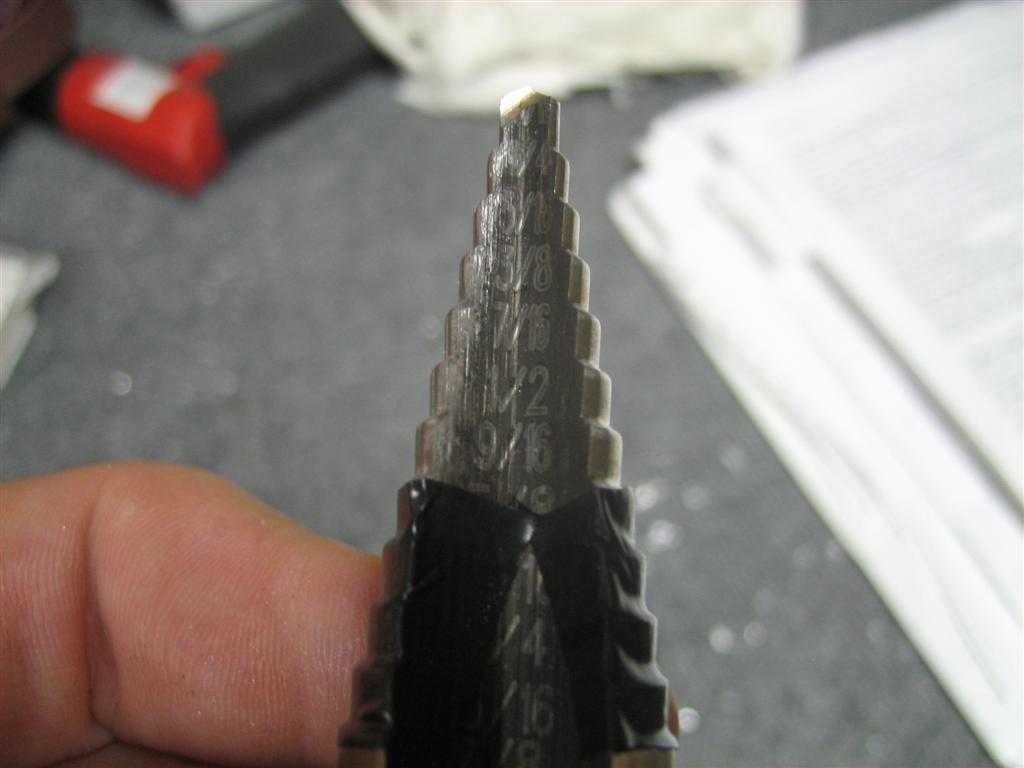
Because I don’t have a 9/16″ drill bit (and neither does Northern Tool and Equipment, Lowe’s, or Home Depot), I broke out the Unibit and taped off the 9/16″ level.

I know I can’t punch all the way through the three pieces near the nose of the inboard rib, but if I at least start the three, I can disassemble, then get the last layer by itself.

I love this unibit. I need to use it more.

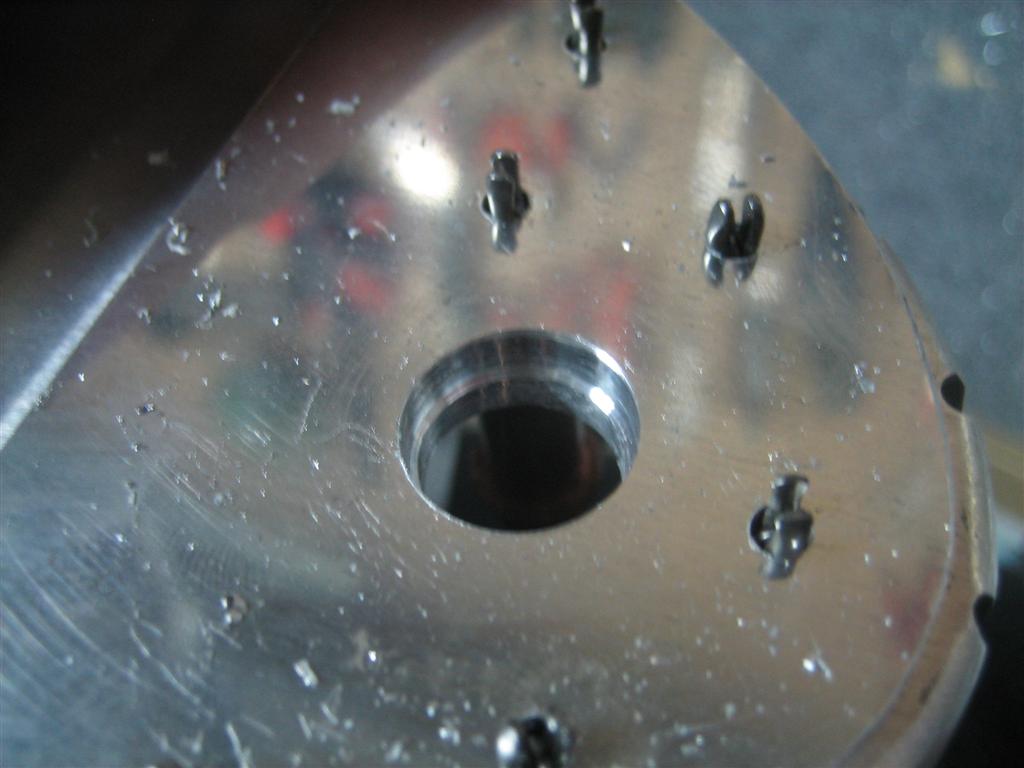
After chucking it into the drill press and working a little magic, I ended up with this.

This hole was 1/2", and you can see that I was able to get through the first two layers and start into the third with the 9/16."

Apparently I didn’t take a picture of the finished product, so this will have to do.

I quickly mocked up the flop tube just to see where I stand.

This is upright.

This is inverted. Looks like I'll have good fuel flow while upside down.

$10 says my mom reads this and adds a comment: “INVERTED!?”

Here's the other side, and my amazing edge distances. Booyeah.

Okay, I was planning on sealing rib #4 tonight, but I think I heard snoring from upstairs, so I better stick with something less noisy.

How about the end rib? Well. Van’s says to do all the interior ribs, then the inboard rib, then…well, they don’t really say when to do the outboard rib. The only reason I wouldn’t be able to do this now would be something about the vent line, but I can feed that in from the inboard side and then bend the tip up while it’s in place.

Let’s get to it!

First thing, since the outboard side screws into the joint plate on the leading edge, I carefully applied electrical tape where I didn’t want any sealant.

Hard to see here, I know.

Then, I buttered up the rib and 50% clecoed it in place. There are far more holes in the inboard and outboard ribs than the interior ribs.

Also, I drilled, deburred, cleaned, and sealed the T-410(?) reinforcement plate to the outboard rib. You can see the three #30 clecos here.

After some squeezing (no rivets drilled out, but one sitting a little proud…not going to mess with it), I pulled off the electrical tape and snapped this pic.

Uh oh.

I didn’t realize that I’d have to shoot and buck the three #30 rivets for the reinforcement plate. I’ll have to do that tomorrow.

Anyway, here is a gratuitous fillet shot of the interior side of the outboard rib.

I’m not happy with the fillet at the very front, but instead of mixing another batch of sealant tonight, I’ll redo it when I shoot those three remaining rivets tomorrow.

Other that the fillet up front, I am happy with the rest of it.

The lower skin. (I really hope this “no-MEK” thing pays off with no leaks.)

No leaks! (I think the not-100%-perfect rivet is like the tenth one down.) No one will ever notice.

And the upper skin. NO LEAKS!

NO LEAKS, PLEASE!

43 squeezed rivets.

I think tonight was about 30 minutes on the inboard rib, then 1 hour to seal the outboard rib.

I thought I was getting faster at these ribs. I guess not.

Prev | Next


Riveted Right Inboard Leading Edge Rib

June 20, 2011

Prev | Next

Now much to report tonight. I riveted the right leading edge inboard rib to the skin, along with the W-423 (?) joint plate.

15 perfectly set rivets here (on the bottom side of the skin)...

and 14 perfectly set rivets on the top.

29 rivets, 0.5 hours. It don’t get no better than this.

Prev | Next


Two More Right Tank Ribs Sealed

June 18, 2011

Prev | Next

Today was a busy day! Even though I’m logging all the time today as on the fuel tanks, I did spend just a couple minutes on the leading edge.

First thing, I deburred and dimpled the inboard leading edge rib, then fit it back in place on the leading edge, this time WITH the joint plate.

Looking good.

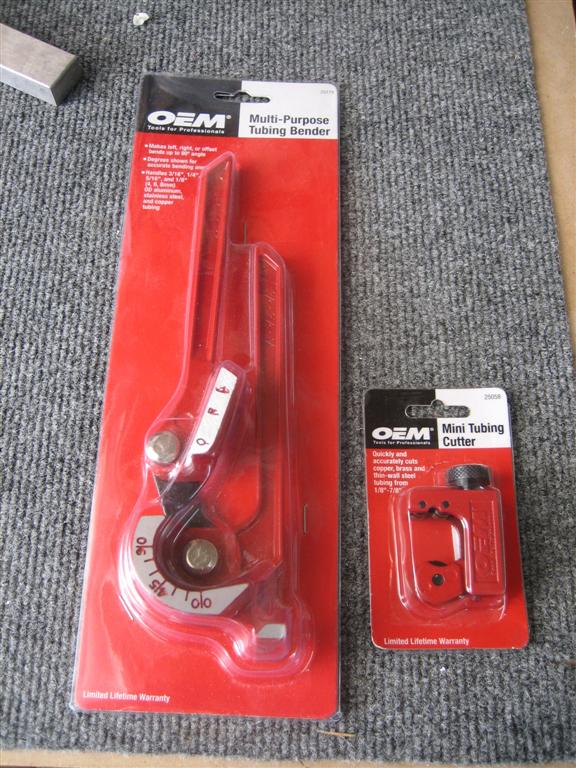
Oh, while I was in autozone today, I grabbed a tubing bender and mini tubing cutter.

These should work.

After much reading, deliberating, gnashing of teeth, and hand wringing, I decided to bite the bullet and add a fuel return line.

Not very many fuel injection systems require it, and if I got with the ECI injection (which is supposedly very nice), they say you can just add a bulkhead fitting to the inboard bay, but I think I’m going to run a -6 line to the second bay.

As of a week ago, I had decided I was not going to add any injection system that required return lines, so we’ll see how I feel in another week.

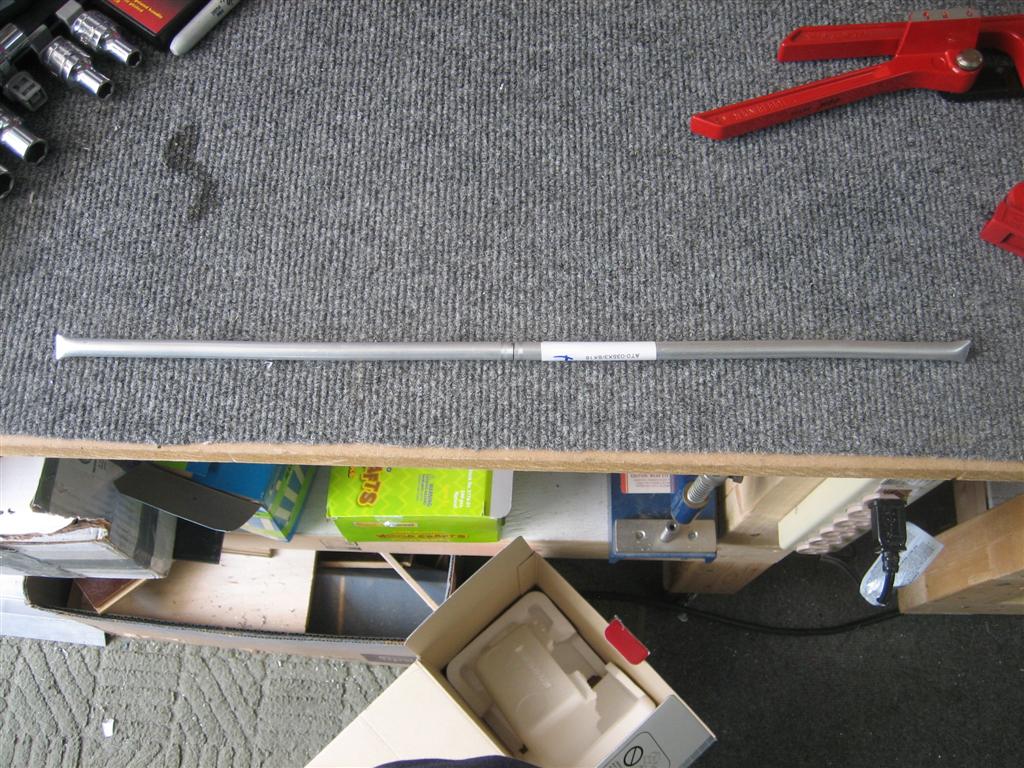
Anyway, I was milling about the parts under my workbench when I came accross the standard rigid pickup tube that Van’s provides. Since I’m using flop tubes, this is scrap, so I held it up against the tank, and figured out it would just make it over to the second bay. Wuhoo!

I guess with the normal pickup, they crimp the end and you make saw cuts in the side of the tube as the actual pickup.

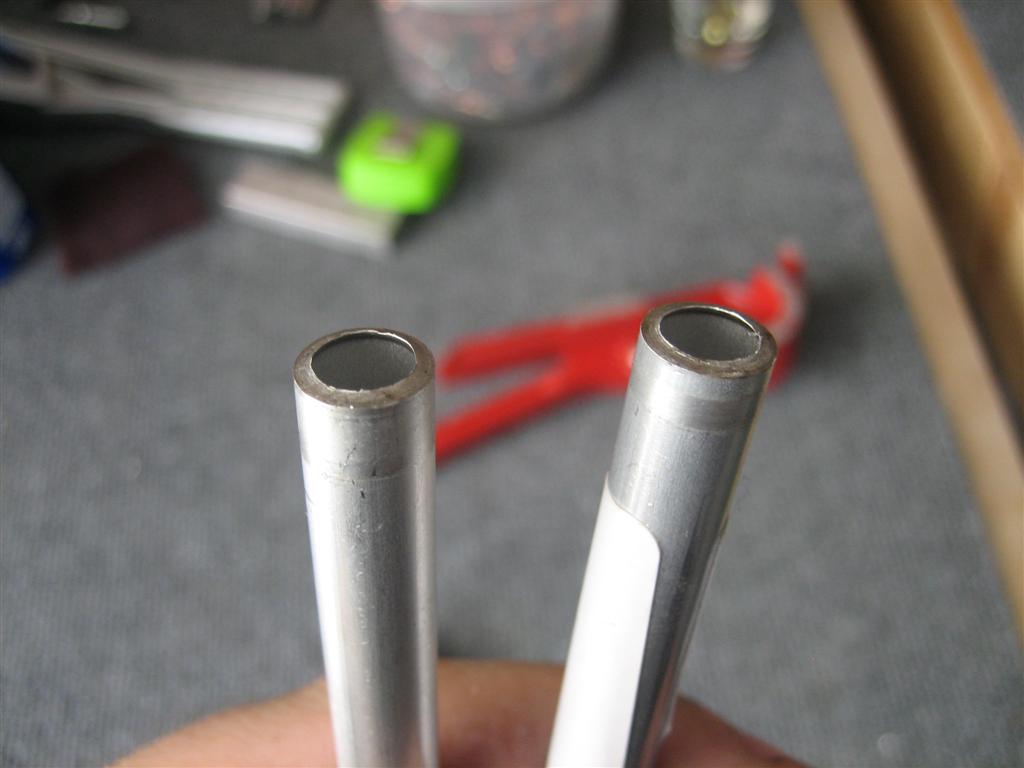
First, let’s get this thing cut in half.

Not bad. Needs deburring, though.

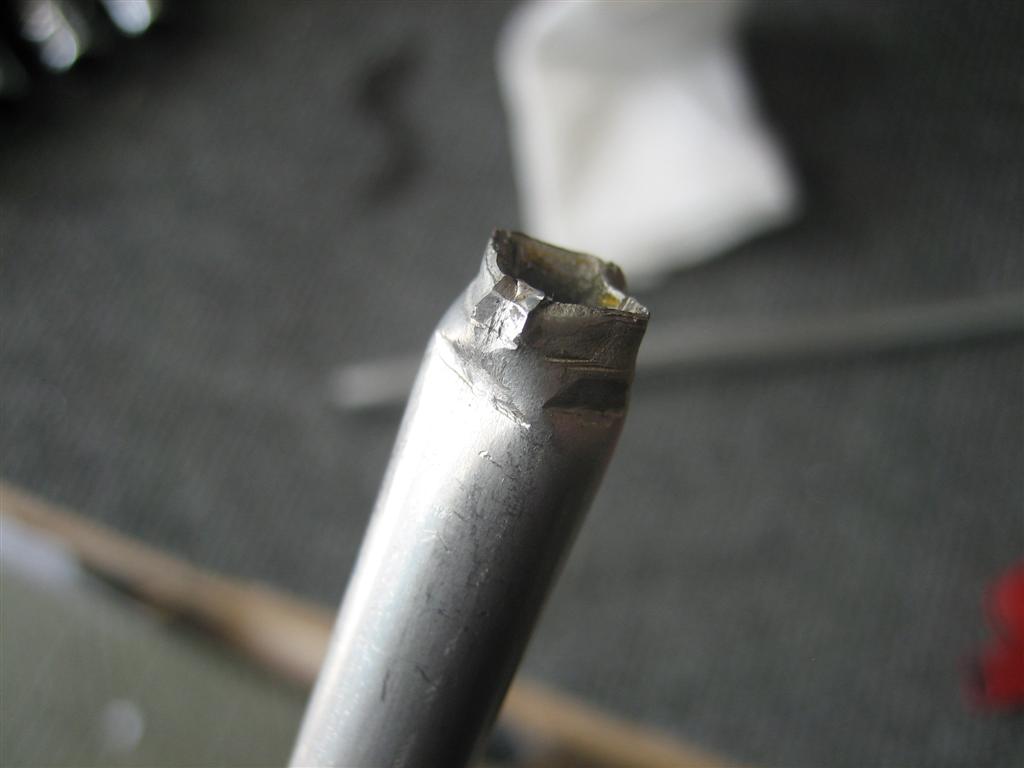
Then, let’s uncrimp the other side so the thing will fit into the cutter (I want a fresh cut on both ends).

Yikes.

Of course, I made a fresh cut on this end too, then deburred both sides, and promptly put the tubes away before taking any more pictures. Sorry.

On to some tank ribs.

After the usual cleaning and preparations, I buttered up rib #5 and clecoed it in place. Here are some undriven rivets with tape on the heads, ready to be set.

Ready for riveting.

I went light on the pictures today, sorry. Here’s rib #5 and #6.

I still don't like the proseal on the outside of the skins, but I'm trying not to have any leaks. I hope the razor blade trick works.

Then, I repeated the whole process for rib #3.

...and my trusty rivet gun.

A picture of the top side.

Nice, except for the very last rivet I shot, which is on the lower right corner. Ding city.

Starting from the (invisible) rib all the way to the left, I did ribs 2 and 5 today.

Still need some rivet encapsulation, but overall, a really good day. 34 rivets times 2, none drilled out.

Oh, and 3 hours. (It really only took me one hour per rib, but I was messing around with the leading edge and the fuel tube stuff.

Prev | Next


Right Leading Edge Inboard Rib Redux

June 17, 2011

Prev | Next

Since I’m out of MEK and I didn’t get a chance to stop by the store on the way home, I decided to work on the new inboard leading edge rib I ordered for the right side. If you remember back on May 13, 2011, I discovered that by having the inboard face of the rib lined up with the edge of the leading edge skin, the drilled holes ended up being too close to the web of the rib. (See this picture specifically.)

Anyway, let’s see if we can’t get a better alignment.

First thing, I kinda-sorta set the rib in place and just made some small marks where the holes would be. This is so I could pull the rib back out and flute it appropriately before drilling.

Marks made.

After edge-finishing and fluting, I stuck the rib back in place where I wanted it, then started matchdrilling.

A few notes:

  1. Since the leading edge skin was dimpled, I didn’t include the W-423 (I just made that part number up) join plate. The rib and skin fit was secure enough that it’ll work out.
  2. I ended up lining up the outboard face of the rib web with the skin edge (make sense?). Said another way, the rib sticks out a little further than the skin.
  3. If it happens to be May 13, 2011 and you discover that your rib drilling on one wing didn’t work out, AND you did both wings the same way, you should probably order both inboard ribs again, instead of waiting until June 17, 2011 (TODAY!) to check the left wing. Doh! I messed that one up too. Now I’ll have another one of these.

Drilled.

Finally, I clecoed the leading edge on the wing (I don’t know why you can’t see any clecos here), made sure my x’s from earlier still lined up over the tiedown hole, and drilled a 3/8″ hole for the tiedown ring.

Drilled.

I still need to tidy it up a little, and probably go to 7/16″ instead of 3/8″ (the tiedown ring is 3/8″), but I’ll leave that for another day.

0.5 hour.

Prev | Next


One Right Tank Rib Done

June 15, 2011

Prev | Next

Well, instead of working on the two end ribs, I decided to bite the bullet and get started on the interior ribs. First step was to remove the target rib (I’m choosing #6 as the first one), get the skin and rib perfectly clean, and get the proseal ready.

Here’s the skin, ready to receive its first rib.

I left the blue vinyl on because it's been good mess control for me. YMMV.

After mixing 1.0 oz of white stuff with 0.1 oz black stuff, you get some goopy grey stuff!

All buttered up, ready to go in the skin.

Okay, this paragraph represents about 45 minutes worth of work with gloves on, and therefore no pictures. I clecoed the rib in, then removed a cleco, inserted a clean (MEK soaked) rivet, covered it in tape, then riveted.
This is the bottom of the tank after getting all of those shot and bucked.

You can see the squeezeout, and I'm trying to leave it alone until later.

Repeat that for the top, except I had one rivet sitting proud.

Bummer.

After drilling out carefully, finding the shop head in the tank, and cleaning up again, I came out with this:

All fixed..

Nice.

Here’s a shot of my fillets (but no rivet encapsulation yet). I have to get a syringe out for that, and I don’t want to waste a syringe unless I know I can do a few ribs at a time. I may just wait until I can do all the ribs at once.

From the right...

From the left...

And, during final cleanup of my tools tonight,

All gone.

1.0 hour, 34 rivets, 1 SUCCESSFULLY drilled out.

Prev | Next