Brainstorming External Lights Switch Layout

January 16, 2011

Prev | Next

I’m planning (AeroLED) strobes and position lights, taxi lights in the wingtips, and HID landing lights in the leading edges.  The taxi lights will be the ones to wig-wag.

I’ve set the switch layouts up for flow, both in before-flight and approach-to-landing phases. Let’s look at those:

Before Flight:

  1. Strobes ON before engine start.
  2. Position ON before taxiing.
  3. Taxi lights ON before taxiing.
  4. Landing Lights ON before taking the runway.
  5. Wig Wag taxi lights ON either before takeoff or on climbout (wig wags are primarily for traffic/recognition)

Approach-To-Landing (VMC):

  1. Strobes ON (on the entire flight)
  2. Position ON (on the entire flight)
  3. I’ll turn Taxi, Landing, and Wig Wag lights on prior to entering the terminal area. (No impact to switch placement, they can all be next to each other.)

Approach-To-Landing (IMC):

  1. Strobes OFF (because we’re in the clouds and they reflect off the clouds and distract)
  2. Position ON (on the entire flight, even in the clouds)
  3. I’ll turn Strobes, Taxi, and Landing  lights after breaking out of the clouds.
I won’t really need Wig Wag on an IFR flight plan if I’m breaking out of the clouds on an approach, but it couldn’t hurt, and it’s easy to just turn on ALL of the external lights once I’ve broken out.

So, my two choices are a 5-switch setup and a 4-switch setup.

5-switch setup.

This is great for EVERY flight’s checklist flow from Master ON to climbout.

Given that my taxi lights are going to be the ones wig-wagging, I’m nervous about hooking up wig-wag downstream of the taxi light switch (taxi must be on for wig wag to work.)

For example, let’s look at cruise flight. I want to wig-wag for a traffic call just received from ATC. I don’t want to have to flip on the taxi lights, then jump over to the wig wag switch (if wig-wag was wired downstream of the taxi switch). I just want one switch throw. This means if I go with the 5 switch setup I’ll probably wire the wig-wag switch in parallel to the taxi light switch. (Wig-wag will operate regardless of taxi light switch position). That means I get flashing lights with one switch throw.

Seems reasonable, but I also like combining switches where it makes sense.

4-switch setup.

In this case, I’d have to be careful to only go halfway with the switch (which everyone overshoots with 3 position switches, especially in turbulence) for taxi lights only and I’ll have to jump back to the taxi light switch to WIGWAG either before takeoff or on climbout. (I don’t like jumping back over, but I may be able to live with it given the panel space I might be saving.)

If I get an ATC call for traffic while in cruise, I would only need one switch flick; all the way up to wig-wag.

This saves space and a switch, but I don’t really like the vertical TAXI indication and the jumping around during the before takeoff flow.

I think while typing this that I’ve talked myself into the separate function wig-wag switch. Takes more panel space, but I’ve got it already planned there. It may be a little confusing having the taxi lights controlled from two separated switches, but I think pilots only care about the function. Either Taxi, Landing, or Wig Wag. Turn on what you want.

I’ll keep thinking about it, but I think I’m going to go with the 5-switch setup.

(My HID landing lights are showing up soon, hopefully I’ll have a nice post on operation, brightness, and electrical requirements. Stay tuned.)

Prev | Next


More Right Wing Main Rib Preparation

January 13, 2011

Prev | Next

Not much today, just more right wing main rib preparation. I thought I was going to be able to finish all the prep on the right main ribs, but I got distracted and only got a few of them prepped (and not even all the way to priming).

First, I opened up my two new packages of maroon scotchbrite pads.

I think it was about $10 for both at Napa.

I cut one of the packages into my usual ~3″ squares.

I can get 6 squares from one layer...that makes 18 squares. per package.

I don’t know if you can tell, but I usually try to find a little package of work that leaves me heading back inside with a nice sense of accomplishment. It worked really well last week to do three ribs in an hour, all the way to primed and ready to install.

Today, I was working on 7 ribs, and got all 7 deburred (holes only), and about 4 of them scotchbrited.

Stupid ribs. Taking up all of my build time.

Next session, finishing up the scotchbriting and then deburring the crevices, then hopefully priming.

Then, lucky me, I get to start on the left wing main ribs…

1.5 boring hours today.

Prev | Next


Riveted Half of Main Ribs to Right Main Spar

January 9, 2011

Prev | Next

Well, I needed a break from all of that rib preparation, so I took the seven ribs I had done for the inboard half of the right wing and got started riveting them to the main rib (Most people start with the main rib, because you can bend the ribs a little out of the way of the rivet gun while you shoot and buck.)

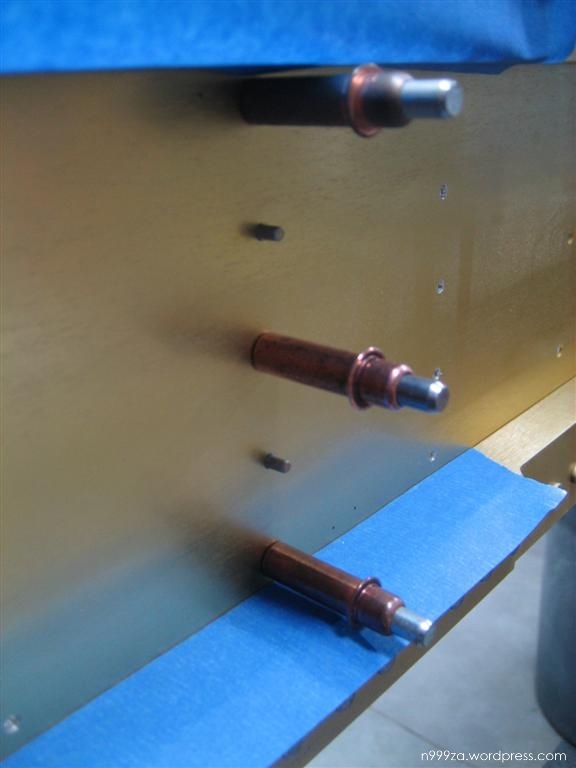
Here are the first two rivets in place, ready for shooting.

Per the general builder consensus, you should start with the 3rd rib. (3rd, 2nd, and 1st rib flanges all point inboard, so having the 2nd and 1st in the way would not be fun. If you start with the third, you can easily reach the forward flange.)

The right spar here is upside down.

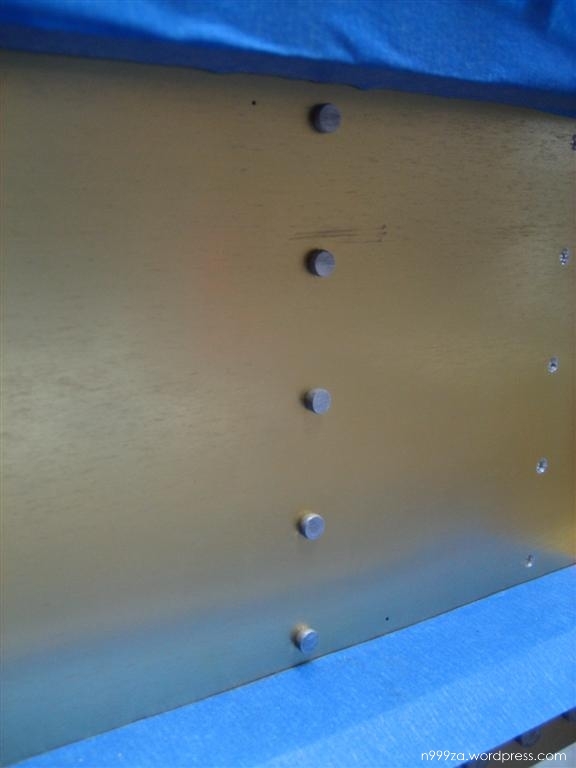
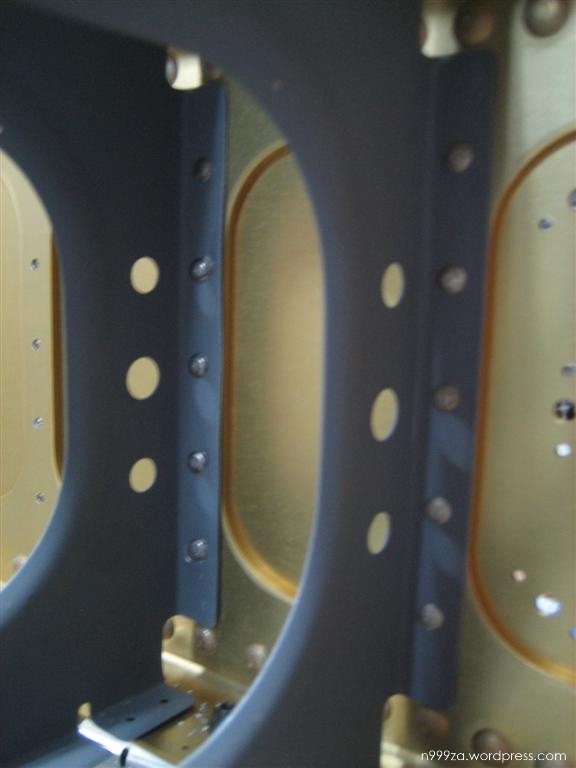
After the first five rivets…

(That mark above the 2nd from the top is a tape mark.)

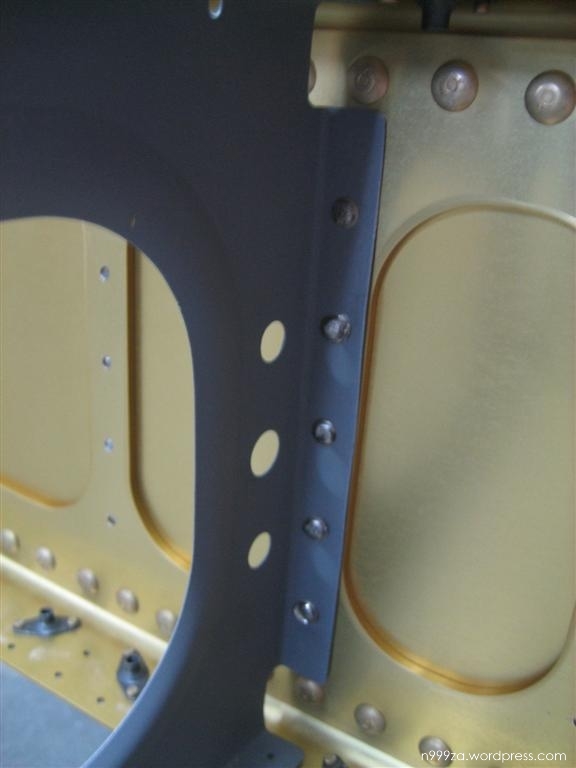
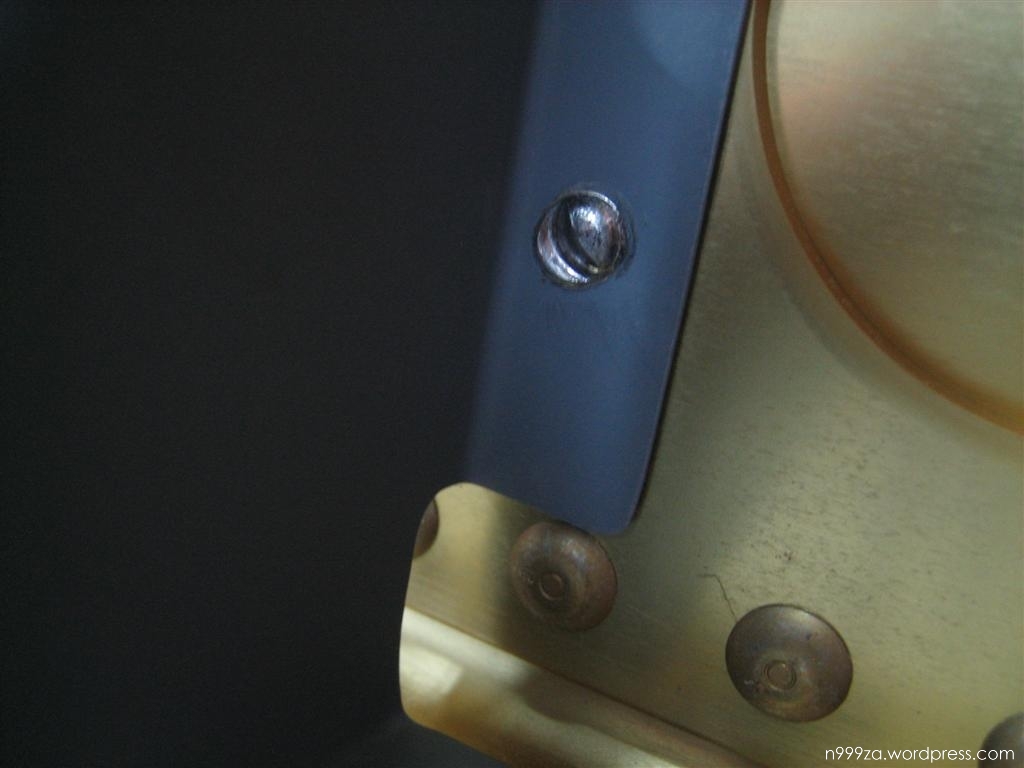
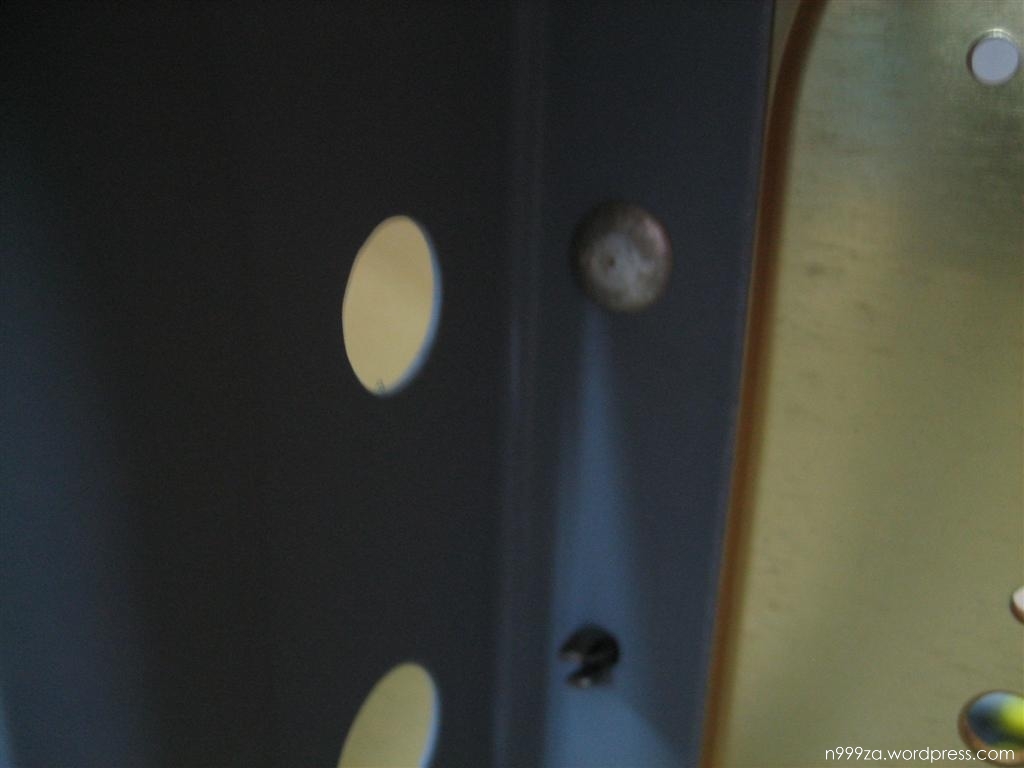
Whoa, that bottom rivet head doesn't look to good.

Let’s get a little closer…

Crap. This was the first one, too. Bummer.

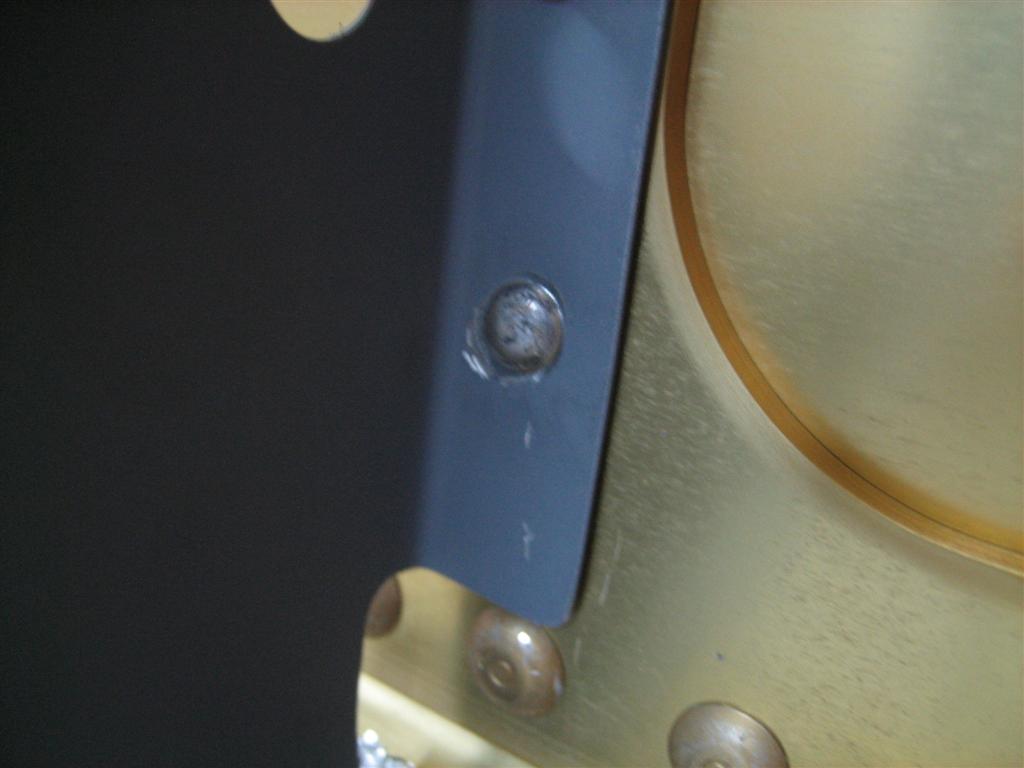
After drilling out and re-setting, the rivet is now great. (I scratched the primer off the flange a little. I'll clean that up with a scotchbrite and re-shoot it with primer.)

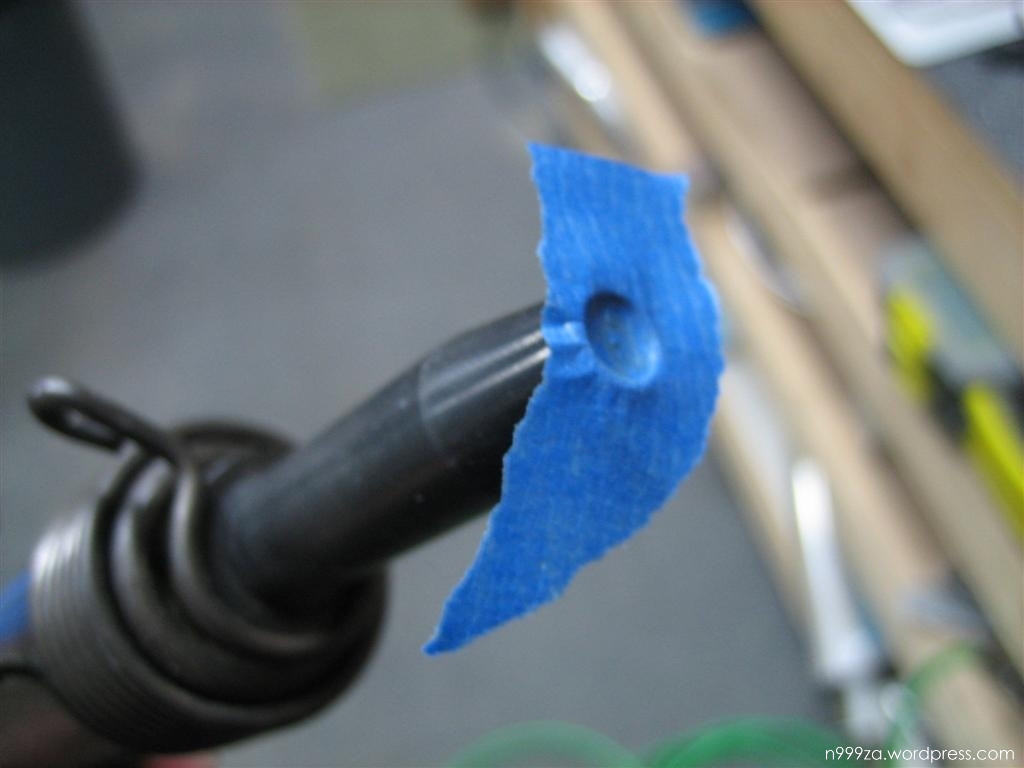
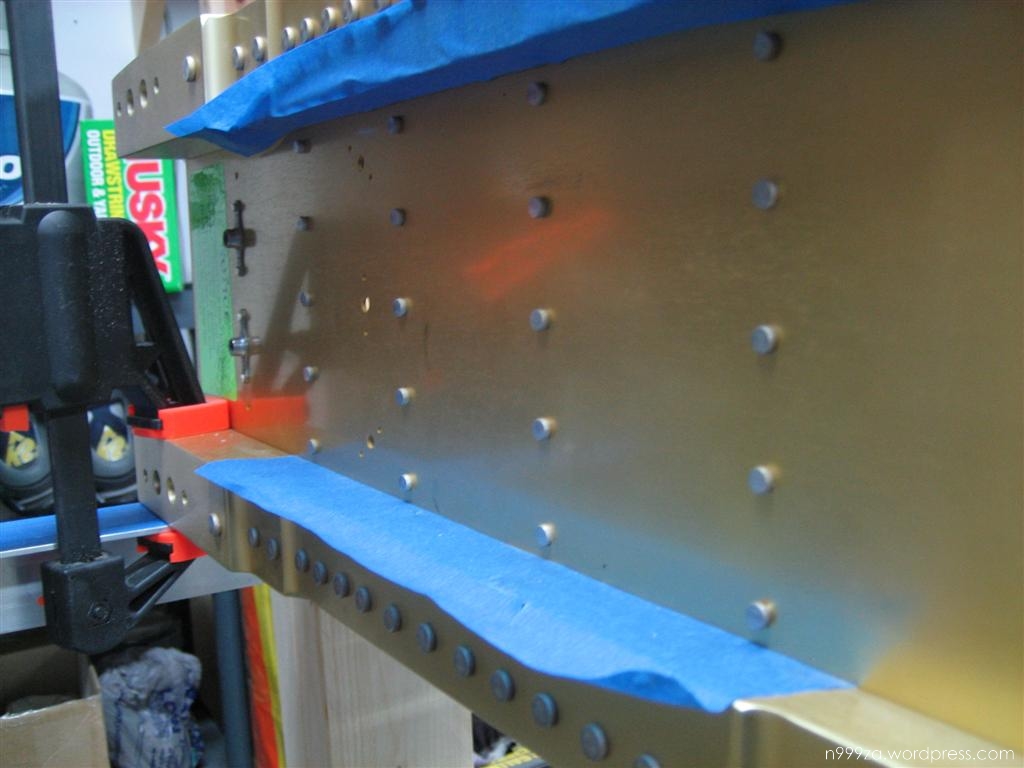
Of course, it wasn’t until the second rib that I remembered my tape trick to keep from marring the manufactured heads too much.

This works great to keep everything looking nice.

See, this head looks a lot cleaner after shooting.

Here's two done.

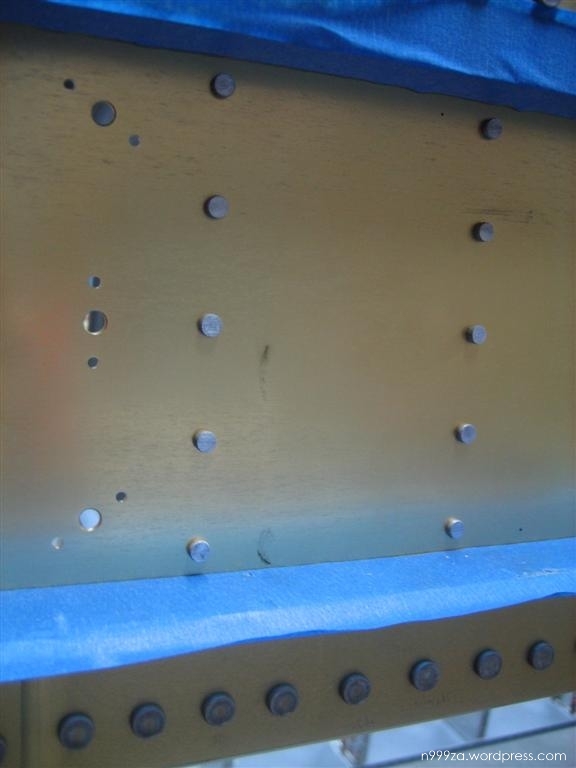
Shop heads...

Three ribs down.

More shop heads.

Then, I did the 4th, 6th, then 5th, and finally, the 7th.

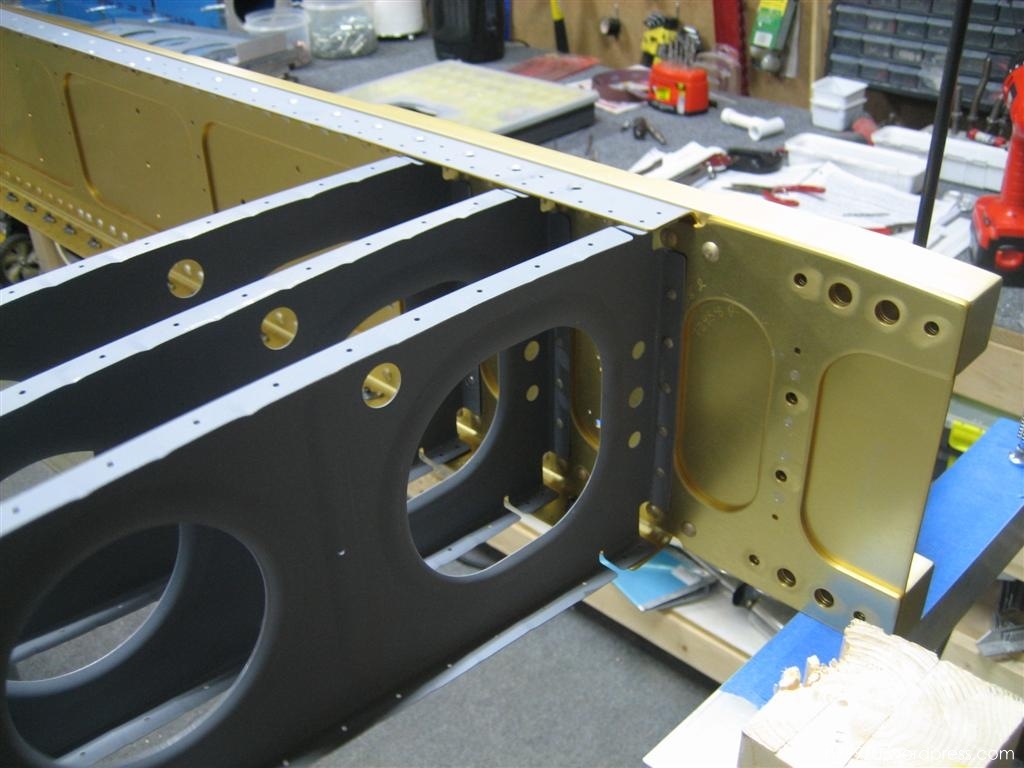
The first 7 ribs attached to the right main spar.

1.0 very fun and rewarding hour. It’s nice to see something big take  shape for the last time in the garage.

5 rivets times 7 ribs equals 35 rivets, two of which were drilled out and replaced. (The first rivet, and the last rivet. Boo.)

Prev | Next

Now, back to rib prep.


Primed 3 More Main Ribs, Now 7 Done

January 8, 2011

Prev | Next

Today, I worked on ribs R5, R6, and R7. (Remember, this isn’t Vans’ number scheme, this is mine.)

First, I negotiated a larger cleco holder from the girlfriend.  I used to have two containers the size of the left one. Now, I have plenty of room for my clecos. (Until, of course, I have to order 200 more…)

I could fill the one on the right up if I didn't have all my clecoes in the leading edges.

Okay, back to the ribs.

The extra two on the right side needed a little touch-up from some water contamination prior to the first round of priming. Gotta let those suckers dry before spraying.

One hour to prep and prime those 3 ribs. I’m halfway done with the ribs on the right wing. I think I may start riveting the ribs to the main spar as I go to break up the monotony. We’ll see.

Prev | Next


Primed 3 More Main Ribs

January 7, 2011

Prev | Next

Warning: Boring post alert!!

I prepped and primed 3 more ribs tonight. I had prepped R1 yesterday (I numbered R or L then from 1 to 14 starting at the inboard rib). Today, I got ribs R2-R4 done. So…

I HAVE ALL OF THE RIGHT WINGWALK AREA RIBS DONE, WUHOO!!!

(There are still 24 more main ribs to do, then 12 more leading edge ribs and probably 12 more tank ribs.)

[sigh]

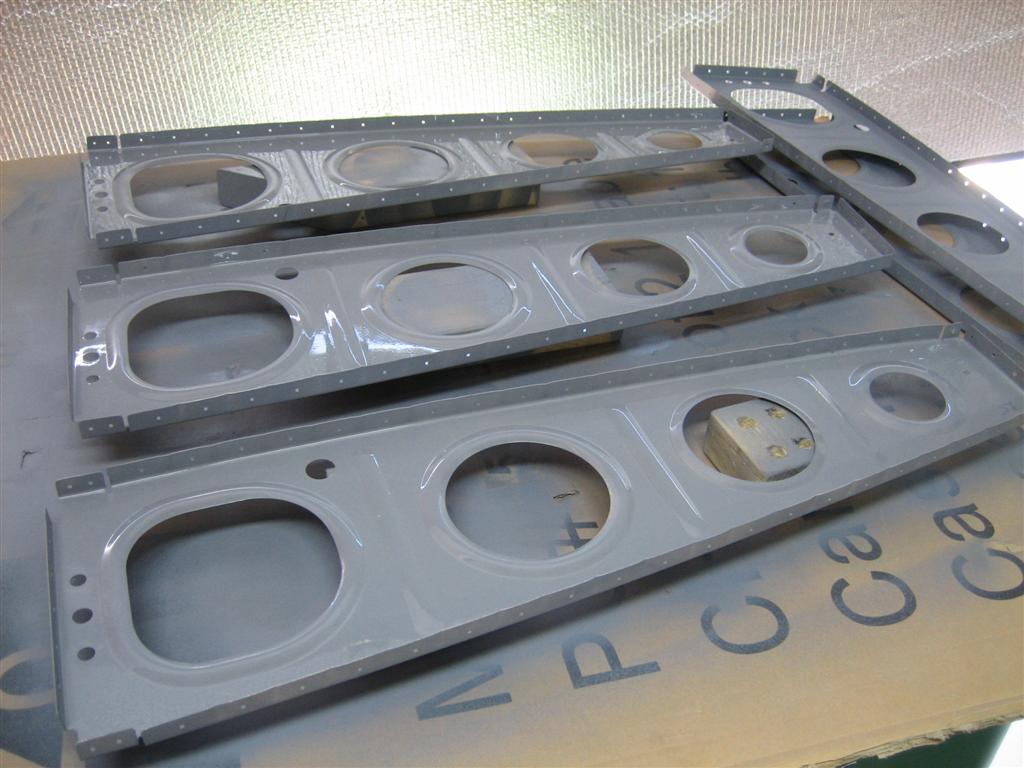
R2, R3, and R4 just after being shot with some self-etching primer.

Anyway, yesterday’s rib took me an hour.

Today’s 3 ribs took me an hour.

(At this overall rate…4 ribs in two hours, I’ve got 10 hours of rib prep left. At the rate of 3 ribs per hour, I have 6.6 hours left.)

At least I’m getting faster. (I’m not sure how many more ribs I can do in an hour, I was pretty efficient yesterday.)

Prev | Next


Prepped and Primed First Wing Rib

January 6, 2011

Prev | Next

Well, since my tool order from Cleveland finally showed up, I decided it was time to jump into rib prep full speed ahead. Because I have already finished most of the edges, fluted and bent the flanges to 90°, I really just needed to prep the lightening holes (which I couldn’t get to with the 6″ scotchbrite wheel) and use some emery cloth to get the smaller crevices.

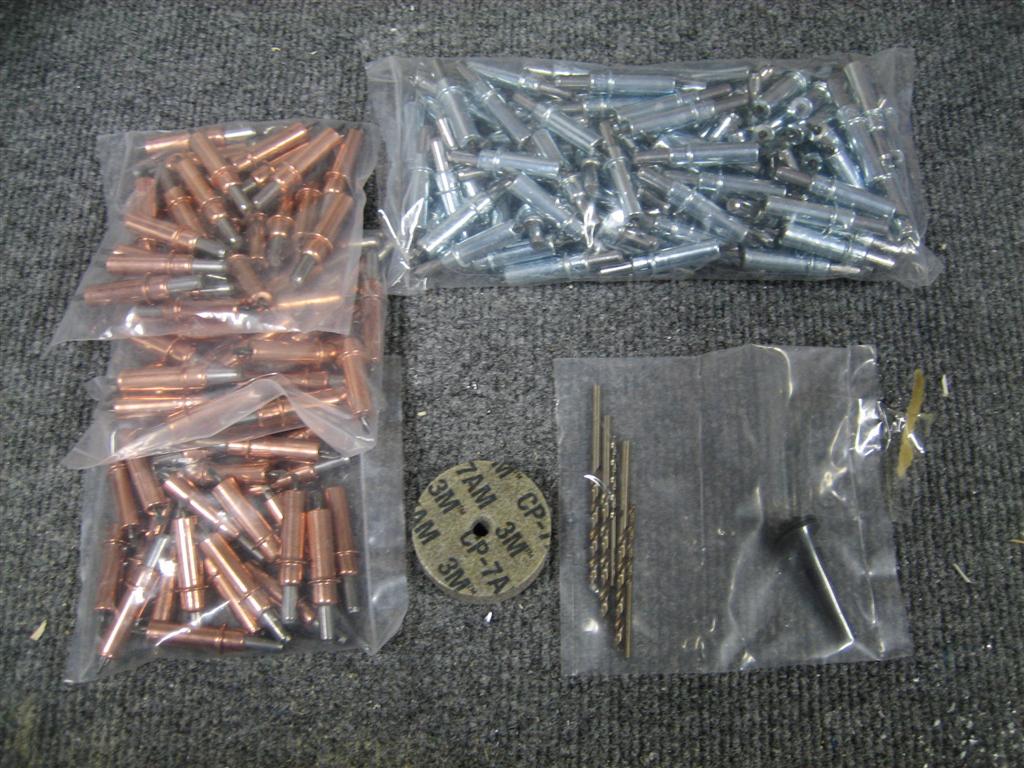
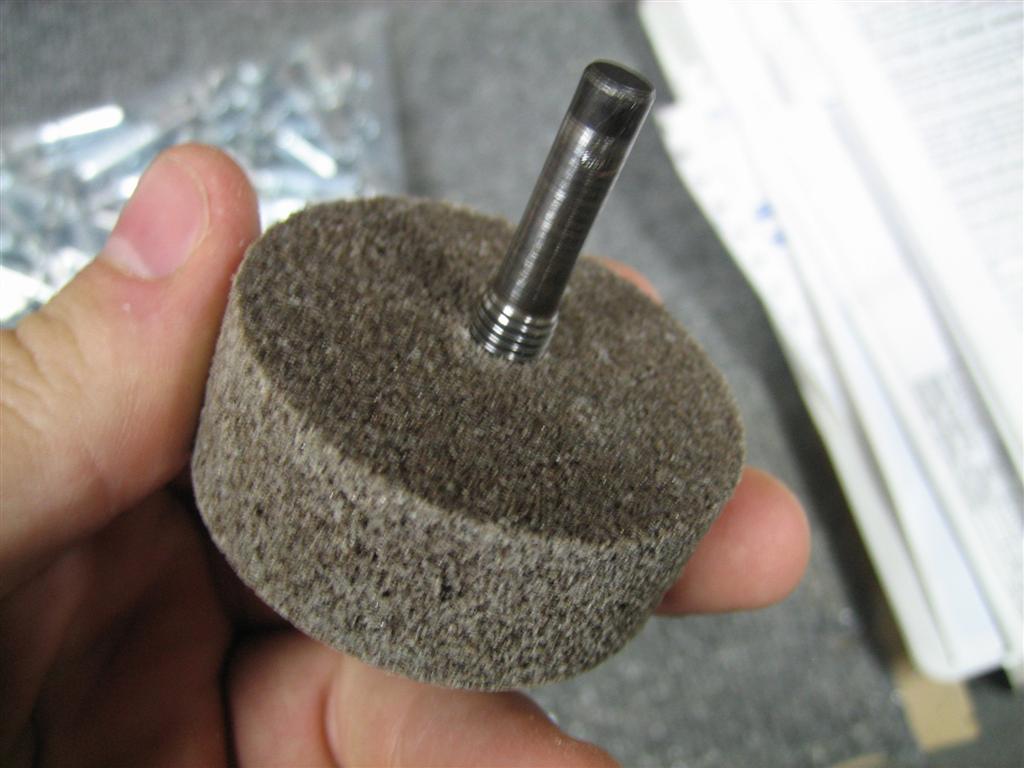
Here’s the tool order. Along with 75 1/8″ clecos, I got 100 more 3/32″ clecos, a 2″ scothbrite wheel, the mandrel for that wheel, and some #41 and #19 drill bits.

I love new, shiny clecos.

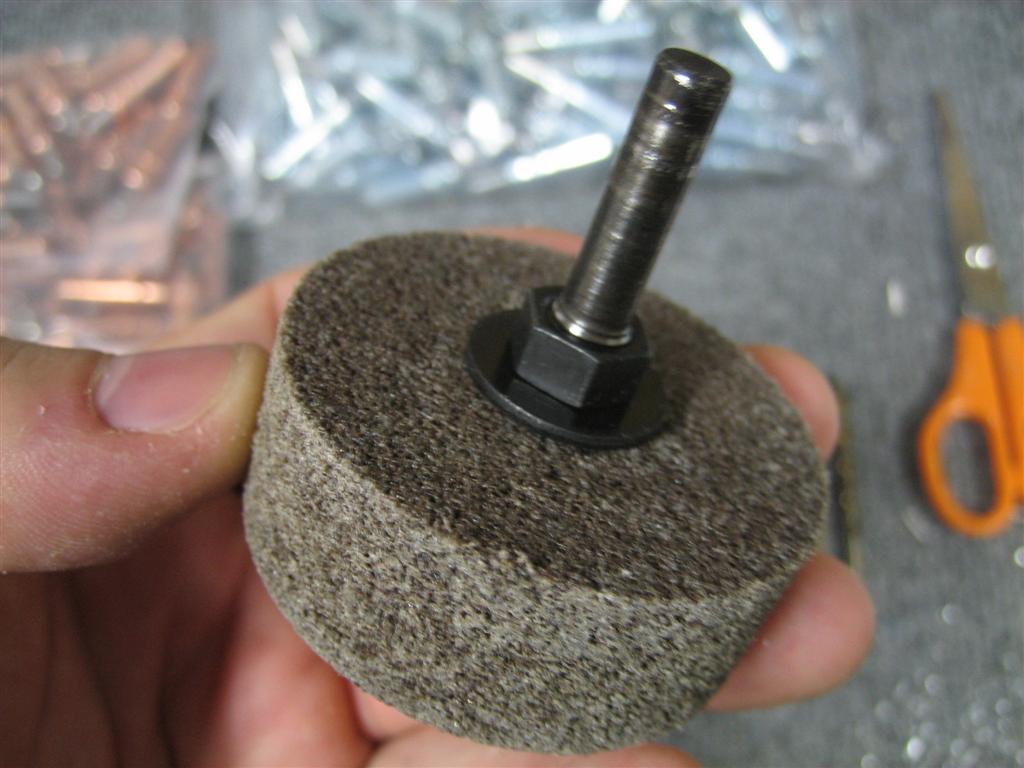
I put a washer on the top of the mandrel and then screwed down the wheel.

Crap, not enough threads.

Took it apart, removed the upper washer, then assembled it again.

I'm showing one thread, but that's okay.

In order to start taking apart the wing to get at the ribs for prepping and priming, I needed to unjack the rear spar, which means I have to remove the leading edges, which are clecoed to the main spar before allowing the weight of the wing to bend everything.

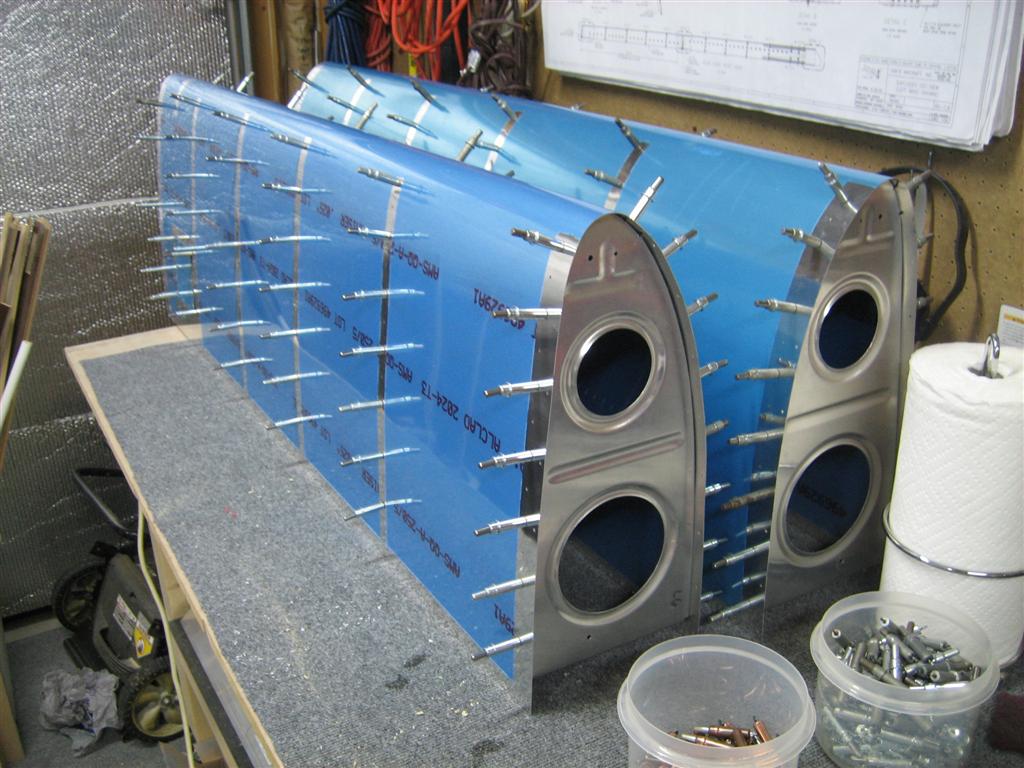
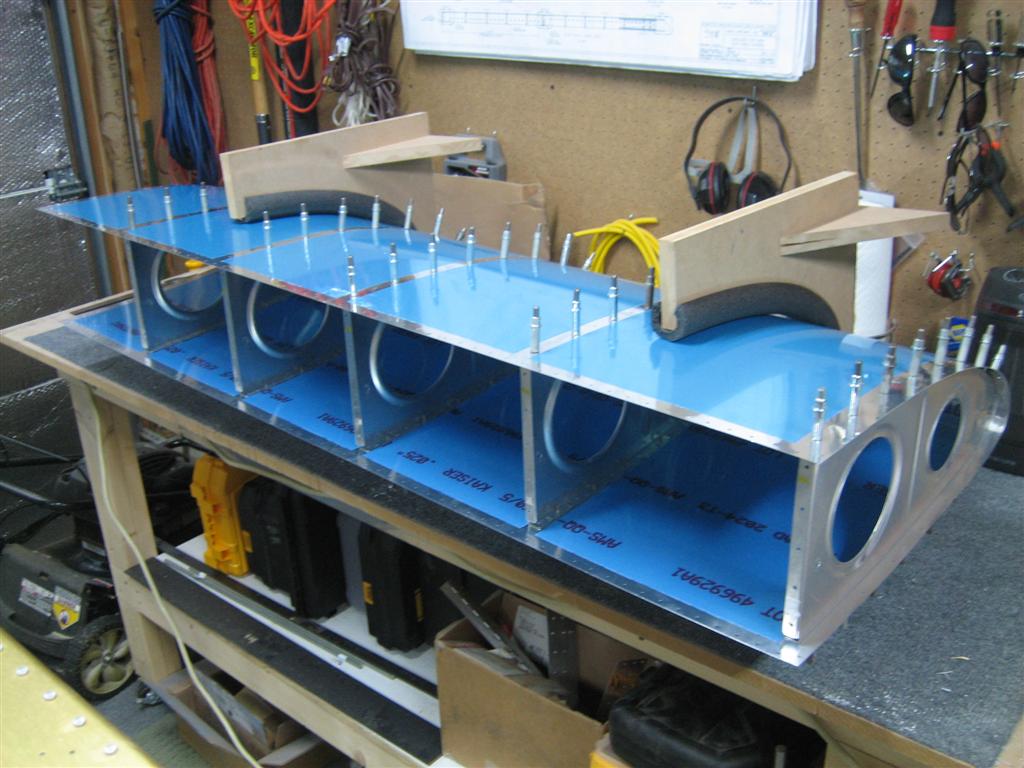
Here are the leading edges on the workbench.

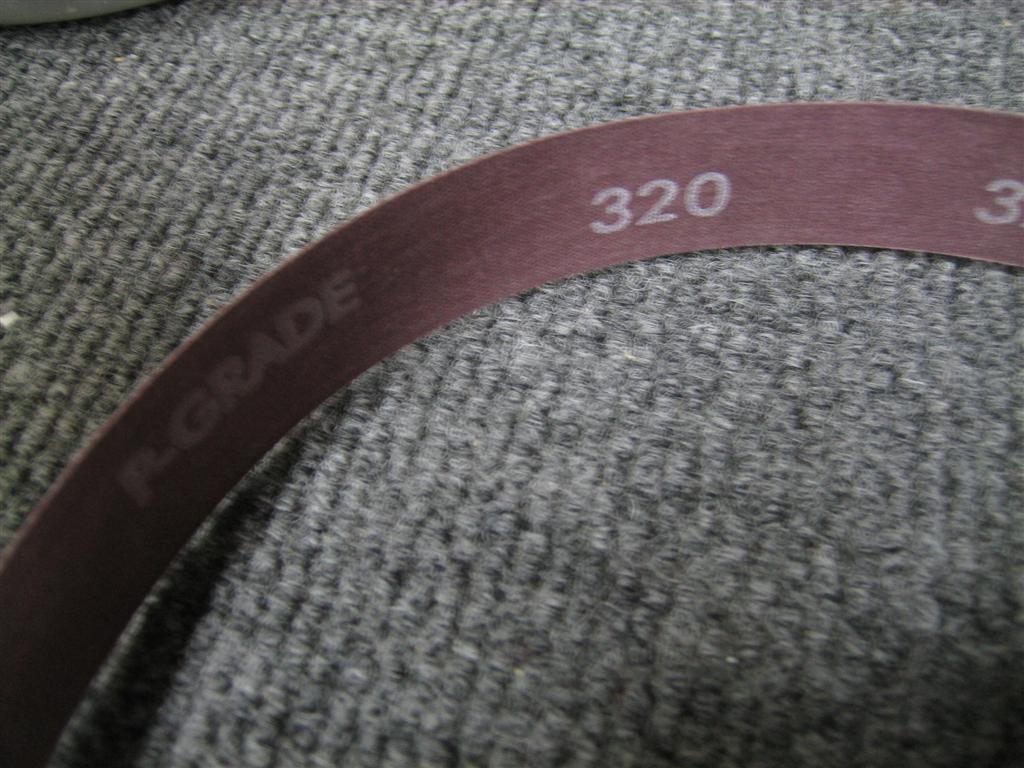
I guess I snapped a picture of my 320 grit emery cloth. (This isn’t really cloth, it’s more of belt-sanding sandpaper. It works, though.)

320 grit from NAPA.

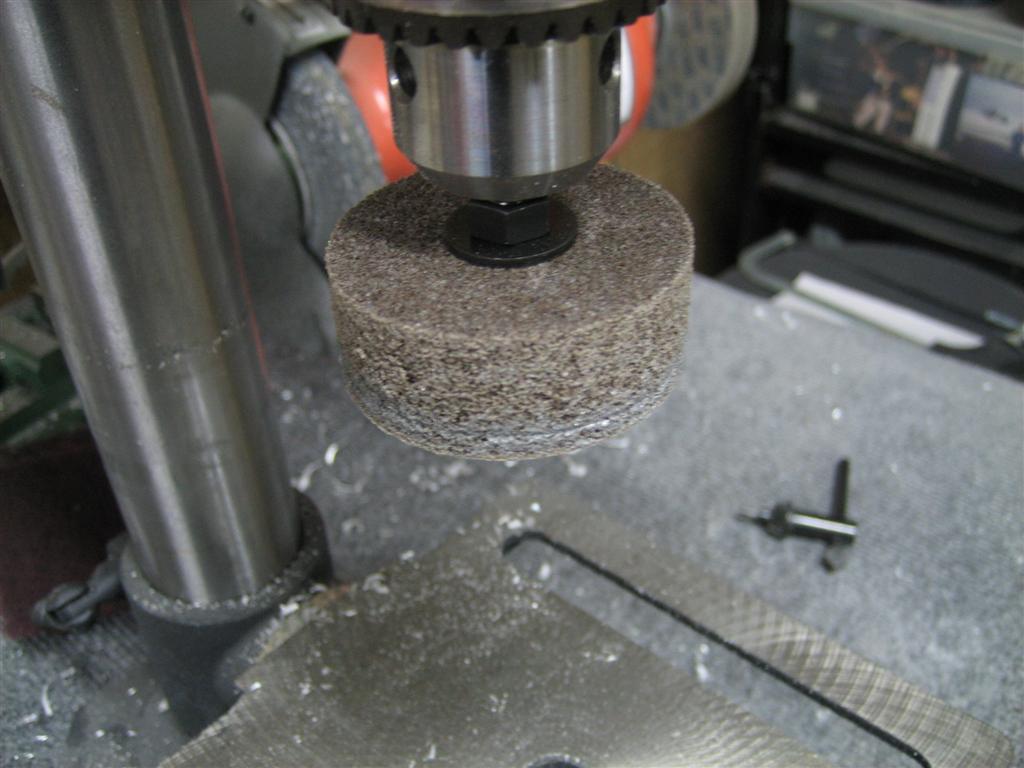
I chucked the 2″ wheel in the drill press and started cutting grooves in it (with the ribs I was deburring).

That groove is from one rib's lightening holes. I'm going to need more scotchbrite wheels.

After completely edge-finishing the rib, including flossing the little crevices with the emory cloth, I dimpled the one hole in the rib that is underneath the rear spar flange, which also needs to be dimpled to accept a dimple in the skin. Here’s the right rear spar, lower flange hole that I dimpled.

Dimple!

Then, I primed the rib.

Still wet from primer...

The next morning, it was dry, and I snapped another picture.

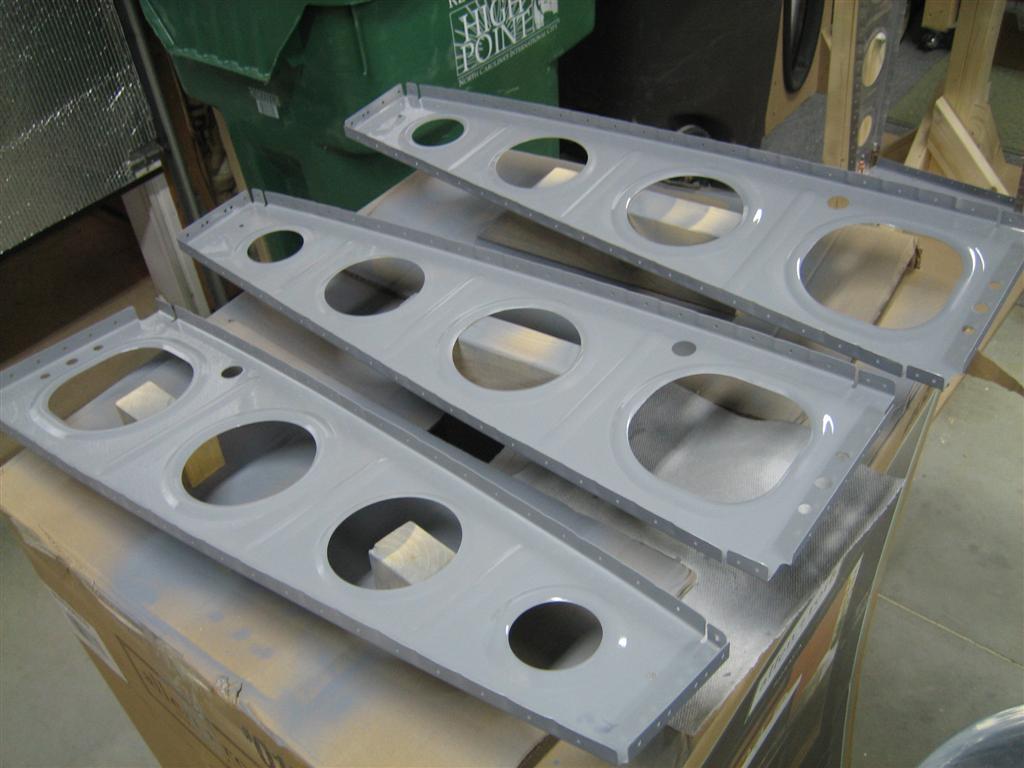
Nice...

This took me about an hour, but I spent a good 20 minutes getting organized first. I won’t prime each rib individually, but I’ll probably do them in groups of 5 or so to break up the monotany. Tthere are 28 total main ribs…I’m not even going to think about the leading edge and tank ribs yet).

That one rib looks good, though. I need to think about ordering some snap-bushings for the holes in the forward edge.

Prev | Next


Stall Warning Access Panel Work

January 4, 2011

Prev | Next

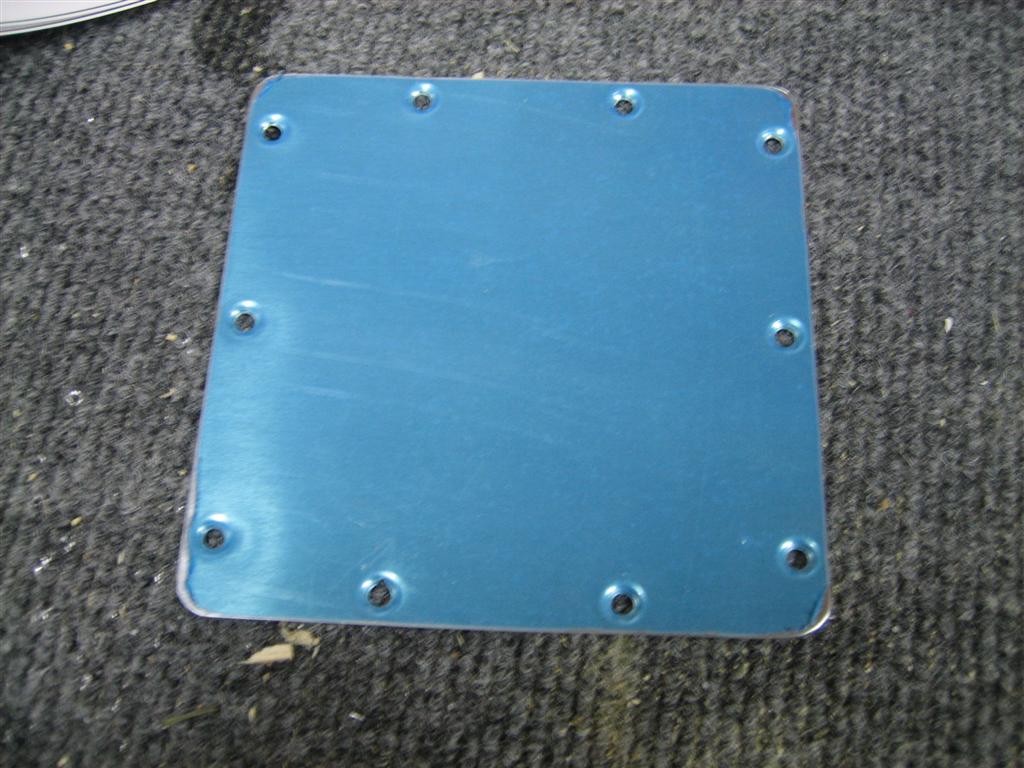
Well, I was able to spend a short half hour in the garage tonight. Last time, I ended up working on the access panel for the stall warning vane. I figured getting that prepped, primed, and nutplated would be a nice short task completion.

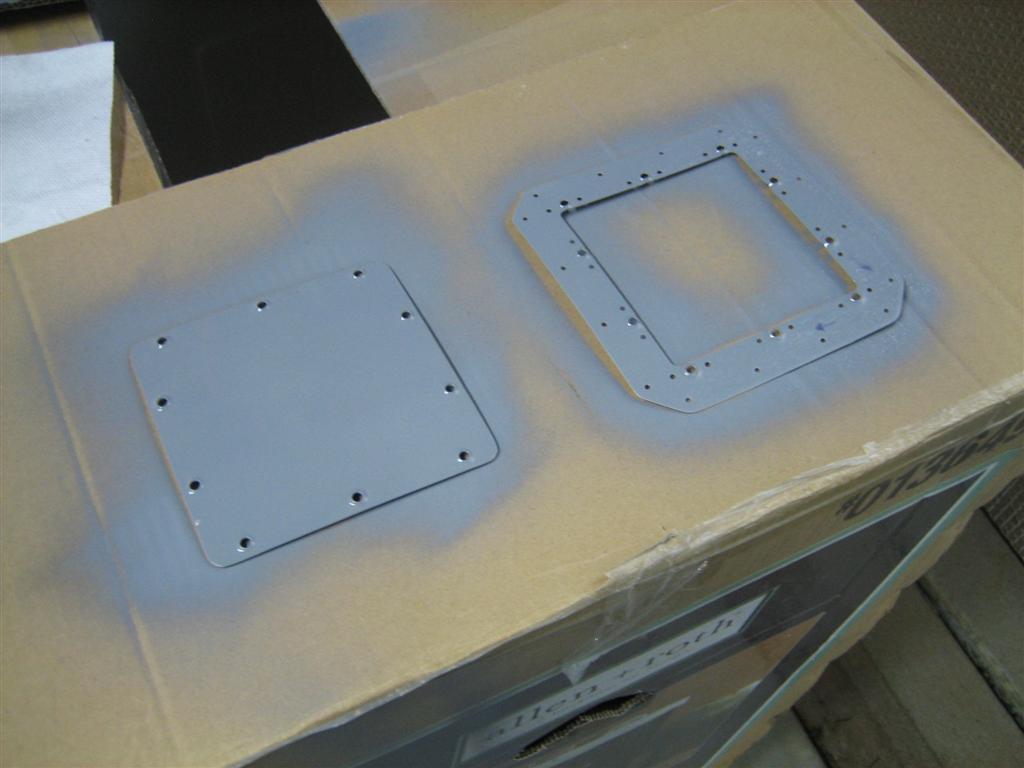
Here's the doubler, dimpled (for #6 screws) and scuffed after running the edges through the scotchbrite wheel.

I finished the edges of the cover, too, and dimpled for the #6 screws. The other side of this plate is devinyled and scuffed, but I’m leaving the vinyl on this (the potentially polishable) side.

Ready for priming.

See, I told you the other side was scuffed.

Primed!

While the primer was drying, I did a little edge finishing of the stall warning vane mini-rib.

Scuffed, but I still need to edge finish in all those crevices.

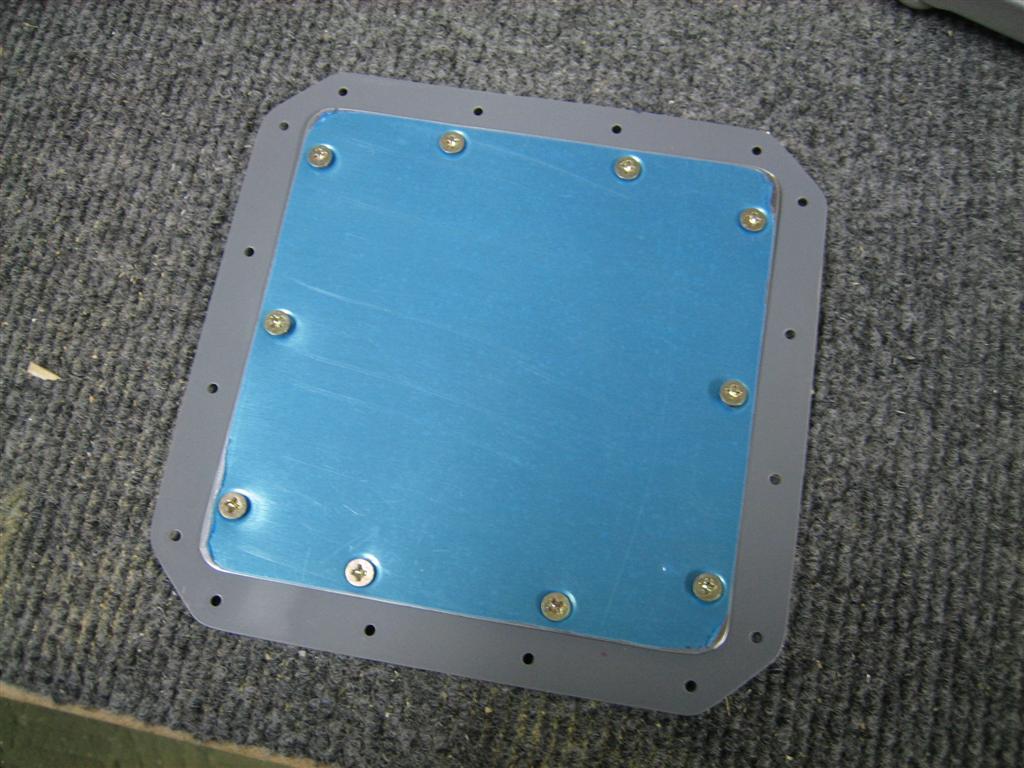
After the primer dried on the doubler, I set some NAS (oops) rivets with some dimpled nutplates.

20 rivets.

I didn't tighten these down at all, just threaded them into place.

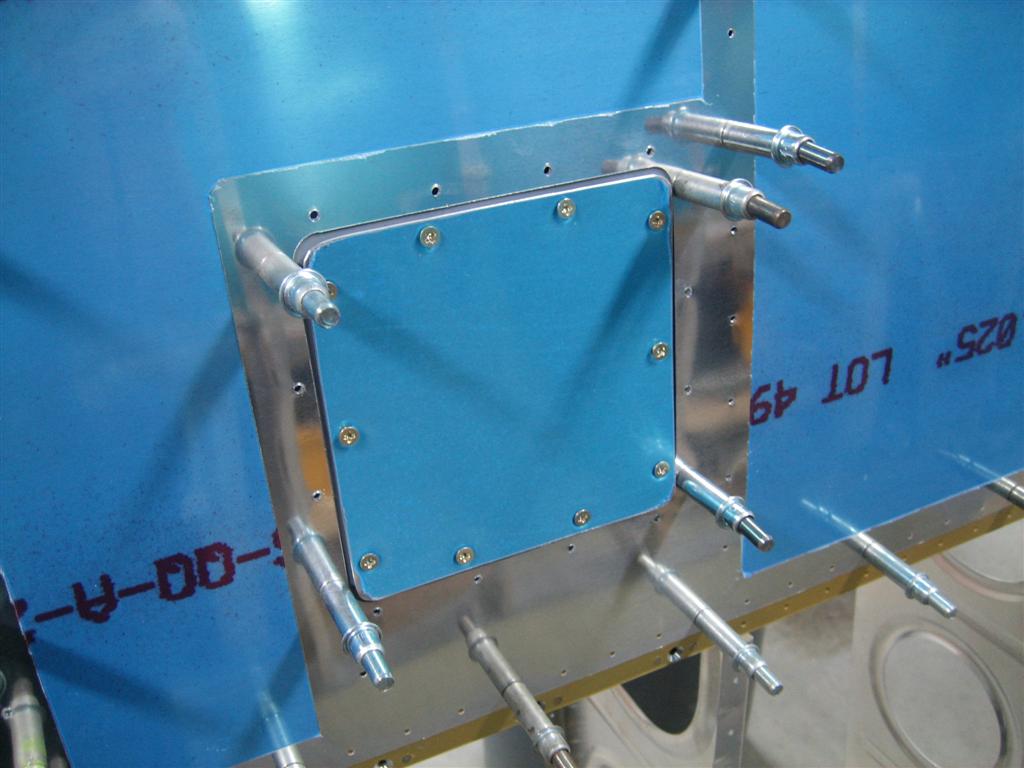
Of course, I had to cleco tonight's work back into the leading edge.

A half hour, 20 rivets.

Prev | Next


Mucho Leading Edge Work

January 3, 2011

Prev | Next

Warning: This is a long post with lots of pictures. I’ll try to keep commentary to a minimum. (Oh, and I just took the pups for a run outside, and it was cold, so please excuse the typos…my fingers are still a little frozen.)

Well, today was a day off for me (New Year’s Day observed) where everyone else had to go to work, so I got a ton of work (on the airplane!) done. It was really cold last night (and today on our run…brrr), so as soon as I was ready to get out into the garage to work, I turned on my portable heater and turned right back around to go inside.

Hmm. I guess I can devinyl some leading edge skins while the garage heats up and I keep warm with coffee.
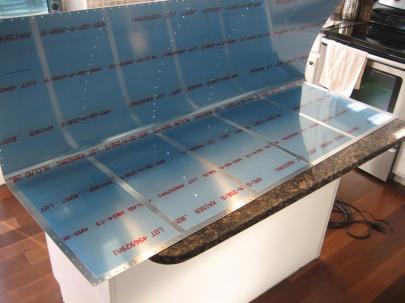
Here's the right leading edge.

Right leading edge upside down.
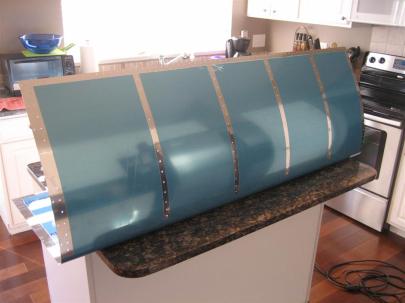
More right leading edge
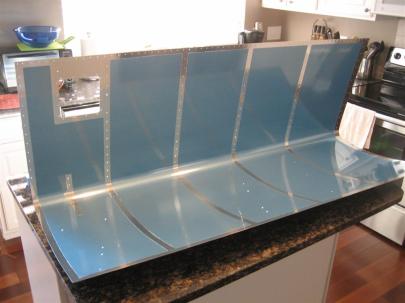
Left leading edge, upside down. (That hole is the stall warning vane access panel. More about that later.)
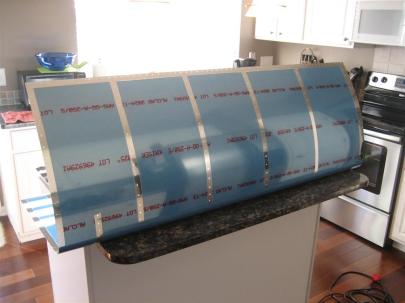
Left leading edge again. (That small strip of devinyled leading edge on the left side of the picture is the stall warning vane rib attachment. Again...more later.)

That was about an hour of devinyling, so when I took my leading edge skins outside, it was not too bad temperature-wise. Thanks portable heater!

Note: I am working a little out of order. Technically, I should be prepping the main ribs for priming, then riveting those ribs to the spars, then setting the wing stand up, and then adding the leading edge. Since I’m waiting on some scotchbrite wheels for the rib prep part, I’m jumping ahead to the leading edge stuff.

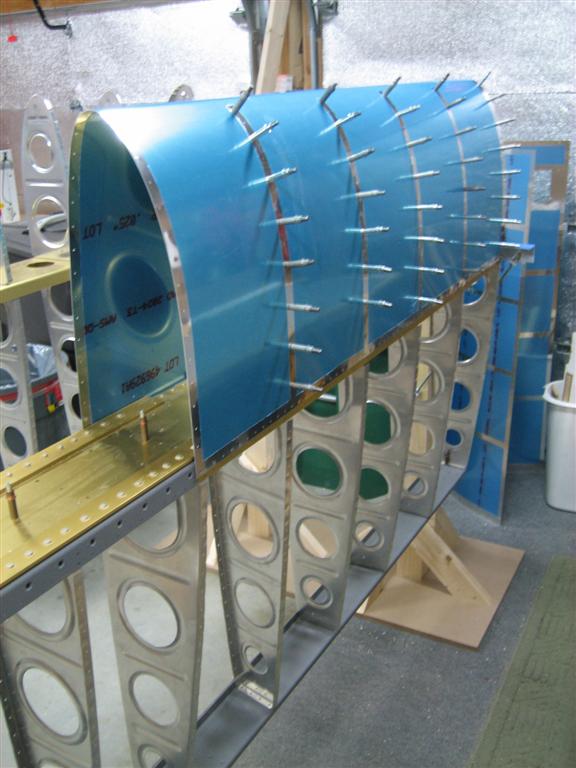
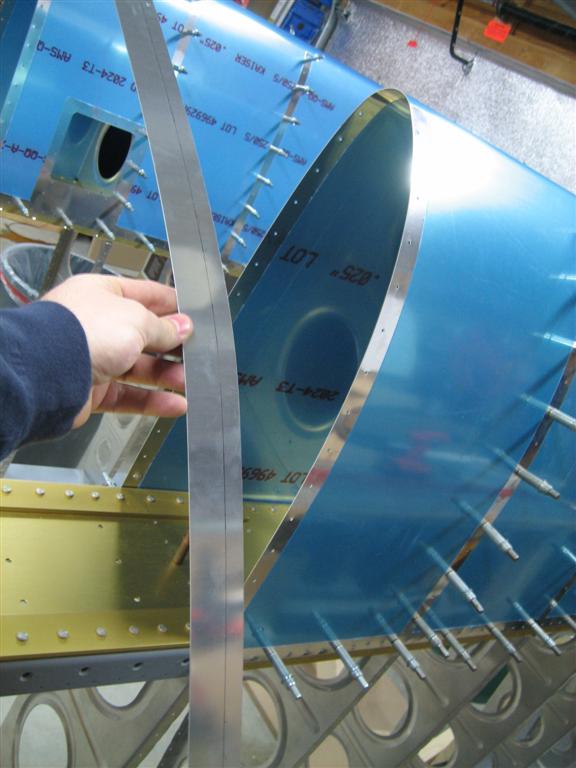
Here, I’ve got all of the right leading edge ribs (except the inboard, undrilled rib) clecoed into the leading edge skin. Many people have trouble here, but if you follow the directions (which I kind of did), you start from the front end of the rib, top and bottom, and then you are okay from there. The biggest trick I found was to push the rib forward (towards the nose) as you are maneuvering the rib into place. I have long arms, so I could see the holes line up from the back, then reach around and stick a cleco in.
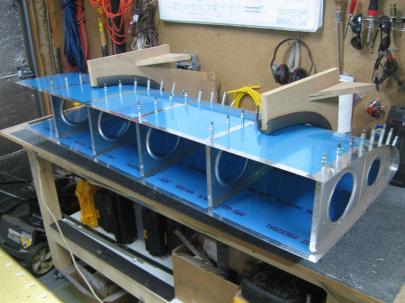
I like my modular leading edge/tank cradle. (No comments about my split triangular piece of MDF, please.)

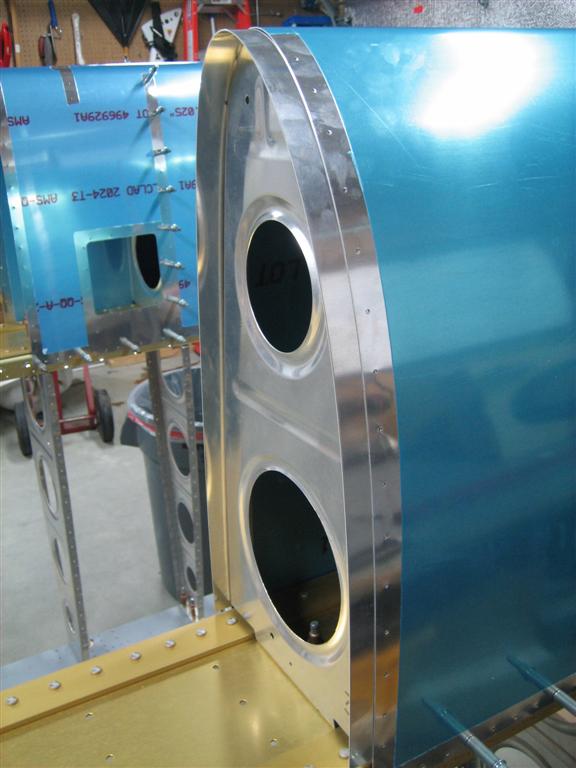
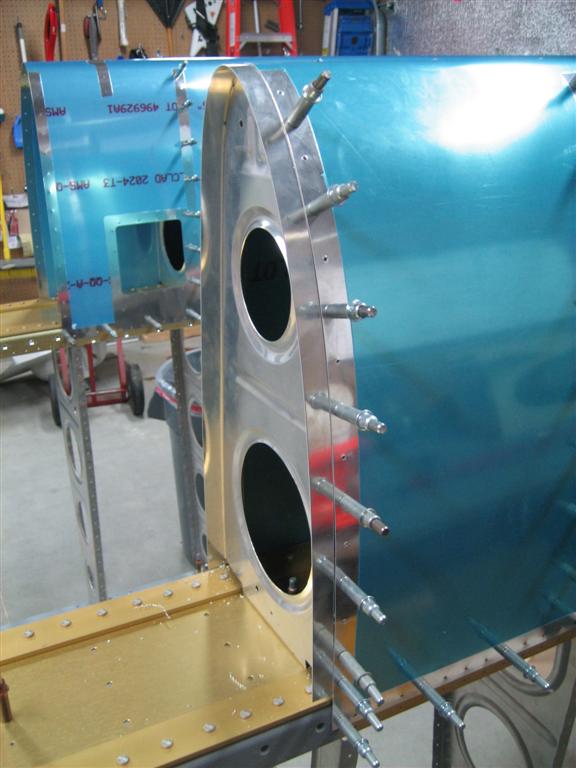
Anyway, then I put the leading edge on the spar, and stood back in amazement. (Amazement at the size of the assembly, and that all the holes freakin’ line up! I know this is a prepunched kit, but still, everything just always lines up. Thank you Vans!)
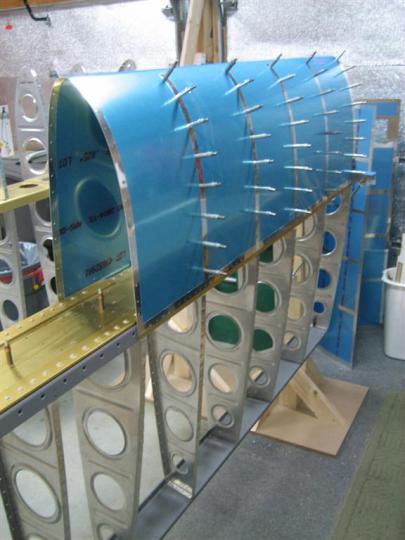
Nice.

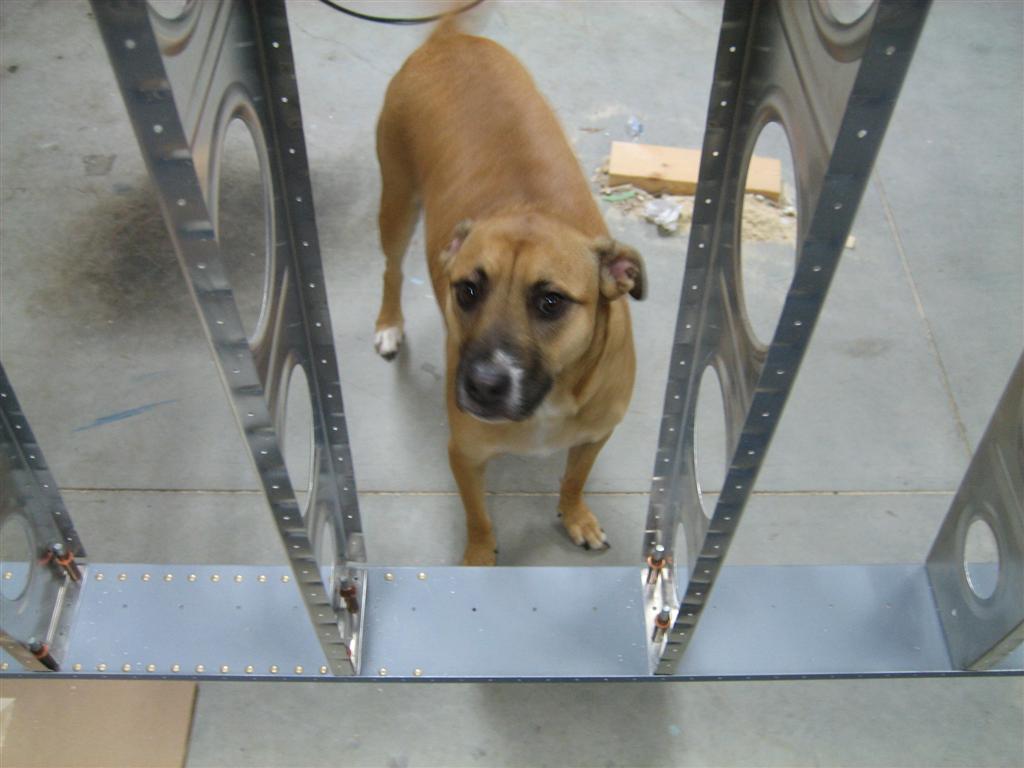
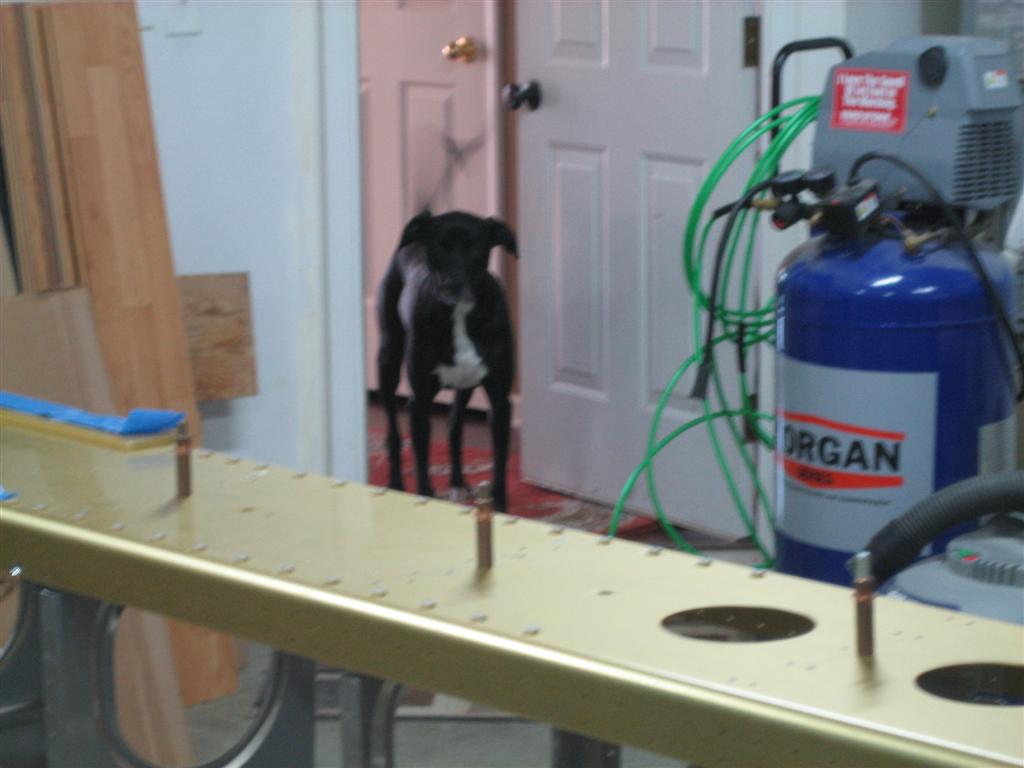
The dogs must have sensed my excitement…they came out to see what was happening.
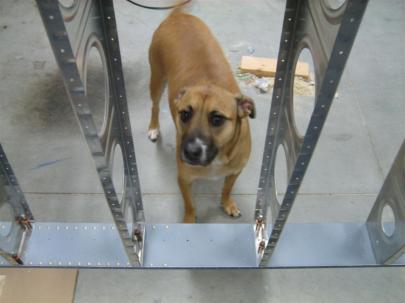
Ginger: "Shouldn't you have prepped and primed all of these ribs first?"
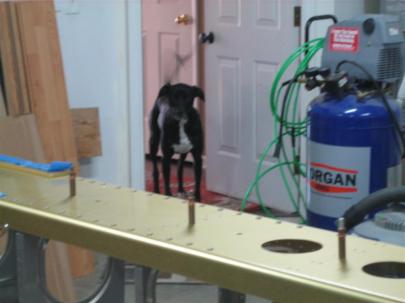
Jack (tentatively): "Whoa, that leading edge looks good, but I'm going to stay here...the concrete is cold on my paws."

After playing for a few minutes, they went back inside (it turns out they came out to ask me to turn on the gas fireplace….okay, okay, I will).

On to the left leading edge.
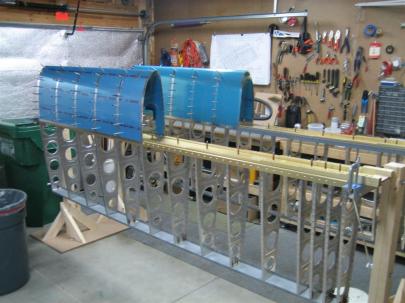
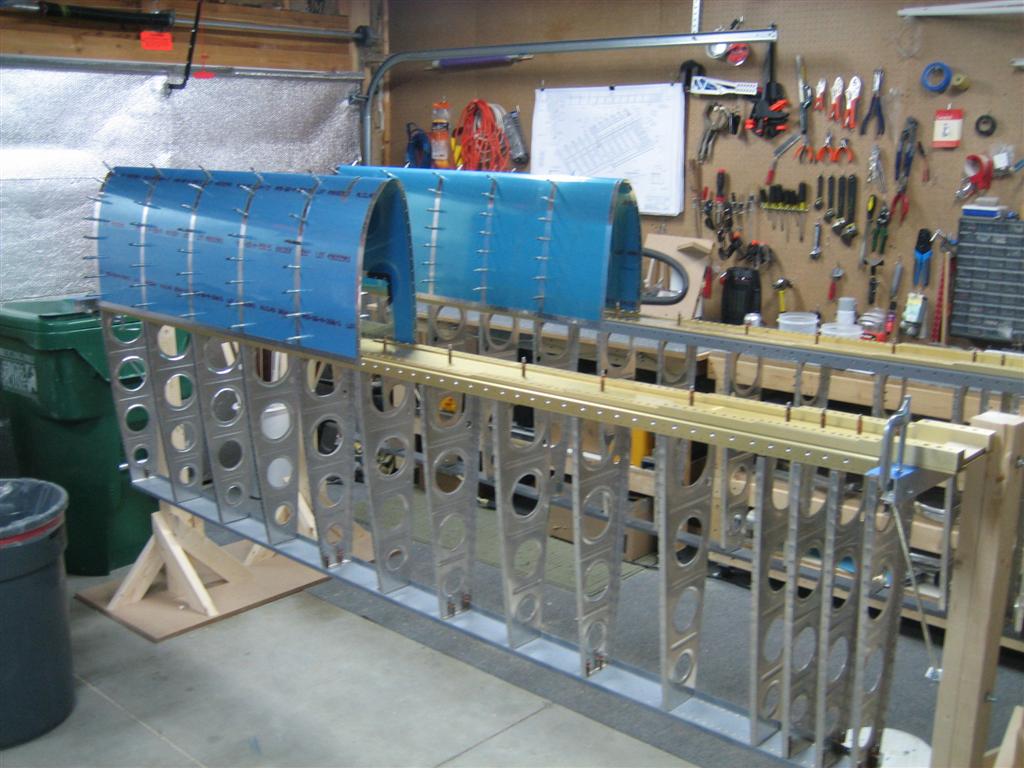
This is an awesome sight. It finally looks like I'm building an airplane in here.

After setting both leading edges on the spar (and securing them from beneath with some #30 clecos through the main spar), I noticed that the spar really needs to be straight and level to proceed, even though it’s not fully assembled yet.

So, even though I know I’m going to take this all down soon, I went ahead and leveled the spar using the trusty (and calibrate-able) iPhone app from Stanley.
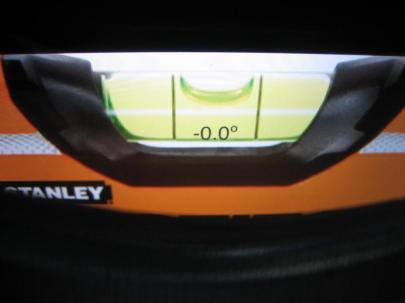
I couldn't decide whether negative or positive 0.0 was better, so I left it with negative. My wing stand mechanism sure made this easy. Every 1/4 turn of my adjustment nuts was about 0.1° change. Easy to dial in.

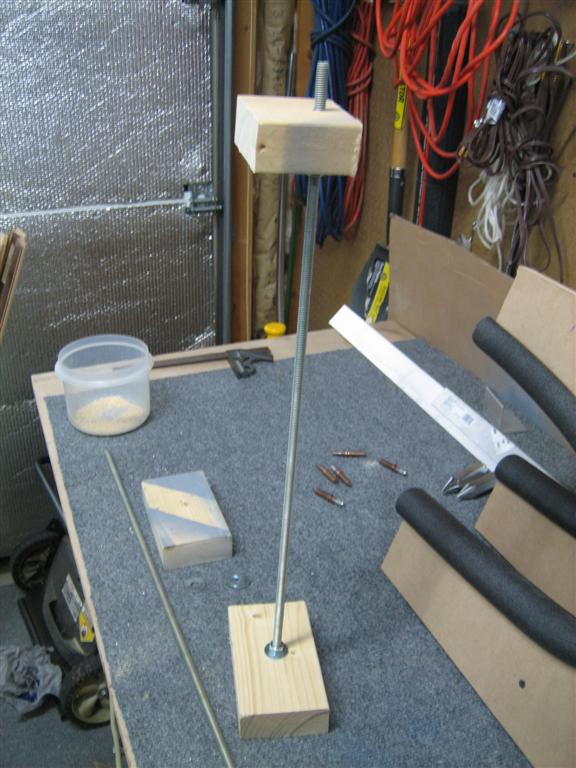
Then, I needed to address the spar bowing in the middle from the weight of all the components. (Once the skins are on the wings, they provide that support, but until they are, there is no (what I’ll call) lateral rigidity.
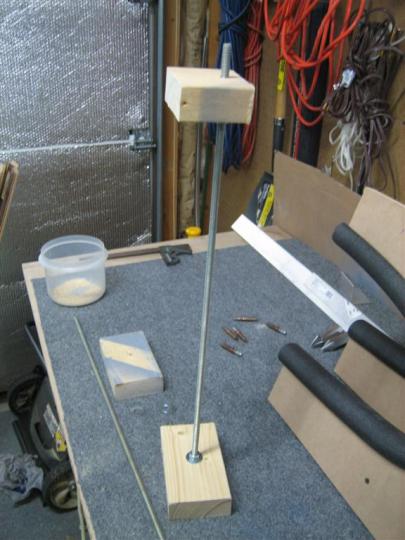
A variation on a (wing stand) theme. a threaded rod between two 2"x4" blocks.
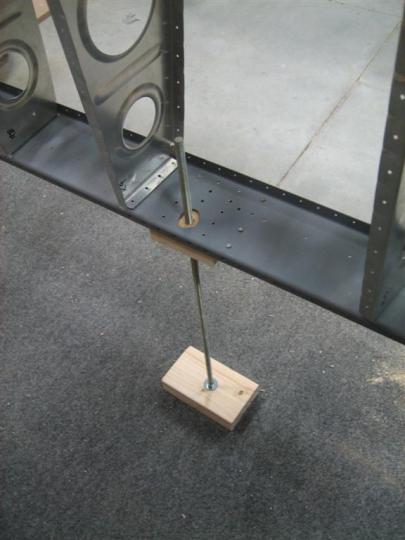
I thought about this a long time ago, and I didn't know if it would work. It worked great. I know it's not permanent right now, but still, very elegant setup, if I do say so myself.

Oh yeah, I snagged this picture to elaborate on the reason for the larger angle off the outboard rib from the other day. See how the skin overlaps the edge of the rib and spar? I won’t have to notch my support angle to accommodate the skin now.
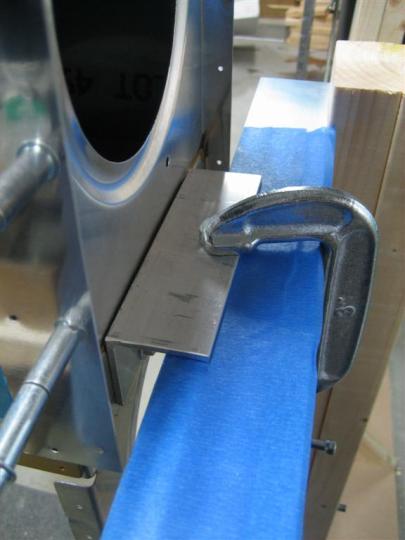
With the larger angle, there is plenty of room for the skin overhangs.

Okay, time to remove the spar sag.

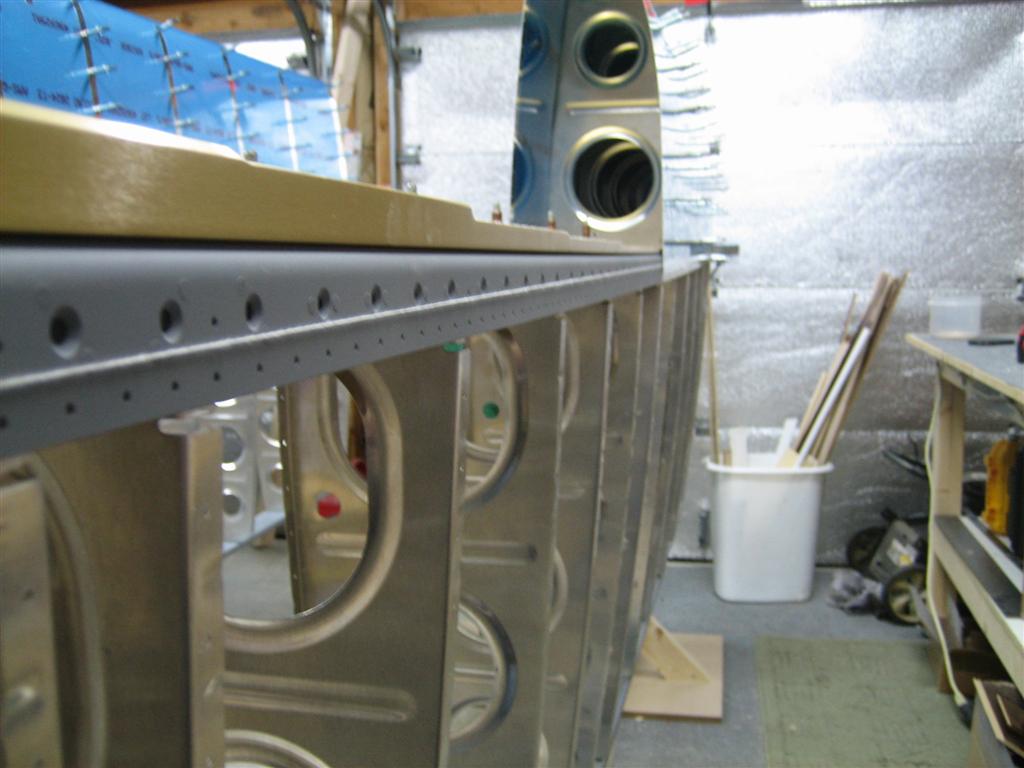
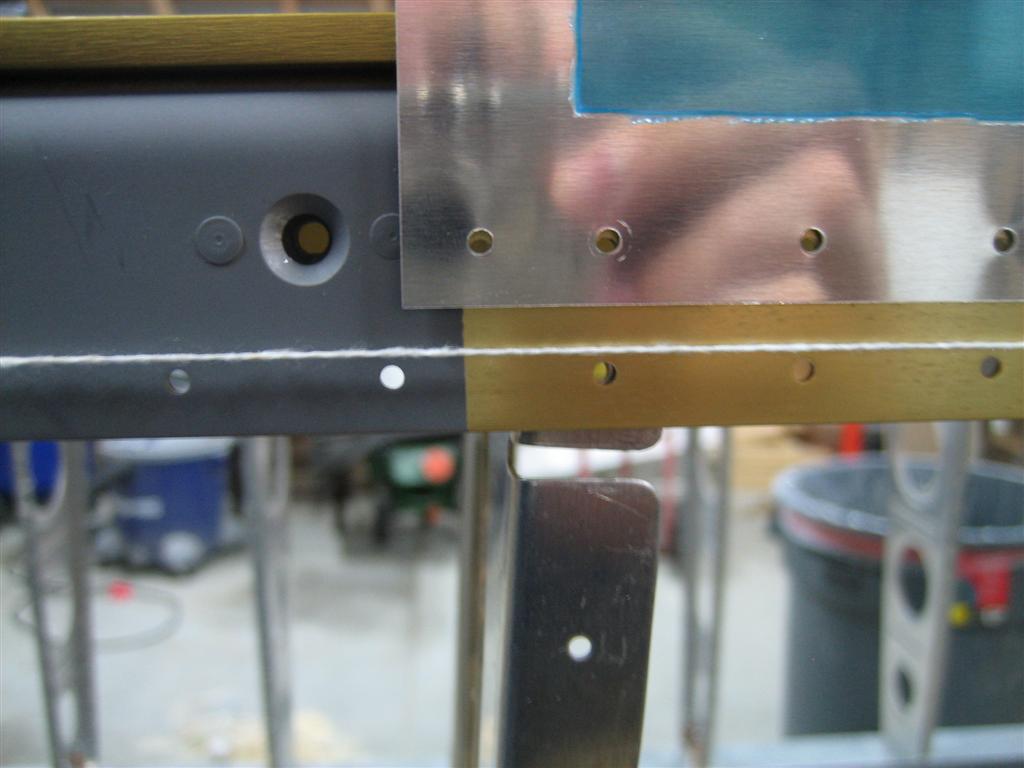
I tied a piece of string between the top edge of two clecos (actually, it didn’t need a knot…the cleco clamped the string enough).

It's about 1-hole-diameter distance above the hole.

Same on the other side.

Before removing the sag, you can see how much bow there is (look at the row of primed countersinks).
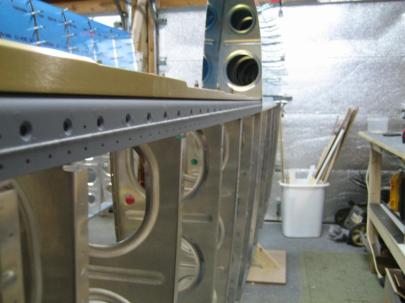
There's about a 1/2-3/4" of bow in the middle of the spar.

A few cranks of my adjustable homemade jack, and the middle of the spar shows the same distance with the string. This was equally as easy to dial in.
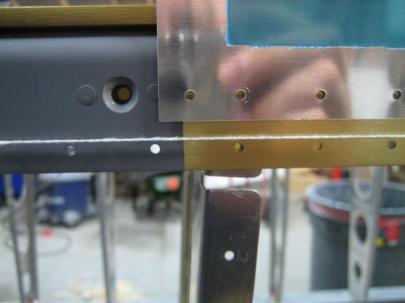
Nice and level. (Ooh, that "flush" rivet on that nutplate isn't so flush. I might need a rivet shaver...)

Then, with everything level, I clecoed the leading edge skins to the spar.
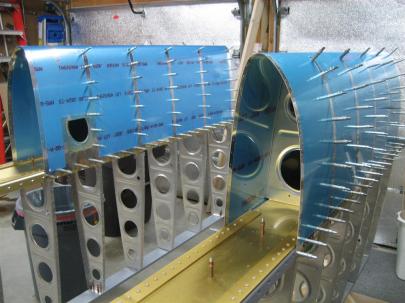
Leading edge skins now clecoed to the spar.

Now I can move on to the inboard leading edge rib. It comes undrilled, so first thing, I kind of held it in place and made little marks where the holes were going to go.
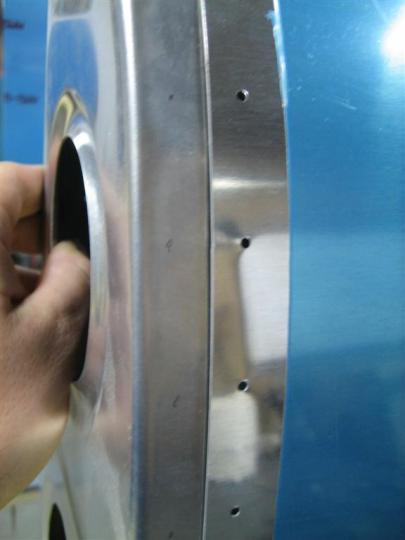
You can see my very faint marks.

Then, back to the workbench for fluting (between the hole locations) and flange bending (to 90°).
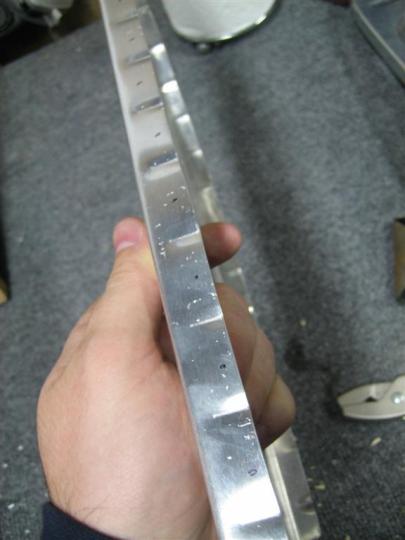
I had to pretty aggressively flute in some places. Some of these ribs are better than others.

Okay now I need the…what is it?
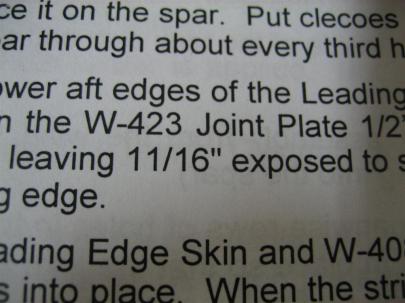
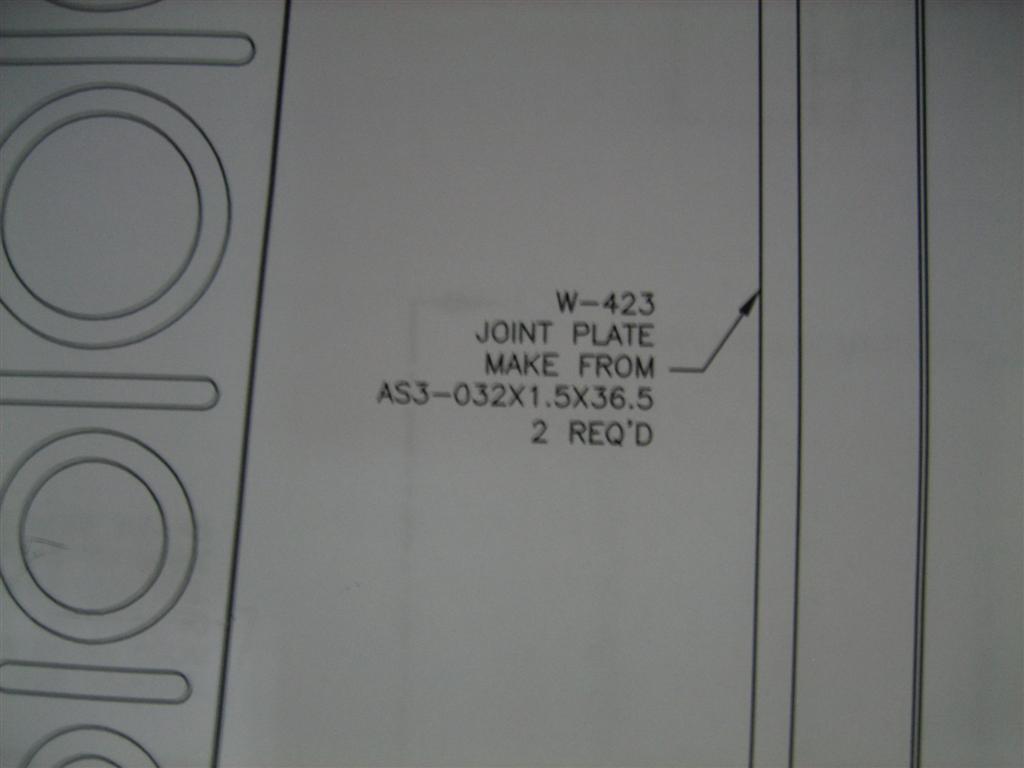
W-423 Joint Plate.

Okay where is it. I’m sure there are two of them, one for each wing…

[searching shop storage …hmmm…and the airplane room upstairs…hmm…]

Grrr. Where did they go?

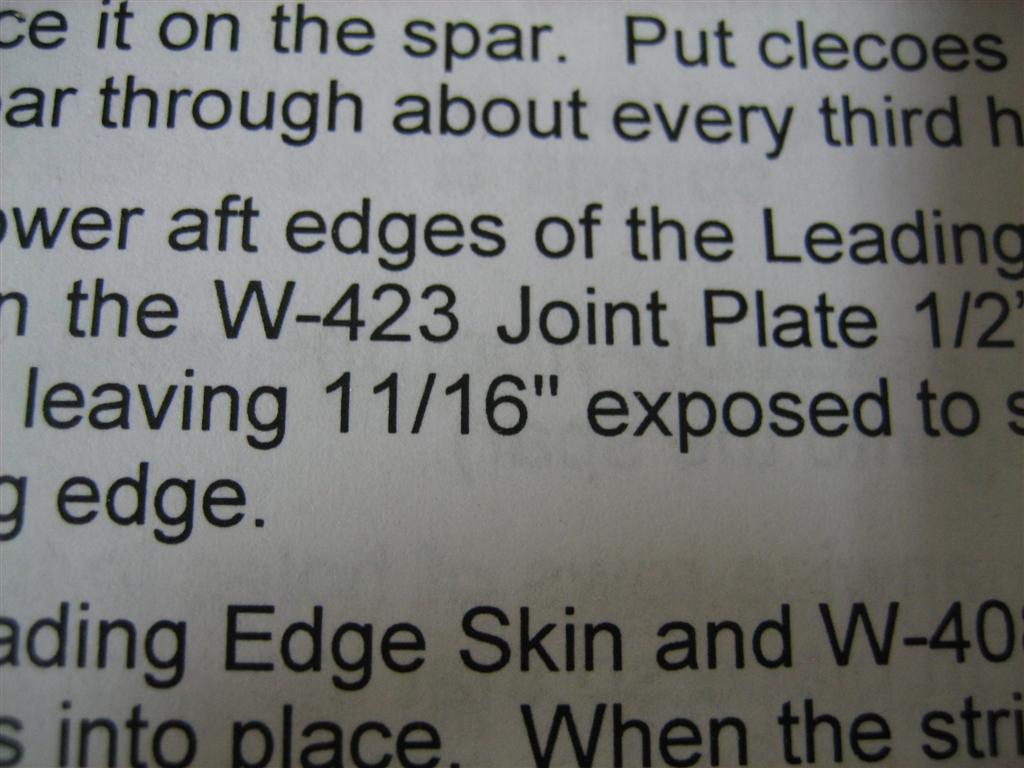
Upon closer inspection of the plans…
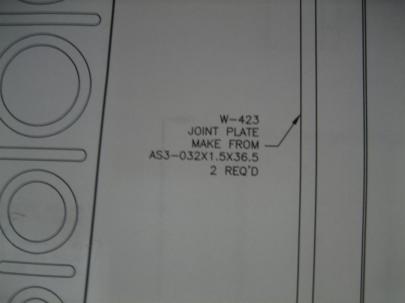
Oh.
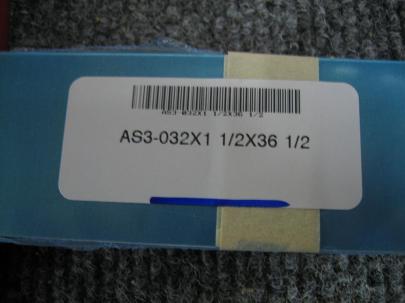
That was easy.

I marked my half inch line and then pondered how I was going to fit this round (straight) peg into the square (rounded) hole.
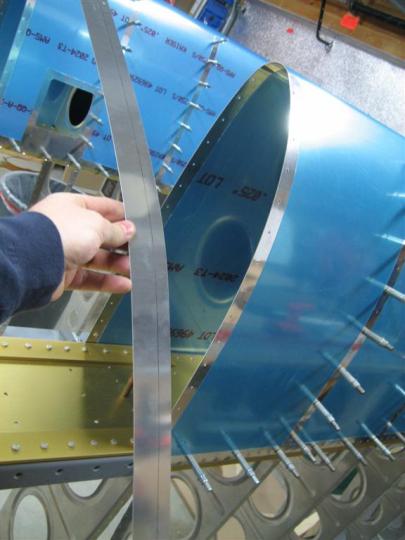
This goes in there.

[Many loud, frustrated grunting noises…]
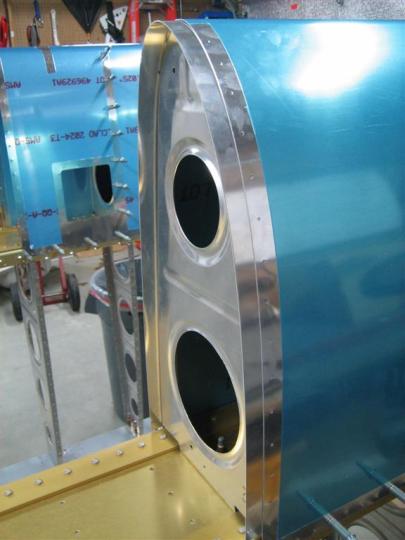
Ahh, there we go.

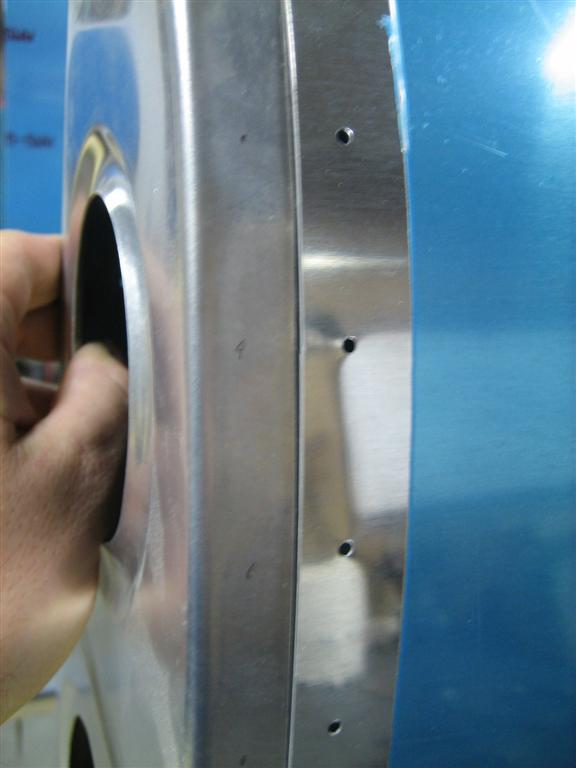
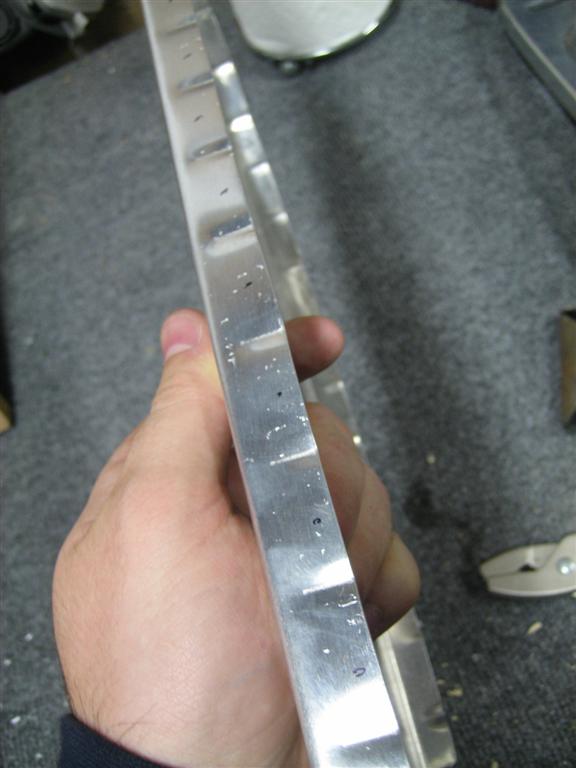
Then, after careful measuring, checking, drilling, remeasuring, and rechecking, I had the right joint plate and inboard rib drilled.
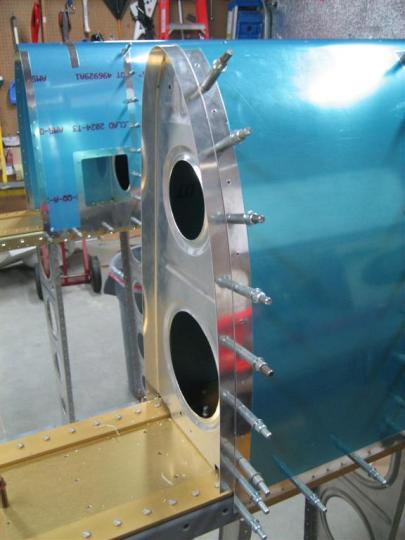
That was annoying. There was no good way to clamp everything, so everytime I drilled a hole, the rib shifted on the other side.

This one turned out pretty good. 11/16″ all around. I repeated that exercise on the left wing.
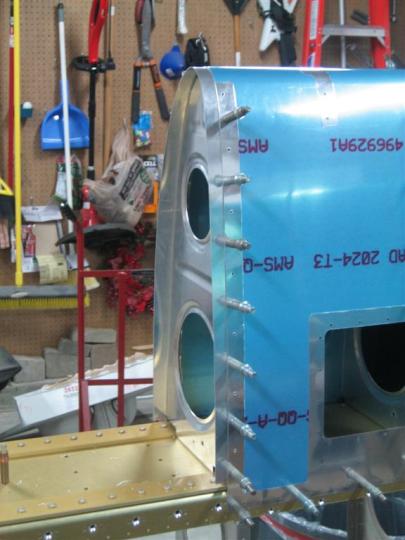
I don't have the perscribed 11/16" flange that I am supposed to on the left wing for the tank nutplates because everything moved around a little.

It’s only 1/16″ short in some places. I’m assuming I can make it work with 10/16″, but if I can’t, I’ll just redrill a new joint plate.

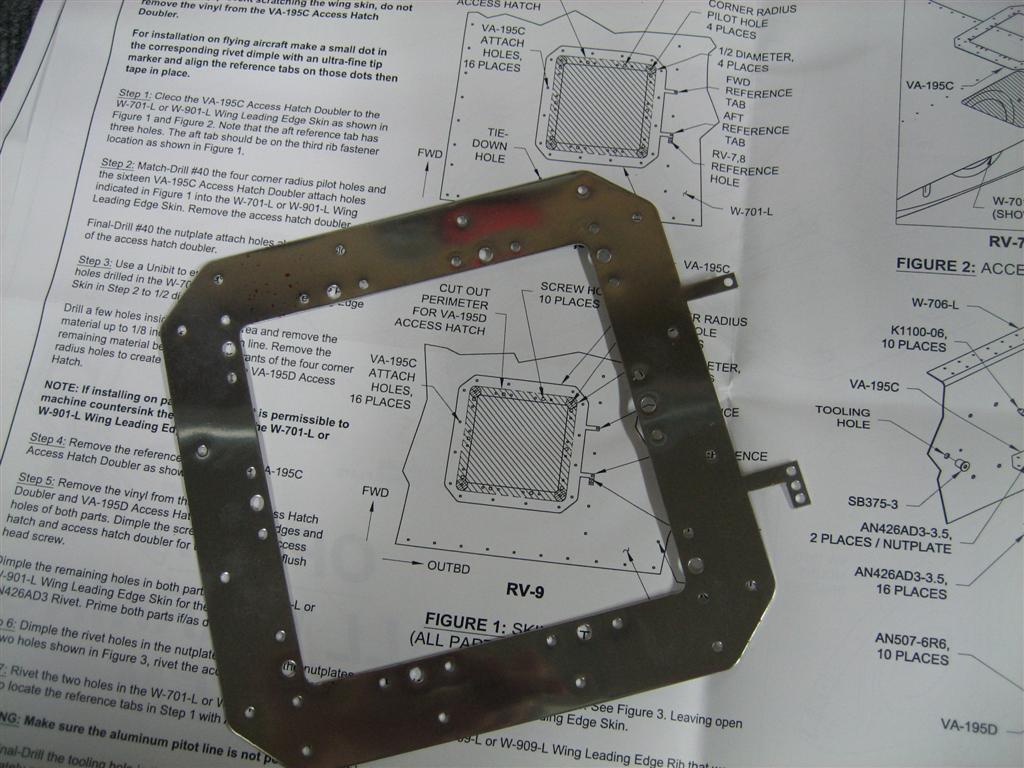
Anyway, I was staring at the opening for the stall warning vane, so I got curious and fished out the (separately packed…not really part of the original wing kit) stall warning components. They have this doubler that fits in this hole, with a couple locator tabs (in case you are modifying an existing leading edge that was not prepunched with this access hole). Since mine already has the hole, I snipped off the tabs.
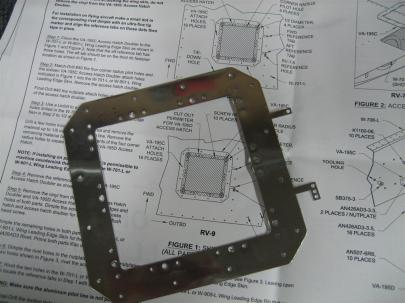
These directions are crazy complicated, but they ended up being mainly for retrofit into an existing wing. For new construction, it's pretty straightforward.

I definitely need the access plate doubler and cover no matter what, but I did give some thought to whether I am going to install the stall warning vane.

I am planning on using the Dynon AOA vane, which will give me good stall warning (I believe it is calibrated during some demonstrated stalls for the highest AOA seen during stall for any flap configuration). For awhile, I kept thinking that I won’t need the Van’s vane (and I was a little miffed that they cut a big hole in my leading edge!), but then the CFI in me woke up and thought of a few things.

Every once in awhile during a rotation or flare, I might get a little chirp of the stall warning. Everyone does, and it can’t hurt to have a small reminder, separate and therefore redundant from the Dynon Air Data Computers (ADCs…wait, I think dynon calls them ADAHRS…or air data, attitude and heading reference system) during slow speed maneuvering. The Dynon is based on pressure differential (between the front and the angled top of the pitot probe), and the other is based on direction of relative wind (the vane just lifts up and compresses a microswitch when the relative wind pushes up on it).

I’m going to go ahead and install all of the provisions for both. It will be pretty easy to get everything installed, and just leave the little vane out if I don’t want it in the end, but I have to fill all the rivet holes anyway, might as well not rule out any future decision changes.

I’ll probably install both; you can’t be too aware of low speeds, and frankly, it will probably help resale to have the more traditional stall warning.
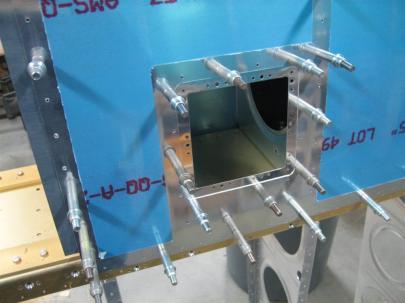
Anyway, I drilled the doubler plate to the leading edge.

Then, I found the leading edge vane support rib. They come as a pair of two; one for the RV-9, and one for the RV-7,8. It was obviously while holding it up to one of the leading edge ribs that the one with the sticker on it is the correct one.

So I wouldn’t forget, I tossed the other one in my scrap pile.
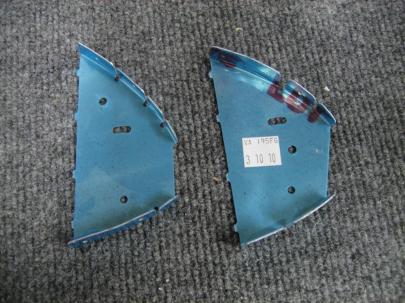
The one on the right is the one for the RV-7 (and -8).

Whew. Good day. I’ve made good progress in the last few days. Tomorrow, back to work, but hopefully I can keep this up.

Oh, and for the record, I hardly had enough 3/32″ (silver) clecos to do both leading edges at the same time. I just ordered 100 more, but I am going to need way more that that to keep working on both wings at the same time. This might be a good time to work on one wing at a time…or break down and order the 500 or so that Vans suggests.

3.5 hours.

Prev | Next


Leading Edge Rib-to-Spar Drilling

January 2, 2011

Prev | Next

Well, after a quick run to Lowe’s to pick up a few more pieces of shoe molding for the family room (see my first floor wood floors page and today’s update here), I finished the family room and then headed out to the garage for an awesome two hours worth of building.

Why awesome?

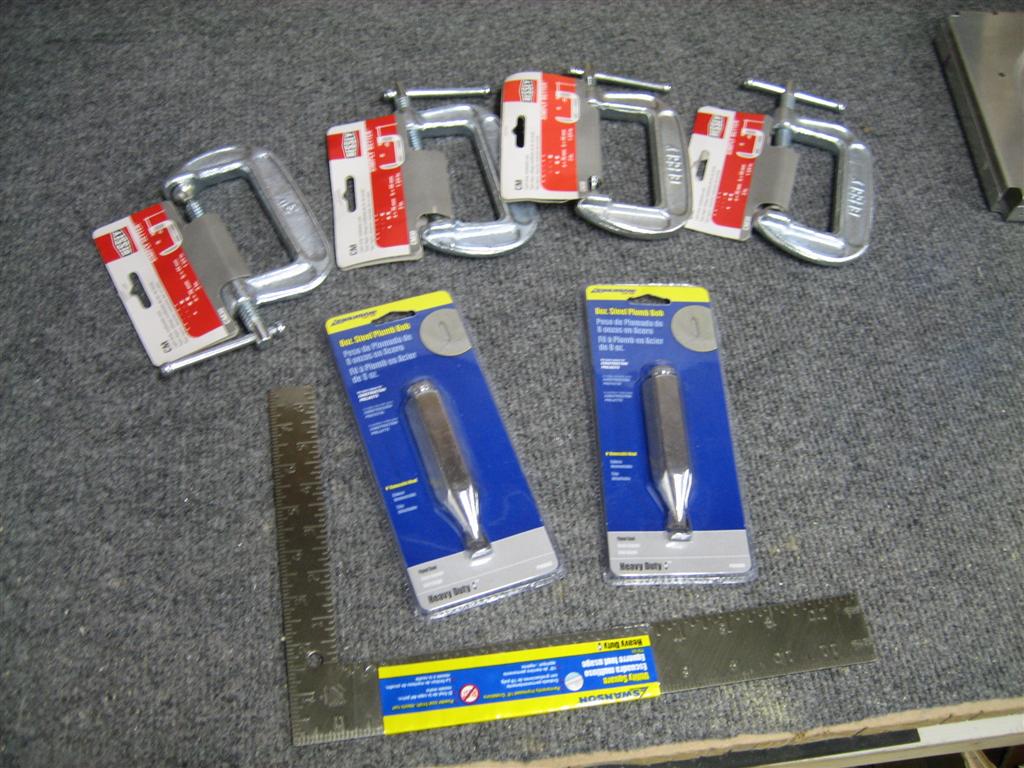
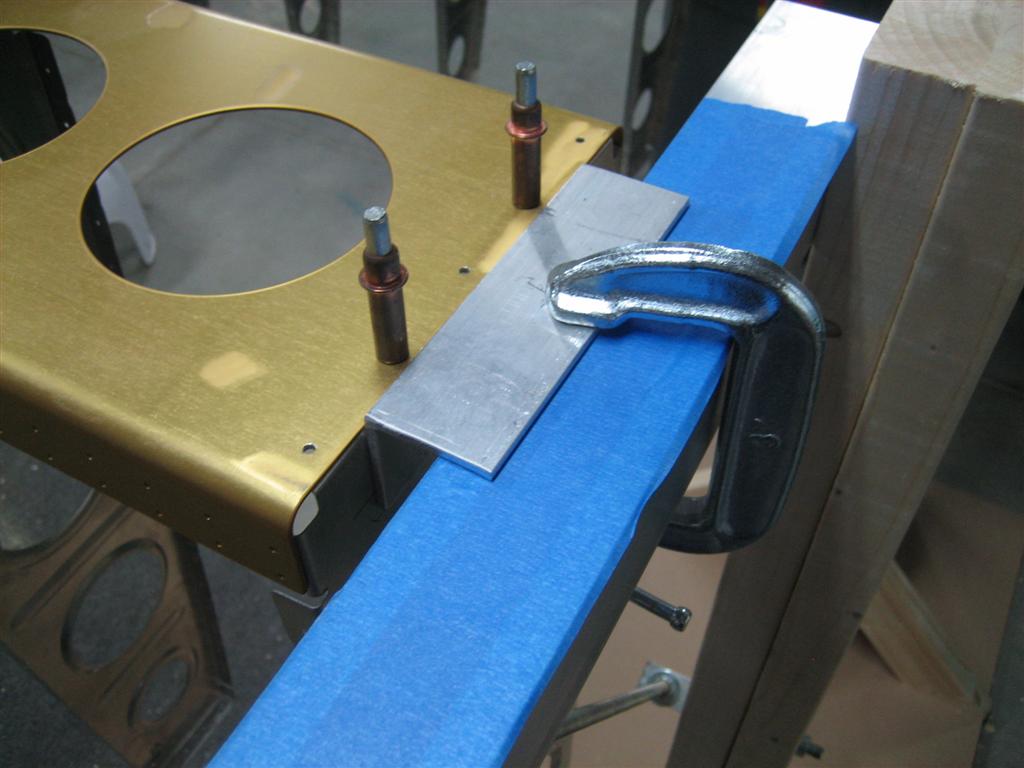
First of all, I picked up these awesome tools for the project. I needed some good 3″ clamps for the spars (where they will attach to the wing stands) and a couple of plumb bobs to help measure twist. Also, I’ve been using my plastic triangle from 7th grade geometry as a square…it’s about time I got a real square.

Tools! Tools! Tools!

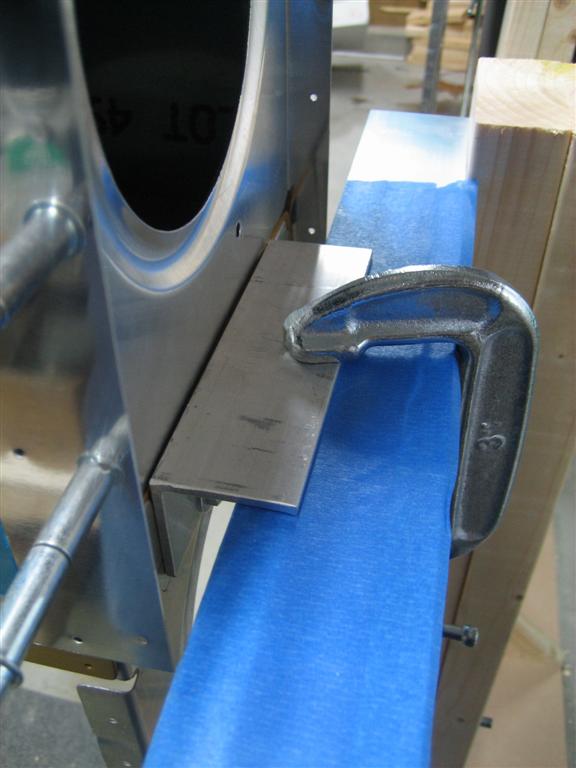
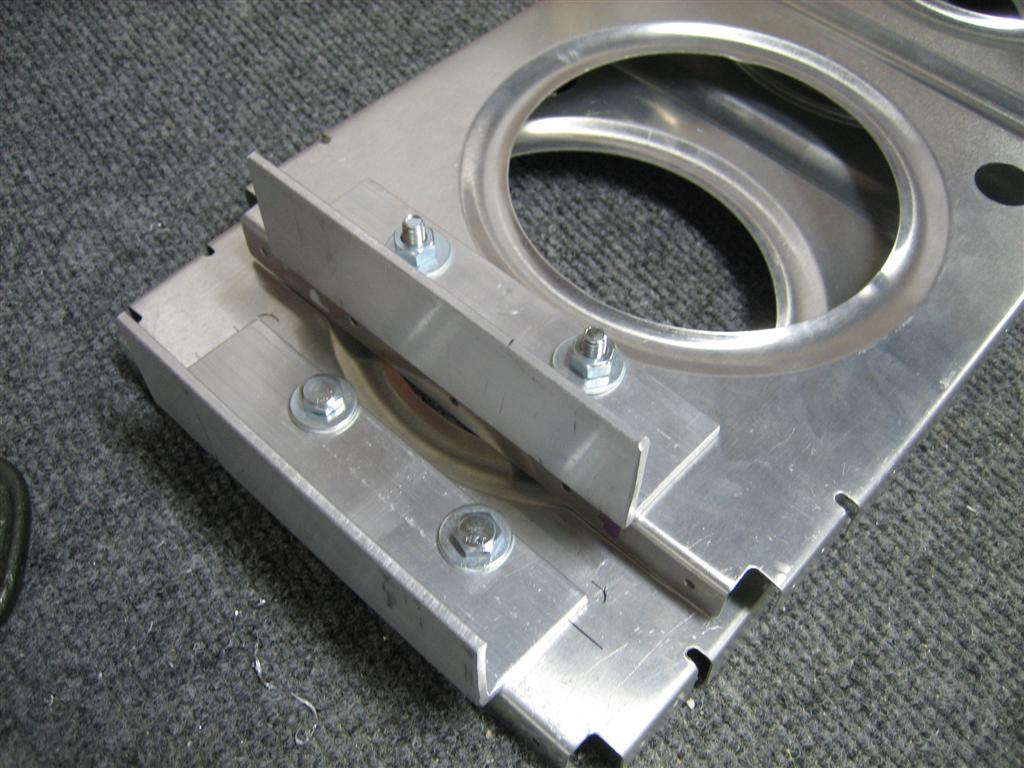
Then, I got out the jigsaw with a medium metal cutting blade and cut a couple 5″ pieces of 1.5″ angle. I attached these angles to the outboard ribs, which will allow the ribs to be attached to the wing stands.

I used 1/4" bolts instead of 3/16". I hope I don't die. (Also, don't pay attention to my edge distances...)

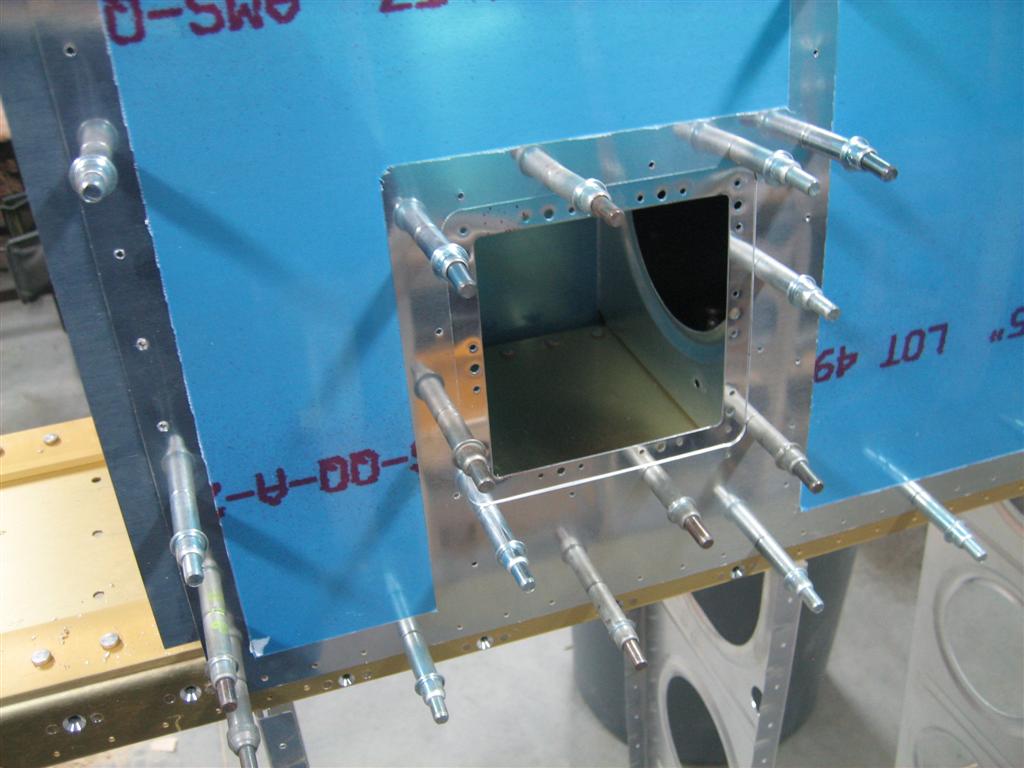
Here’s a good shot of what I’m trying to accomplish. The skins will overhang (to the right in this picture) the spar by about an inch from the last set of holes in the spar. I used the 1.5″ angle so I have adequate spacing (don’t have to notch my support angle to accommodate the skins).

This will work great.

Okay, next up, rib preparation. Here are 10 of the 12 leading edge ribs (these 10 have the prepunched holes).

Leading edge ribs.

After spending about an hour deburring edges with the scotchbrite wheel, straightening the flanges to 90° and then fluting between holes to make sure the holes are straight, I numbered the ribs for each of the wings and then got to match-drilling.

The only difficult parts here are that a couple of the W-709 ribs have holes where they don’t need them and don’t have holes where they do need them. The picture below illustrates.

Ignore the row of holes that has a cleco in it already; these are the main rib attach holes. See how the three middle holes leading edge rib lines up nicely with the prepunched holes in the spar? Those are easy to matchdrill to final size.

The outer two holes on the rib get "abandoned" while the two outer holes in the spar are used to backdrill new holes into the rib.

Here, I am using the holes in the spar to drill the new holes in the rib.

Matchdrilling using the spar.

I threw a couple clecos into the new holes. Now there are 5 attach holes, and 2 abandoned holes (you can see them on the outside).
There are 4 total leading edge ribs that get this treatment. It's easy to tell which ones need it as you assemble the leading edge.

Then, I spent another half hour making sure all of the rib-to-main-spar holes were drilled. Now, they are ready for disassembly, deburring, prep for priming, priming, and assembly.

Oh wait. I still have to drill all the rib to rear-spar holes. I’ll do that tomorrow.

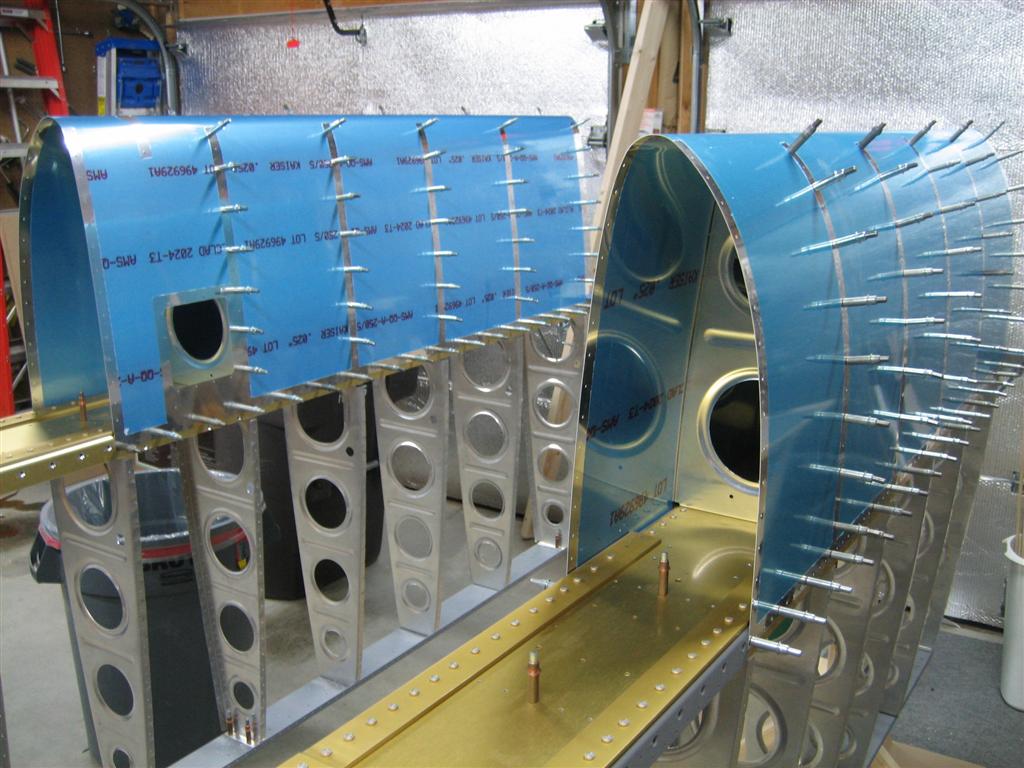
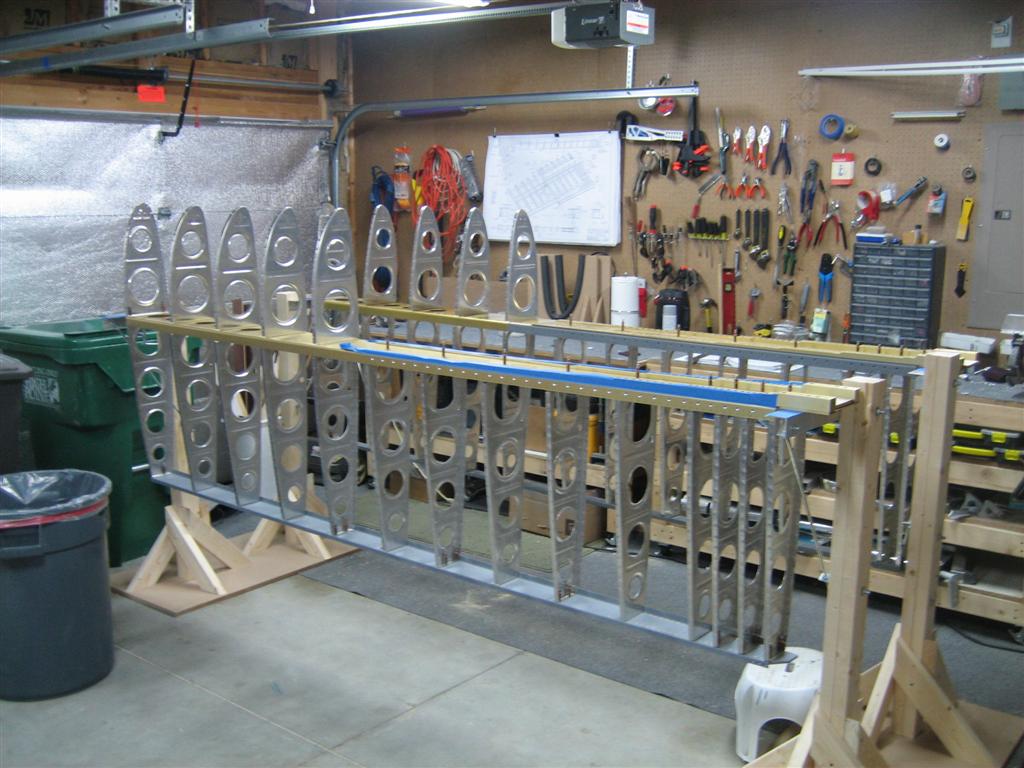
Before shutting down for the night, I snapped a picture of the two wings in the stands.

It's awesome to be at a point where I can see two big wings in the garage.

A half hour of attaching the outboard ribs to the wing stands, then 1 hour straightening and fluting rib flanges, then another half hour drilling ribs to the main spar.

I’m waiting on a 2-inch scotchbrite wheel from Cleveland Tools, so tomorrow I’ll drill all the main ribs to the rear spar and then I’ll find something else to do.

2.0 hours of big skeleton work.

Oh, and we shot this video the other day of the pups howling at a fire engine. I won’t ever not find this hilarious.

Prev | Next


Fluting and Straightening Left Wing Ribs

January 1, 2011

Prev | Next

Well, today was kind of boring. Between installing the toilet back into the powder room and sitting on my butt watching football, I managed to motivate enough to go do some fluting and flange-straightening on the left wing ribs.

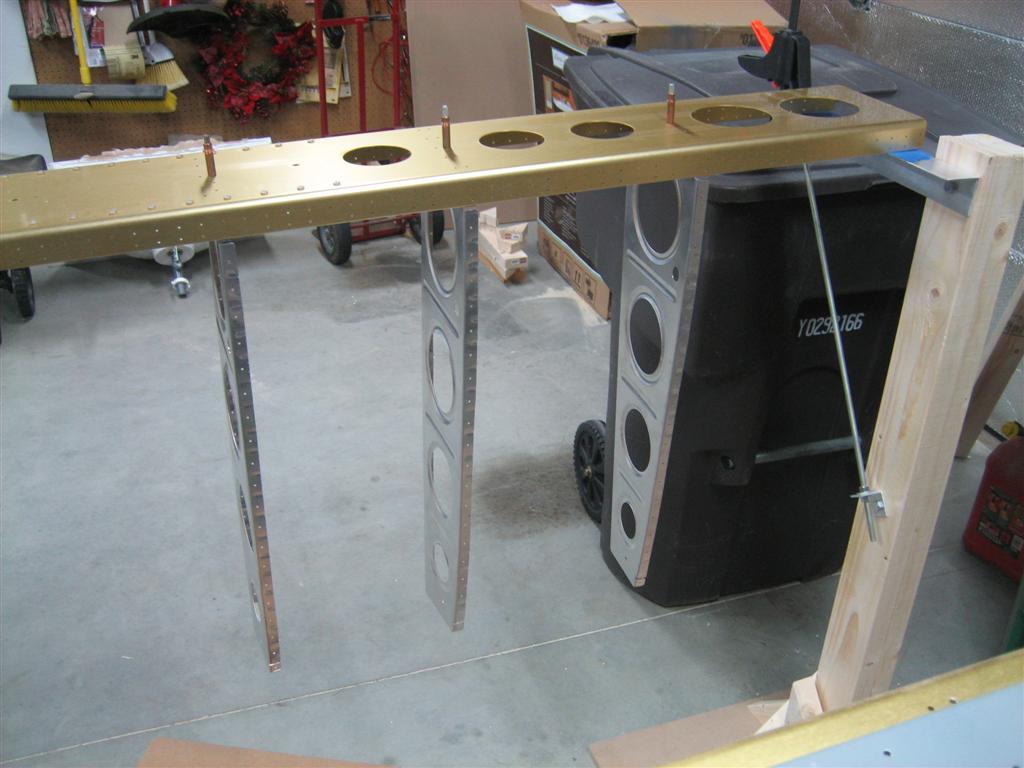
I didn’t hang the outboard rib yet (still have to attach a 5″ piece of angle to help support the outboard edge), but here are the first 4 (of 14) ribs done.

I'm really liking this stand.

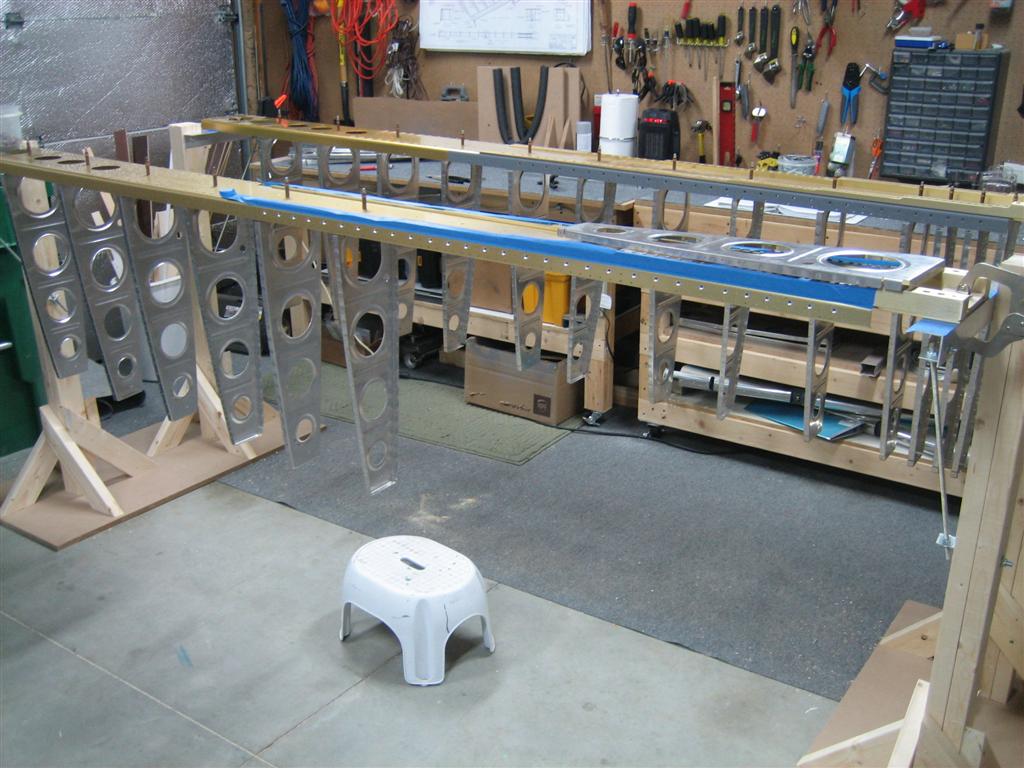
7 of 14 ribs done and hung.

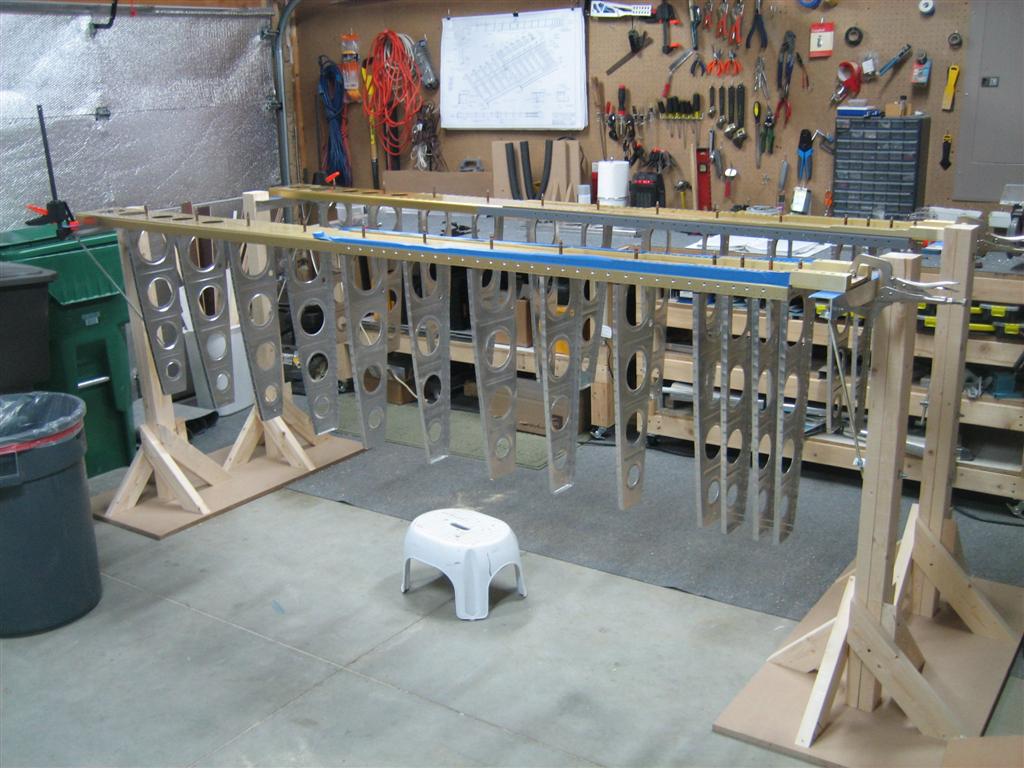
All done.

Next up is matchdrilling the main ribs, then getting the leading edge ribs prepped, assembled on the spars, and matchdrilled. Then (because I’m working a little out of order), I’ll take all the ribs off and prep them for priming before starting to rivet the skeleton together.

A boring, but important hour of work today.

Prev | Next