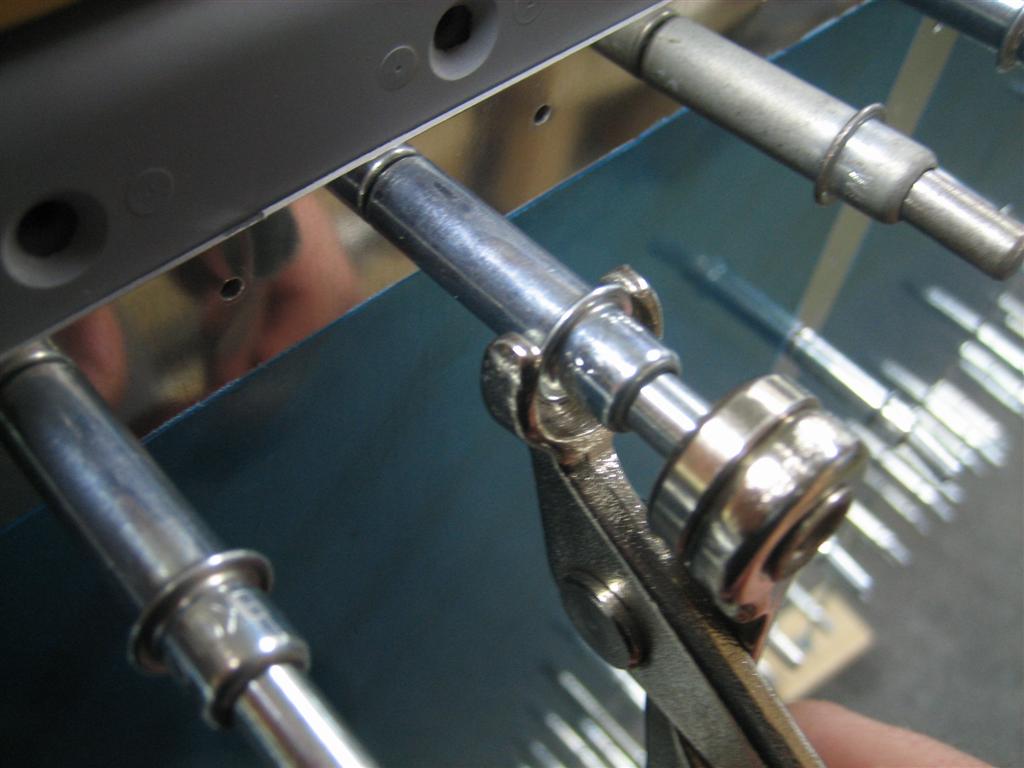
Started Banging Rivets on the Right Leading Edge

April 22, 2011

Prev | Next

OH MY GOSH!

ANDREW’S

BUILDING AGAIN!

Well, even though my last post said I was getting back into the mood of airplane building, it’s been almost a MONTH since I spent time on the project.

Yikes.

Anyway, I had a day off today, and I managed to spend a couple hours in the airplane factory.

Let’s see if I remember how to take and post picture.

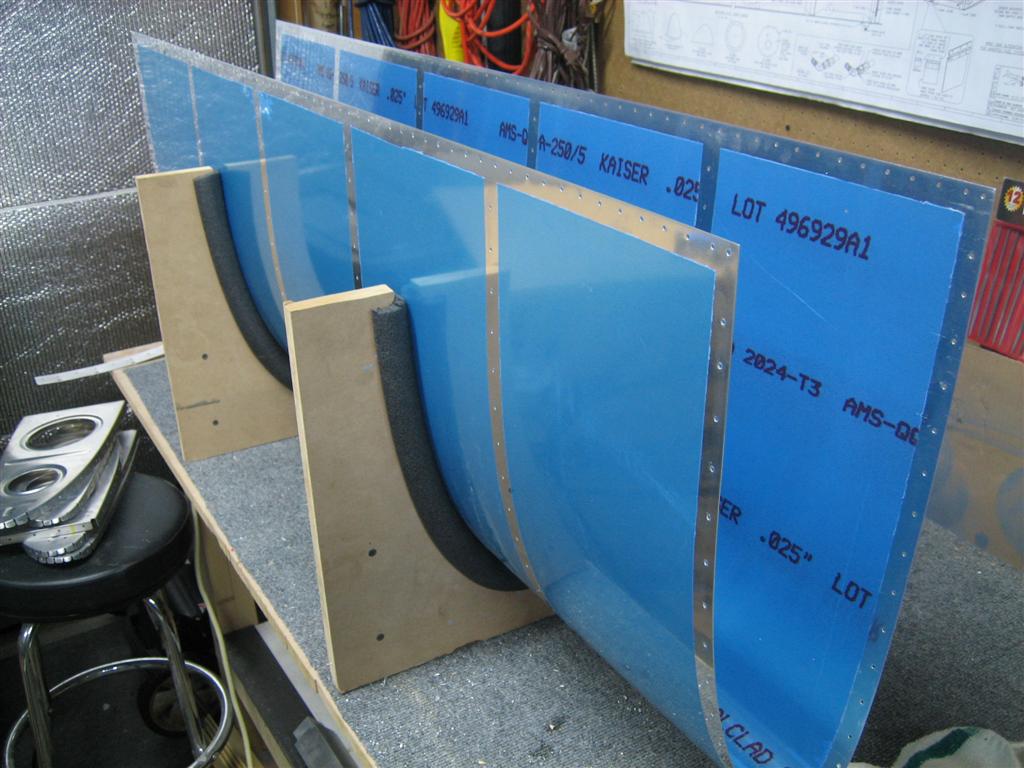
After a little garage cleanup, I got the right leading edge out and got back to deburring all of the holes. I think deburring took about 30 minutes.
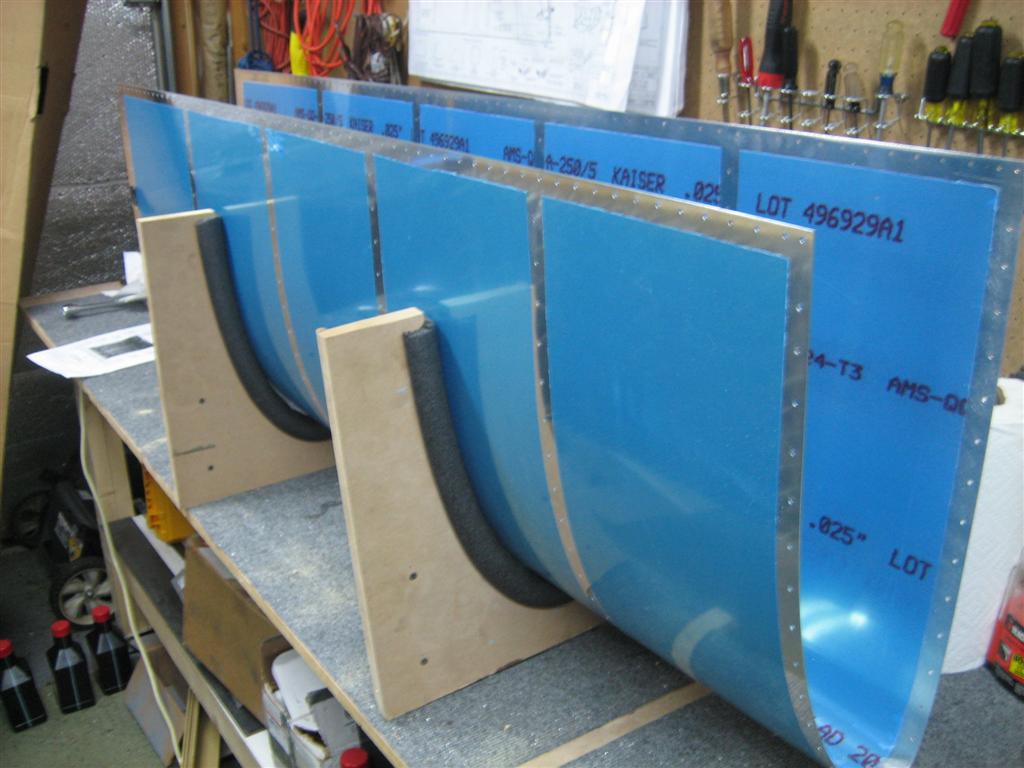
My hand hurt after deburring all of these. I need to deburr more often.

Once done, I took the cradles off the skin and opened her up to do some scuffing.

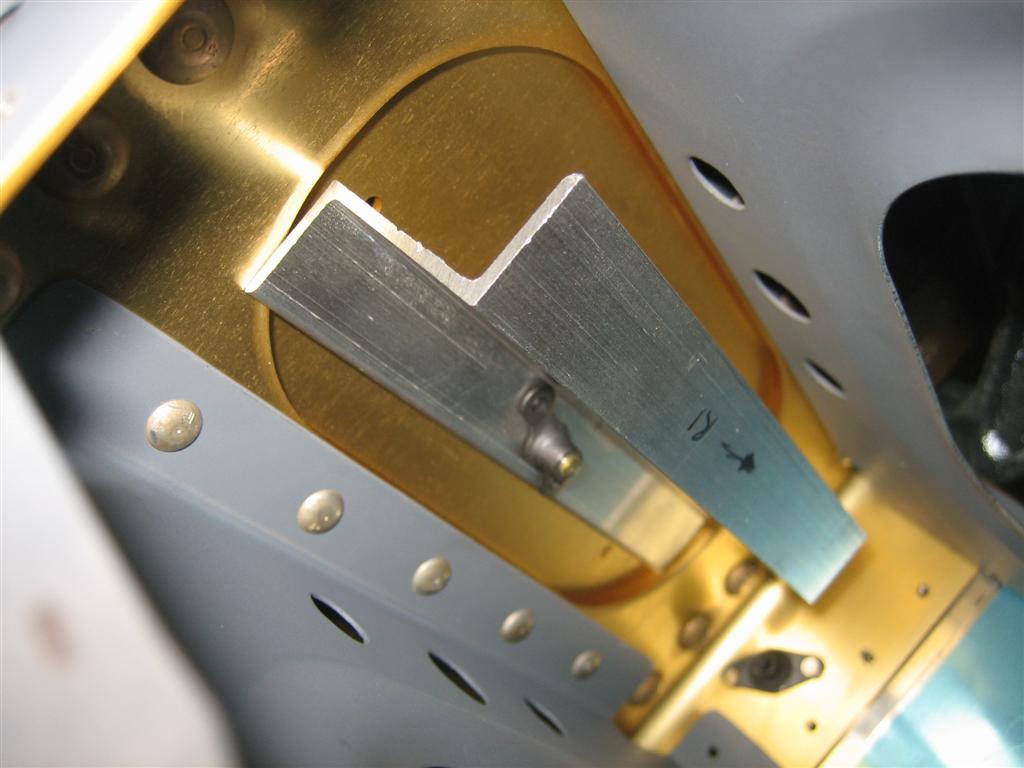
I haven't totally finished the leading edge light installation, but I can do that after the ribs are installed.

Then, I broke out the c-frame and started dimpling. This actually takes awhile, because you have to be careful not to punch any extra holes in the skin.
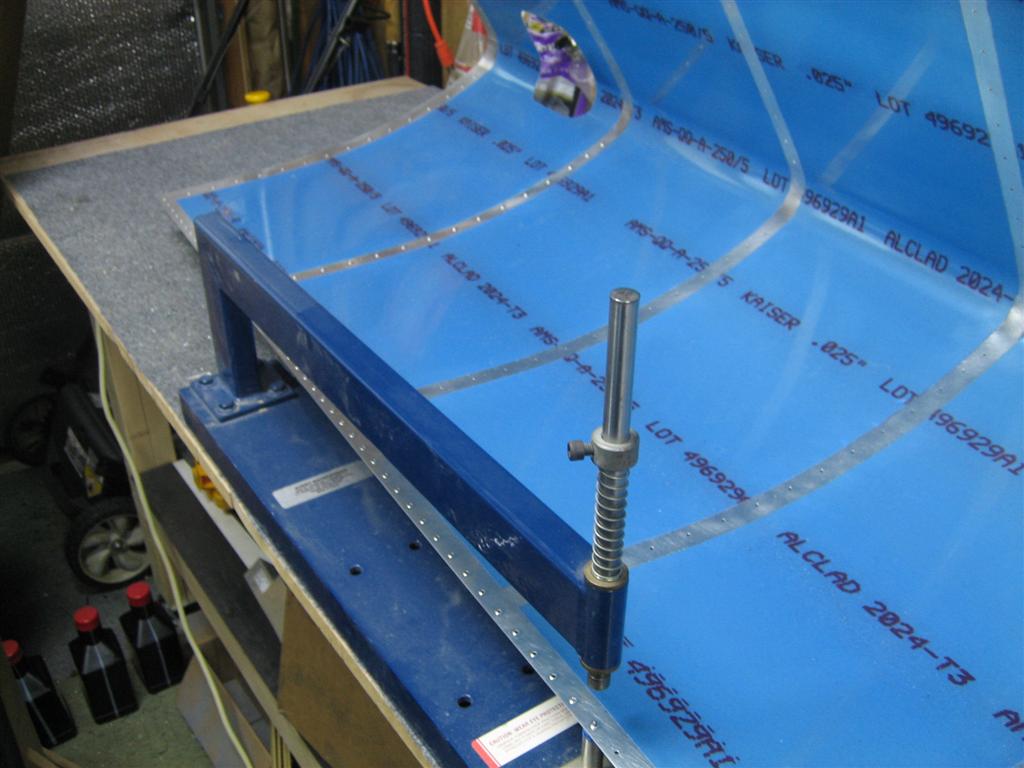
Even though I can reach these dimples with my squeezer, I think you get better, crisper dimples from the c-frame.

Here's me doing the forward-most hole in the top of the leading edge skin.

AHHHHHHHH!

THE DREADED

FIGURE-8!
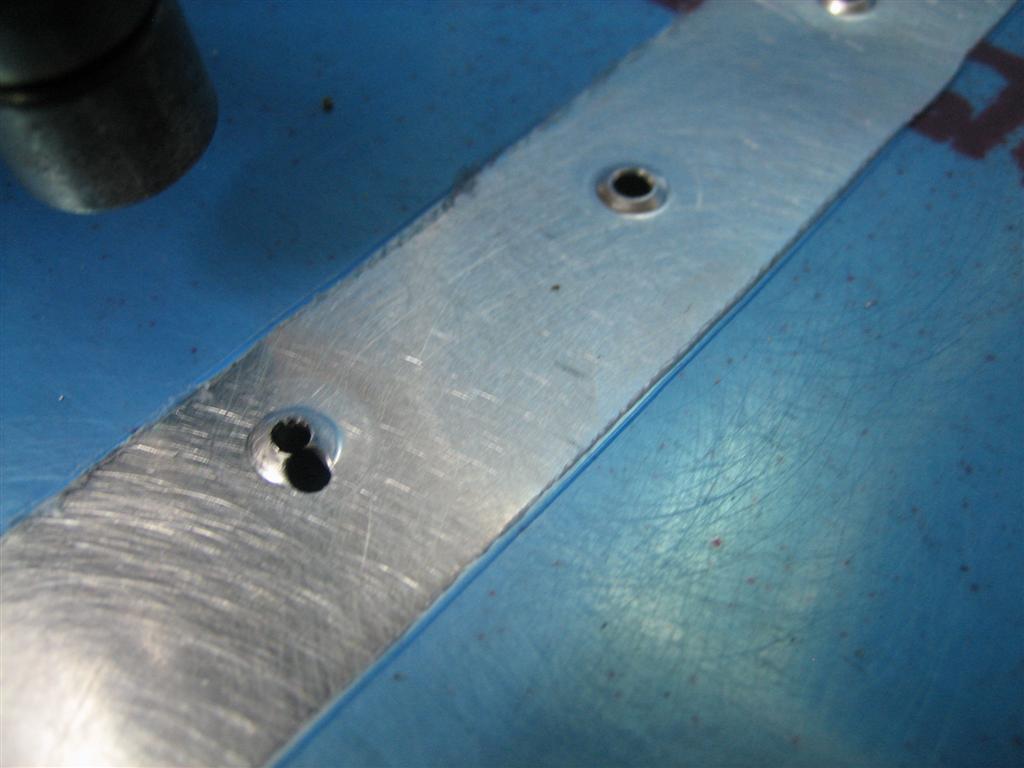
Well, after 242 hours, and thousands of dimpled holes, I finally joined the club.

To tell you the truth, it’s really not that noticeable, except for the fact that it is on the top of the wing (AND YOU’LL ALL NOTICE IT)!

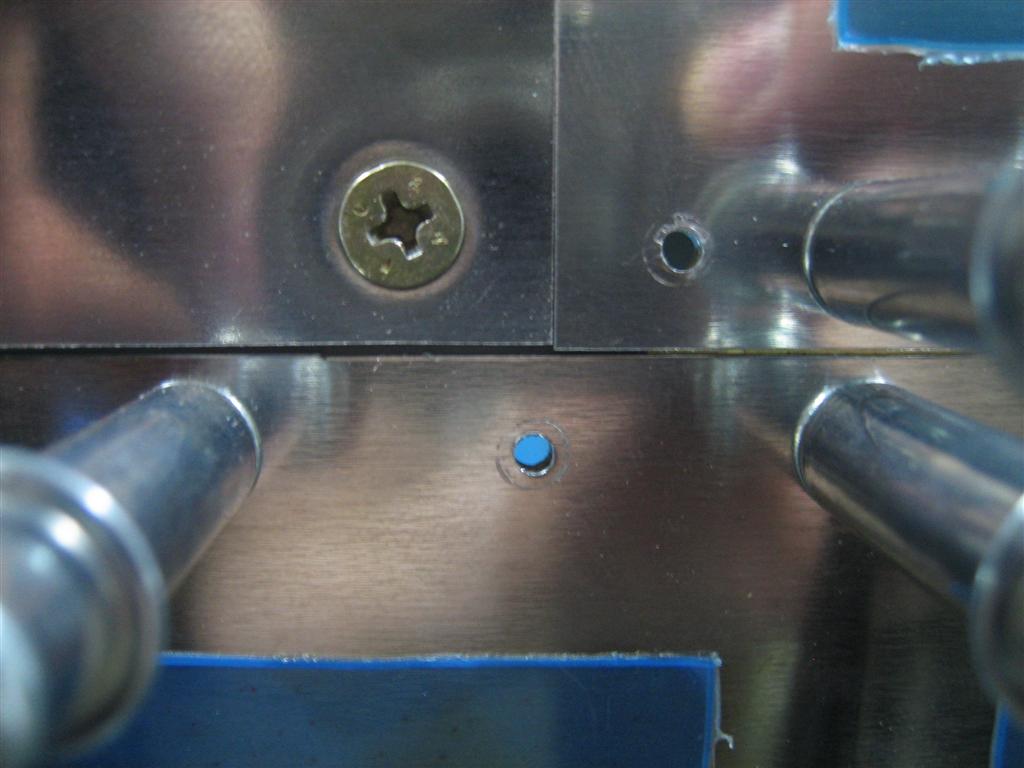
Anyway, I used some flat sets and pounded it flat, then filed it down a little, and dimpled the primary hole.
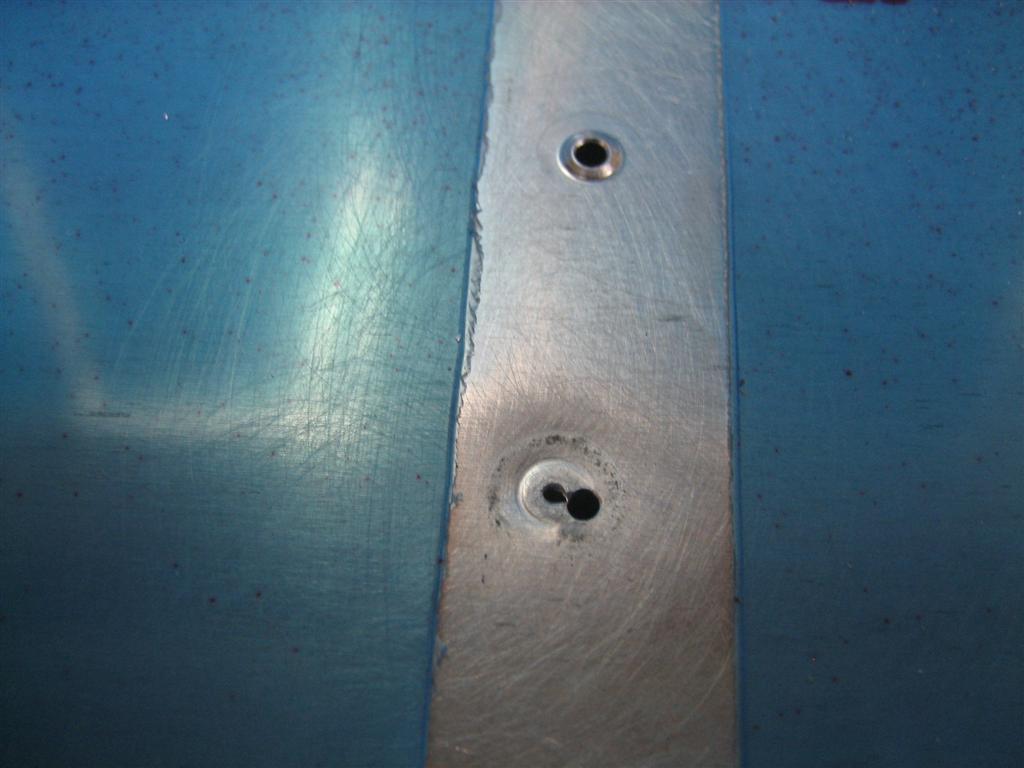
Here's the extra dimple pounded flat.
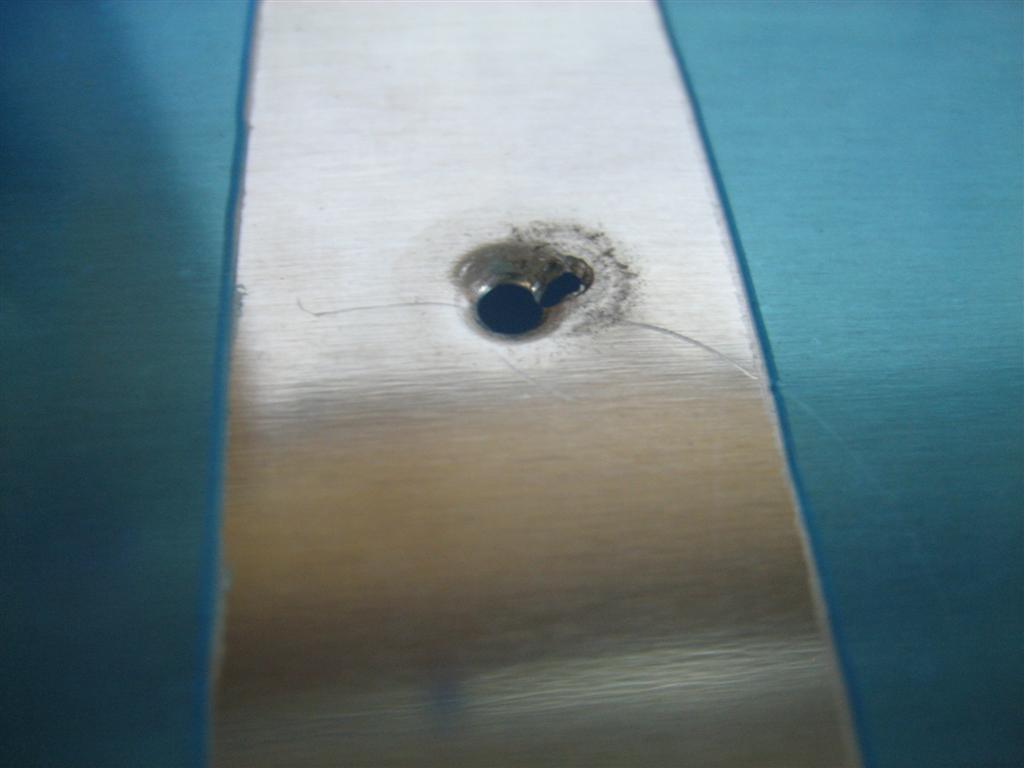
And the orginal hole dimpled. still needs a little filing here.

I could throw a fit and order a new leading edge from Van’s, or I could just build on, and cover this with filler and paint.

(I don’t think I can polish the wings anymore.)

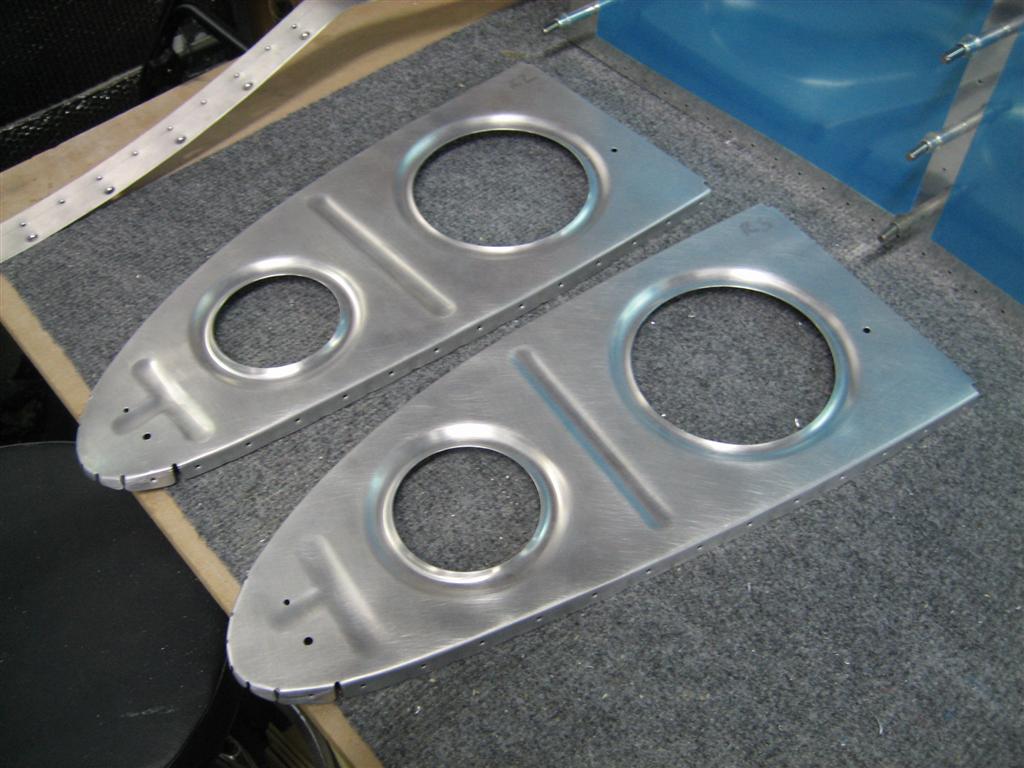
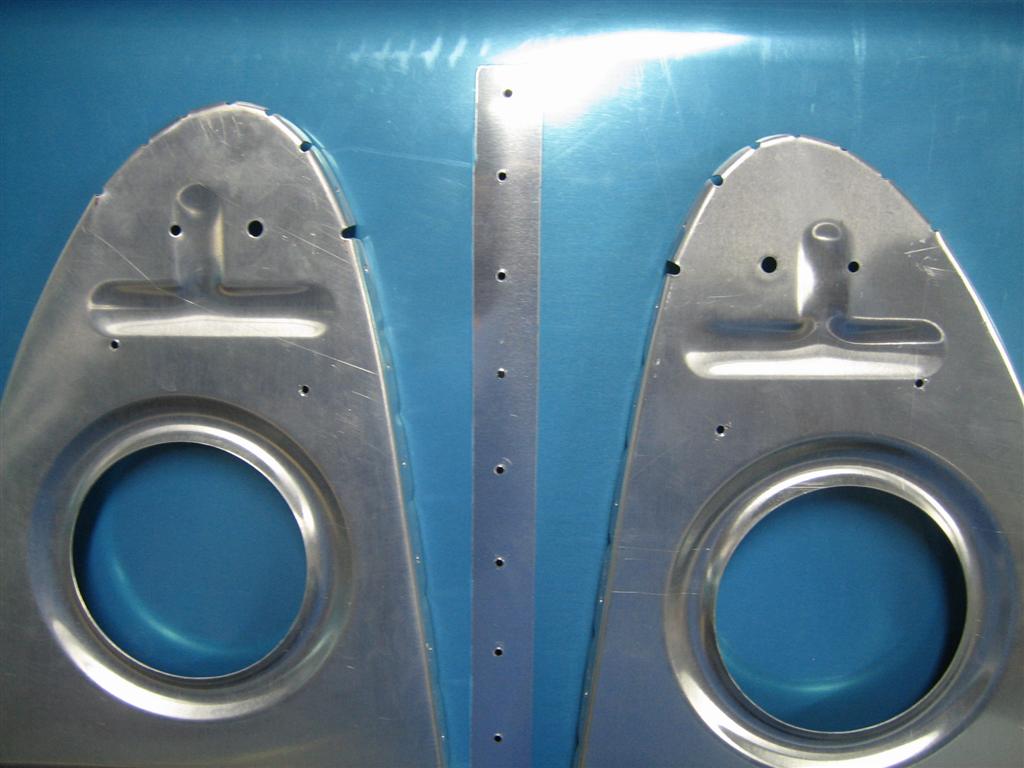
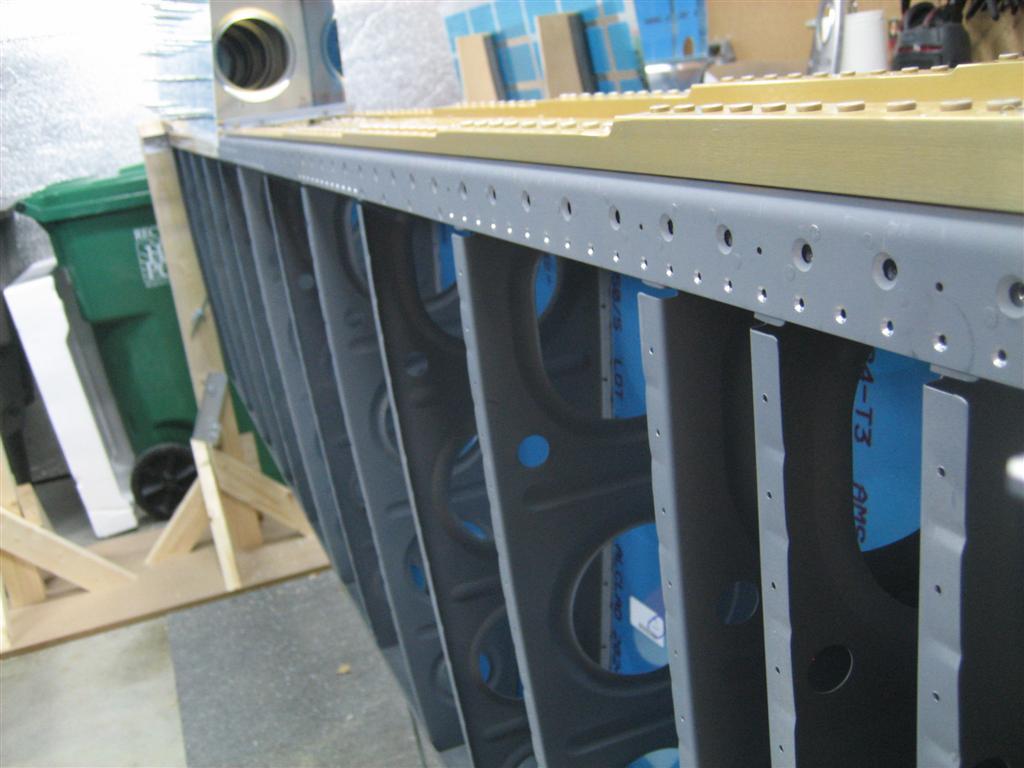
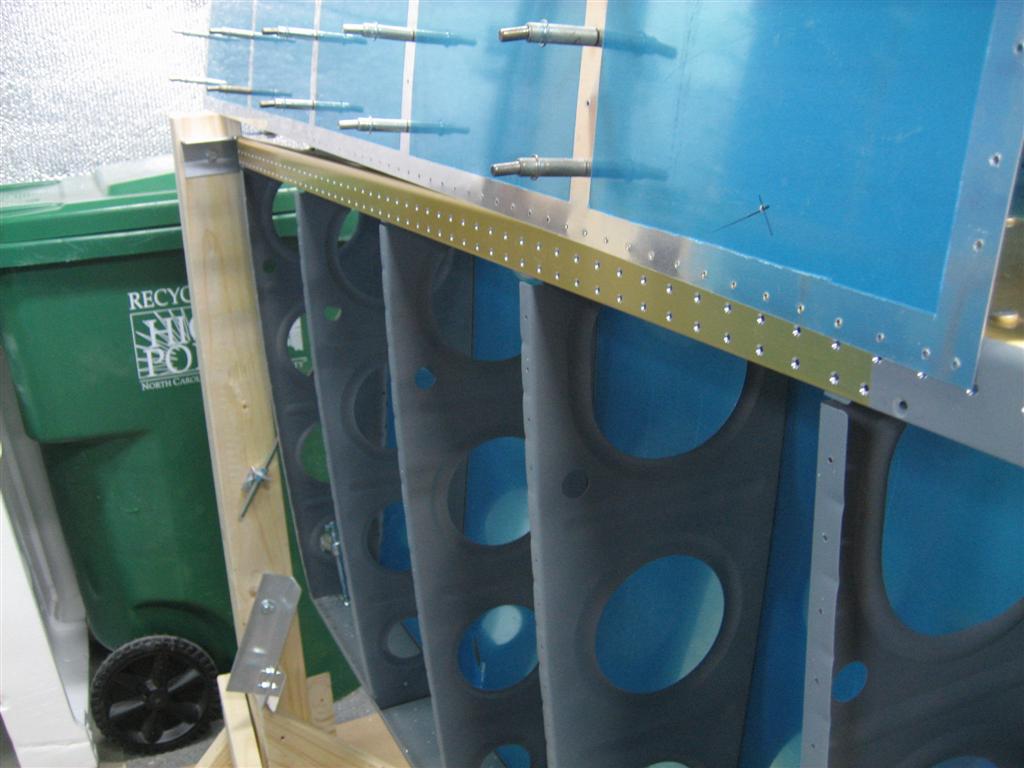
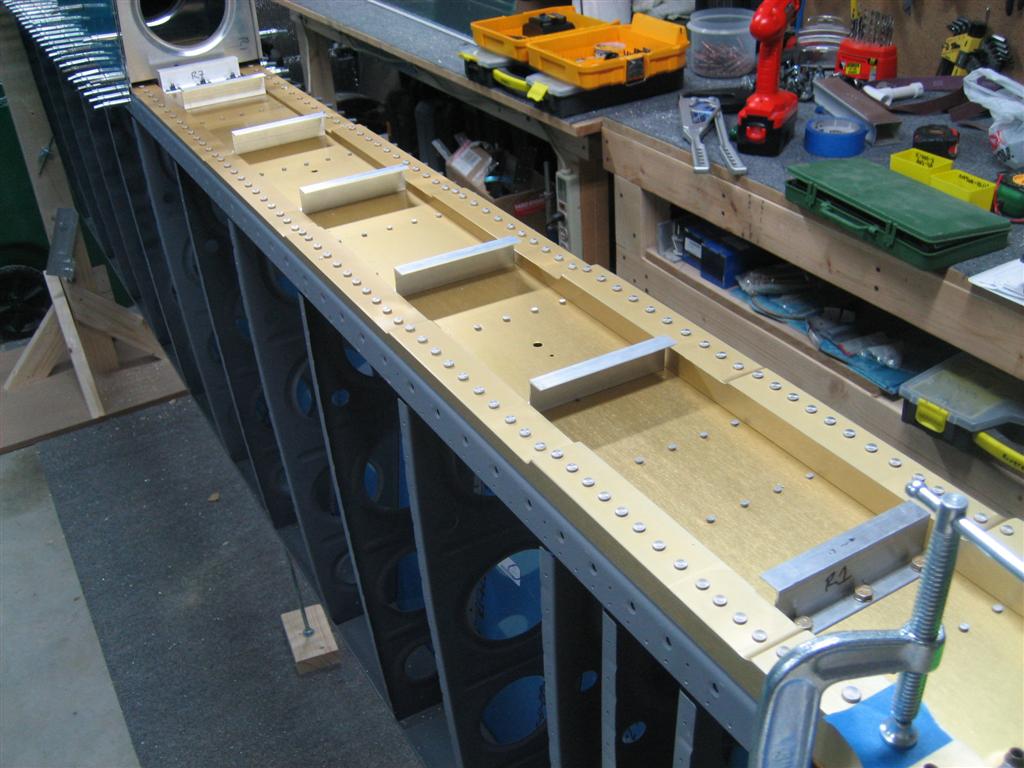
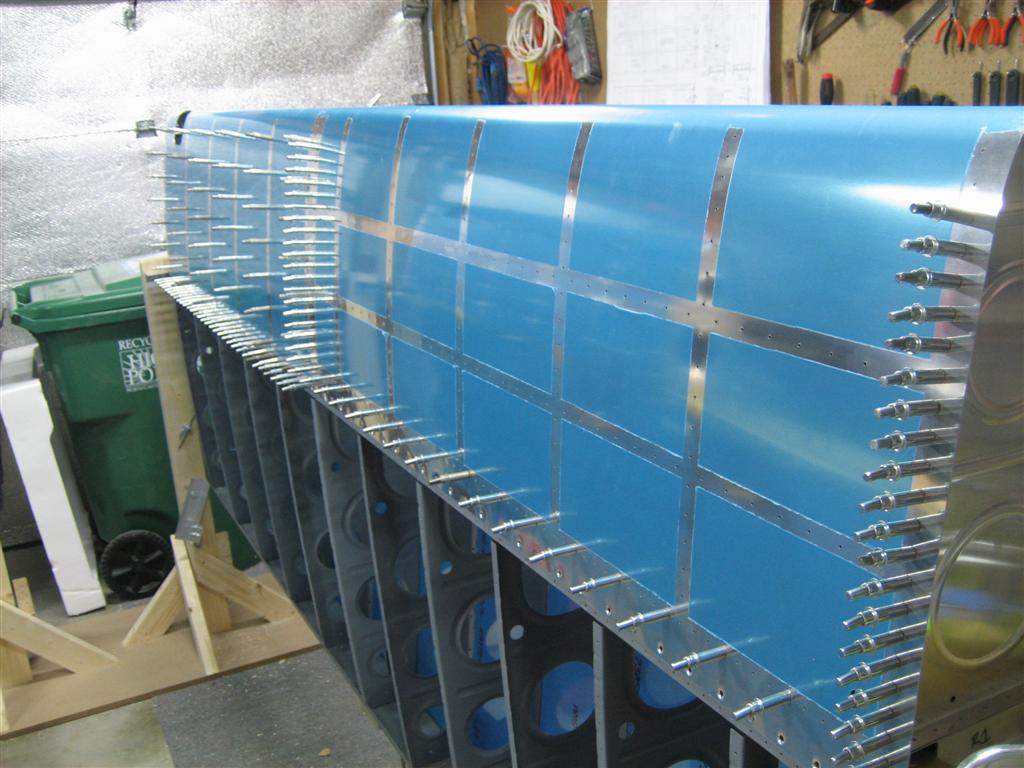
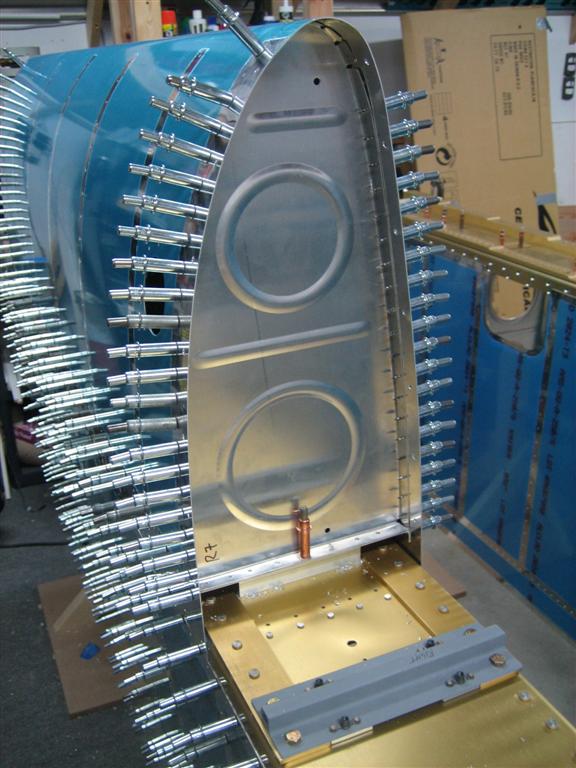
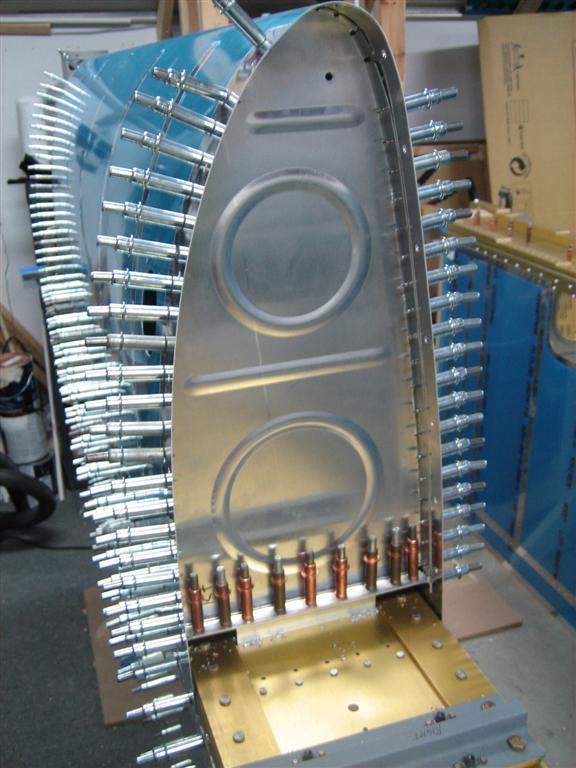
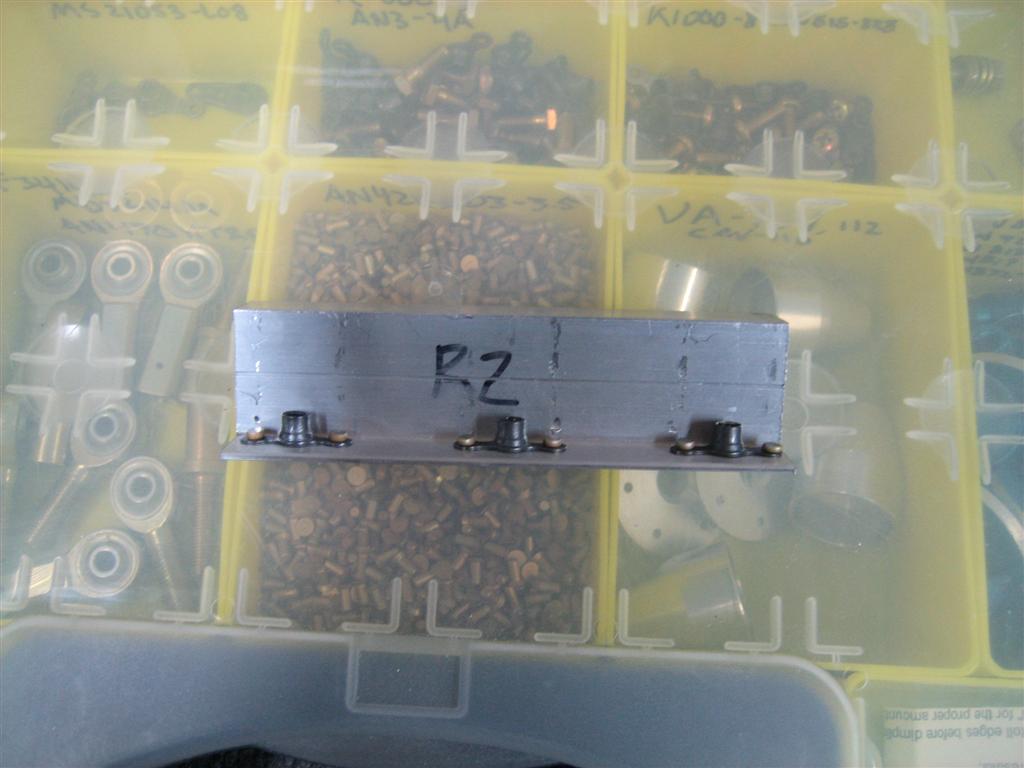
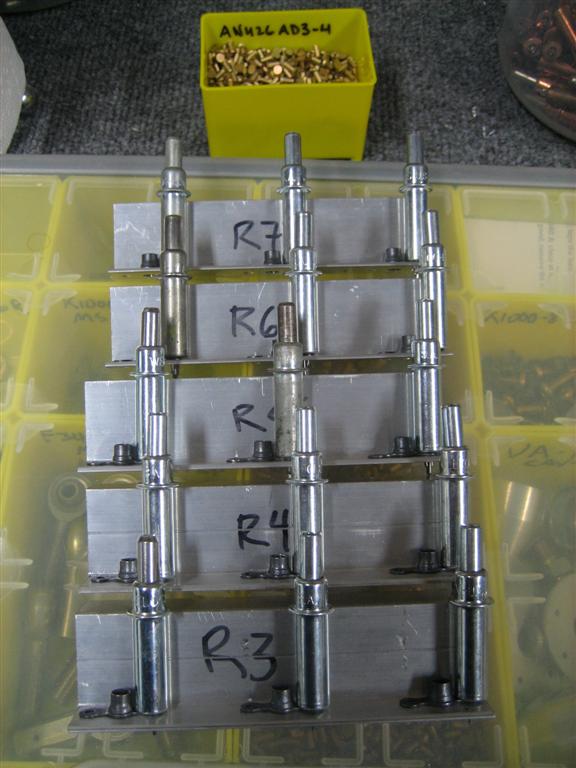
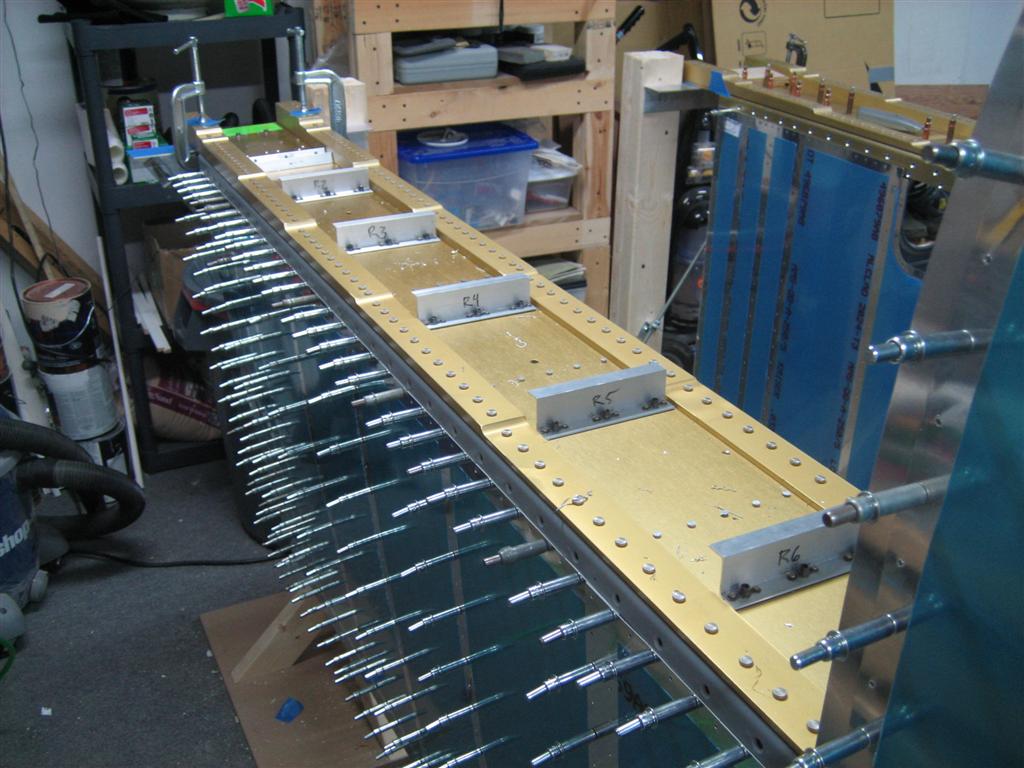
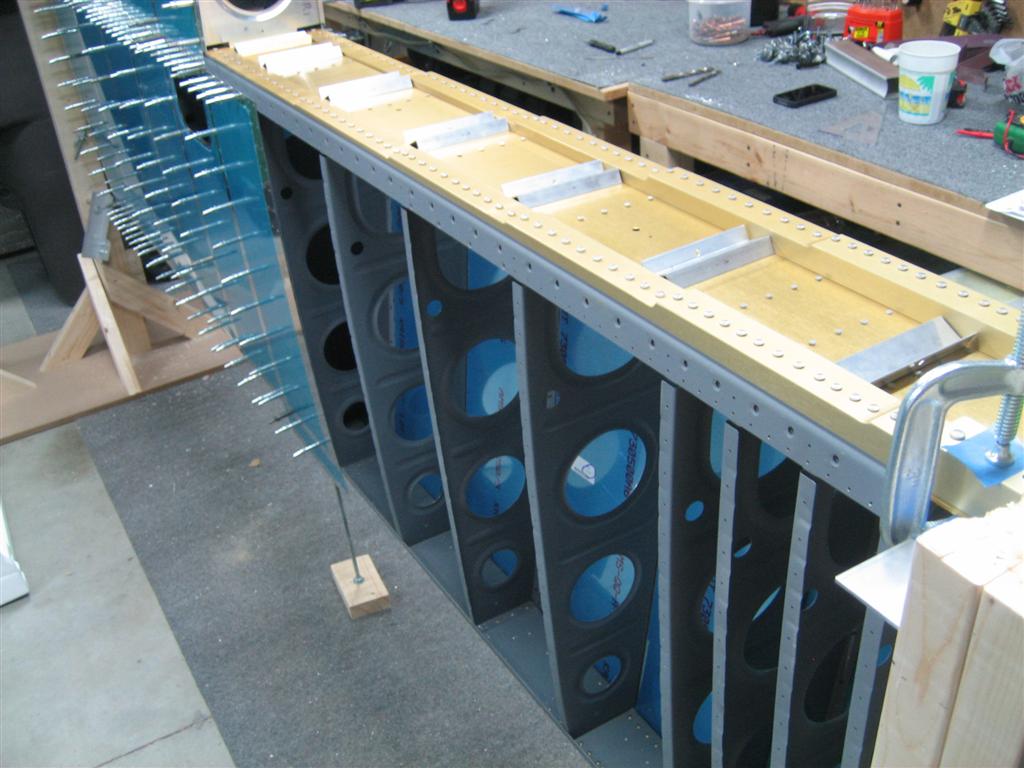
Well, in the interest of building on, I decided to do a little riveting today. I had a couple ribs prepped (my legend: R2 and R3), so I got them prepped, primed, and clecoed in place. (Making sure to cleco one rib on either side of those so the leading edge was perfectly straight.

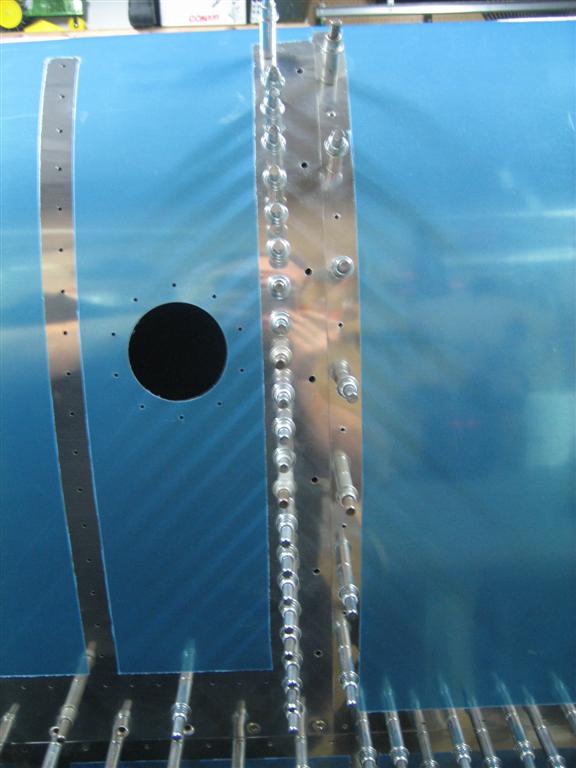
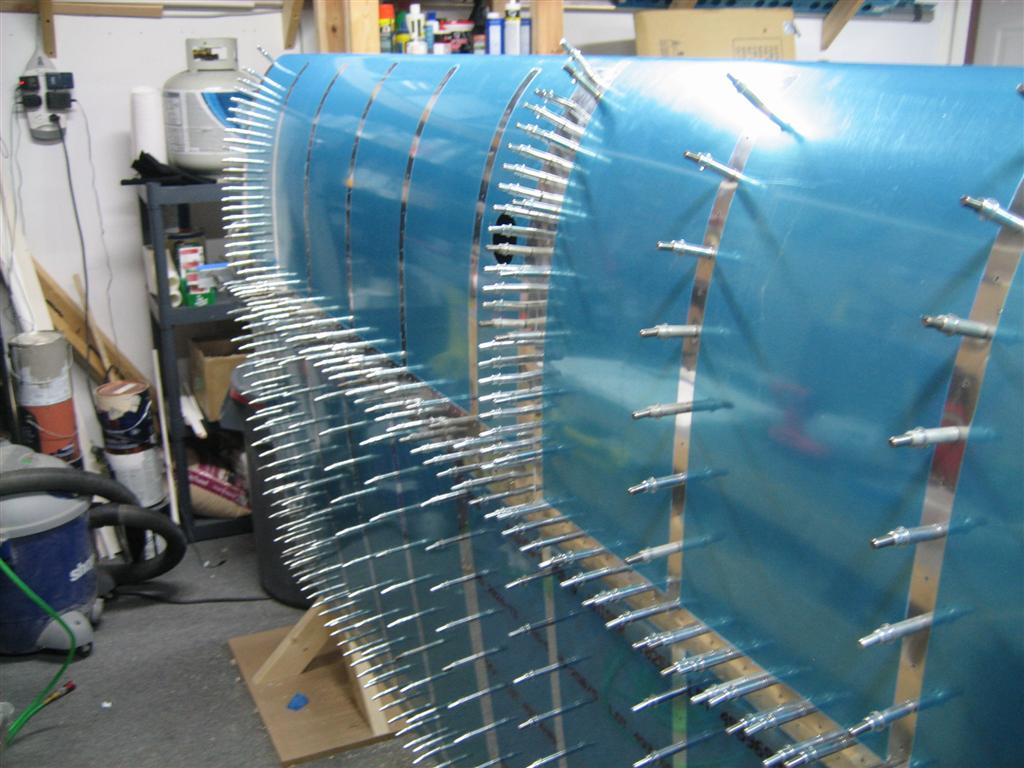
Here are the ribs clecoed in place.
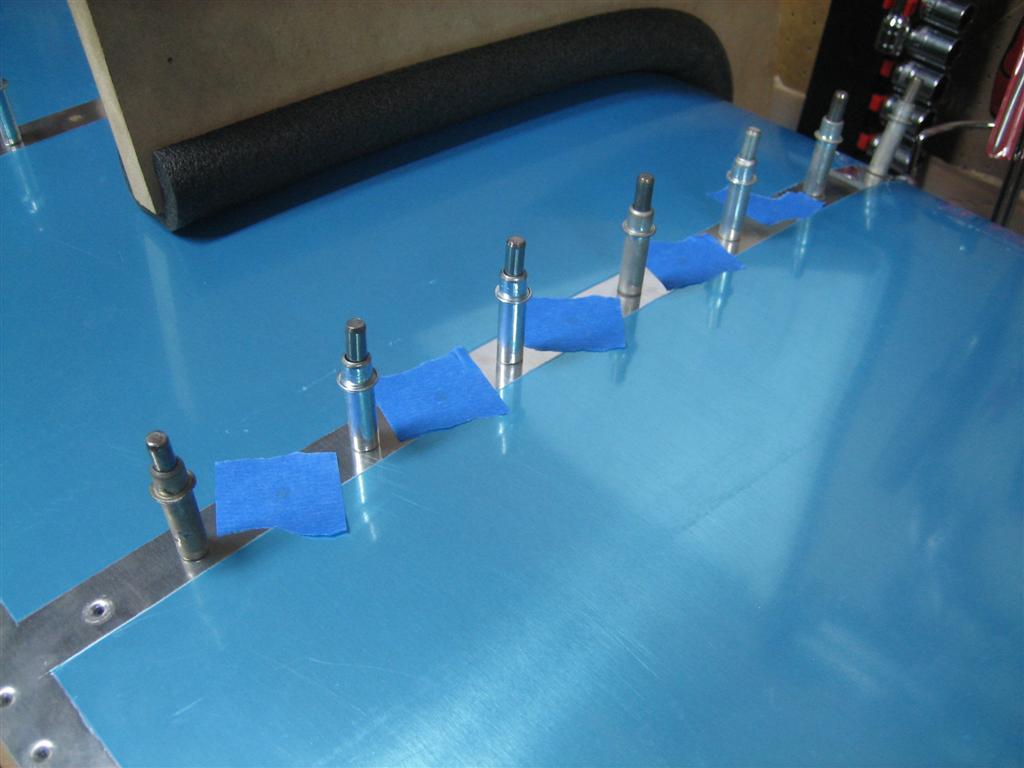
Of course, I use my normal tape-over-each-rivet-head trick to minimize scratches, dings, and marring.

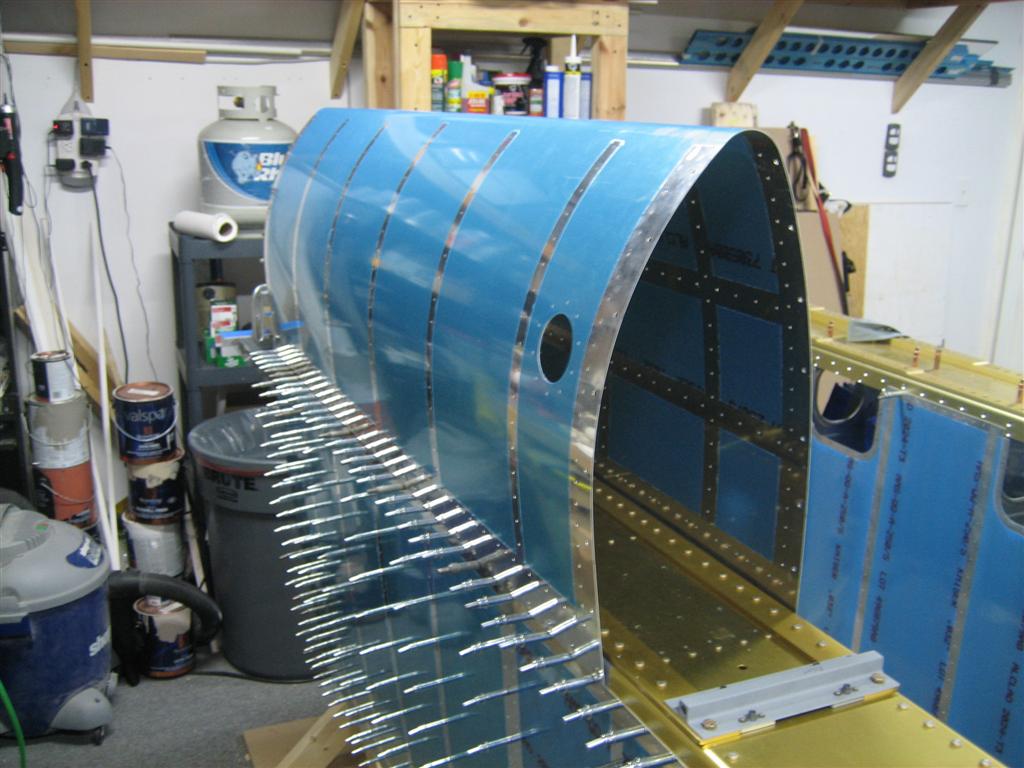
I shot and bucked every other one (no mistakes) and then replaced the clecoes with rivets, moved the tape over, and finished the row.

(Needless to say, I started with the bottom of the leading edge, so any mistakes due to out-of-practice riveting wouldn’t be so obvious.)

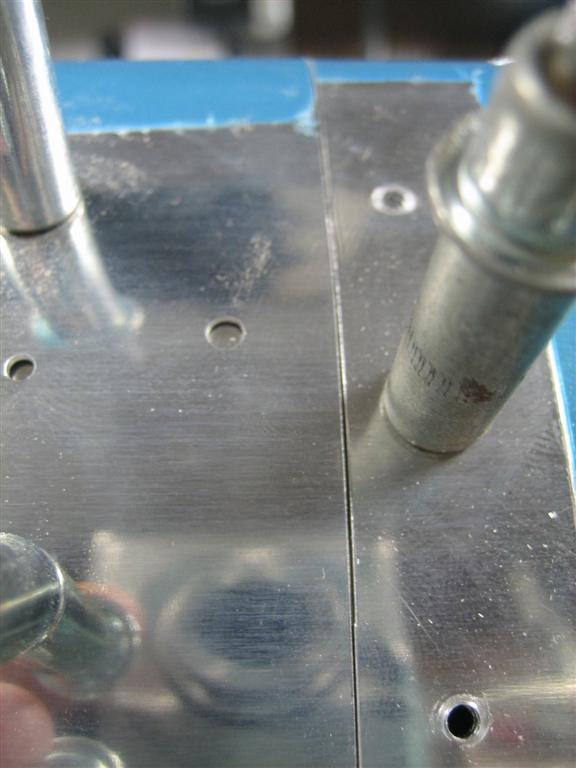
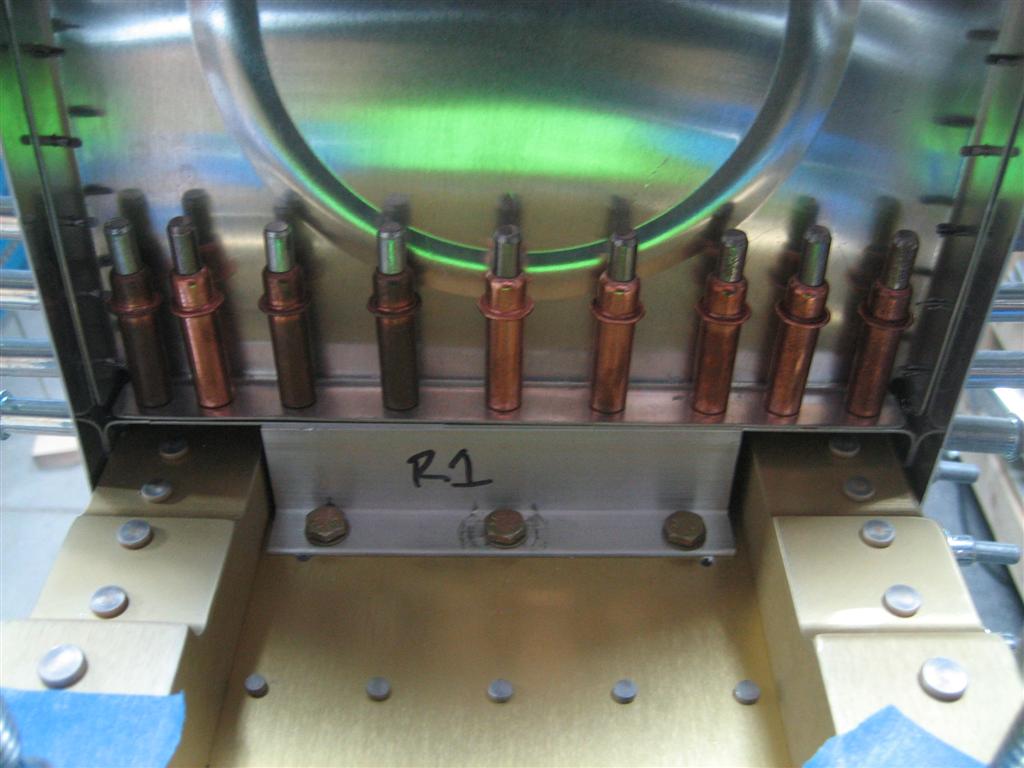
Gratuitous shop head shot on the lower surface of the first rib.

Gratuitous shop head shot on the lower surface of the second rib.

Wash. Rinse. Repeat. (Crap, I meant flip, cleco, rivet, repeat.)

Gratuitous shop head shot on the upper surface of the first rib.
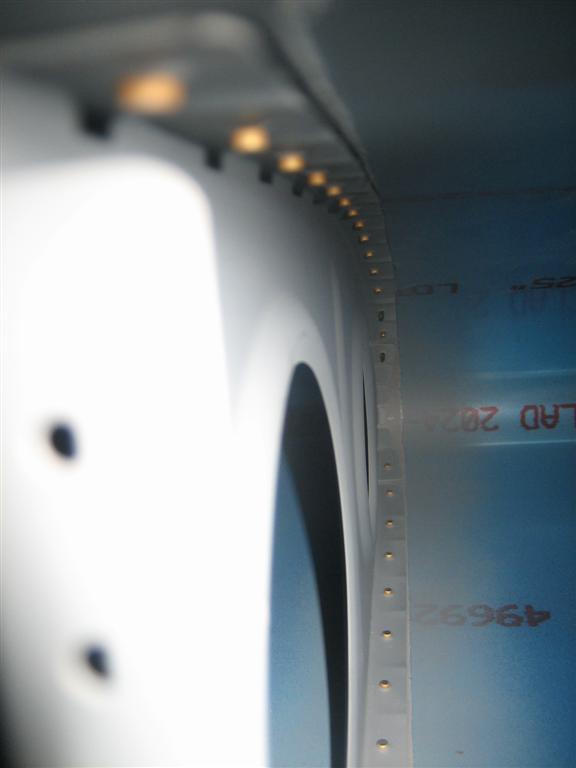
Gratuitous shop head shot on the upper surface of the second rib.

Umm, did we not have enough shop head shots today?

Andrew, STOP TAKING PICTURE OF SHOP HEADS.

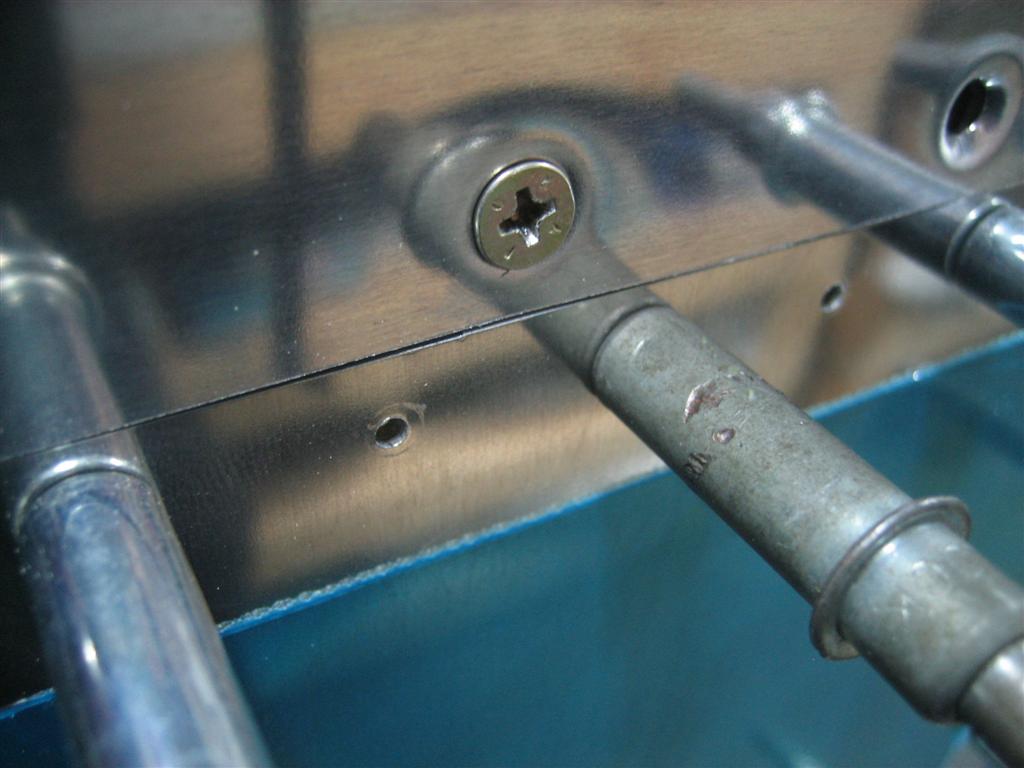
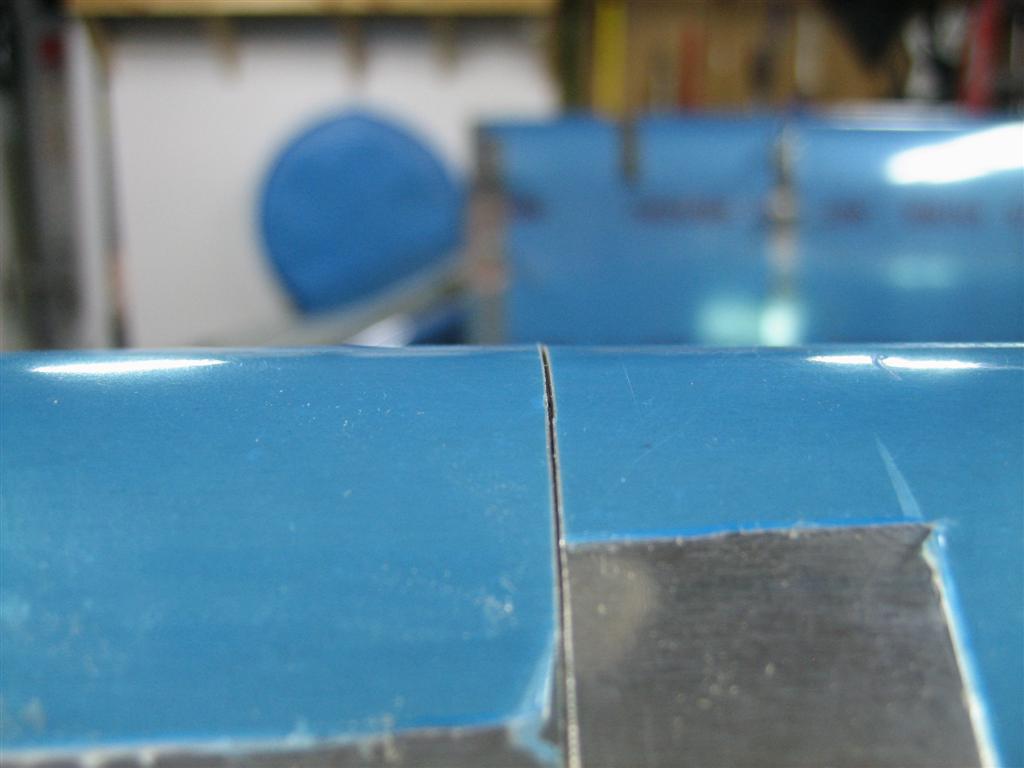
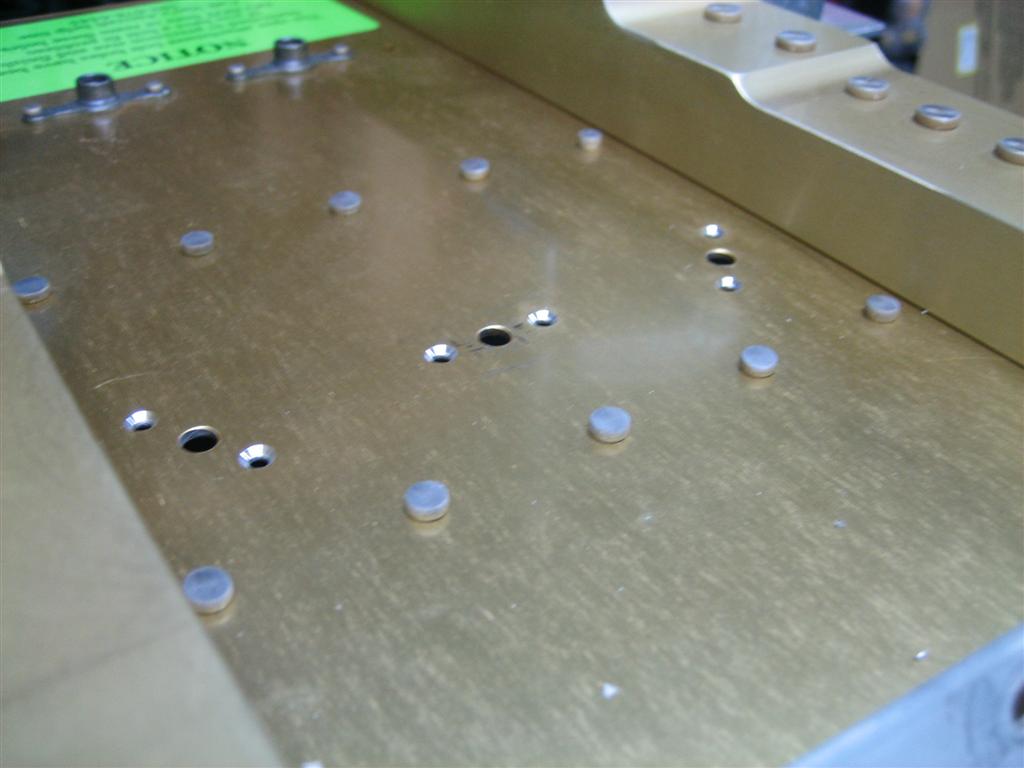
Here’s the “club” rivet. I think I’m going to leave it like this, and just watch it for cracks, but someone will probably tell me I need to drill this out and replace it with some other solution. We’ll see.
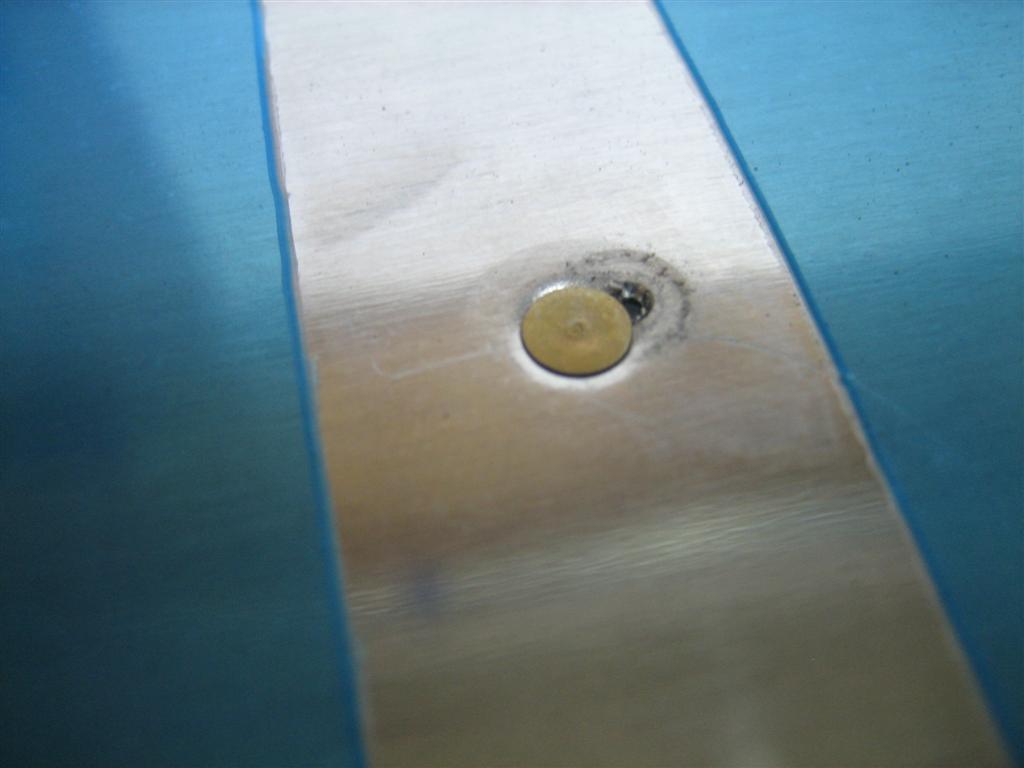
(big. depressed. sigh.)
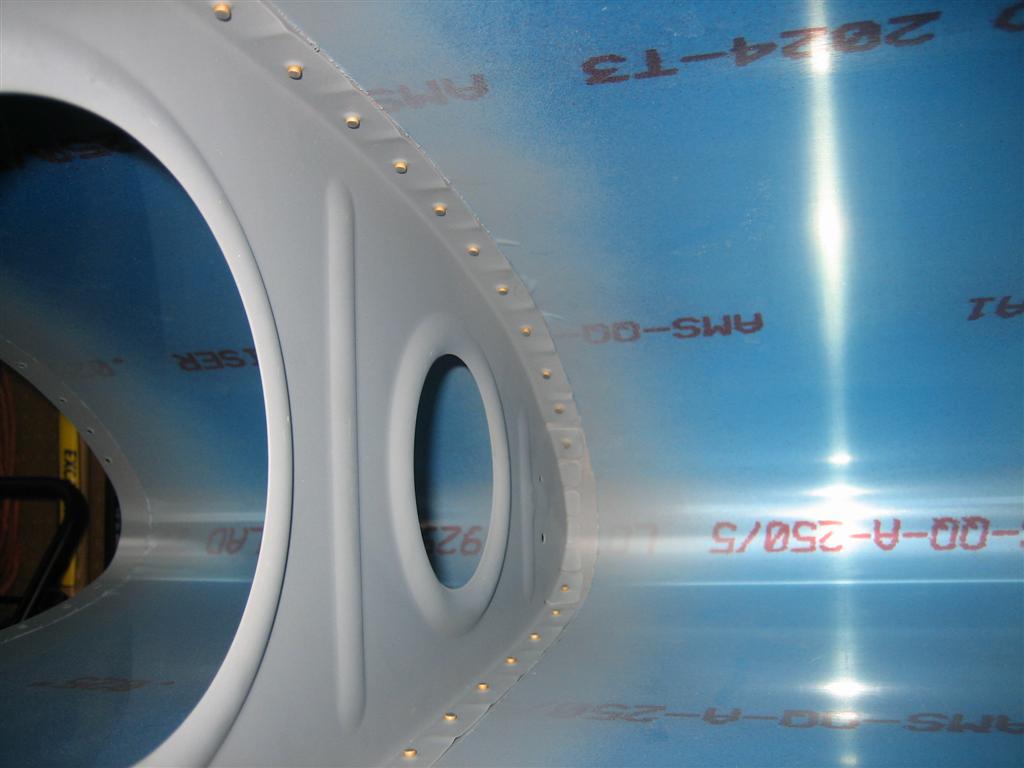
Seriously, I need to control myself with this camera.

Oh, and I was having trouble counting rivets today, which was weird.

So I just started writing them down. Can you guys check my math?

3 hours, 58 rivets, 1 figure-8. Boo.

Prev | Next


Started Prepping Right Leading Edge

March 25, 2011

Prev | Next

Jeesh, I can’t seem to get a minute away from our third puppy to head outside and do any work on the airplane.

Tonight, finally, during halftime (go UNC!) and just after the game (wuhoo UNC!), I managed to go outside and do a couple things.

I didn’t want to do anything major; I really just wanted to go out there and get back up to speed. I’m kind of in the middle of rib prep on the leading edge, so I disassembled a few of the leading edge ribs and worked on what I labelled R3, or the third rib from the inboard side.

After deburring (back up, looks like I forgot to matchdrill some of the holes….sigh). Okay, after drilling, deburring, edge finishing, and scuffing, I now I have two right leading edge ribs ready for primer.

R2 and R3 (my numbering) ready for primer.

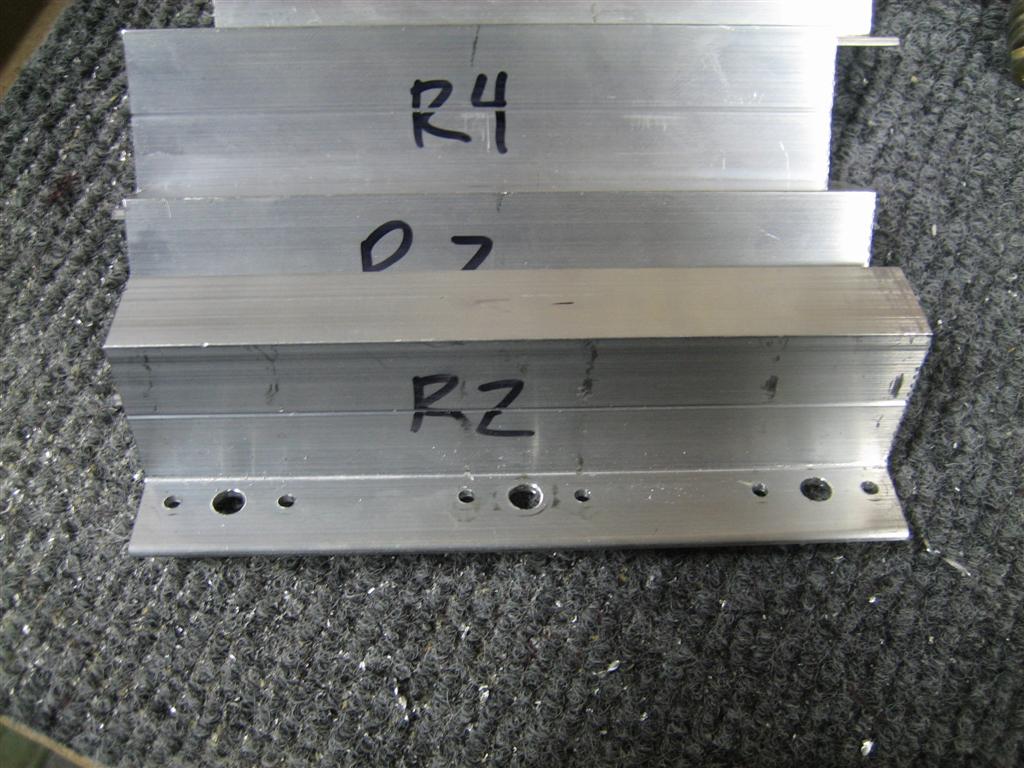
After pulling out the rest of the ribs (including the two outboard-ish ribs shown below), I went ahead and drilled pilot holes for the nutplate holes that are needed for the leading edge landing light installations. I had previously marked these while they were assembled with the leading edge using the provided template.

The two outboard ribs, now with pilot holes drilled for the bracket (the two small holes just above the lightening hole).

So here’s my thought. I really hate rib prep, so I’m basically going to do one at a time, then get it installed in the leading edge. To do that, I’ll need to prep (deburr, dimple) and prime the appropriate parts of the leading edge, and prep one additional rib. Generally, you want the surrounding structure in place for whatever you are riveting. Hence the need for the “next” rib to be clecoed in place while you are riveting a particular rib. If you don’t have the next one in place (have everything perfectly aligned), then the final structure may not be aligned. Make sense? No? Oh well.

So, I put the leading edge in my cradles and got to work with deburring. I got all the exterior holes deburred, did some edge-finishing with my permagrit block and my edge deburring tool and a scotchbrite pad, then started deburring the interior before my hand got tired.

Leading edge during some prep.

Oh, and out of laziness, I screwed the right tank loosely into position instead of taking it back upstairs. I think it’s going to be awhile before I get back to working on it.

It kind of has a funny shape with no ribs in it.

It was a short night, but got me back into the mood, so I’ll call it a success.

1 hour.

Prev | Next


Some Right Leading Edge Work

March 13, 2011

Prev | Next

Wow, I can’t believe it’s been two weeks since my last work on the airplane.

Taking care of this little puppy (trying to find him a home) has taken its toll on our schedules and ability to sleep at night. Also, I’ve been busy at work logging time in something a little bigger than an RV.

Anyway, back to building.

I spent a few minutes taking some time to get reoriented. I couldn’t decide whether to work on the leading edge light or start working on ribs. The plan is to get the right leading edge assembled, then get back to prep on the left wing to catch it up.

I spent some time deburring, dimpling, and scuffing the joint plate, then focused on the inboard leading edge rib.

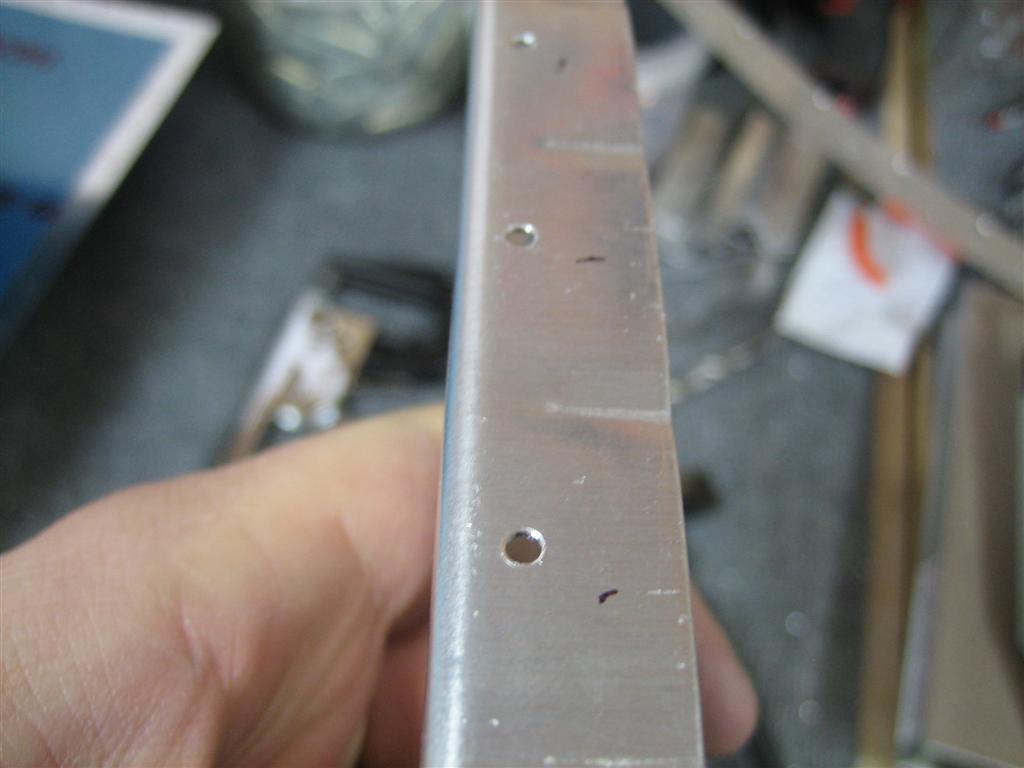
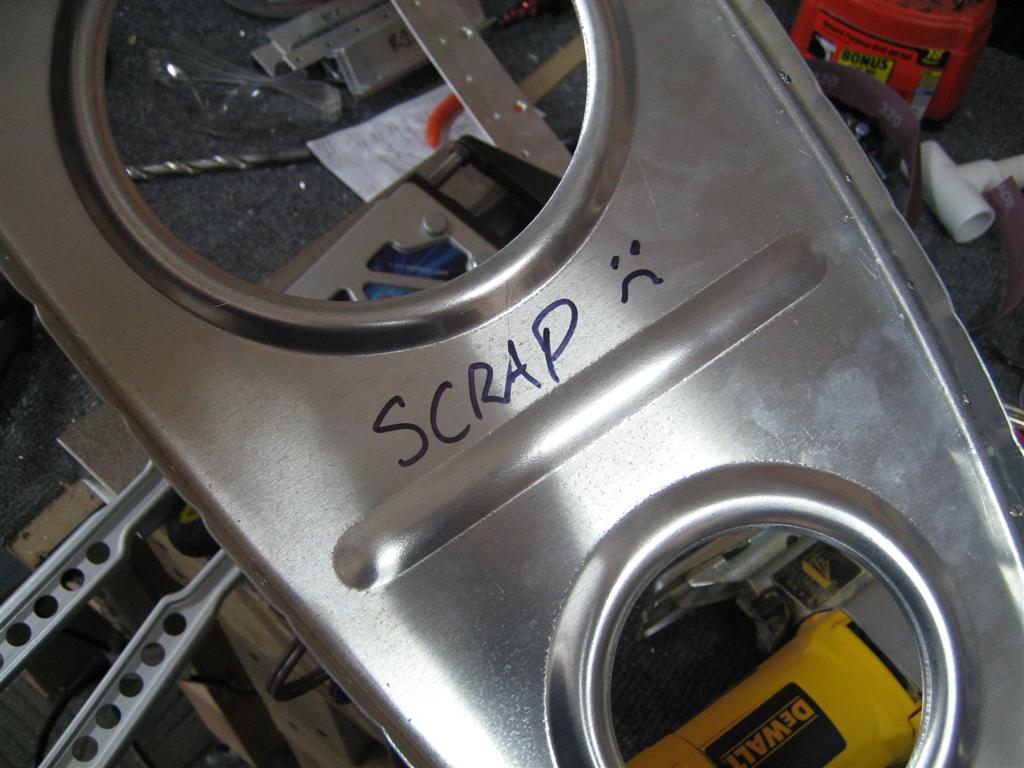
Crap. These holes are too close to the web.

Crap, I didn’t have it positioned properly when drilling.

There's no way I'm going to be able to dimple these holes.

The most important part of this picture is the sad face.

Time to order another part (along with rudder skins, maybe.)

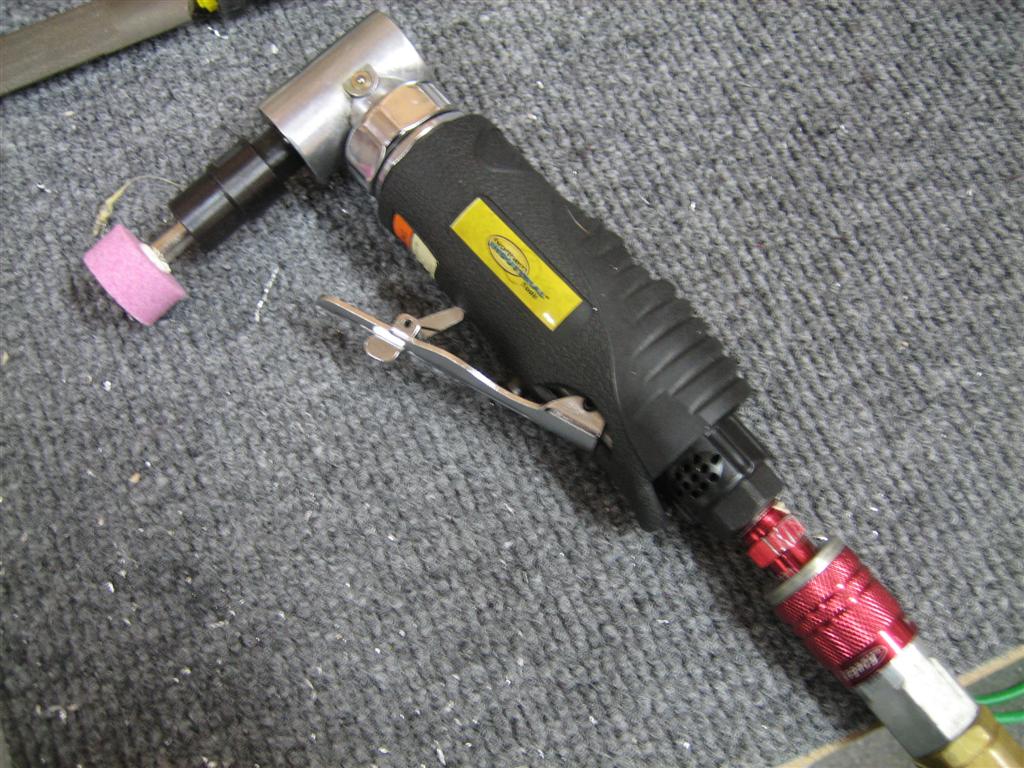
After wiping the tears off of my cheeks, I moved on to the leading edge light hole. I knew over the last few weeks I needed to figure out a way to clean up the leading edge landing light holes, so I went to Northern Tool and bought a $25 angle die-grinder and a few accoutrements to go with it.

Tools!

Looks fancy.

I plugged it in and gave it a go, and was very happy with the die grinder, but it wasn’t what I was looking for for the leading edge holes.

I broke out the jigsaw (gasp!) and put a fine tooth metal cutting blade in.

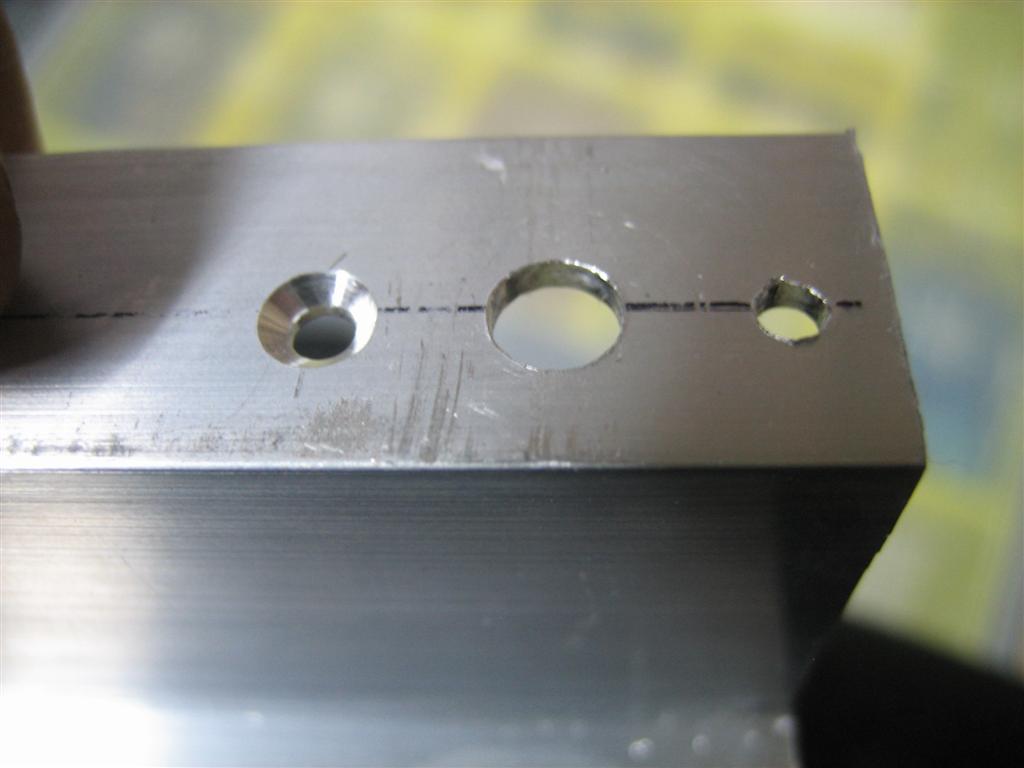
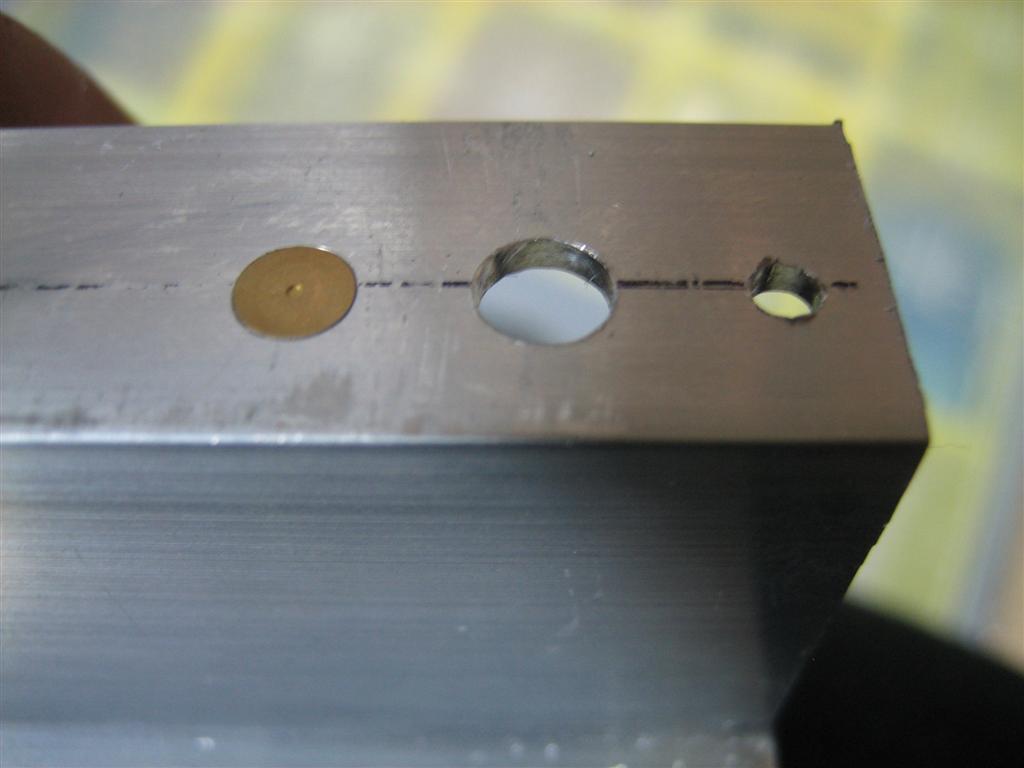
Carefully, I enlarged the leading edge hole right on the line, and spent a few minutes cleaning up the cut. It needs some more work, but it’s okay for now. This was a lot faster than trying to do it with a file.

Right leading edge after cleaning up my jigsaw enlargement.

Finally, I pulled out one of the other leading edge ribs and prepped it (deburr holes and edges, dimple, scuff, etc.)

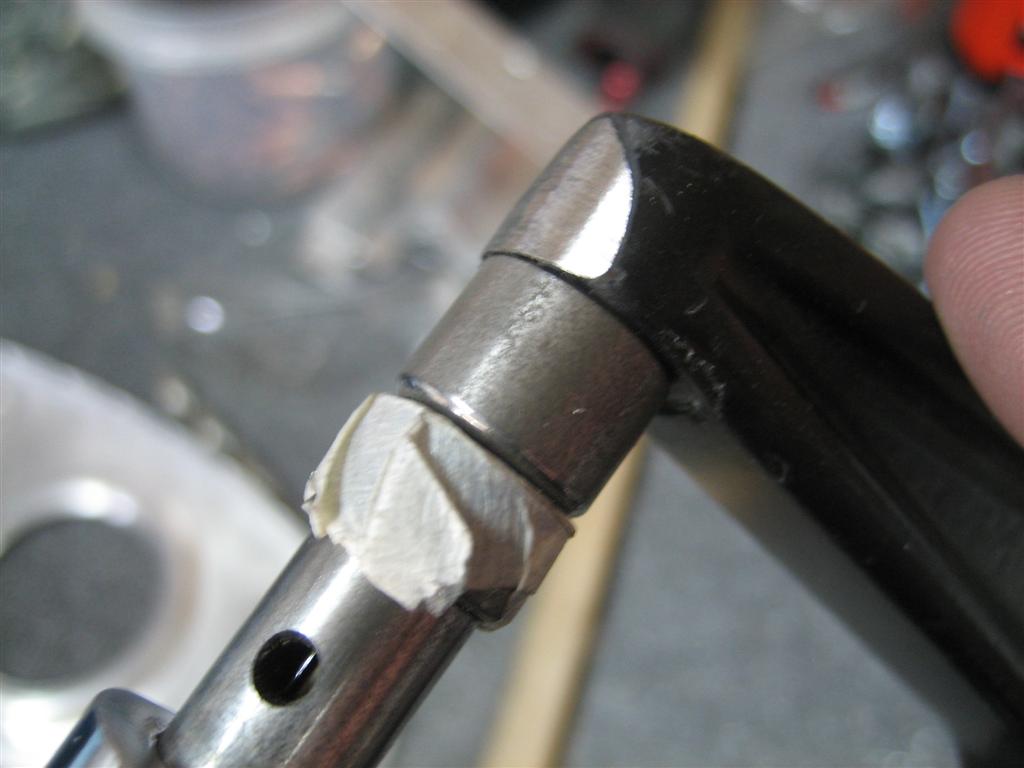
For the dimpling step, the nose of my economy squeezer sticks out a little further than the female die, so I used the regular grinder side of my bench grinder and ground it down a little.

Now it won't scratch the web of the ribs as I dimple.

Here's one leading edge rib prepped.

I still have a few (a lot!) more to do (including some nutplate attachments for the outboard two ribs for the light bracket), but then I’ll get the leading edge prepped and maybe get one of the big pieces put together. That will make me happy.

I’m going to work over the next few weeks to put in some more regular airplane hours. I need to keep moving if I’m ever going to get it done.

Prev | Next


Deburred Right Fuel Tank Ribs, Bottom Wing Skins

February 27, 2011

Prev | Next

Well, not much today, but I got all the right tanks ribs edge finished and then made sure to run the leading edges of each of the ribs over the scotchbrite wheel to remove any lumpy areas (so as not to create any bulges in the tank skin when the ribs are clecoed in).

Then, in the morning, I brought the right lower inboard skin in the kitchen and started the deburring dance.

One of eight skins done.

Then, later at night, I brought in the right lower outboard skin.

I went ahead and scuffed the interior side of the skin while I was at it.

So, some tedious work today, but work nonetheless.

0.5 on the tanks, and 1.0 on the wings.

Prev | Next


Started Countersinking Right Main Spar

February 26, 2011

Prev | Next

This work session was really the same as the last, but because I’m trying to log stuff in categories, I split them up.

I felt like I had a half hour left in me, so I grabbed my countersink cage and banged out some of the spar countersinks that need to be done before riveting the wing skins on. (Riveting the wing skins on is a long way off, but it was a nice little task I could knock off the list.)

A shot of the inboard countersinks.

Oops, looks like I missed 4 holes here. I’ll hit those tomorrow.

A shot of the outboard countersinks.

0.5 Hours.

Prev | Next


Right Tank Work

February 26, 2011

Prev | Next

Oh man, I had a great day today.

I’ve been kind of slowly approaching the tanks on my project. I don’t have a lot of apprehension about tank sealant, but I want to close out a few things in other places before I venture too much further.

Nevertheless, I made some big parts (at one point I had a whole wing!), but of course, by the end of the night everything was disassembled. Having the tank assembled allowed me to do most of the prep work I needed to do.

At this point, if I want to, I could go back and finish the leading edge lights on the right leading edge and start actually putting the leading edge together permanently.

Of course, I could always go back and catch the left wing up to the right. But that would be BORING. (I’ll probably keep myself entertained with the leading edge and then go back to the left wing before setting up for tank sealing.

On to the pictures!

First thing, I bolted all of my right z-brackets to the main spar.

The girlfriend was napping, so instead of riveting the inboard nutplates to the spar, I just used some spar An365 nuts.

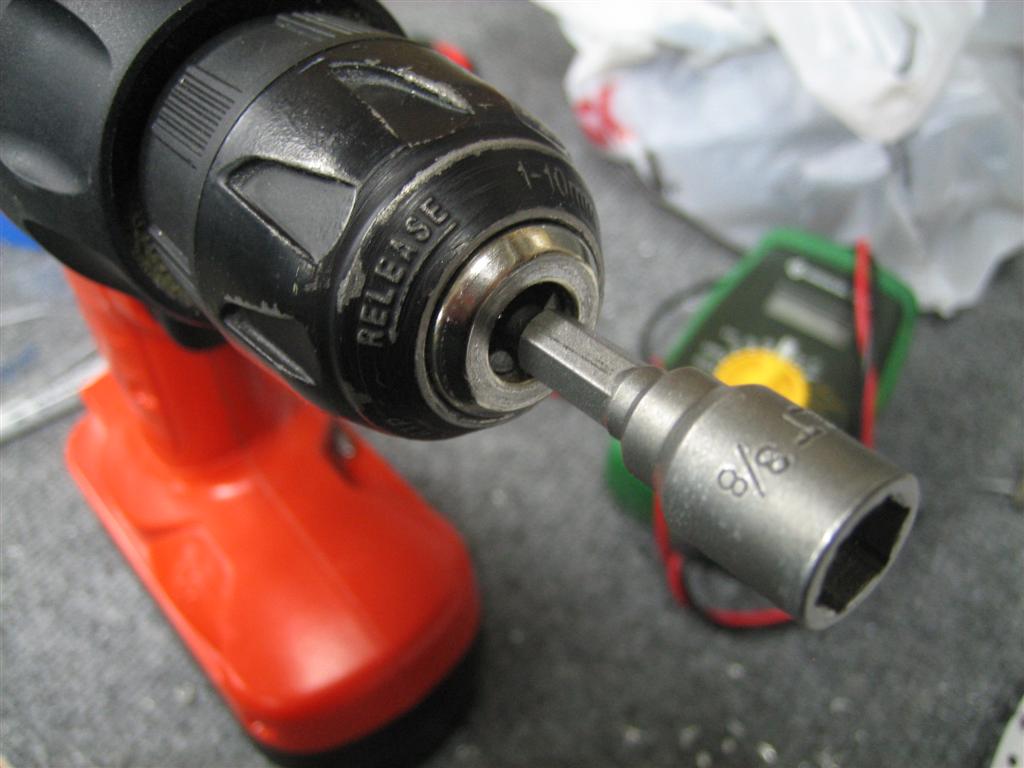
My best tool today was the 3/8″ power drive socket that came from a gift my girlfriend’s dad gave me.

I can’t imagine having done these by hand. 2 minutes versus 20 minutes, maybe?

I don't have a picture of the whole set, but it is a really nice Dewalt driver set.

Okay, with the z-brakets bolted to the spar, it’s now time to get the baffle in place with the tank skin.

Here's the baffle.

Then, I had an epiphany. A lot of people cleco the skin to the baffle, but then don’t really have a good way to clamp the tank assembly in place to accurately drill the inboard and outboard z-brackets. Some people try to clamp it really well, others will pad the tank assembly and try to use tie-down straps around the whole wing.

I read (and re-read) the instructions, and came across a step that simply says

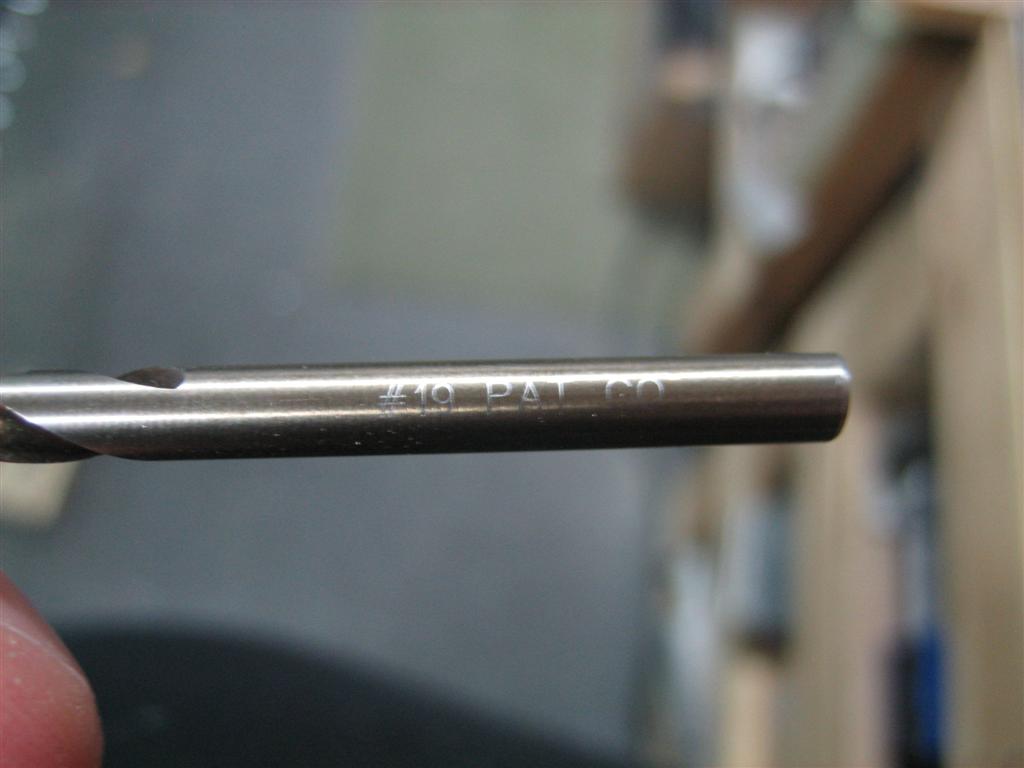
Drill the spar attachment screw holes and the W-423 screw holes to final size using a #19 drill.
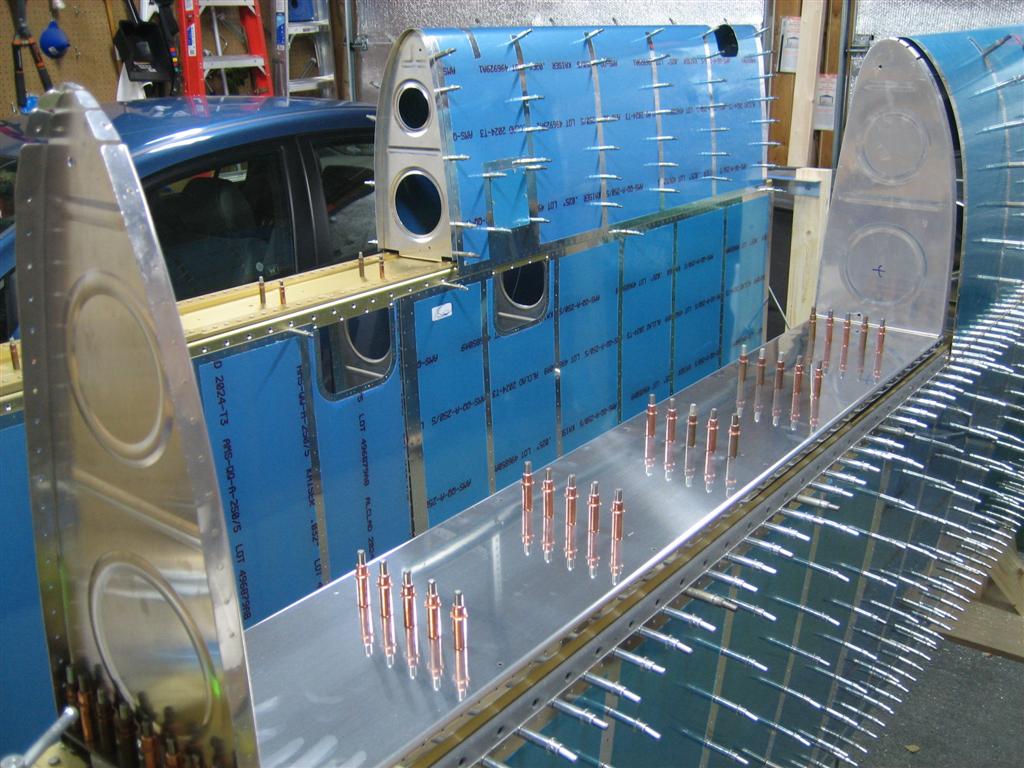
Well, I couldn’t find a reason not to do that now, so I grabbed my recently ordered #19 bits and got to work.

Here it is.

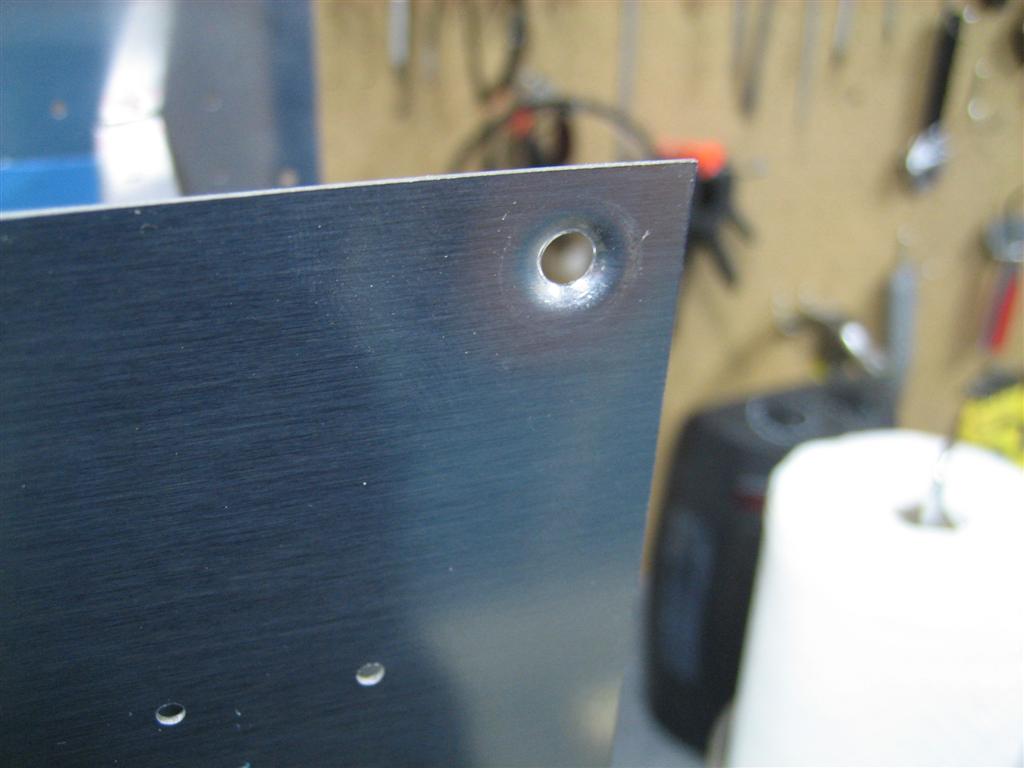
Then, I decided that I should just go ahead and dimple the holes. Can’t find a reason not to.

(Although now that I’m re-reading the manual, I see a statement in there that says to dimple the tank skins using a c-frame and a hammer. Oh well, I think the dimples look good.)
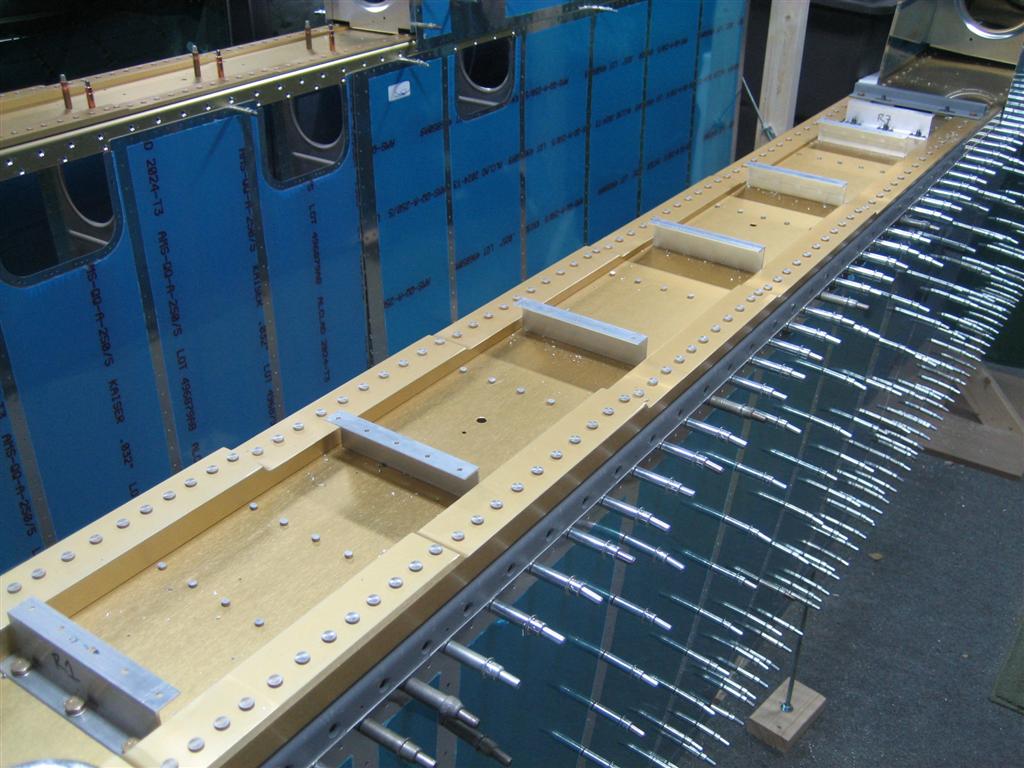
Here's s a dimple for a #8 screw.

And with a AN509-8R8 screw.

After that little test, I went ahead and finished the rest of the spar attach holes.

These should let me really solidify the tank in it's final position for all drilling. No messing around with tie-downs for me!

I cheated a little and didn’t assemble the middle ribs. I figured the two end ribs would be sufficient.

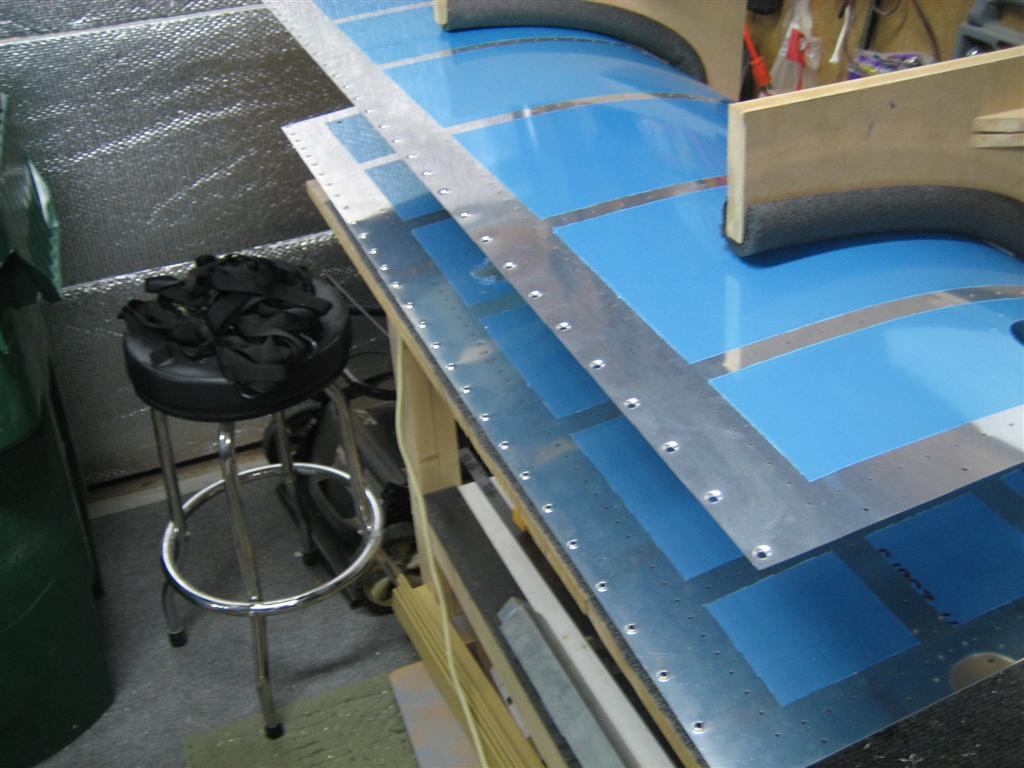
Things are looking big now. This is the top side.

And the bottom side.

Here’s a closeup of the #8 screws helping me align the tank.

This worked great.

There were a few places where things didn’t line up perfectly, but this difference (tank on the left, leading edge skin on the right) is less than 1/64″. I’ve way zoomed in on this next picture. I would call this basically perfect. Some careful edge finishing on the leading edge will line up these seams nicely.

I can’t even figure out how I would improve this if I wanted to, which I don’t.

Lining up pretty good. For reference, that is a 1/8" hole, and I think that step is about 1/10 of the hole. Multiplication tells me it's about 1/80." There's no way any of you will ever notice this on my plane.

Near the leading edge, the gap looks amazing. Remember, this is my macro setting on the camera. Those are all 1/8″ holes.

Great (lack of) gappage.

At the leading edge, I couldn’t figure out why I had a little step here. Again, this is really small, and I’m totally happy with it.

This small step is hardly noticeable.

So other builders will drill the inboard and outboard z-brackets (which requires removing the leading edge) then you have to remove the skin to get to the other z-bracket holes, then you have to re-install both the leading edge and the tank skin to drill the tank-to-leading-edge #19 holes.

Why not do them now? Everything is rock solid and perfectly aligned.

I first matchdrilled the #40 hole into the flange behind the prepunched holes, then I enlarged the hole to #21, then finally #19.

After that was all done, I moved on to the inboard z-bracket. Like everyone else, here’s a picture of me drilling the z-bracket holes.

I had to use the flash here because this side of the tank was in a little big of a shadow. (I bent the bit a little while drilling to make sure the hole was straight.

After drilling and adding a cleco (9 times), I had the inboard side done.

Wuhoo!

Then, I apparently took another picture of the whole wing because I was so excited.

It's so big (TWSS).

Then, I struggled for about 10 minutes trying to really gently pull the leading edge off without disrupting the tank alignment.

Turns out, the joint plate and leading edge inboard rib fit so well, the friction kept me from sliding it out.

I had to remove the inboard rib (and joint plate) from the leading edge to get it to come off.

Of course, Jack and Ginger are playing in the background.

Then, the same drilling drill (ha) on the outboard side of the tank.

One done.

Nine done.

Alright, let’s get the rest of these z-brackets drilled.

After removing the skin, I saw (bracket) metal underneath all of the baffle prepunched holes. That means I didn't reverse any of the brackets.

With my drill stop attached to my #40 bit, I drilled the 25 remaining holes.

It's nice to be at this point, I've been reading about this whole process on everyone else's build sites forever.

After pulling the ribs and baffle back off, I saw holes in all of my z-brackets.

Holes were right where they were supposed to be.

Don’t believe me? Here’s an example.

Notice how the holes are slightly off-center? This was exactly what I was expecting. See the “checkoway method” explanation on my previous post (about 1/3 the way down).

It feels good to see these holes exactly where I thought they would be.

Then, I deburred the holes I just drilled in the right z-brackets.

Z-bracket holes deburred.

That was about 3 hours worth of work. Great day, and the tank alignment was great.

Prev | Next


Riveted Nutplates On Right Wing Z-Brackets

February 22, 2011

Prev | Next

Well, nothing too exciting, except I got to bang* on some rivets.

* By “bang” I mean “squeeze.”

After the other night, I have 7 z-brackets that are matchdrilled to the spar. Six of those seven need nutplates on them.

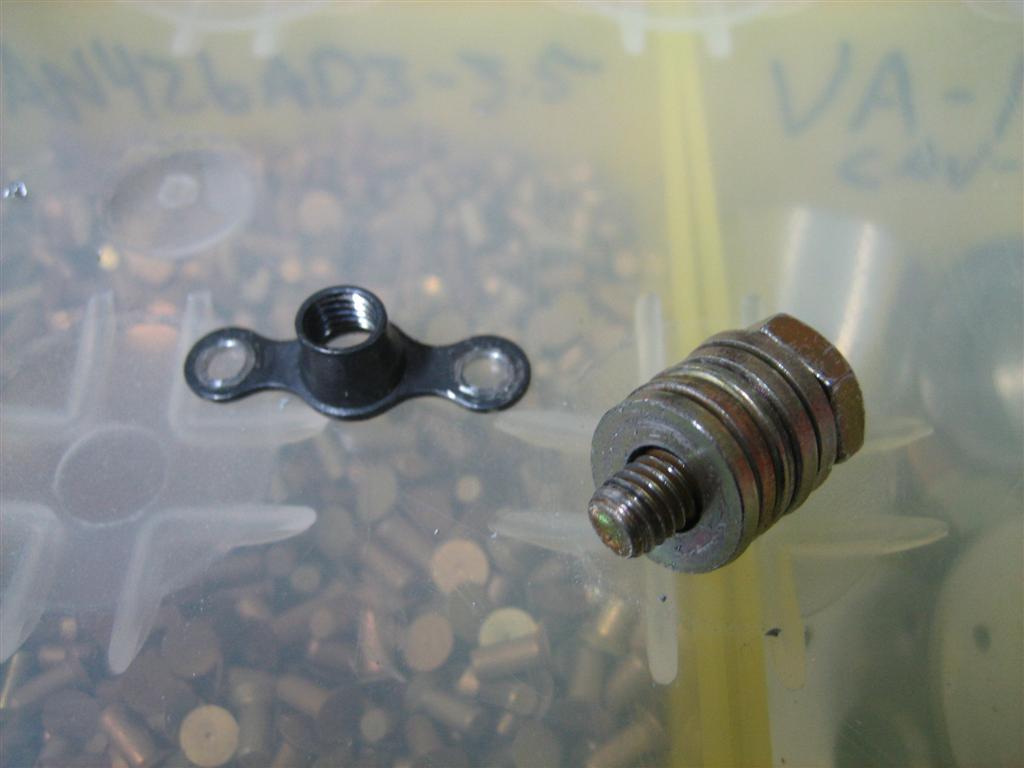
I grabbed a cleco, a (sacrifical) nutplate, an AN3-4A bolt, and a handful of washers (so I don’t engage the locking portion of the nutplate).

Bolt with washers goes in the hole, nutplate on top, hand tighten in a reasonably aligned orientation, and drill one of the holes for the nutplate ears through the angle.

Then, add a cleco and drill the other side.

Easy as PIE.

See? Easy!

After completing the first three sets, I snapped this picture.

3 down, many to go.

I think it was…[thinking]…6 angles, three bolts each, 2 holes for each bolt…36 holes?.

After all was said and done, the sacrifical nutplate had been thoroughly abused.

I almost threw it away, but then decided to keep him in his own little container. I can't just throw away a nutplate that has served me that well!

I deburred the holes that won’t be countersunk, and moved on to countersinking. I thought about using oops rivets, but since this material is so thick, I went ahead and countersunk for a full-depth AN426AD3-4 rivet.

Guess what I found when I picked up my countersink cage?

IT WAS ALREADY SET FOR THE PROPER DEPTH! WUHOOOOO!

(It’s the little things in life that really matter.)

Anyway, here’s one hole done.

Looks okay here...let's try a rivet.

Perfect depth.

While I was countersinking, I went ahead and did the FRONT side of the spar, too. (The nutplates go on the back of the spar, the bolts for the inboard z-brackets are fed in from the front.)

The countersink on the far left isn't perfect, I need to revisit this before riveting. The cage prevented me from getting a good angle on it.

Then, back to the z-brackets for some riveting.

First one done.

Then, onto the rest. All clecoed up, ready for rivets (in the background).

R3-R7 read to go.

Then, after setting 36 rivets, I set them all back up on the spar. No bolts yet, though. I’ll save that for tomorrow.

You can see R1 (which fell over) through R6 here. R7 is hiding behind the leading edge.

It’s late, and I need to get inside to bed.

But first, I grabbed all the tank parts for the right tank and quickly mocked them up with no clecos in my cradles. That’s the baffle leaning up against the cradles in the foreground.

I'm actually looking forward to the tank. Kind of.

It was just over an hour, but not quite an hour and a half. I think I rounded down last time, so this time, I’m going to call it an hour and a half.

Oh, and I almost forgot, I had to drill one rivet out. Just plain old messed it up.

Until next time…

Prev | Next


Matchdrilled Right Tank Z-brackets

February 20, 2011

Prev | Next

Well, it’s been a little while since I was out in the garage banging away on the airplane.

I have a few things piling up on my list of things to do. Among others, I could have finished up the landing light install, moved on to the left wing rib preparation, etc., but I kind of felt like continuing on with the right wing.

Van’s says that you should do both of the (insert noun here) if you want to save time.

Well, I have time, and don’t need to rush through this.

That means, on to the fuel tanks. The first step is to start removing metal on the Z brackets that hold the tank to the front of the main spar.

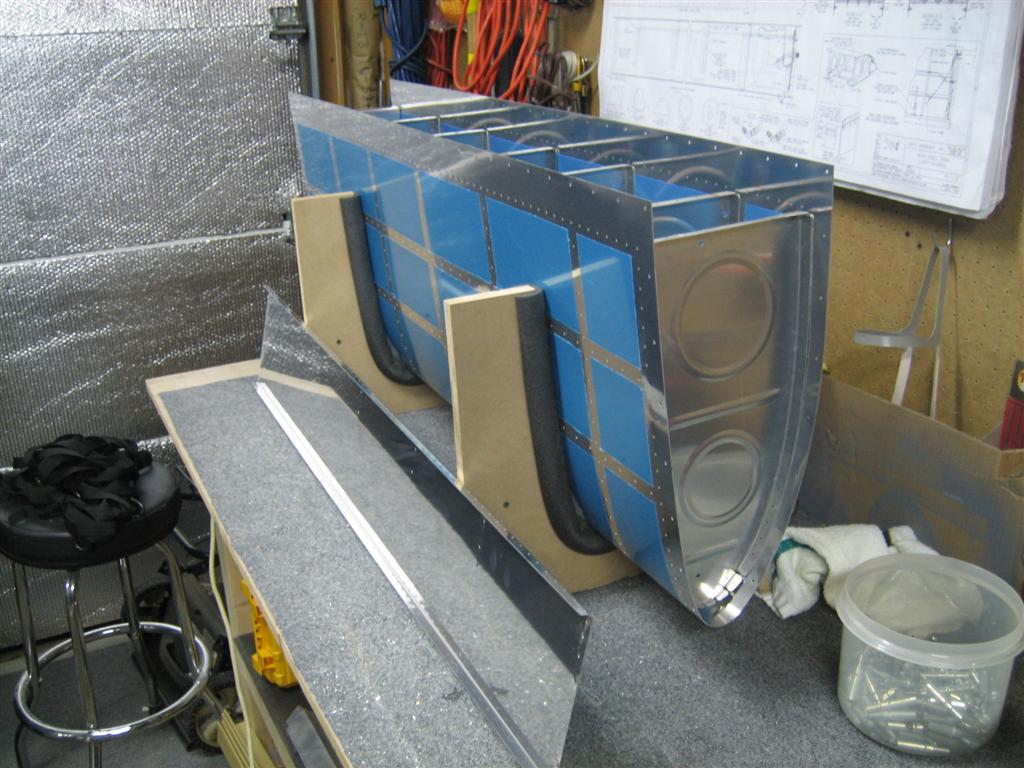
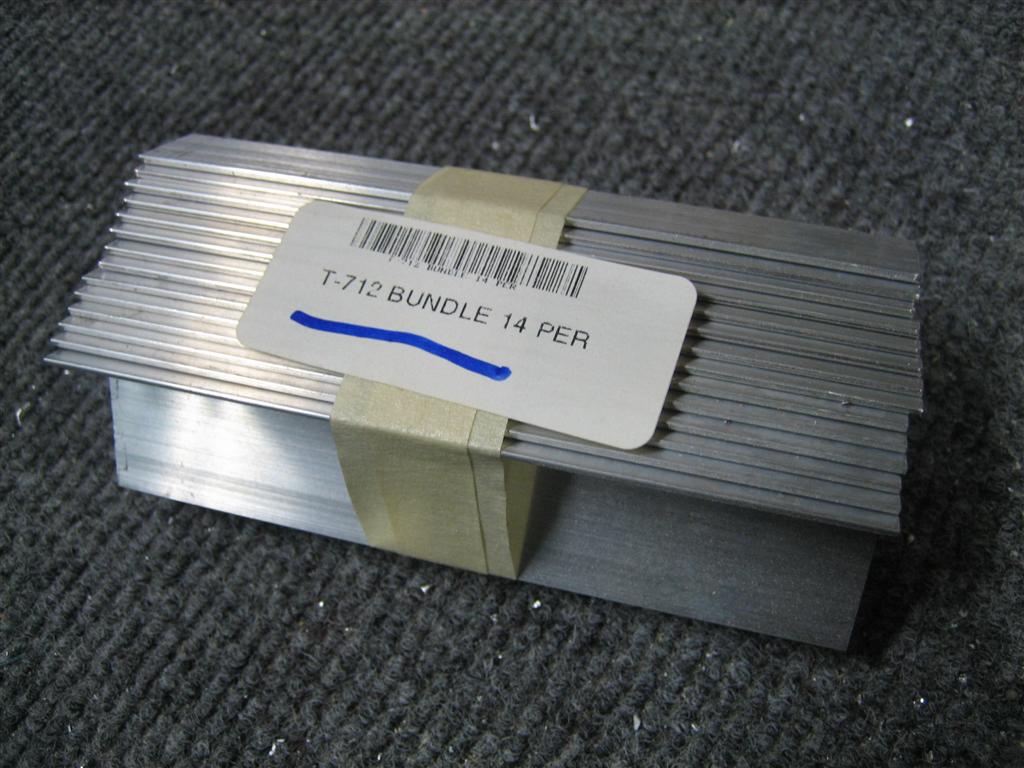
Let’s see, here they are.

Labelled appropriately. I wonder why Van's underlined the label in blue...

Oh, I almost forgot! The ceremonial plans change!

(Triumphant music...)

Okay, so there is lot’s of talk about the Checkoway method and what that is, but no one really does a good job of explaining it. I’ll give it a shot, and try to give credit where credit is due.

Basically, Van’s wants you to:

  1. Install the z-brackets (after some steps to get both sides of them drilled)
  2. Cleco on the baffle (“back wall” of the tanks) to the z-brackets.
  3. Cleco the skin to the baffle, then adjust fit as necessary by elongating holes in the baffle.
  4. Remove the skin and cleco in the ribs.
  5. Cleco the skin back on.
  6. Remove the whole thing for matchdrilling off the wing.

The Checkoway method (from what I can tell, because I never actually made it to his site before he took it down…):

  1. Drill only the aft side of the z-brackets, then bolt them in place.
  2. Attach a clecoed tank into position
  3. Drill the inboard baffle-to-z-bracket holes (doing this now, instead of before, ensures the tank is perfectly aligned.)
  4. Remove the leading edge to drill the outboard baffle-to-z-bracket holes
  5. Remove skin and ribs, leaving baffle in place.
  6. Now finish baffle-to-z-bracket holes.

The Checkoway method basically has you wait until you ensure propoer tank alignment before starting to drill holes in the front flanges of the z-brackets. If you do it Vans’ way, you might misdrill a z-bracket, and it will throw off the whole tank alignment.

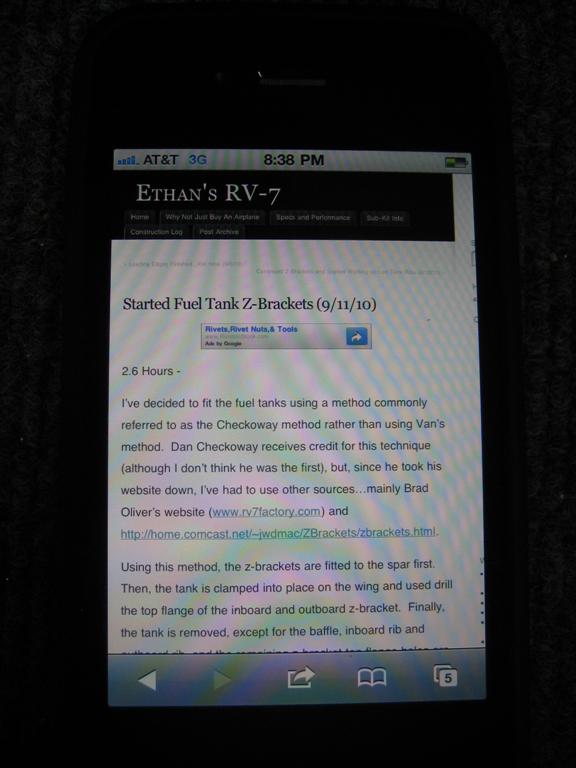
Anyway, many sites have kind of hinted at this stuff, but Ethan really spelled it out nicely, and I have to give him some credit.

Of course, I’m out in the garage, so iPhone saves the day.

Ooh, remind me to charge up tonight, looks like I'm a little low on electrons.

Okay, as part of this whole Checkoway method, one of the suggestions is to move the “centerline” (future drilling reference) of the z-bracket flanges  to favor the type of fastener you’ll use later.

On the inboard-most bracket, you primarily use a socket to tighten or loosen bolts from the wing root. Hence, you should move the centerline (and resulting holes) AWAY from the web for better socket access.

On the other 6 brackets, the spar attachment is from the rear spar, so there are no access issues, but the front flange needs a blind rivet, so if you move the holes CLOSER to the web (allowing for enough room for the nutplate), then the whole thing slides over and there is more room for your blind rivet puller during final tank construction steps.

(I spent an hour in the garage tonight, and most of that time was just trying to wrap my head around this idea.)

Once I had it all sorted out, I laid (layed? Emily, which one is it?) the z-brackets out and started marking them with really obvious arrows.

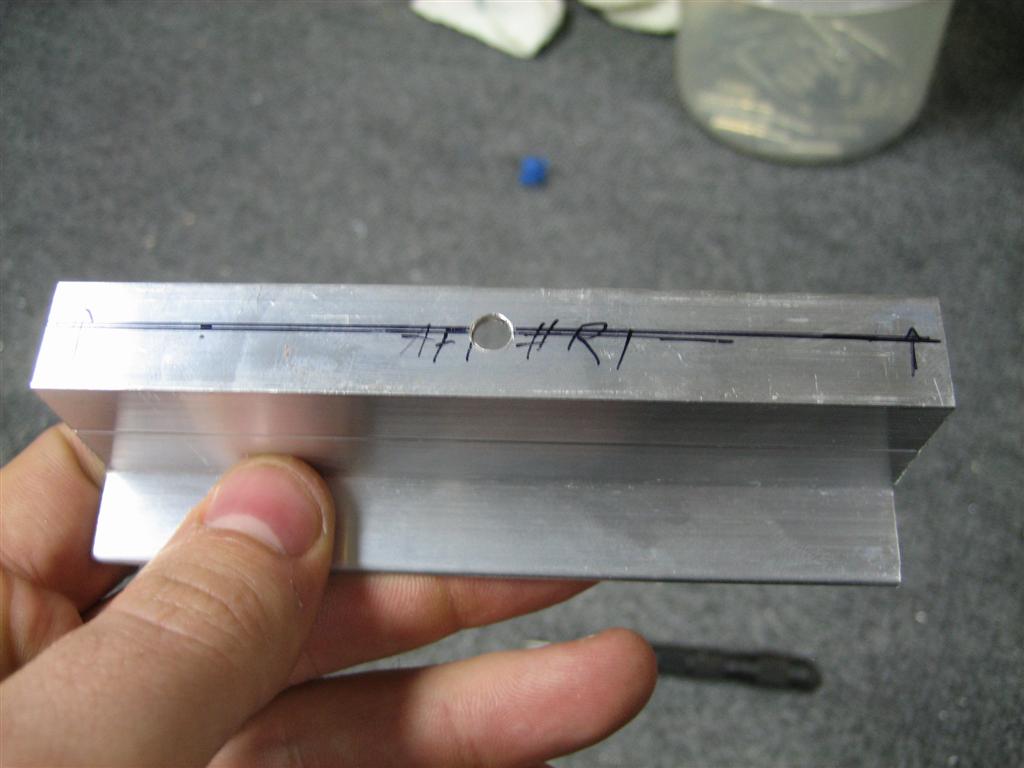
Right wing inboard one gets moved AWAY from the web, second one is moved CLOSER to the web.

After some really precise (HA!) line drawing. I finally used my center punch to mark a good starting point for my #12 drill. (#12, because that’s the holes size for AN3 bolts.)

Punched.

Inboard bracket drilled.

Second one drilled.

After drilling the second one (actually, I checked before drilling, but didn’t snap a picture till after), I held a nutplate over the hole to make sure I didn’t get too close.

Looks good.

Then, I needed to bolt these in position to drill the other 2 (of 3) holes. I spent a few minutes removing the lower inboard right wing skin and laid (Emily!!) the brackets in position.

I love working on the airplane. Therapy for the soul.

Okay, I have my centerline and a hole. Let’s bolt them up. (I added tape and a washer for spar-protection.)

Centerline through both holes...

Everything was going fine until I got to the inboard bracket. This doubler prevented me from getting it snugged up.

Bummer.

So, I just moved it to the top side, knowing I’ll have to backdrill from underneath. No biggie.

See, worked great. (You can see I used sacrificial nutplates, instead of regular nuts...easier to tighten since once you get it started you don't have to hold the nut.)

Back to the outboard brackets…

I’d drill the top hole, stick an AN3 bolt in, then drill the bottom hole.

Wuhoo! I love making aluminum shavings.

After all 7 were matchdrilled. I headed inside.

Good progress today.

1 hour. It was basically 45 minutes of staring at the plans, the instructions, and other builders’ sites, then 15 minutes of marking and drilling.

With the start of the tanks, I need to start thinking about ordering some Black Death (Proseal (tank sealant). I used this stuff on the rudder, and it really wasn’t that bad. I’m just calling it Black Death to be funny…or at least conformist.)

I can’t decide if I’m going to order the quart, or a whole bunch of the smaller tubes, which are easier to work with, but more expensive.

Prev | Next


Finished Matchdrilling Right Wing

February 12, 2011

Prev | Next

As far as YOU’RE concerned, it was a pretty boring night in the shop.

All I did was move about 500 clecos one hole over and then matchdrill the remaining holes in the right wing bottom skin. No big deal, but now the whole right wing is done being matchdrilled.

Per the instructions, I can remove the bottom skins and get to work on the tank.

Instead, I’m going to get back to work on the left wing, and then get to work on both tanks at the same time.

Because of all the pictures in the last post, I’ve decided to go easy on the repetitive picture thing.

This time, everyone who is reading is rewarded with this:

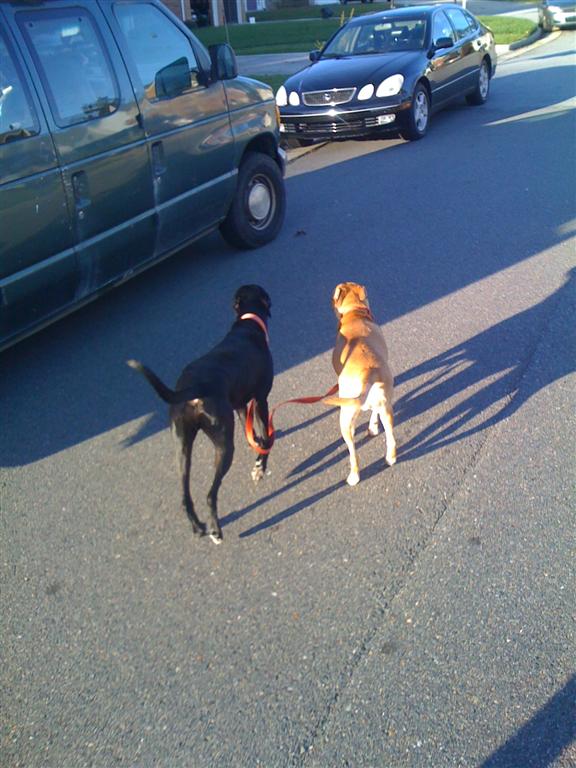
Jack and Ginger, walking each other down the street.

Half an hour.

Prev | Next


Started Matchdrilling Right Wing

February 8, 2011

Prev | Next

Well, after 50% clecoing the right wing yesterday, I finally broke out the plumb bobs and measured my wing twist again. It was within a millimeter (sorry, I could only find my metric rule tonight).

After a quick celebration dance (I must have misplaced the video of the dance, sorry), I fired up the air compressor and put a drillstop on my #40 bit.

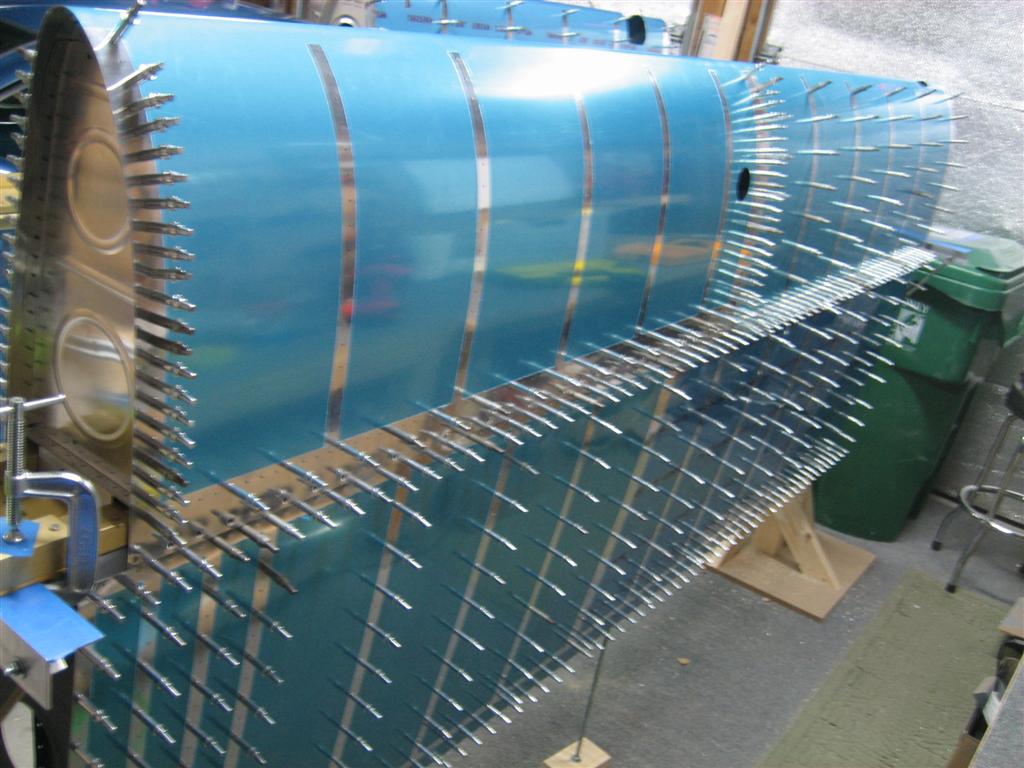
First, I matchdrilled every other hole on the top side of the right wing, then moved all of the clecos over one hole and matchdrilled the remaining holes. Keep in mind that I have about 600 clecoes, 500 of which are in the right wing right now. That’s a lot of drilling and cleco-moving.

I then moved to the bottom side and drilled all of the open holes, then started moving clecos, and got tired. Later this week, I have to finish moving clecoes on the bottom side of the right wing and matchdrill the remaining holes.

To help you understand how tedious it is to move all of these clecos, I’ll leave you with the following pictures.

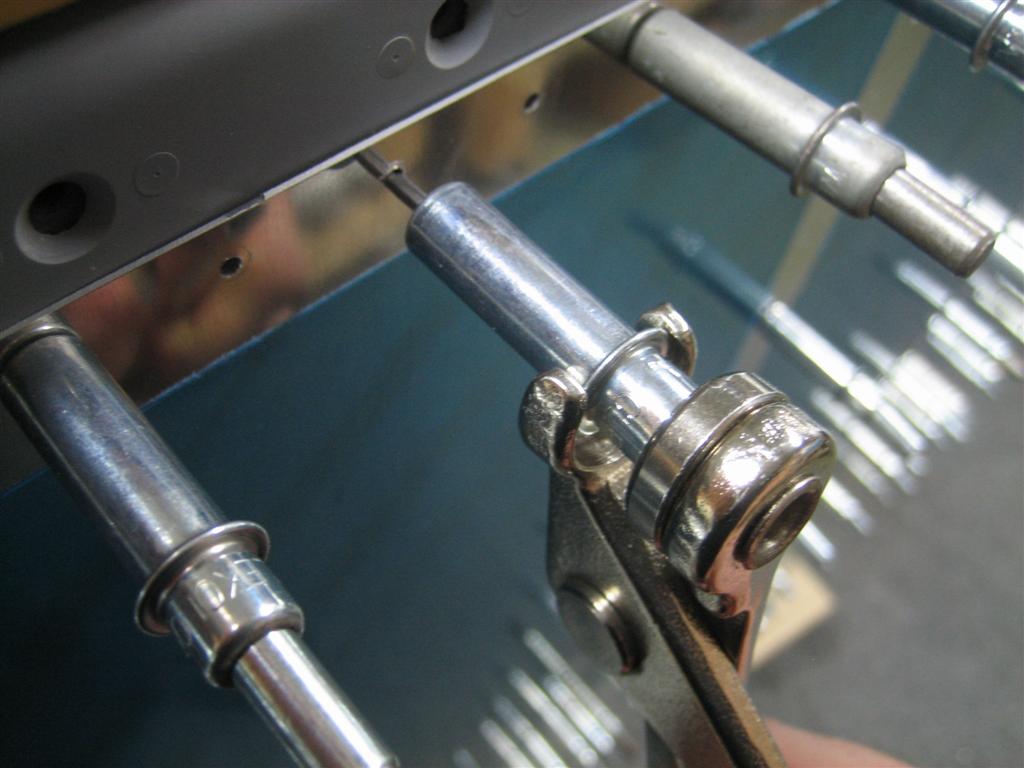
Cleco out...

Cleco in...

Cleco out...

Cleco in...

Cleco out...

Cleco in...

Cleco out...

Cleco in...

Cleco out...

Cleco in...

Cleco out...

Cleco in...

Cleco out...

Cleco in...

Cleco out...

Cleco in...

Cleco out...

Cleco in...

Cleco out...

Cleco in...

Cleco out...

Cleco in...

Cleco out...

Cleco in...

Cleco out...

Cleco in...

Cleco out...

Cleco in...

Cleco out...

Cleco in...

Cleco out...

Cleco in...

Cleco out...

Cleco in...

Cleco out...

Cleco in...

Cleco out...

Cleco in...

Cleco out...

Cleco in...

Cleco out...

Cleco in...

Cleco out...

Cleco in...

Cleco out...

Cleco in...

Cleco out...

Cleco in...

Cleco out...

Cleco in...

Cleco out...

Cleco in...

Cleco out...

Cleco in...

Cleco out...

Cleco in...

Cleco out...

Cleco in...

Cleco out...

Cleco in...

Cleco out...

Cleco in...

Cleco out...

Cleco in...

Cleco out...

Cleco in...

Cleco out...

Cleco in...

Cleco out...

Cleco in...

Cleco out...

Cleco in...

Cleco out...

Cleco in...

Cleco out...

Cleco in...

Cleco out...

Cleco in...

Cleco out...

Cleco in...

Cleco out...

Cleco in...

Cleco out...

Cleco in...

Cleco out...

Cleco in...

Cleco out...

Cleco in...

Cleco out...

Cleco in...

Cleco out...

Cleco in...

Cleco out...

Cleco in...

Cleco out...

Cleco in...

Cleco out...

Cleco in...

Cleco out...

Cleco in...

Cleco out...

Cleco in...

Cleco out...

Cleco in...

Cleco out...

Cleco in...

Cleco out...

Cleco in...

Cleco out...

Cleco in...

Cleco out...

Cleco in...

Cleco out...

Cleco in...

Cleco out...

Cleco in...

Cleco out...

Cleco in...

Cleco out...

Cleco in...

Cleco out...

Cleco in...

Cleco out...

Cleco in...

Cleco out...

Cleco in...

Cleco out...

Cleco in...

Cleco out...

Cleco in...

Cleco out...

Cleco in...

Cleco out...

Cleco in...

Cleco out...

Cleco in...

Cleco out...

Cleco in...

Cleco out...

Cleco in...

Cleco out...

Cleco in...

Cleco out...

Cleco in...

Cleco out...

Cleco in...

Cleco out...

Cleco in...

Cleco out...

Cleco in...

Cleco out...

Cleco in...

Cleco out...

Cleco in...

Cleco out...

Cleco in...

Cleco out...

Cleco in...

Cleco out...

Cleco in...

Cleco out...

Cleco in...

Cleco out...

Cleco in...

Cleco out...

Cleco in...

Cleco out...

Cleco in...

Cleco out...

Cleco in...

Cleco out...

Cleco in...

Cleco out...

Cleco in...

Cleco out...

Cleco in...

Cleco out...

Cleco in...

Cleco out...

Cleco in...

Cleco out...

Cleco in...

Cleco out...

Cleco in...

Cleco out...

Cleco in...

Cleco out...

Cleco in...

Cleco out...

Cleco in...

Cleco out...

Cleco in...

Cleco out...

Cleco in...

Cleco out...

Cleco in...

Cleco out...

Cleco in...

Cleco out...

Cleco in...

Cleco out...

Cleco in...

Cleco out...

Cleco in...

Cleco out...

Cleco in...

Cleco out...

Cleco in...

Cleco out...

Cleco in...

Cleco out...

Cleco in...

Cleco out...

Cleco in...

Cleco out...

Cleco in...

1.0 hours.

Prev | Next