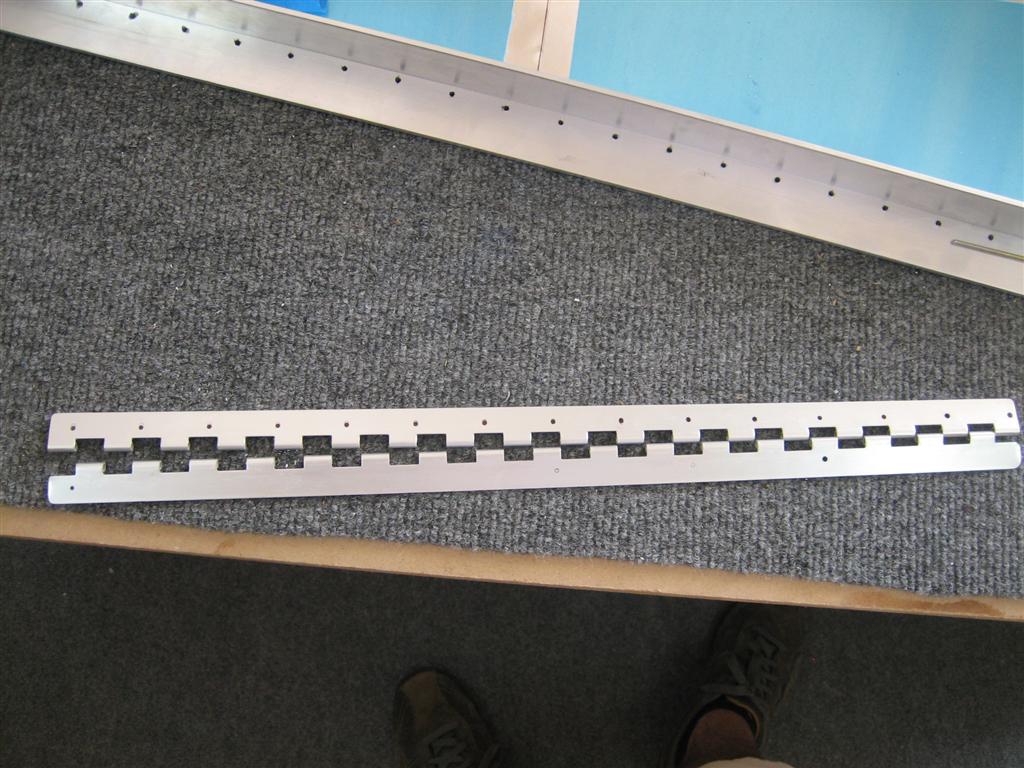
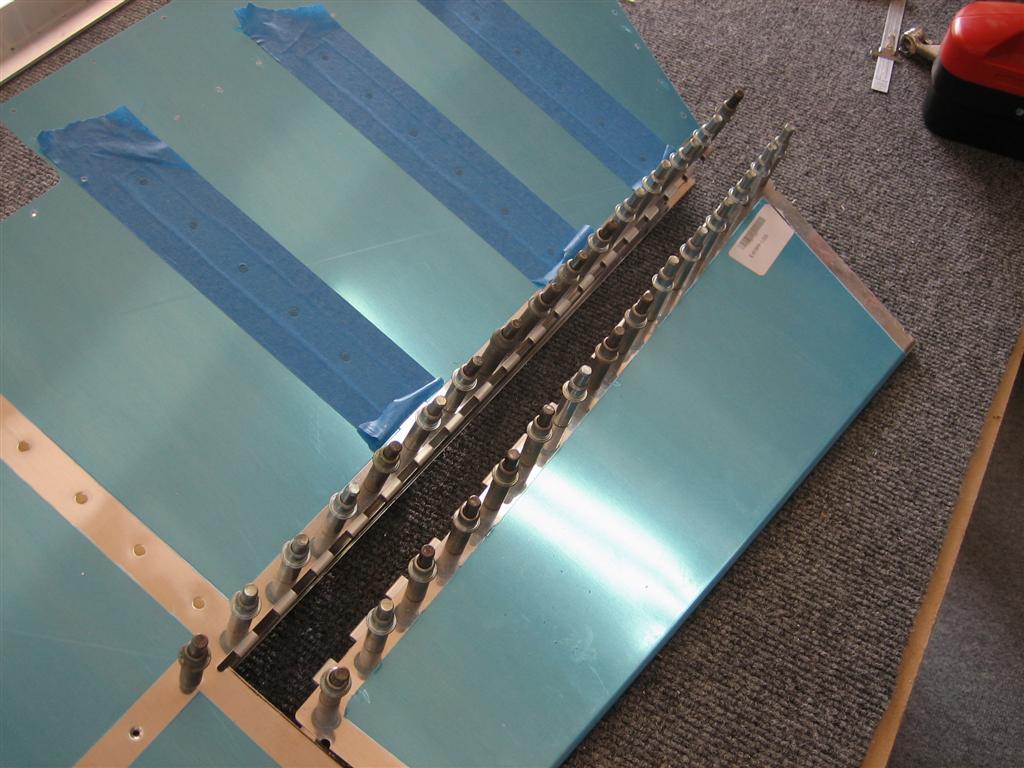
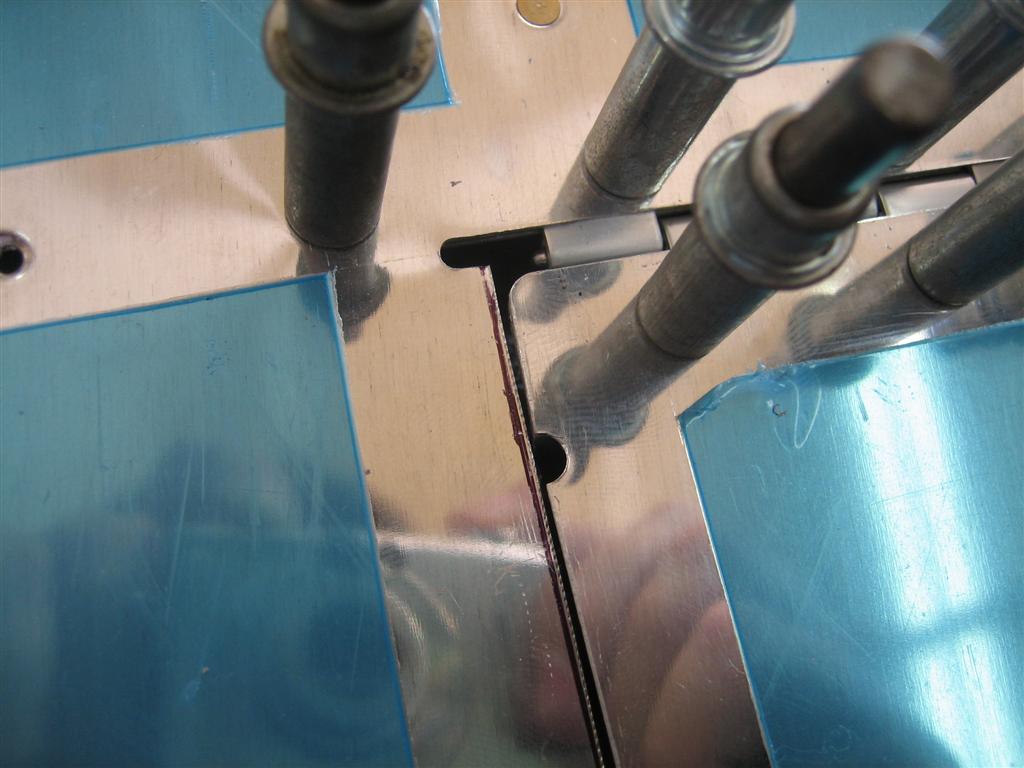
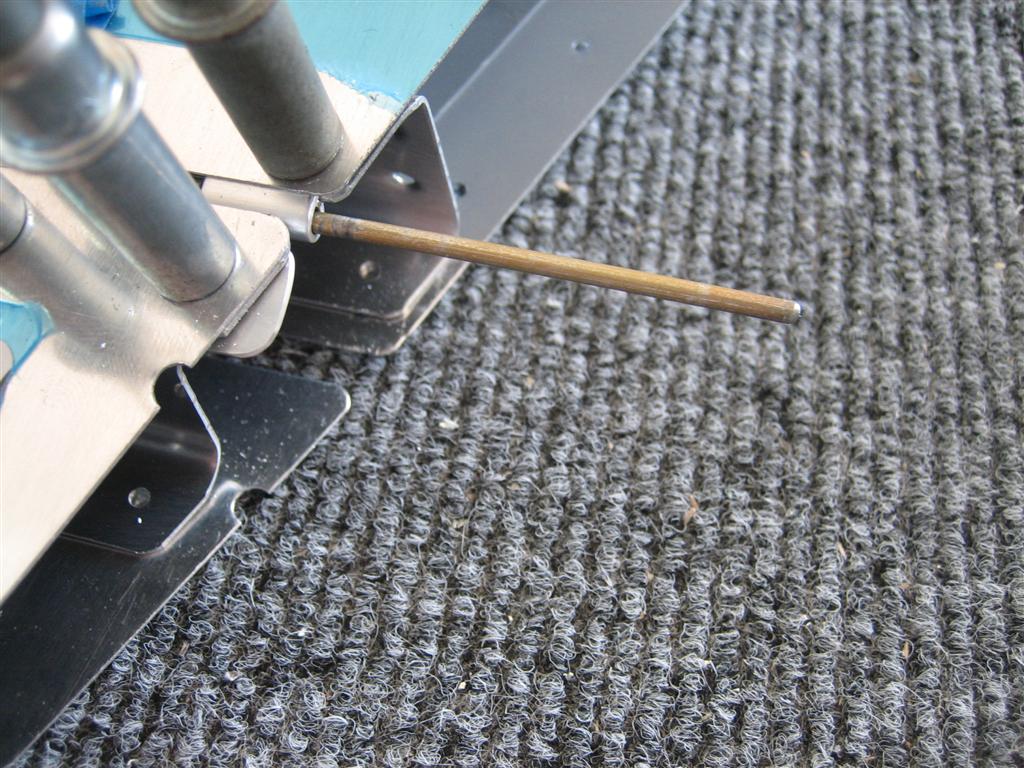
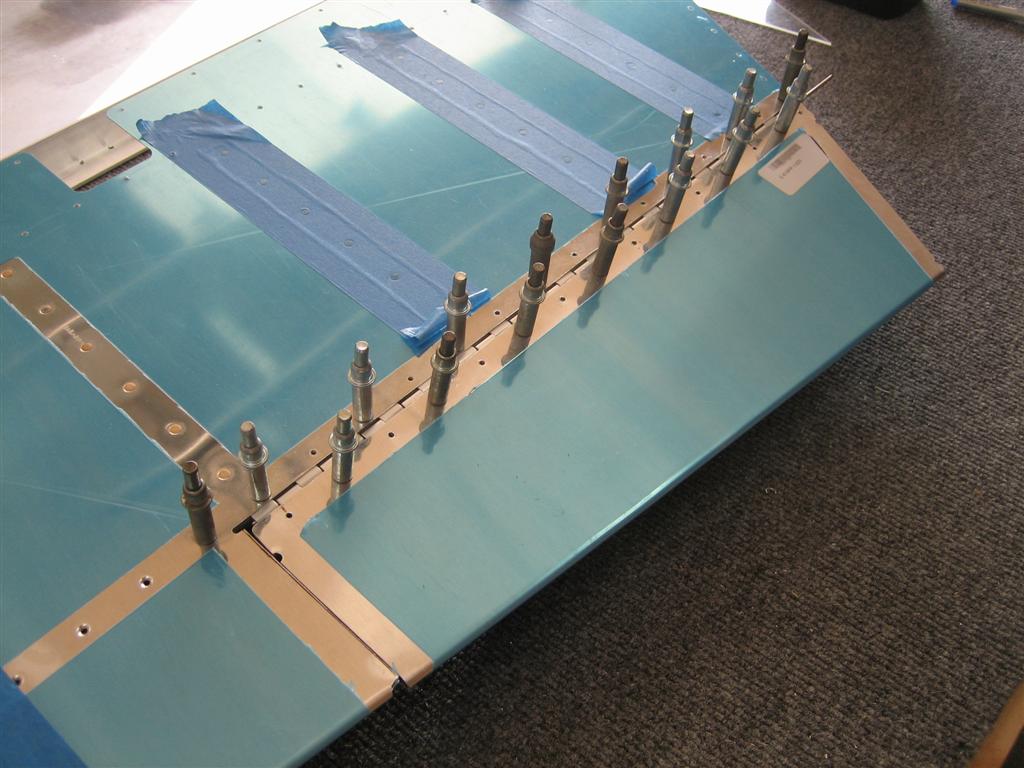
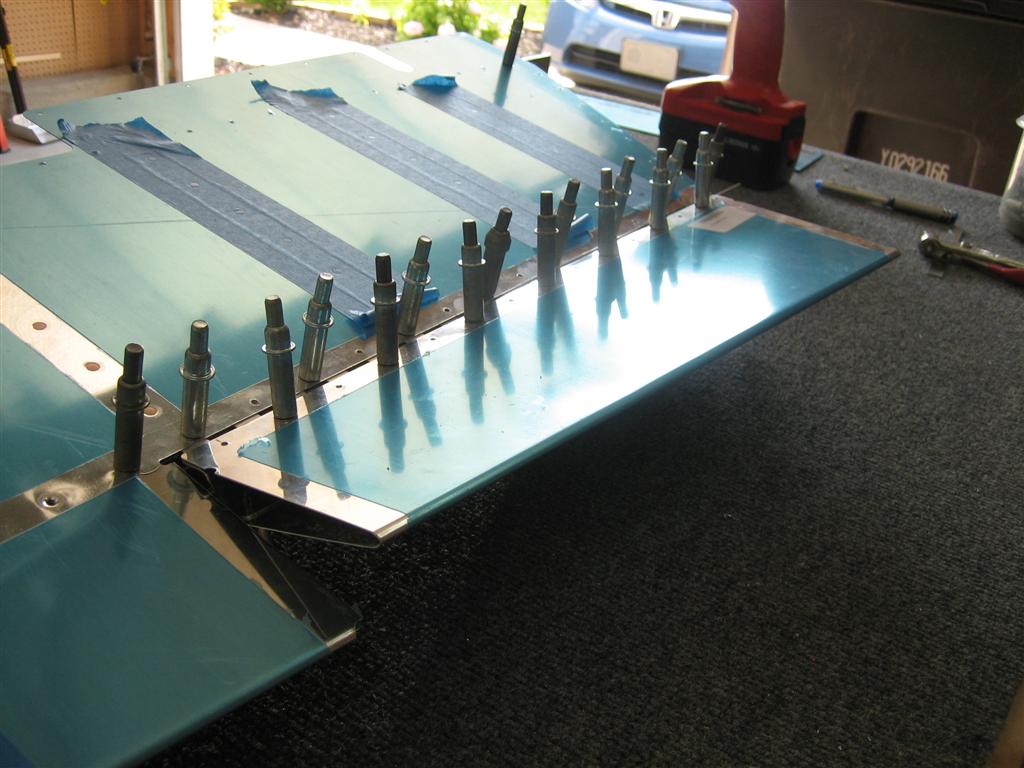
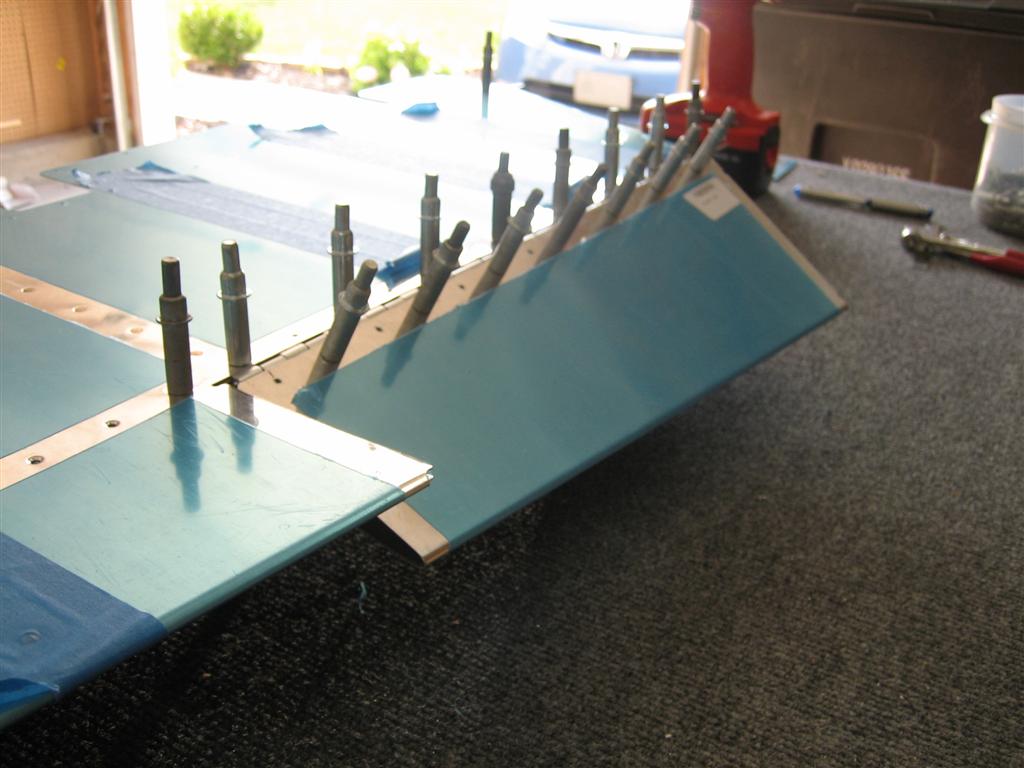
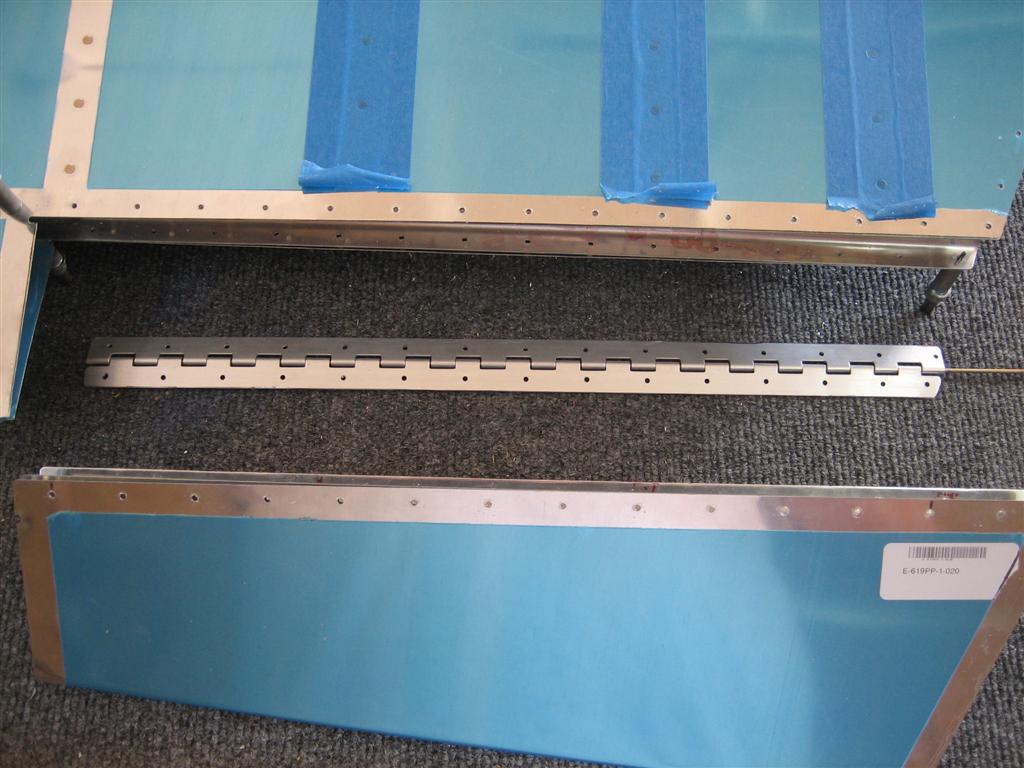
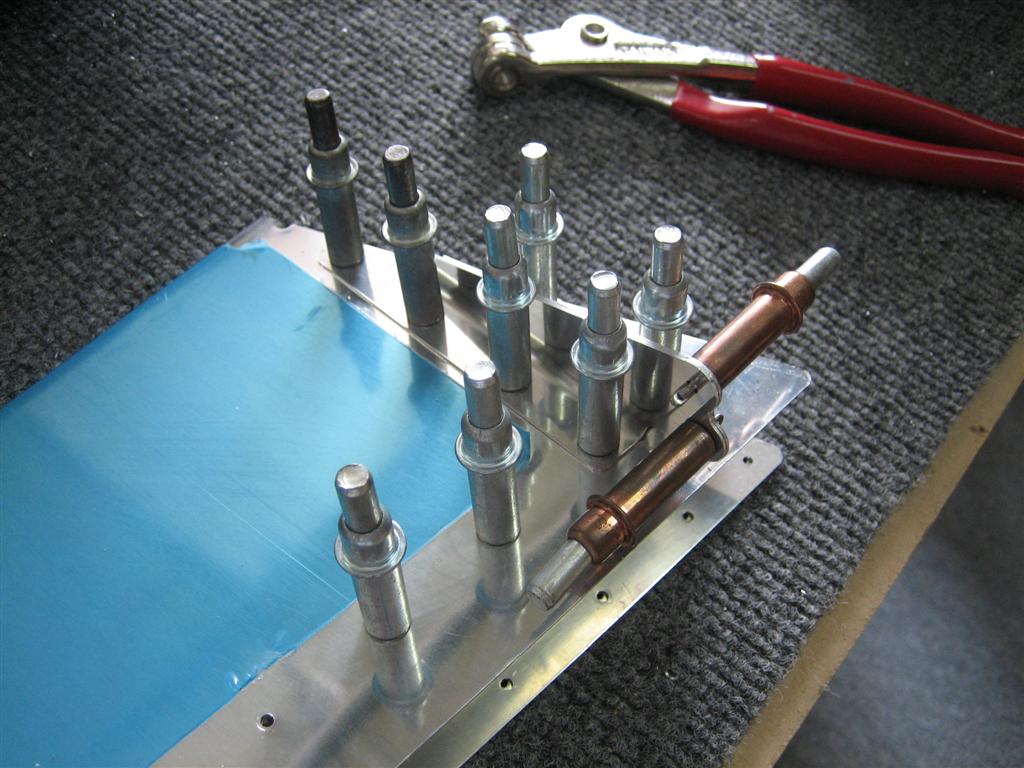
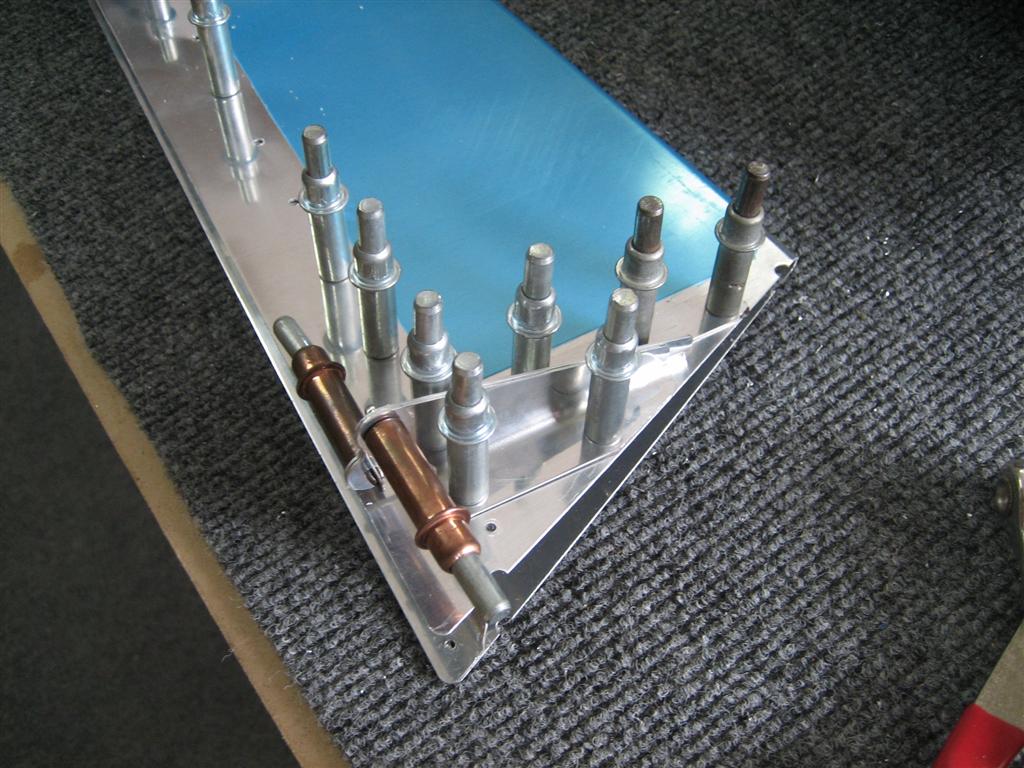
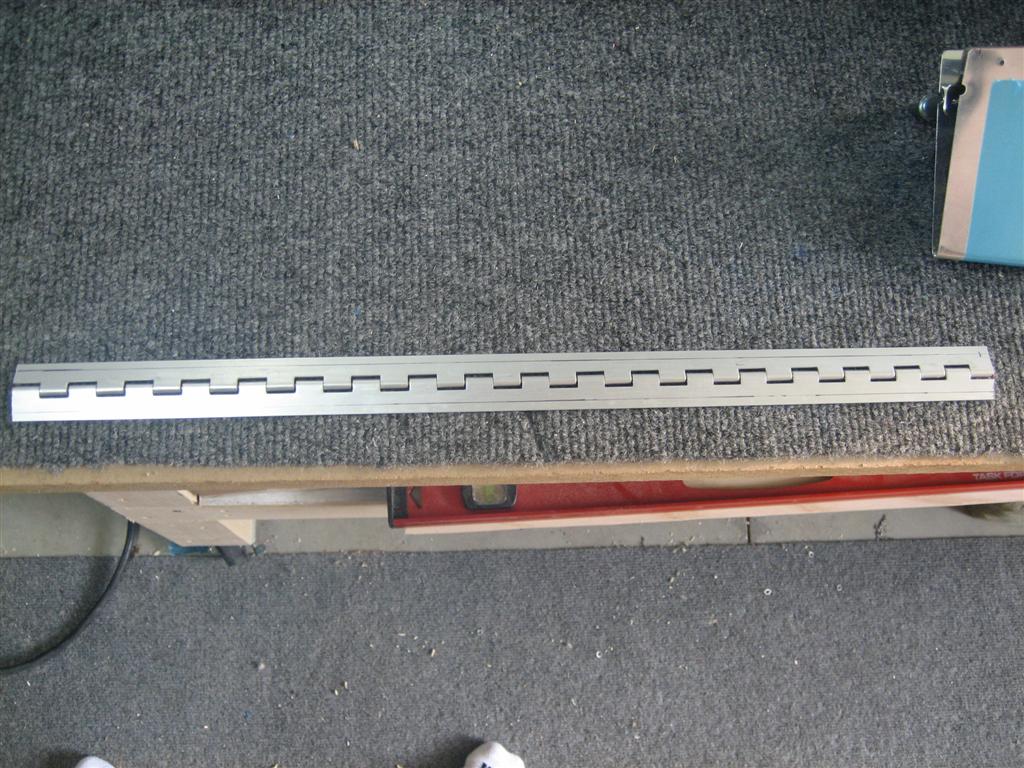
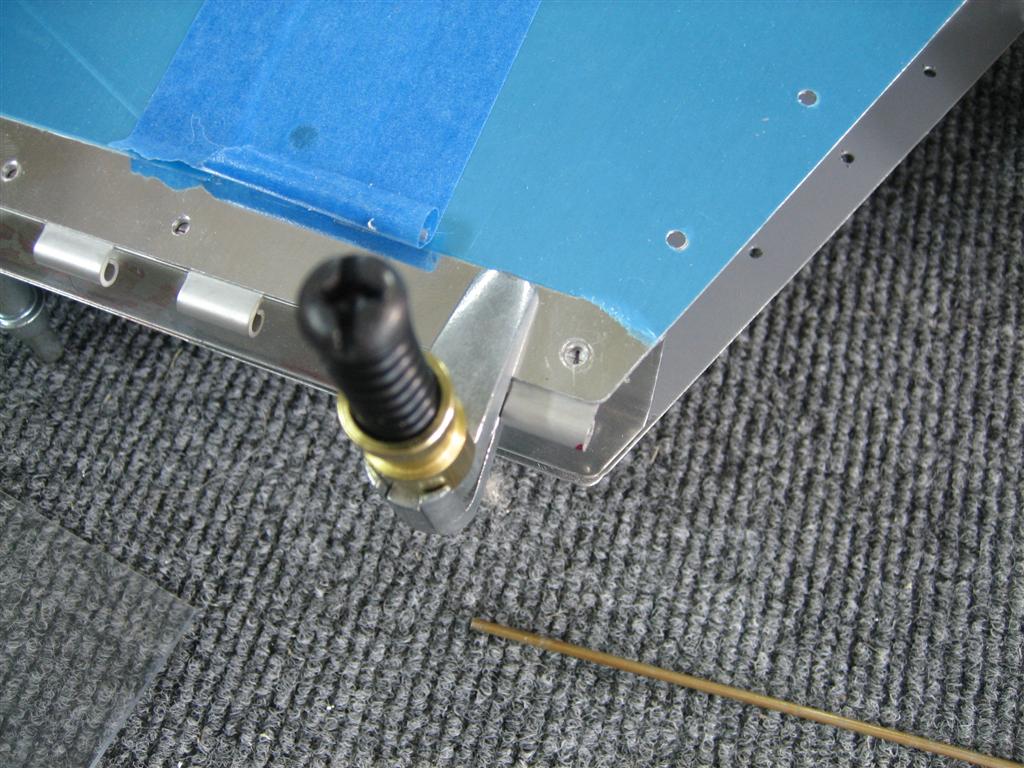
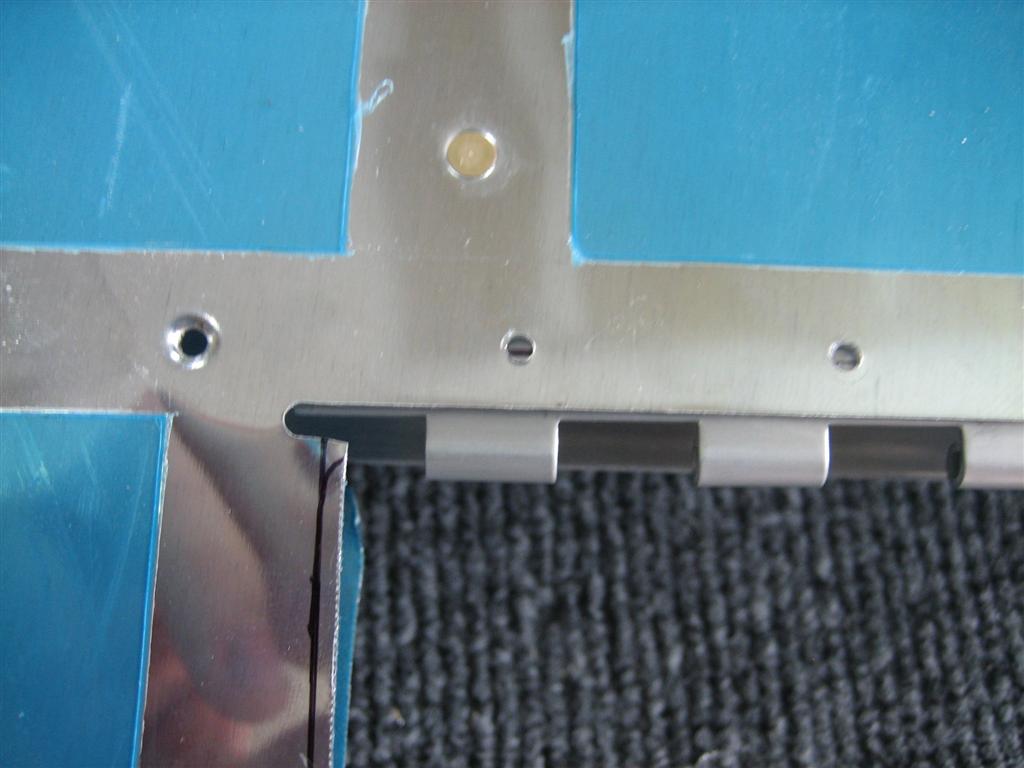
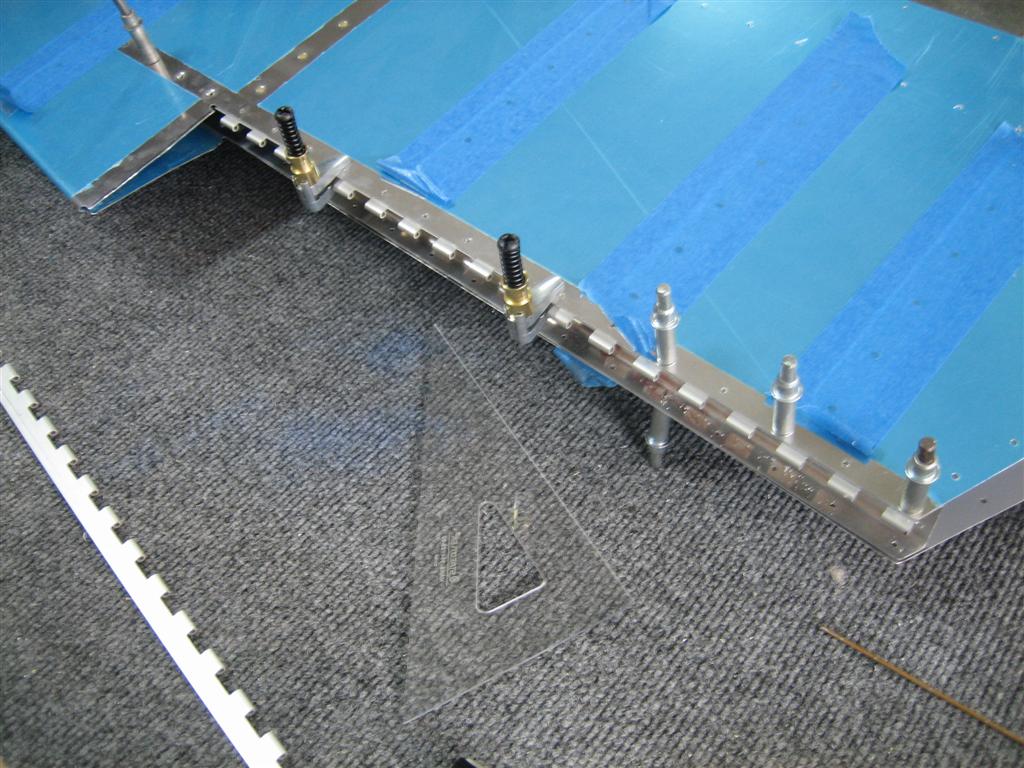
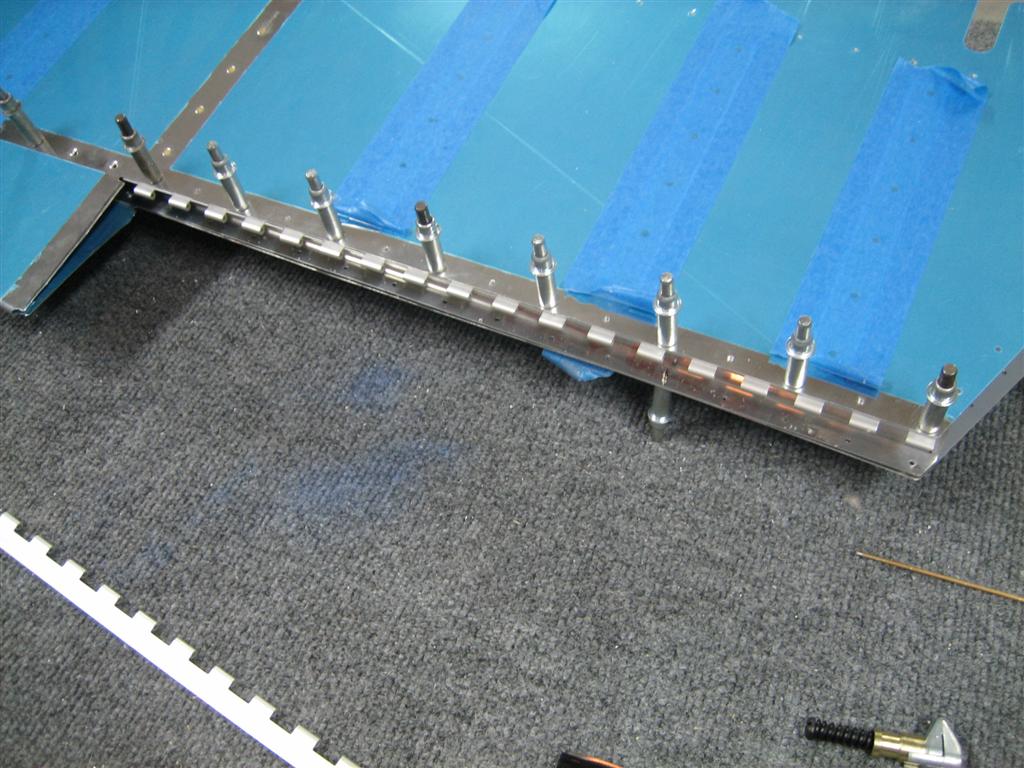
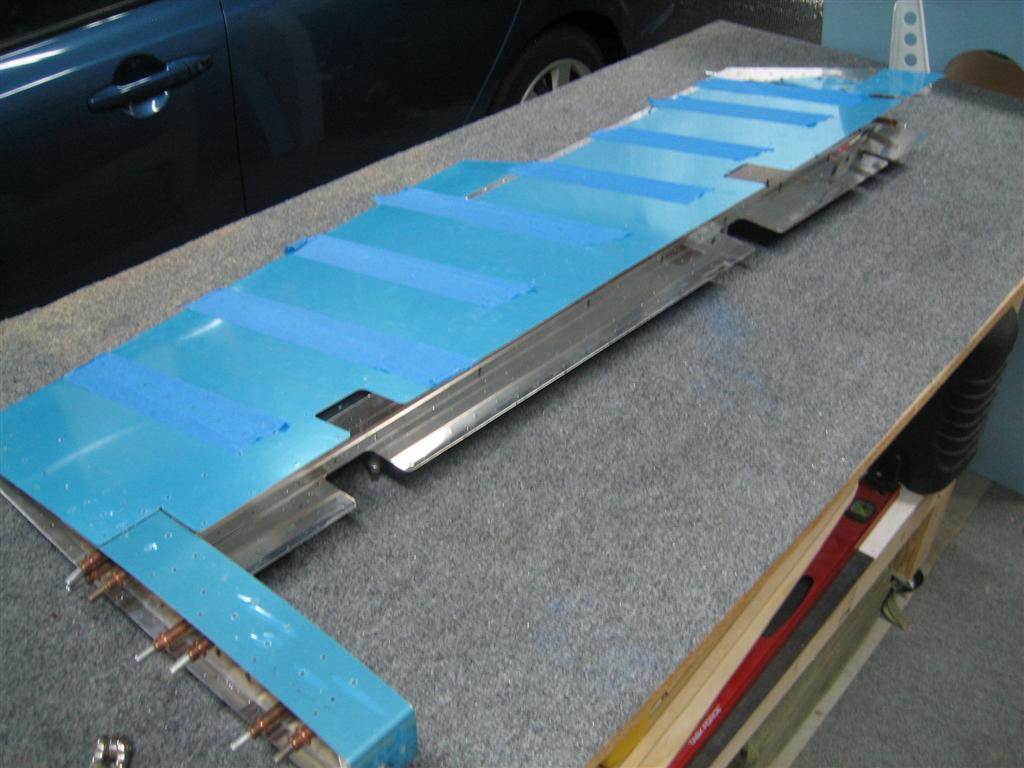
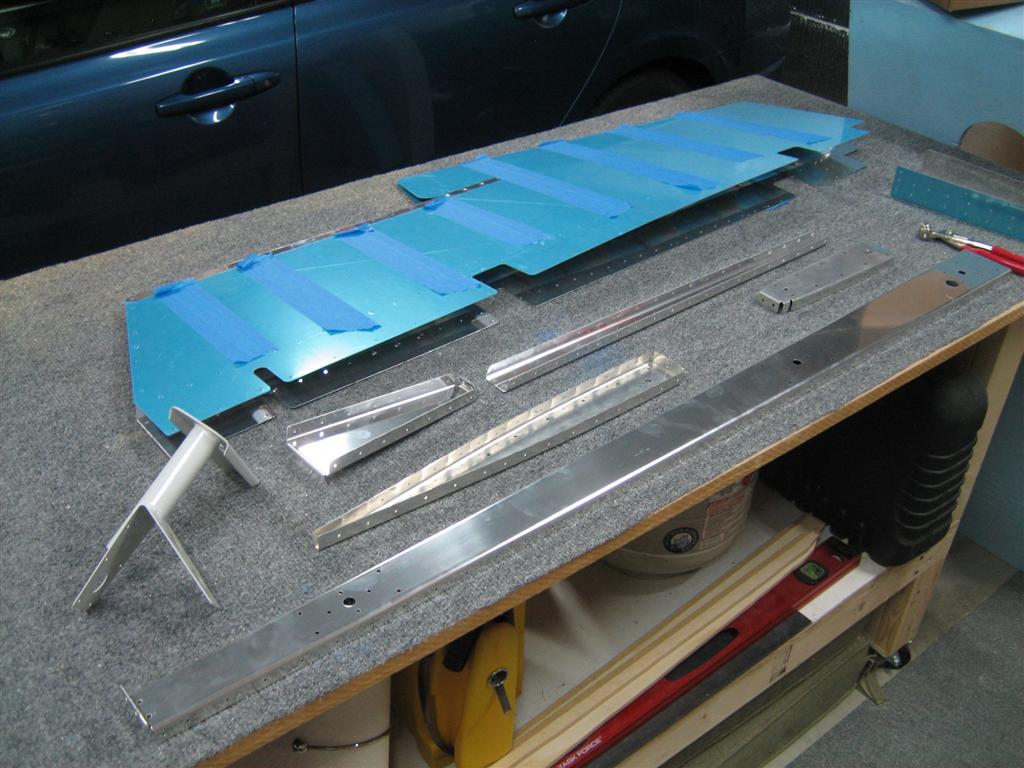
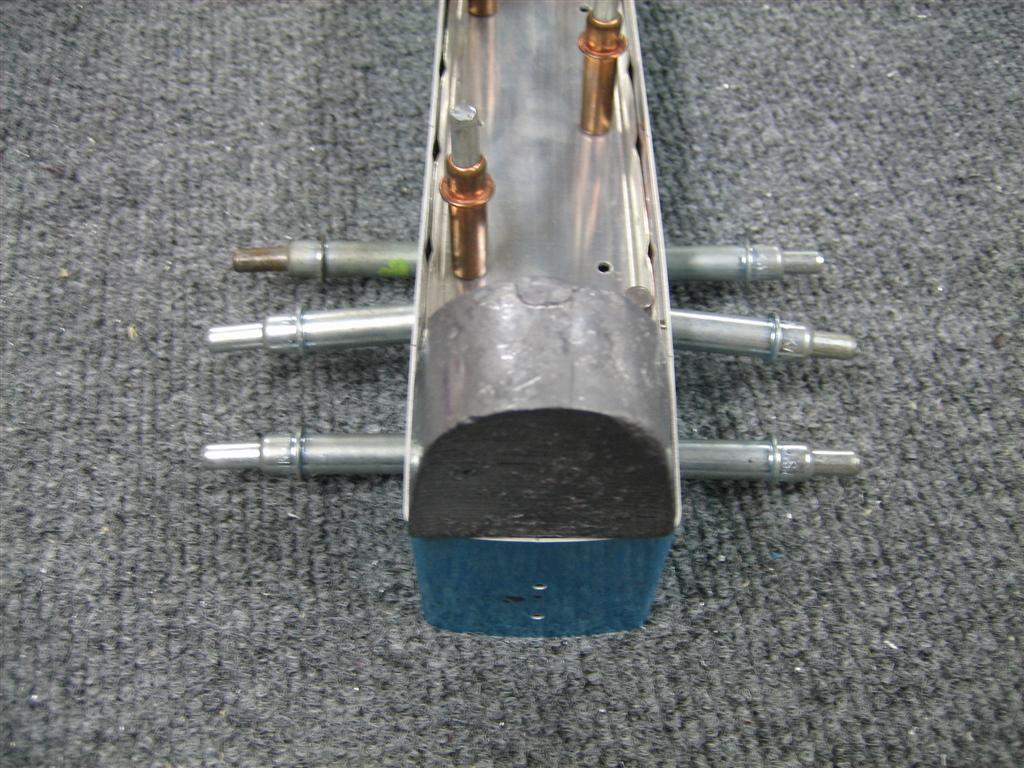
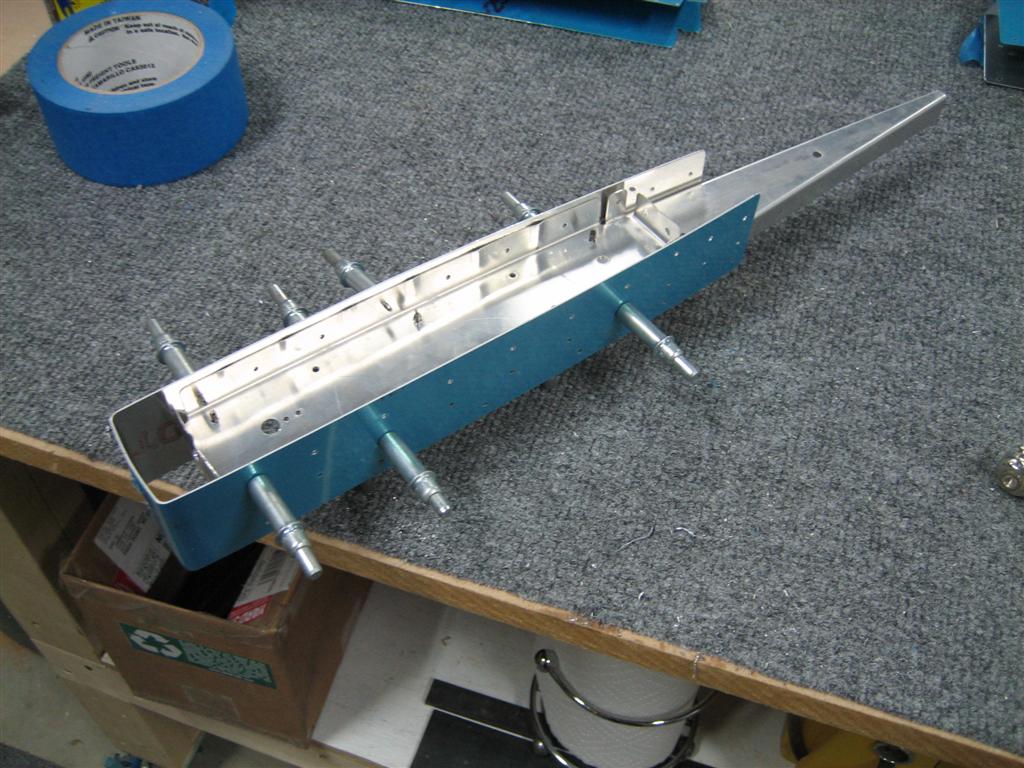
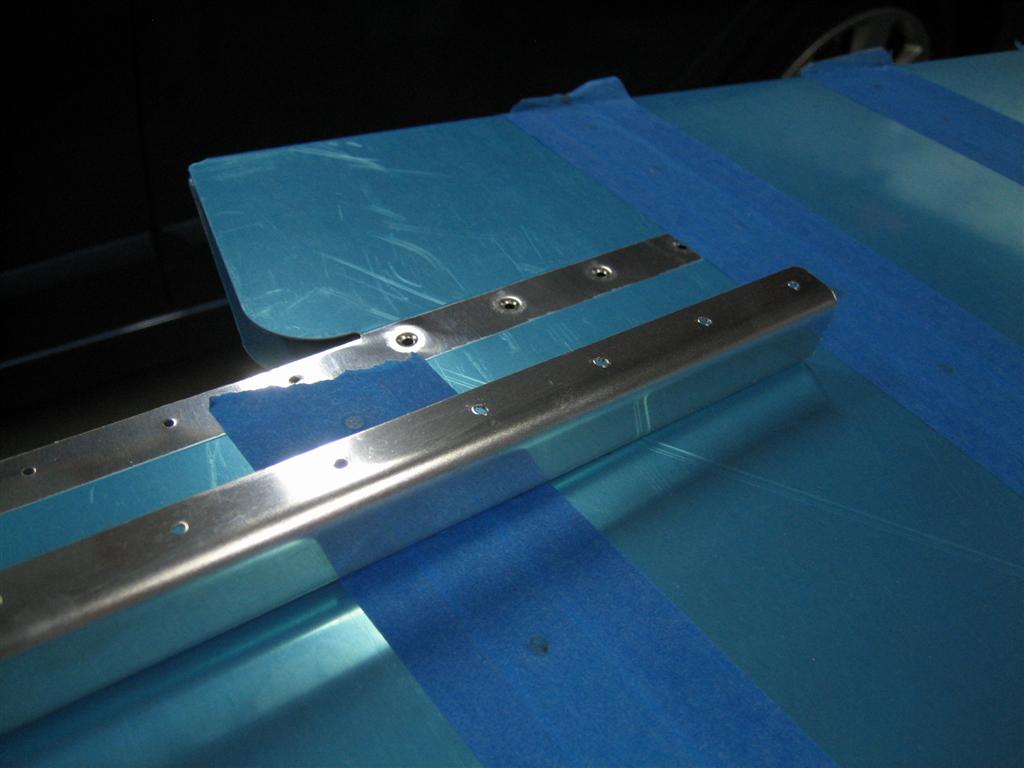
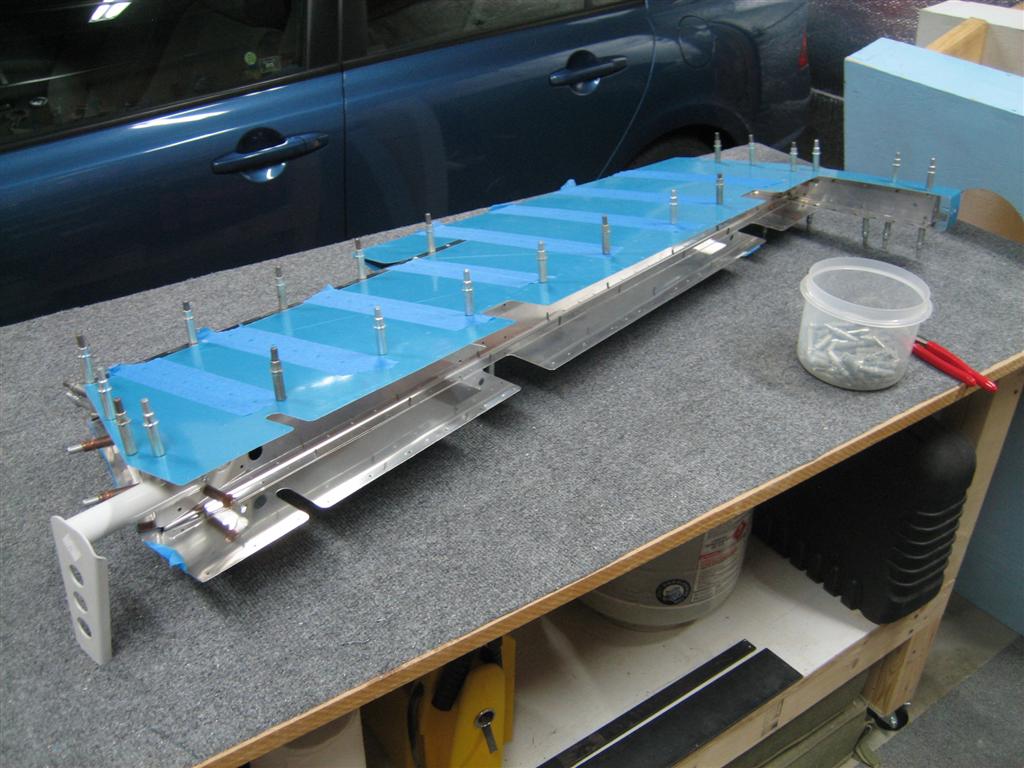
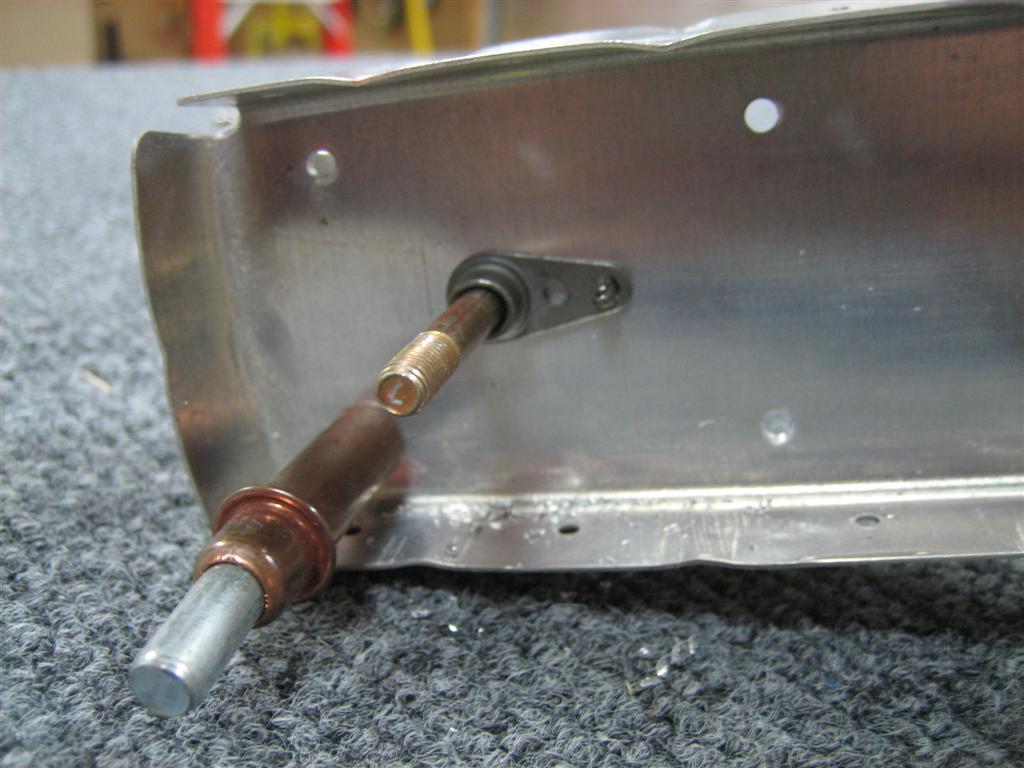
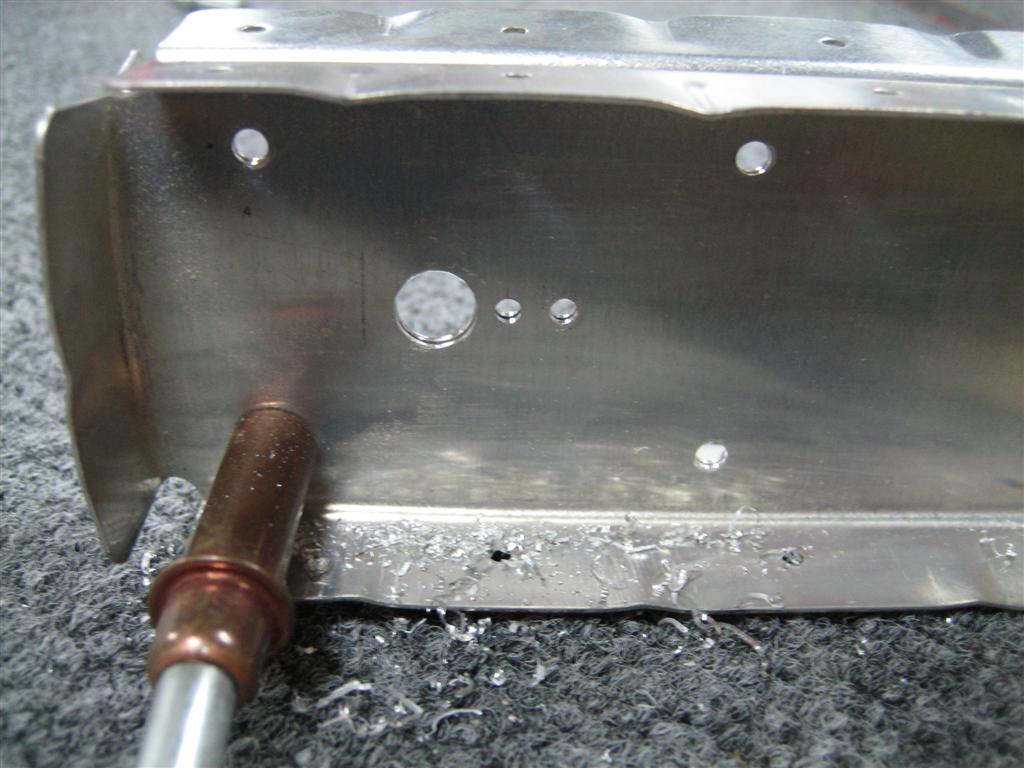
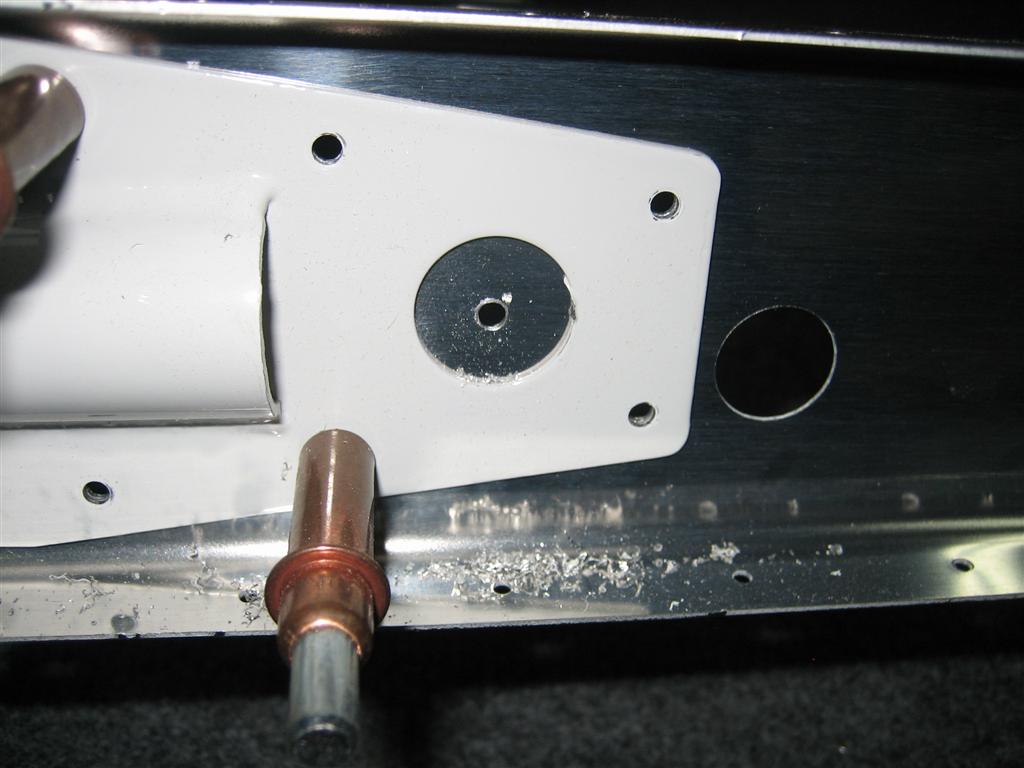
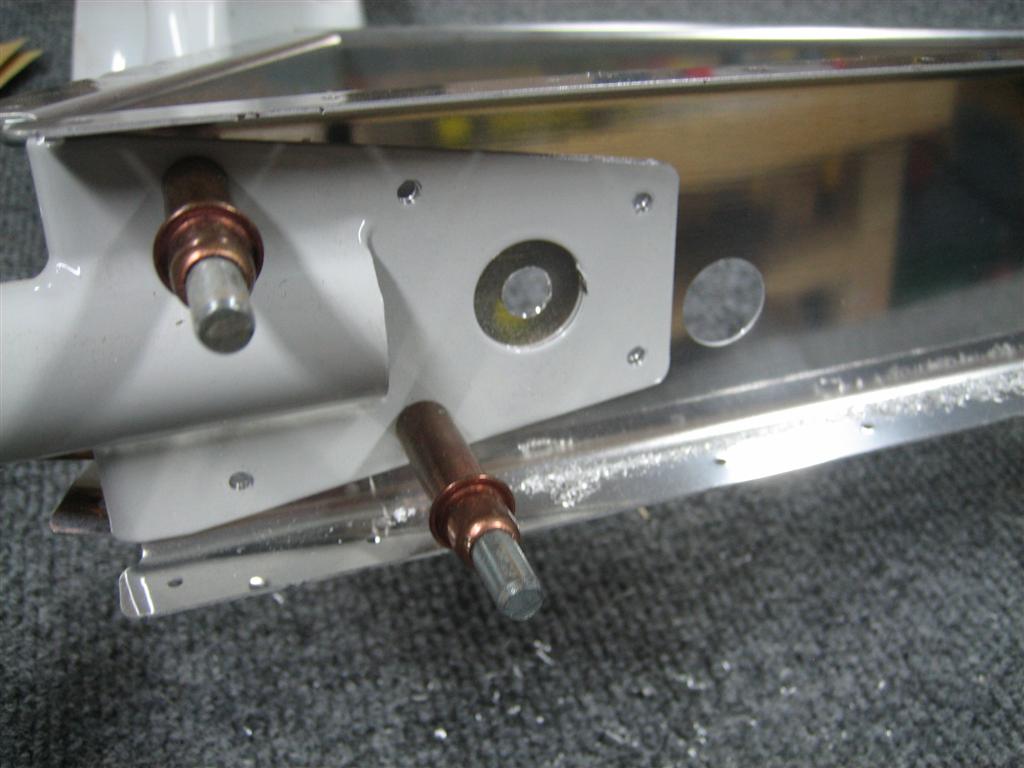
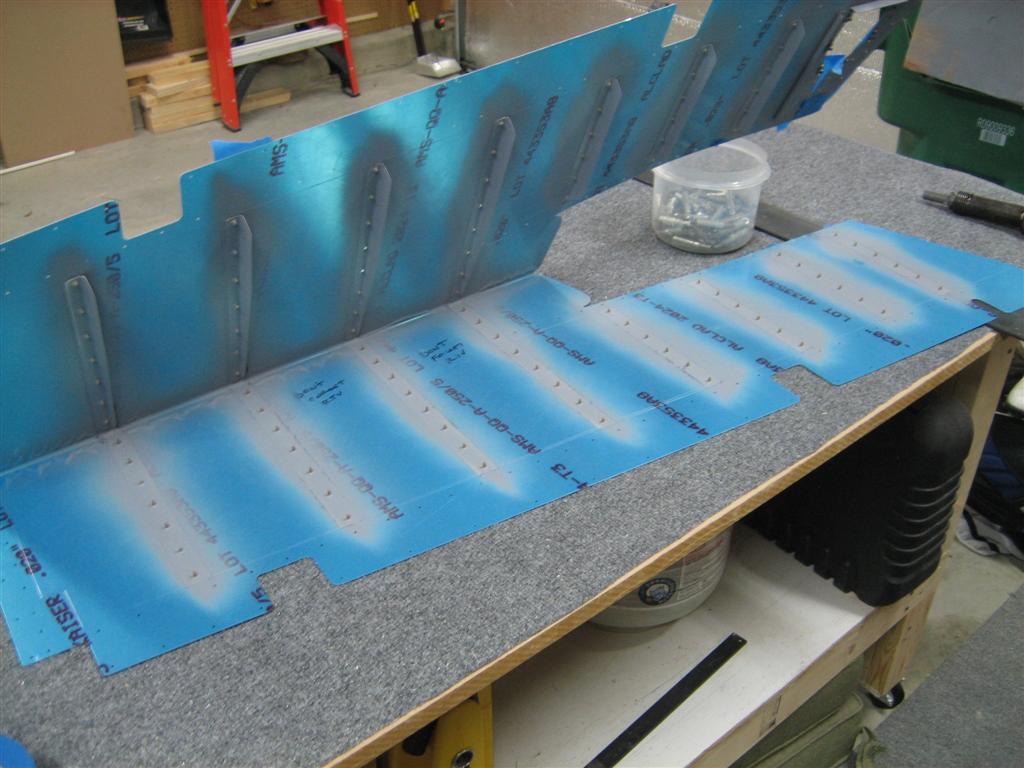
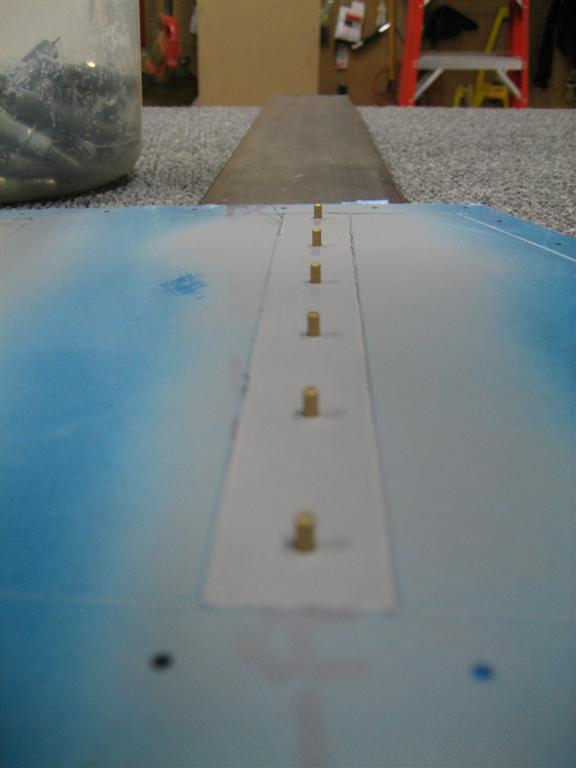
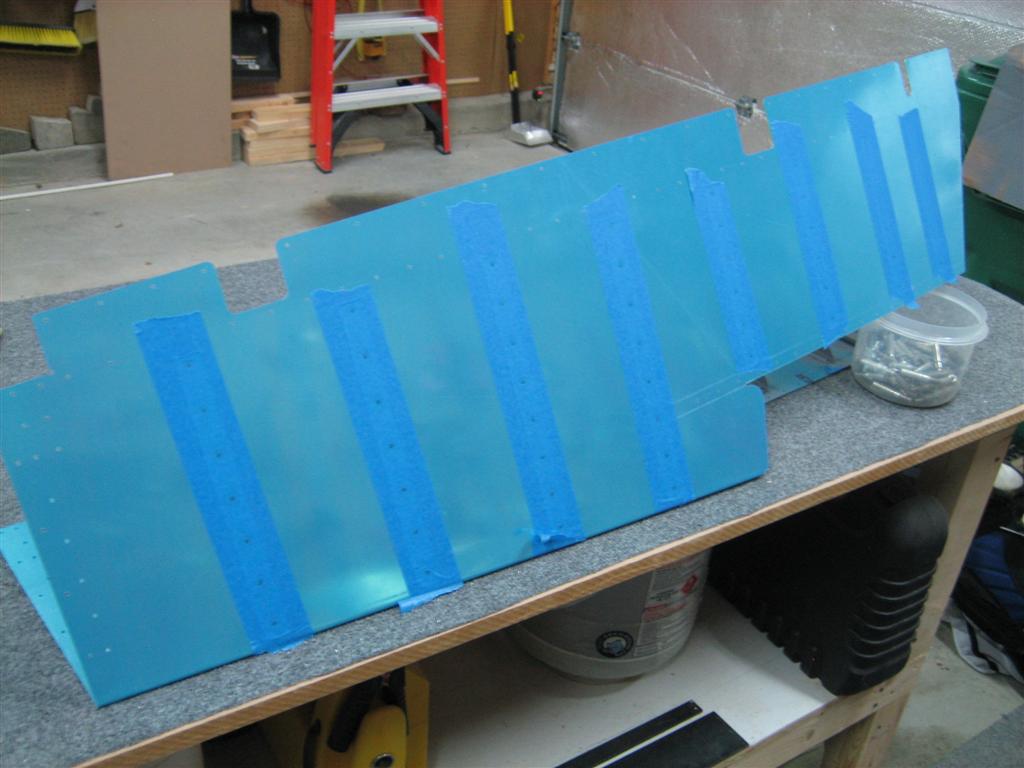
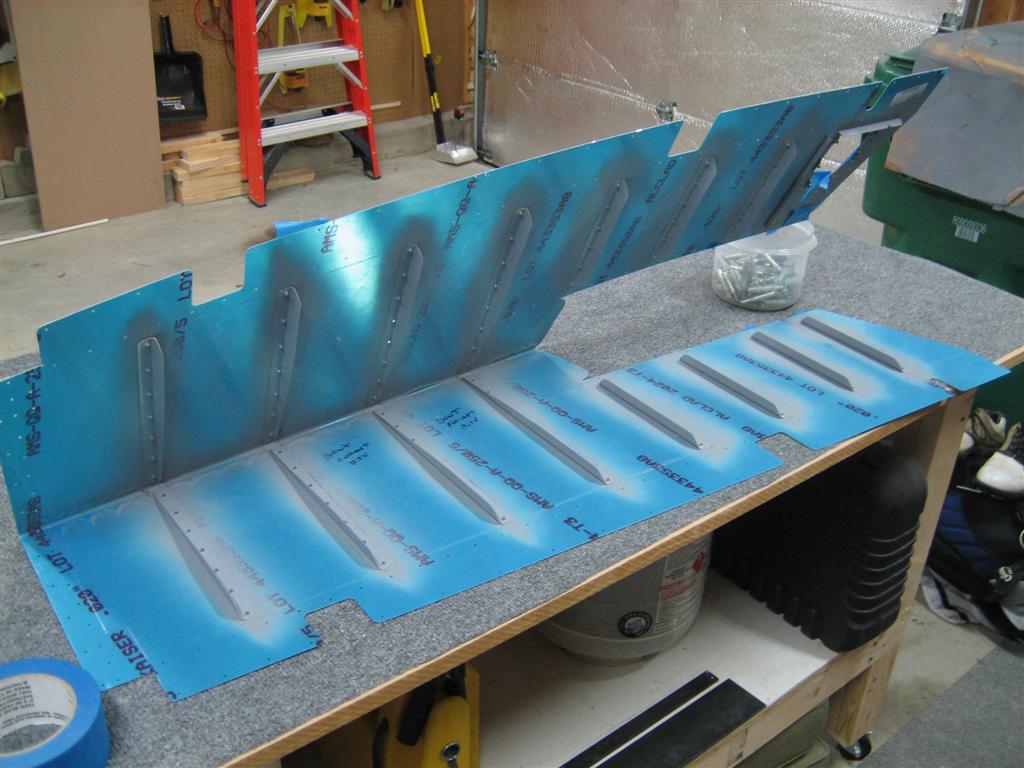
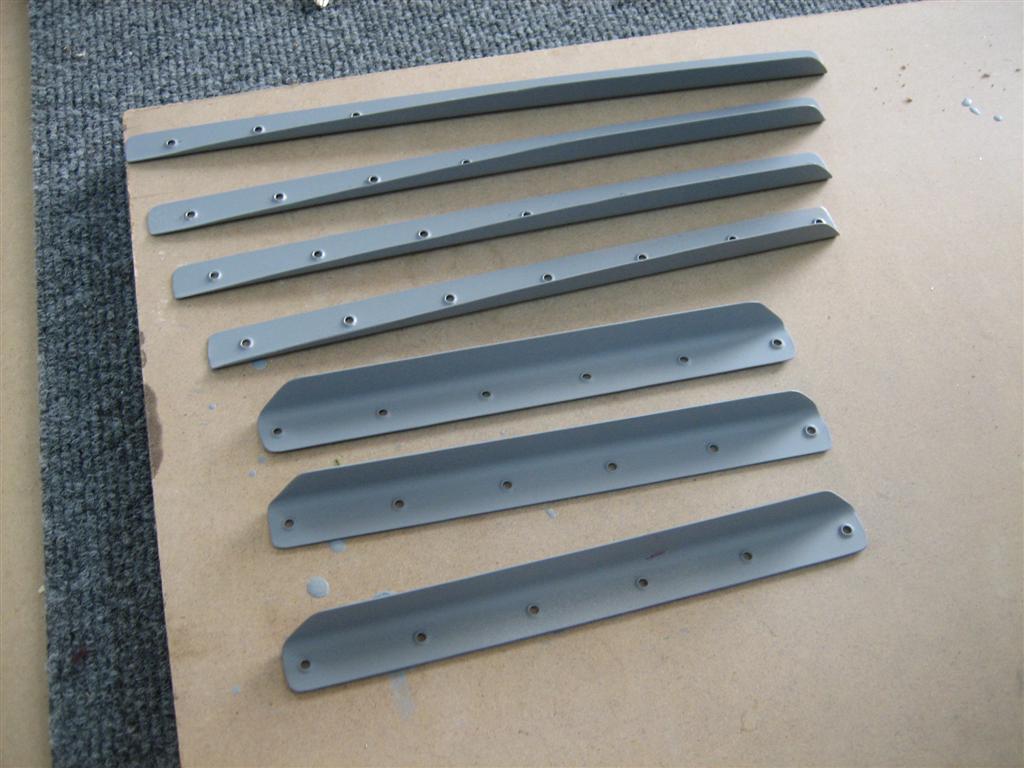
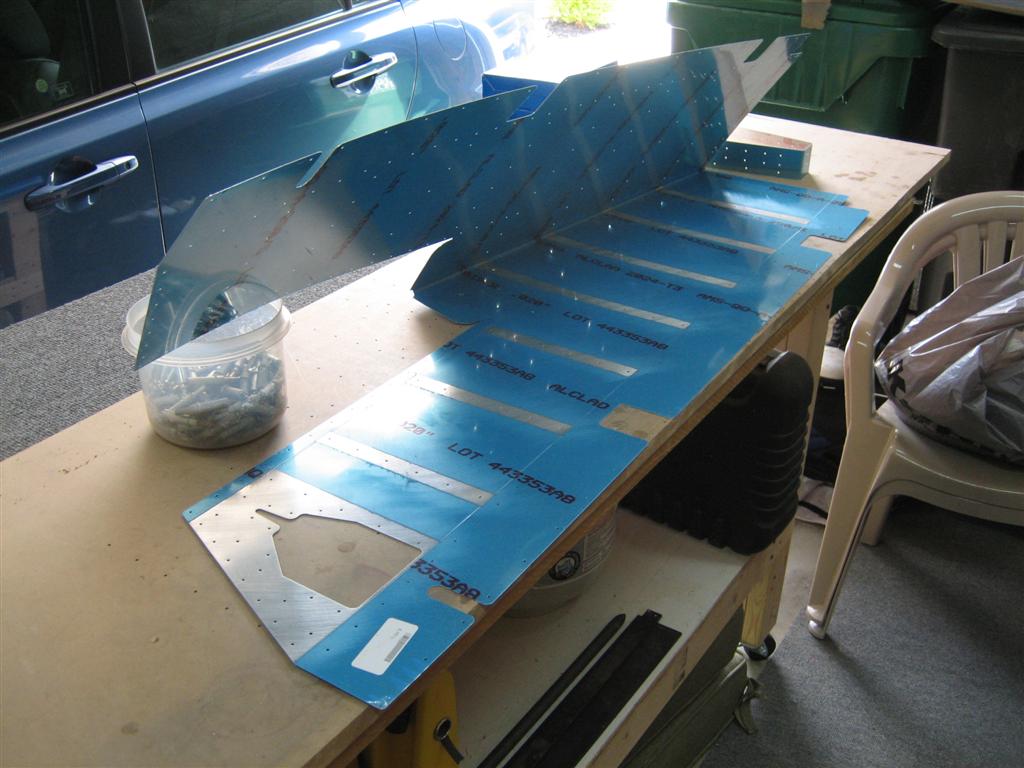
Left Elevator Riblet, Day 1

June 28, 2010

Prev | Next

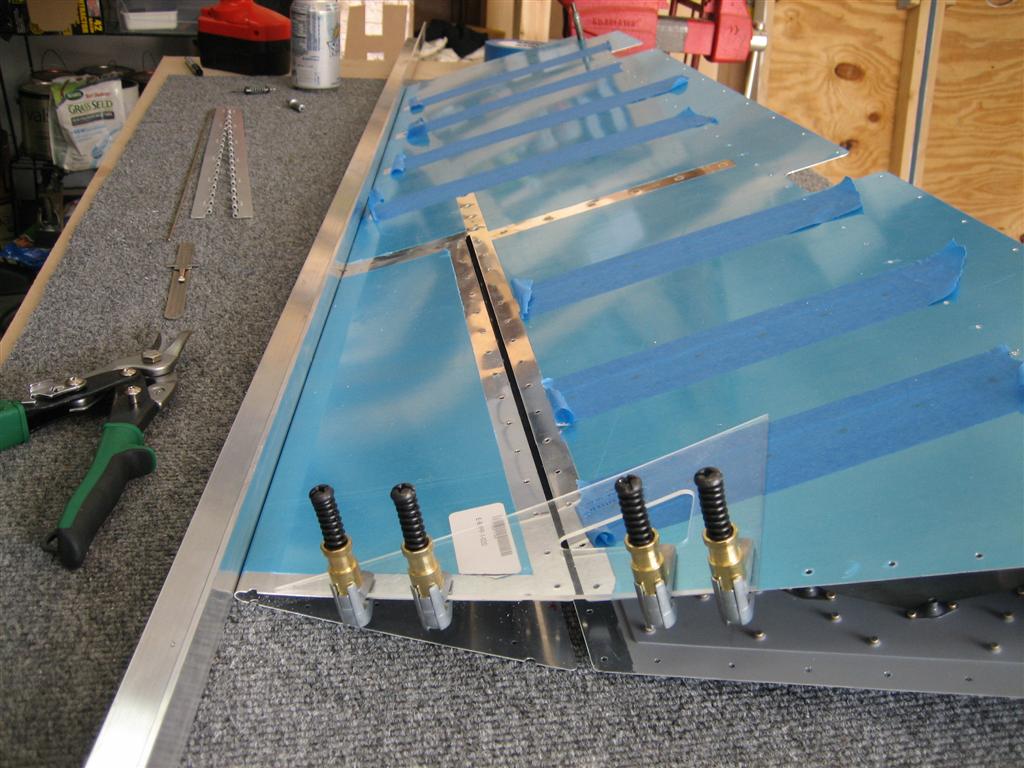
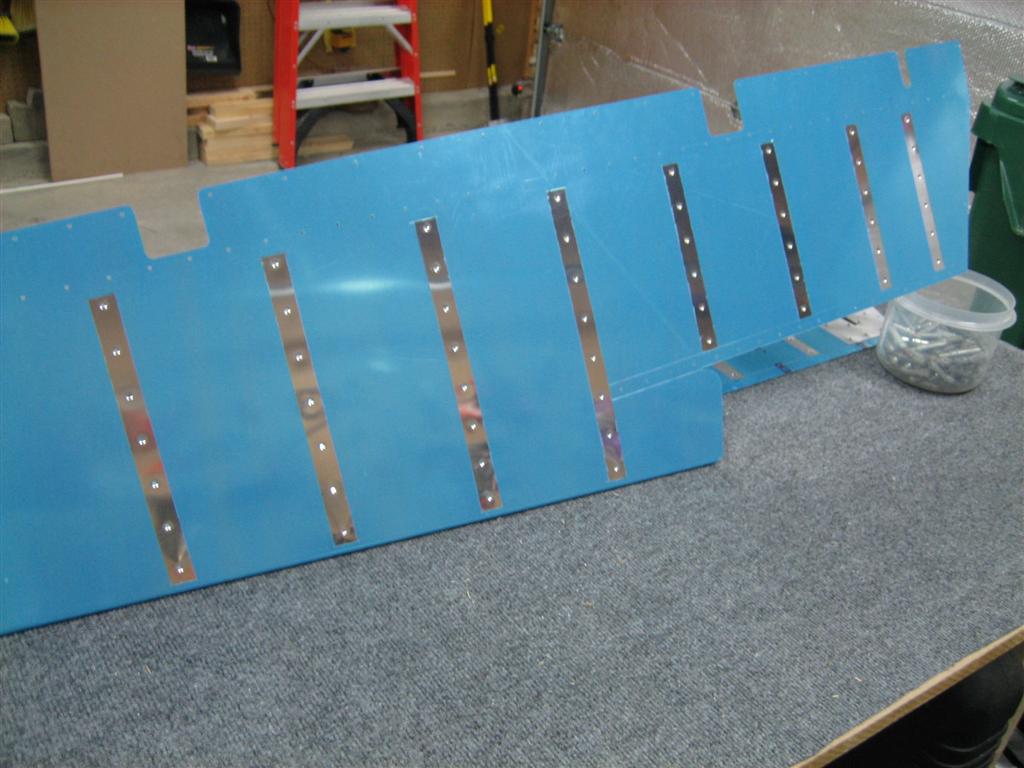
After the huge success last night, I was ready to move back to the elevator so I could get to prepping and riveting. First thing tonight was to take some small measurements, then transfer some lines to a piece of cardstock to create a template for the riblet I need to create. (Notice the title of the post is …Day 1. There will be multiple days of this dance, unfortunately.)

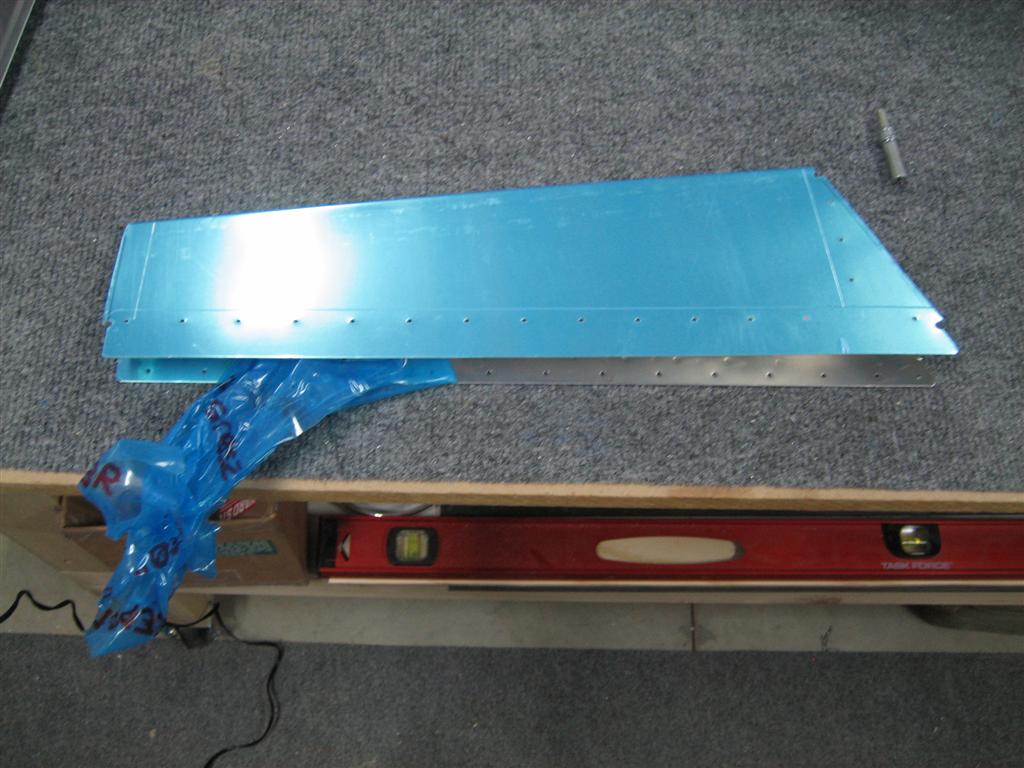
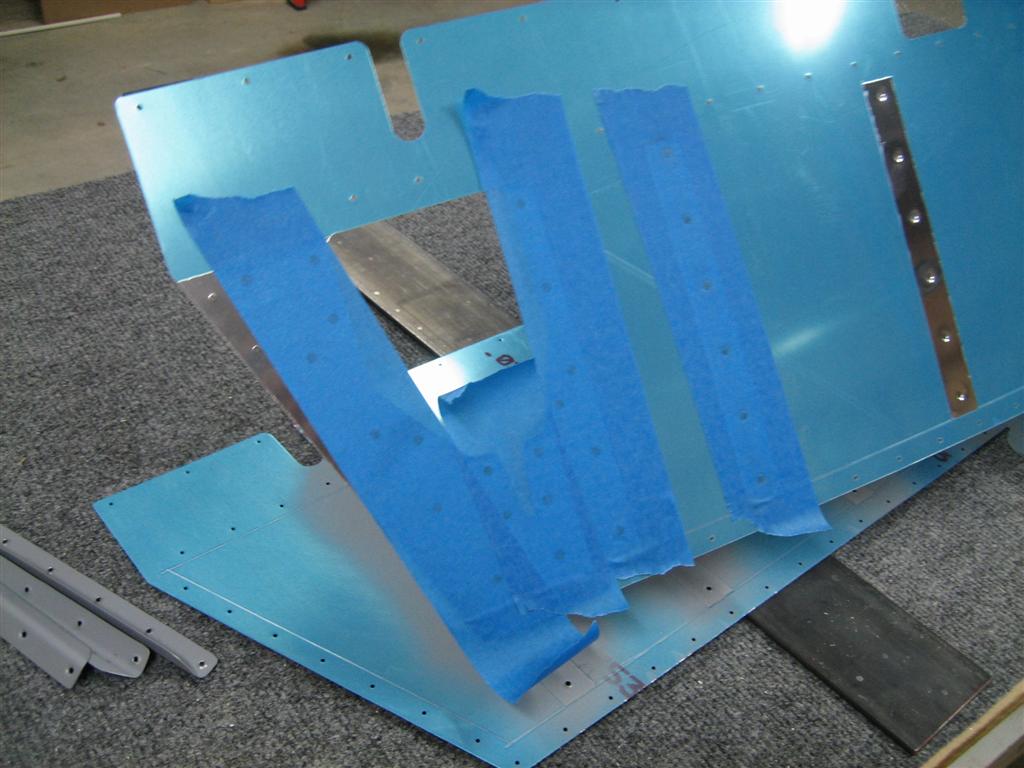
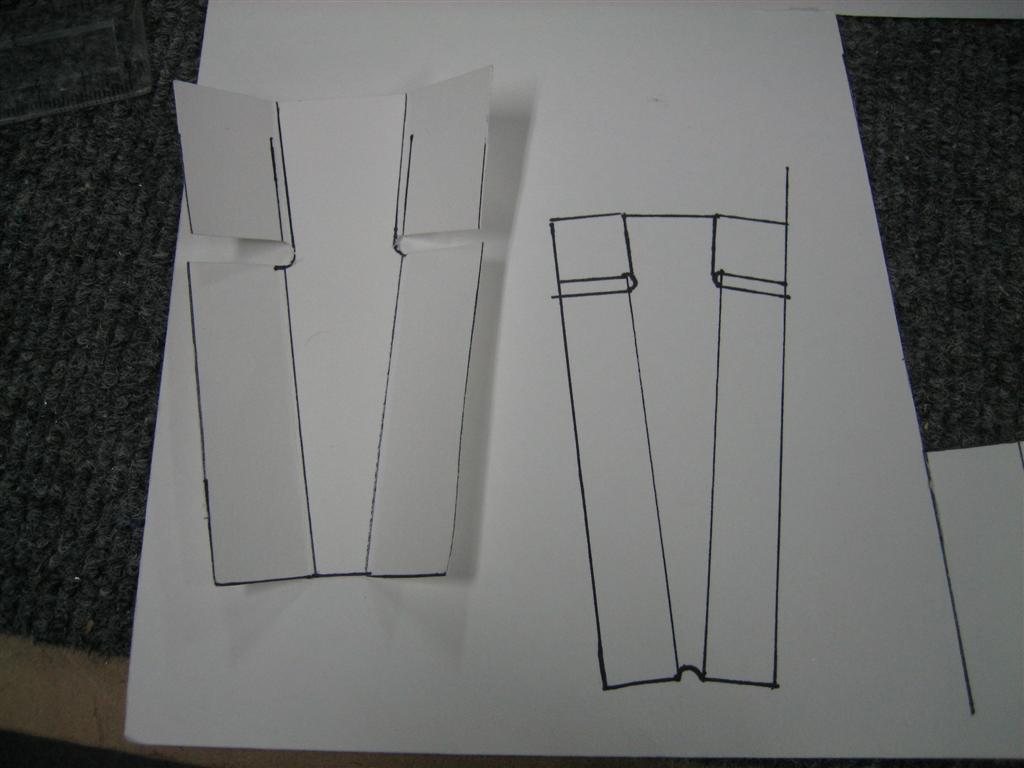
Here’s my first try at a template, and then the adjusted second try before being cut out.

I don't know why my first try was so big. Must have measured wrong.

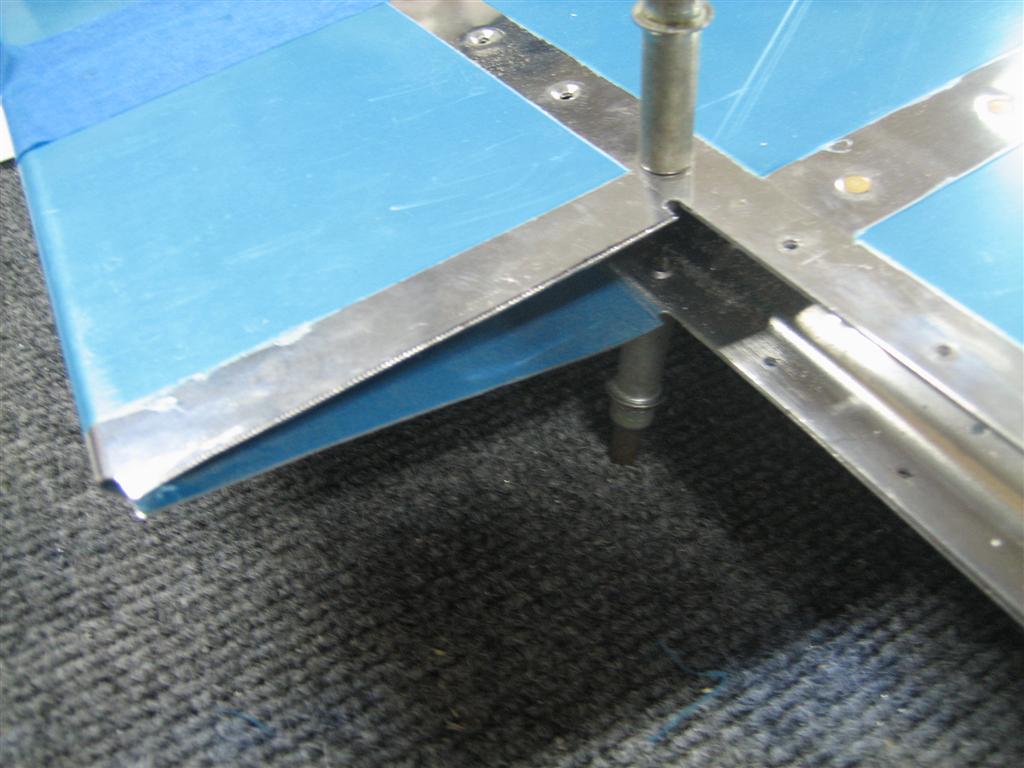
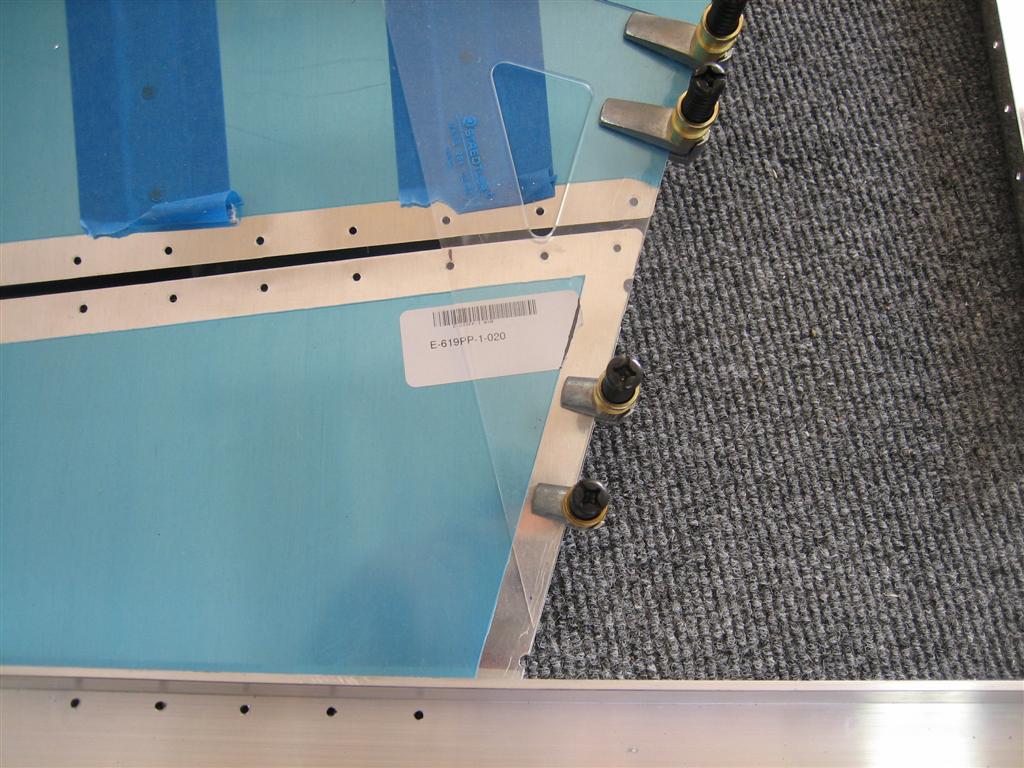
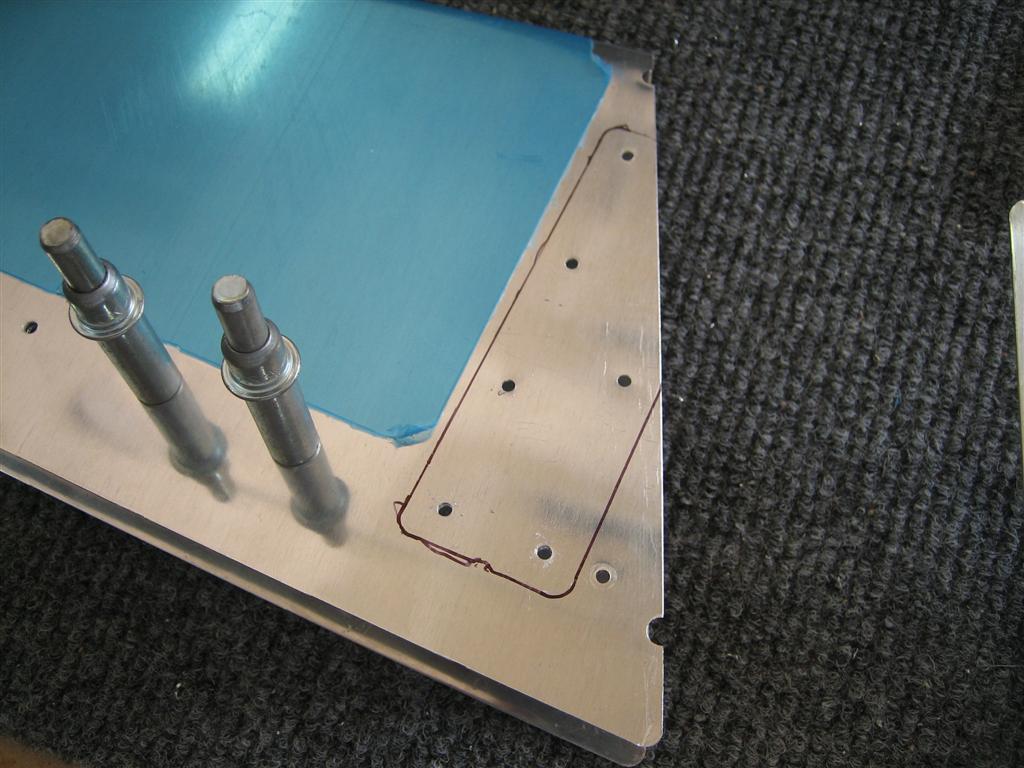
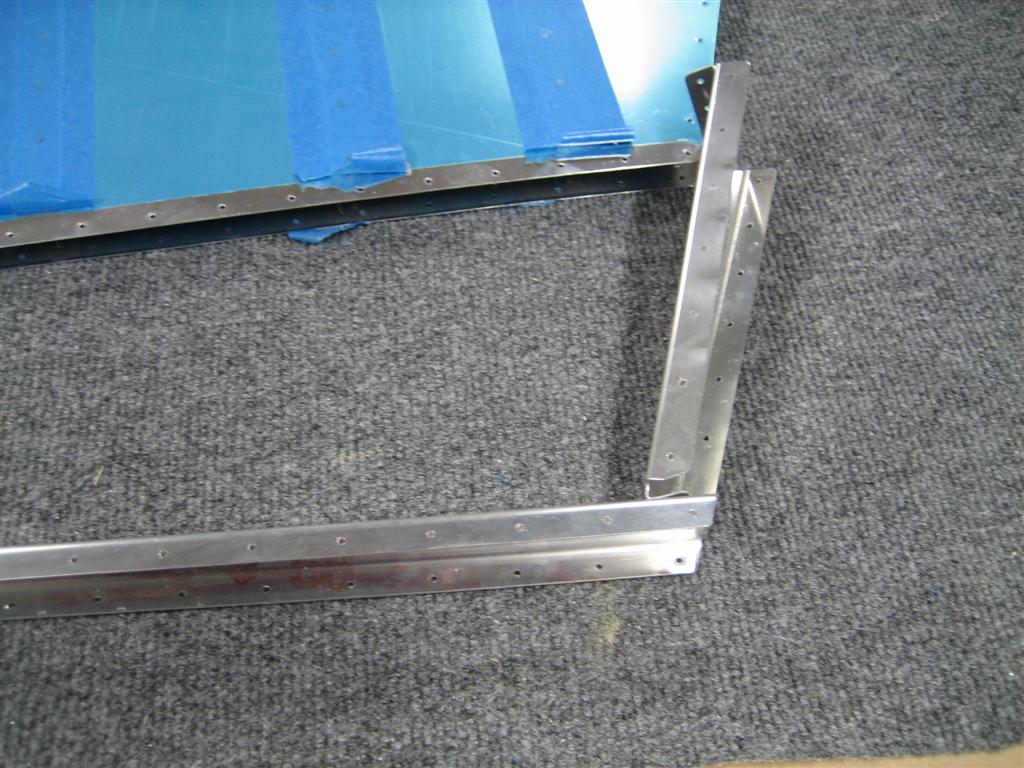
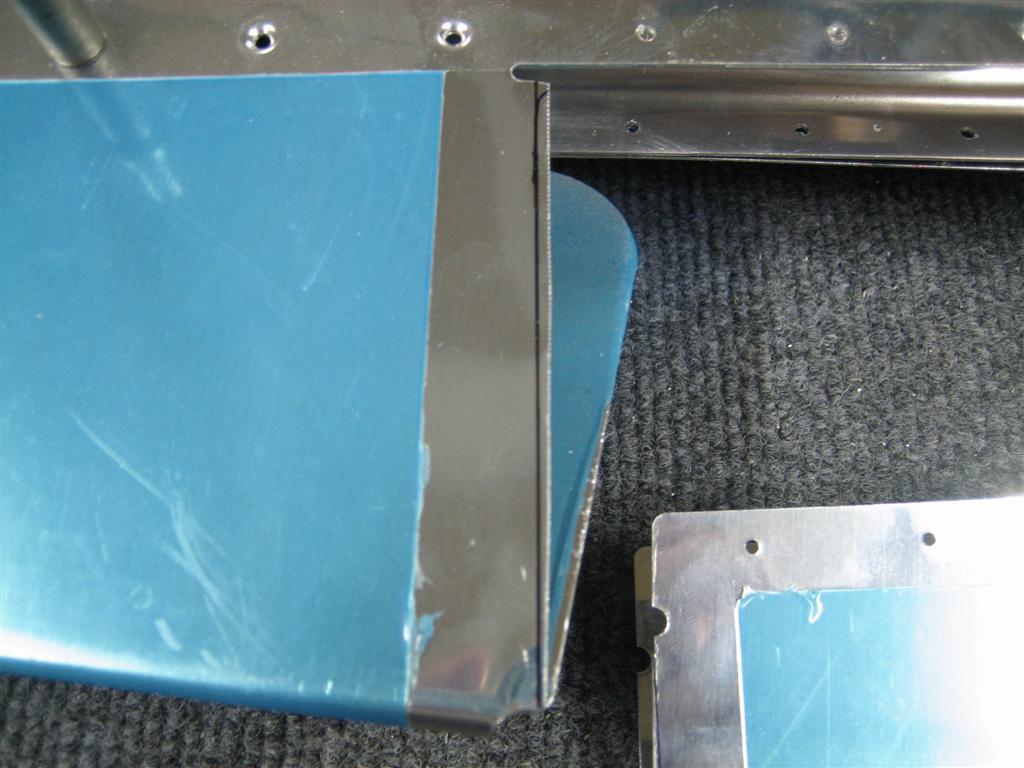
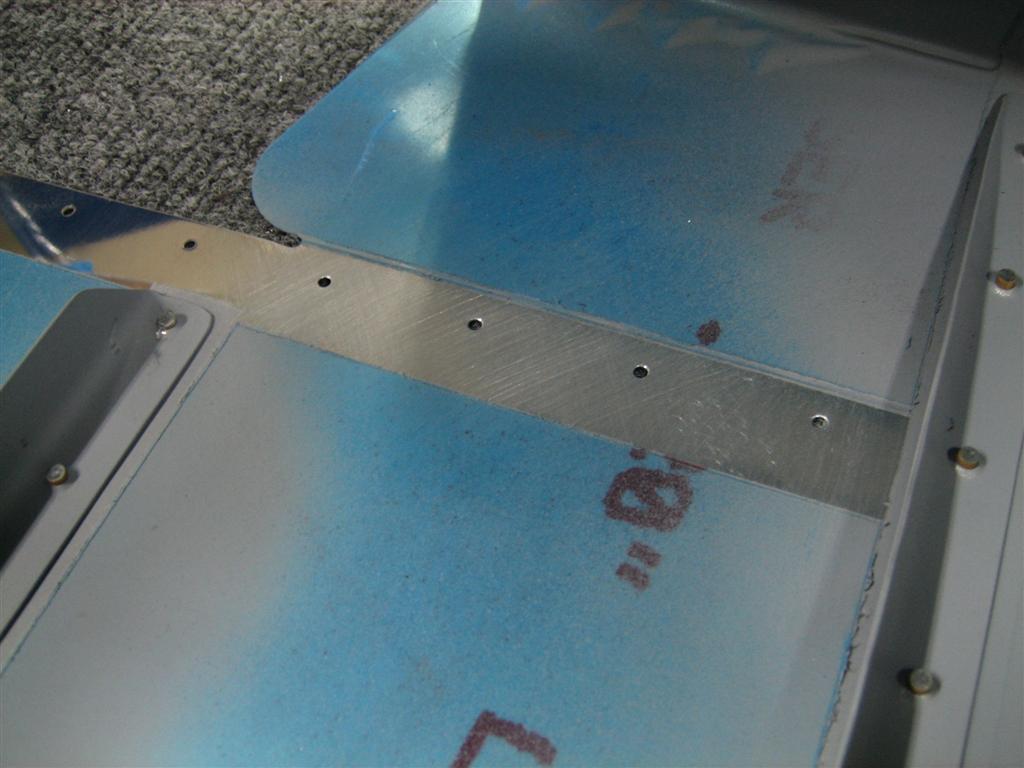
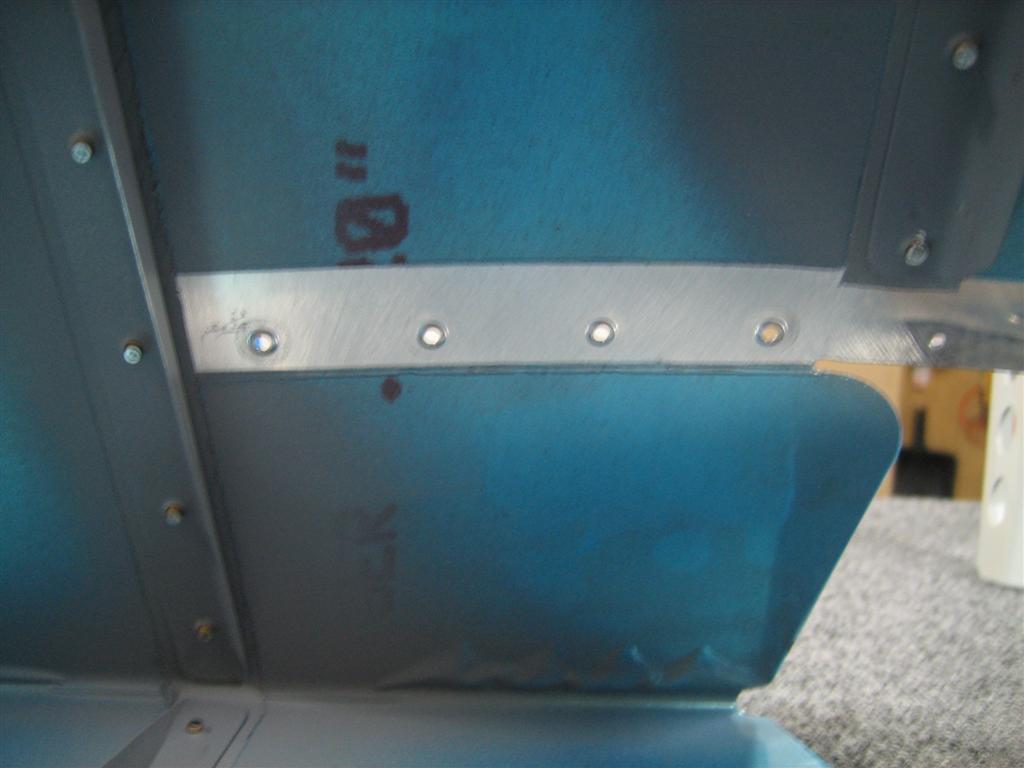
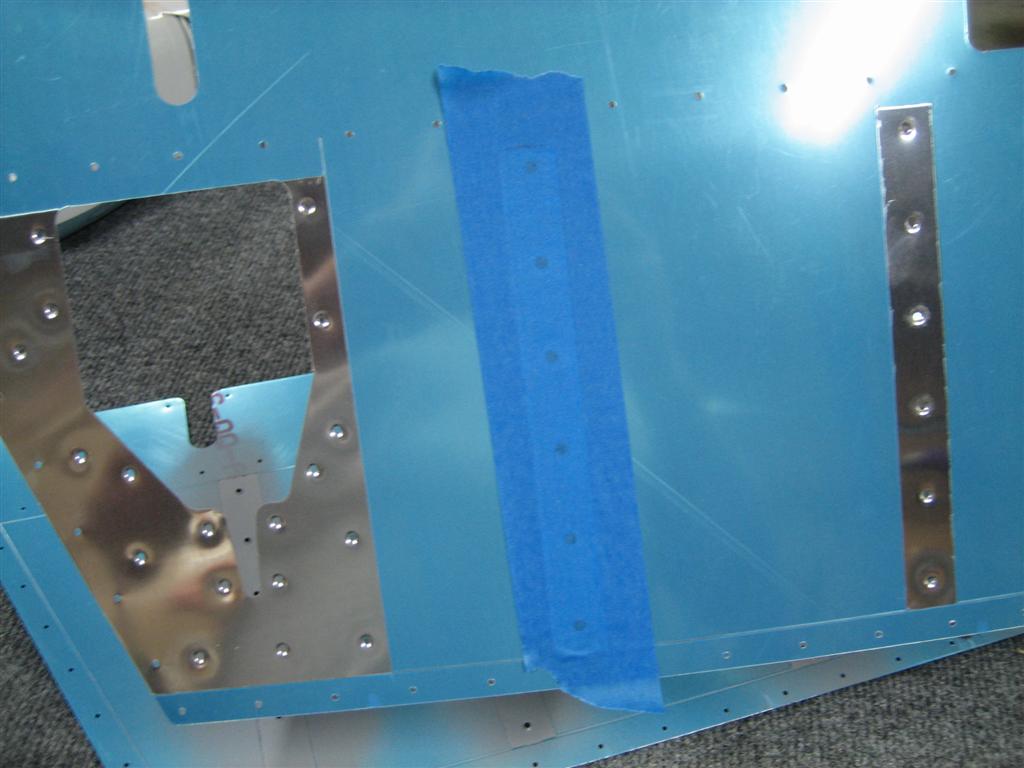
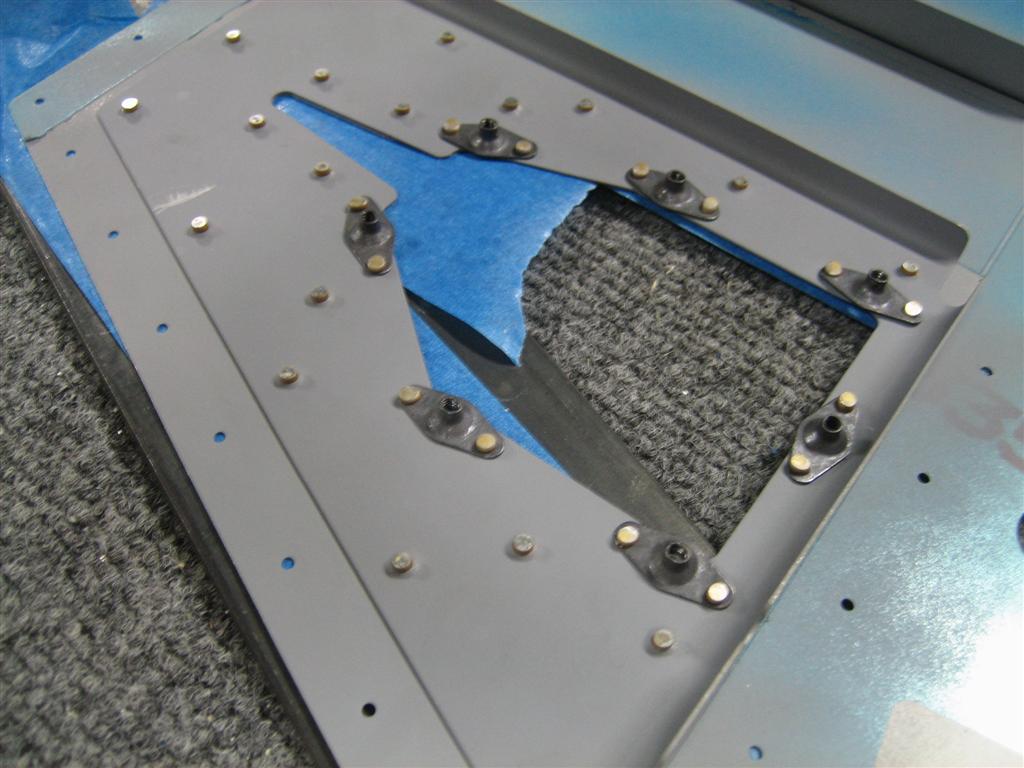
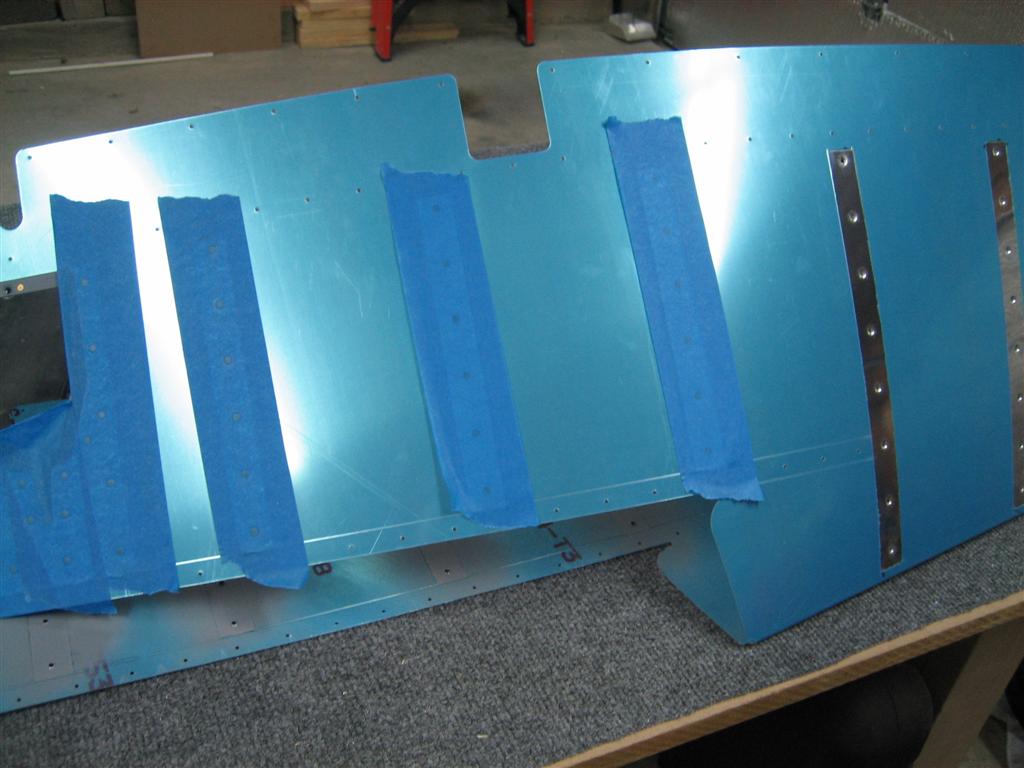
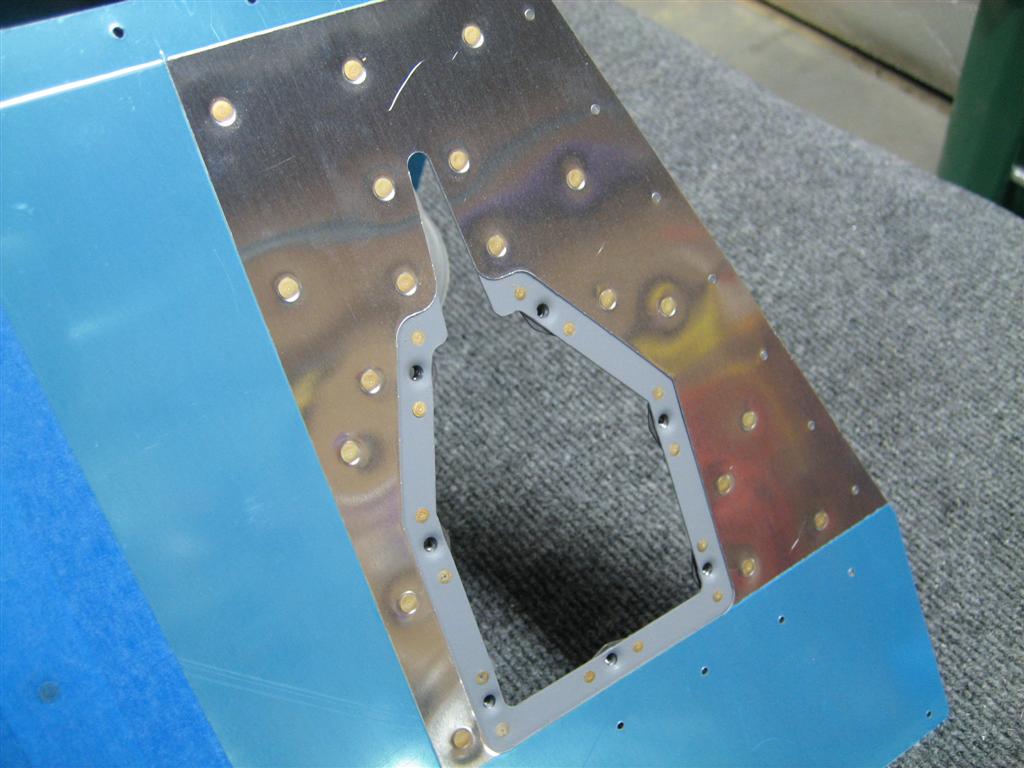
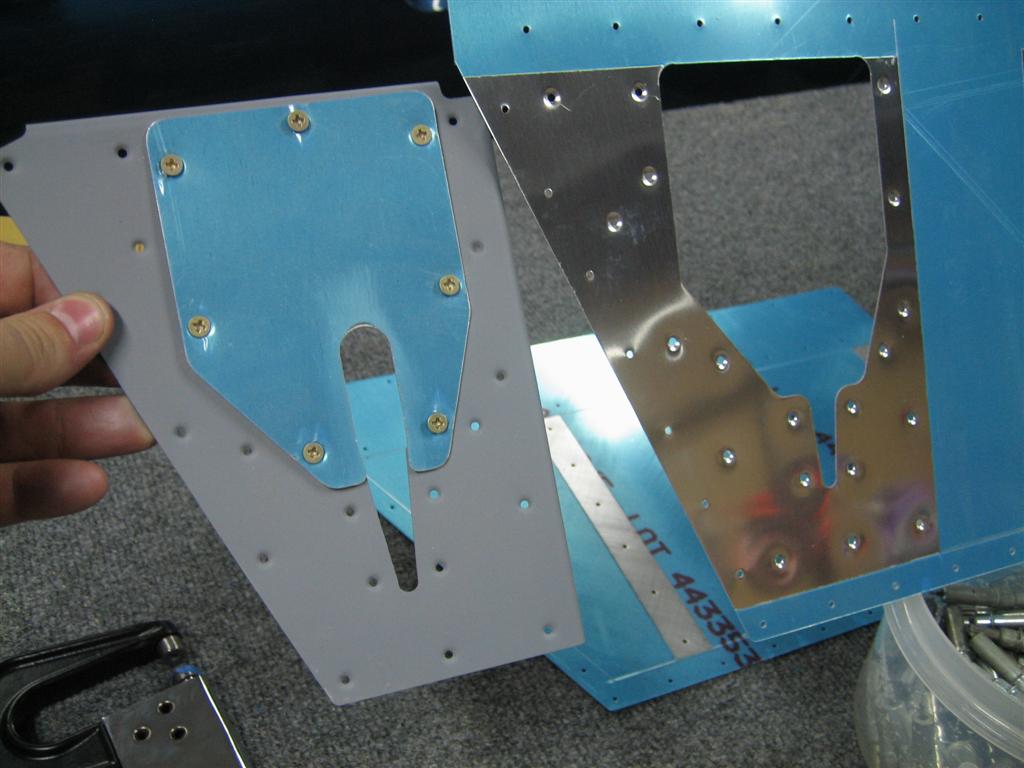
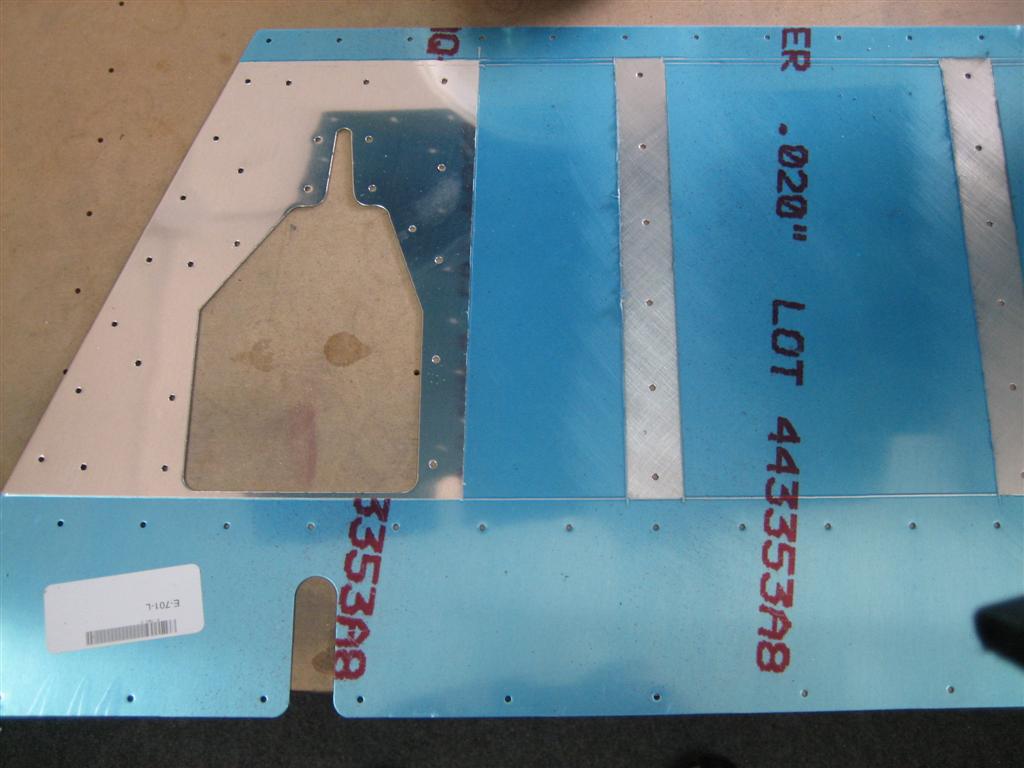
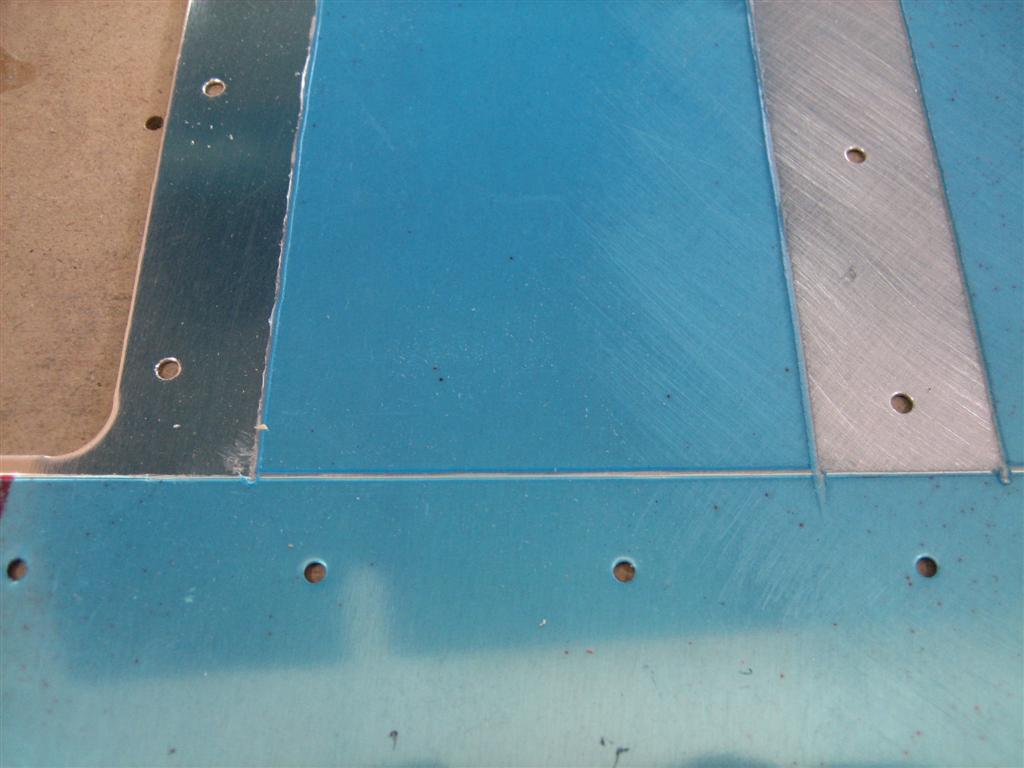
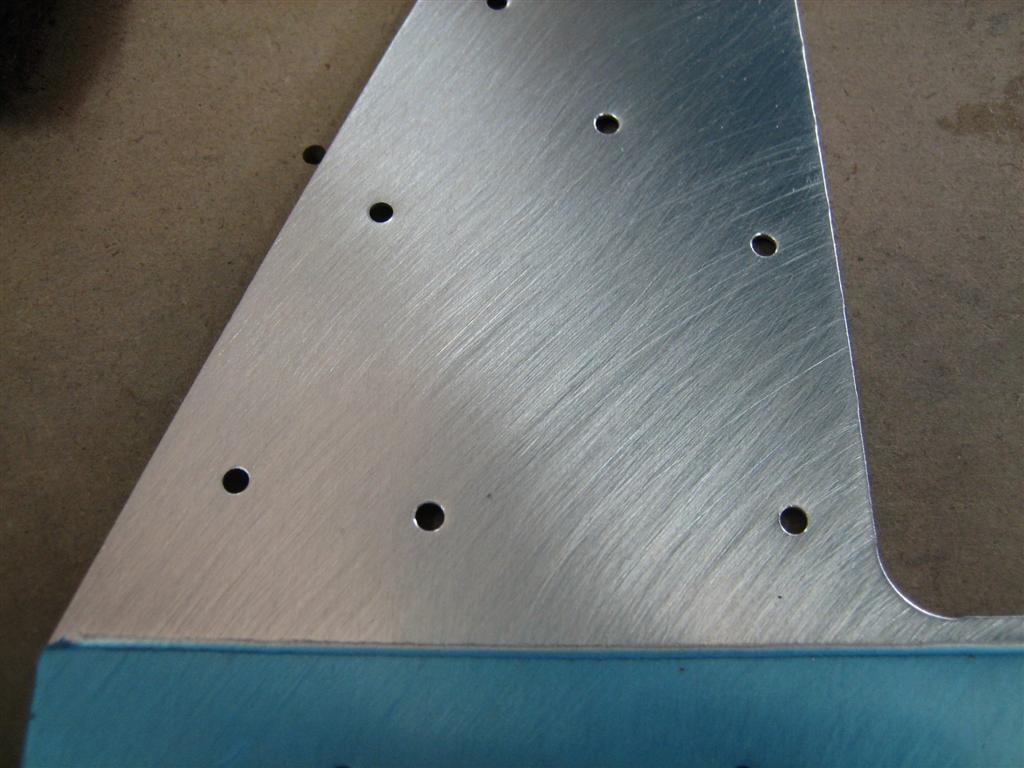
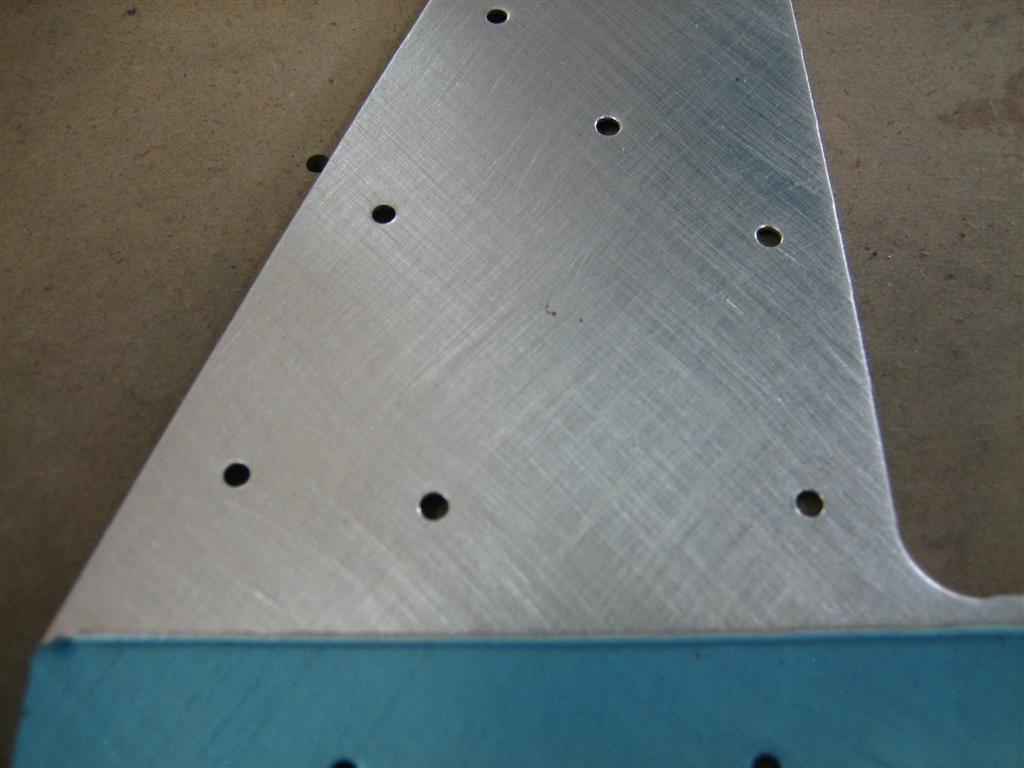
Here’s a shot of the space I am trying to fill. It’s not edge finished here, but will be after I get a riblet created.

Left elevator's trim tab cutout.

Ginger was being bad inside, so she was banished to the garage (“go annoy your father”). Ha, little did we know that there was sawdust that she could be rubbing her face in. Serves us right for trying to punish her.

She's not cute at all.

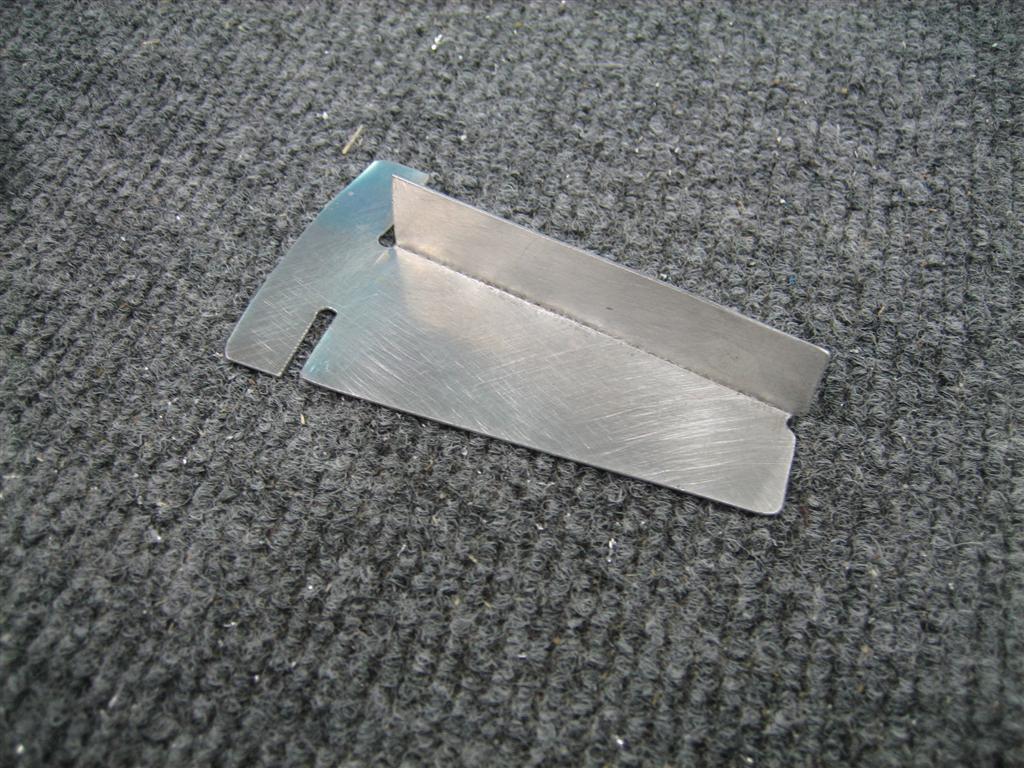
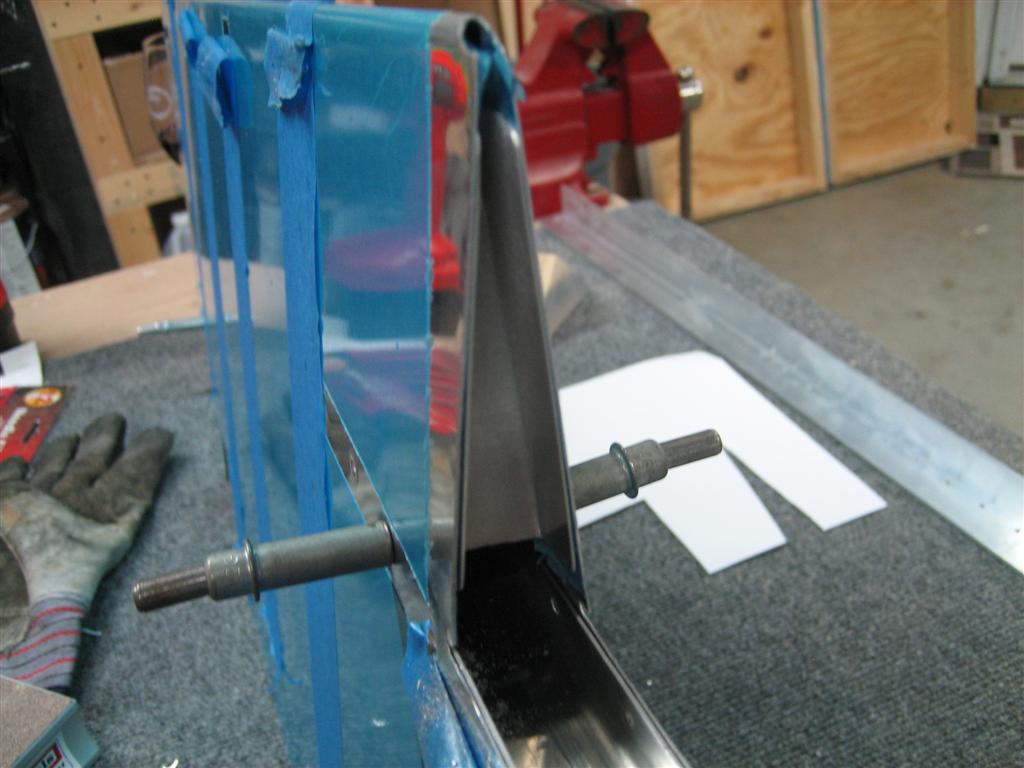
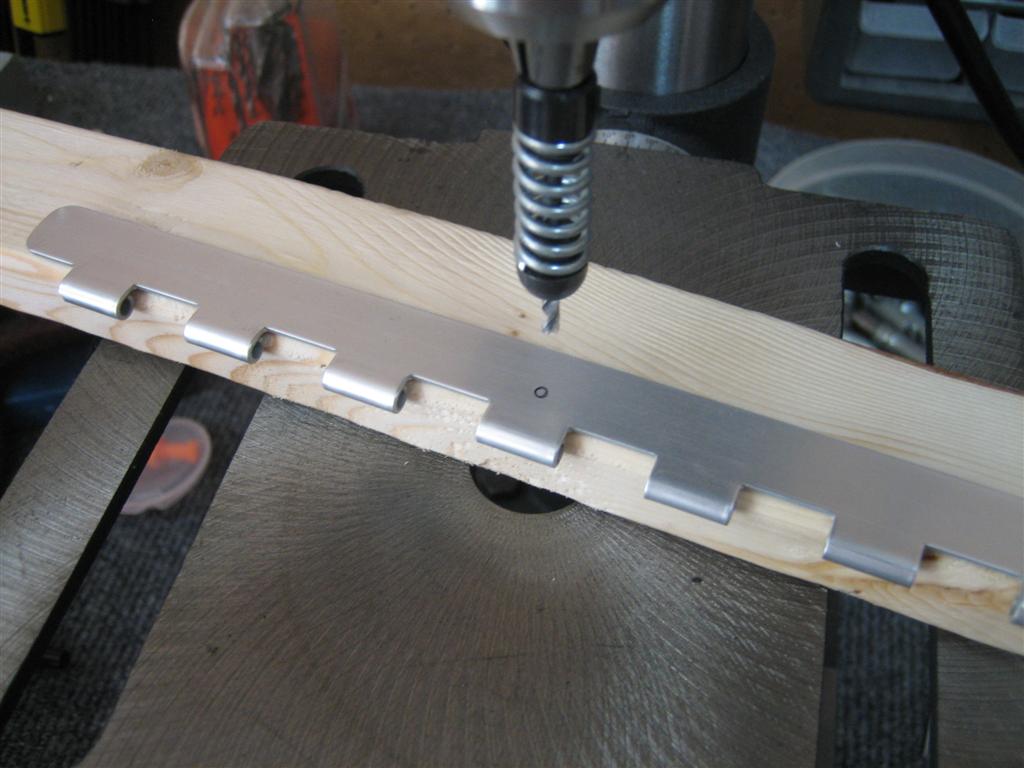
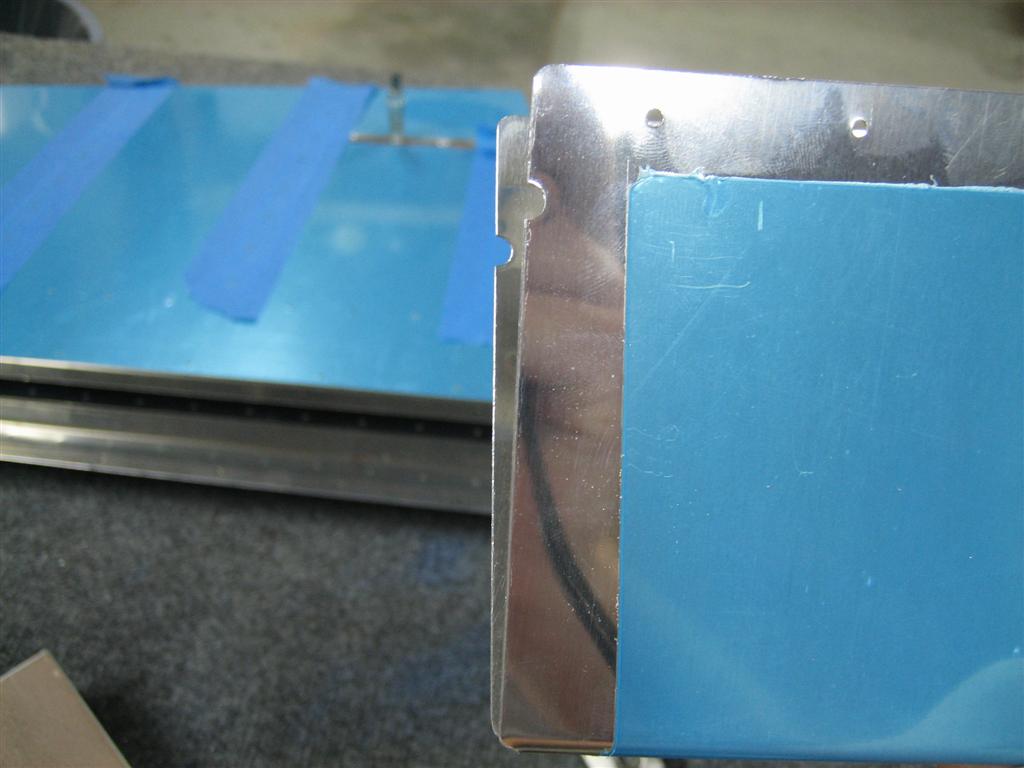
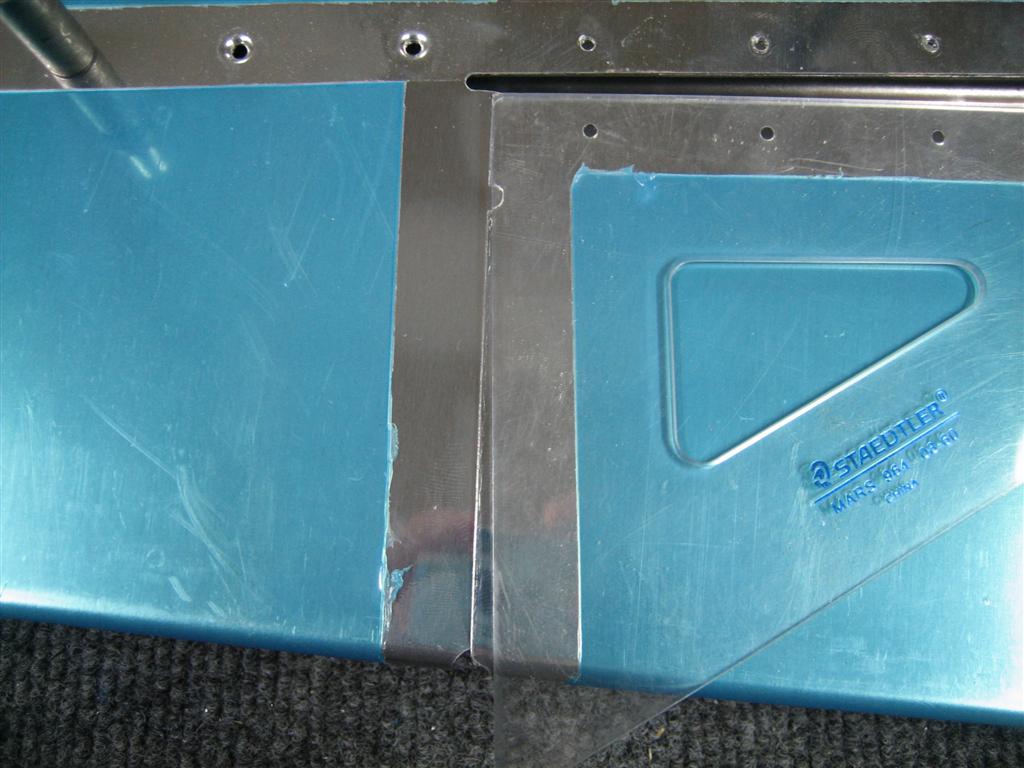
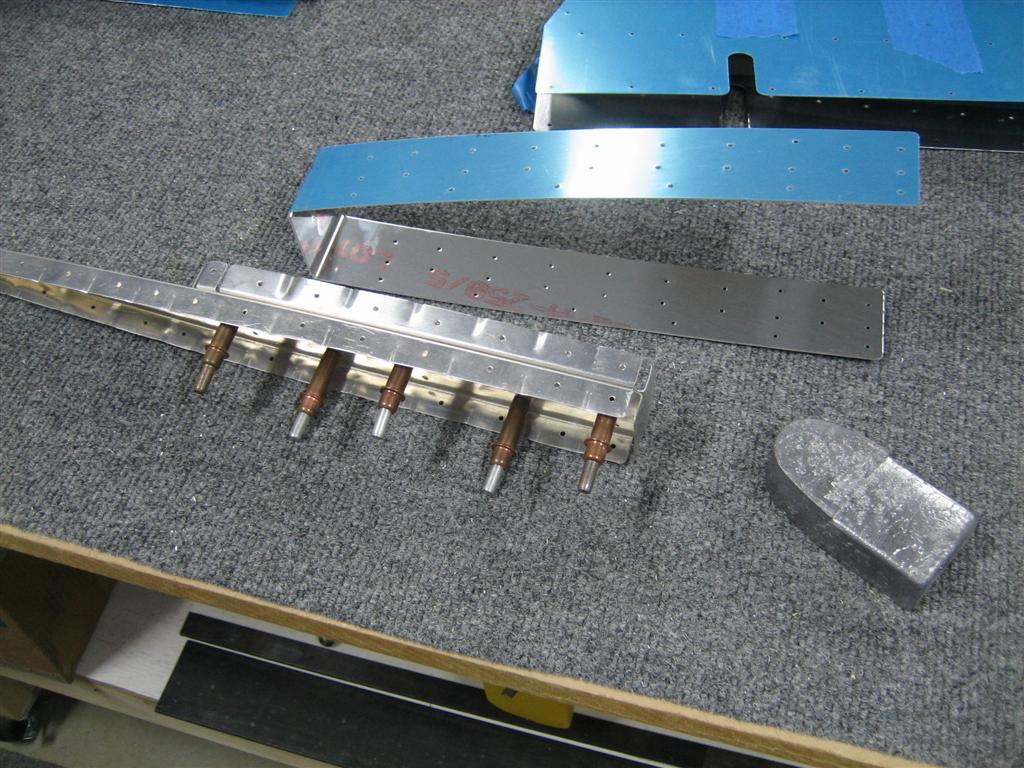
So this is actually my second aluminum riblet after bending one of the flanges up in a vice. I think that edge is too sharp.

It's looking good so far.

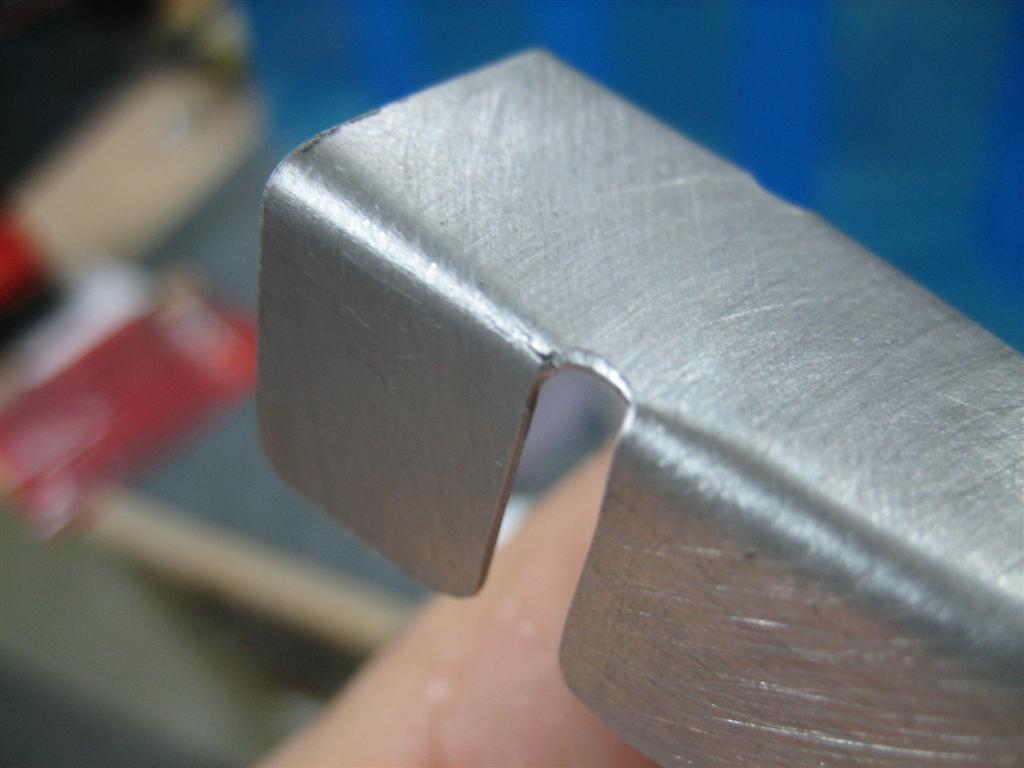
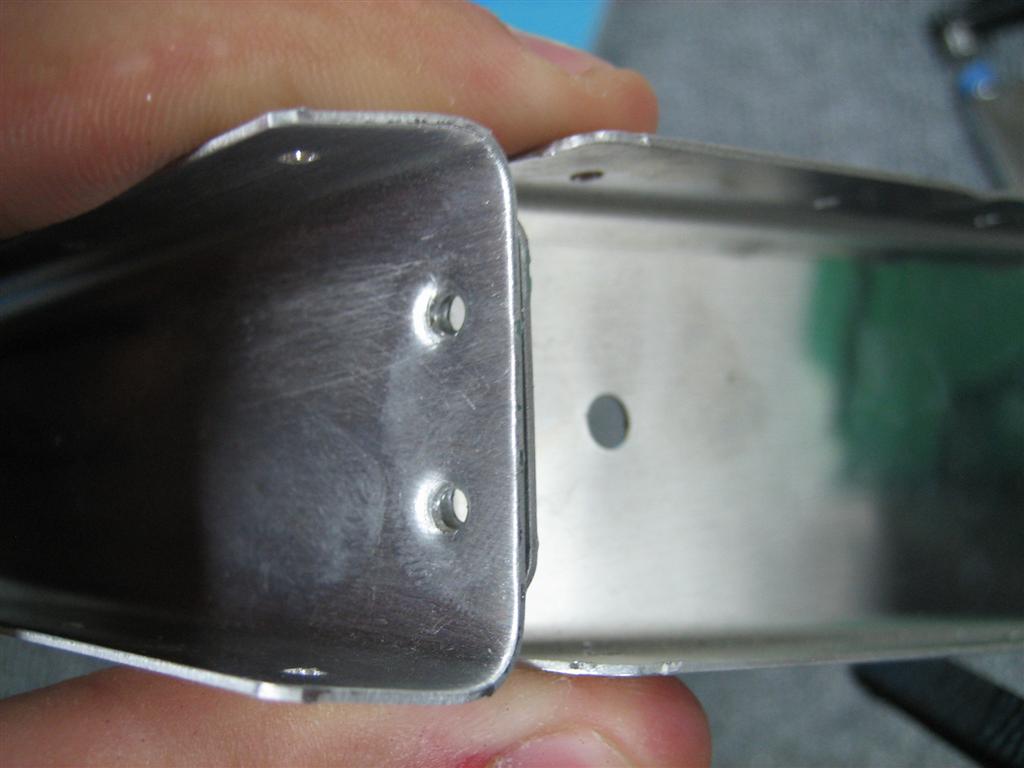
But, even though I was really careful to finish all the edges before bending (like I forgot to do on the first one), I still got a crack.

I put a picture of my crack on the internet. Ha.

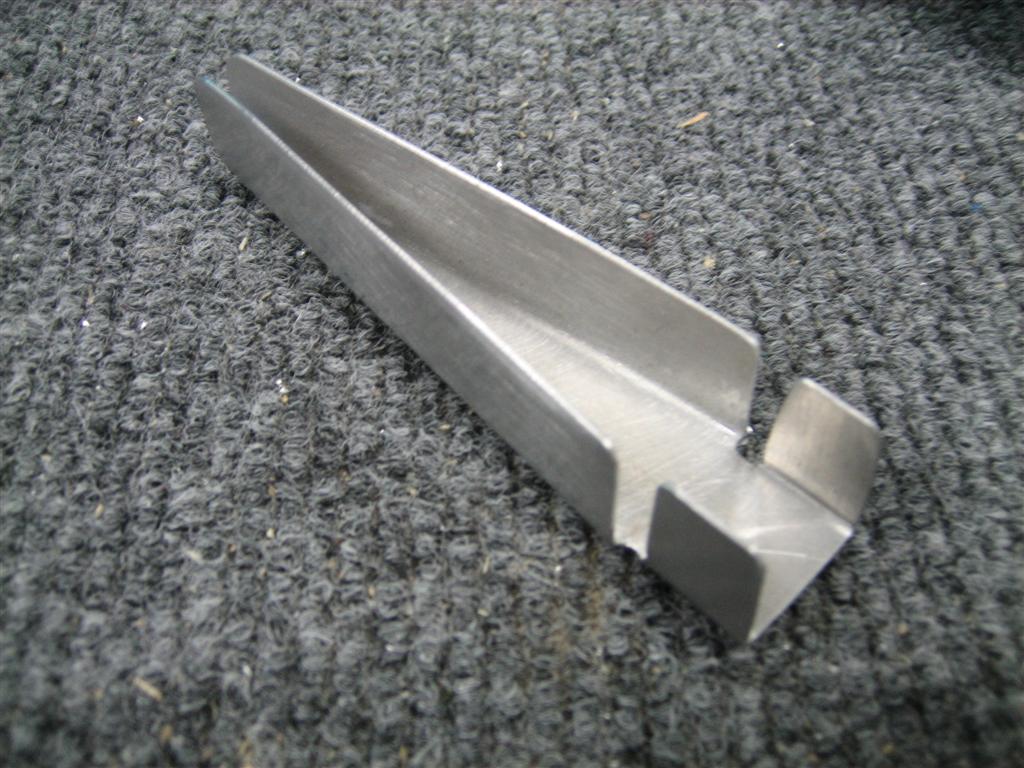
Even with the crack, I thought I would show you what I intended before scrapping the piece and starting over.

This is the general idea.

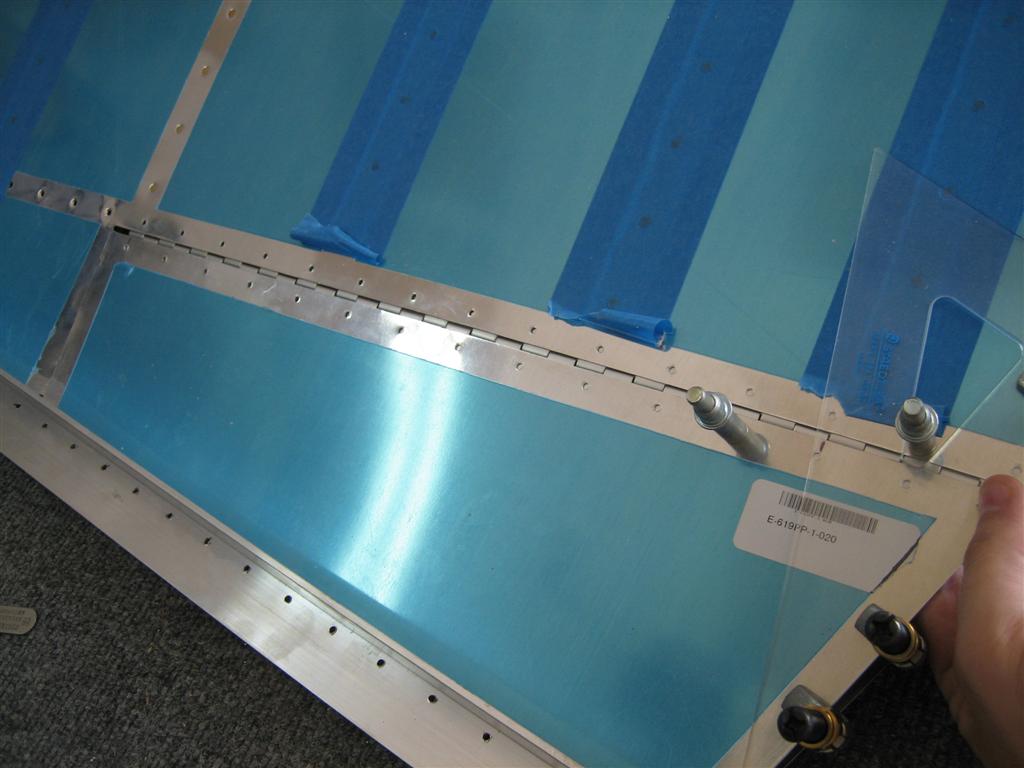
But then I got frustrated and just cut the forward part of the riblet off, and put it in place to see what it would look like.

Hmm. This doesn't look horrible, but I'd rather have the forward part of the rib, and the tie-in to the spar.

So, after an hour outside, I have to scrap the part and start over. Boo.

(To be honest, this is the really fun part of building. I get to use my thinking cap.)
Prev | Next


More Trim Tab Hinge Drilling

June 27, 2010

Prev | Next

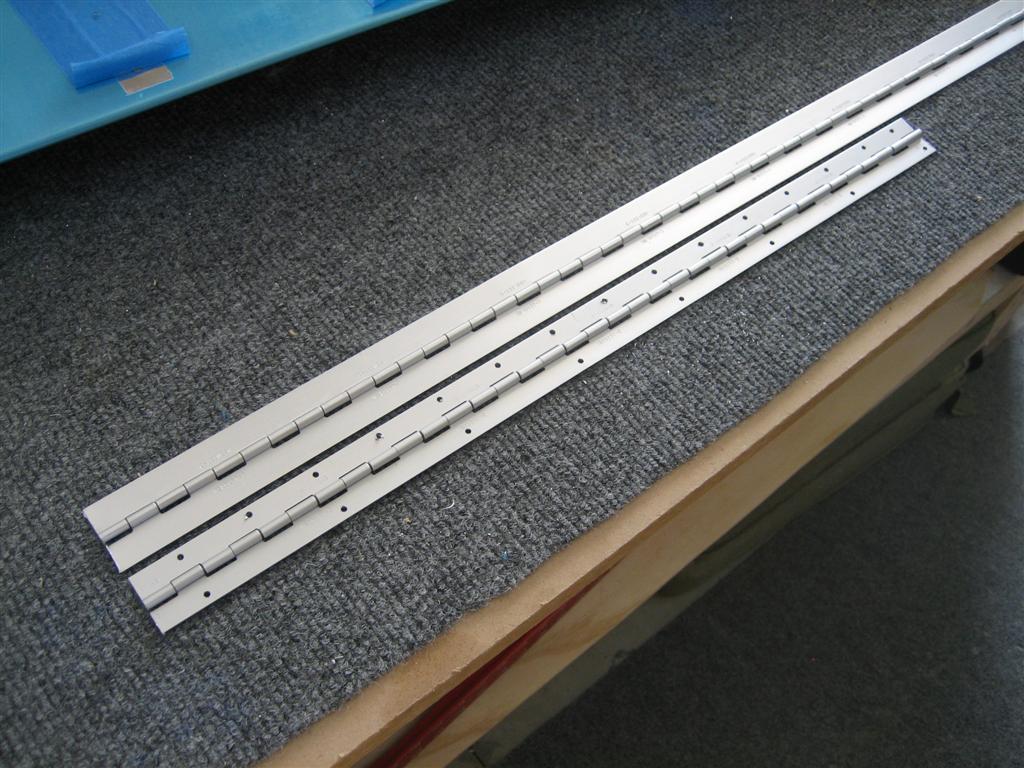
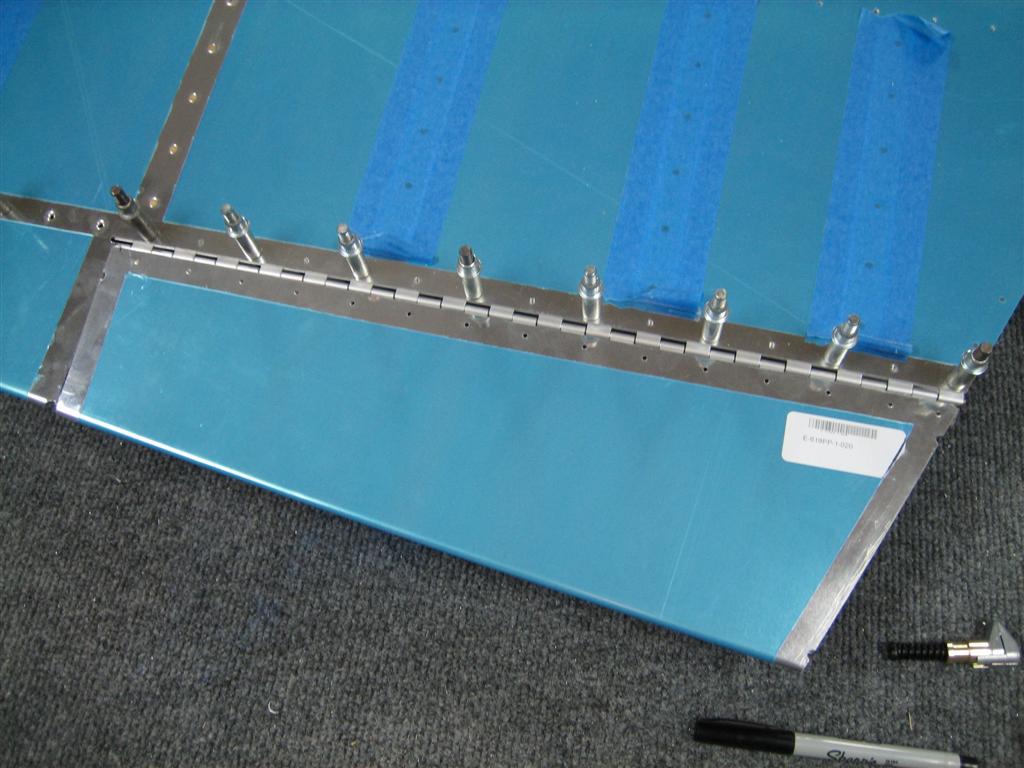
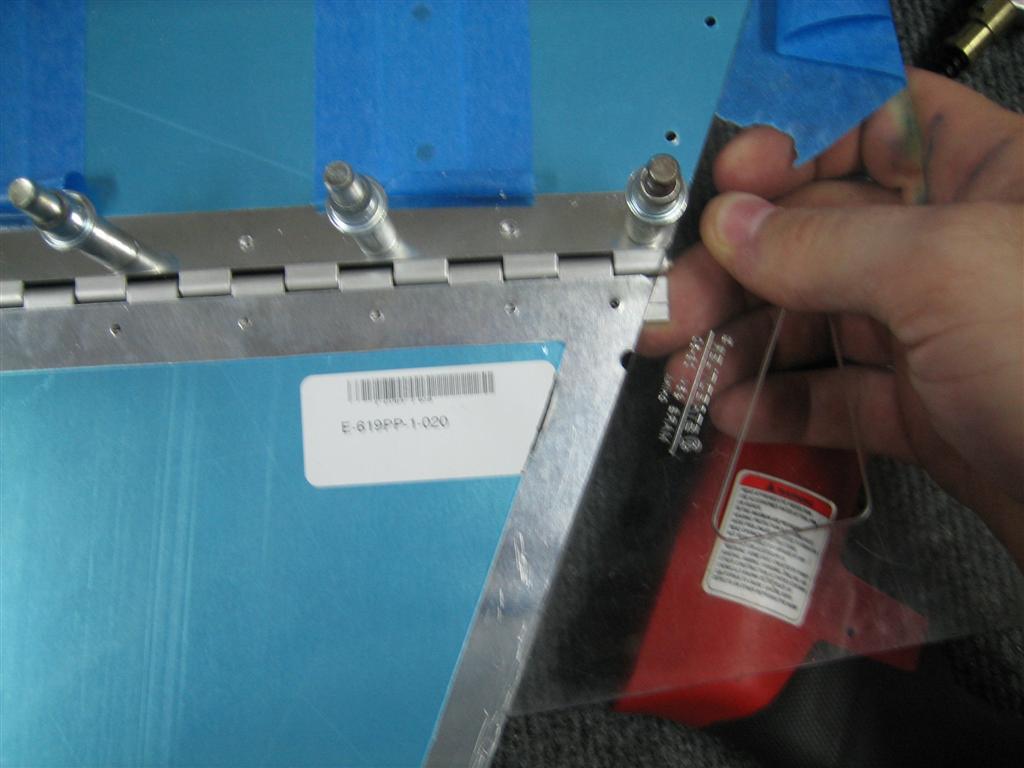
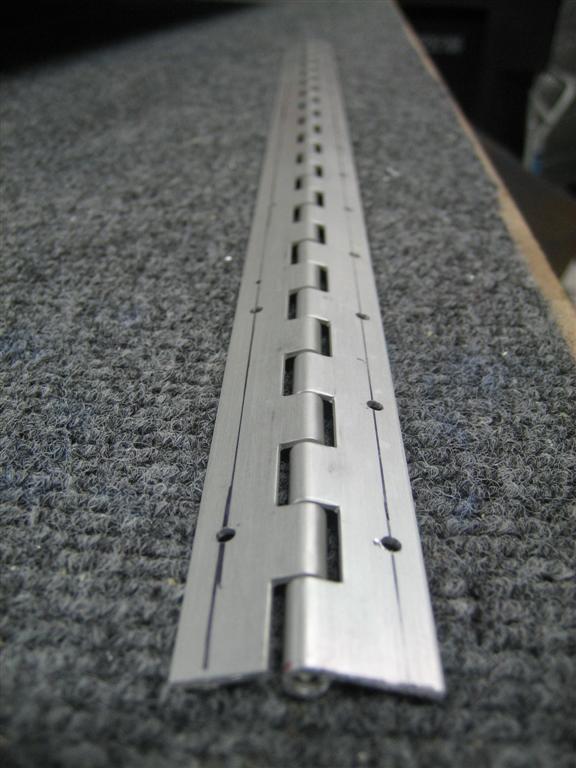
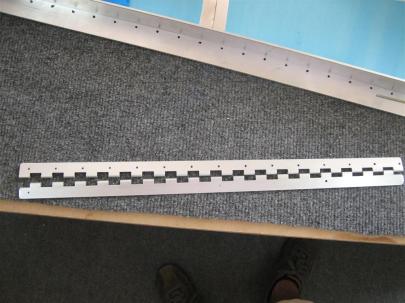
After a motivating afternoon actually getting to sit in an RV-7, I got back to work on the trim tab. Here, you can see my new 3-foot-long MS20257-3 next to the old (and not perfectly aligned) 18-inch MS20257-2 from Van’s. It’s a little wider to give me some more edge distance.
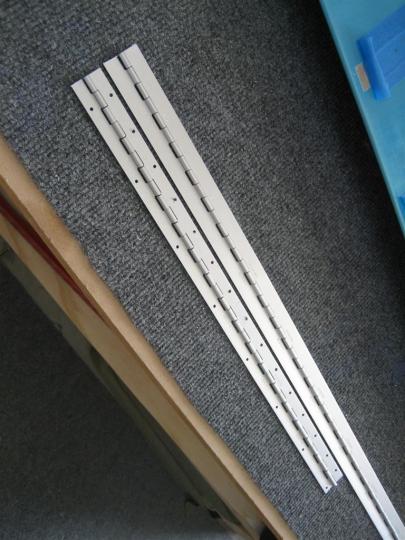
New on top, old on bottom.

First thing, I got the new piece cut to length. It ended up being a little shorter than 18 inches… I made sure the elevator side had a hinge “ear” on each end.
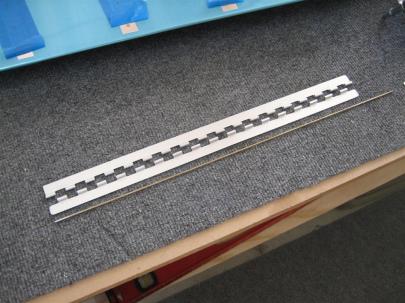
I eye-balled the hinge pin length a little long. Van's tells you the hinge pin they ship with this kit is not long enough to bend and safety to the elevator, and that they'll ship the real one in the fuse kit (or finish kit, can't remember). I guessed it was about 2 extra inches I needed for the bends and then cut the hinge pin.

Then, I spent a good amount of time Just getting everything lined up. I am a little frustrated at this point, because the supposedly straight line of holes on the elevator is not parallel to the supposedly straight line of holes on the tab. This means that with the trailing and inboard edges of the tab aligned with the elevator, the gap between the leading edge of the tab and the elevator cutout is smaller near the root than the tip of the tab.
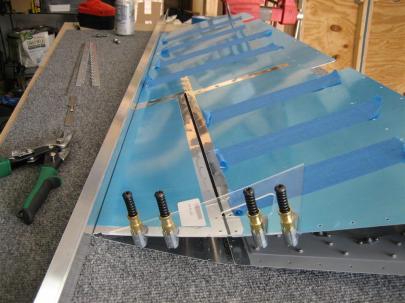
Inboard and trailing edges aligned perfectly.
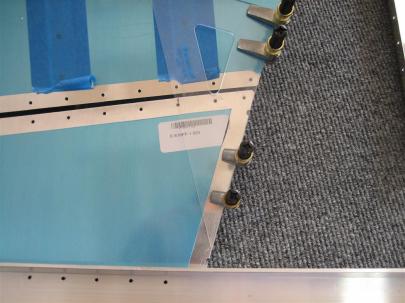
Here's my inboard edge.

So, again, I strayed from the directions. I held the hinge in position, making sure the actual pin was directly in the middle of the gap as shown in the picture above at the root (smaller gap) edge and at the outboard (larger gap) edge. I figured as long as the pin was directly centered, I’d be okay. Then, I clamped it in place, and marked a single hole (see below) for drilling. I couldn’t pick the edge hole, because it was covered by my square.
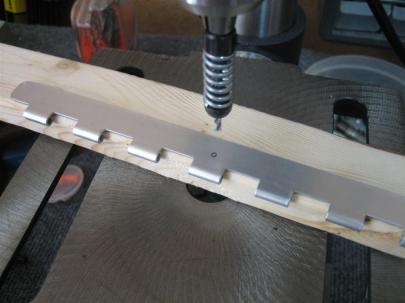
On the drill press, ready to drill a single hole.

I repeated this for another single hole on the tab side, again, making sure the hinge pin was perfectly centered between the two surfaces.
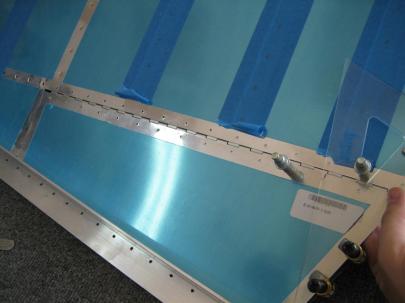
Two holes drilled and clecoed.

At this point, it was close to being locked in place. I did notice that these hinges are somewhat flexible, so while I marked every hole for drilling, I really only drilled a few more before clecoing it in place and match-drilling the rest of the holes.

(A more technical side note…because I upped the hinge size to a MS20257-3, the hinge was too wide to fit inside the radius of the elevator and trim tab spars. When matchrilling, I had to change the order of the skin, hinge, spar to accommodate the extra length, then I went back and ripped a small (1/16″) strip off of the hinges so they would fit nicely in the radii of the spars.)
Here are my feet, ready to keep going on the hinge.

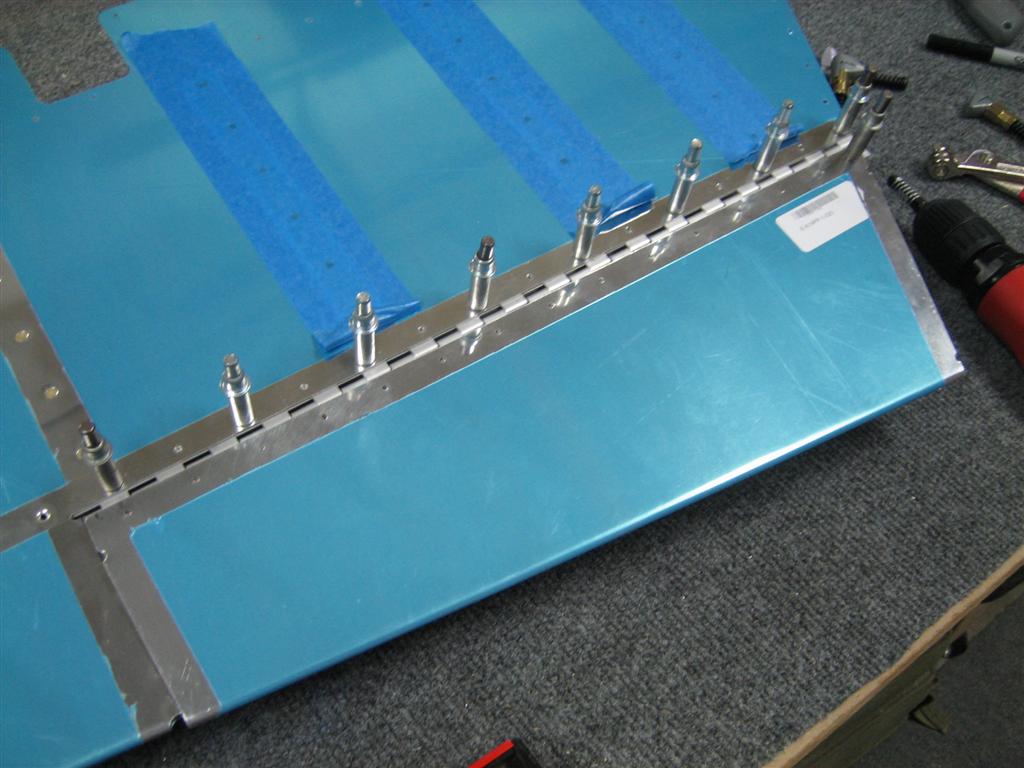
Fast forward after some drilling noises, and here are the two halves, each clecoed to their surfaces.
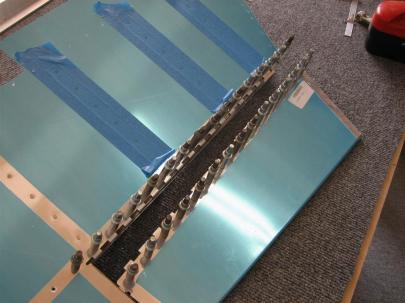
Ooh, looks good.

I still have a little bit to trim on the elevator skin, but I trimmed enough to allow some motion today.
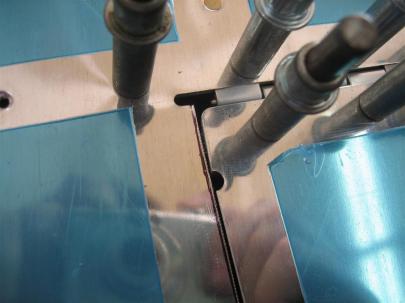
You can just see the rounded (so it slides in easier) tip of the pin in this picture.

Here’s a closeup of how much extra pin I think I need to make the bend forward (along the spar flange) and then down (along the spar web) to a small safety-wire hole I have yet to drill to safety the pin in place.
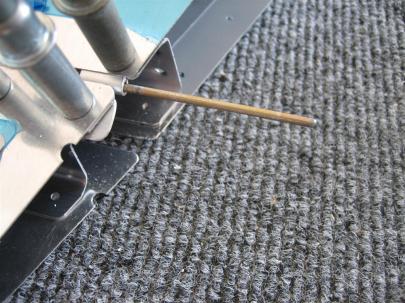
Man, that thing is long. (TWSS)

After getting the pin in, I took out every other cleco on each surface so I could move it back and forth.
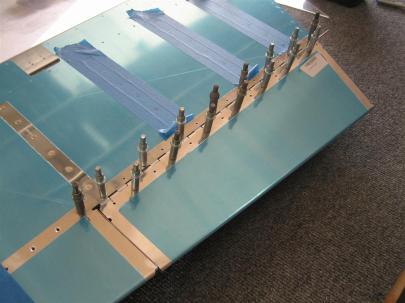
Neutral.
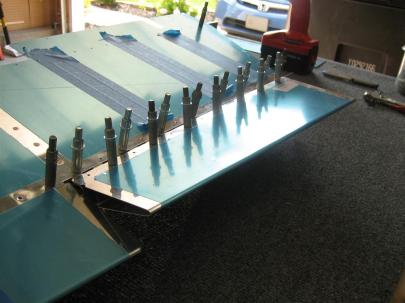
Tab up (or elevator down trim).

asdf
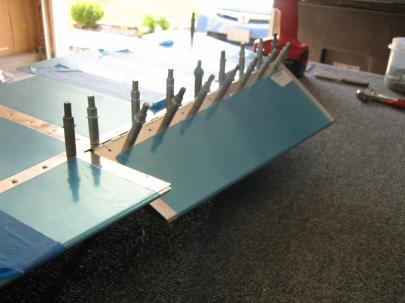
Tab down (or elevator up trim).

After dancing around for a little due to how great the tab looks on the elevator (and how well-aligned it is), I took the thing apart, ripped the 1/16″ off of each hinge half, and fired up the scotchbrite wheel to clean up all of the edges.
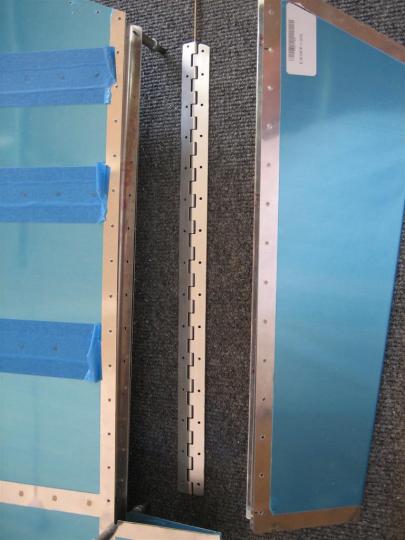
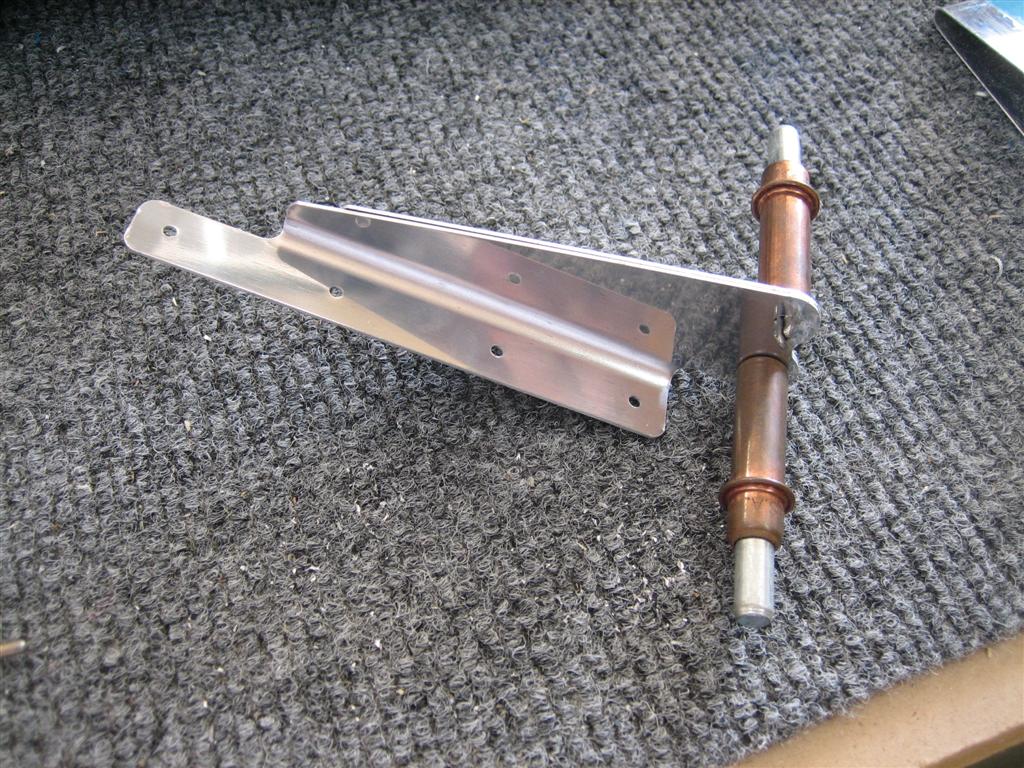
Look on the lower right part of the tab. That little angled cutout is so the hinge hides nicely under the tab skin.

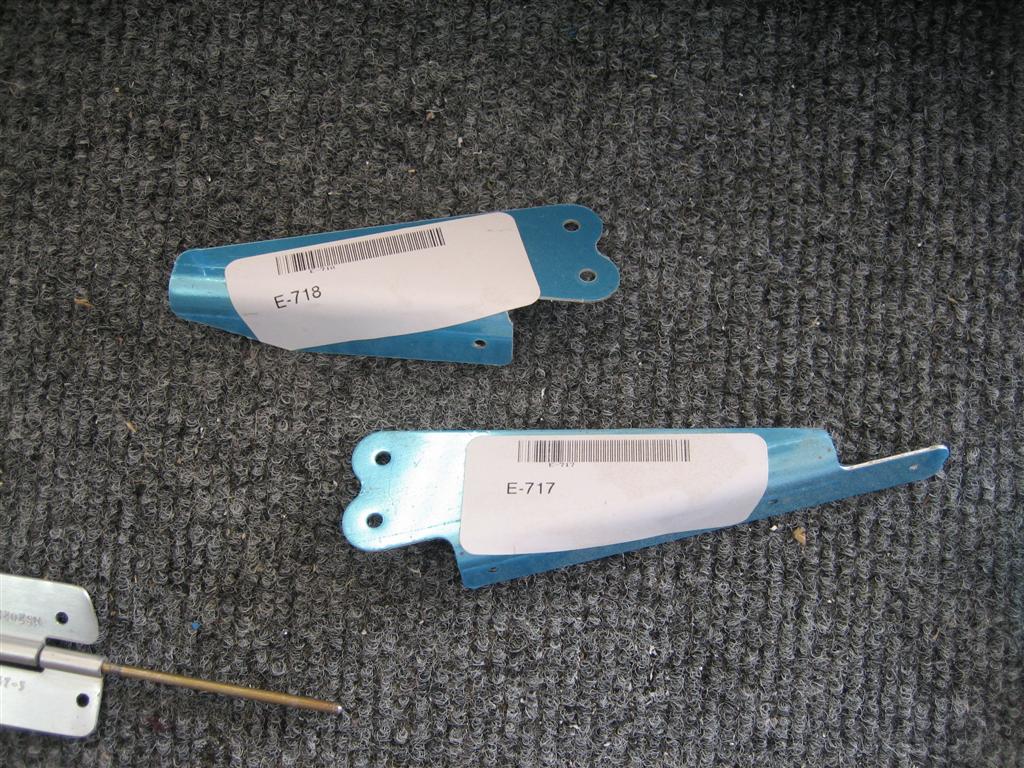
I figured now would be a good time to finish match-drilling the tab. Let’s go find E-718 and E-717.
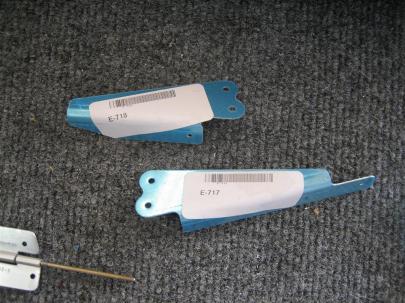
There they are!

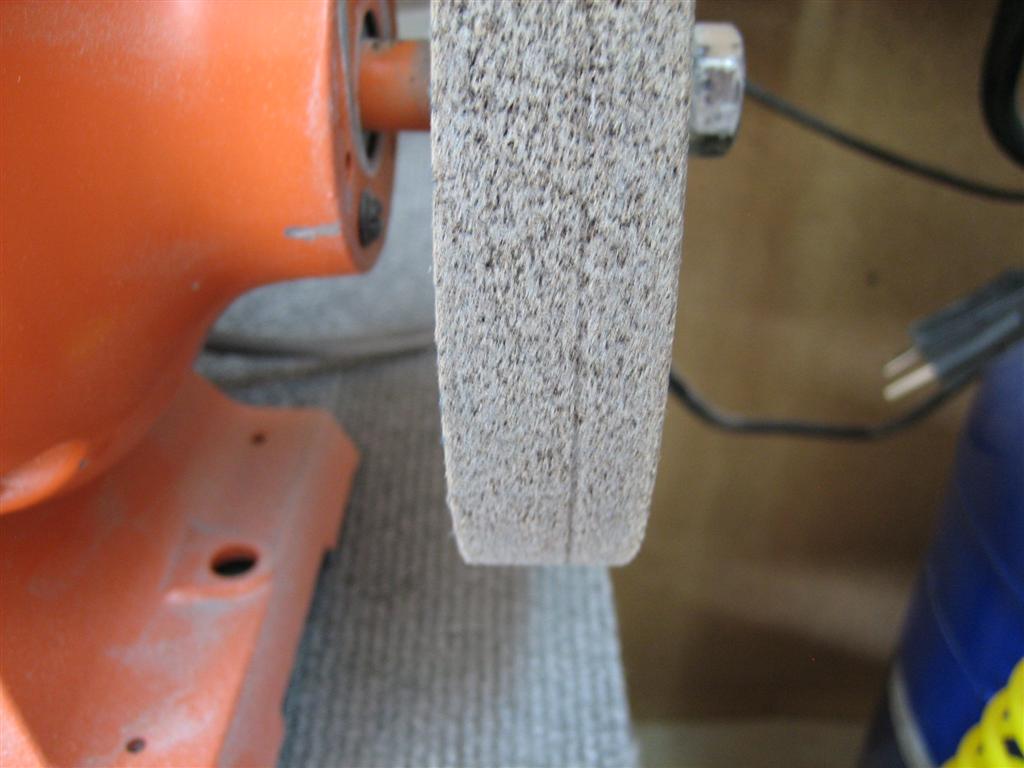
Apparently I thought it would be a good idea to show you my scotchbrite wheel. That little groove is just getting to the right size so I can run the edge of a piece of aluminum down it and it perfectly rounds both sides.
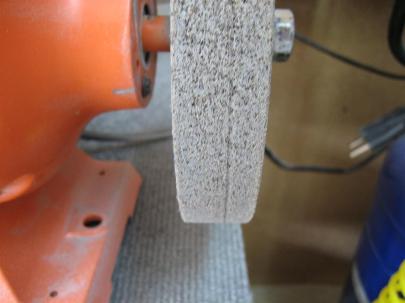
I love this thing.

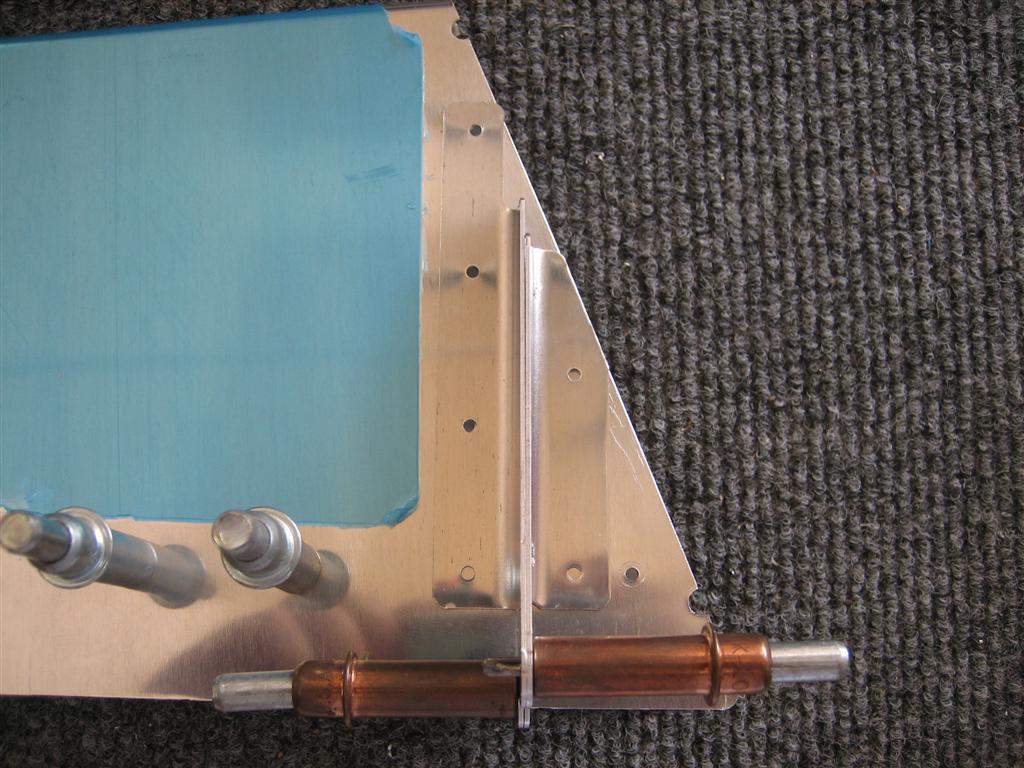
Back to the tab horn. The directions would have you use the clevis pin (don’t have this yet because I haven’t ordered the tab motor) to line up the two horns. How about two perfectly-fitting #30 clecos?
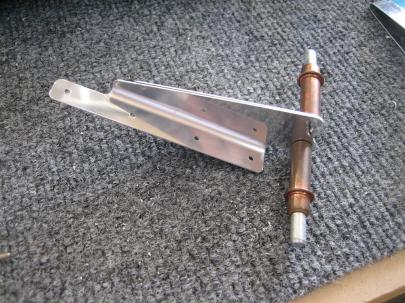
For balance purposes, I put one on each side.

Three of the holes are pre-punched, and two are not.
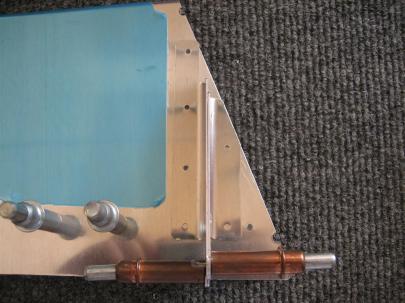
Just before match-drilling everything.
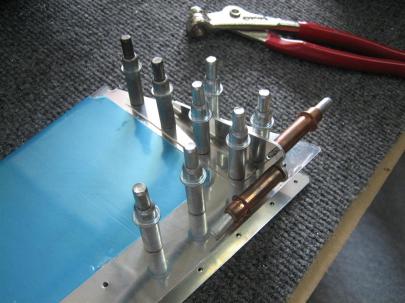
All done.
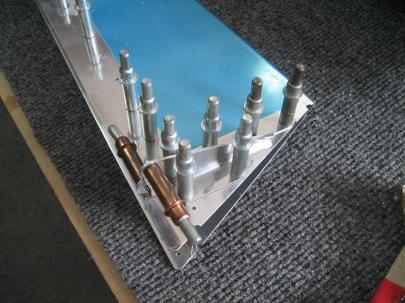
All done. (From another angle.)

I was planning on at least polishing the tab for now, so I marked off where the horn sits. I’ll prep and prime this little area under the horns, but I’ll leave the rest polished. (The bottom of the tab is going to be a good place to teach myself how to polish aluminum.)
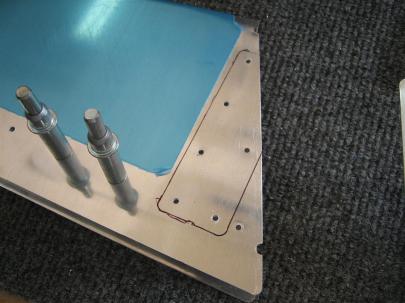
The horn location, marked for future priming.

Whew. That was a good two hour work session today. It was like a sauna (more like a steam bath…this is the south!) in the garage today. I kept sweating on the airplane. (People say they put blood, sweat, and tears into their projects. I’ve got one covered, and will undoubtedly bleed and cry because of the project sometime in the future. Have to have something to look forward to, right?)

Prev | Next

$6.48

June 22, 2010

Prev | Next

After getting stung by a wasp two times in the last two days trying to mow the lawn in the backyard, I gave up (shows determination and perseverance, huh?) and retreated to the comfort of my garage for some airplane work (the floors can wait until tomorrow).

Back to the tab. Before I do any more cutting on the elevator, I want to get the tab hinge drilled so I know exactly where the outboard edge of the tab will swing. I am doing this before they really tell you to in the directions (the directions have you actually finish the elevator, then start working on the tab.

Anyway, you are supposed to draw a line 1/4″ from the loop edge of the tab, and first matchdrill that to the tab. (I started with the elevator side, which eventually bit me in the ass. Read on.)

I decided to mark both sides with the 1/4" line. Hmm. Doesn't look like there is going to be a lot of edge distance.

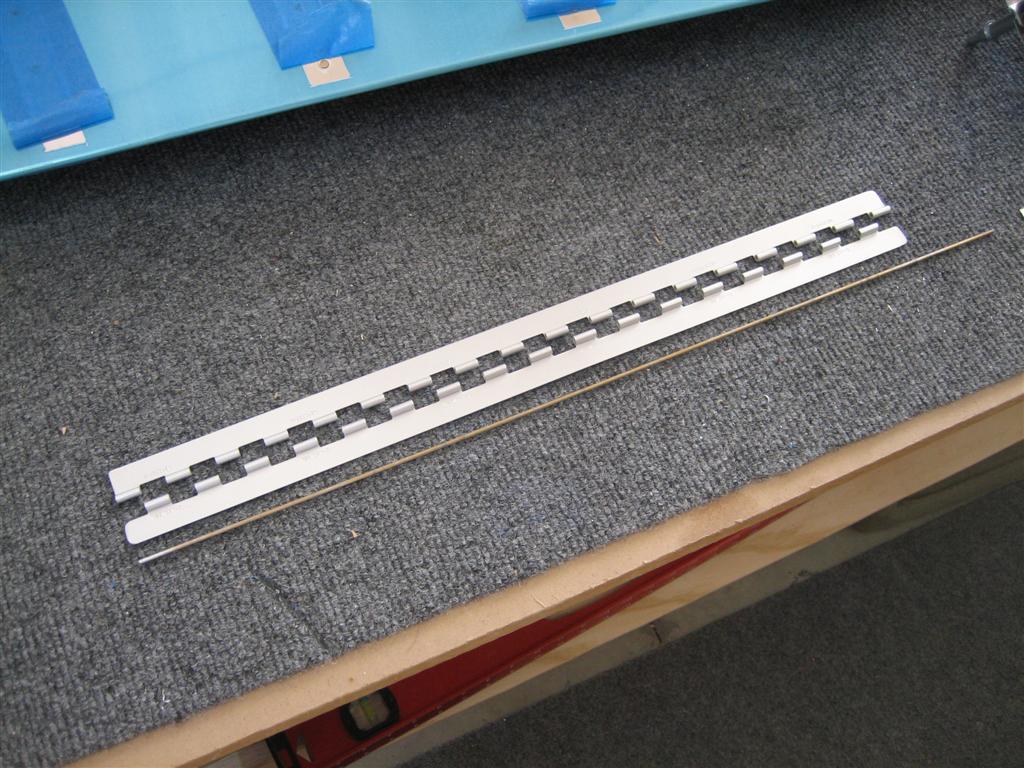
Then, I took the hinge apart (you can see the hinge pin in the next photo) and clamped the elevator side to the elevator, lining up my 1/4″ line in the first prepunched hole, and aligning the first hinge loop where I thought it looked good (making sure this fit with the plans).

Hint: If you take apart the hinge, you can easily clamp the hinge half to the elevator (and tab, with the other half).

Next, I lined up the outboard side. This tab hinge is nice and square with the edge, and with the holes.

Let’s drill!

Here are 6 holes drilled (I'm working inboard to outboard).

All done with the elevator side.

Next, I reassembled the hinge and spent a few minutes just kind of getting everything lined up.

I wish this were the final product, but this is just me mocking things up before drilling.

With the greatest of coordination, I managed to hold a straight-edge against the inboard edge, line up the inboard pre-punched hole with the 1/4″ line, and line up the trailing edge of the tab with the trailing edge of the elevator, AND take this picture. Boo-ya.

Looks good so far.

Then, I drilled the inboard hole. The inboard side is perfect. (Can you tell that some other part may not be by the way I phrased that?)

If you look closely (lower left corner), you can see that the tab trailing edge is further aft than the elevator trailing edge.

I was pissed. I lined up the hinge with the elevator edges and holes, and with the tab edges and holes. This means that either the elevator or the tab isn’t perfectly square.

I thought about just moving the tab forward, but then there would be slightly different distances between the skins from inboard to outboard. I measured it…it would have been about 1/32 difference. No one would have noticed except for me.

But…I can’t leave it alone. I’m going to reorder the hinge and try again. This time, I’m still not going to follow the directions. If you make the hinge perfectly square to the tab, it’s going to be off on the elevator side. I’m going to have to split the difference between both by first clamping the tab in perfect position, then clamping the hinge in place and matchdrilling a few holes.

Admittedly, I should have followed the directions by starting with the tab edge, but it wouldn’t have mattered, it still wouldn’t have been a perfectly square hinge line after I was done.

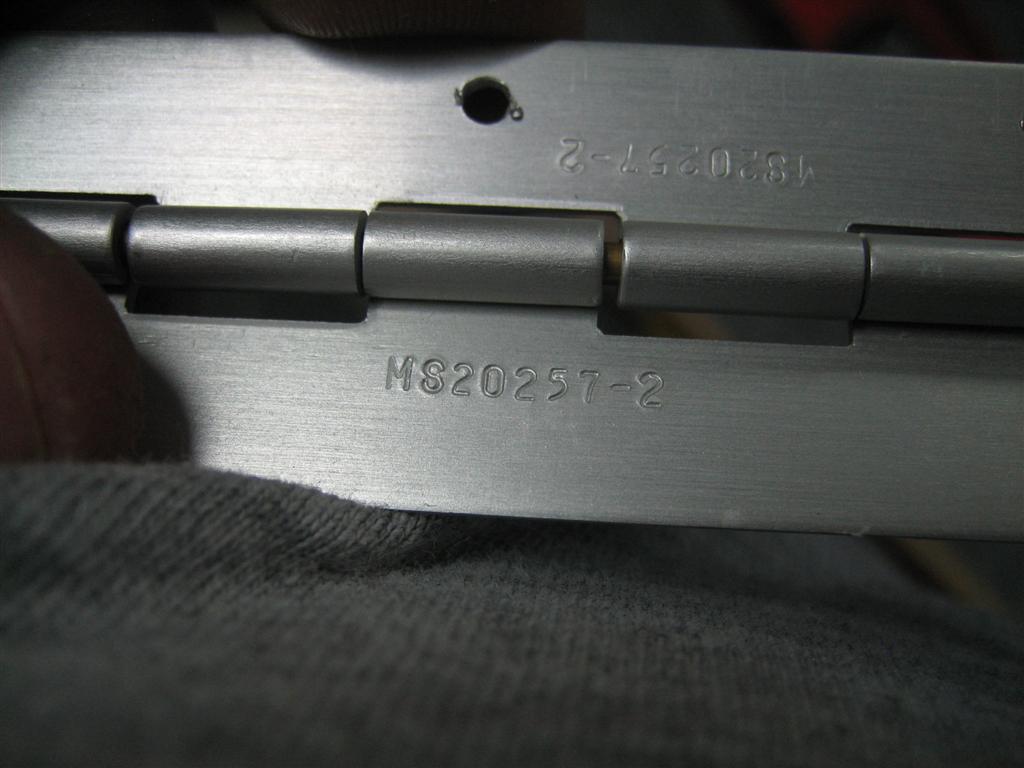
The tab hinge is AN257-P2 according to the materials list in Section 4, but the part shows MS20257-2.

I also think, given my edge distance worries (must be okay because it is per the plans? I don’t know), I am going to order the MS20257-3 (or AN257-P3, which is 1 + 1/4″ wide instead of 1 + 1/16″). I checked with Van’s, and they want $9.70 (plus $4 handling, plus $12 shipping or something) for an 24″ piece of AN257-P3.

I checked aircraft spruce, and they wanted $4.75 for a 3′ piece and $1.73 shipping via USPS.

Which one do I choose?

Duh. $6.48 for my first re-ordered part. Bummer. (It’s better than a $60 elevator skin, though!)

Here are my edge distances.

I love this kind of building. Thinking, playing, mocking up, etc. The normal matdrilling dance gets old…this is the stuff I really like.

1.0 hour tonight. Frustrating, but fun.

Prev | Next


Started working on the Elevator Tab

June 20, 2010

Prev | Next

After some more days of not doing anything, I managed to make it out to the Pilots N Paws fly-in today. It was good motivation for working on the airplane.

Anyway, I’ve drilled the left elevator skin to the skeleton, and the next step is really to take everything apart, deburr, dimple, countersink, prep, prime and assemble…

BUT…

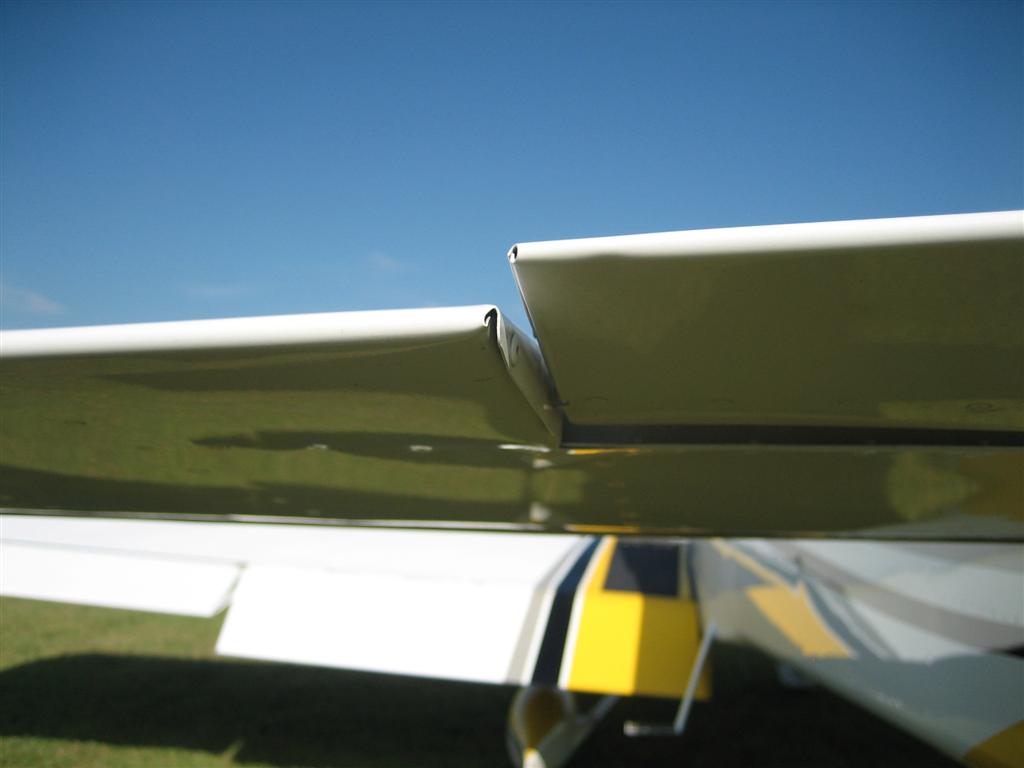
I have some things that need to be done first. Mostly, the directions want you to bend the elevator tab “ears.” Well, I don’t think I want to go the bent route. Here’s what I am worried about. I don’t think anyone would really notice, but I don’t love the way this looks.

Bent trim tab ears. I think I'm going to cut mine off and make little ribs.

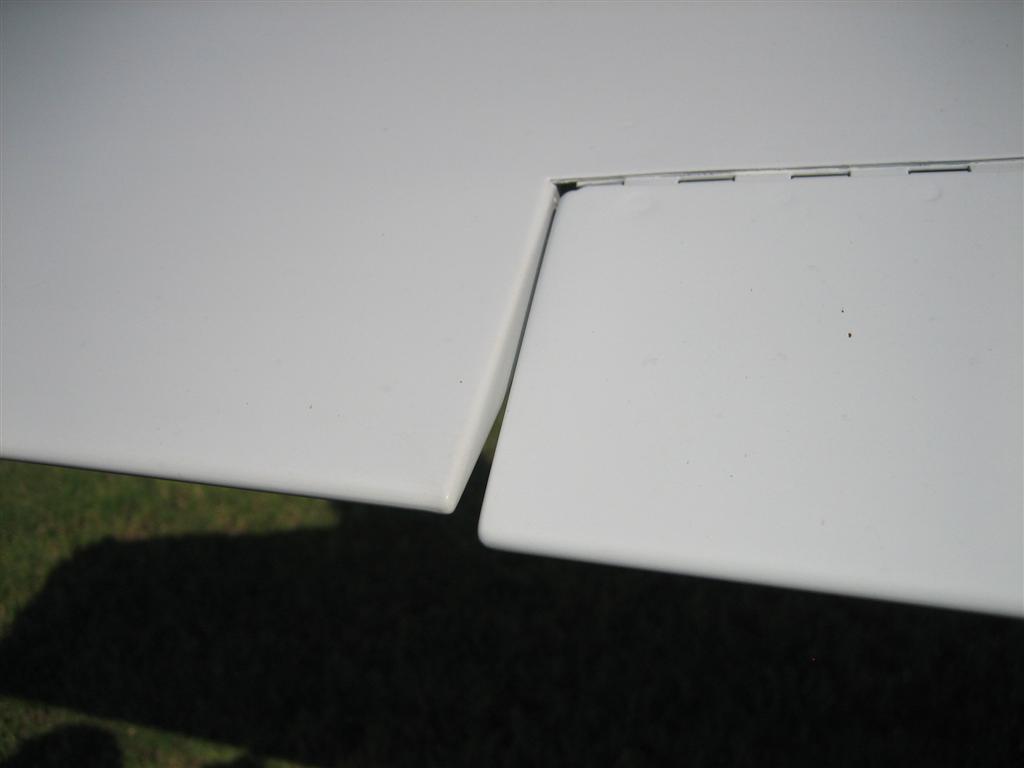
I think with some work, I could make them look like this, but given how finished these surfaces are, I don’t know if they started as bent ears or riblets.

WHOA! This is awesome. This guy really finished this joint up nicely. Everybody be jealous.

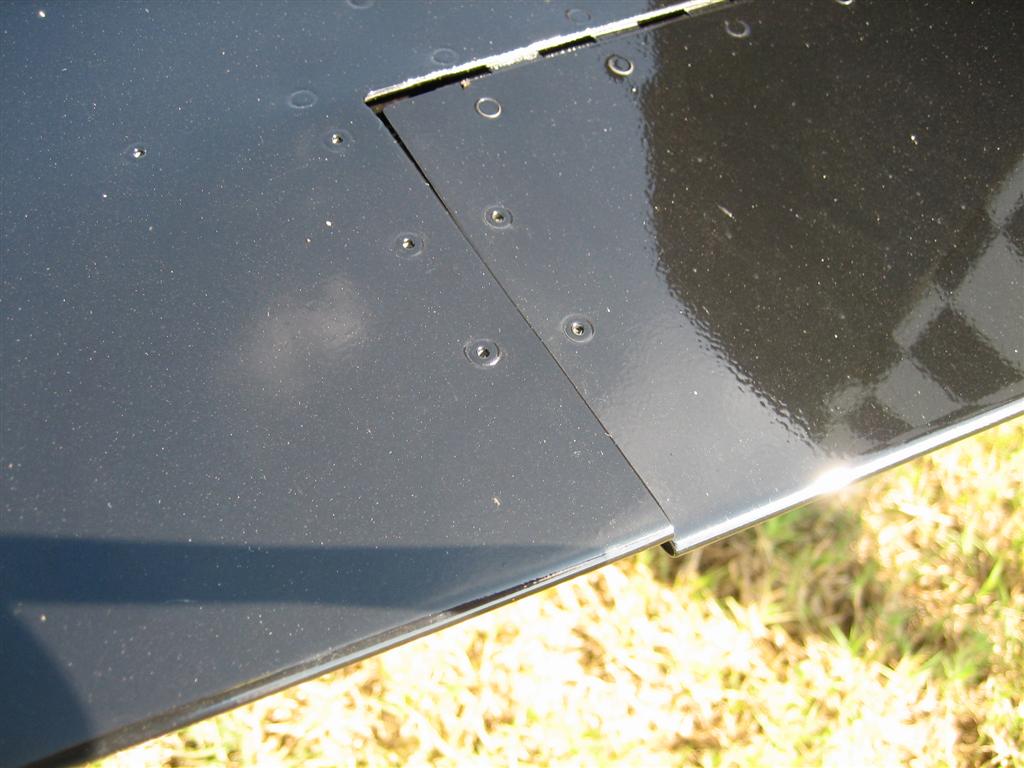
Finally, I found a really nice riblets version. I like this, and this is what I am going to be aiming for (although I am going to try to use solid rivets.

Great finish on the cut-instead-of-bend tab ears. I'm going to strive to make mine like this.

Anyway, I also think cutting the ears off (not bent down in the way) will allow me to use solid rivets in the blind-rivet locations on the top and bottom of the elevator (outboard trim spar rivets). We’ll see.

First step is to get the skeleton re-clecoed in the skin.

The trim spar and the inboard rib.

Van’s wants you to countersink either piece for flush rivets (not for any real flush reason…I think they need to be #40 size holes, and they don’t give you any universal head AN470AD3 rivets). Anyway, per standard practice, I dimpled both.

Dimpled instead of countersunk.

After clecoing together the skin, I am ready to start the headscratching with the tab. Let’s find the tab spar.

There it is.

Let’s go ahead and cut off these tabs. After careful measuring and marking, I’m ready to put blade to metal.

Inboard side. I'm nervous about chopping these off.

Outboard. (see how I lined up the line parallel to the flat portion near the top and to the left of the relief hole near the bottom? This doesn't work. Read on to find out why.

After a quick snip (not too close to my final line) I removed the vinyl from the interior of the skin in preparation for using a file and scotchbrite pad to clean everything up.

Devinling before finishing those cuts.

After working carefully with a file and edge finisher…

Looks good.

Before I really finalize things, I’d like to get my tab placement set up. First, I tried using this extra piece of rudder stiffener.

It worked okay, but I later switched to something a little longer.

After some moving around and fiddling, I re-read the directions, which tell you to bend the elevator ears down along a bend line that is perpendicular to the hinge line. Well, that means that the cut lines should be perpendicular, too. Of course, like I mentioned before, my original outboard line wasn’t perpendicular. All that file work for nothing.

I drew new lines (one on top of the other, ignoring the needed clearance).
Drawing new, perpendicular lines.

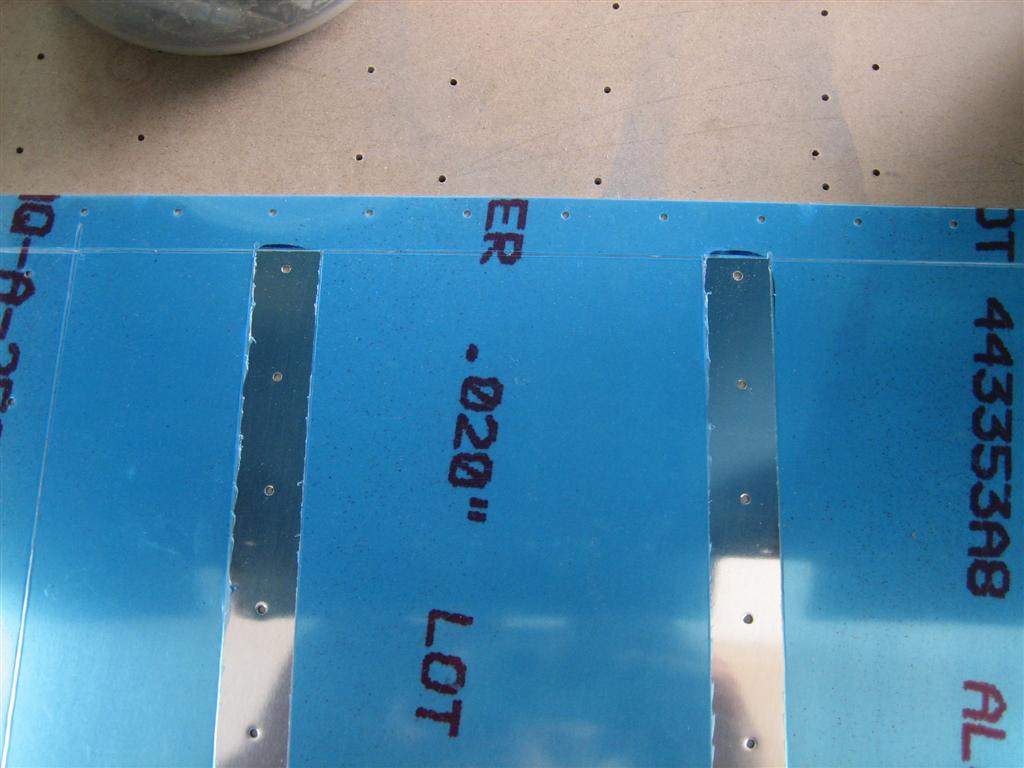
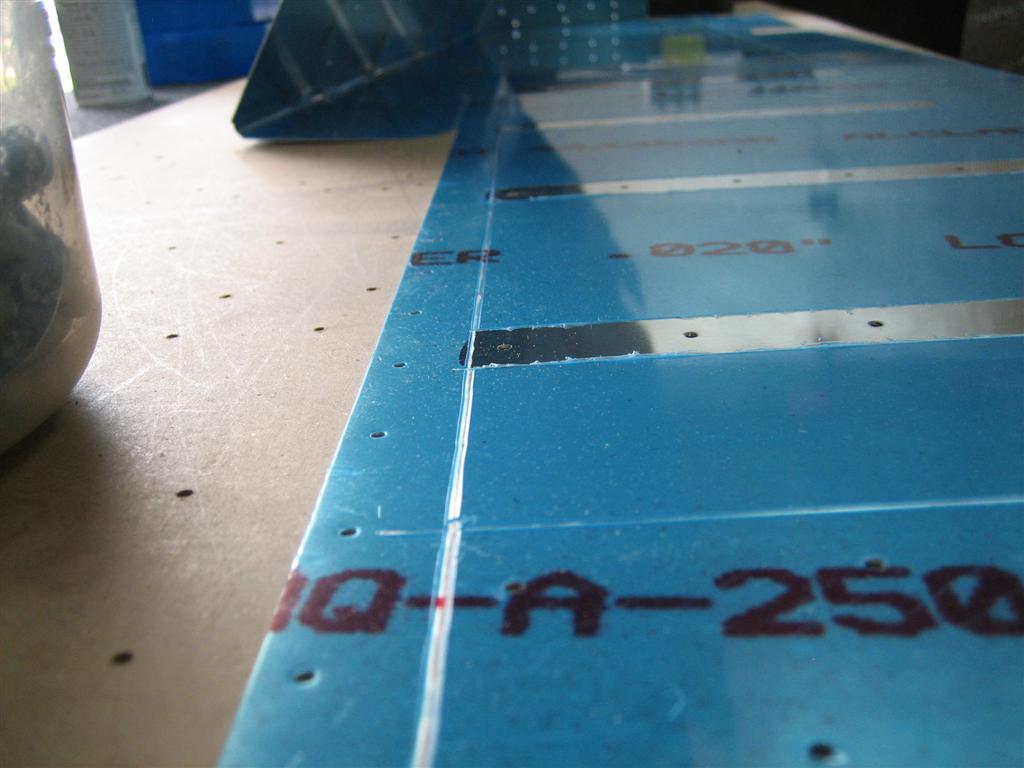
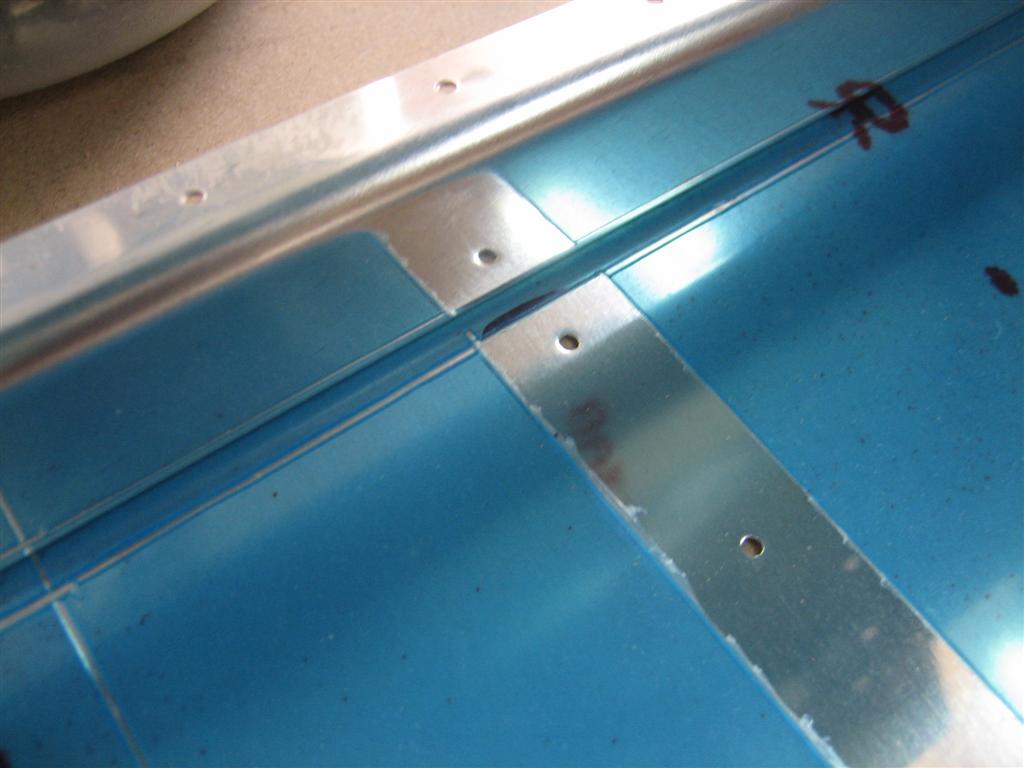
Then, I made a “pretty close” cut with the snips. I’ll need to really clean this up, as well as move the line to the left for clearance purposes (I’ll wait until the hinges are drilled to really see what I need. (The instructions call for 3/32″, but that is for the blind rivet head clearance that I won’t have to worry about.)

Pretty close, but still needs trimming and finishing.

Next, I moved back to the tab. Here’s my new line.

I'm bummed because the upper part of the tab, factory provided, is not perpendicular to the hinge line. That means there will be a slight angle there. Bummer.

After getting those refinished, I got the tab mocked up. I kind of worked backward. I want to use the inboard edge and the trailing edge to get placement, then verify I have adequate clearance on the outboard edge and between the tab and elevator for the hinge (there are some hinge dimensions on the plans). I think I’ll have plenty of room.

This looks good, but I'll have to keep trimming that outboard edge.

Here's a closeup. You can see the edge near the top of the tab is angled a little left. This is how it comes from the factory. The marker line and aft portion of the tab are both perfectly perpendicular to the hinge line (line through the center of the rivet holes).

Later this week, I’ll work on getting this perfect, then tackling the riblets that need to be constructed before doing any more work with finishing the skin.

Prev | Next


Drilled E-701 (Left Elevator Skin) to Skeleton

June 17, 2010

Prev | Next

Wow, it’s been a week since I’ve worked on the airplane.

I have an excuse, though. I’ve been installing wood floors. Here’s the living room, almost done.

Anyway, if you remember from the last post, I had the left elevator skin clecoed to the skeleton. I went ahead and match-drilled the skin to the skeleton. Instead of using my cordless drill (because it’s quieter), I broke out the air drill and went to town. I love the way that thing sounds.

Forgot to charge the camera battery, so it charged while I drilled.

After matchdrilling both sides, this picture is me in the middle of removing all of the clecos.

Then, because I felt like I would be short-changing you if I didn’t have two pictures for you, here’s another one.

After disassembly.

Here’s the catch, though. I have a lot of thinking and pondering to do about some things.

First of all, I am planning on cutting off the elevator tab (and elevator) bent ears and just making a rib out of them. Jason Beaver did it pretty successfully here and here, so I’m basically going to copy him.

The question is whether to prep and rivet the left elevator now, the cut off the “ears” after riveting, then try to fabricate a rib, matchdrill, dimple, prep again, etc., or should I re-cleco everything together and do all of that fabrication now.

Many people use blind rivets for the extra tab fabrication, but I think I am going to try to use solid rivets. I have had some success in the past with solid rivets in tight spaces using a special bucking bar (namely, the end of a BFS (“big-freakin-screwdriver”). The question will be about dimpling.

Also, I can probably cut the ears off, but leave a little extra material. I need to make sure I line up the cuts on the elevator and tab to minimize the gab between the two, and I don’t want to cut to much off of either side. Maybe I’ll mock them up, cut one side to where I think it should be, and make sure the other side can be cut more precisely to match the first cut.

Also, many people use blind rivets for the four trim spar rivets on both sides (per the plans), but I think I can assemble in an order that allows me to use solid rivets, especially since I’m going to cut the elevator bent tab ears off; I should be able to reach in there with a bucking bar.

See how much thinking I have to do?

Prev | Next


Drilled E-714, Clecoed Left Elevator Skin

June 10, 2010

Prev | Next

Hey Look! Andrew’s not dead! Yeah, I’ve been working on some house projects. Back to the left elevator tonight, though.

I managed to catch myself up with where I was and push on today. I need to get that counterweight drilled.

Here you can see the counterweight, counterbalance skin, and the two end ribs around which the other parts reside.

After placing the weight in position, you cleco on the skin (difficultly) and get ready to match-drill. Of course, I met the same challenges I did on the right elevator…namely, I broke a drill bit (#40 size). After getting a pilot hole drilled, I took everything apart and separately enlarged them all to #21. Air tool oil was used with great success after the pilot hole was drilled.

Ready to start drilling.

I didn’t take any pictures, though, because I was getting frustrated. (At first, I was dipping the drill bit into the oil, which meant I had to take the lid off. Then, after stepping away a few minutes later, I placed the screw lid (with the flip-up spout) back on the oil bottle and immediately flipped it over to aim oil into the pilot hole. Guess what! I forgot to tighten down the lid. There goes the lid, and about a 1/2 cup of oil…all over the counterweight, table, and floor.)
Now do you see why I forgot to keep taking pictures?

Anyway, after that debacle (which of course gets counted in the build time…it’s time spent building, right?)

Anyway, here is that same assembly (sans weight) before clecoing on the skin.

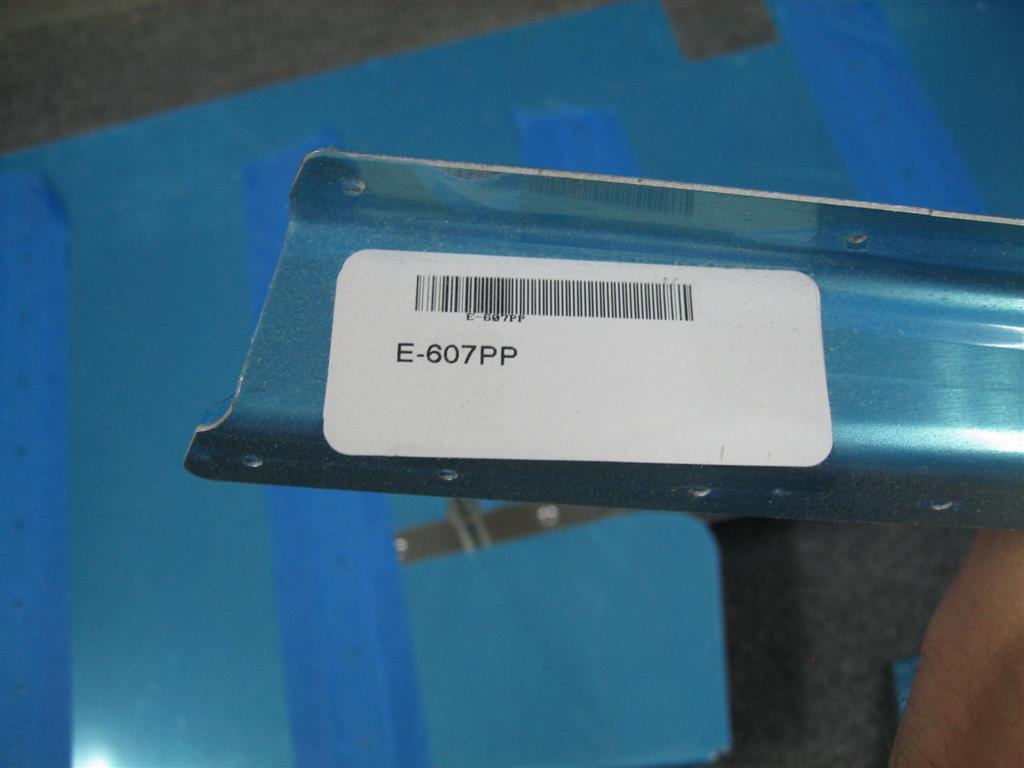
In preparation for clecoing on the skin, I needed to handle E-606PP, which is the trim tab hinge spar. Since I was looking ahead earlier and dimpled the hard-to-reach holes (you can see in the skin below), I need to do something with the spar to accept those dimples. If you read ahead in the directions, the spar is countersunk on the top flange (because the hinge is riveted beneath the spar flange, it can’t be dimpled), and dimpled on the bottom flange.

June 10 Update: After countersinking these four holes, I later did some more research and realized that the countersinks called for (due to the hinge) don’t really apply here, because the hinge stops short of these four holes. I could have (and wished I’d ) dimpled. Boo.

Here are the two parts that need to fit together nicely.

Finally, I got the skeleton and skin clecoed together.

Wuhoo. It looks like an airplane.

A solid hour. Maybe more this weekend.

Prev | Next


Bent Left Elevator Trailing Edge

June 2, 2010

Prev | Next

Sick again today, but I did get a little work done.

First, I spent a considerable amount of time looking at the 4 horizonal holes below. The plans show them as blind rivets, but there has to be a way to get solid rivets in there.

After much deliberation, I think if I drill them to #40 now (gasp, without matchrilling!?) Then I can deburr, scuff, and dimple the area now. I’ll do the same to the equivalent holes in the trim spar, and then attach (at a minimum) the top skin to trim spar holes with solid rivets. I think I will be able to get both sides, as I am planning on cutting off the “bent tabs” from both the elevator and trim tab.

First, drill to #40.

Then, deburr interior and exterior, and scuff the interior only.

I got the c-frame out again and dimpled the holes.

I should be able to make that work out for me, but more on the bent tab cutting later on.

Next up is bending the trailing edge. After inserting and taping a 1/8" dowel in the trailing edge, I bent it in my bending brake. This picture is about halfway bent.

Then, I removed the dowel, bent it the rest of the way, and did the same with the trim tab since I was in the bending mood. (Side note, the trailing edge on the elevator looked great, but was not constant radius…it was larger radius toward the tip. I grabbed the hand seamers and gently squeezed the areas so they were all the nice crisp radius that the inboard trailing edge was.)

Trim tab bent.

Also, I way overbent the trim tab. There are no stiffeners in there to stop you, so you can basically flatten the thing, even with the dowel rod in there. I opened it back up a little by hand, but it’s not perfect. If I can’t get it back to perfect, I’m going to order another one. I think I can work with this one, though.

This is a radius shot of both the elevator only.

Here's one with the tab held in place. Looks good to me.

Another sickly hour today. Can’t complain.

Prev | Next


Backriveted Left Elevator Stiffeners

June 1, 2010

Prev | Next

I wasn’t feeling well today (sore throat, could harldy swallow), but after a nice long sleep-in and a nap in the afternoon, I went out to the garage partly because I wanted to sweat out some of the demons. I didn’t take a ton of pictures, but I managed a few.

I broke out the c-frame and dimpled the skins.

First up, skin dimpling.

I did much better on the trailing edge dimples than last time (see this post).

This is the worst one, but it still looks great, and is hardly noticeable unless you are really looking for it.

After dimpling, I wiped down all of the scuffed areas with MEK to rid them of fingerprints (oils) aluminum dust, moisture, etc., and then primed.

Primed interior. Notice how I leave a lot of the blue vinyl on the skins? This helps keep weight down (although undoubtedly adds to build time while I painstakingly trace around the stiffeners with a marker and use those lines to devinyl.

Moving back to the skeleton, I mounted a one-leg 1/4″ nutplate in the forward tooling hole of the counterbalance and tip ribs. This will hold any future weight I need to balance the elevator with paint.

I used an undersized countersunk screw in the tooling hole to help locate the nutplate, then drilled one hole and clecoed from the back.
Both holes drilled, and the main hole enlarged to something a little larger than 1/4"...I can't remember...maybe 5/32"?

Next, I moved back to the spar. I have read where a few people have added a hole in the lightening hole area of the elevator control horn/spar area. The right hole is for manual trim or for the (what I’ll call “retracted”) jack screw and wiring runs for the electric trim motor. I, like others, don’t like the idea of the wires and jack screw sharing the same hole, so I drilled another hole, in which I will add a 3/8″ snap bushing.
Pilot hole eye-balled.

Crap, I didn't even get a picture of the final size hole. (I drilled it to 3/8".)

After completed the extra hole, I noticed the skin was dry. Nothing to stop me from backriveting, now.

Rivets place in, and taped to, the first stiffener row.

Same thing with the trim reinforcement area.

After backriveting the trim reinforcement. Man, this makes me happy.

The next couple rows, done.

The bottom half went smoothly. The top half now has rivets taped in place.
Where are those stiffeners?

This isn't a very exciting picture, but they are all riveted.

Here's the inside.

I love this picture. This is the trim reinforcement plate area.

So nice. (That scratch at the top is very superficial. It'll buff right out, I promise.)

Biggest lesson today was about the aft-most rivet in the stiffeners. When bending the skin out of the way to reach that rivet, everything twists out of alignment. If you start with that rivet, it is easier to make sure everything is flush than if you rivet the forward ones first. Start from the back and move forward. You will get better results.

Prev | Next


Primed the rest of the Left Elevator Stiffeners

May 31, 2010

Prev | Next

Tonight, I moved on with the left elevator by matchdrilling the upper stiffeners.

Here are the upper left elevator stiffeners, after trimming, being matchdrilled to the skin. First, I drilled and clecoed the forwardmost hole.

The three forwardmost holes clecoed.

After finishing, I traced the stiffener outlines on the inside and outside of the skin.

These will help me devinyl later.

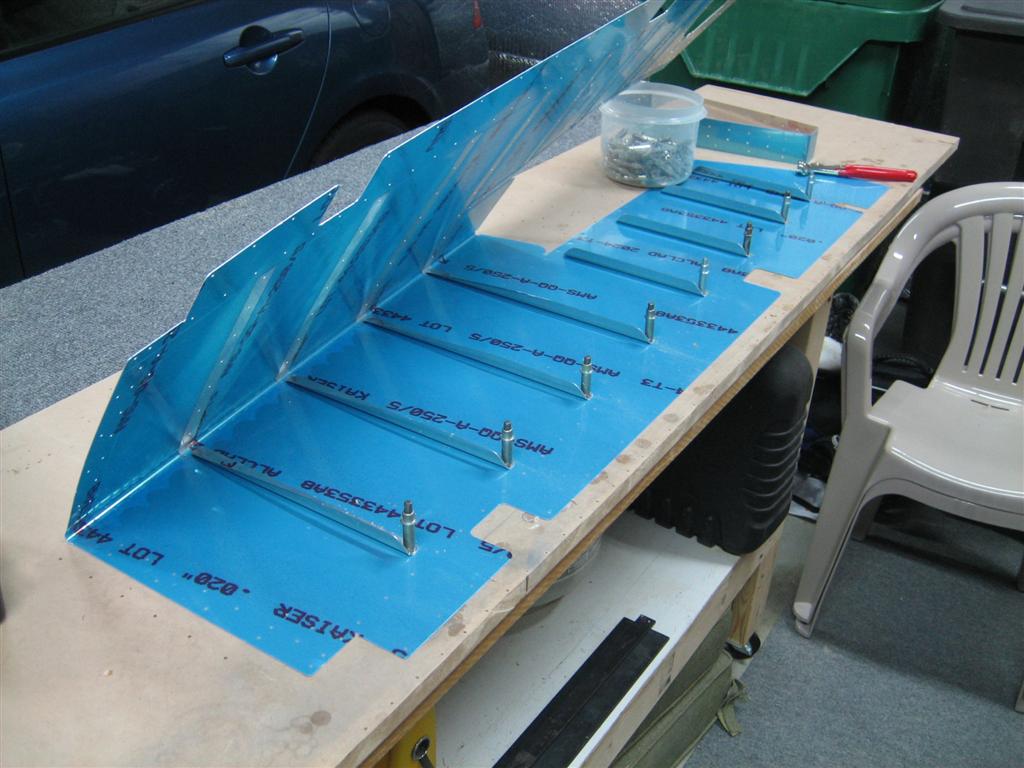
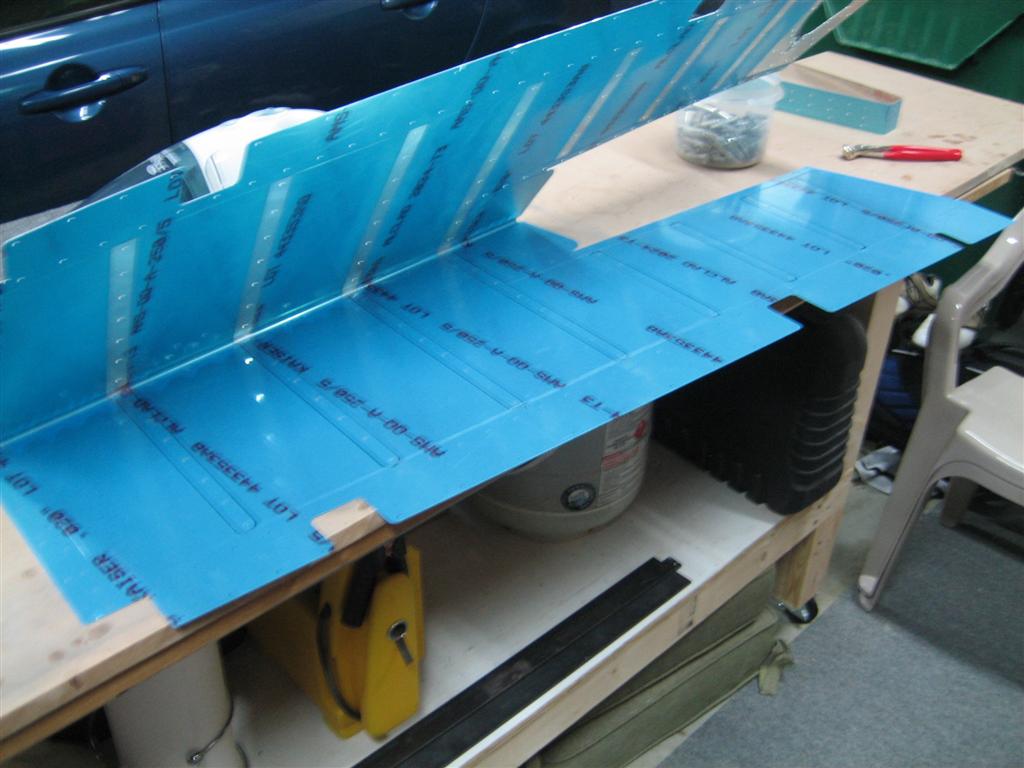
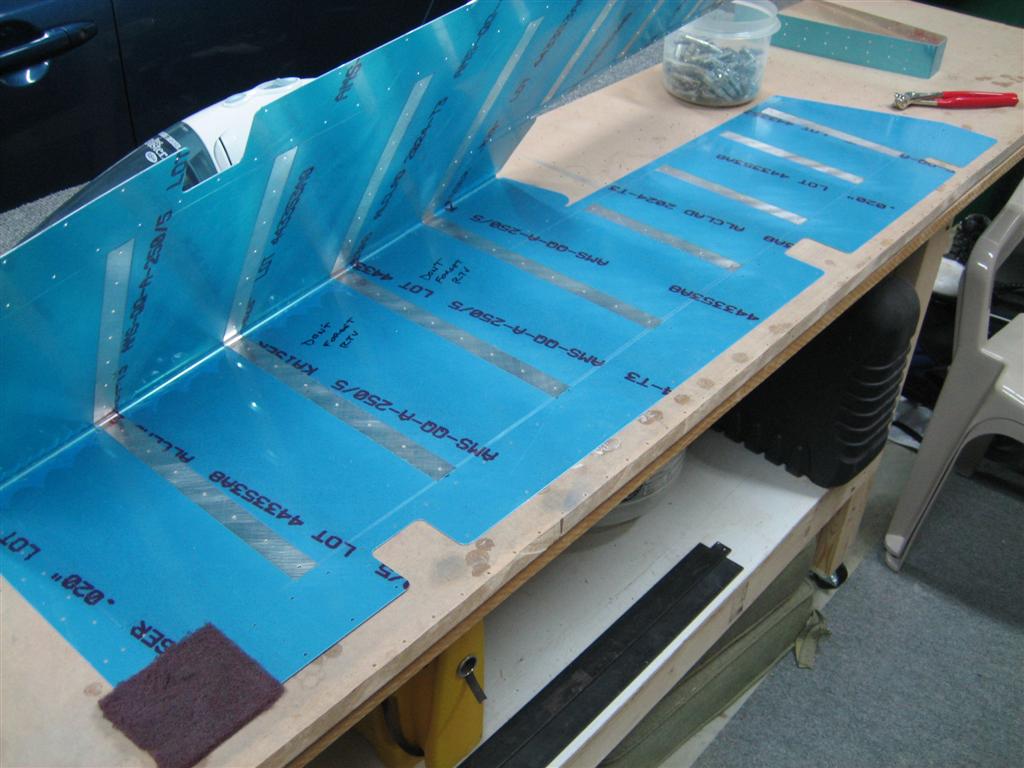
You can see I have already done the lower surface of the elevator (it's upside-down on the table).

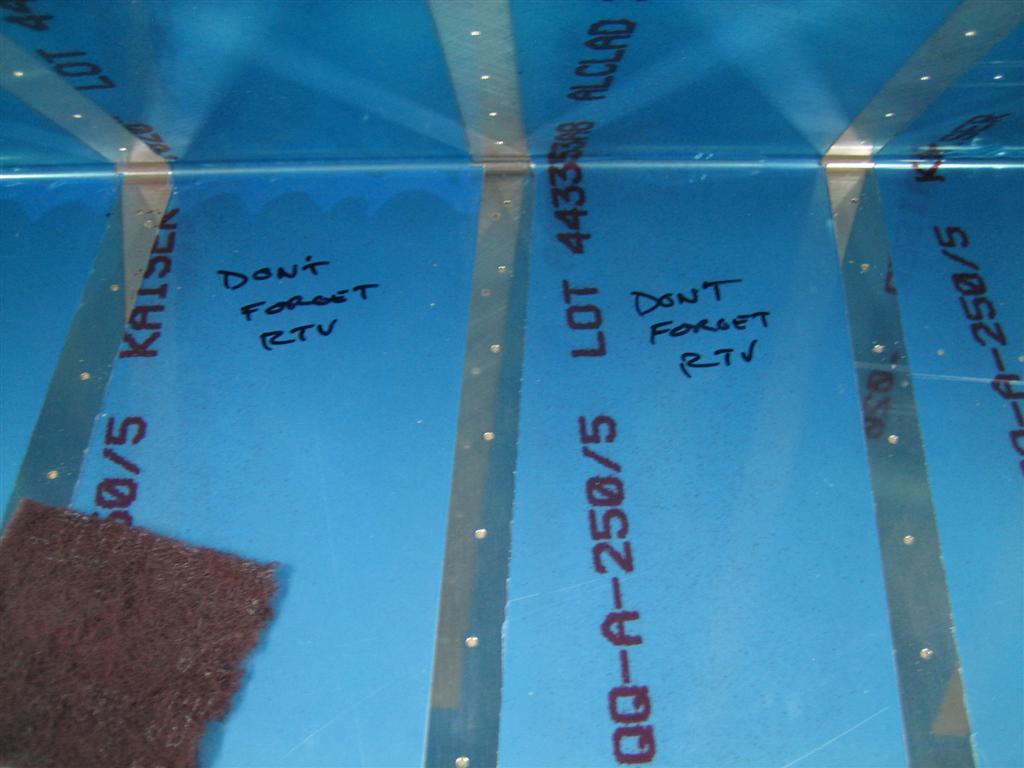
And, of course, since I forgot to add RTV to the right elevator (still trying to figure out a way to get some RTV in there), I wrote a little reminder on the inside of the left elevator.

Hopefully I'll see this as I pull out the last of the blue vinyl just before assembly.

Next, devinyl along the traced lines and then deburr and scuff.

Left elevator skin interior after devinyling, deburring, and scuffing.

Next up, I deburred and scuffed the remaining stiffeners. (I don’t have any pictures, but after this, they got dimpled and then primed.)

Because the upper surface doesn't have the trim reinforcement plate, there are 4 (instead of 3) of the short stiffeners.

Next up, devinyl and deburr the outside of the skin.

Skin devinyling.

A small tip here. I decided that at the aft end of the elevator, i would leave a little blue vinyl instead of connecting the upper and lower surface bare spots. This way, If I need to rest the elevator on its trailing edge, I won't be damaging the finish on the trailing edge.

Because it was late, I couldn’t use the c-frame.

Instead, I grabbed the hand squeezers and dimpled anything I could reach.

Just for kicks, I held up the trim reinforcement plate (and cover, still covered in blue vinyl) which will be riveted underneath the skin to the right.

Here are the other sides of the upper stiffeners getting primed.

I toook these inside for a good washing with Dawn before drying them, wiping with MEK, drying some more, and then shooting with primer.

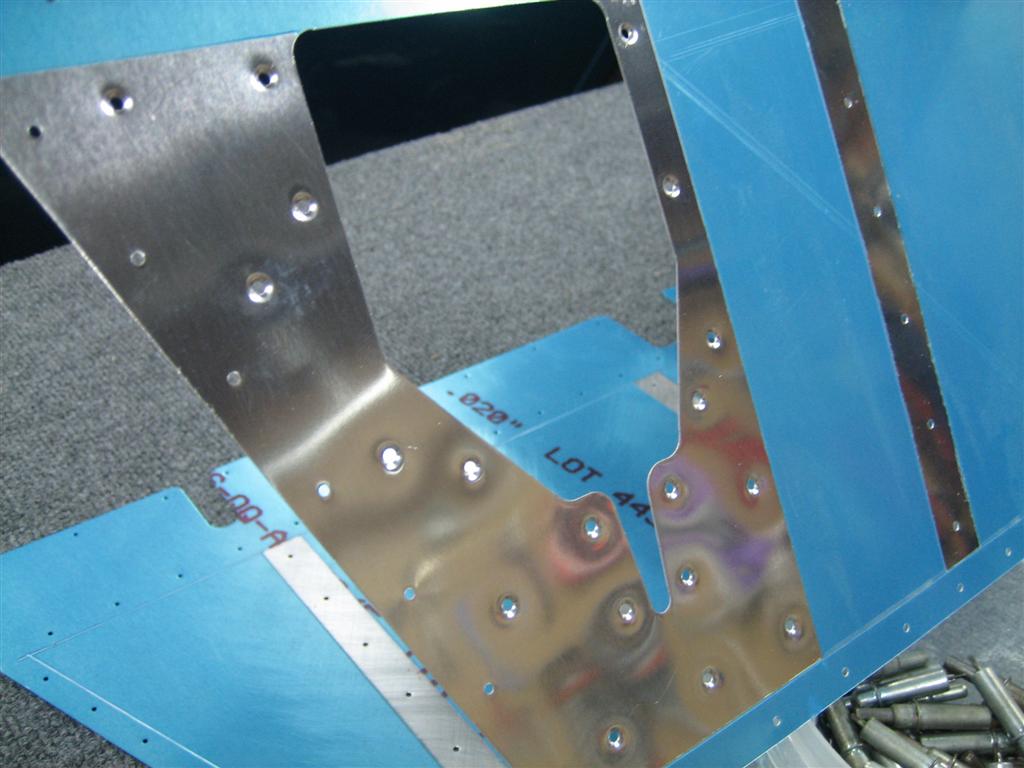
I had a few more minutes, so I started match-drilling the skeleton. Here is one of the spar reinforcement plates being drilled to the spar.

I used my 12" #30 bit due to cleco-clearance issues.

Finally, before heading in, I shot a coat of primer on the other side of the upper left elevator stiffeners.

Nighty-night.

Prev | Next


Primed Some Left Elevator Stiffeners

May 29, 2010

Prev | Next

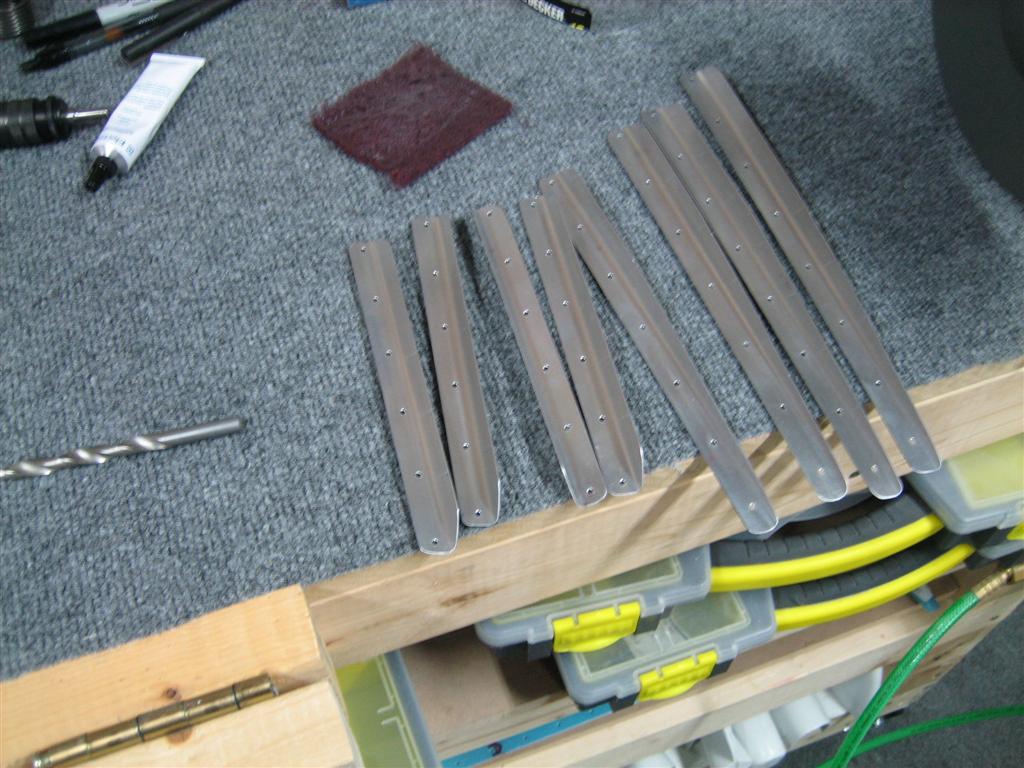
Not too much today. I got the lower left elevator stiffeners deburred, dimpled and primed.

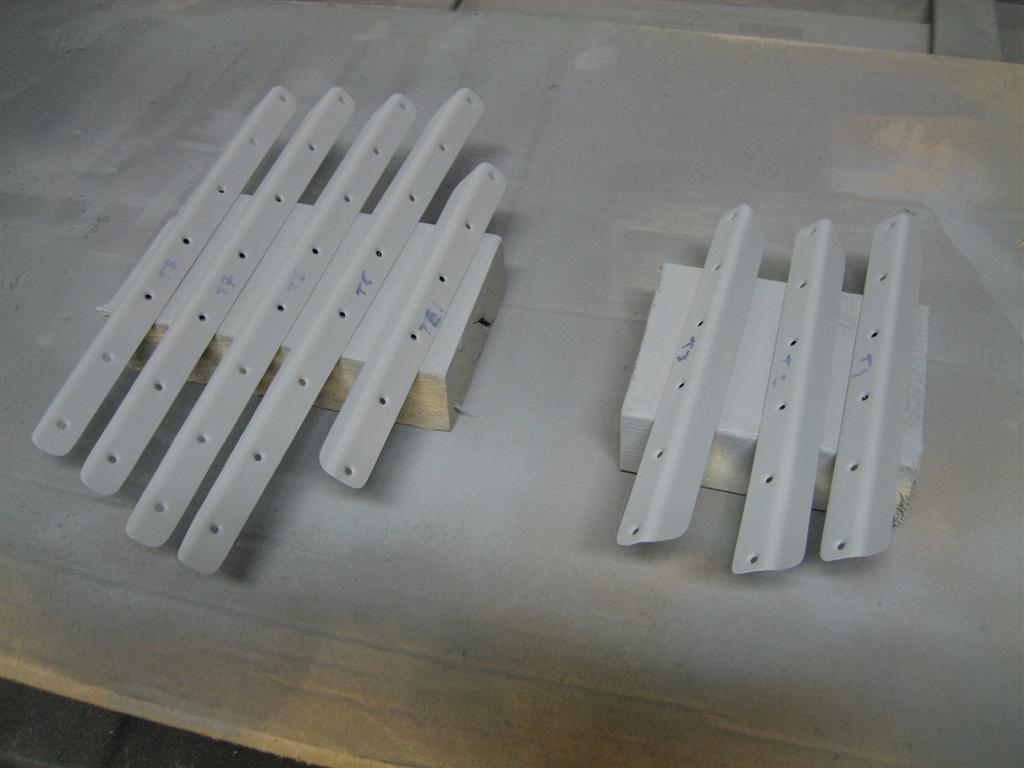
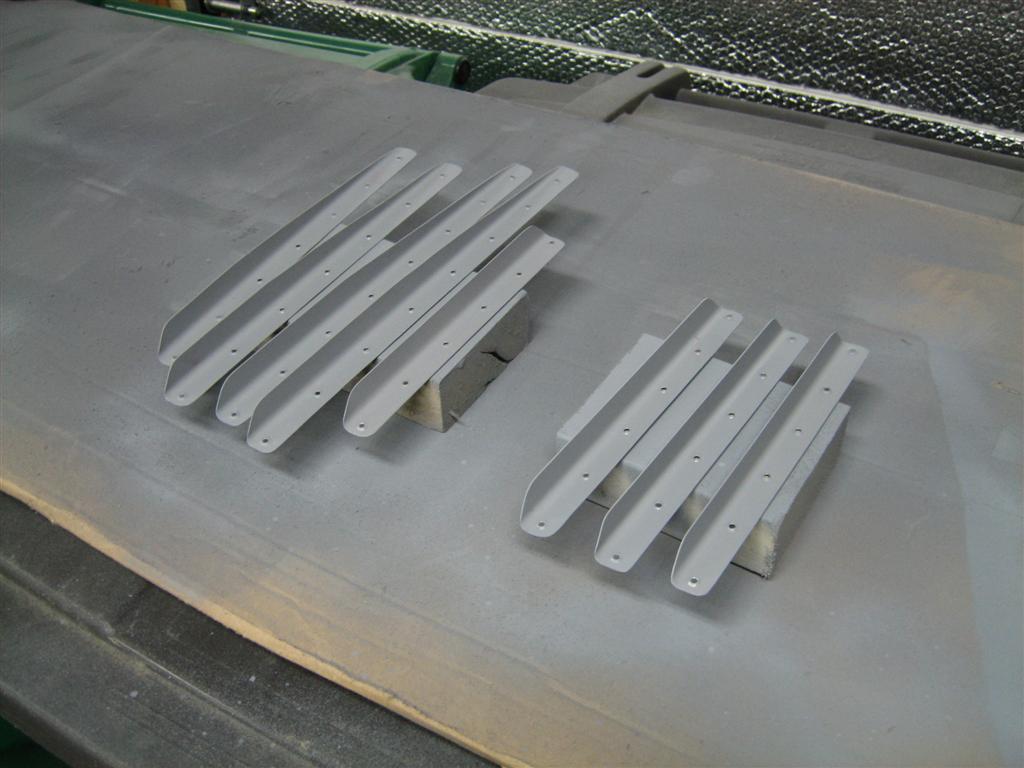
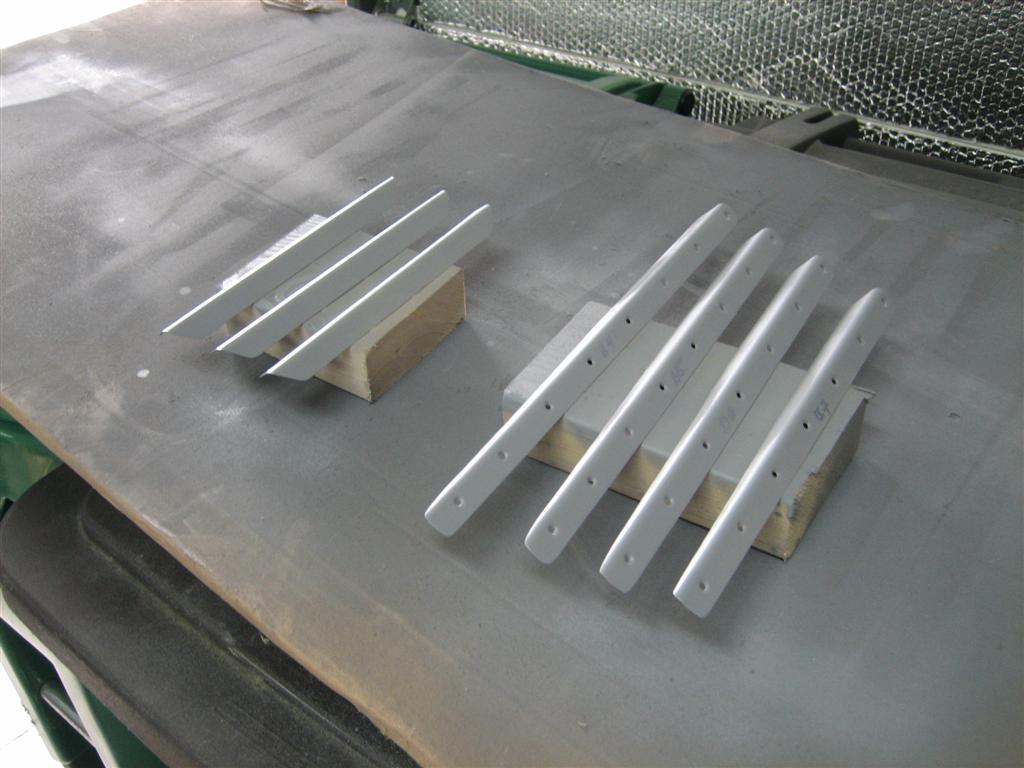
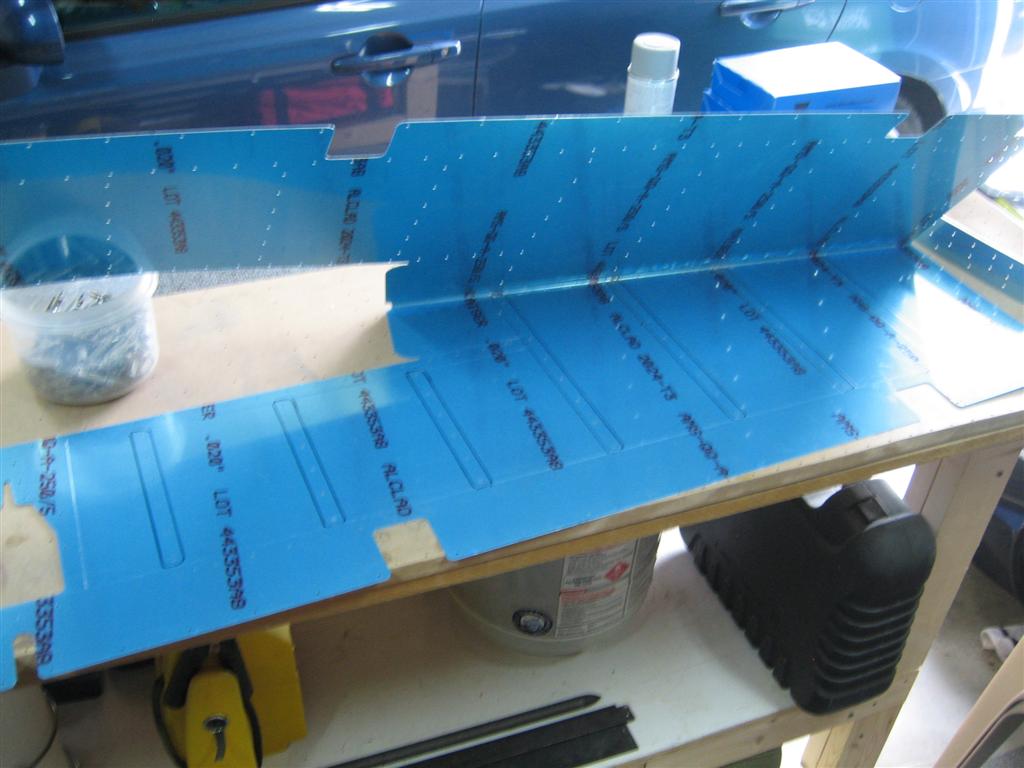
Here are some of the stiffeners on the priming table.

Then, I turned my attention back to the skin to start devinyling.

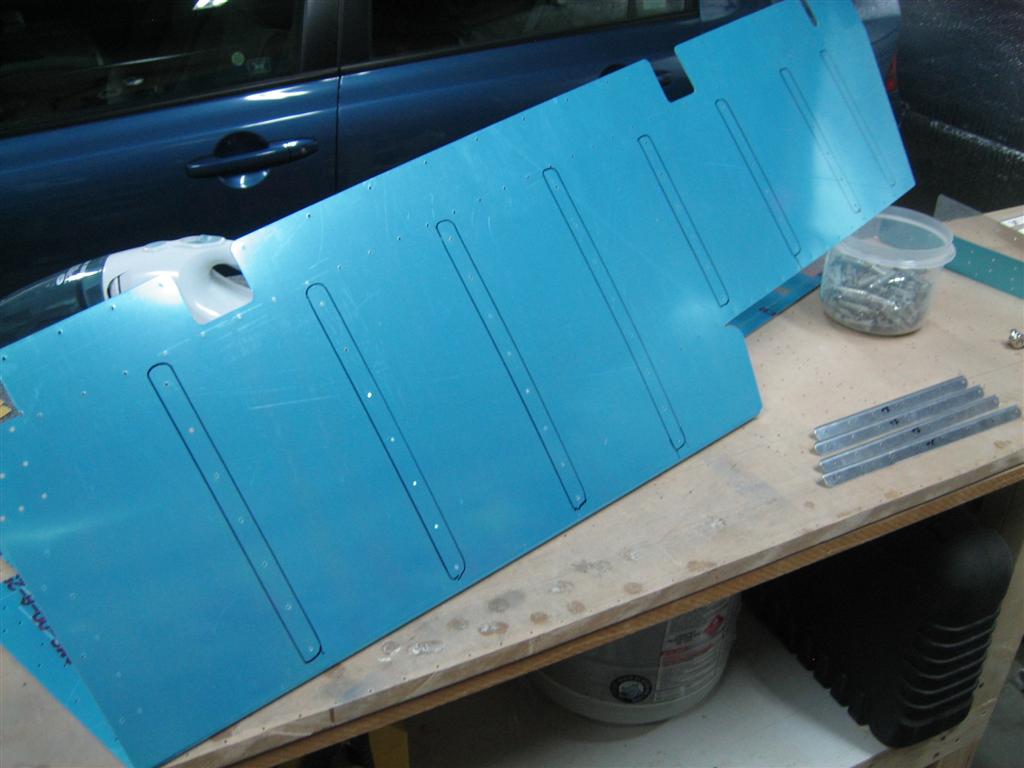
Left elevator, ready to be devinyled.

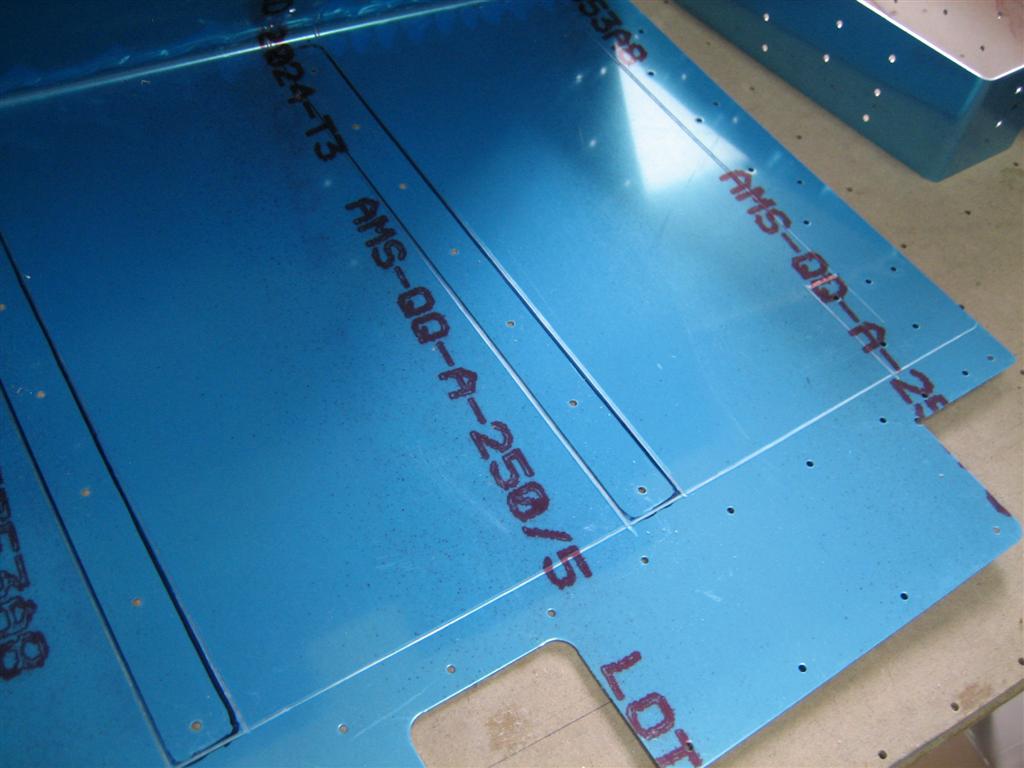
Here are a couple lines showing my devinlying process. These are made with a soldering gun held against a wooden straight-edge.

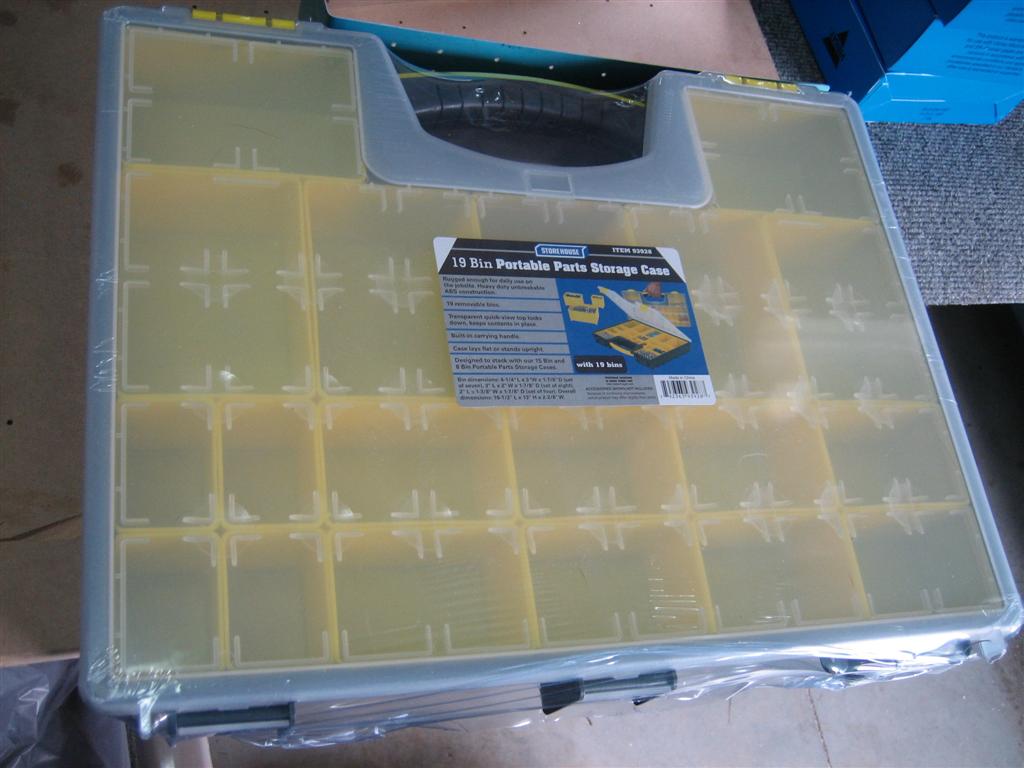
Oh yeah, almost forgot. I stumbled across another Harbor Freight coupon. I bought this ~$10 storage container for wing hardware.

I have two already, one for rivets, and one for Empennage hardware. I assume I'll need a third for wing hardware (I'll combine the rivets from wing and emp if need be).

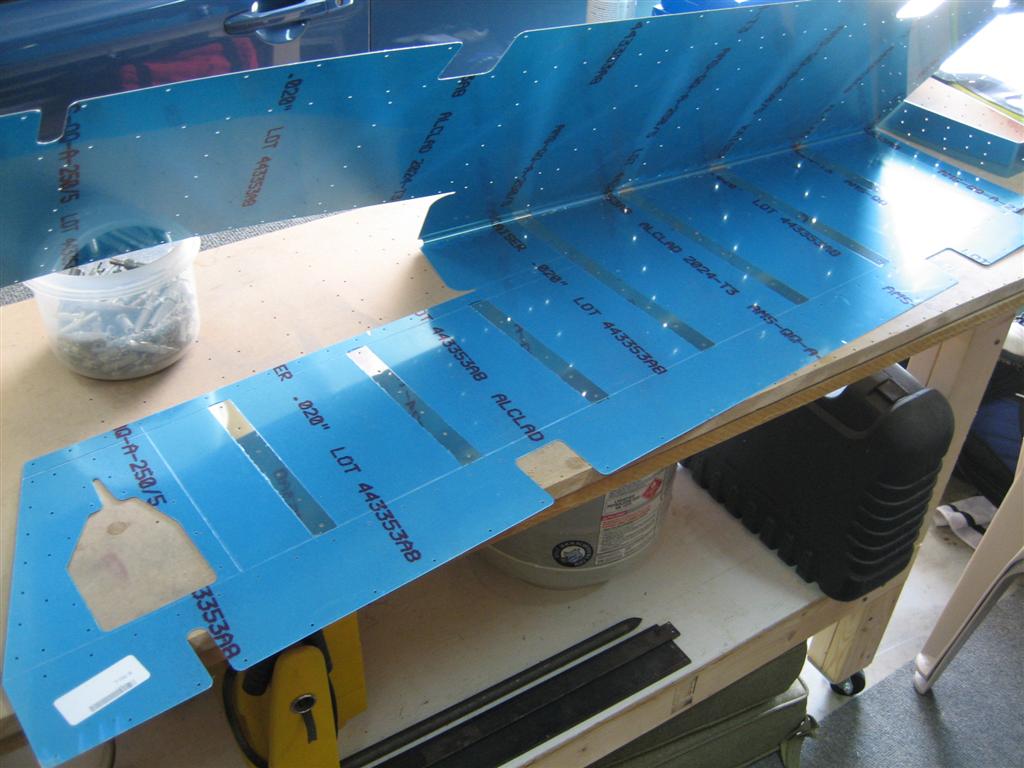
Okay, back to the project. I’ve pulled off some of the vinly strips.

Pulled off some of the vinyl strips.

Here, my devinyl line overlaps the tracing a little.

Another angle here.

So I put the trim spar in position, and realized I could move the line back a little, so that's what I did.

Next, I deburred and scuffed the skin in preparation for dimpling. (It’s easier to scuff before dimpling.)

The lines to the right have been scuffed, the trim spar reinforcement area has not.

A closeup of scuffed versus not-scuffed.

To scuff an area (in preparation for priming), I scuff in one 45° direction…

45° to the right.

Then, 90° from that.

All done. You can sort of see the two directions.

Finally, some dry stiffeners, ready to be backriveted to the skins.

Pretty stiffeners.

I always like to take a big picture shot at the end of the day.

Left skin, ready for dimpling.

Tomorrow, maybe a little skin dimpling, priming, and backriveting stiffeners.

One hour.

Prev | Next