After the last couple work sessions priming various parts, I was getting all hot and bothered to rivet something. I thought I would tackle the spar reinforcements. I also forgot to charge the camera battery, so I’m using the new phone. Hopefully they turn out okay.
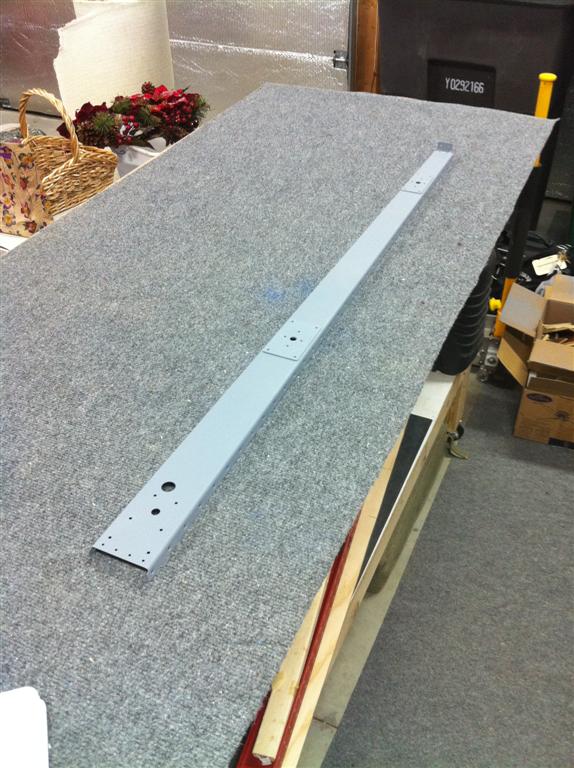
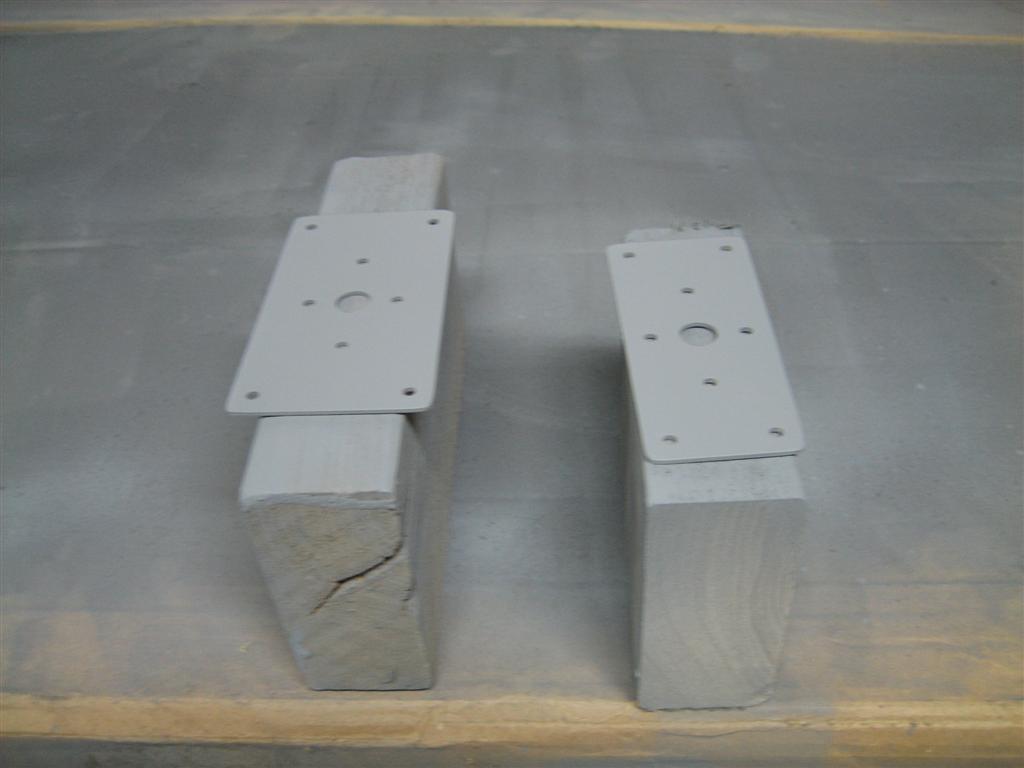
Here's the left elevator spar and reinforcement plates.
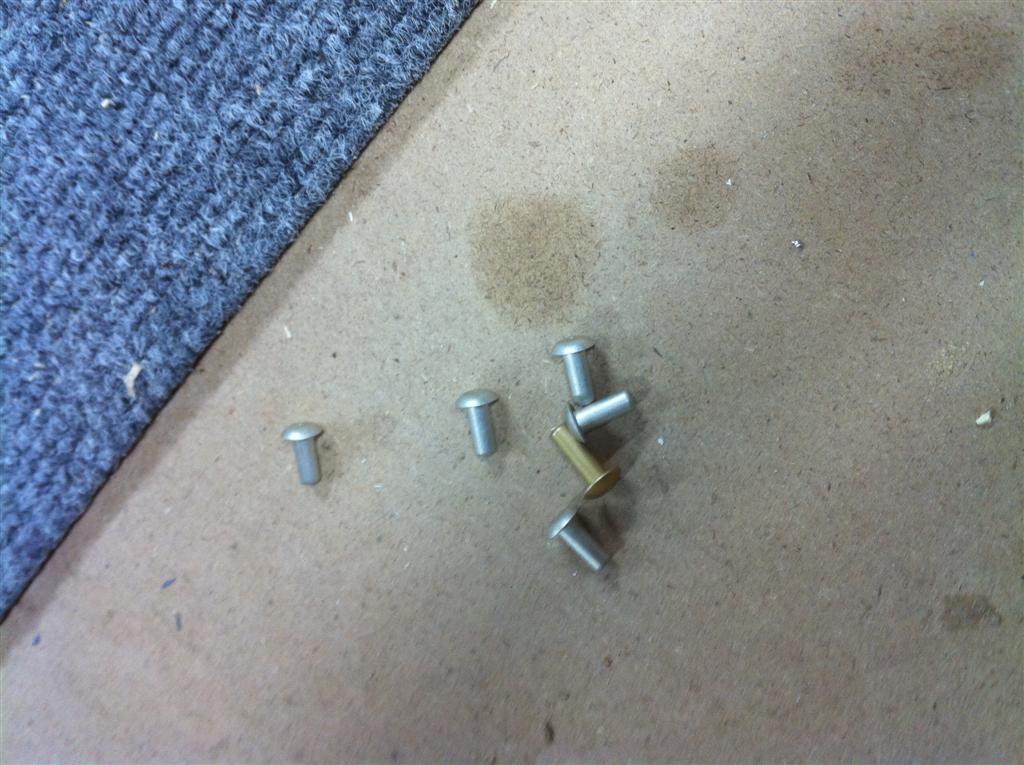
I got out a few rivets. AN470AD4-5 and -6.
Let's get riveting.
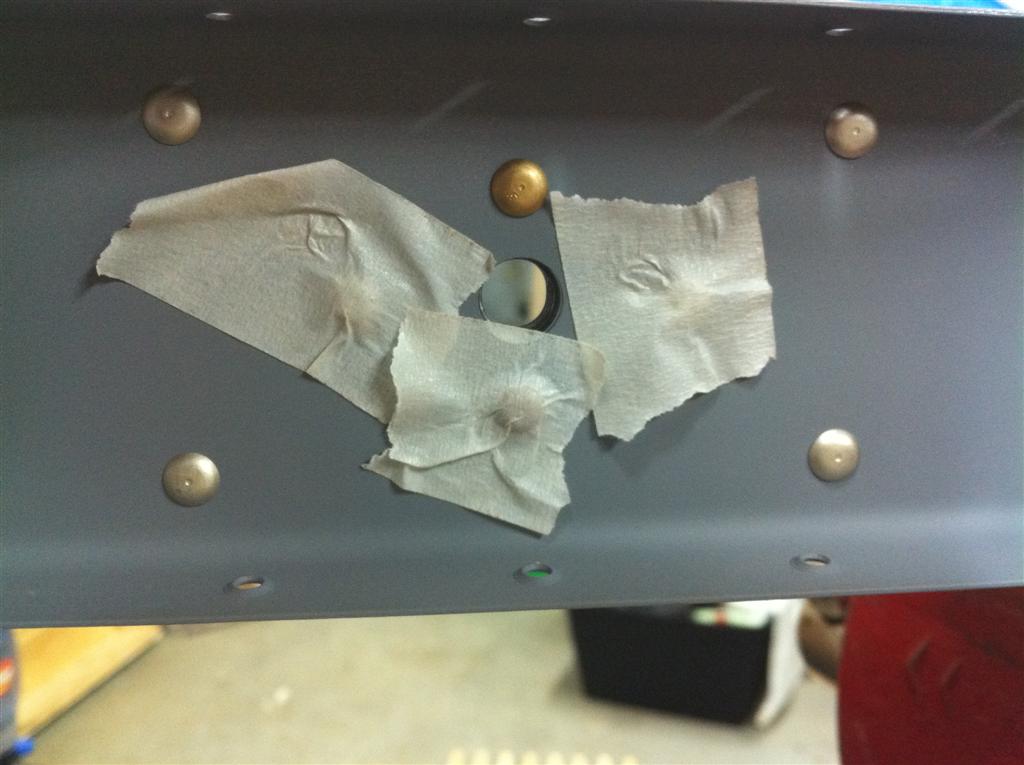
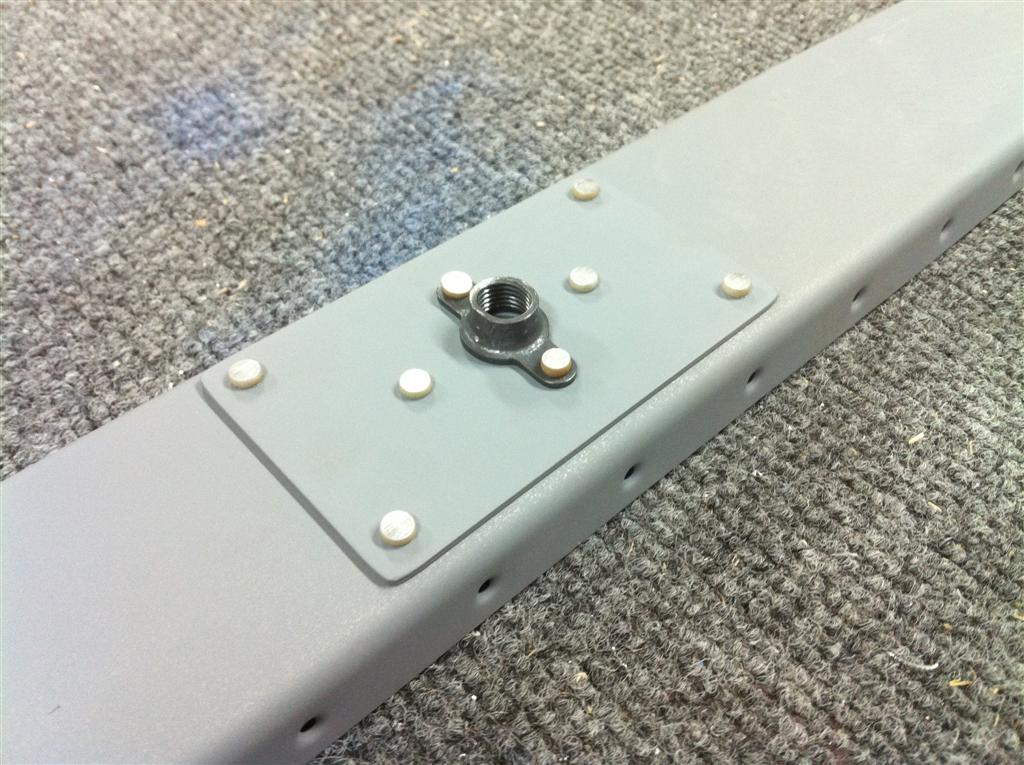
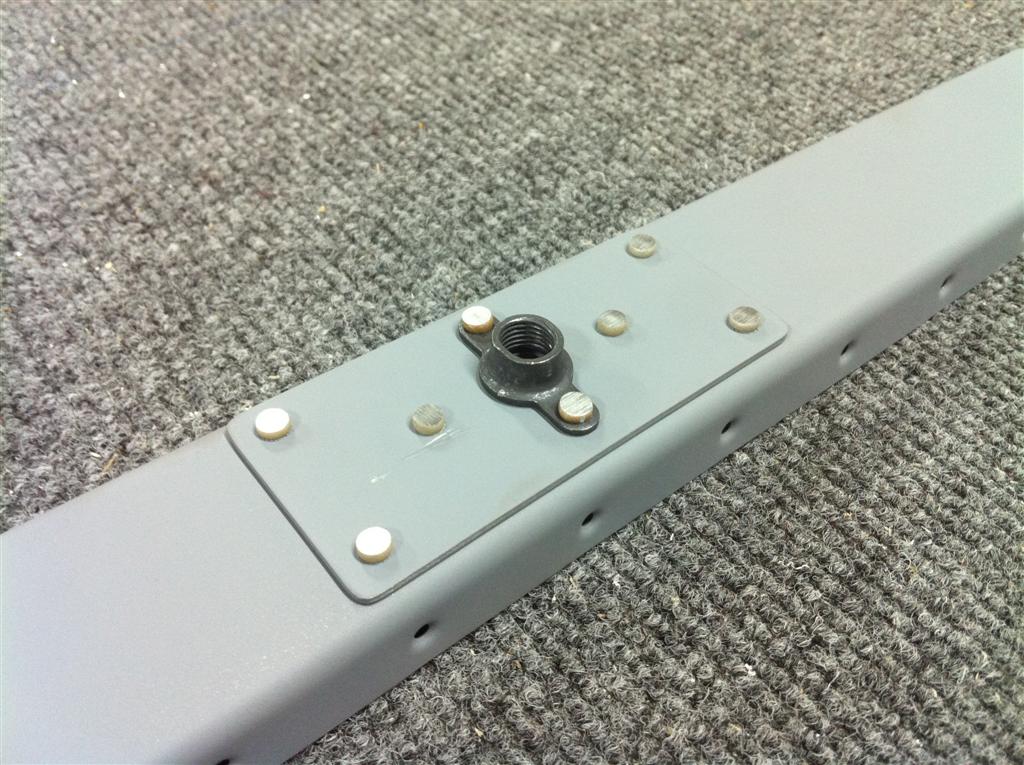
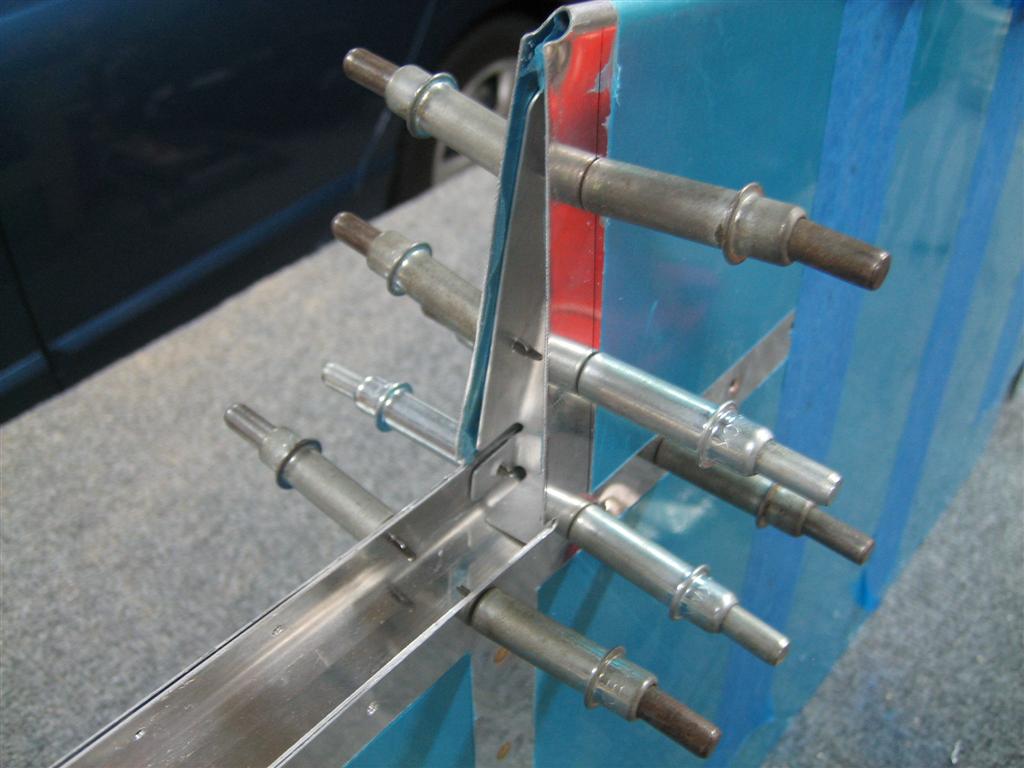
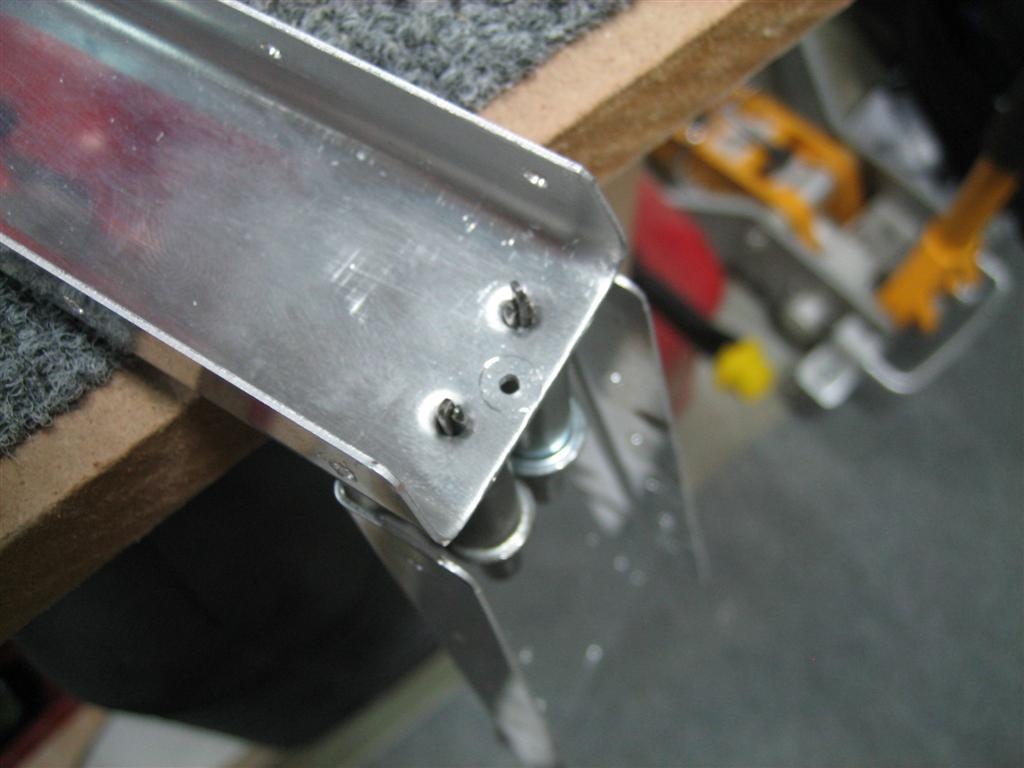
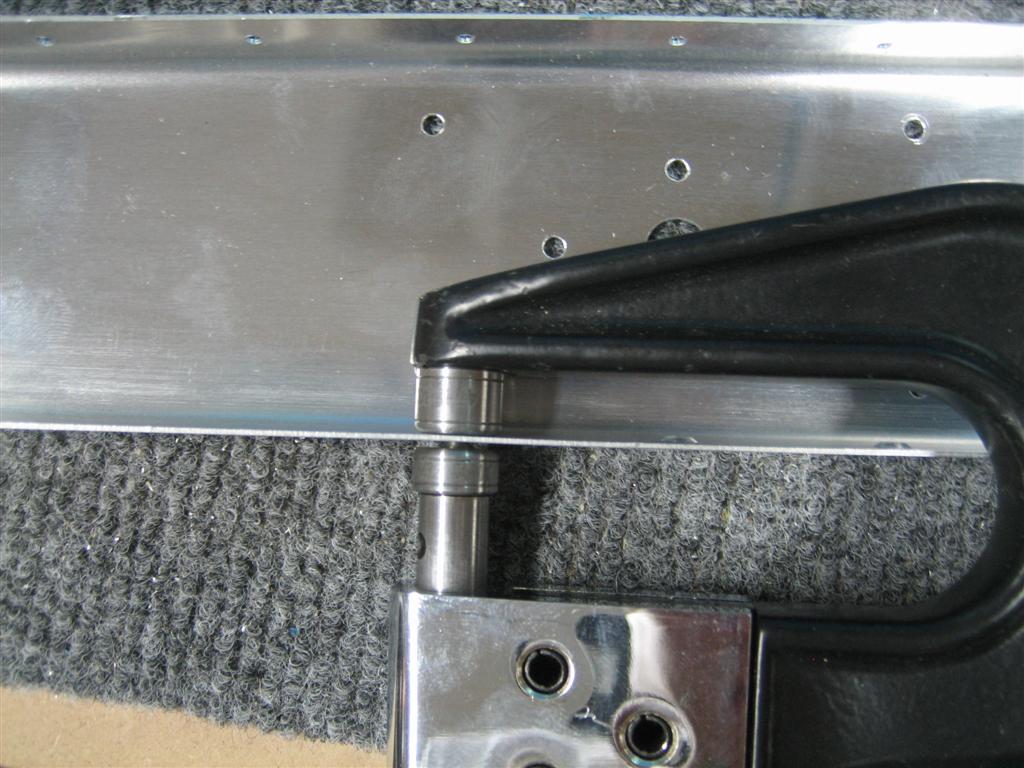
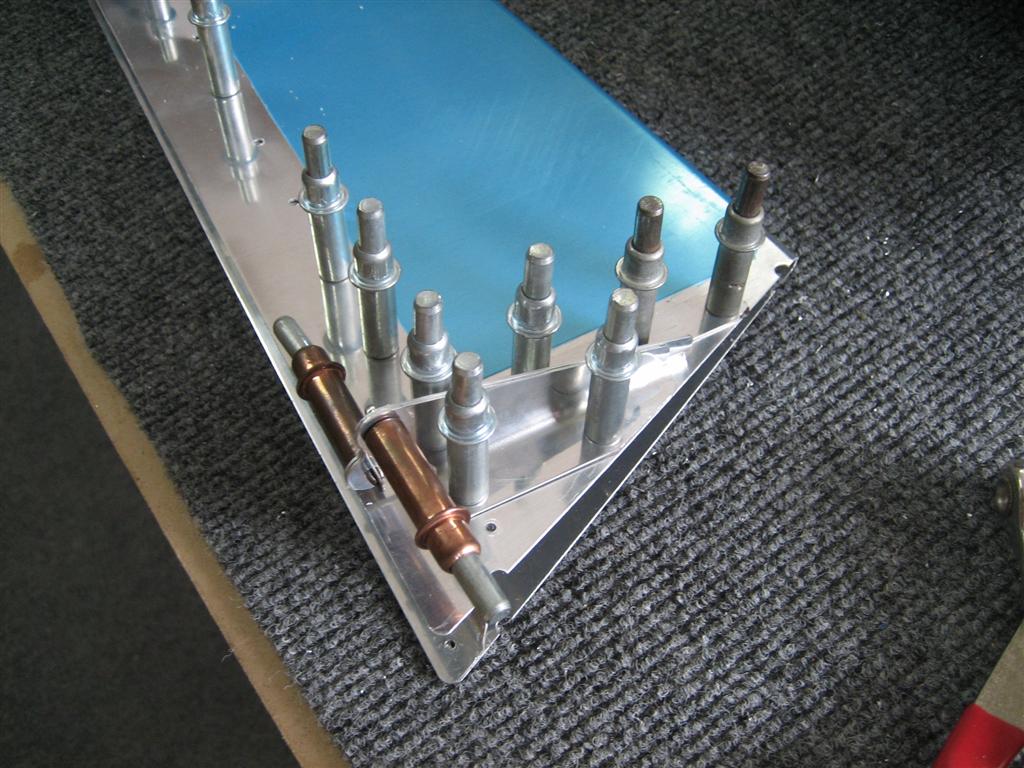
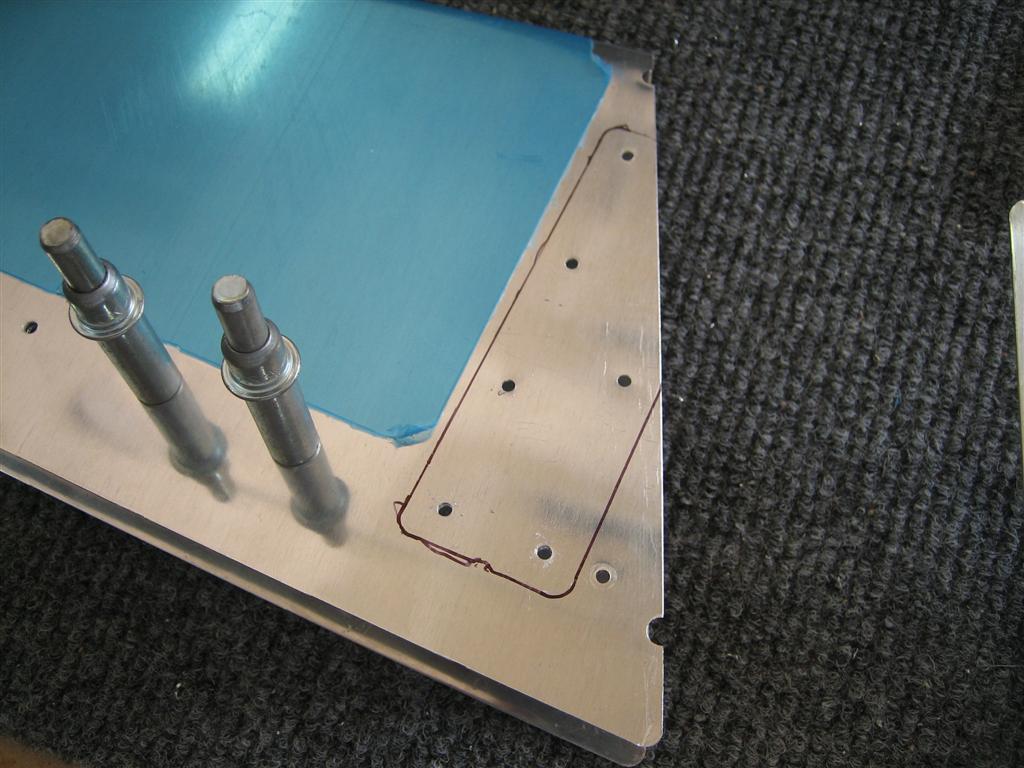
I clecoed the reinforcement plates and nutplates onto the spar, and riveted the four corners and one ear of the nutplate, then took out the clecos and riveted the rest.
The tape is a trick I have been using out of vanity. The rivets look better when they haven't been marred up by the rivet set.
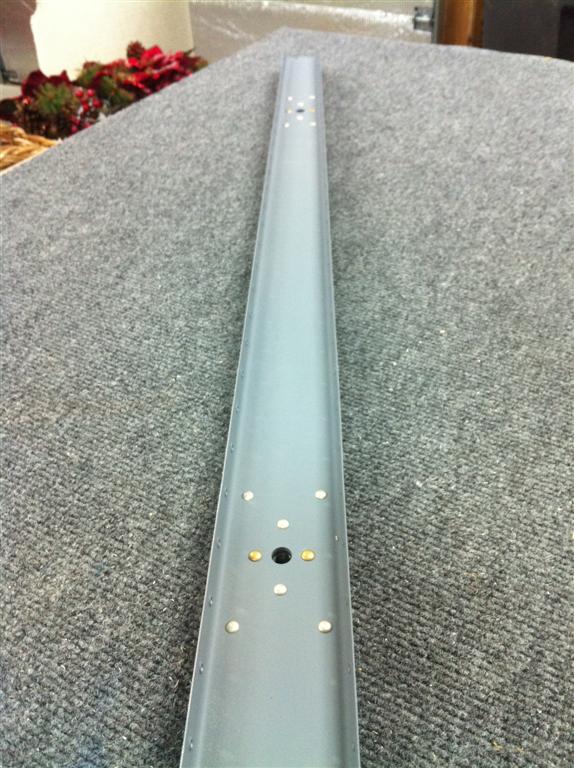
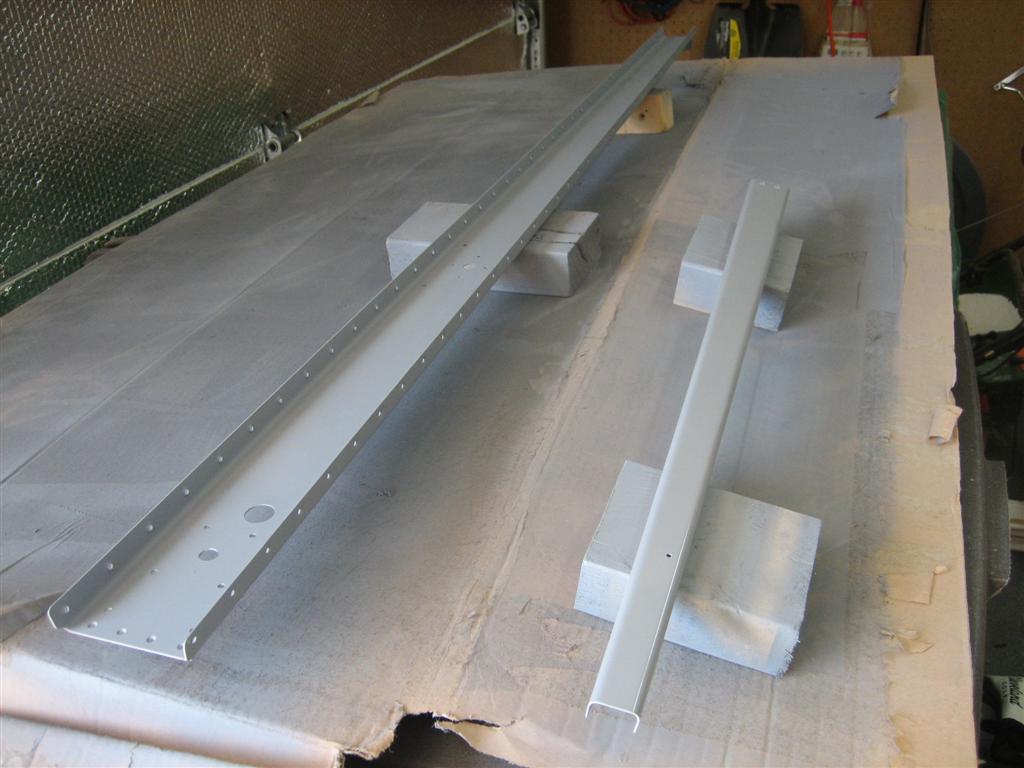
After doing both plates, I put the spar back on the table.
Pretty.
And just to show you AGAIN how much I love my new tungsten bucking bar, here are the perfect shop heads.
The inboard shop heads.
The outboard shop heads.
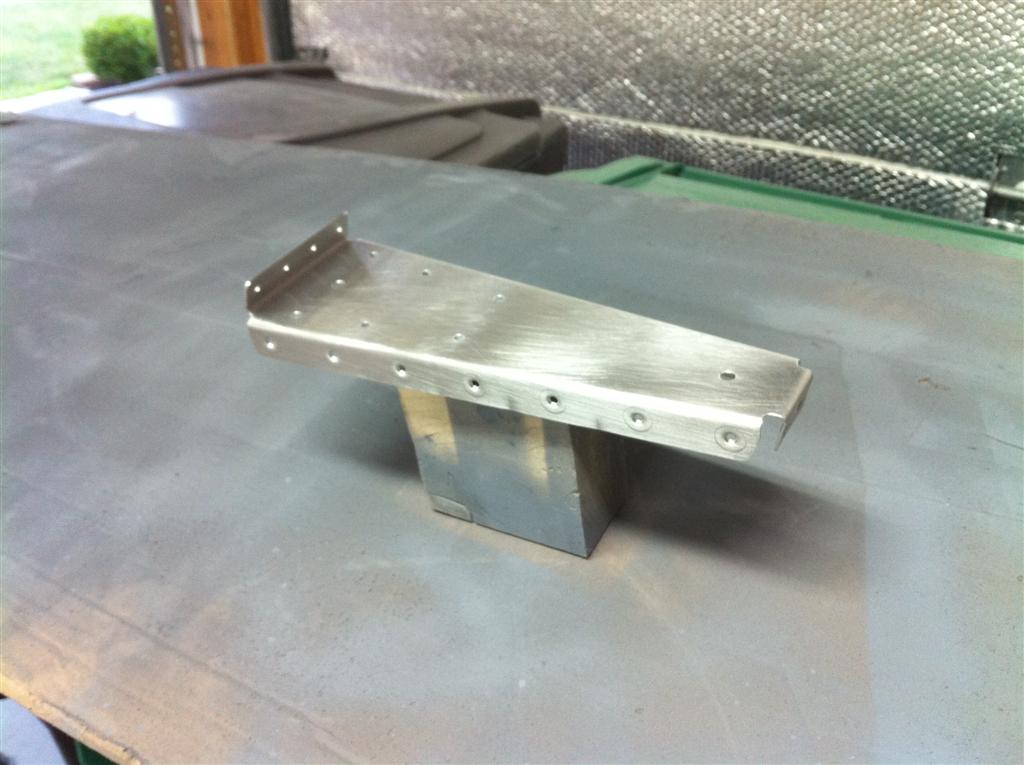
Next up is to continue riveting on the skeleton, so I pulled E-705 out of the “recently match-drilled” pile and got it deburred, dimpled, edge-finished, and prepped for priming.
Ready to prime.
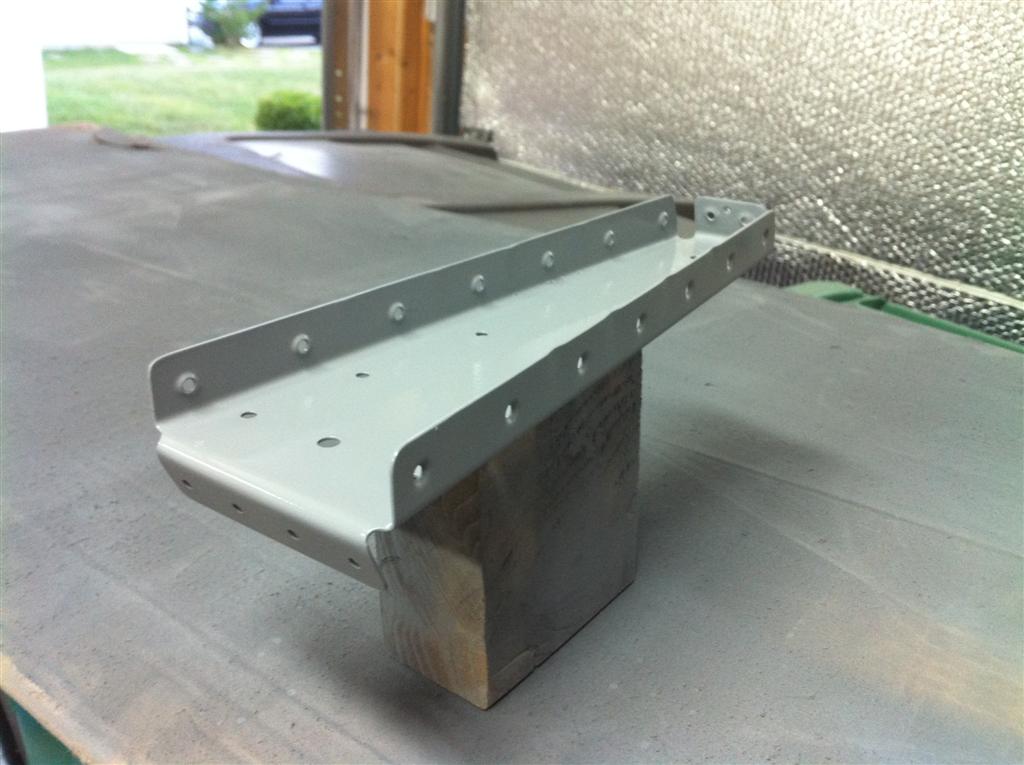
This is the other side after being shot with primer.
16 rivets set in 30 minutes of building after 30 minutes of shop cleanup (cleaned out the shopvac, etc).
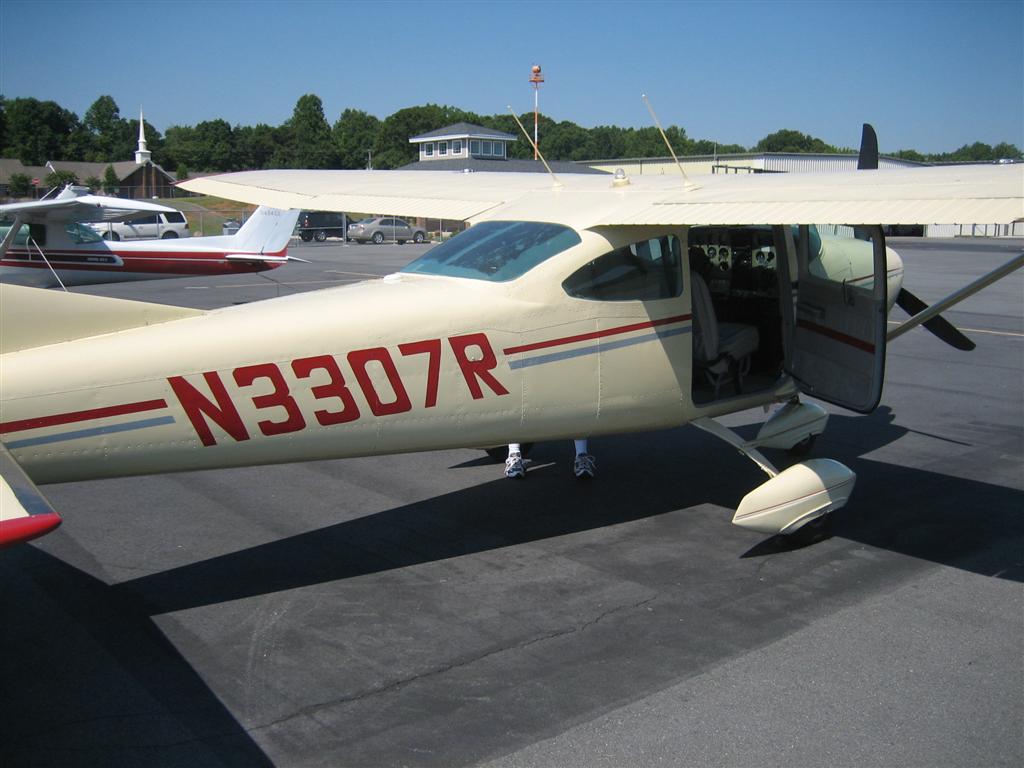
Well, after a weather (thunderstorm) cancellation on Friday for a Pilots N Paws mission, I got a call from my buddy and coworker Jon to join him for a mission from Georgia to Virginia. After packing up my mission kit, I headed off to the airport to meet Jon.
My commentary is going to be a little terse for now, but maybe I’ll elaborate some later.
The drive to Shiloh.
I pulled out my stuff (two different sized crates for Jon’s baggage compartment, some plastic bags to line the floor, just in case, some treats, a couple harnesses and leashes, etc.) and waited for Jon at the self serve fuel pump.
My PNP stuff.
Jon pulled up a few minutes later…
Let's go save a dog today!
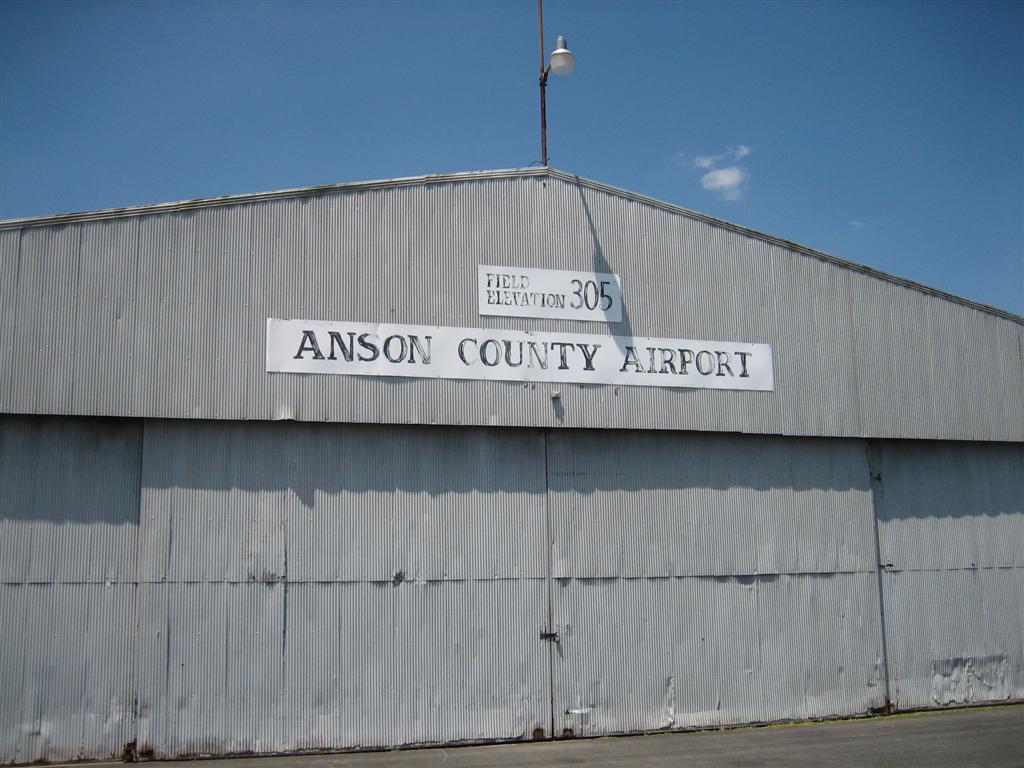
Because I think I’m clever, I decided to take a picture of all of the airport signs. Here’s Shiloh’s.
It's a good picture, darnit.
After loading up, we got going. Here’s Jon’s panel.
I used to work for the wonderful Cessna Aircraft Company, so I'm a little biased, but this is a nice 1960's era (but hugely upgraded) panel. Well done, Jon.
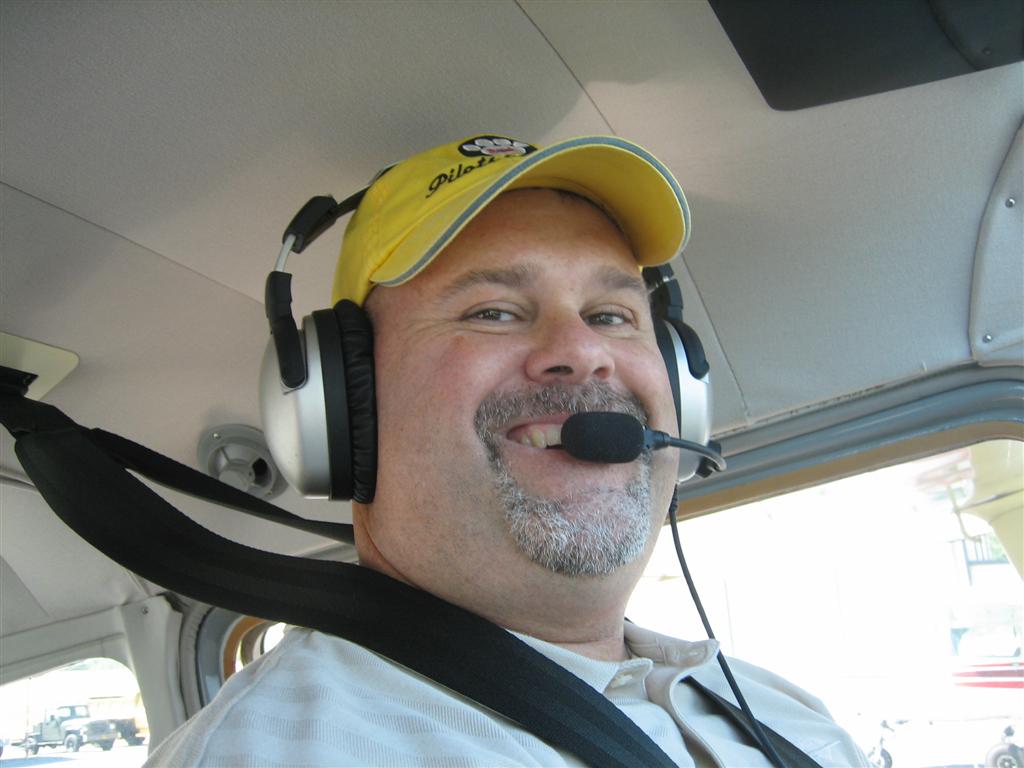
Jon’s smiling because I just gave him a new yellow Pilots N Paws hat.
Do you think he likes it?
On climbout from Shiloh. Jon's a multi-engine commercial pilot with instructor ratings, too. It was a nice, competent flight.
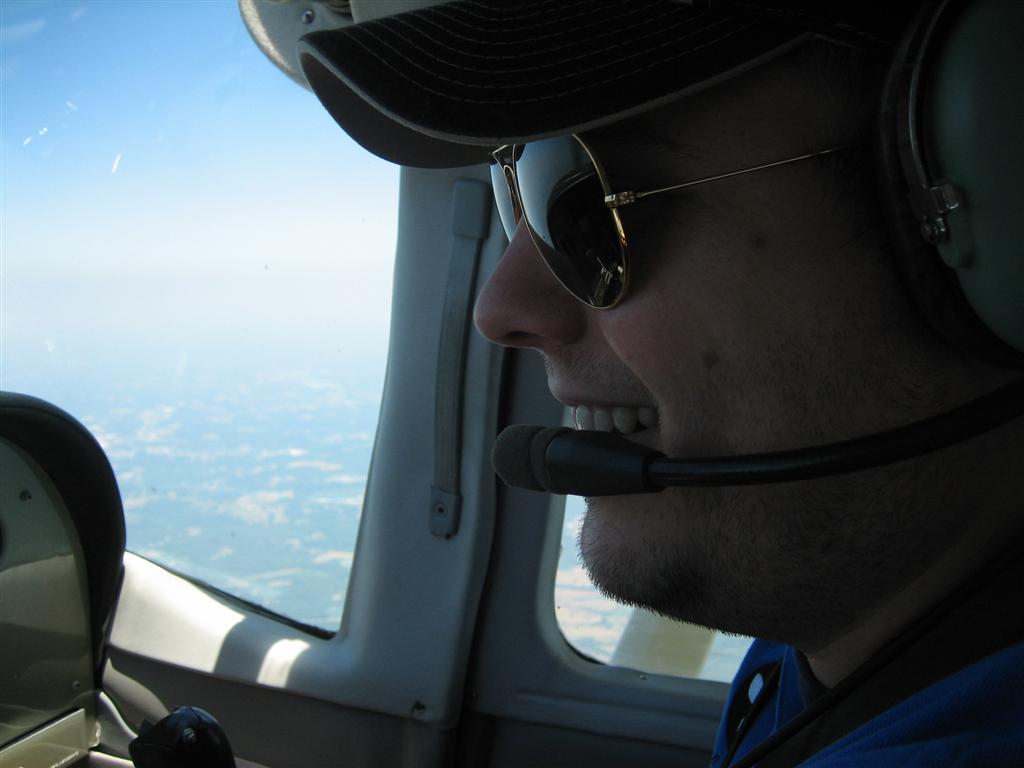
These funny glasses are called “foggles.” They simulate instrument conditions, and allow one of the pilots (two pilots needed for this kind of operation, the other required to still watch outside for traffic) to practice instrument conditions.
Please remember, I wasn't trying hard to take this picture and ignore my piloting duties looking outside. I just held up the camera and snapped the picture without looking.
Random picture of the trip down.
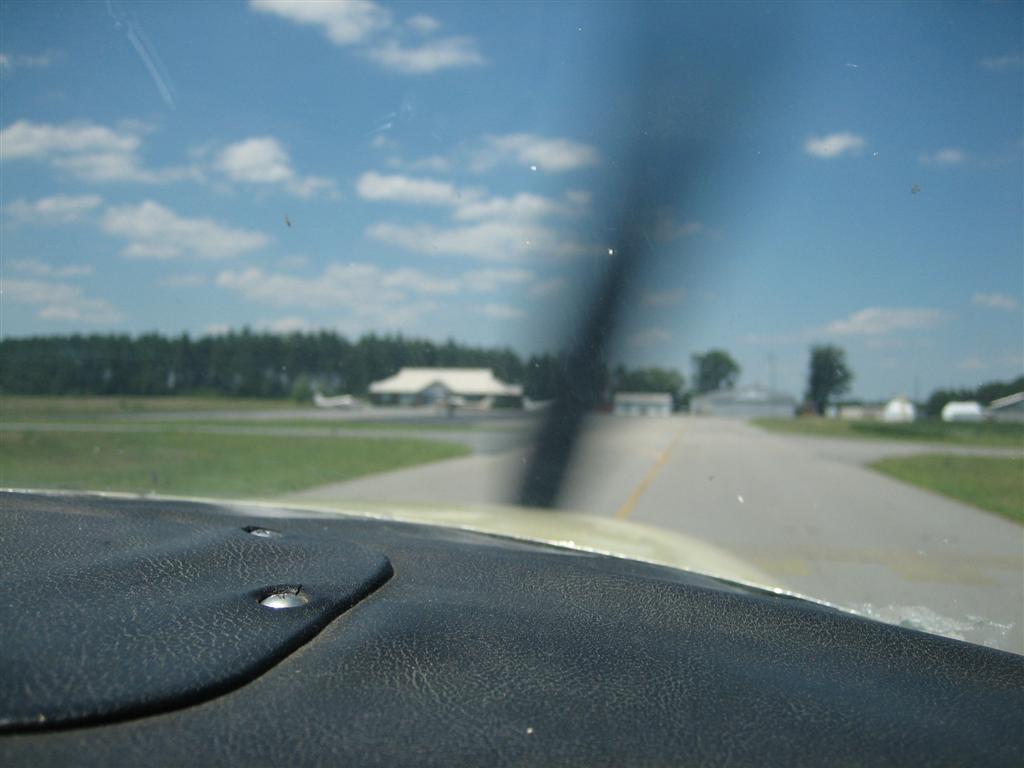
I was too busy watching for traffic to take any more pictures until Jon took the foggles off on short final for runway 34 at Anson County (KAFP).
Short final, runway 34.
Taxiing in. Crappy focus, but it ended being a cool picture.
Okay this is actually a pretty amazing picture.
This one, too.
Doggie-air-ambulance for the day.
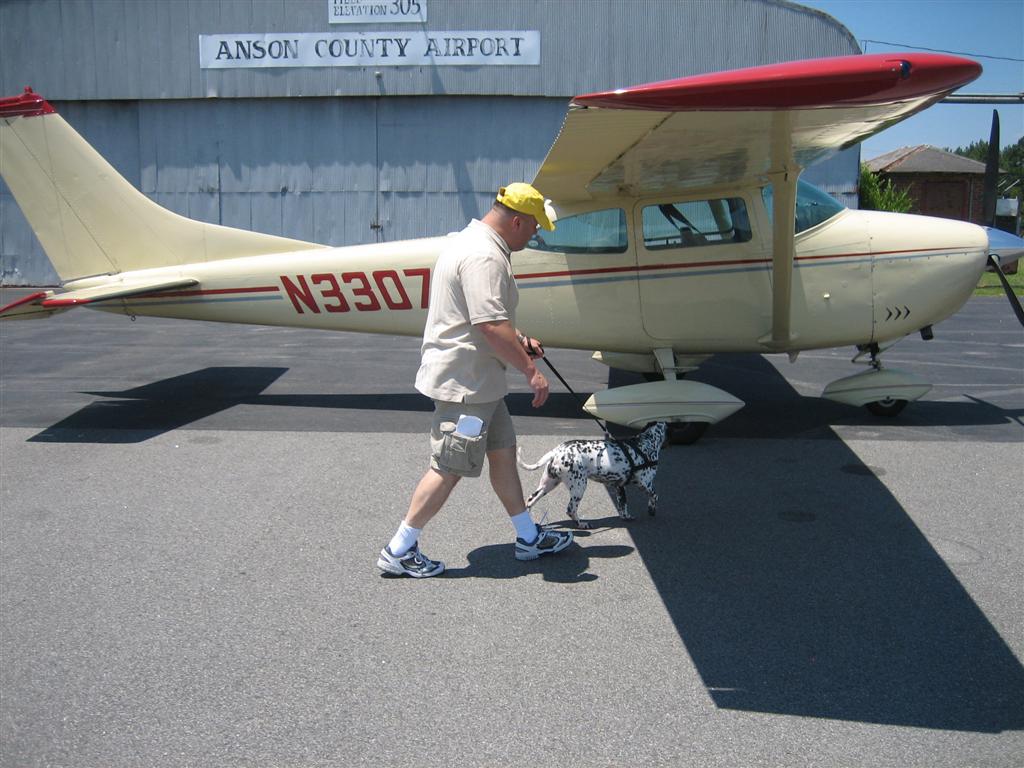
Jon forgot to chock the airplane, so he is holding it with is left hand. He is strong.
asdf
Here comes Phoebe!
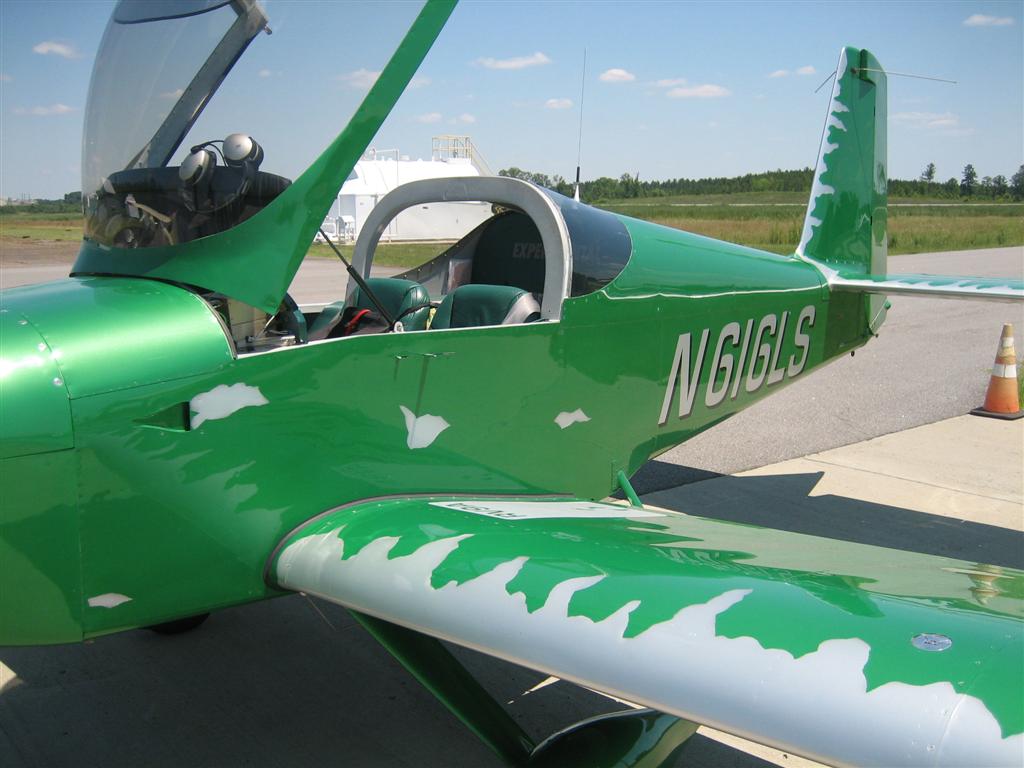
Ooh, that's an RV-9A! (Very similar to my RV-7, but longer wingspan and bigger tail.)
Look at how happy Phoebe looks!
Jon and I helped Wayne get Phoebe out of the back of the -9A, and Jon's soon took her for a nice walk.
I, of course, couldn’t stop from asking Wayne 1001 questions about his airplane. One of the first things Wayne said he would change was to move the backup GPS over to the right, and move the small secondary AFS screen more toward the middle (that is where the IFR charts show up).
This is a beautifully laid out panel. I love that low center console (I am going to copy the drink-holder thing for sure). Also, very excellent layout. I would be happy with this layout.
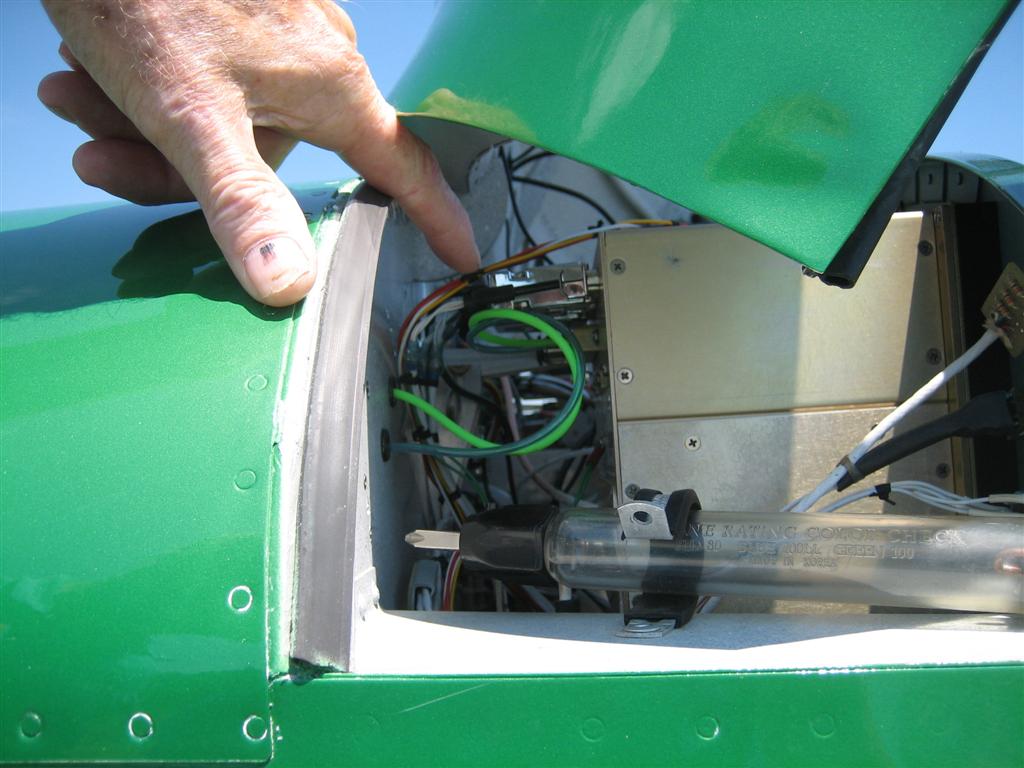
Wayne also pointed out that I should use the extensions for some of the avionics connections. Helps with finger access (TWSS). Look at the ingenious place for the fuel tester. Most people put something in the baggage compartment. Why not put it here?
Just some overall airplane pictures.
I love the paint scheme.
It looks fast!
Ha. I get it. "Giggles." Ha.
He. He. (Still giggling.)
Love the tip-up.
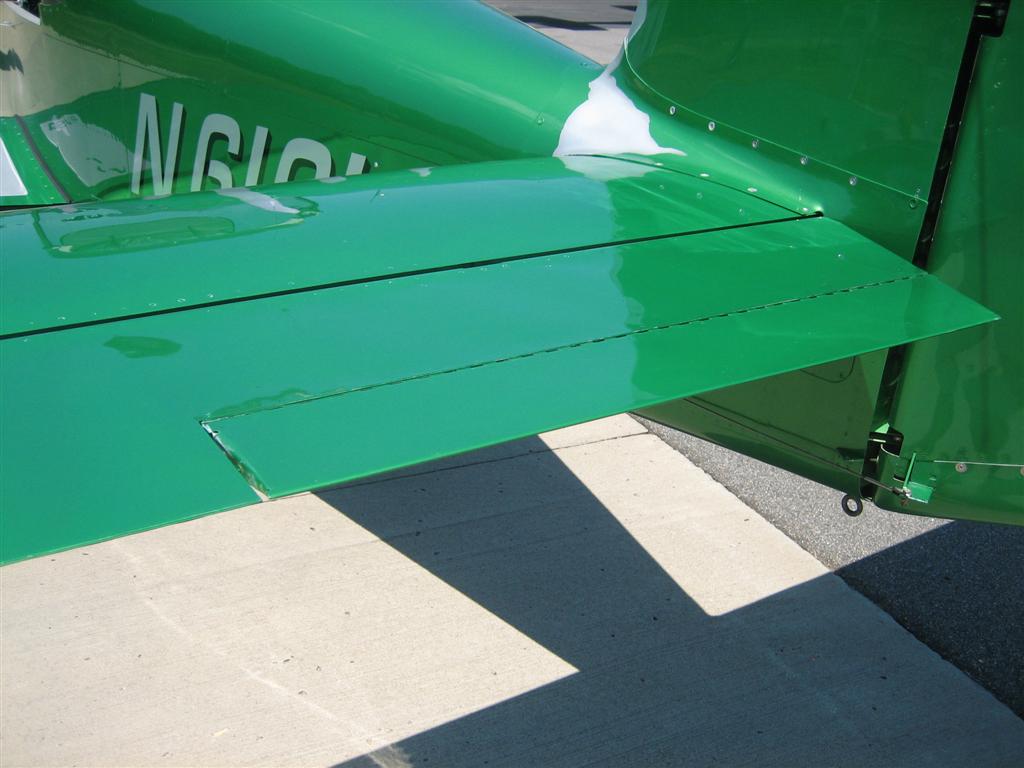
The rudder and vertical stabilizer are the same on the RV-7, but the horizontal and elevators are different.
That's a big trim tab.
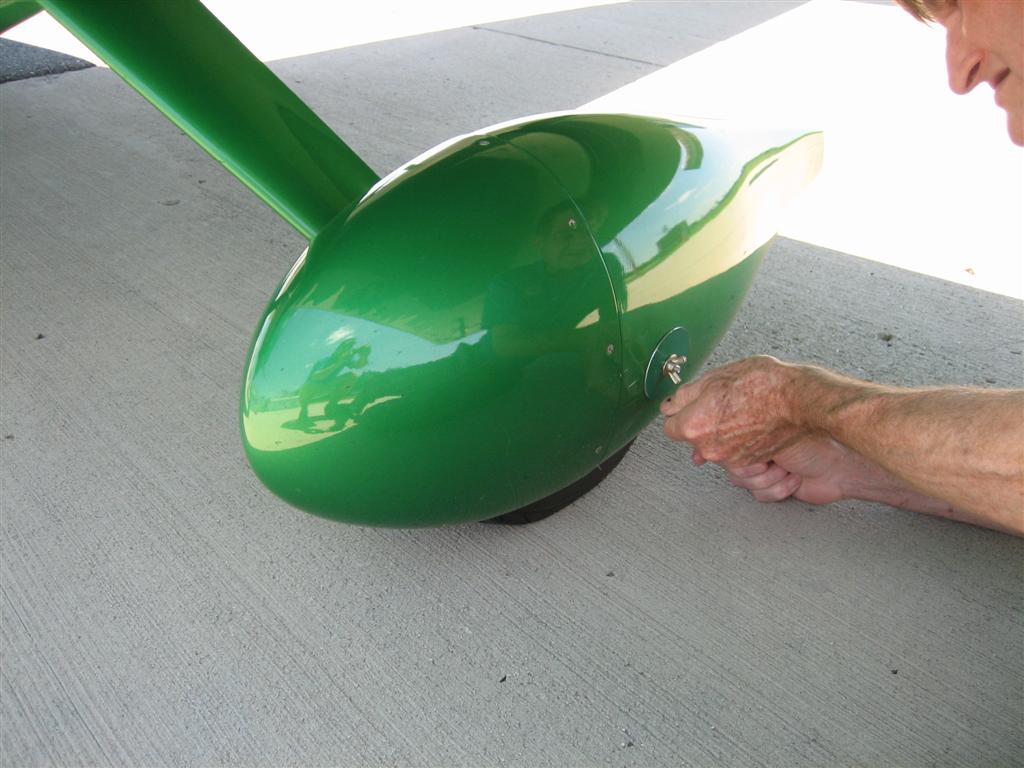
I love Wayne's idea for an inspection door on the wheel pants.
The most imporant part of the conversation was Wayne explaining that it was pretty easy to carry pups in the baggage compartment behind the seats. When I finish this RV-7, the girlfriend and I are definitely going to be flying pups all over the place.
Jon's son and Phoebe are back.
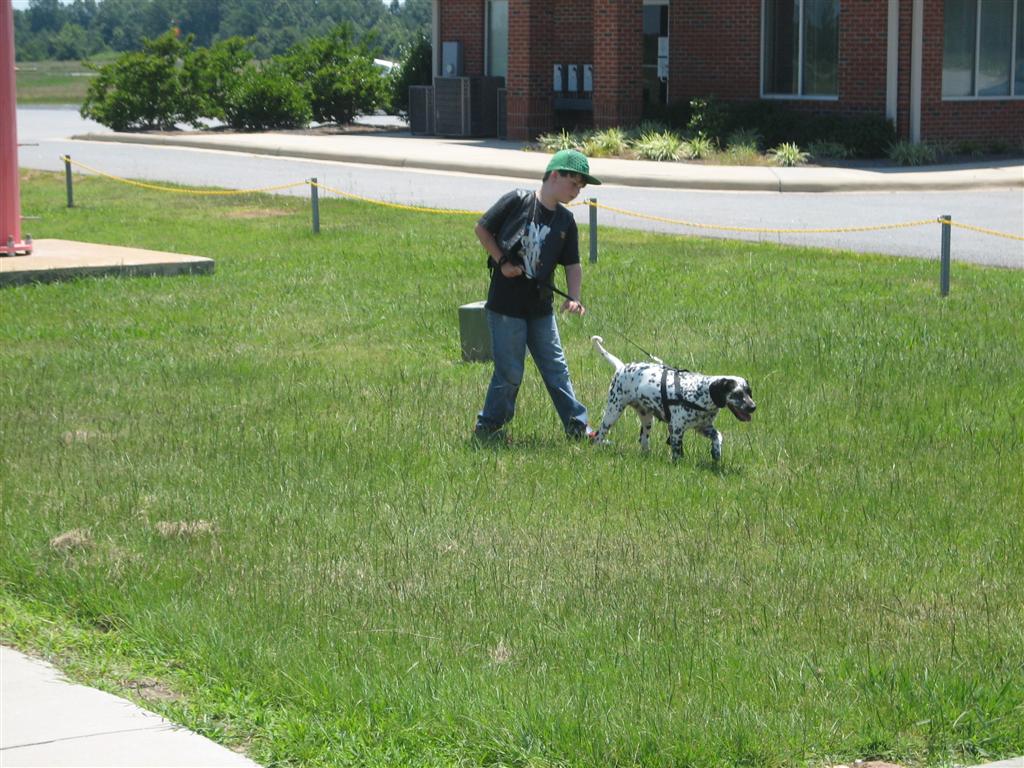
I don't really know which one is leading the other around...
Let's go get loaded up.
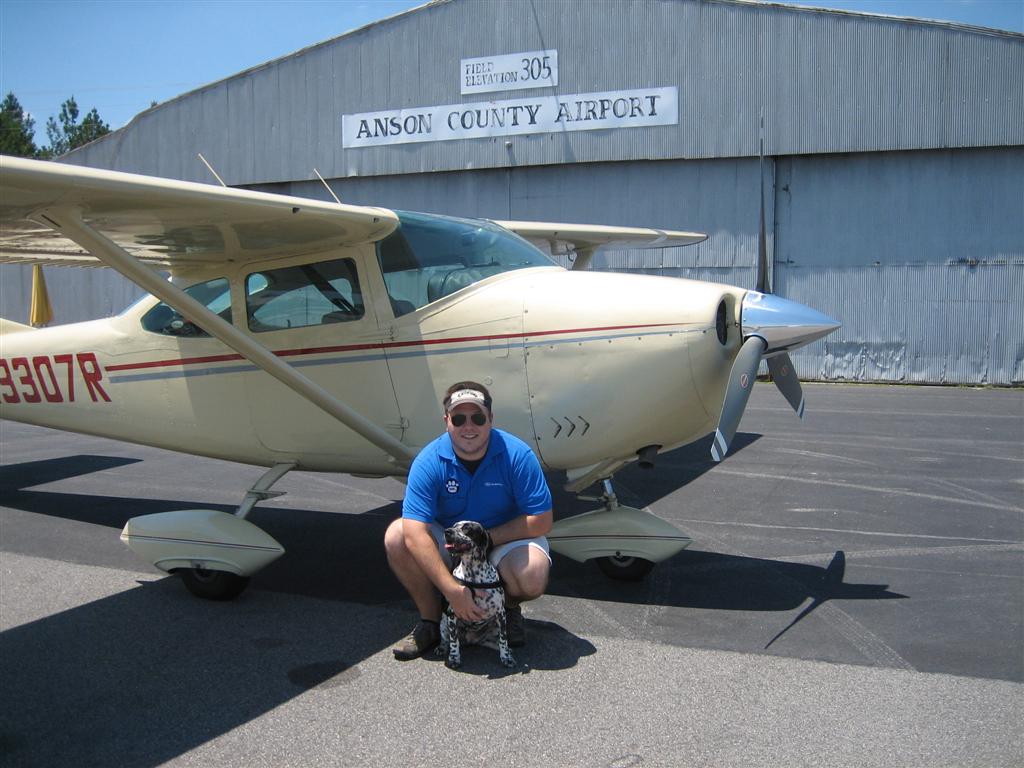
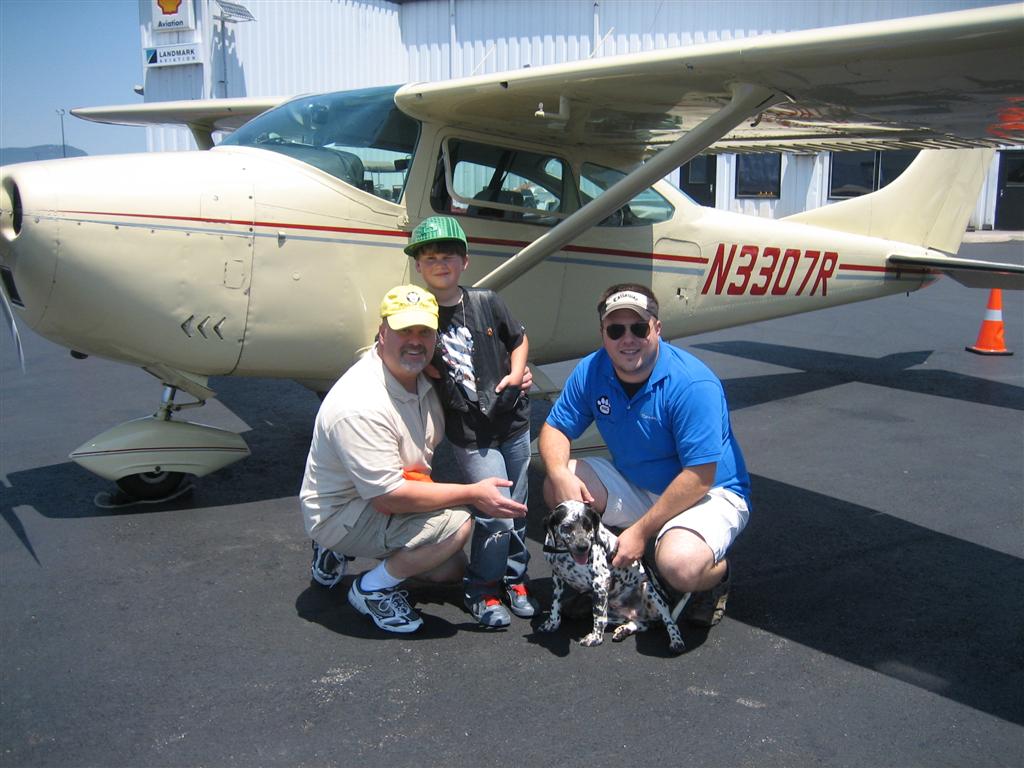
Of course, we have to do the requisite in-front-of-the-airplane pictures. This is Jon.
This is me.
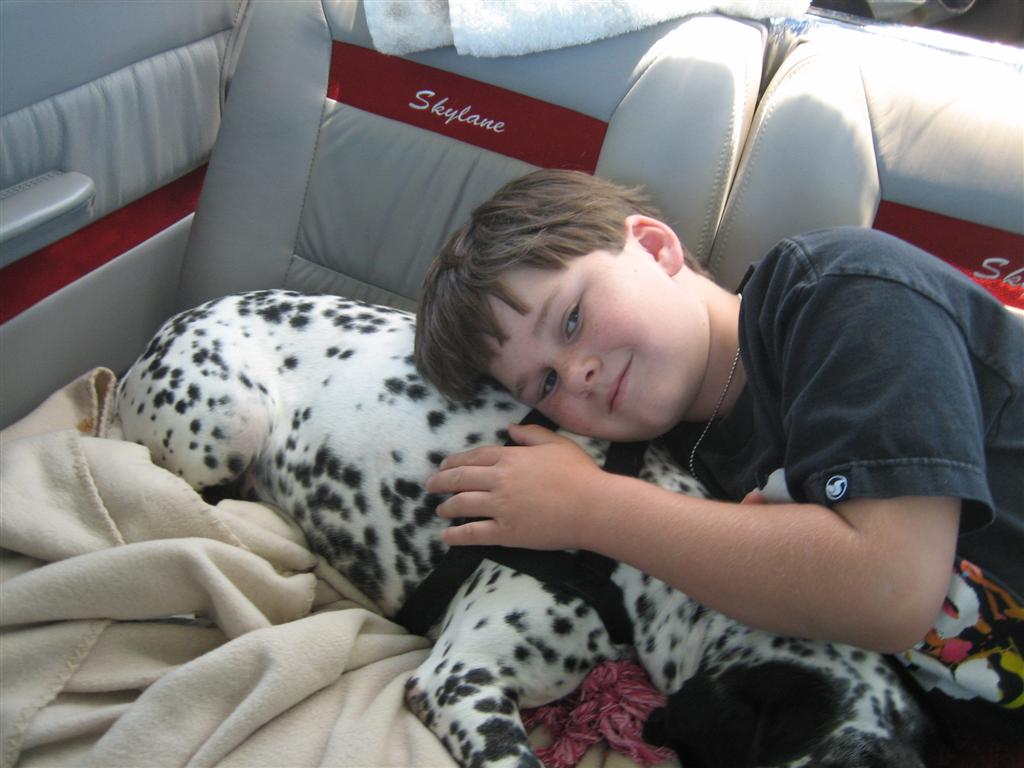
Jon's son and Phoebe, bonding.
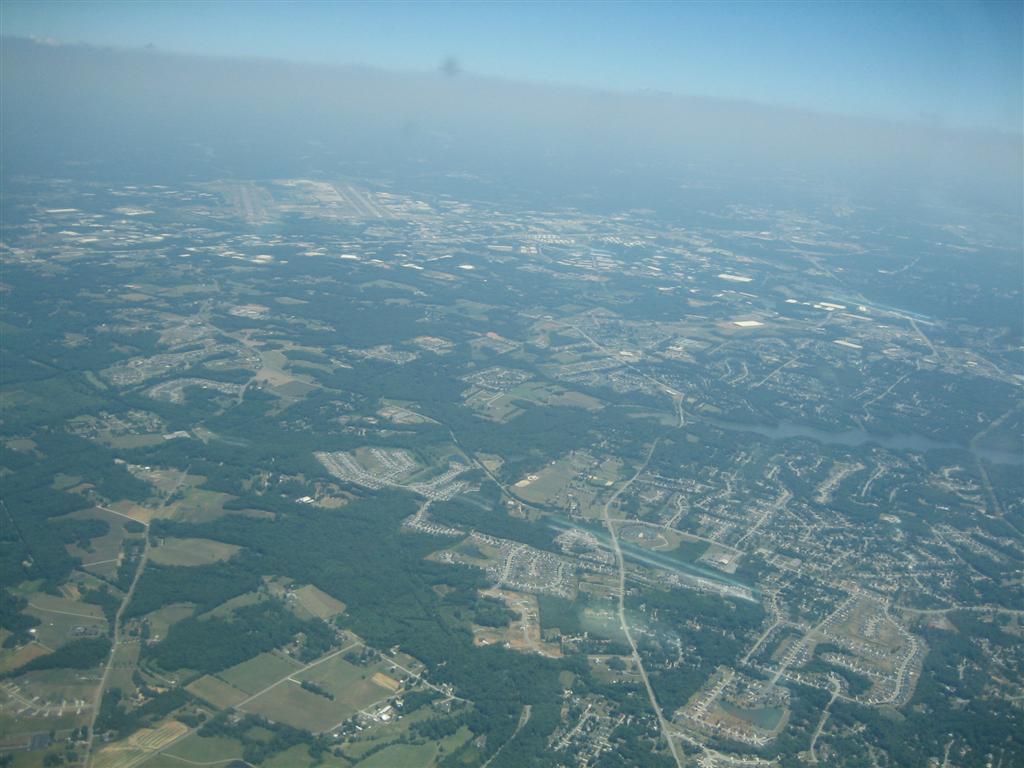
About halfway to Roanoke, we flew back over Greensboro (KGSO). I took this picture because you can see the parallel runways, and my house. Guess which one it is?
Our house is right.....there.
That's not cute at all.
Jon was sneaky and snapped this picture of me.
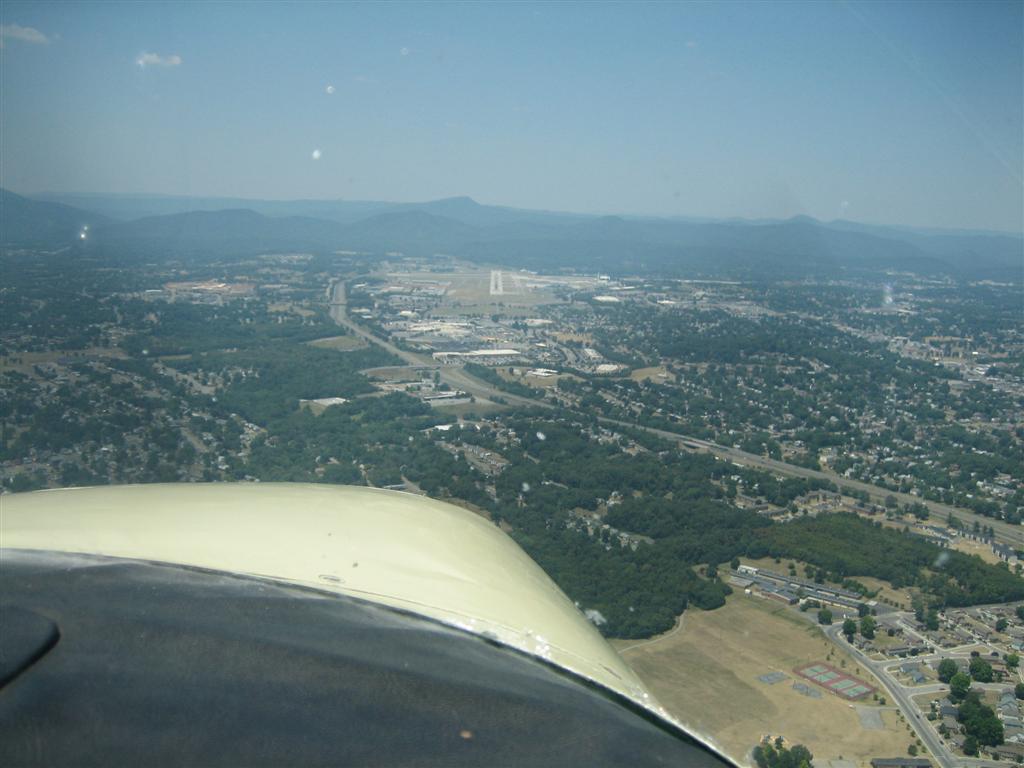
Finally, long final at Roanoke, runway 33.
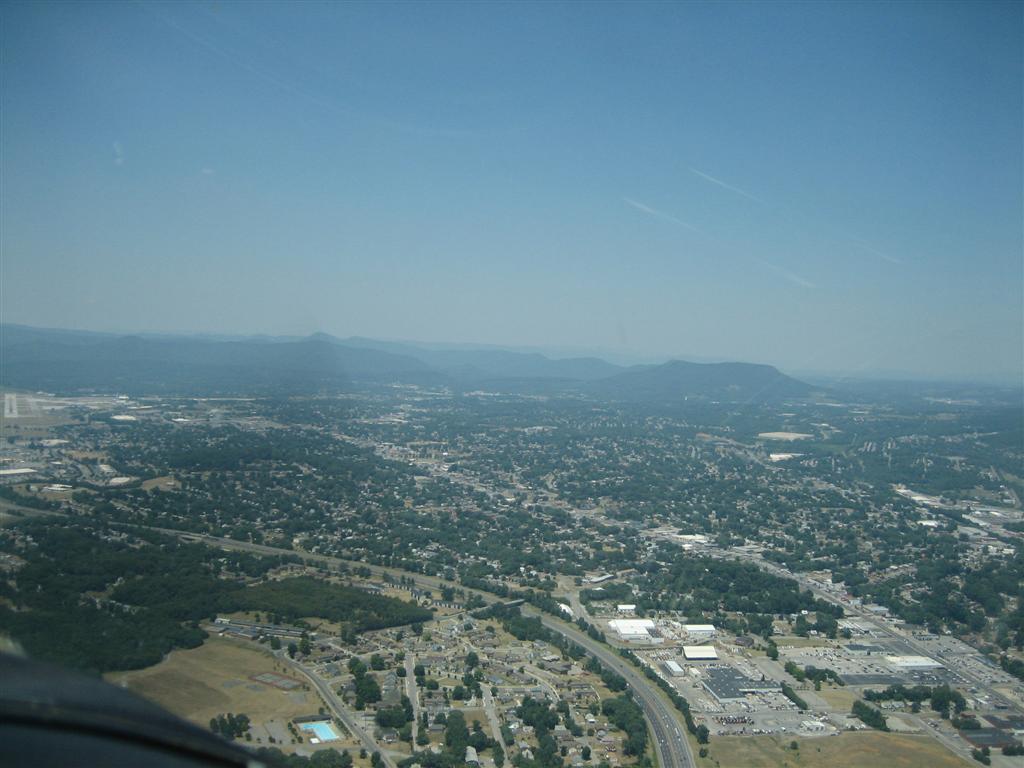
Roanoke is KROA, and is basically a very beautiful city. It’s set in a valley of sorts surrounded by mountains.
No runway 33 departures after dark. I can see why. (CFIT, pronounced "controlled-flight-into-terrain.")
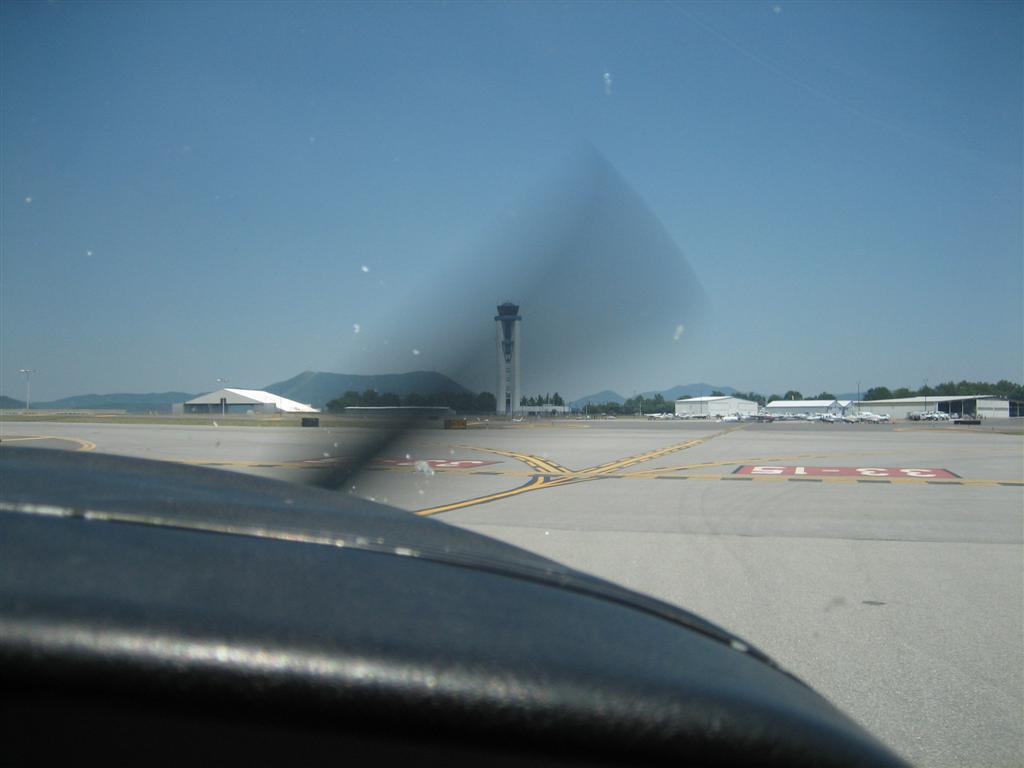
Leaving runway 33.
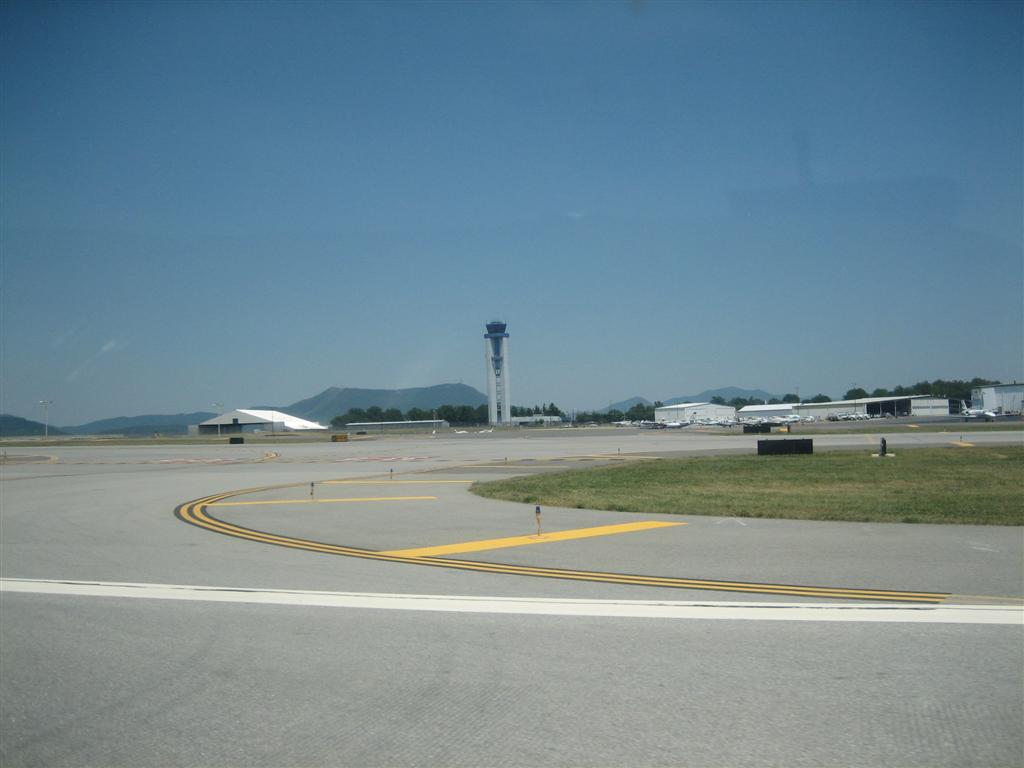
Where's Landmark?
Hey, then I grabbed the video function of the camera and grabbed this.
After we got out, Phoebe was interested in this little piece of grass. I’ll let your imagination fill in the blanks.
Phoebe, do you need a magazine?
That first spot wasn't good enough. Let's try the shade.
Jon's son and I took Phoebe inside and met another dalmatian, who came to greet Phoebe.
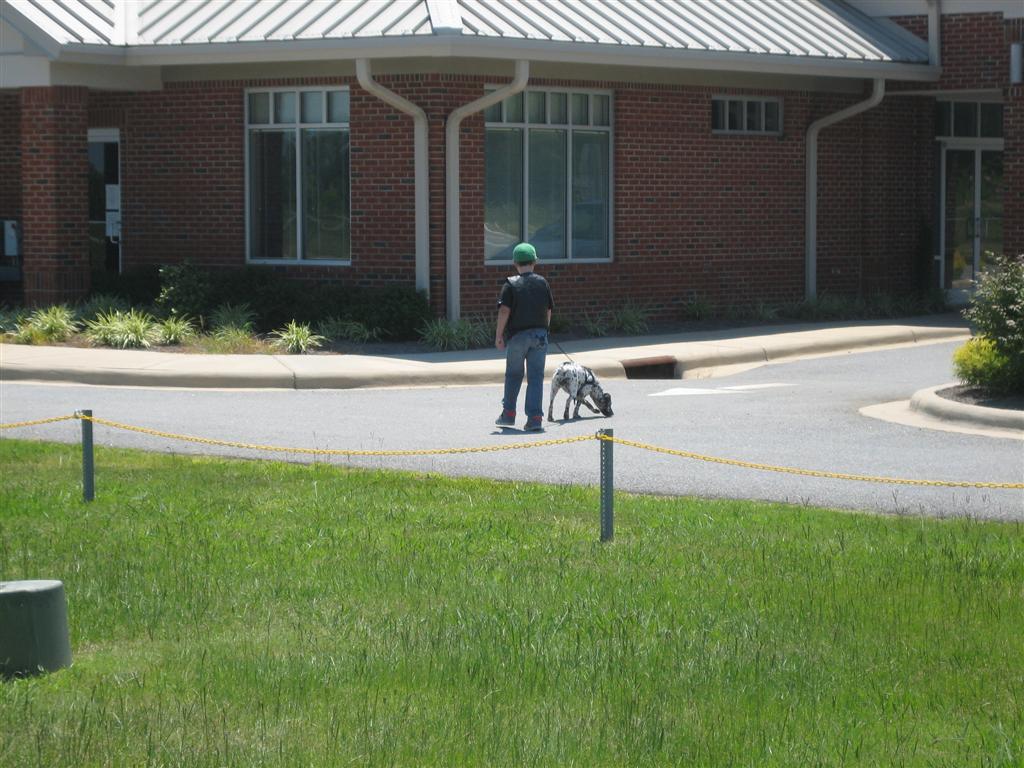
Then, we headed back outside to take our goodbye picture. If you decide to help these pups out, please remember that hot summer asphalt hurts paws, so make sure you don't leave them out on the asphalt for long. (A few seconds, and Phoebe was letting us know it hurt.)
Then, I got lazy with the camera on the way back to Shiloh (KSIF).
Final for runway 34.
Want another picture of runway 34?
Zoomed in.
So the most exciting part of the trip was on rollout when I felt something crawling up my leg….OH MY GOD THERE IS A WASP ON MY LEG! AAAAAAAAAAAAAHHHHHHH!
(swatting, stomping, screaming, etc.)
(dead wasp on the floor…breathing a sigh of relief.) Okay, I’m exaggerating, we are pilots, and we cannot be distracted during a critical phase of flight.
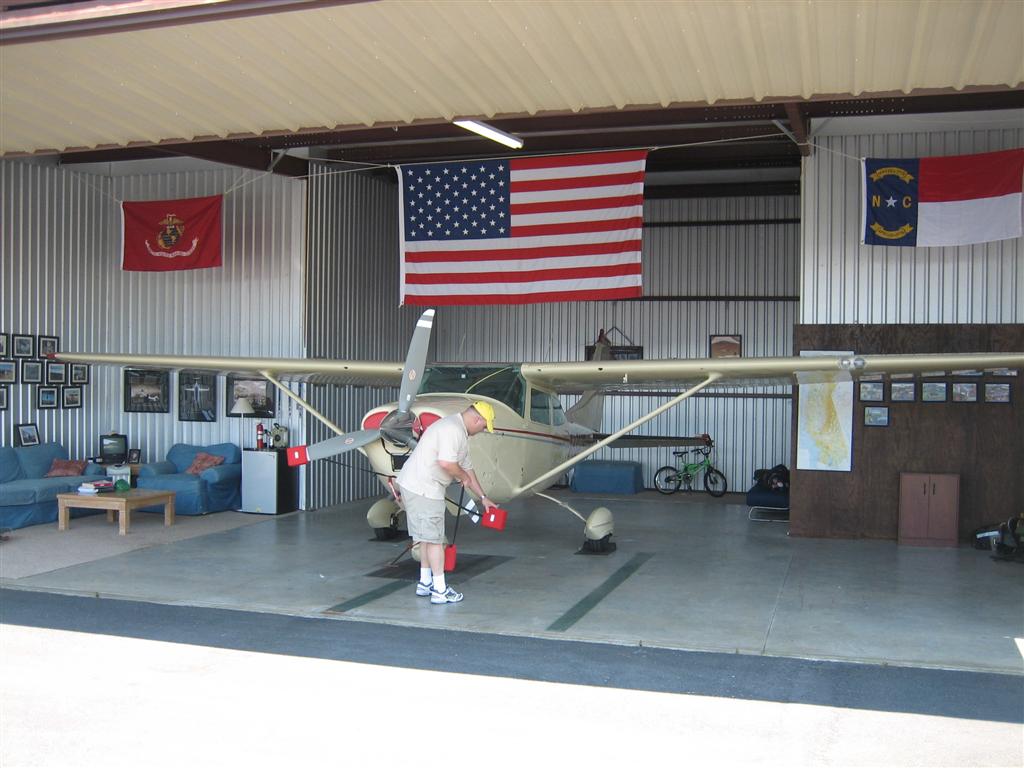
Here's the plane being tucked away. Can you say "man-cave?" (I pronounce it "jealousy.")
Whew. Good day. Back home, we decided we were going to stay in for the night, but not before cooking up a good all-american meal. I am a spoiled, spoiled man. Let me explain.
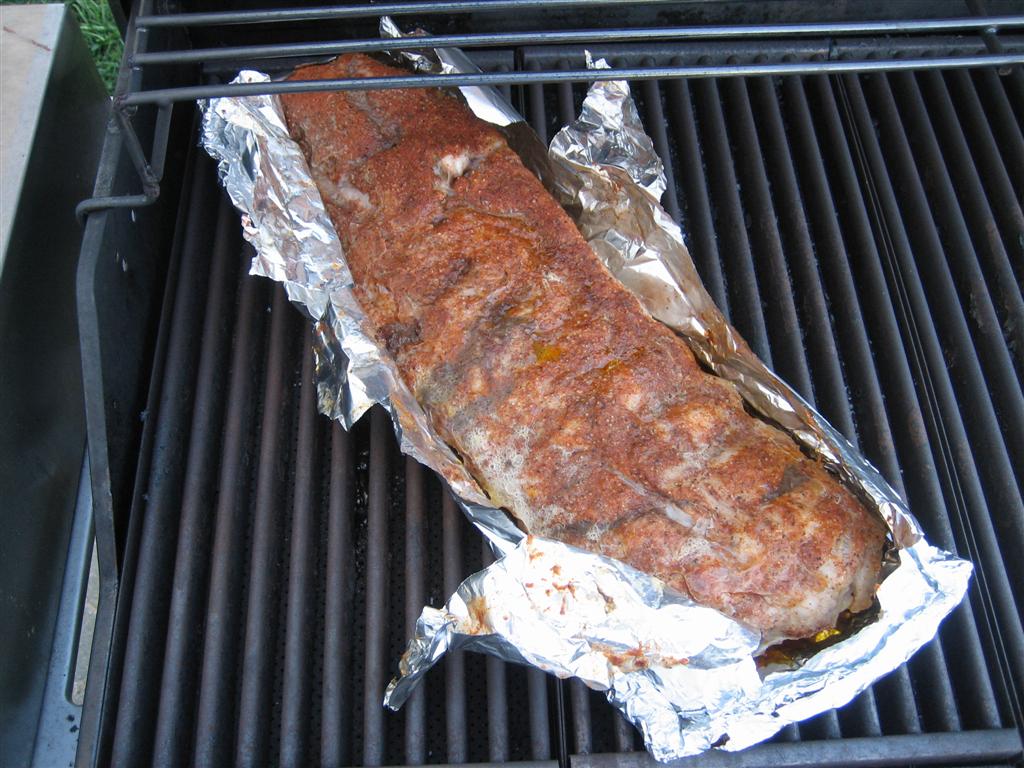
I grabbed some baby back ribs from the store and threw them on the grill (sealed in the foil) for 2 hours at 250°. After 2.5 hours, I opened it up and added some bbq sauce.
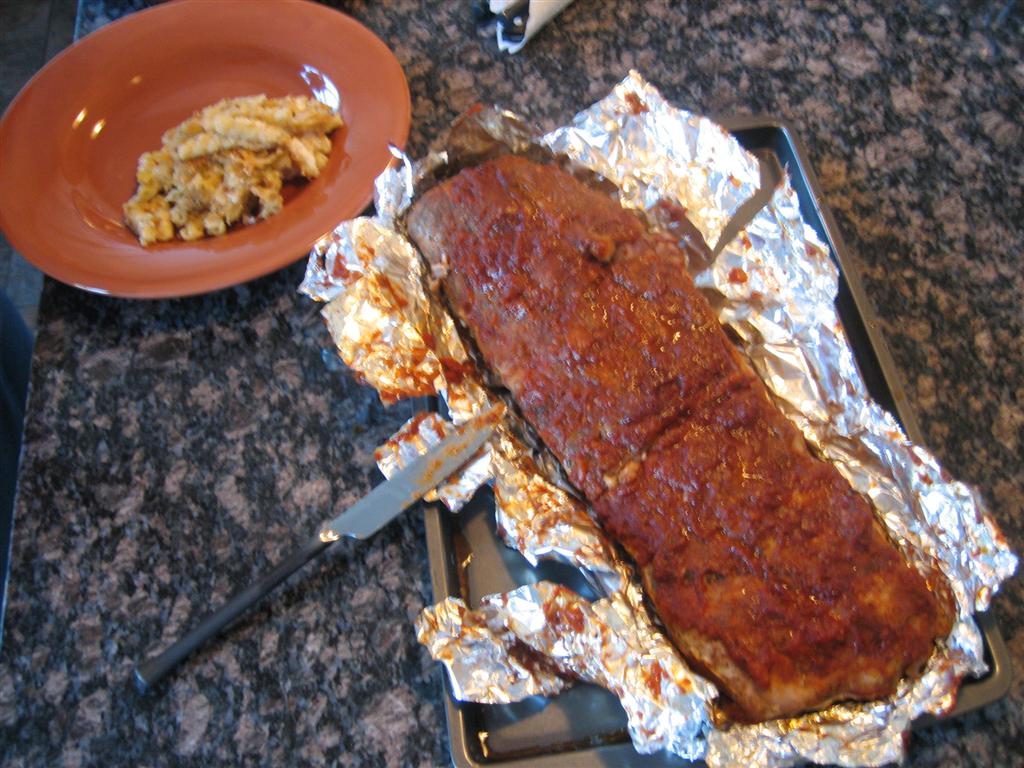
Here's the bbq sauce added. Keep in mind, this is homemade bbq sauce. Dijon mustard, tomato paste, worcestershire sauce, molasses, brown sugar, salt, pepper, sauteed onions, garlic, red wine vinegar, lemon juice, etc., etc., etc.)
Then, I snuck inside (I was supposed to be manning the grill) and grabbed a picture of the homemade mac n' cheese.
This looks horrible. Just kidding.
All I can say is "Mmmm."
MMMMmmmmm.
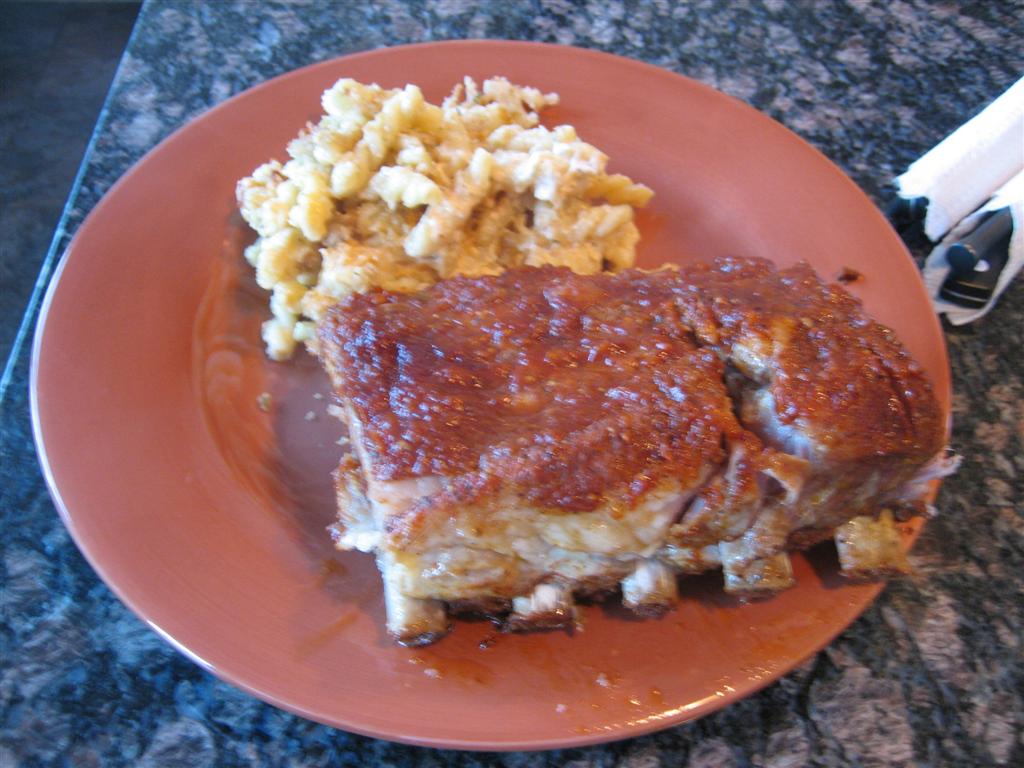
Finally, dinner is served.
MMMMmmmmm.
Now all we need are some explosives to celebrate the 4th of July. Have a good holiday, everyone.
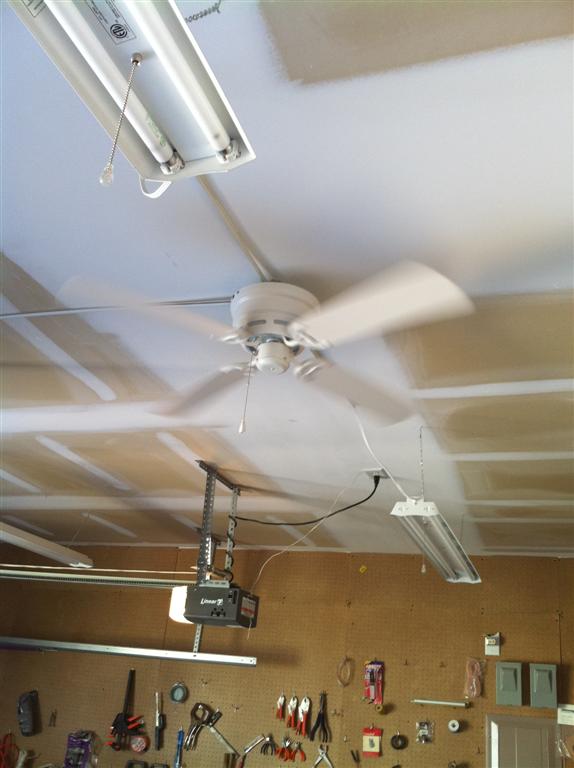
Even though it was my day off, I spent the day trying not to get stung by bees (mowing the forest behind my fence) and meeting the girlfriend for food. After that, I managed to waste an hour or so installing a fan in the garage. Recently, it’s been brutal in the garage, so this morning, while I was walking around Lowe’s, I saw a small ceiling fan for $17. I couldn’t say no. It was harder to install than our nicer fans inside (no little quick-disconnect fan blades or anything), but in the end, it makes me cooler in the garage (double meaning intended).
Huzzah!
Okay, back to work. I think you guys might have seen this picture yesterday, but here it is again…the little riblet I made after drilling.
Looks good. I am proud of this little guy.
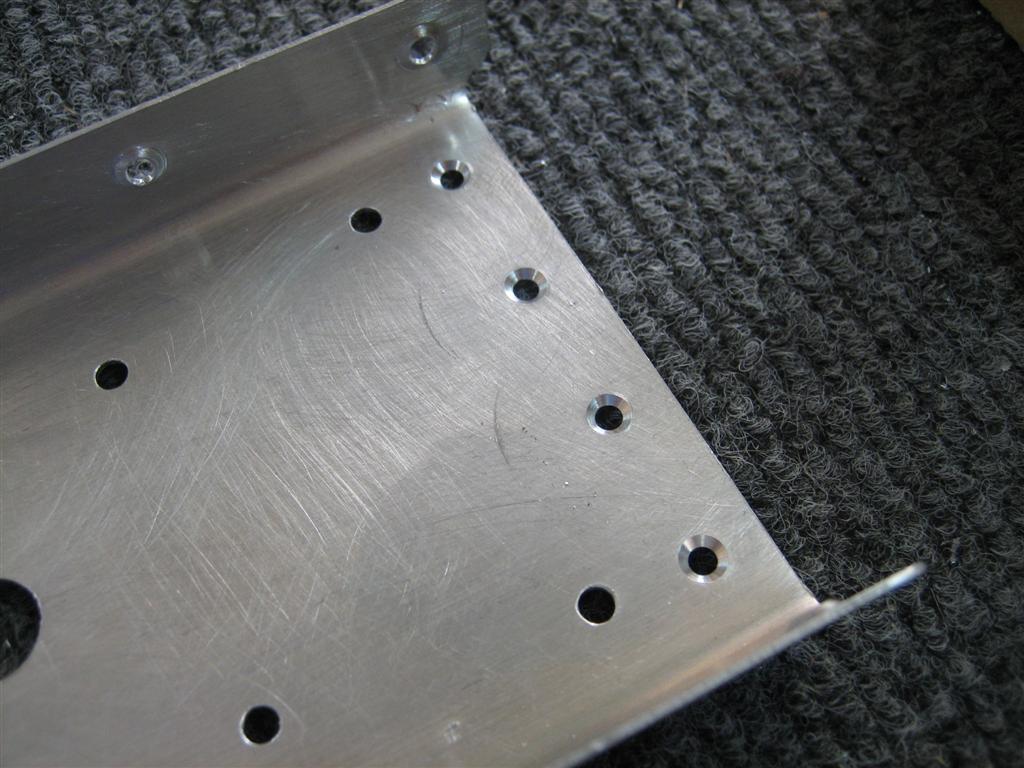
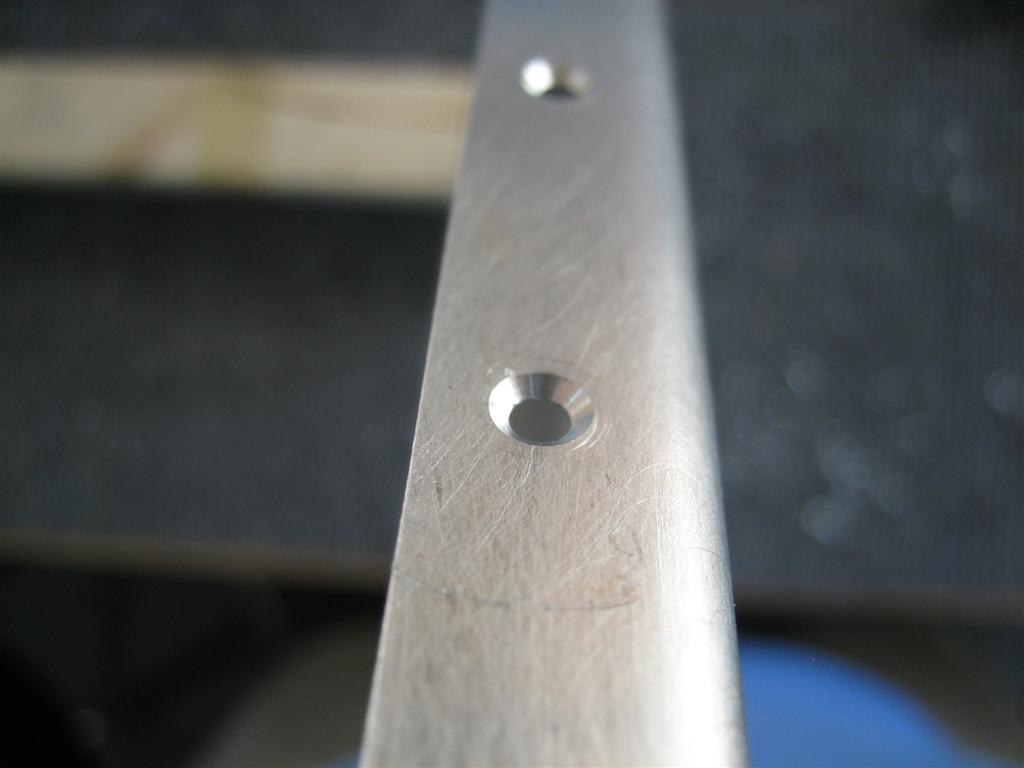
Then, I moved over to the spar. These four holes get countersunk because they attach E-705, but the elevator horn has to sit over the rivets but still flush against the forward face of the web.
Beautiful countersinks.
While I had the countersink cage set up, I pulled the trim tab spar out of the elevator and started on it.
Countersink the top flange, dimple the bottom flange.
Aren't these countersinks nice?
After countersinking, both the tab spar and the left elevator main spar were scuffed (more), edge-finished, and then got a trip inside to the sink for a quick rinse before coming back outside to eventually get a coat of primer.
I'm getting close to riveting something, watch out!
Anyway, two very productive hours, and I think I can rivet some reinforcement plates tomorrow if I want. Wuhoo!
Okay. Today was a pretty productive day. I had taken everything apart, then realized I still had some more fitting to do on the tab, so I put it all back together again. Before that, though, I thought and thought about what to do about the two holes on the right side of the picture. These are for the fiberglass tips, and they are supposed to be matchdrilled later, after the counterbalance skin is installed as a lap joint underneath. How can I deburr parts that are riveted together if I drill through both? Maybe it’s not a big deal, but I decided to drill them to #30 now (for #6 screws).
Two holes the right before drilling...
...and after.
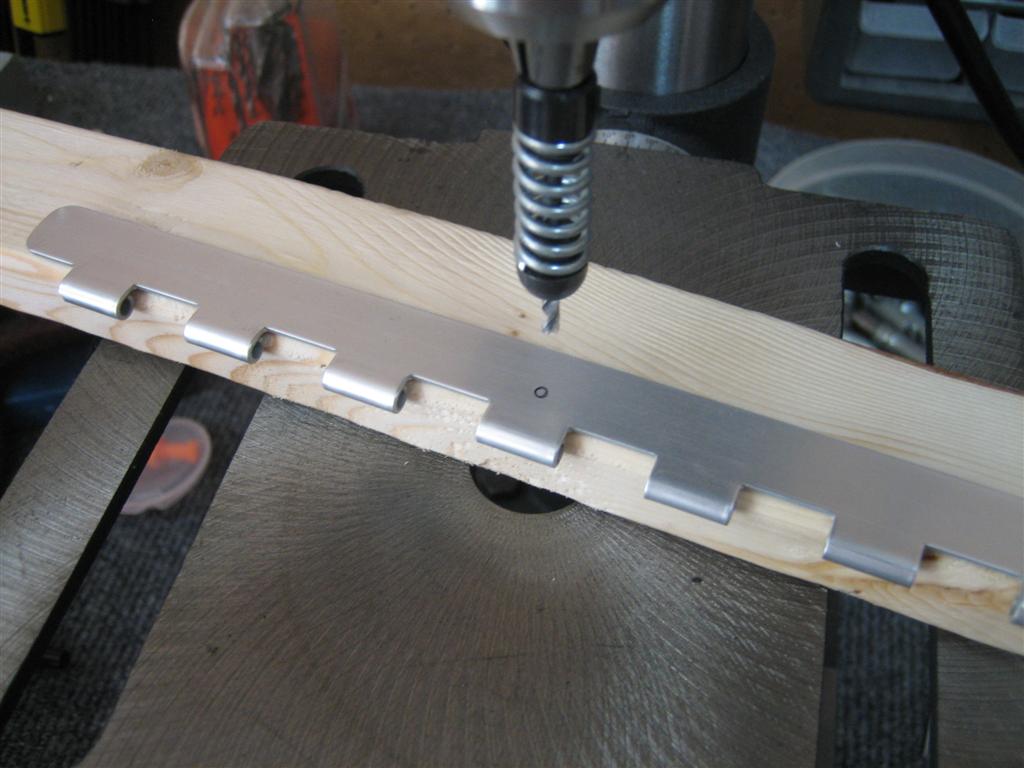
Then, I was thinking ahead about the safety wire trick you have to do with the hinge pin. Why not drill that now, so I can deburr before priming?
I drilled this just larger than 0.060, which is one of the biggest safety wire sizes.
Next, time to deburr and dimple the left elevator spar.
Me dimpling.
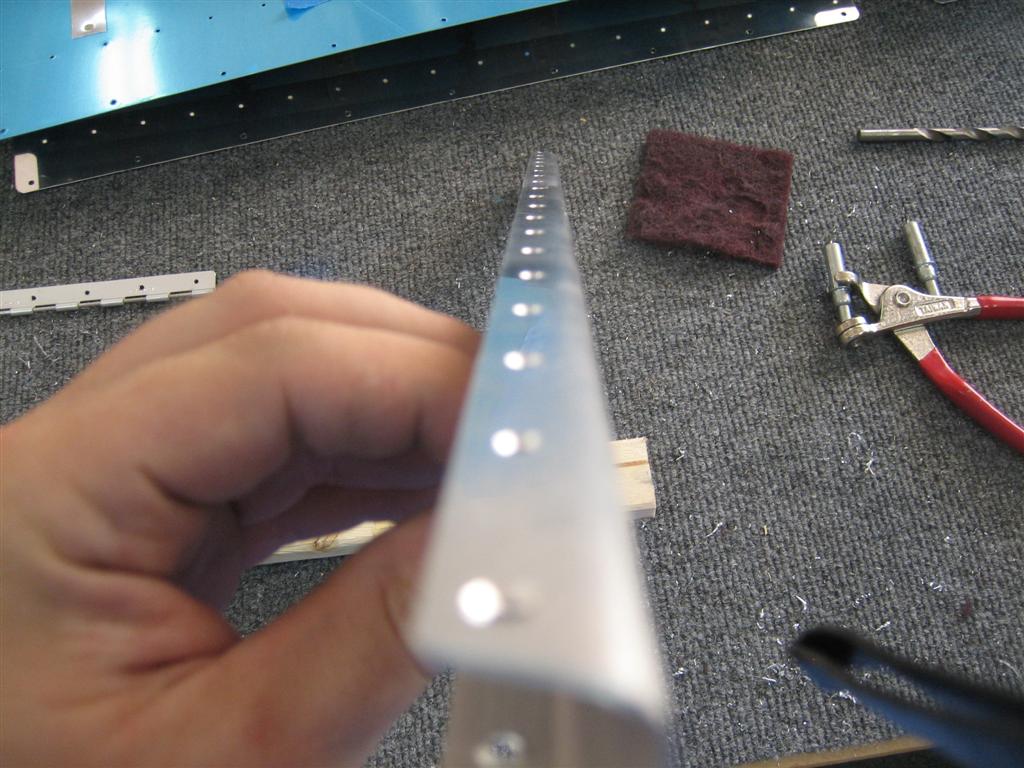
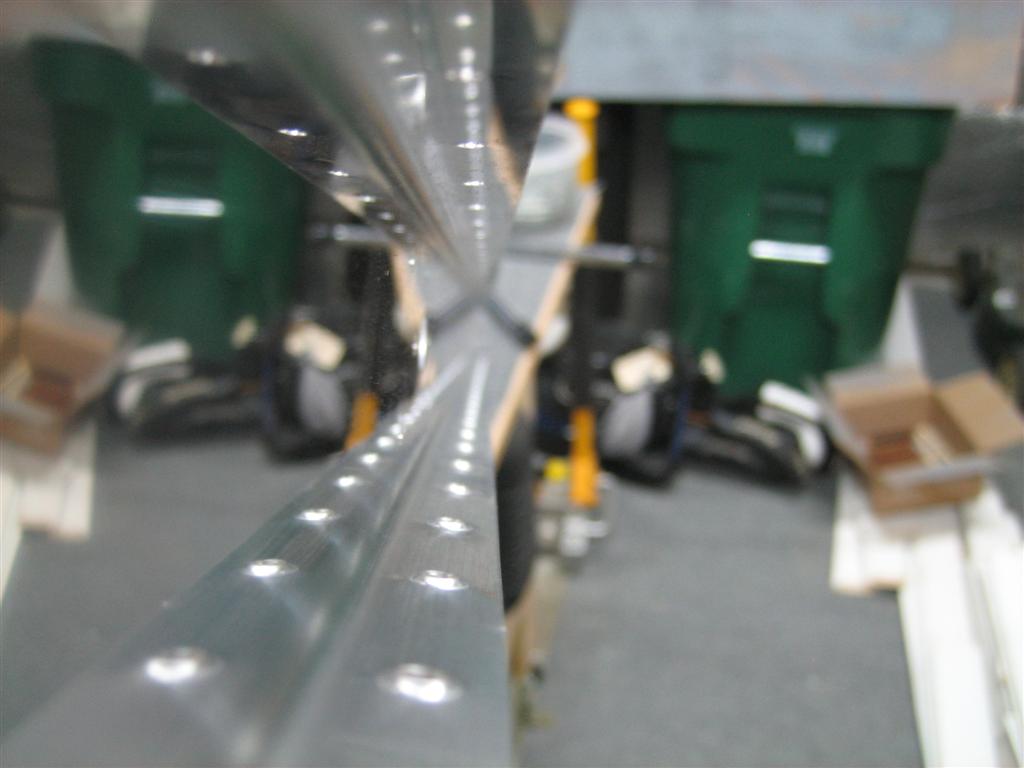
And after everything was dimpled, a nice picture down the spar of my blurry recycling bin, golf clubs, and motorcycle jack. (No motorcycle anymore, but the jack comes in handy to lift the corner of a car when a tire needs to be taken off for one reason or another.)
Spar! (I'm tired, so we are down to one word captions for the day.)
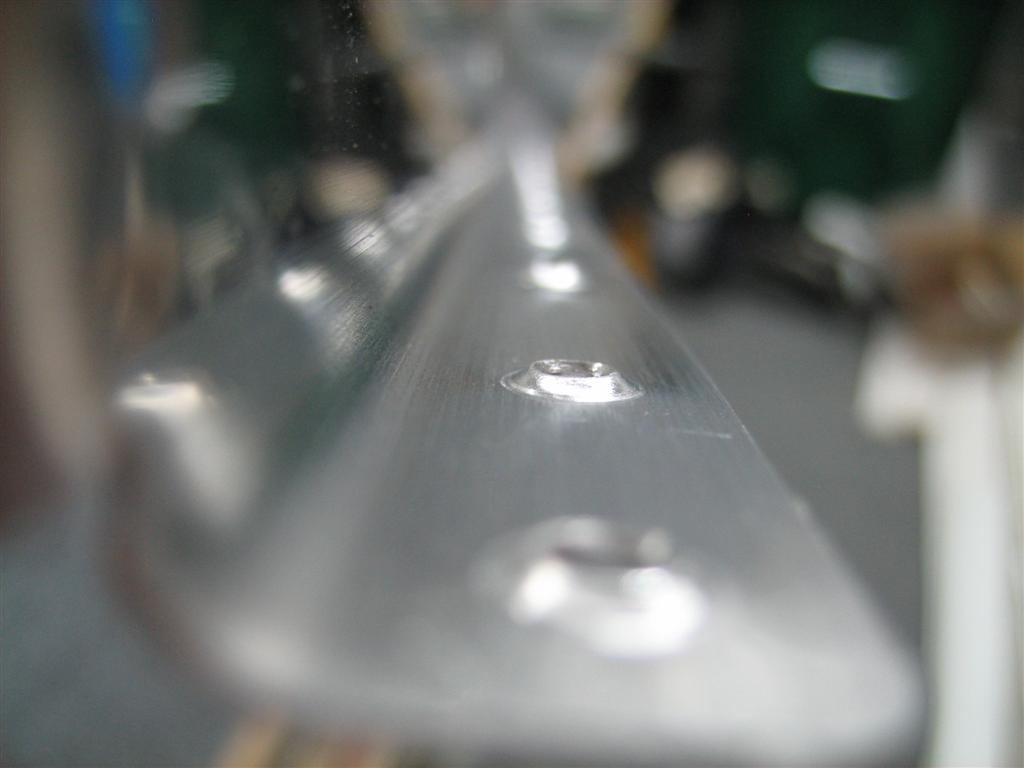
Another shot of the same.
Dimple! (Wouldn't it be annoying if I everything I wrote ended in an exclamation mark?!)
After edge finishing the two hinge reinforcement plates, I shot them with primer.
Primed!
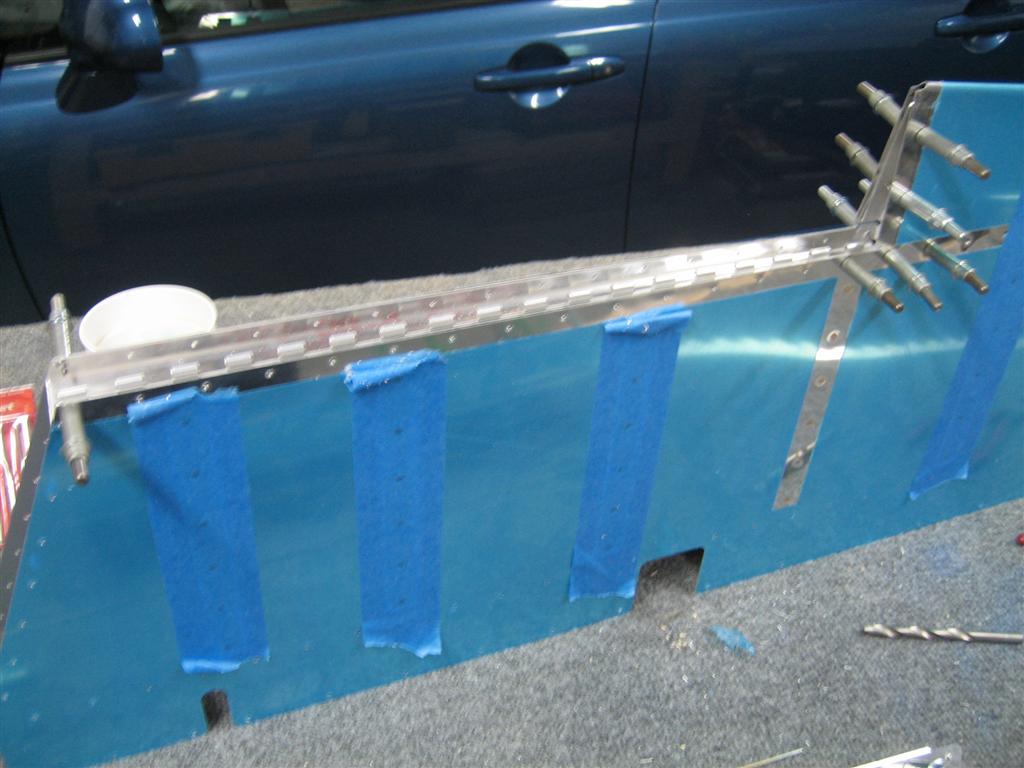
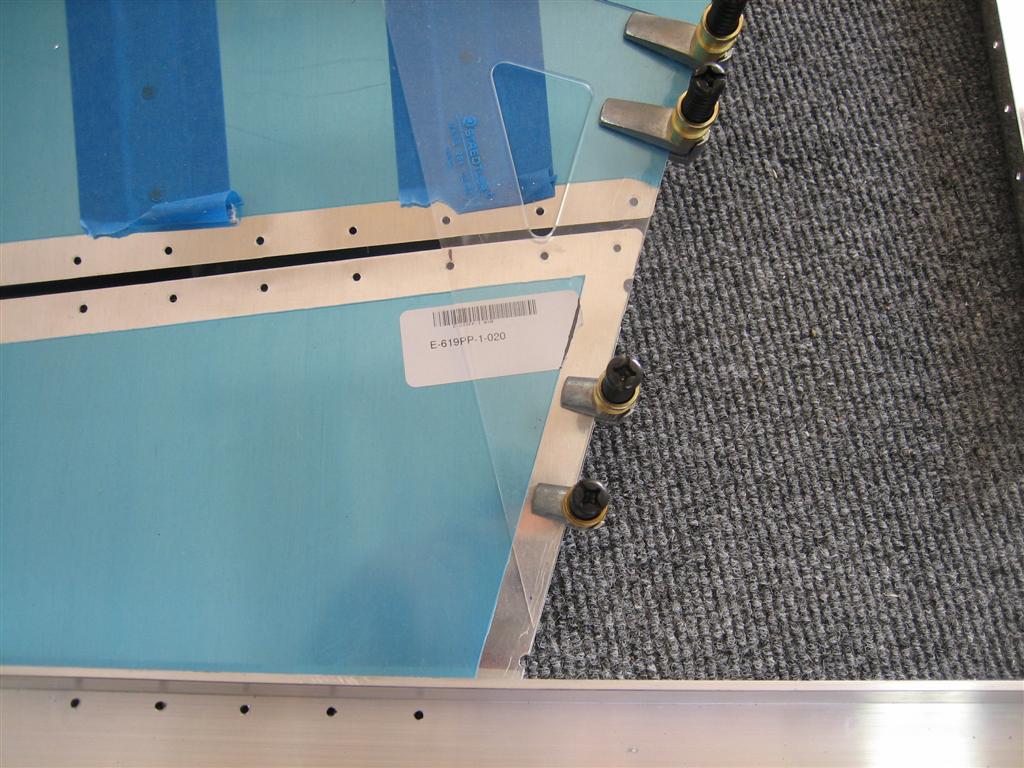
Then, my attention turned back to the tab. I’ve clecoed the elevator half of the tab hinge back in, and on the right you can see my drilled riblet!
Drilled riblet! (Okay, I've had enough of the exclamation points.....!)
Here’s a better picture. I basically drew a line perpendicular to the hinge line up from one of the holes along the trim spar, then spaced them at 1.5 and 3 inches. That spaced everything evenly, and gave me plenty of edge distance all around.
Don't look at my edges, they aren't finished yet, but you get the idea.
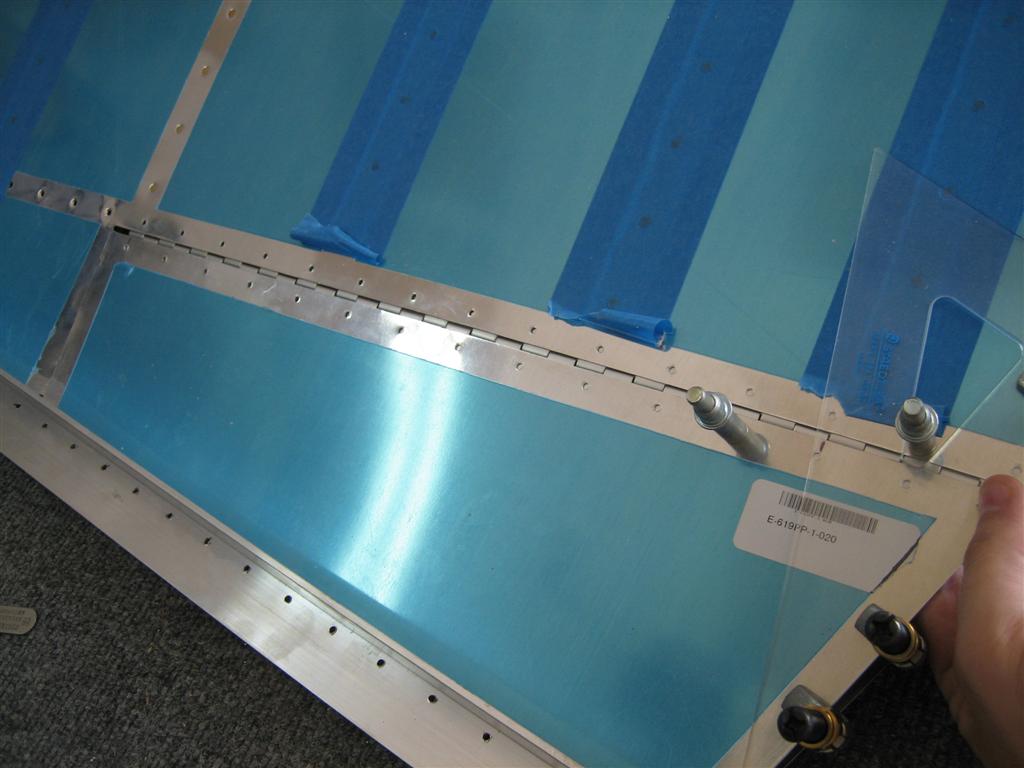
Then, I stuck the tab on and inserted the hinge.
As some would say, "Easy Peasy."
Other direction, just for kicks (not as much deflection due to cleco interference, but again, you get the idea).
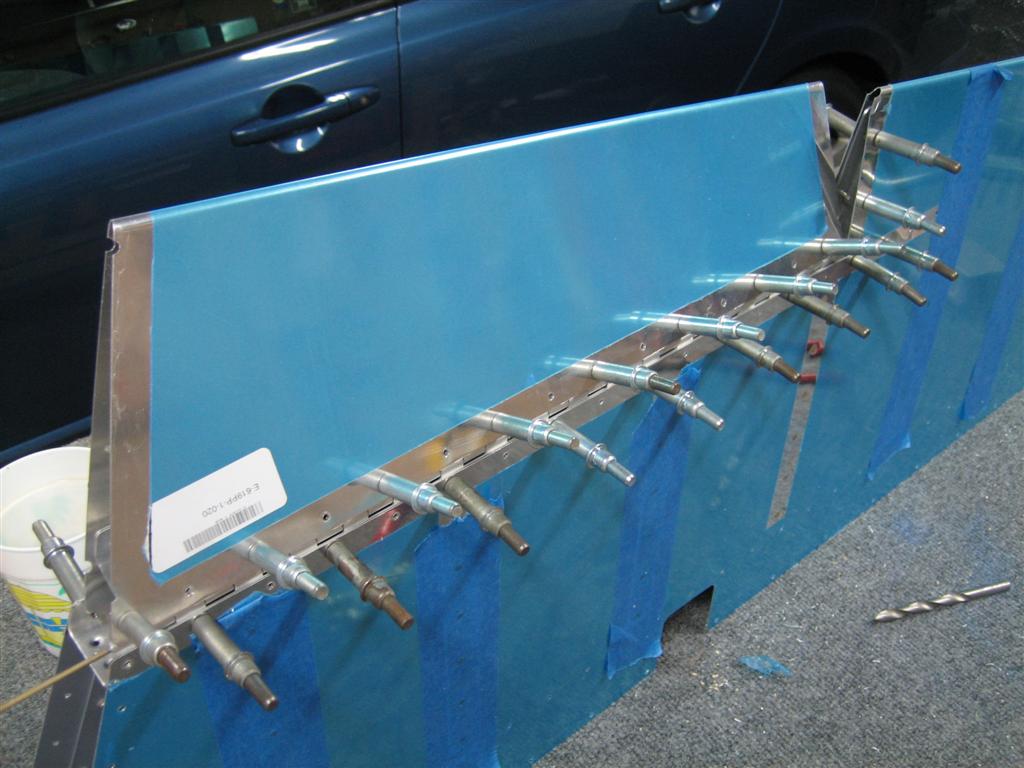
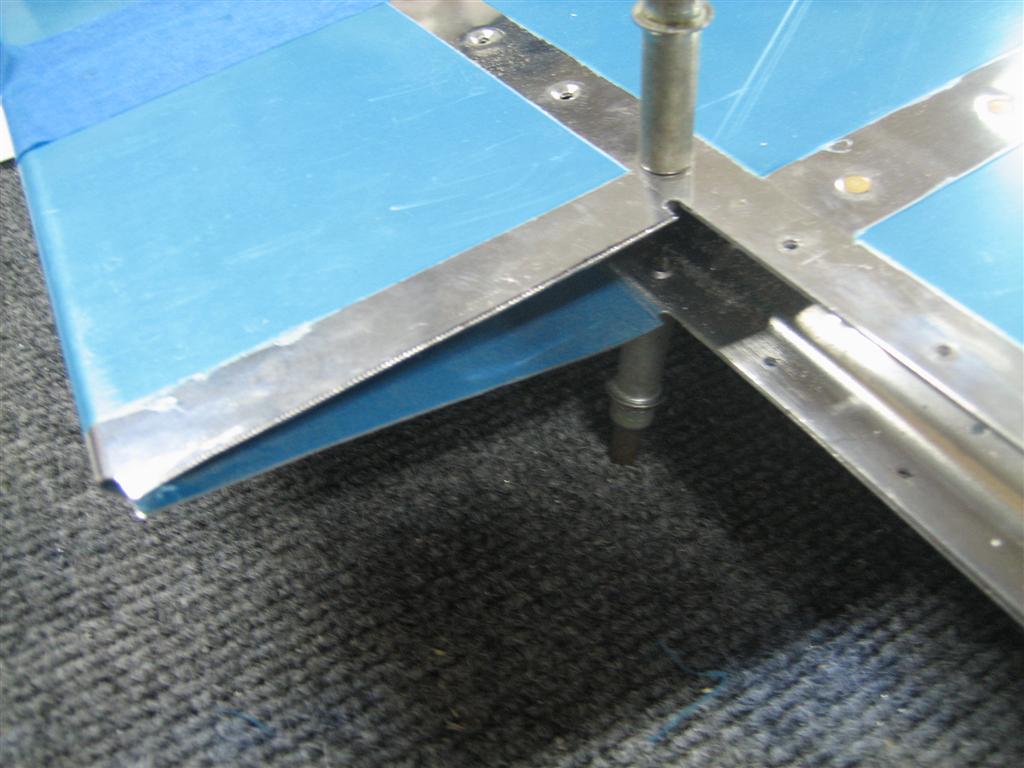
Because I bought a longer section of hinge to replace my bad first attempt, my hinge pin was long enough to actually fit (Van’s says they will send you the real one (because it needs to be longer than 18″) in the finish kit.
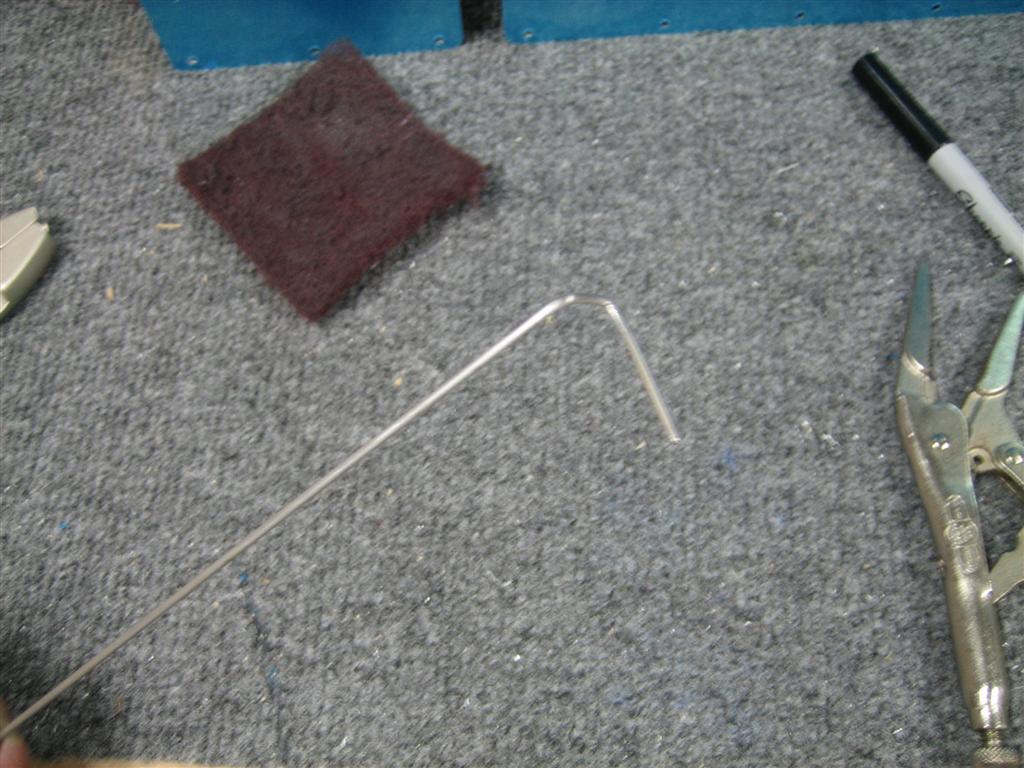
I got to bending.
After more bending, I ended up with something like this.
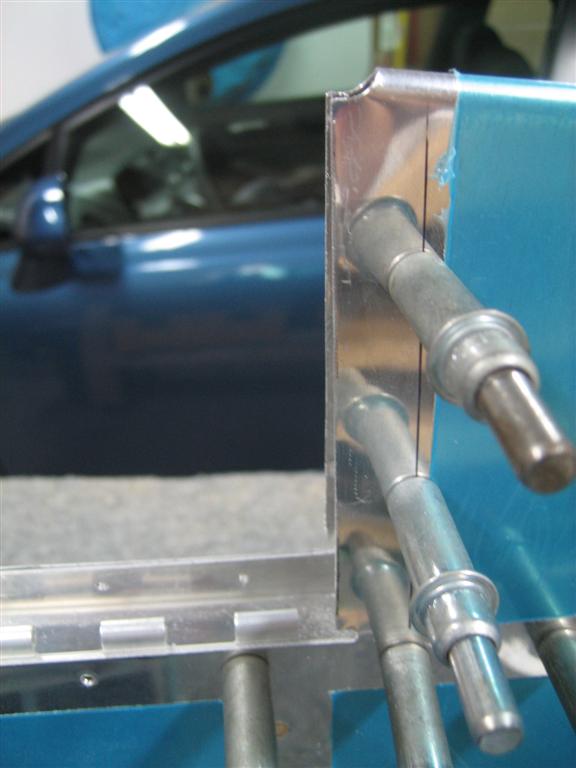
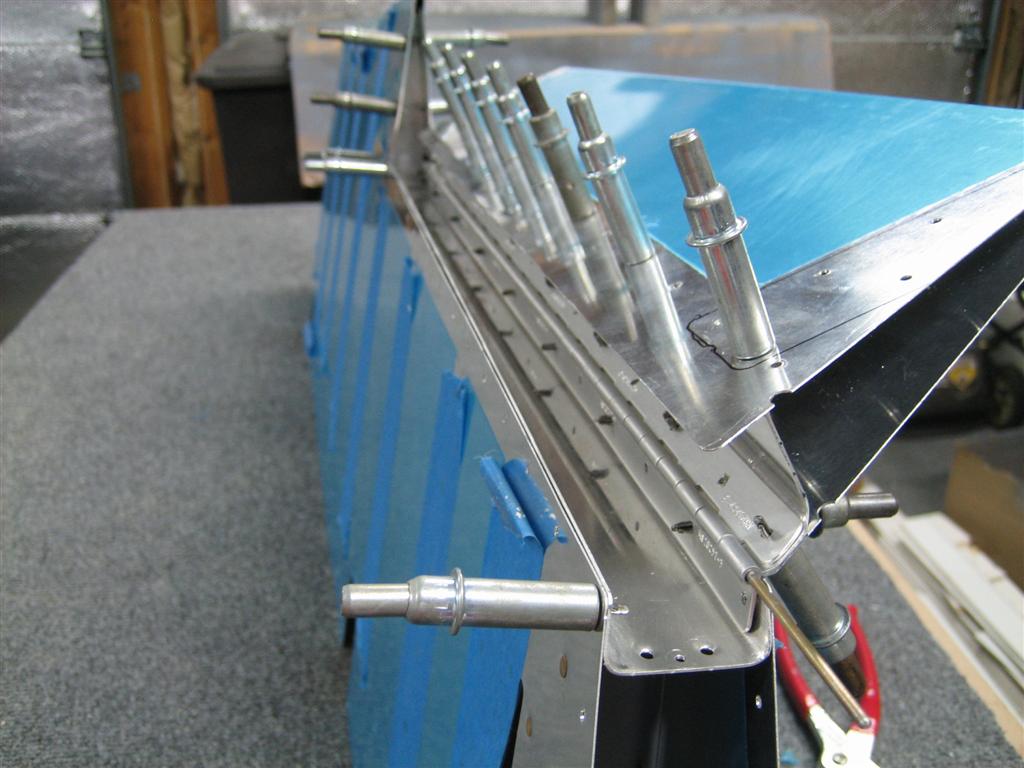
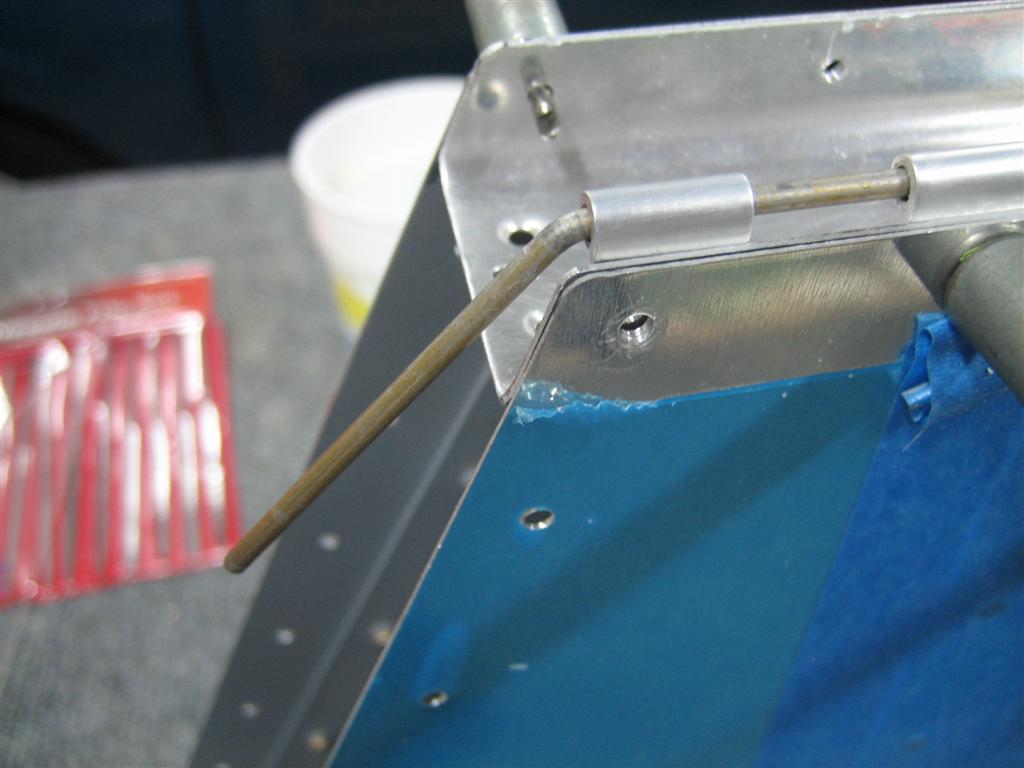
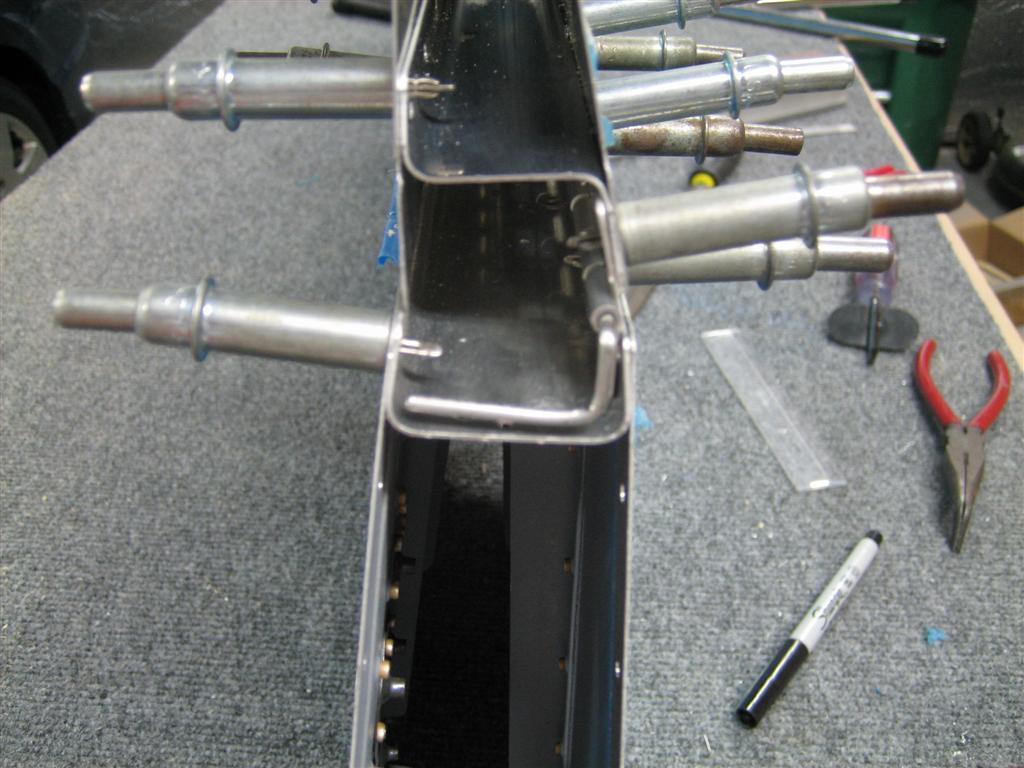
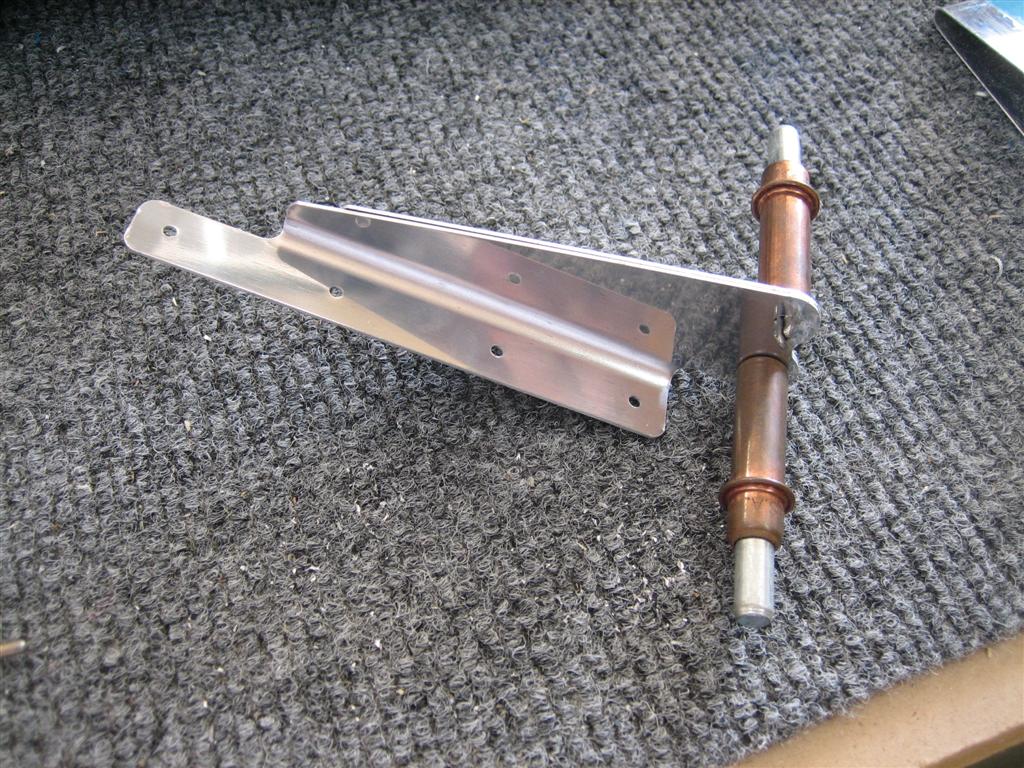
Ooh, isn't that pretty! The safety wire hole I drilled earlier is in the middle there, and will allow me to safety wire this hinge pin to the spar so it won't COME OUT IN FLIGHT!
Then, I figured out how to do video. They speak for themselves, but keep in mind that while my gap is intentionally small, I still need to edge finish, which will open them up.
Another video, this time a little closer. You can see I am pushing and pulling left and right to make sure there is no interference even with the small amount of play in the hinge. I think I am okay, but this will probably open up a little after edge-finishing.
Captain’s Log: Day 2. Great success with the riblet.
So after yesterday’s wasted (I know, it wasn’t really wasted) time making two FAILURES of riblets for the elevator trim cutout, today’s worked out much better.
I had actually woken up at 3am in a cold sweat; “Oh my gosh, I need to tie the front of the riblet into the elevator trim spar.” (Warning: Cold sweat may be exaggerated.)
Anyway, I got out the jigsaw with a fine metal-cutting blade and found that this technique was far superior to the snips, which leave little ridges along the cut.
So, more measuring, tracing, and drilling/cutting.
This is try #3.
Then, after judiciously edge finishing (which is a must before bending aluminum…ask me how I know.)
Okay, Those bends are pretty good, let's work on the front.
Hey pups! (I took about 15 pictures of them for your viewing pleasure, but this is the only one that wasn't too blurry.) Jack and Ginger, curious about the airplane.
Also, I had picked this surface conditioning kit up at Harbor Freight. 1-inch diameter, and blue is finer (I think) than maroon.
This worked pretty well for quick finishing. I want to try the larger sizes, too.
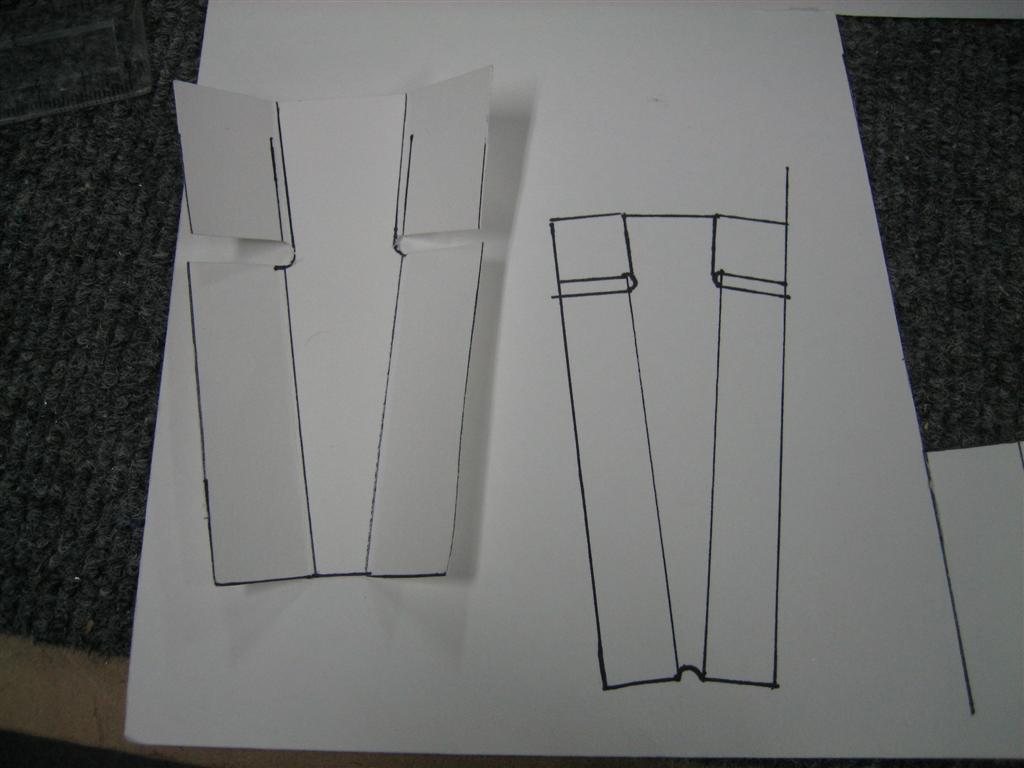
You can see from the paper template on the right that wasn’t going to tie in to the spar. I cut out the corners on the piece to the left pretty roughly.
Old template on the right, current work piece on the left.
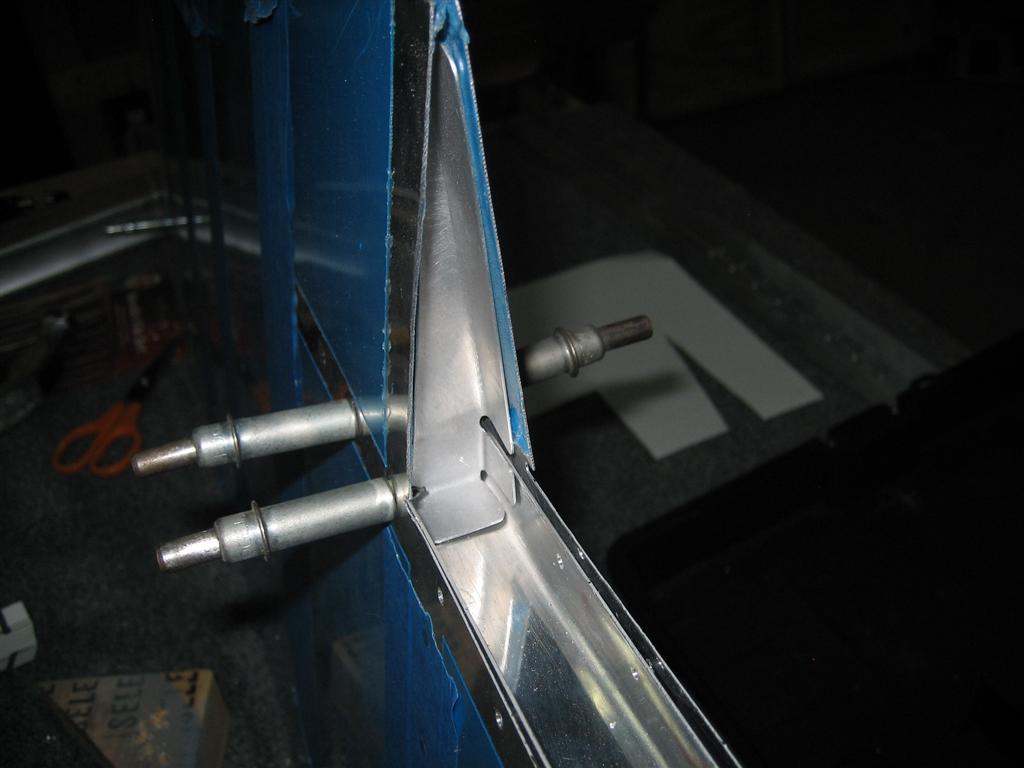
So then I edge-finished and bent the three tabs that tie in to the spar. Because there was a dimple already in the bottom flange of the spar, I went ahead and drilled and dimpled that one ear on my new riblet.
How do you like the nice sharp picture of my set of needle files and permagrit block? (And very blurry pic of my riblet being dimpled. The yoke and die just barely fit.)
Here’s the almost finished product.
It's kind of cute.
So it doesn’t fit “perfectly” in the openeing, but this is close enough that I don’t need to remake it. I’ll tweak it a little and reduce some of those gaps you see in the coming days.
Pretty darn good.
The big gap on the left is actually the elevator skin bowing locally that I need to fix. The riblet is actually straight.
I'm so happy this one worked out.
Maybe later this week or this weekend, I’ll get this tweaked and drilled/dimpled. Then, I can move ahead with prepping the elevator for prime and riveting.
After the huge success last night, I was ready to move back to the elevator so I could get to prepping and riveting. First thing tonight was to take some small measurements, then transfer some lines to a piece of cardstock to create a template for the riblet I need to create. (Notice the title of the post is …Day 1. There will be multiple days of this dance, unfortunately.)
Here’s my first try at a template, and then the adjusted second try before being cut out.
I don't know why my first try was so big. Must have measured wrong.
Here’s a shot of the space I am trying to fill. It’s not edge finished here, but will be after I get a riblet created.
Left elevator's trim tab cutout.
Ginger was being bad inside, so she was banished to the garage (“go annoy your father”). Ha, little did we know that there was sawdust that she could be rubbing her face in. Serves us right for trying to punish her.
She's not cute at all.
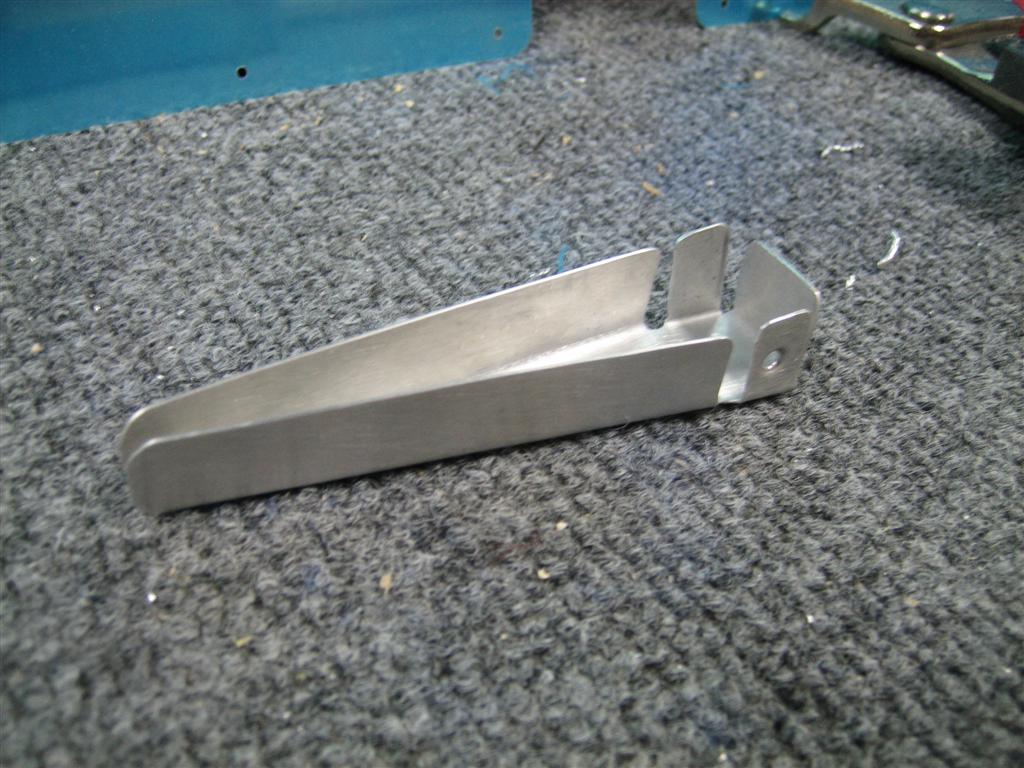
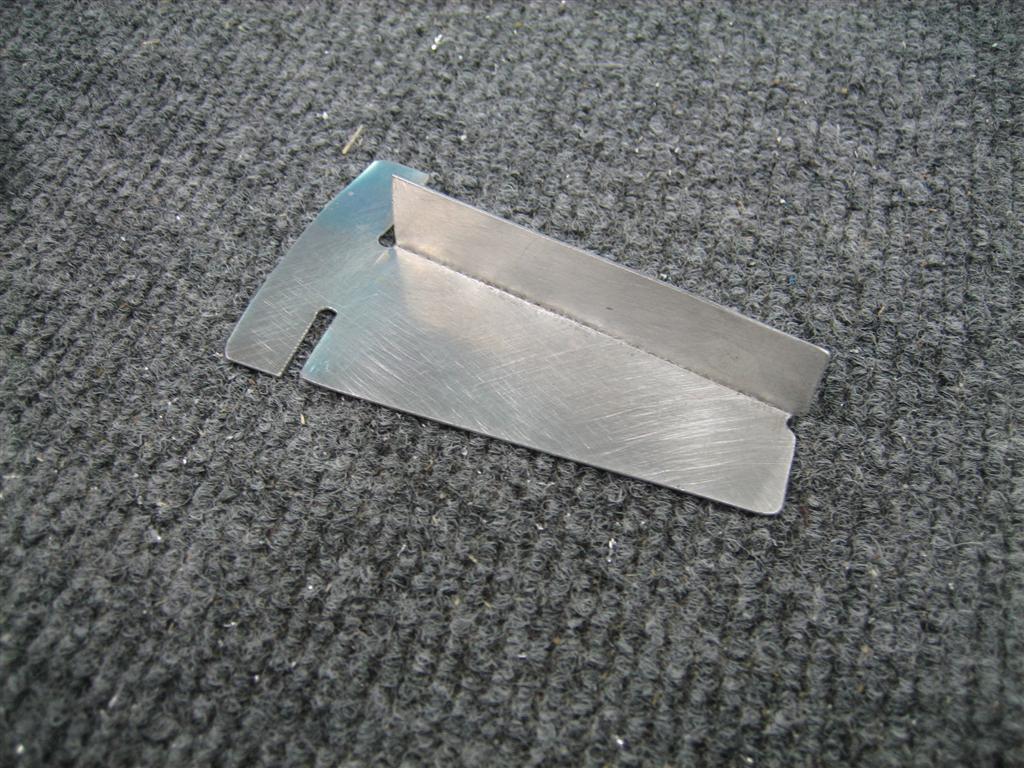
So this is actually my second aluminum riblet after bending one of the flanges up in a vice. I think that edge is too sharp.
It's looking good so far.
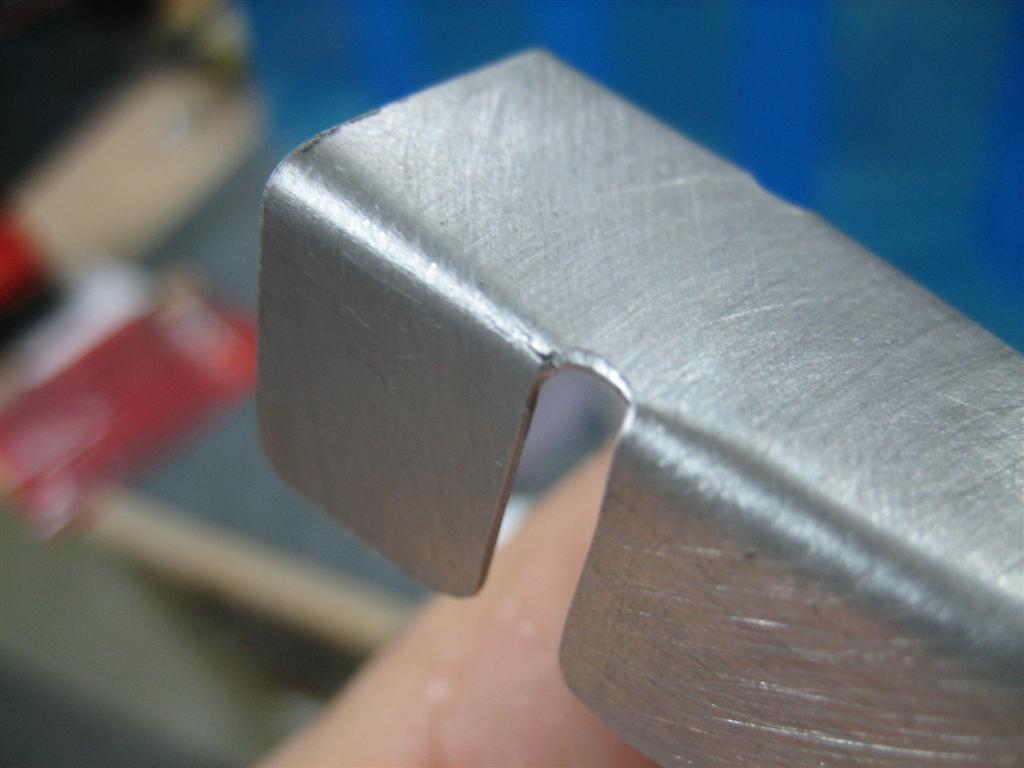
But, even though I was really careful to finish all the edges before bending (like I forgot to do on the first one), I still got a crack.
I put a picture of my crack on the internet. Ha.
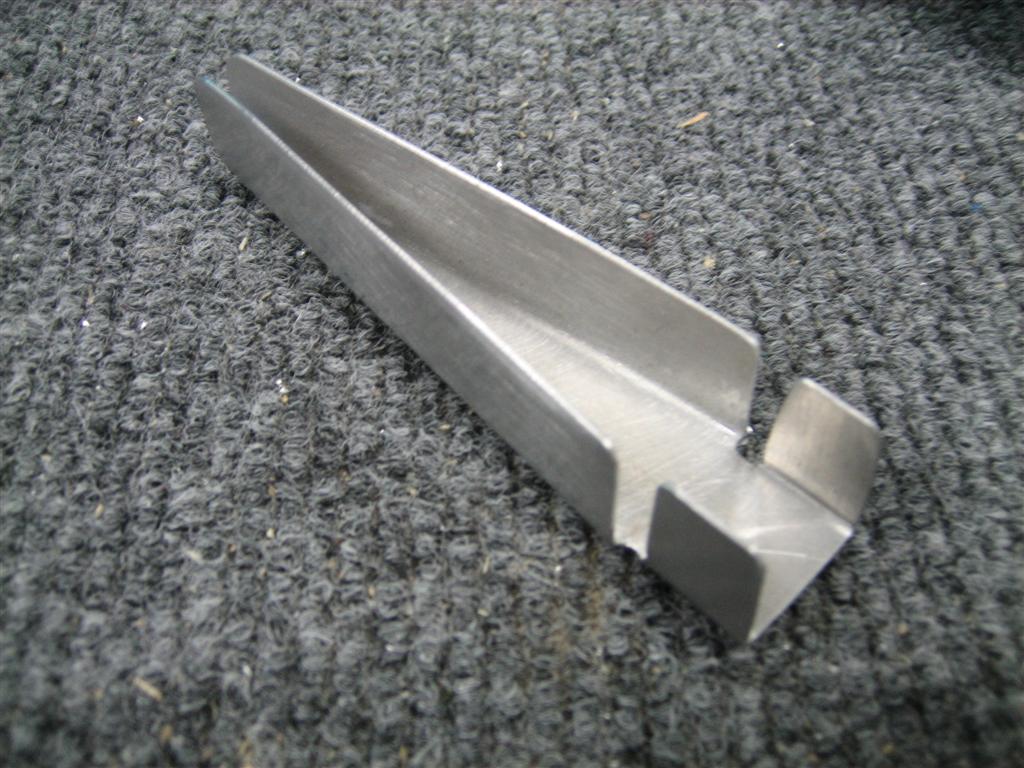
Even with the crack, I thought I would show you what I intended before scrapping the piece and starting over.
This is the general idea.
But then I got frustrated and just cut the forward part of the riblet off, and put it in place to see what it would look like.
Hmm. This doesn't look horrible, but I'd rather have the forward part of the rib, and the tie-in to the spar.
So, after an hour outside, I have to scrap the part and start over. Boo.
(To be honest, this is the really fun part of building. I get to use my thinking cap.) Prev | Next
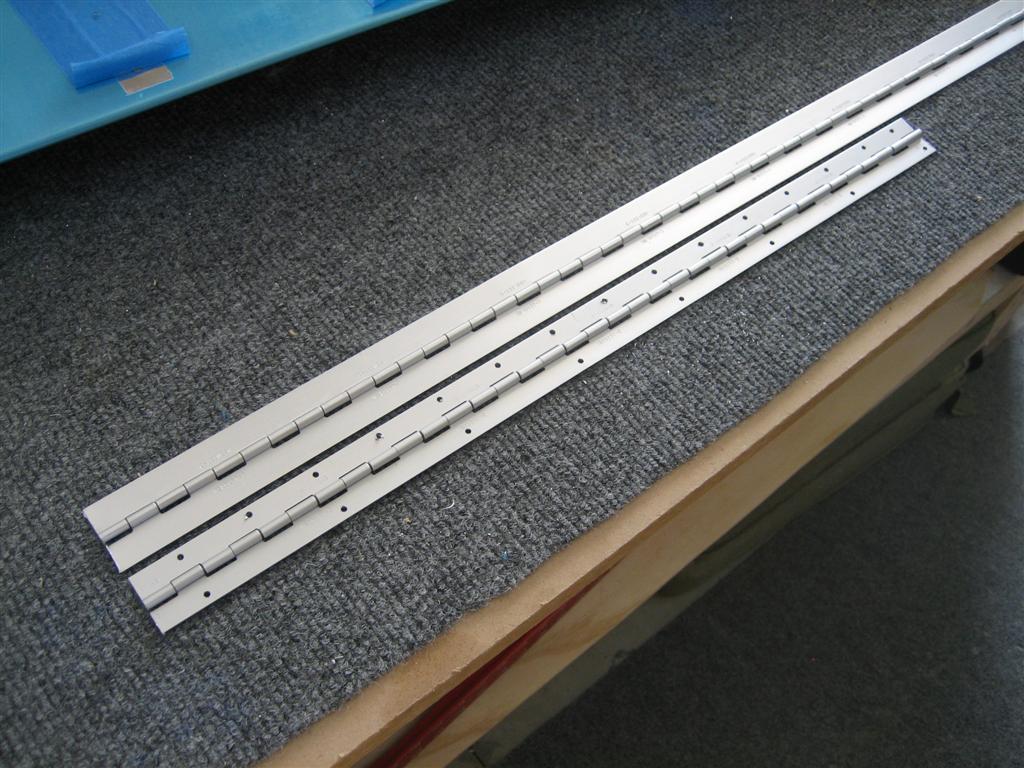
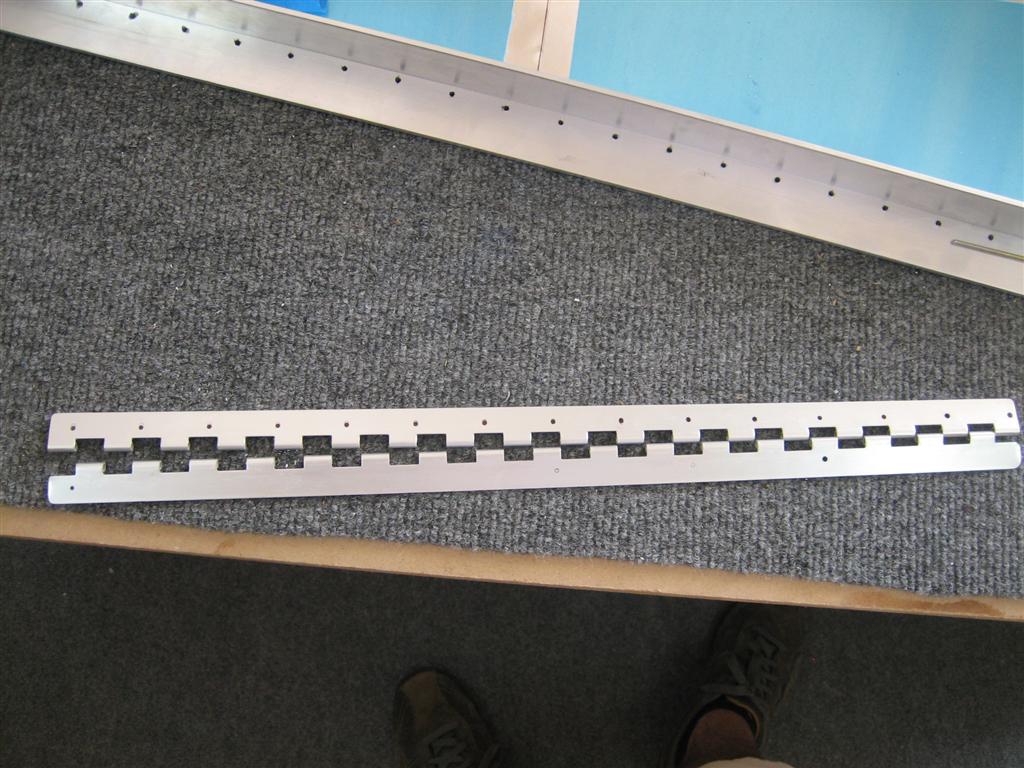
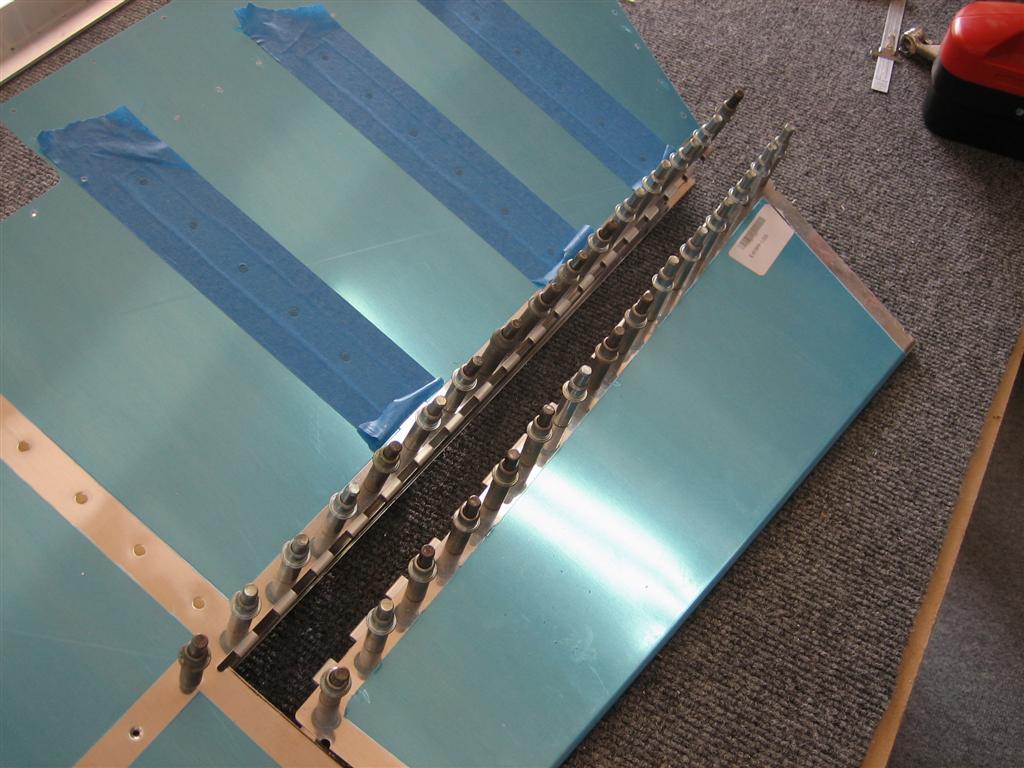
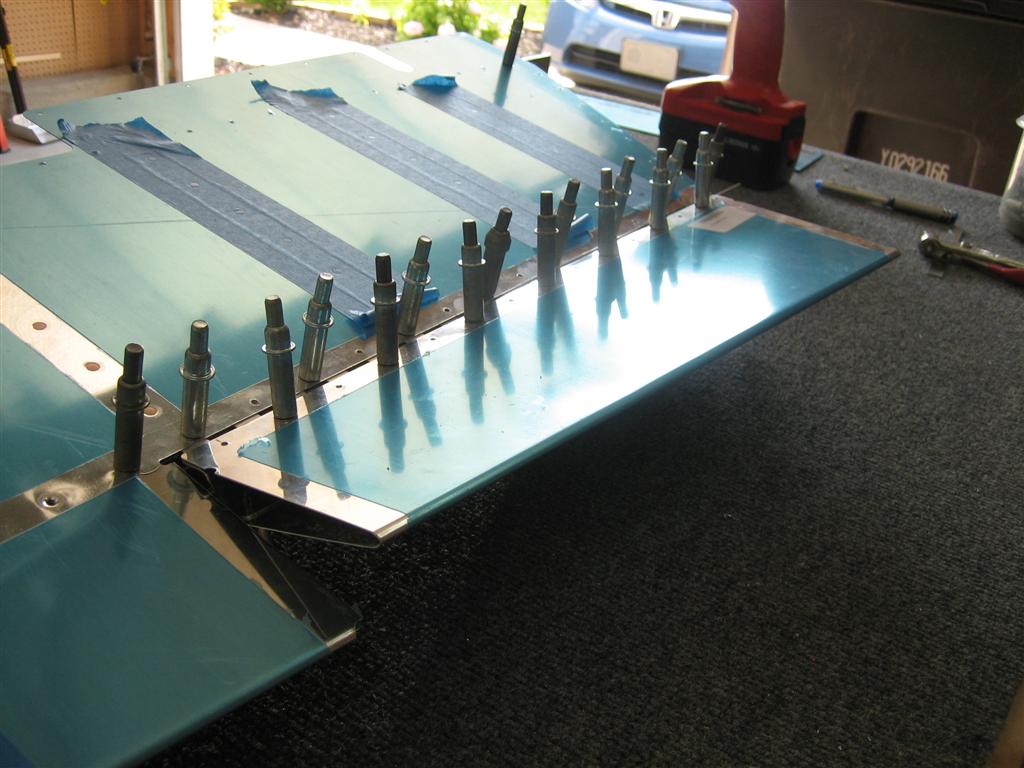
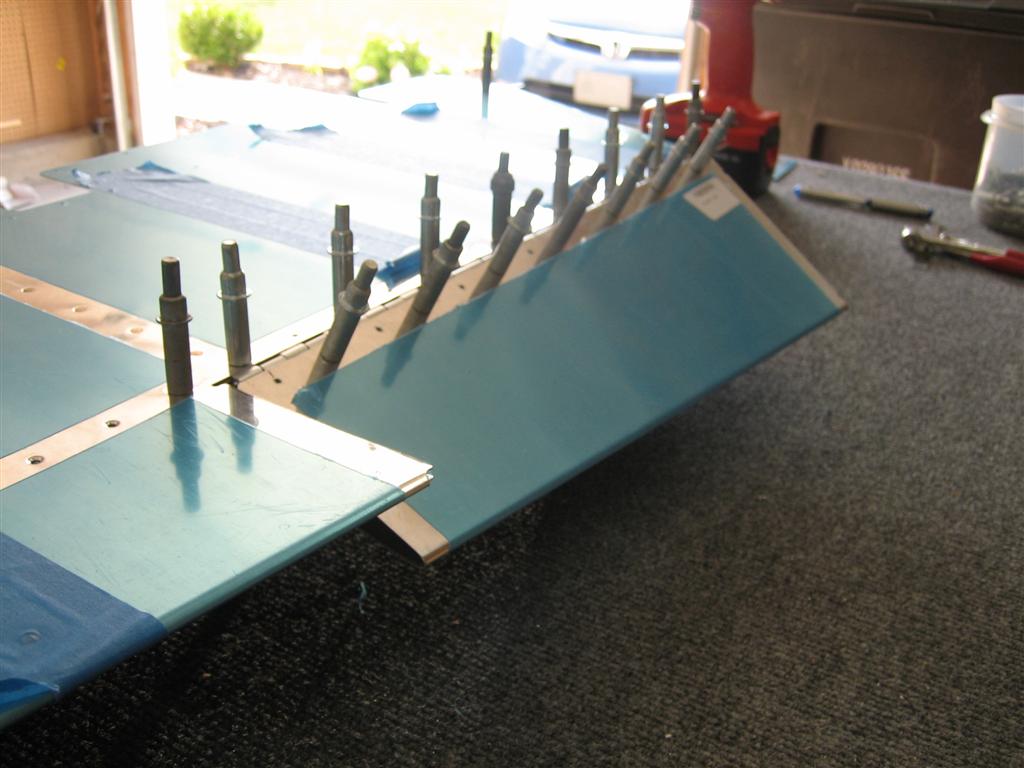
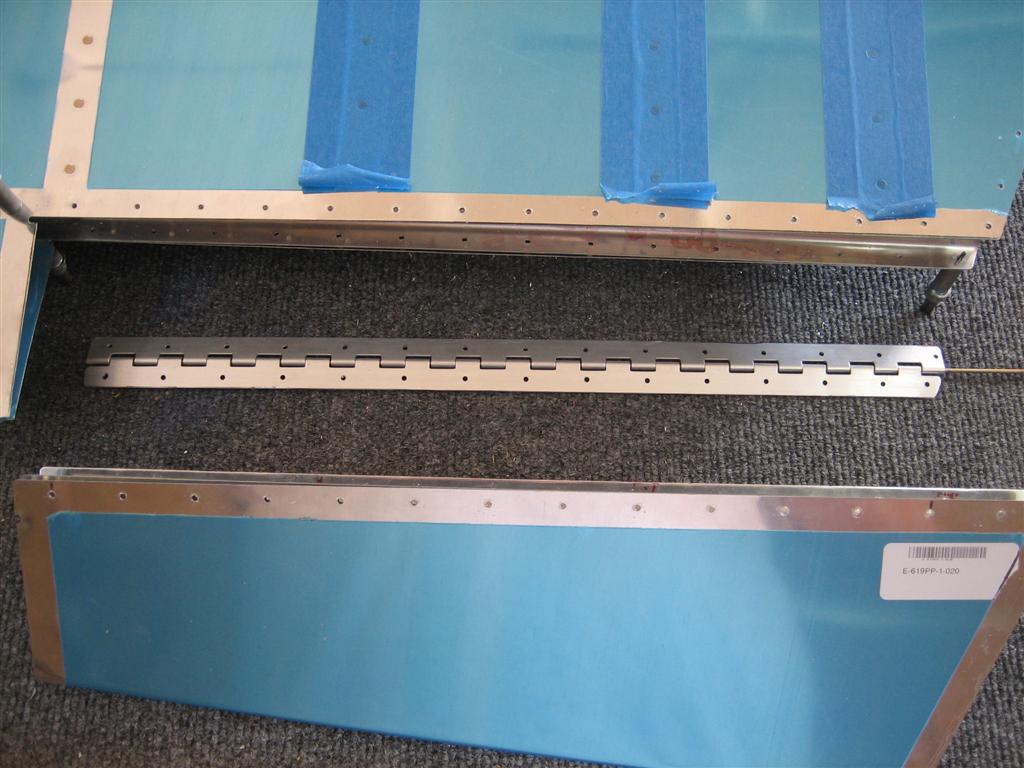
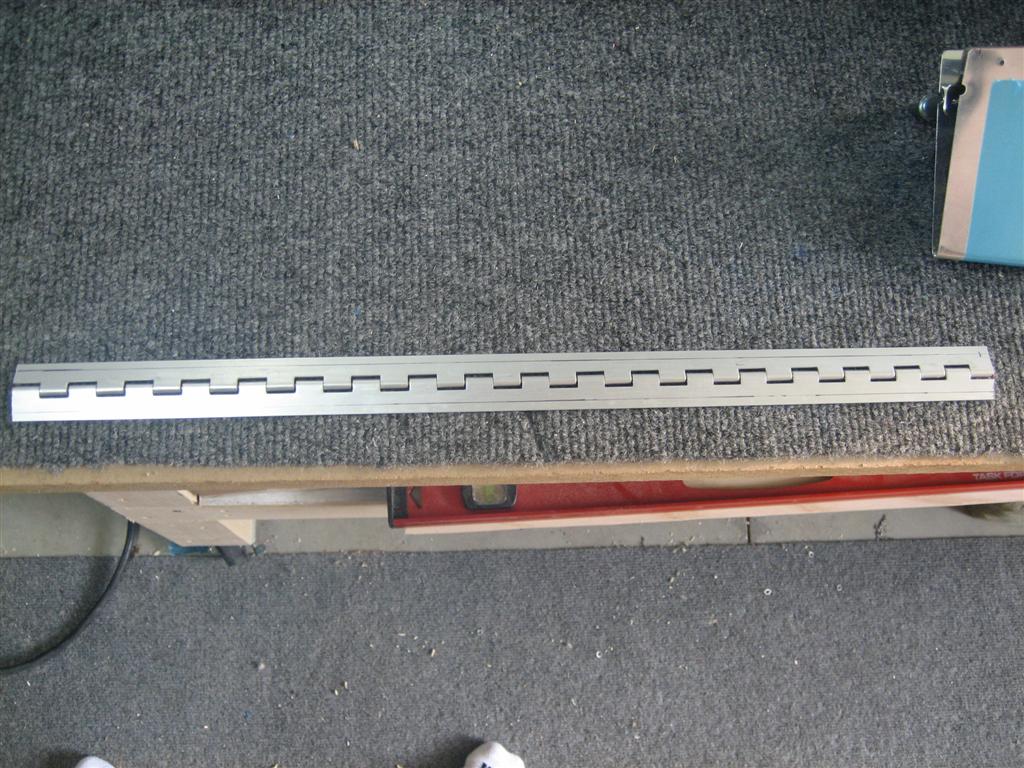
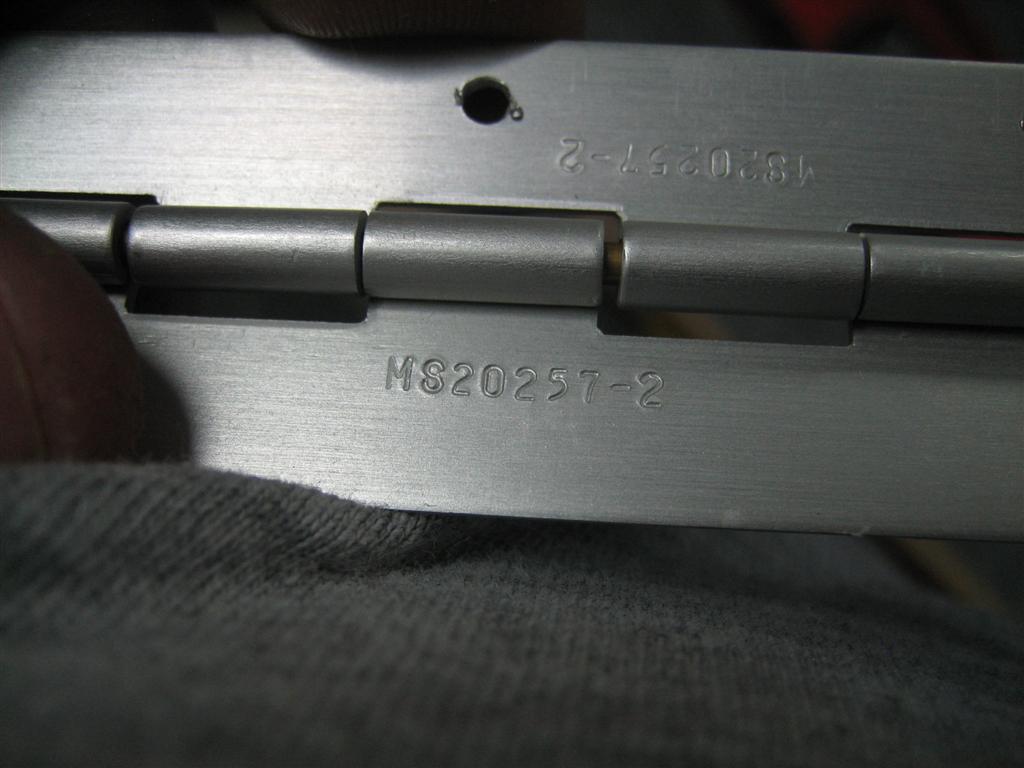
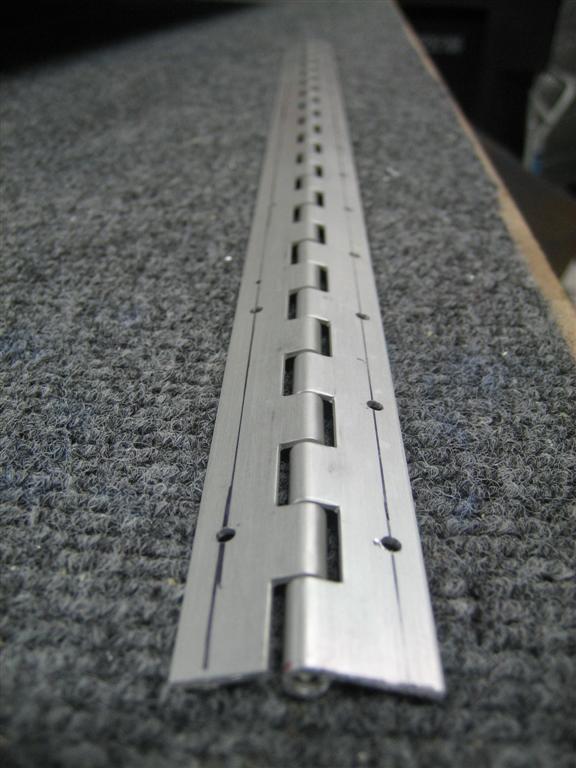
After a motivating afternoon actually getting to sit in an RV-7, I got back to work on the trim tab. Here, you can see my new 3-foot-long MS20257-3 next to the old (and not perfectly aligned) 18-inch MS20257-2 from Van’s. It’s a little wider to give me some more edge distance.
New on top, old on bottom.
First thing, I got the new piece cut to length. It ended up being a little shorter than 18 inches… I made sure the elevator side had a hinge “ear” on each end.
I eye-balled the hinge pin length a little long. Van's tells you the hinge pin they ship with this kit is not long enough to bend and safety to the elevator, and that they'll ship the real one in the fuse kit (or finish kit, can't remember). I guessed it was about 2 extra inches I needed for the bends and then cut the hinge pin.
Then, I spent a good amount of time Just getting everything lined up. I am a little frustrated at this point, because the supposedly straight line of holes on the elevator is not parallel to the supposedly straight line of holes on the tab. This means that with the trailing and inboard edges of the tab aligned with the elevator, the gap between the leading edge of the tab and the elevator cutout is smaller near the root than the tip of the tab.
Inboard and trailing edges aligned perfectly.
Here's my inboard edge.
So, again, I strayed from the directions. I held the hinge in position, making sure the actual pin was directly in the middle of the gap as shown in the picture above at the root (smaller gap) edge and at the outboard (larger gap) edge. I figured as long as the pin was directly centered, I’d be okay. Then, I clamped it in place, and marked a single hole (see below) for drilling. I couldn’t pick the edge hole, because it was covered by my square.
On the drill press, ready to drill a single hole.
I repeated this for another single hole on the tab side, again, making sure the hinge pin was perfectly centered between the two surfaces.
Two holes drilled and clecoed.
At this point, it was close to being locked in place. I did notice that these hinges are somewhat flexible, so while I marked every hole for drilling, I really only drilled a few more before clecoing it in place and match-drilling the rest of the holes.
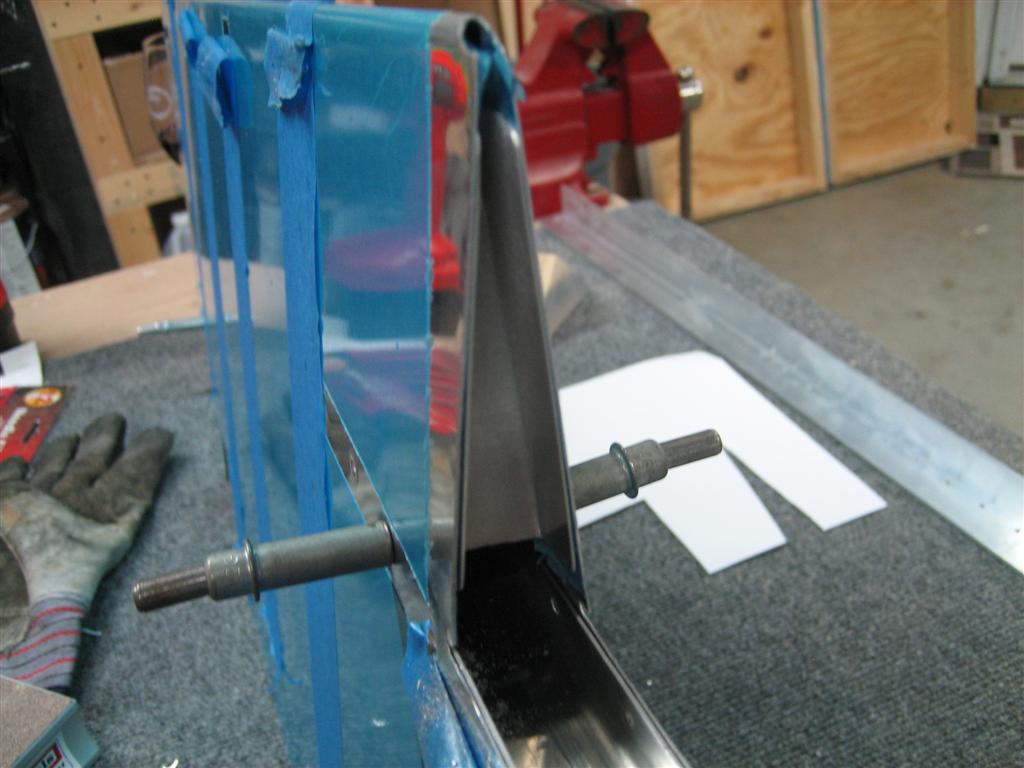
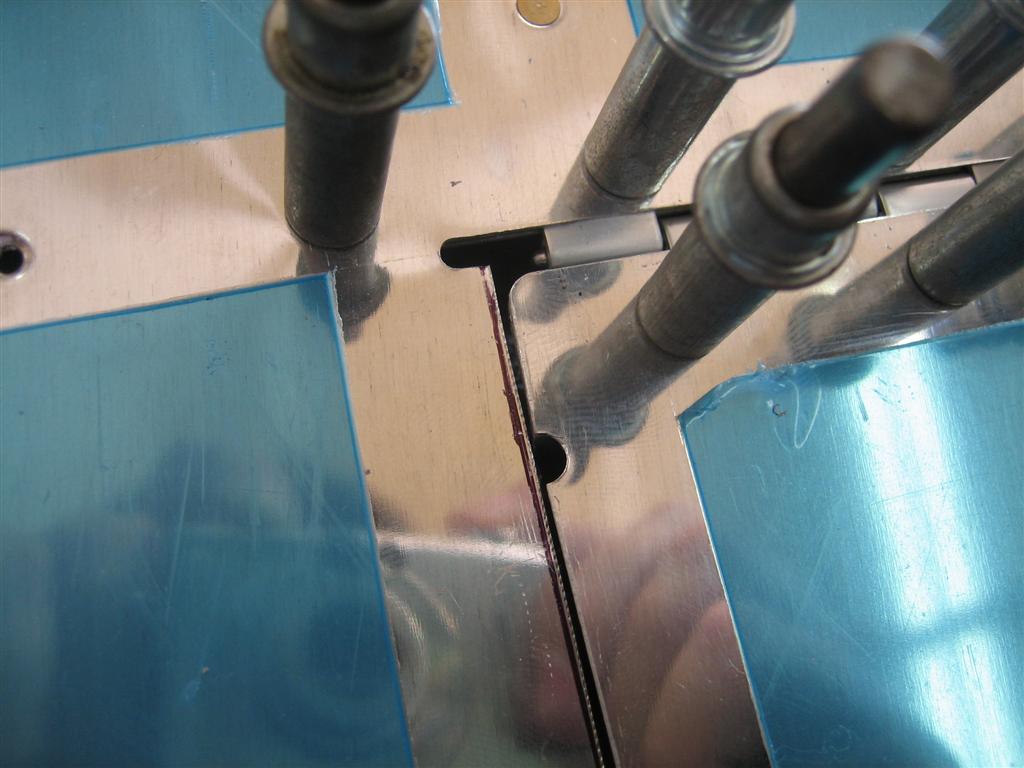
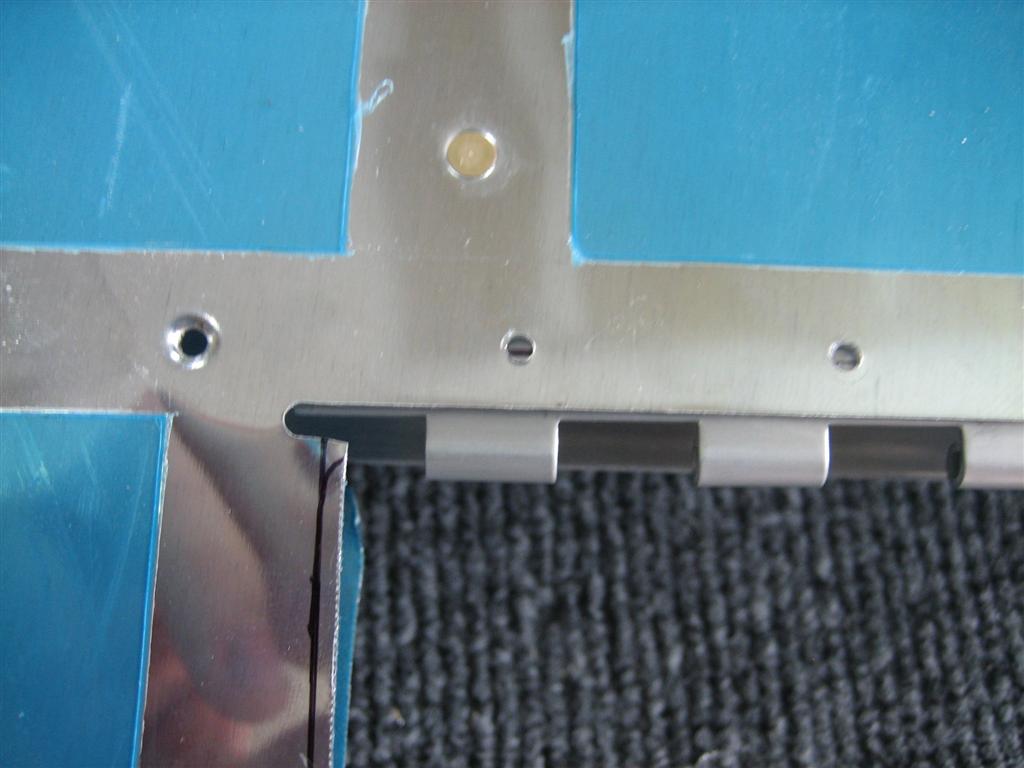
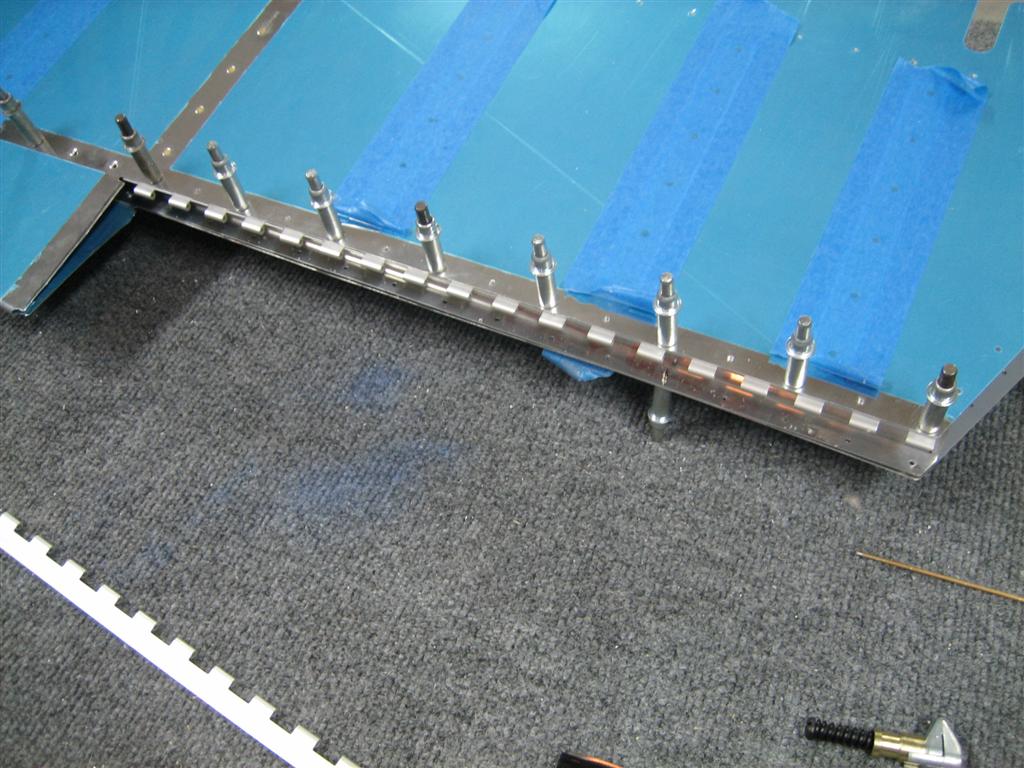
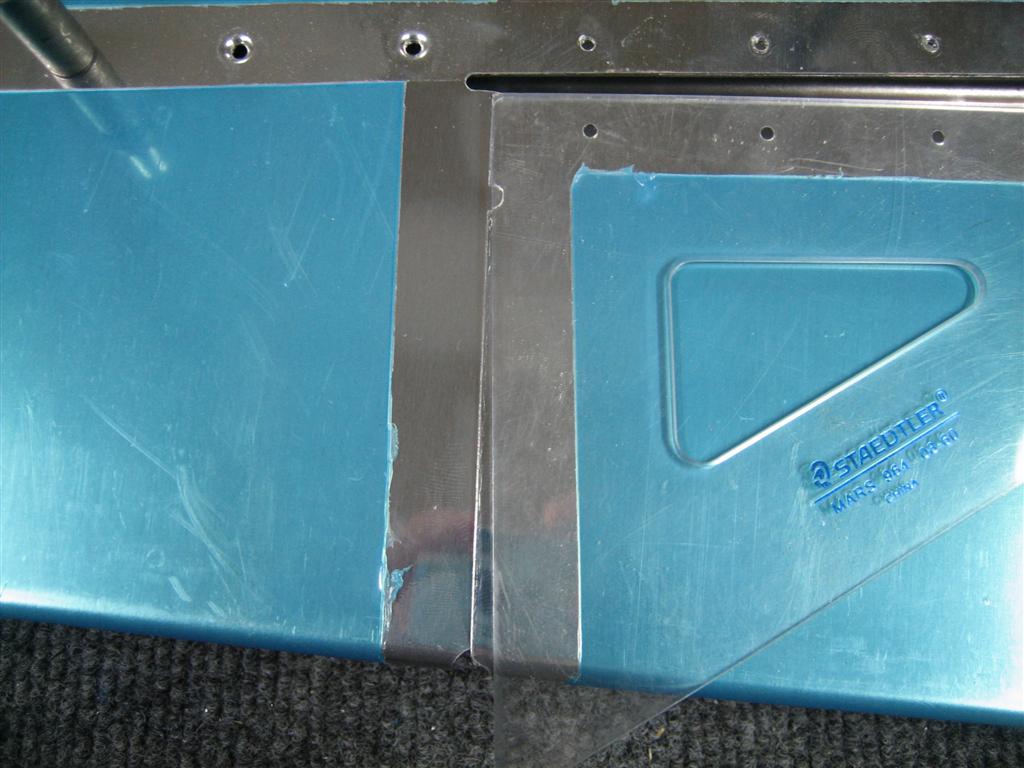
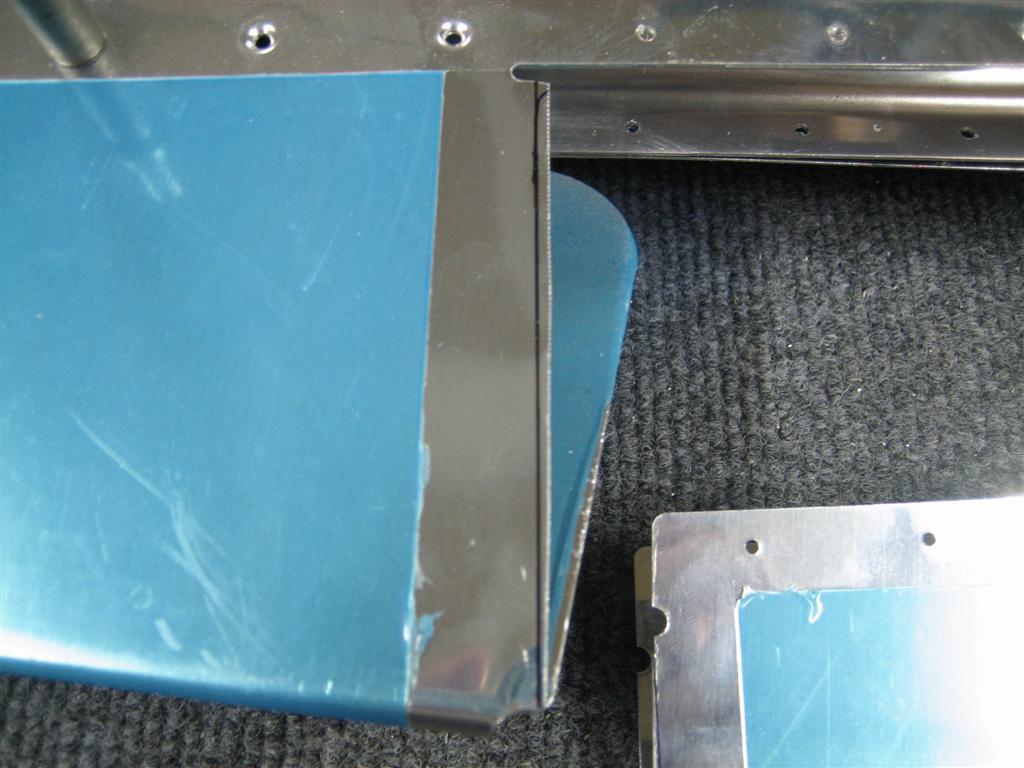
(A more technical side note…because I upped the hinge size to a MS20257-3, the hinge was too wide to fit inside the radius of the elevator and trim tab spars. When matchrilling, I had to change the order of the skin, hinge, spar to accommodate the extra length, then I went back and ripped a small (1/16″) strip off of the hinges so they would fit nicely in the radii of the spars.)
Here are my feet, ready to keep going on the hinge.
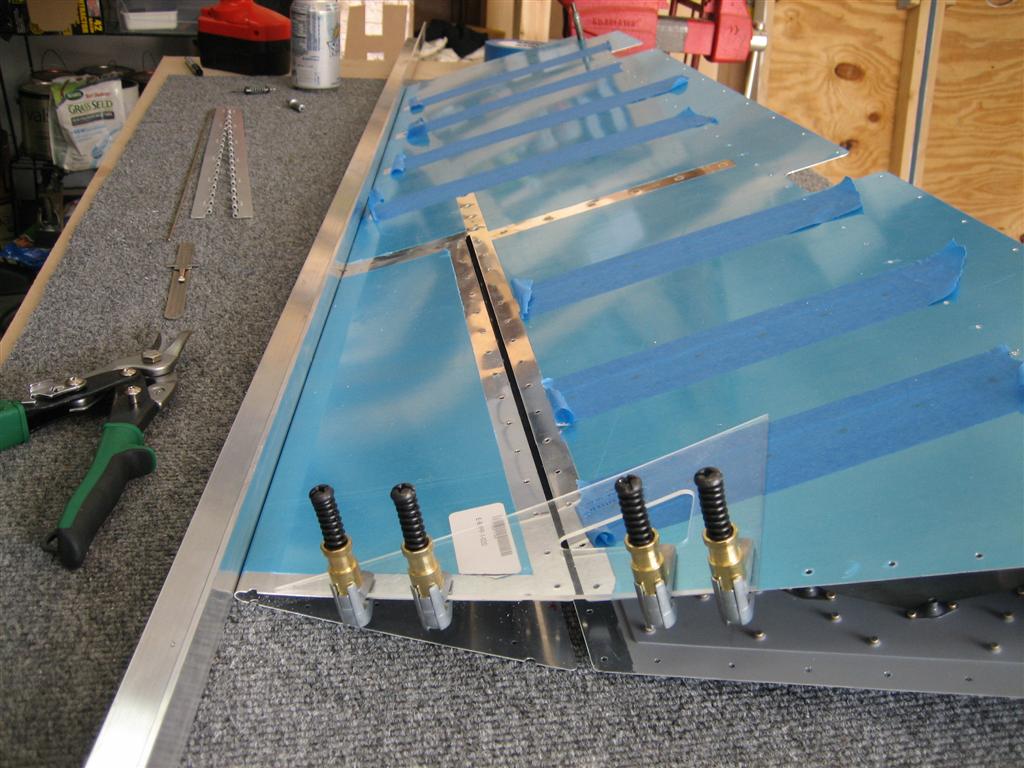
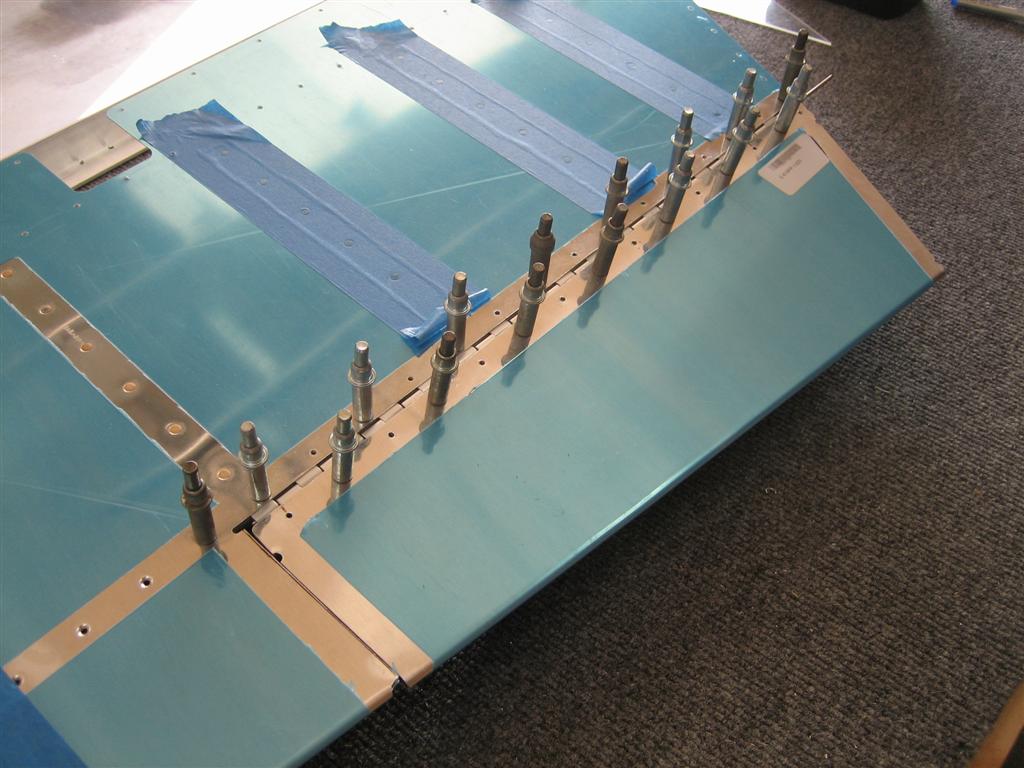
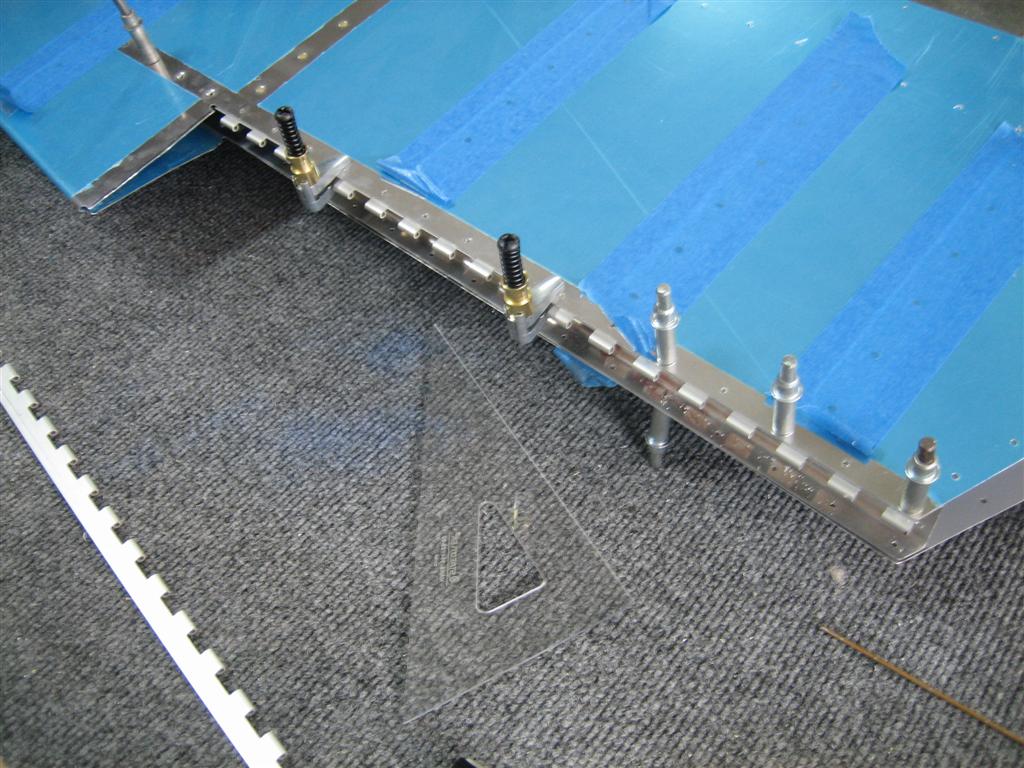
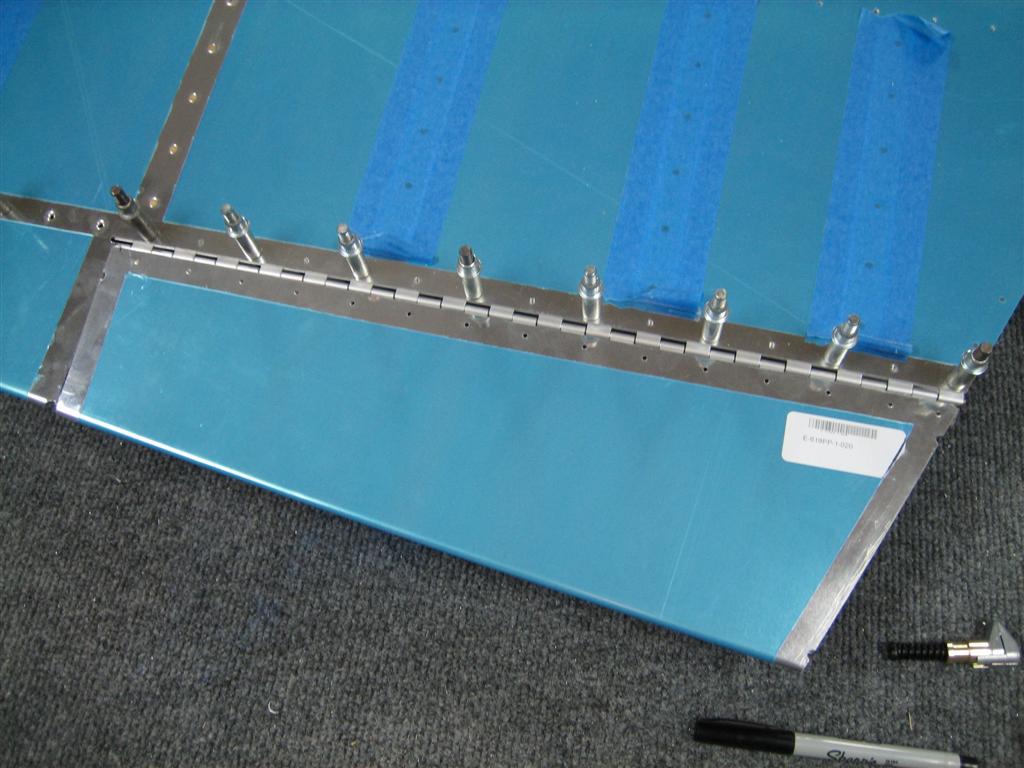
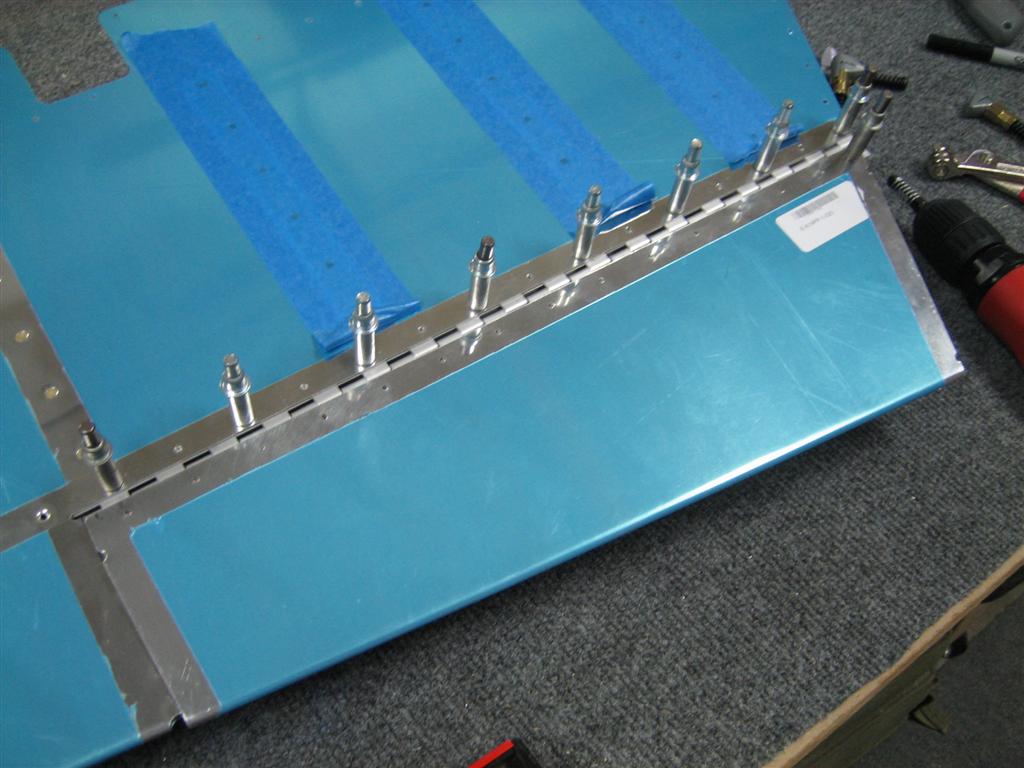
Fast forward after some drilling noises, and here are the two halves, each clecoed to their surfaces.
Ooh, looks good.
I still have a little bit to trim on the elevator skin, but I trimmed enough to allow some motion today.
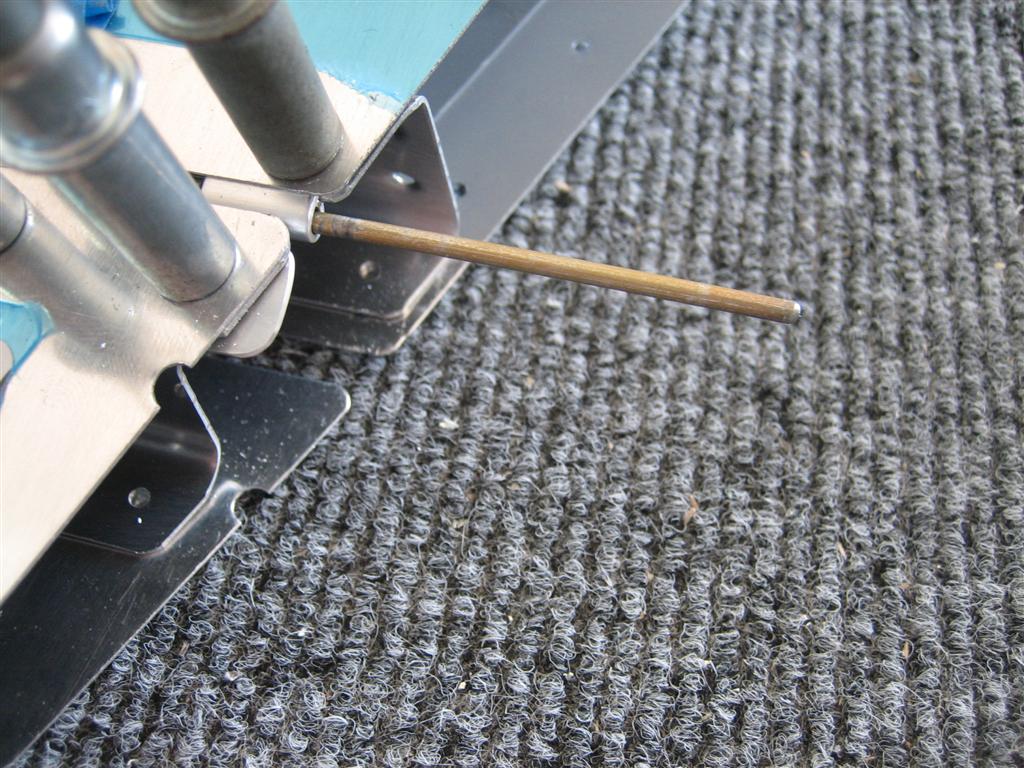
You can just see the rounded (so it slides in easier) tip of the pin in this picture.
Here’s a closeup of how much extra pin I think I need to make the bend forward (along the spar flange) and then down (along the spar web) to a small safety-wire hole I have yet to drill to safety the pin in place.
Man, that thing is long. (TWSS)
After getting the pin in, I took out every other cleco on each surface so I could move it back and forth.
Neutral.
Tab up (or elevator down trim).
asdf
Tab down (or elevator up trim).
After dancing around for a little due to how great the tab looks on the elevator (and how well-aligned it is), I took the thing apart, ripped the 1/16″ off of each hinge half, and fired up the scotchbrite wheel to clean up all of the edges.
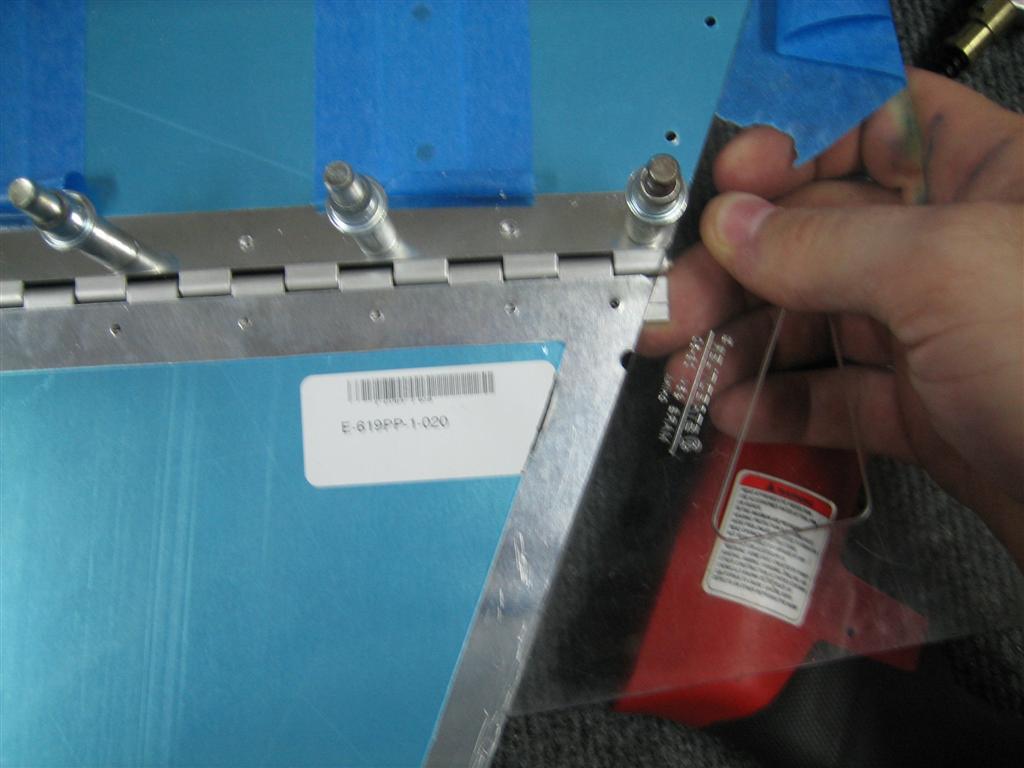
Look on the lower right part of the tab. That little angled cutout is so the hinge hides nicely under the tab skin.
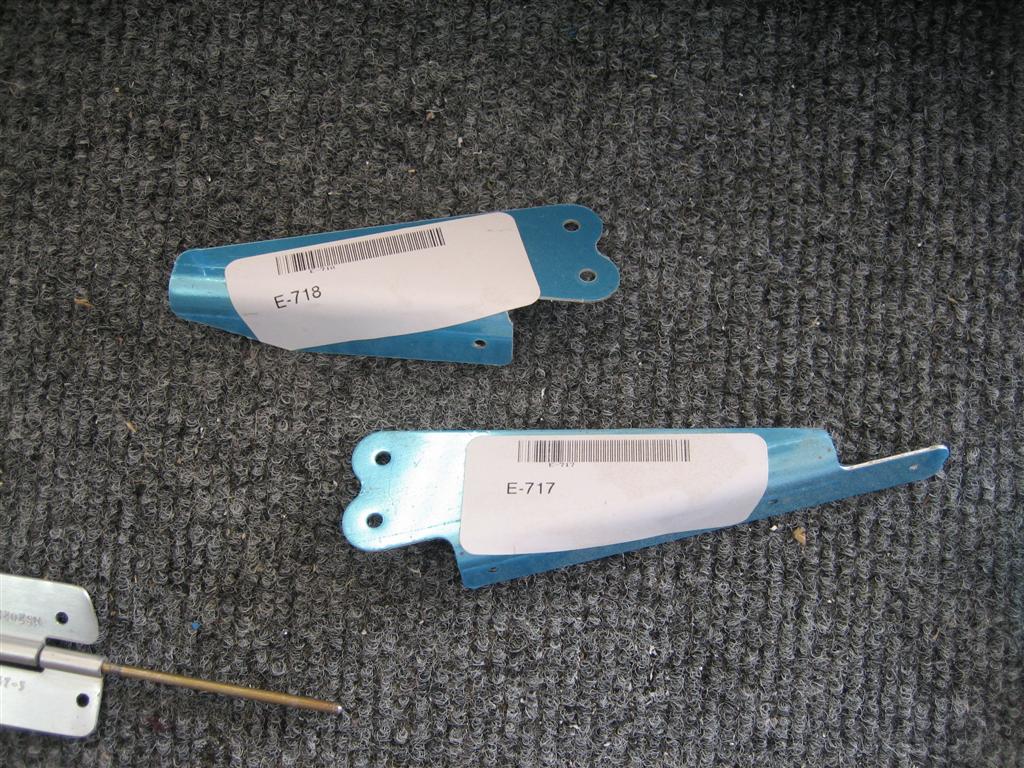
I figured now would be a good time to finish match-drilling the tab. Let’s go find E-718 and E-717.
There they are!
Apparently I thought it would be a good idea to show you my scotchbrite wheel. That little groove is just getting to the right size so I can run the edge of a piece of aluminum down it and it perfectly rounds both sides.
I love this thing.
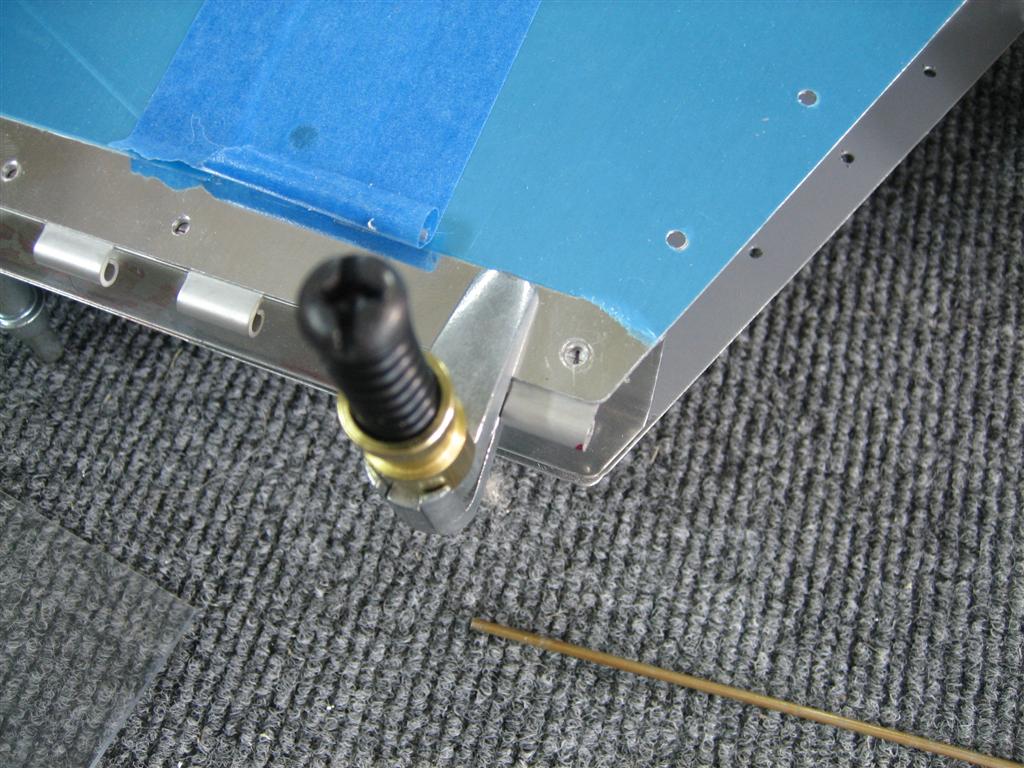
Back to the tab horn. The directions would have you use the clevis pin (don’t have this yet because I haven’t ordered the tab motor) to line up the two horns. How about two perfectly-fitting #30 clecos?
For balance purposes, I put one on each side.
Three of the holes are pre-punched, and two are not.
Just before match-drilling everything.
All done.
All done. (From another angle.)
I was planning on at least polishing the tab for now, so I marked off where the horn sits. I’ll prep and prime this little area under the horns, but I’ll leave the rest polished. (The bottom of the tab is going to be a good place to teach myself how to polish aluminum.)
The horn location, marked for future priming.
Whew. That was a good two hour work session today. It was like a sauna (more like a steam bath…this is the south!) in the garage today. I kept sweating on the airplane. (People say they put blood, sweat, and tears into their projects. I’ve got one covered, and will undoubtedly bleed and cry because of the project sometime in the future. Have to have something to look forward to, right?)
After an email to the Matronics list to beg for a chance to sit in an RV-7 to answer some panel/knee clearance/spacing questions, a gentleman from Southeast airport invited me out to take a look at his RV-7.
Coming over the small hill...the hangars are down to the right, and the runway is left to right.
After talking for a few minutes, I was invited to sit inside. First of all, this was a beautiful airplane. Definitely at the top of the “fit-and-finish” list in terms of quality of workmanship and systems/layout/panel decisions. (Doug Bell imitation tailwheel fork upgrade, smaller tailwheel springs, AOA vane, beautiful panel layout, etc.)
Interesting observations:
The panel is closer (to your face) than I expected. My idea for 2 ten inch screens to the left of the radio stack probably won’t work. The radio stack will still be reachable, but I don’t know if I like having it that far right with a panel that close to you.
It was easier to get in and out of the airplane than I thought it would be. I’m a big boy, and this won’t be a problem.
Plenty of leg/knee room to the left (a 1-inch subpanel would be no problem, although I didn’t do the rudder and brake full travel check.)
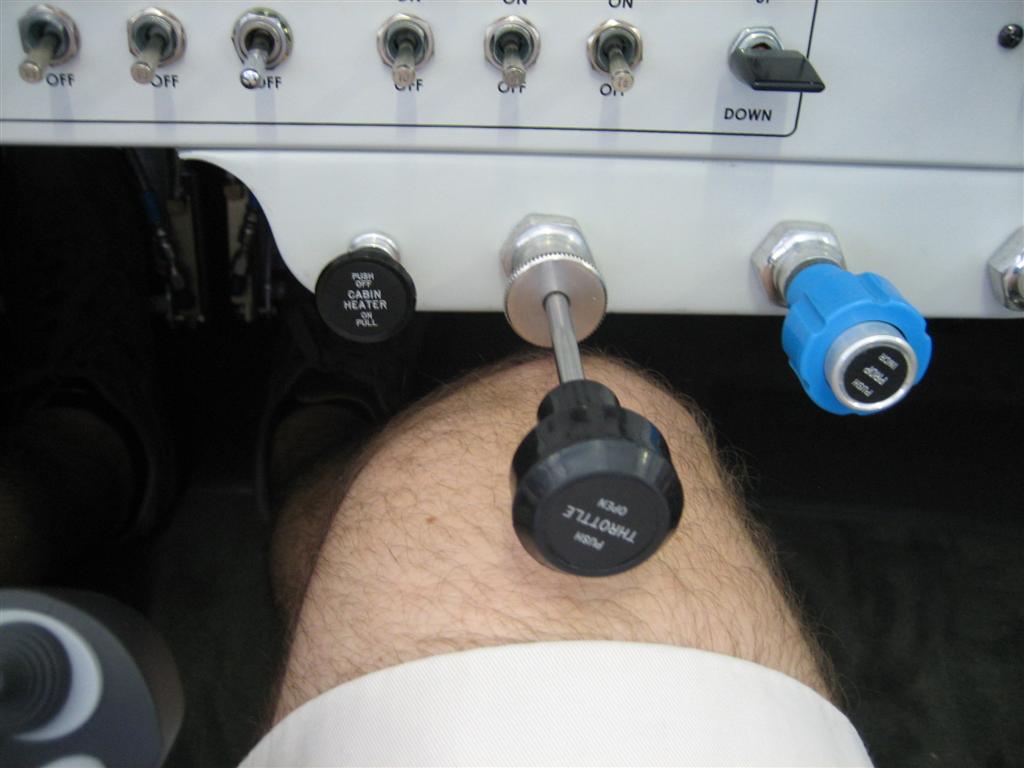
Knee room to the right was a little limited, but the throttle quadrant bracket was taller than I have seen before, and was extended to the left a little for the (I think it was a) carb heat knob.
That is (I believe) an 8.5″ AFS 3500. Knowing my Dynon Skyviews are 10″, I don’t think I could put two of them next to eachother comfortably. To keep the radio stack within reach, the Skyviews have to come down a little to get left. The two directions I am not thinking about are two 7-inch Skyviews, or moving one of the 10″ units to the right of the radio stack and centering the two displays in front of each seat.
Fuel pump switch just right of master. (I have my fuel pump switch planned for just left of the flap switch, which is the right-most switch on the pilot side of the panel. I did this because the pump is most used during TO/LDG…David put his here because the pump is first used to prime before start…hmm. I’ll have to think about this a little more.)
For information only: this is a standard height panel.
The Classic Aero Designs interior was fantastic. David had the sportsman seats (with a highly recommended sheepskin cover on the pilot’s side), which were nice, and the side panels, carpet, and baggage area accessories equally as high class/quality. Bravo CAD.
Look ma! I fit! (Probably should have checked this before starting the emp kit.)
I grabbed a picture of my feet.
(...and hairy legs!)
Here, I was just trying to get scale for a passenger and look at more spacing.
Those are tosten grips. I still can't decide if I like the fighter-style military grips.
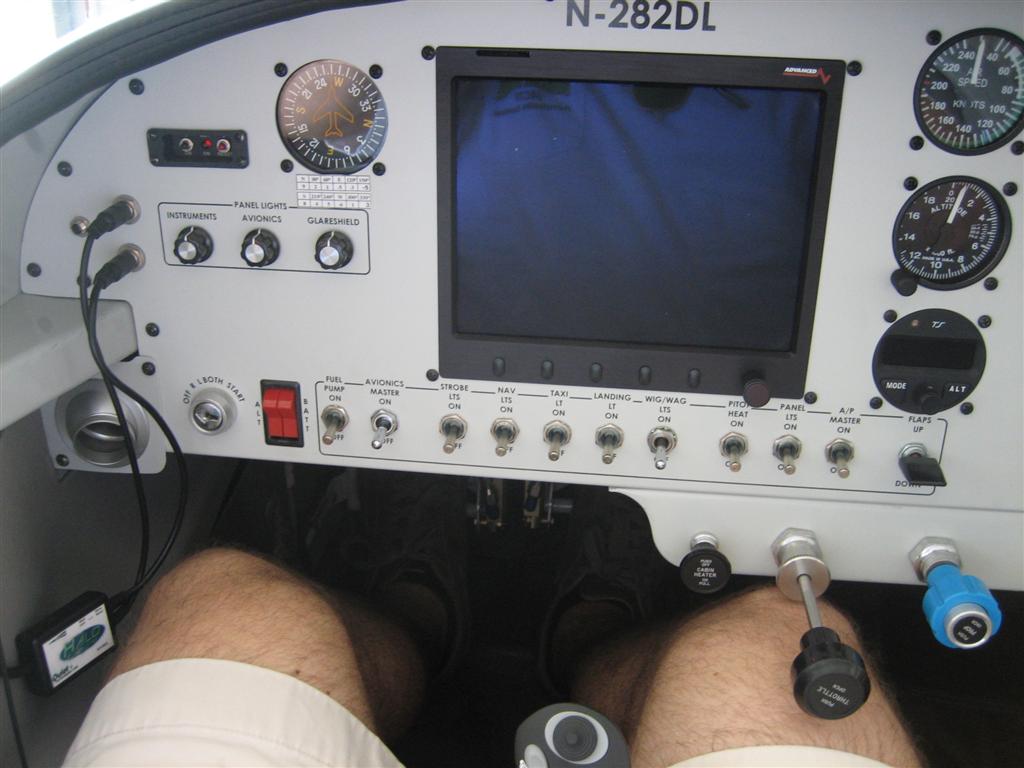
Another panel shot. I thought I would be bothered by the headset plug location here. Didn’t bother me a bit.
Dimmers up here to the left are kind of a good idea. I've seen Stein do that with a lot of panels.
Just another shot of knee clearance.
I think I could shorten the throttle quadrant bracket, and have a little more clearance.
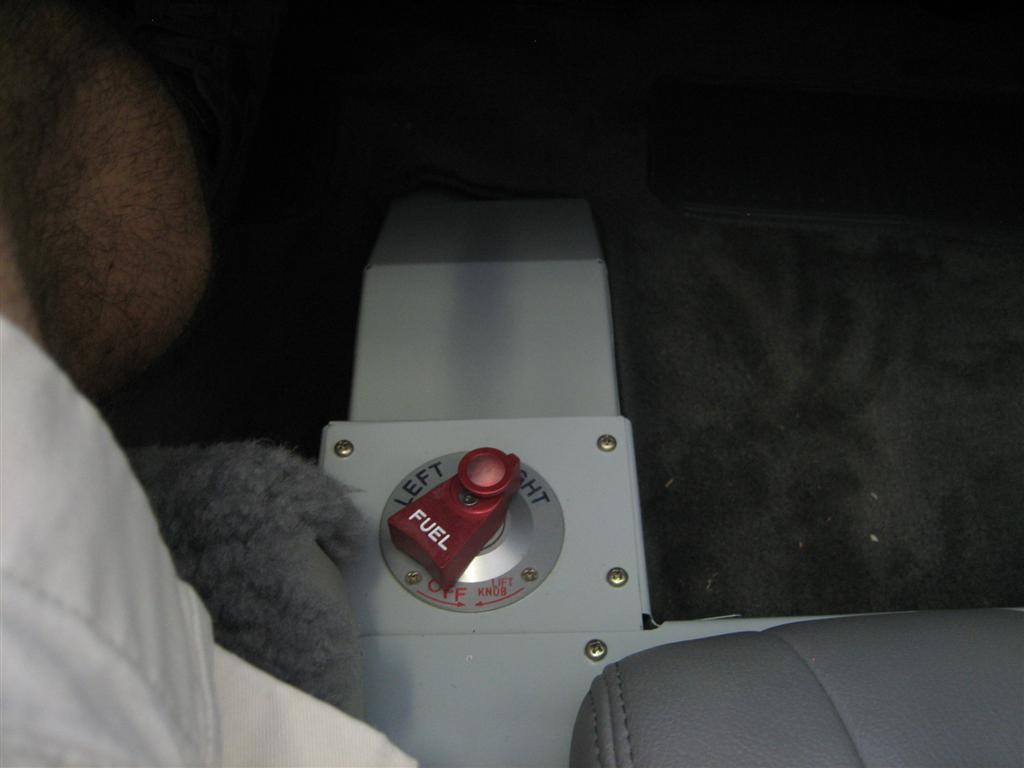
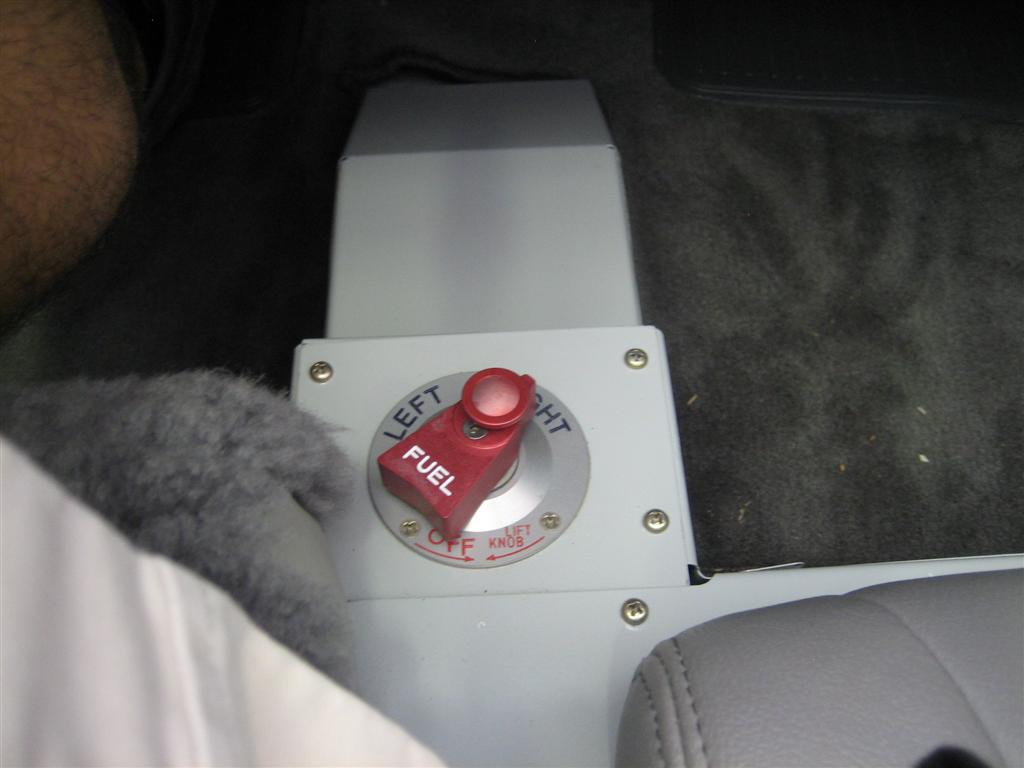
Nice Andair fuel valve. Apparently this is a no-brainer upgrade.
A shot of the right side of the panel. Nice compact CB panel.
Here I am, seated in normal postion (not stretching) reaching to the CB panel. I would have to lean about 2 inches to reach the right side of the panel. Not bad.
Hairy arms, too?!
Then, some anthropomorphic assessments…my left arm, in what I will call “relax” position.
Left arm, relaxed on my leg.
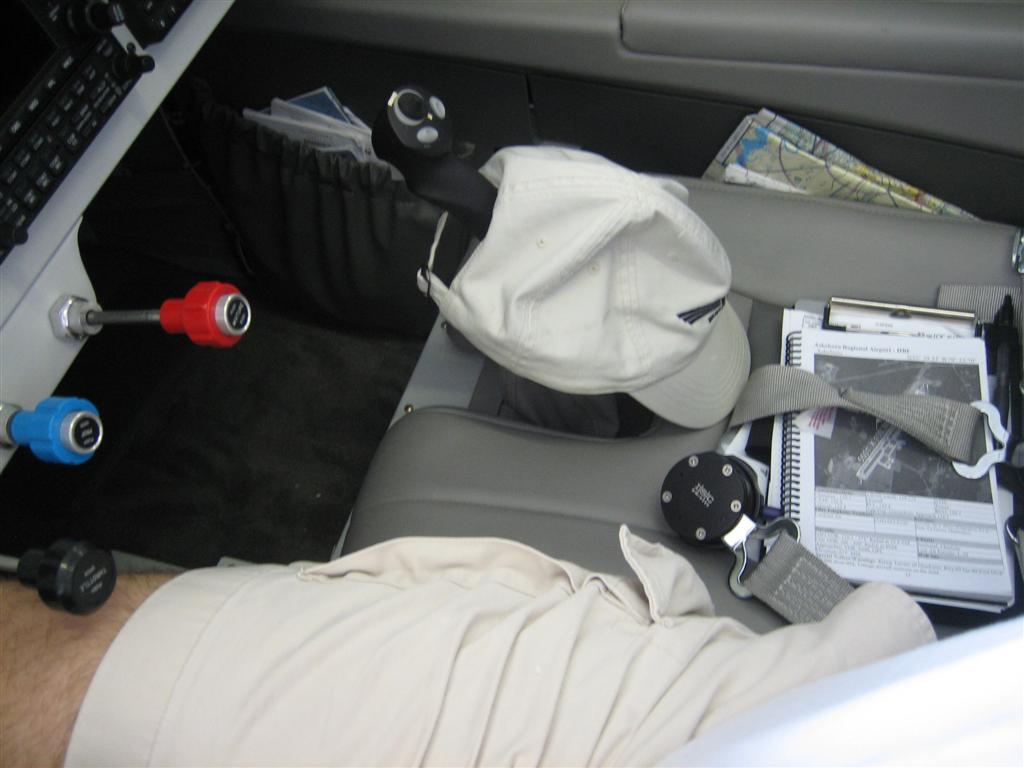
Same with the right arm. This throttle quadrant was offset about 2 inches left. I either want the Throttle right where my hand is, or I'll center the propeller control right in the middle of the panel, and work right and left from there.
Another shot of the fuel valve. (Actually I took this shot to look for any good switch locations down here, like seat heat.) Switches down here would be bumpable, but would get them off the panel.
This is the AFS fired up. I like all the information and the layout. Pretty similar to the Dynon in terms of quality. That will probably be a tough choice.
Wierd angle but this is between the two sticks, looking down and right toward the copilot stick. Right behind the stick might be a good place for the seat heat switch. You would never bump it accidentally.
Again the fit and finish was amazing. A lot of people have pretty ugly looking cowl hinge pin attachments. This one was just a piece of polished (and nicely fitted) aluminum. Can’t beat that.
Great fit an finish. (I would have lined up the Phillips heads vertically and horizontally. Just kidding...kind of.
Other things of note: Slider, Mattituck 180HP, 2-bladed Hartzell CS prop.
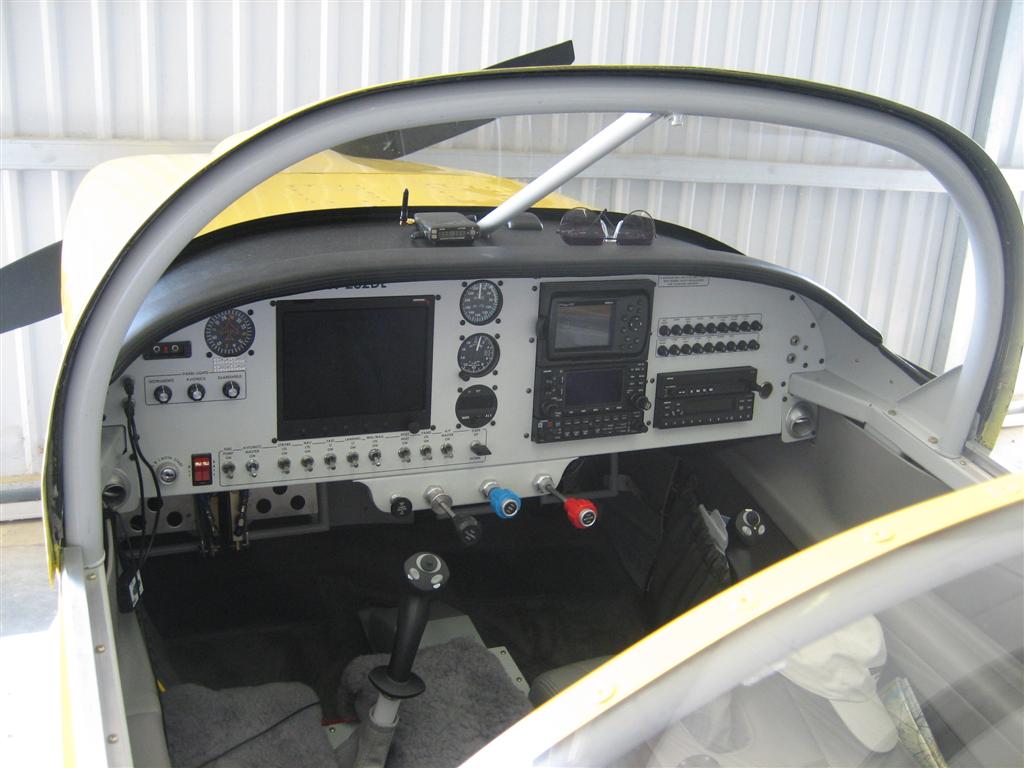
An overall shot of the panel.
Looks damn good.
Lot’s of things to think about and ponder. No earth-shattering revelations, though, which is good. A big thanks to David for letting me come see his airplane.
After getting stung by a wasp two times in the last two days trying to mow the lawn in the backyard, I gave up (shows determination and perseverance, huh?) and retreated to the comfort of my garage for some airplane work (the floors can wait until tomorrow).
Back to the tab. Before I do any more cutting on the elevator, I want to get the tab hinge drilled so I know exactly where the outboard edge of the tab will swing. I am doing this before they really tell you to in the directions (the directions have you actually finish the elevator, then start working on the tab.
Anyway, you are supposed to draw a line 1/4″ from the loop edge of the tab, and first matchdrill that to the tab. (I started with the elevator side, which eventually bit me in the ass. Read on.)
I decided to mark both sides with the 1/4" line. Hmm. Doesn't look like there is going to be a lot of edge distance.
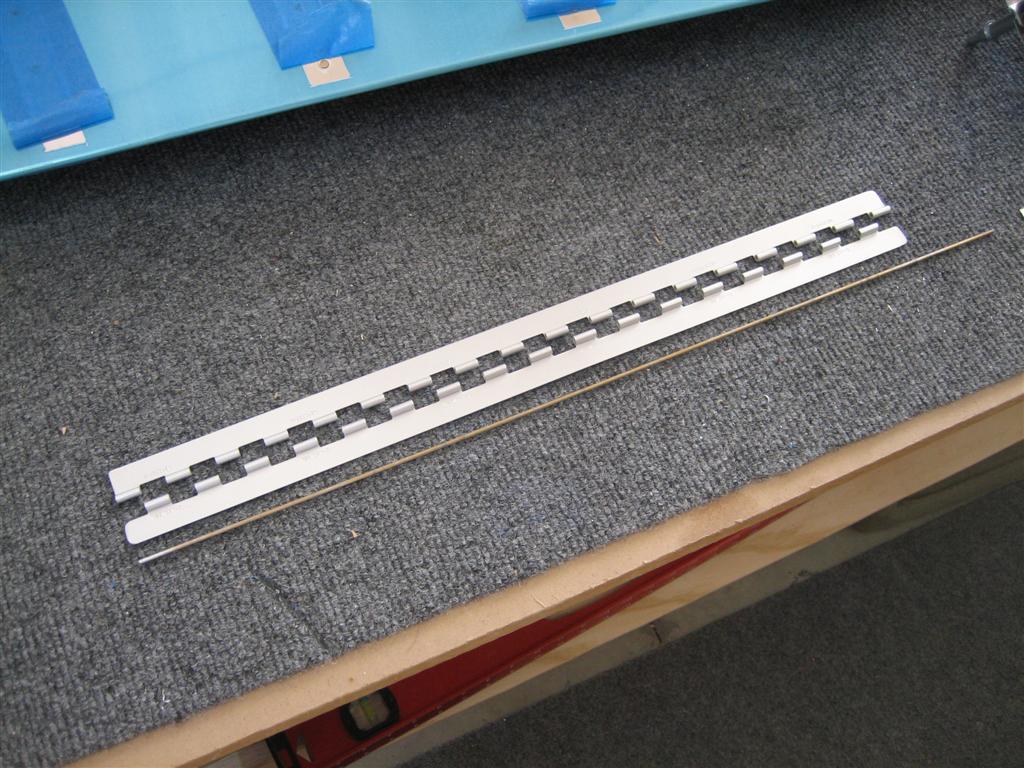
Then, I took the hinge apart (you can see the hinge pin in the next photo) and clamped the elevator side to the elevator, lining up my 1/4″ line in the first prepunched hole, and aligning the first hinge loop where I thought it looked good (making sure this fit with the plans).
Hint: If you take apart the hinge, you can easily clamp the hinge half to the elevator (and tab, with the other half).
Next, I lined up the outboard side. This tab hinge is nice and square with the edge, and with the holes.
Let’s drill!
Here are 6 holes drilled (I'm working inboard to outboard).
All done with the elevator side.
Next, I reassembled the hinge and spent a few minutes just kind of getting everything lined up.
I wish this were the final product, but this is just me mocking things up before drilling.
With the greatest of coordination, I managed to hold a straight-edge against the inboard edge, line up the inboard pre-punched hole with the 1/4″ line, and line up the trailing edge of the tab with the trailing edge of the elevator, AND take this picture. Boo-ya.
Looks good so far.
Then, I drilled the inboard hole. The inboard side is perfect. (Can you tell that some other part may not be by the way I phrased that?)
If you look closely (lower left corner), you can see that the tab trailing edge is further aft than the elevator trailing edge.
I was pissed. I lined up the hinge with the elevator edges and holes, and with the tab edges and holes. This means that either the elevator or the tab isn’t perfectly square.
I thought about just moving the tab forward, but then there would be slightly different distances between the skins from inboard to outboard. I measured it…it would have been about 1/32 difference. No one would have noticed except for me.
But…I can’t leave it alone. I’m going to reorder the hinge and try again. This time, I’m still not going to follow the directions. If you make the hinge perfectly square to the tab, it’s going to be off on the elevator side. I’m going to have to split the difference between both by first clamping the tab in perfect position, then clamping the hinge in place and matchdrilling a few holes.
Admittedly, I should have followed the directions by starting with the tab edge, but it wouldn’t have mattered, it still wouldn’t have been a perfectly square hinge line after I was done.
The tab hinge is AN257-P2 according to the materials list in Section 4, but the part shows MS20257-2.
I also think, given my edge distance worries (must be okay because it is per the plans? I don’t know), I am going to order the MS20257-3 (or AN257-P3, which is 1 + 1/4″ wide instead of 1 + 1/16″). I checked with Van’s, and they want $9.70 (plus $4 handling, plus $12 shipping or something) for an 24″ piece of AN257-P3.
I checked aircraft spruce, and they wanted $4.75 for a 3′ piece and $1.73 shipping via USPS.
Which one do I choose?
Duh. $6.48 for my first re-ordered part. Bummer. (It’s better than a $60 elevator skin, though!)
Here are my edge distances.
I love this kind of building. Thinking, playing, mocking up, etc. The normal matdrilling dance gets old…this is the stuff I really like.
After some more days of not doing anything, I managed to make it out to the Pilots N Paws fly-in today. It was good motivation for working on the airplane.
Anyway, I’ve drilled the left elevator skin to the skeleton, and the next step is really to take everything apart, deburr, dimple, countersink, prep, prime and assemble…
BUT…
I have some things that need to be done first. Mostly, the directions want you to bend the elevator tab “ears.” Well, I don’t think I want to go the bent route. Here’s what I am worried about. I don’t think anyone would really notice, but I don’t love the way this looks.
Bent trim tab ears. I think I'm going to cut mine off and make little ribs.
I think with some work, I could make them look like this, but given how finished these surfaces are, I don’t know if they started as bent ears or riblets.
WHOA! This is awesome. This guy really finished this joint up nicely. Everybody be jealous.
Finally, I found a really nice riblets version. I like this, and this is what I am going to be aiming for (although I am going to try to use solid rivets.
Great finish on the cut-instead-of-bend tab ears. I'm going to strive to make mine like this.
Anyway, I also think cutting the ears off (not bent down in the way) will allow me to use solid rivets in the blind-rivet locations on the top and bottom of the elevator (outboard trim spar rivets). We’ll see.
First step is to get the skeleton re-clecoed in the skin.
The trim spar and the inboard rib.
Van’s wants you to countersink either piece for flush rivets (not for any real flush reason…I think they need to be #40 size holes, and they don’t give you any universal head AN470AD3 rivets). Anyway, per standard practice, I dimpled both.
Dimpled instead of countersunk.
After clecoing together the skin, I am ready to start the headscratching with the tab. Let’s find the tab spar.
There it is.
Let’s go ahead and cut off these tabs. After careful measuring and marking, I’m ready to put blade to metal.
Inboard side. I'm nervous about chopping these off.
Outboard. (see how I lined up the line parallel to the flat portion near the top and to the left of the relief hole near the bottom? This doesn't work. Read on to find out why.
After a quick snip (not too close to my final line) I removed the vinyl from the interior of the skin in preparation for using a file and scotchbrite pad to clean everything up.
Devinling before finishing those cuts.
After working carefully with a file and edge finisher…
Looks good.
Before I really finalize things, I’d like to get my tab placement set up. First, I tried using this extra piece of rudder stiffener.
It worked okay, but I later switched to something a little longer.
After some moving around and fiddling, I re-read the directions, which tell you to bend the elevator ears down along a bend line that is perpendicular to the hinge line. Well, that means that the cut lines should be perpendicular, too. Of course, like I mentioned before, my original outboard line wasn’t perpendicular. All that file work for nothing.
I drew new lines (one on top of the other, ignoring the needed clearance).
Drawing new, perpendicular lines.
Then, I made a “pretty close” cut with the snips. I’ll need to really clean this up, as well as move the line to the left for clearance purposes (I’ll wait until the hinges are drilled to really see what I need. (The instructions call for 3/32″, but that is for the blind rivet head clearance that I won’t have to worry about.)
Pretty close, but still needs trimming and finishing.
Next, I moved back to the tab. Here’s my new line.
I'm bummed because the upper part of the tab, factory provided, is not perpendicular to the hinge line. That means there will be a slight angle there. Bummer.
After getting those refinished, I got the tab mocked up. I kind of worked backward. I want to use the inboard edge and the trailing edge to get placement, then verify I have adequate clearance on the outboard edge and between the tab and elevator for the hinge (there are some hinge dimensions on the plans). I think I’ll have plenty of room.
This looks good, but I'll have to keep trimming that outboard edge.
Here's a closeup. You can see the edge near the top of the tab is angled a little left. This is how it comes from the factory. The marker line and aft portion of the tab are both perfectly perpendicular to the hinge line (line through the center of the rivet holes).
Later this week, I’ll work on getting this perfect, then tackling the riblets that need to be constructed before doing any more work with finishing the skin.
1) Fix rivets in right elevator
2) Trim right elevator weight
3) Clean up HS cuts
4) Look for underdriven rivets
5) REBUILD RUDDER :-(
6) Finish riveting right rear spar
7) Replace rivet on inboard rear spar edge
8) Start on left wing
9) FB tips on emp 10) Wingtips


 Posted by Andrew














































 Andrew's RV-7 Build Log