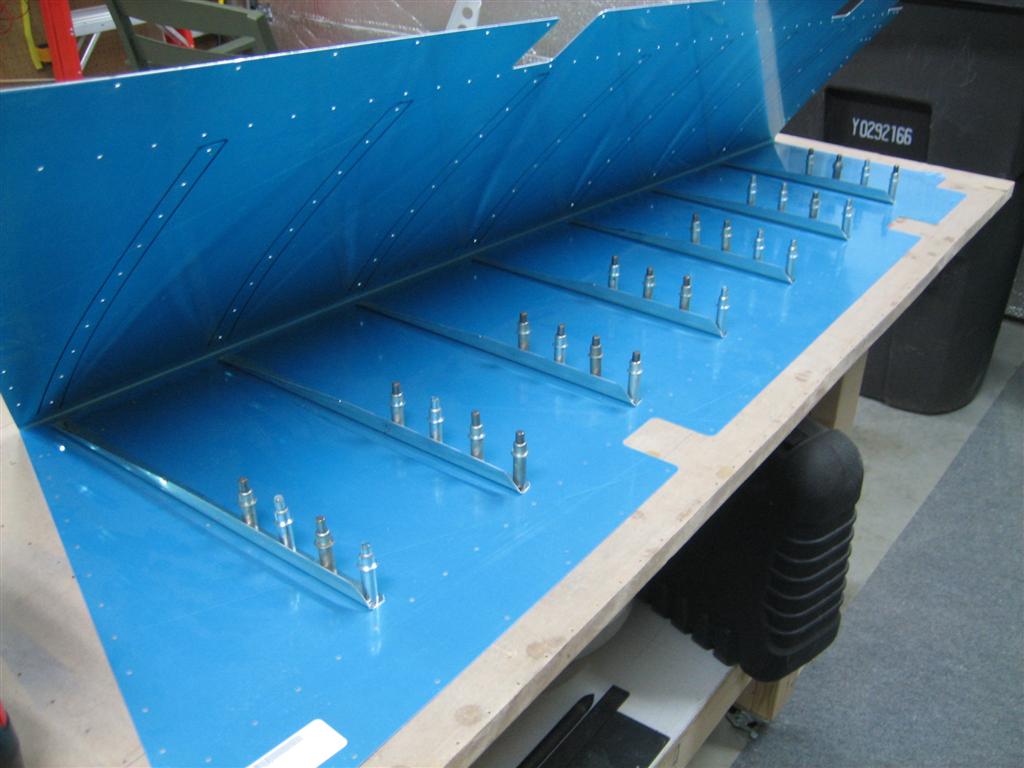
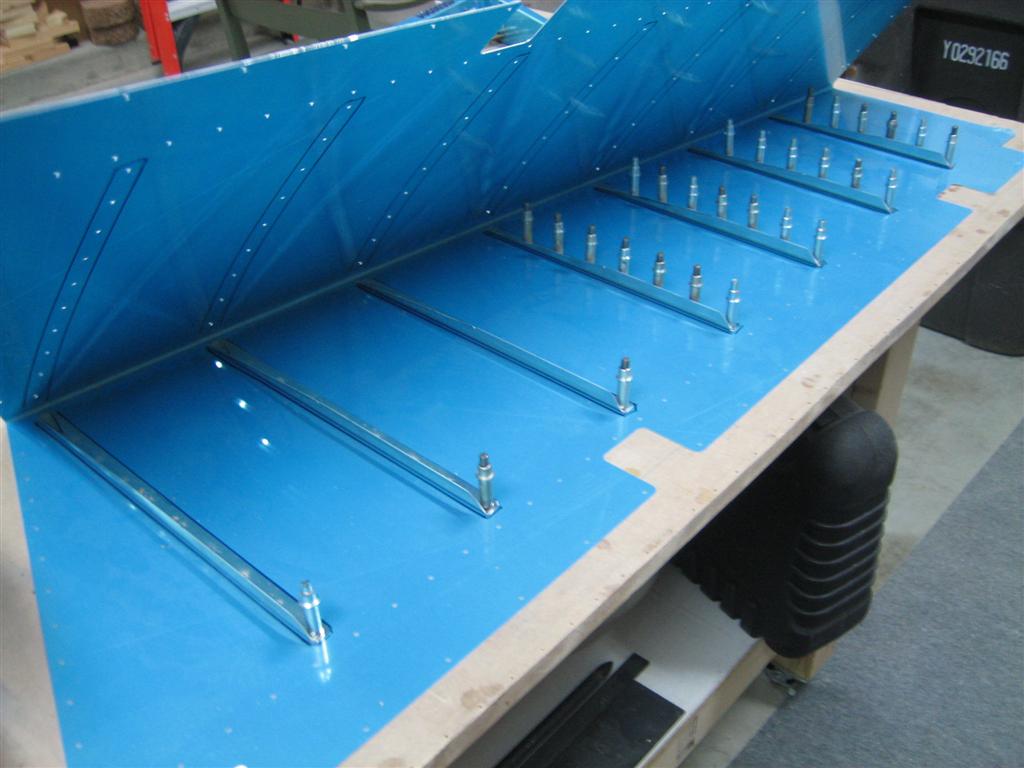
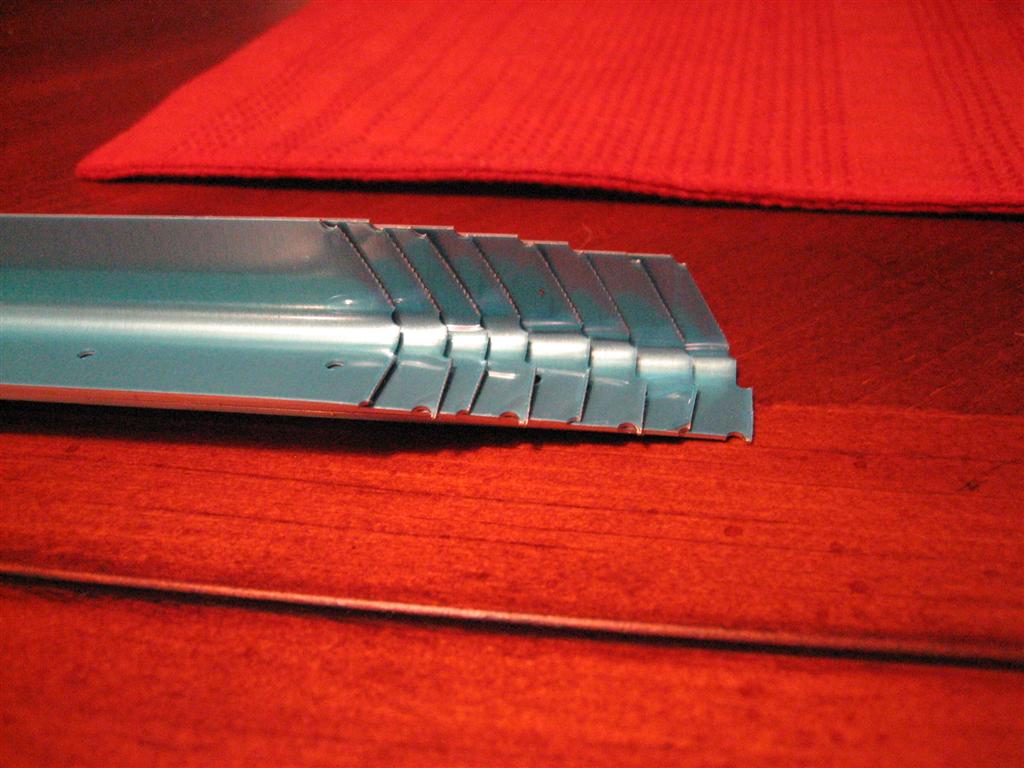
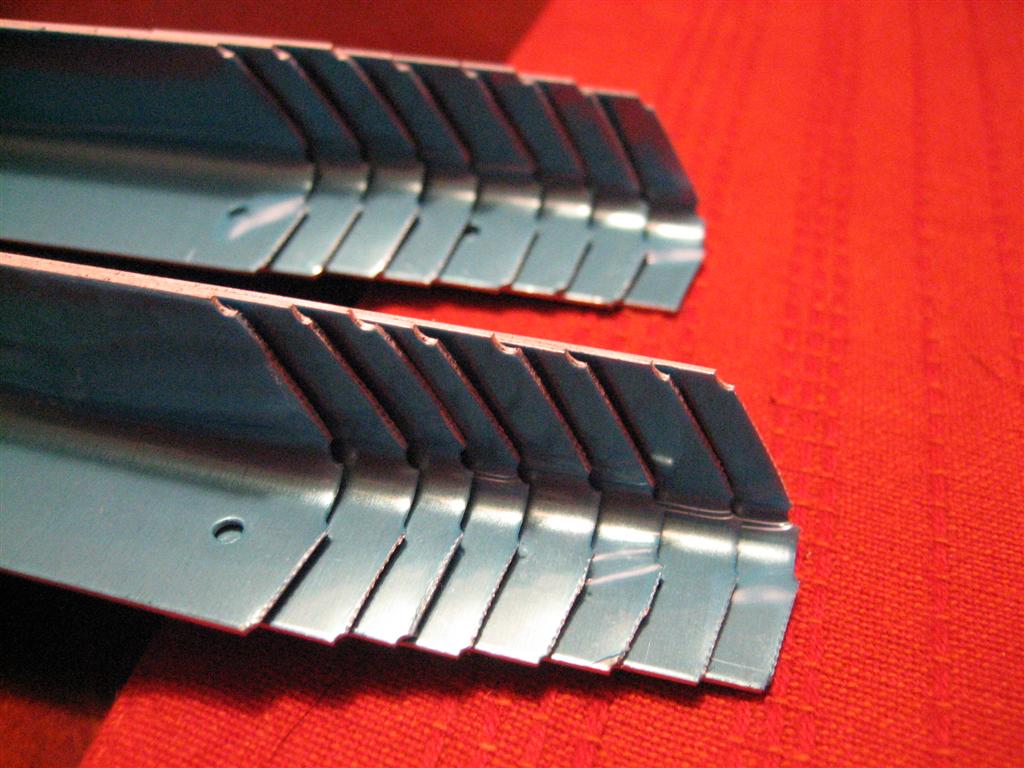
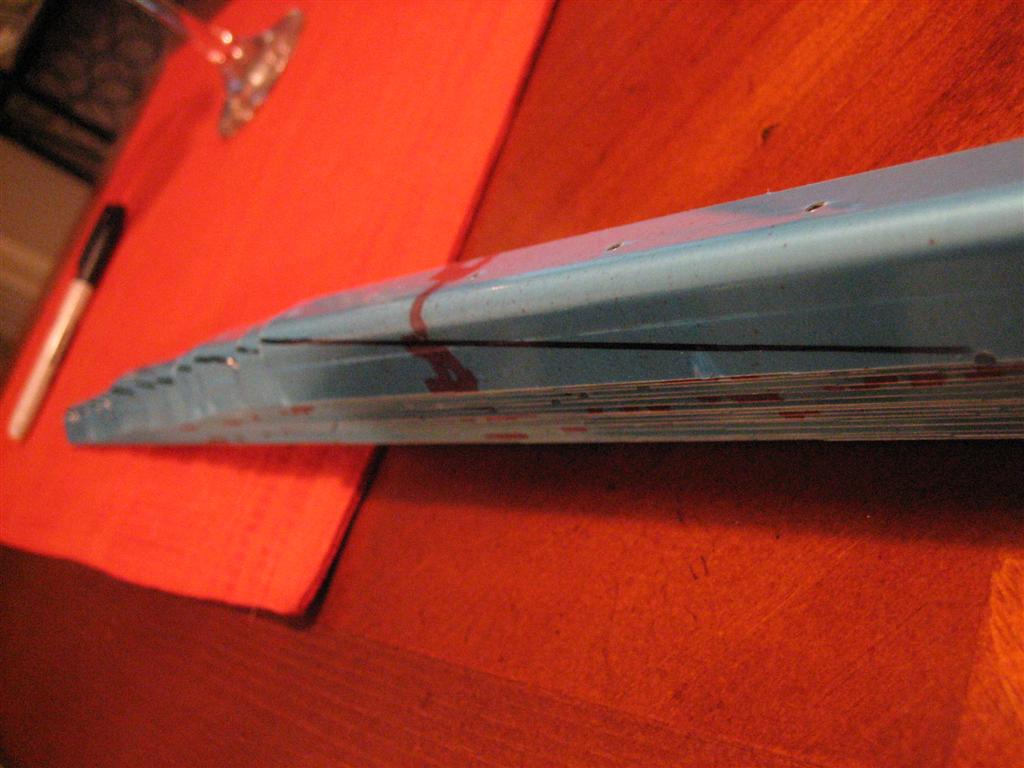
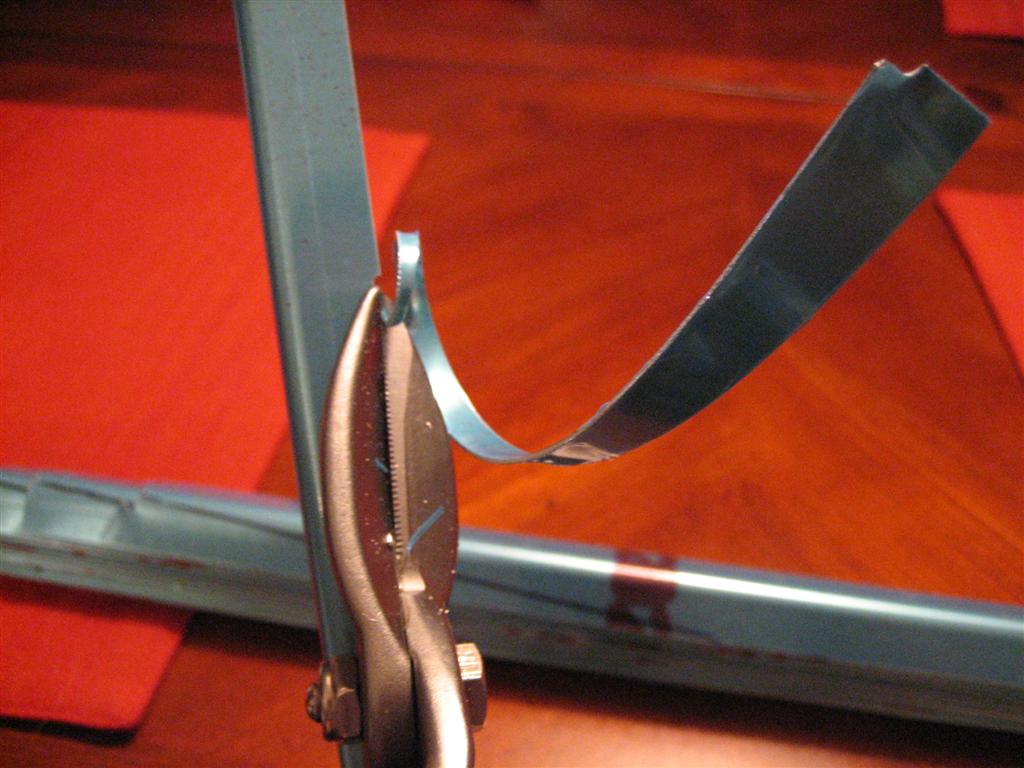
Primed E-709 Root Rib Right

May 3, 2010

Prev | Next

Well, after a few days of no work, then a few more of yardwork, and a few more of more no work, I made it into the garage tonight for an hour of work. Now that summer is approaching, the garage is getting a little humid. I’m going to start thinking about buying a portable air conditioner.

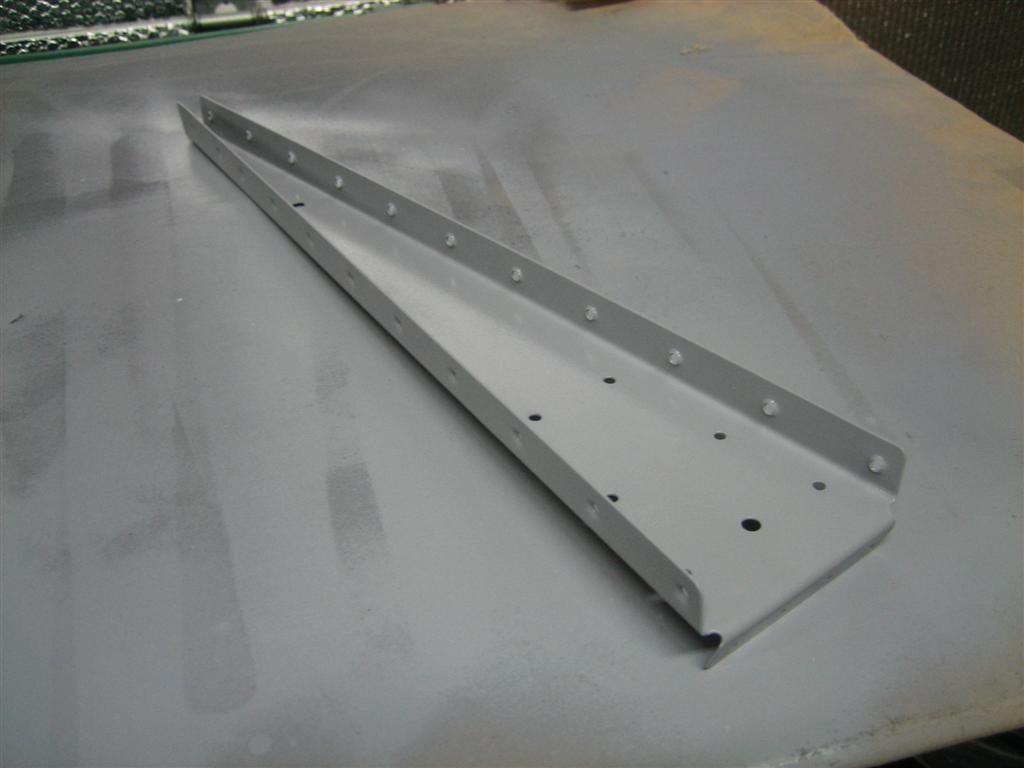
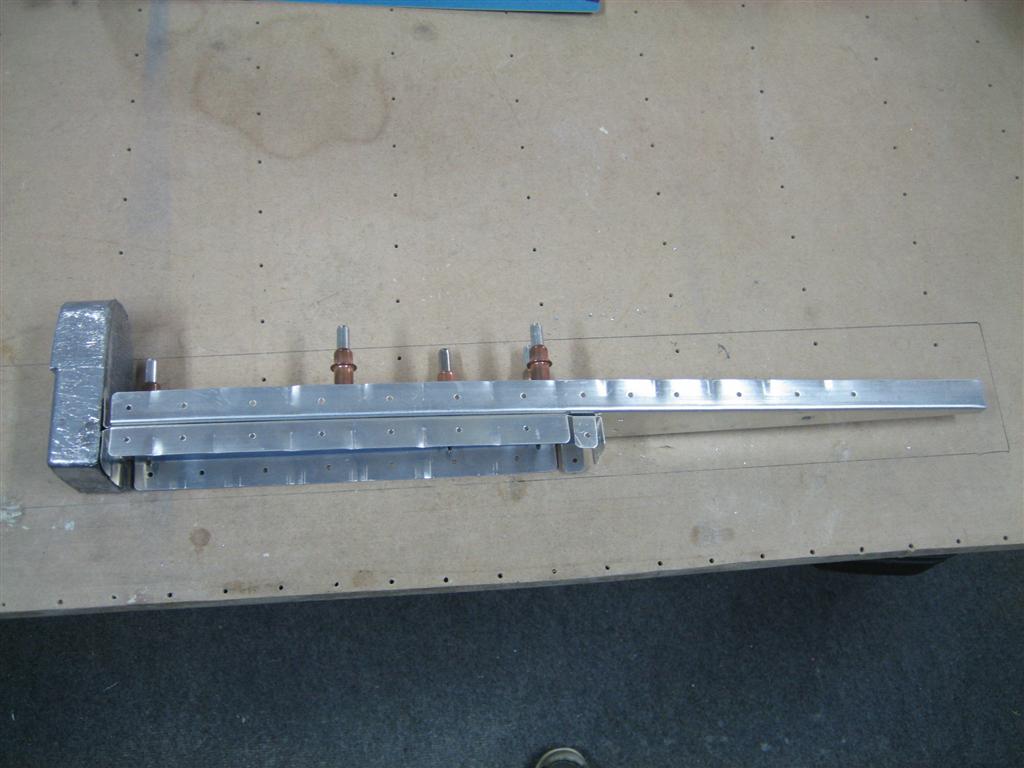
Tonight’s main task was to get any piece of the right elevator ready for assembly. E-709 (Root rib right) seemed to be a good candidate.

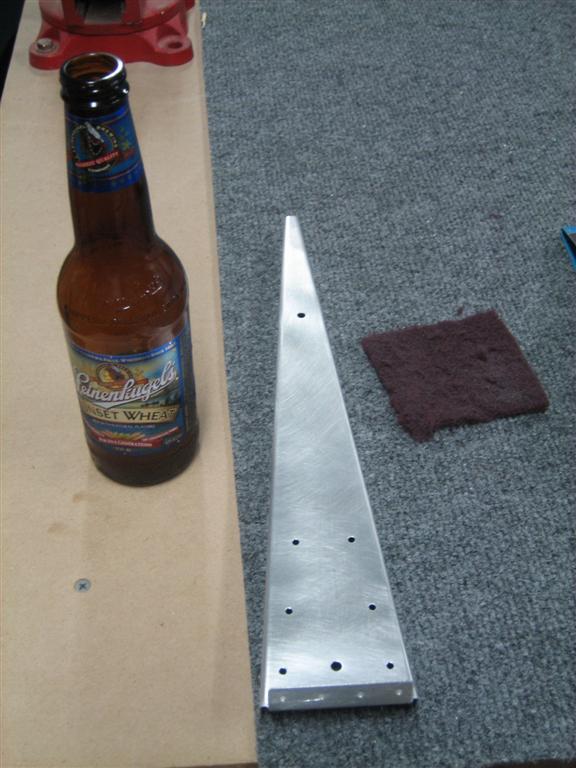
On the right, my trusty scotchbrite pad. In the middle, E-709 (Root Rib right). On the left. Well. You may call that beer. I call it "delicious."

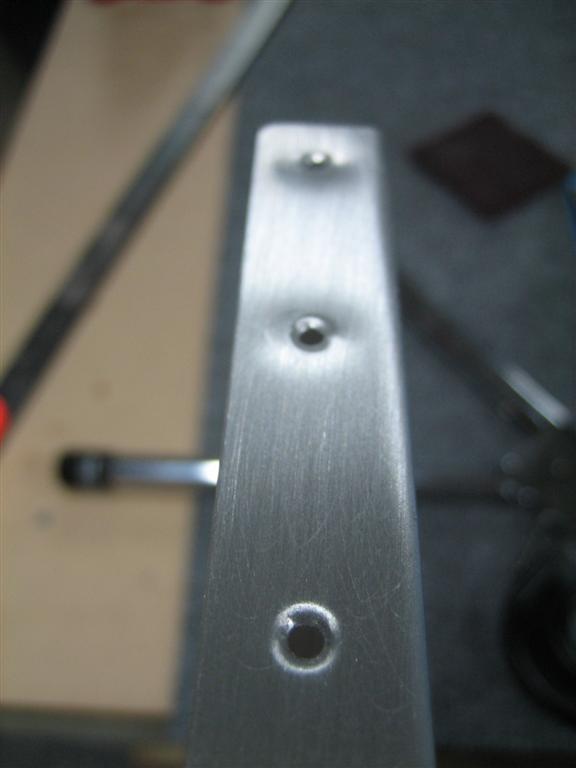
Anyway, after deburring and scuffing, I broke out the #40 tank dies (understructure, so I want the dimples slightly deeper) and did all but the aft two holes on top and bottom.

Dimpling.

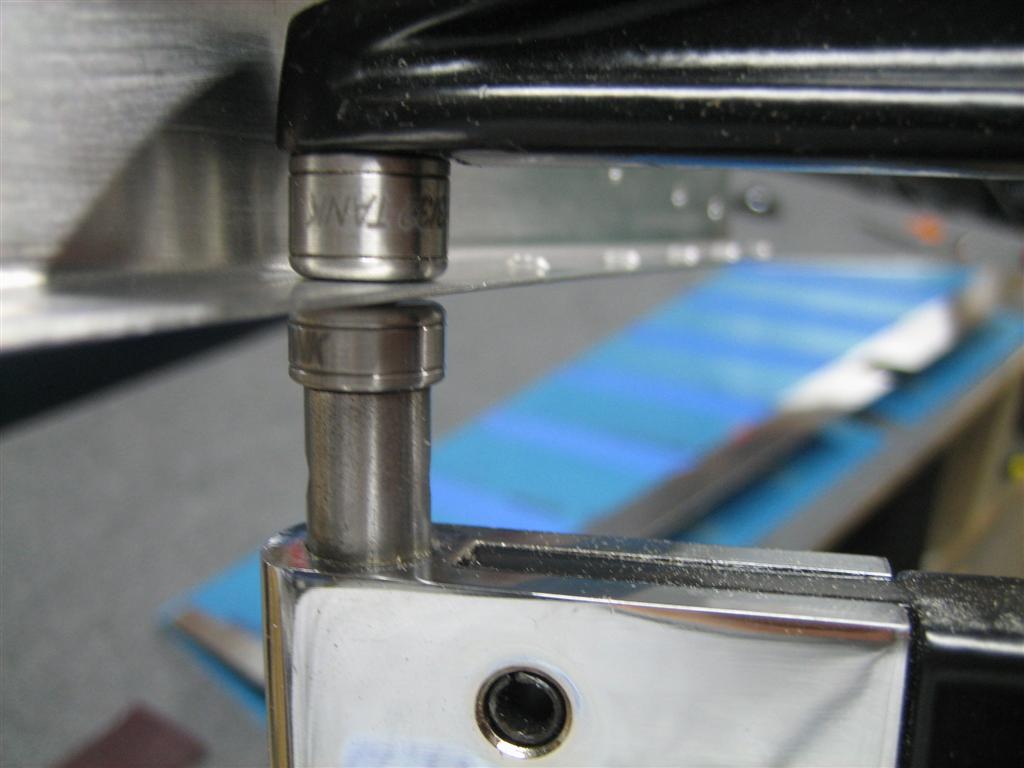
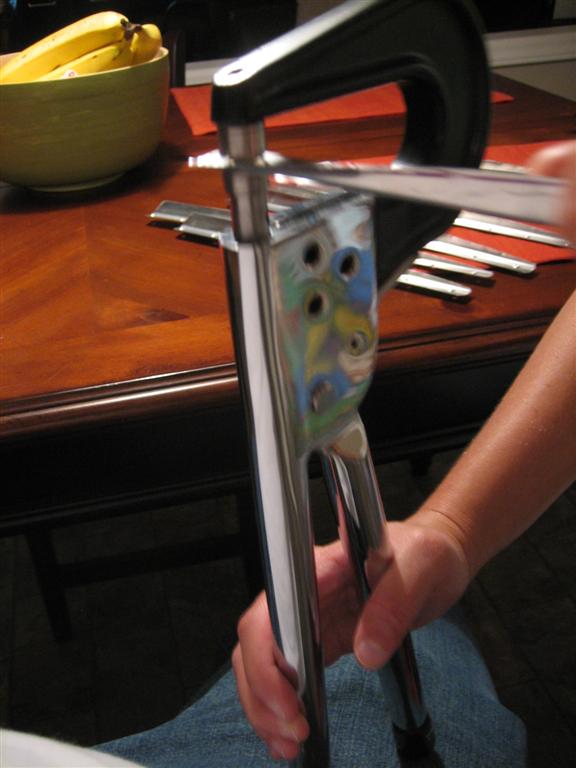
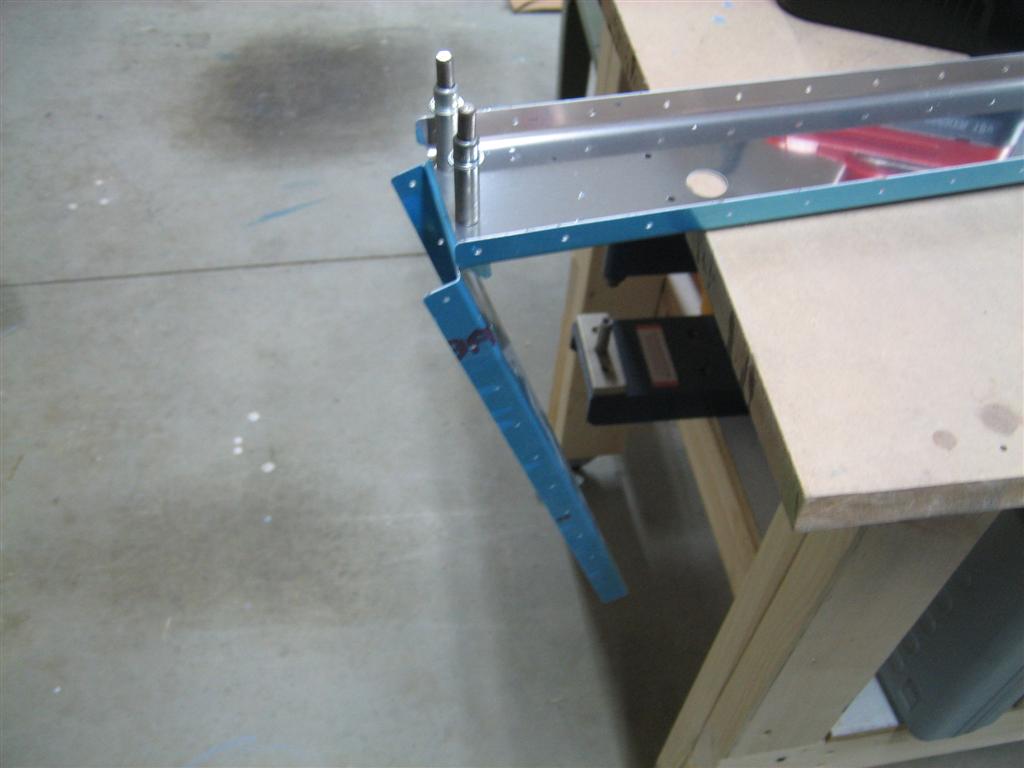
For my hard to reach places, I use a steel bar with a countersunk hole in it, put the hole of interest on top, and put in a sacrificial rivet to use as a male dimple die. Then, I grab a flush set, and push the rivet into the hole in the steel.

Getting ready to ghetto-dimple.

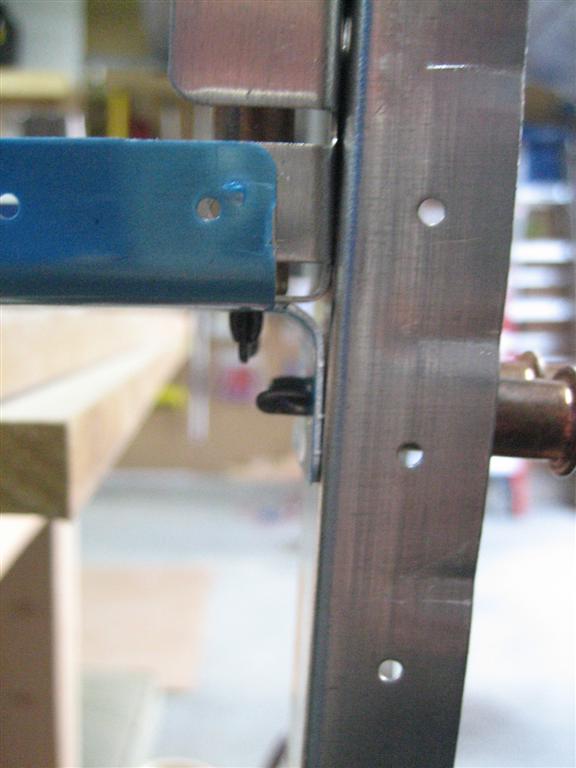
Here’s a closeup of my steel bar for you to admire. The hole on the right is what I use for these tasks.

The hole on the left is useless, since I drilled it too far away from the edge of the bar. Dumb me.

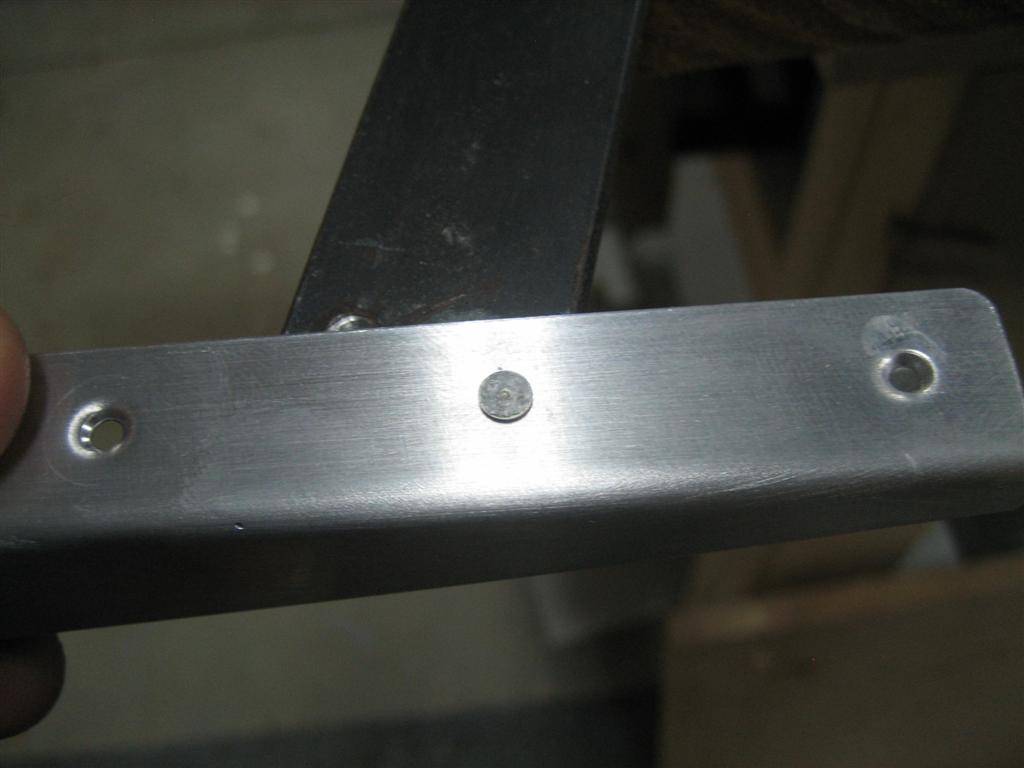
Anyway, here’s a shot of one side of the E-709 after using this technique.

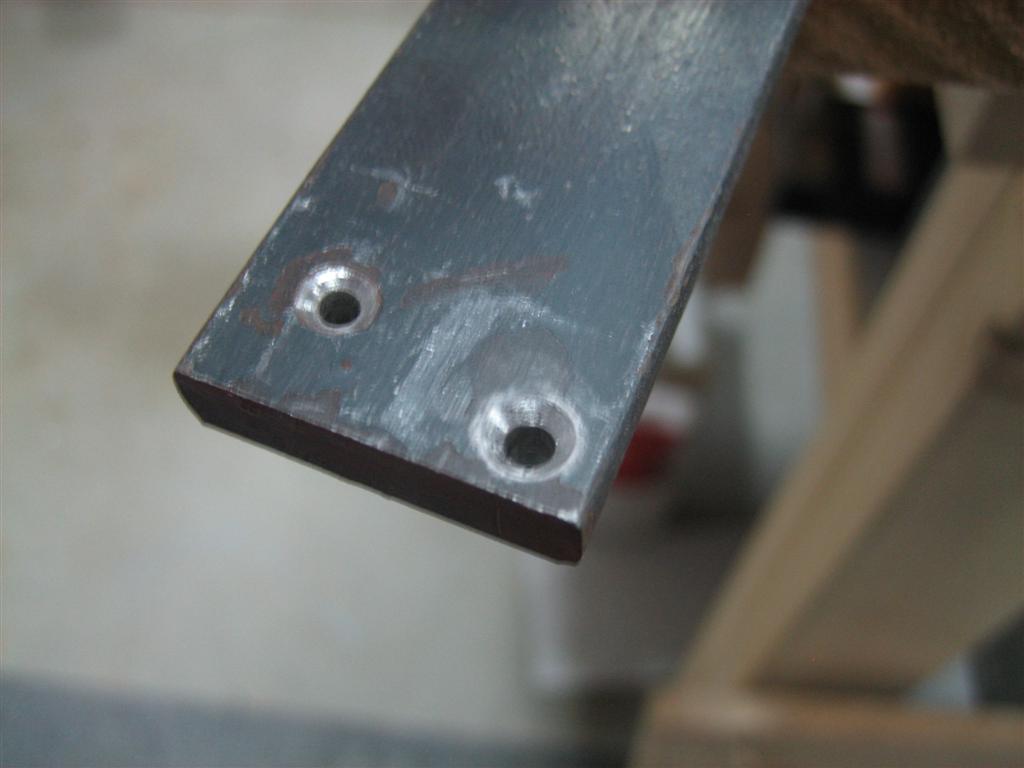
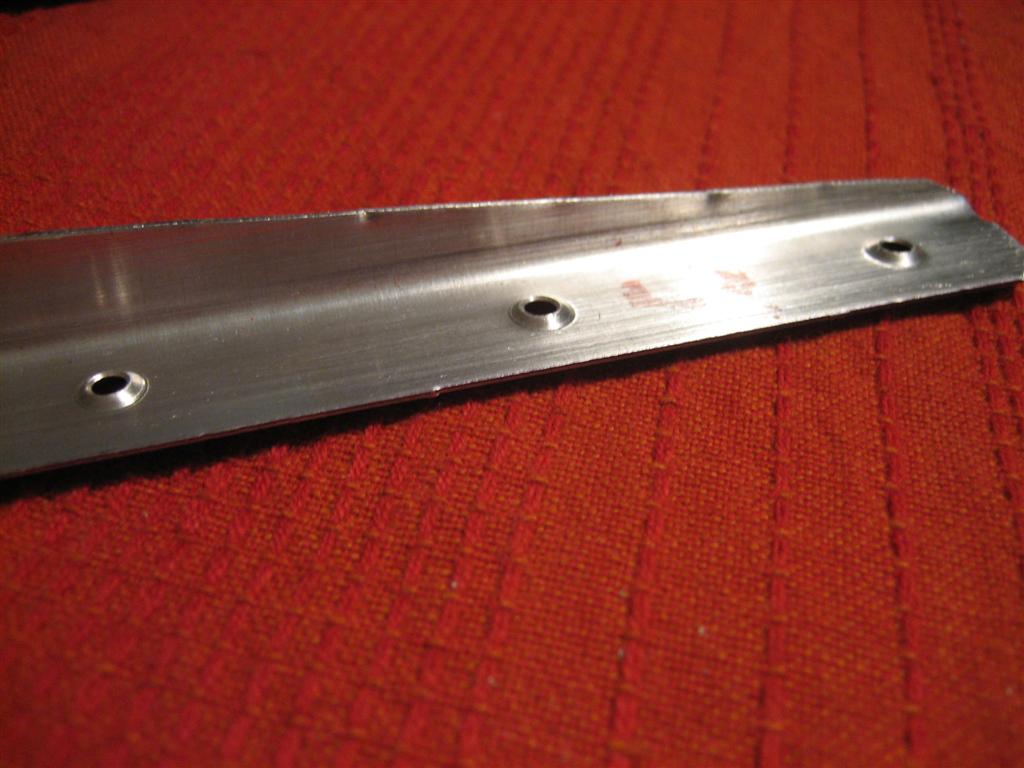
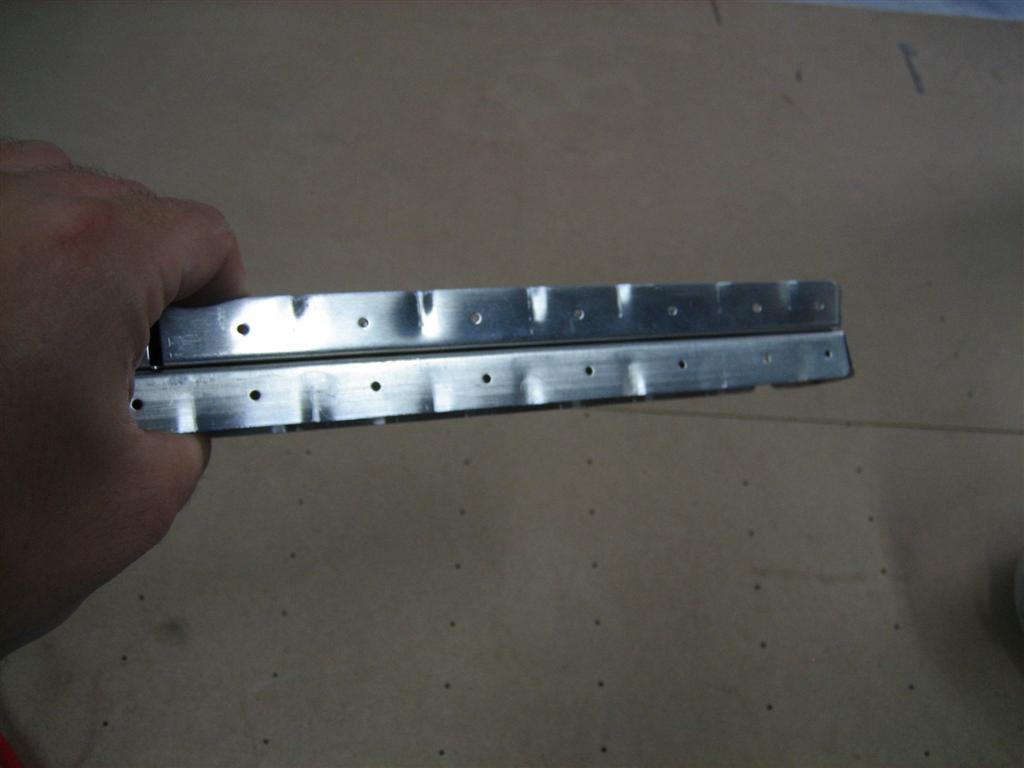
The bottom dimple is from the tank dies, the top two are with the rivet trick. Not perfect, but not bad for the hard-to-reach area. Based on my experiences on the rudder, the skin will sit just fine in these dimples.

Off to the paint-shop. And by paint-shop, I mean “a piece of cardboard on my trash and recycling bins.”

Up with the garage door for ventilation and on with the respirator before shooting the first coat.

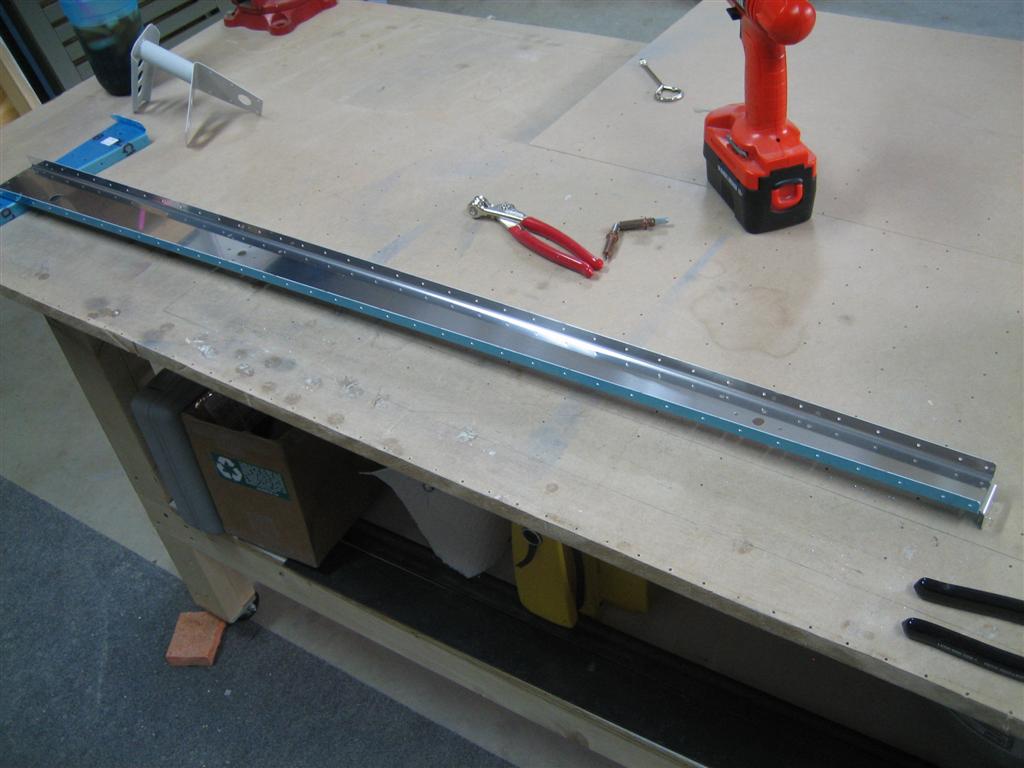
While that dried, I snapped an action shot of me devinyling the inside of the skins. I also deburred all of the exterior sides of the recently drilled holes, but didn’t get to the insides, I’ll do that as soon as I get back into the shop.

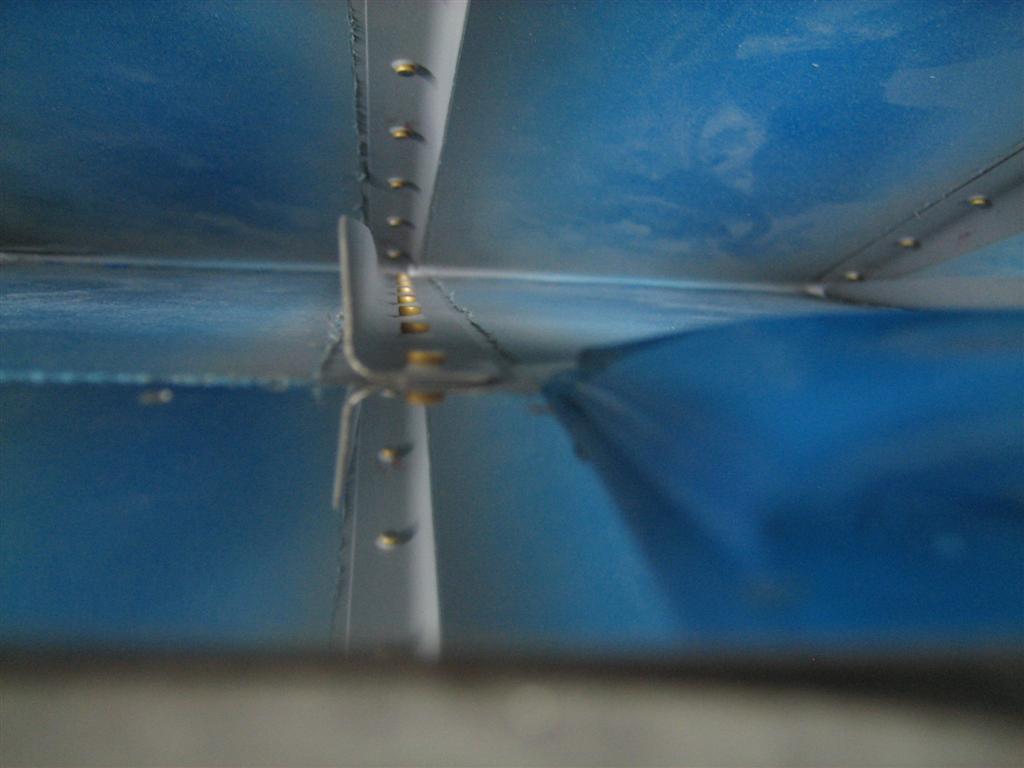
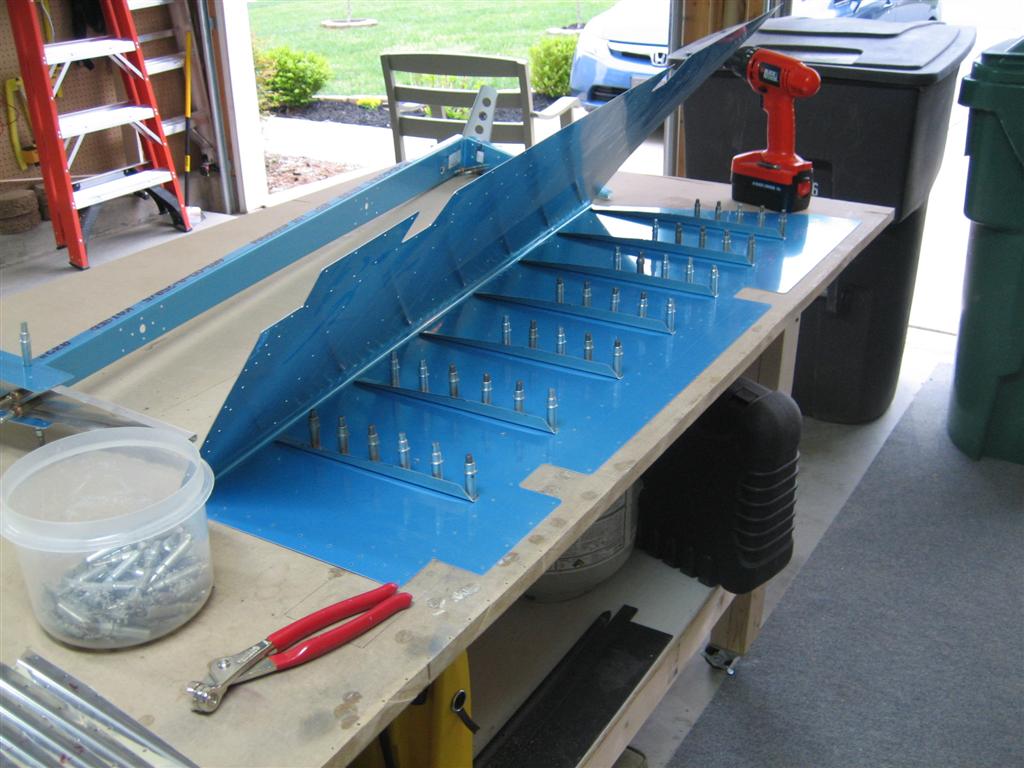
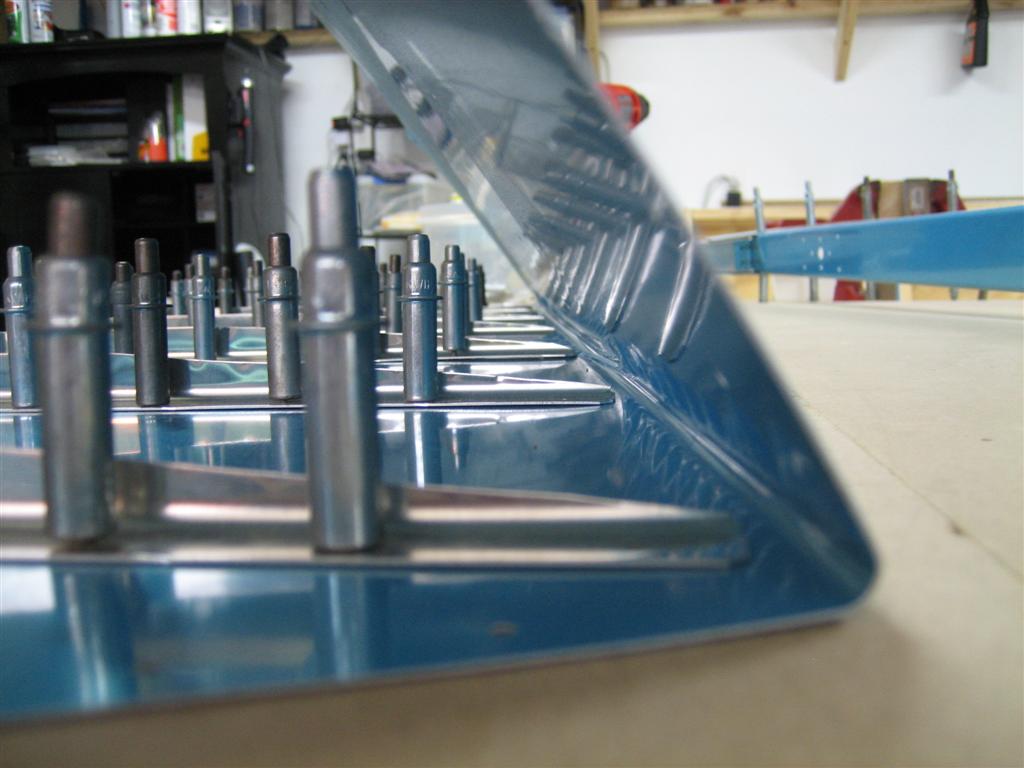
Oh man, those stiffeners and rivets look nice.

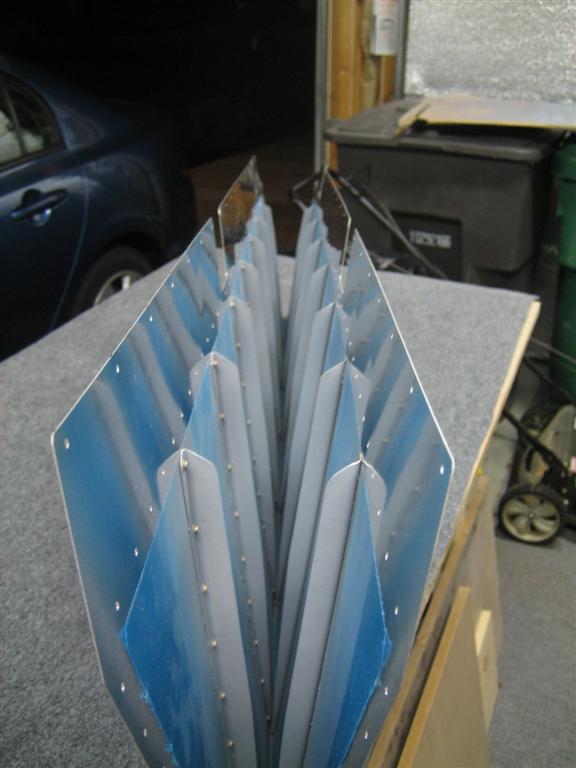
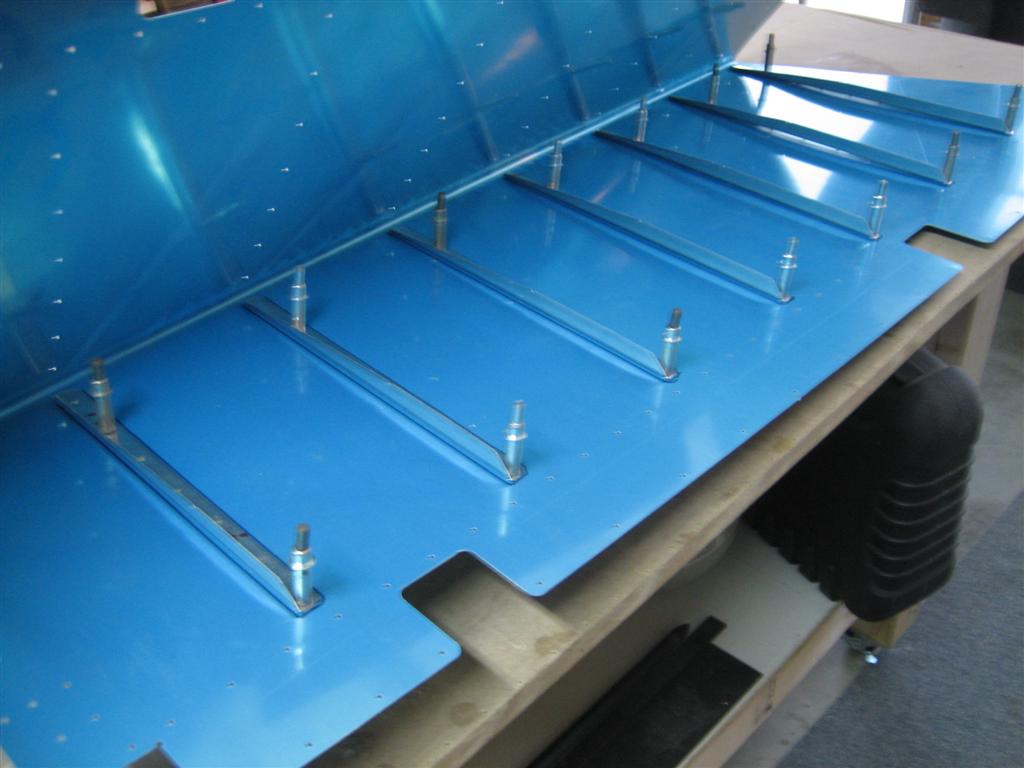
Here are both interior sides done. (And by “done” I mean “done devinyling with just the parts I’m going to deburr, scuff, dimple, and prime.”) The rest of the vinyl will come off just before riveting, and will reveal nice untouched (and unprimed) alclad.

Pretty pretty.

Crap, I forgot to take a picture of me shooting primer on the other side of E-709, which is the entire basis for the title of today’s post. If you feel shortchanged, feel free to complain.

One hour.

Prev | Next


Right Elevator Stiffener Drilling and Dimpling

April 14, 2010

Prev | Next

Another fairly boring night with right elevator stiffeners, but the end is near (end of right elevator stiffeners, not the whole airplane), so I’ll keep plugging away.

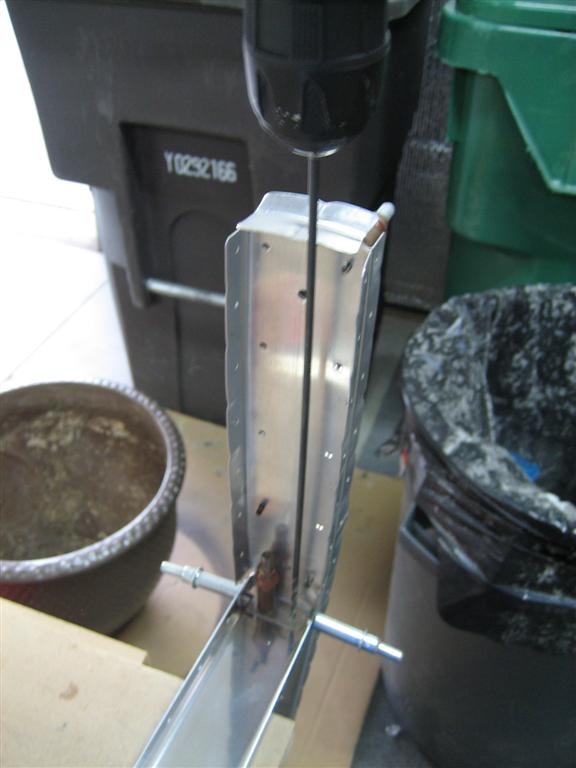
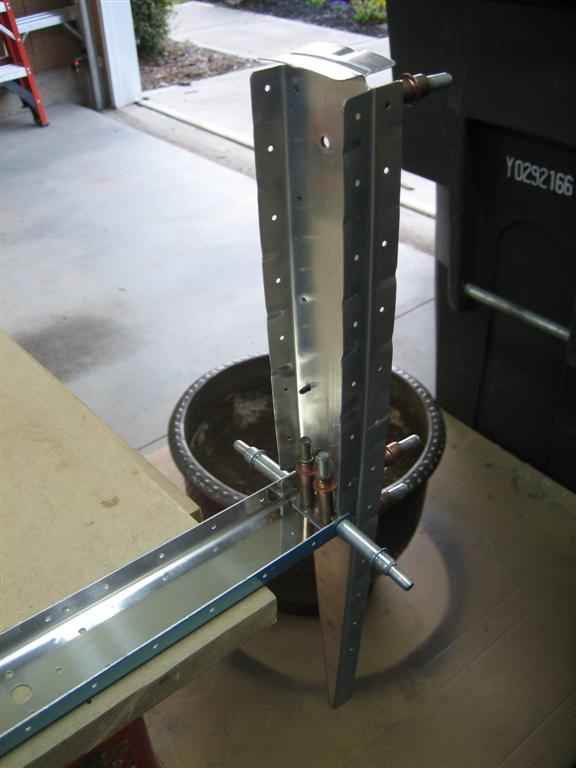
My setup for drilling stiffeners. I used the cordless today so I wasn't making too much noise. I'm almost done with this side.

I matchdrilled every hole except for the last hole (closest to the trailing edge.) Some of these last holes are both pre-punched, and just need to be matchdrilled to final size, and some are missing the holes in the stiffeners. You have to use the skin to matchdrill the stiffener.

Down the right elevator.

I unclecoed most of the stiffeners and then re-clecoed the stiffeners (just at the ends) with the elevator off of the table so I can roll it over to drill.

Ready to flip over and matchdrill those last stiffener holes.

One picture of the last hole.

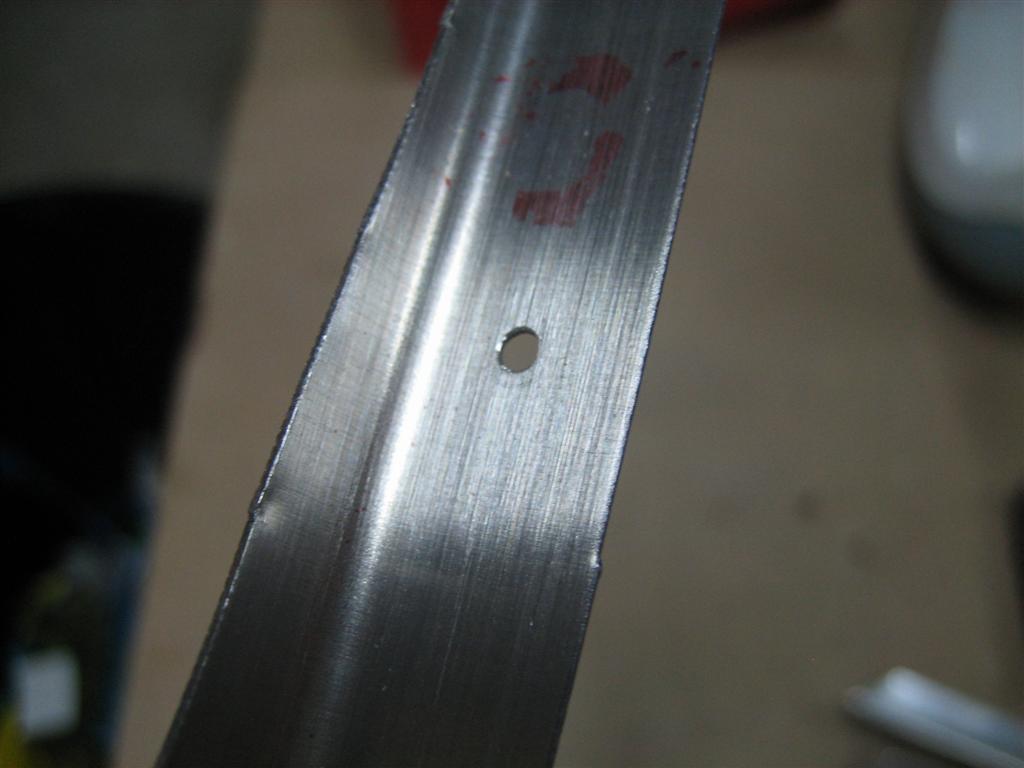
The hole at the end of the "3" is the one I need to matchdrill.

After that, I used a thick sharpie to trace the stiffeners to help with future devinyling. Then, I flipped the whole thing over to start on the other side. Same process, though.

About halfway done with this side.

Then, uncleco from the table to flip over and get the last hole.

Unclecoing from the last hole.

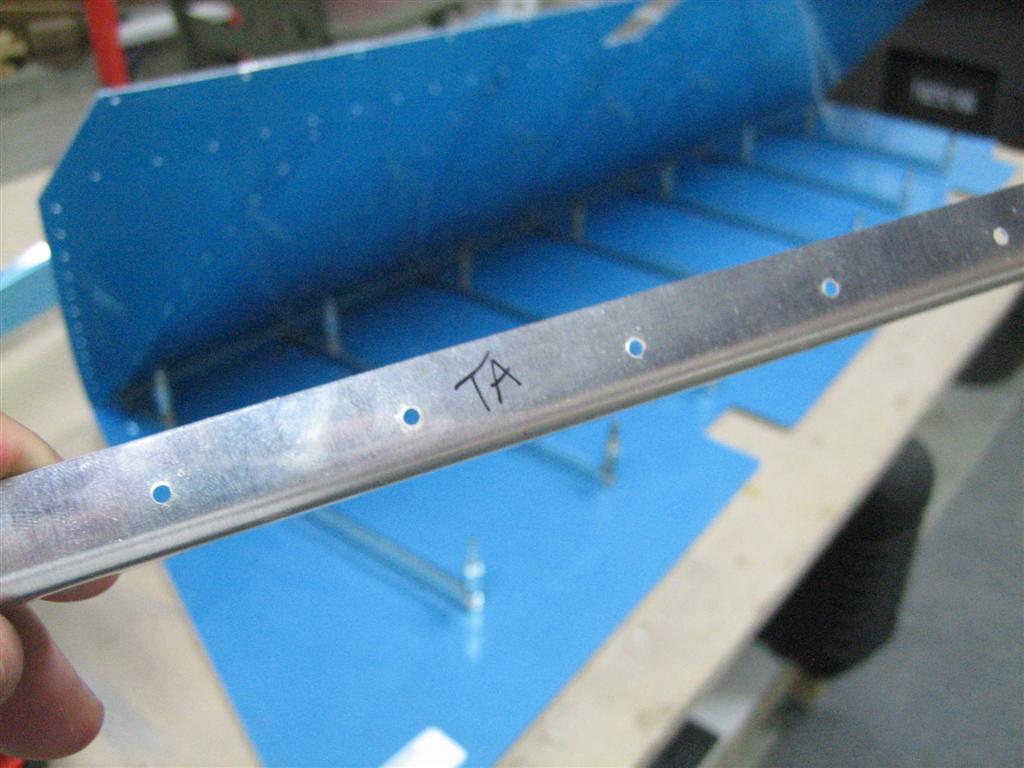
No big deal for you, but I marked all of the stiffeners correctly. The right elevator in the background is sitting upside-down (I just typed right-side-up, and had to change it. See, I’m still confused). Anyway, the ones on the table are on the top surface of the elevator, but the one in the foreground is marked the top (“Top, A”), but is actually the longest bottom stiffener.

This should be "BA" for "Bottom, A."

After finishing all of the stiffener drilling, I took them inside to deburr. After all of the deburring, I grabbed this shot of the placemat on the kitchen table. (Don’t tell the girlfriend. I got it cleaned up.)

Aluminum shavings galore after deburring. This is kind of a stupid picture, but I already uploaded it, so I'm not going to hold back.

After deburring, I rubbed down the surface that needed to be dimpled, (not the perpendicular surface, and I definitely didn’t do any edge-finishing).

Deburred and scuffed, ready for dimpling.

And I would like to draw your attention to the following three dimples. Don’t they look lovely?

Looks like a professional dimpled these holes.

It was the girlfriend!

Girlfriend dimpling. (She kept giggling after each one. And after each time I said "dimple." There may or may not have been red wine involved.)

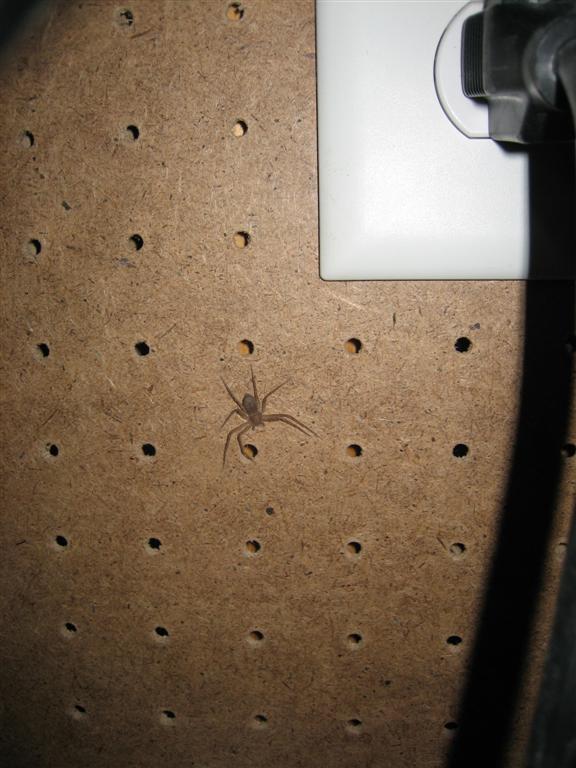
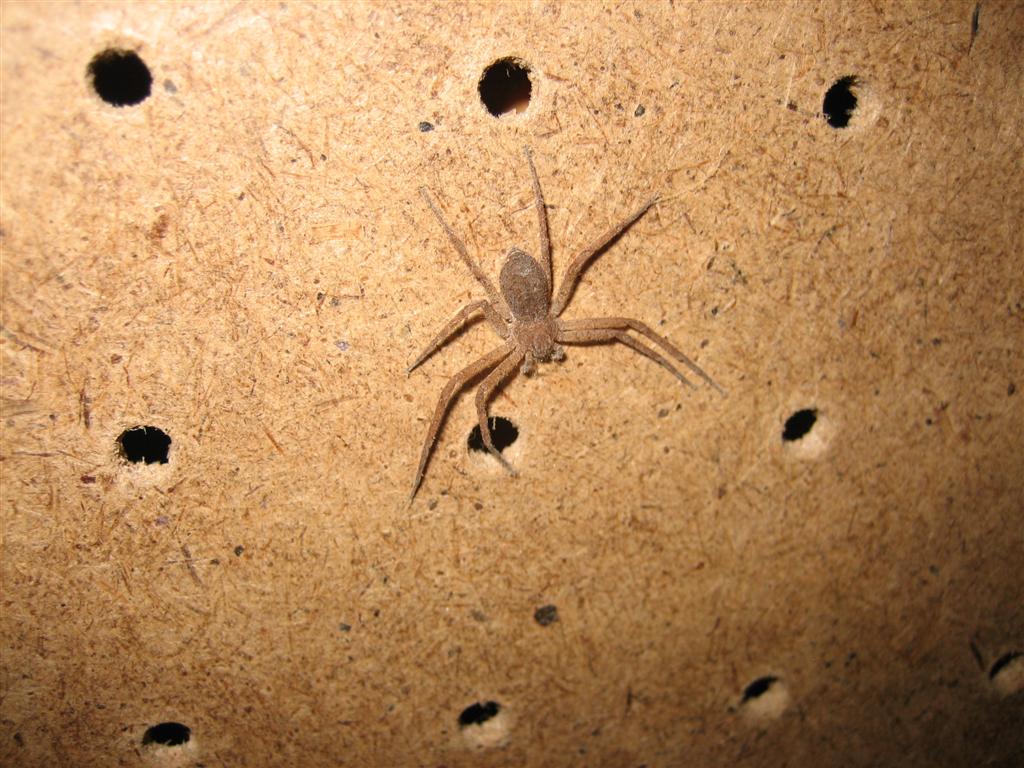
Anyway, she made it about 8 dimples before getting “bored” (I think her hands hurt, too). Back outside, I found this little guy.

he's pretty small, but looks kind of scary.

No real identifying marks, but I’m sure someone will be able to help out.

Anyone have any ideas?

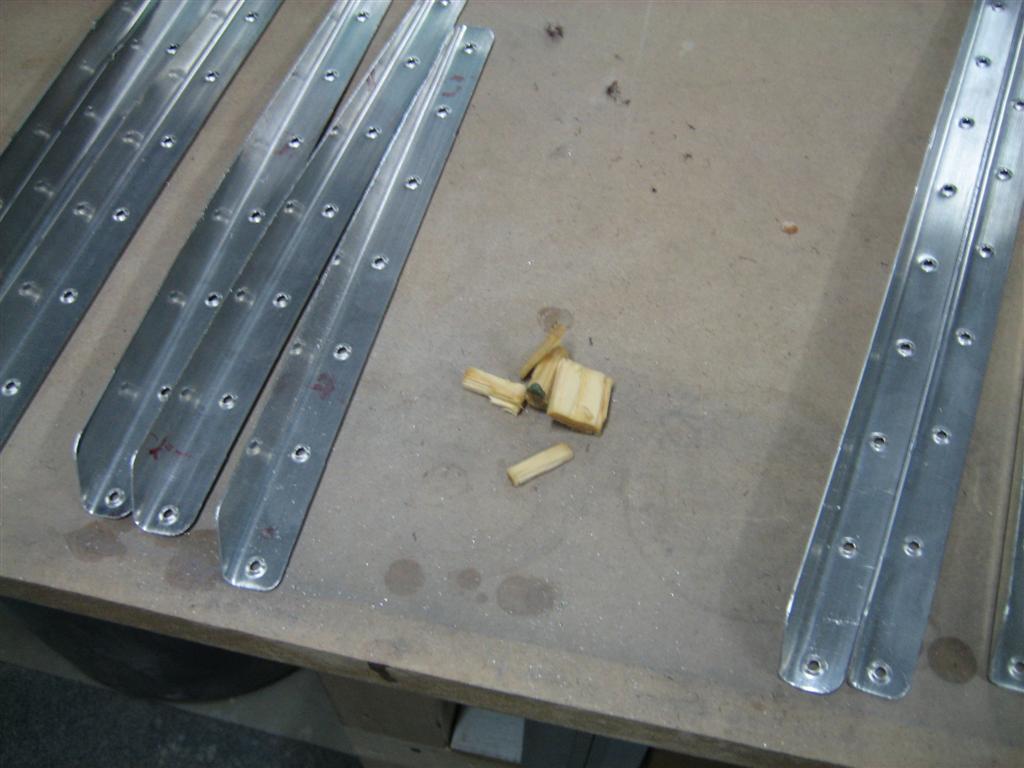
As if I hadn’t had enough drama for the night, Ginger came out, grabbed some wood, and took it inside to chew up all over our staircase landing. Here are some of the remnants.

It's better than her eating the window sills. Or the banister. Or our patio chairs. Or my soul.

Anyway, I spent a few more minutes with the Permagrit block rounding the edges of the stiffeners. Next up, edge-finishing with the scotchbrite wheel, scuffing, cleaning, and priming. Then, same dance with the skin and the backriveting!

An hour and a half. Boom shakalaka.

Prev | Next


Right Elevator Skeleton and Stiffeners

April 9, 2010

Prev | Next

Sorry for the tardiness on the commentary. Here it is.

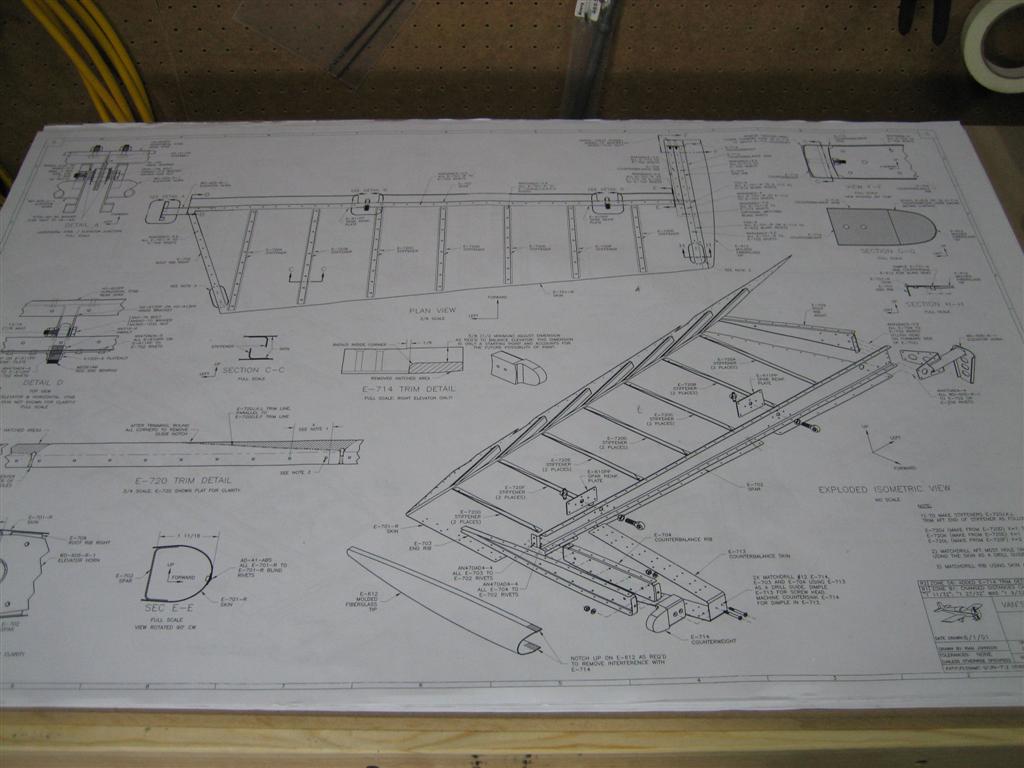
I decided after riveting the trim reinforcement plate that I will stick with the right elevator for now. Of course, here is the obligatory plans picture.

On to the right elevator.

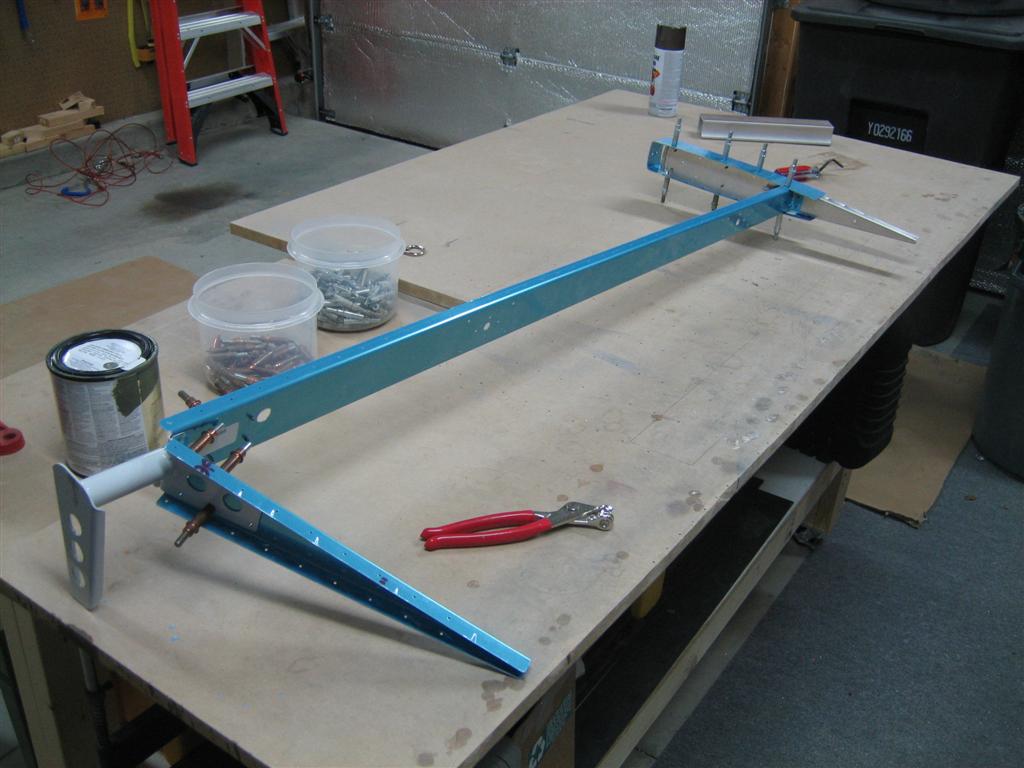
Instead of following the directions to start in on the stiffeners, I sorted through my lower workbench shelves and pulled out the parts for the right elevator skeleton. I just laid them on the (very dirty) workbench and grabbed this picture.

Right elevator skeleton, ready to rivet. Just kidding.

First up, prepare the two end ribs (edge finish, then flute).

Here they are (E-703 and E-704), sitting nice and flat with each other.

I can’t remember why I took this picture. Maybe after I removed the blue vinyl?

right elevator spar.

Then, it’s time to match-drill the two end ribs together.

The two end ribs clecoed together for match-drilling.

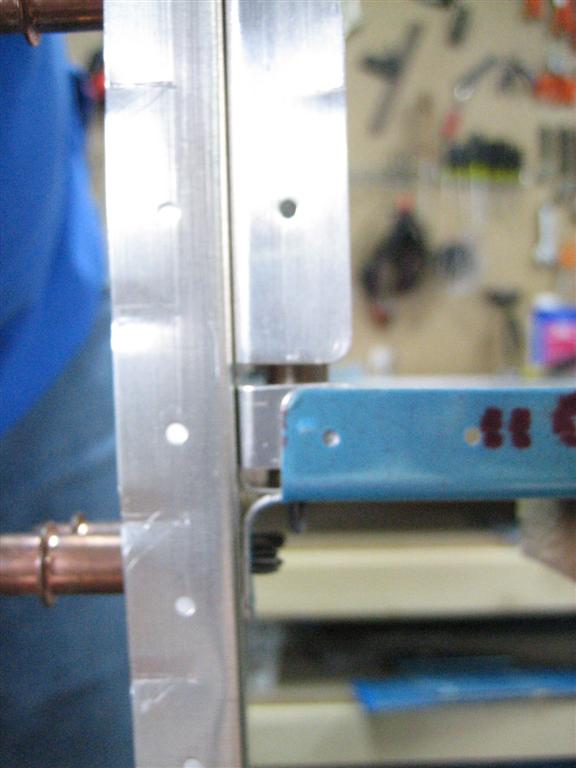
After that, they want you to cleco the two end ribs onto the rear spar. You can see some misalignment here.

See the spar flange hole and how it doesn't line up with the counterbalance rib?

Here's the other side, still not aligned very well.

After some manipulation via fluting and flange straightening, I managed to get everything lined up and match-drilled.

Here's my 12" bit, doing what it does best.

Here’s the outboard assembly after match-drilling.

Ready for disassembly.

Next, they want you to cleco in the counterbalance skin with the counterweight.

There's the right elevator counterweight.

I read on some other builders’ sites that it was difficult to cleco the counterbalance skin on the rib assembly. I didn’t have too much trouble, but it was definitely easier to work front to back.

Counterweight clecoed in.

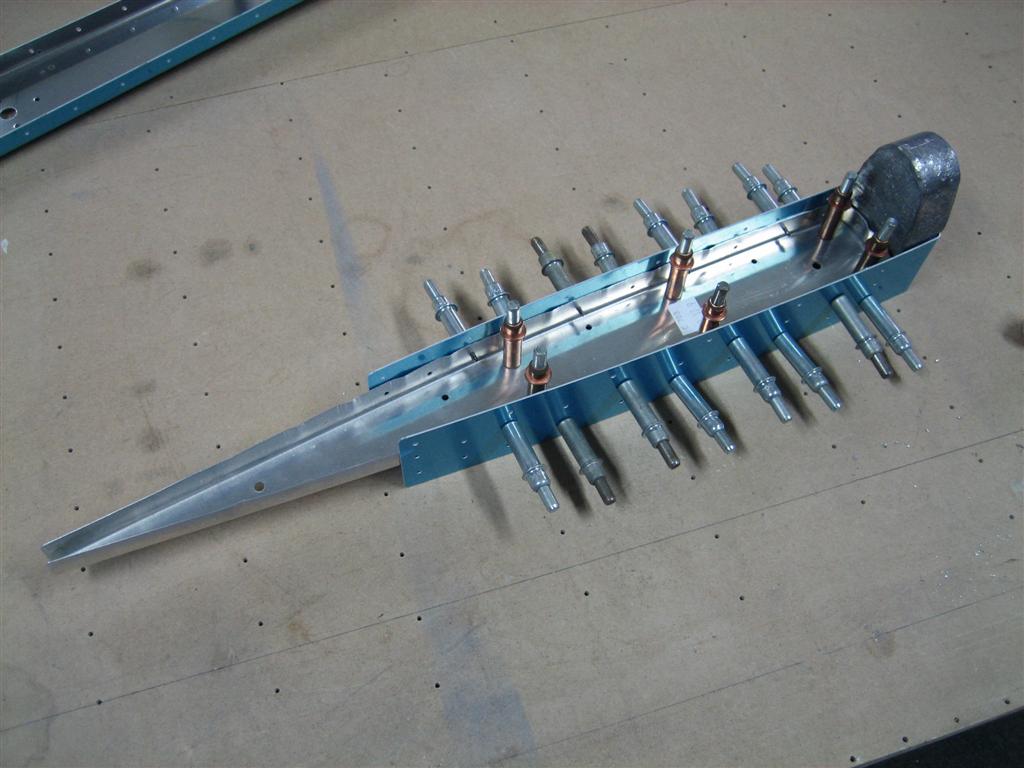
Next (before going back to the counterweight for drilling), I clecoed on the inboard rib. These are matchrileld to #40, then dimpled and set with flush rivets on the front web of the spar. The reason? The elevator horn must sit flush on this surface. You’ll see later.

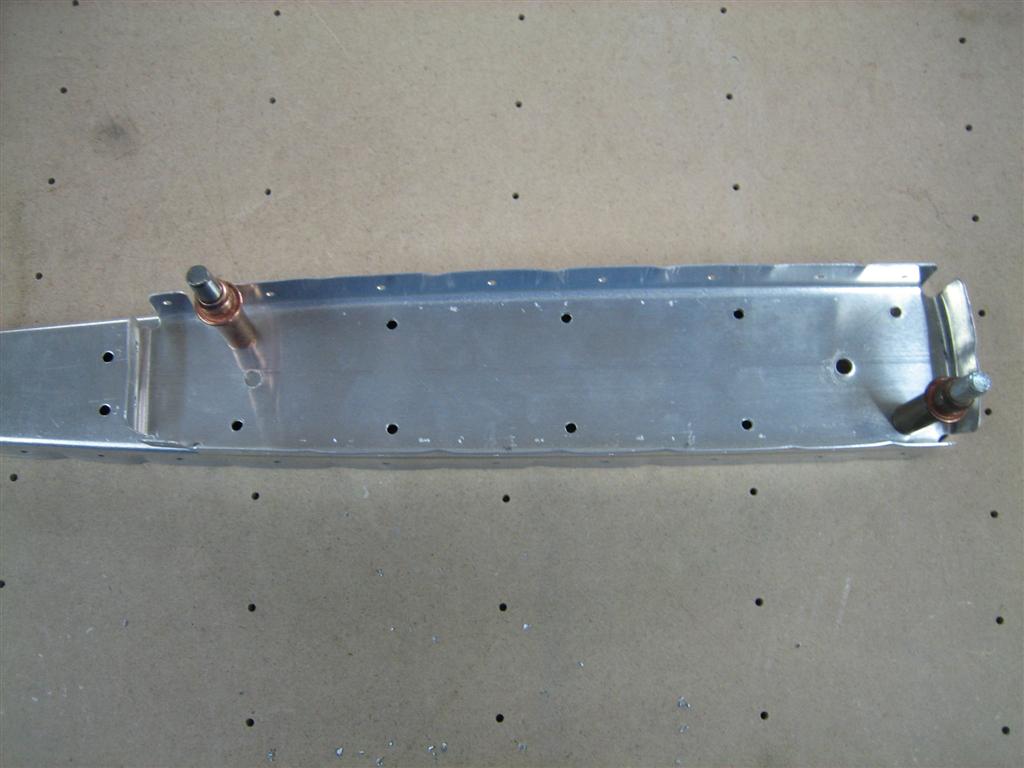
E-709 Root rib clecoed on.

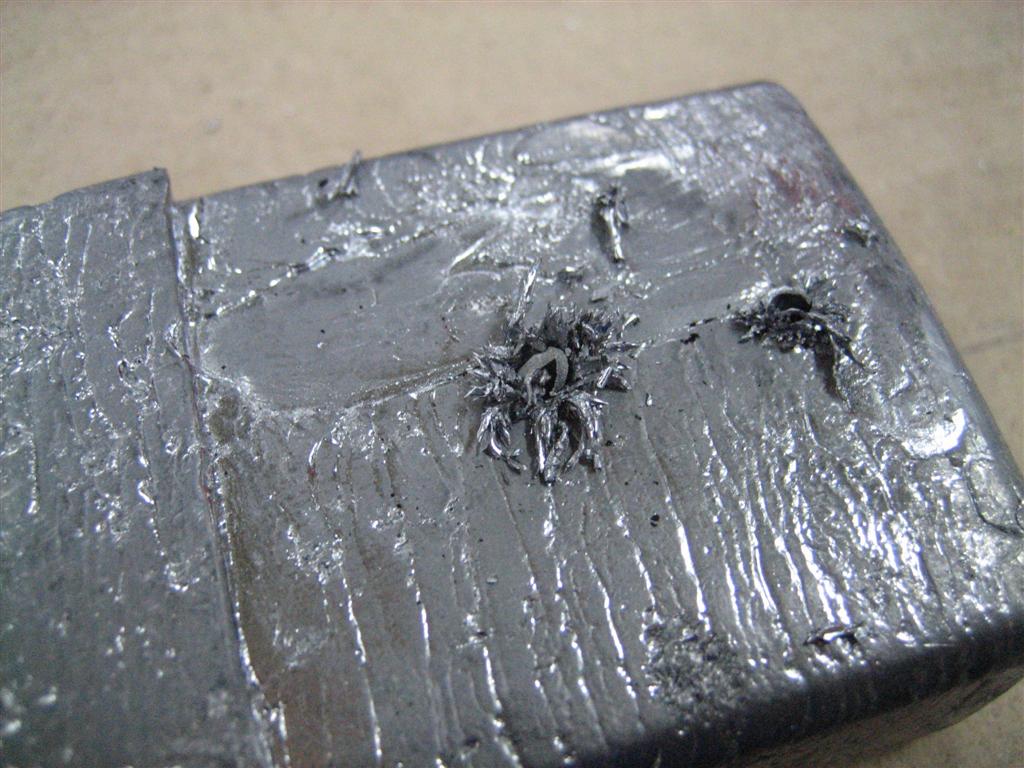
Now back to the counterweight. Van’s wants you to matchdrill these to #12. I started with a #40 and worked my way up, blatantly ignoring the advice to use drill lubrication. Of course, I broke 3 bits before I subdued my own stubbornness and moved on to something else.

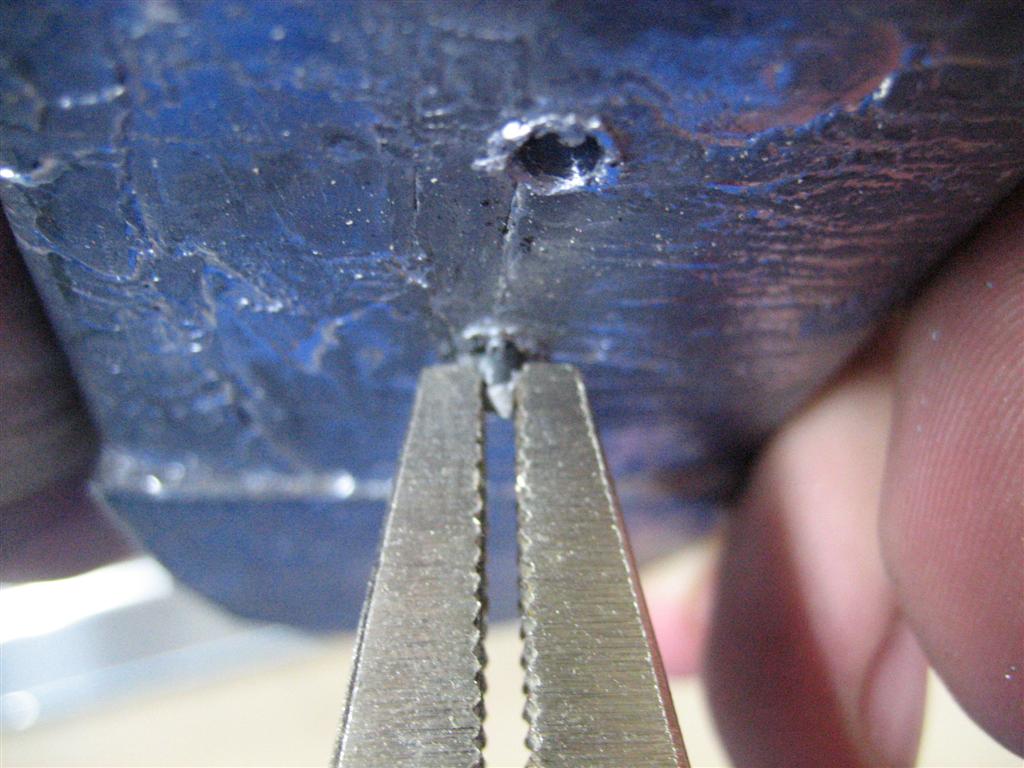
Broken bit, I need to get some Boelube.

I managed to get some locking needle-nose pliers around the bit and back it out slowly.

Anyway. I moved on to the skeleton.

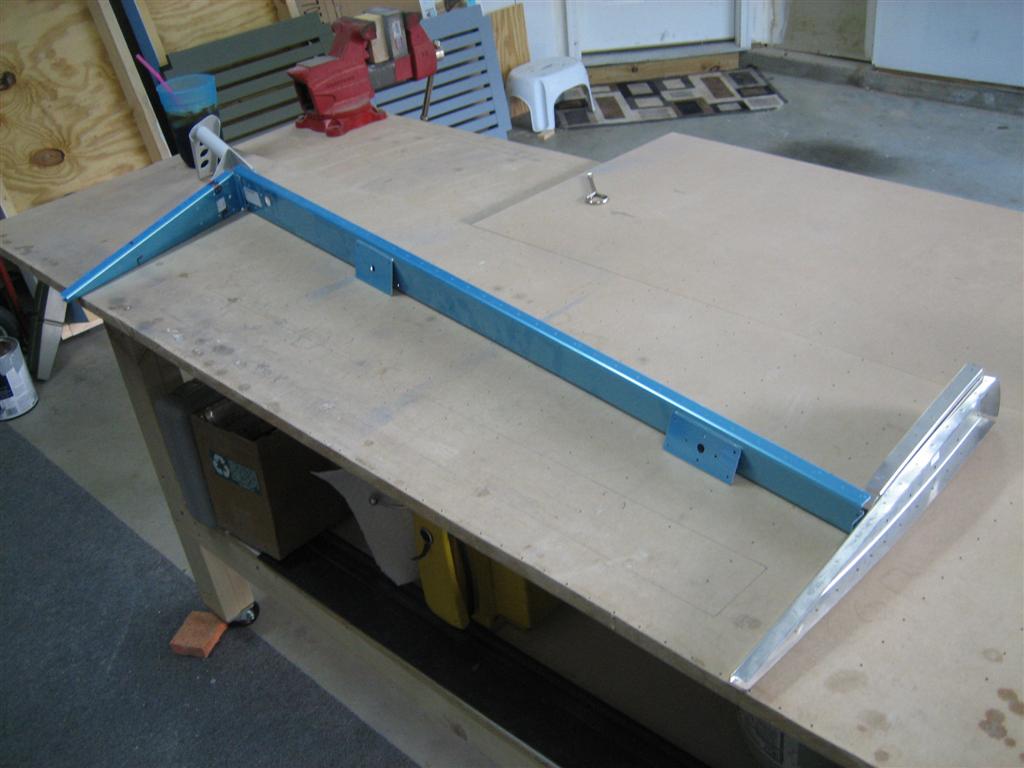
Here's the skeleton clecoed together and match-drilled. You can see where the elevator horn will sit flush on the spar web necessitating the flush rivets between the spar and the root rib.

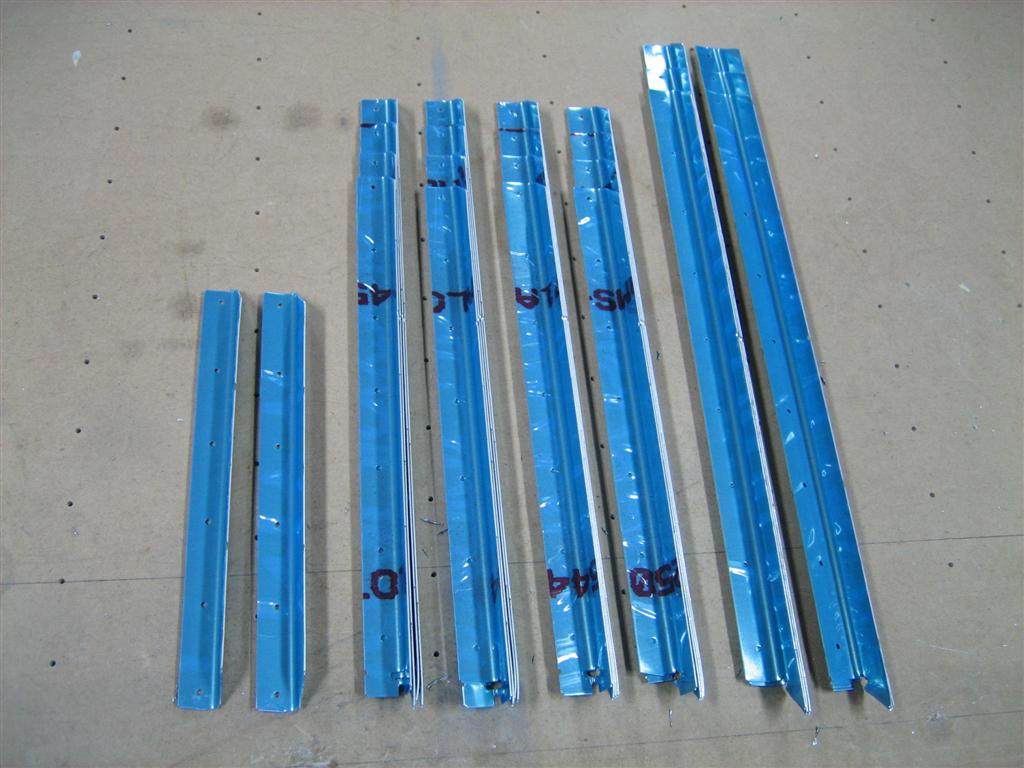
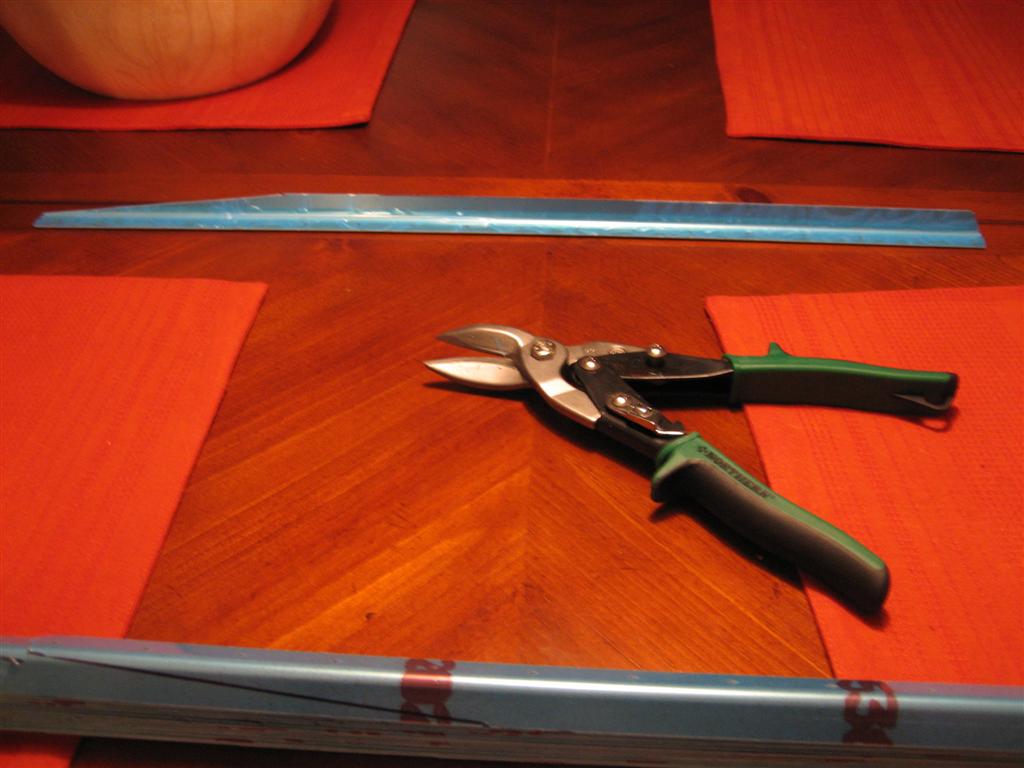
Then, I spent a little time inside on the stiffeners. I just rough cut them with snips to the general size.

These are for both elevators, some of these will be cut down further for the smaller required stiffeners between the trim spar and main spar on the left elevator.

2.0 hours today.

Prev | Next


Finished Backriveting Stiffeners

February 27, 2010

Prev | Next

I didn’t get to spend very much time in the shop today, but the half hour I did spend on the project was a good half hour.

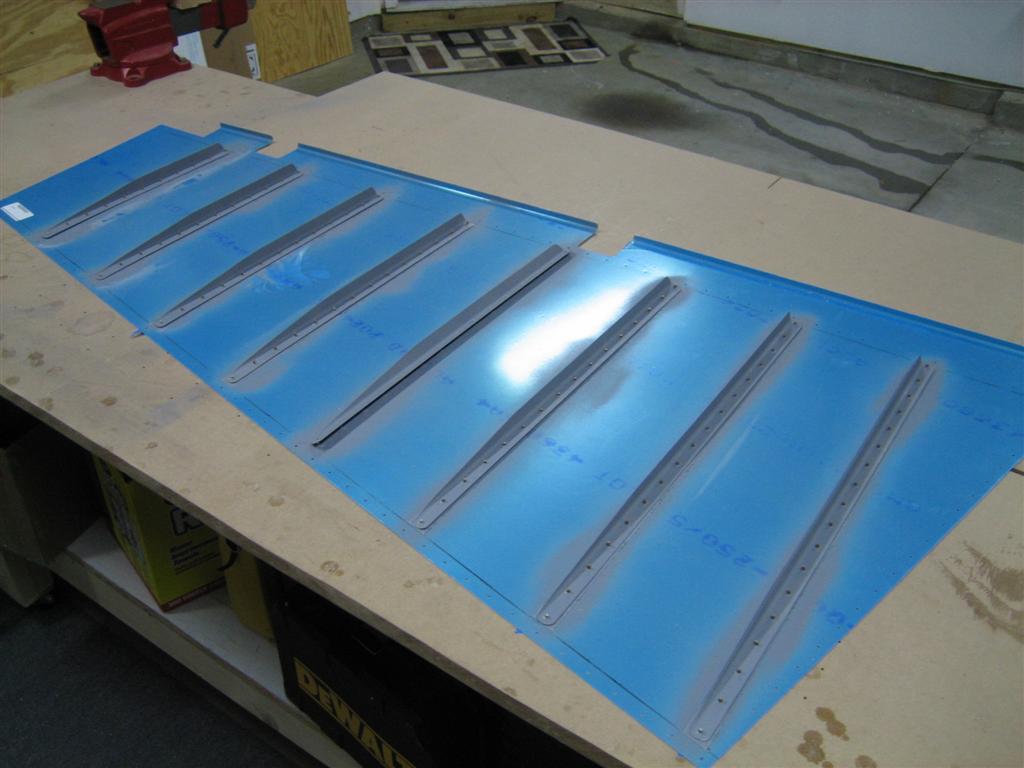
I grabbed the stiffeners that I had primed on Friday night and laid (layed?) them on the left rudder skin.

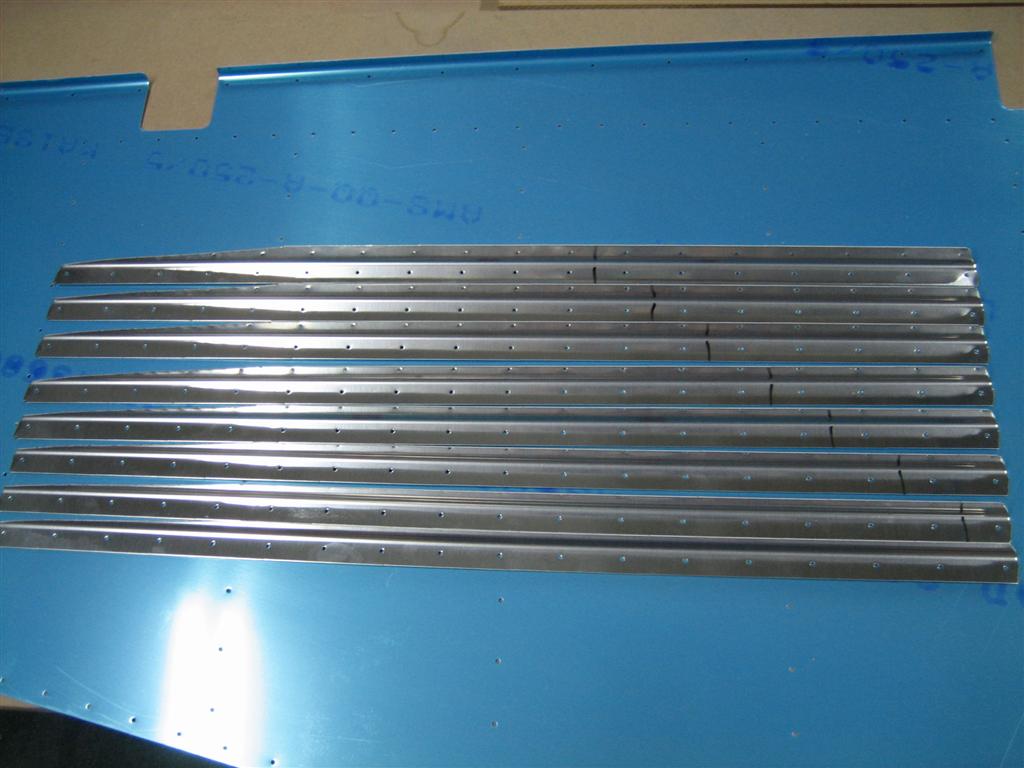
Primed stiffeners, ready to be backriveted.

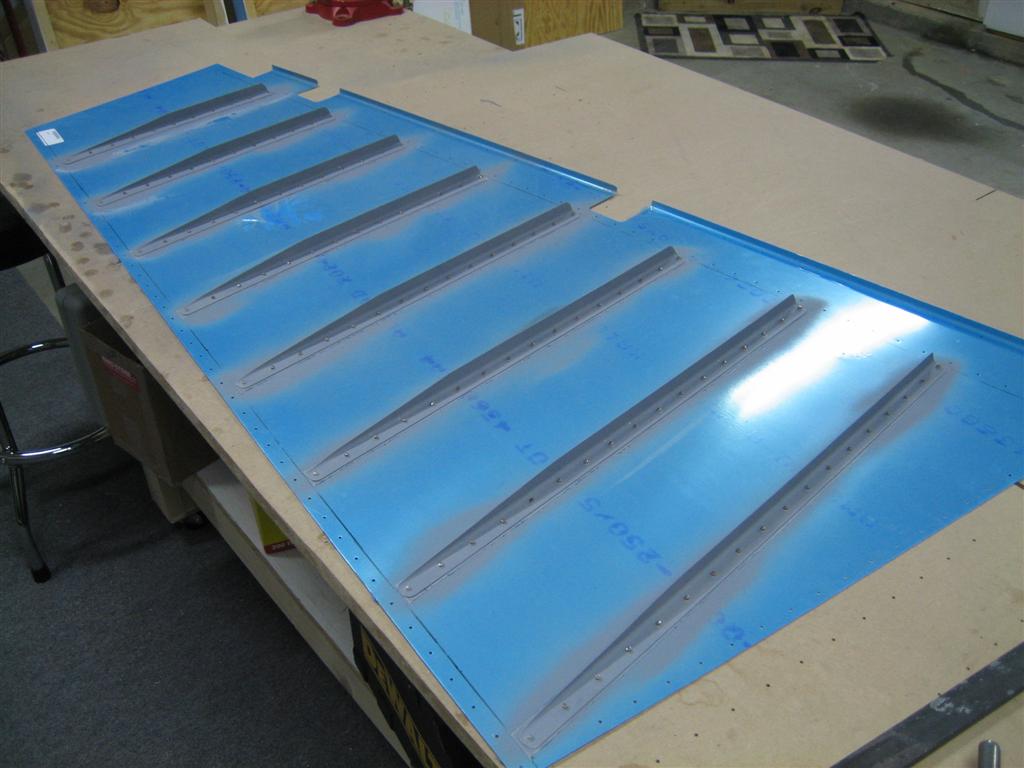
Then, I backriveted them.

All done.

Sorry about the lack of pictures.

116 backriveted flush rivets set.

Prev | Next


Started Rudder – Stiffeners

February 16, 2010

Prev | Next

Well, with the vertical stabilizer safely in the airplane storage room, it’s time to get started on another part. Next up, the (infamous) rudder. There are a lot of steps on the rudder that give a lot of builders a lot of trouble. I am confident, but will continue to use other sites on a daily basis before doing any work that evening. That’s worked out well for me so far, so I’m going to keep at it.

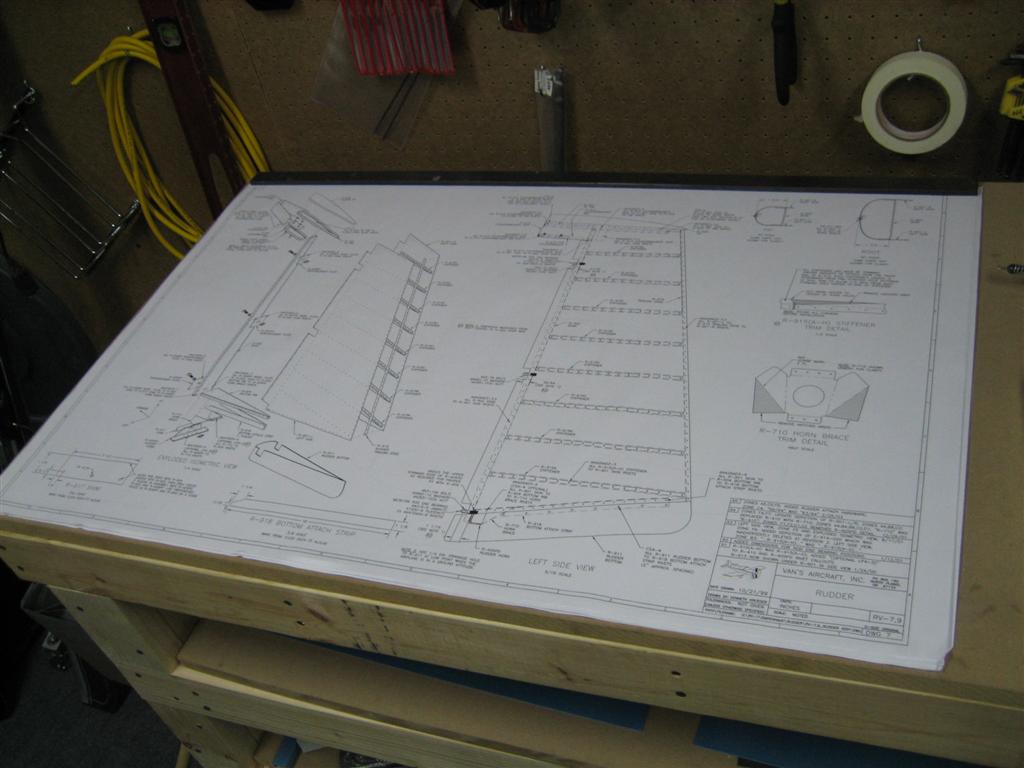
First thing’s first, the ceremonial plans change. I still keep the plans on my second workbench. Maybe someday I’ll find a place to actually hang them up.
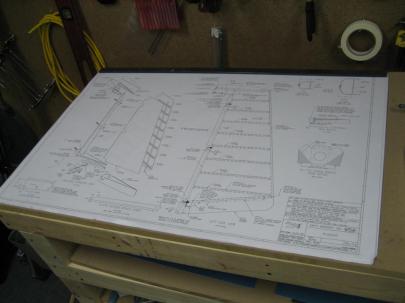
Drawing 7. The Rudder. (Cue dramatic music.)

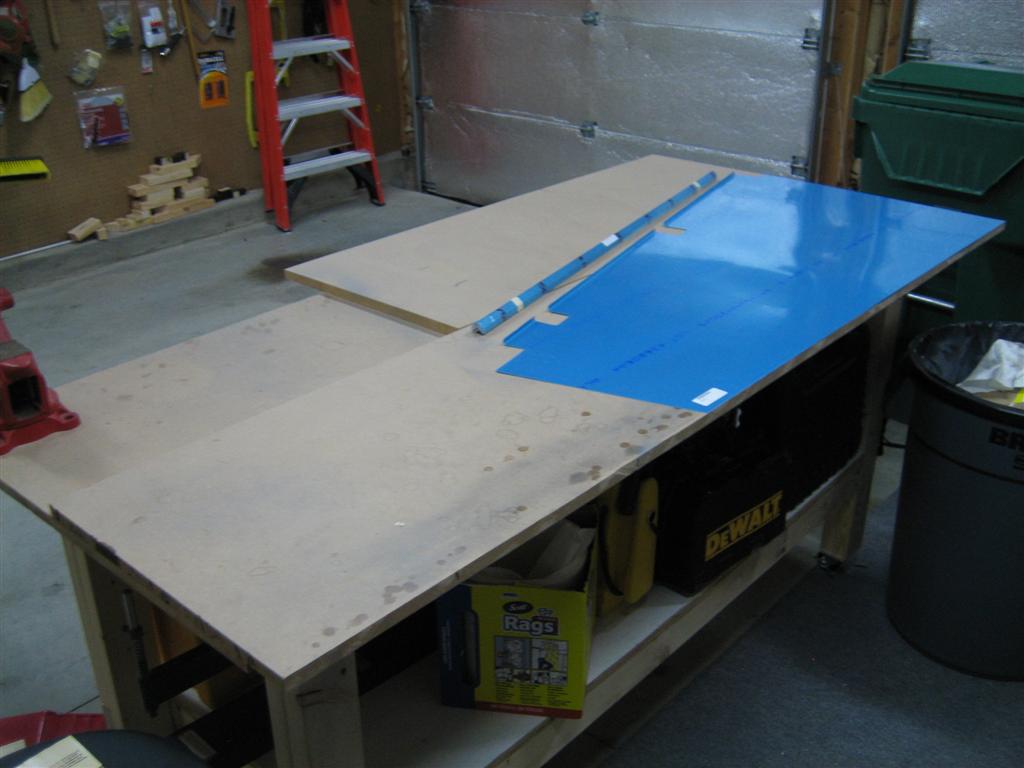
I spent a little time trying to figure out whether I will do the stiffener-to-skin dance on both sides at once, or just one side. You can see below that if I had another longer piece of MDF and maybe took my vise off the bench, I could set the skins on opposite corners and maybe do them at once, but I think I’ll just do one at a time, making sure I can reuse the holes I plan to drill into the table. (Drilling, and then clecoing, the stiffeners to the skins all the way into the table will allow me to keep everything very steady. Sounds like a good plan to me, and is pretty much standard given that Van’s suggests doing so in the construction manual.)
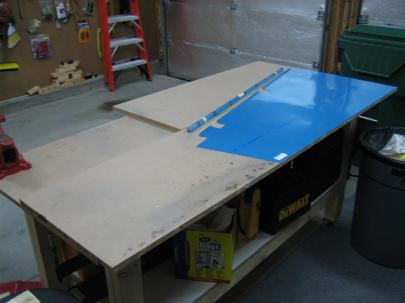
I'll have to do one skin at a time. I don't want to get too crowded, and I am not overly concerned with building efficiency.

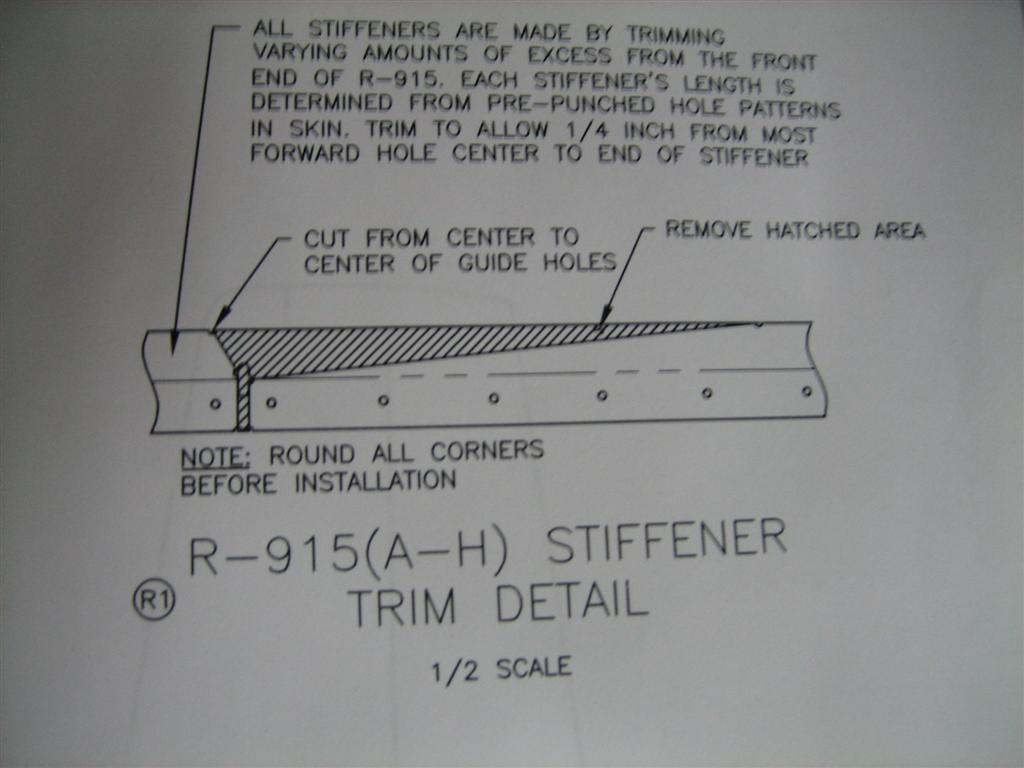
First step in the manual is to start on the stiffeners. I fished out the bundle of stiffeners (there are two bundles, one set for the rudder, and one set for the elevator) and studied the plans.  For the back side of the stiffeners (with the shallow angle on the right side of the picture below), these are the final cuts, so I need to be careful. For the front side (you can see a little of the front of a stiffener on the left in this picture), only 2 of the 16 stiffeners will be to full length, so the other 14 can be rough cut until I can mark them to final size per the note at the tot of this picture.
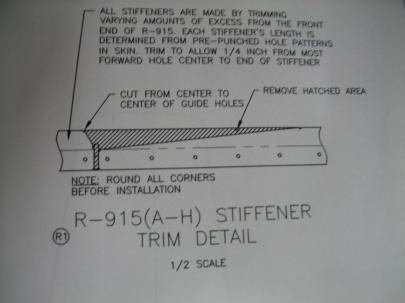
Stiffener Trim detail, drawing 7.

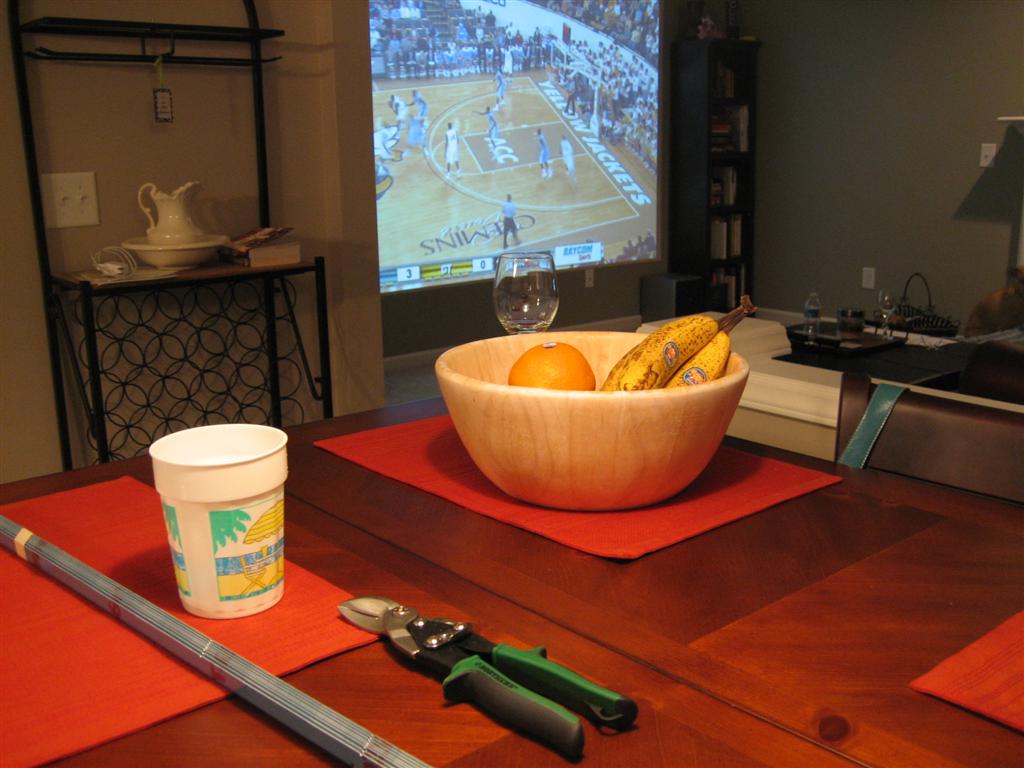
Next, I headed inside to sit myself down at the table so I could watch the UNC vs. GT game. I know some of you are panicking right now, but please calm yourselves. While it appears that my winerack is empty (OH MY GOD, NOOOOO!), that is really our third winerack. Rest assured that our two primary wineracks are stocked satisfactorily.
Is that an empty winerack? Don't worry, the hooch is stored in another rack.

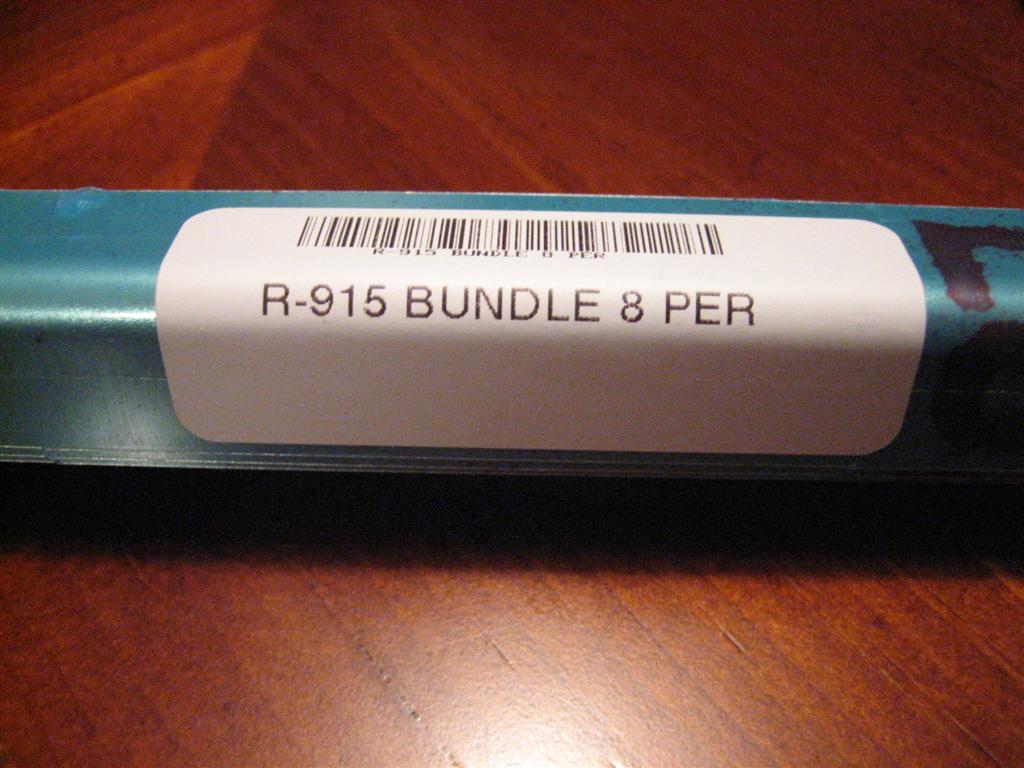
Anyway, here’s the stiffener bundle I’m about to break open.
R-915. (I can't think of a funny caption this morning, so all you get is the part number.)

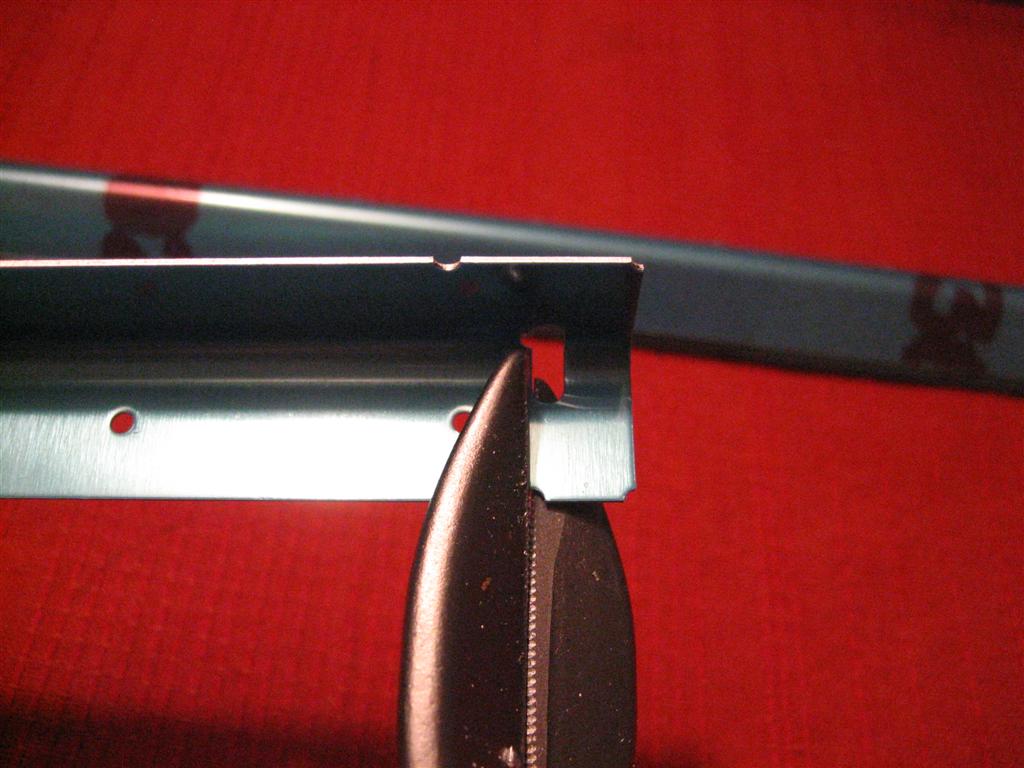
I broke open the bundle and started snipping from center hole to center hole. After a few stiffeners, I started biasing the cuts to the sides of the holes, but only where I was sure that I was going to have to remove more metal later.  Here you can see that on the top part of the cut, I’m lined up with the left side of the slot.
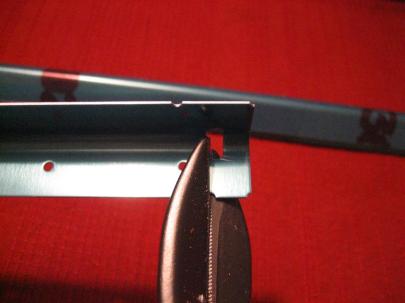
Snip snip.

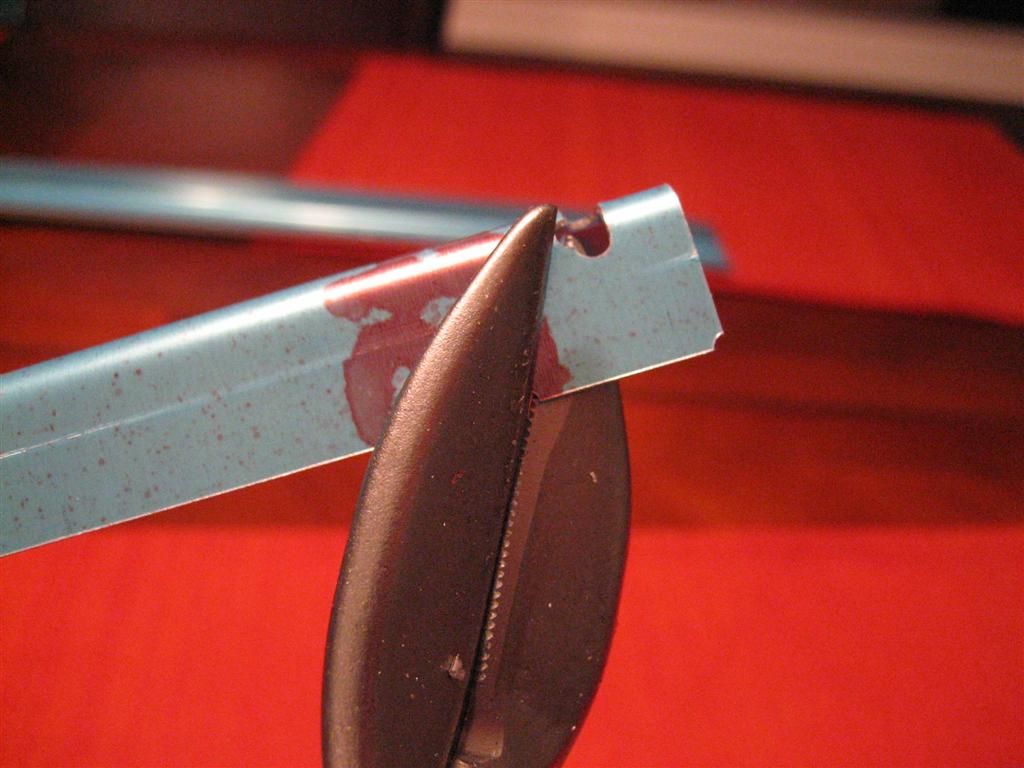
I included another picture of the angle cut for the front end of the stiffener. Remember, only two of these cuts are for real, as the next step is to chop off varying lengths of stiffener from the front to match up with the pre-drilled holes in the skin.
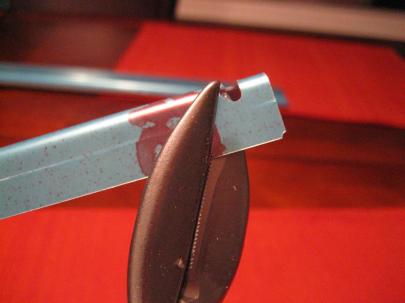
Snippity Snip snip.

Here’s a rough cut for the front end. See how I am going to have to remove more metal because of the notches. Might as well get closer on the first cut. That’s why I started biasing the cuts to one side after the first few.
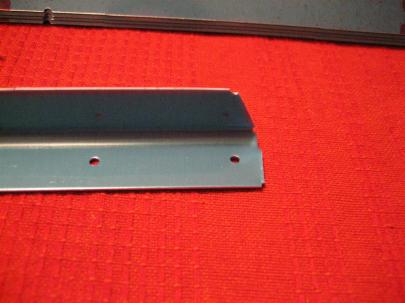
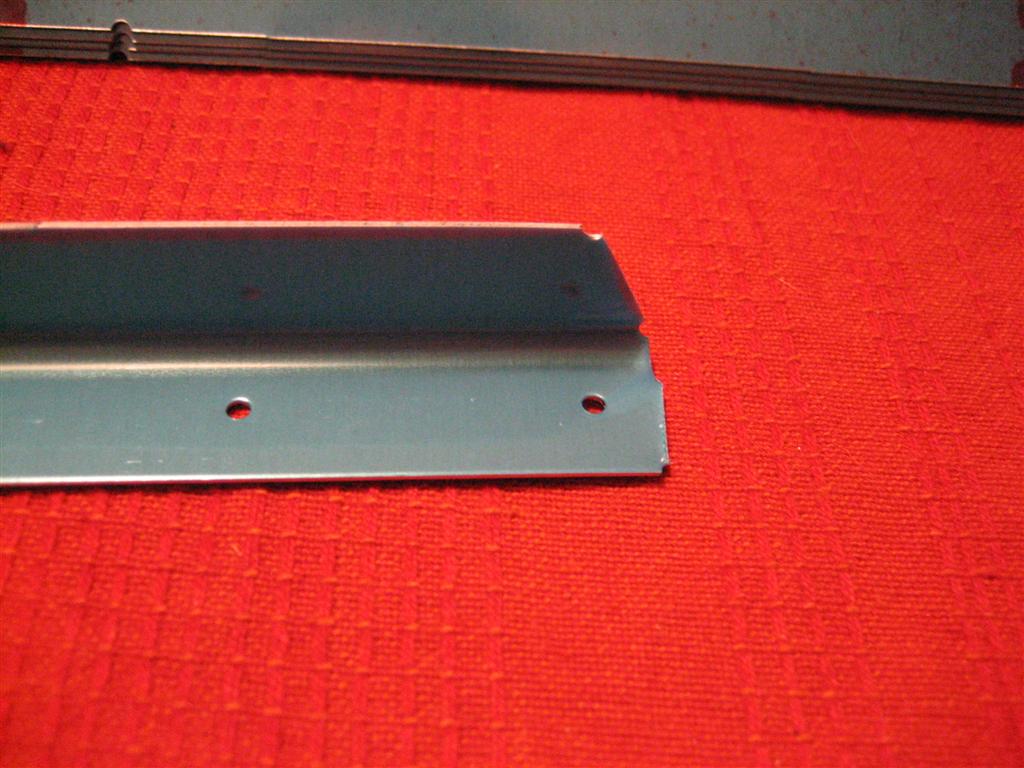
The front end of the first stiffener.

First 8 front ends done.
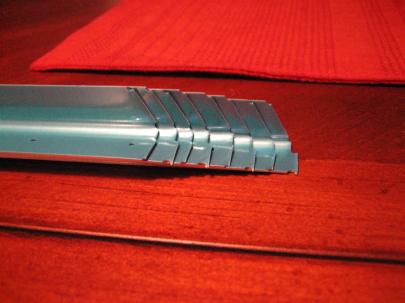
Yikes, those are going to need some edge finishing.

All 16 stiffeners’ front ends done.
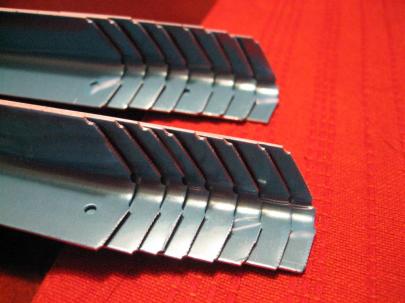
That's a spicy stiffener.

Next, I used an admittedly fat sharpie to draw the required cut lines on the aft ends of each of the stiffeners.
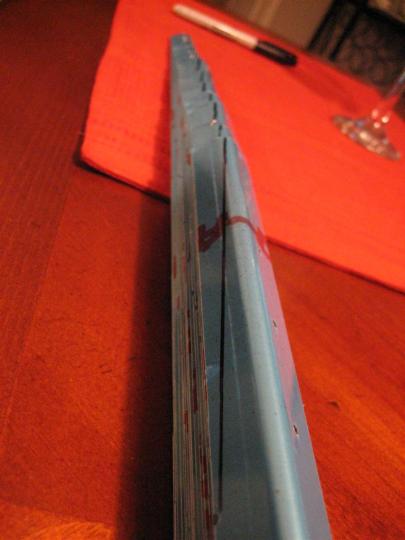
Lines drawn, back to snipping.

And here I am using the snips to cut that longer line. Snips aren’t perfect for this task, since they bend the metal, but if you work them correctly, they will only bend the piece you are cutting off. There is kind of a rocking motion you have to feel with each cut. You’ll get it when you try.
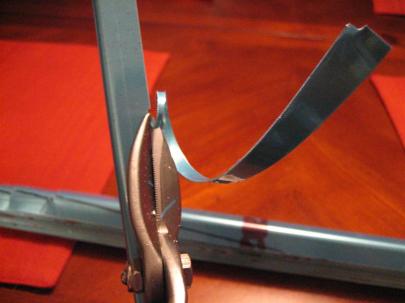
Snipping the aft end.

Here’s the first one, done.
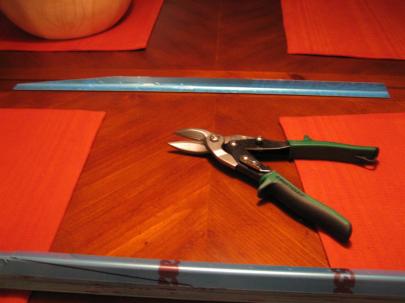
I'm a little camera happy today, don't you think?

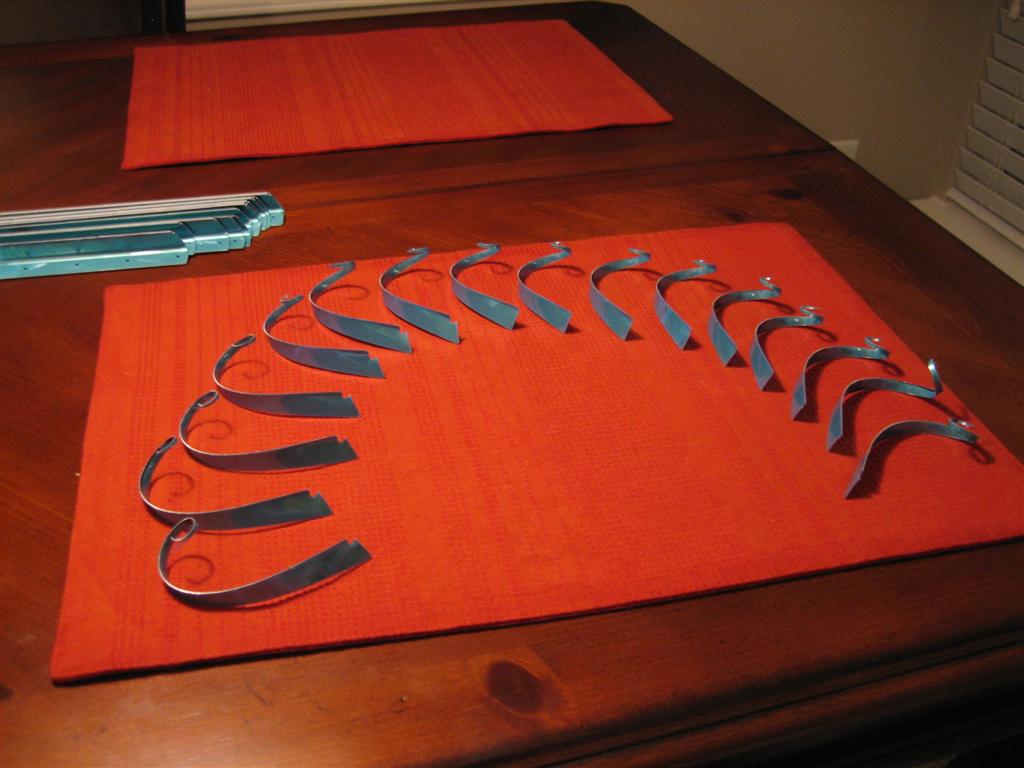
Then, I finished up the other 15, and was left with these scraps. If I had even the slightest hint of an artistic bone in my body, I would make some comment about how these resulting spirals are king of cool. But I don’t, so I won’t.
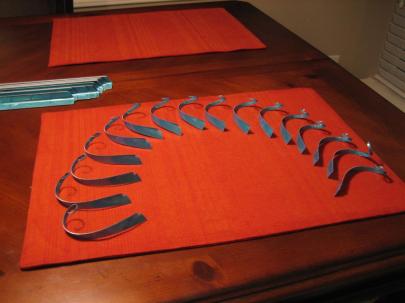
Scrap from the latest cuts.

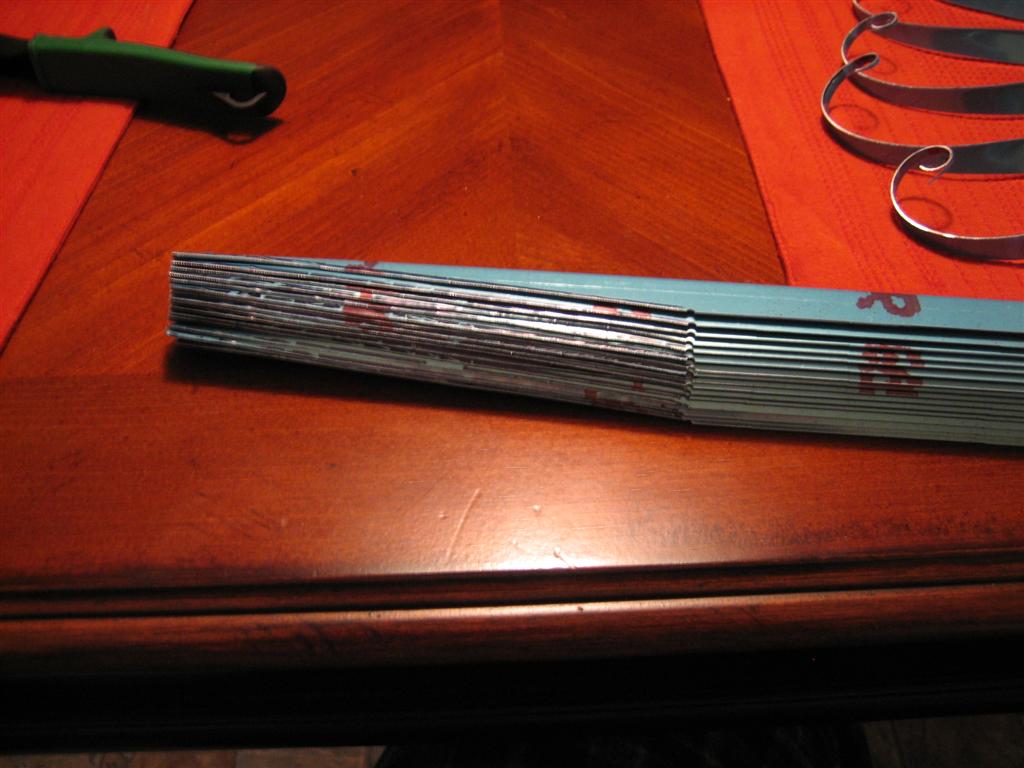
All 16, ready to be devinyled.
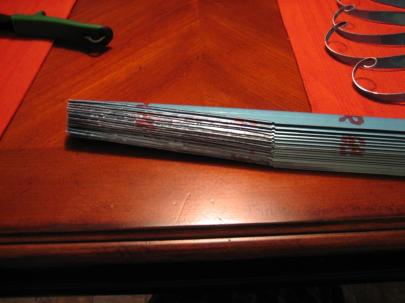
Done with those cuts.

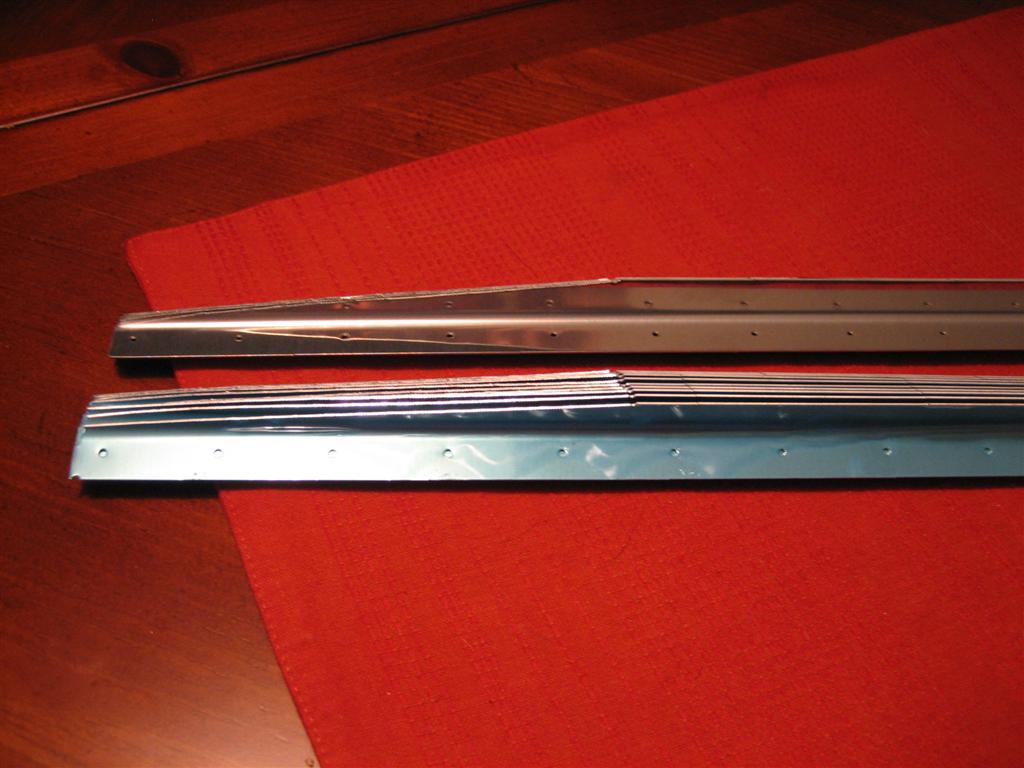
Starting to devinyl…
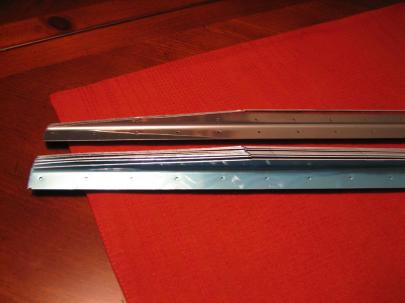
This is going to take forever.

I’m glad I did the devinyling inside. When the vinyl is warm, it comes right off.
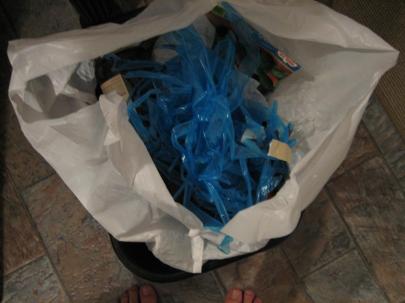
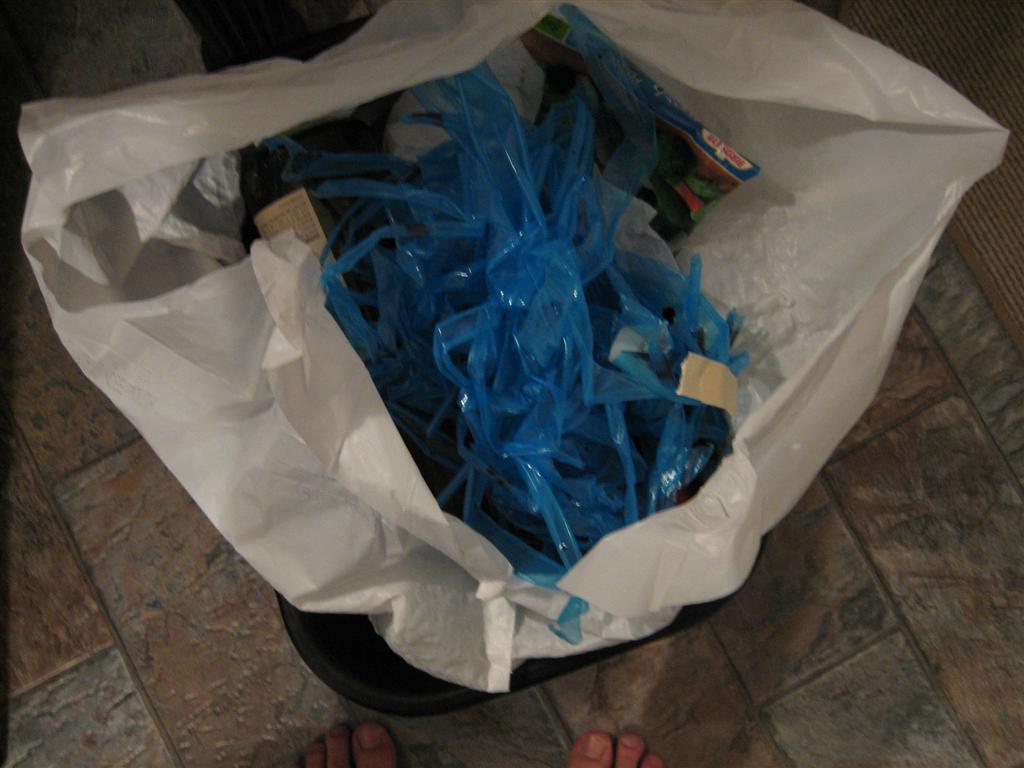
Holy crap that's a lot of blue v-......WHOSE TOES ARE THOSE AND HOW DID THEY GET IN THE PICTURE!?

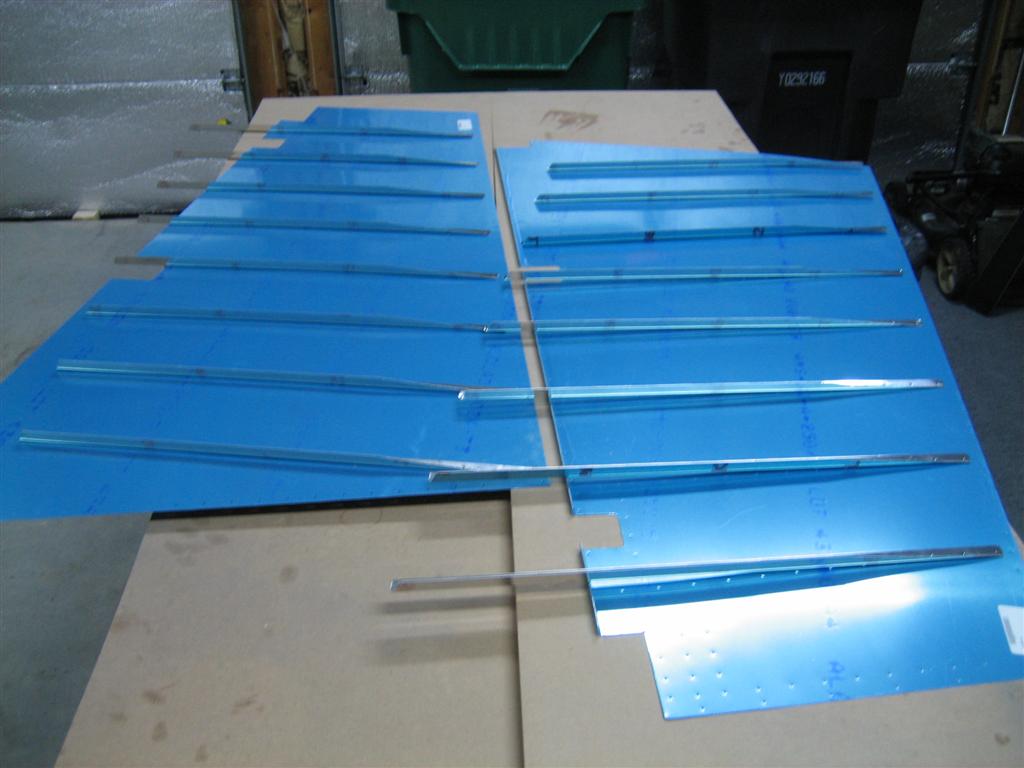
Next, I headed outside to put everything away, but couldn’t resist setting the stiffeners out on the skins.
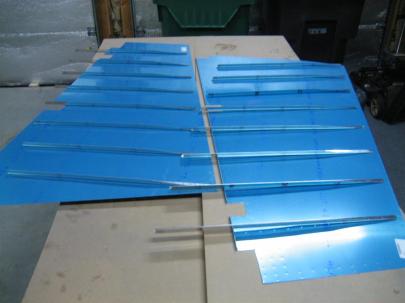
I'll need to trim some of these, don't you think?

For now, I just drew a thick marker line along the front spar holes. If I cut along these lines, they will still be too long, but at least now I can figure out which hole will be the most forward hole and then use the plans-suggested 1/4″ measurement to draw a nicer cut line.
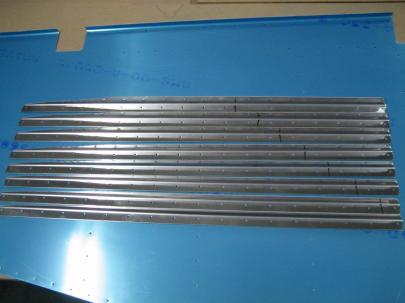
8 of the 16 stiffeners, ready for final cutting.

One hour of camera-happy warm environment work tonight. Sorry about your bandwidth.

Prev | Next