Feathergate 2011

September 16, 2011

Prev | Next

Are you ever sitting at work in the middle of the day, and you get goosebumps, and you think to yourself,

“Something bad just happened.”

Well. Today was a normal Friday, just like any other Friday. Until arriving home.

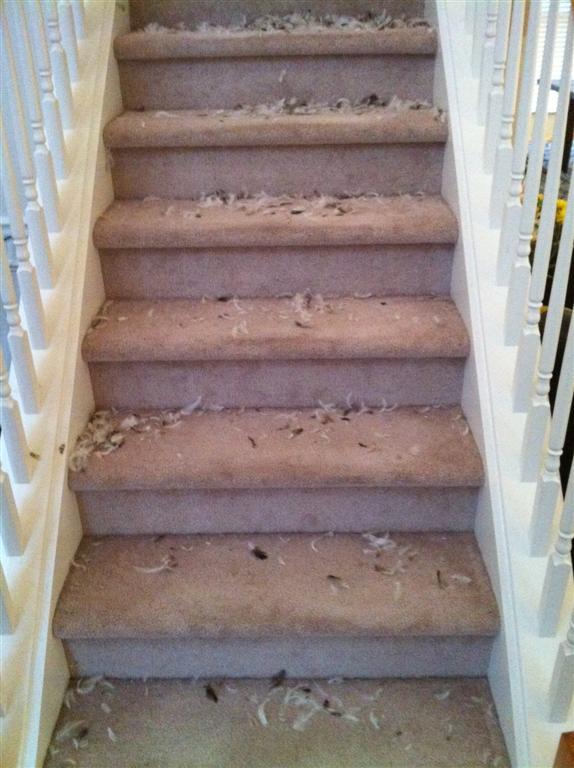
The first indication that something horrible happened was the doggie bed.

What the heck are all these feathers?

[horror music starts.]

Oh my gosh, what happened!? They're everywhere!

Looking downstairs, even more feathers. What the heck happened?

Looks like there was quite the struggle...

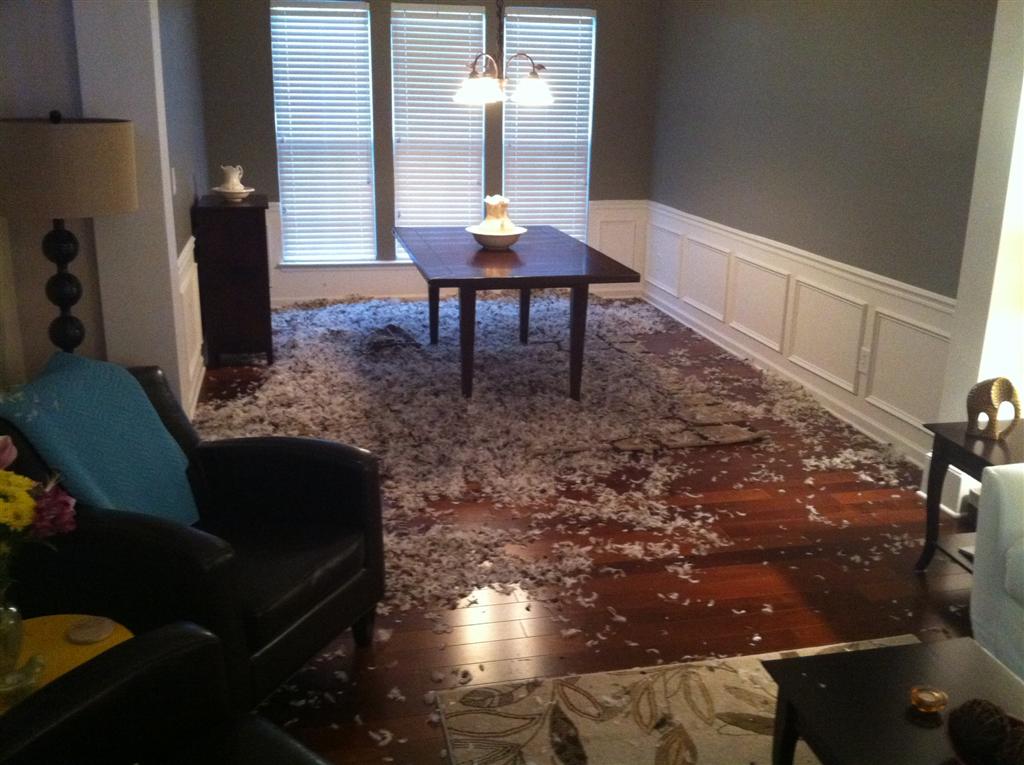
And, after turning the corner….

AAAAAHHHHHHHHHHHHH, THE HORROR!!!!!!!!

It looks like a flock of geese got into our house and the dogs ripped every one of them to shreds.

OR.

Our cute little Jack and Ginger took one of our BRAND NEW DOWN PILLOWS and had fun.

Here's the victim.

And it's sad partner.

After about an hour of cleanup, we checked the label on the pillow, and it casually mentions that there were 33oz of duck feathers.

33 OZ?!

Holy crap, that’s a lot of feathers.

Hey, were are those pups, anyway.

I bet I know where they are.

THEY'RE UPSTAIRS TRYING NOT TO LOOK GUILTY!!!!!!

We were SO mad at them…for about 5 minutes. Then, their cuteness won out, and we all exchanged puppy hugs.

I was speechless.

Absolutely speechless.

The girlfriend, on the other hand:

“Hey, at least I get to go pillow shopping.”

[rimshot]

Prev | Next


Dimpled Right Aileron Leading Edge

September 15, 2011

Prev | Next

One picture today.

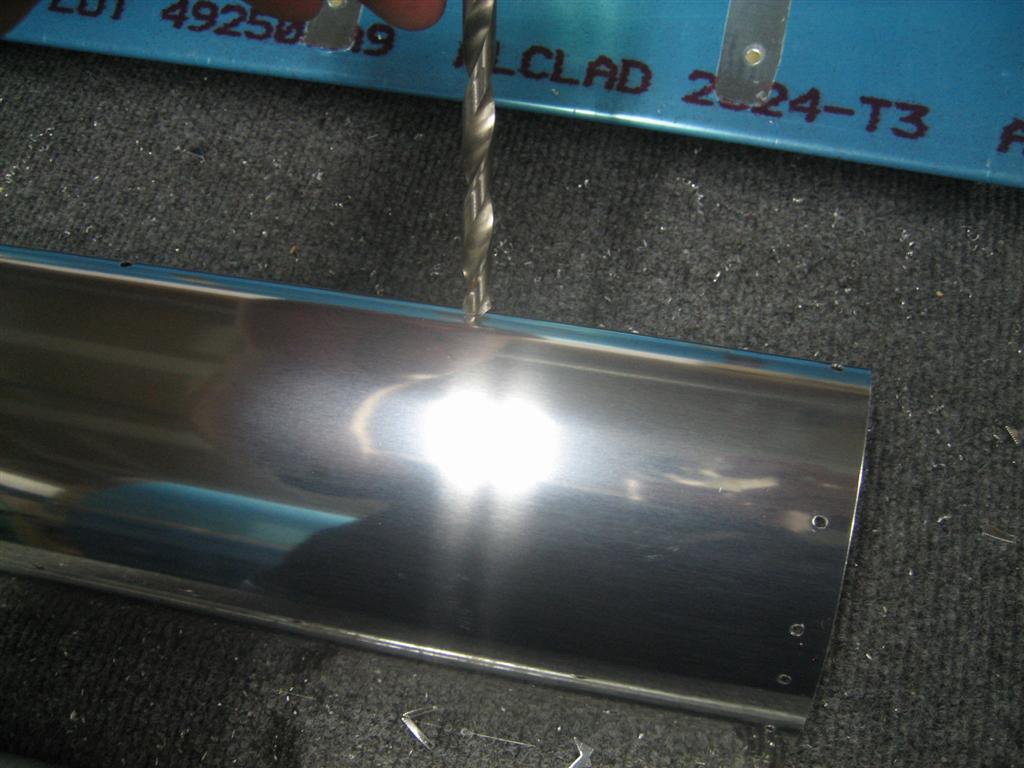
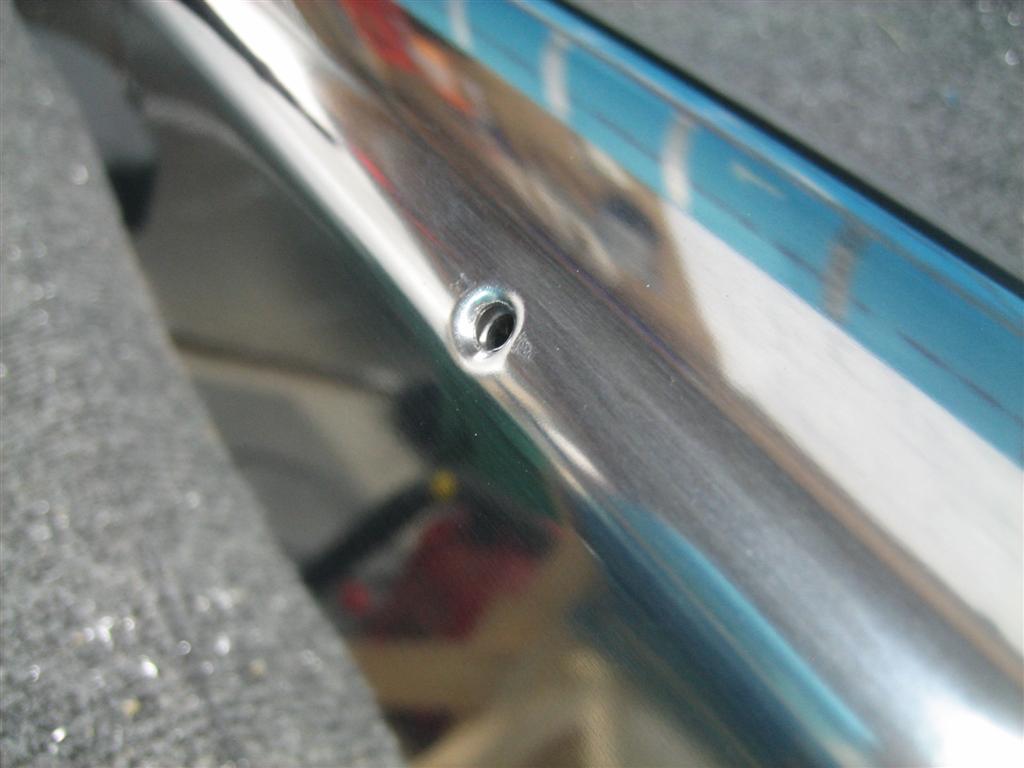
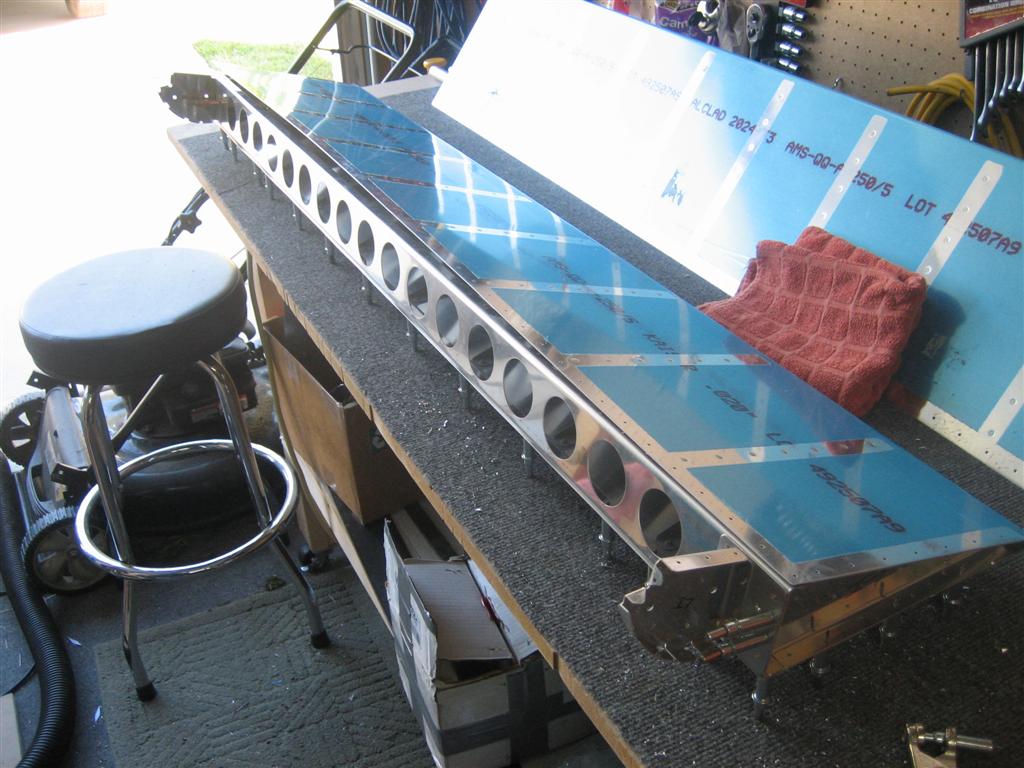
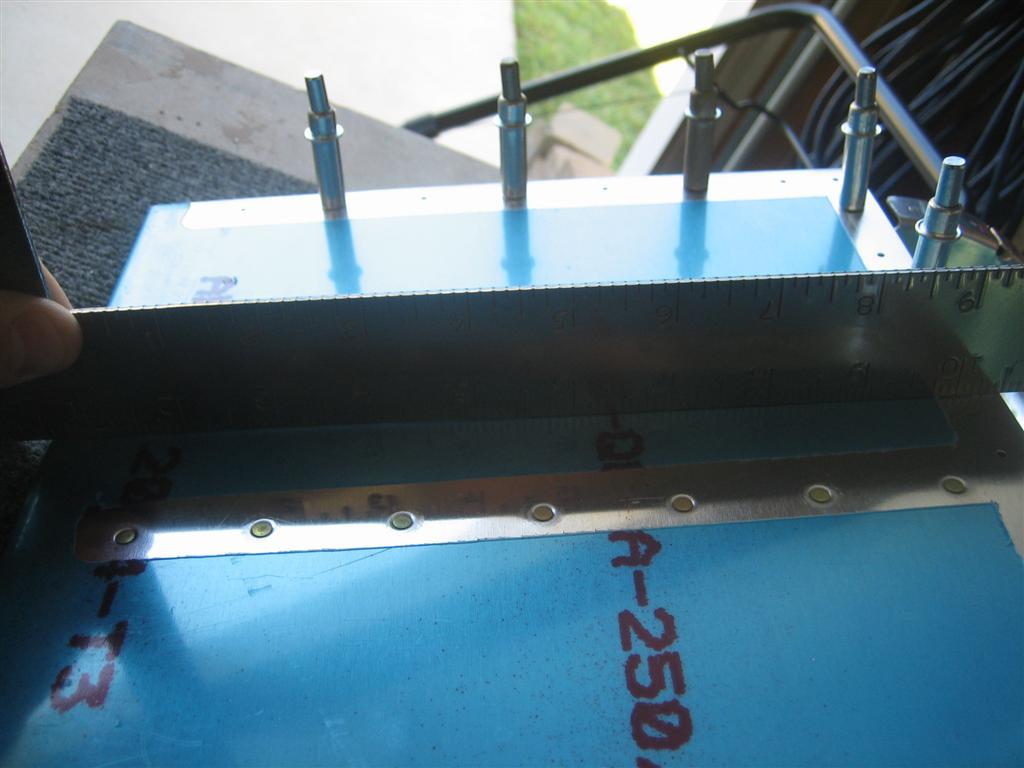
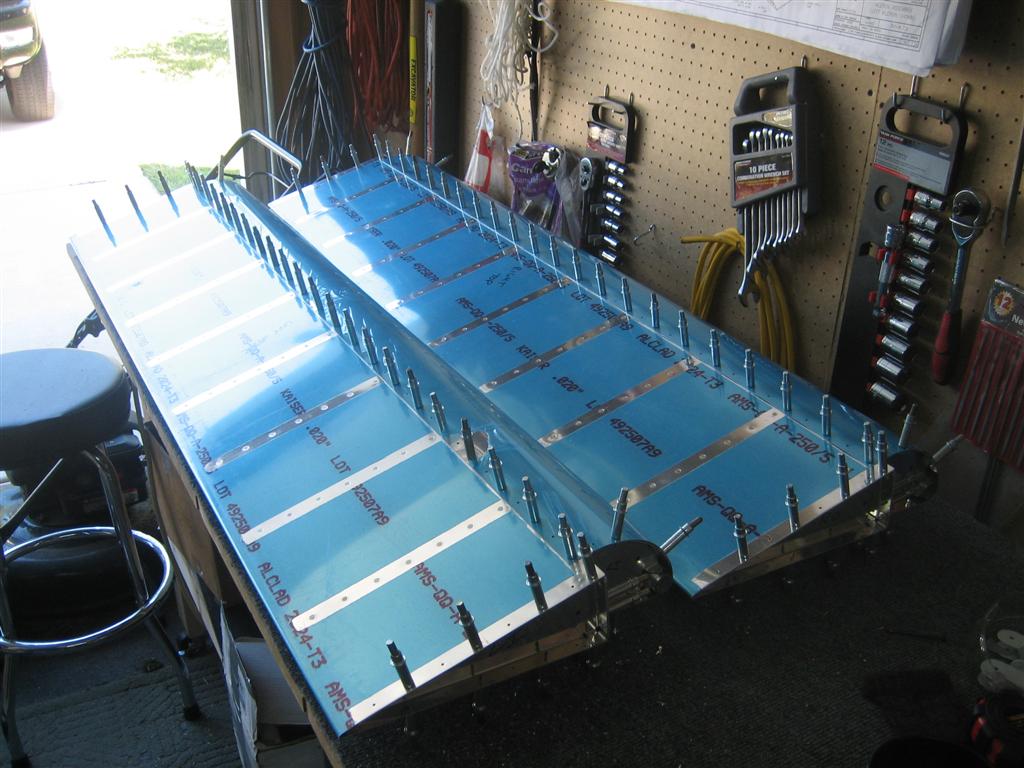
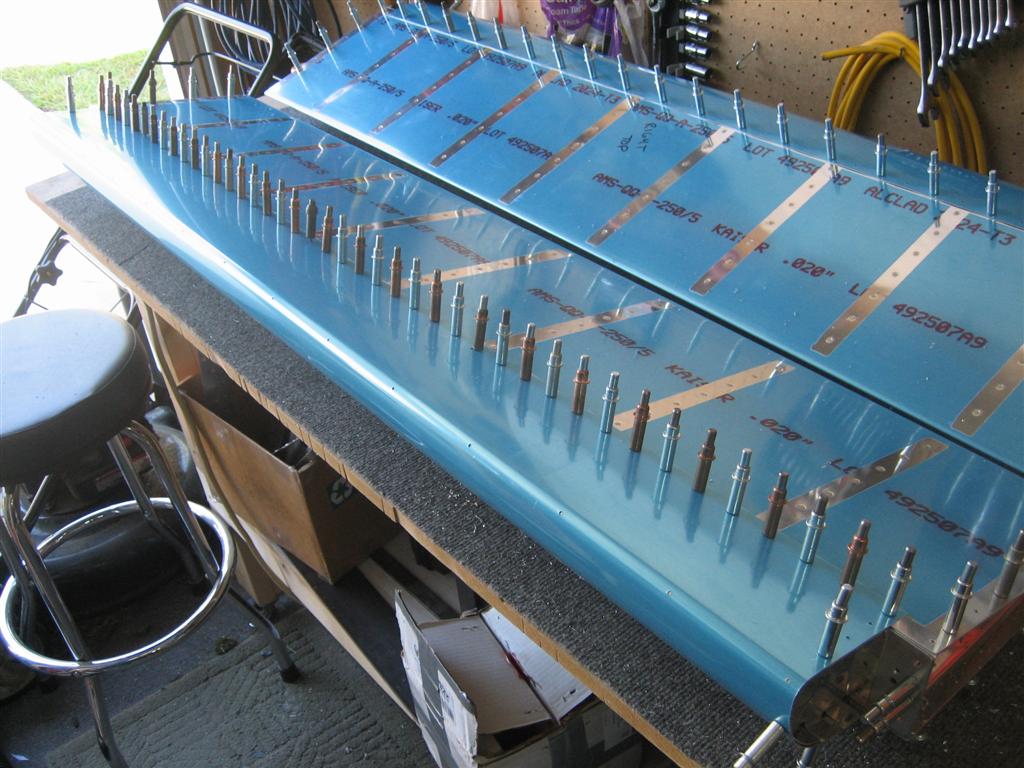
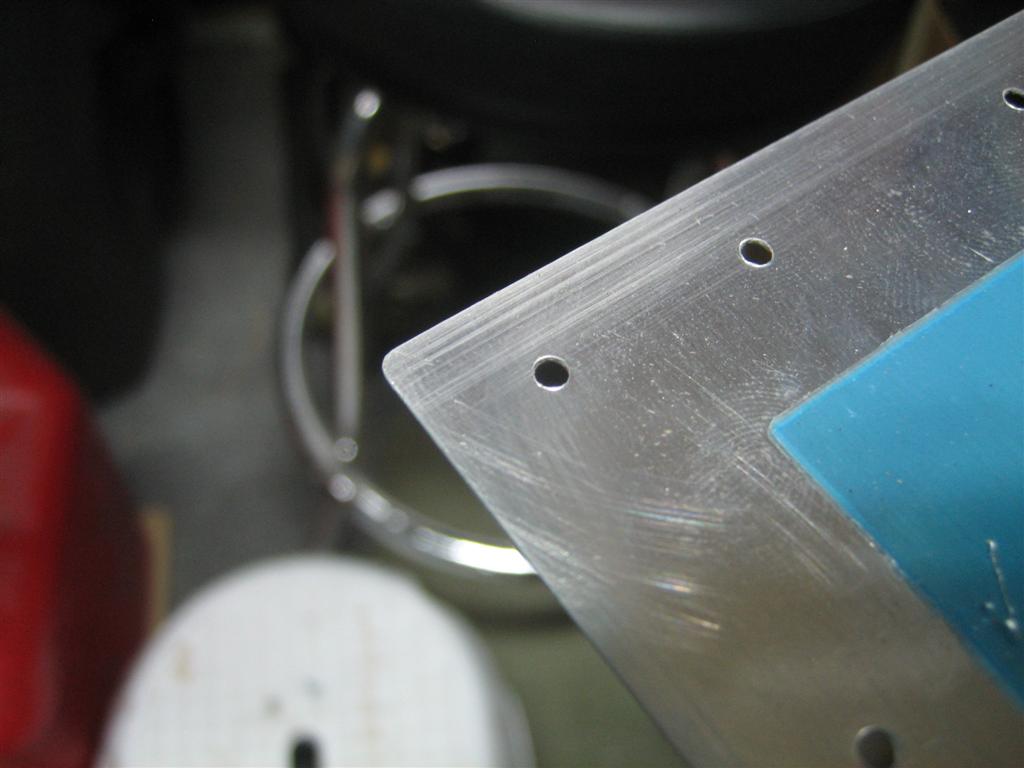
All I did was deburr and dimple the right aileron leading edge.

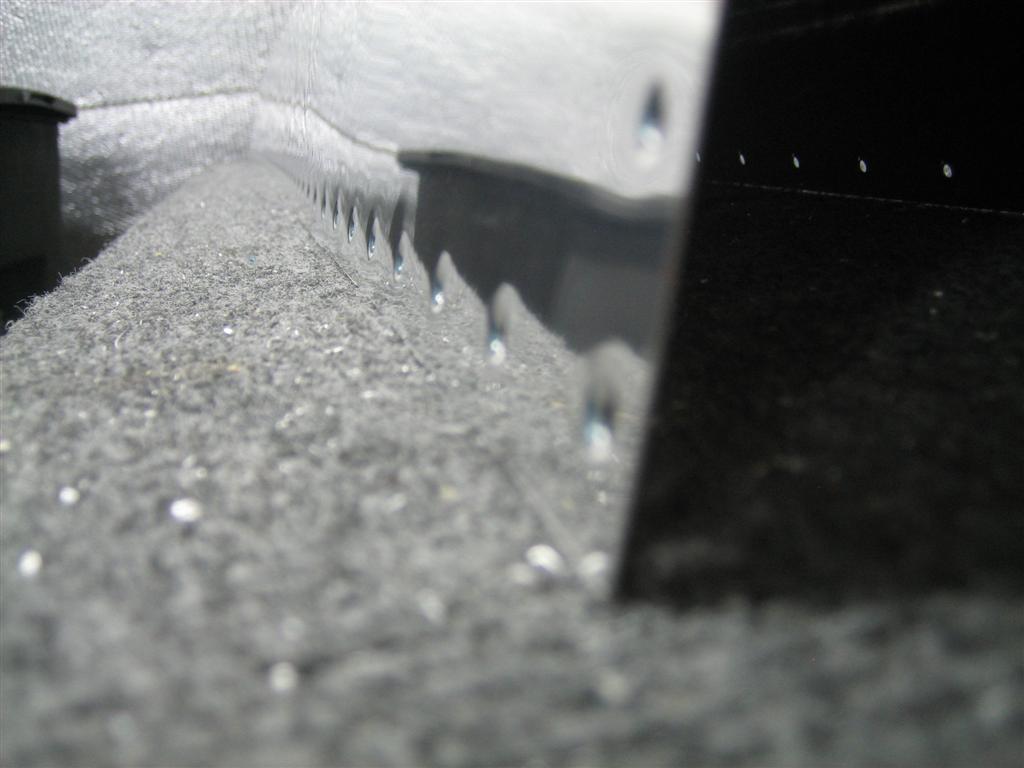
Shiny leading edge.

All I need to do now is edge finish and get the mating surfaces primed.

Then, cleco it to the spar, and get the right aileron skin in a place where I can start riveting.

Prev | Next


Ten Right Aileron Rivets

September 14, 2011

Prev | Next

Well, I always love setting a few rivets, and I tend to work in little spurts so that I can set at least a few. The next few rivets in the project are the ones for the aileron spar reinforcements.

First off (no pictures), I grabbed the right aileron spar and reinforcement plates I deburred and scuffed yesterday, cleaned them, and got them outside in the driveway (on a cardboard box, on my trash bin) for some priming.

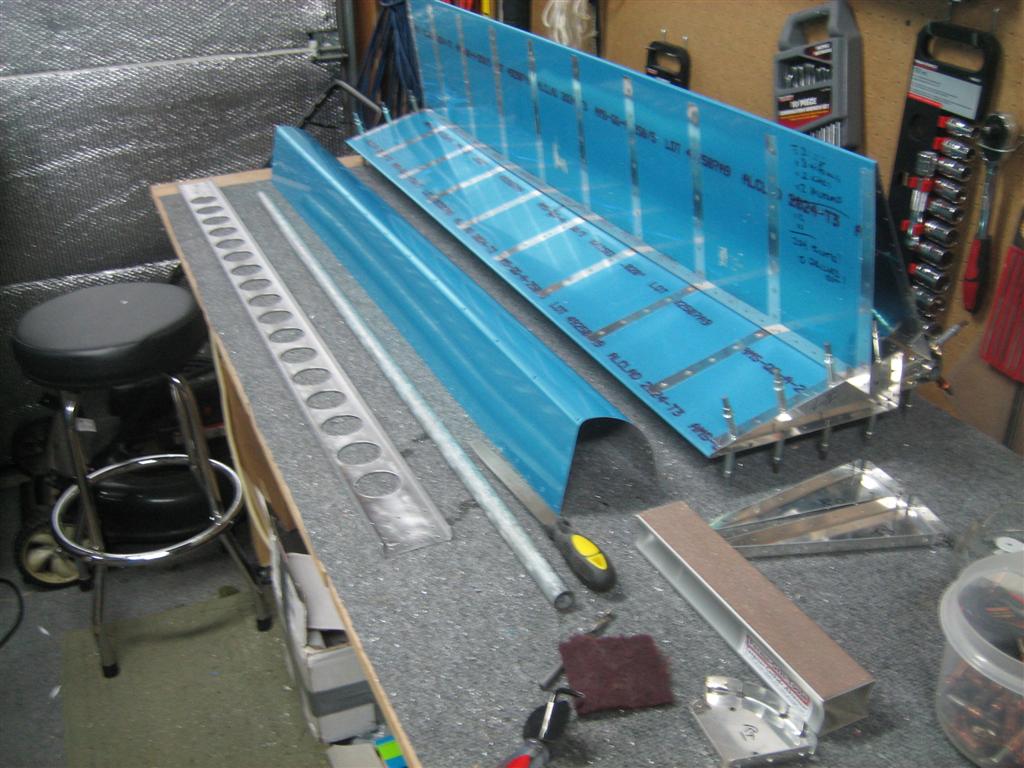
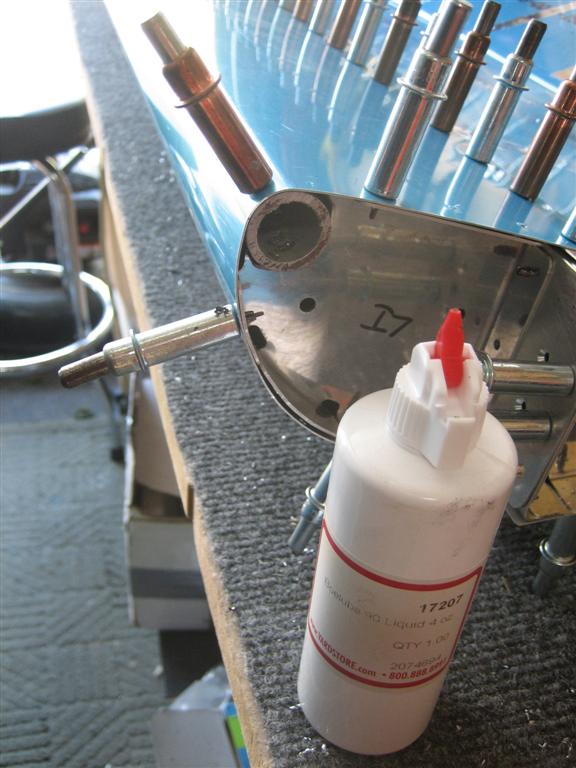
While those were drying, I deburred and countersunk the counterbalance pipe. This was way easier than I thought it was going to be.

To check countersink depth, I grabbed a CSP-4 (is it CS4-4?) I can’t believe I can’t remember the rivet number…anyway, and countersunk until it was just deeper than needed.

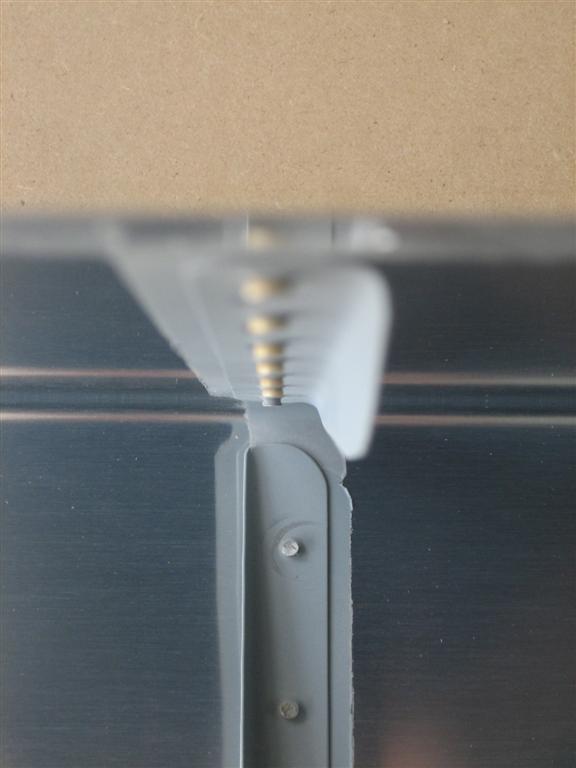
This may be a couple clicks too deep. I'll back it off on the next ones.

Then, time to deburr the aileron leading edge.

Yup, that's what I'm doing...

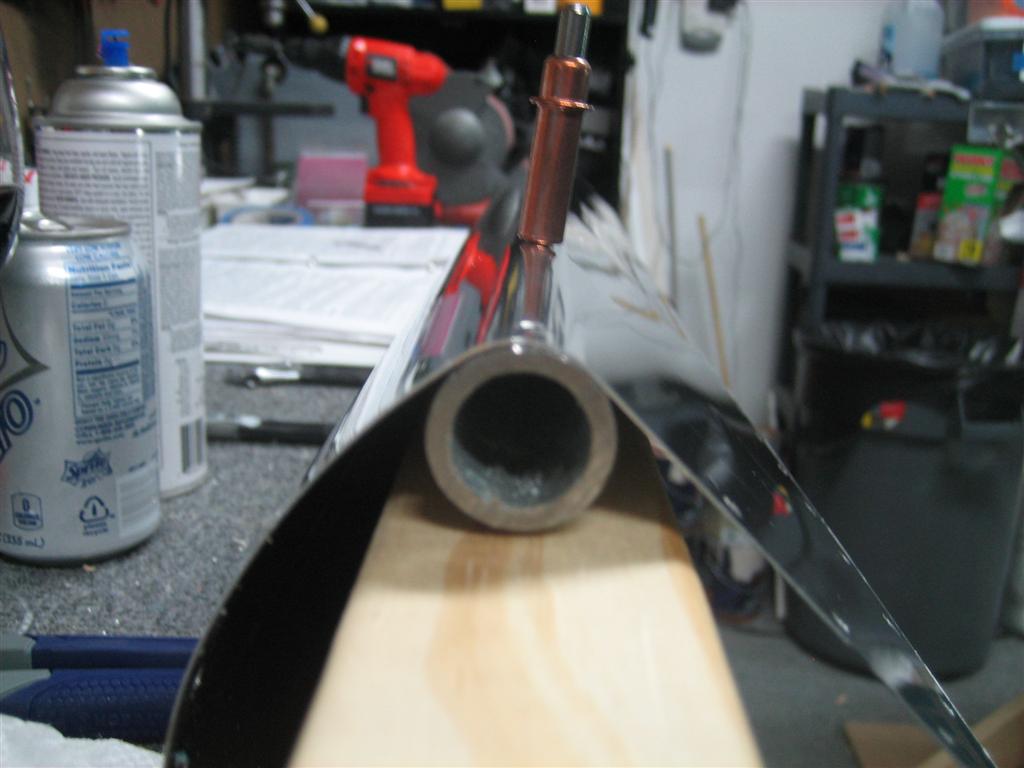
With that accomplished, I followed in many other builders’ footsteps and dimpled the leading edge by clecoing it to the countersunk counterbalance pipe balanced on a 2×4.

Mine didn't seem to move around much, so I'm glad I didn't waste the time duct taping small dowel rods down the 2x4 to steady things.

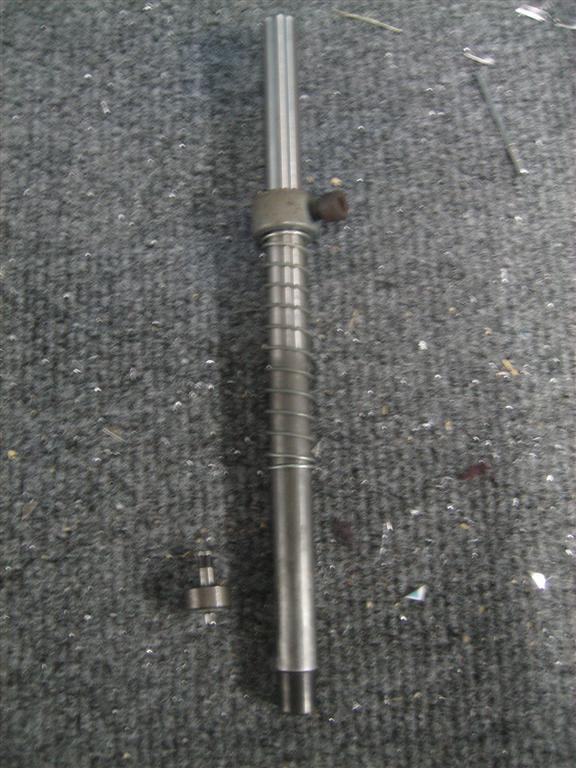
I fished out my (Paul’s) c-frame die and my #30 male dimple die.

Was this picture really necessary?

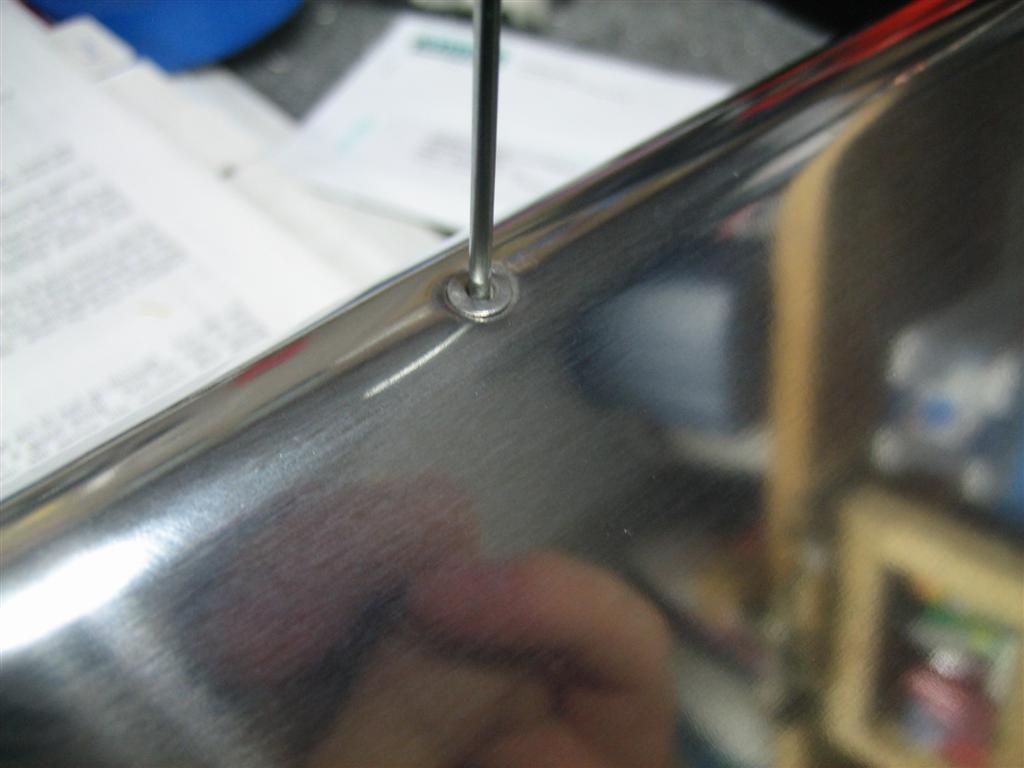
And, after a whack and a half…

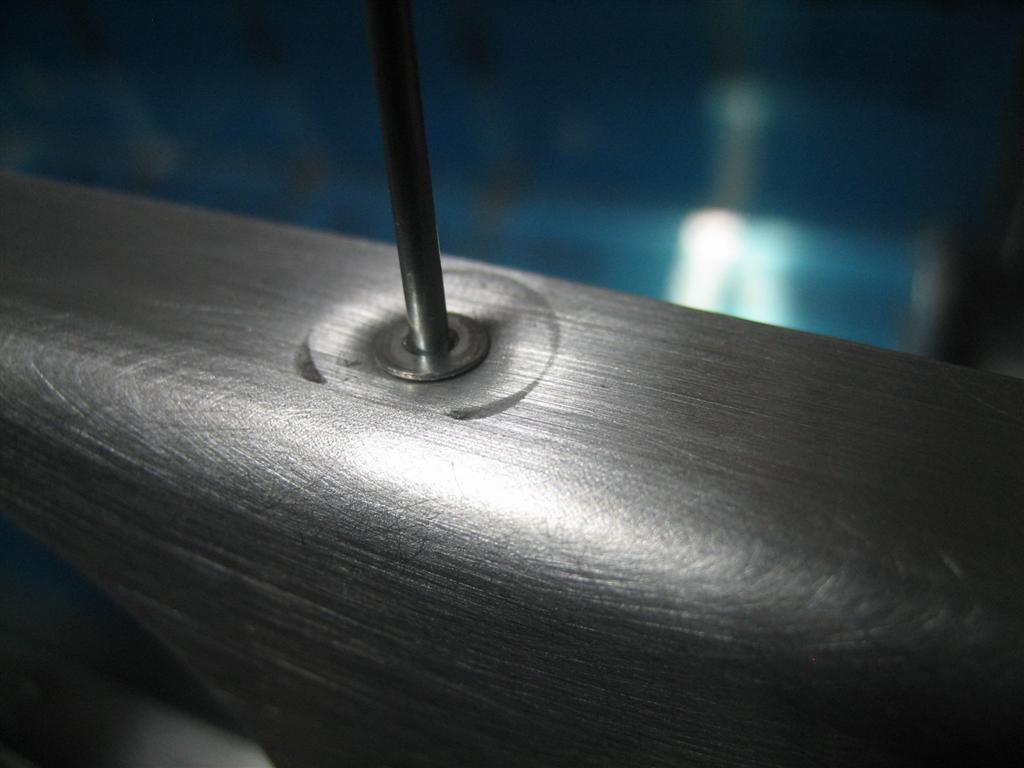
Wuhoo! Looks like a great dimple!

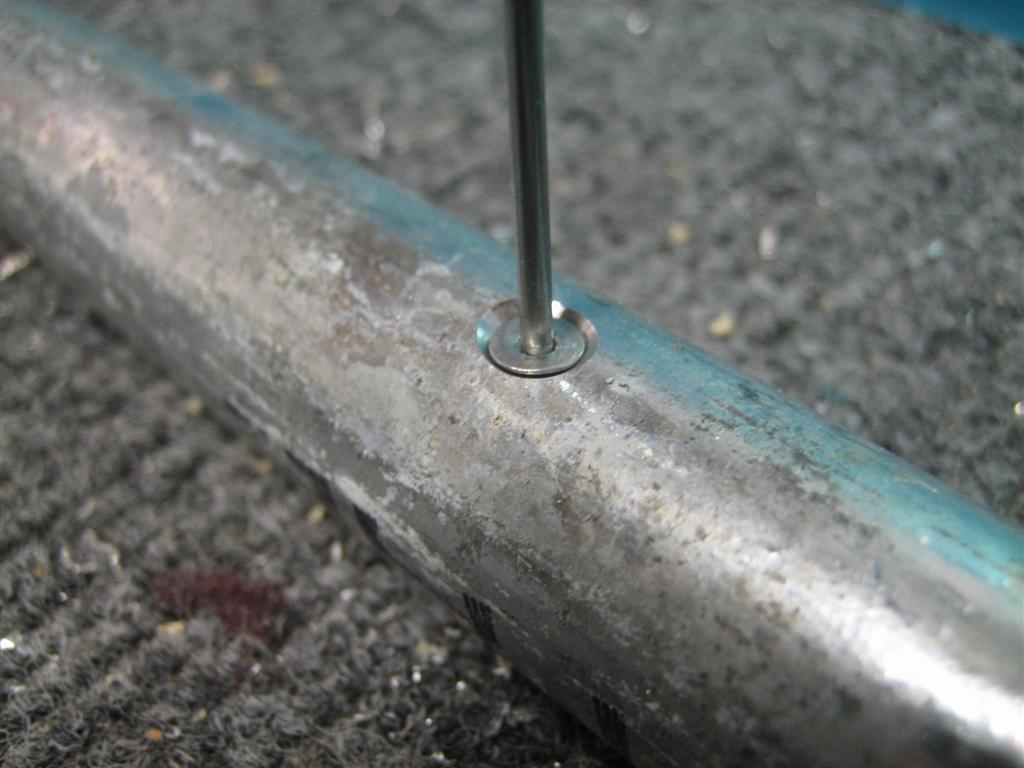
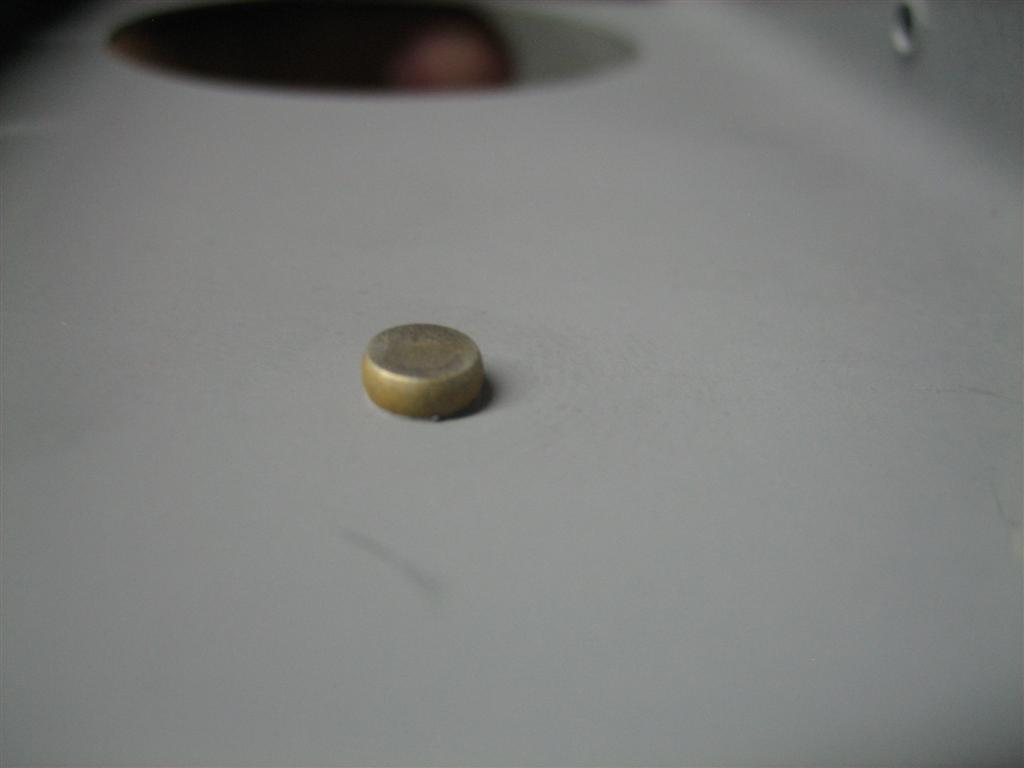
A shot without the rivet...this worked great for me...like everyone else.

Okay, inside with the pipe for some cleaning, and outside to prime (now that it’s no longer being used as a female dimple die for the leading edge skin.

Let’s start on some more deburring, dimplineg edge-finishing, and priming.

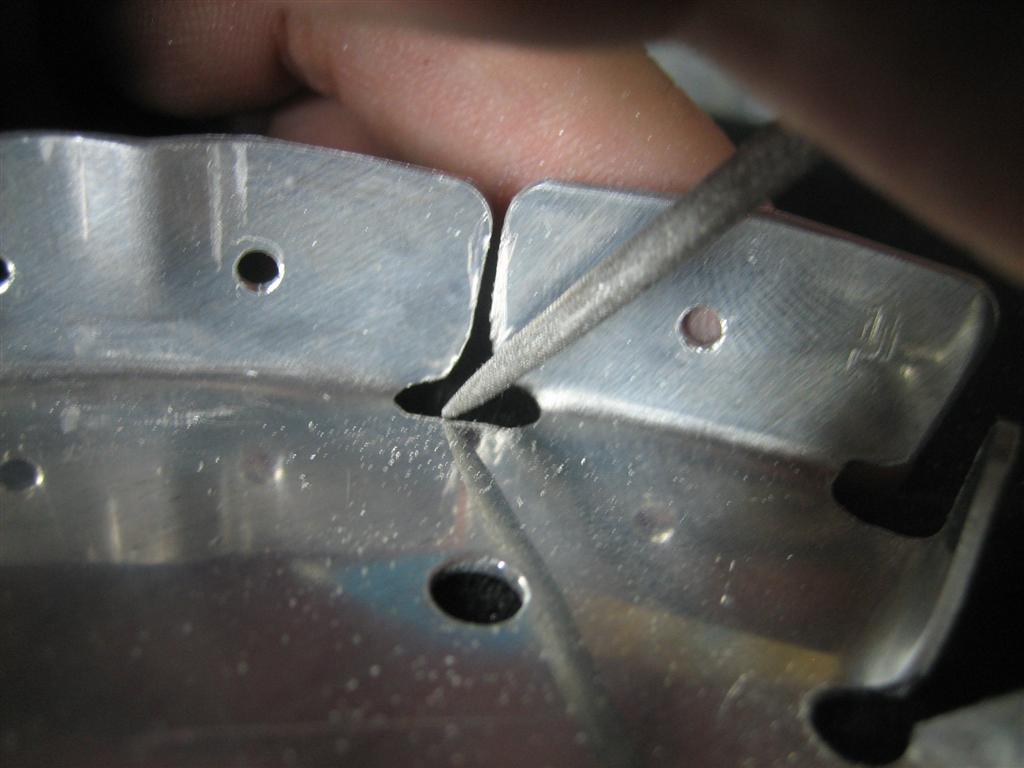
I snatched up the two leading edge ribs, and spent about 45 minutes edge finishing all the little crevices with a needle file.

This part of building an airplane sucks.

But, after a few minutes, I had a deburred, edge-finished, and scuffed leading edge rib. Time for dimpling!

Yup. Dimpling!

After that, more cleaning, and those went outside for priming, too.

Just in time for my spar and reinforcement plates to dry!

Okay, which of these rivets can I set? (Ten minutes of staring passes...)

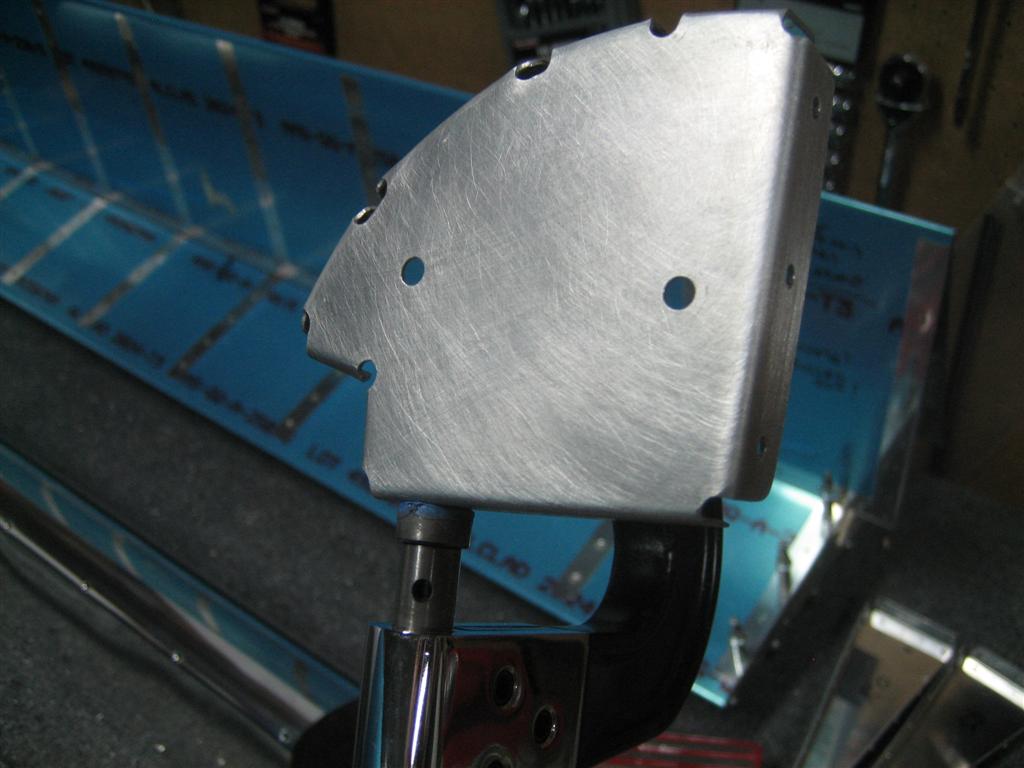
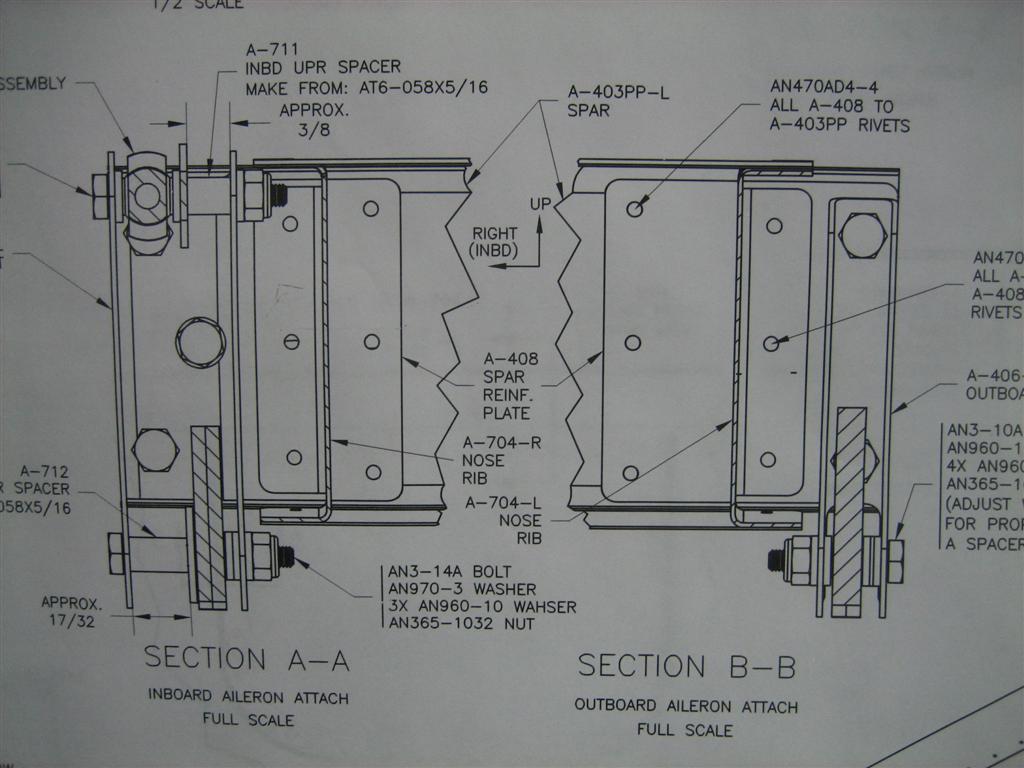
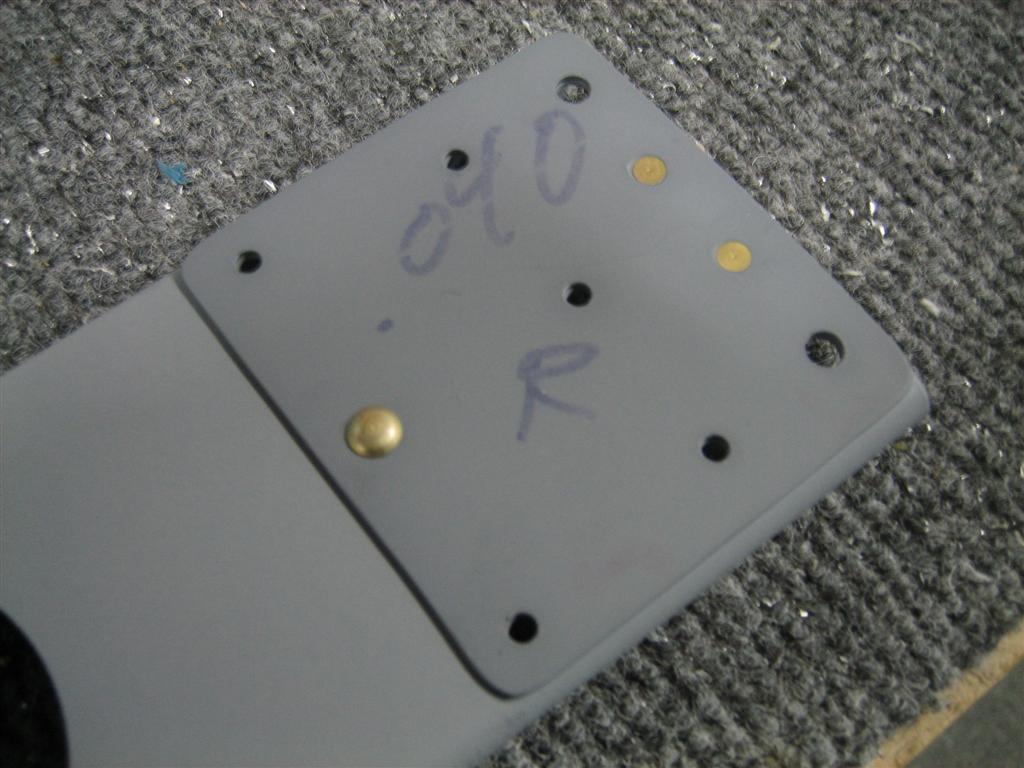
Okay, this is the outboard side. Those two AN426 rivets are just in there for hole alignment. They can NOT be set at this time, only the three on the left.

Of which I've set one.

Look at that beautiful shop head.

More rivet setting, and moving over to the inboard side.

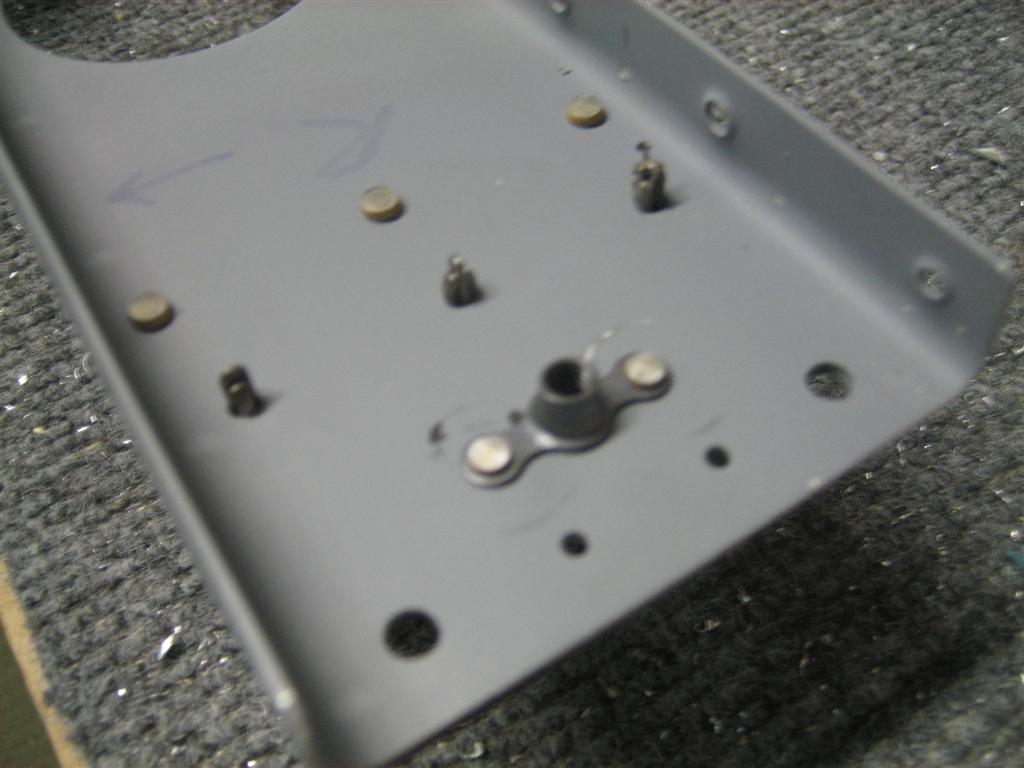
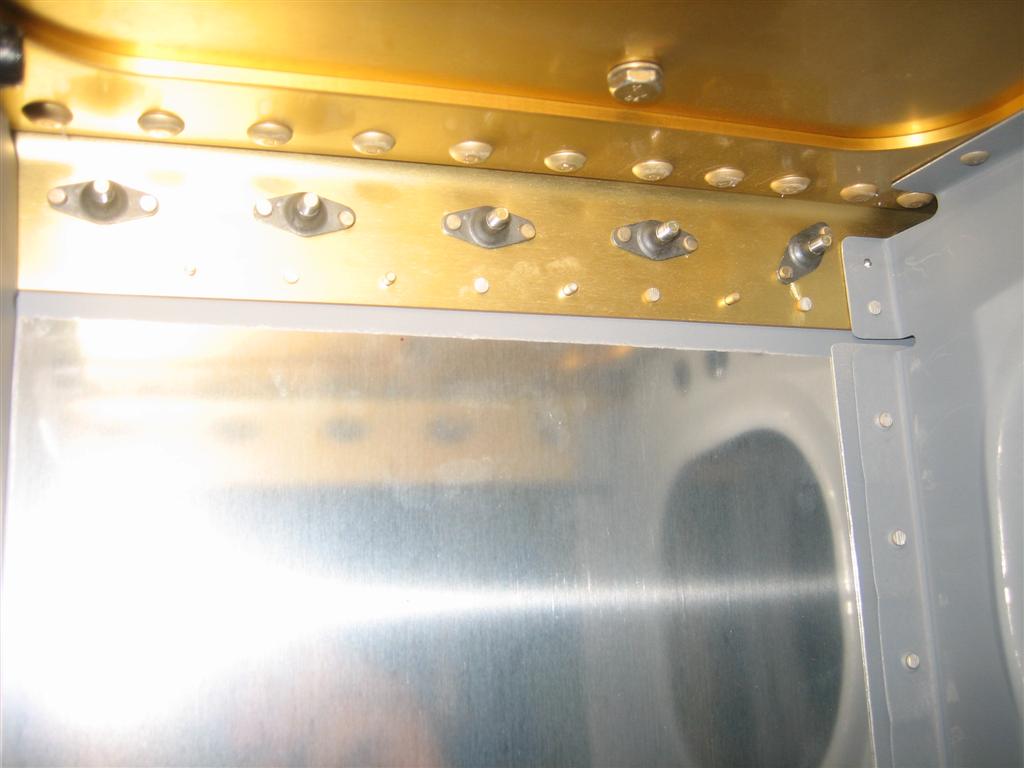
Over there, the three inner-most rivets can be set, along with the two AN426AD3-4 rivets for the K1000-3 nutplate, shown.

The foreground-most holes are for the aileron bracket and the main rib attachments, the clecoed row is for the leading edge rib attachments.

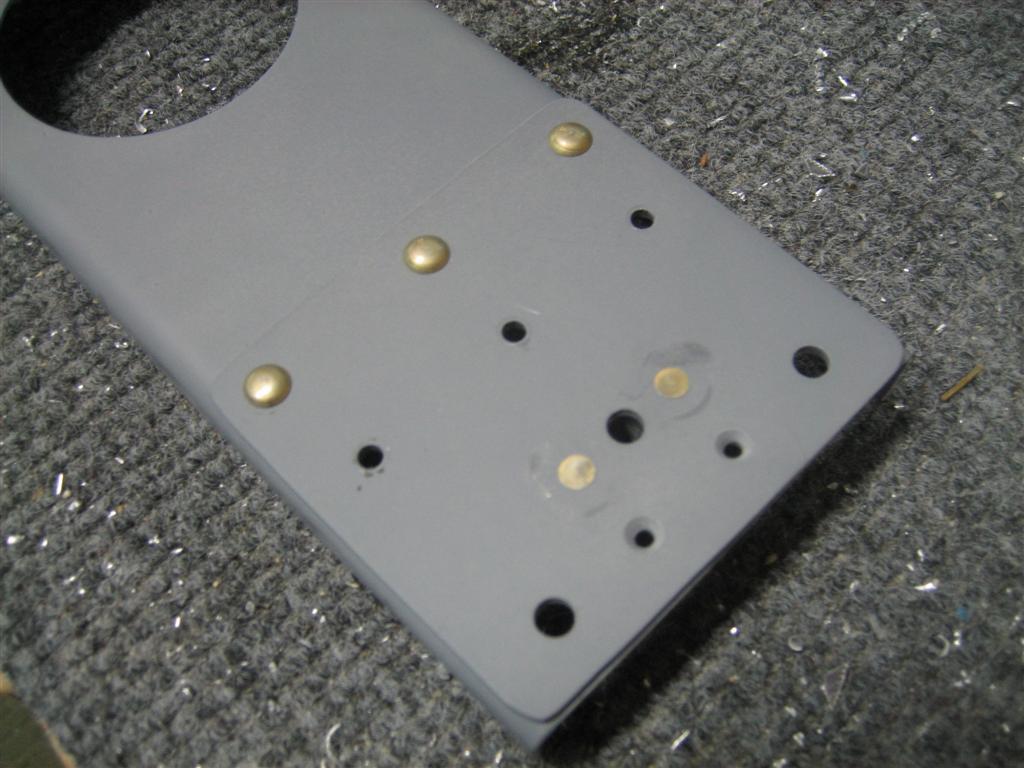
I guess I needed a picture of the manufactured heads.

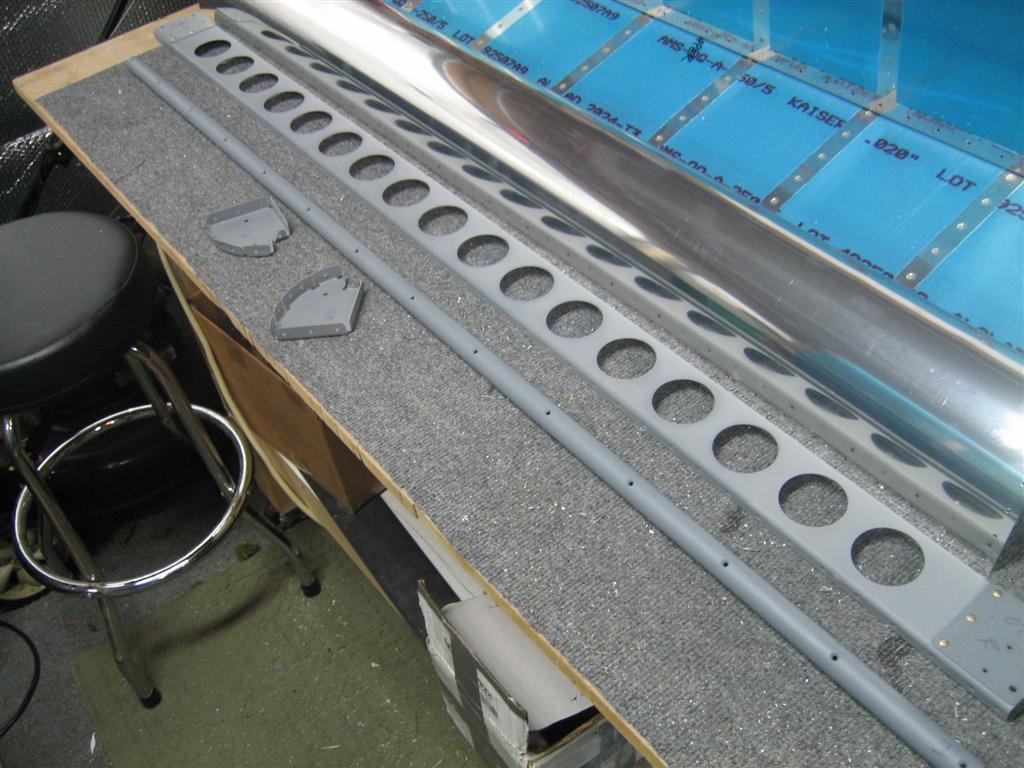
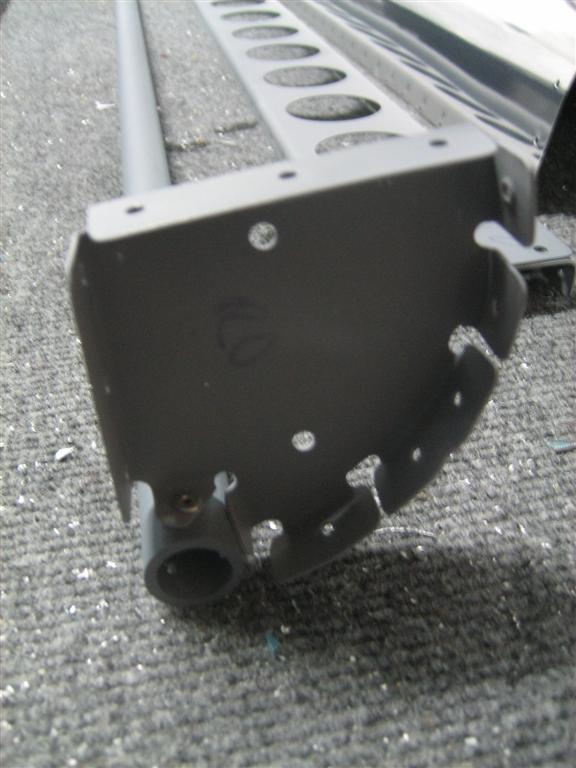
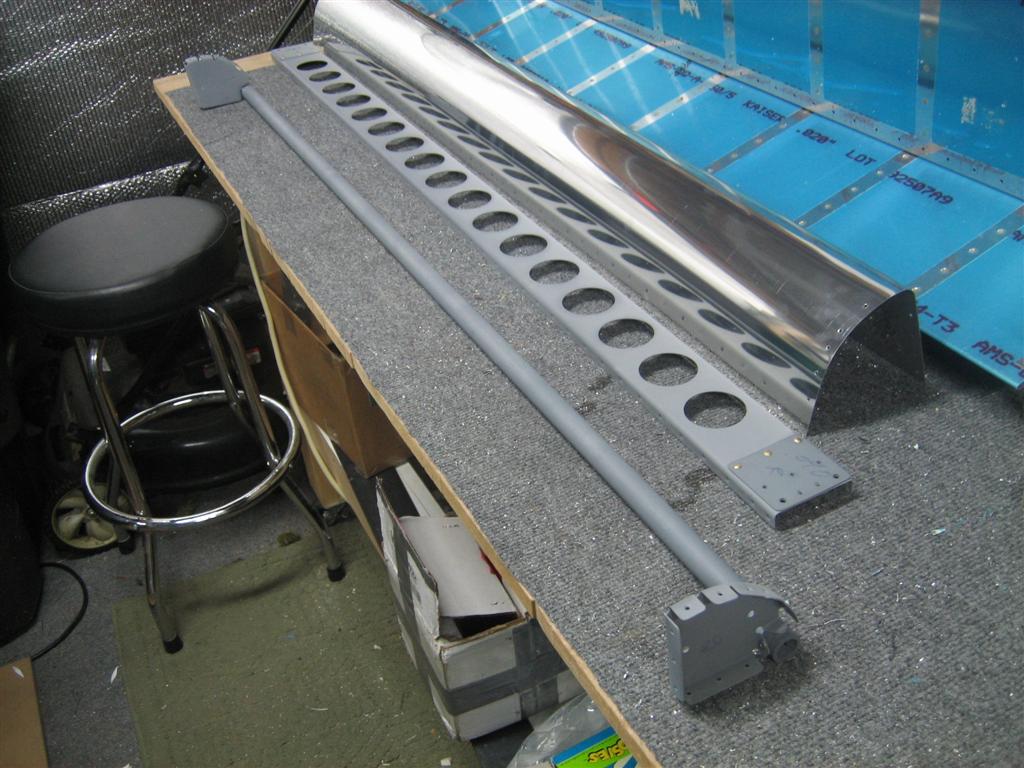
I think this picture means the counterbalance pipe and leading edge ribs are primed.

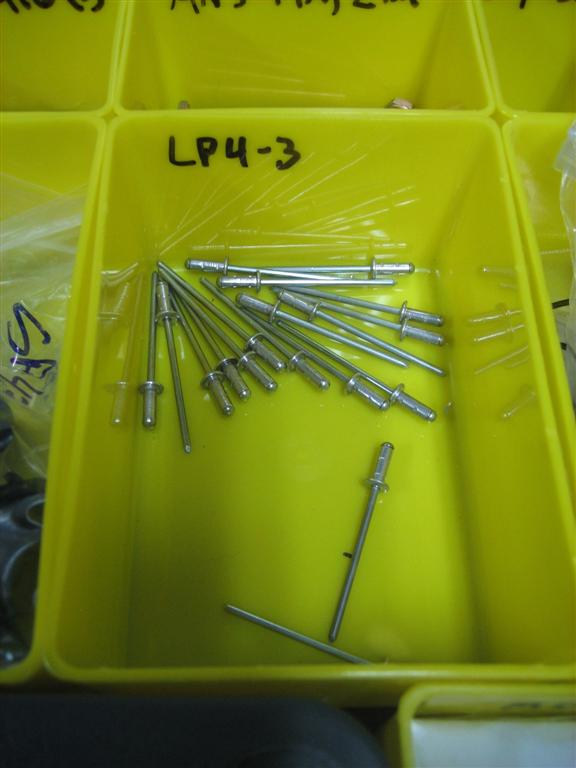
Sweet. Let's go find some blind rivets.

The plans call for these.

One in each side...

For a total of ten rivets tonight.

Good night. A few parts primed, a few parts assembled.

1.5 hours. 10 Rivets. Wuhoo! (Time for bed, I’m exhausted.)

Prev | Next


Deburred Right Aileron Spar

September 12, 2011

Prev | Next

Tonight was, once again, kind of a boring night.

After getting both ailerons mostly matchdrilled, I have a long road of prep ahead of me.

In about an hour tonight, all I managed to get done was the disassembly of the right aileron, plus some edge-finishing, deburring, and dimpling of the right aileron spar and reinforcement plates. (I started with those, because I can get those prepped, primed, and riveted before diving into more boring deburring. Getting pieces riveted together really re-motivates me…even if it’s just a few rivets.

Got the right aileron disassembled.

After edge finishing ALL OF THE LIGHTENING HOLES….jeesh, I looked through the manual and all over the plans for any clue on whether to countersink or dimple the aileron spar.

All I could find was something that said, “disassemble, deburr, dimple, and prime the components. Oh, and countersink the counterbalance pipe.”

So, it SOUNDS like dimpling the other parts are correct. What about the internet? Not much help there. Thanks a lot, Google.

Anyway, I gave the dimpling a shot on one of the #30 holes on the bottom of the spar, and stuck a CSP-4 (is that the rivet number?) in there. Looks pretty good to me. What do you think?

Looks good from here.

So, carefully watching for any flange distortion (there wasn’t any), I dimpled the bottom flange with a #30 dimple die and dimpled the top flange with a #40.

All done for the night.

That was about an hour, and while I could have started on the other one, I decided to pay a little attention to my family.

Puppies, here I come!

Prev | Next


Mucho Aileron Work

September 11, 2011

Prev | Next

Well, happy September 11th. (And by happy, you know what I mean.) Many thanks to those who pledge their lives to keeping the American Dream alive. I get to build an airplane in my garage because of many courageous Americans- past, present, and future.

Thank you.

Now, let’s get back to living the dream. Time to bend some aileron skins.

I knew when I made the homemade bending brake for the elevators that they wouldn’t suffice, but I pulled that puppy out, mainly to steal the hinges.
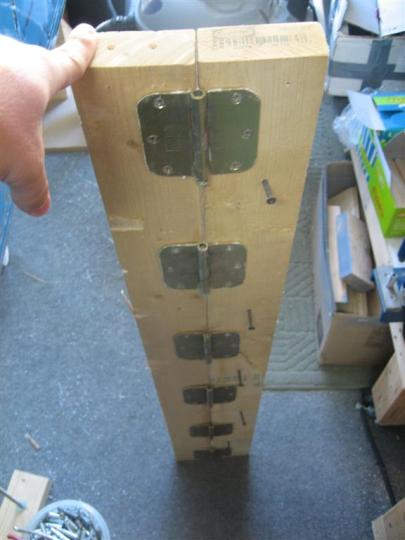
The drywall screws are where I screwed it into the side of the workbench.
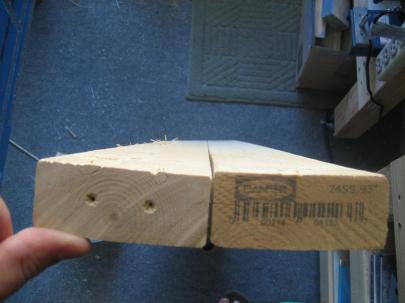
Warped much?

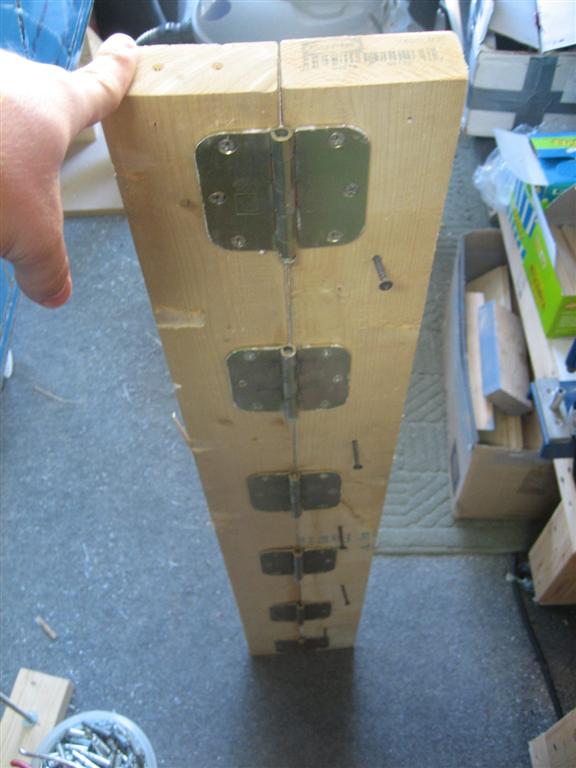
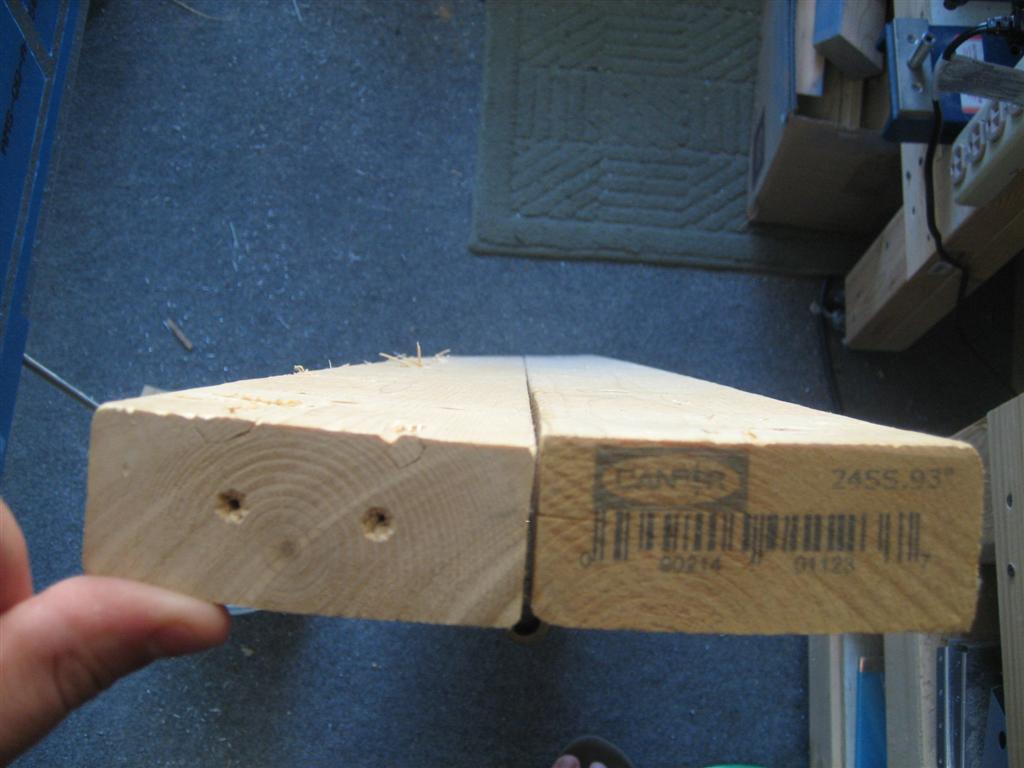
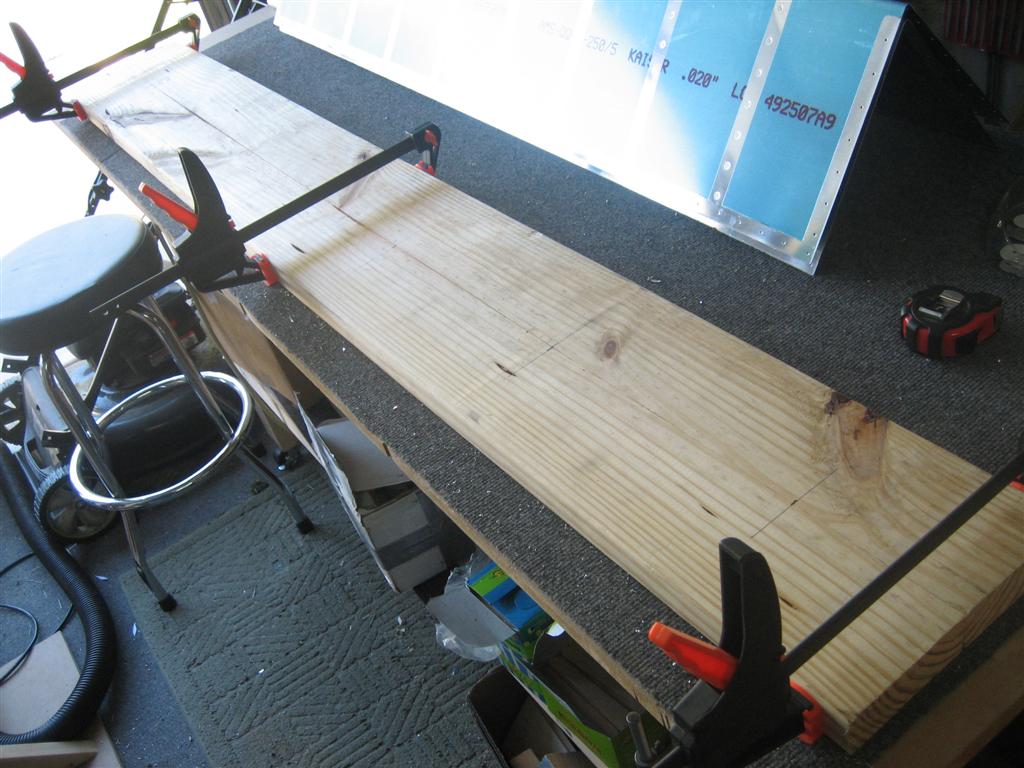
Anyway, this week I ran by the aviation big box store and picked up an 8-foot 2×8. I had the guy at the store cut 2 feet off, then rip it down the middle to make two 2x4s, both 6′ long.

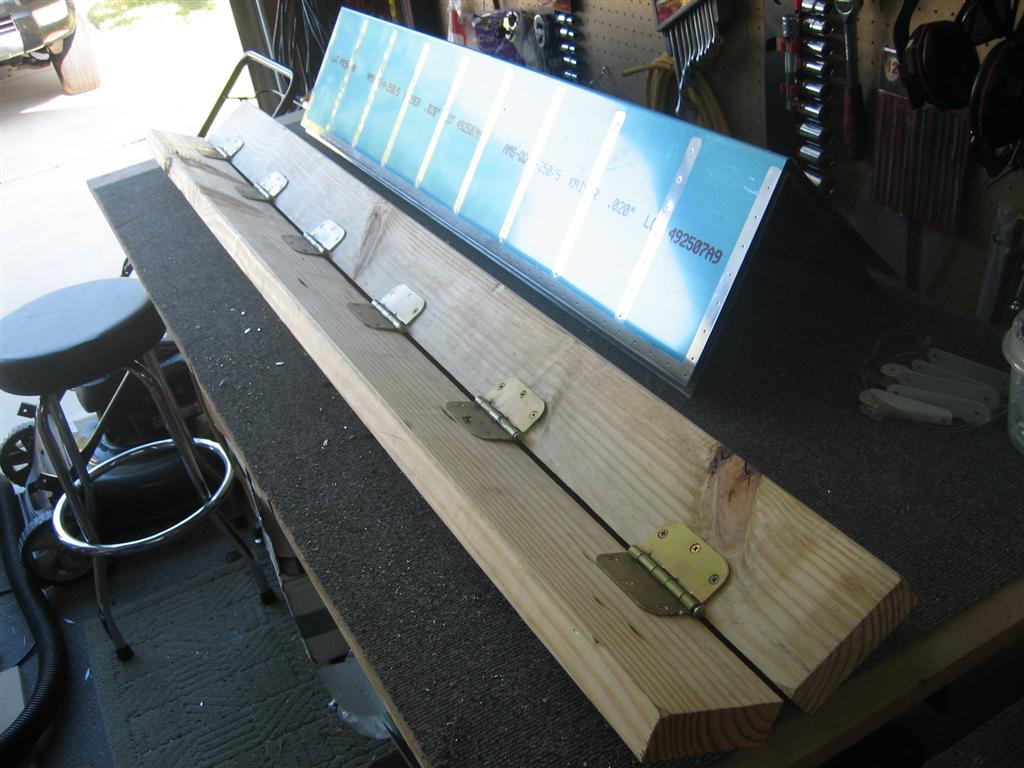
Back at home, I clamped them together and screwed some hinges to them.
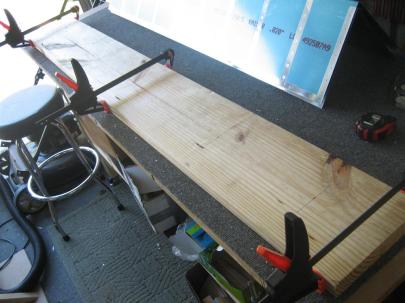
What a nice, straight piece!

I made sure to measure out and draw some perpendicular lines to ensure the hinge axis lines were all in the same line. (The empennage ones were not well aligned. They worked, but it was hard to actuate.)
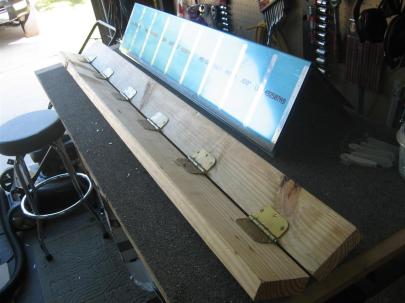
Alright. Let's get to bending.

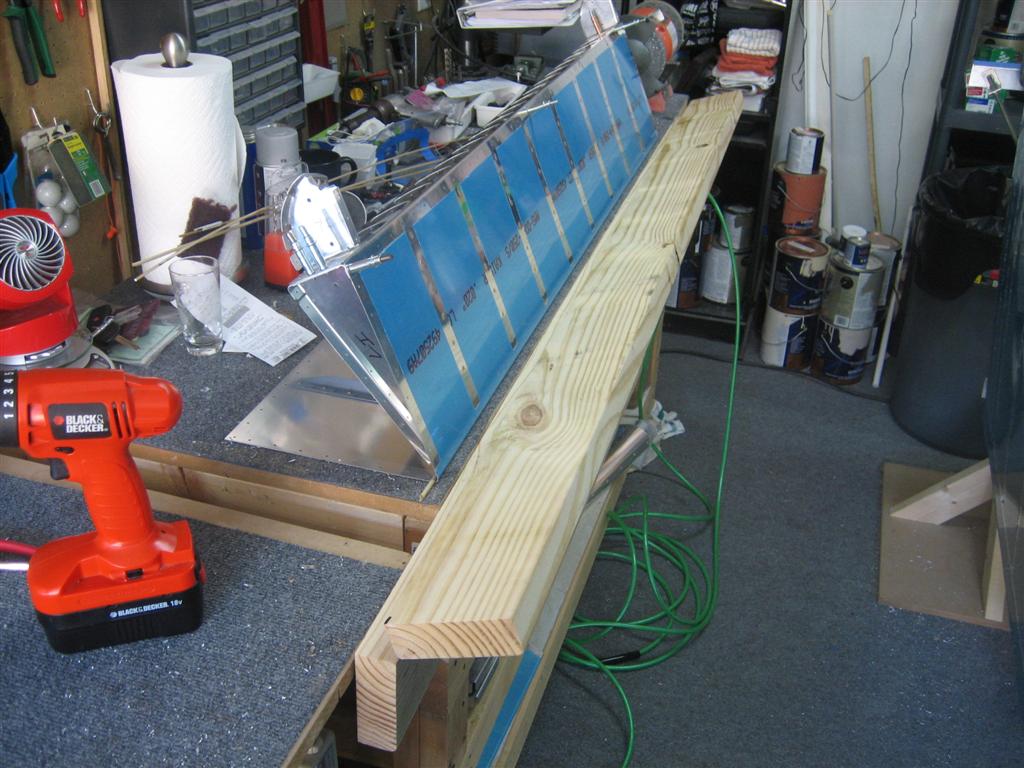
Just like last time, I screwed the brake into the side of the workbench so one skin was flat against the workbench surface. This worked really well for me.
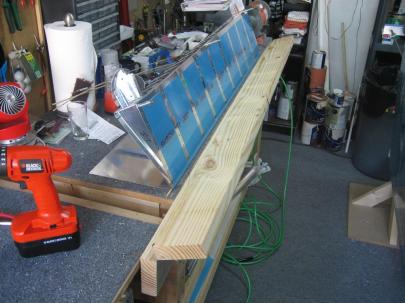
Sorry about the messy workbench.

I had purchased a few different sizes of dowel to go in the trailing edge, and after a couple attempts (with the girlfriend’s help), I just couldn’t get things to bend.

I switched to the smaller (1/8″, after first trying the 3/32″) dowel, and I got it a little better, but not all the way.

Finally, I pulled out the dowel, and gave it a shot.

Much better.

Except, I got a little bit of a bow. I guess since I was grabbing the brake at the ends, I was getting more “Squish” on each end.
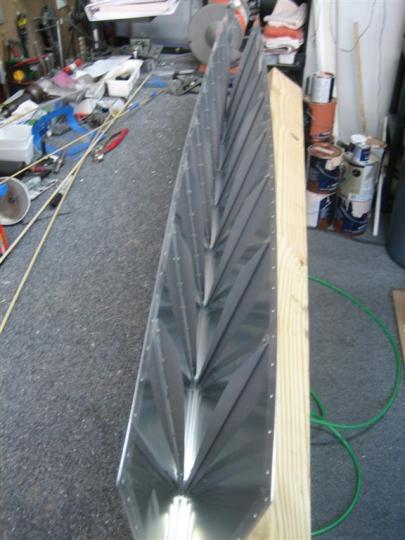
I still need to go a little further, but see how the middle isn't as done as the edges?

Anyway, I set the spar into the skin and here’s where I was.
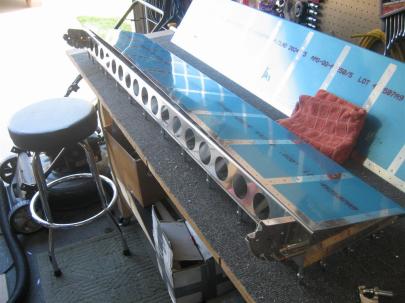
Almost there...

After one more effort, I had it perfect.

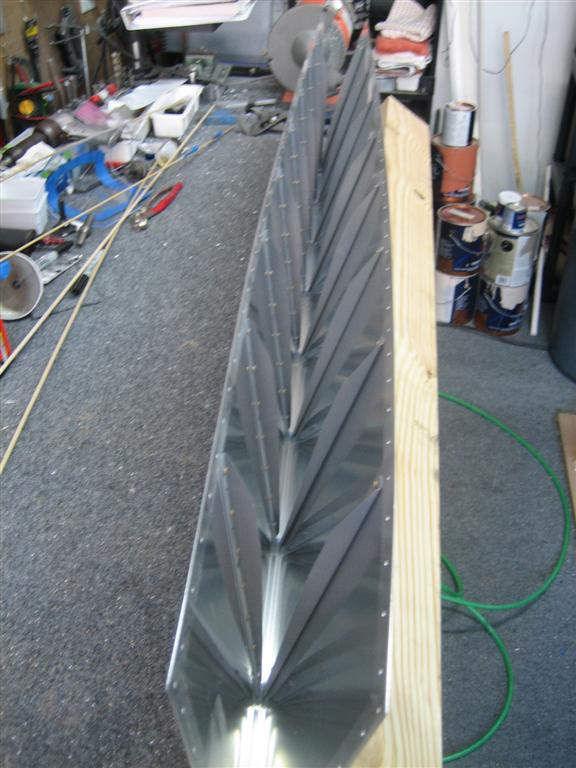
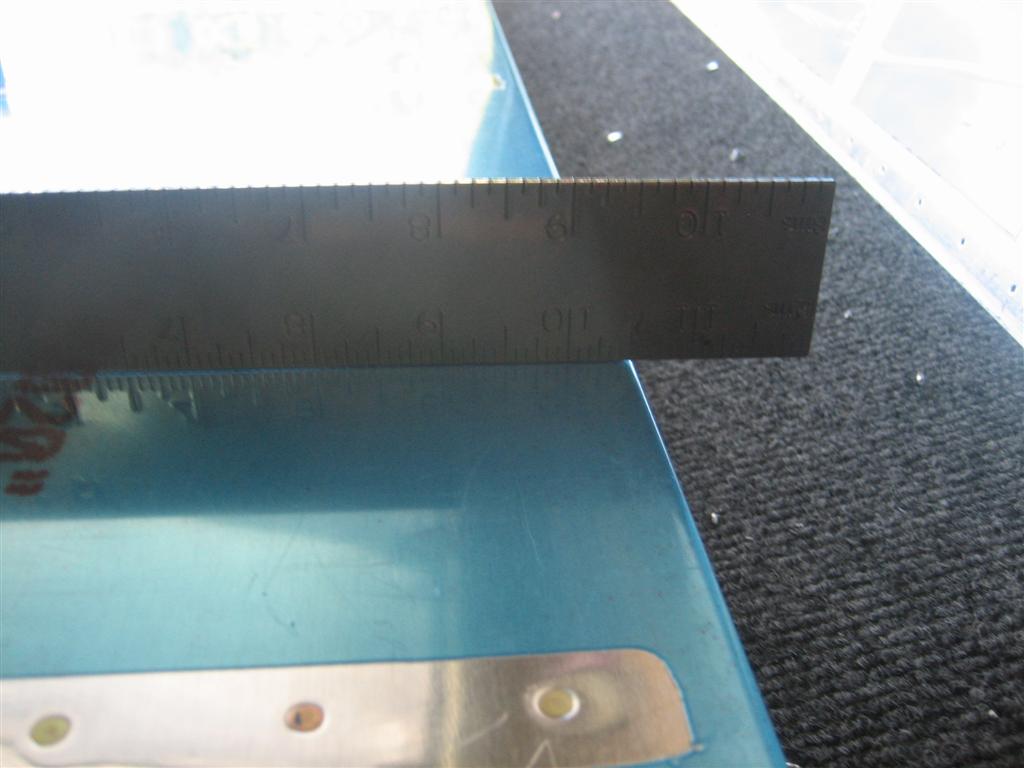
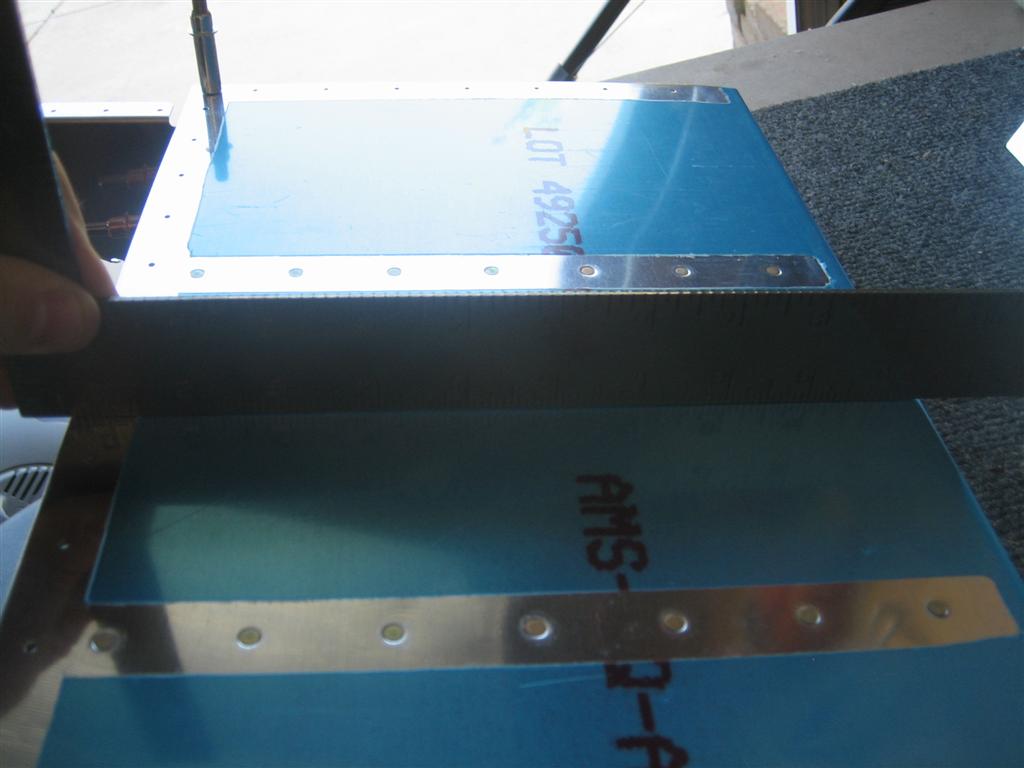
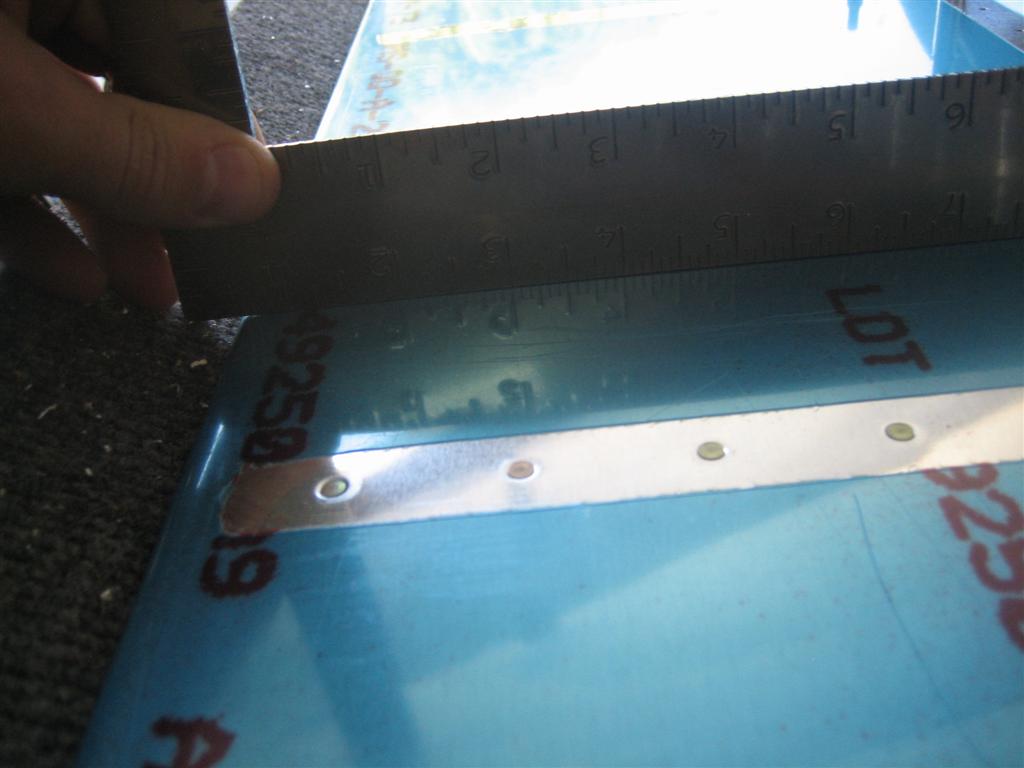
I pulled out the straight-edge to make sure the flat surface lasted all the way to the trailing edge radius.
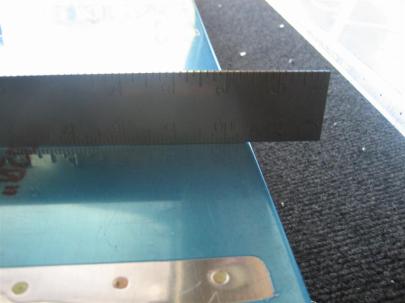
Good here.
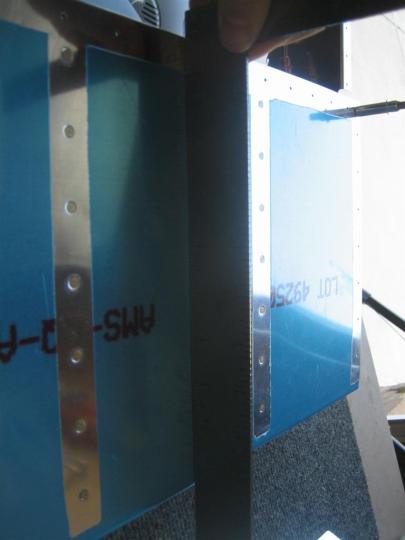
And here.
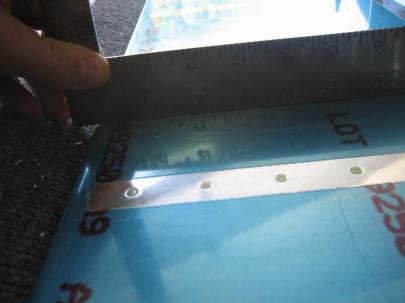
And here.
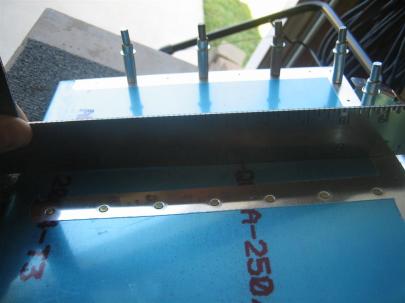
Is there an echo in here?

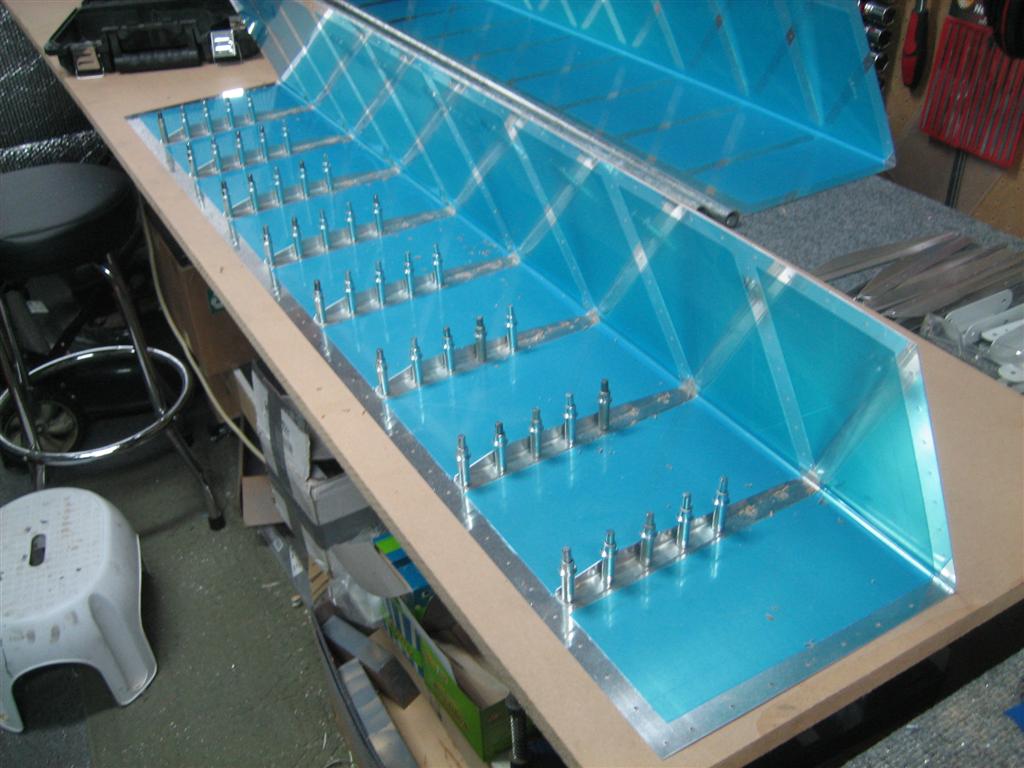
After another bend and a whole bunch of clecoing…I had two assembled ailerons!
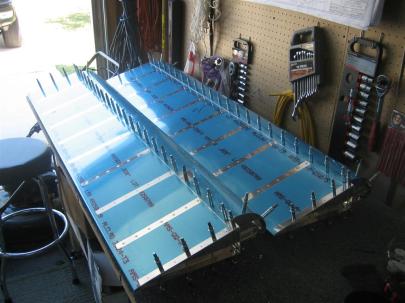
I love assembling a new airplane part for the first time.

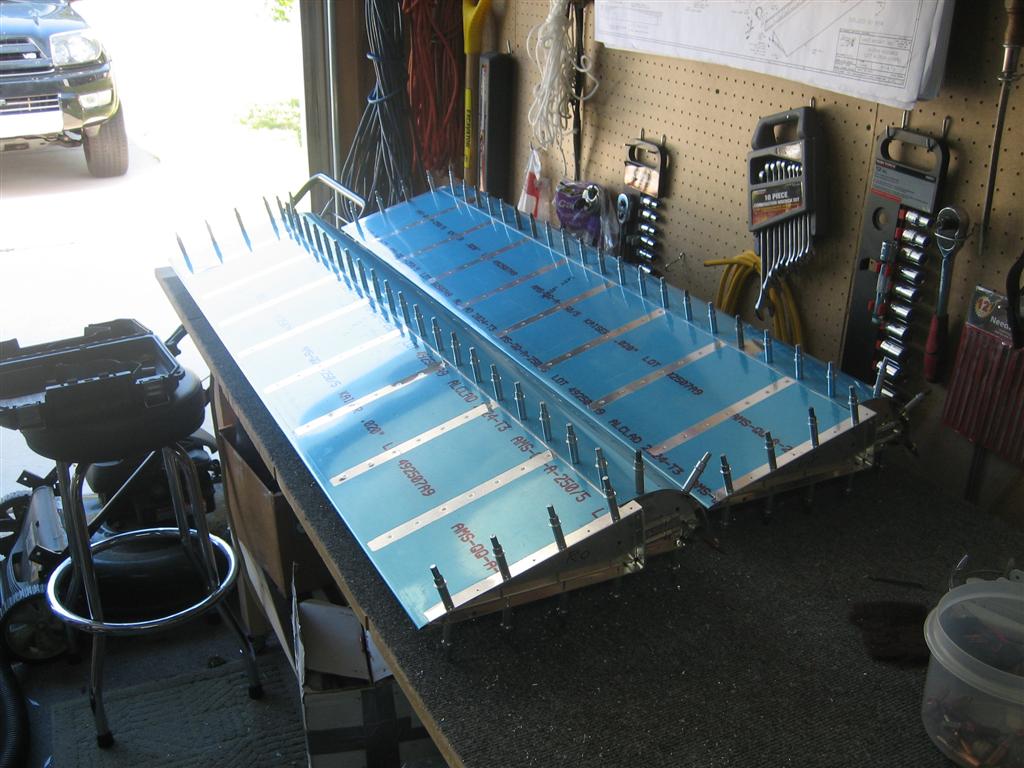
After some matchdrilling of the top surface, I flipped over, and drilled every other whole of the lower skin to spar holes to #30 (pilot holes are prepunched to just under #40, hence the alternating cleco sizes).
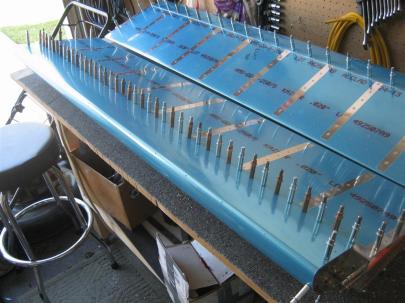
Bronze, silver, bronze, silver, bronze, silver, bronze, silver, bronze, silver, bronze, silver, bronze, silver, bronze, silver, bronze, silver, bronze, silver, bronze, silver, bronze, silver, bronze, silver, bronze, silver, bronze, silver bronze, silver bronze, silver, bronze, silver, bronze, silver bronze, silver bronze, silver.

Next up was drilling the steel water pipe- excuse me…”counterbalance pipe” to #30 through the predrilled holes in the skin.

This was much easier than I thought it was going to be. No big deal.
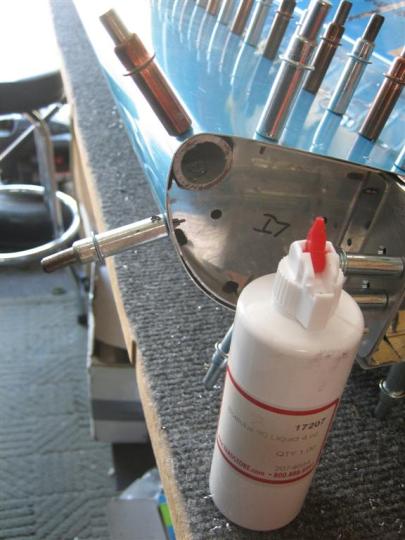
It was time consuming, and I used some boelube, but it was easy.

Then, even though this picture looks just like the one above, I have two matchdrilled ailerons.
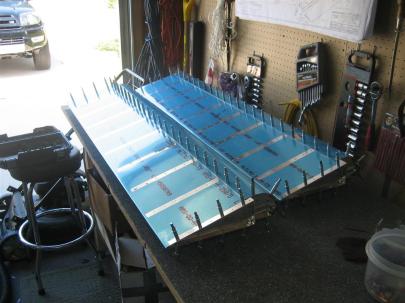
tada!

I have a few holes I need to get to (forgot to flute the nose ribs, so I didn’t drill those holes, and there’s one counterbalance pipe hole you have to wait on), but I’ll finish those tomorrow and start the long process of prep for priming and final assembly!

2.5 Hours.

Prev | Next


Riveted Aileron Stiffeners

September 5, 2011

Prev | Next

Happy Labor Day, everyone. Luckily, it was kind of crappy around all day, so along with some house chores, we basically stayed inside (and worked on the airplane!)

If you remember from yesterday, I had only gotten one aileron totally dimpled. Today, I got the other one dimpled, then cleaned up the skins and set them outside for a little rattle-can primer.

It was slightly windy, but it worked out okay.

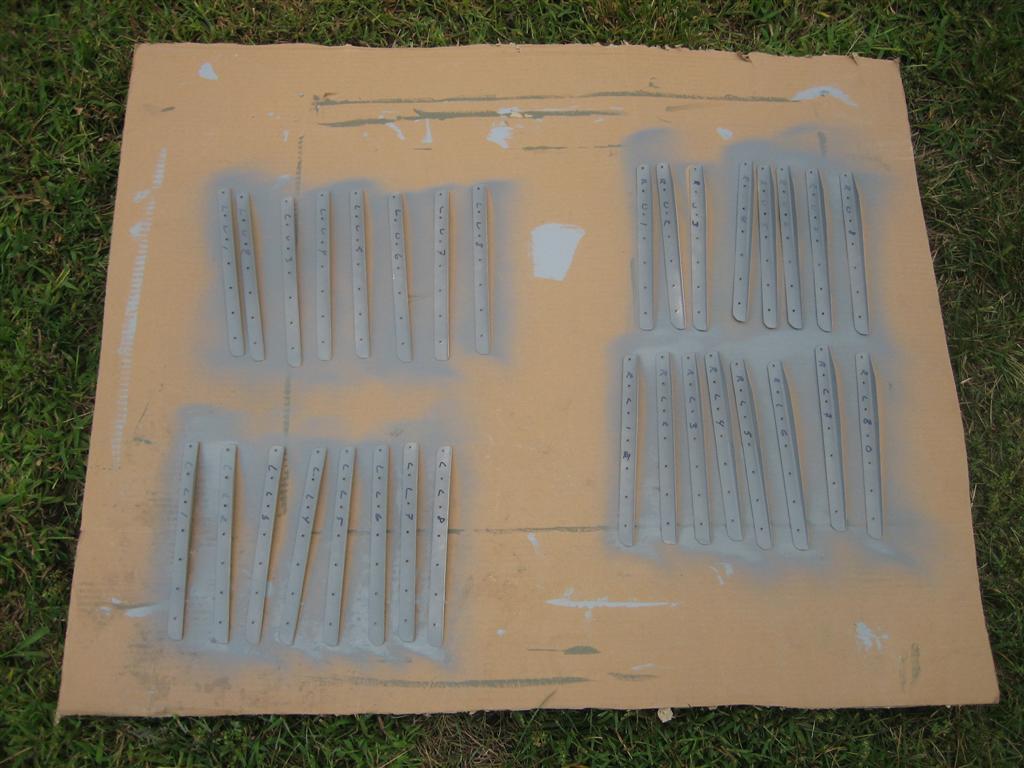
Then, I took all of my stiffeners inside to do a more thorough washing, then set them outside on a piece of cardboard for drying.

I'll leave these outside for a little to dry.

After a few minutes, I primed them, let them dry fully, then brought them back into the garage.
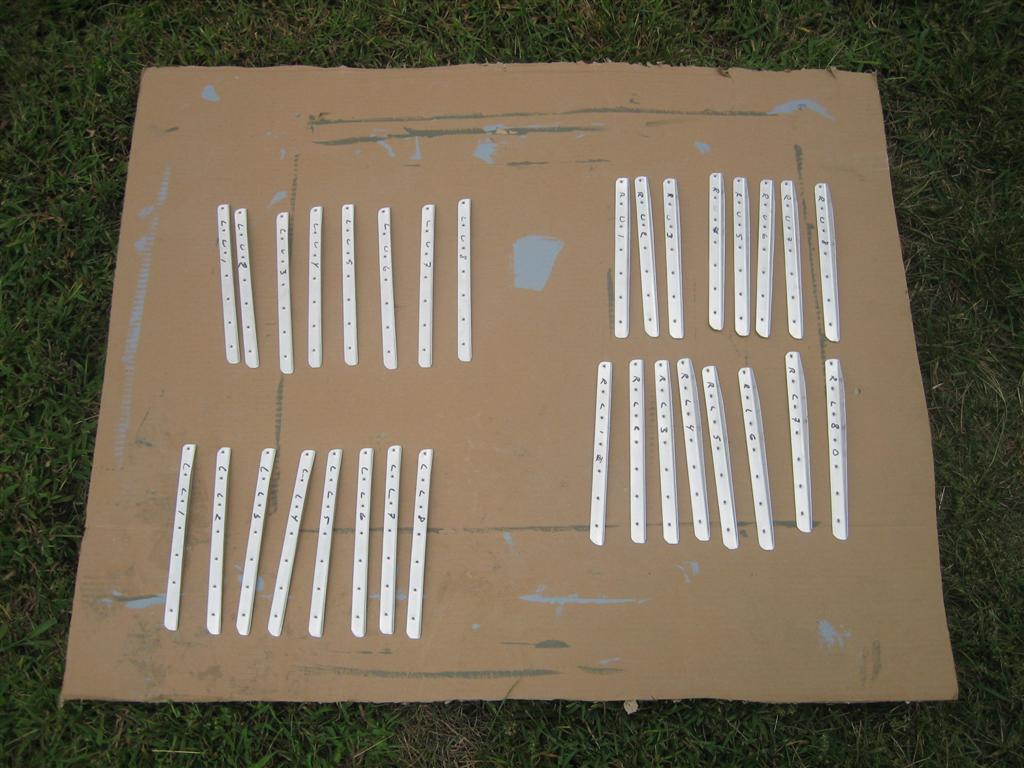
Then, I spent about 45 minutes just putting rivets in the holes and taping them in. This felt like 2 mindless hours.

When I started to lay stiffeners in place for riveting, I realized that I didn’t get enough of the blue film off at the trailing edge.

Not a big deal, but I don't want that blue vinyl getting stuck under the stiffener.

So, I got out the soldering iron, waited for it to heat up, and trimmed up the aft area of each stiffener. After another shot of primer, I was ready to go.

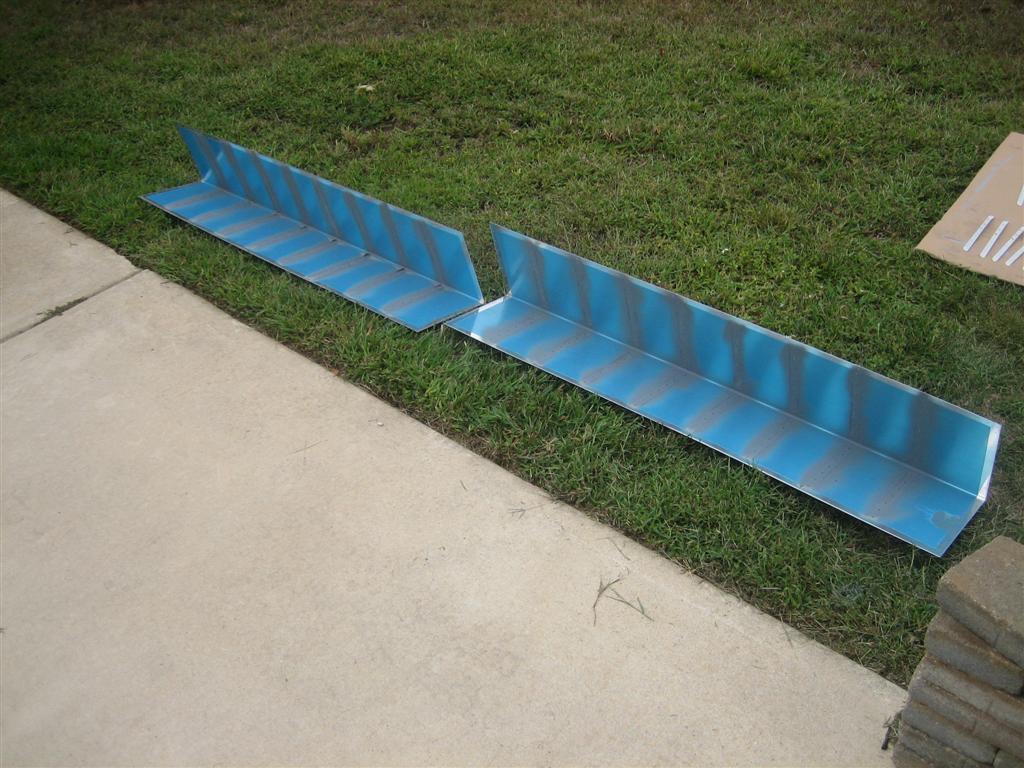
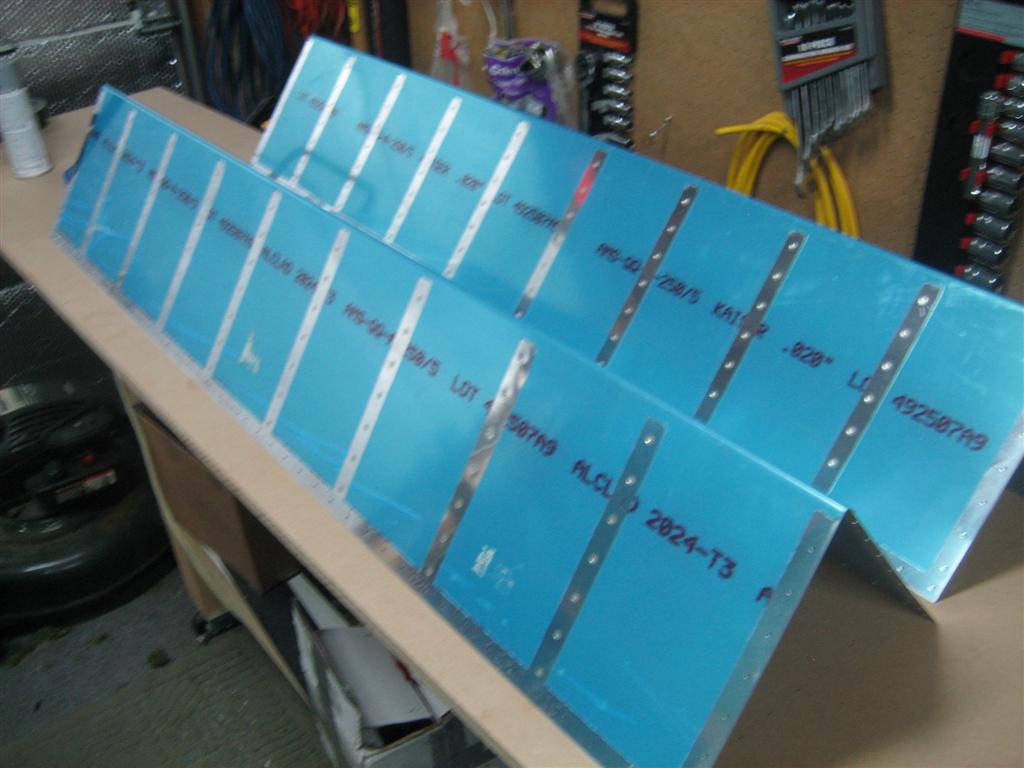
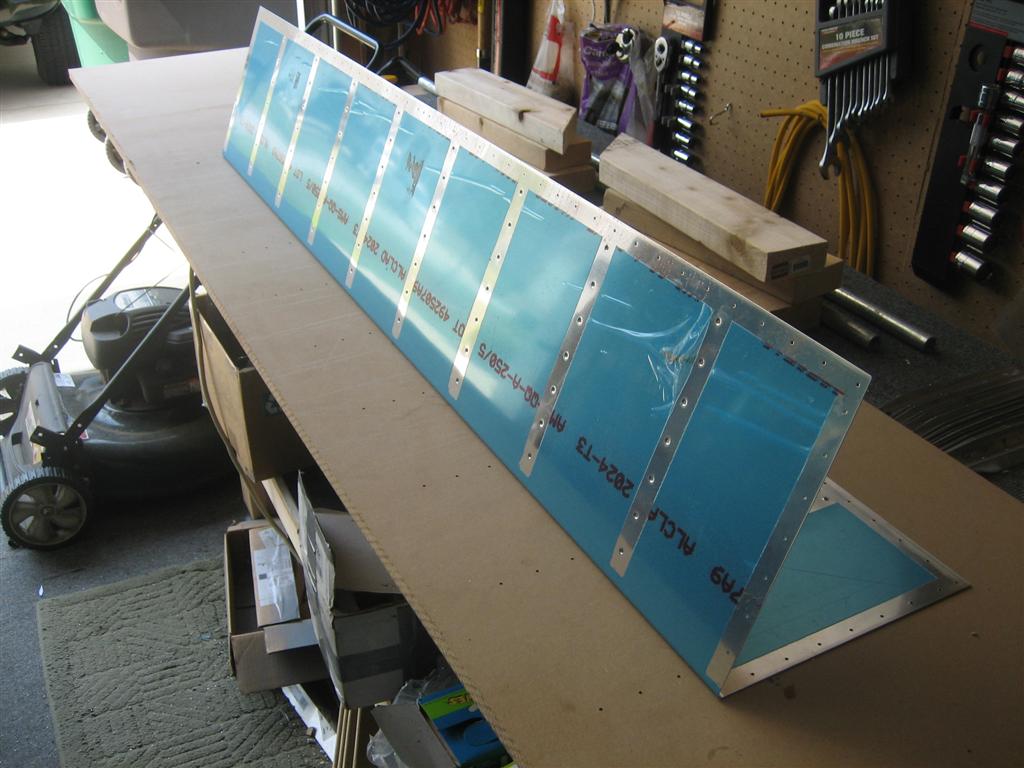
Stiffeners are ready!

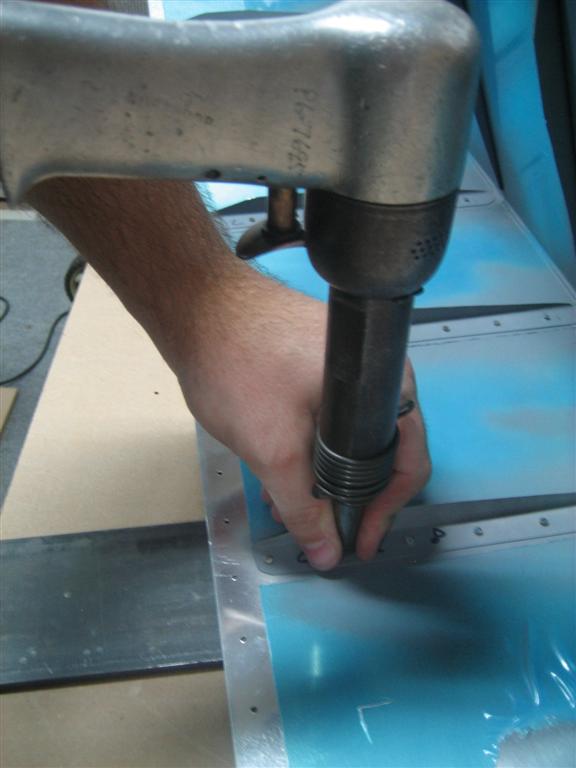
Okay, I’m pretty sure I have plenty of backriveting pictures on here, but I managed to get some action shots today. For most of the rivets (when the other half of the skin is not in the way), I use a short, skinny (~1/2″ dia.) set.

I got six of the seven rivets on each stiffener this way.

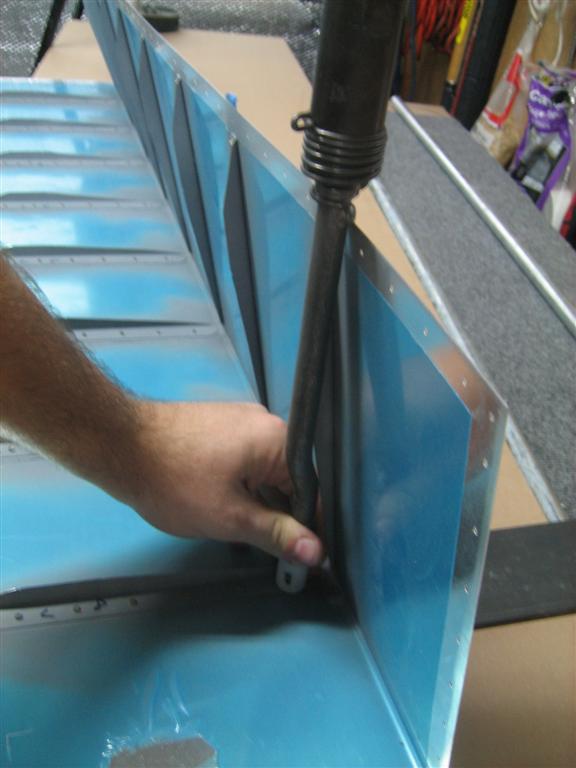
For the aft-most rivet, I use my double-offset backriveting set. I had to crank the psi all the way up to 60 psi, and it was still about a 3 second pull on the gun (instead of the more ideal 1.5-second pull), but it works.

(I change these up because on the elevators, I was bending the skin out of the way too much, and ended up tweaking the aft edge of the elevators. This backrivet set lets me get in there without bending the skin as much.)

Fits perfectly.

Also, remember to push down REALLY hard with your steadying hand so you minimize any tendency for the skin or stiffener to jump up. You want everything FLUSH against the backriveting plate.

I’m only stressing this because I’m having bad flashbacks to the elevators. These all turned out beautifully.

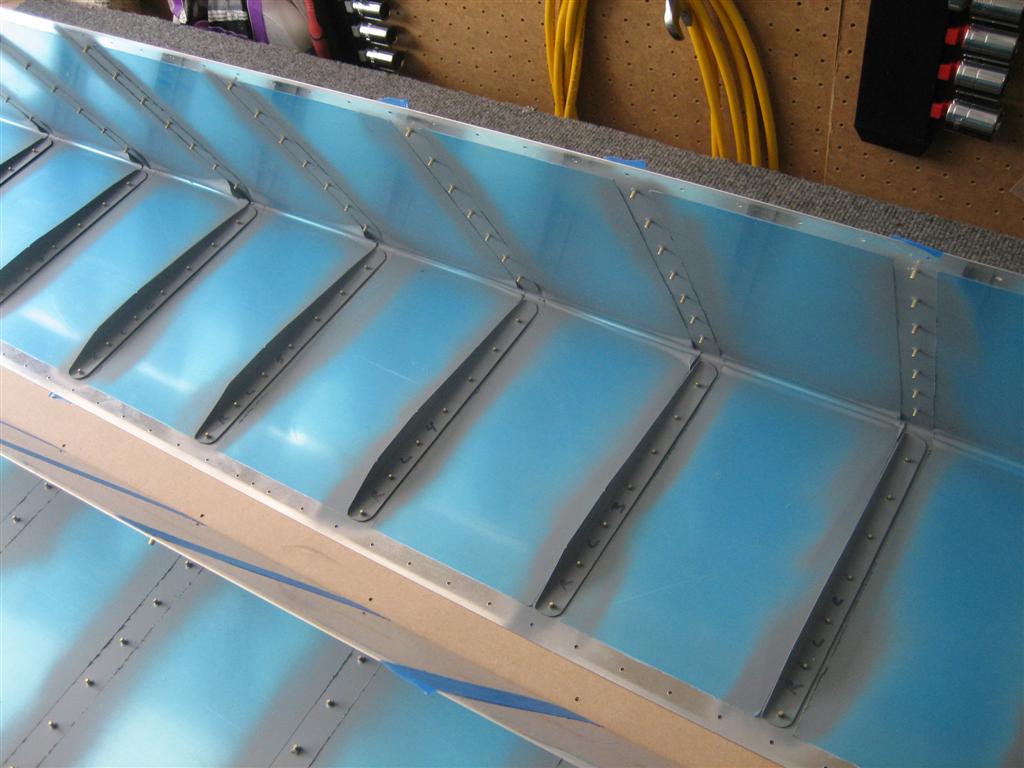
See? BEAUTIFUL!

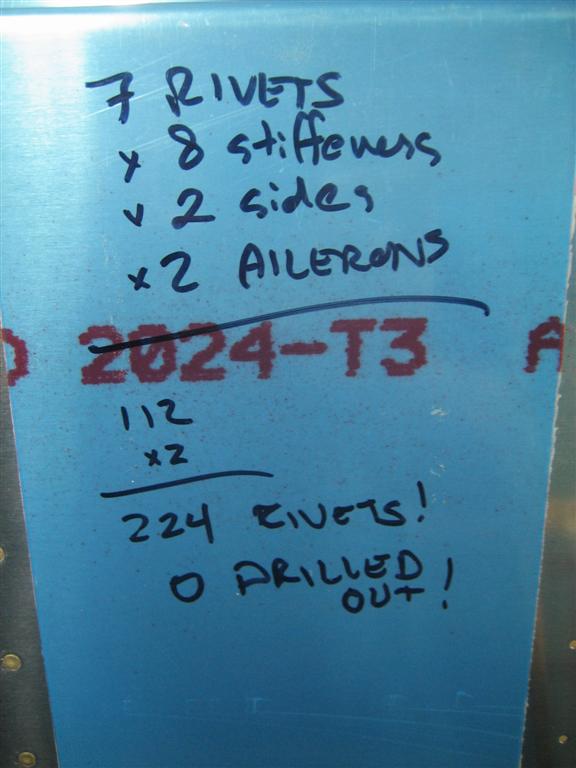
Okay, I was having trouble counting the rivets today, so I just wrote it down.

Notice the last line!!! (Also, please check my math.)

Now, for some glory shots.

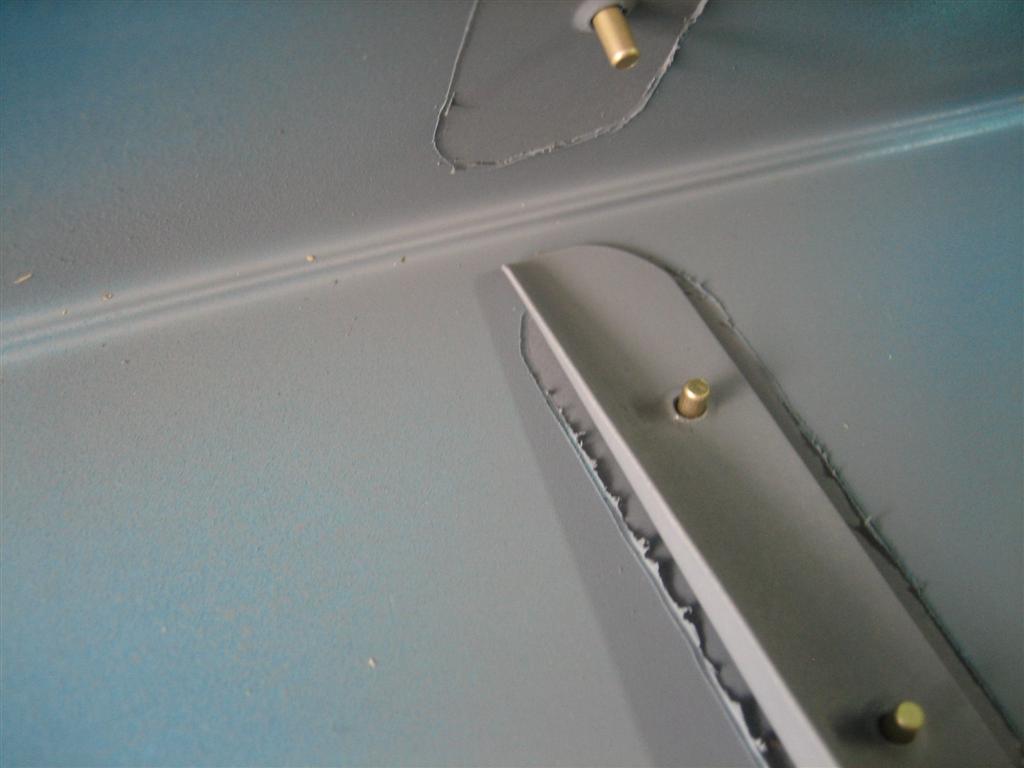
Nice shop heads. The last rivet is gray because I had to re-shoot primer after I had taped the rivets in.

Finally, I pulled the blue vinyl off the insides of the ailerons.

Man, these things really stiffened up.

So, 2.5 hours, 224 rivets, and none drilled out.

Next up, bending the aileron skins and then getting the skeletons together for some matchdrilling. (Also, I have to figure out whether I want to put the right wing in a cradle while I’m working on the left wing, or just leave it where it is on the stand. Hmm.

Prev | Next


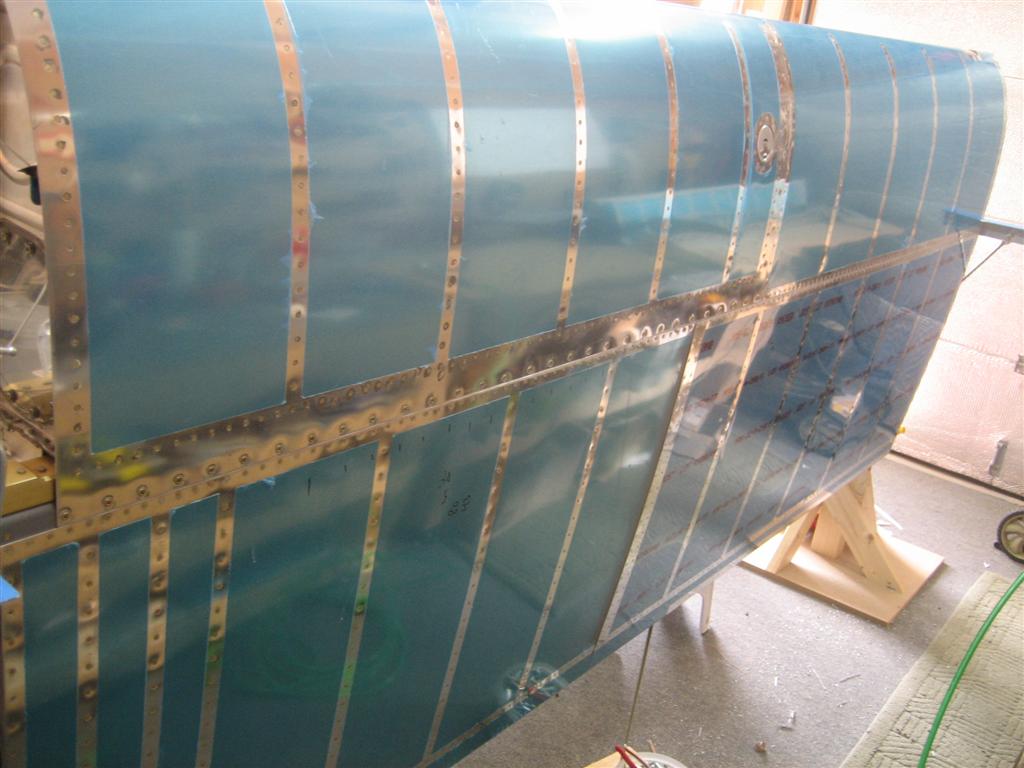
Finished Riveting Right Wing Top Skins

September 3, 2011

Prev | Next

Well, today was an excellent day.

Joe was planning to come over to finish up the right top skins, so while I waited, I started in on dimpling the aileron skins (just the stiffener holes) with the c-frame.

All went pretty well, except for a place where I dropped the c-frame die on the skin (top surface, of course). It made a little dot impression, so I flipped the skin over on the MDF and gently tapped with a hammer until it came out.

(NOTE: do not put a bucking bar behind it thinking that will be better. The wood has a little give to it, so you don’t deform the skin. If you use the bucking bar, you’ll squish the skin. Ask me how I know.) I think I have to paint the ailerons now (instead of polishing).
Anyway, nice dimples.

Before Joe and I got started, I snapped this picture of the “every other” method I’m using.

The rivet row we're working on here is at the bottom of the gold spar flange.

After a whole bunch of bucking and shooting, we came up with this.

Tada!!!!!!

For the last three rivets, we switched places so Joe could get some experience bucking and I could say I shot a few of the rivets on the skins. Turns out, I like bucking better and Joe likes shooting better.

If you look really closely, towards the foreground on the inboard top skin, I wrote 38, 5, 80, 43. That’s how many rivets we bucked. 166.

0.5 hours on the aileron skin, then 45 minutes (or 1.5 man-hours) on the skins. 2.0 total.

Prev | Next


Deburred and Scuffed Aileron Stiffener Holes

August 29, 2011

Prev | Next

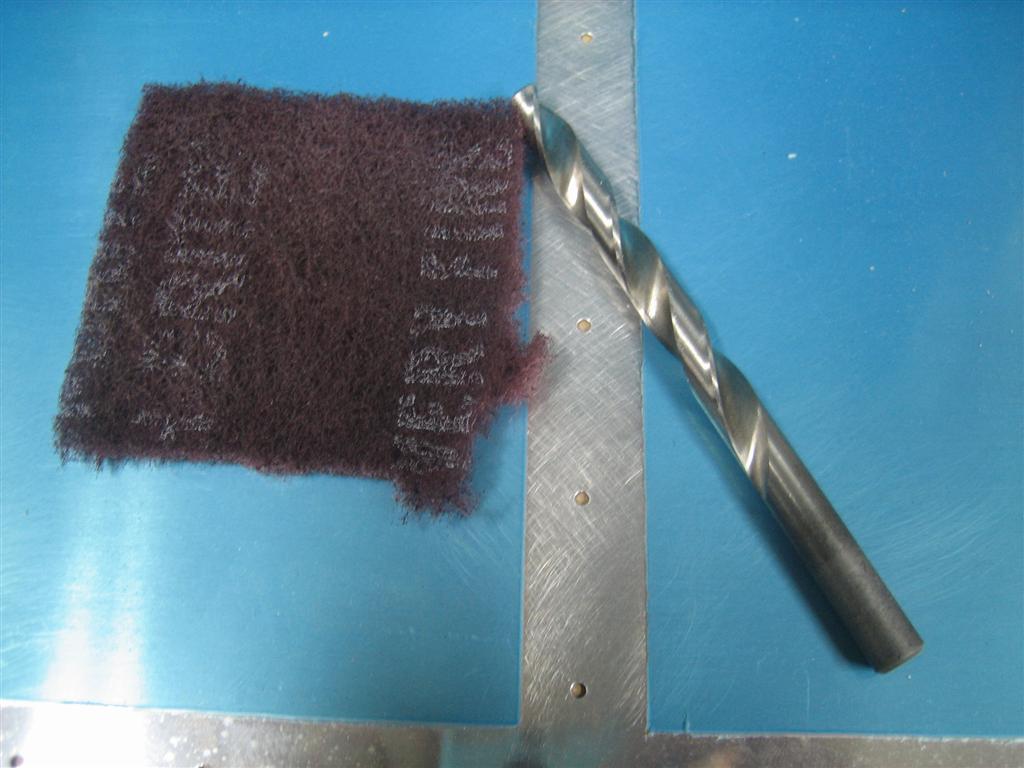
Umm, this is a pretty boring update, but I had to do something outside tonight. I grabbed an oversize drill bit and a scotchbrite square and did some duburring and scuffing of the stiffener holes in both aileron skins.

Tools of the trade.

I told you it was boring. 0.5 hour.

Prev | Next


I Hate Dimpling Stiffeners

August 24, 2011

Prev | Next

Well, can you guess what the airplane-building activity was? Maybe from the title?

Yup, you guessed right. Deburring and Dimpling stiffeners.

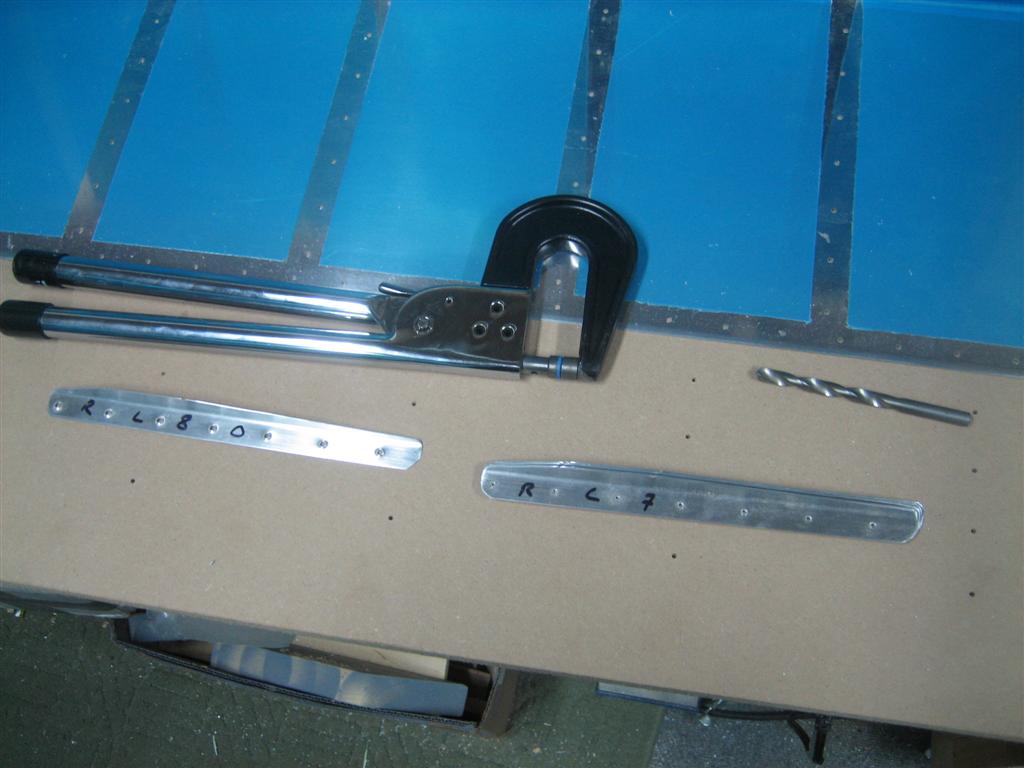
Here are the tools of the trade. An oversize drill bit, spun in the fingers to deburr. And, my normal dimple dies in my economy squeezer.

After one stiffener...

After 32 stiffeners.

For some excitment tonight (since otherwise, it would be a little lacking), let’s break out the calculator.

2 ailerons, 2 sides per aileron = 4 aileron sides.

4 aileron sides, 8 stiffeners per side = 32 stiffeners.

32 stiffeners, 7 holes per stiffener = 224 holes dimpled.

224 holes dimpled, 2 sides per hole = 448 deburred hole sides

448 deburred hole sides, 2 spins per hole = 896 spins of the drill bit.

My thumb and fore-finger hurt.

0.5 hour.

Prev | Next


I Hate Drilling Stiffeners

August 15, 2011

Prev | Next

I’m still trying to nail down a good time for continued wing skin riveting, so in the mean time, more ailerons.

But first, a little taste of how I like to walk the dogs. Or rather, how they walk me.

In the same vein as last night, I’m not really a big fan of drilling stiffeners. Maybe it’s because I’ve done it on the rudder and both elevators, but it’s just kind of boring.

You can tell it’s boring by my lame pictures tonight.

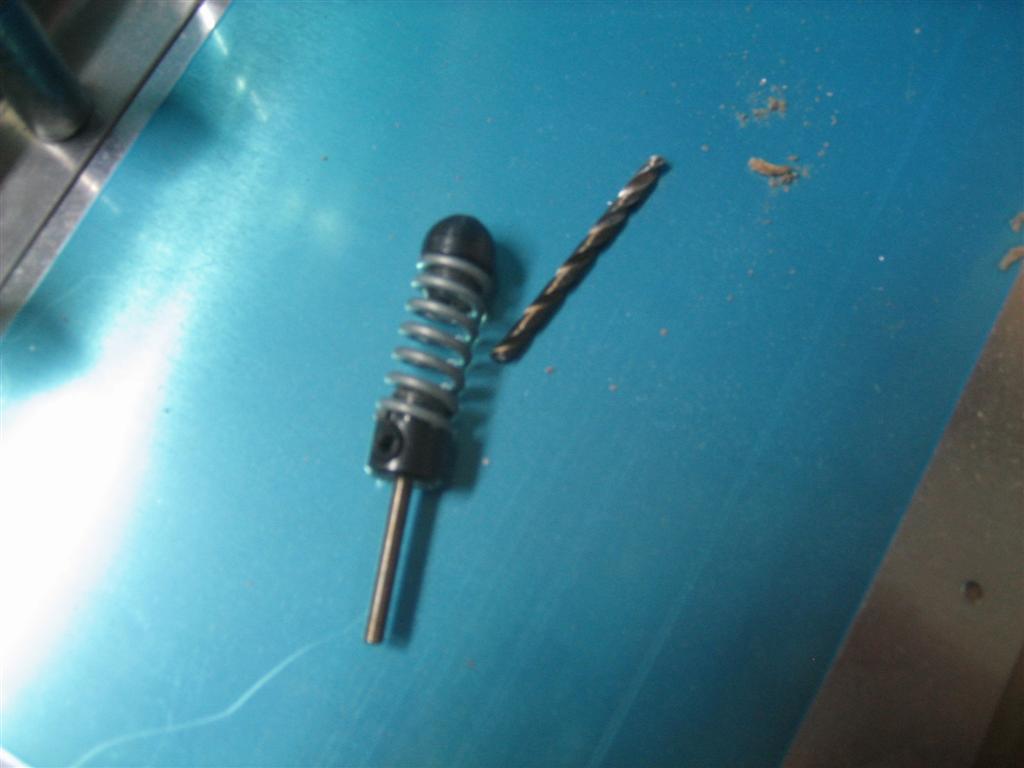
After drilling some stiffeners, a boring picture.

Halfway through the 32 total stiffeners, one of my #40 drill bits broke. Boring picture.

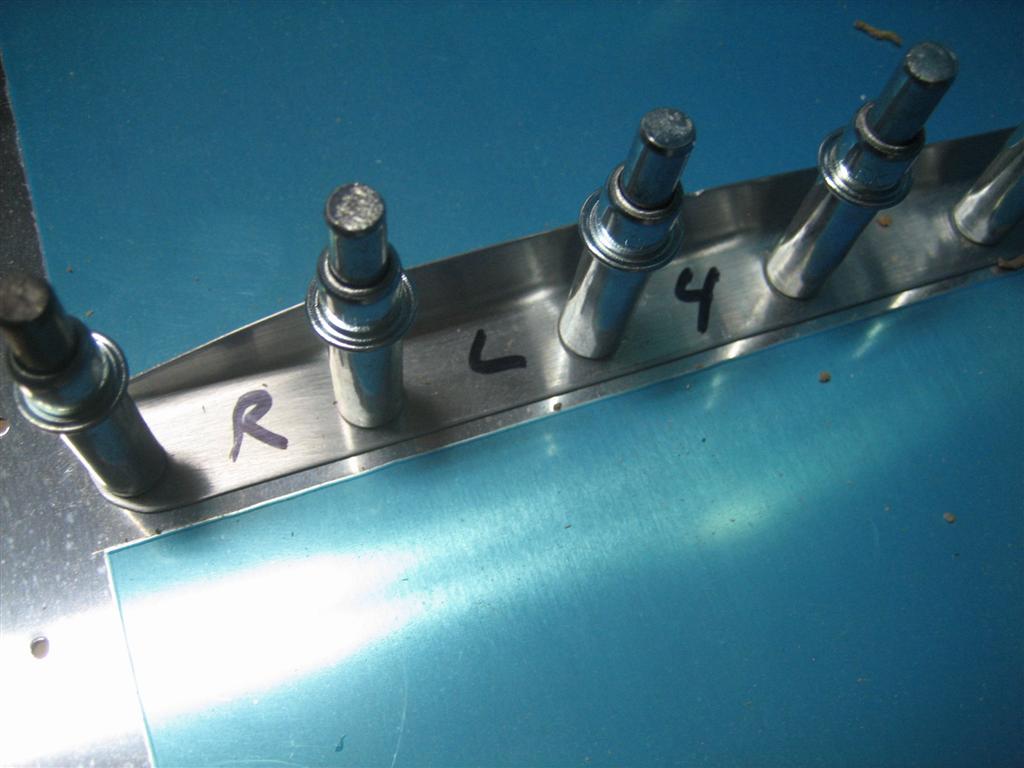
I labelled each stiffener with the aileron (right or left), side (upper or lower), and then 1 through 8 from inboard to outboard.

After about 45 minutes of that, I decided a nice small (15 minute) task would be to knock out the edge finishing.

Did anything assist me in that decision? Yes.

A pretty bad cut on my knuckle from dragging it across a skin edge. Ouch. (So far, this project has cost some blood and sweat. I’m sure the tears are on there way…)

All the edges edge-finished, and some nice round corners.

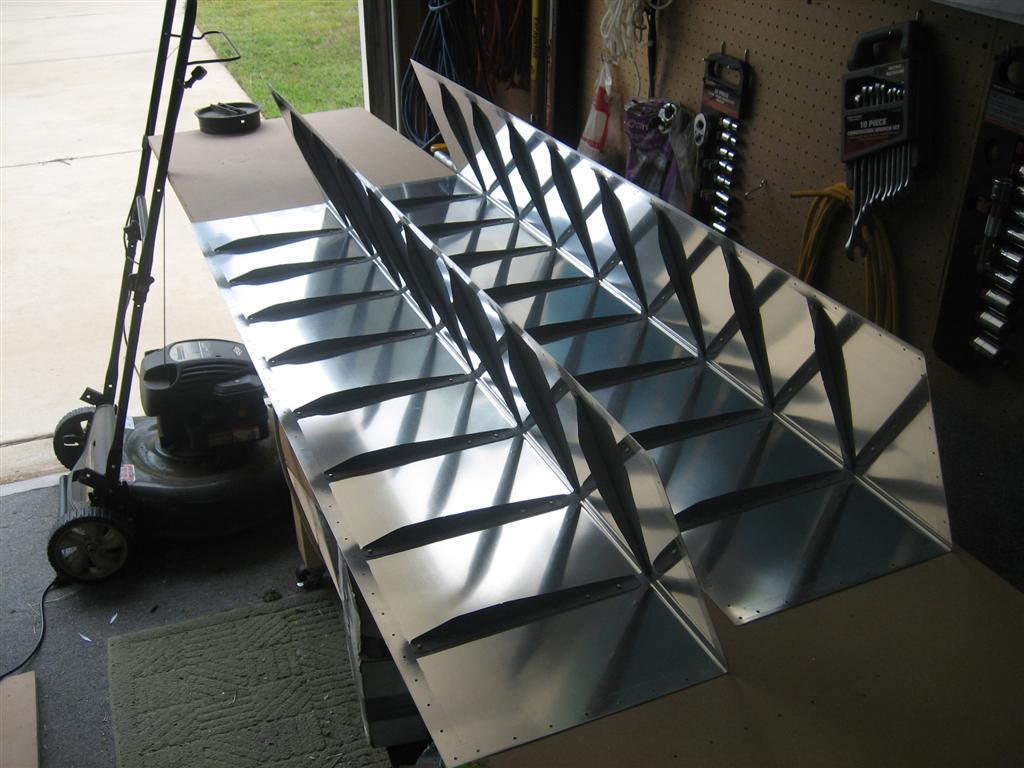
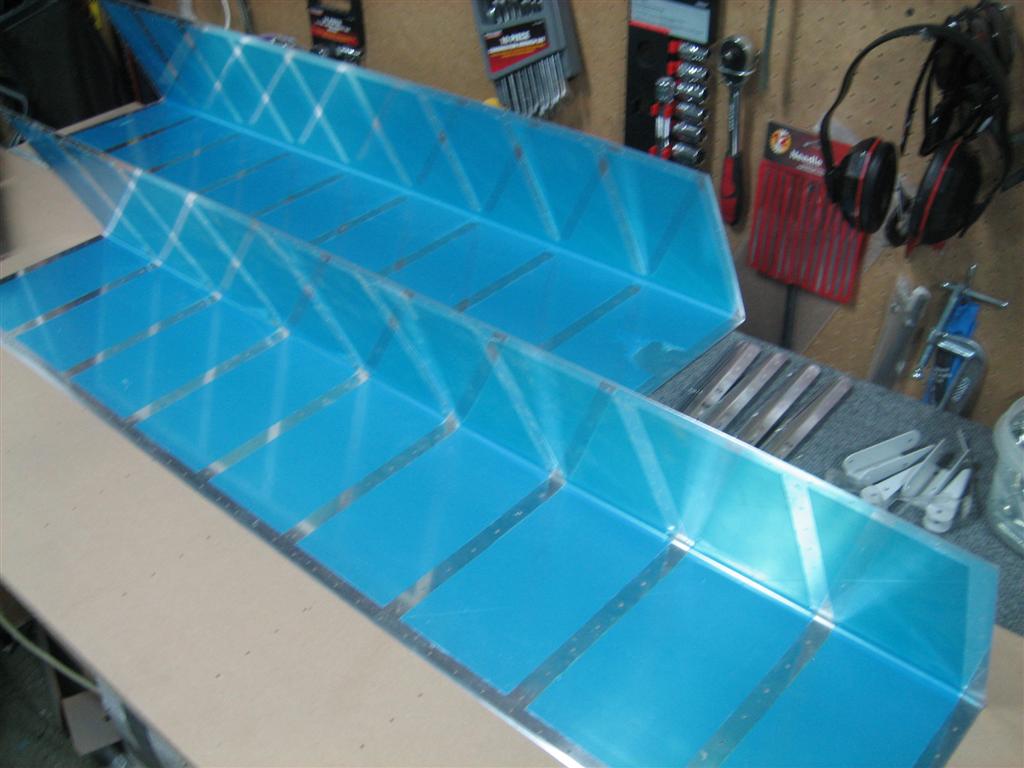
Here are both aileron skins and the four piles of stiffeners, all matchdrilled.

I may be done with drilling stiffeners. Who knows.

1.0 Hours. I bet tomorrow’s post is called “I Hate Deburring and Dimpling Stiffeners.”

(Actually I don’t hate deburring and dimpling stiffeners. I can do it inside, where the A/C is nice and chilly.)

Prev | Next