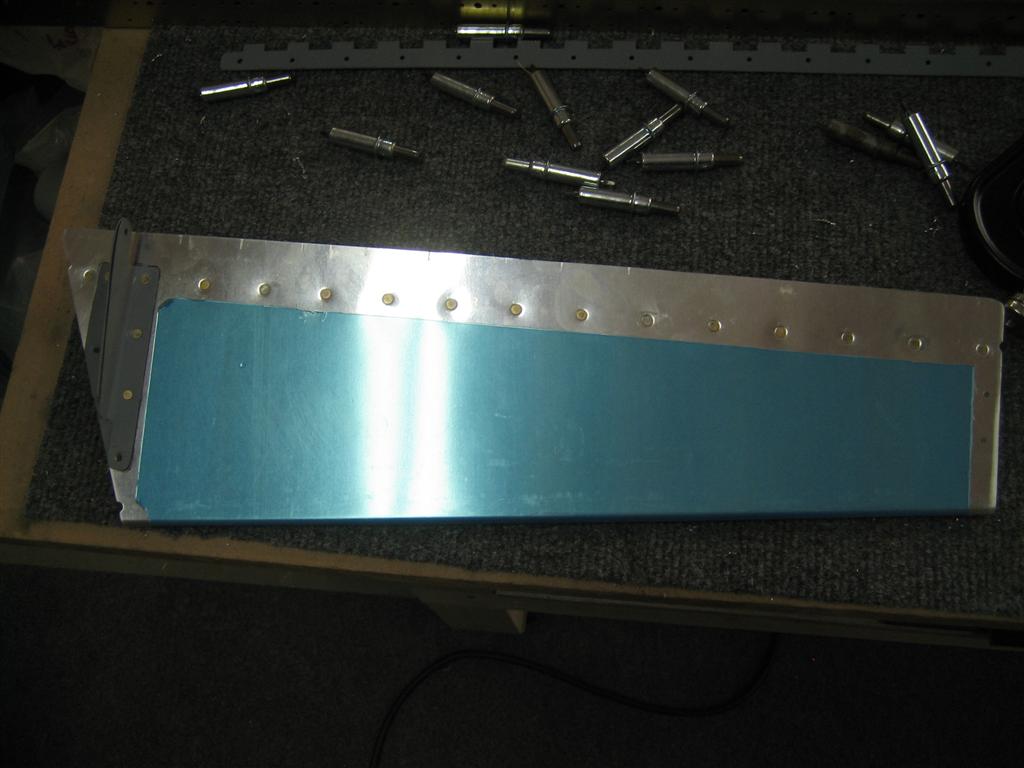
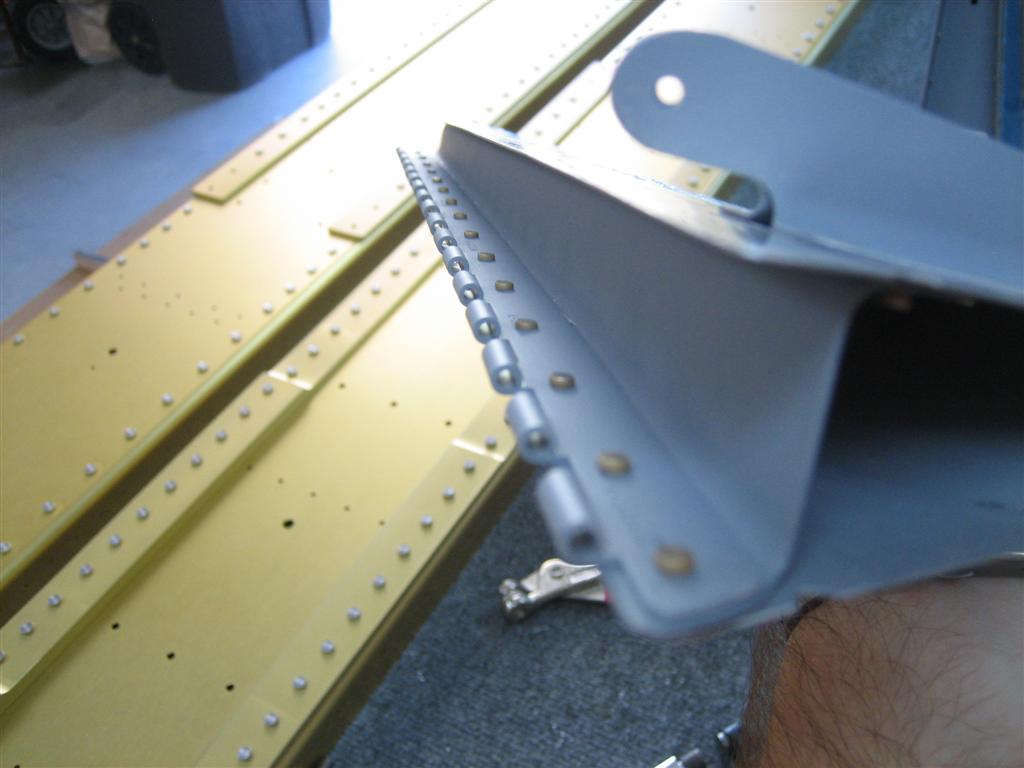
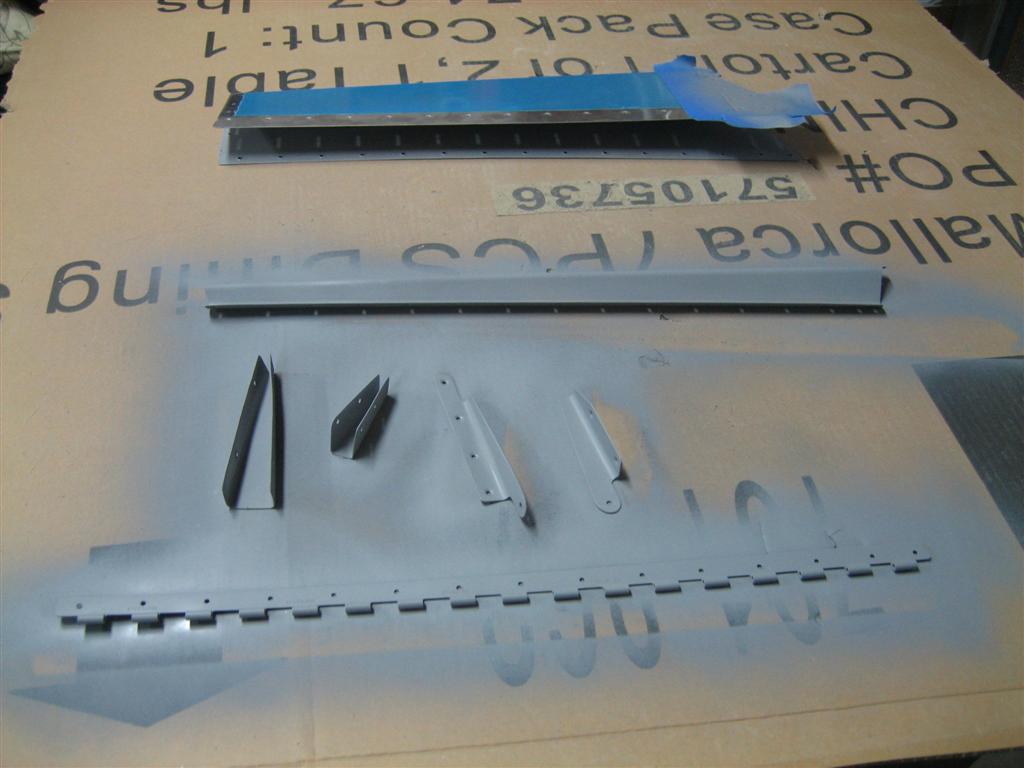
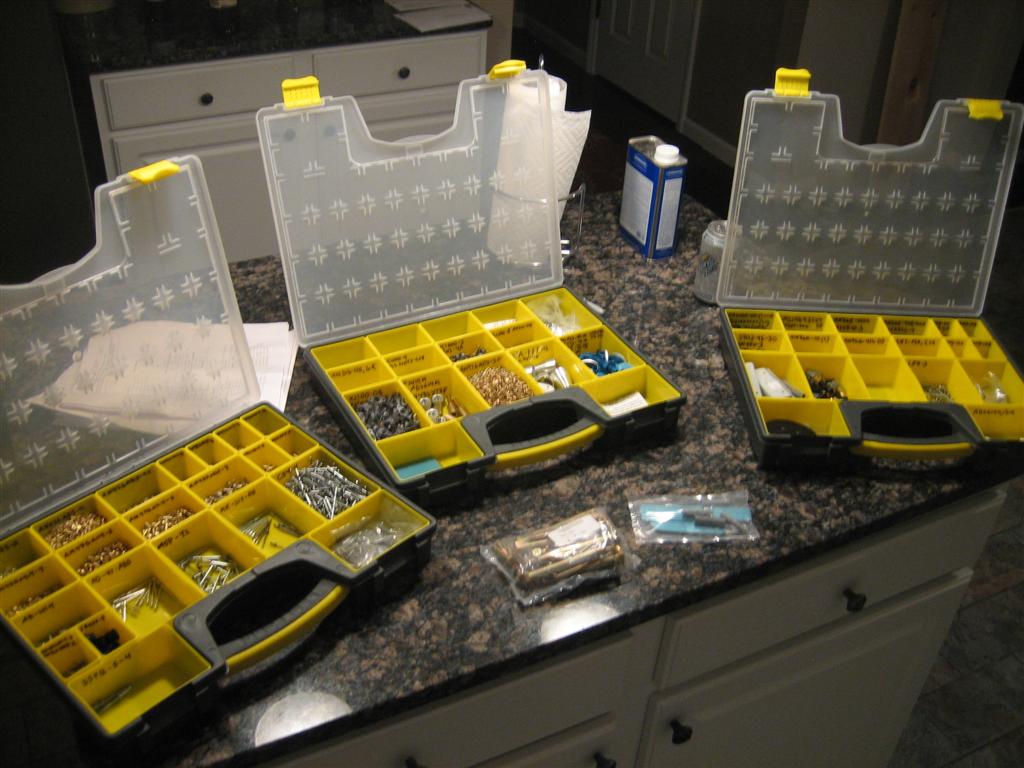
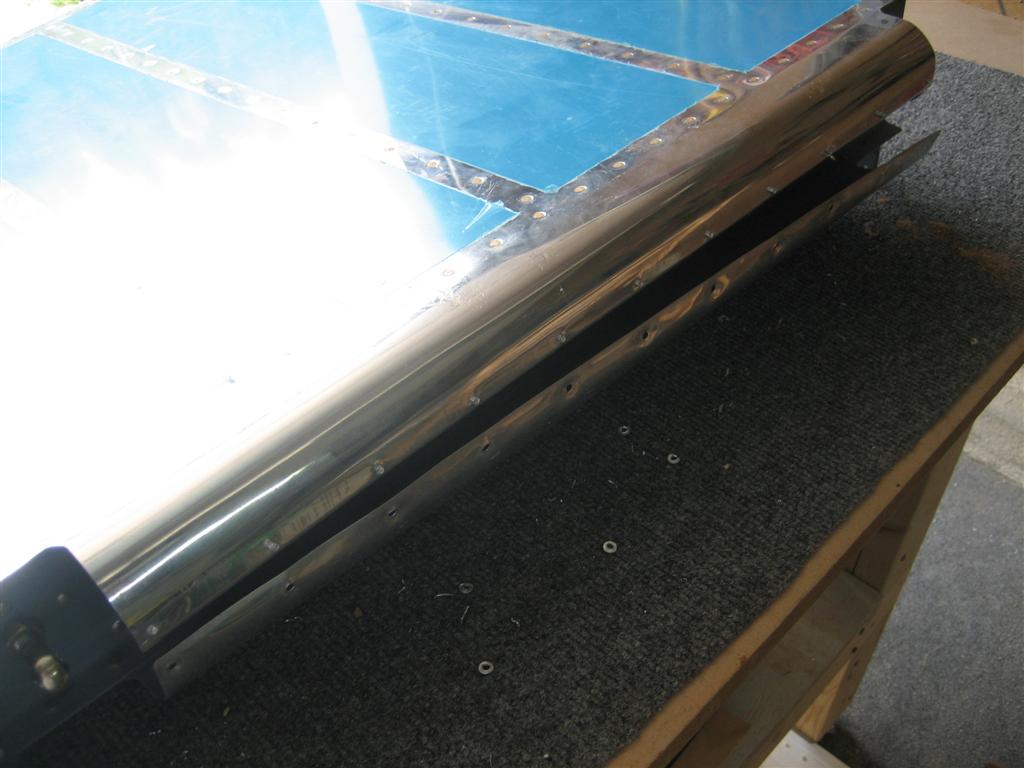
More Right Tiedown Work, Started Right Rear Spar

September 5, 2010

Prev | Next

Whoa, it’s been awhile since I actually got any work done on the airplane. I’m going to blame my exploding lawnmower (long story), business trips, and the wood floors project.

Anyway, I managed to find a good bi-metal hole saw from the aviation department at Lowe’s, so I chucked that thing up in the drill press and started in on the spacer lightening holes.
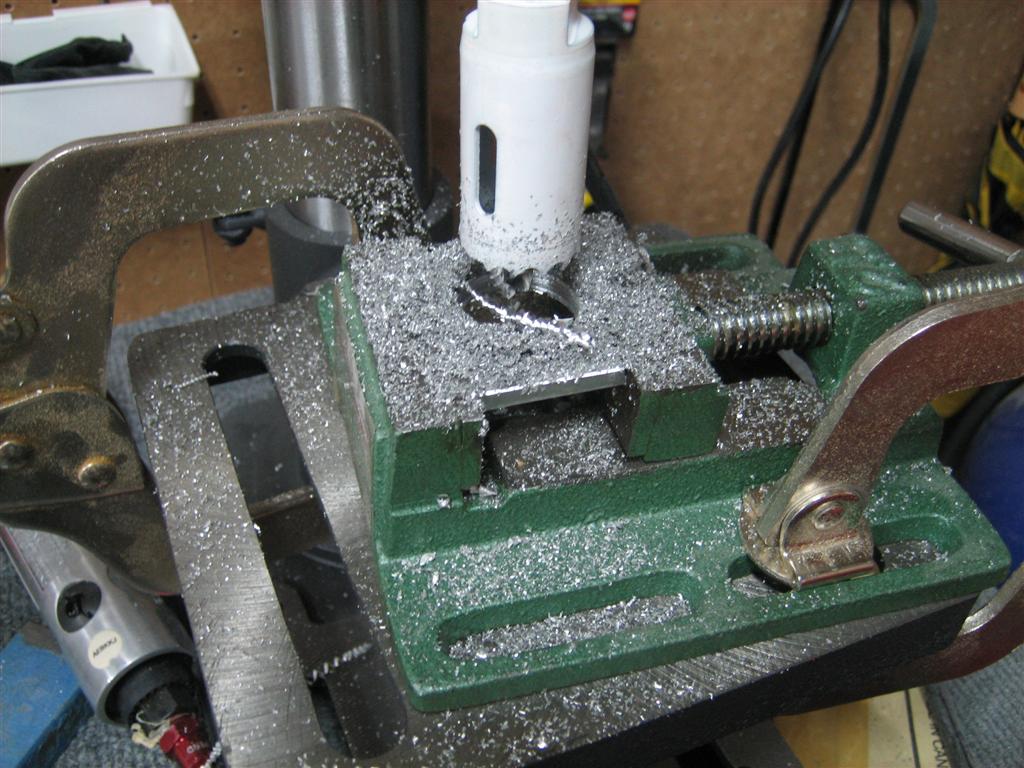
Under all that mess is a spacer with a freshly cut hole in it.

I am not really a fan of cutting those things this way, but I don’t have a fly cutter (apparently the one from Harbor Freight sucks), so this was the best I could do.

They actually turned out really nicely.
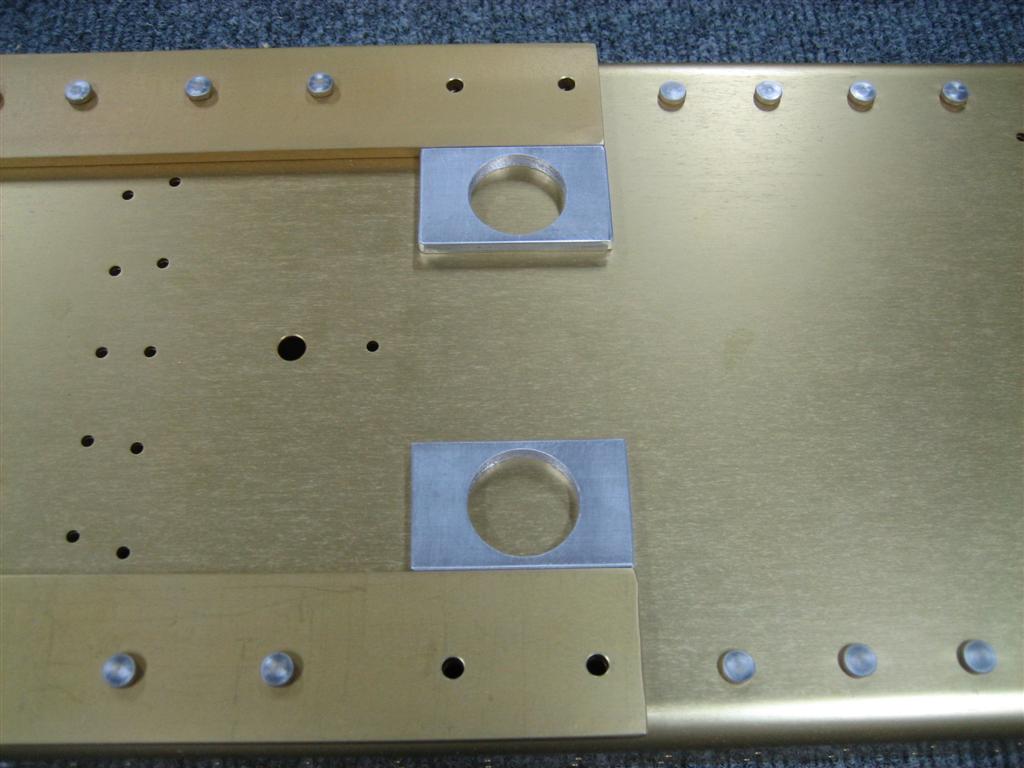
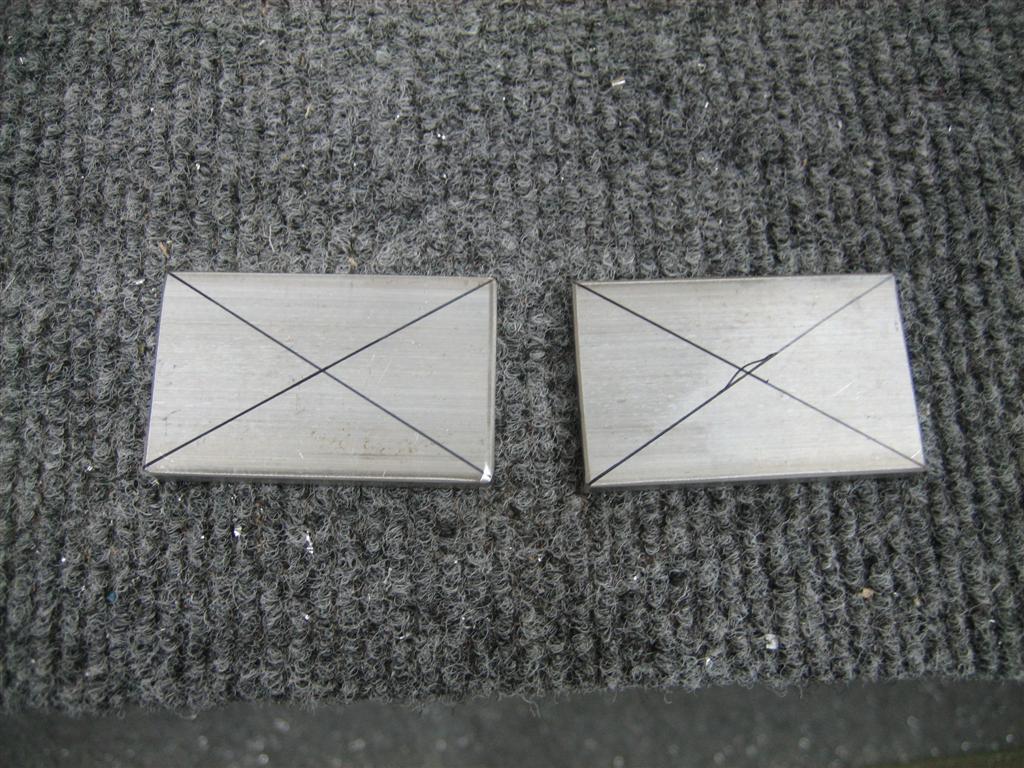
Two spacers, that go against the spar web.
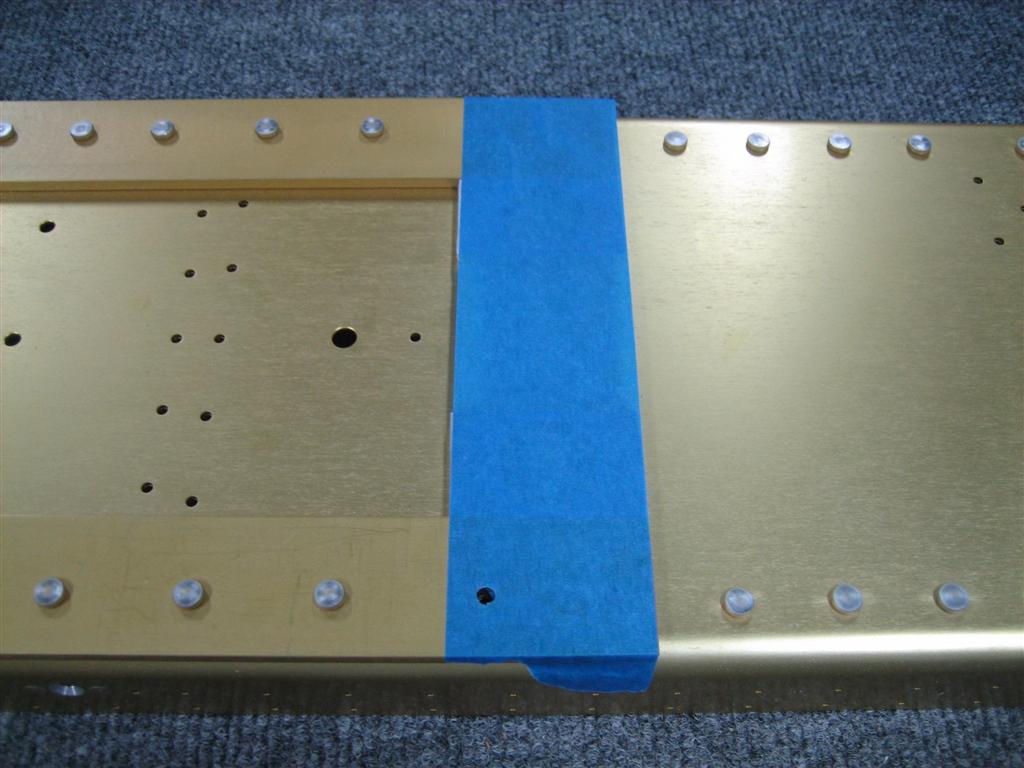
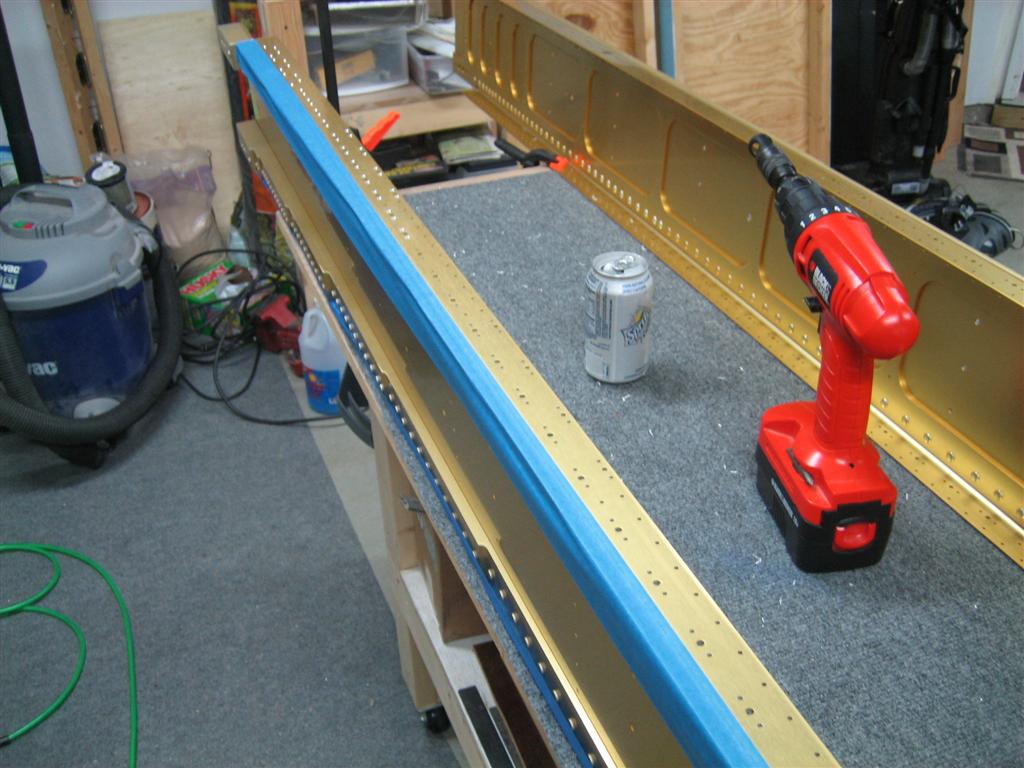
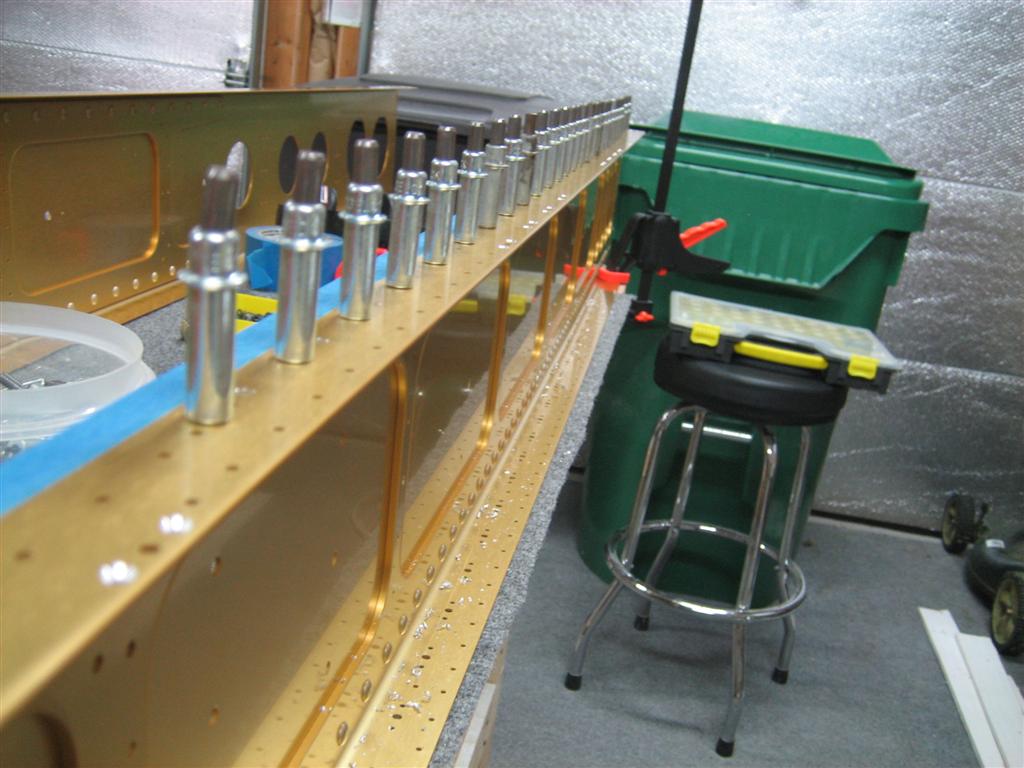
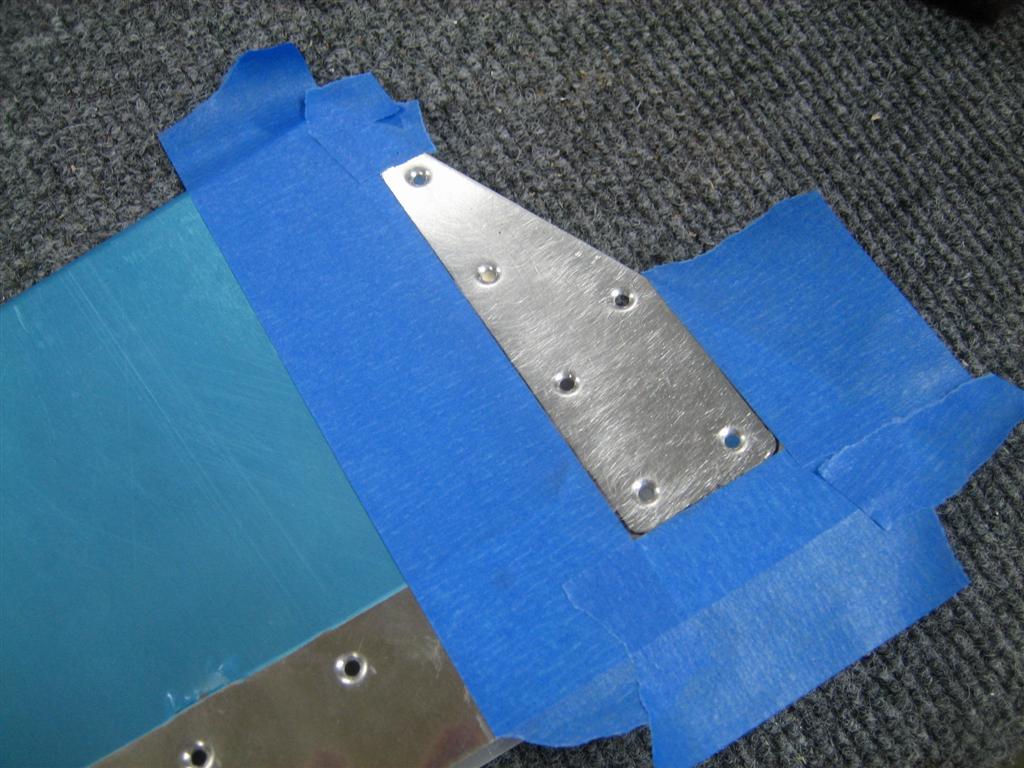
Like many other builders, I taped them down before putting the tiedown bracket in place, flipping the spar over, and matchdrilling the remaining 7 holes.
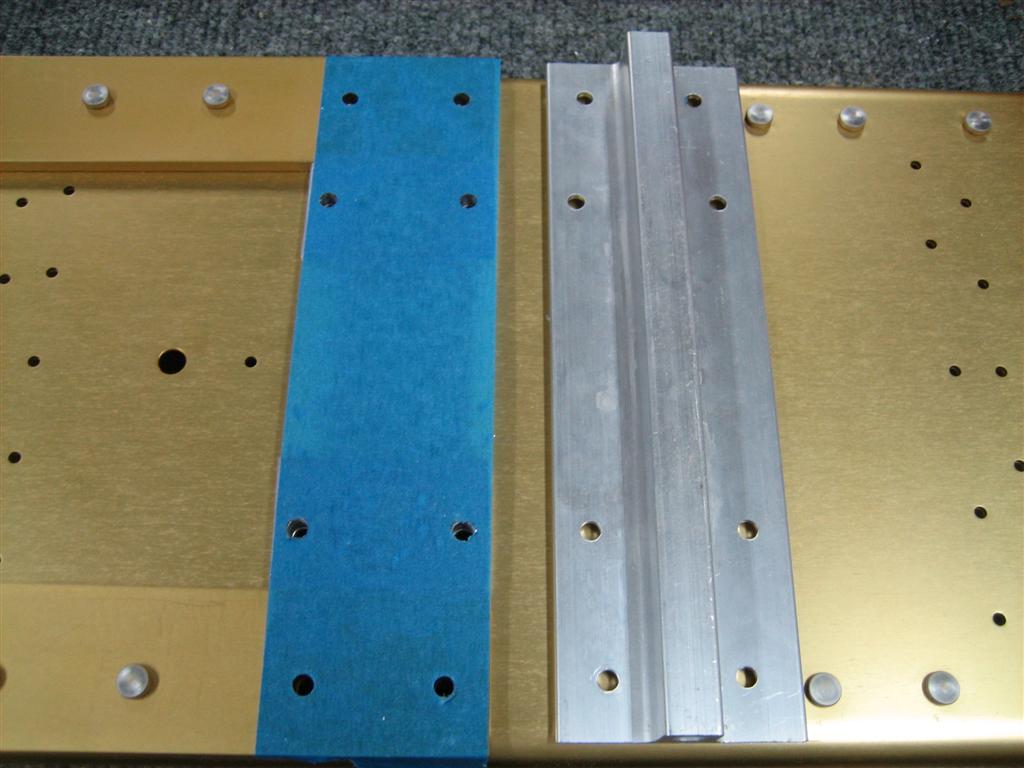
After everything has been matchdrilled, I pulled it apart. Looking good so far.

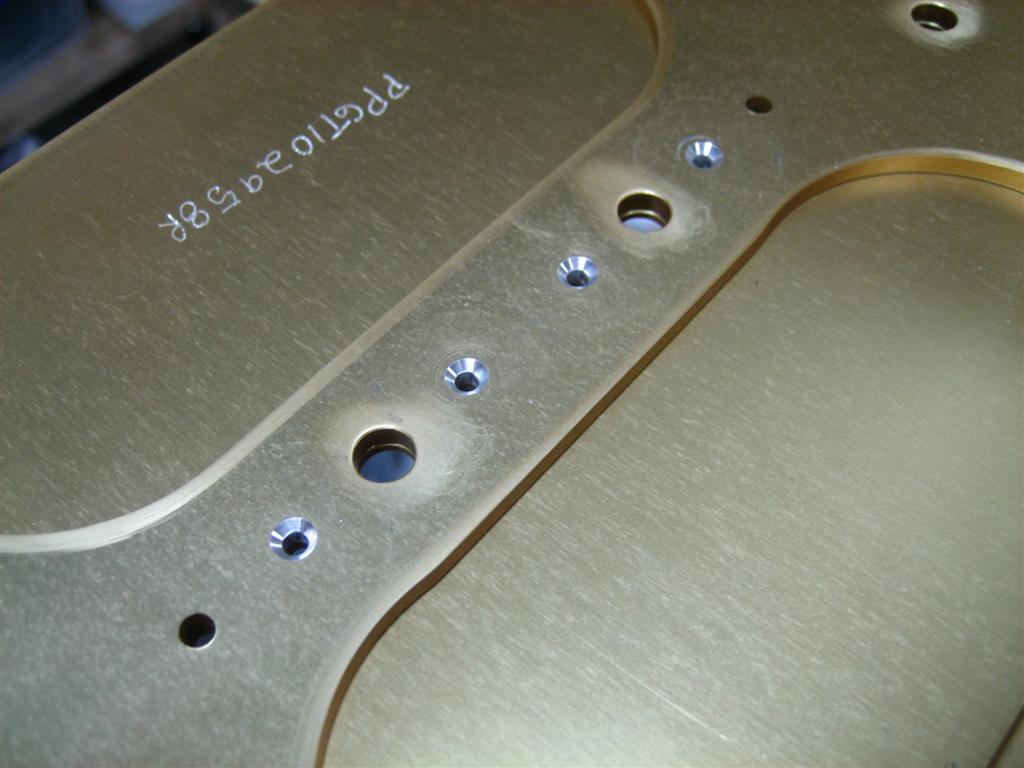
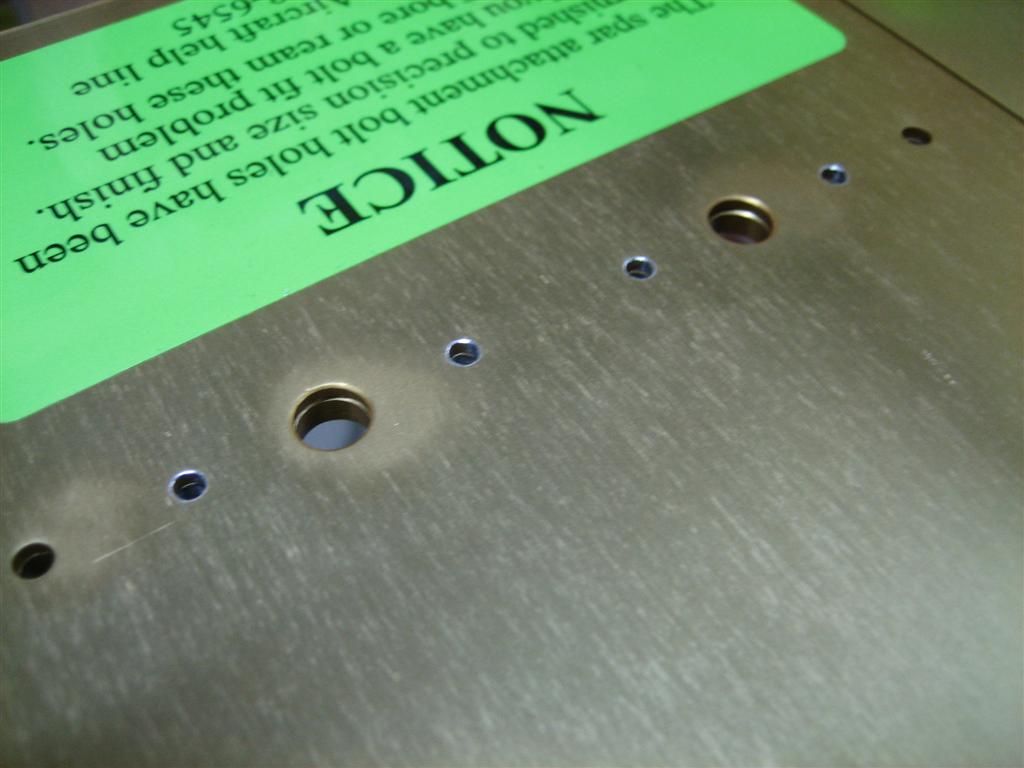
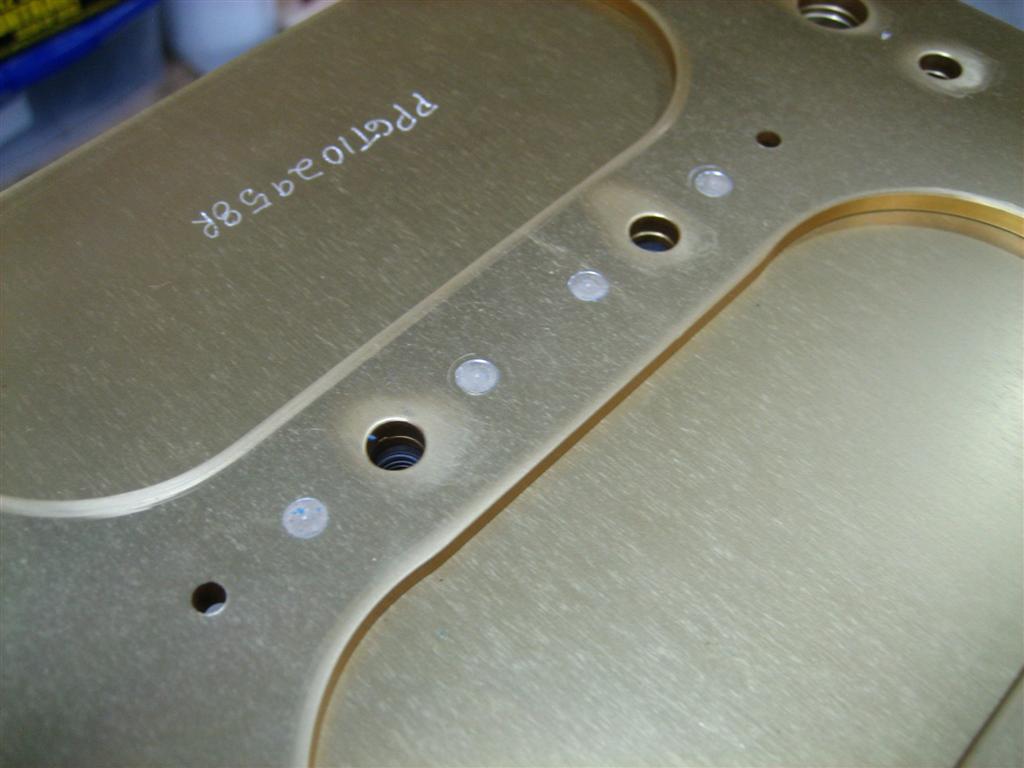
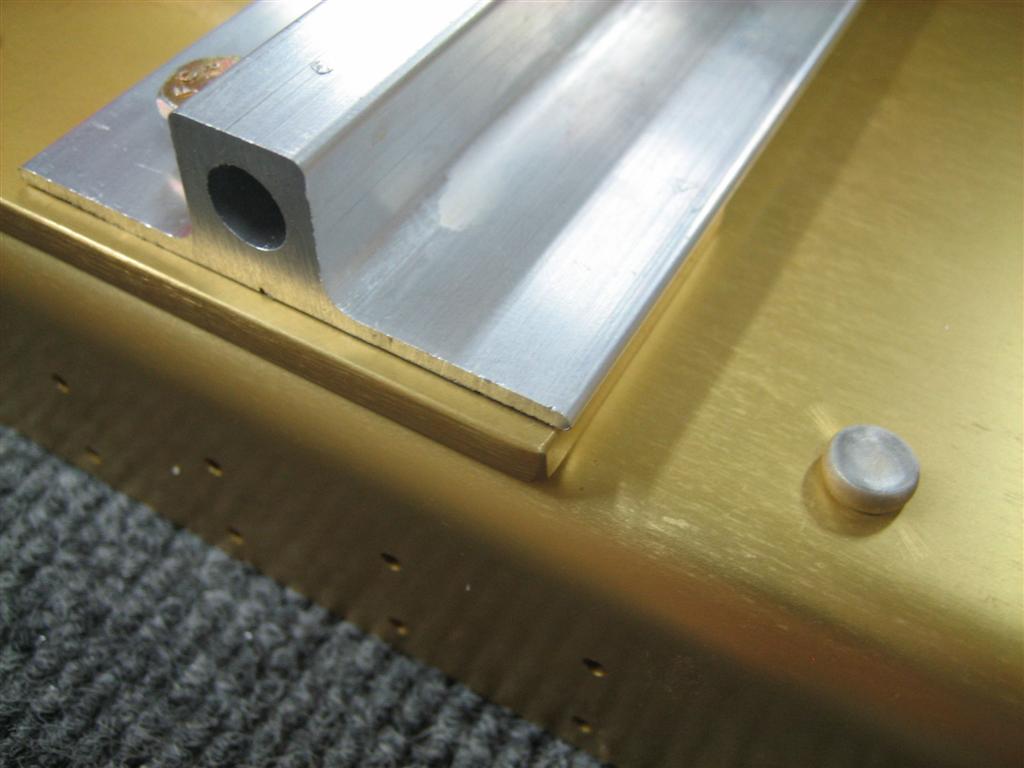
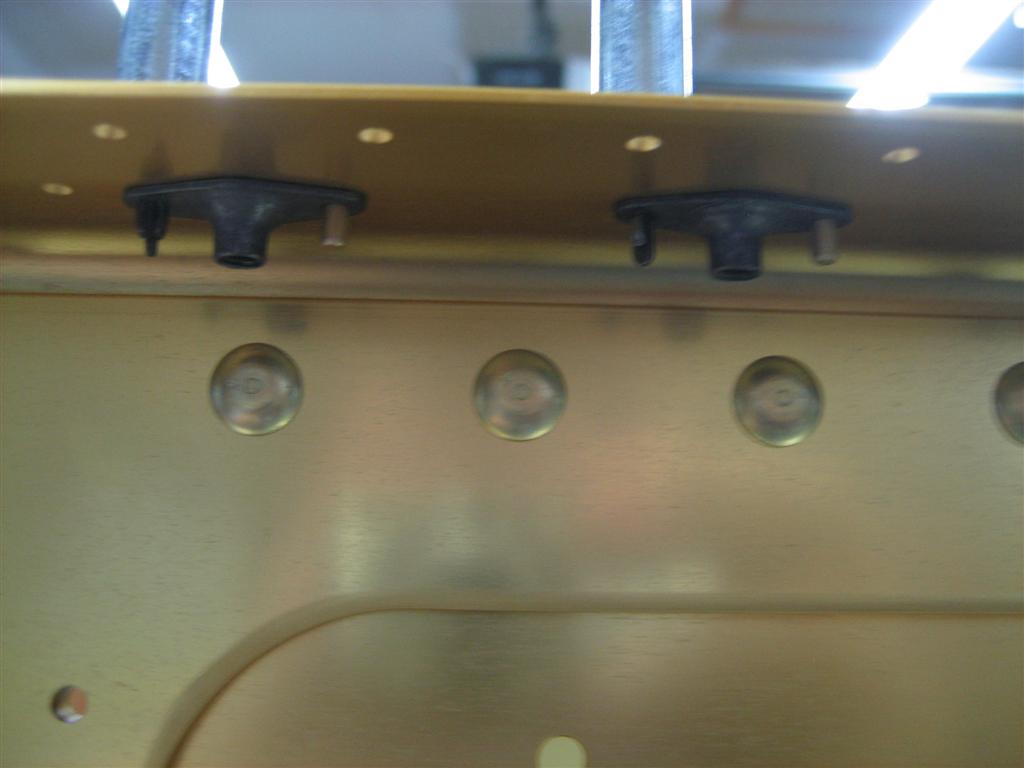
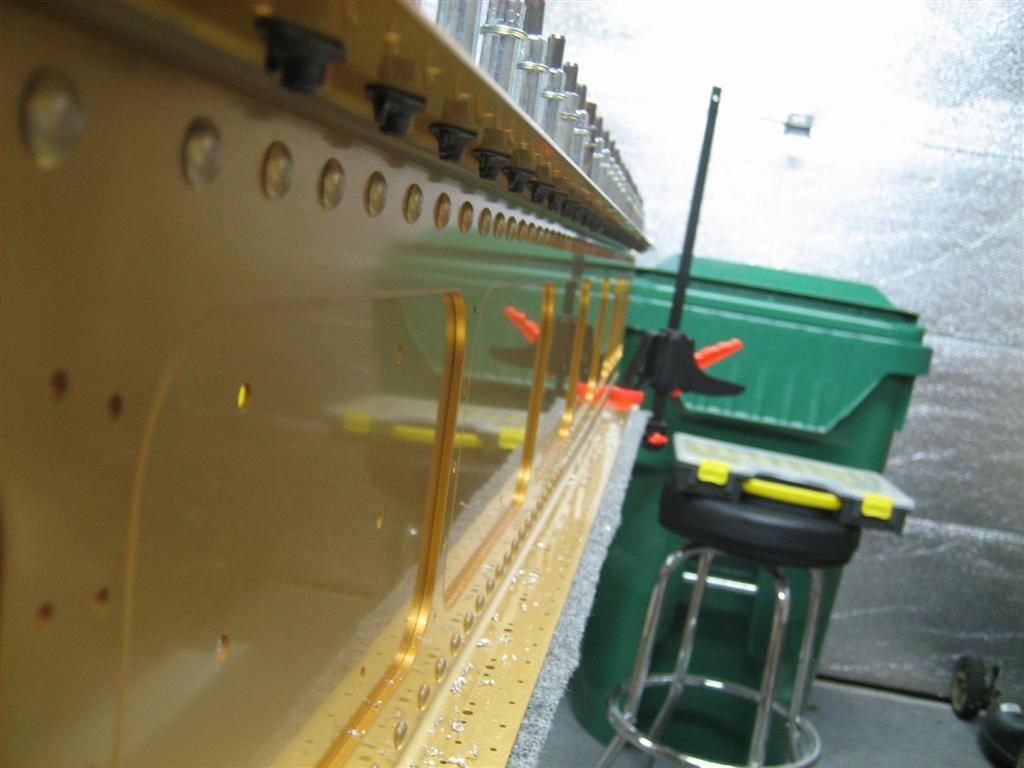
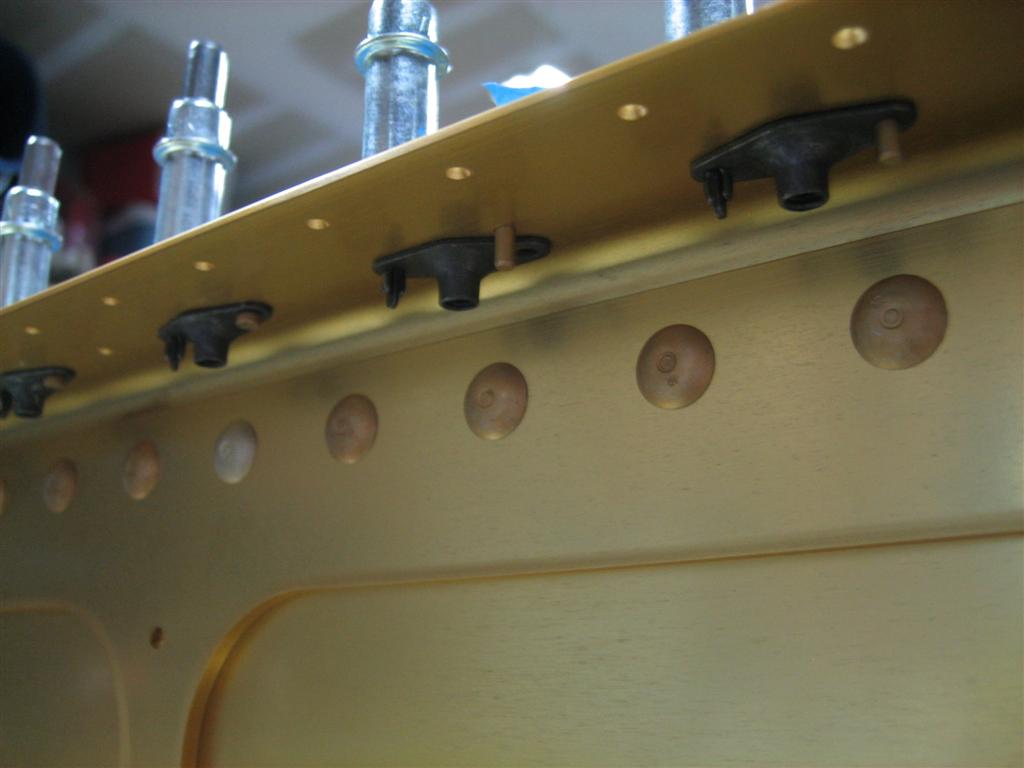
Then, I skipped a couple pictures, but basically You bolt the tiedown bracket, spacers, and nutplates in place and use the nutplates to backdrill the attach holes (small ones on either side of the bigger holes). They all turned out great, except for the upper left set, which for some reason are a little crooked. It doesn’t matter what the nutplate ear orientation is, I was just annoyed they didn’t turn out perfectly aligned.
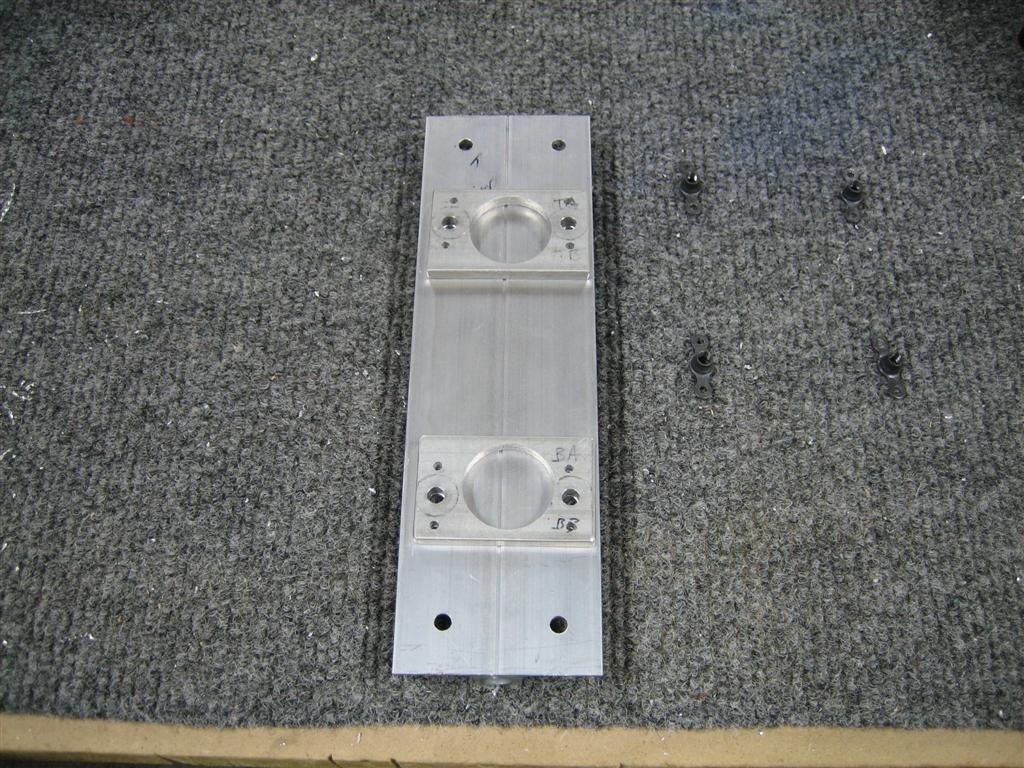
Somehow that upper left one's alignment got away from me.

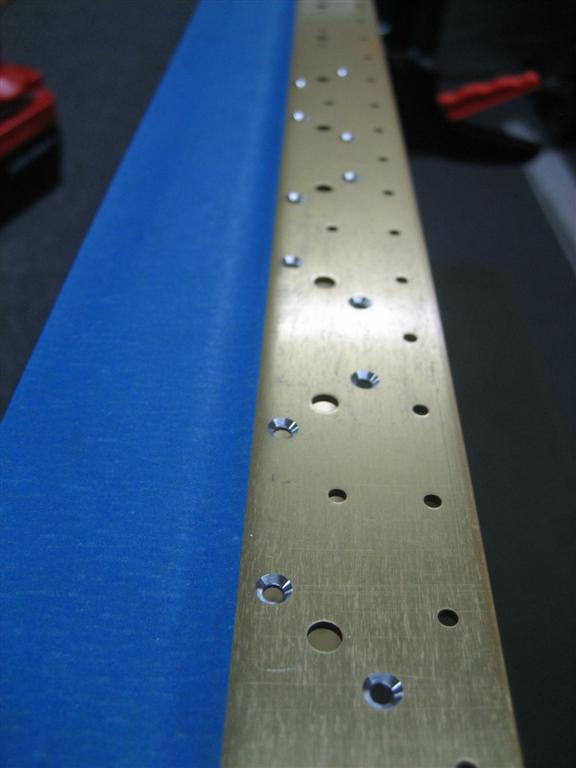
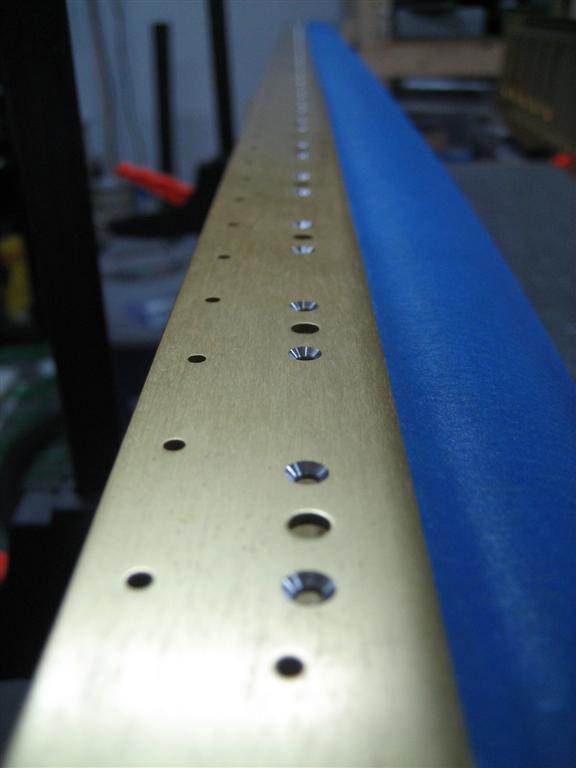
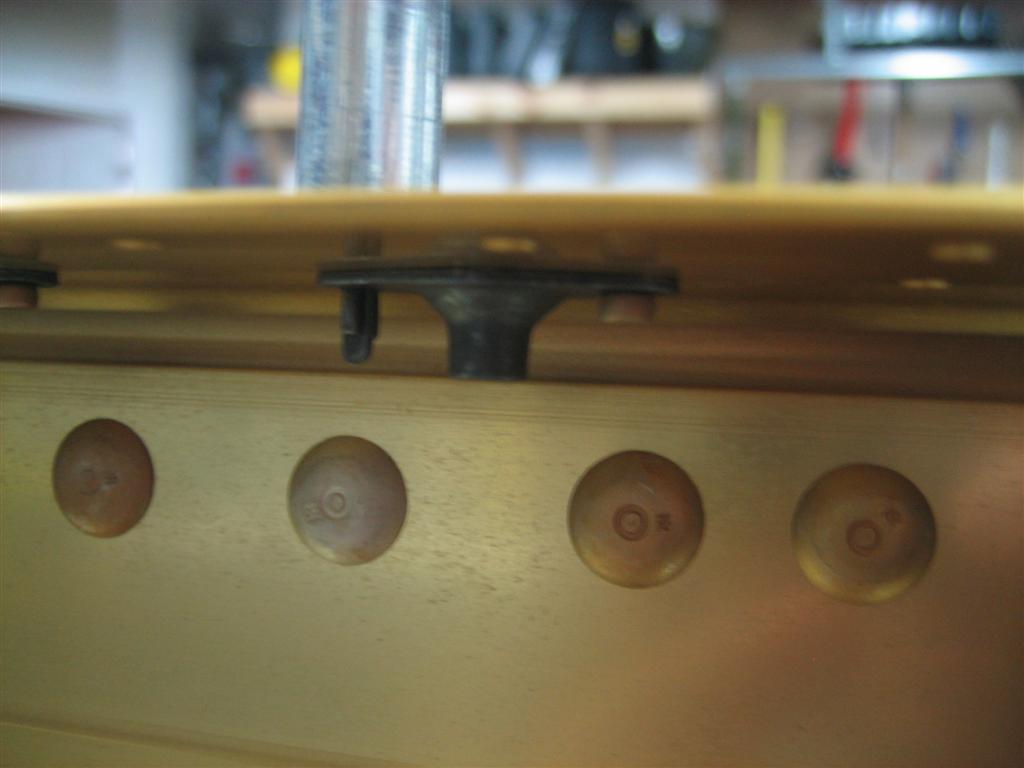
Then, you have to countersink the nutplate attach holes (this side of the spacers must sit flush against the spar web).
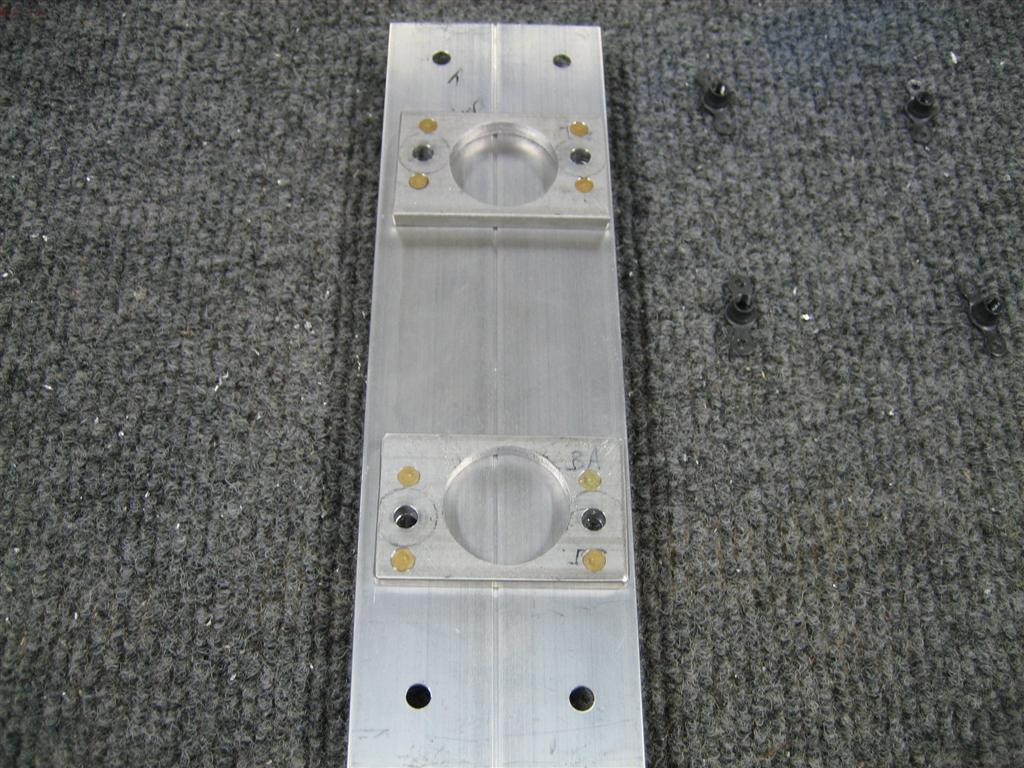
These rivets aren't set (I still have to prime all these pieces), but I just put them in there to see how my countersinks were. (The lower left one is a little deep, but this is thick spacer, so it shouldn't be a big deal.)

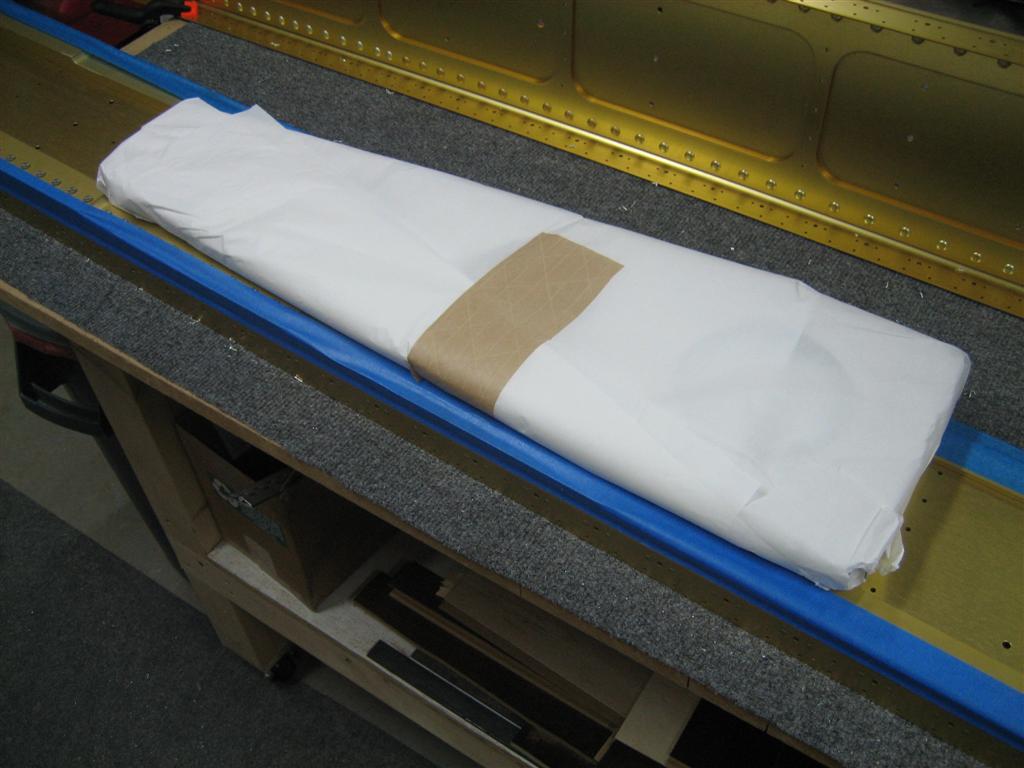
I don’t have any primer, so I decided to move forward (“aft”?…ha…airplane coordinate system joke) to the rear spar. After getting out the W-707A rear spar channel (make sure to grab the correct one, there’s a left and a right) and the W-707E and W-707F doubler plates, I took the blue plastic off of everything and started getting things clamped in place.
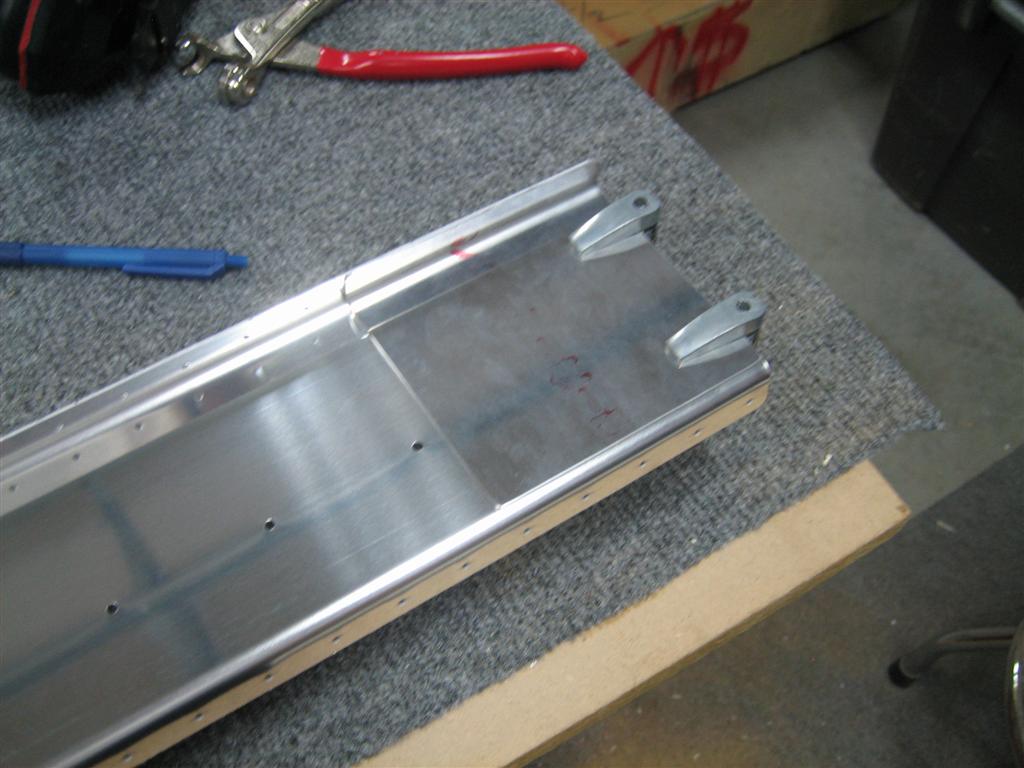
The W-707F is laterally aligned with the outboard edge of the rear spar channel.
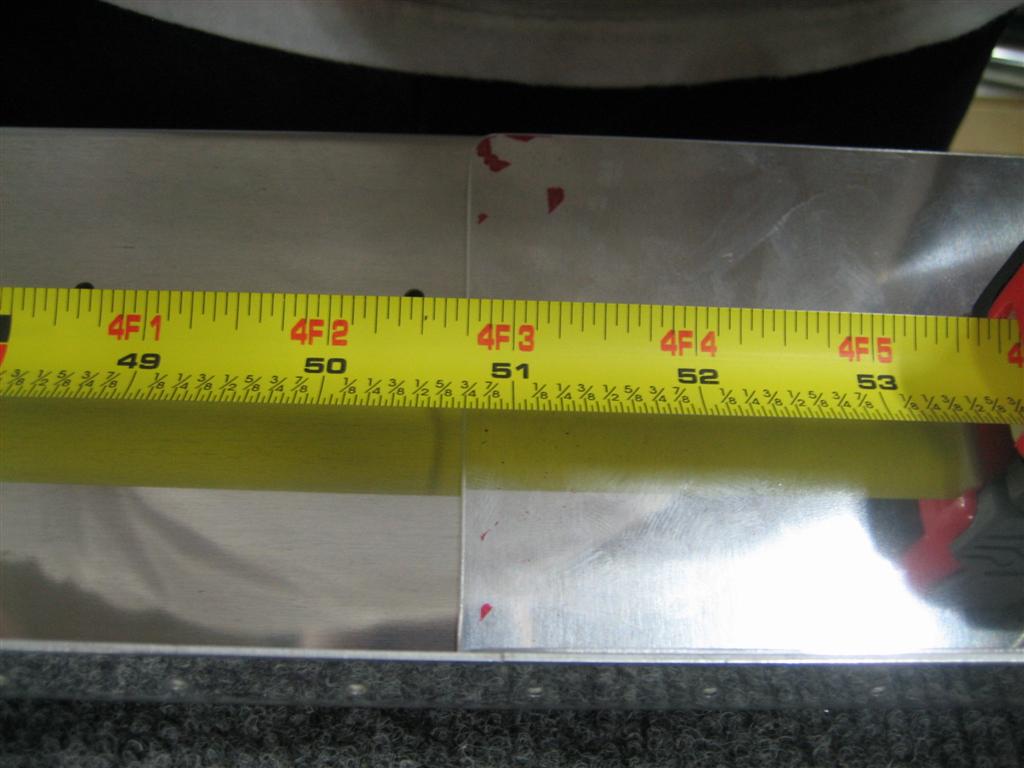
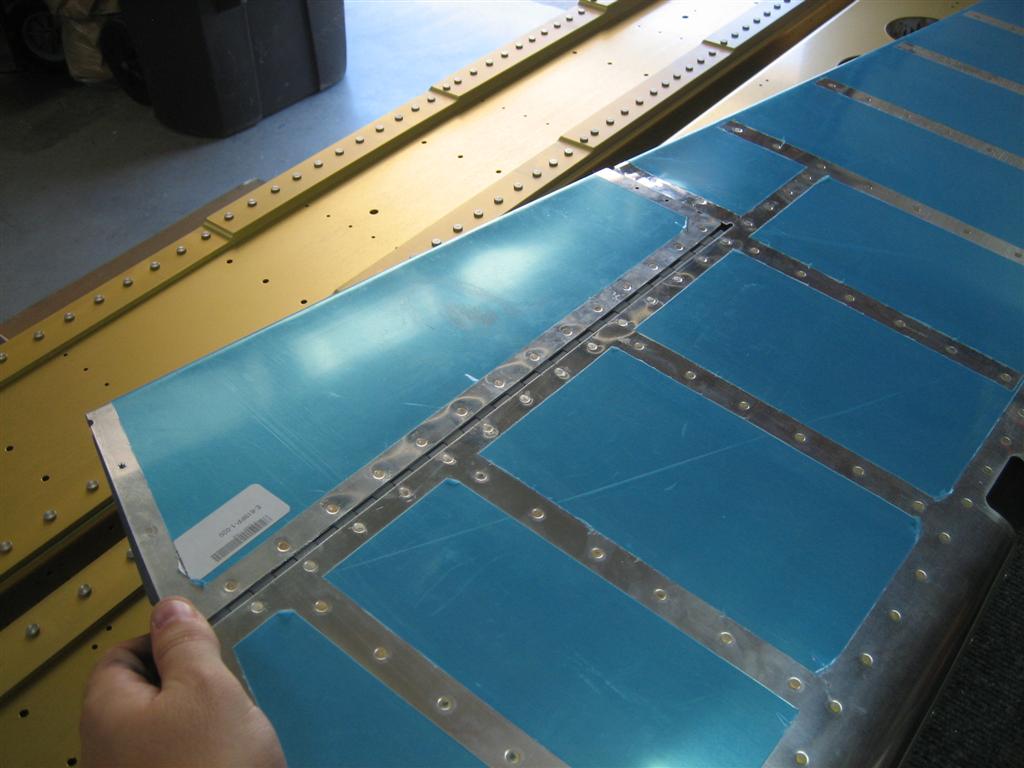
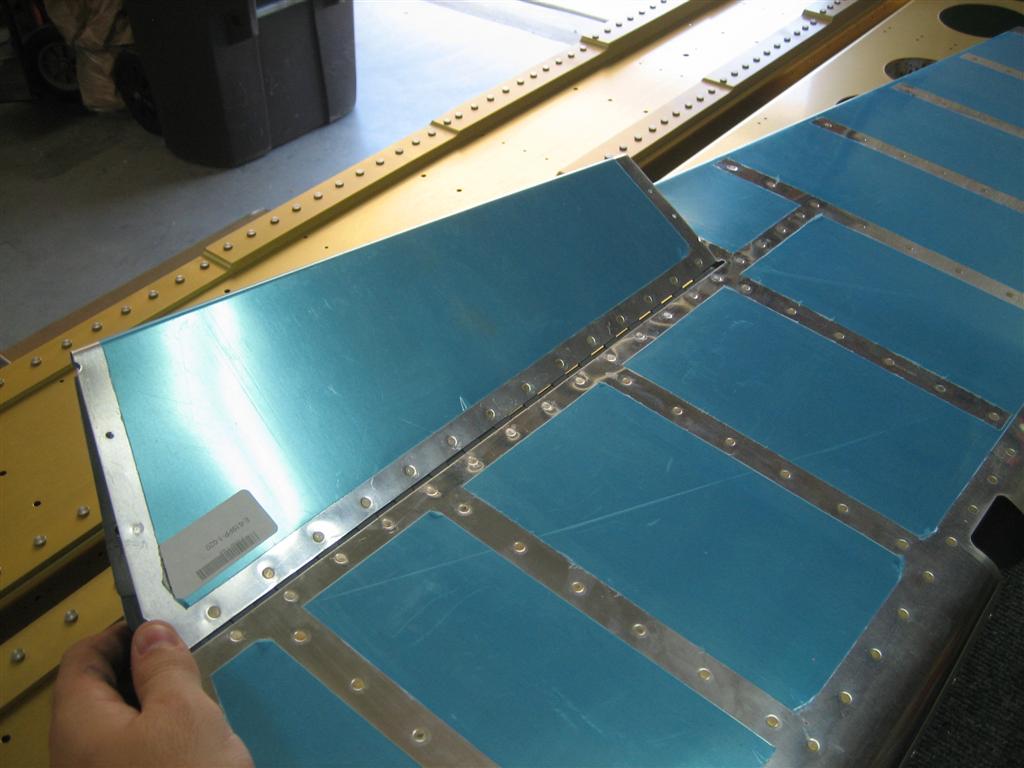
The W-707E gets laterally aligned by measuring; the outboard edge of the doubler plate should be 50 3/4" from the outboard edge of the rear spar channel. Easy enough.

Then, I fired up the air drill for some matchdrilling.
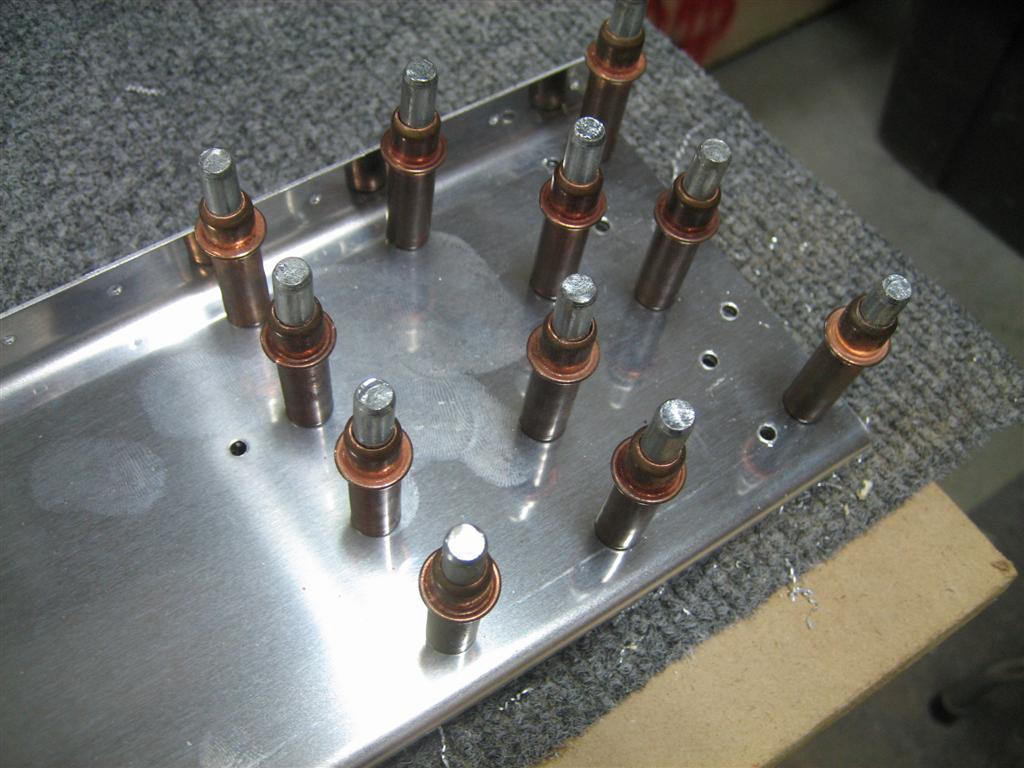
{air drill noises} Whose finger prints are those?
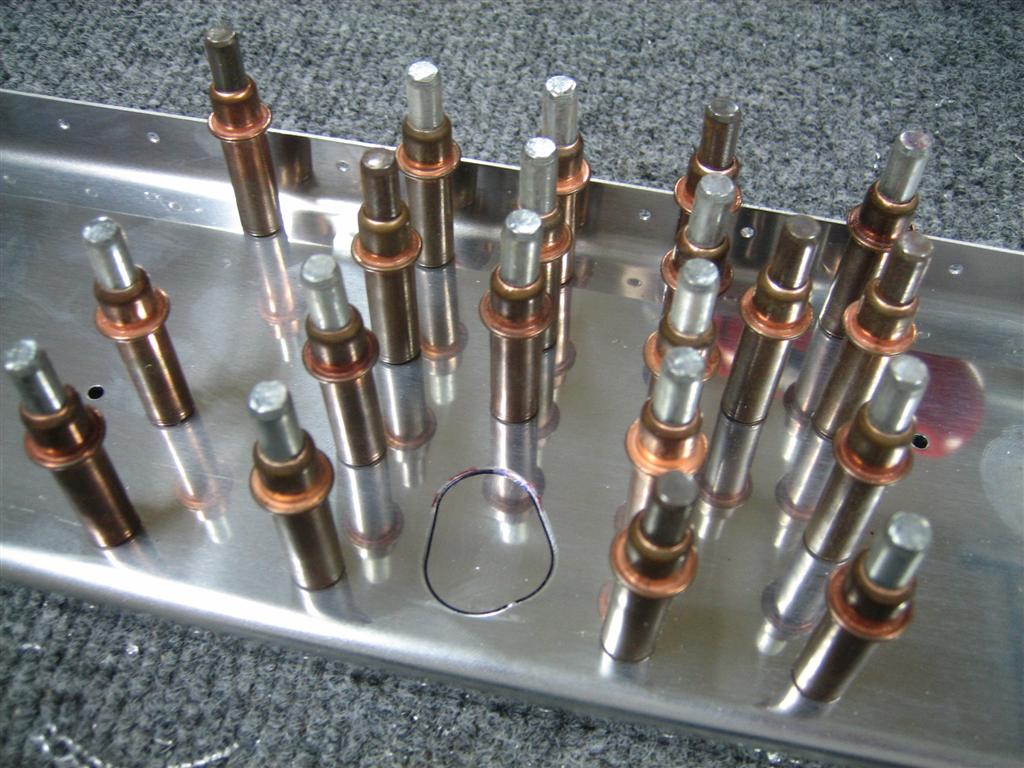
{more air drill noises} Also, I traced out the aileron pushrod hole onto the doubler plate.

After some though about how to do this, I decided to forego the step drill (Unibit) trick (I don’t have a Unibit…how’s that for a trick!) and just drill some holes and then get the dremel out.

It turns out that all the little fancy metal saw and milling tools aren’t really as easy to use as the 1/2″ sanding drum . Save yourself some time and just get the sanding drum out. Very easy to control.
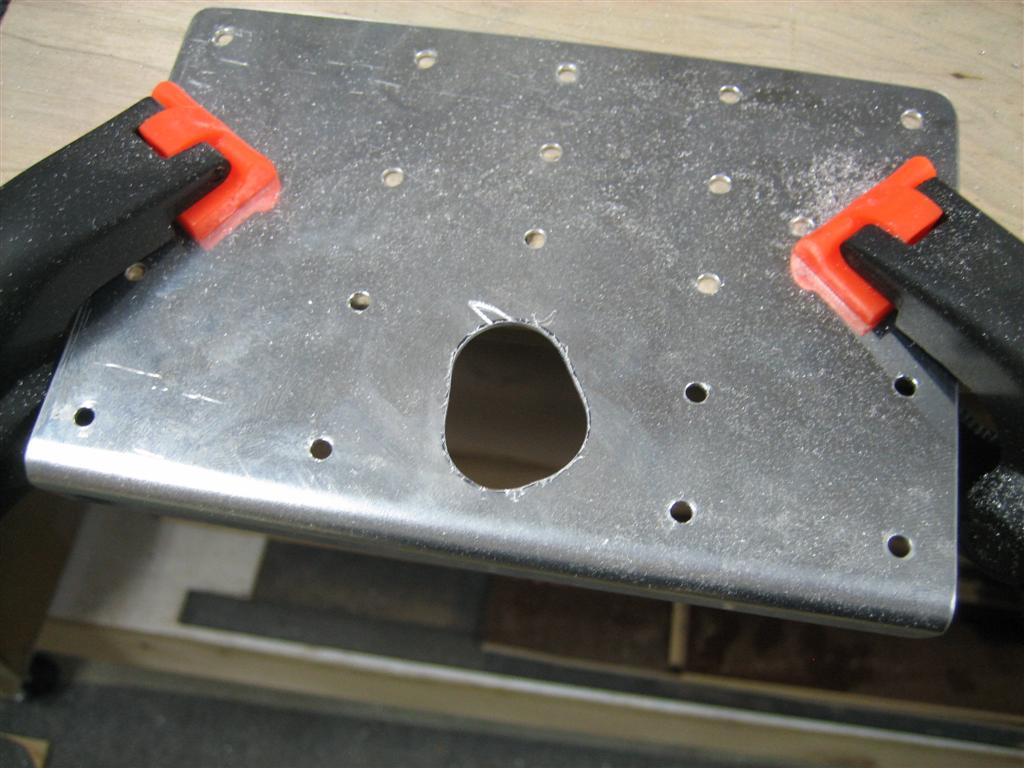
Looks pretty good to me. (This crazy little torture device that looks like a saw got away from me and cause that scratch. I'll have to buff that out.)

After clecoing back to the spar turns out the thickness of my line made my initial pass a little small. (Better small than big.)
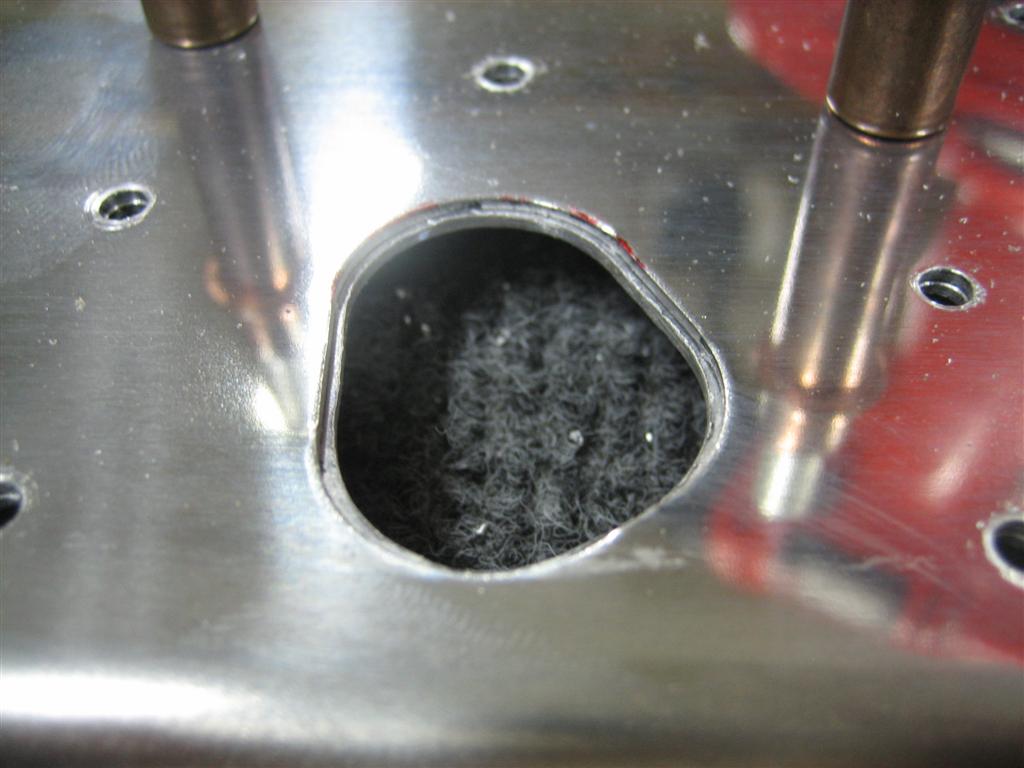
More sanding, anyone?
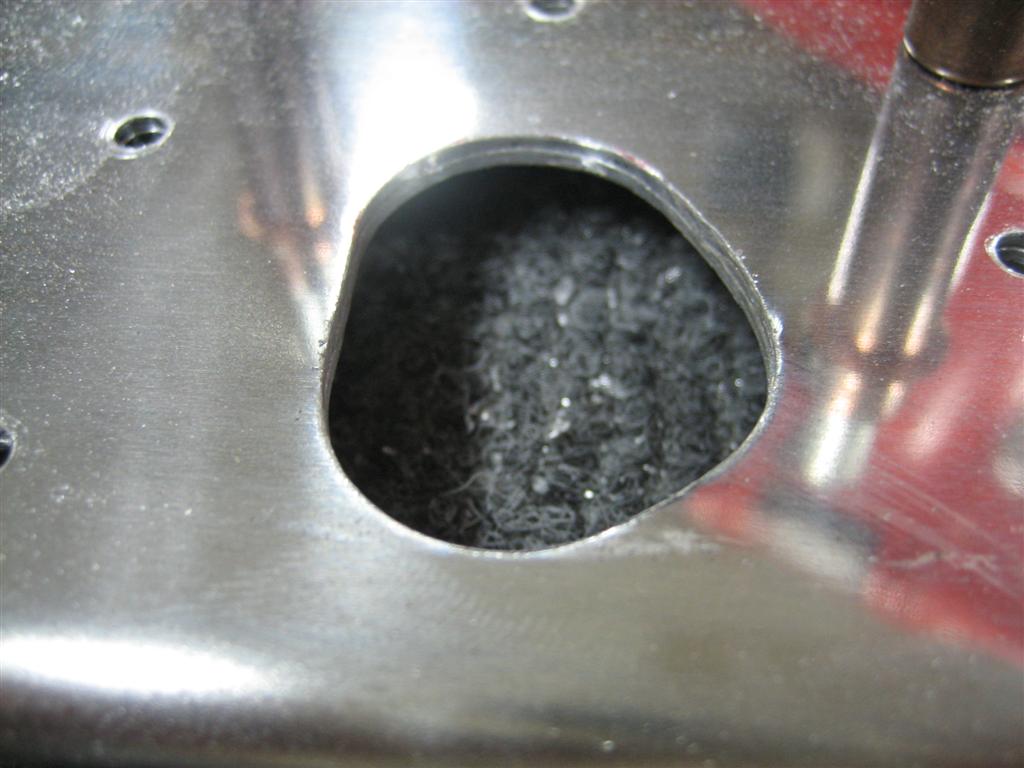
Much better (still needs some edge finishing).

I totally forgot. Even though I don’t have primer to finish up the tiedown bracket, I can still tap the tiedown hole.
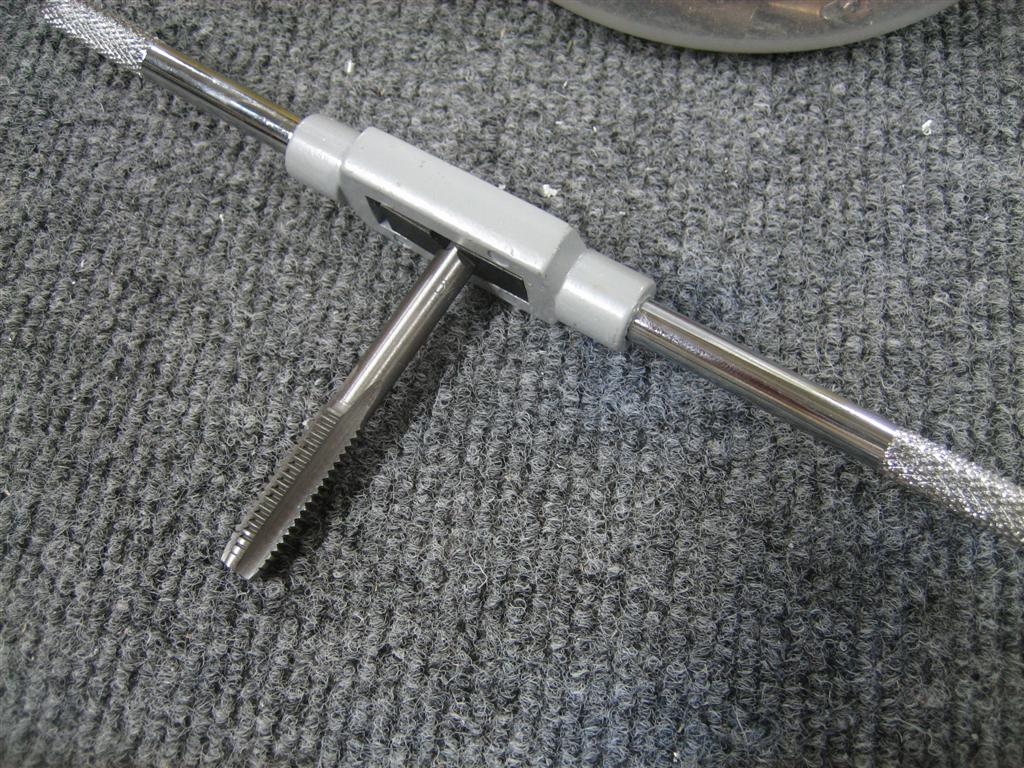
Here's the 3/16" x 16 tap.

After having a hell of a time getting started, they turned out really nicely.
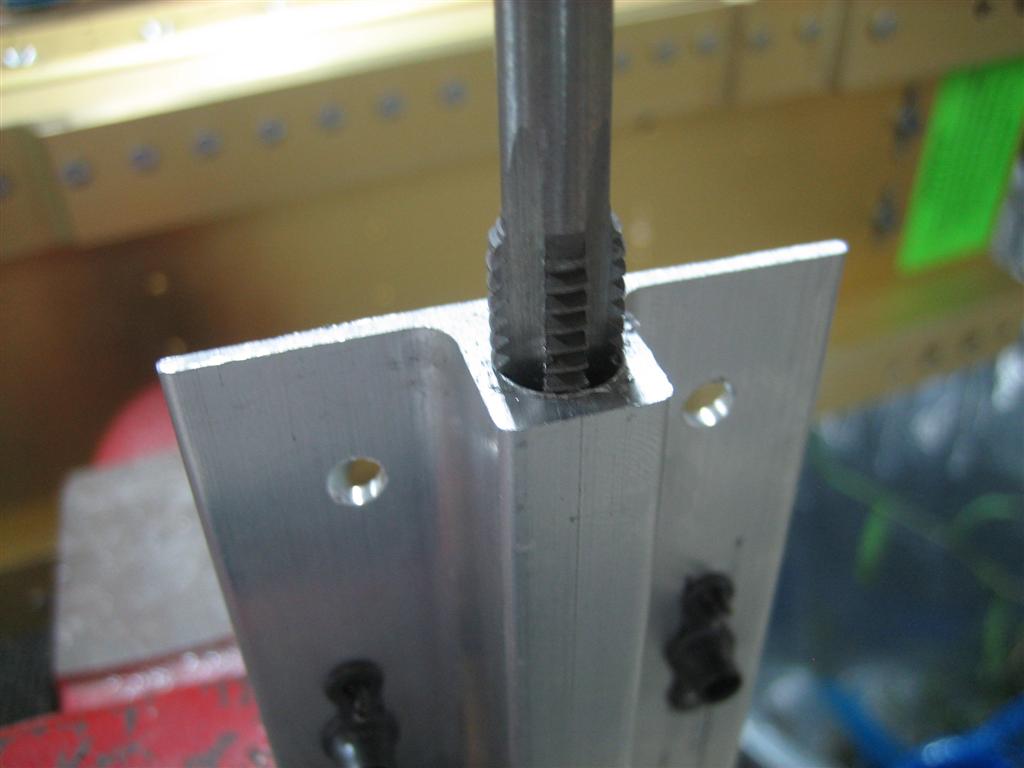
1 full turn in, 1/2 turn out. Wash. Rinse. Repeat.

I managed to get both brackets done, even though I really haven’t started on the left wing yet.
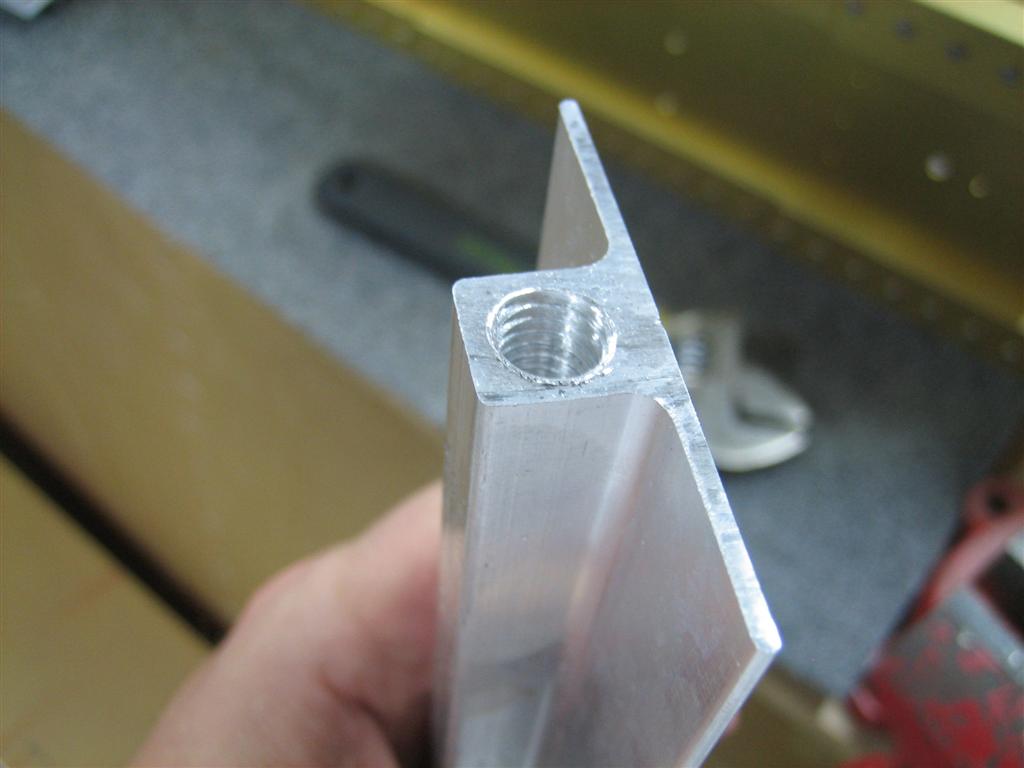
I'll need to deburr the edge, but this should work just fine.

I ended up going to 1 1/4″, even though the directions tell you to only go 1″. Some other builders had to go deeper once they actually got their eye bolts, I figured it would be easier to do now than to wait until the brackets are in the wings.

2 productive hours today.

Prev | Next


Started on Right Wing Tie-down Bracket

August 26, 2010

Prev | Next

Wuhoo, the new squeezer showed up!

After a few minutes of messing around with it, I grabbed the two K1000-4 nutplates and studied the plans carefully on which side of the spar they go. A quick hint (other than just reading the plans) is that the nutplates go on the side that couldn’t possibly need to be flush (in between the spar cap bars).

Anyway, here, I’ve countersunk for AN426AD3-6 rivets.

The two larger holes are examples of where Van's (or Phlogiston) buffed out some spar scratches with some scotchbrite.

Oh yeah, I also flipped the spar over and deburred (you can hardly see the deburring) the backside of the holes I drilled to #40.

The little silver rings are where I deburred. Because these will be totally covered by the nutplate and the shop head, I'm going to refrain from spot priming them.

I used the new squeezer to set my only 4 rivets today.

Don't these look pretty? (There are small rings around the rivet heads. That is from the cleco I used to hold the nutplate on while riveting the other side.) It seems weird the cleco made that little mark.

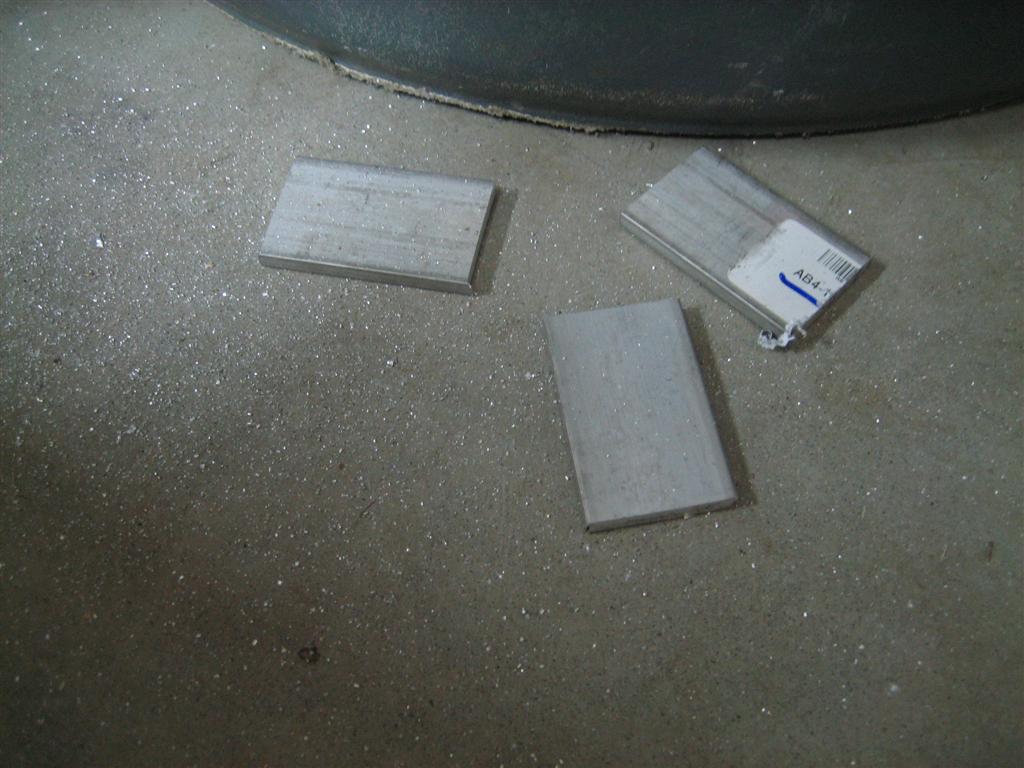
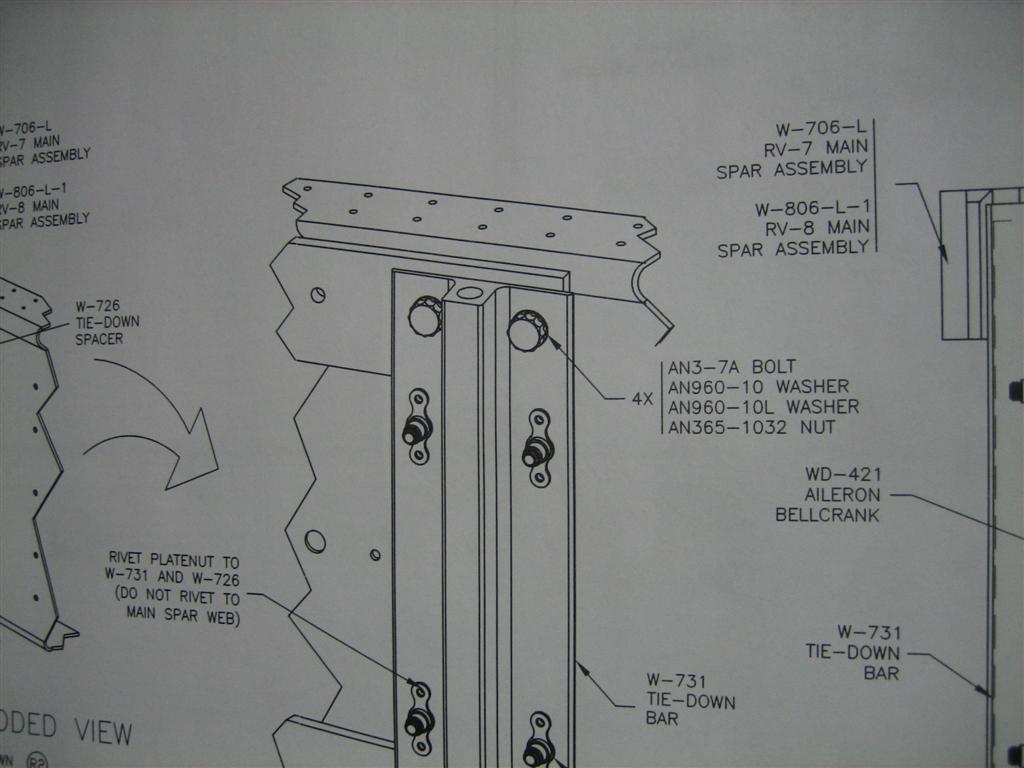
Moving on to the tie-down bracket. First thing, I need to fabricate the W-726 spacers from this 1.25″ wide angle stock. I’m supposed to cut 4 of them, 2 for each wing/tie-down).

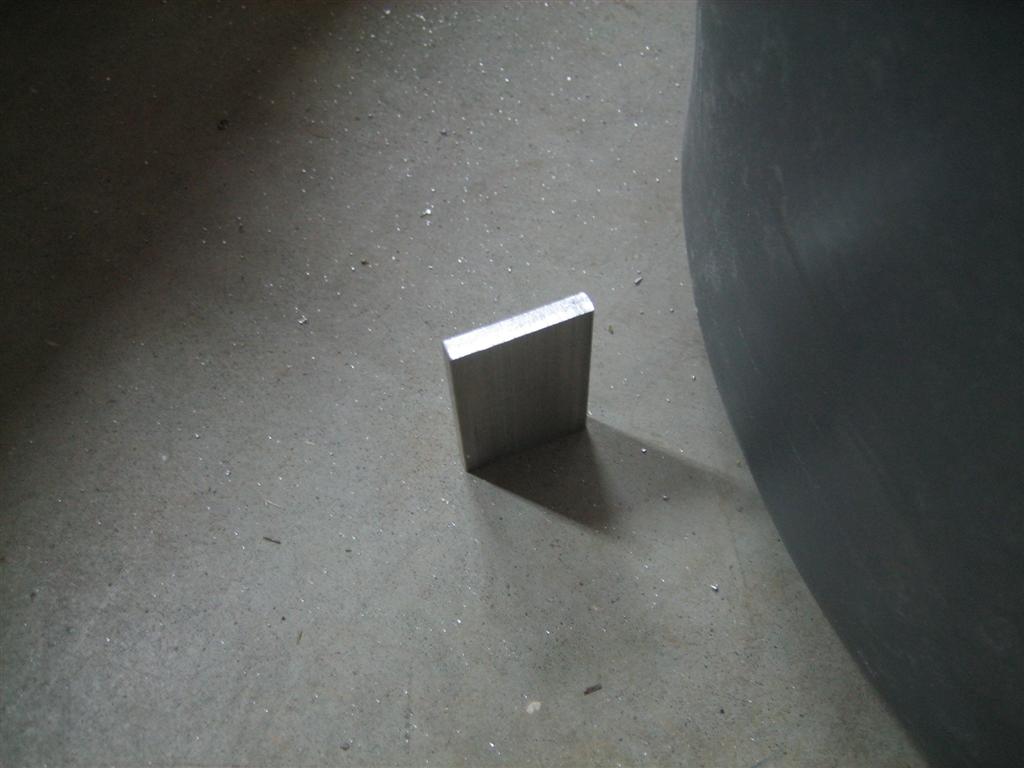
Why is this one on the ground? Is it because the light is good for the camera? NO. It's because it is @&*!@ hot after cutting. Ask me how I know.

Here are the other three.

Each of these spacers should have a 1″ hole cut in the center for lightening (not lightning). Since all of my hole saws are in sizes other than 1″, I decided to grab the W-731 tie-down bracket and get to work on that.

Okay, the manual says to cut the tie-down bar to length from the AEX stock.

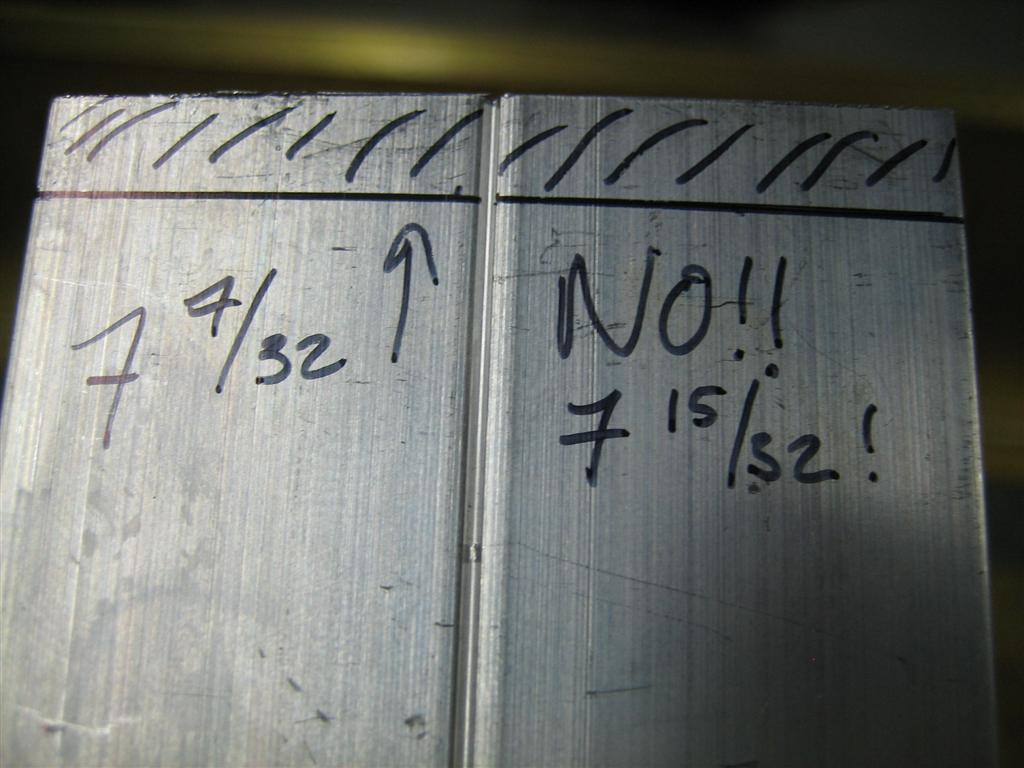
Okay (…searching plans…), looks like 7  15/32″. Of course, I measured 7  7/32″ marked, and almost cut before my gut told me something was wrong.

The bar is actually 7 16/32" ( or 7.5"), so I'm not going to cut them 1/32" when I'm sure the edge finishing on the scotchbrite wheel will be more than enough. (Also, it doesn't appear the extra 1/32" will interfere with the top or bottom skin at all.

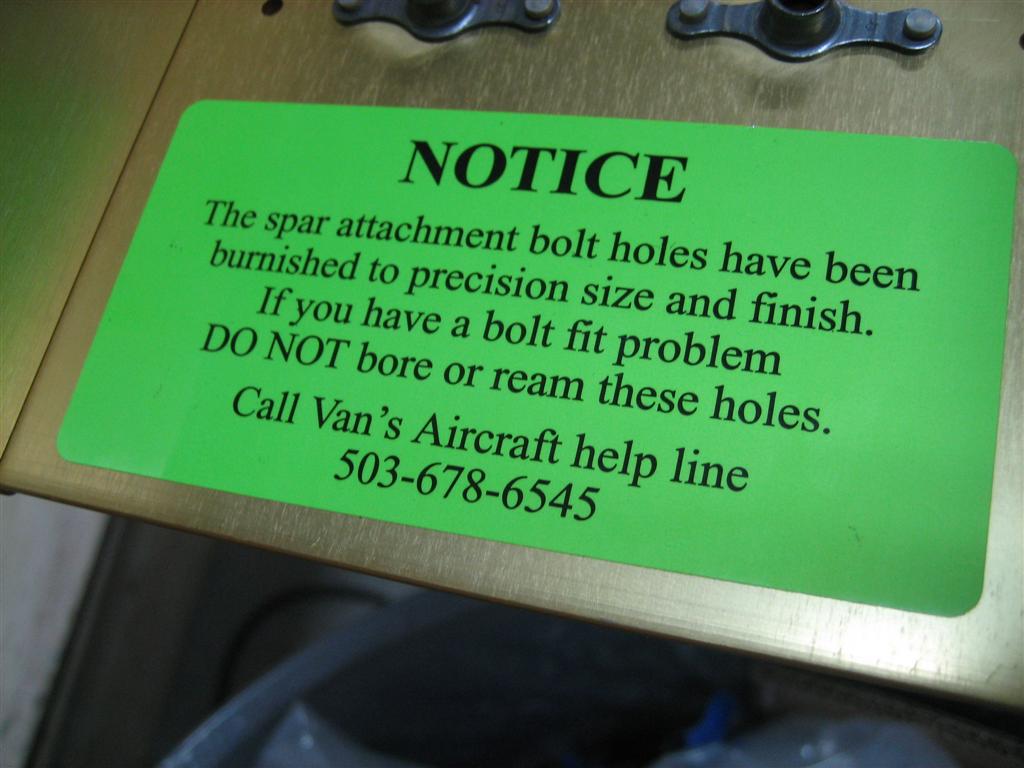
I keep walking by this sticker and laughing. I thought I would share.

Translation: "If something doesn't fit right, you've royally screwed something up."

Okay, back to the tie-down. After marking and drilling the one (of four) holes for the spar in the bracket to 3/16″, I stuck an AN3-7A bolt in there and just eyeballed the alignment.

(You are supposed to drill just one, then fit the bolt through the whole assembly. Then, you flip the entire assembly over and matchdrill the tie-down bracket from the back.)

I was a little concerned that there was some overhang on the right side of the bracket. (I measured and drilled very, very carefully).

Looks like there is some overhang on the plans, too. Sweet.

Anyway, I stopped there because I can’t really matchdrill everything until I get the spacers placed behind the tie-down bracket, and I can’t really do that until I have the lightening holes drilled (the spacers will be riveted to the tie-down brackets in four places, which in turn hold some nutplates on).

Here are my spacers for the right tie-down bracket.

1 hour, 4 rivets.

Now, I need to find a good hole saw or fly cutter.

Prev | Next


Finished Countersinking Right Spar Flanges

August 24, 2010

Prev | Next

Well, tonight wasn’t a long night in the shop, but it was a good night.

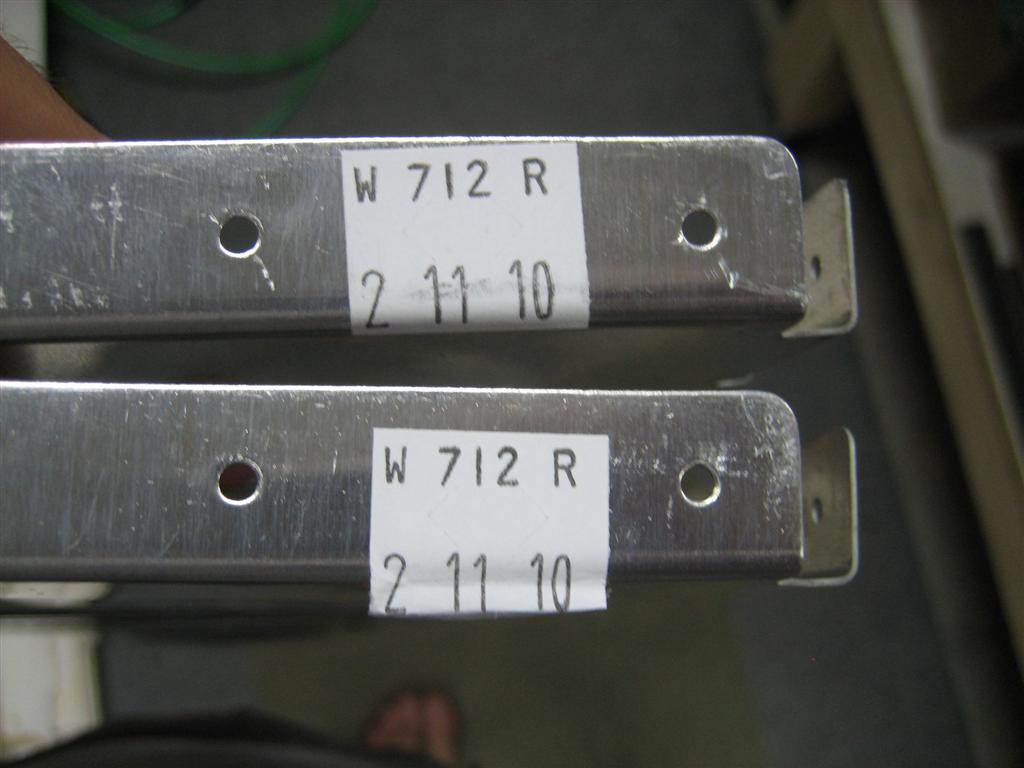
First of all, there was a package sitting on my doorstep when I got home from work. After the excitement for my new Cleveland Main Squeeze died down as I realized the package wasn’t from Cleveland Tools, it quickly came back when I realized it was the missing W-712-R ribs that I had been shorted (what a cruel world!) in my wing kit.

Who knew I could get so excited about wing ribs.

Drumroll please!

{Triumphant music}

Okay, Andrew. Time to settle down.

Let’s finish up this right spar flange countersinking.

From the first issue of the 2005 RVator (thanks to Brad Oliver, for the link) and to A VAF Post (again, thanks Brad), I was able to make this cute little HTML table for you.

From the first 2005 issue of the RVator (page 10):

We countersink until the top of the screw is level with the surface, then go 2 clicks deeper on the microstop. The actual outside diameter of the countersink measures .365″ to .375″.
Countersink Widths for Numbered Screws
Screw Size Width [in]
#6 <0.3125
#8 0.365-0.375

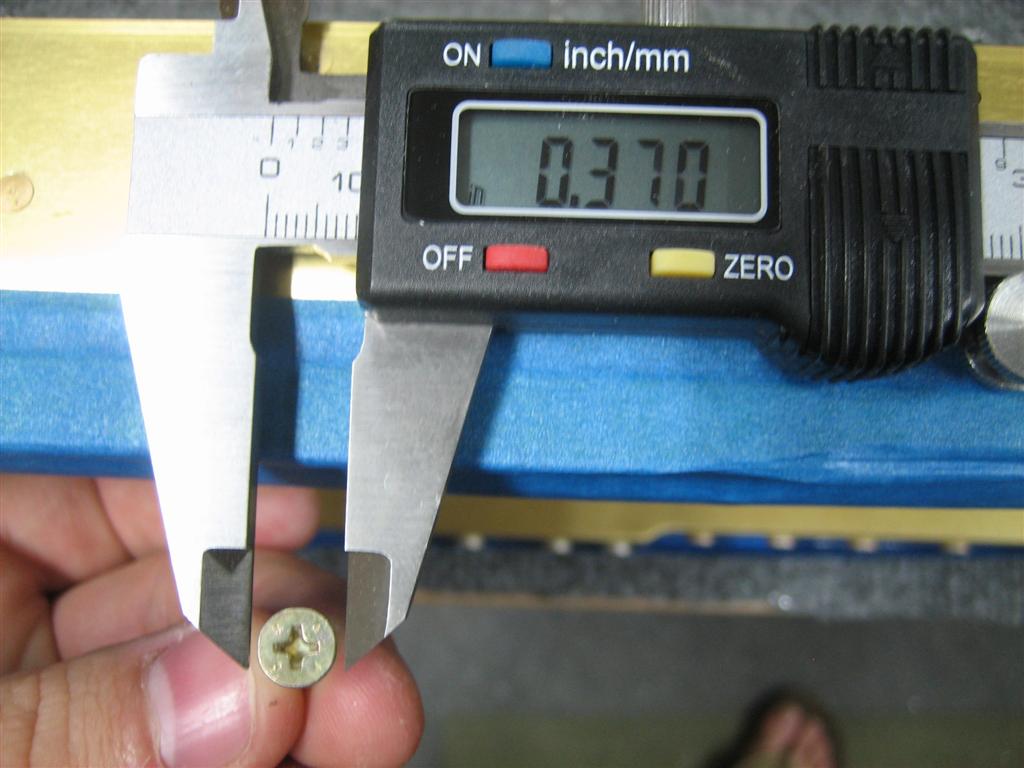
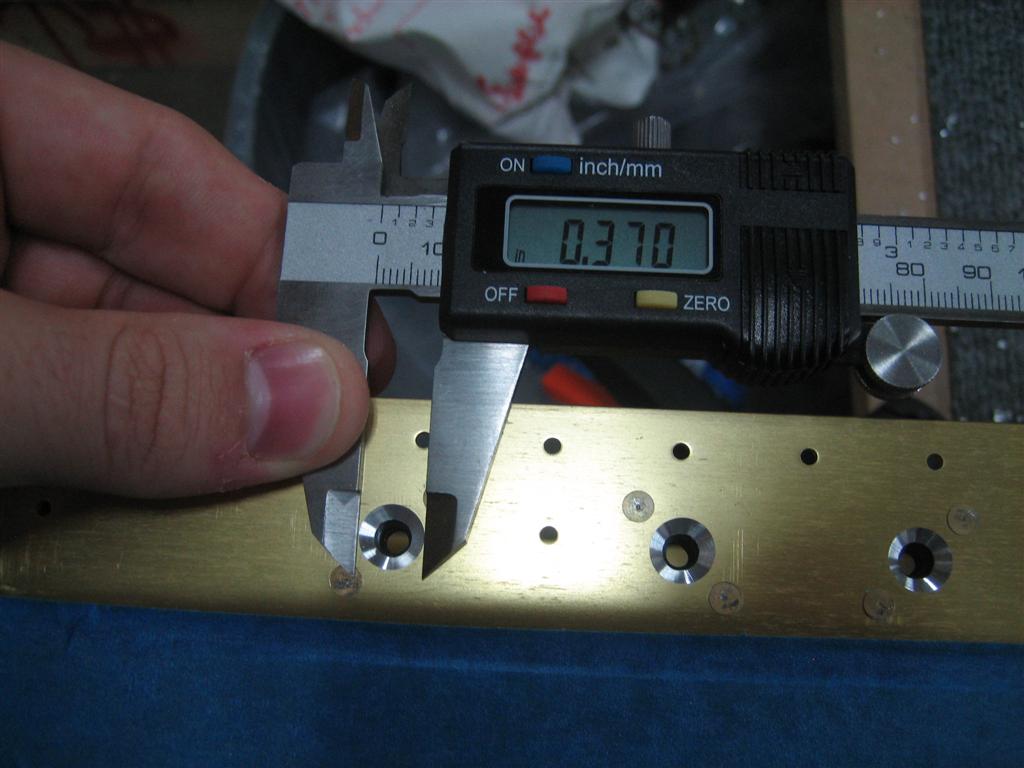
So, I broke out my trusty digital calipers, zeroed them out, and dialed in .370″ (right in the middle of 0.365″ and 0.375″).

Just for kicks, I thought I would show you how much bigger that is than a #8 screw. The larger size allows the dimpled skin to nest nicely in the countersink.
WHOSE TOES ARE THOSE!?

SOMEBODY’S TOES KEEP GETTING IN MY PICTURES!

Anyway, I proceeded with countersinking the tank skin attach holes only (the access plate attach holes are smaller.) I am following the directions here exactly, using a #30 piloted countersink (which nestles nicely in the #8 nutplate) as my guide.

I stopped and verified the countersink depth every few holes. Looking good!

About halfway done with the bottom flange.

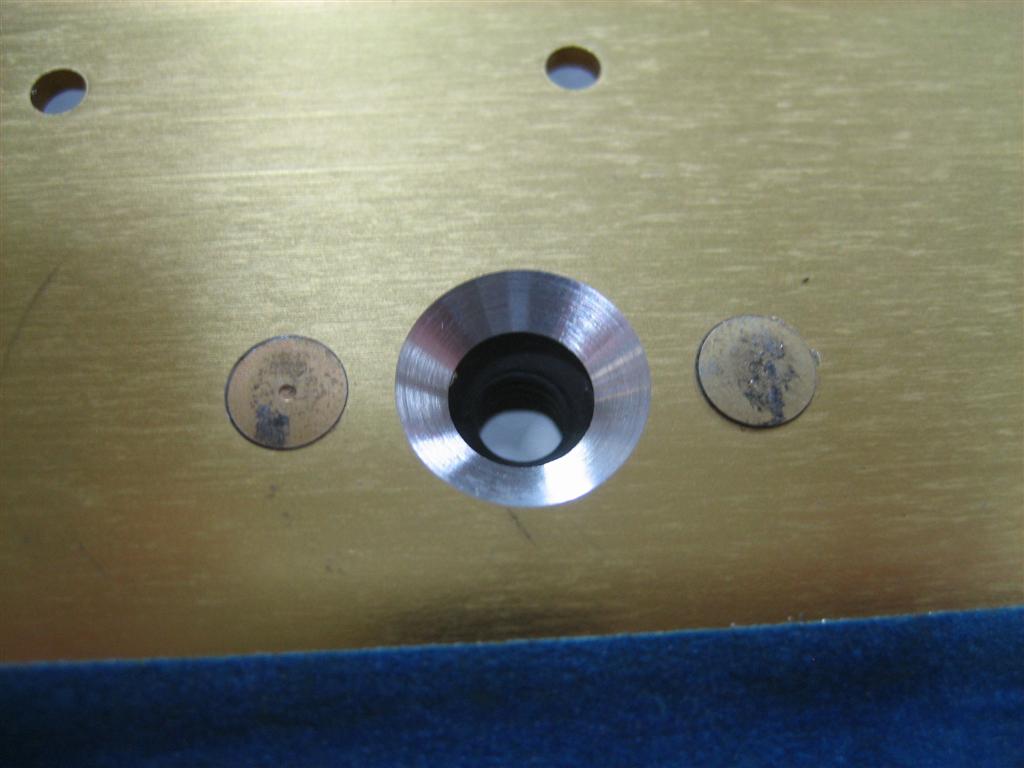
Here’s a countersink for your viewing pleasure.

The rivet on the right doesn't look flush, but it is. I promise.

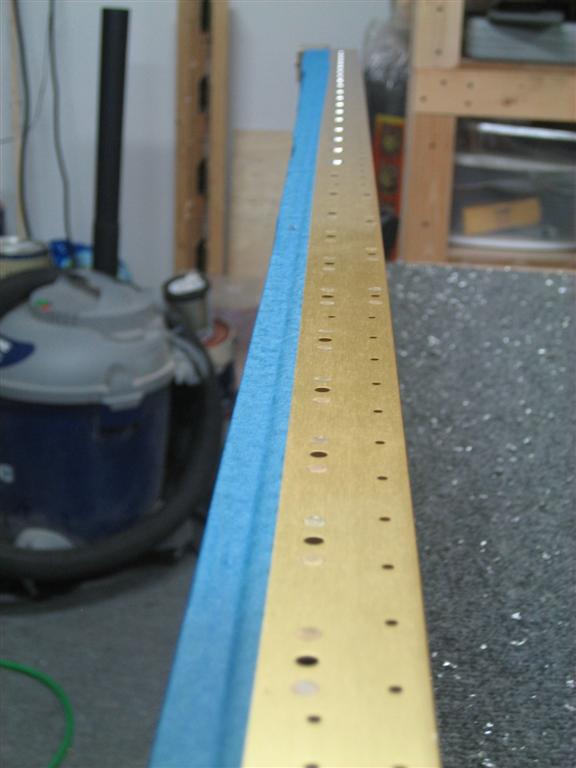
Finally, I finished with the bottom flange. (Notice the three sets of four countersinks on the right side of the picture. Those are for the access plates. They use a #40 piloted countersink and are countersunk to a width of 0.312″ (which is less than 0.3125″)).

Ta da!

Oh yeah, now I have to do the other side.

With a noticeable lack of in-process pictures, I finished the top flange also.

Ta da! (Déjà vu?)

1.0 Countersinking-filled hour tonight.

And, I’ve finished the first three paragraphs of the wing section of the manual. Score!

Prev | Next


Right Spar Countersinking and Nutplates

August 22, 2010

Prev | Next

Well, today was the first official wing construction day. While Van’s is trying to figure out what to do with my damaged left spar, I figured I should get started on the right spar.

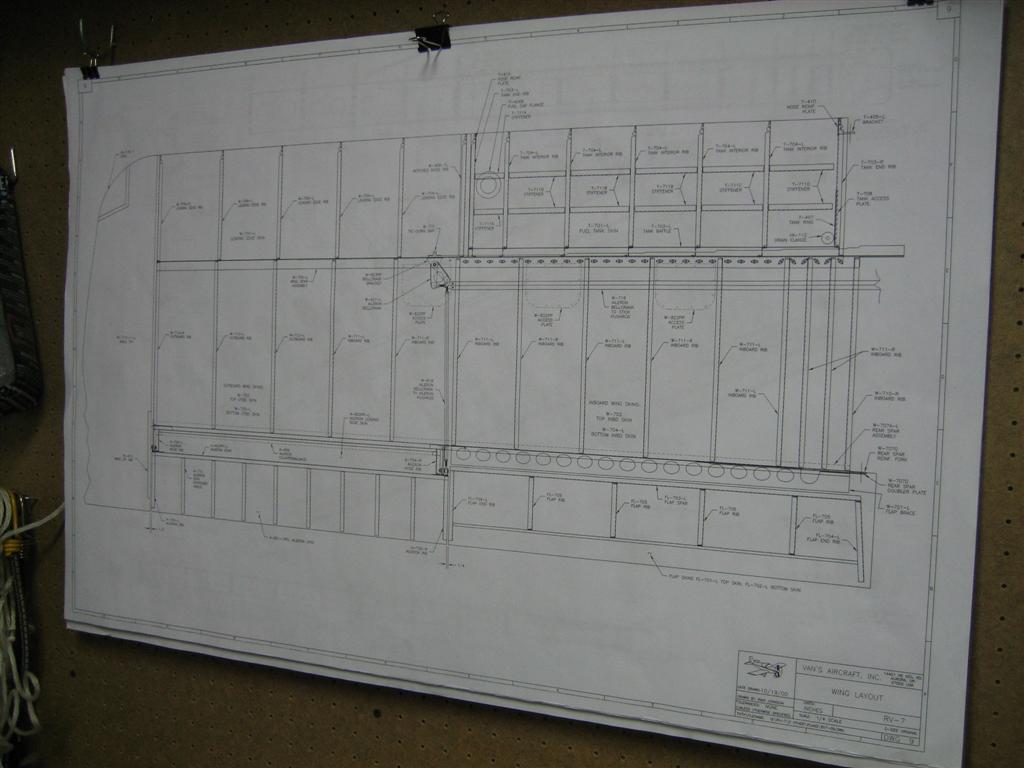
First thing…yup…a plans change picture!

The plans for the wing are a little different. There are about 4 separate sheets of different views for the wing. You guys get to see just the general layout one.

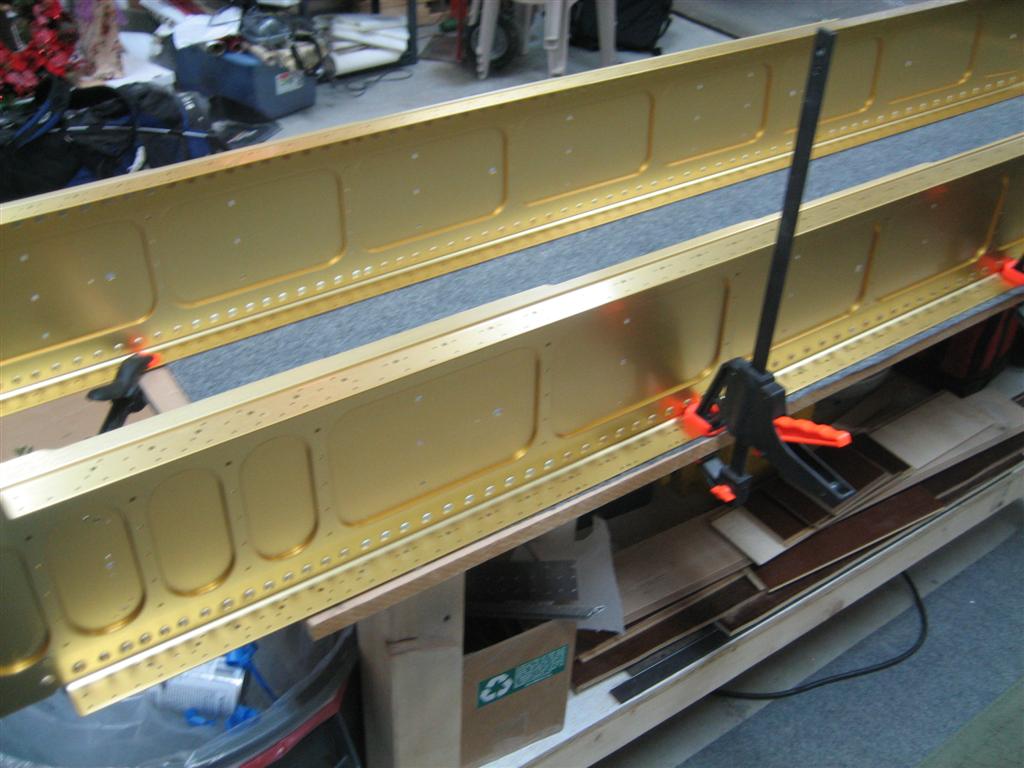
Wuhoo! A wing!

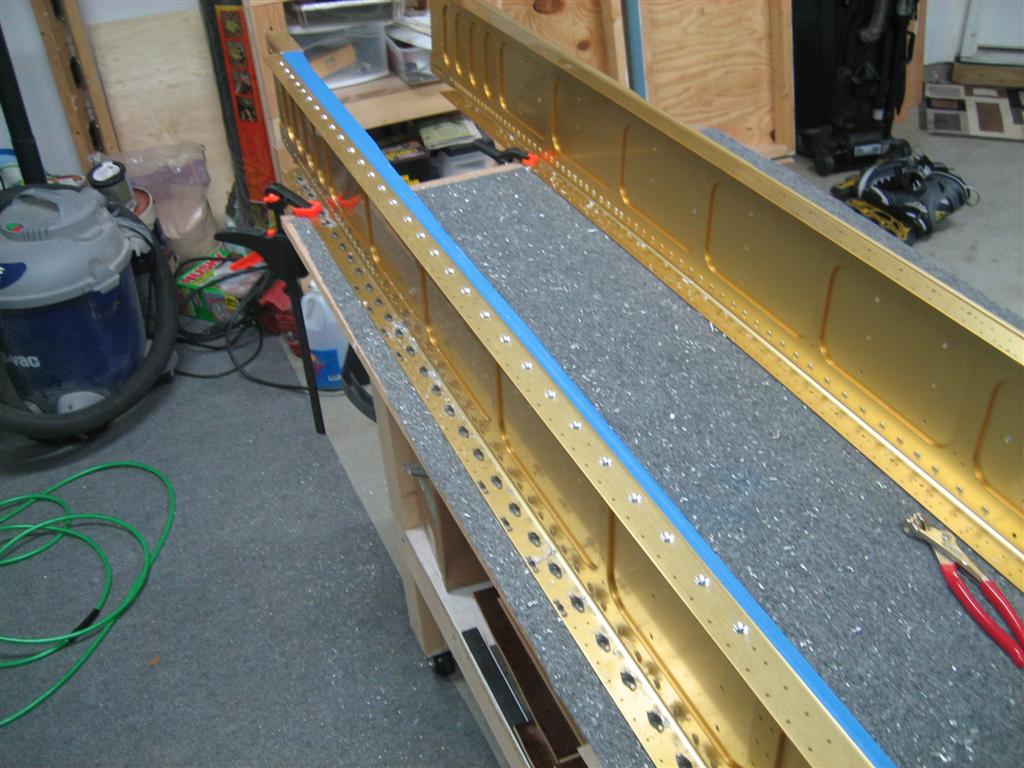
Now, let’s get to work. First thing, I very carefully put my beautiful right spar on the edge of the workbench and clamped the flange down very lightly. The spar will tip over onto the table (away from the camera) if the clamps let go, so I’m not too worried about clamping them down too much.

Every builder that has a website makes a comment here about how the construction manual really holds your hand and steps you through the process on the empennage, but then kind of just makes general statements for the wing. For example, the only real construction step on the first page of the wing section says:

“To begin wing construction, rivet the tank skin attach platenuts to the spar as show in DWG 16A, Detail A. Machine countersink the platenut attach holes in the W-706A spar flange.”

Wait. What? That is like 1000 steps, condensed into one statement. It ended up taking me 3.5 hours to do that one step (I admit, I also delved a little into a step a few steps down):

“Attach the K1000-06 platenuts for the W-822 access plate to the W-706A flange. See DWG 12.”

Fine. I see how it’s going to be.

Let’s get started.

Where is my countersink?

A lot of builders start out thinking they should make a nutplate jig and countersink the screw holes before riveting the nutplates (sorry Van, I call them nutplates) on so they can use the jig as a guide for the c/s pilot to avoid chatter. Van’s suggests using the installed nutplates as the pilot guide. After those builders spend some time making those jigs, they eventually abandon the idea and fall back to the Van’s method. I’m going to do something I don’t normally do and FOLLOW THE INSTRUCTIONS. Sometimes, I try to get cute with extra ideas and fancy engineering solutions, when really I should just do things by the book.

So I grabbed my countersink with a #40 c/s bit, tested in some scrap, and positioned the countersink cage over one of the nutplate  attach holes.

The c/s pilot didn’t fit. What?!

You mean I am going to have to drill all of these holes out to #40 first? Ugh!

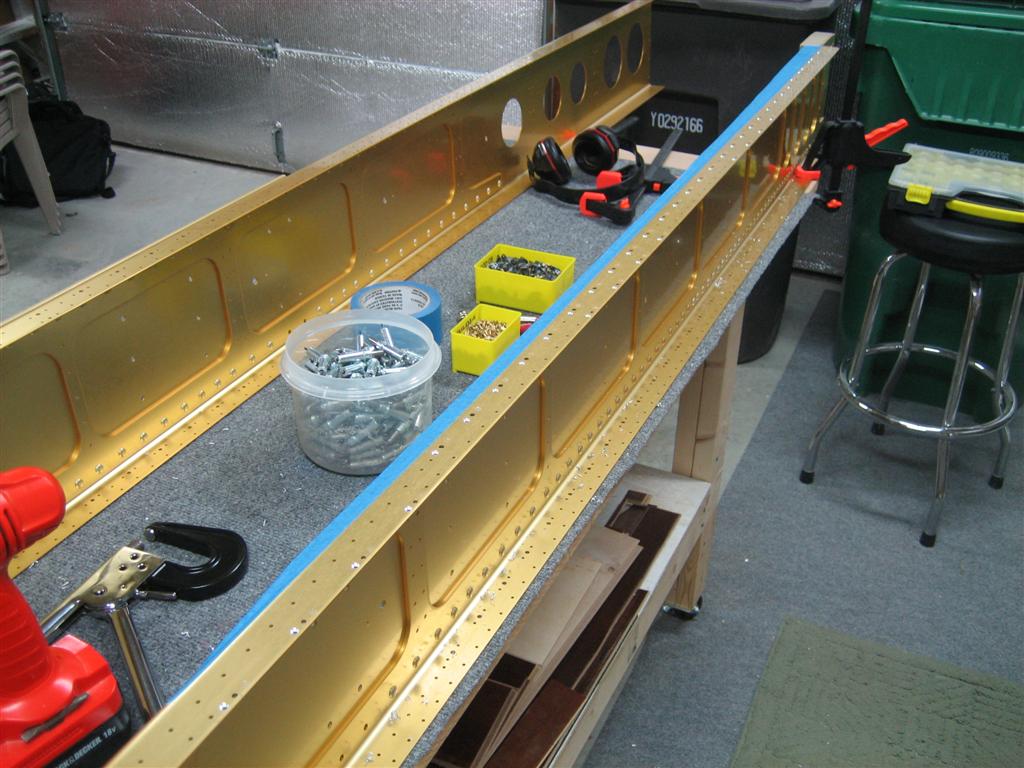
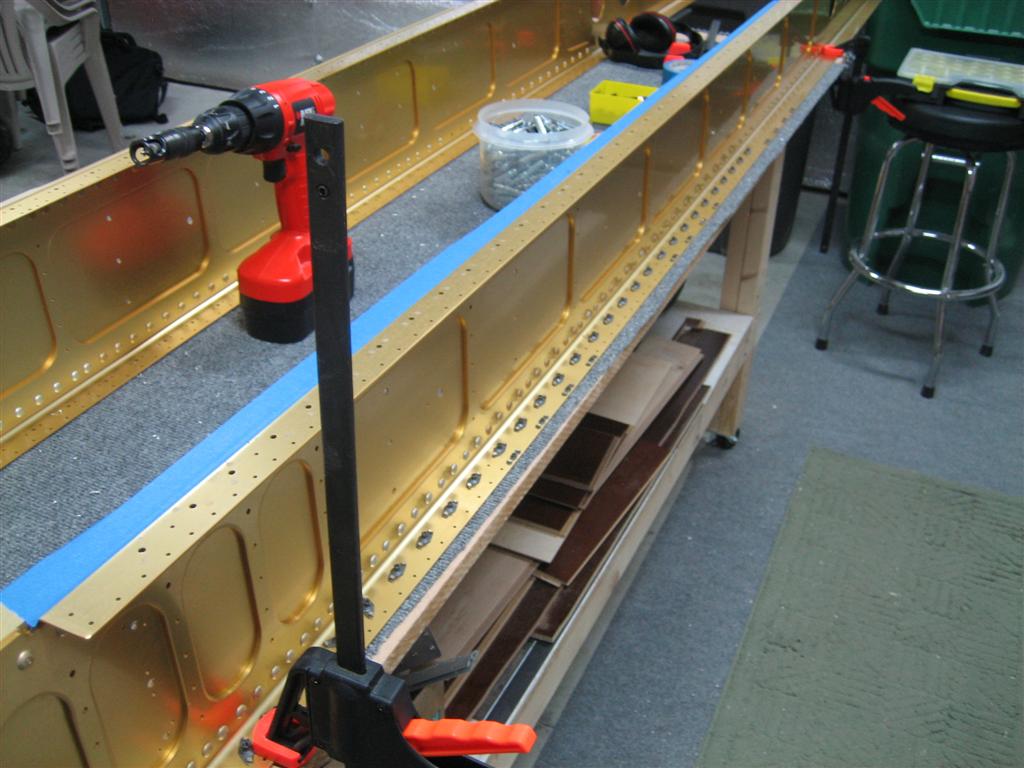
After drilling every one of the attach holes out to #40, I finally got the countersink and cage loaded back into my cordless drill (slower and more trigger feathering ability than the air-drill) and got to it. Here are my first 10 countersinks.

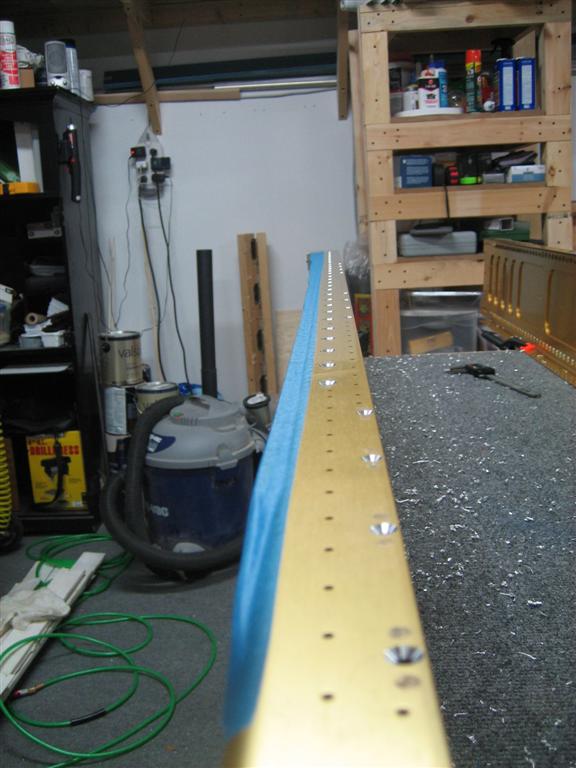
The blue tape is to prevent metal shavings from getting lodged in between the spar cap bars and the spar web.

Anyway, I continued down the row, being very careful to slow myself down and not to fall into too much of a routine. I could feel this was going to be one of those areas where I would be going through the motions and mess something up. (I did make a mistake while drilling out all the holes to #40. I accidentally drilled out a skin attach hole, too. No biggie, but a perfect example of moving too quickly in a habitual way.)

I stopped about every 6 countersinks and retested my countersink depth using a AN426AD3-4 rivet. They are all perfect. Here is the end of the row, looking back toward the “diagonal” wing-walk attach holes.

Pretty, pretty.

Then, I flipped the spar over and did the bottom flange. Also, there are some access panel nutplate that get attached now, too. I went ahead and countersunk for those attach rivets, also.)

Bottom flange, sobriety-maintaining Sprite-zero, and the girlfriend's cordless drill I'm borrowing (pronounced "you can have it back when you pry it from my cold, dead hands"). Thanks girlfriend!

Phew, that was a lot of countersinking. (I think I counted 144 total countersinks for just the nutplate attach holes. There’s another 72 for the screw holes (in the middle of each set of three holes) I’ll have to do later.)

Next, I grabbed some K1100-08 nutplates, some silver 3/32″ clecos, and some AN426AD3-4 rivets and started getting ready. My plan is to cleco the nutplate to the spar, insert one rivet, then after riveting that one, take the cleco out and rivet the other side.

Cleco in one side, unset rivet in the other.

Down the line, everything ready to rivet.

Redundant picture.

Ahh, this slower, more thoughtful approach is paying off. Can you see the error that I almost made?

Which one of these is not like the other?

Here's an example nutplate before I take the cleco out and put the other rivet in.

I can’t remember why I took this picture. I think I just took out all the clecos, and I thought it looked cool.

Ready to set the second half of the rivets.

No pictures of the second rivets, but here’s one of the other (now top) flange.

You can see all of the nutplates on the lower flange.

Anyway, I set all the nutplate attach rivets on the upper flange, and then called it a day. So I got to cross off the two statements in the construction manual I highlighted above, and next up is to use the installed nutplates as c/s pilot guides for countersinking the screw holes.

Oh, and then I get to repeat on the other spar.

3.5 hours of countersinking and riveting today. 144 rivets, 1 drilled out (the rivet split in two!). Good times.

Prev | Next


Bought Cleveland Main Squeeze

August 21, 2010

Prev | Next

Recently, I’ve been kind of unhappy with my economy squeezer that I bought from the Yard. (I think Avery sells the same squeezer).

The squeezer is great for the majority of tasks on the empennage, but it only has one yoke, and I really need a no-hole yoke for some of the tighter-access areas at the end of ribs and such.

So, to buy a no-hole yoke, it looks like I’m going to have to buy a new hand squeezer (insert long back and forth about pneumatic squeezers here. I’m okay with hand-squeezing for the whole airplane, but I want one that can exchange yokes with a pneumatic squeezer if I decide to get one in the future).
So, for no small chunk of change (thanks, savings!) I got Cleveland’s Main Squeeze model 22 and the 4″ Thin-Nose Pneu. Yoke. I won’t be able to use this yoke for dimpling (still have the economy squeezer for that), but this will be great for squeezing rivets.

Aug 27, 2010 Update:

My new squeezer showed up. The actual squeezer is unbelievably light, and the yoke is unbelievably heavy. Even before installing the yoke, I can tell this is a much higher quality tool than my “economy” squeezer.

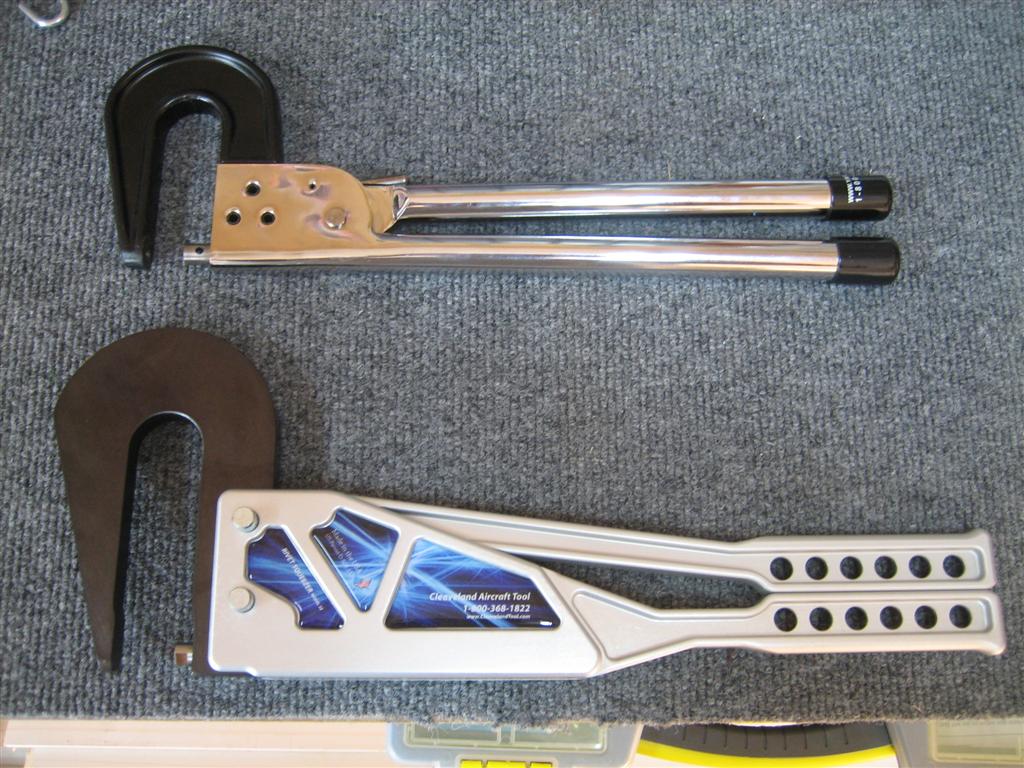
Here are the two separate purchases from Cleveland.

Ready for ACTION!

This should give you an idea of the difference in quality between the two.

In addition to being easier to squeeze, I am most impressed with the yoke. While I was squeezing rivets with the smaller 3″ yoke, sometimes the yoke would “give” a little. I can only describe this as the “c” part of the yoke opening ever so slightly. This had the result of pulling the top of the yoke back just a little, sometimes shifting the shop head a little to one side, or in some cases, sliding the flush set along the manufactured head side during squeezing. Most of the rivets turned out okay, but I no longer have this problem with the new yoke.

Here’s a picture of SRS (shifting rivet syndrome).

Big difference in quality (pronounced "price reflects this") and operation.

Bravo, Cleveland.

Prev | Next


Finished Trim Tab

August 20, 2010

Prev | Next

Well, I snuck home over lunch today to make some loud noises (rivet gun) and I got the trim tab pretty much finished. I have one or two more “hard to reach” rivets to set, but for now, I’m going to call it done and focus my attention on the floors and the wings.

The tabs bottom rivets.

Here's the bottom of the tab.

Then, making sure to include the hinge (other builders have forgotten when the time comes to rivet), I got the top of the tab completed.

I do love those gold spars in the background.

Okay, so I’m a dork, and I had to get the hinge pin out and get the thing assembled.

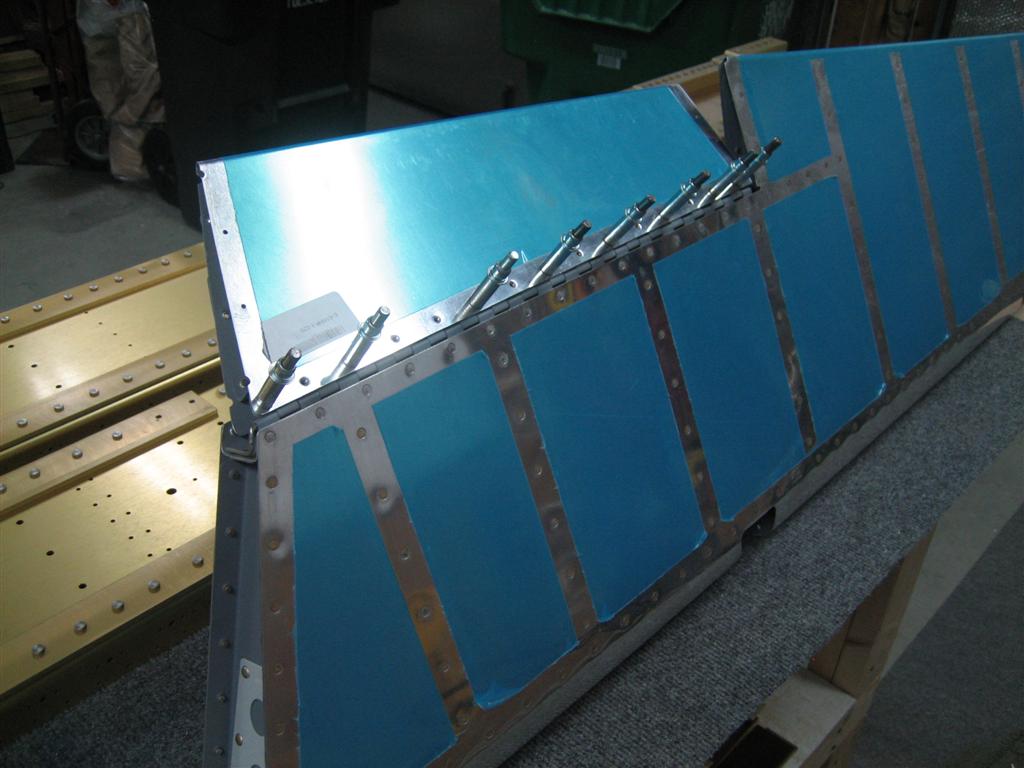
Tab in trail...

Up tab (down elevator trim).

Down tab (up elevator trim). I still have some interference here from the shop heads of the bottom elevator rivets, but I'm going to wait until I'm rigging to sort this out any further.

A quick hour over lunch. 34 rivets set, 2 drilled out.

Prev | Next


Primed Elevator Trim Tab

August 19, 2010

Prev | Next

Well, I got a few more things done on the tab tonight.

First thing was to prime the outside of the elevator tab where the surface mates with the tab horns.

Here's the mating surface, ready to be primed.

After reexamining my countersinks in the trim tab spar, I decided to re-countersink them. This time (after reading the guidance in the construction manual about how to do this on the flap), I used the trim hinge as a countersink guide. This worked much better than the piece of wood.

Nice countersink on the left. The old (wobbly) countersink on the right.

Then, everything was put up on the cardboard piece for priming.

Priming.

After the parts dried, I started in on riveting per the plans.

Everything was fine after 7 rivets, until I paused to re-fit the tab on the elevator.

4 of the first 7.

I was getting a little bowing (top skin concave, bottom skin convex) in the tab skin due to what appeared to be distortion of the tab spar. I drilled out the 7 rivets I had set and spent a little time re-tweaking the spar.

A fit check. You can't see any of the bowing very well, but it is definitely not satisfactory.

After re-tweaking (adjusting the spar flanges on the tab) and refitting a few times, I had things lined up much better. It’s not perfect yet (maybe more work on this tomorrow will get it right), but it is definitely improvable.

1 hour today.

Prev | Next


More Trim Tab Work

August 17, 2010

Prev | Next

Well, before I can dive into the wing, I need to finish up the trim tab. All that’s left is to fabricate two riblets, get everything prepped and primed, and then rivet the tab together.

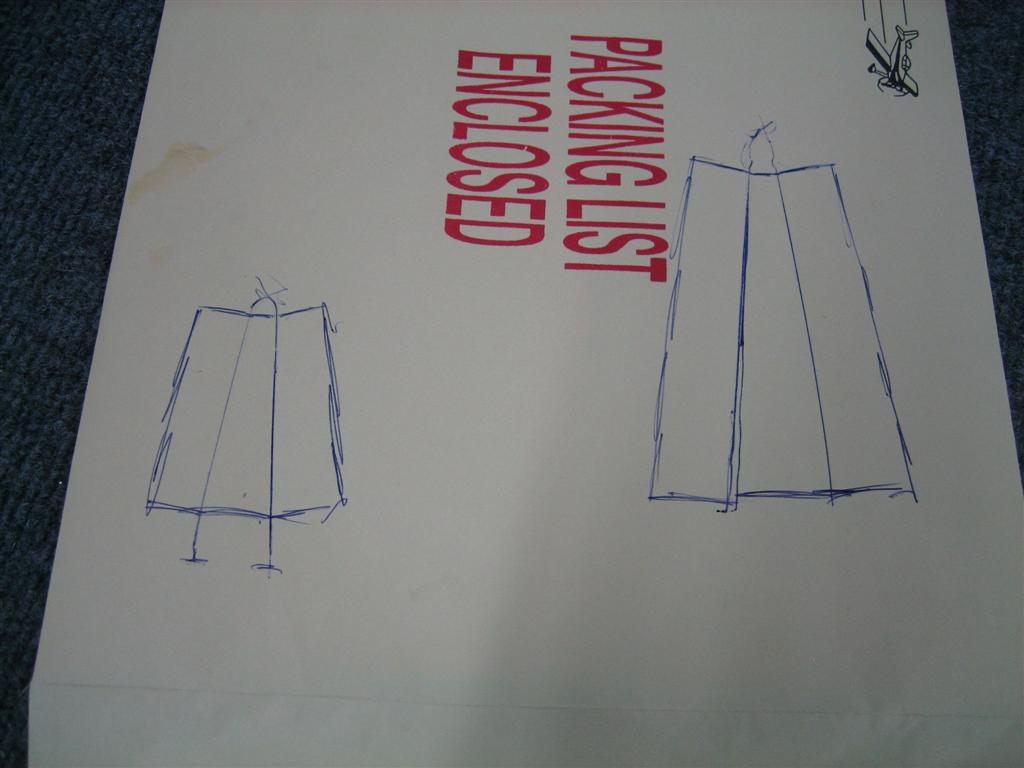
First, let’s get some riblets made up. Just like the elevator riblet, I started with some thick paper.

I used the packing list envelope from the wings, because it was literally right in front of me when I started.

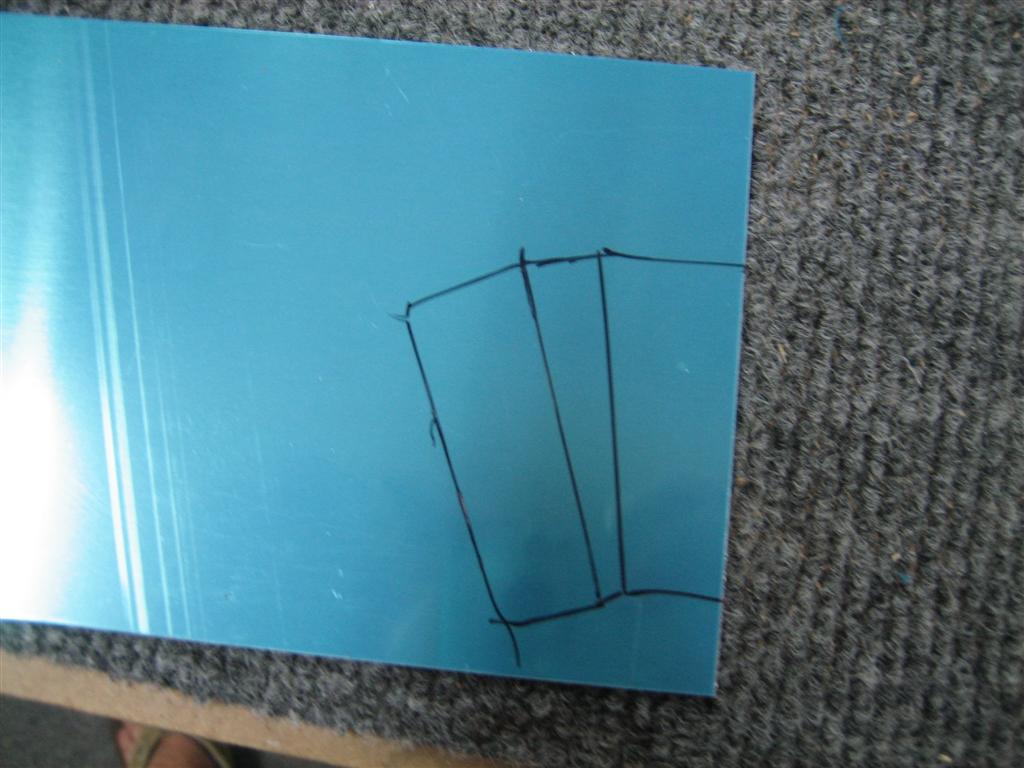
I got the larger one cut out of 0.025″ aluminum sheet pretty easily, and the first try fit like a champ. I moved on to the smaller one, hoping for similar luck.Fast forward a couple minutes (many minutes!)…

Can you say "third time is a charm?"

Nope. Third one wasn’t good either.

Let's try again (fourth time). I just couldn't get the bends right.

That one worked. And of course I forgot to take a picture.

I drilled a couple holes in each riblet through the skin.

Finally, fourth time is a charm.

Wuhoo, let's get this tab finished.

But, it was getting late, and there were a couple of puppies somewhere that needed attention. (Turned out, they were asleep when I went inside, and I got growled at. Thanks, puppies.) Before I headed inside, I disassembled the tab and pulled out the wing spars to inspect.

Tab components, ready for cleaning and priming.

After looking the spars over, I found many places where the spars had been “polished” with a scotchbrite bad to work out small scratches. It seems that everyone has these, and is no cause for alarm.

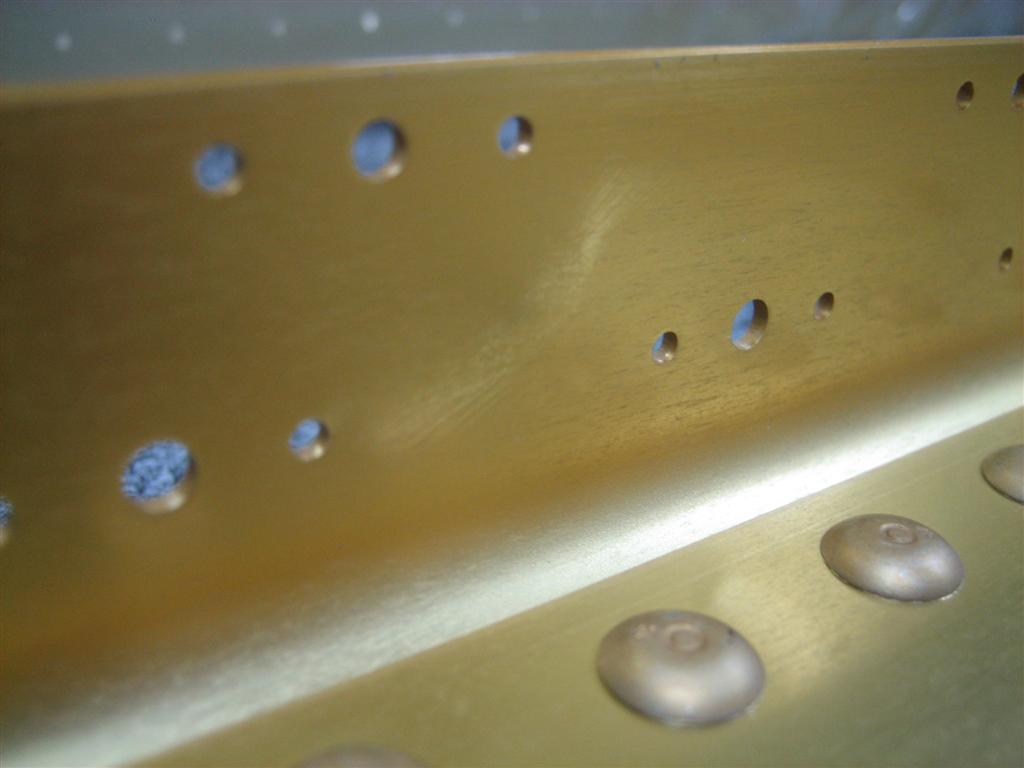
On the other hand, I found some bad juju. This is a closeup of a couple dings that look like something bounced on the spar. Keep in mind, that hole is a #40 (3/32″), so these are really small.

Still, that's not good.

Whoa. What. Is. That!?

Holy frijoles, Batman! That is a huge dent in my spar flange!

Here's a closeup of the dent with a straightedge held over it.

Another angle.

I took a couple pictures of the underside of the flange. I tried to use the light to demonstrate the distortion.

That curved white streak is actually the light reflecting off of some spider cracks in the anodizing.

Here's another angle.

Not really related, I just snapped a picture of the spars laying on the table.

At least they look pretty.

1.5 hours on the trim tab today. I’ll email Van’s first thing in the morning about the spars and then post what they say.

I’m pretty disappointed though. Nothing could create that dent without making a big noise, maybe something being dropped or falling over. Which means someone probably knew it happened and didn’t say anything, or the inspection process didn’t catch it. Either way, I’m not super excited. I’m guessing it wasn’t Vans’ fault, but hopefully they will make it right.

Prev | Next


Christmas in August (Wing Kit Arrived)

August 16, 2010

Prev | Next

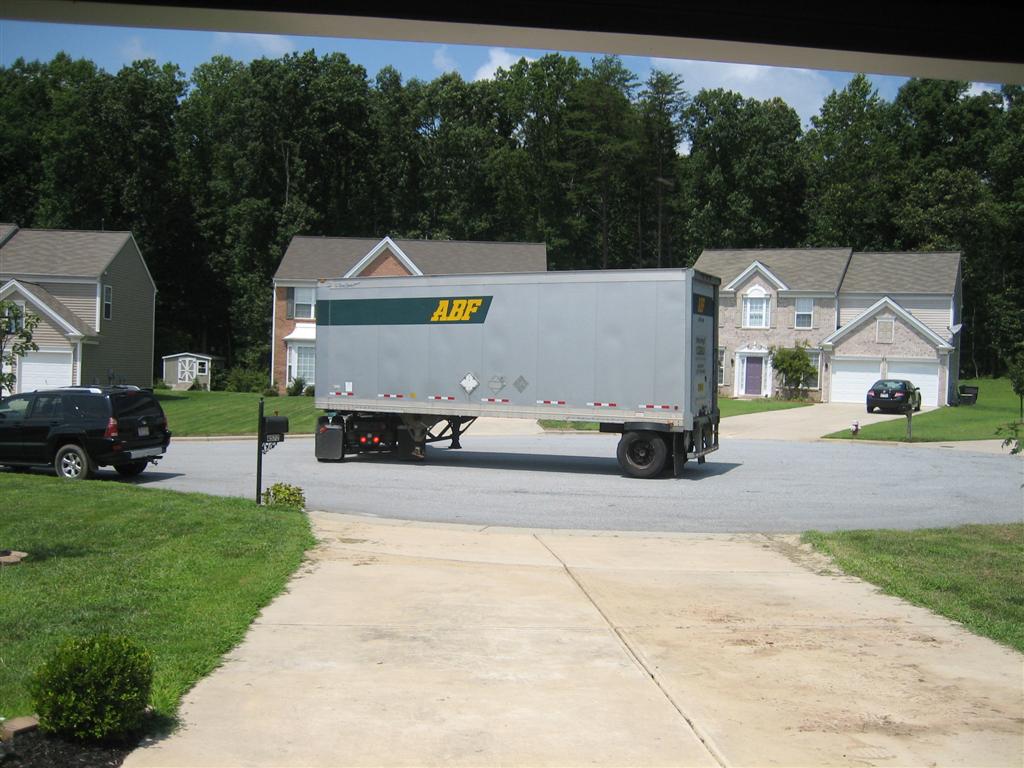
OH MY GOD OH MY GOD OH MY GOD….IT’S HERE!!!!!

Oh man, I really need to edge the driveway.

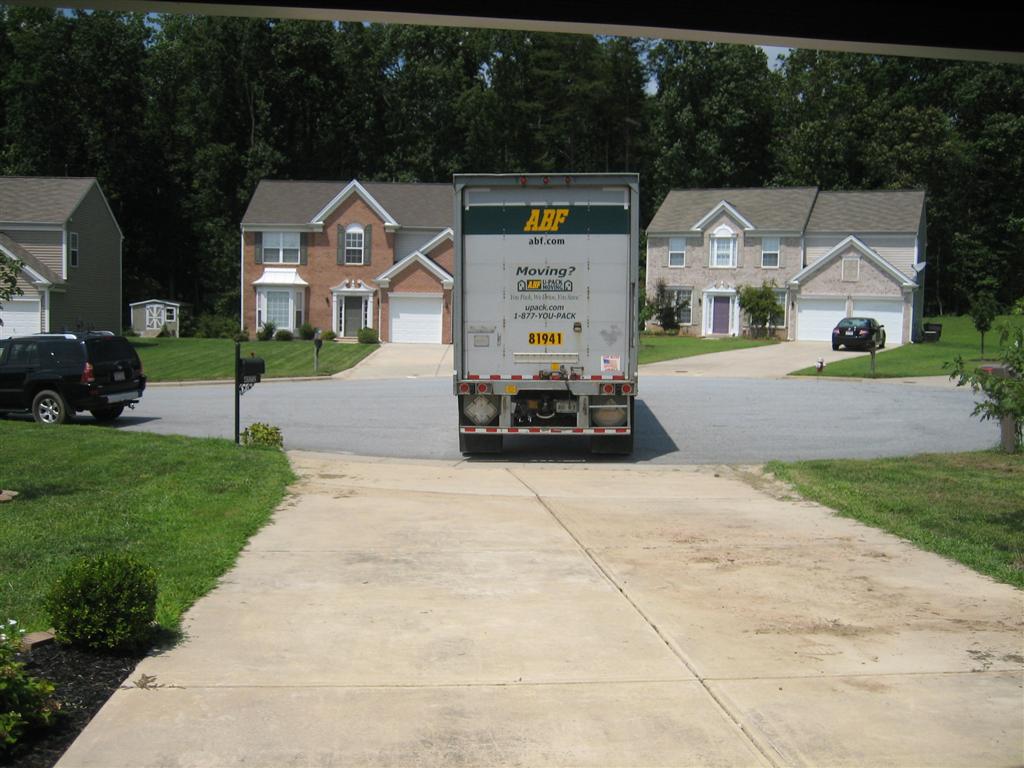
Judge how excited I am by counting the number of truck pictures I took.

This is number three!

asdf

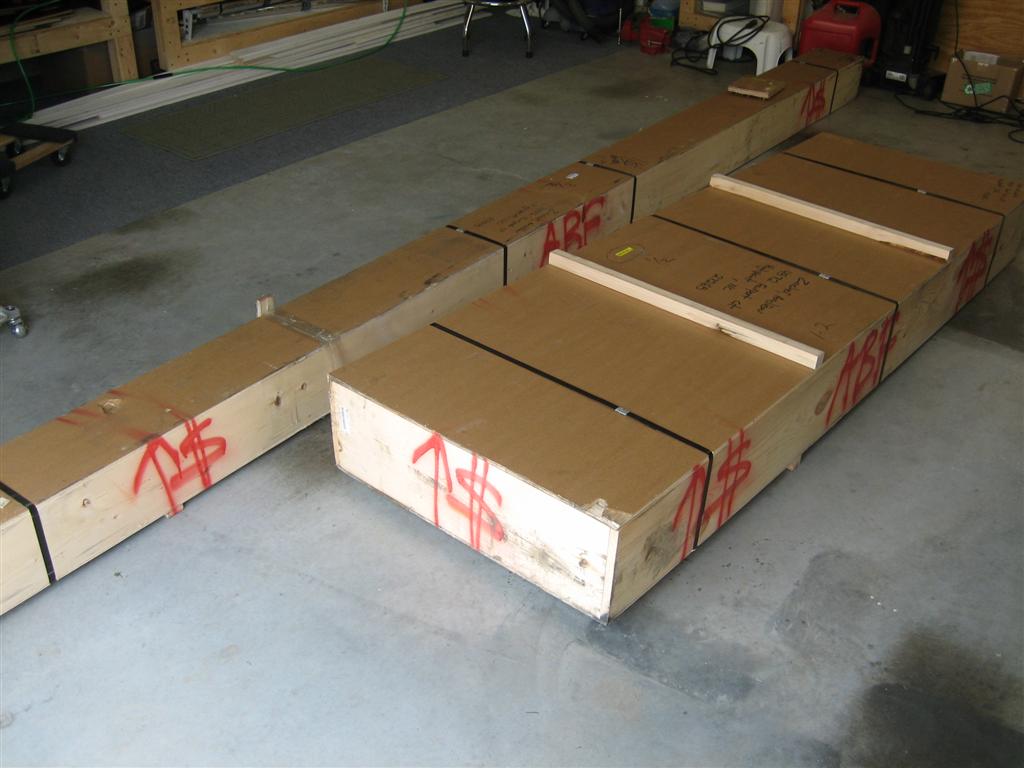
Whoa. Full load today? (Those boxes look so little!)

So we picked up the larger (wider) box, and it was (I’m guessing, here) about 150 lb. No problem for the driver and I to bring it into the garage.

Then, we picked up the small (but long) box, and it was (probably exaggerating) about 300 lb. I felt stupid grunting and groaning trying to lift this box. It was deceivingly heavy.

Finally home.

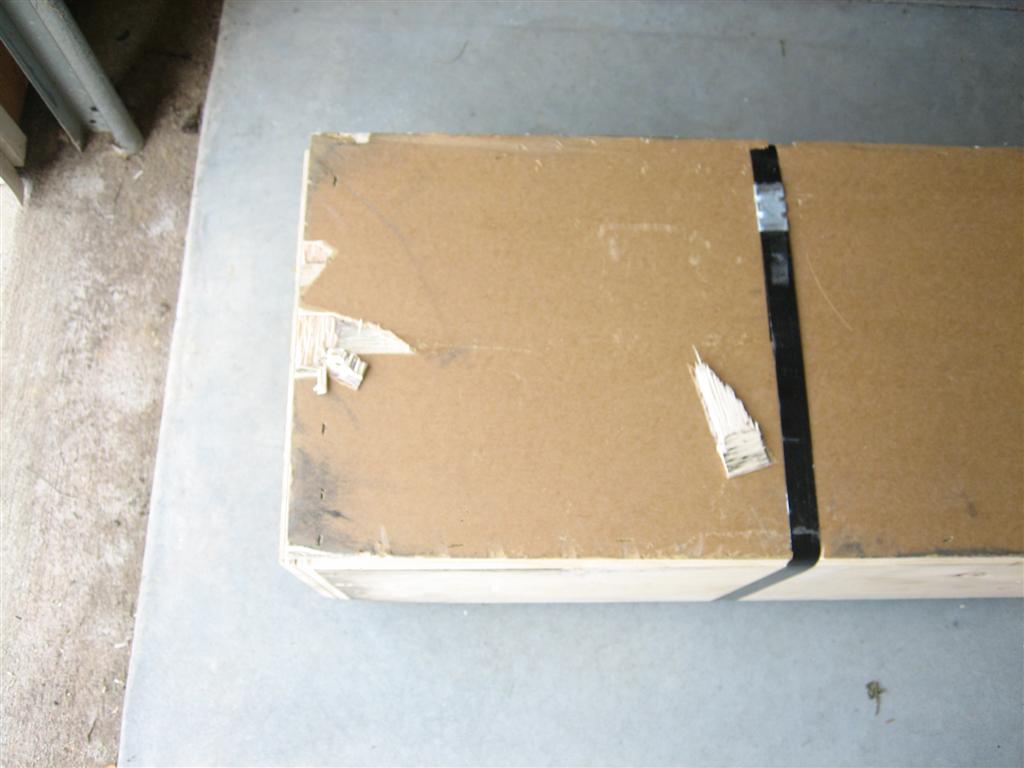
Time to document some of the damage. Scroll quickly through these pictures. They are just for recordkeeping.

Some edge damage.

Whoa! What rhino tried to poke their horn through my spar box!?

Some scrapage and edge damage.

Yikes. I'm glad these boxes are well made.

Some more corner damage.

Okay, slow down the scrolling now.

Luckily, all the parts were completely undamaged. That rhino-poke through the spar box when right into a big block of paper separating the center section pieces from the main spars. I am a lucky son-of-a-gun.

Tops off, time to start unpacking.

Here's another rhino-poke picture.

The backside.

Redundant, but better light.

First thing, I got everything out of the boxes and onto the carpeted floor and workbench. That is a lot of paper. As Brad Oliver put it:

“there is $100 worth of aluminum and $5000 worth of paper in these boxes”

I couldn’t agree more.

Whoa. Paper!

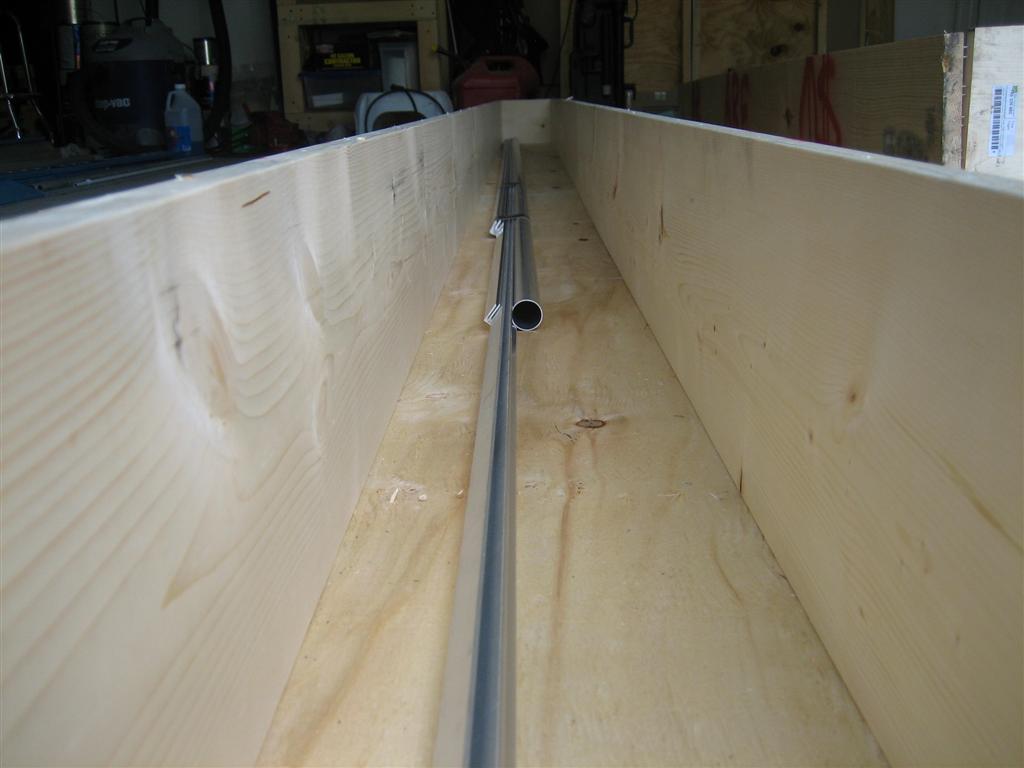
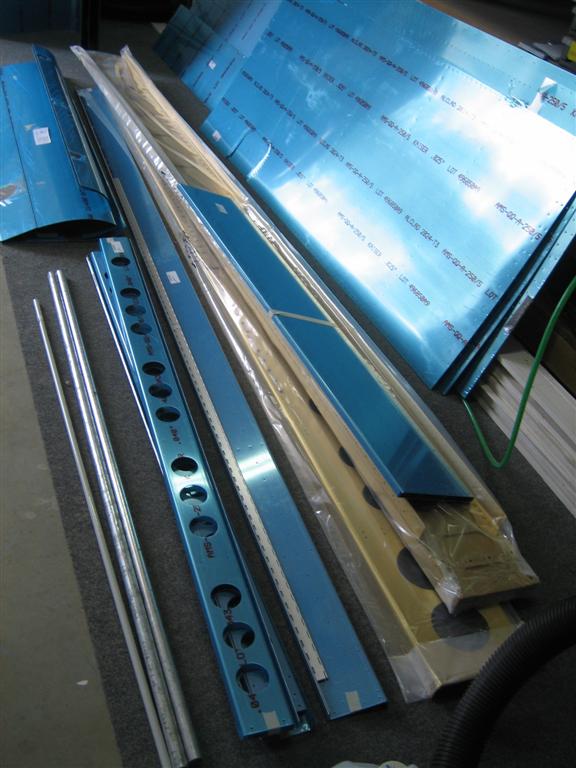
The fuselage longerons, some "water pipe" (presumably for the aileron pushrods) and a few random lengths of angle.

After getting everything out and onto the carpet…

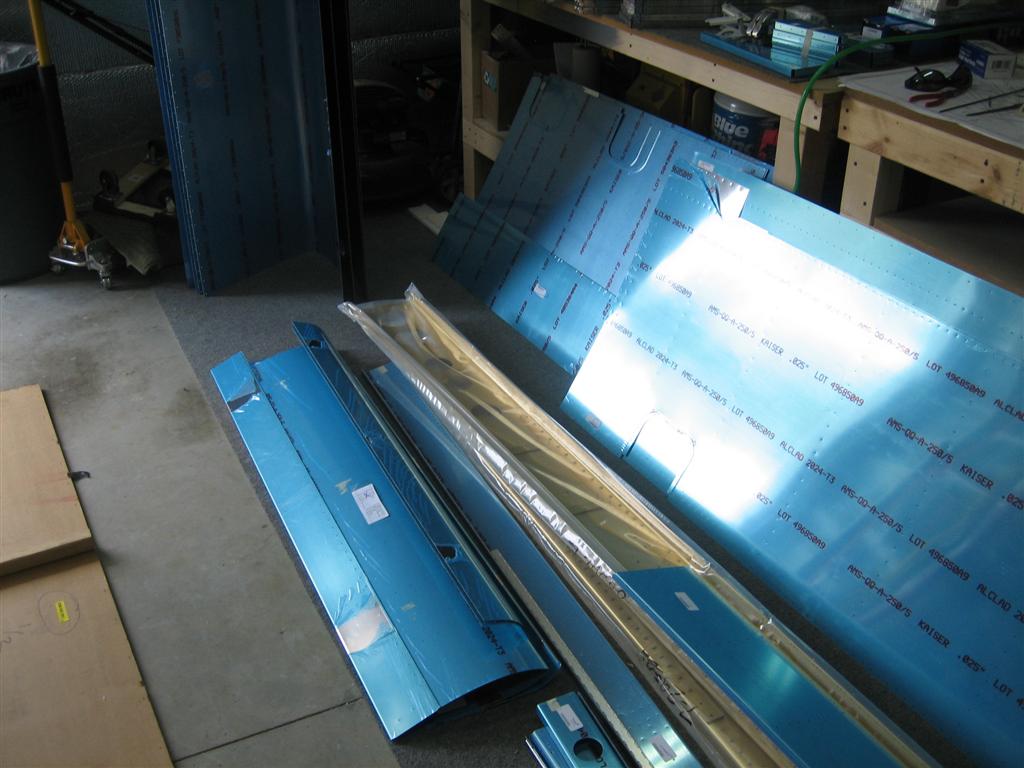
That's a lot of parts.

More parts.

Tank and leading edge skins.

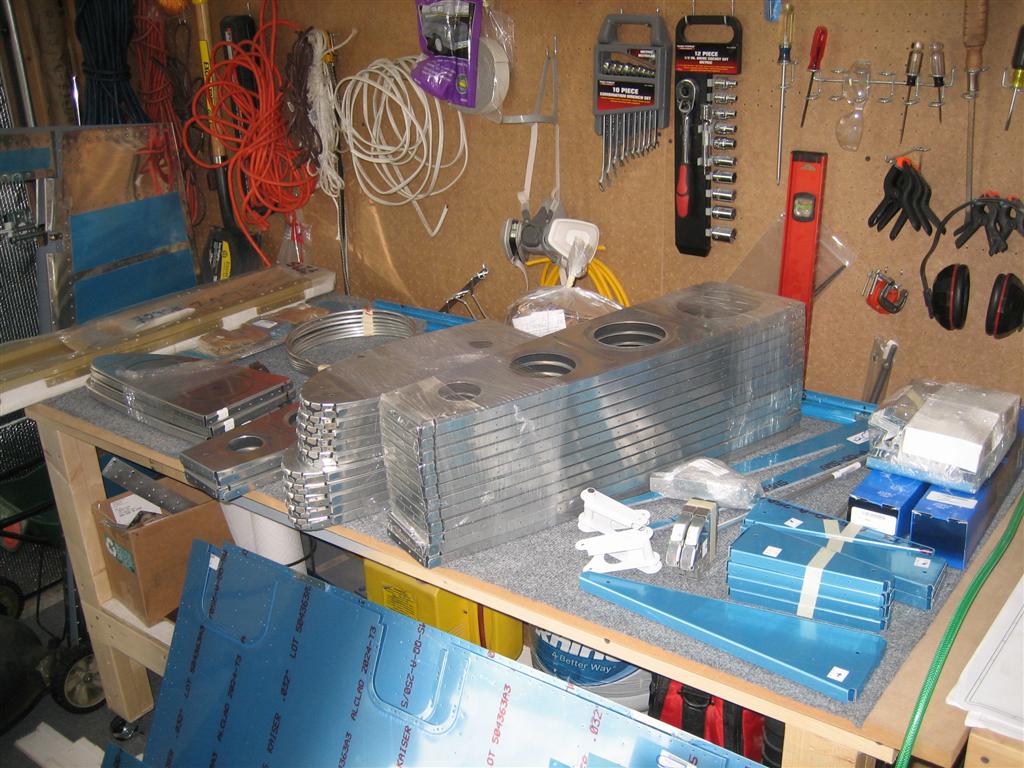
One of my workbenches with wing parts piled on.

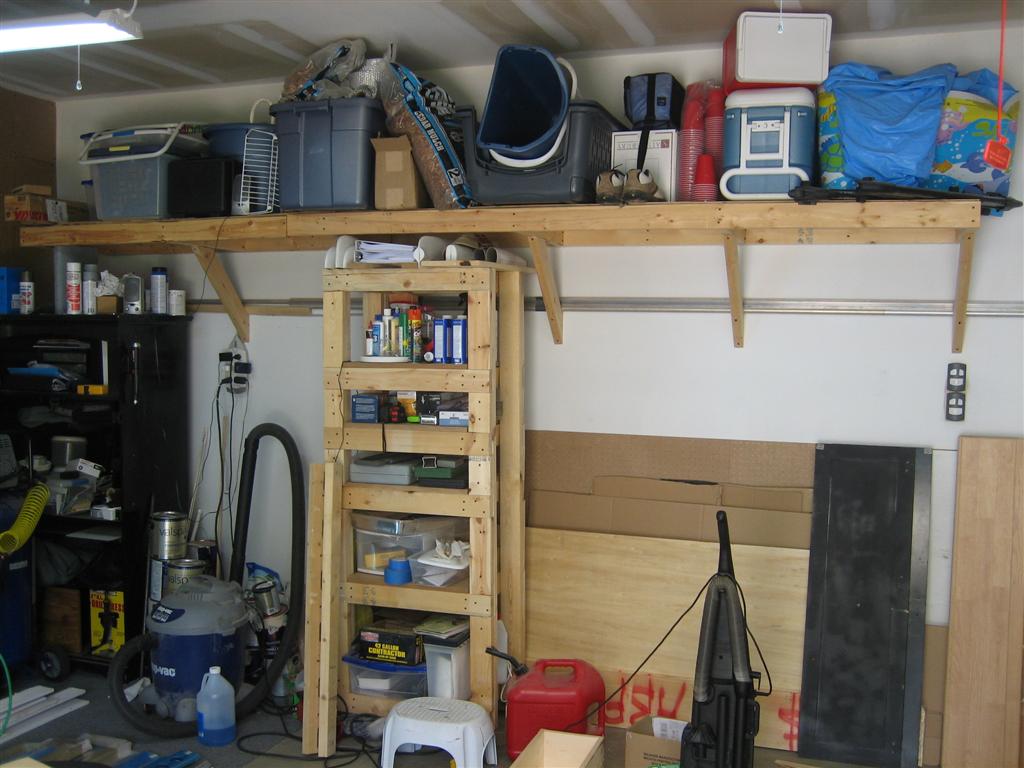
I managed to stick the longerons against the (very messy) back wall of my garage.

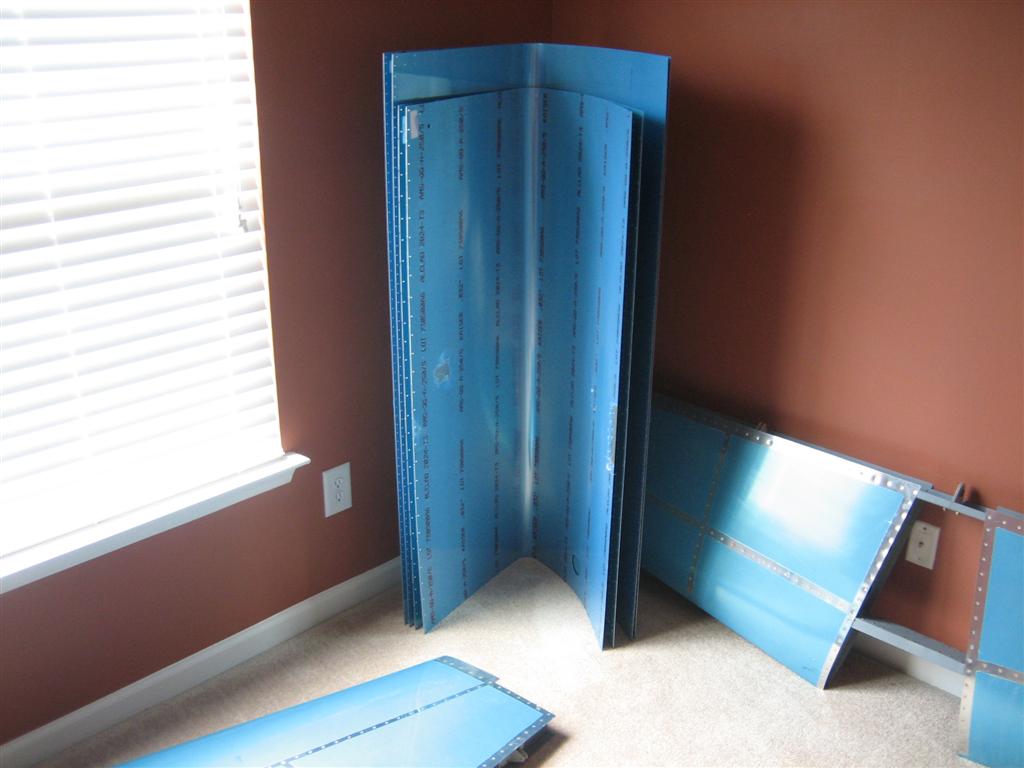
Upstairs, I have an extra room devoted to airplane storage (and working out, and music).

The wingtips are HUGE!

Tank and leading edges upstairs.

I also took these upstairs. These go with the fuselage, but they are matchdrilled at the factory with the spars, so they ship them all at once. Good thinking.

This is normal, but just wanted to note a few places where they used a scotchbrite pad to buff out some scratches.

Time to start the inventory. 5 pages of inventory sheets for the main kit, then 5 more for the hardware, and a few more here and there for the aileron mounting kit, and the stall warning kit.

{sigh} This is going to take forever.

Looks like the only problem was that I got 5 W-712-L ribs and 1 W-712-R rib instead of 3 of each.

Most of the ribs in the kit were sandwiched L and R ribs, but some of these sets were sandwiched L and L ribs.

Too many lefts, and not enough rights!

Drumroll please! {drumroll sound}

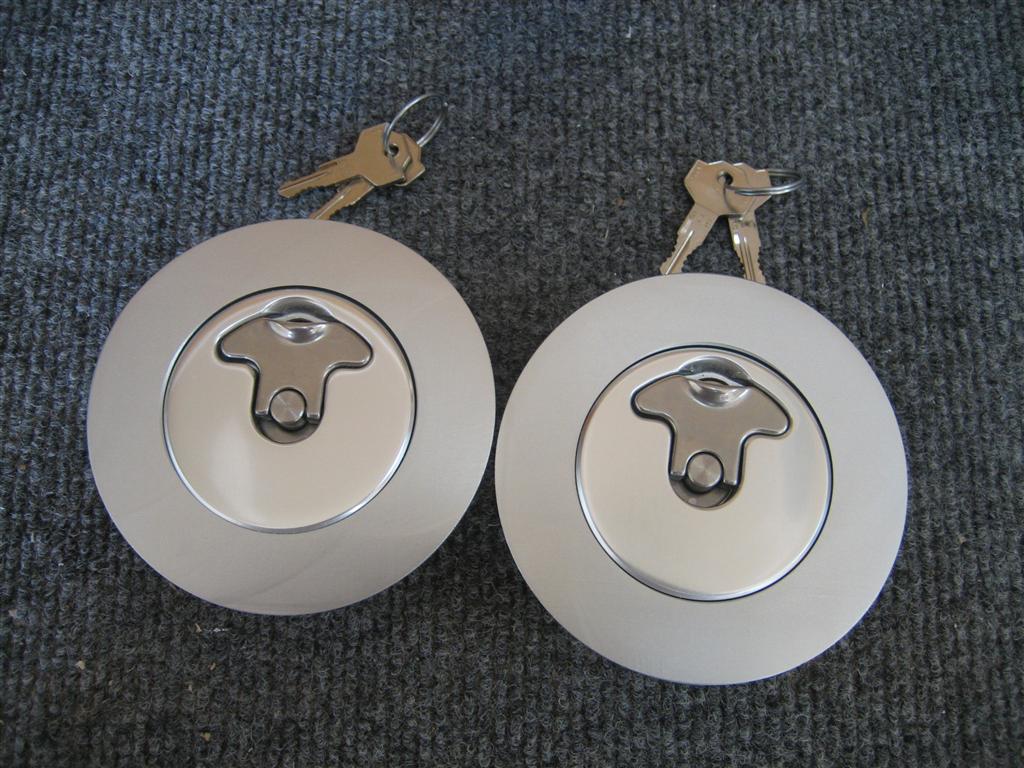
Tada! The beautiful (and expensive) deluxe locking fuel caps. With four keys, of course.

I decided to go with the tried and true float senders, mostly because I didn’t want trouble with the capacitive senders (which work well only with 100LL gas. If you ever change types of fuel, they won’t work correctly.)

I'm sure these are fine, but they are a little "cheesy" (as a coworker who also has them put it).

After about 3.5 hours of work, most of the parts have new homes under my workbenches or upstairs in the airplane room.

Tightly packed parts.

Next up, time to inventory the hardware.

I hope it all fits.

But first, time for some dinner.

It's Monday. Why not have steak, grilled corn on the cob, and a homemade caprese salad? (Look at those Bobby Flay grill marks!)

Okay, after dinner, I sat myself down in front of the TV and worked more on the hardware inventory. The only thing that didn’t really fit well into my sorting scheme was the AN426AD3-3.5 rivets. There were way too many in the wing kit for my smaller sized container.

In the background, you can see one of the 5 (?) hardware inventory pages.

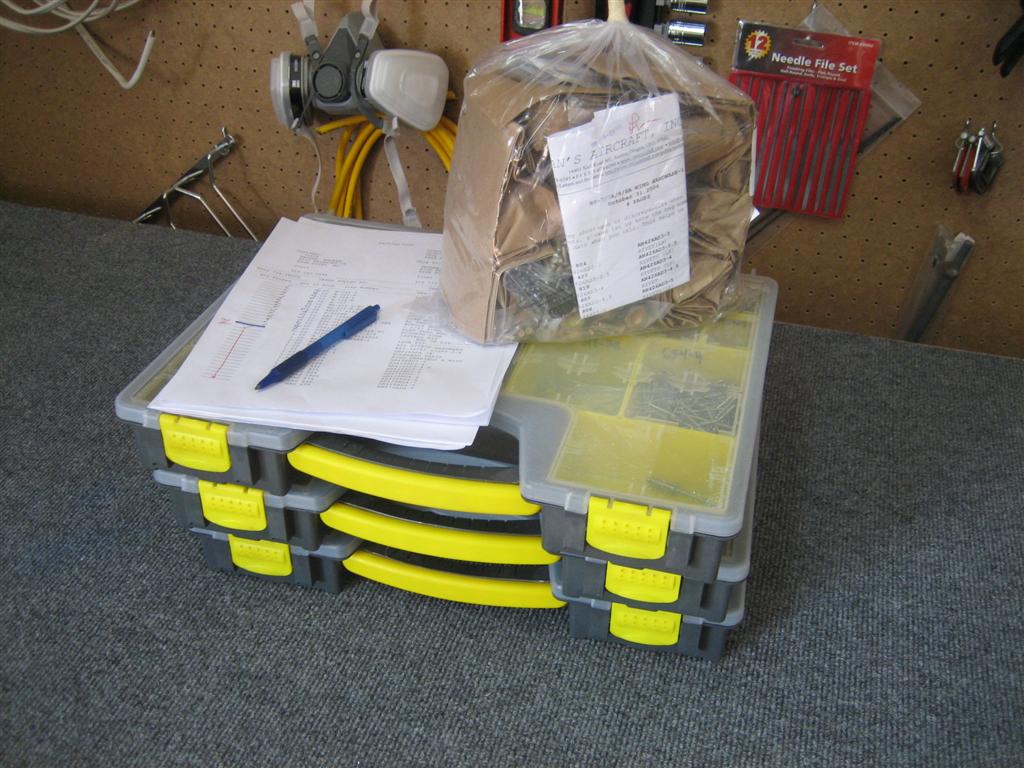
After another hour and a half, almost all of the hardware now has a home in my fancy hardware cases.

The close tolerance bolts didn't fit, so I'm going to leave them in the bag for now.

Finally, I took a picture of all of the inventory sheets. I have horrible handwriting, but you get the idea.

Those all say "page done."

3.5 hours to most of the bigger parts inventoried, and 1.5 more hours to do the hardware. 5 hours total. Feels great to have the wing put away safely.

Prev | Next


Started Drilling Out Rudder

August 14, 2010

Prev | Next

Well, after much hand-wrenching and a few sleepless nights, I’ve decided to dive into taking the rudder apart to assess the damage.

I’m guessing there are a few hundred rivets I need to drill out, which is going to ruin my drilling out average, but that’s okay. I want the rudder to be perfect. The pictures aren’t really that exciting, but here they are anyway.

About the first 25 after they've been drilled out.

I started drilling out the leading edge blind rivets. They ended up not being that bad, but not something I ever really want to do in the future.

Started drilling out leading edge rivets.

I ended up using a #40 drill bit for the blind rivets, even though they are really #30 sized holes. #40 allowed me to pry the heads off really easily. (You can see the heads of the blind rivets on the table.)

67 rivets drilled out, and I'm now dripping sweat on the rudder. Time to go inside.

But just for kicks, I took a picture of the rudder skin after pulling off one of the blue vinyl sections.

It's going to look really good when I take the vinyl off of the whole airplane. (You can see the outline, though, which means I'll still need to do a little polishing before first flight.)

It was about 30 minutes in the garage for just this part. I’m trying to figure out if I want to keep going on this or start in on the wing kit. For sure, I’ll need to finish the elevator trim tab before moving on to the wing. Maybe I’ll put the rudder away for awhile and move on.

Prev | Next