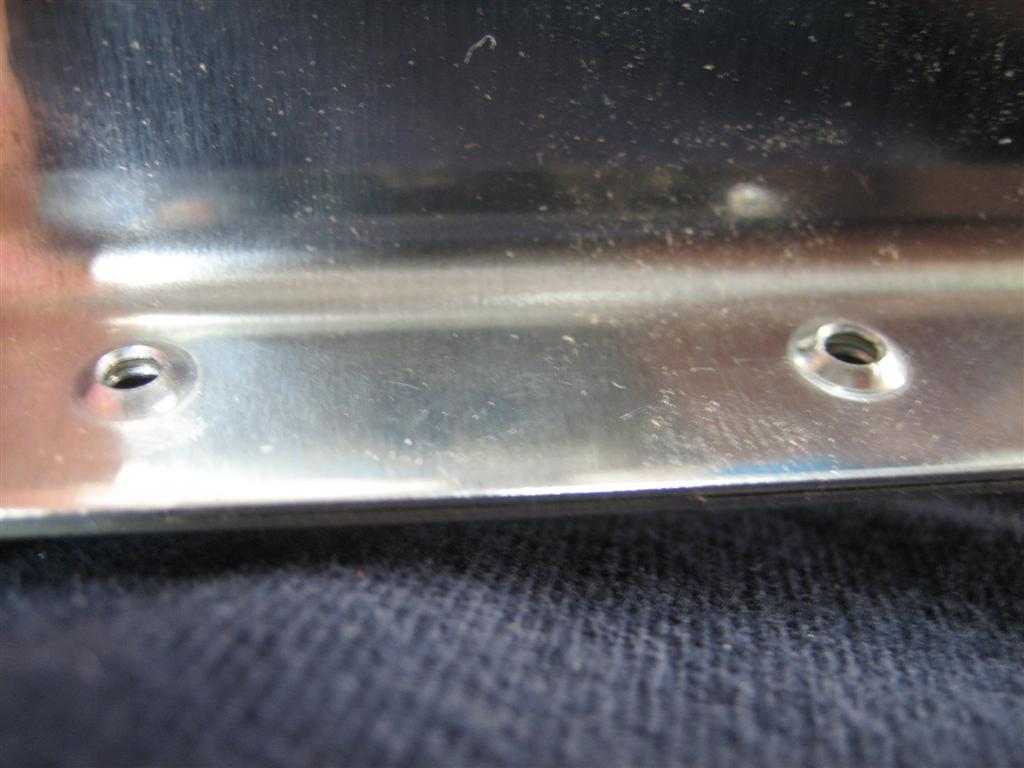
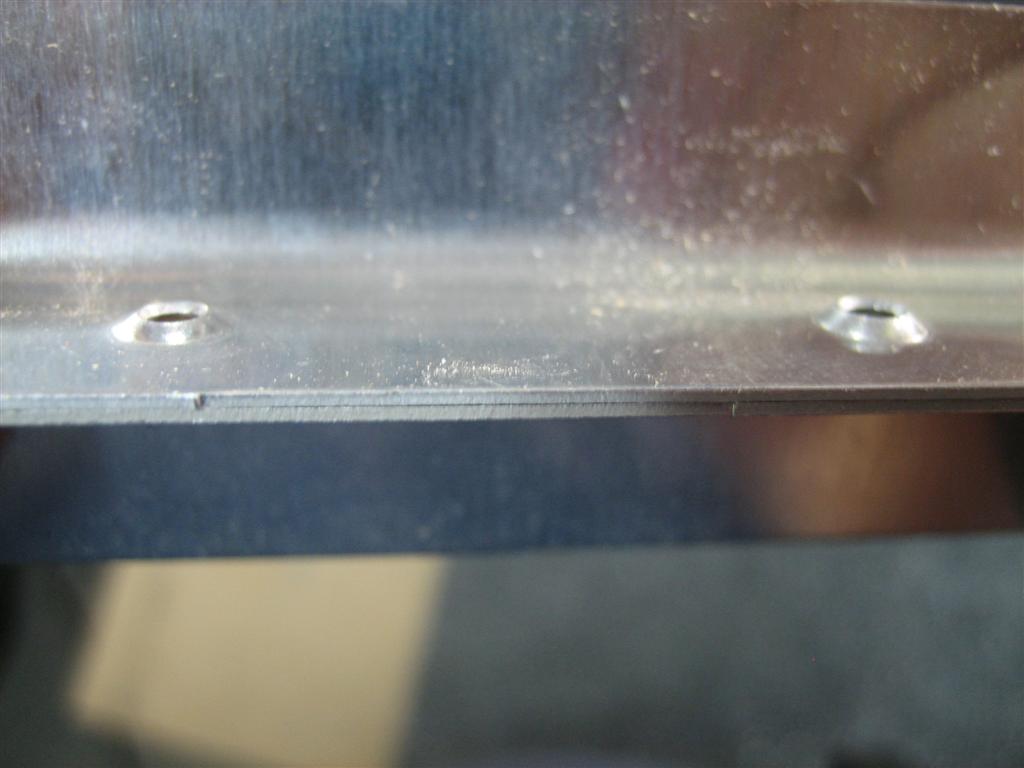
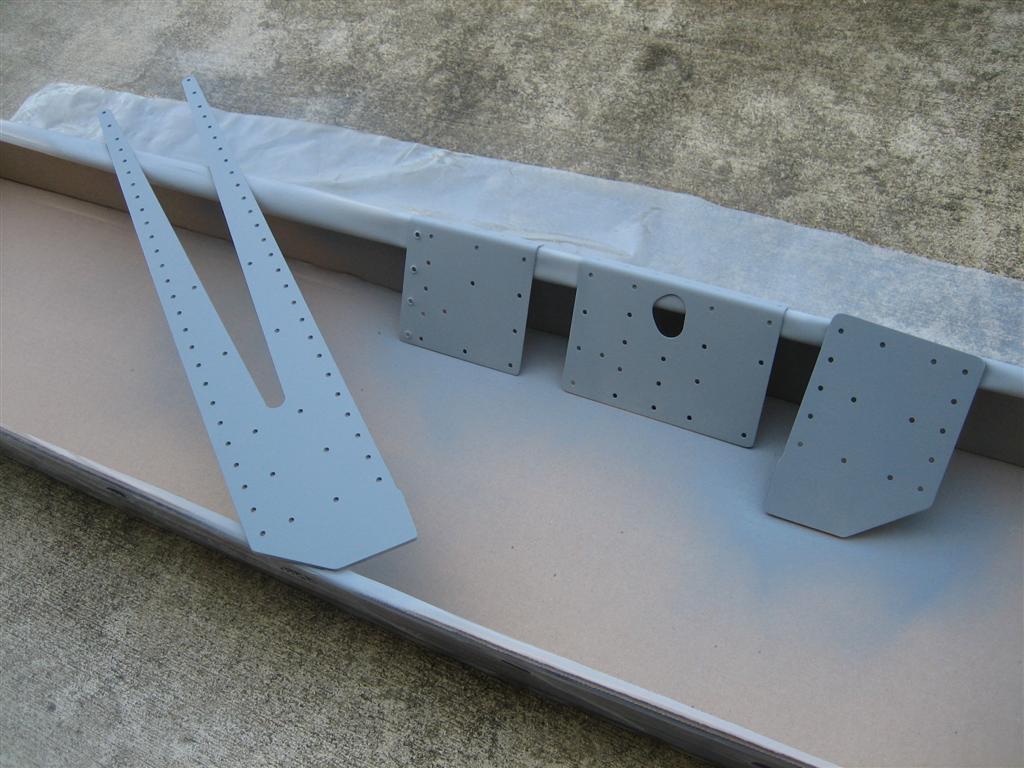
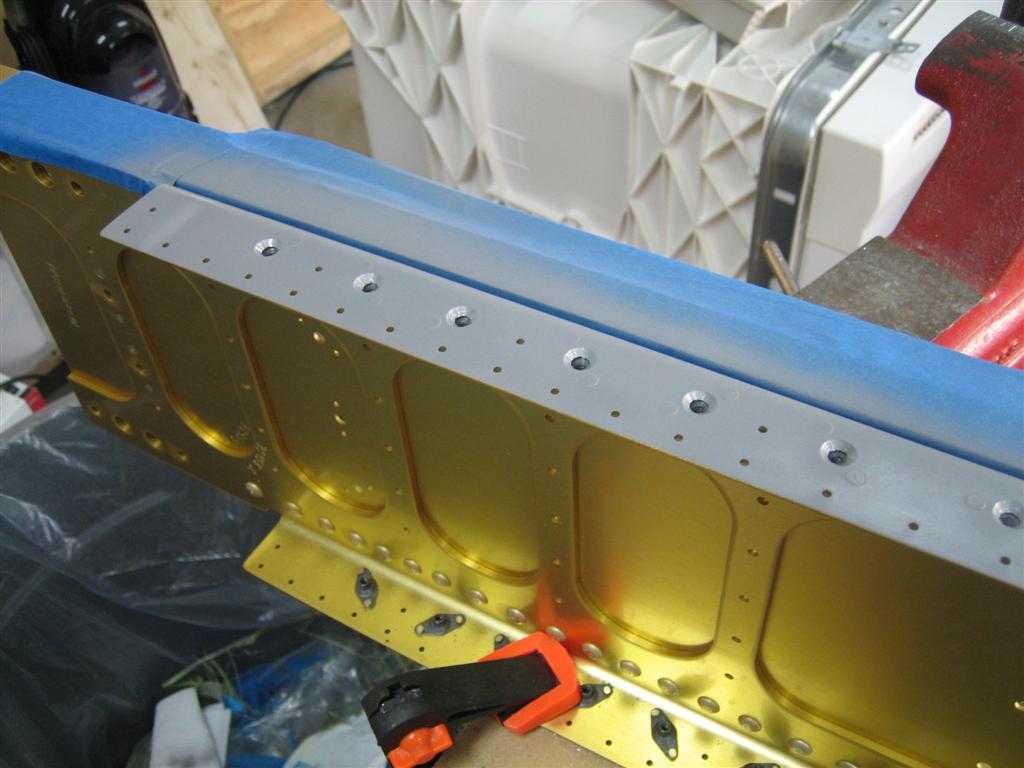
Drilled Right Wing Ribs to Main and Rear Spars

September 29, 2010

Prev | Next

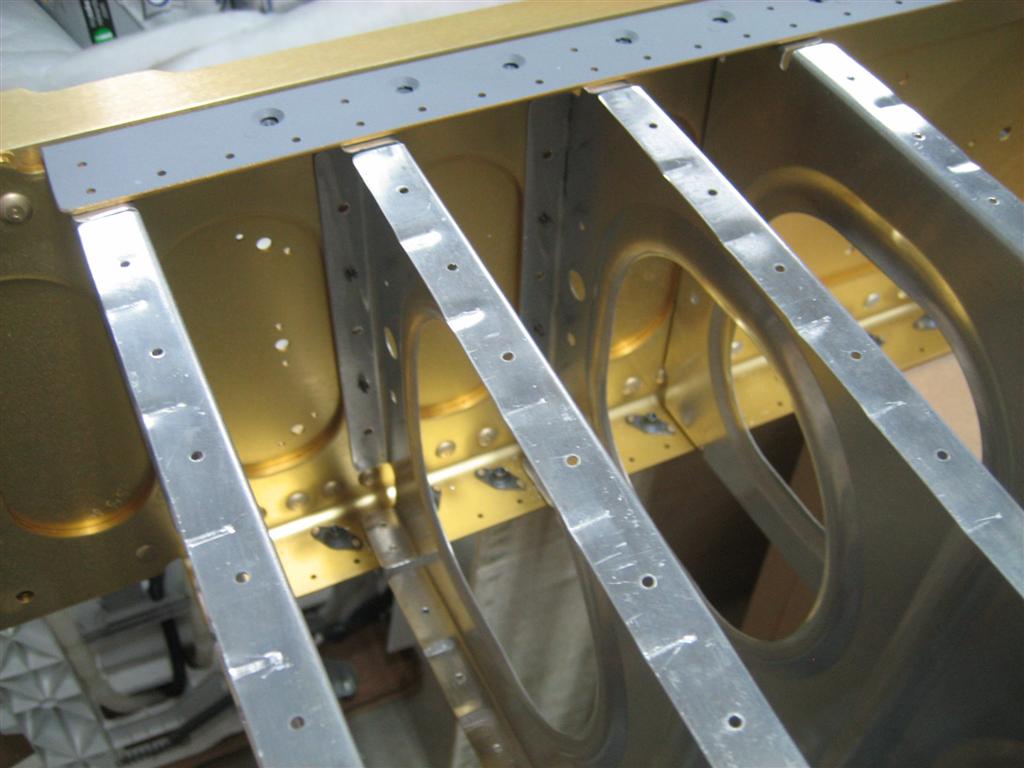
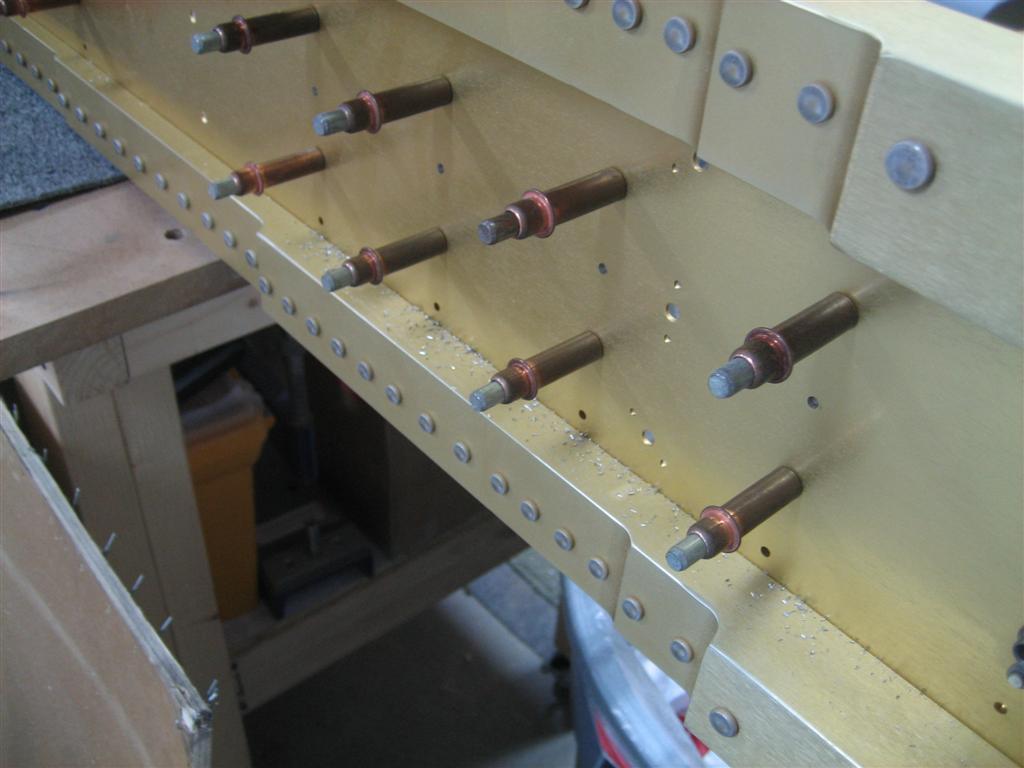
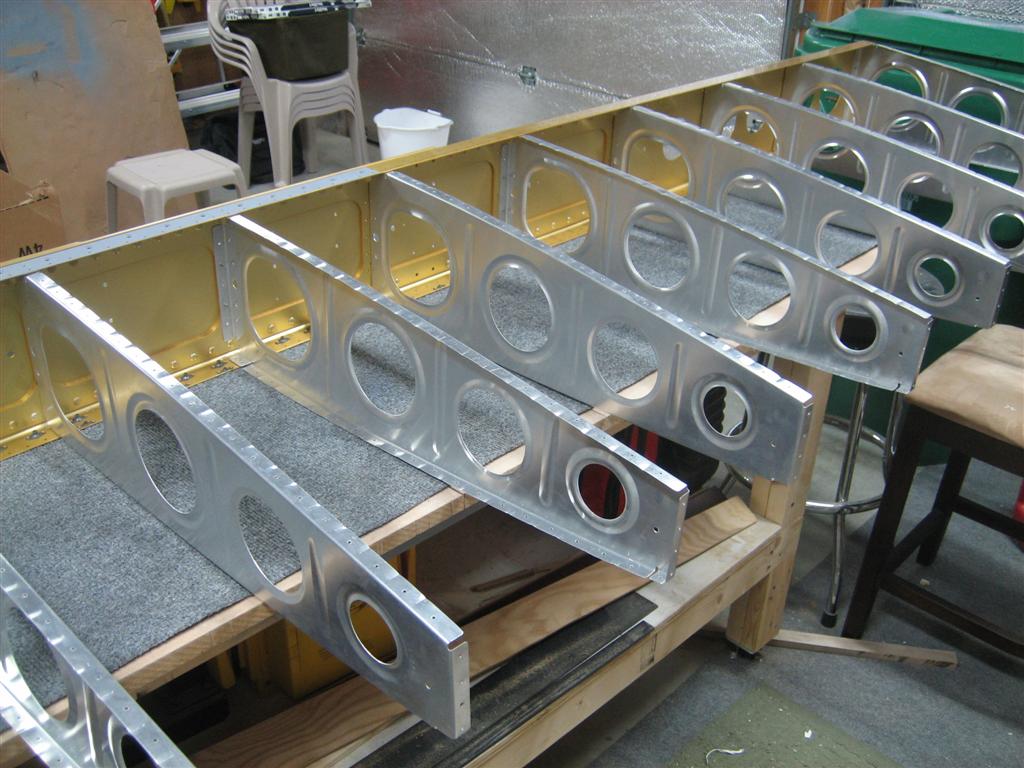
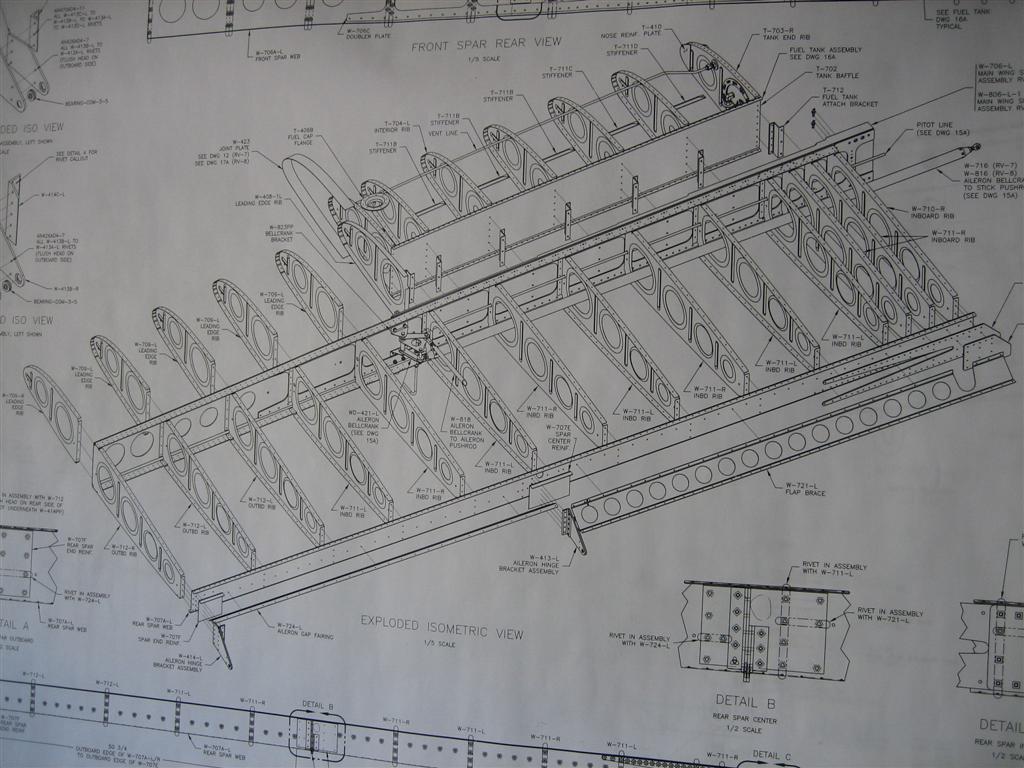
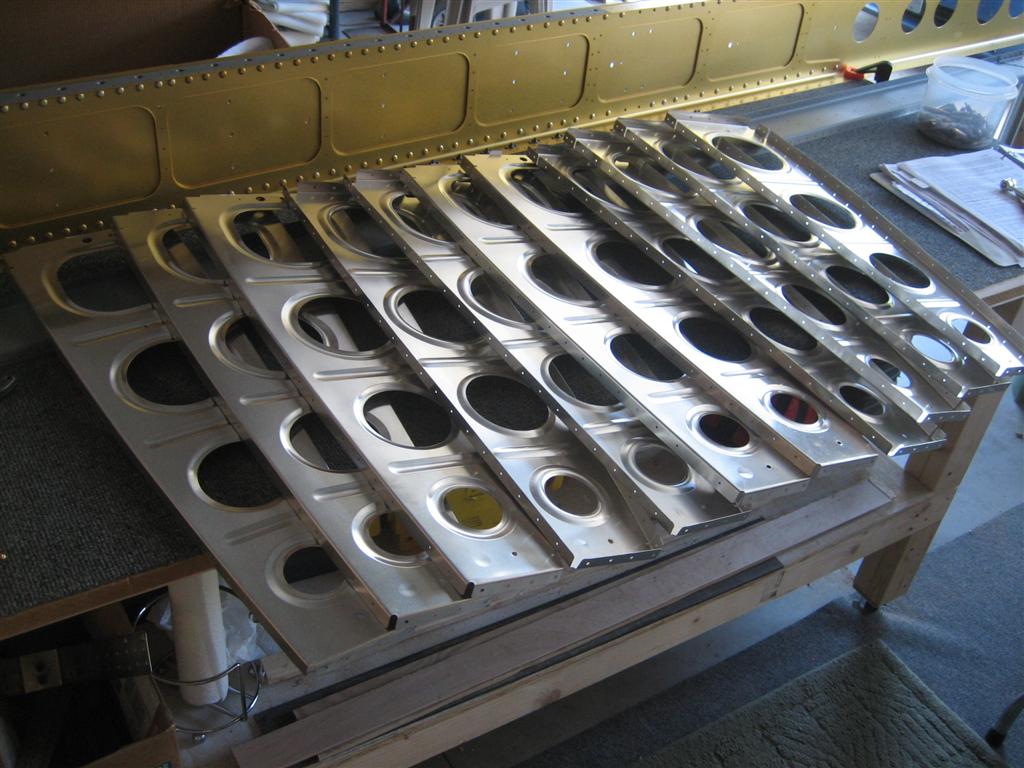
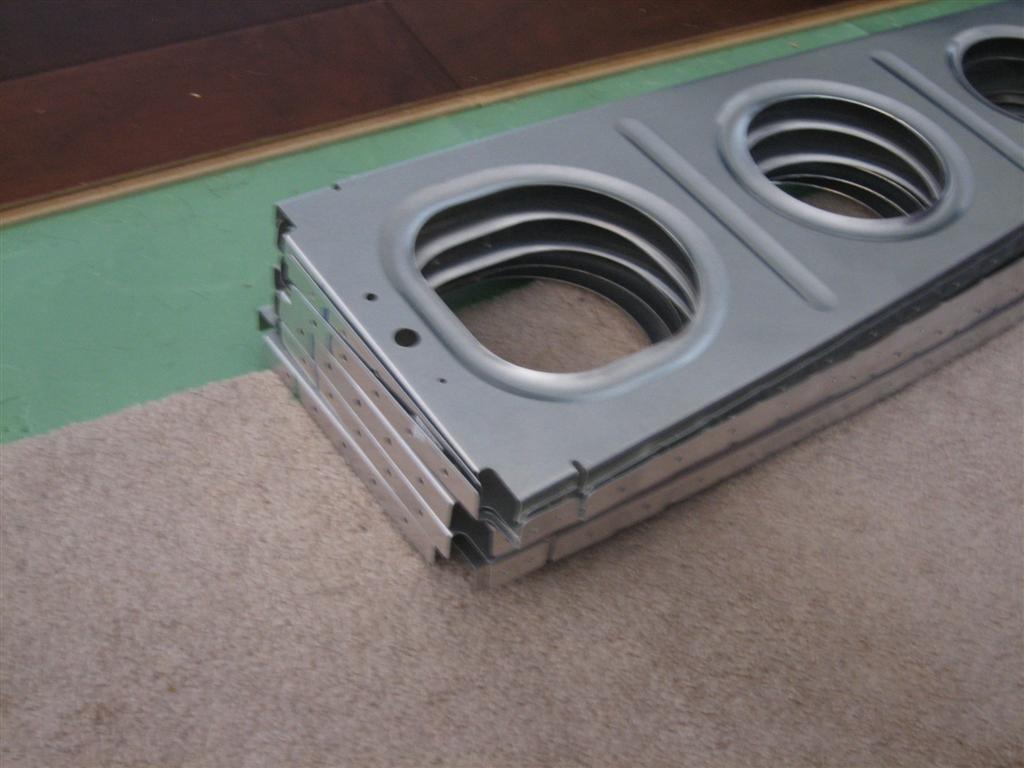
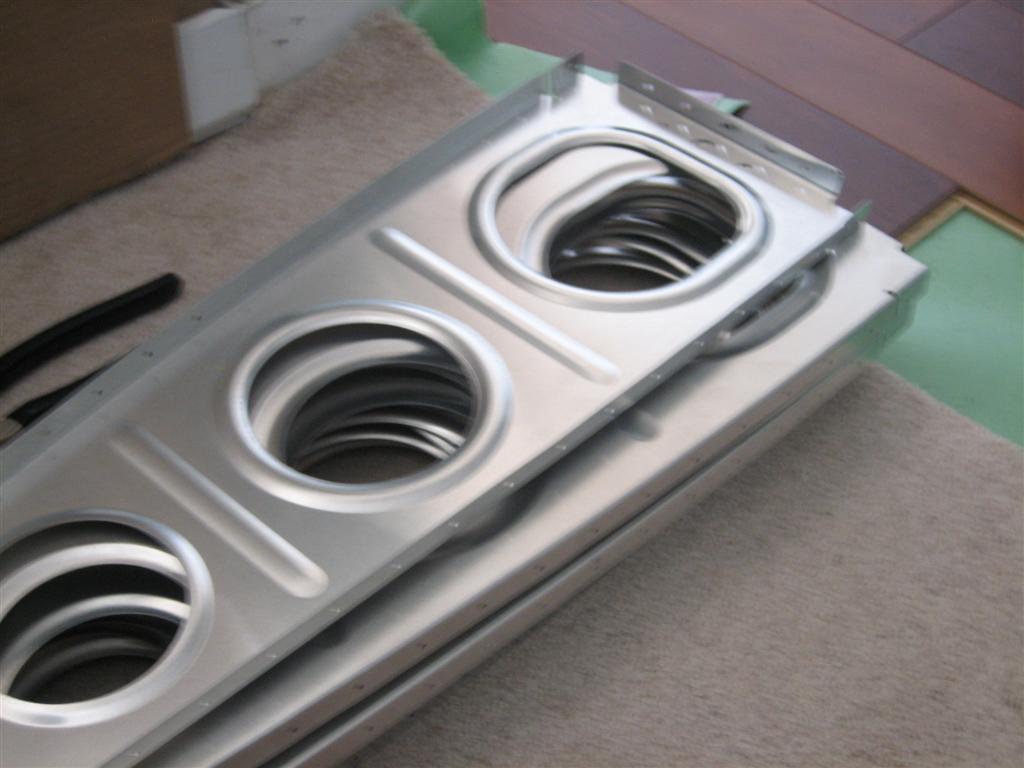
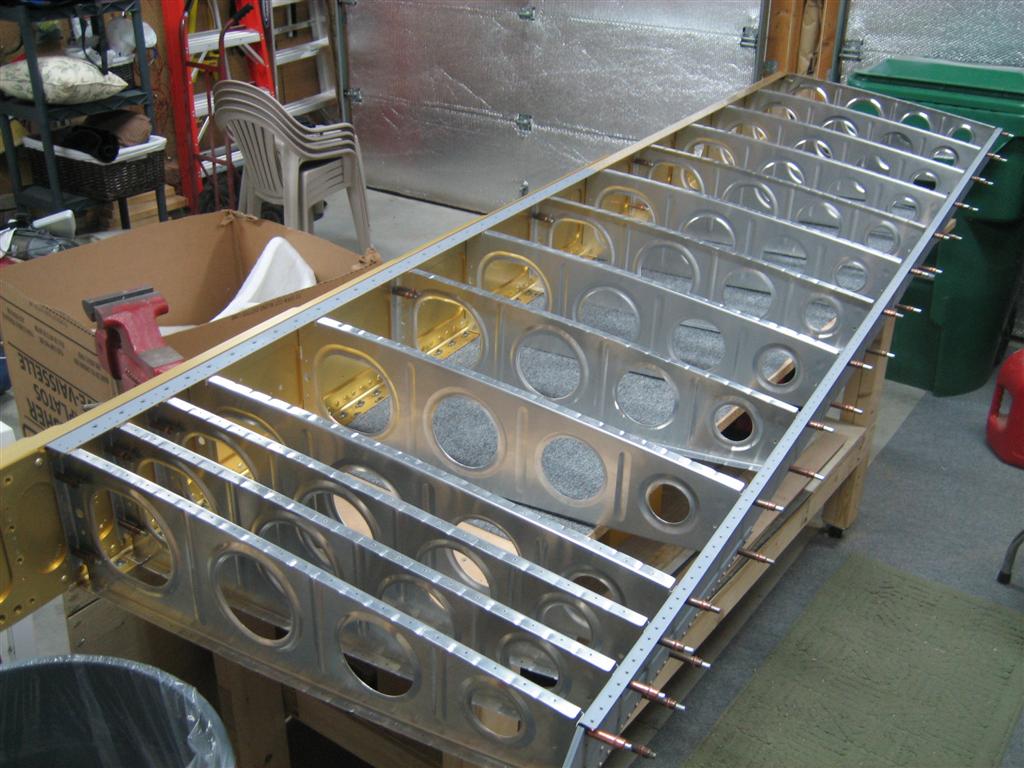
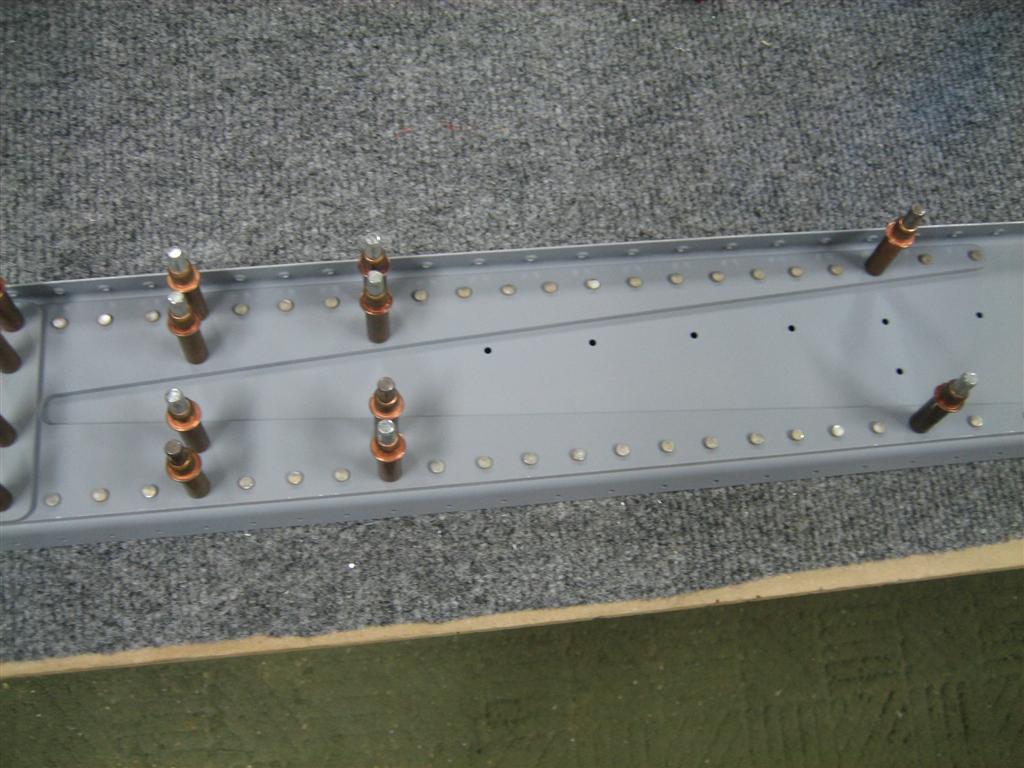
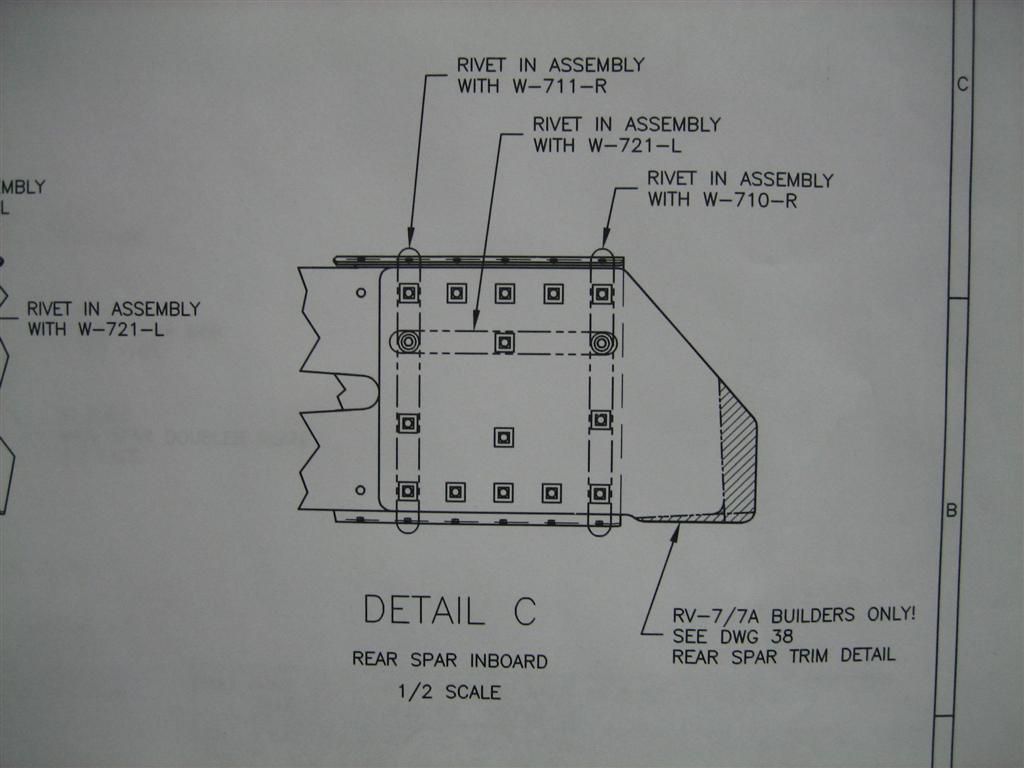
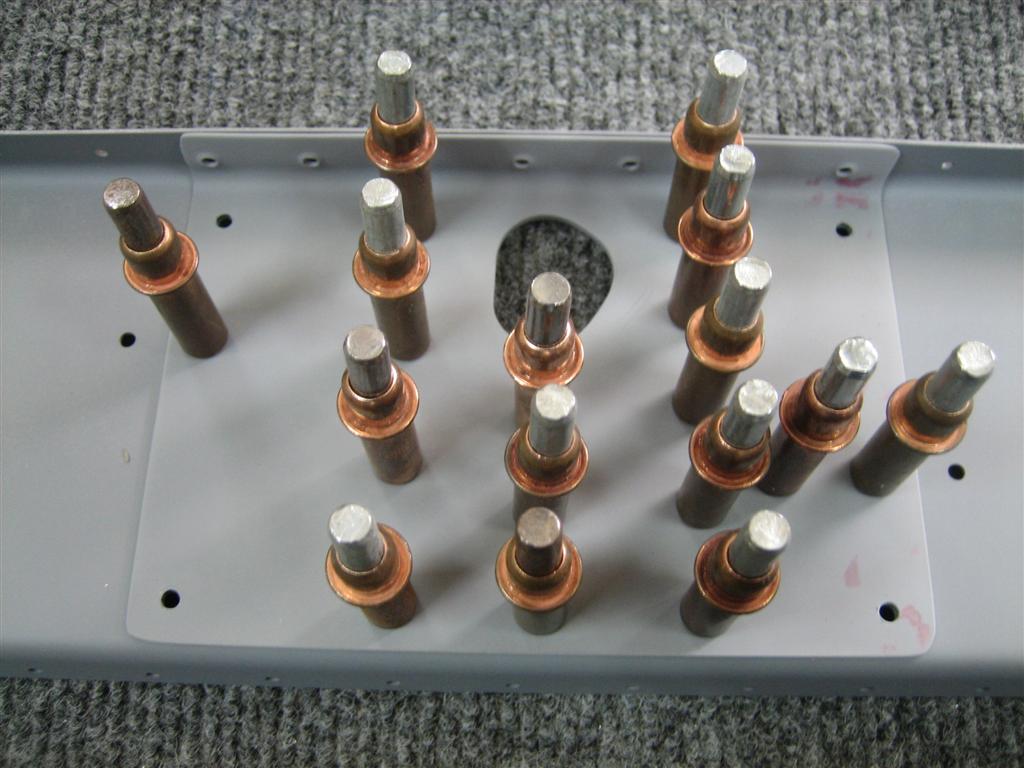
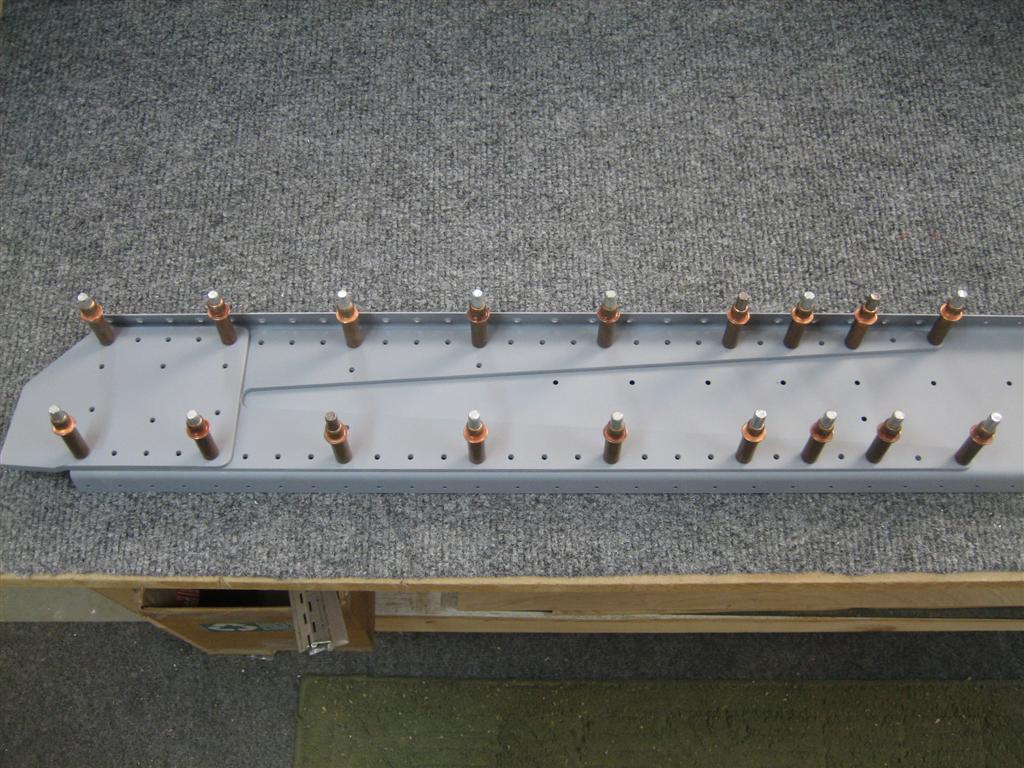
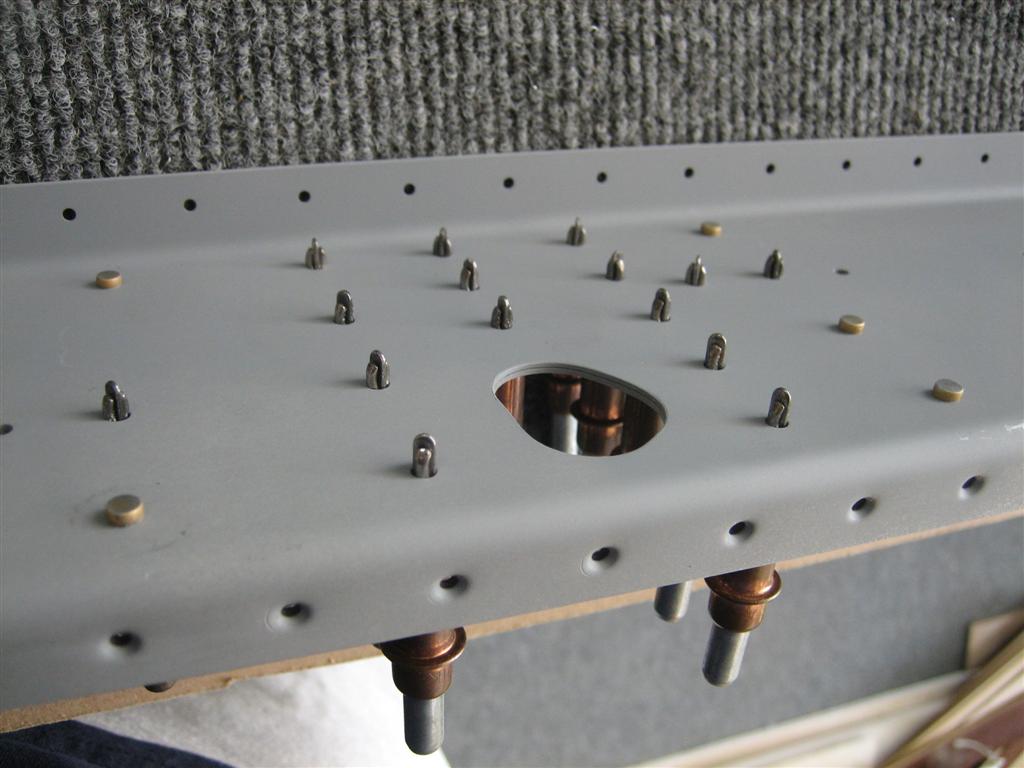
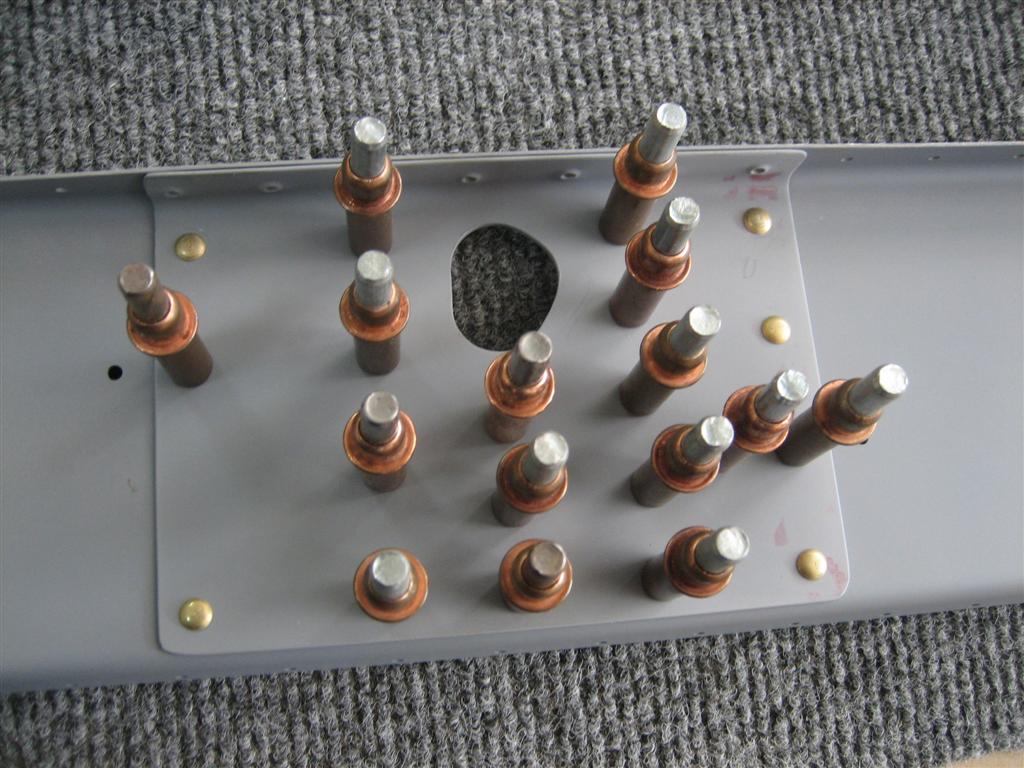
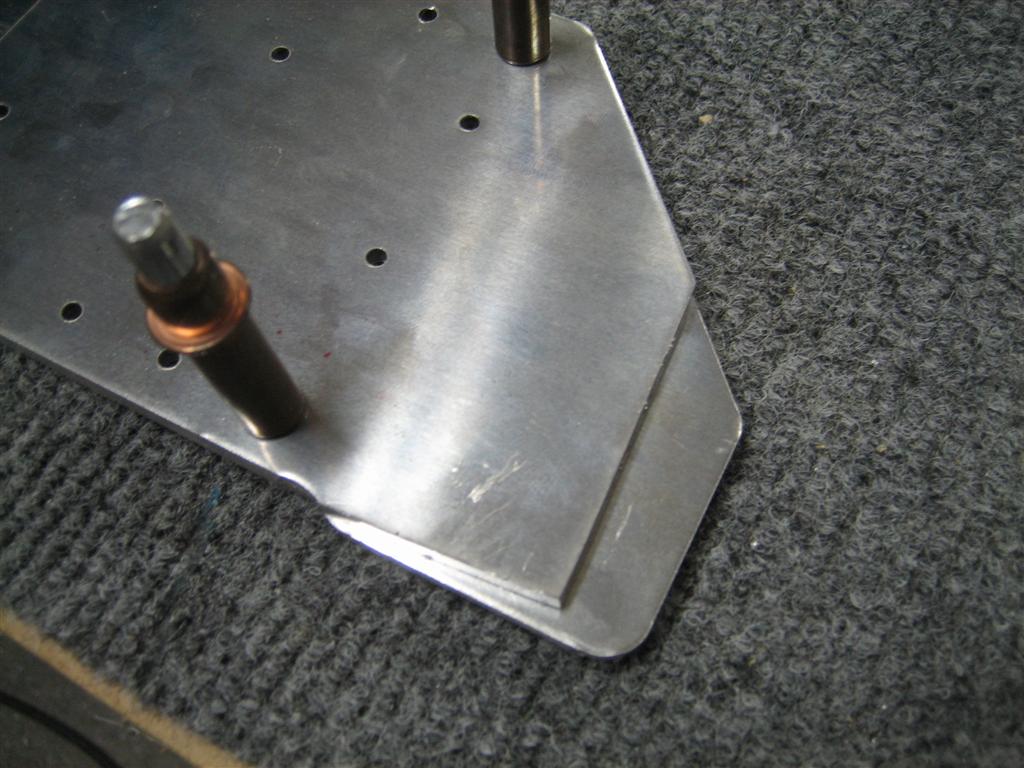
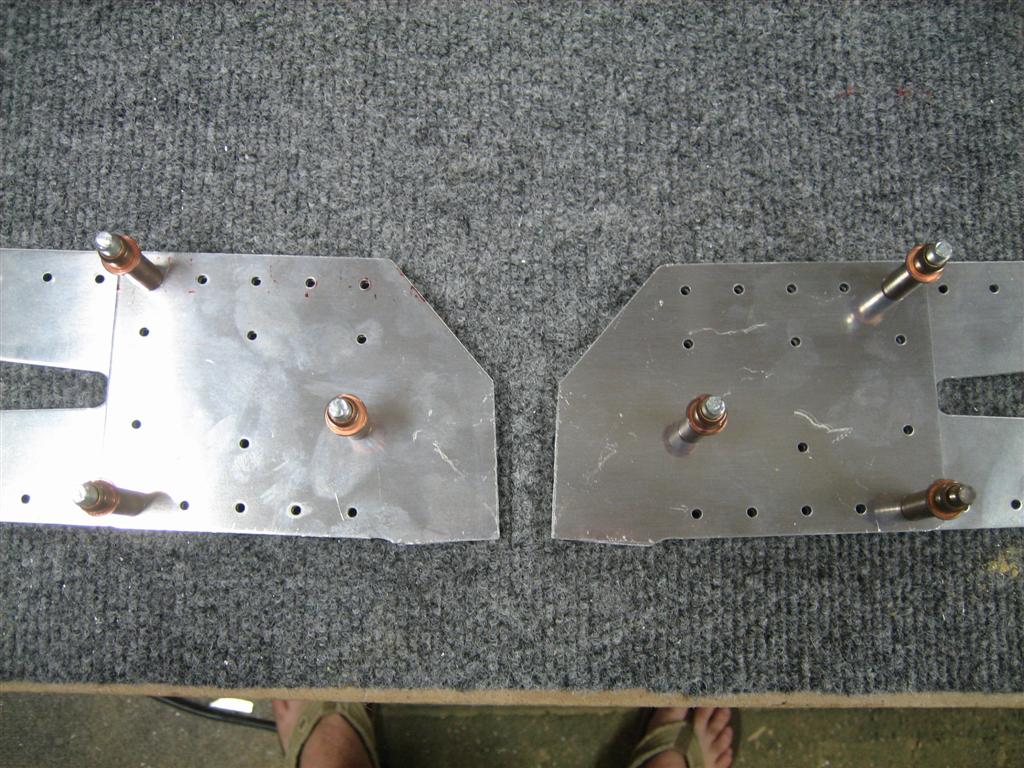
Tonight, I drilled all of the right wing main ribs to both spars. Not a lot of commentary, so I’ll just get to the pictures.

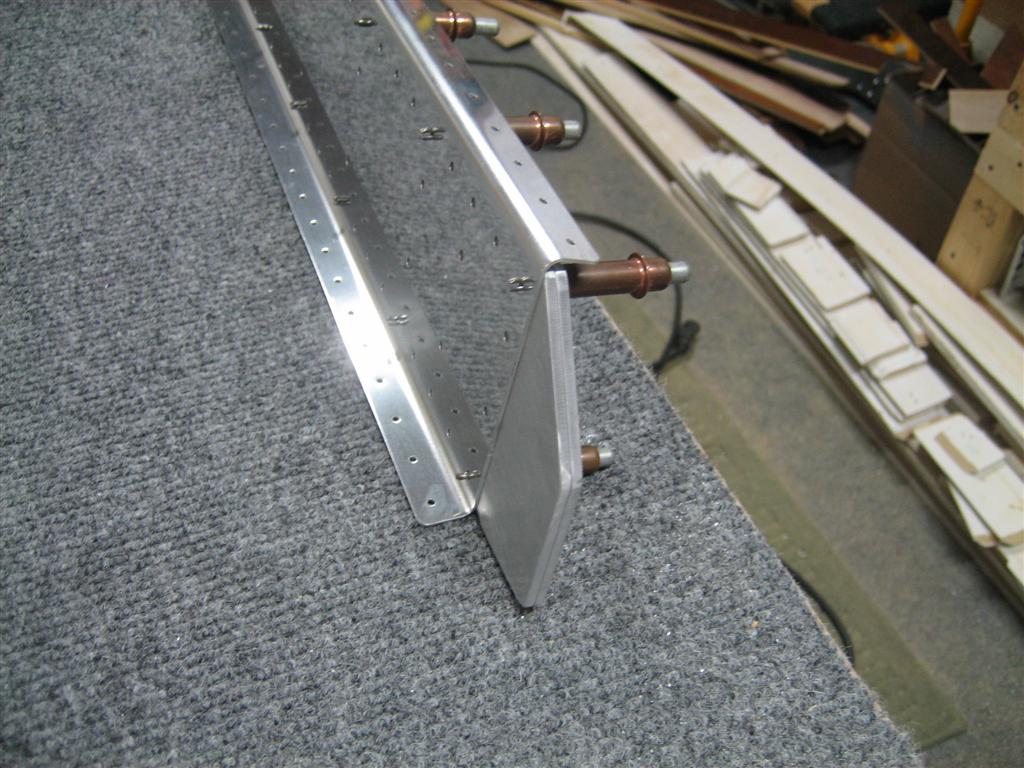
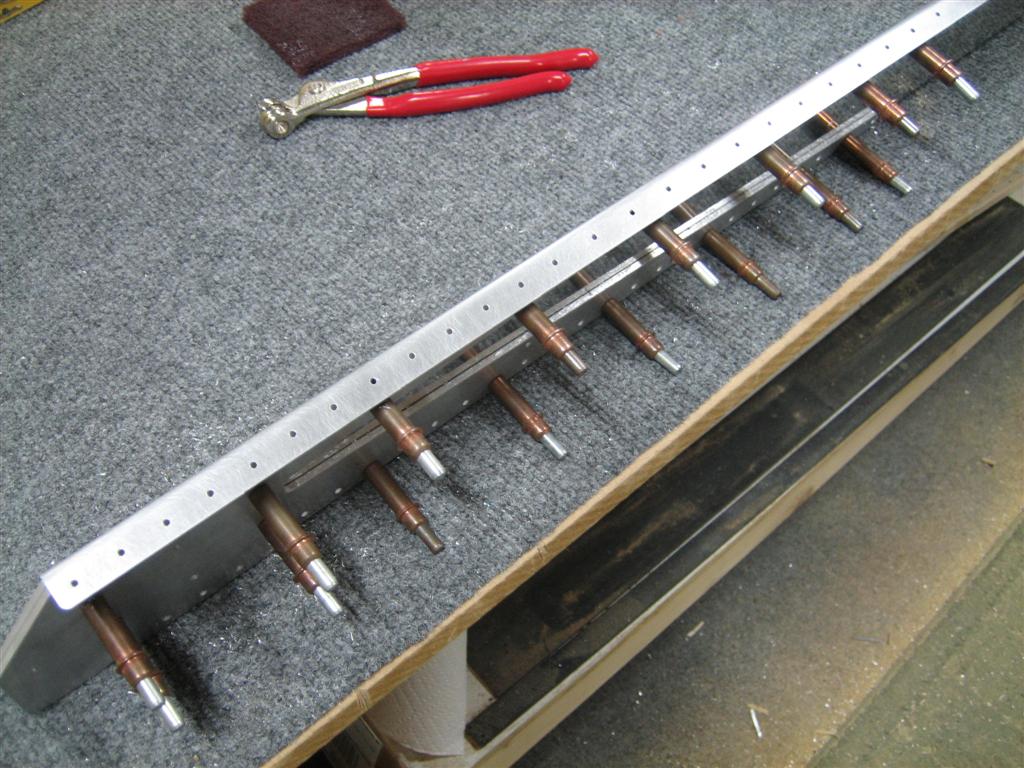
After drilling the middle two rear spar holes for each rib, I moved the clecos into those holes and matchdrilled the upper and lower holes.

Rear spar, looking forward.

Same with the front (although the clecos are in front of the main spar here).

You can just barely see the clecos in the 2nd and 3rd holes of each rib.

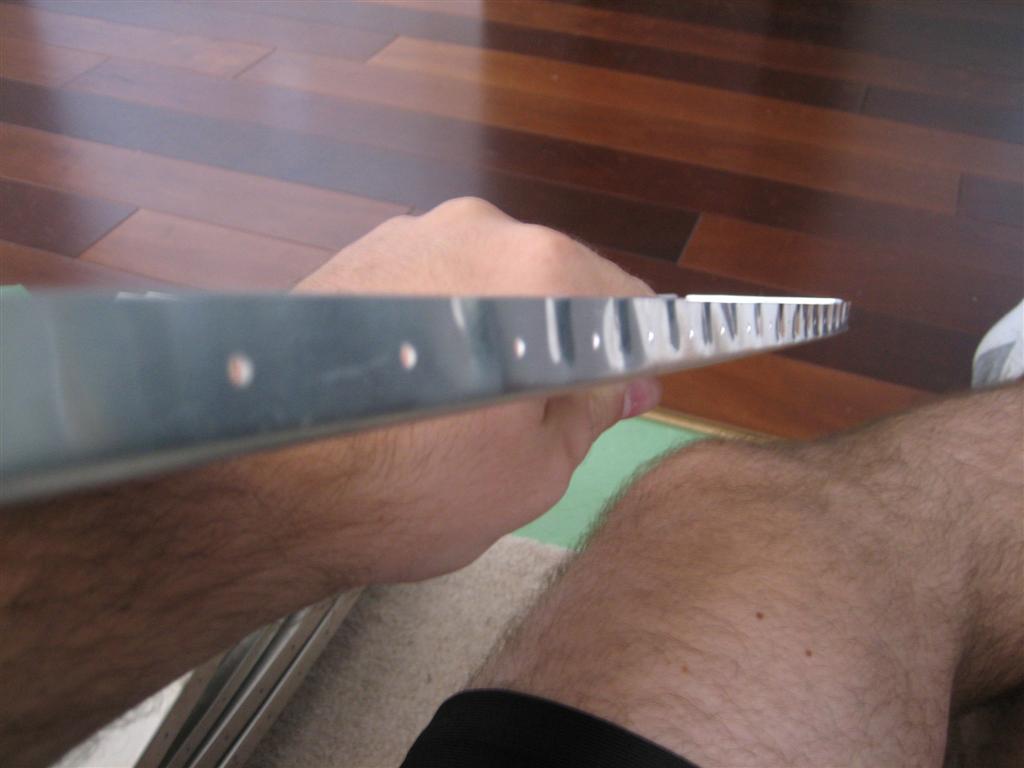
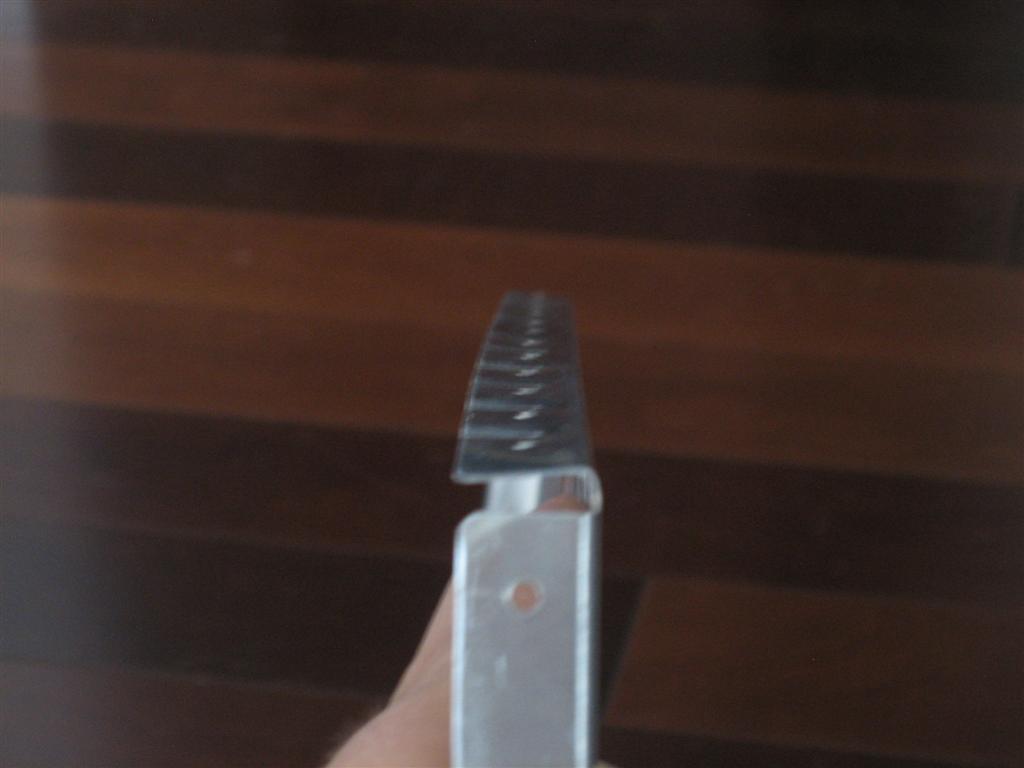
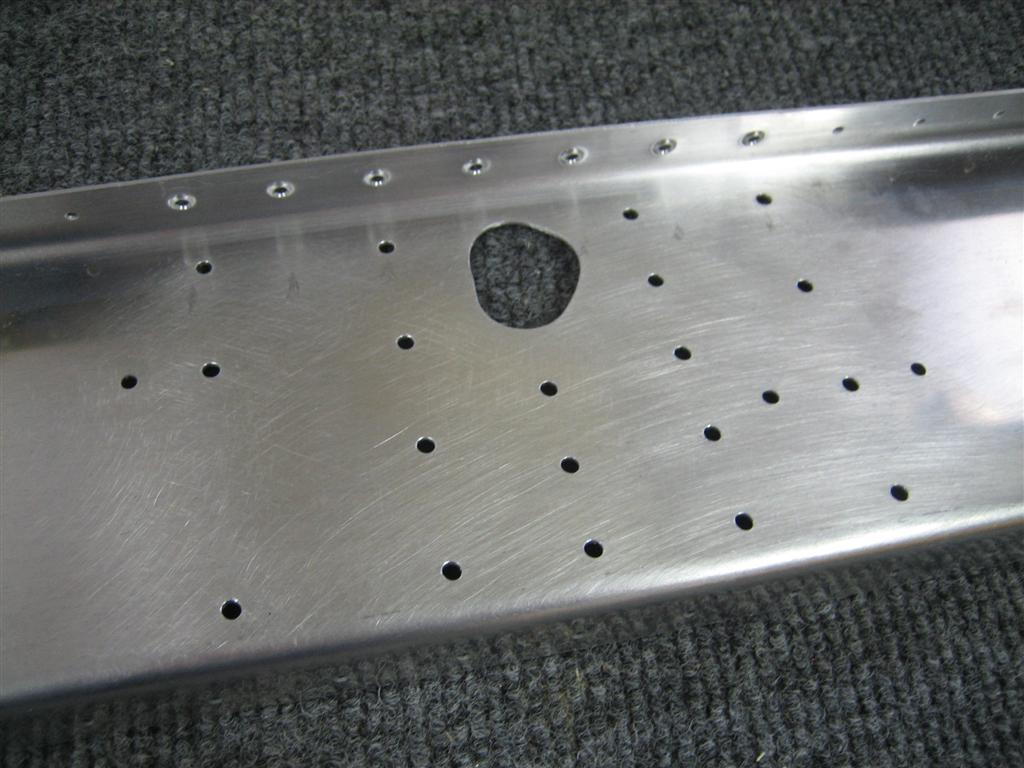
Also, I have a question about some of the flange-to-flange holes. Here’s what I wrote on the forums:

Hello everyone.

I was working on drilling my main ribs to the main and rear spar last night, and the instructions say “drill all of the rib to spar attach holes.”

Then, they have you take everything apart, deburr, prime, and then rivet the ribs to the spars.

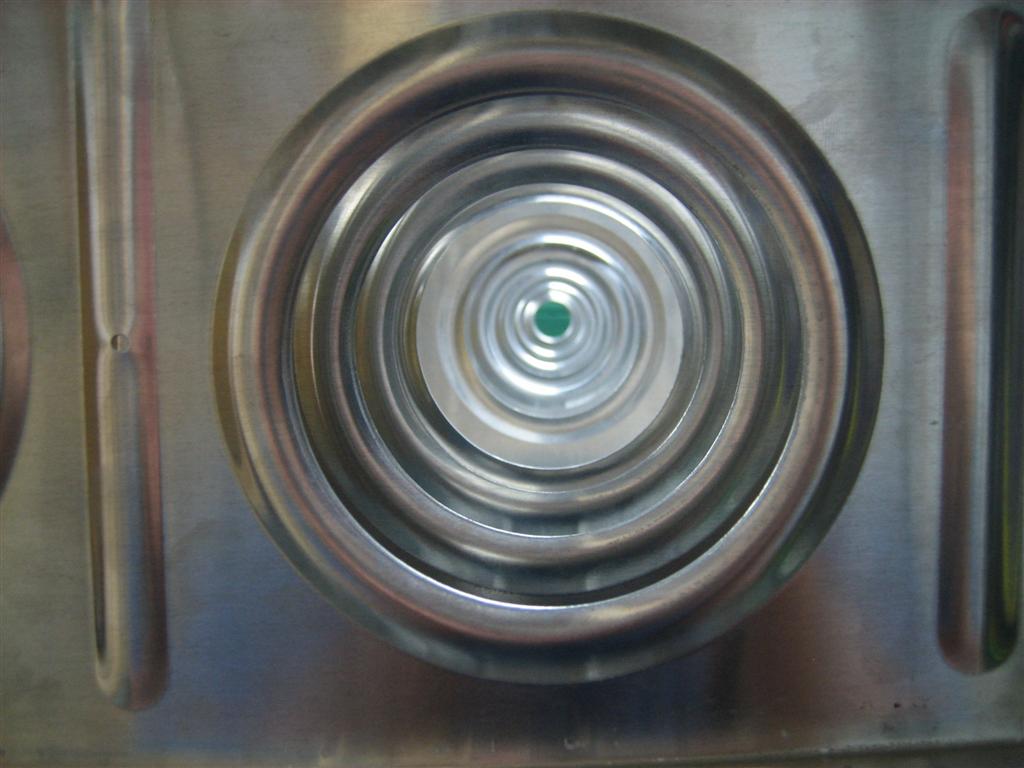
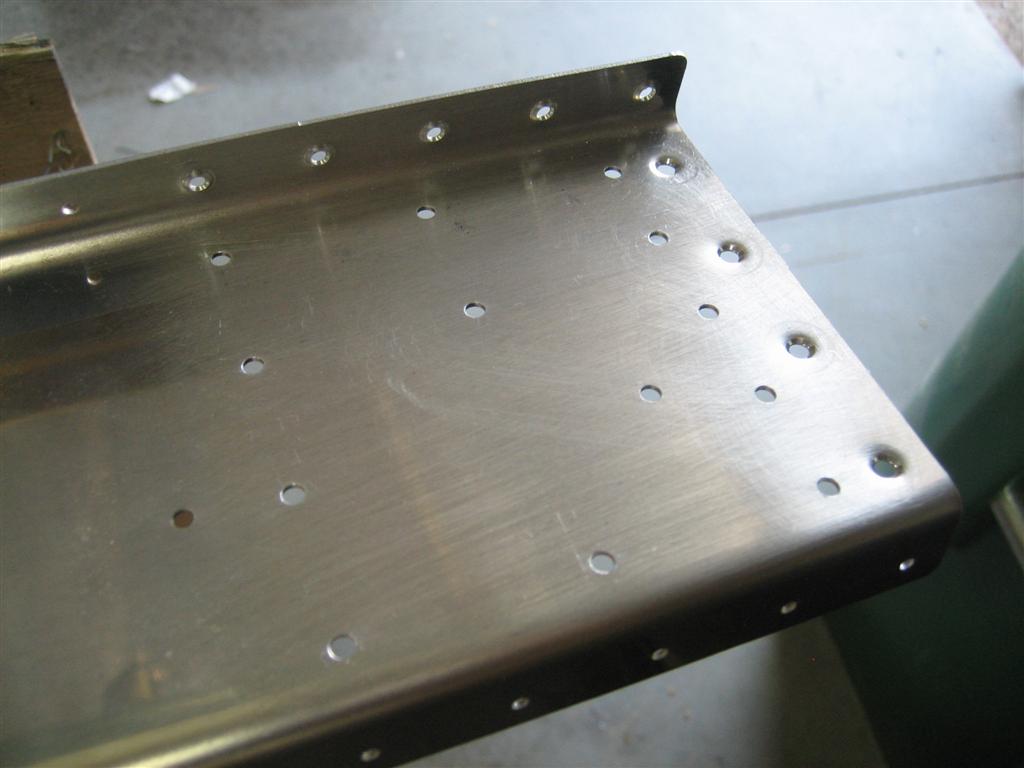
What should I do for the flange to flange holes? (Circled in green below, but there is one more on the ribs for the lower rear spar flange).

If I leave them as is now, I’ll be match-drilling them with the skins later, but then I won’t be able to deburr the holes (because the ribs are now riveted to the spars).

I could run a #40 bit through all of these holes and deburr before assembly. (I could also dimple the rear spar ones, since they will eventually be dimpled to accept the skin dimples.

Any thoughts?

Thanks in advance.

Here's the same picture, but smaller, with green circles.

We’ll see what they say.

Here's a better angle.

Then, I pulled off the rear spar.

(What a sad moment. I have had this clecoed together for a week or so, and every time I go in the garage, there’s a wing! How cool is that? Now, I’m back to rib deburring (or catching up on the left wing). Not as exciting as a wing skeleton.)

After taking the rear spar off.

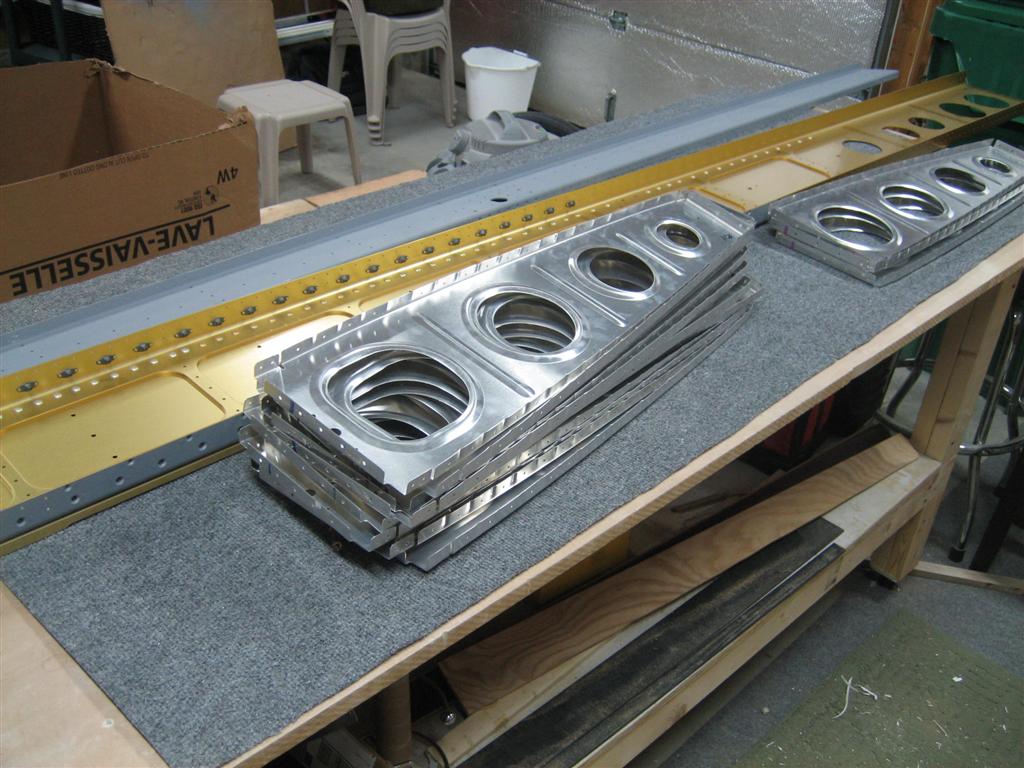
Everything taken apart for the night.

I can’t believe that took me an hour.

Prev | Next


Leading Edge/Tank Cradle, Right Tiedown Bracket

September 28, 2010

Prev | Next

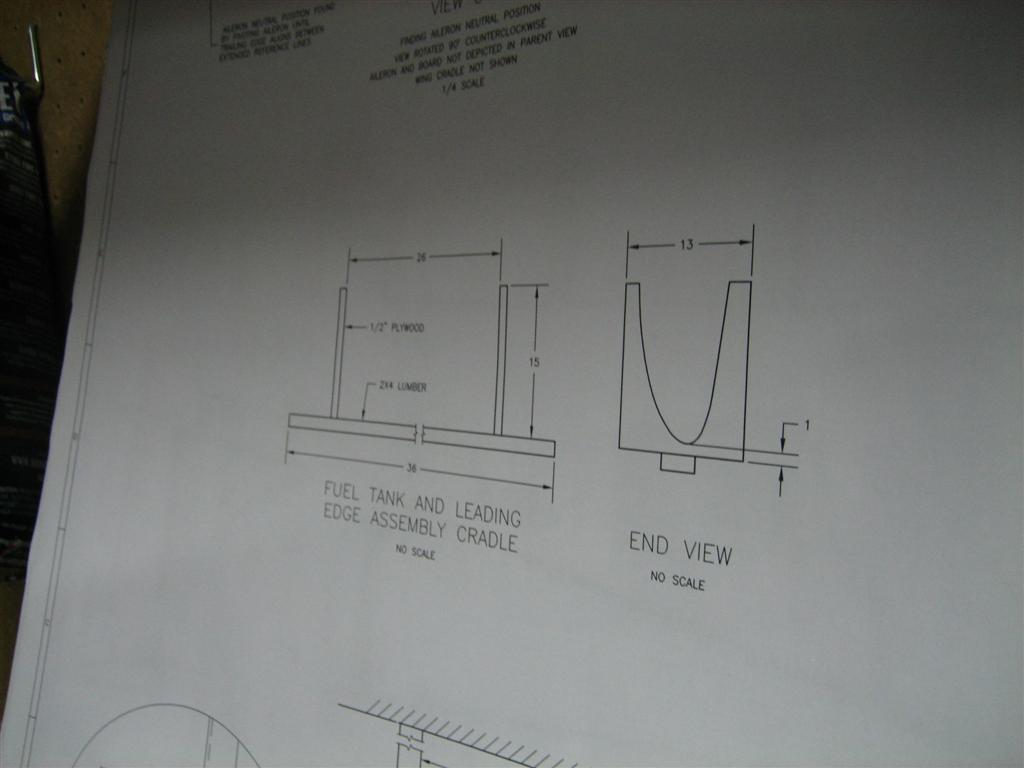
A few days ago I had the circular saw out, and I saw (pun intended) a 16″ wide piece of 3/4″ MDF sitting around, so I took a quick look at the plans, and decided that 16″ x 16″ might be a good starting point for the leading edge/tank assembly cradle.

The plans (second picture down) show 13″ x 15″, but I’ve heard that some people break the cradle at the thinnest point.

Anyway, it took me all of 30 seconds to cut the 2 big square pieces and the four triangular pieces also pictured.

Tonight, I pulled those out for assembly (a quick night in the shop).

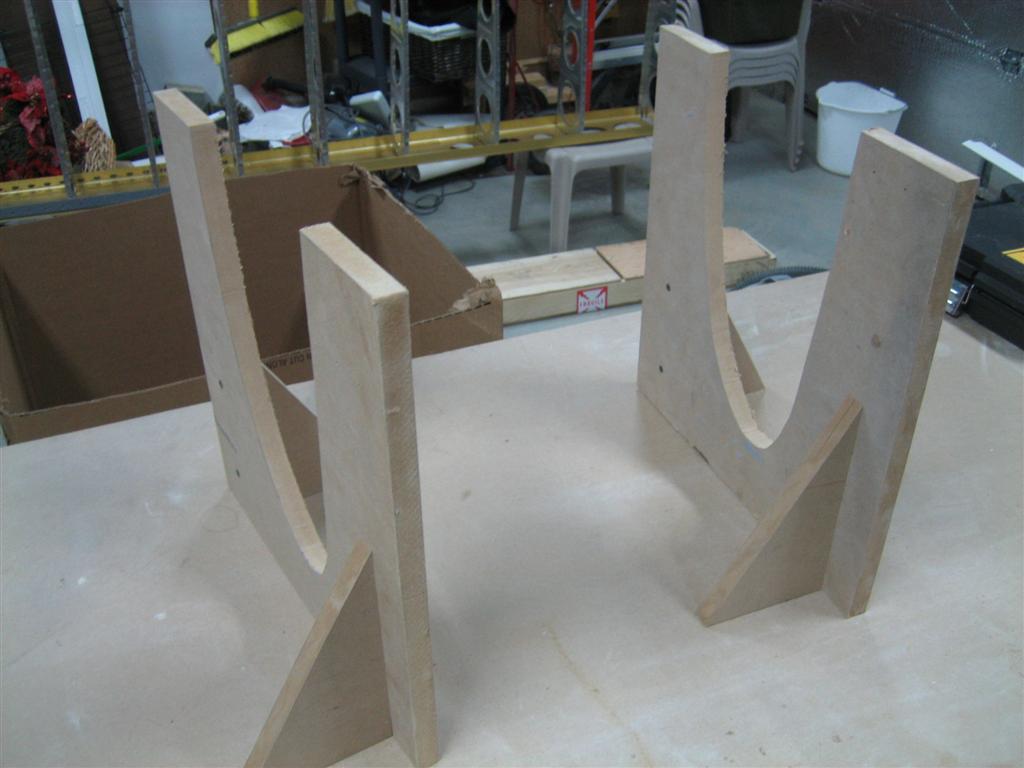
16" x 16" cradle walls, with 4 triangular supports.

Van's wants you to mount them on a 36" long 2x4, but I decided to go another route. Read on.

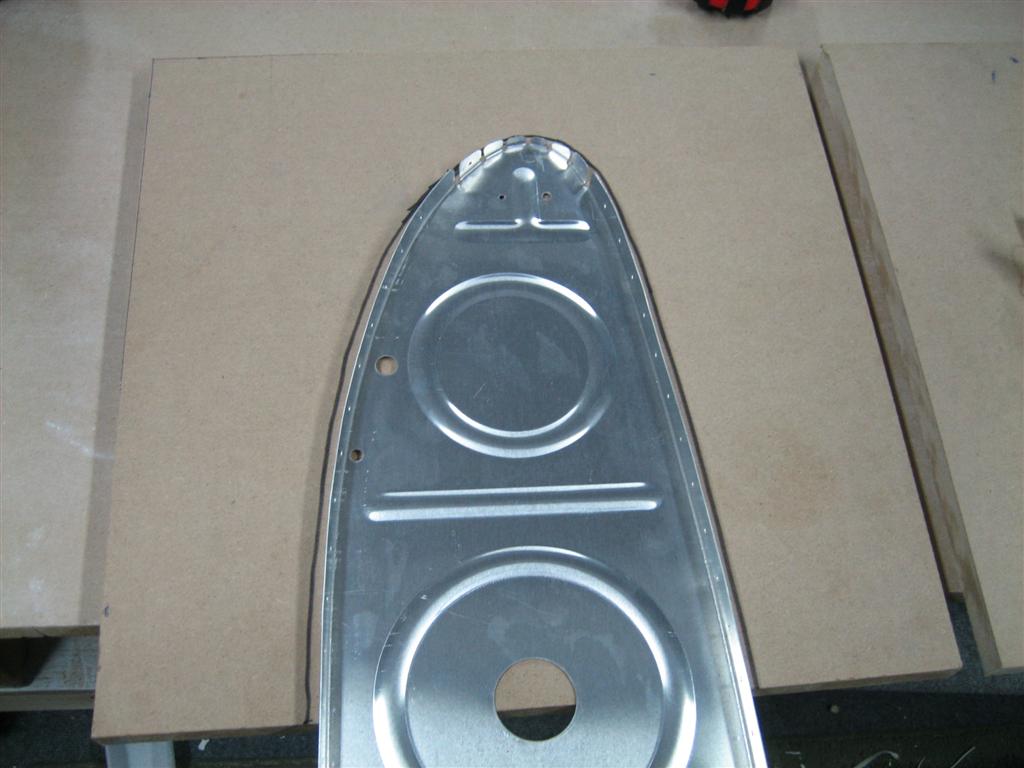
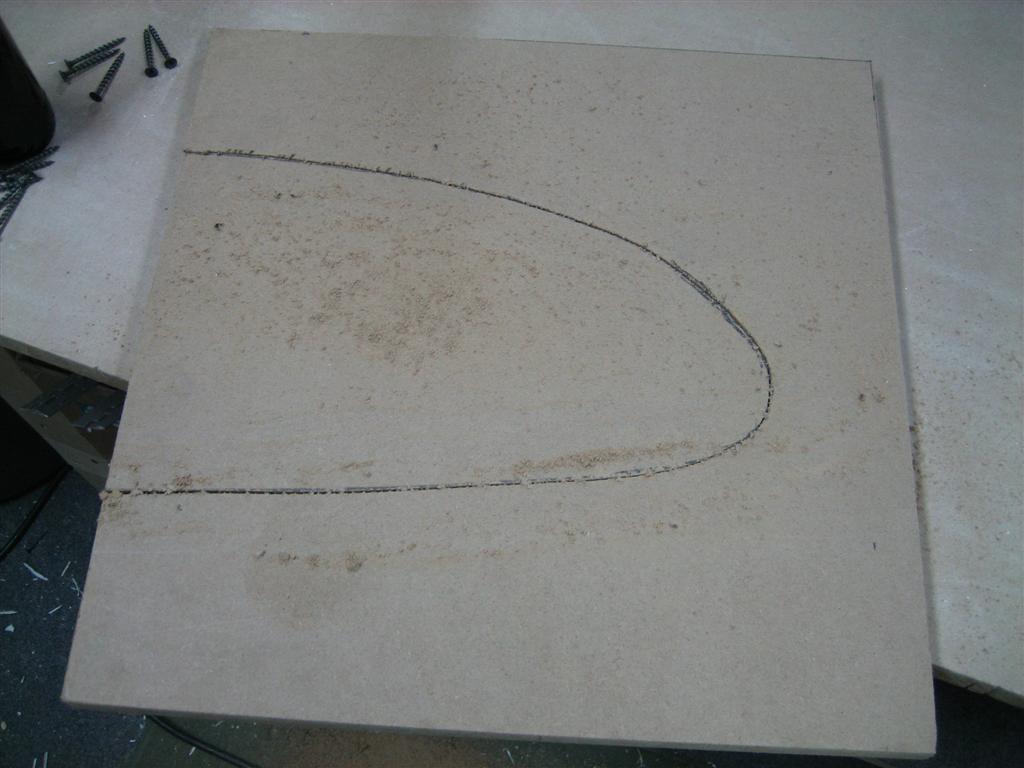
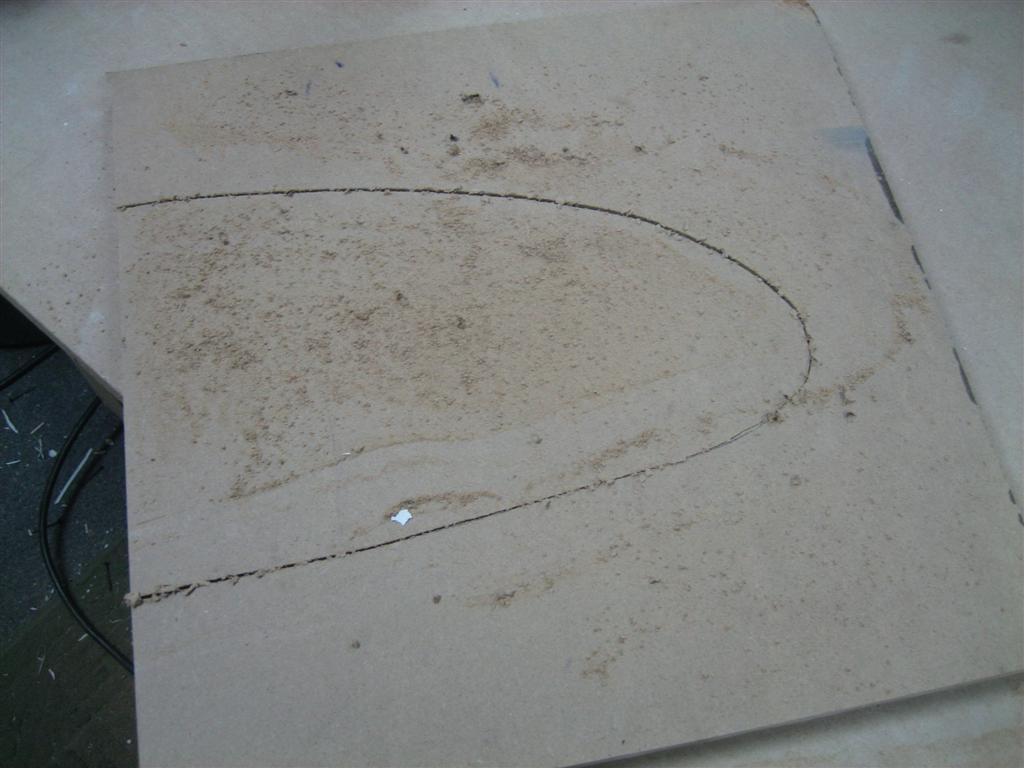
I used a thick magic marker to offest from a tank rib (room for pipe-insulation to protect the skins).

After the cut.

Tada!

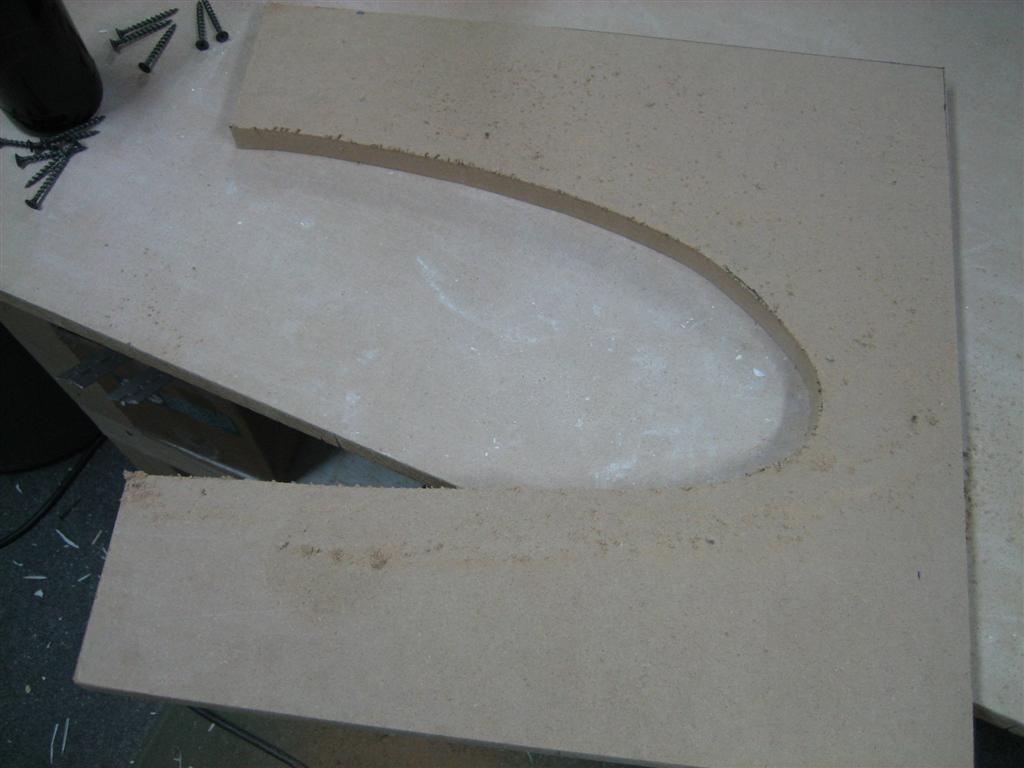
After the cut. (Déjà vu)

Tada! (Déjà vu)

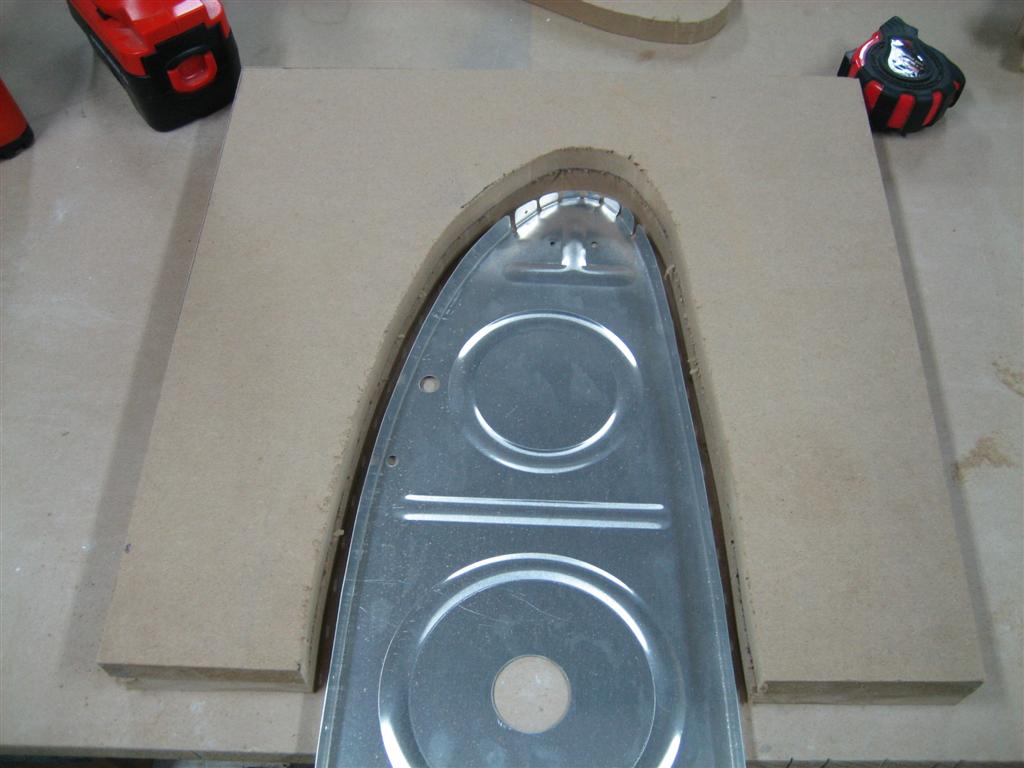
After both were cut out with the jigsaw, I laid (layed? Em, help me out here) the tank rib into the cutout to make sure I had offset the cuts enough.

Looks good to me.

So, here’s an expplanation of my “alternate route”.

Because Van’s specifically states that this just helps in assembly, and is not an alignment jig, I decided I didn’t really need to take up a lot of space with a 3 foot wide cradle that would undoubtedly get in the way. Instead, I am making the two halves of the cradle independently, and will use them (approximately 3 feet apart). I also figured they would be stable enough with one of these triangular pieces on each side, which they were.

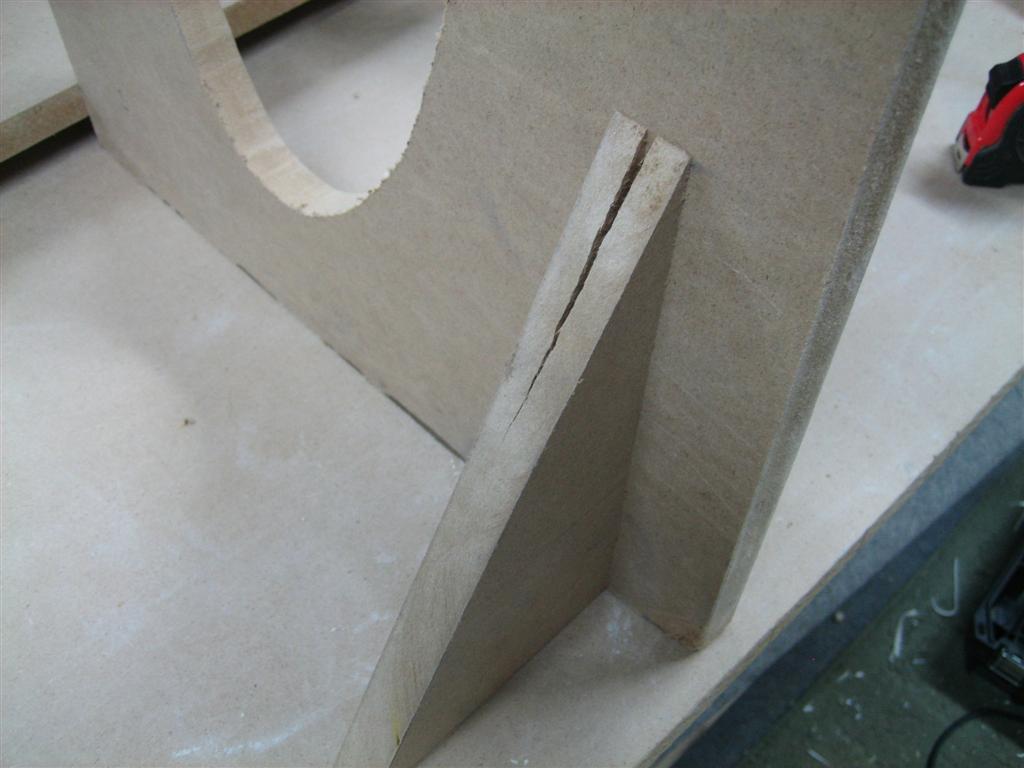
I predrilled the cradle, but not the gusset, and it cracked as I assembled with some coarse-thread drywall screws. Bummer (I never thought I would put a picture of my crack on the internet.)

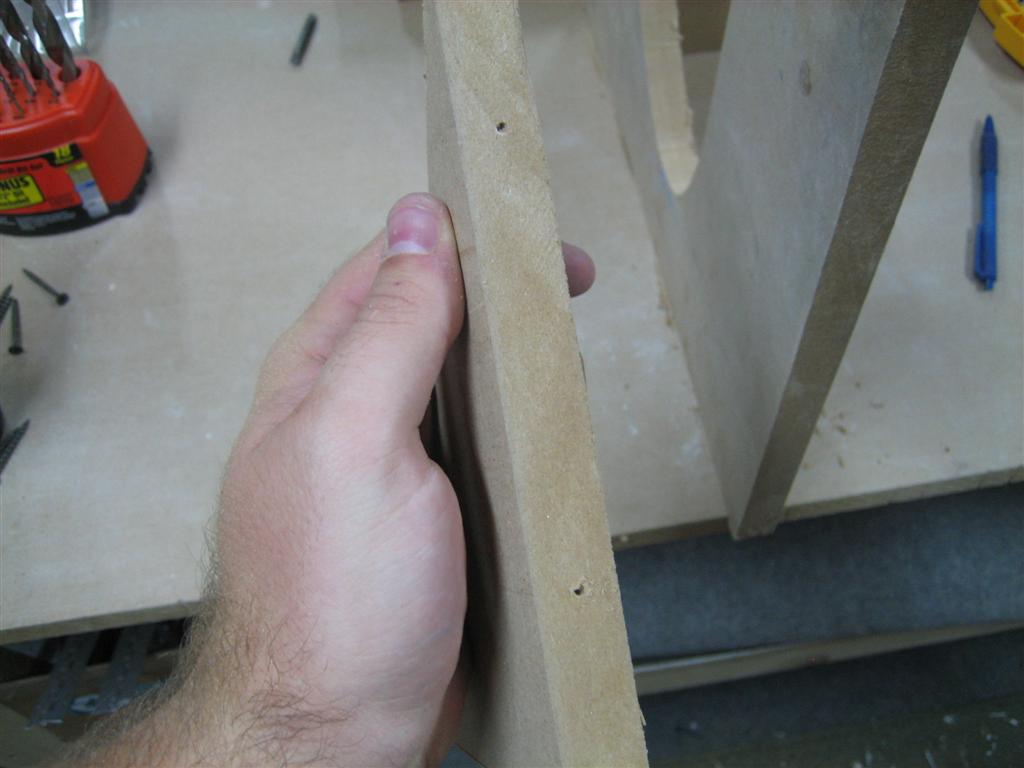
For the other ones, I pre-drilled the gusset, too.

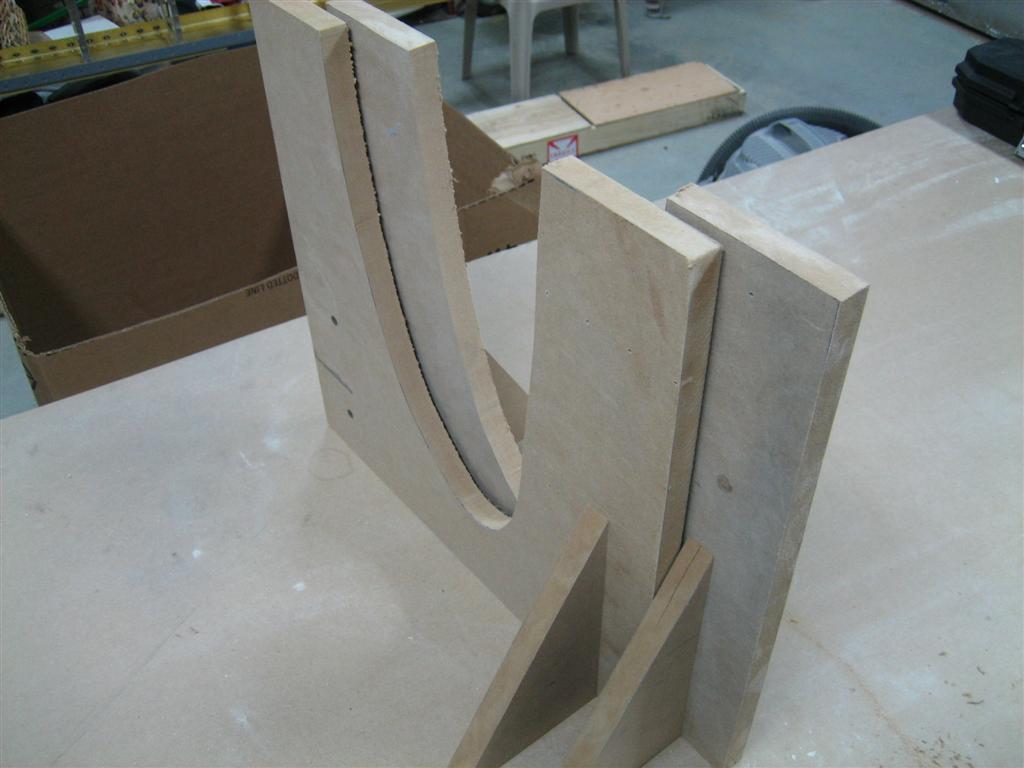
After everything was all said and done, I am pretty happy with them (damn crack!).

I need to grab some pipe insulation to protect the skins.

Best part, they nest nicely for storage before (and after) use.

Then, I looked around for something I could get done with the half hour of attention and “eyelids-open” time I felt I had left.

I shot a quick coat of primer on the right tiedown bracket (and spacers), and then waited for the first sides to dry before flipping them over and hitting the other side.

While the whole thing dried, I needed something else to do, so I grabbed the  T-715 Anti-Rotation brackets (which come all connected like the old plastic models used to. Remember you had to use a pocket knife to cut off the little tabs after bending and twisting one model piece from the rest of the pieces.)

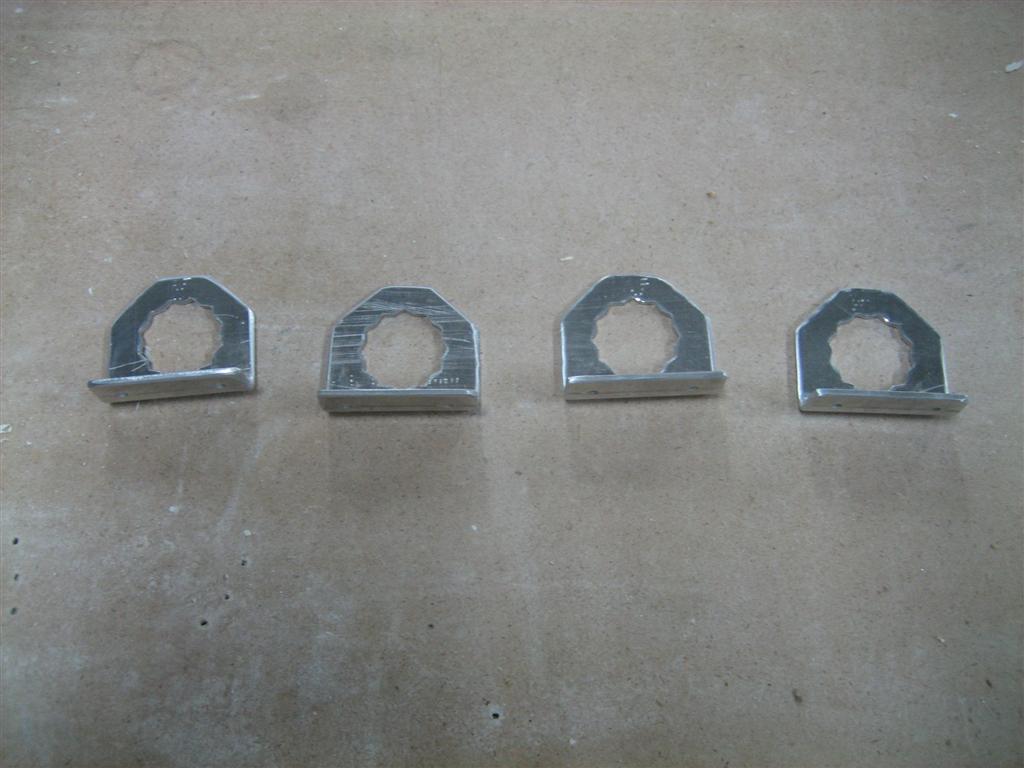
Anyway, after getting them apart, I edge finished all four on the scotchbrite wheel. Maybe 10 minutes, and for the record, I am going to log this time under Spars, because I’m waiting for the tiedown brackets to dry. I don’t feel like adding an entry under tanks just yet.

When it is years and years from now, and you ask me how my hours it took me to finish my tanks, and I say “xx hours,” remember to add 10 minutes to that to get the real answer.

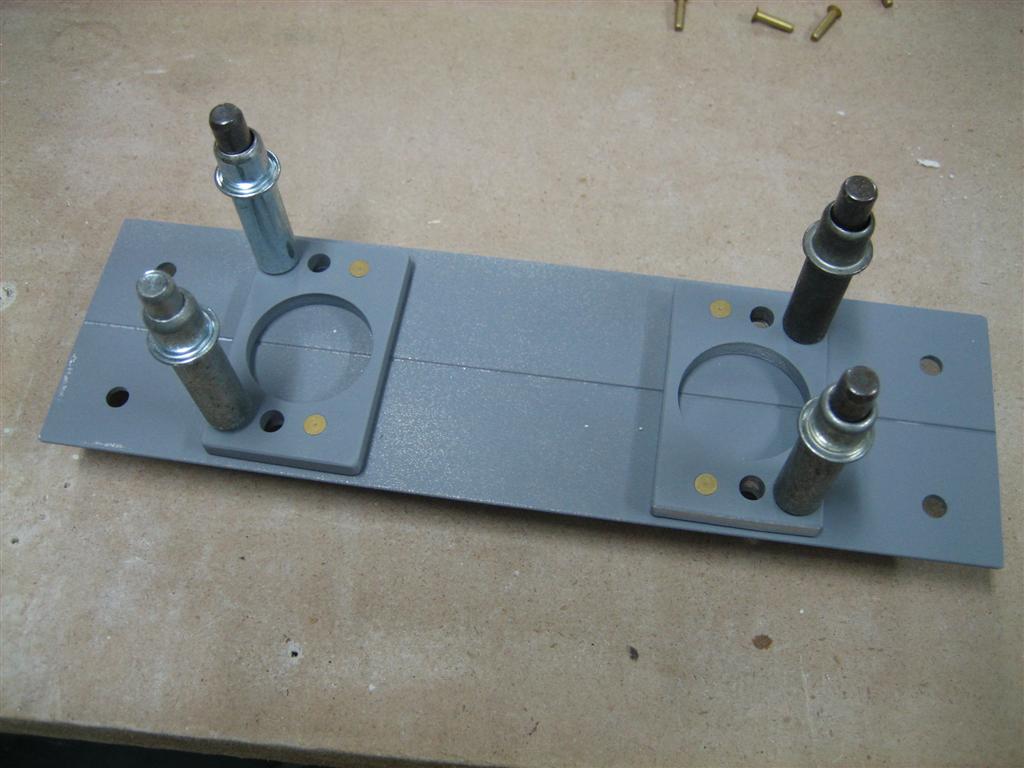
Edge finished anti-rotation brackets. (How do I edge-finish the inside edges of these? Hmm.)

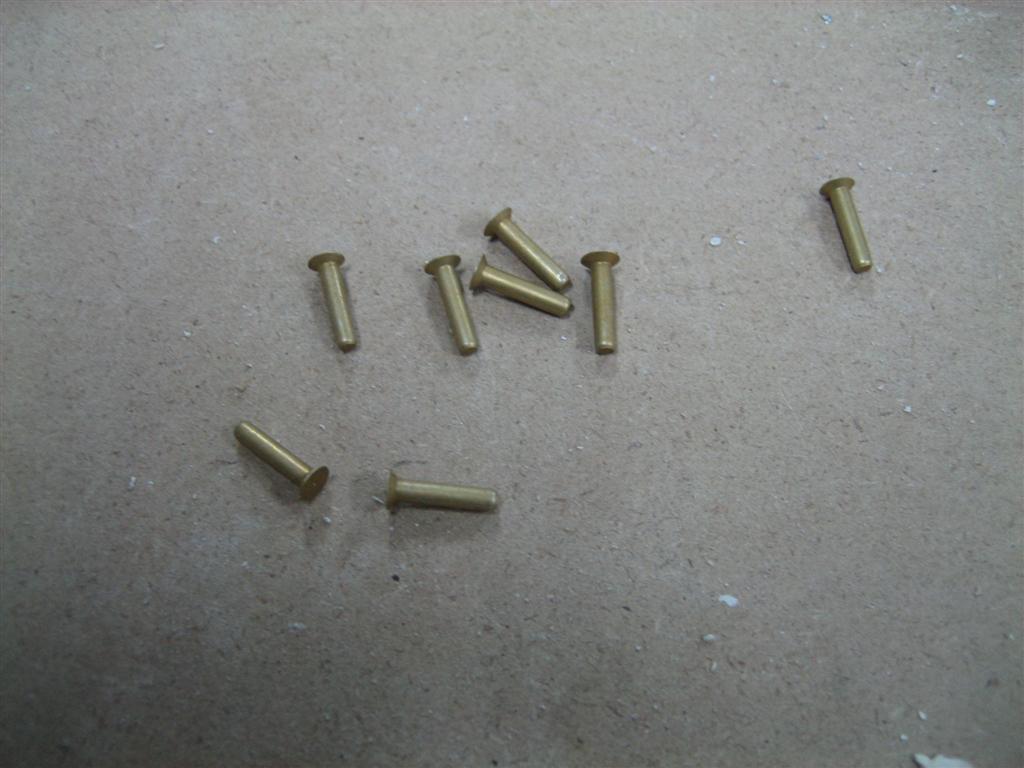
Okay, now that the tiedown bracket is dry, let’s find those AN426AD3-7s – HOLY CRAP THESE THINGS ARE LOOOONG!

Whoa. Long rivets.

4 of 8 rivets set (squeezed).

Tada! (That's three "tada"s today. Aren't you lucky!?) Don't forget the nutplates on the other side. I almost did.

Oh, and by the way. Don’t prime and then wait 10 minutes for things to dry, the primer really hasn’t cured, and it will scrape off with a fingernail. After waiting 24 hours, or better yet, a few days, this stuff gets rock solid. I need to remember that.

I shot another coat on these after they were riveted. I was too ashamed of the first coat to take a picture. Sorry.

8 rivets and 1 hour. 0.5 in “Wing” and 0.5 in “Spars.” (I’ll put the log in both places. We’ll see how that works.)

Prev | Next


Devinyled Upper Inboard Wing Skins

September 23, 2010

Prev | Next

So I realize these deburring sessions are probably a little boring for you.

TO change it up a little, I got two more (instead of one) skins done tonight. By my count, I have all of the inboard (top and bottom) skins devinyled, and I have the 4 outboard skins left.

Maybe this week I’ll get some of the trim in the garage back in the house, and I can move forward on the actual construction of the airplane.

We’ll see.

These are the top inboard skins.

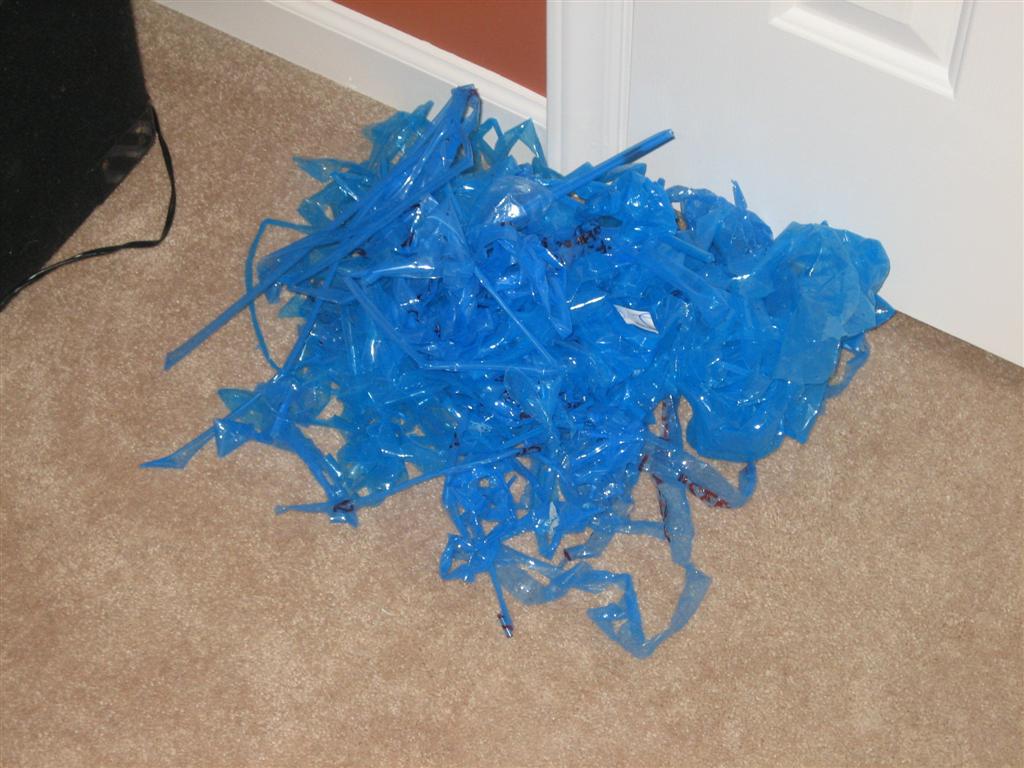
Here are the stripes of vinyl I've been pulling off the skins.

1.0 hour today. (It takes about 30 minutes to devinyl each big skin section.) I have 4 done, and I have 4 to go.

Prev | Next


Devinyled Left Lower Inboard Wing Skin

September 22, 2010

Prev | Next

Well.

Today was pretty much an exact copy of yesterday. Except I did the LEFT lower inboard wing skin.

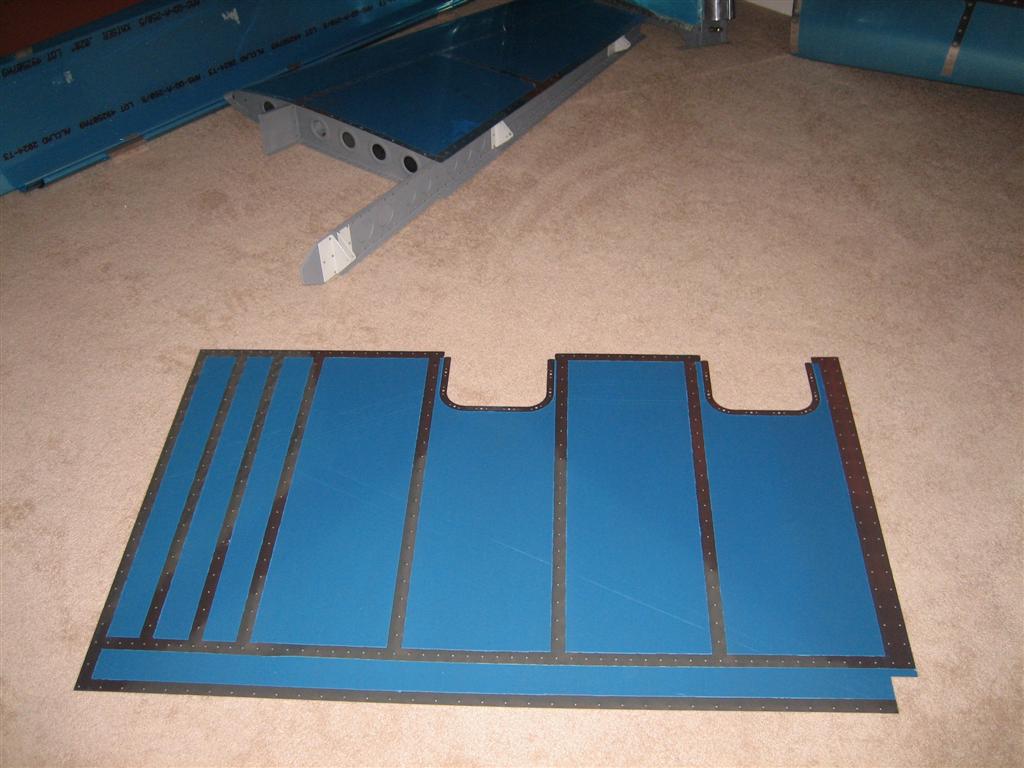
There is something satisfying about these stripes.

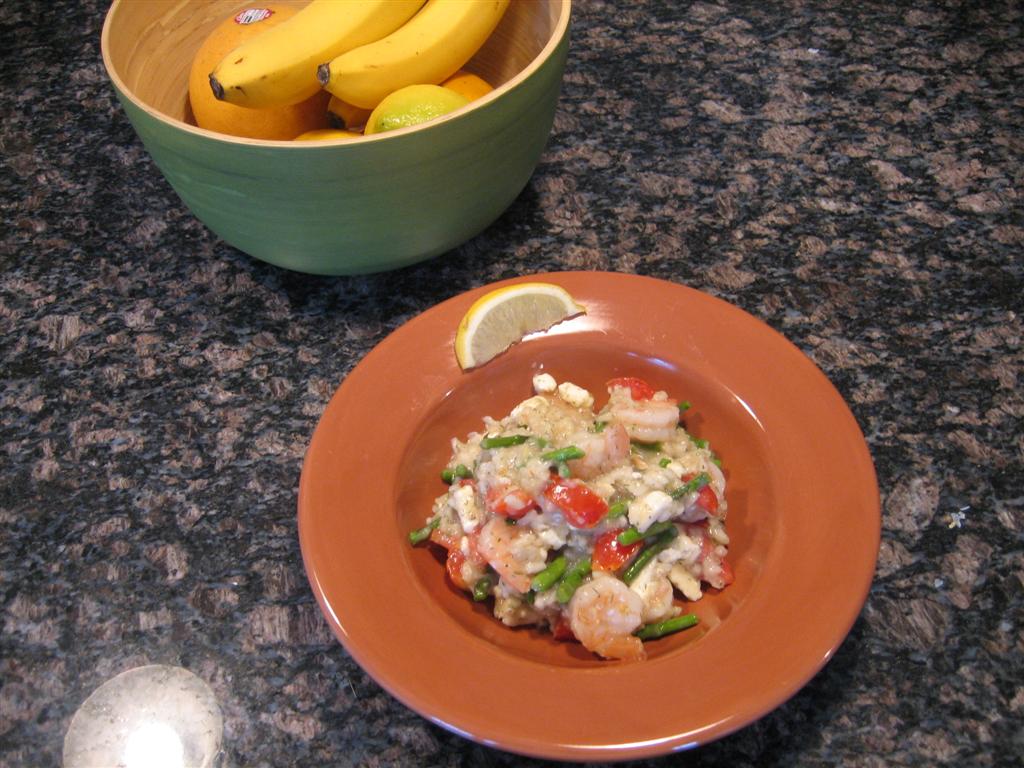
To keep you mildly interested during these boring times, I’ve included a picture of some shrimp and asparagus risotto. Thanks girlfriend!

Mmmm.

Another 0.5 hours today.

Prev | Next


Devinyled Right Lower Inboard Wing Skin

September 21, 2010

Prev | Next

Dear airplane project,

I hope you haven’t been feeling too neglected recently. I know I haven’t been able to work on you because of all of the house projects taking over the workbenches outside.

Because my guilt has recently been getting to me about not working on you, I came to see you last night.

Remember how much fun we had together. You know. It was late. I was trying to be quiet so as not to disturb the puppies.

I appreciate you letting me work out of order. I should have been matchdriling spar-to-rib attachments holes and maybe starting work on the left spar, but instead, I took the soldering iron upstairs to start devinyling work on the plethora (“would you say I have a plethora of gifts?”) of wing skins in the airplane storage room.

I know that devinyling these early will probably mean that the clecos and drill stops may leave small marks on your exterior surface, but I promise. These small blemishes allow me to be much more efficient with my time, so I’ll be sure to spend extra time polishing you once you are assembled.

With loving care.

-Andrew.

P.S. I’ve included a picture so you can remember (as fondly as I do) our time together last night.

P.P.S. If you want, we can meet again tonight. Same time, same place.

A blurry picture of last night love tryst between me, the right lower inboard wing skin, and the soldering iron.

0.5 wonderful hours.

Prev | Next


Left Spar Arrived from Vans

September 21, 2010

Prev | Next

I was home at lunch today randomly (so I could pick up more propane for tonight’s planned grilling session), when I passed a FedEx Express van.

Hmm. That’s weird. Last Thursday, I got an email from Jessica at Van’s saying they had shipped my left spar back to me via FedEx Express, and it was supposed to arrive tomorrow.

Using some critical thinking skills (and the realization that I had NOT been diligently tracking my package over the weekend), I figured the FedEx Van was in the neighborhood for me. I flipped around and followed the driver back to the house. (It’s amazing how incrementally excited I got after each turn back toward the house.)

Anyway, the spar arrived, and it was, in fact, a new, undamaged spar.

Came in its own cute little crate.

No damage!

I didn’t post a lot about my left spar before, because I wanted to see how it would end up before posting to the world, but here’s a quick summary. My left spar, as received in the wing kit, had a pretty small dent in the lower inboard flange. While it was probably airworthy, I was concerned that I didn’t know how much margin on top of limit load I had lost (if any). Also, would there be any residual stress in the area of the deformation, and what long-term stress cracks should I anticipate based on this dent? Do I have to disclose this damage if I ever sell the airplane?

(Background: The airplane is designed for +9/-6 Gs, and the limits placed on the airplane are +6/-3 Gs. The idea is that a spar with damage might really only be good for 8.8 Gs now, or maybe 8.5 Gs (or, admittedly, 8.999 Gs…it was a really small dent).

(Philosophical question: If you could quantify the new margin, and a spar was good to a known 8.5g instead of 9g, and you were still limited operationally to 6g, would you accept it? I still don’t know the answer to this. I think an 8.5g spar would meet the design intent of the airplane (but Andrew! what about 8.4g?!), but what if I accidentally over-g the airplane, something breaks, and I am falling helplessly to the ground. With a “perfect” spar, at least I know it was all my fault. With a dented spar, I’d be cursing Van’s the whole way down.)

(Dear Mom. There is no way I’ll ever over-g the airplane. Stop worrying. It was just for discussion purposes.)

If we could quantify what I’ve lost if I continue to build with the damaged spar, I may be okay to proceed with enough residual margin, but I have a hard time putting a spar in my airplane knowing it isn’t perfect structurally and not being able to quantify what I’ve lost. For the record, I’m an engineer… this has nothing to do with the small scratches and scotchbriting everyone has on their spars. I’m talking about material deformation.

Anyway, Gus and I talked (about loads…bending, drag, torsional, etc., but I’ll leave that out of here for now), and they really don’t have the capability to do an analysis on a spar flange like that, so he agreed to send me a replacement spar if I could send the other one back. (They can do an ultimate load test on a completed wing, just for future trivia.) Luckily, since this was shipping damage, ABF has picked up the shipping tab. (ABF customer service was less than optimal).

I feel a little guilty about standing ground about the damaged spar, but I think some of that has to do with work (if a spar had come into work like that, we would have either immediately rejected the part and sent it back, or performed enough engineering analysis to deem it acceptable as-is or with a repair). I want to be able to take my airplane to +6/-3 Gs and not always question whether my margin is the same as everyone else’s.

(I’ll leave out the more philosophical discussion about whether the margins on top of the posted limits are equal given the widely-ranging construction practices and skills that appear to be out there in the build community. I have to assume the airplane is designed to fly with plenty of margin after being built by a below-average builder, but can still pass Tech Counselor and DAR/FAA inspections.)

Ultimately, Van’s did a great job managing my concerns and communicating quickly and effectively about the whole problem. I really do appreciate their commitment to customer service, and their willingness to listen to my engineering concerns about the defect.

Thank you, Van’s.

Now.

Back to building!

Prev | Next


Prepped Right Wing Main Ribs, Clecoed Skeleton

September 18, 2010

Prev | Next

I’ve been at a little bit of dilemmna the last few days trying to figure out what direction to take with the project.

I still have the left rear spar to work on (until the left main spar shows up from Van’s…shipped yesterday…should be here Wednesday), or, I could move ahead with some rib prep on the right wing.

For the sake of  seeing something cool at the end of the day, I think I’ll move ahead with the right wing, and hopefully I’ll be able to get it onto a wing stand (yet to be designed) by the time I can get the left spar caught up to this point.

With rib prep, I’ve decided not to follow the suggestion to do all the ribs at once. I’m going to do them a few at a time to save my sanity.

First thing, let’s find some ribs.

I've pointed out to you before that I am at a little bit of a disadvantage building the right wing first, from the plans that only show the left wing.

Notice here that of the three different kinds of main wing ribs, there are both left and right versions in each of the wings. From what I can tell, the flanges face left or right based on what will be easiest/accessible to rivet.

So here are some main ribs (I count 11 in the picture, there are really 14 main ribs in each wing).

My goal today was to get the ribs clecoed to the spars, so I’m only going to finish what I have to (out of efficiency, not laziness). This means I’m going to edge finish most of each rib, then move on to fluting and flange straightening.

The edge finishing (except the little crevices) only took about 30 minutes on the sanity-saving scotchbrite wheel.

The fluting and flange straightening took 2 more hours, though. Ugh.

I took all 14 right main ribs inside and watched the UNC-GT and the Vandy-Ole Miss games.

Here's a rib, halfway fluted.

After fluting (holes are straight), but before finishing up the flange-straightening (to 90° from the web).

After a little while, my hands were hurting from all the fluting, so I took a picture of what I have done so far.

Looks like 5 done, 9 to go.

My "to go" pile. {sigh}

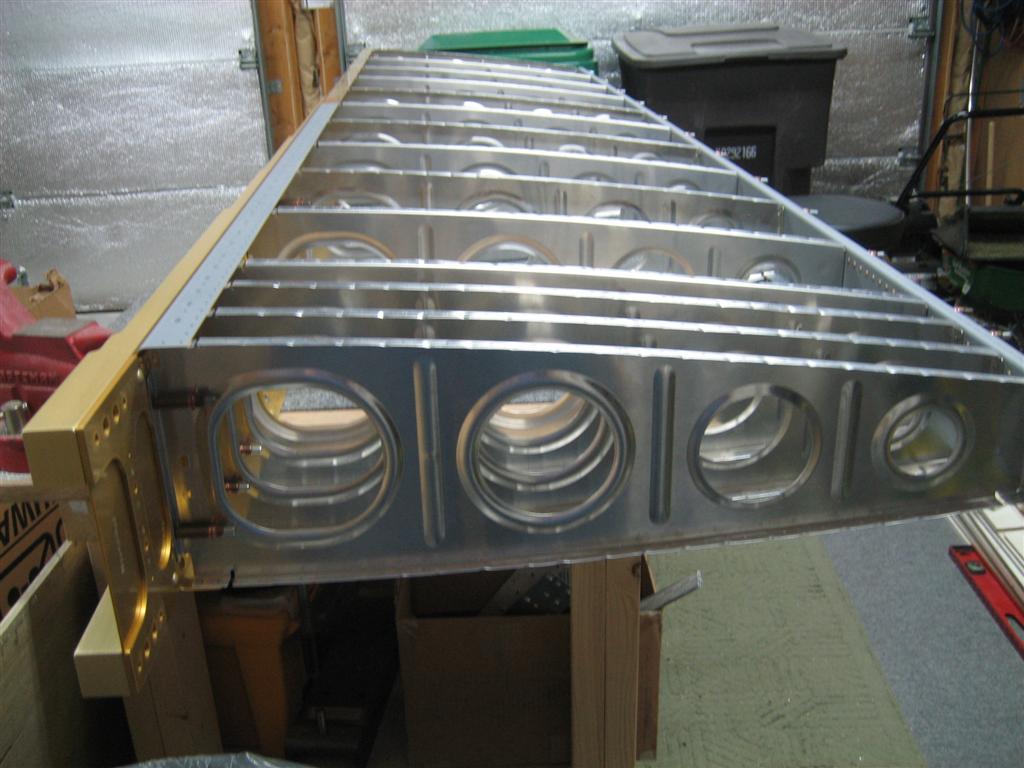
And after another couple of hours, I had the main ribs edge-finished, fluted, and flange-straightened enough to cleco them to the spars.

I really didn’t think I’d get this far tonight. (I have to keep in mind there is still a lot more prep on the ribs before I can actually prime them and get them riveted to the spars.

Pretty. (Pretty big!)

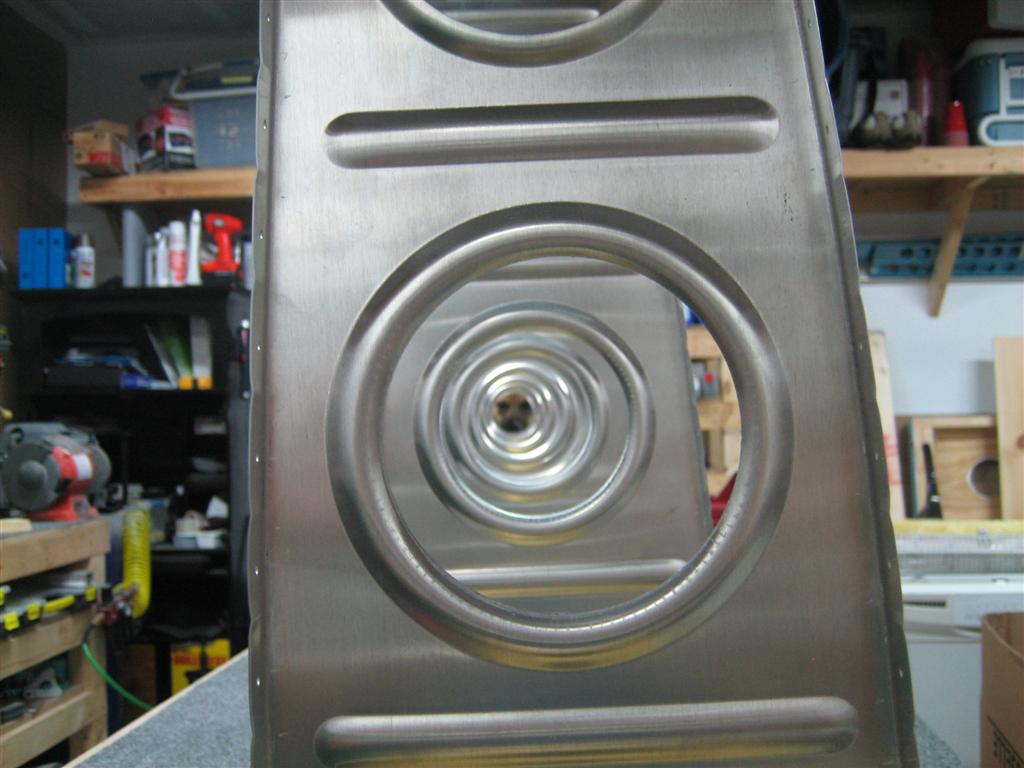
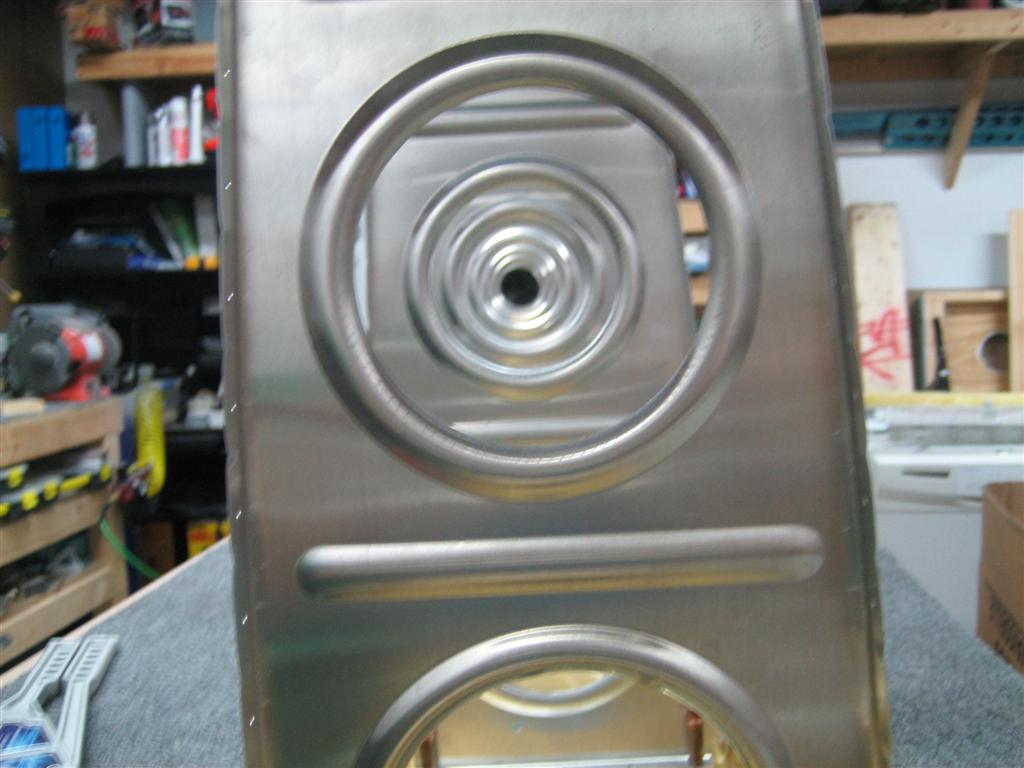
And of course, here is the obligatory “down the lightening” holes shot.

Every other builder on the plant has taken this picture.

But that’s not all! I have variations on a theme.

It's Ginger!!!

And Jack!!! (I promise he is there, just hard to see.)

After sending the dogs back inside for their Saturday afternoon nap, I just stared at this thing for awhile.

It just looks so cool!

3.0 hours today.

Prev | Next


Finished Right Rear Spar

September 14, 2010

Prev | Next

So on the scale from “no help at all” to “girlfriend built the plane all by herself,” we made a few steps last night.

After dinner (thanks Mi Pueblo!), I convinced the lady friend to come outside and help me finish up the last few rivets on the right rear spar.

I talked her through going to the plans, looking at the rivet callout legend, and then putting the rivet in the appropriate holes, making sure to avoid the “rivet later” holes.

We were planning on having her actually squeeze the rivets, but the AN470AD4-6s (and -8s) were too much. She ended up holding the spar steady for me and helping with rivet layout. (See, I told you it was a small step toward “girlfriend built the plane all by herself.”)

I’m working towards being able to call from a business trip across the country and tell her to do something offhand like, “Hey honey. Can you hang the engine for me tonight while I’m away? Great. Thanks. Bye!”

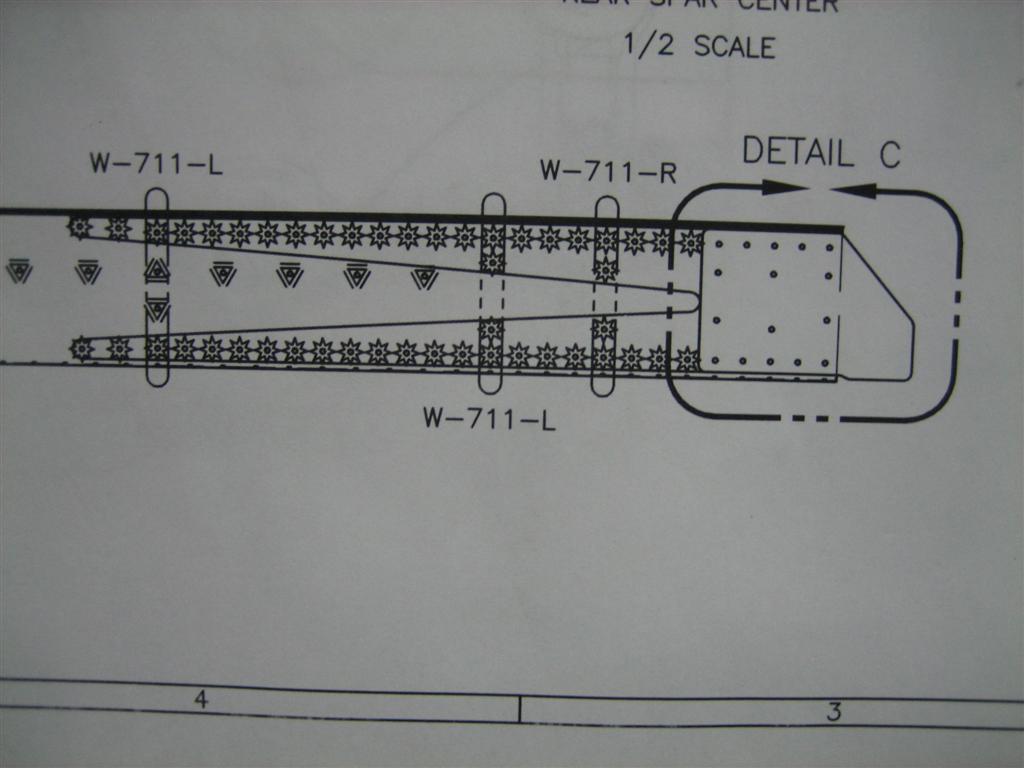
Here's the plans shot for the reinforcement fork.

Of course, we were too busy being in love (with each other and the airplane) to take very many pictures, so you just get the end result. The main squeeze did a great job reaching all of these rivets (mostly due to the 4″ no-hole yoke).

Final rivets in the fork-only area. 38 rivets here.

Closeup of the fork and doubler plate together.

Final rivets in the doubler plate. 7 more rivets here.

Finished product.

0.5 hours (thanks, girlfriend), and 45 perfect rivets.

For those of you paying attention to the totals, that brings me to 175 hours (after 261 days) and 2409 rivets (of an estimated 20,000). Still a long way to go.

Prev | Next


Primed and Started Riveting Right Rear Spar

September 12, 2010

Prev | Next

Well, after a $15 stop at Napa ($10 for primer, $5 for sensor-safe RTV), I got back to work on the rear spar.

I spent a lot of time just kind of staring at everything today. The instructions are careful to point out that at the inboard part of the spar (where the reinforcement fork is), you can’t reach the spar flange holes with dimple dies for later dimpling, so you should do it now.

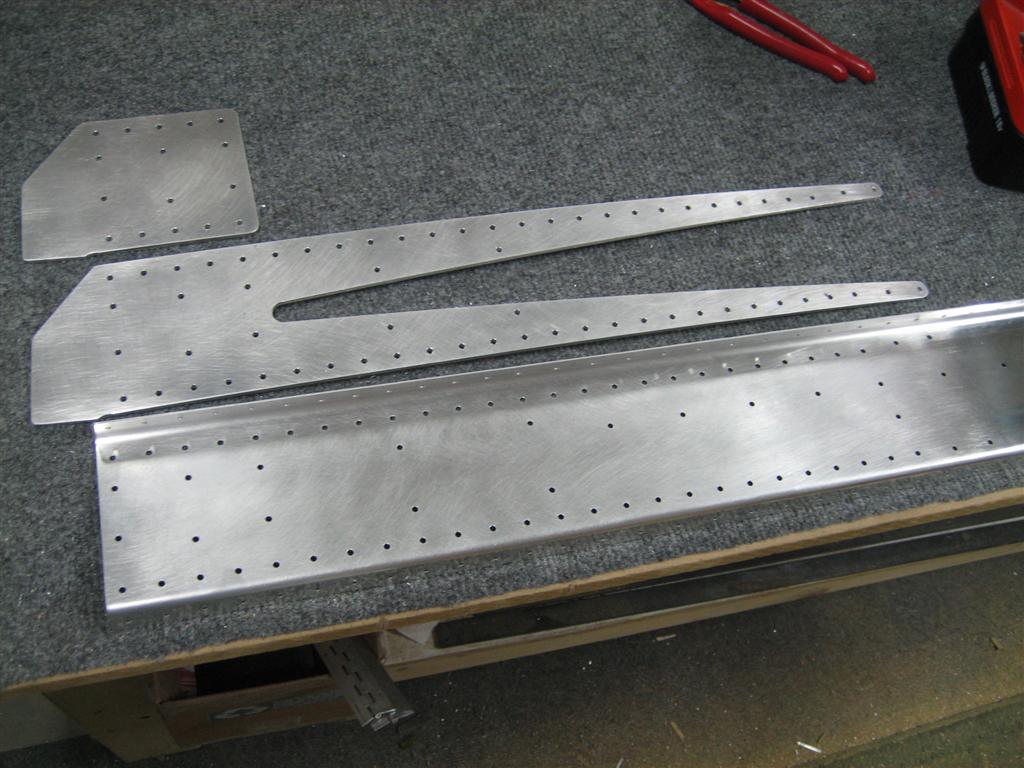
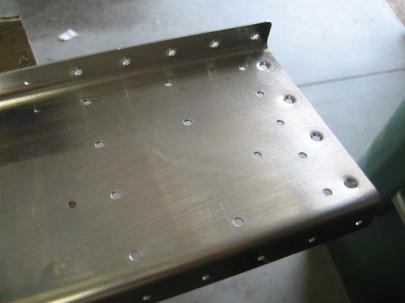
With that in mind, I wanted to make sure I got everywhere that may need dimpling later, so I also dimpled above the two (middle and outboard) doublers. You can see in this picture (the middle doubler) where I decided it would be a good idea to dimple (drill, deburr, then dimple, of course) the flange holes. I did this for both the spar and the doubler plates, which also have flanges on them.
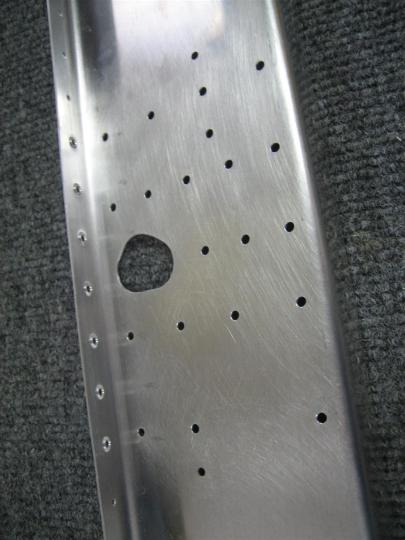
The middle spar area, shown after drilling, deburring, and dimpling the flange area.
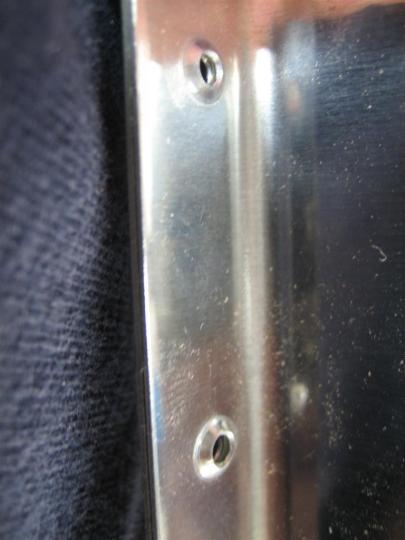
Same thing here. Also, I dimpled the 4 outboard holes (instead of countersinking), per previously approved builders who have talked to Van's.

I got back to thinking about the tank dimple dies, and whether they were really helping with skin-to-structure attachments. The idea is the the tank dies (which are deeper to account for pro-seal while riveting the tanks), when used on the skeleton, allow the regular dimple in the skin to sit better once riveted.

I got out some scrap, dimpled the “skin” with regular dies, and dimpled the “skeleton” with one tank and one regular die.

You can see on the left, those are the regular dies. The ones on the right is a regular die sitting in a deeper tank dimple. The tank dimples didn’t help anything sit better, because they were both fine.
A little blurry, but the "skin" sat equally well for both set of dimples.
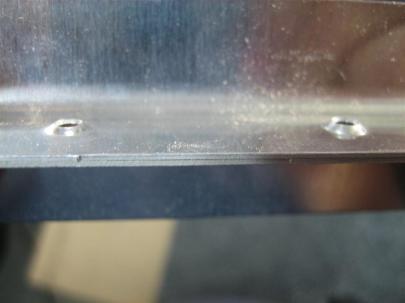
The tank (deeper) dimple is on the right. You can see I'm not having any "seating" issues on the left.

Anyway, I think I am going to go back to using the regular dies on everything. Enough about that, though, let’s prime!
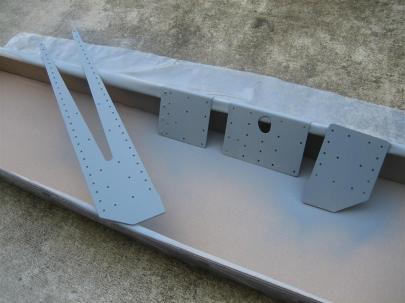
The rear spar components, getting primed after some more edge finishing, washing, drying, and positioning in my wood floors boxes.

Also, I went back and masked off the spar where I had countersunk.
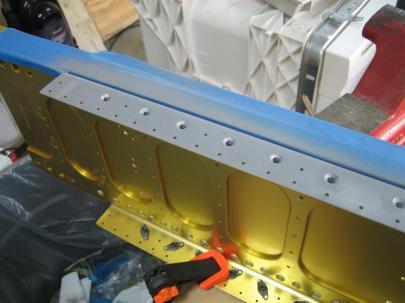
Some of the nutplate attach rivets are not as flush as I would like them to be. I may get a rivet shaver and shave some of these down and reprime. We'll see how the tank skin sits on them.

Back on the rear spar, I posted a couple pictures of my edge finishing procedure. First, use the Permagrit block to smooth out the tooling marks. This picture is the resulting burrs that need to be deburred.
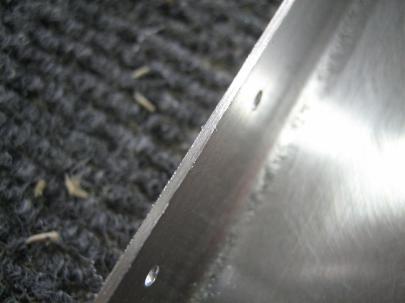
The permagrit is great, but it does leave some pretty decent sharp edges.

Then I used my “v” deburring tool to knock off the 45°.
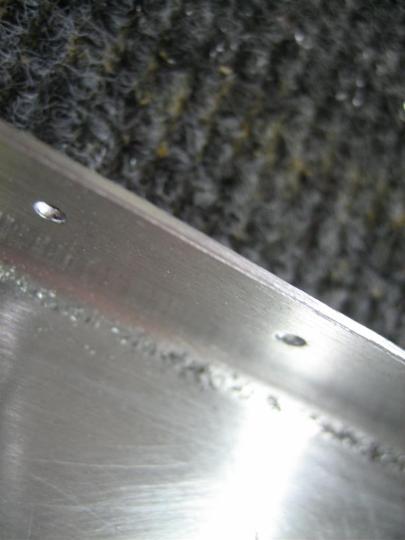
After this, I usually use a scotchbrite pad to smooth everything out.

After blowing the aluminum dust off with shop air and a good wipe-down with MEK, I took the spar outside so I could paint the grass with my overspray.
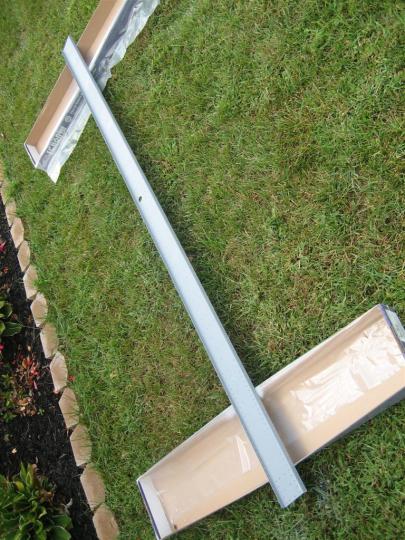
I think this is the second side. Only one bug landed on my spar. I left him there for now. (He may be my first passenger.)

After a few hours, I returned out to the garage (workshop/mancave) to do some riveting.

First step: Ignore Van’s suggestions to tape off all of the holes that don’t get riveted now. (I know the warning bells must be going off right now, but it all worked out fine. Just have to read the plans carefully.

I left clecos in all of the “do not rivet now” holes. 6 regular AN470AD4-4 rivets on the left, and some AN426AD4-4 (I think) rivets in the dimples on the right.

SEP 14 UPDATE: WHOA! Those 4 on the right can’t be set now, because the W-712 outboard rib will get riveted to these holes, too. Glad I didn’t get to happy with the rivet squeezer.
These 10 can be riveted now. (Sep 14, 2010 Update: Nope. Just the 6 on the left can be set now.)
Same exercise here. Only 5 rivets can be set now.
I didn't really mark anything here, because I didn't really start on riveting the fork on yet. Next post, I'll be very careful about what to rivet.

Then, I actually started riveting. I love my new Cleveland Main Squeeze. Squeezing these An470AD4- rivets is so easy now.
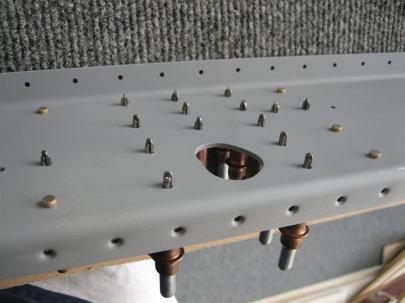
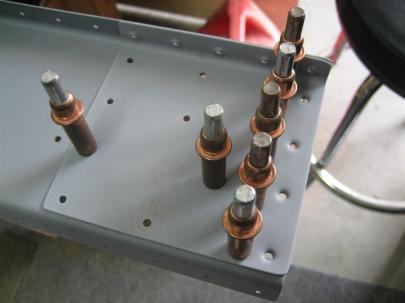
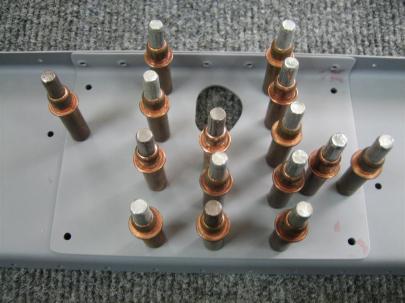
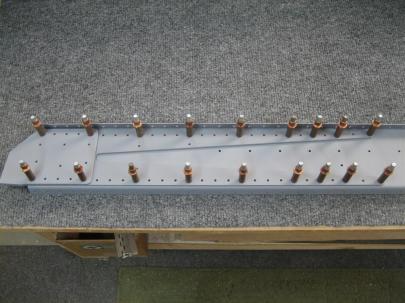
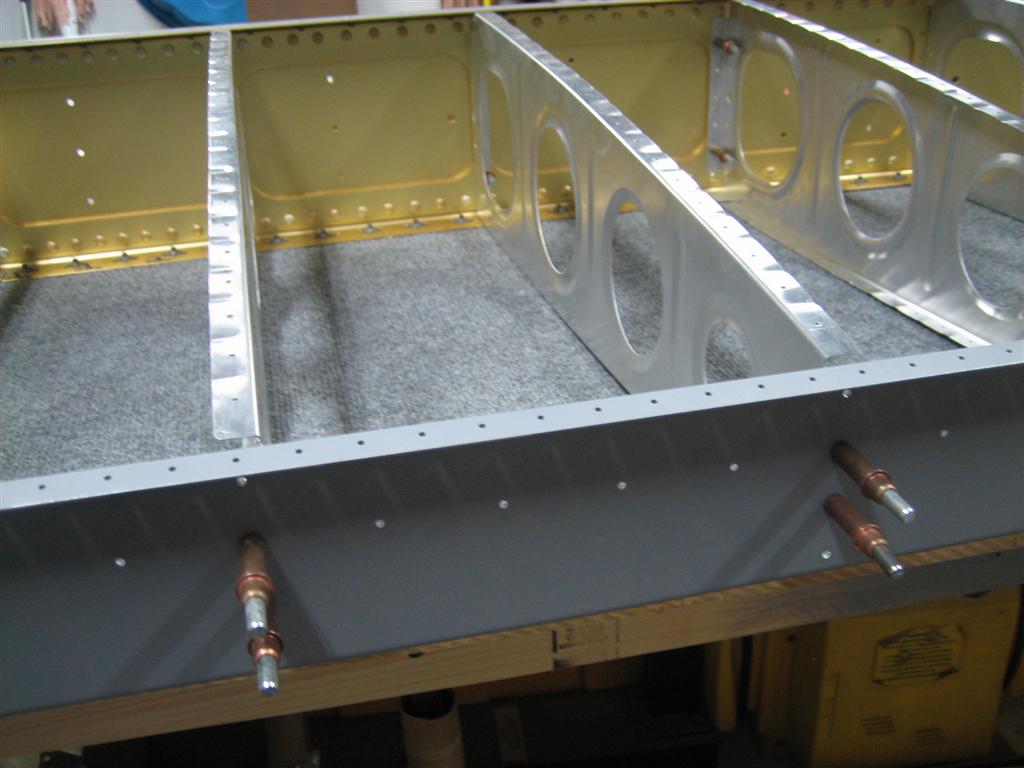
Here are the 5 shop heads from the middle of the rear spar.
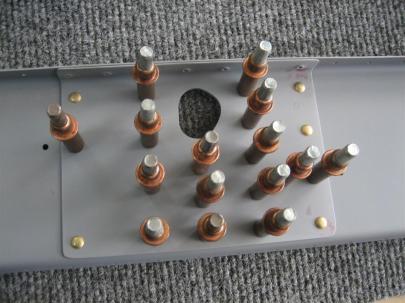
The same 5 from the manufactured side.

Oh, and I did 6 more at the W-707F doubler plate, but forgot to take pictures. 11 total. Also, I was mixing this and house projects over the course of a few hours, so I’m going to estimate it was about 2.0 hours today.

Prev | Next

Right Rear Spar Doubler and Reinforcement Fork

September 8, 2010

Prev | Next

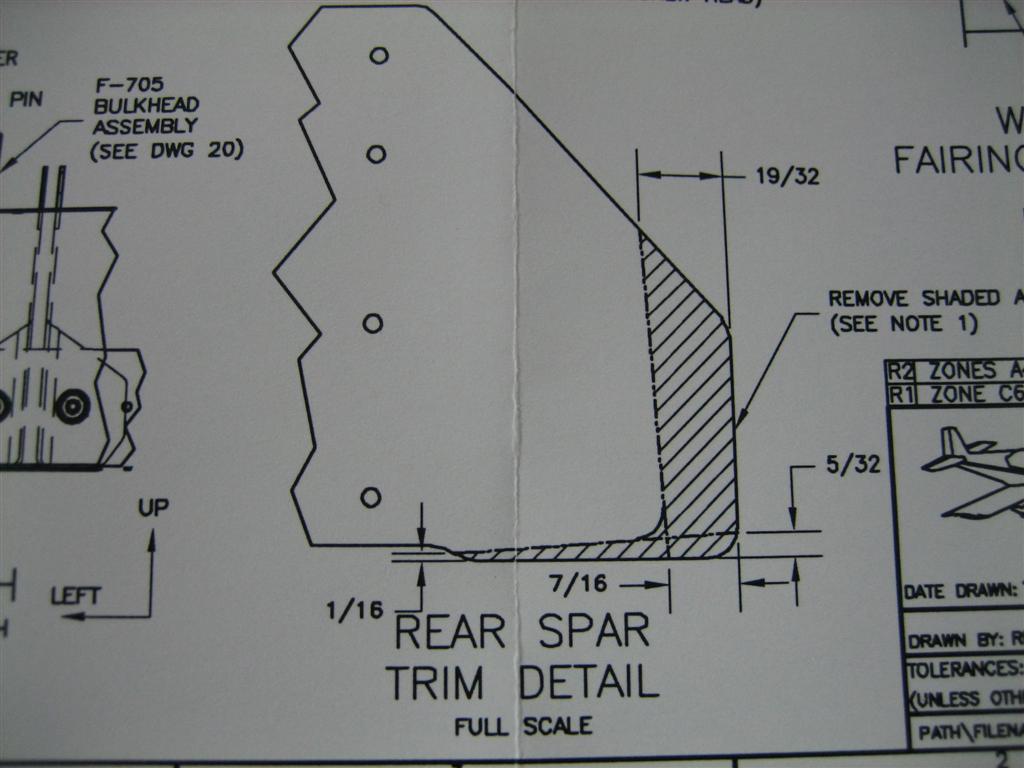
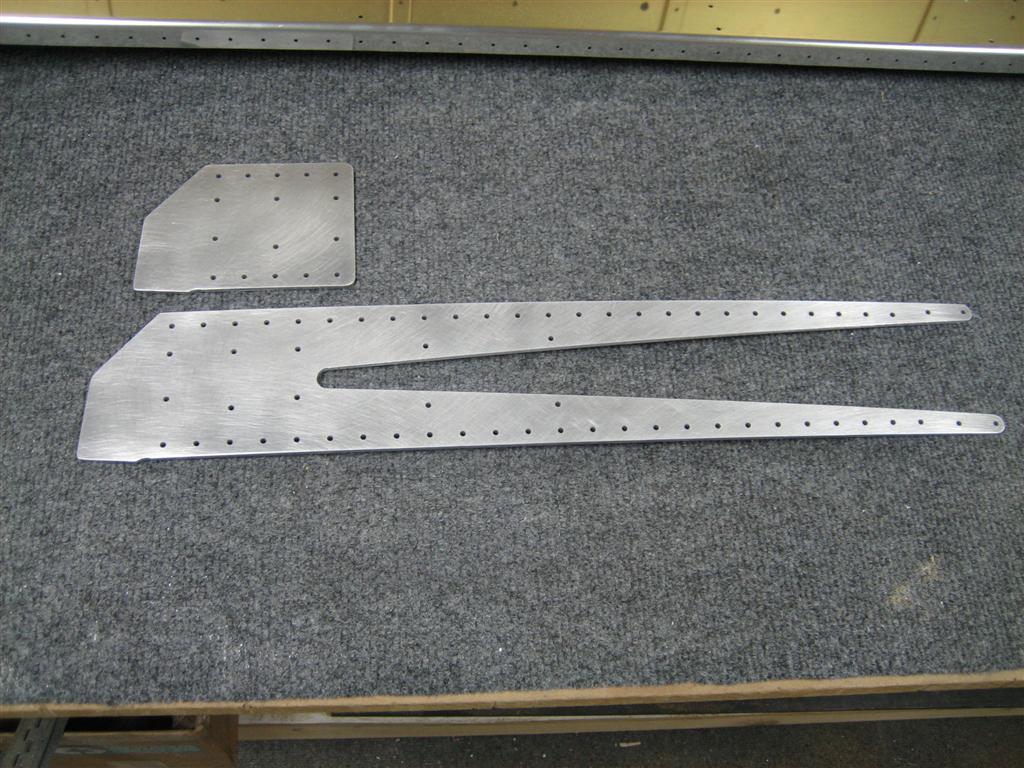
The next step on the rear spars is to trip the W-707D and W-707G Rear Spar Doubler and Reinforcement Fork to size.

These parts are shared between the RV-7 and RV-8 (and maybe more, I’m not sure), and must be trimmed if you are building the -7.

This is a tricky trim job, though, because many people have future troubles with drilling the rear spar to the fuselage and maintaining the required edge distance for the hole in THESE PIECES.

It would be best not to overtrim, and leave even less margin than what is already there.

The plans and construction manual both point to Dwg 38, which is of course not included as a full-scale sheet in the wing kit, so I got out my preview plans and started staring.
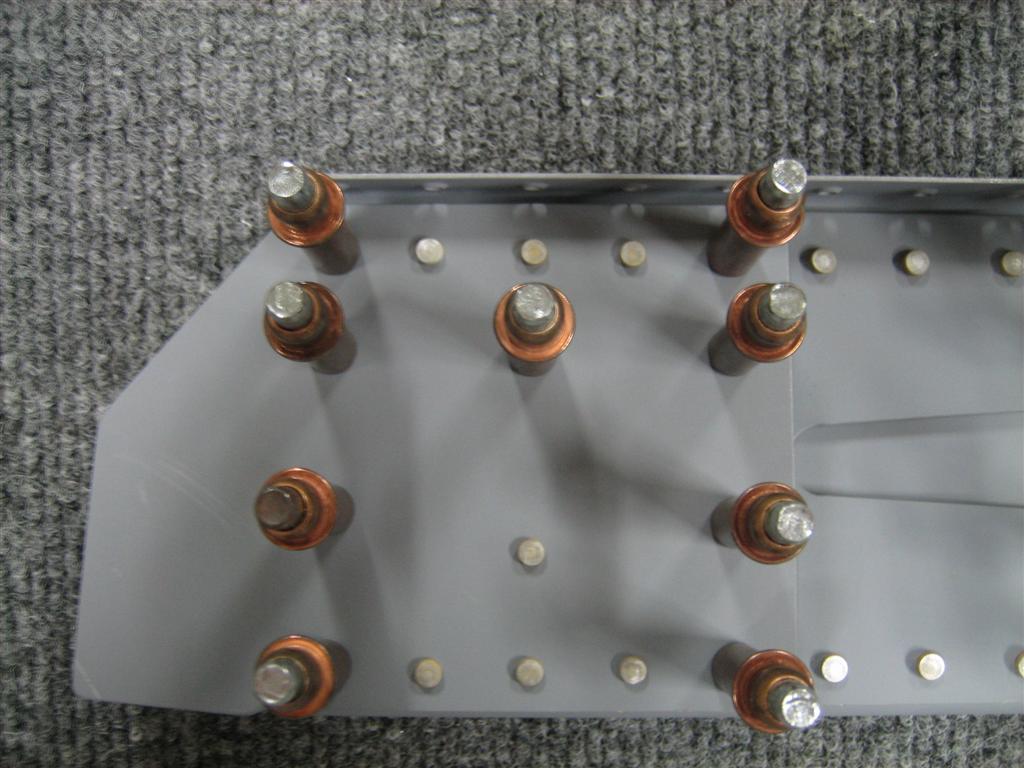
Even though I’m only working on the right side for now (will bring the left wing up to the right side’s progress when I get the replacement spar from vans), I’m going to do both sides of this now while I’m all mind-prepped to do it.
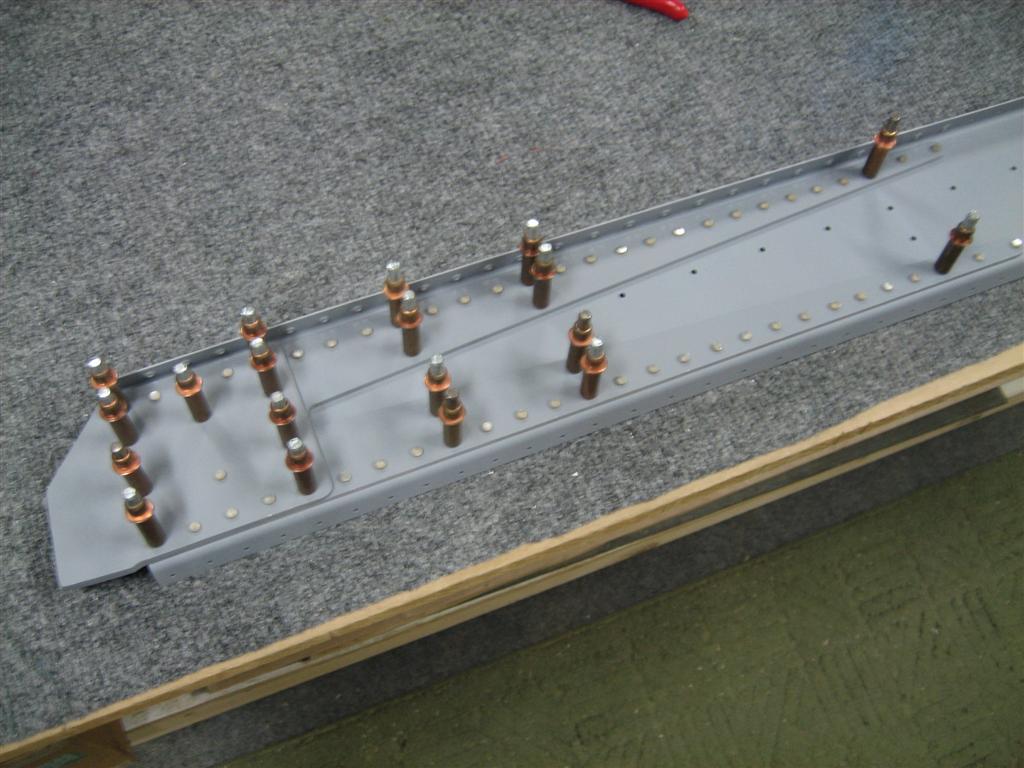
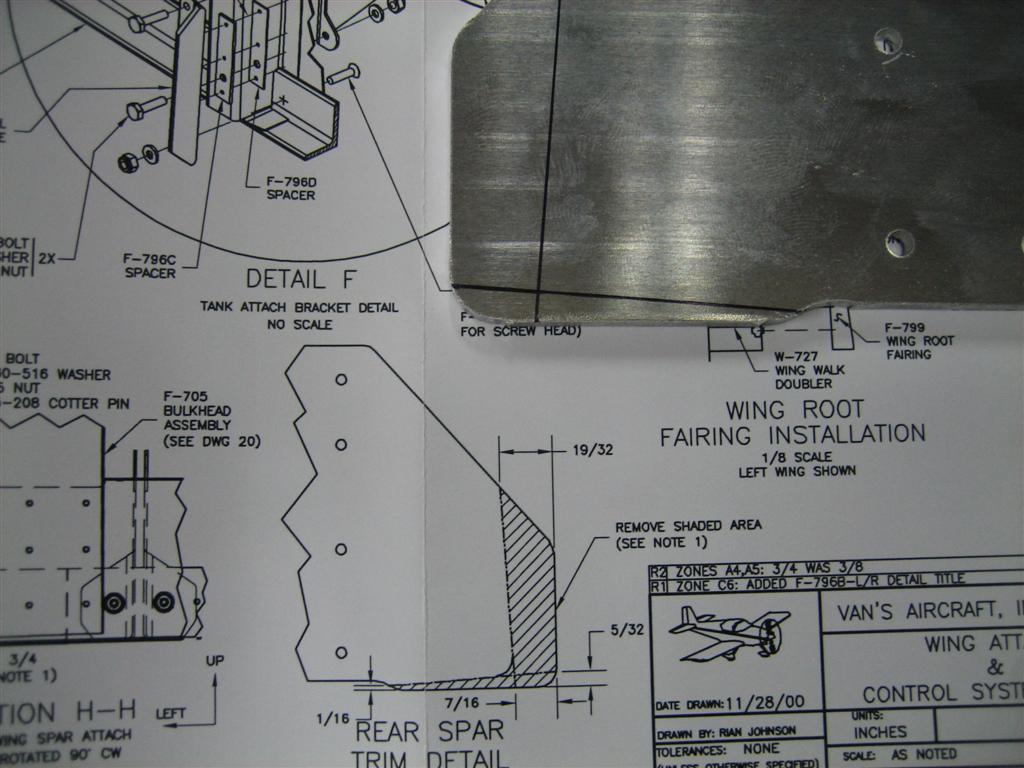
A snapshot of the applicable portion of Dwg 38. Looks like I should start measuring and marking. (No cutting yet, though!)

Keep in mind here that you measure from the edge you are about to start cutting away, so once you start cutting there is no double-checking your measurements.

Of course, I'm being dumb by doing the right side first (left is shown in the drawing above.)

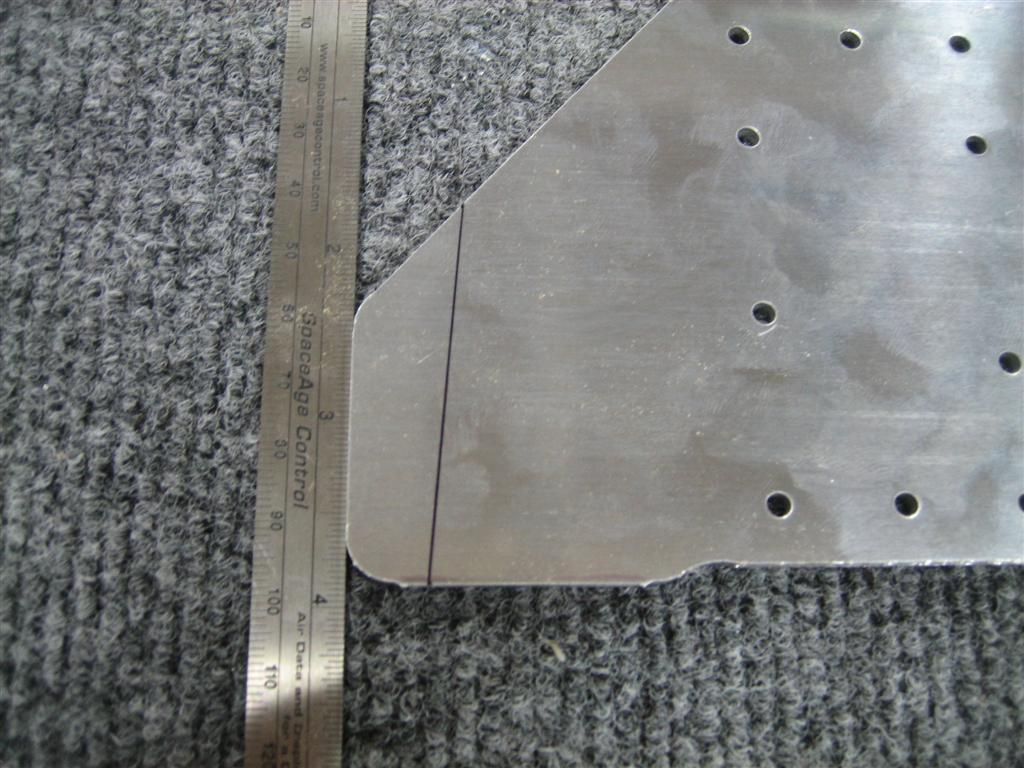
Here are both lines drawn, measured, double-checked etc. It's still all making sense, so that is a good thing.

The bottom cut off. (For you OCD types, I realize I should have made the other cut first, which would have been a little less cutting overall, but oh well).

I decided to cleco the two smaller pieces together first, then transfer the lines to the bigger forks, and do those separately.

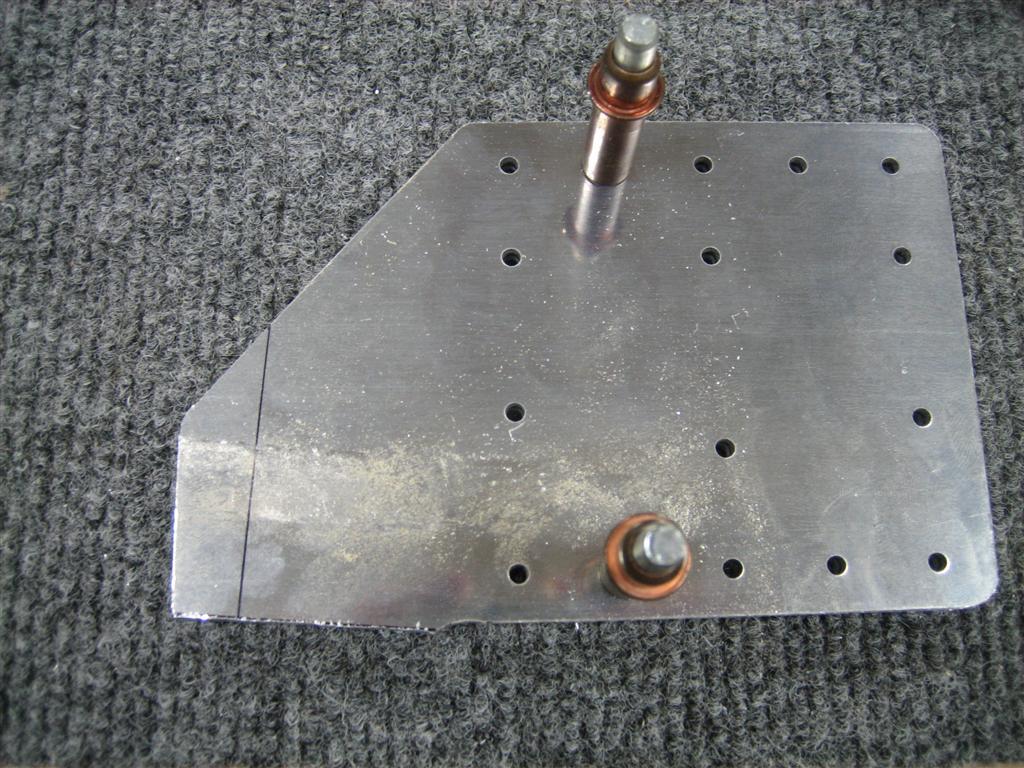
Ready to transfer the lines.

Of course, I didn’t get any in-progress shots of the fork cutting, but it went well. I then clecoed the left and right assemblies together and grabbed this shot after a few passes on the scotchbrite wheel.

At the end of this project, I am going to go back and count how many toes ended up in all the pictures. Here's...{counting}...6 more.

After some time on the scotchbrite wheel, I have two ready-to-cleco parts.

Nice and scuffed.

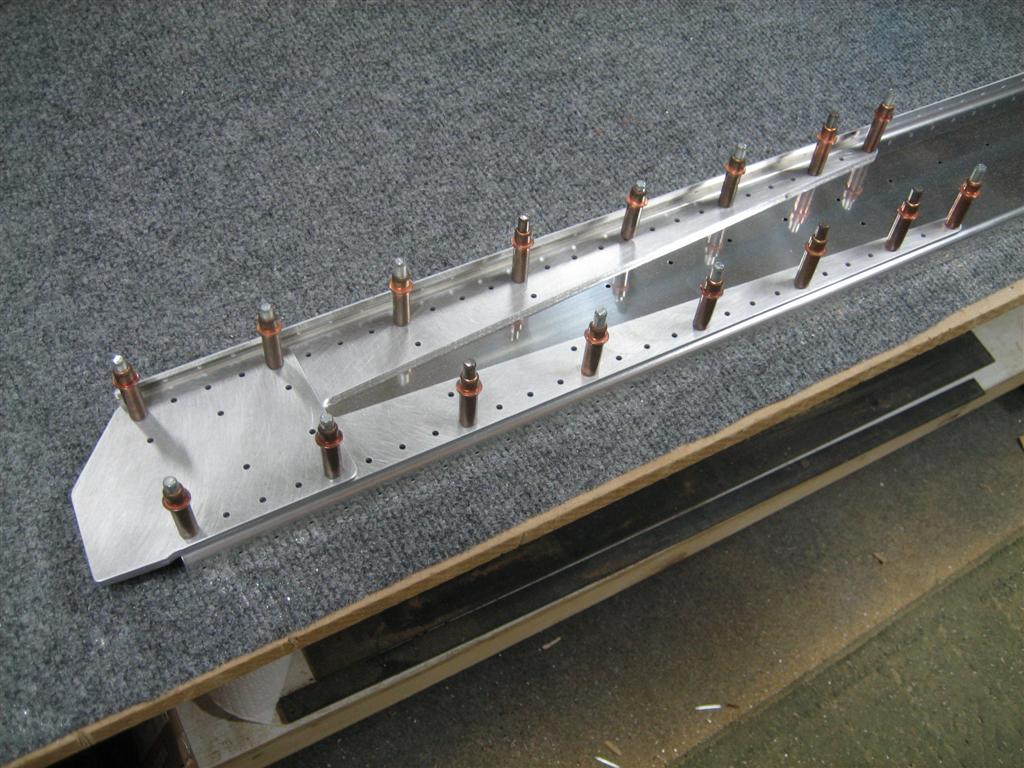
Then, I clecoed the doubler plate and reinforcement fork to the right rear spar and started matchdrilling.

Matchdrilling.

I had a hard time deciding if I should enlarge some of the rib attachment holes in the fork and doubler plate to final size, and I decided I would. I couldn’t find anyone who said it would be a bad idea, and now I’ll get to deburr and prime all of the rear spar components.

I did leave the majority of the rear spar “future” holes alone, though. I guess per the directions (indirectly, just in step order), I’ll drill those after priming the rear spar.

Here's a picture from the backside (actually, front side) of the spar.

Of course, I was careful to mark and enlarge to #40 the flange holes that need to be dimpled now (the reinforcement fork prevents the female side of the dimple die from getting behind these holes).

I didn't actually dimple, though. I need to leave something for tomorrow.

After taking everything apart and deburring holes, I have a few pieces ready for priming, and a rear spar with some remaining deburring before priming.

I scuffed the rear spar where I had already drilled and deburred to help remind myself what I have left to deburr.

Today’s hour was a good one; a few things ready to prime, and just one deburring and priming session away from being able to rivet the rear spar assembly together.

I need to go buy some more Napa 7220 Self-Etching Primer.

Prev | Next