Finished Backriveting Stiffeners

February 27, 2010

Prev | Next

I didn’t get to spend very much time in the shop today, but the half hour I did spend on the project was a good half hour.

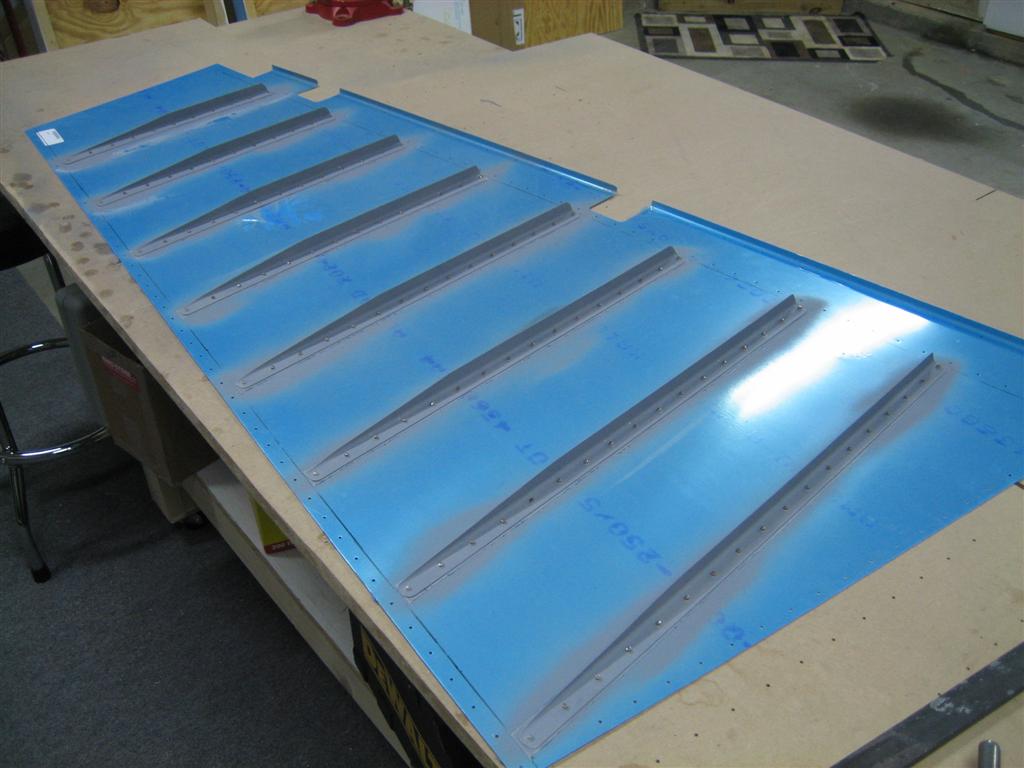
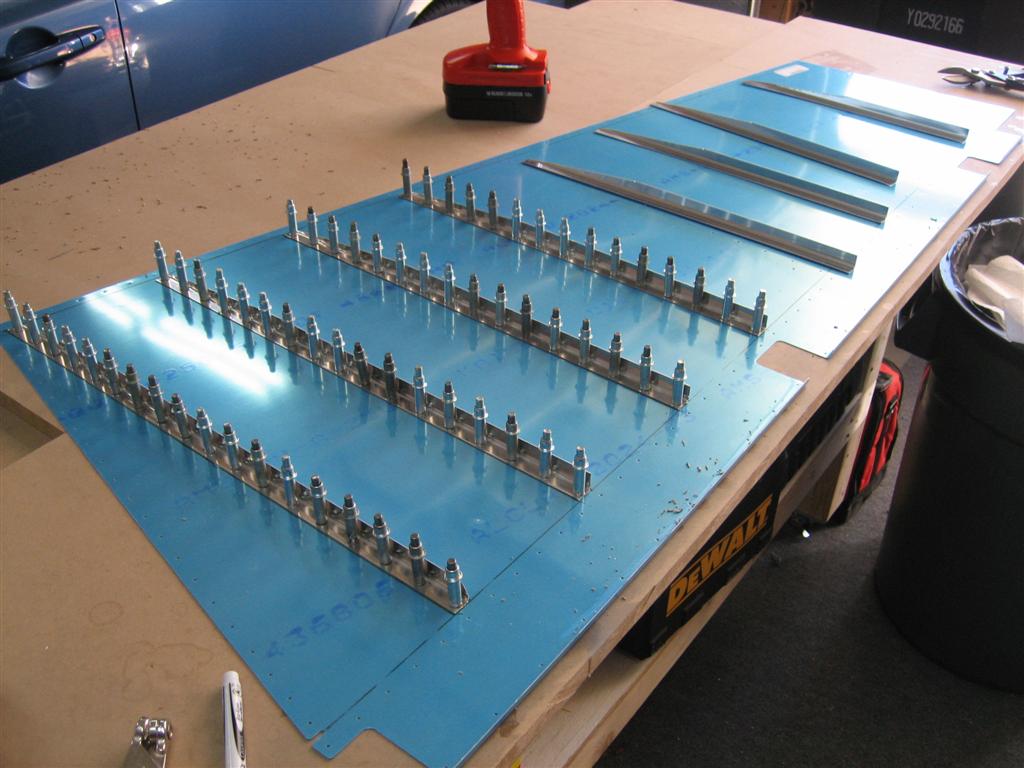
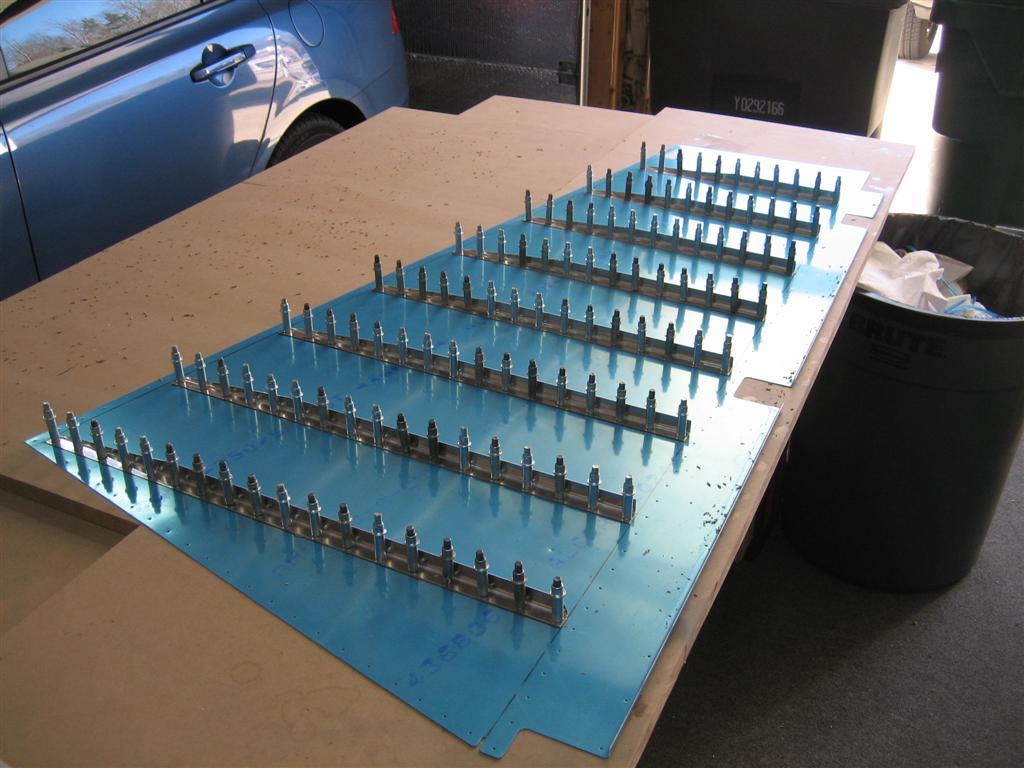
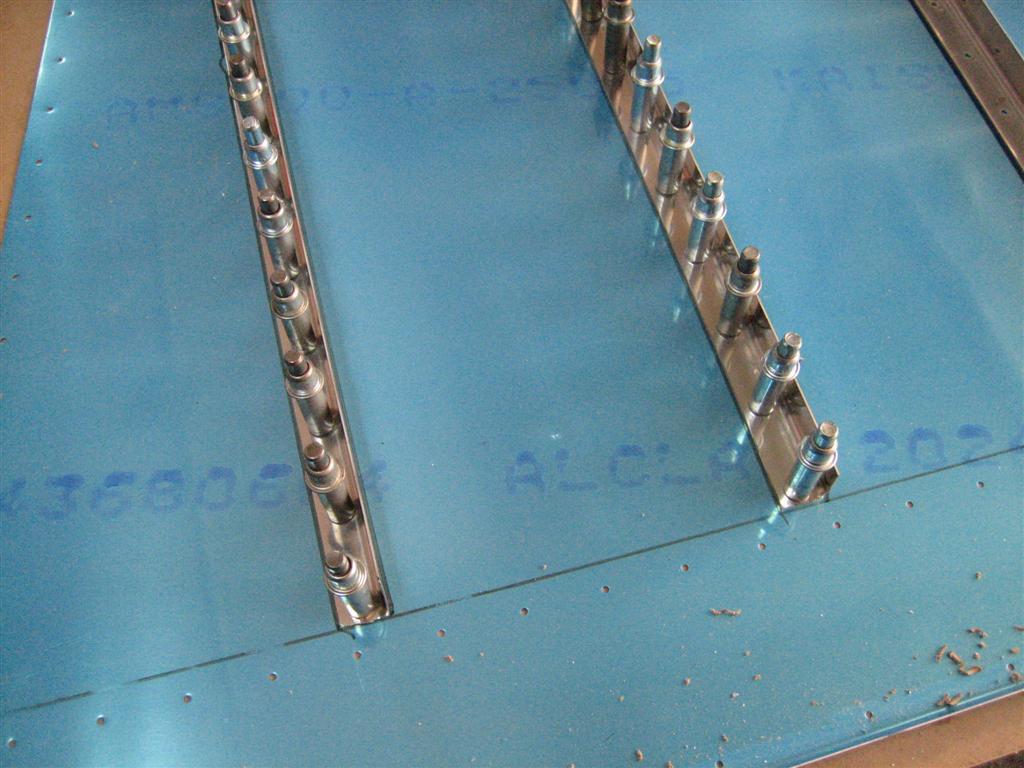
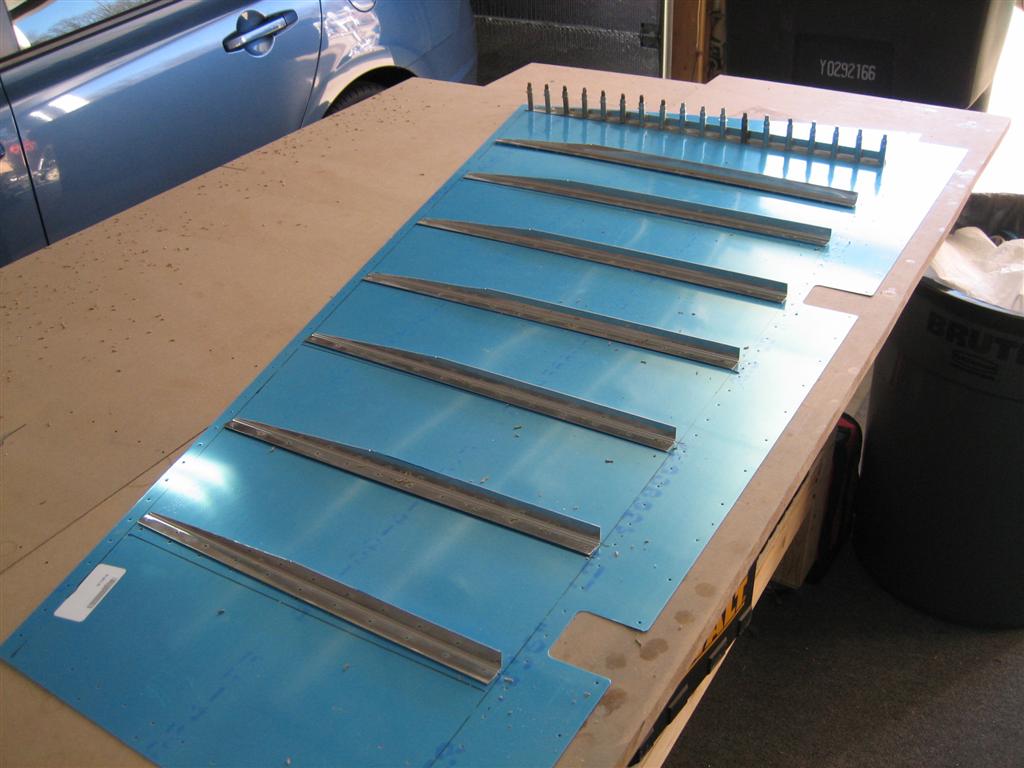
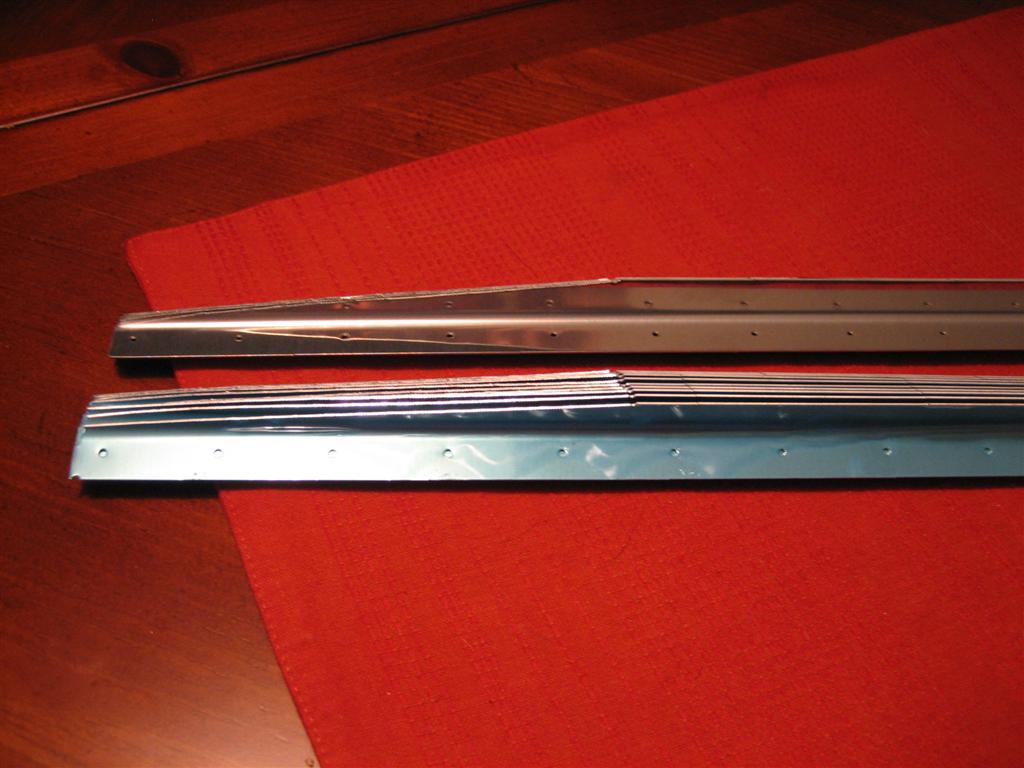
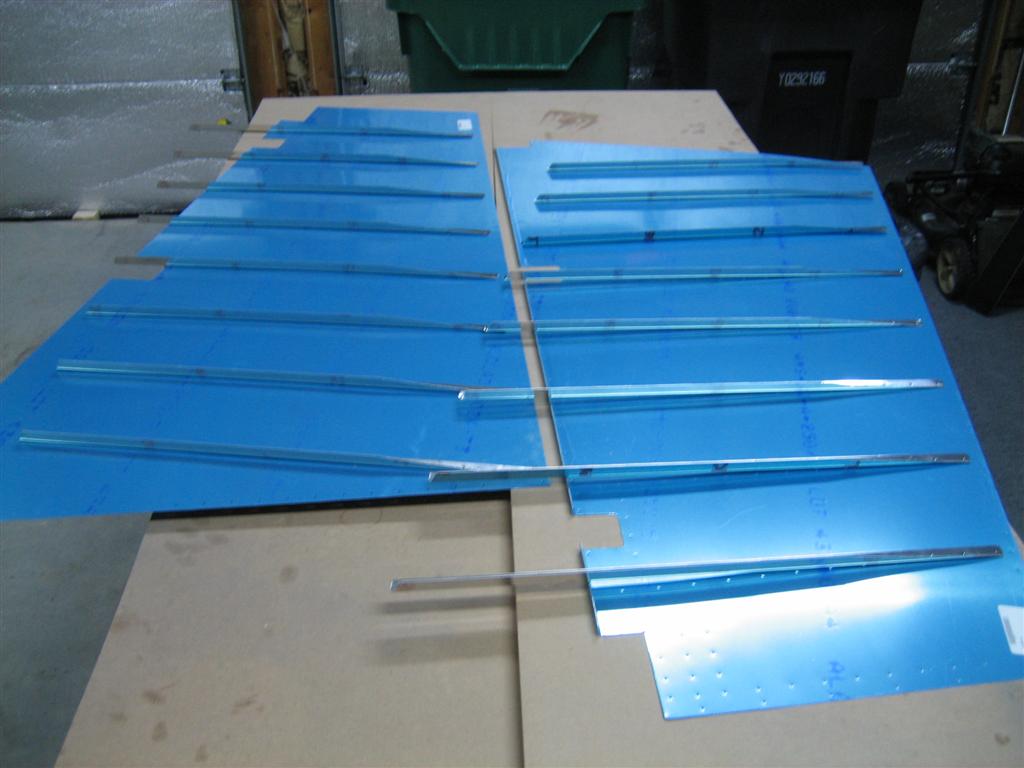
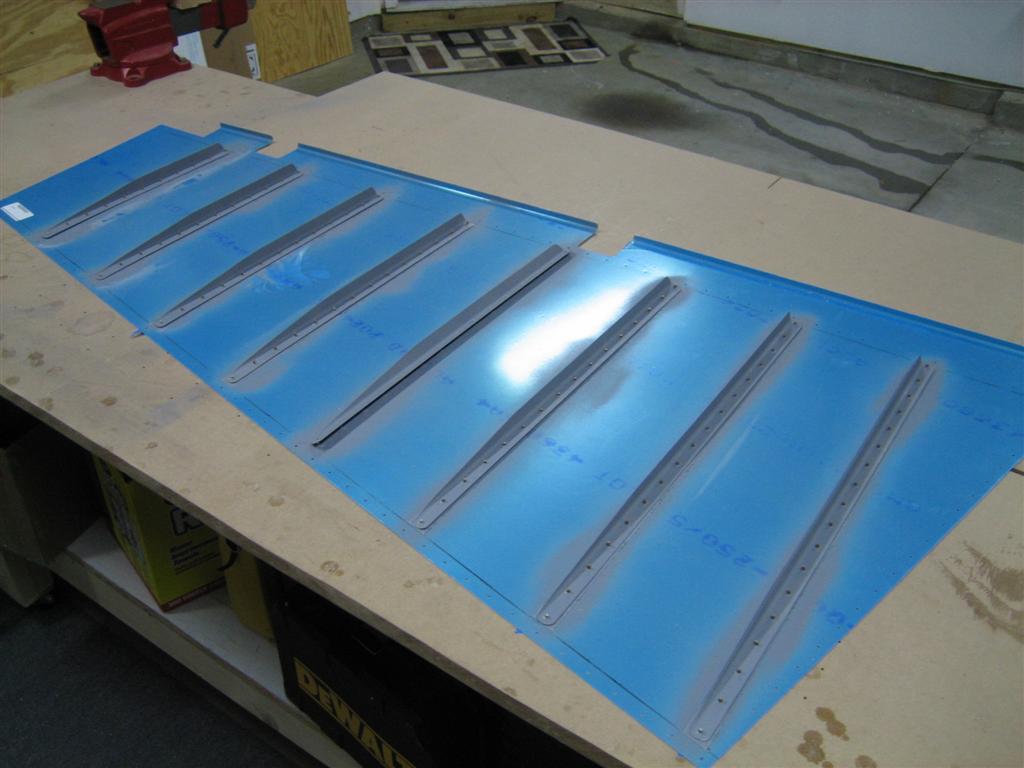
I grabbed the stiffeners that I had primed on Friday night and laid (layed?) them on the left rudder skin.

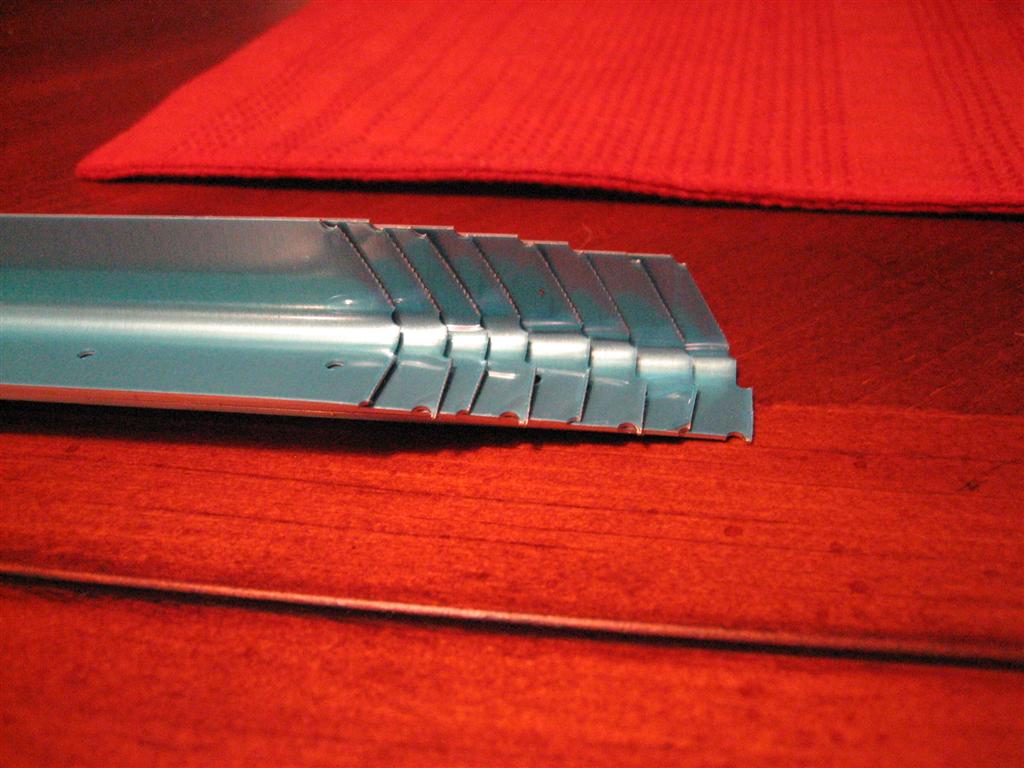
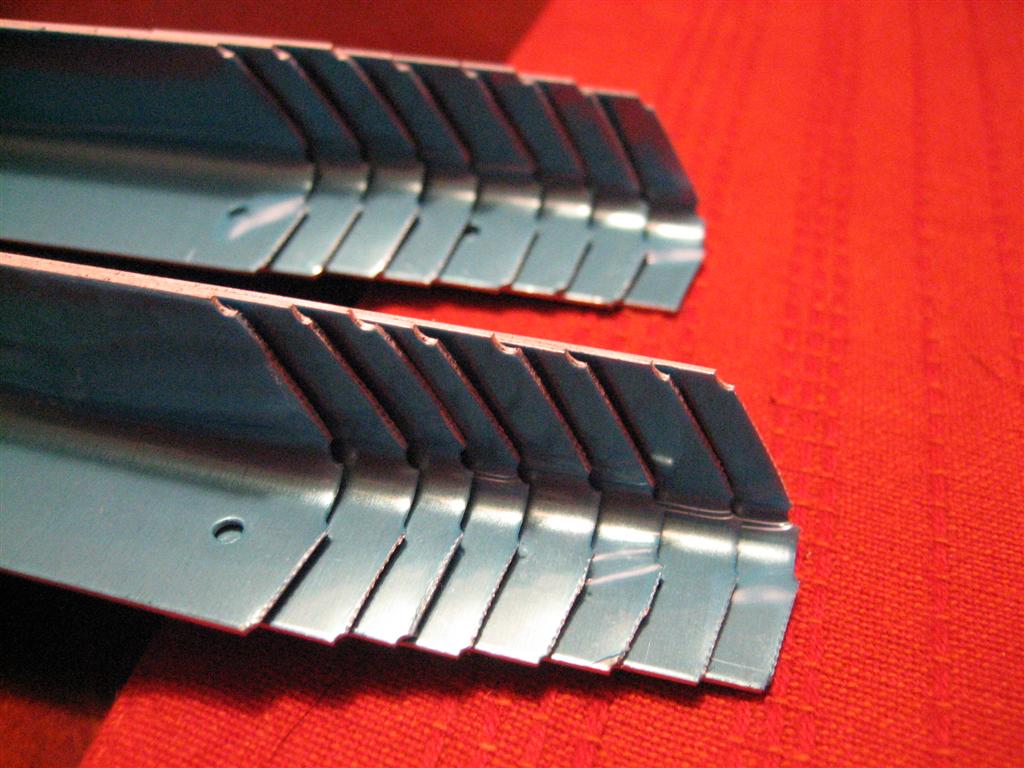
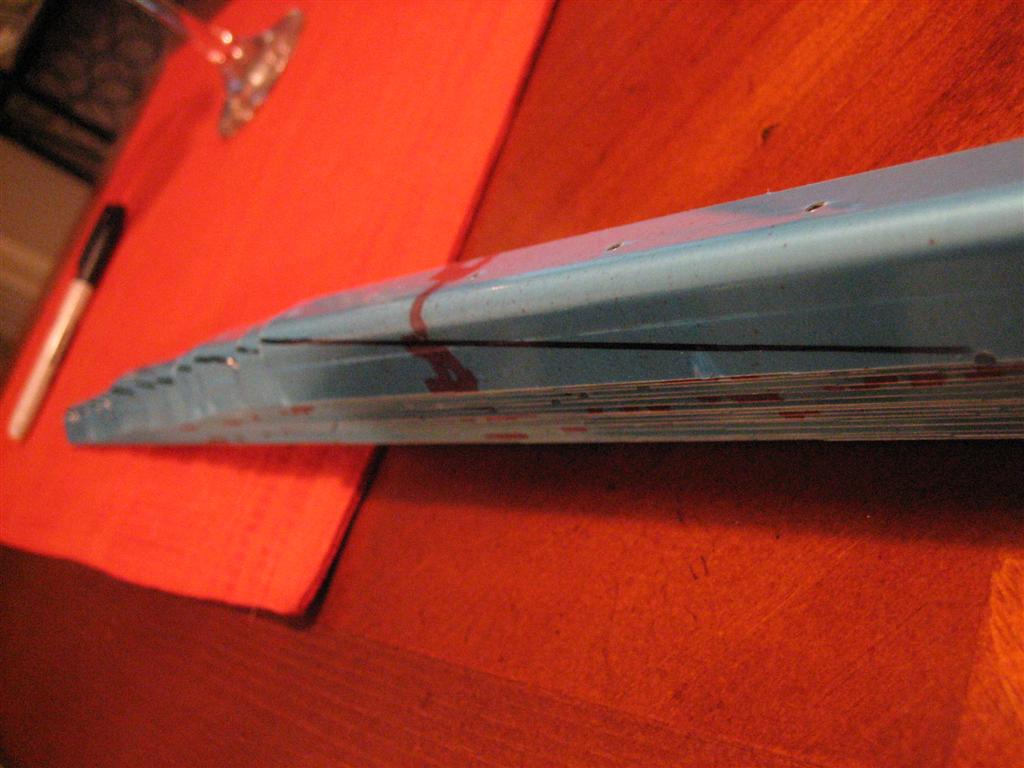
Primed stiffeners, ready to be backriveted.

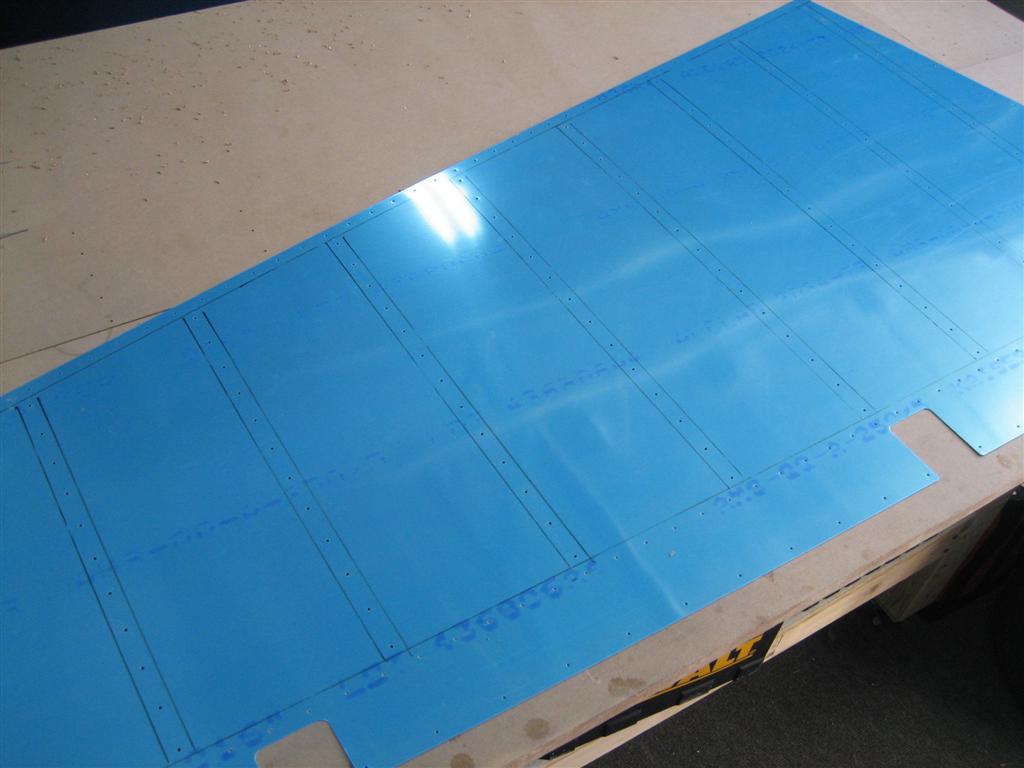
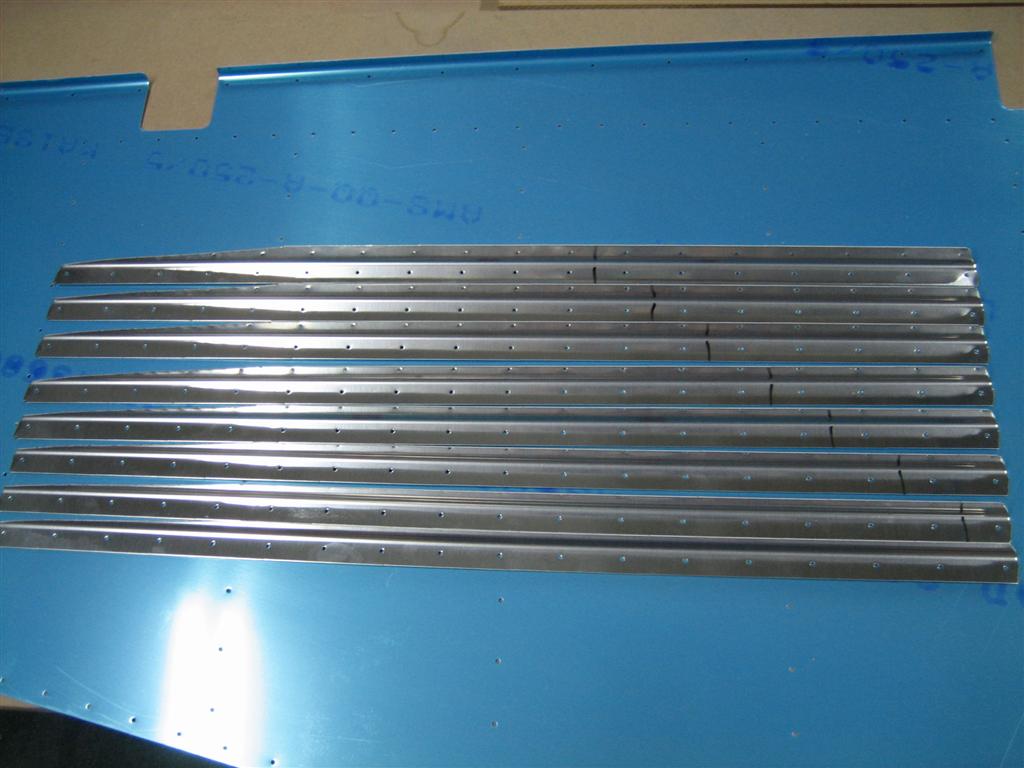
Then, I backriveted them.

All done.

Sorry about the lack of pictures.

116 backriveted flush rivets set.

Prev | Next


More Rudder Stiffeners

February 20, 2010

Prev | Next

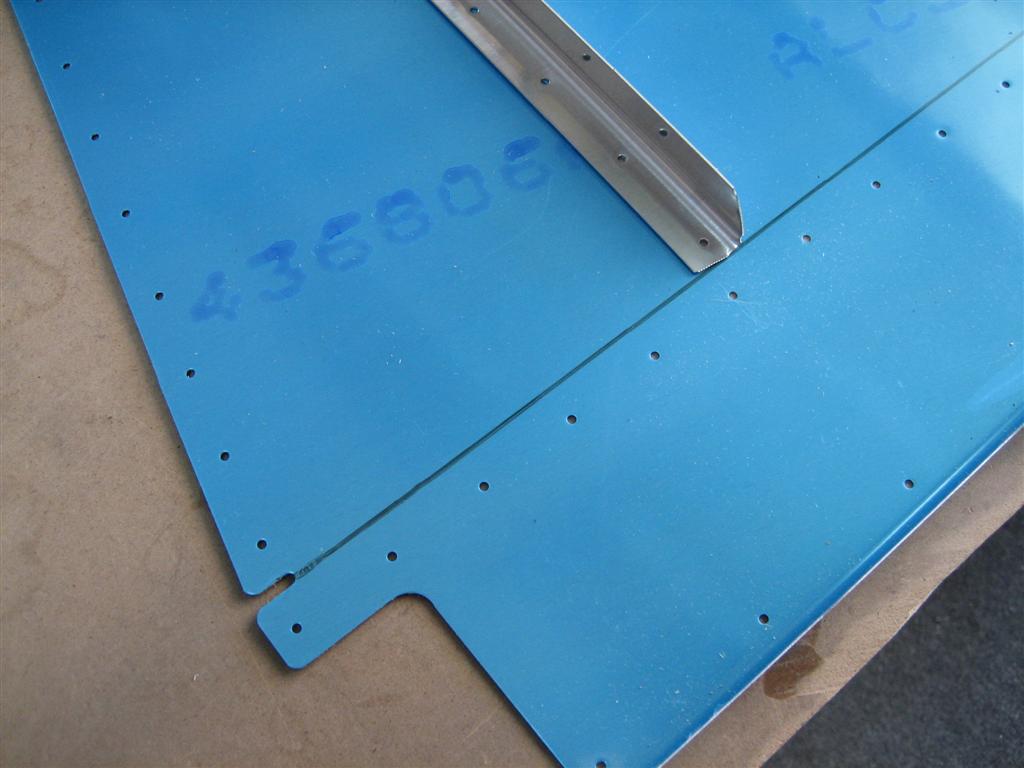
After a very busy end of the work week, I managed to squeeze a couple hours of airplane time in the shop today. I started by mocking up the R-902 front spar, and drawing a black line on the left rudder skin (this is the forward bottom edge of the left skin). I’m going to draw out all of the mating surfaces on these skins, since they will have to be primed at different times (more on this later).

Forward bottom corner of the left skin. You can see the front end of the only full size stiffener.

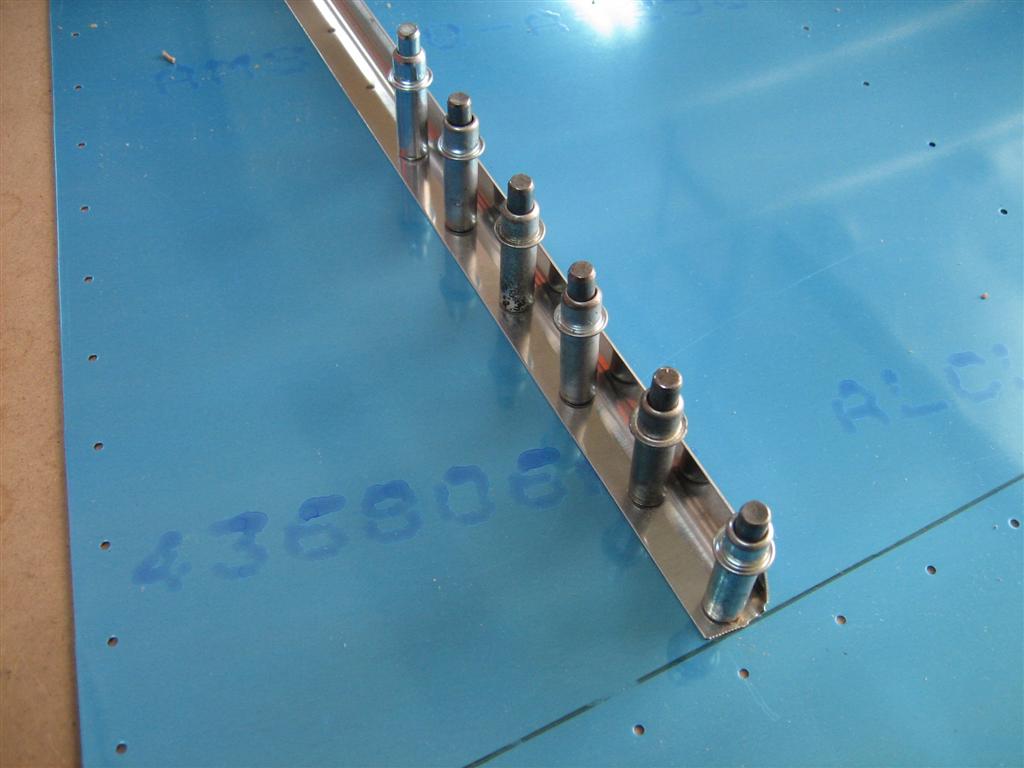
Next, I dove into match-drilling the stiffeners and skin. Here are the first size holes drilled. I don’t want any waviness in the rudder, so I am clecoing every hole as I drill. (You can see that like everyone else, I am drilling straight into the MDF that’s on top of my workbench. This works well, and is basically per the plans.

First six holes of the stiffener to skin match-drilling process.

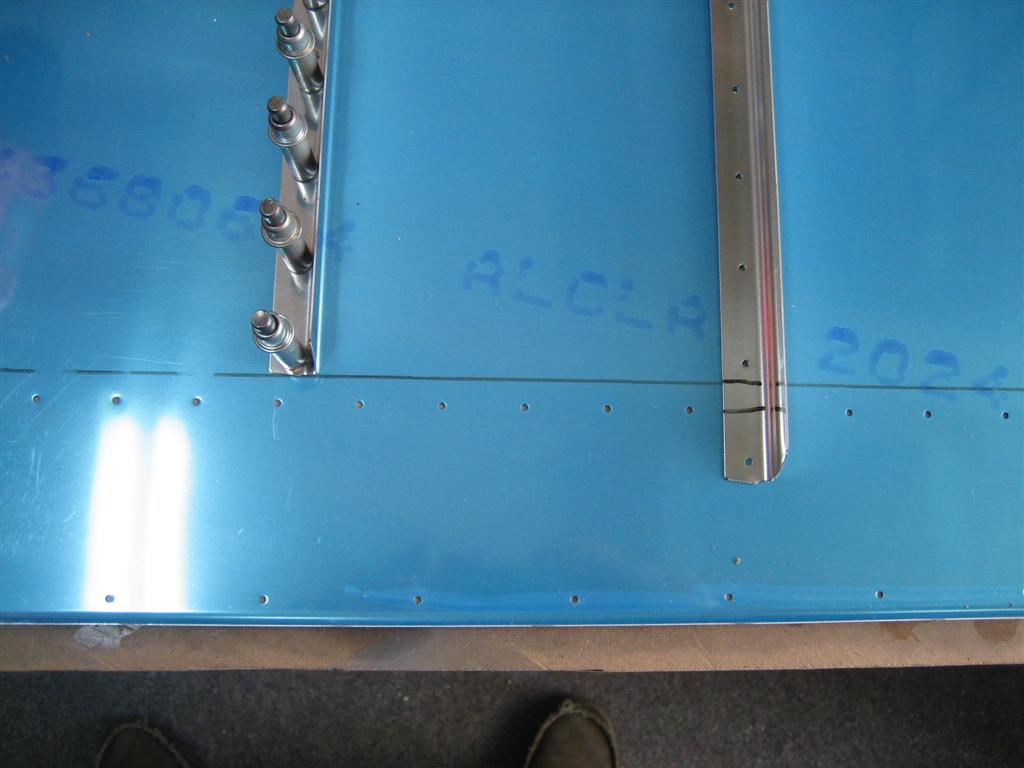
After I finished the first (lower) stiffener, the next one needed to be cut down to size. I made another mark on that stiffener, this time in line with the front spar line I drew earlier. Now, when I trim the stiffeners on the aft side of that line, there will be no interference with the front spar.

Getting ready to trim the second stiffener.

Then, I got in the groove, so the next picture was after a few of the stiffeners. I used my cordless for this. Not as noisy.

Lower 4 stiffeners done on the left skin.

All done with the left side. Oh yeah, it was 60° today, so I worked with the garage door open. So nice…

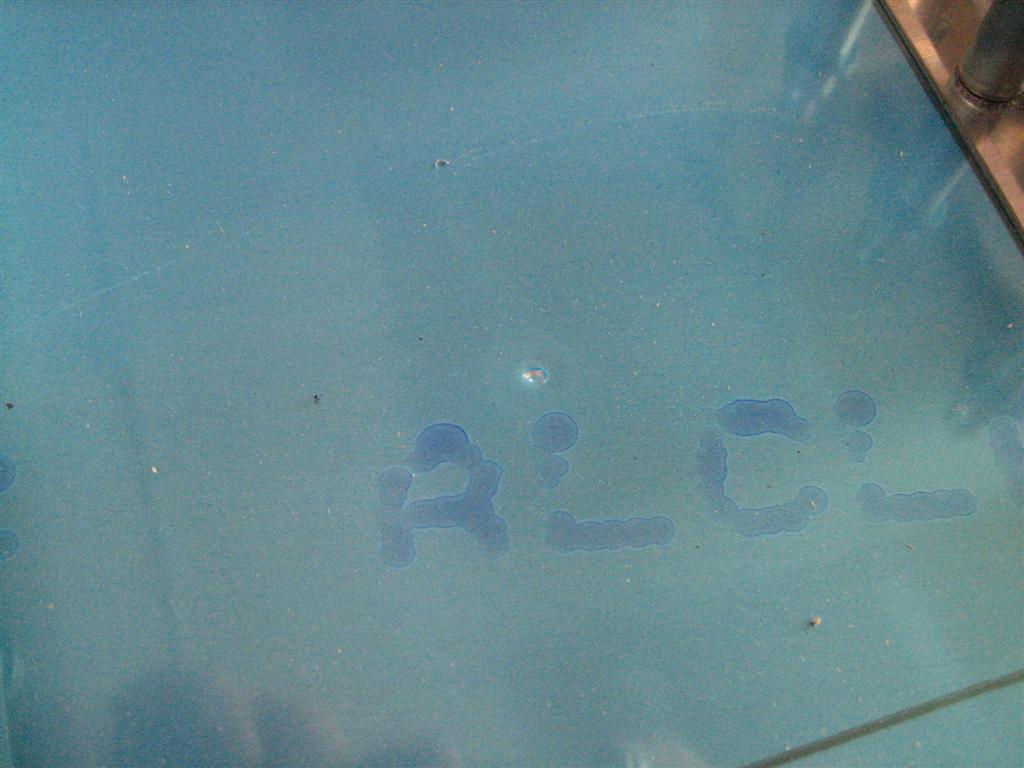
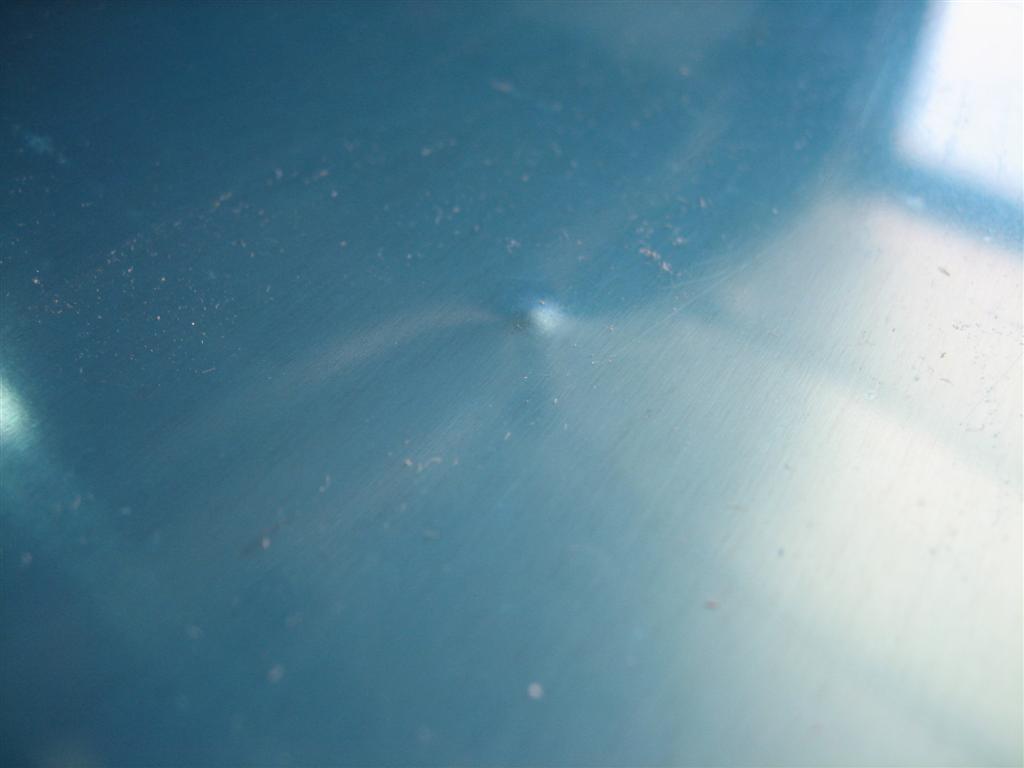
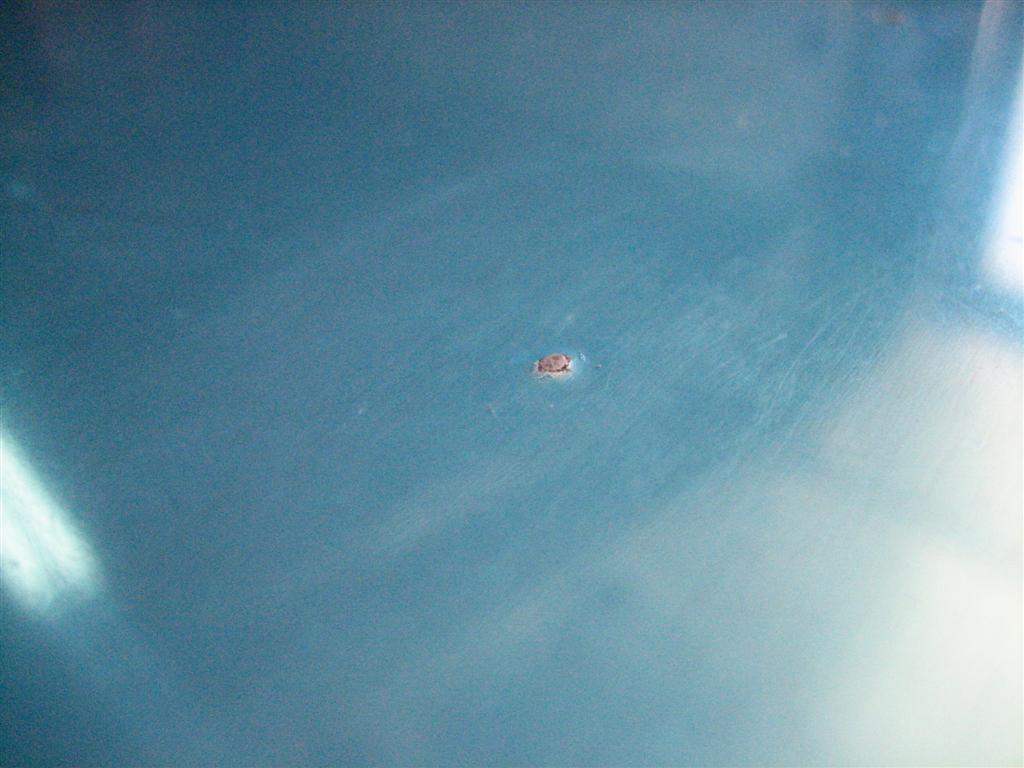
There's something really rewarding about getting to this point. OH MY GOD!, WHAT IS THAT MARK BETWEEN THE FIRST TWO STIFFENERS!?

A closer look…

AHHHHHHHHHHHHHHH!

I turns out I dropped my cleco pliers from about 8 inches right after I completed the first stiffener. Instead of immediately pulling up the stiffener to inspect the exterior skin, I guessed that it was going to be salvageable and pressed on.

To put it into context, it is just above the first "L" in "ALCLAD."

It’s not that bad, but it would be very noticeable If I polish. (Even if I paint, it is still a pretty big mark.

From the other (exterior) side. Bummer.

Anyway, I’ve heard people talking about using the back of a spoon to gently massage stuff like this out. I spent about 15 minutes gently massaging, and I ended up with this. It looks worse than the original picture, but it is pretty flush now, and I think with a little more work may even go away.

After massaging. It's good, but not great.

Anyway, after that fiasco, I laid out the right skin, marked the front spar and trailing edge wedge on the skin, and started match-drilling stiffeners. I was in such a groove that I forgot to take a picture when I had all of the stiffeners drilled and clecoed. (I didn’t forget to take a moment to admire it, I just forgot to share it with you.)

After removing most of the clecos post match-drilling.

Also, while all the stiffeners were in place, I drew lines on each side of the stiffeners so I would have a guide for devinyling.

I call it match-drawing.

After pondering my next few steps (debur, dimple, scuff, clean, prime, backrivet the stiffeners on), I decided I need to get the vinyl off for deburring.

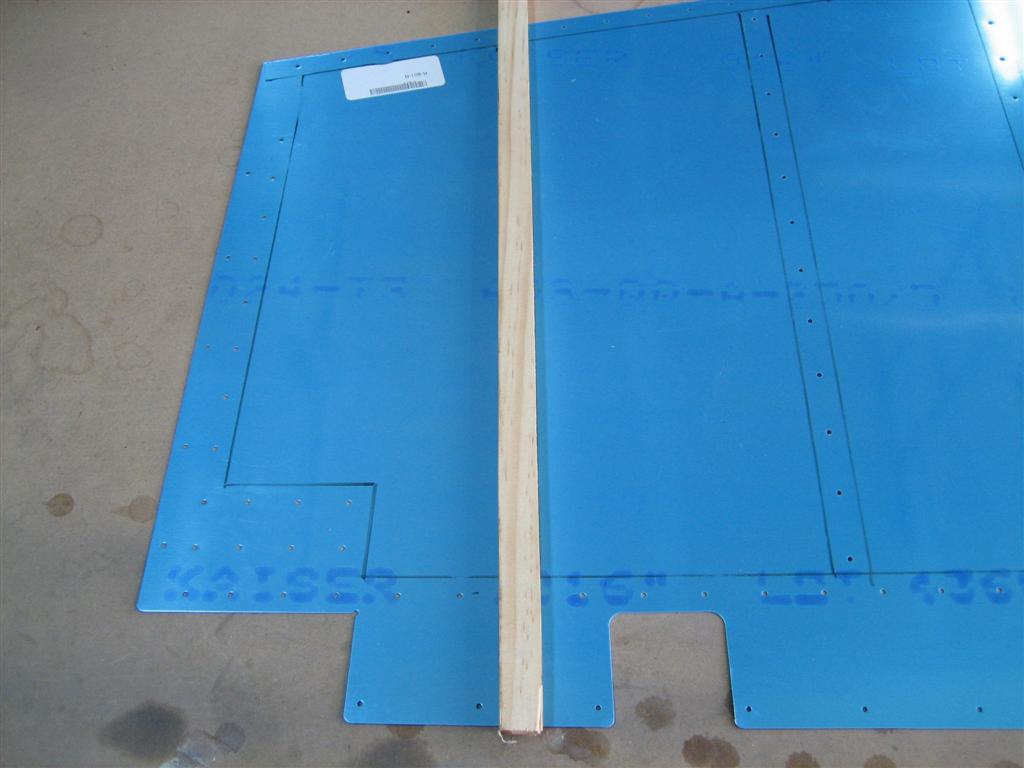
Here's the wooden stick I use as a guide for the soldering iron.

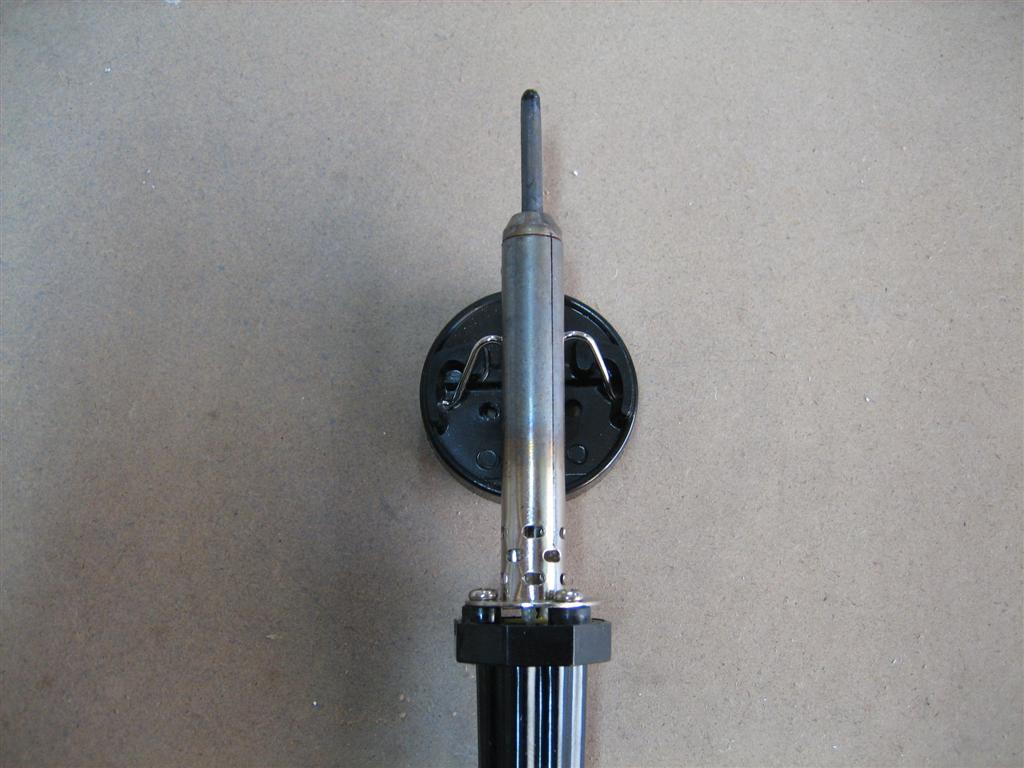
I don’t think I’ve shown you guys my round-tipped soldering iron yet. Here you go.

Soldering iron, heating up.

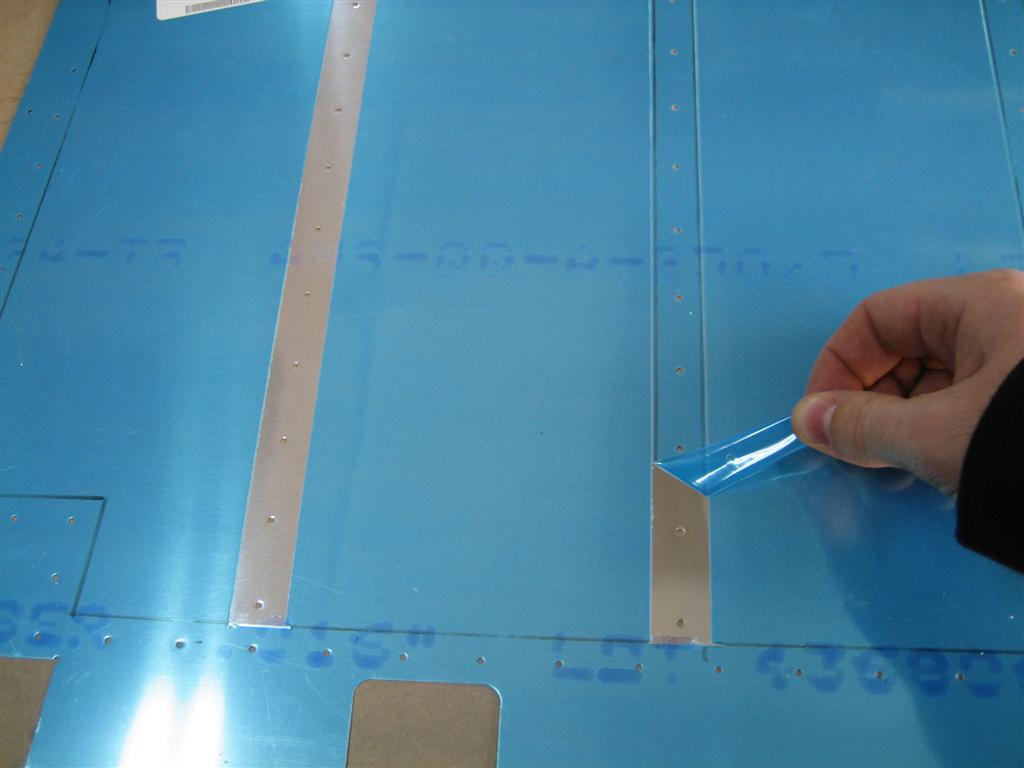
After running the soldering iron down the pre-drawn lines, I get to devinyl. I say “get to” because I like this part.

Whose fingers are those?

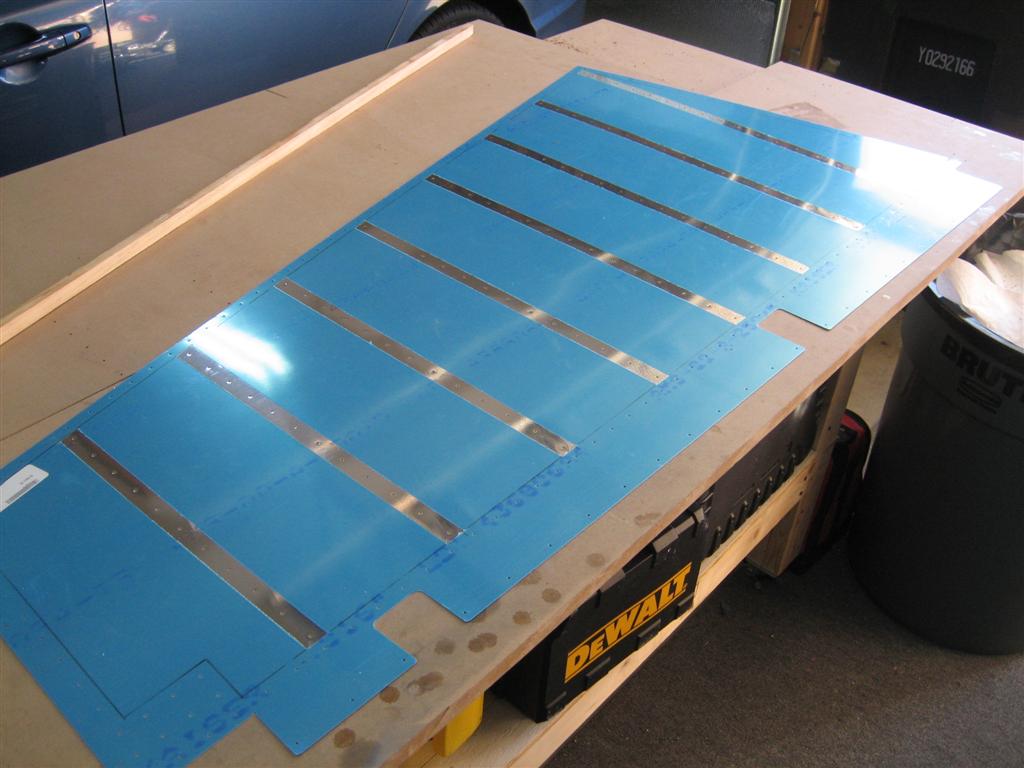
All done with the stiffener devinyling. You can see I didn’t do all of the outlined parts, because I want to prep and prime those later. (Have to assemble the skeleton, cleco on the skin, and match drill before you can debur, dimple, prep, etc. the rest of the stuff. Also, I need to find out if people are priming the trailing edge area before using Pro-seal. I have a feeling people are just scuffing, but I’ll ask the forums to make sure.

Ready to deburr, dimple, scuff, and prime.

Next up, devinyling the left skin.

2.0 hours today. Gotta go get cleaned up for festivities tonight.

Prev | Next


Started Rudder – Stiffeners

February 16, 2010

Prev | Next

Well, with the vertical stabilizer safely in the airplane storage room, it’s time to get started on another part. Next up, the (infamous) rudder. There are a lot of steps on the rudder that give a lot of builders a lot of trouble. I am confident, but will continue to use other sites on a daily basis before doing any work that evening. That’s worked out well for me so far, so I’m going to keep at it.

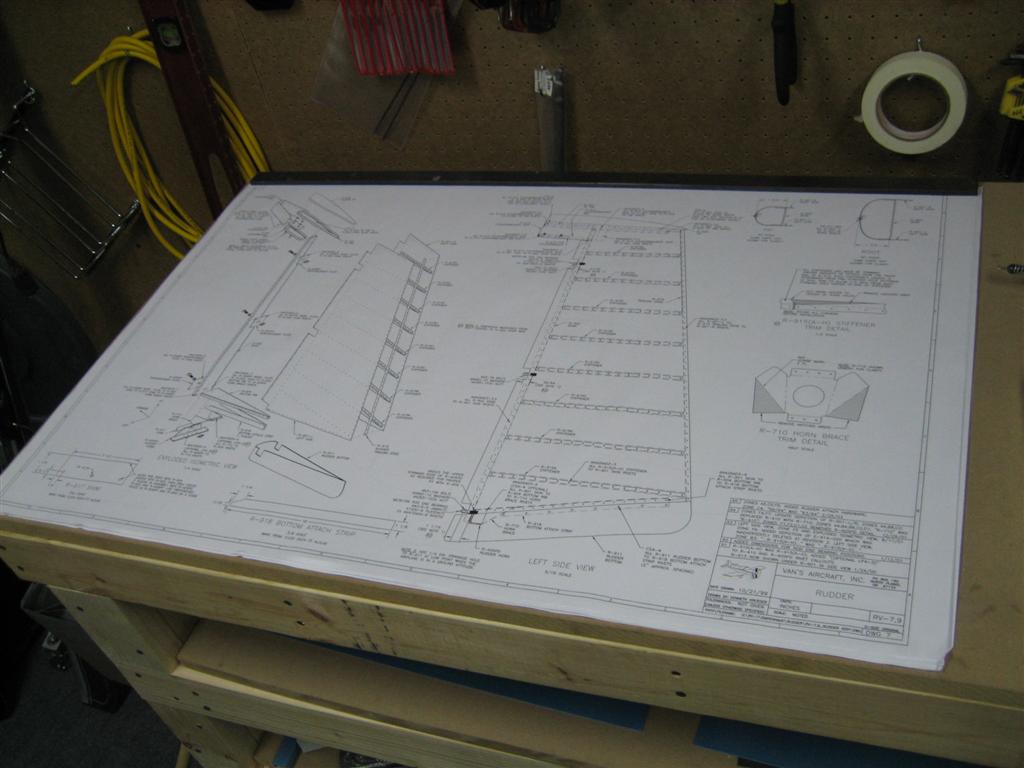
First thing’s first, the ceremonial plans change. I still keep the plans on my second workbench. Maybe someday I’ll find a place to actually hang them up.
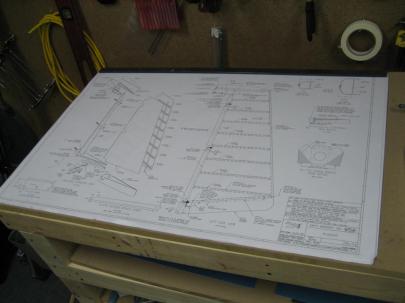
Drawing 7. The Rudder. (Cue dramatic music.)

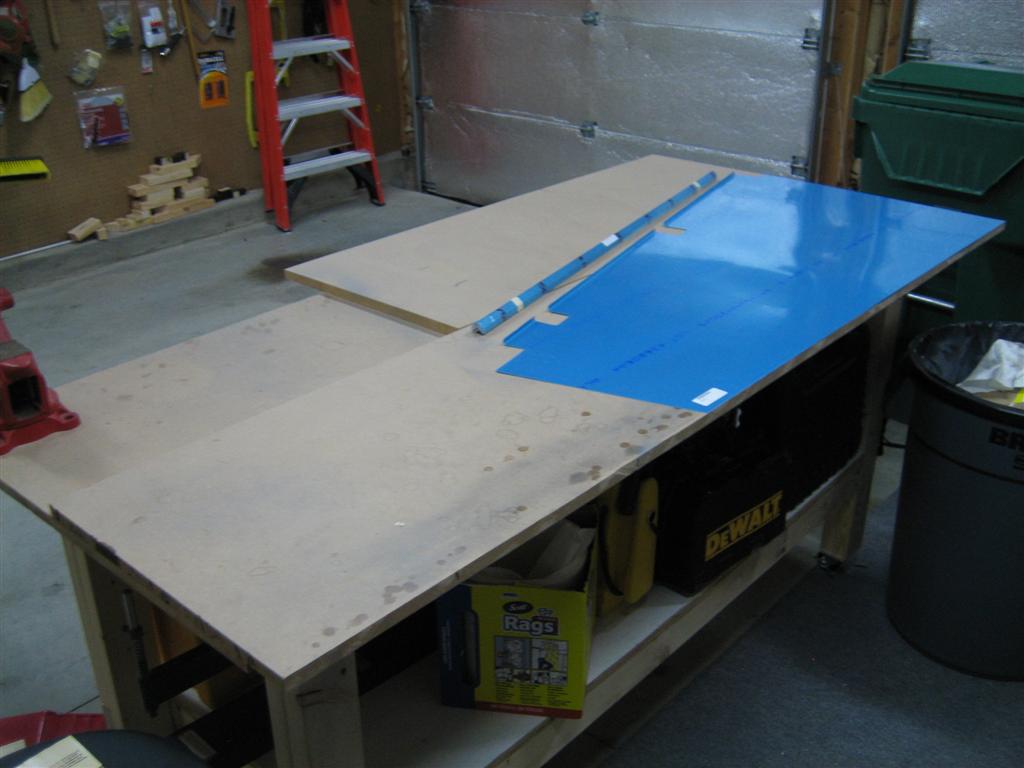
I spent a little time trying to figure out whether I will do the stiffener-to-skin dance on both sides at once, or just one side. You can see below that if I had another longer piece of MDF and maybe took my vise off the bench, I could set the skins on opposite corners and maybe do them at once, but I think I’ll just do one at a time, making sure I can reuse the holes I plan to drill into the table. (Drilling, and then clecoing, the stiffeners to the skins all the way into the table will allow me to keep everything very steady. Sounds like a good plan to me, and is pretty much standard given that Van’s suggests doing so in the construction manual.)
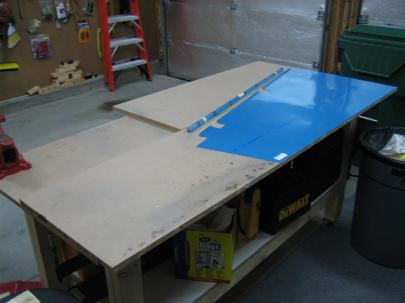
I'll have to do one skin at a time. I don't want to get too crowded, and I am not overly concerned with building efficiency.

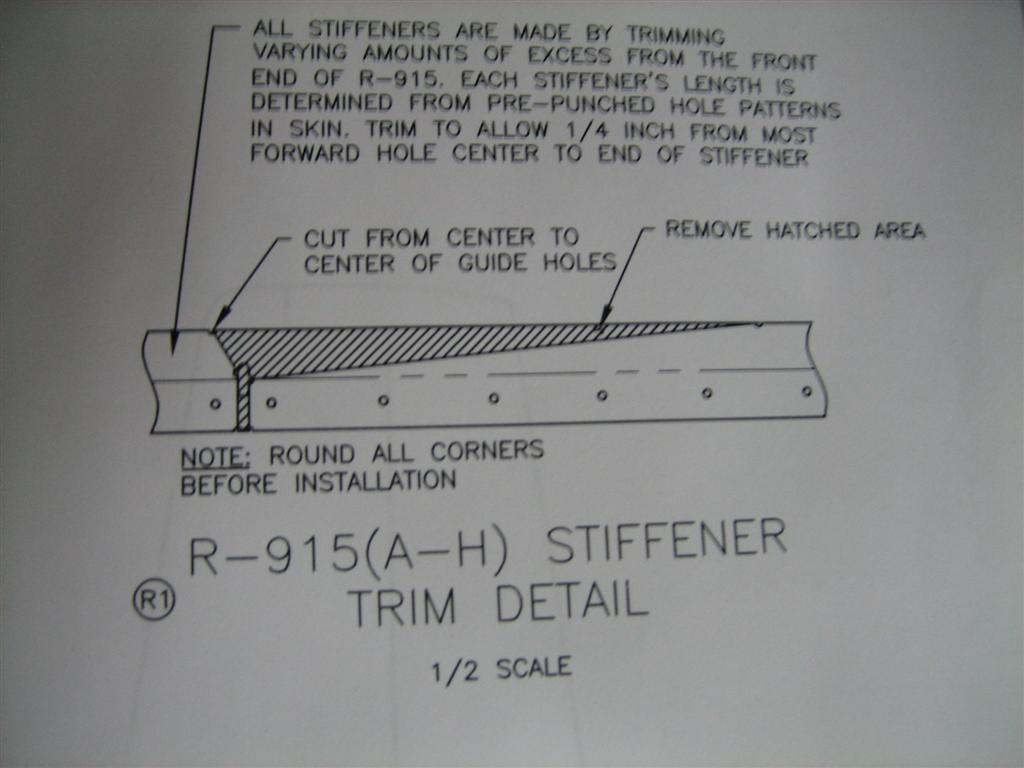
First step in the manual is to start on the stiffeners. I fished out the bundle of stiffeners (there are two bundles, one set for the rudder, and one set for the elevator) and studied the plans.  For the back side of the stiffeners (with the shallow angle on the right side of the picture below), these are the final cuts, so I need to be careful. For the front side (you can see a little of the front of a stiffener on the left in this picture), only 2 of the 16 stiffeners will be to full length, so the other 14 can be rough cut until I can mark them to final size per the note at the tot of this picture.
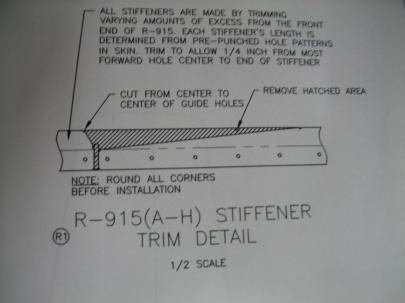
Stiffener Trim detail, drawing 7.

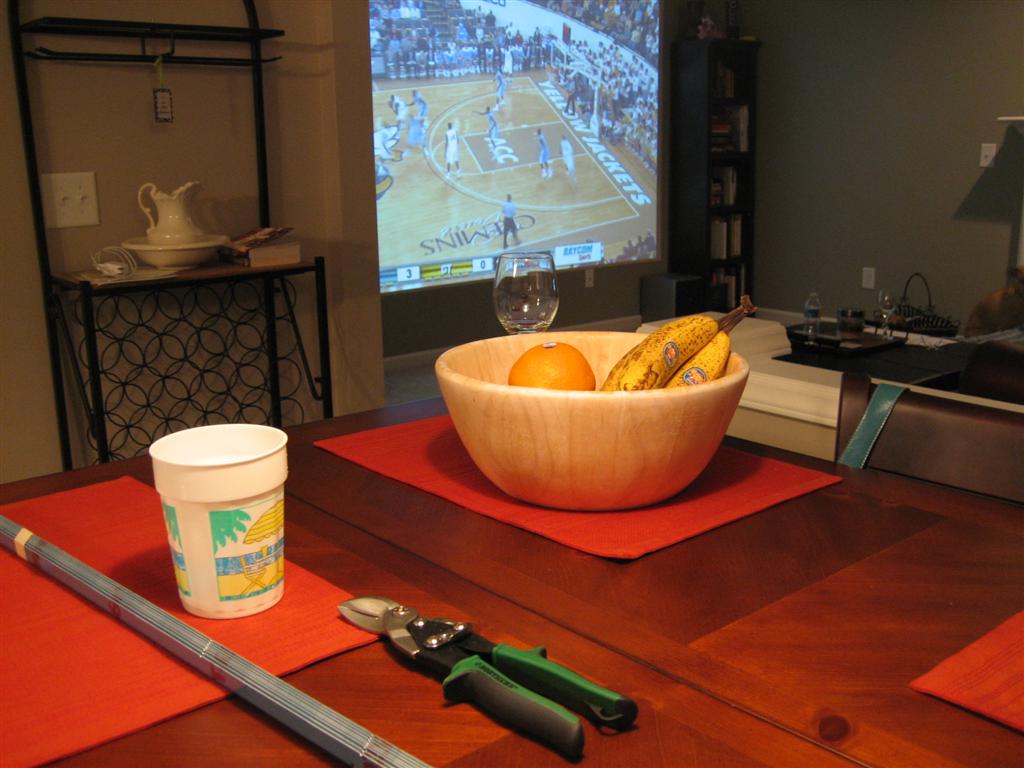
Next, I headed inside to sit myself down at the table so I could watch the UNC vs. GT game. I know some of you are panicking right now, but please calm yourselves. While it appears that my winerack is empty (OH MY GOD, NOOOOO!), that is really our third winerack. Rest assured that our two primary wineracks are stocked satisfactorily.
Is that an empty winerack? Don't worry, the hooch is stored in another rack.

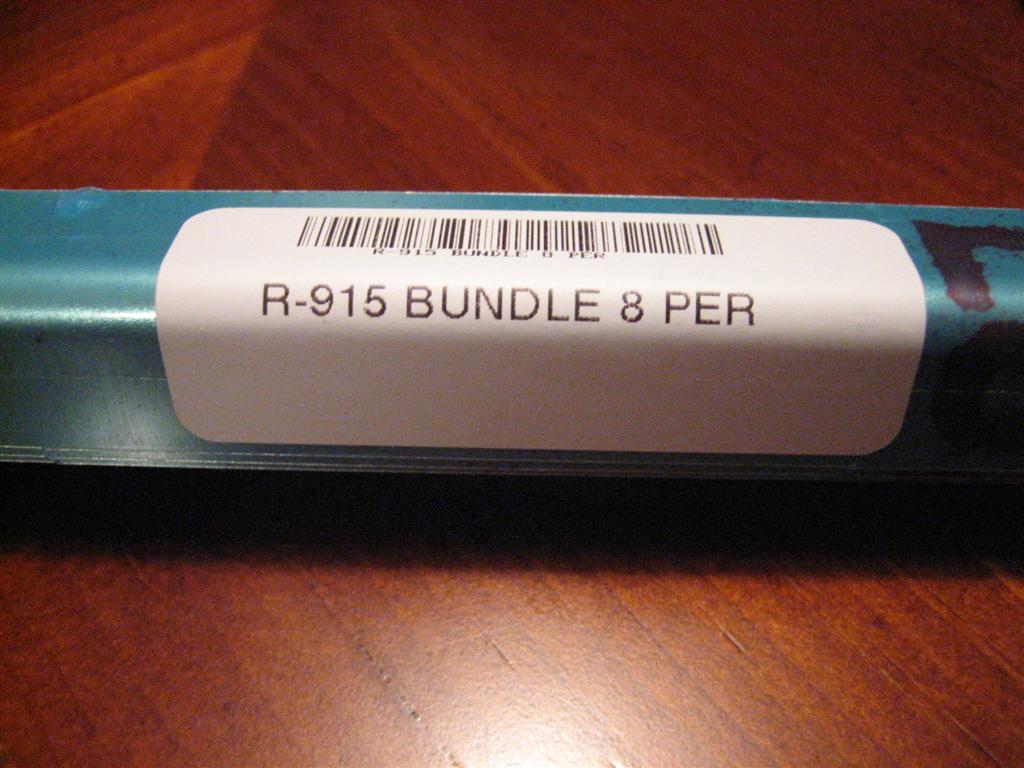
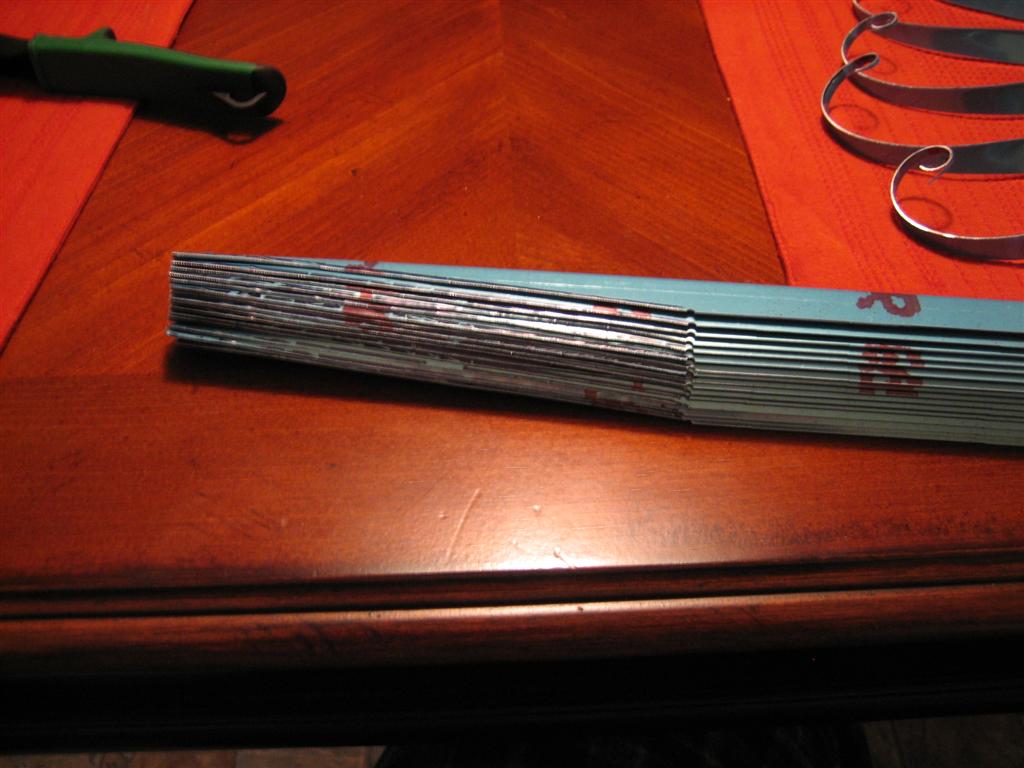
Anyway, here’s the stiffener bundle I’m about to break open.
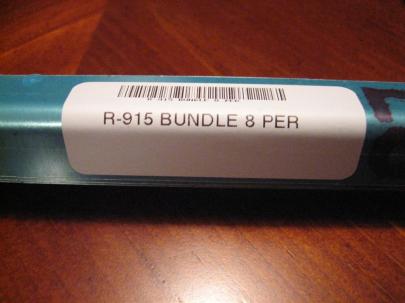
R-915. (I can't think of a funny caption this morning, so all you get is the part number.)

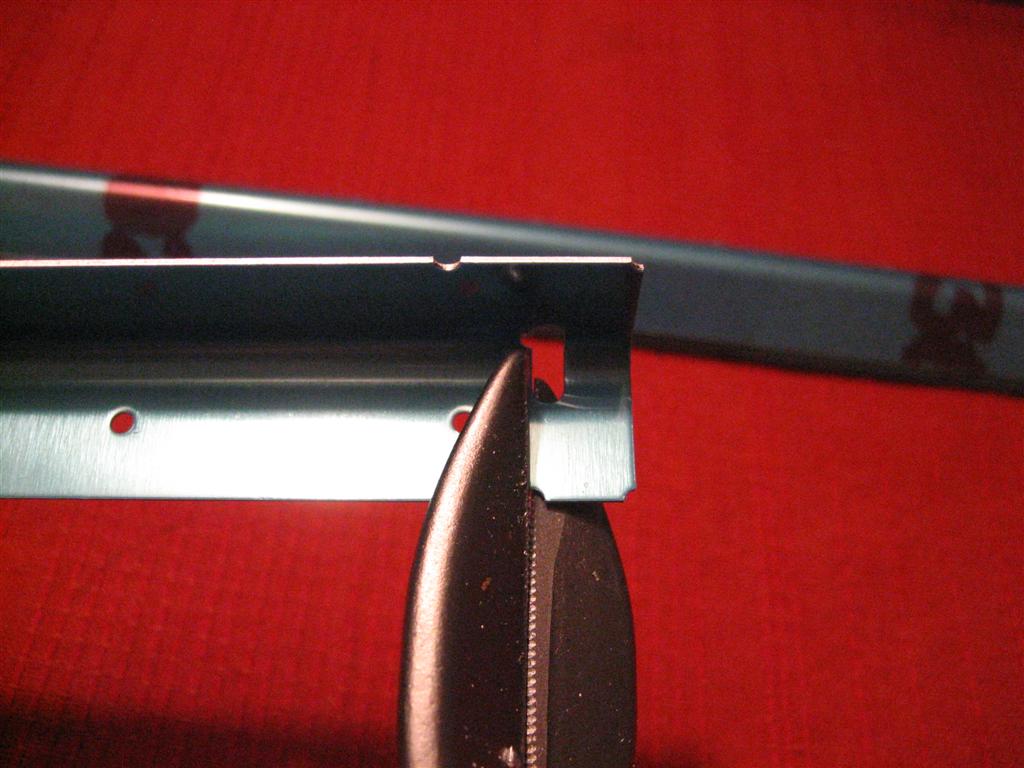
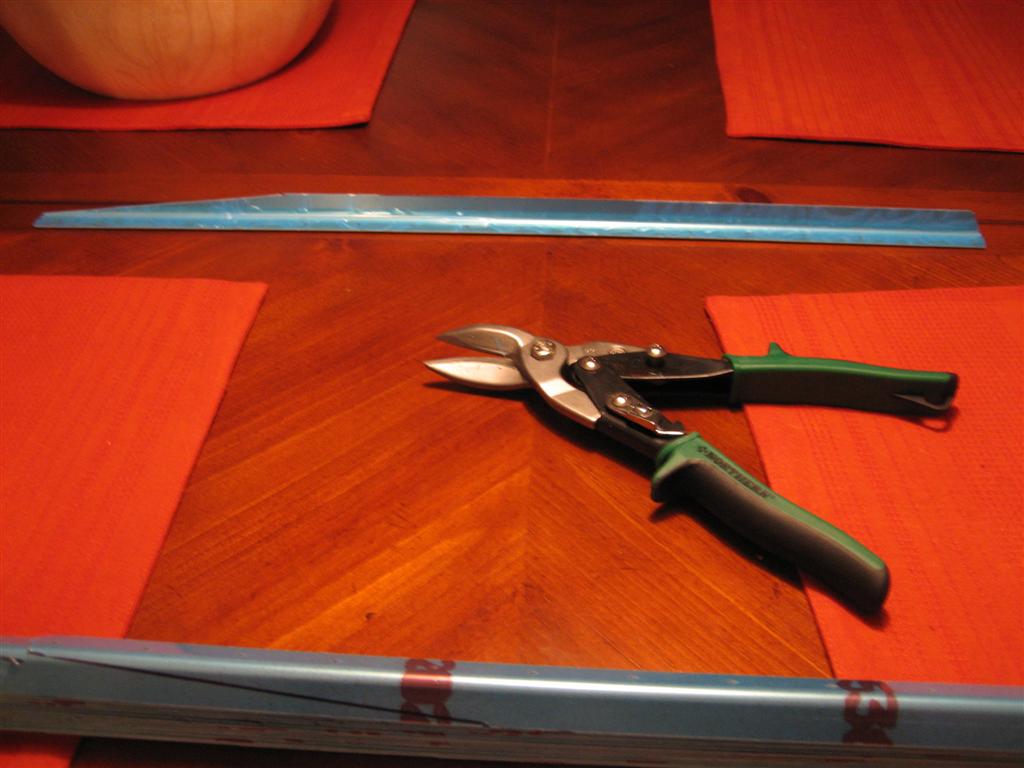
I broke open the bundle and started snipping from center hole to center hole. After a few stiffeners, I started biasing the cuts to the sides of the holes, but only where I was sure that I was going to have to remove more metal later.  Here you can see that on the top part of the cut, I’m lined up with the left side of the slot.
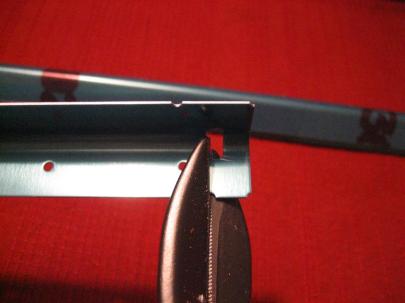
Snip snip.

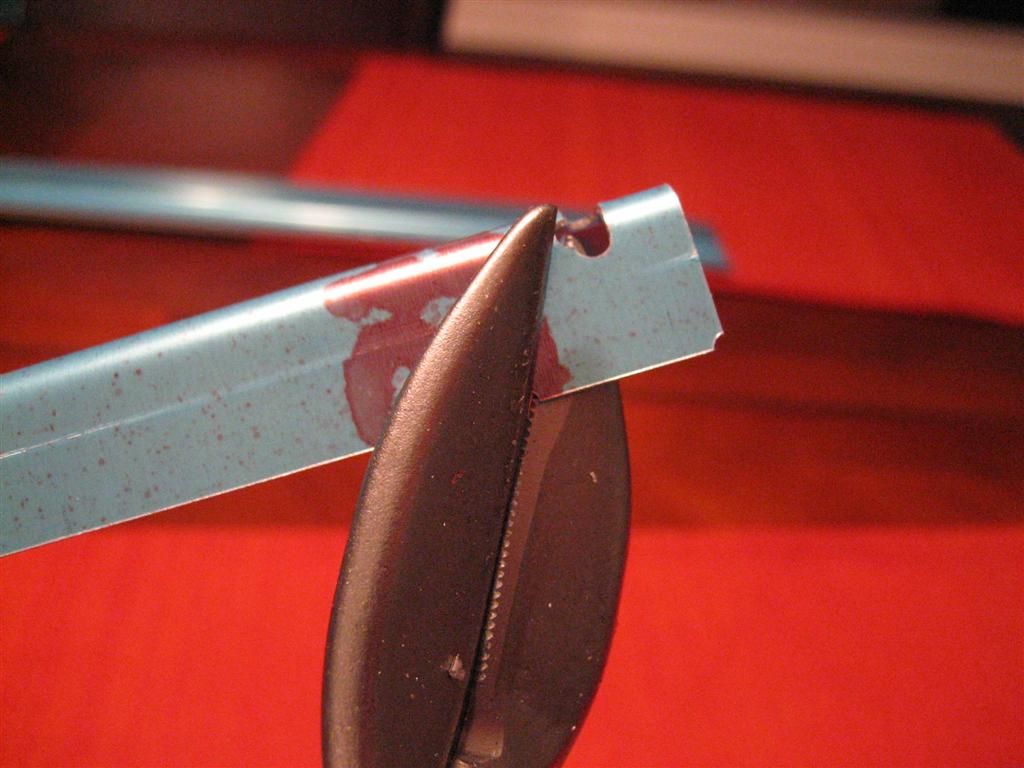
I included another picture of the angle cut for the front end of the stiffener. Remember, only two of these cuts are for real, as the next step is to chop off varying lengths of stiffener from the front to match up with the pre-drilled holes in the skin.
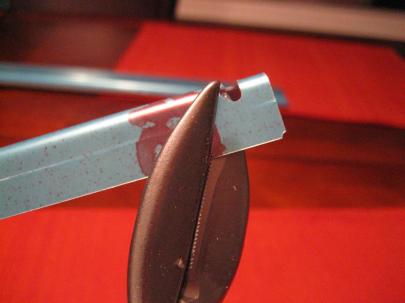
Snippity Snip snip.

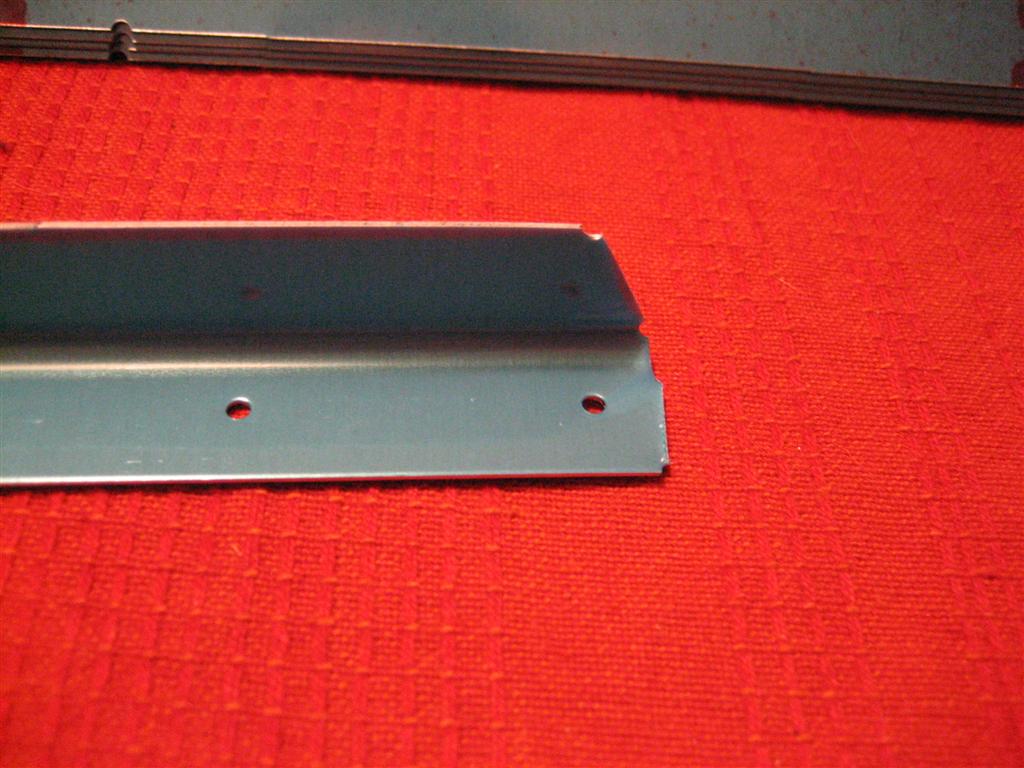
Here’s a rough cut for the front end. See how I am going to have to remove more metal because of the notches. Might as well get closer on the first cut. That’s why I started biasing the cuts to one side after the first few.
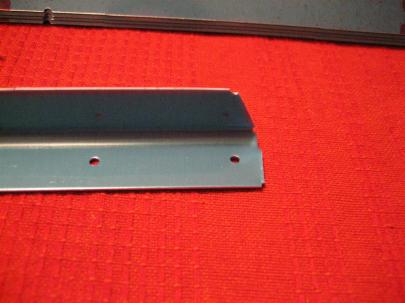
The front end of the first stiffener.

First 8 front ends done.
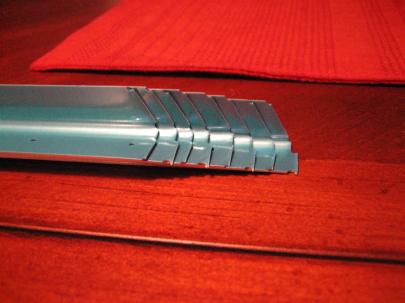
Yikes, those are going to need some edge finishing.

All 16 stiffeners’ front ends done.
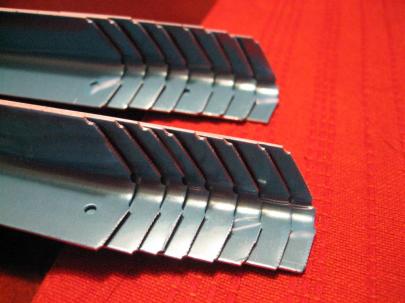
That's a spicy stiffener.

Next, I used an admittedly fat sharpie to draw the required cut lines on the aft ends of each of the stiffeners.
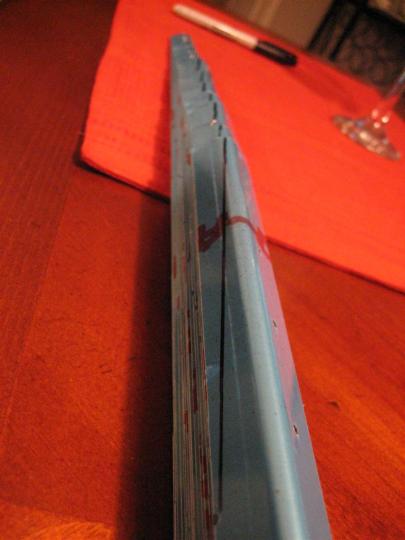
Lines drawn, back to snipping.

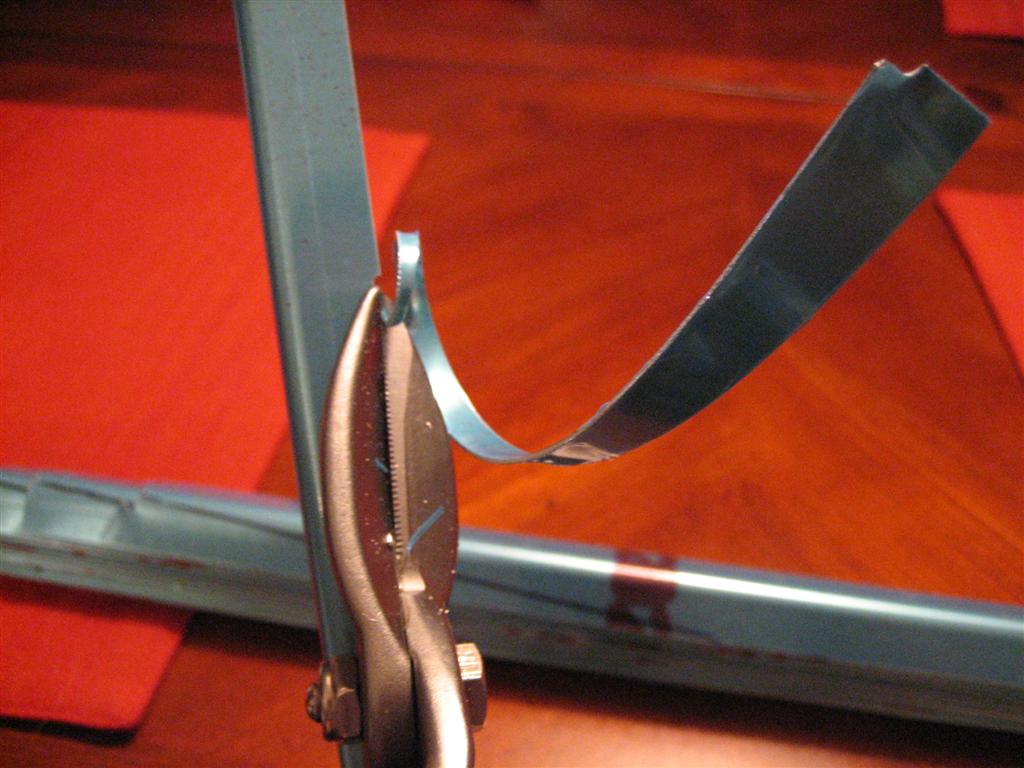
And here I am using the snips to cut that longer line. Snips aren’t perfect for this task, since they bend the metal, but if you work them correctly, they will only bend the piece you are cutting off. There is kind of a rocking motion you have to feel with each cut. You’ll get it when you try.
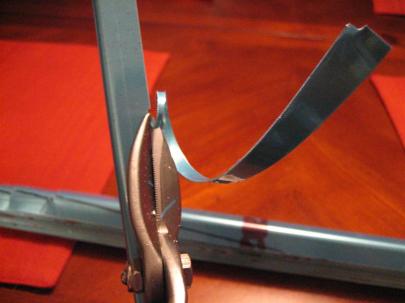
Snipping the aft end.

Here’s the first one, done.
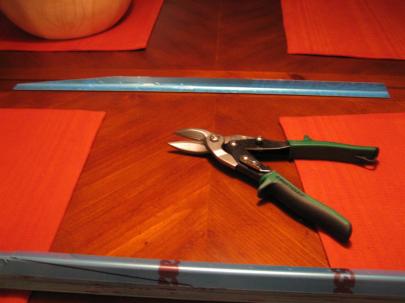
I'm a little camera happy today, don't you think?

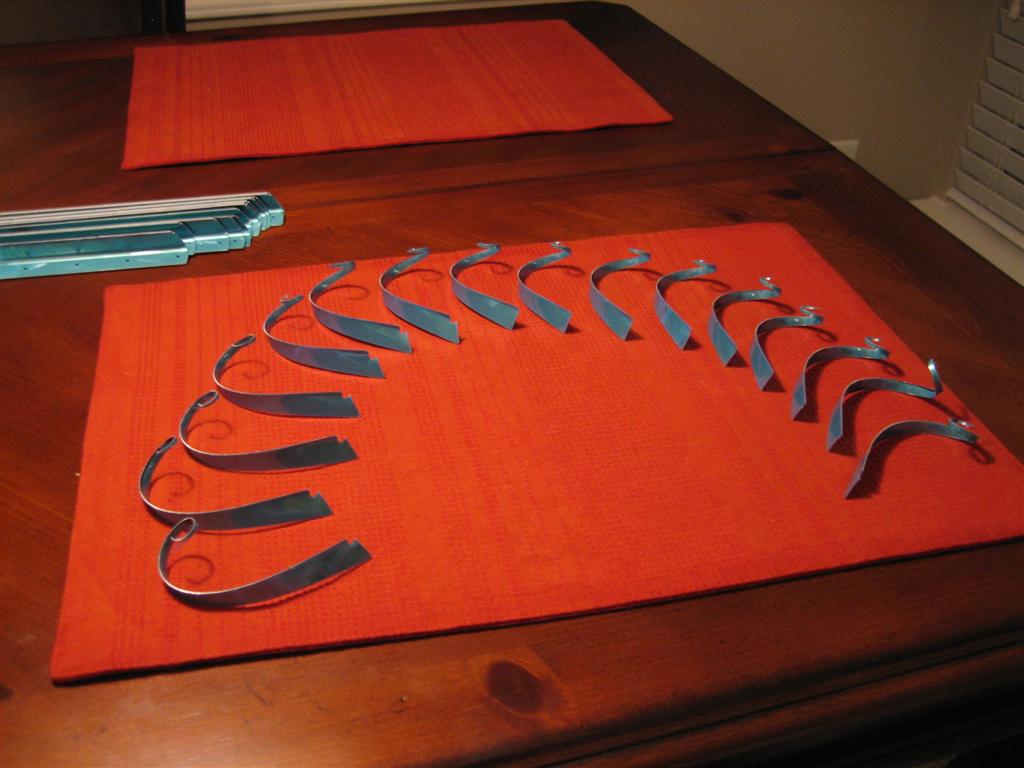
Then, I finished up the other 15, and was left with these scraps. If I had even the slightest hint of an artistic bone in my body, I would make some comment about how these resulting spirals are king of cool. But I don’t, so I won’t.
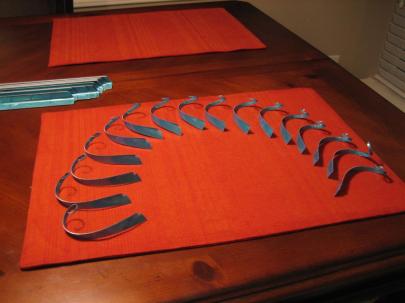
Scrap from the latest cuts.

All 16, ready to be devinyled.
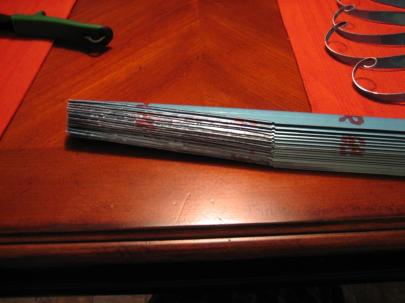
Done with those cuts.

Starting to devinyl…
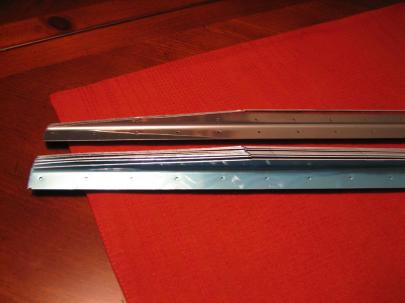
This is going to take forever.

I’m glad I did the devinyling inside. When the vinyl is warm, it comes right off.
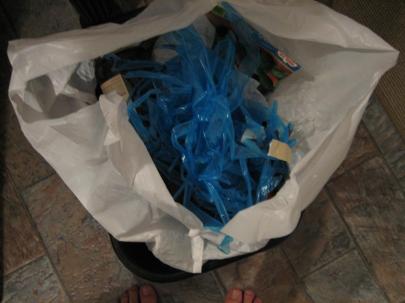
Holy crap that's a lot of blue v-......WHOSE TOES ARE THOSE AND HOW DID THEY GET IN THE PICTURE!?

Next, I headed outside to put everything away, but couldn’t resist setting the stiffeners out on the skins.
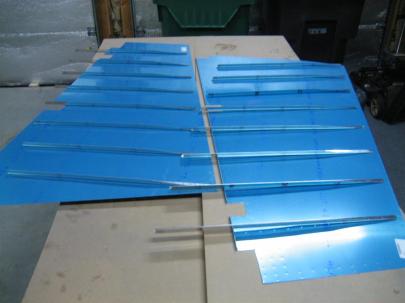
I'll need to trim some of these, don't you think?

For now, I just drew a thick marker line along the front spar holes. If I cut along these lines, they will still be too long, but at least now I can figure out which hole will be the most forward hole and then use the plans-suggested 1/4″ measurement to draw a nicer cut line.
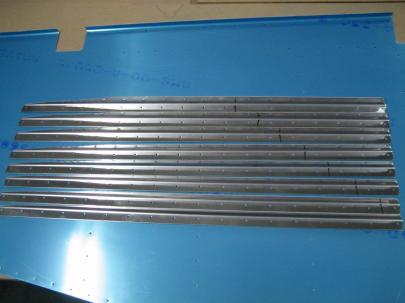
8 of the 16 stiffeners, ready for final cutting.

One hour of camera-happy warm environment work tonight. Sorry about your bandwidth.

Prev | Next

Purchased Practice Kit from GBI

September 27, 2009

Prev | Next

I am a lucky guy. I live about an hour away from George and Becki Orndorff of GeoBeck, Inc. See their website at fly-gbi.com. Last night, after a wonderful day of flying a Cessna 310H to Gilliam McConnell and having lunch at the Pik-N-Pig, I drove down to see George and Becki and purchase a practice kit. After graciously forgiving me for bothering them on a Sunday evening, George showed me their RV-7A (N289GB). It was immaculate. I asked George about a few things, the answers to most of which were expected. Example: Why shouldn’t I build? (“You should!”) Do you love it? (“Absolutely!”) Everyone I ask has nothing but wonderful things to say about their RV. Sounds like I need to go ahead start!

Two of his answers were more interesting. I asked him about tip-up versus slider, noting that everyone seems to like what they have. His simple response: “I’ve built both, and the slider is better. I won’t build another tip-up.” I was sold, but I pushed to find out why. Basically, he explained that the slider was more sturdy, cooler (both hero-pilot style and temperature style) and easier to build. Easier to build? That’s contrary to what I’ve heard, but George is obviously trustworthy in the RV expertise area, so I’ll take is word for it.

The other answer was to “What modifications should I do to the RV-7?”

He told me to put the RV-8 rudder on the RV-7 (instead of the RV-7/9, larger “uglier” rudder). I haven’t seen pictures side-by-side (to determine if I agree with the ugly part), but George said the larger rudder on the 7/9 is for spin recovery. I’ll need to think about this some more. I am not too concerned about spin recovery (he said it only improved the recovery from 1.5 turns to 1 turn), so I think the choice will come down to aesthetics, and the fact that the trailing edge of the 8 rudder is bent, while the 7/9 rudder is double-flush riveted.

Anyway, I got home with the kit, and had to join the girlfriend for dinner, so all I did was unpack the kit, and lay it out nicely so I can take pictures tomorrow before I get started.

Most importantly, the kit is a Van’s kit (some other builders were wondering what the difference was), but also comes with GBI’s sheet metal tools DVD. $55, which, with some subtraction skills, puts the DVD at $20. I watched the DVD last night, it runs about 60 minutes, and was really helpful with introducing me to some of the tools and techniques I am going to become intimately familiar with over the course of the project. He also walks through the actual construction of the practice kit. It’s worth the $20. I also bought the pre-punched empennage kit videos. Those should come in handy soon enough.

Prev | Next