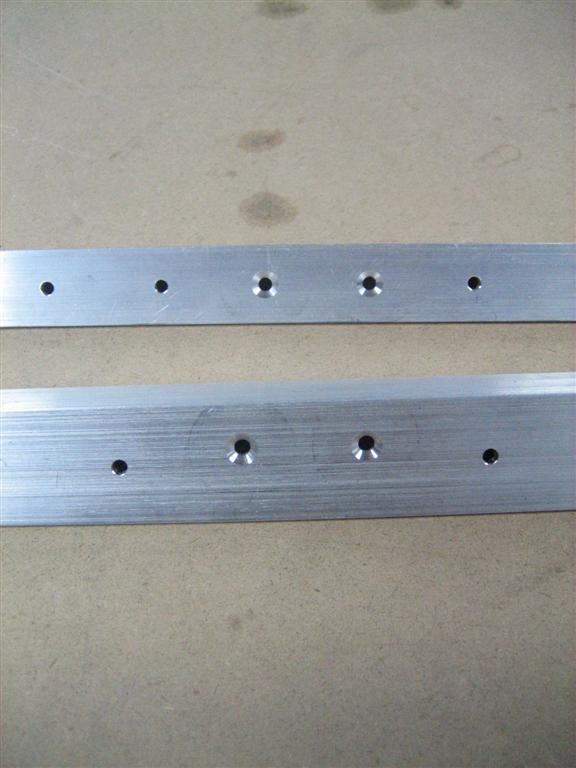
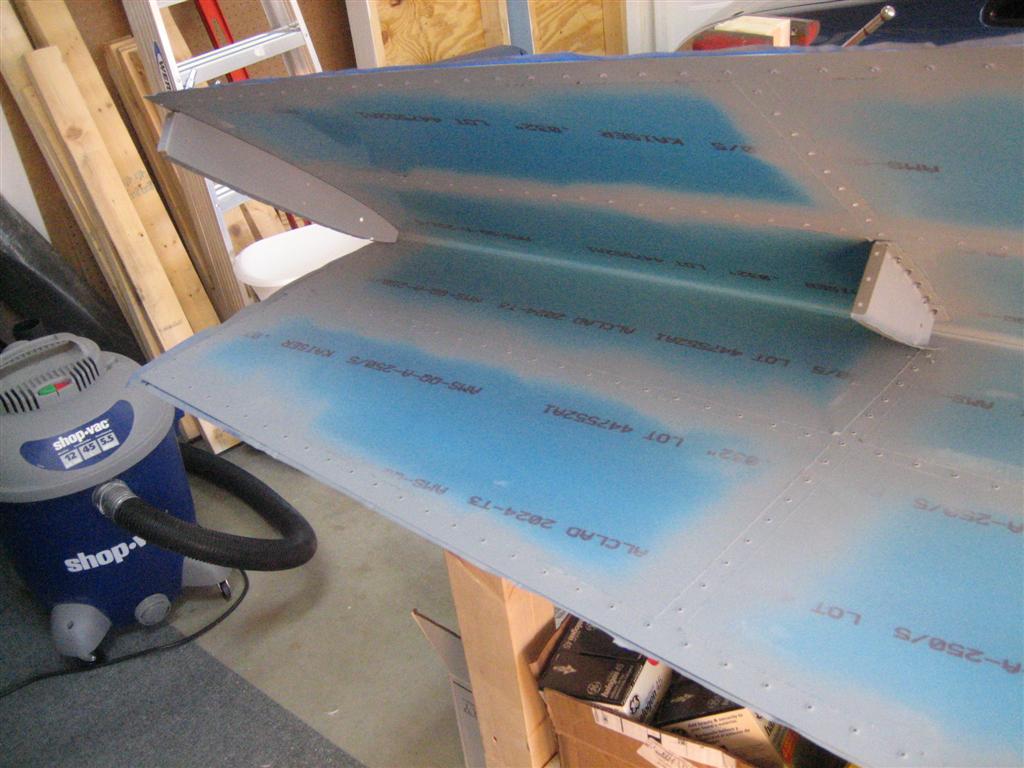
More Trim Tab Work

August 17, 2010

Prev | Next

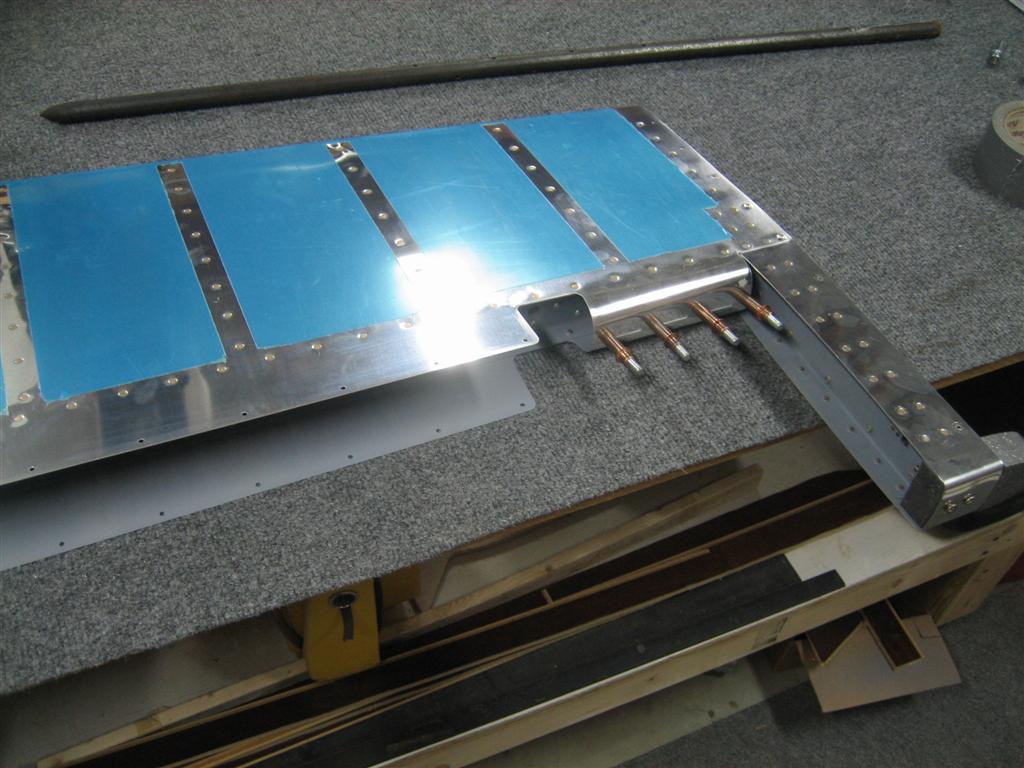
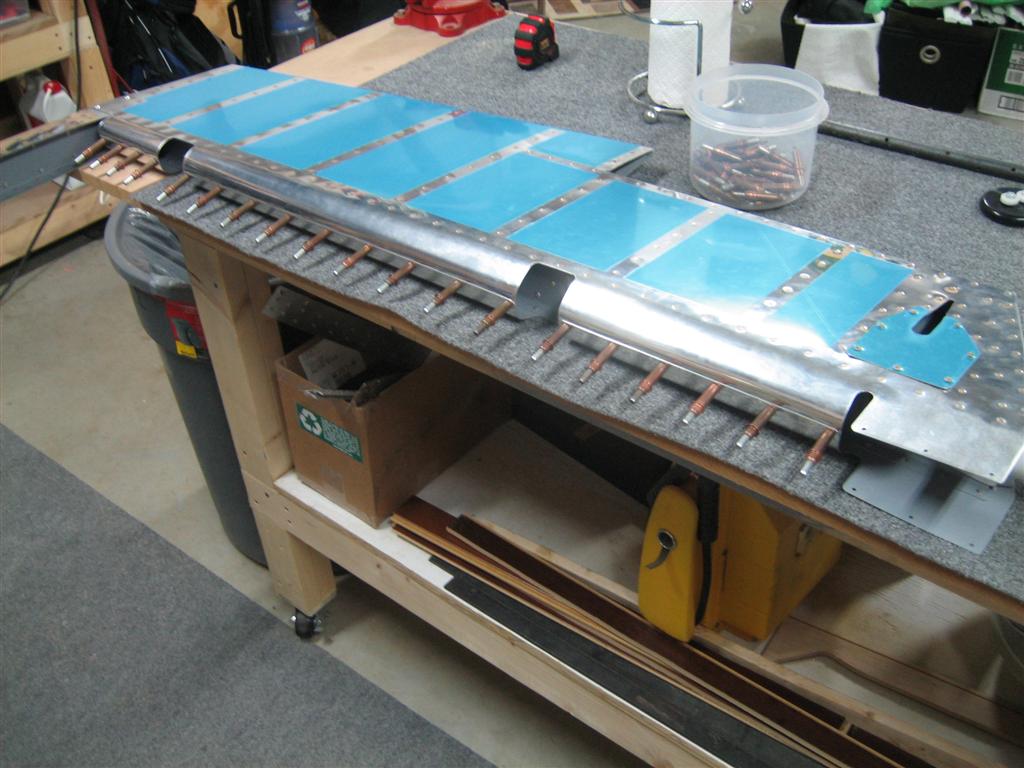
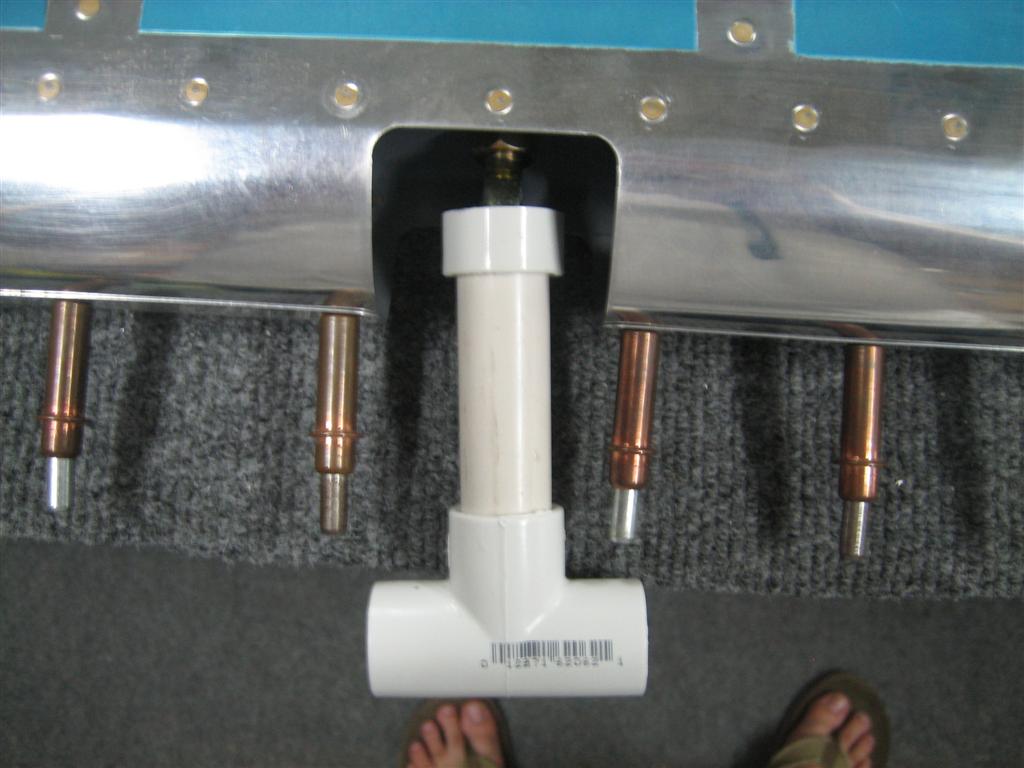
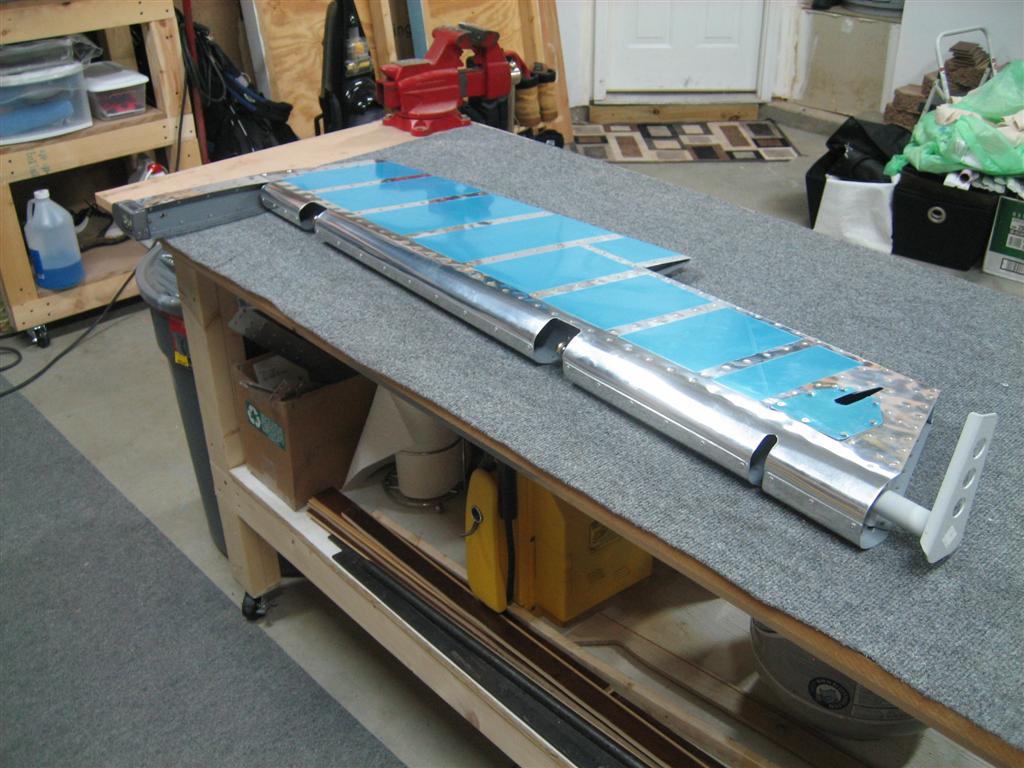
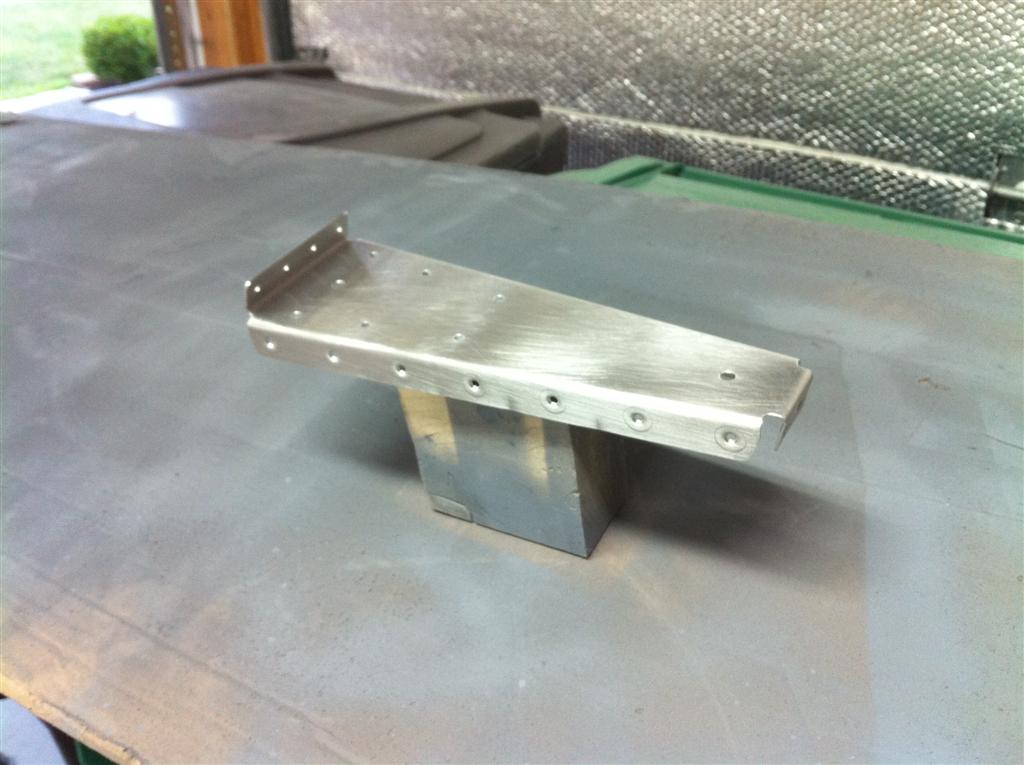
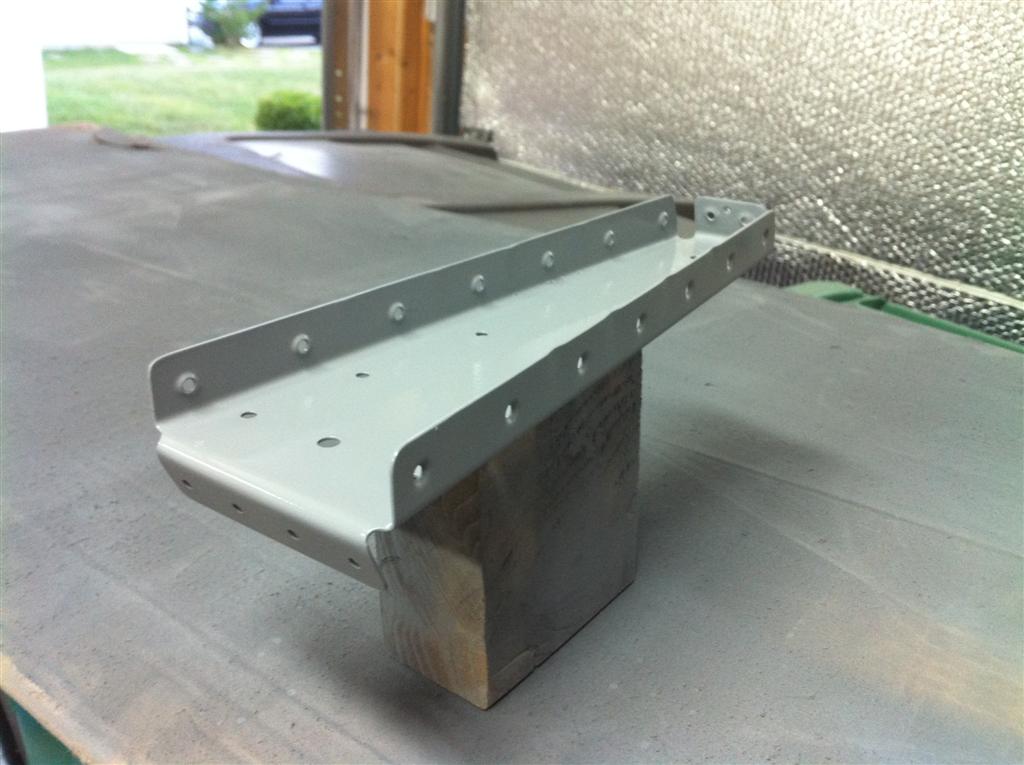
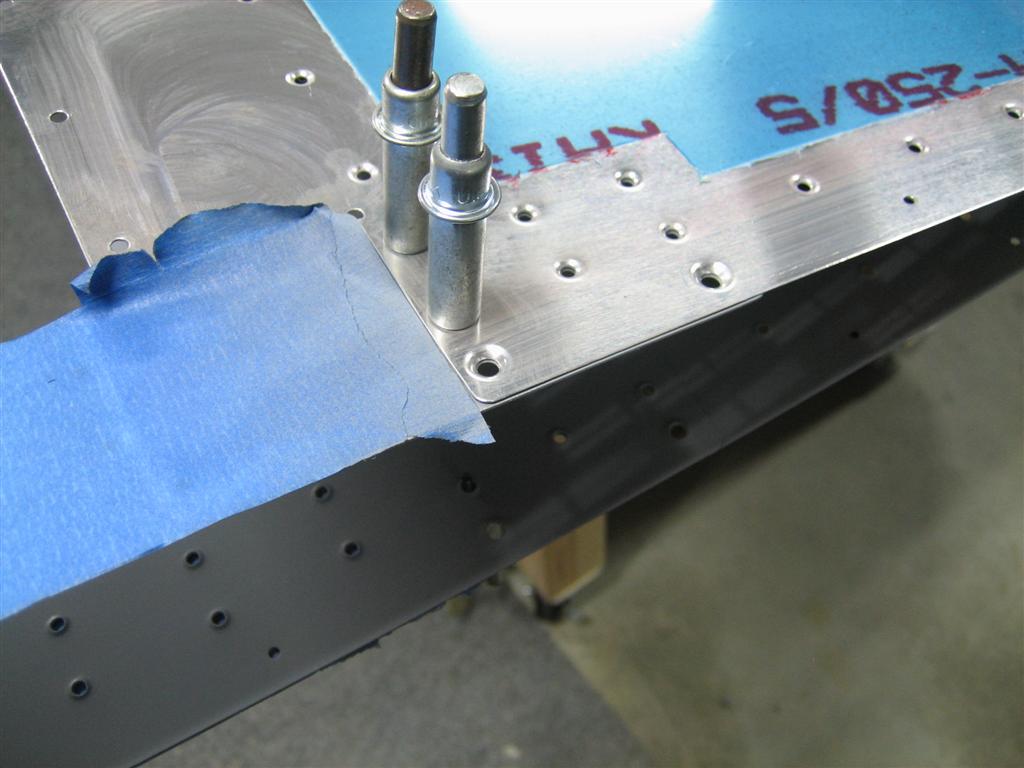
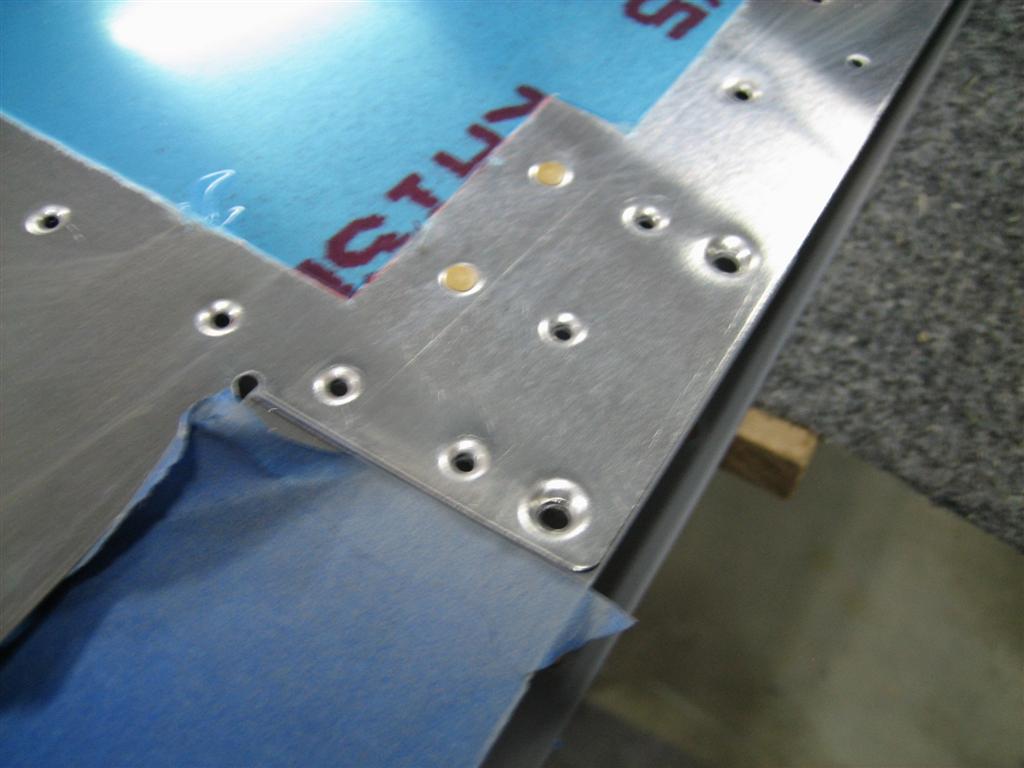
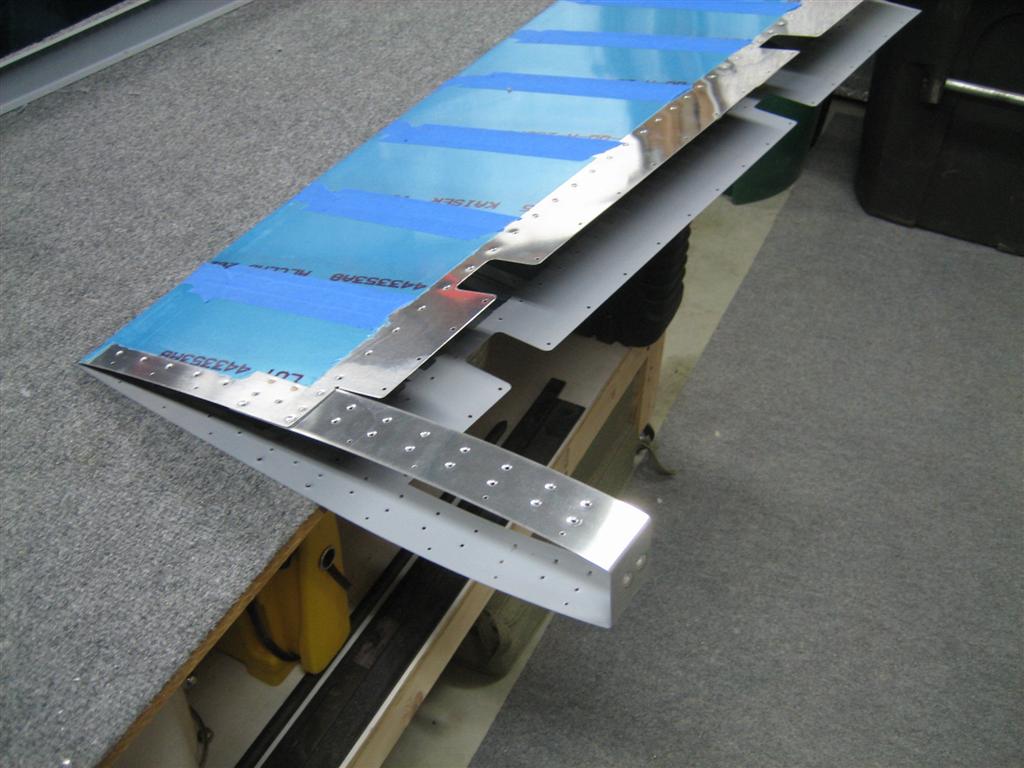
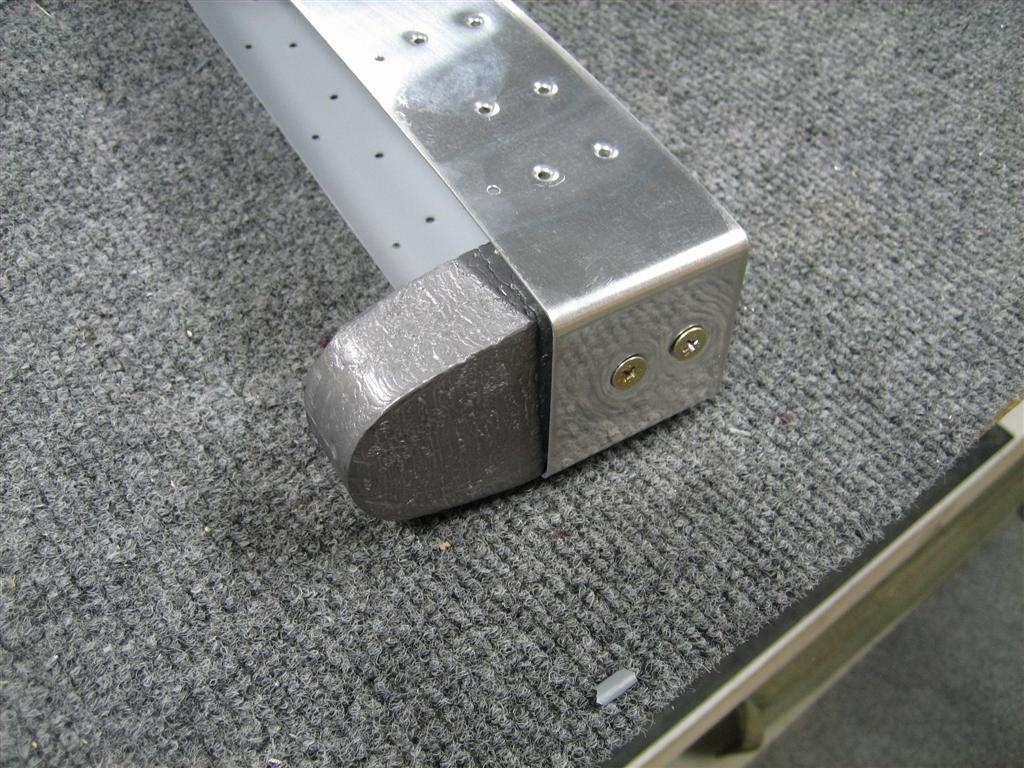
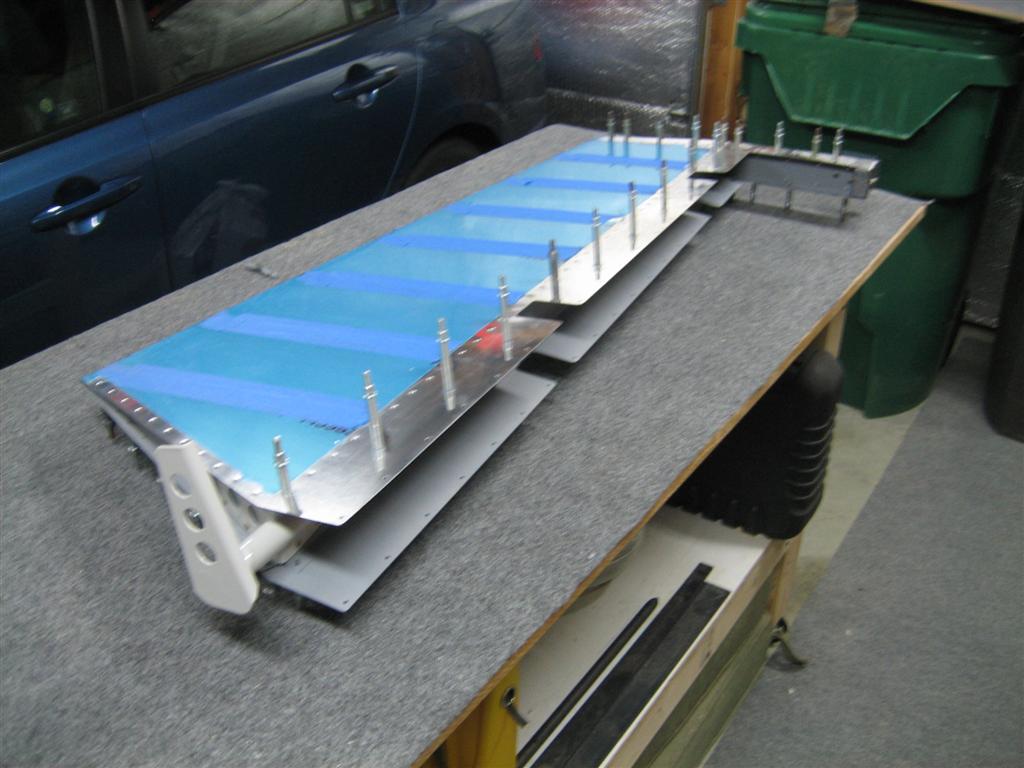
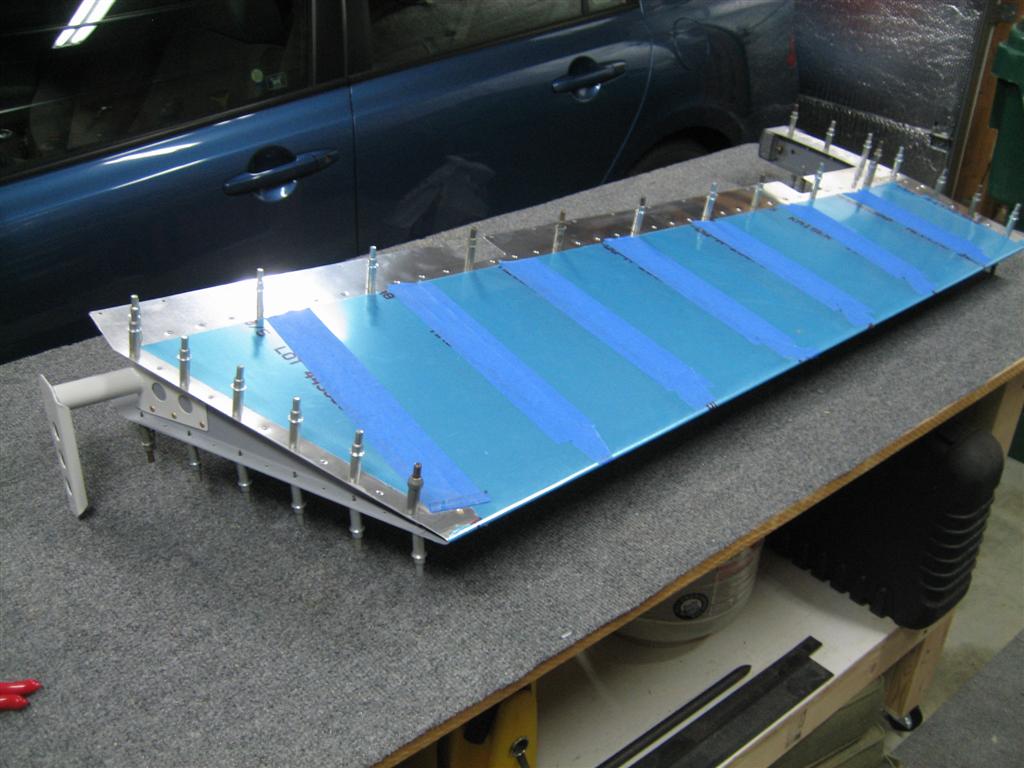
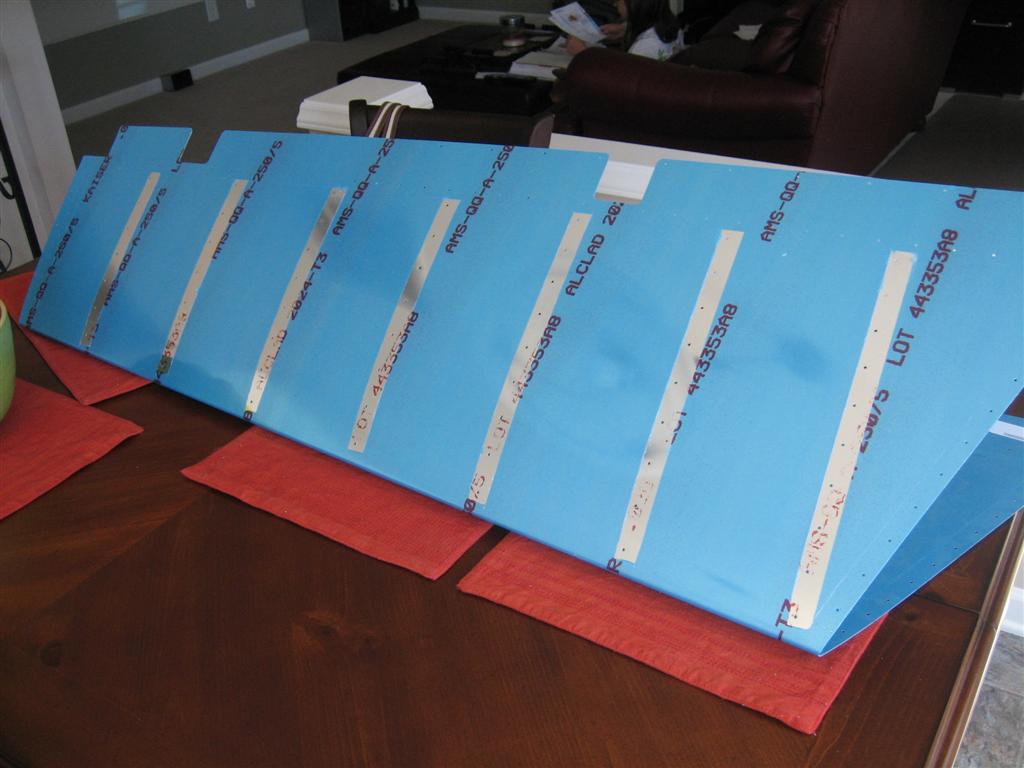
Well, before I can dive into the wing, I need to finish up the trim tab. All that’s left is to fabricate two riblets, get everything prepped and primed, and then rivet the tab together.

First, let’s get some riblets made up. Just like the elevator riblet, I started with some thick paper.
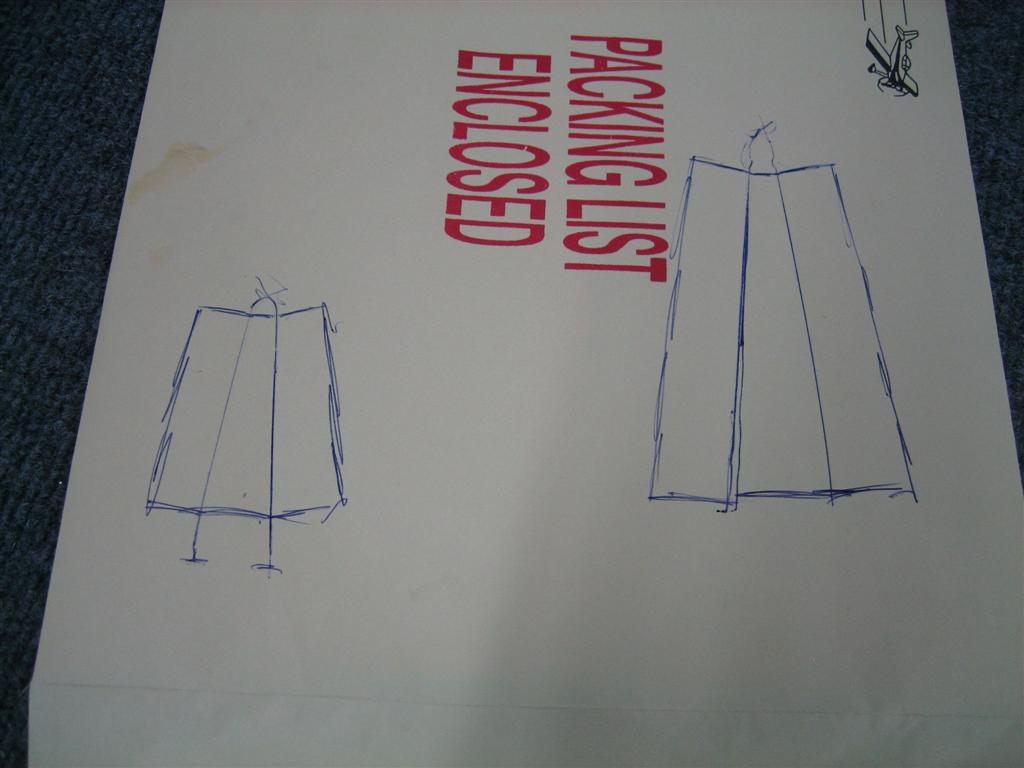
I used the packing list envelope from the wings, because it was literally right in front of me when I started.

I got the larger one cut out of 0.025″ aluminum sheet pretty easily, and the first try fit like a champ. I moved on to the smaller one, hoping for similar luck.Fast forward a couple minutes (many minutes!)…

Can you say "third time is a charm?"

Nope. Third one wasn’t good either.
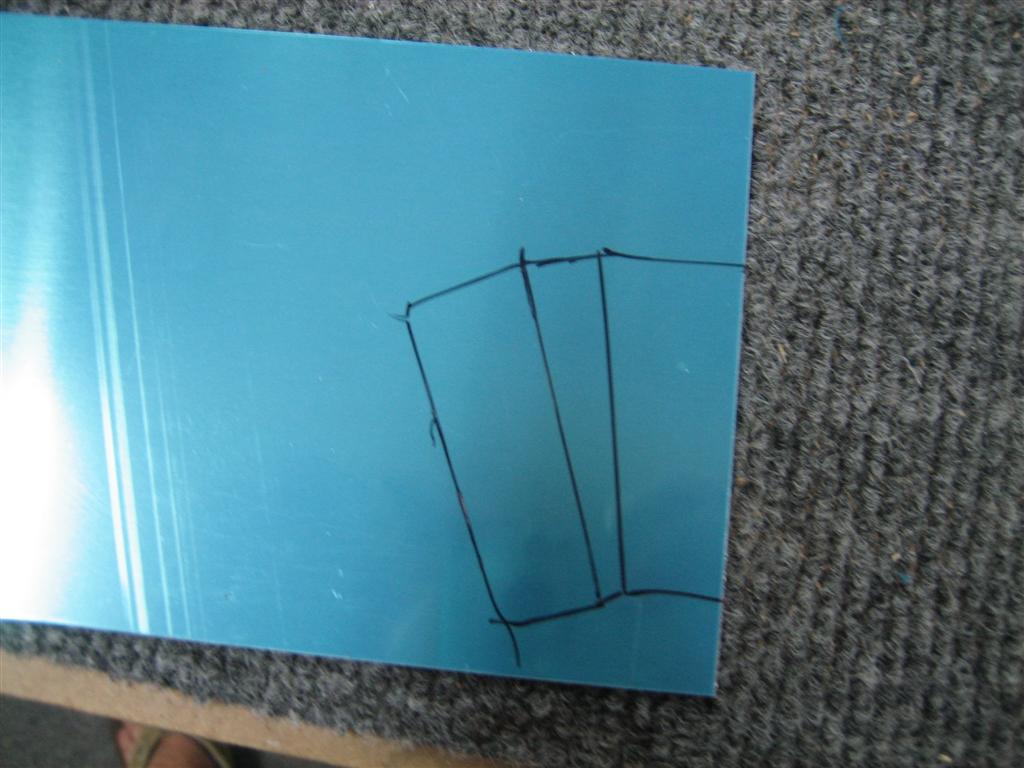
Let's try again (fourth time). I just couldn't get the bends right.

That one worked. And of course I forgot to take a picture.

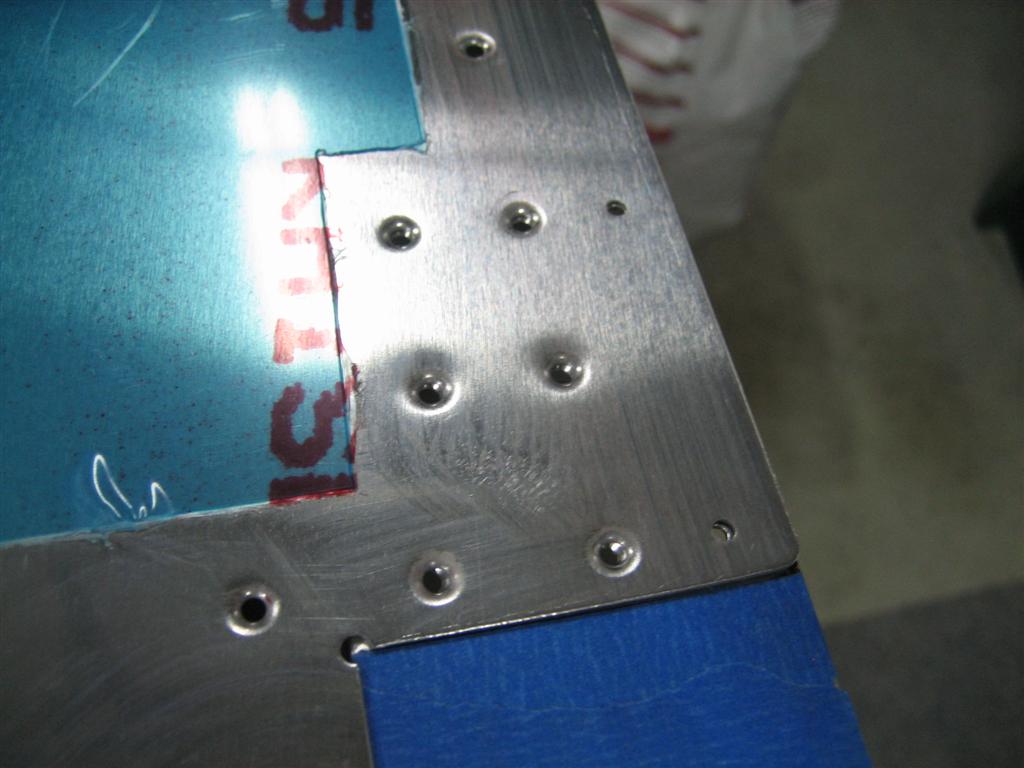
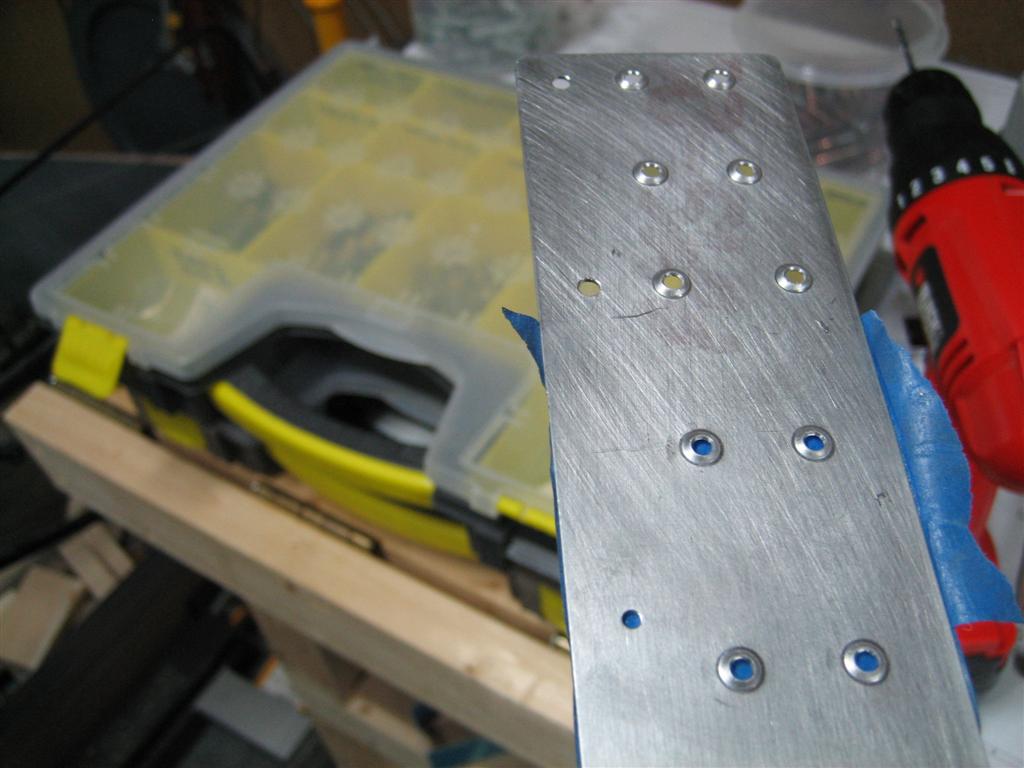
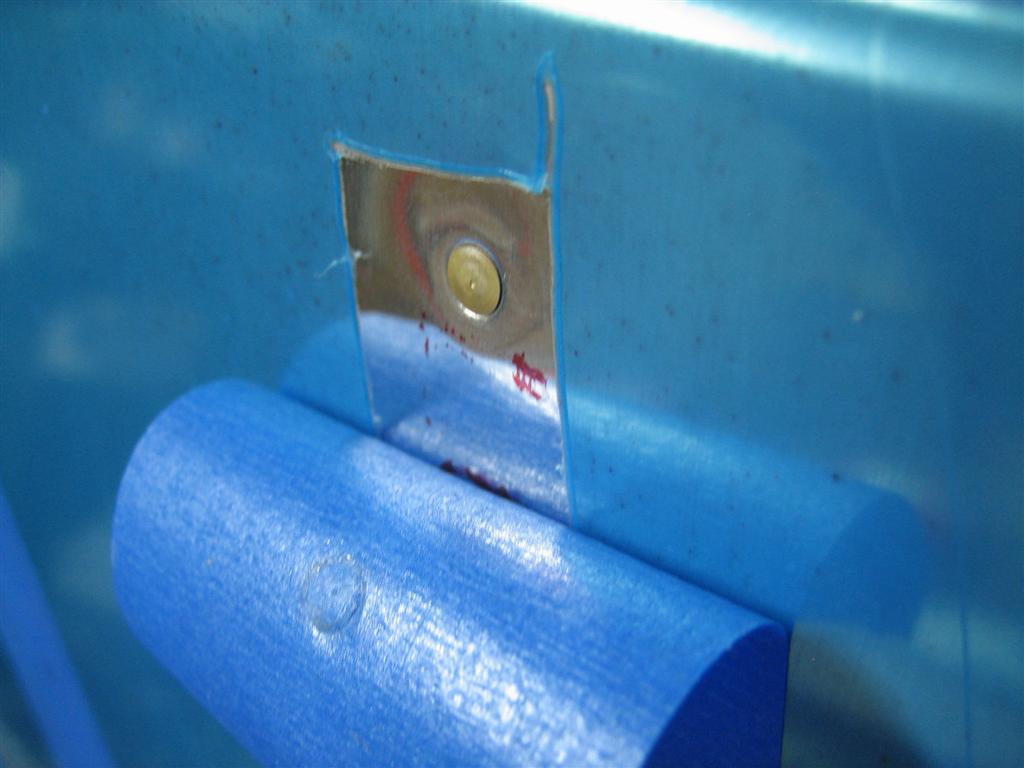
I drilled a couple holes in each riblet through the skin.

Finally, fourth time is a charm.

Wuhoo, let's get this tab finished.

But, it was getting late, and there were a couple of puppies somewhere that needed attention. (Turned out, they were asleep when I went inside, and I got growled at. Thanks, puppies.) Before I headed inside, I disassembled the tab and pulled out the wing spars to inspect.

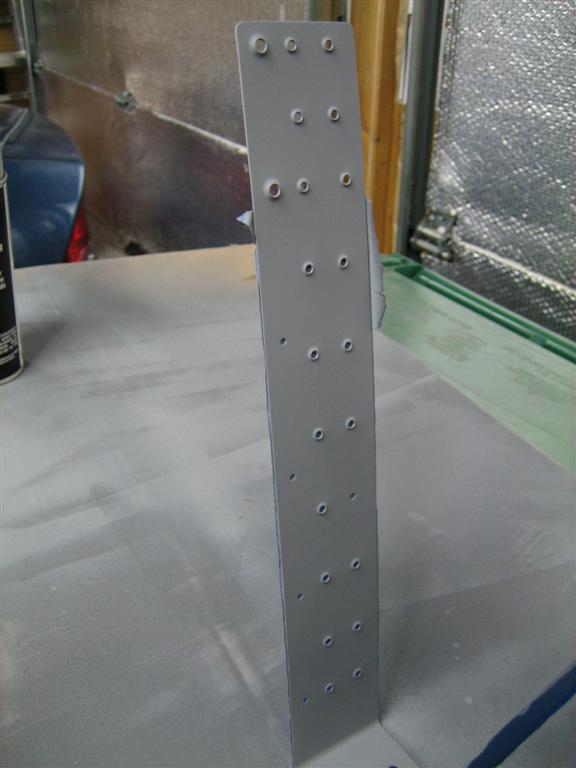
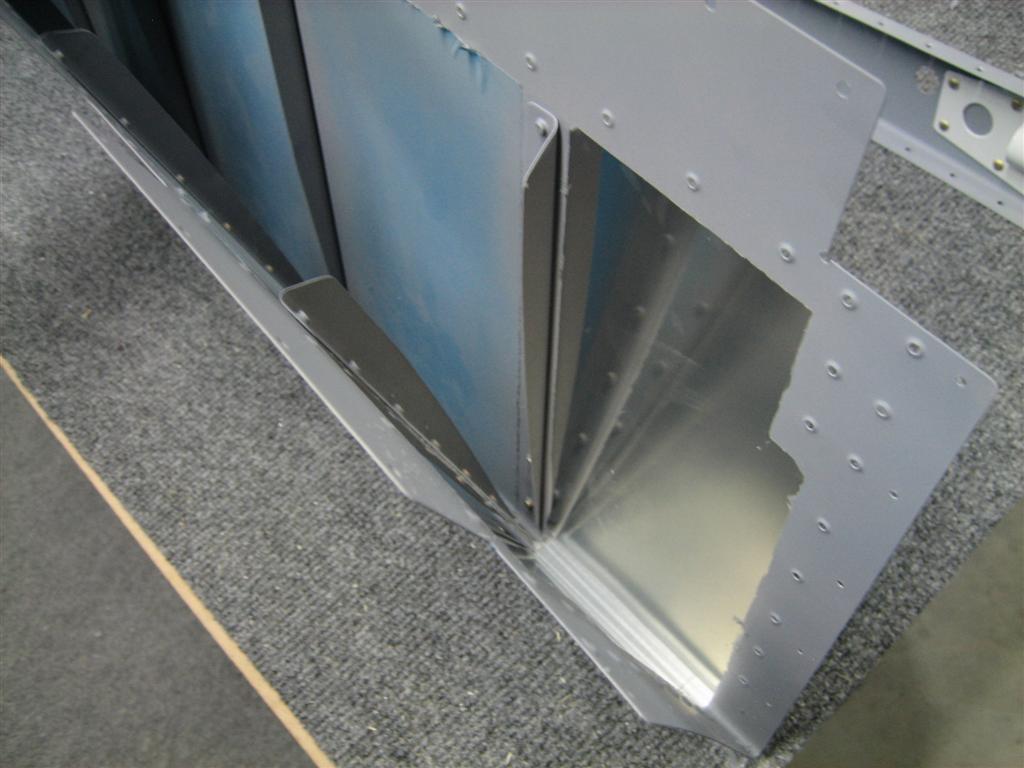
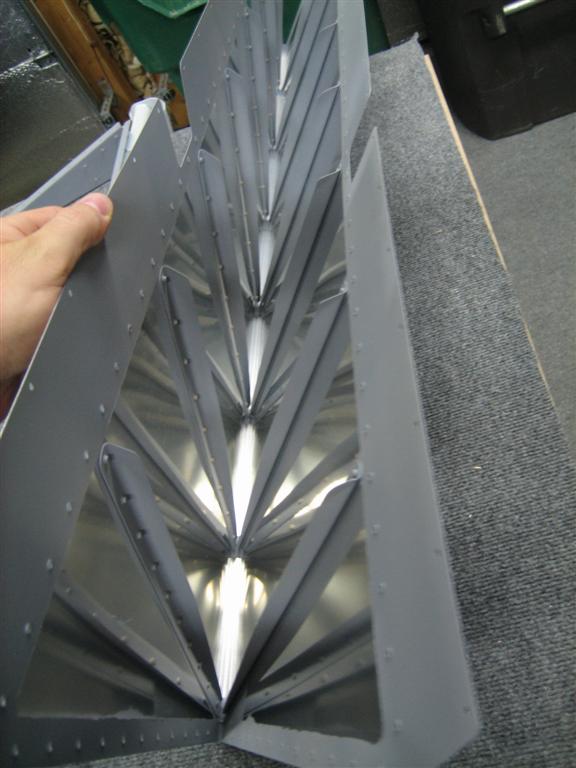
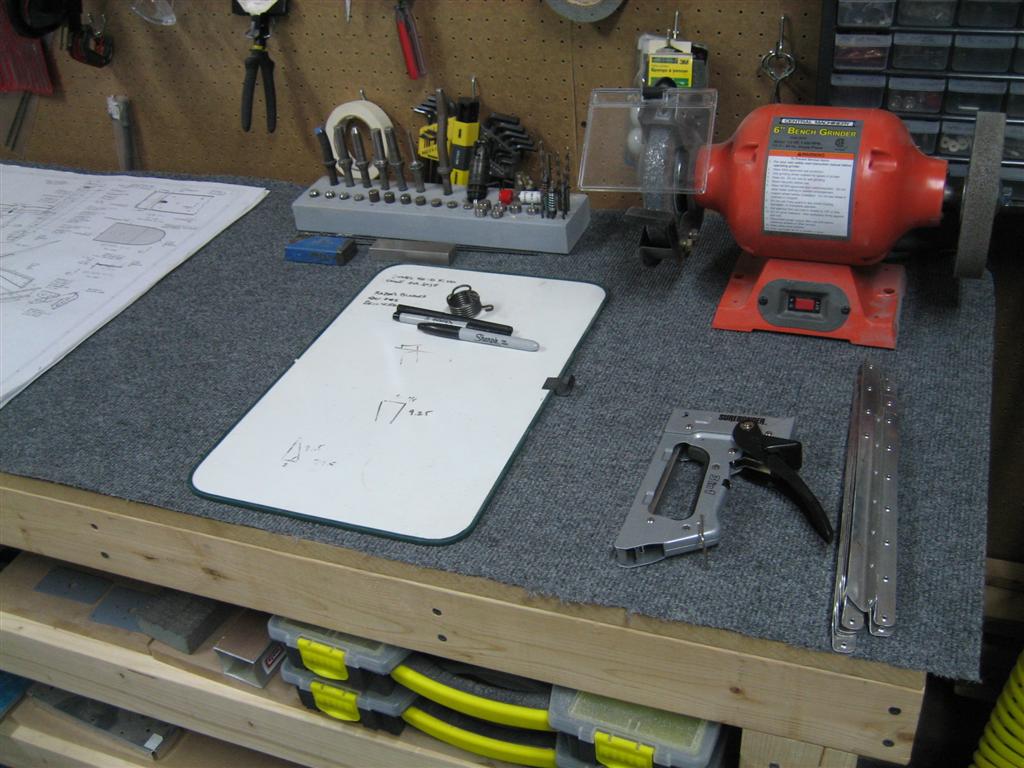
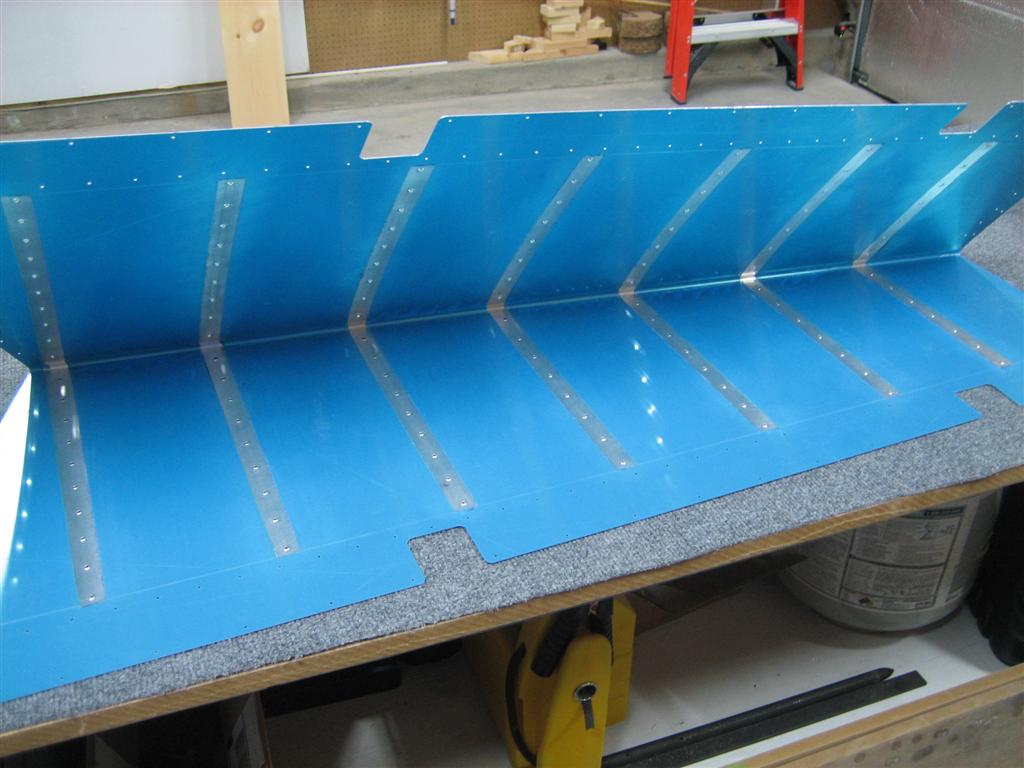
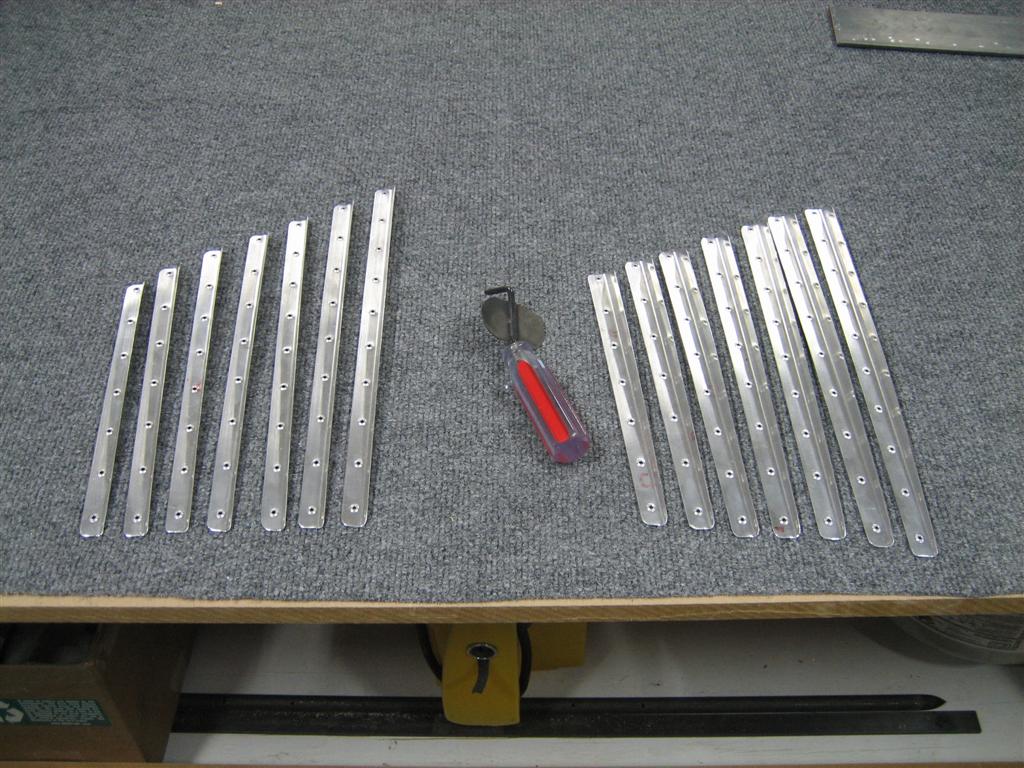
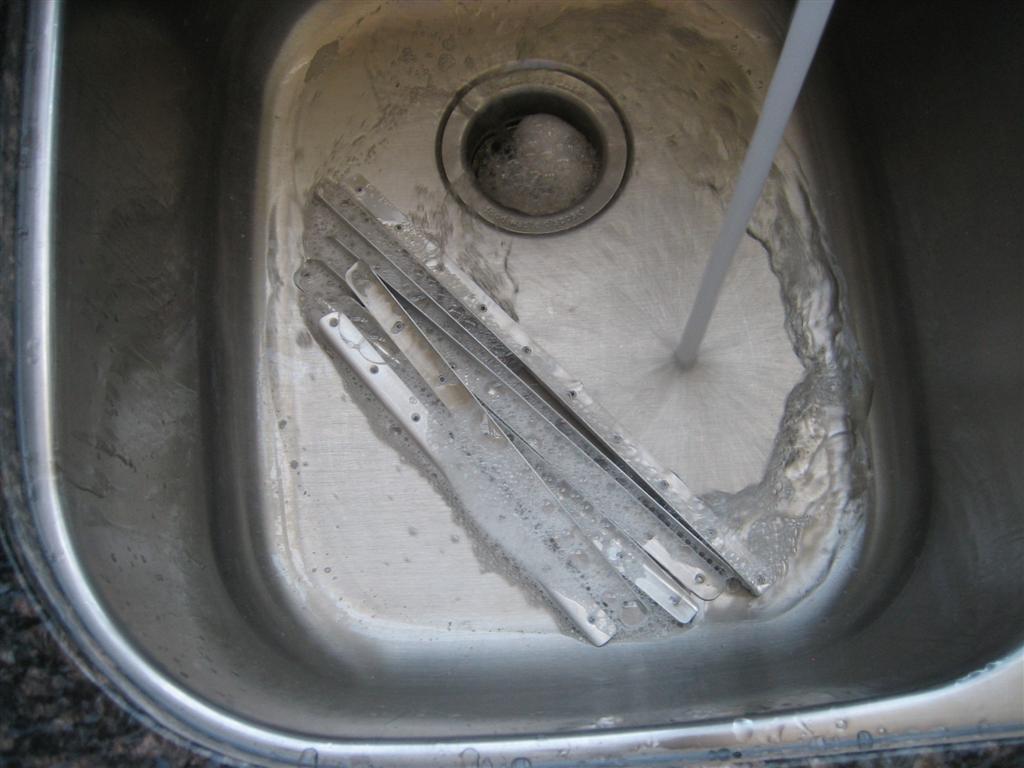
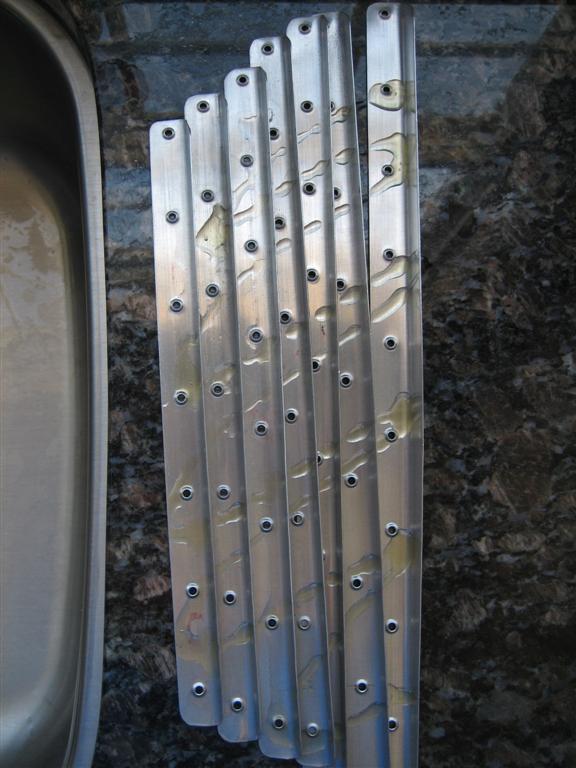
Tab components, ready for cleaning and priming.

After looking the spars over, I found many places where the spars had been “polished” with a scotchbrite bad to work out small scratches. It seems that everyone has these, and is no cause for alarm.

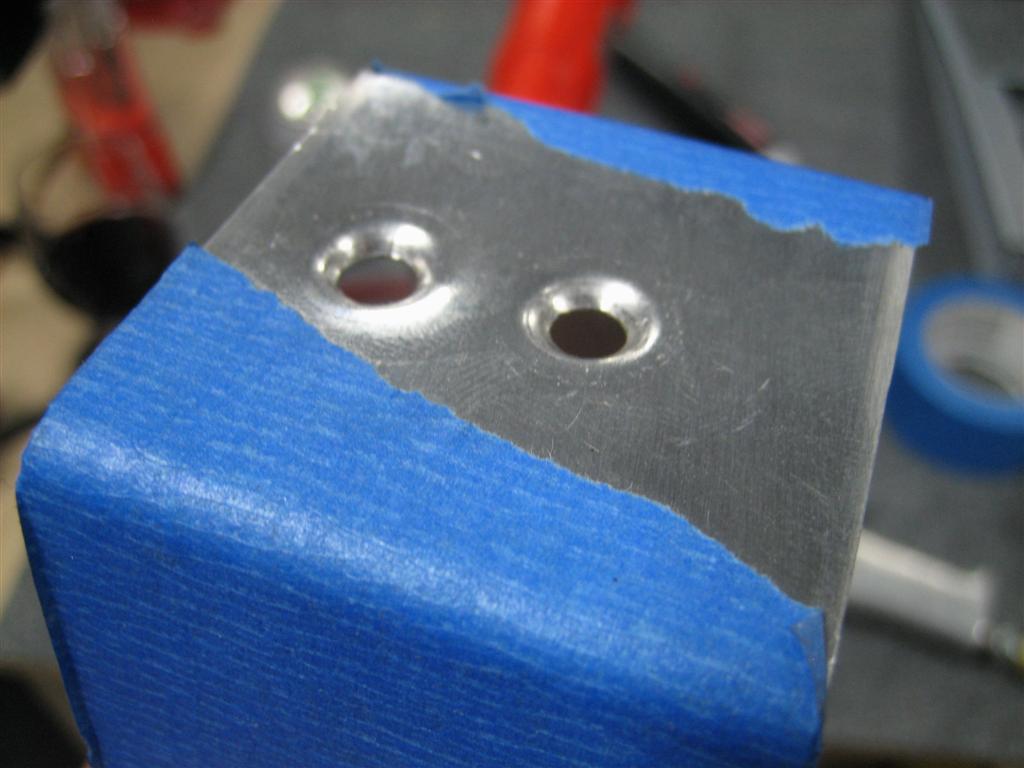
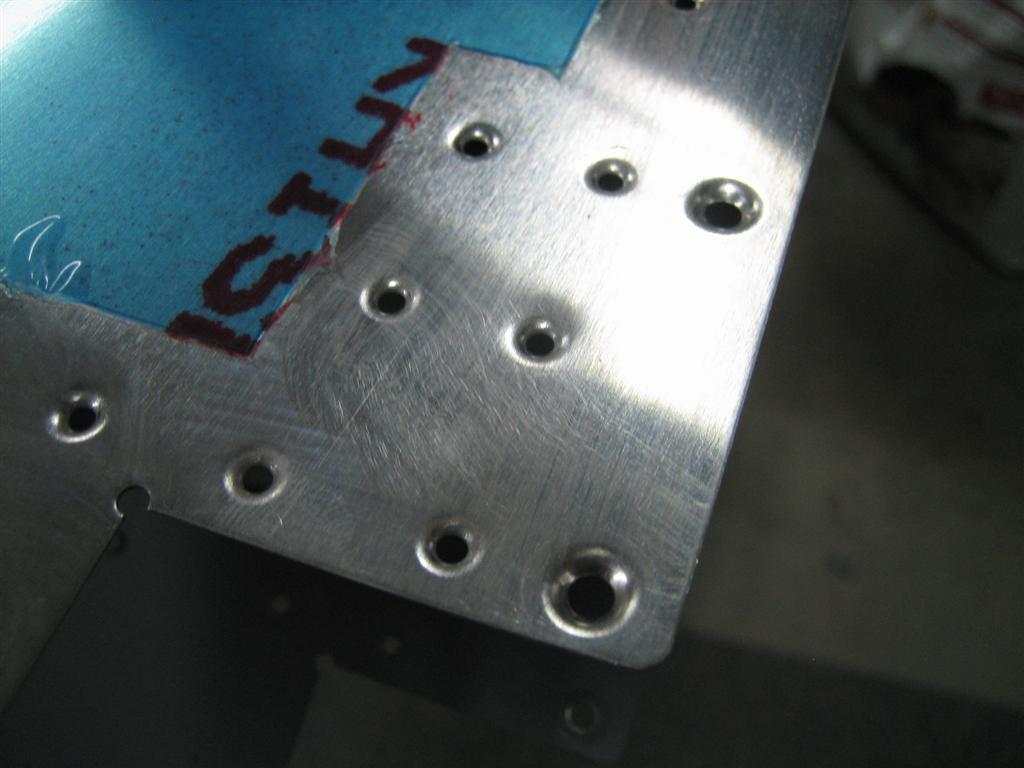
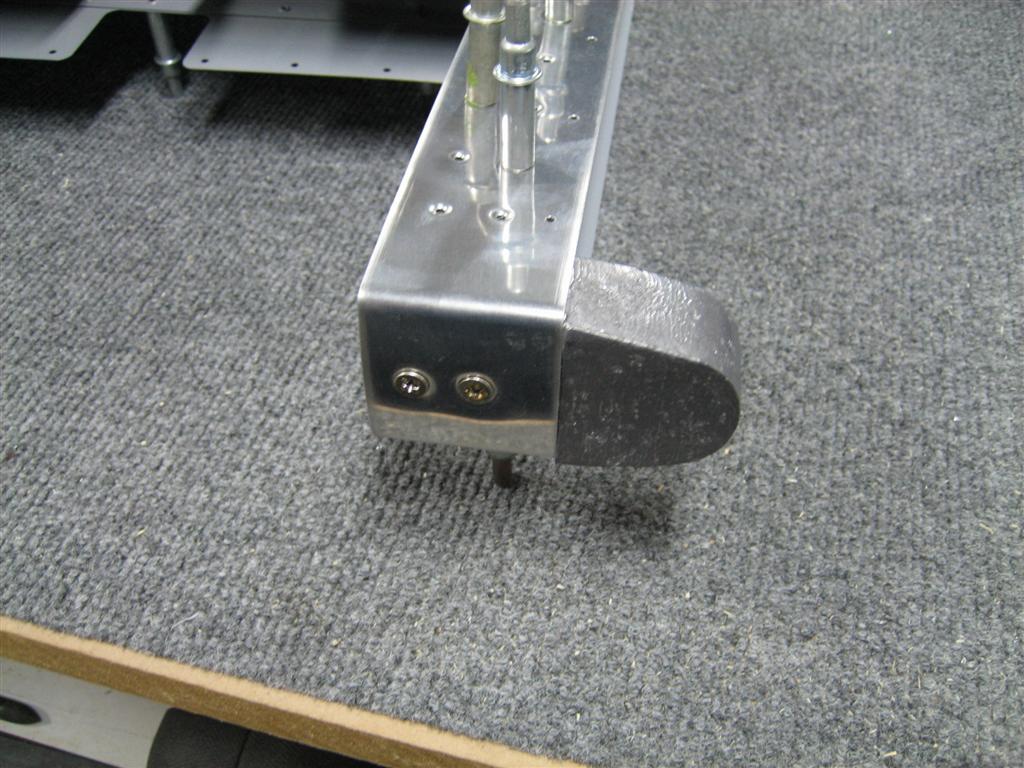
On the other hand, I found some bad juju. This is a closeup of a couple dings that look like something bounced on the spar. Keep in mind, that hole is a #40 (3/32″), so these are really small.

Still, that's not good.

Whoa. What. Is. That!?

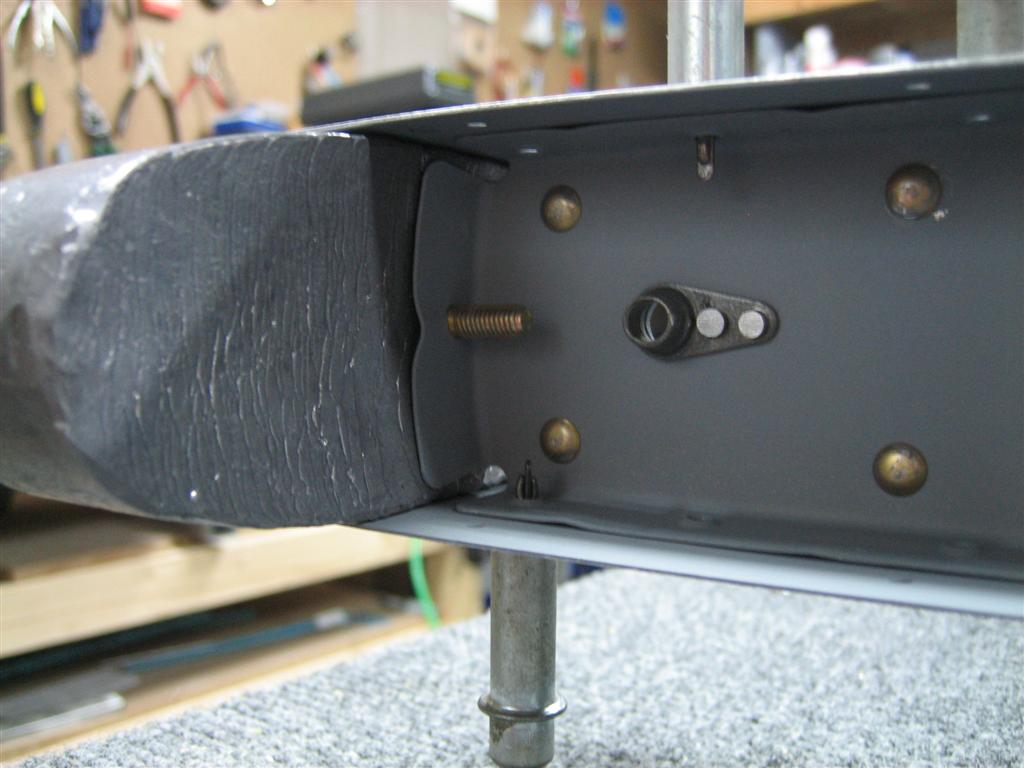
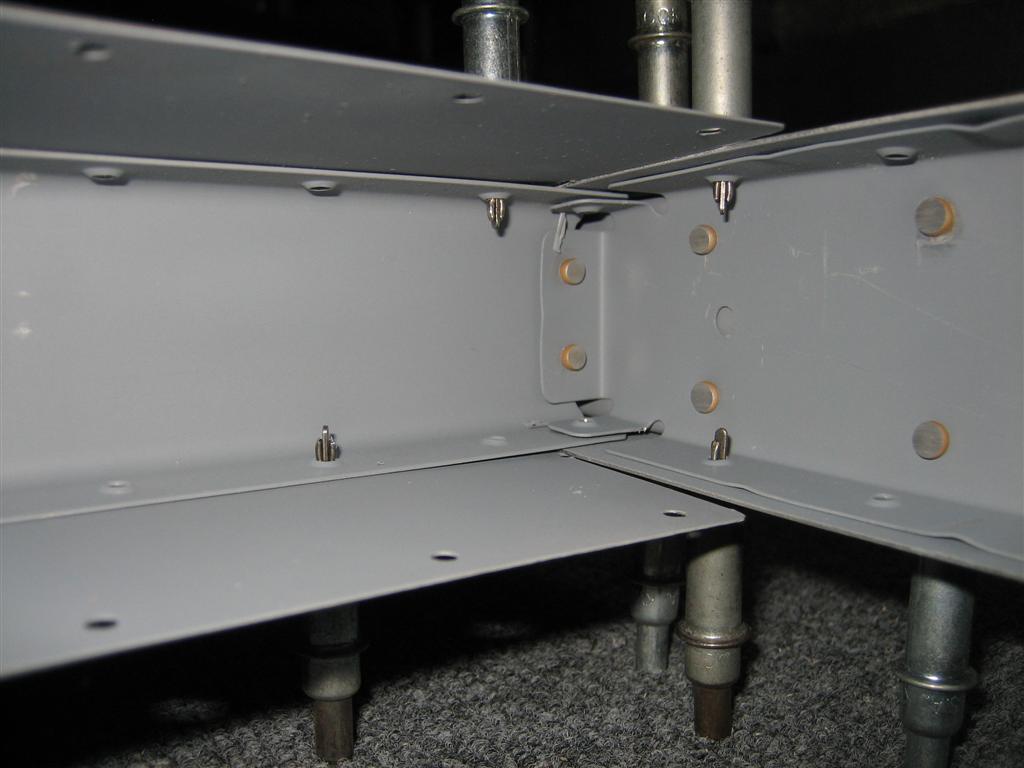
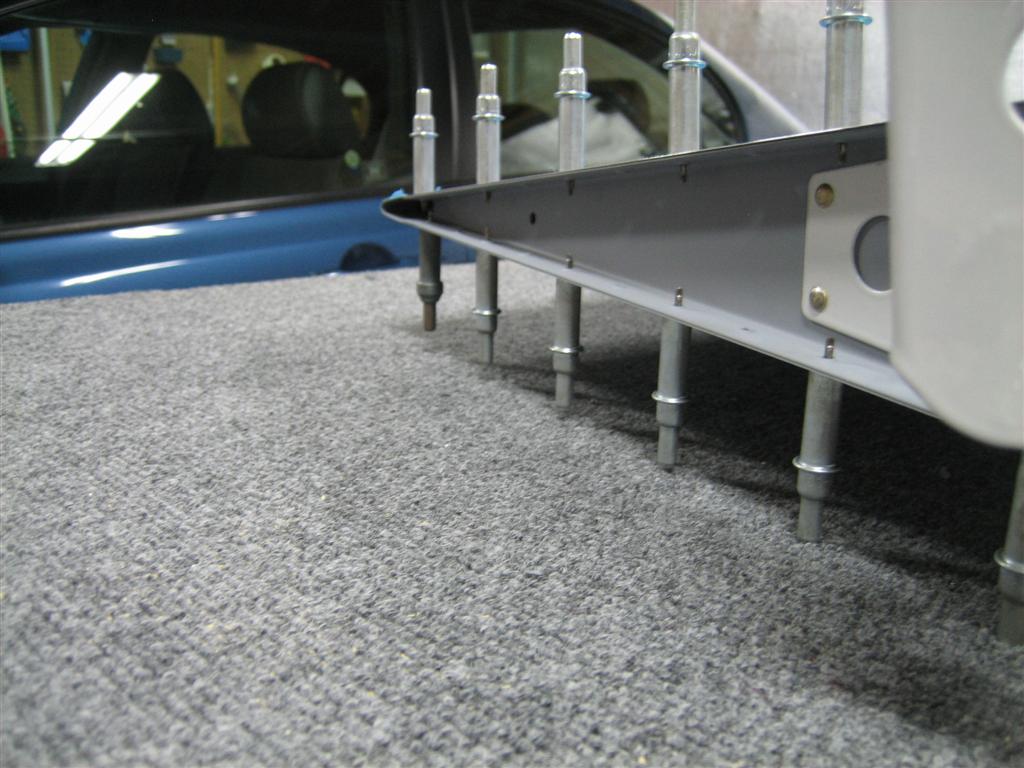
Holy frijoles, Batman! That is a huge dent in my spar flange!

Here's a closeup of the dent with a straightedge held over it.

Another angle.

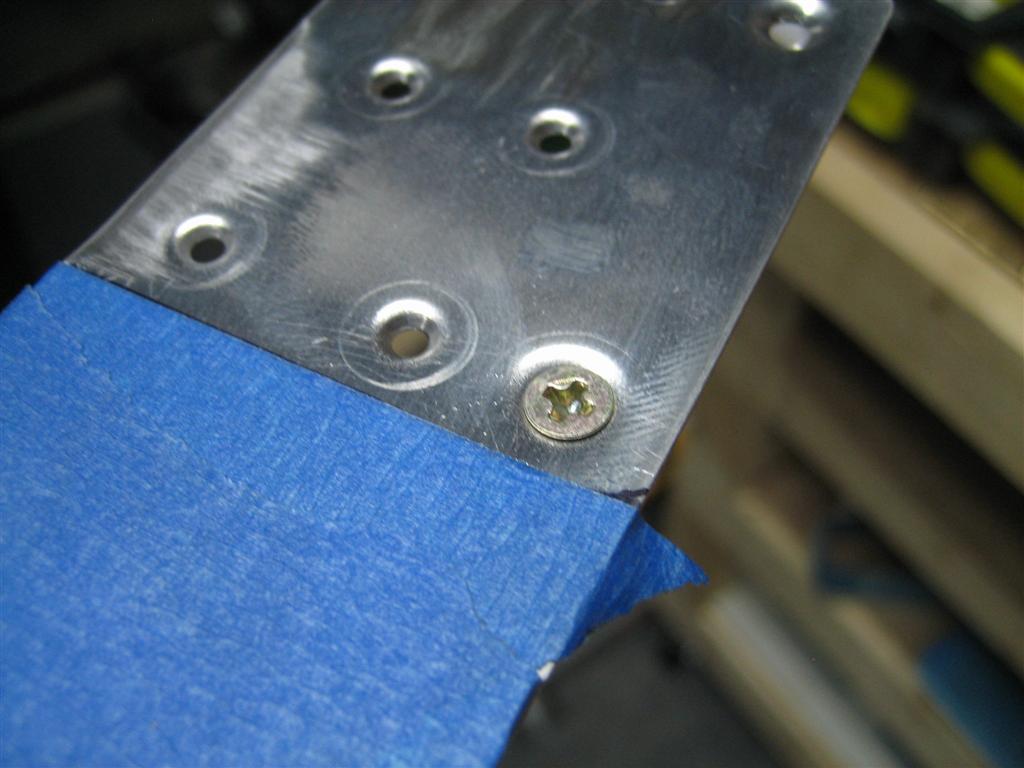
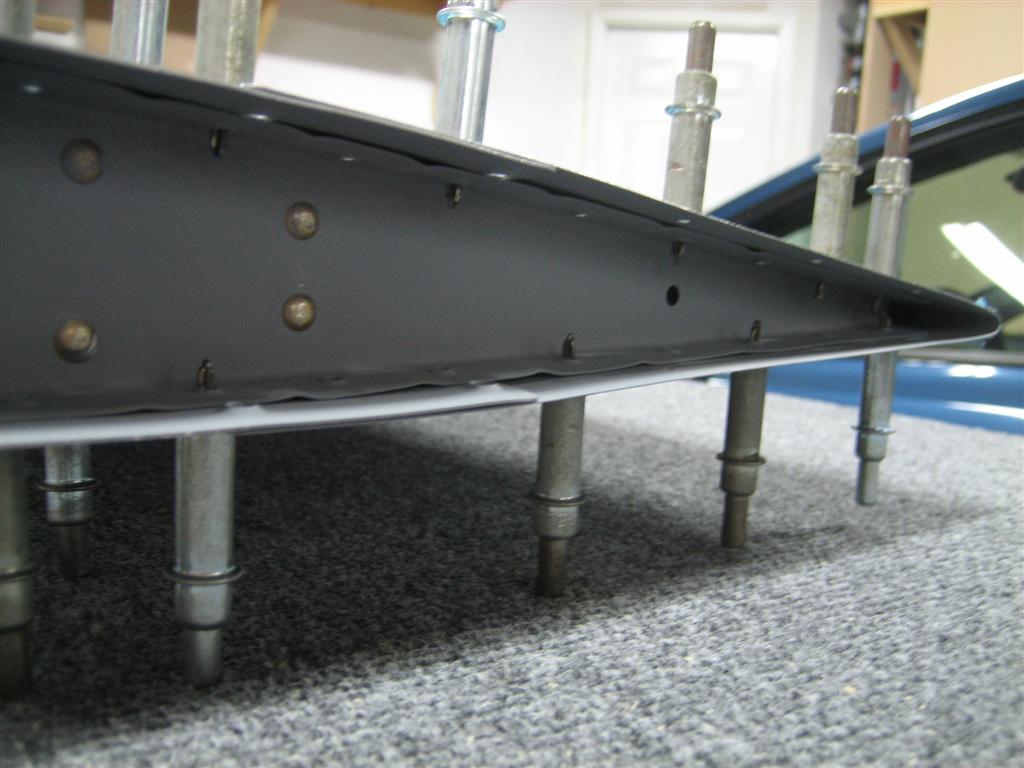
I took a couple pictures of the underside of the flange. I tried to use the light to demonstrate the distortion.
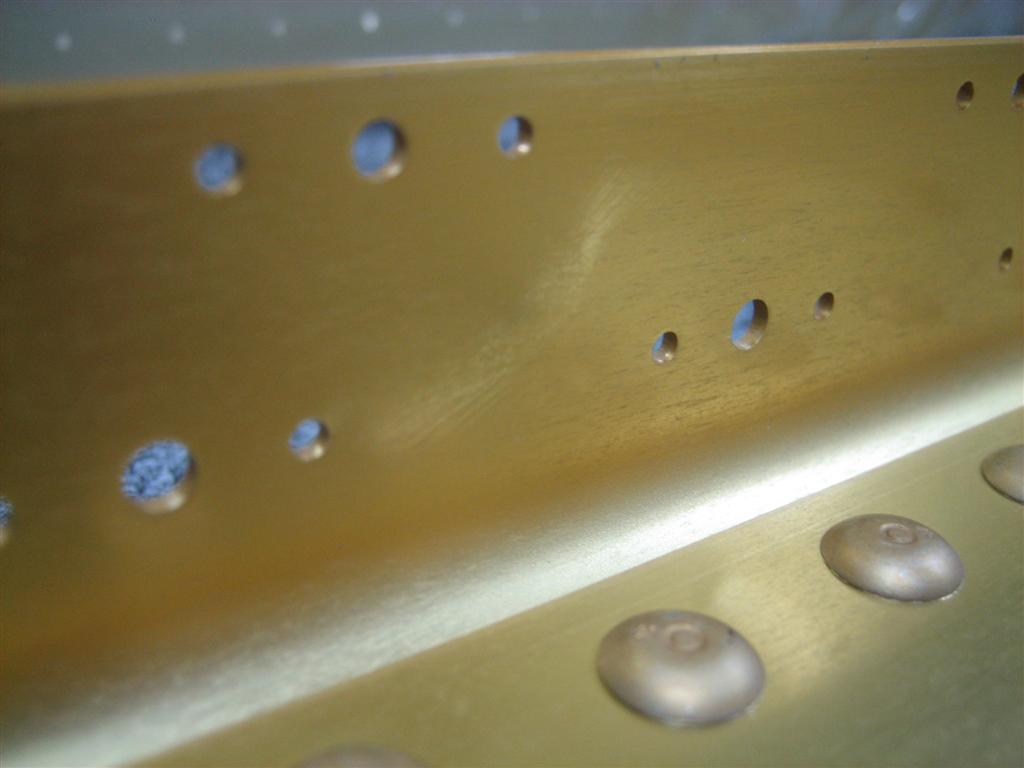
That curved white streak is actually the light reflecting off of some spider cracks in the anodizing.

Here's another angle.

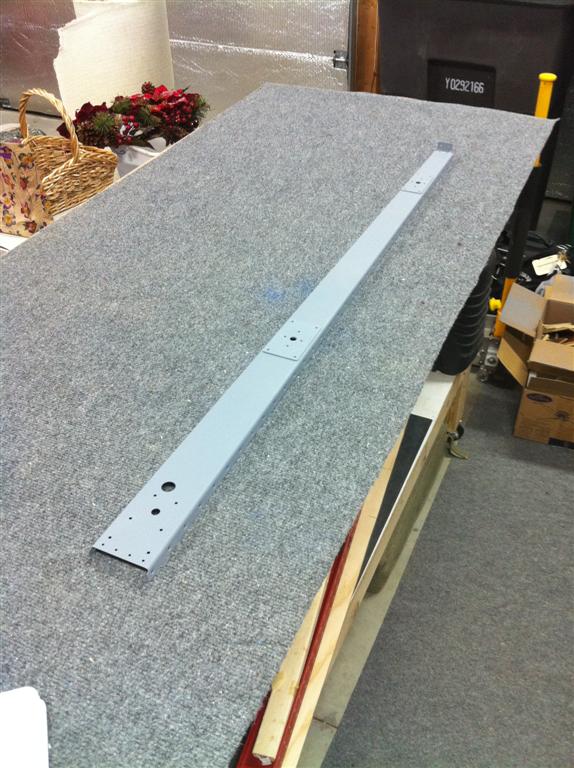
Not really related, I just snapped a picture of the spars laying on the table.

At least they look pretty.

1.5 hours on the trim tab today. I’ll email Van’s first thing in the morning about the spars and then post what they say.

I’m pretty disappointed though. Nothing could create that dent without making a big noise, maybe something being dropped or falling over. Which means someone probably knew it happened and didn’t say anything, or the inspection process didn’t catch it. Either way, I’m not super excited. I’m guessing it wasn’t Vans’ fault, but hopefully they will make it right.

Prev | Next


Rolled Left Elevator Leading Edge

July 24, 2010

Prev | Next

Well, today was just a barrel of rainbows and puppy dogs. Lucky me, I got to mangle the project per the directions.

It’s funny. The directions say “roll and rivet the leading edges.”

Hmm.

Sounds easy.

If I were writing the directions, it would go something more like this:

“1. After spending 50 man-hours carefully protecting all of the aircraft-grade aluminum from dents, scratches, and general mistreatment, duct-tape a steel rod to the inside of the leading edges and use ALL OF YOUR MIGHT to roll that sucker around. You won’t be able to make the roll anywhere close to acceptable the first time around, so be prepared to curse and fight your way by hand squeezing the two edges together to get clecos into the holes that have been so generously provided for you.  Then, rivet the two surfaces together, but only after realizing that the clamping force of the clecoes was helping everything line up, so pray that as you set the blind rivet, it will pull everything back to alignment.

2. After riveting, stand back and realize that on one of the sections, you forgot to edge-roll one edge, so there is a slight puckering between two of the rivets, but don’t worry yourself about it too much, because although it will keep you up at night, no one else will see it once the elevators are mounted to the horizontal stabilizer.

3. Stab yourself in the eye with a cleco, and then try not to bleed into the adult beverage of choice that you have now earned.”

There. Wasn’t that fun?

The outboard-most section, rolled and clecoed.

Middle section rolled. You can see how bad my roll is on the rightmost edge. (You can also see how I tape the skin to the steel bar.)

3 of 4 sections clecoed.

I took a break from rolling and installed my rod-end bearings. This tool works great. (I could have made it a lot shorter, though.)

Finally, all the leading edge rivets installed. Time for a drink.

2 stinking hours for this? 22 rivets, one (actually painless) blind rivet needed to be drilled out.

Prev | Next


Started Riveting Left Elevator Skeleton

July 5, 2010

Prev | Next

After the last couple work sessions priming various parts, I was getting all hot and bothered to rivet something. I thought I would tackle the spar reinforcements. I also forgot to charge the camera battery, so I’m using the new phone. Hopefully they turn out okay.

Here's the left elevator spar and reinforcement plates.

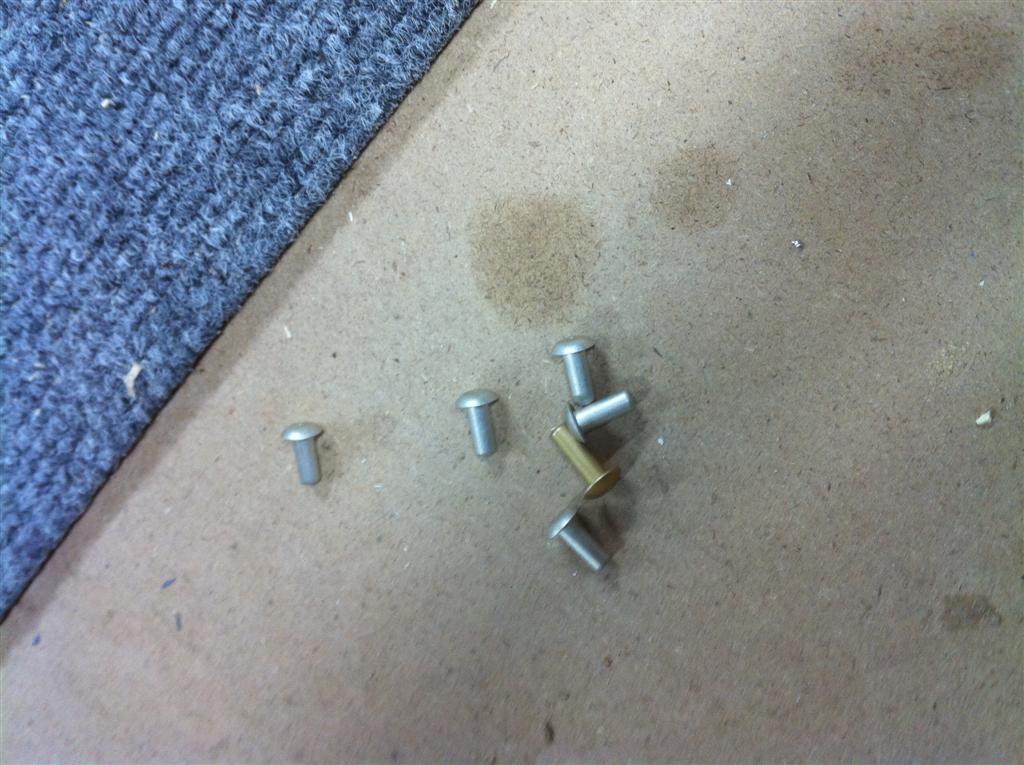
I got out a few rivets. AN470AD4-5 and -6.

Let's get riveting.

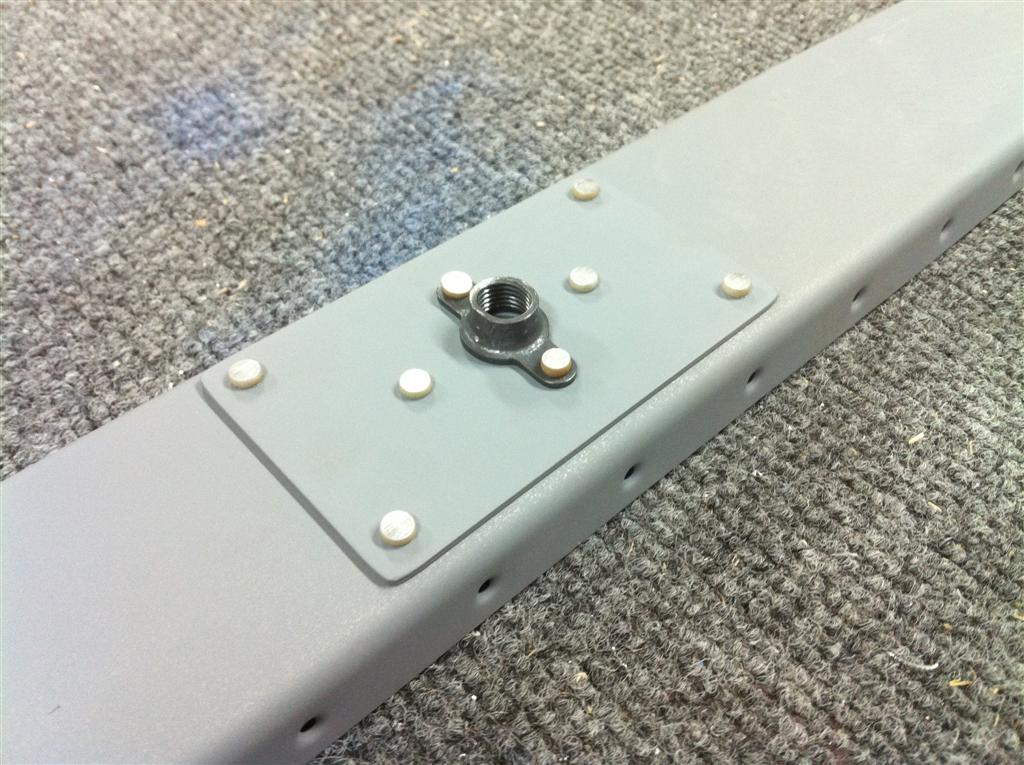
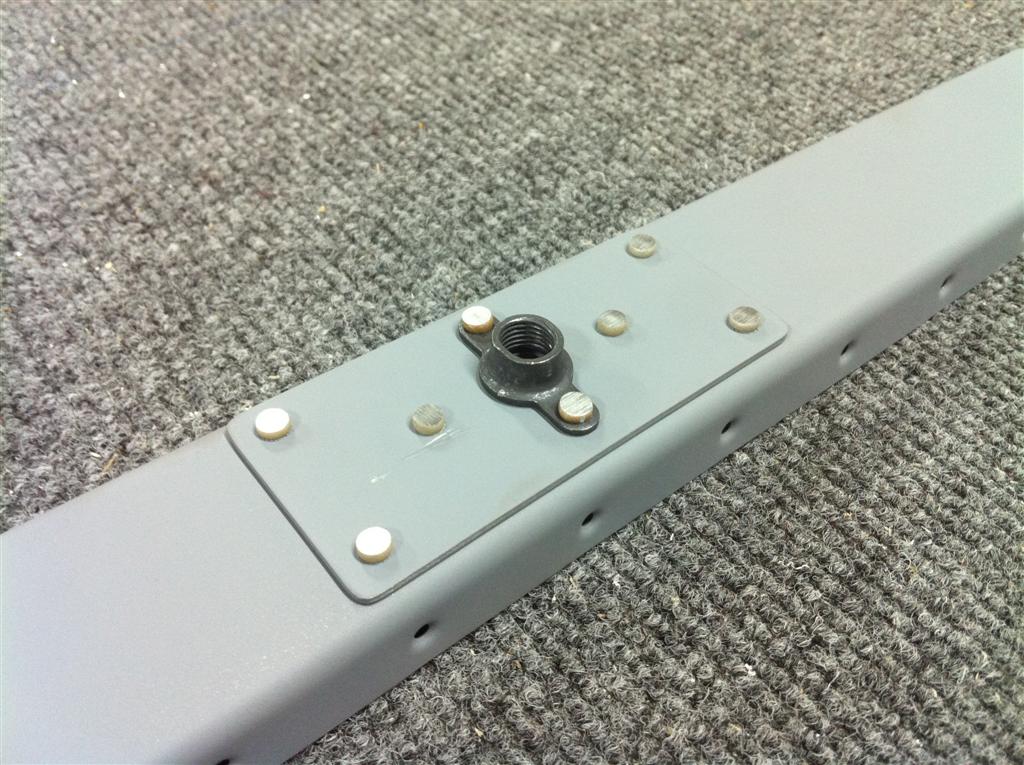
I clecoed the reinforcement plates and nutplates onto the spar, and riveted the four corners and one ear of the nutplate, then took out the clecos and riveted the rest.

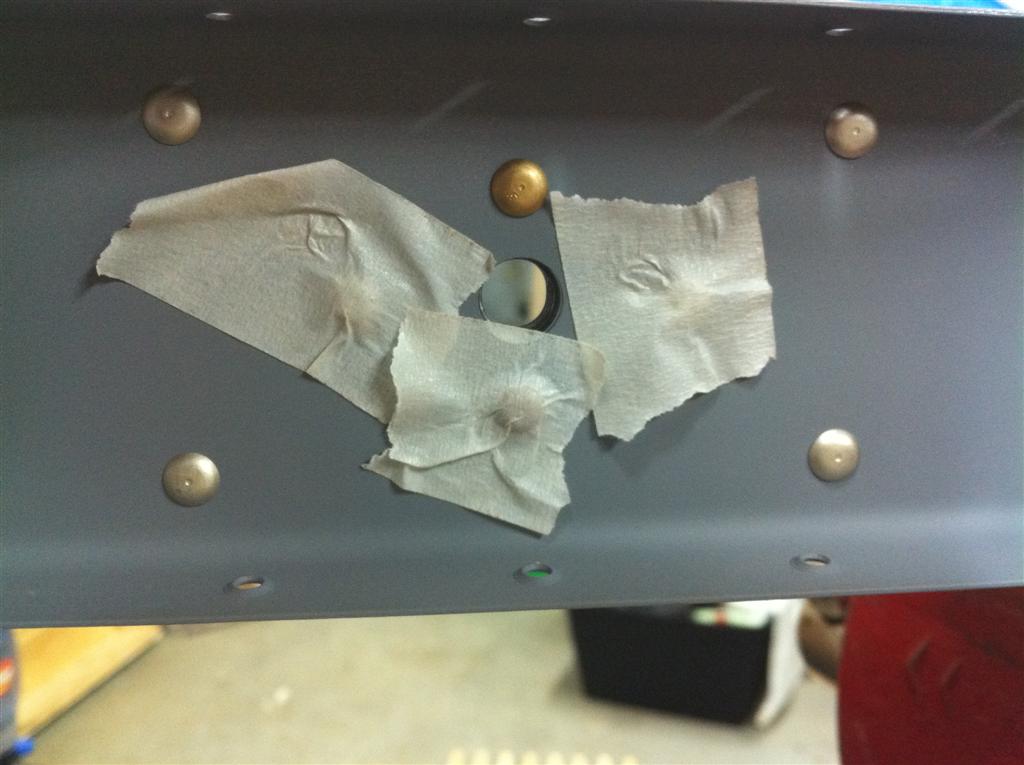
The tape is a trick I have been using out of vanity. The rivets look better when they haven't been marred up by the rivet set.

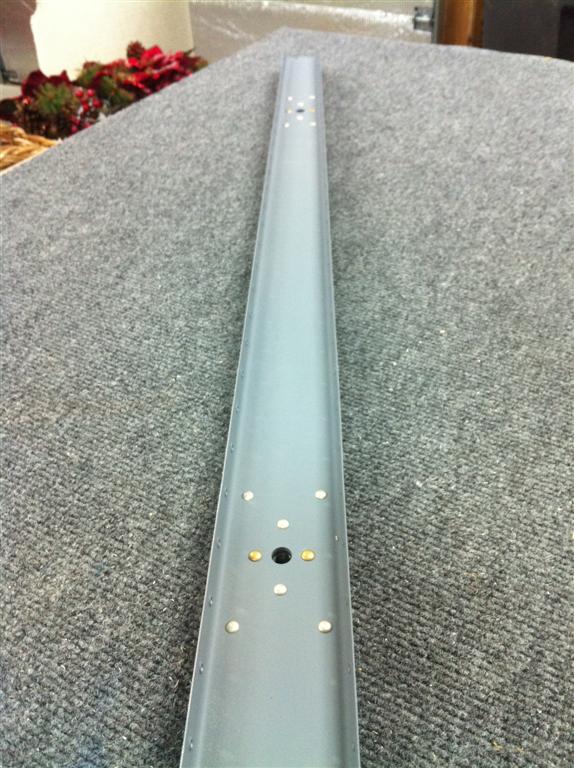
After doing both plates, I put the spar back on the table.

Pretty.

And just to show you AGAIN how much I love my new tungsten bucking bar, here are the perfect shop heads.

The inboard shop heads.

The outboard shop heads.

Next up is to continue riveting on the skeleton, so I pulled E-705 out of the “recently match-drilled” pile and got it deburred, dimpled, edge-finished, and prepped for priming.

Ready to prime.

This is the other side after being shot with primer.

16 rivets set in 30 minutes of building after 30 minutes of shop cleanup (cleaned out the shopvac, etc).

Prev | Next


Final Prep for Right Elevator

May 20, 2010

Prev | Next

Well, after deciding not to work out tonight (in favor of wine), I made it out to the garage pretty late for some final prep work before riveting the right elevator.

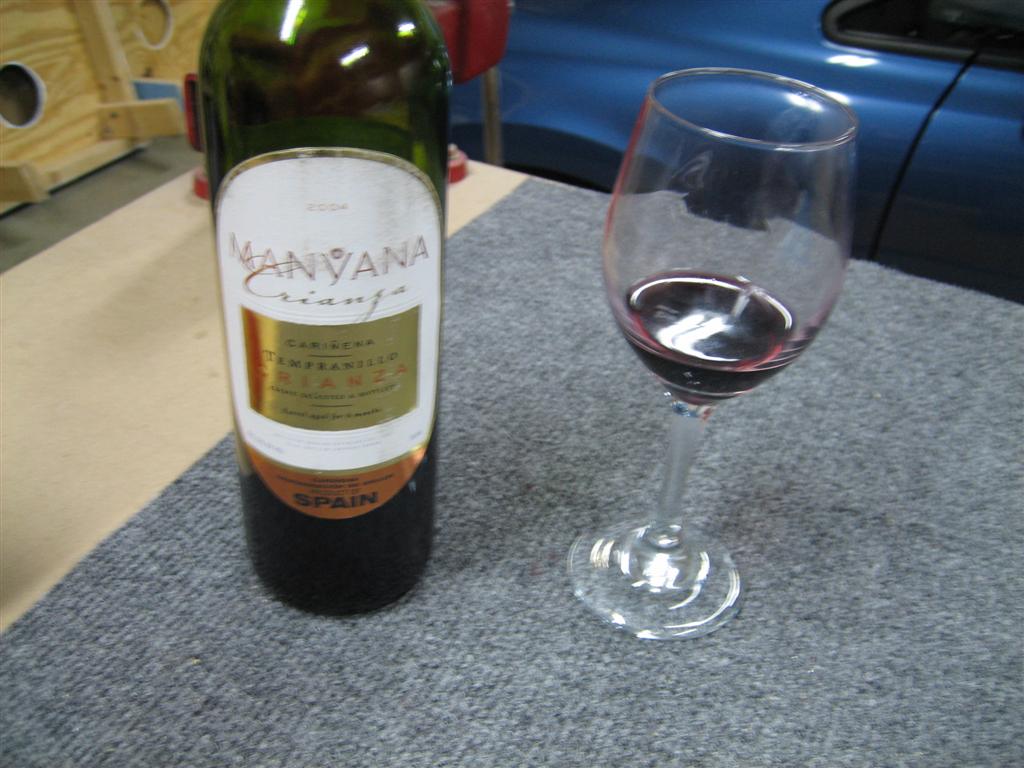
Tonight's build partner, 2004 Manyana (play on words) Crianza. A delicious tempranillo from Spain.

On with the building, you say? Fine.

One of the last real fabrication items I have left on the right elevator was enlarging the counterbalance skin dimples. To make a long story short, I don’t have #10 dimple dies, so I dimpled with #8, and then planned on using the AN507 screw head and a nut tightened down to enlarge the dimple enough for the screw to sit flush.
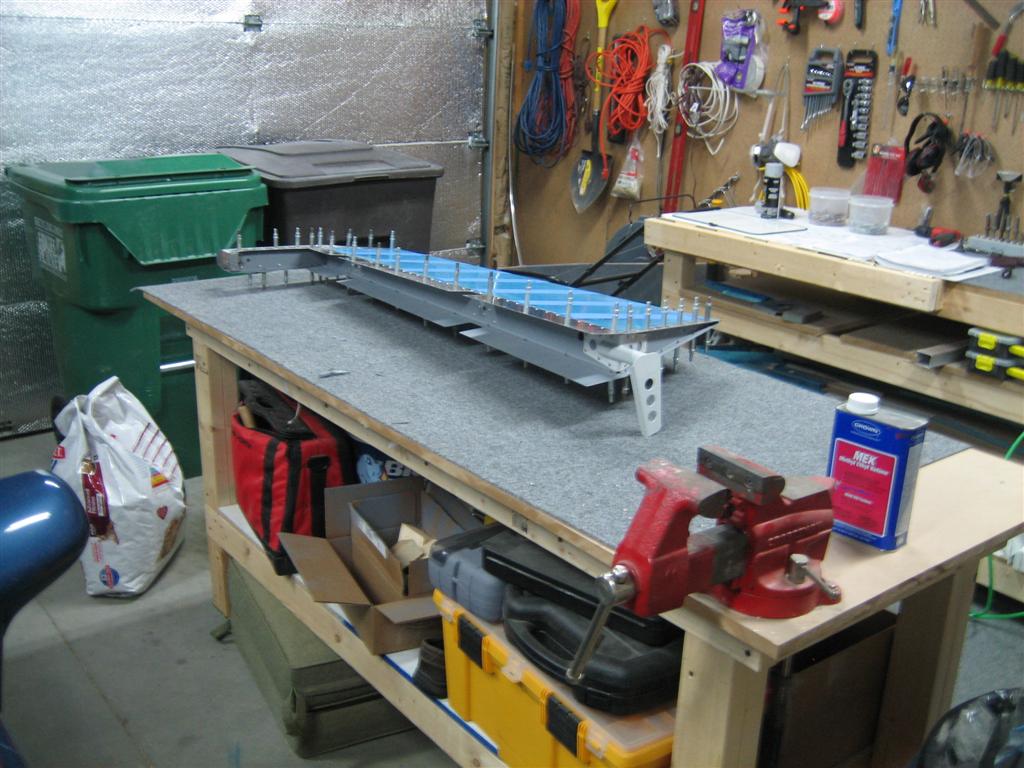
This did not work.

Okay, instead of waiting for a week for a $40 dimple die to arrive, let’s be creative.

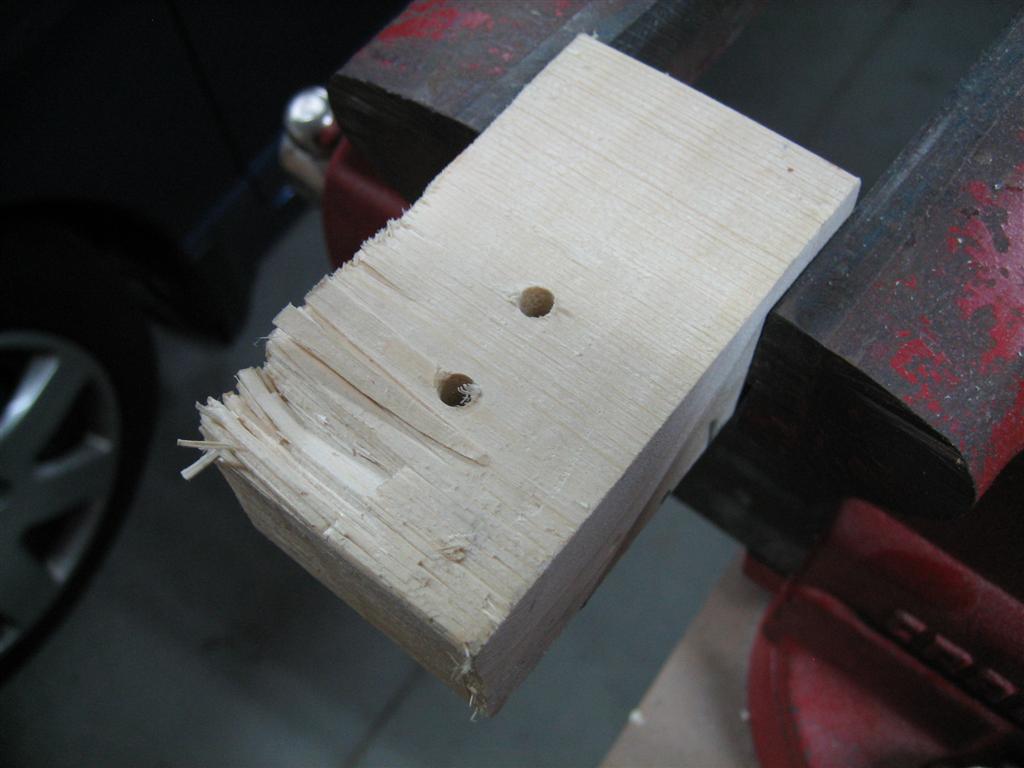
Plan: matchdrill two holes in a block of wood, countersink the holes, then use a flush set to enlarge the dimples.

Here's my block of wood, later to be countersunk.

Well, I don’t really have any good pictures of my attempt, because that didn’t work either, and I was getting frustrated.

Finally, I told the girlfriend to come out and listen to me explain the problem. (I knew this would help me come up with a solution.)
Without even flinching. “Why don’t you use a bigger screw to make your dimple?”

my face = <deer in the headlights>

Of course! (Except I didn’t have a bigger countersunk crew, but it set me down the right path.)

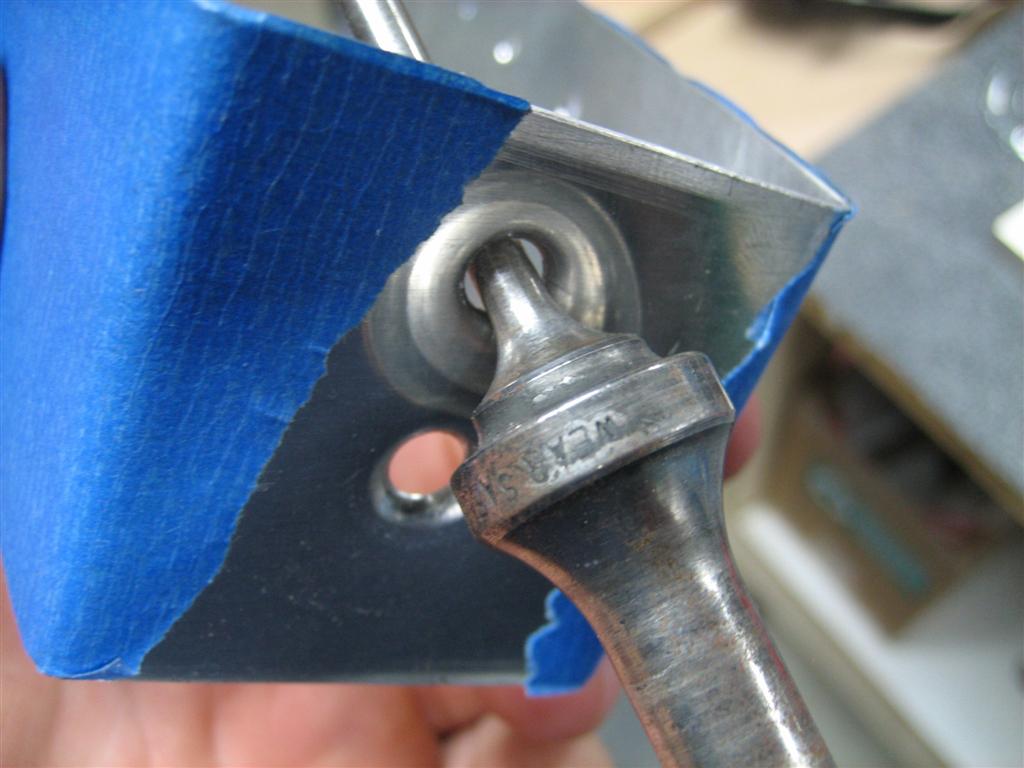
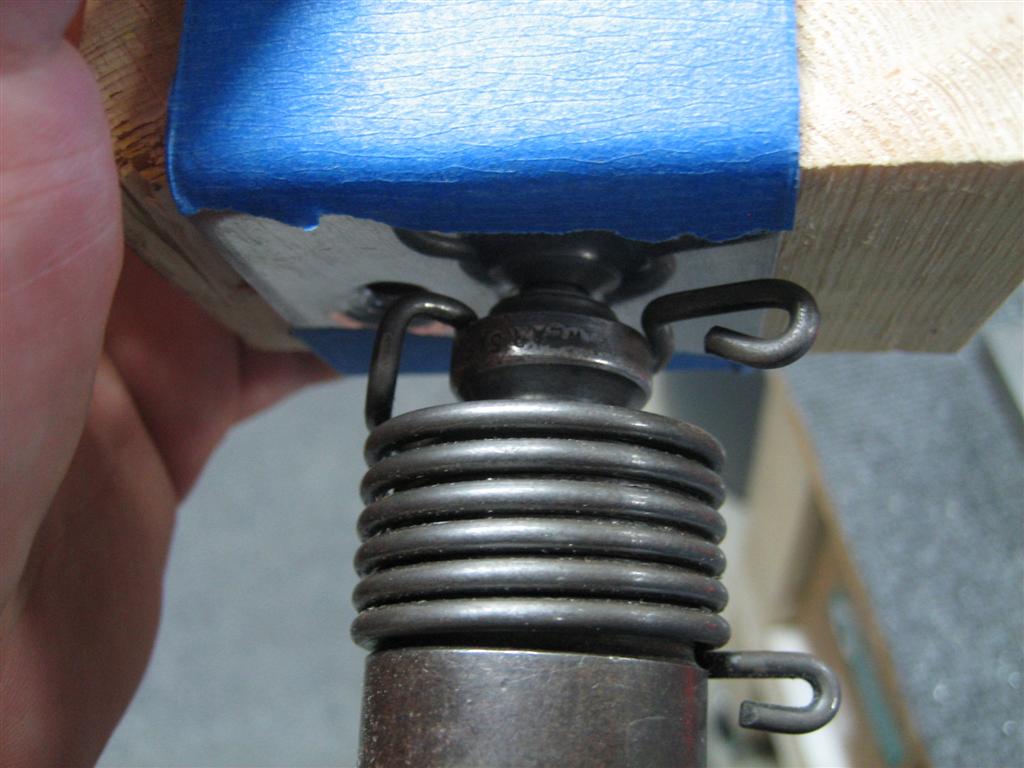
This should work. (It's my punch set that came with my rivet gun.)

Setup recreated (I had a piece of tape on the skin to prevent marring.)

The hole on the left has been "enlarged." This worked great!

Okay, let’s move on. Next up, I needed to locally bevel the edges where the spar and tip rib are underneath the counterbalance rib (so the top skin doesn’t show the transition bulges. So I marked those, and also started thinking about how to attach these empennage tips. See the two undimpled holes to the right? Those are two (well, 4, two on top and two on bottom) tip attach points that will eventually be drilled, deburred, and dimpled. Might as well do it now so I don’t have to worry about deburring between riveted sheets.

Lining things up to wrap my head around this interface.

I flipped the pieces over and drilled them to #30.

The top two holes have been drilled and deburred, ready for dimpling.

After dimpling…this #6 screw fits pretty well. (Editorial note: I’m pretty locked in to attaching the elevator tips with screws. I know there is really no reason to take the tips off, but right now, I don’t want to commit to blind rivets.)

That #6 screw looks like it will fit pretty well.

Once the other side was done, I primed the interior (and taped off exterior) side of the counterbalance skin.

Priming. You can see the two #6 dimples at the top of the left side of the skin. (I'll do the rest later...the rest are all accessible in the future.)

While that dries…let’s devinyl!

Hooray for devinyling!

All done. (After using compressed air to blow the flaked primer off.)

Back to emp tip attachment, here are the #6 holes in the skin, dimpled the same way as the counterbalance skin.

Nice big dimples. (Whoa, I forgot to deburr that relief hole on the left there. Fixed after picture taken.)

Let’s get this thing clecoed together.

Those big dimples sit nicely in each other. Here you can see those two holes are the only holes that overlap.

Next, the manual has you rivet the following two holes (not accessible once the spar and tip ribs are in place).

Protected with tape, this rivets were set beautifully.

Without clecos, it's starting to look like an elevator.

Next, “loosely place” the counterbalance in the counterbalance skin and “partially” insert the screws.

The untrimmed (on purpose) counterweight in the counterbalance skin.

last, but not least, they have you insert the skeleton in the skin and cleco together.

Wuhoo! It really does look like an elevator!

Those screw heads are pretty flush. (They are not tight yet, so they'll sit a little better once I get them tightened down.)

A couple pictures of some of the interfaces.

Just behind the counterweight.

Trailing edge of the tip.

Inside corner of the counterbalance rib. (What's that stuff hanging from the top edge? I'll have to investigate later.)

Finally, the trailing edge of the inboard rib.

Ready to rivet!

One more shot.

1.5 hours, 4 flush rivets set.

Prev | Next


Right Elevator Stiffener Riveting

April 18, 2010

Prev | Next

A few days ago I got a little time in on the project. I’ll see if I can remember what happened. 3 hours, 116 rivets…2 of them drilled out and reset. Here we go. First thing, in preparation for stiffener riveting was to get the skin devinyled. Here’s my devinyling table, wooden stick (won’t dissapate heat) and permanent marker.

Ready to use the soldering iron to devinyl.

After devinyling the inside of the right elevator skin.

For some reason I like devinyling. Don't ask me why.

Here’s the outside of the skin after devinyling. This actually takes a long time to do.

I just devinyled the stiffener holes. I'll devinyl the rest after drilling to the skeleton.

At some point last weekend (can’t remember which day), I was sent to Home Depot (maybe Lowe’s…it was a busy day) to grab some gardening supplies. I took the opportunity to grab some indoor/outdoor carpet for the workbenches.

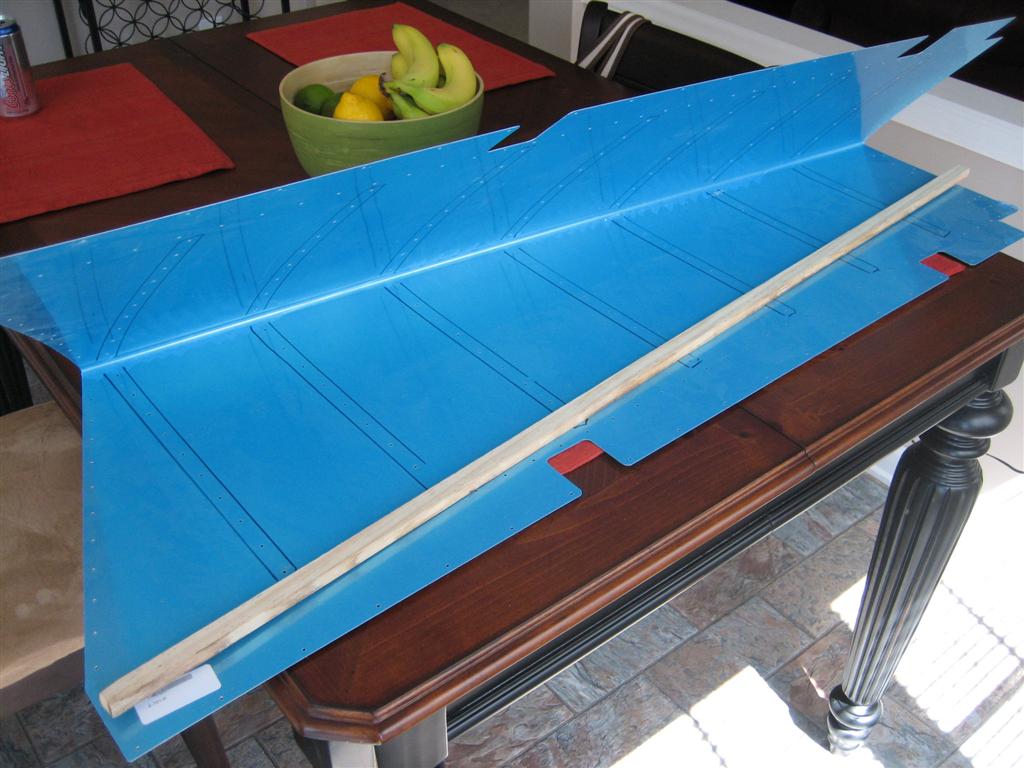
Here's what I call my toolbench with a new carpet surface.

You should be able to see the “workbench”‘ with carpet on it in future pictures. Anyway, I grabbed the skin and did some deburring (interior and exterior) and some scuffing (interior only, for priming).

Scuffed strip on the left, non-scuffed on the right.

After a few more minutes, I dimpled the skin (no pictures, sorry), and then decided they were ready for priming.

Where is that self-etching primer?

i got the picture order backwards, so you’ll see the skin primed later, but here I am getting ready (or just finishing) stiffener edge prep. I usually use my Permagit block to knock down any ridges, edge deburring tool (pictured below)  to chamfer both edges, and then a scotchbrite pad to smooth everything out.

Right elevator stiffeners and my edge deburring tool.

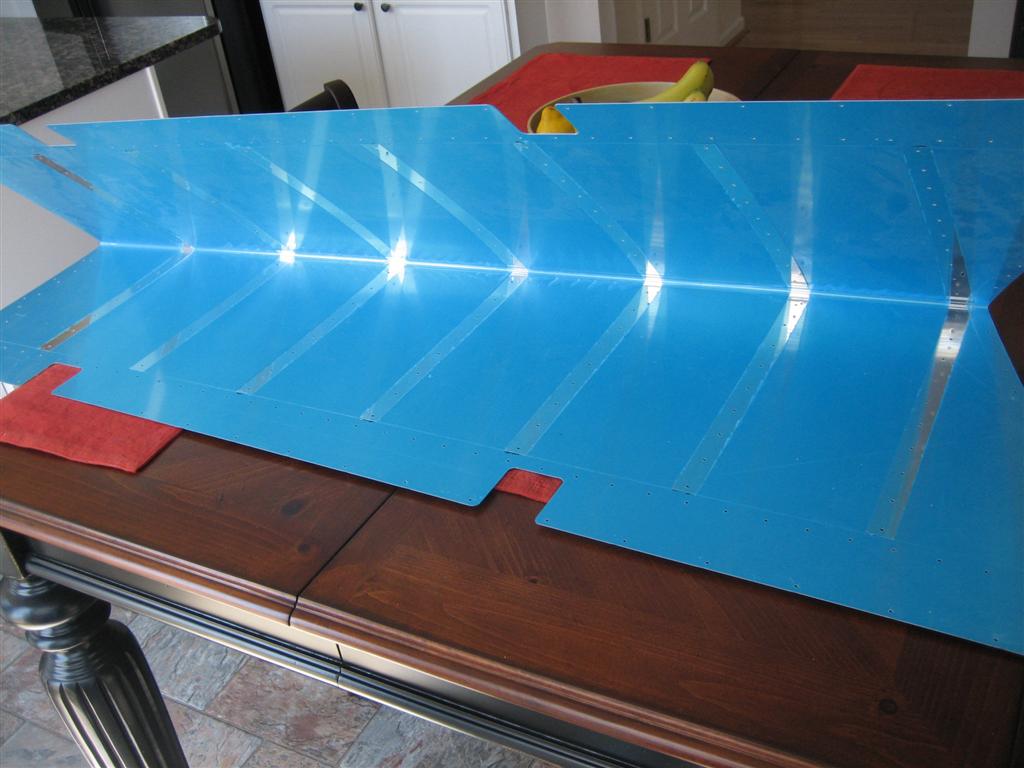
Here’s the picture of my primed skin.

It looks sloppy now, but wait until I get the vinyl off. Then the primed lines will look nice.

After the stiffener edge prep, the stiffeners got taken inside to be washed with dawn detergent.

Here are half of the stiffeners, being cleansed of their oily fingerprints and aluminum dust.

I decided to take a picture of how much detergent I use. Nothing really important, just camera-happy, I guess.

Dirty stiffeners need to be cleansed of their aluminum dust and fingerprints.

After cleaning, they go back outside for priming.

Boo-yeah, primed stiffeners.

While those were drying (and then flipped and sprayed on the other side), I placed rivets in the dimpled holes and taped them in place.

Rivets just asking to be beaten into submission.

I started to backrivet, and everything was going very smoothly.

Beautiful shop heads.

More beautiful shop heads.

God, I love backriveting.

But anyway, I got through all 116 rivets, then flipped everything over and saw these!

Ahh! Worst rivet ever!

This one is not so bad...

I figured out why this happened, and it falls squarely on me.

While I was dimpling, I didn’t pull the other half of the skin back well enough, so the skin side that was being dimpled was not sitting parallel to the faces of the dimple dies. One side of the die dented each of the last stiffener rivet holes on one side. The rivet in the second to last picture was flush against the backriveting plate, but the skin was dented, or above the backriveting plate.

I’m going to drill out all of the bad rivets on the trailing edge (of course, the worse of the bunch is on the top of the elevator, right where all of you are going to come look at my elevators), and then  try to smooth out the skin by backriveting it with a flush set from the inside out.

It might ruin the skins, which will be expensive. I’ll be sure to take some pictures of the process. Maybe it will save one of you some time and frustration…

Prev | Next


LH skin dimpling, some HS riveting

January 9, 2010

Prev | Next

This morning, I snuck out into the garage and starting dimpling the left hand HS skin with my new (borrowed) c-frame.

After thinking about the setup and trying a few things, I quickly realized I wanted the female dimple die underneath and the male dimple die on top.

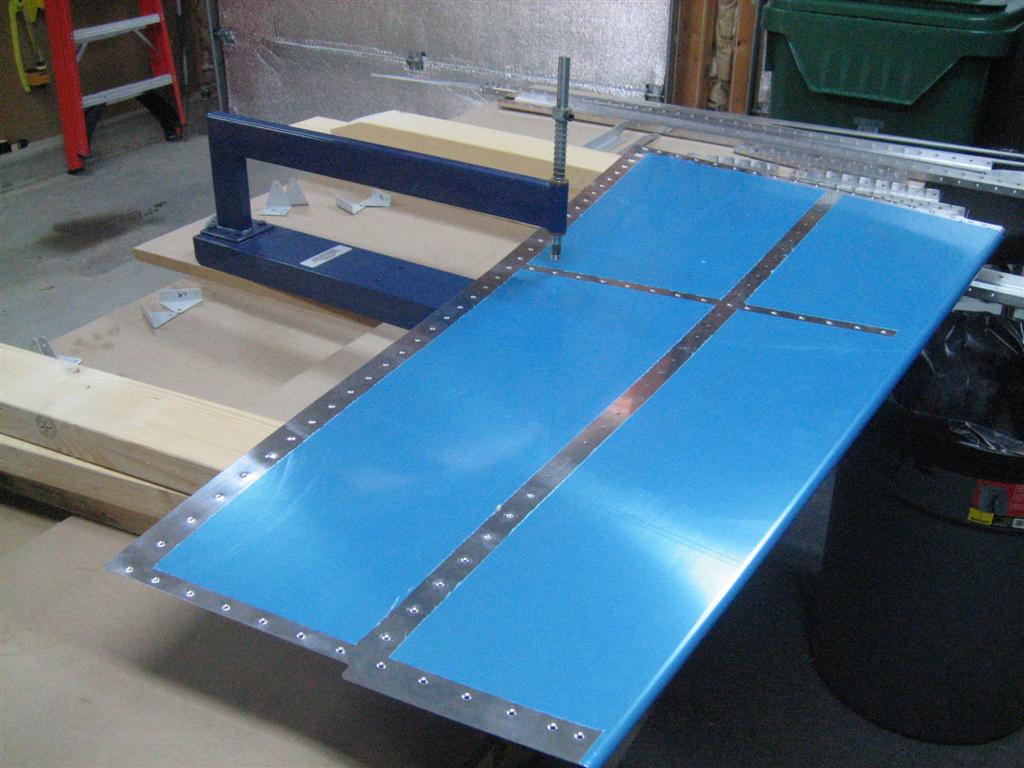
I set up the skin on 3 2x4s (I haven’t built a dimpling table yet because I wanted to see how I liked doing it) which was less than a 1/4″ above the female dimple die. Then I basically moved the c-frame around until the male dimple die was lined up (this way I don’t scratch the skin with a male dimple die while trying to locate the hole from underneath, like some builders do). Then I held the male dimple die down into the hole and…WHACK! Perfect dimple. I am far happier with these dimples than the pop-rivet dies. Keep in mind here, I am dimpling with the standard spring-back dies here, not the tank (deeper) dies.

Here's my setup for now. I like this because you move the c-frame, not the skin.

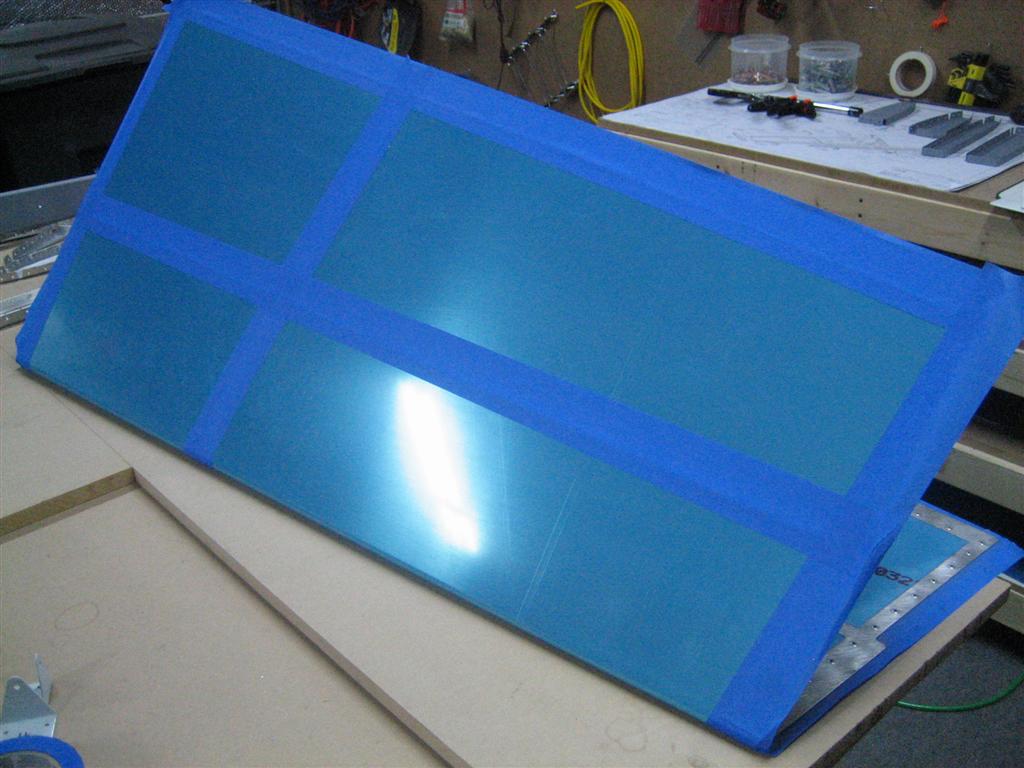
After finishing each row, I put a line of blue painters tape on the outside of the skin. I learned on the practice kit to protect whatever I didn’t want to scratch. The tape will come off just before riveting.

Blue tape on the outside of the skins. Hooray protection!

After I finished both sides, I scuffed up the internal lines, cleaned, then primed the inside of the left HS skin.

Here's the inside of the left skin, all suffed up, ready to prime.

While I waited for skins to dry, I riveted together HS-705, HS-702, and HS-704, but only the middle two holes. The rivets didn’t bend over, per se, but set a little crooked. (My fault for not keeping the squeezer steady.) I drilled them out perfectly, and then decided shooting them might be a better idea. After practicing with a piece of scrap for a minute, I actually ended up shooting these rivets. They look really good.

Shop head picture. Rivets 7 and 8.

Machined head picture. This just looks good.

This is not the order the directions has you rivet, but I was getting antsy to get some primed pieces together. Notice I didn’t slide in the HS-710 and HS-714 yet (still need to finish those), as you can set HS-404 to HS-702 to HS-405 without them. Then, it is off to run some errands.

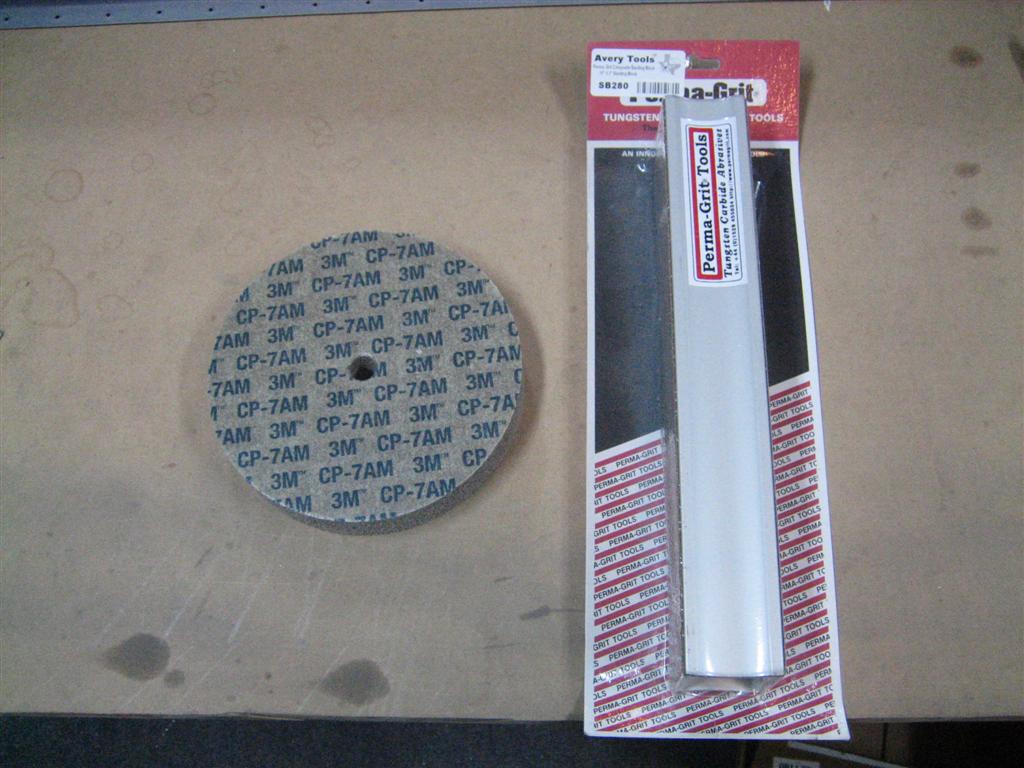
When we got home from running some errands, my latest Avery tool order had arrived. Finally, a scotchbrite wheel! 6″x1″x1/2″ CP-7AM “Cut and Polish” Medium wheel. Also, I’ve heard some good things about the Permagrit line of products, so I picked myself up one of the 12″(?) ones. Fine on one side, coarse on the other, flat (I heard not to get the curved (convex) one.. Much better for making a straight edge than my regular file.

More tools!

First thing after mounting the scotchbrite wheel, I finished the edges of HS-710 and HS-714 with the wheel. So easy. I should have ordered the wheel at the beginning. (Serves me right for trying to piece together a toolkit instead of buy one all at once. I thought the scotchbrite wheel was a luxury. It is not.) Then I countersunk the holes in HS-710 and HS-714. I had done this before, but sized the countersinks perfectly for a AN426AD4- rivet. When you cleco the dimpled HS-702 front spar to either piece, the spar doesn’t sit flush, so you have to enlarge the countersinks.)

Enlarge countersinks. Check.

Then I finished surface prep, cleaned, and primed those two.

While waiting for the primer to dry, I clecoed HS-707 (leading edge “middle” rib) and HS-706 (tip rib) to the left skin to get in the mood for riveting. The girlfriend and puppies are taking a nap, so I’ll have to come back to this later, but I’m getting excited to start skin riveting.

HS-707 and HS-706 all clecoed to the left skin and such.

Anyway, I put in a few minutes of right HS skin deburring, scuffing, and dimpling before coming in for the day. (Notice I decided to scuff the interior of the right skin before dimpling? It’s easier to scuff the skin without all of the dimples getting in the way. It’s these little things that will save me time the second time around.)

Let’s see. 9am to 11am, 2pm to 4pm. 4 hours today.

Prev | Next