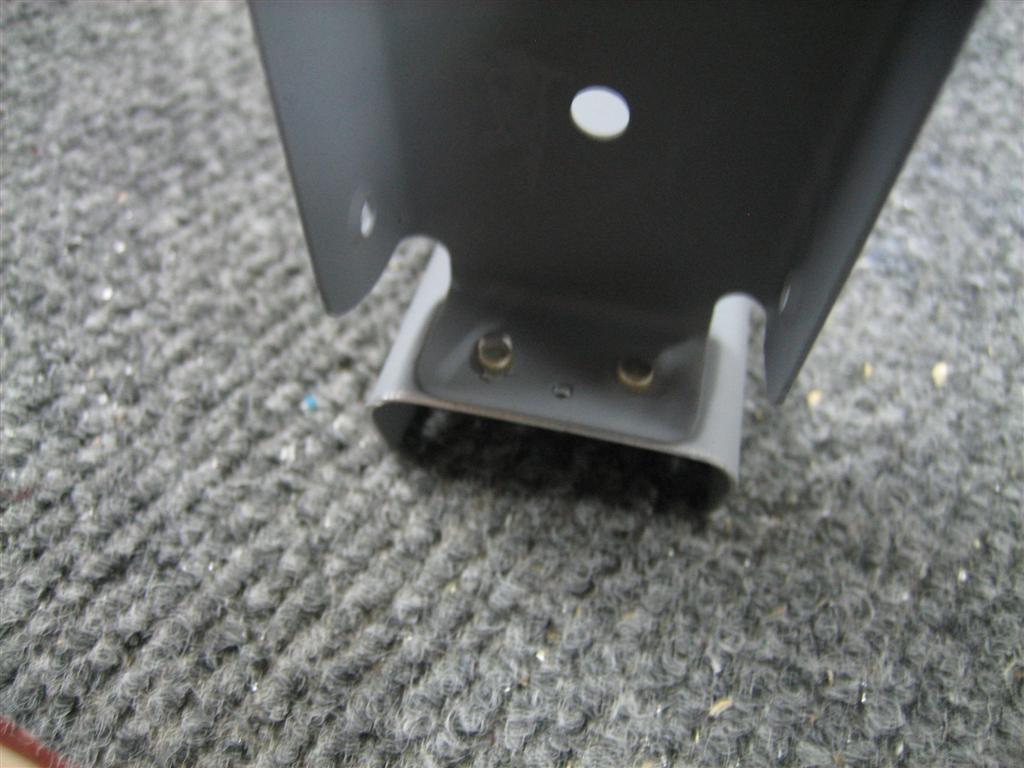
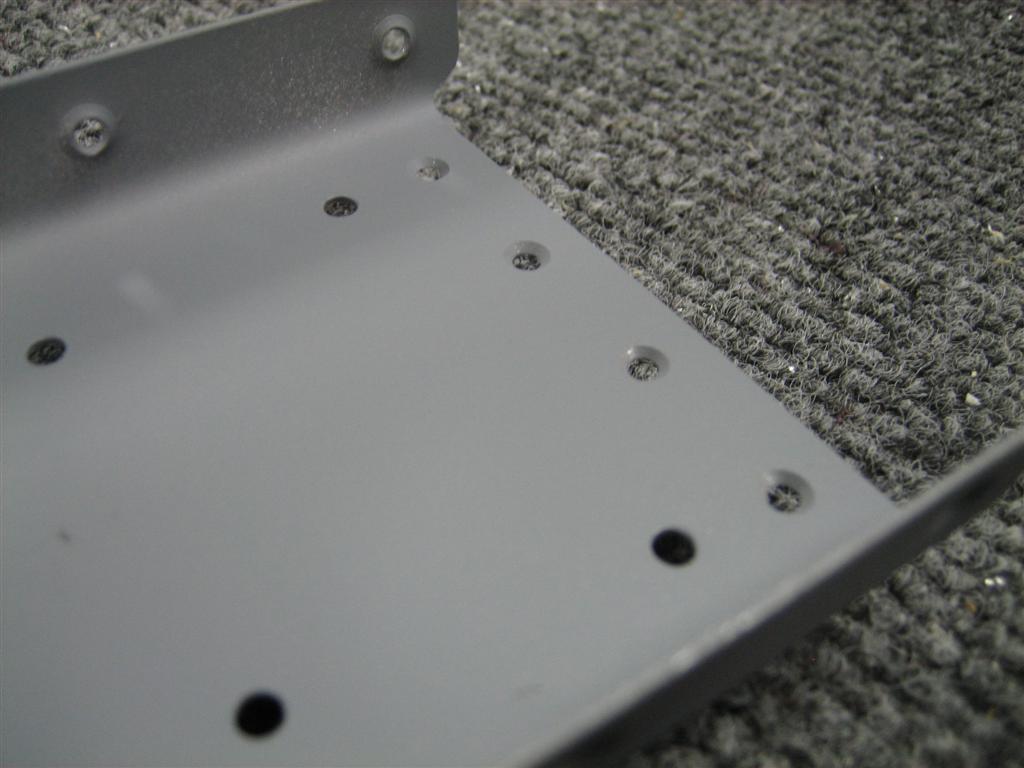
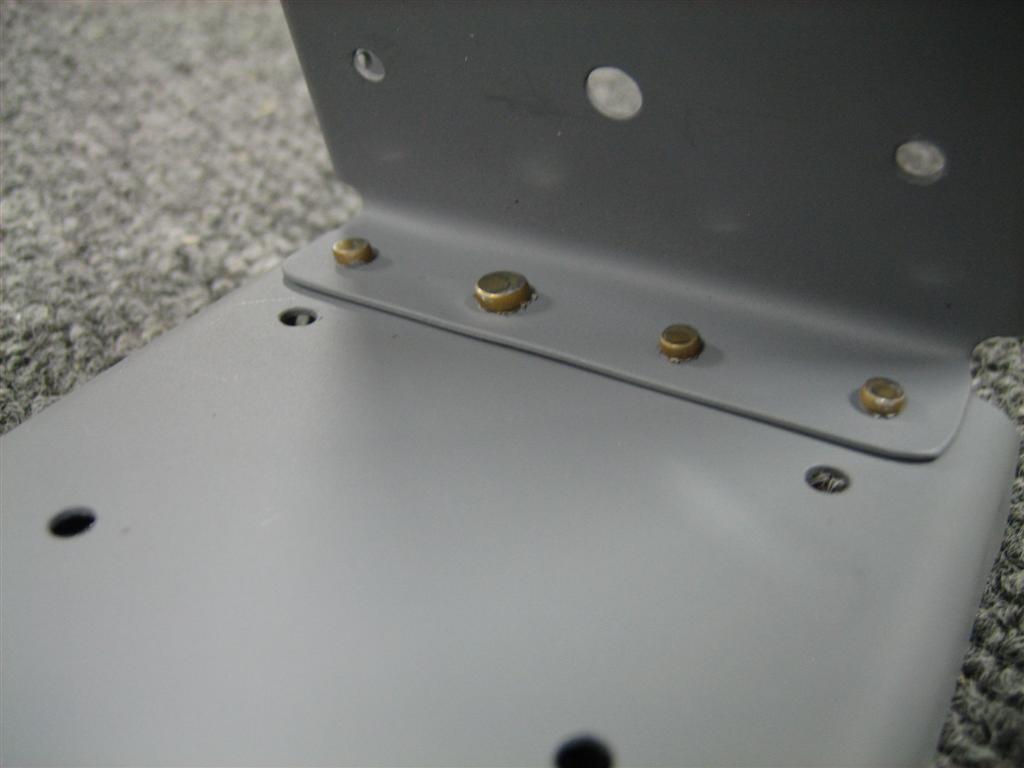
Preparation for Left Elevator Skin Riveting

July 21, 2010

Prev | Next

Now that my #10 dies are here, I can proceed with the counterbalance skin and preparation for riveting.
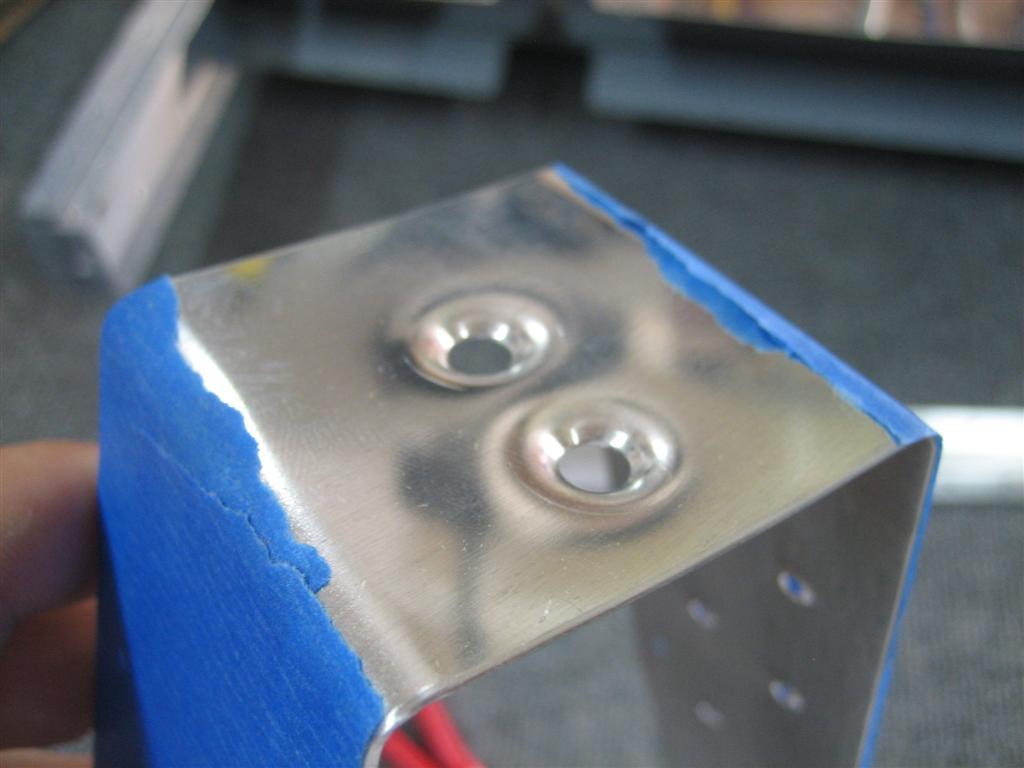
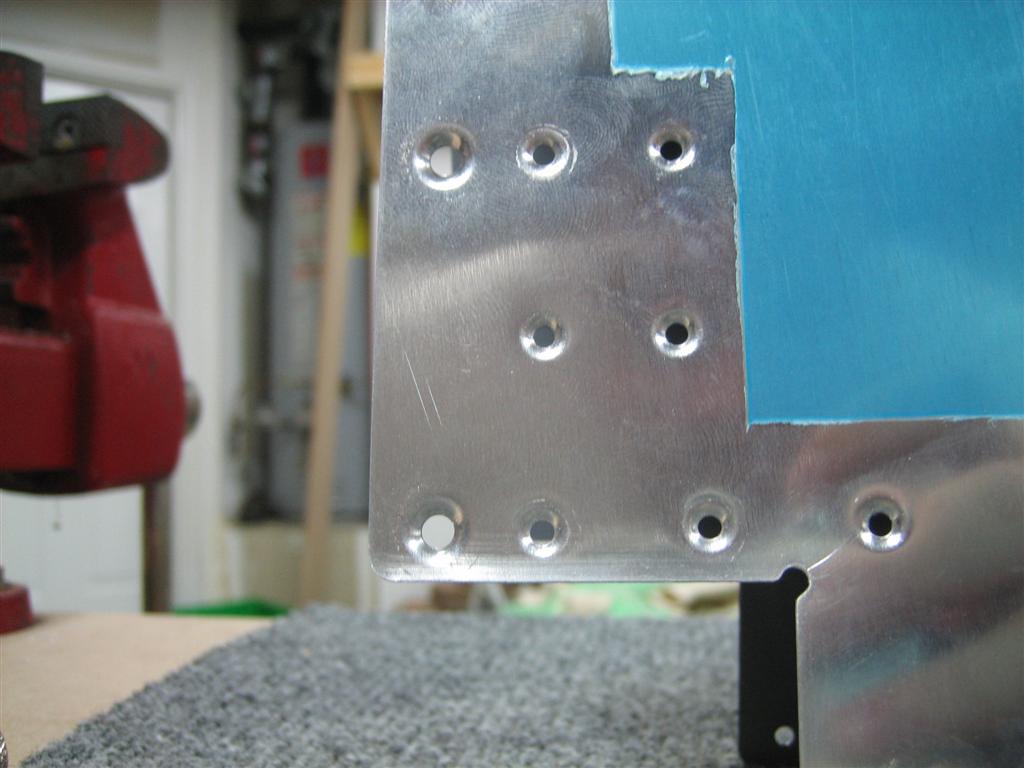
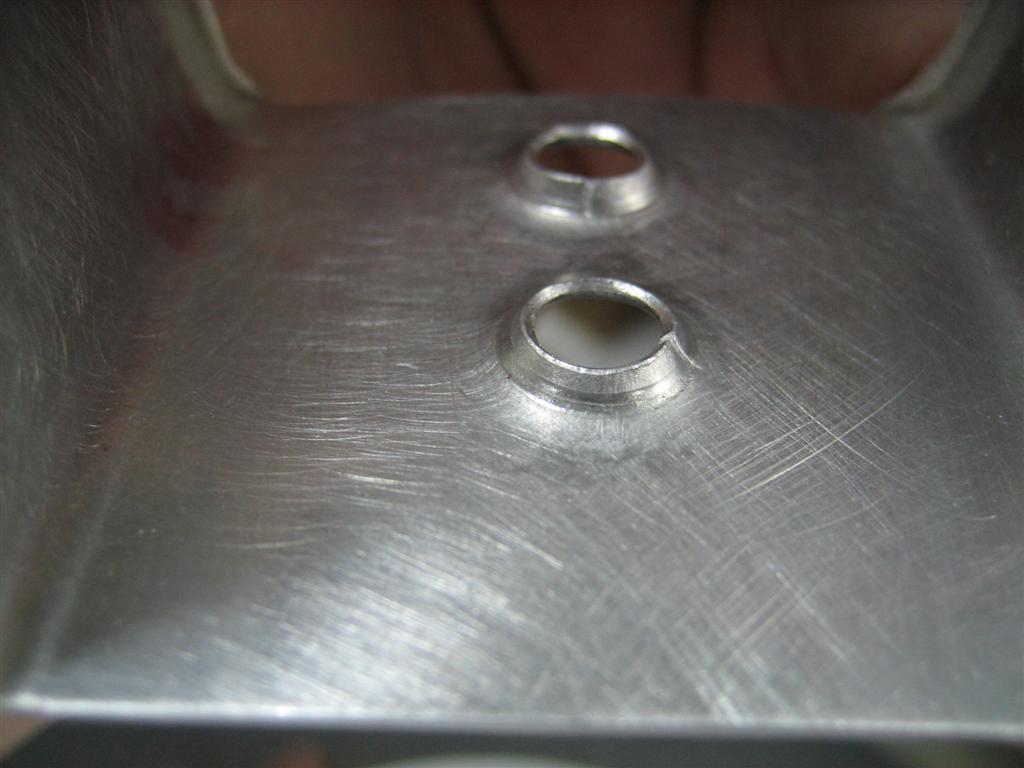
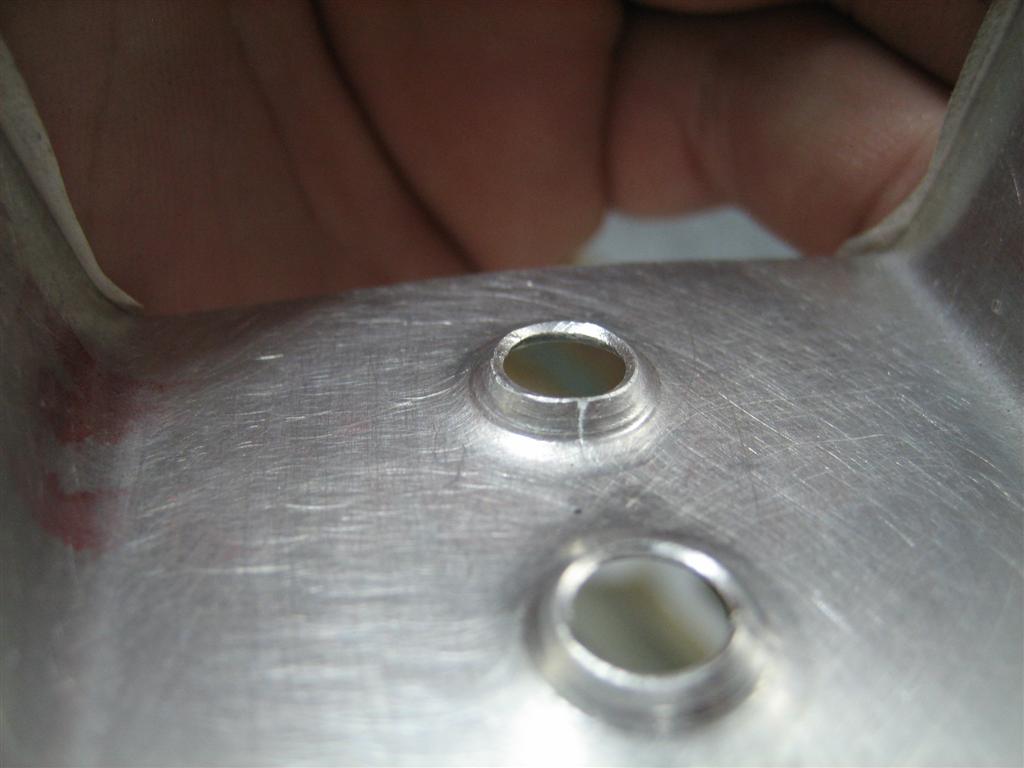
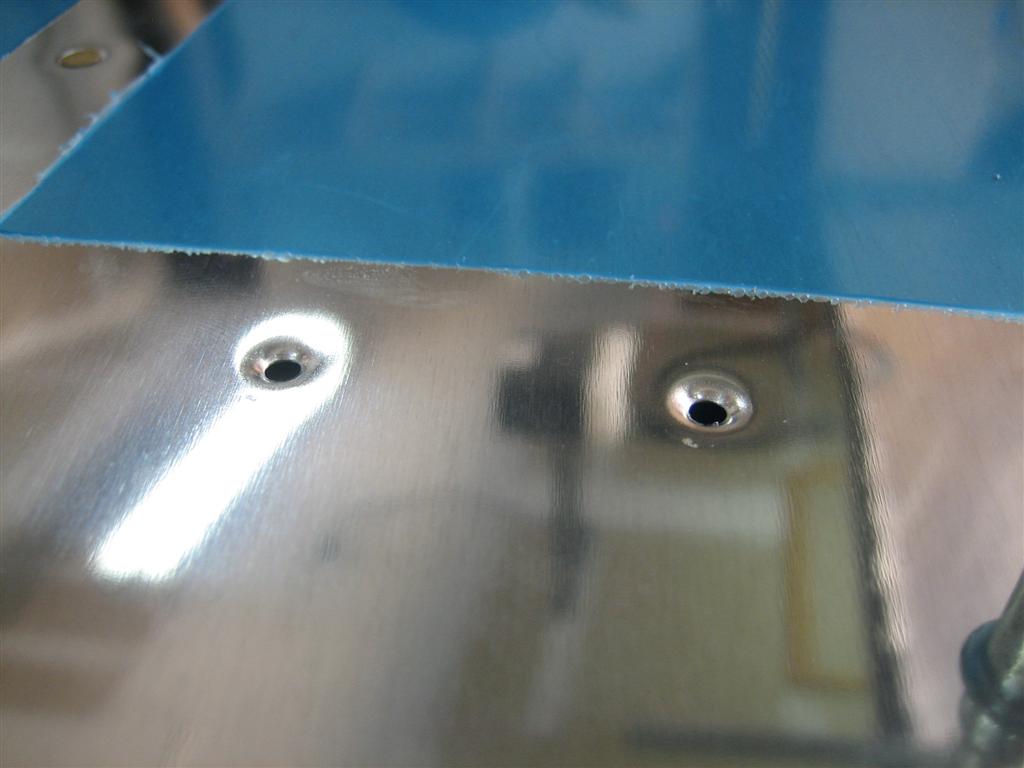
This is how #10 dimples are supposed to look.
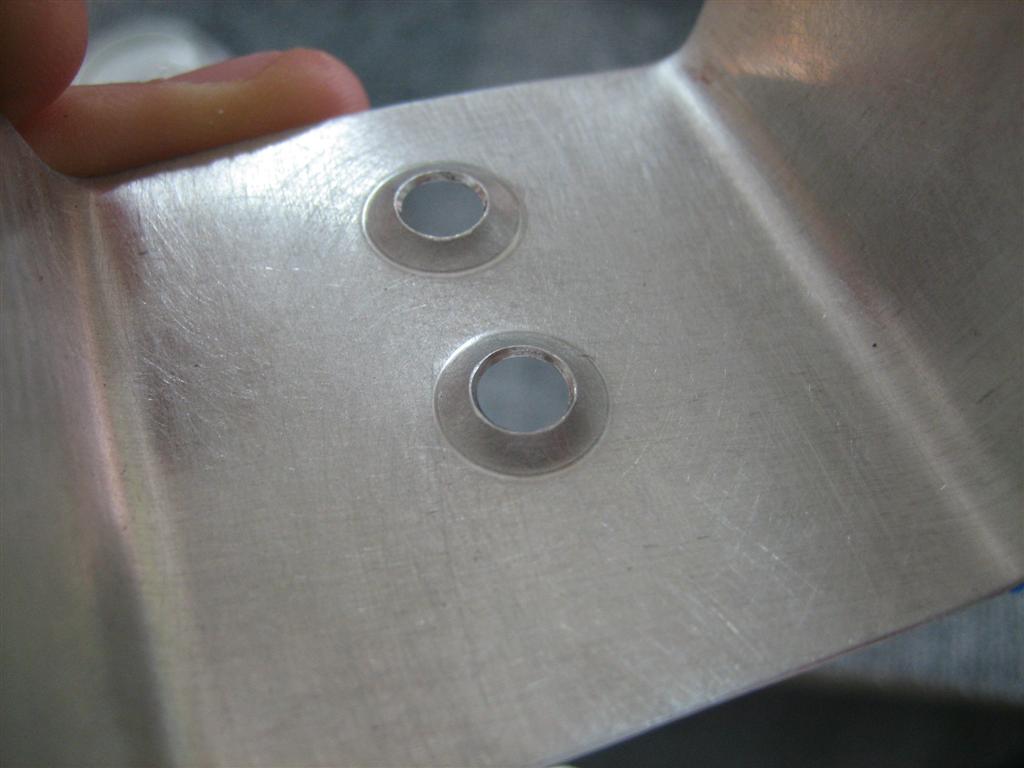
No cracks!

After beveling the exterior of the counterbalance skin, drilling the two fairing attach holes (that will be doubled up with the elevator skin) to #28 and dimpling to #6, I threw the counterbalance skin and the little trim riblet up on the priming table, opened the garage door, got the respirator out, and shot these two with primer.
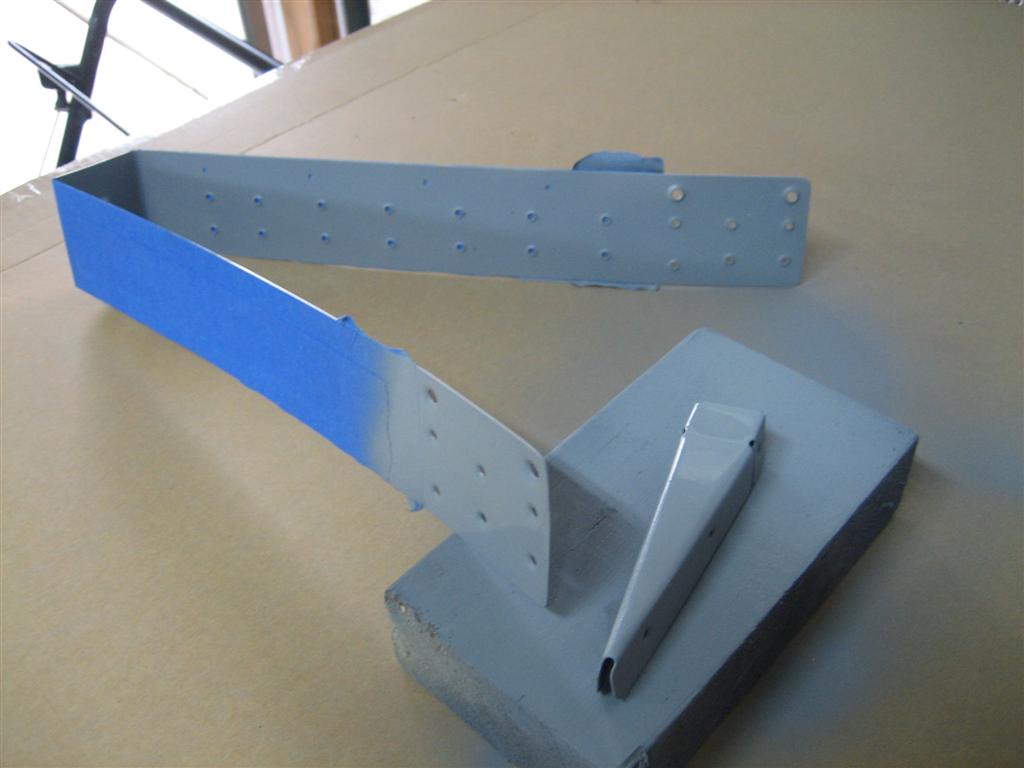
Primed.

After that was done, I clecoed the counterbalance skin in place and riveted the two rivets on each side that can’t be reached after the skeleton is inserted.
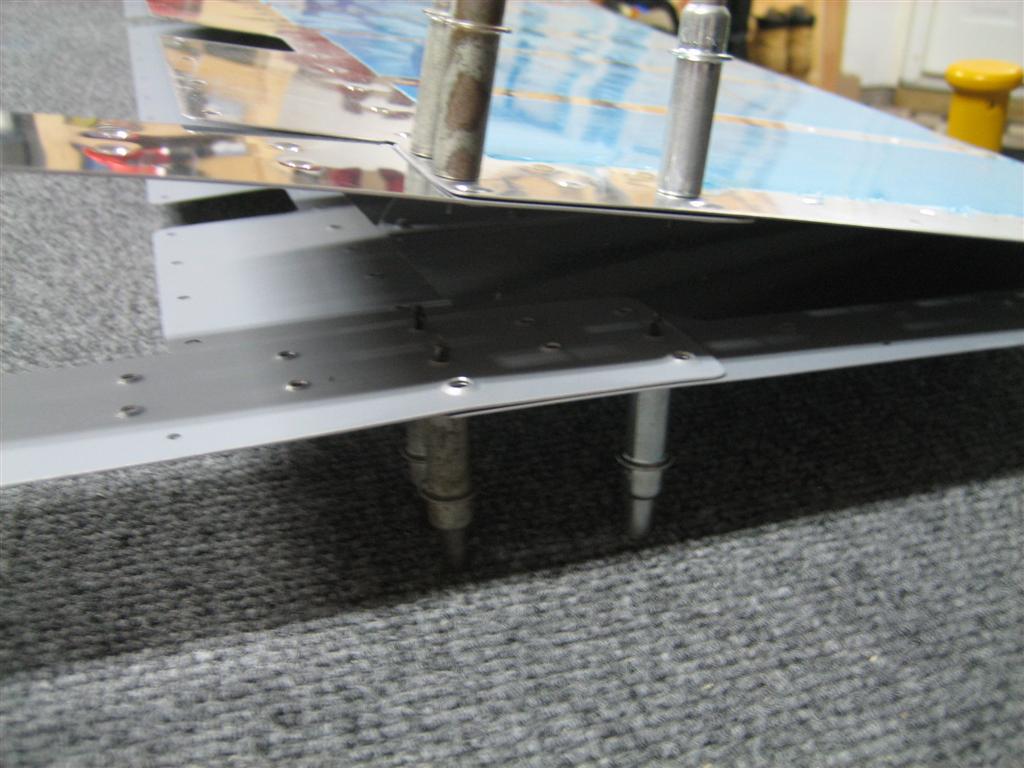
There's a nice lap joint there that could have used some edge-rolling, except I FORGOT TO EDGE-ROLL, EVEN THOUGH I JUST BOUGHT AN EDGE-ROLLING TOOL!
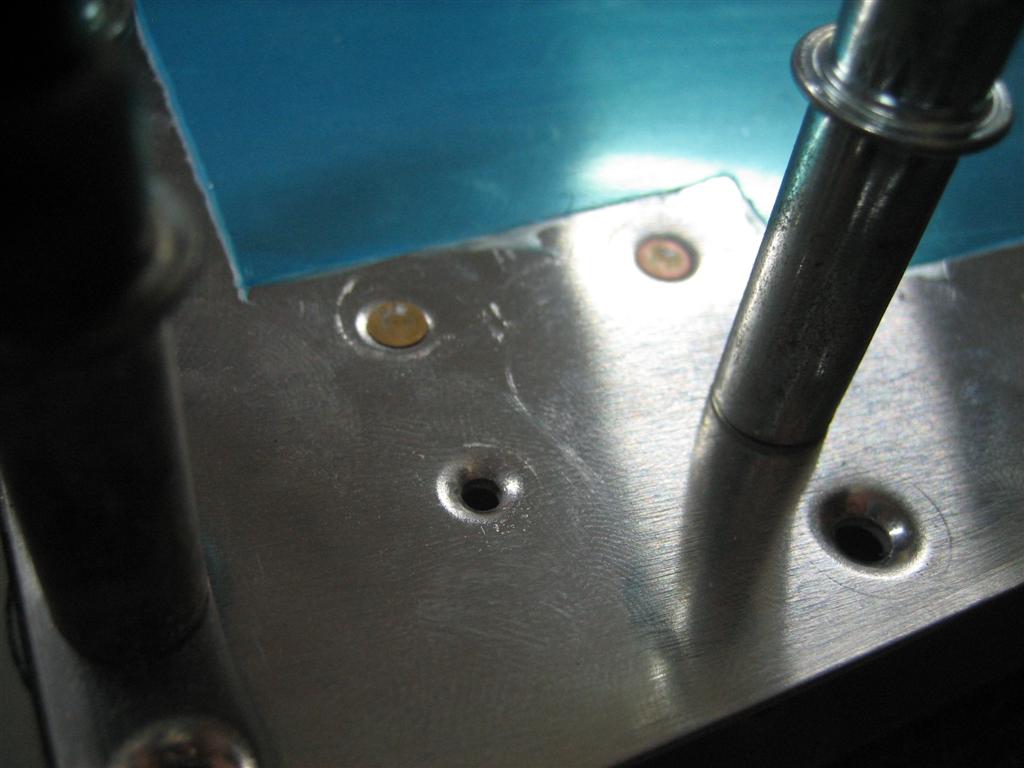
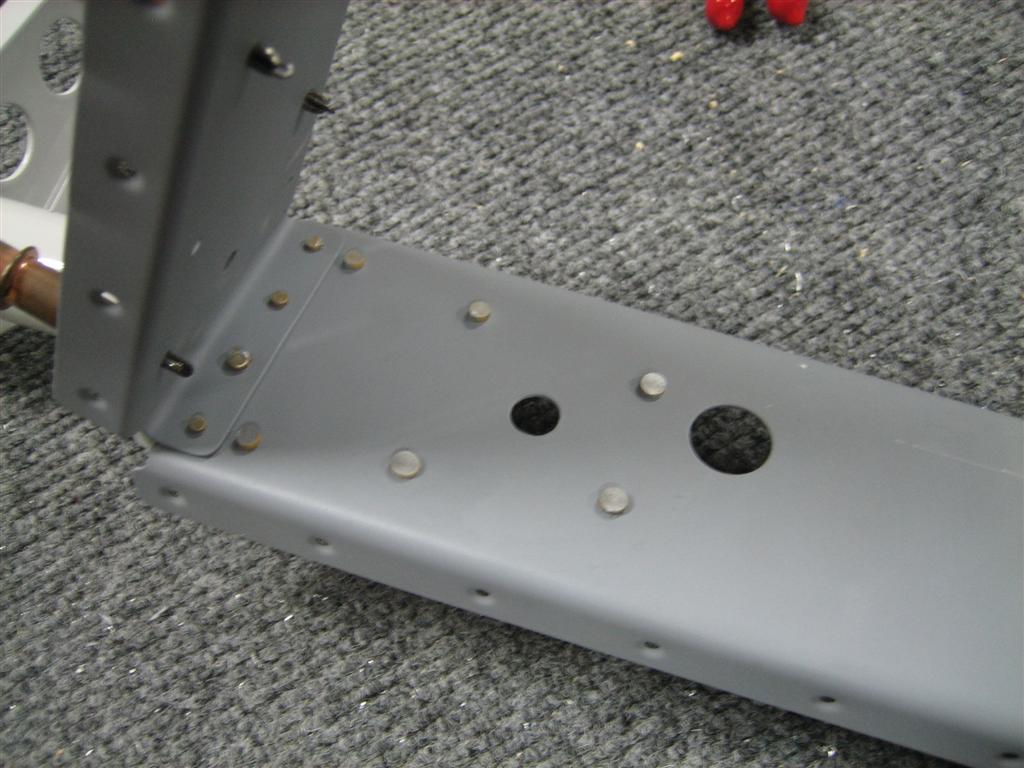
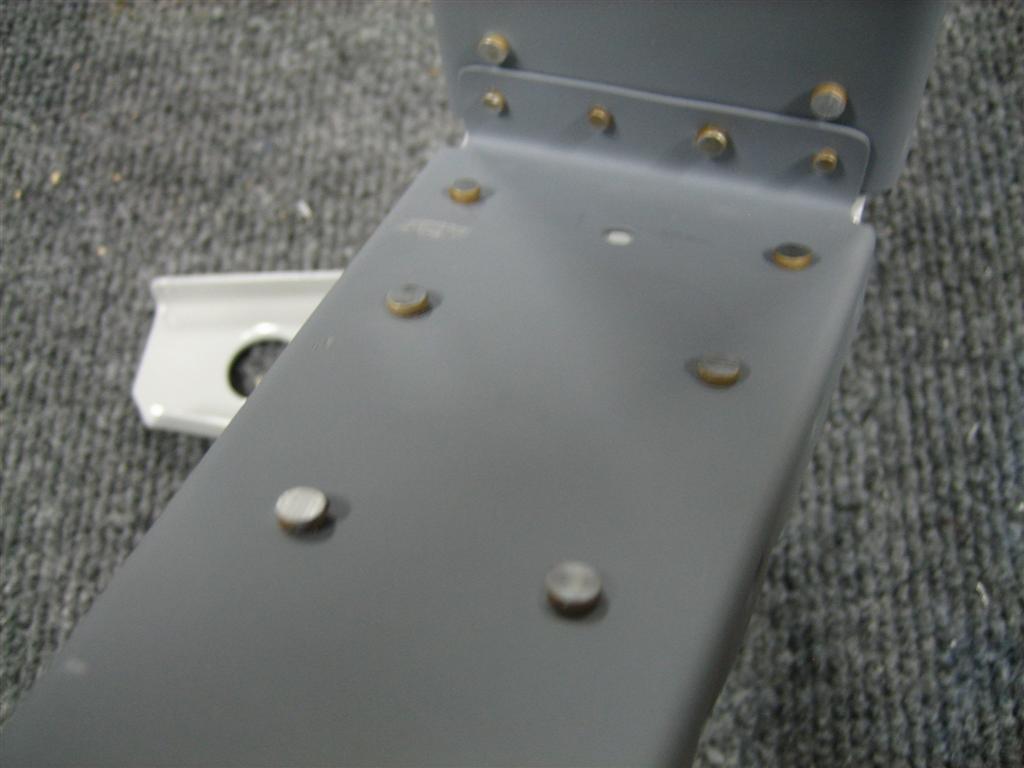
The two rivets in question on the top.
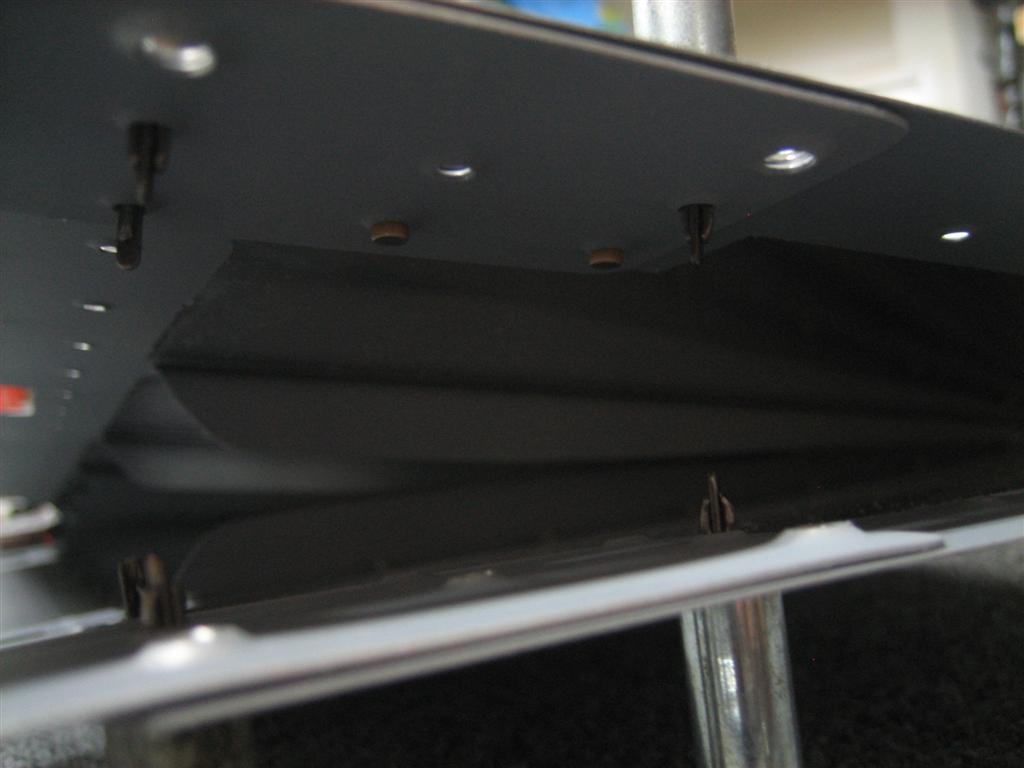
Nice shop heads.
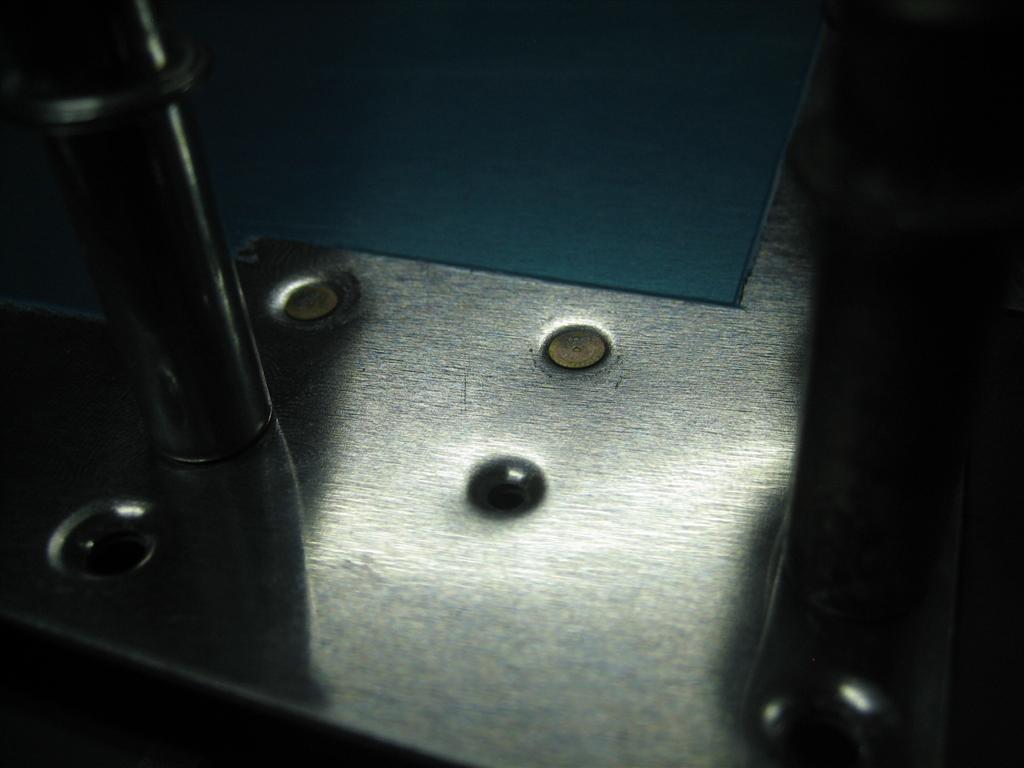
And two more on the bottom.

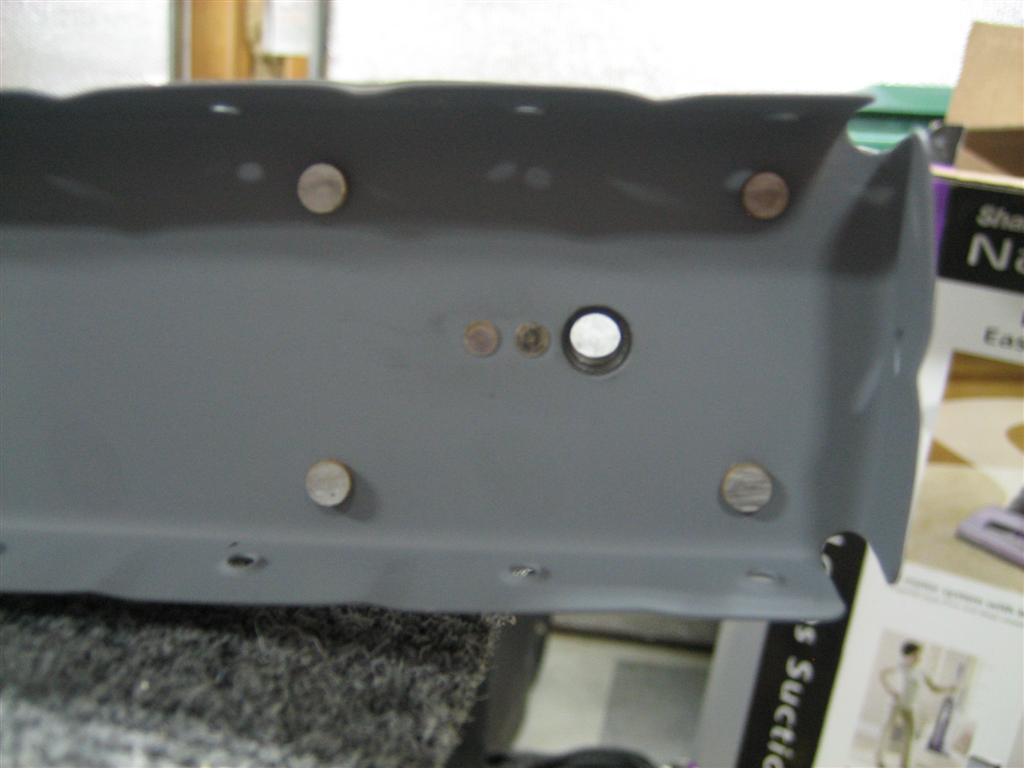
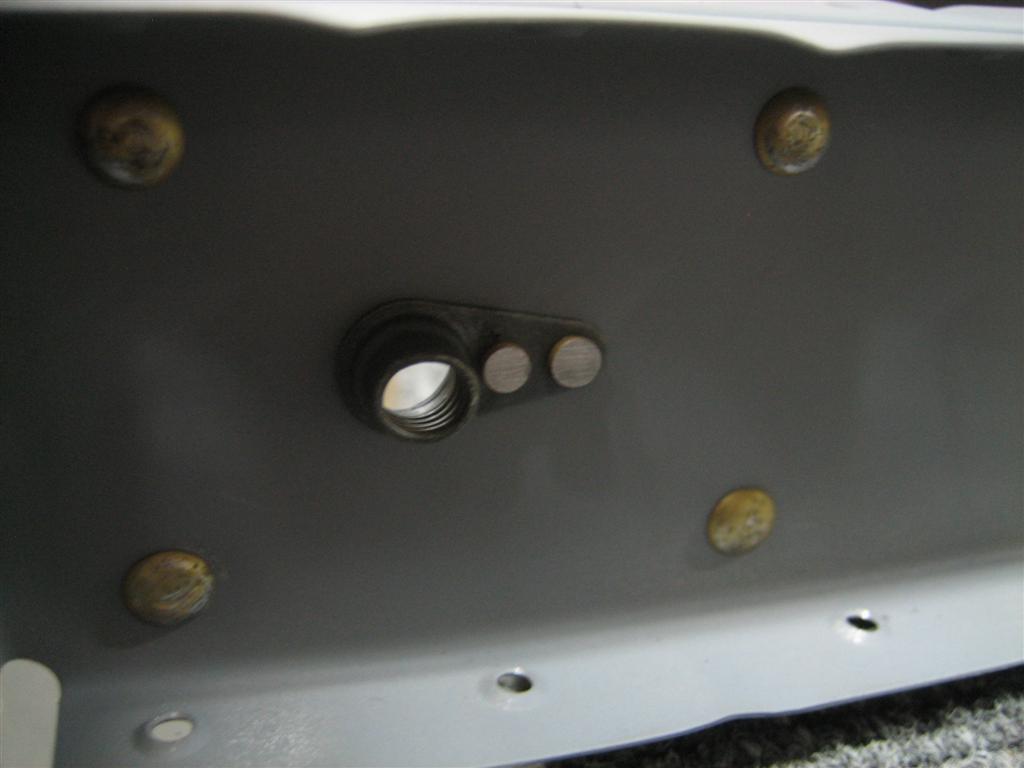
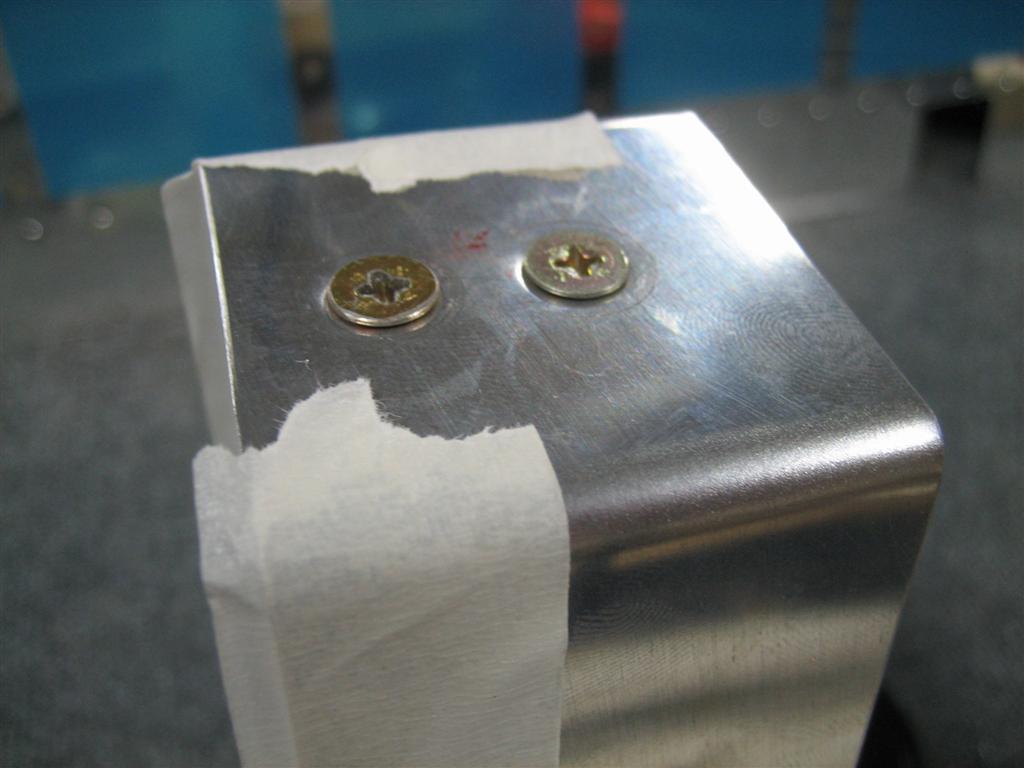
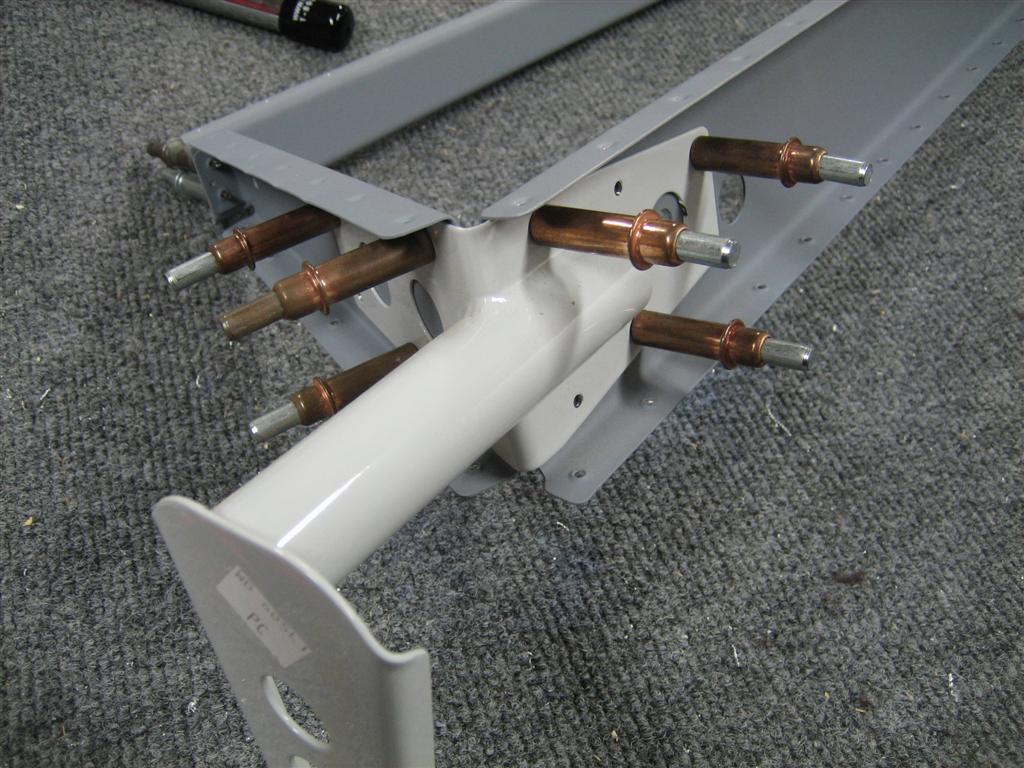
Then, before inserting the skeleton, you loosely place the counterweight in position and partly insert the two screws.
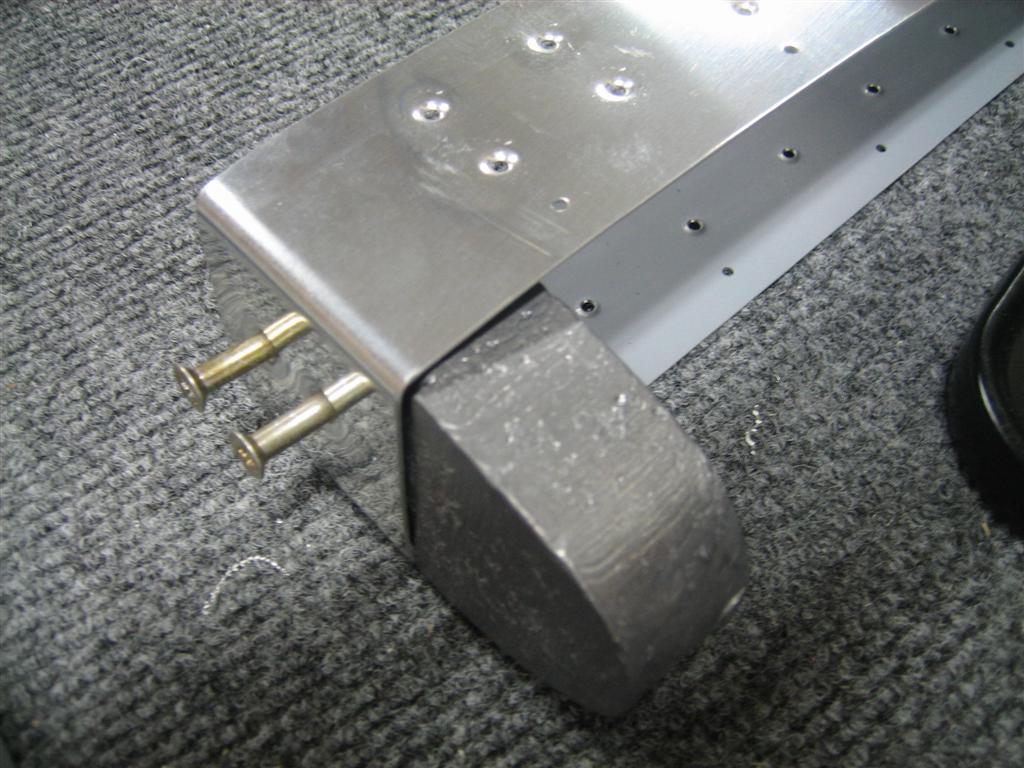
Okay...

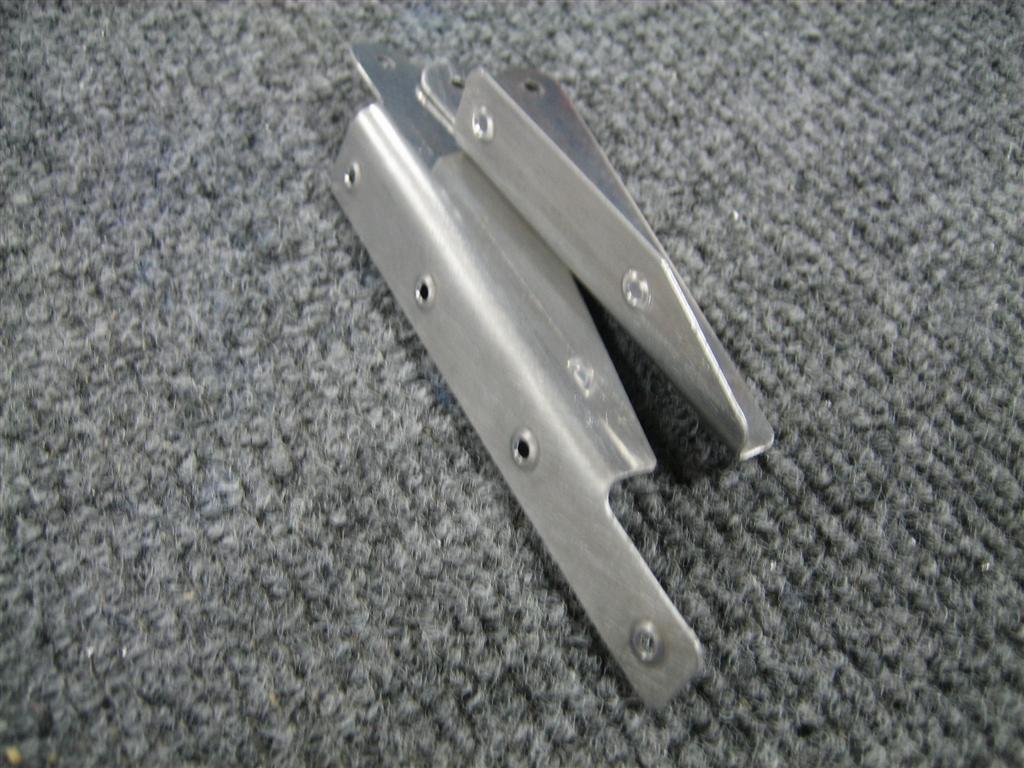
Then, I riveted the little riblet I made to the trim spar.
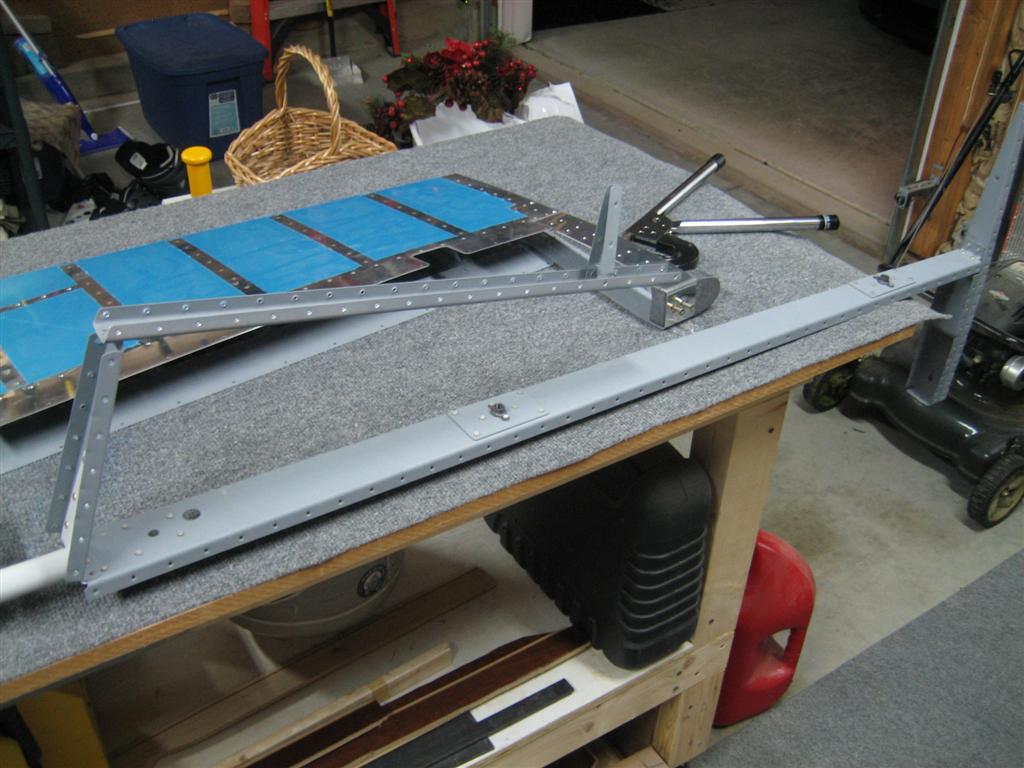
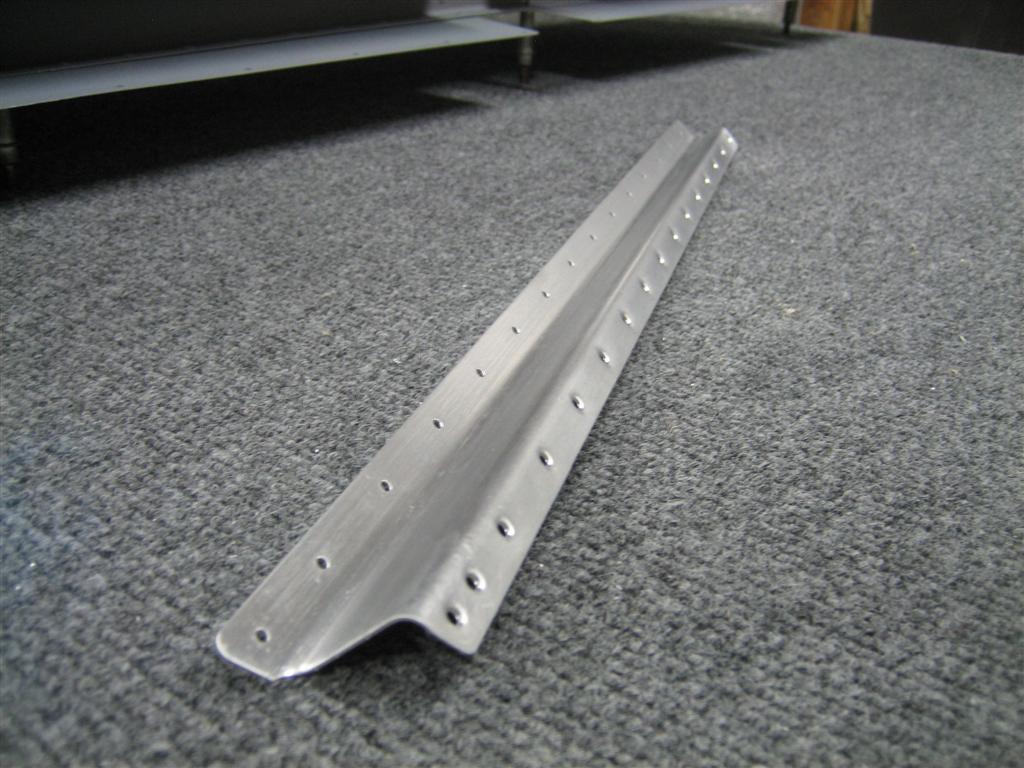
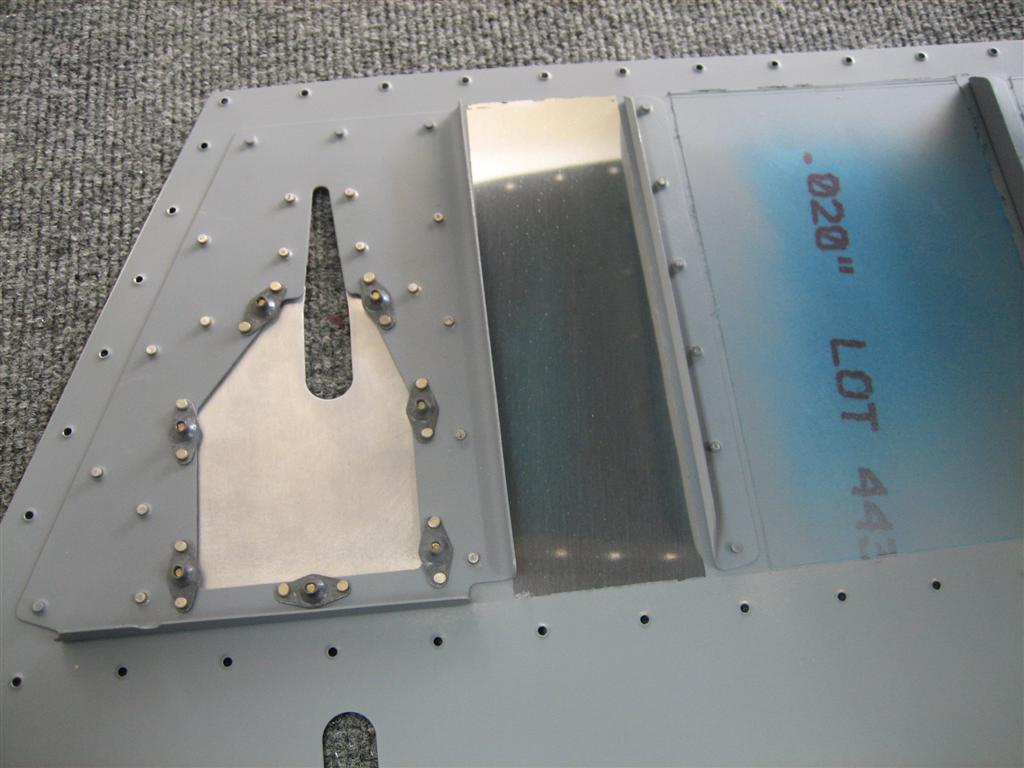
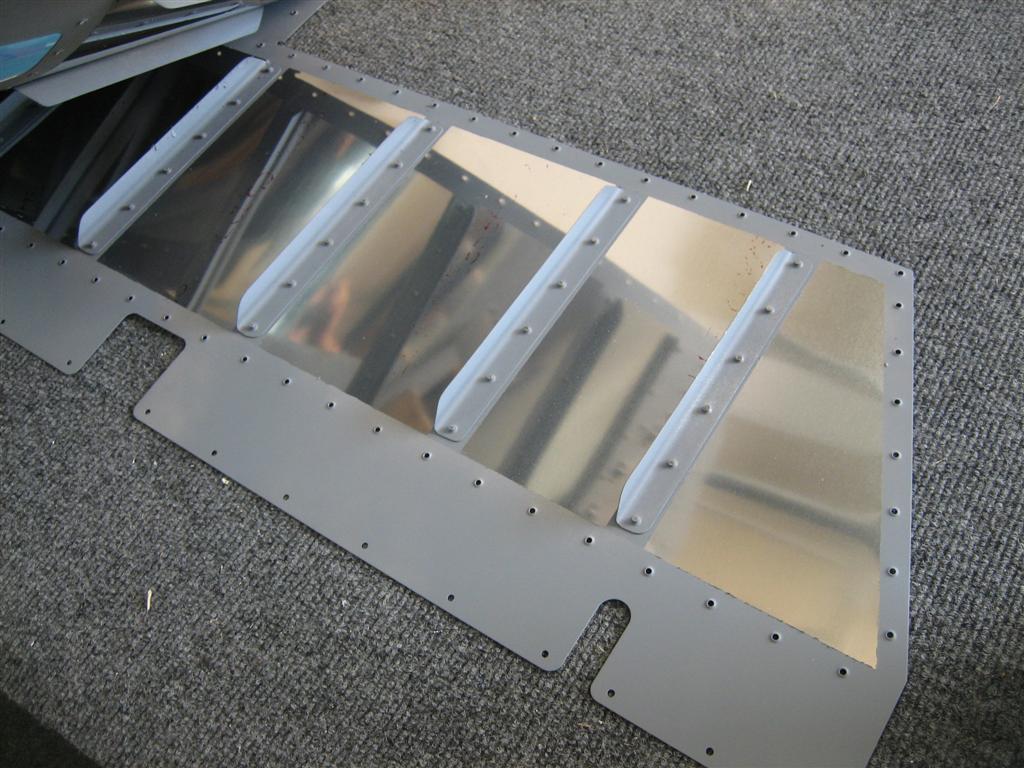
Skeleton, ready to be inserted into the skin.
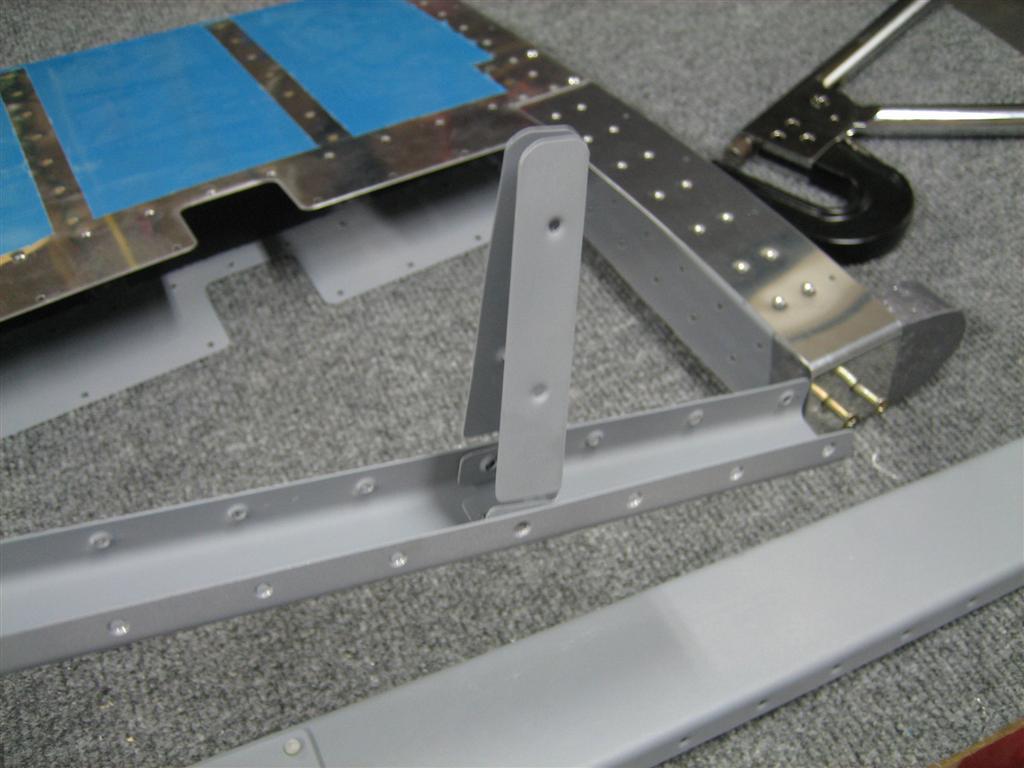
Closer look.

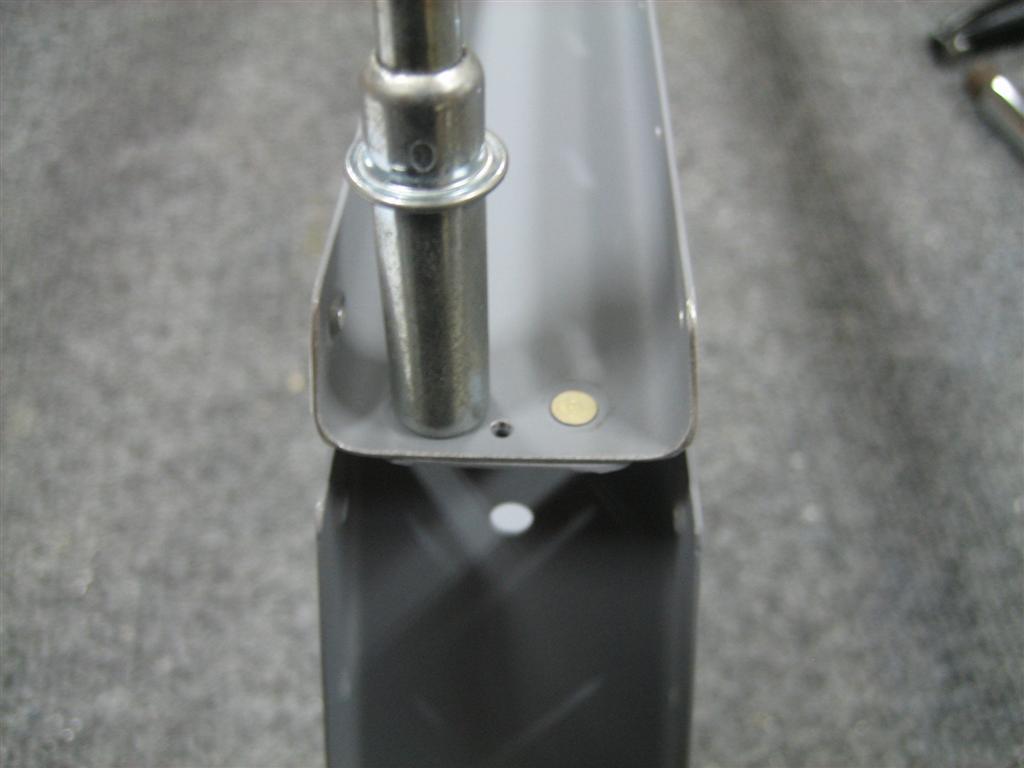
Of course, I then realized that I needed that area open so I could attempt to buck the four rivets outboard of that point. Drilled out that rivet.
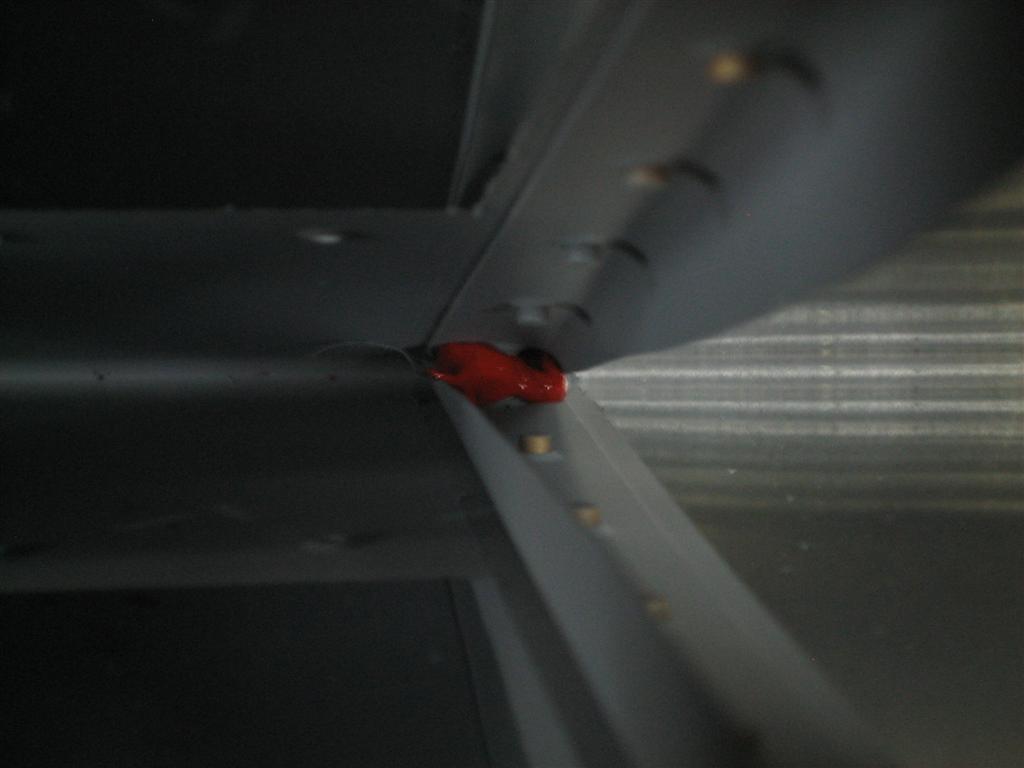
At least I remembered to put some RTV along the back edge of the stiffeners.

After that, I got the skin clecoed on.
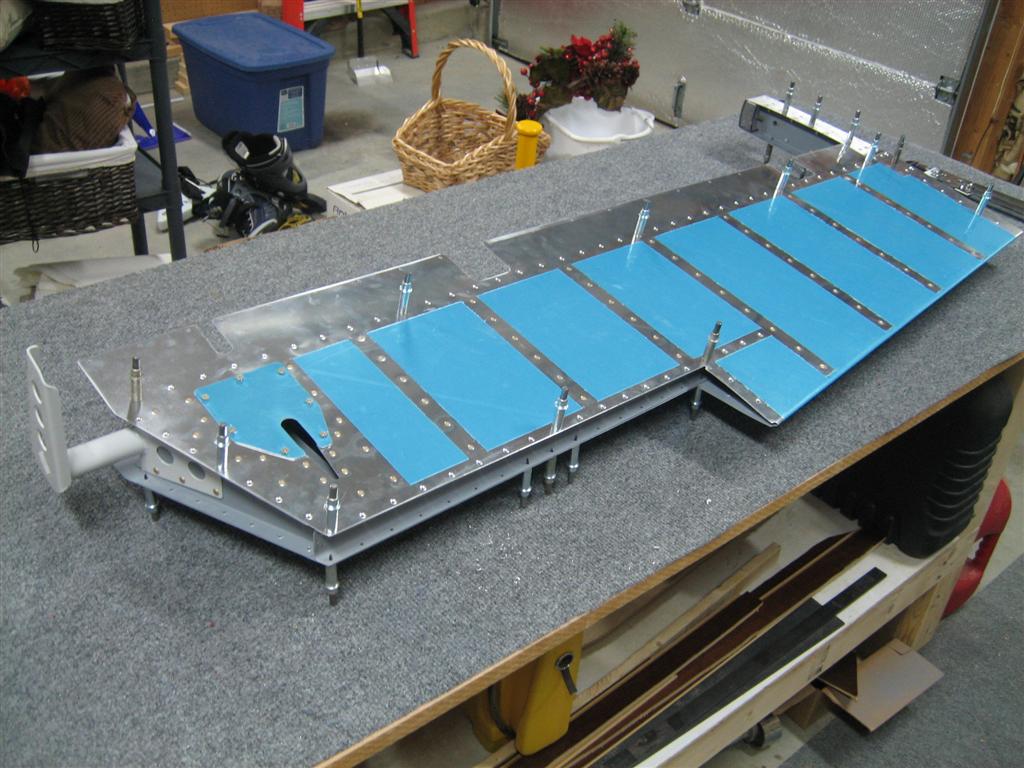
It's looking like something that slight resembles an airplane!
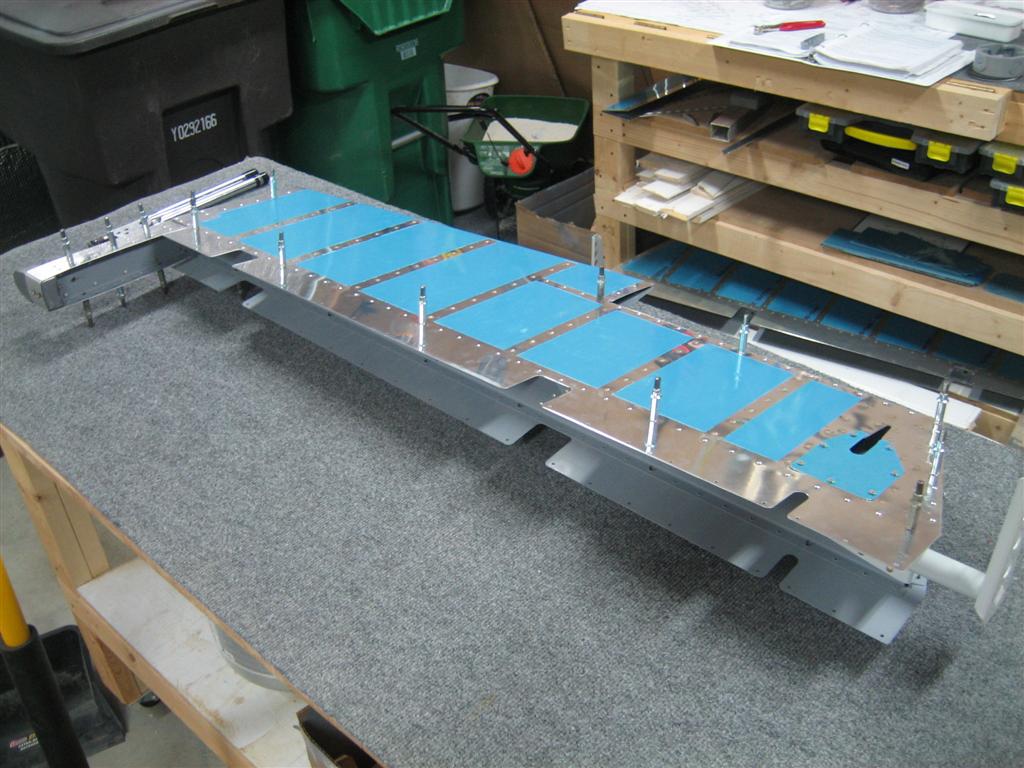
Another angle.

I’m kicking myself for not edge-rolling that one lap joint. I only remembered that I didn’t when I woke up in the middle of the night. My two options are to leave it, or drill out 4 rivets and edge roll. Maybe I’ll rivet the rest of the joint (two more rivets), then decide whether it is bad enough if the edge picks up at all. I don’t think it will, but I’ll start there so if I have to take it apart, it will only be a few rivets.

1 hour. 4 rivets, one drilled out.

Prev | Next


#10 Dimple Die from Avery…and More

July 21, 2010

Prev | Next

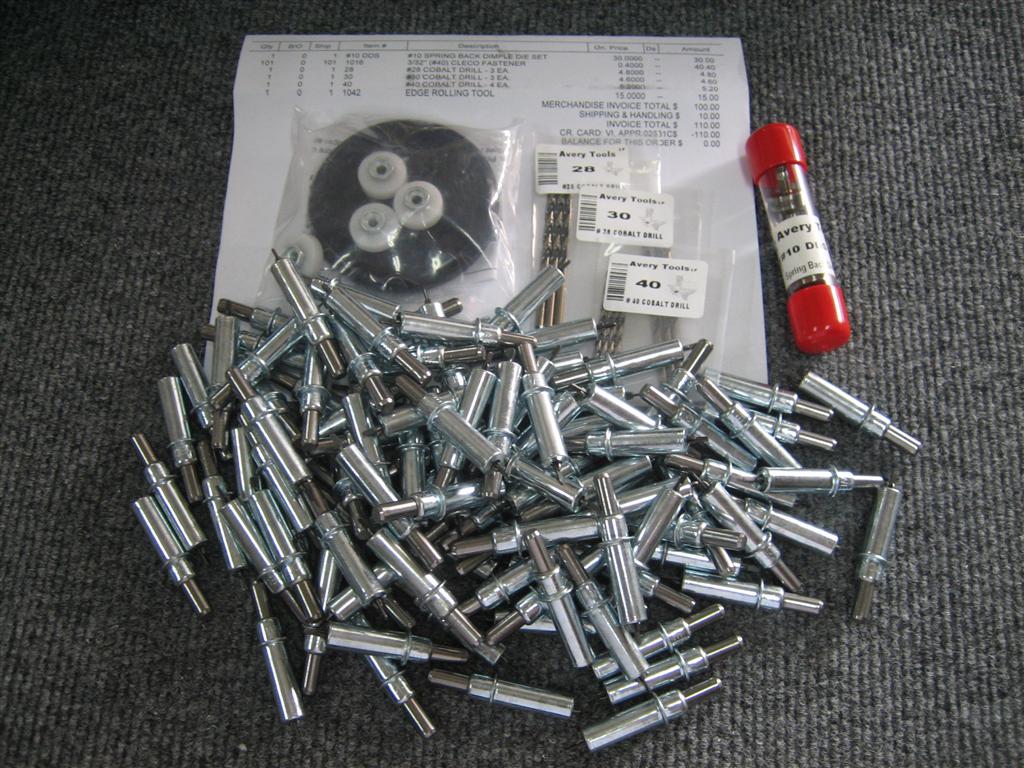
My latest tool order from Avery showed up.

Edge Roller tool, #28, #30, and #40 cobalt drill bits, #10 spring back dimple dies, and 101 clecoes. Why 101 clecoes? Because my total with 100 was $99.60, and they cost $0.40. I wanted to get to $100. Why? BECAUSE AVERY HAS FREE SHIPPING OVER $100.

Oh wait. No they don’t. That’s the Yard Store.

So I go to set the bag of clecos (and the one separate extra cleco that they had to throw in to get to 101) next to the other stuff, and it didn’t look good for the picture. So I grab the bag to flip it over, and guess what? The top wasn’t sealed, so 100 (+1) clecoes fall out onto the table (and my foot, and the floor) and scatter everywhere (roll under the workbenches, etc.)

[sigh]

It was like 52 card pickup, except with clecoes, and there were 101 of them.

But, I got over it, because these are nice new shiny clecoes. If you zoom in, you may be able to see what I paid, for reference.

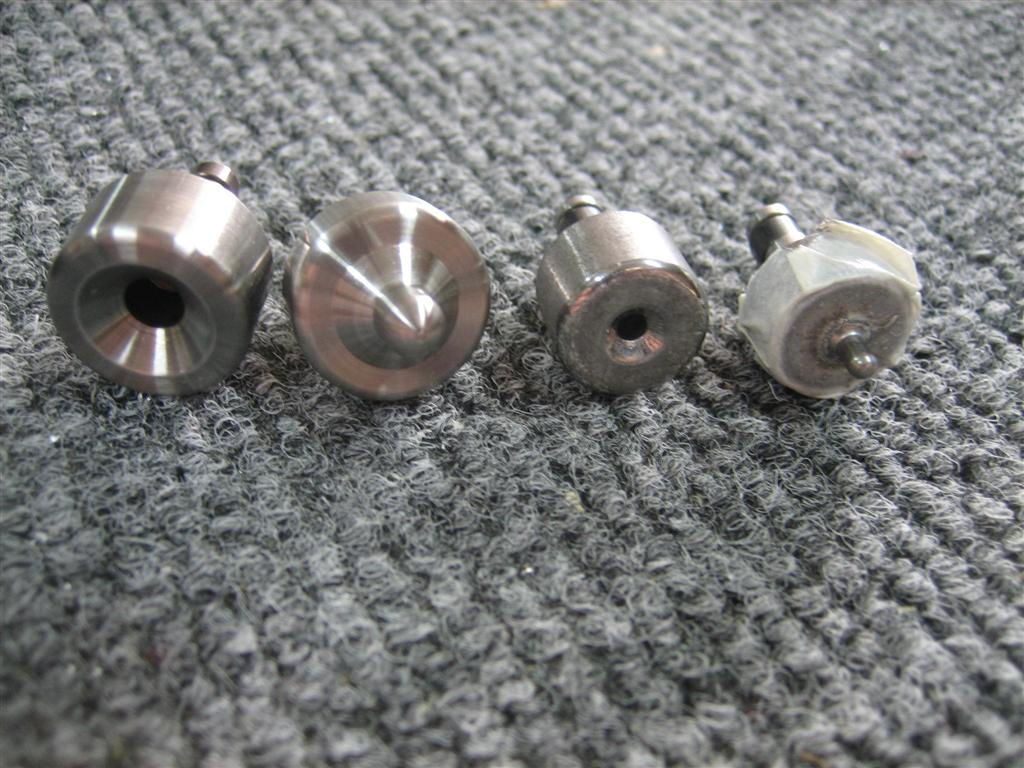
After closer inspection, I pulled out the #10 dimple dies and set them next to the #40 dies, for scale.

#10 dies require a #12 drill bit (it's for a #10 screw). #40 dimple dies require a #40 drill bit.

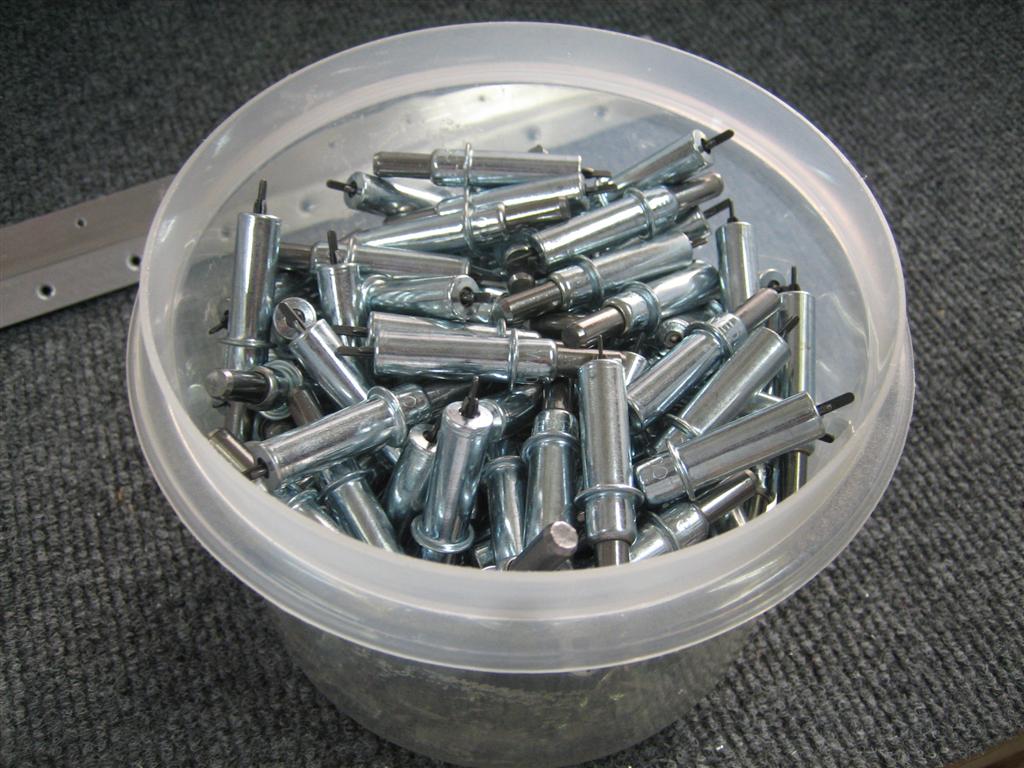
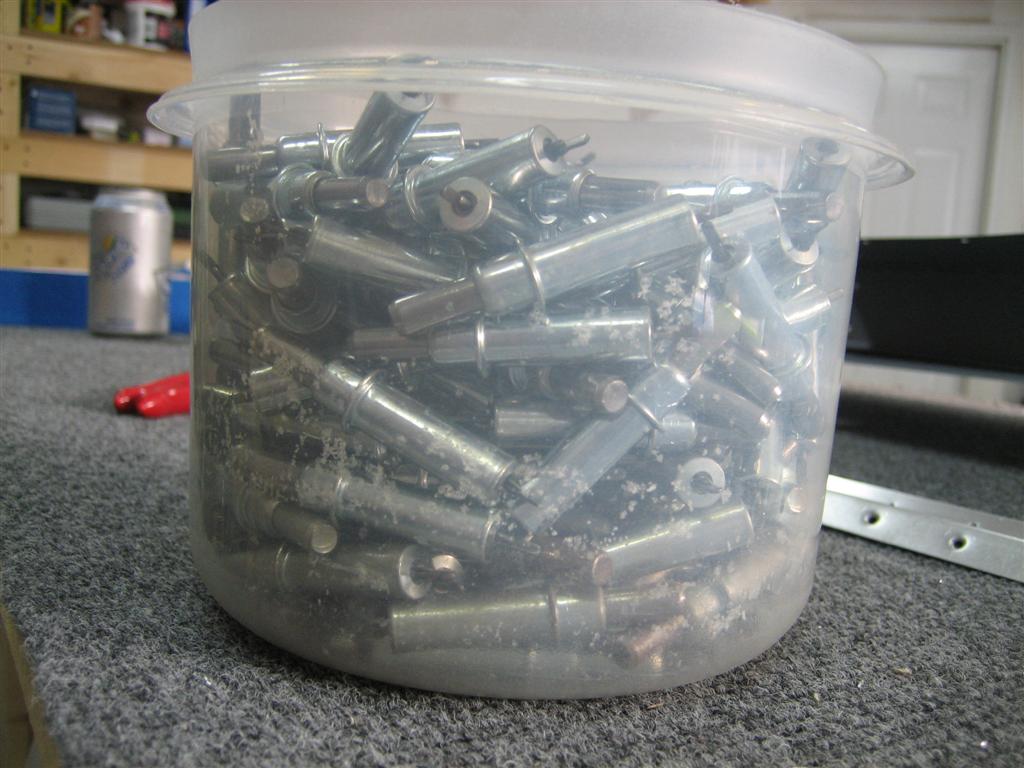
The new clecoes almost fill my patent pending (not) cleco bin.

Shiny!

You can see the stratification of old (bottom) and new (top) clecoes.

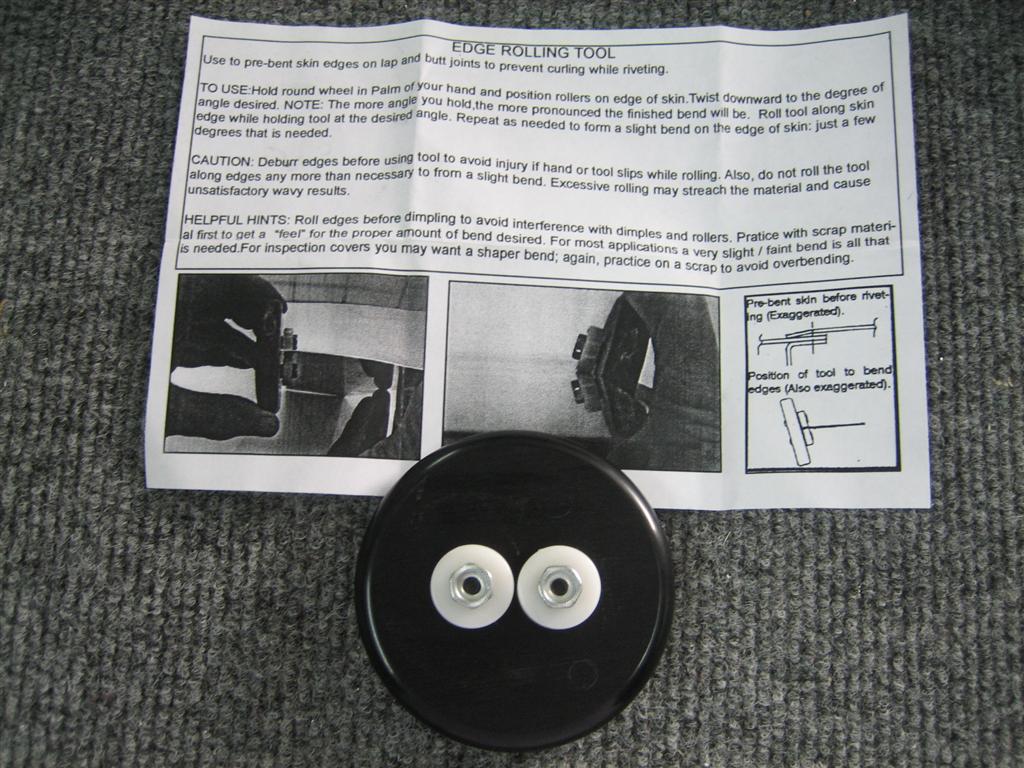
Finally, the edge roller tool.

Nothing really special here, this should make some of my lap joints look a little cleaner.

Prev | Next


More work on the Counterbalance Skin

July 20, 2010

Prev | Next

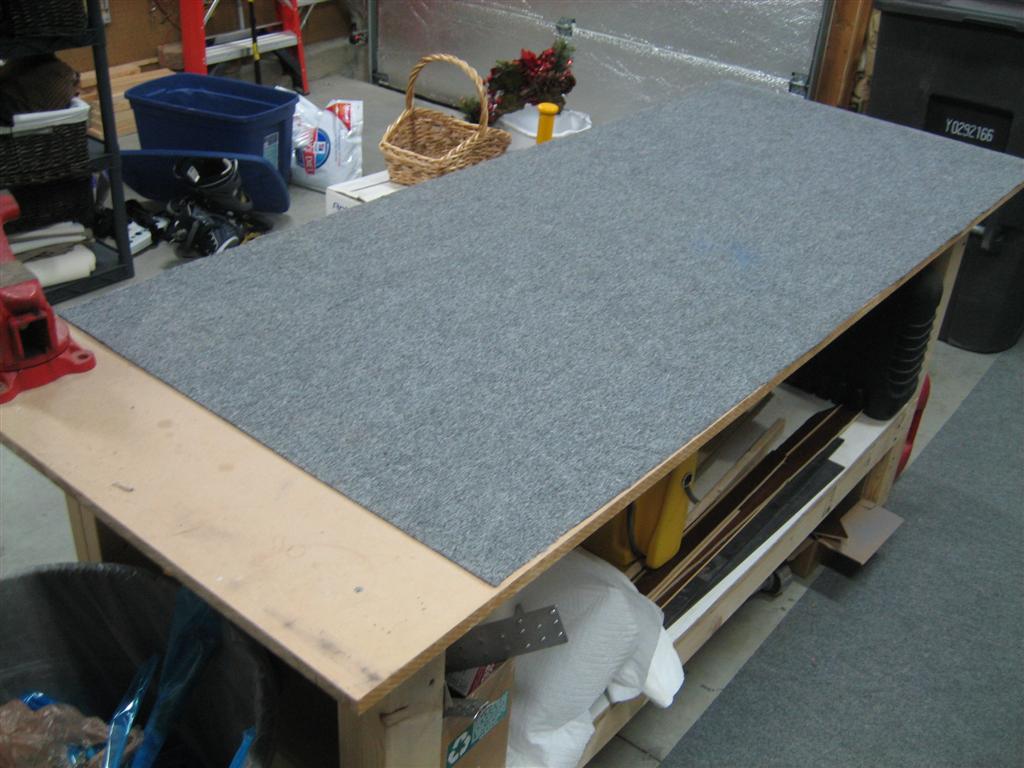
Things have been slow with the airplane recently, right? Well, after a few weeks of letting the garage slowly spiral into a mess of hall closet items (while I’m redoing the floors), saw dust (while I’m redoing the floors), and aluminum dust/shavings (I am working on the plane a little), I decided it was time to get things cleaned up. After an hour of cleaning and organization, I snapped this picture of a nice clean workbench and floor area. Doesn’t really do it justice, but something about a clean workbench makes me happy (notice how I am not showing you a picture of my second workbench!)

(Don't tell the girlfriend I had the vacuum cleaner up on the table going back and forth. It works pretty well, but I accept no blame if you try this at home.)

Okay, finally on to the project. My replacement E-713 came the other day. instead of trying to cleco it on to the already-dimpled skeleton and matchdrill, I am going to trust Vans’ pre-punches and just run a #40 bit through the appropriate holes before deburring and dimpling.

After that was complete, I taped the outside of the skin that I want to protect from primer and scuffed everything up.

Ready to prime...almost. I'm still waiting on a #10 dimple die from Avery. Should be here any day.

Because this part of the exterior side is under the main left elevator skin, I'm going to prime it. Those two smaller holes need to be drilled to #28 before dimpled for #6 screws.

After that, I grabbed my two trim tab horns, and deburred, scuffed, and dimpled the flange holes.

I still need to trim these down per the plans for the electric elevator trim, but I also haven't ordered my electric elevator trim kit yet.

Finally, I disassembled the trim tab to get a little start on that. Here’s the spar, deburred, scuffed, and dimpled on the bottom flange.

The top flange (on the left side of the picture) needs to be countersunk for the upper trim tab skin, because the hinge sits just below the flange, and can't accept a dimpled flange.

2 hours in the shop today, but only 1 hour counts as build time. Hooray clean shop!

Prev | Next


Riveted E-703 and E-704 to E-702

July 18, 2010

Prev | Next

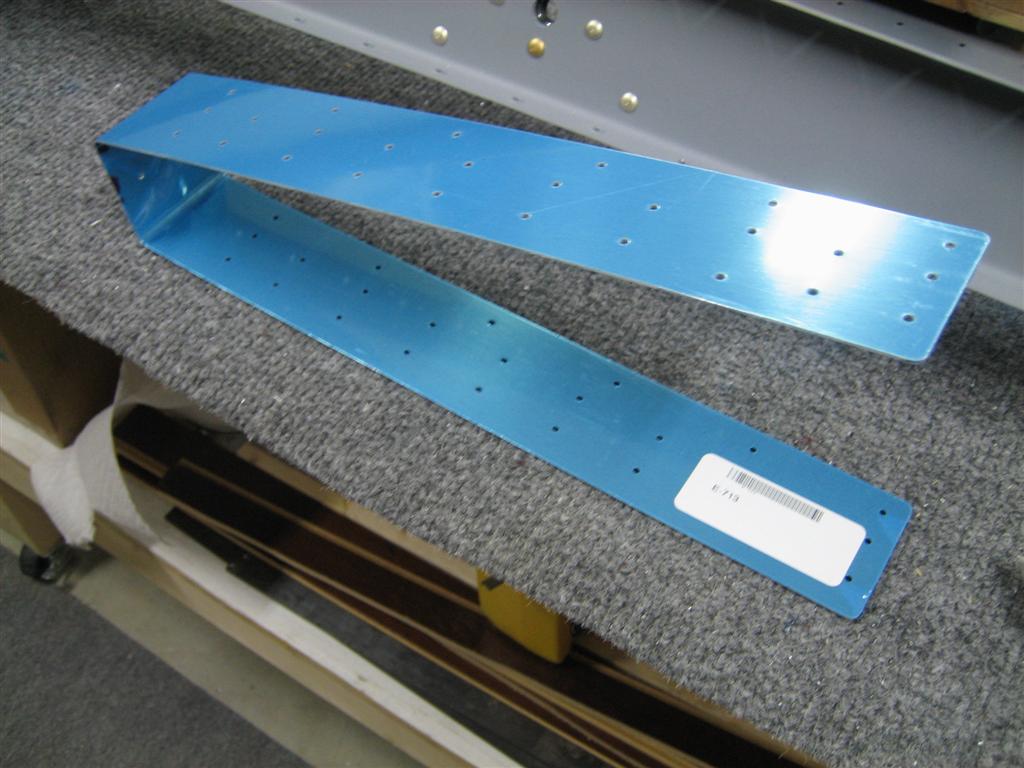
Even though I haven’t been feeling all that well in the last few days, I did sneak out in the garage for 30 minutes. I was mostly motivated by the arrival of my replacement E-713. Here she is, in all her beauty. (Let’s not mess this one up, too, Andrew.)

Ah, a non-mangled part for a change.

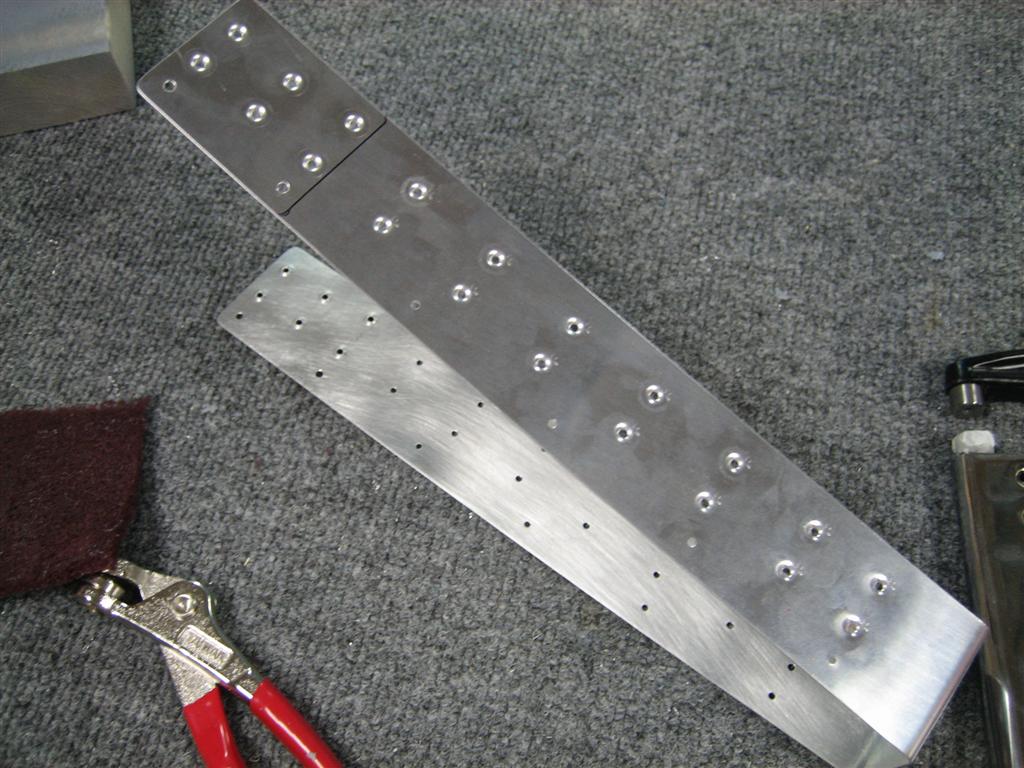
After admiring E-713 for awhile, I moved on to riveting E-704 and E-703 together. Here are 8 lovely shop heads.

Looks good on this side.

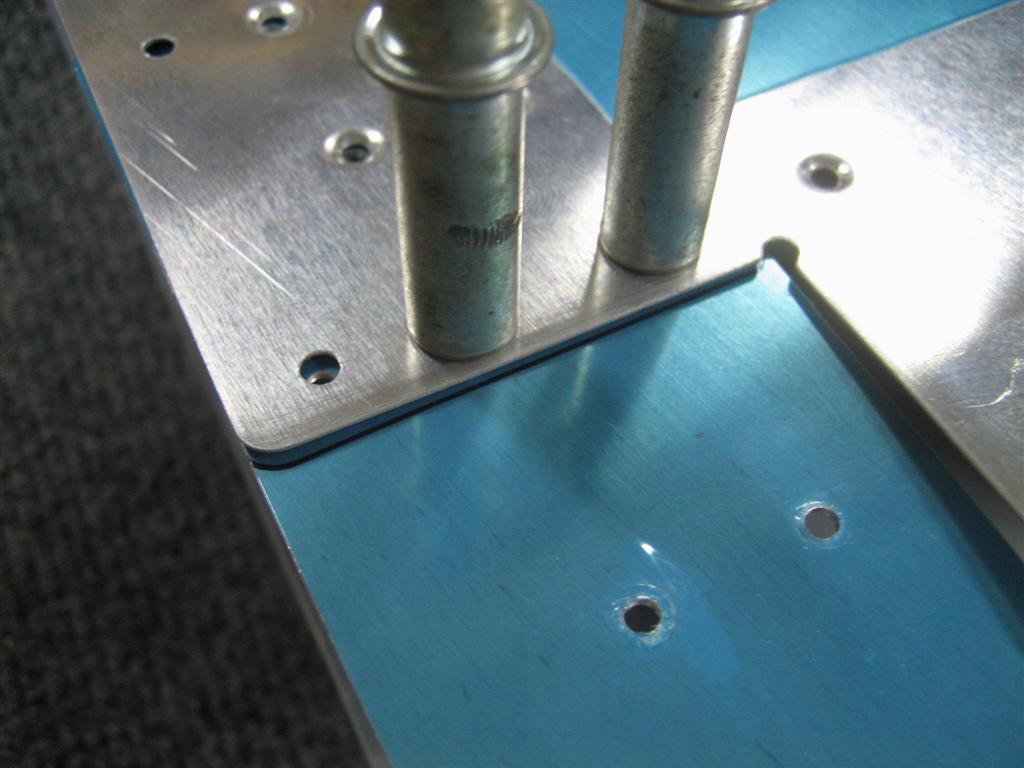
And then I riveted my extra credit one leg nutplate in the tooling hole for further control surface balancing. Because I’ll want to balance the control surfaces pretty well while they are polished, if I ever decide to paint, I’ll have to add weight back in. This will be the best way to do this.

Thinking even further ahead, if I put a screw in here, I'll make it short enough that it falls out before binding. Or, I'll safety wire it. I'll have to think more about that.

And the other side. This was fun to rivet because I had to do both rivets at once.

That was it for today. 14 rivets, one of them had to be drilled out and replaced. Now, I’m just waiting for my latest Avery order so I can finish up the replaced counterbalance skin.

Prev | Next


Left Elevator Counterbalance Skin

July 13, 2010

Prev | Next

A short half hour tonight. First thing was to grab the primed end ribs and get them clecoed to the left elevator spar. No problems there.

Looks good. Ready to rivet (but not tonight).

Next, I need to get the counterbalance skin taken care of (must be riveted to the skin before the skin can be riveted to the skeleton).

You can see I clecoed it in place and drew a line where the two overlap; I'll use this as my primer line.

Then, I realized I’m going to have a hard time deburring, dimpling, and scuffing with the blue vinyl on. [sigh] Off with the vinyl, re-cleco, redraw my line, then back off to deburr, dimple, and scuff.

After dimpling with tank dies where the skin sits under another dimple, and regular #40 dies where it doesn't.

While I had the #6 dimple die out (I’m attaching all fairings with screws for now), I moved over to the elevator skin and dimpled there, too.

Make sure you drill all holes that need to be dimpled with the #6 dies to #28 drill. This is slightly larger than the #30 you are used to.

Again (for the search engines), the correct drill bit size for a #6 screw and #6 dimple die is #28. Ask me what happens when you dimple a hole that isn’t drilled to the right size. (Hint: the same thing that happens when you overdimple using something other than a dimple die because you are too cheap to buy a #10 die…see below…)

Okay, back to the counterbalance skin.

These are dimpled to #8 (I don't have a #10 dimple die). last time, I used a punch set (with a little rounded lip on it) to enlarge the dimples to the equivalent of #10 dimple die.

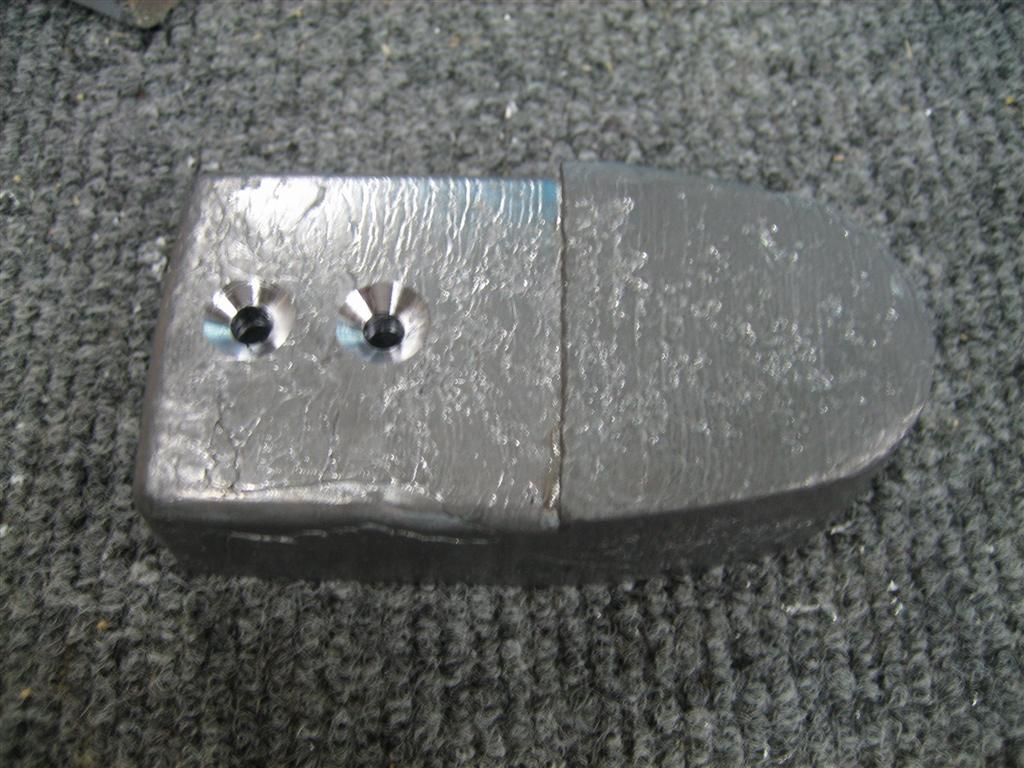
Let’s countersink the counterweight as a female dimple die.

Looks good.

Uh oh. I went a little far with my makeshift die. I stared at this for approximately 0.0000001 seconds before realizing I had to scrap the part.

See the ginormous cracks? Yeah. Not good.

A closeup of the other one. Oops.

So, the reordered part count is up to 2.

I’m not worried, I have some other stuff I can be doing while I wait for a replacement counterbalance skin (E-713, $8.85) from Van’s. Also, I immediately put in my order with Avery for a #10 dimple die (along with some clecos, an edge roller tool, and some more drill bits).

USE THE RIGHT TOOL FOR THE JOB, ANDREW!

Prev | Next


Prepped and Primed Left Elevator Skin

July 11, 2010

Prev | Next

Well, after an exiting morning with the South Carolina Breakfast Club, I was fraught with motivation. (I don’t know if I am using “fraught” correctly…)

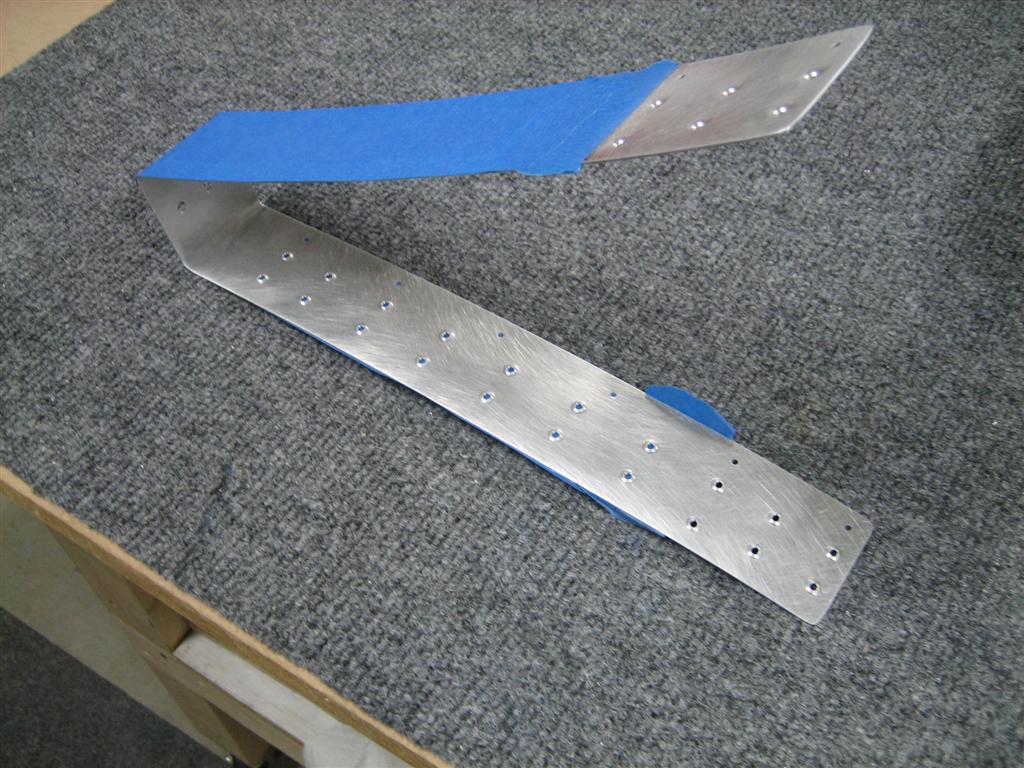
Next thing on my long laundry list of things to do on the left elevator is to prep the skin for riveting to the skeleton. First thing, I got out the soldering iron and pulled off some more of the blue vinyl. While I was at it, I pulled off the blue painter’s tape I had been using to protect the back-riveted stiffener rivet lines.

All that shiny aluminum really makes me happy.

Then, on to deburring. I deburred both exterior sides of the skins, and then moved on to deburring the interior of the skins. I follow very closely with my maroon scotchbrite pad to help me remember where I have deburred (you can easily tell the difference between a deburred hole and one that has yet to be deburred…I am more using the scotchbrite pad as an excuse to give my fingers a rest…it is hard spinning that drill bit over and over and over).

The background holes are #40 (3/32") and the foreground holes are #30 (1/8"). I drilled these holes to #30 now because I don't want to wait until after the skin bending (at which point I won't be able to deburr them). Also, having the holes to final size will help with the annoying pop rivets that go in them.

Next up, dimpling the skin-to-skeleton holes. I scuff the interior of the skins before dimpling, because it is easier to scuff without dimples getting in the way.

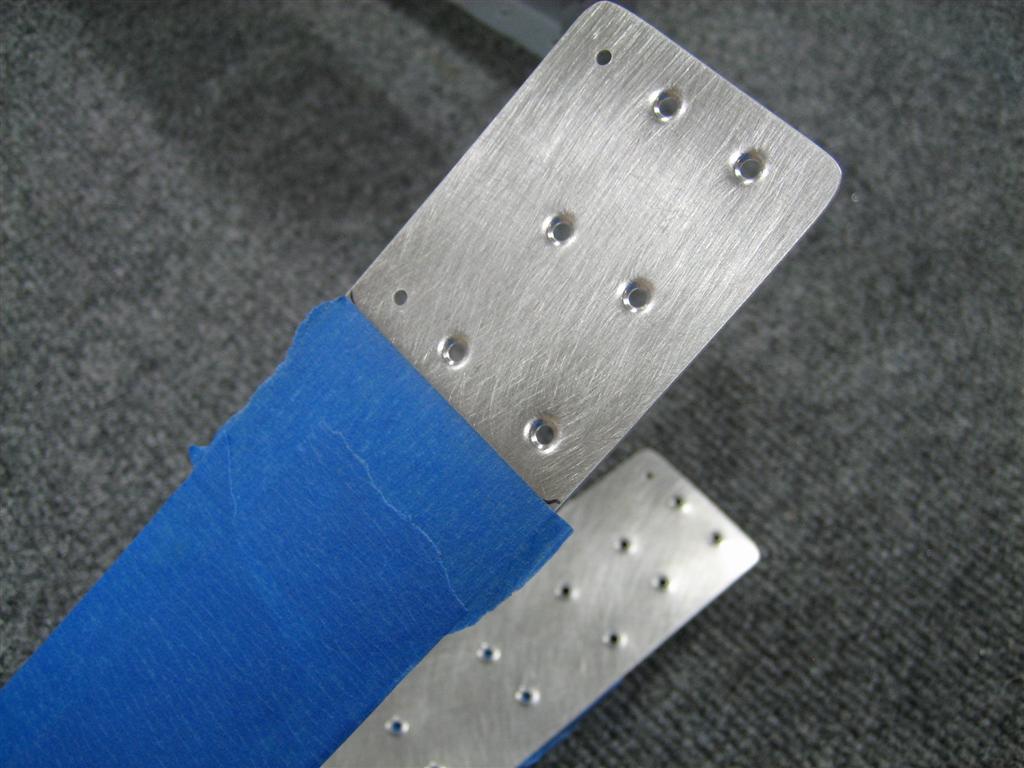
I use my masking tape trick on the male dimple die, and I get ZERO circles around the dimples. So nice.

All holes dimpled.

Time to move on to edge-finishing. This little 90° corner is a tough one, but I think this ended up nice.

Edge-finishing.

After edge-finishing, I cleaned up, wiped everything down with MEK, and primed. Fast forward 30 minutes later, and now I get to pull the vinyl out of the skins (I’m trying to remind myself constantly to not forget the RTV in the trailing edge of the elevator bend before riveting.)

I probably add some time to the project by masking all of this stuff off and priming just the contacting surfaces, but I think it looks great (no one will ever see it) and I think I'm saving weight. Maybe not, but I sleep better because I do this.

It looks so good. I love this part of a subassembly, I'm getting close to riveting!

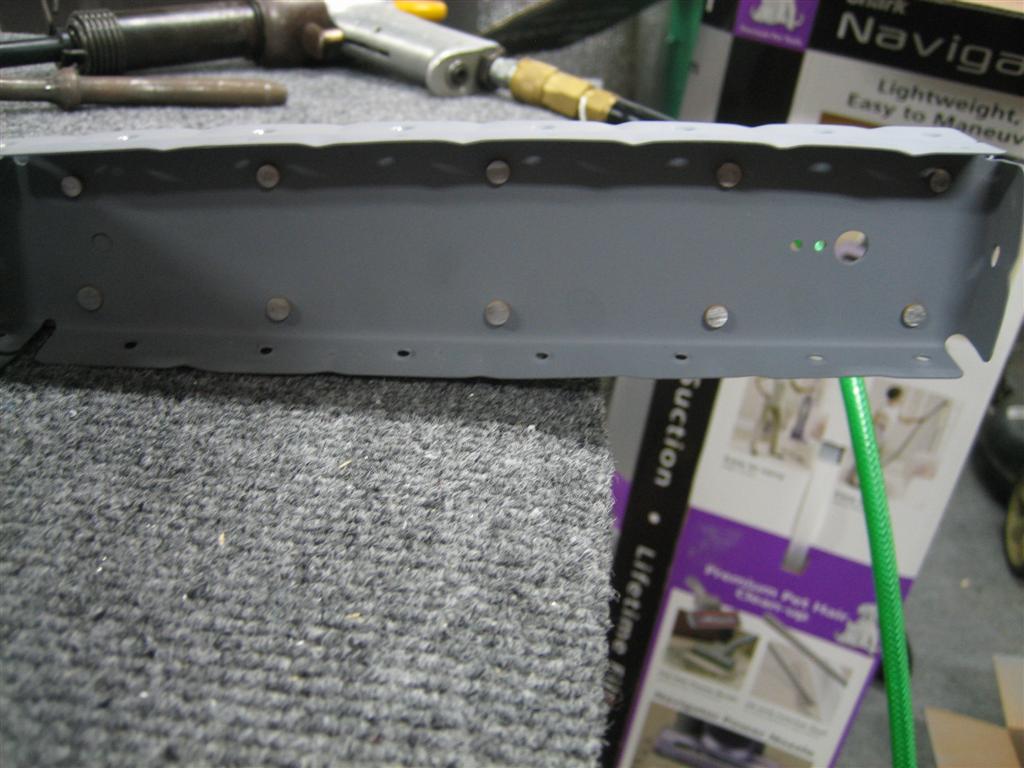
Last, but not least for the day was to prep and prime the two outboard ribs. These fit back to back and support the counterbalance and counterbalance skin.

On the priming table after getting a light coat of self-etching primer.

3.5 hours today on the project, but I’m only logging 3.0 here. See here for the other 30 minutes.

Prev | Next


Genuine Aeronautical Control Surface Interface Insertion and Adjustment Tool

July 11, 2010

Prev | Next

Well, I keep forgetting to make the rod-end bearing tool outlined on Sam Buchanan’s site (http://home.hiwaay.net/~sbuc/journal/odd-ends.html).

Anyway, I was standing in the aviation department at Lowe’s, and I turned around and there were the 1/2″ PVC sections.

All you’ll need is a “T” fitting, a coupling, and a length of 1/2″ PVC. They usually sell the pipe in 10′ sections, but if you dig through the pile, you can usually find a scrap piece that they’ll give you a discount on. I ended up finding a 6′ piece, but half was damaged beyond use. They marked it down from $1.53 to $0.51.

THAT’S AVGAS MONEY RIGHT THERE! WUHOOOO!

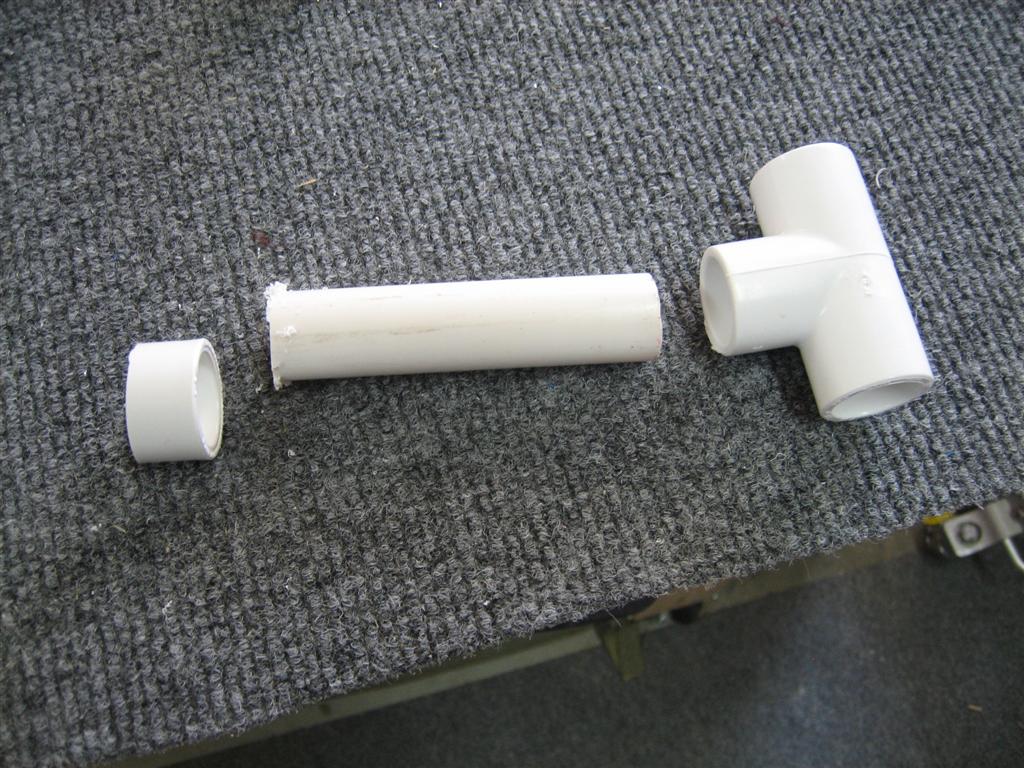
Anyway, I just eyeballed the pipe length and used an old hacksaw. It took about 10 strokes to cut through. (Sometimes it’s nice to be working with something that isn’t difficult to cut.)

Where's that yummy smelling PVC cement?

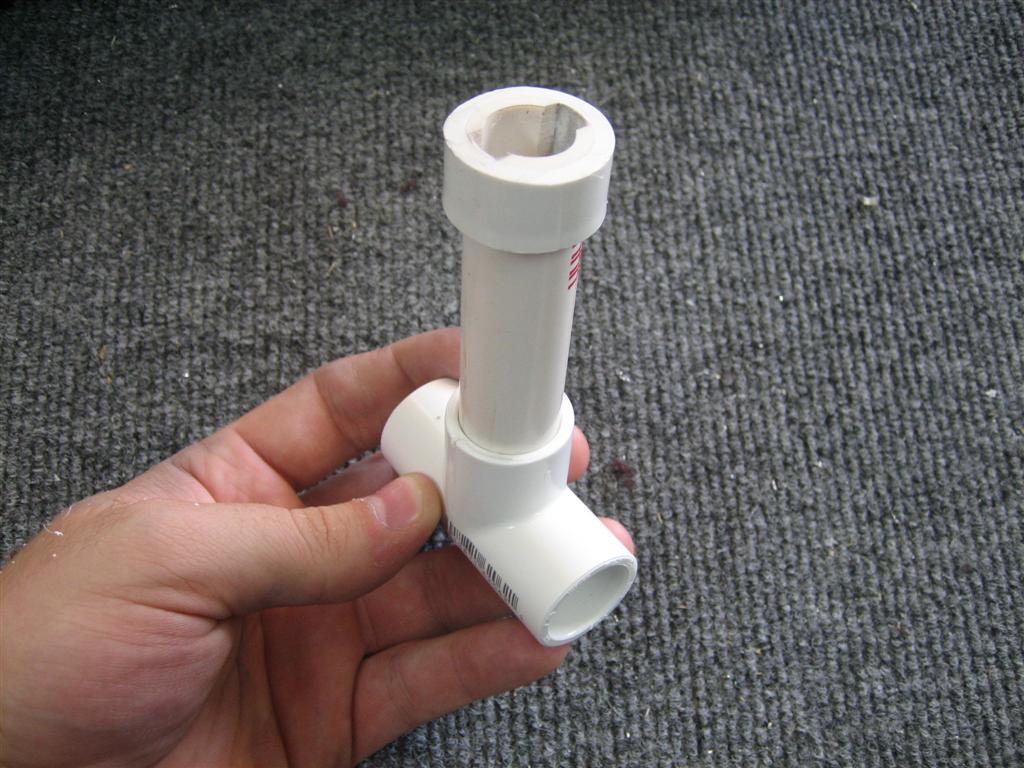
After cementing the T onto the straight piece. I used a hacksaw on the end of the pip and cut two slots (just wider than a rod-end bearing).

I had to use pliers to break these pieces off.

Then, I cemented the coupling on. I had to cut the coupling in half, because the coupling has two halves with a lip in the center.

It would be bad if this was the finished product.

After letting the cement cure, I took the end to my grinder, then scotchbrite wheel.

Looks good.

Nice and smooooooooth.

Let’s see if it works.

Wuhoo.

Although now that I am thinking about it, there may be a bigger size bearing I didn’t think about. Hmm.

DAMNNIT! While I wanted it to be long (to clear the bends in the front of the control surfaces), I made this 1/2" too long. I should have thought about where I was going to store this before making it.

No biggie, though. Since the coupling side is the harder side to make, I might just cut the T off, and cement a new T on.

30 minutes of Misc empennage work.

Prev | Next


SCBC in Salisbury, NC

July 11, 2010

Prev | Next

I woke up early this morning and headed down, via car :-( , to the South Carolina Breakfast Club (SCBC) in Salisbury, NC.

I took a whole bunch of pictures. No commentary yet. Maybe later.

These things are good motivation for me. I gotta get home and work on the airplane!

Prev | Next


Riveted Elevator Horn and Trim Tab Spar

July 7, 2010

Prev | Next

I don’t really love working in short bursts like this, but I do what I have to. Let’s do the elevator horn tonight.

I first clecoed every other hole. The left elevator horn was actually easier to cleco on than the right. I can't figure out why.

Anyway, a few loud noises later, and I had the first six done for the day.
Nice shop heads.

And again, a few minutes after that….

Six more, for a total of 12 so far.

Then, I convince the girlfriend to come outside and try her hand at squeezing.

Looks great.

She did great, but one of the rivets split diagonally as it was squeezed. It wasn't her fault, but I'll have to replace it tomorrow.

14 rivets. 0.5 hours.

Prev | Next


Riveted E-705 to Left Elevator Spar

July 6, 2010

Prev | Next

Well, I thought I would head out to the garage tonight to rivet 4 little rivets. I had the parts primed from the other night, and I just wanted to get something done on the plane tonight. I grabbed the elevator spar and admired how nice the countersinks looked.
Looks like I didn't get total coverage there on the spar, but that's okay, a light coat is all you really need.

Here are the AN426AD3-3.5 rivets that will go in those four holes.

Here's the first one set. Pretty nice, if you ask me.

I got the other outboard rivet set, then moved to the two middle rivets. Then, tragedy struck, and my flush squeeze set slid off part of the rivet as I squeezed. Boo.

"Well, this will be easy to drill out and replace." -famous last words.

My drilling wasn't perfect, but I didn't booger up the hole too badly...yet.

After resetting, I thought all was well, until I turned the part over.

That's not really flush, is it.

After 6…yes…SIX times of setting and drilling out a mis-set rivet, I finally gave up, drilled the hole to #30, cleaned up the countersink, dabbed some primer in the hole, and used an oops rivet.

OOPS! (Looks okay, though. And you will never see this.)

I can’t believe I had to drill out six rivets when trying to rivet four little AD3-3.5 rivets. Bummer. That’s not going to help my batting average…[calculator sounds]…yup…went from 5.7% drilled out to 6.0% drilled.

A frustrating half an hour tonight.

Prev | Next