Rolling My Own Wig-Wag Circuit

October 11, 2010


Prev
| Next

Over the last couple months, I’ve been eyeing various landing and taxi light setups, trying to figure out what I want to do for my airplane.

I’m not super keen on the leading edge landing/taxi light setup right now, so I want to focus on putting all the lights in the wingtips.

There is a Van’s wingtip landing light kit that puts two MR16 sized bulbs in each wingtip. Supposedly, you can aim one set forward for landing (also recognition) lights, and aim the other set down for taxi.

I’ve read on the forums that people haven’t been too thrilled with this setup using the standard 35W and 50W halogens that van’s provides. Something about not getting enough light on the centerline of the aircraft, where you need it for landing.

I have also read, however, that with the MR16 HID upgrades from somewhere like www.planelights.com or duckworksav.com, there is plenty of light to go around.

Sweet. I’ll go with those. (This is the same as Mike Bullock’s setup, except instead of both sets being 50W, I’ll probably use one set of 50W HIDs for landing, and use a 35W (pronounced “less expensive”) for taxi lights.

But then we come to wig-wag. I think wig-wag (pulsing lights) for the landing lights is a requirement safety wise, so I am planning on incorporating a wig-wag circuit into my landing lights.

I could just wire them in parallel, so you turn the landing lights on, and either wig-wag them or not depending on wig-wag switch position, but because these are going to be HID bulbs, one needs to warm the bulbs up before pulsing. (I’ve read that 25 seconds was used previously on HID flashing circuits, so I’m going to use 30 seconds for now, but I may bump that up based on a crude bulb temperature test I may set up in the future.)

Procedurally, I could just wait 30 seconds after turning the landing lights on before turning on the other switch, pulsing them, but who can remember that 100% of the time? 30 seconds is just about the time it takes between turning the lights on for takeoff and liftoff. This is not the right time to be reaching down for another switch.

I’d rather flip both switches ON, and have them automatically warm up before starting to pulse.

Enter xevision. They have a multiple-hundred-dollar HID flasher box that will work great for this application.

Except I’m an engineer, and I love a good problem to solve, and I don’t have hundreds of dollars laying around.

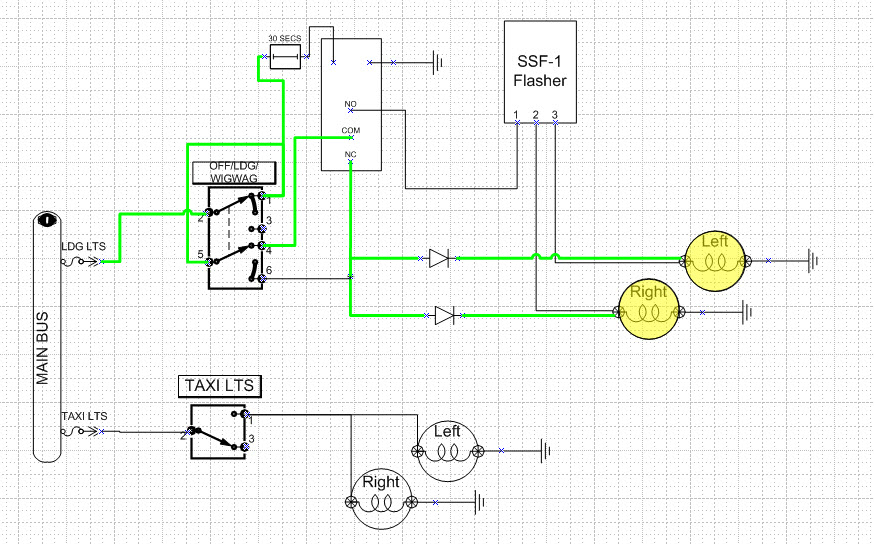
Enter Microsoft Visio and B&C. Using Bob N’s Low Cost Wing Wag Alternative document (page 2.0) as a starting point, I drew up a concept for a  landing and wig-wag circuit with a delay timer (haven’t figured out the timer circuit yet, but it’s a relay trigger, so I’m going to simulate it with a switch for now).

Keep in mind, I could combine the functions into a 2-10 switch (similar to page 3.0 of the wig-wag document), but then I couldn’t use the switch-breaker I’m planning to use in place of the regular switch I have depicted. Maybe this circuit is a good candidate for an inline fuse…I’ll sort that out later.

Anyway, here’s the circuit for now (since I am a wiring novice, I’ll have to figure out how to connect 5 wires to one switch terminal later…I know you can’t just bolt them all on there.)

SEPARATE SWITCHES (see below for single switch diagrams)

Oh, and I’ve shown the HID lights here as just normal lights. You get the idea, though.

UPDATE: After testing, I realized I need diodes in here on the flasher side of the 2-3 switch near the NC part of the relay to isolate the two lights. I’ll try to draw them in.


Both switches OFF.


Okay, for the first iteration (see next picture), I’ve turned on the LDG LT switch. +12VDC is now available through the switch, and is going to the following places: 1) to the timer circuit, starting the 30s timer (mechanism TBD), 2) The COM terminal on the SPDT Relay (and therefore through the NC terminal to both of the WIGWIG ON terminals of that switch), and 3) to both of the WIGWIG OFF terminals of that switch.

Summary, the 30s timer as started, and both landing lights are on steady.
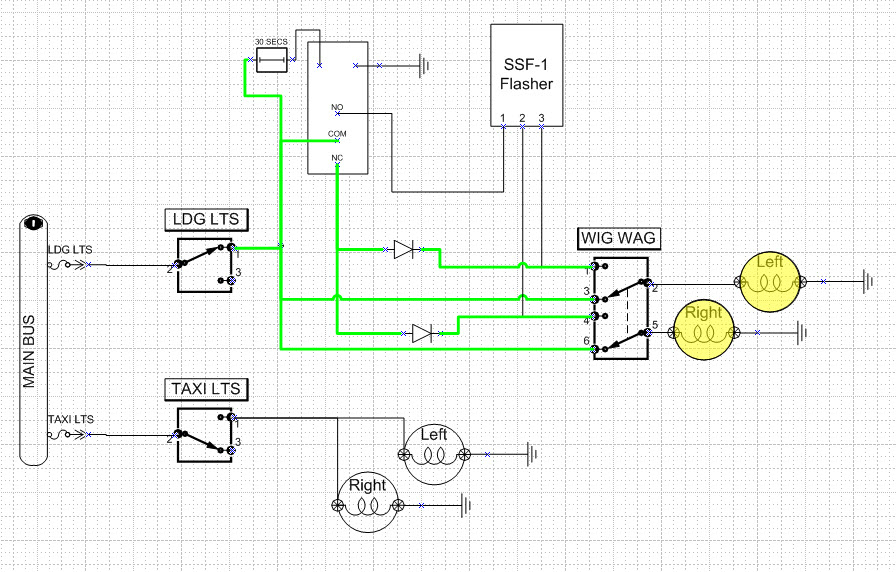
 

LDG ON for less than 30 secs, WW OFF.


At this point, if we turn the WIGWAG switch ON (see next picture), the landing lights are still getting power, but through the NC terminals of the relay, so they are both still on steady. This is good, because we don’t want them to pulse before the 30s of warm up time as elapsed.


LDG ON>30s, WW ON.


Okay, let’s turn the WIGWAG switch back off, and let the 30 seconds elapse. Now. +12VDC is now available through the switch, and is going to the following places: 1) to the timer circuit, which has now closed the relay, 2) The COM terminal on the SPDT Relay (and therefore through the NO terminal to the SSF flasher, and then to both of the WIGWIG ON terminals of that switch), and 3) to both of the WIGWIG OFF terminals of that switch.

Summary, the 30s timer has elapsed, but since the WIGWAG switch is off, we are still getting steady lights.


LDG ON for greater than 30 seconds, WW OFF.


Finally, we move the WIGWAG switch to ON, and the lights are being powered through the LDG LT switch, the trigger relay, which closes the SPDT relay, the SSF flasher, and the WIGWAG switches ON terminals.

Summary. Pulsing lights.


LDG ON>30s, WW ON.


Basically, the timer won’t let power go through the flasher until 30s after the landing lights are turned on.

The trick now will be to figure out whether I want them on one ON-ON-ON switch. (Switch positions would be OFF-LDG ONLY-WIG WAG.)

Here’s the logic table.

LDG/WINGWAG Logic Table
Time LDG LT Switch WIG WAG Switch Result
Any OFF OFF OFF
Any OFF ON OFF
<30s after
LDG->ON
ON OFF STEADY
<30s after
LDG->ON
ON ON STEADY
>30s after
LDG->ON
ON OFF STEADY
>30s after
LDG->ON
ON ON PULSE


SINGLE SWITCH

Of course, I was motivated enough to figure it out.

I think this will work.


OFF
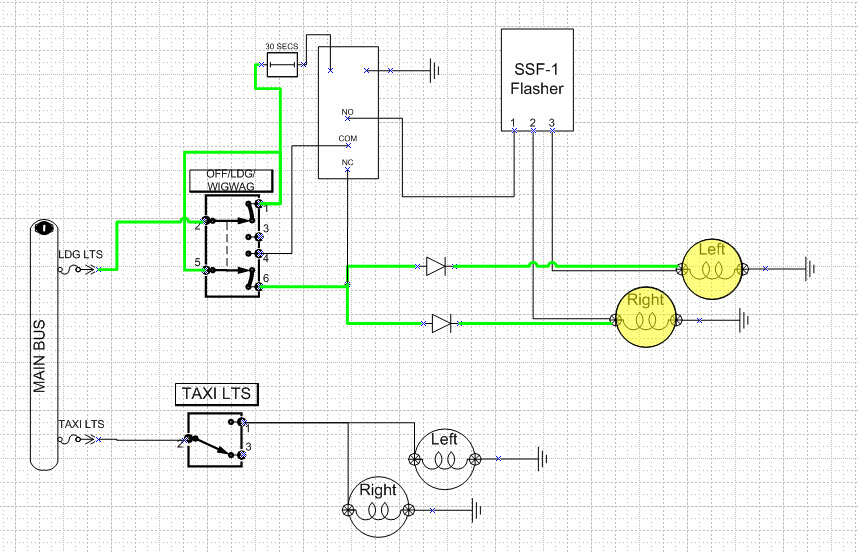


LDG Only (Before 30s...if this was after 30 seconds, the timer would close the relay, but since it is unpowered, it wouldn't matter.)


Wig Wag on, but before the 30 seconds had elapsed. Still steady lights.


Then, after the 30 seconds, we have flashing.


Now, I figure I’m missing some diodes or something somewhere. Anyone have any suggestions?


Prev
| Next


10 Rivets on the Left Elevator

October 10, 2010

Prev | Next

Well, I was outside working on the floors, trim, and shoe molding for the house today, and I had the urge to set some rivets. I got out the left elevator, and located a few candidates.

I had left a few of the trailing edge area rivets unsqueezed on the left elevator, because I didn’t have any way to reach them. now that I have my no-hole yoke, I could squeeze them.

No pictures, but they went in okay.

I moved on to the trim tab, where I squeezed two more on the inboard side, and then decided to try the last 4 rivets of the empennage…the trim tab outboard riblet I made.

3 of them went in no problem. The 4th? Nope. Drilled out twice, screwed up the hole, drilled to #30, used an oops rivet, still messed it up, drilled again, finally set, but it’s pretty ugly. I know it’s not structural, but that in combination with a couple other things means I’m probably going to join the “multiple trim tab” club.

[sigh].

But, the good news? Napa is having a sale on their MS7220 Self-Etching Primer.

[after walking into local Napa store]

Me: Good morning. I am looking for a can of 7220 Self-etching Primer. I usually use about a can per month, but I’ll buy a case if you can give me a volume discount.

Napa lady: No.

[awkward pause]

Lady: But I’ll sell you however many you want at the super sale price of $5 a can.

Me: Whoa! sweet! What’s the deal? Is Napa discontinuing this stuff?

Lady: Nope, they just choose to discount stuff every once in awhile.

[bought two cases]

Anyway. 10 rivets set, 3 drilled out. (This is not helping my average.) Half hour.

Prev | Next


Devinyled Two More Wing Skins

October 6, 2010

Prev | Next

Well, I manage to put in another “inside” night tonight on the airplane.

I’m not sure why I took this picture. I think I was waiting for the soldering iron to heat up.

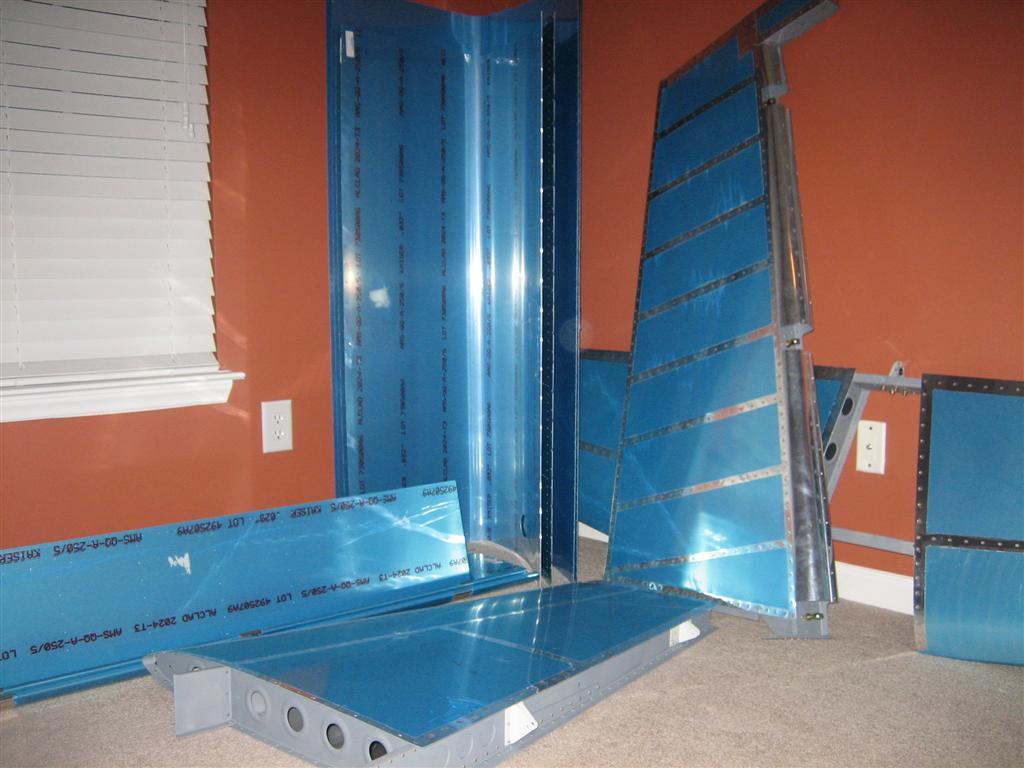
Some of the airplane parts in the corner. I need to get back to drilling out the rudder skins one of these days.

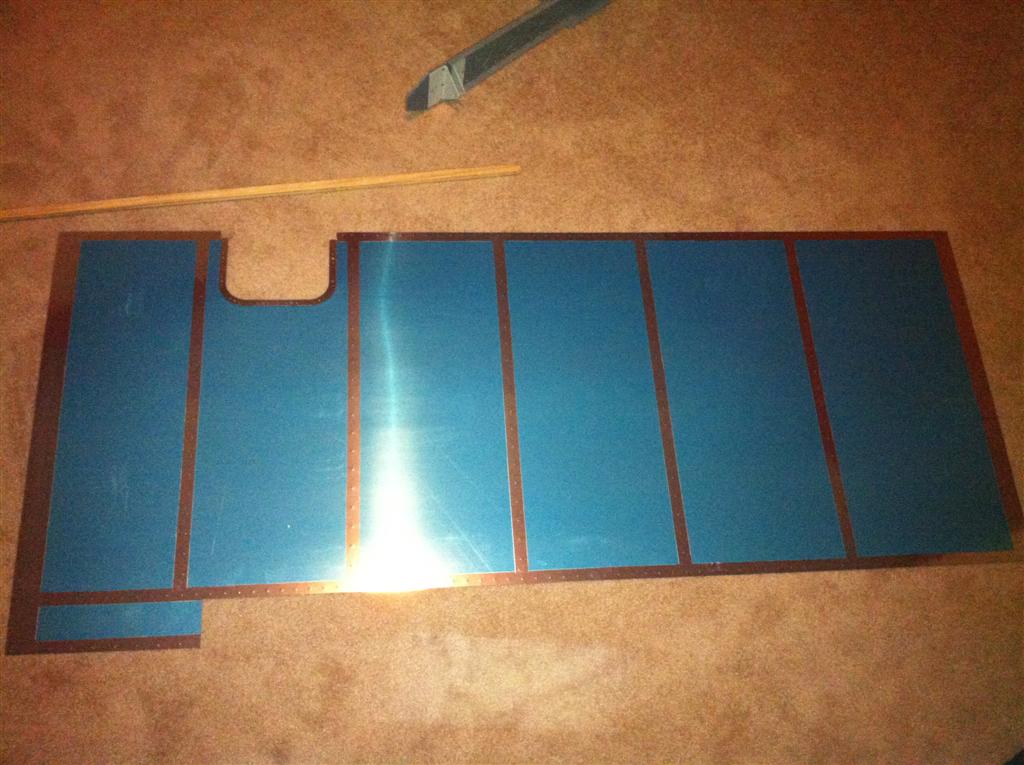
Anyway, I finished up the right lower outboard wing skin, and then moved on to one of the upper outboard wing skins (they are identical, so it isn’t a left or right).

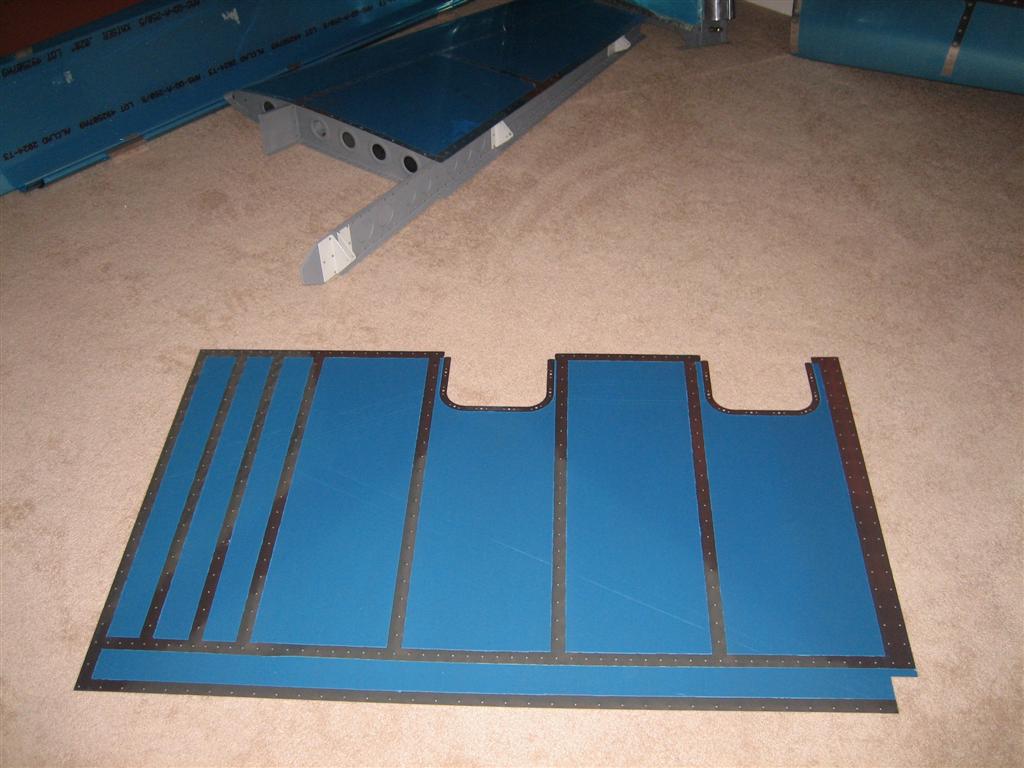
Here's the right lower outboard wing skin before devinyling.

And after.

I totally forgot to take any pictures of the upper outboard wing skin I got done.

One hour tonight (30 minutes per skin). One more short session, and all my skins should be devinlyed.

Prev | Next


Devinyled Left Lower Outboard Wing Skin

October 4, 2010

Prev | Next

Not much work tonight, but I did manage to escape to the workout room (after a workout!) and devinyl the left lower outboard wing skin. I can’t think of anything funny or insightful to say about it.

Sorry.


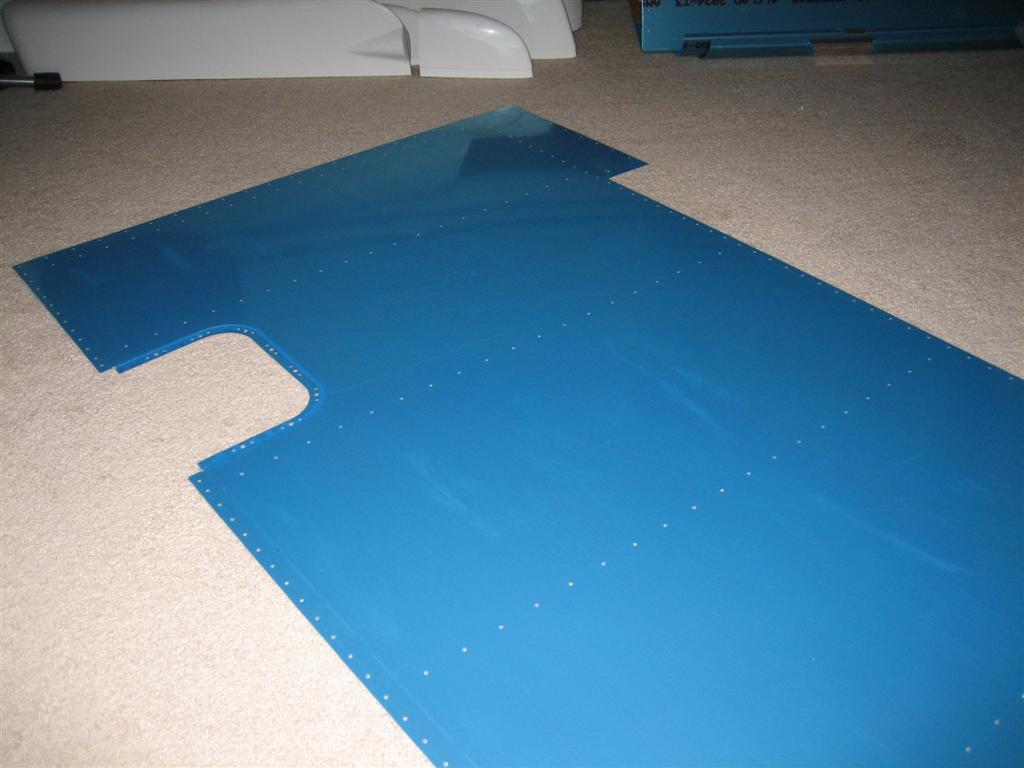
Upper (towards the wing skeleton) side.


Lower (towards the bottom of the wing) side.


Half an hour of vinyl-removing fun.

Prev | Next


Drilled Wiring and Conduit Holes in Ribs

October 3, 2010

Prev | Next

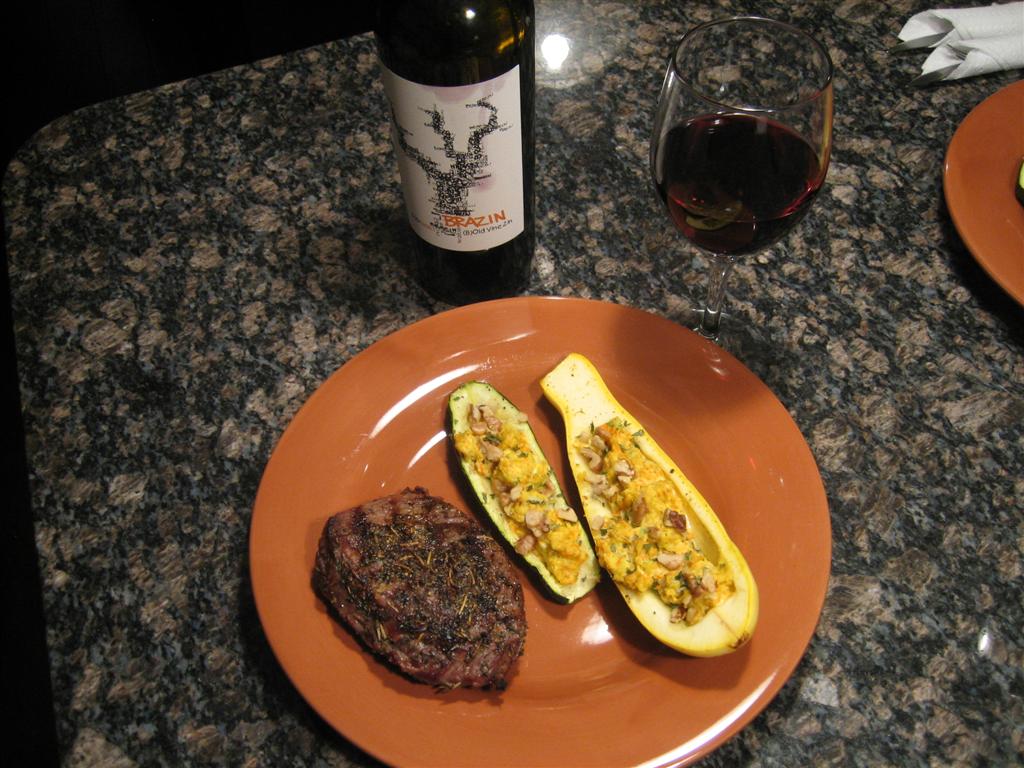
Alright, a little off-topic, but I have to talk about food for a minute. Friday night, I got home from a very hard day at the office, and my wonderful girlfriend announced we are having steak (see? I told you she was wonderful). I also nailed the cooking times on the grill.

Also, that is stuffed squash and zucchini. Amazing.

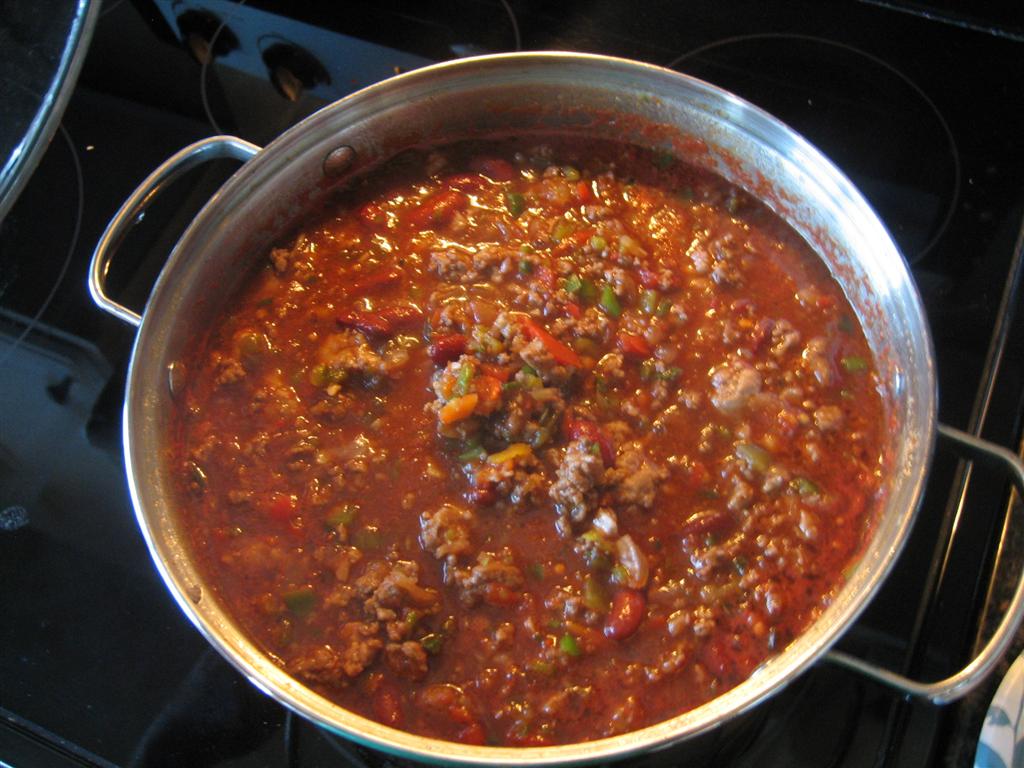
Then on Saturday, she announced we were having “the best chili you will ever have” for our football date (see! amazing!).

Vandy lost, UNC won, but more importantly, the chili was amazing. Let me know if you want the recipe, but beware, it calls for a cup of strong coffee and a bottle of dark beer. Crazy good recipe, though.

Mmm. Chili.

Okay, back to the airplane.

After a big day on the house, I decided that tonight was all about the ribs.

I scoured a few build sites for ideas, but I basically need to come up with wire routing for the wings. I’m going to use tables to stay organized.

Wiring Requirements
Left Wing Pitot Total Pressure (the “pitot” part of the pitot tube)

AOA Total Pressure (…angled down)

Heated pitot leads

Landing Light (wingtip)

Taxi Light (wingtip)

Nav/strobe lights (probably AeroLeds)

Van’s Stall Warning (can’t decided between this and AOA for stall protection…also, is this left or right wing? Can’t remember)

Right Wing Landing Light (wingtip)

Taxi Light (wingtip)

Nav/strobe (probably AeroLeds)

Autopilot servo

Wingtip NAV antenna? (maybe)

So I clearly need more stuff in the left wing than the right wing, but I decided to drill everything the same way.

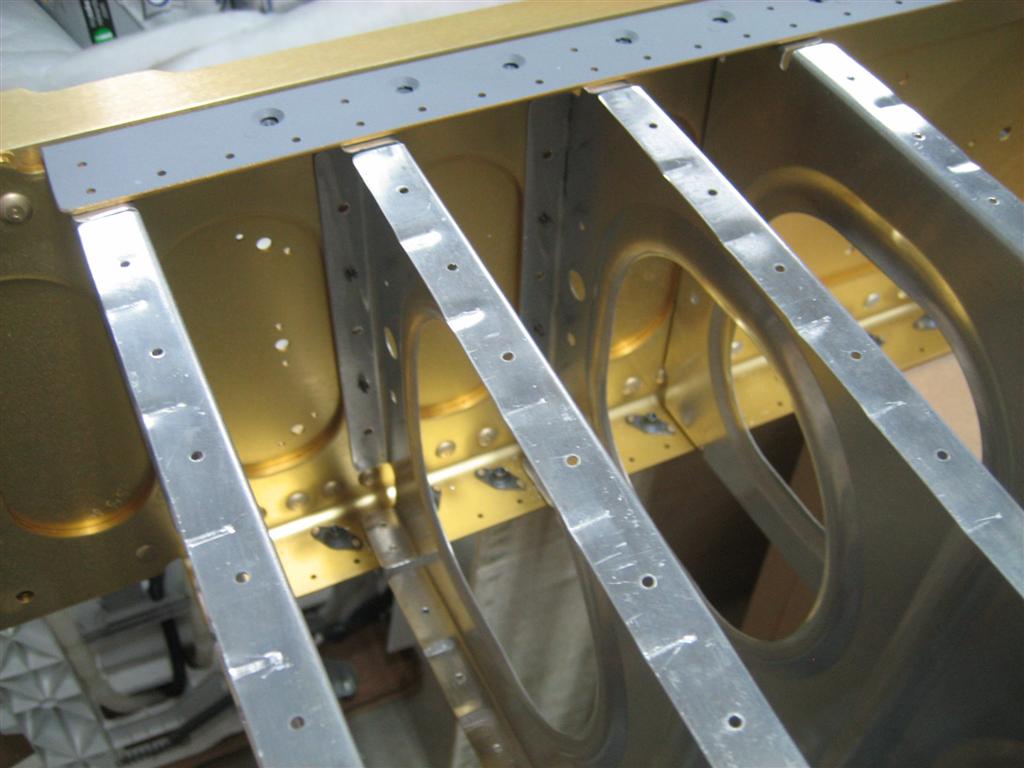
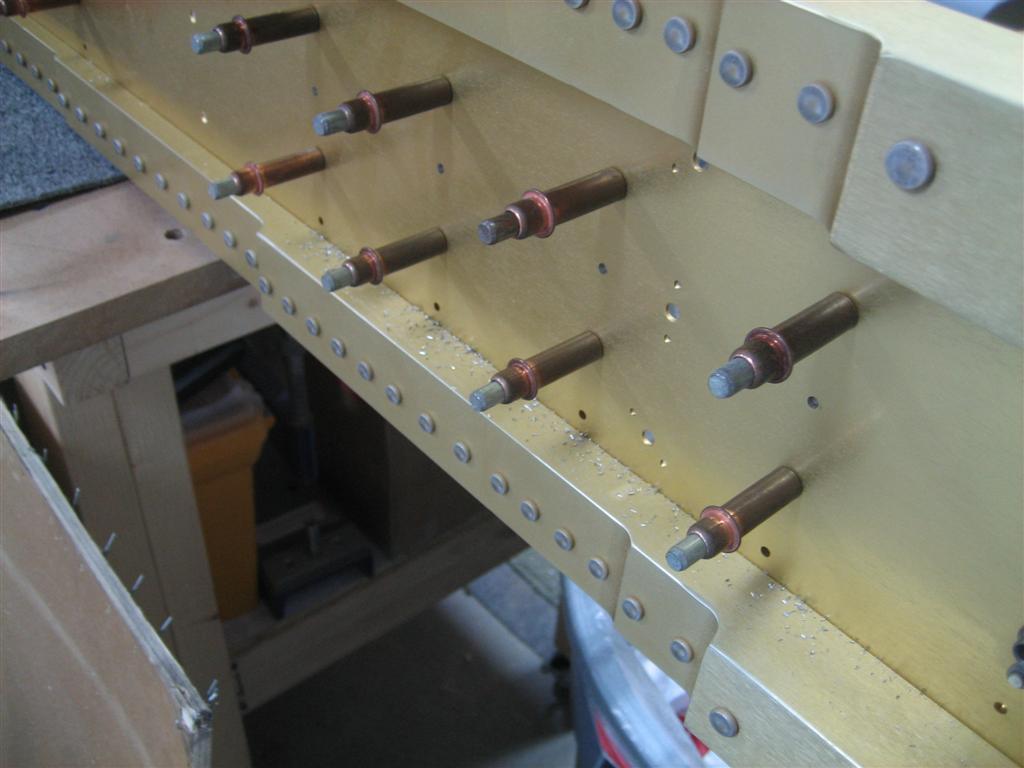
As far as the ribs are concerned, there are two flavors of ribs with respect to the tooling holes as provided in the ribs from the factory. (They talk about flavor of ribs in the manual, too, but they are talking about part numbers and flange orientations, I am talking just about the tooling hole arrangements.)

There are 14 total ribs.

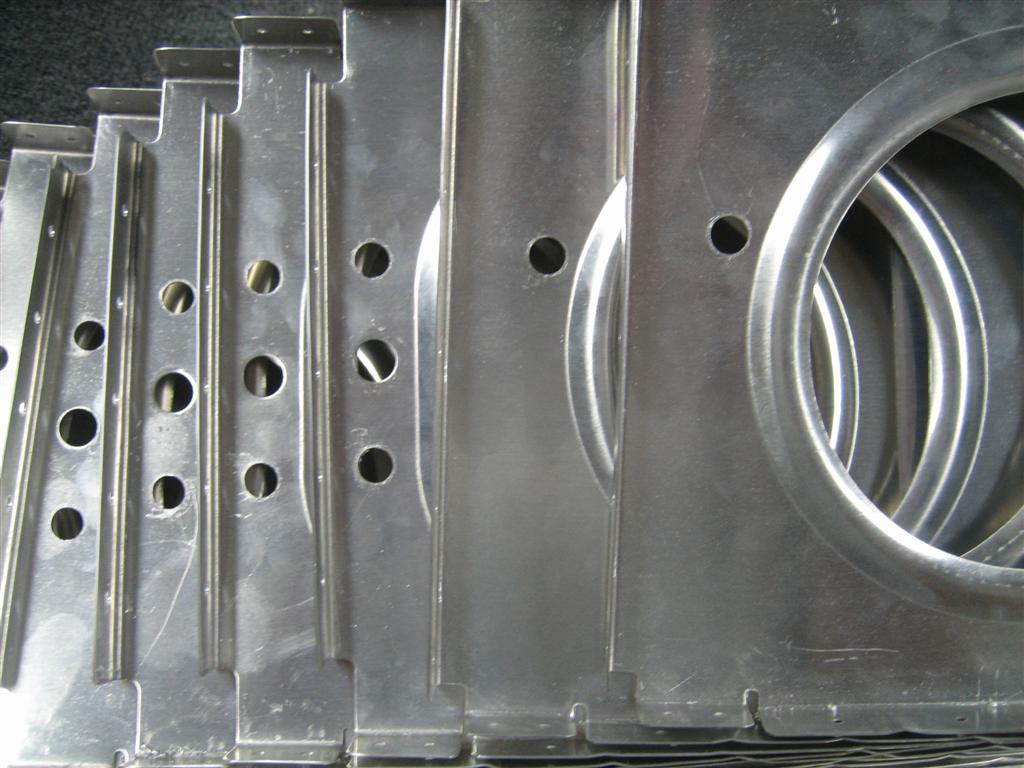
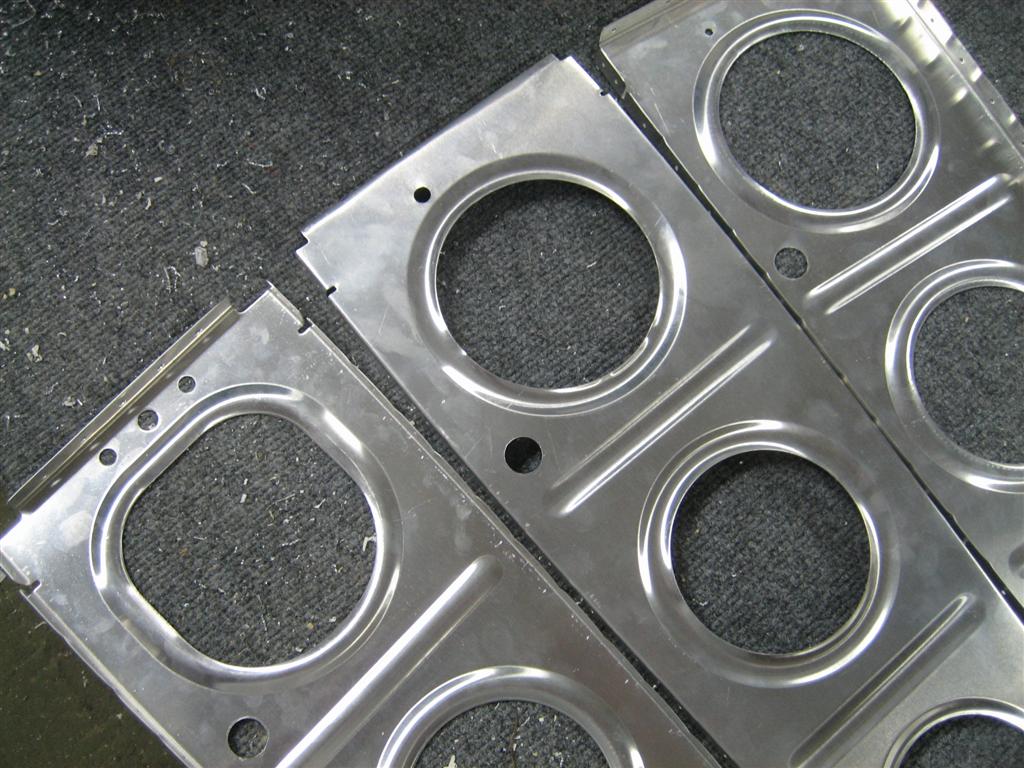
The first 11 ribs (counting from inboard to outboard) have three tooling holes in the front part of the web (just behind the main spar). The top and bottom holes are small, and the middle one is 7/16″. I decided (based on a lot of other builder’s sites, and the guidance from the Construction FAQs from Van’s that I’ll enlarge the top and bottom holes to 3/8″. (I’ll get to the other flavor of ribs in a little.)

Here's a before (front) and after (aft).

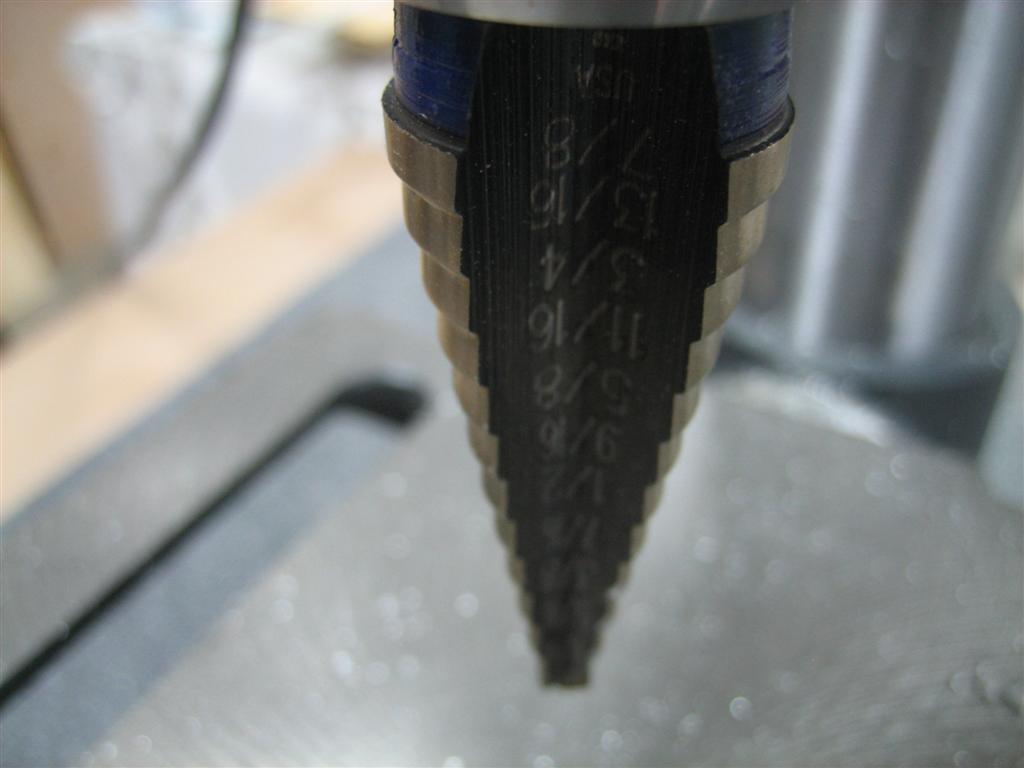
By the way, I used my brand new #4 Unibit to drill these. I stared at the Unibit from harbor freight (~$15) for awhile, and then decided this is probably something I am going to use a lot and appreciate if it is higher quality. I sprung for the $42 one from Lowes-Aviation.

I think it goes from 3/16" to 7/8" in 1/16" increments.

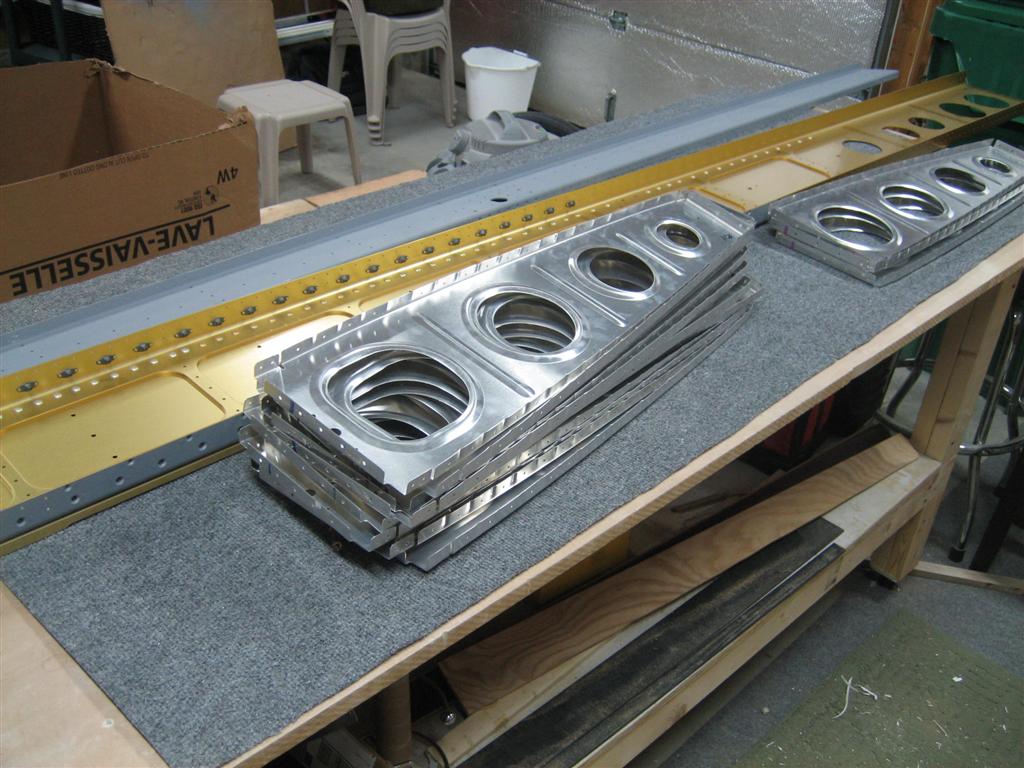
So, after knocking all of the right wing ribs out, I gathered up the left wing ribs, labelled their positions and orientations, and did those 3/8″ holes, too.

Looking good so far.

The next flavor of ribs are the three outboard ribs (I’m missing one from the picture, look further down.)

They come with one hole in the forward part of the rib. I decided that I would just enlarge that hole to 3/8″ and not try to duplicate all three holes. (The construction FAQ sheet referenced earlier only talks about enlarging tooling holes in this location, not creating new holes.)

2 of the 3 outboard ribs done.

Here's the outboard most rib (upside down from the rest). Van's wants you to leave this one now for help in aileron alignment. I can deal with that.

Now, back to the construction FAQ. Van’s does let you drill a brand-spanking-new 3/4″ hole.

An additional hole may be drilled in the lower 1/3 of the rib between the large lightening hole and the next one aft. This hole may be up to 3/4” diameter to accommodate our wiring conduit (DUCT NT 5/8-50) or Bushing SB750-10 (5/8” I.D.). The conduit is light and flexible. It’s .810 “ outside diameter means that when snapped into place, the corrugations hold it from slipping out. If using the conduit, a dab of fuel tank sealant or RTV should be put on the conduit at each rib to prevent the conduit from being cut through over time from vibrations.

Sweet. I created a makeshift template. and started marking the center of the hole.

(Some people go crazy with this alignment. After reading a lot of other experiences, I reminded myself that this is a flexible conduit hole. They don’t have to be perfectly aligned. Although, after everything was all said and done, they were pretty darn aligned.) Don’t waste a lot of time here on a special tool. Cardboard worked great.

Fancy-schmancy hole alignment tool.

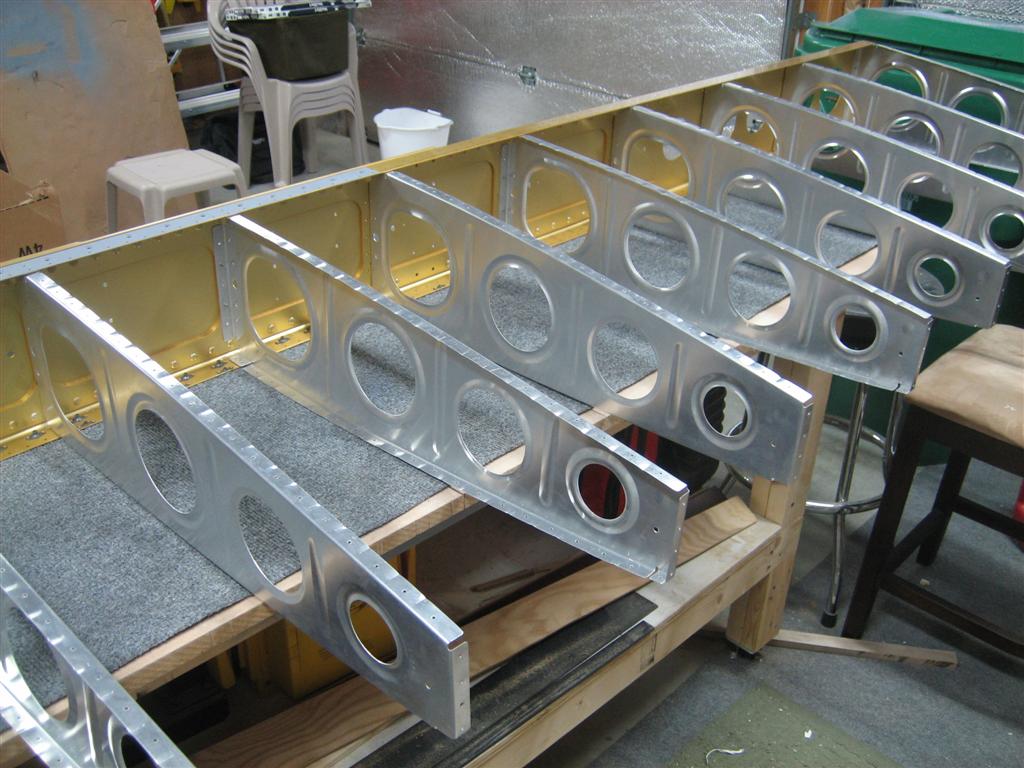
So, after punching 28 3/4″ size holes in both the left and right wing ribs, this is what I ended up with. (Really 3 flavors.)

11 inboard ribs each side with 3 holes and a conduit hole, 2 outboard-ish ribs each side with 1 hole and a conduit hole, and 1 outboard rib with 1 hole (that needs to be enlarged) and a conduit hole.

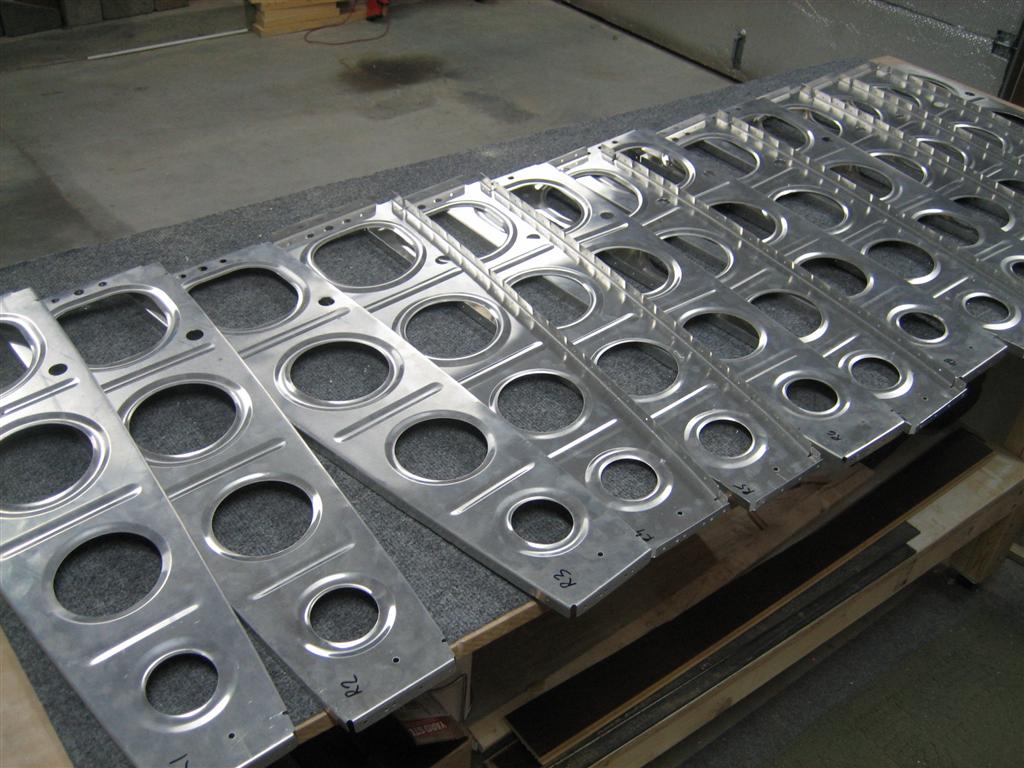
Of course, I had to lay out all the right wing ribs for this completely unnecessary picture.

Tada! (The left ribs are done, too, but they are stored back on the shelf.)

Okay, now that I’ve drilled the maximum amount of approved holes in each of the ribs, let’s figure out where this stuff should go.

Wiring/Conduit Plans in Ribs
Left Right
Rib # 3/8″ 7/16″ 3/8″ 3/4″ Conduit 3/8″ 7/16″ 3/8″ 3/4″ Conduit
1 Pitot Pitot Heat, Stall Warn AOA Taxi
Landing
Nav
Strobe
Servo VHF? Taxi
Landing
Nav
Strobe
2 Pitot Pitot Heat, Stall Warn AOA Taxi
Landing
Nav
Strobe
Servo VHF? Taxi
Landing
Nav
Strobe
3 Pitot Pitot Heat, Stall Warn AOA Taxi
Landing
Nav
Strobe
Servo VHF? Taxi
Landing
Nav
Strobe
4 Pitot Pitot Heat, Stall Warn AOA Taxi
Landing
Nav
Strobe
Servo VHF? Taxi
Landing
Nav
Strobe
5 Pitot Pitot Heat, Stall Warn AOA Taxi
Landing
Nav
Strobe
Servo VHF? Taxi
Landing
Nav
Strobe
6 Pitot Pitot Heat, Stall Warn AOA Taxi
Landing
Nav
Strobe
Servo VHF? Taxi
Landing
Nav
Strobe
7 Pitot Pitot Heat, Stall Warn AOA Taxi
Landing
Nav
Strobe
Servo VHF? Taxi
Landing
Nav
Strobe
8 Pitot Pitot Heat, Stall Warn AOA Taxi
Landing
Nav
Strobe
Servo VHF? Taxi
Landing
Nav
Strobe
9 Pitot Pitot Heat, Stall Warn AOA Taxi
Landing
Nav
Strobe
Servo VHF? Taxi
Landing
Nav
Strobe
10 Pitot* Pitot Heat*, Stall Warn AOA* Taxi
Landing
Nav
Strobe
VHF? Taxi
Landing
Nav
Strobe
11 Pitot* Pitot Heat* AOA* Taxi
Landing
Nav
Strobe
VHF? Taxi
Landing
Nav
Strobe
12 Taxi
Landing
Nav
Strobe
VHF? Taxi
Landing
Nav
Strobe
13 Taxi
Landing
Nav
Strobe
VHF? Taxi
Landing
Nav
Strobe
14 Taxi
Landing
Nav
Strobe
VHF? Taxi
Landing
Nav
Strobe

*The plans show Pitot tube installation after the 9th rib, or in the same place as the tiedown and aileron bellcrank. It’s going to be cramped in there, so I might move the installation one bay further out. Or maybe two bays further out…I have the holes for it. (Stall warning will go one bay outboard of tiedown.)

Anyway, those are my plans for now, but I’m sure things might change. For one, I need to look more at the tiedown/pitot tube geometry. I think it will be too cluttered in the bellcrank bay, but any further outboard, and the pitot tube might be in the way of the tiedowns (low wing short airplane means tiedowns will be at a small angle.) I don’t want the tiedowns getting hung up in my expensive pitot tube.

1 hour.

Prev | Next


Drilled Right Wing Ribs to Main and Rear Spars

September 29, 2010

Prev | Next

Tonight, I drilled all of the right wing main ribs to both spars. Not a lot of commentary, so I’ll just get to the pictures.

After drilling the middle two rear spar holes for each rib, I moved the clecos into those holes and matchdrilled the upper and lower holes.

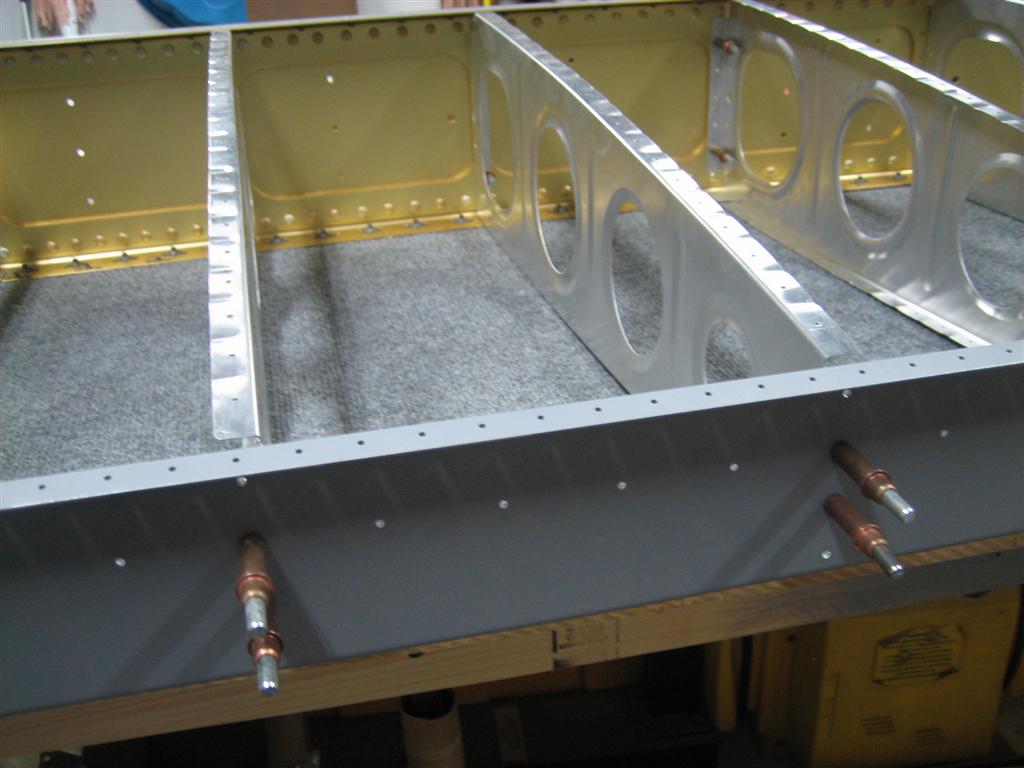
Rear spar, looking forward.

Same with the front (although the clecos are in front of the main spar here).

You can just barely see the clecos in the 2nd and 3rd holes of each rib.

Also, I have a question about some of the flange-to-flange holes. Here’s what I wrote on the forums:

Hello everyone.

I was working on drilling my main ribs to the main and rear spar last night, and the instructions say “drill all of the rib to spar attach holes.”

Then, they have you take everything apart, deburr, prime, and then rivet the ribs to the spars.

What should I do for the flange to flange holes? (Circled in green below, but there is one more on the ribs for the lower rear spar flange).

If I leave them as is now, I’ll be match-drilling them with the skins later, but then I won’t be able to deburr the holes (because the ribs are now riveted to the spars).

I could run a #40 bit through all of these holes and deburr before assembly. (I could also dimple the rear spar ones, since they will eventually be dimpled to accept the skin dimples.

Any thoughts?

Thanks in advance.

Here's the same picture, but smaller, with green circles.

We’ll see what they say.

Here's a better angle.

Then, I pulled off the rear spar.

(What a sad moment. I have had this clecoed together for a week or so, and every time I go in the garage, there’s a wing! How cool is that? Now, I’m back to rib deburring (or catching up on the left wing). Not as exciting as a wing skeleton.)

After taking the rear spar off.

Everything taken apart for the night.

I can’t believe that took me an hour.

Prev | Next


Leading Edge/Tank Cradle, Right Tiedown Bracket

September 28, 2010

Prev | Next

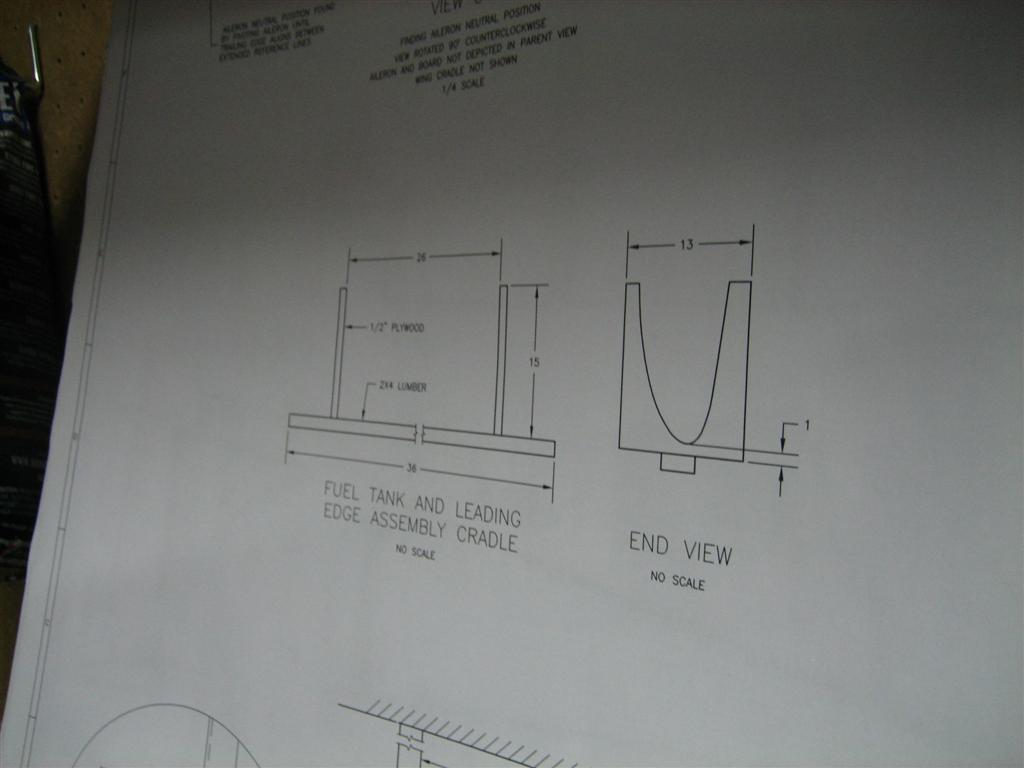
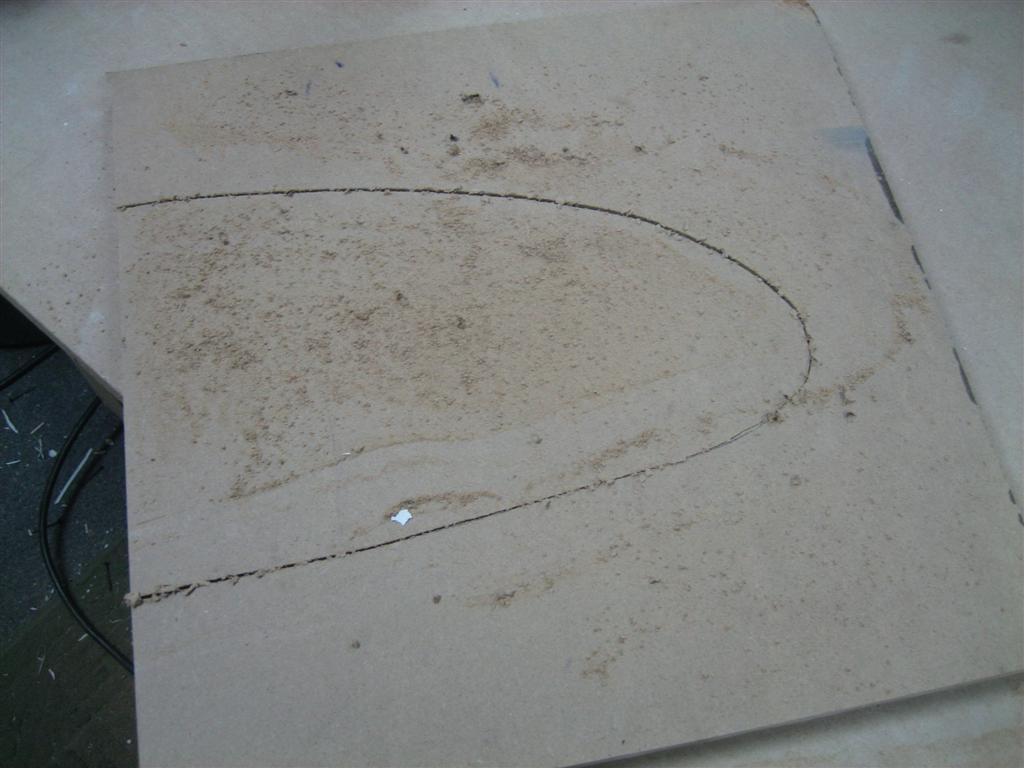
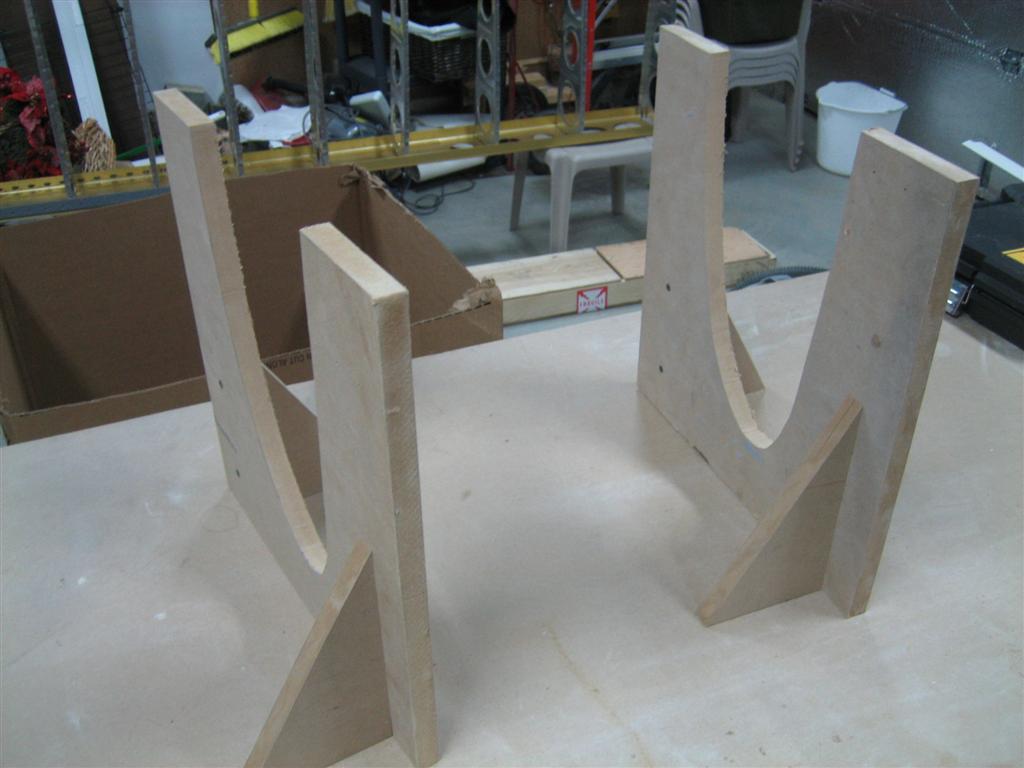
A few days ago I had the circular saw out, and I saw (pun intended) a 16″ wide piece of 3/4″ MDF sitting around, so I took a quick look at the plans, and decided that 16″ x 16″ might be a good starting point for the leading edge/tank assembly cradle.

The plans (second picture down) show 13″ x 15″, but I’ve heard that some people break the cradle at the thinnest point.

Anyway, it took me all of 30 seconds to cut the 2 big square pieces and the four triangular pieces also pictured.

Tonight, I pulled those out for assembly (a quick night in the shop).

16" x 16" cradle walls, with 4 triangular supports.

Van's wants you to mount them on a 36" long 2x4, but I decided to go another route. Read on.

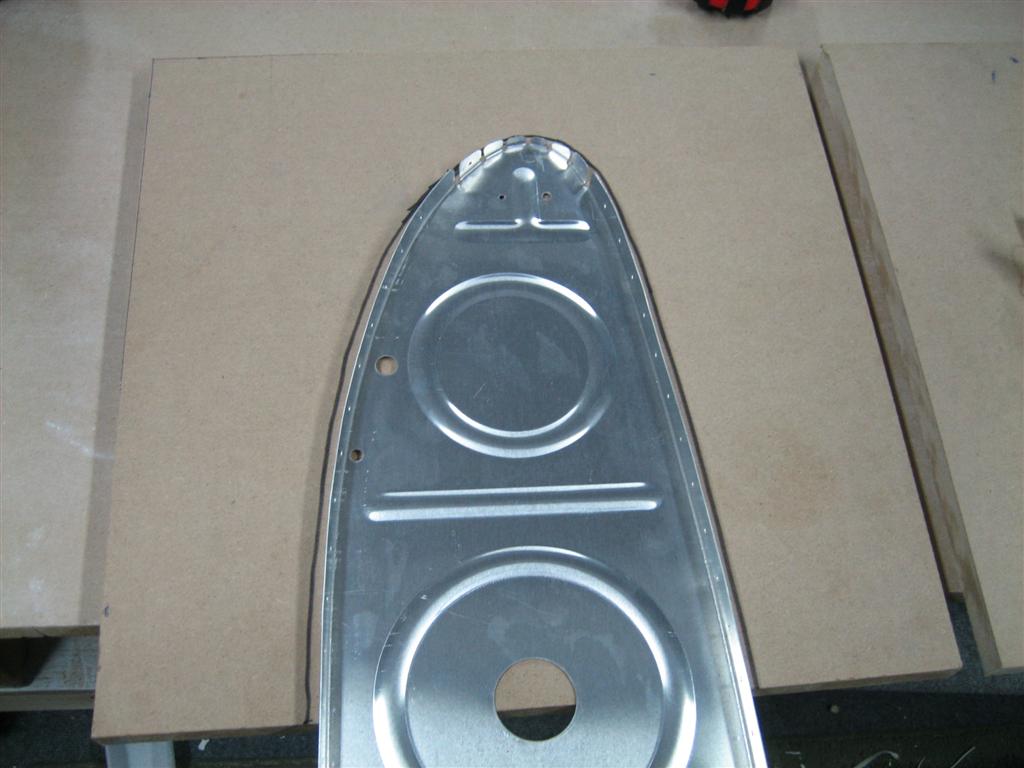
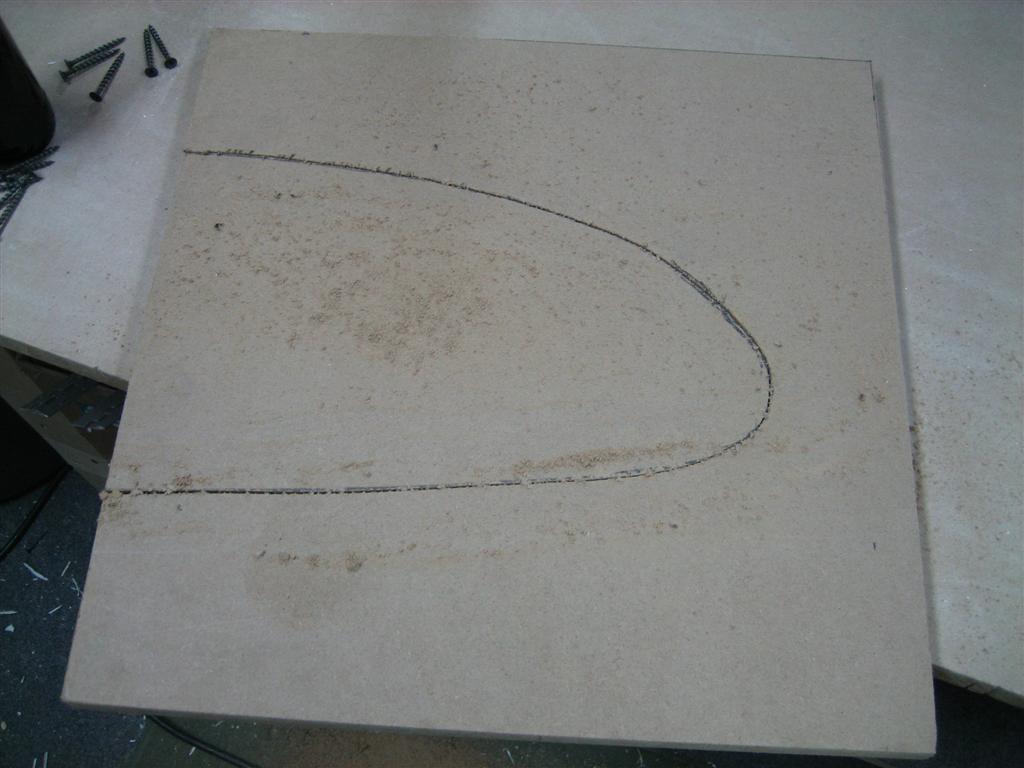
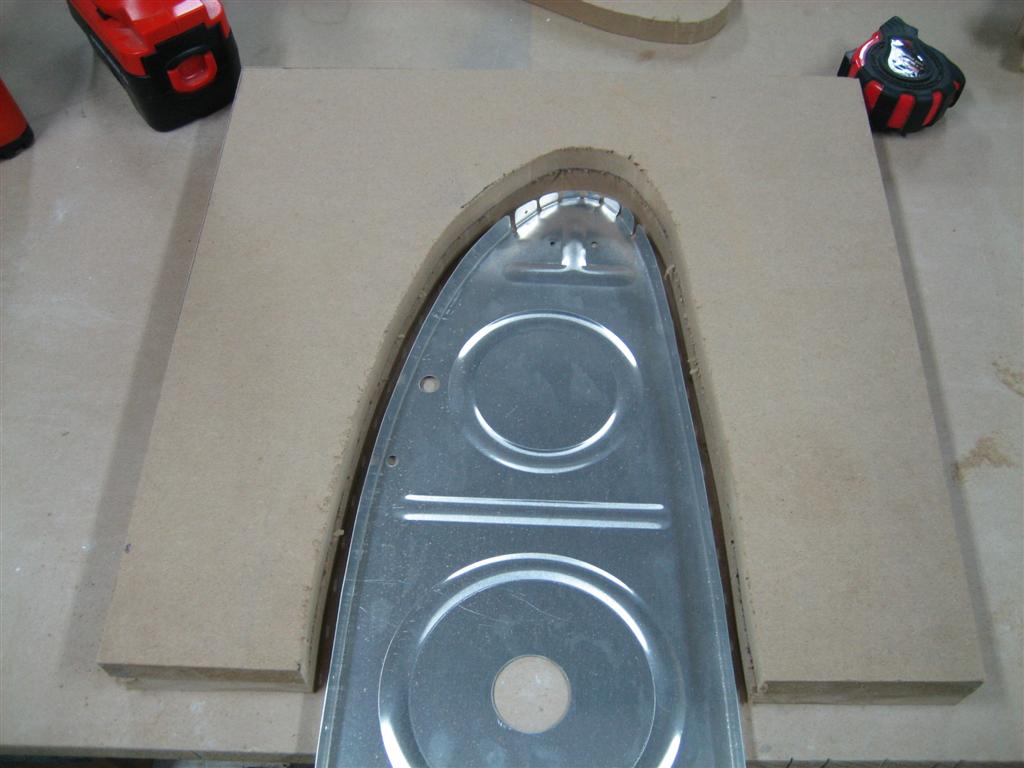
I used a thick magic marker to offest from a tank rib (room for pipe-insulation to protect the skins).

After the cut.

Tada!

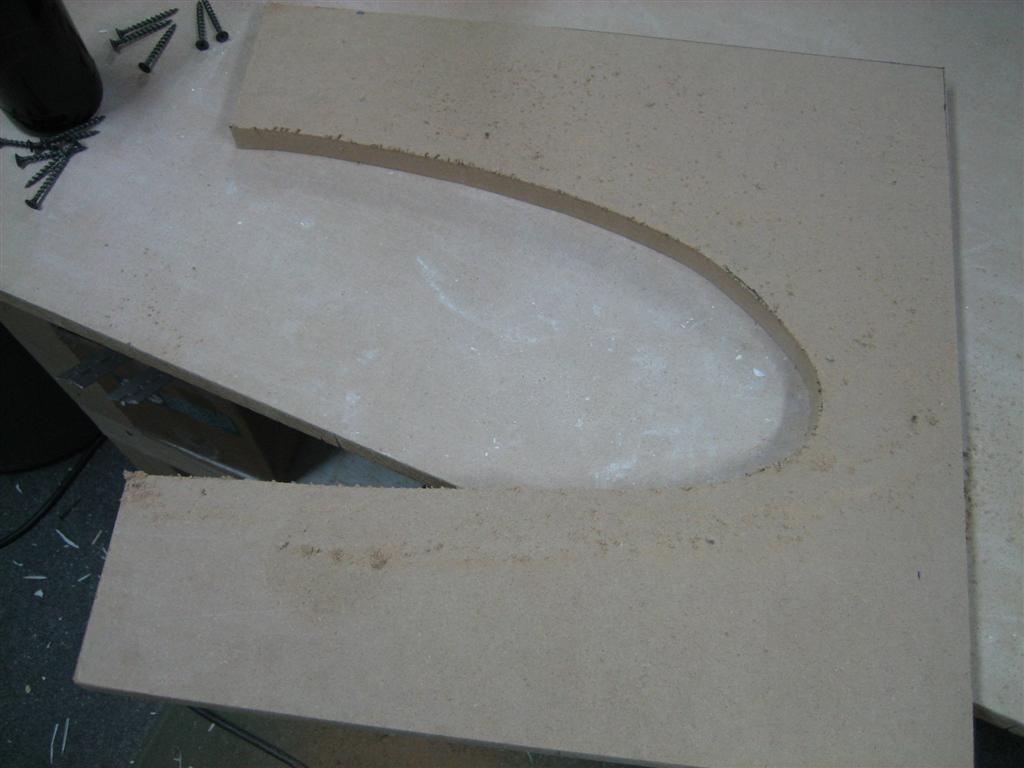
After the cut. (Déjà vu)

Tada! (Déjà vu)

After both were cut out with the jigsaw, I laid (layed? Em, help me out here) the tank rib into the cutout to make sure I had offset the cuts enough.

Looks good to me.

So, here’s an expplanation of my “alternate route”.

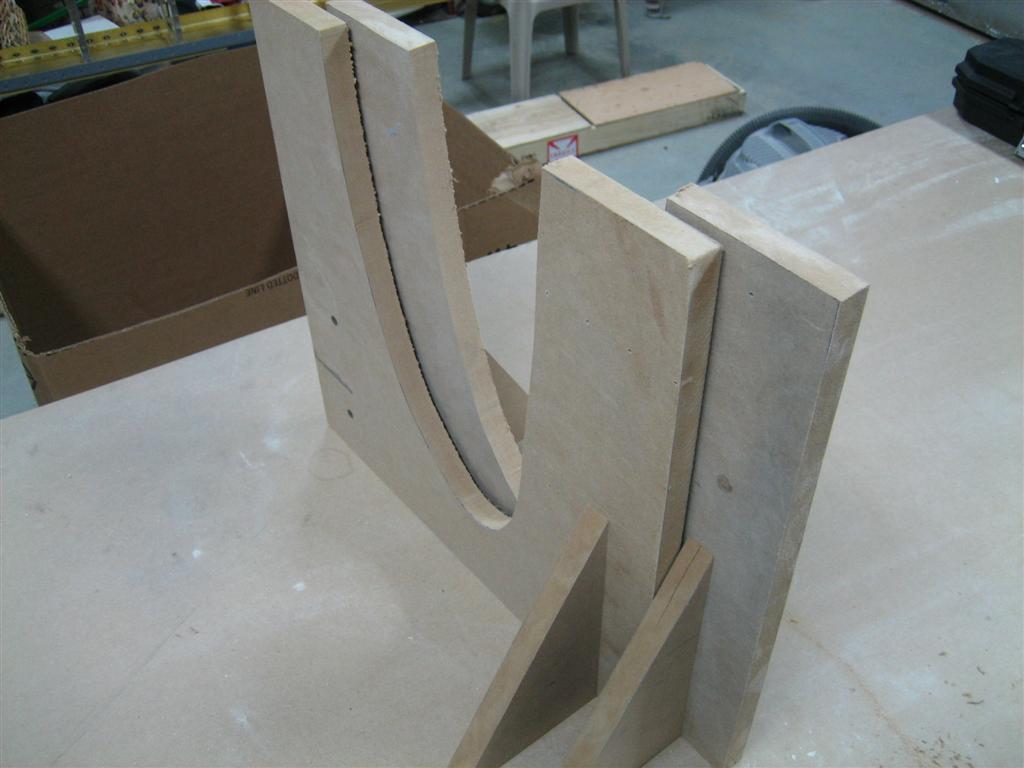
Because Van’s specifically states that this just helps in assembly, and is not an alignment jig, I decided I didn’t really need to take up a lot of space with a 3 foot wide cradle that would undoubtedly get in the way. Instead, I am making the two halves of the cradle independently, and will use them (approximately 3 feet apart). I also figured they would be stable enough with one of these triangular pieces on each side, which they were.

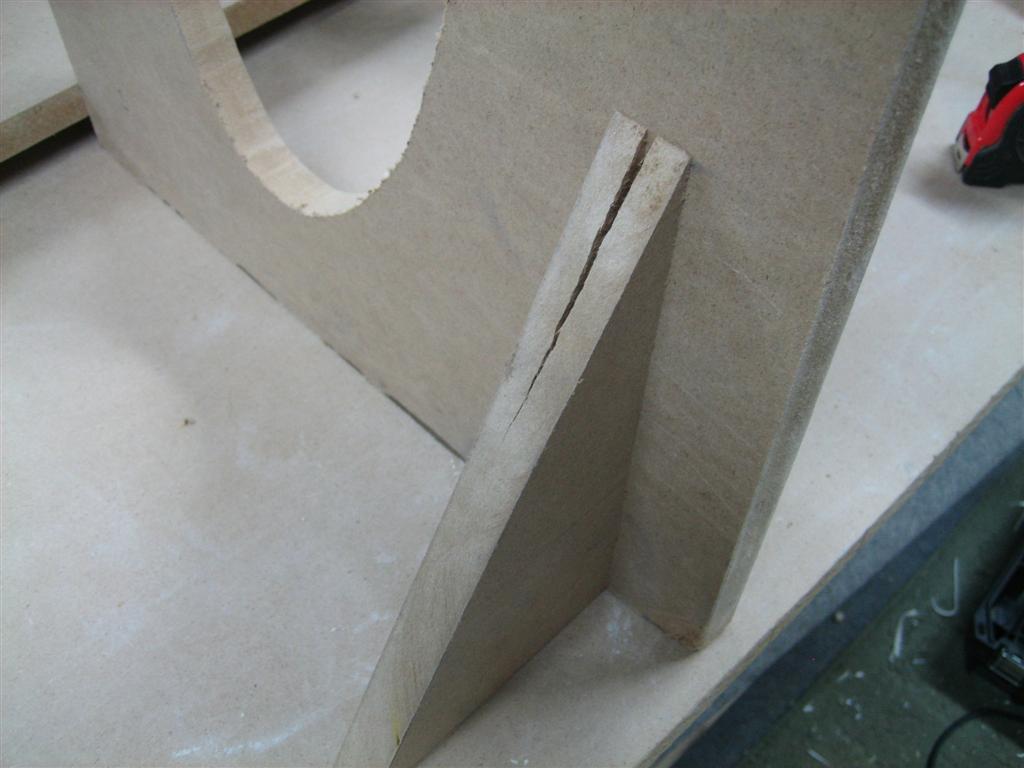
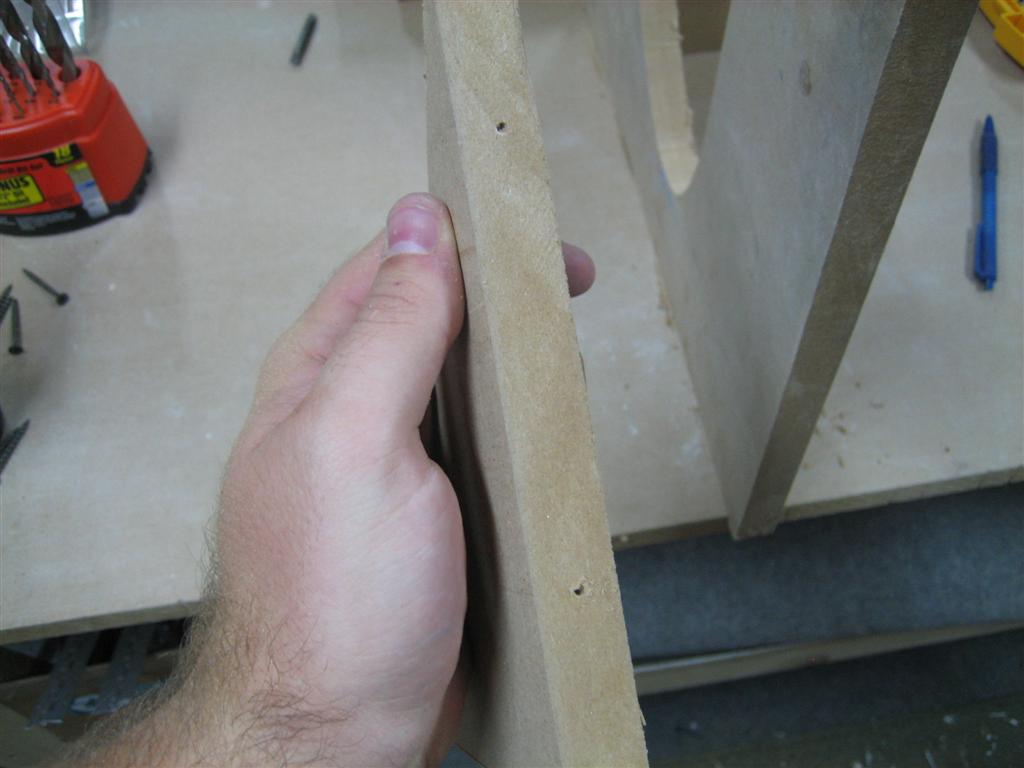
I predrilled the cradle, but not the gusset, and it cracked as I assembled with some coarse-thread drywall screws. Bummer (I never thought I would put a picture of my crack on the internet.)

For the other ones, I pre-drilled the gusset, too.

After everything was all said and done, I am pretty happy with them (damn crack!).

I need to grab some pipe insulation to protect the skins.

Best part, they nest nicely for storage before (and after) use.

Then, I looked around for something I could get done with the half hour of attention and “eyelids-open” time I felt I had left.

I shot a quick coat of primer on the right tiedown bracket (and spacers), and then waited for the first sides to dry before flipping them over and hitting the other side.

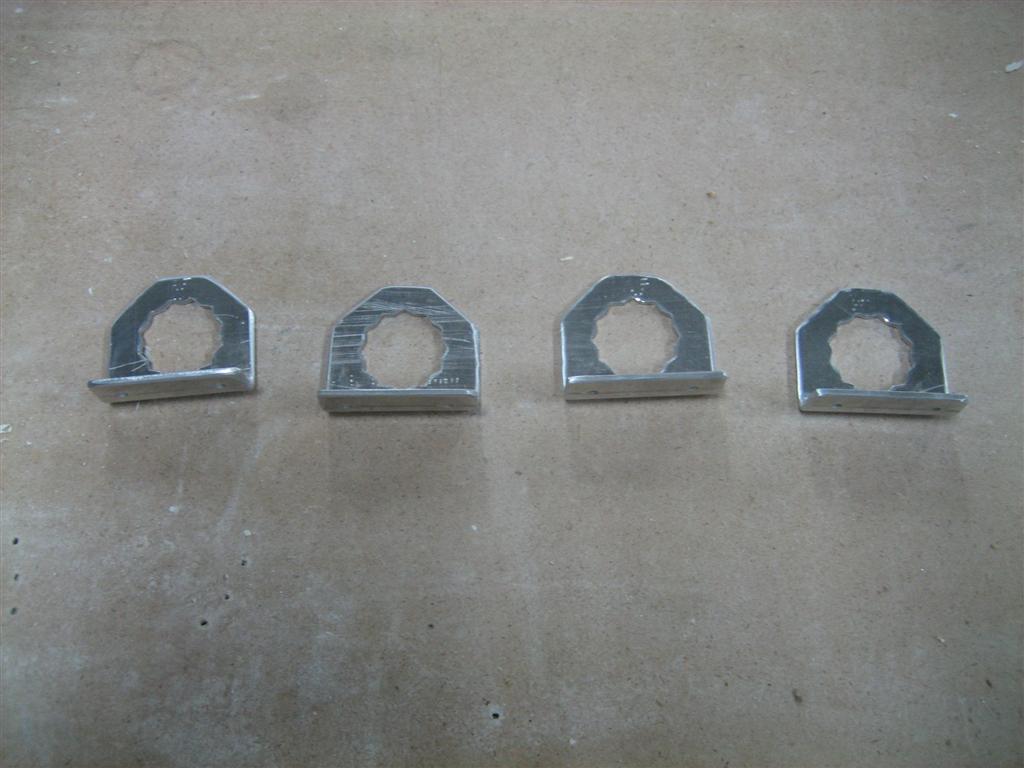
While the whole thing dried, I needed something else to do, so I grabbed the  T-715 Anti-Rotation brackets (which come all connected like the old plastic models used to. Remember you had to use a pocket knife to cut off the little tabs after bending and twisting one model piece from the rest of the pieces.)

Anyway, after getting them apart, I edge finished all four on the scotchbrite wheel. Maybe 10 minutes, and for the record, I am going to log this time under Spars, because I’m waiting for the tiedown brackets to dry. I don’t feel like adding an entry under tanks just yet.

When it is years and years from now, and you ask me how my hours it took me to finish my tanks, and I say “xx hours,” remember to add 10 minutes to that to get the real answer.

Edge finished anti-rotation brackets. (How do I edge-finish the inside edges of these? Hmm.)

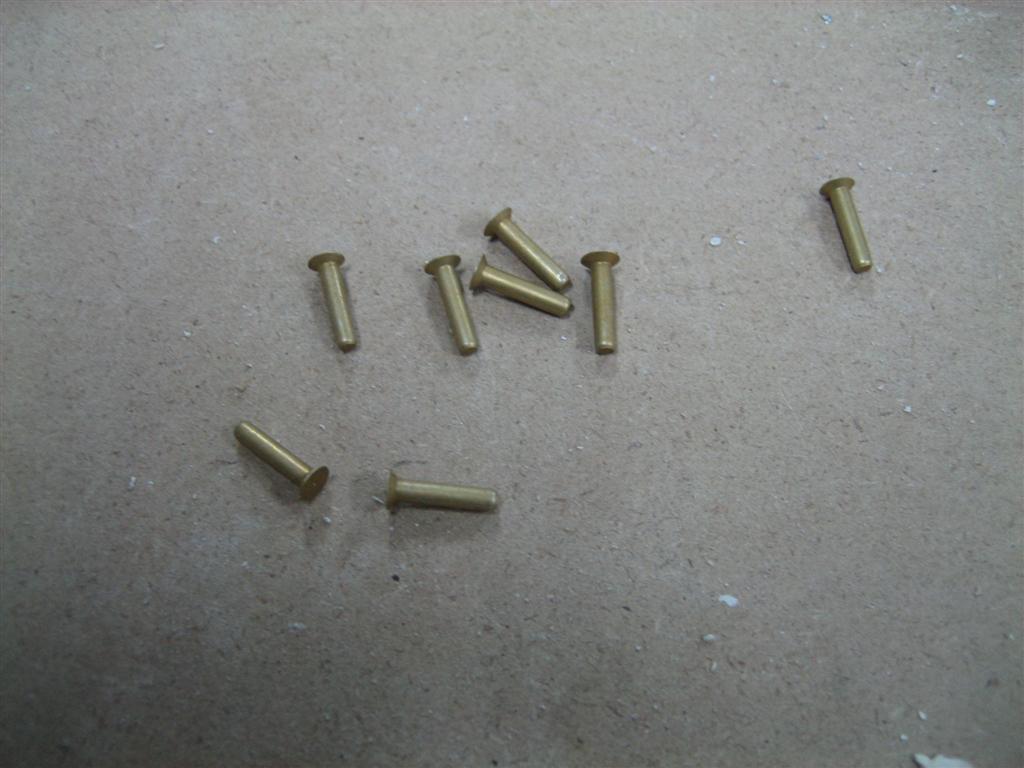
Okay, now that the tiedown bracket is dry, let’s find those AN426AD3-7s – HOLY CRAP THESE THINGS ARE LOOOONG!

Whoa. Long rivets.

4 of 8 rivets set (squeezed).

Tada! (That's three "tada"s today. Aren't you lucky!?) Don't forget the nutplates on the other side. I almost did.

Oh, and by the way. Don’t prime and then wait 10 minutes for things to dry, the primer really hasn’t cured, and it will scrape off with a fingernail. After waiting 24 hours, or better yet, a few days, this stuff gets rock solid. I need to remember that.

I shot another coat on these after they were riveted. I was too ashamed of the first coat to take a picture. Sorry.

8 rivets and 1 hour. 0.5 in “Wing” and 0.5 in “Spars.” (I’ll put the log in both places. We’ll see how that works.)

Prev | Next


Devinyled Upper Inboard Wing Skins

September 23, 2010

Prev | Next

So I realize these deburring sessions are probably a little boring for you.

TO change it up a little, I got two more (instead of one) skins done tonight. By my count, I have all of the inboard (top and bottom) skins devinyled, and I have the 4 outboard skins left.

Maybe this week I’ll get some of the trim in the garage back in the house, and I can move forward on the actual construction of the airplane.

We’ll see.

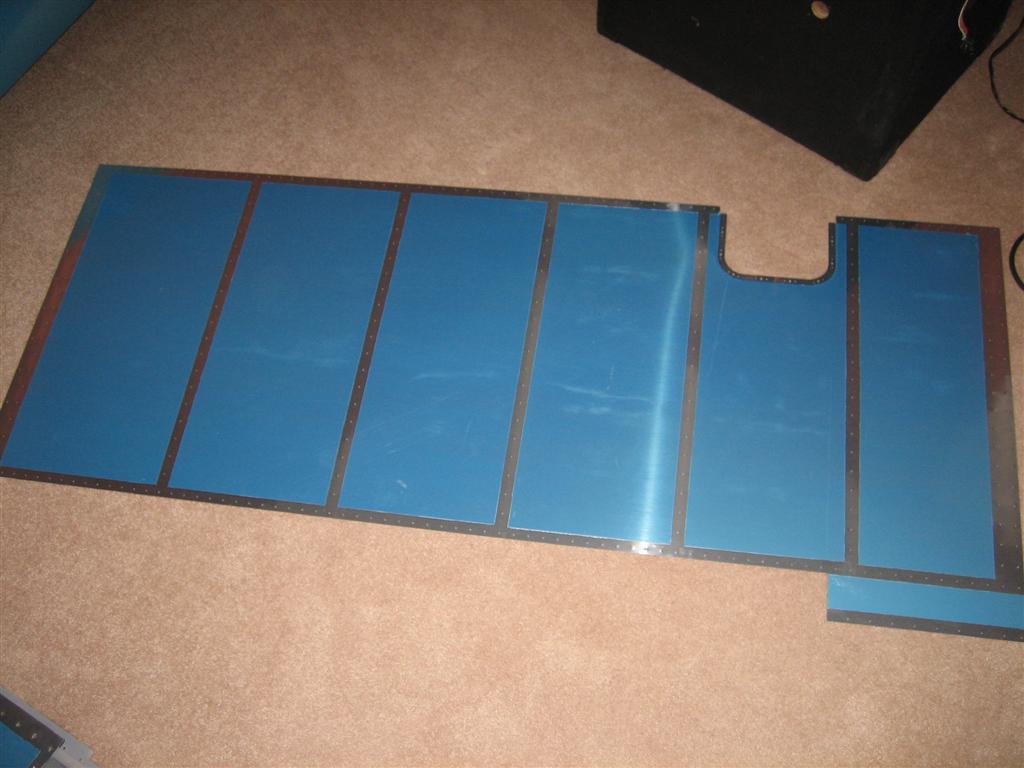
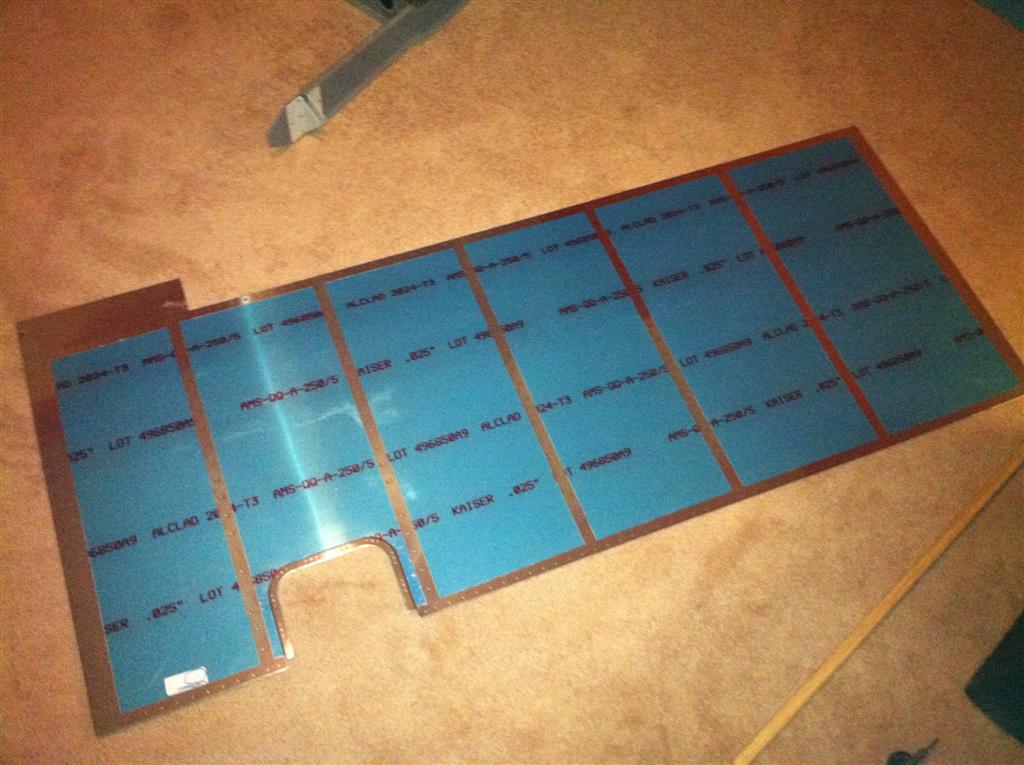
These are the top inboard skins.

Here are the stripes of vinyl I've been pulling off the skins.

1.0 hour today. (It takes about 30 minutes to devinyl each big skin section.) I have 4 done, and I have 4 to go.

Prev | Next


Devinyled Left Lower Inboard Wing Skin

September 22, 2010

Prev | Next

Well.

Today was pretty much an exact copy of yesterday. Except I did the LEFT lower inboard wing skin.

There is something satisfying about these stripes.

To keep you mildly interested during these boring times, I’ve included a picture of some shrimp and asparagus risotto. Thanks girlfriend!

Mmmm.

Another 0.5 hours today.

Prev | Next


Devinyled Right Lower Inboard Wing Skin

September 21, 2010

Prev | Next

Dear airplane project,

I hope you haven’t been feeling too neglected recently. I know I haven’t been able to work on you because of all of the house projects taking over the workbenches outside.

Because my guilt has recently been getting to me about not working on you, I came to see you last night.

Remember how much fun we had together. You know. It was late. I was trying to be quiet so as not to disturb the puppies.

I appreciate you letting me work out of order. I should have been matchdriling spar-to-rib attachments holes and maybe starting work on the left spar, but instead, I took the soldering iron upstairs to start devinyling work on the plethora (“would you say I have a plethora of gifts?”) of wing skins in the airplane storage room.

I know that devinyling these early will probably mean that the clecos and drill stops may leave small marks on your exterior surface, but I promise. These small blemishes allow me to be much more efficient with my time, so I’ll be sure to spend extra time polishing you once you are assembled.

With loving care.

-Andrew.

P.S. I’ve included a picture so you can remember (as fondly as I do) our time together last night.

P.P.S. If you want, we can meet again tonight. Same time, same place.

A blurry picture of last night love tryst between me, the right lower inboard wing skin, and the soldering iron.

0.5 wonderful hours.

Prev | Next