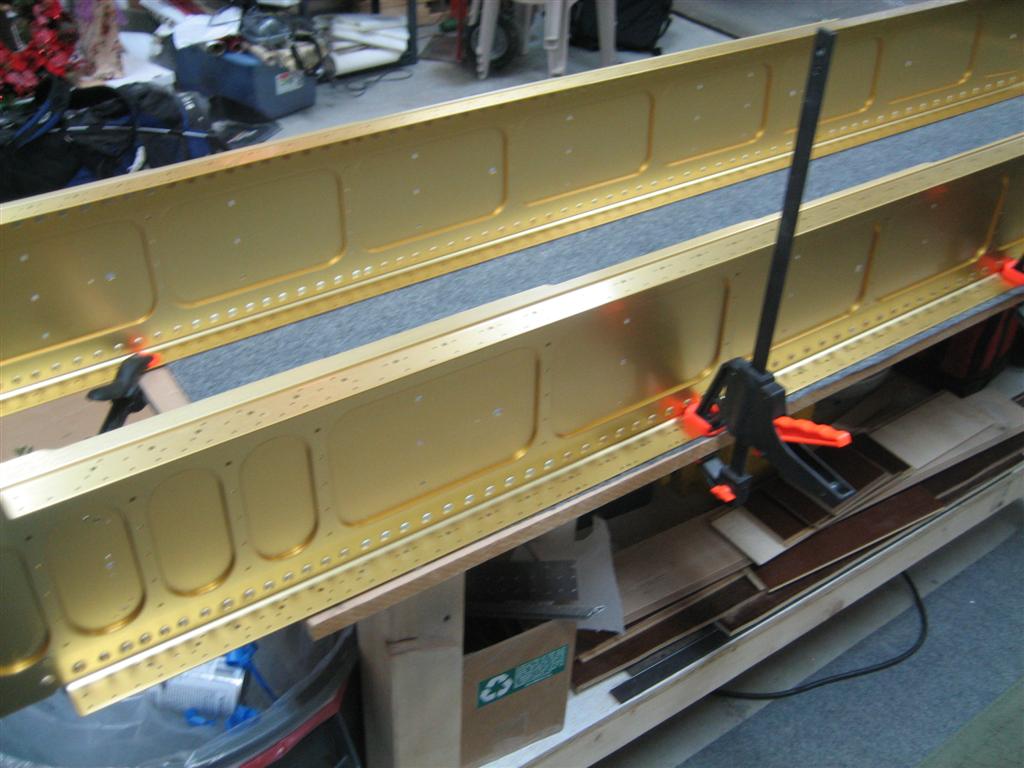
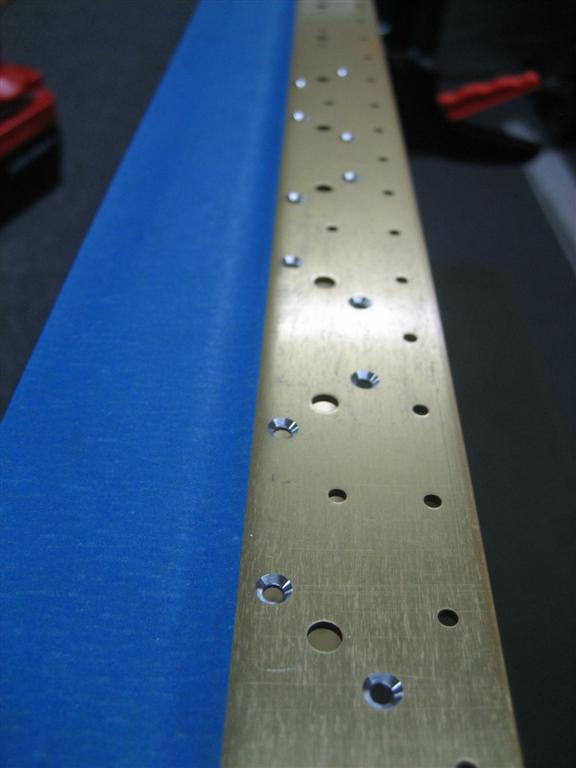
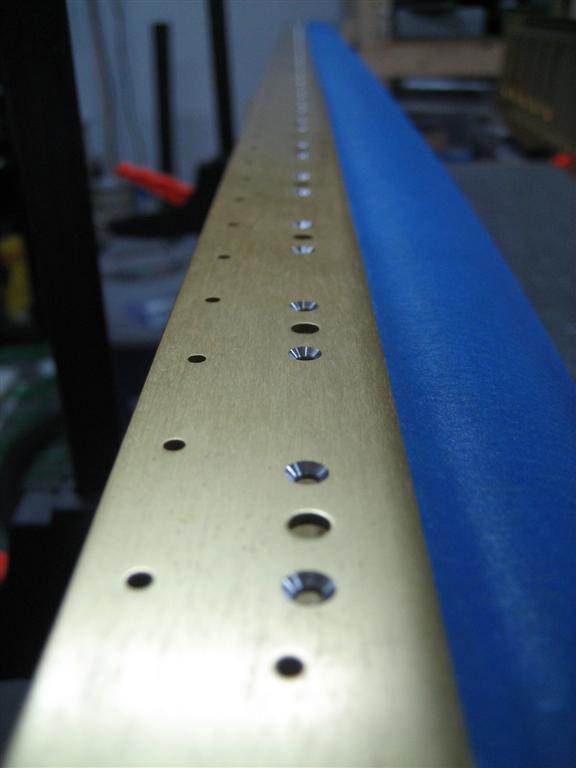
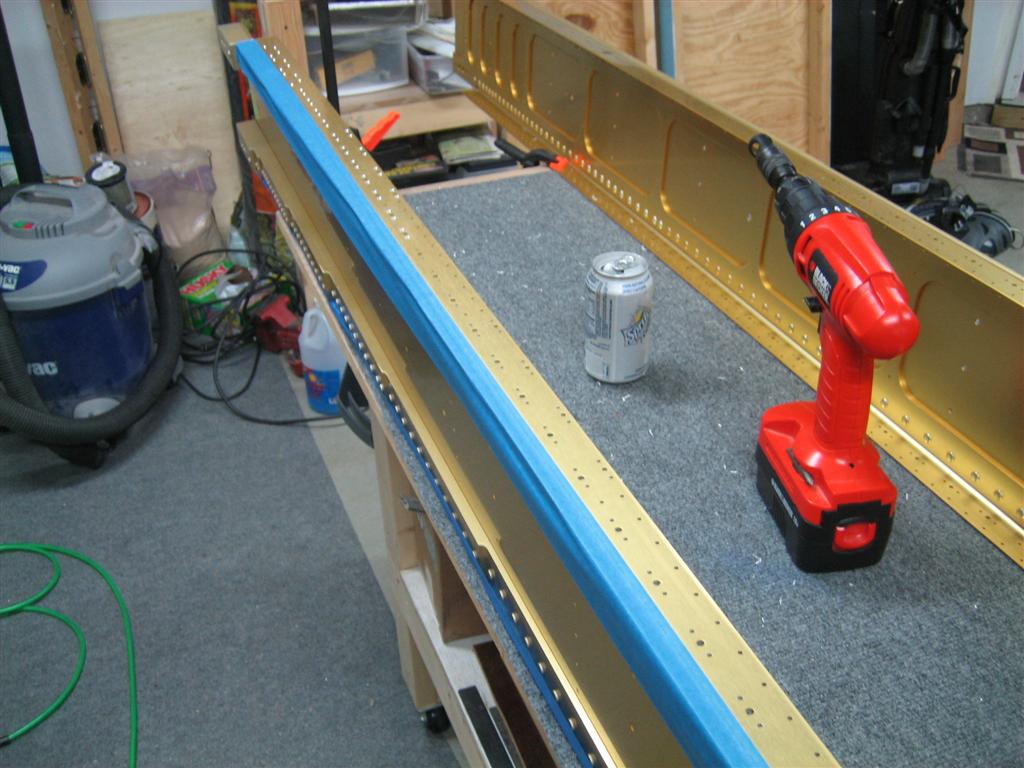
Leading Edge Rib-to-Spar Drilling

January 2, 2011

Prev | Next

Well, after a quick run to Lowe’s to pick up a few more pieces of shoe molding for the family room (see my first floor wood floors page and today’s update here), I finished the family room and then headed out to the garage for an awesome two hours worth of building.

Why awesome?

First of all, I picked up these awesome tools for the project. I needed some good 3″ clamps for the spars (where they will attach to the wing stands) and a couple of plumb bobs to help measure twist. Also, I’ve been using my plastic triangle from 7th grade geometry as a square…it’s about time I got a real square.
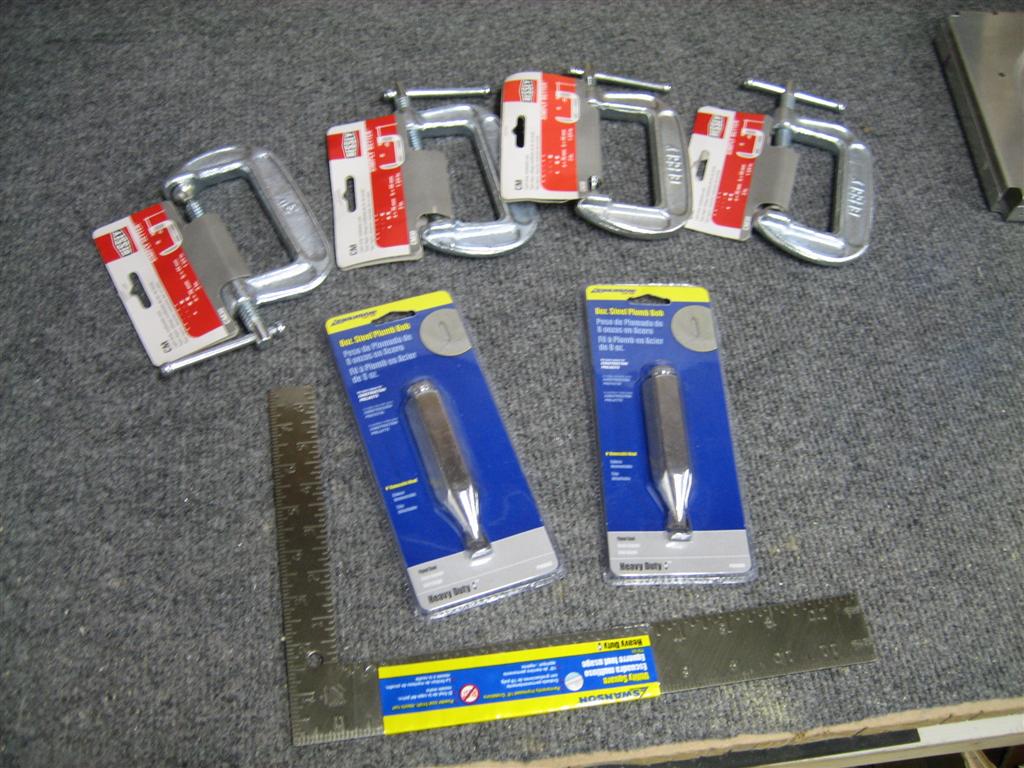
Tools! Tools! Tools!

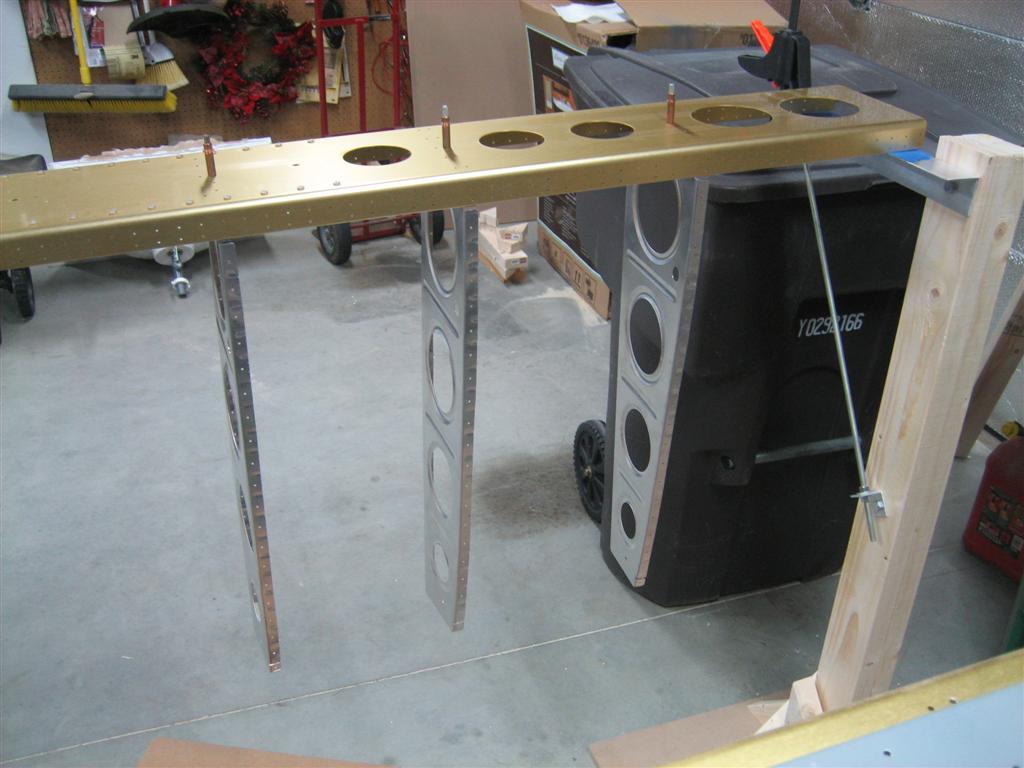
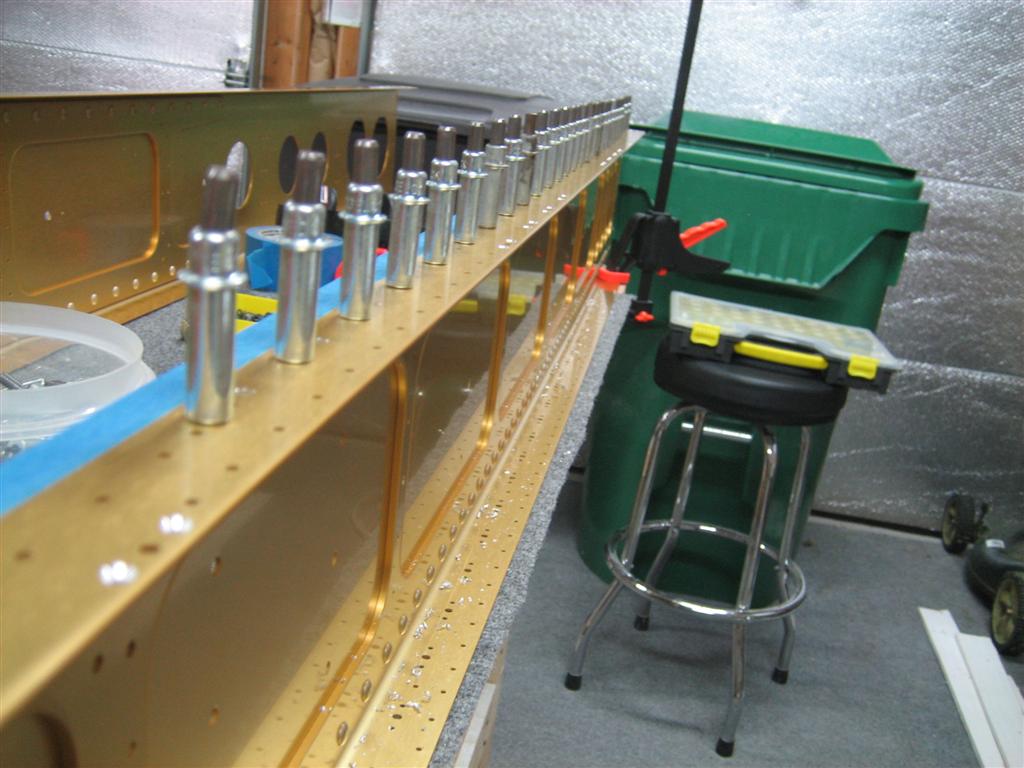
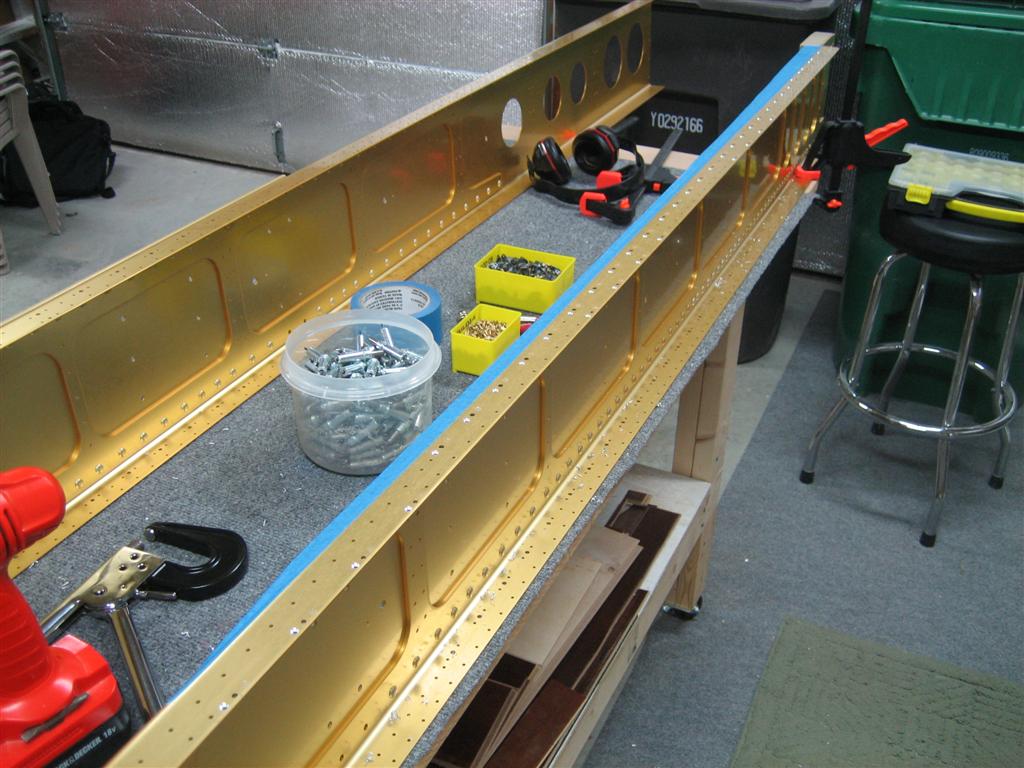
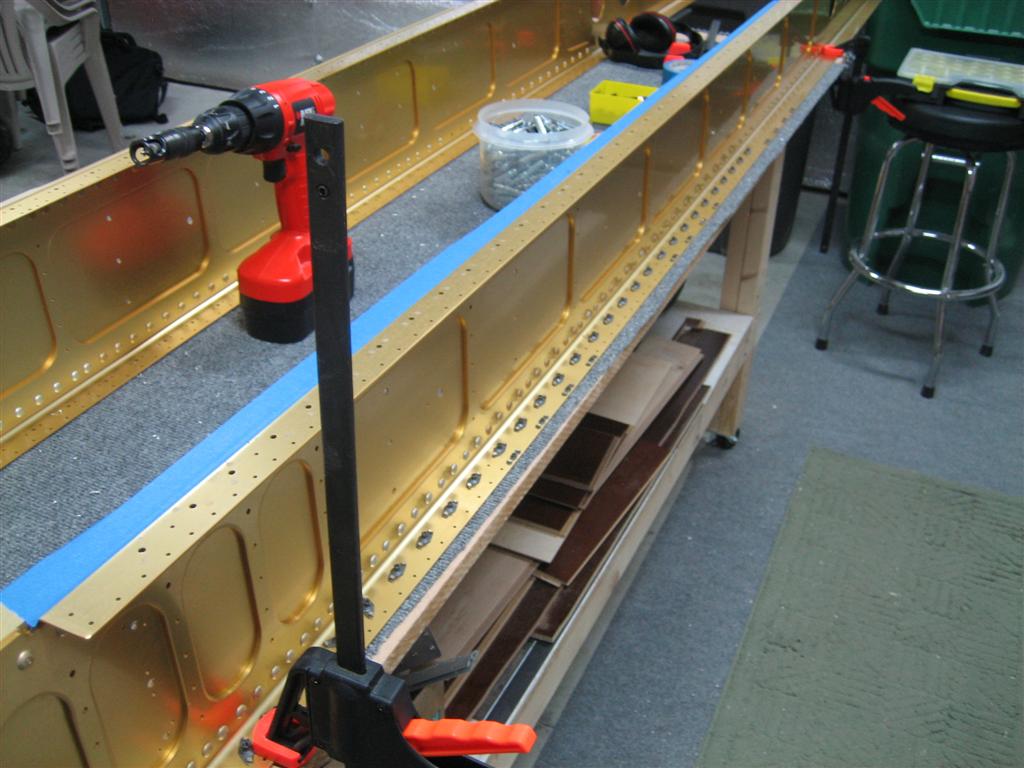
Then, I got out the jigsaw with a medium metal cutting blade and cut a couple 5″ pieces of 1.5″ angle. I attached these angles to the outboard ribs, which will allow the ribs to be attached to the wing stands.
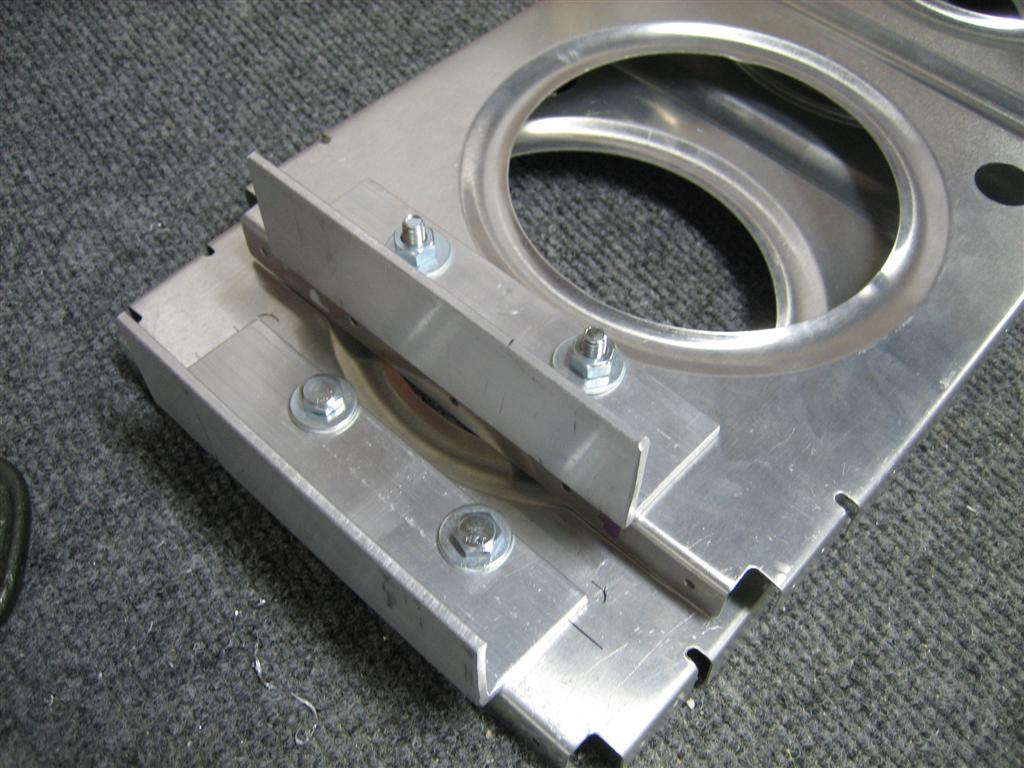
I used 1/4" bolts instead of 3/16". I hope I don't die. (Also, don't pay attention to my edge distances...)

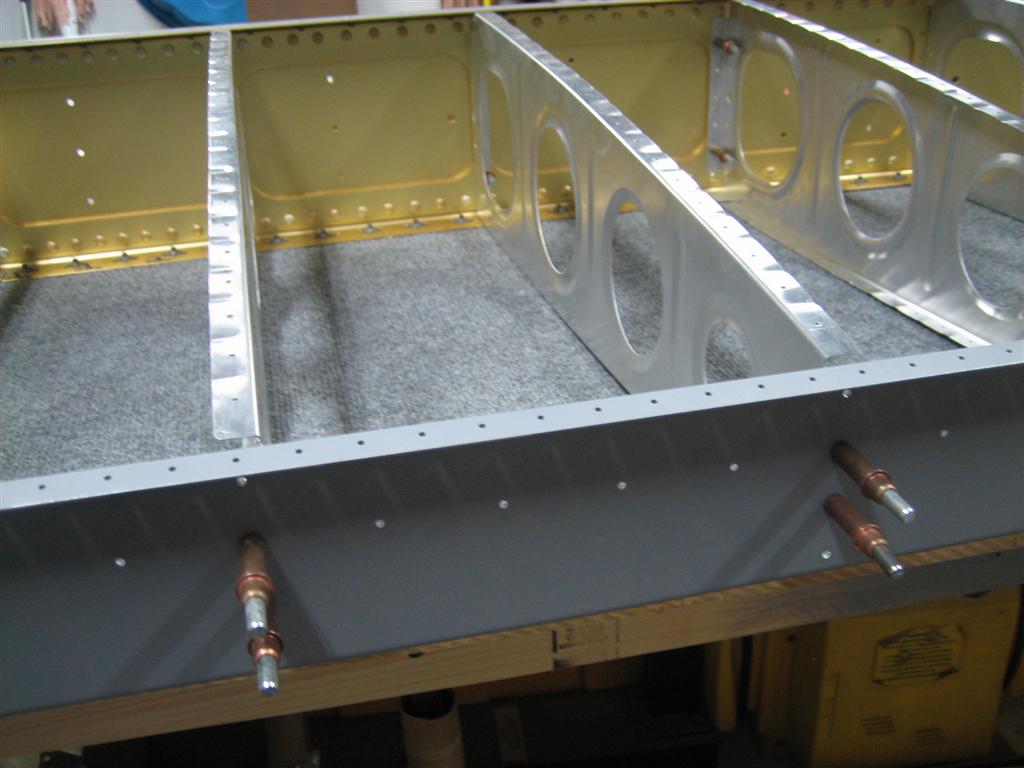
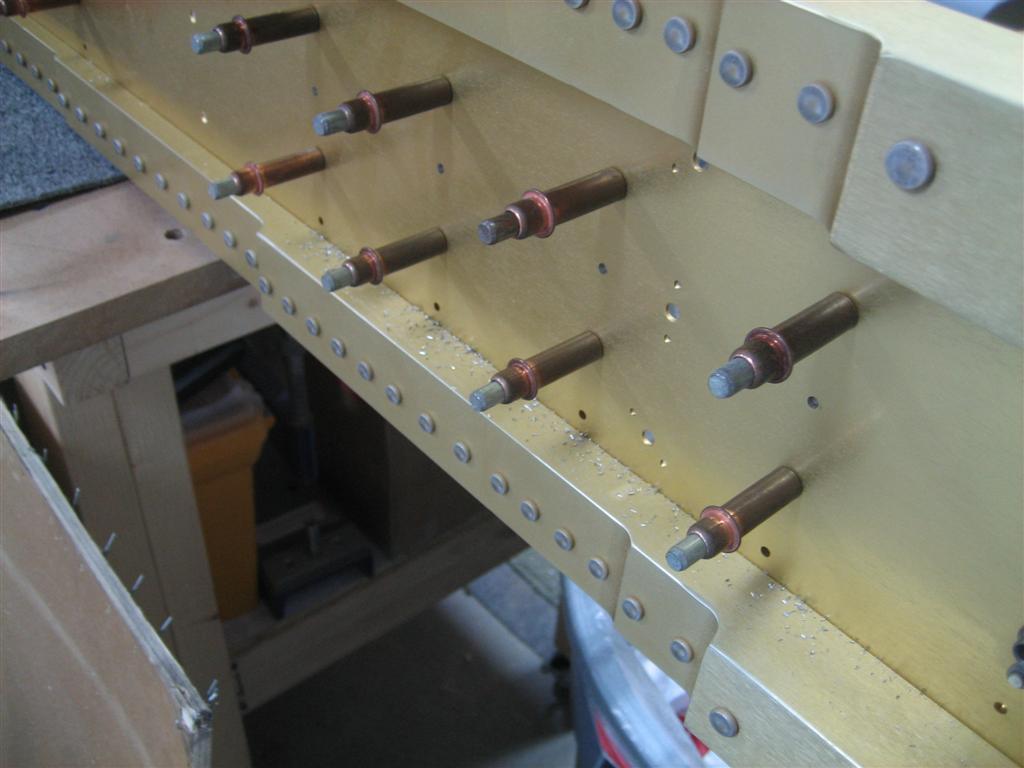
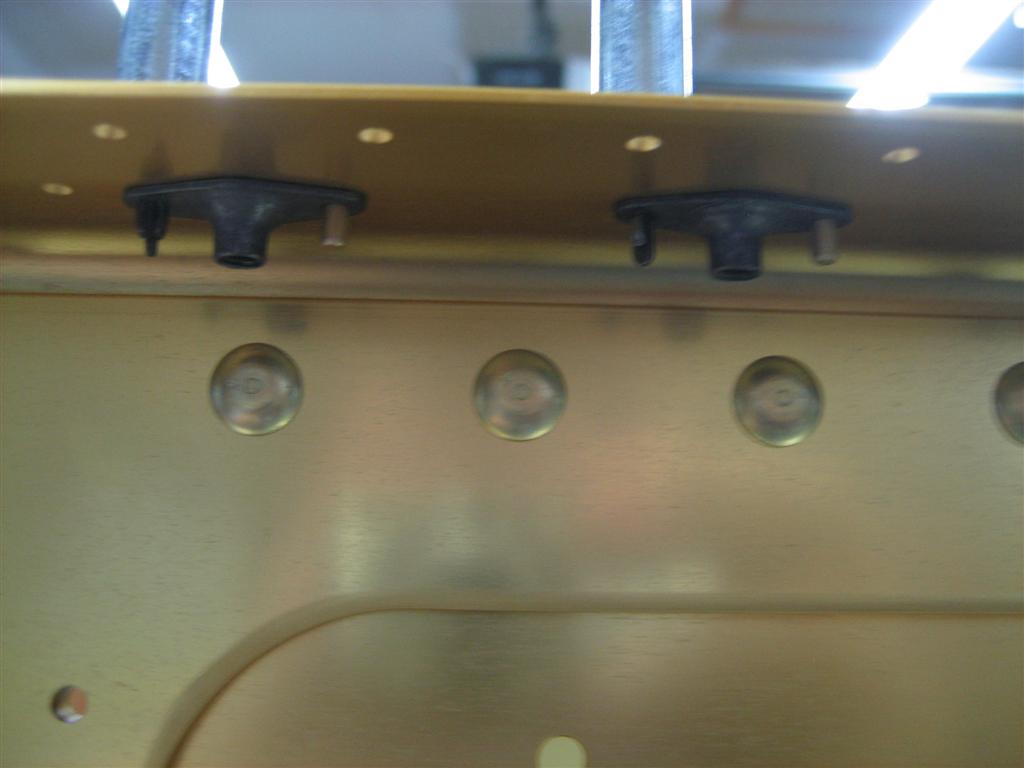
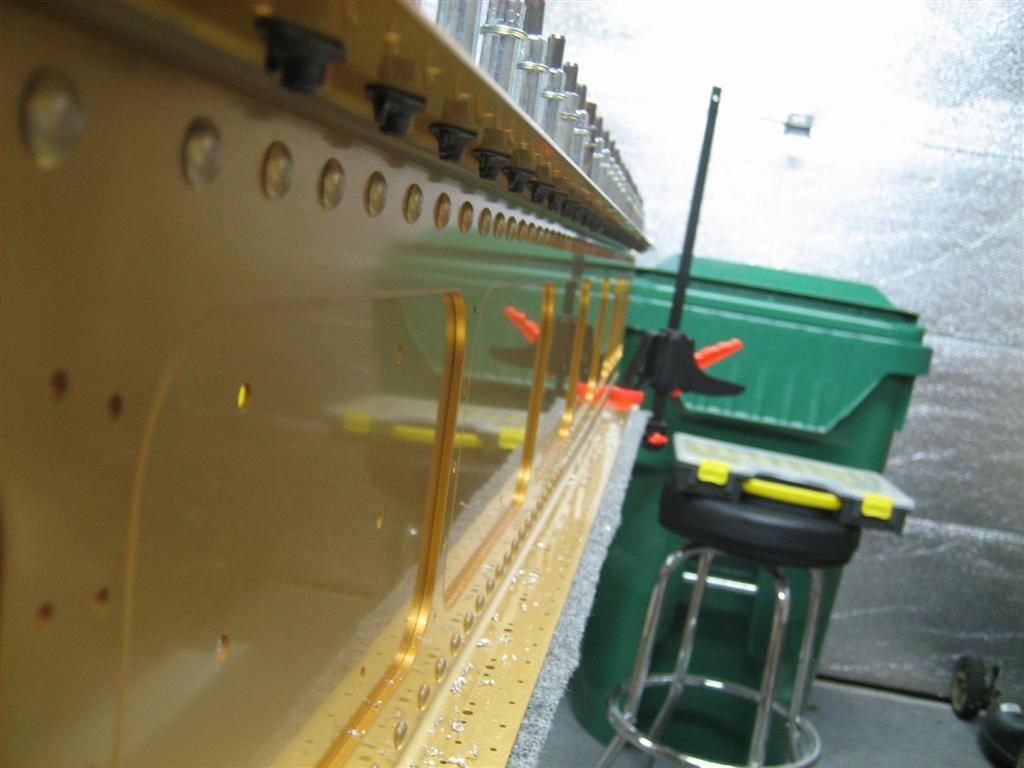
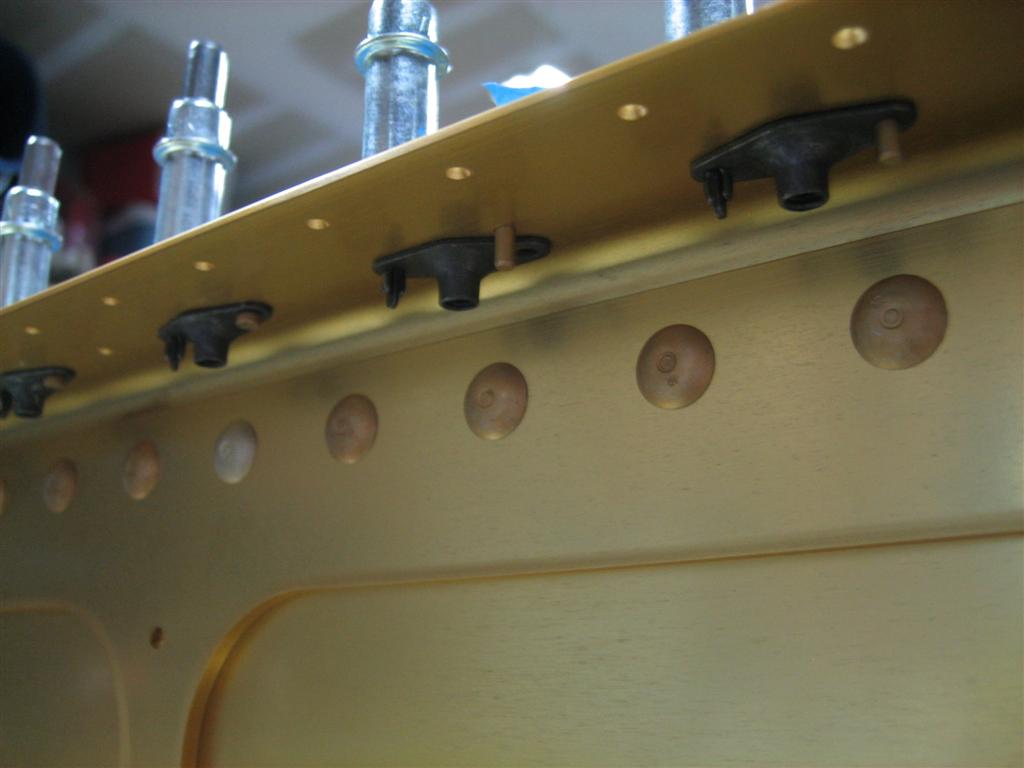
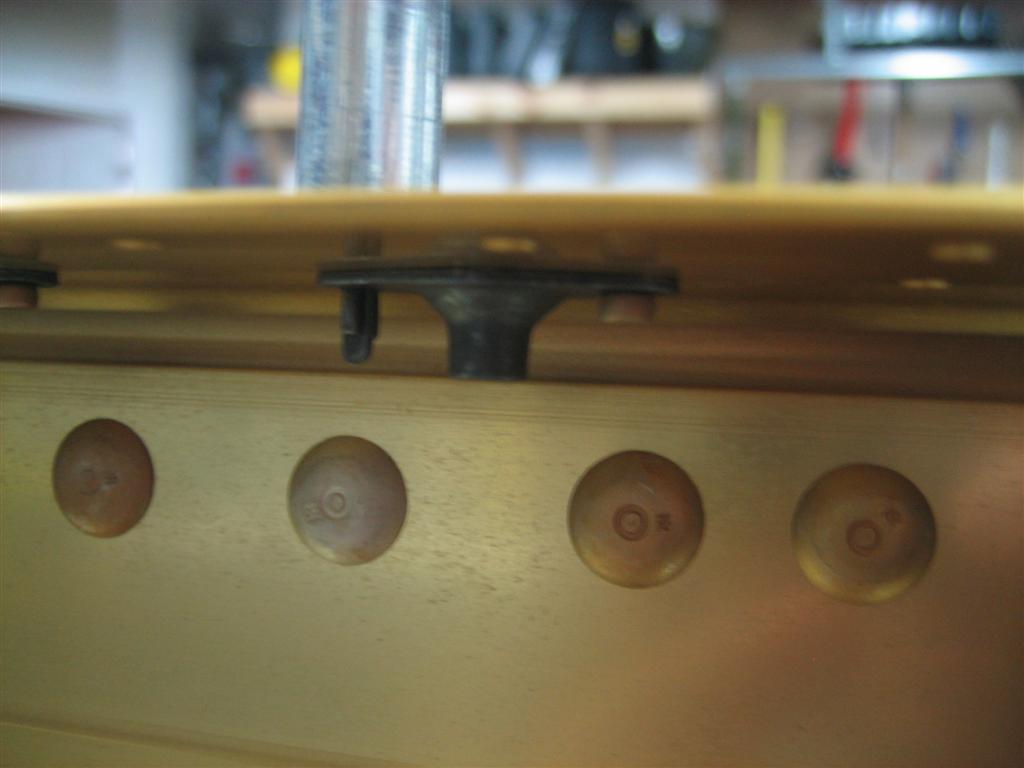
Here’s a good shot of what I’m trying to accomplish. The skins will overhang (to the right in this picture) the spar by about an inch from the last set of holes in the spar. I used the 1.5″ angle so I have adequate spacing (don’t have to notch my support angle to accommodate the skins).
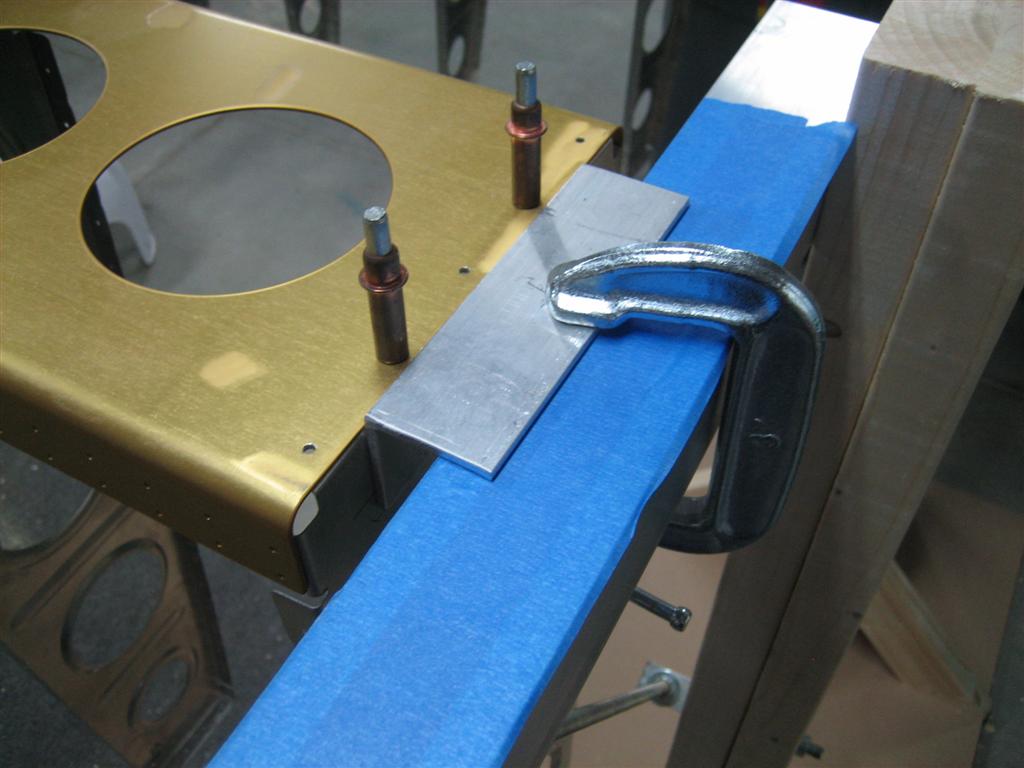
This will work great.

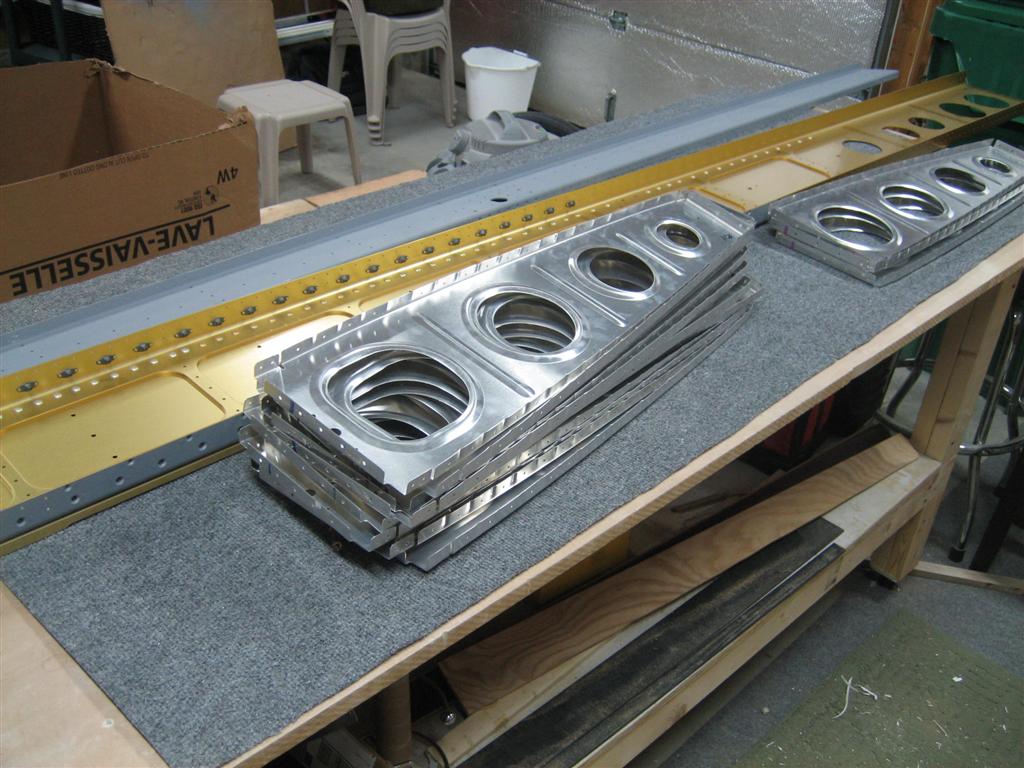
Okay, next up, rib preparation. Here are 10 of the 12 leading edge ribs (these 10 have the prepunched holes).
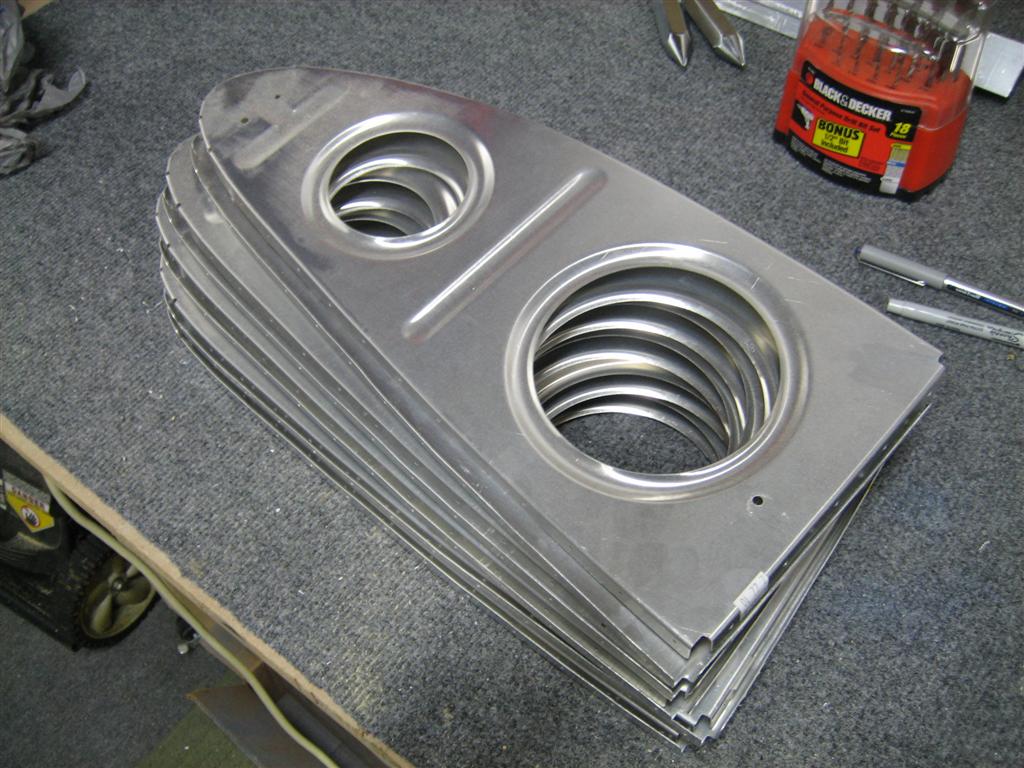
Leading edge ribs.

After spending about an hour deburring edges with the scotchbrite wheel, straightening the flanges to 90° and then fluting between holes to make sure the holes are straight, I numbered the ribs for each of the wings and then got to match-drilling.

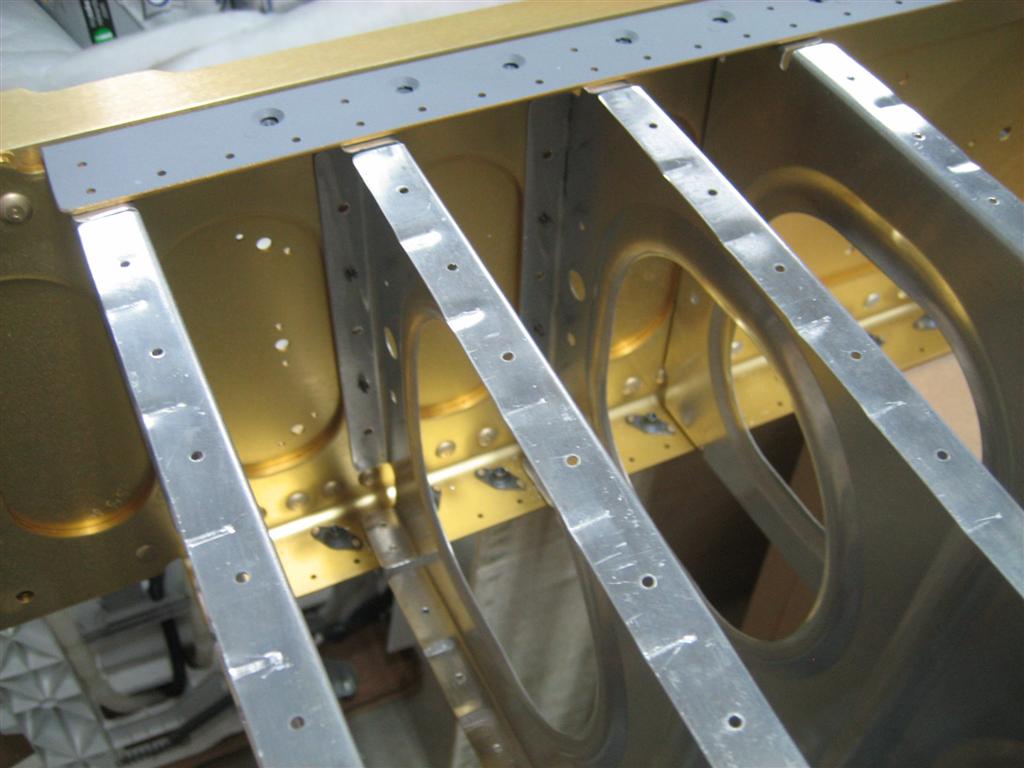
The only difficult parts here are that a couple of the W-709 ribs have holes where they don’t need them and don’t have holes where they do need them. The picture below illustrates.

Ignore the row of holes that has a cleco in it already; these are the main rib attach holes. See how the three middle holes leading edge rib lines up nicely with the prepunched holes in the spar? Those are easy to matchdrill to final size.
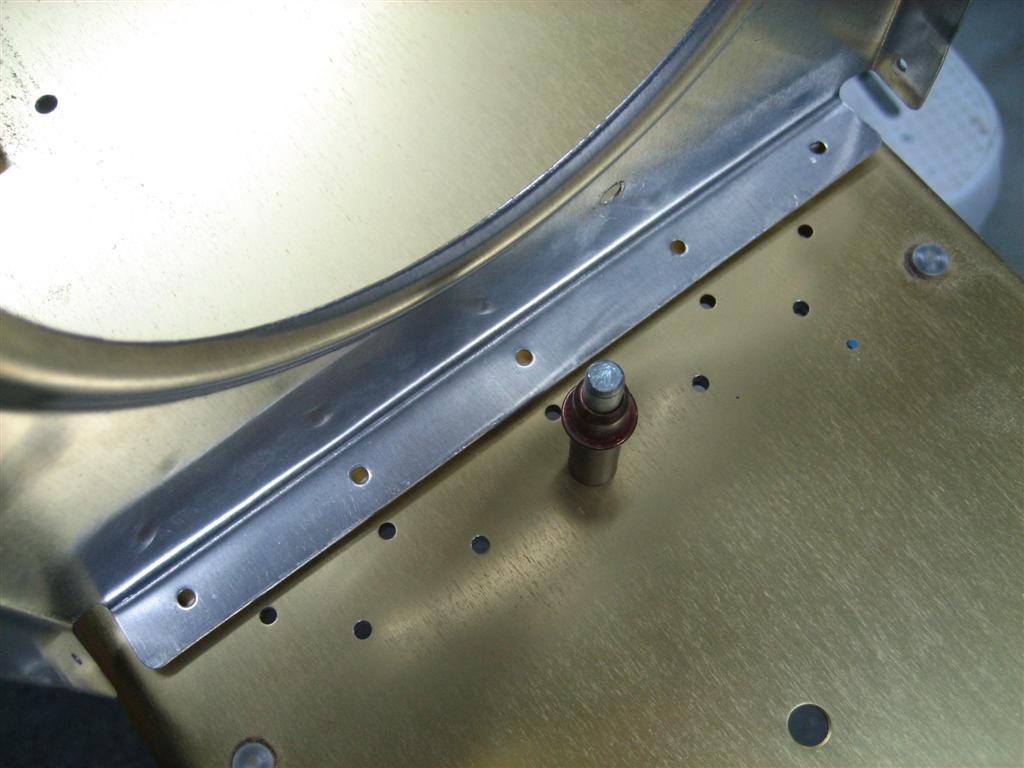
The outer two holes on the rib get "abandoned" while the two outer holes in the spar are used to backdrill new holes into the rib.

Here, I am using the holes in the spar to drill the new holes in the rib.
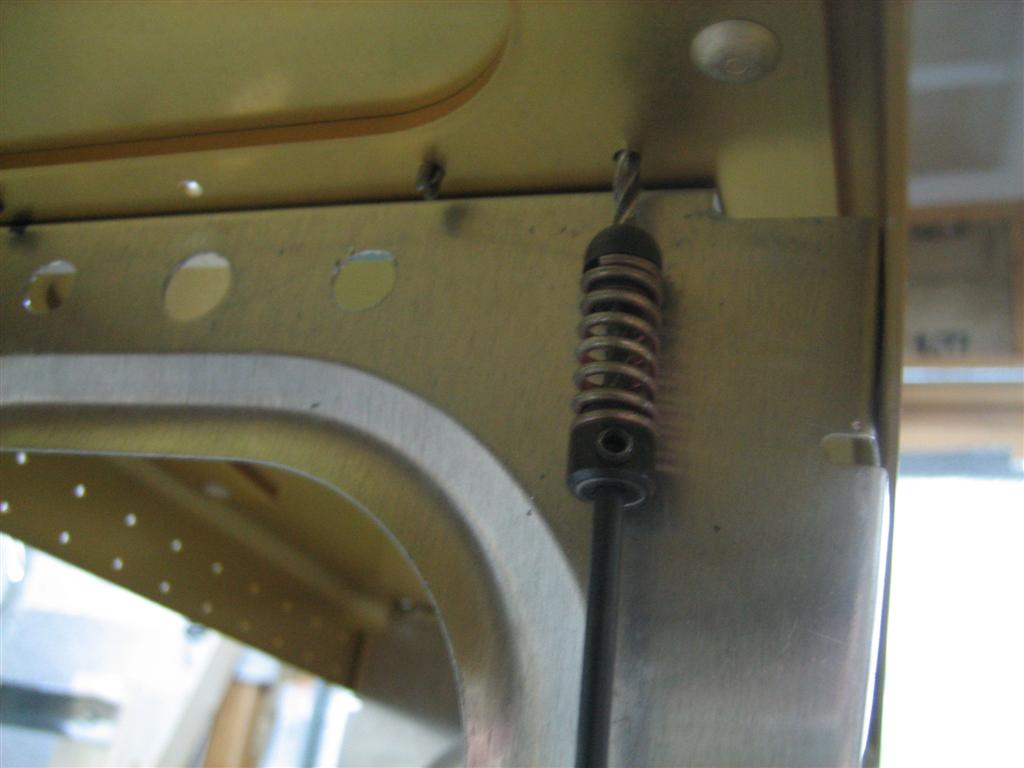
Matchdrilling using the spar.

I threw a couple clecos into the new holes. Now there are 5 attach holes, and 2 abandoned holes (you can see them on the outside).
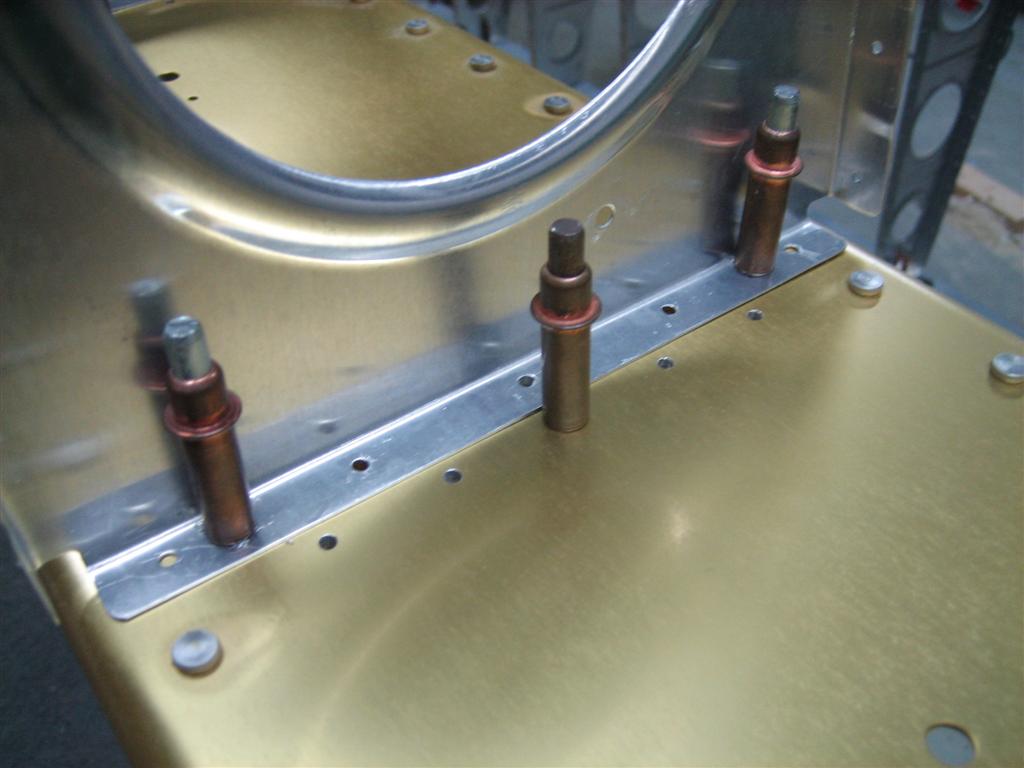
There are 4 total leading edge ribs that get this treatment. It's easy to tell which ones need it as you assemble the leading edge.

Then, I spent another half hour making sure all of the rib-to-main-spar holes were drilled. Now, they are ready for disassembly, deburring, prep for priming, priming, and assembly.

Oh wait. I still have to drill all the rib to rear-spar holes. I’ll do that tomorrow.

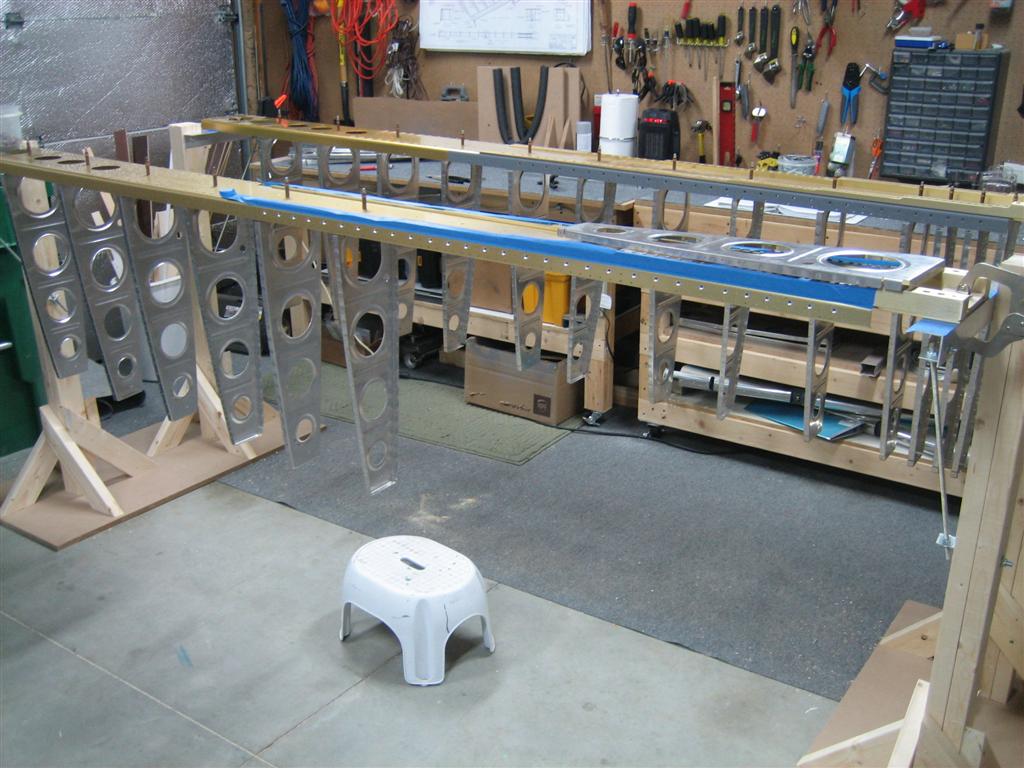
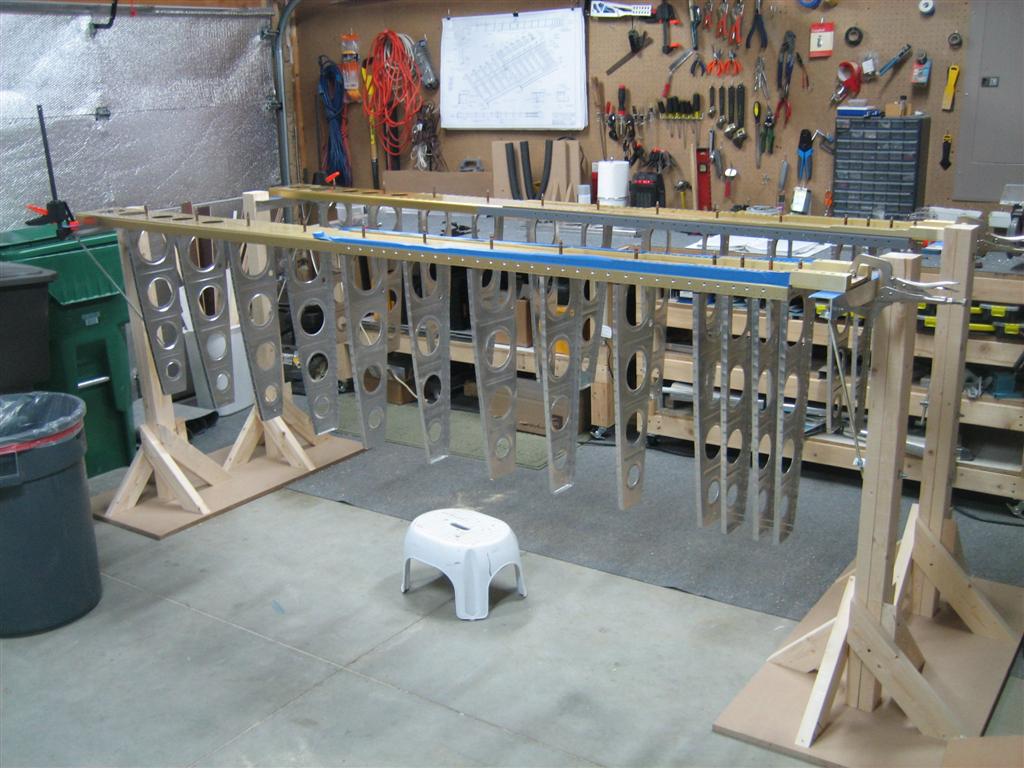
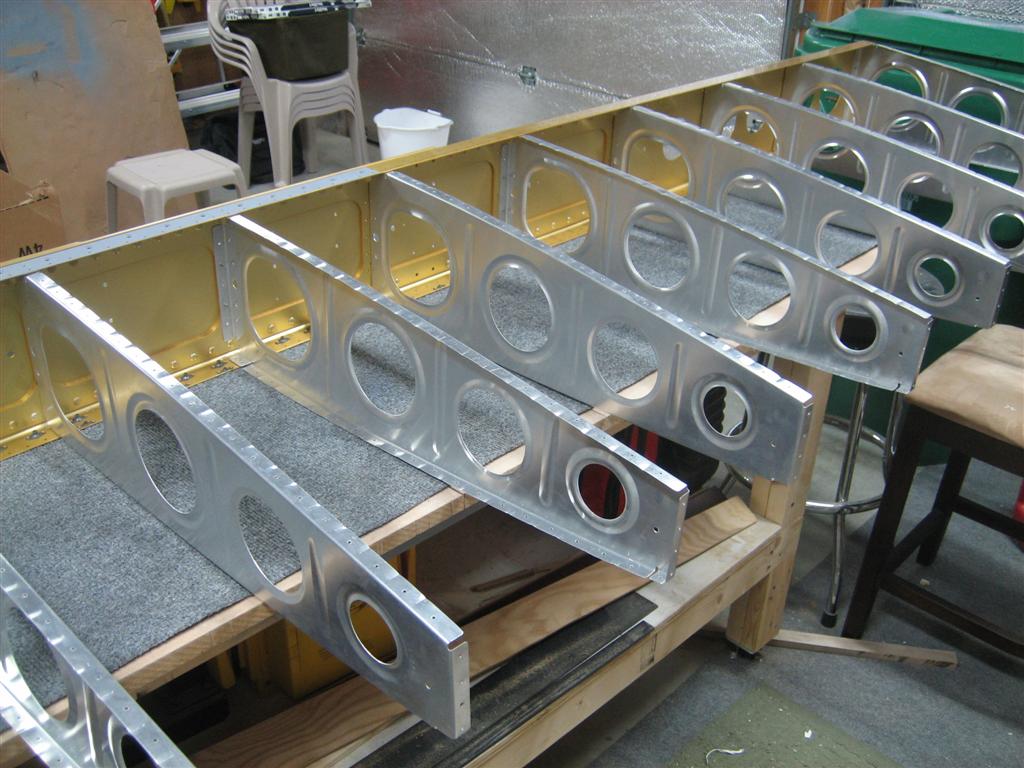
Before shutting down for the night, I snapped a picture of the two wings in the stands.
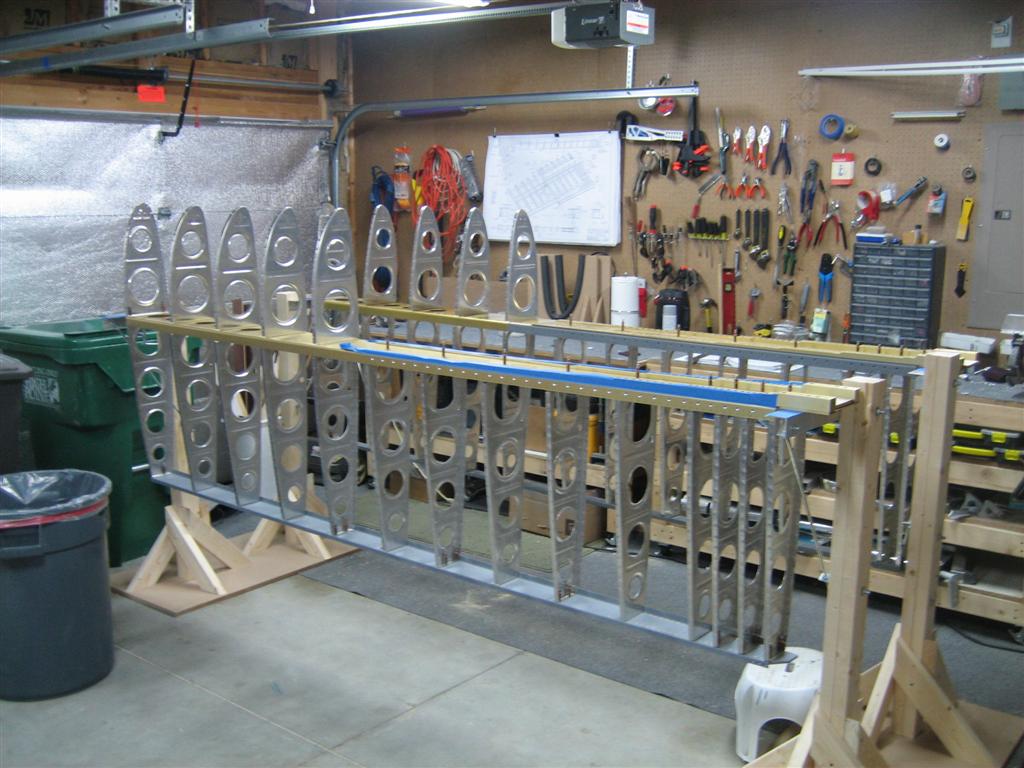
It's awesome to be at a point where I can see two big wings in the garage.

A half hour of attaching the outboard ribs to the wing stands, then 1 hour straightening and fluting rib flanges, then another half hour drilling ribs to the main spar.

I’m waiting on a 2-inch scotchbrite wheel from Cleveland Tools, so tomorrow I’ll drill all the main ribs to the rear spar and then I’ll find something else to do.

2.0 hours of big skeleton work.

Oh, and we shot this video the other day of the pups howling at a fire engine. I won’t ever not find this hilarious.

Prev | Next


Fluting and Straightening Left Wing Ribs

January 1, 2011

Prev | Next

Well, today was kind of boring. Between installing the toilet back into the powder room and sitting on my butt watching football, I managed to motivate enough to go do some fluting and flange-straightening on the left wing ribs.

I didn’t hang the outboard rib yet (still have to attach a 5″ piece of angle to help support the outboard edge), but here are the first 4 (of 14) ribs done.

I'm really liking this stand.

7 of 14 ribs done and hung.

All done.

Next up is matchdrilling the main ribs, then getting the leading edge ribs prepped, assembled on the spars, and matchdrilled. Then (because I’m working a little out of order), I’ll take all the ribs off and prep them for priming before starting to rivet the skeleton together.

A boring, but important hour of work today.

Prev | Next


FINISHED DEVINYLING WING SKINS!

October 18, 2010


Prev
| Next

WUHUOOOOOOOOOOOOOOOOOOOOOOOOOOOOOOOOOOOOOOO!

(Not that I don’t like devinyling…)

No really, it’s kind of mindless, easy time-passing.

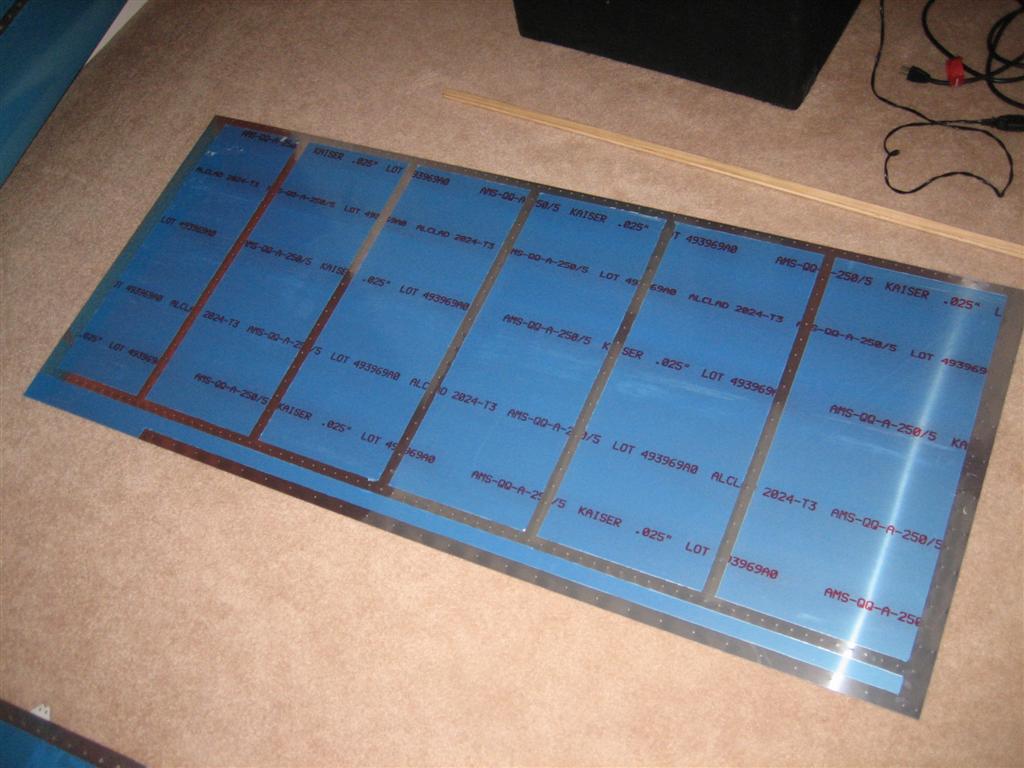
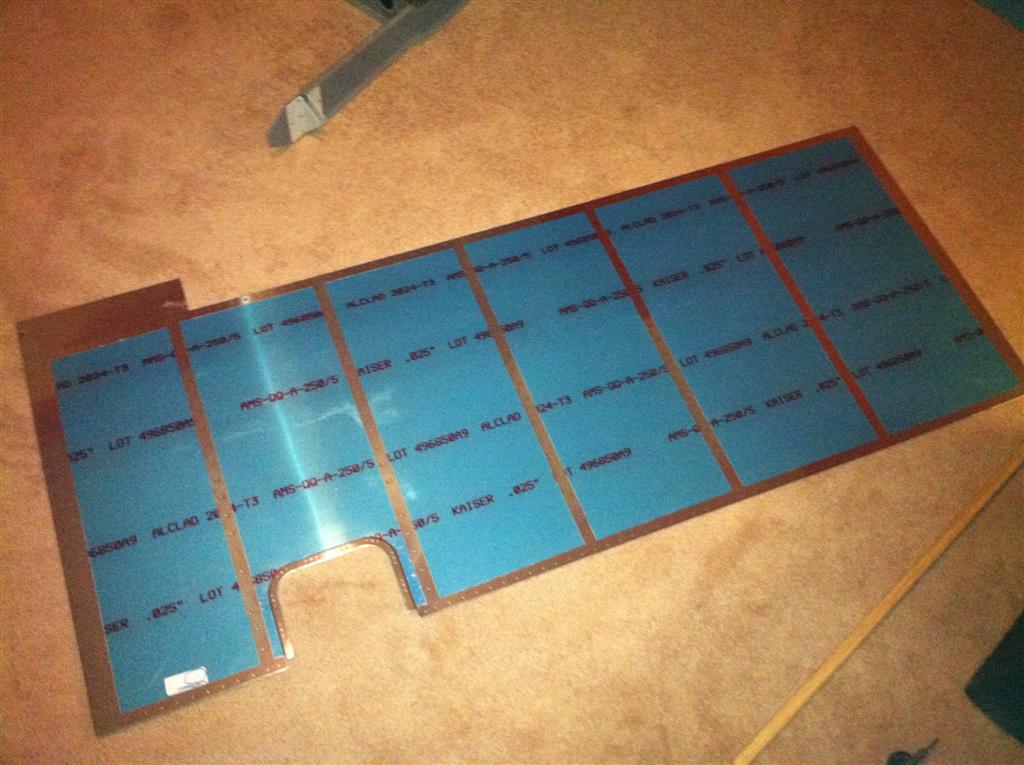
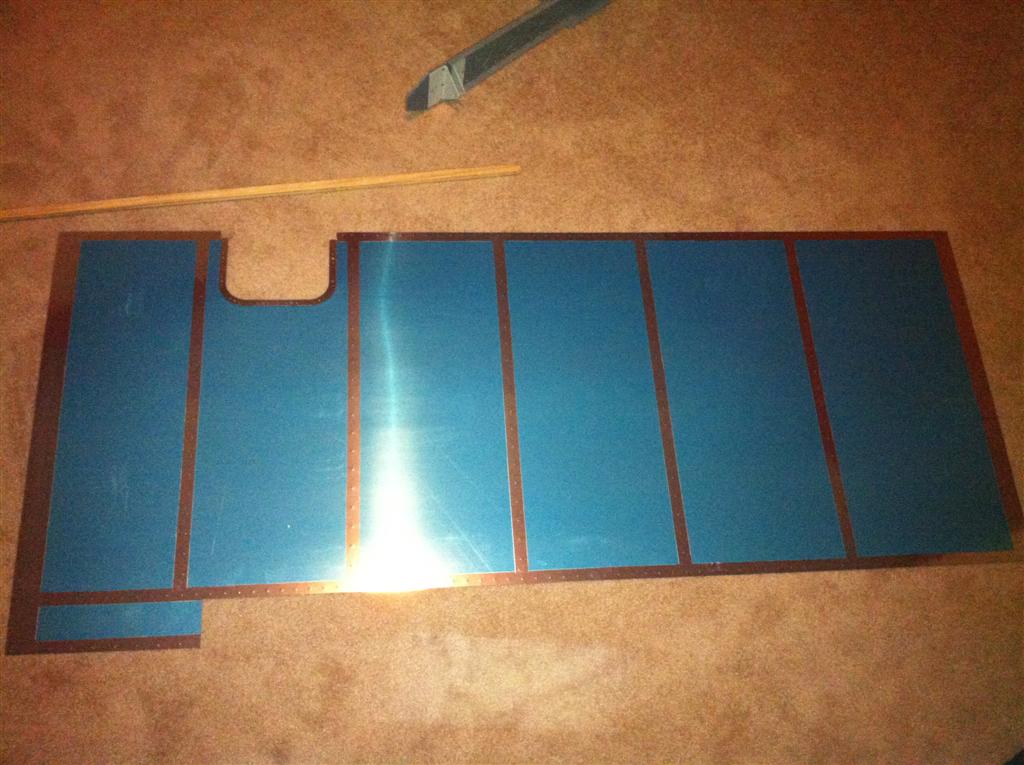
The real reason this is a win is that it is really the last thing (except for all of the leading edge, aileron, and flap skins) I can devinyl in the airplane room before needing to buckle down, finish up the floors, and really get started on the wings.


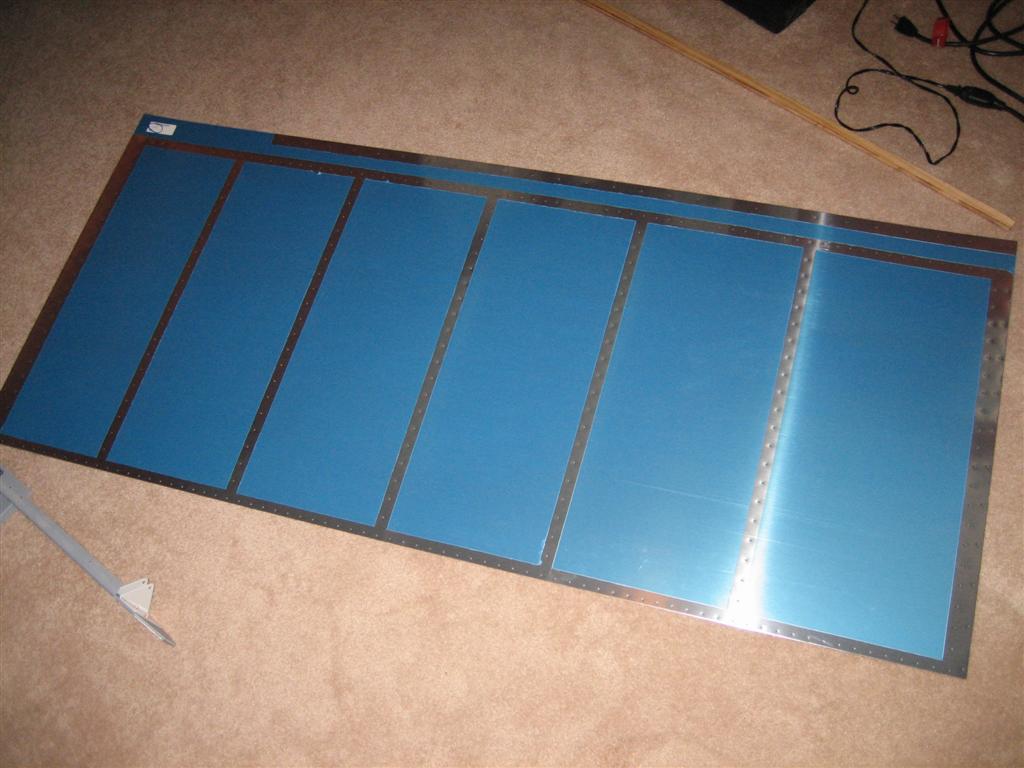
I think this is the right upper outboard skin, skeleton side.


And the other side.


Once I really get going on the other side, I need to catch the left main spar up to where the right is, build the left rear spar, and then do the rib prep trick. Then, I’ll build a wing stand and start the fun parts (Ha! They’re all fun parts!)

0.5 hours.


Prev
| Next


Devinyled Two More Wing Skins

October 6, 2010

Prev | Next

Well, I manage to put in another “inside” night tonight on the airplane.

I’m not sure why I took this picture. I think I was waiting for the soldering iron to heat up.

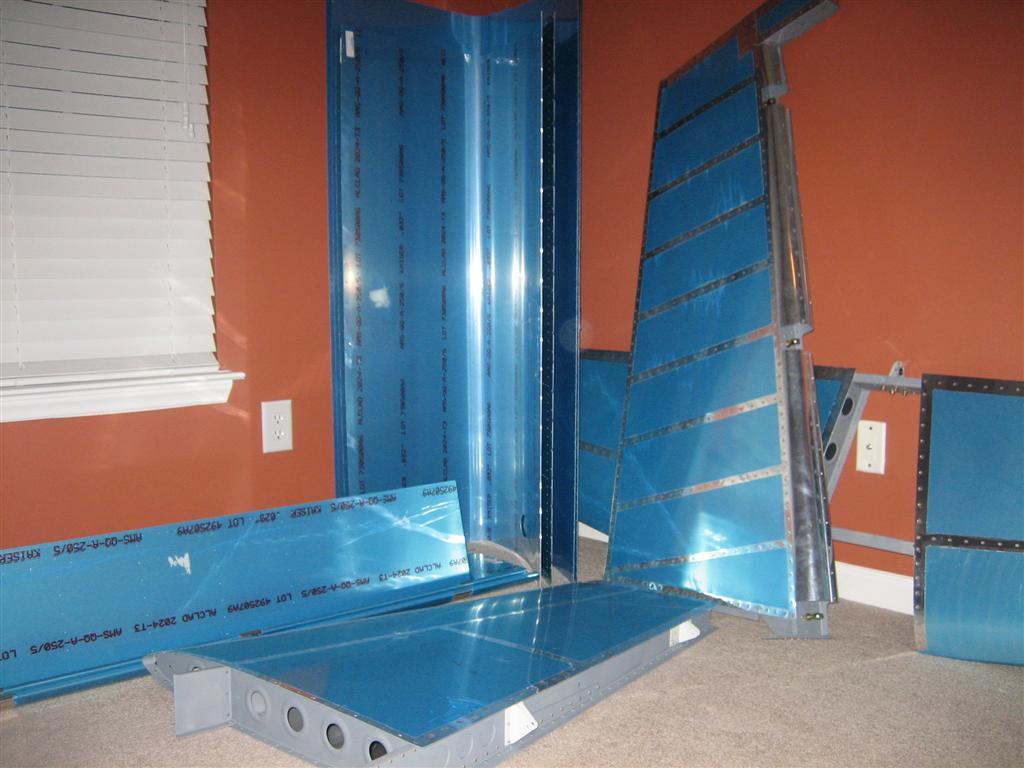
Some of the airplane parts in the corner. I need to get back to drilling out the rudder skins one of these days.

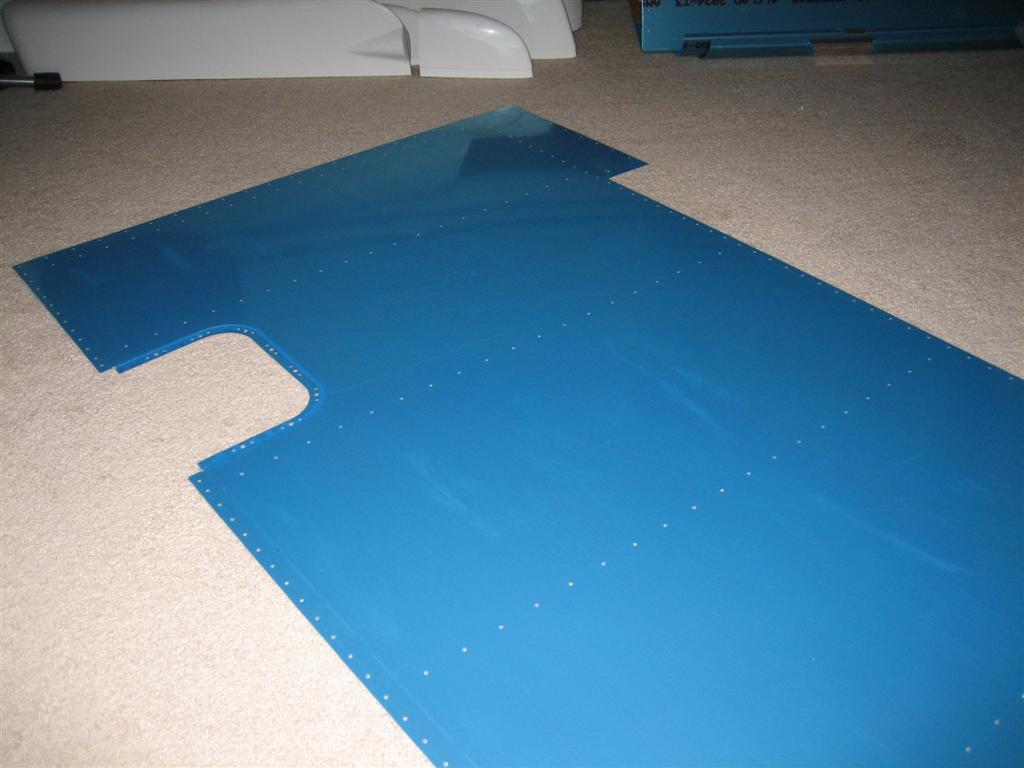
Anyway, I finished up the right lower outboard wing skin, and then moved on to one of the upper outboard wing skins (they are identical, so it isn’t a left or right).

Here's the right lower outboard wing skin before devinyling.

And after.

I totally forgot to take any pictures of the upper outboard wing skin I got done.

One hour tonight (30 minutes per skin). One more short session, and all my skins should be devinlyed.

Prev | Next


Devinyled Left Lower Outboard Wing Skin

October 4, 2010

Prev | Next

Not much work tonight, but I did manage to escape to the workout room (after a workout!) and devinyl the left lower outboard wing skin. I can’t think of anything funny or insightful to say about it.

Sorry.


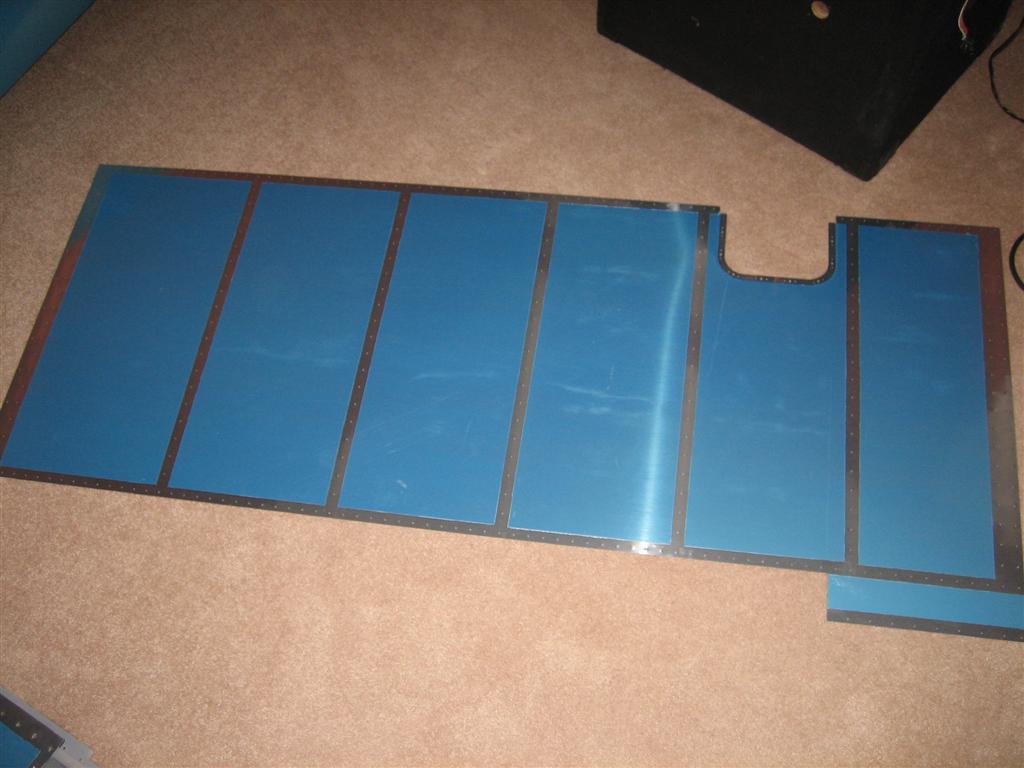
Upper (towards the wing skeleton) side.


Lower (towards the bottom of the wing) side.


Half an hour of vinyl-removing fun.

Prev | Next


Drilled Right Wing Ribs to Main and Rear Spars

September 29, 2010

Prev | Next

Tonight, I drilled all of the right wing main ribs to both spars. Not a lot of commentary, so I’ll just get to the pictures.

After drilling the middle two rear spar holes for each rib, I moved the clecos into those holes and matchdrilled the upper and lower holes.

Rear spar, looking forward.

Same with the front (although the clecos are in front of the main spar here).

You can just barely see the clecos in the 2nd and 3rd holes of each rib.

Also, I have a question about some of the flange-to-flange holes. Here’s what I wrote on the forums:

Hello everyone.

I was working on drilling my main ribs to the main and rear spar last night, and the instructions say “drill all of the rib to spar attach holes.”

Then, they have you take everything apart, deburr, prime, and then rivet the ribs to the spars.

What should I do for the flange to flange holes? (Circled in green below, but there is one more on the ribs for the lower rear spar flange).

If I leave them as is now, I’ll be match-drilling them with the skins later, but then I won’t be able to deburr the holes (because the ribs are now riveted to the spars).

I could run a #40 bit through all of these holes and deburr before assembly. (I could also dimple the rear spar ones, since they will eventually be dimpled to accept the skin dimples.

Any thoughts?

Thanks in advance.

Here's the same picture, but smaller, with green circles.

We’ll see what they say.

Here's a better angle.

Then, I pulled off the rear spar.

(What a sad moment. I have had this clecoed together for a week or so, and every time I go in the garage, there’s a wing! How cool is that? Now, I’m back to rib deburring (or catching up on the left wing). Not as exciting as a wing skeleton.)

After taking the rear spar off.

Everything taken apart for the night.

I can’t believe that took me an hour.

Prev | Next


Finished Countersinking Right Spar Flanges

August 24, 2010

Prev | Next

Well, tonight wasn’t a long night in the shop, but it was a good night.

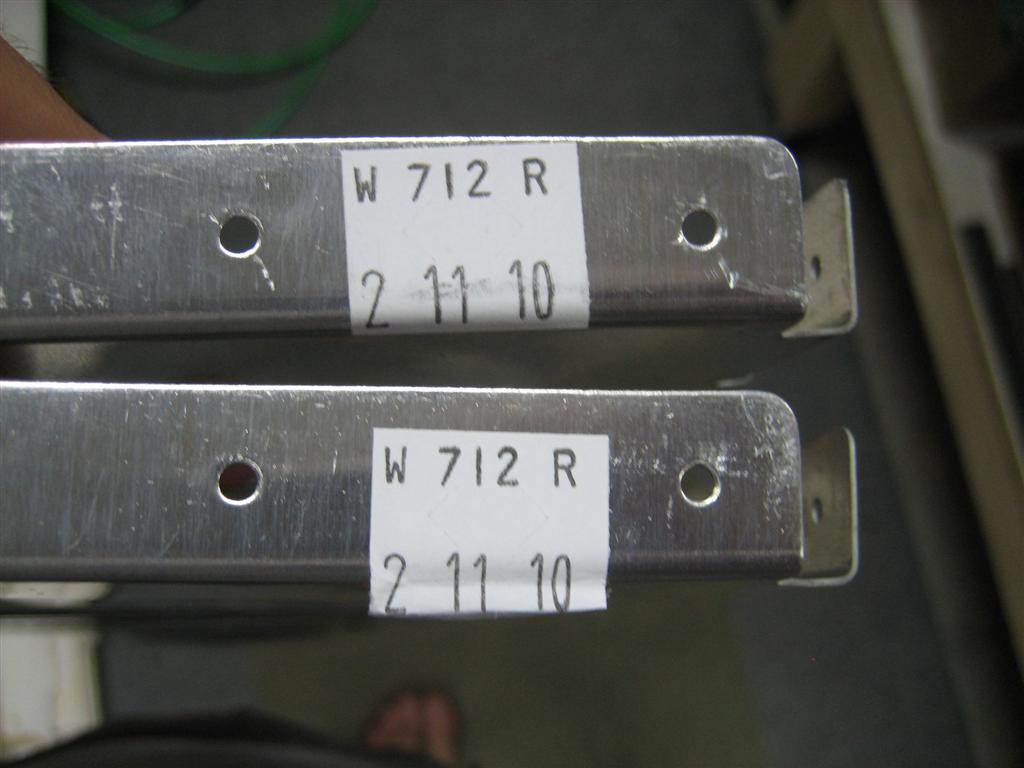
First of all, there was a package sitting on my doorstep when I got home from work. After the excitement for my new Cleveland Main Squeeze died down as I realized the package wasn’t from Cleveland Tools, it quickly came back when I realized it was the missing W-712-R ribs that I had been shorted (what a cruel world!) in my wing kit.

Who knew I could get so excited about wing ribs.

Drumroll please!

{Triumphant music}

Okay, Andrew. Time to settle down.

Let’s finish up this right spar flange countersinking.

From the first issue of the 2005 RVator (thanks to Brad Oliver, for the link) and to A VAF Post (again, thanks Brad), I was able to make this cute little HTML table for you.

From the first 2005 issue of the RVator (page 10):

We countersink until the top of the screw is level with the surface, then go 2 clicks deeper on the microstop. The actual outside diameter of the countersink measures .365″ to .375″.

Countersink Widths for Numbered Screws
Screw Size Width [in]

#6 <0.3125
#8 0.365-0.375

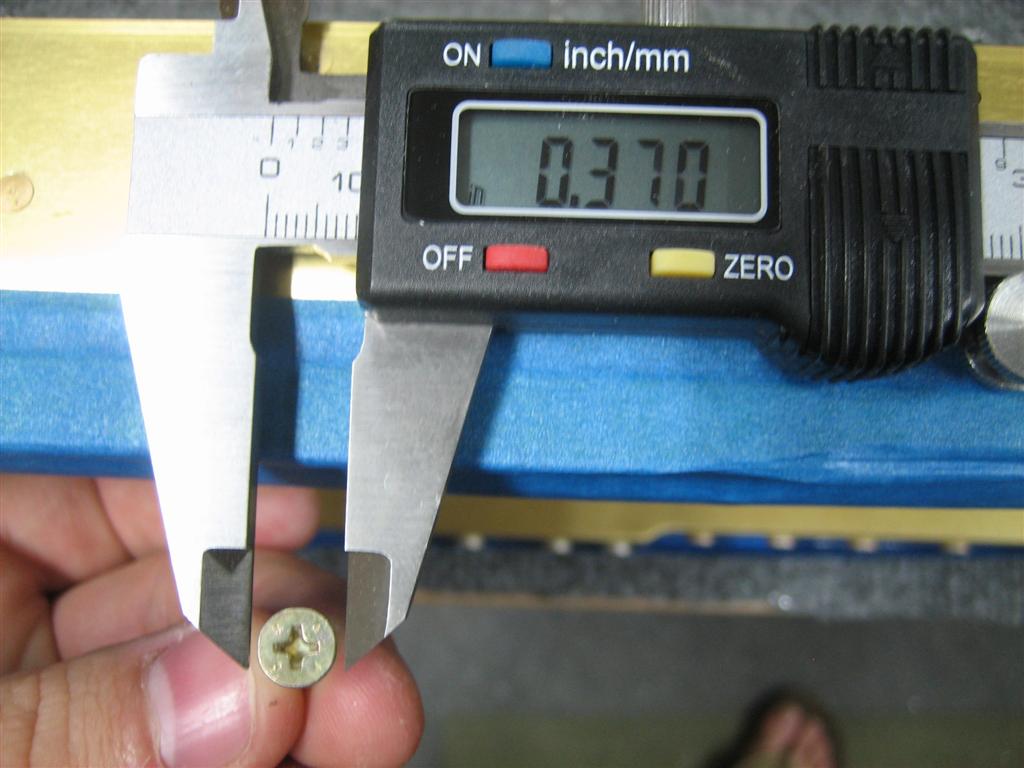
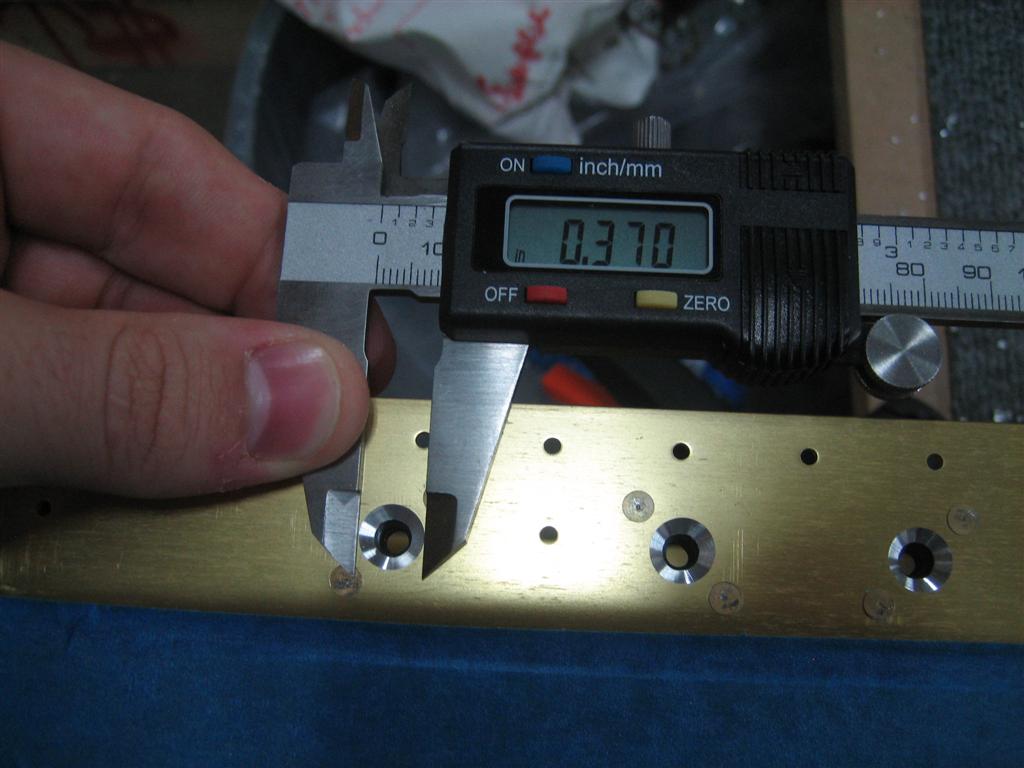
So, I broke out my trusty digital calipers, zeroed them out, and dialed in .370″ (right in the middle of 0.365″ and 0.375″).

Just for kicks, I thought I would show you how much bigger that is than a #8 screw. The larger size allows the dimpled skin to nest nicely in the countersink.

WHOSE TOES ARE THOSE!?

SOMEBODY’S TOES KEEP GETTING IN MY PICTURES!

Anyway, I proceeded with countersinking the tank skin attach holes only (the access plate attach holes are smaller.) I am following the directions here exactly, using a #30 piloted countersink (which nestles nicely in the #8 nutplate) as my guide.

I stopped and verified the countersink depth every few holes. Looking good!

About halfway done with the bottom flange.

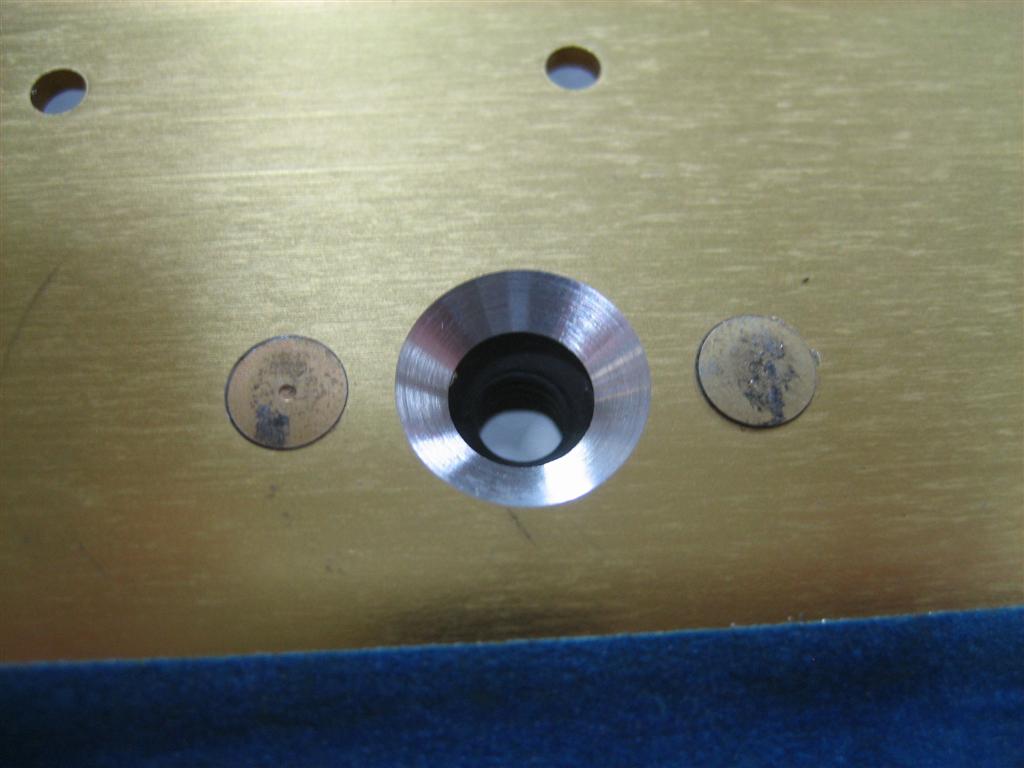
Here’s a countersink for your viewing pleasure.

The rivet on the right doesn't look flush, but it is. I promise.

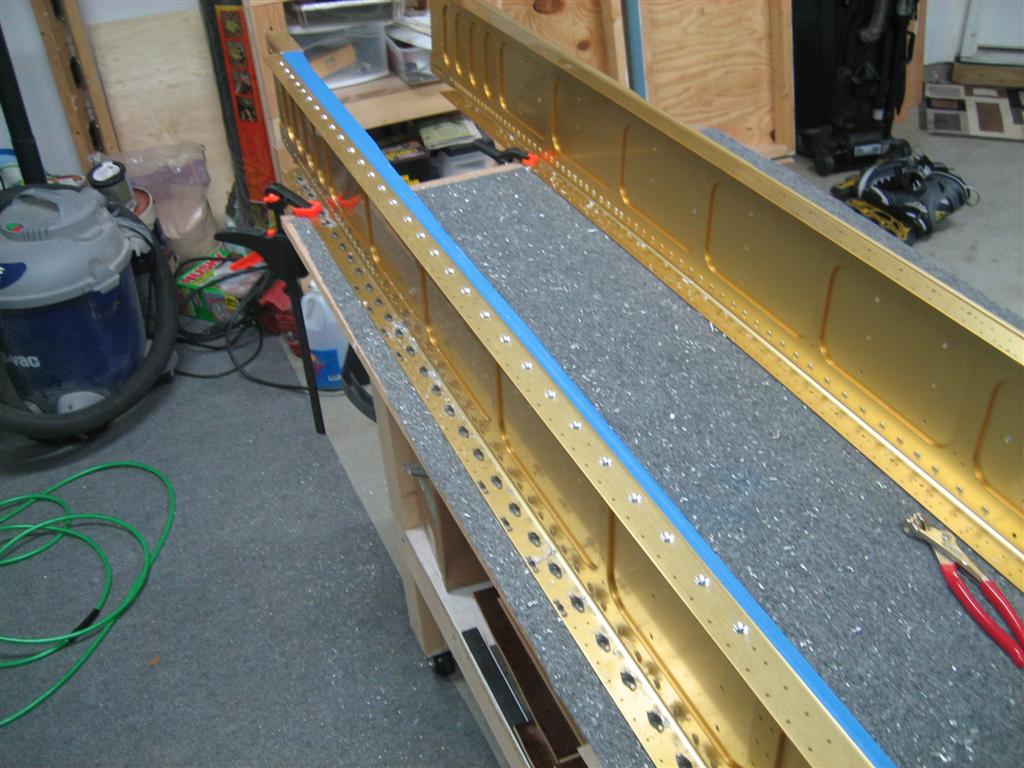
Finally, I finished with the bottom flange. (Notice the three sets of four countersinks on the right side of the picture. Those are for the access plates. They use a #40 piloted countersink and are countersunk to a width of 0.312″ (which is less than 0.3125″)).

Ta da!

Oh yeah, now I have to do the other side.

With a noticeable lack of in-process pictures, I finished the top flange also.

Ta da! (Déjà vu?)

1.0 Countersinking-filled hour tonight.

And, I’ve finished the first three paragraphs of the wing section of the manual. Score!

Prev | Next


Right Spar Countersinking and Nutplates

August 22, 2010

Prev | Next

Well, today was the first official wing construction day. While Van’s is trying to figure out what to do with my damaged left spar, I figured I should get started on the right spar.

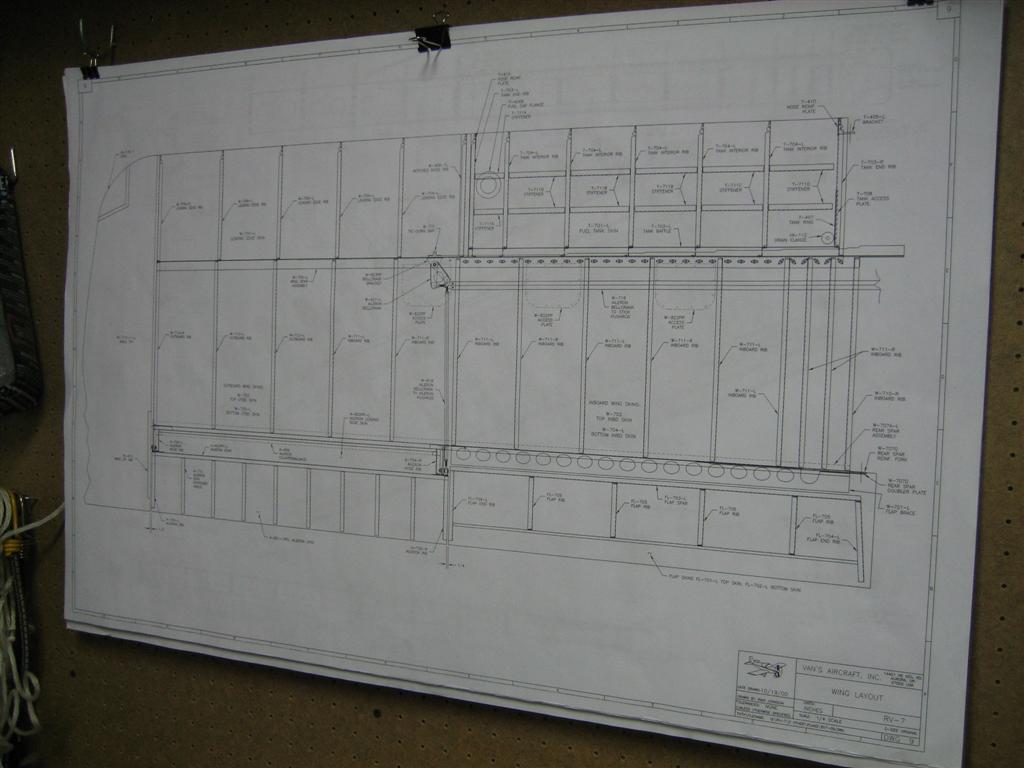
First thing…yup…a plans change picture!

The plans for the wing are a little different. There are about 4 separate sheets of different views for the wing. You guys get to see just the general layout one.

Wuhoo! A wing!

Now, let’s get to work. First thing, I very carefully put my beautiful right spar on the edge of the workbench and clamped the flange down very lightly. The spar will tip over onto the table (away from the camera) if the clamps let go, so I’m not too worried about clamping them down too much.

Every builder that has a website makes a comment here about how the construction manual really holds your hand and steps you through the process on the empennage, but then kind of just makes general statements for the wing. For example, the only real construction step on the first page of the wing section says:

“To begin wing construction, rivet the tank skin attach platenuts to the spar as show in DWG 16A, Detail A. Machine countersink the platenut attach holes in the W-706A spar flange.”

Wait. What? That is like 1000 steps, condensed into one statement. It ended up taking me 3.5 hours to do that one step (I admit, I also delved a little into a step a few steps down):

“Attach the K1000-06 platenuts for the W-822 access plate to the W-706A flange. See DWG 12.”

Fine. I see how it’s going to be.

Let’s get started.

Where is my countersink?

A lot of builders start out thinking they should make a nutplate jig and countersink the screw holes before riveting the nutplates (sorry Van, I call them nutplates) on so they can use the jig as a guide for the c/s pilot to avoid chatter. Van’s suggests using the installed nutplates as the pilot guide. After those builders spend some time making those jigs, they eventually abandon the idea and fall back to the Van’s method. I’m going to do something I don’t normally do and FOLLOW THE INSTRUCTIONS. Sometimes, I try to get cute with extra ideas and fancy engineering solutions, when really I should just do things by the book.

So I grabbed my countersink with a #40 c/s bit, tested in some scrap, and positioned the countersink cage over one of the nutplate  attach holes.

The c/s pilot didn’t fit. What?!

You mean I am going to have to drill all of these holes out to #40 first? Ugh!

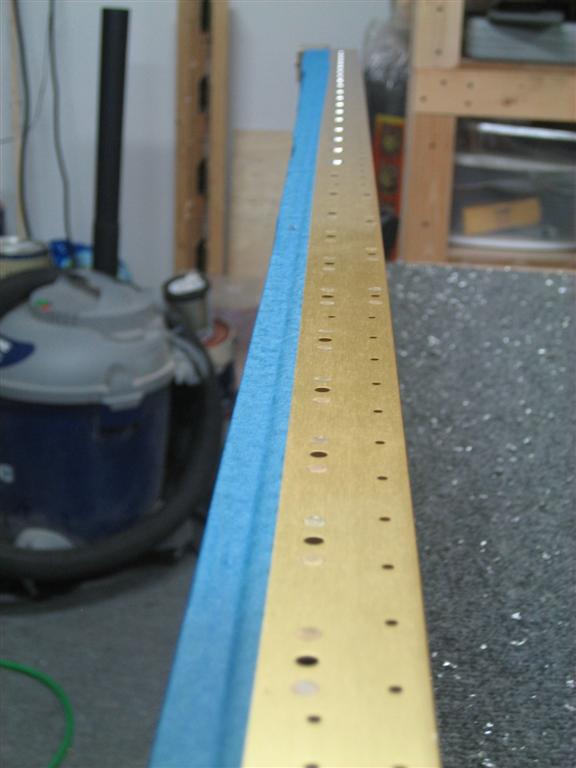
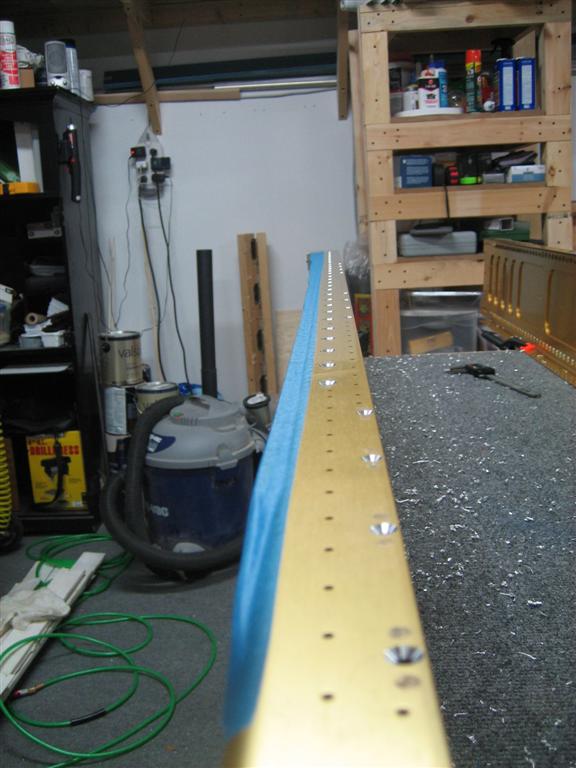
After drilling every one of the attach holes out to #40, I finally got the countersink and cage loaded back into my cordless drill (slower and more trigger feathering ability than the air-drill) and got to it. Here are my first 10 countersinks.

The blue tape is to prevent metal shavings from getting lodged in between the spar cap bars and the spar web.

Anyway, I continued down the row, being very careful to slow myself down and not to fall into too much of a routine. I could feel this was going to be one of those areas where I would be going through the motions and mess something up. (I did make a mistake while drilling out all the holes to #40. I accidentally drilled out a skin attach hole, too. No biggie, but a perfect example of moving too quickly in a habitual way.)

I stopped about every 6 countersinks and retested my countersink depth using a AN426AD3-4 rivet. They are all perfect. Here is the end of the row, looking back toward the “diagonal” wing-walk attach holes.

Pretty, pretty.

Then, I flipped the spar over and did the bottom flange. Also, there are some access panel nutplate that get attached now, too. I went ahead and countersunk for those attach rivets, also.)

Bottom flange, sobriety-maintaining Sprite-zero, and the girlfriend's cordless drill I'm borrowing (pronounced "you can have it back when you pry it from my cold, dead hands"). Thanks girlfriend!

Phew, that was a lot of countersinking. (I think I counted 144 total countersinks for just the nutplate attach holes. There’s another 72 for the screw holes (in the middle of each set of three holes) I’ll have to do later.)

Next, I grabbed some K1100-08 nutplates, some silver 3/32″ clecos, and some AN426AD3-4 rivets and started getting ready. My plan is to cleco the nutplate to the spar, insert one rivet, then after riveting that one, take the cleco out and rivet the other side.

Cleco in one side, unset rivet in the other.

Down the line, everything ready to rivet.

Redundant picture.

Ahh, this slower, more thoughtful approach is paying off. Can you see the error that I almost made?

Which one of these is not like the other?

Here's an example nutplate before I take the cleco out and put the other rivet in.

I can’t remember why I took this picture. I think I just took out all the clecos, and I thought it looked cool.

Ready to set the second half of the rivets.

No pictures of the second rivets, but here’s one of the other (now top) flange.

You can see all of the nutplates on the lower flange.

Anyway, I set all the nutplate attach rivets on the upper flange, and then called it a day. So I got to cross off the two statements in the construction manual I highlighted above, and next up is to use the installed nutplates as c/s pilot guides for countersinking the screw holes.

Oh, and then I get to repeat on the other spar.

3.5 hours of countersinking and riveting today. 144 rivets, 1 drilled out (the rivet split in two!). Good times.

Prev | Next