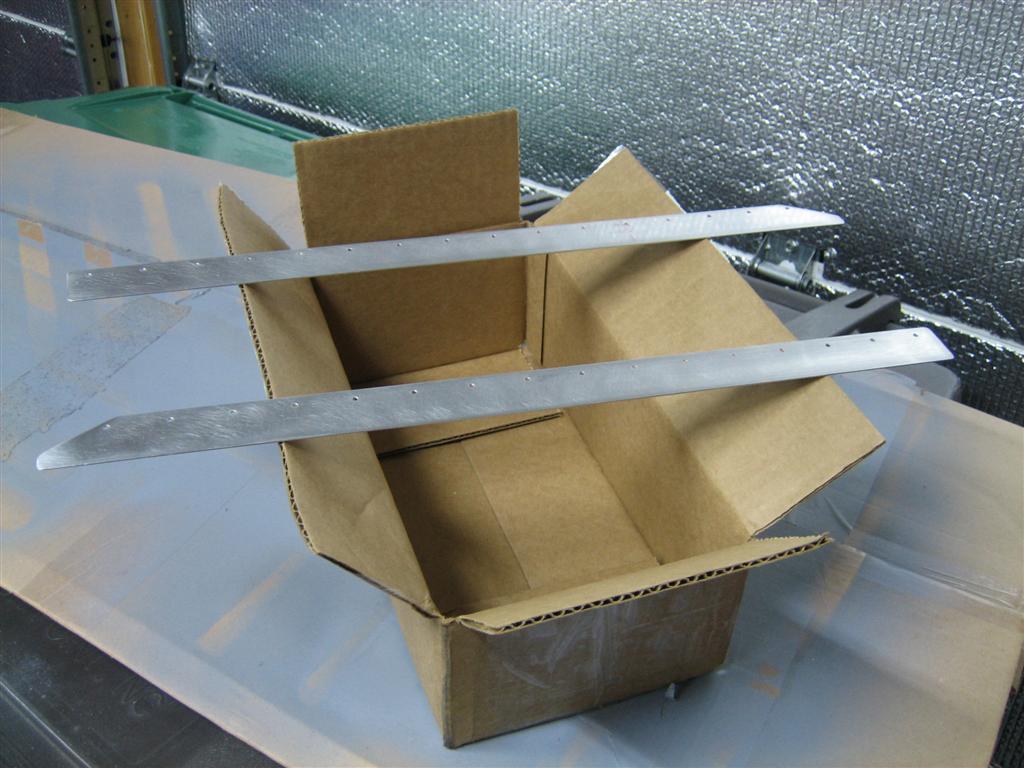
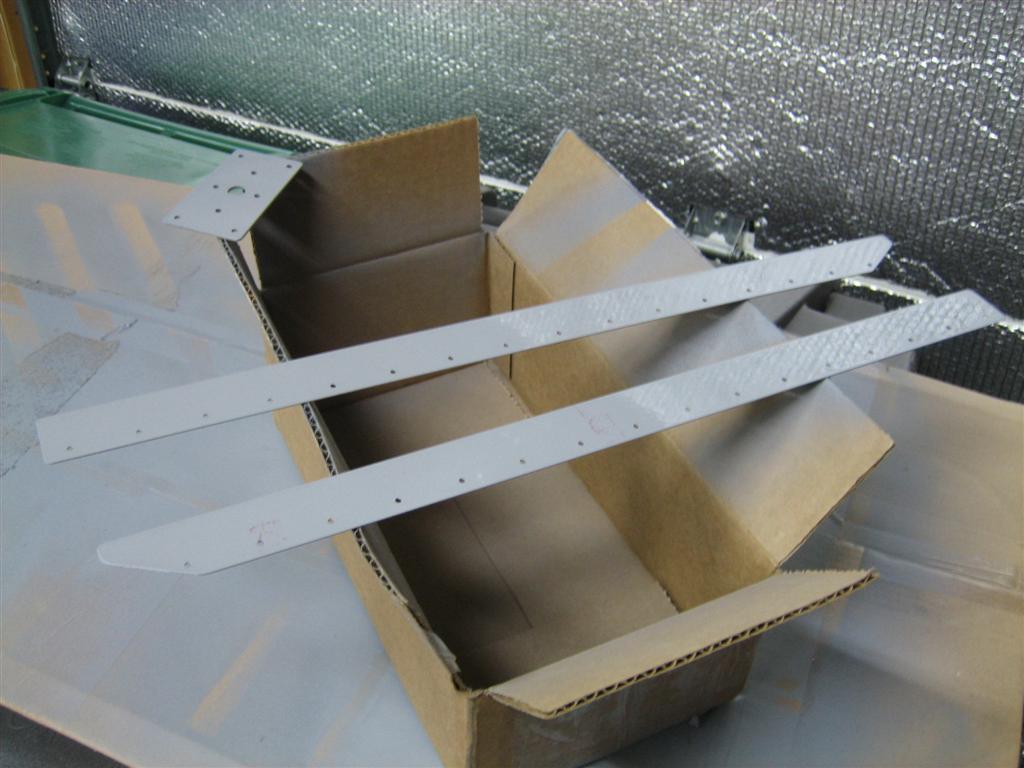
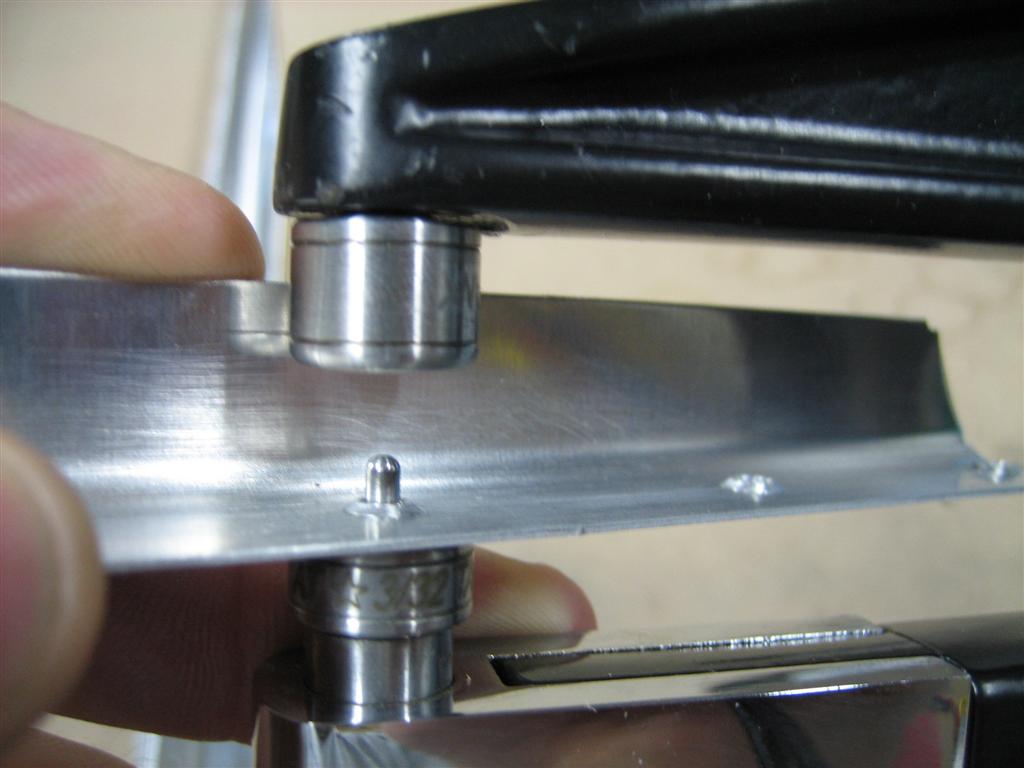
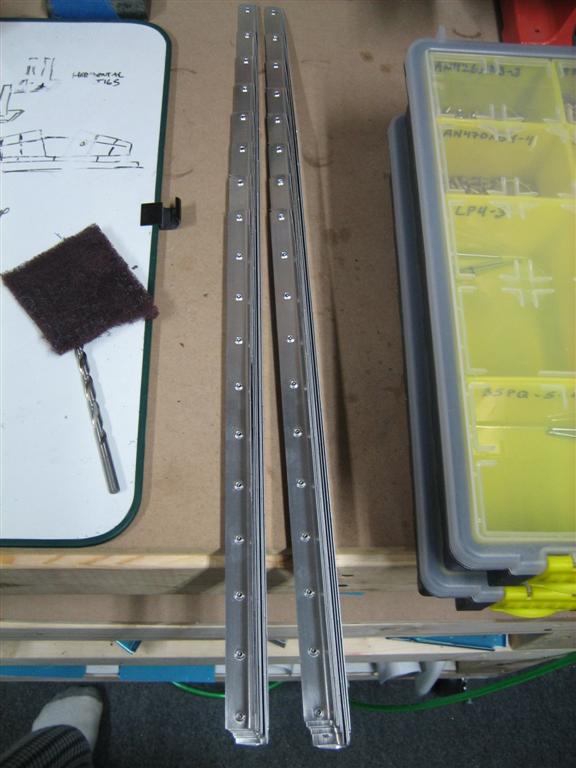
Fixed Right Elevator Trailing Edge

April 24, 2010

Prev | Next

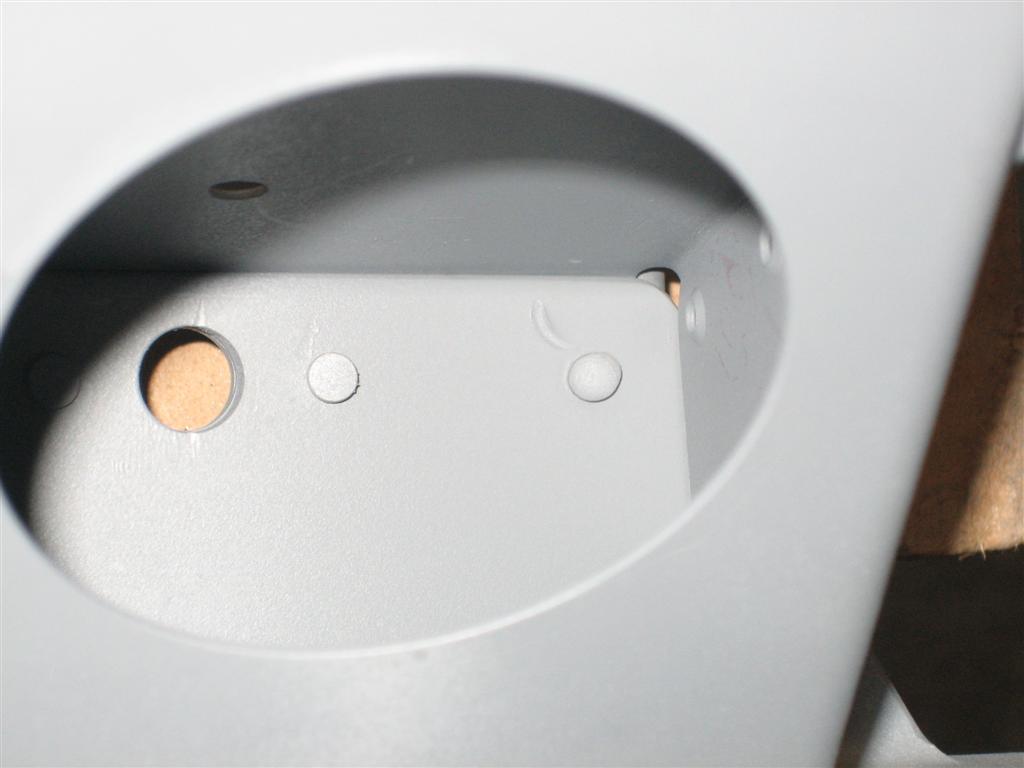
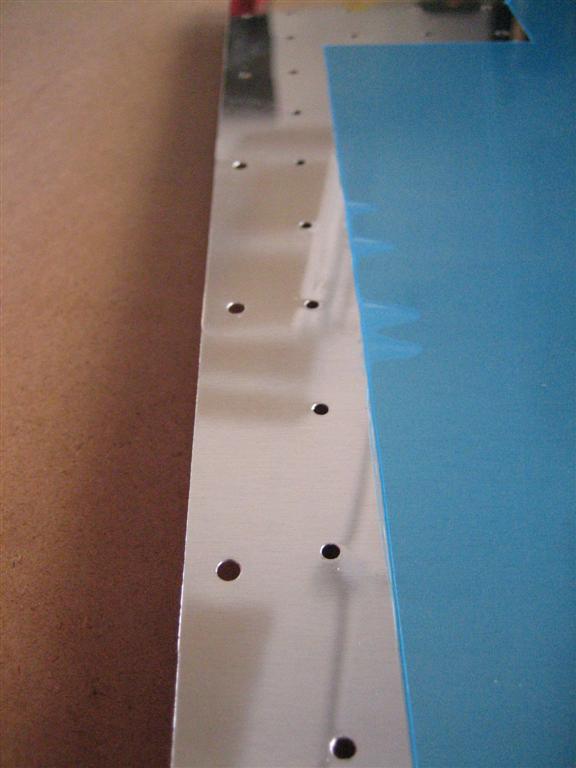
I’ve been lacking in motivation recently due to some badly dimpled holes along the trailing edge of the right elevator. All last week, my error had been hanging over my head, and I was having trouble even motivating myself to fix them.

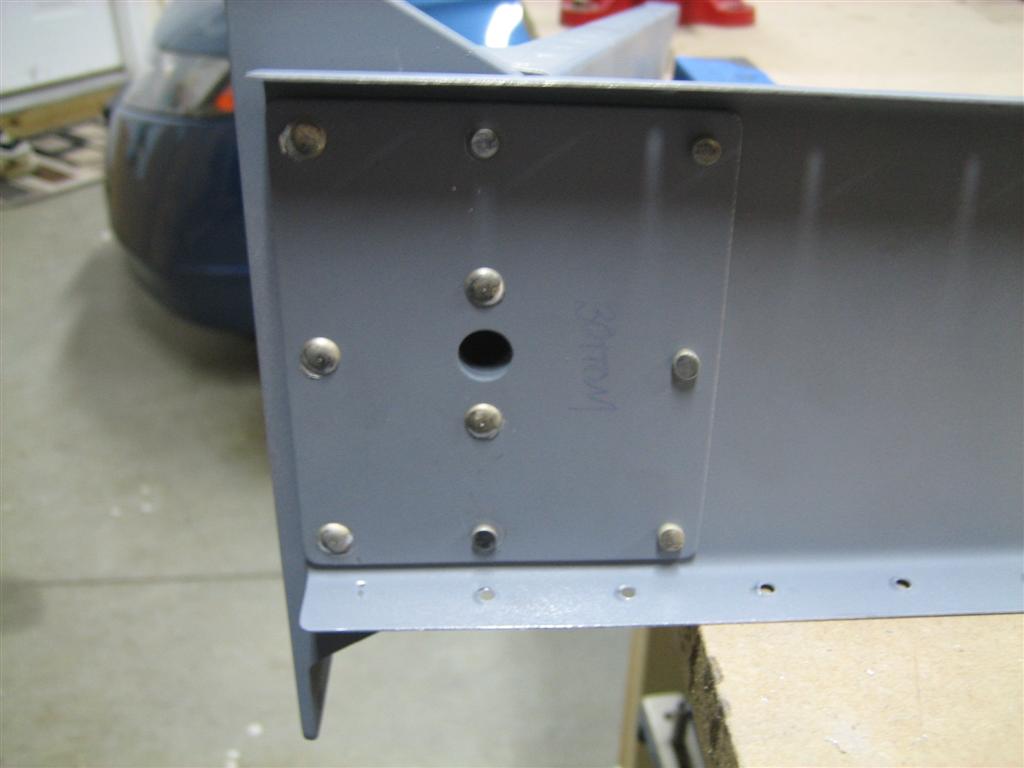
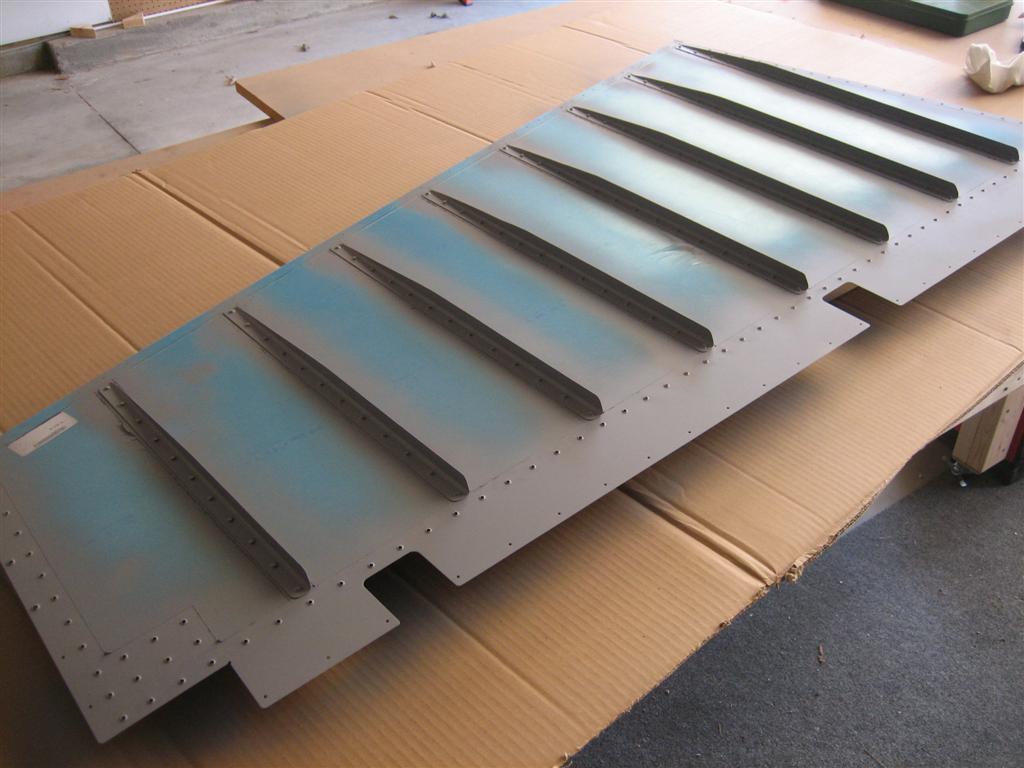
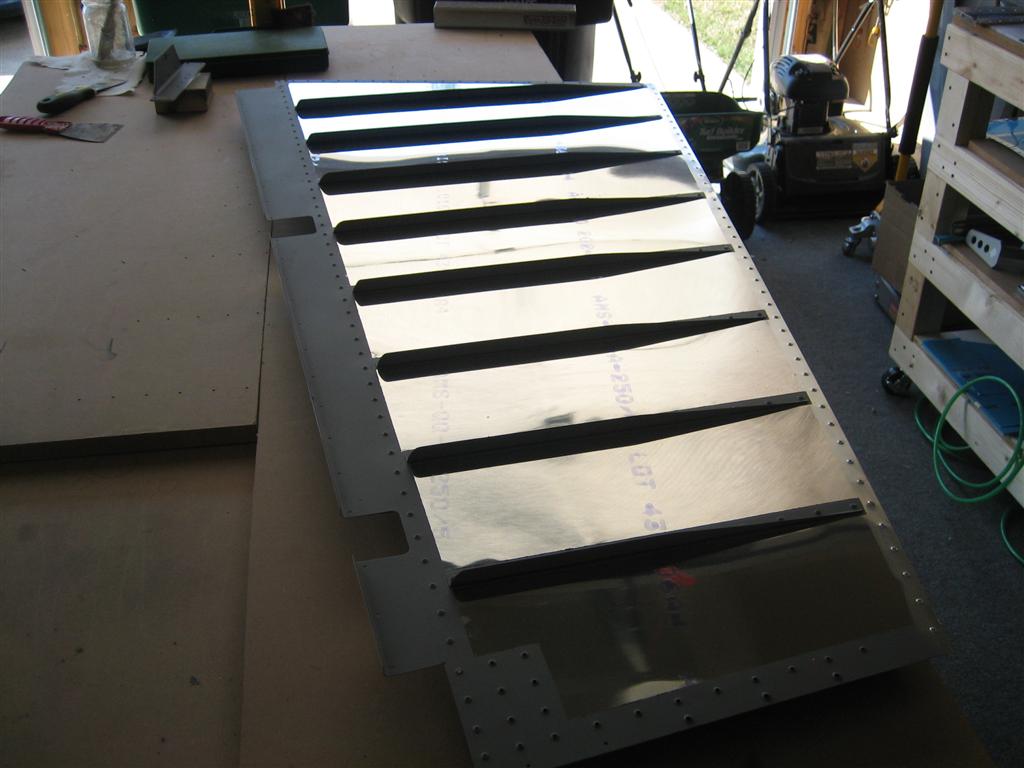
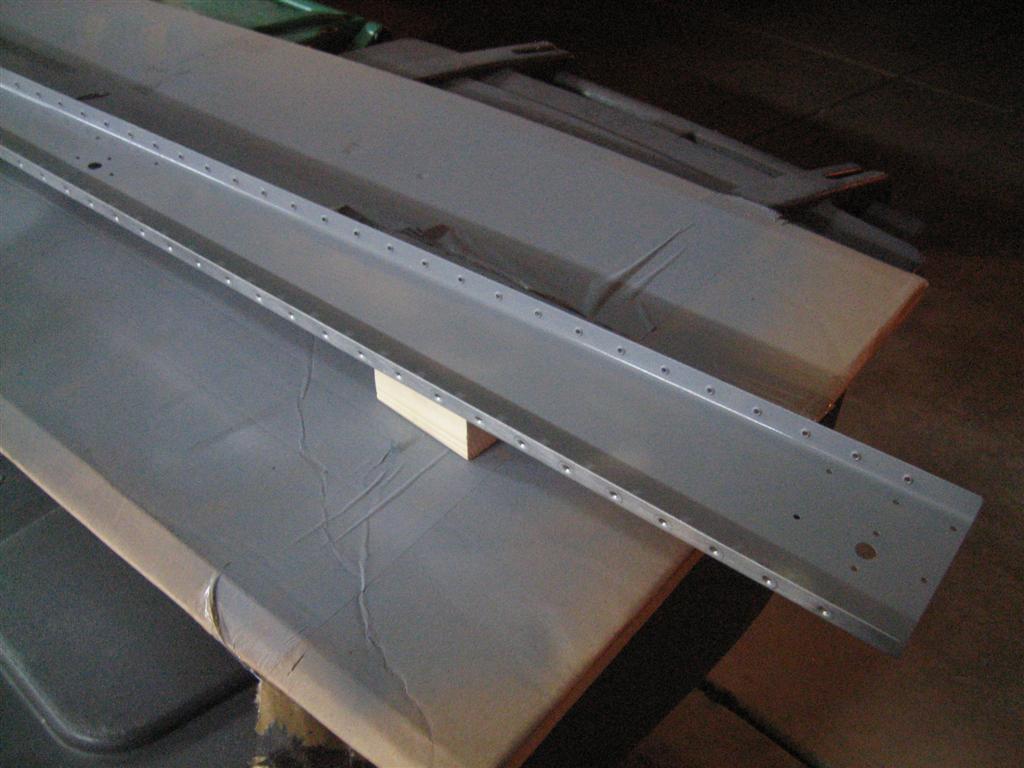
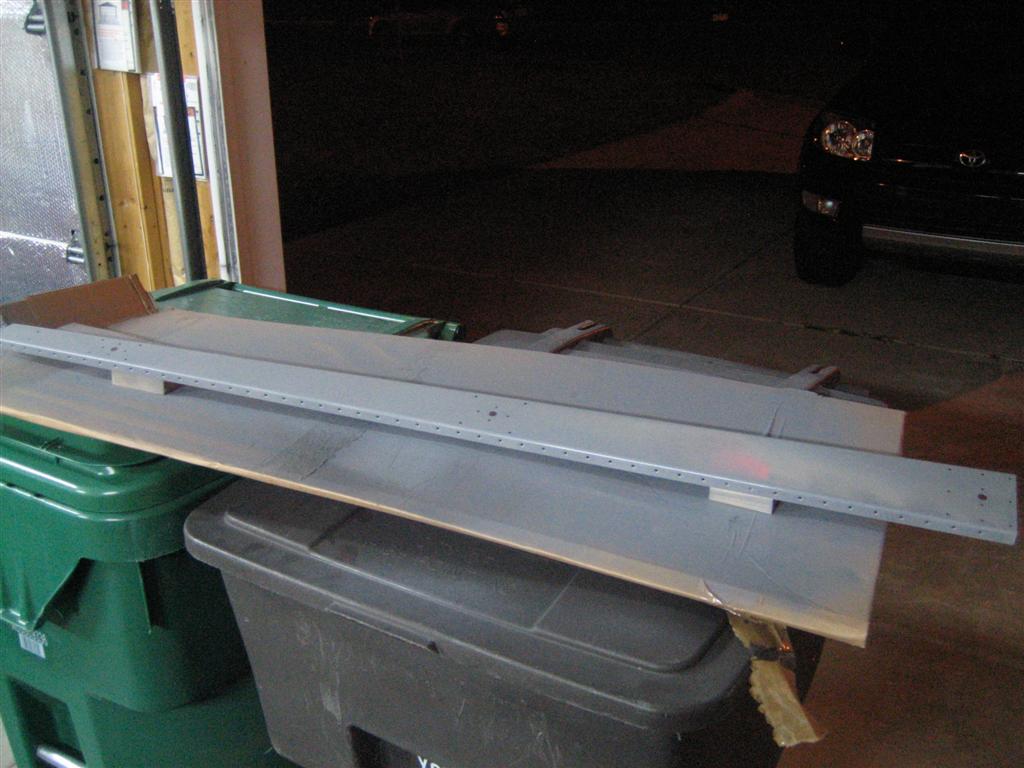
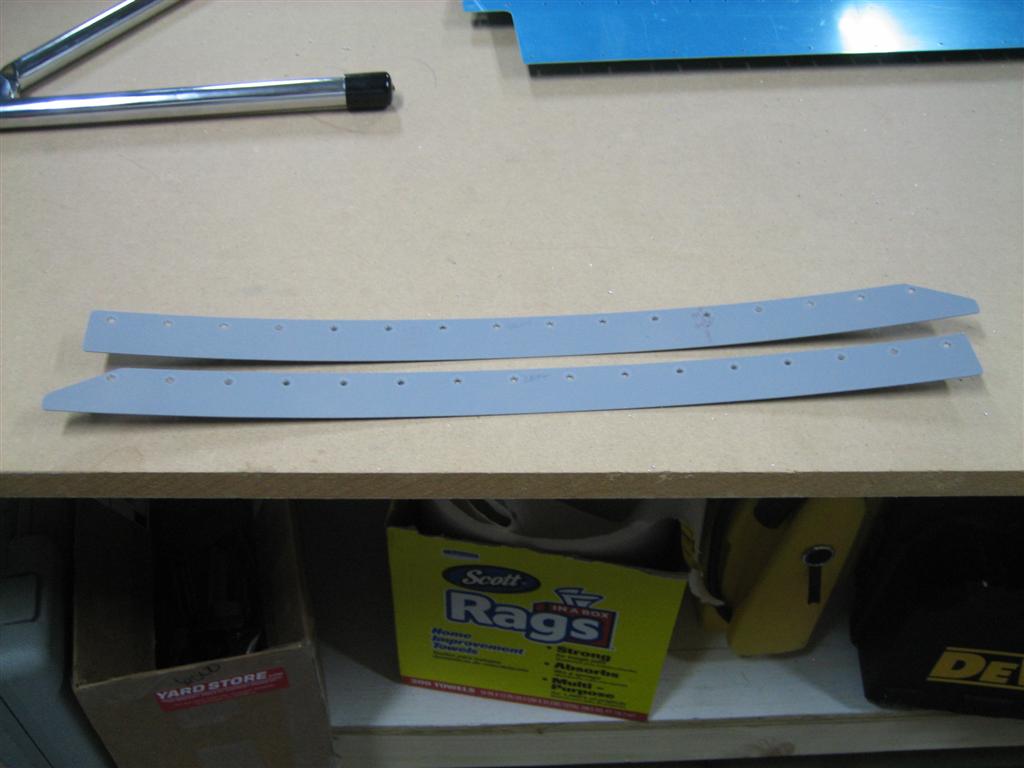
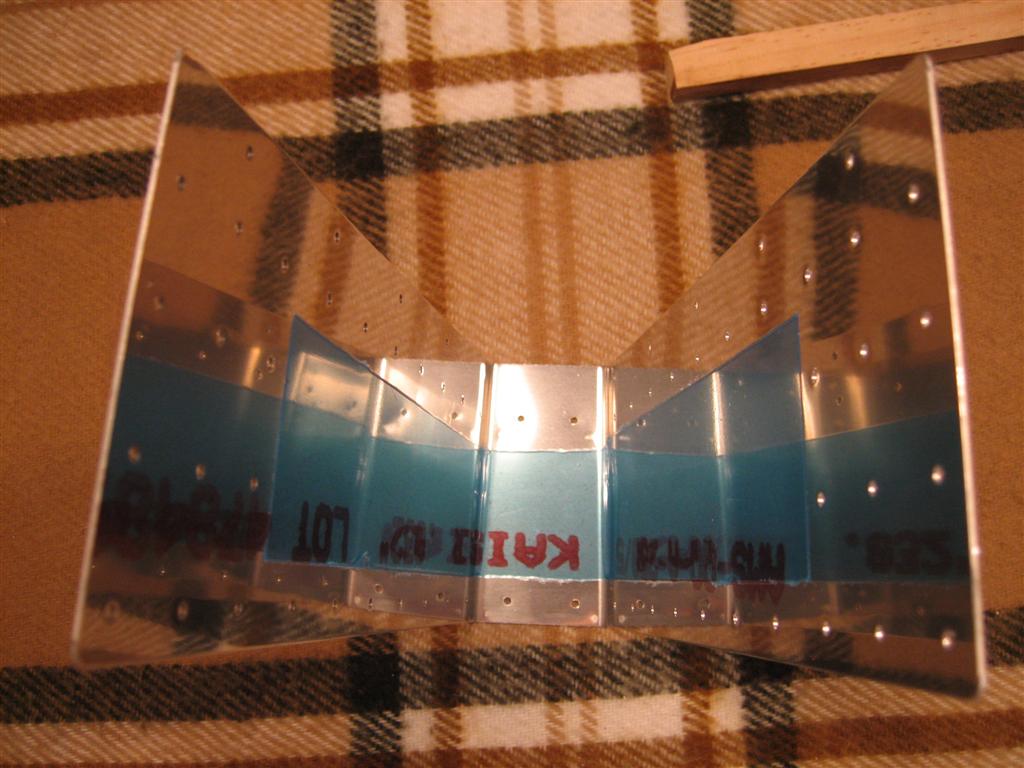
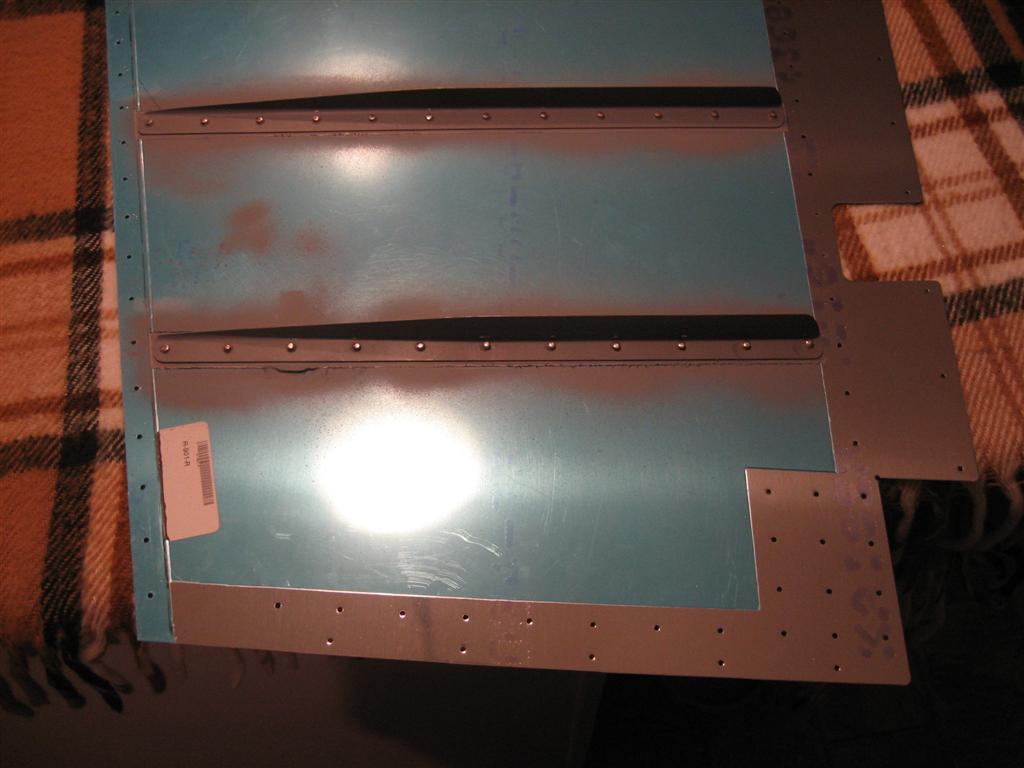
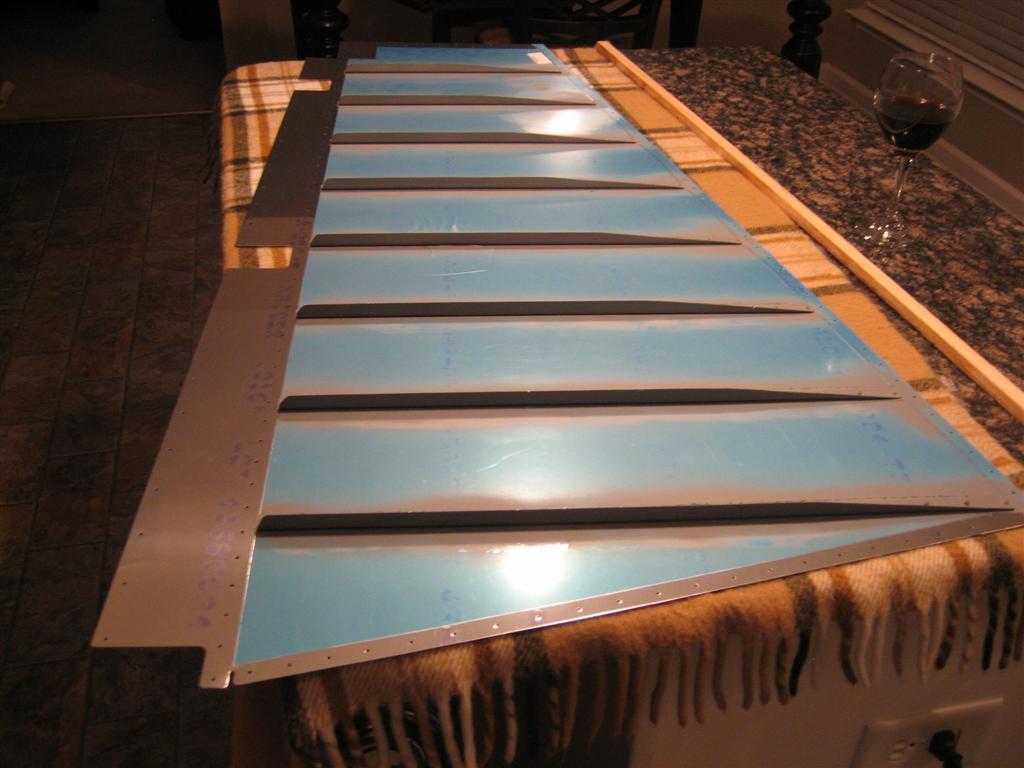
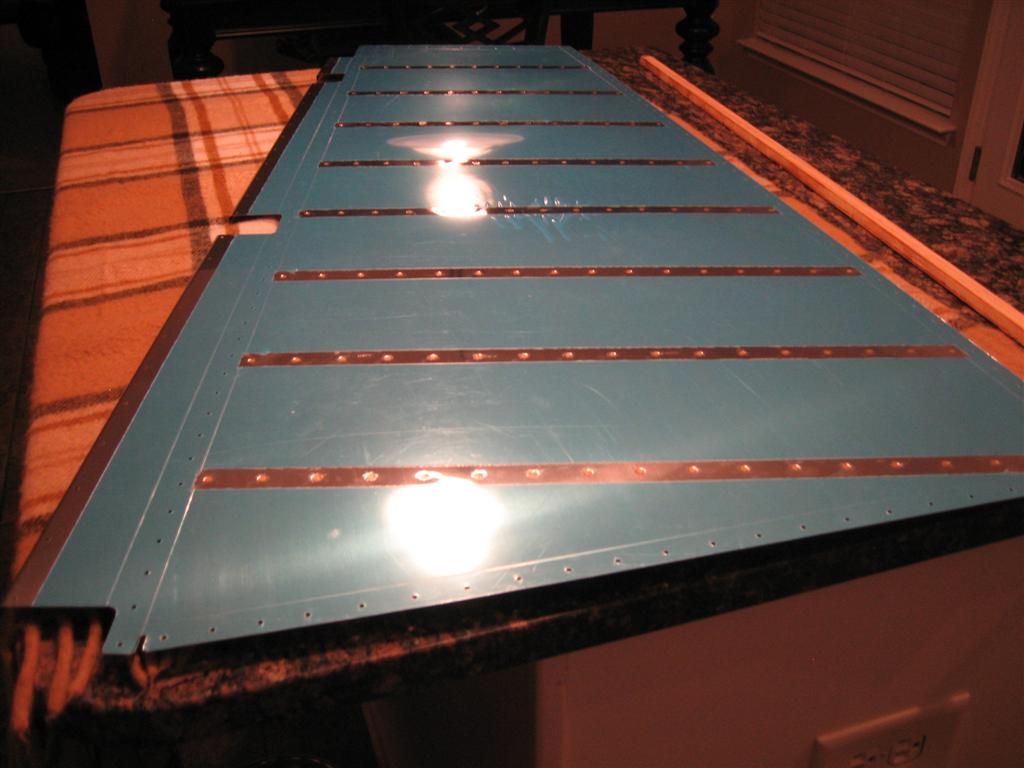
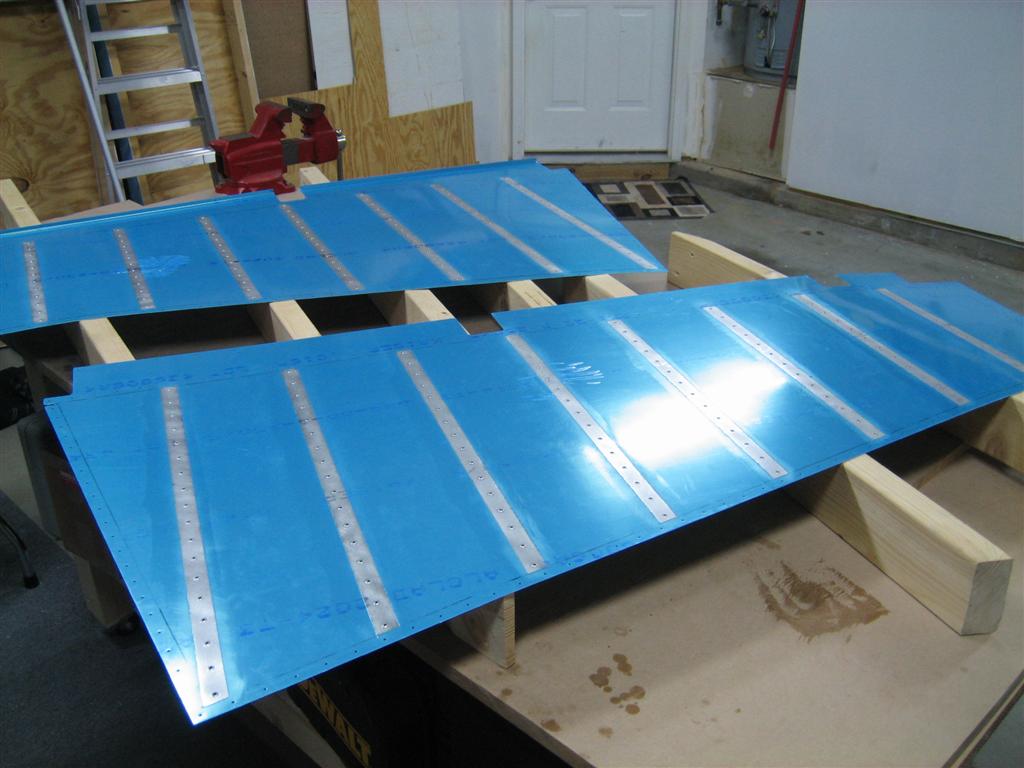
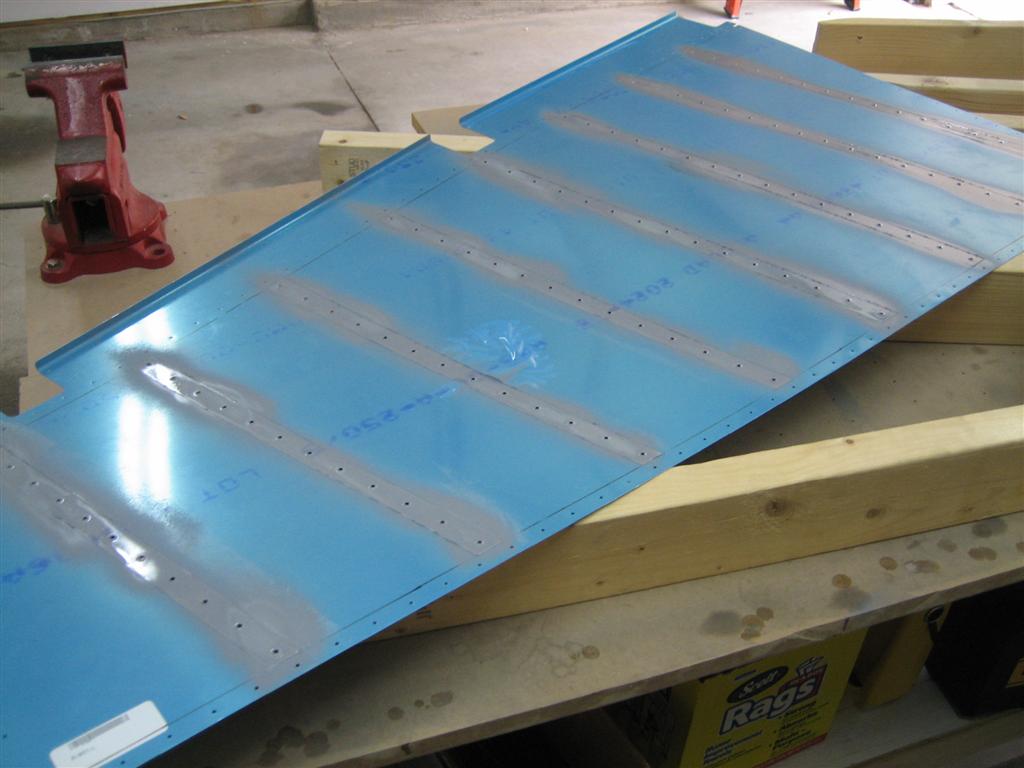
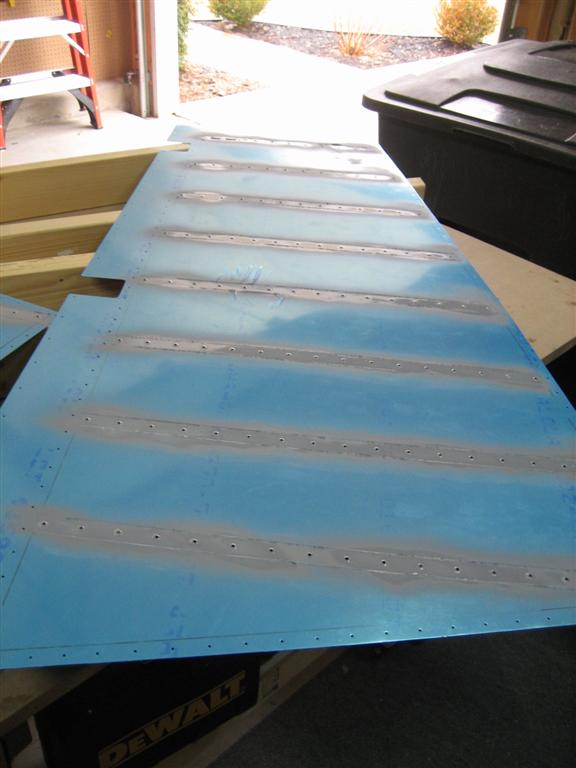
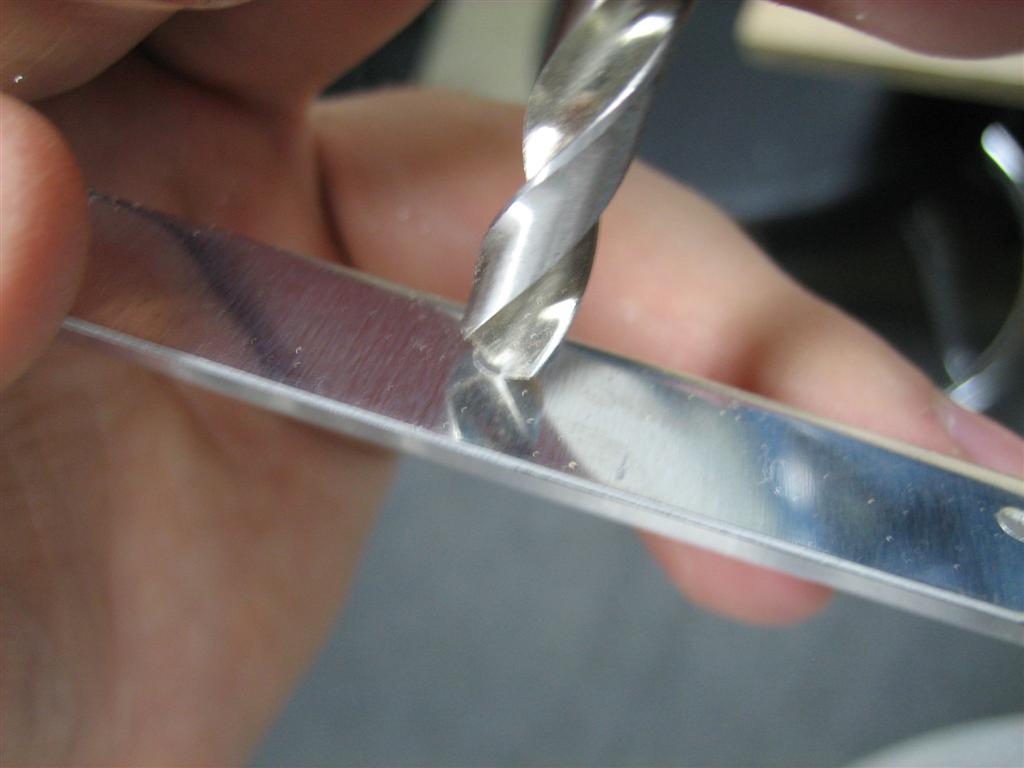
Saturday afternoon (writing this later) I mustered up some courage and drilled out 13 of the 14 trailing edge rivets on the right elevator. They are really not trailing edge rivets, but the aft-most rivets of each of the 14 stiffeners (7 on the upper skin, and 7 on the lower skin).
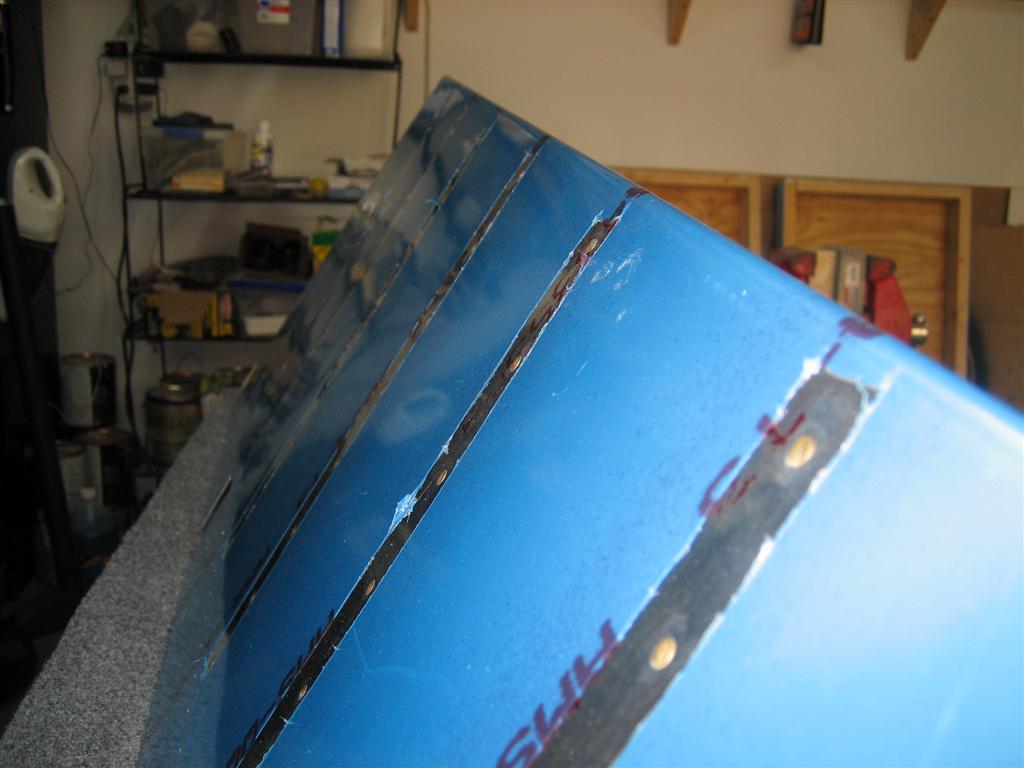
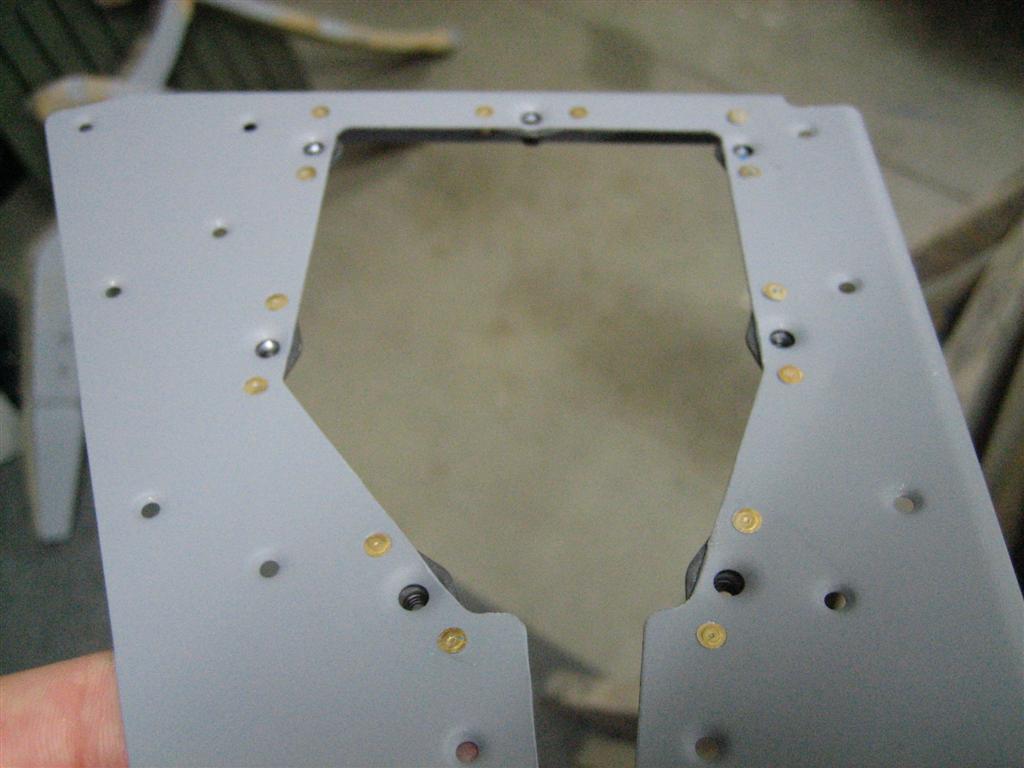
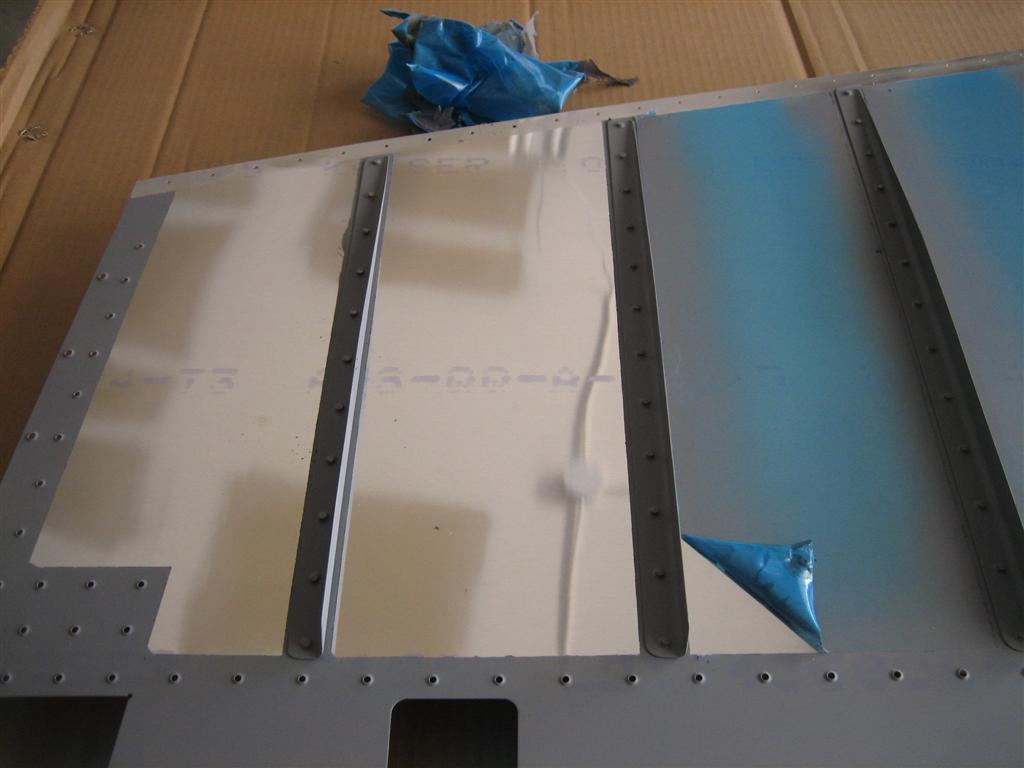
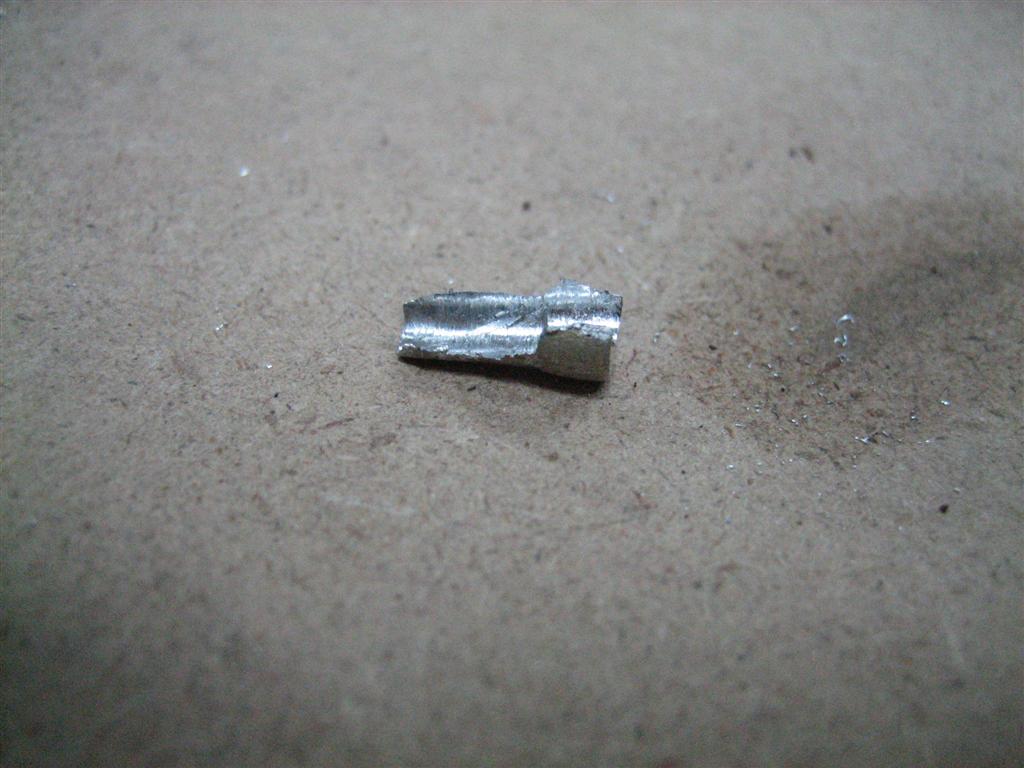
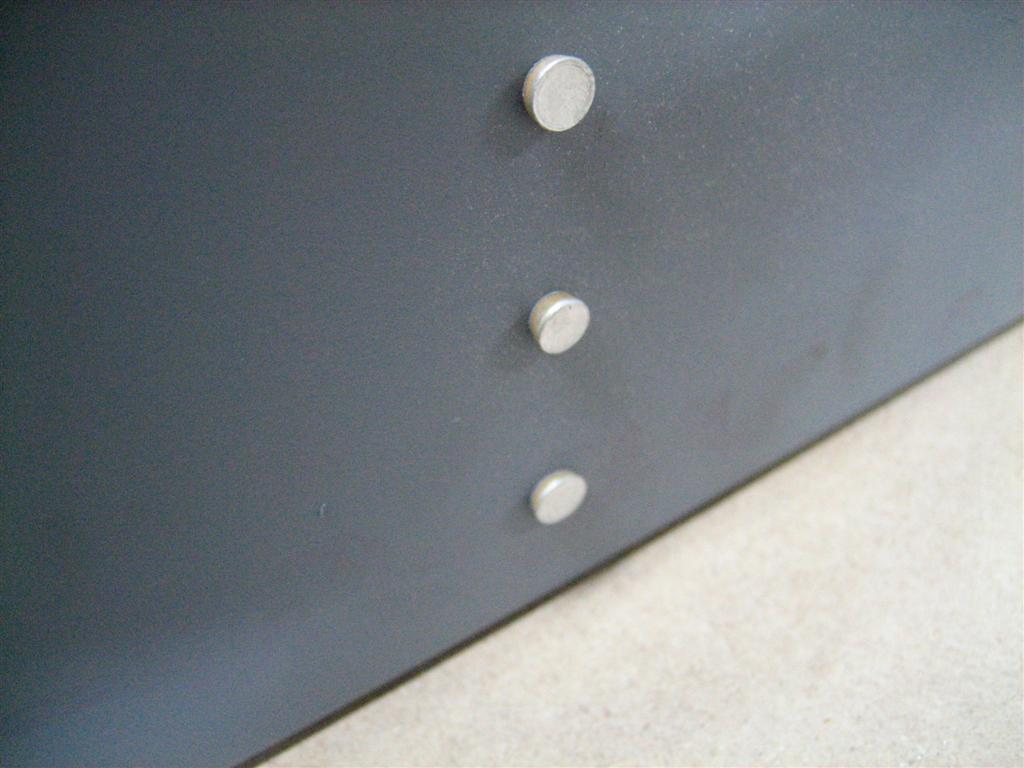
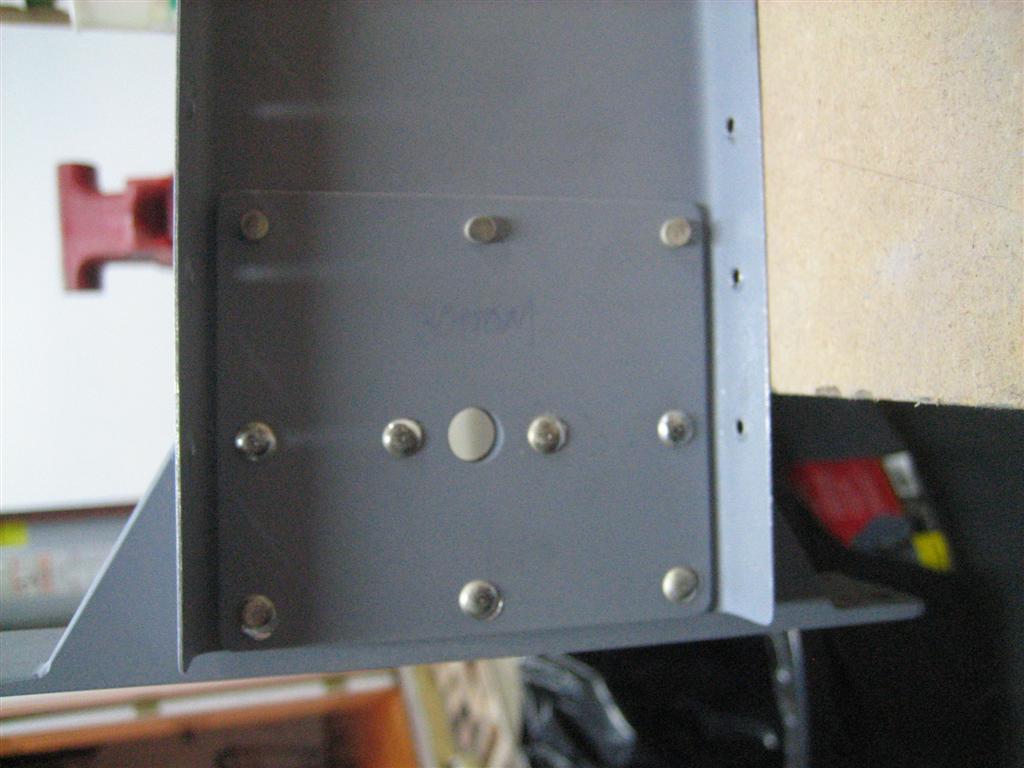
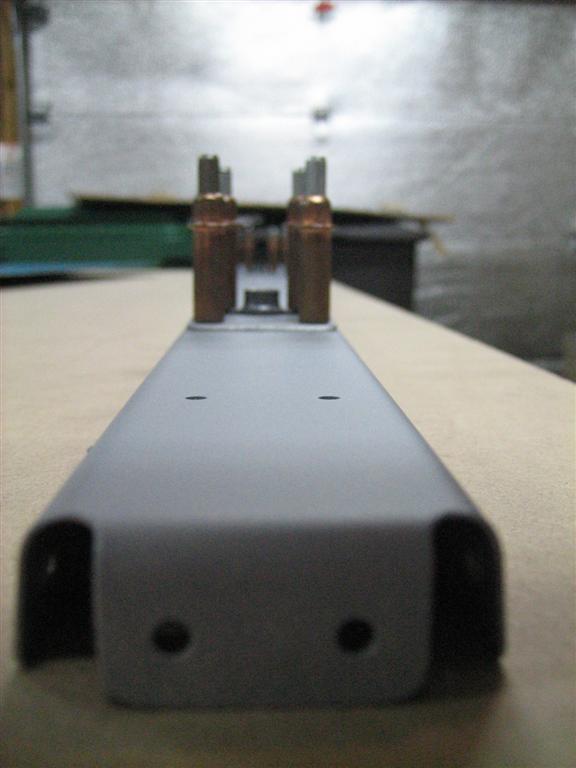
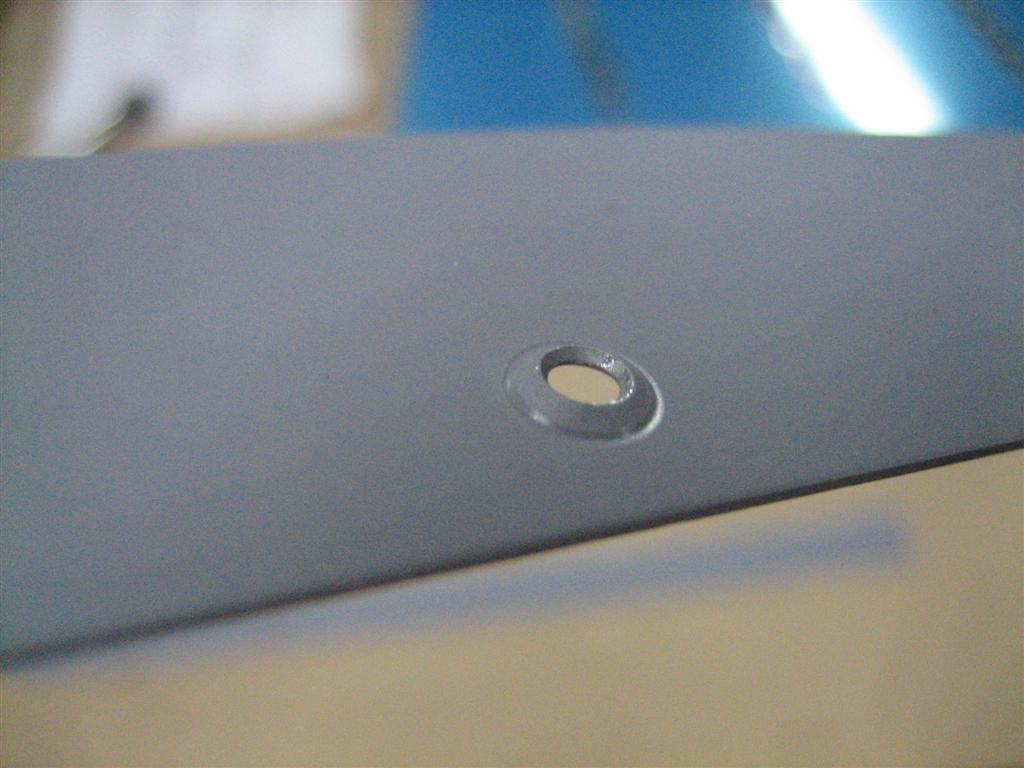
You can't even really see the damage in this picture...

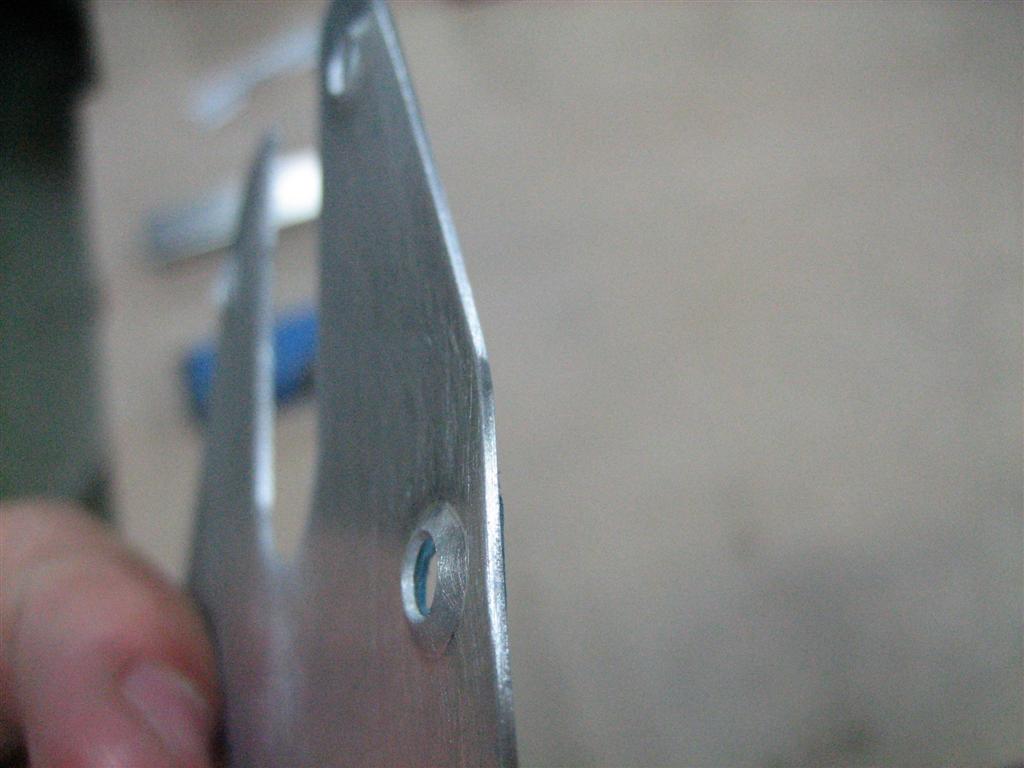
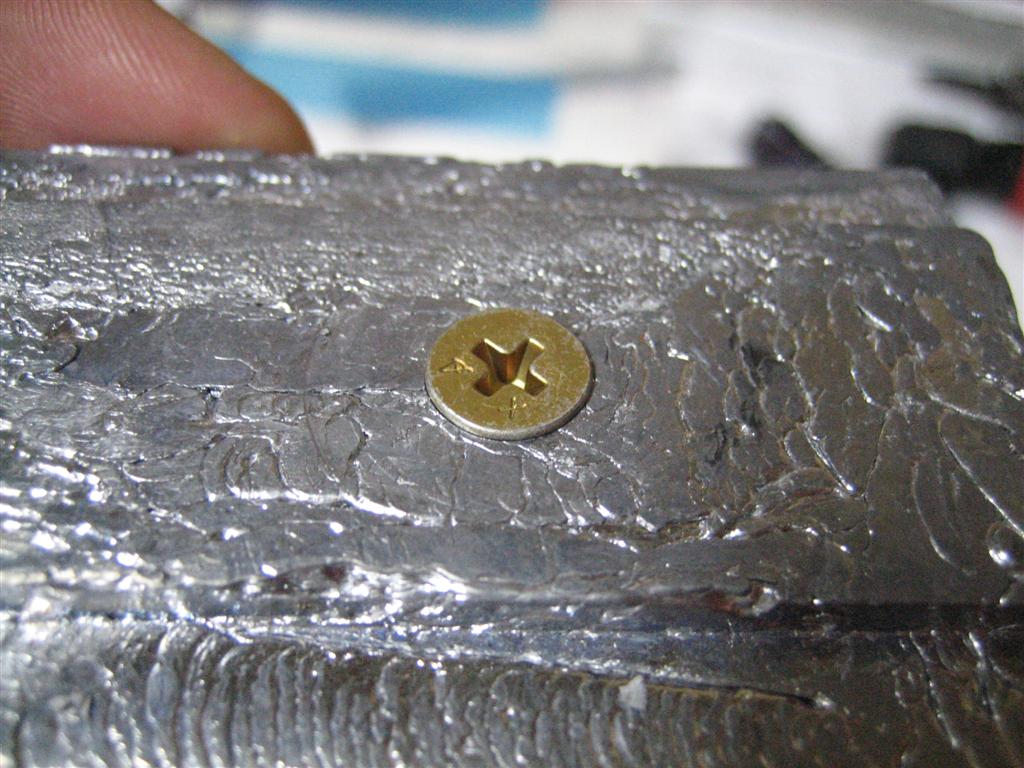
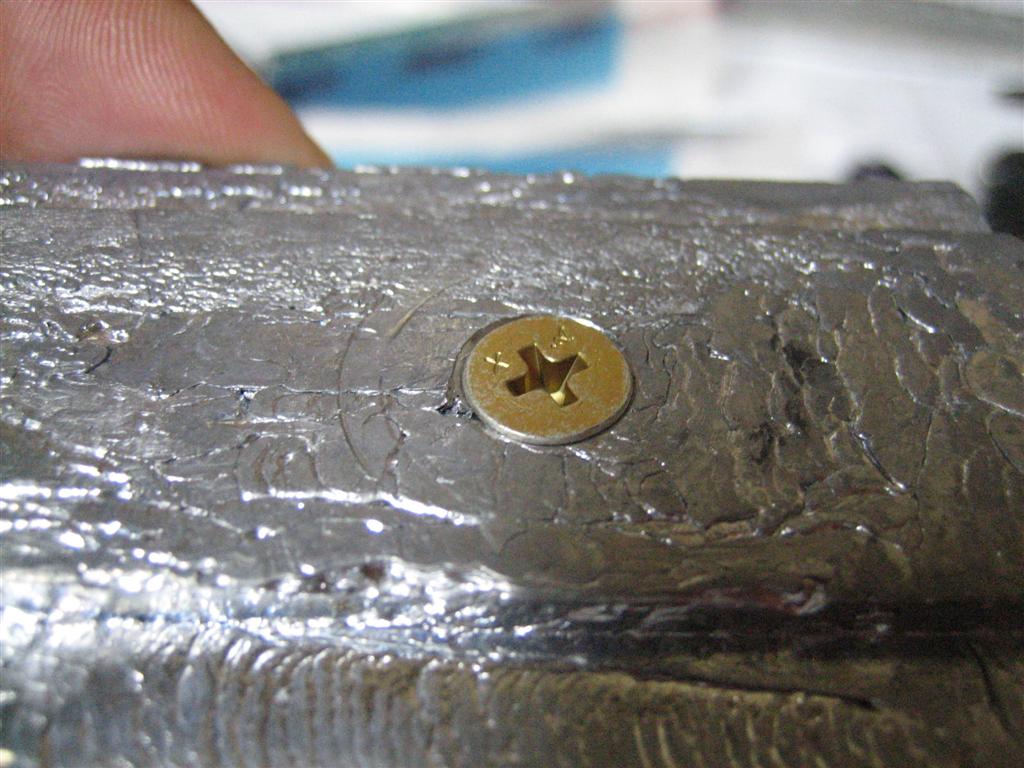
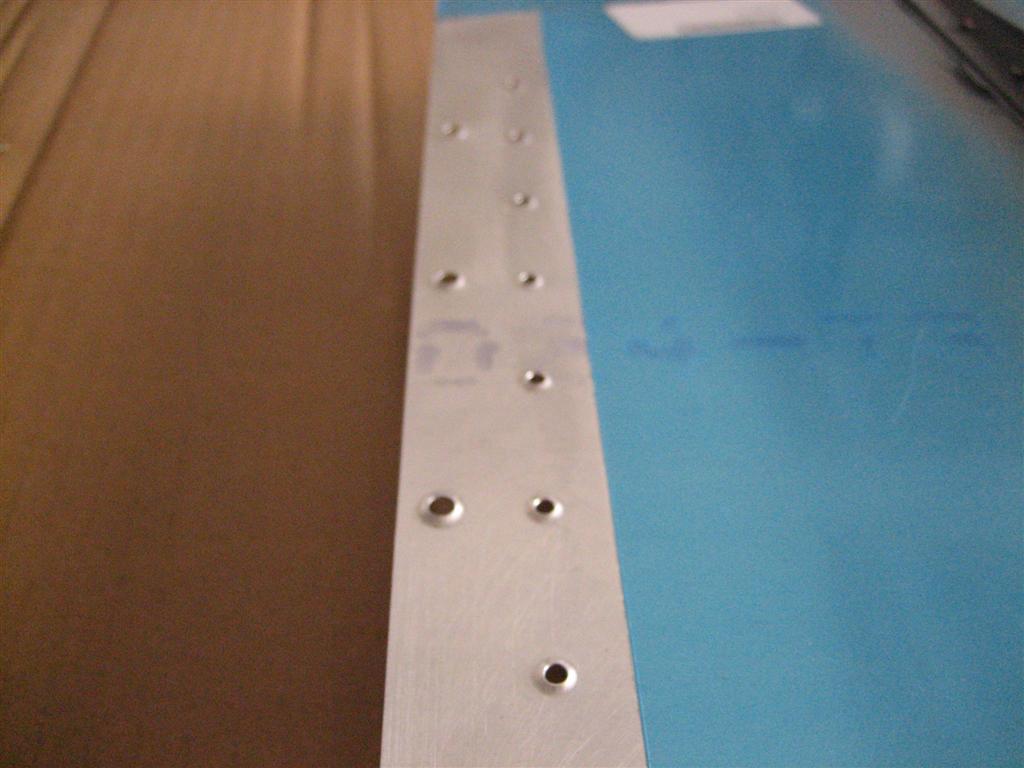
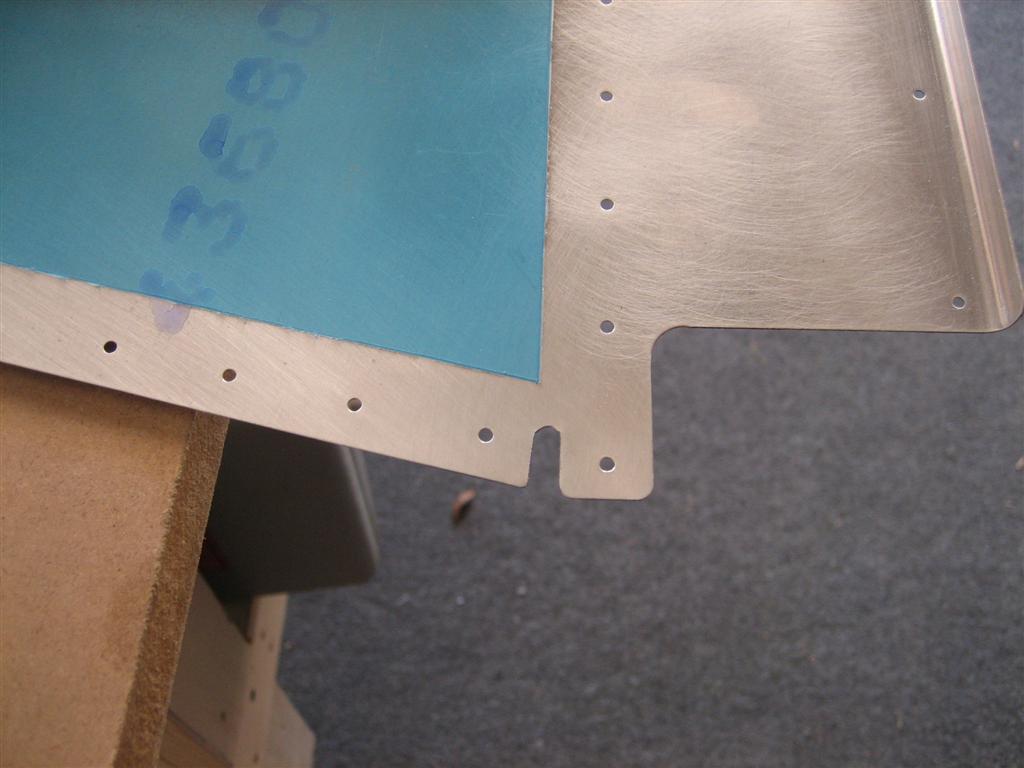
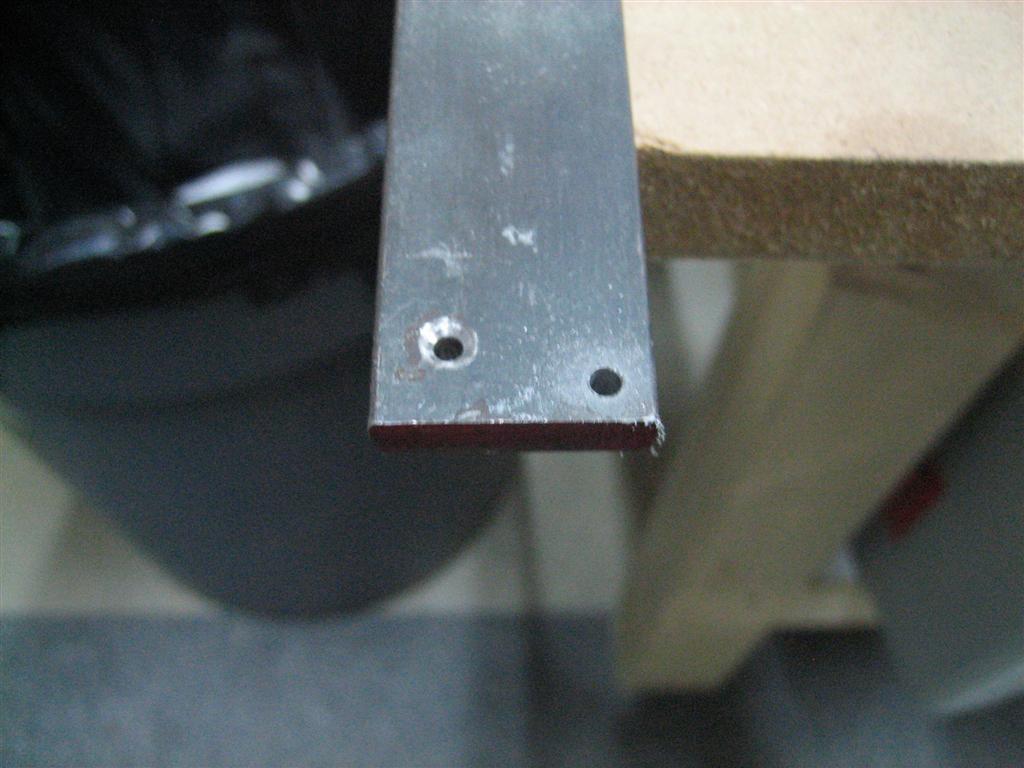
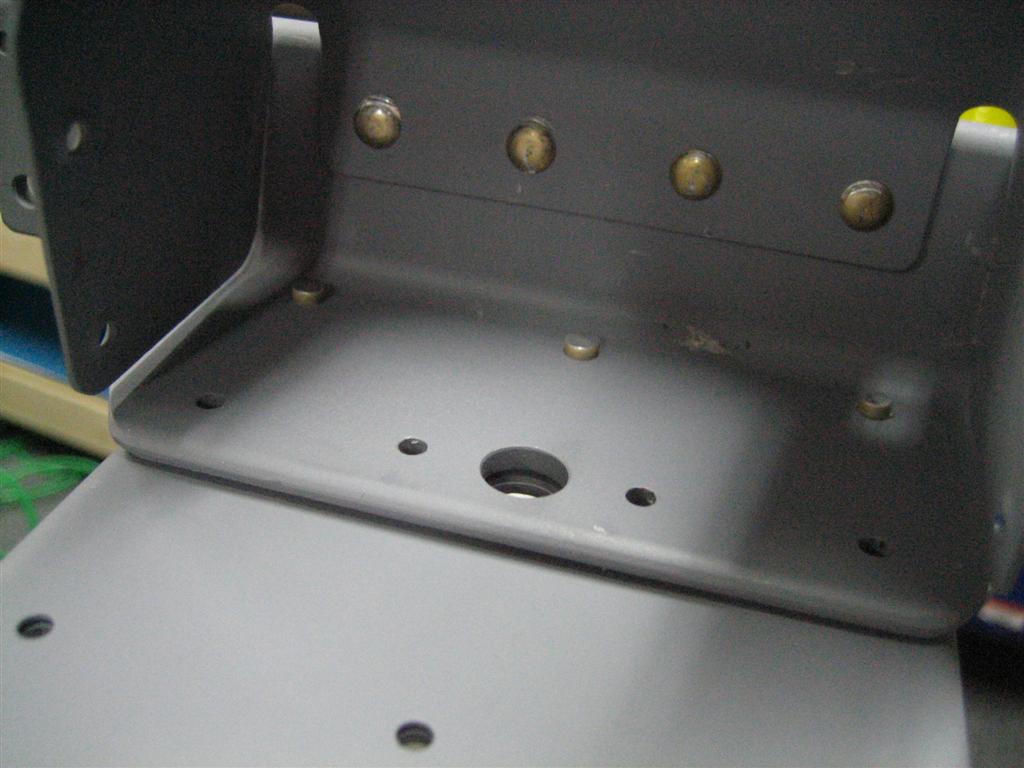
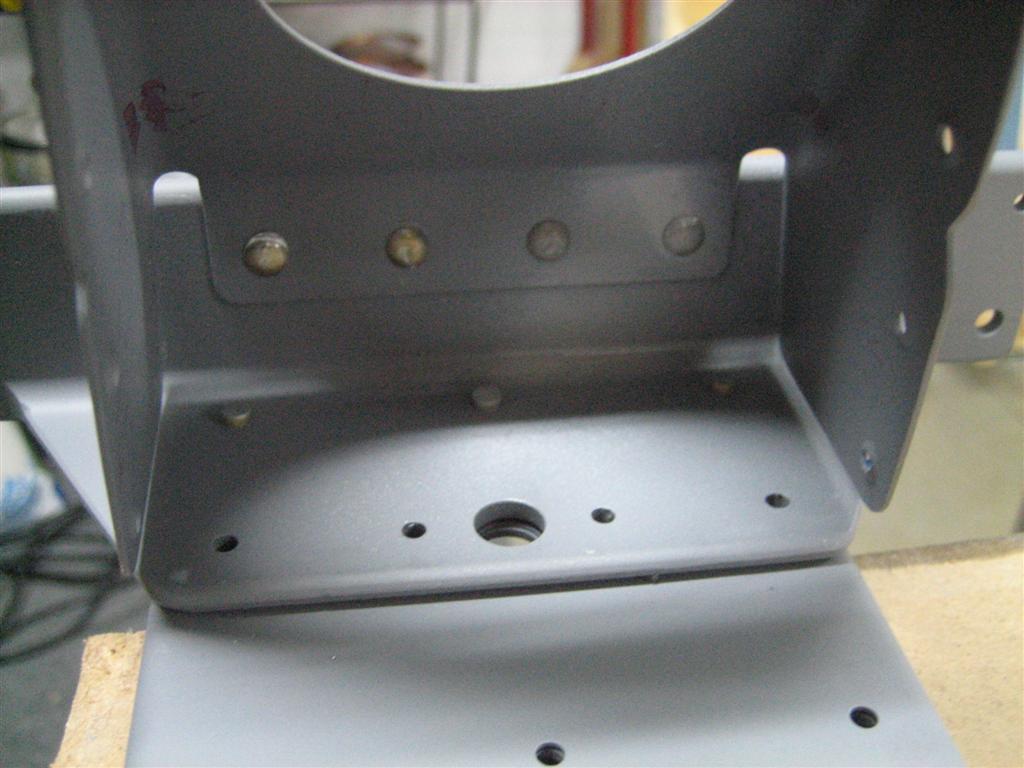
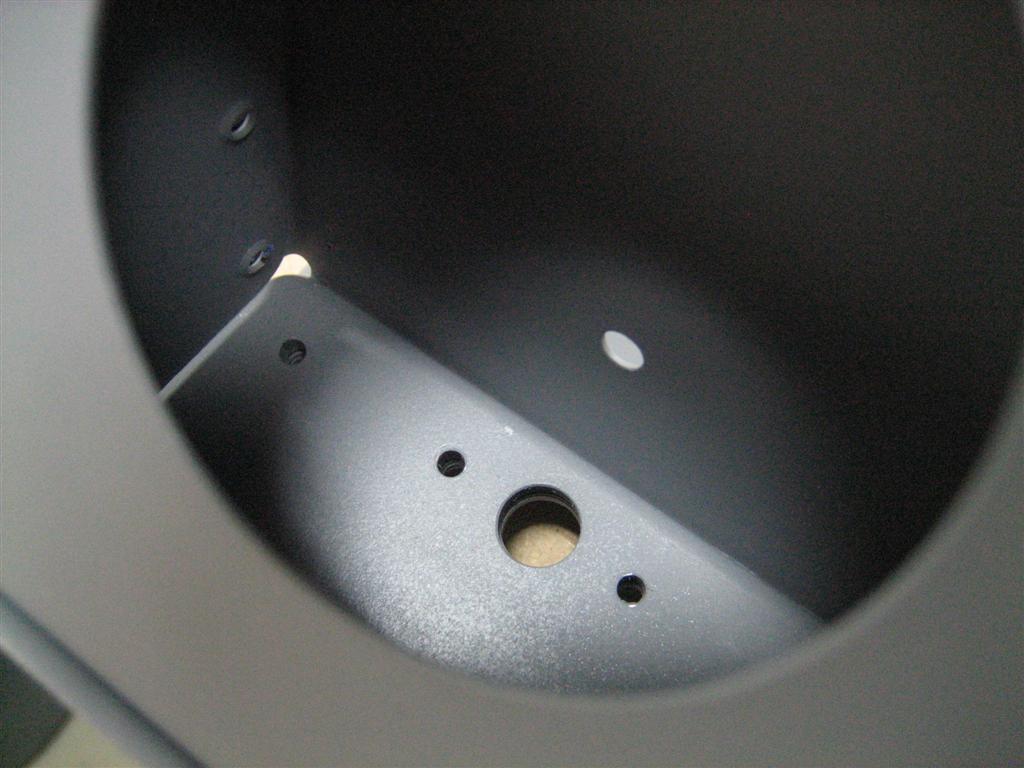
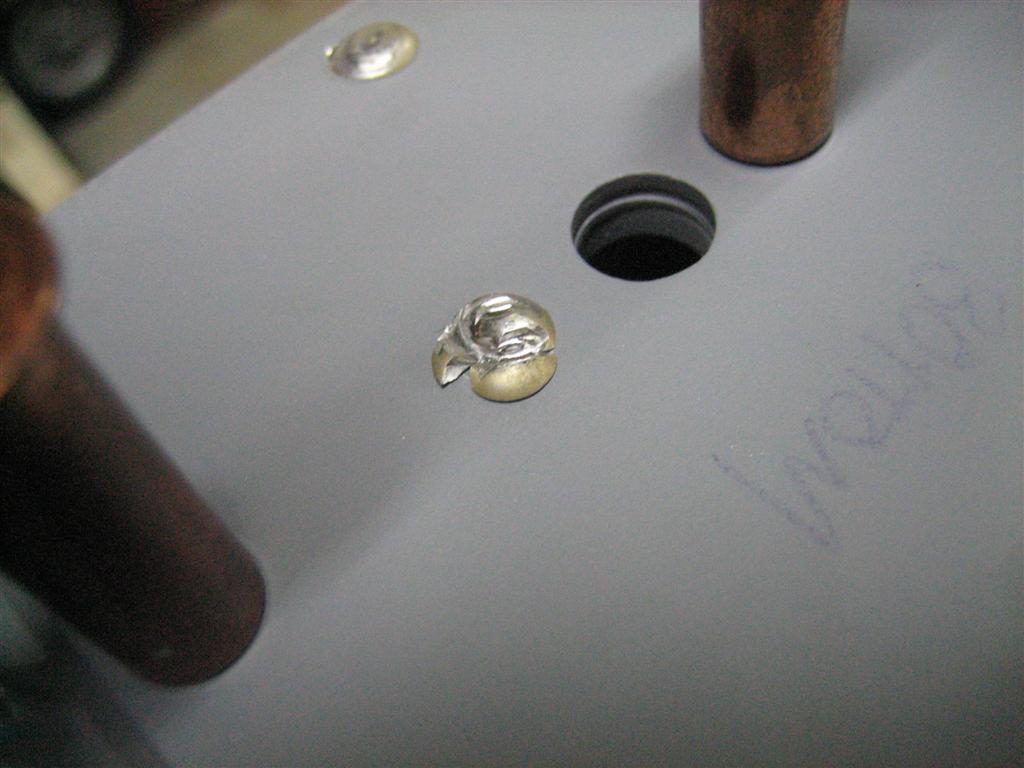
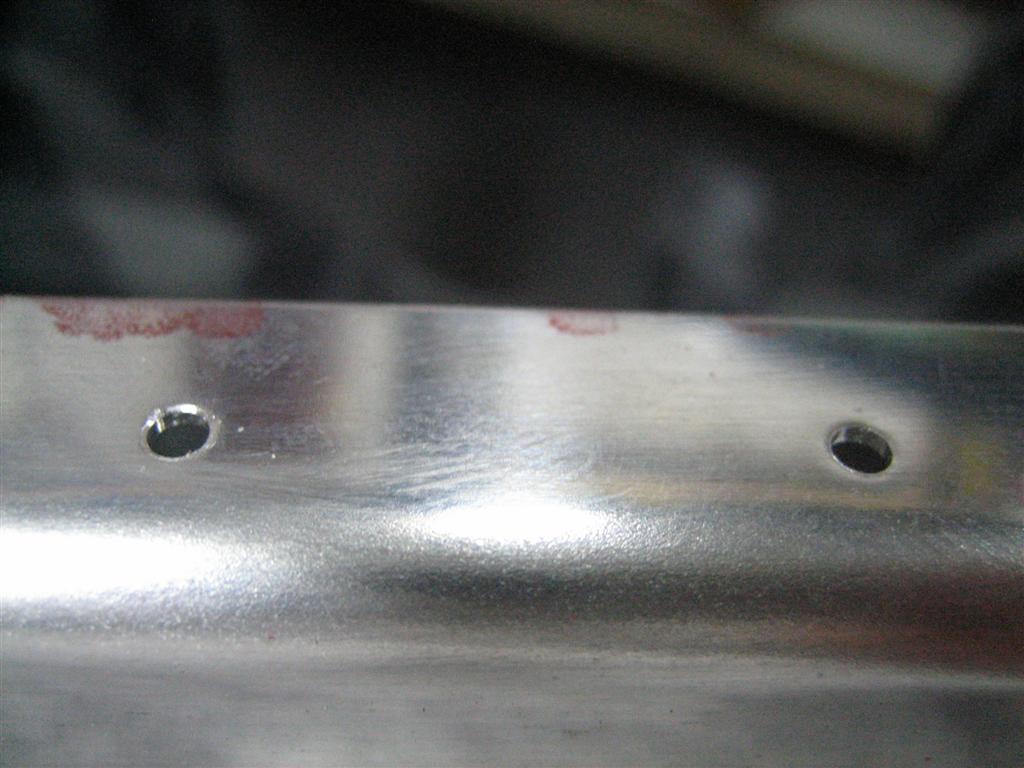
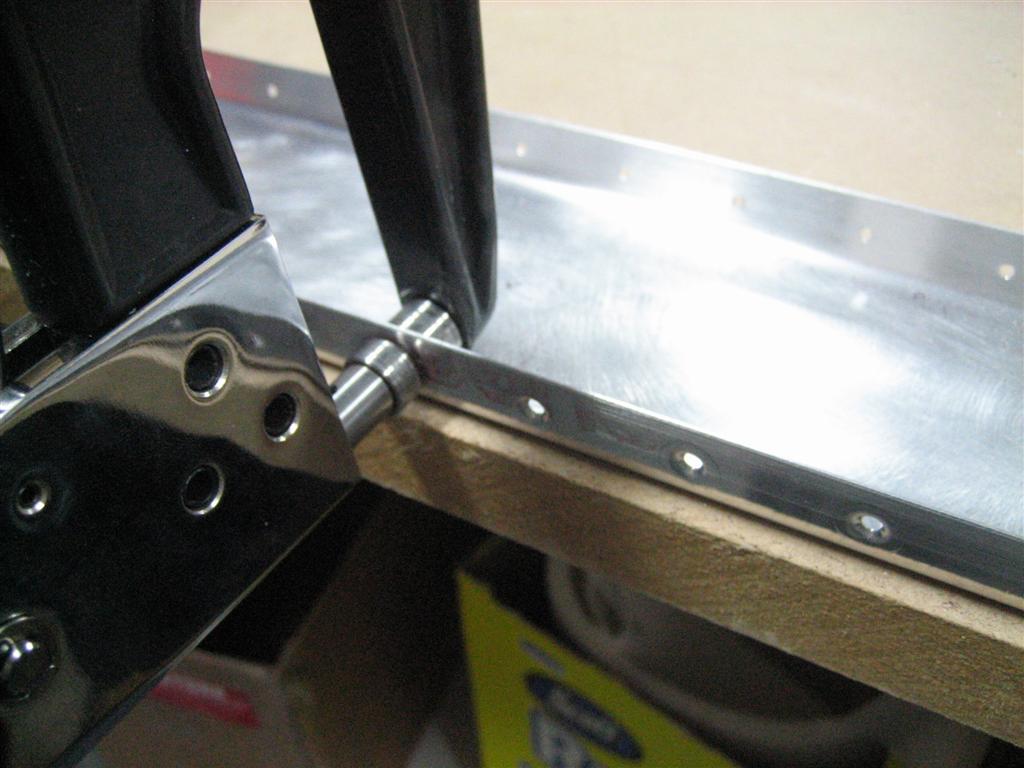
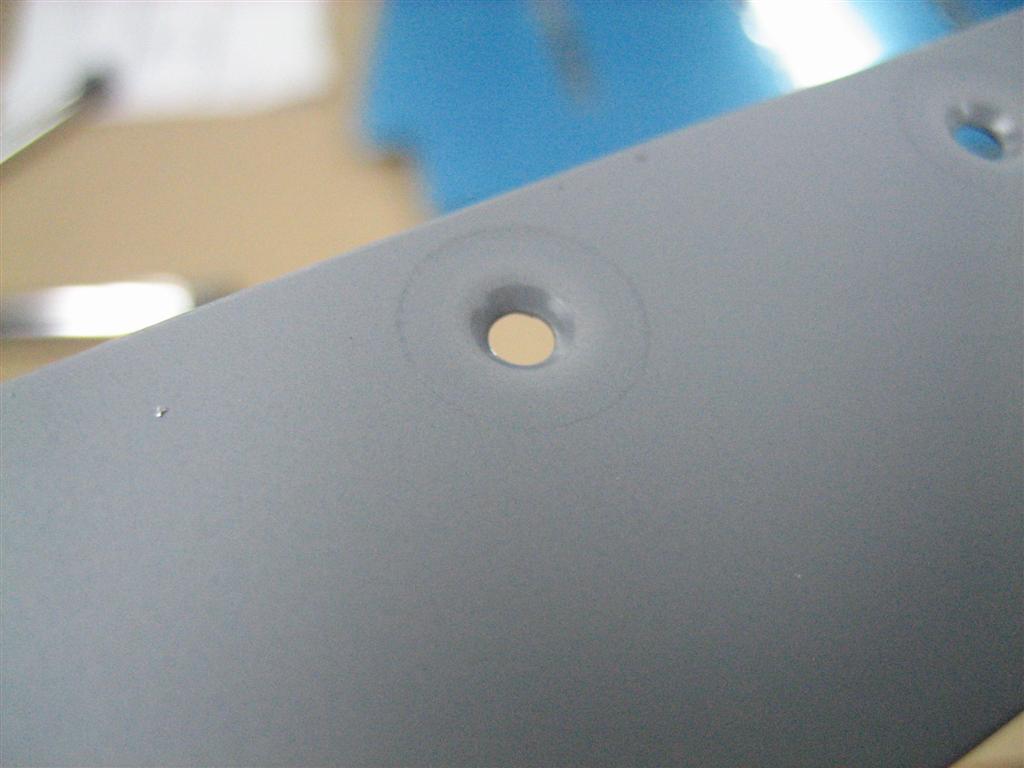
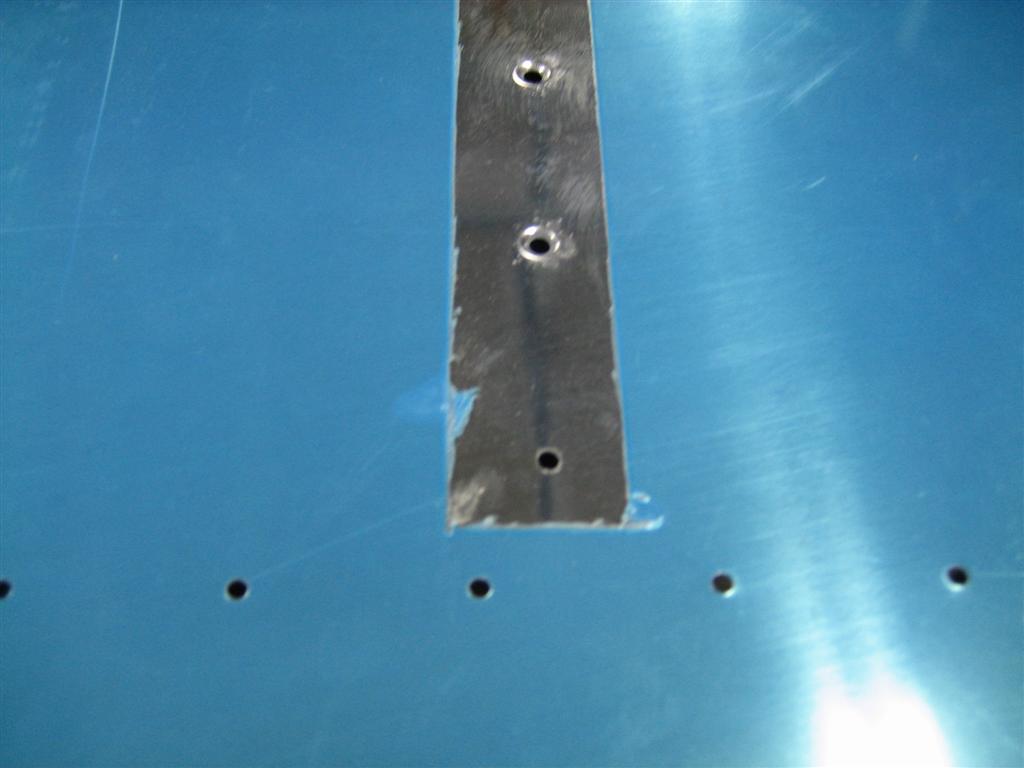
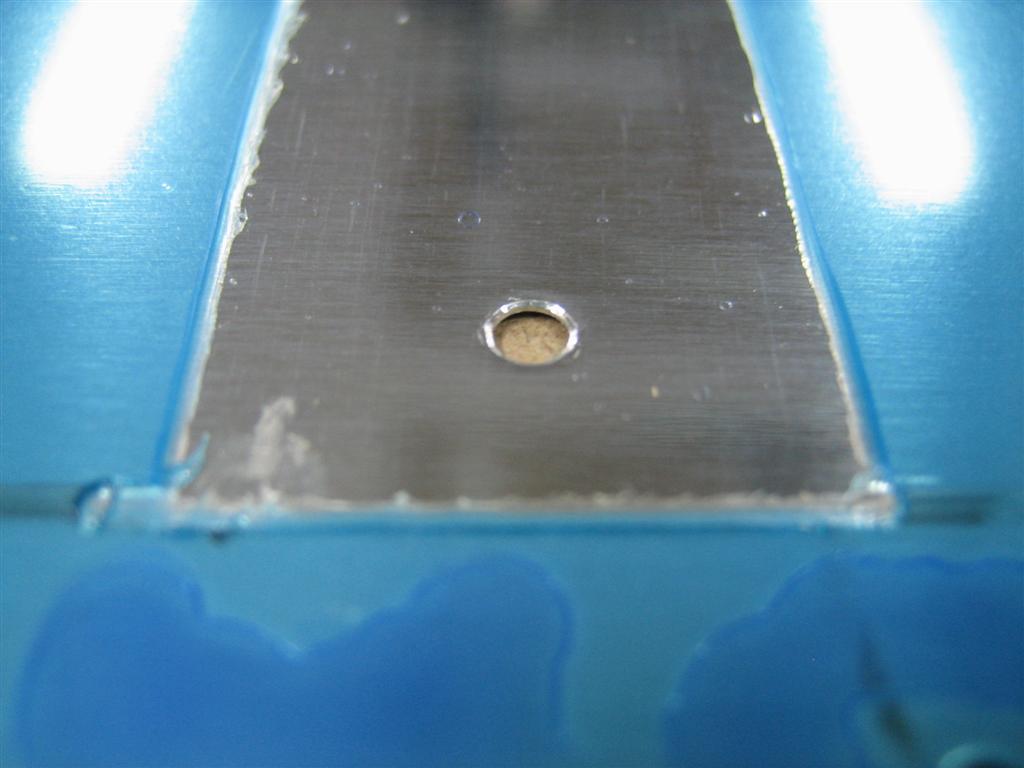
Here’s a couple pictures of the damage.
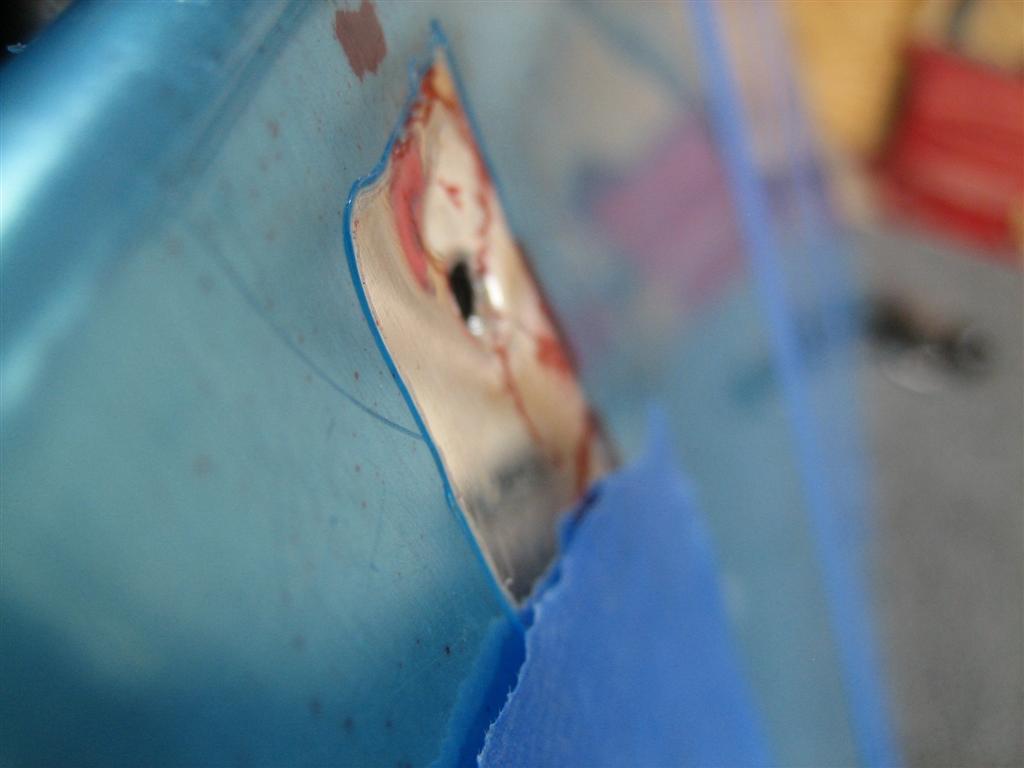
You can see how the dimple kind of tweaked the skin. Boo damaged skin.

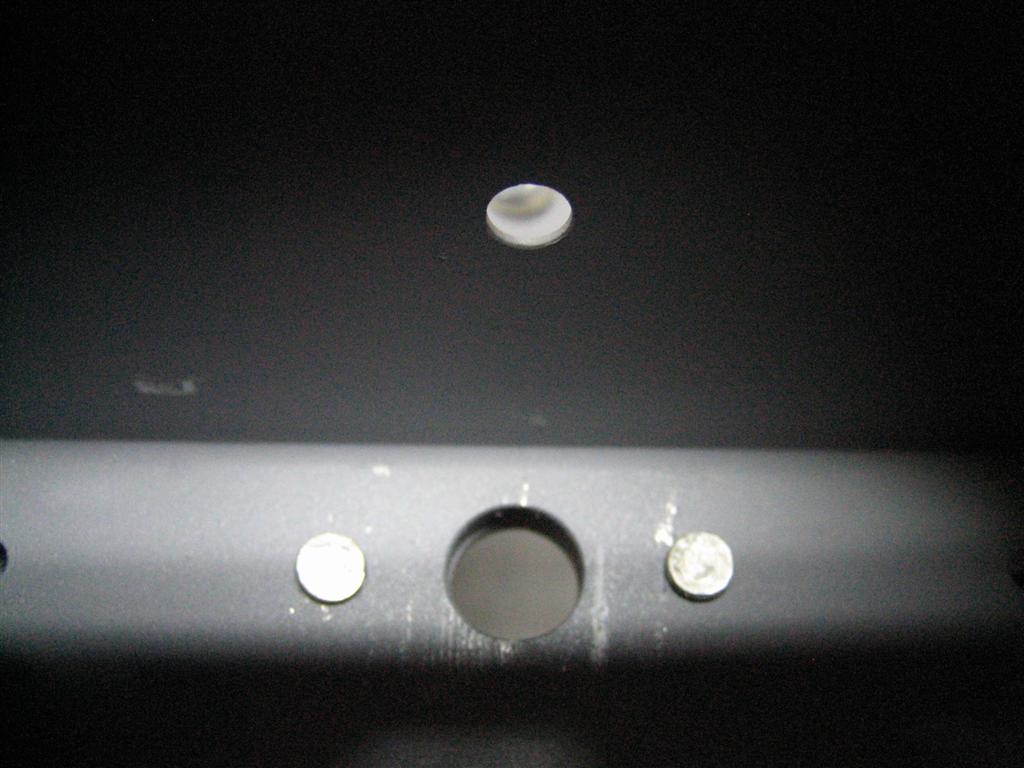
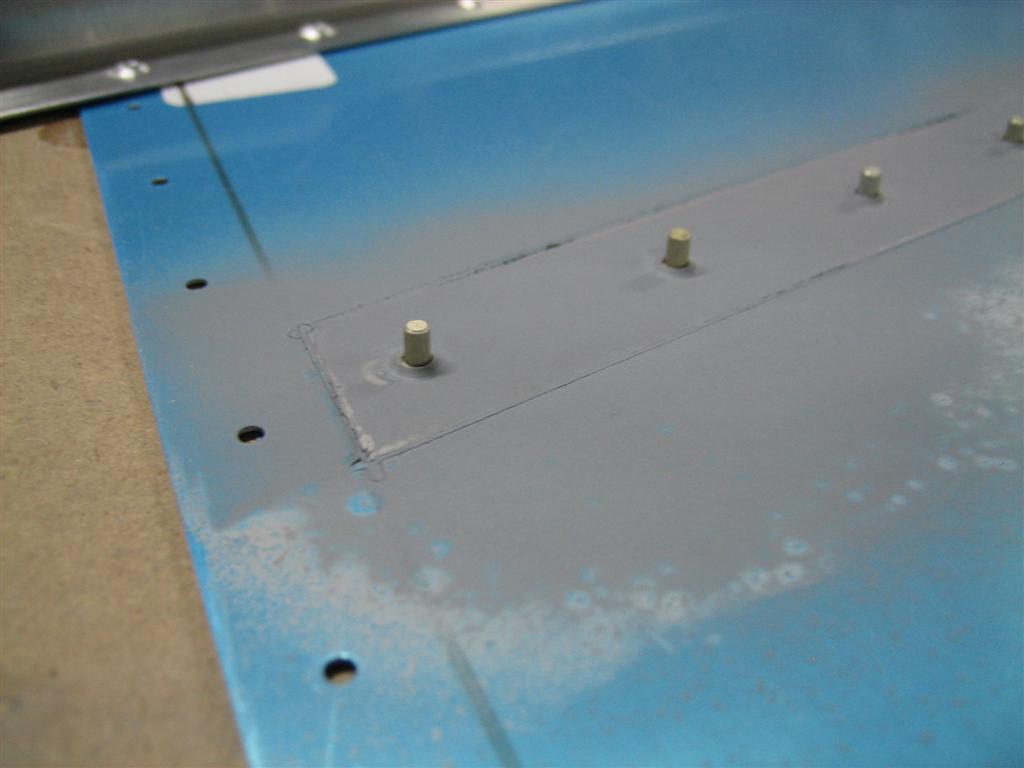
The above pictures was the worst one. This one was more typical.
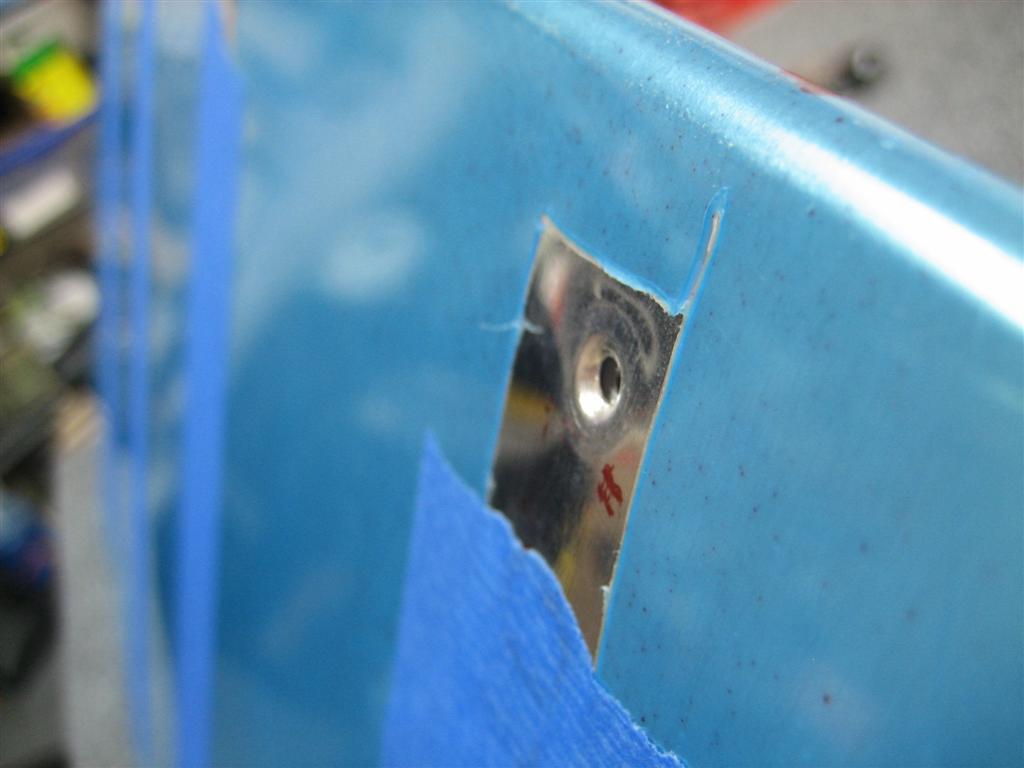
A small ridge below the hole (in the picture) and a small dent above the hole (in the picture).

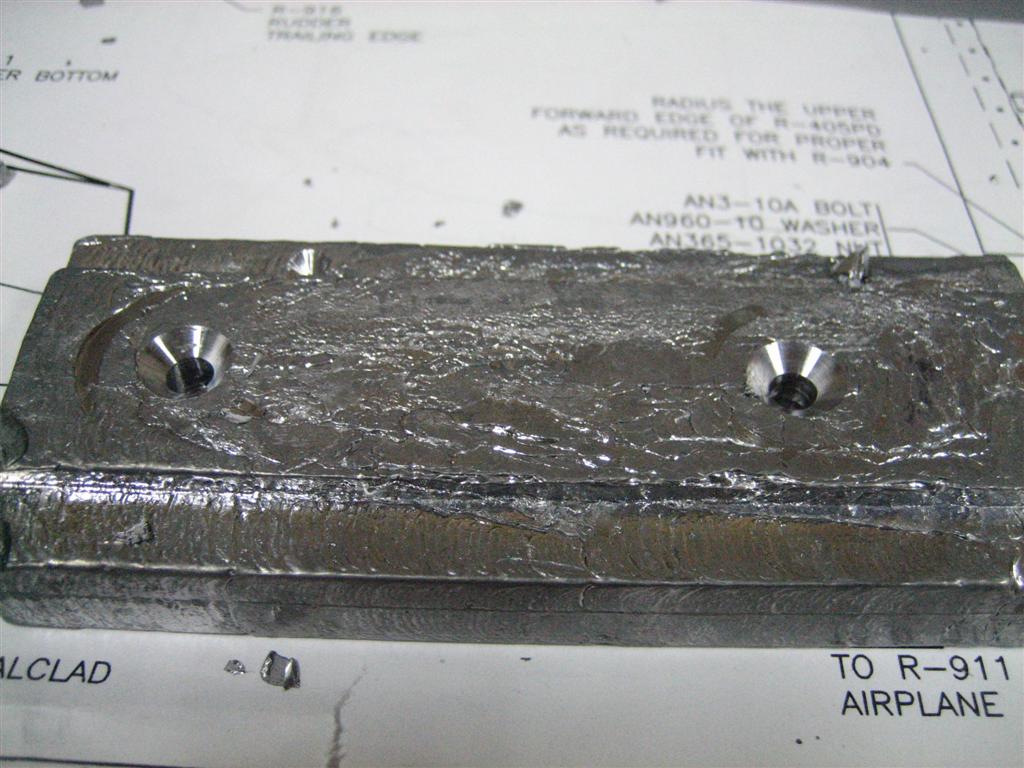
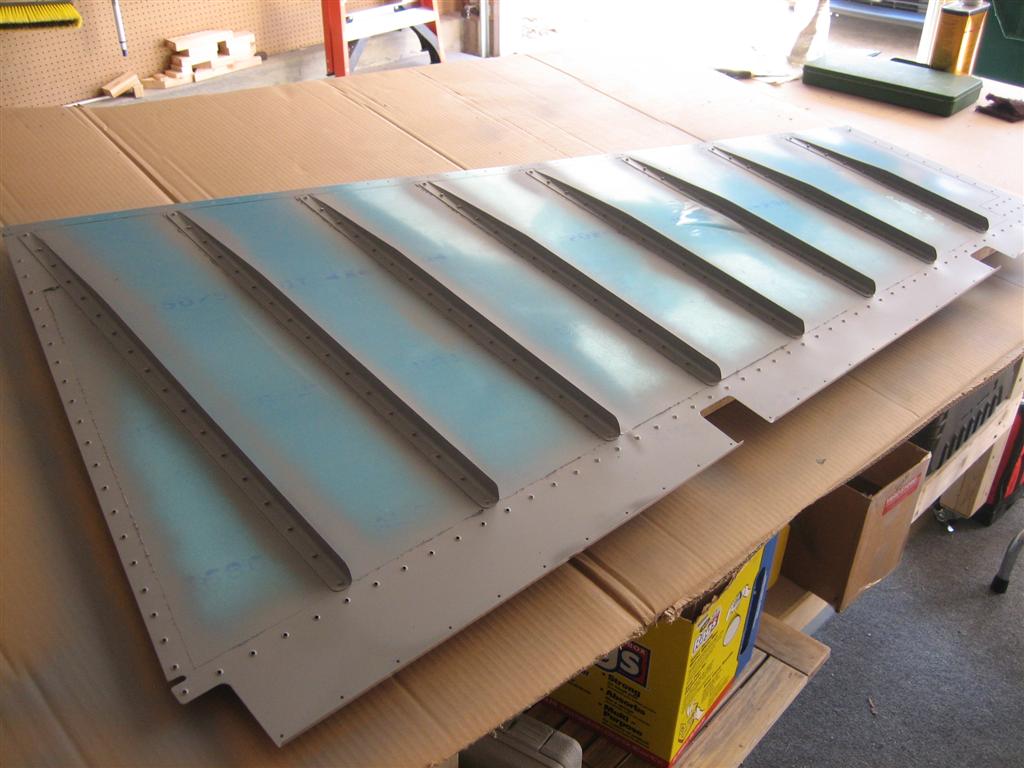
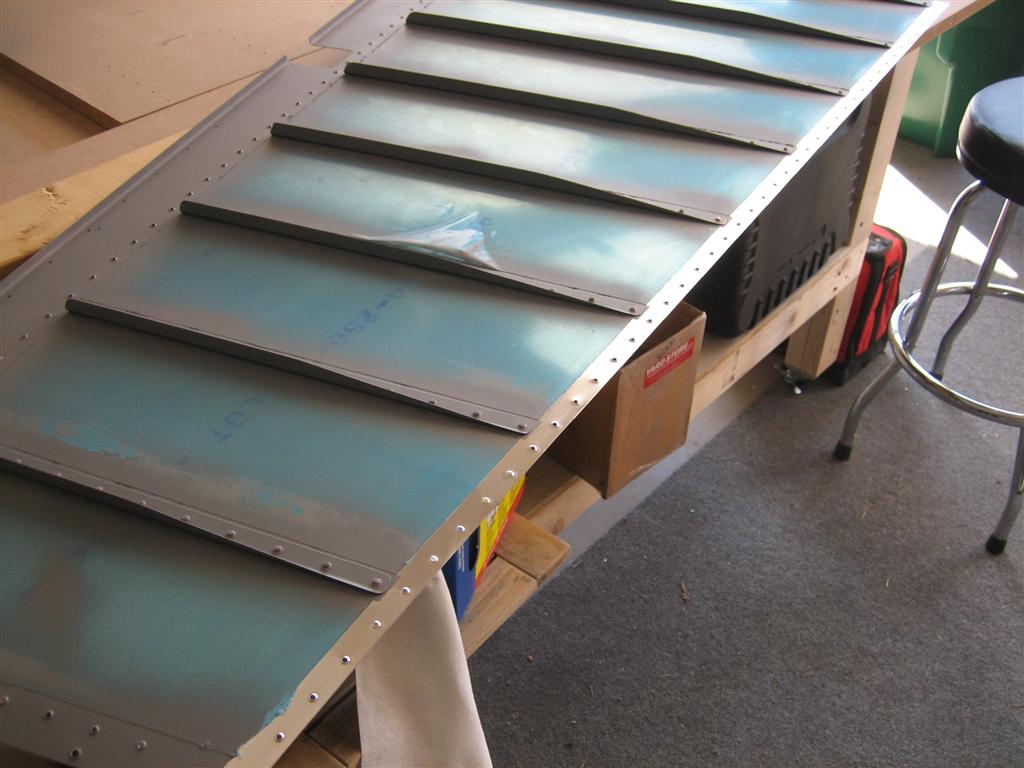
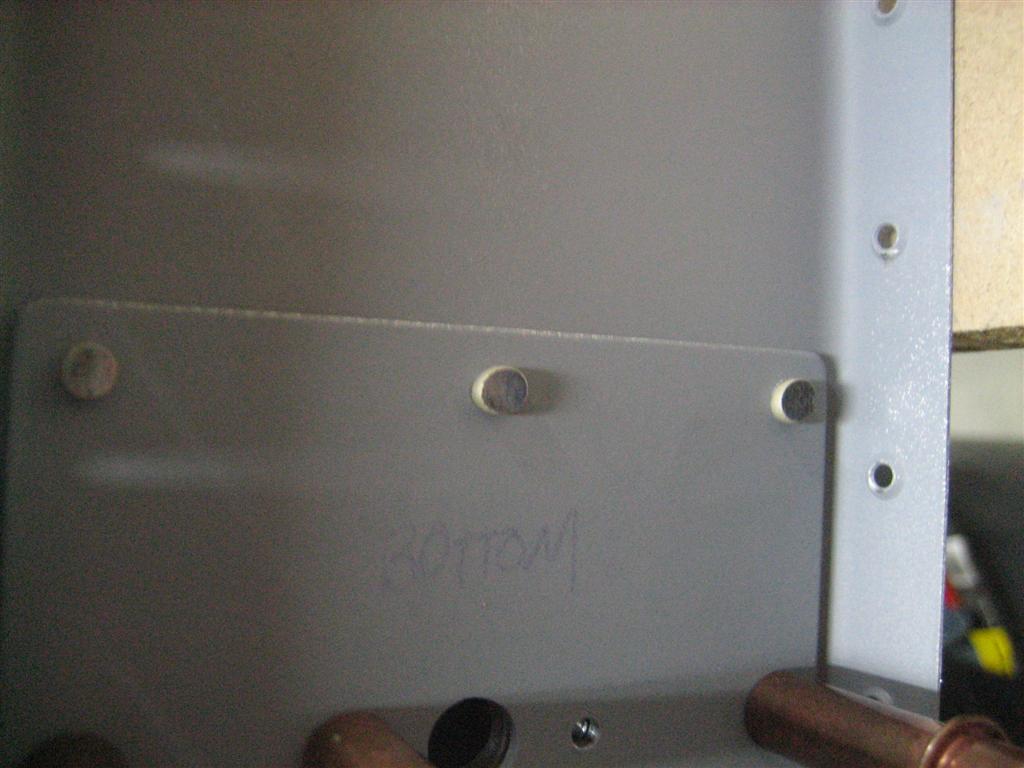
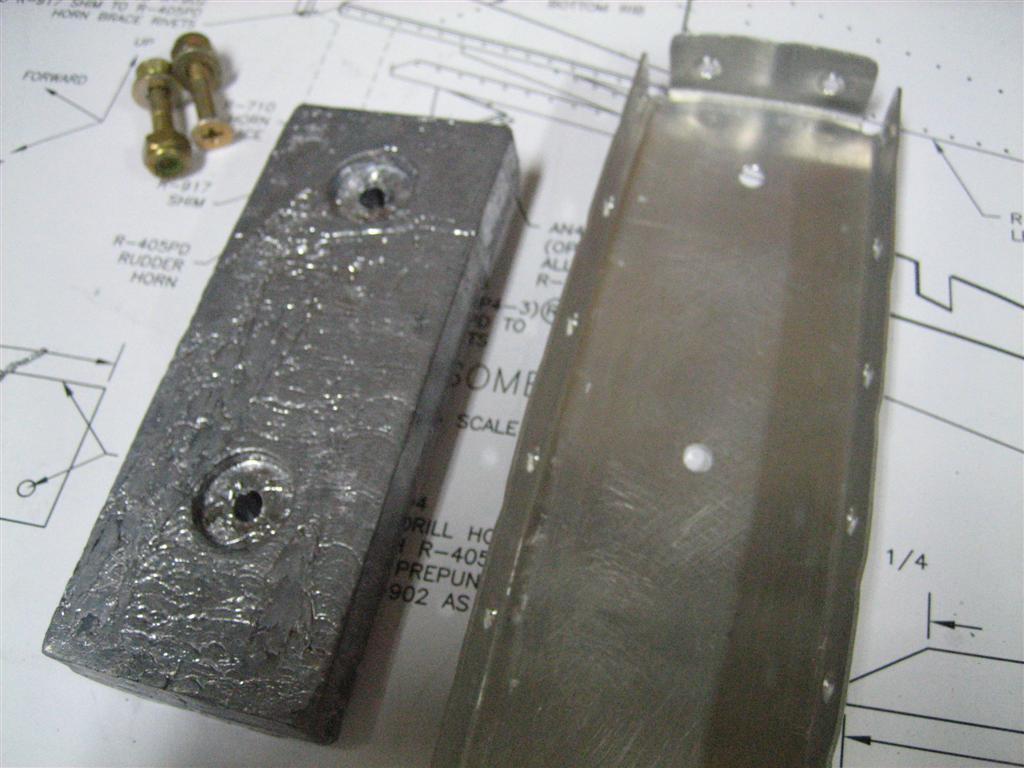
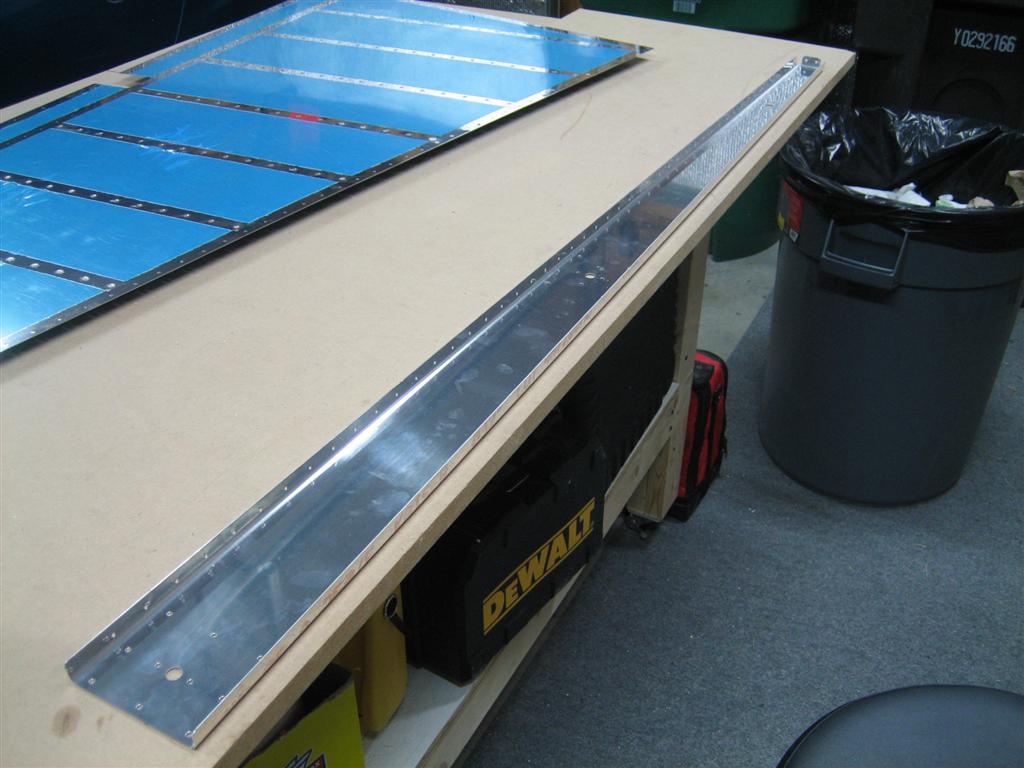
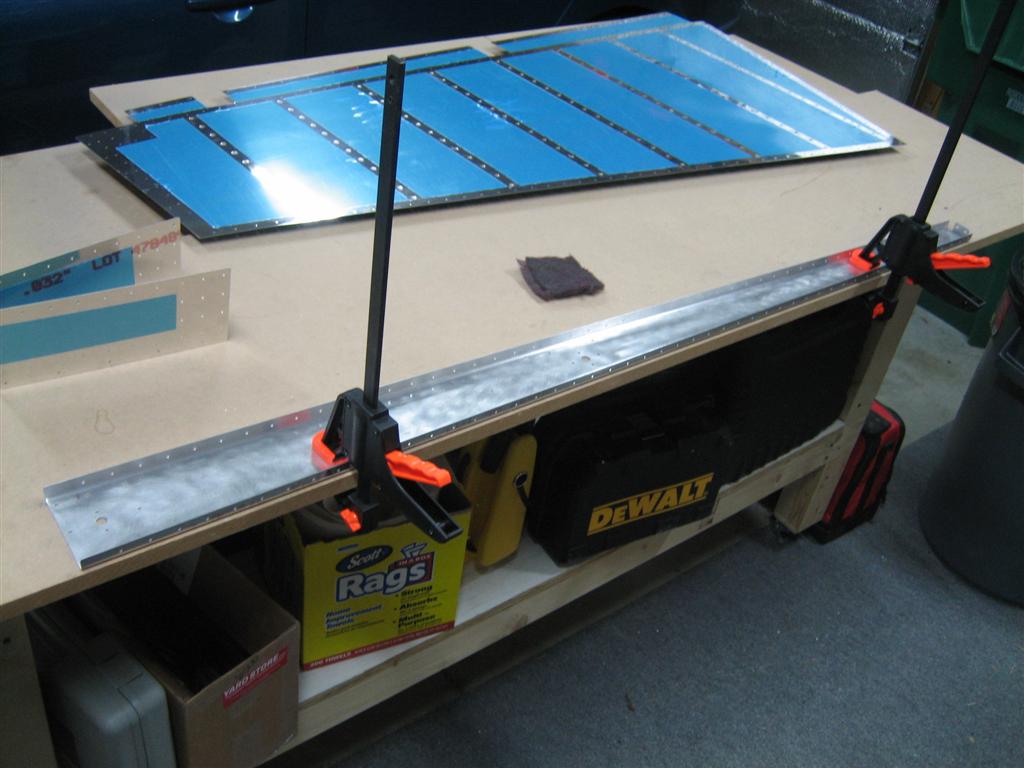
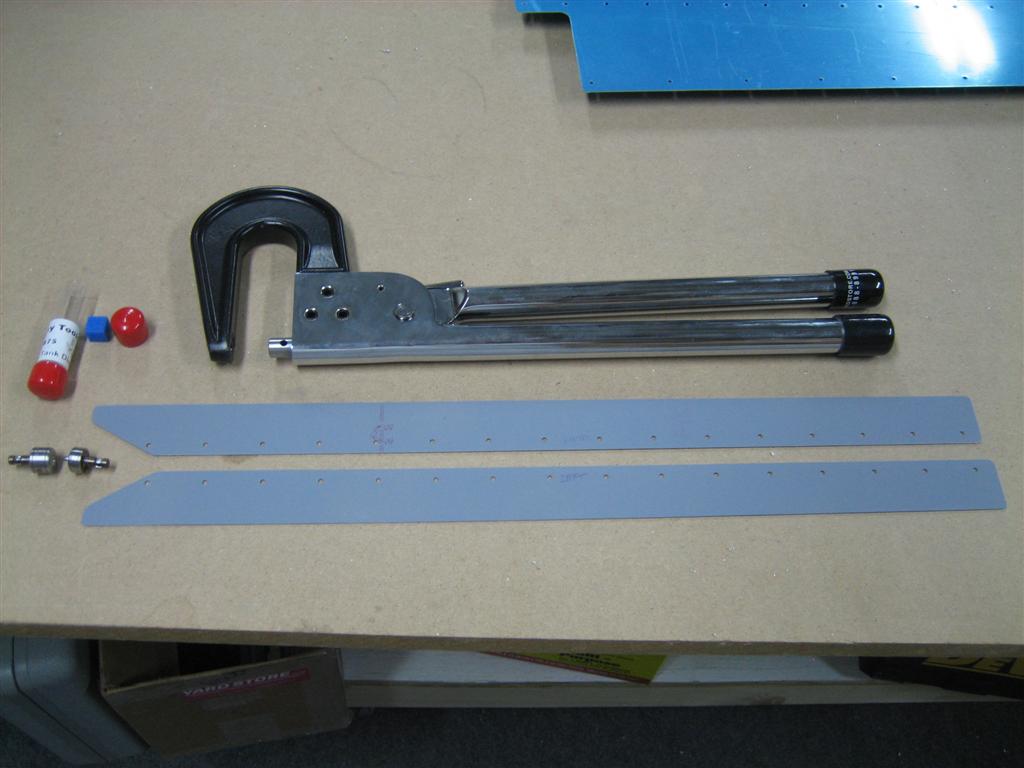
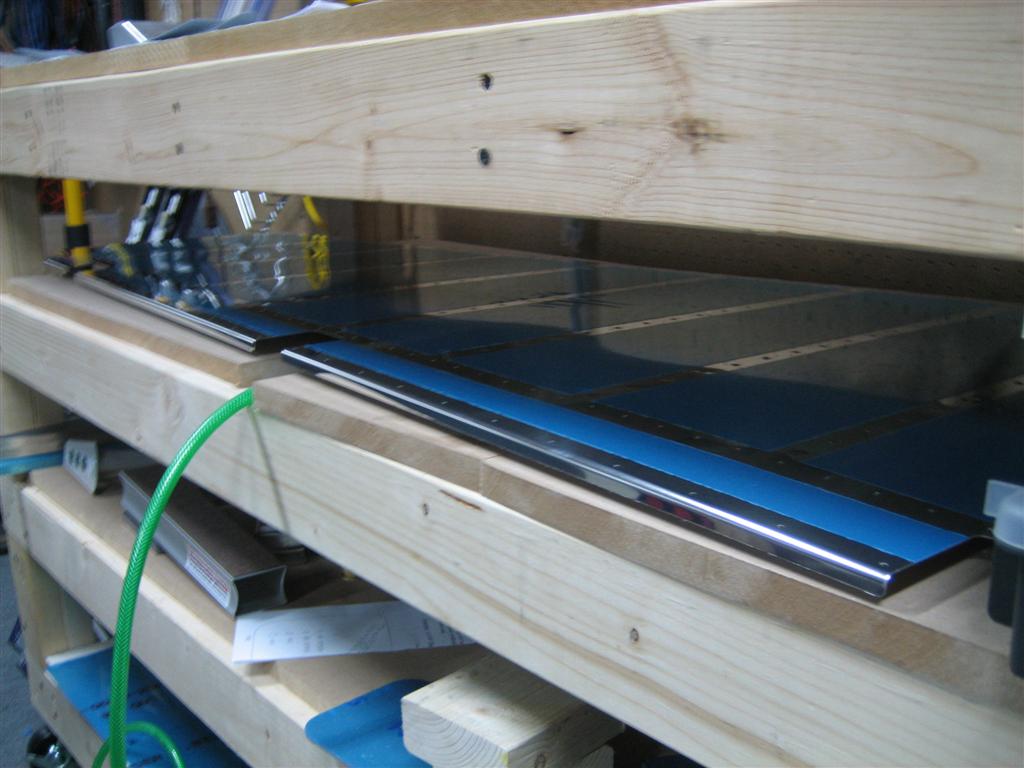
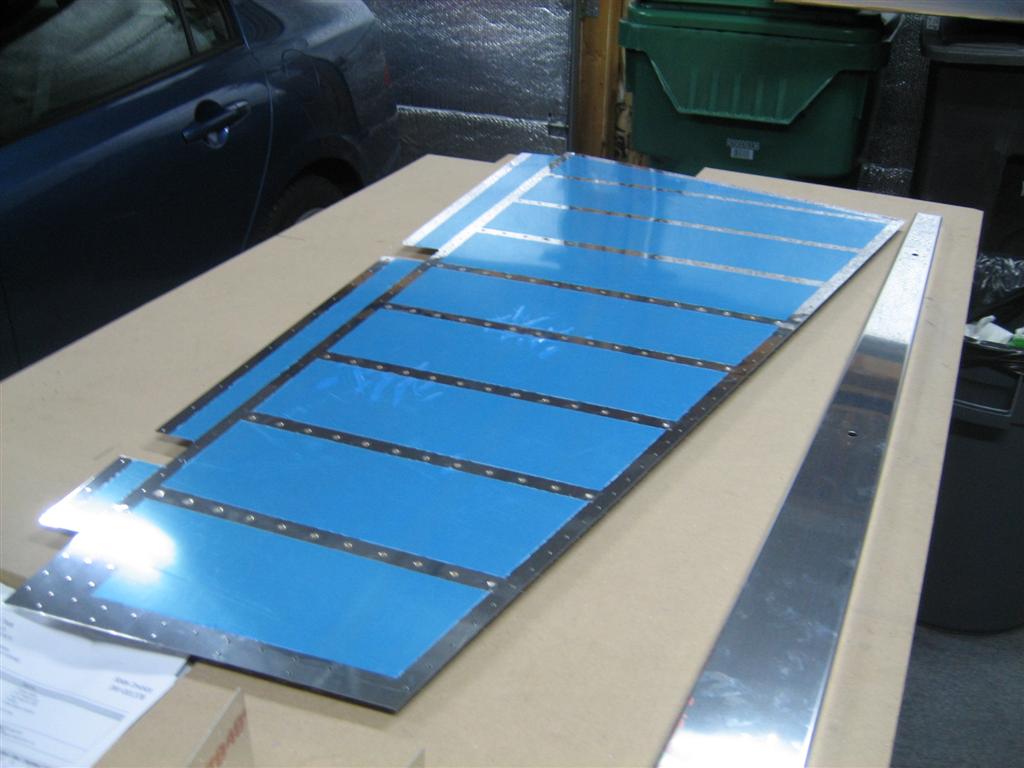
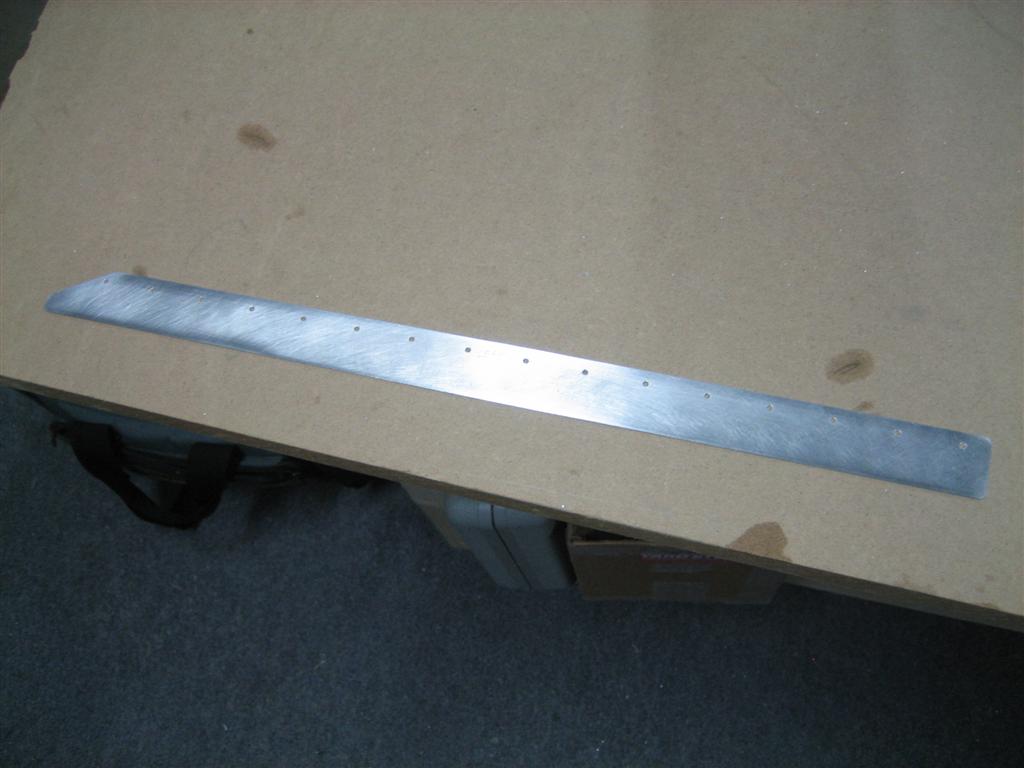
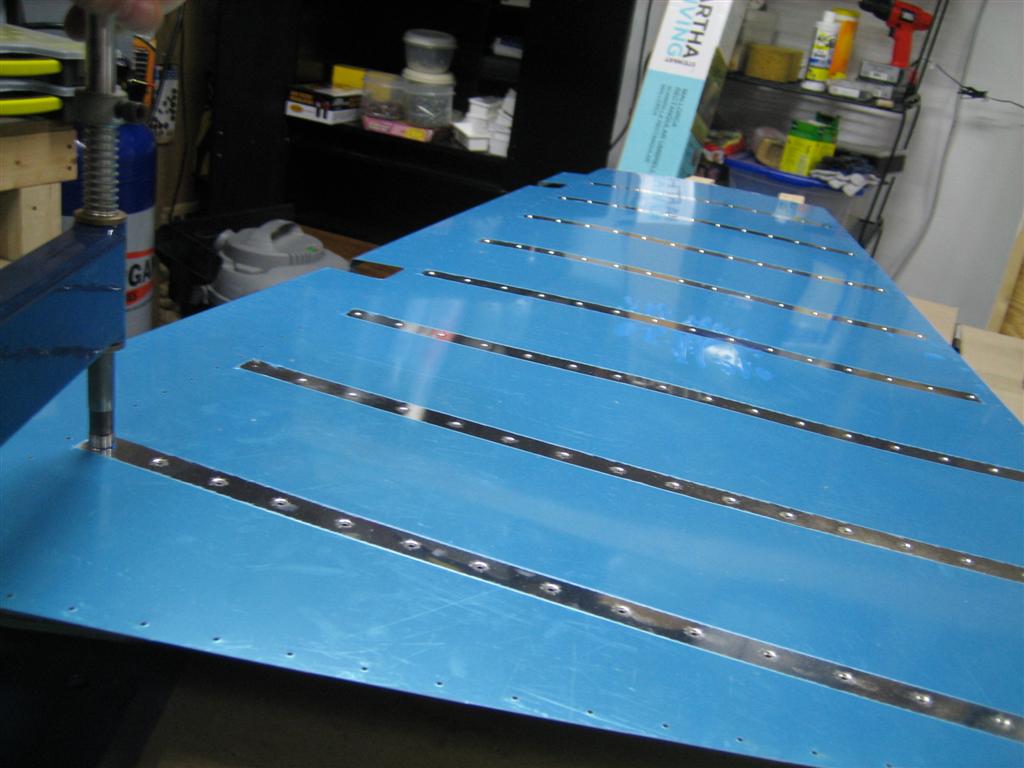
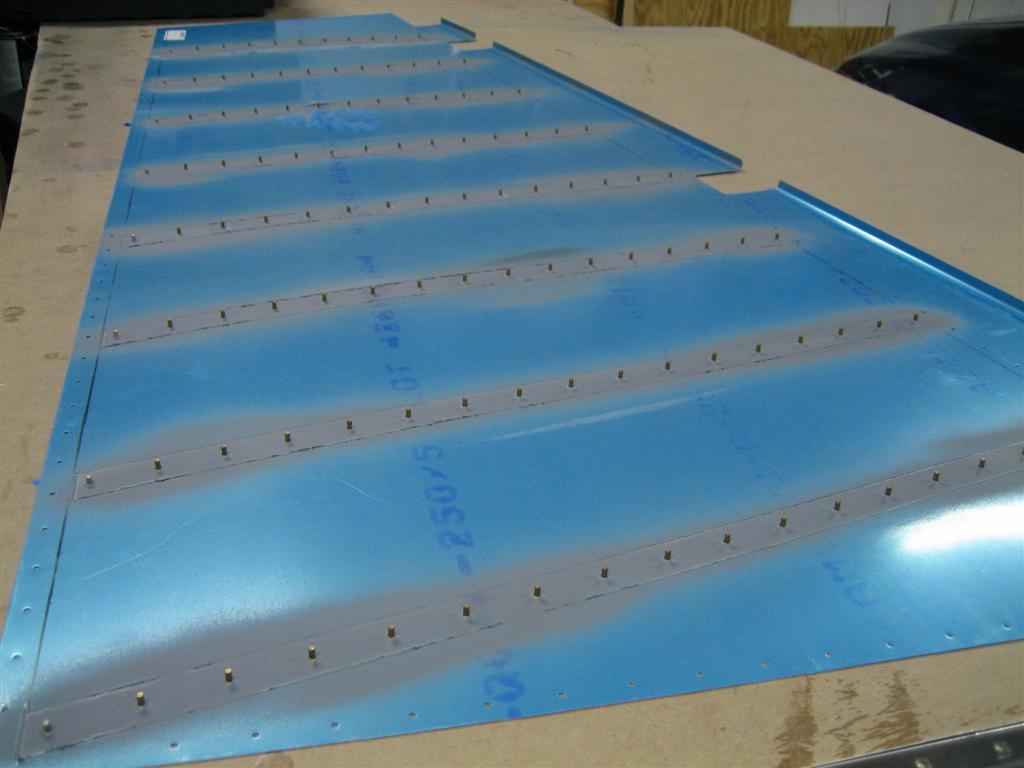
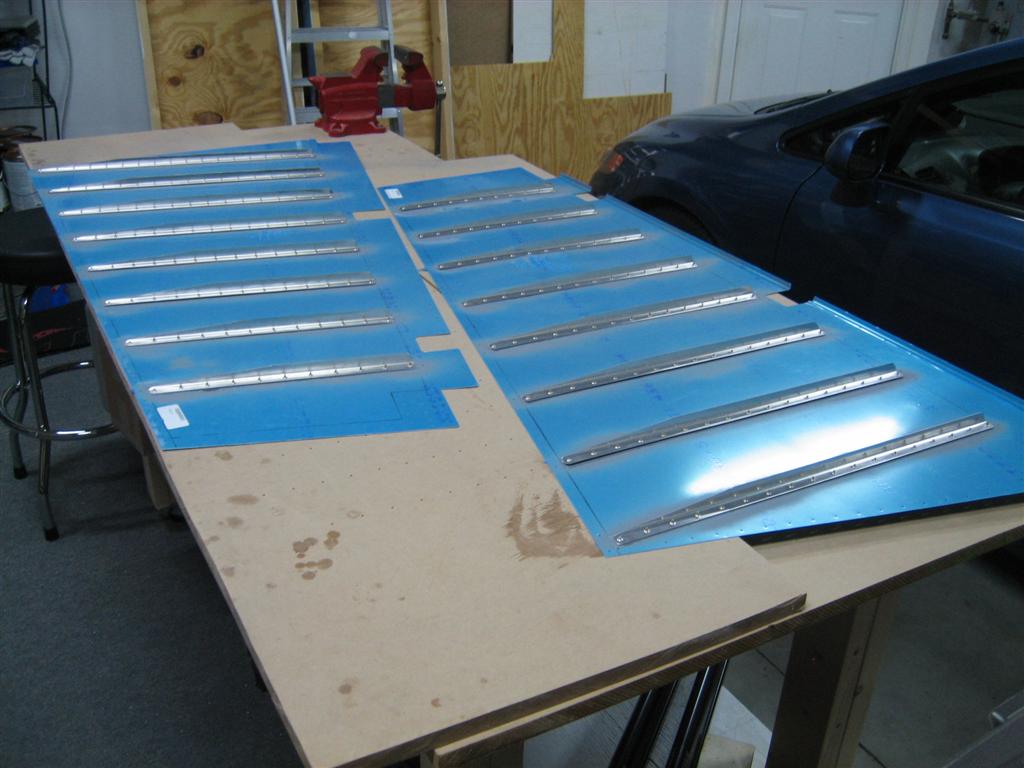
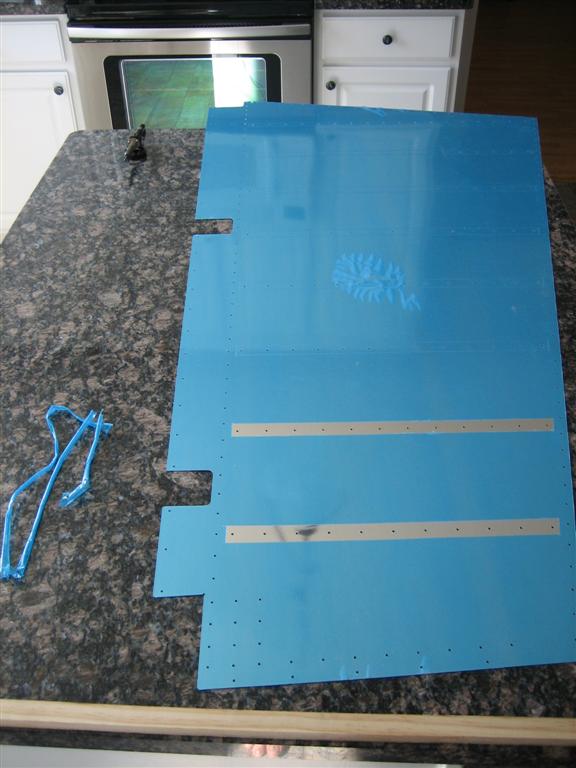
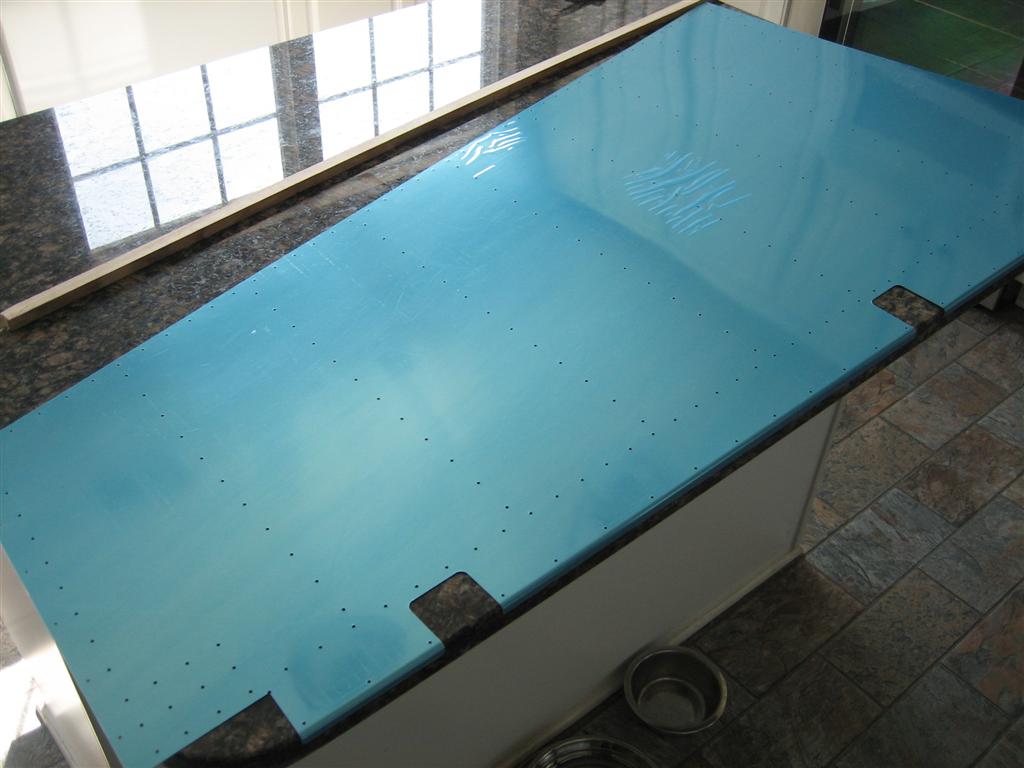
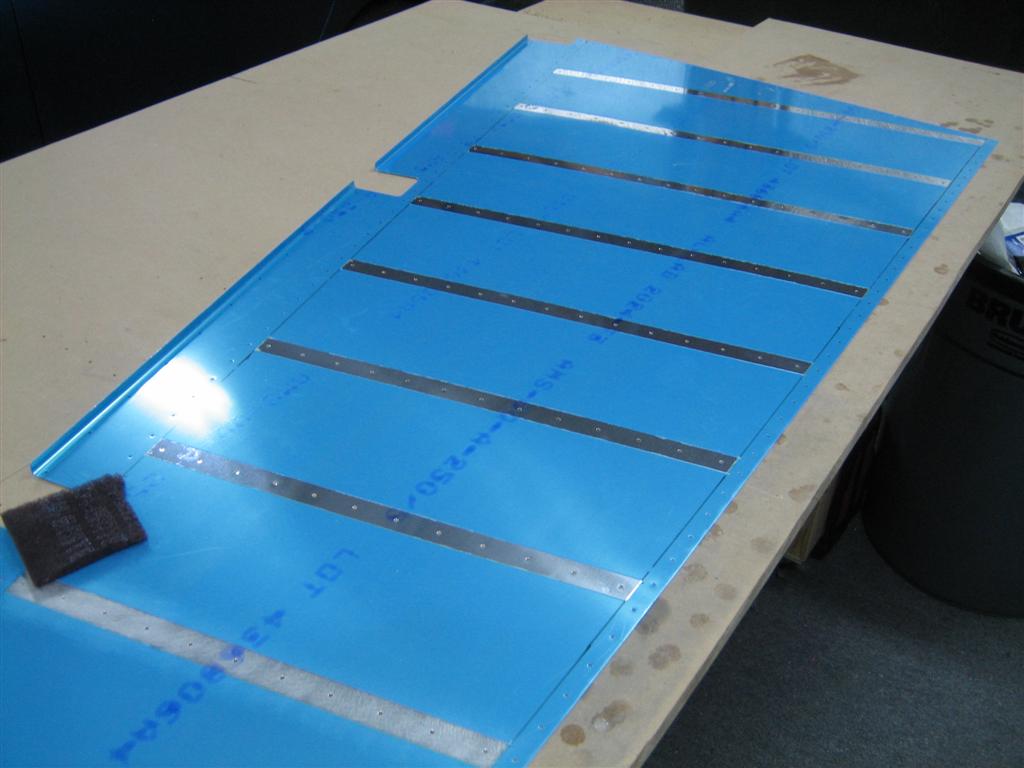
After getting them all drilled out (13 of them, one of them was good enough to leave alone), I set up the skin with a long backriveting plate underneath the offending holes and used a 2×4 laid spanwise on the stiffeners with some clamps to keep the skin surface flat. Then, I used 4 or 5 long pieces of tape to pull the upper skin back to allow plenty of room to work.
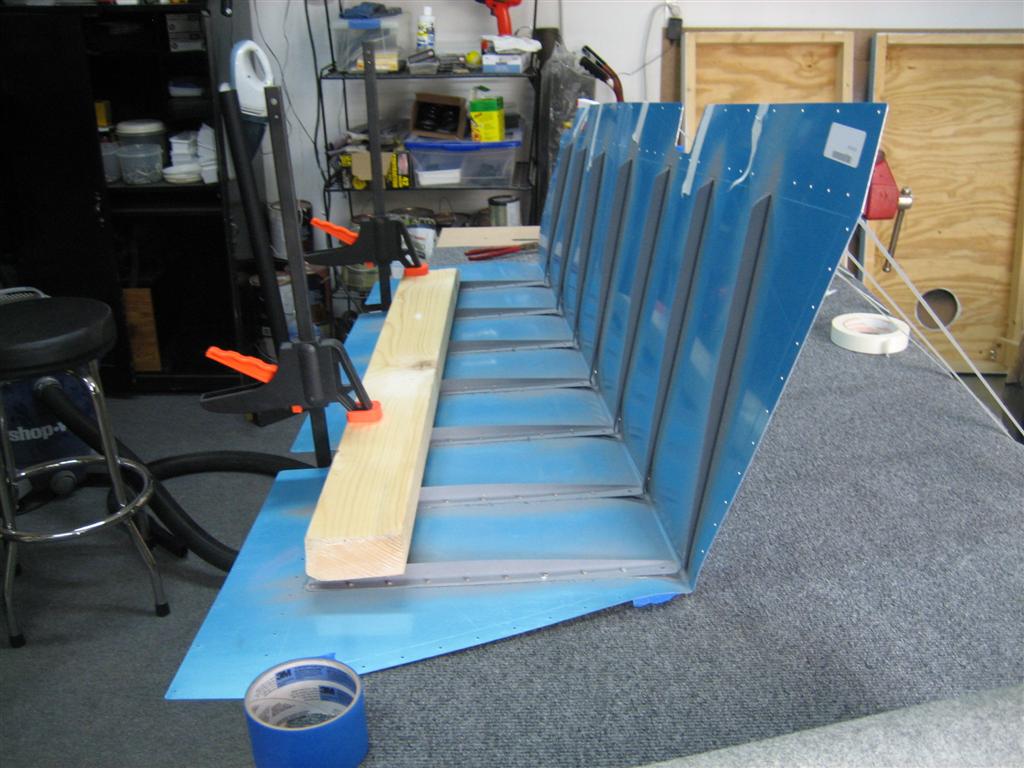
You can still see where the very trailing edge is starting to bend down. This is why I had the problem in the first place.

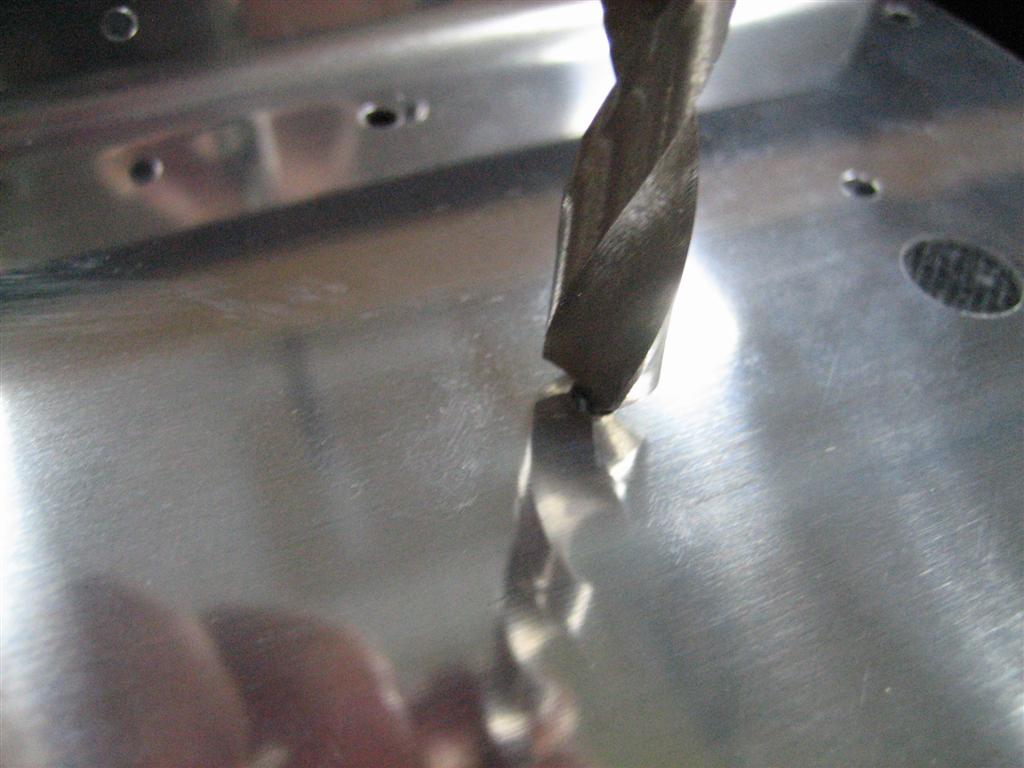
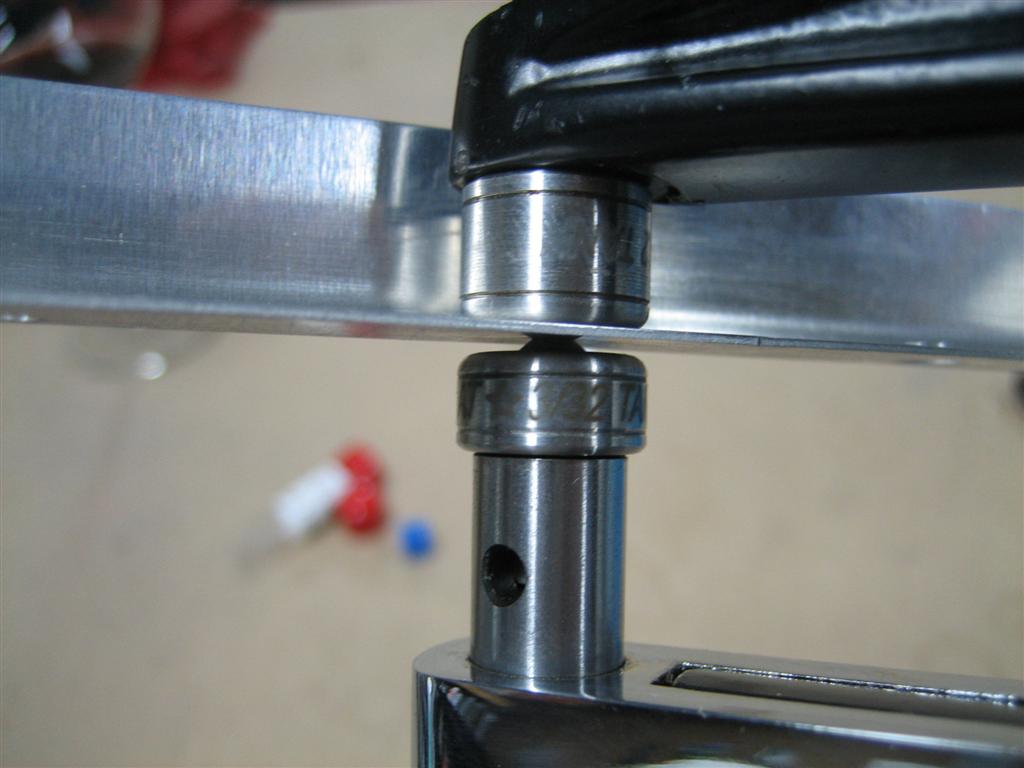
With no rivets in the holes, I used a small flush set (about 3/8″ diameter) and my rivet gun turned way down to flatten the dents (I’ll call them dents for dramatic purposes, but they were really just small impressions) and ridges (again, really just small high spots) flat. I put the flush set on either side of the existing dimple (which was okay, it was the area just outside of the dimple, where the edges of the dimple die set had tweaked the skin a little, where I was having my problem) and gave it a few taps.

After finishing one side, I took off the protective tape I was using and inspected. It ended up okay. I think if I were going to polish the empennage, it would bug me, but my latest paint scheme idea has me painting the elevators.

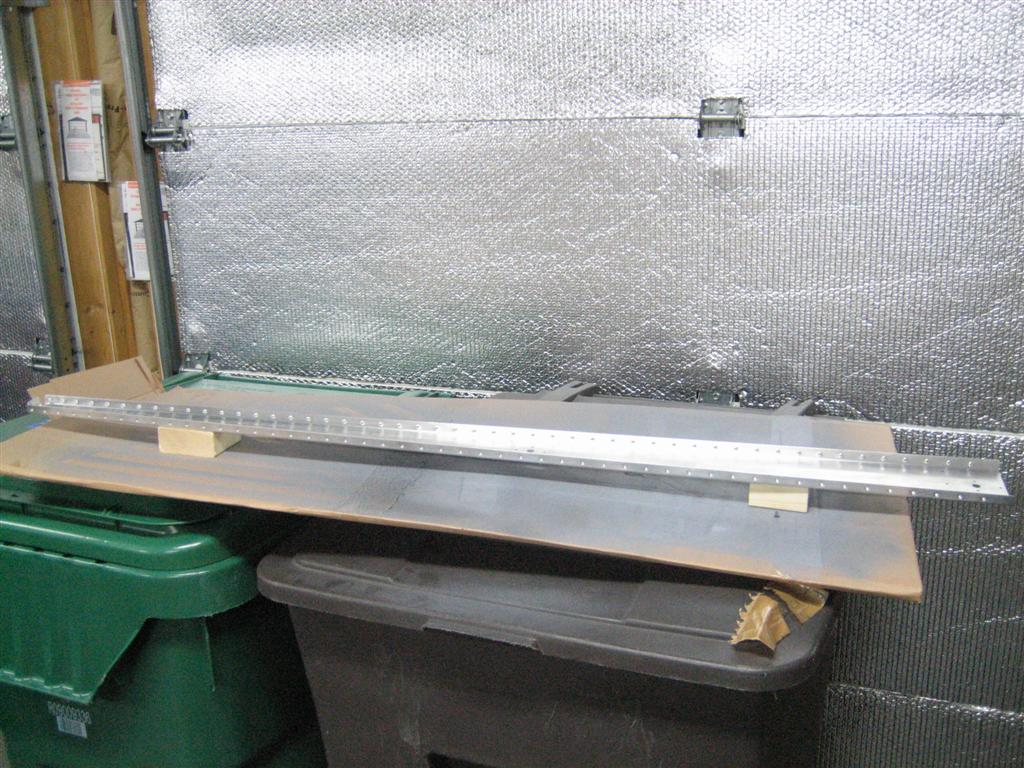
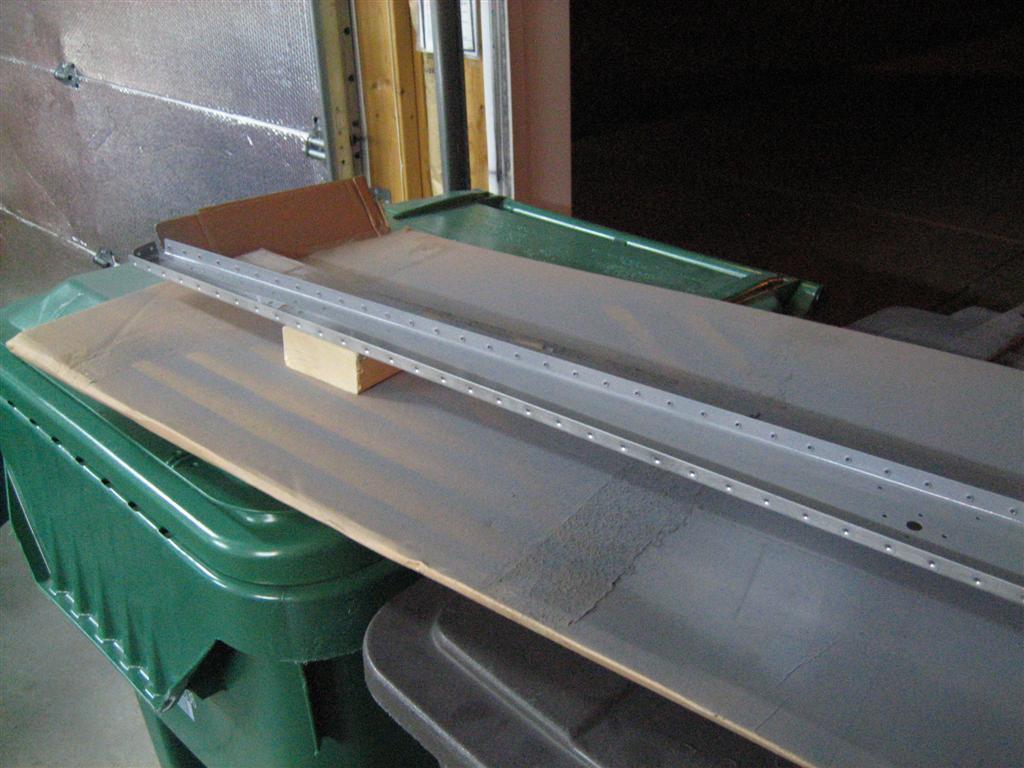
I did the other side, and then cleaned everything up, put some rivets back in the holes, and set up each side again with my fancy setup to actually backrivet the last hole of the stiffeners in place. It went perfectly, and I was really careful to hold everything very flat against the backriveting plate.

(By “perfectly,” I really mean “I messed up one of the holes, had to drill it out to #30 and use an oops rivet.” ) I’ll point it out.

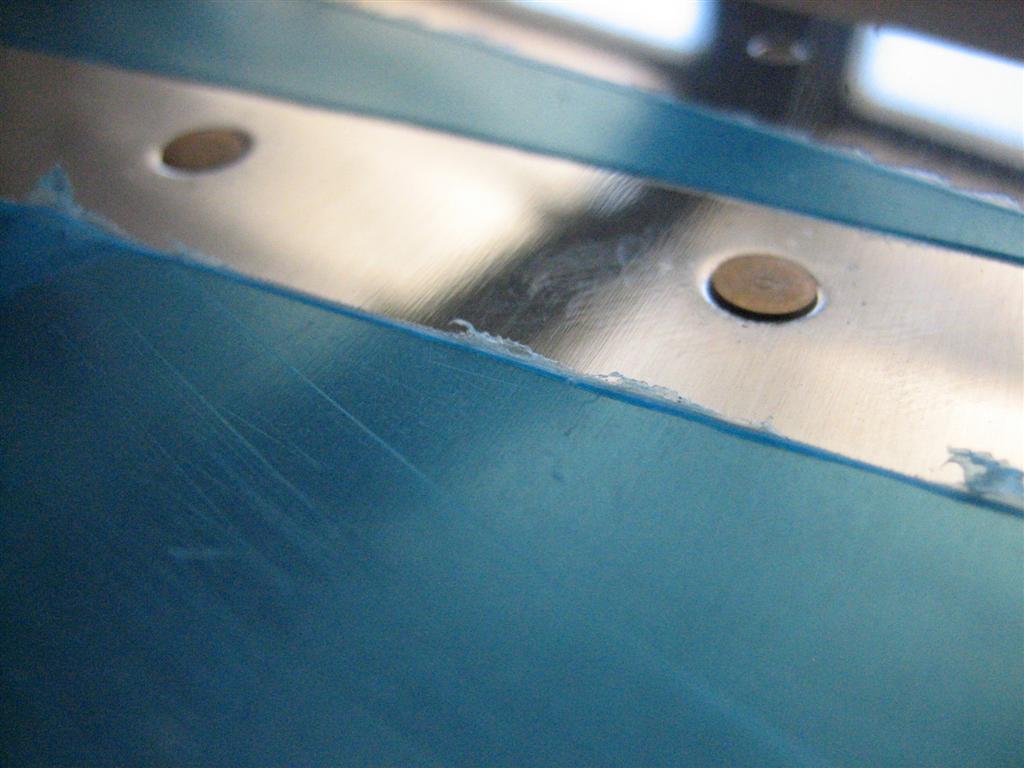
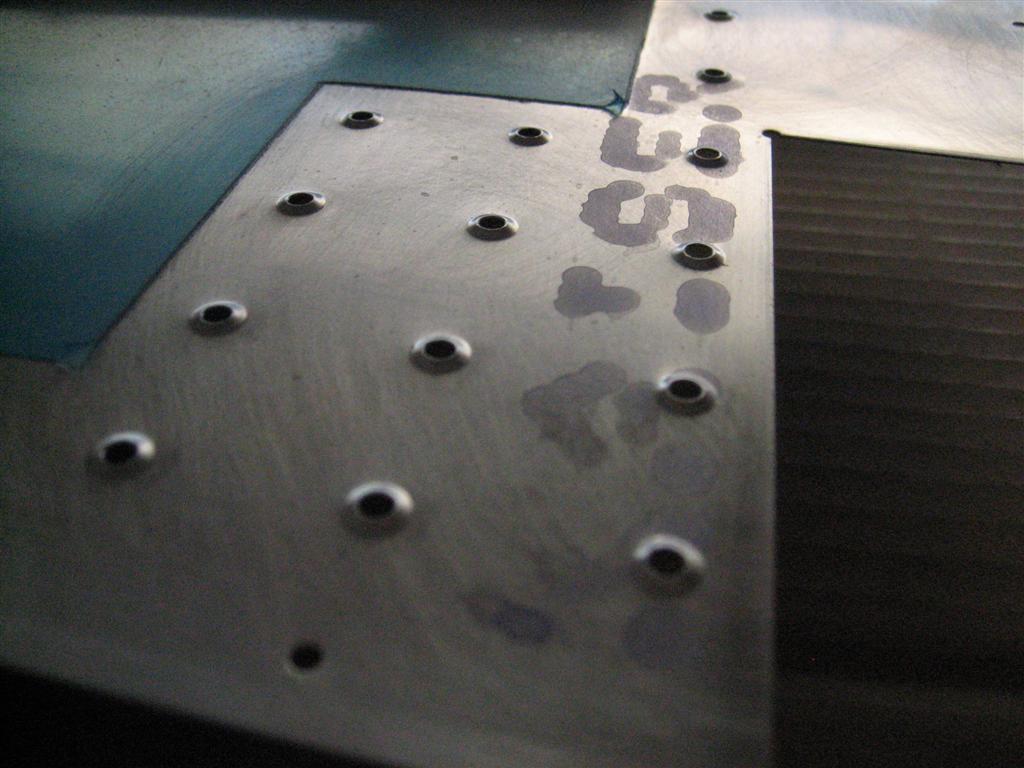
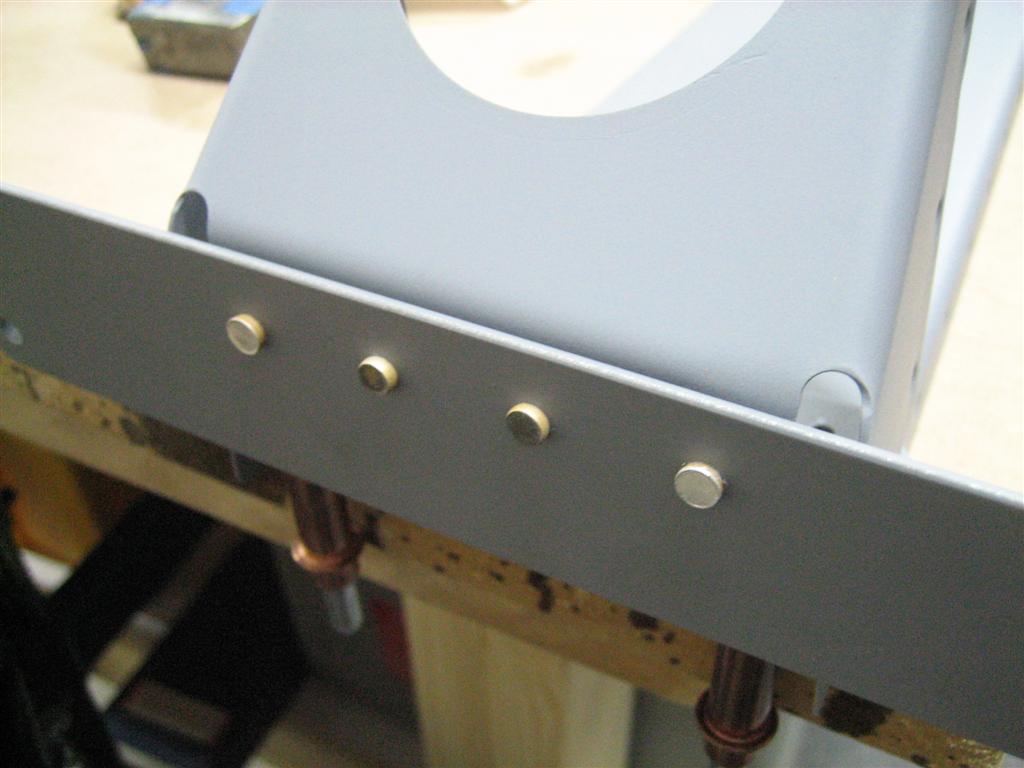
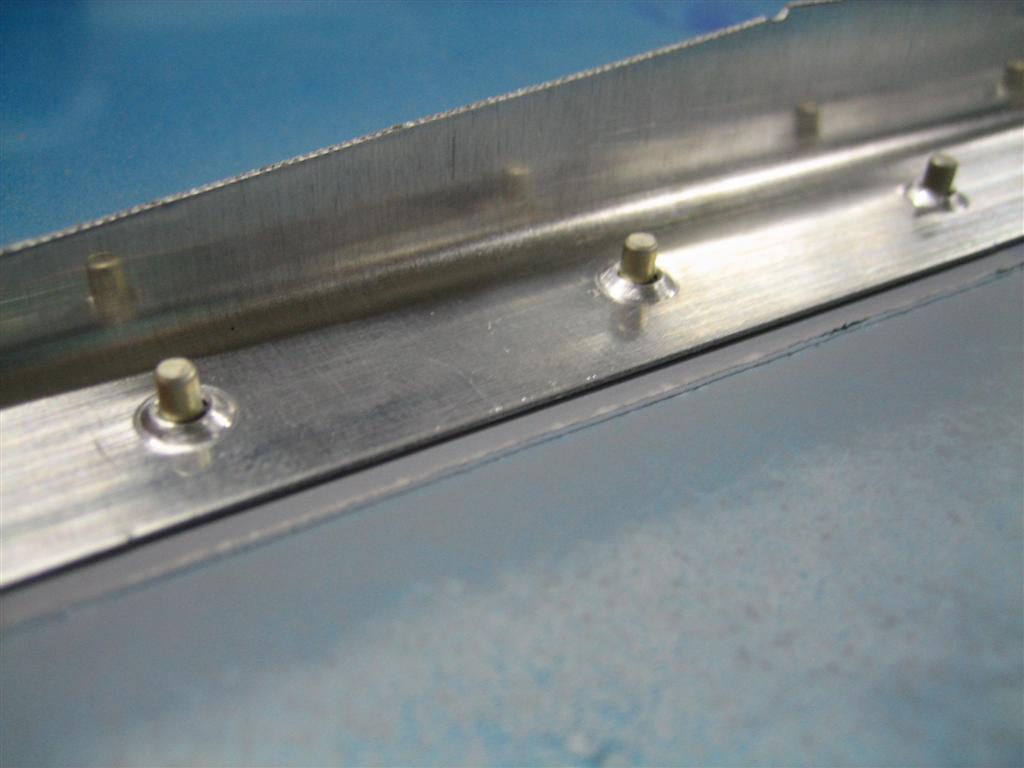
Here are some examples of the replaced finished rivets.
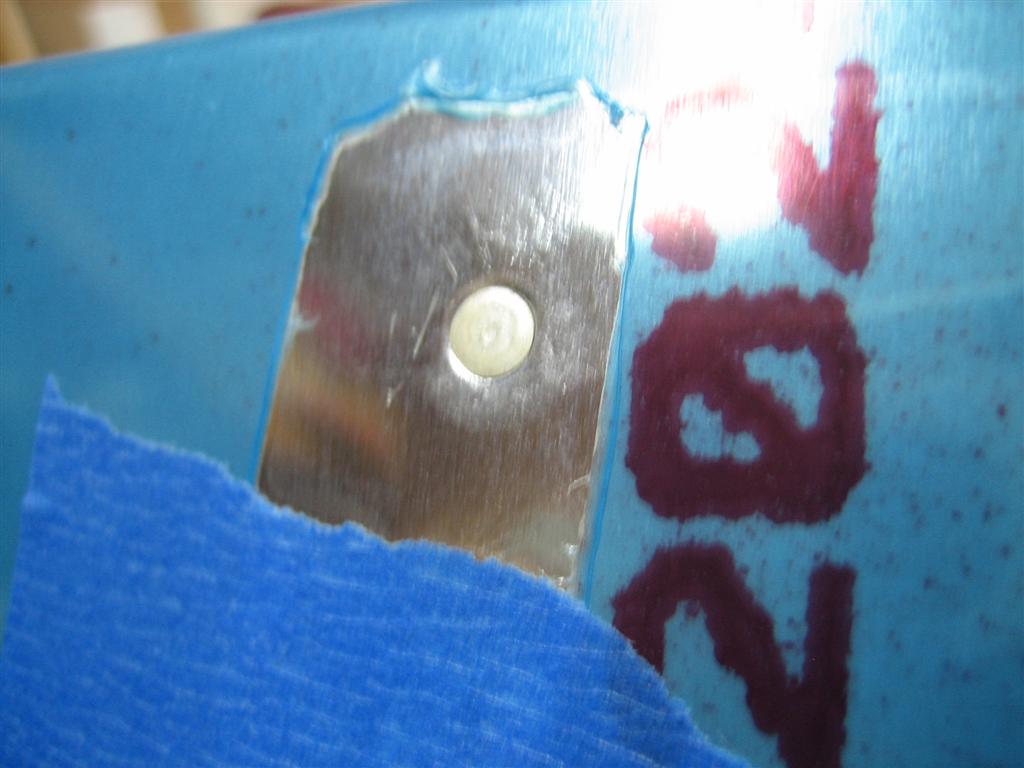
This one looks great!
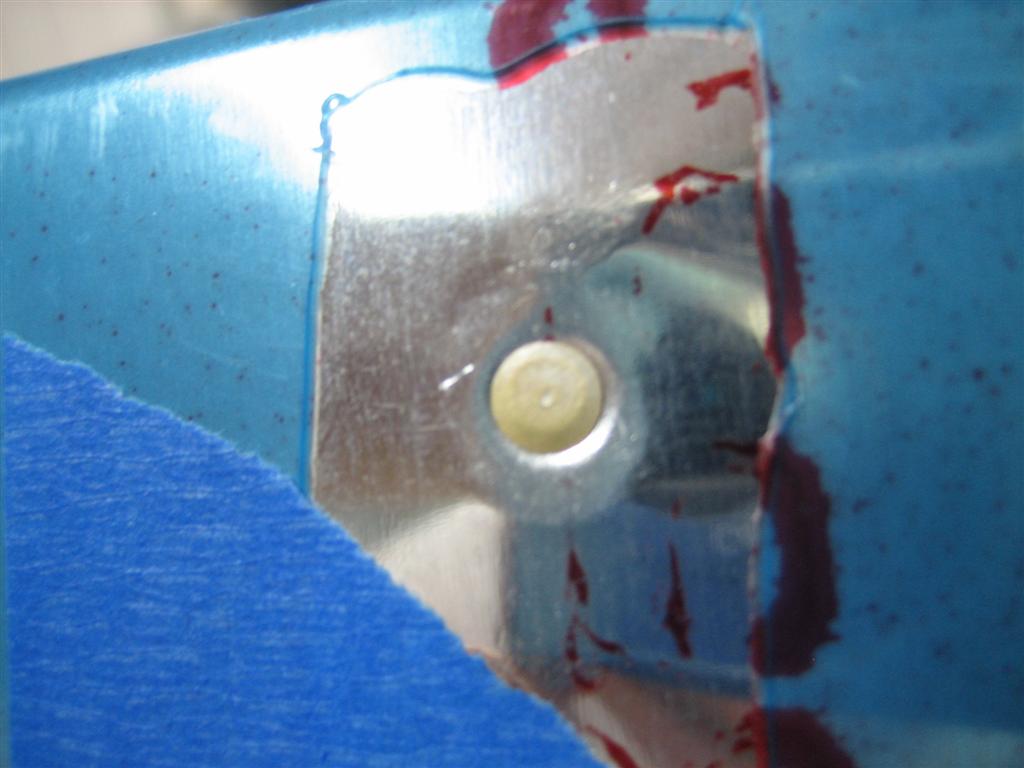
Pretty good. You can still kind of see where the damage was.
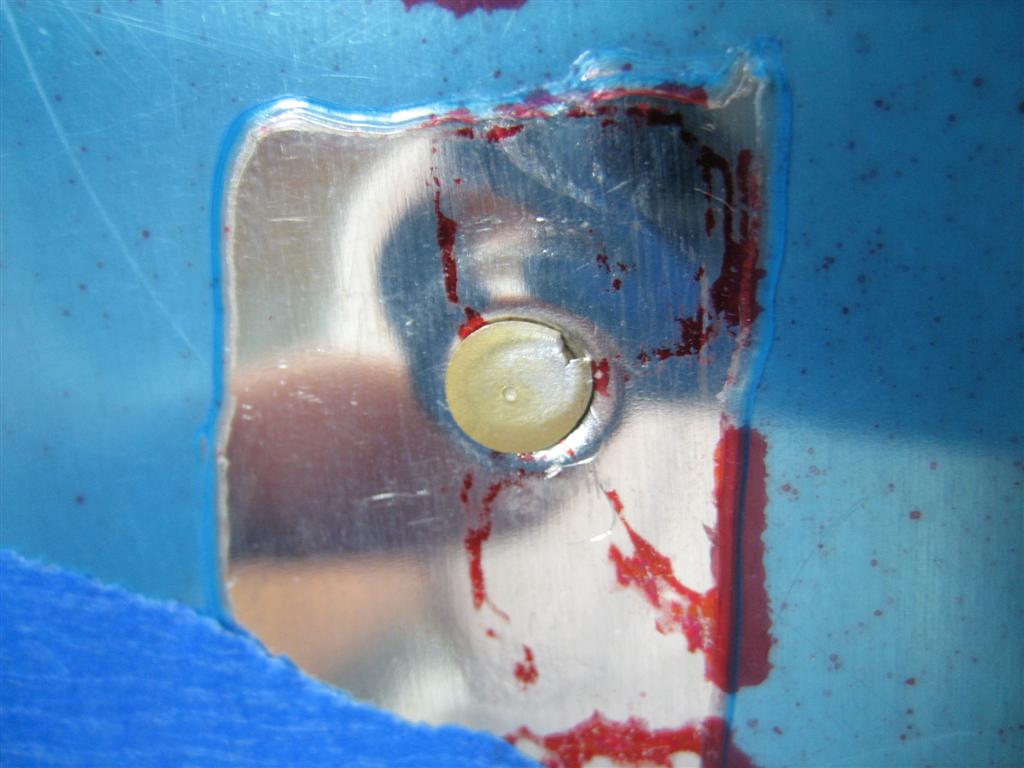
Holy crap, how did I do that to the rivet? This is the one that got drilled out again and replaced.
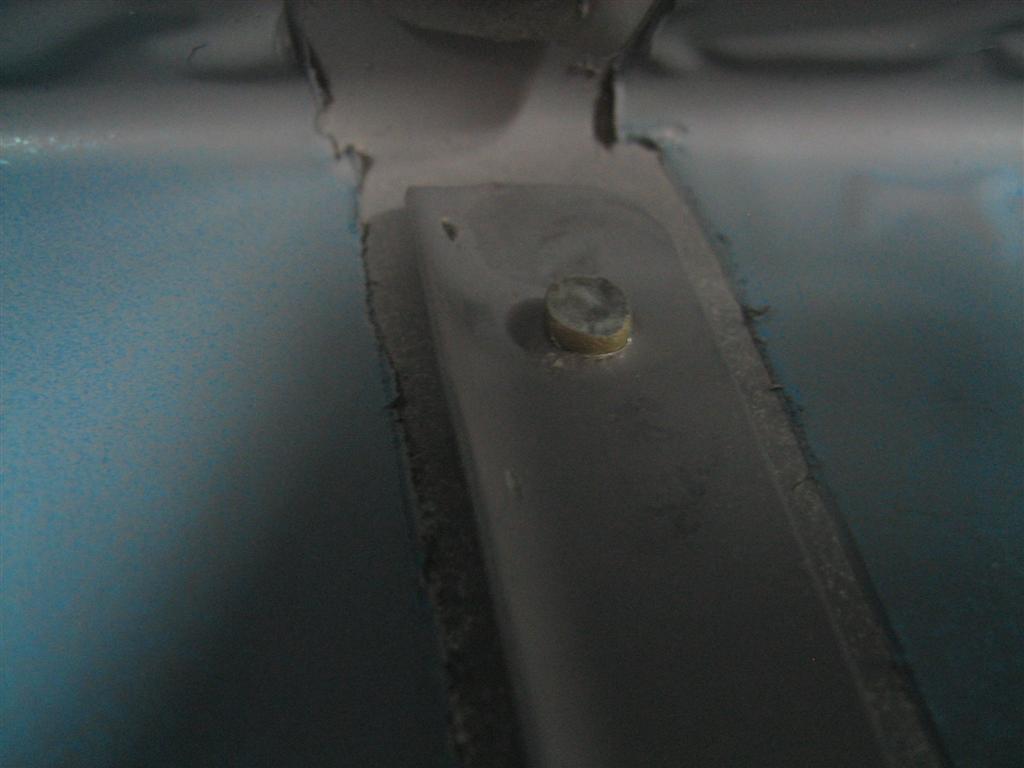
Here's the shop head for the oops rivet. This was my first real oops rivet. Not bad.
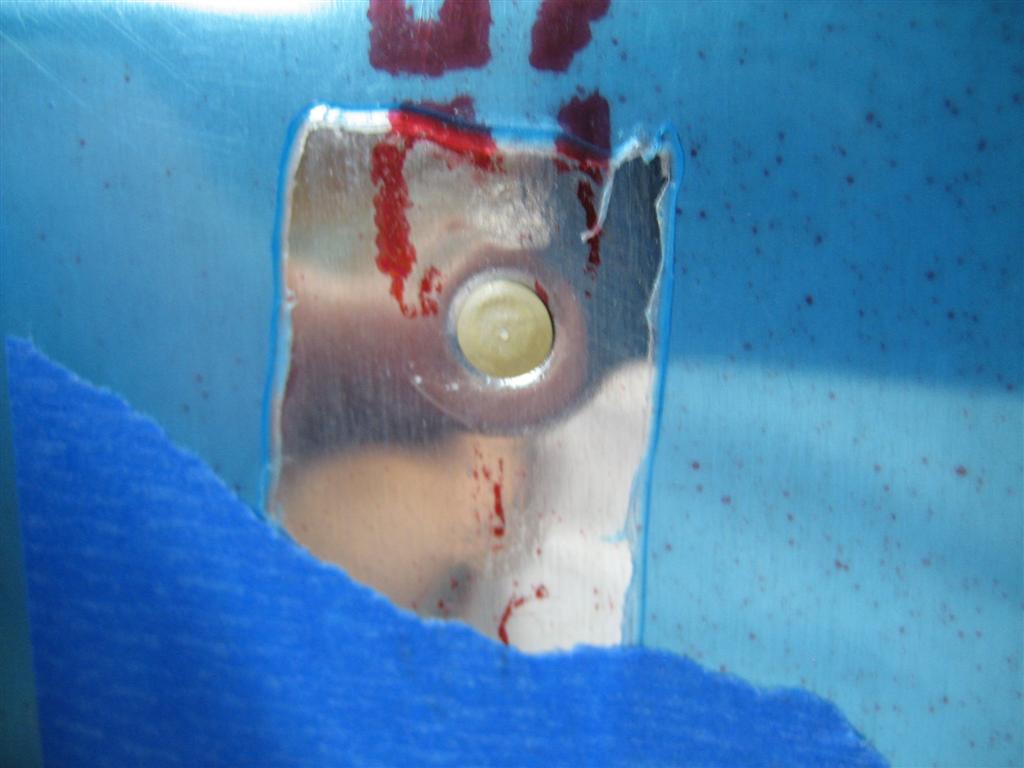
This one is okay.
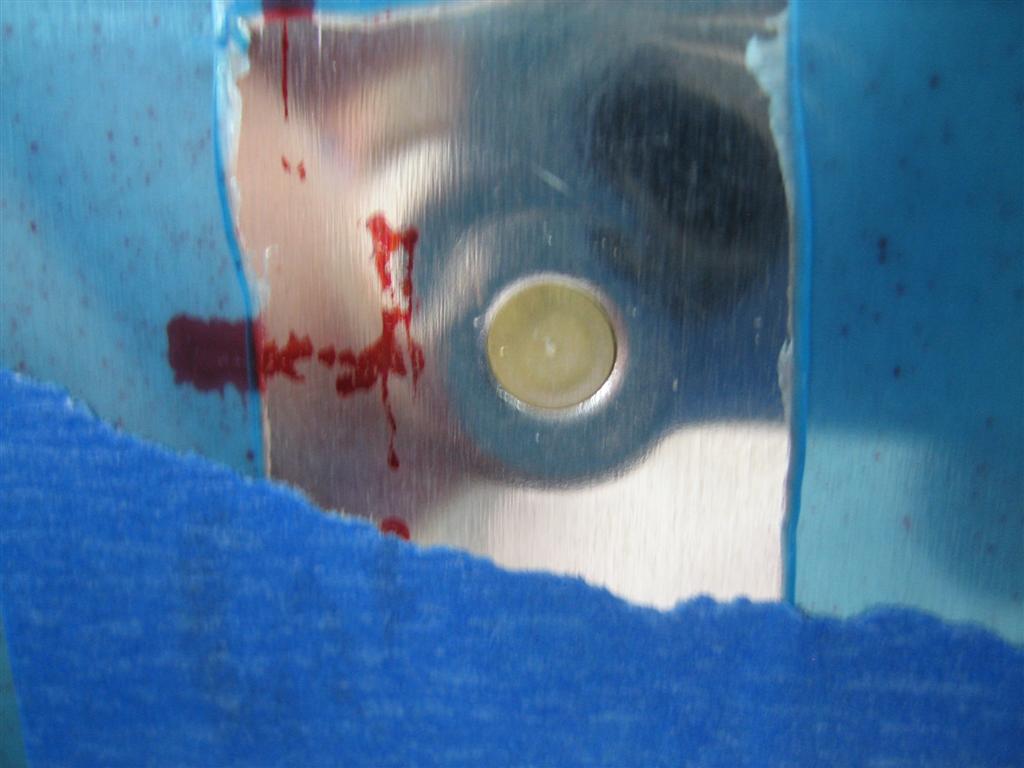
Another very nice one.
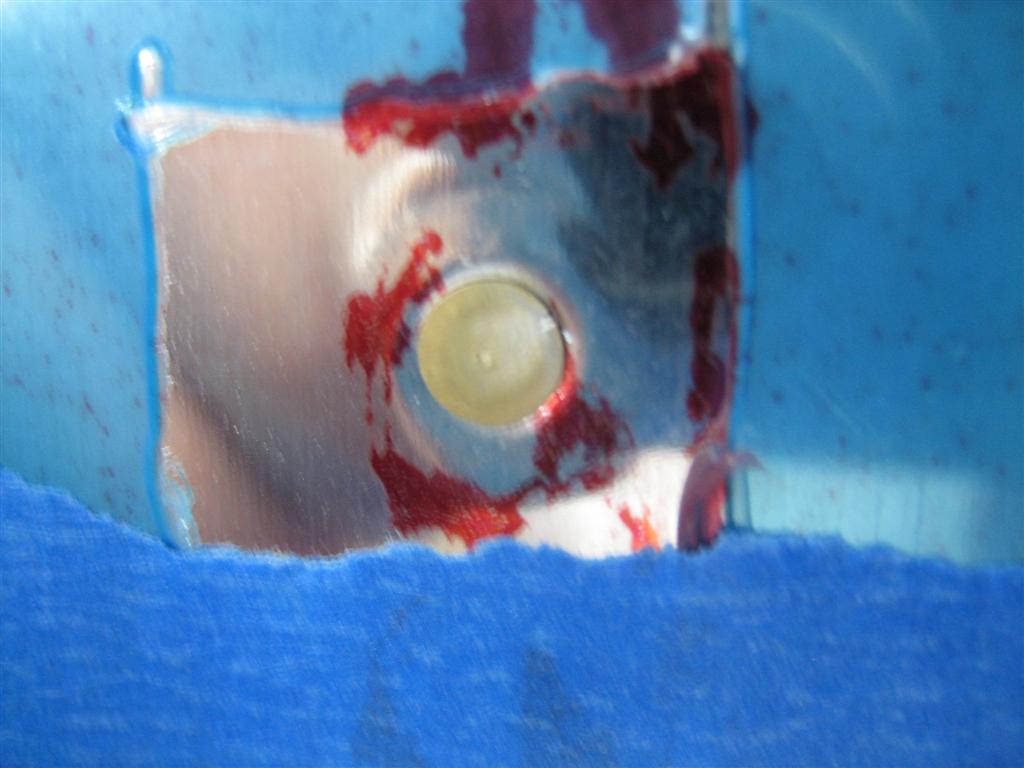
It's not blurry in real life, I promise.
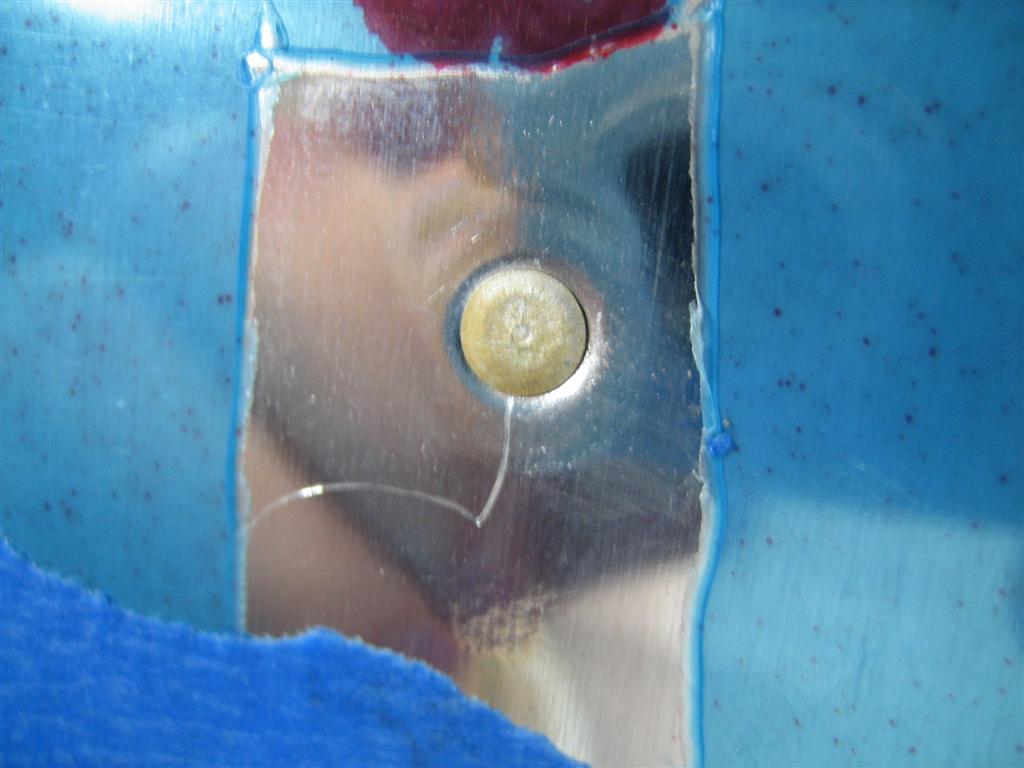
Whoa, who scratched my skin? It was probably the male part of the dimple die. That will hopefully polish out, (or it will get cleaned up and painted).
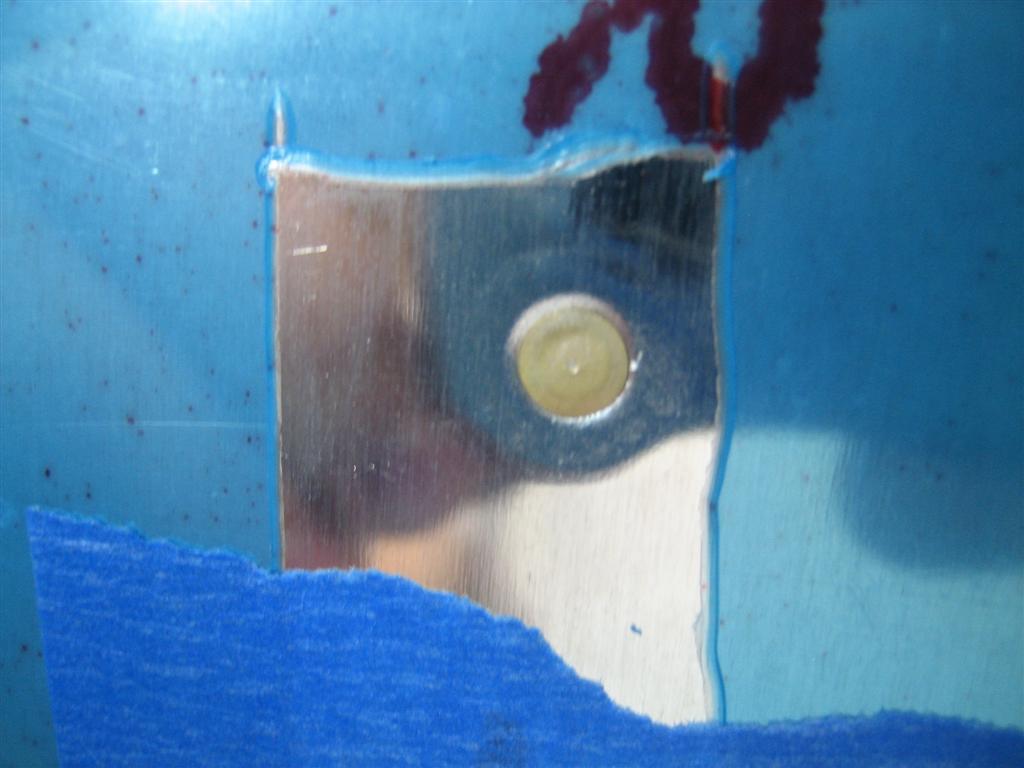
Another good one. In all of these, you can kind of see the larger diameter area that was dimpled.
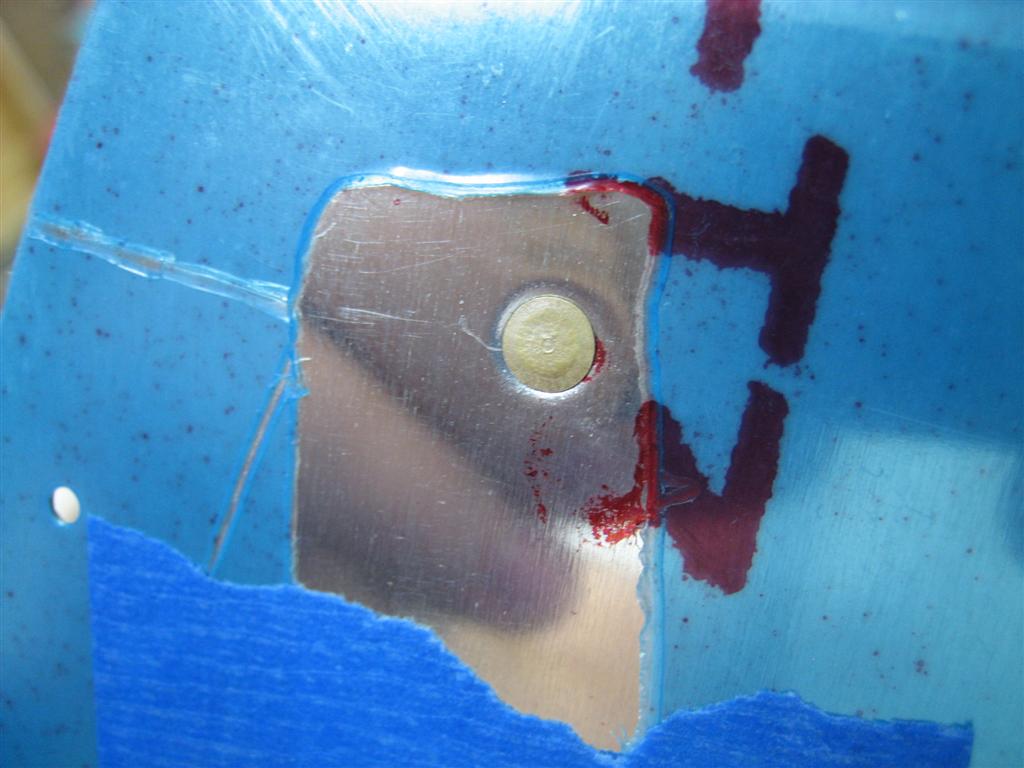
This one is on the very end, as you can see the devinyling lines.

It looks the same as all the rest, of course, so you’ll never know, and I’ve already forgotten which side (top or bottom) it’s on.

Anyway, I drilled out 13 of the 14 original rivets, then had to redo one of those, so 14 rivets drilled out and reset successfully in an hour today. Not bad. I’ll add pictures when I can get them uploaded. Sorry for the lack of work recently.

Prev | Next


Riveted E-615PP Trim Reinforcement Plate

April 6, 2010

Prev | Next

WUHOO, tool order arrived!

3 things in the order, $154.90. Ouch.

Also included was this AWESOME sticker.

Where should I put this?

Here?

Here?

Here?

On the airplane? no.

Finally, the air compressor won.

Decorated air compressor.

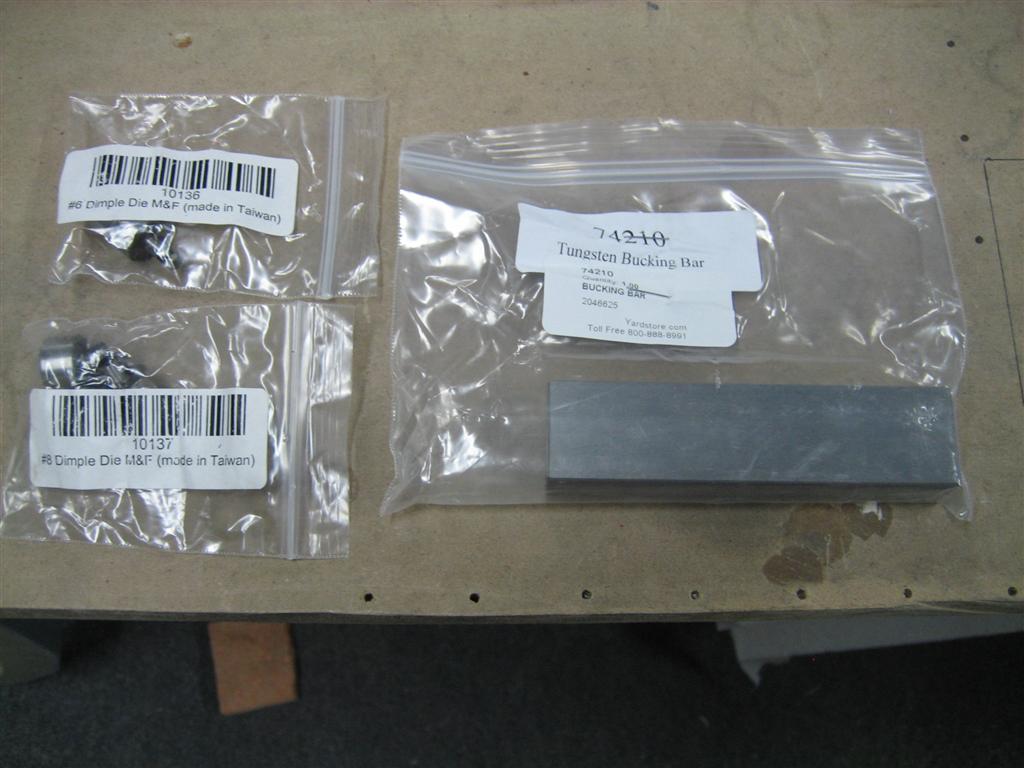
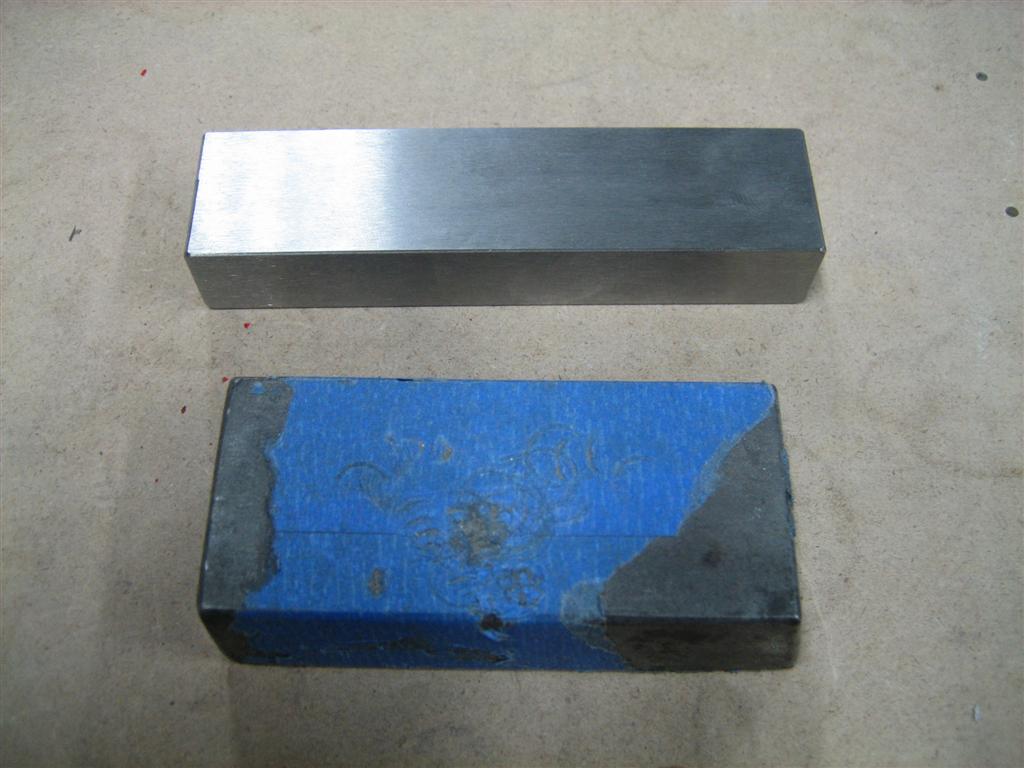
Look at that beautiful tungsten bucking bar.

Old and new.

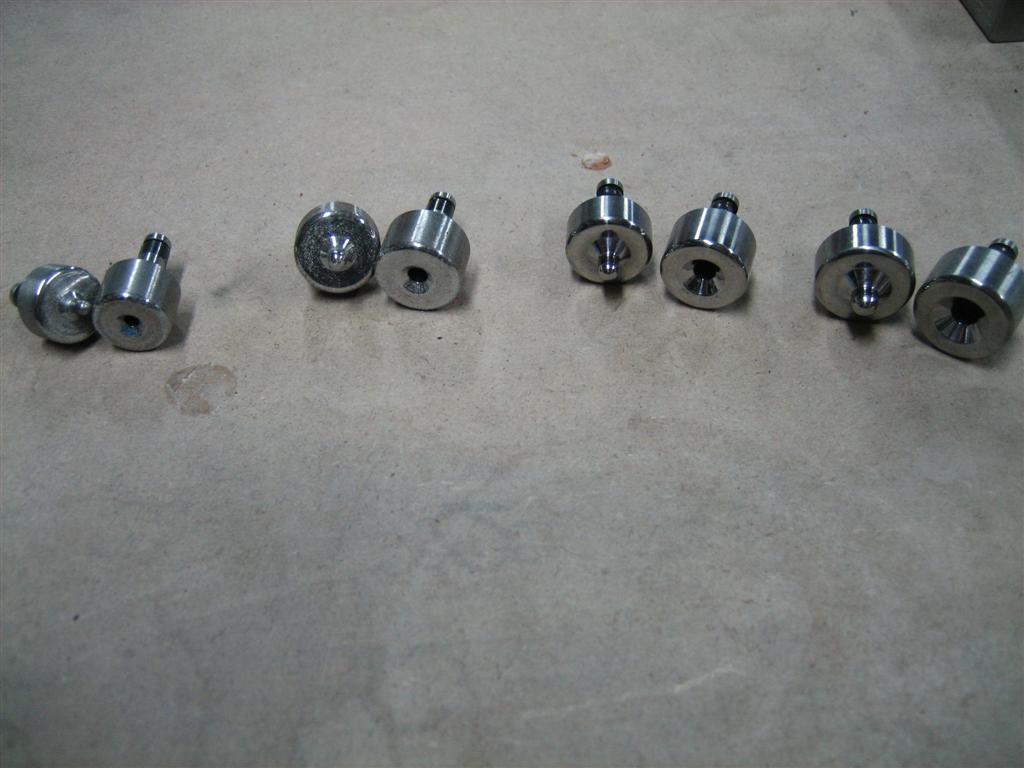
Also, I got two more dimple die sets. #6 and #8, on the right.

Just for comparison. #40, #30, #6, #8. Still need a #10.

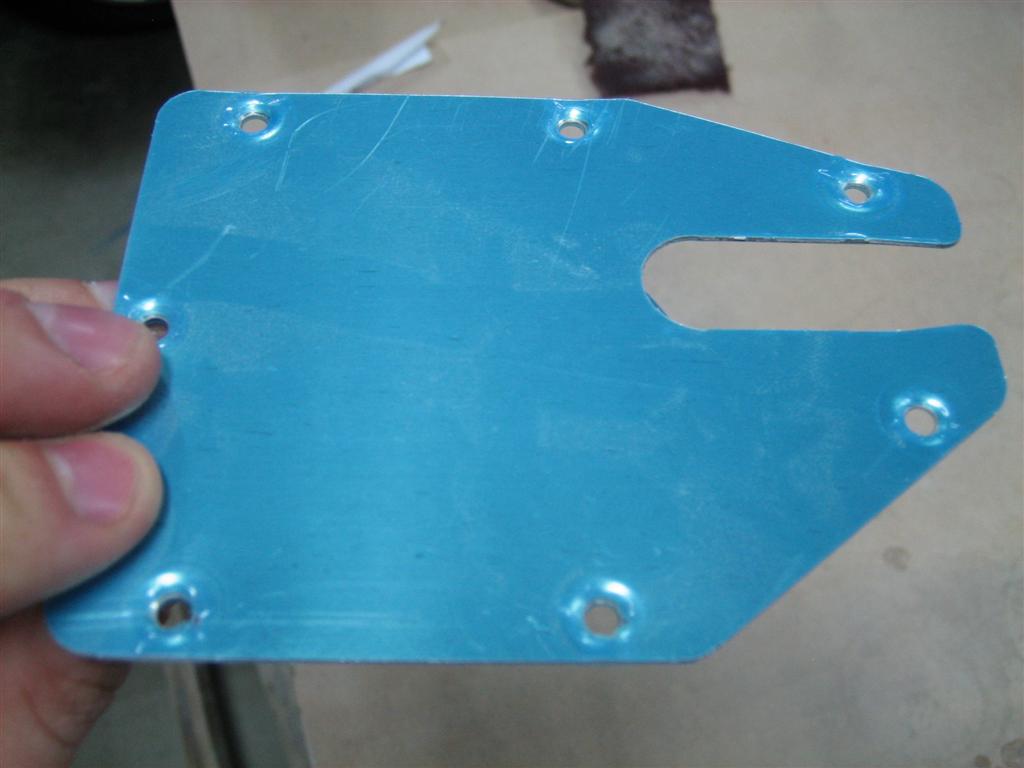
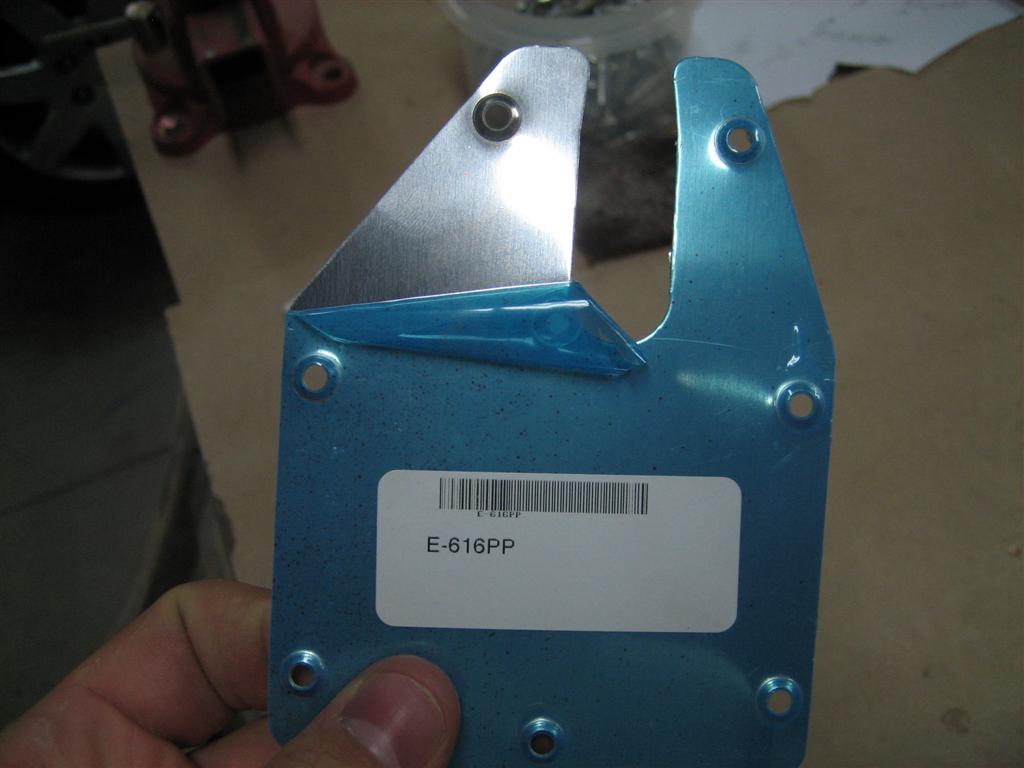
Alright, back to work. First up, using the #6 dimple dies on the E-616PP Trim Cover Plate.

Nicely dimpled. I don't think it matters that you take off the blue vinyl. Maybe that was a bad idea.

Here’s the bottom side (top side when mounted on the bottom of the elevator on the airplane).

Peeling off the blue vinyl.

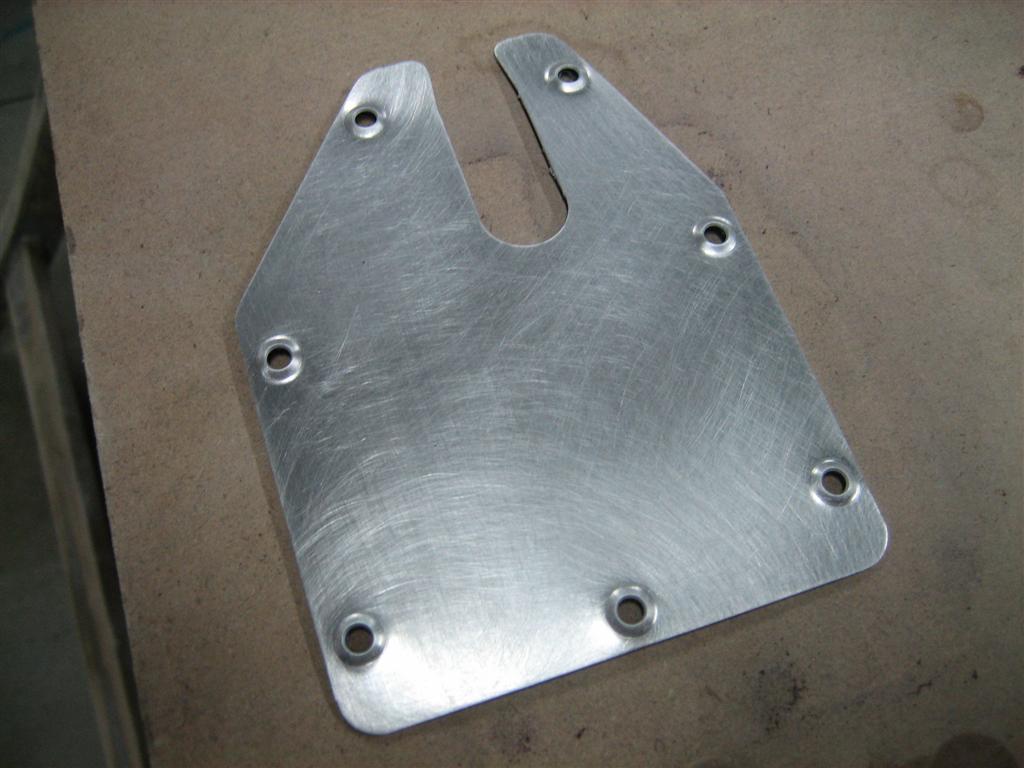
Then, edge finished and scuffed for priming. I’m going to wait to prime this until I can actually by the electric trim motor since you have to drill more holes. Just thinking ahead: can I countersink and use NAS rivets for the trim motor mounting brackets? Nope. These are pretty structural (hold the motor, and therefore the trim tab, in place.) I’m sure those directions will confirm the need to dimple. I’ll need to dimple E-616PP and the brackets that are used to attach the trim motor.

Ready for priming, except for all of the extra holes I have to drill, deburr, dimple, and rivet.

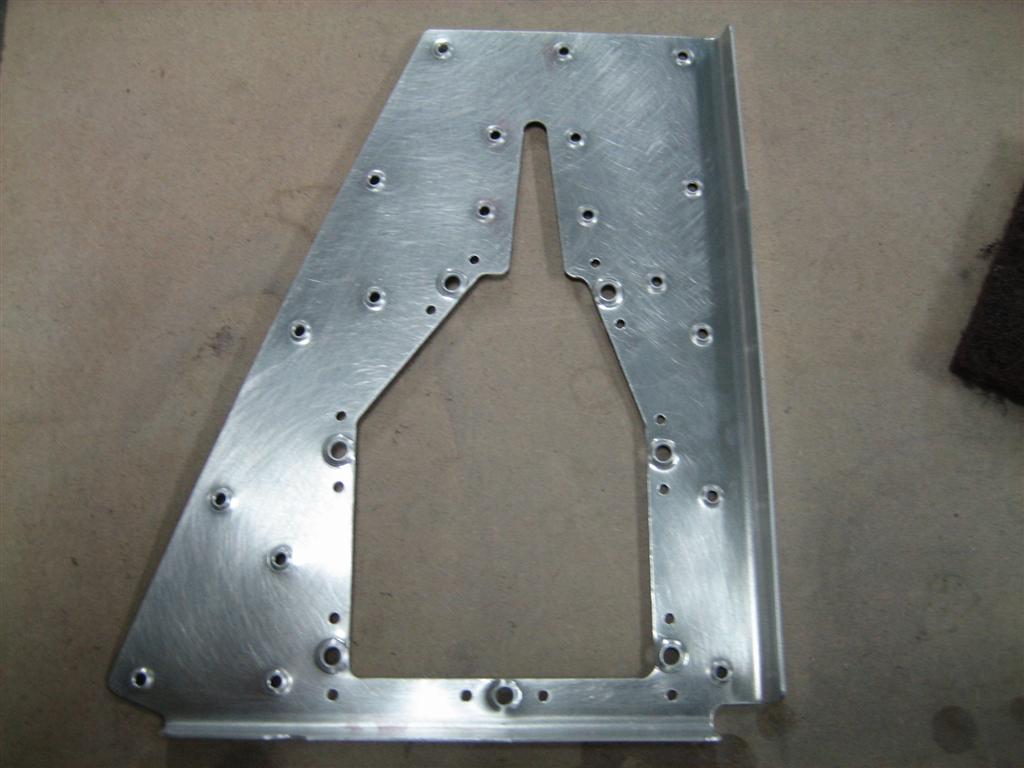
Same deal on E-615PP.

Ready for priming.

On the fancy priming stand.

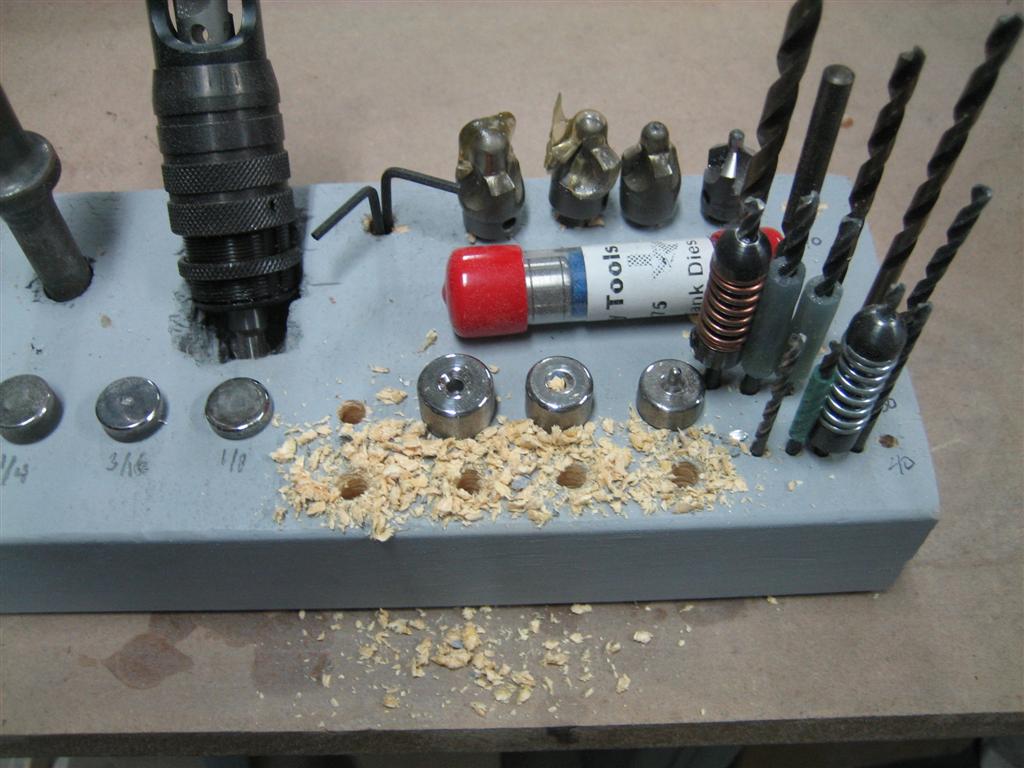
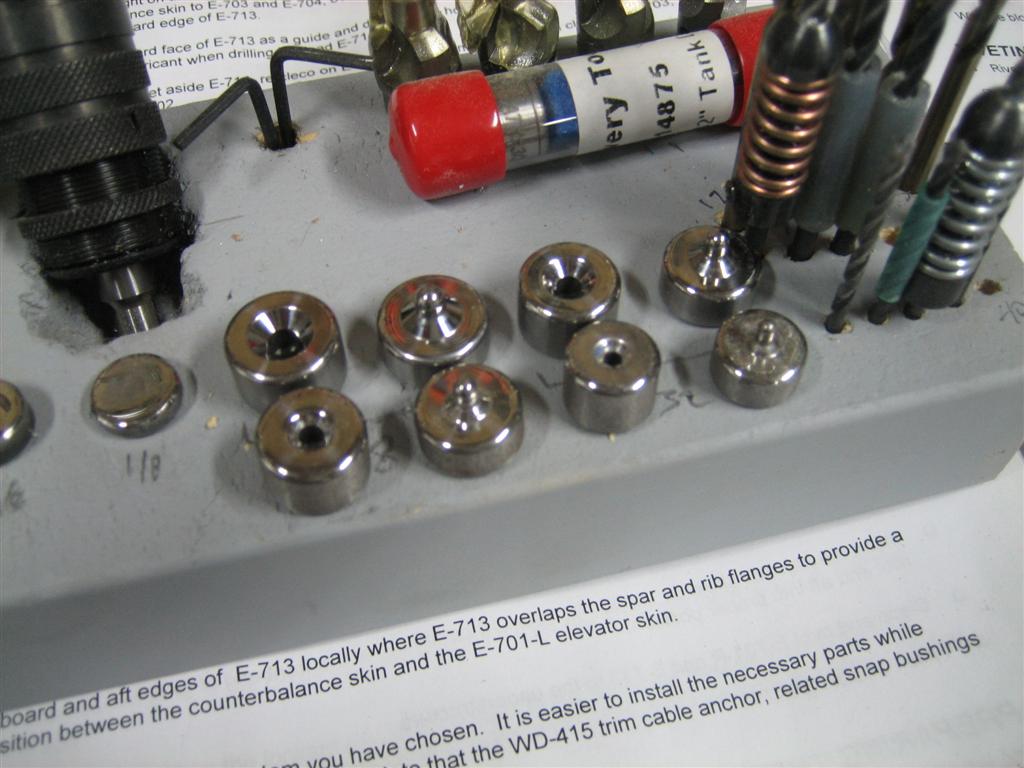
After shooting primer to one side of E-615PP, I decided to add 4 holes for each of my new dimple die halves.

4 holes drilled.

Tada.

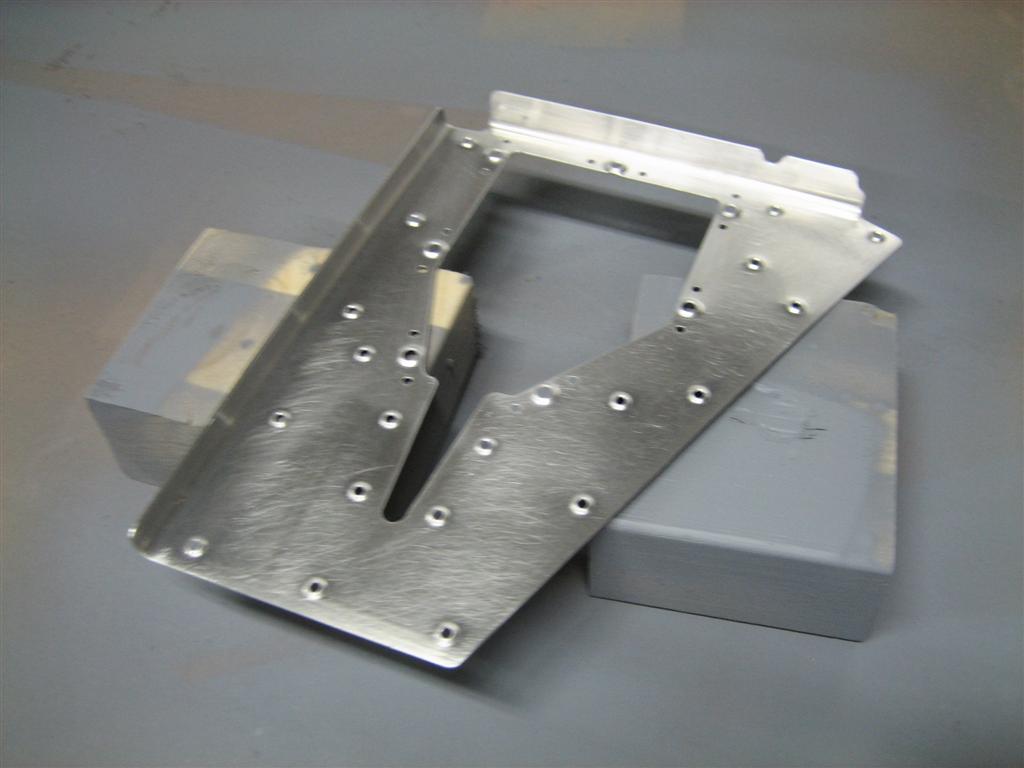
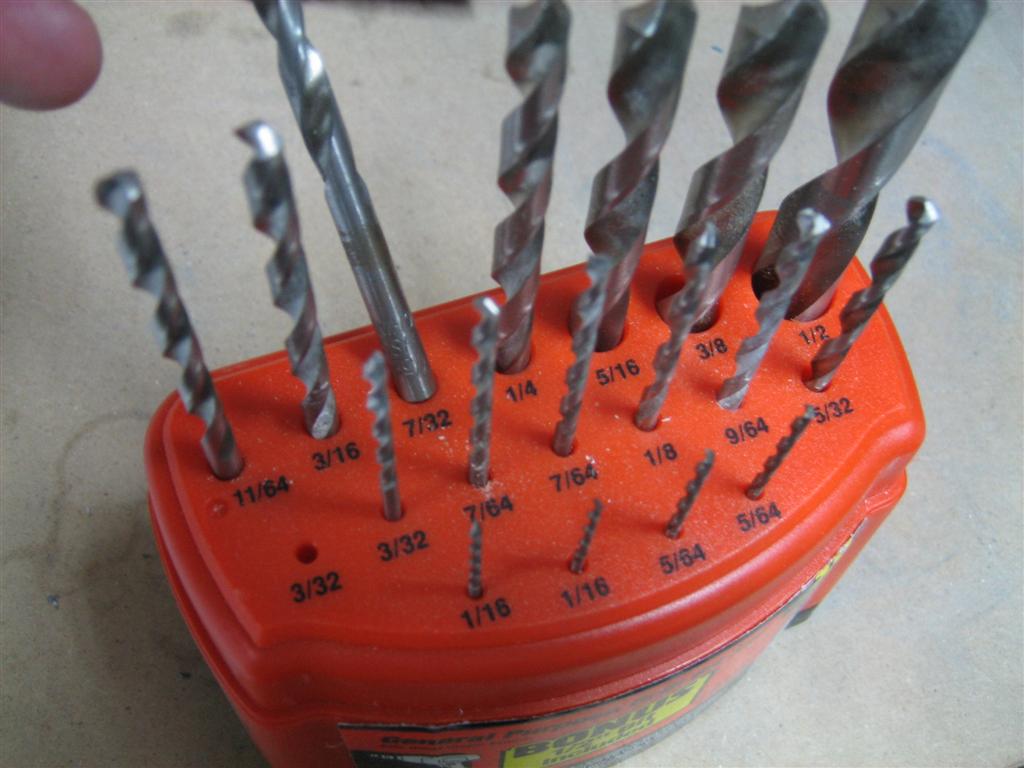
7/32″ seems to work well for holes in a home-made dimple die holder stand.

7/32" is a good size hole for these.

Then, I shot primer on the other side of E-615PP. While I waited for that side to dry, I edge finished E-616PP.

Look at that nice edge. I love the scotchbrite wheel.

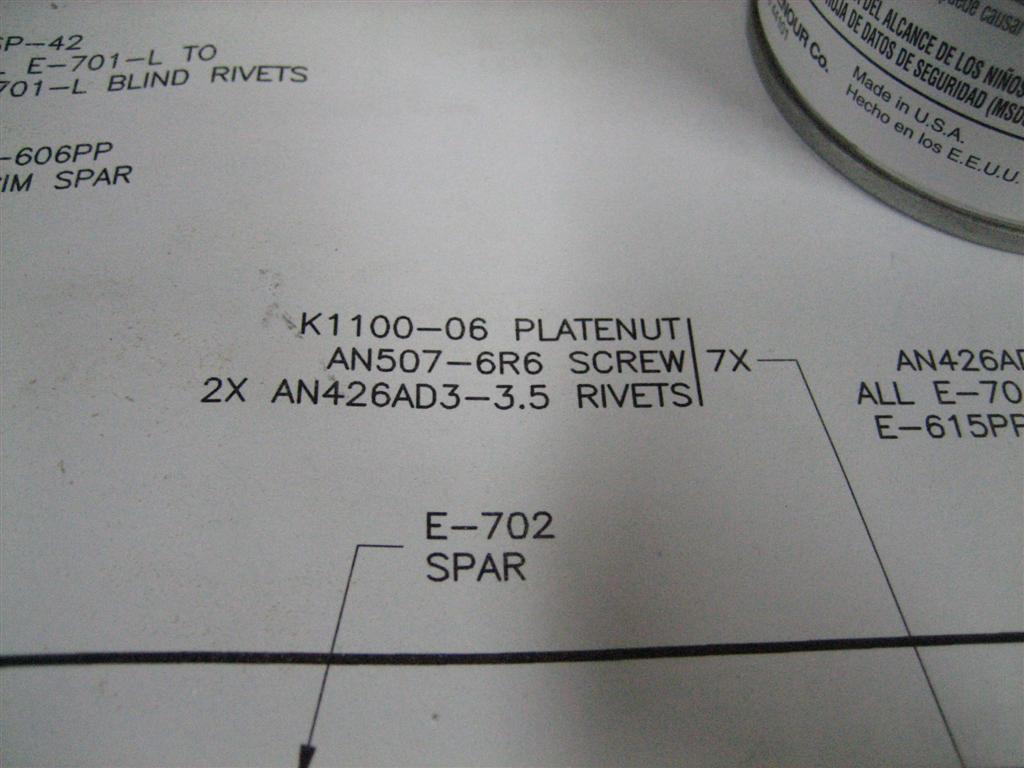
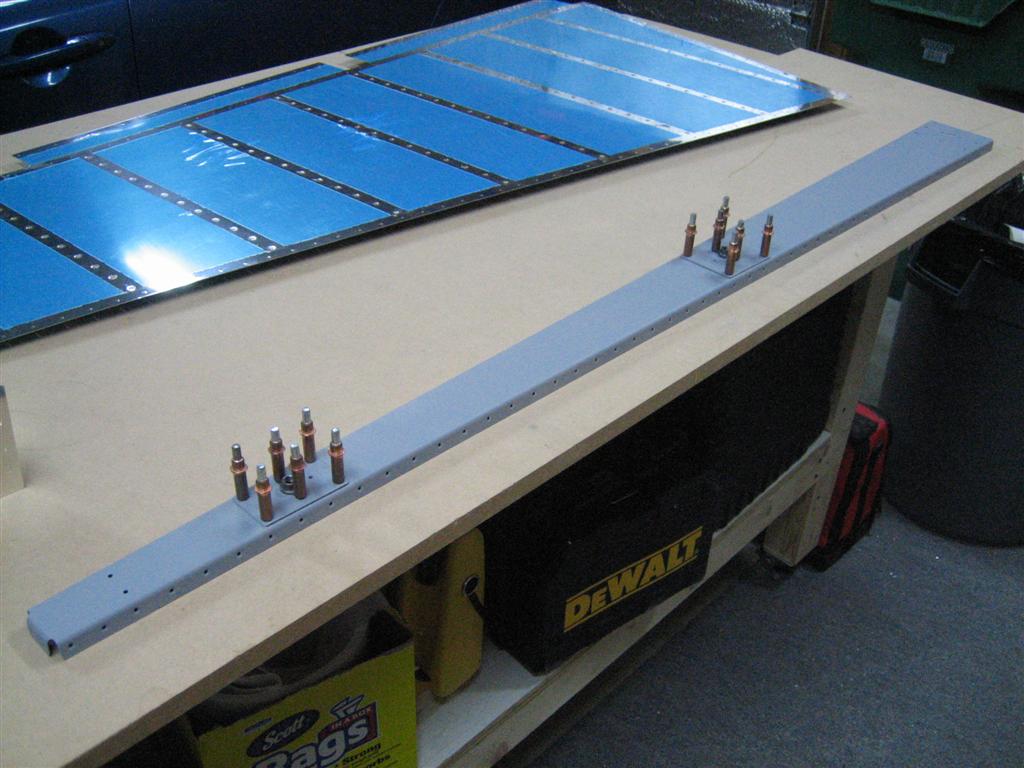
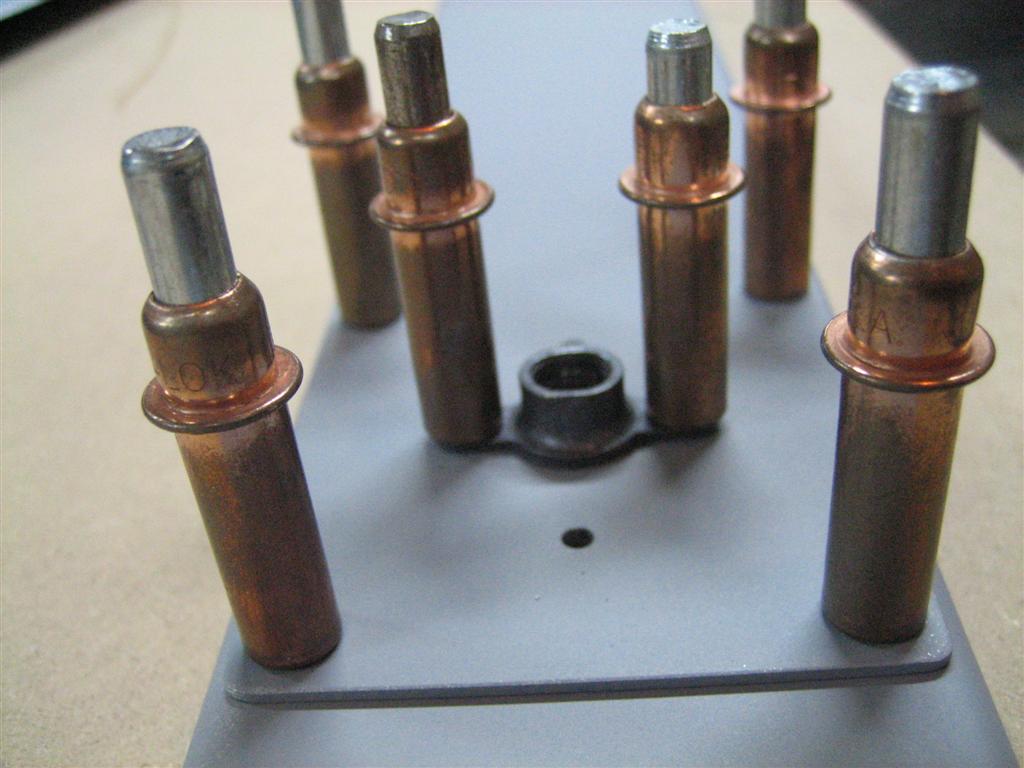
Now that E-615PP is dry, let’s do some riveting! I grabbed the K1100-06 nutplates (or platenuts as Van calls them) and the 14 required rivets. Remember from March 28th, I am using NAS1097 rivets here.

I am going to be using NAS1097 rivets here (smaller head than AN426 rivets) so I can countersink (instead of dimple) the holes here. That saves me from having to dimple the nutplate ears, which will save me a lot of hassle.

I finally found the rivet callouts.

I thought that because I countersank (verb tense?) the reinforcement plate that the 3.5 would be way too long, but the -3 was definitely too short. I grabbed 14 NAS1097AD3-3.5 rivets.

-3.5 (length) should work here.

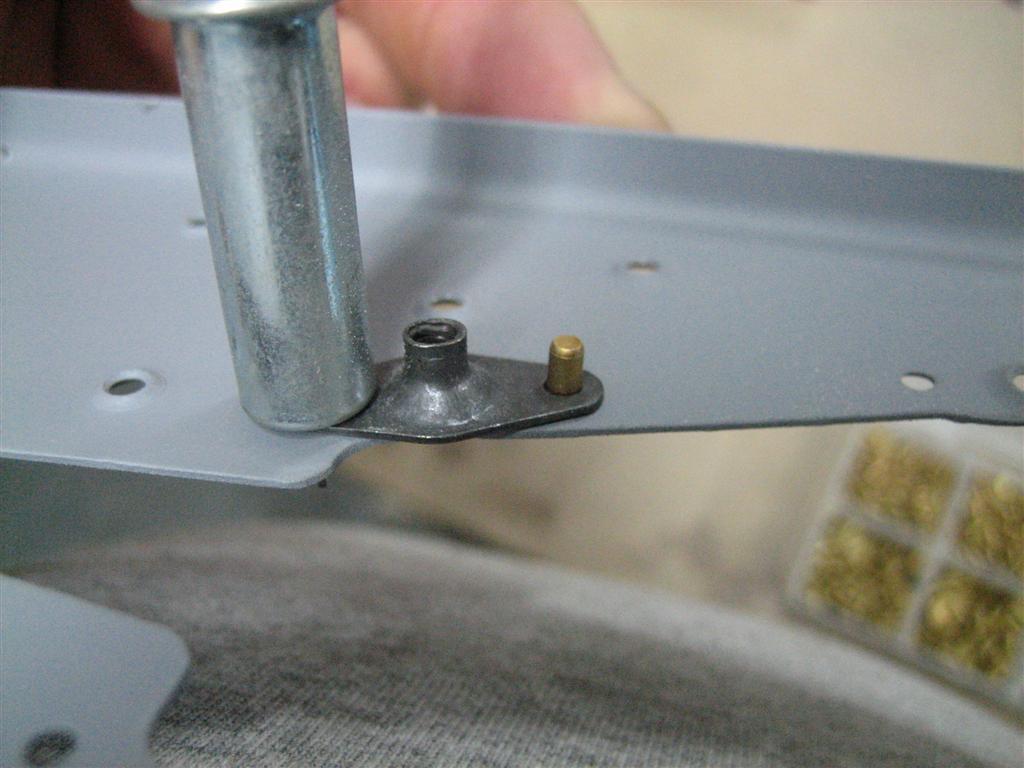
I put all of the nutplates in with a single cleco and a single rivet, taped into place before starting to squeeze them. I hindsight, I should have backriveted these. So dumb.

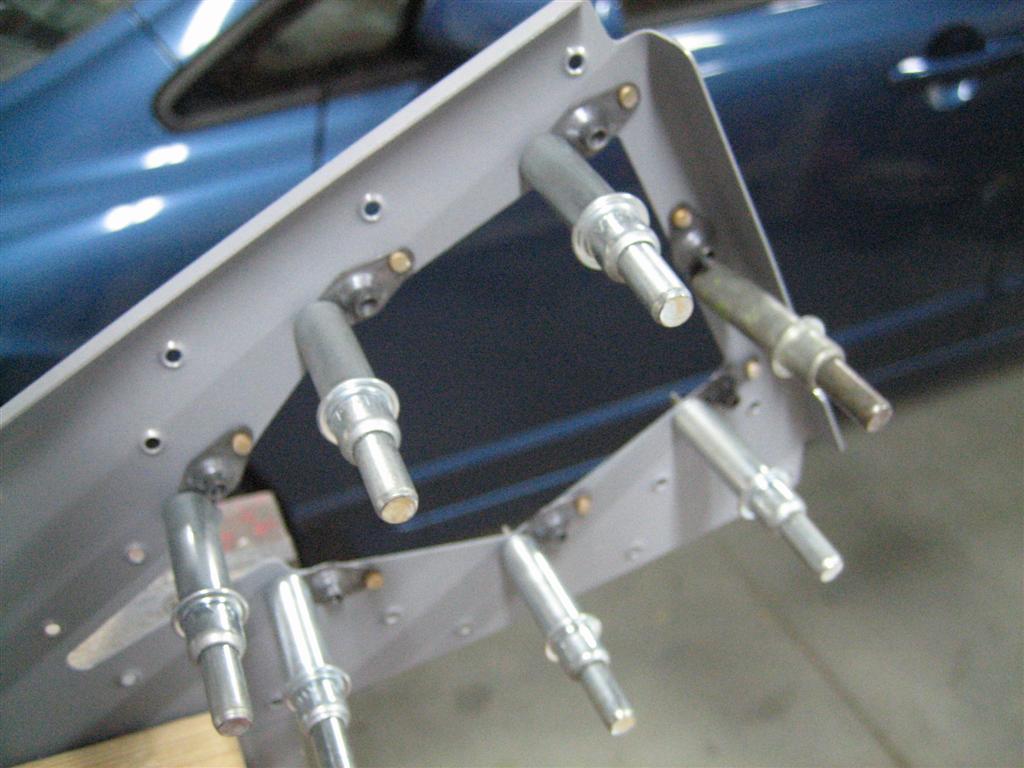
Half of them done.

Then I did the other half.

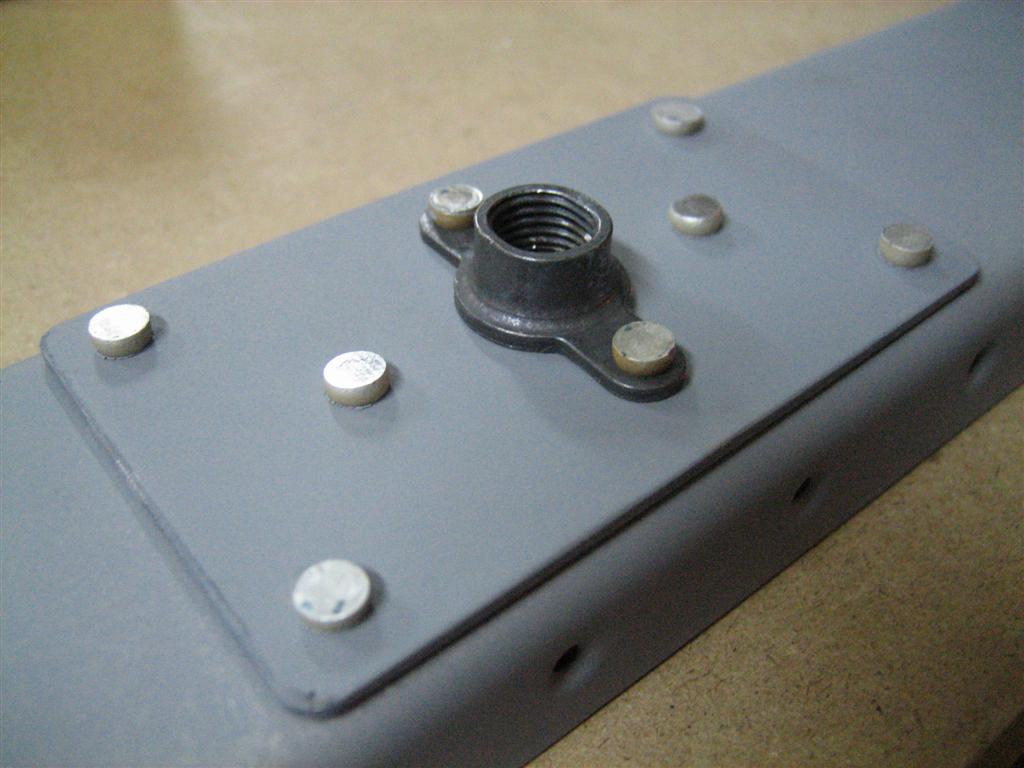
Nice and flush. There is one that is almost proud, but doesn't affect the cover plate, so I may not try to muck it up further by drilling it out. We'll see if I can sleep tonight.

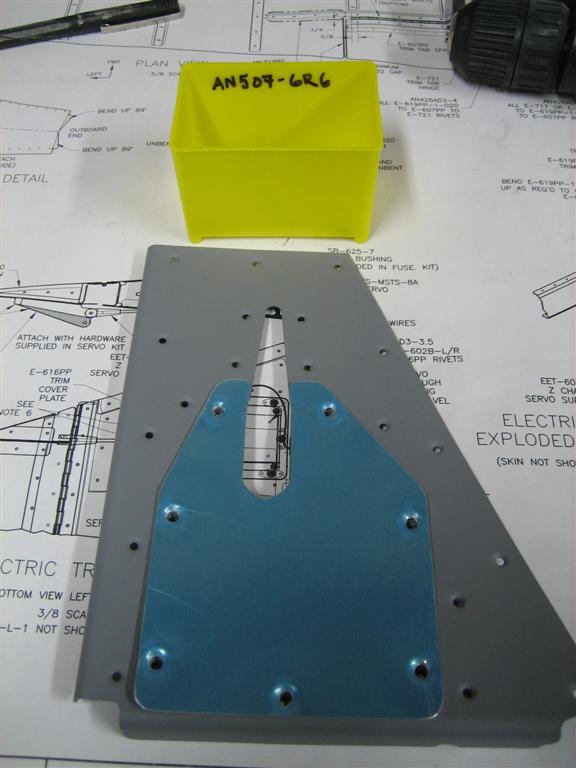
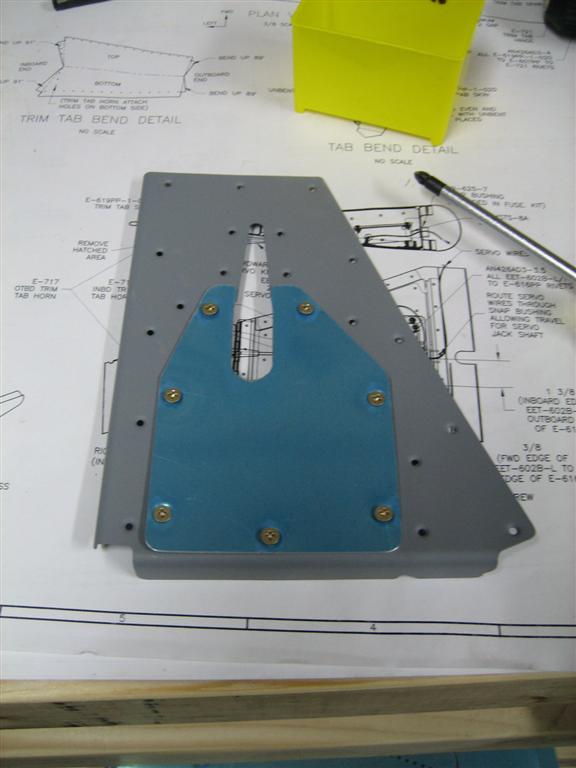
Once I got those 14 set, I grabbed the An507-6R6 screws and got the cover plate screwed on.

Ready to screw down. see in the lower left where the shadow under E-616PP is a little bigger? The dimpling kind of warped the plate. I'll have to try to coax this flat again.

I couldn't get the screws in all the way without a lot of effort. Is this normal for nutplates?

Anyway, 14 rivets set in just under an hour. I’m going to mark an hour today (a little long), then short myself on a post in the near future.

Prev | Next


Dimpled R-912 Counterbalance Rib

March 21, 2010

Prev | Next

Not a huge day today, but I did go shopping. Recently, the self-etching primer has been getting to me unless I am completely outside the garage while priming. Sometimes, I can always be completely outside, so this might make it bearable in the garage.

MEK, a respirator, and some latex gloves.

When I started looking around the shop, I found this monstrosity just laying there, dead, out in the open. He must have crawled through the spider spray I laid down around the perimeter. He’s huge.

That's a quarter.

Anyway, I am not too happy with the outside rivet I installed yesterday. I ended up using a double offset set as the bucking bar, and I just don’t like the shop heads.

Bad shop head there on the left.

Same there on the right.

I got them drilled out, and figured that the materials on both sides were thick enough to ignore the “shop head on the side with the thinnest material” rule. I put the machined heads in here, and bucked from the front.

These look much better, even though they aren't all facing the same direction.

Here they are from the other side.

I am much happier with these.

Then, on to the counterbalance. Because I don’t have a #10 dimple die, I decided to countersink these, and use them as the female die.

First try. Obviously to shallow, but I wanted to approach it slowly.

Another iteration.

Another iteration.

Check it with the screw. Nope, not yet.

Closer.

Another try.

There we go.

Then, after trying a few things to see how to dimple the rib, I ended up putting the screw in the hole and using my squeezer (with no “upper” set so the screw goes through the hole in the yoke) as the dimple die.
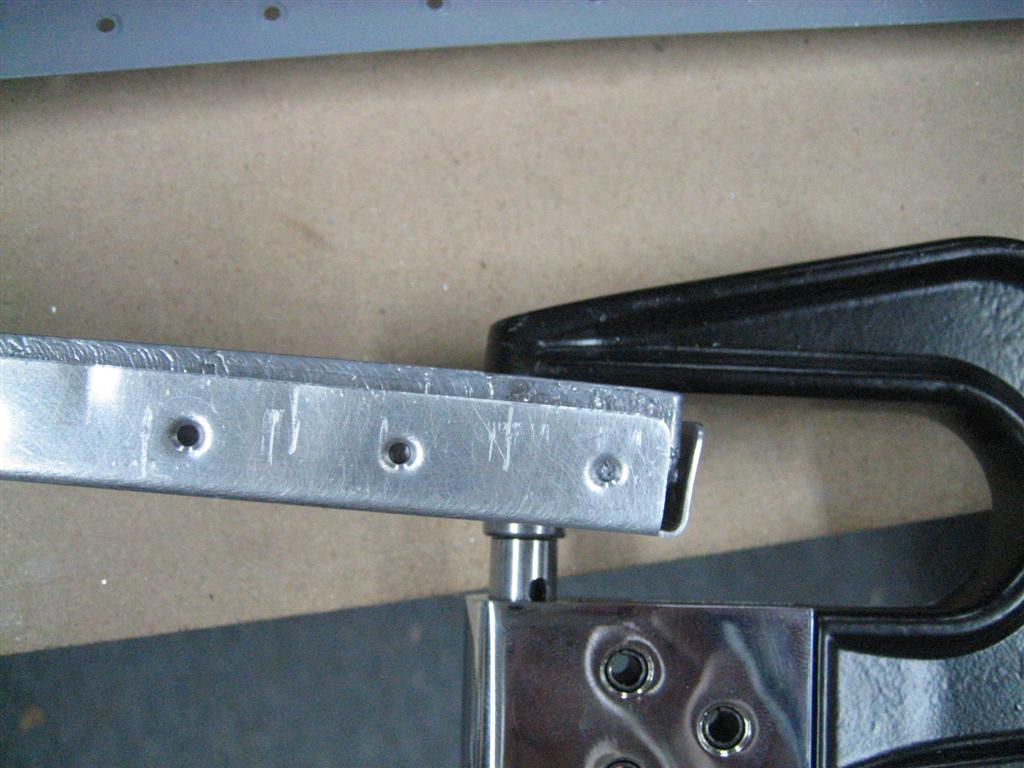
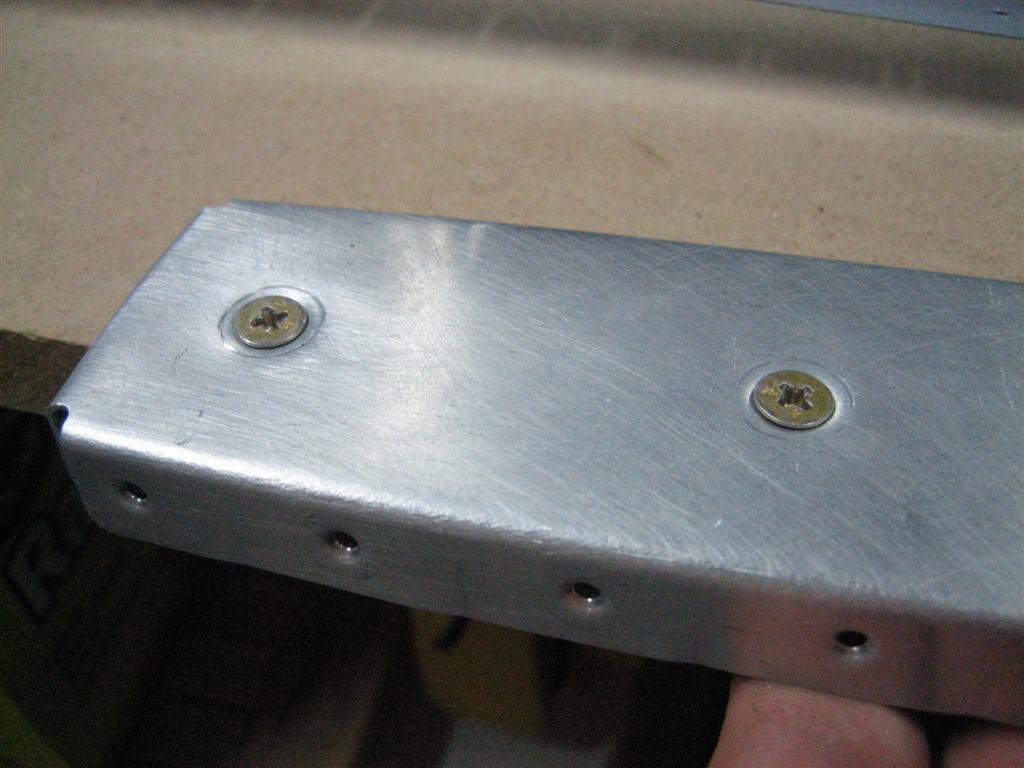
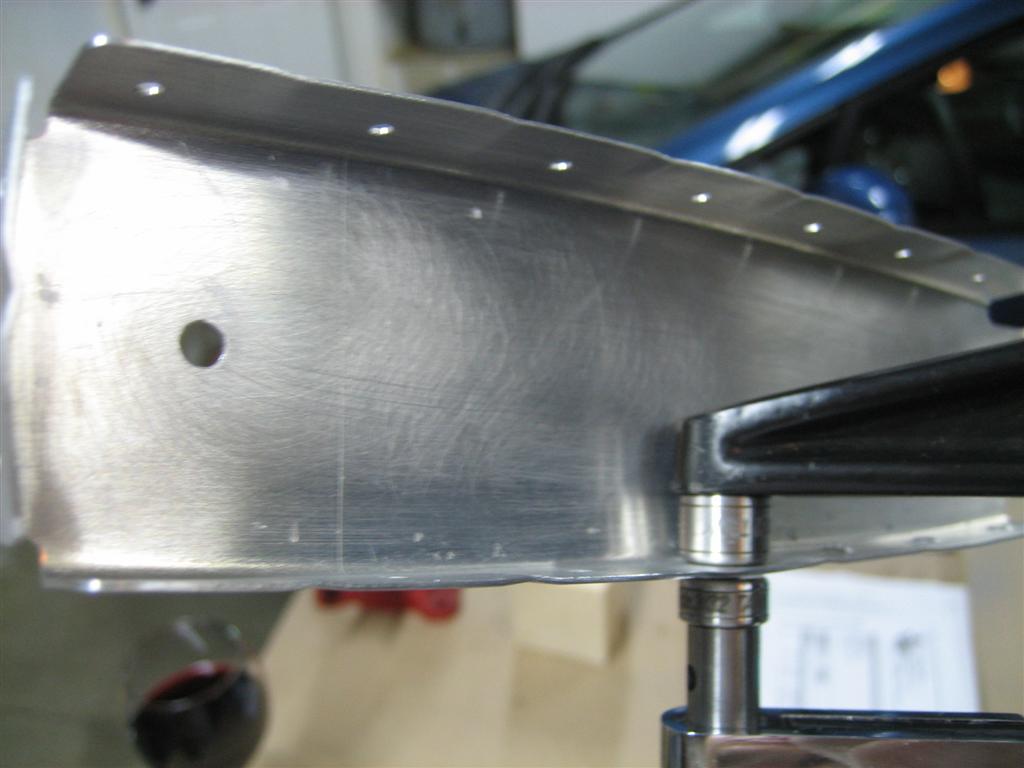
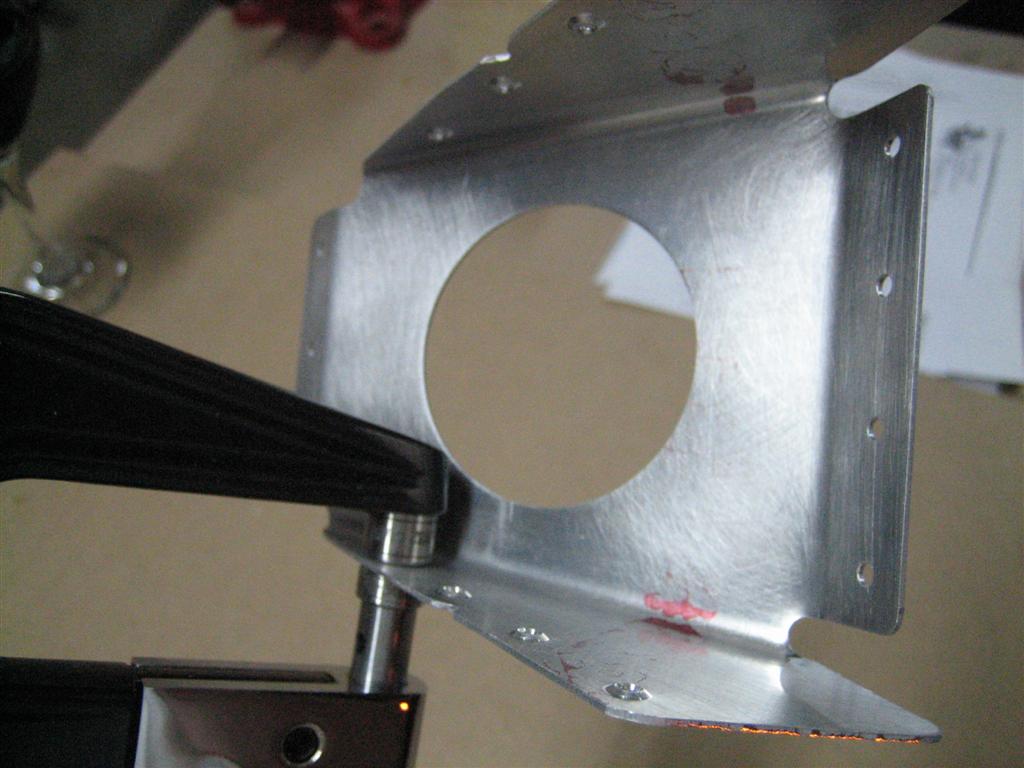
This worked surprisingly well.

Here are the final dimples. If I had it to do over again, I would spring for the #10 dies. I’m sure I”ll have to use them throughout the project. I’m going to put them on the list.

Final dimples. Not perfect, but good enough.

2 rivets drilled out. Half an hour. Not bad for a busy Sunday.

Prev | Next


Rudder Skin Prep, Skeleton Riveting

March 20, 2010

Prev | Next

In between some yardwork, watching the sprinklers, and cleaning up the house, I made some good progress on the airplane.

First thing, I found a stiffener rivet that was sitting a little proud. (Drilled rivet #1 today.)

Off with your head!

Silly me, though, I didn’t get any pictures of it after it was reset. I was being lazy with the camera today. Sorry.

Next up, skin deburring and dimpling.

The holes on the right are the tip rib #40 holes. The ones on the left have been drilled to #30.

After deburring, scuffing and dimpling, we are ready for priming.

The top of the right rudder skin after deburring, scuffing and dimpling.

Then, more deburring, scuffing and dimpling.

I didn't forget the hole on the bottom of the picture. This hole is match-drilled with the rudder tip and then dimpled to #30.

After cleaning, I shot a little primer on the skin.

Primed right rudder skin.

I had a very specific order here. First, deburr, scuff, dimple and prime the top, forward edge, and bottom edge. Then, while the primer is drying, devinyl the aft edge (vinyl used as masking for the primer), deburr, scuff and dimple the aft edge. This edge doesn’t get primed, as we’ll use the fuel tank sealing instructions with Pro-seal to glue the trailing edges together.

After scuffing the aft edge, I started pulling off the blue vinyl from the interior of the skins.

This just looks so nice.

Another shot of me devinyling.

Then, I spent a couple minutes making the slot at the bottom of the skin a little bigger. One of the flanges from the control horn fits in here, and during initial assembly, there was some interference.

Notch enlarged.

And the left skin, primed.

Got the left skin primed and ready for devinyling.

Ame thing on this skin, while the primer was drying, I devinyled the trailing edge, scuffed, and dimpled.

Scuffed and dimpled the trailing edge.

Here’s the left skin after devinyling. I’ll store this skin until final riveting. Now, back to the skeleton.

Shot 1 of 2 of the prepped left rudder skin.

Shot 2 of 2 of the prepped left rudder skin.

In the middle of the day, I ran out of primer and scotchbrite pads, so I ran out for both.

Napa 7220 Self Etching Primer.

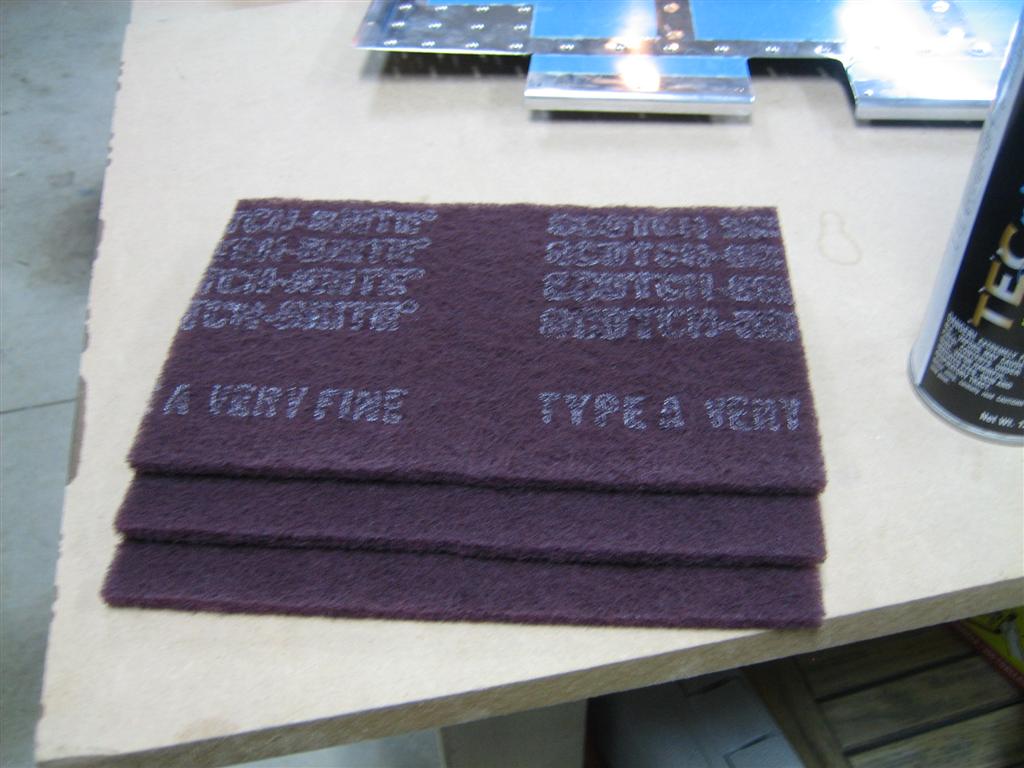
Maroon scotchbrite pads.

They didn’t have any maroon on the shelf, but they had some grey. I asked the guy out front, and he went to the back and grabbed 3 unpackaged pieces. Usually, there are $5 or $6 for the three. He gave them to me for a couple dollars, which was nice.

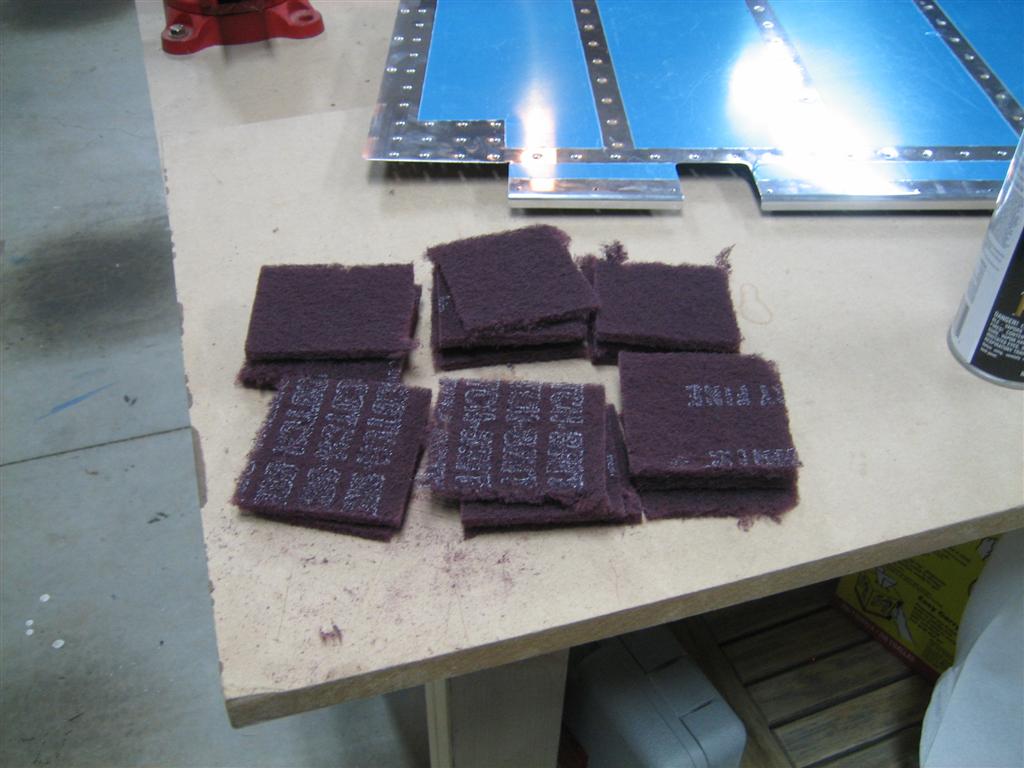
I like them cut in about 2" x 2" squares. Good to go until the end of the tail kit, I'm guessing.

I had some trouble with dimpling the last three holes in the rudder bottom rib. I drilled and countersunk a hole in a spare piece of steel I had, then realized it was too far from the edge to work. Awesome. Here’s a shot of my second attempt.

The new hole is on the bottom right. After countersinking, I used a rivet and my flush set to dimple the rib. Not perfect, but it'll work.
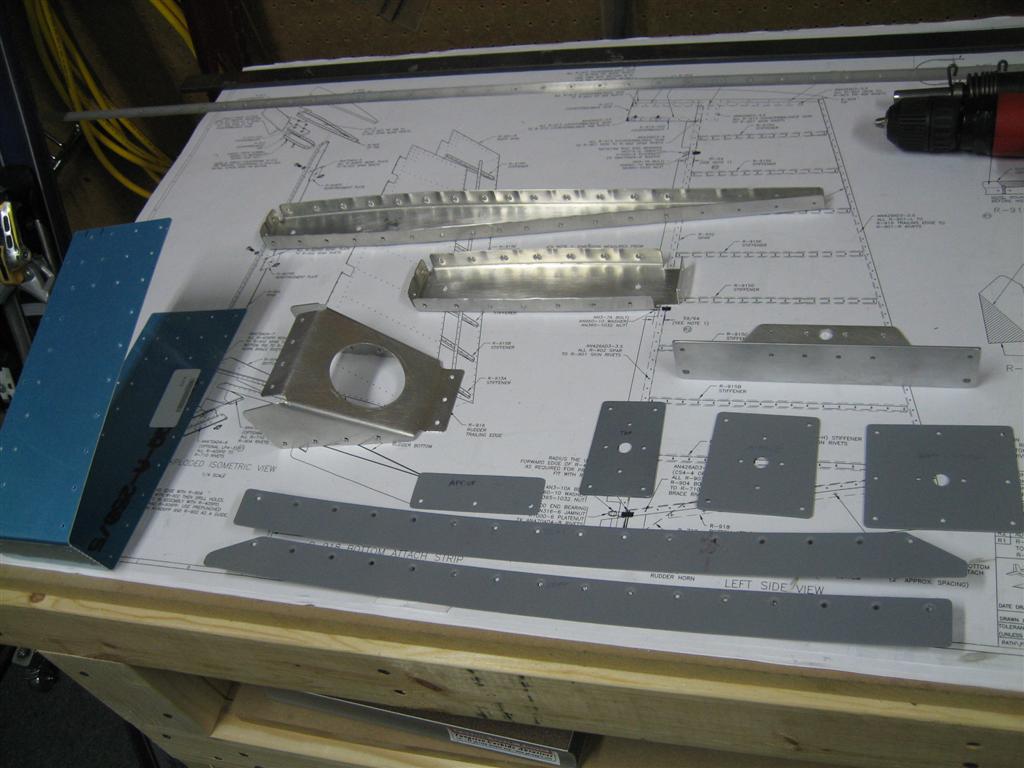
Then, I moved on to some riveting.

This is the spar and one of the spar reinforcements.

While I was moving everything around getting it ready for riveting, I broke my first tool. Now, it was about $0.50 from Harbor Freight, but I was still upset.

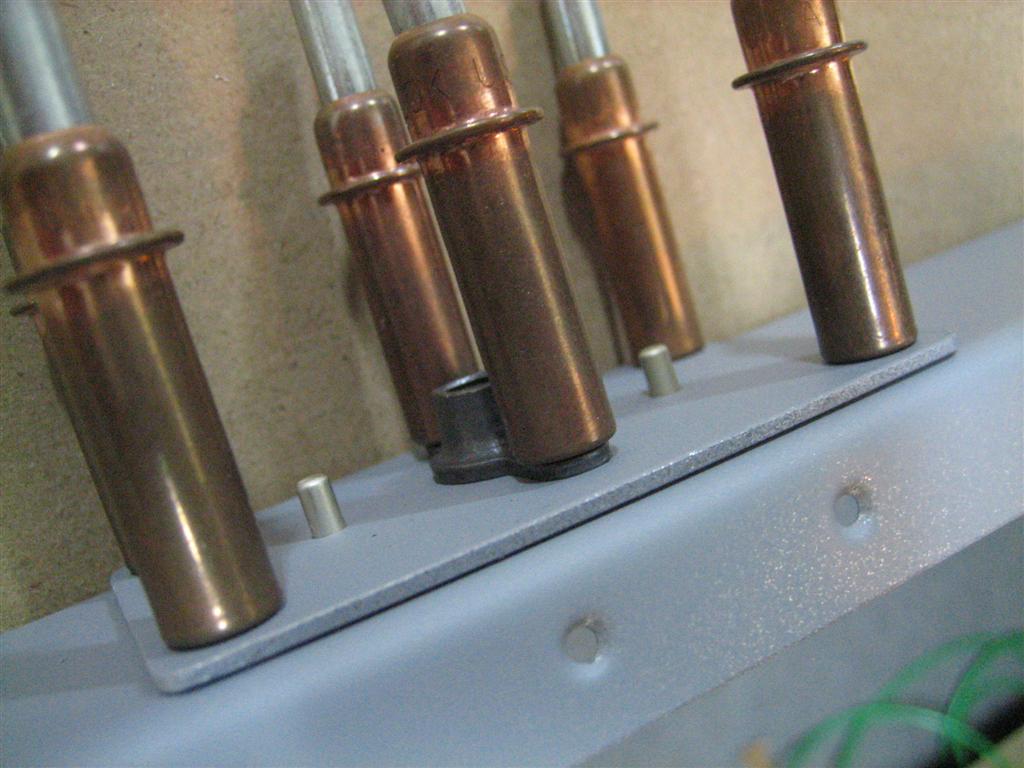
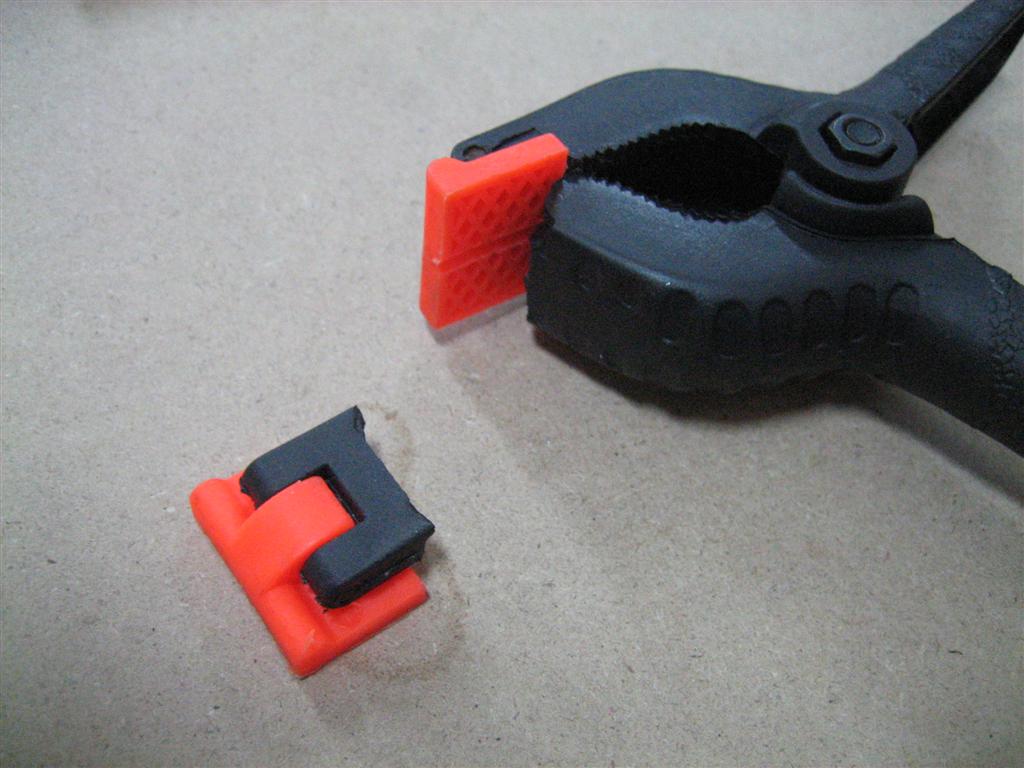
RIP cheap plastic clamp. (I'm lying. I actually gut the orange part off the other side and threw the clamp into a box somewhere. I'm sure it will come in handy at some point, even if it doesn't have the orange pads.)

Rivets were looking good, until the one to the right of the nutplate. Doh!

Which one of these is not like the other?

After a successful drill out (#2 of the day), I finished setting the rest of the spar reinforcements and snapped these two pictures.

Middle spar reinforcement.

Upper spar reinforcement.

That’s 16 set so far.

Then I mocked up the R-405PD Rudder Horn, R-710 Horn Brace, R-917 Shim, R-902 Spar, and R-904 Bottom Rib. Some people need to use blind rivets in some of these holes, but I figured I could do it with all solid rivets.

This is what I need to end up with after riveting.

I figured out that if I take off the R-904 bottom rib, I can reach in from above (bottom right of the picture) and get the horn brace to rudder horn rivets here, then slide the forward flange of the bottom rib under the rudder horn and get those from the lightening hole. Here I am setting the horn brace to rudder horn rivets.

I think this is going to work out well.

Another shot from further away.

Here’s all four of those set (set nicely, if I may add).

Horn brace to rudder horn rivets.

20 rivets set so far. Then I moved on to the R-606PP Reinforcement plate to R-902 Spar to R-917 Shim to R-405PD Rudder horn rivets. These need to be AN470AD4-7 rivets, which are LONG. I did have to drill one of them out. That’s #3 for the day. Boo.

This is an AN470AD4-7 rivet after drilling out. This is a long rivet.

But, I managed to reset it okay and get the others in with no trouble.

R-606PP to R-902 to R-917 to R-405PD rivets.

23 set. I scratched the R-405PD horn a little, so I scotchbrited it out, and shot some primer in there.

Some primer to cover the scratch.

Next, I slid the flange of the bottom rib under the rudder horn and lined up the holes. Now I need to drop some rivets in here.

Ready for riveting.

First, I set the horn brace to bottom rib rivets.

26 rivets set so far. These are looking good.

26 set. Finally, I set three more which are reinforcement plate to spar rivets.

These are above the bottom rib, so they are only reinforcement plate to spar rivets. Easy.

I started to rivet the complicated stuff together and LOOK WHAT I DID!

I think this is hilarious. Think I should drill it out?

This happened because I was bucking from above and shooting from below. The gun jumped around cause I was supporting it’s weight instead of letting gravity help me. That’s a no-no.

It was pretty easy to drill out (#4 for the day), here’s an inside shot; back to square one.

Ready to try again.

After setting the first two, a picture.

These look good.

And after much consternation (including using my double offset set as a bucking bar), I got the two outside rivets bucked.

Finally done with riveting for the day.

30 rivets set, 4 drilled out. Lastly, I matchrdrilled the E-614-020 to R-912 rib. This was a piece of pie.

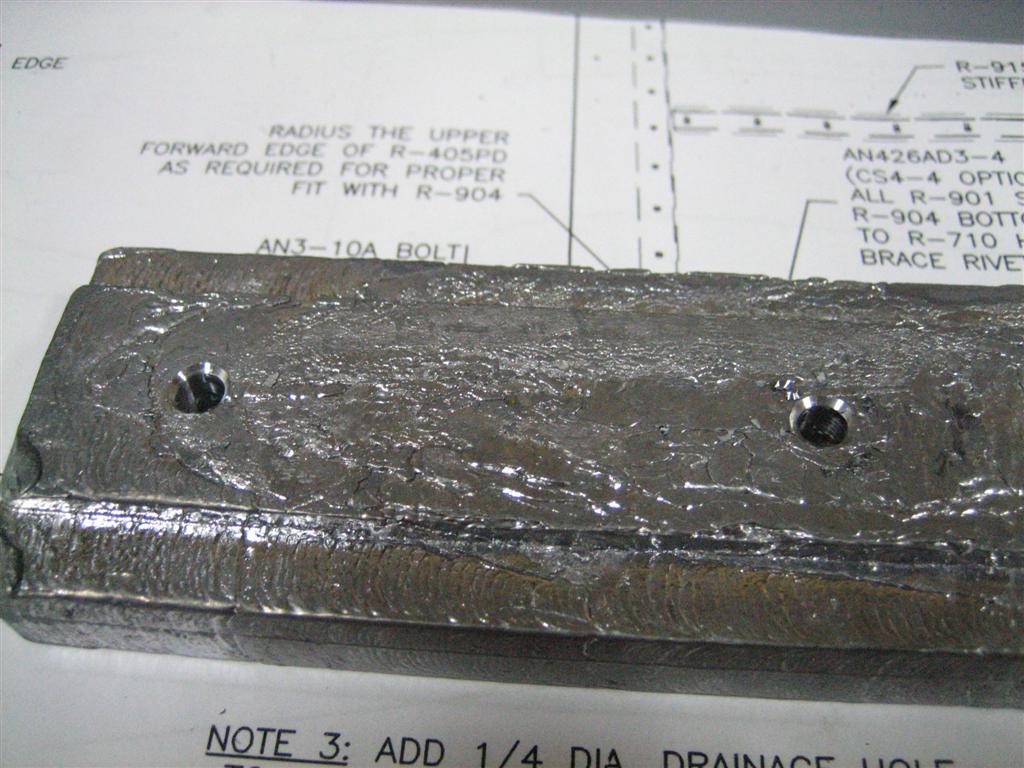
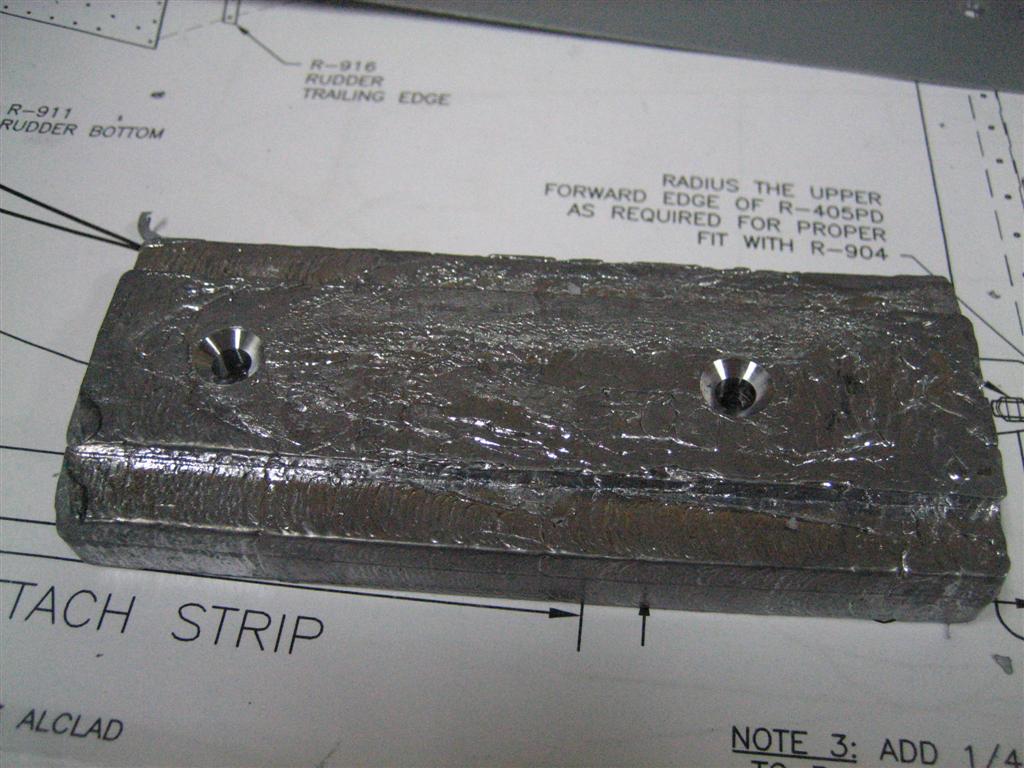
Rudder counterbalance matchrilled to the counterbalance rib. Also, there's the hardware that will be used to fasten these two together.

4.5 hours today. Not bad for a Saturday afternoon.

Prev | Next


Primed R-902 Rudder Spar

March 18, 2010

Prev | Next

I was getting the itch to work on the airplane a little, so I tackled the R-902 Rudder Spar today. First thing, deburring. I know I have plenty of pictures of deburring , but I took a closeup of a few holes.

Hole on the left is deburred, hole on the right is not. This is the topside, though, so the raw hole on the right doesn't even have really bad burrs. The weird crap on the left is just a piece of metal left over from deburring, it's not really messed up.

Here’s an action shot of me using the oversized bit to deburr.

Action shot!

Here’s the spar, deburred, and ready for scuffing, cleaning, and priming. Sorry for all the pictures tonight.

R-902 Rudder Spar

Here’s a picture of me scuffing with my maroon scotchbrite pad. For some reason, I like this step in the airplane building process.

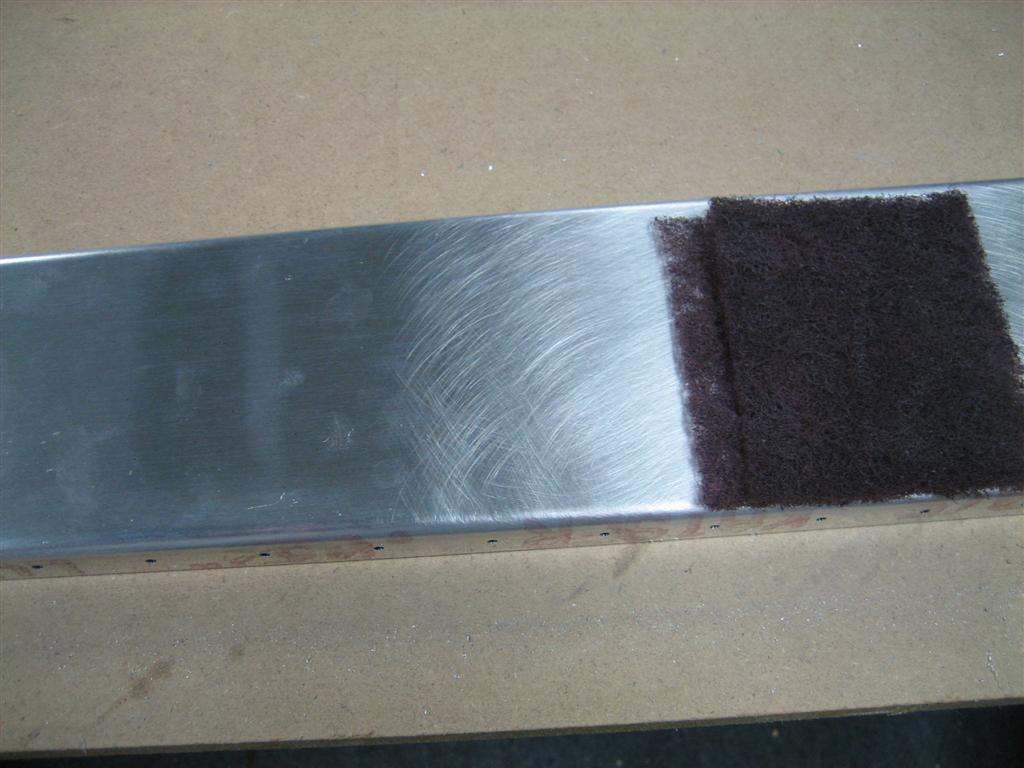
Left half is the raw spar, right half has been scuffed.

Then, Ginger noticed I was in the garage working, and since the garage temperature was the same as the house tonight, I left the door open.

"Jack, come out here and let's see what dad is doing."

Jack came to see what was going on.

Jack and ginger, curious as always. (They are collarless due to the baths they just got.)

To scuff the inside, I decided to clamp the spar down to the table. It makes scuffing slightly easier, and I can use two hands on the edges.

Some of my nice (but cheap) clamps from Harbor Freight earning their keep.

Next up, dimpling. The construction manual warns to maybe grind down the dies to make sure not to gouge the spar web. I didn’t seem to have any issues with clearance.

Dimpling with #40 tank dies.

Then, I took the spar inside and cleaned it with dawn dishwashing detergent. Then back outside to dry for priming. Here’s the spar in my fancy paint booth setup.

Spar, ready to be shot with primer.

I did the forward side of the spar first. (Notice the open garage door, I’m trying not to kill too many brain cells with the priming.)

Forward side of the spar primed.

A shot of the lower portion of the spar.

Then, after going inside to refill the wine glass (to let primer dry), play with the pups (let primer dry), and hang out with the girlfriend (let primer dry), I went back outside to prime the aft side of the spar.

The bright orange thing on the spar near the right 2x4 support is the reflection of a warning sticker above the garage door. The primer is still wet. I didn't see this until I uploaded the pictures.

After another half hour or so, I put the spar back on the table and clecoed the R-606PP (Lower Spar Reinforcement) and R-607PP (Middle Spar Reinforcement) to the spar, along with the appropriate K1000-6 nutplates.

I'm getting close to riveting again!

A closeup of the nutplate

I always get so excited when I get to this point.

That was pretty much it, except for more experimentation with the “macro” setting on my camera.

Eh. No reason for this picture. Just experimenting.

1.5 hours today. It felt nice to get a big piece like the spar done.

Prev | Next


More Small Rudder Parts Priming and Devinyling

March 15, 2010

Prev | Next

First thing after today’s realization that I had forgotten to dimple before priming, I rushed home and grabbed the tank dies to prime the #40 holes.

Let's get ready to dimple...

No problem to dimple after priming. (There was a little bit of twist after dimpling, but no big deal, the rivets will hold this thing together.)

Slight twisting after dimpling.

The only way you can tell I dimpled after priming is that the dreaded dimple circle is visible, because the outer edge of the dies mars, (maybe polishes?) the primer a little. You can see it in the pictures.

Dimpling after priming worked fine. See the circle marks?

Here’s the other side.

Looks good to me.

After I finished both, here they are on the table. Crisis averted. (Not really, I would have just re-primed them.)

These will do.

Then, inside to grill some dinner, then back out to do more edge finishing, cleaning, and priming. I grabbed R-606PP and R-607PP  (lower and middle spar reinforcements) along with R-617 (shim) and finished the edges with the scotchbrite wheel.  Once complete. I took them inside, cleaned them with dawn detergent, and brought them back out to dry and prime. Here’s a priming shot.

From left to right: R-606PP, R-607PP, and R-617.

Next, I looked around and grabbed the R-912 counterbalance rib and did some edge finishing and dimpling. Here’s a dimpling shot.

Dimples!

Same deal with with the R-903 tip rib and the R-710 horn brace. Here’s the horn brace.

More dimples.

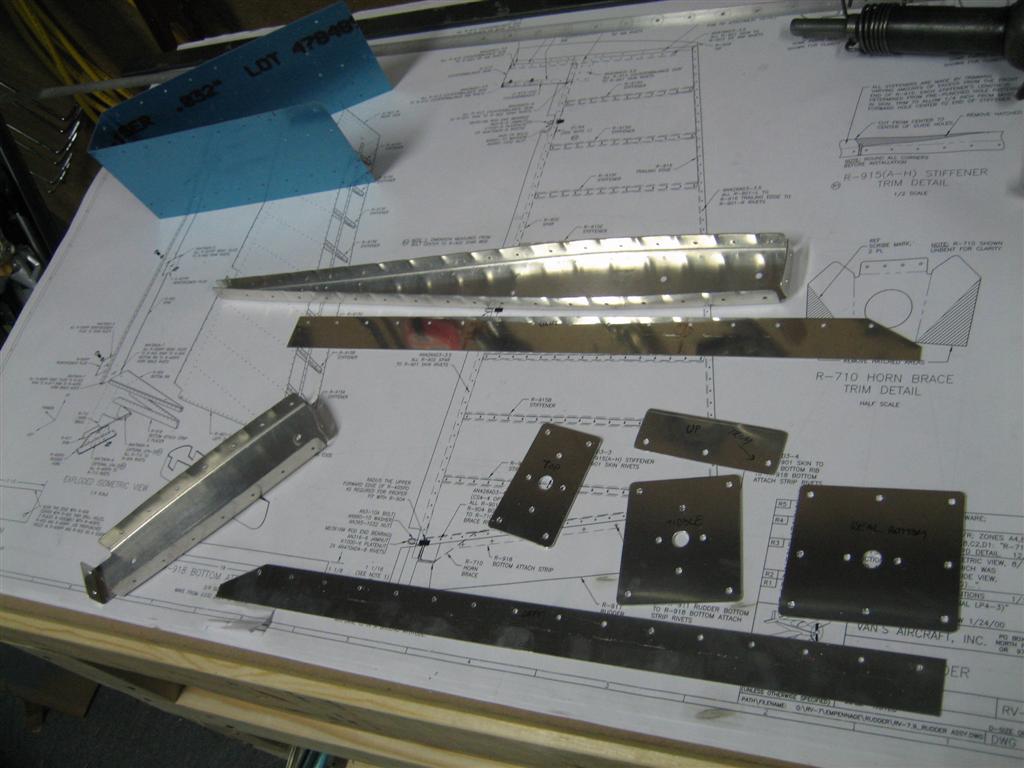
After the primer dried on the three pieces I primed tonight, I put them back on the table and examined my progress. Still a long way to go.

A shot of the "table of small rudder parts."

Enough work outside for the night. I grabbed the soldering gun, my wooden straightedge, and the R-913 counterbalance skin and headed inside to devinyl.

Pretty, but maybe overkill.

I decided to leave some of the vinyl on here to save on primer on the inside and protect the finish on the outside. I think the amount of primer weight I am going to save by masking with the vinyl is minuscule compared to the parts I will inevitably need to re-prime. But, if I pulled off all the vinyl, and primed the entire interior surface, I would always know I was carrying around more primer than I needed to be. (It’s all about figuring out what you can sleep with at night.) While I am sure I will add more than plenty of unnecessary weight in other areas (all of the nutplates I am going to add), not doing this would make me feel lazy.

R-913 Counterbalance skin interior.

Next, I grabbed the R-901-R (right rudder skin)0 and pulled it inside to devinyl. Notice on the left that I made the cuts on the trailing edge (rudder is upside down in this picture) but haven’t pulled off the vinyl? I am going to leave the vinyl on while I prime the rest of the bare metal areas, then remove the trailing edge vinyl. This area doesn’t need to be primed, as it will get scuffed up with a scotchbrite before using Pro-seal to glue the two skin trailing edges and trailing edge wedge together.

Look at me, I've thought ahead!

Another shot of the right rudder skin, this time right-side-up. (Also, my fancy-pants wooden straight edge and a glass of 7 Deadly Zins Zinfandel.)

Next, I flipped that bad boy over and did the exterior. Here’s a shot before I’ve pulled some of the vinyl off.

I probably should have pulled more of the vinyl off of the leading edge, but it was just two more lines, and now I have a little protection on the leading edge while I am rolling and assembling.

Repeat for the left skin, and then I took both back outside and stored the left skin on the top shelf of my second toolbench.

I'm embarrassed that I don't have a one-piece shelf for the top shelf of my workbench. Don't judge me.

And a finished shot of the right skin, back out on the workbench.

I like these devinyled pieces. Can't explain it, but I like them.

I was using the clock in the kitchen to mark my progress, and decided I was going to stop at 9:30pm to head to bead…except (yeah, you know where this is going)…I forgot to reset that clock after the time change. It was actually 10:30pm and I had put in 2.5 hours. Great for airplane progress, bad for my sleep debt. I’m not going to put in any time tomorrow, need to catch up on sleep. See you in a couple days.

Prev | Next


Primed R-918s and R-608PP

March 14, 2010

Prev | Next

After a whole 10 days on vacation, a few flight delays, cancelled flights, rebooking to a city 6 hours away from home, lost bags, malfunctioning 737s, and a broken down rental car, I finally made it into the shop.

I know I wasn’t going to be able to put in hours and hours of work, but in the words of Bob, “baby steps.”

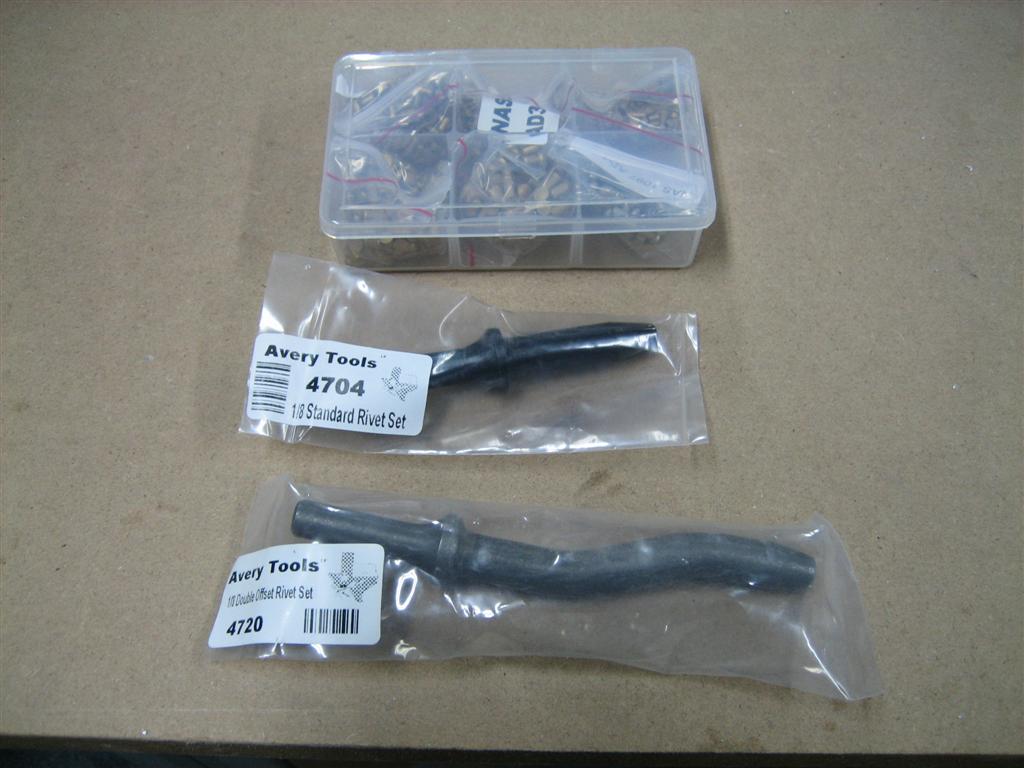
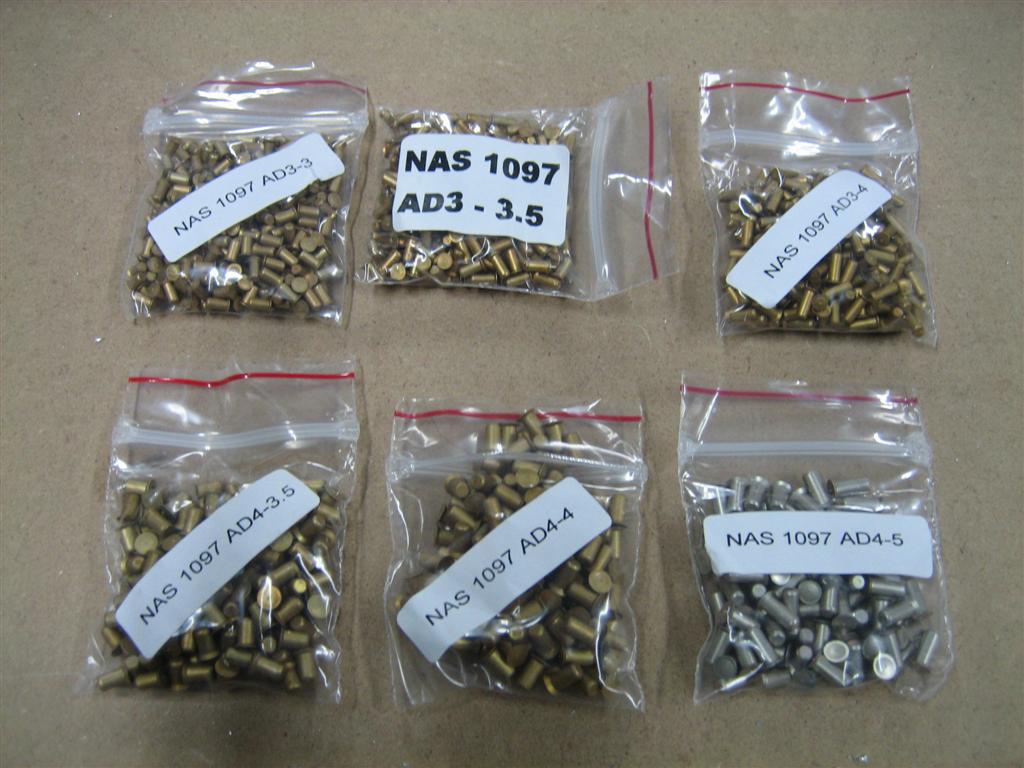
First of all, while I was gone, I got an order in from Avery. It contained the NAS 1097 “Oops” rivet kit, and two sets, both 1/8″, one straight, and one double offset. These were relatively cheap ($8 and $20, respectively) and I believe they will come in very handy. Here’s the merchandise.

I love buying tools. It's like crack, but more legal.

After unpacking the new tools, I finished deburring and edge finishing the R-918s.

A deburred and edge-finished R-918. I'm not sure which side this due to the glare in the picture. But you don't really care, though, do you? They are identical parts (although, make sure to keep them separate, because they've been matchdrilled to the rudder skins).

I shot a little primer on one side of those two pieces and started deburring and edge finishing R-608PP, which is the uppermost spar reinforcement plate. I shot a coat on one side of that, and the other side of the R-918s.

Ready to prime R-918s.

R-918s and R-608PP primed. They are still wet, which is why you can see the reflection of the garage insulation on the R-918s.

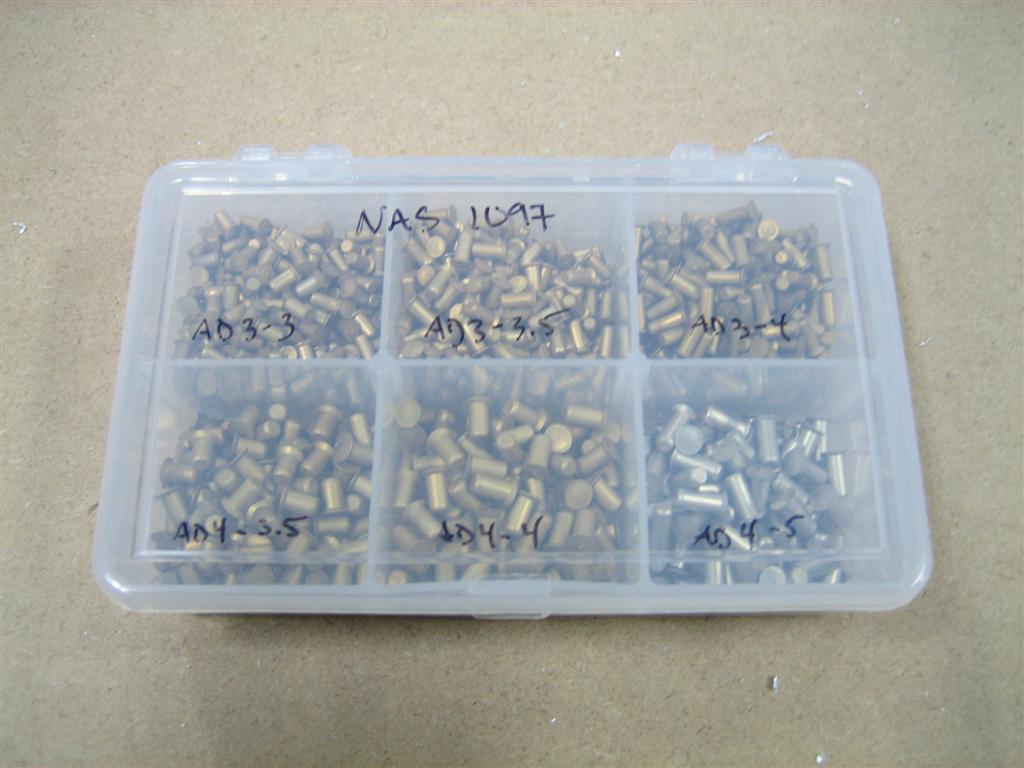
While waiting for those coats to dry, I unpacked my Oops rivet kit.

Which one of these labels isn't like the other?

All done and labeled.

I didn't have any more room in my rivet "briefcase" so I'll leave them in the included case.

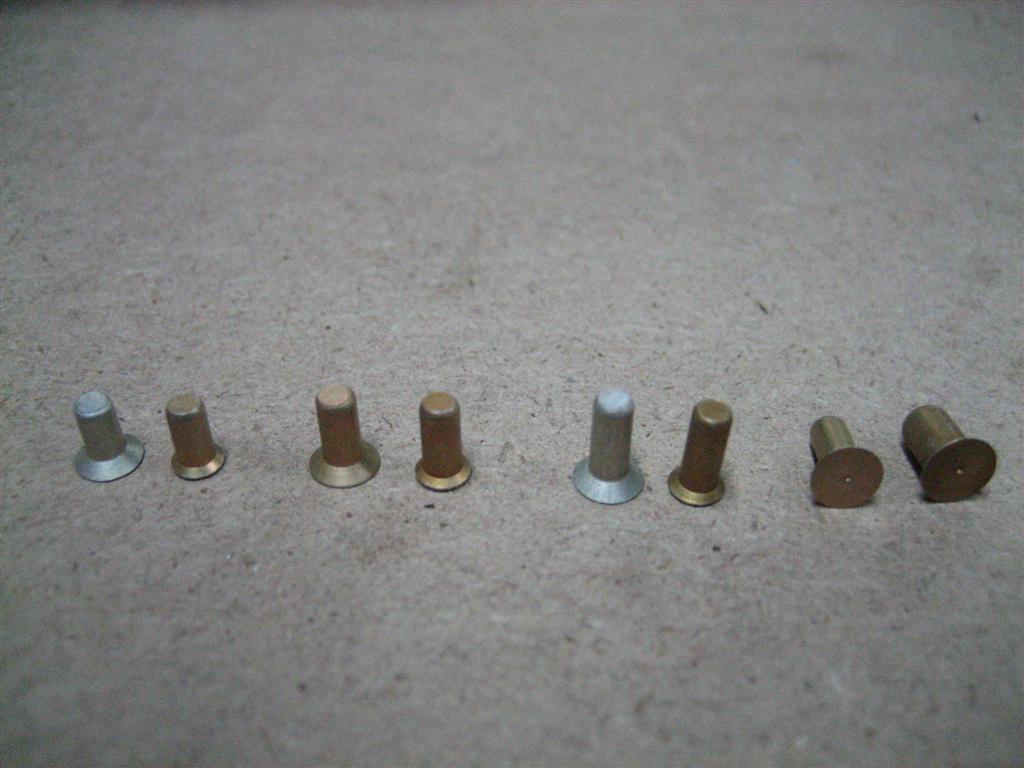
Then, in a similar manner to Brad Oliver’s explanation page (another shot here), here’s my shot of some NAS 1097 rivets next to their AN426 counterparts.

AD3-3, 3.5, and 4 (AN426 and NAS 1097 of each to compare smaller heads for the same size rivet) and on the far right, an AN426AD3-3.5 and a NAS1097 AD4-3.5. Same size head.

From my understanding the AD3 (smaller) sizes are used when a smaller rivet head allows you to countersink thinner material (instead of having to dimple) in non-structural areas (dimples aid in the strength of the riveted pieces). Mostly, they are used where flush rivets are required to attach nutplates (so you don’t have to dimple the nutplates, which is apparently difficult).

The larger size (AD4) rivets are used primarily when you have messed up an exterior hole during riveting or drilling out a badly set rivet that you have to enlarge the hole. The smaller heads on the larger rivets match the regular sized rivet heads.

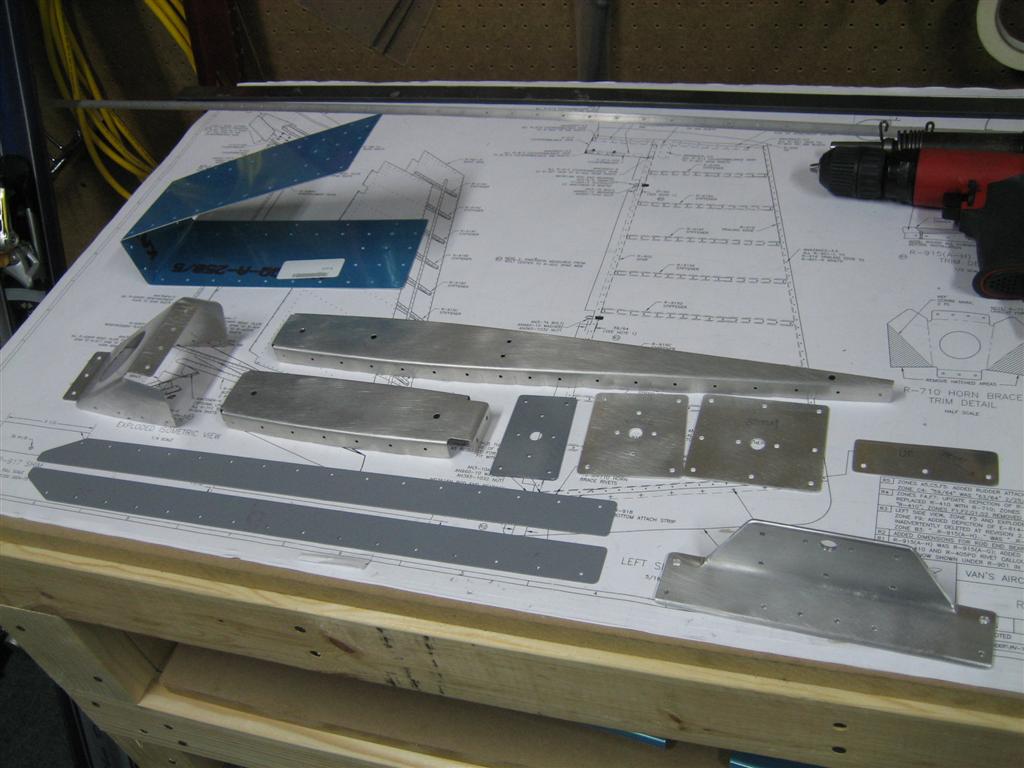
Once I got primer on those three parts, I put them back on the “table o’ small rudder parts”, to give you a good understanding of how much more tedious prep work I have to do before I can start riveting parts together. I can’t really complain. I love this stuff.

3 of 11 parts primed (and these are just the small parts).

A short half an hour today. Felt good.

NEXT DAY UPDATE:

CRAP!

Because the R-918 (rudder bottom fairing attach strips) go under the rudder skin and bottom rib, they need to be dimpled, and I forgot to do that last night.

Let’s see, rudder skin = regular #40 dimple dies, bottom rib = #40 tank dies, which means I’ll have to use the #40 tank dies on the R-918s, too. I wonder what the dies will do to a part that is already primed. I’ll give it a shot, take some pictures of the results, and re-prime if necessary. Boo.

Prev | Next


Disassembled Rudder to Start Deburring

March 1, 2010

Prev | Next

I liked having the rudder assembled on the workbench over the last day or so. I got to walk by it going in and out of the house admiring how much it looked like an airplane part. I found myself saying, “that’s a rudder” every time I walked by.

Nevertheless, the next step in the construction manual has you disassemble the parts and start the long process of prep for priming and riveting.

Some of the rudder parts, disassembled.

I got everything taken apart yesterday, and then second-guessed myself. I am planning on attaching most, if not all, of the fiberglass fairings with screws and nutplates, which will require the usual dimpling/countersinking of the components. Here’s the catch. Take the rudder bottom fairing attach strips. If I disassemble, deburr, scuff, clean, prime, and rivet them back to the skin/bottom rib, I’ll be drilling through primed parts when I go to install the bottom fairing (and nutplates). Do people re-prime these parts (mainly the holes) after they are riveted to the almost complete rudder?

I’m thinking that maybe I should re-assemble everything, layout the spacing for the fastener attach points now, then go ahead and do the normal disassemble, debur, scuff, clean, prime, and rivet dance. I’m going to pose this question on VAF.

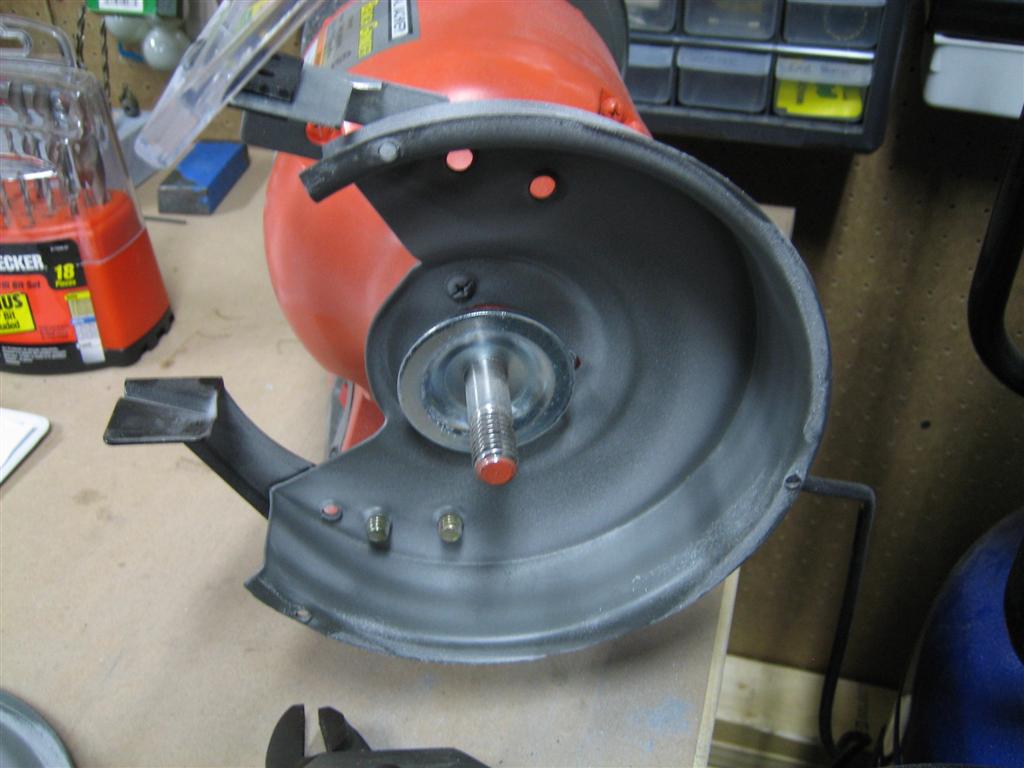
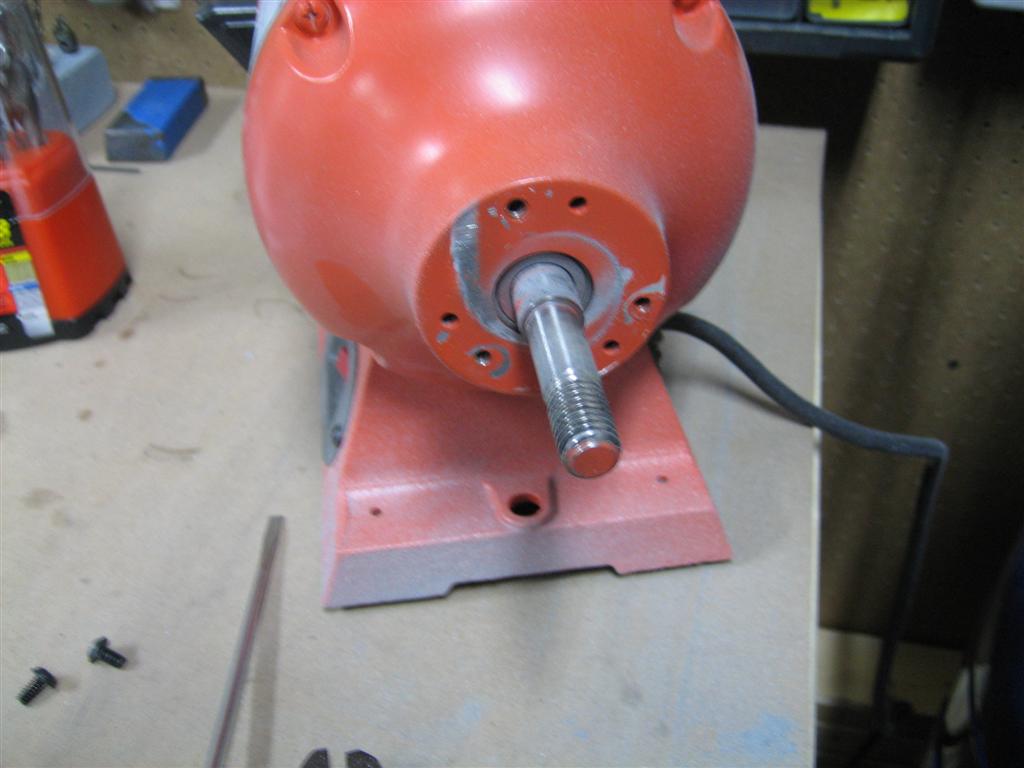
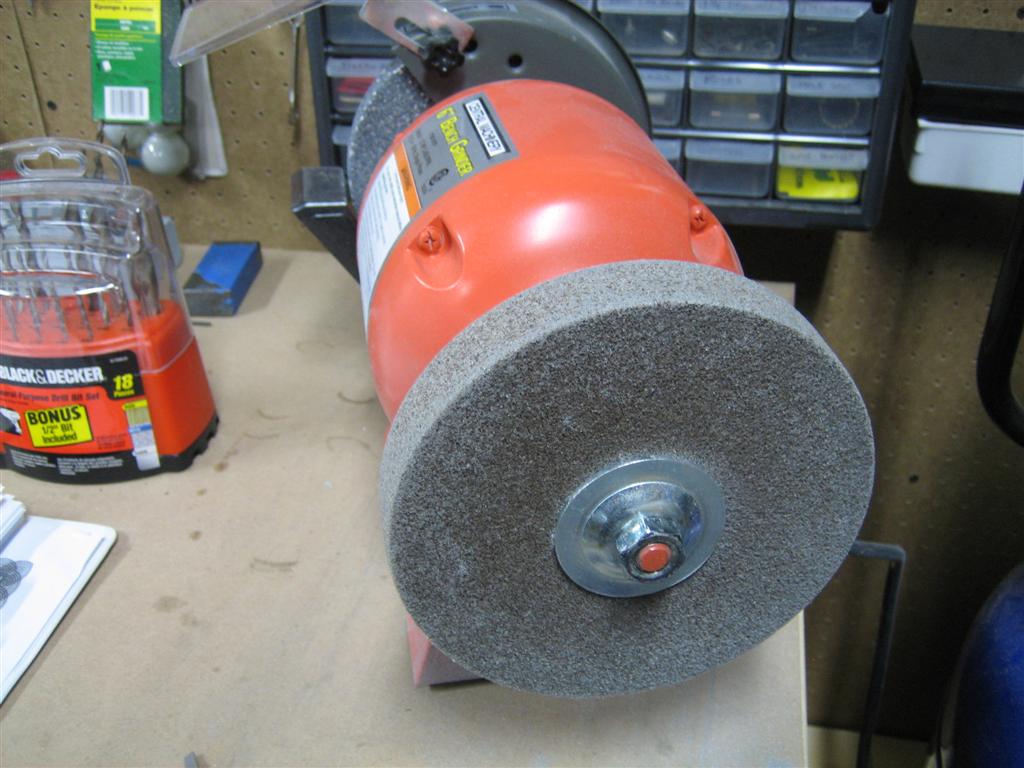
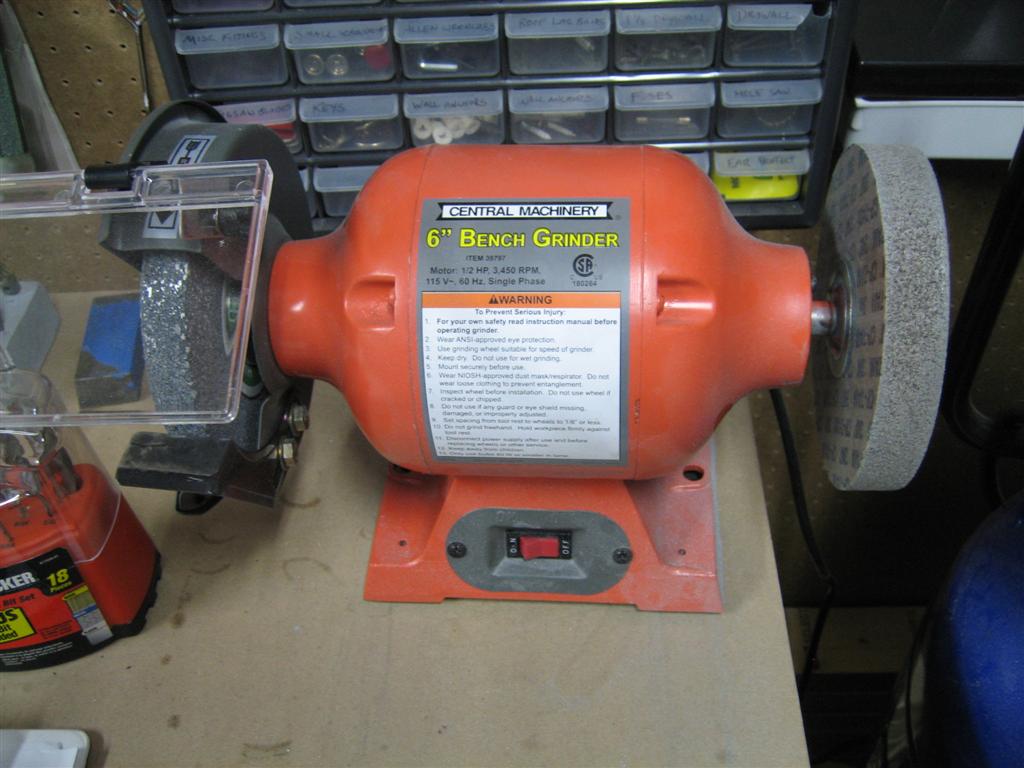
Anyway, with everything disassembled, I started to mark and deburr parts. In preparation for edge finishing, I removed all of the safety covers for the scotchbrite wheel side of my 6″ grinder.

Removed the scotchbrite wheel.

Removed all safety covers.

Reattached scotchbrite wheel.

Ready for some edge-finishing.

Then, I got back to deburring some of the smaller parts. When I finished deburring the holes in a part, I usually take a scotchbrite pad and “mark” the part with a few scuffs. That way, I know all the holes are deburred, and it is time to move on to edge finishing.

I only spent an hour outside today. Had to let the food digest before working out, then it was off to bed.

[yawn] I’m still tired, though.

Prev | Next


Skin Dimpling and Priming

February 22, 2010

Prev | Next

I snuck home over lunch today to get a couple things done, one of which was work on the airplane loudly. First, I set up my c-frame and spent some time verifying, re-verifying, and trip verifying that I was going to dimple in the correct direction. These rudder skins are thin, and I didn’t want to make any mistakes here. I set the skins on the table with the exterior side up, and the c-frame with the male die above, pointing down, and then dimpled all the holes in the skin. Jack and Ginger (who were inside), clearly don’t like me dimpling with the c-frame and told me so with a pair of barks, each. We did get into a nice rhythm, though. [whack]  Bark, bark…bark, bark.  [whack] Bark, bark…bark, bark. It helped pass the time, but I hope I didn’t cause them too much stress.

My dimpling setup for the rudder skins.

After that, I flipped them over and cleaned the scuffed lines.

Skins cleaned and drying.

After drying, I shot them with some self-etching primer. I was at the end of one of the cans, and some of the stuff came out kind of splotchy, but I think it will look good after it dries. I can always lay down another coat.

The left skin after priming.

Another thing. I’ve been putting blue tape on the exterior side, then laying the skins down flat and shooting them with primer. When I do this, some primer gets into the dimple (from the underside I am priming), and kind of bounces off the sticky side of the blue tape and settles in the dimple on the finish side. Today, I made sure none of the holes were obscured; hopefully that will prevent any primer from getting on the exterior surface. I thought about taping the final rivets in the dimples, since that is the next step with the skins anyway, but I am not sure about using self-etching primer on unset rivets, then setting them. I have never seen that done before, and I don’t want to be the first guy to try. I’m sure I would have been okay, but the other way seemed to work fine.

And the right skin after priming.

After work, I put rivets in all of the dimples, taped them up, and flipped the skins over to lay the stiffeners in. One note, since I am using the tank dies, the rivet sizes must be lengthened in some places. All of the stiffener rivets were too short before setting, so I am going to substitute AN426AD3-3.5 rivets for the AN426AD3-3s called out in the plans. Except for the aft-most rivet in each row. The construction manual tells you to make sure you set this rivet fully, so I’m going to leave the shorter one in there.

See these rivets? They look okay, until you put the stiffener in

Once you get the stiffener in, you can see they aren’t the recommended 1.5 times diameter. I’m also a little concerned that the dimpled holes are a little big for the rivets. I didn’t notice this on the other components using the tank dies. Hmm. I’m going to look around and see if anyone else has encountered this.

Not long enough. (TWSS)

I was moving along merrily until I got to this hole. Doh!

Forgot to dimple this hole. I had to break out the c-frame just for this one lonely hole.

After I got all the rivets in and taped, I flipped the skin over.

These rivets will be long enough.

Then, one by one, I final trimmed the stiffeners (snipped the 90° corners off with the snips) and laid them in to see what it would look like.

asdf

A solid hour and a half. After edge prepping and priming the stiffeners, I should be ready to install the stiffeners permanently.

Prev | Next


Skin Devinyling, Stiffener Dimpling

February 21, 2010

Prev | Next

We got a ton of work done on the house this weekend (paint, patio furniture), and a little work done on the airplane.

Yesterday morning over coffee, I brought the right rudder skin into the kitchen and started devinyling. After giving it a lot of thought, I am only going to remove the vinyl (and then scuff and prime) the rudder stiffener locations right now. Later, after matchrilling the skins to the skeletons, I’ll devinyl, scuff, and prime those mating surfaces.

A couple strips done.

After finishing up the exterior side of the skin, I flipped that bad boy over and started on the interior side. I was more careful about tracing lines here, because this is where the primer will go. (Although no one will ever see the inside of the rudder skin once I have it assembled.)

Here's my wooden stick I use to devinyl in a straight line.

After finishing the right skin, I brought in the left.

Here we go. Hmm. Dog bowls are empty, I think the pups must be hungry.

Here is the interior side of the left rudder skin.

Pretty devinyled strips. I think the exterior of the skin is done, too.

Then it was off to do some errands, one of which was a stop by Harbor Freight. I got a mailing the other day, and they had some fantastic deals on some things I wanted.

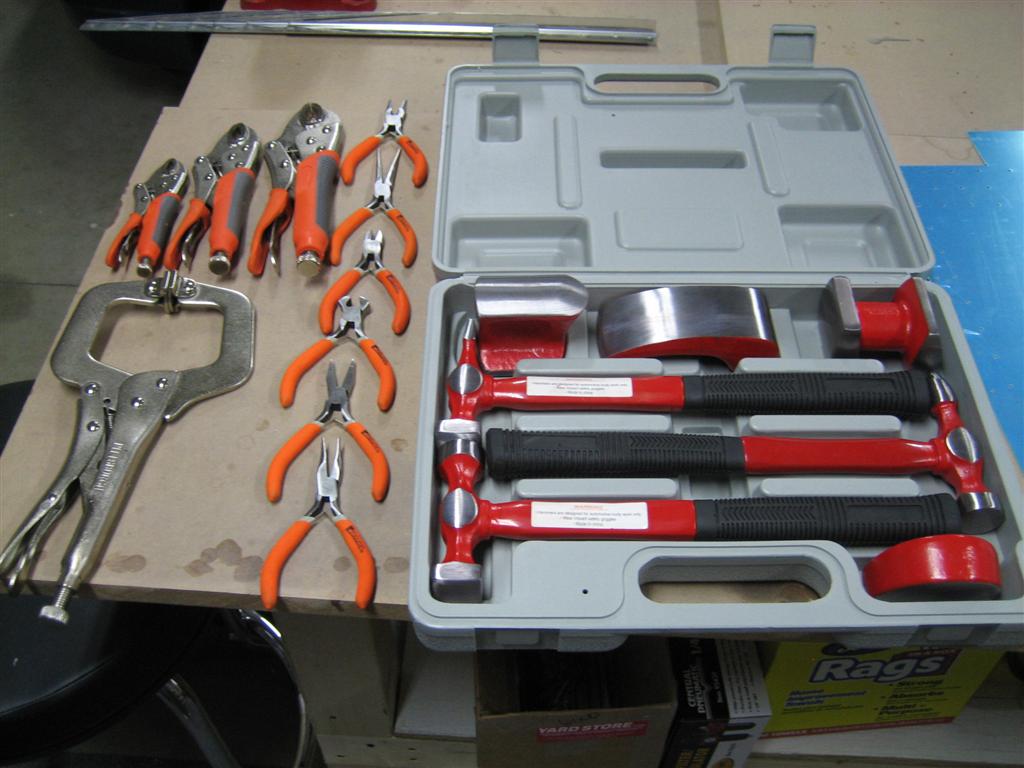
7-Piece Body Repair Kit. First, the “body repair kit” was $19.99. Look at the 4 bucking bars in there! I don’t really care about the hammers, but my small bucking bar was not really cutting it for some of the rivets I needed to buck. The best improvement with these new bars…hand holds. They have little cutouts in the side for your fingers so you can get a great hold on the bar. I’m happy.

11″ Locking C-clamp. These come in handy for clamping things around flanges. I needed one of these, and ended up walking away from Harbor Freight for about $6.

3-piece locking pliers. I have a small set of needle-nose locking pliers and love them, I figured for $4.99 for 3, I couldn’t go wrong. The quality isn’t the best (the screw mechanism is a little sticky), but they should work.

6-piece presicion pliers. I have a couple of these from various places and I love them. 4 pliers, and 2 cutters. I’m most looking forward to the extra long pliers second from the top. Those will help me overcome my huge sausage fingers.

Hooray shopping.

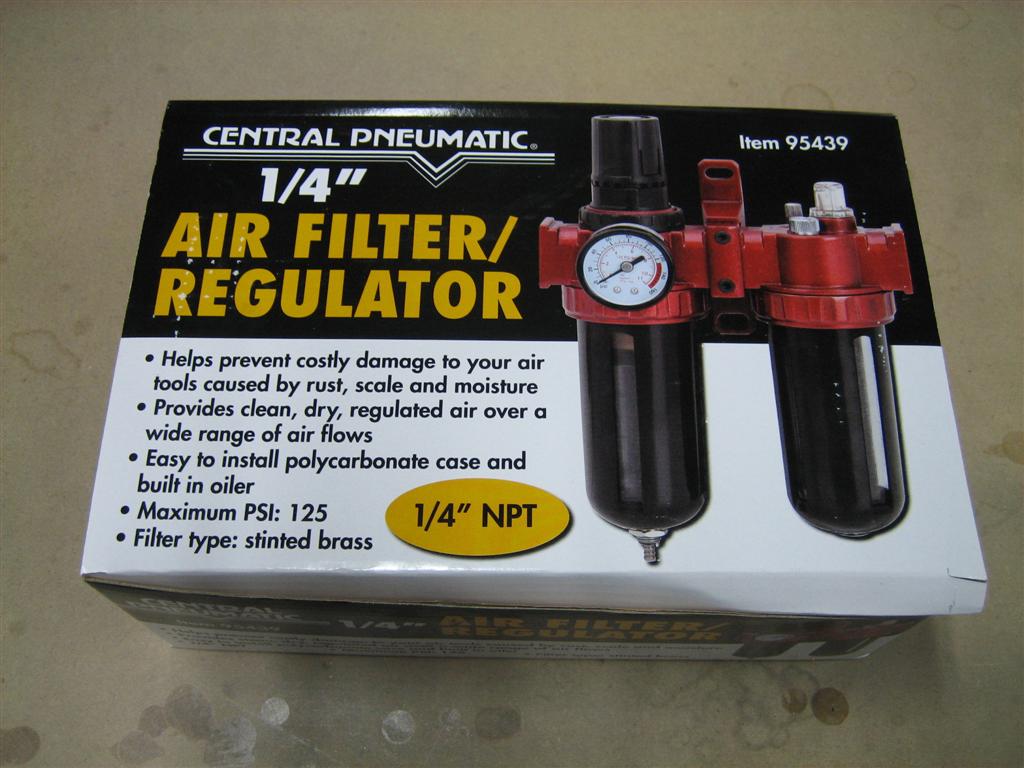
Also, I grabbed this $19.99 air filter/regulator. I wanted a better regulator/filter/oiler, and this one looks like it will fit the bill. I hope the quality is high enough to not disappoint me.

Air filer/regulator. Should work well, and will relieve me from having to oil my tools every day.

Next, I spent a ton of time deburring the skins. I think it is something like 119 holes per skin, times two sides, times two skins. Yes, my fingers hurt. Here I am scuffing the inside of the skins after deburring.

Deburring and scuffing.

I was getting fancy with the camera, so here’s a closeup of one of the strips after deburring and scuffing.

Deburred and scuffed strip on the interior side of the skin.

And another picture of a strip before scuffing. This hole has been deburred, though. i should have taken a picture of an un-deburred hole for you. Sorry.

Deburred, but not scuffed.

While Mike Bullock has his Natty Boh, I have my Blue Moon (well, Rising Moon, their seasonal).

The moon!

Scuffing the left skin.

More scuffing.

All done!Finally, I finished scuffing the interior of the skins. After I get these all cleaned up (it will be harder to clean after dimpling) , I can get these dimpled and primed.

All done!

Here’s a nice closeup of me deburring the stiffeners.

Deburring the stiffeners.

After finishing deburring all of the stiffeners (which is two more deburr operations for each of the holes from the skins), I pulled out the squeezer and tank dies (for the skeletons, which I’m considering understructure).

I like playing with these.

I decided to go ahead and scuff and dimple the stiffeners now, while I can’t make any loud noises (post 10pm). I should have edge finished the stiffeners first, but I’ll still be able to use the scotchbrite wheel on them after they are dimpled. To save time, I’ll edge finish these while I am priming the interior of the skins later this week. Anyway, here are some dimpling shots.

Getting ready to dimple.

Squeezing.

The end result.

A few minutes of this, and the right stiffeners are done (still not edge finished, though).

Right side stiffeners done.

Wash, rinse, repeat for the left side.

Both sets of stiffeners done. Time for bed.

2.5 hours today. Boring, tedious work, but still the most fun a man can have with his clothes on.

Prev | Next